Agave

by David Klemt David Klemt No Comments

Tequila may Drive These 2026 Trends

Tequila may Drive These 2026 Trends

by David Klemt

Clear glasses filled with tea, served from a silver teapot at a restaurant

Is there alcohol in that teapot? Maybe.

While some of us continue to cross our fingers that tequila will have their year as the top spirit, other similar sips may rise up in 2026.

One can argue that tequila finally clinched the Top Spirit crown in the US and made 2025 its year. After all, it showed the fastest growth of any spirit last year.

Further, some sources report that tequila generated more revenue than any other major category in the US. Per reporting, premiumization is believed to be a major driver of tequila’s 2025 success.

However, other sources report that vodka still holds the throne due to volume sales. It probably won’t shock a single person that Tito’s holds the number one spot as 2025’s top-selling brand.

In Canada, beer earned the top spot by overall market share. However, Canadian whisky led in 2025 as the top spirit, though tequila garnered notable interest.

Meanwhile, two spirits similar to tequila may finally have meaningful moments in 2026 as vodka and the world’s most-famous agave spirit battle for the title. If Datassential and Nation’s Restaurant News are accurate in their predictions, raicilla and sotol may finally become even more well known to consumers this year.

What is Raicilla?

This agave spirit has been produced in Jalisco, Mexico (for the most part), for at least three centuries. And yet, it wasn’t granted its own Denominación de Origen (Designation of Origin, or DO) until 2019.

Authentic raicilla can only be produced in 16 municipalities throughout Jalisco, and, for some reason, one municipality in Nyarit, called Bahía de Banderas.

There are essentially two regional types of raicilla, de la costa and de la sierra. As the names imply, the former are coastal raicillas, and the latter are from mountainous areas.

Some varieties of raicilla will be familiar to tequila drinkers: joven, reposado, and añejo. There are also varieties that have been aged or matured in glass, abocado (infused raicilla), and artisanal double-distilled raicilla.

Unlike tequila, which can only be made from Blue Weber agave, raicilla is made from several different types of agave. Intriguingly, most raicilla is made with wild agave. The reason is simple: raicilla production is nowhere near the scale of tequila, so for the most part, producers don’t need to cultivate huge fields of agave.

Generally speaking, there are two primary approaches to cooking agave for raicilla, resulting in different flavor profiles. De la sierra producers tend to cook the agave above ground. Conversely, de la costa producers mainly utilize underground or pit ovens.

So, de la sierra raicilla usually doesn’t have smoky notes like mezcal, whereas de la costa raicilla is more likely to share that profile. Generalizing again, raicilla is characterized most often as being more floral and vegetal than tequila and mezcal. Really, a raicilla’s flavors and aromas are highly dependent on terroir.

What is Sotol?

Contrary to a common misunderstanding, sotol isn’t derived from agave. One common thread connecting tequila and sotol is the fact that they’re both traditional Mexican distilled spirits.

Another similarity is the production method: piñas are harvested and cooked, then fermented and distilled.

However, it’s a plant known as Dasylirion that’s used to produce sotol. Commonly known as “desert spoon,” this plant is a member of the asparagus family, as is agave. This may be what leads some to believe that sotol and tequila are both agave-based spirits.

Like tequila and raicilla, sotol is protected by a DO. This means true sotol can be produced exclusively in the Mexican states of Chihuahua, Coahuila, and Durango. It must be noted, though, that there are producers in Texas “don’t recognize” the DO and bottle what they call sotol.

A detail that may appeal to more sustainability-minded guests: sotol production is considered more eco-friendly in comparison to tequila and raicilla. When harvesting desert spoon for sotol, the roots aren’t dug up, meaning a single plant is capable of producing several bottles of sotol over its lifetime.

Desert spoon piñas are cooked in an earthen pit, and terroir is a factor. Depending on the regiondesert, forest, or prairiea sotol will have different flavor and aroma profiles.

For example, a forest sotol may have notes of pine, eucalyptus, and mushroom. In contrast, a desert sotol may be characterized by leather and pepper. Sotol is complex and will keep the adventurous engaged for quite some time.

How can Operators Capitalize?

One of the most effective ways to introduce guests to raicilla and sotol is to leverage the undeniable and seemingly unstoppable popularity of tequila.

And while it’s fun to nerd out over production, it’s likely a better idea, initially, to taste guests on tequila, raicilla, and sotol. While you’re there, you can also include mezcal.

Particularly notable is NRN itself predicting sotol as a trend of its own this year. Further, Datassential has identified raicilla as a trend in their own report.

Of course, there are also some compelling 2026 trend predictions you can leverage with these two traditional Mexican spirits.

Both raicilla and sotol are more than capable of standing in for tequila and mezcal in cocktails. However, raicilla can also tag in for gin, and sotol can act as substitute for gin and vodka.

Off the top of my head, raicilla or sotol Margaritas and Negronis should appeal to a wide range of guests.

This brings me to a simple trend that NRN predicts may take off in 2026: smaller cocktails.

Think (and Price) Small

That’s it; it’s that simple. People seem to be drinking less, not just in frequency but in ABV.

So, it may behoove operators to offer smaller cocktails, accompanied by appropriately reduced prices. This means the drinks are priced appropriately rather than offering discounts in the hopes of driving traffic.

Not only does this move, when intentional, speak to a current shift in guest imbibing behavior, and appeals to those who want to go out to bars and restaurants but don’t want to spend much.

The New Happy Hour

This is where a few trends converge. According to Datassential, “teatime is the new happy hour.”

And per The IWSR, playfulness may also take hold in 2026. I’m sure you can see where this is going.

In Datassential’s view, teatime rather than traditional happy hour gives operators more leeway in terms of dayparts. Noon, early afternoon, early evening, brunch… It’s all on the table, and there isn’t confusion around start and stop because it’s not referred to as a happy hour.

It also allows operators to offer tea-based cocktails made with raicilla and sotol (or any other spirit), and low- and no-ABV tea drinks. Again, this speaks to a range of consumer behaviors and expectations.

The Three Ps

Whatever trends operators choose to pursue this year, their decisions must be intentional.

That means viewing them through the lenses of People, Processes, and Profits.

People: Do we have the right people in place in the right roles? Are we serving our guests to the best of our abilities? Team member or guest, are we truly treating everyone with respect and gratitude?

Processes: How often are we reviewing each operational element? Are we reviewing our menus at regular intervals over the course of 12 months, or are we doing this annually (or not at all)? How are we approaching our pricing? When was the last time we reviewed and tested each and every one of our systems?

Profits: Total sales are great, but are we making money? As Doug Radkey, president and principal consultant of KRG Hospitality says, “Sales are a vanity metric. Profits tell the real story.” Do we know our numbers? Are we controlling costs? Do we make pricing and labor decisions proactively and strategically, or are we panicking and reacting without careful consideration?

Those are by no means all of the questions we need to ask on a regular basis, but they’ll give operators a solid baseline.

Image: Davey Gravy via Unsplash

Client Intake Form - KRG Hospitality

by David Klemt David Klemt No Comments

Update Your Margs with Mezcal and Sotol

Update Your Margaritas with Mezcal, Sotol, and More!

by David Klemt

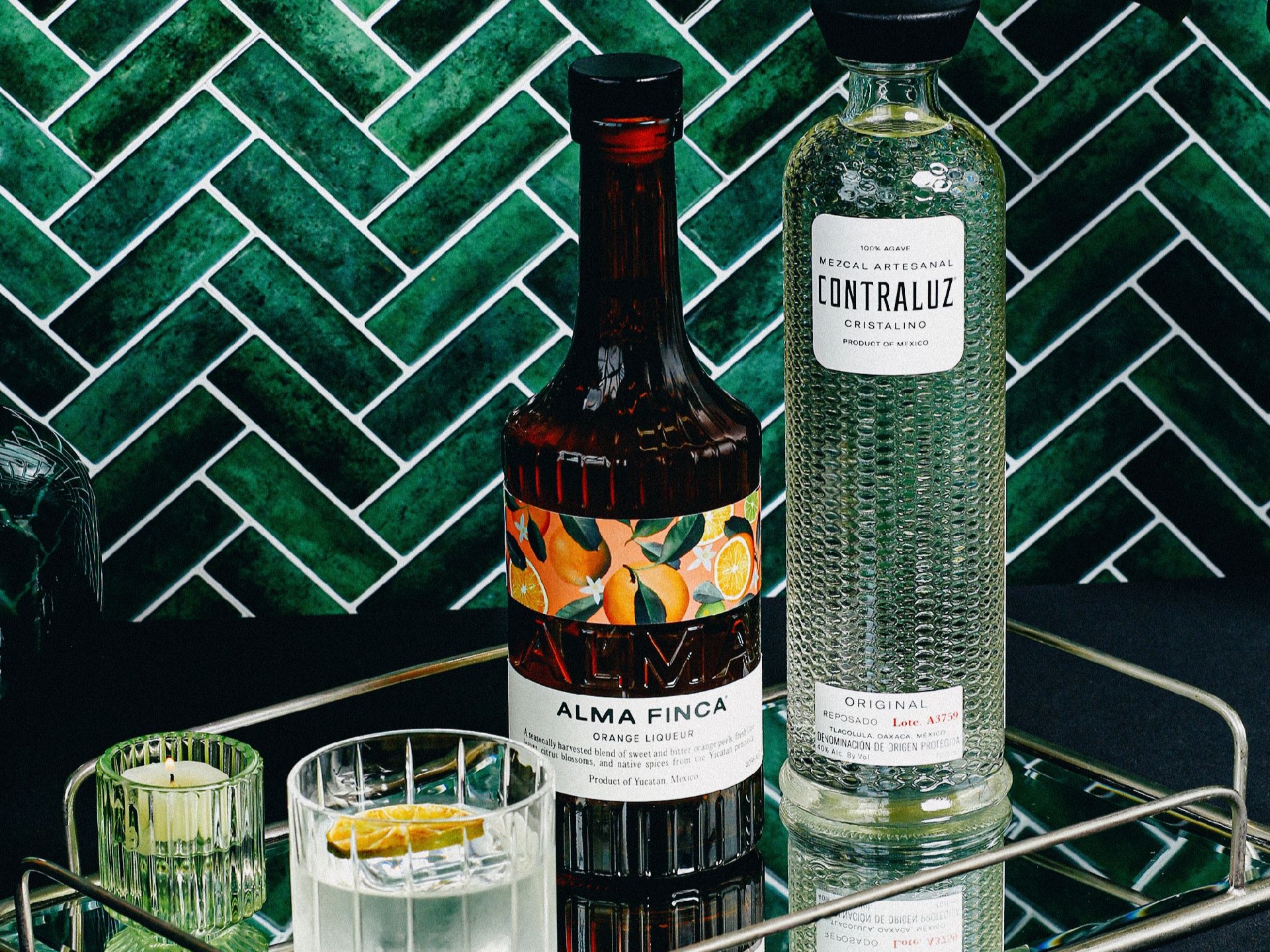
Contraluz Cristalino Mezcal bottle on a drinks tray

We all know how to make a classic Margarita, so for this National Margarita Day we want to put some new recipes and ingredients on your radar.

The cocktail recipes below swap out the tequila for mezcal and sotol.

For a quick refresher, all tequila is mezcal in a technical sense. Mezcal is made with agave plants. Tequila producers use a specific agave plant, Blue Weber. Further, tequila must be produced in one of five Mexican states: Guanajuato, Jalisco, Michoacan, Nayarit, or Tamaulipas.

Then we have sotol. You may have seen sotol thrown in with agave spirits on cocktail or spirits roundups. To clarify, however, sotol is a typo of shrub known as the desert spoon, and it’s not an agave plant.

So, all tequila is mezcal, mezcal is agave, and sotol is…sotol.

Swap Out the Tequila

Being National Margarita Day, you certainly need to have a classic Margarita on your menu. It’s all the better if your bar team makes them so well and so consistently that really, your top-selling Marg is one of your signature cocktails.

That said, it’s also a good idea to play with classics to give your guests new drinks to discover. The two recipes below are two great examples of riffs on the classic Margarita that should get your and your bar team’s creative wheels turning.

Allow me to introduce you to Contraluz Cristalino Mezcal and Nocheluna Sotol, if you’re not already acquainted.

Contraluz lays claim to the title of “world’s first cristalino mezcal.” Made from 100 percent espadín agave, this is a crystal-clear, small-batch reposado mezcal. On the nose, expect aromas of agave, along with citrus and floral notes. You may also detect smoke, cedar, and honey. In terms of flavor, Contraluz delivers notes of vanilla, clove, cacao, and cooked agave, with a sweet, long finish.

The second cocktail below is made with Nocheluna Sotol, which is crafted using 100-percent wild sotol from Chihuahuan desert. This particular sotol is the result of a collaboration between a fourth-generation master vintner, and a master distiller.

A unique spirit, Nocheluna delivers a delicate balance of sweet, herbal, dried fruit, and mineral notes. These notes come through via both the aroma and taste, although you may detect oak and smoke as well. Interestingly, Nocheluna says the finish may include a taste of pecan wood, along with wet earth.


View this post on Instagram


A post shared by Nocheluna Sotol (@nochelunasotol)

But Wait, There’s More!

Along with Contraluz and Nocheluna, you’ll see three bottles that may be new to you below. The Light and Soul cocktail calls for Alma Finca Orange Liqueur, Nixta Licor de Elote, and HAGAVE Spiced Nectar.

The first is an orange liqueur produced by the same company that makes Montelobos Mezcal. The second liqueur, Nixta Elote, is essentially liquid elote seasoning, and it comes in a fantastic corn-shaped bottle. Finally, HAGAVE is exactly what it says on the label: a premium, spiced agave mixer.

I don’t know about you, but I definitely plan to get my hands on each of these bottles. Just imagine what you can do to engage with your guests by introducing them to a crystal-clear, artisanal mezcal, an expertly crafted sotol, and liquid elote in a corn bottle.

Cheers!

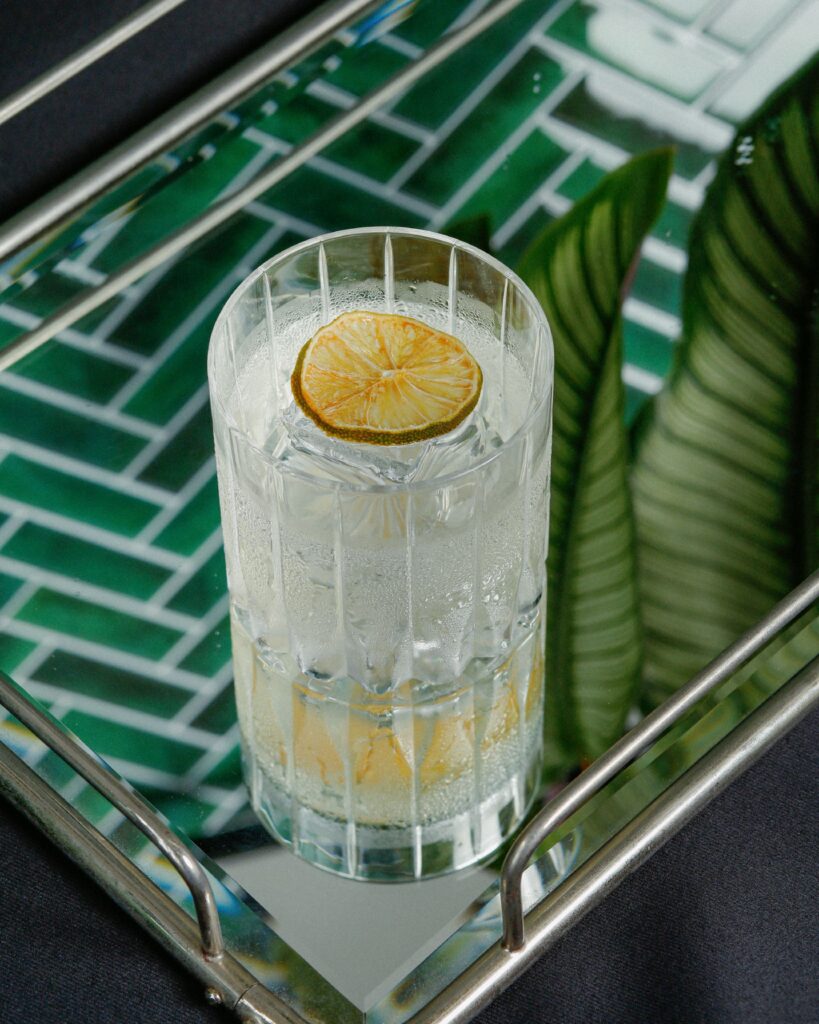
Contraluz Cristalino Mezcal, Light and Soul cocktail

Light and Soul

  • 2.0 oz. Contraluz Cristalino Mezcal
  • 0.5 oz. Alma Finca Orange Liqueur (or a triple sec or different orange liqueur if unavailable)
  • 0.5 oz. Nixta Licor de Elote
  • 1 oz. Lime cordial
  • 0.5 oz. HAGAVE Spiced Nectar

Place a large ice cube or sphere in a rocks glass. Add all liquid ingredients to a shaker filled with ice. Shake well, and strain into the prepared rocks glass. Garnish with a dehydrated lime wheel.

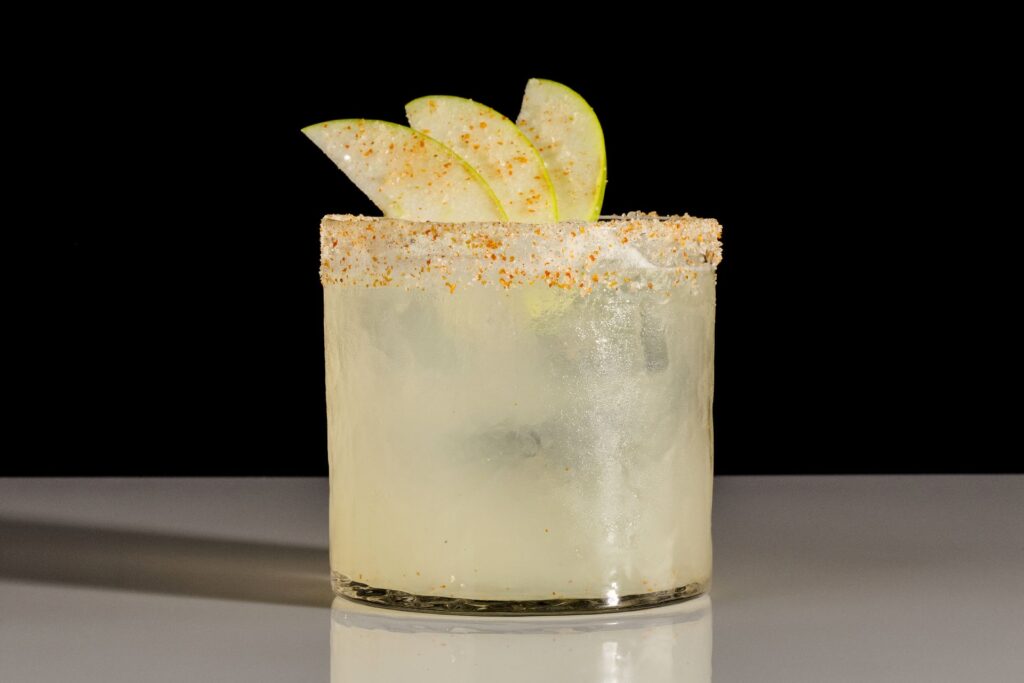
Nocheluna Sotol cocktail, the Sotolita

Sotolita

  • 1.5 oz. Nocheluna Sotol
  • 1.0 oz. Triple sec
  • 1.0 oz. Fresh lime juice
  • 1.5 oz. Apple juice
  • Apple slices to garnish
  • Chiltepin salt for rim (sea salt blend with chiltepin peppers)

Prepare a rocks glass by adding quality ice and rimming it with chiltepin salt. Add ice to a shaker, then add all liquid ingredients. Shake well, then strain into the prepared glass. Garnish with an apple-slice fan.

Images provided by LaFORCE

KRG Hospitality Start-Up Restaurant Bar Hotel Consulting Consultant Solutions Plans Services

by David Klemt David Klemt No Comments

5 Books to Read this Month: November 2023

5 Books to Read this Month: November 2023

by David Klemt

Flipping through an open book

Our inspiring and informative November book selections will help you and your team transform your operations and F&B programming.

This month, we look at a new branding and marketing book. We also dive into agave spirits and cuisine from the Canadian Prairies.

There’s an eye-opening exploration into the topic of technology, culture, and the “alignment problem,” as well.

To review the book recommendations from October 2023, click here.

Let’s jump in!

The Restaurant Marketing Mindset: A Comprehensive Guide to Establishing Your Restaurant’s Brand, from Concept to Launch and Beyond

If you haven’t had the opportunity to hear Chip Klose speak, look into his books. His latest The Restaurant Marketing Mindset, came out in early October. As the title suggests, this book is for anyone who’s struggling with branding and marketing, or who simply wants a fresh perspective on this crucial element of operations.

From Amazon: “Restaurants boast some of the highest failure rates of any industry, yet even worse is the sheer number of concepts that struggle just to break even. In The Restaurant Marketing Mindset, Chip Klose introduces a series of mindset shifts and actionable frameworks to help owners and operators finally take control of their marketing.

With more than twenty years of operational experience—plus an MBA in food marketing—Klose has the authority, experience, and track record needed to speak confidently on the subject. Each lesson stacks one on top of the other, giving the reader a step-by-step plan to attract more diners, retain those diners, and spark word of mouth with the ones who matter most.

This book is for any chef, owner, or operator who’s ever felt overwhelmed when it comes to marketing their restaurant. Each chapter is filled with powerful insights to help you build a more profitable (and sustainable) business.”

Pick it up today!

Prairie: Seasonal, Farm-Fresh Recipes Celebrating the Canadian Prairies

This engaging cookbook features 1oo traditional and creative recipes highlighting Canadian Prairie cuisine. These seasonal, farm-to-table recipes are sure to impress your guests.

From Amazon: “No matter the season, the Prairies are all about preserving every ounce of food, so of course there’s also tons of helpful tips and tricks on reducing food waste. There’s even a Staples chapter with recipes for stocking your pantry to keep you cooking all year long. Both a love letter to Canada’s grandest provinces and an indispensable collection of recipes, Prairie is as inviting and bountiful as the region it celebrates.”

Agave Spirits: The Past, Present, and Future of Mezcals

The authors of this informative book visited eight Mexican states to learn all they could about mezcal. By extension, they learned not only about traditional production but also where this hugely popular spirits category is headed for the future.

From Amazon: “The result of the authors’ fieldwork and on-the-ground interviews with mezcaleros in eight Mexican states, Agave Spirits shows how traditional methods of mezcal production are inspiring a new generation of individuals, including women, both in and beyond the industry. And as they reach back into a rich, centuries-long history, Nabhan and Suro Pinera make clear that understanding the story behind a bottle of mezcal, more than any other drink, will not only reveal what lies ahead for the tradition―including its ability to adapt in the face of the climate crisis―but will also enrich the drinking experience for readers.”

The Alignment Problem: Machine Learning and Human Values

When we build automated systems, we’re placing a lot of trust in our expertise. And because humans are fallible, the systems we build are far from perfect.

From Amazon: “Today’s ‘machine-learning’ systems, trained by data, are so effective that we’ve invited them to see and hear for us—and to make decisions on our behalf. But alarm bells are ringing. Recent years have seen an eruption of concern as the field of machine learning advances. When the systems we attempt to teach will not, in the end, do what we want or what we expect, ethical and potentially existential risks emerge. Researchers call this the alignment problem.”

Hacking the New Normal: Hitting the Reset Button on the Hospitality Industry

The world around us has changed. The food and beverage industry has changed. The hospitality industry has changed. But will some ways of life change for the better? Will perhaps the restaurant, bar, and hospitality industry come out even stronger? With the right changes to the previous status quo, it is possible. There’s no question, resets are major undertakings, but a major reset will provide us with a clean start and that’s what this industry needs.

Pick up KRG Hospitality president Doug Radkey’s second book today! Click here.

Image: Mikołaj on Unsplash

KRG Hospitality. Business Coach. Restaurant Coach. Hotel Coach. Hospitality Coach. Mindset Coach.

by David Klemt David Klemt No Comments

Código 1530 Pursuing Low-waste Initiatives

Código 1530 Pursuing Low-waste Initiatives

by David Klemt

Blue Weber agave plant in Tequila, Mexico

Tequila Código 1530 is making the upcycling of the agave they use a cornerstone of the brand’s sustainability efforts.

Some agave growers and tequila producers the plant as mulch, fertilizer, and biofuel. Bagasse, the fibrous material distillers separate from agave piñas, along with the leaves, is composted and used to fertilize agave fields.

While not common, some distillers will even take other producers’ agave bagasse and leaves to compost it.

However, Código 1530 is now doing even more with their agave.

Agave Sustainability

According to some in the spirits and hospitality industries, tequila may end vodka’s dominance in the US this year. Obviously, this would be the result of an increase in consumer demand.

Well, that necessitates an increase in production. So, it follows that agave growers have motivation to grow and harvest as much mature agave as possible.

However, it takes about eight years for some agave plants to mature. Others take more than ten years. For some rarer species, maturation takes twelve years or more.

Of course, production leads to waste. In simple terms, that’s the problem producers must solve.

One definition of “sustainability” is striking an ecological balance that preserves natural resources. For tequila production in particular, this means finding ways to meet consumer demand while harvesting agave reponsibly.

While composting and mulching is a great idea, Código 1530 sees the need to take things further.

More than Mulch

We’ve probably all been given at least one drink served with a paper straw. Unfortunately, that means most of us know how quickly that experience can become less than enjoyable.

Even some of the best-made paper straws can turn soggy long before a drink is finished. On the operator side, that’s not great for the guest experience, to say nothing of the costs associated with stocking paper straws.

However, some operators and their guests are willing to stick with paper straws to be sustainable. That’s admirable but there may be a better way, and it involves agave.

“We quickly realized that after harvesting agave to distill Código 1530 Tequila, the remaining agave was only being used as mulch to top our soil for future plants or burned as a fuel source,” explains George Strait. “We are still using some of the excess agave fiber as mulch, and now have begun producing straws and cups in a sustainable and eco-friendly manner.”

Strait, as some may know, is an investor in Código 1530. A lesser-known fact is that Strait graduated Texas State University (formerly known as Southwest Texas State University) with a degree in agriculture.

“This is a lifesaving program for sea life affected by plastic pollution,” says Strait of Código 1530’s new agave sustainability efforts.

Unlike paper straws, agave straws don’t get soggy or deform. Additionally, they can be thrown out in normal trash after use as they’re biodegradable.

However, this agave initiative doesn’t end with straws. Código 1530 is also making agave fiber cups, coffee cups, cocktail shakers, and shot glasses.

Tea-quila

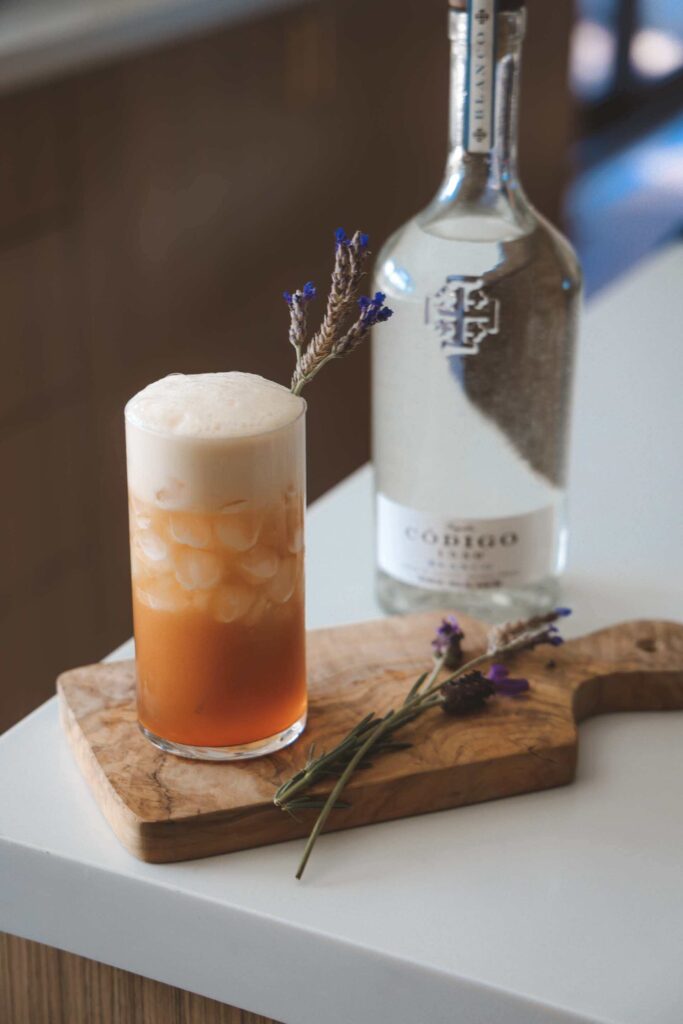
To celebrate Earth Day and their sustainability efforts, Código 1530 has created the drink below.

Codigo 1530 low waste tequila cocktail

Image: Amir Shafii, Código 1530

  • 1.5 oz. Código 1530 Blanco
  • 3 oz. Bergamot tea
  • 0.75 oz. Lemon juice
  • 0.5 oz. Lavender simple syrup
  • Lavender sprig to garnish

Housemade simple cuts down on the waste associated with producing and shipping bottles of syrup. To make the lavender simple syrup, bring one cup of water and one cup of sugar to a boil. Add ten sprigs of lavender while water and sugar are boiling, let cool, then strain. For this low-waste cocktail build, add all ingredients and ice to a shaker. Shake, then strain into a Collins glass with ice. Garnish with a sprig of lavender.

Image: BRUNO EMMANUELLE on Unsplash

by David Klemt David Klemt No Comments

6 Bottles for National Mezcal Day

6 Bottles for National Mezcal Day

by David Klemt

Blue agave plant, overhead view

October 21 is National Mezcal Day, the perfect time to introduce guests to the wide range of agaves producers use to make this rustic spirit.

This bar holiday is also a great time to dispel the myth that all mezcals are simply smoke bombs that overwhelm the palate. Indeed, there are expressions that are incredibly light on smoke and heavy on mineral, vegetal, floral, citrus, and savory notes.

If you’d also like to work tequila into your mezcal celebration, check out recommendations from this year’s National Tequila Day.

Below are six bottles of mezcal to recommend to your guests, representing six types of agave. ¡Salud!

Arroqueño

Also known as Agave Americana, this variety of agave can grow to massive proportions and take anywhere from 20 to 30 years to mature. As such, some producers are implementing sustainability projects to protect Arroqueño.

El Jolgorio Arroqueño

El Jolgorio crafts a wide range of mezcals focusing on the rare, wild and semi-wild, Arroqueño among them. Owing to sustainability efforts, this is a small-batch expression and can be difficult to find. Expect tropical notes balanced by minerality, agave, and grass.

Espadín

This is the most common type of mezcal. In fact, some estimates regarding how much mezcal carries the Espadín designation reach as high as 90 percent.

Mezcal Vago Elote

As the bottle’s name suggests, corn plays a significant role in this mezcal’s production: elote is Spanish for “corn.” Made from Espadín agave, Mezcal Vago Elote undergoes a toasted corn infusion. The result is smoke with toasty notes of corn.


View this post on Instagram


A post shared by Mezcal Vago (@mezcalvago)

Salmiana

Known as “the green giant,” this wild agave tends to imbue mezcal with less smoky notes. Instead, these mezcals impart vibrant earthy and vegetal notes.

Derrumbes San Luis Potosí

Guests seeking to try something other than the typical Espadín mezcals will appreciate this bottle. First and foremost, this expression of mezcal imparts agave flavor rather than overwhelming them with smoke.

Tepeztate

Another agave that takes a long time to mature—25 years or more—its use in mezcal also has producers concerned about sustainability. Perhaps owing to this agave’s penchant for growing on dangerous cliffsides, the flavors it produces are intense and rich.

Bozal Tepeztate

Similar in their mission to El Jolgorio, Bozal specializes in producing mezcals from a wide variety of agaves. Your guests really can’t go wrong with any Bozal expression, and Tepeztate is no exception. Guests can expect an intriguing mix of floral, citrus, spice and mineral notes, along with smoke.


View this post on Instagram


A post shared by Bozal Mezcal (@bozalmezcal)

Tobalá

If your guests are seeking rare and complex mezcal, you want to offer them a Tobalá. This type of mezcal, referred to by some as “the king of mezcal,” is made from an agave that’s hard to find and hard to grow.

Montelobos Tobalá

This is a joven expression, meaning the liquid is either bottled right after distillation or is aged for less than two months. To give guests a general idea of what to expect from Montelobos Tobalá, you or your bartenders can explain that it has characteristics of both Espadín and Salmiana mezcals: there’s smoke but there are also vegetal notes.

Tobaziche

If savory, herbaceous notes appeal to a guest, recommend a quality Tobaziche mezcal.

Del Maguey Tobaziche

The Scotch drinkers among your guests will find that this bottle resonates with them. If they enjoy Ardbeg, Lagavulin and Talisker, they’ll appreciate the peat, smoke and earth from Del Maguey Tobaziche.

Image: Meritt Thomas on Unsplash

Top