Nightlife Operations

by David Klemt David Klemt No Comments

Growth Isn’t the Reward, It’s the Responsibility

Let’s be honest, the hospitality industry still talks about growth with far too much romance and not nearly enough discipline.

In 2025, a survey of more than 300 multi-unit operators found brands were planning to open 20 percent more locations despite economic headwinds. Additionally, the National Restaurant Association’s 2026 outlook pointed to continued investment in growth and technology even under ongoing cost pressure.

At the same time, our friends at Black Box Intelligence have warned that closures are still part of the equation, particularly for concepts that expanded without the operational strength to absorb volatility.

I feel a duty to address and interpret this tension.

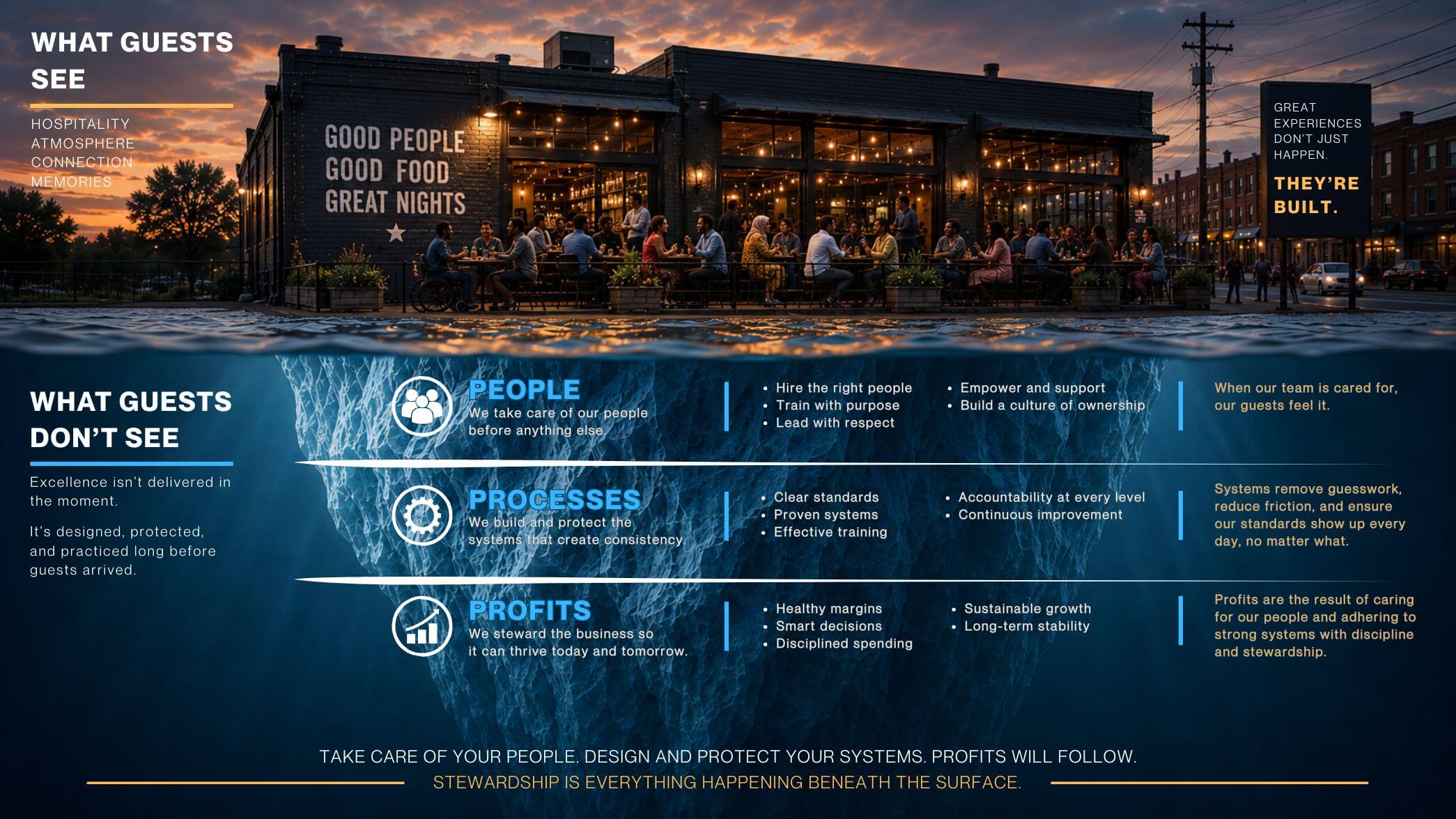
Scaling isn’t about opening another location because the dining room is full, the group chat is excited, or a landlord brought you a deal. Scaling means duplicating a business model, a guest experience, and a profit engine without diluting the brand or increasing dependency on the founder.

by Doug Radkey

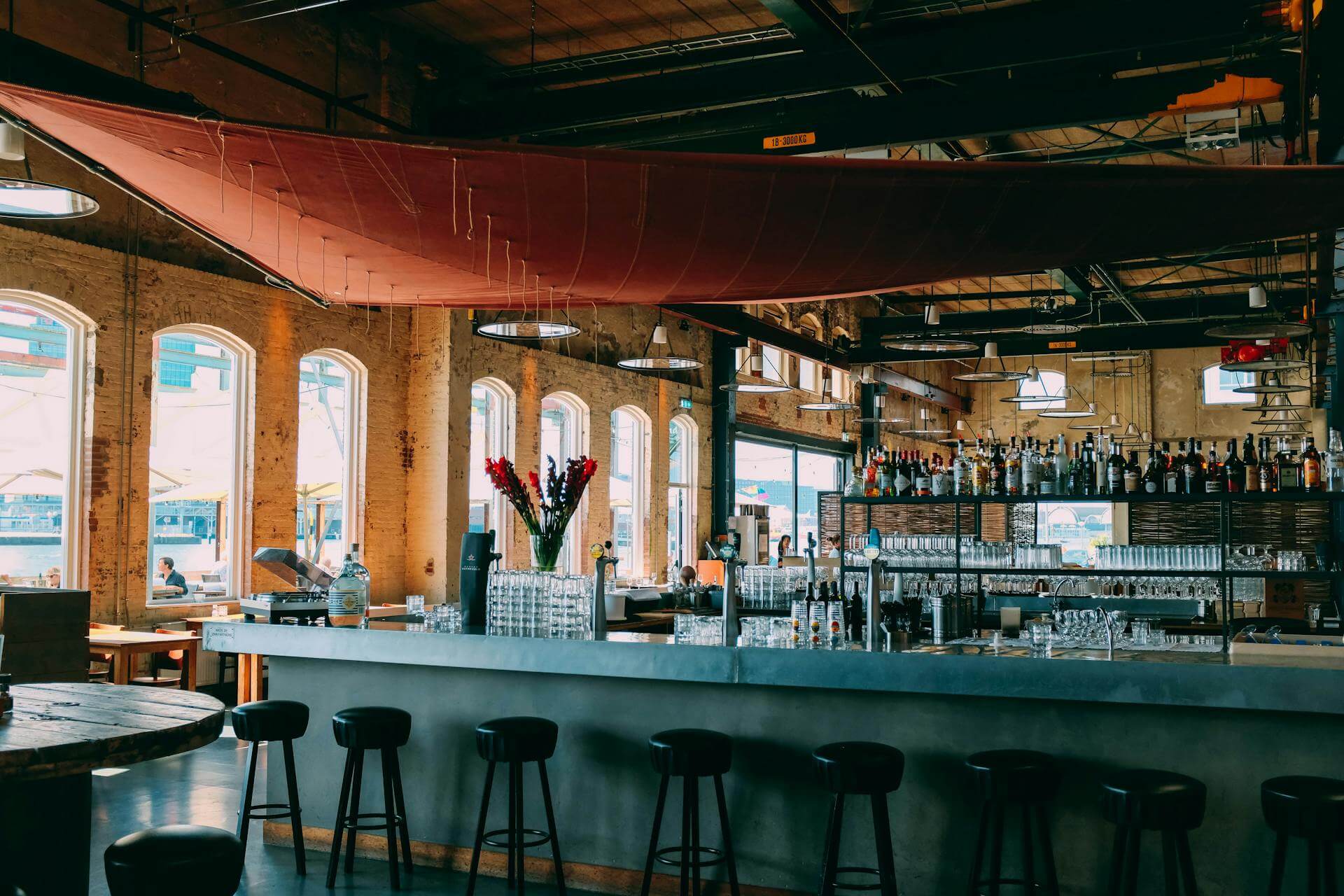
An interior of an upscale neighborhood restaurant, with the primary focus on the large center bar

Think this looks ready to scale? The answer is much deeper than you may think.

Whether you’re preparing to start down the path to opening your concept or are already operating a venue or venues, you need to understand one key point clearly: You do not scale because you’re busy, you scale when you’re stable.

The Growth Trap Operators Keep Falling Into

There is a story I have seen too many times, and perhaps you have as well.

A founder opens their first location. The concept gets traction: social media looks good, and Fridays are packed. There’s a line at brunch. Guests start asking when the second location is coming. Some people start referring to this single location as a brand. Investors start circling, and the founder begins to believe growth is the next logical step. So, they open their second location.

The first store slips because leadership attention is divided. The second store opens with a team that knows the idea, but not the standard. Service becomes inconsistent, costs drift, and training becomes informal. The founder starts working more, not less. The brand has expanded, but the business has not scaled.

This is a mistake that continues to happen, time and time again. Operators confuse popularity with repeatability, revenue with readiness, and ambition with infrastructure.

Let’s remember that a second location isn’t scale, it’s a test.

Scaling is not Expansion. It is Repetition Without Degradation.

This is the first principle serious operators need to lock in: Expansion means you opened another box; scaling means the box performs without diluting what made the first one work.

That means five things must remain true as you grow:

  1. The guest experience stays recognizable.
  2. The culture transfers.
  3. The economics remain disciplined.
  4. The systems hold.
  5. The founder becomes less essential, not more.

If one location only works because the owner is in the building, that’s not a scalable model; it’s a founder-carried operation.

That distinction matters for both startups and existing venues alike.

For Startups

Startups love to talk about growth early because growth feels validating and makes the concept feel real. I can’t count how many times I’ve been on a discovery call where the prospect talks about opening multiple locations before there’s even one built.

For a startup, scale should not even be in the conversation until the business has moved beyond survival and into predictable performance, or what we like to refer to as “stabilization.”

That means:

  • the model is validated.
  • the guest is clearly defined.
  • the programming and labor model are in sync.
  • the opening and operational playbooks exist.
  • the business is not being held together by adrenaline.

For Existing Venues

Operators who are already operating venues can fall into a different trap: they assume that because the business has been open for some time, maybe even years, the model is automatically mature enough to scale.

Let me put this simply: It is not. Longevity does not equal readiness.

A ten-year-old restaurant can still be founder-dependent, undisciplined, and financially fragile. A boutique hotel can have strong occupancy and still be too inconsistent operationally to replicate.

Age isn’t an indicator that a concept is ready to scale; stability is.

The Precondition: Stabilization Before Scaling

This is where too many operators get impatient. They want the growth story before they have the control story.

But stabilization comes first, always. A stabilized business isn’t perfect, but it is predictable.

Operators who operate a stable business know:

  • what drives profit.
  • what standards matter most.
  • what labor model is sustainable.
  • what guest experience can be repeated.
  • what systems protect consistency.
  • what happens when sales soften or costs spike.

Stabilization is where the business stops behaving like a hustle and starts behaving like an operating system. Without that, scale will expose every weakness.

If your labor model is emotional, scaling magnifies it. If your menu is bloated, scaling magnifies it. If your communication is weak, scaling magnifies it. And if your leadership bench is thin, scaling magnifies it.

Growth doesn’t fix fragility; it multiplies it.

The Mindset Required Before You Scale

Most founders and operators need the hardest mindset reset right here. They need to understand that scaling isn’t a reward for effort, it’s a responsibility to the model.

Before scaling, leadership needs to answer one question honestly: “Why do we want to grow?”

Do not give the polished answer; answer with the real one. Be honest.

Is it ego? Is it fear of missing the market? Is it investor pressure? Is it the belief that more locations will solve financial stress? Is it the desire to turn a founder-led business into an actual asset?

Scaling for the wrong reason usually creates the wrong outcome.

The right mindset before scaling looks like this:

  1. Growth must serve the model, not rescue it.

A weak first location does not become healthy because you add a second one.

  1. The goal is duplication without dilution.

If the second, fifth, or tenth location changes the guest experience, the culture, or the economics in the wrong direction, the growth is not strategic.

  1. The founder must become less central.

If every key decision still runs through the owner, the brand is not ready.

  1. Clarity matters more than speed.

The market will always create pressure to move faster. Serious operators know disciplined growth compounds more than rushed growth.

  1. Scale is a long-term value decision.

This isn’t just about opening more units; it’s about creating a more valuable company.

The Signs That You’re Ready

This is the part many operators want to skip to: the checklist, the green lights.

And I’m sharing them with you below. But know this: You must understand that the green go-ahead lights sit on top of everything noted above.

  1. Your numbers are predictable.

Not just revenue: contribution margin, prime cost, labor productivity, cash flow timing, and break-even thresholds.

  1. The business performs without your physical presence.

If you can’t leave for two weeks without panic, you are not ready.

  1. Systems are documented.

Not in your head, and not in your managers’ memories. In actual playbooks, SOPs, training sequences, and leadership rhythms.

  1. Leadership depth exists.

You have more than strong employees. You have future operators, future GMs, and future department heads.

  1. Guest experience is repeatable.

The guest experience isn’t amazing only when the founder is there. It’s repeatable at standard, by system.

  1. Culture is clear.

The values are visible in behavior, not just language. Standards are reinforced consistently, even under pressure.

The Takeaway Any Serious Operators Should Save

The industry still loves the story of growth.

Bigger. More locations. New markets. New flags. New addresses.

But the operators who win the next decade will be the ones who earn it. They will:

  • stabilize before they expand.
  • know their numbers before they open another door.
  • build leaders before they sign another lease.
  • document systems before they copy the concept.
  • understand that growth is not proof. Performance is.

So when are you ready to scale?

Not when the room is full. Not when the next landlord calls. Not when investors get excited. Not when your ego wants the headline.

You are ready to scale when the business is stable enough to duplicate without depending on your exhaustion.

That’s the standard.

And if you’re not there yet, that isn’t failure; it’s clarity. Because the smartest move in hospitality is not scaling early, it’s scaling when you’re truly and honestly ready.

Related Reading

Image: Adrien Olichon via Pexels

Work with Us

Want to partner with us to assess your business to determine whether it’s ready to scale? Click the image below!

Client Intake Form - KRG Hospitality

by David Klemt David Klemt No Comments

Emerging Brands are Compound Startups

Why the smartest one to 15-unit hospitality brands are not “small chains” yet. They are startups learning how to repeat themselves without breaking.

Growth in this industry has entered a new era. From recent conference discussions, what we are seeing and hearing is that bar, restaurant, and even boutique hotel operators still plan to open more locations despite cost pressure.

However, the conversation has shifted from raw expansion to sustainable growth, stronger unit economics, and operational readiness.

At the same time, industry data continues to show that closures remain part of the landscape, particularly for brands that grew faster than their model matured. Black Box Intelligence has warned that unit closures are likely to continue, even as some operators keep developing more locations.

That’s why this thought matters: emerging brands are just compound startups.

A second, fifth, or 15th location does not magically make a brand “corporate.” It simply means the founder is attempting to repeat a business model under more pressure, with more people, in more places.

by Doug Radkey

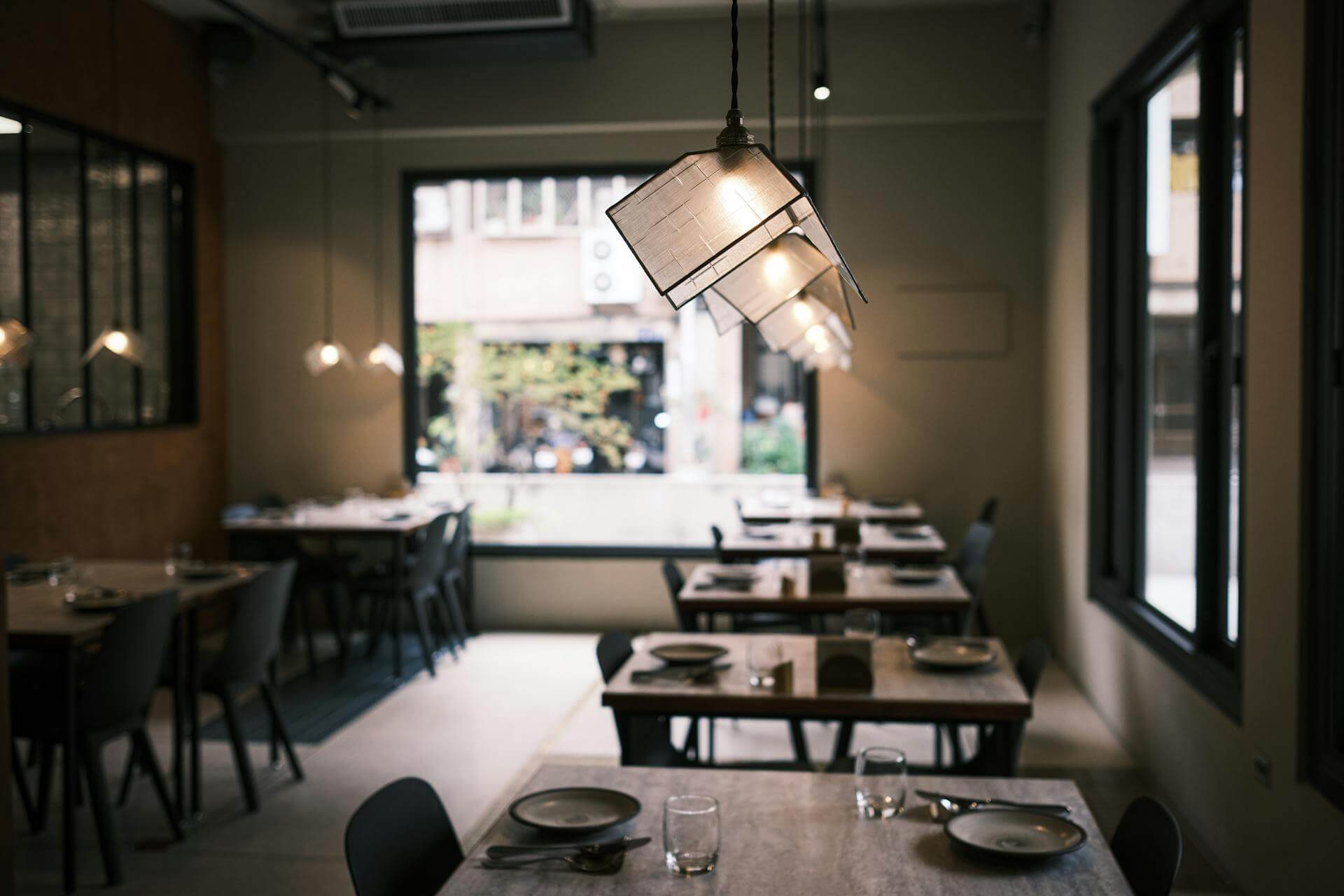
Interior of a light, relaxing restaurant with a focus on the modern, sophisticated light fixtures and open window to the sidewalk and street.

This article breaks down what “compound startup” means; why so many operators misunderstand scale; and what serious bar, restaurant, and boutique hotel entrepreneurs must build before growth becomes an asset instead of a liability.

The Growth Illusion: Why More Locations Can Hide a Weaker Business

In hospitality, growth is seductive:

  • A packed dining room turns into a second site conversation.
  • A strong summer in one market becomes an excuse to test another.
  • Friends, investors, landlords, and even guests start asking the same question: “When are you opening the next one?”

That question flatters the ego; it does not validate the model.

Too many operators assume that one good location means they have a scalable brand. What they often have is a founder-carried success story.

The owner still approves too many decisions. The best managers still rely on the founder’s instinct. The menu still works because one chef protects it. The guest experience still lands because the founder is in the room.

That is not scale. That is heroics, and heroics do not compound.

A Story Every Growing Operator Will Recognize

A founder opens a strong first location. Maybe it is a cocktail bar, maybe a neighborhood restaurant. Maybe it is a small lifestyle hotel with food and beverage anchors.

The first unit performs well enough. Reviews are good and revenue looks strong. Staff is stretched, but the energy feels high. There is momentum.

Then the founder opens a second location. Almost immediately, the cracks widen.

The first unit loses focus because the founder is no longer present every day. The second unit opens with a team that knows the standards in theory but not in rhythm.

From there, costs and inventory variance increase, culture starts to split, and guests notice inconsistency. Managers become messengers instead of coaches and leaders. The founder begins working more, not less.

This is the point where many operators say “Growth is hard.”

But here’s the thing: growth is not the issue. Unrepeatable success is the issue.

An emerging brand is still a startup because every new unit is a new test of the model. The only difference is that the cost of failure gets higher with each location.

Pillar One: Scaling is Not Expansion. Scaling is Repetition Without Degradation.

The first truth serious operators need to accept is this: opening more units is not scaling. Repeating a model without dilution is scaling.

That means the following must remain true from location one to location five:

  • The guest experience still feels intentional.
  • The unit-level economics still make sense.
  • The culture still transfers.
  • The systems still hold.
  • The brand identity still lands clearly.

If any of those degrade with each unit, you are not scaling; you are stretching.

This is where a lot of emerging brands get trapped. They call themselves a “chain” because they have multiple addresses. But operationally, they are still improvising. They have expanded their footprint without maturing their infrastructure.

A second location should not prove ambition, it should prove repeatability. That is a much higher bar to reach.

Pillar Two: Systems Compound. Effort Does Not.

Startups are fueled by intensity. That is normal. Founders often work harder, stay later, and solve more problems than anyone else in the building. In the early stage, effort covers a lot of weakness.

But effort has a limit. What has no limit? Systems.

The brands that become scalable stop asking “How do we keep up?” They start asking “What must be documented, standardized, and delegated so this works without us?”

That simple mindset shift changes everything.

Systems do not automatically make a brand bureaucratic or corporate. They ensure that knowledge leaves the founder’s head and enters the business in usable formats:

  • strategic playbooks
  • programmed SOPs
  • role clarity
  • service standards
  • training flows
  • decision rules
  • opening and closing disciplines
  • vendor and purchasing frameworks

This is where compounding begins.

Every time a system replaces memory, the business becomes more transferable. Every time a process becomes trainable, leadership gets lighter. Every time expectations become standardized, culture gets stronger.

The founder who still solves everything manually is not building an emerging business; they are scaling personal exhaustion.

Pillar Three: Every Unit Should Be a Feedback Loop, Not Just a Revenue Line.

This is where serious operators separate themselves from the hopeful.

A new location should do more than add top-line revenue. It should teach the brand something.

Every additional unit should refine the model:

  • program complexity
  • labor deployment
  • average revenue per guest behavior
  • service pacing
  • production flow
  • local marketing
  • daypart demand
  • guest retention patterns

That is how compound startups evolve into disciplined brands.

You are not just opening more bars, restaurants, or boutique hotels. You are gathering intelligence. Every unit is a live test of what is truly core to the concept and what was only working because of geography, novelty, or founder presence.

The smartest operators treat each location as a strategic lab. The struggling operators treat each location as proof they were already right.

One mindset compounds wisdom, the other compounds blind spots.

Pillar Four: Leadership Depth, Not Real Estate, is the True Growth Constraint.

Most people think growth is limited by capital, real estate, or timing. In hospitality, growth is usually limited by leadership depth.

You can always find another space. Just as you can always raise more money or can always negotiate another lease.

What is much harder is building a bench of people who can lead the brand at standard without the founder becoming the glue for every decision.

This is the hidden scaling trap.

A business can look ready on paper while being leadership-fragile in practice. Ask better questions:

  • Can your current GMs develop managers into future AGMs who can then become future GMs?
  • Can someone open a new unit without you holding every meeting?
  • Can your business and developed culture survive your physical absence?
  • Can the business solve problems without escalating them all upward?

If the answer is no, you do not have a scaling problem. What you have is a leadership development problem, and this is where many emerging brands stall.

Not because demand disappeared but because the founder never stopped being the sun in the solar system. Real scalable businesses are not built on charismatic founders. They are built on distributed leadership, reinforced systems, and cultural consistency.

Pillar Five: Unit Economics Turn Growth Into Wealth or Waste.

This is the point many operators avoid because it feels less fun than branding, design, or buzz.

But this is the pillar that determines whether an emerging brand becomes a wealth-building machine or an expensive ego project.

Revenue is loud, unit economics are quiet.

The industry is full of businesses that grow volume and revenue faster than profitability. That is why sustainable expansion has become such a focus. Operators planning new locations are doing so under heavier cost pressure, more scrutiny around labor and inventory, and growing emphasis on profitability discipline.

If your first location does not have healthy unit-level economics, your fifth location will not solve that; it will amplify it.

That means serious operators must know:

  • contribution margins.
  • prime cost discipline.
  • ADR + TGRM for hotels.
  • labor productivity (not just labor costs).
  • sales per square foot.
  • cash flow timing.
  • return on invested capital by unit.
  • payback timeline.
  • break-even thresholds under pressure and volatility.

This is where emerging brands become compound startups in the truest sense. They do not just add units, they improve the model so each new location has better odds, better data, and better operational intelligence than the one before it.

That is compounding; not ambition without infrastructure, and not “we’ll figure it out later.”

Compounding means the business gets smarter as it grows.

What This Means for Small Hospitality Brands Right Now

If you operate between one and 15 locations, this should reframe how you see yourself.

You are not “small” in some dismissive sense, and you are not “too early” to think like a chain.

But you are also not “there” just because you have multiple units. You are an emerging brand, which really means you are a compound startup.

That requires a different mindset:

Stop asking:

  • How fast can we grow?
  • Which market is next?
  • How do we get bigger?

Start asking:

  • What in this model is actually repeatable?
  • What still depends too much on founder energy?
  • What is documented versus assumed?
  • Where are margins strongest and weakest by unit?
  • What are we learning with each location?
  • Who can lead without us in the room?

Those questions build a legacy business. The others just build motion.

The Strategic Takeaway Serious Operators Should Save

The brands that win the next decade will not be the fastest to expand. They will be the most disciplined in how they repeat. That is the entire game.

A startup proves an idea. An emerging brand proves a system. A great hospitality company proves that the system can grow without sacrificing the soul of the brand.

So if you are sitting at one, three, or ten locations right now, remember this:

You are not done being a startup. You are simply in a more expensive chapter of it.

Treat each unit like a lesson. Treat systems like assets, leadership depth like oxygen, and unit economics like truth.

Emerging brands are not just growing businesses, they are startups that learned how to compound. And in hospitality, that is the difference between becoming a brand and becoming a cautionary tale.

Related Reading

Image: Teresa Jang via Pexels

Work with Us

To learn how we can help you assess your operation and stabilize and scale it, click the image below.

Client Intake Form - KRG Hospitality

by David Klemt David Klemt No Comments

Three Lies Hospitality Operators Need to Stop Telling Themselves

Revenue vanity, generational myths, and the expensive distractions hurting operators.

The hospitality industry spends an extraordinary amount of time talking about the wrong things.

Operators debate generational stereotypes. They brag about revenue numbers, and chase the newest technology platform.

Meanwhile, the operators who actually build durable businesses are focused on something far less exciting: structure, discipline, and profit.

Spend enough time walking trade show floors, reading hospitality headlines, or sitting through conference panels and the pattern becomes impossible to miss.

Hospitality doesn’t suffer from a lack of passion; it suffers from distraction.

And some of the loudest conversations in the industry right now are built on myths that waste operators’ time, money, and attention.

by David Klemt

A closeup image of a hand attached to the leads of a lie detector, with the small polygraph machine sitting on the bar top.

Illustration generated using AI

Here are three of the worst lies distracting operators.

Lie #1: Sales Equals Success

Revenue is hospitality’s favorite number. Or, phrased a bit differently, sales are hospitality’s favorite vanity metric.

Operators proudly announce they’ve done $3 million or $5 million in annual sales. Trade show rooms applaud when they hear big sales numbers. Social media celebrates. Award nominations start rolling in. Hospitality publications write features.

But revenue alone tells you almost nothing about whether the business is healthy.

A venue doing $3 million in sales and netting $100,000 isn’t a success story. It’s really a stressful job disguised as a business. A significant number of hospitality entrepreneurs end up giving themselves jobs instead of building businesses and empires.

Sales tells you how busy you were. Profit tells you whether your model actually works.

Too many operators chase volume (full dining rooms, long lines, packed weekends) because volume looks impressive. However, the reality is busy doesn’t equal profitable.

Busy rooms and long lines look impressive to some. But profitability, not popularity, is what determines whether a business survives.

The operators who survive long-term aren’t chasing top-line numbers, they’re protecting margins.

Lie #2: Generations Explain Everything

Another long-standing distraction is the industry’s obsession with explaining everything through generational stereotypes.

We’ve read and heard them all: Boomers are entitled, Millennials have killed restaurants, and Gen Z doesn’t drink.

Did you notice I skipped Gen X? That happens a lot when discussing generations.

These narratives make for easy articles and viral social media posts. However, they rarely reflect what operators actually see inside their venues.

Guests aren’t demographic caricatures, they’re people.

Yes, preferences evolve. But successful operators pay attention to how guests behave in their rooms, not how someone online claims an entire generation behaves.

When operators get distracted by generational mythology, they miss the fundamentals that have always mattered: hospitality, atmosphere, consistency, and value. They also miss another key factor when serving people: speaking to guests’ personal values.

Hospitality doesn’t need better stereotypes; nobody and no industry does. Hospitality needs better observation.

Lie #3: Critical Thinking is Optional

This is where the industry’s most expensive mistakes happen.

Operators will hesitate to invest $30,000 in strategic planning that could protect hundreds of thousands or millions of dollars in capital. But they’ll sign a $50,000 equipment order without blinking.

Operators will overspend on technology platforms they barely use. They’ll chase design trends that photograph well but do nothing for the business. They’ll throw open their doors and add complexity before they’ve built stability.

It happens constantly.

People under-invest in critical thinking and over-invest in shiny equipment, overpowered tech, and unnecessary design.

The irony is that thinking—strategic clarity, concept development, operational structure, financial discipline—is the part that determines whether a venue survives.

Equipment doesn’t fix a weak concept, technology doesn’t repair broken operations, and beautiful interiors don’t create profitability.

You know what does tick all those boxes? Systems and structure.

The Reality

Bars, restaurants, nightclubs, eatertainment, hotels, and every hospitality business in between rarely fail because operators lack passion.

They fail because operators chase signals that look impressive and buy into stereotypes disguised as actionable data points. Failure comes because they’re distracted by revenue headlines, generational myths, shiny equipment, trendy technology, and, possibly the most damaging of all, refusing to change because “we’ve always done it this way.”

If these distractions dominate so much operator thinking, what’s the answer to this key question: What really creates truly durable hospitality brands?

Signals that actually matter.

The operators who build durable businesses focus on something much less glamorous: building businesses with real pull.

They develop and build out clear concepts. They adhere to disciplined operations, and implement profitable systems.

Everything else is noise, and noise is expensive.

Related Reading

Work with Us

Learn how we can help you cut through the noise and receive strategic clarity on your hospitality project. Click the image below!

Client Intake Form - KRG Hospitality

by David Klemt David Klemt No Comments

The Most Expensive Phrase in Hospitality

The hospitality industry has a very clear adaptation problem. A high percentage of restaurants, for example, operate on approximately give percent pre-tax margin in the U.S. That leaves almost no room for error when labor, food, rent, and utilities rise at the same time.

In Canada, as we at KRG Hospitality have pointed out (along with the likes of those at Dalhousie), there is deep operator stress. Many restaurants are operating at a loss or near break-even.

In the U.S., Black Box Intelligence reported weakening year-end 2025 traffic and sales momentum, while the National Restaurant Association continues to highlight persistent cost pressure as a defining theme.

That is the context for one of the most expensive and dangerous phrases in hospitality leadership: “We have always done it this way.”

This era is a wake-up call for both startup founders and existing operators in hospitality. Operators must avoid acting on panic and abandoning the fundamentals of hospitality, and instead abandon complacency.

What got you here will not get you there. The habits, the assumptions, and the systems that helped you open and survive or thrive in one era can quietly become liabilities in the next.

by Doug Radkey

A compass sitting on top of financial documents, lit by a ray of sunlight

Where are you, your business, and your finances headed?

This is why the hospitality industry needs to be reinvented.

The Phrase That Sounds Safe but Isn’t

“We have always done it this way” sounds practical.

It sounds seasoned. It sounds like experience speaking.

In reality, it often means something else:

  • We stopped questioning our assumptions.
  • We normalized inefficiency.
  • We confused tradition with strategy.
  • We are asking the market to adapt to us instead of us adapting to the market.

That mindset is dangerous because it hides behind familiarity, and familiarity is seductive in hospitality.

When the floor is busy, regulars still show up, and staff know the routine, it can feel irresponsible to change anything.

But here is the hard truth: The market does not reward your comfort; it rewards your relevance.

What the Market Is Telling You Right Now

Guests have changed. Teams have changed. Costs have changed. Technology has changed. Attention spans have changed. Expectations have changed.

The public still wants restaurants. But they also want proof.

They want proof of value, proof of consistency, and proof that the final bill feels fair. Your guests are not quitting hospitality, they are rationing it.

Guests are becoming more selective, and saving their spend for places that feel worth it (as I recently wrote in an article titled “The Public Has Spoken.”

At the same time, operators are under real pressure:

  • Average food and labor costs have risen sharply since 2019, according to the National Restaurant Association.
  • Only a minority of casual dining brands posted positive same-store sales growth in several 2025 Black Box Intelligence snapshots.
  • December 2025 same-store traffic was down 3.3 percent in Black Box Intelligence tracking, showing how fragile demand can become when momentum softens.

And yet many operators are still responding with legacy thinking:

  • Raise prices, and hope.
  • Add more menu items, and hope.
  • Work longer hours, and hope.
  • Wait for traffic to rebound, and hope.

Hope is not a system. Hope is not a strategy. Hope will not create positive change.

The Startup Version of the Problem

Early-stage concepts are particularly vulnerable to this mindset because founders often confuse inspiration with readiness.

A founder falls in love with a concept. They’ve seen something work somewhere else. Maybe they worked in a similar venue years ago. Perhaps friends tell them the city “needs this.”

They may think the old rules of location, food cost, staffing, or guest experience still apply in the same way.

So they say:

  • “This is how these places are done.”
  • “This is how the menu should look.”
  • “This is how bars have always made money.”
  • “This is how service should feel.”

The problem is that many startup founders are borrowing assumptions from a version of the industry that no longer exists.

A Startup Story Operators Need to Hear

Imagine a founder opening a neighborhood restaurant today.

They choose a location because it’s in the neighborhood in which they live, and they “know it.” So, they choose to sign a lease without completing a feasibility study. They insist on a 50-item menu because that is what “we had at the restaurant I used to work at.” They refuse to invest in pre-opening systems because “we can train on the fly.” They choose a large footprint because “bigger means more revenue.” They under-budget because “we’ll make it back in the first six months.”

None of that sounds reckless to them. In fact, it sounds normal. Then reality hits:

  • The menu drives waste.
  • The labor model becomes bloated.
  • Training is inconsistent.
  • Ticket times drag.
  • Cash flow tightens.
  • The opening team burns out.
  • The owner starts working 70 hours a week.

What failed was not the dream; what failed was the set of assumptions.

And most of those assumptions were anchored in some version of “This is how it has always been done.”

The Existing-Venue Version of the Problem

For operating venues, the danger is even quieter because existing businesses often survive just enough to avoid confronting what no longer works.

  • A restaurant is still busy on Fridays.
  • The bar still has regulars.
  • Brunch still fills up on weekends.
  • The hotel still books during the off-season.

So, leadership assumes the model is intact.

But under the surface:

  • traffic is softening midweek.
  • labor productivity is declining.
  • guest frequency is down.
  • costs are creeping up faster than pricing power.
  • managers are spending more time solving preventable problems.
  • guests are less forgiving.
  • staff turnover is getting normalized.

This is where “we have always done it this way” becomes a silent killer.

It is not dramatic. It is not obvious, and it is not one big mistake. It’s death by drift.

Why This Mindset Creates Damage

  1. It Protects Broken Systems

The phrase often shows up when someone questions a process.

  • Why do we still print this report this way?
  • Why do we need six people on that shift?
  • Why is the menu still this large?
  • Why is the manager still doing this task manually?

Instead of evaluating the question, leadership defends the tradition. That is how broken systems survive.

  1. It Blocks Innovation Without Protecting Quality

Some operators hear “adapt” and assume people mean “abandon your brand.”

Let me be clear: That is not the meaning of adapt.

Adaptation is not identity loss; it is strategic refinement.

Tightening your menu is not selling out. Improving your tech stack is not becoming robotic or losing human connection. Reworking labor deployment is not disrespecting the team.

Modernizing service does not erase hospitality, it protects it.

  1. It Confuses Activity with Strength

Many operators use old routines because they are familiar, not because they are effective.

That leads to longer hours, more duplicated work, reactive staffing, emotional decision-making, and bloated checklists that do not improve outcomes.

The business looks busy, it just does not get better.

  1. It Makes Scaling Dangerous

A flawed model can survive in one location because the owner is carrying it. However, that will, 100 percent of the time, ensure that it collapses in location number two.

If you scale a business still running on tribal knowledge, heroic leadership, or outdated assumptions, you do not multiply success.

What you’re multiplying in that instance is instability.

The Trend Beneath the Trend

One of the biggest mistakes serious operators make is confusing trends with noise.

Not every change deserves reaction, but some do.

The real skill now is understanding which fundamentals are timeless, and which operating assumptions are outdated.

The Fundamentals Still Matter

  • Ensure you’re operating according to the seven principles of hospitality.
  • Ensure you have cleanliness, pace of service, and brand clarity.
  • Ensure you have leadership presence, value perception, and profit discipline.

The Old Assumptions That Need to Die

  • More menu items means more sales.
  • The owner should be the hardest worker in the room.
  • Managers should solve everything themselves.
  • Being busy means being healthy.
  • Spreadsheets are enough.
  • Guest loyalty is automatic.
  • If I build it, they will come.
  • A strong opening guarantees long-term traction.

That last list is a catalog of damage.

What the Phrase “What Got You Here, Won’t Get You There” Really Means

It does not mean the past was wrong. That phrase means each phase of a business demands a different version of itself.

What got you open is not what stabilizes you.

What stabilized you is not what scales you.

What helped you survive 2019 may not help you survive 2026.

That is simply maturity. A serious operator asks:

  • What must stay true?
  • What must evolve?
  • What is now a bottleneck?
  • What are we tolerating because it feels familiar?
  • What are guests telling us through behavior, not words?

The Strategic Shift Serious Operators Need

  1. For Startups

Start with playbooks, not passion alone.

That means:

  • stress-testing the budget and first-year assumptions.
  • validating the concept against today’s market.
  • developing a strategic roadmap and series of playbooks.
  • understanding the TAM/SAM/SOM of your market.
  • building operating systems before opening day.
  • defining a clear value proposition and guest experience.
  • sequencing your decisions intentionally throughout the process.

The founders who win now are not the most optimistic; they are the most prepared with strategic clarity.

  1. For Existing Venues

Audit your assumptions ruthlessly.

Ask yourself:

  • What part of our operation feels “normal”, but is actually inefficient?
  • What are we doing because it works, and what are we doing because we’re used to it?
  • Where are margins leaking, and why?
  • What would we never design this way if we were starting today?
  • Where is leadership still acting like a firefighter instead of an architect of the experience?

Once you have those answers, you act. Not emotionally, not all at once, but more decisively.

A Better Way to Think

The goal is not to become more trendy or be “a vibe.” The goal is to become an adaptable business.

The goal is not to throw out your identity, the goal is to protect it through better systems.

The goal is not to market harder, the goal is to make the business stronger.

This is where strategic playbooks—not a singular business plan—matter.

A series of real playbooks forces you to think in sequence, test your assumptions, map your reality, and lead from clarity instead of tradition. It gives startups a smarter pre-open path, and gives operating venues a framework to stabilize and scale with discipline.

Without those resources, too many decisions are still based on memory, habit, ego, or convenience. And that fallback to outdated thinking is exactly how “we have always done it this way” survives to bring down yet another business.

The Takeaway Serious Operators Should Write Down

“We have always done it this way” is not operational wisdom. It is often unchallenged drift wearing the mask of experience.

Listen, the hospitality industry is changing whether you like it or not. Guests are changing. Margins are changing. Leadership expectations are changing.

The question is not whether change is coming. The question is whether you are still protecting habits that no longer deserve protection.

Here is the real wake-up call:

  • The next bar, restaurant, or hotel opening will require a different mindset.
  • There’s a solid chance your current pain point is tied to yesterday’s assumptions.
  • Your business will not become more sustainable, scalable, or profitable by defending outdated norms.

The operators who will win the next five years will not be the most stubborn. The winners will be the most honest, the most precise, and the most willing to say:

What got us here won’t get us there.

And then they will build accordingly.

Related Reading

Image: AbsoluteVision via Unsplash

Work with US

Click the image below to learn how we can help you change your operational thinking to optimize your business.

Client Intake Form - KRG Hospitality

by David Klemt David Klemt No Comments

Spectacle ROI vs Scene Retention: The Two Financial Logics of Nightlife

One of the biggest misunderstandings in modern nightlife is assuming the business runs on a single economic system. It doesn’t.

A sold-out Saturday doesn’t mean your model works, it just means your event worked.

What looks like one category from the outside is actually operating on two fundamentally different financial logics. Some venues run on Spectacle ROI, monetizing attention in spikes through high-impact nights. Others run on Scene Retention, monetizing repeat behavior through habit, identity, and belonging.

Both models can succeed. However, they require different strategies, risk tolerance, and expectations.

Nightlife hasn’t just split culturally, it has split economically.

by David Klemt

A DJ performing from an elevated both, with lights and fog going off over the crowd

Spectacle ROI: The Event Model

Spectacle-driven venues operate like live events.

Revenue is concentrated into big nights, big bookings, and big production. Talent becomes a headliner rather than background. Lighting, visuals, and room energy are core parts of the product. VIP sales function as a structured access economy.

The goal isn’t consistency, it’s impact.

Spectacle venues are built to answer one question: How big can this night be?

When this model hits, it hits hard; a single night can outperform several average weeks. The upside per activation is significant.

The trade-off is structural. Spectacle relies on novelty, meaning programming must refresh constantly, and attention fades faster than loyalty. Without momentum, gravity weakens quickly.

Scene Retention: The Habit Model

Scene-driven venues operate more like cultural infrastructure.

Revenue comes from repeat behavior, not single-night spikes. Guests return because the space feels familiar, aligned, and socially meaningful. Programming cadence matters more than headliner scale, and identity and community replace spectacle as the primary draw.

The question here isn’t how big the night can be, it’s how often the same guests return.

The Scene model builds more slowly than its Spectacle counterpart. This model rarely produces explosive revenue peaks. The retention that the Scene model generates compounds: loyalty stabilizes revenue, and acquisition pressure drops. The venue becomes part of a guest’s social routine, not just an occasional destination.

Scene doesn’t monetize moments, it monetizes habits.

The Revenue Split in Plain View

Spectacle operates on ROE, return-on-event; Scene operates on retention.

One monetizes attention in spikes; the other builds gravity that compounds over time.

That difference shows up everywhere operationally.

The Nightlife Revenue Split

Dimension Spectacle ROI Model Scene Retention Model
Core Goal Maximize revenue per night Maximize guest lifetime value
Economic Engine Event spikes Habit formation
Revenue Pattern Volatile, high peaks Stable, compounding
Guest Motivation Occasion, visibility Belonging, familiarity
Programming Strategy Big moments Consistent rhythm
Marketing Focus Reach, hype Relationship, trust
Risk Profile High Moderate to low
Talent Dependency High Moderate
Growth Style Fast, unstable Slow, durable
Gravity Source Novelty Habit

Neither model is “better” than the other. They’re built for different environments, capital structures, and operator skill sets.

Where Operators Get Into Trouble

Most struggling venues aren’t failing nightlife, they’re failing model and strategic clarity.

Examples show up everywhere:

  • Spectacle-scale buildout with mid-tier programming.

  • Big DJ nights layered onto a space that lacks identity.

  • Strong community concept buried under overhead designed for event economics.

These are structural mismatches.

You can’t run event economics on retention demand. You can’t expect habit behavior in a room designed for episodic spectacle. And you can’t out-market a model mismatch forever.

Diagnostic: Which Business Are You Actually Running?

Operators often think they’re running as one model while their numbers say they’re operating under another. The checklist below is a reality check.

Spectacle ROI Signals

  • ☐ Our biggest nights drive a disproportionate share of revenue

  • ☐ Talent bookings influence weekly performance heavily

  • ☐ Marketing cycles revolve around specific dates or headliners

  • ☐ Guest traffic varies dramatically week to week

  • ☐ VIP/Table sales are a primary profit engine

  • ☐ Production value is central to guest expectations

  • ☐ Without programming refresh, attendance drops fast

  • ☐ We rely heavily on new guest acquisition

  • ☐ Guests talk about specific nights more than our actual venue/brand

  • ☐ Our revenue model depends on scale and volume

If you’ve checked six or more boxes, you’re operating a Spectacle ROI model.

Scene Retention Signals

  • ☐ Regular guests attend multiple times per month

  • ☐ Staff recognize frequent guests

  • ☐ Programming cadence matters more than individual bookings

  • ☐ Week-to-week revenue is relatively stable

  • ☐ Word-of-mouth outperforms paid promotion

  • ☐ Guests describe our venue as their “spot”

  • ☐ Community identity matters (music, culture, subculture)

  • ☐ Nights feel familiar but still engaging

  • ☐ Loyalty drives traffic more than hype

  • ☐ The business could survive a week without headline talent

You’re operating a Scene Retention model if you’ve checked six or more boxes.

The Red Zone

If both sections score high, you may be trying to operate two incompatible economic systems in one space. That’s where identity confusion, overhead mismatches, programming inconsistency, and marketing inefficiency tend to show up.

This is a red flag, and your reality check, particularly if you feel like you’re working hard but not gaining traction. The issue likely isn’t effort, it’s alignment.

Where Gravity Lives

Spectacle captures attention, Scene builds gravity.

Gravity reduces acquisition pressure. It stabilizes revenue and increases guest lifetime value. Without it, venues remain stuck in perpetual re-acquisition mode, always chasing the next spike and new, first-time guests.

That doesn’t make Spectacle wrong or a “bad” model; it means Spectacle is a different business.

The Decision That Shapes Everything

Before programming calendars, deciding on talent budgets, or developing marketing plans, operators need to answer one question: Are we built to maximize nights or years?

The answer shapes staffing structure, pricing strategy, programming cadence, capital planning, and growth expectations.

Clarity here doesn’t limit a concept, it lays it a stable operating foundation on which a successful legacy brand can be built.

Nightlife hasn’t just fragmented socially; it has separated into two financial logics. Operators who understand which model they’re actually running and stop trying to be both are the leaders positioned to build nightlife brands with real staying power.

Related Reading

Image: Matty Adame via Unsplash

Work with Us

Click the image below to partner with KRG Hospitality on your nightlife project.

Client Intake Form - KRG Hospitality

by David Klemt David Klemt No Comments

When Nightlife Becomes an Industry: Spectacle Economics in the U.S.

The U.S. shows what happens when Spectacle Nightlife reaches full maturity: the category shifts from subculture to structured entertainment economy.

Over the past several years, nightlife hasn’t just gotten bigger in the U.S., it has become an industry all its own.

In cities like Las Vegas, a club night can carry the economics of a touring concert, the sales structure of luxury hospitality, and the marketing engine of a major event.

This isn’t nightlife as Scene, it’s nightlife as Spectacle infrastructure. DJ bookings become headline acts, VIP ecosystems become core revenue engines, and venues function less like local scenes and more like recurring live-event platforms.

Understanding this shift isn’t about monitoring trends, it’s recognizing how scale changes the economics, risks, and operating realities of going out.

by David Klemt

Female DJ on the decks, overlooking a nightclub crowd bathed in red light

There was a time when nightlife was primarily a cultural business with entertainment layered into operations and programming.

In the U.S., that equation has flipped.

Today, top-tier Spectacle Nightlife operates at the intersection of three systems:

  • Live-event economics: headliner-style bookings, one-night performance stakes

  • Luxury hospitality mechanics: tiered access, service levels, status signaling

  • Entertainment production logic: lighting, staging, sound, and visuals as core product

This reality goes beyond just running a “busy club.” These venues are now functioning as recurring event platforms.

The DJ is no longer in the background, they’re the headliner. Production is no longer atmosphere, it’s the expectation. VIP is no longer a side offering, it’s the revenue engine.

That is industrialization.

Las Vegas: The Fully Realized Spectacle Model

If you want to see the Spectacle model built out fully, you look to Las Vegas.

Vegas has proven something the rest of the industry now studies and tries to emulate at varying scales: nightlife can be engineered like a large-scale entertainment product when tourism volume, capital investment, and talent pipelines align.

Here, a single night can resemble a festival set compressed into a room (or pool deck, or rooftop, or…):

  • internationally known DJs

  • large-format LED installations

  • choreographed lighting and visual sequences

  • host-driven VIP ecosystems functioning like parallel sales forces

Guest segmentation isn’t incidental, it’s strategic. General admission, elevated GA, table service, VVIP… Each tier represents a different product, not just a different price.

Vegas didn’t simply grow its clubs, it has built a repeatable Spectacle machine.

Spectacle Beyond Vegas: Markets Scaling the Model Differently

While Las Vegas is the clearest example of industrialized Spectacle Nightlife, it isn’t alone.

Other U.S. cities have developed variations of the model. Some may operate at a slightly reduced scale but they’re still built around visibility, production, and high-value guest segmentation.

Miami: Spectacle as Lifestyle Infrastructure

In Miami, nightlife merges with tourism, luxury culture, and 24-hour energy.

Venues like E11EVEN Miami demonstrate how Spectacle logic travels outside Vegas: performance-driven environments, celebrity DJs, VIP ecosystems, and branding that positions the club as a destination in itself. The club even has its own lifestyle clothing brand, with its own dedicated website.

Miami’s version of Spectacle is less about mega-scale venues and more about allure, visibility, and proximity. That said, the economics still revolve around tiered access, production value, and guest perception of status.

Lesson: Spectacle doesn’t need Vegas volume if the city already functions as a global playground.

New York: Spectacle Under Density Pressure

New York City supports both Scene ecosystems and Spectacle venues, but its Spectacle model operates under different constraints: real estate costs, licensing limits, and neighborhood density.

Large-format nights still exist, but the economics require sharper programming, faster turnover of what’s “hot,” and stronger marketing engines. In NYC, Spectacle must fight harder for attention because the city’s overall entertainment field is so crowded.

Lesson: Spectacle in dense urban markets becomes a momentum business: constant refresh, constant visibility.

San Francisco: Spectacle Facing Structural Headwinds

San Francisco shows what happens when Spectacle-style nightlife meets demographic and economic pressure.

Large, generalized club formats have struggled as population patterns and social habits shift. The result isn’t the disappearance of nightlife, but a reduction in the viability of broad, mainstream Spectacle venues.

Markets like this expose a key truth: Spectacle requires the right ecosystem (population flow, tourism, and nightlife culture density) to remain sustainable.

Lesson: Without structural support, Spectacle struggles to maintain gravity.

What Scale Changes

When Spectacle scales to this level, the rules of nightlife shift.

1. Programming Becomes High Stakes

In smaller scenes, a soft lineup might dent a week. At industrial Spectacle scale, one weak booking can impact staffing efficiency, beverage forecasts, and margin performance in a single night.

Talent becomes a cost center that must perform like an asset.

2. Operating Costs Reshape Risk

Between talent fees, production crews, technical systems, security, and host teams, the cost structure resembles event production more than traditional bar operations.

Profitability depends on volume, pricing power, and consistent demand. This model rewards scale, and punishes inconsistency.

3. Marketing Becomes Infrastructure

Promotion is no longer a tactic, it’s a crucial system.

Hosts, promoters, influencer networks, partnerships, and digital campaigns function as a distributed sales and awareness engine. Without it, the machine stalls.

4. The Middle Gets Squeezed

At this scale, the market tends to split into true Spectacle venues, and everything else.

Mid-sized concepts that borrow the look without the engine and gravity often struggle to justify their position.

The Trade-Off of Spectacle at Scale

Industrial Spectacle Nightlife delivers destination pull, global brand visibility, massive revenue potential, and talent relationships that feed future programming.

However, this scale also compresses cultural cycles.

When production value rises everywhere, differentiation must move faster. Trend lifespans shorten, talent dependence deepens, and fatigue sets in more quickly if the experience feels interchangeable.

The more nightlife behaves like industry, the less room there is for cultural ecosystems that are slower to grow to define the mainstream.

The Counterweight: Scene Nightlife in the U.S.

Even in the U.S., Spectacle isn’t the whole story. If Spectacle represents nightlife as industry, Scene represents nightlife as cultural infrastructure.

Further, Scene nightlife isn’t limited to “small” or “secondary” markets, it’s simply the counterweight.

In places like Brooklyn, Chicago, and Detroit, Scene Nightlife operates on a different economic model. The model is defined by lower production arms races, deeper musical or cultural identity, and repeat behavior driven by belonging rather than visibility.

However, these spaces aren’t anti-Spectacle. Instead, they simply monetize a different currency: loyalty rather than volume.

This is the same structural split visible in Canada (and elsewhere), just with greater economic extremes on the Spectacle side in the U.S.

Chicago: Scene as Heritage and Habit

Chicago operates on deep musical lineage and neighborhood ecosystems. House music culture, live music venues, and genre-driven nights create repeat behavior grounded in identity, not production scale.

Chicago’s nightlife isn’t built around Spectacle-motivated spikes, it’s built around weekly rhythms that feel owned by the community.

This is where I first experienced nightlife, from the city’s biggest and most (in)famous nightclubs to goth and industrial bars, and everything in between. Chicago’s Scene Nightlife shaped a significant portion of who I am today.

Detroit: Culture Over Flash

Detroit remains one of the clearest examples of Scene logic. Techno heritage, intimate venues, and music-first environments make nightlife feel participatory rather than performative.

The value isn’t in flashy visual production. In Detroit, the value is in credibility.

Brooklyn: Scene at Urban Scale

Brooklyn demonstrates how Scene can operate at significant size without losing identity. Music-driven venues, warehouse-style events, and culturally specific nights build followings based on trust and consistency.

Brooklyn shows Scene doesn’t mean small. The reality is that Scene Nightlife in Brooklyn is anchored in culture first, scale second.

Portland: Micro-Scene Density

Portland thrives on personality-driven nightlife: themed venues, alternative events, and subculture-specific programming. These rooms rarely compete on spectacle; they compete on character.

This is nightlife designed for people who already know why they’re there, who want to be present, and who value experience over exposure.

Denver: Experience Reframed

Denver shows how Scene evolves with guest behavior. Social events, live music, and alternative nightlife formats emphasize connection, pacing, and community over traditional late-night spectacle.

Here, nightlife behaves less like a production and more like shared experience infrastructure.

What This Means for Operators

When considering starting a nightlife venue, the most important decision by operators isn’t design style, it’s business model identity.

The Spectacle Nightlife model operates on ROE: return on event. Scene Nightlife operates on retention. One monetizes attention in spikes, the other builds gravity that compounds over time.

Dimension Spectacle Nightlife Scene Nightlife
Economic Driver Event revenue spikes Repeat visit frequency
Financial Logic Return on event Retention/Lifetime value
Guest Motivation Visibility, energy, occasion Belonging, familiarity, identity
Programming Model Big nights, headline draws Consistent cadence, trusted rhythm
Risk Profile High volatility Lower volatility, slower growth
Marketing Focus Momentum and reach Community and trust
Gravity Source Hype cycles Habit formation

If You’re Playing Spectacle at Scale:

You are in several businesses at once: the event business, the talent business, and the luxury access business.

To ensure you succeed in Spectacle Nightlife, you need capital depth, programming pipelines, partnerships, and risk tolerance.

This is a high-reward, high-volatility model.

If You’re Not:

Attempting to replicate Spectacle aesthetics without Spectacle economics is incredibly dangerous.

Most markets can’t support industrial-scale nightlife infrastructure. Therefore, following the logic, many are better suited to Scene logic: identity, community, programming cadence, and repeat behavior.

Clarity on how to execute the Scene Nightlife model will help an operator create gravity (the invisible force that pulls the right guests back, again and again).

The Bigger Picture

The U.S. demonstrates what happens when Spectacle Nightlife reaches full economic maturity.

It’s impressive, there’s no doubt it. I’ve witnessed the evolution and industrialization of nightlife in Las Vegas firsthand for nearly two decades.

It’s engineered. Successful Spectacle Nightlife venues are systemized fully, with ruthless precision; nothing is left to chance.

Importantly, it’s also profitable. There are venues that boast nine-figure revenue generation annually.

However, it also makes the defining divide clearer than ever: nightlife today is built either for scale and visibility or depth and belonging.

Operators who understand which business they’re really in—and stop pretending they’re in both—are the industry leaders positioned for longevity as the economics of going out continue to evolve.

Related Reading

Image: Kemal Can via Pexels

Work with Us

Click the image below to partner with KRG Hospitality on your nightlife project.

Client Intake Form - KRG Hospitality

by David Klemt David Klemt No Comments

Canada’s Nightlife Split: Spectacle vs. Scene, and What it Means for Operators

Closures don’t kill nightlife, sameness does. Across Canada’s major cities, nightlife isn’t disappearing, it’s sorting itself.

What used to be a broad middle ground of bars and clubs for everyone is fragmenting into two distinct operating models.

A recent cultural critique described nightlife as splitting between highly visible, algorithm-feeding spectacle and darker, more immersive underground spaces built for experience over exposure. (Indeed, a number of nightclubs and nightlife venues have dance floor phone bans in place to protect at least one element of the guest experience, and keep people present.) It’s a sharp observation.

For operators, this isn’t about aesthetics or vibes. Nightlife operators need to understand how attention works now, how guests behave inside venues, and what really drives repeat behavior. What we’re seeing is a structural divide: Spectacle Nightlife vs. Scene Nightlife.

This split isn’t uniquely Canadian. It’s visible in major nightlife markets across the U.S. and globally. However, Canada’s cities offer a particularly clear view of how the two models compete and coexist.

Canada’s nightlife markets are a live case study on how these two models, Spectacle and Scene, compete, coexist, and succeed differently.

by David Klemt

DJs performing in tandem or back-to-back inside dark a nightclub.

The Structural Split: Spectacle vs Scene

Spectacle Nightlife

Spectacle nightlife is built for visibility.

These are high-energy, high-production environments designed to deliver moments, visually, socially, and culturally. They thrive on:

  • scale

  • lighting and production

  • social media momentum

  • “who’s hot tonight?” dynamics

Guests don’t just attend these venues and curated events. They perform in their own right, for friends, strangers, and, undeniably and increasingly, for the feed. The room is part dance floor, part stage.

From an operator standpoint, Spectacle Nightlife typically means:

  • higher buildout and operating costs

  • constant programming refresh to avoid fatigue

  • strong marketing engines

  • volatile relevance curves (big spikes, fast drop-offs)

When it works, it prints. When it fades, it fades fast.

Scene Nightlife

Scene nightlife is built for immersion.

These spaces are less about being seen and more about being there, and being present in the moment. The focus is on:

  • music or cultural identity

  • community and familiarity

  • programming depth over production scale

  • nights that feel specific rather than interchangeable

The goal isn’t to create a moment for a camera, it’s to create a night people remember. Importantly, they remember the night (or day; I haven’t forgotten about you, daylife operators and programmers) because they were present in it, not documenting it.

Operationally, Scene Nightlife tends to mean:

  • programming-driven differentiation

  • slower growth but deeper loyalty

  • lower hype volatility

  • stronger long-term cultural positioning

The energy isn’t just explosive, it’s sticky.

Why This Split is Happening: Sameness Fatigue

Guests aren’t just more price-sensitive, they’ve become experience-sensitive.

This has been true for several years now. A significant percentage of consumers make it clear they’re more interested in paying for experience than just buying things.

When nightlife starts to feel like the same playlist in the same room with the same crowd posting the same photos and videos, people pull back. They’re not rejecting nightlife entirely but they see no value in buying into interchangeable nights.

Spectacle formats that don’t evolve quickly enough collapse into noise. Scene formats, when done well, stand out because they feel specific to a sound, a community, a neighborhood, a subculture.

This is the backdrop against which Canada’s nightlife markets are operating.

How Canada’s Markets Reflect the Split

Vancouver: The Rise of the Intentional Night

Vancouver behaves increasingly like a Scene-leaning market.

Instead of broad, mainstream club ecosystems, the traction is in curated parties, themed nights, listening-bar energy, and ticketed or semi-ticketed events.

Discovery often happens through community networks, not just mass promotion. Nights with a clear identity (sonic, cultural, or thematic) outperform generic formats.

Operator lesson: Vancouver rewards clarity over scale. Being for someone beats trying to be for everyone.

Toronto: Big Enough for Both, Brutal to the Weak

Toronto can support Spectacle Nightlife. It has the population, tourism flow, and density to sustain high-visibility formats.

However, Toronto also punishes mediocrity, and it does so quickly.

At the same time, Toronto’s neighborhood ecosystems and niche venues show strong Scene dynamics. There are music-first rooms, culturally anchored spaces, and smaller venues with loyal followings.

Operator lesson: Toronto isn’t anti-spectacle, it’s anti-average. If you’re running Spectacle logic, it has to be sharp. On the other hand, if you’re Scene-driven, it has to be real.

Calgary: Social Infrastructure Over Spectacle

Calgary leans naturally toward Scene Nightlife.

The strength of its after-dark culture often lives in live music, approachable social bars, neighborhood movement, and nights built around connection, not performance.

This is nightlife as habit, not event. The room is a place to gather, not a place to stage a moment.

Operator lesson: Not every market wants a stage; some just want a room. Concepts that feel like community infrastructure rather than Spectacle venues hold traction.

Montreal: Culture as Competitive Advantage

Montreal’s nightlife behaves most like culture, not just entertainment.

Its advantage isn’t just venue count, it’s in neighborhood identity, programming depth, and scenes with history and credibility.

Even when venues scale, they often retain a Scene backbone: a sense that guests are stepping into a space that has context and character.

Operator lesson: You can’t manufacture Montreal-style nightlife with capital alone. Culture compounds, but only if it’s protected.

What This Means for Operators

The biggest mistake right now is trying to sit in the middle. Borrowing the look of Spectacle Nightlife without the engine or trying to co-opt the vibe of Scene Nightlife without the depth are failing “strategies.”

Positioning Question: Which model are you building?

This choice shapes a number of crucial operating elements, such as:

  • marketing strategy

  • staffing profile

  • programming cadence

  • revenue rhythm

  • risk tolerance

If You’re Spectacle-Leaning:

You need a strong visual and production identity, constant programming evolution, social momentum, and a content strategy.

Further, you’ll need to maintain operational precision under pressure.

If you choose to operate in the space of Spectacle Nightlife, you’re in the attention business; stagnation is your enemy.

If You’re Scene-Leaning:

You need consistent, credible programming. You’ll also need to build a team who understands culture, not just service.

Scene Nightlife operators must commit to community integration. Community in the sense of the immediate neighborhood, the town or city, and the subcultures targeted in the programming.

Crucially, if you’re a Scene Nightlife operator, you’ll need patience. Your brand will build more slowly but will also last longer.

You’re in the belonging business, and authenticity is your currency.

The New Competitive Advantage

Neither Spectacle nor Scene Nightlife concepts can rely on buildout alone for an advantage. Similarly, they can’t rely on table and bottle sales, nor will they succeed simply because of their talent bookings.

The new, clear competitive advantage in nightlife, regardless of how the concept leans, is clarity of experience design. Clarity is what creates gravity, the invisible force that pulls the right guests back, again and again.

Nightlife operators need to ask key questions about their experience design and programming:

  • What kind of night is this?

  • Who is this night for?

  • Why should a guest return after this night, not just once but habitually?

The markets that will thrive aren’t the ones with “more nightlife.” They’re the markets with clearer nightlife: concepts that understand whether they’re building spectacle or building scene, and align every decision accordingly.

It’s important to understand that nightlife hasn’t split because guests have stopped going out. The reality is that nightlife has split because because guest attention has changed.

Operators who understand this shift aren’t just surviving this era, they’re the leaders who will define what going out looks like next.

Related Reading

Image: Phat Doan via Pexels

Work with Us

Click the image below to work with KRG Hospitality on your nightlife concept. Cheers!

Client Intake Form - KRG Hospitality

Top