
Bar

by David Klemt David Klemt No Comments

Rise of the ‘Not’ Delivery Platforms

Rise of the ‘Not’ Delivery Platforms

by David Klemt

The big third-party delivery services are facing pushback in the form of community-based competition.

We’ve kept our eye on this burgeoning trend and the push for operators to implement first-party delivery, also known as direct delivery.

It isn’t directly related to hospitality but the first of the “not” sites that grabbed our attention was Not Amazon. As the name suggests, Not Amazon is…well…not Amazon.

The founder highlights businesses owned and operated by women and BIPOC and LGBTQA+ people. However, Not Amazon goes even further, as illustrated in their mission statement:

“Providing the most we can, while taking as little as possible, in order to build a new kind of community.”

Community and neighborhood support is at the core of Not Amazon. The digital era has been marked by local, mom-and-pop brick-and-mortar businesses suffering in the wake of online shopping. Convenience has outweighed community. More often than not, women-, BIPOC- and LGBTQA+-owned businesses have been disproportionately affected by “convenience.”

Of course, it makes sense with a global pandemic to shop online. Not Amazon, which currently serves Calgary, Halifax, Toronto and Vancouver, provides a viable alternative to its behemoth of an online retail counterpart.

That brings us to two compelling hospitality industry-specific platforms.

It’s not a secret that KRG Hospitality supports first-party and last-mile delivery. In fact, we’ve very clearly explained that operators lose guest data and control over the guest journey when they sign with a third-party delivery company.

That’s to say nothing of the fees third-party services charge their F&B “partners.” Is it convenient that DoorDash, UberEats, Postmates and other companies provide a semblance of infrastructure, the lure of reaching a larger pool of customers, and drivers (including the associated liability)? Sure.

But are the costs associated with doing business with a third-party delivery company worth it? Most likely not.

Studies have also shown that when a delivery goes wrong on the third-party’s end–cold food, for instance–it’s the restaurant that tends to get the blame.

There are two websites that, like Not Amazon, have popped up to put supporting local restaurants front and center: Not UberEats and NotGrubhub.

The former serves Toronto and operates as a non-profit, according to their FAQ page. The latter is mainly focused on the United States, offers the option to purchase gift cards, and is powered by Lunchbox. NotGubhub also boasts more than 100,000 direct ordering links.

Both operate in similar fashion: Restaurants submit their information to be added to the respective platforms, provide an ordering link, and obtain a listing. From there, people can search by location for restaurants in their area to place a delivery order.

In the case of NotUberEats, deliveries are fulfilled by Ritual or DoorDash. As noted on their FAQ page, Ritual is offering Toronto restaurants free delivery through 2021. Restaurants can also DoorDash because, as NotUberEats explains in their FAQs, the service is charging a flat rate and not collecting any commissions.

People can also send restaurant information to NotUberEats to help grow their listings. Anyone who wishes to do so is asked to provide at least 50 businesses in their city and submit them here.

Operators ready to make the move to first-party/direct delivery and own their guest journey should consider the following platforms:

With delivery here to stay, the sooner operators transition to direct delivery, the better. There’s no longer a reason to lose control of guests, a profitable operational element, or costs.

Image: Nathan Dumlao on Unsplash

by David Klemt David Klemt No Comments

California’s Restrictive Regional Stay-at-Home Order Rescinded

California’s Restrictive Regional Stay-at-Home Order Rescinded

by David Klemt

Expectation became reality yesterday when Governor Gavin Newsom rescinded California’s highly restrictive regional stay-at-home order.

It had been reported for at least a day prior that Gov. Newsom was expected to do so on January 25.

The order, which choked the life out of restaurants, bars and other businesses, has been in place since the start of December 2020.

As we reported several weeks ago, a group of Orange County operators pushed back against the order shortly after it was imposed. The #OPENSAFE collective released a statement announcing their intention to protest Gov. Newsom’s stay-at-home order by remaining open for in-person dining.

Other states that imposed seemingly arbitrary and illogical orders that crushed restaurants and bars also experienced open defiance from operators. One of the highest-profile protests came from New York City restaurants.

Speaking for the first time in well over a week about California’s efforts to combat Covid-19, Gov. Newsom said, “Everything that should be up is up, everything that should be down is down.”

That’s an interesting claim given California experienced a record number of Covid-19-related deaths on January 21 with 761. During his press conference, the embattled governor claimed he lifted his stay-at-home order due to ICU numbers and not because of the multiple lawsuits filed against him or the current recall campaign.

Rather, Gov. Newsom said that he made his decision based on Covid-19 cases and hospitalizations decreasing while vaccination rates are reportedly trending upward. However, as one source cited, just 26 percent of California’s allotted vaccine doses had been administered as of last week.

The rescinding of the regional stay-at-home order doesn’t mean that businesses can reopen and resume operations as usual. Each of the state’s counties will be color-coded according to California’s “Blueprint for a Safer Economy.” Projections will be set aside for actual transmission rate data.

Tier 4 is color-coded yellow and its Covid-19 transmission risk is labeled “Minimal.” Tier 3 is orange and “Moderate,” where as Tier 2 is red and “Substantial.” Tier 1, which is purple, is labeled “Widespread.”

At the moment, most counties in California are purple.

Restaurants located in a Tier 1 county can offer only outdoor in-person dining. Those in Tier 2 can offer indoor dining but only at 25-percent capacity or 100-person maximum capacity (whichever is lower). Tier 3 bumps capacity to 50 percent or 200 people, and Tier 4 dictates a maximum of 50 percent capacity.

As expected, bars (along with breweries distilleries) that don’t serve food receive much harsher treatment than restaurants. Those located in a county designated purple or red must close. Bars in orange counties can open for outdoor service only, and those in yellow counties can offer indoor service at 50-percent maximum capacity. Bars “where [a] meal is provided” follow restaurant guidelines for the four applicable tiers.

Movie theaters, for context concerning how bars are being treated, are subject to the same guidance as restaurants in California’s blueprint. Such venues aren’t exactly known for providing meals.

Before operators who have chosen to work within California’s guidelines throw their doors open, they need to know two things. One, county officials are permitted to impose their own restrictions. If they choose to do so, those restrictions can be stricter than those that come down from state officials.

Two, for those operators in Los Angeles County, confusion remains regarding outdoor dining. Some interpret the rescinding of the state’s prohibition on outdoor dining as a lifting the ban. However, LA County implemented its own ban before the state did so. That county-issued ban expired on December 16 but outdoor dining was banned under the statewide stay-at-home order.

It may seem cut and dry that the expiration of the county order and the lifting of the state’s ban shifts LA County to Tier 1 restrictions. Operators should make sure they’re clear to resume outdoor service before incurring the costs associated with doing so.

How long California will revert back to the state’s Blueprint for a Safer Economy is anyone’s guess. Operators in several states have found themselves caught in a vicious open-close, open-close vortex. At any rate, 25-percent capacity restrictions will still more than likely make it more cost-effective for some operations to remain closed for indoor service.

Image: Paul Hanaoka on Unsplash

by David Klemt David Klemt No Comments

The 2021 Restaurant Start-Up Cost Guide & Checklist is Here! Download Today

The 2021 Restaurant Start-Up Cost Guide & Checklist is Here! Download Today

by David Klemt

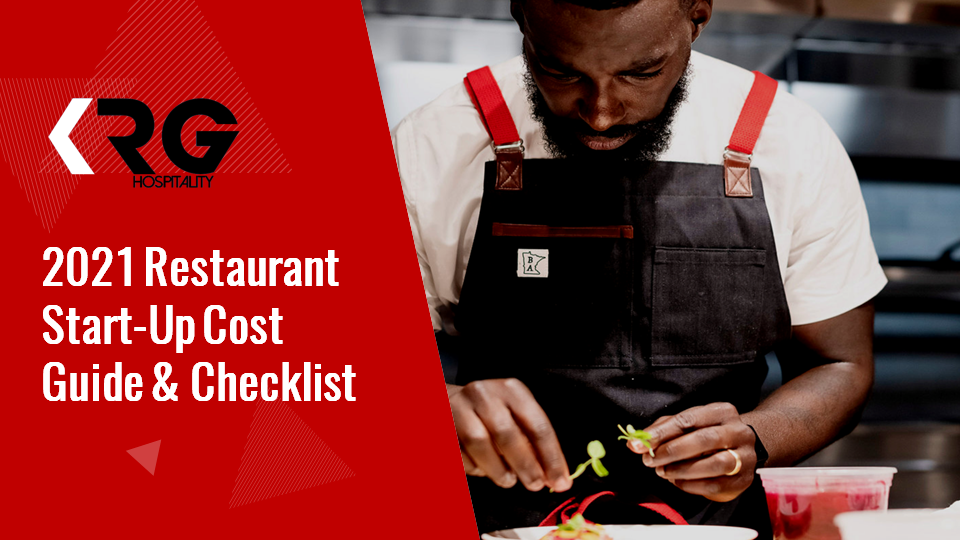
This guide gives anyone starting a restaurant, bar, brewpub or other F&B venue the best chance for success in 2021.

Hospitality has endured a nearly endless thrashing for almost an entire year. The calendar has ticked over to 2021 but still, the pummeling doesn’t have an end date.

However, the industry has endured and continues to do so. We don’t know when Covid-19 will cease presenting a threat but we know this: there’s no end to the fight in those in the hospitality community.

Veteran and neophyte owners and operators are still going to open new venues in 2021, pandemic be damned. That fact means it’s more crucial than ever before that owners are positioned for success.

The KRG Hospitality 2021 Restaurant Start-Up Cost Guide & Checklist aims to structure the process of opening a restaurant or bar to maximize an owner’s opportunity. The guide contains 2021 start-up costs, renovation costs, scaled costs, an in-depth milestone checklist, and more that will help readers understand the process and keep them on track to go from concept to opening doors as smoothly as possible.

Click here to download the guide and start down the path of restaurant or bar success today.

by David Klemt David Klemt No Comments

How to Address Temporary Restaurant and Bar Closures: 5 Social Media Examples

How to Address Temporary Restaurant and Bar Closures: 5 Social Media Examples

by David Klemt – 12/1/2020

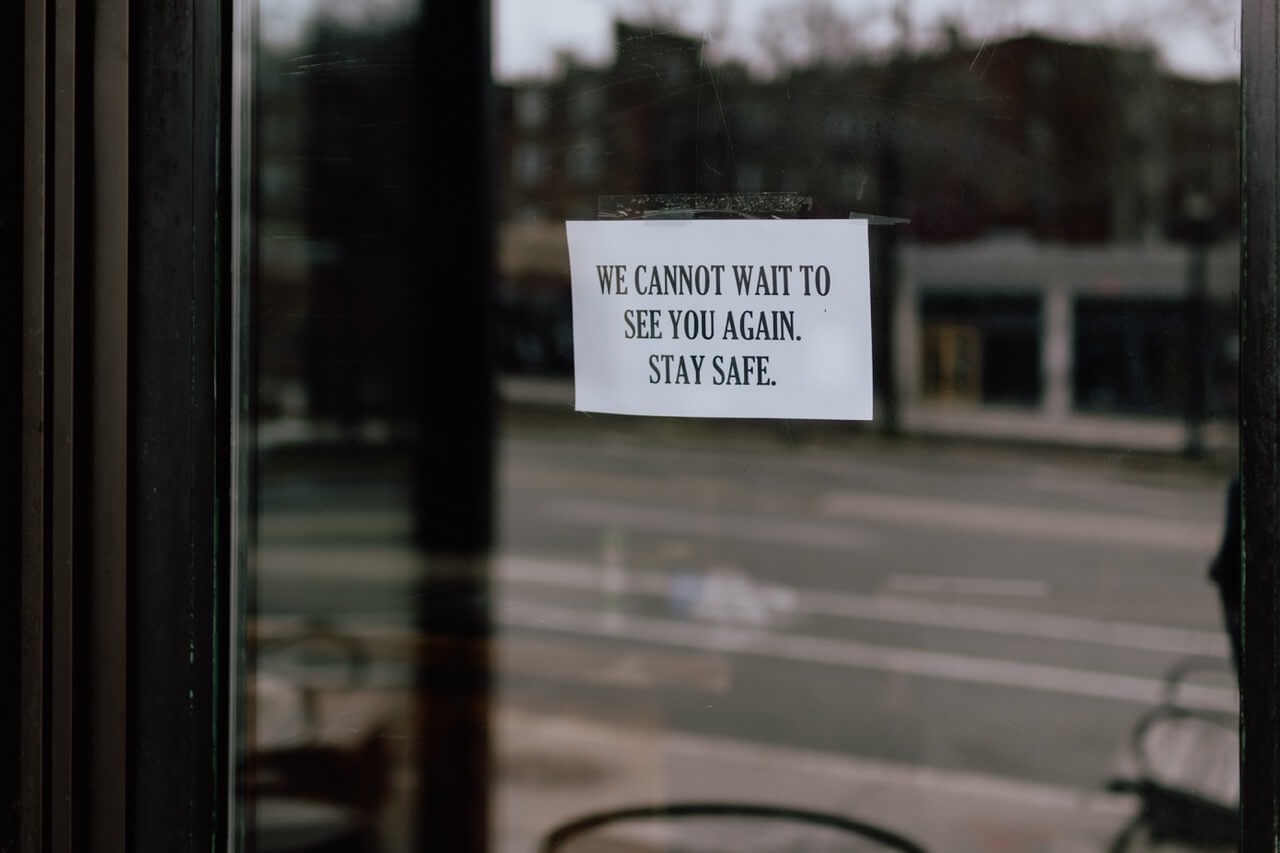
Repeated restaurant and bar closures have, tragically, become a hallmark of 2020.

Operators have had to learn how to communicate closures to potential indoor guests, as well as delivery and takeout guests.

For most operators, the possibility of closing their doors—temporarily or otherwise—has moved well past “if” territory. At this point, it’s not even a question of when a restaurant or bar will have to close, it’s a matter of when it will happen again.

There are a few reasons a F&B business will have to close due to the Covid-19 outbreak: official mandate, reduced indoor and outdoor dining capacities, and voluntary temporary closures.

Mandated closures are, on the surface, straightforward. Government officials decree that certain types of businesses must close their doors by a specific date and time, and owners are expected to comply.

Closures induced by capacity restrictions are less straightforward. It has become woefully apparent that most lawmakers don’t understand (or don’t care) that at a certain threshold, reducing indoor and outdoor dining capacities is as good as forcing a restaurant or bar to close; the value proposition of remaining open simply isn’t there.

A voluntary temporary closure can come about because of capacity limitations, but they can also be the result of other factors. A significant workforce reduction, lack of traffic, rising costs of goods, or an internal Covid infection.

The stark reality is that the likelihood today’s operators are going to have to craft social media posts and emails announcing temporary (and possibly extended) closures is anything but slim.

Below are four examples of effective closure announcements that bars across America have posted to Instagram recently.

Machine, an upscale cocktail bar and restaurant in Chicago, made the difficult decision to close their doors to in-person dining guests throughout the remainder of 2020. The post addressed the reason for the decision but made it clear that Machine would continue to operate for delivery and curbside pickup orders placed online. Community health and safety was held up as a priority, and though the news was disappointing and no doubt difficult to break, Machine’s post was positive.

Award-winning Chicago cocktail bar Lazy Bird, located in the basement of the Hoxton hotel, was forced to close due to indoor dining restrictions. The post image was short and to the point, with the caption explaining in detail why the bar was closing temporarily. Lazy Bird is part of the Boka Restaurant Group and their post included a call to action for people to support venues within the portfolio that would still be able to offer outdoor dining, delivery and takeout.

Three days ago, award-winning restaurant Compère Lapin announced a temporary closure due to a team member being exposed to Covid-19. Like the Machine post, Compère Lapin’s message explained their decision was based on safety. Similar to Lazy Bird, the restaurant urged guests to visit James Beard Award winner Chef Nina Compton’s other restaurant, Bywater American Bistro (BABs).

In Woburn, Massachusetts, just ten miles northwest of Boston, the Baldwin Bar alerted guests to their temporary closure because a staff member tested positive for Covid-19. The message, like that of Machine’s, was transparent, straightforward, reassuring, and positive overall. Not only did the Baldwin Bar share that the venue was undergoing a deep clean, they named the company tasked with providing the service.

The Baldwin Bar, thankfully, got to post the following message a little more than a day after posting their closure announcement:

Operators who find themselves in the terrible and frightening position of having to announce a temporary closure would do well to follow the examples above. While hope isn’t a viable business strategy, a hopeful tone can help garner support from the community.

Equally important are an emphasis on health, safety and cleanliness so guests feel comfortable placing orders for delivery and takeout, and returning when the doors open once again. As difficult as it may be when faced with closure, focusing on the well-being of the guests can help ensure there are guests lined up upon reopening.

Image: Photo by Kelly Sikkema on Unsplash