KRG Hospitality

by krghospitality krghospitality No Comments

Creating Adult Playgrounds in Your Bar

Creating Adult Playgrounds in Your Bar

By Doug Radkey 11/09/2017

Traditional darts, billiards, and even dance floors are starting to take a back seat in today’s fast-paced bar segment. To be current, playful, and competitive, today’s bars are required to step up their ‘game’; where having a great time must be a guarantee!

It’s no secret, that keeping guests in a venue for as long as possible creates more revenue generating opportunities. By providing a variety of interactive games and maximizing the square footage (creating an adult playground), venues can provide the energy needed to attract guests, amplify their brand messaging, and generate revenue throughout the many parts of a day or evening.

To do this successfully, bars need to first create unique value, vision, mission, and culture statements while understanding their true target market. This will ensure that the right mix of interactive games, music, food, and beverages are provided – creating an atmosphere that will resonate with the guest.

Here are five #barhacks to keep in mind when developing your venues interactive strategy plan:
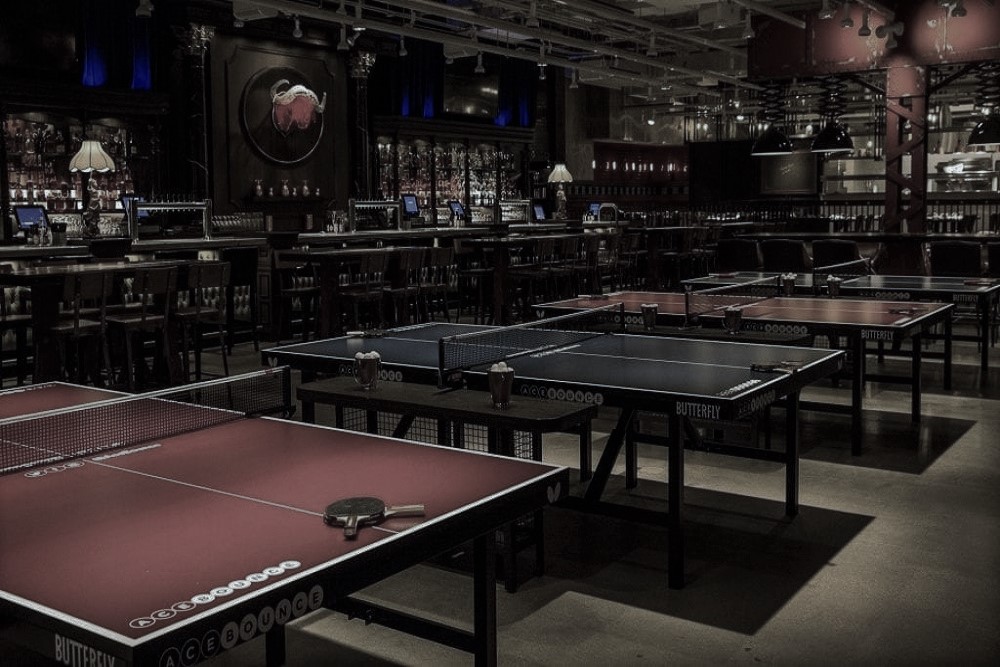
Create Energy

After reviewing your target market and the available square footage, what interactive games would generate positive energy and a memorable experience? Which day-parts are lacking revenue and what can you add to fill in the gaps and maximize on each operating moment?

Hot trends for new builds: If you’re just starting out, look at the feasibility of a business model that revolves around an adult driven bowling alley, shuffle board layout, axe throwing cages, and/or indoor golf simulation that pairs well with unique food, craft beer, cocktails, and music.

Hot trends for operating bars: If you’re already operating and don’t want to plan for a major renovation, analyze your current square footage and consider adding in the likes of bocce ball, adult arcades, ping pong, beer pong, foosball, life-size connect four or skee-ball for example; either indoors or outside on the patio. If you have multiple large screens, consider hosting sport tournaments using an x-box (as one example). Maximize each minute and feel free to rotate a variety of games in-and-out, to keep it fresh.

Collaborate

Providing this type of atmosphere and energy is what suppliers like to see. This opens up an opportunity to collaborate with your suppliers to step-up promotions and offer unique, highly valued prizes and theme nights that will be a win-win for everyone involved, including your customers.

Food & Drink

Once you know the interactive route you’re taking, it opens a large opportunity for unique menu items. Outside of traditional speciality menus, consider adding self serve food or drink stations. With fun, interactive adult games comes the notion to reflect on your youth. For example, a fill your own candy bowl station or build your own ice cream sundae station. Or perhaps consider adding in a ‘create your own’ Caesar (Bloody Mary) bar stocked with different flavour infused ingredients.

Revenue Packages

Adding in all of the above tactics will position your bar to create ‘stay & play’ type packages or revenue generating membership cards, which will also create long-term loyalty. With the right marketing plan, this ‘value-add’ approach will win with both the younger and older generations.

Amplification

When finalizing your strategy plan and mix of interactive games, music, food, and beverages, always think social media. Design everything so it is social media worthy meaning guests will want to take photos, take live video, or simply check-in at the hottest spot in town – creating an inevitable fear of missing out (FOMO) among their network.

Pairing all of this with a fun, secure atmosphere will undoubtedly create brand ambassadors and long-term success for your bar. It’s time to think outside the box and up your game to create memorable guest experiences!

by krghospitality krghospitality No Comments

Preparing Your Restaurant for Thanksgiving

Preparing Your Restaurant for Thanksgiving

Originally Posted on FoodableTV – By Doug Radkey 11/05/2017

Each individual has their own personal explanation of what Thanksgiving means to them. The general, modern celebration of Thanksgiving however, is characterized as an opportunity to enjoy quality time with friends, family, food, the occasional beverage, large parades, and yes, often the game of football.

It’s also a time to reflect, set aside political and corporate related agendas and turn a blind eye to the negative news surrounding us from around the world. Smiles, laughter, and memorable experiences are often shared over the course of the long weekend.

With so much focus around food, drink, and togetherness; what does all of this mean for restaurants on Thanksgiving?

Well, restaurants aim for a similar experience each and every day— offering food, beverage, smiles, laughter, and memorable moments with friends, co-workers, family, and loved ones.

Depending on the restaurant concept and its location, there likely lies a large opportunity to generate awareness, increase revenue, develop repeat customers, or hopefully, a combination of the three.

Here are six elements to consider for your restaurant around Thanksgiving:

1. Marketing 101

Solve a problem. For starters, a restaurant has an enormous opportunity to highlight consumer convenience by solving one of Thanksgiving’s largest ‘problems’.

What’s the one thing everyone enjoys at Thanksgiving? The answer (naturally) is eating the delicious Thanksgiving meal. What are the two things everyone dislikes at Thanksgiving? The answer is cooking the delicious meal (for many people) and of course cleaning up after the often large, messy meal.

With high quality design, consumer touch-points, and overall (pain-point) messaging, a marketing program can highlight convenience, more time for family, and yes, keeping a nice clean kitchen at home.

How can your restaurant leverage this solution?

2. Menu Development

The traditional Thanksgiving meal revolves around turkey, stuffing, yams, other vegetables, and of course, pumpkin pie. Is your restaurant in a position to offer this traditionally plated meal or other fall/harvest flavors? How about a unique variation or infusion based on your restaurant’s concept and kitchen structure?

Don’t be afraid to think outside-the-box and get creative. If you’re a sports bar, put together a football inspired Thanksgiving menu. If you’re a QSR near a parade route, create an easy-to-eat holiday inspired option for on-the-go.

Develop a menu plan with the entire kitchen team (and bar team) with the restaurant or bar’s target market and concept kept close in mind. As always, keep the specialized menu small and inviting to reduce inventory, prep-time, additional staff requirements, and potential waste.

3. Revenue Options

If you strongly believe the target market would prefer to dine at home for Thanksgiving, don’t look at it as a potential loss. This presents an opportunity to offer the catering of a traditional or concept-infused, Thanksgiving meal— right to their door!

Create a variation of value-added packages for different sized parties and request 72 hours (or more) notice to have it prepped and delivered, right on time. Just don’t forget the high quality take-out containers and plates for an easy clean-up afterwards! Pre-ordered packages such as this will generate cash-flow, control potential waste, and control staff costs.

4. Cross-Promotions

Make sure that special events and other winter related promotions are planned for well in advance. The Thanksgiving holiday weekend can act as a forerunner to both Christmas and New Years Eve parties, packages, and other revenue generating opportunities such as gift card sales.

With the right marketing and sales mix, a restaurant or bar can take advantage of pre-booking and pre-sale opportunities; keeping in mind many consumers are already in a money spending mindset, thanks to the likes of ‘Black Friday’ and ‘Cyber Monday’ which surrounds the holiday in the US.

Create a marketing plan that will drive sales now and over the next 1-2 months.

5. Giving Back

Based on your concept, target market, location, and/or size of establishment, maybe the above options aren’t right for you. This doesn’t mean that your restaurant cannot be involved in the festivities. Consider hosting a community benefit meal for less fortunate individuals or families, or hosting a meal for military personnel.

If that may not work, consider getting your team involved in the holiday by assisting at local food banks or shelters. This practice will not only increase employee engagement, but also develop a positive perception of your brand and increase the possibility of local media coverage. Make it a win-win for everyone involved!

6. Saying Thanks

It may sound obvious, but show what you’re thankful for. Give thanks to your customers with appropriate messaging on social media, your website, or within the specialized menu. You can step it up a notch and ask staff to provide a video snapshot on what Thanksgiving means to them and then create a video montage to share on Social Media.

Speaking of staff, let’s not forget about them! Ensure they’re given time to spend with their friends and family too. Be flexible with your scheduling and/or consider special operating hours over the course of the weekend – and don’t forget to thank them for their loyalty and commitment!

By truly knowing and understanding your target market, your concept, and the neighboring business environment, the Thanksgiving holiday weekend is an excellent time to showcase your brand and your creativity – ultimately generating awareness, revenue, and repeat business opportunities.

by krghospitality krghospitality No Comments

What to Look for in a Restaurant Business Partner

What to Look for in a Restaurant Business Partner

Originally Posted on Typsy by Doug Radkey – 11/01/2017

If you’ve worked as a leader in the restaurant industry, then you know what it’s like. You know that leaders have to be willing to make sacrifices and acquire the systemized thinking, social skills, creativity, stress management, and passion that it takes to be successful.

Becoming a restaurateur combines an enormous amount of passion and vision. You have to create food, drink, and overall experiences with a drive that is undeterred by the high number of unprecedented risks. You must be determined, positive, confident, adaptable, and crave learning experiences.

And even if you do have all of those qualities, it can often be too much for one person to endure. This is when considering a partnership might be ideal for some.

It’s not uncommon for restaurants to be started or initially operated by a partnership, and you will be hard pressed to find a well-known restaurant brand that didn’t start as a partnership before becoming a larger corporation.

However, partnerships aren’t easy. They come with their own set of challenges, both at the start-up phase and during the operational stage.

There must be a common vision, mission, and commitment, and a high level of communication, creativity, and expertise between partners. Effective partners will also play off each other’s strengths and weaknesses to succeed in this cutthroat industry.

Here are a few elements to consider when determining if a restaurant partnership is right for you. This is what you should be looking for in a business partner today.


1. Have a Three-Step Plan 

Before engaging in serious partnership discussions or agreements, it is crucial to complete a feasibility study, concept development plan, and business plan. Is the idea of a partnership even feasible? Can your restaurant concept withstand not only the market, but also two or more owners? Is there enough of a profit margin for all partners to live a healthy lifestyle? What are the short and long-term goals? 

Many questions need to be answered before you make any decisions, and these plans will lay the foundation needed to move forward.


2. Conduct a SWOT Analysis

There should be a competitive SWOT analysis within the business plan, but it is also ideal to complete a thorough SWOT analysis (strengths, weaknesses, opportunities and threats) on both a personal and partnership level. 

What strengths and weaknesses do you each possess, what opportunities exist if you decide to partner, and what threats will present themselves if you formulate a partnership? 

For full effectiveness, have all potential partner(s) complete the same and analyze all of the responses.


3. Create Statements

To ensure potential partners are on the same page, it is imperative that you all have a similar vision, mission, value, and culture statements. Complete an exercise, similar to the SWOT analysis, in which each individual writes a statement addressing those four categories. These answers should then be compared against one another.

A partnership will inevitably run into hard challenges if visions and goals are not equally aligned. If you cannot cohesively agree on these statements at this stage, don’t move on to the next step.


4. Review the Laws

It’s absolutely critical to review your national and local business laws, regulations, taxes, and how they may relate to structured partnerships, liability, and asset management. Many countries, states, provinces and local municipalities have different information on their registered requirements.

Study this information and review it with both an accountant and a lawyer, so you can determine which partnership structure is best for your unique situation.


5. Draft an Agreement

Restaurants, bars, and other hospitality related businesses are really no different to traditional businesses. There needs to be a comprehensive and clear partnership agreement in place, even if it is a friend or family member as the potential partner.

The agreement must clearly state the financial structure of the partnership (investment, return and profit share) in addition to property management involvement, labor involvement, and overall activeness within the business.

Will both partners be active in the day-to-day operations, or will one act as a ‘silent partner’? Often, one partner looks after the back-of-house while another looks after the front-of-house, or is one partner just there to assist in finances while the other operates the business? Every minor detail must be documented, reviewed by a lawyer, and signed for liability and accountability purposes.


At the end of the day, successful partnerships rely on setting realistic (S.M.A.R.T) goals, open communication, frequent meetings, defined roles, and sound business structure. Only partner with other individuals who are willing to be open, honest, and respectful, and share the same values that you do.

You will need a balance of planning, trust and talent to be compatible. There will undoubtedly be stressful situations throughout the start-up phase, operational phase, and overall partnership that will reveal who you have really partnered with.

By executing these steps, you should be able to limit any surprises. The same goes for partnerships as it does for business in general; if you fail to plan, then you plan to fail.

by krghospitality krghospitality No Comments

Security Strategies for Your Bar

Security Strategies for Your Bar

By Doug Radkey – 10/25/2017

Slips and falls, over-serving, theft, and violence are the most common reasons a bar needs very strict safety and security strategies. Bars, pubs, lounges, and clubs in particular, must continuously look at opportunities to reduce risk and liability.

The bar industry is built upon reputation and that reputation can be altered in the blink of an eye. In reality, it only takes a short moment of ‘looking the other way’ to create an unwanted atmosphere that encourages theft and an opportunity for violence, in particular.

As a bar owner, operator, manager, bartender, cook, server, or security personnel, it is your cohesive duty to create and maintain a safe environment and positive experience, not only for your customers, but your other team members as well.

How can we reduce risk and liability while creating a positive, memorable guest experience?

Bar Characteristics

The first thing to consider, is the bar concept. What brand messages are being portrayed? What type of environment has been created? Characteristics that often relate to violence and liability issues include darkness, crowded areas, noise level, competitive games (example pool tables), aggressive bouncers, and temperature/ventilation issues. How would you define your characteristics and what can be changed to improve them?

Drink Safety Policies

Guest harassment and potential danger, often comes with either the quantity of drinks consumed and/or the consumption of ‘spiked drinks’. Ensure that all bar staff have been highly trained (and have ongoing training) on proper serving protocols, signs of intoxication, and potential elements that can lead to ‘spiked drinks’ by other guests. In addition, it’s important to have a ‘safety drink’ that female guests can ask for if they feel they’re in danger, which should be posted in the female washroom indicating what to do if they feel they’re in a dangerous situation.

Install Strategic Cameras

There is plenty of new (affordable) technology that can assist in bar security, theft, and the protection of overall liability. Consider installing night & day 360 degree cameras to capture every moment as it happens. Cover the bar, liquor shelves, dance floors, cash registers, storage areas, hallways, patios, and all doorways with proper indoor or outdoor monitors. With digital storage space, you can now keep hours and months worth of data, to protect your brand from potential litigation.

Lighting Strategies

Dark areas are perceived as an area to start fights, to steal, to spike drinks, or to handle drugs. Ensure that washrooms are bright and that each light bulb both inside and outside the venue, has a true purpose. Is it to create atmosphere, create a sense of security, or a blend of both? Think through each light placement for a better sense of security and to protect both staff and customers.

Staying Alert

Sounds simple, but as time goes on, people often put their guard down and become complacent in their day-to-day activities. Absent-minded owners, managers, and staff can lead to danger for everyone. Provide a known presence, remember there is safety in numbers, and have ongoing meetings regarding theft, security, and guest experiences to keep everyone on the top of their game.

Bouncers

Are they still needed? Yes, they are an important part of a bars security plan, especially in larger establishments or venues with competitive gaming, live music or DJ’s, and dance floors. However, aggressive bouncers can actually lead to violence and security issues. Hire properly trained bouncers, have a security plan in place, and enforce your rules of conduct (which you hopefully have). Also, ensure your bouncers have a positive and transparent relationship with local police in addition to an effective communication plan, if there are multiple bouncers.

Bars can even step up their game by also hiring ‘guest experience officers’ who are visible on the floor both enhancing the guest experience and communicating with security staff of potential issues before they escalate. This is a less aggressive approach and is known to work, in both security elements and an increase in sales through brand perception.

Bars that target younger, less agreeable and more impulsive drinkers are the most at risk. Know your concept, know your target market, and know the consequences of having a poor security strategy. Your reputation and long-term success ultimately depends on it!

by krghospitality krghospitality No Comments

Often Overlooked Benefits of Restaurant Lighting

Often Overlooked Benefits of Restaurant Lighting

Originally Posted on FoodableTV by Doug Radkey – 10/19/2017

There are so many critical elements that go into the design of a restaurant, so much so that it can easily become overwhelming. It’s a moment during the start-up or renovation period, where specifics that play a large impact on customer experience, can simply be overlooked. One of the key elements that are often overlooked — is the importance of restaurant lighting.

To create positive emotions and to deliver on your promise for memorable customer experiences, a concept must think through its initial design while utilizing processes, maximizing communication, and creating surprises through a multitude of ‘touch points.’ Arguably one of the most important touch points in the overall design — is again that of restaurant lighting.

Lighting within a restaurant (or bar), affects many elements within both operations and guest experience, including food and drink presentation, atmosphere, and length of stay. Lights come in many creative materials, shapes, sizes, and brightness; therefore the largest challenge is finding the right balance for each location and concept.

When planning a restaurant space, one has to consider the ‘job’ of each light source. Is it meant to highlight wall features, to enhance a back-bar, to highlight walkways, washrooms, and exits, or is it to create the right mood over a table? Or perhaps it is for security, liability, and theft prevention?

When considering the job of each light source, it’s imperative to remember to keep customers and operations top of mind first and not the architecture itself.

Here are other ways that restaurant lighting can have a large impact on revenue, profit, and customer satisfaction by again, considering the ‘job’ of each source.

Sense of Security

Ensure that the restaurant and bar space is well lit (this is both inside and outside the venue). Strategic placement and brightness of lights will undoubtedly reduce theft opportunities, reduce damage to property, reduce injury and liability, and keep both employees and customers safe (especially at night).

Differentiated Space

Different lighting sources within a venue can assist in creating multiple spaces. Similar to guest positioning, lights can assist in highlighting the multiple “levels of comfort” that guests will connect with and want to be seated near, allowing the restaurant to maximize each individual seating area, effectively managing customer satisfaction and revenue opportunities.

Seat Optimization  

Lighting has another effect on Restaurant Revenue Management, as well. If a restaurant wants customers in and out quickly (QSR model), they should consider brighter lights paired with fast paced music, as it often makes guests feel hurried. A balance between warm and bright lights is ideal for casual restaurants where dimmed (softer) lights is therefore more ideal for restaurants that are looking for longer guest duration.

Kitchen & Bar Performance

Don’t forget about a restaurants team and the productive areas within the restaurant space. Ensure the correct light placement and correct choice of bulbs is decided upon for inside the kitchen and bar production area. Consider where food and beverage preparation and final presentation will be completed for a final quality check before being delivered to the guest.

Food & Beverage Presentation

Increase restaurant and bar profits with the correct back-lighting, up-lighting, and track lighting along liquor, beer, and wine displays. Take it up a notch and differentiate positioning of premium product with a different set of lights. Furthermore, food and drink can look unappealing if placed under the wrong lighting element— therefore bars and full service restaurants should use dimmers to control brightness (softness of light) and to ensure there are no shadows along the plate or glass while at a table.

Energy Conservation

When deciding on lights, consider the upfront cost and the ongoing energy cost and look for long-term operational savings, adding profits to a restaurants bottom line. Restaurants use a lot of lights so dimmers (or control systems) for example, are great for a variety of concepts to reduce costs and create more efficient layouts.

Curb Appeal

A restaurant cannot forget about its exterior lighting. Outside of the obvious security reasons, a well designed exterior with strategic lighting can in fact, invite people inside versus them choosing a neighboring restaurant. Lighting along entranceways, signage, landscape, and the up-lighting of architectural highlights, is most ideal. Lastly, outdoor lighting for a restaurants patio needs to be creatively decided upon and equally not overlooked to create not only the right outdoor atmosphere, but curb appeal, as well.

Poor restaurant lighting can lead to a cold and clinical feeling or a dark and unsafe feeling among guests. Lighting can also have a psychological effect on guests, as their minds may play tricks on them when it comes to flavors and scents for both food and drink. 

by krghospitality krghospitality No Comments

Creating Restaurant Brand Ambassadors

Creating Restaurant Brand Ambassadors

Originally Posted on FoodableTV by Doug Radkey – 10/14/2017

Ask nearly every restaurant owner what their number one, long-term marketing ‘program’ or tactic is, and most will say effective word of mouth. This can be great until it starts to fizzle down or another new restaurant opens up down the street resulting in the competition becoming the new talk of the town.

Instead of shooting into the wind and hoping ‘word of mouth’ with deliver desirable long-term results, restaurateurs need to embrace a program that is an extension of word-of-mouth marketing, by developing what is called ‘brand ambassadors.’

A brand ambassador will positively represent and promote a restaurant’s venue. They will embrace the company values, vision, mission, and culture. They will strengthen a restaurant’s identity within the community by providing additional visibility and overall awareness.

Yes, word of mouth happens organically over time because of excellent food, drink, service, and experiences, don’t get me wrong. But what if there was a way to double-down and create multiple micro-communities and multiple levels of ambassadors to promote a restaurant’s brand?

That’s where an ambassador program comes in.

Here’s how:

Owners & Operators

A winning brand ambassador program begins with guests and staff. However, as with any program, there needs to be a leader. As a restaurant owner or operator, there are many ways to be included within a brand ambassador program and be looked up to as the leader of the program.

Business Networking

Restaurant owners and operators can further ‘humanize the brand’ by networking within the community and showing the face behind the brand at a variety of business events that every city or community holds. Building effective hyper-local relationships is the first step to a winning program.

Community Involvement

Restaurants can build and protect their reputation by being involved in as many community based events as possible and even collaborating with other restaurant or foodservice operators within their area. An open mind and community driven mindset is essential.

Community Influencers

Restaurant owners and operators should also look to build long lasting relationships with community leaders, city officials, F&B distributors, local media, and bloggers— who are all influential within their city. These individuals can further amplify a restaurant’s positive message.

Set Goals

Once an owner or operator is on board with a true brand ambassador program, setting clear goals for both guest and staff ambassadors, is required. What do you want to see come out of this program? When setting goals, remember this one key rule a friend once said – ‘numbers lie and relationships rule’. Don’t look at the financials first; the money will flow once relationships are built.

Restaurant Guests

Happy customers are everything. They are the foundation to effective word of mouth. Outside of hoping they share their experience with their social network, there is a multitude of ways to get them further involved in the process of building true brand ambassadors.

Focus Group

Develop a group of individuals who show great interest in the restaurant (regular guests) and meet with them either once per month or quarter. Discuss upcoming community events, new menu items, or possible events to hold at the restaurant. Get them involved and give them something to talk about. For example, provide food and beverage samples of new menu items they will surely take photos of and share with their network.

Social Amplification

Similar to focus groups, consider holding ‘Facebook Only’ parties for example, where the only guests are ones that are fans of the restaurants page. This will surely amplify your messaging, product, and experience as they will be sharing photos or even live video of the event with their network.

Loyalty Programs

Every restaurant should have some form of loyalty program. There isn’t a one size fits all approach, but the general rule is that it will only work if the restaurant makes it worth something of perceived value. This comes down to knowing customer profiles and thinking of creative ways outside of just the standard ‘get one free after ten purchases’ loyalty program that everyone sees.

Restaurant Staff

When restaurant staff members are effectively on-boarded, trained, and are emotionally happy in their environment (a venue where they get a sense of achievement, respect, and wages) they are more often than not, willing to share the positive moments, effectively becoming brand ambassadors.

Provide Empowerment 

When staff members are given empowerment to make minor decisions, a lot of positive can come from it. Customer service is the number one benefit, and happy customers as we know, continue returning. A training program that focuses on customer service sequence training (role playing) will allow staff the opportunity to create relationships with guests while providing both confidence and empowerment within their respective roles.

Double the Social 

Nearly all employees will be active on some social media platform. Restaurants should look to encourage the use and even supply employees with content to share with their network. A social media training and a social media policy however, needs to be clearly articulated and signed off on to protect the brand. Furthermore, make sure staff members are included as much as possible with community events and any focus groups to amplify the social reach.

Create Stay Interviews

When staff members are happy, make a record of it. Create a ‘stay interview’ which is asking them questions such as why they love working at the restaurant so much? Create a video, share it, and post it on the restaurant’s website. This will create a positive brand perception which will improve hiring processes, reduce turnover costs, and set the stage for future brand ambassadors.

In summary, doing the unexpected, getting involved, creating engagement, highlighting staff, and listening to guests, will instantly develop the foundations for not only word of mouth, but that of a brand ambassador— delivering the desired long-term results!

by krghospitality krghospitality No Comments

Restaurant Seating Strategies

Restaurant Seating Strategies

Originally Posted on FoodableTV by Doug Radkey 10/09/2017

There are many tactical elements to operating a restaurant business and Restaurant Revenue Management (RRM) is one of them.

RRM can be defined simply as selling the right seat, to the right customer, at the right price, and for the right duration of time.

As property and overall restaurant operating costs continue to increase, so does the desire to maximize seating and guest turnover. This goes for either a full service or quick service restaurant environment. There is, however, a science to restaurant seating strategies— the essence of RRM.

First and foremost, restaurateurs need to understand their intended guest experience and their ideal customer profile — including guest behaviours — to maximize their seating potential.  

With the right seating strategy, a restaurateur will position themselves to increase guest spending, increase turned tables, and contribute to a more positive guest experience. Consequently, this will greatly affect the operator’s revenue and profit potential.

An award winning seating strategy will include the following planning steps and thought processes.

Here are six factors to think about:

1. Room Size

The general rule of thumb for a restaurant is to allocate 60 to 70 percent of real estate to the dining area with the remaining percentage allocated for kitchen, storage, and washrooms etc. Ideally, a restaurant wants to keep approximately 20 to 25 square feet per seat, to offer the most comfort and flexibility for guests and the most adequate flow for staff including traffic aisles, server stations, and beverage bars/counters.

For example, a 5,000 square foot property will provide approximately 3,250 square feet (65 percent) for the dining and/or service area, resulting in an average of 144 optimal seats (22.5 square feet per seat).

2. Table Size

As with the above room size, there is a general rule of thumb for table size as well. Ideally, guests should be given a minimum of 300 square inches of space (per guest). For example, a 24 inch by 30 inch table will offer 720 total square inches of space or 360 total square inches per guest for up to two guests, often enough space for traditional plating, utensils, and glassware.

Table size can fluctuate based on concept, menu, plating style, and service sequence. Make the tables too small, and guests will feel uncomfortable and leave more quickly. Make the tables too large, and your property will lose valuable real estate. In this case, size does matter!

3. Table Optimization

A profitable interior design combines a variety of table sizes to meet the demand of different sized parties in addition to maximizing Sales Per Minute (SPM), an essential key performance indicator of Restaurant Revenue Management. For a restaurant to be successful, it needs to live in the moment by maximizing every day, every hour, and every seat.

Optimizing table sizes and their positioning, will improve traffic flow and turnover while reducing noise and accidents within the restaurant. Utilize point-of-sale reports to understand typical party sizes, average duration of stay, and dollars spent to ensure the restaurant is not wasting any seats or opportunities.

4. Guest Positioning

Depending on the concept, we know guests either sit themselves or wait to be seated. If one were to sit back and watch how guests were to seat themselves in a full service restaurant, a high percentage of guests would rather choose to sit near a window, featured wall (near fireplaces or wine racks, for example), or a partition wall. This is because these elements create a level of comfort.

When planning a floor layout, it is important to keep this in mind and create multiple “levels of comfort” that guests will connect with and want to be seated near, allowing the restaurant to maximize the space and not have undesirable seating areas that lead to quick visits and less spending.

5. Seating Styles

Without getting into specific details on chair styles (that’s another article), there are three key seating arrangements that are known to either keep guests in their seats and/or keep them spending more money.

Banquette tables (a bench along a wall with an opposite chair), often reduces sales per minute because it keeps guests sitting longer (which can be a great thing). This results, however, in a requirement for the restaurant to up-sell coffees, desserts, and/or other profitable items throughout the meal. This is a critical communication point to all service staff.

Booths on the other hand, are the number one option for guests and users of these booths are known to spend more in both time and dollars, as they feel highly comfortable and often feel a higher sense of privacy. Unfortunately, most restaurants cannot offer a space consisting 100 percent of booths, nor is it ideal for single diners. The right table and seating mix is required, but more booths than others, is a more desirable approach.

Traditional tables, those with two or more seats, often lead to quicker visits, unless strategically positioned near levels of comfort and appropriately spaced apart — offering a more intimate experience and ultimately leading to longer stays. It is essential this setting is truly mixed for seating of two and four (or more) to maximize potential and to reduce the risk of a single diner, for example, sitting at a table for four.

6. Guest Duration

By now, we understand that the longer a guest stays, the more they need to spend to maximize the seat and space. As a restaurateur who knows their concept and ideal customer profile, one must decide whether to focus on longer stays and higher revenues per table or to focus on volume of guests (resulting in volume food and beverage production).

What is needed to not only breakeven, but be profitable long term while having a highly productive, but not overrun kitchen and bar?

Every concept and every location will be slightly different, but once you know the average meal length, one can determine many other aspects of the restaurant such as the full potential for each day of the week which will then correlate to improving other financial management components including optimal staff schedules and food and beverage preparation.  

by krghospitality krghospitality No Comments

How to Set Employee Expectations in Your Restaurant or Bar

How to Set Employee Expectations in Your Restaurant or Bar

Originally Posted on Typsy by Doug Radkey – 09/28/2017

Effective communication can provide your restaurant with two things. First of all, it creates an atmosphere where both front of house and back of house employees are excited, motivated, and honest. Second of all, it helps you establish workplace expectations, which can lower staff turnover costs.

Proper communication starts from the top, and from the time someone is employed (or arguably during the interview stage). The key to setting expectations, communication, and a positive working environment starts with onboarding, operation manuals, and formal training.


Onboarding

The true meaning of onboarding is often overlooked within the restaurant industry, though it should be a priority! It’s an opportunity to introduce new hires to your expectations and culture.

It’s also your chance to define what it means to be productive, promote compliance, and create the footprint for a memorable working experience.

Use the first day to discuss:

  • Short-term and long-term goals
  • The history of the restaurant
  • The vision
  • The mission
  • The values that make you who you are
  • Why customers enjoy your establishment

Create an open dialogue and allow for questions. Discuss the importance of manuals and training and set realistic goals for training completion.

The days of throwing new hires into the fire on their first day of work needs to come to an end; no matter their level of experience.

If restaurants hire for a mix of values and experience, versus experience alone, and create a systematic approach to hiring through proper job advertisements, interview processes, onboarding, manuals, and training, they will see an immediate difference in their culture and turnover costs.

This is why it’s important to remember that ‘values beat experience, when experience doesn’t work hard’.

The onboarding process should also be fun and exciting. Consider taking the process to the next level by developing a creative welcome package that consists of inexpensive but valuable tools, resources, and restaurant branded products that will go along with the paperwork needed for new hires.

This will instantly make your new hires feel like they’re a part of a team and set your restaurant apart from others in the immediate area. The added bonus is they will probably take a photo of their welcome package and share it with their social network!


Operation Manuals

Operation manuals should further outline items like:

  • Key statements
  • Policies
  • Probation periods
  • Scheduling
  • Harassment
  • Pay scales
  • Pay schedules
  • Tipping procedures
  • Emergency procedures
  • Pre-shift meetings
  • Opening/closing checklists

There should also be a complete kitchen and bar recipe manual that is continuously updated based on the current menu.

It probably sounds like this is going to be a large and heavy book (that no one will read because it sounds boring). Keep the categories short but impactful, and consider breaking them up into separate mini-packages.

You also want to keep in mind the variety of ages within your team and how they may react to different training and manual related material.

Consider creating a mix of visuals, infographics, videos, and written material in your operations manual. Incorporating video into the mix is a great way to create consistency in your messaging, and it will save you valuable resources over time.

It is imperative, however, that all components within the operations manual have a form of accountability. Make sure your new employees are signing off on their responsibilities so you have something to keep on record. They must ‘own’ it!


Staff Training

Staff training plays the third and final role in developing employee expectations. New hires need to be taught the specifics of your restaurant’s concept and business model.

They need to learn how to interact with customers, service sequences, food and beverage production, and specific equipment safety.

An advanced training program will offer adhoc training and cross-training opportunities. It will also offer a mix of classroom-style training (offline or online with a tool like Typsy), off-site training (at a brewery or winery for example), and on-the-job training (shadowing) that should be followed by tests to ensure the messages are being received.

The value of a training program lies within its structure. A winning training program will not try to train an employee all in one day, and you shouldn’t expect new hires to remember everything they learn in one session for the rest of their employment. It is imperative that a training program also includes refreshers and reviews, something that can be done in pre-shift meetings or during a restaurant’s periodic downtime.

A high percentage of employee turnover occurs within the first few weeks of employment. Step into a new hire’s shoes and remember your first days on the job, whether in a restaurant or another industry. How was your experience? Was it positive, memorable, and engaging? Most will likely say not.

In summary, you want to develop systems, experiences, confidence, morale, and consistency, which will set the expectations needed to successfully operate a restaurant.

If you have the correct mindset, the correct programs, and the correct leadership, any previous onboarding, operation manual and training nightmares will simultaneously go away, benefiting operators, employees, and yes, even the guest.

It takes a complete team effort and it starts from day one.

by krghospitality krghospitality No Comments

Sound Engineering for Your Bar or Restaurant

Sound Engineering for Your Restaurant or Bar

By Doug Radkey – 09/26/2017

In the bar (and restaurant) industry, emotions and experiences are paramount. Without delivering positive emotions and memorable experiences, you will not have a long lasting business. Outside of food, drink, seating, video, and decor – properly engineered sound (music) can enhance those much needed feelings that guests’ ever so often, desire.

Music has the authority to deliver the right ambiance based on one’s brand and based on one’s target demographic while increasing overall profits. No matter the concept, guests are known to enjoy their food, drink, and inner-circle company more so when music is playing; which ultimately makes them stay longer and of course, spend more of their hard earned dollars at one’s venue.

We sat down with our friends at Playdio Inc., a new platform labelled ‘handcrafted radio for your business’ to ask them a few key questions regarding the importance of sound engineering in bars today. Here’s what they had to say!

Bar Start-Ups

If you’re in the start-up phase of your food & beverage business, don’t overlook the importance of music and sound. As Mat Lunnen of Playdio tells us “a new bar is like a luxury cruise liner – it’s not a speed boat. Erratic music creates erratic guest behaviour. Changes in your music should be subtle turns like a large ship, not swerving in and out of the water like a jet ski.”

To accomplish this is no easy task. It takes the correct sound system, the correct speakers, the correct speaker placement, and the correct level of sound paired with sound management (song choices and playlists) to make it work like the noted luxury cruise liner.

“You’ve taken the time to surround yourself with professionals in your business. From designers and architects, to bookkeepers and chef/bar consultants, you rely on experts to craft these parts of your business. Music is equally as important and cannot be overlooked.”

Working with a sound or music professional “allows you to dive deeper into understanding your day parts and demographics while creating memorable and meaningful experiences for all your customers.”

In summary, make the right choice and invest in proper sound engineering and sound management, right from the start.

Psychology of Day-Parts

Whether it’s pre-game drinks at a bar, or a fine dining experience at a restaurant, crafting the perfect playlist is an art form. “Using professionals can help increase customer engagement, and impact customer behaviour & spending patterns, while allowing you to focus on the more pressing day to day issues of your business.”

Mat’s advice “is to take a good look at your day parts, understand them and who is in your business at that time, and create appropriate playlists for each day part”.

For example, during lunch hour, consider upping the tempo and energy of the music being played to encourage guests to eat their food faster, opening up tables for additional customers.  Analyze each hour of the day and the type of guests you’re typically serving. Subtle tweaks to music selection can play a large part in duration of stay, money spent, and guest satisfaction.

Four-Walls Marketing

Marketing events through sound & music is also an excellent way to drive emotion and memorable experiences. Does your bar show the hockey game every Saturday night? It would be ideal then to “play stadium songs that we would normally hear at the hockey arena, as if we were really there, to get your customers in the mood”. Don’t want guests heading to the exits after the game? Consider “crafting a high energy, familiar playlist and then crank the volume to keep the party going” which is a great option to pair with late night food & drink menus.

———-

When you “take songs that are connected to our memories and times in our lives where music and sound had more of an impact on us – we increase social experiences, social activity, and often connect those feelings back to a specific venue where the song was played”.

Music builds brand perception, creates an atmosphere, influences guest behaviour, attracts & prolongs guest visits, increases staff productivity, and boosts staff morale. Who wouldn’t want all of that!?

by krghospitality krghospitality No Comments

Is Your Restaurant Ready for Digital Ordering

Is Your Restaurant Ready for Digital Ordering

Originally Posted on FoodableTV by Doug Radkey – 09/15/2017

Nearly every household orders food to-go from a local restaurant at least once or twice per month (some per week) and the days of traditional ‘phone orders’ or simply waiting in line, are clearly coming to an end thanks to new and continuously improving technology.

Many independent restaurants have been sitting back, watching the development of online/mobile ordering, also known as digital ordering, wondering if they need to get into this space and/or how to even get started.

The question shouldn’t be ‘should we introduce digital ordering?’— the question should be ‘when will we introduce digital ordering?’

The answer to that question should be: As soon as possible, BUT only when your operations are ready for it and you won’t be undermining any restaurant fundamentals throughout the process.

If you haven’t implemented digital ordering yet, don’t freak out!

It’s obvious you didn’t open a restaurant because you love technology. You opened one because you love food, drink, and serving a community through the development of customer experiences.

There are numerous benefits, however, to offering digital ordering methods to your guests. The good thing is that technology (or apps) currently on the market (for example, Gloria Foods) have made it extremely simple and cost effective to introduce this new feature while improving on customer experiences.

To sum it up, independent restaurateurs no longer need an IT department or professional to get started— the hard work is already done for you!

If you’re on the fence about the how, why, and when of digital ordering for your establishment, consider the following tips to see if it’s the right fit for you.

Improves Efficiencies – Digital ordering will not tie-up phone lines or require staff to stand around taking manual orders.  This will allow staff to be more productive in terms of food preparation and other customer service requirements, especially if the ordering method is tied right into the point-of-sale system. This will undoubtedly and effectively control labour costs while improving communication amongst your team and your customers.  Speaking of preparation, digital ordering methods often allow customers to ‘pre-order’ hours ahead of time, allowing the kitchen more time to prep, just like traditional table reservations would for a full-service restaurant.

Improves Quality Control – Digital ordering will also reduce human error often associated with phone or counter orders (due to background noise, customer accents, or simple misunderstanding), resulting in higher customer satisfaction rates and often quicker customer return rates.

Improves Mobile Presence – With digital ordering, you instantly have a mobile app while improving your mobile and online presence, which then improves your SEO, marketing, and overall customer satisfaction. Use this updated technology to ensure your website, social media, and online efforts work FOR you, not against you.

Improves Competitive Advantage – You’re not alone when it comes to not having online ordering methods implemented. It is likely true, many of your hyper-local competitors are ‘behind,’ as well. This means that introducing this technology will give you an immediate advantage while also positioning you to compete at a higher level with the larger mainstream brands in your area.

Improves Overall Revenue – When customers are given more time to order and can view all of the different menu options available to them, they tend to spend more money. Digital ordering increases impulse purchases through effective up-selling. Imagine what adding even just $2-$4 could mean to your bottom line!

Improves Marketing Efforts – Lastly, digital ordering collects data that is highly beneficial. Many of the applications offer ways to track previous orders, create customized profiles to predict sales, and understand which neighbourhoods are buying and which ones are not. It also provides an avenue to improve social media efforts by driving sales directly through these platforms.

Introducing digital ordering methods can, however, come with their challenges for operators and these challenges are not necessarily technology driven. Here are some to consider.

Menu Setup – It must be easy for customers to navigate your menu. If there are customizable dishes (for example, a hamburger), it must be very easy for customers to decide which toppings they want and don’t want. In addition, typical food sensitivities or allergy alerts need to be clearly visible to the customer on your digital application. The solution is to keep your menu simple.

Delivery Options – With digital ordering as an option, the expectation of delivery often presents itself to your customer. It’s not mandatory, but something to consider as an operator. Delivery can create more immediate questions than answers, though, as one needs to decide on using either a delivery app company or hiring their own set of drivers. This, then, poses insurance questions and another potential increase in costs. Delivery can be expensive and difficult to ensure food is delivered as advertised— meaning your style of to-go packaging will need to also be reviewed for quality assurance.

Venue Layouts – With an increase in digital orders or to-go orders, in general, a restaurant’s layout may need to be adjusted. This could mean less tables and larger pick-up areas. It could also mean aligning kitchen equipment differently and even creating specified digital ordering pickup parking spaces to ensure these customers are in and out, as quickly as possible.

The entire premise of digital ordering is to simplify the ordering sequence, for both the restaurant and the customer. If you cannot promise a high level of customer satisfaction, then you’re not ready.

Don’t start to offer digital ordering just because others are offering it.

It needs to be thought through and planned for long before it’s launched. In summary, customers must enjoy the digital ordering experience just as much as the food they’re ordering.

by krghospitality krghospitality No Comments

How to Develop a Restaurant Menu – For Real

How to Develop a Restaurant Menu – For Real

Originally Posted on Typsy by Doug Radkey 08/31/2017

It doesn’t matter if you’re developing your very first restaurant menu or you’re planning to re-invent your current one – you need to have a strategy in place with both the food and beverages on offer. 

If you’ve done a concept development plan, you’re already on the right path. Your restaurant menu is there to give meaning to the overall guest experience while also delivering emotions and brand personality.

These are the fundamentals of a restaurant’s concept.

To develop a memorable food and beverage menu, however, you must have a thorough understanding of your target customers. You should also undertake an advanced hyper-local analysis (competitive analysis) and aim to understand your local economic factors.

If you’re just starting out, developing a menu concept will assist both you and your architect in designing a kitchen and bar layout that is going to deliver effective productivity, storage, and preparation.

Here are a few tips to help you get started.


1. Develop Your Menu Concept

First and foremost, you should ask yourself what you want your restaurant to be known for. The best ‘what’ in your area? From here, you can begin to develop a flavor profile with supporting elements such as colors and textures that will deliver that promise.

The goal is to keep it simple and memorable. Try to keep your menu under 24 items for optimal productivity, and to minimize confusion and anxiety among your guests (and staff).

Remember, guests prefer to make a decision within 120 seconds.

Take this time to list out your desired menu and if it’s too large, begin to narrow it down.


2. Develop a List of Core Ingredients

Developing a menu and/or new and specific dishes and drinks can take a lot of trial and error. It’s important to understand your concept and target market while working with flavors that will make customers go ‘wow’!

Put together a list of the core ingredients that will deliver that wow factor within your desired menu. You’ll also want to consider how you can repurpose raw ingredients as much as possible to reduce food costs and potential waste.

Consider this; how can the kitchen & bar collaborate to maximize the yield on ingredients?

When considering ingredients, try using as much product from around you as possible – for example, produce that is in season, food artisans from your area, or meats from a local farm/butcher. Take this time to list out all the main ingredients you will require.


3. Investigate Your Supply Chain 

Now that you know your concept and its core ingredients, where can you find them?

You want to reduce your risk (and often costs) by eliminating as many third parties as possible within the supply chain. When planning your menu(s), list out a limited number of targeted suppliers, including data on their company history, any past product recalls, their storage facilities, delivery logistics, and ethical working environment.

Build a list of two to three local butchers, seafood suppliers, dry goods, craft breweries, local wineries, and produce suppliers (etc.) needed for your concept.


4. Cost Out Your Menu Items

Using a recipe management program or simply inputting available data into a spreadsheet will allow you to begin analyzing your menu concept, its portions, and each associated item with its core list of ingredients.

Based on the concept, noted ingredients, and each supplier’s cost, can the menu items be priced accordingly for your target customers and local economy? Is there enough room for profit based on your location’s needs? Is there enough balance in the pricing? What is the goal for average revenue per customer?

This is where having a business plan in place will assist in understanding appropriate key performance indicators (KPIs) required to be a successful restaurant.


5. Visualize Plating and Glassware

Now that you have the concept and initial costs figured out, you can move along to the next step. Many aspiring restaurateurs forget about this one. It’s time to consider how your guests will eat and drink your menu offerings.

How will it look on the plate or in the glass? How will the colors contrast with one another? Is the dish or drink ‘Instagram’-worthy? Which elements should go on a fork or spoon together?

If it’s available for take-out, how will the menu item perform after being in a container for 10+ minutes on the drive home?

It’s ideal to plate it three different ways, test it, take photos, and also test its longevity if it is going to be available for take-out.

Again, trial and error makes perfect.


6. Run a Test Kitchen

This is arguably the most exciting aspect – testing the flavors! Do the menu items meet and exceed your expectations? Give each item a few different tweaks and decide which is best. Get others involved in the process and don’t be afraid to use a soft opening to gather further feedback.

You may want to take photos and put them on social media to see which ones gather the most engagement from a visual standpoint.

At the end of the day, the key to a profitable and memorable menu is to keep it small and focused with signature items that you want to be known for – while differentiating your concept from local competition and offering a balance in pricing.

This is the recipe for success!

by krghospitality krghospitality No Comments

7 Ways You Can Increase Your Restaurant Brand’s Social Responsibility

7 Ways You Can Increase Your Restaurant Brand’s Social Responsibility

Originally Posted on FoodableTV by Doug Radkey – 08/30/17

Giving back to the communities we serve is not a mandated practice, but is rather something extra that restaurants, and businesses alike, can do to improve their local and national communities.

This is also known as— social responsibility.

This practice can not only increase employee engagement, but also:

  • Develop a positive perception of your brand
  • Increase revenue opportunities; and
  • Increase the possibility of local media coverage

What restaurant wouldn’t want that?

According to the National Restaurant Association, over 90% of restaurants in the U.S. make some form of charitable contribution each year.

What more can be done, you ask?

Let’s take a look!

It can be as simple as what the Taproom on 19th does in Philadelphia. The gastropub in partnership with its neighborhood association, gives out free beer to anyone who donates school supplies and winter coats.   

It can involve a more hands-on approach, like what Joey Restaurants is doing with their Cup of Care program, where their front of house, back of house, and head office leaders volunteer their time to wash, peel, and chop over vegetables for beef and barley soup “To date, JOEY has served 100,000 hot meals across Canada, Seattle and Los Angeles partnering with local shelters and organizations” chosen by their employees in each of their communities.

Or, it can involve improving and educating your own team, like Chick-fil-A has done since 1973 with their scholarship program. This brand has been helping restaurant team members achieve their dreams of higher education. Since then, nearly 36,000 team members have received scholarships from the company, “bringing the total amount to nearly $36 million applied at more than 3,000 schools nationwide” as stated in a 2016 blog post on Chick-fil-A’s The Chicken Wire.

Below are a few items to consider when either starting or revamping your own social responsibility program to deliver a more memorable impact!

1. Make it a Team Based Mission

Part of your vision, should be improving your community. How will you turn your vision into a promise? Your program should be highlighted in your mission statement, so it can be shared with your team and community. Take it a step further and set up SMART goals for your program to hold a level of accountability. How much time and/or financial resources do you want to work towards and give back each quarter or year?

2. Reflecting On Your Values

Hopefully you’ve taken the time to define your importance, worth and usefulness within your restaurants statements. If you’ve hired and built your team based on both values and experience, your team should have a common goal of wanting to give back. Get them involved in your social program and have them open up about causes they really care about, as well.

3. Environmental Impact

Is there a way your restaurant can build on sustainability? What energy efficient measures can you put in place at your venue(s) and how can you source more ethical food and beverage products to reduce your environmental footprint?  You can also help the environment out by donating used equipment to nonprofits when it’s time to upgrade (instead of disposing them at your local landfill). What kind of impact do you want your brand to leave behind?

4. Local Events

Restaurants pose an easy and enormous opportunity to sponsor local events or teams, or by donating a percentage of revenues to a local benefit event or organization. With a large seating area, a restaurant can also host a fundraising day or night at the restaurant itself. Restaurateurs can also look to support local military and first responders with dining discounts or donations to their equally important charity programs.

5. Team Building

Your restaurant could also take the approach to improve the long-term wellbeing of your team, through a scholarship or further-education program. This could be additional culinary, management, or mixology education scholarships for example, that will improve your operations, both now and in the future. Speaking of team building, giving back often leads to a more positive work environment and increase in staff retention, plus an increase in creativity and personal growth while promoting individual philanthropy.

6. Disaster Relief

When disaster strikes, restaurants are often in a position to lend a helping hand, either locally, nationally, or globally. Whether it is a tornado, earthquake, hurricane, or other life altering event, restaurants can become hubs for financial donations in addition to ‘match funding’ programs – or even the delivery of food or chefs right to the front-lines.

7. Poverty Assistance

This is an unfortunate aspect of nearly every community. Restaurants are given the opportunity to help the less fortunate through a variety of methods, including volunteer participation, hosting a neighborhood cookout, or by hosting food drives benefiting the local food bank, just to name a few.

As much as a restaurant brands should be taking part in social responsibility for the sole betterment of their community, you should want your program to also improve your image, increase media coverage, develop engagement, and attract investors.

Make sure your program is visible on your website, within the four walls of your establishment, and throughout your social media channels to maximize its reach and potential.

Make it a win-win for everyone!

by krghospitality krghospitality No Comments

Before You Expand Your Restaurant Read This

Before You Expand Your Restaurant Read This

Originally Posted on FoodableTV by Doug Radkey – 08/22/17

Whether you’re an aspiring restaurateur or an experienced operator, it has likely crossed your mind to open at least a “few locations,” or to begin “franchising” a winning concept.

It’s in our human nature to grow and always look for more, right?

When the timing is right, expanding with multiple locations can make a lot of sense for a brand, but only if it is truly, the right time.

A common first challenge is that many restaurants, even successful restaurants, are simply not ready or properly positioned for this type of expansion. To scale a restaurant from one location to two or three and/or to lay the groundwork for franchising, it takes a variety of planning methods, in-depth market research, and the proper execution of a variety of systems.

The second challenge is that many independent restaurateurs try to go through this growth stage all on their own or with their first location’s key staff members, often resulting in burnout for everyone involved and ultimately sacrificing the success of the first restaurant.

The silver lining is that every challenge has a solution if you approach it with the right mindset.

To prepare a restaurant for growth, the following strategies and due diligence need to be prepped prior to moving forward with the idea:

Prep a Business Plan

Just because the first location was successful, doesn’t mean the second or third location will automatically have the same success.

Whether you plan to fund the growth stage yourself or pitch the growth stage to investors, a business plan is vital to the success of not only one, but multiple locations. A market feasibility study (demographics and competition) for each location in addition to trend management, financial forecasting, start-up costs, staff structure, and realistic time-frames to meet critical objectives, all should be vetted out to achieve the long-term success of each location (including the original).

Determine Your Concept Characteristics  

If you’re looking to get into franchising in particular, it is wise to consider operating two or three locations first, prior to executing a ‘franchising plan’. Before others will invest in the concept, it must be tested in a variety of settings and demographics – not just one.

This is where ensuring the five concept characteristics of being scalable, profitable, memorable, consistent, and sustainable are evident in not only your designs, but your complete operations. It may be a wise investment to have a 360 degree assessment done on your venue.

Make Sure Your Systems Can Be Easily Duplicated

Arguably one of the most important aspects in terms of growth is ensuring that each restaurant has the right systems in place. Duplication is the key.

Your operations will undoubtedly run like a well-oiled machine if all restaurant outlets are using the same winning formula.

Each location must operate in unison. If even one system (training, communication, marketing, preparation, inventory, human resources) is broken or is non-existent in the first location, the second location will struggle even more. To do this, there must be operational manuals, HR policies, and training platforms in place that can be easily duplicated.

Keep the Kitchen & Bar Consistent

Playing off of the systems – if you’re developing identical concepts, consistency is essential. If a location is ready for growth, it’s because it’s built a brand with memorable food, drink, and guest experiences.

This must be duplicated among all additional outlets.

But now that a location is growing, so do the expectations of its guests. All recipe books, portions, supply chain, kitchen manuals, bar manuals, and staff training must be created equally and consistently across all channels.

Implement a Supporting Cast  

Remember that everything is multiplied when adding additional locations, including the headaches and sacrifices it takes to operate just one location.

Are you in a position to handle this extra workload? The answer is probably no. What often happens is the owner will spend more time at the new location, leaving the first location vulnerable.

That’s why it’s important to take the time to consider the right management team for multiple locations, including additional chefs, managers, and supervisors in addition to startup specialists like consultants, designers, engineers, and architects that will save time, money, and energy.

Re-evaluate Your Marketing Plan

Is your current marketing plan suitable for multiple locations? What has worked and not worked for the first location? What would need to be changed in terms of the website, search engine optimization, social media, and print collateral to name a few?

In addition, if not already complete, trademarking the name, logo, and any associated tag-lines is also critical to protect the brand in new or multiple markets.

In short, restaurant growth and/or franchising can create enormous opportunities if executed properly.

That said, the number of locations a restaurateur or restaurant group may have is simply that, just a number. It’s important to not forget the fundamentals, where the quality of food & beverage, customer service, and guest experience is paramount at each location.

by krghospitality krghospitality No Comments

Developing a Profitable Beer Program

Developing a Profitable Beer Program

By Doug Radkey – 07/28/2017

You could try and make everyone happy by offering hundreds of beers at your bar, but for many, that’s likely not going to happen due to space restraints.

A bar needs to carefully consider their beer program and offer one that is balanced, targeted, and one that fits their concept to maximize its potential.

A great beer program should have the same respect as a carefully drafted wine or cocktail program. Don’t build a beer program based solely on the recommendations of a brewery sales representative.

Outside of advanced bar design, adequate refrigeration, and proper draught lines etc., here are some helpful tips for you to consider, when designing a new or revised beer program.

Market Research

Assuming you know the targeted demographics of your bar and the hyper-local area surrounding your bar, you first need to develop a program that speaks to them and your concept.

  • Is the beer intended to compliment a meal or simply promote a refreshing, good time?
  • What are the age brackets, income levels, and number of men vs. women?
  • How long are your guests intended to stay?

There is a difference between a sports bar and a neighbourhood pub or a bar & grill. Knowing this data will help determine the next steps.

Craft vs. Big Brand

Once you know the above, you can then focus on styles and not necessarily brand names. We can all agree that the craft beer ‘movement’ isn’t going anywhere, but don’t just create a craft beer program because everyone else is. Know the market, know your customers, know your flavour profiles, and create a mix of known brand names and local craft beers, with the right balance of styles.

Beer Balance

As it’s noted, focus on styles and flavour profiles. If you have an excellent food program (let’s hope you do), you can effectively pair beer with your food menu just as you would with wine and cocktails to create a full sensory experience. You can also step up your beer program by offering seasonal beers that rotate while keeping your program fresh and exciting. If each beer program has at least one of the following, there should be enough options for proper pairings; Pilsner, Amber, IPA, Farmhouse, Wheat, Pale Ale, and Stout.

Product Consistency

When it’s time to choose your preferred breweries for the beer program, remember that quality must be kept top priority. Not only in taste, but the breweries customer service and delivery logistics. This is especially important with craft beers and how quickly they’re emerging. Visit the brewery and have a tour while you discuss their product, their recall program, delivery schedules, pricing, and emergency calls (example, you’ve ran out of beer before the next delivery).

Beer Education

Once that is all solidified, all of the service staff and bartenders need to be educated on each of the beers. They should know the beers history, ingredients, flavour profile, and correct pouring methods and its required glassware. This will go a long way in the overall guest experience and up-selling of the product.

by krghospitality krghospitality No Comments

4 Ways a Bar & Grill Can Win Back Guests

4 Ways a Bar & Grill Can Win Back Guests

By Doug Radkey – 07/24/2017

Over the past couple of years, we have collectively seen the ‘bar & grill’ segment on a continuous decline. Nearly every market across Canada and the US is over-saturated with the traditional bar & grill concept and most have become complacent in their own operations; offering similar menus and guest experiences while not adapting to industry changes.

Furthermore, this segment has been losing to other fast casuals and specialty eateries (plus food halls); ones that specifically target millennial demographics. The bar & grill however, has an opportunity to regain customer share in this cut-throat industry.

When targeting the millennial demographic, it’s imperative to plan around the fact that this group will pay more to go to a venue that offers premium food, high-quality beer & cocktails, and that cater to social engagements (ie unique experiences).

Here are 4 quick ways (#BarHacks) that the traditional ‘bar & grill’ can win back customers, starting today!

Innovation

Traditional burgers, wings, nachos, and beer can no longer be the norm to ‘attract’ guests to a bar & grill. Concepts that are driving innovation within both the kitchen and the bar, are the ones currently leading this segment. Fresh ingredients, hand-crafted drinks, cocktail pairings, unique plating, and innovative (or at least) new takes on traditional bar-fare, need to be considered during your next engineered menu.

Trend Management

Trends come and go, but bar owners must adapt to local market changes and demands. This is not only in food & beverage offerings, but overall guest experiences. What trends are driving guest energy, guest spending, and guest duration? Find the need in your hyper-local area and simply adapt it to your concept!

Back-Bar Strategies

When is the last time you took a careful look behind your bar? Realizing the necessary return on your alcohol investment is also partially a question of cost control. Create a niche in your bar & grill by re-focusing and minimizing the beverage menu offerings to develop signature, fun, social, and targeted drink menus your guests will want; ultimately reducing the dust on your bottles and wasted overhead.

Off-Premise

The bar & grill segment most definitely survives off of alcohol consumption, but many bar owners have been left behind and have not adapted to the off-premise dining option that many demographics are now seeking, leading to a loss in revenue opportunity. With the right menu mix, margins, promotions, and even online ordering methods, a bar & grill can attract and take part in this revenue generating platform without necessarily reducing overall on-premise revenue.

The adage ‘innovate or die trying’ is evident in today’s bar & grill. What will you do to stand out and remain relevent? Start here with these ‘bar hacks’.

by krghospitality krghospitality No Comments

9 Ways to Maximize Restaurant Downtime

9 Ways to Maximize Restaurant Downtime

Originally Posted on FoodableTV – By Doug Radkey 07/22/2017

Unless you’re a part of a very small percentage of restaurants that are always busy with customers, there is going to be some downtime throughout the day and in between services.

In many restaurants and bars, this time is often filled with staff gossiping and texting on their phones, or in summary, being unproductive.

Each position within the operations should have very clear job expectations from day one, including what to work on each day during quiet moments.

This is important to keep the restaurant running at a consistent high level. Owners, operators, and managers need to also lead by example during these times and maximize each moment of opportunity.

Outside of scheduling employee breaks, here are nine ways to make the most it:

1.Scheduling

The key is to keep energy levels high at all times. You don’t want to allow staff to become bored while at work. Reduce the amount of staff required during these times and have a daily, weekly, and monthly schedule of tasks required, to keep the ship sailing.

Prepare easy to follow checklists and don’t be afraid to delegate tasks. Use this opportunity to get everyone involved and working towards a set of common goals.

2.Service Preparation

Likely the most obvious task is preparing for the next rush of customers. Food preparation, stocking of beverages, preparing garnishes, filling salt & pepper shakers, rolling flat-wares, and checking other condiments should be a priority during these “downtimes.” A checklist listing each item will ensure nothing is overlooked and that service runs smoothly.

3.Cleaning Tasks

The next item to consider is cleaning. The old adage of “if you have time to lean, you have time to clean” should be ingrained into each staff member. Prepping thorough cleaning schedules that also promote accountability is essential as there is zero excuse for a dirty restaurant. Everyone must be on-board and understand the consequences.

4.Inventory/Ordering

Ordering and inventory control should not be two separate processes – they should work as one cohesive unit. There is now an array of apps, programs, and point-of-sale add-ons available to assist staff.

The secret to ordering and inventory control, still lies within you – the owner, operator, chef, or manager to ensure it is completed and accurate – so use this time wisely.

5. Review Marketing & Advertising

Assuming there is a monthly and quarterly marketing & advertising plan in place, use this time, at least once per week, to review the budget and the programs. Which areas are showing results, which need further investment, or which ones need to be discontinued?

Take this time to also review the hyper-local competition and do an in-depth analysis of social media accounts. Summarize the past weeks online and offline guest comments and/or secret diner results and then prepare a full summary report to discuss with your staff.

6. Review Cash-flow

Set aside a moment each day to review current point-of-sale reports, invoices, and other accounting statements which will assist the entire team to analyze guest counts, revenue, food & beverage costs, and labor costs which should be reviewed against week-over-week, month-over-month, and year-over-year reports.

This summarization will then assist in predicting future revenue, scheduling needs, food & beverage preparation, and other operational trends allowing you to more effectively ‘live in the moment’.

7. Ongoing Training Schedule

To run a smooth restaurant, it is imperative everyone continues to learn while working towards both team and personal goals. Use quiet moments to learn new food and drink options, refresh the team on ingredients, complete taste testings, and review service sequences.

This is also a great opportunity to role play different guest and service interactions based on recent scenarios that may have occured – practice makes perfect!

8. Preventative Maintenance

A thorough walk-through of the property, both inside and out, should be scheduled at least once per week before opening or during these noted quiet times. What needs to be fixed or replaced? What filters (water, grease, hood) need to be cleaned? What equipment could use a check-up or some fine-tuning?

Stay on top of it now to prevent surprises during peak periods. Also, it’s ideal and encouraged to turn off equipment not needed during these quiet moments to save on energy and costs.

9. Hold Meetings

Lastly, use this time to effectively communicate. Hold team meetings to discuss the upcoming service, marketing & advertising plan, recent guest comments, and current financials of the restaurant. One can also use this time to conduct one-on-one interviews with staff as a time to set and review personal goals within the operations.

An old friend used to say, “less chitter-chatter, more pitter-patter.”

If restaurateurs continuously look for ways to keep productivity at its highest peak and for ways to fill this quiet time with paying customers, restaurants will see immediate results, day in and day out.

It takes a team effort and it starts now!

by krghospitality krghospitality No Comments

Maximize Profits and Live in the Moment

Maximize Restaurant Profits & Live in the Moment

Originally Posted on FoodableTV – By Doug Radkey 07/05/2017

There are arguably four key ingredients to a successful restaurant – the right marketing plan, flawless operating systems, memorable customer experiences, and finally, what I like to call ‘living in the moment’.

In the blink of an eye, a moment of opportunity is simply gone. You’re not going to get the past day, past hour, or past minute – back again.

With that in mind, ask yourself this right now– have you taken full advantage of cost control and revenue generation during the past day, past hour, and past minute?

A successful restaurateur understands they must maximize every day, every hour, every seat, every phone call, and every online order. Empty seats and minimal productivity is simply not good for business in this cut-throat industry where costs must be controlled and where revenue must be generated on an evolving basis.

Customer duration, kitchen productivity, average check, and Revenue Per Minute (RPM) or Revenue Per Available Seat Hour (RevPASH,) must be closely monitored by today’s operators and managers.

So, how can a restaurateur maximize profits, improve customer turnover rates, control operating costs, and effectively live in the moment?

Here are some tips everyone can use, starting today!

Tip #1: Do an Operations Audit

Review all day-to-day processes and understand the overall work-flow of the restaurant.

Some good questions to answer:

  • What back-of-house systems and front-of-house systems are being utilized?
  • How are they affecting productivity, customer service, and customer turnover?

Review each checklist, each training program, each communication method, and each piece of equipment to determine how it is either hurting or improving the restaurant– in both the short term and long term.

Tip #2: Integrate Technology

Without completely replacing person-to-person interaction, how can new restaurant technology improve how a restaurant lives in the moment?

New technology can develop better and quicker communication amongst the entire team (for example, table-side POS systems.) It can also enhance and create more profitable take-out & delivery programs (for example, online ordering).

Technology can also improve inventory methods and cooking time methods, which will both reduce waste and help to control hourly operating costs. It may be time to complete a technology audit for your property.

Tip #3: Maximize Space

Table management, floor layouts, take-out counter design, and kitchen space optimization will in fact, play a large role in productivity, customer experiences, and customer turnover per day and per hour.

For example, a restaurant’s table configuration will greatly affect duration and average revenue per customer, based on the spacing between tables and whether it is a booth configuration or an anchored or non-anchored table setting.

Make sure you’re maximizing every square inch to its full capacity based on the concept and average party size without diminishing customer experiences.

Tip #4: Improve Menu Engineering

It’s no secret– the menu is where the money is made. The size of menu also plays a large role in productivity/ work-flow, potential waste levels, time of visit, and customer turnover rates.

For example, to fill seats during traditional non-peak hours, restaurateurs need to consider menus that target a variety of day-parts while understanding their ideal customer profile.

This takes a full team effort, from the owners, managers, chefs, and front-of-house staff with the assistance of point-of-sale reports, customer feedback, and other market research.

Tip #5: Update your Marketing Plan Regularly

The moment a restaurant stops marketing, is the moment it starts failing.

Once a restaurateur truly understands their locations slow periods and peak periods, in addition to target market and guest spending habits, a strategic plan can be developed and executed to maximize each moment of each day.

Ensure your restaurant has a monthly and quarterly marketing plan created with SMART goals.

Tip #6: Consistently Monitor Guest Experience

Outside of food, drink, and customer service – music (tempo & style), lighting (brightness), seating and/or counter configuration, and overall interior design also play a large role in contributing to a guest’s duration, their amount of spending, and if they will return again.

These consumer touch points must be monitored and measured on an ongoing basis, preferably with the help of secret diners.

Tip #7: Restaurant Revenue Management

Taking all of the above strategies and aligning it with an in-house Restaurant Revenue Management program (RRM), will accurately maximize revenue, time, and capacity while controlling your operating costs.

RRM can be defined as simply selling the right seat (or take-out meal), to the right customer, at the right price, at the right time, and for the right duration of time.

It is possible that a restaurant could run at 75% capacity or more, and still not be profitable. This is why combining what’s called Revenue per Available Seat Hour (RevPASH) or Revenue per Minute (RPM) reports with seat duration, average check, food costs, and operating costs including labor cost reports is extremely important to maximize each and every moment.

Some key takeaway questions to ask yourself now:

  • What is the dollar value of each seat and each take-out order; every hour, day, month, and year for your restaurant?
  • What is the cost of each operating hour?
  • Are you living each moment to its fullest?
  • What areas and what times of day can you improve on?

Only you know these answers and can leverage them to develop an action plan that will make your restaurant more profitable.

by krghospitality krghospitality No Comments

What is the Cost of Opening a Restaurant

What is the Cost of Opening a Restaurant?

Originally Posted on Typsy – By Doug Radkey 06/28/2017

Starting a restaurant is not a cheap endeavour. There are a variety of cost factors to consider when developing a restaurant concept and it is imperative that an aspiring restaurateur measures the cost difference between purchasing an existing restaurant, taking over a vacant restaurant space, starting a restaurant from scratch, or buying into a franchise model.

The riskiest scenario, which will require additional planning and, in all likelihood, additional funding, involves starting a restaurant from scratch.

Using this start-up model as an example, we can break down the different cost categories that many will overlook.

The average start-up restaurant, in US dollars, can range from $295,000 to $660,000+ depending on a variety of factors, including of course size of establishment. In terms of square feet, the total project can range from $150 to $200+ USD per square foot, depending on the scale of design and chosen materials.

The largest cost factor is going to be the construction and renovation period, which can range from 35 to 65% of the total start-up costs.

These are key budget scenarios to consider when one is trying to decide on a location and size of an establishment. A restaurateur will want to keep 24 to 28% of the space for kitchen production and allow for approximately (and ideally) 15 to 25 square feet, per seat.

This again all depends on choice of concept. It is difficult to pin-point precise costs for you as every concept is different, but we can outline the variety of cost categories to consider for your start-up budgets.

Leasehold Assets

Construction and design
In addition to the above notes, a restaurateur will want to keep in mind engineering costs, interior designer costs, millwork costs, artist renderings, and permit costs.

Restaurant furniture
Consider the style of tables, table stands, and chairs that one would need for the restaurant, based on concept and size. This can range from $300 to $700+ per set of table and chairs.

Kitchen & bar equipment and supplies
When developing a concept, it’s important to understand the menu that will be developed to assist in estimating kitchen & bar size constraints and the type of equipment needed. Kitchen and bar equipment can range from $50,000 to $125,000+ USD depending on the size of space. Consider in this budget shelving, storage, and small wares in addition to any required exhaust hood systems.

Plates, glassware, and takeout containers
Based on the size of the restaurant and project sales and turnover, how many plates, drinking glasses, and takeout containers will one need to get started? Consider each type of glass (wine, beer, juice, martini etc.) in addition to soup bowls, salad bowls, desserts and so on.

Food and beverage supply
The cost of purchasing food and beverage for opening is often overlooked. Though some suppliers will offer payment terms, it is best to budget for the first shipment(s) in addition to food & beverage for training.

Rent & Operating Costs

Security deposit
As a new entrepreneur without any kind of track record, a property manager will likely require a security deposit that will be returned after the first twelve months of business. This can range from $5,000 to $10,000 USD.

Lease payments
During renovations, a property manager will often settle on a negotiation for ‘free rent’ during that period, usually 2-3 months. However, it is ideal to budget 1 to 2 months of lease payments in the case of any unexpected delays.

Utility payments
It is wise to budget for 3 to 6 months of utility costs and keep in mind that many utility companies (water, energy, and gas), will want a deposit from new customers.

Capital cash flow
Many restaurants open with no money left in the bank. This can become a critical situation. It is best practice to budget at least 1-3 months or more worth of wages and lease payments to be on the safe side, and to have money in the bank for emergency and simple cash-flow purposes.

Marketing & Advertising Costs

Web design and social media

Unless one plans to do in-house, a professional marketing agency may be hired to design a website, set-up social media channels, and get the restaurant listed on all of the crucial review sites.

Logo design
This could be provided by the same agency as above. It is always suggested to have a professional design the logo and branding package. In this category, also consider the cost of trademarks.

Outdoor and indoor signage
This cost can vary greatly, depending on the style of sign needed for the property and the layout of the logo. One must not forget about interior signage and branding as well.

Menu printing
There must be a budget for menu covers and printing. Again, this cost can vary, depending on number of seats, style of menus, and if there are printed takeout menus to be distributed.

Other mediums
Set aside a budget for any video production, radio commercials, print advertising, and other partnerships that may be needed to generate opening day buzz!

Grand Opening Costs

Staff uniforms
Once a restaurateur has an idea of the staff plan, a uniform budget can be allocated for chefs, cooks, bartenders, servers, and managers. To save some costs, it’s ideal to have employees provide their own pants.

Staff training
A start-up restaurant will want to set aside two to three weeks of training and orientation. It is best practice to set up a mock training schedule during the planning stage to develop this budget.

Soft opening
Often you will have a one week practice period so your staff can run through real-life scenarios with a select group of guests. A budget should be set aside for food and beverage costs, as a soft opening is often offered for free to guests.

Grand opening
Consider a budget for a grand opening event that will attract the attention of local dignitaries, media, food bloggers, and the immediate community.

Administrative Costs

Business licenses
Though minimal and needed, research your local and regional licenses and their associated costs, including traditional business/corporation licenses, liquor/beer licenses, and music licenses.

Ordering and payment solutions
A point of sale (POS) system is vital for customer service, inventory, communication, and other reports. Set aside a budget for a program and set of hardware that is suitable for the style of concept.

Insurance/legal fees
Construction insurance and operating insurance should be purchased prior to opening, for the renovation and training period. You should also allocate part of your budget to a business lawyer who can read through lease agreements.

Accountant 
It is ideal to have an accountant during the start-up phase, to track and organize expenses and to guide a restaurateur in the right direction, financially. This individual will also assist in setting up payroll and HR files for all start-up employees.

Hidden costs
As with any type of project, there are always hidden costs that are not accounted for. It is best practice to set aside a budget, similar to that of the operating capital, to ensure there are some funds available in case of emergency.

All of this may become very overwhelming for a start-up venture. With a proper feasibility study, concept development plan, and business plan – in addition to a restaurateur surrounding themselves with the right team of consultants, engineers, designers, and contractors – a start-up project can in fact stay within budget.

by krghospitality krghospitality No Comments

The Importance of Secret Diners

The Importance of Secret Diners

Originally Posted on FoodableTV by Doug Radkey – 06/20/2017

Traditional comment cards and now online reviews play a large role in this industry, but only a very small percentage of guests actually fill out the forms and/or leave a review. Plus, it doesn’t always provide a measurable result.

To get a truly unbiased, outside perspective, a secret shopper or ‘diner’ in this case, is often the best option.

For a minimal investment, a secret diner program can become a profitable training and development platform for owners, operators, and managers. A secret diner also provides a different perspective: one that speaks from the eyes of a customer and not from the eyes of an owner, manager, employee, friend, or family member. 

After a secret diner visit (which is suggested to be once every month or at least every three months), a secret diner should leave a comprehensive report of the visit with a list of positives, negatives, and a score for a variety of categories. This score (which should be shared with staff) can be used as a measurable tool while also implementing a high level of accountability – with a goal to improve the score after each future visit.

A secret diner, whether for a franchise or independent restaurant, bar, hotel, or entertainment venue should be looking to fill out the following in their reports for restaurant operators to evaluate:

Curb Appeal 

A secret diner will score the establishment on parking, visibility, the landscape, lighting, and overall cleanliness of the exterior elements.

As a first impression, this score is extremely important and should not be taken lightly. 

Greetings 

No matter the type of concept (whether it’s a host/hostess in a full service restaurant or a staff member behind a counter at a QSR), the restaurant will be evaluated how long it took to be acknowledged upon entering. 

Share the in-house policies for greetings with the secret diner beforehand so they know what to look for.

A secret diner will also report on how smooth the process was while timing each of the interactions, including greetings for table service and how long a guest is traditionally waiting to be seated or taken care of for drinks. 

Service Sequence

Service staff are often the make or break between a positive and negative guest experience.

Are they following proper procedures when owners and managers are not around?

Are they announcing specials, walking a new guest through the menu, up-selling, or simply making suggestions based on knowledge of the menu?

Are they gossiping with other staff, or are they on their mobile phones? 

Are they able to adjust to a potential conflict a secret diner may throw at them unexpectedly?

These are all measurable results that can be used for future training purposes and improving customer service sequences. 

Quality Control

Food and beverage is of course, a crucial element to the success of the restaurant. A secret diner will test an establishment on timing between ordering and receiving each portion of the meal (including drinks) in addition to the overall taste and the overall presentation.

They will take note if they feel something is missing (maybe a garnish), if something was under or over-cooked, or simply could be better in terms of presentation.

All of this information is prudent to the improvement of a successful bar and/or kitchen.

Cleanliness

A secret diner will also take note of the cleanliness throughout the restaurant. These individuals are trained to look for clean chairs, tables, menus, condiment holders, floors, washrooms, and walls etc.

From where they’re sitting, what is visible to them at server stations, behind the bar, or into the kitchen? Use this information to improve cleaning schedules, work stations, and checklists.

Special Audits

An owner, operator, or manager may also consider hiring a secret diner to look for a specific issue they feel they’re experiencing. For example, is a bartender being too generous and adding in an extra half ounce (or more) of alcohol when asked nicely by the customer? Are they checking identification of possible underage guests? These are just two examples, but a secret diner can often be better eyes and ears than that of a camera.

A secret diner program is often overlooked or considered an unnecessary expense. If an establishment looks at it as a way to control costs and achieve efficiency, and is completed on a consistent basis, if will undoubtedly improve customer satisfaction and customer experiences. In addition it will also improve methods for current and future employees, training platforms, inventory control, and overall operations. 

All of this is extremely important when looking to grow, gain respectability within a community, or simply improve operations. Without these reports, a restaurant would be losing out on the opportunity to better themselves with an unbiased view of the establishment.

Nobody is perfect, but everyone can work towards a common objective and a secret diner program is the perfect start.

by krghospitality krghospitality No Comments

Developing a Profitable Restaurant Concept Plan

Developing a Profitable Restaurant Concept Plan

Originally Posted on Resto Biz – By Doug Radkey 06/14/2017

No question, every restaurant or food and beverage related establishment starts with a vision. A dream for most that must be met with the right research, planning, and overall mind-set. Similar to the true definition of branding, one’s market will, and must, also define the concept. To be successful, you must be open to building a venue the market both wants and needs.

A common theme through the first phase of starting a restaurant (or any business) is research, research, research! Whether you’re an experienced restaurateur or new to the scene, if you are looking to start a new restaurant, the question you’re likely asking is, ‘where does one start?’

A feasibility study, concept development plan, and a strategic business plan are the three key steps in developing a scalable, profitable, memorable, consistent and sustainable restaurant. These plans should be composed simultaneously and reviewed by industry experts prior to securing any leases or further investments.

This article, the framework for a restaurant concept development plan, will not only deliver on vision and purpose, but assist in determining realistic start-up costs. A restaurant concept development plan should (at the very least) follow these essential headings, after a thoroughly completed feasibility study.

Restaurant Concept Summary

This first section is about giving the start-up restaurant character. Summarize the dream, the proposed name, and the main descriptions for the concept on one page. From there, take the time to carefully craft a value, vision, mission and culture statement, which will build the foundations for your brand.

The concept summary should also highlight any proposed operational configurations and hours of operation in addition to management and staff requirements, plus uniform design and wage structure, which should flow from your previously written culture statement.

Architectural Design

The overall restaurant experience is summarized into four basic areas: food (30 per cent), service (25 per cent), environment (24 per cent) and cost (21 per cent). It’s imperative to ensure that the ambiance and environment match that of the menu to drive a memorable concept.

Every piece of real estate is unique in its own way; a 1,000 square foot location will have different needs than a 1,000 square foot location two blocks away, so it is difficult to be 100 per cent accurate, but this section will surely define any future budget restraints.

With the right research techniques, one will be able to determine the space allocation (number of seats, take-out counter size, washroom requirements, and kitchen/bar production space) needed to meet financial objectives in the feasibility study.

From there, define the interior characteristics your location would need and list out your wants versus needs for the interior design. Taking research to another level in this section will properly estimate the costs for your desired floor styles, wall finishes, lighting, tables, chairs, and so on.

Take this time to also list out the top three to five interior designers, engineers, architects and contractors that you would like to contact and have bid on your project.

By the end of this section, you should also be able to determine if you’re in a financial position to purchase/remodel a restaurant, build a new restaurant, or retrofit an existing restaurant space.

Bar & Kitchen Production

Much like the architectural design, it’s imperative to plan out your kitchen and bar space. A helpful tip to remember is the average kitchen equates to approximately 20 to 28 per cent of the overall space. To plan a kitchen and bar properly, you must also have a solid idea of the proposed menu and estimated number of seats or daily orders.

Take this time to determine the key pieces of equipment required to execute the menu in addition to understanding their specs (electrical/gas/water usage, and overall size), plus estimated costs for each piece of equipment.

Based on the above, will your establishment need an exhaust hood system? What is the estimated ‘BTUs’ that will be used for accumulated gas equipment? What is the estimated number of ‘amps’ required for accumulated electrical supply? Lastly, what technology-related equipment will you require to execute on the customer service side (POS and digital boards for example)?

Once all of this information is collected, list out the top equipment suppliers in your area that you would like to bid on your project for when the time comes.

Menu Design Attributes

Understanding the core menu items early on will allow a start-up to plan the kitchen and also determine estimated food and beverage price points. You don’t need to have the entire menu completed, but a solid idea that flows with the remainder of your concept is required.

Based on the menu, what plating, take-out containers, and glassware styles will be required? Based on seats and projected orders, how much of each will be needed at start-up? Take this time to source possible suppliers and their estimated costs.

Knowing your core menu will also position you early on to determine key food and beverage suppliers and begin mapping out possible supply chain solutions in addition to any challenges you may face to meet the demands of your concept.

When a concept development plan is complete, it will assist in completing the strategic business plan by preparing you for capital requirements, budget limitations, construction related options, space planning, lease requirements, and overall day-to-day operations.

by krghospitality krghospitality No Comments

Developing Your Restaurants Curb Appeal

Developing Your Restaurants Curb Appeal

Originally Posted on FoodableTV – By Doug Radkey 06/07/2017

Outside of social media, word-of-mouth, and online directories – how else does a potential guest notice a restaurant? The answer; a store’s outside appearance.

As a restaurateur, it should start with a concept development plan that not only focuses on the interior, but one that also focuses on creativity throughout the exteriors architectural design.

A restaurant’s exterior, even in a shared retail plaza or downtown core with minimal ‘store-front’ square footage, should offer a sense of transparency and cohesiveness between the inside and the outside. When a potential guest is outside of a restaurant, they should also feel a sense of energy, enticing them to go inside.

Not every restaurant is going to be a hidden gem within the community. As always, one must thoroughly think about the message that’s intended to be delivered. With proper planning and thought processes, the exterior will help make a memorable, first impression.

Do an Initial Audit  

Walk through the targeted (hyper-local) neighborhood and take note of the immediate surroundings and other restaurants. What restaurants are standing out in a positive fashion? What about the restaurants that are driving a negative emotion as it’s approached? Take note of these findings and make a to-do and not to-do list.

Consider the Parking

In this industry, we talk a lot about guest experiences. The first thing a guest is going to experience is the parking situation. A perfect way to ruin a positive restaurant experience is to have guests leave only to discover that their cars have been ticketed or towed. Consider the concept’s intended capacity, both take-out and dine-in traffic, hours of operations, and the surrounding businesses – plus the parking spaces they will be demanding. Is there enough convenient parking spaces for everyone? If not, move on to the next.

The Importance of Landscaping

Depending on the location, not every restaurant will have the opportunity to customize storefronts or offer unique landscaping. However, even the most minimal locations can be creatively executed with greenery and/or gardens etc. A restaurateur should also consider the brand’s color scheme and overall style, while providing a distinctive contrast with any of the neighboring businesses.

Branding in the Storefront

Signage is an obvious requirement to draw attention, to allow for ease of recognition, and to drive a concept’s primary message. Any secondary signage (on windows for example), should have text and graphics that easily coincide with the concept. As an operator, it’s important to remember that potential customers want to see inside the restaurant, so don’t overuse window graphics (and please stop using hand written notices on doors & windows).

Menu Display

If a restaurant is in a high foot-traffic area, ensure the food & drink menu along with the daily special  is posted and available to read from outside the restaurant. Remember that your menu is the best marketing tool, so make it readily available, even during non-operating hours.

Embrace Openness

Is there a creative way for potential guests to visualize or smell the cuisine or listen to the sounds coming from inside the restaurant? Find ways to have the energy from within the restaurant, fill the streets or parking lot without disrupting neighbors or landlords.

Outdoor Seating

Depending on the concept and seasonal climate, outdoor seating can easily drive some of the most positive experiences for guests. Similar to “openness,” it presents a restaurant the opportunity to create a visualization of food, drink, and service from the street. However, it’s important to remember that choice of furniture must equally play an important role and that staff members are responsive and are clearing outdoor tables regularly.

Lighting  

A restaurant’s lighting, both inside and outside, is extremely important. Interior light choices need to be considered from an exteriors point of view as well. Potential guests walking by should be able to see food, drink, and the atmosphere. This will help to drive a guest’s decision to come in. Outdoor lighting for patios need to be creatively decided upon and it’s equally imperative, that there is enough exterior lighting for the safety of both the guest and staff.

Do a Curb Audit

Do a walk around of the restaurant every 1-2 days and ensure it’s clean and tidy. Then, take the time, every few months, to simply people watch. Sit outside, near the restaurant, and see how people react when they walk up to or by the restaurant. Are they slowing down? Are they looking at the menu? Are they stopping and looking inside? Count how many for each category over the course of 1-2 hours and consider making adjustments as needed.

At the end of the day, a guest wants a memorable dining experience. This starts outside. If it is uninviting, a potential guest will turn away or keep walking. If it’s cluttered, unorganized, or dirty, they will quickly associate this with the interior, including the kitchen.

Curb appeal is a means of effective communication. When developing a concept plan and/or when choosing a location, consider each of these external factors to ensure the restaurant is in a position to foster positive customer emotions and “touch points.” This will ultimately drive awareness, revenue, and repeat business.

by krghospitality krghospitality No Comments

Why You Should Conduct a Restaurant Feasibility Study

Why You Should Conduct a Restaurant Feasibility Study

Originally Posted on Typsy – By Doug Radkey 06/01/2017

So you have an idea for a new restaurant or bar – fantastic! But will it have long-term sustainability, or will it just become another failing statistic in 12 to 18 months?

Is it a restaurant you want to open because it’s been your dream… or is it equally a restaurant your market both wants and needs?

A feasibility study is an essential component of your start-up’s success, but it’s a process many new restaurateurs skip out on, leading to wasted time and a quick loss of investment. A feasibility study must be conducted in order to determine the potential success rate of the restaurant, and to minimize the risks related to the start-up.

This plan or study should be the first of three plans (a feasibility study, a concept development, and a business plan) that work as a cohesive unit prior to securing any lease or investing any further funds.

Here are four essential categories to assist you in researching and presenting a successful feasibility study.

Step One: Preliminary Analysis

Outline your proposed restaurant in terms of service style, target market, required location size, and style of food and beverage. Take this time to be as specific as possible!

Next, determine if your restaurant will fill a gap in a currently under-served niche in your market (look at age groups, income groups, and multicultural populations – specifically). List as many details as possible.

Will your new restaurant successfully compete with similar food & beverage concepts within your proposed market? Is there enough room for more? What advantages will your new concept bring to differentiate itself? Use this time to consider intended food & beverage quality, space capacity, location needs, value statements, pricing structure, and atmosphere.

If your market has zero direct competitors, first ask yourself: why?

Next, what immediate challenges or threats will your start-up face? What is the labour market looking like? Are there enough qualified chefs, managers, and bartenders, for example? Would your location have challenges in terms of supply chain management or food and beverage delivery logistics? Are you close to a farming community?

If you think your early vision has a chance – move on to the next step of the process.

Step Two: Market Survey

A good market analysis is key to your success. Accumulate and analyze your market’s population trends, lifestyles, demographic features, community profiles, cultural factors, traffic patterns, local capital improvement projects, and the income levels within your target city.

Next, analyze the food and beverage offerings within your community. Map them out by location and style of concept. Keep in mind high-end grocery chains that now offer quick meal solutions.

Complete a SWOT Analysis (Strengths, Weaknesses, Opportunities, Threats) to analyze the pricing, menu options, location, seating, promotions, service level, customer reviews, and community involvement of each key competitor.

Finally, get out in the market (physically and/or online) and survey actual target customers. Ask them a series of important questions regarding your visualized concept. Document these answers for review and analysis to determine if the target market is not only large enough, but has room for growth.

Step Three: Mock Financials

This is an important step, for obvious reasons. But how will you know your proposed restaurant’s monthly expenses and revenue? With careful research, analysis, industry percentages, and reports from government agencies, you can determine averages and projections for your concept and style of service.

With this step, you can also determine projected start-up costs (budget constraints), staffing needs, wages and salaries, food and beverage costs, average monthly lease payments, marketing and advertising costs, and much more.

To determine potential revenue, you can project your operating hours, seating or take-out capacity, and revenue per customer goals that are a reflection of the market size. Use this data to complete an hourly based foot traffic analysis to back-up your numbers and realistically see how many customers can be served per hour, day, week, and month.

There is a lot of data you need to research, to complete this step, so you may want to consider hiring a professional who knows the industry and/or local market at this point. It is important to understand projected break-even points and if there is enough demand in your market space so you know you can generate a profit.

Step Four: Review

Re-examine your entire study so far. Make sure it is organized with graphs, charts, and plenty of factual data. Does the data reflect realistic expectations? Analyze your risks, time, and overall projections.

Listen to your gut feeling and make sure your next decision is a calculated one. The more data you collect, the easier the decision will be. Are you ready to make the commitment? If not, walk away now.

If yes, great … the next step is taking this data and implementing it into your action plans!

by krghospitality krghospitality No Comments

Preparing Your Restaurant for Summer

Preparing Your Restaurant for Summer

Originally Posted on FoodableTV – By Doug Radkey 05/15/2017

It doesn’t matter which region you’re in — the warm summer weather provides restaurateurs the opportunity to develop seasonal flavors, all while providing them the ability to fill their seats (and patios) to drive new revenue channels.

To execute a flawless summer program, it’s important to start planning as early as possible, preferably 2-3 months prior to the start of summer. Developing a summer program this early will allow a venue to determine cash-flow needs, staffing requirements, inventory levels, and any additional training requirements to ensure a smooth operating season.

As with any seasonal or marketing related program, it’s imperative to use a SMART mindset towards your planning; one that is Specific, Measurable, Attainable, Realistic, and Timely. Secondly, it’s a fantastic opportunity to utilize your staff to brainstorm menu items, themes, and other special events. Finally, one should also use this time to review previous years’ seasonal data to set new, attainable financial goals.

The goal at the end of the day is to generate awareness, repeat business, and an increase in revenue over the course of three months. Here are nine ways to get started with summer planning, regardless of your concept type.

1. Drive Energy.

The warm weather attracts tourism and gets locals looking to re-explore their outside surroundings. The restaurants or bars that provide the right mix of energy are the ones that will attract a consistent level of guests throughout the season. Look for ways to utilize live music, themed parties, and interactive games (inside or outside) on a daily or weekly basis throughout the summer. A fully pre-planned calendar of events will drive energy, create excitement, and develop repeat business!

2. Create Event Buzz.

To maximize an event’s reach, it’s best to use a three-tiered approach to creating event buzz. Have a plan in place to promote your seasonal events. You’ll need to one prior to the event, one during the event, and one afterwards, recapping the event. This will ensure you’re promoting the event, giving guests a means to engage with your brand. You’re also giving an opportunity for others to see what they missed out on, making them intrigued to not miss your next event!

3. Connect w/ Your Farmers Market.

Consumers are looking for new flavors and innovation, as well as creative summer-like takes on traditional menu items. There is no better way to stay ahead of this need than by utilizing and building stronger relationships with local farmers market. Provide your culinary team with the means to develop unique, limited-time offers with not only seasonal produce, but a variety of barbecue-related flavours as well.

4. Put a Little “Theatre” in Drinks.

Innovation shouldn’t stop with just the kitchen-related menu items; beverages need to be included into the mix, too. (It is hot out, after all). The “garden-to-glass” trend continues to grow and new, refreshing spirits are becoming readily available to develop unique flavorful drinks with a memorable presentation. Beer and cocktails with low-levels of alcohol should also be featured, plus creative mocktails and house-made spritzers should highlight one’s summer menu offerings.

5. Utilize Video & Storytelling.

These two elements are really required for any time of the year, but to promote your events, your limited-time offers, and summer drink menu, there is no better way to amplify the message than through video. Use this opportunity to showcase service staff planning an event, cooks building that signature summer burger, or bartenders pouring that refreshing beverage. Remember, with today’s smart phones, you no longer need to break-the-bank on video production!

6. Tap Social Circles.

Summer is a great opportunity to reach out to sporting teams, bike clubs, and other outdoor enthusiasts. Can your venue host after-parties? Can your venue host a social-media-only party or tasting event? Don’t be afraid to reach out and partner with other local businesses and organizations. Every campaign should have a social media and/or community-driven strategy behind it.

7. Convince Guests to Return for Three Visits.

Each seasonal program and its associated campaigns should have the goal of guests returning at least three times. Understanding your target market, is it realistic to see a guest return three times per week, three time per month, or once per month over the summer? Once you truly understand their lifestyle and spending habits, you can develop events and campaigns to drive summer loyalty and a personalized experience.

8. Use Quality Designs.

When a venue gives itself the opportune time to plan, a sense of higher quality often comes with it. Budget for and take the time to create high-quality designs for posters, ads, video, and social media posts. This will speak volumes to potential guests while providing a perception of value to not only your new summer menus, but also your events and overall venue.

9. Remember, it’s All About Finesse & Balance.

Absolutely, the summer provides an opportunity to think outside the box, but don’t go overboard with menu changes and special events. Know your target market, know your concept, and know your financial budgets. Develop a program that is simple but memorable, profitable, and effective, and without placing additional stress on your kitchen, bar, or service staff.

In summary, concentrate your summer plans on presentation, energy levels, storytelling, and developing a personalized guest experience. Doing so will develop a sense of community and culture, setting your venue up for success, even as the weather (and often sales) begin to cool down!

by krghospitality krghospitality No Comments

Collaborating w/ Local Chefs & Businesses

Collaborating w/ Local Chefs & Businesses – Even the Competition

Originally Posted on FoodableTV – By Doug Radkey 05/01/2017

The word “collaboration” stems from the process of two or more people or organizations working together to achieve something that is remarkably outstanding. Giving that some thought, shouldn’t all restaurants and bars alike be working toward achieving this goal and mindset?

The problem is not everyone has learned that even collaborating with the “enemy” (competition) is not necessarily a bad thing. Restaurants have an array of opportunities to collaborate with suppliers, their community, and yes, even the competition, while working towards a common goal; more awareness, traffic, and revenue.

The below suggestions all have two key components: ticketed events and/or message amplification.

Local Farms

Assuming your restaurant is sourcing product from local farms, fisheries, and other artisans; consider taking that relationship to another level.

Guests today are looking for one-of-a-kind experiences, along with food and beverage pairings that develop a perception that it is personalized or customized – just for them.

This is leaving an opportunity for restaurateurs and their culinary and bar-focused teams to work alongside local suppliers to generate not only unique recipes but also a series of educational events where a farmer, chef, and bartender, for example, can educate guests on the product throughout the meal.

The farming partnership can also be taken to an “expert level” by having your restaurant host a dinner at the farm itself — climate and locality permitting. This takes the educational component to a new level and allows a culinary team to execute in one of the most creative environments, all while guests get to enjoy a variety of sensory-related experiences.

Local Beverages

Similar to that of the local farm collaborations, restaurants and bars have an opportunity to further enhance awareness, revenue, and experiences by partnering with local breweries, wineries, and distilleries.

Beverages today are an important aspect to the overall dining experience, and what better way to drive that message than to create pre-fixe menu nights using a chosen local beverage? This will give your culinary team the creative ability to infuse this beverage and flavor in all of the dishes, while a representative of the company walks guests through the production, tasting techniques, and flavor profiles of their product, creating a fun night and memorable experience worth sharing.

Chefs

For a one-night-only type of event, consider collaborating with another local chef at either your restaurant or theirs (or ideally alternate the next month). Use this opportunity to put a unique, one-night-only menu together that fits within the confines of your concept and put together the creative minds of both chefs.

The “aha” moment is when you both get to expand awareness to each others’ market and close network of guests by promoting this exciting event. This also drives a perception that you’re community-minded and open to creativity. And developing an event that can generate additional revenue on what could be a slower night for your concept always helps.

Charity

Cause-related marketing has always been a crowd-pleaser and is very easy for restaurants to execute, especially with venue space, food, and beverage options already in-house. Take this opportunity to communicate among your staff to generate a list of causes you and your team would prefer to support within your community.

Reach out to them and collaborate on an event that will generate awareness, guest experiences, and minimal revenue for the restaurant to cover costs, at the same time generating a generous portion of revenue for the cause or nonprofit organization.

This type of collaboration will generally grab the attention of local media and dignitaries, further amplifying your reach and awareness, and again driving the perception you’re a valuable member to the local community.

Competition

A little friendly competition has never hurt anyone (that we know of) and collaborating with other local restaurants can be very beneficial for everyone. Consider partnering with your local business resource centers to generate a one-night-only or week-long “restaurant/bar crawl.”

You can even develop your own event with other similar restaurants in your area, for example, a battle of chef creations or bartender creations. Consider a “Caesar Battle,” meaning which restaurant/bar can create the most epic Caesar drink, with a reward going to guests who visit and try each location’s creation.

The ideas are truly endless, and really fun, for everyone involved. Whichever is decided on, ensure it is driving traffic into your location. At the end of the day, it’s about the guest and egos need to step aside.

Now find ways to creatively combine two or more of the above collaborative ideas for the most unforgettable experience and revenue-generating opportunity. All of the above options and events will enhance your social media strategy, amplify your messaging throughout the community, improve your community perception, increase staff morale, and generate revenue opportunities for you and your shareholders, while developing a destination, not just a restaurant.


Top