Lounge

by David Klemt David Klemt No Comments

Hard Numbers for the Holidays

Hard Numbers for the Holidays

by David Klemt

Classic vintage Dodge pickup truck with winter wreath on grille

From comfort foods and specific seasonal flavors to LTOs and traditional tastes, data reveal what consumers want this holiday season.

As we reported last week, there’s reason to be optimistic about this year’s holiday season.

According to Datassential, consumers are eager to visit sit-down restaurants this month. One of their key findings was that the average group size will likely be smaller than normal.

Specifically, most groups will probably consist of seven to 12 guests. Crucially, Datassential sees potential from people eager to gather with family and friends for the holidays. Even better, of all options, sit-down restaurants are the top choice for gatherings outside of homes.

But drilling down deeper, what do guests want from restaurants during the holidays?

The Numbers

So, when it comes to the holidays, Datassential wants operators to remember that December includes more than Christmas and New Year’s Eve.

To that end, the first numbers I’m presenting are dates:

  • Hanukkah: November 28 to December 6 (ends this evening!)
  • Soyal: December 21
  • Christmas: December 25
  • Boxing Day: December 26
  • Kwanzaa: December 26 to January 1
  • New Year’s Eve: December 31
  • New Year’s Day: January 1

Those dates reveal something compelling: Plenty of opportunity to get creative and ramp up limited-time offers. Per Datassential, nearly half (44 percent) of consumers look forward to seasonal, holiday-themed LTOs.

In fact, roughly two out of five consumers find seasonality to be an important factor in their decisions to order LTOS and new menu items.

However, it’s important to know your audience and brand when coming up with special menu items. That’s because according to Datassential, 62 percent of consumers, at least for 2021, want classics and comfort food this season.

So, Datassential cautions operators against veering “too far” from traditional seasonal menu items and comfort foods. That said, you should know how far outside the box you can push your guests.

The Flavors

We’re not technically out of the fall just yet. The start of winter is December 21.

It can be smart to begin transitioning from fall to winter flavors over the next week or so. However, it may not be wise to toss fall flavors out entirely.

Datassential identifies the following as key fall flavors:

  • Apple cranberry
  • Butternut squash
  • Chestnut
  • Duck
  • Pumpkin pie
  • Stuffing

And these are important winter flavors, per Datassential:

  • Chocolate almond
  • Candy cane
  • Lobster cream
  • Lox
  • Red velvet
  • Toasted coconut

Those are by no means the only fall and winter flavors that will appeal to your guests. However, Datassential identifies them as top fall and winter flavors.

Something to think about when finalizing your winter LTO food and beverage menus.

Another thing to think about? Updating your listings to include holiday hours, LTOs, and other menu changes.

Image: Ryan Wallace on Unsplash

by David Klemt David Klemt No Comments

5 Books to Read this Month: December

5 Books to Read this Month: December

by David Klemt

Flipping through an open book

This month’s fun and informative book selections will help you develop next-level culinary, beverage and leadership skills this December.

To review November’s book recommendations, click here.

Let’s dive in!

Can I Mix You a Drink?

Superstar T-Pain partners with mixologist Maxwell Britten, formerly the bar director for James Beard Award winner Maison Premier. The fifty recipes in Can I Mix You a Drink? match up with a lyric or sentiment from T-Pain songs. There are amusing and insightful anecdotes from T-Pain, and the high-end, glossy photography in the book match the high-end recipes. Overall, this book is a vibe, much like a great cocktail bar.

The Oxford Companion to Spirits & Cocktails

David Wondrich and Noah Rothbaum team up for likely the deepest dive into the role alcohol plays in human history. The Oxford Companion to Spirits and Cocktails is everything you ever wanted to know about fermentation, distillation, aging, cocktails, cocktail bars, and more. In addition to global techniques and processes, readers will be treated to illustrations, a guide to making drinks, and even a timeline of distillation and spirits.

The Alchemist Cocktail Book: Master the Dark Arts of Mixology

When one thinks of chains, they tend to think of global fast-food and fast-casual brands. However, The Alchemist stands in stark contrast to that thinking. The Alchemist is a chain of stunning, experimental cocktail “theaters.” These cocktail bar and restaurant venues elevate the cocktail to new heights, paying just as much attention to experiential and atmosphere details as drink build details. The Alchemist Cocktail Book shares 100 original Alchemist recipes, including low- and no-alcohol drinks.

Market Fresh Mixology Presents Life, Love, Happiness & Cocktails

If you’ve ever wondered what inspired someone when they were creating a now-famous cocktail, this is the book you want. Not only does mixologist Bridget Albert, senior national director of education for Beam Suntory and founder of the Academy of Spirits and Fine Service, tell the stories behind 40 cocktail recipes, she invites others to join her. Life, Love, Happiness & Cocktails features Tony Abou-Ganim, Julie Reiner, and more telling the personal stories behind their recipes.

Hacking the New Normal

Are you ready to take your restaurant, bar, lounge, hotel or resort from concept to reality in 2022? Treat yourself this holiday season to a gift that will help you achieve your goal and dream of operating a successful hospitality venue. Do you know someone who has been talking about opening a restaurant, bar or hotel but hasn’t made their move yet? Hacking the New Normal is the perfect gift for them this holiday season.

Image: Mikołaj on Unsplash

by David Klemt David Klemt No Comments

Stand Out with Weird Holidays: December

Stand Out with Weird Holidays: December

by David Klemt

Stay Weird neon sign with purple background

Want to stand out from from other restaurants and bars in your area? Then commit to keeping it weird.

Several “holidays” are set against every date on the calendar, and December is no exception. These holidays range from mainstream—Thanksgiving Eve and Thanksgiving, anyone?—to food-centric to weird.

Pay attention to the latter to raise eyebrows, carve out a niche for your restaurant or bar, and attract more guests. Why do what everyone else is already doing?

Of course, you shouldn’t try to celebrate every holiday, weird or otherwise. And this month’s list in no way includes every odd holiday.

Focus on the days that are authentic to your brand; resonate with your guests; and help you grab attention on social media.

For November’s list, click here.

December 4: National Dice Day

I’m not including this holiday simply because I live in Las Vegas. Dice are for far more than just craps. Board games, role-playing games, making life decisions in a very strange manner… We need dice and they deserve a day of celebration.

One of the simplest ways to celebrate National Dice Day with your guests is to create a small beer, wine, spirits and/or cocktail menu. Then, put numbers against each offering and have guests roll the dice. Whatever number comes up, they’re getting the correlating drink. Easy.

December 5: Bathtub Party Day

Okay, let me be clear. I’m not encouraging events that involve people coming to your restaurant or bar to party in bathtubs. Rather, I’m suggesting celebrating Repeal Day (these holidays share the same date) with a cheeky nod to homemade booze made infamous during Prohibition.

Of course, you should absolutely not celebrate Bathtub Party Day by offering illicit alcohol. Instead, feature an array of gins and gin-based cocktails. You can also feature a brand like Ole Smoky Moonshine.

December 8: Pretend to Be a Time Traveler Day

This is a list of weird holidays, so how could I possibly pass up this gem? If you think one day of dress-up and pretending isn’t enough (looking at you, Halloween), here’s a very specific holiday just for you. Just make sure you prepare your front-of-house staff because wow—this could get weird (read: annoying).

You can also get a little more creative and put together a tasting for a spirit or brand with a history that spans several decades or centuries.

December 9: Weary Willie Day

Hey—get your mind out of the gutter. This is another holiday that there was no way I could ignore. Weary Willie Day is a celebration of clowns. In particular, it celebrates a character created by Emmett Kelly, Weary Willie. Why do we celebrate this unique holiday on this specific date? Emmett Kelly was born on December 9, 1898.

If you’ve got a plug, this is a fantastic holiday to feature Clown Shoes beers, distributed via Mass Bay Brewing Co.

December 11: National Noodle Ring Day

What? You don’t know what a noodle ring is? Well, neither did I until very recently. If you have a kitchen and, more importantly, a kitchen staff that loves to experiment and make new items, this is an awesome holiday.

A noodle ring is essentially what it sounds like. Noodle rings tend to be savory bites inspired by pasta dishes. Set noodles and other ingredients in a mold, bake, finish, and serve. Perfect for guests who want to try something new. And comforting on a winter’s day.

December 12: National Ding-a-Ling Day

This holiday isn’t about hurling a pretty innocuous insult at people. Yeah, sorry to burst your bubble. Instead, this day is all about reconnecting with people. The idea is to give someone a ring and rekindle that relationship. Now, I’m not telling anyone what to do…but please don’t use this holiday to annoy your ex. Please. Don’t do.

Anyway, you know where’s a great place to meet up after reconnecting? A restaurant or bar, of course! So, encourage people who have reconnected with someone during the holiday season to meet up at your venue.

December 13: Green Monday

Black Friday. Cyber Monday. Yes, those are the two busiest shopping days of the year. Do you know the third? It’s Green Monday, which takes place on the second Monday of December.

Green Monday 2021 is the 15th annual celebration of this holiday. How can a restaurant or bar participate in what’s generally a retail holiday? By offering gift cards, gift card deals (spend $100, get an additional $25, for example), and then promote the hell out of your gift card promotions. Start a week or a few days before Green Monday, and then really promote them via social, your email lists, and your text lists on the day itself.

December 17: National Ugly Christmas Sweater Day

Fine, this isn’t exactly a weird holiday anymore. At this point, ugly sweaters are basically a requirement for any holiday gathering taking place during December. However, it’s important to note that there’s an official holiday in December that calls for people to wear their ugly Christmas sweaters. Leveraging this holiday is easy, obviously. You know what to do.

December 23: National Pfeffernüsse Day

Would you like a pepper nut? Well, what about a pfeffernüsse? The name of this German gingerbread cookie translates to “pepper nut” in English. What sets this gingerbread cookie apart from the type we’re all most familiar with is that they’re rolled into balls before being baked, and then finished with confectioner’s sugar.

This tasty German cookie (also popular in Denmark and the Netherlands) certainly fits with the holiday season. And I bet you can think of a few beers, wines, spirits, and cocktails that pair well these cookies, which are made with all-spice, anise, black pepper, cardamom, cinnamon, cloves, ginger, mace, and nutmeg.

Image: Dan Parlante on Unsplash

by David Klemt David Klemt No Comments

Things Looking Up For December

Things Looking Up For December

by David Klemt

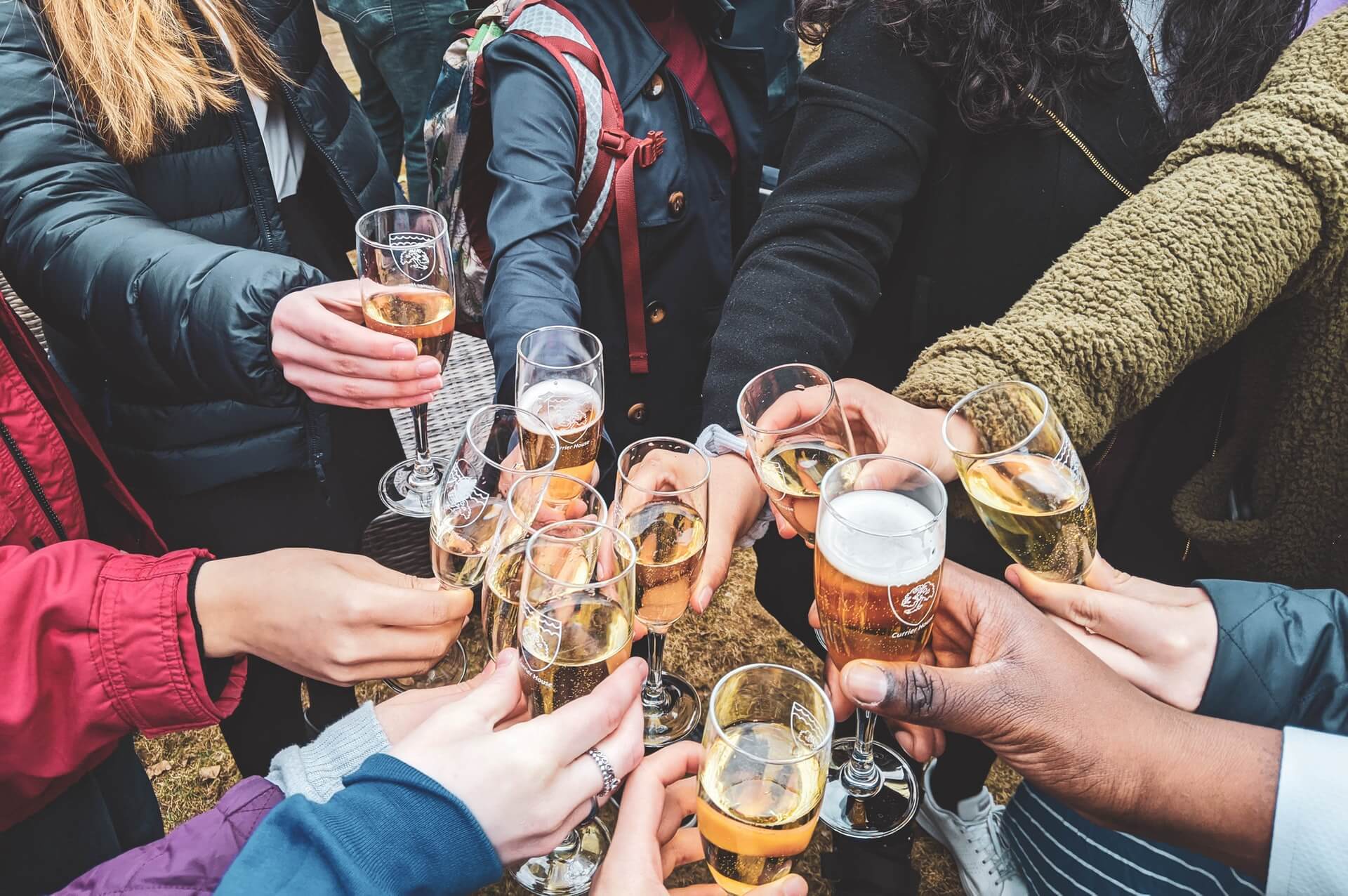
Friends toasting with Champagne outside during the winter

Food and beverage research and analytics firm Datassential’s end-of-year insights point to a positive outlook for restaurants in December.

While many consumers still have reservations about spending time in public, others are eager to return to “normal.”

Restaurants and bars are expected to play an important role in reaching normalcy this holiday season.

Let’s take a look at Datassential’s 2021 Holiday Issue statistics.

Hesitancy Waning?

Let’s get the less-promising data out of the way first. Some consumers still find the idea of in-person restaurant visits uncomfortable.

Nearly half of Boomers surveyed by Datassential (46 percent) said they’re “significantly less likely” to visit a fast-casual or fast-food restaurant in December.

And, interestingly, 42 percent of men gave the same answer for visiting traditional sit-down restaurants.

However, of all the in-person options presented to participants by Datassential, restaurants performed the best.

More than half of all respondents—men, women, Gen Z, Millennials, Gen X, Boomers—plan to visit fast-casual, fast-food, and sit-down restaurants more in December than they have in recent months.

It’s most likely that anticipation for restaurant visits is driven by the desire to gather and celebrate the holidays.

Overall, 57 percent of respondents plan to visit fast-casual and fast-food restaurants more. And 47 percent expect to visit sit-down restaurants more.

That makes those two options the top answers.

Only 16 percent of respondents indicated they don’t plan on visiting any on-site foodservice venues.

Regarding bars, sports bars, lounges, and nightclubs, men are “significantly more likely” (23 percent) to visit those types of venues in December.

Holiday Opportunity

According to Datassential’s report, the opportunity for holiday bookings is out there.

More than likely, gatherings will simply be smaller than they were prior to the pandemic.

Asked about plans to gather at restaurants in December, get-togethers are expected to be “moderately sized.”

Almost half of survey respondents (44 percent) plan on gathering at restaurants in parties of seven to twelve.

Just over a quarter (29 percent) plan on get-togethers of six or fewer of people. Only 18 percent of respondents are planning large (13 to 18 people) gatherings at restaurants in December.

As far as parties of 19 or more, just nine percent of respondents plan “very large” gatherings.

Of course, individual operations’ results will vary. However, this information gives us an idea of what traffic may look like for many operators.

2021 Spending

This is where the news looks even better for restaurants, bars and nightclubs in December.

When asked about spending money on going out to eat and for drinks, just 18 percent of respondents said they planned to spend less this year than in 2020.

Very nearly half (49 percent) plan to spend the same as they did last year. However, 32 percent said they think they’ll increase their spending.

When it comes to New Year’s Eve, the numbers shift a bit. However, 50 percent of respondents plan to spend the same on NYE in 2021 as they did in 2020.

Twenty-six percent plan to spend more on NYE in 2021. Just 24 percent plan to spend less this year on NYE.

Per Datassential, Millennials are most likely to splash out for NYE this year.

So, things won’t be returning to pre-pandemic normalcy by 2021’s end. However, if Datassentials findings prove accurate, things are looking healthier for December.

Image: Christine Jou on Unsplash

by David Klemt David Klemt No Comments

Giving Tuesday: World Central Kitchen

Giving Tuesday: World Central Kitchen

by David Klemt

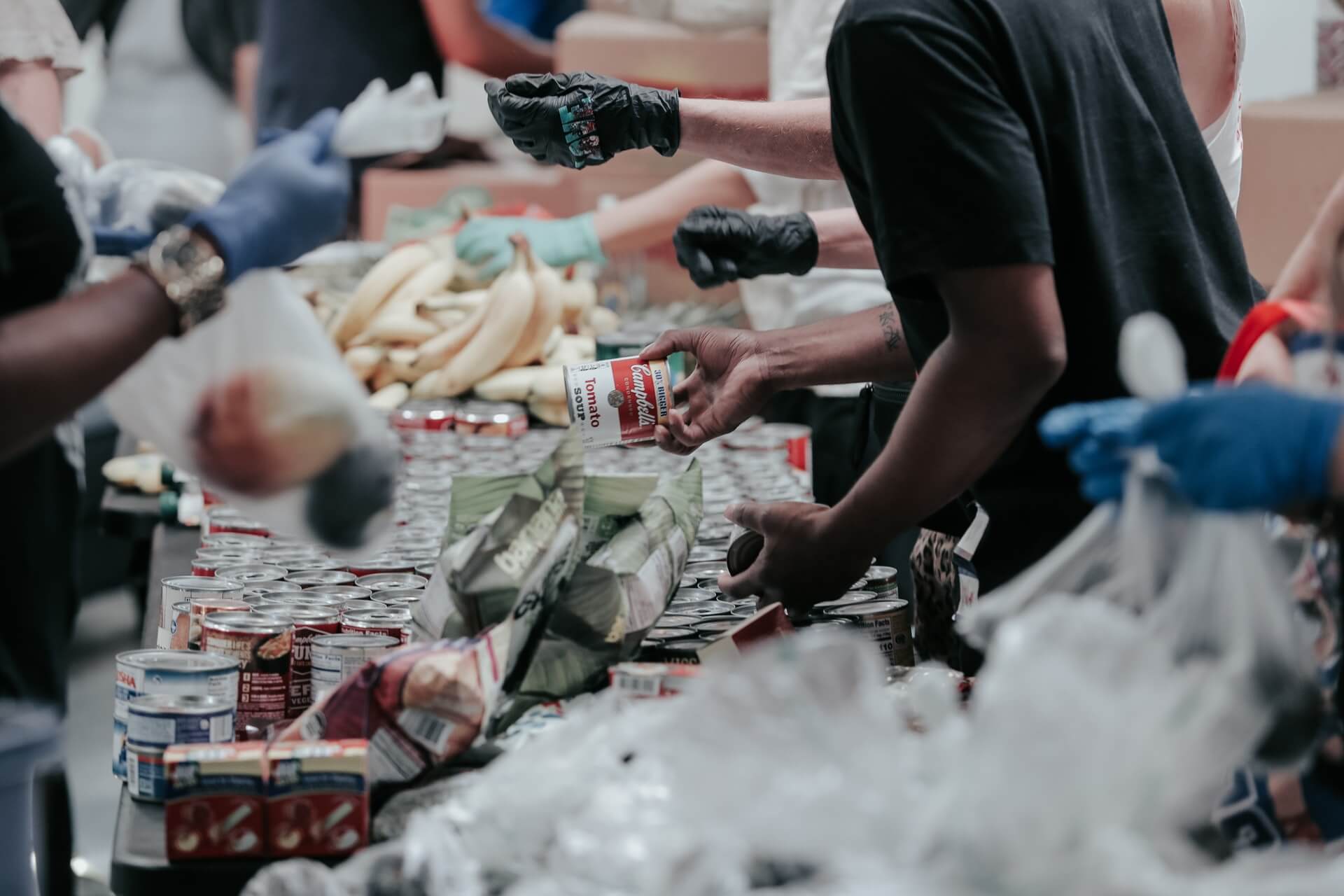
Food bank charity donations

November 30 is Giving Tuesday, “a global generosity movement” that focuses on all acts of kindness and giving, large and small.

KRG Hospitality vice president Jennifer Radkey explains Giving Tuesday in-depth in her article from last week.

In her article, Jennifer puts forth ways to involve your business and staff in acts of kindness.

She also explains that November 30 is an opportunity for operators to give back. After all, communities supported restaurants and bars during the pandemic. Now’s the time to provide support for those communities.

All acts of kindness and generosity are encouraged on Giving Tuesday. Monetary donations, volunteering time, hosting charitable organizations free of charge… There are endless ways to participate in Giving Tuesday.

“In other words, it doesn’t matter how you give,” says Jennifer. It just matters that you take part.

World Central Kitchen

At KRG Hospitality, we support World Central Kitchen. Founded in 2010 by Chef José Andrés and his wife Patricia, WCK has been fighting food insecurity for nearly 12 years.

One reason we give to WCK is exemplified in an announcement from earlier this month.

World Central Kitchen is committing to providing $1 billion over the next ten years via their Climate Disaster Fund.

Another reason we give to World Central Kitchen? The 501(c)(3) non-profit gave more than $250 million in 2020 to feed communities around the world.

However, it’s WCK’s overall approach to fighting food insecurity is what we find compelling. The charitable organization doesn’t just show up to a community, hand out food, and leave.

Rather, WCK commits to long-term, local solutions. They create food programs to improve a community’s overall health; offer culinary training and provide jobs; and work to build food security.

If you have the means, please consider following this link to make a donation to World Central Kitchen. Per Charity Navigator, WCK enjoys the highest rating for a charity: four out of four stars.

Donations can be one-time or monthly, for any amount, and in someone’s honor or memory.

Image: Joel Muniz on Unsplash

by David Klemt David Klemt No Comments

Código 1530 Tequila Closes the Loop

Código 1530 Tequila Closes the Loop

by David Klemt

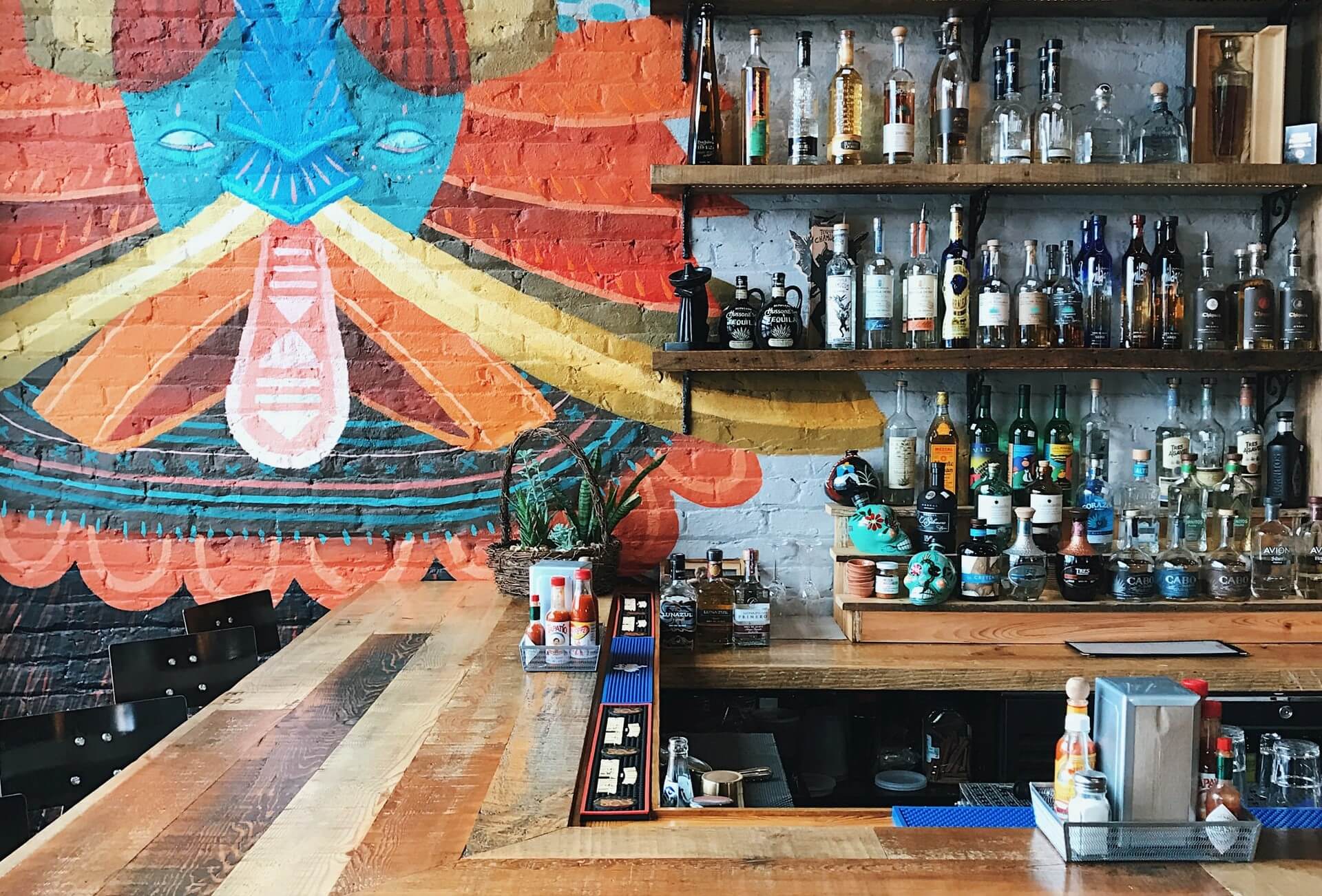
Upscale tequila bar with luxury bottles on back bar

The evidence that consumers are showing increasing interest in luxury spirits continues to mount, with tequila benefiting greatly.

According to DISCUS, the luxury category of tequila continues to grow. Sales volume is up 30.7 percent annually since 2015 for luxury tequila brands.

While it’s easy to point to brand recognition, cache and perception, there may be another reason for this growth.

In a word, “responsibility.”

Sustainability is Sexy

Episode 57 of Bar Hacks features Collin De Laval. He’s the company mixologist for Código 1530 Tequila, and he’s intimately familiar with the brand.

So, De Laval knows more than every nuance of each Código 1530 expression. He also understands the ethos that drives the brand and its processes.

One of Código’s values is responsibility, which it manifests through sustainability efforts. As De Laval explains, “we try and close a lot of the waste loop, as much as we can.”

Not only does Código utilize naturally filtered water, they cut the water back out of their heads and tails. That water is then reused. The brand uses broken pieces of barrel and spent agave to char new barrels.

Further, Código is a small craft distiller. They don’t level thousands upon thousands of agave each day. Instead, they’re selective and take only what’s necessary.

“We’re treating the land a lot better in that way,” says De Laval.

These efforts are increasingly appealing to consumers. It’s not just the liquid in the bottle that matters. How that liquid got into the bottle is important to them.

“Now it’s like, ‘I know this brand. I know they do good stuff,'” De Laval says.

That “good stuff” doesn’t reference only the quality of the spirits but a brand’s responsibility and sustainability.

Drinking Better

“People are drinking ‘up’ now,” says De Laval. “Gone are the eras of, ‘Let me get whatever’s well.'”

He’s not talking about how a guest orders their drink. By “up” De Laval means they’re choosing top-shelf spirits.

Six years of steady growth for luxury or ultra-premium spirits supports this claim.

De Laval isn’t the only Bar Hacks guest who notices this trend. During episode 56, Pernod-Ricard Prestige sales manager Maxime Lecocq mentions the trend as well.

If luxury spirits and wines had suffered during the pandemic, that would’ve made sense. It could’ve been explained as people being cautious with their money.

Indeed, consumers were cautious. However, not in the way that many would assume. The numbers support the belief that consumers were spending more to drink higher-quality bottles.

Interestingly, drinking better doesn’t appear to refer only to quality or price. Many small, luxury craft distillers enjoy the perception as more responsible than large, industrial producers.

Drinking better now seems to mean drinking what’s better for the environment. And if what’s more responsible and sustainable happens to be ultra-premium, consumers are willing to pay for it.

Image: Spencer Pugh on Unsplash

by krghospitality krghospitality No Comments

Why You Should Take Part on Giving Tuesday

Why You Should Take Part on Giving Tuesday

by Jennifer Radkey

Kindness is a Superpower stencil graffiti on brick wall in black and white

You are most likely familiar with Black Friday and Cyber Monday, days that encourage consumerism and support the economy.

However, after these two days comes a global movement that you may not yet be familiar with but need to be: Giving Tuesday.

Created in 2012, Giving Tuesday will be celebrating its ninth year Tuesday, November 30th. It is a global movement in which organizations, businesses, charities, and individuals all come together to support their favourite causes.

From large monetary donations to simple acts of kindness, it is a day that encourages people to do good and to bring about positive change in their communities.

Why Generosity?

Generosity not only benefits the charity or person who is on the receiving end, it has huge benefits to those on the giving end.

From increased happiness to a sense of shared community, being generous with your time, resources, or money is often a simple act with big rewards.

A 2008 study by Harvard Business School professor Michael Norton and colleagues found that giving money to someone else lifts participants’ happiness more than spending money on themselves.

This is true even when the participants anticipate prior to the act of giving that spending the money on themselves would make them happier. Research also suggests that similar well-being benefits come from giving monetary gifts/donations or volunteering your time.

In other words, it doesn’t matter how you give, it is the act of giving in itself that gives us that “warm glow” feeling that we typically associate with the holiday season.

Hospitality and Generosity

The words hospitality and generosity go hand in hand.

To be a welcoming hospitality brand you need to be generous with your time and your kindness. You need to be willing to create an atmosphere in which people come to not just eat a meal, have a drink, or spend a night, but to create memories, to socialize, and to have an experience.

Over the past (nearly) two years, we have asked our communities to support hospitality businesses as we faced lockdowns and restrictions. In many ways, our communities did just that.

Guests ate on patios when the weather was not pleasant. They supported through ordering takeout. #SupportLocal movements popped up not just in the U.S. and Canada but globally. Through their extra efforts, many businesses were able to keep their doors open and their staff employed.

Now it is time to take that generosity shown to us and give it back to our community.

Giving Back

So, as a hospitality business, how can you contribute to Giving Tuesday?

Firstly, discuss it with your team! If you are able to contribute a monetary donation to your community in some way, which charity or organization speaks most to the values you all share?

If you aren’t able to contribute a monetary donation, how can you volunteer your time as a team? Maybe you can make your space available free of charge for a local organization or charity to host an event. Perhaps you can cook meals or bake goods as a team to provide to those in need, or who work tirelessly to make your community a better place.

The opportunities for giving back are endless and you can be as creative as you like. Host a breakfast with Santa for a local children’s group or do a hot chocolate and cookie drop off at a senior’s centre.

Brainstorm as many ideas as possible with your team. The process of thinking of charitable acts alone will brighten your team’s mood and get everyone in the giving spirit.

Share, Share, and Share Some More

Once you decide how you will participate in Giving Tuesday, tell the world about it!

Take photos, share the link to the charity or organization you are giving to, and encourage others to give alongside you. Tell a story.

However, do not engage with Giving Tuesday cynically with the goal of social media exposure. Be truly kind and generous.

Generosity is contagious. Your act of kindness will encourage others to do the same. It will also shine a bright spotlight on your hospitality brand, so make certain you’re engaging in kindness authentically and not just to score points with your community.

For more information on Giving Tuesday, please visit www.givingtuesday.org. Cheers to professional and personal well-being!

Image: Andrew Thornebrooke on Unsplash

by David Klemt David Klemt No Comments

Go Big and Bold on National Zinfandel Day

Go Big and Bold on National Zinfandel Day

by David Klemt

Black photo concept of red wine glass and bottle

Cabernet Sauvignon may be King of Grapes but Zinfandel certainly isn’t the court jester when it comes to wine.

No, it’s not one of the five Noble Grapes from Bordeaux. And yes, in Italy Zinfandel’s name is Primitivo, which translates to “primitive.”

But just because this red wine is often described as rustic doesn’t mean it’s basic.

National Zinfandel Day, which takes place Wednesday, November 17, is the perfect time to introduce Zin to your guests.

Zinfandel 101

While there are a few reasons Bordeaux doesn’t consider Zinfandel to be a Noble Grape, there’s one in particular that stands out: Zinfandel is an Italian grape. Well, sort of.

Basically, Zinfandel is grown in Italy and America. Intriguingly, however, the grape originates from Croatia. It’s original name is Tribidrag.

Another interesting note: Red Zinfandel only accounts for about 15 percent of overall Zin production. You’re probably already guessing which style accounts for the lion’s share: White Zinfandel.

Now, you can promote both styles of Zinfandel—that’s a decision you have to make. But for this article, I’m talking exclusively about Red Zinfandel.

This is for three reasons. First, White Zinfandel is best as a beginner wine. It’s light, it’s usually low in alcohol, and it’s not very complex.

Second, you can sell Red Zinfandel as a worthwhile alternative to Cabernet Sauvignon, the most popular wine in the world. Third, it’s delicious, full-bodied, and the ABV is often quite high.

A great Red Zin is jammy (like a big Cab), bold (like a big Cab), and velvety (like a big Cab). So, many of the Cab Sauv drinkers among your guests will be willing to try a medium- to full-bodied Red Zin.

This “rustic” wine also pairs well with pizza and barbecue. How can that ever be a bad thing?

Bottles of Note

Orin Swift 8 Years in the Desert (15.8% ABV), $50 SRP

It’s arguable that Red Zinfandel’s rise in popularity is due to it showing up in many red wine blends. Another factor? Winemaker Dave Phinney in particular utilizing this grape in his red blends. 8 Years in the Desert round in the mouth, providing drinkers with a decadent, lush wine drinking experience.

Bedrock Old Vine Zinfandel (14.4% ABV), $22 SRP

The 2019 vintage of Bedrock’s Old Vine Zin receives top marks from experts across the board. When it comes to American Zins, wine aficionados consider this Zin to be the gold standard.

Opolo Mountain Zinfandel (15.7% ABV), $30 SRP

For those guests who want to taste a straight-up, 100-percent Zinfandel. Opolo is one of the finest producers of American Zin. The 2019 vintage is velvety smooth even with it’s big alcohol content and bold, jammy flavors.

The Prisoner Wine Company Saldo (15.5% ABV), $32 SRP

You don’t have to be a wine aficionado to be familiar with The Prisoner Wine Company. In fact, The Prisoner, undoubtedly one of those most famous red wine blends in the world, helped shine a spotlight on Red Zinfandel. Saldo is a three-wine blend of Zinfandel, Petite Sirah, and Syrah.

Seghesio Old Vines Zinfandel (15.6% ABV), $36 SRP

Like Opolo, Seghesio produces big Zins that offer the drinker a balanced experience. Yes, the alcohol content is high but the mouthfeel is smooth and plush while delivering bold flavors. The mouthfeel may be soft but it’s certainly not shy on the palate.

Turley Old Vines Zinfandel (15.5% ABV), $40 SRP

So, there’s a debate over whether “Old Vine” or “Old Vines” has any official definition. In general, a grapevine matures some time between 12 and 25 years old. Some say that “Old Vine” is a designation that means more than 25 years old, at least 40 years old, or at least 50 or 60 years old. Well, it’s fair to say that Turley offers true “Old Vine” Zinfandel given that the producer’s grapevines range in age from 40-plus to nearly 130 years old.

Image: Mae Mu on Unsplash

by David Klemt David Klemt No Comments

As Guests Learn More, Luxury Grows

As Guests Learn More, Luxury Grows

by David Klemt

Luxury concept featuring Champagne coupes on silver tray

Consumers are drinking better and the luxury categories of several spirits, wine and Champagne are benefitting.

Interestingly, this growth no longer appears to be driven solely by a desire to stand out and be seen.

Instead, according to one Bar Hacks podcast guest, consumers seem to be more carefully allocating their dollars.

Luxury Continues to Rise

The word “luxury” tends to conjure thoughts of expensive, high-end items.

Indeed, that’s certainly still a part of luxury. However, the concept of luxury as unattainable to most people is seemingly falling to the wayside.

Maxime Lecocq, Prestige sales manager in Las Vegas for Pernod-Ricard, shares a similar thought on episode 56 of Bar Hacks.

“The consumption style started to change during the pandemic,” says Lecocq. “So, people are more careful on what they’re drinking, where they’re spending their money.”

Intriguingly, Lecocq doesn’t mean that people were looking to spend as little as possible. Rather, they wanted higher quality for their dollars.

“Instead of having just any Scotch, they’re gonna research more,” Lecocq says. “Instead of spending, like, $25, they’re gonna be like, ‘Oh, I’m gonna spend $40 but I’m gonna be more careful about what I’m gonna drink.'”

As far as Lecocq is concerned, consumers doing more research is benefiting the luxury segment.

Why does he think that? Because it appears that research is leading consumers to spend more on luxury spirits and wine.

Numbers Support Luxury Growth

Early last month, Distilled Spirits Council of the United States (DISCUS) shared their research into luxury spirits.

DISCUS data shows that during the period from 2015 to 2020, luxury spirits brands saw sales growth of 125 percent. Further, looking at the first half of 2021, luxury spirits volume is up 25 percent.

For the curious, DISCUS considers any brand that sells 750mL bottles at retail for $50 or more to fall within the luxury segment. So, $10 more than the example Lecocq provides during his Bar Hacks appearance.

There are six luxury categories tracked by DISCUS: American whiskey, Cognac, Irish whiskey, Japanese whisky, Single Malt Scotch, and Tequila.

On his podcast episode, Lecocq discussed three of those categories: Cognac, Single Malt Scotch, and Tequila.

Growth Categories

Per DISCUS, American whiskey has seen annual growth since 2015 of 41 percent. For Japanese whisky, that rate of growth is 42 percent.

Irish whiskey and Single Malt Scotch are also healthy annual growth. However, Irish whiskey’s annual growth is only a third of that of its Japanese counterpart at 14-plus percent.

Single Malt Scotch, in the first half of 2021, is up 5.6 percent.

According to DISCUS, Cognac’s annual growth is nearly 16 percent. Lecocq posits that this rise in interest in Cognac is down to shifting consumer perception.

Once thought of as “your grandparents’ drink,” younger consumers are now more eager to explore this type of brandy.

It’s perhaps tequila that sees the most interesting growth. Given its explosive and seemingly unwavering popularity, I thought the luxury tequila category would see growth in excess of 42 percent.

However, per DISCUS, luxury tequila brands are up 30.7 percent annually since 2015. Obviously, that’s impressive growth, and the category represents 28 million bottles sold.

That’s more than American, Irish, Japanese and Single Malt Scotch whiskeys combined.

Of course, this doesn’t mean that operators should abandon their less expensive spirits and wines. It does, however, show that consumers are willing to pay more for what they perceive to be higher quality brands.

Image: Billy Huynh on Unsplash

by David Klemt David Klemt No Comments

Adding Veterans to Your Team

Adding Veterans to Your Restaurant, Bar or Hotel Team

by David Klemt

Military combat helmet in digital camouflage

Do more this Veterans Day by encouraging those who have served to apply and interview for available positions on your team.

There are several benefits to providing job opportunities to veterans, regardless of the country (or countries) in which you operate.

Of course, there are dos and don’ts that come along with recruiting, hiring and working with veterans.

Benefits to Hiring Veterans

Before we begin, a caveat: Remember that veterans are individuals. “Veteran” is a label, a designation, a descriptor. In no way is one person who is a veteran interchangeable with another.

That said, there are some elements of military service that are similar to those of successful hospitality operations.

Teamwork, a strong work ethic, leadership skills, precision in tasks, achieving goals, consistency in results… When a restaurant, bar or hotel team is operating at its best, it can be said they work with military precision.

Generally speaking, veteran job candidates bring experience to the table that can benefit an operator greatly.

Additionally, it’s commonly said that hospitality leadership should hire for personality because they can train requisite skills. Speaking generally again, many veterans are so used to receiving specialized training that they’ll likely appreciate and respond quickly to yours.

If you want your business to operate with military precision, why wouldn’t you hire military personnel who fit well within your team?

Questions to Ask During Interviews

Obviously, there are definite dos and don’ts when it comes to discussing a veteran’s military experience.

As curious as you may be about some aspects of a veteran’s experience, questions shouldn’t be invasive or offensive.

Some examples of questions you should ask are:

  • “What did you do (in the Air Force, Army, Coast Guard, Marines, Navy, National Guard or Reserves)?”
  • “Why did you choose that branch of the military?”
  • “How long did you serve?”
  • “Do you come from a military family?”
  • “Where were you stationed during your career in the military? Did you visit any other countries?”
  • “Where was your favorite place you visited or lived?”
  • “How do you think your experience in the military will benefit you here?”

As you can see, nothing in those questions should make a veteran applicant uncomfortable.

Questions and Behaviors to Avoid

Speaking of discomfort, there are many questions that you should never ask a veteran. Not just during the interview process, but ever.

Also, if a veteran informs you they’re uncomfortable answering a question about their service, that should be respected.

Examples of questions and topics you should avoid are:

  • “Do you have PTSD (Posttraumatic Stress Disorder)?”
  • “Do you find it hard to get back to ‘real/regular’ life after being in the military?”
  • “Did you ever get shot/stabbed/bombed?”
  • “Did you ever kill anyone?”
  • “What’s the worst thing that ever happened to you while you served?”
  • Current military conflicts, particularly if you haven’t served in the military.
  • Referring to elements of work through military analogies.
  • Insulting branches of the military if you never served.

In short, treat veterans with the respect their deserve, as you should any other member of your staff. Veterans aren’t novelties or curiosities—they’re people.

For too long, veterans have faced undue scrutiny and undeserved stigmatization. It shouldn’t be difficult to turn that around when the solution is simple: Give veterans respect; treat them like  people since that’s precisely what they are; and provide equal opportunity.

Image: israel palacio on Unsplash

by David Klemt David Klemt No Comments

You’re Competing Against Chains for Labor

You’re Competing Against Chains for Labor

by David Klemt

Help sign outside business

Independent operators and local chains aren’t just competing with one another for staff, they’re up against global brands.

Unfortunately, that means competing against massive corporations that can offer higher wages and all manner of benefits.

However, smaller operations can still take steps to lure workers and fill open positions.

The Threat

In response to the labor shortage, many national and global chains are increasing hourly wages.

For example, Chipotle boosted wages for hourly workers to $15 per hour a few months back. Along with this boost in wages came a hike in menu prices: four percent across the board.

Earlier this year, McDonald’s also announced they would boost hourly pay. Hourly workers saw a boost of about ten percent. Of course, this chain also found itself dealing with increased supply costs. To offset a rise in costs of at least four percent, McDonald’s also boosted menu prices.

The latest to enter the labor fray is Starbucks. And like other chains, the corporation addressed the issue of hourly wages publicly.

Indeed, Starbucks’ announcement shares several details. First, staff who have worked for the company for a minimum of five years could see a pay raise of ten percent. Those who have been with the company for at least two years (but less than ten) could get a raise of five percent.

However, it doesn’t end there. Starbucks workers in the United States can take advantage of $200 referral bonuses. On average, Starbucks says hourly wages will range from $15 to $23 per hour, with an average of $17 per hour. The company expects these wage changes to be in place by Summer 2022.

Solutions

Of course, one doesn’t have to need revenue in the tens of millions or billions of dollars to compete for staff.

We’ve addressed this topic several times on the KRG Hospitality site. In particular, we’ve brought up increasing menu prices to support wage hikes. Specifically, we recommend borrowing from Chipotle and McDonald’s: Be transparent and explain why menu prices are going up.

Additionally, Bar Hacks guests like Chef Brian Duffy and Lynnette Marrero have spoken about this topic.

As Chef Duffy says during his second appearance, treating staff better is a big step toward reducing turnover. Word spreads among hospitality workers, and improved employer-employee relations is an excellent recruitment tool.

Another effective benefit? Flexible and improved scheduling which, of course, can be implemented easily via scheduling apps.

Mentorship is a powerful recruiting and retention tool. Both Chef Duffy and Marrero believe in the power of this benefit. They have decades of experience to pass on to staff that can help their careers.

Marrero also suggests implementing labor structures that corporations don’t offer. For instance, she suggests new operators are well positioned to offer earned equity, profit sharing, and co-op ownership structures.

Existing operators can also leverage Marrero’s ideas. However, they’ll need agreement from their investors if they have any.

Now that you know where labor threats are coming from, you can strategize and fight back. You may not have billions of dollars in the bank, but you’re nimble and can implement changes much more quickly. Listen to your staff and be open to making meaningful but reasonable concessions.

Image: Fernando Venzano on Unsplash

by David Klemt David Klemt No Comments

New Operators Can Reject the Old Models

New Operators Can Reject the Old Models

by David Klemt

Thinking differently planning concept with light bulb on chalkboard

There’s no reason new hospitality business owners and operators have to do what’s always been done.

In fact, new owners and operators are in a prime position to create entirely new business models.

If we’re going to change things and set the industry up for success in the future, we need to pursue different ways of doing business.

Industry Pioneer and Icon

Lynnette Marrero, widely known as a pioneer in this industry, is enjoying a career that should inspire all hospitality professionals.

After getting her start as a cocktail waitress at New York City’s storied Flatiron Lounge, she transitioned to bartender. In that role, Marrero was able to learn under Flatiron Lounge co-owner and bartending sage Julie Reiner.

She has created and consulted on world-class, award-winning cocktail programs. If you find yourself in New York City, plan to stop into Llama Inn and Llama San to experience Marrero’s menu programming.

Marrero is a James Beard Award and Spirited Award winner, a Dame Hall of Fame inductee, and the co-founder of high-speed all-female bartending competition Speed Rack.

Perhaps most importantly, she’s a mentor and an innovator helping to shape the career’s of new bartenders and hospitality pros.

And on episode 54 of the Bar Hacks podcast, Marrero encourages new operators to think differently about how they run their businesses.

New Models

Specifically, Marrero explains that new owners and operators are in a position to run things differently from the start.

“I think it’s a lot about changing your structures from the beginning. Don’t feel pressure to have to go into models that already exist,” says Marrero. “You can build new models and you can think about new ways.”

Making impactful change from the very beginning requires a change in how we think about running restaurants, bars, hotels, and other hospitality businesses.

“What does ownership look like?” asks Marrero, providing examples of new approaches to ownership. “Can you start a place that’s more profit sharing for staff? Can you build that in from the beginning?”

Offering further considerations, Marrero suggests that new owners and operators consider operational elements such as earned equity and co-op-style ownership.

In theory, such structures, which are certainly far from the norm, may lead to significant reductions in turnover, boosts to staff morale and engagement, and a more dynamic team. Putting different structures in place rather relying on the old models can lead to building teams invested in helping owners grow their businesses for the long term.

Change is Necessary

While established operators can certainly make changes to their existing operations, Marrero says that it’s easier for new businesses to do so.

In part, this is because investors know going in what the labor structure is, for example. They therefore also understand how the payback structure will work.

And that’s just on the investment side of the equation. On the labor side, new structures make it easier to recruit, hire, and retain staff.

Solving labor shortages leads to operating at full strength for full days rather than relying on shortened hours. Staff are less overwhelmed and costly turnover is reduced.

It’s easier to do things the way they’ve always been done. But rejecting the old ways can be far more fulfilling and profitable for everyone involved.

Image: Pixabay on Pexels

by David Klemt David Klemt No Comments

5 Books to Read this Month: November

5 Books to Read this Month: November

by David Klemt

Flipping through an open book

This month’s fun and informative book selections will help you develop next-level culinary, beverage and leadership skills this November.

To review October’s book recommendations, click here.

Let’s dive in!

Cook as You Are

The Great British Baking Show contestant Ruby Tandoh is a food writer with a half-dozen books to her name. Her latest will likely change how you look at food and its preparation. In particular, the “mini” version of Cook as You Are aims to be as inclusive as possible. The free download makes it easier for people who learn differently or require assistance in the kitchen to enjoy cooking. Cook as You Are features 100 original recipes created by Tandoh that don’t require hours of preparation or professional-grade kitchen equipment to execute.

The Bullhearted Brand

Expert Joseph Szala explains why operators should view branding as a strategic endeavor. Branding is more than a clever name, eye-catching logo, and slick tagline. Szala, as he explains, “lay(s) out the foundational elements and details about creating and scaling restaurant brands” in The Bullhearted Brand, drawing from years of real-world experiences.

Bourbon’s Backroads

Bourbon is one of the few spirits that America can truly claim as its own. Myths and legend abound, such as the claim that whiskey can only be called bourbon if it’s produced in Bourbon County. Karl Raitz conducted extensive research to uncover the full history of bourbon in the United States for Bourbon’s Backroads.

Gilded Age Cocktails

Author Cecilia Tichi takes readers on a cocktail journey spanning three decades. The Gilded Age, which took place between 1870 and the early 1900s, is known as the Golden Age for cocktails. Readers will be able to learn the stories of not only classic Golden Age cocktails to pass on to others, but also the stories of their creators. Gilded Age Cocktails transports us back to the pre-Prohibition Era, a time when bartenders first became famous and helped us all drink better.

Hacking the New Normal

Doug Radkey, president of KRG Hospitality, author of Bar Hacks and Hacking the New Normal, makes the case for making meaningful, impactful change in order for the hospitality industry to survive and thrive moving forward. As he explains during bonus episodes of the Bar Hacks podcast, as have multiple podcast guests like Chef Brian Duffy, the industry won’t truly recover unless we change our mindsets and the way restaurants, bars, hotels, resorts, entertainment venues, and arenas operate and treat staff.

Image: Mikołaj on Unsplash

by David Klemt David Klemt No Comments

Stand Out with Weird Holidays: November

Stand Out with Weird Holidays: November

by David Klemt

Stay Weird neon sign with purple background

Want to stand out from from other restaurants and bars in your area? Then commit to keeping it weird.

Several “holidays” are set against every date on the calendar, and November is no exception. These holidays range from mainstream—Thanksgiving Eve and Thanksgiving, anyone?—to food-centric to weird.

Pay attention to the latter to raise eyebrows, carve out a niche for your restaurant or bar, and attract more guests. Why do what everyone else is already doing?

Of course, you shouldn’t try to celebrate every holiday, weird or otherwise. And this month’s list in no way includes every odd holiday.

Focus on the days that are authentic to your brand; resonate with your guests; and help you grab attention on social media.

For October’s list, click here.

November 1: World Vegan Day

Obviously, this holiday isn’t weird for vegans or vegetarians. There are, however, those who still find this particular diet odd. Well, this is the perfect holiday to learn more about vegan cooking and eating. Pass on that knowledge by adding delicious vegan dishes to your menu.

November 4: National Candy Day

Do you have a surplus of candy now that Halloween is over? Trying to fight the temptation to eat it all yourself? Various candies perform well as garnishes for cocktails. There’s also another way to approach this holiday, like featuring starters such as candied bacon.

November 6: National Nacho Day

So, this holiday is more fun than weird, really. However, you can probably see the potential to deviate from the standard nacho builds. Instead, ask your kitchen staff to get creative and come up with intriguing takes on nachos that will grab the attention of your guests.

November 9: National Scrapple Day

One of the best ways to cut back on food waste in restaurants, bars, and hotels is to utilize as much of a given ingredient as possible. Scrapple, of which our Philadelphia audience will no doubt be very well aware, consists of pork scraps. Guests outside of Pennsylvania may have never tried scrapple before, so this holiday is the perfect time to tempt them with a new taste sensation.

November 12: National Pizza with the Works Except Anchovies Day

It’s not this pizza that’s weird, of course. It’s the very specific pizza this holiday is celebrating. I’m guessing that you know exactly what to do to celebrate this holiday with your guests.

November 14: Pickle Day

The (in)famous Pickleback. Bloody Mary made with pickle juice. A Dill Pickle Martini. Pickle appetizers and starters. If you’ve got pickles and some degree of creativity, it’s pretty clear what needs to be done on November 14.

National 15: National Spicy Hermit Cookie Day

This is another very specific holiday. This cookie, the Spicy Hermit, features flavors that couldn’t be any more perfect for fall: cinnamon, clove, allspice, and nutmeg. You can Google a recipe, of course, but we found this one and it seems delicious.

November 17: National Take a Hike Day

We’re big fans of encouraging guests and staff to get outside. There are thousands of trails throughout the United States and Canada, ranging from the easy-peasy to the truly treacherous, so the sky’s the limit. Encourage guests to take a hike and grab a bite and drink at your establishment to rest and recover. Have them tag your spot and their meal, of course.

November 28: Red Planet Day

It seems like billionaires and millionaires can’t get enough of Mars. Over the past few years, space travel has focused almost exclusively on the idea of reaching the Red Planet and figuring out how to live on it. So, if you’ve got dishes and drinks that are predominantly red in color, put them at the forefront on November 28.

Image: Dan Parlante on Unsplash

by David Klemt David Klemt No Comments

Creating a Strengths Profile

Creating a Strengths Profile

by Jennifer Radkey

Unsolved Rubik's Cube against black background

When looking to improve the performance of your hospitality business it is natural to seek out weaknesses and attempt to “fix” them.

What if you were to take an entirely different approach?

Instead of focusing on weaknesses to improve upon, we should seek to identify and build upon our strengths.

Why Strengths?

Using our strengths is like writing with a dominant hand. It comes naturally and easily.

Strengths can be cultivated and used to assist in overcoming challenges and in improving upon weaknesses. If we were to focus only on improving our weaknesses it would be tiring, and the probability of giving up could increase.

However, if we focus on building upon our strengths, it would be motivating and energizing, therefore making us stronger and then more likely to overcome our weaknesses.

Lost and Found

Do you ever visit a restaurant, bar, or hotel and get no clear sense of their identity?

Maybe their menu is confusing, their social media presence is either nonexistent or only shares their daily specials, there is no consistency in service. They just seem…lost.

Now seriously take a minute and walk through your establishment with fresh eyes as if it were your first time there. Is your brand’s identity clear or lost? As we get wrapped up in the day-to-day operations and stressors, becoming lost can easily happen.

Identifying your brand’s strength profile can help you find your distinct identity again. Even if you aren’t lost there is always room to strengthen your brand.

The Background

In the field of positive psychology, psychologists Chris Peterson and Marty Seligman headed a project to seek out what characteristics describe humans at their very best.

After scouring literature, media, music, etc., spanning countries and history, they compiled a list of 24 character strengths that appear to be valued over time and culture.

This list was referred to as the Values in Action Classification of Character Strengths and Virtues (VIA). The VIA is meant to classify individual strengths but can also be applied to organizations and businesses.

The 24 Character Strengths

The list of strengths is as follows:

  • Creativity
  • Curiosity
  • Open-mindedness
  • Love of Learning
  • Perspective and Wisdom
  • Bravery
  • Persistence
  • Integrity
  • Vitality
  • Capacity to Love and be Loved
  • Kindness
  • Social Intelligence
  • Citizenship
  • Fairness
  • Leadership
  • Forgiveness
  • Humility/Modesty
  • Self-Regulation
  • Appreciation of Beauty and Excellence
  • Gratitude
  • Hope/Optimism
  • Humour
  • Spirituality

If you want to dive deeper into the VIA character strengths or would like to take the free survey yourself to find out what your top character strengths are, please visit www.authentichappiness.org through Penn State University and take the VIA Survey.

Creating a Strengths Profile for Your Hospitality Business

Now that you have the list of 24 character strengths, think about the top three strengths that you believe capture your brand at its very best. Think both about your venue’s operations and its messaging when deciding upon the top three.

Then ask your team to do the same. Hold a team meeting in which everyone shares which three character strengths they chose and why.

I recently did this with our team here at KRG Hospitality and found the process enlightening. It was fascinating to see which character strengths were repeated, providing clarity into our brand’s strengths profile.

Establishing Your Top Three

As you review everyone’s answers as to the character strengths they feel best capture your brand at its very best, take note of strengths that repeat themselves.

For us at KRG Hospitality, creativity, perspective and wisdom, and love of learning were the most common replies. We then had our strengths profile.

Discuss what you feel the strengths profile for your brand is with your team and solidify a top three.

What Next?

Once you have a strengths profile built, it’s time to dissect it.

How are you already using these strengths in both your day-to-day operations and in how you are representing yourself to the outside world? How can you use them in new and unique ways?

For example: If one of your strengths is creativity, are you using it to your advantage in many aspects of your business? Maybe your menu is super creative, but your social media posts are dull. Maybe your interior design is creative and fresh, but your training lacks creativity.

Is one of your top strengths kindness? What are you doing to emphasize that strength and is your community aware and benefiting from it?

Think about your strengths in new and exciting ways to energize your team and build an overall stronger business.

Shout it Out!

Take pride in your brand’s strengths. Make it known to your team, potential new hires, guests and potential guests what your strengths are by living them and growing them each and every day.

The stronger your team and your brand is, the more confidence you will have. With strong confidence you can approach weaknesses and obstacles with a healthy mindset and higher chance of success.

Take the time to really know your brand and understand how you are representing yourself and you won’t be disappointed. Cheers to personal and professional well-being!

Image: Pixabay on Pexels

by David Klemt David Klemt No Comments

Resources for Keeping Guests Safe

Resources for Keeping Guests and Staff Safe

by David Klemt

Everyone is Welcome sign painted on wall

One of the non-negotiable responsibilities of operators and their team members is ensuring the safety of every guest they serve.

Respecting others, instilling trust in guests and the community, and awareness are core tenets of hospitality.

Further, those three tenets are also crucial for the safety of guests, team members, and the community.

We in the hospitality industry like to think we deliver selfless service, putting guest needs above our own. The phrase “all are welcome” is supposedly a hospitality mantra.

But if operators aren’t providing the tools and empowerment staff need to ensure every guest is safe, is everyone really welcome?

Safety as a Core Value

Look, I know it can be uncomfortable to address the uglier elements of this industry. However, we can’t effect change to severely reduce the impact or outright eliminate those elements if we don’t face them.

On today’s Bar Hacks podcast, episode 54 with Ivy Mix and Lynnette Marrero, our guests address keeping women safe in bars and restaurants. That goes for guests and staff.

When we’re honest with ourselves, we know that our industry, operating at its best, is welcoming, accepting, supportive of the communities they serve, and a pillar of society. But we also know we have widespread issues concerning the harassment, violence, and inequality affecting women and other minorities.

Two things can be true at the same time. However, we can work toward wiping out that second truth.

During today’s podcast, Ivy Mix shares two key resources for building safer hospitality venues and work environments: Safe Bars and Green Dot.

Safe Bars

This organization seeks to improve the safety and culture of any venue that serves alcohol. Restaurant, bar, nightclub, brewery, hotel… If alcohol is a major component of service, Safe Bars wants to help.

Through three Safe Bars programs, operators can make their businesses safer:

  • Active Bystander Skills. Teachers operators, leadership team, and staff how to recognize unwanted sexual aggression and opting for the best intervention solution. (Learn more here.)
  • Self-defense and Empowerment. Strategies an owner, operator, member of the leadership team, or a staff member can implement should they be the one targeted for aggression or other unwanted attention. (Click here to learn more.)
  • De-escalation for Hospitality Professionals. The tactics necessary to keep one’s self and others safe should they encounter an aggressive, angry or threatening guest. (More information here.)

Unfortunately, most hospitality professionals have at least one story involving unwanted aggressive or threatening behavior from a guest. Programs like those on offer by Safe Bars can help bystanders intervene to protect others and themselves.

Green Dot

I’ve written about Green Dot Bystander Intervention education before.

Specifically, I shared Green Dot’s Five Ds of Bystander Intervention:

  • Distract
  • Delegate
  • Document
  • Delay
  • Direct

Programs like those from Green Dot and Safe Bars can help operators and leadership assess their bystander intervention capabilities.

The time is now to have an open and frank discussion to assess each team member’s comfort level regarding intervention. That can provide a baseline and guide operators towards which programs they should pursue. From there, operators and leadership can create policies and procedures for intervening, and keep guests and staff safe.

Addressing safety rather than hoping nothing will happen and these issues will somehow solve themselves pays immense dividends. Here are just a few examples:

  • Greater staff confidence.
  • A better relationship with the community, along with increased traffic.
  • A reduction in staff turnover.

Service is about more than food, beverage, and entertainment—it’s also about safety.

Image: Katie Moum on Unsplash

by David Klemt David Klemt No Comments

US Opening Border to Vaccinated Travelers

US Opening Border to Vaccinated Travelers

by David Klemt

Roadmap showing United States of America, Canada, and Mexico borders

There will be more good news for the hospitality, travel, lodging, and tourism industries on Monday, November 8.

That’s the day that the US will open its borders to international travelers.

Guidance to enter the country applies to travelers arriving by land and air.

Neighbors to the North and South

This welcome news comes nearly three months after Canada opened its border to the US.

And like that border reopening, international travelers will have to prove their vaccination status. In fact, while not all the details are yet known, only fully vaccinated travelers will be permitted to cross American borders. The borders will remain closed to unvaccinated travelers.

The details for non-US travelers seeking to enter the country are as follows:

  • Non-essential travel is permitted.
  • Those entering via air travel will have to show proof of full vaccination before boarding their flight. They will also need to show proof of a “recent” negative Covid-19 test.
  • Travelers entering via Canadian or Mexican land borders will need to show proof of full vaccination. The negative test requirement is not, as of yet, required.
  • For now, Americans and non-US travelers will not have to quarantine after crossing a border.

Initial reporting stated that travel restrictions would be implemented via a phased approach. Land borders would be opened on November. However, air travel would remain restricted until the start of January 2022.

That doesn’t, at this moment, appear to be accurate.

Dozens of Countries Gain Access to US

Foreign travelers from the following countries who meet US requirements for entry will be able to enter:

  • Austria
  • Belgium
  • Brazil
  • Canada
  • China
  • Czech Republic
  • Denmark
  • England
  • Estonia
  • Finland
  • France
  • Germany
  • Greece
  • Hungary
  • Iceland
  • India
  • Iran
  • Italy
  • Latvia
  • Liechtenstein
  • Lithuania
  • Luxembourg
  • Malta
  • Mexico
  • Netherlands
  • Northern Ireland
  • Norway
  • Poland
  • Portugal
  • Scotland
  • Slovakia
  • Slovenia
  • South Africa
  • Spain
  • Sweden
  • Switzerland
  • Wales

Of course, this list is subject to updating, additions, and other changes.

Great News

Obviously, the US opening its borders to dozens of countries is great news for operators in several industries. Additionally, opening borders to economic partner countries should have a positive impact.

If it’s great for tourism, it’s great for hospitality, travel, and lodging and accommodation businesses. In turn, it should be a boon for the US economy.

Airlines should see a spike in travel, much of which will be tourism-based. That means hotels, restaurants, bars, lounges, nightclubs, breweries, distilleries, wineries, entertainment venues, stadiums, and more will benefit.

Operators will need to plan and execute to attract international travelers to leverage demand and increase revenue. Moving forward, forming partnerships with supportive partners (local restaurant with boutique hotel, for example) and working with domestic marketing organizations (DMOs) could pay dividends for savvy operators.

Image: REVOLT on Unsplash

by David Klemt David Klemt No Comments

Months Pass, RRF Still not Replenished

Months Pass, RRF Replenishment Remains Uncertain

by David Klemt

Time has run out hourglass, black and white

If you’re wondering if the RRF Replenishment Act of 2021 or ENTREE Acts are making progress, you’re not alone.

Unfortunately, it appears far too many politicians on all sides are focusing on anything but our industry.

Indeed, it’s apparently more important that they score political “points” for sniping at each other on social media; engage in hyperbole and histrionics; and overall engage in brinksmanship instead of doing anything meaningful for their constituents.

Meanwhile, the industry has lost more than $300 billion in revenue over 19 months. Additionally, we’re short at least one million jobs.

So, it’s not hyperbolic to state this: It’s no longer time for Congress to act, time has very much run out.

It’s up for owners and operators, their teams, and their teams’ families.

Replenish RRF Act

As people familiar with the Restaurant Revitalization Fund will recall, the fund launched with $28.6 billion. Obviously, that was nowhere near enough funding to meet the demand for grants.

The National Restaurant Association estimates that 177,000 grant applicants are still waiting for assistance. Those applications total more than $43 billion.

Essentially, $60 billion would be printed to replenish the RRF. That’s according to the language in the RRF Replenishment Act bill.

In June, Sens. Kyrsten Sinema (D-AZ) and Roger Wicker (R-MS), and Reps. Earl Blumenauer (D-PA) and Brian Fitzpatrick (R-PA) introduced the bill.

It’s now the middle of October.

ENTREE Act

Toward the end of July, Rep. Blaine Luetkemeyer (R-MO) introduced an alternative bill.

A ranking member of the House Committee on Small Business, Rep. Luetkemeyer proposed the Entrepreneurs Need Timely Replenishment for Eating Establishments Act on July 20.

Again, that was in July and it’s now October 25.

Known as the ENTREE Act (acronyms are fun, eh?), this bill wouldn’t just create $60 billion out of thin air.

Instead, per the text of the bill, the ENTREE Act would use unspent funds from the American Rescue Plan and Economic Injury Disaster Loans.

Now What?

In early August, there was an attempt made to replenish the RRF with $48 billion of emergency funding.

Sen. Ben Cardin (D-MD), along with a bipartisan group of senators, sought unanimous consent to authorize the funds.

Unfortunately, Sen. Rand Paul (R-KY) objected to the unanimous consent motion. The measure was blocked due to Sen. Paul’s objection and the RRF didn’t receive any emergency funds.

So, now what? In August, political insiders expressed their opinion that the ENTREE Act wasn’t likely to be passed.

Meanwhile, the RRF Replenishment Act hasn’t made significant progress since it was first introduced in June.

Most recently, members of the Independent Restaurant Coalition held a press conference with Rep. Blumenauer and Rep. Dean Phillips (D-MN). During the press conference, it was pointed out that Congress was voting on infrastructure bills that didn’t contain the RRF Replenishment or ENTREE Acts.

The most that can be said currently about any “progress” is that House Speaker Nancy Pelosi has made a promise that relief for the industry is coming, somehow, during some unknown timeframe.

Great. In the meantime, you, your family members, your friends, and your guests can contact their reps to put more pressure on them to replenish the RRF. You can also click here for more ideas from the IRC on how to get the message across that our representatives need to act now.

Perhaps reminders that every House seat and 34 Senate seats are up for re-election next year will help spur some action.

Image: Eduin Escobar from Pixabay

by David Klemt David Klemt No Comments

Stand Out with Weird Holidays: October

Stand Out with Weird Holidays: October

by David Klemt

Stay Weird neon sign with purple background

Want to stand out from from other restaurants and bars in your area? Then commit to keeping it weird.

Several “holidays” are set against every date on the calendar, and October is no exception. These holidays range from mainstream—Halloween, anyone?—to food-centric to weird.

Pay attention to the latter to raise eyebrows, carve out a niche for your restaurant or bar, and attract more guests. Why do what everyone else is already doing?

Of course, you shouldn’t try to celebrate every holiday, weird or otherwise. And this month’s list in no way includes every odd holiday.

Focus on the days that are authentic to your brand; resonate with your guests; and help you grab attention on social media.

For September’s list, click here.

October 3: National Boyfriend Day

I’m pretty sure you understand exactly what this holiday honors and how to encourage guests to celebrate it. Invite people into your restaurant or bar to treat their boyfriend to a bite, drink, and good time.

October 6: National Noodle Day

Do you have noodles? Like to sell them to guests? Enjoy creating LTOs and specialty noodle dishes? This is the holiday to celebrate all of your favorite things with your guests.

October 8: National Fluffernutter Day

Ah, Fluffernutter. Marshmallow fluff resonates with a lot of people, particularly ’80s and ’90s kids. National Fluffernutter Day is the perfect holiday to leverage nostalgia, creative cocktails and desserts, cooling temperatures, and candy.

October 9: National Motorcycle Ride Day

One of the best parts about cruising in a group on motorcycles is stopping to refuel at a restaurant or bar. Encourage your bike-riding guests to begin, take a break during, or end their group ride at your venue.

October 11: National Kick Butt Day

No, this isn’t a day about literally kicking any butts. Instead, this holiday is about motivating people to take the necessary steps to realize their dreams and achieve their goals. Encourage your guests to take steps to reach their goals and celebrate doing so at your business.

October 13: National Emergency Nurse’s Day

Nurses always deserve our thanks. However, I think we can all agree that the past 18 months have been particularly difficult and overwhelming for nurses. Offer the emergency room nurses (all nurses, really) an amazing food or drink promotion to thank them for all they do.

October 15: National Grouch Day

While this holiday focuses on letting people let their grouch flag fly, operators can take a different direction. Why not offer people a place and promotion to get out of their funk through great food, amazing drinks, and a fantastic time?

October 17: Wear Something Gaudy Day

I mean, this holiday is two weeks out from Halloween—people are willing to make any excuse to dress up.

October 21: Get to Know Your Customers Day

Do you really want to boost your bottom line? Get to know your customers. Really, this holiday is for you. Use this day to implement guest data-collecting practices and train your team to obtain this valuable information. Learn more about why and how to build a guest database on episode 51 of Bar Hacks with Matt Plapp.

October 25: Sourest Day

There are multiple ways to approach Sourest Day. Some say it’s about eliminating the “sour” people in our lives. Others use it to enjoy sour candies which, admittedly, is perfect for Halloween month. For operators, promoting sour beers and cocktails is likely a winning strategy.

October 29: National Breadstick Day

Unless someone is counting their carbs strictly, everyone enjoys a breadstick. In reality, not many people have the discipline to enjoy just one. If you’ve got breadsticks on your menu, you know what to do on this holiday.

Image: Dan Parlante on Unsplash

by David Klemt David Klemt No Comments

2021 Spirited Awards Winners

Congratulations to the 2021 Spirited Awards Winners

by David Klemt

15th annual Tales of the Cocktail Spirited Awards winners 2021

The Tales of the Cocktail Foundation and Forbes, this year’s Spirited Awards official media partner, have announced the 2021 winners.

Due to the incredible difficulty of the past 18 months, Tales felt it was necessary to acknowledge the hospitality industry’s innovation, determination, and drive to survive.

To that end, this year’s Spirited Awards are different than years’ prior, honoring select categories the foundation felt could be judged fairly.

“We always knew we were a truly determined, tenacious community, but the way in which we’ve seen our peers navigate this year with such grace and grit has been nothing short of incredible,” says Eileen Wayner, CEO of the  Tales of the Cocktail Foundation. “Tales of the Cocktail Foundation is proud to recognize the winners of the 15th Annual Spirited Awards, and we thank them for their outstanding contributions that are advancing the beverage industry.”

2021 Spirited Awards®  Winners

Helen David Lifetime Achievement Award presented by William Grant & Sons

Pioneer Award presented by The Blend

Timeless International Award presented by Perrier

Timeless U.S. Award presented by Q Mixers

2021 Writing and Media Spirited Awards® Winners

Best Cocktail & Spirits Publication presented by Diageo Bar Academy

Best Broadcast, Podcast, or Online Video Series presented by Diageo Bar Academy

Best Cocktail & Spirits Writing presented by Tales of the Cocktail Foundation

Best New Cocktail or Bartending Book presented by Diageo Bar Academy

Best New Book on Drinks Culture, History, or Spirits presented by Diageo Bar Academy

Image: Tales of the Cocktail Foundation

by krghospitality krghospitality No Comments

Hiring and Training Staff for Consistency

Hiring and Training Staff for Consistency

by Nathen Dube

Happy and well-trained In N Out kitchen staff

Every restaurant needs to hire staff. This is probably the second most important pre-opening task after deciding on a concept.

Hiring can be an arduous process and hiring the wrong person is often detrimental to success. It costs time, money, and effort to replace and repair the damages.

Putting a fully developed onboarding plan in place—compelling job ads, effective interview and selection processes, in-depth training manuals, and training schedules—can help streamline hiring and retention, and make new hires feel welcome and confident in their roles.

Hiring and Onboarding

Creating a strategy to onboard all staff, adjusting for differing positions (cooks, servers, managers, etc.), will help to identify potential employees that fit your needs skill- and attitude-wise.

A strategic plan will streamline the entire process, start to finish. Think of it as your recruiting and hiring “recipe.”

Answering phone calls, scribbling notes, writing emails, losing phone numbers… Operating without a plan can be very frustrating and time consuming for everyone. After all, running your restaurant is far more important than being your own HR department.

The problem is that many organizations see training as an expense and not as an investment. Untrained employees will, inevitably, lack the motivation and knowledge to use company resources properly.

A lack of training in the hospitality industry leads to:

  • costly waste;
  • employees who feel unappreciated in their job;
  • employees with a general sense that their job doesn’t matter; and
  • unsatisfactory guest interactions that impact guest retention negatively.

At this point, employees either leave or get fired for poor performance.

While it may seem simple just to replace one worker with another, consider this: Hiring someone can cost up to 30 percent of the job’s salary. For an employee that makes $40,000 a year, that could equal around $12,000 to hire someone new.

However, training an existing employee correctly might only cost a few hundred dollars, reducing invested time. Even if replacing one employee doesn’t sound that bad, consider that for every three employees who need to be replaced, that will equal an entire salary with no real gains.

Clearly Define Roles and Responsibilities

From the outset, outlining job roles and daily responsibilities properly is extremely important to ensure that all staff are on the same page.

Building and maintaining a well-oiled machine takes time and planning. However, identifying and distributing responsibilities as equitably as possible will help things flow smoothly.

Differing service times can lead to staff friction when tasks are not being completed effectively for the next shift. The lack of a clear plan regarding responsibilities such as prep, stocking fridges, putting away orders, cleaning, and maintenance will inevitably cause confusion.

Yes, writing out a daily walkthrough and task list from shift start shift end time for each role in your organization will take some time and effort. No, it isn’t the most fun job you’ll do.

But doing so will make onboarding and training a seamless and less time-consuming transition overall.

How to Train New Restaurant Employees

When you’ve completed the interviews, made your hire, and are now bringing in your new staff, where do you start? Who is responsible for training? (Yes, this should be delegated in your plan!) What station do they start on and what is the timeline for moving them along?

Having a plan for onboarding that is mapped out in an employee manual will help to clearly explain your company’s policies and expectations; training modules; and all other helpful information to a new hire.

Expecting a line cook, who may even be green themselves, to convey this to a new employee is like playing the telephone game in grade one: it doesn’t work and is irresponsible.

Setting up detailed, specific workstation plans is the first step. The second step is to plan training shifts and specify who is going to be training new hires.

Batch training can make this process easier. Have your head chef or front-of-house manager spend time to train all the new hires, not just the one or two who happen to be working that day. Be sure to include other positions like sous chefs and floor staff.

This last step, along with a solid training manual, helps eliminate starting the whole process over again every time a position turns over. It also completely mitigates the disaster of staff members being trained differently. Consistency will be solid across the board.

Different Strategies for Part-time Staff

A great part-time employee program can elevate your full-time staff.

With the peaks and valleys of busy restaurant periods fluctuating around lunch and dinner, for example, full-time staff can be overworked and then swiftly underutilized. Part-time employees on the other hand, when scheduled correctly don’t experience the swing in workload.

Although part-time staff offer flexibility in scheduling, it can be difficult to find time to train them. However, part-time workers should not be excluded from training just because their hours are limited.

Organizing training specifically for your part-time employees is crucial to the success of your team. Scheduling a part-timer to come in on a busy Saturday lunch shift and flounder around strains and stresses out the rest of the staff. That’s the last thing you want or need.

Part-time staff benefit from shorter periods of training engagement than your full-time staff. You do want to include them in your large training sessions but will certainly have some who can’t make it.

Since their schedules are limited, you can train part-time staff via 15-minute lessons during pre-shift meetings. These talks can cover can anything from kitchen hygiene reminders, menu walkthroughs, customer service, and proper table setting.

Using your best staff for on-the-job training can also be beneficial to your part-timers. Shadowing during shifts provides a visual, real-world representation of everything written out in your employee manual. Following in the footsteps of someone in the role a part-timer has been hired for is an excellent way for them to understand their responsibilities and tasks in real-time.

Not only is it an opportunity to understand how the whole team functions, it’s a chance to meet colleagues and bond with the team.

Streamline Your Menu

As mentioned in a previous post, the streamlining of your menu benefits everyone from the top down.

Trying to train a new employee on how to cook (or serve) every single item on a large menu can be daunting. Keeping your menu narrow and focused will make an employee’s transition into their new position.

This is where your employee manual will come into play again. Recipes and pictures, along with training and tastings, will give new staff the confidence to cook and serve the dishes skillfully. Shadow shifts will complete the picture for them with hands-on training.

Conversely, having a large menu creates unnecessary confusion and takes a longer time for staff to feel comfortable.

Everything on your menu needs to be something that your kitchen and serving staff can handle efficiently without putting undue burden on your staff. Choose recipes that include ingredients that you know fit within your budget and concentrate on making them the best they can be. Good food is more about taste than presentation.

Seasonal menu changes should be addressed via staff meetings, updated recipe cards, tastings, and even testing for all staff. Consider using these events to train and onboard your new staff to start them on the right foot and avoid them having to play catch-up.

Don’t Discount Human Communication

Everyone wants to implement the latest technology to save money, resources, labour costs, and to deliver superior product.

One thing that needs to be remembered when training staff is this: even with all these new processes, human interaction is still necessary for a functioning business.

That is, human skill is still required to cook and plate delicious, Instagram-worthy food, and to deliver that food to the guests at the table. For the time being, human interaction is what creates memorable dining experiences and keeps guests coming back!

The opposite end of that spectrum happens when technology fails or crashes. Troubleshooting and problem-solving skills are required by your staff every day.

Train staff how to utilize your technology stack but also understand the “old-fashioned” ways.

Effective Troubleshooting Ability: Importance of Teamwork, Repetition, Consistency

 A solid training strategy produces a staff that values teamwork, a team with effective troubleshooting skills, and consistent results.

When you identify the roles you are looking and the responsibilities that come along with them, plus delegate and train properly, you are essentially giving your staff the ability to individually and collectively trouble shoot any issues that arise.

These problems can relate to customer service, broken equipment, inventory problems, and other issues that might come up when you or your leadership team aren’t there to fix things.

Everything talked about here is the foundation you should be building on to create an environment that thrives on teamwork. From the minute you onboard new staff they are comfortable in what is being asked of them and are given plenty of opportunity to work alongside colleagues.

Excellent teamwork leads to consistency and repetition of food, drinks, and service regardless of who is working the front or back of house. There is nothing more disappointing than returning to a restaurant only to have a substandard experience.

Implementing these programs even before opening day will help to keep you and, more importantly, your staff happy, thriving, and creating an amazing experience for your guests time and again!

Image: nick jenkins on Unsplash

by David Klemt David Klemt No Comments

Bee’s Knees Week: Save the Bees!

Bee’s Knees Week: Save the Bees!

by David Klemt

Honey bee on a yellow flower

What if you could help the planet with a simple but refreshing three-ingredient cocktail, a photo, and a hashtag?

Would you do it? We think you and your guests would.

Today marks the start of Bee’s Knees Week, which runs through October 3.

Learn more about how you, your business, and your guests can participate below!

Bee’s Knees Week

We all know Negroni Week. In fact, the ninth annual Negroni Week concluded this past Sunday.

Lesser known but making a name for itself is Bee’s Knees Week. First launched in 2017, this is the campaign’s fifth year.

Nearly 1,000 bars participated in Bee’s Knees Week last year. Since 2017, participants have raised more than $70,000.

We’d love to see more than 1,000 bars take part this year, so click here to register your business to participate.

Save the Bees

So, why save the bees? They’re an integral part of our planet’s ecosystem.

As we know, bees pollinate flora and crops. That means these keystone insects help develop and maintain habitats, and also ensure sufficient food supplies.

Unfortunately, bee populations are on the decline. Simply put, if the bees die, most of life on Earth dies next.

So, when you participate in Bee’s Knees Week and encourage your guests to do so as well, what’s the result?

For every photo posted to social media of a Bee’s Knees cocktail that includes #beeskneesweek and @barrhillgin, Barr Hill Gin will plant ten square feet of bee habitat.

Simply put, it can’t be any easier to participate in this eco-friendly campaign. Once you register your restaurant, bar, entertainment venue, or hotel, build a Bee’s Knees, snap a photo, tag and post it, and use it to promote your participation to guests and followers.

Build the Cocktail

The Bee’s Knees cocktail is a straightforward, three-ingredient drink with a simple garnish:

  • 2 oz. Gin
  • 0.75 oz. Honey syrup (make your own: 2 parts honey, 1 part hot water, let cool)
  • 0.75 oz. Fresh lemon juice
  • Lemon twist to garnish


View this post on Instagram


A post shared by BARR HILL (@barrhillgin)

First, chill a cocktail glass. In a mixing tin, combine the three ingredients with ice. Second, shake and double strain into the prepared glass. Third, garnish with a lemon twist.

Next, serve and ask your guests to post a photo of their refreshing cocktail that includes the tags #beeskneesweek and @barrhillgin.

And that’s it—you’re helping save the bees and the planet.

Image: Dmitry Grigoriev on Unsplash

by David Klemt David Klemt No Comments

Can Luxury be Accessible?

Can Luxury be Accessible?

by David Klemt

Poolside seating at luxury resort hotel in Cabo San Lucas

Can everyone experience luxury or is this category of hospitality inherently exclusive, serving only a small percentage of consumers?

During a panel discussion titled “Brand Identity: The Evolution of Luxury in Lifestyle Hotels” at Hospitality Design Expo 2021, one speaker answered this question.

Moreover, this speaker’s answer was simple and definitive.

What is Luxury?

Blame luxury brand marketing but it seems many people define luxury through the Three Es: exclusive, extravagant, and expensive.

However, as people reflect and rethink their priorities, a new view of luxury appears to be emerging.

Lee Shuman, director of project management at Peachtree Hotel Group, defines luxury through the Three Cs: comfort, convenience and contemplation.

Interestingly, comfort is included in the dictionary definition of luxury as well. (And yes, I know it’s cliché to point to dictionary definitions in articles.)

We’ve been hearing for a few years now that more people, particularly younger Millennials and Gen Zers, favor experiences over material items. Time is more valuable to these consumers than possessions.

Shuman’s Three Cs, then, speak to these consumers:

  • Obviously, people seek out comfort, particularly when it comes to hotels, resorts, restaurants, and travel.
  • Convenience reduces friction and removes pain points, allowing guests to spend their valuable time seeking out memorable experiences seamlessly.
  • When it comes to contemplation, Shuman says this is a design component that provides guests with several opportunities to notice and experience design “moments.” Contemplation also relates directly to experiences.

Operators who embrace and embody the Three Cs will meet guest expectations of luxury.

Can Luxury be Accessible?

Shuman answered this question succinctly: “Luxury has to be accessible.” Not can be accessible, not should be accessible, but luxury must be accessible.

Going further, Shuman said that “everyone in every strata should experience luxury.” There are a couple of ways to interpret this view of luxury.

Looking at this subject through the lens of convenience, one can take Shuman’s opinion on luxury literally. Everyone, regardless of the category or price point of hotel or resort (or restaurant, for that matter), should have access to luxury.

An alternate view that still relates to convenience is that if luxury is too exclusive, too few consumers will have access and the venue won’t be profitable.

Another viewpoint is that luxury needs to be accessible physically. In other words, if it can’t be touched, it’s not luxurious.

Per Shuman, guests don’t want luxury they can see but not touch.

Make it Happen

Shuman likes to see how guests are using a given property. Observing guests in situ provides him with insights that can be used enhance their experiences and improve design.

Hotel and resort guests are, from what Shuman observes, trending younger. Although, he said that could be because operators are aging.

As we’ve been learning, many younger guests are after experiences, comfort and convenience regardless of where they’re staying. Ticking those three boxes will help operators attract these younger guests.

Of course, older guests, due in part to a reshuffling of priorities during the pandemic, also have an interest in the Three Cs.

Shuman is also seeing that hotels and resorts must be enjoyable to use. Interestingly, he’s observing pools falling out of favor while the demand for well-designed health centers. His commitment to observing and learning about guests constantly provides these insights.

To make luxury accessible moving forward, operators should embrace the Three Cs, observe their guests continuously, and realize that luxury doesn’t necessitate excluding guests.

As consumer desires and expectations change, operators must adapt more and more rapidly. Increasingly, change is impacting the perception of luxury.

Yes, the Three Es still exist and likely always will. However, the Three Cs are informing a more modern view of luxury.

Image: GaPeppy1 from Pexels

by David Klemt David Klemt No Comments

8 Bourbon Cocktails You Need to Know

8 Bourbon Cocktails You Need to Know

David Klemt

Cocktail and smoke on top stack of books

This is the culmination of all our Bourbon Heritage Month coverage, our final word on the subject: the bourbon cocktails you must know.

Yes, there are those out there who bristle at the thought of enjoying their favorite spirit being adulterated.

Combining bourbon with mixers, modifiers, even ice?! “Blasphemy,” they hiss.

Personally, we believe in enjoying spirits however you want. That’s doubly true for paying guests.

So, this is for those who appreciate their bourbon with ingredients beyond a drop of the world’s most pure water or an impossibly clear ice cube.

Here are the bourbon cocktails you and your bar team need to know.

Old Fashioned

At this point, the Old Fashioned is ubiquitous to the point that it’s doubtful there’s even a neophyte bartender who can’t make at least a mediocre one. However, this drink doesn’t carry its “classic” designation for no reason. In fact, the simpler the drink, the more legendarily classic, the more crucial it is that your bar team can absolutely nail it.

Add a half-teaspoon of sugar, three dashes of Angostura Bitters, and one teaspoon of water to a rocks glass. Stir until the sugar is dissolved. Add a large ice cube or ice sphere, or a fill the glass with big ice cubes, and add two ounces of bourbon. Stir, express an orange peel around the rim of the glass, and drop it into the drink.

Bourbon Smash

Here’s an interesting bit of trivia: All Smash cocktails are Juleps but not all Juleps are Smashes, according to Imbibe Magazine. While difficult to define, Imbibe says crucial characteristics of a Smash are ice, fruit that’s in season, and a spirit base.

Prepare a rocks glass by chilling it with ice. Grab a cocktail shaker and toss in three lemon wedges. Muddle those, then add two ounces of bourbon, three-quarters of an ounce of simple syrup, three or four fresh mint leaves, and ice. Dump the ice from the rocks glass and add a large ice cube or sphere, or big ice cubes. Shake the shaker hard until chilled, double strain into the prepped rocks glass, and garnish with a mint sprig, a popular ingredient and garnish for Smashes.

Hey, speaking of that Mint Julep trivia we mentioned…

Mint Julep

The Mint Julep is the traditional drink of the Kentucky Derby, of course. In fact, it’s said that more than 10,000 bottles of Old Forester Mint Julep are poured during Kentucky Derby weekend. While those ready-to-serve bottles are convenient, we’re going to focus on a traditional cocktail build.

Now, you can build this drink in a rocks glass. But who wants to drink this in anything but a frosty, ice-cold Julep cup? So, you’re going to start by muddling three fresh mint leaves inside the Julep cup. Then, pack the cup with crushed ice. Add two ounces of bourbon, a half-ounce of simple syrup, and stir gently. Add more crushed ice and round it off above the rim. Dust with powdered sugar and garnish with a fresh mint leaf or two.

Kentucky Mule

While we’re building cocktails that call for specialty drinkware… After the Moscow Mule exploded in popularity across North America, variants began popping up all over the place. Agave-focused bars made tequila- and mezcal-based Mules. And, of course, whiskey-centric programs latched onto their own versions of the Mule.

Enter: The Kentucky Mule. The star of this cocktail is, obviously, bourbon. Pour two ounces of bourbon into a Moscow Mule mug or highball glass—honestly, this is a toss-up given the recent surge in popularity of highballs—along with a half-ounce of fresh-squeezed lime juice. Fill the mug or glass with ice, top with ginger beer, and garnish with a mint sprig.

Bourbon Sour

In the interest of transparency, this can also be called the Whiskey Sour. I just want to make it clear that this particular recipe calls for bourbon.

With that out of the way, add two ounces of bourbon, three-quarters of an ounce of fresh-squeezed lemon juice, and a half-ounce of simple syrup to a shaker. If egg white will be used to build your Bourbon Sour, add a half-ounce to the shaker. For the egg-white version, dry shake for 30 seconds, add ice, and shake again until chilled. Skip the dry shake if no egg whites are used—just add ice and shake until well chilled. Strain into a coupe and garnish with three to four drops of Angostura bitters.

Boulevardier

Some people malign the Boulevardier is just a Negroni that swaps out the gin for bourbon (or other types of whiskey). I personally disagree with that derisive assessment as bourbon imparts entirely different characteristics.

Regardless of where you stand, part of the magic of the Negroni is that it calls for equal parts—it’s a 1:1:1 cocktail. So, I encourage you to try making your Boulevardier the same way. (Note: Some people add a quarter-ounce more of bourbon to stand up to the Campari.) Prepare a rocks glass with ice and set aside. To a mixing glass, add ice and equal parts bourbon, Campari, and sweet vermouth. Again, toss the ice inside that’s inside the prepared rocks glass and add fresh ice. Stir the liquid in the mixing glass until well chilled, strain into the prepared rocks glass, and garnish with an orange peel or twist.

Billionaire

If you’ve been to Employees Only, you’ve likely tried the Billionaire or at least know about it. Per Liquor.com, the Billionaire is a “sophisticated” riff on the Millionaire cocktail. The EO variant eschews the Millionaire’s Grand Marnier, absinthe, egg white, and freshly grated nutmeg garnish.

Instead, the Billionaire is a simpler build that calls for a specific bourbon and absinthe bitters. First, prepare a stemmed cocktail glass with ice to chill it (or task bar team members with placing them in in the freezer or refrigerator as part of their duties) and set aside. Add two ounces of Baker’s Single Barrel bourbon (107 proof), an ounce of fresh-squeezed lemon juice, a half-ounce of grenadine, a half-ounce of simple syrup, a quarter-ounce of absinthe bitters, and ice to a cocktail shaker. Shake hard until well chilled and strain into the chilled cocktail glass. Float a lemon on wheel on top to garnish.

(Updated) Amaretto Sour

This recipe is Jeffrey Morgenthaler’s modern take on the classic Amaretto Sour. To make it, you’ll need to have at least one cask-strength bourbon in your inventory. Unlike the other cocktails on this list, bourbon isn’t the star of the show. That honor goes to amaretto liqueur, but the bourbon is one hell of a supporting actor.

Prepare a rocks glass by chilling it with ice. Start by adding one-and-a-half ounces of amaretto, three-quarters of an ounce of cask-strength bourbon (remember, cask strength!), an ounce of fresh-squeezed lemon juice, one teaspoon of rich simple syrup, and a half-ounce of egg white to a shaker. Dry shake for 15 seconds, then add ice to the shaker and shake again. Dump the ice from the prepared rocks glass, add fresh ice (large cube or sphere, big ice cubes, etc.), strain the liquid, and garnish with a lemon twist and two brandied cherries on a skewer.

Image: Bon Vivant on Unsplash

Top