Politics

by David Klemt David Klemt No Comments

What’s Up with the Restaurant Tax Credit?

What’s up with the Restaurant Revitalization Tax Credit?

by David Klemt

Abraham Lincoln's face on $5 bill

If you’re wondering what’s going on with the Restaurant Revitalization Tax Credit bills in the House and Senate, you’re probably not alone.

And if you find yourself wondering about them, that’s likely because there isn’t much news about the bills. Unfortunately, it appears that no meaningful progress has been made on HR 9574 or S.5219.

A quick check shows that both bills share the same status: Introduced. As for the House bill, HR 9574, that was introduced on December 15, 2022 by Representative Earl Blumenauer (D-OR). The Senate bill, S.5219, was introduced by Senator Benjamin Cardin (D-MD) on December 8, 2022.

It’s important to note that Sens. Cardin, Patty Murray (D-A), and Sherrod Brown (D-OH) reintroduced S.5219 in January of this year. However, that apparently didn’t mean much as the Congress.gov trackers show no progress.

Last year, some opined that neither bill would receive a vote until January 2023 at the earliest. That “prediction” has proven true, of course—it’s now the end of March.

Restaurant Revitalization Tax Credit Act Summary

Let’s take a quick look at HR 9574 and S.5219.

Both bills propose a $25,000 payroll offset for restaurants. Eligibility requirements are also identical: applicants must have applied for but not awarded a Restaurant Revitalization Fund grant.

Additional, eligible applicants are:

  • restaurants with operating losses of at least 30 percent in 2020 and 2021 in comparison to 2019; or
  • restaurants with losses of at least 50 percent in either 2020 or 2021 in comparison to 2019.

So, those are elements that both the Senate and House bills share. What about the differences between the two bills?

Mainly, differences come down to the number of employees. For S.5219, restaurants with ten employees or fewer could be eligible for the maximum payroll tax credit. That credit, as a reminder, is up to $25,000 for 2023. For every employee over ten, the refund cap drops by $2,500.

Now, HR 9574. Restaurants with ten or fewer employees would receive the full $25,000 payroll tax offset. For restaurants with between 11 and 20 employees, the offset would be “partially refundable.”

Now What?

If you believe that you’re eligible for this tax credit, it’s time to let your representatives know you want them to act.

To make things simple for everyone, I’m including the links you need to find and contact senators and representatives.

For senators, click here. And for representatives, click here.

Let them know that it’s time for action on S.5219 and HR 9574. And let them know exactly what action you expect them to take.

Image: Karolina Grabowska on Pexels

KRG Hospitality Start-Up Restaurant Bar Hotel Consulting Consultant Solutions Plans Services

by David Klemt David Klemt No Comments

FAST Act Dealt Knockdown Blow

FAST Act Dealt Knockdown Blow

by David Klemt

Boxer being knocked back by punch

A bill we think is one to watch, California’s Fast Food Accountability and Standards Recovery Act, may be on the ropes already.

Assembly Bill 257, known as the FAST Act, is “on hold” until 2024. So, while the Save Local Restaurants coalition and voters have yet to kill the bill, it may be out on its feet.

We reported two months ago that fast food chains were moving quickly to kill the FAST Act. It appears that the initial attack on AB-257 was successful.

That is, the chains and coalition got what they want: the ballot initiative vote has knocked down AB-257.

For those unfamiliar with the Save Local Restaurants Coalition, the following organizations are members: The National Restaurant Association (NRA), US Chamber of Commerce (USCC), and International Franchise Association (IFA). Further, fast-casual and QSR chain coalition members—including Starbucks, In N Out, McDonald’s, and Chipotle—threw nearly $13 million at the ballot measure that halted FAST.

What’s FAST?

To read AB-257, the FAST Act, in its entirety, click here.

In summary, FAST:

FAST does the following:

  • establishes the Fast Food Council, ten members appointed by the Governor, the Speaker of the Assembly, and the Senate Rules Committee. The council will operate until January 1, 2029;
  • defines “the characteristics of a fast food restaurant“;
  • gives the Fast Food Council the authority to set “minimum fast food restaurant employment standards, including standards on wages, working conditions, and training“;
  • provides the council the power to “issue, amend, and repeal any other rules and regulations, as necessary”; and
  • allows the formation of a Local Fast Food Council by a county, or a city that has a population of more than 200,000.

Voters effectively stopped California from implementing FAST until November 2024 at the earliest. (That is, if the California Secretary of State verifies that the referendum effort did indeed secure the required amount of signatures.)

Opposition

A statement from Save Local Restaurants reads, in part:

The quick-service restaurants targeted by the law – which include coffee shops, juice bars, pizzerias, delis, and salad shops – already operate on small, single-digit profit margins. These include more than 10,000 small businesses, including thousands of women- and minority-owned businesses.

If these restaurants are forced to absorb the costs, the result will be bad for workers and local communities. To survive, many restaurant owners will have no choice but to reduce worker hours or introduce automation. Some may choose to leave their communities entirely or go out of business.

As is often the case with overreaching California policies, this is likely only the beginning.

Additionally, the National Restaurant Association, a member of the coalition, has said the following:

The impacts of the FAST Act won’t be limited to quick service restaurants in California. The law allows the new regulating council to set a higher minimum wage for quick service restaurants. Independent restaurants will, however, be forced to increase their pay to match, so they can remain competitive when recruiting and retaining workforce.

Takeaway

We believe this bill is one to watch because similar efforts could spring up in other states. Also, just because the bill is on hold until 2024 in California doesn’t mean other states aren’t working on similar legislation right now.

Now, there are obviously two sides to consider. Opponents, as we see above, say FAST will raise prices, eliminate jobs, and hurt families.

Proponents believe FAST will protect the health, safety, and welfare of fast-food workers. Additionally, the Fast Food Council could increase the minimum wage for fast food workers above California’s $15.50 minimum (effective January 1, 2023).

We’ll keep an eye on FAST over the next couple of years. Perhaps the coalition can work with California on a bill that protects fast food workers and doesn’t hurt operators and the communities they serve.

At any rate, FAST is down but certainly not yet out.

Image: Johann Walter Bantz on Unsplash

by David Klemt David Klemt No Comments

Why is the SBA Sitting on RRF Funds?

Why is the SBA Sitting on Tens of Millions in RRF Funds?

by David Klemt

Pile of $100 bills

Three months after the revelation that the SBA is sitting on $180 million in RRF funds, we’re wondering why they still aren’t disbursing the money.

Oh, and a handful of American lawmakers have the same question. In fact, two members of the House and two senators are requesting a plan from the SBA.

The patience of Representatives Earl Blumenauer (D-OR) and Brian Fitzpatrick (R-PA) appears to be at its end. So, too, the willingness for Senators Kyrsten Sinema and Roger Wicker (R-MS) to simply wait and see.

So, the bipartisan lawmakers are playing hardball, sending a strongly-worded letter to the Small Business Administration.

$180 Million in Available Funds

As it turns out, there are are tens of millions of dollars in unallocated Restaurant Revitalization Funds. Months ago, the Government Accountability Office (GAO) investigated the RRF situation.

Back in July, the fruits of the investigation came to light: of the $28.6 billion in the RRF, $180 million have not been disbursed. Further, it was reported in August that the SBA was working the Department of Justice to “formulate a plan on how to distribute” the money.

It’s now November and…there’s no news. Well, there’s news, but it’s that four bipartisan lawmakers are demanding answers and action from the SBA.

Look, $180 million is a far cry from the $40 billion our industry needed and deserved to have approved to replenish the RRF. Indeed, if every dollar of this “found” money is distributed to RRF applicants, just 0.44 percent would receive a grant.

However, nearly $200 million in funds can still help some operators. There’s simply no excuse for the SBA failing to disburse the funds six months after the GAO made their discovery.

Clearly, several lawmakers agree with this assessment.

Lawmakers Seek Action from the SBA

Earlier this week, Reps. Blumenauer and Fitzpatrick, and Sens. Sinema and Wicker, sent a letter to the SBA. Not only are they seeking action from the SBA, they’re seeking a plan by next week.

“We request the SBA provide Congress with a detailed plan and timeline to distribute unobligated RRF funding as well as detailed information regarding the agency’s progress in retrieving misallocated funds and distributing those funds to eligible applicants no later than Monday, November 14, 2022,” reads the letter.

Further, the lawmakers make their position clear: “It is inexcusable for the Small Business Administration to not dispense every single available dollar to help as many of our nation’s still struggling main street businesses.”

According to reports, the lawmakers who penned the letter are working with the Independent Restaurant Coalition and National Restaurant Association. Reporting states that the IRC and NRA endorse the letter sent by the lawmakers this week.

As of the publication of this article, the SBA has issued no response. Unfortunately, that’s not exactly surprising. After all, they’ve been silent on this topic for months.

Image: Giorgio Trovato on Unsplash

by David Klemt David Klemt No Comments

Tipping is on the Ballot in Washington, DC

Tipping is on the Ballot in Washington, DC

by David Klemt

Folded dollar bills

Out of concern that people who work for tips aren’t making minimum wage in Washington, DC, Initiative 82 is on the ballot.

This is interesting for several reasons. One of which is the fact this isn’t the first time this issue has been voted on in DC.

Back in 2018, Initiative 77 was presented to Washington, DC, voters. The initiative took the $3.33 per hour minimum wage for tipped workers up to $15 per hour, the full minimum wage.

In June 2018, the measure was approved by voters. However, the Washington, DC, Council held a vote and repealed Initiative 77 after if had been passed.

Phil Mendelson (D-Chairman) of the Washington, DC, Council, introduced the bill that ultimately repealed Initiative 77 in October 2018.

“The Council amends laws all the time. And if a law is a bad law it should be amended or repealed,” said Mendelson at the time. “It doesn’t matter if the law was adopted by Congress, the voters, or ourselves.”

Further, Mendelson claimed that tipped workers themselves—bartenders, servers, valets, manicurists, and more—didn’t hold a favorable view of the passing of the initiative.

“77 may be well-intentioned, but the very people the Initiative is intended to help are overwhelmingly opposed. If we want to help workers – protect them from harassment and exploitation – there are better ways than Initiative 77,” Mendelson said.

One council member, Mary Cheh (D-Ward 3), opposed repealing Initiative 77 and addressed claims that it was harmful to tipped workers.

“Although I take these claims seriously, in my view they are speculative and not borne out by the experience of the other jurisdictions that have one wage,” said Cheh.

Support

Whenever increasing tipped worker wages to full minimum wage comes up, we tend to encounter the same arguments for and against.

Currently, the tipped hourly wage in DC is $5.35 per hour. In comparison, full minimum wage in DC is $16.10 per hour.

Now, as the law reads, if a tipped worker’s wages don’t equate to full minimum wage, their employer is expected to bridge the gap.

The key argument for the passing of Initiative 82 is simple: tipped workers should make at least minimum wage. These workers deserve the stability of knowing how much they’ll make each shift and earning a living wage (consistently, hopefully).

Those who support Initiative 82 also say that since the measure doesn’t outlaw tipping, tipped workers would earn more than minimum wage.

Opposition

Opponents, however, argue that the initiative will harm tipped workers. Some say that operators will cut shifts and increase prices in response to Initiative 82 passing. This will, of course, lead to servers, bartenders, and other tipped workers making much less than they did in the past.

Traffic may also decrease because it’s assumed that operators will increase costs significantly.

There’s also the argument that’s often (if not always) made when this topic comes up: Tipped workers themselves don’t support these initiatives.

“I have not met a single server who wants this,” Washington, DC, bar owner David Perruzza told the Washington Blade. Perruzza added, “The people who support this don’t know anything about the service industry.”

A Few Questions…

I’ve made no secret of my cynicism when it comes to politicians and their relationships with our industry.

My main argument was made for me: the Restaurant Revitalization Fund saga. We watched for months as Congress failed to replenish the RRF, leaving more than 177,000 operators and their staffs to fend for themselves. This, after months of dangling replenishment in front of all of us. Ultimately, they abandoned us.

Tellingly, Senator Rand Paul (R-KY) referred to RRF replenishment as a “bailout.” And apparently he doesn’t think much of the challenges operators have faced since the start of the pandemic, asking, “Where’s the emergency?” The closures of tens of thousands of restaurants and bars, often the cornerstones of communities across the country, doesn’t rank as an emergency, apparently.

So, Initiative 77, Initiative 82, and similar measures beg a few questions:

  • Do politicians actually ask their tipped-wage constituents their thoughts on this topic before introducing these ballot measures?
  • When these initiatives are being considered, do people just ask a few operator friends their opinions?
  • Do local, state, and federal politicians really have a grasp of our industry?

One thing is certain: Industry eyes across the country are on Initiative 82. If it passes, we can likely expect similar measures to be introduced in cities and states. Should it fail, it may be a while before another jurisdiction sees this type of initiative again.

Image: Annie Spratt on Unsplash

by David Klemt David Klemt No Comments

Credit Card Competition Act, Take Two

Credit Card Competition Act, Take Two

by David Klemt

American Express charge cards

As we approach Election Day on November 8, it’s important to keep in mind that the Credit Card Competition Act of 2022 is still in play.

In fact, reports predict that another attempt to pass the bipartisan bill will take place in November. If reports are accurate, Senators Dick Durbin (D-IL) and Roger Marshall (R-KS) will try to include the bill in the National Defense Authorization Act (NDAA).

Now, that sentence and strategy may have you scratching your head. What, you may be asking yourself, do credit card fees have to do with defense spending?

Well, not much, truthfully. But you’re probably well aware that politicians will try to amend bills in bids to pass legislation they want. The common term for such a provision is “rider.”

It’s not difficult to understand why the Credit Card Competition Act has gone nowhere when we view Sens. Durbin and Marshall’s rider tactic.

Earlier this month, the senators attempted to include their bill within the NDAA. The reason is simple: the bill specifies the US Department of Defense’s (DoD) budget and expenditures each year. In other words, this is a “must-pass” bill.

However, Sens. Durbin and Marshall aren’t the only senators sponsoring bills. And they’re certainly not the only senators attempting to attach riders to the NDAA.

“It’s a bold strategy, Cotton.”

I will say, at least Sen. Durbin’s effort to attach the Credit Card Competition Act rider to the NDAA is somewhat related to the DoD.

You see, he and Sen. Marshall tried to tack on two amendments to push their bill through. The first amendment theorizes that veterans are being hurt by credit card fees. According to the senators, when military veterans make purchases at a military commissary, they are sometimes subjected to surcharges related to merchant interchange fees.

The second amendment brings the US Treasury Department and US Defense Department into the mix. This effort directs the departments to research just how much veterans are paying (annually, one would assume) in surcharges, and which companies these fees benefit. Then, the departments are to issue this report to Congress.

So, hey, points for attempting to make including the Credit Card Competition Act of 2022 relate to the NDAA for FY 2022. Of course, other senators are attempting to include their own riders. Should reporting prove accurate, some 900 amendments have been proposed. Supposedly, a few dozen might just make it.

This strategy didn’t work this month because the NDAA vote isn’t taking place in October. Instead, the plan is for the vote to take place sometime mid-November, when the US Senate reconvenes.

To learn more about the Credit Card Act of 2022, click here. If it’s a bill you support, let your elected officials know. Should you oppose the bill, let that be known to lawmakers as well.

Image: CardMapr.nl on Unsplash

by David Klemt David Klemt No Comments

Members of Congress Send Letter to SBA

Members of Congress Send Letter to SBA Regarding $180 Million

by David Klemt

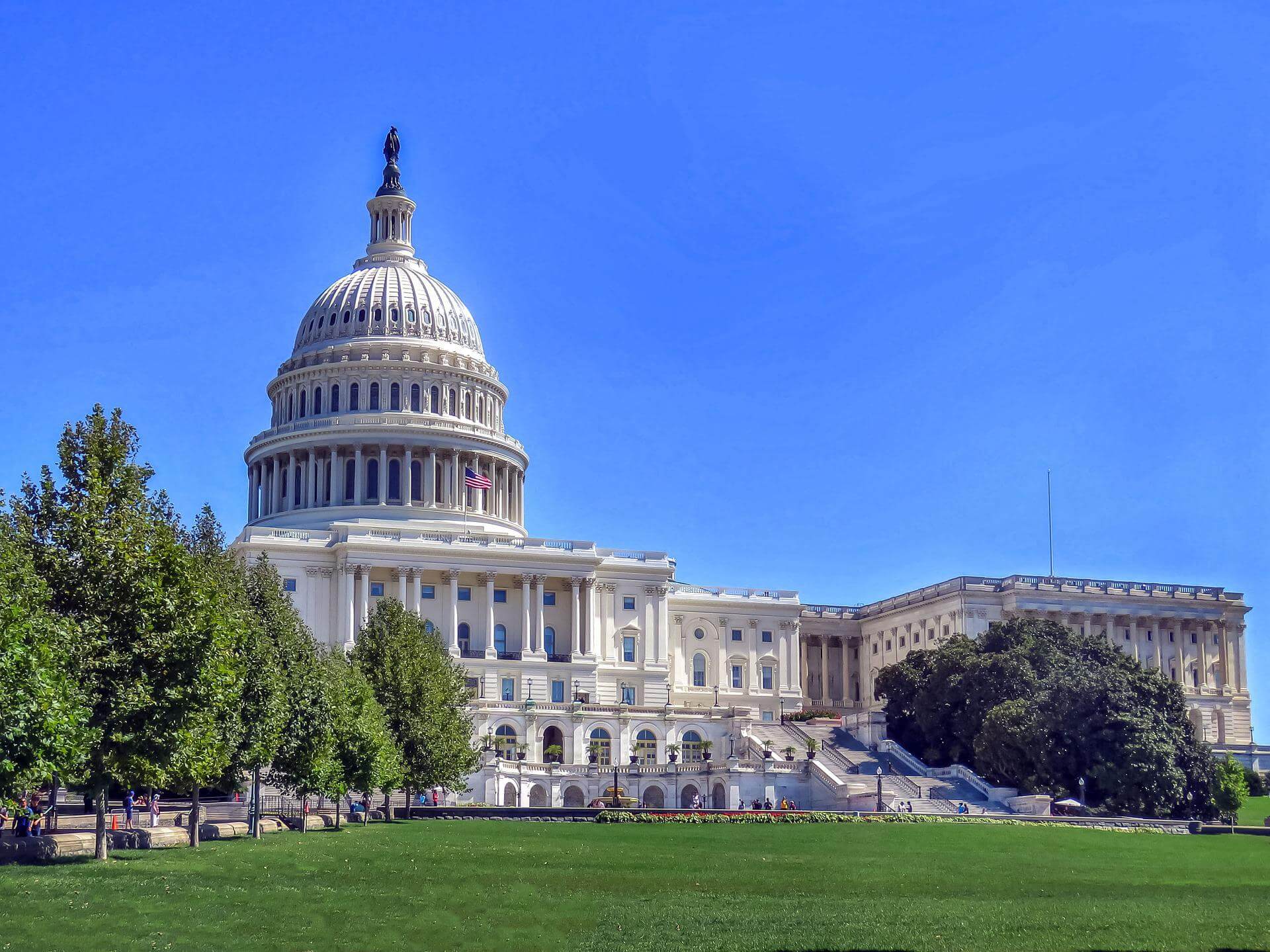
United States Capitol Building and Capitol Grounds

More than 70 members of Congress are urging the Small Business Administration to act quickly to fund eligible RRF applicants.

This news comes on the heels of the findings of the Government Accountability Office’s investigation into the RRF. As you may recall, the GAO discovered $180 million in unobligated funds.

In response, 73 representatives and senators sent the SBA a letter. Sen. Catherine Cortez Masto (D-NV) and Rep. Earl Blumenauer (D-OR) are leading the effort to quickly and fairly distribute the $180 million.

At the start, members of Congress ask that the SBA take immediately action. Also, that the SBA give priority consideration to RRF applicants who didn’t receive funds even though they were awarded grants.

By the way, that’s about 7,000 applicants.

Unfortunately, the recently passed Inflation Reduction Act of 2022 doesn’t include funds to replenish the RRF. And while $180 million is nowhere near the $42-43 billion our industry needs and deserves, it’s something. In fact, it’s a reason to keep pushing Congress to do the right and responsible thing.

Interestingly, the letter sent to the SBA also urges the clawing back of funds for various reasons. One social media user, in response to the letter, suggested auditing the recipients. Presumably, this would also lead to a clawback and, in turn, the further awarding of grants.

Key Segments of the Letter

“Last month, the Government Accountability Office (GAO) released a report titled Restaurant Revitalization Fund: Opportunities Exist to Improve Oversight that stated that as of as of June 2022, $180 million of RRF funding was unobligated. As you know, about 177,000 restaurants that applied to the program did not receive awards. While we understand the remainder of the funding will not reach every business that applied, it is imperative that the SBA distribute every dollar to help as many struggling restaurants as is feasible.

“In addition to these actions, we are also urging that SBA take action to recover funds that have been awarded to ineligible applicants, were found to be accepted fraudulently, or could otherwise be returned. For example, the aforementioned GAO report states that SBA does not require recipients to report their operating status, despite the statute requiring that businesses that permanently close to return the unused funds to SBA. SBA has itself identified potentially ineligible recipients, such as clubs and hotels that failed to meet statutory eligibility criteria. Money recovered from fraudulent and ineligible businesses can subsequently be used to help
fund the many businesses who were unable to receive grants. We urge you to take action on this matter and provide us with detailed information on the amount of funding that may be recovered as well as SBA’s progress in doing so.”

Image: Francine Sreca from Pixabay

by David Klemt David Klemt No Comments

Congress Fails Us Once More

Congress Fails Us Once More

by David Klemt

United States Capitol Building through trees

A “compromise” and “far from perfect,” the Inflation Reduction Act of 2022 is yet another bill that could include the RRF but fails to do so.

Not content to deliver just the gut punches our industry has already endured, Congress is leaving us out. Again.

A bill that targets inflation in the US should, logically, include replenishment of the Restaurant Revitalization Fund. However, RRF replenishing isn’t among Inflation Reduction Act compromises.

By the way, that isn’t my assessment. It’s President Joe Biden’s summary of the bill’s passage in the Senate: “This bill is far from perfect. It’s a compromise.”

To clarify, this compromise is a $430 billion spending bill that doesn’t include $40 billion to replenish the RRF. That’s interesting, considering Democrats claim the bill will not only generate enough revenue to pay for itself, they say it will generate another $300 billion throughout the next decade.

Restaurants in the US are projected to generate nearly $900 billion in sales this year. Apparently, however, that’s not enough for our politicians and lawmakers to consider us important to the economy.

Instead, those who enjoy near-inscrutable power and are in the position to stop another bout of restaurant and bar closures have chosen not to help. Our industry, which employs millions upon millions of hard-working Americans is once again on the outside looking in.

The Road to Nowhere

In a word, the road to RRF replenishment is exhausting. One Instagram user commented as such on the Independent Restaurant Coalition‘s post about us being left out of a massive spending bill yet again.

Three months ago, the US Senate killed RRF replenishment when they voted against even debating the Small Business COVID Relief Act of 2022.

Midway through June I reported that Sean Kennedy, executive vice president of public affairs for the National Restaurant Association, posited that the RRF could be replenished via a reconciliation bill.

Addressing the possibility, Kennedy made clear it was a longshot. He was correct.

Indeed, the Inflation Reduction Act was passed by the US Senate via reconciliation bill. A simple majority consisting of all 50 Democrat senators and Vice President Kamala Harris sends the bill to the House.

Compellingly, the nonpartisan Congressional Budget Office’s analysis of the Inflation Reduction Act indicates the bill’s name is a misnomer. According to the CBO, the bill will either have zero or nearly-zero impact on inflation this year or in 2023. A group of 230 economists warn the bill may increase inflation.

The bill is expected to pass the House in its current form and be signed by President Biden by the end of this week.

Response from the IRC

Immediately after news broke that the Inflation Reduction Act of 2022 passed the Senate but failed to include RRF replenishment, the IRC’s Erika Palomar responded.

The executive director of the IRC said:

“For nearly three years, independently owned restaurants and bars have weathered multiple COVID-19 surges, government-mandated closures, consumer hesitancy, rising prices and ongoing restrictions, while fighting to keep their doors open and staff employed. Restaurants and bars are the heartbeat of every community, and we are incredibly disappointed to not be included in the reconciliation vote this weekend. 177,300 small businesses have been patiently waiting for relief and their needs are being ignored, again.

“Thousands of restaurants and bars are at risk of closing permanently as a result of continued Congressional inaction on the replenishment of the Restaurant Revitalization Fund (RRF). The failure of Congress and the White House to act swiftly is impacting neighborhoods in every state across the country. Congress has failed these businesses, but the Independent Restaurant Coalition is not giving up the fight in any way possible to support independent restaurants.”

Further Disappointment

Over the past 15 months (longer if we really look back), our politicians and lawmakers have been consistent about one thing. They have continually failed to recognize restaurants and bars for what they are: cornerstones of their communities.

Of course, they’ll happily use our businesses for political theater and their fundraisers. But giving us more than lipservice? Not on the agenda.

Image: Paula Nardini on Pexels

by David Klemt David Klemt No Comments

What Politicians Get Wrong about Us

What Politicians Get Wrong about Our Industry

by David Klemt

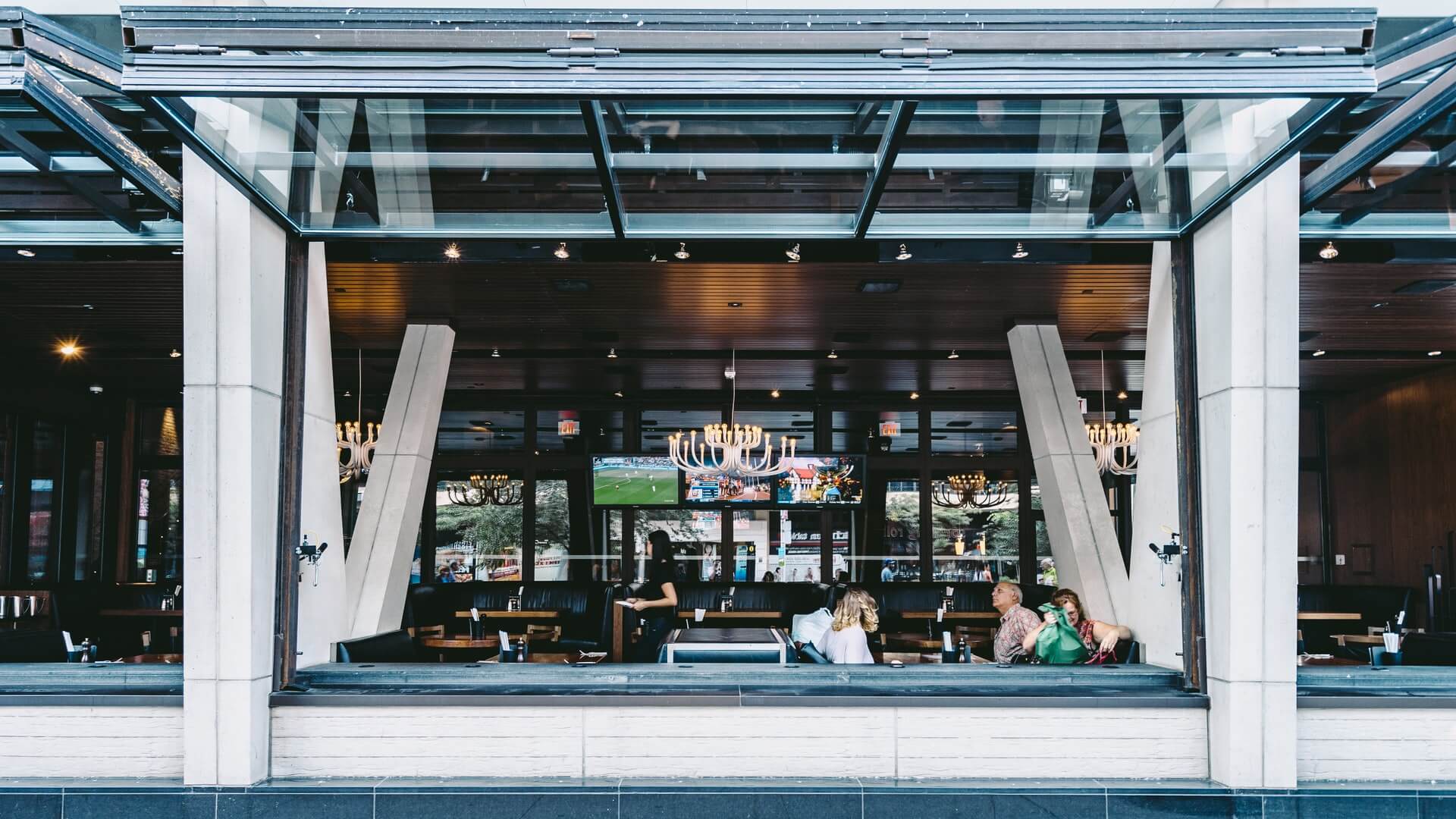
Restaurant and bar with exterior windows open

It still stings that the 43 senators chose to vote against replenishing the Restaurant Revitalization Fund.

The fact that four senators didn’t vote at all on S.4008 is nearly as insulting and painful.

Now, while all the “nay” votes came from Republican senators, I’m not here to bash one party in particular. Four Republicans voted “yea,” as did two Independents.

Unfortunately, given how hostile Democrats and Republicans in Congress seem to be, it’s difficult to be objective. Right now, it appears that the RRF was left to die a slow death because many—not all, of course—Republicans in power don’t want their Democrat peers to “win” at anything.

To be used as political pawns and be left out in the cold… It’s a bitter pill to swallow.

Cornerstones

Too many politicians, it seems, view restaurants and bars as they would other types of businesses. Perhaps the perceived success of national and global brands paint the picture that independent venues and small chains don’t need any help.

More disappointingly, maybe politicians, from local lawmakers to state representatives, take our business’ role for granted.

Look at the history of restaurants and bars, of hospitality. Think about the rich history of hospitality in America alone, let alone globally.

Yes, independent restaurants and bars are small businesses. But like so many small businesses in so many towns across the country, they’re so much more.

Restaurants and bars are pillars, cornerstones of the communities they serve. These are businesses that welcome people in, treat them like family. They’re there for them as they move through their lives.

People who were seemingly at odds with another routinely found common ground over a bite and a sip. More often than not, that’s still the case.

Operators and their teams give back to their communities through food drives, quietly feeding those in need, and finding other ways to give back.

And they look out for their communities.

Lifesavers

Last week, the team at a cafe in the Bronx called the Chipper Truck helped rescue a woman from an alleged hostage situation.

Permitted by her assailant to place a food order via Grubub, the victim thought quickly and sent a life-saving note with her order:

“Please call the police… don’t make it obvious.”

A staff member read the note in the “additional instructions” section of the order and called one of the owners. Nobody at the Chipper Truck knew if the situation was real but they chose to err on the side of caution.

When the alleged assailant—who was arrested and charged with a list of serious offenses—opened the door for the Grubhub order, he was met with police officers.

A Facebook post from the cafe addressing the situation read, in part, “I’ve often heard of this happening but never thought it would happen to us. Thankfully we were open and able to help her.”

It’s terrifying that this happens enough that the cafe owners hear about it “often.” But it’s telling of the role restaurants and bars play in their communities that they’ve saved multiple lives.

This is to say nothing of the restaurants and bars that have put coded safety systems in place to help patrons who find themselves in danger.

No Such Thing as “Just” a Restaurant or Bar

There isn’t a restaurant or bar out there that’s “only” a restaurant or “only” a bar.

Every one is a source for food, for socializing, for an escape from the stresses of life. Restaurants and bars are committed to service and sacrifice.

They’re pillars of their communities, the cornerstones that play important roles in our everyday lives and the special moments as well.

Perhaps our politicians, local and otherwise, need to a reminder. Restaurants and bars play crucial roles in the lives of the people politicians are supposed to represent.

Too many politicians claim to support small businesses while their actions and votes prove otherwise. Talk, as we all know, is cheap.

Restaurants are not “just” restaurants. Bars are not “just” bars. We deserve better.

Image: Scott Webb on Unsplash

by David Klemt David Klemt No Comments

House Votes to Replenish RRF

House Votes to Replenish RRF

by David Klemt

United States Capitol Building dome in greyscale

Eleven months after the closure of the Restaurant Revitalization Fund application portal, Congress has voted on RRF replenishment.

Earlier today, the House voted “yes” on $42 billion for the RRF via the Relief for Restaurants and Other Hard Hit Small Businesses Act of 2022 (HR 3807).

To clarify, the intent is that funds go to original applicants who were left out when the portal closed.

Neither the $1.7 trillion Build Back Better Act nor the $1.5 trillion omnibus spending bill passed in March included the RRF Replenishment Act.

So, this news is obviously fantastic. However, it’s also long overdue.

We’ve waited nearly 11 months for movement on relief for our ravaged industry. In comparison to the hospitality industry, the legislative process often moves at a glacial pace.

For obvious reasons, the long delay in replenishing the RRF has been devastating.

Nearly a month ago, I wrote and published “Congress is Abandoning Us.” Some considered the article harsh, others agreed with what I wrote.

To be clear, I stand by what I said after ten months of inaction. However, I’m relieved—cautiously—that the House proved their support for our industry today.

$55 Billion Lifeline

In its current form, the House bill would provide $42 billion. This is the amount believed to be enough to award grants to the original applicants from May of 2021.

Additionally, there’s another $13 billion for businesses in other hard-hit industries. So, the House bill provides a total of $55 billion in relief.

Per bill co-author Rep. Earl Blumenauer (D-OR), those who applied last year for the first (and only) round of RRF relief won’t have to re-apply.

Rep. Blumenauer reportedly told Nation’s Restaurant News that “[t]he independent restaurant is the foundation of a livable community.”

Continuing, Rep. Blumenauer told NRN, “We need to have these institutions to provide a foundation for our neighborhoods.”

As far as the source of the $55 billion, the money is supposed to come from funds recovered from 2020 and 2021 pandemic relief programs. This includes billions of dollars stolen through fraudulent relief program claims.

In an effort to combat further fraud and show the public that the funds are indeed going to the correct recipients, the SBA will be required to be transparent about its process.

As it stands, grant recipients will need to spend the funds on eligible uses by March 11, 2023.

Bittersweet

While this is huge news for our industry, it’s somewhat difficult to let go of my frustration fully. The RRF portal opened May 3, 2021. It closed just 21 days later, shutting out an estimated 177,000 grant applicants.

In June of last year, Sens. Kyrsten Sinema (D-AZ) and Roger Wicker (R-MS), and Reps. Earl Blumenauer (D-PA) and Brian Fitzpatrick (R-PA) introduced a bill to replenish the RRF.

That was followed in July by the ENTREE Act, introduced by Rep. Blaine Luetkemeyer (R-MO).

Then, in August, Sen. Rand Paul (R-KY) objected to a unanimous consent motion to fund the RRF. Essentially, after that occurred, it was crickets.

As stated above, when the Build Back Better Act was passed in November, relief for our industry was nowhere to be found.

Given all of this, and the fact that the bill must now go before senators for debate and a vote, I find myself still uneasy about the fate of the RRF.

We often say hope isn’t a strategy. However, I hope our senators do the right thing and pass the relief our industry so desperately needs and deserves.

Image: Joshua Sukoff on Unsplash

by David Klemt David Klemt No Comments

Hang On: That Drink Probably Isn’t Russian

Hang On: That Drink Probably Isn’t Russian

by David Klemt

Three clear vodka or gin cocktails

In response to the invasion of Ukraine, some restaurants and bars are pouring out spirits or renaming cocktails they believe are Russian.

Doing so is one way some operators are showing support for Ukraine.

However, people may want to do some research before they pour out a bottle or rewrite their menus. The reason is simple: That bottle or drink may not be Russian.

White or Black Russian

This classic cocktail has zero Russian roots. It was created by a Belgian bartender. Further, the bartender, Gustave Tops, created the drink at a hotel in Brussels.

Unfortunately, that hotel operated for 125 years before closing in 2020.

According to cocktail historians, the drink only has “Russian” in the name because it’s made with vodka.

In fact, people have created riffs on the White/Black Russian just by replacing a single ingredient. Variants include the White Belgian, White Cuban, and White Canadian.

Moscow Mule

The Moscow Mule is 81 years old. And it was born in…Santa Monica. One of the most notable things about Santa Monica is that it’s located in California, which is in America.

As the story goes, a salesman representing Smirnoff strolled into the Cock ‘n Bull Pub. The owner of the pub had purchased a bunch of ginger beer he was having trouble moving.

In the 1940s, supposedly, it was difficult to sell vodka or ginger beer. But what about vodka and ginger beer? According to legend, the two men created the Moscow Mule in a mutually beneficial sales move. The rest is cocktail history.

Obviously, the name has Russian roots. Smirnoff vodka was at one time a Russian vodka (more on that below). But no, the cocktail isn’t a Russian cocktail in so far as it was invented in America.

There are companies that have made copyright claims but they’ve largely gone nowhere.

Smirnoff Vodka

Pouring out bottles of Smirnoff isn’t going to stick it to any Russians. The brand is now owned by Diageo, a British company.

The vodka itself is produced in several countries, including Canada, Ireland, and the US. Not a drop is made in Russia.

Originally, the vodka was produced in Moscow. Pyotr Arsenyevitch Smirnov founded the distillery in 1864. However, Smirnov had to sell the brand in 1904 after Tsar Nicholas II nationalized the Russian vodka industry.

Smirnov and his family fled Russia in 1917 in response to the October Revolution.

In reality, with the exception of very specialized bars and off-premise shops, it’s not common to come across authentic Russian vodka. Beluga, Jewel of Russia, Mamont, Russian Standard, and Zyr are some of the few people may come across at a restaurant, bar, or liquor store.

The Problem

It may seem like a middle finger to Russian president Vladimir Putin to erase the country from menus. Renaming cocktails or removing Russian brands feels like a show of solidarity, on the surface.

In reality, doing so is dangerous. It’s a vilification of all Russian people, even if it doesn’t feel like it. Pulling certain brands may put a dent in someone’s bottom line. However, “sanitizing” a menu by removing everything Russian may send an irresponsible, unintended message: Russian people are bad.

We don’t have to look far back into history at all to see what can happen when we vilify an entire group of people. Violence, harassment, discrimination… In these tense, divisive times, it’s all too easy for people to become desensitized and even engage in truly horrible behavior.

I’m appalled by what’s happening in Ukraine. Everyone at KRG Hospitality is horrified by Putin’s invasion. A single drop of blood spilled is too much; Putin’s hands are covered in innocent blood.

But I’m not going to show my support by declaring or otherwise acting like all Russians are bad people. One person—and his complicit inner circle—is responsible for the ongoing attack on Ukraine.

Let’s not forget that, and let’s not forget that words and actions have consequences. It’s all too easy for people to take things too far and for innocent people to get hurt.

Image: Vinicius “amnx” Amano on Unsplash

by David Klemt David Klemt No Comments

Months Pass, RRF Still not Replenished

Months Pass, RRF Replenishment Remains Uncertain

by David Klemt

Time has run out hourglass, black and white

If you’re wondering if the RRF Replenishment Act of 2021 or ENTREE Acts are making progress, you’re not alone.

Unfortunately, it appears far too many politicians on all sides are focusing on anything but our industry.

Indeed, it’s apparently more important that they score political “points” for sniping at each other on social media; engage in hyperbole and histrionics; and overall engage in brinksmanship instead of doing anything meaningful for their constituents.

Meanwhile, the industry has lost more than $300 billion in revenue over 19 months. Additionally, we’re short at least one million jobs.

So, it’s not hyperbolic to state this: It’s no longer time for Congress to act, time has very much run out.

It’s up for owners and operators, their teams, and their teams’ families.

Replenish RRF Act

As people familiar with the Restaurant Revitalization Fund will recall, the fund launched with $28.6 billion. Obviously, that was nowhere near enough funding to meet the demand for grants.

The National Restaurant Association estimates that 177,000 grant applicants are still waiting for assistance. Those applications total more than $43 billion.

Essentially, $60 billion would be printed to replenish the RRF. That’s according to the language in the RRF Replenishment Act bill.

In June, Sens. Kyrsten Sinema (D-AZ) and Roger Wicker (R-MS), and Reps. Earl Blumenauer (D-PA) and Brian Fitzpatrick (R-PA) introduced the bill.

It’s now the middle of October.

ENTREE Act

Toward the end of July, Rep. Blaine Luetkemeyer (R-MO) introduced an alternative bill.

A ranking member of the House Committee on Small Business, Rep. Luetkemeyer proposed the Entrepreneurs Need Timely Replenishment for Eating Establishments Act on July 20.

Again, that was in July and it’s now October 25.

Known as the ENTREE Act (acronyms are fun, eh?), this bill wouldn’t just create $60 billion out of thin air.

Instead, per the text of the bill, the ENTREE Act would use unspent funds from the American Rescue Plan and Economic Injury Disaster Loans.

Now What?

In early August, there was an attempt made to replenish the RRF with $48 billion of emergency funding.

Sen. Ben Cardin (D-MD), along with a bipartisan group of senators, sought unanimous consent to authorize the funds.

Unfortunately, Sen. Rand Paul (R-KY) objected to the unanimous consent motion. The measure was blocked due to Sen. Paul’s objection and the RRF didn’t receive any emergency funds.

So, now what? In August, political insiders expressed their opinion that the ENTREE Act wasn’t likely to be passed.

Meanwhile, the RRF Replenishment Act hasn’t made significant progress since it was first introduced in June.

Most recently, members of the Independent Restaurant Coalition held a press conference with Rep. Blumenauer and Rep. Dean Phillips (D-MN). During the press conference, it was pointed out that Congress was voting on infrastructure bills that didn’t contain the RRF Replenishment or ENTREE Acts.

The most that can be said currently about any “progress” is that House Speaker Nancy Pelosi has made a promise that relief for the industry is coming, somehow, during some unknown timeframe.

Great. In the meantime, you, your family members, your friends, and your guests can contact their reps to put more pressure on them to replenish the RRF. You can also click here for more ideas from the IRC on how to get the message across that our representatives need to act now.

Perhaps reminders that every House seat and 34 Senate seats are up for re-election next year will help spur some action.

Image: Eduin Escobar from Pixabay

by David Klemt David Klemt No Comments

State of the RRF: By the Numbers

State of the RRF: By the Numbers

by David Klemt

Wad of dollar bills with red rubber band

The “tale of the tape” of the Restaurant Revitalization Fund tells a clear story: the RRF needs an injection of tens of billions of dollars.

Clearly, $28.6 was nowhere near enough to award every eligible restaurant and bar with a grant.

In fact, the RRF would need at least another $50 billion to serve all eligible applicants.

The Numbers

First, the Small Business Administration is to be commended for setting up the RRF portal, making the application process clear, and handling applications well.

However, there’s one glaring issue with the RRF and the review and awards process. I’ll get to that in the next section.

Per the National Restaurant Association, more than 362,000 applications were submitted via the RRF portal.

In total, the applications add up to $75 billion in grant requests. Again, the RRF was funded by the government with $28.6 billion. It doesn’t take a mathematician to see that the fund was severely underfunded.

Controversy

Last week, a number of Republican members of Congress sent a letter to the SBA. The gist of their message was that the RRF’s closure was premature. Therefore, the group concluded, non-priority applicants wouldn’t receive grants or even have the opportunity to apply for grants.

In the letter, which can be reviewed here, the authors also took shots at Democrats, the Biden Administration, and undocumented immigrants.

Setting politics aside, the announcement of the RRF’s portal closure was inarguably premature. The application process was first opened on Monday, May 3. For the first 21 days, the SBA announced that while all eligible entities could apply, only priority applicants would be processed and awarded grants.

However, the RRF portal closed to applications on Monday, May 24…21 days after it first opened. The members of Congress who penned the letter to the SBA have a point: the SBA closed the RRF portal after only operating within the priority window.

Now What?

There’s no other way to put this: The RRF needs more funding.

Essentially, it needs twice the funding it had when it was first seeded. There’s zero guarantee that Congress will address this matter, but at least a handful of lawmakers are aware of the dire situation.

Two weeks ago, the NRA launched a petition urging the government to replenish the RRF. Of course, the RRF also needs to be reopened for applications, and the application process needs to be open to all eligible applicants.

There’s no promise the petition will achieve the desired result but we must do something. Click here to sign the petition and tell Congress the RRF needs to be replenished and reopened.

Image: Karolina Grabowska from Pexels

by krghospitality krghospitality No Comments

House Passes $1.9B Covid Relief Bill, RRF

House Passes $1.9B Covid Relief Bill, RRF

by David Klemt

US Capitol Building Dome

The Senate version of the American Rescue Plan Act of 2021 is through the House, awaiting the signature of President Joe Biden.

Once the bill is signed by the president, it will be the law of the land.

That means our industry is finally receiving at least a portion of the relief it so desperately needs. After nearly a year of campaigning and fighting, the Restaurant Revitalization Fund (RRF) is a reality.

Restaurant Revitalization Fund

Managed by the Small Business Administration properly, the RRF is a critical lifeline for small- and mid-sized operators.

The SBA will prioritize women- and veteran-owned and operated businesses for the first 21 days. Economically and socially disadvantaged businesses will also receive priority.

Maximum grant amounts are $5 million per individual restaurant or $10 million per restaurant group.

Eligible Expenses

Importantly, eligible expenses fall between February 15, 2020 through December 31, 2021.

Eligible expenses include but are not limited to:

  • payroll and benefits;
  • mortgage (no prepayment);
  • rent (no prepayment);
  • utilities, maintenance;
  • supplies (including PPE and cleaning materials);
  • food;
  • operational expenses;
  • covered supplier costs (as defined by the SBA under the PPP program); and
  • sick leave.

American Rescue Plan Provisions

Of course, the RRF is just a small portion of the American Rescue Plan. The bill includes many provisions for national Covid-19 testing and vaccine distribution.

States and local governments receive $20 billion to assist low-income households with rent, utility bills, and back rent. There’s an increase to benefits of 15 percent through September for those on food stamps.

Also, the Emergency Injury Disaster Loan (EIDL) program receives $15 billion, which will help small business owners.

The $300-per-week federal boost to unemployment benefits remains the same rather than climbing to $400 per week.

Crucially, the bill waives the first $10,200 of unemployment benefits from 2020. That amount rises to $20,400 for married couples. To receive the waiver, a household must have an adjusted gross income of $150,000. That AGI is the same for individual and combined households.

Individuals with an AGI of up to $75,000 will receive stimulus payments of $1,400. That amount phases out completely at $80,000 for individuals, $160,000 for couples.

What’s Next

The SBA is responsible creating and implementing the RRF application process.

For now, it’s wise for operators to calculate their grant amounts:

  • Open prior to 2019: 2019 revenue minus 2020 revenue minus PPP loans.
  • 2019 opening: Average of 2019 monthly revenues times 12 minus 2020 revenues.
  • 2020 opening: Eligible to receive funding equal to eligible expenses incurred.

Since the SBA is the agency overseeing the $28.5 billion RRF, it’s a good idea to monitor their site for pertinent dates, details and requirements.

Image: Joshua Sukoff on Unsplash

by David Klemt David Klemt No Comments

Senate Boosts RRF to $28.6 Billion

Senate Boosts RRF to $28.6 Billion

by David Klemt

Lower-case neon open sign

On Saturday, the Senate approved their version of the $1.9 trillion Covid-19 relief bill along party lines.

Next, the bill will go back to the House and could receive a vote as early as tomorrow.

Boost to RRF?

According to several sources, the Senate’s version of the American Restaurant Plan Act (ARPA) includes a $3.6 billion boost to the $25 billionRestaurant Revitalization Fund (RRF).

If that’s accurate and the House passes this version of the ARPA, the RRF has $28.6 billion to disburse.

Five billion dollars will be set aside specifically for businesses that grossed less than $500,000 in receipts in 2019.

Mostly a Good Start?

The RRF is modeled on the RESTAURANTS Act.

Unfortunately, it isn’t funded like the RESTAURANTS Act. The industry has been campaigning for nearly a year for a $120 billion fund.

More than 110,000 restaurants and bars have been lost throughout the United States permanently. In addition, the industry has lost around $220 billion in sales.

The RRF isn’t even a quarter of what the industry was asking for in terms of help from elected officials.

Still, if managed properly, the RRF is much-appreciated and much-needed relief for small and mid-sized operators.

The Details (So Far)

The Small Business Association (SBA) will manage the RRF. For the first 21 days, businesses owned or controlled by women or veterans—or that are economically and socially disadvantaged—will be prioritized for grants.

Maximum amounts for grants are $5 million per individual restaurant or $10 million per restaurant group.

Established restaurants can calculate their grants thusly: 2019 revenue minus 2020 revenue minus PPP loans. For restaurants that were opened in 2019, the calculation is the average of 2019 monthly revenues times 12 minus 2020 revenues. Restaurants opened in 2020 are eligible to receive funding equal to eligible expenses incurred.

Grants can be spent on eligible expenses from February 15, 2020 through December 31, 2021. However, the SBA may extend that period through two years from enactment.

Eligible expenses include but are not limited to:

  • payroll and benefits;
  • mortgage (no prepayment);
  • rent (no prepayment);
  • utilities, maintenance;
  • supplies (including PPE and cleaning materials);
  • food;
  • operational expenses;
  • covered supplier costs (as defined by the SBA under the PPP program); and
  • sick leave.

The fight for relief isn’t over. Please click here to tell your representatives to pass ARPA and the RRF immediately.

Image: Finn Hackshaw on Unsplash

by David Klemt David Klemt No Comments

What’s in the Senate Relief Package?

What’s in the Senate Relief Package?

by David Klemt

United States Capitol Building rotunda ceiling painting

As expected, the Senate version of the latest Covid-19 relief bill is different from the one passed by the House.

The changes will require the bill to be kicked back to the House, adding to the pressure to get relief to Americans before March 14.

Things may change but below are some of the differences between the two versions.

$15/hour Minimum Wage

This provision is dead in both houses of Congress.

That should come as no surprise as the boost to federal minimum wage was declared dead in the water by Senate Parliamentarian Elizabeth MacDonough even before the House voted on the American Rescue Plan Act.

According to reports, removing any and all language that raises federal minimum wage to $15 an hour is the biggest change between the House and Senate versions of ARPA.

Direct Payments to Americans

Chatter online indicates that Senate Democrats are in favor of a drastically lower threshold for $1,400 direct stimulus payments.

The House version of the American Rescue Plan Act of 2021 calls for $1,400 economic impact payments with the following parameters:

  • Individuals earning an adjusted gross income (AGI) up to $75,000.
  • Married couples earning an AGI up to $150,000.
  • Payments phase out, reaching $0 for individuals earning AGI over $100,000 and married couples earning AGI over $200,000.

The Senate version calls for $1,400 payments to phase out entirely for individuals earning an AGI of $80,000 and married couples with an AGI of $160,000.

Restaurant Revitalization Fund

Let’s be honest, this is why you’re here. Is the RRF safe?

There’s nothing that shows the $25 billion fund is in danger from the Senate. That said, there’s one threat to ARPA in general, “minor” as it may be: game-playing politicians.

Unsurprisingly, Republicans view ARPA as too expensive, too favorable of Democrat’s priorities, and insufficient for addressing the reopening of businesses, schools, and fighting Covid-19.

Those concerns in and of themselves aren’t akin to playing games, nor are they invalid. Vote-a-rama, however, is a time-wasting stalling tactic that allows senators to propose literally hundreds of amendments to a bill. The time limit for vote-a-rama? There isn’t one—it lasts until senators get tired or bored.

Speaking about a coordinated plan to engage in vote-a-rama, Senator Rand Paul (R-KY), said he’s “hoping for infinity. There are people talking about trying to set up a schedule and having it go on and on.”

Take Action

Americans simply do not have time for politicians on any side of the aisle to play games. Good-faith negotiations are one thing, delay tactics that last for “infinity” are another.

We’re still in the midst of a pandemic, people are unable to pay their bills, they’re going hungry, and business owners and their employees are suffering.

It seems some politicians have made up their minds and are committed to dragging out the process of passing ARPA and the RRF contained within but we still have our voices. Follow this link to tell your representatives to pass ARPA and RRF now.

Enough games, enough delays, more action.

Image: GO Educational Tours from Pixabay 

by David Klemt David Klemt No Comments

Restaurant Revitalization Fund Passes

Restaurant Revitalization Fund Passes

by David Klemt

United States Capitol Building

Congress has once again voted to pass targeted relief for restaurants and bars.

The American Rescue Plan Act of 2021, which includes the Restaurant Revitalization Fund Passes, made it through Congress by a vote of 219 to 212.

All Republicans and two Democrats voted against the $1.9 billion bill, which now goes to the Senate.

Now What?

After a year of being mostly left to fend for ourselves—save for the flawed Paycheck Protection Program—operators may finally receive some relief.

The $300-per-week federal boost to unemployment, which the American Rescue Plan Act increases to $400 per week, expires on March 14. There’s some pressure on the Senate to pass the bill so it can be signed into law before or by that date.

However, we’ve been down this road before: Congress has voted in favor of a bill that contains relief for restaurants, bars and other foodservice and drinking establishments, the Senate goes a different direction, and the Congressional victory turns to ashes in our hands rather than becoming law.

Democrats control the House. A Democrat sits at the Resolute Desk. And while the 50-50 Senate is “controlled” by Democrats since Vice President Kamala Harris can break tie votes, the party can’t afford any defections if they hope to pass the American Rescue Plan.

Once again, targeted relief isn’t a certainty.

What’s in the Plan?

In short, not the RESTAURANTS Act. The American Rescue Plan provides a fraction of the $120 billion for which the industry has been campaigning for a year now.

Instead, a $25 billion grant program called the Restaurant Revitalization Fund (RRF) has been carved out for restaurants, bars and other eligible providers of food and drink.

There’s another $15 billion allocated for targeted Economic Injury Disaster Loan (EIDL) advance payments, and $1.25 billion for shuttered venue operators.

Just $7.25 billion would be pumped into the PPP and the application deadline wouldn’t be extended beyond March 31. This is likely because the PPP has disbursed over $662 billion in just under a year, and there’s still roughly $140 billion available.

In addition, the current bill includes $1,400 direct stimulus payments for individuals earning up to $75,000 or $2,800 for married couples earning up to $150,000. Payments would phase out completely for individuals earning $100,000 or married couples earning $200,000.

What’s the Restaurant Revitalization Fund?

The RRF carves out $25 billion for restaurants, bars, saloons, inns, taverns, lounges, tasting rooms, brewpubs, taprooms, food trucks, food carts, food stands, caterers, and eligible providers of food and/or drink.

Grants, should the bill pass the Senate and be signed into law, will be equal to pandemic-related revenue loss as calculated by subtracting 2020 revenue from 2019 revenue. Eligible entities could receive of up to $10 million, or a physical location could receive a maximum grant of $5 million.

RRF grants are required to be used for:

  • payroll costs;
  • principal and interest payments on a mortgage, excluding prepayments on the principal;
  • rent payments, excluding prepayments;
  • utilities;
  • supplies, including personal protective equipment (PPE) and cleaning materials;
  • F&B expenses within the eligible entity’s scope of “normal business practice” before the covered period: February 15, 2020, through December 31, 2021 (or another date as determined by the Small Business Administration);
  • maintenance expenses, including construction accommodating outdoor seating and walls, floods, deck surfaces, furniture, fixtures, and equipment;
  • covered supplier costs;
  • operational expenses;
  • paid sick leave; and
  • any other expenses the SBA determines to be essential to maintaining the eligible entity.

The SBA would be responsible for awarding $20 billion of the $25 billion fund in “an equitable manner to eligible entities of different sizes based on annual gross receipts.” The remaining $5 billion would be set aside, per the bill in its current form, for eligible applicants with 2019 gross receipts of $500,000 or less.

Click here to find your senators and urge them to pass the Restaurant Revitalization Fund.

Image: Jens Junge from Pixabay 

Top