Grand opening

by David Klemt David Klemt No Comments

The Real Flex After Opening

The Real Flex After Opening a Bar, Restaurant, or Hotel

by Doug Radkey

A jewel-encrusted, gold-decorated clock inside a bank vault

Your time is a real luxury, and how you use it is a real flex. AI-generated image.

Walk into any bar, restaurant, or boutique hotel during its first year of business and you’ll see the same story play out over and over.

An owner is behind the bar on a Friday night. Or in the kitchen on a Saturday brunch rush. Or bouncing between rooms to check housekeeping on a sold-out weekend.

They’re exhausted, and they’re often proud of it.

They’ll tell you, with a weary smile: “Yeah, I’ve been pulling 70-hour weeks. That’s just what it takes in this business.”

Let me be brutally honest: that’s not a flex. That’s a warning sign.

The Illusion of Hustle

Somewhere along the way, the hospitality industry adopted the dangerous belief that working yourself to the bone is the only path to success.

Over the years, we’ve glamorized the grind. We glorified the sleepless nights. We made it seem noble to trade years of your life in exchange for a shot at breaking even.

And far too many independent operators are still buying into this story. They go into the start-up phase expecting to work 60–80 hours a week, and they wear it like a badge of honor.

Here’s the truth: burning yourself out is not a strategy.

A Story too Familiar

On a recent success session with a client, a new operator proudly told me their plan: “I’ll just work 70 hours a week for the first year. That’ll help me keep payroll costs down.”

I had to stop them. This mindset is the exact reason thousands of great concepts fail before they ever get the chance to stabilize and scale.

Allow me to provide some clarity: Time is not a substitute for strategy. Sweat is not a replacement for systems. Anguish will never be mistaken for leadership.

When you walk into your new business with the intention of being its hardest-working employee, you’ve already put a ceiling on your growth.

The Real Flex

The real flex isn’t grinding 80 hours, it’s running your business at 40 hours.

The actual flex is spending your time orchestrating people, processes, and profits instead of drowning in the daily grind.

It’s working on the business, not being trapped inside it.

Because let’s face it—the hospitality industry doesn’t reward those who simply work harder. Victory and the rewards go to those who work smarter.

If you look around at the brands that are truly winning I guarantee you their owner is not an employee within their own business.

Why Systems are Sexy

I’ll tell you what’s really impressive. Hint: It’s not the exhausted owner mopping the floor at 2 a.m. after a 15-hour shift.

What’s impressive is the owner who can leave at 6 p.m. on a Friday, knowing their team has everything under control. It’s the operator who enjoys dinner with their family while their systems ensure consistency and control inside the venue.

That’s the difference between chaos and clarity. Between “being busy” and building wealth. And the bridge between those two worlds? Playbooks. Systems. Structure.

Playbooks Before Pain

Every hospitality business starts with energy. That’s not the problem. The problem is, too many start with energy instead of a plan.

A one-page “business plan.” The infamous generic template from the bank. A few numbers scrawled on a napkin. Basic outputs from AI.

That’s not a business model, that’s wishful thinking.

Playbooks are what separate the hopeful from the profitable. They create alignment, and anticipate risk. They prepare you for staffing issues, supply chain hiccups, and margin pressures. Playbooks prepare you for everything else that will test you.

Without playbooks, your business owns you. With playbooks, you own the business.

The Psychology of Leadership

Hospitality isn’t just about food, drink, or rooms. It’s about people, and people follow energy.

If your energy screams “burnt out, stressed, unavailable,” your team absorbs that. In turn, they’ll also burn out. They’ll make more mistakes. You’ll suffer frequent and constant churn.

However, if your energy communicates clarity, presence, and balance, your team mirrors it. They’ll rise to meet the standard. They’ll take ownership, and they’ll perform.

Leadership isn’t about working the most hours, it’s about creating an environment where others can win by exceeding expectations.

No one wins in a business run on desperation and exhaustion.

The Math of Misery

Let’s get practical. Let’s say that you save $5,000 a month by cutting labor and doing the work yourself. Sounds smart, right?

Until you realize what you’ve traded for it: your time, your health, and your ability to scale.

This is because while you’re buried in the kitchen, you’re not refining the guest journey. You’re not analyzing your data, and crafting strategy. You’re not building partnerships.

All you’re doing is saving pennies while losing thousands to millions of dollars.

The real flex isn’t a lean payroll, it’s a lean operator. Being able to step away for a weekeven a month—confident that the business will perform exactly as designed? That’s the real flex.

Rewriting the Badge of Honor

It’s time to retire the old badge of honor. The “I worked 80 hours this week” story doesn’t impress anyone anymore.

Now, the flex is sustainability. The flex is empowerment. The flex is financial freedom and the luxury of time.

Because if your business only survives when you sacrifice yourself, you don’t own a business. You’ve given yourself a job with terrible hours and higher risk.

True ownership is building something that can crush it without you being in the trenches.

The Power of Why

So, why does this matter?

Because hospitality is not just an industry. When you really think about it, it’s a lifestyle. And if you destroy yourself in the process, you destroy your ability to lead, to innovate, and to grow.

The “why” is simple.

This isn’t about ego. It isn’t about showing the world how much punishment you can endure. Your aim should be to show the world what happens when clarity meets courage, when strategy meets execution, and when vision is supported by systems.

That’s what sets you apart.

Results that Speak

I’ve seen it firsthand: Operators who commit to playbooks, systems, and mindset shifts.

They’re operators who don’t just open doors and settle for average, they stay open and exceed everyone’s expectations.

These operators:

  • attract investors because they exude confidence and control;
  • build teams that stick around because the culture is sustainable;
  • deliver experiences that scale because the foundation is strong; and
  • build lives worth living, lives in which family, personal health, and travel aren’t luxuries but standards.

That’s the kind of success that matters.

Final Word

If your dream is worth the investment, it’s worth doing right. And doing it right doesn’t mean grinding yourself into long-term health problems.

The real flex after opening isn’t telling the world how many hours you’ve worked. An actual flex is showing the world how little you have to work because your systems, your team, and your strategy are doing the heavy lifting.

So, let’s stop wearing burnout as a badge of honor. Let’s start showing the world what true hospitality leadership really looks like.

Image: Canva

Client Intake Form - KRG Hospitality

by David Klemt David Klemt No Comments

KRG Releases 2024 Start-Up Guide

KRG Hospitality Releases 2024 Restaurant Start-Up Cost Guide

by David Klemt

2024 KRG Hospitality Start-up Costs Guide

KRG HOSPITALITY RELEASES SIXTH ANNUAL RESTAURANT START-UP COST GUIDE

Toronto-based hospitality industry consulting firm with offices in key markets throughout Canada and the United States of America unveils their latest restaurant cost guide and interactive hospitality calculator.

December 21, 2024 (TORONTO)—Today, KRG Hospitality releases their 2024 Bar & Restaurant Start-up Costs Guide, which is free to download. The Toronto-based consulting firm specializes in startup restaurant and bar projects along with boutique hotels, experiential concepts, and entertainment venues. KRG Hospitality’s American headquarters is located in Las Vegas, Nevada.

For the past six years KRG has researched, reviewed, and published the annual start-up cost guide, one of the industry’s leading resources dedicated to restaurant project costing.

And each year this informative and transparent guide is used as a trusted budgeting tool by developers, lenders, contractors, consultants, and aspiring restaurateurs. The guide is founded upon KRG Hospitality’s proprietary database of previous project costs, which includes project data from restaurants, bars, and cafes developed over the past 24 months.

Further, this annual KRG Hospitality guide also includes the interactive KRG Hospitality Calculator, which is updated for 2024.

The costs to start a restaurant have been on a steady rise over the past six years. Major drivers are increases in inflation, interest, labor, construction, and equipment. Of course, there are also the unique materials required to deliver a scalable, sustainable, memorable, profitable, and consistent on-premise, off-premise, or hybrid-style concept.

Drawing upon this comprehensive guide, an industry-leading expert has analyzed the information and provided a succinct and user-friendly summary of the findings for each major start-up category. This isn’t simply a couple of pages identifying a few costs. Rather, the sixth annual guide is a deep dive that provides real insight into what to expect in 2024.

The guide is available now as a free download via this link.

About KRG Hospitality

KRG Hospitality is a storied and respected agency with proven success over the past decade, delivering exceptional and award-winning concepts throughout a variety of markets found within Canada, the United States, and abroad since 2009. Specializing in startups, KRG is known for originality and innovation, rejecting cookie-cutter approaches to client projects. The agency provides clients with a clear framework tailored to their specific projects, helping to realize their vision for a scalable, sustainable, profitable, memorable, and consistent business. Learn more at KRGHospitality.com. Connect with KRG Hospitality and the Bar Hacks podcast on social: KRG Twitter, Bar Hacks Twitter, KRG Media Twitter, KRG LinkedIn.

Disclaimer

While using this guide helps develop a rough preliminary financial and strategic milestone plan, it is strongly recommended that you seek professional expert advice to provide you with a more precise, project specific estimate as each concept and market will be slightly different. KRG Hospitality Inc. is not responsible for any project that is not currently under contract within the company.

Image: KRG Hospitality

KRG Hospitality Start-Up Restaurant Bar Hotel Consulting Consultant Solutions Plans Services

by David Klemt David Klemt No Comments

The Major Milestones You Must Reach

The Major Milestones You Must Reach to Open a Restaurant

by David Klemt

2023 KRG Hospitality Milestone Checklist

Opening a restaurant is no small task, with projects requiring the completion of 500 unique tasks before welcoming guests.

KRG Hospitality president Doug Radkey identified these tasks several years ago. The commitment to systematically accomplish these tasks is a cornerstone of our approach to all projects.

Our feasibility studies, branding, concept and brand development, and programming are unique and customized to every client. However, the journey from idea to grand opening is a path dotted by hundreds of waypoints.

There’s a reason we call our project plans Roadmaps to Success: we’re here to help guide our clients to and through each waypoint on the map.

Below you’ll find just 50—just a tenth—of the unique tasks we at KRG believe you must complete before your grand opening. You’ll find more than 80 tasks in the brand-new 2023 KRG Hospitality Restaurant Start-up Cost Report + Checklist.

Both the list below and the checklist included in our free Restaurant Start-up Cost Report download will give you an idea of what we work on with each of our clients. These tasks should also highlight the enormity that is taking your concept from idea to brick and mortar.

To download your free copy of our 2023 Restaurant Start-up Cost Report + Checklist, click here.

Planning & Admin Tasks

  • Complete your project feasibility study.
  • Develop your concept and brand plan.
  • Develop and test a layout/drawing.
  • Complete a strategic business plan.
  • Complete a marketing and tech stack plan.
  • Finalize your start-up budget.
  • Analyze and secure necessary funding.

The Support Team Tasks

You’ll need to secure:

  • Business insurance broker
  • Business and liquor license attorney
  • Restaurant and bar consultant
  • Project manager
  • General contractor and trades
  • Mentor or coach

Site Development Tasks

When it comes to these tasks, you may have an idea of roughly what to expect.

For example, one necessary task is…securing your property of choice. Another task to cross off or set a check next to? Signing the lease.

But there are other tasks you may not anticipate or think of when planning to open a restaurant:

  • Submit drawings to municipality.
  • Start and manage project renovations.
  • Set a SMART opening date proposal.
  • Set up and submit deposits for utilities.
  • Develop your service sequence (flow).

You’ll also need to source the following:

  • Exhaust hood supplier
  • Millworker and specialty supplier
  • Interior and exterior signage company
  • Grease trap cleaning
  • Used oil pickup/recycling
  • Exhaust hood cleaning

Operations Development Tasks

  • Complete a kitchen workflow plan.
  • Complete service sequence analysis.
  • Source take-out container suppliers.
  • Secure security, sound, and video, plus applicable licenses.
  • Secure point-of-sale and tech Systems.
  • Develop recipe books for kitchen and bar.
  • Develop package of standard operating procedures.

Brand Development Tasks

Developing your brand involves much more than choosing a logo and colors.

Consider every design and service element a branding opportunity. Your brand development tasks will include developing:

  • your core statements;
  • graphic design/branding kit;
  • website and social media accounts;
  • a promo video strategy;
  • a “coming/opening soon” plan; and
  • your media strategy for the launch.

You’ll also need to:

  • complete the F&B concept stage;
  • complete the F&B testing stage;
  • source menu cover supplier (for dine-in version)
  • complete a photo shoot; and
  • plan for and execute a soft opening.

Team Development Tasks

  • Develop your staff hiring strategy.
  • Plan for and complete HR and compliance forms.
  • Develop onboarding manuals.
  • Source staff uniform suppliers.
  • Promote job fair or interview dates.
  • Hold a staff orientation night.
  • Execute a staff-building exercise shift.
  • Create a brand ambassador program.

Image: KRG Hospitality

by David Klemt David Klemt No Comments

Will Virtual Kitchens Persist?

Will Virtual Kitchens Persist or Go Brick-and-Mortar?

by David Klemt

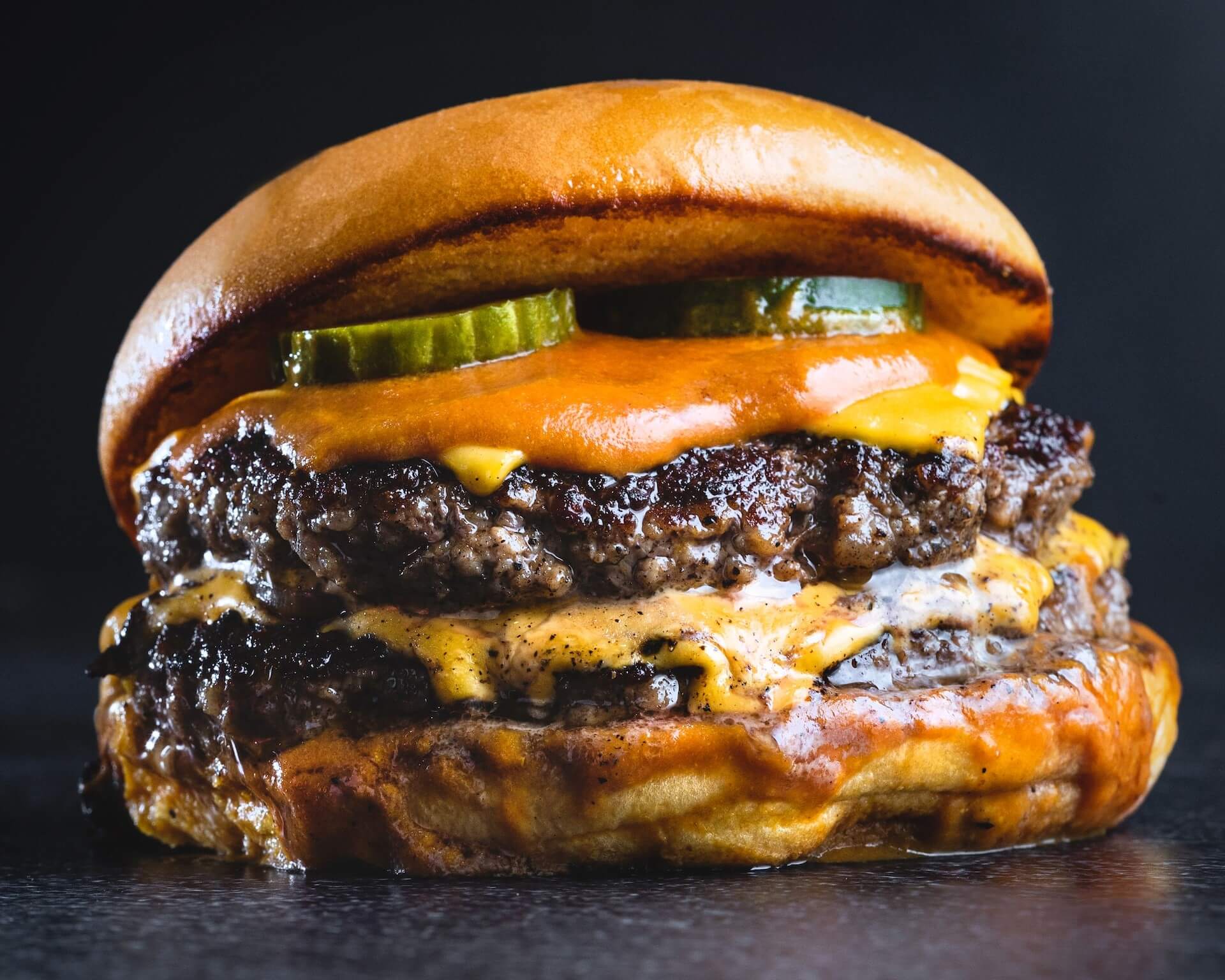
Closeup shot of double cheeseburger

Virtual kitchens and virtual brands are back in the headlines after a record-setting grand opening in Rutherford, New Jersey.

Well, I should clarify: A restaurant may now hold a specific record.

The restaurant in question is the first brick-and-mortar MrBeast Burger location. And the record it may hold claim to is most burgers sold in a single day by a single restaurant.


View this post on Instagram


A post shared by MrBeast Burger (@mrbeastburger)

Now, if you don’t spend much time on YouTube, you may not know MrBeast. So, here’s a quick rundown: He’s Jimmy Donaldson, a YouTube personality known for “expensive stunts.” In fact, he may be the pioneer of that type of content.

Right about now you may be wondering what this all has to do with virtual kitchens and brands. It’s quite simple, really. MrBeast was among the highest-profile virtual brands to launch during the pandemic.

Incredibly, MrBeast Burger boasts more than 1,700 virtual kitchen locations. And now, one brick-and-mortar MrBeast restaurant.

Leveraging Demand and Popularity

So, you’re an influential YouTube content creator with tens of millions of subscribers. Obviously, your channel is monetized. What else can you do to leverage your popularity?

Well, if there’s a pandemic crippling the globe and people are stuck at home, maybe you notice the demand for takeout and delivery. And perhaps you learn about something known as a “virtual kitchen.”

If you’re a foodie or maybe just a savvy businessperson, maybe you’d jump into the virtual space. It is, it goes without saying, much less expensive than opening your own restaurant. And if you perform well, that’s an excellent way to collect data and guest feedback.

Also, an efficient way to hone your brand without a lease, buildout or the overhead of a physical restaurant. In a way, a virtual brand is akin to a pop-up restaurant, only you can test hundreds of markets simultaneously.

Okay, so now let’s say you reach a rare milestone in the creator space: 100 million subscribers. MrBeast did just that in July of this year. Do you think you’d want to leverage the support of millions of fans willing to support you and your brand?

The first physical MrBeast Burger opened last week at the American Dream mall in New Jersey. Reports claim that over 10,000 people waited in line for the grand opening.

Oh, and that’s when the location may have claimed the aforementioned record: 5,500 burgers sold in one day. After just one day of operation, MrBeast wondered if the brand should franchise:

Virtual to Physical

This (potential) record-setting event brings virtual kitchens and brands back into the spotlight.

Of course, most virtual brands don’t have the same origin story as MrBeast. One hundred million supporters? That’s rarified air.

At any rate, virtual kitchens do offer potential physical restaurant operators a less expensive method of testing their concepts. Couple data collection and feedback with an accurate feasibility study and taking the next step may make sense. And it may make a tidy profit.

It’s possible we’ll see MrBeast franchise off the success of two years of operating virtually and opening a physical location. And it’s possible we’ll see other virtual brands expand beyond the virtual kitchen.

However, it’s important that virtual brand owners keep a few things in mind. One, online success doesn’t always translate to brick-and-mortar success. Two, the restaurant space doesn’t care about your subscriber count—the KPIs are entirely different here. Three, potential operators need to perform the proper studies—or retain an agency with experience performing them—rather than rushing into the restaurant space.

It’s highly likely we’ll see more virtual brands enter the physical restaurant world. How many will do so successfully remains to be seen.

Image: Eiliv-Sonas Aceron on Unsplash

Top