Nightclub programming

by David Klemt David Klemt No Comments

Spectacle ROI vs Scene Retention: The Two Financial Logics of Nightlife

One of the biggest misunderstandings in modern nightlife is assuming the business runs on a single economic system. It doesn’t.

A sold-out Saturday doesn’t mean your model works, it just means your event worked.

What looks like one category from the outside is actually operating on two fundamentally different financial logics. Some venues run on Spectacle ROI, monetizing attention in spikes through high-impact nights. Others run on Scene Retention, monetizing repeat behavior through habit, identity, and belonging.

Both models can succeed. However, they require different strategies, risk tolerance, and expectations.

Nightlife hasn’t just split culturally, it has split economically.

by David Klemt

A DJ performing from an elevated both, with lights and fog going off over the crowd

Spectacle ROI: The Event Model

Spectacle-driven venues operate like live events.

Revenue is concentrated into big nights, big bookings, and big production. Talent becomes a headliner rather than background. Lighting, visuals, and room energy are core parts of the product. VIP sales function as a structured access economy.

The goal isn’t consistency, it’s impact.

Spectacle venues are built to answer one question: How big can this night be?

When this model hits, it hits hard; a single night can outperform several average weeks. The upside per activation is significant.

The trade-off is structural. Spectacle relies on novelty, meaning programming must refresh constantly, and attention fades faster than loyalty. Without momentum, gravity weakens quickly.

Scene Retention: The Habit Model

Scene-driven venues operate more like cultural infrastructure.

Revenue comes from repeat behavior, not single-night spikes. Guests return because the space feels familiar, aligned, and socially meaningful. Programming cadence matters more than headliner scale, and identity and community replace spectacle as the primary draw.

The question here isn’t how big the night can be, it’s how often the same guests return.

The Scene model builds more slowly than its Spectacle counterpart. This model rarely produces explosive revenue peaks. The retention that the Scene model generates compounds: loyalty stabilizes revenue, and acquisition pressure drops. The venue becomes part of a guest’s social routine, not just an occasional destination.

Scene doesn’t monetize moments, it monetizes habits.

The Revenue Split in Plain View

Spectacle operates on ROE, return-on-event; Scene operates on retention.

One monetizes attention in spikes; the other builds gravity that compounds over time.

That difference shows up everywhere operationally.

The Nightlife Revenue Split

Dimension Spectacle ROI Model Scene Retention Model
Core Goal Maximize revenue per night Maximize guest lifetime value
Economic Engine Event spikes Habit formation
Revenue Pattern Volatile, high peaks Stable, compounding
Guest Motivation Occasion, visibility Belonging, familiarity
Programming Strategy Big moments Consistent rhythm
Marketing Focus Reach, hype Relationship, trust
Risk Profile High Moderate to low
Talent Dependency High Moderate
Growth Style Fast, unstable Slow, durable
Gravity Source Novelty Habit

Neither model is “better” than the other. They’re built for different environments, capital structures, and operator skill sets.

Where Operators Get Into Trouble

Most struggling venues aren’t failing nightlife, they’re failing model and strategic clarity.

Examples show up everywhere:

  • Spectacle-scale buildout with mid-tier programming.

  • Big DJ nights layered onto a space that lacks identity.

  • Strong community concept buried under overhead designed for event economics.

These are structural mismatches.

You can’t run event economics on retention demand. You can’t expect habit behavior in a room designed for episodic spectacle. And you can’t out-market a model mismatch forever.

Diagnostic: Which Business Are You Actually Running?

Operators often think they’re running as one model while their numbers say they’re operating under another. The checklist below is a reality check.

Spectacle ROI Signals

  • ☐ Our biggest nights drive a disproportionate share of revenue

  • ☐ Talent bookings influence weekly performance heavily

  • ☐ Marketing cycles revolve around specific dates or headliners

  • ☐ Guest traffic varies dramatically week to week

  • ☐ VIP/Table sales are a primary profit engine

  • ☐ Production value is central to guest expectations

  • ☐ Without programming refresh, attendance drops fast

  • ☐ We rely heavily on new guest acquisition

  • ☐ Guests talk about specific nights more than our actual venue/brand

  • ☐ Our revenue model depends on scale and volume

If you’ve checked six or more boxes, you’re operating a Spectacle ROI model.

Scene Retention Signals

  • ☐ Regular guests attend multiple times per month

  • ☐ Staff recognize frequent guests

  • ☐ Programming cadence matters more than individual bookings

  • ☐ Week-to-week revenue is relatively stable

  • ☐ Word-of-mouth outperforms paid promotion

  • ☐ Guests describe our venue as their “spot”

  • ☐ Community identity matters (music, culture, subculture)

  • ☐ Nights feel familiar but still engaging

  • ☐ Loyalty drives traffic more than hype

  • ☐ The business could survive a week without headline talent

You’re operating a Scene Retention model if you’ve checked six or more boxes.

The Red Zone

If both sections score high, you may be trying to operate two incompatible economic systems in one space. That’s where identity confusion, overhead mismatches, programming inconsistency, and marketing inefficiency tend to show up.

This is a red flag, and your reality check, particularly if you feel like you’re working hard but not gaining traction. The issue likely isn’t effort, it’s alignment.

Where Gravity Lives

Spectacle captures attention, Scene builds gravity.

Gravity reduces acquisition pressure. It stabilizes revenue and increases guest lifetime value. Without it, venues remain stuck in perpetual re-acquisition mode, always chasing the next spike and new, first-time guests.

That doesn’t make Spectacle wrong or a “bad” model; it means Spectacle is a different business.

The Decision That Shapes Everything

Before programming calendars, deciding on talent budgets, or developing marketing plans, operators need to answer one question: Are we built to maximize nights or years?

The answer shapes staffing structure, pricing strategy, programming cadence, capital planning, and growth expectations.

Clarity here doesn’t limit a concept, it lays it a stable operating foundation on which a successful legacy brand can be built.

Nightlife hasn’t just fragmented socially; it has separated into two financial logics. Operators who understand which model they’re actually running and stop trying to be both are the leaders positioned to build nightlife brands with real staying power.

Related Reading

Image: Matty Adame via Unsplash

Work with Us

Click the image below to partner with KRG Hospitality on your nightlife project.

Client Intake Form - KRG Hospitality

by David Klemt David Klemt No Comments

When Nightlife Becomes an Industry: Spectacle Economics in the U.S.

The U.S. shows what happens when Spectacle Nightlife reaches full maturity: the category shifts from subculture to structured entertainment economy.

Over the past several years, nightlife hasn’t just gotten bigger in the U.S., it has become an industry all its own.

In cities like Las Vegas, a club night can carry the economics of a touring concert, the sales structure of luxury hospitality, and the marketing engine of a major event.

This isn’t nightlife as Scene, it’s nightlife as Spectacle infrastructure. DJ bookings become headline acts, VIP ecosystems become core revenue engines, and venues function less like local scenes and more like recurring live-event platforms.

Understanding this shift isn’t about monitoring trends, it’s recognizing how scale changes the economics, risks, and operating realities of going out.

by David Klemt

Female DJ on the decks, overlooking a nightclub crowd bathed in red light

There was a time when nightlife was primarily a cultural business with entertainment layered into operations and programming.

In the U.S., that equation has flipped.

Today, top-tier Spectacle Nightlife operates at the intersection of three systems:

  • Live-event economics: headliner-style bookings, one-night performance stakes

  • Luxury hospitality mechanics: tiered access, service levels, status signaling

  • Entertainment production logic: lighting, staging, sound, and visuals as core product

This reality goes beyond just running a “busy club.” These venues are now functioning as recurring event platforms.

The DJ is no longer in the background, they’re the headliner. Production is no longer atmosphere, it’s the expectation. VIP is no longer a side offering, it’s the revenue engine.

That is industrialization.

Las Vegas: The Fully Realized Spectacle Model

If you want to see the Spectacle model built out fully, you look to Las Vegas.

Vegas has proven something the rest of the industry now studies and tries to emulate at varying scales: nightlife can be engineered like a large-scale entertainment product when tourism volume, capital investment, and talent pipelines align.

Here, a single night can resemble a festival set compressed into a room (or pool deck, or rooftop, or…):

  • internationally known DJs

  • large-format LED installations

  • choreographed lighting and visual sequences

  • host-driven VIP ecosystems functioning like parallel sales forces

Guest segmentation isn’t incidental, it’s strategic. General admission, elevated GA, table service, VVIP… Each tier represents a different product, not just a different price.

Vegas didn’t simply grow its clubs, it has built a repeatable Spectacle machine.

Spectacle Beyond Vegas: Markets Scaling the Model Differently

While Las Vegas is the clearest example of industrialized Spectacle Nightlife, it isn’t alone.

Other U.S. cities have developed variations of the model. Some may operate at a slightly reduced scale but they’re still built around visibility, production, and high-value guest segmentation.

Miami: Spectacle as Lifestyle Infrastructure

In Miami, nightlife merges with tourism, luxury culture, and 24-hour energy.

Venues like E11EVEN Miami demonstrate how Spectacle logic travels outside Vegas: performance-driven environments, celebrity DJs, VIP ecosystems, and branding that positions the club as a destination in itself. The club even has its own lifestyle clothing brand, with its own dedicated website.

Miami’s version of Spectacle is less about mega-scale venues and more about allure, visibility, and proximity. That said, the economics still revolve around tiered access, production value, and guest perception of status.

Lesson: Spectacle doesn’t need Vegas volume if the city already functions as a global playground.

New York: Spectacle Under Density Pressure

New York City supports both Scene ecosystems and Spectacle venues, but its Spectacle model operates under different constraints: real estate costs, licensing limits, and neighborhood density.

Large-format nights still exist, but the economics require sharper programming, faster turnover of what’s “hot,” and stronger marketing engines. In NYC, Spectacle must fight harder for attention because the city’s overall entertainment field is so crowded.

Lesson: Spectacle in dense urban markets becomes a momentum business: constant refresh, constant visibility.

San Francisco: Spectacle Facing Structural Headwinds

San Francisco shows what happens when Spectacle-style nightlife meets demographic and economic pressure.

Large, generalized club formats have struggled as population patterns and social habits shift. The result isn’t the disappearance of nightlife, but a reduction in the viability of broad, mainstream Spectacle venues.

Markets like this expose a key truth: Spectacle requires the right ecosystem (population flow, tourism, and nightlife culture density) to remain sustainable.

Lesson: Without structural support, Spectacle struggles to maintain gravity.

What Scale Changes

When Spectacle scales to this level, the rules of nightlife shift.

1. Programming Becomes High Stakes

In smaller scenes, a soft lineup might dent a week. At industrial Spectacle scale, one weak booking can impact staffing efficiency, beverage forecasts, and margin performance in a single night.

Talent becomes a cost center that must perform like an asset.

2. Operating Costs Reshape Risk

Between talent fees, production crews, technical systems, security, and host teams, the cost structure resembles event production more than traditional bar operations.

Profitability depends on volume, pricing power, and consistent demand. This model rewards scale, and punishes inconsistency.

3. Marketing Becomes Infrastructure

Promotion is no longer a tactic, it’s a crucial system.

Hosts, promoters, influencer networks, partnerships, and digital campaigns function as a distributed sales and awareness engine. Without it, the machine stalls.

4. The Middle Gets Squeezed

At this scale, the market tends to split into true Spectacle venues, and everything else.

Mid-sized concepts that borrow the look without the engine and gravity often struggle to justify their position.

The Trade-Off of Spectacle at Scale

Industrial Spectacle Nightlife delivers destination pull, global brand visibility, massive revenue potential, and talent relationships that feed future programming.

However, this scale also compresses cultural cycles.

When production value rises everywhere, differentiation must move faster. Trend lifespans shorten, talent dependence deepens, and fatigue sets in more quickly if the experience feels interchangeable.

The more nightlife behaves like industry, the less room there is for cultural ecosystems that are slower to grow to define the mainstream.

The Counterweight: Scene Nightlife in the U.S.

Even in the U.S., Spectacle isn’t the whole story. If Spectacle represents nightlife as industry, Scene represents nightlife as cultural infrastructure.

Further, Scene nightlife isn’t limited to “small” or “secondary” markets, it’s simply the counterweight.

In places like Brooklyn, Chicago, and Detroit, Scene Nightlife operates on a different economic model. The model is defined by lower production arms races, deeper musical or cultural identity, and repeat behavior driven by belonging rather than visibility.

However, these spaces aren’t anti-Spectacle. Instead, they simply monetize a different currency: loyalty rather than volume.

This is the same structural split visible in Canada (and elsewhere), just with greater economic extremes on the Spectacle side in the U.S.

Chicago: Scene as Heritage and Habit

Chicago operates on deep musical lineage and neighborhood ecosystems. House music culture, live music venues, and genre-driven nights create repeat behavior grounded in identity, not production scale.

Chicago’s nightlife isn’t built around Spectacle-motivated spikes, it’s built around weekly rhythms that feel owned by the community.

This is where I first experienced nightlife, from the city’s biggest and most (in)famous nightclubs to goth and industrial bars, and everything in between. Chicago’s Scene Nightlife shaped a significant portion of who I am today.

Detroit: Culture Over Flash

Detroit remains one of the clearest examples of Scene logic. Techno heritage, intimate venues, and music-first environments make nightlife feel participatory rather than performative.

The value isn’t in flashy visual production. In Detroit, the value is in credibility.

Brooklyn: Scene at Urban Scale

Brooklyn demonstrates how Scene can operate at significant size without losing identity. Music-driven venues, warehouse-style events, and culturally specific nights build followings based on trust and consistency.

Brooklyn shows Scene doesn’t mean small. The reality is that Scene Nightlife in Brooklyn is anchored in culture first, scale second.

Portland: Micro-Scene Density

Portland thrives on personality-driven nightlife: themed venues, alternative events, and subculture-specific programming. These rooms rarely compete on spectacle; they compete on character.

This is nightlife designed for people who already know why they’re there, who want to be present, and who value experience over exposure.

Denver: Experience Reframed

Denver shows how Scene evolves with guest behavior. Social events, live music, and alternative nightlife formats emphasize connection, pacing, and community over traditional late-night spectacle.

Here, nightlife behaves less like a production and more like shared experience infrastructure.

What This Means for Operators

When considering starting a nightlife venue, the most important decision by operators isn’t design style, it’s business model identity.

The Spectacle Nightlife model operates on ROE: return on event. Scene Nightlife operates on retention. One monetizes attention in spikes, the other builds gravity that compounds over time.

Dimension Spectacle Nightlife Scene Nightlife
Economic Driver Event revenue spikes Repeat visit frequency
Financial Logic Return on event Retention/Lifetime value
Guest Motivation Visibility, energy, occasion Belonging, familiarity, identity
Programming Model Big nights, headline draws Consistent cadence, trusted rhythm
Risk Profile High volatility Lower volatility, slower growth
Marketing Focus Momentum and reach Community and trust
Gravity Source Hype cycles Habit formation

If You’re Playing Spectacle at Scale:

You are in several businesses at once: the event business, the talent business, and the luxury access business.

To ensure you succeed in Spectacle Nightlife, you need capital depth, programming pipelines, partnerships, and risk tolerance.

This is a high-reward, high-volatility model.

If You’re Not:

Attempting to replicate Spectacle aesthetics without Spectacle economics is incredibly dangerous.

Most markets can’t support industrial-scale nightlife infrastructure. Therefore, following the logic, many are better suited to Scene logic: identity, community, programming cadence, and repeat behavior.

Clarity on how to execute the Scene Nightlife model will help an operator create gravity (the invisible force that pulls the right guests back, again and again).

The Bigger Picture

The U.S. demonstrates what happens when Spectacle Nightlife reaches full economic maturity.

It’s impressive, there’s no doubt it. I’ve witnessed the evolution and industrialization of nightlife in Las Vegas firsthand for nearly two decades.

It’s engineered. Successful Spectacle Nightlife venues are systemized fully, with ruthless precision; nothing is left to chance.

Importantly, it’s also profitable. There are venues that boast nine-figure revenue generation annually.

However, it also makes the defining divide clearer than ever: nightlife today is built either for scale and visibility or depth and belonging.

Operators who understand which business they’re really in—and stop pretending they’re in both—are the industry leaders positioned for longevity as the economics of going out continue to evolve.

Related Reading

Image: Kemal Can via Pexels

Work with Us

Click the image below to partner with KRG Hospitality on your nightlife project.

Client Intake Form - KRG Hospitality

by David Klemt David Klemt No Comments

Canada’s Nightlife Split: Spectacle vs. Scene, and What it Means for Operators

Closures don’t kill nightlife, sameness does. Across Canada’s major cities, nightlife isn’t disappearing, it’s sorting itself.

What used to be a broad middle ground of bars and clubs for everyone is fragmenting into two distinct operating models.

A recent cultural critique described nightlife as splitting between highly visible, algorithm-feeding spectacle and darker, more immersive underground spaces built for experience over exposure. (Indeed, a number of nightclubs and nightlife venues have dance floor phone bans in place to protect at least one element of the guest experience, and keep people present.) It’s a sharp observation.

For operators, this isn’t about aesthetics or vibes. Nightlife operators need to understand how attention works now, how guests behave inside venues, and what really drives repeat behavior. What we’re seeing is a structural divide: Spectacle Nightlife vs. Scene Nightlife.

This split isn’t uniquely Canadian. It’s visible in major nightlife markets across the U.S. and globally. However, Canada’s cities offer a particularly clear view of how the two models compete and coexist.

Canada’s nightlife markets are a live case study on how these two models, Spectacle and Scene, compete, coexist, and succeed differently.

by David Klemt

DJs performing in tandem or back-to-back inside dark a nightclub.

The Structural Split: Spectacle vs Scene

Spectacle Nightlife

Spectacle nightlife is built for visibility.

These are high-energy, high-production environments designed to deliver moments, visually, socially, and culturally. They thrive on:

  • scale

  • lighting and production

  • social media momentum

  • “who’s hot tonight?” dynamics

Guests don’t just attend these venues and curated events. They perform in their own right, for friends, strangers, and, undeniably and increasingly, for the feed. The room is part dance floor, part stage.

From an operator standpoint, Spectacle Nightlife typically means:

  • higher buildout and operating costs

  • constant programming refresh to avoid fatigue

  • strong marketing engines

  • volatile relevance curves (big spikes, fast drop-offs)

When it works, it prints. When it fades, it fades fast.

Scene Nightlife

Scene nightlife is built for immersion.

These spaces are less about being seen and more about being there, and being present in the moment. The focus is on:

  • music or cultural identity

  • community and familiarity

  • programming depth over production scale

  • nights that feel specific rather than interchangeable

The goal isn’t to create a moment for a camera, it’s to create a night people remember. Importantly, they remember the night (or day; I haven’t forgotten about you, daylife operators and programmers) because they were present in it, not documenting it.

Operationally, Scene Nightlife tends to mean:

  • programming-driven differentiation

  • slower growth but deeper loyalty

  • lower hype volatility

  • stronger long-term cultural positioning

The energy isn’t just explosive, it’s sticky.

Why This Split is Happening: Sameness Fatigue

Guests aren’t just more price-sensitive, they’ve become experience-sensitive.

This has been true for several years now. A significant percentage of consumers make it clear they’re more interested in paying for experience than just buying things.

When nightlife starts to feel like the same playlist in the same room with the same crowd posting the same photos and videos, people pull back. They’re not rejecting nightlife entirely but they see no value in buying into interchangeable nights.

Spectacle formats that don’t evolve quickly enough collapse into noise. Scene formats, when done well, stand out because they feel specific to a sound, a community, a neighborhood, a subculture.

This is the backdrop against which Canada’s nightlife markets are operating.

How Canada’s Markets Reflect the Split

Vancouver: The Rise of the Intentional Night

Vancouver behaves increasingly like a Scene-leaning market.

Instead of broad, mainstream club ecosystems, the traction is in curated parties, themed nights, listening-bar energy, and ticketed or semi-ticketed events.

Discovery often happens through community networks, not just mass promotion. Nights with a clear identity (sonic, cultural, or thematic) outperform generic formats.

Operator lesson: Vancouver rewards clarity over scale. Being for someone beats trying to be for everyone.

Toronto: Big Enough for Both, Brutal to the Weak

Toronto can support Spectacle Nightlife. It has the population, tourism flow, and density to sustain high-visibility formats.

However, Toronto also punishes mediocrity, and it does so quickly.

At the same time, Toronto’s neighborhood ecosystems and niche venues show strong Scene dynamics. There are music-first rooms, culturally anchored spaces, and smaller venues with loyal followings.

Operator lesson: Toronto isn’t anti-spectacle, it’s anti-average. If you’re running Spectacle logic, it has to be sharp. On the other hand, if you’re Scene-driven, it has to be real.

Calgary: Social Infrastructure Over Spectacle

Calgary leans naturally toward Scene Nightlife.

The strength of its after-dark culture often lives in live music, approachable social bars, neighborhood movement, and nights built around connection, not performance.

This is nightlife as habit, not event. The room is a place to gather, not a place to stage a moment.

Operator lesson: Not every market wants a stage; some just want a room. Concepts that feel like community infrastructure rather than Spectacle venues hold traction.

Montreal: Culture as Competitive Advantage

Montreal’s nightlife behaves most like culture, not just entertainment.

Its advantage isn’t just venue count, it’s in neighborhood identity, programming depth, and scenes with history and credibility.

Even when venues scale, they often retain a Scene backbone: a sense that guests are stepping into a space that has context and character.

Operator lesson: You can’t manufacture Montreal-style nightlife with capital alone. Culture compounds, but only if it’s protected.

What This Means for Operators

The biggest mistake right now is trying to sit in the middle. Borrowing the look of Spectacle Nightlife without the engine or trying to co-opt the vibe of Scene Nightlife without the depth are failing “strategies.”

Positioning Question: Which model are you building?

This choice shapes a number of crucial operating elements, such as:

  • marketing strategy

  • staffing profile

  • programming cadence

  • revenue rhythm

  • risk tolerance

If You’re Spectacle-Leaning:

You need a strong visual and production identity, constant programming evolution, social momentum, and a content strategy.

Further, you’ll need to maintain operational precision under pressure.

If you choose to operate in the space of Spectacle Nightlife, you’re in the attention business; stagnation is your enemy.

If You’re Scene-Leaning:

You need consistent, credible programming. You’ll also need to build a team who understands culture, not just service.

Scene Nightlife operators must commit to community integration. Community in the sense of the immediate neighborhood, the town or city, and the subcultures targeted in the programming.

Crucially, if you’re a Scene Nightlife operator, you’ll need patience. Your brand will build more slowly but will also last longer.

You’re in the belonging business, and authenticity is your currency.

The New Competitive Advantage

Neither Spectacle nor Scene Nightlife concepts can rely on buildout alone for an advantage. Similarly, they can’t rely on table and bottle sales, nor will they succeed simply because of their talent bookings.

The new, clear competitive advantage in nightlife, regardless of how the concept leans, is clarity of experience design. Clarity is what creates gravity, the invisible force that pulls the right guests back, again and again.

Nightlife operators need to ask key questions about their experience design and programming:

  • What kind of night is this?

  • Who is this night for?

  • Why should a guest return after this night, not just once but habitually?

The markets that will thrive aren’t the ones with “more nightlife.” They’re the markets with clearer nightlife: concepts that understand whether they’re building spectacle or building scene, and align every decision accordingly.

It’s important to understand that nightlife hasn’t split because guests have stopped going out. The reality is that nightlife has split because because guest attention has changed.

Operators who understand this shift aren’t just surviving this era, they’re the leaders who will define what going out looks like next.

Related Reading

Image: Phat Doan via Pexels

Work with Us

Click the image below to work with KRG Hospitality on your nightlife concept. Cheers!

Client Intake Form - KRG Hospitality

by David Klemt David Klemt No Comments

Program for Unique Holidays: July 2024

Program for Unique Holidays: July 2024

by David Klemt

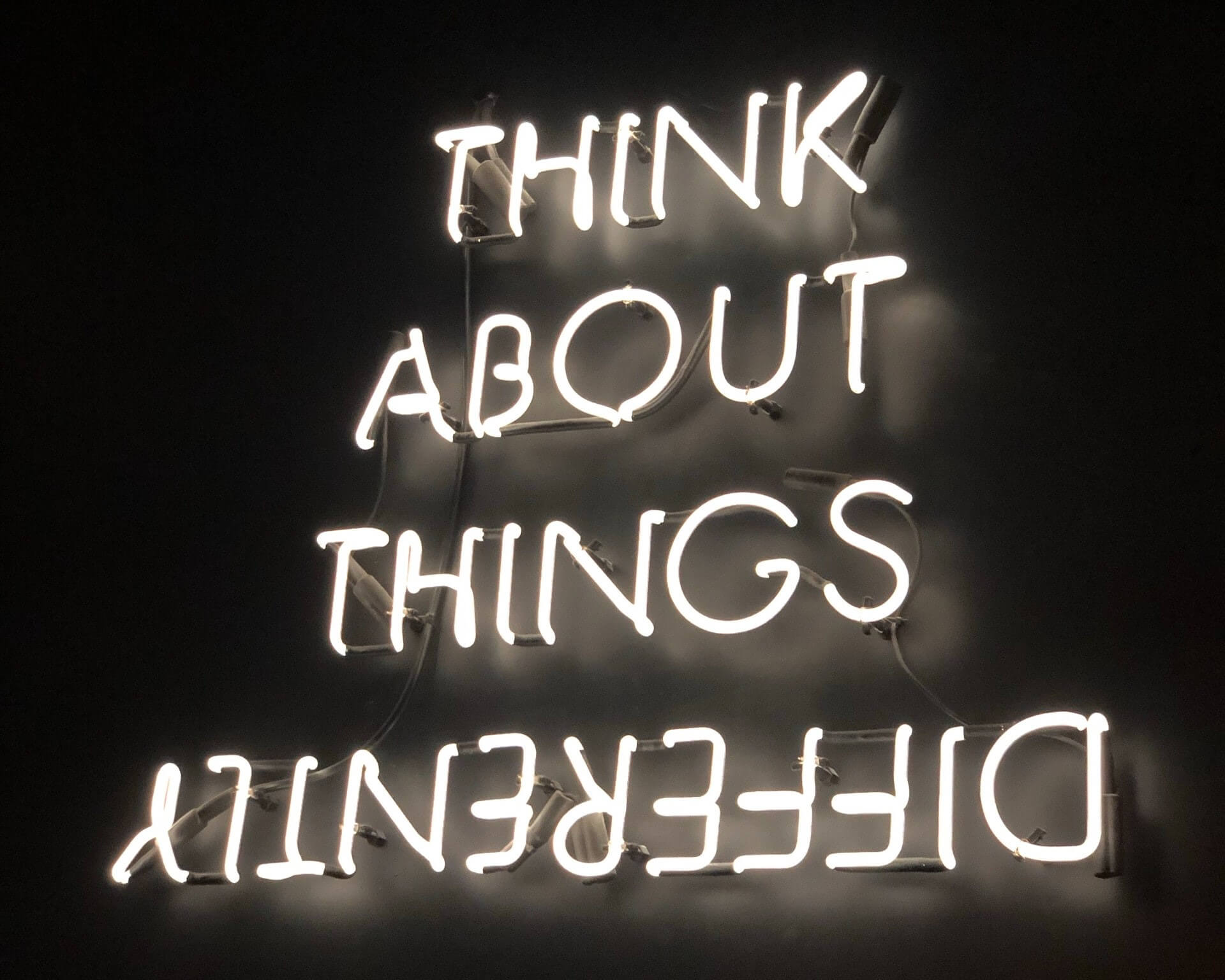
"Think about things differently" neon sign

Do you want to stand out from from other restaurants and bars in your area? Change how you think about your July holiday programming.

Several holidays are set against every date on the calendar, and this month is no exception. These holidays range from mainstream to esoteric.

Pay attention to the “weird” or unique holidays to raise eyebrows, carve out a niche for your restaurant or bar, and attract more guests. Why do what everyone else is already doing? Why program only around the same holidays as everyone else?

Of course, you shouldn’t try to celebrate every holiday, strange or otherwise. Focus on the days that are authentic to your brand; resonate with your guests; and help you grab attention on social media.

You’ll find suggestions for promotions below. However, the idea behind our monthly holiday promotions roundup is to inspire you and your team to get creative and come up with unique programming ideas.

For our June 2024 holidays list, click here.

July 7: National Dive Bar Day

Alright, dive and neighborhood bar operatorsthis is the day to really ensure you and your bar team shine. Show the community why your bar is one of the cornerstones of the neighborhood. This is an opportunity to pull out the stops to impress your regulars and reinforce their love of your bar, and to attract new neighbors to hang out at your place on a regular basis.

July 8: National SCUD Day

Let’s clarify this at the start: SCUD stands for “Savor the Comic and Unplug the Drama.” The intent is for people to relax, unplug, and enjoy some humor, or at least take a light-hearted approach to life. Now, if you happen to feature stand-up comedy or operate a comedy club, this holiday should be all the way in your wheelhouse.

July 9: Cow Appreciation Day

The humble cow provides a lot for us. In addition to all manner of food items, cows even help us make some very smooth vodkas. Given how much cows give, operators can make entire prix fixe menus dedicated to them: from appetizer to dessert, the cow can fill out an entire meal, including drinks.

However, you can take another approach to this holiday. Vegan restaurants, for example, can highlight alternatives to cow products by creating dishes, drinks, and prix fixe menus.

July 11: National Mojito Day

Here’s an easy one. After you’ve ensured that your bar team makes an excellent Mojito, create an LTO menu. Feature the traditional build, a high-end version, and a creative variant or two.

July 13: Embrace Your Geekness Day

How the times have changed, for the better in this instance. Not long ago, “geek” was a real insult. Now, we can’t wait as individuals to geek out with others over our hobbies, interests, and other passions.

Does your bar have an overall theme that can be amplified for maximum geekiness? Do you feature board games, card games, or even video games? Is it common for clubs to meet up at your place? Have you noticed something that several of your patrons seem to enjoy talking about and geeking out over? Lean as far into that as you can and create an amazing experience.

July 15: National Be a Dork Day

Maybe you don’t like the word “geek.” Perhaps, to you, being a dork is more about being a bit (or very) silly, and leaning into being “uncool” (which is actually cool).

At any rate, if you’re not into the idea of Embrace Your Geekness Day—or you want to showcase the difference between geeks and dorks—National Be a Dork Day may work well for you.

July 21: National Junk Food Day

We all have differing ideas about junk food. For some, junk food refers to candy and dessert foods, specifically. To others, it’s anything that isn’t considered a healthy food.

The approach I recommend is giving people an excuse to eat and drink whatever they want on this day, or taking a cheat day. Further, you can certainly create a cocktail menu that captures the flavors of people’s favorite candy bars, candies, etc. Or, build over-the-top burgers, come up with a signature food challenge, or create a signature pizza that features compelling and unique toppings.

July 22: National Mango Day

Mango Margaritas, Mango Mezcalritas, mango IPA, mango ale, mango salsa, mango-habanero-glazed short ribs… If you can mango it, put it on an LTO menu.

July 27: National Take Your Pants for a Walk Day

Are you in a walkable city? This is really just a more interesting way of saying, “Walk to our bar/restaurant to earn your treat and time out with friends.”

July 31: National Avocado Day

Don’t be avoca-don’tbe an avoca-do. If your dishes and drinks can feature avocado in some way, have your kitchen and bar teams lean into it. For example, this would be a fantastic day to impress with a signature guacamole, made table-side.

Image: Ivan Bertolazzi on Pexels

KRG Hospitality marketing support. Restaurant. Bar. Cafe. Lounge. Hotel. Resort.

Top