Survey

by David Klemt David Klemt No Comments

SevenRooms Reveals Third Party Impact

SevenRooms Reveals Third Party Delivery Impact

by David Klemt

Person using Uber Eats on their iPhone

New findings from SevenRooms, the powerful reservation and guest relationship platform, show the impact third-party delivery has on restaurants.

In partnership with YouGov, a respected internet-based market research and data analytics firm, SevenRooms finds that direct delivery saves operators thousands of dollars per month.

The overall finding of the “Data & Dollars: Revealing the Impact of Third-Party Marketplaces” report is startling. Operators are relying on a technology that in reality is harming them and their bottom line.

Cost of Convenience

Foodservice operators and workers, along with being hospitable in their mission to serve others, are adaptable.

The industry proves this time and time again. This is particularly true of the past 12 months.

Nimble operators pivot quickly, so it makes sense that so many restaurants, bars and other foodservice businesses embrace delivery, takeout and curbside pickup. Doing so is a direct and seemingly logical response to a major shift in consumer behavior to lockdowns, restrictions, and health concerns.

Most operators are well aware that state third-party delivery platforms take a 30-percent commission on average. However, the cost goes beyond devastatingly high fees: operators also lose control of the guest journey.

Real-world Example

SevenRooms illustrates the negative financial impact third-party delivery platforms with three examples: a high-end Italian restaurant in New York; a high-end steakhouse in Los Angeles; and a high-volume casual restaurant in California.

Let’s take a look at the last example.

Over a six-month period, the restaurant fulfills 19,000 combined orders. Delivery makes up 75 percent of these orders, takeout/pickup account for 25 percent. The average order is $33, and over the six-month period the total order volume is $617,500. Had the restaurant implemented direct delivery rather than third-party, they would have saved about $154,000.

Break those savings down and the restaurant would save approximately $25,600 per month that could go to:

  • PPE: 853 boxes of face masks or 196 boxes of gloves.
  • Takeout: 101,000 food containers.
  • Guest experience: 522 tanks of propane to keep guests warm on patios.

Using an average rent amount of $6,000-15,000 per month in Los Angeles, that’s also two to four months’ rent.

Guests Support Direct Delivery

The impact of third-party delivery on restaurants isn’t lost on consumers. Many view ordering food as more than just convenient, they see it as a way to support their favorite businesses.

Luckily, consumers are supportive of ordering delivery, takeout and pickup directly from restaurants.

Per SevenRooms:

  • Firstly, 37 percent of Americans are eager to do anything they can to help restaurants.
  • Nearly half, 48 percent, think it’s more economical to order directly from a restaurant.
  • 28 percent who say they prefer ordering directly to third-party delivery feel that way after seeing their favorite restaurants suffer.
  • 23 percent are informed and think third-party delivery platforms charge restaurants too much in fees.
  • 16 percent feel that the harm done to restaurants by third-party delivery outweighs any benefits.

Leverage Direct Delivery Support

SevenRooms identifies several ways in their report that operators can succeed in getting consumers to order directly.

One way is the platforms’ own Direct Delivery solution. We speak to SevenRooms CEO Joel Montaniel about this solution on our Bar Hacks podcast.

Then, of course, there are an array of incentives consumers are willing to accept in exchange for direct delivery and ordering:

  • 41 percent of Americans would order directly over ordering via third-party if a restaurant has its own app with features such as tracking and communication.
  • 37 percent consider a complimentary item such as an appetizer, drink or dessert in addition to their order an appealing incentive.
  • 32 percent like the idea of a personalized promotion applied to a future order or in-person visit.
  • 28 percent indicate interest in a personalized promotion for their meal such as a discount code or comp item.
  • 17 percent are fans of restaurants using ordering history to customize their menu and experience.

Read the entire report here. To learn more about SevenRooms, please click here. Connect with SevenRooms on Twitter, Facebook, LinkedIn and Instagram.

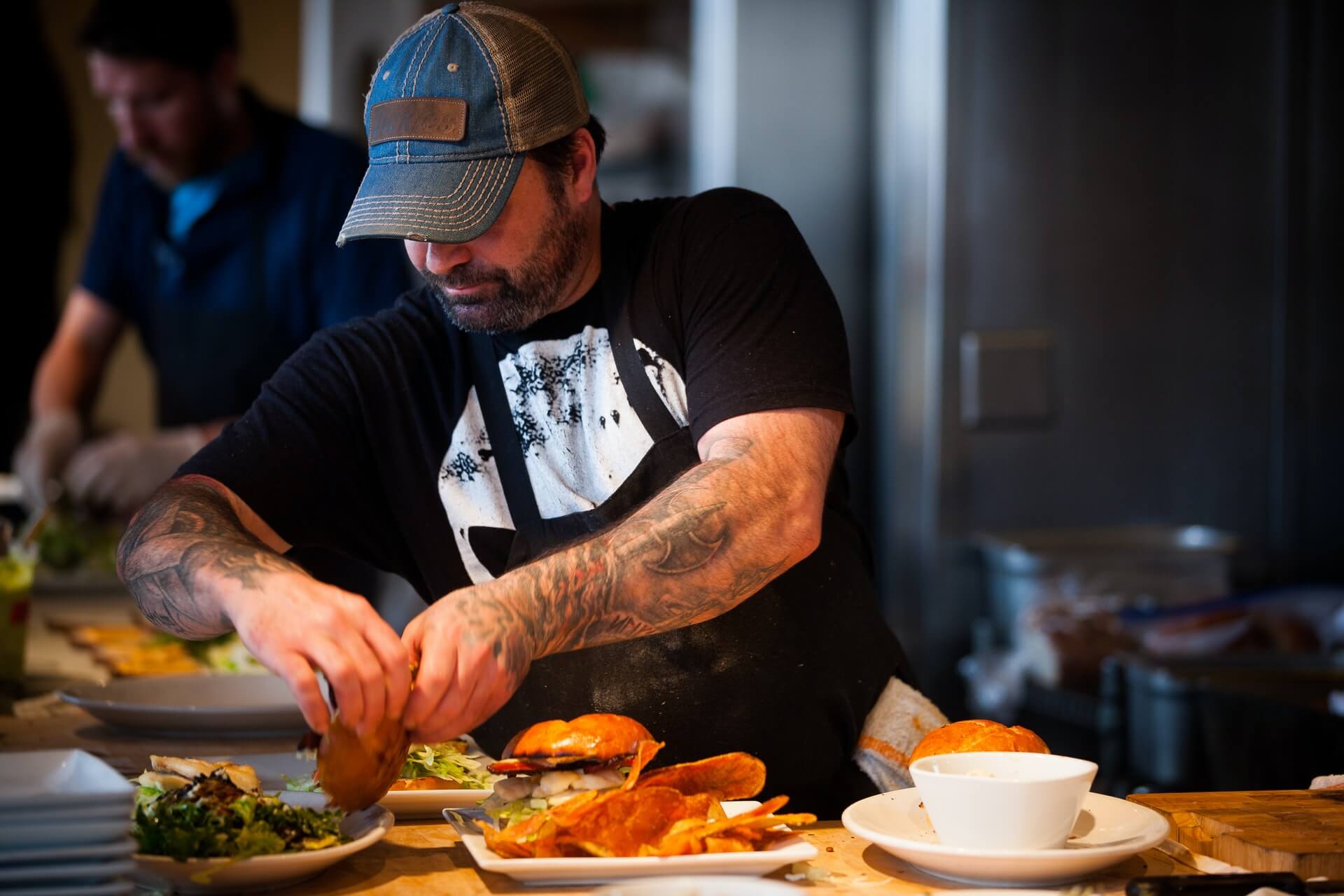
Image: cottonbro from Pexels

by David Klemt David Klemt No Comments

Datassential Finds Operators Optimistic

Datassential Finds Operators Optimistic

by David Klemt

Restaurant open sign hanging in window

The latest report from Datassential finds that the vast majority of operators are optimistic or at least confident their businesses will survive the pandemic.

Per Datassential, operator outlook appears to be more positive than it was in December.

That’s largely due to the distribution of the Covid-19 vaccine.

Datassential Covid-19 Resources & Reports

Datassential has been releasing informative Covid-19 reports throughout the pandemic to provide helpful industry, consumer and operator data.

Trending Upward” is Datassential’s 46th installment, and the research firm provides their Covid-19 resources at no charge.

For this report, Datassential surveyed 400 “decision makers for restaurants and on-site foodservice locations.”

Operator Outlook

Most of the operators surveyed, 220 or 55 percent, are still concerned about the challenges facing them and the industry. However, they’re “fairly confident” that their businesses will make it through.

That 55 percent represents no change from December of last year, when Datassential last gauged operator outlook.

The next two survey respondent segments tell the tale of optimism.

Of the 400 operators surveyed, 148 or 37 percent are “cautiously optimistic.” In fact, they expect to be even stronger post-pandemic.

Compared to December, that’s a seven-percent increase in operators who feel optimistic. That seven percent shifted from the “very nervous” segment,

Just 32 of survey respondents (eight percent) reported that they don’t think they’ll survive the pandemic. Losing any businesses to the pandemic and its terrible impact on the industry is beyond horrific, and the results of this Datassential report in no way minimize that awful truth. However, the percentage of operators who feel “very nervous” or otherwise pessimistic reducing by nearly half provides at least a semblance of hope for the future of the industry.

Staff Cuts

According to Datassential, more than 80 percent of operators who were forced to cut staff at some point during the pandemic have been able to bring back some of their workers.

Of the 400 respondents surveyed by Datassential, 21 percent of operators reported they hadn’t laid off any of their employees

Another 20 percent had to cut staff but were able to rehire all of them.

Nearly half (48 percent) have only been able to hire some of the staff they laid off back. Twelve percent have been unable to rehire any of the staff they had to let go.

Takeaway

Optimism is great for emotional and mental health. So is targeted relief. Operators and employees will likely feel far more confident and relieved if the industry receives actual targeted relief. This Datassential report’s findings are positive but we need Congress to act.

Click here to tell your representatives to pass the RESTAURANTS Act now.

Image: Artem Beliaikin from Pexels

by David Klemt David Klemt No Comments

This Generation is Most Likely to Dine In

This Generation is Most Likely to Dine In

by David Klemt

Chef preparing burgers inside restaurant

The National Restaurant Association’s 2021 State of the Restaurant Industry report revealed the generation most likely to dine in-person at a restaurant.

That is, of course, if such restaurant service—from quick-service to fine dining—is permitted where they’re located.

So, do you have a guess? Because we have the answer.

Most Likely to Dine In

Per an NRA survey, Gen Z is most eager to return to in-person restaurant dining.

However, it’s more of a simple majority that’s after a restaurant experience beyond delivery, takeout and curbside pickup than an overwhelming one.

Just 53 percent of adult members of Gen Z surveyed by the NRA are willing to dine inside restaurants over the course of the next few months.

Overall, 67 percent of Gen Z, Millennial, Gen X and Baby Boomer adults would like to engage with restaurants like they did before the pandemic. That’s not a huge stretch, of course; we all want to return to normal and put Covid-19 behind us.

Still, the survey results make it clear there’s demand for in-person dining. The convenience of interacting with and ordering from restaurants is here to stay. However, that convenience hasn’t replaced the desire to dine (and socialize) out.

So, Who’s Most Likely to Order In?

You’d be forgiven for assuming the answer to this question is also Gen Z. After all, just about every development regarding technology and how people engage with the world has been laid at their feet.

When Gen Z isn’t being accused of “killing” a tradition, sense of normalcy or an entire industry, the finger is pointed at Millennials.

Well, it turns out the usual finger-pointing suspects are the consumers most likely to order from restaurants.

According to the NRA’s report, 81 percent of Boomers and 80 percent of Gen X will continue to order from restaurants, at least for the next few months.

Put it All Together

At least for the next several months, the industry’s recovery will hinge on the full-strength return of in-person service and the convenience of delivery and takeout.

In other words, some consumers are champing at the bit to once again make restaurant visits a regular part of their lives while others plan to proceed with caution. Successful restaurant operations will maintain a mixture of traditional and digitally-driven services.

Nearly 90 percent of adults surveyed by the NRA say they enjoy going out to restaurants and that doing so with family and friends is a better way to spend leisure time than cooking at home.

“Restaurants are the cornerstone of our communities, and our research shows a clear consumer desire to enjoy restaurants on-premises more than they have been able to during the pandemic. We’ve also found that even as the vaccine becomes more available and more social occasions return to restaurants, consumers will continue to desire expanded off-premises options going forward. Both will continue to be key for industry growth,” said Hudson Riehle, senior vice president, Research and Knowledge Group, NRA, in a press release announcing the Association’s 2021 State of the Restaurant Industry. “With more than half of adults saying that restaurants are an essential part of their lifestyle, we are confident that, with time, the industry is positioned for successful recovery.”

The NRA predicts foodservice sales to reach $731 billion in 2021, an 11 percent increase over 2020. Unfortunately, that estimate is about 15 percent lower than sales generated in 2019.

Still, that’s a reason to be optimistic. Consumers are pent-up and eager to make restaurants a significant part of their lives once again.

Nobody is more eager, evidently, than Gen Z.

Image: Jesson Mata on Unsplash

by David Klemt David Klemt No Comments

75% of American Restaurant Operators Expect Decreased Sales Through Start of 2021

75% of American Restaurant Operators Expect Decreased Sales Through January

by David Klemt

The fifth National Restaurant Association COVID-19 Restaurant Impact Survey results have been released.

Unsurprisingly and unfortunately, the news is not good.

For their fifth installment, the NRA surveyed 6,000 restaurant operators and 250 supply chain businesses between November 17 and 30. Full-service and limited-service restaurant operators, independent and chain, reported their sales had slipped in October.

Only 12 percent of restaurant operators reported seeing sales growth. In comparison, 79 percent said sales were down.

Per the NRA survey, one reason for the decline in sales is outdoor dining season coming to a close. In New York City, per Governor Andrew Cuomo’s order banning indoor dining, outdoor dining is the only option beyond delivery and takeout. However, the weather is less than attractive for outdoor diners.

Costs are disproportionate to sales for most operators. Nearly 60 percent of survey participants reported increased labor costs when compared to the start of the Covid-19 pandemic in the United States.

Profit margins, historically thin even at the best of times, were reported by 86 percent of operators who partook in the survey to also be lower than the they were prior to the pandemic.

The NRA’s predicted outcome for the industry is that without targeted and significant federal relief specifically for restaurants and bars, more temporary and permanent closures are coming, as are further losses of jobs.

According to an estimate from the NRA, more than 110,000 restaurants and bars had closed by December 1. On average, these establishments employed 32 people, and 17 percent of the closed businesses employed a minimum of 50 people.

Close to 40 percent of survey participants indicated they were considering closing their restaurants or bars temporarily and waiting out the pandemic. That means layoffs that could affect dozens of employees per establishment. Almost 60 percent of survey participants expect a reduction in their workforces over the coming three months.

Sales are expected to lag through the start of next year. The majority of operators surveyed, 75 percent, expect sales to fall even further from their already lower levels through the start of next year.

If that logical assumption becomes reality, slowed sales may trigger a domino effect: reduced traffic, plummeting sales, and increased operational costs leading to layoffs, temporary closures, and ultimately permanent closures.

Restaurants and bars require targeted relief for the industry to survive. If that help doesn’t come soon, if the RESTAURANTS Act or similar legislation isn’t signed into law, the country will lose millions of jobs permanently. The economy will be dealt a lethal blow, losing out on tens of billions of dollars.

Now is not the time to back off the pressure being put on Congress and Senate to pass the RESTAURANTS Act. Click here to tell them time is up—they must return to Washington in January to save our restaurants and bars.

Image: Enrico Hänel from Pexels

by David Klemt David Klemt No Comments

One Fair Wage Survey Results: Foodservice Professionals on Front Lines of Infection Risk and Hostility

One Fair Wage Survey Results: Foodservice Professionals on Front Lines of Infection Risk and Hostility

by David Klemt

Over a three-week period, One Fair Wage (OFW) surveyed 1,675 foodservice workers in five states and Washington, D.C.

The survey was initially sent to more than 61,000 applicants to the One Fair Wage Emergency Fund in Illinois, Massachusetts, New Jersey, New York, Pennsylvania and D.C. By November 9, 2,621 respondents had completed the OFW survey online. A total of 1,575 indicated they were currently employed and an additional 100 surveys were completed by phone.

One of the key takeaways of the survey is at once disturbing and unacceptable but not, infuriatingly, shocking. Not only did significant percentages of respondents report lax Covid-19 protocol training and enforcement along with increasingly hostile guests, close to half revealed “a dramatic increase in sexual harassment” since the pandemic struck.

Increased Sexual Harassment

Forty-one percent of survey respondents noted a marked shift in the frequency that guests are subjecting foodservice workers to unwanted sexualized comments. A quarter said they had personally experienced or witnessed “a significant” change in this manifestation of sexual harassment.

An analysis by OFW of the comments shared by respondents reveals the impact that this increase in sexual harassment has on the recipients. The comments have a negative effect on workers’ sense of safety in the workplace, financial security, physical health, and emotional and psychological health.

Of the 25 percent of the female respondents who had personally experienced or witnessed sexual harassment, 43 percent reported that comments were directly tied to social distancing and wearing masks, two pillars of Covid-19 health and safety protocols.

Identified by OFW as a “mild example” of the unwanted comments being made, “Take your mask off I want to see what’s underneath,” provides insight into the overall “theme” of the harassment being made. Many guests engaging in harassment appear to be sexualizing covered noses and mouths. Indeed, other comments support this analysis:

  • “Come on, sweetie. Lemme see that pretty face under there. Take it off for me, will you? Just a quick flash.”
  • “Please take the mask off, I want to see your lips.”
  • “Take off your mask so I know how much to tip you.”

When foodservice pros rebuff these unwanted advances, the responses tend toward hostility and smaller—or no—tips. In short order, these types of aggressors have found a way to weaponize the guest-server power dynamic and seemingly fetishize required Covid-19 protocols.

Increased Hostility

Whereas close to half of OFW survey respondents reported increased sexual harassment, more than three-quarters reported increased hostility from guests.

A staggering 78 percent of respondents said they had experienced or witnessed increased hostility as a response to following and enforcing Covid-19 protocols. Almost 60 percent said these incidents were occurring on a weekly basis.

Again, the power dynamic comes into play. Nearly 60 percent of respondents reported hesitation in enforcing Covid-19 protocols for fear doing so would affect their tips negatively. That concern is rooted in reality: 65 percent of respondents said they were tipped less on a weekly basis after enforcing health and safety protocols.

More than 80 percent said tips have decreased since the pandemic took hold, with 65 percent reporting that decrease to be 50 percent or more.

Impact of Subminimum Wage

One Fair Wage, as their name suggests and their mission clearly states, advocates and campaigns for all employers in America to pay full minimum wage. The organization also calls for tipped workers to receive full minimum wage plus their tips.

Per OFW, service workers—including people who work in salons and airports—are twice as likely to require food stamps to get by when compared to the rest of the workforce in the United States. Foodservice workers, however, are subjected to more sexual harassment than those workers in any other industry. The U.S. Equal Employment Opportunity Commission (EEOC), a federal agency, has identified the restaurant industry as the sector with the most sexual harassment charges filed by women.

This isn’t a digression. The OFW’s mission for a full minimum plus tips for tipped workers would have a direct impact on community health and safety. Infectious disease experts have warned that Covid-19 will not be the last pandemic with which we’ll have to contend. According to a report released by the CDC in September, the risk of contracting Covid-19 doubles for adults after dining inside a restaurant.

Were all service workers working for a full, living minimum wage, they’d likely be less concerned with incurring a guest’s wrath in the form of a reduced tip or no tip at all. The OFW survey findings that foodservice pros are being harassed to remove their masks or not socially distance—risking the health and safety of themselves and guests, then of family and friends, and therefore the community—and that 58 percent are reluctant to enforce Covid-19 protocols out of concern for their tips illustrates, in part, how subminimum wage for tipped workers can impact the health and safety of communities overall.

The pandemic has made foodservice workers and others who work with the public, by default, Covid-19 protocol enforcers. Clearly, significant swaths of the public feel zero compunction when it comes to responding with hostility, threats, harassment, and refusal to comply.

It’s also clear that guests who react with hostility and intimidation when employees are enforcing officially mandated health and safety requirements lest their employer face fines, the suspension of their business and/or liquor license, or any other form of punishment that puts their employment at risk won’t hesitate to wield the guest-server power dynamic as a weapon. That weapon can ultimately endanger an entire community.

The Good News

A mere ten percent of survey respondents reported their employers instruct employees to follow all Covid-19 health and safety protocols on a consistent basis, and just 31 percent of respondents said their employer follows all such protocols.

Those are startling numbers since ten percent of respondents said they had contracted Covid-19, 88 percent said they knew someone had contracted the infection, 44 percent reported that at least one coworker had contracted Covid-19, and a depressing 42 percent of those who reported knowing someone who had contracted the illness had died from it.

However, there were some positive pieces of data shared by survey respondents:

  • 92 percent reported their employers require all workers to wear masks.
  • 86 percent reported their employers require all workers to wash hands frequently.
  • 86 percent reported their employers require tables and chairs be wiped down and sanitized between uses.
  • 78 percent reported their employers provide employees with personal protective equipment (PPE).
  • 75 percent reported that a supervisor has told them they will have their back if they tell a guest or coworker to put on their mask whenever they’re within six feet of them.

In a perfect world, those percentages would all be one hundred. This isn’t a perfect world and there’s obviously major room for improvement. Management must step up in this time of crisis and uncertainty and embrace true leadership:

  • Respect the fact that employees are putting themselves at risk every shift. Put people first.
  • Avoid putting the bottom line ahead of health and safety.
  • Create and enforce a zero-tolerance sexual harassment policy—for employees and guests. Support employees when they report sexual harassment.
  • Communicate clearly and consistently. Transparency and targeted training must be priorities.
  • Display integrity when making decisions and enforcing rules.

Foodservice and hospitality industry professionals are on the front lines, sacrificing their own health and safety—and that of the people inside their bubble—to keep the industry afloat. Ownership and management need to protect them.

Read the entire OFW report here.

Image: engin akyurt on Unsplash

by David Klemt David Klemt No Comments

Significant, Permanent Restaurant Closures Expected to Rock Canada Unless Situation Improves

Significant, Permanent Restaurant Closures Expected to Rock Canada Unless Situation Improves

by David Klemt

Industry surveys continue to reveal how dire the situation is for operators.

On December 8, Restaurants Canada, a non-profit that represents and advocates for the Great White North’s restaurant industry, shared the results of a survey they had conducted between November 26 and December 4. A total of 511 surveys representing 3,000 restaurants were completed.

According to Restaurants Canada, the nation’s foodservice industry consists of 97,500 establishments ranging from QSRs to bars and full-service venues.

More than eight out of ten survey respondents answered that they are either barely staying afloat or are operating at a loss. Drilling deeper, significantly more restaurants are operating at a loss—65 percent of survey respondents fall into this category. Just 19 percent of restaurants represented by survey respondents are able to break even.

That’s 2,400 restaurants of 3,000 struggling to survive, and 78,000 restaurants out of 97,500, assuming the survey sample size accurately represents the overall industry in Canada.

To understand the long-term effects of government-mandated restrictions and shutdowns, one has only to digest another startling statistic: Restaurants operating in the red aren’t expecting to return to profitability for a minimum of 12 months.

Under optimal conditions, the average Canadian restaurant operates on razor-thin margins. Per Restaurants Canada, restaurants keep just five percent of every $10 in sales on average, or 50 cents. The industry is Canada’s fourth-largest employer (it’s number five in the United States, for comparison), accounting for 1.2 million jobs, 58 percent of which are held by women. Over thirty percent of owners, operators and staff belong to a visible minority, further illustrating how important restaurants are to diversity and the economy; half of all restaurants in Canada are operated by immigrants. Just like in the America, restaurants are the first employer for most Canadians.

The industry is crucial to Canada, but this vital resource is under serious threat. One of those threats comes from lawmakers whose restrictions are making it much more difficult for operators to wring any profits out already miniscule margins. Much like the situation afflicting the industry in the United States, the situation is going to get worse in short order without government relief.

Restrictions are simply nails in coffins unless they’re accompanied by relief.

“Our members are seeking a new year’s resolution from government, not only to support their survival but our industry’s vital role building back a stronger, more resilient Canada,” said  Todd Barclay, president and CEO of Restaurants Canada. “Restaurants Canada is calling for a national working group to pave the way for the foodservice sector’s revival, building on the commitment in the federal government’s 2020 Fall Economic Statement to provide targeted, sector-specific support to restaurants and other hardest hit businesses.”

That national working group, according to Restaurants Canada, should focus on providing businesses being affected by government-mandated restrictions with “sufficient, efficient and effective aid”; developing campaigns that make it clear to Canadians that restaurants are capable of safely and reliably providing safe meals; promoting delivery and takeout as a viable way for the public to support restaurants; connecting with operators to understand the industry’s needs and pain points to ensure they’re in as strong a position as possible when entering the post-pandemic economy.

The next six months are crucial to the survival of Canadian restaurants. If things don’t improve, should the government not address the industry’s situation and provide relief, 48 percent of single-unit operators surveyed by Restaurants Canada indicated they expect to close within six months. That number jumps to 56 percent for multi-unit operators, who expect to close at least one of their locations (also within six months).

Restaurants Canada is asking for anyone who supports the formation of a dedicated national working group to contact their Member of Parliament via this link.

Photo by Marcus Urbenz on Unsplash

by David Klemt David Klemt No Comments

National Restaurant Association Shares Startling Statistics

National Restaurant Association Shares Startling Statistics

by David Klemt

An email sent out by the National Restaurant Association yesterday included statistics about the state of restaurants in the United States.

The revelations are breathtakingly disturbing.

While Congress “has been trapped in a political tug-of-war,” the reality for restaurants has only gotten bleaker.

According to the NRA, their most recent survey found that 110,000 restaurants have closed since Covid-19 first dug its infected claws into the United States. That’s an increase of 10,000 closures since the NRA’s last survey, the results of which were released back in September.

Many people outside of the industry are likely under the impression these closures are the result of inexperienced owners failing to adapt. A second NRA statistic dispels that misconception.

Sadly, the average age of the restaurants that have been closing is 16 years old. Sixteen percent had been open for more than three decades.

These closures aren’t the result of inexperience, they’re largely the byproduct of mandated shutdowns—repeated, in some markets—and restrictions handed down by officials who don’t understand the business.

Unfortunately, there’s not much reason to be optimistic that these closures are temporary. The majority of survey respondents who have closed their restaurants, 52 percent, said they won’t return.

The NRA is strongly encouraging everyone to let Congress know that enough is enough—they must make real progress to help the industry.

Please visit RestaurantsAct.com, click the button to email your lawmakers, and share that link with family, friends and industry peers. Don’t let Congress leave for the year without making your voice heard and telling them to pass relief for restaurants and bars.

If our elected officials don’t act fast, things will only get worse.

Image by Wokandapix from Pixabay

Top