Cocktail recipe

by David Klemt David Klemt No Comments

Drink Donnybrook: Bee’s Knees

Drink Donnybrook: Bee’s Knees

by David Klemt
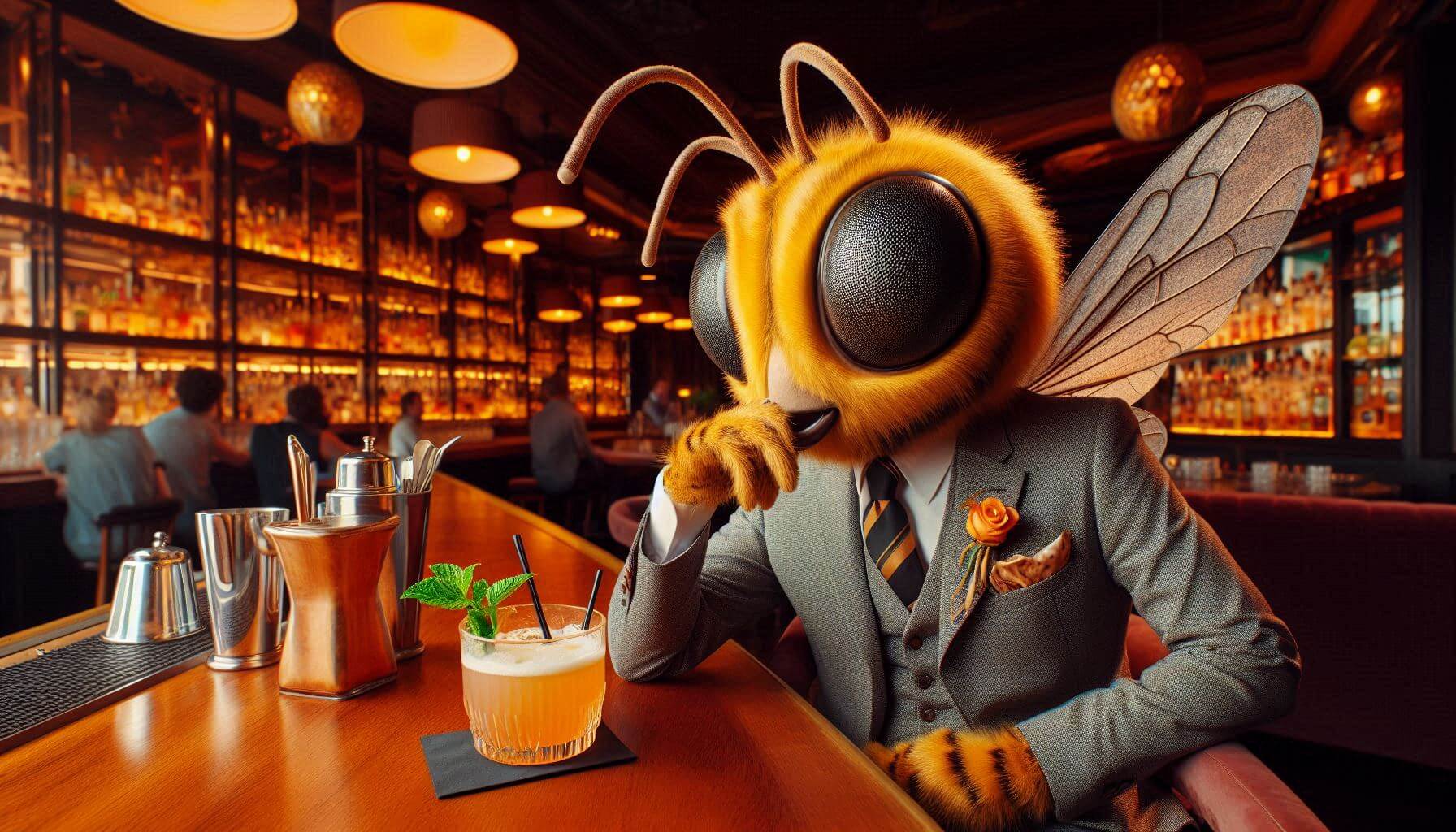
An AI-generated image of an anthropomorphic bee wearing a suit, drinking a cocktail at a cocktail bar

That is one dapper bee, my friends.

The subject of our latest Drink Donnybrook deep dive is the Bee’s Knees, a classic that has very likely already enjoyed its centennial birthday.

If that sounds a bit uncertain, welcome to your first Drink Donnybrook article. I tend to cover cocktails with origins that are, shall we say, less than definitive.

In the case of the Bee’s Knees, we simply don’t know without a doubt the drink’s creator. Nor do we know exactly which year the cocktail came into being.

One compelling piece of evidence that ties the Bee’s Knees to the 1920s is the name itself. The term “the bee’s knees” became part of the American lexicon in that decade. To this day, if someone calls something or someone “the bee’s knees,” they’re saying it’s excellent

Another piece of evidence is Prohibition in America. So-called (let’s face it, largely aptly named) “bathtub gin” became ubiquitous during this time. As the story goes, honey was an ingredient that could cover up the smell of cheap (and likely dangerous) alcohol, like bathtub gin.

Well, the Bee’s Knees is a gin cocktail with honey and lemon juice among the ingredients. Honey and lemon juice can certainly make a poor-quality potable more palatable.

Alright, so those are two solid clues that support the belief that the cocktail is from the 1920s. The drink could be a bit over 100 years old, turning 100 this year, or a few years away from reaching the hundred-year milestone.

Accepting the time period, who do we give credit for creating the Bee’s Knees?

A French Connection

There are two strong candidates for the title of “Creator of the Bee’s Knees.”

One is Frank Meier, who became the head bartender at the Ritz Hotel in Paris in 1921. Click here for a bit of information tying Meier to the Mimosa.

Meier was, undoubtedly, a prolific cocktail craftsman. One need simply sift through his 1936 recipe book, The Artistry of Mixing Drinks, to see the breadth of his work with spirits.

There’s an important detail on the pages of that book that lend support to the theory that Meier created the Bee’s Knees. If you clicked the link a few sentences above, you’ll know what I’m talking about.

There’s a symbol—a diamond with “FM” inside of it—next to certain drinks. As page 20 of the book explains, a drink that has this symbol beside it was created by Meier. The Bee’s Knees is marked with that symbol, while the Mimosa is not.

However, there’s another French connection that may have created this gin-based classic.

If you’re familiar with your Titanic history, the name “the unsinkable Molly Brown” may ring a bell. In 1912, Margaret Tobin Brown was one of the 712 people who survived the sinking of the Titanic.

It’s said that Brown, a wealthy widow and socialite, spent time traveling. Often times, these journeys and adventures found in her Paris. An article published in The Standard Union in 1929 addressed the topic of “women-only bars.” That same article claimed that Brown invented the Bee’s Knees while visiting these drinking establishments.

Personally, I find the story that Meier created the Bee’s Knees to be the most probably. But I’d love to learn that a Titanic survivor gifted us with a classic that has stood the test of the time.

Cheers!

Bee’s Knees

  • 2 oz. London Dry gin
  • 0.75 oz. Fresh-squeezed lemon juice
  • 0.5 oz. Honey syrup
  • Lemon twist to garnish

This is an easy one, once you have your honey syrup sorted. On that topic, different honeys will imbue this cocktail with vastly different flavor profiles. So, you’ll want to experiment with honeys to come up with your signature. I recommend starting with something local. Of course, the same can be said for gin, so this one needs plenty of testing.

In a shaker, add the first three ingredients and ice. Shake well, strain into a chilled cocktail glass, and garnish.

There are variants, which will likely come as no surprise. There’s a version from 1948 that calls for a splash of orange juice. Swap out the London Dry gin for light rum to make a Honeysuckle. Substitute Jamaican rum and you’ve got a Honey Bee. And if the drink is made with Old Tom gin rather than London Dry, it’s a Cat’s Whiskers.

Image: Microsoft Designer
KRG Hospitality. Bar Consultant. Nightclub. Lounge. Mixology. Cocktails.

by David Klemt David Klemt No Comments

Drink Donnybrook: Grasshopper & Stinger

Drink Donnybrook: Grasshopper & Stinger

by David Klemt

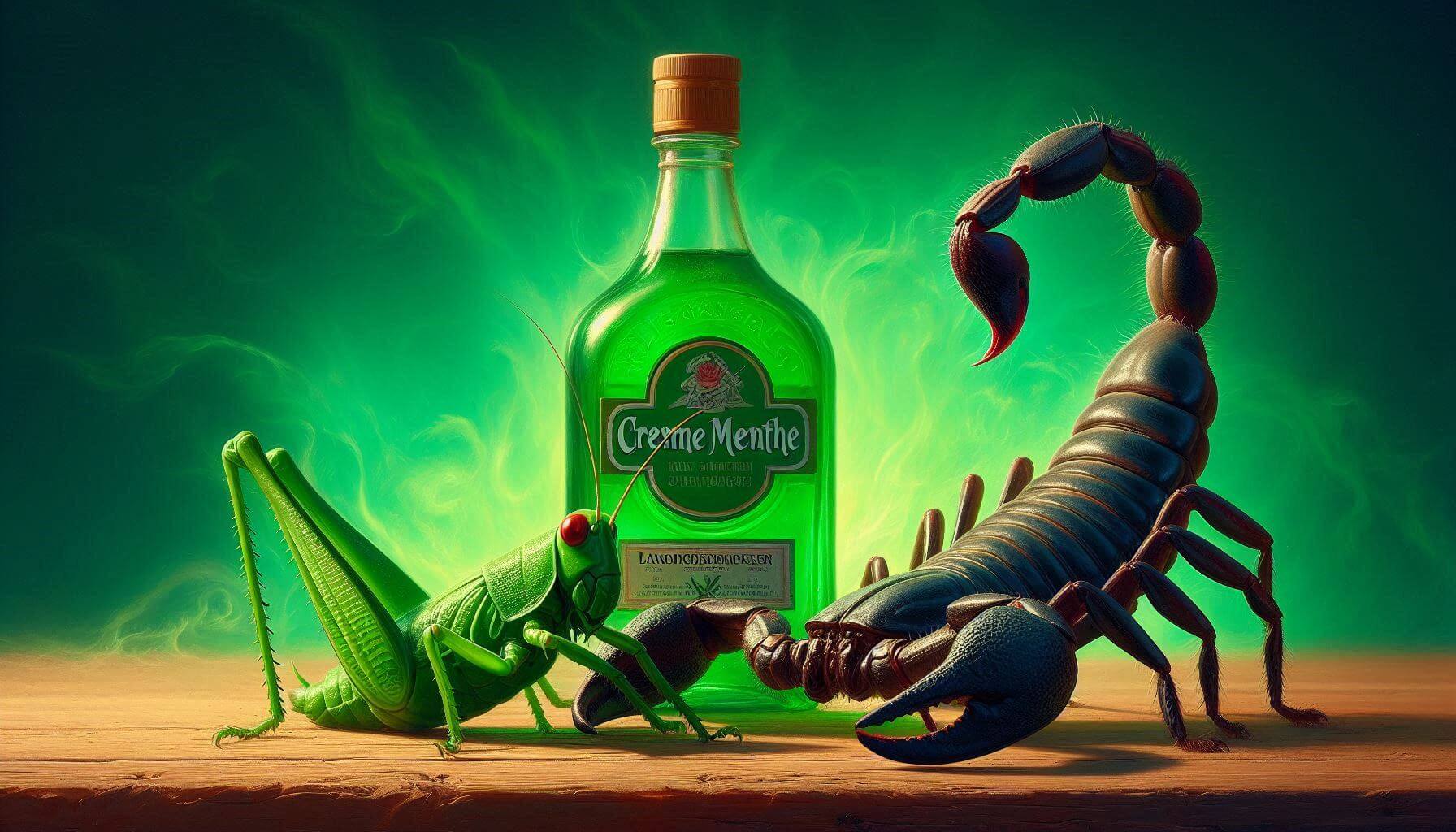
An AI-generated image of a green grasshopper and dark scorpion facing off over a bottle of creme de menthe

You won’t believe this…but this isn’t a photo, it’s an AI image *gasp*

The Grasshopper and Stinger are two classic cocktails that seem worlds apart from one another, but they share a common ingredient.

That ingredient is crème de menthe. Like many of the cocktails I break down in Drink Donnybrook features, this legendary liqueur’s origins are up for debate.

So, this Donnybrook goes beyond the well-known twofer; it’s a threefer. Crème de menthe and it’s two best-known cocktail appearancesthe Grasshopper and Stingereach have nebulous geneses.

Really, though, this Donnybrook is about crème de menthe. And why am I focusing on this liqueur? To give operators and their bar teams time to prepare LTO menus for Sunday, September 15, which is National Crème de Menthe Day.

Cheers!

Mint Cream

Despite the crème in its name, this liqueur doesn’t contain any dairy. In fact, “mint cream” is said to be vegan by some sources: it contains no animal products unless otherwise specified.

The term “crème” on French labels indicates that there’s a lot of sugar in a product.

All you need to make crème de menthe is grain alcohol, mint or peppermint, and sugar. One simply steeps the mint in the alcohol for several days, adds sugar, and can opt to age the liquid (usually about a month).

This sweet, minty liqueur tends to weigh in at 15- to 20-percent ABV. However, there are 30-percent ABV versions on the market. So, this seemingly harmless drink can pack quite a wallop.

Producing crème de menthe may be simple, but nailing down its origin story? Not quite as easy.

It’s possible that one of this liqueur’s ancestors dates as far back as the early 1500s. A book from 1512 about distillation, written by a German botanist and surgeon, touches on a water infused with “red mint.” If one could time travel to Boston in 1712, they’d be able to visit a tavern that sold a drink made of rum and water infused with mint.

That time traveler could then jump ahead 63 years, heading to France in 1775. It’s at this time that a pharmacist created what could possibly be the first known recipe for crème de menthe. However, another recipe, one that we could consider a “commercial” version, became available in France in 1796.

Nearly a century later, Emile Giffard would bring his crème de menthe to market. If that name sounds familiar, there’s good reason: he’s the namesake of La Maison Giffard. The brand has been making liqueurs and syrups for generations.

The Stinger

Alright, now that we’ve basically settled nothing regarding the origins of crème de menthe (other than Emile Giffard getting most of the credit for its creation as we know it today), let’s dive into cocktails.

Two classics are perhaps best-known for the inclusion of crème de menthe in their recipes. One of these is the Stinger.

I’m starting with the Stinger because it predates the other famous crème de menthe cocktail by five years. Or maybe 16 years. Or maybe even longer. We think.

We can choose to believe Stinger was first crafted in 1914. That would require us to accept as evidence that the recipe was first published that year in the book Drinks. Possible, but the recipe could’ve been floating around before that book came out.

Another option is to give Reginald Vanderbiltfather of Gloria Vanderbilt, and grandfather to Anderson Coopercredit as the creator. David Wondrich, cocktail historian extraordinaire, has mentioned that Reginald helped make the Stinger famous. It’s said that he would serve what was apparently his favorite tipple to guests.

Going further, an Ohio newspaper supposedly named Reginald as the drink’s inventor in the 1920s.

What I can say is this: the Stinger may date back to the 1890s, and nobody can tell us definitively who deserves the credit for creating the recipe.

The Grasshopper

It’s possible that the Grasshopper was invented in New Orleans in 1918.

Tujague’s Restaurant, located in the French Quarter, first opened its doors in 1856. Around 1914, the restaurant was sold to Philip Guichet, Sr. To this day, Tujague’s gives credit to Guichet for inventing the Grasshopper.

Anyone who has read previous Drink Donnybrooks probably isn’t surprised to learn that we aren’t sure who actually invented the Grasshopper. By the way, Tujague’s also appears to take credit for creating the Whiskey Punch.

What drink historians do appear to agree on is that it took around four decades for the Grasshopper to become popular. And when it did, the American South appeared to lead the charge.

The original recipepossibly from Philip Guichet, Sr.calls for three ingredients in equal parts: green crème de menthe, white crème de cacao, and heavy cream. (Oh, did I mention that crème de menthe comes in either colorless or green versions? Well, now I have done.)

However, bartenders have been playing around with Grasshopper build specs for many years.

One simple variant comes from Dale DeGroff. Shake one part green crème de menthe, one part white crème de cacao, and two parts heavy cream with ice. Strain into a chilled glass, then dust with grated nutmeg.

Original (maybe?) Stinger

  • 3 parts Brandy
  • 1 part White/Colorless crème de menthe

Add ingredients and ice to a mixing glass, and stir. Strain into a rocks glass, as the original was served neat before Prohibition. After Prohibition, serving Stingers over cracked ice became common practice. Further, modern bartenders tend to use Fine Cognac, premium crème de menthe (like Giffard’s), and serve Stingers over large ice cubes.

Original (could be?) Grasshopper

Add equal parts of green crème de menthe, crème de cacao, and heavy cream to a shaker with ice. Shake well, then strain into a glass.

Image: Microsoft Designer

Bar Nightclub Pub Brewery Menu Development Drinks Food

by David Klemt David Klemt No Comments

Drink Donnybrook: Mojito

Drink Donnybrook: Mojito

by David Klemt

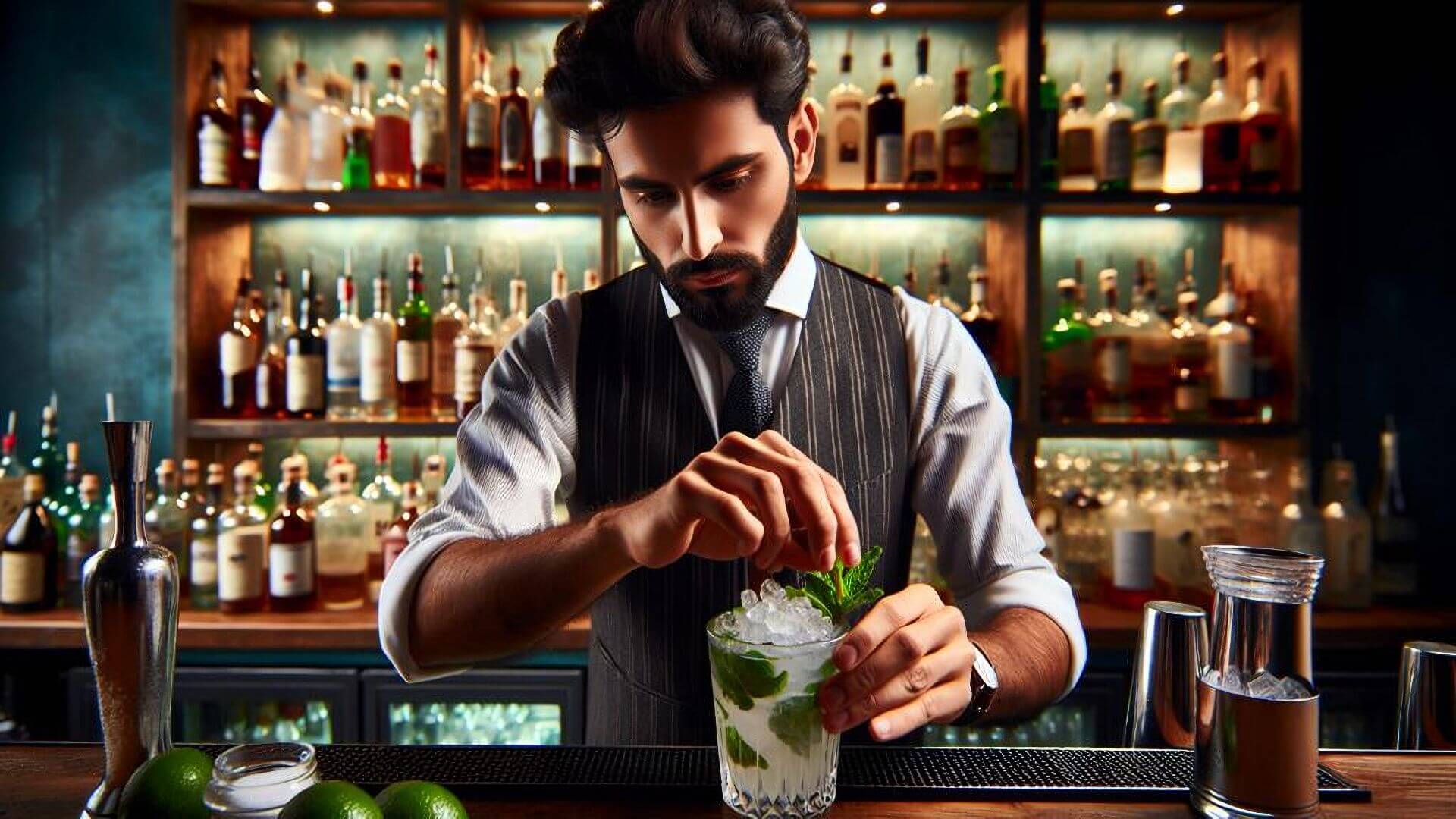
An AI-generated image of a male bartender preparing a Mojito cocktail

Hey, AI may be getting better at drawing hands. Also, I’m not sure about some of these bar tools…

Happy 440th-ish birthday to a rum-powered classic cocktail with a mashed-up, medicinal, mysterious, and complicated history: the Mojito.

Given that we can trace the Mojito to the 16th century, this drink more than justifies its classic cocktail status. Perhaps it’s deserving of placement on another tier of classic cocktail. Prototypical tipple, perhaps?

At any rate, some cocktail historians believe the Mojito’s origins reach as far back as 1586. However, we don’t know if we have to reach even further back in history for its creation. And nobody seems 100-percent certain who to credit for the creation of the Mojito.

Currently, most historians appear to think Sir Francis Drake is the inventor.

Now, before I proceed, let’s address Drake’s history.

A History of Significant Violence

Don’t let his title fool you into thinking he was a well-mannered gentleman; Drake was a pirate. Worse, he was a slave trader.

In fact, some label him one of the pioneers of the British slave trade.

He and his crews sacked and pillaged villages. They attacked ships for the sole purpose of plundering them. Drake was present for the Rathlin Island massacre, where in excess of 600 Scots and Irish were killed.

We’ll never know the overall death toll attributable to Drake and those under his command. Given that he was heavily involved in the slave trade, piracy, and raids, it’s at least in the hundreds.

“Firewater of Sugar Cane”

Personally, I don’t believe that we should give credit to Drake for inventing the Mojito. That honor should go to whoever gave him and his crew the ingredients for the drink.

If we accept that Drake and a small contingent landed on Cuban soil in search of medicine for scurvy and dysentery, an inhabitant of the island country created what would become the Mojito.

As a prevailing story goes, the Mojito was a tonic for a number of ailments, including the aforementioned scurvy and dysentery. In 1586, one of Drake’s crews was suffering from both (and probably other illnesses).

Upon their return from the shores of Cuba, the crew mixed the lime juice (which provided the vitamin C needed to combat scurvy), sugar cane juice, mint leaves, and aguardiente de caña they had been given by locals.

That last ingredient, the base for the tonic, translates to “firewater of sugar cane.”

Of course, we can argue over whether Drake or someone among his crew decided to create the tonic, or if they were told to so by the locals. I feel the answer is the latter, but I can’t prove my theory.

That said, aguardiente de caña can be considered the progenitor to rum. Dependent on a country’s rules regarding production and aging, aguardiente is the stage before the liquid can be labeled “rum” legally.

There was a time that a cocktail called “El Draque,” supposedly named for Drake, was popular in Cuba. So, where does the name “Mojito” come into the story?

No Concrete Answer

Prepare for a surprise: We don’t know with absolute certainty who named this cocktail, or when it attained its current moniker. This is in stark contrast to our previous Drink Donnybrook, which looks into the history of the Sazerac.

It’s possible, per historians, that African slaves named this drink. It could be tied to the Spanish word mojadito, which translates to “a little wet.” Or, perhaps, the cocktail is named for mojo, a Cuban seasoning with a lime base.

So, we don’t know exactly when the Mojito was invented. We don’t know exactly who invented it. And we don’t know who named it. We don’t even know when rum replaced aguardiente de caña in the recipe.

Even more frustrating is a bit of trivia related to one of the Mojito’s supposed greatest fans.

Supposedly, Earnest Hemingway loved Daiquiris and Mojitos. The following quote is attributed to the legendary writer:

“My Mojito in La Bodeguita and my Daiquiri in El Floridita.”

Allegedly (or allegedlies for my Letterkenny fans), Hemingway wrote that quote on the wall of La Bodeguita del Medio, where he supposedly crushed quite a few Mojitos.

Unfortunately, Hemingway biographers are dubious. They’re not not convinced Hemingway was a regular at La Bodeguita. Nor are they certain that the Mojito was in Hemingway’s cocktail repertoire.

What We Know

Well, I know this: We celebrate this iconic cocktail on July 11, National Mojito Day.

Oh, and we know that this drink holiday falls on a Thursday in 2024.

Of course, we also know that the Mojito is made with rum (now). Further, if you’d like to start an argument, I know that you can either declare the Mojito a member of the Sour, Fizz, or Punch family.

Finally, people around the world know the recipe, which you’ll find below. Cheers!

Mojito

  • 2 oz. White rum
  • 0.75 oz. Fresh-squeezed lime juice
  • 0.5 oz. Cane syrup or simple syrup
  • 10 Fresh mint leaves
  • Soda water to top
  • Mint leaves to garnish
  • Lime wheel or wedges to garnish

In a shaker or mixing glass, muddle the fresh mint leaves and syrup. Add the rum, fresh-squeezed lime juice, and ice. Either shake well or stir until well chilled. Strain into Collins glass over ice, then top with soda water, and garnish. Note: To serve as a swizzle, fill glass with pebble ice, strain the cocktail, gently swizzle, garnish, and serve.

Image: Shutterstock. Disclaimer: This image was generated by an Artificial Intelligence (AI) system.

Bar Pub Brewery Nightclub Club Nightlife Concept Development

by David Klemt David Klemt No Comments

Drink Donnybrook: The Sazerac

Drink Donnybrook: The Sazerac

by David Klemt

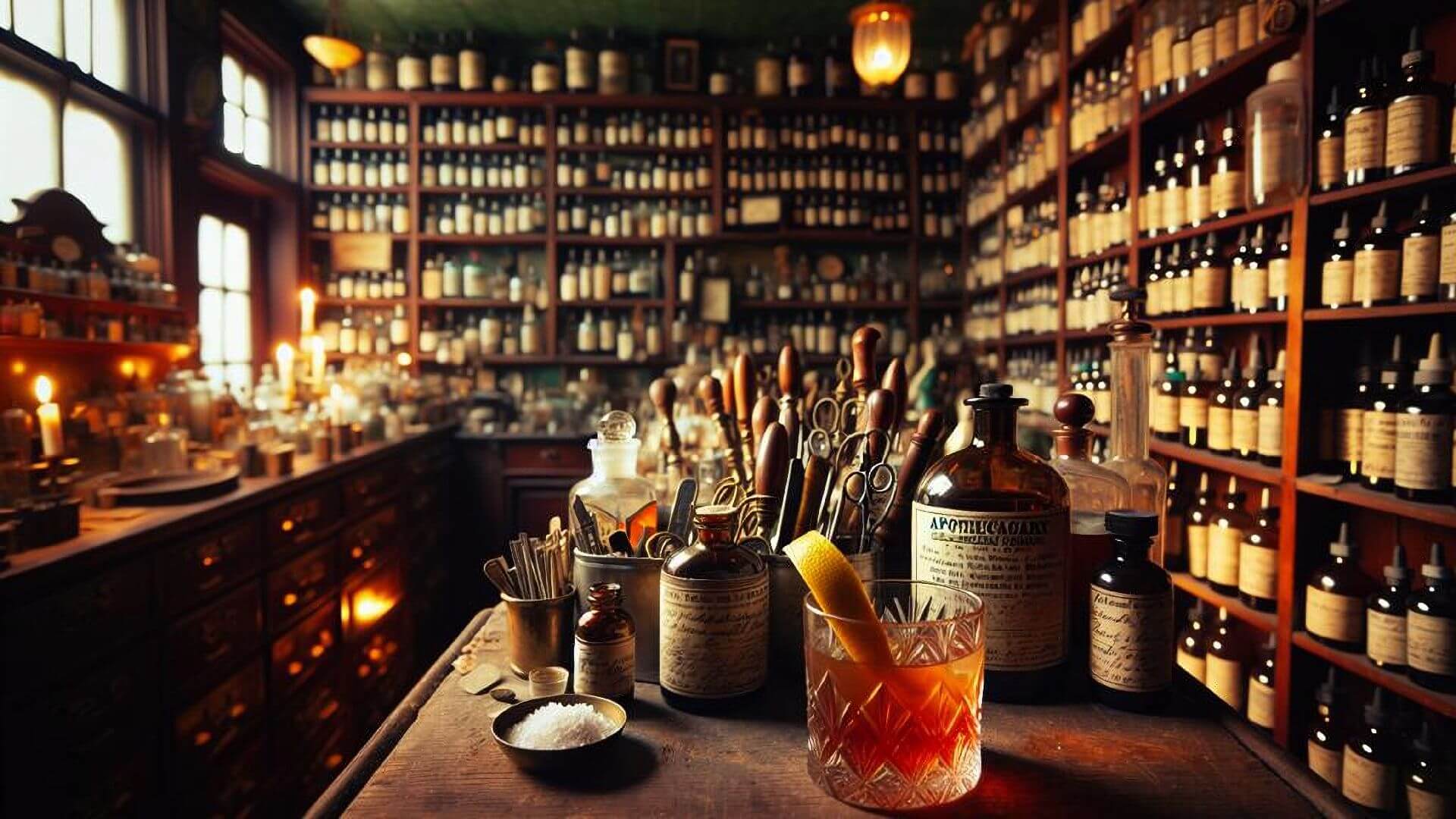
A Sazerac cocktail on a counter inside a rustic apothecary shop

That’s quite a full Sazerac, but I’m more interested in what this particular AI platform thinks that powder next to the cocktail is…

We celebrate the Sazerac, nearly 200 years old and known to many as America’s first cocktail, on Sazerac Cocktail Day, which falls on a Sunday this year.

Refreshingly, we know who should credit for its creation. Further, we can trace it back to a year, and even a location.

In that regard, this won’t be like other Drink Donnybrook articles. The only bold, debate-inducing claims I can really make relate to the base spirit, year of creation, and that my first-ever Sazerac was awful. Oddly, this less-than-stellar Sazerac was made for me at an incredibly popular bar in New Orleans.

Well, sometimes bartenders have off days. I’ve been back to that bar, and had a great time with a great Sazerac. It’s absinthe under the bridge.

Speaking of absinthe, that anise-flavored spirit is a core element of this classic cocktail. Much like some people say “No Negroni without Campari,” there’s no Sazerac without an absinthe rinse.

Now, onto the base of this legendary drink. While bartenders have been making it with rye whiskey for decades, the original recipe calls for Cognac. More specifically, it was made with Sazerac de Forge & Fils. Voilathe drink bears the name of the brandy used at its creation. (Hey, speaking of brandy, check out my Donnybrook article about the Brandy Alexander.)

Cold water, an ice cube, and Peychaud’s bitters round out the ingredients list for a Sazerac. And it’s that last item that reveals the drink’s creator.

The Official Cocktail of New Orleans

Roughly a decade into the 1800s, Antoine Peychaud arrived in New Orleans, Louisiana. Reliable records are a bit difficult to come by, so we don’t know his precise arrival date.

However, historians seem confident that Peychaud did open an apothecary in New Orleans in 1832. (According to one source I came across, Pharmacie Peychaud was opened in 1841.) The next time you’re in NOLA, you can visit the location of said apothecary: 437 Royal Street. Originally, the address was 123 Royal Street. Today, it’s the home of James H. Cohen Antique Weapons & Rare Coins. It’s a fun spot to pop into, by the way.

As you’re likely well aware, apothecaries were precursors to pharmacists and chemists. They served their communities from ye olde apothecary shoppes, and their medicine often consisted of alcohol.

Peychaud crafted his namesake bitters and used them to create an elixir that treated his customers’ illnesses. That medicinal elixir would become the Sazerac. Again, this potion was made with Sazerac de Forge & Fils Cognac, absinthe, and Peychaud’s bitters.

Intriguingly (to me), the Sazerac Housea must-see attraction in NOLAclaims the Sazerac became famous in the 1850s at the Sazerac Coffee House. So, it could’ve taken the Sazerac 20 years to evolve from medicine to cocktail.

On the topic of cocktails, some people attribute Peychaud with inventing the word “cocktail.” Many historians have labeled this claim as false.

Over time, it became difficult to source the cocktail’s eponymous brandy, so the recipe changed to rye whiskey. Some bartenders craft their Sazeracs with other spirits, and will even split their bases. For example, you should try a Sazerac made with a split base of Cognac and rye.

Original Sazerac

Behold, the original Sazerac cocktail recipe.

  • 2 oz. Sazerac de Forge & Fils Cognac
  • 3 to 4 dashes Peychaud’s Bitters
  • 0.5 teaspoon Cold water
  • 1 Sugar cube
  • Absinthe, to rinse
  • Lemon peel, to garnish

You’ll want to have chilled rocks glasses on hand for this cocktail. To start, rinse the glass with absinthe. In a mixing glass, muddle the bitters, water, and sugar cube. Add ice and the Cognac to the mixing glass, and stir until well chilled. Strain, garnish, and serve.

As stated earlier, most modern-day recipes call for rye whiskey rather than Cognac. Experiment with basesincluding splitsto craft your signature Sazerac.

In 2008, lawmakers in Louisiana passed legislation that made the Sazerac the Official Cocktail of New Orleans. Sazerac Cocktail Day is on June 23, which falls on a Sunday in 2024. Cheers!

Image: Shutterstock. Disclaimer: This image was generated by an Artificial Intelligence (AI) system.

Beverage Cocktail Program Coaching Consulting Bars Restaurants Hotels

by David Klemt David Klemt No Comments

Meet Your Next Love: Amante 1530

Meet Your Next Love: Amante 1530

by David Klemt

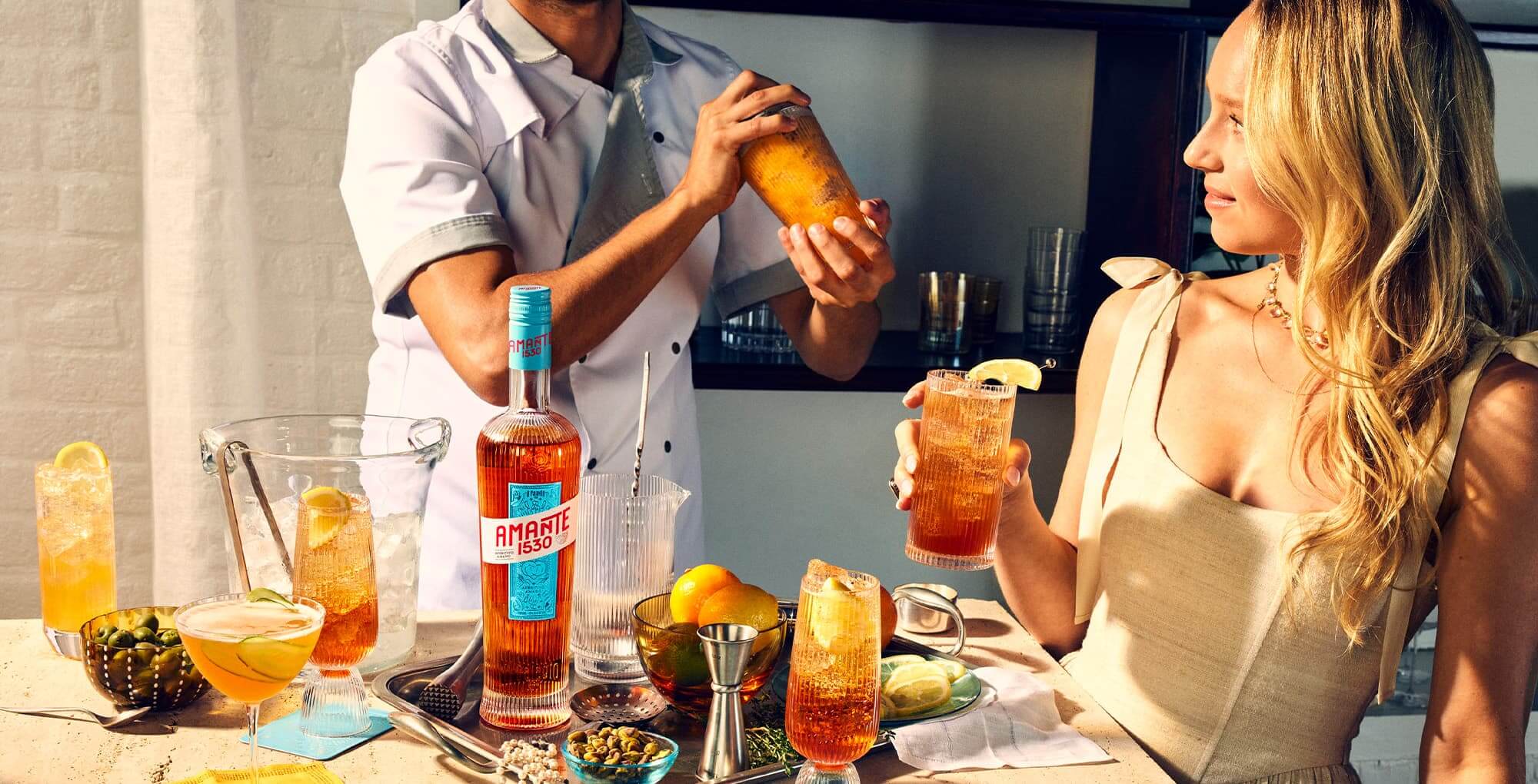
Ana Rosenstein at a table watching a bartender shake up an Amante 1530 cocktail

A beautiful new luxury amaro from Italy is committing to becoming your nextand bestlover, whether you enjoy it straight up or in a fabulous cocktail.

Produced in Tuscany, Italy, at the Il Palagio 1530 estate, Amante 1530 hits a multitude of sweet spots.

Whereas Aperol comes in at 11-percent ABV and Campari hits between 24- and 29-percent ABV, Amante 1530 rings in at 15 percent. Further, this amaro has less sweetness than the former and less bitterness than the latter.

I sat down with Ana Rosenstein, the brand’s CEO, for an episode of the Bar Hacks podcast. Declaring herself a nerd, she explains that Amante 1530 falls in between Aperol and Campari, and can serve as an aperitivo or a digestivo.

Notably, the team behind Amante 1530 isn’t out to replace Aperol, Campari, or other well-established amari on the market. During our conversation, Rosenstein shares that she believes the brand speaks to an amaro consumer that hasn’t, until now, found the product that truly speaks to them. (You’ll also gain some invaluable insight into succeeding with investors during this episode.)

Below, four recipes that highlight Amante 1530’s key flavor notes of citrus, ginger, and honeysuckle. That said, I think you’ll find that Rosenstein’s recommendation of enjoying it neat or on the rocks with a slice of Amalfi lemon delivers an elegant and refreshing experience. Cheers!


View this post on Instagram


A post shared by Amante 1530 (@amante_1530)

The Last Lover

  • 1.5 oz. Amante 1530
  • 1 oz. Blanco tequila
  • 0.5 oz. Fresh lime juice
  • 2 oz. Quality soda water
  • 4 cucumber rounds
  • 1 barspoon Agave nectar (optional)

Muddle the cucumber rounds in a shaker, then add ice and the first three ingredients. As an option, you can add a barspoon of agave nectar. Shake, then strain into a Collins or highball glass. Top with soda water.

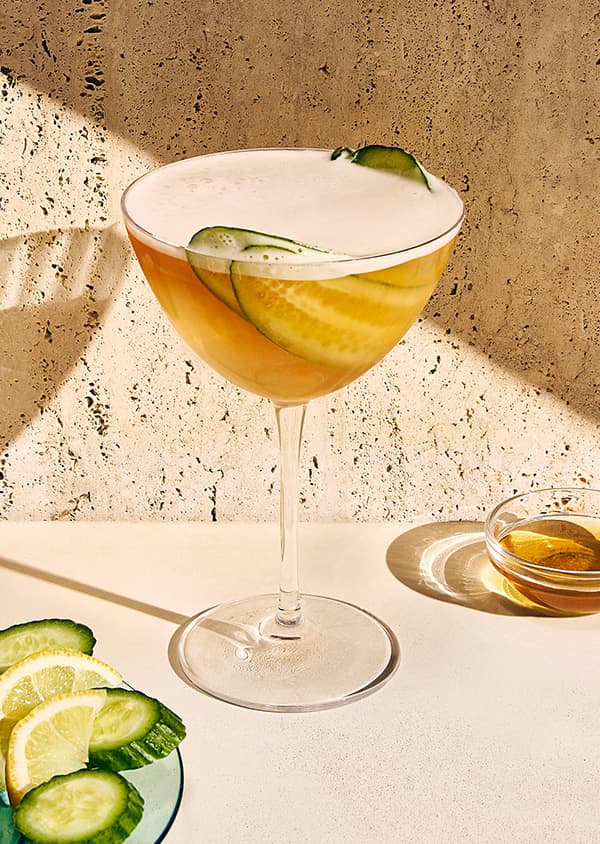
Moonraker

  • 1.5 oz. Gin
  • 0.75 oz. Amante 1530
  • 0.75 oz. Fresh lemon juice
  • 0.5 oz. Green tea simple syrup
  • 3 Cucumber rounds
  • 2 Cucumber ribbons to garnish

Muddle the cucumber rounds in a shaker. Fill shaker with ice. Add gin, Amante 1530, lemon juice, and green tea simple syrup. Shake well, then double-strain into cocktail coupe. Garnish with ribbons/lengthwise slices of cucumber, and serve.

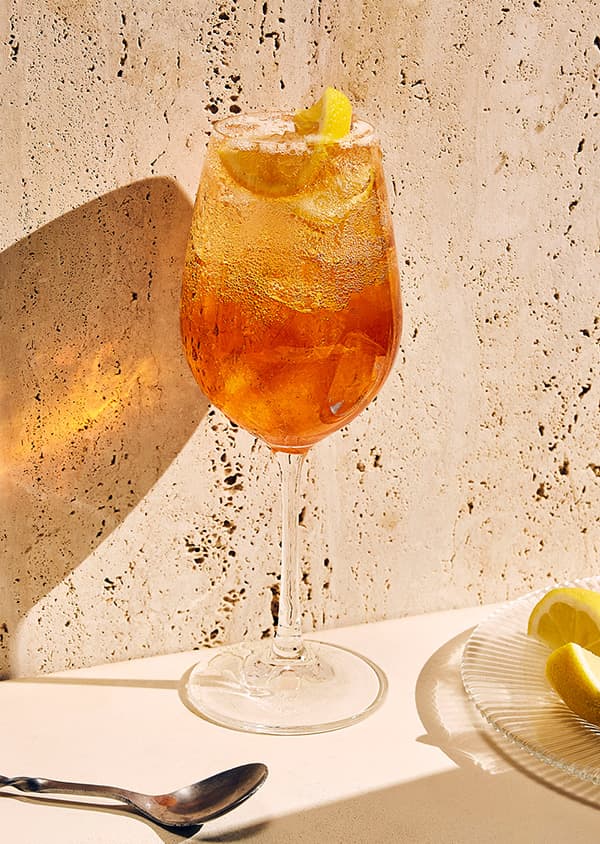
Amante 1530 Amante Spritz cocktail

Amante Spritz

  • 2 parts Amante 1530
  • 3 parts Prosecco
  • 1 part High-quality soda water
  • 1 Amalfi lemon wedge to garnish

Prepare a stemmed balloon glass or goblet by adding ice. Next, add the Prosecco to the glass, followed by Amante 1530. Top with soda water, then squeeze the juice from the Amalfi lemon and drop in the wedge to garnish.

Amante 1530 Palombo tequila cocktail

Palombo

  • 1.5 oz. Reposado tequila
  • 0.75 oz. Amante 1530
  • 0.25 oz. Fresh lemon juice
  • 0.25 oz. Fresh lime juice
  • 0.5 oz. Simple syrup
  • 3 oz. Soda water
  • Lemon wheel to garnish

Prepare a Collins or highball glass by adding quality ice. To a shaker filled with ice add all the liquid ingredients except the soda water. Shake, then strain into the prepared glass. Top with the soda water, then garnish with the lemon wheel and serve.

Disclaimer: Neither the author nor KRG Hospitality received compensation, monetary or otherwise, in exchange for this post or podcast appearance.

Images: Amante 1530

KRG Hospitality Start-Up Restaurant Bar Hotel Consulting Consultant Solutions Plans Services

by David Klemt David Klemt No Comments

The Drink to Dethrone the Espresso Martini

Will this Drink Dethrone the Espresso Martini?

by David Klemt

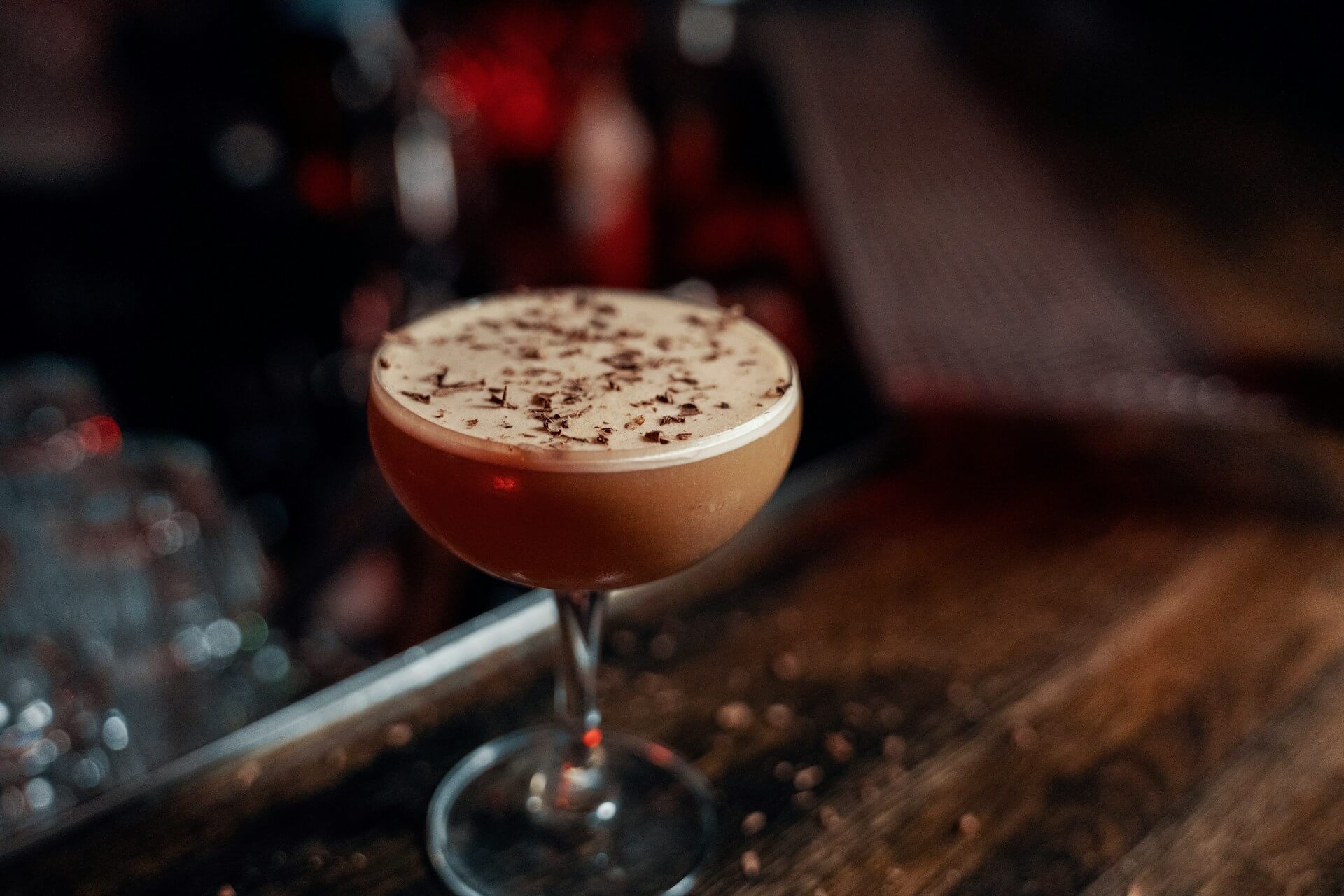
A coffee cocktail sitting on top of a bar

If we’re to take what industry pundits and cocktail aficionados are saying, 2024 may be the year that the Espresso Martini falls from grace.

Alright, that may be a bit dramatic. However, maybe we won’t read about how the Espresso Martini is having yet another “moment” this year.

Instead, it’s possible that 2024 will be the Year of the Carajillo.

This incredibly simple cocktail is receiving as muchif not morehype than the Negroni Sbagliato did in 2022. Only this time, bartenders may not roll their eyes whenever they hear someone mention it.

Before I dive into the Carajillo, a bit of clarification. I’m not anti-Espresso Martini. It isn’t like I think I’m above enjoying one of these not-Martinis from time to time. And I’m sure it makes registers ring plenty at bars around the world.

However, it seems like we’re told we’re in the midst of the Espresso Martini’s latest moment every time fall or winter comes around. Look, this is a modern classic that has been around for decades. It’s not “having a moment,” it has simply reached ubiquity.

So, the idea that a perhaps lesser-known coffee cocktail can have its moment this year is exciting. (And a bit of a relief.)

Let’s cannonball into the Carajillo!

Not So Simple

When you do a cursory search for the Carajillo you’ll encounter quite a few absolutes.

For example, there are people who say the drink only and always consists of hot espresso and Licor 43. You may read that the ratio is always one to one.

However, there’s more nuance surrounding the Carajillo.

This deceptively simple cocktail comes to us from Spain. From what I can find, it’s often a cold drink that varies from country to country, region to region. In Spain, it’s commonly coffee and brandy in a two-to-one ratio. Order one in Cuba and it will likely be a rum cocktail rather than brandy. In Mexico, while Licor 43 is said to be the standard, it’s not uncommon for mezcal or a coffee liqueur to accompany the coffee.

Now, as I’ve said, you’ll come across sources that say a Mexican Carajillo is espresso and Licor 43. So, let’s go with that recipe for now.

It’s a simple build: Fill a cocktail shaker with ice. Add two ounces of hot espresso or other hot coffee and two ounces of Licor 43. Shake until well chilled, then strain into a rocks glass. The shake should form a foamy head. Some people garnish with three coffee beans.

Make it Yours

Of course, there’s room to play with this recipe. You and bar team can change the ratio, change the garnish, experiment with glassware, replace the Licor 43 with another liqueur, add an ingredient…

As an example of the latter suggestion, Cazadores produces a coffee liqueur, Cazadores Café. This can replace Licor 43 or work alongside it.

Just know that if you replace the original liqueur, you’re missing out on a blend of 43 botanicals. That means your Carajillo will taste much different than the standard Mexican build. In that case, is it still a Carajillo?

Well, that’s up to your guests to decide, I suppose.

There are bars that make their Carajillo with cream, brandy, and Licor 43. Some serve theirs with a small bowl of sugar so guests can sweeten them to their liking.

At some bars, the build calls for heating the liqueur or base spirit with lemon and sugar. Others make Carajillos with mint and amaro.

So, you and your bartenders can do what has been done with the Espresso Martini: Alter the Carajillo to create your signature version. You can also simply serve the traditional build.

Or, and this is my recommendation, you can serve traditional Carajillos and offer one or more signature variations.

Cheers!

Image: Jeppe Mønster on Unsplash

KRG Hospitality Start-Up Restaurant Bar Hotel Consulting Consultant Solutions Plans Services

by krghospitality krghospitality No Comments

Drink Donnybrook: Let’s Talk Screwdriver

Drink Donnybrook: Let’s Talk Screwdriver

by David Klemt

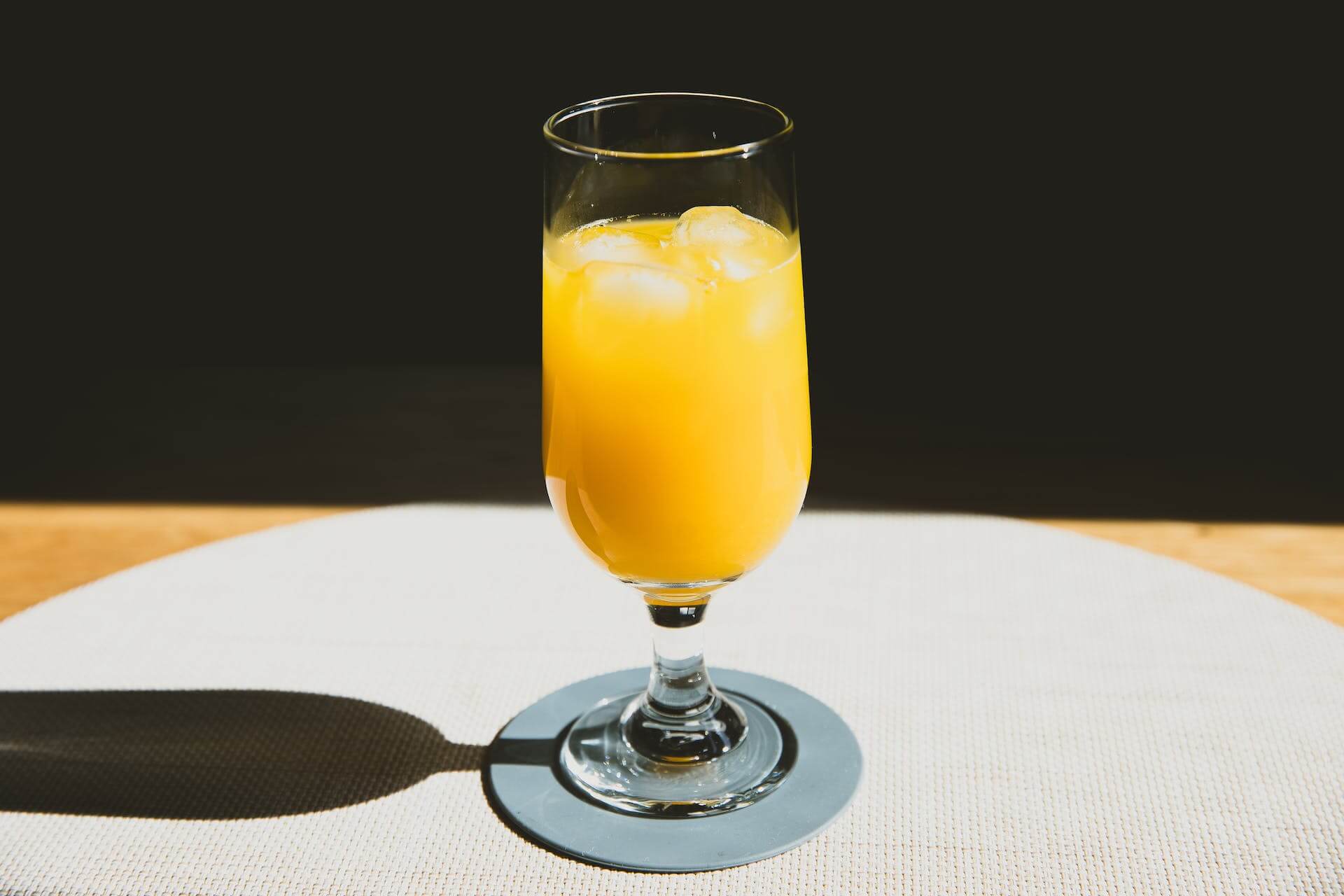
Orange cocktail, like a Screwdriver

Is there vodka in there? Maybe.

As it turns out, the origins of one of the simplest cocktails on the planet—there are just two ingredients in a traditional Screwdriver—are a mystery.

Another interesting note about the Screwdriver: It’s likely a relatively new drink.

If the Screwdriver is an American invention, the earliest most believe it could have been created is the 1920s. That’s when Smirnoff sold the rights to North American distribution to a distiller in the US.

However, it’s possible the cocktail wasn’t invented until some time in the 1940s. Vodka didn’t really become popular among Americans until the ’40s. So, it’s conceivable that the Screwdriver is less than 100 years old.

Still, it’s difficult to believe that someone, somewhere didn’t think to add a splash of vodka to their orange juice in the 1800s. Or that someone didn’t think to “adjust” the taste of the vodka in their glass with a bit of OJ.

Either way, it’s pretty entertaining to know that we don’t have a definitive answer for who created the Screwdriver, where it was first made, and when. When we consider the fact that the recipe calls for just two simple ingredients, maybe it does make sense that we don’t know the who, where, and why. It’s so easy to make that it’s believable multiple people had the same idea around the same time, across the globe.

Of course, it wouldn’t be a Drink Donnybrook without checking into some origin theories. So, let’s dive in!

World War II

One theory involves WWII and the US Marine Corps.

It’s quite simple, really. During WWII, stationed overseas, perhaps a few Marines jazzed up their orange juice with a touch of vodka.

Oh, but wait. The Screwdriver may not be attributable to the USMC. It’s possible, according to another theory, that the former US Army Air Forces came up with drink and name when stationed in Ankara, Turkey.

As the predecessor to the Air Force, the USAF may hold claim to the Screwdriver.

If it’s one thing we need, it’s more fuel for the inter-service rivalry between the USMC and USAF.

Journalists

Two publications mentioned the Screwdriver in the 1930s and 1940s.

According to some historians, Journalism Quarterly at least made reference to a drink called the “Smirnoff Screwdriver” in 1938.

If that’s true, the classic cocktail predates WWII by a year. And if that’s true, it’s possible that American marines, airmen, or soldiers spread it around the world.

In 1949, Time magazine mentioned the Screwdriver. According to the writer, the cocktail was the newest drink grabbing attention at the Park Hotel in New York. Apparently, American engineers, Balkan refugees, and Turkish spies loved the drink.

Interestingly, if Time‘s reporting is accurate, it’s possible the supposed Turkish spies frequenting the Park Hotel bar got the name of the drink from American airmen.

Since apparently no bartenders who worked at the Park Hotel appear to have taken credit for it back in the ’40s, it’s unlikely it was created there.

Roughnecks

Okay, so you’re an oil worker. It’s the 1950s and you’re working in the Persian Gulf.

You’re performing back-breaking, dangerous tasks in oil fields. Maybe you need a pick-me-up, and maybe that pick-me-up involves mixing orange juice and vodka together.

But…you don’t have a barspoon. You certainly don’t have a swizzle stick. And you don’t have a coffee stirrer handy.

What you do have is a screwdriver. That screwdriver will definitely stir a drink. It doesn’t take time for this vodka-orange juice concoction to get the name “Screwdriver” because of the stirring utensil.

Well, that’s one theory, anyway.

Two days from now, December 14, you can share all those stories with your guests. Why? Because that’s National Screwdriver Day, a time to celebrate one of the simplest cocktails ever made.

Of course, you and your team can make the Screwdriver your own. Top-shelf vodka, the finest and freshest hand-squeezed orange juice (maybe even blood orange juice), any number of garnishes or rims, a touch of sparkling wine or water… The simpler the drink, the easier it can be to riff on it.

Cheers!

Image: Ryutaro Tsukata on Pexels

Bar Nightclub Pub Brewery Menu Development Drinks Food

by David Klemt David Klemt No Comments

Last-minute Halloween Cocktails!

Last-minute Halloween Cocktails!

by David Klemt

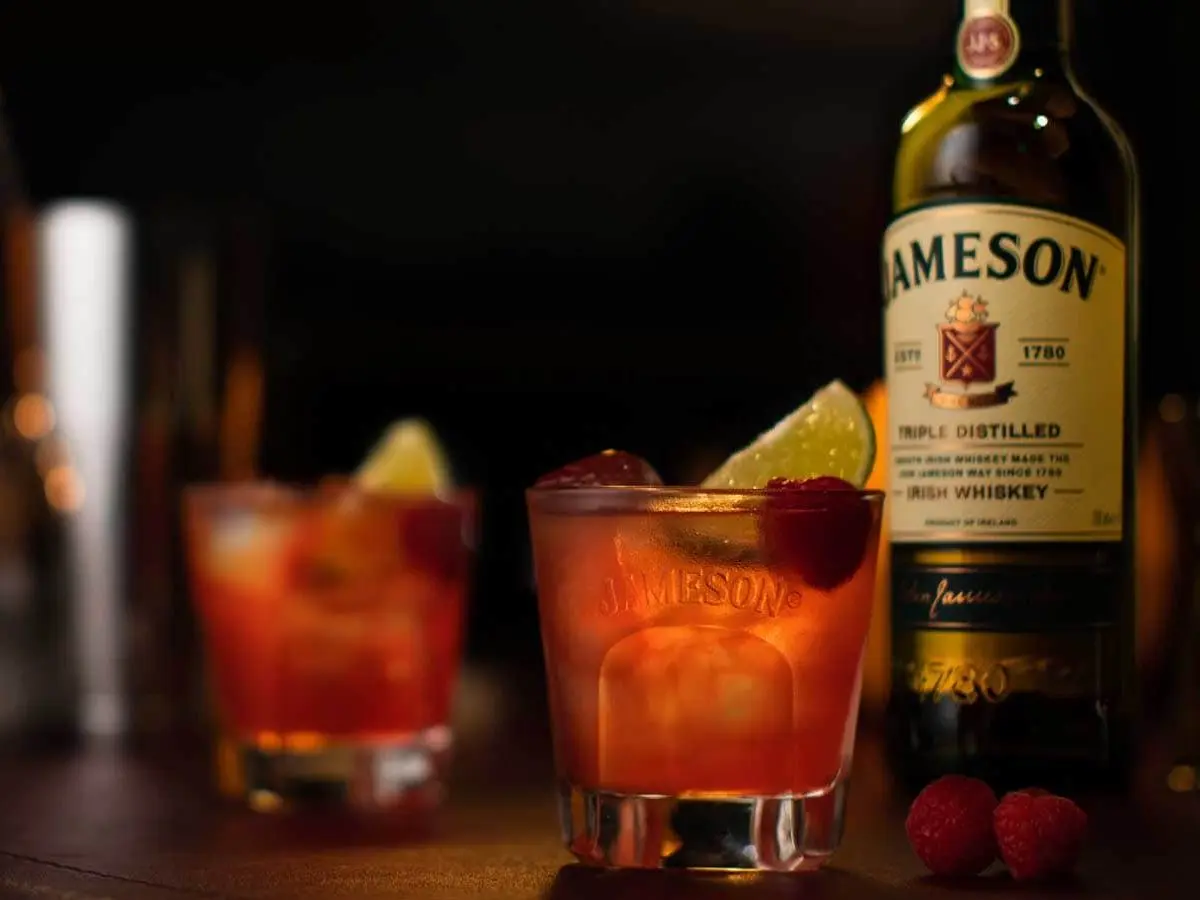
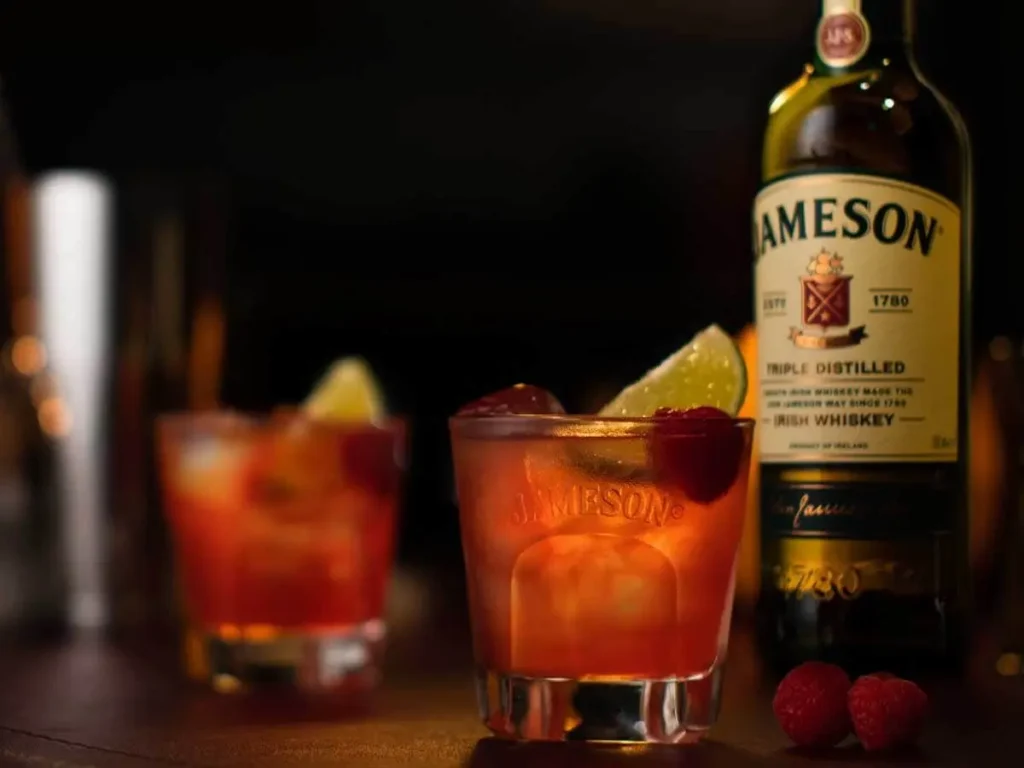
Jameson Irish Whiskey Witches' Brew cocktail

If you perhaps let Halloween preparations get by you, have no fear: here are three Jameson Irish Whiskey cocktails that pair well with different candies.

These aren’t just any three cocktails, however. Instead, Jameson is recommending these drinks because they happen to pair well with three distinct flavors:

  • Tart and sour;
  • sweet; and
  • chocolate.

Makes sense, right? As guests arrive, hopefully in costumes, they may bring candy with them. Or, you may be serving up some mini-candies along with the drinks crossing your bar.

Either way, the drinks below will enhance the guest experience by pairing with an array of candies.

Cheers! Or, boo! Whatever you think is clever, I dunno.

Tart & Sour

Let’s say a guest is munching on some SweeTARTS, Sour Patch Kids, or Warheads. Basically, they’re enjoying tart and/or sour candies this Halloween.

The drink below, according to Jameson, will pair well with those candy flavors.

Jameson Irish Whiskey Witches' Brew cocktail

Witches’ Brew

Out of these three cocktails, this one requires the most prep. You’re going to steep teabags in boiling water and let it cool.

And if you choose to make your own raspberry syrup, your bar team will have to simmer water with sugar and raspberries for a couple of minutes. This will also have to cool before use.

However, this is a large-format drink, so the following recipe allows you to prebatch before guests descend on your bar.

  • 1 bottle Jameson Irish Whiskey
  • 1 carton Cranberry juice
  • 17 oz. Mint tea
  • 3.5 oz. Raspberry syrup
  • 6 Whole limes
  • 1 Orange
  • 12 Raspberries

Start by filling a large vessel with 17 ounces of boiling water. Add six mint teabags and let steep. Once cool, remove teabags. Juice the limes, slice the orange, and add to the vessel with the raspberries. Add the Jameson, cranberry juice, and syrup. Serve in a rocks glass over ice and garnish with raspberries and lime zest.

To make the syrup: In case you haven’t made syrup before, simply add 250mg of water, 250mg of sugar, and 100 grams of raspberries to a pot or saucepan and boil. After reducing to a simmer for two minutes, remove the pot or pan from heat. Let the syrup steep until cool, strain, bottle, and toss in a fridge.

Sweet

Does your guest have a sweet tooth? Are they chowing down on sweet, overly sugary candy? Maybe they’re throwing handfuls of candy corn down their gullet.

This is the drink for them!

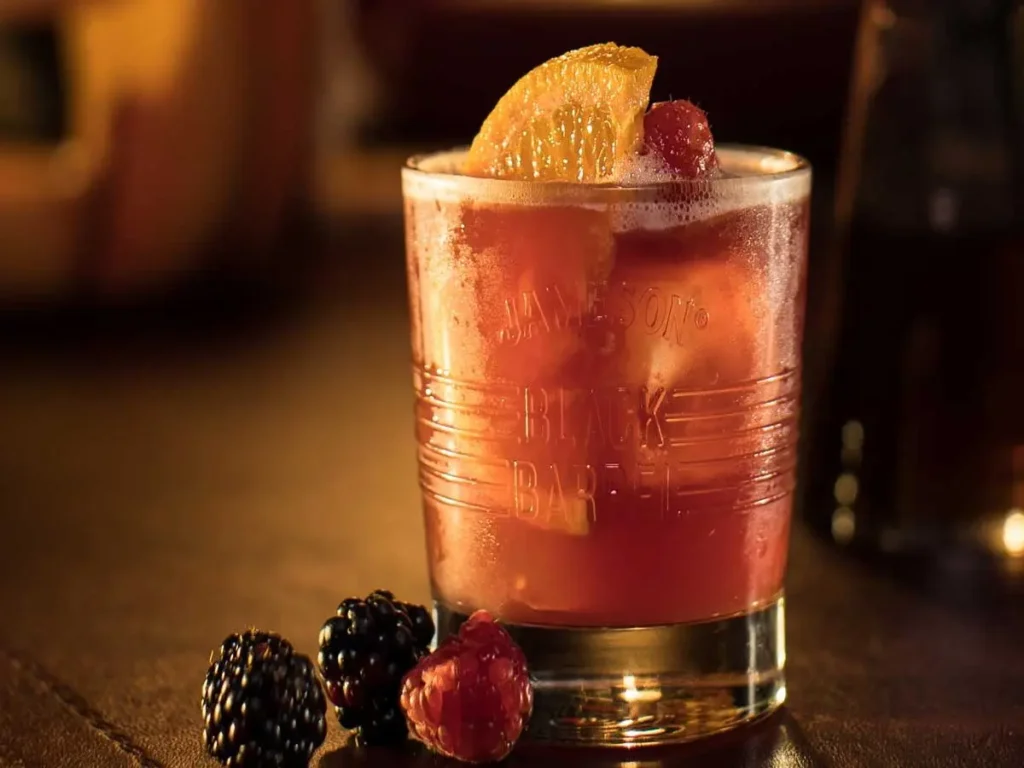
Jameson Irish Whiskey Blood Rising cocktail

Blood Rising

From the most complex cocktail on this list to a simpler recipe.

Per Jameson, this cocktail is also known as the Blood Boiler.

  • 1 2/3 parts Jameson Black Barrel
  • 1 2/3 parts Lillet Rouge
  • 1 2/3 parts Orange juice
  • 1 1/6 parts Berry Syrup
  • Orange wedge to garnish
  • Berries to garnish

Prepare a rocks glass by placing a large ice cube inside. Combine all the liquid ingredients in the glass over the cube. Stir, then garnish with the orange and berries

To make the berry syrup: See the instructions above for the raspberry syrup.

Chocolate

I mean…chocolate. C’mon, it’s a loaded Halloween candy category. Snickers, Kit Kat bars, Milky Way bars, M&Ms, it doesn’t matter.

If a guest can’t resist the siren song of chocolate, the cocktail below will pair well with chocolatey notes.

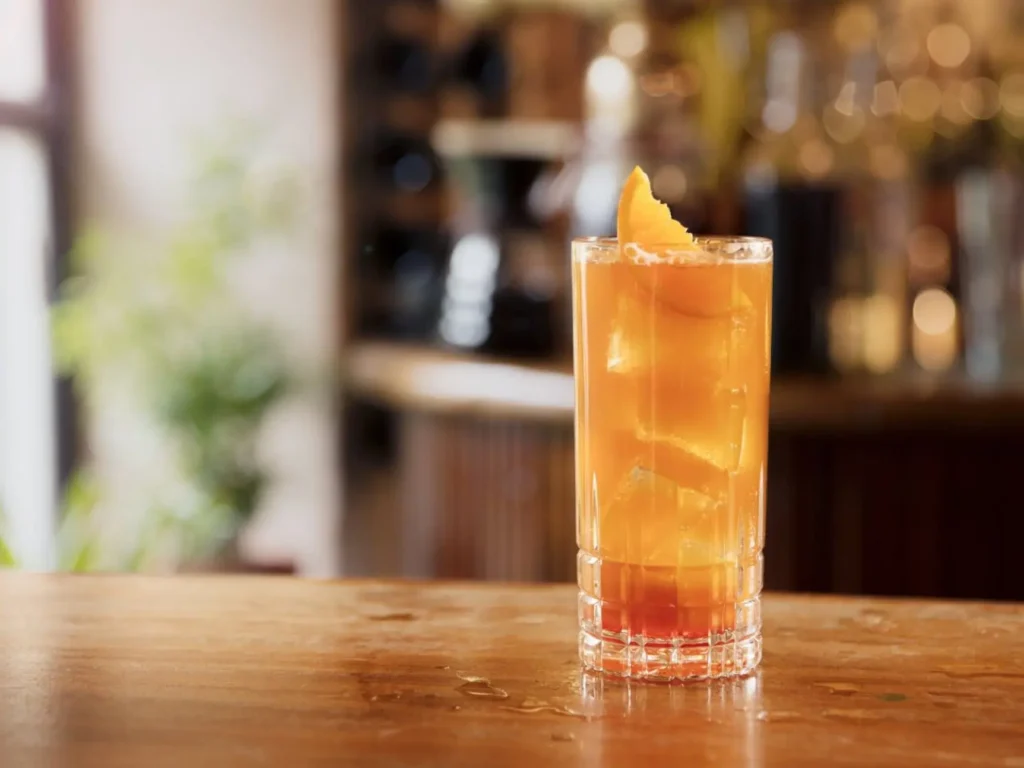
Jameson Irish Whiskey Cold Brew Bittersweet Goodbye cocktail

Jameson Cold Brew Bittersweet Goodbye

If you’ve left your Halloween drink menu to the last minute, this is probably the quickest recipe on this list.

  • 1 1/3 parts Jameson Cold Brew
  • 1 1/3 parts Campari
  • 1 part Blood orange juice
  • 3 parts Tonic water
  • 1 Slice of a blood orange or red grapefruit to garnish

Fill a highball with ice, then add the first three ingredients. Add the tonic water and garnish.

Note: Orange also goes well with chocolate, so consider playing with Jameson Orange Whiskey if you have the time.

Images via Jameson Irish Whiskey

Bar Nightclub Pub Brewery Menu Development Drinks Food

by David Klemt David Klemt No Comments

How to Make a $3,500 Mint Julep

How to Make a $3,500 Mint Julep

by David Klemt

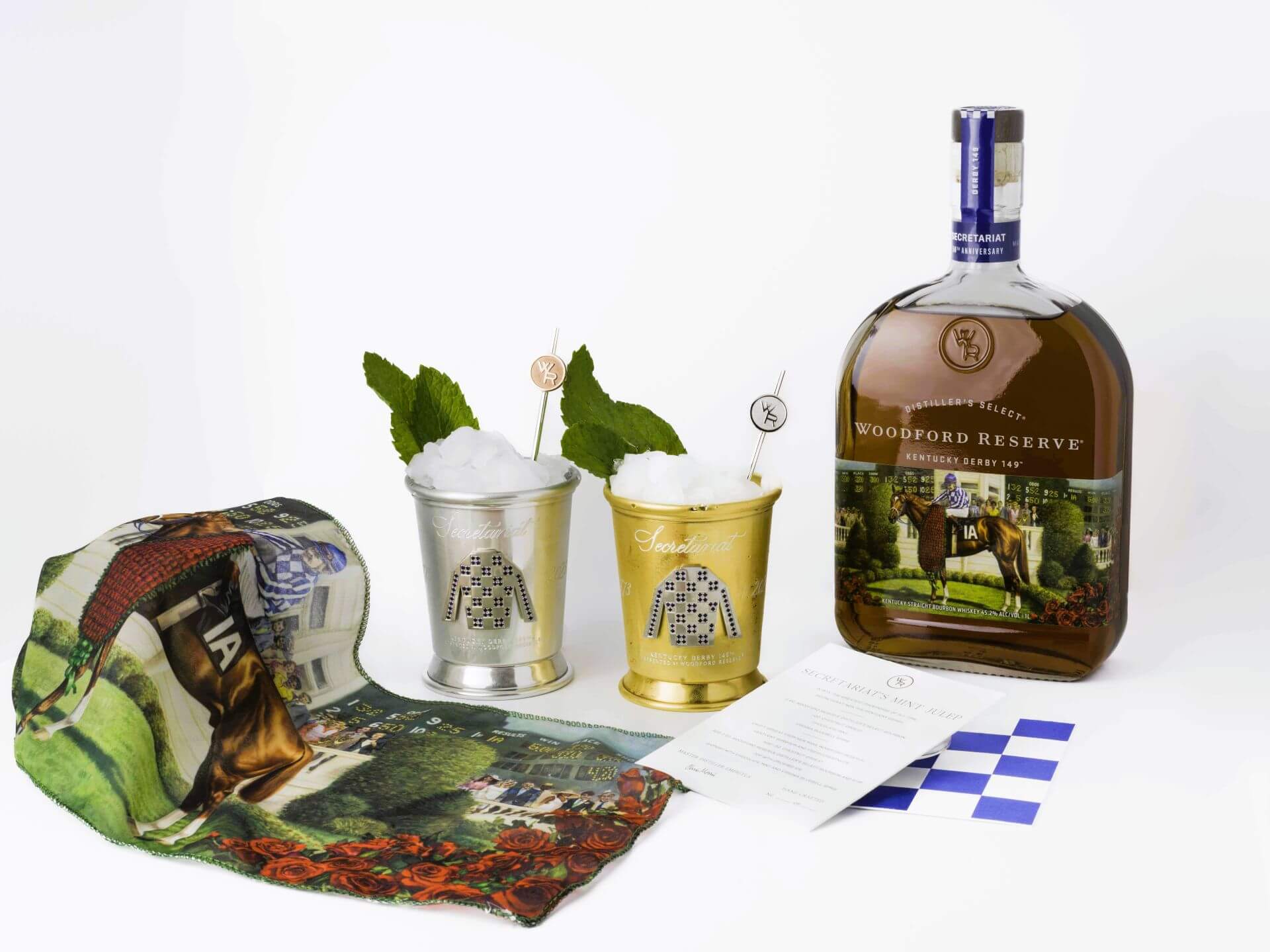
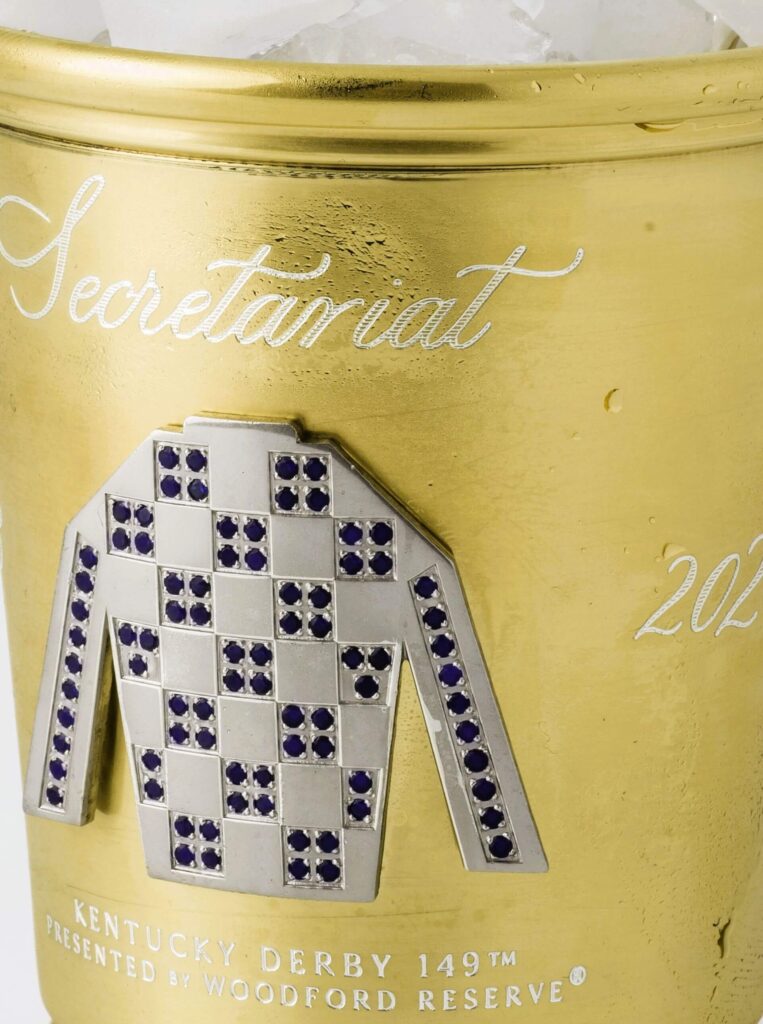
2023 Woodford Reserve Secretariat Julep cups

If you want to craft an incredible $3,500 Mint Julep, the first step is to acquire one of 50 Woodford Reserve gold Secretariat Julep cups.

Now, should $3,500 seem a “bit” exorbitant, you can also opt for one of 100 silver Julep cups for $1,000.

Cup in hand, simply fill it with crushed ice and pour a refreshing Mint Julep over it. Et voilà—a delicious $3,500 or $1,000 Mint Julep!

Okay, so you’re probably wondering what I’m on about. Am I really suggesting you craft thousand-dollar-plus cocktails? I mean…if you have guests who’ll pay that much, yes, I am.

In reality, however, I’m making you aware of this year’s Woodford Reserve $1,000 Mint Julep™ charity program. This program is a longstanding Kentucky Derby tradition.

For 2023, the $1,000 Mint Julep™ will benefit the Secretariat Foundation. That makes sense given that this year marks the 50th anniversary of Secretariat winning the Derby.

The foundation, the brainchild of Secretariat’s owner Penny Chenery, is a non-profit that focuses on equine-related industry subjects, such as:
  • veterinary research into lameness of the horse;
  • Thoroughbred retirement and rehabilitation facilities;
  • therapeutic equestrian programs; and
  • general funding for related established charitable programs.

Silver and Gold

As you probably can put together yourself, there are 150 Secretariat Mint Julep cups available. One hundred are silver, 50 are gold. Respectively, they cost $1,000 and $3,500.

In keeping with this year’s theme of celebrating Secretariat and supporting the horse’s namesake charity, each features blue and white checkered silks in sapphires. The 2023 Mint Julep cups are handmade by Louisville, Kentucky jewelers From the Vault.

Gold 2023 Woodford Reserve Secretariat Mint Julep cup

People who choose to support the charity via purchasing the gold cup will have their name engraved on the bottom of the cup. These cups also come with the autograph of Ron Turcotte, Secretariat’s jockey.

In addition to supporting the charity, people who buy one of the 150 cups will have access to the $1,000 Mint Julep Experience at Churchill Downs on Derby Day. (Which is also where and when buyers must pick up their cups.)

Secretariat’s Mint Julep

Alright, so let’s be more realistic. Only 150 people are going to splash out for the $1,000 or $3,500 Secretariat Mint Julep. And while supporting a charity like the Secretariat Foundation is a great thing to do, people are struggling.

So, below you’ll find the recipe for the Mint Julep variation that those attending the $1,000 Mint Julep Experience will be enjoying. It’s up to you if you want to offer it on Derby Day to raise funds for the Secretariat Foundation or a charity of your choosing. It’s perfectly reasonable to simply offer the refreshing cocktail as a Derby Day LTO.

Pack a Julep cup with crushed ice, making sure to make a dome over the lip of the cup. Add the whiskey and liqueur to a mixing glass and stir. Pour over the prepared cup. Garnish with one sprig of mint and one stalk of Virginia bluebells.

Should you prefer a more traditional build, express the oils of a mint leaf inside the cup. Add the bourbon, chestnut liqueur, and crushed ice. Garnish with more crushed ice, mint, and Virginia bluebells, then serve.

For our most bourbon-centric Bar Hacks podcast episodes—including episode 32 with Woodford Reserve—click here.

Images: Woodford Reserve

KRG Hospitality Beverage Programming

by David Klemt David Klemt No Comments

Rosa is Pink, Lowlands Agave is Blue

Rosa is Pink, Lowlands Agave is Blue…

by David Klemt

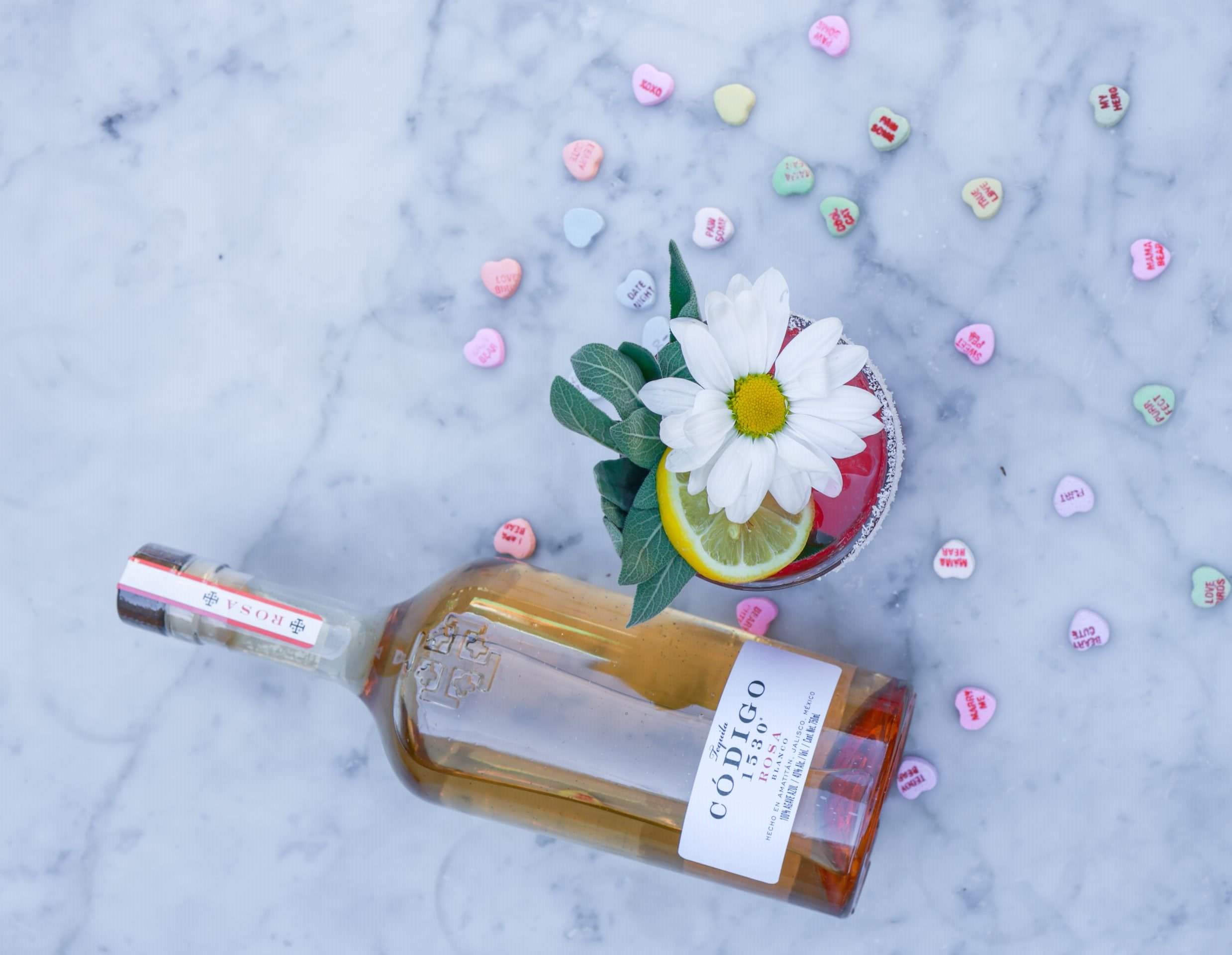
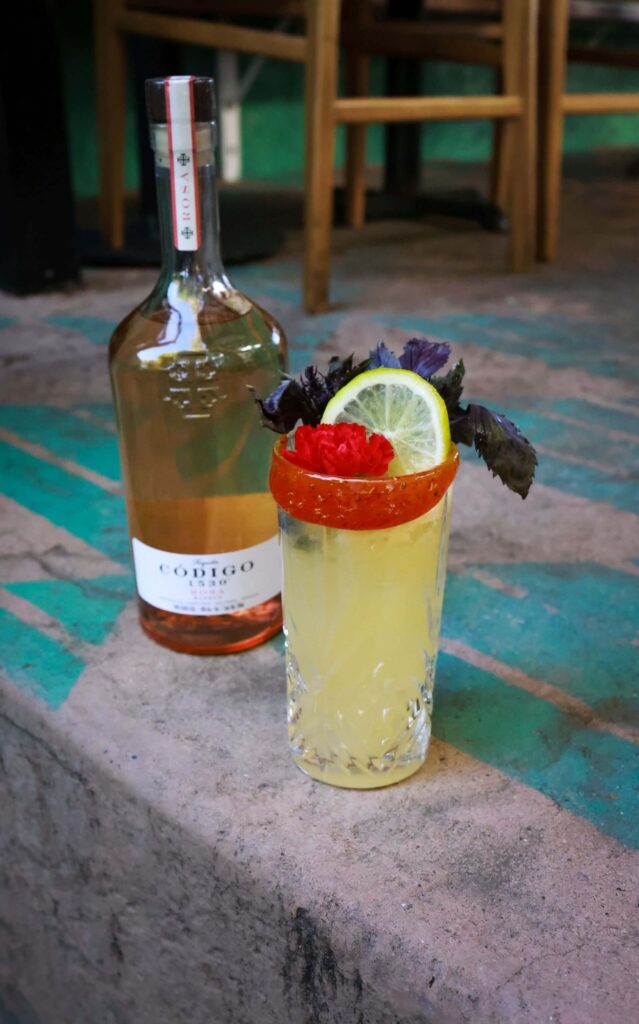
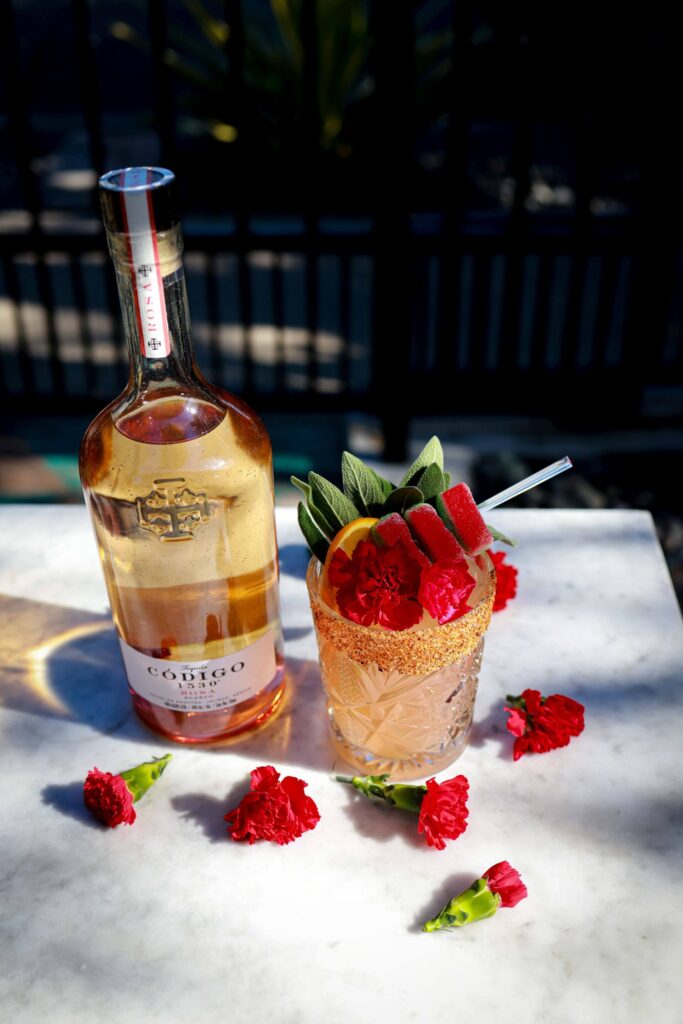
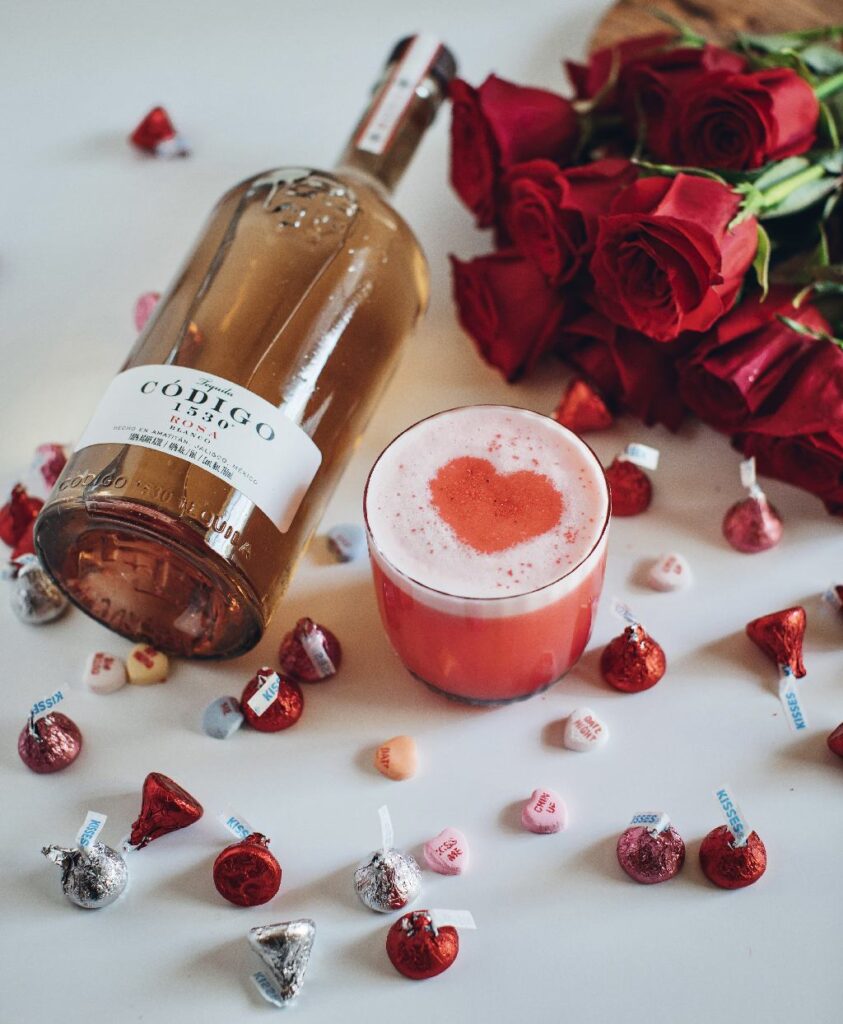
Código 1530 Rosa Tequila and cocktail

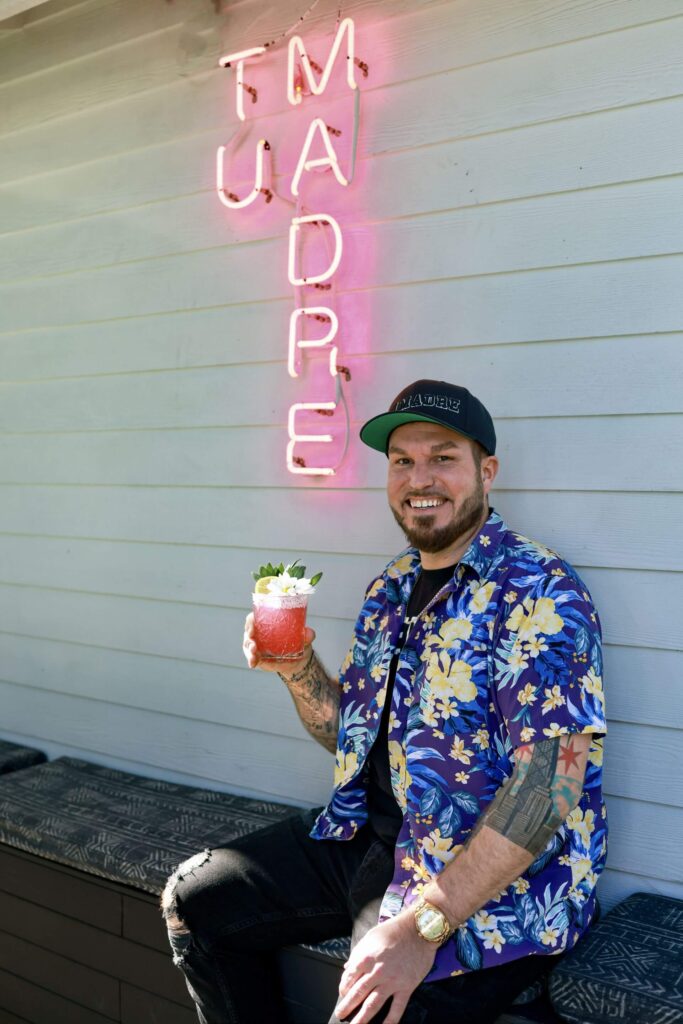
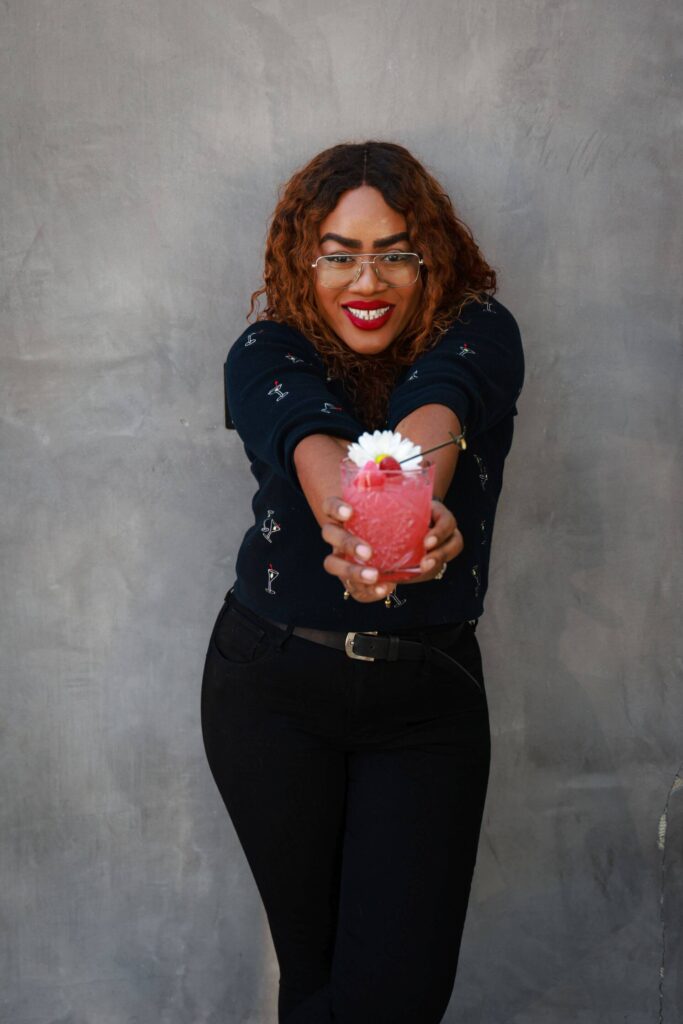
Código 1530 is proud to present Valentine’s Day cocktails from Travis Pentecost of Tu Madre and Abby Blanchard of Broken Shaker.

Even more relevant for Valentine’s Day, each of the tequila-forward four recipes below is made with Código 1530 Rosa Blanco. As you can tell from the bottle image above, Rosa Blanco is a rosé tequila.

This particular tequila’s characteristic comes from the aging process. As the name implies, Rosa begins life as a blanco. But after one month in uncharred Napa Valley Cabernet French White Oak wine barrels, the liquid takes on a pink hue.

Produced using lowlands Blue Weber Agave, Código 1530 is precise about Rosa Blanco’s aging time. Too short and the barrels wouldn’t influence the tequila. Longer than one month and the wine barrel flavors would overpower the agave.

Código 1530’s exacting production and aging techniques result in their signature blanco delivering soft red wine notes on the palate, and a subtly floral finish. Rosa’s aging process enhances Blanco’s rich and bright earthy, mineral, and citrus notes.

If you have guests who are tequila fans—particularly those who love blanco—Rosa Blanco is a great conversation starter and upsale.

Codigo 1530 Kisses and Roses cocktail

Kisses and Roses

recipe by Travis Pentecost (Tu Madre)

  • 1.5 oz. Código 1530 Rosa Blanco Tequila
  • 0.5 oz. Chinola
  • 1 oz. Fresh lime juice
  • 0.75 oz. Orgeat
  • 2 dashes Plum bitters
  • Lemon slice to garnish
  • Edible flower to garnish

Add all ingredients to a shaker and strain into a Collins glass. Garnish with lemon slice and edible flower.

Codigo 1530 Will You Cherry Me cocktail

Will You Cherry Me

recipe by Travis Pentecost (Tu Madre)

  • 1.5 oz. Código 1530 Rosa Blanco Tequila
  • 0.5 oz. St-Germain
  • 1 oz. Prickly Pear liqueur
  • 1 oz. Fresh lemon juice
  • 2 dashes Cherry bitters
  • Fresh mint leaves to garnish
  • Lemon slice to garnish
  • Edible flower to garnish

Add all ingredients to a shaker and strain into a cocktail glass. Garnish with fresh mint leaf “bouquet,” lemon slice, and edible flower.

Codigo 1530 Sandia Margarita cocktail

Sandia Margarita

recipe by Travis Pentecost (Tu Madre)

  • 2 oz. Código 1530 Rosa Blanco Tequila
  • 1 oz. Fresh watermelon juice
  • 1 oz. Fresh lime juice
  • 1 oz. Pina Agave
  • 2 dashes Peach bitters
  • Fresh mint leaves to garnish
  • Orange slice to garnish
  • Gummy watermelon candies to garnish
  • Edible flower to garnish
  • Salt for rim

Add all ingredients to a shaker and strain into a prepared cocktail glass. Garnish with “bouquet” of fresh mint leaves, orange slice, gummy watermelon candies, and edible flower.

Codigo 1530 You Up? cocktail

You Up?

recipe by Abby Blanchard (Broken Shaker)

  • 2 oz. Código 1530 Rosa Blanco Tequila
  • 1 oz. Fresh lime juice
  • 0.75 oz. Simple Syrup
  • 3 Raspberries, muddled
  • Raspberries to garnish
  • Raspberry gummy candy to garnish (optional)
  • Edible flower to garnish (optional)

Add all ingredients to a shaker and strain into a cocktail glass. Garnish with raspberries. Optional garnishes: addition of raspberry gummy candy and/or edible flower

KRG Hospitality Bar 101 Techniques

Images: Código 1530

Disclaimer: Neither the author nor KRG Hospitality received compensation, monetary or otherwise, from Volley or any other entity in exchange for this post.

by David Klemt David Klemt No Comments

5 Books to Read this Month: September 2022

5 Books to Read this Month: September 2022

by David Klemt

Flipping through an open book

This month’s engaging and informative book selections will help you develop next-level leadership skills and dial in your drink menu.

To review August’s book recommendations, click here.

Let’s jump in!

Your Restaurant Culture Sucks!: Stop surviving. Start thriving. Escape mediocrity

Donald Burns, the Restaurant Coach and friend of KRG Hospitality, completes his Your Restaurant Sucks! trilogy. For the third book in the self-improvement and hospitality industry leadership series, Burns tackles culture.

In Your Restaurant Culture Sucks!, Burns helps owners, operators, and leadership team members understand the importance of workplace and company culture. Instead of complaining that “nobody wants to work anymore,” look inside and find out why perhaps nobody wants to work for you. That kind of honesty helps implement real change, change that sets you apart and improves recruitment, hiring, and retention.

“All restaurants can buy from the same vendors and hire from the same labor pool. What separates the good, from the great to the outstanding is culture!”

Subtract

Sometimes changing our outlook and improving our leadership skills is about streamlining.

“We pile on ‘to-dos’ but don’t consider ‘stop-doings.’ We create incentives for good behavior, but don’t get rid of obstacles to it. We collect new-and-improved ideas, but don’t prune the outdated ones. Every day, across challenges big and small, we neglect a basic way to make things better: we don’t subtract.”

With Subtract, Leidy Klotz explains how changing how we approach solutions can be life changing. Maybe we need to stop adding and start subtracting to improve our strategies.

Cure: New Orleans Drinks and How to Mix ’Em from the Award-Winning Bar

If you travel to New Orleans and you’re in this industry, you probably make sure to include Cure on your itinerary. For more than a decade this 2018 James Beard Award winner (Outstanding Bar Program) has been integral to the city’s craft cocktail scene.

Whether you’re after a deceptively simple beer and shot or a cocktail made with a rare, allocated bourbon, Cure is there to elevate your French Quarter visit. And soon you’ll be able to bring Cure home with you, and to your restaurant or bar as well. Available now for preorder, Cure includes 100 cocktail recipes that tell the tale of NOLA from past, present, and future.

Craft Beer Design: The Design, Illustration and Branding of Contemporary Breweries

Anyone who pauses to consider beer can design knows that it’s becoming nearly as important as the liquid. With thousands of breweries all over the US alone, how does a brewer stand out? How does a small, independent craft brewer grab a potential new customer’s attention in a sea of options? In part, through their can designs. Of course the beer itself is crucial and the most important element. However, a consumer has to be motivated to try a beer before they learn how good it tastes.

Craft Beer Design dives deep into craft beer design, featuring real-world examples and interviews with the designers themselves.

Think Again: The Power of Knowing What You Don’t Know

Curiosity keeps us learning. The pursuit of knowledge keeps us sharp. Learning helps us improve ourselves, our leadership, and our operations. The belief that we’ve learned all there is to know, however, prevents us from learning to our own detriment.

Much like Subtract teaches us how to remove rather than add, Think Again proposes a new approach: unlearning and rethinking. Why do we get defensive when we’re wrong? Why are we so afraid of challenges to long-held beliefs? Admitting when we’re wrong and seeking facts is a strength, not a weakness.

Image: Mikołaj on Unsplash

by David Klemt David Klemt No Comments

How One Resort Fills the Choco Taco Void

How One Resort is Filling the Choco Taco Void

by David Klemt

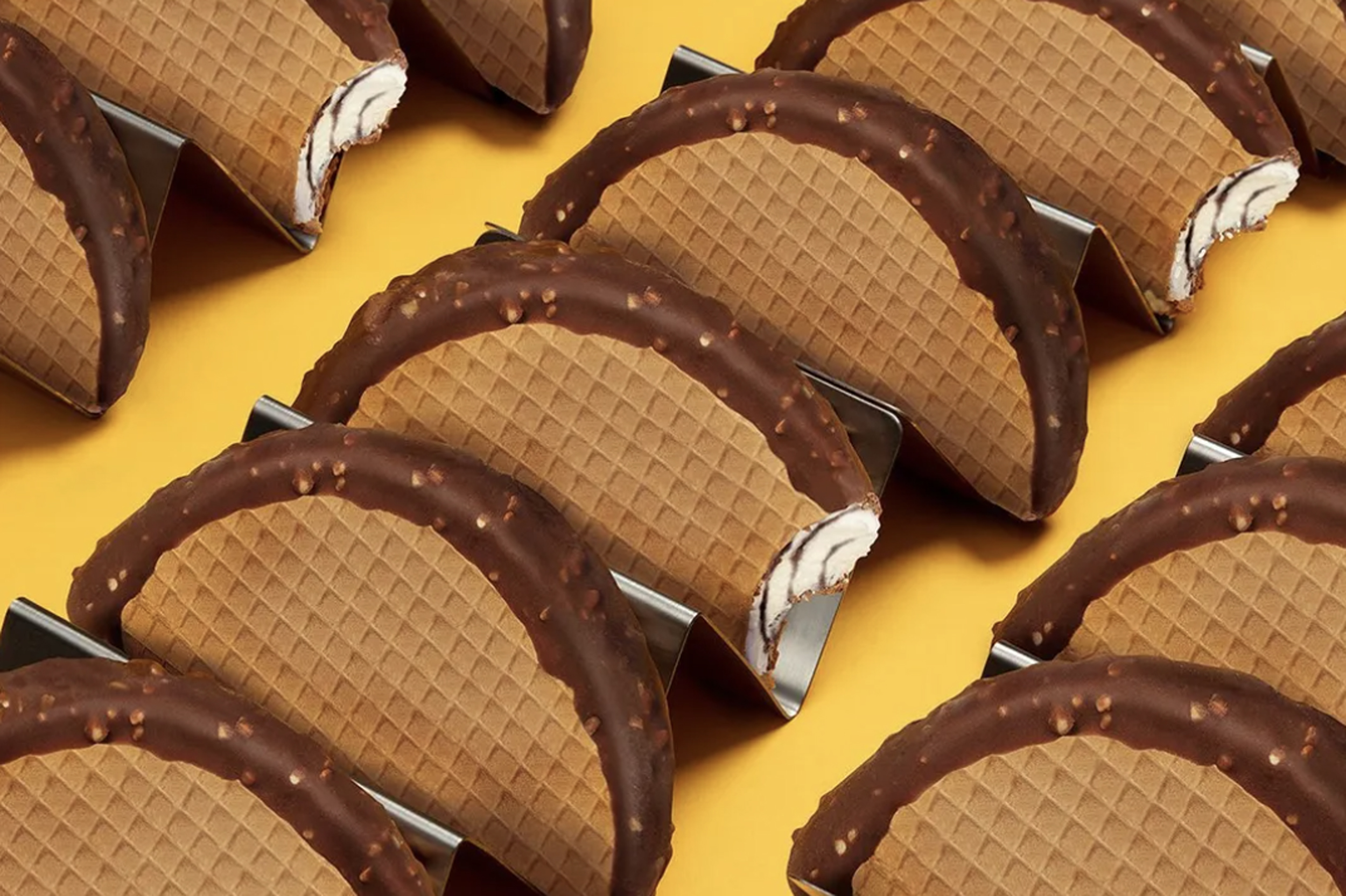
Klondike Original Choco Taco

We hate to be the bearers of bad news but after 40 years Klondike is officially retiring the Choco Taco, now a casualty in the supply chain battle.

According to the Klondike website, the decision to discontinue the Choco Taco comes down to demand. After four decades, the Choco Taco is falling to the wayside so that Klondike can focus on the rest of their legendary portfolio.

Unfortunately, sometimes intense consumer demand can lead to hard choices. Per Klondike, a spike in demand for their product lineup means narrowing their focus. So, we must all bid a fond but bitter farewell to the Choco Taco.

Now, lest we raise an eyebrow and cast a cynical eye toward this news, Klondike provides an assurance this isn’t a PR stunt. Cruise on over to their Instagram account and you’ll see a post denying any stunt Choco Taco retirement. Observe:


View this post on Instagram


A post shared by Klondike (@klondikebar)

It’s a bummer and a fake or quasi-discontinuation would be welcome. However, this appears to really be happening.

Filling the Void

Now, the great news is that restaurant and bar owners can recreate the flavors of the Choco Taco. Below, you’ll find a recipe from a casino resort offering their guests a taste of their favorite ice cream treat.

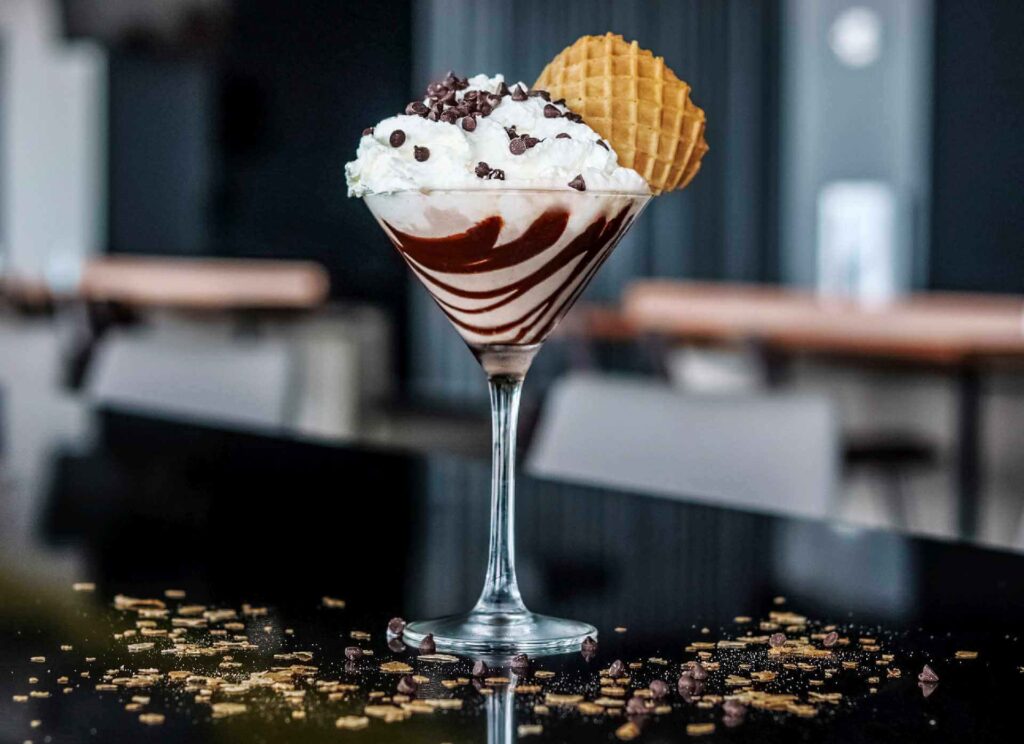
Calling Atlantic City home, Oceans Casino Resort and their F&B team are the masterminds behind the Chocotini. This $11 cocktail is available at Oceans now through the end of August.

Wisely, Oceans is making the Chocotini available to guests via four locations on property. Guests can order one at the Lobby Bar, restaurants Distrito and Makai, and the property’s Topgolf Swing Suite. Notably, Ocean Casino Resort boasts the largest Topgolf Swing Suite in America.


View this post on Instagram


A post shared by Ocean Casino Resort (@theoceanac)

In fact, Oceans recently completed a $15 million property improvement—and has committed to investing a further $85 million into the resort. With amenities like HQBeachclub, this casino resort rivals Las Vegas night- and daylife. Sets by Tiësto, DJ Snake, and Steve Aoki near the Atlantic City Boardwalk? Yes, please, and hand me a Chocotini.

Of course, you and your bar team can also create a creamy, chocolatey Martini to provide guests with a Choco Taco-like treat. I recommend also testing out a non-alcohol version for a tasty and booze-free sip.

Chocotini

Oceans Casino Resort Chocotini

Recipe and image courtesy of Ocean Casino Resort

First, prepare a Martini glass by striping the interior with chocolate syrup. If preferred, place in refrigerator to chill glass and harden syrup striping. Add vodka, liqueurs, and cream to a shaker with ice. Next, shake until well chilled and strain into prepared Martini glass. Top with whipped cream, and garnish with chocolate chips and waffle cone piece.

Image: Klondike

by David Klemt David Klemt No Comments

Rabbit Hole Resources: Bourbon 101

Rabbit Hole Resources: Bourbon 101

by David Klemt


Bunny painting or graffiti

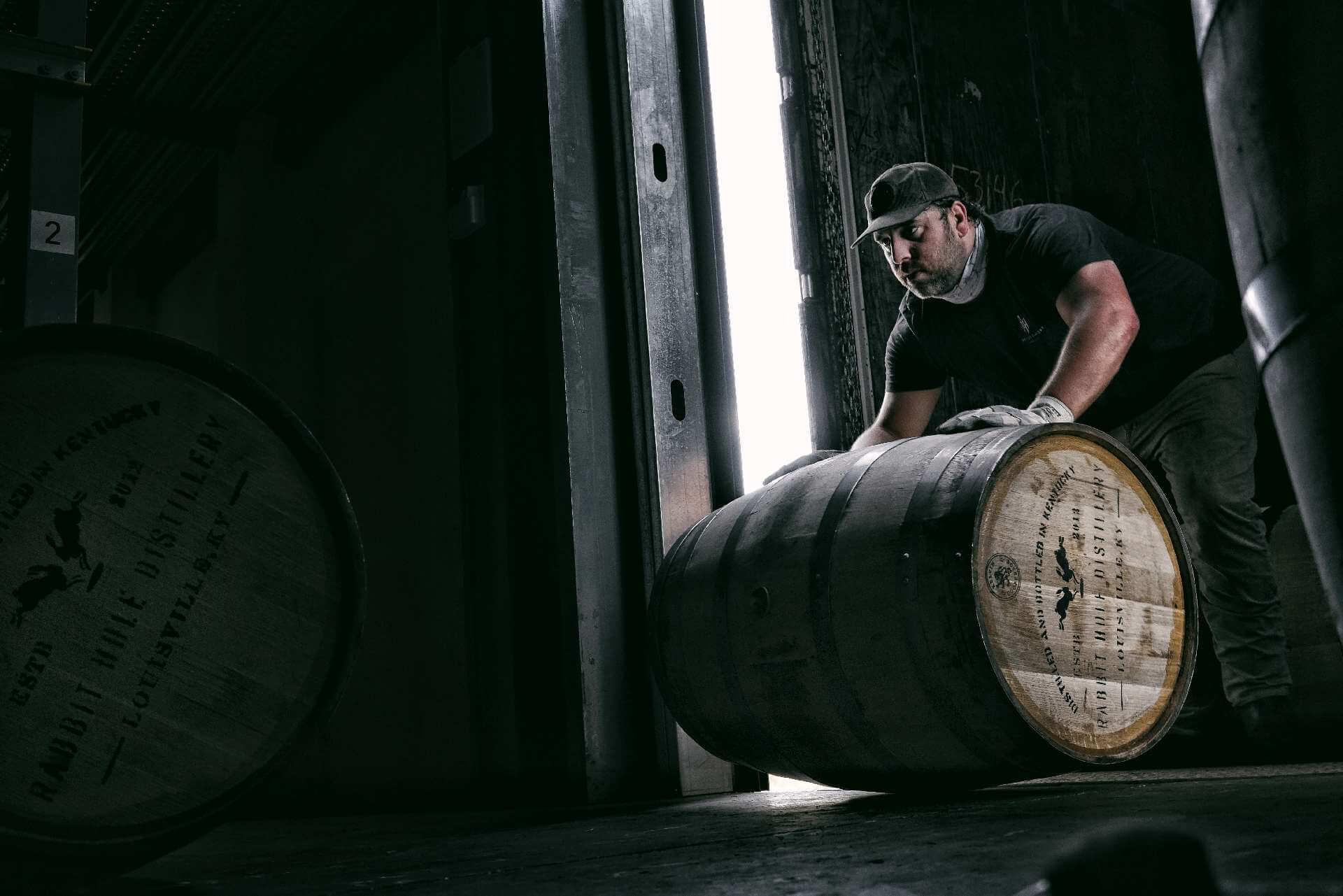
Those who want to learn about bourbon can access free resources from a credible and knowledgeable source: Rabbit Hole Distillery.

When it comes to learning about a particular spirit, those producing them tend to know the most. So, seeking education straight from the source is a smart move.

Now, hospitality professionals have a reliable, informative resource to add to their toolbox. Learn About Bourbon is Rabbit Hole’s ever-growing bourbon resource.

Bourbon Basics

If your restaurant or bar has bourbon on the menu, you’re likely at least familiar with the basics:

  • To carry the “bourbon” designation, one must produce the liquid in America.
  • The mashbill must consist of at least 51 percent corn.
  • It’s not permissible to use any additive except water.

Similarly, you are likely aware of some bourbon myths:

  • Only distilleries in the state of Kentucky can produce bourbon.
  • The name “bourbon” comes from Bourbon County.
  • The whiskey must be at least two years old to be bourbon.

As you can see from the first bullet point at the start of this segment, bourbon can come from any state in America. As far as the second myth, the origin of the name “bourbon” is a bit murky.

Interestingly, the third myth is somewhat true. To include “straight bourbon” on the label, the bourbon must be a minimum of two years old. Otherwise, once new-make whiskey comes into contact with the oak barrel in which it’s going age, it’s bourbon.

Rabbit Hole bourbon barrel rolling into rickhouse

Learn About Bourbon

Rabbit Hole goes far beyond simple definitions on their Learn About Bourbon page.

Instead, the distillery dives deep into every element of bourbon production. As important, this page receives regular updates. In other words, much like bourbon itself, this resource gets better with age.

To give you an idea of how in-depth Rabbit Hole gets, let’s look at the Bourbon Barrel Char / Charring section. It’s essentially an article in and of itself at nearly 400 words. Additionally, there’s a link within this section that leads to an even deeper dive into toasting and charring barrels.

Elsewhere on the Learn About Bourbon page you can learn about esters. In fact, there’s a list of over a dozen esters for you to—yep, I’m gonna make the pun—go down the rabbit hole.

Rabbit Hole Blog

Now, it turns out that the distillery isn’t content with offering one bourbon education resource. There’s also the Rabbit Hole Blog.

Looking for bourbon cocktail recipes? Check out the brand’s blog. Currently, the top recipe posts feature the Golden Ponzu and Strawberry Bourbon Lemonade.

Curious about cooking with bourbon? How about a recipe for nasi goreng with a Rabbit Hole bourbon ginger sauce? As a bonus, this recipe should perform well with guests looking for plant-forward dishes with small amounts of animal protein.

Of course, there are also Bourbon 101 articles. For example, this link will take you to an article about wheated bourbons.

If you want to boost your bourbon knowledge and update your food and cocktail menus, check out Rabbit Hole’s blog and Learn About Bourbon page today.

Image: Vincent Pelletier

by David Klemt David Klemt No Comments

Raise a 7&7 to National Dive Bar Day

Raise a 7&7 to National Dive Bar Day

by David Klemt

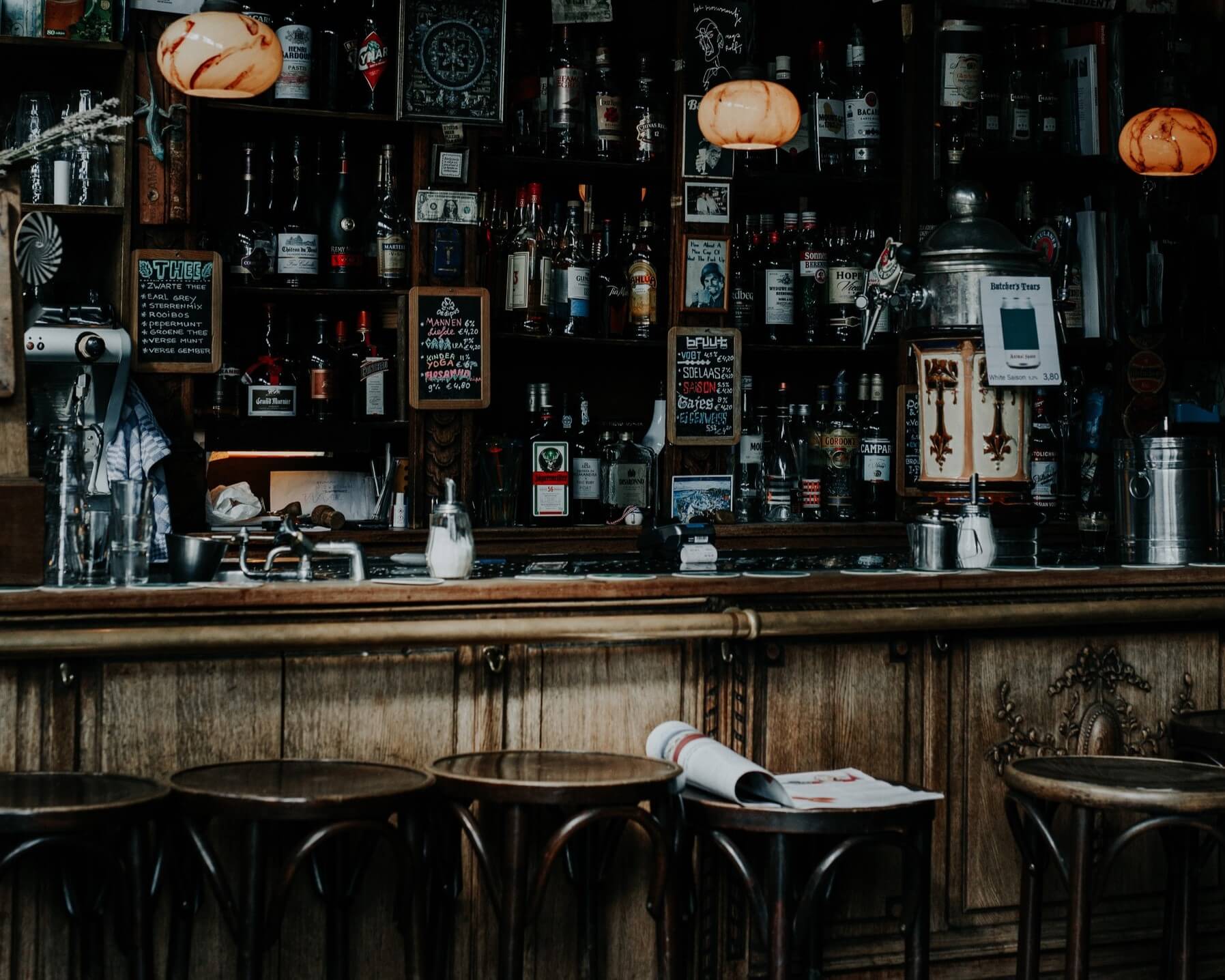
Dive bar or neighborhood bar

We celebrate one of the most hallowed of drinking establishments on July 7, also known as National Dive Bar Day.

Look, we love a visit to a high-end, luxurious cocktail bar. But there’s nothing quite like discovering a casual, comfortable, unpretentious bar that feels like home.

Often times, the local watering hole is a cornerstone of a given community. So, we’re looking forward to the fifth annual National Dive Bar Day in just over two weeks.

You should have plenty of time if you’re a dive or neighborhood bar owner to create your National Dive Bar Day promotion.

A Little History

It’s hard to believe that National Dive Bar Day is a mere five years old. In fact, Seagram’s 7 Crown launched the first annual celebration in 2018.

Not only does this holiday honor a true institution, Seagram’s donated $25,000 to the National Trust for Historic Preservation on its inception. (This year, Seagram’s 7 Crown is supporting Main Street Alliance.)

This makes a lot sense when you think about it. After all, dive bars are often located in a historic building or are landmarks themselves.

Some people may not like it, but drinking culture is an integral part of many a community across not just America, not just North America, but the world.

Not so long ago a bartender could set beers and shots in front of two people with opposing views and they’d find common ground to bond over. The optimist in me hopes we can return to those days, visiting our local neighborhood bars and focusing on what we all have in common rather than letting ourselves grow further divided.

Where some people see a “just” a dive bar, those of us in the know see social and cultural centers that support neighborhoods and communities.

Given their commitment to unpretentious and welcoming service, we need to support and protect our local dives.

What Makes a Dive Bar?

There are some key elements that set dive bars apart from other drinking establishments.

Characters on both sides of the bar, inexpensive drinks, familiar bar food, and an approachable feel are, I would say, the hallmarks.

Now, there are those who think a dive bar also includes an “earthy” smell, to be generous. They may also feel that they call dirty buildings with questionable structural integrity home.

However, “dive” doesn’t have to mean filthy. First and foremost, a dive bar needs to be comfortable and welcoming. Filth tends to give off an unwelcoming, dangerous vibe. That’s not exactly the spirit of hospitality.

Just as a great dive bar should be clean, it should also have a solid F&B program. Inexpensive doesn’t have to mean cheap. Oh, and no, the staff doesn’t have to be surly and untrained.

Dives are Neighborhood Bars

When I first learned about Nickel City, as an example, I saw what a dive bar should be. Both locations, Austin and Fort Worth, are described by co-owner Travis Tober as “anytime bars.”

Nickel City commits to serving the community, and they’re open when people need them. In fact, as you’ll learn during episode 50 of the Bar Hacks podcast, Tober made sure they were open to serve people during the infamous winter storm of 2021 that shut down much of Texas.

In speaking with Tober and reading other interviews with him, I learned that he prefers the term “neighborhood” to “dive.” Due in part to the negative perception some have of dive bars, I can understand his preference.

In my opinion, the difference lies in subtle but important nuances. However, I’ll probably still refer to neighborhood bars as dive bars.

Either way, Nickel City is a dive bar done right and a concept that other operators should certainly study. Nickel City is exemplary, a standard that dive/neighborhood bars should aspire to reach.

The 7&7

As far as Seagram’s is concerned, the 7&7 is “the quintessential Dive Bar drink.” It’s difficult to argue: it’s a highball, it’s fast and simple to make, it’s refreshing, and it shouldn’t be pricey.

But, hey, if you’ve never made or ordered one, here’s the recipe:

Simply prepare a highball glass with ice, add Seagram’s 7 Crown and 7UP, and stir. Then just stir, garnish, and serve.

Cheers!

Image: Florencia Viadana on Unsplash

by David Klemt David Klemt No Comments

5 Books to Read this Month: June 2022

5 Books to Read this Month: June 2022

by David Klemt


Flipping through an open book

These engaging and informative book selections will help you develop next-level food and beverage skills, and motivate you throughout June, 2022.

To review May’s book recommendations, click here.

Let’s jump in!

Doctors and Distillers

As the historians in our industry have known for a while, cocktails were once considered medicinal. Of course, in some ways that’s still the case.

Industry author, speaker, and educator Camper English shows us how medicine and alcohol have long been connected throughout human history in Doctors and Distillers. Have you head of using wine as a dewormer? How about treating wounds with beer? Would you ever consider using spirits to heal a snakebite? Well, humans have done those things and more with booze. Pre-order this book today!

A Bartender’s Guide to the World

I’m just going to be blunt here: Lauren Mote probably knows more about spirits, liqueurs, and cocktails than you. That’s not a slam—she loves sharing her knowledge and helping people improve their craft and business.

Available for pre-order now for an October launch, A Bartender’s Guide to the World shares not only Mote’s journeys around the world but also more than 75 cocktail recipes. The book’s recipes are organized by their base ingredient. Additionally, there’s an entire chapter just addressing alcohol-free drinks.

The Portugal Cookbook

Chef Leandro Carreira shares well over 500 recipes in The Portugal Cookbook. These dishes range from traditional Portuguese cuisine to modern recipes.

Every region throughout Portugal is represented in this informative and mouth-watering book, including the Duoro Valley and Algarve coast. Portugal is known as a global destination for foodies and this book will definitely help you add some delicious, on-trend recipes to your menu.

Hacking the New Normal: Hitting the Reset Button on the Hospitality Industry

The world around us has changed. The food & beverage industry has changed. The hospitality industry has changed. But will some ways of life change for the better? In Doug Radkey’s second book, Hacking the New Normal, he asks the following: “Do you think you can hit the reset button on your approach to business? Do you think you can help hit the reset button on this industry? I have made the decision to do so. The question remains, have you?”

Trust and Inspire: How Truly Great Leaders Unleash Greatness in Others

Stephen M.R. Covey, author of The Speed of Trust, addresses the leadership crisis we face today. As the author of Trust and Inspire points out, the world is changing but leadership styles remain the same. That simply won’t work moving forward. It’s crucial we change how we view leadership, and develop new leadership styles and strategies if we’re going to succeed from now on.

Image: Mikołaj on Unsplash

by David Klemt David Klemt No Comments

Drinks for Your World Whisky Day Menu

Drinks for Your World Whisky Day Menu

by David Klemt

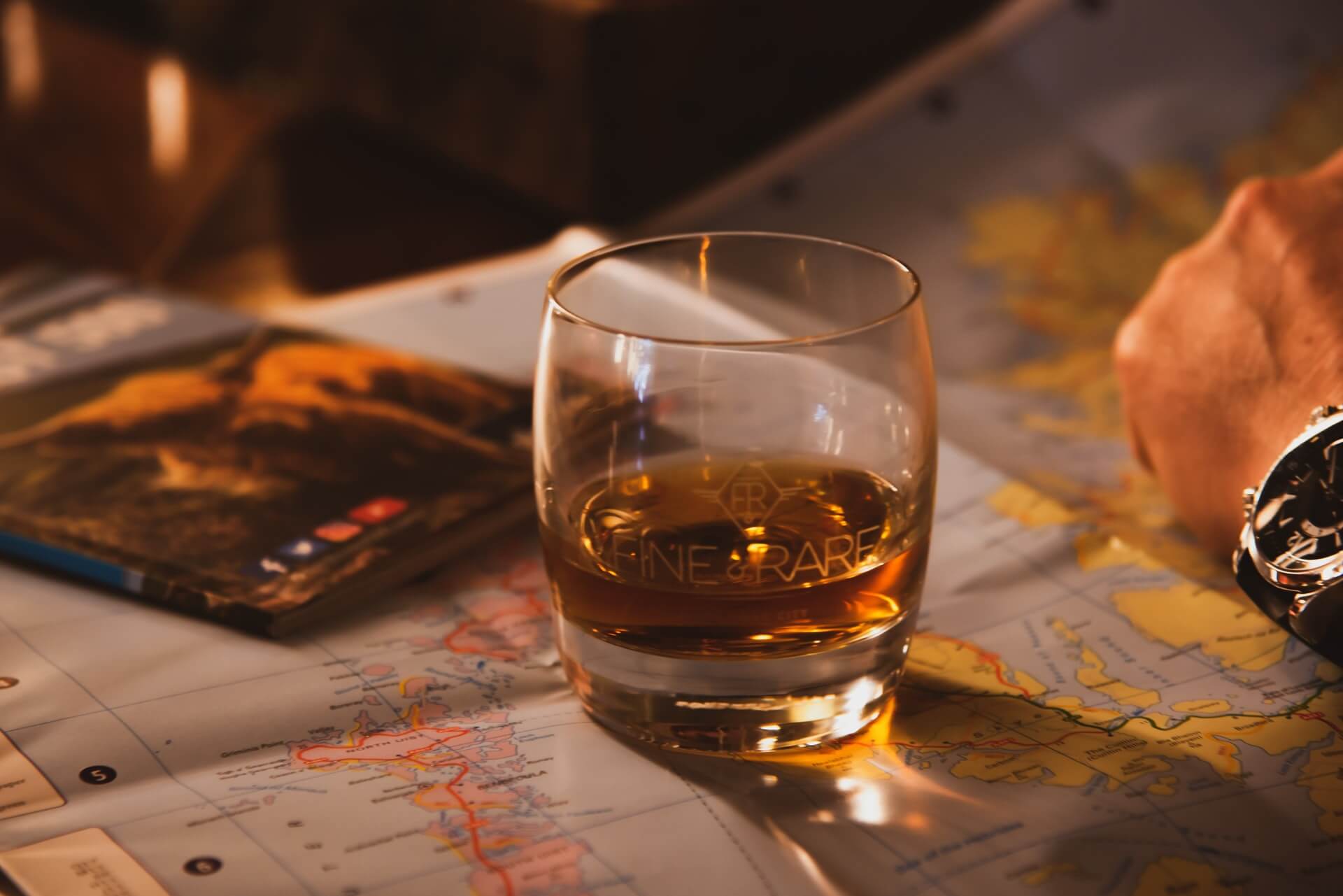
Whiskey in Fine & Rare NYC glass

This Saturday is the eleventh annual celebration of World Whisky Day, the perfect day to highlight your whisky and cocktail menus.

One revenue-generating method of drawing in guests is a promotion showcasing popular, lesser-known, or rare whiskies. Operators can also create a whisky and beer combo promotion.

Of course, there’s also the specialty cocktail menu. There are a few different approaches to this promotion.

An operator and their bar team can focus on one specific cocktail, offering three or four “takes” on it. Another way to make this work is to take the same cocktail and feature a different whisky in each one.

A different approach is to create a World Whisky Day menu consisting of three or more of the most popular whisky cocktails. To help you identify which drinks to feature we looked into the top whisky drinks. Check them out below.

Old Fashioned

C’mon—you knew this was going to be on the list before you read past the title of this article. Drinks Digest ranked the Old Fashioned the number-one cocktail of 2021.

VinePair‘s list didn’t rank their most-popular cocktails overtly but this classic got its expected mention.

Manhattan

Just like the Old Fashioned, you expected this drink to make this list. While it can certainly be made with bourbon or an array of single malt American whiskies, the Manhattan shines when made with rye.

Whisky Sour

As Drinks International points out, the Whisky Sour may not be the top drink in most bars. In fact, it may not make it into their top three.

However, the simple but refreshing Whisky Sour is at least in the top ten of several bars, making it a solid choice for your specialty menu.

Boulevardier

Want to get some of the cocktail aficionados among your guests to flip out? Tell them loudly and confidently that the Boulevardier is better than the Negroni. That’ll certainly get them talking.

Or, hey, don’t do that. Just perfect this bourbon cocktail, a cousin of the Negroni, and highlight your build for World Whisky Day.

Mint Julep

The Kentucky Derby may be over but summer is just around the corner. People are still craving this centuries-old cocktail and VinePair called it “essential” last year.

Sazerac

Like many classics, the Sazerac was “medicinal” when it was first created in the 1830s. In 2008, this drink was made the official cocktail of New Orleans by the Louisiana state legislature.

The Sazerac is another cocktail recipe that VinePair said was an essential one for bars in 2021.

Vieux Carré

It’s difficult to overstate the important role New Orleans has played and continues to play in American cocktail culture.

The recipe, created about 100 years after the Sazerac, combines American whisky (rye, traditionally), Cognac, Bénédictine, sweet vermouth, and Peychaud’s bitters.

Penicillin

Created by Sam Ross when he was behind the stick at Milk & Honey, this is my favorite whisky cocktail. The recipe was one of Punch’s most popular last year, and it was on Drinks International’s top 50 list for 2021.

On a personal note, this is one of my all-time favorite whisky cocktails. In fact, the Penicillin is one of my favorite cocktails in general.

Honorable Mentions

These may not be top sellers for most bars (if any) but they’re worth consideration for World Whisky Day.

The Chauncey is a 1:1:1:1 combination of rye whisky, Cognac, gin, and sweet vermouth plus two dashes of orange bitters, served up.

Of course, there’s also the Mule, which lends itself to an incredible number of riffs. Select a whisky or two to come up with specialty Mules of your own.

Irish whisky stands out in an Irish coffee, which can be served iced/frozen when it’s hot outside.

And then we have the Rob Roy. If you want to be glib about it, this is a Manhattan made with Scotch rather than rye whisky.

Your Own Data

There’s an excellent resource for determining what drinks to feature at your restaurant or bar. It’s quite literally at your fingertips: your POS.

If you want to know what your guests are drinking and what they want, run a report.

How deep you get into the data is up to you, of course. Monthly, quarterly, seasonally, annually… There are myriad methods to determine your World Whisky Day’s best options.

Sure, you can probably safely assume that your top whisky cocktails are the same as those above. But why not be absolutely certain with your own data? You invest money and time into your POS—wring everything you can out of it.

Also, your bar team and servers. Ask them what whiskies guests have been asking for that you don’t have.

Use your POS to identify the whiskies gathering dust in your stockroom, then find a way to move them quickly (a well-priced LTO should work) and replace them with what guests want.

Image: YesMore Content on Unsplash

by David Klemt David Klemt No Comments

5 Books to Read this Month: May 2022

5 Books to Read this Month: May 2022

by David Klemt

Flipping through an open book

These engaging and informative book selections will help you develop next-level beverage skills and motivate you throughout May, 2022.

To review April’s book recommendations, click here.

Let’s jump in!

Rum Rebels: A Celebration of Women Revolutionizing the Spirits Industry

Written by authors Martyna Halas and René van Hoven, Rum Rebels raises a glass to women in the rum world. Readers will learn the inspiring stories of Lorena Vasquez from Zacapa, Joy Spence of Appleton, and more women driving rum forward and shaping this iconic spirit’s flavors, aromas, and textures.

In addition, this book serves as a masterclass in rum production, from tasting to aging. And since that’s enough for these incredible and ambitious authors, Rum Rebels also contains rum cocktail recipes.

Drink Lightly: A Lighter Take on Serious Cocktails

Operators, bar managers, and bartenders should see value in the driving ethos behind this cocktail book. Drink Lightly, authored by Nitecap bartender Natasha David, pairs precision drink-building techniques with a relaxed drinking experience.

Drinking lightly doesn’t mean sipping drinks bereft of complexity and depth. Along with 100 recipes, readers will enjoy a foreword by Alex Day of Proprietors LLC, whose concepts include Death & Co. and Nitecap.

Call Me Chef, Dammit!: A Veteran’s Journey from the Rural South to the White House

Hospitality is rooted in sacrifice and a commitment to serving others. Chef Andre Rush and his story embody service. Call Me Chef, Dammit! is the inspiring story of Chef Rush.

The storied chef has led an incredible life which includes a career in the US Army that spanned 24 years, advocating for military personnel and veterans, and winning multiple awards as a chef. Oh, and Chef Rush and his 24-inch biceps have also worked in the White House for four US presidents.

While there are no recipes in this book, there is one hell of an inspiring story in these pages.

The New Kindred Spirits: Over 2,000 All-New Reviews of Whiskeys, Brandies, Liqueurs, Gins, Vodkas, Tequilas, Mezcal & Rums from F. Paul Pacult’s Spirit Journal

Anyone looking for a spirits bible need search no further. F. Paul Pacult’s The New Kindred Spirits includes over 2,400 in-depth reviews spanning a wide range of spirits. This tome evaluates a massive number of brandies, gins, liqueurs, rums, tequilas, vodkas, and whiskeys.

This all-encompassing compilation of spirit evaluations doesn’t just cover the usual suspects. The New Kindred Spirits also takes a deep dive into the craft side of the beverage industry.

Drinking & Knowing Things

Author and certified sommelier Michael Amon would like to know a couple things from those considering picking up Drinking & Knowing Things. “Do you want to uncork a bottle of whoop-ass on every winedouche and uppity sommelier?” And, “are you too lazy to spend any time whatsoever learning things?”

Anyone who answered “yes” to either or both questions needs this book. Amon says that readers who commit to spending five minutes reading the weekly wine recommendations found in Drinking & Knowing Things will give sommeliers a run for their wine-knowledge money. Wine intimidation? Not after reading this book.

Image: Mikołaj on Unsplash

by David Klemt David Klemt No Comments

Be Different this Valentine’s Day

Be Different this Valentine’s Day

by David Klemt

Red graffiti heart with black outline on weathered, worn wall

When people are considering spending time and money on a holiday two years into a pandemic, they’re seeking unique experiences.

This is particularly true of holidays that traditionally involve an evening out at a restaurant or bar.

Sure, the tried and true will still probably work. After all, the pandemic has driven comfort and comfort foods to perform well.

However, a significant percentage of guests want to experience something new when they leave their homes. Below you’ll find two Valentine’s Day drink recipes and an example of entertaining programming.

When it comes to beverage programming, most people expect bubbles or rosé wines. And of course pink wines, Champagne, Prosecco, Cava, and other sparkling wines should be on hand.

But offering a Valentine’s Day cocktail that isn’t a French 75 can help your holiday menu stand out. One recipe leverages a spirit that may knock vodka off its throne this year. The other showcases a spirt that various industry experts have been hoping claim the number one spot for years.

Kiss from a Rosa

Tequila, particularly premium and ultra-premium expressions, is crushing it as a category. This Valentine’s Day cocktail is made with Código 1530 Rosa, an ultra-premium blanco tequila.

Rested for one month in uncharred French white oak barrels formerly filled with Napa Valley Cab, this unique tequila is characterized by a rosé hue.

Kiss from a Rosa tequila cocktail from Codigo 1530 for Valentine's Day

  • 1.5 oz. Código 1530 Rosa tequila
  • 0.5 oz. Cointreau
  • 0.5 oz. Raspberry syrup
  • 0.5 oz. Lemon juice
  • 1 Egg white
  • Pink sugar or raspberries to garnish
Build it: Combine all ingredients in a cocktail shaker without ice. Shake hard for roughly 30 seconds, until the ingredients form a foam. Add ice to the shaker and shake until chilled. Strain into a rocks glass. Garnish with pink sugar or raspberries on a cocktail pick.

Bacardí Old Cuban

I’ve lost track of the number of people who have predicted (hoped is probably more accurate) that rum will “finally have its year.” With tequila projected to potentially crush vodka and Irish whiskey performing so well, it’s unlikely rum will dominate 2022.

However, the category may still experience even more growth this year. Reserva Ocho is based on the Bacardí family’s reserve rum.

The eight-year-old premium rum’s dried fruit, spice, and vanilla notes play well with Prosecco. This cocktail also features a pairing that many guests wouldn’t expect to work: rum and Prosecco.

Bacardí Old Cuban rum cocktail made with Bacardí Reserva Ocho Rum

  • 2 oz. Bacardí Reserva Ocho Rum
  • 2.5 oz. Martini & Rossi Prosecco
  • 4 Mint leaves
  • 1 oz. Simple syrup
  • 1 oz. Lime juice
  • 2 dashes of Bitters

Build it: Combine all the ingredients except Prosecco in a cocktail shaker with ice. Shake vigorously, then double-strain into a coupe. Top with Prosecco and garnish with a mint leaf float.

Both cocktails above can easily justify premium pricing.

Dueling Axes Las Vegas Valentine’s Day

Featured on episode 41 of Bar Hacks, Dueling Axes offers an upscale axe-throwing experience. Of course, being upscale doesn’t mean the venue is stuffy.

Rather, Dueling Axes emphasizes fun and unique experiences. Their Valentine’s Day programming is an example of balancing the familiar with the unexpected.

From February 13 through February 15, couples will be treated to two free glasses of Champagne. Groups of four or more will receive a bottle of Champagne for free.

On February 13, however, Dueling Axes is offering an attention-grabbing promotion.

Targeting Galentine’s Day guests, the venue is encouraging people to bring in photos of their exes. The staff will hang the picture on the bullseye to motivate throwers to ace their tosses.

A bit aggressive? Sure. A tad dark? Yep. Memorable? Absolutely.

The recipes and programming above illustrate that simple deviations from the expected can help your venue stand out. This Valentine’s Day, strike a balance between the expected and unique.

Image: Tengyart on Unsplash

Top