#KRGMethod

by David Klemt David Klemt No Comments

Superhuman Hospitality: A New Era

Superhuman Hospitality: Where People and AI Build the Future Together

by Doug Radkey

AI-generated image of an AI-themed superhero on a laptop

AI is here. We can adapt and learn to leverage it, or we can be left behind.

Let’s get one thing straight: artificial intelligence is not here to replace humans in hospitality, it’s here to make us better.

And let’s be honest, that’s not a bad thing.

We’re entering an era I like to call Superhuman Hospitality. This is where the fusion of artificial intelligence and human empathy creates something far more powerful than either could do alone.

The question can no longer be, “Does AI belong in this industry?” The question is, “How do we integrate AI with intention, without losing the heart and soul of hospitality?”

As we tell our clients, the brands that figure out the answer to the latter question? They’re going to be the ones leading the pack.

The Misconception: Humans vs. AI

There’s this myth floating around that AI will take away hospitality jobs (and jobs in many other industries as well). That it’s all about automation, chatbots, and robots replacing real people.

Let’s be clear. Hospitality is, and always will be, a people-first industry. I think we learned that lesson once again during the pandemic when a majority of people (not, however, the team here at KRG Hospitality) were screaming from the hills that ghost kitchens were the future of restaurants.

That didn’t quite pan out, now did it?

You can’t automate warmth, social community, and engagement.

But what you can do is leverage AI to eliminate friction points, streamline your operations, and free your people to focus on what they do best: creating memorable experiences.

This isn’t about choosing sides; this is about building a hybrid model of intelligence, where AI supports the brain, and humans lead with the heart.

What is Superhuman Hospitality?

Superhuman Hospitality is about building systems that are tech-enhanced, not tech-dependent.

There is a major difference between the two. It’s about amplifying human potential through technology.

Think about it like this:

  • AI can analyze thousands of data points to recommend menu pricing adjustments.
  • But your bartender still needs to remember a regular’s name and favorite drink.
  • AI can forecast booking trends based on seasonal data.
  • But your front desk still needs to offer a warm smile and solve problems in real time.
  • AI can power your CRM and tailor marketing messages.
  • But your server still needs to read a table’s mood, and deliver genuine hospitality.

It’s not about doing less human work; it’s about freeing humans up to do the most human work possible.

Where AI Can Shine (and Should Be Used)

We’ve come to learn that there are areas where AI absolutely dominates. Ignoring those opportunities means you’re leaving money and efficiency on the table.

  1. Predictive Analytics & Forecasting: AI can analyze past data to predict sales, foot traffic, and labor needs. This enables smarter scheduling, inventory ordering, and dynamic pricing.
  2. Smart Inventory Management: AI-driven systems can track usage patterns, expiry dates, and cost fluctuations in real time, reducing waste and theft.
  3. CRM & Guest Personalization: AI helps build personalized guest profiles, automating follow-ups, birthday messages, loyalty rewards, and upselling strategies.
  4. Marketing Automation: From email flows to social ad targeting, AI ensures you reach the right audience with the right message at the right time.
  5. Dynamic Menu & Room Pricing: Based on demand, time of day, weather, or major events, AI can help you optimize pricing for profitability.
  6. AI Assistants & Chatbots: Useful for basic inquiries, reservation confirmations, and upsells, particularly during off-hours.

And that’s just scraping the surface of the potential.

Where Humans Must Lead

AI however, can’t replace empathy, intuition, adaptability, or real-time judgment.

Hospitality thrives on emotional intelligence. You still need:

  • People who know how to defuse a tense moment.
  • Leaders who can motivate a struggling team.
  • Servers who sense when a table wants privacy or a little extra attention.
  • Front desk agents who turn a mistake into a positive, memorable moment.

No algorithm will ever replace that. That’s the core of Superhuman Hospitality: AI provides the information, and humans provide the impact.

Use Case: The Superhuman Hotel

Imagine checking into a hotel where:

  • Your room temperature, lighting, and playlist are set to your preferences automatically, and there is a bottle of your favorite red wine sitting on the table with a hand-written note addressed to you personally.
  • You’re greeted by name because AI flagged your repeat visit.
  • You then get a text offering a curated spa or dinner recommendation based on your past behavior.
  • A staff member (not a bot) walks you to your room, answers questions, and builds rapport.

AI enabled that experience but humans delivered it. That’s what we should be building.

What This Means for Leadership

As operators, your role is to create systems that empower people with the tools to exceed expectations. You need to:

  • Train your team on how to use AI tools confidently, not fearfully.
  • Design SOPs that integrate tech without replacing the human touch.
  • Foster a culture that values both efficiency and empathy.

Superhuman Hospitality doesn’t happen accidentally. It requires strategy, clarity, and intentional integration.

My Final Thoughts: The Best of Both Worlds

The future of hospitality isn’t robotic. It’s not emotionless or transactional (at least, it better not be).

The future is powered by data, and then delivered with heart.

Superhuman Hospitality is about recognizing that tech is here to support us, not replace us. The brands that win will be those that embrace AI to work smarter, not colder.

So ask yourself:

  • Are you embracing AI with purpose?
  • Are your people equipped and empowered to use it?
  • Are your systems designed to enhance, not eliminate, the human element?

Because the goal is not to remove people from hospitality; the goal is to make them superhuman.

Image: Canva

Client Intake Form - KRG Hospitality

by David Klemt David Klemt No Comments

Travis Tober: Entertain Like You Mean It

Why Travis Tober Says to Toss the QR Codes and Entertain Like You Mean It

by David Klemt

An AI-generated image of a sign onstage that reads "5-cent City"

This was a fun AI-generated image to create.

If you ever get the chance to hear Travis Tober speak, do it. You’ll leave with a notebook full of quotables, and strategic clarity.

You’ll get a much-needed reminder that the hospitality industry isn’t about perfection; it’s about presence.

[Side note: If you ever get to hear Tober speak on a panel with Nectaly Mendoza and/or Eric Castro, do whatever it takes to not miss that golden opportunity.]

Tober, the force behind 13 bars and restaurants across Texas (and now expanding into Chicago, Hawaii, and Florida), stood on stage and did what few multi-unit operators can do: He told the truth about scale, struggle, and how to actually make money in this business, while hopefully avoiding burnout.

He opened his first venue in 2017. Eight years and more than a dozen properties later, 2025 is the first year he’s been able to take off for a weekend. That alone tells you plenty.

The real insights, however, came from how he views operations, branding, and the guest experience. That is to say, not as a checklist, but as a form of entertainment.

“Guys, we’re in the entertainment business, not the bar business,” noted Tober after asking how many people in the room thought they were in the drinks business.

So, let’s start there.

Bartender at Heart, Operator by Design

Tober doesn’t pretend to be the best bartender in the room. In fact, he said half the people attending were probably better bartenders than he.

But, as he made clear, “I can tend bar better than you.”

What he meant was simple: he knows how to read the guest in front of him. Guest-facing hospitality pros, that’s the job. It’s not just pouring the drink, dropping food, and touching tables; it’s knowing when to be the party, and when to shut it down.

Tober trains his teams not just to serve, but to entertain.

I’ve enjoyed the privilege of attending several sessions and panels hosted by Tober. One point he made years ago has stood out to me ever since: He views recruitment and hiring, at least in part, like casting a film or TV show.

He wants the super-dialed-in bartender who’s almost too serious about their job. He wants the young gun who thinks they can tend bar better than anyone else, neophyte or world-traveled veteran. Tober himself often steps into the role of old-school bartender who can put that young gun in their place in a single shift.

The smartass, the surly lifer, everyone’s best friend, the bubbly and energetic one…he wants a full cast capable of entertaining the guests at any one of his bars.

That full cast, by the way, also means there’s a personality that appeals to (just about) any guest. This bartender and that guest aren’t connecting? Let another bartender step in, see if they can recover the guest experience, and turn around that guest’s visit.

Consistency, Not Complexity

At his Nickel City locations, a bartender in Fort Worth can walk into the Houston bar and get to work immediately; the bar stations are identical. That’s not just convenience, that’s operational intelligence and strategic clarity in action.

The same goes for the drinks: Tober tracks what sells across the portfolio. Every LTO gets tested. If a cocktail moves, it stays. If not, it goes. There are 250 drinks in the system, and the data tells him what hits.

“McDonald’s tastes like shit here [Las Vegas], and it tastes like shit in every other city. There’s a reason they’re the most-successful restaurant brand in the world.”

Consistency wins. Period.

And yet, consistency isn’t boring. His menus are a design language. He works with a designer who gets his colors, paper stock preferences, layout…everything. Every menu is a training tool for guests, and a brand story rolled into one. The goal is clarity, not clutter.

That’s why you won’t find a bloated 30-drink cocktail list at his spots. Eight to 12 is the sweet spot now, and it has been for several years. Give guests a clear path. Include some quality alcohol-free options (otherwise, you’re leaving money on the table).

When met with a guest uncertain about stepping outside of their beverage comfort zone, train your staff to redirect: “You might not like that, but you might like this.”

Paper Menus, With a Twist

Speaking of menus, Tober doesn’t mince words, nor would I ever expect him to pull his punch: “Fuck QR codes.”

He wants guests to feel something. Literally.

Tober wants guests to hold the menu in their hands. And why is that? Because he wants to hold the menu in his hands. And if he wants something specific from the bar experience, why wouldn’t he deliver it to his own guests?

However, Tober’s not a purist. In fact, he acknowledges that a paper menu with a QR code for large wine or spirits inventories could be the right blend of physical and digital. The key? Use tech to complement, not replace, the tactile experience.

Further, not everything has to be on the menu. Discovery is part of the magic of any guest experience. So, you and your team need be in the habit of asking the right questions, offering the right off-menu item that will resonate with a guest and convert them to a regular.

Let the guest feel like they just unlocked something special. Do that, and they’ll want friends and family to experience the same thing.

Make Money, Not Passion Projects

This might’ve been one of his most grounded takes of the day: “I want to make money. I want to make sure my people are making money, I’m making money, my investors are making money.”

There’s room for passion, but it better be profitable. Tober recounted a conversation with a bar owner who’d never taken inventory. Eight years of running a bar…and no inventory or costing system in place.

That’s not just risky—that’s irresponsible. And let’s be clear: That irresponsible approach to operations, if it can be deemed an approach, affects more than just the bottom line. People’s jobs are at risk when an operator doesn’t put in the work to learn and nail the fundamentals. The community will be worse off if a third place with the potential to bring people together has to close due to incompetence.

If you don’t know what your drinks cost, you don’t know what you’re making. And if your team doesn’t know how to negotiate with suppliers or ask for items that are perfect for traffic-boosting, revenue-generating LTOs, like closeout wines, you’re leaving thousands on the table.

Your Menu Is Your Mission

Tober said it best, so I won’t even try to paraphrase him: “That menu is your whole journey.”

He wants a diverse menu for a diverse crowd. The business professional, the ironworker, the sorority girl, the guest with just $20 in their pocket, all should feel comfortable, respected, and relevant when gathering at and enjoying the same bar.

While that’s building a brand and vibe, it’s also smart business: curated chaos, energy, memorable stories, and, yes, entertainment.

Final Pour

Tober didn’t get here by accident. He got here by obsessing over the stuff that many owners ignore: station layout, menu flow, vendor strategy, staff training, drink tracking, and yes, whether or not the paper stock feels right.

Further, one of the things I admire about Tober the most is his dedication to knowing his numbers. He’ll readily admit that he’s loud, and can come across as a bar owner who’s just in it for a fun time. Honestly, I think just about anyone would want to have a beer and a shot with Tober.

And while, yes, Tober knows how to have fun, and sometimes he’ll share his opinions loudly, he’ll also probably run circles around the average bartender. Most importantly, he doesn’t just know his business intimately, he knows the business inside and out.

I’ve said it before and I’ll say it again now: If I didn’t believe Tober’s approach to operations was one to emulate, or that it didn’t align with ours at KRG Hospitality, I wouldn’t share what I learned after attending one of his education sessions. In fact, I wouldn’t even attend in the first place.

If there’s one takeaway from his session, it’s this: Run your bar like a business. Even better, run it like an entertainment business.

Make your bar look like a fully realized brand, and make it feel like a show. You’re not just serving drinks, you’re entertaining and producing experiences.

And maybe, just maybe, you’ll attain a goal we at KRG Hospitality aim for all of our clients to achieve: taking an entire week off work.

Image: Canva

Client Intake Form - KRG Hospitality

by David Klemt David Klemt No Comments

8 Glendalough Cocktail Recipes for St. Patrick’s Day and Beyond

Offer your guests something different for your St. Patrick’s Day promotion with Glendalough Distillery cocktail recipes.

Without a doubt, you should have plenty of the expected Irish whiskeys on hand. However, Glendalough Distillery Double Barrel, Pot Still, Wild Gin, and Rose Gin are extraordinary Irish whiskeys and gins.

Each spirit the distillery crafts honors the art of Irish distillation, a craft that stretches back centuries. What’s more, each whiskey Glendalough crafts is single malt—there are no light-bodied blends in their lineup.

To learn more, check out episode 71 of the Bar Hacks podcast with Glendalough Distillery co-founder and national brand ambassador Donal O’Gallachoir.

by David Klemt

Glendalough Distillery Wild Gin Irish gin

8 Amazing Irish Whiskey and Gin Cocktails

Below, eight refreshing and sophisticated drink recipes made with Glendalough whiskeys and gins. Sláinte!

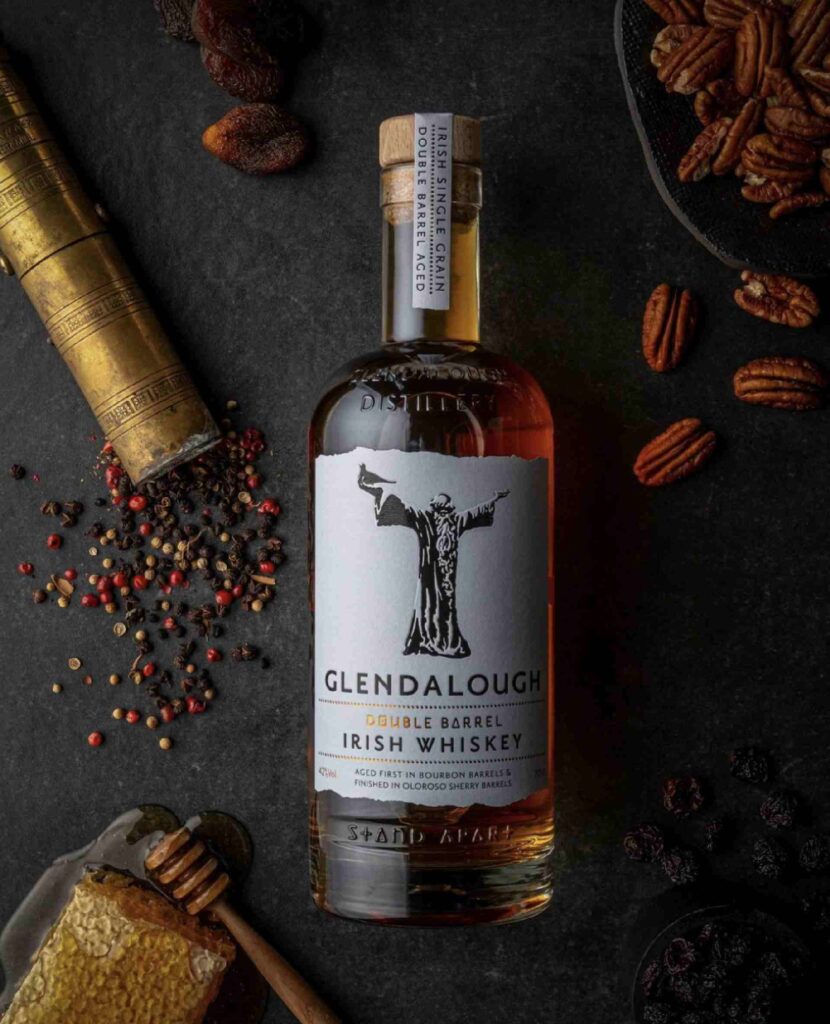
Glendalough Distillery Double Barrel Single Malt Irish Whiskey

The Lough Inn

This highball is made with Glendalough Double Barrel, a single-grain Irish whiskey aged in ex-bourbon barrels before being finished in Oloroso sherry casks.

  • 2 oz. Glendalough Double Barrel Single Grain Irish Whiskey
  • 1 oz. Spiced honey syrup (see note)
  • 1 oz. Fresh lemon juice
  • Soda to top
  • Lemon wheel or slice to garnish
  • Mint leaf to garnish
  • 1 cup Honey for spiced honey syrup
  • 0.5 cup Water for spiced honey syrup
  • 4 Cinnamon sticks for spiced honey syrup
  • 1 pod Star anise for spiced honey syrup

Add ice to a highball glass, then add first three ingredients. Top with soda water. Garnish with lemon wheel or slice and freshly torn mint leaf.

For spiced honey syrup: Add honey, water, cinnamon sticks, and star anise to pot. Bring to a boil, then stir. Strain into container.

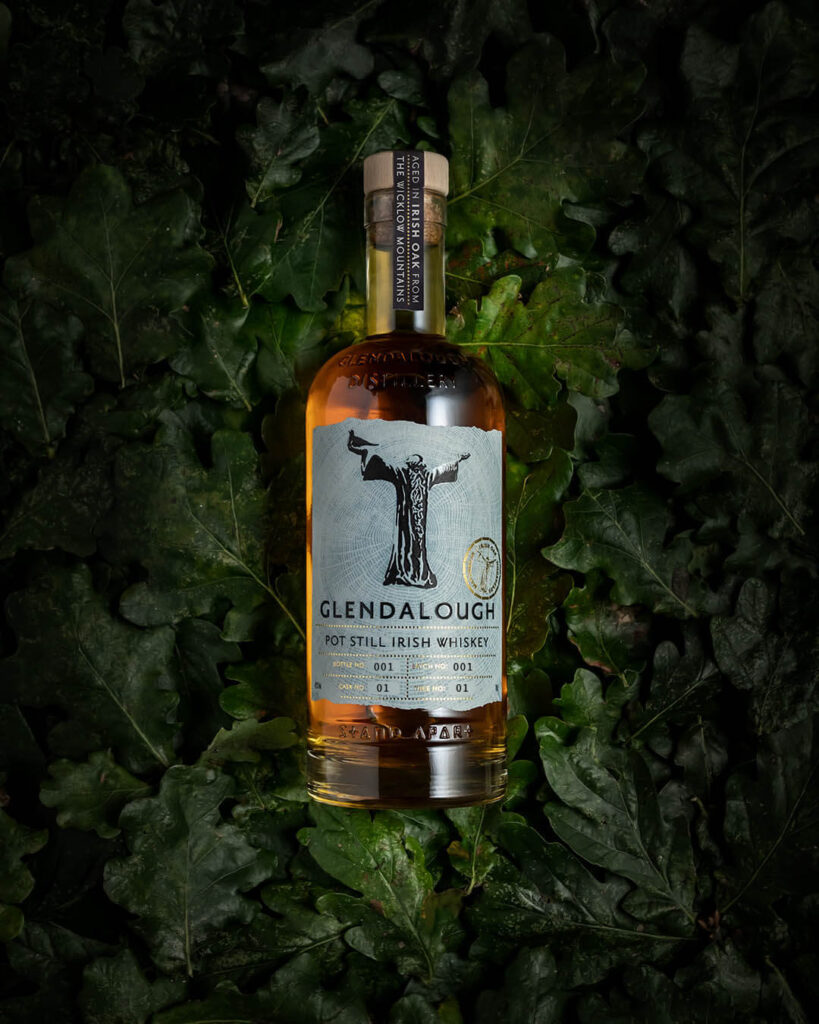
Glendalough Distillery Pot Still single malt Irish whiskey

Pot Still Highball

Deceptively simple to build, this cocktail highlights the terroir of the land surrounding Glendalough Distillery.

  • 1.5 oz. Glendalough Pot Still
  • Soda to top
  • Grapefruit peel to garnish
  • Mint leaf to garnish (freshly torn and slapped, of course)

Prepare a highball glass with an ice shard, spear or cylinder. Pour in Glendalough Pot Still whiskey, then top with soda. Glendalough Distillery recommends a 1:2 ratio, Pot Still to soda. Garnish with mint leaf.

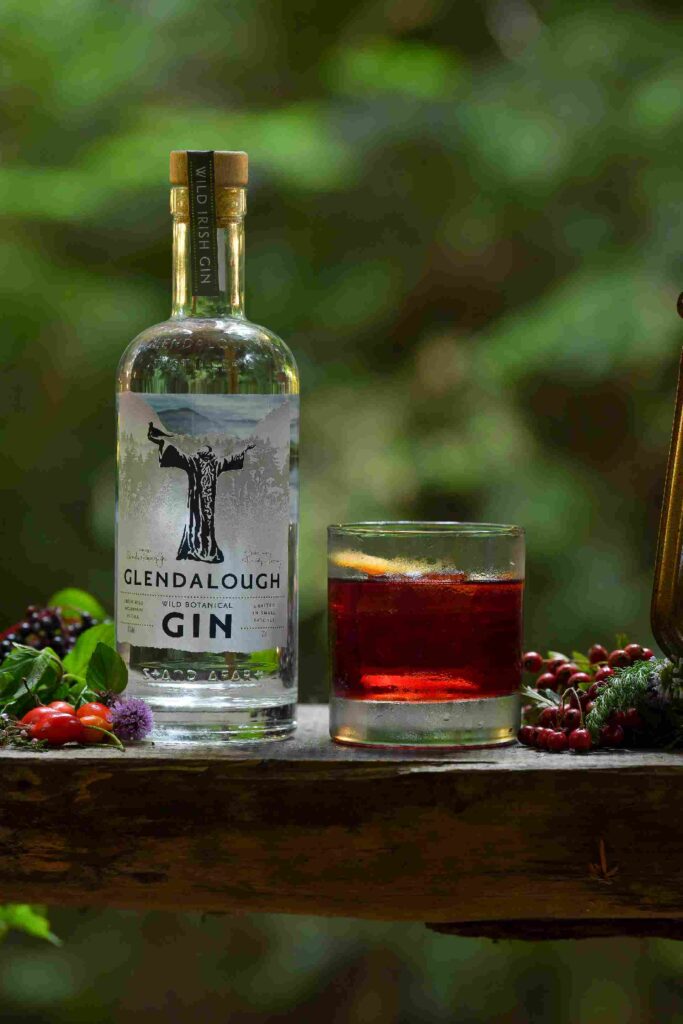
Glendalough Distillery Wild Gin Negroni cocktail

Glendalough Negroni

The foraged botanicals in Glendalough Wild Gin add even more complexity and depth to the classic Negroni. In fact, the flavors work so well this recipe maintains the Negroni’s crucial 1:1:1 ratio.

Prepare an Old Fashioned with ice. Add first three ingredients to glass in the above order. Add more ice if necessary. Stir, express orange peel, and place as garnish.

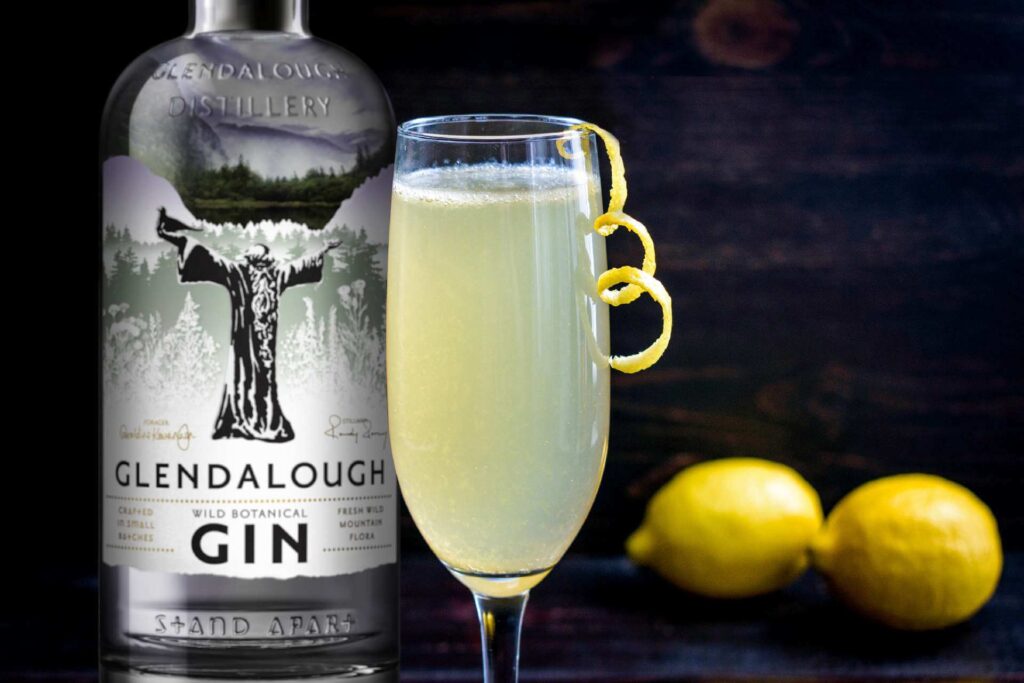
Glendalough Distillery Wild Gin Irish gin

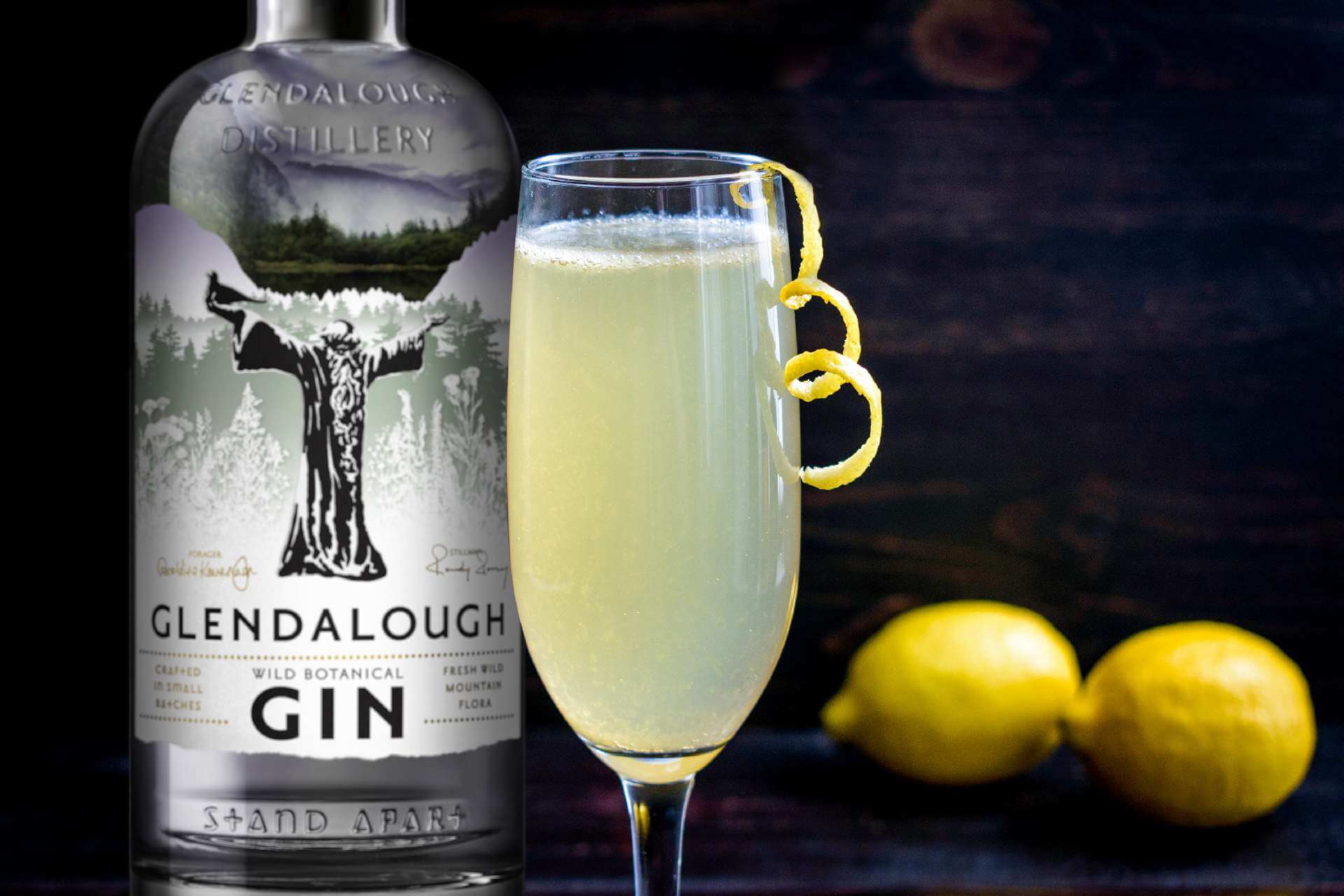
Glendalough Wicklow 75

Bubbles make everything better and everyone happier.

Add all ingredients to shaker. Add ice and shake until well chilled. Strain into Champagne flute, top with Prosecco, and garnish with lemon twist.

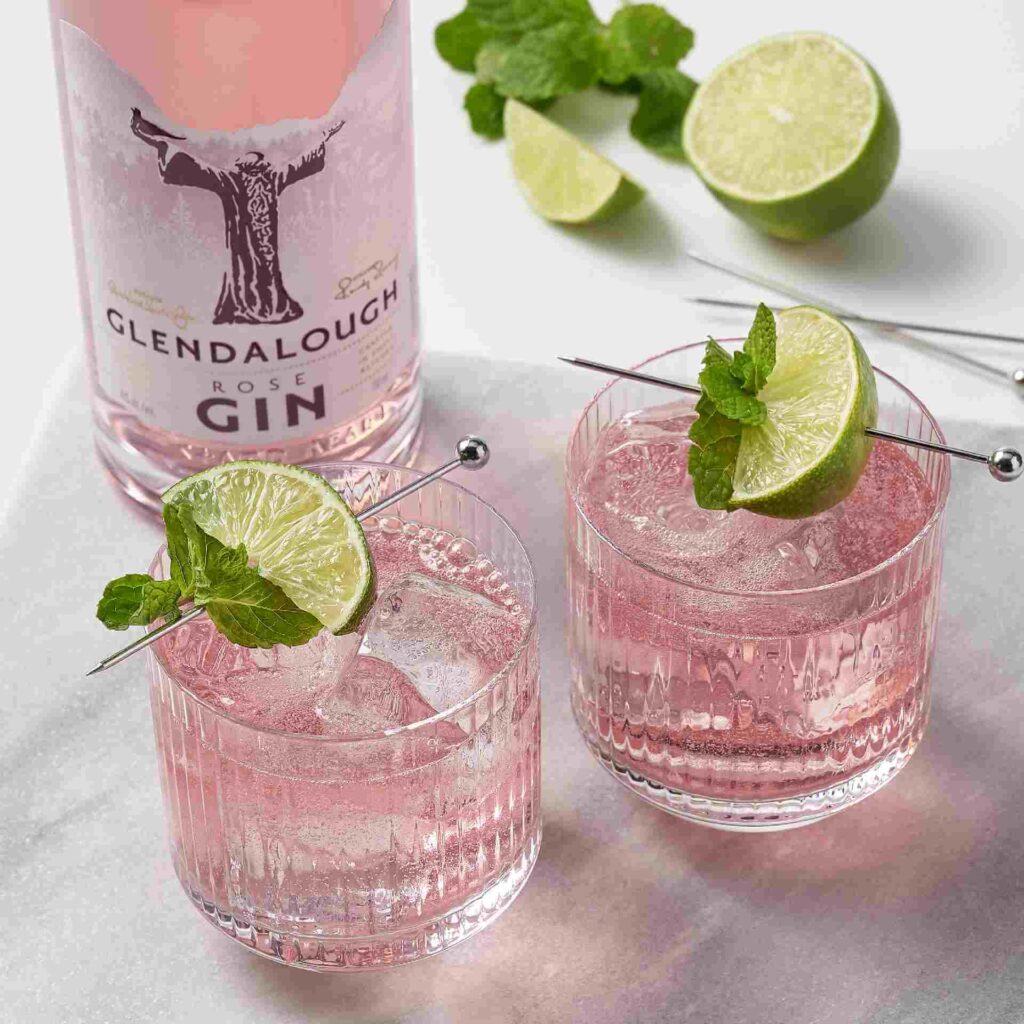
Glendalough Distillery Rose Gin Irish gin and cocktails

Glendalough Rose G&T

This simple classic receives a huge visual and aromatic boost from Glendalough Rose Gin.

  • 2 oz. Glendalough Rose Gin
  • Tonic to top (the higher the quality, the better)
  • Lime slice
  • Mint leaves

Add ice to glass, then add Rose Gin. Top with tonic, and garnish with lime slice and mint leaves.

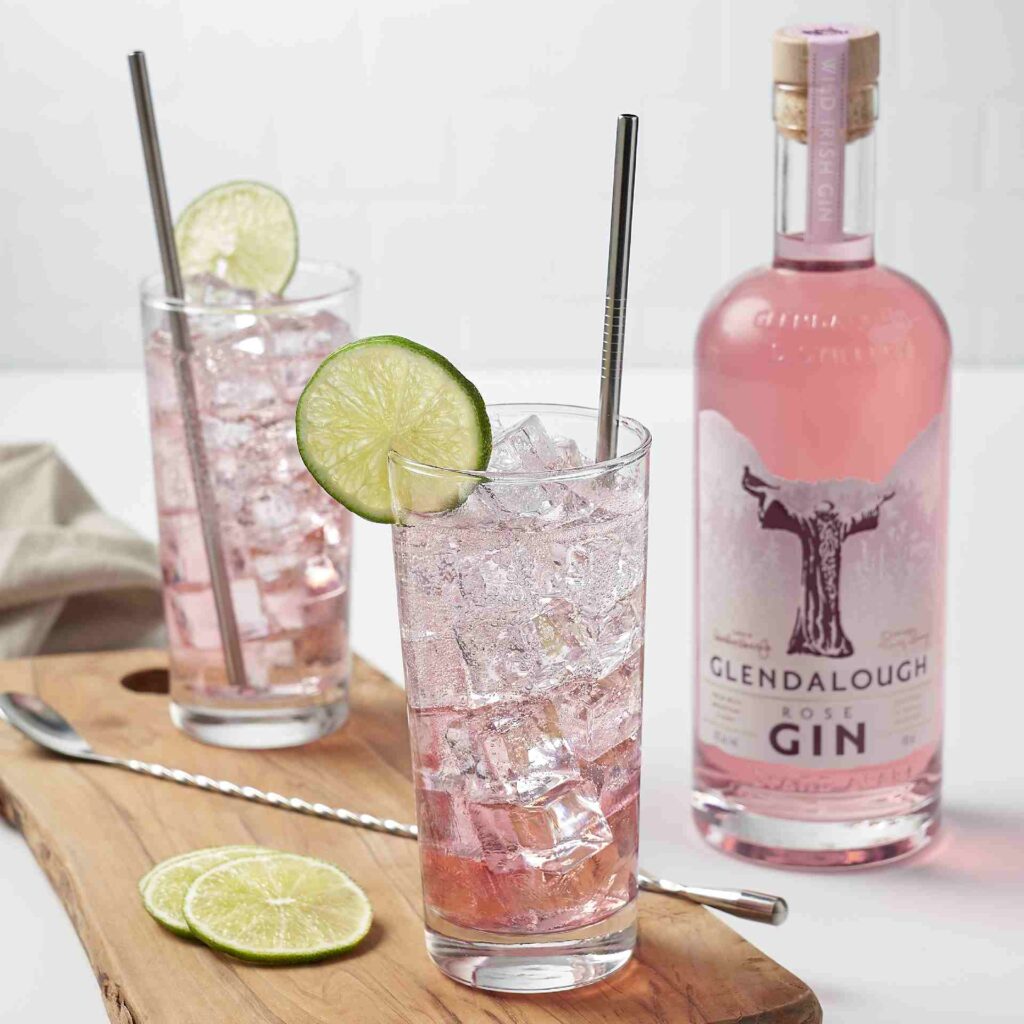
Glendalough Distillery Rose Gin Fizz

Glendalough Rose Gin Fizz

One way to elevate the highball is to use a striking pink-hued Irish gin.

  • 1.5 oz. Glendalough Rose Gin
  • 0.5 oz. Elderflower liqueur
  • Raspberry & Lime sparkling water to top
  • Lime wheel to garnish

Add ice (spear, shard or cylinder for impact), Rose Gin, and liqueur to highball glass. Stir, then add sparkling water to top. Garnish with lime wheel.


View this post on Instagram


A post shared by Glendalough US (@glendaloughus)

Glendalough Rose Collins

Boost the classic Collins with Glendalough’s striking rose-petal gin.

  • 1.5 oz. of Glendalough Rose Gin
  • 1 oz. of Lemon juice (freshly squeezed)
  • 0.5 oz. of Sugar syrup (1:1 ratio, hot water to sugar)
  • Soda to top
  • Lemon peel to garnish
  • Cherry to garnish

Combine first three ingredients in a shaker with a cup of ice. Place an ice shard, spear or cylinder to a highball glass. Shake until well chilled, then strain into glass. Top with soda, and garnish with lemon peel and cherry.

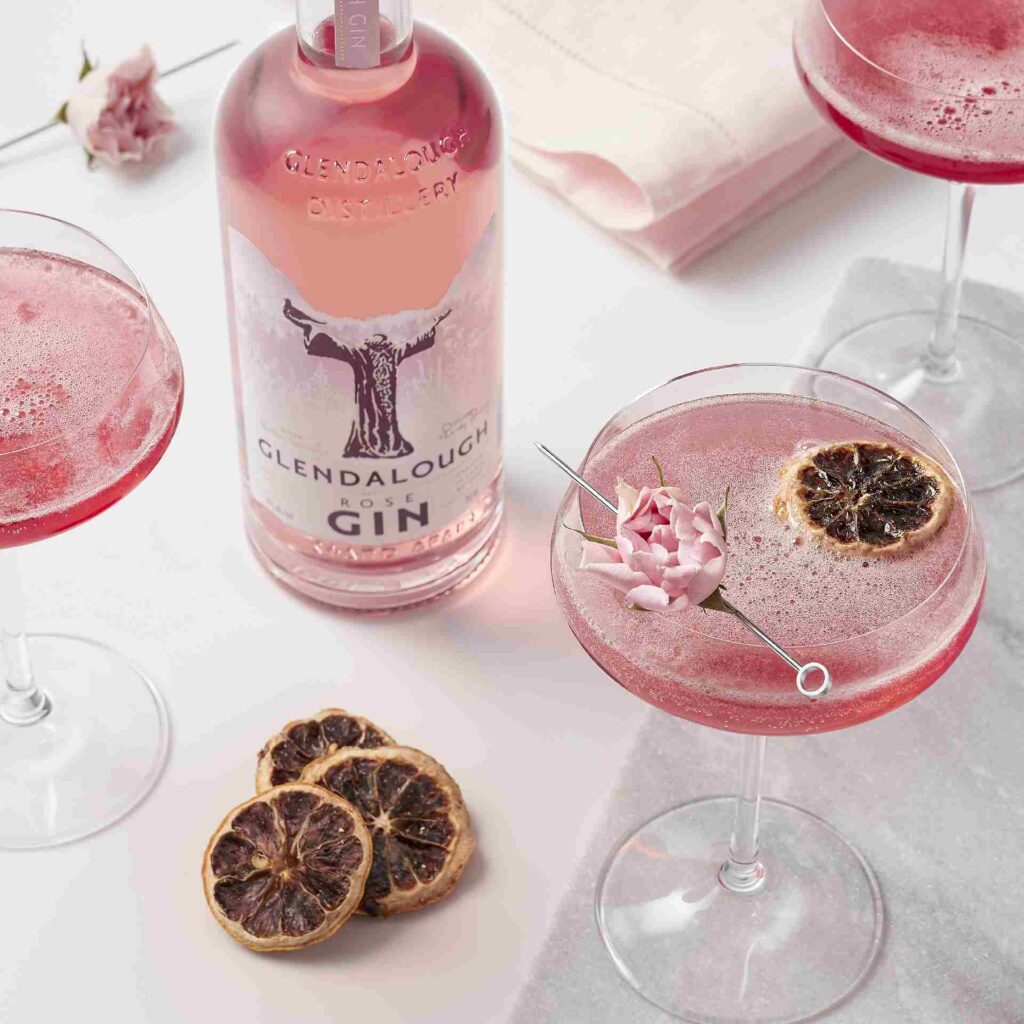
Glendalough Distillery Rose Gin Hibiscus Rose

Glendalough Hibiscus Rose

Refreshing and flavorful, the hibiscus tea syrup plays incredibly well with Glendalough Rose Gin.

  • 1.5 oz. Glendalough Rose Gin
  • 0.5 oz. Hibiscus tea syrup (see note)
  • 0.5 oz. Lemon juice (fresh squeezed)
  • Prosecco to top
  • Dehydrated lemon wheel to garnish
  • Rose petals to garnish
  • 33 oz. Water for hibiscus tea syrup
  • 16 oz. Sugar for hibiscus tea syrup

Add first three ingredients and ice to a shaker. Shake until well chilled and double strain into a coupe.  Top with Prosecco, and garnish with dehydrated lemon wheel and rose petals.

For the hibiscus tea syrup: Steep seven hibiscus tea bags in 33 ounces of water for 15 minutes. Add 16 ounces of sugar.

Images & Recipes: Glendalough Distillery

Related Reading

Work with Us

Click the image below to partner with us on your project.

Client Intake Form - KRG Hospitality

Top