Author: David Klemt

by David Klemt David Klemt No Comments

Drinkee: Novo Fogo x SOFI TUKKER

Introducing Drinkee, Novo Fogo x SOFI TUKKER

by David Klemt

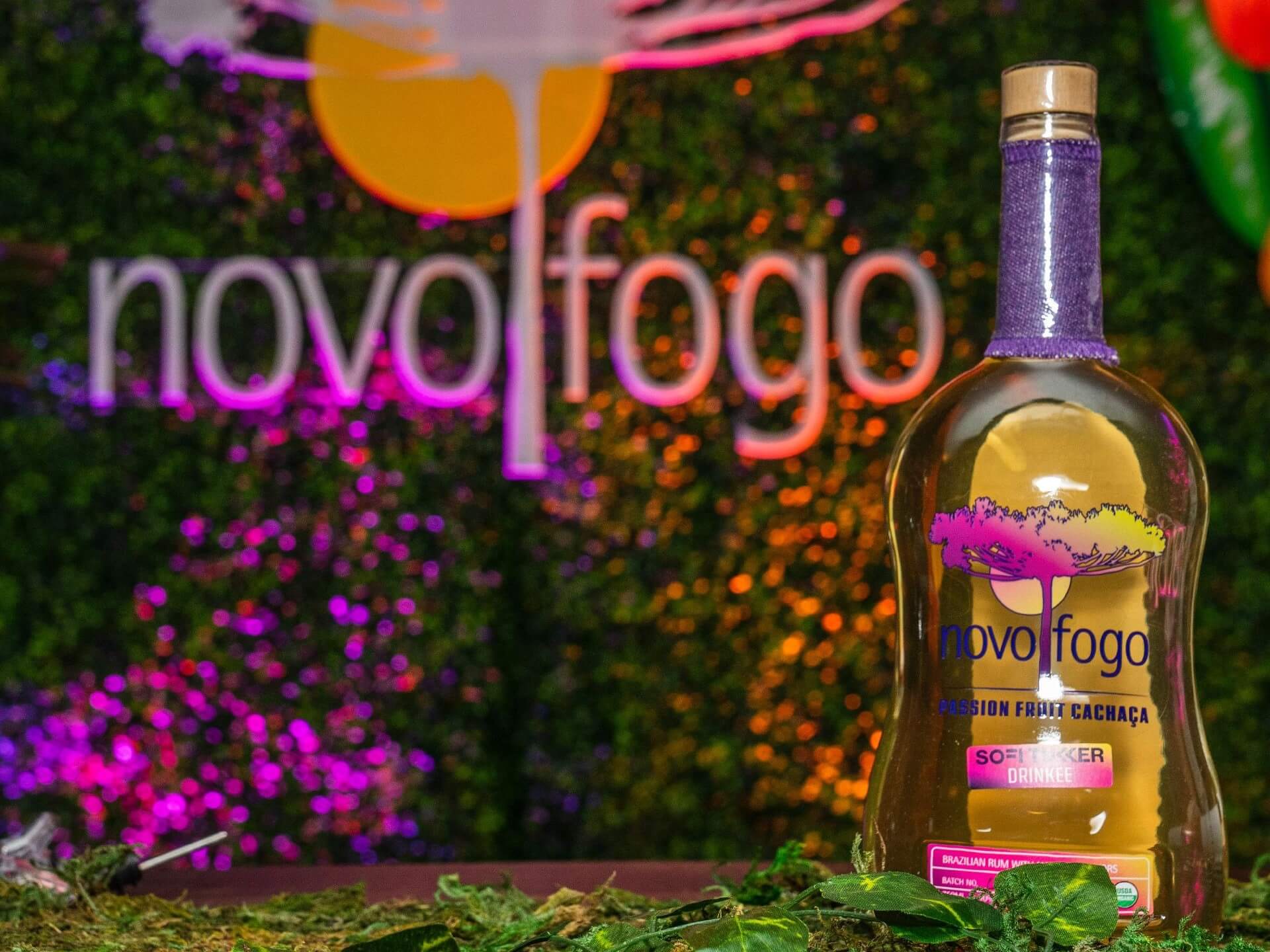
Novo Fogo Organic Cachaça Drinkee passion fruit cachaça

A month after announcing the reformulation of their award-winning cachaça-forward RTDs, Novo Fogo is proud to announce the launch of Drinkee.

Drinkee, the first Brazilian passion fruit cachaça made for the American market, is a direct result of a new partnership.

Listeners of our Bar Hacks podcast will recall that Novo Fogo founder and CEO Dragos Axinte was our guest for episode 97. It’s on this episode that Axinte discusses Novo Fogo’s partnership with Sophie Hawley-Weld and Tucker Halpern, known globally as SOFI TUKKER.

Axinte shares his thoughts on partnerships and collaboration when talking about teaming up with Hawley-Weld and Halpern. While the partnership “felt right to both sides,” the parties still went through a “complex, long negotiation” before finalizing their deal. The Novo Fogo and SOFI TUKKER teams may have known deep down that the partnership was right but they took the time to prove that feeling was good for business and a long-term relationship.

In addition to SOFI TUKKER serving as global ambassadors for Novo Fogo, Hawley-Weld and Halpern are also co-owners of the Brazilian brand. The dance music duo was heavily involved in the development and launch of Drinkee.


View this post on Instagram


A post shared by SOFI TUKKER (@sofitukker)

The newest addition to the Novo Fogo lineup is essentially Brazil in a bottle. Start with Novo Fogo Silver, infuse it with authentic Brazilian flavors, and you get Drinkee. This new expression is named for SOFI TUKKER’s debut song of the same name, and delivers notes of Brazilian passion fruit, orange peel, vanilla, pure cane sugar, and oak.

To learn more about Novo Fogo Drinkee, please read the press release below. While we’re eager to spend time with this new bottle, we’re excited for more collaborative Novo Fogo x SOFI TUKKER products to enter the market.

Cheers!

NOVO FOGO ANNOUNCES A PASSION FRUIT CACHAÇA NAMED DRINKEE

Developed with SOFI TUKKER, Drinkee is the first Brazilian Passion Fruit Cachaça made for the American market

SEATTLE, WA (Aug. 21, 2023) Novo Fogo announces a new product to their lineup of USDA-certified organic Brazilian cachaças: Novo Fogo Passion Fruit Cachaça, fancifully named after SOFI TUKKER’s hit song, “Drinkee.” A first for the American market, this all-natural sugarcane spirit culminates months of product development among the Novo Fogo distillery team in Morretes, Brazil, and the multi-Grammy-nominated dance music superstars SOFI TUKKER, who are co-owners and global brand ambassadors of Novo Fogo.

The partners’ ambition was to share the beloved flavors of Brazil in a bottled, full-proof spirit that drops a beat of fresh tropical flavor into any cocktail. To achieve this, they experimented with various infusions of tropical ingredients to harmoniously complement the rainforest flavors of Novo Fogo Silver Cachaça. The resulting spirit amplifies the beloved notes of Brazilian passion fruit and fresh cane distillate, supported by background rhythms of orange peel, vanilla, pure cane sugar, and oak. Drinkee stands proudly when sipped neat or on the rocks, but it really starts to dance in cocktails of all kinds. Few things match the perfection of a Caipirinha made with the pulp of a fresh passion fruit, sipped under a backdrop of tropical birdsong and Brazilian rainforest, but a Caipirinha simply shaken with Passion Fruit Cachaça, lime, and sugar is a close second, wherever you enjoy it.

Tucker Halpern, half of the eponymous duo SOFI TUKKER, says of this cachaça: “I am beyond proud of where this product ended up. It feels surreal to have been in the Atlantic Rainforest in Brazil testing the different ingredient combinations to make the perfect Passion Fruit Cachaça. It truly tastes the way our song ‘Drinkee’ sounds, and the way Brazil makes us feel. We’re so excited for everyone to try it!” 

Novo Fogo Passion Fruit Cachaça was created to be as inclusive as SOFI TUKKER’s music: it is an approachable introduction to cachaça newcomers, and simultaneously an elegant base spirit for bartenders and enthusiasts to supercharge their cocktails with bold tropical flavors. Drinkee will pair perfectly with another upcoming Novo Fogo x SOFI TUKKER collaboration named after their song “Energia.” That future product is inspired by Sophie Hawley-Weld, who enjoys alcohol-free drinks and is passionate about Brazil’s rainforest environment and the plant-based beverages that grow therein. 

Like all Novo Fogo’s handcrafted Brazilian spirits, Passion Fruit Cachaça is an emissary of Brazilian culture and rainforest conservation, and a symbol for the shared values that connected Novo Fogo and SOFI TUKKER in the first place. The duo says of the partnership: “We have a lot in common with Novo Fogo – we share a core love of Brazil, fun, and environmentalism. Cachaça is Tuck’s favorite drink and Soph doesn’t drink alcohol, but she’s still at the same party… both having the best time. This partnership works because Novo Fogo is so much more than cachaça and spirits; they are a powerful rainforest preservation steward, and we’re enthusiastic participants in the reforestation project The Un-Endangered Forest™. So if you do decide to drink, we hope you’ll drink Novo Fogo because you’ll be planting trees in the Brazilian rainforest at the same time! We’re excited to help introduce this classic Brazilian drink to more people around the world.”

Novo Fogo Passion Fruit Cachaça is sold to distributors nationwide by 375 Park Avenue Spirits. It is now available for pre-order on www.novofogo.com.

About Novo Fogo

A passionate advocate for sustainable practices in the spirits industry, Novo Fogo is a carbon-negative company that produces USDA-certified 100% organic cachaças at its zero-waste distillery in the heart of Brazil’s Atlantic Rainforest. Its production methods prioritize human and environmental sustainability; the company is proud of its all-female distiller team and its legacy reforestation project, The Un-Endangered Forest, which seeks to restore 44 species of threatened native trees. Extending this ethos to its cocktail audience, Novo Fogo has been a trailblazer for sponsoring health and wellness initiatives for spirit industry members. The company’s product line intersects traditional Brazilian culture with modern cocktail trends of healthier drinking, such as low carbs, low ABV, and low calories. Seeking to build a business that can last 100 years, Novo Fogo has partnered with multi-Grammy-nominated global dance music duo SOFI TUKKER to foster increased awareness towards its brand of conscientious capitalism. Find Your Own Brazilian Zen™ by visiting https://www.novofogo.com.

About SOFI TUKKER

SOFI TUKKER – best friends Sophie Hawley-Weld & Tucker Halpern – have a global reputation as the most vibrant, positive and community-driven dance music group out there. The duo met senior year at Brown University, where Tucker was a basketball jock and Sophie studied conflict resolution and Brazilian Portuguese. In 2015 they put out their debut single “Drinkee,” which was nominated for a GRAMMY, followed by a 2nd nomination for their debut album Treehouse. They have since earned Platinum & Gold record sales, several #1 records, over a billion streams, and campaigns for Apple (“Best Friend”), Peloton (“Purple Hat”) and Smartwater (“Wet Tennis”). 2023 saw Tucker & Sophie as the faces of colorful G-Star Raw & Baboon to the Moon collections, and the continuation of their own fashion label, WET TENNIS. Their new single “Jacaré” is a celebration of Brazil and the LGBTQ+ community, with lyrics by the Brazilian poet Chacal. SOFI TUKKER have collaborated with artists around the world, such as Amadou & Mariam, Mahmut Orhan, Bomba Estéreo & Pabllo Vittar. In the first half of 2023, the duo released “Sacrifice” with Kx5 (Kaskade & Deadmau5) and contributed two songs to the debut album from LP Giobbi. Meanwhile their versatility as a live act has them packing festival fields, selling out headline tours and returning to Vegas for their DJ residency. They debuted their immersive new live show at Coachella, followed by Governors Ball, Bonnaroo, Electric Forest, Lollapalooza, Osheaga & more. 

Image: Novo Fogo Organic Cachaça

KRG Hospitality. Bar Consultant. Nightclub. Lounge. Mixology. Cocktails.

by David Klemt David Klemt No Comments

Maker’s Mark Debuts Age-stated Bourbon

Maker’s Mark Debuts Age-stated Bourbon

by David Klemt

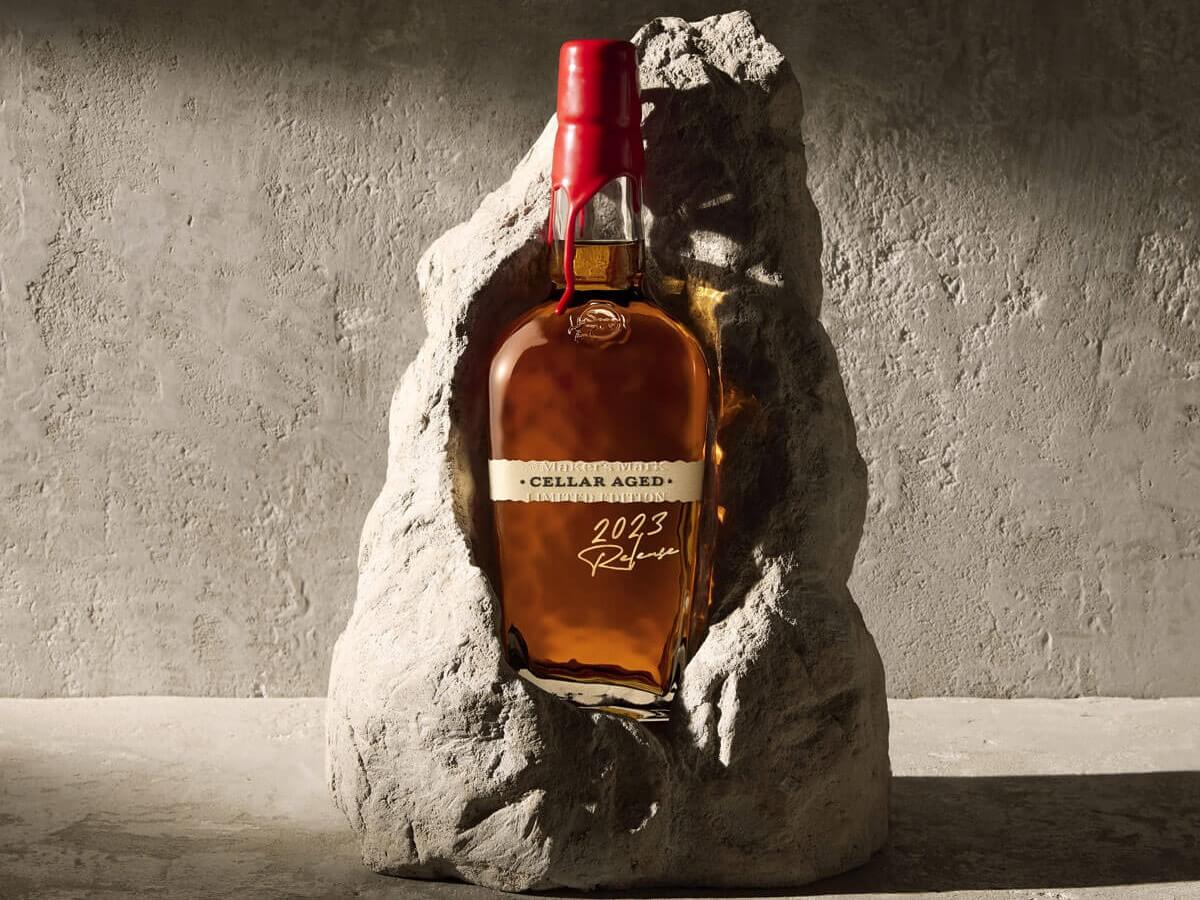
Maker's Mark Cellar Aged bourbon bottle

The team at Maker’s Mark, one of the most iconic and respected names in bourbon, is proud to introduce their oldest-ever expression.

Maker’s Mark Cellar Aged is making its introduction to the world in time to celebrate National Bourbon Heritage Month. As a quick reminder, we honor America’s native spirit in September.

This innovative expression is, in my opinion, an exercise in restraint. As decadent a whiskey as Cellar Aged may be for one’s senses, this bourbon shows that the team at Star Hill Farm is disciplined and deliberate.

While many other whiskey producers have been using age statements to pull focus from competitors, grab headlines, make splashes among collectors, and otherwise use aging to move cases, Maker’s Mark has stayed their course.

That is to say, Maker’s Mark takes their time when implementing a new process. If the team can’t figure out how to do something in a distinctly Maker’s way, they don’t do it.

Take, as an example, their limestone cellar, introduced in 2016. This maturation environment is Star Hill Farm’s approach to aging. The team doesn’t have an interest in simply stacking on years—age must adhere to Maker’s Mark flavor vision and leverage terroir.

Inaugural Annual Release

The 2023 release of Cellar Aged is a blend of 11- and 12-year-old Maker’s Mark. The percentage breakdown is 13 percent of the former and 87 percent of the latter.

The liquid that will eventually become Cellar Aged is first aged for six years in the Maker’s Mark warehouse before being moved to the maturation cellar.

For those wondering, this innovative expression will be an annual release. In fact, it appears Maker’s Mark plans to mark each National Bourbon Heritage Month going forward with Cellar Aged.

This year’s expression is bottled at cask strength—115.7 proof—and comes with a SRP of $150. Sources state that there are 30,000 bottles of the 2023 release, and more may be produced each year.

And for those curious about when they can wrap their gums around a dram, the wait shouldn’t be long. In response to a comment underneath an Instagram post, Maker’s Mark says the following:

“Thanks for asking! Cellar Aged will leave Star Hill Farm in the next few weeks and start making its way across the country!”


View this post on Instagram


A post shared by Maker’s Mark (@makersmark)

So, be on the lookout and let your Maker’s rep know you need this bottle on your back bar.

Tasting Notes

The KRG Hospitality team has yet to taste Maker’s Mark Cellar Aged. Therefore, the tasting notes below are from the Maker’s website.

Aroma: Dark stone fruit, caramelized sugar, toasted oak

Taste: Balanced with big oak, dark vanilla and fruit

Finish: Velvety texture, long and complex with caramelized barrel notes and baking spices

For more information, please review the official Maker’s Mark Cellar Aged press release below.

Introducing Maker’s Mark® Cellar Aged, an Inspired New Take on Older American Whiskey

Matured in a Limestone Whisky Cellar, Maker’s Mark Cellar Aged is Aged to Taste, Not Time

LORETTO, Ky., Aug. 16, 2023 /PRNewswire/ — Maker’s Mark® is proud to debut Maker’s Mark® Cellar Aged Bourbon, an annual, global limited-release expression that proves whisky aging is about more than just a number. Featuring a marriage of 11- and 12-year-old bourbon, Maker’s Mark Cellar Aged delivers the distillery’s highly anticipated oldest release, stemming from the question: What if age isn’t just about time, but instead about how you use that time to evolve, develop and mature?

Since its founding in 1953, Maker’s Mark has aged its whisky to taste – not time – to achieve the vision set by its founders: bourbon without the bite that’s always smooth, soft and creamy. Maker’s Mark Cellar Aged stays true to this philosophy, delivering a richer, deeper and more complex older bourbon, free from the harsher tannic effects commonly found in extra-aged American whiskies, as a result of our innovative maturation process that starts in traditional Kentucky warehouses and finishes in the distillery’s one-of-a-kind limestone whisky cellar.

“For more than 65 years, aging our whisky for a decade-plus wasn’t something we did,” said Rob Samuels, 8th generation whisky maker and grandson of the founders at Maker’s Mark. “It’s not that we didn’t believe in it; we simply hadn’t found a way to do it that didn’t compromise on our taste vision – until now. Cellar Aged embodies an older whisky that’s distinctly Maker’s Mark. One rooted in challenging convention, delivering new flavor experiences from the environment that surrounds us, and building on a taste vision that’s been generations in the making.”

To become Maker’s Mark Cellar Aged, barrels of the distillery’s classic distillate first spend approximately six years aging in traditional bourbon warehouses, where they endure the Kentucky climate and its temperature swings season after season until they reach full maturity and can be called “Maker’s Mark.” Barrels are then moved into the distillery’s proprietary whisky cellar for an additional five to six years of aging before being blended to taste and bottled. Built into the natural limestone shelf of the Kentucky hills, the cellar’s consistently cool environment slows down the tannic impact that occurs during maturation, while allowing the bourbon to develop a deeper, darker flavor with hidden depths, but no bitterness.

This innovative and taste-led approach in pursuit of an older Maker’s Mark expression continues the boundary-pushing mindset that has shaped the brand since the beginning. Founders Bill and Margie Samuels challenged category norms when they burned their 170-year-old family recipe, choosing to use red winter wheat instead of rye in their mashbill for a softer, smoother bourbon. This spirit of asking “what if?” was present in the introduction of Maker’s Mark 46, which is crafted using a proprietary wood-stave finishing technique, and in Maker’s Mark Private Selection, which became the industry’s first custom barrel program upon its launch in 2016.

Cellar Aged will be an annual, limited release available in specific markets around the world. The unique maturation approach of Cellar Aged will be consistent every year, but the specific blend of aged bourbon will vary based on which barrels are ready, by taste. The inaugural release of Cellar Aged is a marriage of 12-year-old and 11-year-old whisky – 87% and 13%, respectively – bottled at cask strength (115.7 proof). Cellar Aged will be available for a suggested retail price of USD $150.00 in the United States in September 2023; in London, Munich and select Global Travel Retail accounts in October 2023; and in Tokyo and Singapore in early 2024.

For more information about Maker’s Mark Cellar Aged, please visit www.MakersMark.com.

Image: Maker’s Mark

KRG Hospitality Bar 101 Techniques

by David Klemt David Klemt No Comments

Hospitality Mindset: Restaurant Edition

Hospitality Mindset: Restaurant Edition

by Jennifer Radkey

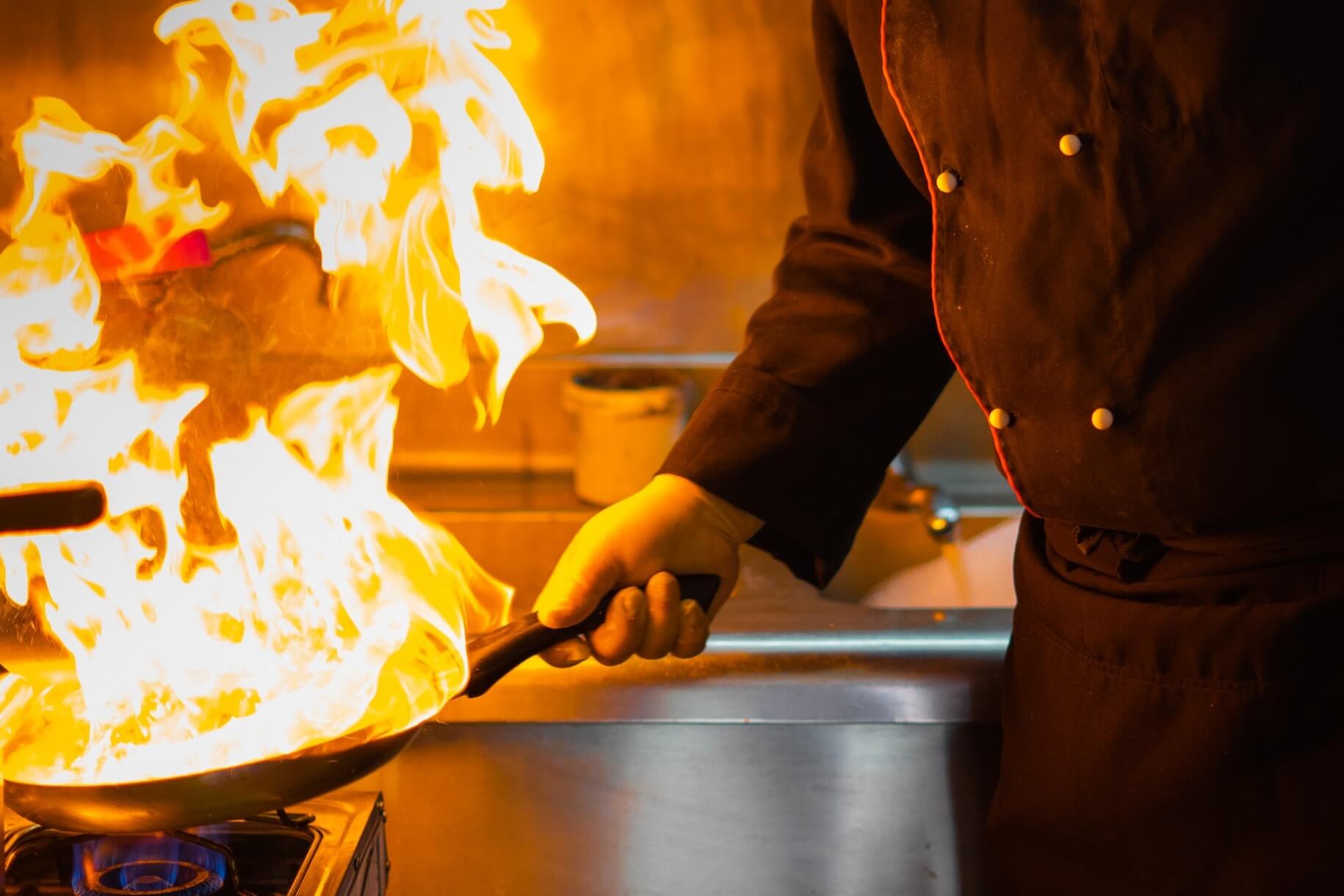
Chef in commercial kitchen handling a pan on fire

Have you ever wondered why you just can’t seem to get ahead regardless of what you do, or why you appear to be developing a negative team culture?

Maybe you wake up with a sense of dread or anxiety about what lies ahead of you each day, or maybe no matter how hard you try and how much money you pour into your restaurant it never seems to be enough to get you where you want to be.

The cause of these problems may stem from your—and your team’s—mindset.

But what is mindset exactly?

Simply stated, mindset is an individual’s usual attitude or mental state. It reflects someone’s way of thinking and motivates their actions. So, why is it important to be aware of your mindset?

Well, if your mindset dictates how you show up in your life each and every day, then it will influence all parts of your life. Your thoughts about yourself, others, your business, your opportunities, and your challenges are all influenced by your mindset.

Your mindset can either hinder or promote your overall well-being and success in life.

The good news about mindset is that you can change it – if you want to. It can also be contagious—in a positive way.

These facts led me to question if the different sectors of the hospitality industry face unique mindset challenges and what can be done to overcome them.

To find answers and gain further insight I decided to turn to our team at KRG Hospitality for their thoughts. In turn, I’ve written a series of hospitality mindset articles, including one for bar operators and one for hotel operators.

In this article I’ll explore the restaurant industry, with thoughts from chef consultant Nathen Dubé.

Let’s dive in!

The Restaurant Industry

The restaurant industry is massive, employing 12.5 million in the US and 1.2 million in Canada.

Ranging from quick service to fine dining and offering every type of cuisine imaginable, the industry is a staple in any community. And while many enjoy being guests at these establishments, the same can’t always be said for working in them.

The restaurant industry faces constant challenges, ranging from mental health issues to labor shortages and rising costs.

So, what makes a restaurant succeed despite these challenges? While there are many ingredients involved in running a successful restaurant, arguably one of the most important is a strong operator.

Successful Operators

Operating a successful restaurant takes a certain mindset. You need to be organized, open-minded to growth strategies, resilient, and responsive to the needs of your team.

Interested in what makes a restaurant operator stand out, I asked Nathen what contributes to operator success:

“The key strength for a restaurant owner, first and foremost, is resiliency. You need to stay even keeled during the good and bad times. Things will fluctuate between busy and slow. You will experience great staff, not-so-great staff, shortages, bad reviews, good reviews, equipment breaking, orders delivered late, plumbing issues, electrical issues… The list goes on and on.

“But at the end of the day, when you say you’re open at noon or 5:00 PM or whichever, you better be ready on time, every time. That can give the strongest characters stress and anxiety over the long term. I think being resilient and able to do what is in your control and let go of the rest will help an owner maintain one’s sanity.

“The second strength needed is empathy. Without empathy for your staff, your customers, the many other people in the food and alcohol chain, the risk of becoming a tyrant no one wants to work for or associate with is real, and I’ve seen it happen. Your staff are people too, who have doctor’s appointments, family gatherings, and trouble at home. Some may suffer from addiction and mental illness, and some live in borderline poverty, which is a truly sad reality for many hospitality workers.

“The third characteristic is good business sense. As much as restaurants and bars are about hospitality, engaging customers, and providing great service, if you can’t run a business properly, that is all for naught. Money management, accounting, marketing, the whole lot is important to your success and longevity.”

Operator Challenges

Operators need a positive, strategic, growth mindset to be successful in the restaurant industry. Maintaining this kind of mindset takes self-awareness and consistent cultivating. There will be challenges every day that will test you and if you aren’t checking in with your thought patterns, it can be easy to fall into a negative mindset.

When asked what specific challenges hotel operators face that may affect their mindset, Nathen shared some insights.

Financial Risk

Opening and operating a restaurant comes with inherent financial risks. Sometimes it may feel as if more money is going out than coming in.

“When dealing with perishable food items in a time-sensitive environment, there will be plenty of challenges,” says Nathen. “Some are temporary, some are constant, and some are one-offs, but they all need careful attention. There is obvious financial risk and stress that comes with that. Labor costs, food, and alcohol are the main culprits of financial strain for the back of house. The kitchen setup costs (equipment, construction, etc.) are also in this category. Money can be a great source of stress for anyone, and more so for those who are risk averse.”

The Human Element: Guests

As a restaurant operator you rely on guests. Your efforts are almost always focused on how you can get more guests through the door and how you can get them to return.

Besides the stress of keeping them happy, sharing, and returning, guests can create another level of stress.

“Dealing with customer feedback can affect well-being,” Nathen says. “Not everyone who comes into your establishment will love everything. There will be complaints, there will be disagreements, poor online reviews, and there will be outright rude guests. This causes stress to staff, as well as the owner’s state of mind. Keeping staff motivated, calm, and on the same page when dealing with these guests and reviews is a lot of emotional work. It takes a strong-willed individual to let it roll off their back while still learning from it.”

The Human Element: Staff

Without your team there would be no restaurant. Your team is key to your success and can also be a cause of stress to your overall well-being.

“Issues can and will arise in dealing with the human element of labor,” explains Nathen. “Concern and care for staff is a full-time job in itself, and that’s in a best-case scenario. In a worst-case scenario you can experience shortages, theft, drama, and the like that will need to be dealt with or it can drag down a good establishment and create an exodus of good staff. Not to create a bleak picture, but management can take a toll.”

Employee Challenges

Your team experiences their own unique set of challenges that can affect their well-being and mindset as well. Being aware of these challenges is important if you are hoping to create a culture of respect, collaboration, and trust.

When asked what specific challenges restaurant staff face, Nathen had some insights:

“It’s well documented that working in a professional kitchen is difficult work when things go perfectly well. Long hours standing, hot kitchens, short time constraints, and difficult customers can be draining on a person. Mix in stress, poor health habits, and skipped meals, you get the perfect recipe for very hard work. Managing stress and employee wellness within the kitchen team is important to an overall successful business. Not paying attention or implementing ways to help will lead to a difficulty hiring and retaining staff.”

A Living Wage and Safe Environment

The restaurant industry has faced criticism for low pay, unsafe working environments, and an unsupportive culture.

While this is not the case in all establishments, it occurs enough in the industry to make potential employees wary.

“Pay in the industry is notoriously low for entry level positions,” Nathen says. “There is typically limited room to grow on the pay grade, and a lack of insurance, health, and dental care can compound the issues.

“Workplace standards including safety and culture are another common pain point for restaurants. Dirty, unsafe conditions create a dangerous work environment. It will also make it difficult to pass health inspections. Allowing a toxic culture to develop creates an environment that no good staff wants to work at. All of these issues can drain the pride from a good, well run, happy environment that employees want to stay and thrive at.”

Harmful Beliefs in the Restaurant Industry

Your belief system directly impacts your mindset. If you have negative beliefs regarding your team, your guests, or your community, it’s time to sit down and recognize where those beliefs are coming from and how to change them.

The restaurant industry has a few specific common, harmful beliefs that are prevalent in many establishments. Being aware and knowing how to acknowledge and combat these beliefs is crucial to creating a more positive work environment.

Stigma

When I asked Nathen what one of the most prevalent harmful beliefs operators have about their team, he discussed the stigma restaurant employees often face:

“Unfortunately, there is still a stigma around restaurant staff being uneducated, working in this industry only because they can’t do anything else in society. Often, they are seen as doing this job until something better comes along. Why should they invest in their staff’s well-being if they will vanish in a moment’s notice?

“The next stigma is that all workers are just lazy drunks, addicts, and thieves out for a paycheque to drink away at the bar. While there is a prevalent issue of substance abuse in the industry, it can be a tough challenge to address, and unfair if everyone is painted with the same brush.”

Selfish/Uncaring

Operators are not the only people in the industry who harbor negative or false beliefs.

Staff can do so as well. One primary negative belief is that management and/or ownership doesn’t care about them.

“In terms of ownership, kitchen staff can feel ripped off, or that they are doing all the work while the owner gets rich,” explains Nathen. “Staff will make accusations behind closed doors that they do all the work while the owner does nothing.”

To overcome negative beliefs, says Nathen, “[a]n engaged owner can eliminate the walls between staff, customers, community, and themselves. Talking to those in your business circle and including everyone squashes resentment, misunderstandings, and most complaints will be solved immediately, eliminating potentially bad situations.”

Toxic Culture

The last thing that any hospitality business needs is a toxic culture. A toxic workplace culture encourages and breeds negative mindsets on all levels.

I asked Nathen what creates toxic culture in a restaurant and he shared his thoughts and experiences:

“It starts with ownership. Defining a clear set of core values and standards in the workplace—and adhering to them from the hiring process all the way to daily operations—will dictate the type of people you hire and attract. Toxic environments can be created by just one employee. My experience with toxic kitchens was based on there being no consequences; there wasn’t even a lack of standards enforcement because there were no standards to begin with.

“Things like bullying, harassment, poor attitudes, low morale, lack of leadership, and poor working conditions—whether physical, emotional or both—are the typical causes of toxic culture. To blame is also the negative actions of others, and equally the lack of action from management. Bad eggs are left to rot and quickly poison the whole omelet, so to speak.

“Define a concept clearly, every step of the way, and then find the people to fit that vision. But also deal with problem employees immediately; there is nothing worse than losing good employees to bad ones.”

Moving Forward

Understanding the challenges that operators and staff are currently facing, and acknowledging the importance of growth mindset and the need for change, I asked Nathen what positive changes have been occurring in the industry as a whole?

“Restaurant work environments have improved over the last few decades but still have a long way to go. When I started in the mid ‘90s, belittling, yelling, and screaming—general abusive treatment of anyone and everyone—was commonplace. There was no compassion for the environment that staff worked in. The culture, the workload, pay… Literally everything was just ‘take it or leave it.’ ‘If you don’t like it, leave,’ was repeated everywhere to any staff who raised concerns.

“Over time, a stand has been made in response to a mass exodus, tales of burnout, and at the worst end of the spectrum, severe addiction, and even suicide. It was time to look from within at where the actual problems were, and what could be changed. The veil of toughness finally came down, and an honest conversation has led to slow changes.

“One of the more prevalent changes is an overall less-abusive environment. No longer is it tolerated to show anything less than human decency to staff and guests. Genuine care for staff well-being is starting to be seen almost everywhere. It’s leading to a new excitement among hospitality professionals and can hopefully attract new individuals to the field.”

Room for Improvement

Although awareness of the well-being of those working in this industry is increasing, there are still changes that need to happen.

Nathen believes that improvement lies in focusing on balance and respect:

“There is no way around the fact that cooking and serving is hard, long work, regardless of concept. This is unfortunately the entry point for all those who claim to want to change the industry or make it better. In my opinion, this is the wrong approach. Enhancing the whole experience of the employee, leadership team, and guest will make everyone happier and, hopefully, healthier.

“Balancing the workload for everyone, finding creative ways to increase pay, and offering benefits leads to a strong sense of job safety. Rotating schedules, for example: four nine-hour days; or two on, three off; or something away from the traditional 10-, 12-, or 14-hour days and five- to six-day work weeks, reduces burnout, gives employees a chance at a social and family life, and still allows everyone to earn enough income to live. Throw in benefits and some sort of bonus pay, and you will have a brand everyone wants to work for.

“Another big contributor to improving the industry—and we have made big strides already—is the respect for people and creating an environment or culture void of bullying, harassment, intimidation, and general mistreatment of the people who make this the best industry to work in.”

Final Thoughts

In a highly competitive industry facing consistent challenges and harmful beliefs, it will come down to developing and maintaining the right mindset to truly succeed both professionally and personally. It starts from the top with a positive, resilient, growth mindset.

I’ll leave you with a few last words of wisdom from Nathen:

“Hopefully, there is a sense of urgency in the fight to change the industry for the better. It’s important to recognize and praise positive contributions and not just positive people because everyone needs encouragement. It’s equally important to handle negative contributions quickly and correctly.

“A positive attitude can go a long way toward creating a strong team player who can make the best of stressful times and have a coachable attitude. A positive person can help change the culture of a workplace and pick up other teammates who may need a boost. They share their optimism and passion for the job and can make management’s life easier.

“A negative person will contribute to a toxic environment. Resentment begins to build on both sides as a negative person sees things not being done their way, contributes less to the success of the kitchen, and spreads their toxic beliefs to other employees who may start to feel similarly.

“I recently heard a saying, and I don’t recall by who so I can’t quote it, but it goes, ‘It’s important to get the right people on the bus, but it’s just as important to get them in the right seats.’”

Cheers to personal and professional well-being!

Image: Helmy Zairy on Pexels

KRG Hospitality. Restaurant Business Plan. Feasibility Study. Concept. Branding. Consultant. Start-Up.

by David Klemt David Klemt No Comments

Double Char Bourbon Launches Nationwide

Bib & Tucker Double Char Bourbon Launches Nationwide

by David Klemt

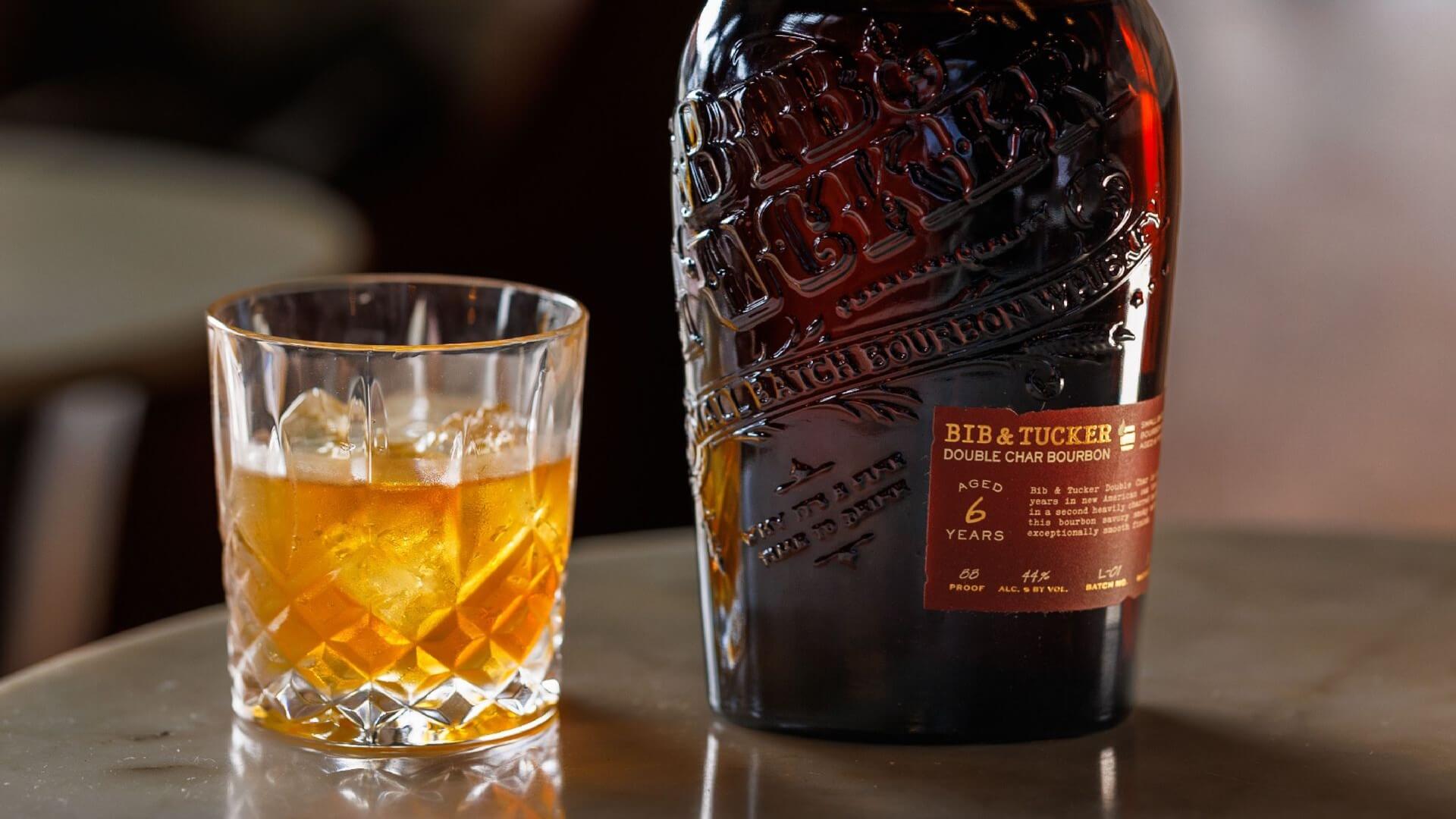
Bib & Tucker Double Char bourbon bottle and cocktail

A smoky bourbon that draws inspiration from the savory side of the culinary world is finally, mercifully available throughout the US.

We’ve been waiting patiently, having shared the news of this new release back in June. We’re excited to be able to update that story: Everyone can finally get their hands on this unique small-batch bourbon.

Double Char is an innovative Tennessee bourbon rested for six years in new white American oak barrels that weighs in at 88 proof. And whether people to choose to snap bottles up online or off-premise, this smoky sipper from Bib & Tucker Small Batch Bourbon is ready for action.

What this means for operators and bar teams, of course, is that the bourbon lovers and bourbon-curious among guests will expect to find Double Char on bar menus across the country.

This is great news for bar and restaurant operators who encourage collaboration between front- and back-of-house teams. Double Char has been described as “a smoky sweet BBQ in a bottle.” This culinary inspiration will allow bartenders and chefs to work together to wow guests with specialty cocktails that pair incredible well with all manner of rich, savory, smoky dishes.

I, for one, foresee mouthwatering LTO cocktails and specialty prix fixe experiences centered on Double Char on the horizon.

To learn more about Bib & Tucker Double Char, click here or review the press release below. And to learn more about Bib & Tucker, click here to listen to episode 59 of the Bar Hacks podcast.

Cheers!

Bib & Tucker Small Batch Bourbon Announces Double Char Innovation

New Savory, Smoky Bourbon Inspired by the Flavor of Food Smoked on the Open Flame

STAMFORD, Conn., May 31, 2023 /PRNewswire/—Bib & Tucker Small Batch Bourbon is proudly announcing the release of Bib & Tucker Double Char Bourbon.

Inspired by the turn of the century, when food was cooked on the open flame, this new bourbon is aged twice to create savory smoky notes and an exceptionally smooth finish. Bib & Tucker Double Char is first aged for six years in the rolling hills of Tennessee in new white American oak, followed by a minimum of five months in a second heavily charred and smoked new barrel. This unique fire-forged double char aging method creates the rich and deep flavor of Bib & Tucker Double Char.

“I can’t wait for consumers to try this delicious expression,” said Tom Steffanci, President of Deutsch Family Wine & Spirits. “Double Char spends just the right amount of time in the second heavily charred barrel, creating a savory, smoky character that adds a whole new dimension to the bourbon.”

As a Tennessee bourbon, Bib & Tucker follows the Lincoln County process unique to the state, meaning the bourbon is filtered through sugar maple charcoal before going into the barrel for aging.

For Double Char, to pay homage to the Lincoln County process, the second barrel is smoked with sugar maple before being filled with the brand’s 6-year aged bourbon. The perfect amount of time in the barrels, the char, and the sugar maple barrel smoking process delivers a bourbon with an inviting savory white smoke flavor not found in any other whiskey on the market.

Bib & Tucker Double Char Tasting Notes:

  • Nose: A touch of smoke with immediate notes of toasted oak and dulce de leche, background notes of cinnamon and clove
  • Palate: Vanilla and sugar maple surrounded with white smoke, hints of sweet corn and toasted cinnamon
  • Finish: Medium to long finish with oak, white smoke and vanilla
  • Color: Deep rich mahogany with copper undertones

The lineup of Bib & Tucker Small Batch Bourbon includes:

  • The Classic Six: 6-Year-Old Small Batch Bourbon Whiskey – SRP: $54.99; 92 proof/46% ABV
  • Double Char: 6-Year-Old Small Batch Bourbon Whiskey – SRP: $54.99; 88 proof/44% ABV
  • 10-Year-Old Small Batch Bourbon Whiskey – SRP: $89.99; 92 proof/46% ABV

Bib & Tucker Double Char will be available nationally, in-store and online, beginning August 2023.

Image: Bib & Tucker

by David Klemt David Klemt No Comments

Top-performing Menu Items in the US

Top-performing Menu Items in the US (So Far)

by David Klemt

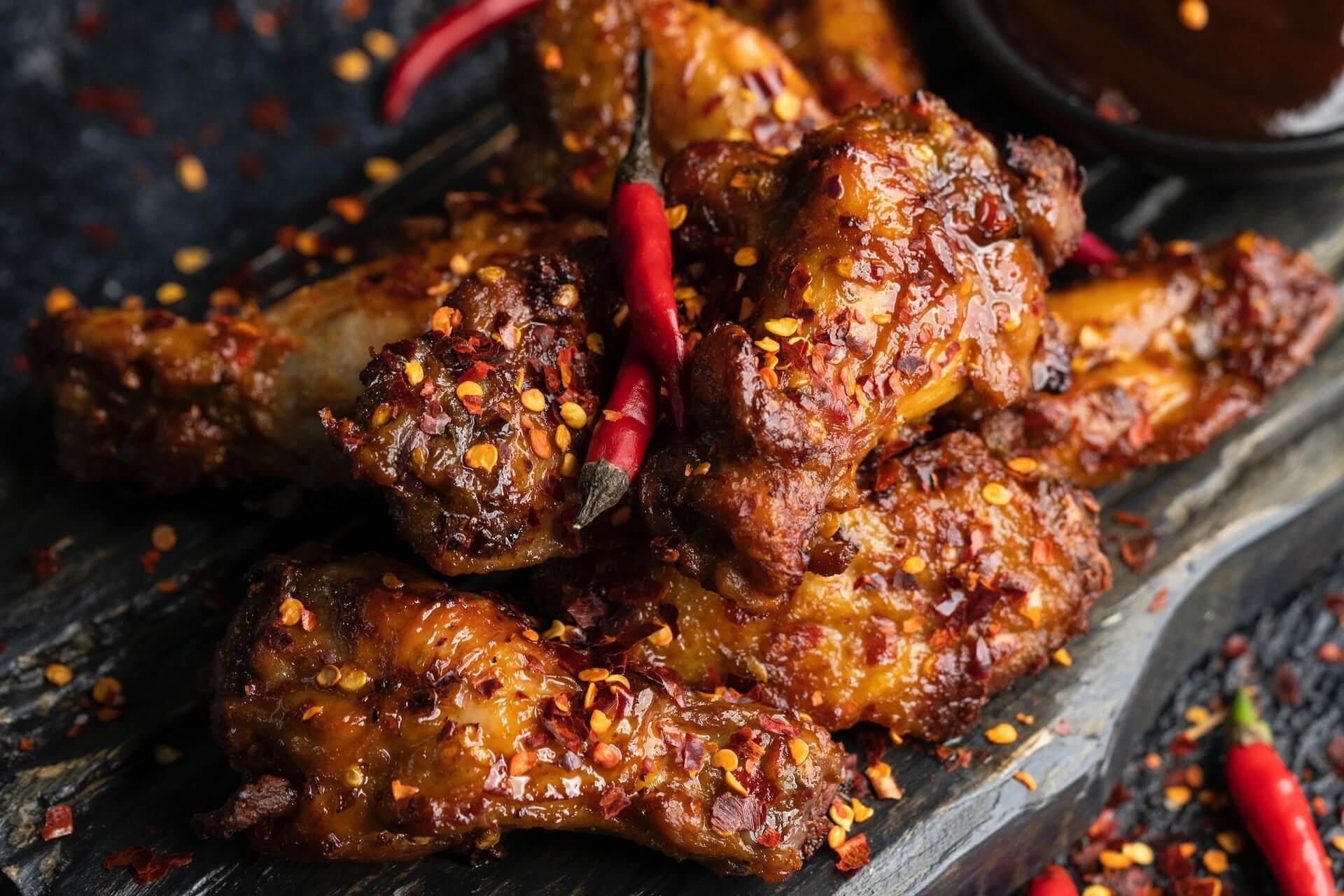
Barbecue chicken wings, chili peppers, and chili flakes

Thanks to a recent mid-year report from F&B intelligence platform Datassential, we now know the top-performing menu items in the US.

For the low, low price of filling out a handful of fields, you can download a copy of Datassential’s “Foodbytes: 2023 Midyear Trend Report” for yourself.

There’s plenty of useful data packed into this short report. You may find some of the top food items a bit surprising.

But First…

Datassential does more than just list the top mid-year menu performers in their latest report. There are also a couple of interesting datapoints for operators to consider.

The first piece of information is an alarming statistic: 54 percent of consumers are of the belief that “tipping culture has gotten out of control.”

As we’ve reported earlier, it’s likely that a major driver of “tip fatigue” comes from retail. The expectation for consumers to tip at a restaurant, bar or nightclub is ingrained deeply in American culture.

However, consumers throughout America are being prompted to tip after just about every transaction they’re attempting to complete. In fact, it’s not just retail that has been encouraging (in some cases, guilting) people to tip. Some contractors are also adding tip lines when handing over tablets to clients so they can pay their invoices.

One result is that servers and bartenders are reporting lower tips; guests are so over tipping that they’re pushing back against the practice in venues where they’d traditionally have no problem doing so.

Of course, tip fatigue isn’t the only reason consumers are pushing back against tipping. Many people feel that operators should increase what they pay staff. Indeed, some people feel that operators are asking them to subsidize their employee pay. Whether they’d be happy to pay higher prices remains to be seen.

Fads Aren’t Bad?

Whenever we cover trends or discuss them with clients, we caution against chasing too many (or the “wrong” trends). And fads? It can be even riskier to hop on the bandwagon of something that may never even reach the trend stage of its lifecycle.

However, likely due to the ubiquity of TikTok, consumers expect restaurants to embrace fads. According to Datassential, 67 percent of consumers overall “want to see more fads at restaurants and retail.”

That number jumps to 74 percent when focusing on Millennials and Gen Z.

So, while we still caution operators about jumping on fads (or “micro trends”) and trends, that doesn’t mean be too cautious. If a fad or trend works with your brand and won’t cost much to feature, at least give it consideration.

Not sure you’re great at identifying fads that will work for your business? Ask your staff which fads and trends are hot at the moment.

Speaking of Hot…

Alright, let’s take a look at the F&B items Datassential identifies as popular at the midway point of 2023.

Again, I encourage you to download the report in its entirety. You can do just that by clicking here.

But for those who want instant gratification, check out these menu items:

  • Super Duper: Let’s kick things off with the hottest chain LTO, the Denny’s Super Slam. Per Datassential, restaurant chains have already featured in excess of 2,000 LTOs in 2023. The F&B intel agency tests them all, and the Super Slam is wearing the LTO crown at the moment.
  • Chef Chatbot: Datassential tapped ChatGPT to create a burger recipe and had Midjourney create an image for the resulting Caprese Avocado Burger. More than half of consumers surveyed—57 percent—want to try it at a restaurant.
  • Big Winner: Datassential asked consumers a simple question: Which would you rather eat for the rest of your life, a hamburger or a hot dog? A staggering 87 percent chose hamburgers, meaning just 13 percent of consumers would choose a hot dog over it’s burger buddy.
  • What a Pickle: Back in March we checked out Slice’s Slice of the Union report, and it predicted pickle pizzas would be a hot trend this year. Well, Datassential has crunched the numbers and says 40 percent of consumers are aware of this pizza style already. Looks like Slice may be proven right by the end of the year.
  • Speed Demon: Curious about the fastest-growing menu item on the US? Well, wonder no more: Datassential says it’s the barbecue chicken wing. Over the past year, they’ve grown 373 percent on menus across the States. Datassential posits the overall growth of chicken and the embracing of flavor trends like Carolina gold barbecue sauce are contributing factors.

There’s a lot to unpack here, so I’ll leave you to it. Just remember that when it comes to fads and trends, there’s a fine line between what’s hot, what’s not, and jumping on the wrong one. Good luck!

Image: Ahmed Bhutta on Pexels

KRG Hospitality Start-Up Restaurant Bar Hotel Consulting Consultant Solutions Plans Services

by David Klemt David Klemt No Comments

Should You Offer Your Guests Brunch?

Should You Offer Your Guests Brunch?

by David Klemt

Person with tattoos pouring coffee from French press

Is brunch on its way to becoming a lucrative daypart that can grow traffic, increase revenue, boost guest engagement, and promote loyalty?

If a report from Square is anything to go off, yes.

Owing in part to changes in consumer behavior from 2019 to now, brunch appears to be a solid traffic and revenue generator. The number of people working from home is impacting daypart spending, which makes sense. Traditional office workers will often pop into a QSR or cafe for coffee and breakfast on their way in to work. And when lunch rolls around, they tend to head out to restaurants nearby for their break.

Now, the data support the belief that more people are staying home on weekdays and unleashing pent-up demand for socializing and dining out on the weekends. And apparently that demand is rather voracious, because brunch appears to be on the rise.

In 2019, just over eight percent of all dining dollars were spent on Saturdays during traditional brunch hours. That has grown to just over ten percent this year.

In terms of engagement and bringing more brand awareness, the term itself is growing on social media platforms.

Along with revisiting hours of operation, it may be wise for operators to consider offering Saturday or Sunday brunch.

Bristory

Yes, that’s a brunch-style portmanteau of “brunch” and “history.” No, I’m not proud of myself but I’m leaving it in.

The portmanteau “brunch” is believed to have first been coined by a British writer named Guy Beringer in 1895. He included the word in an article he wrote for Hunter’s Weekly. Beringer was making the case for noontime meal that combined breakfast and lunch.

In arguing for what may be the world’s first hybrid meal, Beringer wrote that, “the arguments in favor of Brunch are incontestable. In the first place it renders early rising not only unnecessary but ridiculous. You get up when the world is warm, or at least, when it is not so cold. You are, therefore, able to prolong your Saturday nights…”

The word would appear a year later in a Pennsylvanian publication called the New Oxford. More than 30 years later, brunch was on its way to becoming “a thing” in the US.

Oh, and there are arguments that an American reporter, Frank Ward O’Malley, who should credit for the word “brunch.” Those who believe this is the case say O’Malley created the portmanteau some time between 1906 and 1919. As is the case with many classic cocktails, the origin of brunch is at least somewhat hazy.

By the 1970s, the stigma that once came with brunch—that drinking publicly during the day could harm one’s reputation—began to dissipate.

Brunch by the Numbers

According to Square, brunch is appealing for several reasons.

Let’s take a look at this infamous daypart by the numbers.

  • 9.8 percent: Growth in the number of restaurants in the US offering breakfast and brunch in 2022 alone.
  • 10 percent: Amount of overall spending in restaurants on Saturdays between the hours of 8:00 AM and 1:00 PM in 2023.
  • 35 million: Number of #brunch Instagram posts, and the number is growing.
  • 4.5 billion: Number of TikTok views of posts with #brunch.
  • 71 percent: Number of Americans who wish restaurants in the US would serve breakfast items all day.

To me, the most striking statistic is that brunch spending now accounts for ten percent of all restaurant spending.

That spend is logical when we think about who tends to enjoy brunch: people with time and money to spend on a leisurely, all-day meal.

As professor Farha Ternikar, author of Brunch: A History, has said, “Brunch continues to grow anywhere there is disposable income or time.”

So, operators who are considering offering brunch for the time or investing more into brunch have some questions to answer: Who is my target audience? What’s the population density of my market? Who has disposable income and time? Should I offer brunch on Saturday, Sunday, or both days? Does brunch work for my concept? Which venues near me are already offering brunch?

Answer those questions and speak with your staff before jumping feet first into this potentially lucrative daypart.

Image: Helena Lopes on Pexels

by David Klemt David Klemt No Comments

Taco Bell Celebrates Taco Tuesday Win

Taco Bell Celebrates Taco Tuesday Win

by David Klemt

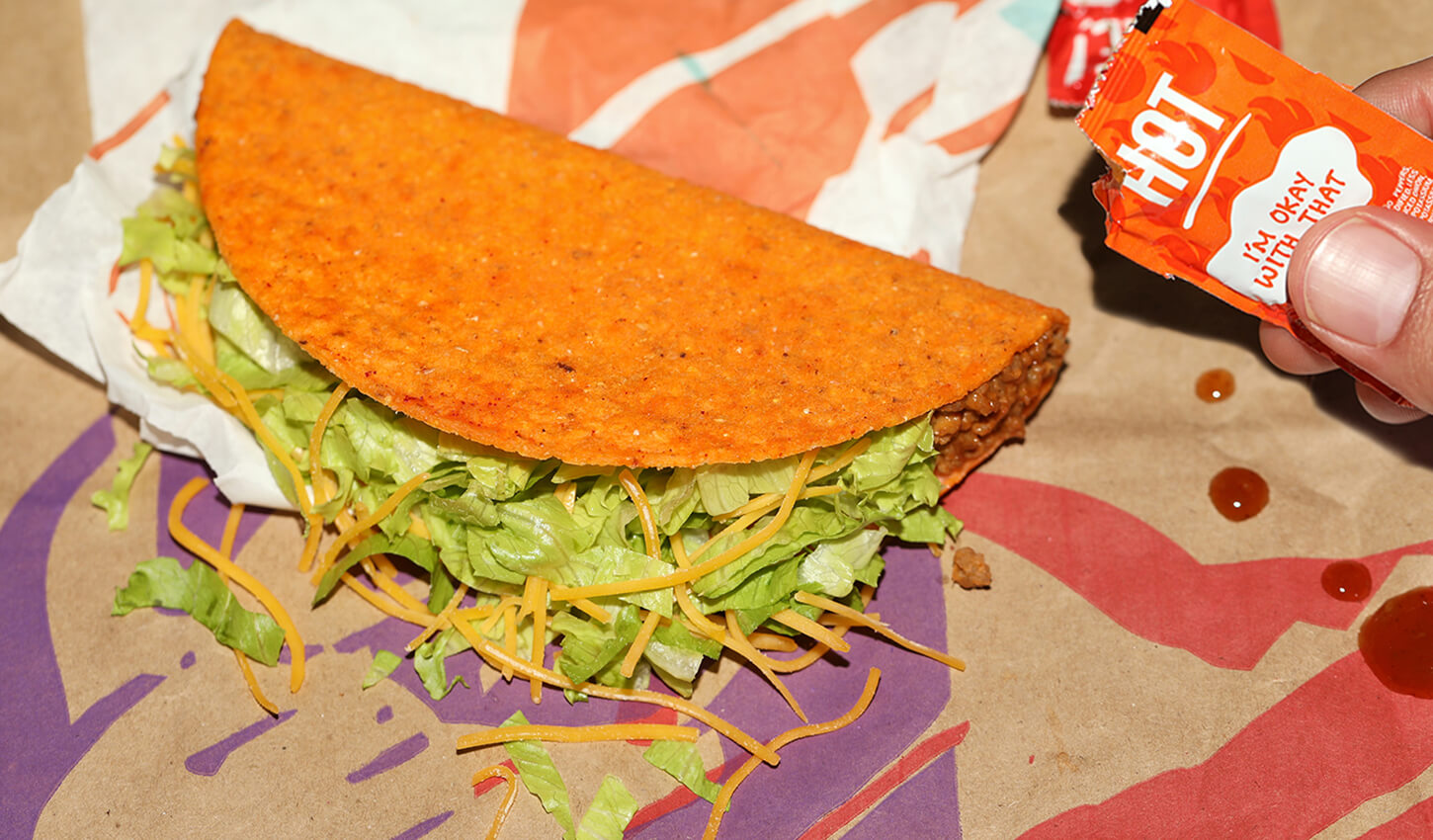
Taco Bell Doritos Locos Taco and sauce packet

Taco Bell, fresh off their victory in petitioning for the cancellation of the “Taco Tuesday” mark, will open a $5 million taco tab on September 12.

There’s no arguing that over at least the past few years Taco Bell has become the master of LTOs and attention-grabbing, loyalty-strengthening, and headline-generating promotions.

This campaign further solidifies the brand’s status as king of the fast-food campaigns.

“Taco T**sday” to “Taco Tuesday”

It’s highly unlikely that consumers and operators alike are unaware of the company’s “Taco T**sday” ads. The campaign, while playful, put a spotlight on the fact that, until recently, “Taco Tuesday” was a registered trademark.

Rather than spend millions of dollars to fight Taco Bell, Taco John’s, who previously had the rights to the mark, opted to relinquish the rights to the mark. Taco Bell’s argument was that nobody should be permitted to mark a common phrase.

“We’ve always prided ourselves on being the home of Taco Tuesday, but paying millions of dollars to lawyers to defend our mark just doesn’t feel like the right thing to do,” said Jim Creel, Taco John’s CEO. “As we’ve said before, we’re lovers, not fighters, at Taco John’s. So in that spirit, we have decided to begin sharing Taco Tuesday with a pledge to contribute $100 per location in our system to restaurant employees with children who are battling a health crisis, death or natural disaster. And we’re challenging our litigious competitors and other taco-loving brands to join us in supporting the people who serve our favorite food to guests across the nation.”

In fact, Creel fired a shot across the bow at Taco Bell at other rivals. After announcing their pledge to CORE, the CEO challenged other brands that want to use “Taco Tuesday” to do the same. The result would be quite the donation, considering that Taco John’s operates 400 restaurants in 21 states and Taco Bell alone operates more than 7,200 in the US. Look overseas and that number jumps up by about 1,000 locations in 30 countries.

Taco John’s has reportedly made good on their pledge, donating $40,000 to CORE, Children of Restaurant Employees.

What’s in a Mark?

Fast-food chain Taco John’s trademarked the phrase back in 1989. However, back in 1984, a California-based restaurant, Tortilla Flats, registered the trademark. According to some sources, the mark lapsed and Taco John’s snapped it up. That said, Tortilla Flats has sued other California restaurants for using the phrase throughout the years.

Interestingly, Taco John’s only had rights to the mark in 49 states. The exception is New Jersey, where Gregory’s owns the trademark. In fact, anyone who visits their site (as of the publication of this article) will see the phrase “Home of the Original Taco Tuesday!” right at the top.

However, it may surprise some to learn that a celebrity who appeared in Taco Bell’s “Taco T**sday” ads attempted to trademark the phrase in 2019. That celebrity? None other than Lebron James.

Clearly, this seemingly simple two-word phrase is a valuable trademark. It’s also likely that plenty of restaurants across the US have been surreptitiously using the phrase to drive traffic to their venues on Tuesdays for years.

The fact that Lebron James showed interest in the trademark and Taco Bell likely spent millions of dollars in ad revenue to have Taco John’s mark canceled shows the value. Time will tell how many millions of dollars the phrase will be worth to Taco Bell and other restaurant brands across the US.

Taco Tab

Some will see Taco Bell’s campaign as a massive brand bullying a smaller rival. Others will agree that it’s unfair for anyone to own the rights to such a common phrase.

In terms of exposure, I think this battle will help Taco John’s experience further growth. Last year was a banner year for growth for the franchise, and the brand was seeing growth back in 2021 as well.

After doing some digging, I learned that seven Taco John’s locations are owned by corporate; the plan for 2023 is to go from 375 stores to 400; and another 20 to 25 locations are planned for 2024. Per the Taco John’s website, initial layout for a franchise is between $942,000 and $1.4 for a single unit. A single franchise location generates annual revenue of around $1.2 million, on average.

Regarding Taco Bell, the brand is celebrating their victory—framed as a victory for all restaurants—with another of their famous and effective LTOs. On August 15, August 22, August 29, and September 5, Taco Bell guests can score a free Doritos Locos Taco. But the big celebration comes on September 12.

For that upcoming Taco Tuesday, Taco Bell will open a $5 million tab with DoorDash across the United States, with the exception of New Jersey. Again, Gregory’s owns the rights to the “Taco Tuesday” mark in the Garden State.

On September 12, Taco Bell will cover a portion of orders placed through the third-party delivery app to participating restaurants that offer Mexican cuisine. This does help the fast-food titan make the case that they fought this battle not just for themselves but all foodservice brands that wish to use the phrase “Taco Tuesday” without fear of legal action.

For further information, read the official Taco Bell press release below.

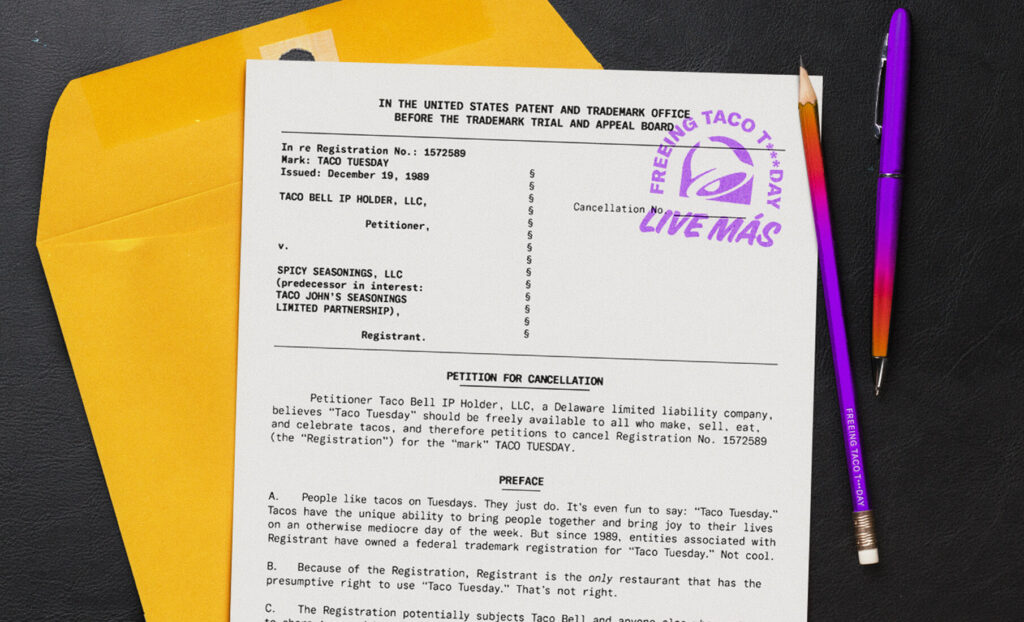
Taco Bell's "Liberate Taco T**sday" court petition

TACO BELL WILL HELP PAY FOR YOUR TACO TUESDAY CELEBRATION — EVEN IF IT’S NOT AT TACO BELL

Irvine, Calif. (August 8, 2023) – To celebrate the liberation of the Taco Tuesday trademark registration in 49 states, and to support and spotlight restaurants who now have the right to freely use Taco Tuesday, Taco Bell has announced that on Tuesday, September 12, Taco Tuesday fans (nearly) everywhere* can celebrate Taco Tuesday (nearly) anywhere – and Taco Bell will help pay for it.

On Taco Tuesday, September 12, Taco Bell, in partnership with DoorDash, is opening a $5 million taco tab to cover a portion of taco fans’ orders from any participating vendor selling Mexican cuisine. Because now that Taco Tuesday is free* – your tacos should be, too.

Leading up to the September 12 celebration, all Taco Bell locations will be offering a free Doritos® Locos Taco every Tuesday, no purchase necessary, on 8/15, 8/22, 8/29 and 9/5**.

“Taco Tuesday belongs to all who make, sell, eat and celebrate tacos, and this Free-For-All will not only thank taco fans who supported the cause, but will also spotlight local restaurants and vendors who can now embrace Taco Tuesdays without fear of legal action,” said Taco Bell U.S. Chief Marketing Officer, Taylor Montgomery. “When tacos win, we all win. We all win when Taco John’s decides to release its trademark registration, we all win when taco vendors everywhere are free to join the movement, and we all win when taco fans can freely celebrate and support Taco Tuesdays at Taco Bell or anywhere else.”

The Road to Freeing Taco Tuesday

In May 2023, Taco Bell took a bold step on behalf of taco lovers nationwide by filing legal petitions to cancel the two Taco Tuesday trademark registrations. The aim was simple: to free the phrase for restaurants nationwide. The message was clear: Taco Tuesday belongs to everyone, from Taco Bell to Taco John’s to your favorite local taco spot.

In late July, Taco John’s courageously decided to abandon its Taco Tuesday trademark registration. Not only did Taco John’s act benefit thousands of businesses across 49 states by making the term Taco Tuesday more freely available, Taco John’s also made a meaningful donation to Children of Restaurant Employees (CORE) for $40,000, which the Taco Bell Foundation has matched.

Supporting The Taco Community

Taco Bell has also committed to donating $1 million in partnership with the Taco Bell Foundation to support young people who make, sell, eat and celebrate tacos. Donations made by Rounding Up at checkout on Tuesdays will be matched up to $1 million. These donations will continue to fund the Taco Bell Foundation’s Community Grants and the Live Más Scholarship for fans and team members.

*The Taco Tuesday trademark registration has been canceled in all states except New Jersey. Therefore, the DoorDash offer will be limited to the 49 states where Taco Tuesday has been freed.

**NO PURCHASE NECESSARY. Offer valid on Tuesdays 8/15, 8/22, 8/29, and 9/5 only during local store operating hours while supplies last. Limit one (1) regular Free Seasoned Beef Nacho Cheese Doritos®

Locos Tacos per person, per offer day, available at participating U.S. Taco Bell® locations only. Not available with delivery orders unless placed directly on the Taco Bell app (delivery fees, taxes and tip apply). App and web orders require inputting offer code and customer must add a DLT to their cart. Not valid with any other offer. No substitutions. No cash value. Void where prohibited. Terms: ta.co/terms.

About Taco Bell Corp.

For more information about Taco Bell, visit our website at www.TacoBell.com, our Newsroom at www.TacoBell.com/news or www.TacoBell.com/popular-links. You can also stay up to date on all things Taco Bell by following us on LinkedIn, TikTok, Twitter, Instagram, Facebook and subscribing to our YouTube channel.

Images: Taco Bell

by David Klemt David Klemt No Comments

Cheers to the 2023 World Beer Cup Winners

Cheers to the 2023 World Beer Cup Winners

by David Klemt

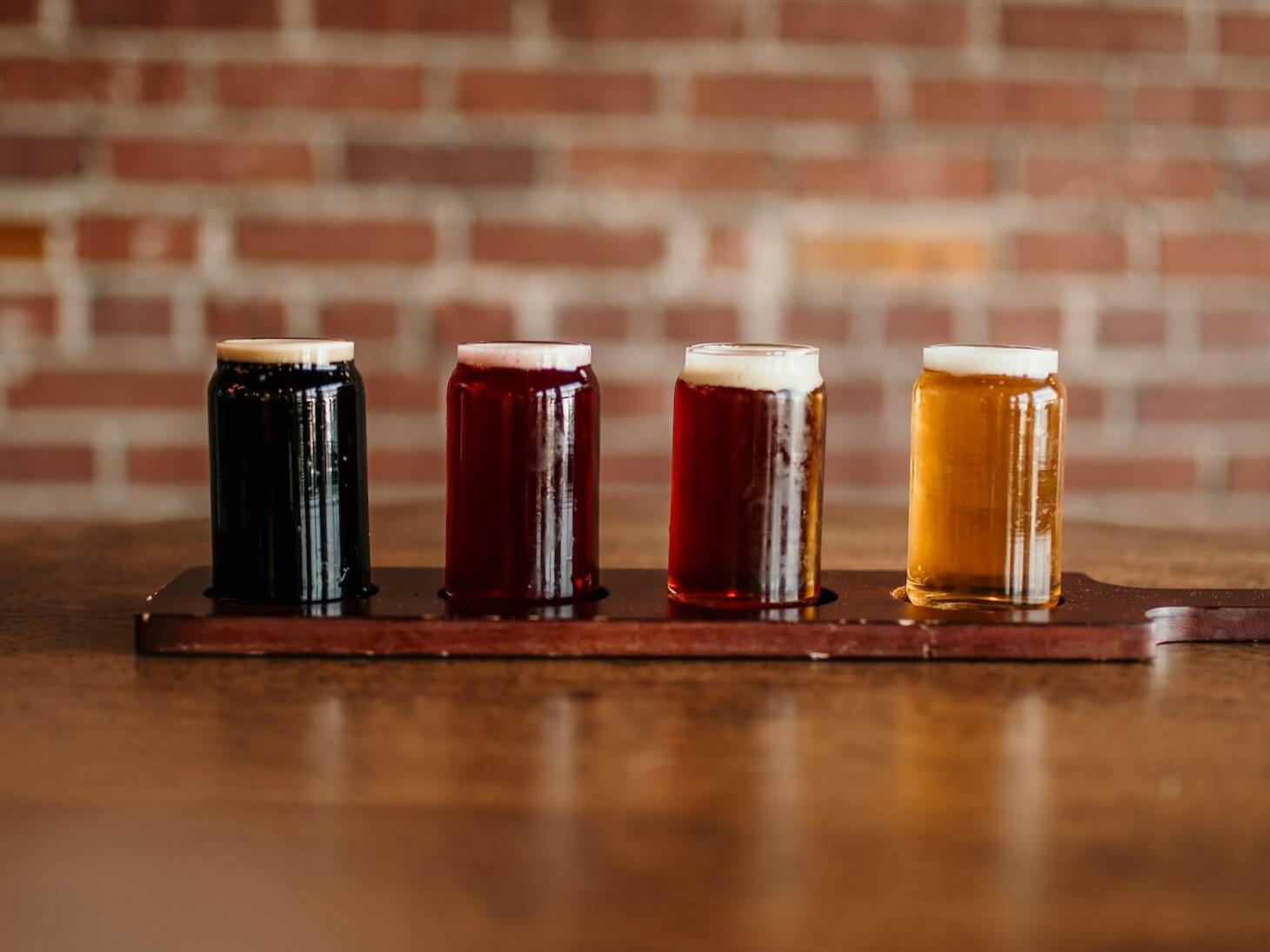
Flight of beers offering different styles

Raise a glass or hoist a stein in celebration of the 2023 World Beer Cup winners, a collection of some of the most incredible brews on the planet.

Since 1996, the World Beer Cup has established itself as “the Olympics of Beer” and is hosted by the Brewers Association. This year, 272 judges from 26 countries ranked submissions from 2,376 brewers across 103 categories. A staggering 10,213 beers were entered in the 2023 World Beer Cup.

On average, 99 beers are submitted for each category. Of note, no category is guaranteed to have three medalists. In theory, the judges assessing a given category may award only a silver or bronze medal, determining that there is no outstanding entrant deserving of gold.

While the average per category is 99 entrants, some styles have hundreds. The first five categories below boasted the most entrants in 2023.

For our coverage of the 2022 World Beer Cup winners, click here.

American-style India Pale Ale

412 entrants

  • Gold: Head Hunter (Fat Head’s Brewery & Saloon; North Olmsted, Ohio, USA)
  • Silver: Applied Science (Sunriver Brewing Co.; Sunriver, Oregon, USA)
  • Bronze: Old West (Craft Coast Beer & Tacos; Oceanside, California, USA)

Juicy or Hazy India Pale Ale

374 entrants

  • Gold: Wherever You Go (Green Cheek Beer Co.; Costa Mesa, California, USA)
  • Silver: Nectaronus Prime (Moksa Brewing Co.; Rocklin, California, USA)
  • Bronze: Nelson Hazy IPA (Prison Pals Brewing Co.; Doral, Florida, USA)

German-style Pilsener

233 entrants

  • Gold: Pils (Von Ebert Brewing, Pearl District; Portland, Oregon, USA)
  • Silver: Dollar Pils Y’all (Holler Brewing Co.; Houston, Texas, USA)
  • Bronze: Bibo (Creature Comforts Brewing Co., Southern Mills; Athens, Georgia, USA)

International Light Lager

220 entrants

  • Gold: Anne Bonny (Le Corsaire – Microbrasserie Pirate; Lévis, Québec, Canada)
  • Silver: 3Speed (Amsterdam Brewing Co.; Toronto, Ontario, Canada)
  • Bronze: Ultra Secret Enigma (Liability Brewing Co.; Greenville, South Carolina, USA)

Wood- and Barrel-aged Strong Stout

202 entrants

  • Gold: Big Mistake (11 Below Brewing Co.; Houston, Texas, USA)
  • Silver: BA Sexual Chocolate (Foothills Brewing; Winston-Salem, North Carolina, USA)
  • Bronze: Vladislav (Diebolt Brewing Co., Denver, Colorado, USA)

I selected another dozen categories, which you’ll find below. These include American Wheat Beer, Non-alcohol Beer, and Pumpkin Beer.

For the full list of 2023 World Beer Cup winners, please click here. Cheers!

Session India Pale Ale

  • Gold: Wild Gravity (Bend Brewing Co.; Bend, Oregon, USA)
  • Silver: Trump Hands (Cannonball Creek Brewing Co.; Golden, Colorado, USA)
  • Bronze: Summatime (603 Brewery; Londonberry, New Hampshire, USA)

American Wheat Beer

  • Gold: Taildragger 5G (Saddle Mountain Brewing Co.; Goodyear, Arizona, USA)
  • Silver: Meister (Eppig Brewing; Vista, California, USA)
  • Bronze: Miner’s Gold (Lewis & Clark Brewing Co.; Helena, Montana, USA)

Belgian Fruit Beer

  • Gold: Central City Brewing Framboise (Central City Brewers and Distillers; Surrey, British Columbia, Canada)
  • Silver: Vieux Bois Lambic Inspired Ale w/ Cranberry & Raspberry (Bozeman Brewing Co.; Bozeman, Montana, USA)
  • Bronze: Turtle Kriek (Peticolas Brewing Co.; Dallas, Texas, USA)

Belgian-style Sour Ale

  • Gold: Vintage 2022 (New Glarus Brewing Co.; New Glarus, Wisconsin, USA)
  • Silver: Chance, Luck and Magic 2020 (Garage Project; Wellington, New Zealand)
  • Bronze: Borealis (Lamplighter Brewing Co.; Cambridge, Massachusetts, USA)

English-style Brown Ale

  • Gold: Shhhhhh…This Is Ryan’s Award Winning Brown Ale (Green Cheek Beer Co., Costa Mesa; Costa Mesa, California, USA)
  • Silver: Black Cats (Streetside Brewery; Cincinnati, Ohio, USA)
  • Bronze: Brown Ale (Grid City Beer Works; Salt Lake City, Utah, USA)

South German-style Hefeweizen

  • Gold: Altstadt Hefe (Altstadt Brewery; Fredericksburg, Texas, USA)
  • Silver: Flying W Hefeweizen (Little Dry Creek Brewery; Greenwood Village, Colorado, USA)
  • Bronze: Fujizakura Kogen Beer Weizen (Fujizakura Heights Beer; Minamitsuru-gun, Yamanashi Prefecture, Japan)

Classic Saison

  • Gold: Saaz Dryhopped Saison (33 Brewing Experiment; Vancouver, British Columbia, Canada)
  • Silver: Juilletistes (Bruery Terreux; Placentia, California, USA)
  • Bronze: Valor (Tooth and Nail Brewing Co.; Ottawa, Ontario, Canada)

Pumpkin Beer

  • Gold: Pumpkin Ale (Backpocket Brewing; Coralville, Iowa, USA)
  • Silver: Pumpkinator (Saint Arnold Brewing Co.; Houston, Texas, USA)
  • Bronze: Jack O’Lantern Ale (Bond’s Brewing Co.; Laramie, Wyoming, USA)

Chili Beer

  • Gold: Yellow Fever (Comrade Brewing Co.; Denver, Colorado, USA)
  • Silver: Kimchi Sour (Dokkaebier; Oakland, California, USA)
  • Bronze: Oaxaca Choca Mexican Chocolate Stout (New Realm Brewing Co., Charleston; Charleston, South Carolina, USA)

Smoke Beer

  • Gold: Unearthing the Orb (Resolute Brewing Co.; Centennial, Colorado, USA)
  • Silver: Smokehaus Bock (Devils Backbone Basecamp Brewpub & Meadows; Roseland, Virginia, USA)
  • Bronze: Colossal 2 (Port City Brewing Co.; Alexandria, Virginia, USA)

Gluten-free Wheat Beer

  • Gold: Ghostfish 8th Anniversary Beer (Ghostfish Brewing Co.; Seattle, Washington, USA)
  • Silver: Seven Spice Anniversary Saison (Holidaily Brewing Co.; Golden, Colorado, USA)
  • Bronze: Ripped Jeans and Wolf Shirts (ALT Brew; Madison, Wisconsin, USA)

Non-alcohol Beer

  • Gold: Superb-Owl (Uiltje Brewing Co.; Haarlem, North Holland, Netherlands)
  • Silver: Just the Haze (Boston Beer Co., Samuel Adams Brewing Co.; Boston, Massachusetts, USA)
  • Bronze: Galactic Extra Dark (Big Drop Brewing Co.; Wilmington, Delaware, USA)

Image: Daniel Lee on Unsplash
KRG Hospitality Bar 101 Techniques

by David Klemt David Klemt No Comments

Celebrate the Negroni, Support Slow Food

Celebrate the Negroni and Support Slow Food

by David Klemt

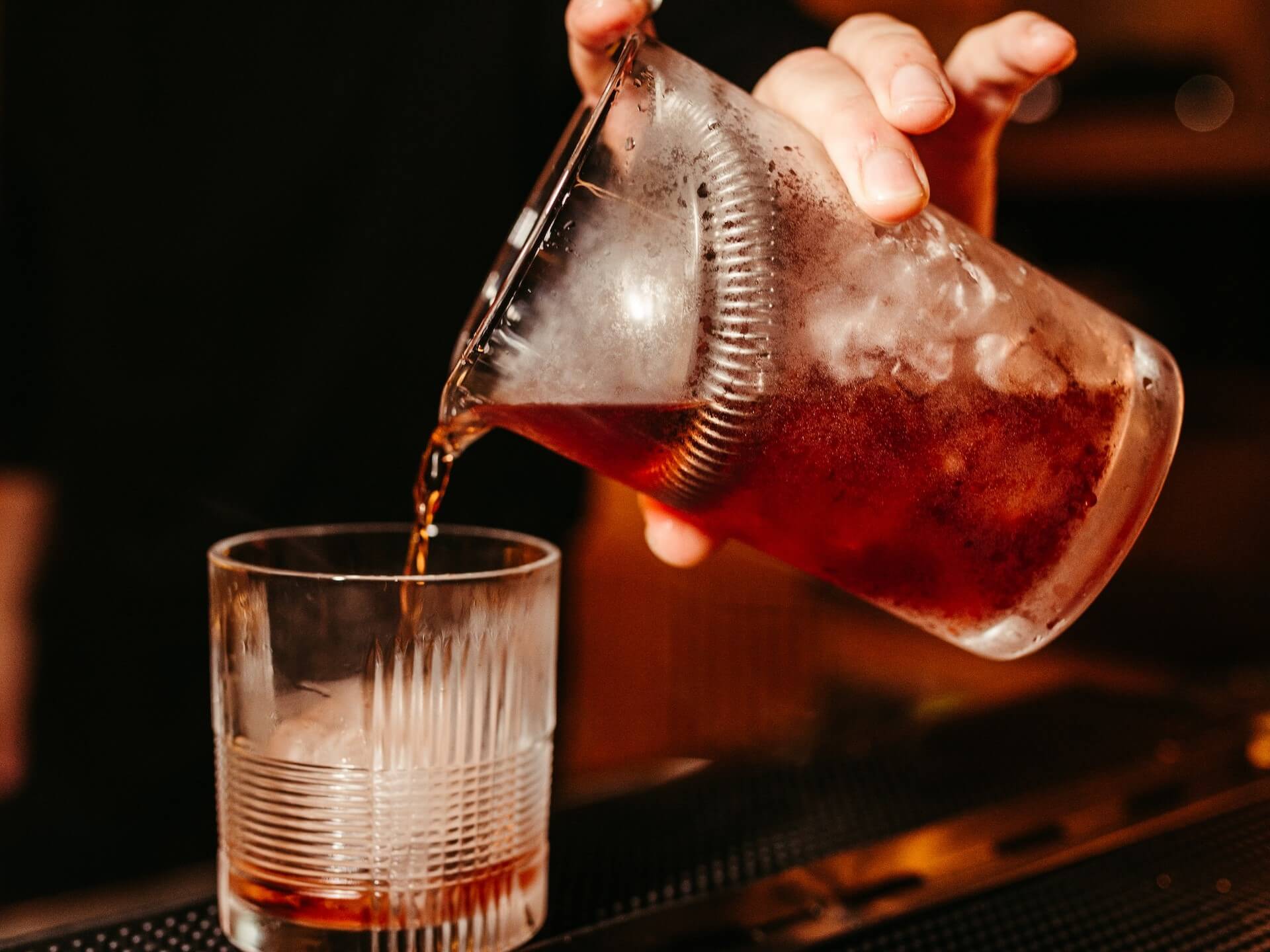
Bartender pouring Negroni into glass

This month, operators will have the opportunity to sign their bars up to take part in the tenth-anniversary celebration of Negroni Week.

For 2023, Negroni Week hosts Imbibe Magazine and Campari are raising funds for Slow Food. Sponsors also include Cinzano, Bulldog Gin, Bols Genever, and Coopers’ Craft Bourbon.


View this post on Instagram


A post shared by Campari USA (@campariusa)

Negroni Week will take place from September 18 through September 24. Registration is now live and operators can sign up their bars via this link.

So, we’re helping spread the word early and giving operators and their teams plenty of time to prepare to participate this year.

Negroni Week 2023

After first launching in 2013, Negroni Week is celebrating their decennial year.

Over the course of ten years, Imbibe and Campari have seen tremendous growth and results. In its inaugural year (or perhaps inaugural week is more accurate), a little over 100 venues participated. In its second year, 1,300 venues registered for Negroni Week.

Now, thousands of venues sign up every year, helping to raise money for worthy causes. To date, Negroni Week boasts more than $4 million in funds for charitable organizations.

Participation really couldn’t be any simpler: register, make a donation of at least $25, serve Negronis and/or variations of Negronis, and donate proceeds from your Negroni Week LTO menu.

After completing registration and making at least the minimum donation, an operator’s venue will gain placement on the Negroni Week website. The listings are searchable by state and city. Venues that donate $250 or more will carry a Premium Donor designation.

Those looking for inspiration for their charity LTO menus can click here to sift through Negroni Week’s recipe database.

Slow Food

Simply put, Slow Food’s mission is to help everyone access food that’s good for them, good the people who grow it, and good the planet as a whole.

An even more succinct description comes from the Slow Food website: access to food that’s “good, clean, and fair for all.”

Further, Slow Food seeks to prevent the loss local food cultures, along with food traditions. The organization was founded in 1989 and is now active in more than 160 countries.

In the US, Slow Food operates as a 501(c)(3) organization and has been active in Canada for several years. The charitable organization has had a strong presence in the provinces of British Columbia, Calgary, Montréal, and Ontario.

Get Ready

With just three ingredients in a 1:1:1 ratio, any bar team should be able to handle putting delicious Negronis across the bar.

So, operators should ensure their team can craft a traditional Negroni while encouraging them to work on some creative variations.

We’ll see in a little over a month to celebrate Negroni Week!

Image: Jonathan Borba on Unsplash
KRG Hospitality Complete Bar Menu Audit

by David Klemt David Klemt No Comments

Drink Donnybrook: Let’s Talk Piña Colada

Drink Donnybrook: Let’s Talk Piña Colada

by David Klemt

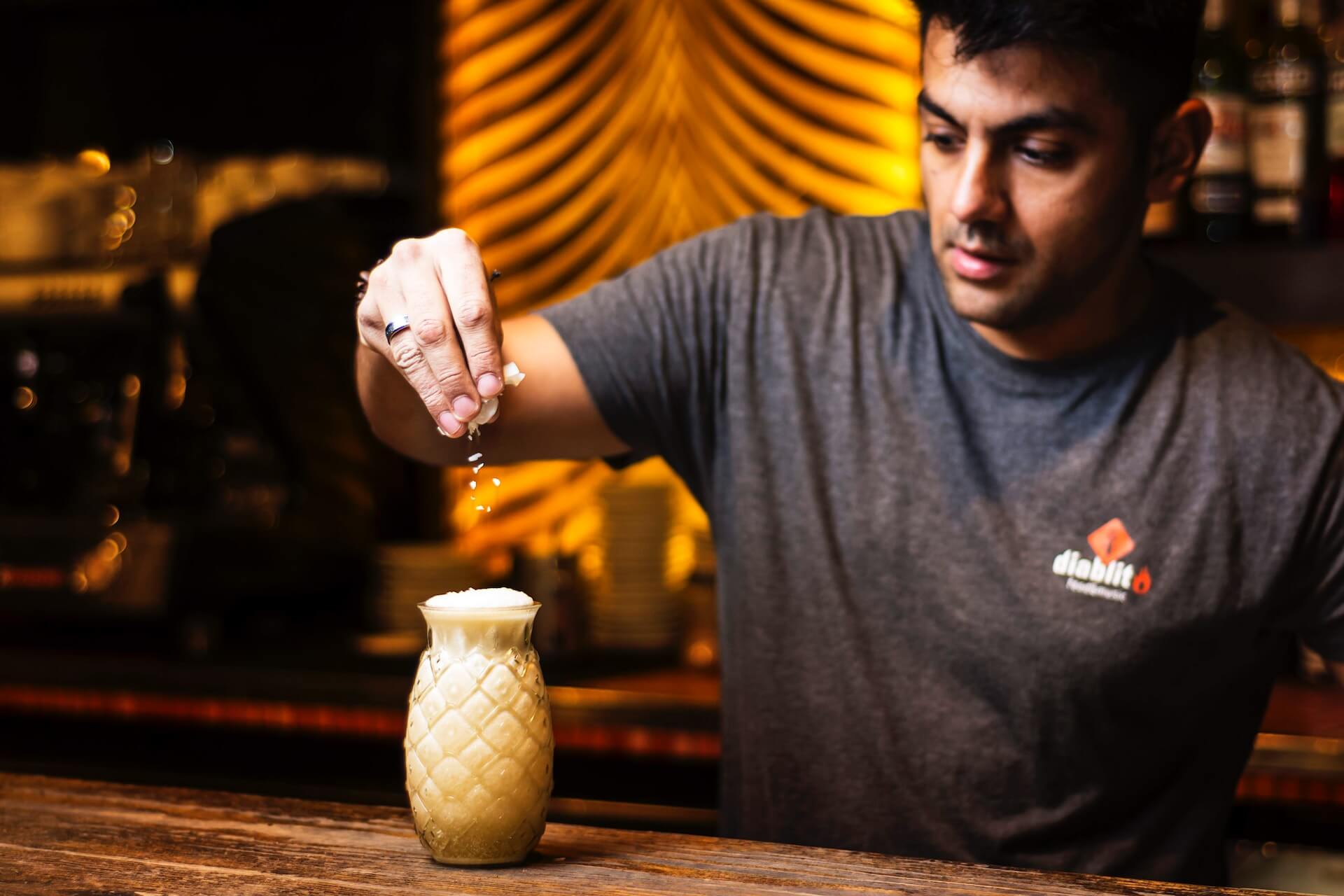
A bartender serving a cocktail in a pineapple-shaped glass

Temperatures are rising and there are still about six weeks of summer left, so let’s take a look at a refreshing warm-weather hero: the Piña Colada.

So far we’ve looked at the Martini and Whiskey Sour. Now, it’s another classic’s turn in the Drink Donnybrook spotlight.

One could claim that the Piña Colada is one of the original “lost cocktails.” Of course, that depends on which origin story turns out to be true.

If the Piña Colada dates back to the first quarter of the 19th century, then it’s a pirate cocktail once lost to the winds of time. Puerto Rican pirate Roberto Cofresí, also known as El Pirata Cofresí, supposedly served his crews a drink consisting of rum, coconut, and pineapple. Sounds like a Piña Colada to me.

The reason I said it could be considered an original lost cocktail is that Cofresí died in 1825. Disputed history says his drink recipe disappeared with his death.

However, the Piña Colada may have far less metal roots than being invented by a famous pirate. Puerto Rico’s official drink may have simply been created by a bartender.

One Drink, Three Bartenders

Ramón “Monchito” Marrero may have created the Piña Colada while at the helm of the Beachcomber Bar at the Caribe Hilton in Old San Juan, Puerto Rico, in 1952. Or maybe it was 1954.

It’s almost like bartenders should be able to more easily protect their intellectual properties so we can identify their cocktails’ true origins.

Forgive the digression. You’ll be shocked—shocked, I say—to learn that another bartender may have created the Piña Colada. During the same year. At the same hotel.

That bartender is Ricardo García, and the claim is that he invented the drink during a coconut shortage.

Would it surprise you to learn that a third bartender working in Old San Juan also claimed credit for the Piña Colada? Ramón Portas Mignot said he came up with this tropical classic in 1963 at Barrachina. The restaurant and bar’s ownership apparently agreed, because they installed a plaque at the front door backing Mignot’s claim.

Hey, if it has a plaque, it must be true; they don’t just give those to anyone. Oh, and you can check out that plaque for yourself: Barrachina still exists and enjoys a 4.5 rating from over 4,100 Google reviews.

A Rough Patch

Unfortunately, once anointed “the world’s most famous drink,” the Piña Colada had a rough, well, several decades.

In the 1970s, the drink’s quality plunged and fell out of favor with cocktailians. Any technique for building the nautical libation went down the bar sink. It was easier and cheaper to just make Piña Coladas with premade mixes and cheap rum.

Add to that the trend toward serving bastardized versions in oversized glassware at mediocre hotel pools, tourist trap hotel bars, weird supper clubs nowhere near a beach, and on cruise ships and you can see why cocktail connoisseurs snubbed this classic.

The Cocktail Revolution of the 2000s helped restore the Piña Colada’s dignity and popularity. It may not find itself in as much demand as the Margarita or Daiquiri, but it’s no longer missing from serious cocktail programs.

So raise a Hurricane—or a cocktail glass or coupe—to the Piña Colada today. ¡Salud!

Recipe

  • 2 ounces Light rum
  • 1 ½ ounces Cream of coconut
  • 1 ½ ounces Pineapple juice
  • ½ ounce Freshly squeezed lime juice
  • Pineapple leaf and pineapple wedge for garnish

For a more traditional preparation, fill a Hurricane glass with ice and set to the side. Add the liquid ingredients to a shaker with ice. Shake for at least 30 seconds. Toss the ice from the Hurricane glass and replace with pebble ice. Strain cocktail into glass and garnish.

Now, you don’t need to serve a Piña Colada in a Hurricane. Plenty of bars and restaurants send them across the bar in coupes or other cocktails glasses, sans garnish. Speaking of garnishing this classic, some people expect whipped cream, a lime wedge or wheel, a cherry, or even all three. You’ll see bartenders serve them with sugar rims and umbrellas. Like me, you’ve probably also seen them served with an orange wheel.

Then there are the frozen Piña Coladas and fruit Piña Coladas, versions made with various styles of rum… People just can’t seem to resist putting their stamp on this classic.

Dealer’s choice, I suppose, or you can ask guests what preparation and garnish they prefer. Or, and this is the approach I recommend, nail down your bar’s signature Piña Colada, including garnish (or none).

Image: Kike Salazar N on Unsplash
KRG Hospitality Start-Up Restaurant Bar Hotel Consulting Consultant Solutions Plans Services

by David Klemt David Klemt No Comments

iPourIt Releases Their 2023 Pour Report

iPourIt Releases Their 2023 Pour Report

by David Klemt

Beer pouring into glass from tap

Interactive self-serve beer experience platform iPourIt‘s latest report, the 2023 Pour Report, is now available for download and review.

iPourIt is a pioneer in the self-serve beverage space. While it may seem counter-intuitive to some, many guests have shown time and again that they enjoy using self-serve walls. For these guests, a not in any way insignificant number, iPourIt installations enhance the guest experience, increase loyalty, and boost revenue.

And while many people associate iPourIt and self-serve programs with beer, these systems can also pour wine, cocktails on tap, spirits, non-alcohol beverages, and soft drinks.


View this post on Instagram


A post shared by Matt Plapp (@mattplapp)

Another benefit from iPourIt? Transparency and sharing of data. The company doesn’t limit providing valuable guest behavior insight to their clients. Rather, they make the data they collect available to anyone. Simply head to their website, fill out a few fields, and gain important beverage insights.

Anyone curious can choose between a standard report and a “pro” version. Both are free to download and peruse. People can also read our article that dives into their fourth-annual report via this link.

Below you’ll find key takeaways from their 2023 report. I strongly urge operators to download and review either report.

The Who

We agree that demographics are a metric that people and businesses often misuse. Valuegraphics can be far more effective for businesses looking to build loyalty and boost revenue.

Still, demographics can provide beneficial insights.

First, let’s look at how men and women used iPourIt systems in 2022. Men poured 20,477,288 ounces last year, whereas women poured 10,848,435 ounces. The average per pour for men was 6.4 ounces in comparison to 5.3 ounces per pour from women. On average, men spent $14.72 per visit to an iPourIt-equipped location; women spent $12.24.

Next, the generational breakdown. IPA was the number-one style poured for Baby Boomers, Generation X, and Millennials. For legal-drinking-age Generation Z drinkers, IPA came in second; their top pour style was cider. Likewise, Lager claimed second place for Boomers, Gen X, and Millennials. Second was IPA for Gen Z, and Lager was third. Wheat beer was third place for Boomers, fourth for Gen X and Millennials, and fifth for Gen Z. Sour came in fifth for Gen X and Millennials fourth for Gen Z; for Boomers, the style didn’t rank among the top five. Stout clinched the fifth spot for Boomers.

Finally, in terms of traffic, men of every age group poured more ounces than their female counterparts.

The What

Below, the top 10 styles of beer poured by men:

  1. Fruit beer
  2. Pale Ale
  3. Blonde
  4. Pilsner
  5. Stout
  6. Sour
  7. Wheat beer
  8. Cider
  9. Lager
  10. IPA

In descending order, the top five (download the report for the top ten) products poured by men were Michelob Ultra, Bud Light, Golden Road Brewing Mango Cart, Coors Light, and Modelo Especial.

And now the top styles of beer or category of beverage poured by women:

  1. Stout
  2. Fruit beer
  3. Blonde
  4. White wine
  5. Hard seltzer
  6. Wheat beer
  7. Sour
  8. Lager
  9. IPA
  10. Cider

Also in descending order, the top products poured by women were Michelob Ultra, Mango Cart by Golden Road Brewing, Bud Light, Ace Pineapple Cider, and Coors Light.

The Where

The 2023 Pour Report by iPourIt breaks the US down into five regions: West, Southwest, Midwest, Southeast, and Northeast.

Because our American head office is in Las Vegas and our hotel consultant is in Pennsylvania, we’ll look at the West and Northeast.

The top-five pours for the West in 2022 were:

  1. Bud Light
  2. Firestone Walker Brewing Co. 805
  3. Golden Road Brewing Mango Cart
  4. Coors Light
  5. Modelo Especial

While the top-five pours in the Northeast were:

  1. Blue Moon Brewing Co. Belgian White
  2. Allagash Brewing Co. White
  3. Lord Hobo Brewing Co. Boom Sauce
  4. Sloop Brewing Co. Juice Bomb
  5. Stella Artois

For the curious, Bud Light and Coors Light are categorized as American-style Light Lagers, 805 is a Blonde Ale, Mango Cart is a Wheat Ale, and Modelo Especial is a Mexican-style Pilsner. Blue Moon and Allagash White are both Belgian-style wheat beers (or Witbiers), Boom Sauce is a Double IPA, Juice Bomb is a Northeastern IPA, and Stella Artois is a Lager.

For further insights, please download this year’s iPourIt report here.

Image: cottonbro studio on Pexels

KRG Hospitality Beverage Programming

by David Klemt David Klemt No Comments

5 Books to Read this Month: August 2023

5 Books to Read this Month: August 2023

by David Klemt

Flipping through an open book

Our inspiring and informative August book selections will help you and your bar team take your front of house and bar program to the next level.

For this month’s list we’re showcasing the 17th annual Spirited Awards finalists in the Best New Cocktail or Bartending Book category. So, below you’ll find the top-four nominees in that particular category, plus an additional self-improvement book.

To review the book recommendations from July 2023, click here.

Let’s jump in!

The Bartender’s Manifesto: How to Think, Drink, and Create Cocktails Like a Pro

First up, this book from June 2022 by Toby Maloney with Emma Janzen. Not only has this book won a James Beard Award, it took home this year’s Spirited Award for Best New Cocktail or Bartending Book.

From Amazon: “Take a raucous romp through the essential stages of fashioning cocktails and learn the hows and whys of bartending with acclaimed mixologist Toby Maloney and the team from The Violet Hour. When the pioneering cocktail bar opened in Chicago in 2007, it set a high standard with an innovative training program that teaches not just how to replicate classic cocktail recipes flawlessly, but how to embrace ingenuity, make smart decisions, and create original, inspired recipes from rote.”

Pick up the hardcover here.

Mindful Mixology: A Comprehensive Guide to No- and Low-Alcohol Cocktails with 60 Recipes

Next, Mindful Mixology by Derek Brown, with a foreword by Julia Bainbridge. As all operators should know by now, low- and no-ABV cocktails are here to stay. From aperitivo hour and zero-alcohol to simply drinking less but better, consumers are changing their relationships with cocktails. This book will help operators and their teams navigate the moderation movement.

From Amazon: “Creating these drinks isn’t as simple as removing the alcohol. No- and low-proof cocktails still have to be balanced and still have to be delicious, but they don’t operate exactly like cocktails with alcohol. The drinks Brown presents in this book are meticulously choreographed around taste, texture, body, and piquancy to result in surprisingly complex ‘adult beverages’ minus the booze.”

Grab the hardcover today.

Modern Classic Cocktails: 60+ Stories and Recipes from the New Golden Age in Drinks

Robert Simonson is also a James Beard Award-winning author up for a 2023 Spirited Award. Not only are there more than 60 cocktail recipes in Simonson’s book, he explores what it means for someone to create a modern classic cocktail. No, your bar team can’t simply “invent” a new drink and declare it a modern classicthere are actual considerations, like public opinion, that make it so.

From Amazon: “What elevates a modern cocktail into the echelon of a modern classic? A host of reasons, all delineated by Simonson in these pages. But, above all, a modern classic cocktail must be popular. People have to order it, not just during its initial heyday, but for years afterward. Tommy’s Margarita, invented in the 1990s, is still beloved, and the Porn Star Martini is the most popular cocktail in the United Kingdom, twenty years after its creation.”

Make sure to get your hardcover copy today.

The New York Times Essential Book of Cocktails (Second Edition): Over 400 Classic Drink Recipes With Great Writing from The New York Times

If you want hundreds of cocktail recipes and amazing writing, this is the book for you. There are more than 400 recipes in this book, from classics to modern craft drinks. Oh, and there are essays from an array of fantastic writers, including Rebekah Peppler, David Wondrich, Robert Simonson, and Jim Meehan. There are also interviews with icons like Ivy Mix and Sother Teague.

Truly, this is one of the most comprehensive cocktail books every printed.

Pick up this book in hardcover format now.

Atomic Habits: An Easy & Proven Way to Build Good Habits & Break Bad Ones

A couple of weeks back, we had a KRG Hospitality team meeting about habits. Habits we’re proud to have developed, habits we’d like to focus on developing, and habits we’d like to work on losing. This book, from James Clear, is one of the resources we talked about.

From Amazon: “Clear is known for his ability to distill complex topics into simple behaviors that can be easily applied to daily life and work. Here, he draws on the most proven ideas from biology, psychology, and neuroscience to create an easy-to-understand guide for making good habits inevitable and bad habits impossible. Along the way, listeners will be inspired and entertained with true stories from Olympic gold medalists, award-winning artists, business leaders, life-saving physicians, and star comedians who have used the science of small habits to master their craft and vault to the top of their field.”

Order the paperback today.

Image: Mikołaj on Unsplash
KRG Hospitality Mindset Coaching

by David Klemt David Klemt No Comments

Program for Unique Holidays: August 2023

Program for Unique Holidays: August 2023

by David Klemt

"Think about things differently" neon sign

Do you want to stand out from from other restaurants and bars in your area? Change how you think about your August holiday promotions.

Several holidays are set against every date on the calendar, and this month is no exception. These holidays range from mainstream to esoteric.

Pay attention to the “weird” or unique holidays to raise eyebrows, carve out a niche for your restaurant or bar, and attract more guests. Why do what everyone else is already doing? Why program only around the same holidays as everyone else?

Of course, you shouldn’t try to celebrate every holiday, strange or otherwise. Focus on the days that are authentic to your brand; resonate with your guests; and help you grab attention on social media.

You’ll find suggestions for promotions below. However, the idea behind our monthly holiday promotions roundup is to inspire you and your team to get creative and come up with unique programming ideas.

For our July 2023 holidays list, click here.

August 4: International Beer Day

In and of itself, International Beer Day isn’t a unique or obscure holiday. However, with the vast array of brewers, beer styles, and beers on offer around the world, it can be a day to highlight unique and obscure beers.

This is one of the best holidays for you to make your guests aware of your more exclusive or lesser-known beer selections.

August 5: National Jamaican Patty Day

If your kitchen has the capability to make delicious pastries, this is a fantastic holiday. A Jamaican patty consists of layered, flaky crust wrapped around jerk chicken, beef, pork, or vegetables mixed with spices. These are delicious, great with a refreshing drink, and perfect for sharing. Oh, and you and your kitchen can decide how hot or mild to make the spices. Just make sure the flavors are authentic and that you honor the culture.

August 7: British Columbia Day, Heritage Day, Natal Day, New Brunswick Day, Ontario Civic Holiday, Saskatchewan Day, and Terry Fox Day

In order, these are holidays celebrated in the provinces of British Columbia, Alberta, Nova Scotia, New Brunswick, Ontario, Saskatchewan, and Manitoba. Depending on the province, this is either a  guaranteed three-day holiday or a Monday that businesses can choose to give their employees off. That means for the most part, there’s plenty of opportunity to leverage a long weekend in seven provinces throughout Canada, perfect for highlighting food and drink promotions.

This also means that operators across America can feature F&B specials that celebrate their neighbors to the north. Get creative!

August 11: Play in the Sand Day

Should you be a beach- or lakefront property or otherwise located on sand, this is your time to shine. Set up games like cornhole, giant Jenga, and giant Connect Four, create an LTO menu that encourages groups to come socialize at your bar or restaurant, and celebrate in the sand.

August 16: National Rum Day

Again, this isn’t an unknown holiday. However, you can ensure you stand out on National Rum Day by getting your hands on unique bottles, such as funky rum styles and high-age-stagement expressions.

August 17: National Nonprofit Day

Do you, your guests, and your team support any nonprofits? If so, this is an excellent way to bring people together and raise some money for worthy causes. Further, National Nonprofit Day provides you with an opportunity to show your community that you care and give back.

August 22: National Bao Day

Much like National Jamaican Patty Day, National Bao Day gives you and your kitchen the opportunity to create fun foods that will excite and delight your guests. Just ensure your kitchen staff is up to the task of creating these delicious, steamed buns.

August 27: National Just Because Day

Have an idea for a promotion that doesn’t quite fit with anything on the calendar? This is the perfect day to let it rip!

August 29: National Lemon Juice Day

Lemon juice is a key ingredient for an incredible number of cocktails. So, shine a light on all the heavy lifting this citrus does in drinks! One way to accomplish this is by creating an LTO of your guests’ favorite drinks that feature lemon juice.

August 31: Eat Outside Day

Have outside seating? Have the capability of bringing food trucks into your parking lot or just outside your business? I think you know where I’m going with this, and what to do.

Image: Ivan Bertolazzi on Pexels

KRG Hospitality Start-Up Restaurant Bar Hotel Consulting Consultant Solutions Plans Services

by David Klemt David Klemt No Comments

Drink Donnybrook: Let’s Talk Whiskey Sour

Drink Donnybrook: Let’s Talk Whiskey Sour

by David Klemt

Whiskey Sour cocktail on table

If I were to say that the Whiskey Sour is a cocktail with an uncertain and disputable origin, would you find that statement surprising?

Regular readers of KRG Hospitality articles probably won’t think that’s shocking. After all, it’s well known at this point that I enjoy diving into cocktails with “hazy” histories.

For example, there’s the Martini, the Mint Julep, and the Margarita. I guess if you want to ensure it causes endless debate, you should make certain your cocktail’s name begins with the letter “M.”

Dial “M” for “moot,” as it were.

One thing we can state with certainty is that the Whiskey Sour is a true classic cocktail. We can also state with conviction that it will always boast decades of popularity amongst drinkers, particularly in America.

This particular sour cocktail may not be among the top ten or 20 most-popular drinks, but it was at one point. One can make the argument that the Whiskey Sour was among the most popular for a century.

So popular, in fact, that we dedicate an entire day to it. We celebrate the Whiskey Sour on National Whiskey Sour Day, August 25. This year, we honor this classic on a Friday.

“M” is for “Mystery”

A ubiquitous tipple for a century? Looking into what we know of the Whiskey Sour’s history, yes.

That may seem like a bold claim. However, it’s possible its time in the spotlight boasts more than 100 years.

This comes down to the Whiskey Sour’s creation and when it became so popular. Interestingly, it appears historians can’t agree on when it was first mentioned.

For example, some say the recipe for the Whiskey Sour first showed up in print in Jerry Thomas’ The Bar-Tenders Guide. This legendary tome was first published in 1862. Then there are those who say the cocktail first appeared in 1870 in the Waukesha Plaindealer, a Wisconsin newspaper.

Of course, there’s a technicality. In The Bar-Tenders Guide, the 1862 print specifically mentions the Brandy Sour, the Gin Sour, and a rum sour called the Santa Cruz.

Either way, we can assume with confidence that the cocktail was known to at least a handful of bartenders and bar guests before the recipe was published in 1862. Then we can add this quote from David Wondrich about just how important the Whiskey Sour has been to American bargoers:

From roughly the 1860s to the 1960s, the Sour, and particularly its whiskey incarnation, was one of the cardinal points of American drinking, and one of the few drinks that could come near to slugging it out with the vast tribe of cocktails in terms of day-in, day-out popularity.”

If we trust Wondrich’s understanding of cocktail, spirits, and bar historyand I think it’s safe to say we absolutely canthere’s at least a century’s worth of human history where at least Americans couldn’t seem to enjoy enough Whiskey Sours.

Prepare Your LTOs

As a member of the Sour Family of cocktails, the Whiskey Sour makes it easy to build an LTO menu for National Whiskey Sour Day.

First, of course, there’s the standard Whiskey Sour recipe: two ounces whiskey, 3/4-ounce fresh lemon juice, 3/4-ounce simple syrup, and a small egg white (optional).

Then there’s one of my favorite cocktails, the Penicillin: two ounces blended Scotch, 3/4-ounce fresh lemon juice, 3/4-ounce honey-ginger syrup, and 1/4-ounce Laphroaig 10 or other Islay Scotch (fl0at).

Finally, to add a third LTO because people like things in threes, there’s the New York or Continental or Southern Whiskey Sour: two ounces rye or bourbon, one ounce fresh lemon juice, 3/4-ounce simple syrup, one small egg white (optional), and 1/2-ounce red wine (float).

Of course, there are other riffs on the Whiskey Sour (the Gold Rush, for example) you can include on your LTO menu.

There you have it: another cocktail whose creator will likely never get full credit for their influential invention. Cheers to this mystery person!

Image: Ambitious Studio* – Rick Barrett on Unsplash
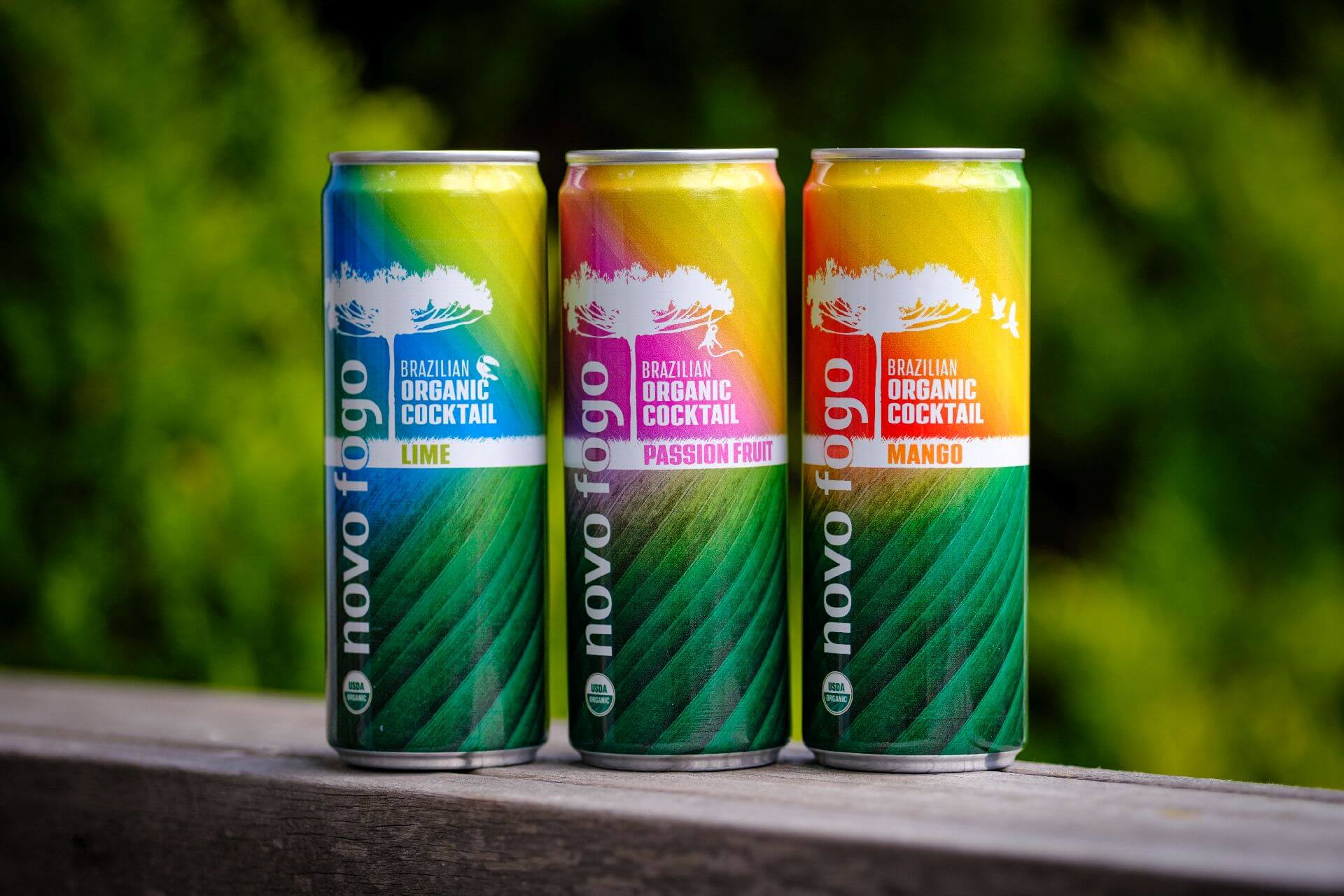
KRG Hospitality Beverage Programming

by David Klemt David Klemt No Comments

Cheers to the Spirited Awards Winners!

Cheers to the 2023 Spirited Awards Winners!

by David Klemt

Bartender presenting cocktail

A toast to the nominees and winners!

Cheers to each of the winning bars, teams, and individuals taking home awards from the 17th annual Spirited Awards at Tales of the Cocktail 2023 in New Orleans!

Spirits educator, advocate, and bartender’s bartender Tiffanie Barriere earned the well-deserved Tales Visionary Award. Master Distiller Desmond Payne, MBE, took home the Helen David Lifetime Achievement Award.

Compellingly, a number of so-called secondary and tertiary markets are taking awards back to their home cities. These include Albuquerque, Phoenix, and Portland. Nothing against primary markets like New York City and Los Angeles, but it’s wonderful to see other cities grab the spotlight and shine, make their marks, and let everyone know, “We’ve arrived—don’t sleep on us!”

Unfortunately, Canada didn’t take home any international awards from Tales this year, nor did Las Vegas. Next year, hopefully.

Barcelona, however, can boast that it’s the home of the Spirited Award winner for the World’s Best Bar.

As far as our little experiment with artificial intelligence attempting to predict Spirited Awards winners, the chatbot we selected didn’t do very well. That said, it did accurately guess six out of the 24 awards we presented to the bot for a 25-percent success rate: Best US Brand Ambassador; International Bartender of the Year; Best International Bar Mentor; Best International Restaurant Bar; Best Broadcast, Podcast, or Online Video Series; and Best Cocktail & Spirits Writing.

Raise a glass and toast this year’s Spirited Awards winners. Cheers!

US Categories

US Bartender of the Year presented by Pernod Ricard USA

Christine Wiseman, Marygold’s Brasserie / Broken Shaker (Miami, Florida)

Best US Bar Mentor presented BarSmarts

Chris Patino

Best US Brand Ambassador presented Libbey

Vance Henderson (Hendrick’s Gin)*

Best US Bar Team presented by William Grant & Sons

Happy Accidents (Albuquerque, New Mexico)

Best US Cocktail Bar presented by Absolut Vodka

Century Grand (Phoenix, Arizona)

Best US Hotel Bar presented by Grey Goose

Hey Love at The Jupiter (Portland, Oregon)

Best US Restaurant Bar presented by Amaro Montenegro and Select Aperitivo

Café La Trova (Miami, Florida)

Best New US Cocktail Bar presented by Diageo Bar Academy

Martiny’s (New York, New York)

Timeless US Award

Tiki-Ti (Los Angeles, California)

International Categories

International Bartender of the Year presented by The Busker

Giorgio Bargiani, Connaught Bar (London, England, United Kingdom)*

Best International Bar Mentor presented by Tales of the Cocktail Foundation

Agostino Perrone*

Best International Brand Ambassador presented by Tales of the Cocktail Foundation

Nicola Riske (The Macallan)

Best International Bar Team presented by Angostura Caribbean Rum

ALQUÍMICO (Cartagena, Colombia)

Best International Cocktail Bar presented by Patr​​ón Tequila

SIPS (Barcelona, Spain)

Best International Hotel Bar presented by Perrier

Jigger & Pony at the Amara Hotel (Singapore)

Best International Restaurant Bar presented by Tales of the Cocktail Foundation

Analogue Initiative (Singapore)*

Best New International Cocktail Bar presented by Diageo Bar Academy

Line Athens (Athens, Greece)

Timeless International Award

Long Bar at the Raffles Hotel (Singapore)

Global Categories

Tales Visionary Award

Tiffanie Barriere

Helen David Lifetime Achievement Award

Desmond Payne, MBE

World’s Best Bar

SIPS (Barcelona, Spain)

Best New Spirit or Cocktail Ingredient presented by Lyre’s Non-Alcoholic

Martini & Rossi Floreale Non Alcoholic Aperitivo

World’s Best Cocktail Menu presented by Diageo Bar Academy

Double Chicken Please (New York, New York)

World’s Best Spirits Selection presented by Tales of the Cocktail Foundation

Raised by Wolves (San Diego, California)

Writing & Media Categories

Best Cocktail & Spirits Publication presented by Tales of the Cocktail Foundation

Punch

Best Broadcast, Podcast, or Online Video Series presented by Tales of the Cocktail Foundation

The Speakeasy Podcast*

Best Cocktail & Spirits Writing presented by Tales of the Cocktail Foundation

The Great Mezcal Heist” by Emma Janzen, for Eater*

Best New Cocktail or Bartending Book presented by Tales of the Cocktail Foundation

The Bartender’s Manifesto by Toby Maloney with Emma Janzen

Best New Book on Drinks Culture, History, or Spirits presented by Tales of the Cocktail Foundation

Modern Caribbean Rum: A Contemporary Reference to the Region’s Essential Spirit by Matt Pietrek and Carrie Smith

Congratulations to each of the venues, teams, and individual winners! Cheers!

Bar Hacks Guests

The following Spirited Awards presenters, winners, and TOTC team have appeared on the Bar Hacks podcast. Give these episodes a listen to learn more about these amazing people!

Vance Henderson (episode 20)

Episode 48, Episode 65, and the Hurricane Ida Emergency Episode with Eileen Wayner

Lynn House (episode 52)

Kellie Thorn and Lola Thomas (episode 72)

Roberta Mariani (episode 84)

* Denotes an accurate prediction by DeepAI‘s AI Chat chatbot.

Image: Christian Fridell on Pexels

KRG Hospitality. Bar Consultant. Nightclub. Lounge. Mixology. Cocktails.

by David Klemt David Klemt No Comments

The Year of Pineau des Charentes?

The Year of Pineau des Charentes?

by David Klemt

A dock and door in the Charente-Maritime department of France

A pier and door in the Charente-Maritime department of France, home of Pineau des Charentes.

Take Cognac’s eponymous and legendary brandy, add grape juice or grape must, mature the blend, and you get Pineau des Charentes.

Pineau, a less unwieldy name for this vin de liqueur, comes in white, red, and rosé styles. Unfortunately, owing to Pineau not being as famous as Cognac, these fortified wines aren’t very well known to the general public.

However, bartenders and bar owners are trying to turn that around. In fact, the iconic Ivy Mix theorized last week that 2023 could become the Year of Pineau.


View this post on Instagram


A post shared by Ivy Mix (@ivymix)

Toward the bottom of her post, Mix says it’s “[t]time to [p]lay with Pineau!” She also includes a recipe for a Pineau-led version of the Saturn cocktail.

Pineau is excellent for hot summer days, and it plays well in tiki or nautical drinks and other cocktails.

Of course, Mix’s post got me thinking: Do enough people know about Pineau to help guide their guests in discovering it and adding it to their beverage rotation?

So, below you’ll get a crash course in Pineau des Charentes, your and your guests’ new favorite fortified wine.

Mix has been a guest of the Bar Hacks podcast, featuring on episode 54 and episode 58 if you’d like to learn more about her approach to hospitality.

A Happy Accident?

If you know anything about me, you know I love a good drink origin story. This is mainly due to the fact that there are either disputes or we’re simply perpetuating a guess or theory.

Well, Pineau des Charentes has a bit of a “foggy” origin itself.

From what I can find, this vin de liqueur traces its roots back to a winemaker in the late 1500s—supposedly. Rumor has it that he put grape must—freshly crushed grape juice—into what he mistook for an empty barrel. In reality, the barrel, which was put to rest for a few years, contained Cognac.

Bippity, boppity, booze, Pineau was born. In 1921, a winemaker in Burie, a commune in Charente-Maritime, commercialized Pineau.

How it’s Made

Production, while controlled, is straightforward.

In most cases, a single house handles production on their own. They grow the grapes that become brandy, they make the juice by pressing more grapes, and they add the juice to the eau de vie.

For the curious, the grapes most often used in the production of Pineau are:

  • Cabernet Franc
  • Cabernet Sauvignon
  • Colombard
  • Folle Blanche
  • Jurancon
  • Merlot
  • Merlot Blanc
  • Meslier St Francois
  • Montils
  • Sauvignon Blanc
  • Semillon
  • Ugni Blanc

Many people are probably familiar with the term for blending eau de vie with juice: assemblage. However, they may be less familiar with the result of assemblage: mutage. This step simply stops the fermentation process.

With assemblage completed—the ratios are highly controlled—the blend is matured. A white Pineau must spend 18 months maturing, 12 of those months in an oak barrel. For a red Pineau, those numbers are 12 months and eight months.

Then, the Pineau is bottled. As mentioned at the start of this section, Pineau is controlled; it’s subject to the rules of the vin de liqueur Appellation d’Origine Contrôlée, or AOC. So, Pineau must be bottled within its AOC region.

Types of Pineau des Charentes

At the top of this article I mention that there are white, red, and rosé Pineaus. In other words, there will be a familiarity with Pineau from the wine drinkers amongst guests. This can, of course, make it easier to introduce it to them.

White Pineau, the most widely known style, is broken down into:

  • blanc, minimum aging (18 months, 12 in oak barrels);
  • vieux blanc, spending at least five years in oak casks; and
  • très vieux blanc, resting for at least 10 years in oak.

That brings us to red Pineau and its age breakdown:

  • rouge, minimum aging (12 months, eight in oak casks);
  • vieux rouge, resting for a minimum of five years in oak; and
  • très vieux rouge, spending at least 10 years in oak barrels.

Red is the most popular style of Pineau in its home region.

Now, when it comes to rosé Pineau, the aging is very similar to red or rouge. However, the line of separation, based upon maceration time, is quite thin.

Speaking of familiarity, by the way, many well-known Cognac houses also produce Pineau. This means guests should recognize names like Rémy Martin, Pierre Ferrand, and Hardy.

How it Tastes

All of this leads us to the big question that will be on your bar team and guests’ minds: What does Pineau taste like?

Generally speaking, Pineau is sweet. However, it’s not sweet in an overwhelming way. Rather, your guest-facing team members can explain that Pineau is described as having a natural sweetness. Older styles also tend to deliver more complex profiles, including flavors such as honey and nuts.

Of course, the best way to know how to describe a given Pineau in your inventory is to taste your team on each expression.

Pineau is most often enjoyed chilled and served in a tulip-shaped glass. However, as Mix and other bartenders will tell you, Pineau performs very well as a base or modifier in cocktails.

And at 16- to 22-percent ABV (most often 17 percent), Pineau is similar in proof to Sherry and Port. In fact, I recommend creating a fortified wine flight (premium price for premium products and a premium experience) that allows guests to compare Sherry, Port, and Pineau.

To get things started, Mix’s Pineau-based Saturn recipe is below. Cheers!

Venus’s Point

  • 1.5 oz. Pineau de Charentes White ​(Mix uses Pierre Ferrand in the Instagram post above)
  • 0.5 oz Agricole Rhum (Mix uses JM in the Instagram post above)​
  • 0.75 oz. Fresh lemon juice​
  • 0.25 oz. Passionfruit syrup​
  • 0.25 oz. Orgeat​
  • Lemon wheel​ to garnish

Simply shake, strain, serve up, and garnish.

Image: Les Argonautes on Unsplash

KRG Hospitality. Bar Consultant. Nightclub. Lounge. Mixology. Cocktails.

by David Klemt David Klemt No Comments

Novo Fogo Reformulates Brazilian RTDs

Novo Fogo Reformulates and Redesigns Brazilian RTDs

by David Klemt

Redesigned and reformulated Novo Fogo ready-to-drink canned cocktails

Just before Tales of the Cocktail kicks off, Novo Fogo Organic Cachaça announces the reformulation of their award-winning ready-to-drink cocktail line.

As founder and CEO Dragos Axinte reveals on episode 97 of the Bar Hacks podcast, the RTD series now features key changes.

For example, the RTDs now come in 12-ounce slim cans rather than their original eight-ounce cans. As you can see, the design is also much more colorful and eye-catching.

Of course, the changes aren’t simply cosmetic. Inside the can, each expression represents a new recipe. The last iteration of Novo Fogo RTDs was delicious and showcased their Silver Cachaça brilliantly. However, the new formulation offers even more robust flavor and drops the sweetness a bit.


View this post on Instagram


A post shared by Dragoș Axinte (@treerestrial)

Most importantly, the new RTDs are truly a pioneering beverage. Novo Fogo’s new canned cocktails are the first RTDs made with Brazilian cachaça ever to achieve USDA Organic certification.

This means that Novo Fogo’s entire lineup, from core expressions to special releases, is USDA-certified 100-percent organic. That’s a huge win for the company, for operators who feature their products, and for operators’ guests.

Operators will be able to introduce these new 12-ounce, nine-percent ABV RTDs to their guests shortly. They’re perfect as a refreshing summer cocktail, served on ice in buckets with limes for garnish.

NOVO FOGO ANNOUNCES NEW BRAZILIAN ORGANIC COCKTAIL

RTD Line Sets Industry Standard as the First-Ever USDA-Certified Organic Canned Cocktail Made with Brazilian Cachaça

SEATTLE, WANovo Fogo Organic Cachaça today announces that they have completely redesigned and reformulated their popular line of award-winning Brazilian canned cocktails, offering consumers a fresh way to experience their carbonated twist on Brazil’s national cocktail, the Caipirinha. Novo Fogo Brazilian Organic Cocktails come in three tropical flavors and are USDA-certified organic.

The award-winning, sustainability-oriented cachaça producer makes handcrafted cachaça from estate-grown sugarcane in Brazil’s Atlantic Rainforest and is a pioneer in spirit-based ready-to-drink (RTD) beverages. For over six years, Novo Fogo’s canned cocktails have introduced North American drinkers to Brazilian cachaça in an approachable, convenient, and delicious format. The current product evolution represents a giant leap forward in organic ingredient certification, packaging design, and flavor.

Novo Fogo’s Brazilian Organic Cocktails highlight three traditional Brazilian flavors—Lime, Passion Fruit, and Mango—that complement the base spirit of Novo Fogo Silver Cachaça, beloved by bartenders across the globe. The 100% natural ingredients have been reformulated to create a cocktail that is now certified organic by the USDA, a first for any cachaça-based RTD and a big win for Mother Earth. This breakthrough now makes Novo Fogo’s entire product line USDA-certified organic.

The colorful design of the 12 oz sleek cans evokes Novo Fogo’s origins in the Brazilian rainforest and emerged in collaboration with multi-Grammy-nominated dance music duo, SOFI TUKKER, who became co-owners and global ambassadors of Novo Fogo in October 2022. SOFI TUKKER’s vibrant, inclusive, and global perspective on electronic music has attracted legions of adoring fans worldwide, and Novo Fogo’s Brazilian Organic Cocktails are poised to accompany SOFI TUKKER’s music as the perfect concert cocktail.

Novo Fogo Brazilian Organic Cocktails feature new recipes that are full-flavored and not too sweet, each at 9% ABV with 150 calories and 12 grams of carbohydrates per serving. The aluminum cans have grown to 12 oz in volume, with 1.8 proper cocktail servings per can. Although they are new in every way, these updated cocktails continue to combine freshness, deliciousness, and shelf stability by virtue of their organic-certified ingredients that harmonize as balanced, carbonated drinks. Drink ‘em how you like ‘em, as long as they’re cold: straight from the chilled can, over ice in a glass, and with or without an extra squeeze of lime.

Novo Fogo is an award-winning Brazilian cachaça producer that handcrafts their spirits at their zero-waste distillery at the edge of the Atlantic Forest in Brazil’s southern state of Paraná. The purest representation of USDA-certified 100% organic sugarcane, Novo Fogo’s Silver Cachaça is the result of single pot distillation in small batches to maximize the flavors of local terroir in the finished spirit. Silver Cachaça is the base spirit for all three Brazilian Organic Cocktails.

“We have always been committed to genuinely reflect Brazilian culture in our brand persona, while also observing and respecting North American consumer trends. These new organic cocktails are a natural evolution of our understanding of the world and incorporate the positive, colorful, and vivid inspiration that SOFI TUKKER brought to the brand. As with everything we do these days, our new Brazilian Organic Cocktails represent the intersection of integrity and joy,” says Novo Fogo’s founder and CEO, Dragos Axinte.

Novo Fogo Brazilian canned cocktails are sold to distributors nationwide by 375 Park Avenue Spirits and online with a suggested retail price of $3.75 per can and $14.99 for a four-pack. To learn more about Novo Fogo products, please visit www.novofogo.com.

About Novo Fogo

A passionate advocate for sustainable practices in the spirits industry, Novo Fogo is a carbon-negative company that produces USDA-certified 100% organic cachaças at its zero-waste distillery in the heart of Brazil’s Atlantic Rainforest. Its production methods prioritize human and environmental sustainability; the company is proud of its all-female distiller team and its legacy reforestation project, The Un-Endangered Forest, which seeks to restore 44 species of threatened native trees. Extending this ethos to its cocktail audience, Novo Fogo has been a trailblazer for sponsoring health and wellness initiatives for spirit industry members. The company’s product line intersects traditional Brazilian culture with modern cocktail trends of healthier drinking, such as low carbs, low ABV, and low calories. Seeking to build a business that can last 100 years, Novo Fogo has partnered with multi-Grammy-nominated global dance music duo SOFI TUKKER to foster increased awareness towards its brand of conscientious capitalism. Find Your Own Brazilian Zen™ by visiting https://www.novofogo.com.

About 375 Park Avenue Spirits

375 Park Avenue Spirits specializes in the premium- to luxury-spirit categories and their portfolio includes numerous expressions from leading international producers.  Founded as Luctor International, LLC in 1981, 375 Park Avenue Spirits joined the Sazerac Company in early 2015 to act as an independent, yet fully integrated sales and marketing affiliate. The company is known today for creating an environment of growth for supplier partners in the domestic market for renown brands like Van Gogh Vodka from Holland, Sobieski Vodka from Poland, Cutty Sark Blended Scotch, J.P. Wiser’s Canadian Whisky, Paul John Single Malt Whisky from India, Scapegrace Gin from New Zealand, Novo Fogo Cachaça and many others. For more information on 375 Park Avenue Spirits, please visit www.375park.com.

Images courtesy of Novo Fogo Organic Cachaça

KRG Hospitality Start-Up Restaurant Bar Hotel Consulting Consultant Solutions Plans Services

by David Klemt David Klemt No Comments

Lab-grown Chicken Makes its Move

Lab-grown Chicken Makes its Move

by David Klemt

GOOD Meat lab-grown chicken, close up

Lab-grown or cell-cultivated chicken from GOOD Meat.

A month after receiving USDA approval to serve lab-grown meat to restaurant guests, GOOD Meat and Upside Foods can boast support from two well-known chefs.

Lab-grown meat, also known as “cultivated” or “cell-cultivated” meat, has been approved by the USDA to be served to guests at two restaurants.

One, China Chilcano, is owned and operated by Chef José Andrés. The other restaurant debuting lab-grown meat is Bar Crenn by Chef Dominique Crenn. The former is in Washington, DC, while the latter is in San Francisco. Both GOOD Meat and Upside Foods operate out of California.


View this post on Instagram


A post shared by GOOD Meat (@goodmeatinc)

Bar Crenn boasts one Michelin Star, and China Chilcano has enjoyed Bib Gourmand awards from the Michelin Guide for several years.

In other words, the two companies producing cell-cultivated meats and awarded USDA approval have chosen their debut restaurants well. These are high-profile, award-winning, exciting, and approachable restaurants run by revered chefs.


View this post on Instagram


A post shared by UPSIDE Foods (@upsidefoods)

Additionally, both Chef Andrés and Chef Crenn make their commitment to sustainability known. Further, Chef Crenn’s Atelier Crenn earned one of the first Green Star designations back in 2020. The restaurant also enjoys three Michelin Stars.

And we’re all well aware of Chef Andrés’ commitment to humanitarian efforts through World Central Kitchen, a non-profit organization KRG Hospitality supports.

It’s early days but we’ll be following the diner response to cultivated meats at China Chilcano and Bar Crenn.

Lab-grown Meats

Before I dive further into cell-cultivated meats, I’ll address a few big questions:

  • Is lab-grown meat plant-based?
  • Are these products vegetarian?
  • Are these products vegan?

The answer to all three questions is no.

To be very clear, lab-grown meats are produce using using animal cells. Therefore, these are animal proteins and animal products.

The GOOD Meat chicken nutrition label reads as follows: “Cell-Cultivated Chicken (cultivated chicken cells, salt), Wheat Gluten, Soy Protein Concentrate, Sunflower and Coconut Oils, Contains less than 2% of Modified Food Starch, Natural Flavors, Salt, Soy Lecithin. Contains Wheat, Soy.”

Upside Foods’ label reads: “Cell-cultivated chicken, Maltodextrin, Transglutaminase (Binding Agent).”

In short, this is chicken.

What’s the Point?

So, you may be wondering why anyone is producing cell-cultivated chicken. GOOD Meat and Upside Foods answer this question on their websites.

In an effort to be succinct, these companies want us to do away with the harm to animals, ourselves, and the planet that results from traditional meat production.

Using cell cultivation to produce meat, a single cell can, per GOOD Meat, produce an “infinite amount of meat.” Zero animal slaughter. Millions to billions of acres of land can be used for something besides raising and slaughtering animals.

As Upside Foods explains it, “At scale, it’s simply a more efficient, more humane, and more future-friendly way to grow high-quality meat for food lovers everywhere.”

Further, it’s theorized that lab-grown meat production cuts water use for beef production (as an example) in half, keeps pollution out of our oceans, and removes millions of tons of CO2 emissions.

I’m not an environmental scientist or specialist, nor am I involved in food production. However, if these claims are accurate, that’s a lot of positivity for the future of our planet.

Considerations

First, we can’t expect everyone to believe lab-grown meats are safe. Some meat consumers are simply not going to find these products appealing.

Second, an array of consumers will look at cell-cultivated meats through various ethical and moral lenses.

Third, just the words “lab grown” and even “cell cultivated” will turn some guests off trying these meat products.

And then there’s the fact that GOOD Meat and Upside Foods chicken products are just now finding their ways into restaurants in the US. And by restaurants, I mean two. Two restaurants in the whole of the US. It’s simply too soon to know how they’ll be received.

Finally, cost. Operators are already running on razor-thin margins. They must consider the cost of these items, and the cost of how they’re perceived by guests.

I’ll admit that, right now, I like the idea of cell-cultivated meat. If accurate, I like what these products may be able to do for our planet. I eat meat and I love the idea of animals not suffering harm, abuse, fear, and slaughter.

I would try GOOD Meat chicken. And I’d try Upside Foods chicken, along with their other cell-cultivated products (beef meatballs, duck, pork, etc.). But I’m just one person, and I don’t know how well-received these items will be throughout North America.

To operators, I say keep these foods on your radar. You should know your guests better than anyone else, so you only you know if they’re ready for lab-grown meats on your menu.

Image: GOOD Meat

KRG Hospitality menu development. Restaurant. Bar. Cafe. Lounge. Hotel. Resort. Food. Drinks.

by David Klemt David Klemt No Comments

The 50 Best Bars in Asia in 2023

The 50 Best Bars in Asia in 2023

by David Klemt

Bartender presenting cocktail in upscale setting

2023 Asia’s 50 Best Bars Bartenders’ Feast.

Join us in congratulating each of the bars and their teams earning placements on the 2023 Asia’s 50 Best Bars list by the World’s 50 Best Bars.

As is often the case, Hong Kong and Singapore claim an exceptional number of bars. I fully expect to see a handful of the bars on the list below on the World’s 50 Best Bars list this year.

Speaking of which, that ceremony, the 15th edition of the list, will take place on October 17 in Singapore. Again, I expect the host city to claim multiple spots.

Cheers to Asia’s 50 Best Bars for 2023!

To review the 2023 Asia’s 50 Best Bars, 51 to 100 list, please click here.

By the Numbers

While Singapore doesn’t claim the number one spot this year, the island country does boast 11 entrants. Further, three of Singapore’s bars hold spots in the top ten.

Hong Kong is home to eight bars on this year’s Asia’s 50 Best Bars list. Like Singapore, three bars in Hong Kong are among the top ten.

There are seven bars in Japan (five in Tokyo), one earning a top-ten slot. Six of the bars on the 2023 list are in Seoul, South Korea.

Thailand and India both have four bars on the list. The former boasts two bars in the top ten.

There are three bars in Taiwan among the fifty.

Malaysia and Indonesia each have two bars among Asia’s 50 Best Bars in 2023. Both of Malaysia’s bars in Kuala Lumpur, and both of Indonesia’s are in Jakarta.

Mainland China, the Philippines, and Sri Lanka each have a bar on this year’s list.

100 Incredible Bars

When we take the back half of this list into account, Singapore continues its domination, with 19 bars earning placement.

Hong Kong boosts its number of bars to 13, and Japan adds seven bars to bump its total to an even dozen. Seoul, South Korea, claims eight bars total.

Thailand, counting both lists, has eight amazing bars, as does Taiwan. In total, there are nine bars in India. Six bars in Kuala Lumpur, Malaysia, and there are a total of four bars in China.

The Philippines have one bar on the one to 50 list, and one on the 51 to 100 list, for a total of two bars among Asia’s 100 best.

The Best Bar In:

Hong Kong: Coa

India: Sidecar

Japan: Bar Benfiddich

Korea: Zest

Mainland China: Hope & Sesame

Malaysia: Bar Trigona

Philippines: The Curator

Singapore: Jigger & Pony

Sri Lanka: Smoke & Bitters

Taiwan: Indulge Experimental Bistro

Thailand: BKK Social Club

See the list below for the Best Bar in Asia.

Asia’s 50 Best Bars: 50 to 1

  1. Penrose (Kuala Lumpur, Malaysia)*
  2. The Bellwood (Tokyo, Japan)*
  3. The Living Room (Mumbai, India)*
  4. The Old Man (Hong Kong)**
  5. Soko (Seoul, South Korea)*
  6. High Five (Tokyo, Japan)**
  7. Bee’s Knees (Kyoto, Japan)
  8. The Public House (Taipei, Taiwan)*
  9. Native (Singapore)**
  10. Vender (Taichung, Taiwan)*
  11. Smoke & Bitters (Hiriketiya, Sri Lanka)(The Best Bar in Sri Lanka)
  12. Hope & Sesame (Guangzhou, China)(The Best Bar in Mainland China)
  13. Copitas (Bengaluru, India)
  14. Southside Parlor (Seoul, South Korea)*
  15. Bar Trigona (Kuala Lumpur, Malaysia)(The Best Bar in Malaysia)
  16. The Bombay Canteen (Mumbai, India)*
  17. The Curator (Manila, Philippines)(The Best Bar in the Philippines)**
  18. Mostly Harmless (Hong Kong)*
  19. Stay Gold Flamingo (Singapore)*
  20. Quinary (Hong Kong)
  21. Employees Only (Singapore)**
  22. Pantja (Jakarta, Indonesia)*
  23. Alice (Seoul, South Korea)
  24. Atlas (Singapore)
  25. Penicillin (Hong Kong)
  26. Le Chamber (Seoul, South Korea)
  27. 28 HongKong Street (Singapore)
  28. Lamp Bar (Nara, Japan)
  29. Mahaniyom Cocktail Bar (Bangkok, Thailand)(London Essence Best New Opening)*
  30. Manhattan (Singapore)
  31. Virtù (Tokyo, Japan)(Disaronno Highest New Entry)
  32. The Cocktail Club (Jakarta, Indonesia)(Siete Misterios Best Cocktail Menu, the Best Bar in Indonesia)
  33. Sidecar (New Delhi, India)(The Best Bar in India)
  34. The Aubrey (Hong Kong)
  35. Republic (Singapore)
  36. Analogue Initiative (Singapore)(Ketel One Sustainable Bar)
  37. The SG Club (Tokyo, Japan)
  38. Cham Bar (Seoul, South Korea)
  39. Vesper (Bangkok, Thailand)
  40. Indulge Experimental Bistro (Taipei, Taiwan)(The Best Bar in Taiwan)
  41. Sago House (Singapore)(Michter’s Art of Hospitality)
  42. Darkside (Hong Kong)
  43. Argo (Hong Kong)
  44. Nutmeg & Clove (Singapore)
  45. Tropic City (Bangkok, Thailand)
  46. Zest (Seoul, South Korea)(Nikka Highest Climber, the Best Bar in Korea)
  47. Bar Benfiddich (Tokyo, Japan)(The Best Bar in Japan)
  48. BKK Social Club (Bangkok, Thailand)(The Best Bar in Thailand)
  49. Jigger & Pony (Singapore)(Rémy Martin Legend of the List, the Best Bar in Singapore)
  50. Coa (Hong Kong)(The Best Bar in Asia, the Best Bar in Hong Kong)

Congratulations to each of the operators and bar teams above! Cheers!

* Denotes new entry, ** denotes re-entry.

Image: The World’s 50 Best Bars

KRG Hospitality. Bar Consultant. Nightclub. Lounge. Mixology. Cocktails.

by David Klemt David Klemt No Comments

SEO Tips from AI: Hotels & Camps

SEO Tips from AI: Hotels, Camps & Lodges

by David Klemt

OpenAI logo on smartphone screen, resting on laptop keyboard

After asking ChatGPT to suggest SEO improvements for restaurants, bars, and nightclubs, we’ve done the same for the hotel space.

This is part two of our AI-generated SEO tips series. In part one, we focus on restaurants, bars, nightclubs, and eatertainment venues.

For this part, we ask ChatGPT about improving SEO for boutique hotels, independently owned hotels, boutique and luxury campgrounds, and boutique and luxury lodges.

The boutique and luxury outdoor experiential market is heating up. So, I was curious about what keywords and advice ChatGPT would recommend to help operators in this space stand out and improve their odds for discover.

Personally, I found some of the keyword suggestions helpful. However, these are terms we at KRG Hospitality already know to include in our brand identity and marketing plans.

Simply put, I don’t think AI rivals what humans can create when it comes to brand identity and marketing. But, you should read the following and decide for yourself.

What specific terms are the best for boutique or independently owned hotels to use for SEO ranking?

For boutique or independently owned hotels, it’s important to focus on specific terms that highlight the unique aspects of your property and appeal to your target audience. Here are some specific terms that can be beneficial for SEO ranking:

  1. Hotel Name: Ensure that your hotel’s name is prominently featured in your website’s content, meta tags, and URLs to associate your website with your hotel’s name.
  2. Location-Based Keywords: Include location-specific keywords throughout your website to target customers searching for hotels in your area. For example, use terms like “boutique hotels in [location],” “[location] luxury accommodations,” or “independent hotels near [landmark].”
  3. Unique Selling Points: Highlight the unique features and qualities of your boutique hotel. Optimize your website with keywords that reflect these selling points, such as “boutique hotel with rooftop pool,” “intimate luxury accommodations,” or “designer boutique hotel in [location].”
  4. Style and Theme: If your boutique hotel has a specific style or theme, incorporate relevant keywords. For example, use terms like “vintage-inspired boutique hotel,” “modern boutique accommodations,” or “bohemian chic hotel in [location].”
  5. Amenities and Services: Emphasize the distinctive amenities and services your boutique hotel offers. Optimize your website with keywords related to these offerings, such as “boutique hotel with spa,” “gourmet dining experiences,” or “personalized concierge services.”
  6. Local Attractions and Experiences: If your boutique hotel is close to popular local attractions or offers unique experiences, mention them on your website. Optimize with keywords related to these attractions and experiences to attract visitors searching for accommodations near specific landmarks or seeking specific activities.
  7. Sustainable or Eco-Friendly: If your boutique hotel has a focus on sustainability or eco-friendliness, incorporate related keywords. Use terms like “eco-friendly accommodations,” “green boutique hotel,” or “sustainable practices in [location].”
  8. Reviews and Testimonials: Encourage guests to leave reviews on platforms like Google My Business, Yelp, or TripAdvisor. Positive reviews can boost your hotel’s visibility in search results and attract more bookings.
  9. Local SEO: Implement local SEO strategies by optimizing your website for local search results. This includes creating and optimizing your Google My Business profile, ensuring consistent NAP (Name, Address, Phone) information across directories, and getting listed in local online directories.
  10. Social Media Integration: Integrate social media into your SEO strategy by linking your website to your hotel’s social media profiles. Engage with your audience, share updates about your hotel, and encourage user-generated content through social media channels.

Remember to conduct keyword research specific to your boutique hotel’s offerings, style, and target audience. Regularly monitor your website’s performance, track keyword rankings, and adapt your SEO strategy as needed to improve your hotel’s online visibility and attract more guests.

What specific terms are the best for boutique and luxury campgrounds and lodges to use for SEO ranking?

For boutique and luxury campgrounds and lodges, it’s important to use specific terms that highlight the unique features, amenities, and experiences your property offers. Here are some specific terms that can be beneficial for SEO ranking:

  1. Campground or Lodge Name: Ensure that your property’s name is prominently featured in your website’s content, meta tags, and URLs to associate your website with your campground or lodge’s name.
  2. Location-Based Keywords: Include location-specific keywords throughout your website to target customers searching for campgrounds or lodges in your area. For example, use terms like “luxury campground in [location],” “[location] glamping site,” or “boutique lodge near [landmark].”
  3. Nature and Outdoor Keywords: Emphasize the natural beauty and outdoor experiences available at your campground or lodge. Optimize your website with keywords related to activities like hiking, fishing, wildlife watching, or stargazing. Use terms like “nature retreat,” “wilderness campground,” or “outdoor adventure in [location].”
  4. Unique Accommodations: If your campground or lodge offers unique accommodations like glamping tents, treehouses, or luxury cabins, highlight them on your website. Optimize with keywords like “glamping experience,” “luxury safari tents,” or “secluded treehouse retreat.”
  5. Amenities and Services: Showcase the luxurious amenities and services your campground or lodge provides. Optimize your website with keywords related to these offerings, such as “heated swimming pool,” “private chef services,” “spa and wellness facilities,” or “concierge services.”
  6. Sustainable or Eco-Friendly: If your campground or lodge follows sustainable practices or has an eco-friendly focus, incorporate related keywords. Use terms like “eco-conscious accommodations,” “sustainable camping,” or “green lodge in [location].”
  7. Nearby Attractions and Activities: Highlight popular nearby attractions, landmarks, or outdoor activities that guests can enjoy during their stay. Optimize with keywords related to these attractions and activities to attract visitors searching for accommodations near specific points of interest.
  8. Reviews and Testimonials: Encourage guests to leave reviews on platforms like Google My Business, Yelp, or TripAdvisor. Positive reviews can boost your campground or lodge’s visibility in search results and attract more bookings.
  9. Local SEO: Implement local SEO strategies by optimizing your website for local search results. This includes creating and optimizing your Google My Business profile, ensuring consistent NAP (Name, Address, Phone) information across directories, and getting listed in local online directories.
  10. Social Media Integration: Integrate social media into your SEO strategy by linking your website to your campground or lodge’s social media profiles. Engage with your audience, share updates about your property, and encourage user-generated content through social media channels.

Remember to conduct keyword research specific to your campground or lodge’s offerings, location, and target audience. Regularly monitor your website’s performance, track keyword rankings, and adapt your SEO strategy as needed to improve your property’s online visibility and attract more guests.

Takeaway

Just like AI-generated tips for SEO and discovery for restaurants and bars, there needs to be a human element for hotels, campgrounds, and lodges.

Relying on AI to improve search engine ranking isn’t, at this point, the best strategy. Perhaps one day that will change, but today isn’t that day.

The answers to my questions do provide some good tips regarding specific keywords and SEO practices. However, I wouldn’t suggest that operators trust AI to write their listings or the pages on their websites.

As it stands, in my opinion, AI just can’t match what people can do when it comes to marketing, branding, and discovery.

Image: Levart_Photographer on Unsplash

KRG Hospitality marketing support. Restaurant. Bar. Cafe. Lounge. Hotel. Resort.

by David Klemt David Klemt No Comments

SEO Tips from AI: Restaurants & Bars

SEO Tips from AI: Restaurants, Bars & Nightclubs

by David Klemt

OpenAI ChatGPT logo against matching background

We aren’t fans of artificial intelligence “creating” marketing plans but can chatbots help improve SEO by offering keywords and making other suggestions?

Since AI tools such as ChatGPT can instantly crawl the depths of the Internet, we want to know if they can provide “insider” tips. Perhaps they have a leg up when it comes to parsing what helps and what hurts SEO ranking.

Restaurant, bar, and nightclub websites still matter. Consider the latest SevenRooms data in regards to how people discover new places to dine, drink, and socialize. Two-thirds of consumers rely on word-of-mouth recommendations from family and friends. A third use Google.

So, that should show how important it is to ensure your restaurant, bar, or nightclub is showing up right away when people are using search engines.

For the first part of our AI SEO series, I ask ChatGPT for suggestions for restaurants, bars, nightclubs, and eatertainment venues. In the follow-up article, I ask for assistance for hotels, campgrounds, and lodges.

Note: ChatGPT’s answers are provided below unedited. There’s some repetition, which is to be expected.

What specific terms are the best for restaurants to use for SEO ranking?

When it comes to specific terms for SEO ranking for restaurants, it’s important to consider keywords that are relevant to your restaurant’s niche, location, and target audience. Here are some specific terms that can be beneficial:

  1. Cuisine Keywords: Incorporate specific cuisine-related keywords that reflect the type of food your restaurant serves. For example, if you have an Italian restaurant, use terms like “Italian cuisine,” “authentic Italian dishes,” or “Italian restaurant [location].”
  2. Location-Based Keywords: Include location-specific keywords throughout your website to target customers searching for restaurants in your area. For instance, use terms like “best restaurants in [location],” “[location] dining,” or “[location] food scene.”
  3. Menu Items: Optimize your website for specific menu items that are popular or unique to your restaurant. Include descriptive keywords for these dishes, such as “signature seafood pasta,” “gourmet burger with truffle aioli,” or “vegan-friendly options.”
  4. Dining Experience Keywords: Highlight specific aspects of your restaurant’s dining experience. For example, if you have a rooftop terrace, mention it with keywords like “rooftop dining [location]” or “alfresco dining with city views.”
  5. Special Occasions: If your restaurant caters to special occasions like birthdays, anniversaries, or private events, optimize with related keywords. Use terms like “private event venue,” “birthday dinner reservations,” or “romantic anniversary restaurant.”
  6. Farm-to-Table or Sustainable Keywords: If your restaurant emphasizes locally sourced or sustainable ingredients, incorporate related keywords. Use terms like “farm-to-table dining,” “organic ingredients,” or “sustainable seafood.”
  7. Brunch or Breakfast Keywords: If your restaurant serves brunch or breakfast, optimize your website for keywords related to these meals. Use terms like “weekend brunch spot,” “best breakfast in [location],” or “bottomless mimosa brunch.”
  8. Online Ordering and Delivery: If your restaurant offers online ordering or food delivery services, optimize your website with related keywords. Use terms like “online food ordering,” “food delivery [location],” or “order food online.”
  9. Reviews and Testimonials: Encourage customers to leave reviews on platforms like Google My Business, Yelp, or TripAdvisor. Positive reviews can boost your restaurant’s visibility in search results and attract more customers.
  10. Local SEO: Implement local SEO strategies by optimizing your website for local search results. This includes creating and optimizing your Google My Business profile, ensuring consistent NAP (Name, Address, Phone) information across directories, and getting listed in local online directories.

Remember, it’s crucial to conduct keyword research specific to your restaurant’s offerings and target audience. Regularly monitor your website’s performance, track keyword rankings, and adapt your SEO strategy as needed to improve your restaurant’s online visibility and attract more diners.

What specific terms are the best for bars to use for SEO ranking?

When it comes to specific terms for SEO ranking for bars, it’s important to consider keywords that are relevant to your bar’s theme, location, and target audience. Here are some specific terms that can be beneficial:

  1. Bar Name: Ensure that your bar’s name is prominently featured in your website’s content, meta tags, and URLs to associate your website with your bar’s name.
  2. Location-Based Keywords: Include location-specific keywords throughout your website to target customers searching for bars in your area. For example, use terms like “best bars in [location],” “[location] nightlife,” or “bars near [landmark].”
  3. Bar Type or Theme: Incorporate specific keywords related to your bar’s type or theme. For instance, if you have a sports bar, use terms like “sports bar,” “sports pub,” or “sports viewing in [location].” If your bar has a specific theme like a speakeasy, mention keywords like “speakeasy bar,” “1920s-inspired bar,” or “craft cocktails in a hidden bar.”
  4. Drink Specialties: Highlight popular drinks or signature cocktails on your website and optimize the descriptions with relevant keywords. For example, use terms like “craft cocktails,” “mixology bar,” or “unique drink creations.”
  5. Happy Hour and Specials: If your bar offers happy hour specials or unique promotions, optimize your website with keywords related to these offerings. Use terms like “happy hour deals,” “drink specials,” or “late-night promotions.”
  6. Entertainment and Events: If your bar hosts live music, DJs, trivia nights, or other events, optimize your website with keywords related to these offerings. For instance, use terms like “live music bar,” “DJ nights,” or “weekly trivia at [bar name].”
  7. Reviews and Testimonials: Encourage customers to leave reviews on platforms like Google My Business, Yelp, or TripAdvisor. Positive reviews can boost your bar’s visibility in search results and attract more customers.
  8. Local SEO: Implement local SEO strategies by optimizing your website for local search results. This includes creating and optimizing your Google My Business profile, ensuring consistent NAP (Name, Address, Phone) information across directories, and getting listed in local online directories.
  9. Social Media Integration: Integrate social media into your SEO strategy by linking your website to your bar’s social media profiles. Engage with your audience, share updates about your bar, and encourage user-generated content through social media channels.
  10. Events Calendar: If your bar has a calendar of upcoming events, optimize it with keywords related to the types of events you host. For example, use terms like “live music schedule,” “karaoke nights,” or “themed parties at [bar name].”

Remember, it’s important to conduct keyword research specific to your bar’s offerings and target audience. Regularly monitor your website’s performance, track keyword rankings, and adapt your SEO strategy as needed to improve your bar’s online visibility and attract more customers.

What specific terms are the best for eatertainment venues similar to Topgolf or Punch Bowl Social to use for SEO ranking?

For eatertainment venues similar to Topgolf or Punch Bowl Social, it’s important to use specific terms that highlight the unique features, activities, and experiences your venue offers. Here are some specific terms that can be beneficial for SEO ranking:

  1. Venue Name: Ensure that your venue’s name is prominently featured in your website’s content, meta tags, and URLs to associate your website with your venue’s name.
  2. Location-Based Keywords: Include location-specific keywords throughout your website to target customers searching for similar venues in your area. For example, use terms like “Topgolf-style venue in [location],” “entertainment center in [location],” or “[location] eatertainment complex.”
  3. Interactive Games and Activities: Highlight the various interactive games and activities available at your venue. Optimize your website with keywords related to these offerings, such as “interactive golf games,” “arcade entertainment,” “bowling alley,” “virtual reality experiences,” or “multiplayer experiences.”
  4. Social Atmosphere: Emphasize the social and vibrant atmosphere of your venue. Use keywords that convey a fun and engaging experience, such as “socializing with friends,” “lively entertainment environment,” or “party and event destination.”
  5. Food and Drink: Highlight the dining and beverage options available at your eatertainment venue. Optimize your website with keywords related to your menu, such as “gourmet food and craft cocktails,” “full-service restaurant with a bar,” or “delicious bites and refreshing drinks.”
  6. Entertainment Variety: Showcase the variety of entertainment options available at your venue. Use keywords related to live performances, music, comedy shows, or special events. For example, “live music venue,” “comedy club,” or “special event space.”
  7. Private Events and Group Activities: If your venue caters to private events or offers group activities, optimize your website with keywords related to these offerings. Use terms like “private event venue,” “corporate team-building activities,” or “party room reservations.”
  8. Reviews and Testimonials: Encourage guests to leave reviews on platforms like Google My Business, Yelp, or TripAdvisor. Positive reviews can improve your venue’s visibility in search results and attract more visitors.
  9. Local SEO: Implement local SEO strategies by optimizing your website for local search results. This includes creating and optimizing your Google My Business profile, ensuring consistent NAP (Name, Address, Phone) information across directories, and getting listed in local online directories.
  10. Social Media Integration: Integrate social media into your SEO strategy by linking your website to your venue’s social media profiles. Engage with your audience, share updates about upcoming events or promotions, and encourage user-generated content through social media channels.

Remember to conduct keyword research specific to your eatertainment venue’s offerings, target audience, and location. Regularly monitor your website’s performance, track keyword rankings, and adapt your SEO strategy as needed to improve your venue’s online visibility and attract more visitors.

What specific terms are the best for nightclubs to use for SEO ranking?

When it comes to specific terms for SEO ranking for nightclubs, it’s crucial to consider keywords that are relevant to your nightclub’s niche, location, and target audience. Here are some specific terms that can be beneficial:

  1. Nightclub Name: Ensure that your nightclub’s name is prominently featured in your website’s content, meta tags, and URLs to associate your website with your nightclub’s name.
  2. Location-Based Keywords: Include location-specific keywords throughout your website to target customers searching for nightclubs in your area. For example, use terms like “nightclubs in [location],” “[location] nightlife,” or “dance clubs near [location].”
  3. Music Genre: Incorporate specific music genre-related keywords that reflect the type of music your nightclub specializes in. For instance, if you focus on electronic dance music, use terms like “EDM nightclub,” “electronic dance club,” or “techno parties in [location].” If you cater to hip-hop enthusiasts, include keywords like “hip-hop club,” “urban nightlife,” or “R&B parties in [location].”
  4. DJ Names: If your nightclub regularly hosts renowned DJs or has resident DJs, mention their names on your website. People often search for specific DJs, so including their names can increase your nightclub’s visibility.
  5. Event Themes: Highlight specific event themes or special nights that your nightclub offers. Optimize your website with keywords related to these offerings. For example, use terms like “themed parties,” “ladies’ night,” “Latin night,” or “80s retro dance party.”
  6. VIP Experience: If your nightclub offers VIP experiences, bottle service, or VIP table reservations, optimize your website with keywords related to these offerings. Use terms like “VIP nightclub experience,” “bottle service in [location],” or “VIP table bookings.”
  7. Dress Code: If your nightclub has a specific dress code policy, mention it on your website and optimize with relevant keywords like “nightclub dress code,” “dress to impress,” or “formal attire.”
  8. Reviews and Testimonials: Encourage customers to leave reviews on platforms like Google My Business, Yelp, or TripAdvisor. Positive reviews can improve your nightclub’s visibility in search results and attract more customers.
  9. Local SEO: Implement local SEO strategies by optimizing your website for local search results. This includes creating and optimizing your Google My Business profile, ensuring consistent NAP (Name, Address, Phone) information across directories, and getting listed in local online directories.
  10. Social Media Integration: Integrate social media into your SEO strategy by linking your website to your nightclub’s social media profiles. Engage with your audience, share updates about upcoming events, and encourage user-generated content through social media channels.

Remember to conduct keyword research specific to your nightclub’s offerings and target audience. Regularly monitor your website’s performance, track keyword rankings, and adapt your SEO strategy as needed to improve your nightclub’s online visibility and attract more attendees.

Takeaway

Operators need to pay attention to SEO ranking and discovery. They need to own their listings and make sure the information is accurate.

While AI can help with keywords and search terms, it doesn’t appear to be at the point where it can manage your SEO or marketing strategy. There are platforms like Toast, Restaurant365 and SevenRooms that can make marketing simpler. However, people still do the best job.

At KRG Hospitality, for instance, we create brand strategy plans. We also partner with restaurant marketing experts like Matt Plapp and America’s Best Restaurants.

Can AI streamline tasks? Yes, it can simplify and, in some cases, take over some tasks. Can it create effective, engaging marketing strategies that perform better than those created and executed by humans? In our experience and opinion, no.

I think the answers to my SEO questions above are helpful in terms of making suggestions that operators can use today to improve their odds of being discovered by guests. And I still don’t think operators can offload marketing responsibilities to AI.

Image: Mariia Shalabaieva on Unsplash

KRG Hospitality tech stack plan. Restaurant. Bar. Cafe. Lounge. Nightclub. Hotel. Resort.

by David Klemt David Klemt No Comments

Hospitality Mindset: Hotel Edition

Hospitality Mindset: Hotel Edition

by Jennifer Radkey

Red neon "hotel" sign in Copenhagen

Mindset can dictate one’s level of happiness but what some people don’t realize is that it also impacts their business and everyone in it.

Moods like happiness or hostility. Growth or fixed worldviews. Positivity versus negativity. For operators and leadership team members, mindset doesn’t exist in a vacuum. Rather, one’s attitude affects and influences staff, guests, and others.

So what is mindset exactly?

Simply stated, mindset is an individual’s usual attitude or mental state. It reflects someone’s way of thinking and motivates their actions. So, why is it important to be aware of your mindset?

Well, if your mindset dictates how you show up in your life each and every day, it will influence all parts of your life.

Your thoughts about yourself, others, your business, your opportunities and your challenges… All influenced by your mindset. Your mindset can either hinder or promote your overall well-being and success in life.

The interesting thing about mindset is that it has the ability to changeif you want. It can also be influenced by your environment and those around you. These facts led me to question if the different sectors of the hospitality industry face unique mindset challenges.

To find answers and gain further insight I decided to turn to our team at KRG Hospitality for their thoughts. In turn, I’ve written a series of hospitality mindset articles. To read the first entry in this series, the Bar Edition, please click here.

In this article I’ll explore the hotel industry, with thoughts from hospitality consultant Kim Richardson. Follow the series as I explore mindset in restaurants, hotels, bars, and start-up operations.

Let’s dive in!

The Hotel Industry

The hotel industry is vast and can be segmented into different sectors. These sectors include: lodging and accommodation, food and beverage, travel and tourism, entertainment and recreation, and timeshare and meetings.

Not only is the industry vast in its sectors, there are an array of categories. There are motels, inns and resorts, and independent, boutique and global brands. Budget, midscale, and luxury properties, and everything in between.

Different types of hotels will vary slightly in their management styles and success challenges, but most will share common mindset themes.

Successful Operators

Operating a successful hotel takes a certain mindset. You need to be organized, open-minded to growth strategies, mindful of your sectors and how they interact with each other, and responsive to the needs of your teams.

Curious about what makes one hotel stand above another, I asked Kim what contributes to a successful operator. She responded with the perspective of a general manager of a large hotel, and then from the perspective of an owner of a small boutique hotel.

“One thing that really sets the hotel world aside from the rest of the hospitality industry is the multiple facets of the different departments,” says Kim. “You’re essentially running several businesses inside of one business. All of these different departments’ successes and failures impact the other departments. I think it’s important for operators and general managers to truly have a pulse on what’s going on throughout the building and, more importantly, when a department has a success or failure, how the other departments contributed to that.”

When it comes to smaller boutique hotels or inns, Kim believes that “the ability to wear many hats and jump in as needed” is a crucial success skill for owners as they often work with a much smaller team and may need to be more hands on. Hand in hand with the ability to multi-task and wear many hats is having excellent time management skills.

Whether you are the GM of a large hotel or an owner of a small boutique hotel, it is essential to constantly “have a pulse on the business coming in the door.”

Operator Challenges

Operators need a positive, strategic, growth mindset to be successful in the hotel industry. This is a mindset that needs to be consistently cultivated, as there are challenges that will affect your daily thoughts, beliefs, and attitudes.

When asked what specific challenges hotel operators face that may affect their mindset, Kim shared her thoughts, again from the perspectives of a large hotel GM and that of a smaller boutique hotel owner.

Accountability

Being responsible for and held accountable to all levels of positions in your establishment can be exhausting, stressful, and frustrating.

“A general manager of a hotel has a lot of people to answer to. They have people above them in corporate making demands of them on a daily basis (budgets, goals, etc.). They have staff that they employ and need to keep happy. They have guests they need to keep happy,” Kim says. “With this many responsibilities, time management alone can be stressful. Finding a happy medium is close to impossible. Not every decision you make is going to please all three parties. This position can suffer from burnout just as much as the rest of their team.”

Overwhelm

Operators of boutique hotels and inns fall into danger of taking on too much themselves while feeling the success of their venue lies entirely on their shoulders.

Burnout, fear, and exhaustion are all possibilities in this situation.

“In a small boutique hotel, the owner and operator wears many hats,” says Kim. “They are often having to jump in and run many departments. If you’re short staffed in one area, you’re going to have to jump in. This can create a situation where you’re spending so much time working in the business that you struggle to work on growing the business. The overall stress of the success of the business is much more when you own your own hotel. Competing against big hotels with larger marketing budgets and known names can be a challenge.” 

Employee Challenges

Your team also experiences their own unique set of challenges that can affect their well-being and mindset.

Being aware of these challenges is important if you hope to create a culture of respect, collaboration, and trust.

When asked what specific challenges hotel staff face, Kim had some insights.

On Demand

It’s no secret that the hotels operate in a 24-hour industry. No matter what time of day or night, a hotel never truly “sleeps.” This on-demand atmosphere can be stressful for your team.

“Since the building is open 24 hours, guests tend to think you are also available 24 hours,” Kim says. “There is always the possibility that you could get a call at any time when you’re not working. Not only does the guest perceive you as always available, some managers expect the same from you, too.”

Broken Telephone

Working in a 24-hour environment means that you may not always be working with the same people every shift. In establishments with several departments, you may never have direct interaction with a lot of your team.

This can all lead toward miscommunication, frustration, and blame.

“Communication can fall short,” explains Kim. “There can be people who work in other departments that you are never in the building with at the same time. There are typically many procedures in place to communicate between departments, but things still get missed.”

Harmful Beliefs in the Hotel Industry

How you feel about the people you work with and/or work for can have major impacts on your overall mindset.

If your daily thoughts regarding your team are negative, it suddenly becomes very challenging to create a successful hotel. Why would they be excited to come to work and proud of your hotel if their efforts are only ever met with negativity?

The hotel industry has a few specific, common harmful beliefs that are prevalent in many establishments. Being aware and knowing how to acknowledge and combat these beliefs is crucial to creating a more positive work environment.

Assumptions

When I asked Kim what one of the most prevalent harmful beliefs operators harbor about their teams, she discussed the assumptions that are often made.

“I think proprietors sometimes think that what they’re asking is easy and doable,” posits Kim. “When a business is not doing well they tend to look at the quality of their staff versus quality of the processes.”

Assumptions without clarity or reason can be extremely harmful to your workplace culture. Not only are operators holding assumptions about their team, but their team holds assumptions about leadership.

Staff often feel that operators and members of the leadership team are out of touch with the reality of their market, and that they place unrealistic expectations on them. There are assumptions made that leadership does not want them to succeed personally.

“Revenue goals are increased just because they want more money but haven’t put thought into whether or not it’s attainable to make the money,” says Kim. “Operators don’t want to see people get bonuses, so in turn they raise goals. Doing well one year will only hurt you in the next year because all goals will be raised. Staff feel overworked and underpaid, leading them to believe that ownership is cheap and always giving a two-person job to one person.”

Toxic Culture

The last thing that any hospitality business needs is a toxic culture. A toxic workplace culture encourages and breeds negative mindsets on all levels.

How can you be successful if your team dreads coming in for their daily shift?

I asked Kim what can create toxic culture in a hotel, and she shared her thoughts and experiences.

“One of the biggest challenges that I always felt in hotels is the divide amongst departments. It’s very similar to the front-of-house, back-of-house animosity that often exists in restaurants,” shares Kim. “One department always feels that another department was not mindful of how their decisions impact their department. What I came to realize is sometimes that’s true and sometimes it’s not.  There’s always going to be that person who decided to make the decision that was best for their day or made them look good in accomplishing their own job.”

“However, I don’t think that is the intention of most people,” continues Kim. “With so many different types of roles in a hotel, you will never understand all of the inner workings of another department. Each department has to make the decision that best accomplishes their goal for the guest and their department. When the communication breaks down between departments and there is no understanding of how they impact each other, animosity is created.”

Moving Forward

Understanding the challenges that operators and staff are currently facing and acknowledging the importance of a growth mindset and the need for change, what positive changes have been occurring in the industry as a whole?

“Some hotels have increased wages. Some have been more open to hybrid positions of remote and on-property work since the pandemic,” Kim says. “However, there are some that are now trying to do away with those. Also, there are only a few departments in the hotel that can benefit from this as many of them need to be on property to do their jobs.”

“Overall, I haven’t seen a ton of change. There are still so many people struggling with work-life balance in the hospitality industry,” Kim continues. “I just talked to a friend the other day who has told me for years that she’s a lifer in hotels and she’s never going anywhere. She is the last person I thought I’d hear this from, but she’s feeling burnout and is not sure how much longer she can last. This is someone who is excellent at their job. Really understands the business, is a hard worker, team player, willing to go the extra mile. How many people do we find like that, that we are throwing away by putting unachievable standards on?”

Room for Improvement

Although some operators are becoming more aware of the well-being of those working in this industry, there are still many changes that need to happen. Kim believes that there are three simple changes that need to happen.

“We need to stop losing people that want to be lifers over things like burnout and lack of work-life balance. Genuine gratitude and respect from superiors goes a long way. Better communication and accountability are a must,” says Kim.

Final Thoughts

Hotels are a complex entity with many moving parts. It takes a strategic and positive mindset to ensure success and a happy work environment.

The reality is that there will always be challenges that will affect your thoughts and behaviors. You will have bad days but that is all they are: bad days.

It is the leader who can recognize these setbacks as temporary and use them to fuel their mindset towards making positive change who will come out on top.

I’ll leave you with a few last words of wisdom from KRG Hospitality hotel and restaurant consultant Kim Richardson.

“When guests come to stay at a hotel, it is their home for the duration they are there. They are there much longer than grabbing a cup of coffee or a night out to dinner. They can feel the demeanor of the staff,” says Kim. “Positive work environments exude happiness for the guests. When the employees are unhappy, the guests leave unhappy. Mindset can be contagious, and while the internal feelings trickle down to the guests, it starts way before that. If a positive energy is being given off from the leaders in the building, it can have a great impact on the staff, which then impacts the guests.

Cheers to personal and professional well-being!

Image: Marten Bjork on Unsplash

KRG Hospitality Mindset Coaching, 2023 Icon

by David Klemt David Klemt No Comments

Asia’s 50 Best Bars 2023 Revealed: 51-100

Asia’s 50 Best Bars 2023 Revealed: 51 to 100

by David Klemt

The Pontiac bar in Hong Kong

The Pontiac bar in Hong Kong, an inclusive, welcoming venue with an all-woman team.

One week from the ceremony revealing bars one through 50 of Asia’s 50 Best Bars, the World’s 50 Best Bars announces venues 51 to 100.

Sponsored by Perrier, the World’s 50 Best Bars will announce the top 50 bars in Asia on Tuesday, July 18. This year’s ceremony will take place in Hong Kong at 20:25 local time.

However, we now know which bars have earned placement on the back half of this year’s list. As Mark Sansom, director of content for the World’s 50 Best points out on episode 82 of Bar Hacks, an expansion for their lists is necessary. There are simply too many outstanding operators and teams to not honor an additional 50 venues.

To that end, the list below represents the third edition of Asia’s 50 Best Bars, 51 to 100. In my opinion, and I think the World’s 50 Best and bar professionals across the world agree, this list is every bit as prestigious as one through 50. Let’s not downplay the fact that these are 50 of the best bars in all of Asia. It’s no small feat to earn a spot on this list.

If you’re interested in finding more amazing venues throughout Asia (and around the world), click here to learn about the World’s 50 Best Discovery tool.

By the Numbers

As you’ll see below, Singapore dominates this year’s 51 to 100 list with eight bars. I expect Singapore pick up even more spots next week.

Japan boasts seven bars on the list, with Osaka, Okinawa, and Kumamoto making debuts. Hong Kong, Taiwan, and India each have claim five slots. Bangkok and Kuala Lumpur are also well represented with four bars each.

Vietnam and China each have three bars among this year’s 51 to 100. Two bars in Seoul, South Korea, earned placement as well.

However, it’s Kathmandu, Nepal, with two bars that stands out the most to me. Numbers 100 and 70 belong to Kathmandu, and are both new to the list.

To review the list on the World’s 50 Best website, please click here.

Asia’s 50 Best Bars: 100 to 51

  1. Barc (Kathmandu, Nepal)
  2. Loft (Bangkok, Thailand)
  3. Honky Tonks Tavern (Hong Kong)
  4. Tell Camellia (Hong Kong)
  5. Enigma (Ho Chi Minh City, Vietnam)
  6. Origin Grill & Bar (Singapore)
  7. PCO (New Delhi, India)
  8. Bar Mood (Taipei, Taiwan)
  9. Bar Trench (Tokyo, Japan)
  10. Aha Saloon (Taipei, Taiwan)
  11. Union Trading Company (Shanghai, China)
  12. The Wise King (Hong Kong)
  13. The Sailing Bar (Nara, Japan)
  14. The Odd Couple (Shanghai, China)
  15. Mizunara: The Library (Hong Kong)
  16. The Haflington (Hanoi, Vietnam)
  17. Yakoboku (Kumamoto, Japan)
  18. D.Bespoke (Singapore)
  19. Bar Rocking Chair (Kyoto, Japan)
  20. El Lequio (Okinawa, Japan)
  21. Offtrack (Singapore)
  22. #FindTheLockerRoom (Bangkok, Thailand)
  23. Three X Co (Kuala Lumpur, Malaysia)
  24. Wishbone Bar (Semarang, Indonesia)
  25. The Back Room (Manila, Philippines)
  26. No Sleep Club (Singapore)
  27. Nighthawk (Singapore)
  28. Pine & Co (Seoul, South Korea)
  29. Moonrock (Tainan, Taiwan)
  30. Epic (Shanghai, China)
  31. Bitters & Co. (Kathmandu, Nepal)
  32. Asia Today (Bangkok, Thailand)
  33. Coley (Kuala Lumpur, Malaysia)
  34. Hideaway (Goa, India)
  35. Reka (Kuala Lumpur, Malaysia)
  36. The Elephant Room (Singapore)
  37. Tippling Club (Singapore)
  38. Craftroom (Osaka, Japan)
  39. Last Word (Singapore)
  40. Hoots’ (New Delhi, India)
  41. Opium (Bangkok, Thailand)
  42. Home (New Delhi, India)
  43. Americano (Mumbai, India)
  44. Gold Bar (Tokyo, Japan)
  45. Junglebird (Kuala Lumpur, Malaysia)
  46. Room by Le Kief (Taipei, Taiwan)
  47. The Pontiac (Hong Kong)
  48. To Infinity and Beyond (Taipei, Taiwan)
  49. Charles H (Seoul, South Korea)

Be sure to log into the live stream to watch the one through 50 announcement live.

Congratulations to each of the operators and bar teams above! Cheers!

Image courtesy of the World’s 50 Best Bars

KRG Hospitality. Bar Consultant. Nightclub. Lounge. Mixology. Cocktails.

by David Klemt David Klemt No Comments

Tech this Out: Rise of the Cobots

Tech this Out: Rise of the Cobots

by David Klemt

Red arm of a humanoid robot

As technological innovations continue to flood the hospitality industry, restaurant and hotel robots appear to be on the rise.

Or, perhaps more accurately, robotics companies appear to be targeting hospitality more.

There were, for example, far more robots on the National Restaurant Association Show floor this year. Beverage-making robots, server bots, room service delivery robots, lobby “host” and information bots, automated robot arms… There were robots in each hall.

Interestingly, however, a different word is beginning to take hold: “cobot.”

While the concept isn’t newcobots have been working in other industriesthe word is likely new to hospitality professionals.

Simply put, “cobot” is a portmanteau of “collaborative robot.” These are, therefore, robots that work alongside and with humans. In other words, the term implies that these robots aren’t here to replace people.

Rather, we’re to believe that cobots are just here to take over hazardous and tedious tasks.

Dropping fries? Let the cobot do it. Flipping patties? Why should a human do that when we have cobots? Food is up? Send out the serverbot. Table needs turning? The cobot can drop the dishes, flatware, and glassware to the dishwasher station.

It’s difficult for me to not be skeptical. “Cobot” may aim to imply collaboration, but how long until most of the back of house is automated? How long until members of the kitchen team go from “freed up” to replaced fully?

On the flip side, however, I do see the appeal. Some tasks are tedious. There are hazardous tasks. Labor costs are too high. It is difficult to find and retain talent.

Cobots and other forms of automation offer viable solutions.

Cobots, Roll Out!

So, are these pie-in-the-sky vanity prototypes getting media attention? Or are there really cobots available?

If you have the money and the inclination, these robots aren’t vaporware. There are robots designed to take on several restaurant and hotel tasks that can work at your venue today.

Of course, you have to keep your back-of-house and front-of-house footprint and layout in mind. Perhaps more importantly, you also need to understand how your guests feel about technology, automation, and robots.

I don’t mean making assumptions, either. No, not every Millennial or member of Gen Z is tech-hungry. In fact, some are tech-averse and don’t want robots making or delivering their food. It’s not, as some would say, a vibe.

This is to say, the decision to bring cobots into your business isn’t just about cost. This robots will affect your bottom line in various ways, affect your team, and affect the guest experience. In turn, that means they affect your brand.

Of course, cobots and automation do work with some concepts and brands. If automation and tech-savviness are part of the brand, cobots should work.

However, it’s wise to proceed cautiously and intentionally.

Guidance, Information and Entertainment

SoftBank Robotics manufactures Pepper, a robot my friends and I have interacted with in Las Vegas.

Formerly the Mandarin Oriental Las Vegas, we’ve played around with Pepper at the Waldorf Astoria over the years. Pepper has offered to help us check in, provide information about the hotel, told us jokes, and played music and danced with us. (It’s possible we’ve danced with Pepper after visiting the hotel’s Moët & Chandon vending machine.)

Another interactive robot is Guiderbot G2, also known as Peanut, by Keenon Robotics. I’ve interacted with Peanut at the 2023 NRA Show in Chicago and this year’s Hospitality Show in Las Vegas. Peanut is, for lack of a better word, cute and people seem to want to engage with it.

As one may guess from the formal name of Guiderbot, Peanut is tasked with a mission similar to Pepper’s.

Delivery and Bussing

I also “met” Keenon’s Butlerbot W3, Peanut’s room service delivering peer. Interestingly, the four doors can be configured to best deliver to a guest or guests.

Then there are the Dinerbots, a series of Keenon robots that can “work” at restaurants and drop orders off at tables.

Spend any amount of time on most hospitality trade show floors and you’ll encounter front-of-house delivery cobots. And, of course, these robots can be used to clear tables and pop by the dishwashing station.

Production

Most operators, when thinking about automation, are likely familiar with Flippy, Flippy 2, and Flippy Lite.

From Miso Robotics, this family of robots features robot arms that tend to fryers. That a Flippy can handle just about any fried food and fit in most kitchens without much modification (if any) makes these cobots attractive.

From what I’m seeing, robotic arms are the cobots du jour. Along with Flippy there are the Intelligent French Fry Robotic Solution from Atosa; FryBot from Lab2Fab; and the Wingman from Nala Robotics. And that’s just a few of the cobot arms out there.

Of similar design are a variety of automated beverage-producing robots. At the moment, these tend to be robotic arms contained within a trailer or kiosk that are capable of quickly serving personalized coffees. One impressive example is Robojo by Zink.

There are also automated make lines, such as the Robochef SmartLine and TechMagic P-Robo.

We don’t know how long it will be until robots are commonplace in restaurants. For now, they seem to be at home mostly in a select few chain restaurants, niche operations in destination markets, and hotels.

However, as we all know, as tech goes from early adoption to ubiquity, cost becomes less of a barrier of entry. My concerns, for now, are the risks to people’s jobs and the impact on the guest experience.

Image: Mathew Schwartz on Unsplash

KRG Hospitality tech stack consulting. Tech. Technology. CRM. POS. Restaurant. Bar. Cafe. Lounge. Hotel. Resort.

Top