Bar Operations

by David Klemt David Klemt No Comments

The Rise of Experimental Gastronomy and its Impact on the Guest Experience

The culinary world has always been a playground for creativity and innovation, but a new wave of chefs has pushed the boundaries even further in recent years.

This movement, known as experimental gastronomy, is revolutionizing the way we think about food.

From molecular gastronomy to avant-garde cooking techniques, experimental gastronomy blends science and artistry to create unforgettable dining experiences.

This article will give you an understanding of the creativity and innovation that are the hallmarks of experiential gastronomy.

by Nathen Dubé

Experimental gastronomy method of food spherification.

Yes, that’s food. This is an example of spherification, a discipline within the experimental gastronomy movement.

The Essence of Experimental Gastronomy

At its core, experimental gastronomy is about challenging traditional culinary norms, and exploring new possibilities. Chefs in this field use cutting-edge techniques and unconventional ingredients to create dishes that surprise and delight the senses.

Employing unique techniques allows chefs and their teams to create experiences that go beyond taste alone. These include using liquid nitrogen to freeze herbs instantly, or employing spherification to turn liquids into spheres that burst in your mouth.

Innovative Techniques and Ingredients

One of the hallmarks of experimental gastronomy is the use of innovative techniques that transform familiar ingredients into something entirely new.

For instance, sous-vide cooking allows chefs to cook food at precise temperatures, resulting in perfect textures and flavors.

Another technique, fermentation, is used to develop complex flavors in unexpected ways. Ingredients like edible flowers, seaweed, and insects are also being explored for their unique flavors and nutritional benefits.

  • Sous-vide cooking: This method involves cooking food sealed in airtight bags in a water bath at controlled temperatures. It ensures even cooking, and enhances the food’s natural flavors and textures.
  • Fermentation: Used to develop complex flavors, this technique leverages the transformative power of microbes. Foods like kimchi, kombucha, and miso are products of fermentation.
  • Spherification: This technique, popularized by molecular gastronomy, turns liquids into small, caviar-like spheres, providing a burst of flavor.

The Role of Creativity and Science

Creativity and science are the driving forces behind experimental gastronomy. Chefs often collaborate with scientists and food technologists to develop new methods and ingredients.

This fusion of disciplines has led to groundbreaking discoveries, such as the creation of edible foams and gels. It also encourages chefs to think outside the box, combining flavors and textures in ways that defy convention.

Driving Factors Behind Experimental Gastronomy

Several factors are driving the rise of experimental gastronomy.

  • Unique dining experiences: In a competitive culinary landscape, restaurants strive to offer unique and memorable experiences that go beyond traditional dining.
  • Advancements in food technology: Modern tools and techniques enable chefs to experiment with new cooking methods and ingredients.
  • Sustainability and ethical dining: There is a growing interest in sustainable practices and ethical dining, prompting chefs to explore alternative ingredients and methods that minimize waste and environmental impact.

Food as Art

In the realm of experimental gastronomy, food is not merely sustenance but a form of art. Chefs act as artists, using their creativity to craft dishes that are visually stunning and emotionally evocative.

The presentation of food becomes a crucial element, with each plate designed meticulously to tell a story or evoke a specific emotion. This artistic approach transforms dining into a multi-sensory experience, engaging not just the taste buds but all the senses.

Case Studies of Innovative Dishes

Experimental gastronomy has produced some truly memorable dishes that challenge our perceptions of food.

Below, a handful examples of innovative dishes.

  • Forest Floor: This dish uses dehydrated mushrooms, edible soil, and moss to evoke the experience of walking through a forest.
  • Fermented Seaweed Salad: This dish showcases the complex umami flavors developed through fermentation, highlighting the potential of seaweed as a sustainable ingredient.
  • Edible Balloons: Made from flavored gelatin, these balloons are filled with helium, and can be eaten after inhalation, adding a playful element to the dining experience.

Insights into the Future of Culinary Experimentation

As experimental gastronomy continues to evolve, the future looks promising. With advancements in food technology and a growing interest in sustainable and ethical dining, chefs are exploring new ways to innovate.

The possibilities include:

  • Lab-grown meats: These are developed from animal cells in a lab, offering a sustainable alternative to traditional meat production.
  • Plant-based substitutes: Ingredients derived from plants that mimic the texture and flavor of meat, appealing to both vegetarians and meat-eaters.
  • Pop-up restaurants: Temporary dining establishments that offer unique and immersive culinary experiences, allowing chefs to experiment with new concepts without long-term commitments.

Moreover, the rise of immersive dining experiences, where the environment and presentation are as important as the food itself, suggests that the demand for experimental cuisine is only growing. Restaurants are increasingly using technology such as virtual reality and interactive elements to enhance the dining experience.

Experimental gastronomy represents the cutting edge of culinary innovation, pushing the boundaries of what is possible in the kitchen. Combining creativity, science, and a willingness to take risks helps chefs in this field redefine the dining experience.

As we look to the future, it’s clear that experimental gastronomy will continue to inspire and challenge us, offering new and exciting ways to experience food.

Image: Chef Rudakova on Unsplash

Related Reading

Work with Us

Click the image below to work with us on starting, stabilizing, or scaling your F&B concept.

Client Intake Form - KRG Hospitality

by David Klemt David Klemt No Comments

Why You Should Invest in Strategy

Why You Should Invest in Strategy and Foresight

by Doug Radkey

A surprising trend is emerging: Many aspiring entrepreneurs, restaurateurs, hoteliers, and seasoned business owners are hesitant to invest in two key elements.

Those elements? Strategy and foresight.

Despite understanding the importance of strategic direction, they often prioritize more immediate needs such as hiring talent, refining processes, and other operational aspects. However, these efforts, while crucial, can lack cohesion and effectiveness without a well-defined strategy guiding them.

Financing can be tight but that’s not often the issue. I’ve witnessed business owners eagerly spend $25,000 on new tables and chairswhen they weren’t necessarywhile hesitating to invest the same amount in strategic planning that could yield a much higher return on investment.

It’s even more surprising to see new entrepreneurs pour over $1 million into launching a new bar or restaurant, only to balk at a $25,000, comprehensive strategy package.

This package, which includes a feasibility study, concept development playbook, brand strategy, marketing playbook, tech-stack playbook, financial playbook, and business strategy playbook, is often dismissed as “not in the budget.”

Yet, this investment in strategy is crucial for setting a strong foundation, and ensuring both short-term and long-term success. It’s like navigating without a map, or building a house without a blueprint; there may be some progress, but without a clear vision and destination, there’s a much greater risk of veering off course.

In terms of restaurants, bars, or hotels, a lack of strategy and foresight leads an owner to crumble their business to the ground.

This article explores the reasons why investing in strategy and foresight is not just a wise choice but an essential one for ensuring success and stability in an increasingly unpredictable industry.

What are Strategy and Foresight?

To overcome the laundry list of potential obstacles in this industry, you must prioritize strategic thinking, invest in the necessary resources and expertise, and cultivate a culture that values long-term planning.

No matter whether you’re starting, stabilizing, or scaling your brand, you need both strategy and foresight on your side.

Foresight

Foresight is the process of anticipating and envisioning potential future scenarios, trends, and developments. It involves analyzing emerging patterns, uncertainties, and possible disruptions to understand what the future might hold for you and your bar, restaurant, or hotel.

Foresight is not about predicting the future with certainty but about exploring a range of possibilities, and preparing for each of those scenarios.

Key Characteristics:

  • Explorative: Foresight explores multiple potential futures rather than focusing on a single expected outcome.
  • Long Term: Typically, a focus on the long-term implications of current trends and decisions.
  • Proactive: Foresight encourages proactive thinking and planning to anticipate changes, and prepare for various possibilities.
  • Qualitative and Quantitative Analysis: A combination of qualitative insights and quantitative data to create comprehensive future scenarios.

Strategy

Strategy, on the other hand, is the formulation and implementation of a plan to achieve specific goals and objectives. It involves making deliberate choices and decisions to allocate resources, navigate challenges, and capitalize on opportunities.

Strategy is focused on setting a clear direction, and determining the actions needed to reach desired outcomes.

Key Characteristics:

  • Directive: Strategy provides a clear roadmap and actionable steps to achieve goals.
  • Focused on Execution: The practical aspects of how to achieve desired outcomes, including resource allocation, prioritization, and performance measurement.
  • Short to Medium-Term: Strategy often addresses short to medium-term objectives, aligning current actions with long-term vision.
  • Decision Making: Strategic decisions based on the current understanding of the environment, resources, and capabilities.

Why You Should Integrate Strategy and Foresight

When you combine strategy with foresight you and your business can make more informed decisions. An informed decision is the consideration of both the present context and potential future developments.

Foresight provides valuable insights into emerging trends and uncertainties, helping your brand anticipate challenges and opportunities. This integration ensures that strategic decisions are based on a comprehensive understanding of possible future scenarios. Strategic decision reduce the risk of being caught off guard by unexpected changes.

Integrating foresight into the strategic planning process enhances your businesses adaptability and resilience. Foresight allows you to explore a range of possible futures, and develop contingency plans for different scenarios.

This proactive approach enables you and your team to respond quickly and effectively to changes in the external environment. Whether technological advancements, market shifts, or sociographic adjustments, you’ll be prepared to adapt quickly.

Innovation and Risk Management

Foresight provides a long-term vision, while strategy focuses on short-term actions. By integrating the two, your hospitality business can align its immediate goals and actions with its long-term vision. Doing so ensures consistency and coherence in decision-making, and helps you stay on track toward achieving your long-term objectives. It also helps bridge the gap between future aspirations and current realities, creating a more cohesive and actionable playbook.

When you act with foresight, you encourage the exploration of new ideas and potential innovations by identifying emerging trends and disruptions. Integrating foresight with strategy enables your business to pursue innovative solutions proactively, and capitalize on emerging opportunities. This combination fosters a culture of innovation, and encourages you and your team to think beyond the present, seeking ways to stay ahead of the competition continually.

Foresight helps identify potential risks and uncertainties that may impact your business in the future. Incorporate these insights into the strategic planning process so you can develop strategies for your business that mitigate or manage risks.

A proactive approach to risk management reduces vulnerability, and enhances organizational stability.

Foresight and Strategy Sample for Starting a Hospitality Brand

Strategy

Feasibility Study: Assess market demand, demographics, competition, and potential profitability. This foundational step provides a realistic view of the business opportunity and potential challenges.

Brand and Concept Development: Define the unique selling proposition (USP), story, target market, and brand identity. Develop a detailed playbook outlining the concept, including menu/room design, service style, and intended ambiance.

Site Selection and Design: Choose a location based on the completed feasibility study. Design the space to reflect the brand’s identity and concept with a reputable designer who follows the vision.

Foresight

Market Trends Analysis: Identify emerging food and beverage trends, changes in consumer preferences, and demographic shifts. Use this information to shape the concept and offerings.

Regulatory Landscape: Anticipate potential changes in regulations related to health, safety, and licensing. Prepare to adapt to these changes to ensure compliance and minimize disruptions.

Technological Integration: Explore advancements in restaurant and hotel technology. Plan for their implementation by developing a tech-stack that enhances the guest experience, and operational efficiency.

Foresight and Strategy Sample for Stabilizing a Hospitality Brand

Strategy

Operational Efficiency: Streamline processes, optimize inventory management, and implement cost-control measures. Review financial performance regularly to identify areas for improvement.

Marketing and Branding: Develop a cohesive marketing strategy to build brand awareness and loyalty. Leverage social media, local events, and partnerships to attract and retain guests.

Guest Experience: Standardize service protocols, and enhance staff training. Focus on delivering consistent and high-quality experiences to build a loyal guest base.

Foresight

Scenario Planning: Develop contingency plans for potential disruptions, such as economic downturns, supply chain issues, or changes in consumer behavior. This preparedness helps the business remain resilient in the face of uncertainty.

Competitive Analysis: Monitor competitors’ strategies and market positioning continuously. Adapt and differentiate the brand’s offerings to maintain a competitive edge.

Guest Feedback and Data Analysis: Collect and analyze guest feedback to identify emerging preferences, and areas for improvement. Use this data to refine offerings and enhance guest satisfaction.

Foresight and Strategy Sample for Scaling a Hospitality Brand

Strategy

Expansion Planning: Evaluate potential markets for expansion, considering factors such as demographics, market demand, and competition with a feasibility study. Develop a scalable business model and expansion strategy.

Brand Consistency: Develop and maintain brand standards, and ensure consistency across all locations. Implement standardized operating procedures and quality control measures.

Partnerships and Collaborations: Explore strategic partnerships with suppliers, local businesses and community partners, or other brands to enhance offerings and expand reach.

Foresight

Future Market Opportunities: Identify emerging markets and growth opportunities, such as new geographic regions, niche markets, or evolving guest segments. Plan to enter these markets with tailored offerings.

Innovation and Adaptation: Foster a culture of innovation by encouraging the exploration of new ideas, products, and services. Stay ahead of industry trends and incorporate innovative solutions to differentiate the brand.

Risk Management: Assess potential risks associated with scaling, such as supply chain complexities, cultural differences, or operational challenges. Develop an outlook to mitigate these risks and ensure smooth expansion.

In Summary

The integration of strategy and foresight into your hospitality business is not a luxury but a non-negotiable.

Investing in these areas will provide your business with the tools and insights needed to navigate uncertainties, anticipate market shifts, and make informed decisions that align with your goals. Far from being mere expense lines, strategy and foresight are foundational elements that drive growth, innovation, and resilience.

Prioritize strategic planning and future-oriented thinking so your business can create a cohesive and actionable roadmap that bridges the gap between current realities and future aspirations. This investment enables you to address potential challenges, capitalize on emerging opportunities, and maintain a competitive edge in a proactive manner.

Whether starting a new venture, stabilizing your operations, or scaling your business to new heights, the integration of strategy and foresight empowers you to outperform the competition in this ever-changing environment.

Ultimately, the value of investing in strategy and foresight goes beyond immediate financial returns. This integration cultivates a culture of continuous improvement, adaptability, and forward thinking, ensuring that your business is not only prepared for the future but also positioned to shape it.

As such, you should view these investments not as costs but as crucial assets that contribute to the success and sustainability of your brand.

Image: Canva

KRG Hospitality. Restaurant. Bar. Hotel. Feasibility Study. Business Plan.

by David Klemt David Klemt No Comments

Mindfulness Monday: Believe in Your Vision

Mindfulness Monday: Believe in Your Vision

by Jennifer Radkey

A viewing scope looking out toward a sunrise or sunset

Belief is a powerful thing, a commanding and inspiring force that draws us to people who believe in their purpose or their dream wholeheartedly.

Right now, you probably have a dream, a vision for your future or your business’ future. You could go after that dream on your own. However, at some point you are going to need someone else to believe in you and your vision.

That belief, that buy in from others, will help you build your team, secure funding, and gain personal support.

If you have a vision that you want others to believe in, whether a vision for the future of your business, yourself, your community, or your family, you need to believe in it first yourself.

Doubt can be sensed. Uncertainty clouds clarity.

Before asking others to believe in and support your vision, stop and ask yourself if you truly believe in it. If not, what is stopping you?

Start there. Tackle your own uncertainties before sharing the vision with those you need to believe in you.

Alignment

So what is blocking you from truly believing in your vision?

Most likely your thoughts, mindset, and actions aren’t aligned with your vision or goals. When this occurs, you wind up sabotaging yourself.

Sometimes, we do this wittingly. However, we most often sabotage ourselves unknowingly.

For example, if you believe you are undeserving, or if your self-worth is low, you can’t believe in your vision 100 percent. Do you have thoughts similar to “I don’t think I’ll be able to pull this off,” or “be realistic, no one will ever support this dream of mine”? If so, your thoughts and mindset are not in alignment with your goals.

It’s possible you have a checklist of actions you need to complete for you to realize your dream. If you haven’t checked anything off in months, if you’re procrastinating rather than taking purposeful action, your actions are not aligned with your vision.

You need to stop standing in your own way. We all need to be mindful and stop sabotaging ourselves.

First Steps

If you have low confidence or sense of self-worth, that’s where to start. Begin by looking at ways to boost your self-image. The more you believe you are worthy, the more you will believe in your vision.

What else can stand in your way of believing in your vision? Lack of knowledge and fear of the unknown.

We see this often through our work at KRG Hospitality. Clients come to us with a vision to open a new restaurant, bar, or hotel. And while the visions are solid, many people lack operational knowledgeand therefore lack confidence in themselves to believe that their concept will be successful.

One proven solution is to complete a detailed feasibility study for our client. Feasibility studies are amazing tools that not only prove your vision and concept, but also build confidence through the power of knowledge.

Knowing exactly why a specific business will work in a certain market (or should be located elsewhere) empowers a client to understand how their concept will perform in the real world. Knowledge is power.

When you remove an obstacle as daunting as the unknown, fear subsides. You are able to focus and develop an unwavering, justified belief, and others will take note.

The Power of Belief

Truly believing in your vision will not only help others believe in it too, but it will create a ripple effect of other positive attributes.

Belief boosts resilience, and increases determination and willpower. You will view setbacks as temporary, and challenges as opportunities to shift your mindset, and grow.

Motivation will increase, and you will become less risk averse. As you step out of your comfort zone to pursue your vision, you will, ultimately, end up inspiring others while inspiring yourself.

It’s true, not everyone will believe in your dreams. You don’t need everyone to believe in them. All you need is a handful of supporters to turn vision into reality.

But to inspire those few, you will first need to inspire yourself.

So, go ahead and choose the dreams worth going after. Dedicate yourself to those dreamsyou’ve got this!

Cheers to professional and personal well-being!

Image: Matt Noble on Unsplash

KRG Hospitality. Business Coach. Restaurant Coach. Hotel Coach. Hospitality Coach. Mindset Coach.

by David Klemt David Klemt No Comments

Drink Donnybrook: Grasshopper & Stinger

Drink Donnybrook: Grasshopper & Stinger

by David Klemt

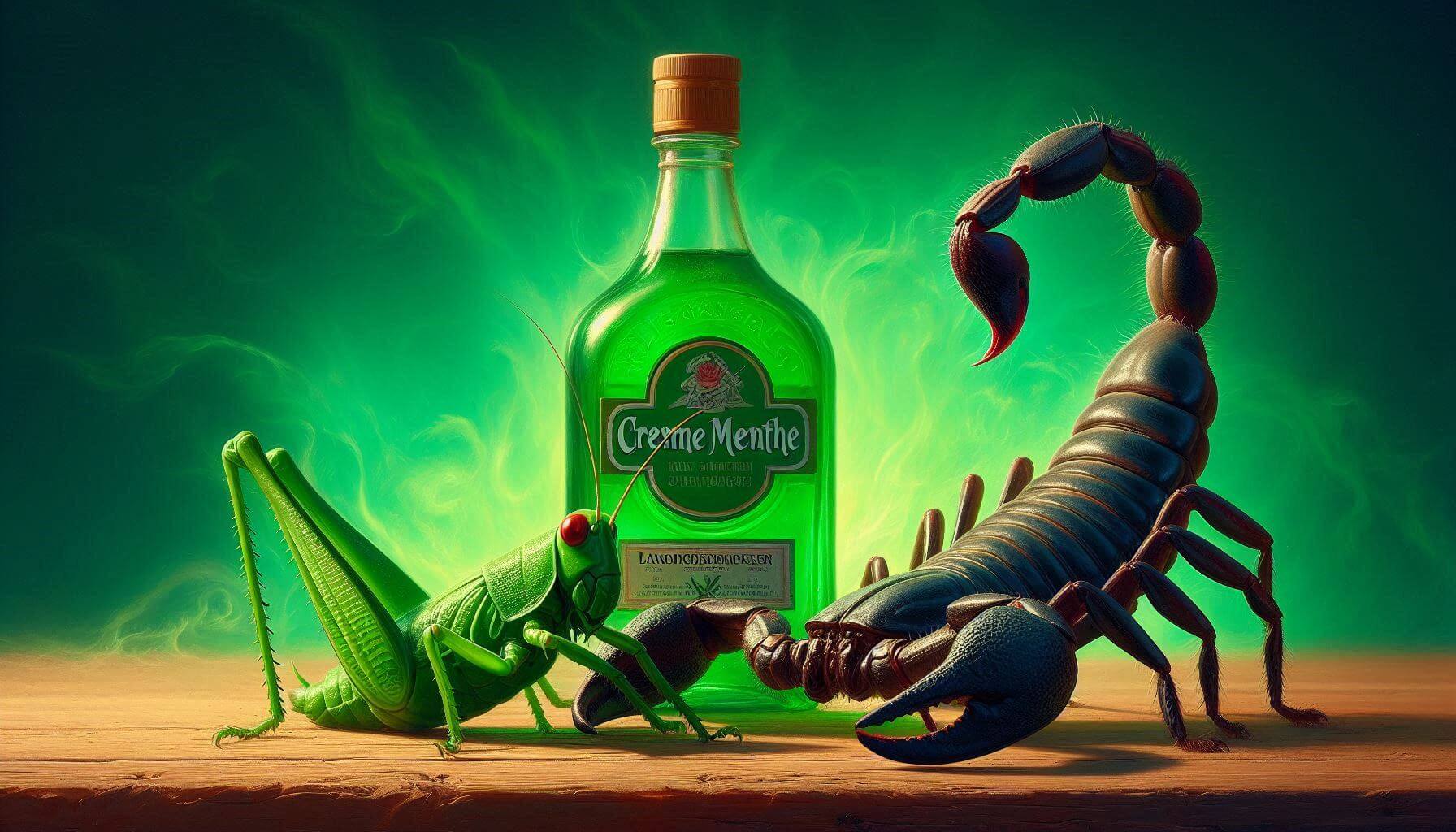
An AI-generated image of a green grasshopper and dark scorpion facing off over a bottle of creme de menthe

You won’t believe this…but this isn’t a photo, it’s an AI image *gasp*

The Grasshopper and Stinger are two classic cocktails that seem worlds apart from one another, but they share a common ingredient.

That ingredient is crème de menthe. Like many of the cocktails I break down in Drink Donnybrook features, this legendary liqueur’s origins are up for debate.

So, this Donnybrook goes beyond the well-known twofer; it’s a threefer. Crème de menthe and it’s two best-known cocktail appearancesthe Grasshopper and Stingereach have nebulous geneses.

Really, though, this Donnybrook is about crème de menthe. And why am I focusing on this liqueur? To give operators and their bar teams time to prepare LTO menus for Sunday, September 15, which is National Crème de Menthe Day.

Cheers!

Mint Cream

Despite the crème in its name, this liqueur doesn’t contain any dairy. In fact, “mint cream” is said to be vegan by some sources: it contains no animal products unless otherwise specified.

The term “crème” on French labels indicates that there’s a lot of sugar in a product.

All you need to make crème de menthe is grain alcohol, mint or peppermint, and sugar. One simply steeps the mint in the alcohol for several days, adds sugar, and can opt to age the liquid (usually about a month).

This sweet, minty liqueur tends to weigh in at 15- to 20-percent ABV. However, there are 30-percent ABV versions on the market. So, this seemingly harmless drink can pack quite a wallop.

Producing crème de menthe may be simple, but nailing down its origin story? Not quite as easy.

It’s possible that one of this liqueur’s ancestors dates as far back as the early 1500s. A book from 1512 about distillation, written by a German botanist and surgeon, touches on a water infused with “red mint.” If one could time travel to Boston in 1712, they’d be able to visit a tavern that sold a drink made of rum and water infused with mint.

That time traveler could then jump ahead 63 years, heading to France in 1775. It’s at this time that a pharmacist created what could possibly be the first known recipe for crème de menthe. However, another recipe, one that we could consider a “commercial” version, became available in France in 1796.

Nearly a century later, Emile Giffard would bring his crème de menthe to market. If that name sounds familiar, there’s good reason: he’s the namesake of La Maison Giffard. The brand has been making liqueurs and syrups for generations.

The Stinger

Alright, now that we’ve basically settled nothing regarding the origins of crème de menthe (other than Emile Giffard getting most of the credit for its creation as we know it today), let’s dive into cocktails.

Two classics are perhaps best-known for the inclusion of crème de menthe in their recipes. One of these is the Stinger.

I’m starting with the Stinger because it predates the other famous crème de menthe cocktail by five years. Or maybe 16 years. Or maybe even longer. We think.

We can choose to believe Stinger was first crafted in 1914. That would require us to accept as evidence that the recipe was first published that year in the book Drinks. Possible, but the recipe could’ve been floating around before that book came out.

Another option is to give Reginald Vanderbiltfather of Gloria Vanderbilt, and grandfather to Anderson Coopercredit as the creator. David Wondrich, cocktail historian extraordinaire, has mentioned that Reginald helped make the Stinger famous. It’s said that he would serve what was apparently his favorite tipple to guests.

Going further, an Ohio newspaper supposedly named Reginald as the drink’s inventor in the 1920s.

What I can say is this: the Stinger may date back to the 1890s, and nobody can tell us definitively who deserves the credit for creating the recipe.

The Grasshopper

It’s possible that the Grasshopper was invented in New Orleans in 1918.

Tujague’s Restaurant, located in the French Quarter, first opened its doors in 1856. Around 1914, the restaurant was sold to Philip Guichet, Sr. To this day, Tujague’s gives credit to Guichet for inventing the Grasshopper.

Anyone who has read previous Drink Donnybrooks probably isn’t surprised to learn that we aren’t sure who actually invented the Grasshopper. By the way, Tujague’s also appears to take credit for creating the Whiskey Punch.

What drink historians do appear to agree on is that it took around four decades for the Grasshopper to become popular. And when it did, the American South appeared to lead the charge.

The original recipepossibly from Philip Guichet, Sr.calls for three ingredients in equal parts: green crème de menthe, white crème de cacao, and heavy cream. (Oh, did I mention that crème de menthe comes in either colorless or green versions? Well, now I have done.)

However, bartenders have been playing around with Grasshopper build specs for many years.

One simple variant comes from Dale DeGroff. Shake one part green crème de menthe, one part white crème de cacao, and two parts heavy cream with ice. Strain into a chilled glass, then dust with grated nutmeg.

Original (maybe?) Stinger

  • 3 parts Brandy
  • 1 part White/Colorless crème de menthe

Add ingredients and ice to a mixing glass, and stir. Strain into a rocks glass, as the original was served neat before Prohibition. After Prohibition, serving Stingers over cracked ice became common practice. Further, modern bartenders tend to use Fine Cognac, premium crème de menthe (like Giffard’s), and serve Stingers over large ice cubes.

Original (could be?) Grasshopper

Add equal parts of green crème de menthe, crème de cacao, and heavy cream to a shaker with ice. Shake well, then strain into a glass.

Image: Microsoft Designer

Bar Nightclub Pub Brewery Menu Development Drinks Food

by David Klemt David Klemt No Comments

Eliminate Hesitation: Streamline Your Menu

Eliminate Hesitation: Streamline Your Menu

by David Klemt

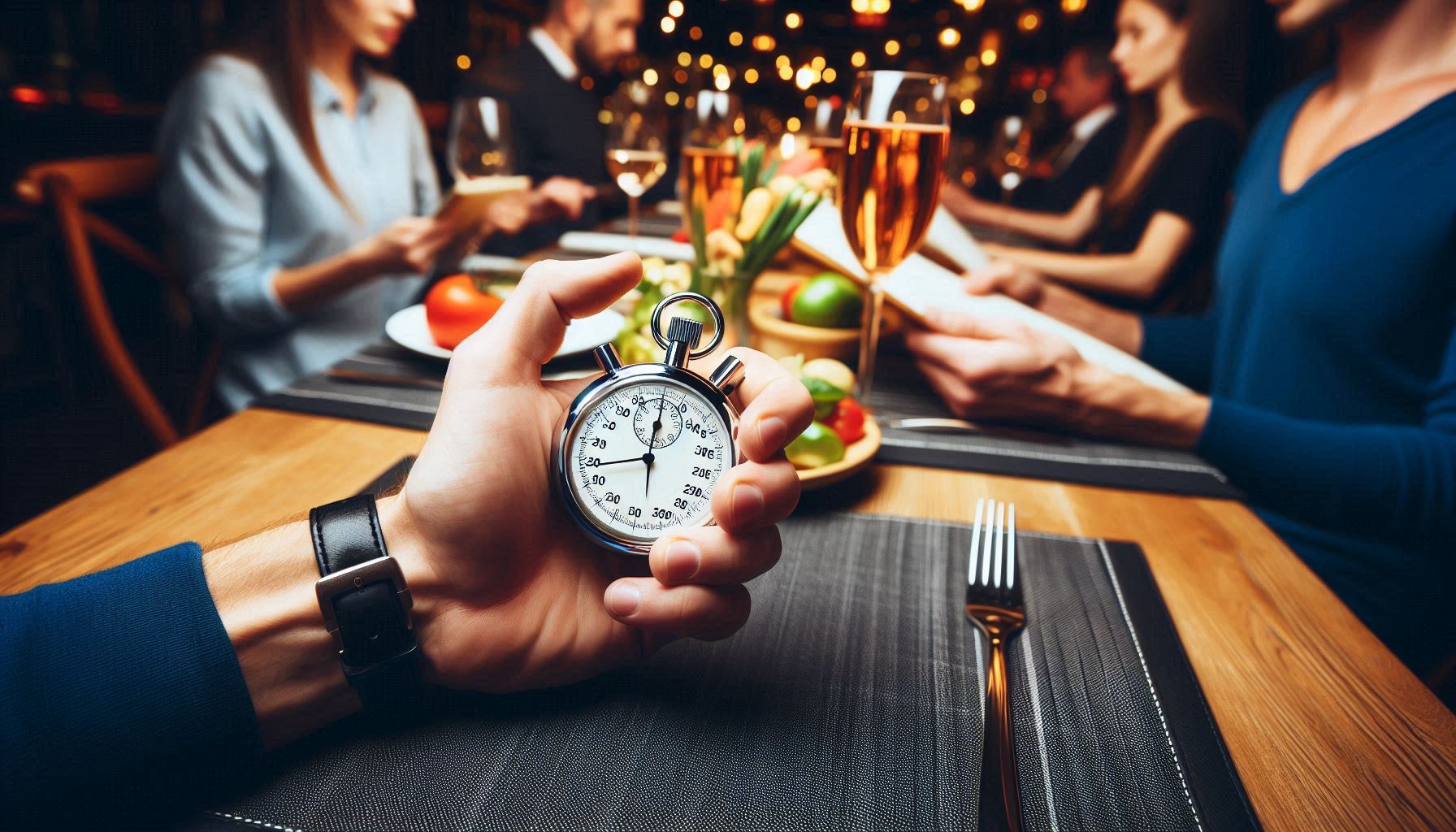
An AI-generated image of a person holding a stopwatch at a restaurant table while guests read the menu

That’s an interesting stopwatch layout. Also, we don’t recommend sitting with guests and timing them as they review your menu.

Operators should develop an understanding of the concept of the paradox of choice to understand how American guests make menu item selections.

So, allow me a crash course in this psychological concept. There are two prevailing components to the paradox of choice. One is that the more options one has, the less satisfaction they’ll feel upon making a choice. The other is that when presented with an overwhelming number of choices, also known as “choice overload,” people often just fall back to their usual choice rather than trying something new.

A quick note: The paradox of choice isn’t the same as the fallacy of choice. That concept relates to presenting someone with limited, extreme choices to drive them to ignore all of the other choices they could consider and select.

Understanding the paradox of choice will help an operator tackle a key task: streamlining their menus.

A survey from US Foods earlier this year contains quite a few intriguing revelations. Among their findings, one stands head and shoulders above the rest, at least to me: Almost 80 percent of Americans find deciding what they want to order at a restaurant difficult. Further, one factor outpaces all others when it comes to difficulty choosing.

Hence, my explanation of the paradox of choice at the top of this article.

Menus are too Big

There are two key factors making it difficult for Americans to choose what to order at a restaurant. Nearly a quarter of respondents23 percentindicate that they’re simply picky people. Alright, fair enough.

But the main factor, unsurprisingly, is that restaurants are presenting guests with too many options. That’s according to 54 percent of survey respondents. Quick math tells me that’s more than double the picky eaters.

Another 15 percent of US Foods survey respondents, however, say they have no trouble deciding what they want to order. Eight percent say they’re indifferent, which is an entirely different problem. A guest who’s indifferent to the restaurant and menu isn’t an engaged guest, and that’s not going to inspire loyalty and repeat visits.

Of course, no operator can please everyone, and some people aren’t going to be blown away no matter how good the food, drinks, and service can be.

So, does this mean that Americans are indecisive, facing paralysis whenever a servers asks for their order? Well…maybe. We have a lot going on, and “overwhelmed” would describe many of my fellow Americans right now.

However, the real culprit is menu size. In trying to please and retain guests, some operators are loathe to shrink their menus.

Most KRG clients can attest to the following: the president of our agency, Doug Radkey, prefers a smaller, streamlined menu. In fact, he prefers menus not pass the 25-item mark. Given his druthers, Radkey favors 12 to 15 items.

There are several reasons for this preference. Chief among these are controlling and reducing labor and food costs. (Radkey prefers to control costs rather than cut them, realistically.) Other reasons are less strain on the back of house, easier cross-utilization of ingredients, consistency, and reduced ticket times.

We can also add improving guest satisfaction to the list. On average, an American restaurant guest takes nine minutes to decide what they want to order at a restaurant. Streamline and shrink the menu, and this number should fall, while satisfaction rises.

Anyone should see that a smaller, sharper menu represents wins across the board.

AI image generator: Microsoft Designer

KRG Hospitality Start-Up Restaurant Bar Hotel Consulting Consultant Solutions Plans Services

by David Klemt David Klemt No Comments

Text, Email & Social Media Marketing

Text, Email & Social Media Marketing: Which is Best?

by David Klemt

A woman wearing a black-and-white-striped top checking her smartphone

Text-message marketing versus email marketing: which is best for your business?

One of the key topics that SevenRooms addresses in the first of their annual trends report is how operators can make the most of their marketing efforts.

Today, the primary marketing channels are text/SMS, email, and social media. An operator needs to understand their guests to know which will be most effective for their business.

Or, more accurately, an understanding of one’s guests is the key to leveraging a mix of those channels effectively.

An operator must consider their target audiences, and how they tend to engage with brands. Further, consideration must be given to people’s relationships with their phones.

As a real-world example, one of our clients’ guest pools skews significantly toward Baby Boomers. When discussing marketing strategy, the client expressed a concern when text marketing came up. They stated that their older guests would likely push back against this form of marketing.

However, no generation is a monolith. Therefore, I’ll be speaking in generalities when it comes to generational cohorts and their behavior.

Marketing Channel Engagement

Generally speaking, younger generations don’t seem to find text marketing invasive. Younger consumers are also used to engaging with and discovering brands and businesses via social media.

In contrast, an operator may find that their older Gen X and Baby Boomer guests prefer email marketing. It’s important to bear in mind that older generations also consume social media content. For example, SevenRooms findings show that 24 percent of Gen X and Baby Boomers can be influenced to visit a restaurant via F&B posts. However, these generations appear to engage with menu posts from restaurants they already follow.

That last bit of information tells me that older guests follow restaurants they’re considering visiting or have visited previously. Per SevenRooms data, the same goes for Millennials. That said, 43 percent of this generation are influenced by posts that showcase a restaurant’s personality.

Interestingly, just over half of Gen Z is influenced via video content from businesses they don’t already follow. These accounts are pushed to them via a platform’s engagement and discovery algorithms.

With the caveat that I’m painting different generations with broad strokes, posts that show off the menu may work best to engage older consumers. Posts that illustrate the personality of a brand and its team may resonate best with Millennials, and video content is king for grabbing the attention of younger consumers.

Businesses targeting a mix of consumers will want to develop a varied social media strategy. Content should consist of still photos and video that show off menu items, team members, and what guests can expect during a visit. Engagement will show an operator which posts are resonating the most with their followers and guests.

So, which marketing channel is best? All of them, when combined strategically.

An Effective Mix

Speaking of developing an effective strategy, SevenRooms asked operators about their social media marketing results.

Since the point behind marketing is to increase bookings to boost traffic and revenue, SevenRooms looked into which social media content achieved the best results.

Nearly 40 percent of operators surveyed said that organic posts result in the most bookings. This is followed by paid social media advertising, at 33 percent. Just over a quarter of operators surveyed pointed to influencer content as driving the greatest number of bookings.

One percent of operators say they don’t track their social media marketing results. For obvious reasons, this isn’t part of a winning strategy. If the results of an operator’s marketing efforts can’t be tracked, how can they know what works, and if they need to change an element of their strategy (such that it is)?

Nuance

As SevenRooms makes clear in their 2024 Restaurant Trends and Diner Expectations report, a multi-channel marketing strategy is a key to success.

Results will boil down to more than texting younger consumers and emailing older consumers. SevenRooms suggests what we at KRG Hospitality would also recommend: nuance.

An actual strategy is necessary, and that means being intentional with each marketing channel.

For context, an operator is likely best served to keep marketing text messages short. So, think reservation availability due to cancellations or no-shows. Email is a marketing channel best suited to longer messages. When it comes to social media marketing, a restaurant or bar’s social accounts should be viewed as relationship-building avenues.

In closing, an operator’s multi-channel marketing strategy requires a multi-pronged approach. Each channel must be leveraged differently. Text marketing shouldn’t be used the same way as email marketing messages, and neither should be used in the same way as a brand’s social accounts. When it comes to those accounts, a mix of posts is most effective for reaching different types of consumers.

The real keys are for operators to know who they’re targeting, track their marketing efforts, and develop an understanding of their guests. Throwing things against the wall to see what sticks just creates a mess; operators must be intentional in their marketing and operations to convert guests and achieve long-term success.

Image: Andrea Piacquadio via Pexels

Bar Nightclub Pub Brewery Marketing Agency Team

by David Klemt David Klemt No Comments

Going Remote: A New Era for Hospitality

Going Remote: A New Era for Hospitality Coaching

by Doug Radkey


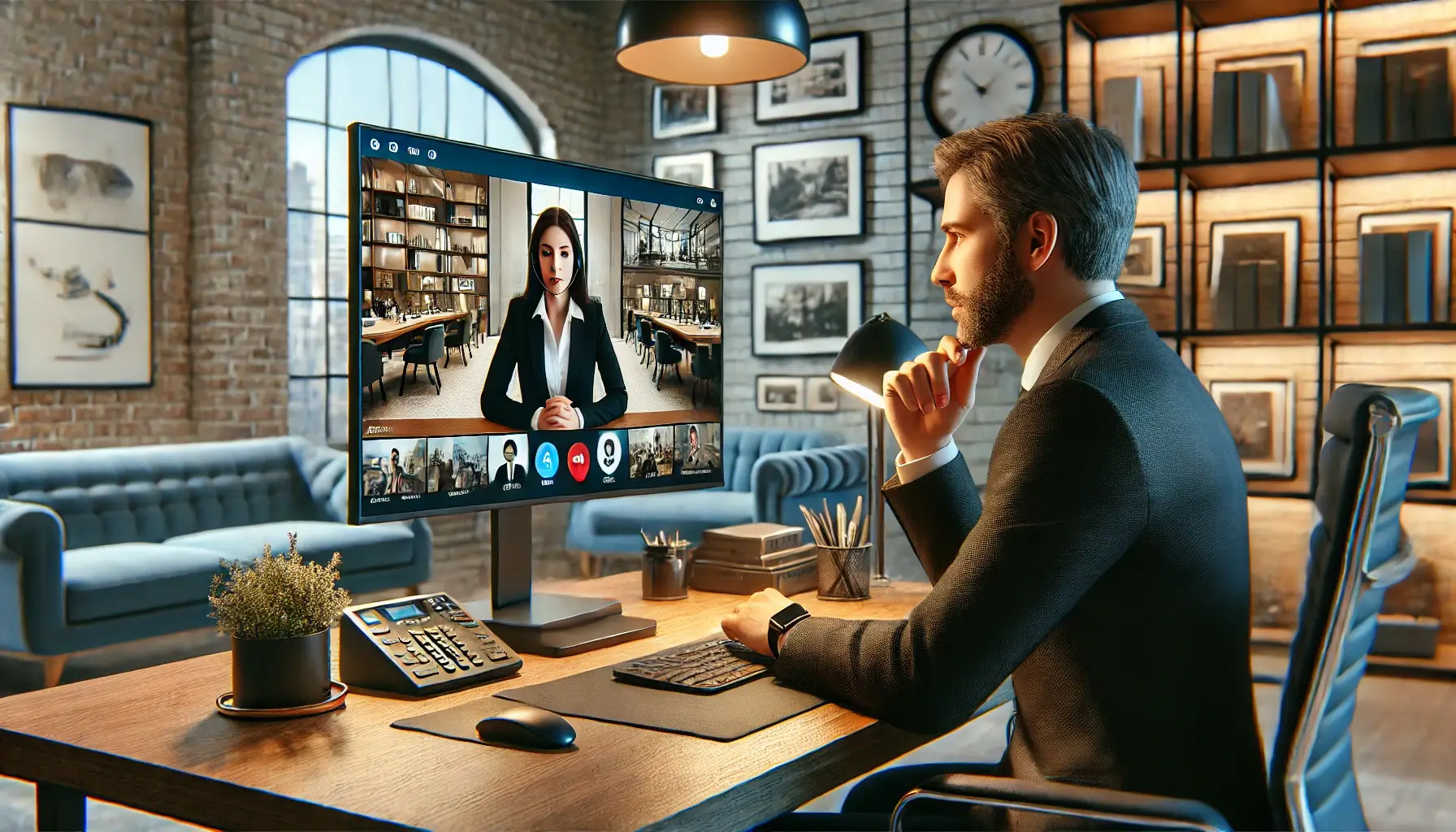
An AI-generated image of a man in a suit speaking remotely via computer to a woman in a suit

Note: AI-generated image.

Did you know that over the course of the past five years, the number of remote workers in the US has jumped by a staggering 44 percent?

Over the past 12 years, that number is an astounding 159 percent, and it shows no sign of slowing down.

The hospitality industry, like many others, is embracing a new era of remote work. This shift is now transforming how bars, restaurants, and hotels receive coaching and consulting services.

How can remote hospitality coaching help you start, stabilize, or scale your business? Leveraging remote coaching can provide you with flexible, cost-effective, and expert guidance no matter where you are.

Large markets such as Toronto, New York, London, and Los Angeles, for example, are no longer the only cities that can receive impactful one-on-one advice to better their businesses.

The Rise of Remote Work in Hospitality

Remote help was once a rarity in hospitality. However, the pandemic accelerated its adoption across the industry.

Much like other elements of technology in this industry—remote coaching, for example—allows hospitality businesses in any areas to access advice and support. Indeed, it no longer matters if a business is rural or in a global destination.

Remote consulting is the great equalizer, providing underserved communities with valuable insights. For decades, most agencies narrowed their focus toward projects in major cities.

Further, it provides flexibility and convenience. Anyone can schedule coaching sessions at a time that works best for them, or when an issue arises that calls for real-time intervention.

Removing the need for travel—and the associated costs—results in more cost-effective results. For several years now, KRG Hospitality has empowered clients in even the most far-flung destinations to obtain the consulting and coaching to start, stabilize, and scale their business.

Have a stable internet connection or decent cell reception? Then you’re all set.

Key Areas of Focus

Whether you’re starting a new restaurant, stabilizing a boutique hotel, or scaling a bar, a remote coach provides the structured guidance needed to navigate challenges and achieve success.

One example is onboarding a coach to help you start a restaurant by providing guidance through weekly calls that cover each phase of development. This often begins with an initial discovery call to understand your vision and goals, followed by coaching you through the variety of playbooks you need to develop strategic clarity.

The coach assists with everything, from site and support team selection to interior design, equipment selection, and construction management. From there, the operational setup phase may include coaching you through hiring and training, and developing standard operating procedures (SOPs). Your coach can also help you with pre-opening preparations, from marketing, menu development, and final inspections. Following a comprehensive checklist ensures you open on time, and on budget.

A second example is onboarding a coach for a boutique hotel seeking to stabilize operations. Weekly calls following an operational audit allow the coach to guide you through a short-term and long-term ImpactMAP. This tool focuses on brand strategy, internal programming, marketing plans, technology, systems and SOPs, people and culture, financial wellbeing, and mindset.

Regular coaching calls ensure continuous improvement and adaptation of strategies, leading to a stabilized and profitable business.

For a third example, consider a bar seeking to scale beyond one location. Through weekly calls, a remote coach can provide guidance on developing a scalable strategy. You have to remember, scaling your business isn’t just about replication; it’s about strategic adaptation.

A remote coach can ensure that you’re truly ready financially, operationally, and mindfully for this next step in your journey of developing a true legacy in this industry.

Tools that Enable Remote Coaching

Remote coaching is greatly enhanced by the use of various tools and technologies that facilitate communication, organization, and data-driven decision-making.

Video conferencing platforms such as Zoom, Microsoft Teams, and Google Meet enable real-time communication between coaches and clients, ensuring effective and timely guidance.

Project management software such as Trello, Asana, and Monday help organize tasks and track progress. These platforms ensure all aspects of the coaching process are efficiently managed and executed. Additionally, data analytics tools such as POS and PMS systems provide valuable insights, allowing coaches and clients to make informed decisions based on comprehensive data analysis.

During the pandemic, we successfully used remote coaching to help launch a thriving restaurant in Orlando. Due to pandemic-ear travel restrictions, we developed the project with the clent without setting foot on the property until a year after its grand opening. Leveraging video conferencing platforms, we conducted real-time strategy sessions with the restaurant’s leadership team.

We utilized project management tools to organize tasks, track progress, and ensure that every aspect of the restaurant’s development was managed meticulously. Data analytics tools provided valuable insights into market trends, guest preferences, and operational efficiencies, allowing us to make informed decisions remotely.

Despite the challenges posed by the pandemic, this approach ensured the restaurant opened smoothly, and achieved immediate success. This real-life example demonstrates the power of technology and effective remote coaching in the hospitality industry.

Overcoming Challenges

Overcoming the challenges of remote coaching requires strategic measures to ensure effective communication, build trust, and manage technical difficulties.

Maintaining clear and effective communication is crucial, which can be achieved through regular check-ins and video calls.

Building trust is important for the relationship to work. This involves consistent interactions and transparent communication. Despite physical distance, it’s key to the success of any project to establish a rapport between the coach and the client.

Addressing the potential of technical difficulties prevents disruptions from happening. This ensures highly effective relationships, and more successful outcomes. The right coach will not only help you start your business, they’ll be the first one to think about calling if you need help stabilizing, or want to scale.

Implementing Remote Coaching

When considering a coach for your bar, restaurant, or hotel, start by assessing your needs. This will help you identify which areas of your business will benefit the most from remote coaching.

Next, choose the right coach by selecting someone with the expertise, values, and experience that align with your specific requirements. It’s crucial to set clear goals, so define the objectives and expectations for your coaching sessions. Doing so ensures that both you and the coach are aligned on desired outcomes.

Finally, commit to regular reviews, and the adjustment of coaching strategies. This approach involves ongoing evaluations to ensure continuous improvement, and adaptation to any evolving challenges or opportunities in your business.

Image: DALL-E

KRG Hospitality Start-Up Restaurant Bar Hotel Consulting Consultant Solutions Plans Services

by David Klemt David Klemt No Comments

SevenRooms Drops Extensive 2024 Report

SevenRooms Drops Extensive 2024 Report

by David Klemt

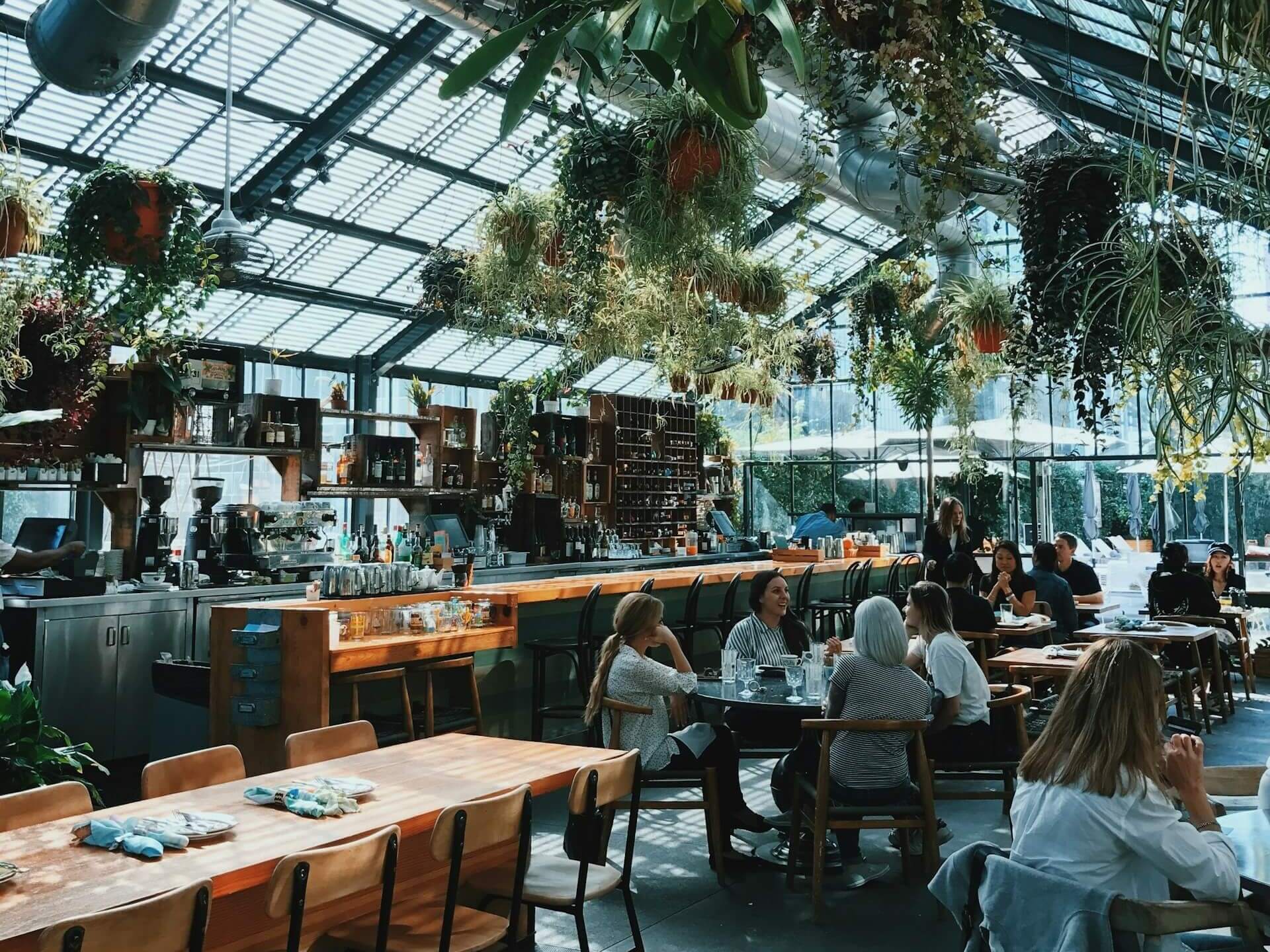
Guests dining in a light, bright restaurant featuring a glass ceiling and hanging plants

Today, we’re taking a look at the first-annual trends report from marketing and operations platform SevenRooms, which focuses on the guest experience.

To gain an understanding of the current state of affairs in America, SevenRooms analyzed the product data of more than 3,000 US clients. Further, the platform engaged over 250 operators, and 1,000 consumers.

The result is a data-rich report that offers helpful insights for operators.

Two findings are particularly interesting to me, and the team here at KRG Hospitality. One, it appears that Americans are back to seeking out their third spots. As a refresher, a third spot, space, or place is where one spends time when away from home or work. Consumers tend to be loyal to these places, making them part of their everyday or weekend routine.

Two, younger consumers are leading the way in terms of restaurant visits. Per SevenRooms, 38 percent of Millennials visit restaurants five or more times per month. Gen Z is also visiting restaurants frequently, with 24 percent visiting five times or more. However, that number climbs to 45 percent for Gen Z when it comes to three or four monthly visits. Among Millennials, 33 percent visit restaurants three or four times per month.

That tells us that younger consumers are eager to socialize, and restaurants can fulfill that desire. As savvy operators know, a person can eat or drink at home; food and beverages are just excuses to get out, hang out, and meet new people.

This also tells us that operators need to ensure they’re ticking several boxes to resonate with younger guests: value, convenience, and personalization. I’ll add that consumers have shown they want to support brands with values that align with their own.

There are many more insights in SevenRooms’ new report, which you can find below. To view the report in its entirety, click here.

SEVENROOMS RELEASES 2024 RESTAURANT TRENDS AND DINER EXPECTATIONS REPORT FOR THE HOSPITALITY INDUSTRY

Annual report gives an inside look at how restaurants are delivering better guest experiences and personalizing their marketing in the age of AI and automation

NEW YORK (August 6, 2024) – SevenRooms, the leading CRM, marketing and operations platform for growing restaurants, today released its first annual trends report, “2024 Restaurant Trends and Diner Expectations, highlighting how restaurants are filling the need for ‘third places’, connection spots outside the home and workplace, what consumers expect from their dining experiences, and how restaurants are leveraging AI and automation to keep diners coming back.

The study, commissioned through independent third-party research firm Censuswide, examines consumer and foodservice operator insights, alongside data from SevenRooms restaurant customers. It emphasizes the importance of restaurants understanding their guests and providing experiences and value to consumers, including marketing and tech trends that operators are paying attention to.

Diners Expect More From Restaurants

While it’s no surprise that diner expectations have evolved in recent years, consumers across generations and cities share key expectations when dining out — they’re looking for convenience, personalization and value from brands they trust. Restaurants must nail all aspects of the guest experience, from hospitality and service to ambiance and atmosphere, to transform diners into brand ambassadors and get them to bring their dollars back more often.

When looking across generations, Millennials are driving a dining resurgence – dining out most frequently with 38% saying they dine out more than 5x a month. They are seeking more from their restaurant visits, and are willing to spend more for elevated experiences, like theatrical elements or high-end items like caviar. For these experiences, Americans are willing to spend up to $63 per person with 45% of Gen Zers open to paying even more. As diners focus on the quality over quantity of their experiences, that means restaurants must do more to keep those diner dollars. Dining upgrades consumers are willing to spend more fall into three categories – experiential, luxurious and personal, including:

  • Experiential (e.g. tableside martini cart; fish presentation or deboning, etc.)
    Dallas – a menu item with some theater (86%)
    Washington DC – a menu item with some theater (71%)
  • Personal (e.g. birthday dessert; welcome drink)
    Chicago – a mocktail or personalized item (55%)
  • Luxurious (e.g. caviar, freshly shaved truffles, seafood tower)
    Los Angeles – high-end items like caviar (55%)
    New York – high-end items like caviar (48%)

Outside of these experiential offerings, restaurants must also capitalize on influential factors that bring diners back. For example, 34% of Gen Zers want personalized surprises in service like a free dessert. Meanwhile, 26% of Millennials care about the ease of making a reservation and 24% of Gen Xers consider the rapport they develop with front-of-house staff. Tailoring guest experience and service helps operators turn one-time diners into loyal customers.

“New consumer demands are pushing restaurants to find the right balance between hospitality and automation to create the experiences guests crave and return for,” said Joel Montaniel, CEO & Co-Founder at SevenRooms. “Diners want both access and recognition when spending their hard-earned dollars, and restaurants must embrace new strategies – and technologies like AI and automation – to enhance hospitality at every touch point. Whether leveraging platform data to personalize diner experiences or power marketing and retention programs, technology and data serve as a vehicle to execute hospitality that guests remember and return for. When technology is used effectively, it allows operators to focus on building deeper connections and delighting guests, one experience at a time.”

Loyalty is Never One-Size-Fits-All

In the U.S., there was a 21% year-over-year increase in reservations comparing Q1 2023 to Q1 2024 and restaurants are looking to a promising future. Whether operators are focused on opening new locations or revamping their social media marketing efforts, one factor remains the same – establishing personal relationships with diners is the strongest way to build and maintain loyal customers.

Consumers have a strong intent to dine with their favorite brands. If a guest can’t get a reservation at their preferred restaurant, 39% of guests look for a sister restaurant to dine at, and 27% check other sites for the same restaurant.

Cultivating loyalty is critical. Loyalty is not a one-size-fits-all effort and diners have different interests when it comes to the benefits they seek out from loyalty programs. Restaurants need to understand their diner demographics to curate operations and offerings, getting their guests to not only return more often but spend more in the process.

38% of diners who would spend $89-$126 on an average night are looking for exclusive VIP events, while 33% of consumers who dine out 7-8 times per month want VIP access to specialty seating areas. Breaking down generational differences:

  • 72% of Gen Zers care most about free menu items
  • 30% of Millennials care most about VIP access to specialty dining areas
  • 1 in 5 Gen Xers and Baby Boomers want early access to reservations

Genuine, Tailored Marketing is Critical to Success

When it comes to marketing, authenticity and personalization reign supreme for consumers. Guests want to be known by their favorite restaurants, and restaurants want to know and understand their guests. To reach these consumers, and serve up personalized marketing that makes guests want to return, restaurants have to use all the tools in their arsenal – from social media to email and text marketing automation – to create high-touch communications that are both authentic and personal.

79% of restaurant operators spend the majority of their marketing budget on social media. Their top social media goals are to drive bookings or online orders (39%), increase brand awareness (29%) and communicate with their audiences (29%). But not all content is created equal – 39% of operators say that organic posts drive the most bookings to their restaurants. Restaurants that showcase their personality – highlighting their team, food and drinks and atmosphere – will win with consumers as they look for more genuine content from brands.

Most diners like hearing about restaurant promotions and offers via email and text, and aren’t as interested in social media DMs or phone calls, but specific preferences vary by generation. 41% of Gen Zers prefer text marketing, whereas 38% of Millennials and 37% of Gen X prefer email marketing.

With targeted Email Marketing, the data report notes that operators see 23% higher open rates and 28% higher click-to-open rates, generating 2x more revenue per email. Text marketing is fairly new for restaurants, but has huge potential, with an average open rate of 98% and $1.64 average reservation revenue generated per text message on SevenRooms. For one SevenRooms customer, Fabio Viviani Hospitality, it drove $220,000 in revenue and 3,000 new guests in just 4 months.

“The biggest thing that excites me about text messaging is that it’s very hard to ignore. When our phones beep, we are just driven to look at them,” said Harry Kaminski, CMO at Fabio Viviani Hospitality. “It’s easier to ignore an email than it is a text.”

Artificial Intelligence (AI) Comes into Play

Every industry today is using AI and automation in some way to streamline their operations and help staff work more efficiently – and the same is true for the restaurant industry. 70% of operators surveyed said they use artificial intelligence in some way to run their business, including:

  • 35% – Processing reservations
  • 34% – Inventory management
  • 33% – Data analytics
  • 27% – Scheduling
  • 26% – Dynamic pricing

But there is room to grow with AI, with only 16% saying they use it to create marketing collateral and 15% for staff hiring and training. With personalized marketing a large focus for operators in 2024 and beyond, as well as hiring and retaining staff to deliver on high-touch hospitality, operators have an opportunity to use AI more effectively.

“AI elevates our storytelling around data,” said Kelly MacPherson, Chief Supply Chain and Technology Officer at Union Square Hospitality Group. “We have a wealth of data at our fingertips, but this can create analysis paralysis. With AI, we can more efficiently synthesize the data, create stories about what’s happening, why it’s happening, and what we can do about it, and then present these stories to our teams in a digestible format with actionable next steps.”

For more information about SevenRooms and to download the full report, please visit here.

About SevenRooms

SevenRooms is a CRM, marketing and operations platform for growing restaurants in the hospitality industry. From Michelin star gems to local favorites, the all-in-one platform helps restaurants increase sales, delight guests, and keep them coming back, automatically. The full suite of products includes reservations, waitlist and table management, review aggregation, referrals, email marketing, and marketing automation. Founded in 2011 and venture-backed by Amazon, Comcast Ventures and PSG, SevenRooms has more than 10,000 dining, hotel F&B, nightlife and entertainment clients globally, including: Marriott International, MGM Resorts International, Mandarin Oriental Hotel Group, Wynn Resorts, Jumeirah Group, Hard Rock Hotels & Resorts, Wolfgang Puck, Michael Mina, Bloomin’ Brands, Union Square Hospitality Group, Australian Venue Co., Maple & Ash, The Wolseley Hospitality Group, Dishoom, Groot Hospitality, MLSE, Live Nation and Topgolf.

Research Methodology

SevenRooms partnered with Censuswide Research – a third-party, professional research and consulting organization. Total sample size was 1,004 U.S. consumers. Fieldwork was undertaken between March 4-11, 2024. The survey was carried out online. The figures have been weighted and are representative of all U.S. adults (aged 16+).

SevenRooms partnered with Censuswide Research – a third-party, professional research and consulting organization. Total sample size was 251 U.S. operators (hospitality decision-makers). Fieldwork was undertaken between March 4-19, 2024. The survey was carried out online. The figures have been weighted and are representative of U.S. hospitality operators.

SevenRooms provided anonymized internal data representative of U.S.-based restaurants using the SevenRooms platform and surveyed a sample of operators at various restaurant sizes and types across the U.S. from March-May 2024.

Image: kayleigh harrington on Unsplash

KRG Hospitality Contact Request for Proposal 30 Minute Discovery Session

by David Klemt David Klemt No Comments

5 Books to Read this Month: August 2024

5 Books to Read this Month: August 2024

by David Klemt

Flipping through an open book

Our August book selections focus on the 2024 Spirited Award finalists and winner of the 2024 Best New Cocktail or Bartending Book.

These books cover an array of topics, from mastering ice and drink ratios to foraging for botanical cocktail ingredients.

To review the book recommendations from July 2024, click here.

Let’s jump in!

The Ice Book: Cool Cubes, Clear Spheres, and Other Chill Cocktail Crafts

The winner of the 2024 Spirited Award for Best New Cocktail or Bartending Book. This is much more than just a guide for making crystal clear ice cubes or sphere. While that’s certainly a focus, The Ice Book includes tips on embossing and branding ice, creating huge slabs, and even making ice bowls for punches and other large-format drinks. Truly, this book will help you master ice.

From Amazon: “In The Ice Book, internationally renowned cocktail icepert Camper English details how to use directional freezing to make perfectly pure ice in a home freezer, carve it up into giant diamonds and other shapes, and embed it with garnishes, including edible orchids and olives. You’ll learn how to create a frozen bowl for Negroni punch, serve a Manhattan inside an ice sphere, and infuse cubes with colors and flavors to create cranberry cobblers, a color-changing Gin and Tonic, and other awesome drinks.”

Grab this book now.

Slow Drinks

With a shift in mindset you’ll likely notice the incredible world of cocktail ingredients at your fingertips during something as simple as a walk around your neighborhood. The author of this book, Danny Childs, is an ethnobotanist who can guide you through that change. Further, this informative book is more than just a list of botanicals you can grow and forage. You’ll learn how to pickle, infuse, and even ferment, taking your cocktail creation to incredible new heights. If there was ever an excuse to start and maintain a garden dedicated to your bar team, it’s picking up this book.

From Amazon: “Organized by season, Slow Drinks teaches home cooks, industry pros, homebrewers, and foragers how to transform botanical ingredients—whether gleaned, grown in the garden, or purchased from the store—into singular beverages and cocktails. With transporting photography and gorgeous color illustrations, Slow Drinks is the definitive guide to backyard mixology that can live just as comfortably in your basket on a foraging trip, as it can on the coffee table as a conversation piece.

Click here for the hardcover.

Tropical Standard: Cocktail Techniques & Reinvented Recipes

What if a bartender married modern cocktail-crafting techniques to dozens upon dozens of classic cocktail recipes? Well, odds are they’d be Garrett Richard, bar manager of Sunken Harbor Club. And documenting this marriage would be drinks author Ben Schaffer.

When it comes to drinks, some bartenders feel the original variants are sacred; techniques, ratios, and ingredients aren’t to be altered. However, there’s no reason classics can’t be honored and built in more modern ways, for modern palates.

From Amazon: “Crucial techniques are clearly detailed, including how to balance syrups, flash blend, handle carbonation, tackle tinctures, cordialize citrus, and power up juice with acid adjusting. Over the course of 84 recipes, vintage cocktails like the Rum Barrel, Mai Tai, and Ray’s Mistake are reimagined just as future classics are revealed, including the Beachcomber Negroni, Winter in L.A., and Field of Mars. These drinks honor founding legends such as Donn Beach, Trader Vic, and Harry Yee as well as modern icons, including Dale DeGroff, Audrey Saunders, Julie Reiner, and Dave Arnold.”

Pick it up here.

The Book of Cocktail Ratios: The Surprising Simplicity of Classic Cocktails

Speaking of cocktail ratios…this is your book if you and your bar team want to achieve a deeper understanding of balance. If you think about it for a moment, you’ll understand the importance than ratios and balance have on a cocktail. It goes beyond ensuring a particular drink tastes great. And it goes further than guaranteeing consistency. Shift one ingredient enough and you’re not just altering the taste, you’re likely making a different drink entirely. As author Michael Ruhlman points out, a Gimlet, Daiquiri, Bee’s Knees are the same cocktail; it’s the ratios that separate them.

From Amazon: “As Michael Ruhlman explains, our most popular cocktails are really ratios—proportions of one ingredient relative to the others. Organized around five of our best-known, beloved, classic families of cocktails, each category follows a simple ratio from which myriad variations can be built: The Manhattan, The Gimlet, The Margarita, The Negroni, and the most debated cocktail ever, The Martini.”

Order yours now.

Hacking the New Normal: Hitting the Reset Button on the Hospitality Industry

Doug Radkey‘s followup book to Bar Hacks! The world around us has changed. The food and beverage industry has changed. The hospitality industry has changed. But will some ways of life change for the better? Will perhaps the restaurant, bar, and hospitality industry come out even stronger? With the right changes to the previous status quo, it is possible. There’s no question, resets are major undertakings, but a major reset will provide us with a clean start and that’s what this industry needs.

From Amazon: “Whether or not you’re a hotelier, restaurateur, bar owner or a front-line staff memberthis book will position you for success in the new normal. With a spotlight on hybrid business models, real estate, profit margins, technology, guest experiences, culture, diversity, and mindset, Hacking the New Normal is the guidance you need.

Click here to pick your copy up today.

Image: Mikołaj on Unsplash

KRG Hospitality. Bar Consultant. Nightclub. Lounge. Mixology. Cocktails.

by David Klemt David Klemt No Comments

Hospitality Reinvented: A New Series

Hospitality Reinvented: A New Podcast Series

by Doug Radkey


Hospitality Reinvented podcast logo in 2:1 ratio compared to original, produced by KRG Hospitality

In my opinion, and likely that of many others, the hospitality industry today is at a crossroads, facing both unprecedented challenges and opportunities.

As we navigate these changes that are upon us, it’s clear that a reset or reinvention is not just desirable, but essential.

To truly understand hospitality and the way forward, let’s take a few steps back.

Hospitality has its roots deeply embedded in ancient civilizations, where the concept was often viewed as a sacred duty and a fundamental aspect of societal norms.

In ancient Greece, for instance, the idea of “xenia” represented a code of hospitality and protection that was honored by both hosts and guests. This tradition emphasized generosity and courtesy toward strangers, reflecting a reciprocal relationship that benefited both parties.

Similarly, in medieval Europe, hospitality was a core tenet of life. Monasteries provided food, shelter, and medical care to travelers and pilgrims. These historical practices established the foundational principles of hospitality that continue to influence the industry today.

The Definition of Hospitality

At its core, as we know it today, hospitality is about providing a welcoming environment, exceptional service, and genuine care for guests. The fundamental principles include warmth, generosity, and attentiveness to the needs of others. These principles are designed to make guests feel valued and comfortable, creating a memorable experience that encourages repeat visits and positive word-of-mouth.

The essence of hospitality lies in anticipating and exceeding guest expectations, ensuring that every interaction is characterized by respect and kindness. This unwavering commitment to guest satisfaction is what distinguishes truly exceptional hospitality services from the rest.

In the modern era, hospitality has evolved to incorporate technological advancements and changing consumer preferences while maintaining its core principles. Today, hospitality encompasses a broader range of services and experiences, from luxurious accommodations and gourmet dining to personalized services and cutting-edge technology.

The rise of digital tools on the hotel side, such as mobile check-ins, AI-powered concierge services, and virtual tours, has transformed how hospitality businesses interact with and serve their guests. Moreover, contemporary hospitality also places a strong emphasis on sustainability and cultural authenticity, with many brands striving to minimize their environmental impact and offer experiences that celebrate local heritage and traditions.

These modern interpretations reflect the industry’s adaptability and commitment to enhancing guest experiences while trying to stay true to the timeless principles of warmth and generosity.

The Purpose of Hospitality

The primary purpose of hospitality is to create memorable experiences that leave a lasting impression on guests. In today’s competitive market, it is no longer sufficient to simply provide a place to stay or a meal to eat.

Hospitality businesses must go above and beyond to craft unique and personalized experiences that guests will remember fondly, and talk about long after their visit.

This involves attention to detail, creativity, and a deep understanding of what delights and surprises a targeted set of guest. From custom welcome amenities and personalized room settings to curated local excursions and immersive cultural activities, the goal is to create a sense of wonder and joy that makes guests feel special and valued.

Another vital purpose of hospitality is building meaningful relationships with guests. Hospitality is fundamentally about human connection and fostering a sense of community. By treating guests as individuals rather than transactions, hospitality businesses can cultivate strong, lasting relationships that encourage repeat visits and brand loyalty.

Genuine, personalized interactions during which staff take the time to understand and cater to each guest’s unique needs and preferences are mandatory. Building relationships also means engaging with guests before, during, and after their stay through various touchpoints and guest journey maps that now many include personalized emails, social media interactions, and follow-up surveys.

Ongoing interactions help to establish a deeper bond with guests, making them feel appreciated and connected to the brand.

Elements of Hospitality We Need to Leave in the Past

One of the key elements that the hospitality industry must leave behind is the reliance on outdated practices. These include rigid check-in and check-out times, excessive paperwork, and a lack of technological integration.

Modern guests expect flexibility, convenience, and efficiency, which cannot be provided through antiquated methods. Embracing digital solutions such as mobile check-ins, contactless payments, and automated booking systems can streamline operations and significantly enhance the guest experience.

We need to move away from outdated practices so hotels and other hospitality businesses can meet the evolving expectations of their clientele, and stay competitive in the market.

Reluctance to Change

Resistance to change is another significant hurdle that the hospitality industry must overcome. The rapid pace of technological advancement and shifting consumer preferences demand that businesses continuously adapt and innovate.

However, a reluctance to embrace new technologies and modern approaches can stifle growth and lead to stagnation. Successful hospitality businesses must foster a culture of innovation and agility. They need to encourage their teams to stay ahead of trends and adopt new practices that enhance guest satisfaction and operational efficiency.

A commitment to embracing change and aligning a forward-thinking mindset will help operators better navigate the challenges of the modern marketplace.

Lack of Sustainability

Further, the hospitality industry has long been criticized for its unsustainable practices, including excessive water and energy consumption, waste generation, and reliance on single-use plastics. As environmental consciousness grows among consumers, it is imperative for hospitality businesses to adopt more sustainable practices. This includes implementing energy-efficient systems, reducing water usage, minimizing waste, and sourcing eco-friendly products.

Many bars, restaurants, and hotels are now pursuing green certifications and adopting practices such as using solar energy, installing low-flow fixtures, and offering recycling programs. Prioritizing sustainability means hospitality businesses can not only reduce their environmental footprint but also attract eco-conscious guests.

Toxicity

Lastly, toxic workplaces that fail to take care of their team members are another critical issue that needs to be addressed.

The hospitality industry is notorious for high employee turnover. Unfortunately, we’ve become known for poor working conditions, lack of career advancement opportunities, and inadequate compensation. Each of these go against the essence of hospitality.

How we treat our guests is how we should treat our very own people. Creating a positive work environment that prioritizes staff well-being, professional development, and fair treatment is essential for retaining talent and ensuring high-quality service. This includes providing comprehensive training programs, offering competitive salaries and benefits, and fostering a supportive, fun, and inclusive culture.

Hospitality businesses can improve job satisfaction, reduce turnover, and ultimately enhance the overall guest experience by investing in their people.

Where the Hospitality Industry is Going

There’s no secret, hospitality is embracing technology at warp speed. Operators are now inundated with solutions promising to enhance operational efficiency, plus staff and guest experiences.

Innovations such as artificial intelligence (AI) and the Internet of Things (IoT) are transforming how hotels and other hospitality businesses operate.

AI-driven chatbots and virtual assistants are improving guest services by providing instant responses to guest inquiries, along with personalized recommendations. IoT devices are enabling smart room controls, allowing guests to adjust lighting, temperature, and entertainment options with ease. Blockchain technology is enhancing security and transparency in transactions and loyalty programs.

Leveraging these advanced technologies sets the hospitality industry down the path toward providing more seamless, personalized, and engaging experiences for guests.

Focus on the Right KPIs

As the industry evolves, so do the metrics used to measure success. Traditional key performance indicators (KPIs) such as occupancy rates and average daily rates are being supplemented with new, more holistic KPIs.

Guest satisfaction scores, social media engagement, and sustainability metrics are becoming increasingly important. For example, Net Promoter Scores (NPS) provide insights into guest loyalty, and the likelihood to recommend the hotel to others. Social media metrics, including likes, shares, and reviews, reflect the hotel’s online reputation and guest engagement.

Additionally, sustainability metrics such as energy consumption per guest and waste reduction rates are being tracked to ensure that the hotel is meeting its environmental goals.

These new KPIs offer a more comprehensive view of a hotel’s performance, encompassing guest experiences, brand reputation, and environmental impact.

The Guest and Staff Experience

The future of hospitality is also about reimagining staff and guest experiences to create more meaningful and memorable interactions.

For staff, this means providing ongoing training and professional development opportunities. This approach keeps the team updated with the latest industry trends and technologies. Despite the technology, operators need to empower team members. A great leader ensures their teams are receiving valuable training on the skills and knowledge they need to excel. Doing so improves service quality, and boosts morale and retention rates.

On the guest side, new programming and experiences are being introduced to cater to diverse interests and preferences. By focusing on innovative staff and guest programming, the hospitality industry is creating environments that are enriching, engaging, and memorable.

Spirit of Hospitality

With all that said, amidst all the technological advancements and new metrics, it is essential to bring back the true essence of hospitality and what it means to be hospitable. We have to get back to the “why” of what we do in this industry, and remind ourselves once again about the true definition of hospitality.

At its core, hospitality is about genuine care, warmth, and making guests feel welcome and valued. This involves cultivating a culture of empathy and service excellence in which every guest interaction is an opportunity to create a positive impact.

Personalized service, attention to detail, and going the extra mile are the hallmarks of true hospitality. It’s about creating an atmosphere where guests feel at home, whether they are eating at a restaurant, having a drink at the bar, or staying for a night or an extended period.

Blending modern conveniences with the timeless principles of hospitality ensures that the heart and soul of hospitality remain intact, even as it continues to evolve and reinvent itself.

Introducing Hospitality Reinvented Podcast Series

As the hospitality industry continues to evolve, staying ahead of trends and innovations is crucial for success. That’s why I am excited to announce the launch of the Hospitality Reinvented podcast series hosted with yours truly, Doug Radkey.

This podcast, set to go live this month, aims to explore and discuss the latest developments in the hospitality industry. I’ll provide insights and strategies to help operators and their businesses thrive in their dynamic and competitive market.

The Hospitality Reinvented podcast will delve into a variety of topics, from the integration of modern technology and new KPIs to reimagining staff and guest experiences. Each episode will blend timeless principles of hospitality with modern innovations and strategic playbooks, offering listeners practical advice and inspiration to create a guest-centric, sustainable, and forward-thinking industry.

The podcast will serve as a valuable resource for hospitality professionals looking to reinvent their operations and stay ahead of the curve. Join us on this journey as we explore how to blend tradition with innovation to shape the future of hospitality.

Tune in to Hospitality Reinvented each week and discover how you too can transform your business and create lasting, memorable guest experiences.

Join us on this journey by subscribing to the Hospitality Reinvented podcast, following us on social media, and staying engaged with the latest insights and trends here at KRGHospitality.com.

Image: KRG Hospitality

KRG Hospitality Start-Up Restaurant Bar Hotel Consulting Consultant Solutions Plans Services

by David Klemt David Klemt No Comments

Program for Unique Holidays: August 2024

Program for Unique Holidays: August 2024

by David Klemt

"Think about things differently" neon sign

Do you want to stand out from from other restaurants and bars in your area? Change how you think about your August holiday programming.

Several holidays are set against every date on the calendar, and this month is no exception. These holidays range from mainstream to esoteric.

Pay attention to the “weird” or unique holidays to raise eyebrows, carve out a niche for your restaurant or bar, and attract more guests. Why do what everyone else is already doing? Why program only around the same holidays as everyone else?

Of course, you shouldn’t try to celebrate every holiday, strange or otherwise. Focus on the days that are authentic to your brand; resonate with your guests; and help you grab attention on social media.

You’ll find suggestions for promotions below. However, the idea behind our monthly holiday promotions roundup is to inspire you and your team to get creative and come up with unique programming ideas.

For our July 2024 holidays list, click here.

August 3: National Mustard Day

Condiments offer the perfect finishing touch to the dishes we present to guests. Given their importance, we should celebrate them whenever we get the chance.

For some, nothing but mustard belongs on a hot dog. And there are even those out there who claim it’s the only condiment that belongs on a burger.

August 6: National Night Out Day

Traditionally, this holiday aims at encouraging communities to set up neighborhood watches. However, some communities also use this day to simply foster a sense of togetherness, organizing cookouts, block parties, and concerts.

This is a great day to establish your bar or restaurant as part of the community, particularly if your business is family friendly.

August 7: Particularly Preposterous Packaging Day

This is certainly one of the more obscure holidays I’ve encountered. To put a spin on this day to leverage it for a bar or restaurant, I suggest engaging your kitchen and bar teams to come up with an over-the-top presentation for one food item, and one drink. Make it Instagram-worthy and it’ll spread like wildfire on social media, making it a clever marketing exercise.

August 11: Play in the Sand Day

This is another holiday during which operators will benefit from tapping into the creativity of their kitchen and bar teams. The back of house, for example, can look into creating a sand pudding dessert. As for the bar team, the Blood and Sand is a classic whiskey cocktail that teams with the theme.

August 12: Afternoon Tea Week

An entire week dedicated to afternoon tea! In 2024, this holiday runs to August 18. Afternoon Tea Week is a fantastic way to boost traffic and revenue during the lunch daypart. Further, operators have two shots at brunch to cap this weeklong holiday.

Engage the bar team to have them create an LTO menu of tea-based cocktails, including zero-alcohol to full-ABV options.

August 14: World Calligraphy Day

If you have someone on your team with particularly fantastic handwriting, a sandwich board, and chalk (or markers for acrylic boards), you’re all set to celebrate this holiday. Not only can these signs lure passersby into a restaurant or bar, people like to spread them on social media. The same goes for restaurants and bars with chalkboard menus, making them useful marketing tools.

August 20: National Chocolate Pecan Pie Day

You’ve probably eaten a slice of pecan pie. But what about chocolate pecan pie? It’s possible many of your guests haven’t tried this lesser-known dessert. I bet your kitchen team can change that…

August 22: Burger Day

On its face, Burger Day isn’t particularly unique. However, any holiday can be made unique with a clever and creative promotion.

While it’s the ideal day for promoting your signature burger (or burgers), it will also work as a traffic-boosting LTO. For example, if you don’t have a smashburger on your menu, consider creating one for Burger Day. As another example, if you don’t have sliders, this is the time to offer them. Track the sales of your Burger Day LTOs to consider making them repeat promotions, or adding them to the standard menu permanently.

August 27: National Just Because Day

Sometimes operators are handed the perfect day to create and execute any promotion they can imagine. This is one of those days.

August 30: National Beach Day

Drinks with umbrellas, tropical shirts and beachwear, summery drinks, classic cookout dishes, refreshing desserts… Even bars and restaurants that don’t have an outdoor area can be transformed into a beachy scene.

Image: Ivan Bertolazzi on Pexels

KRG Hospitality Start-Up Restaurant Bar Hotel Consulting Consultant Solutions Plans Services

by David Klemt David Klemt No Comments

Bridge the Gap: Tech and Hospitality

Bridging the Gap Between Technology and Personal Development in Hospitality

by Doug Radkey

An AI-generated image of a split screen, technology versus people

We shouldn’t have to say this, but the above is an AI-generated image.

It’s said that between 70 percent and 80 percent of hospitality businesses plan to increase their investment in technology and AI over the next five years.

As the industry evolves, the key to success lies in bridging the gap between technology and personal development.

Exploring how integrating technology, artificial intelligence, and personal development can transform your hospitality business is more important now than ever before. It’s crucial that today’s operators understand and leverage these elements to improve operations, enhance guest experiences, and foster staff growth.

The Role of Technology in Modern Hospitality

In today’s fast-paced world, the hospitality industry is undergoing a significant transformation, driven by the rapid advancement of technology.

Hotels, restaurants, and bars are increasingly leveraging innovative tools such as AI, IoT (Internet of things), and data analytics to improve efficiency, personalize services, and to stay competitive. As these technological advancements continue to evolve, they are reshaping the landscape of this hospitality, making it more dynamic and responsive to the ever-changing needs of guests.

While technology offers numerous benefits to the hospitality industry, it also presents several challenges and potential downsides. One significant concern is the risk of de-personalization, as the increased use of automated systems and AI can create a barrier between guests and staff. This barrier has the potential to diminish the personalized touch that is a hallmark of exceptional hospitality.

Additionally, the learning curve for staff can be steep. Team members may require extensive training and ongoing support to utilize new technologies effectively. This can lead to initial inefficiencies and frustration as employees adapt to unfamiliar tools and processes.

Balancing technological advancements with human interaction is crucial to maintaining the warmth and personalized service that guests expect, while also ensuring that staff are adequately equipped, and comfortable with the technological tools at their disposal.

The Emergence of AI in Hospitality

There is no better example of the transformative impact of technology on modern hospitality than the recent developments in artificial intelligence. Hospitality-centric AI applications range from chatbots and predictive analytics such as dynamic pricing tools to personalized marketing platforms, offering a plethora of benefits.

Leading hotel chains like Marriott and Hilton have successfully implemented AI-driven guest services and operational efficiencies, setting new standards in the industry.

For example, these hotels are increasingly using AI to personalize the guest experience, from check-in to check-out. Hilton’s Connie, powered by IBM Watson‘s AI, acts as a concierge, assisting guests with information about hotel amenities, dining recommendations, and local attractions.

AI enhances guest personalization by tailoring services to individual preferences while streamlining operations through automation, and providing valuable insights into guest behavior and preferences.

However, these advancements are not without challenges. Data privacy concerns are paramount, requiring stringent measures to protect guest information. Additionally, ongoing management and updates necessitate in-depth training and processes for staff to effectively integrate AI into their daily routines.

Balancing these challenges with the benefits is crucial to harnessing this technology to its full potential in hospitality.

The Importance of Personal Development in Hospitality

The rapid advancement of technology in the hospitality industry underscores the critical importance of continuous staff training and development. As new tools and systems are introduced, keeping staff updated with the latest technological advancements is essential.

Continuous training programs ensure that employees are proficient in using these new technologies, which not only enhances their productivity but also improves the overall guest experience.

For instance, regular workshops and online courses can help staff stay abreast of the latest AI applications and digital tools, enabling them to seamlessly integrate these advancements into their daily operations.

In addition to keeping up with technology, skill enhancement plays a crucial role in personal development. Key skills for hospitality staff must now include digital literacy, adaptability, and emotional intelligence on top of the core values team members should come to understand during onboarding.

Three Keys

Digital literacy ensures that employees can navigate and utilize various digital platforms and tools effectively. Adaptability is essential in a fast-paced industry where change is constant, enabling your staff to adjust quickly to new processes and technologies. Emotional intelligence, which involves understanding and managing one’s emotions and those of others, is particularly important in hospitality, where guest services and interaction are paramount.

Developing these skills through targeted training programsalong with onboarding those that fit your valuescan enhance staff performance and guest satisfaction significantly. Moreover, personal development initiatives can greatly influence staff motivation and retention by investing in the continuous growth and development of your employees.

When staff feel valued and see opportunities for personal and professional growth, they are more likely to stay with your business, reducing turnover rates. This is particularly important in this industry, where high turnover can disrupt operations and negatively impact service quality.

By fostering a culture of continuous learning and development despite the advancements in technology, your business can create a motivated and loyal workforce that is committed to delivering exceptional guest experiences.

Bridging the Gap: Integrating Technology and Personal Development

To truly revolutionize this industry, it is essential to adopt a holistic approach that integrates technology while maintaining a strong focus on human elements. A balanced approach ensures that while technology streamlines operations and enhances guest experiences, the human touch remains a key component of hospitality.

This integration involves not only the implementation of advanced technologies but also the development of staff skills to use these tools effectively.

Such an approach ensures your business can harness the full potential of both technology and its workforce, creating a seamless and enriching experience for both staff and guests.

Creating effective training programs is a critical step in this integration. These programs should include comprehensive education on technology and AI, ensuring that staff are not only familiar with new tools but also confident in using them.

Keys to Effective Training

Training should be continuous and not a one-off or a one-hour briefing, and should cover practical aspects of technology use.

For example, this may include operating digital check-in systems or utilizing AI-driven guest service platforms, as well as theoretical understanding of how these technologies enhance operations and guest satisfaction.

Regular workshops, online courses, and hands-on training sessions can help staff stay updated with technological advancements, and develop the necessary skills to leverage these tools in their daily tasks.

Fostering a collaborative culture is equally important in helping staff embrace these new technologies. Encouraging a culture of collaboration and continuous improvement can significantly ease the transition to a technology-enhanced workplace. Involving staff in the decision-making process and encouraging feedback ensures that team member feel valued. Therefore, they are more likely to engage with new technologies.

Bridging the gap between technology and personal development requires a balanced approach that integrates technological advancements with comprehensive training programs and a collaborative culture. This holistic strategy ensures that the hospitality industry can leverage the benefits of technology while maintaining the essential human touch that defines the exceptional service we all love and strive for.

Integrating the Technology

Integrating technology and personal development doesn’t set aside the requirement for careful assessment and planning. Begin by evaluating your current technology and training needs to identify gaps, and opportunities for improvement.

Conduct an audit of your existing systems and processes (tech-based and non-tech-based systems), gather feedback from your staff, and set clear objectives for integration. A thorough assessment helps create a strategic playbook that aligns technological advancements with the developmental needs of your staff, ensuring a cohesive approach.

When it comes to technology adoption, it’s crucial to select and implement new tools that complement your personal development goal, operational needs, and guest experiences. Choose technologies and AI tools that enhance operational efficiency and guest experiences without compromising the human element.

Consider factors such as ease of use, scalability, and integration capabilities. Pilot testing new technologies before full implementation can help identify potential issues, and ensure a smoother transition.

Regular updates and feedback are essential for maintaining the effectiveness of your technology and training programs. Take the time to establish a continuous feedback loop where staff can share their experiences and suggestions for improvement, and then update your systems and training materials regularly to reflect the latest advancements and best practices.

This proactive approach ensures that your team remains equipped with the knowledge and skills needed to leverage new technologies more effectively.

Overcoming Resistance to Change

If you’ve been operating for a number of years and the embracing of technology is new to your style of operations, you may receive resistance from staff who have been with you for a while. Addressing potential resistance to change is a common challenge in integrating technology (or any other type of change).

Strategies for overcoming this resistance may include involving staff in the decision-making process, providing comprehensive training, and highlighting the benefits of new technologies. Developing a growth-based mindset within your workplace culturethrough positive reinforcement and recognition of early adopterscan also help encourage acceptance and enthusiasm for change.

Lastly, continuous improvement is vital for sustaining the benefits of technology and personal development initiatives while positioning your brand for the new era that’s upon us.

Evaluate the impact of new technologies and training programs on your operations regularly, and be aware of guest satisfaction scores. Use performance metrics and feedback to identify areas for improvement, and make necessary adjustments.

This commitment to ongoing development ensures that your hospitality business remains competitive and adaptive to future industry changes.

Bridging the gap between technology and personal development is essential for creating a seamless and enriching experience for both staff and guests. Embrace these approaches so your business can innovate and thrive, while still maintaining the warmth and personalized service that define exceptional hospitality.

Image: DALL-E

Tech-Stack Consulting for Motels Hotels Resorts

by David Klemt David Klemt No Comments

Campbell’s Shares Tips for LTOs

Campbell’s Shares Tips for LTOs that Generate ROI

by David Klemt

A well-crafted chicken sandwich with pickles, lettuce, and sauce, served next to a basket of French fries

Yes, the Chicken Sandwich Wars are still going strong in 2024.

We appreciate Campbell’s Foodservice’s reports and posts, and their most recent insights address how operators can succeed with LTOs.

For example, our look into their tips for leveraging nostalgia is here. And our thoughts on Campbell’s Culinary TrendPulse 2024 report are here for your review.

This time out, Campbell’s Foodservice, utilizing data from Technomic, Datassential, and other sources, is tackling LTOs.

If you’re a regular reader of KRG Hospitality’s industry insights, you know we love an LTOif an operator executes it effectively. Along those lines, you probably also know that we view Taco Bell as a leader in the industry when it comes to leveraging the power of LTOs.

Not only does the QSR giant know what their guests want, they know how to generate demand. In fact, Taco Bell understands the power not just of LTOs but of tying them to their subscriptions. Take, for example, their Taco Lover’s Pass and the Toasted Breakfast Taco menu drop.

When approached with thoughtful consideration, well-executed LTOs are a crucial element of an operator’s marketing and branding strategy. They drive traffic and sales, boost guest engagement and loyalty, and attract attention from first-time guests.

Of course, crafting a gainful LTO—gaining profits, loyalty, and positive public perception—can be easier said than done. However, there are a number of steps you can take to get the ball rolling and come up with one that reflects your brand, and resonates with guests.

Four Steps

Kicking off their tips, Campbell’s Foodservice recommends keeping LTOs simple. As they say in their report, which you can read here, operators need not “reinvent the wheel” when developing these promotions.

You can differentiate an LTO menu item from its standard counterpart in a number of simple ways. A few examples are using a unique cooking process, crafting a limited-edition sauce, and featuring a distinctive and specific topping or two.

Another tip is to do your best to offer LTOs that embrace current trends. While sharing these tips, Campbell’s cites Datassential and the revelation that just 20 percent of all LTOs are recurring. That means that the vast majority of LTOs are new creations, not stalwarts like the McRib. To draw the attention of a wider swath of guests, feature regional and local items and flavors. Per Datassential, 70 percent of guests are interested in such LTOs.

Speaking of attention, operators should learn how to take and edit attractive F&B images. Or, as Campbell’s says, “make LTOs pretty.” Per Datassential, roughly a third of consumers will try an LTO if it looks appealing in an advertisement or in-store imagery.

Finally, and this one is crucial as it embodies the previous three tips, leverage seasonality. It’s currently summer, so what can you add in the way of flavor to an existing item? Is that item regional and locally sourced? Will photographing it and crafting a sharp post communicate the season and inspire a bit of FOMO? These questions can help guide your approach to crafting profitable LTOs.

Oh, and to help you get started, I’ve shared Campbell’s season flavor suggestions below. Cheers!

Campbell’s Foodservice Seasonal Flavors

Not only did Campbell’s share tips for succeeding with LTOs, they also provided several examples of seasonal flavors to inspire you and your team.

Since it’s July, I’ll start with their summer suggestions.

Summer: basil, blackberries, corn, cucumbers, peaches, tomatoes, watermelon, zucchini

Fall: artichokes, cranberries, edamame, parsnips, pears, pumpkin, sweet peppers, tomatillos, turnips,

Winter: butternut squash, persimmons, radishes, salsify (a root vegetable), sunchokes, sweet potatoes, tangerines

Spring: asparagus, fava beans, pea greens, rhubarb, snap peas, spring onions, strawberries

Campbell’s Foodservice sources:

  1. Foodservice and Hospitality: A strong LTO strategy helps operators retain and grow their customer base (March 2024)
  2. Datassential: Limited Time Offers Keynote Report
  3. Technomic: 162 Best-in-Class LTOs for 2023
  4. Food & Drink Resources: A Limited Time Offer Strategy For Restaurants
  5. Your Guide to Seasonal Fruits and Vegetables, The Spruce Eats
  6. Datassential: State of the LTO 2024

Image: Hybrid Storytellers on Unsplash

Bar Nightclub Pub Brewery Menu Development Drinks Food

by David Klemt David Klemt No Comments

Cheers to the 2024 Spirited Award Winners!

Cheers to the 2024 Spirited Award Winners!

by David Klemt

AI-generated image of the Tales of the Cocktail Spirited Award on top of a bar, next to a cocktail

This image depicting what an AI system “thinks” a Spirited Award looks like will always amuse me.

We didn’t attend Tales of the Cocktail this year but we did watch the Spirited Award livestream to celebrate our peers receiving the recognition they deserve.

Let’s dive right into it!

A massive congratulations to the team at ALQUÍMICO in Cartagena des Indias, Colombia, for grabbing the World’s Best Bar crown.

Two incredible and generous bar pros, Alex Jump and Danil Nevsky, are this year’s Best US Bar Mentor and Best International Bar Mentor, respectively. I want to thank Jump for using her time on stage to call out the mental and physical health threats our industry continues to face.

This year’s Timeless US Award goes to The Buena Vista in San Francisco, California, while the Timeless International Award winner is Café Pacifico in London, UK. Hidetsugu Ueno’s commitment to the craft of bartending, hospitality, mentorship, and community earned him the 2024 Helen David Lifetime Achievement Award. Colin Asare-Appiah (“Get involved, bruv!”) is the more-than-deserving winner of this year’s Tales Visionary Award.

A special congratulations to Nectaly Mendoza, Joy Figueroa, and the team at Cleaver in Las Vegas for earning the Best US Restaurant Bar award. Yes, my civic pride is showing.

Another tip of the cap goes to Handshake Speakeasy in Mexico City, Mexico, for picking up three Spirited Awards: World’s Best Cocktail Menu, Best International Bar Team, and International Bartender of the Year. Congratulations to Eric van Beek!

Allegory at the Eaton Hotel takes two Spirited Awards back to DC: Best US Hotel Bar, and US Bartender of the Year. Cheers to Kapri Robinson!

Should you want a refresher regarding the four finalists from each award category, click here. The top-ten nominees are listed here, and the top-ten regional honorees can be found via this link.

Below, the award winners in the order they were revealed during the 2024 ceremony. Cheers!

Best New International Cocktail Bar

Bar Leone (Hong Kong)

New New US Cocktail Bar

Superbueno (New York, New York)

Best Cocktail & Spirits Publication

The Cocktail Lovers

Best Cocktail & Spirits Writing

“A New Spirit Confronts the Consequences of Colonialism,” by Adaorah Oduah, for Punch

Best International Brand Ambassador

Dave Mitton, Lot 40 / J.P. Wiser’s

Best US Brand Ambassador

Anna Mains, Monkey Shoulder

Best Broadcast, Podcast, or Online Video Series

Bartender At Large, hosted by Erick Castro

World’s Best Cocktail Menu

Handshake Speakeasy (Mexico City, Mexico)

Best International Restaurant Bar

Danico (Paris, France)

Best US Restaurant Bar

Cleaver – Butchered Meats, Seafood & Classic Cocktails (Las Vegas, Nevada)

Best International Bar Team

Handshake Speakeasy (Mexico City, Mexico)

Best US Bar Team

Jewel of the South (New Orleans, Louisiana)

Best International Hotel Bar

BKK Social Club at Four Seasons Bangkok (Bangkok, Thailand)

Best US Hotel Bar

Allegory at the Eaton Hotel (Washington, DC)

Best New Book on Drinks Culture, History, or Spirits

Juke Joints, Jazz Clubs, and Juice: A Cocktail Recipe Book Cocktails from Two Centuries of African American Cookbooks by Toni Tipton-Martin

Best New Cocktail or Bartending Book

The Ice Book: Cool Cubes, Clear Spheres, and Other Chill Cocktail Crafts by Camper English

Best International Cocktail Bar

ALQUÍMICO (Cartagena des Indias, Colombia)

Best US Cocktail Bar

Yacht Club (Denver, Colorado)

World’s Best Spirits Selection

Baba Au Rum (Athens, Greece)

Best New Spirit or Cocktail Ingredient

YUZUCO Yuzu Super Juice

International Bartender of the Year

Eric van Beek, Handshake Speakeasy (Mexico City, Mexico)

US Bartender of the Year

Kapri Robinson, Allegory at the Eaton Hotel (Washington, DC)

Best International Bar Mentor

Danil Nevsky

Best US Bar Mentor

Alex Jump

Image: Shutterstock. Disclaimer: This image was generated by an Artificial Intelligence (AI) platform.

KRG Hospitality. Bar Consultant. Nightclub. Lounge. Mixology. Cocktails.

by David Klemt David Klemt No Comments

Feedback: Friend or Foe?

Feedback: Friend or Foe?

by Jennifer Radkey

A team meeting at a table, with people taking notes on notepads

Feedback can be used as a powerful tool for personal and professional growth, so why is it that the majority of people purposefully avoid it?

The short answer is that we don’t like to be told that we aren’t doing a good job. Even if the feedback is all positive, there is that slight chance that there might be some negative feedback. Therefore, it’s avoided all together.

There needs to be a mind shift towards feedback. Instead of thinking of it as a criticism of you personally, think of it as constructive advice for how to become a better version of you. Once you accept that, you can use that feedback to build a better version of your business.

Feedback is subjective to the person who is giving it. It is dependent upon that person’s experiences, values, and beliefs, which is why it can not be taken at face value. Feedback needs to be heard without judgment, and then examined for validity.

Assessments and feedback are tools that, when used properly, can give you an edge over your competition.

These tools provide clarity, and allow you to see potential areas for growth that you may not have been able to notice otherwise. When the feedback is positive, it highlights strengths for you to celebrate. When it is negative, it shines light on areas that need to be examined and possibly improved upon.

Who wouldn’t want that opportunity? So, instead of hiding or running away from feedback, what should you be doing?

Seek it Out

Make it a goal to actively seek feedback from others. Shifting your mindset and perception of feedbackpositive or negativeto accept that it will help improve your business is powerful. If you are the one seeking feedback, then there is no room to fear it.

Who should you be asking for feedback from? Everyone!

Let’s start with your team. Your business is only as strong as your team. Your success relies heavily upon their performance.

You are most likely already providing constructive feedback to your team and celebrating their successes. (If this is not the case, you need to make this change.)

Are you asking for their feedback though?

Knowing how your team feels about working in your establishment is critical for creating a positive culture, lowering turnover, and building a reputation that makes people clamor to work for you. Create anonymous surveys or bring in a third party to conduct stay interviews to obtain the most valid and truthful feedback from your team. Many may be too fearful to share their honest opinion face to face with an owner or a member of a leadership team.

Next up, you need feedback from your guests.

Most operators already have a system in place for hearing customer feedback, whether it be Google reviews, Facebook reviews, or another platform. The question is…what are you doing with those reviews? Are they being read and considered, and replied to with a thoughtful response?

All three of those actions need to happen to take full advantage of the feedback guests provide. A guest who feels heard and valued is a guest who will respect your business.

Lastly, what feedback do your colleagues have for you? What are your competitors saying about you? Do vendors have a positive experience interacting with you?

The more you know about how others view your business, the more power you have to make informed, effective changes.

Analyze It

Once you have received feedback it’s time to approach it from a curious and analytical mindset. Remove emotional response (or accept your emotional response and put it aside) so that you can benefit from whatever the feedback may be.

Yes, if the feedback is negative you may have an initial negative response. You may feel defensive, angry, anxious, or frustrated. Accept that these are natural responses and then move on.

You will not be able to clearly analyze the feedback if you are stuck in a negative mindset.

A successful operator uses strategic thinking as their main tool to gain clarity. Get curious and start asking questions.

Is the feedback relevant? Is there truth in it? What experience led to it? How was that opinion formed?

Some feedback will require action to be taken on your end, others will not. It’s up to you to analyze and decide.

Implement It

After requesting and analyzing feedback, it’s time to implement it!

Purposeful action defeats fear every time. Take what you have discovered through the feedback that you sought out, and put it into action.

Create S.M.A.R.T. goals and an action plan for you and your team. Or, if the action is larger in scale, host a team meeting, and work together to create the goals and plan. Creating goals as a team allows for everyone to take ownership of the process and the results.

Don’t forget that it’s not only negative feedback that may need to be addressed with action, but positive feedback as well.

How are you going to share positive feedback with your team, and how will you celebrate it? Success is not only built upon implementing change where needed but also in the act of practicing gratitude when needed. Make sure you are doing both.

So, it’s time to stop hiding from feedback; it is your friend.

Seek it, analyze it, and then implement it. Not all feedback requires action on your end, but sometimes you will receive valuable feedback that may create a change in your business that could propel you to another level of success. Be ready for it.

Cheers to personal and professional growth!

Image: Dylan Gillis on Unsplash

KRG Hospitality. Business Coach. Restaurant Coach. Hotel Coach. Hospitality Coach. Mindset Coach.

by David Klemt David Klemt No Comments

Top Kitchen Design Trends of 2024

Top Commercial Kitchen Design Trends of 2024

by Nathen Dubé

A young male chef preparing a dish in a clean, modern commercial kitchen

Commercial kitchen design continues to evolve, driven by advancements in technology, an emphasis on sustainability, and the need for efficiency and flexibility.

The latest trends reflect these priorities, offering solutions that enhance both functionality and aesthetics in professional kitchens.

This article explores the top commercial kitchen design trends of 2024, highlighting their benefits and offering practical implementation tips. Going further, I also include real-world examples of successful trend adoption.

1. Sustainability and Eco-friendly Practices

Sustainability is at the forefront of commercial kitchen design in 2024.

Restaurants and foodservice operators are increasingly adopting eco-friendly practices. Key reasons include reducing their environmental footprint, and meeting consumer demand for responsible business practices.

Key Trends

  • Energy-efficient appliances: The use of ENERGY STAR-rated appliances that consume less energy, and reduce operational costs.
  • Sustainable materials: Incorporating materials like recycled steel, reclaimed wood, and eco-friendly countertops.
  • Waste reduction systems: Implementation of composting and recycling systems to manage waste more effectively.

Benefits

  • Reduce operational costs through lower energy consumption.
  • Enhance brand reputation by demonstrating a commitment to sustainability.
  • Meet regulatory requirements and green certification standards.

Implementation Tips

  • Choose ENERGY STAR appliances: Invest in appliances that are certified for energy efficiency to cut down on utility costs, and reduce environmental impact.
  • Incorporate sustainable materials: Opt for materials that are durable and have a lower environmental impact, such as recycled or reclaimed materials.
  • Implement waste management systems: Set up composting and recycling systems to manage kitchen waste efficiently.

Client Story

A farm-to-table restaurant I worked with revamped their kitchen to include energy-efficient appliances, reclaimed wood decor, and a comprehensive waste management system.

These changes not only reduce their operational costs but also enhance their brand’s commitment to sustainability, attracting environmentally-conscious customers.

2. Smart Kitchens and Technology Integration

Technology is transforming commercial kitchens, making them more efficient, safer, and easier to manage.

Smart kitchens equipped with advanced technology are becoming the norm in 2024.

Key Trends

  • Smart appliances: Ovens, refrigerators, and dishwashers that can be monitored and controlled remotely.
  • Automated inventory systems: Systems that track inventory levels in real-time, reducing waste and ensuring timely reordering.
  • Kitchen management software: Software that integrates scheduling, task management, and equipment maintenance.

Benefits

  • Enhance operational efficiency, and reduces labor costs.
  • Improve food safety, and quality control.
  • Streamline inventory management, and reduces waste.

Implementation Tips

  • Invest in smart appliances: Choose appliances that offer remote monitoring and control capabilities for better efficiency and oversight.
  • Use automated inventory systems: Implement inventory management software to keep track of stock levels, and reduce food waste.
  • Adopt kitchen management software: Integrate software solutions that help manage kitchen tasks, staff schedules, and maintenance routines.

Client Story

A high-volume catering QSR company integrated smart kitchen technology, including smart ovens and automated inventory systems.

The approach allows them to monitor cooking processes remotely, optimize their inventory management, and streamline operations. The result is significant cost savings, and improvements to service quality.

3. Flexible and Modular Kitchen Designs

Flexibility and adaptability are key considerations in modern commercial kitchen design.

Modular kitchens that can be easily reconfigured to meet changing needs are becoming increasingly popular.

Key Trends

  • Modular equipment: Equipment that can be moved and reconfigured as needed.
  • Multi-functional spaces: Areas that can serve multiple purposes, such as prep stations that double as serving counters.
  • Open kitchen concepts: Designs that promote transparency and interaction with customers.

Benefits

  • Adapt to changing menu requirements and operational needs.
  • Maximize space utilization and efficiency.
  • Enhance the dining experience by promoting transparency.

Implementation Tips

  • Choose modular equipment: Invest in equipment that can be moved and reconfigured easily to suit different needs.
  • Design multi-functional spaces: Create areas that can serve multiple purposes to maximize space efficiency.
  • Consider open kitchen designs: Implement open kitchen concepts to enhance customer interaction and experience.

Client Story

A fast-casual restaurant redesigned their kitchen to incorporate modular equipment and multi-functional spaces. This flexibility allows the operator and their team to adapt to menu changes easily.

In addition, the change increases functional space, and streamlines their operations, leading increases in efficiency and customer satisfaction.

4. Enhanced Food Safety and Sanitation

Food safety and sanitation are paramount in commercial kitchens.

In 2024, new design trends are focusing on creating hygienic environments that minimize contamination risks.

Key Trends

  • Touchless technology: Faucets, dispensers, and doors that operate without physical contact.
  • Sanitization stations: Dedicated areas for handwashing, and sanitizing equipment.
  • Antimicrobial surfaces: Use of materials that resist bacteria, and are easy to clean.

Benefits

  • Reduce the risk of foodborne illnesses.
  • Meet health and safety regulations.
  • Enhance the overall cleanliness of the kitchen.

Implementation Tips

  • Install touchless technology: Implement touchless faucets, dispensers, and entry systems to reduce contamination risks.
  • Create sanitization stations: Designate areas specifically for handwashing, and sanitizing tools and equipment.
  • Use antimicrobial surfaces: Choose materials that are resistant to bacteria, and easy to clean for work surfaces and high-touch areas.

5. Ergonomic and Worker-friendly Designs

Ergonomic designs that prioritize the well-being and efficiency of kitchen staff are gaining traction.

These designs focus on reducing physical strain, and improving workflow.

Key Trends

  • Ergonomic workstations: Adjustable workstations that reduce strain and fatigue.
  • Improved ventilation systems: Systems that provide better air quality, and reduce heat stress.
  • Ample lighting: Sufficient and well-placed lighting to reduce eye strain and enhance visibility.

Benefits

  • Increase staff productivity, and job satisfaction.
  • Reduce the risk of workplace injuries.
  • Enhance the overall efficiency of kitchen operations.

Implementation Tips

  • Design ergonomic workstations: Invest in adjustable workstations that can be tailored to individual needs.
  • Improve ventilation: Ensure your kitchen has effective ventilation to maintain air quality, and reduce heat.
  • Enhance lighting: Use ample and strategically placed lighting to improve visibility, and reduce strain.

Client Story

A large-scale restaurant redesigned their kitchen to include ergonomic workstations and improved ventilation.

These changes have resulted in a more comfortable and efficient working environment, leading to higher staff morale and productivity.

Address Your Kitchen’s Design

The commercial kitchen design trends of 2024 reflect a focus on sustainability, technology integration, flexibility, food safety, and ergonomics.

These trends not only enhance the functionality and efficiency of commercial kitchens but also address the growing demands for environmentally responsible and worker-friendly environments.

Are you ready to transform your commercial kitchen with these cutting-edge trends? Contact us today to learn how we can help you implement these designs and create a kitchen that meets the demands of modern culinary operations.

Image: Rene Terp via Pexels

Bar Nightclub Pub Brewery Menu Development Drinks Food

by David Klemt David Klemt No Comments

Difference Between a Plan and Playbook

The Difference Between a Plan and a Playbook

by Doug Radkey

An AI-generated image of a business plan on one side, versus a playbook on the other side

Sometimes AI comes up with impressive images. This is one of them.

You’ve likely heard that 80 percent of hospitality businesses fail within the first five years.

When you ask those in the industry the question of why there is such a high rate of failure, they reply with a fairly predictable list of factors. These tend to be location, concept or brand confusion, lack of service standards, toxic workplace culture, sub-par marketing efforts, and mismanaged funds.

Many operators who fail try to quickly blame external factors, such as the economy.

When you ask the next questionwhat are the other 20 percent of operators doing differently to surpass five years in businessyou get one simple answer. The difference between those who drive a sustainable profit of 12, 15 or 20 percent (or more) and those who don’t boils down to one thing and one thing only: they have strategic clarity.

It’s not that the successful 20 percent did not battle challenges or the same tough economy or labor struggles. What they had was clarity, and a playbook detailing how to overcome a multitude of challenges.

So how do you achieve strategic clarity? Well, it’s much more than just writingor filling out a template fora business plan.

What is Strategic Clarity?

Strategic clarity is the comprehensive understanding and alignment within your hospitality business regarding its identity, direction, purpose, and the means to achieve its goals.

It involves clear communication and consensus on key aspects of the business, ensuring that everyone is working towards the same objectives. Below, the key components that define strategic clarity.

1. Understanding Who We Are

  • Core Identity: This includes the mission, vision, and core values of your business. It defines what the business stands for, and its fundamental purpose.
  • Strengths and Weaknesses: Recognizing the business’ strengths, weaknesses, opportunities, and threats (SWOT) aids in identifying the core competencies and areas for improvement.
  • Culture: The shared beliefs and practices that characterize the business’ internal environment, and how it interacts with both staff and guest perceptions.

2. Knowing Where We are Going

  • Vision: A clear and compelling picture of what the business aspires to become in the future. It serves as a guide for choosing current and future courses of action.
  • Long-term Goals: Specific, measurable, achievable, relevant, and time-bound (SMART) goals that outline the desired outcomes over an extended period.
  • Milestones: Intermediate targets that mark progress towards the long-term goals.

3. Understanding Why We are Doing This

  • Purpose: The fundamental reason for the business’ existence beyond making a profit. It encompasses the broader impact the business aims to have on its community.
  • Motivation: The driving force behind the business’ actions and strategies. This includes the values and principles that guide decision-making, as well as behavior.
  • Stakeholder Alignment: Ensuring that the goals and activities of the business align with the interests and needs of its stakeholders: guests, employees, investors, and the community.

4. How We are Going to Get There

  • Strategy: The overarching plan that outlines how the business will achieve its vision and long-term goals. It includes the allocation of resources and the selection of strategic initiatives.
  • Tactics: The specific actions and steps that will be taken to implement the strategy. This involves detailed planning, delegation, resources, and execution.
  • Performance Metrics: The criteria and tools used to measure progress and success. Key Performance Indicators (KPIs) and other metrics help track the effectiveness of strategies and tactics.
  • Continuous Improvement: The process of regularly reviewing and refining strategies and tactics based on performance data and changing circumstances.

Strategic clarity is essential for the cohesive and effective functionality of your bar, restaurant, or hotel business. This leadership approach ensures that all members understand and are aligned with the business’ identity, direction, purpose, and methods.

By achieving strategic clarity, organizations can navigate challenges, seize opportunities, and build upon sustainable long-term success. What we have found over the years that attributes to long-term clarity and success is a series of playbooks.

Understanding Plans and Playbooks

Let’s first dive into the critical distinction between a plan and a playbook, and why this matters for your bar, restaurant, or hotel. Understanding and utilizing both can significantly impact your business’ ability to start strong, stabilize effectively, and ultimately position you to scale successfully.

A traditional business plan, as you may know it, is a document that outlines your goals, and the steps you will take to achieve them. It’s often the number one consideration to secure funding and to set strategic direction.

However, it is, more often than not, missing plenty of crucial information, strategies, and guidance that end up planting a false sense of security.

A playbook, on the other hand, is a more comprehensive guide filled with detailed processes, best practices, and adaptable strategies tailored to your specific operations. Within this dynamic industry, you need more than a standard business plan if you want to be successful.

In fact, you should have eight different playbooks in place to position yourself within the top echelon of this industry.

The Power of Playbooks in Hospitality

While plans are often static or rigid (and often forgotten about shortly after they’re written), playbooks are designed to be flexible and adaptable.

Playbooks provide a step-by-step guide, ensure consistency and efficiency, and offer adaptable strategies and best practices to start, manage, and grow effectively.

Playbooks go into more granular details, and provide actionable steps. In this way, they’re notably different from a singular business plan.

The Eight Playbooks

No matter if you are operating a coffee shop, bar, restaurant or hotel (or any other concept within the hospitality industry), the following eight playbooks should be looked at as non-negotiables.

  1. Feasibility Study/Playbook: The foundational guide for assessing the viability of your hospitality business idea. It involves a comprehensive analysis of the market, competitive landscape, financial projections, and operational requirements. This playbook helps you determine whether your concept is realistic and profitable before committing significant resources.
  2. Concept Playbook: Focuses on refining your hospitality business idea into a clear and compelling concept. This playbook guides you through creating a unique value proposition, defining your target market, and outlining the core elements of your business, including service style, interior design, and internal programming.
  3. Prototype Playbook: A step-by-step guide to developing a tangible representation of your hospitality concept. This playbook helps you create a prototype that can be tested and refined before a full-scale launch. This playbook covers design specifications, operational workflows, fixtures/furniture/equipment, and detailed budgets.
  4. Brand Strategy & Identity Playbook: Defines the strategic approach to building and maintaining a strong brand. This playbook covers the creation of your brand identity, messaging, and positioning to ensure consistent and impactful brand communication. It involves color psychology, core values, mission statements, brand experiences, and more.
  5. Marketing Playbook: Outlines the strategies and tactics to attract, build, and retain your target guests. This playbook provides a roadmap for creating and executing effective marketing campaigns across various channels. It provides a step-by-step guide on content, social media management, database building, email marketing, partnerships, and community activations, along with detailed guest journey maps.
  6. Tech-stack Playbook: Provides guidance on selecting and implementing the correct technology solutions to enhance your hospitality operations. This playbook ensures that your technology infrastructure supports your business goals and improves efficiency. This playbook identifies technology gaps, software solutions, hardware requirements, and integration plans, plus training and support on technology.
  7. Financial Playbook: A comprehensive guide to manage your hospitality business’ finances. This playbook covers budgeting, financial forecasting, accounting practices, and financial performance analysis. It should highlight financial contingency plans, mock labor schedules, daily/weekly/monthly/seasonal traffic reports that align with the business, and financial objectives.
  8. Operational Playbook (a.k.a. Business Plan): Outlines the day-to-day operations in great detail, along with long-term strategies. This playbook ensures that all aspects of your operations are well-coordinated and aligned with your overall business goals, and the other seven playbooks. It should highlight standard operating procedures, labor plans, supply chain management, guest services, and measurable operational metrics.

You’ll notice there are seven other playbooks written before the business plan. Far too often, this is where people start. Without the other seven playbooks, it will be nearly impossible to craft a winning playbook for your day-to-day operations.

When Should You Use Playbooks

  • To Start: These eight playbooks are crucial to craft your success story right from the beginning. Build the foundations before signing a lease or purchasing a property.
  • To Stabilize: If you’re currently underperforming (profit margins under 12 percent for bars and restaurants, and under 15 percent for hotels), use playbooks to generate impactful results.
  • To Scale: These playbooks will help ensure that both your first locationand the next locationare prepared for consistent operations without diminishing your brand equity.

Strategic planning within detailed playbooks is essential for your hospitality business’ success.

Regardless of your current position, evaluate your use of business plans, and consider developing comprehensive playbooks instead. Make the time and commitment to achieving true clarity in your business, and position yourself to be on the correct side of this industry’s statistics.

AI image generator: DALL-E

KRG Hospitality Start-Up Restaurant Bar Hotel Consulting Consultant Solutions Plans Services

by David Klemt David Klemt No Comments

Cien Años Después: Michelin Hits Mexico

Cien Años Después: Michelin Guide Hits Mexico

by David Klemt

In news that may come as a shock to many, the Michelin Guide is covering Mexico for the first time in its 124-year history.

If, like me, you’re surprised, I think that’s justifiable. I raised an eyebrow when I learned that the Michelin Guide didn’t cover the US with an American edition until 2005.

Should you be curious about what cities were featured in that first American guide…it was only New York. From what I’ve gathered, 500 restaurants throughout the city’s boroughs received coverage. Of the 50 hotels included in that guide, all were in Manhattan.

And when it comes to Canada, Toronto and Vancouver guides didn’t exist until 2022. So, to learn that the Michelin Guide has just now arrived in Mexico was mind blowing.

However, the country is certainly attempting to make up for lost time (a total of 124 years of lost time). Coming out swinging for their first guide, more than 150 restaurants throughout Mexico earned recognition.

In 2024, 97 restaurants earned Michelin recommendations. A total of 42 Bib Gourmands were awarded. Six restaurants in Mexico earned Michelin Green Stars. Five restaurants received Michelin Special Awards, such as the Exceptional Cocktail Award, and the Mentor Chef Award.

Now, on to the “big” awards: Michelin Stars. Sixteen restaurants in Mexico now have one Michelin Star. Just two, both in Mexico City, earned two Michelin Stars: Quintonil, and Pujol.

Interestingly, both restaurants also earned placement on the World’s 50 Best Restaurants 2024 rankings. Pujol grabbed 33 on the list, while Quintonil is number seven.

Unfortunately, not a single restaurant in Mexico has been awarded three Mexican Stars. But, I think it’s only a matter of time.

But wait…

Finding out that the Michelin Guide hadn’t come to Mexico until 2024 piqued my interest. So, I did some digging and found myself sliding down a rabbit hole.

It may be difficult to believe at first glance, but the entirety of France was home to less than 3,000 cars in the year 1900. That’s not great if you happen to be in a few businesses: automobile manufacturing, tire manufacturing, and hospitality.

The demand for privately owned automobiles would need to increase if manufacturers were to succeed. This includes tire manufacturers. New vehicles coming off assembly lines would mean more tire sales. More drivingmore miles driven, specifically—would mean more tire repairs and replacements. And with more people driving across an entire country, tourism would increase. That, of course, is great for hotels, restaurants, cafes, pubs, and taverns.

So, to increase the demand for automobiles, and therefore tires and tourism (but mostly the tires), two brothers hatched a plan.

Édouard and André Michelin published the first Michelin Guide. Or, more accurately, the first Guide Michelin. Around 35,000 copies of the guide were distributed throughout France. 1900’s Guide Michelinwhich was free—contained maps; locations of hotels; locations of gas stations and repair shops; and instructions for repairing and replacing tires.

I haven’t read it, but I feel like the main instruction is, “Buy another Michelin tire. In fact, buy four more. No, five more—get yourself a spare. Or, hey, get eight so you have four spares, as long as they’re Michelin.”

…there’s more…

The iconic (or infamous) Star system was first introduced in 1926, with only one Star awarded. Five years later, the full Star system was developed (none, one, two, three). Yet another five years later, the meaning of each Star rating was revealed to the public.

As far as other countries not receiving Michelin Guide coverage, Italy first got a guide in 1956…and zero stars. Great Britain has received coverage off and on, but the Michelin Guide as we know itnarrowing its focus strictly to restaurants and hotelscame out in 1974. This edition also featured Ireland.

Okay, now it’s time for what’s truly astonishing: countries, cities, and city-states, apparently via their tourism boards, pay for Michelin Guide coverage.

I’ve heard “accusations” of corrupt lists, and payment in exchange for coverage of a certain city or country. However, I didn’t pay much heed to these claims.

But, apparently it’s confirmed that countries and cities do see the Michelin Guide as a worthwhile investment in their tourism industries.

While I’m not certain that I’d go so far as to label this exchange corruption, I do agree that it’s eyebrow-raising.

…and more.

For example, Atlanta, Georgia, became the seventh American city to receive a Michelin Guide. And according to an interview between travel news and research site Skift and Discover Atlanta CEO and President William Pate, the city invested $1 million in the Michelin Guide for three years of coverage.

Per Pate, restaurants featured in the Atlanta Michelin Guide saw growth of 30 percent. Further, restaurants not even featured saw a bump of about ten percent.

South Korea reportedly paid about $1 million in 2016 for a Michelin Guide, and it’s said that the government was unhappy with the coverage. I suppose that’s where some of the accusations of corruption or “scandal” could stem from. It’s reported that Thailand paid well over $4 million for Bangkok to receive five years of coverage, starting in 2017.

Turning our attention to Canada, the UAE, Malaysia, and Vietnam, sources claim they paid for coverage. However, in each case, the sum is described as “an undisclosed amount.”

A Smart Investment?

I can certainly understand why a country or city may choose to invest in Michelin Guide coverage. If it’s true that restaurants in Atlanta that weren’t even featured saw increased sales and traffic, that’s a commendable ROI.

According to several sources, restaurants that receive a recommendation or up to three Stars can see increases in business of anywhere from ten to 30 percent. In some cases, their business doubles. So, again, it may be wise for tourism boards to make these investments and put their restaurants scenes on the map. Or, in the case of known scenes, give them a significant boost.

I should note that, from what I’ve found, the Michelin Guide doesn’t hide their financial relationships. They appear to be open about payments (investments, contributions…choose your favorite term) received from government agencies or tourism boards.

At this time, I can’t state with any certainty if Mexico invested in the Michelin Guide to receive coverage. Therefore, I can’t say how much they invested to have their first guide published.

What I can say is that it’s about time that Mexico’s rich, vibrant, and sophisticated dining scene received this recognition.

Image: Raul Angel on Unsplash

KRG Hospitality. Restaurant Business Plan. Feasibility Study. Concept. Branding. Consultant. Start-Up.

by David Klemt David Klemt No Comments

Entrepreneurship with Purpose

Entrepreneurship with Purpose: Your Why, How & What

by David Klemt

Black-and-gray, AI-generated image of a ram's skull covered partially by a shroud, with the word "death" underneath it

Don’t freak out! This is subtext, and a nod to the Death & Co. brand and their Big Horn Sheep cocktail mug.

Not every operator can transform their vision for owning a bar into building a hotel, so when someone who does just that wants to talk, it’s wise to listen.

I can’t be sure if the Death & Co. team knew they were building an empire when they opened their first cocktail bar. After listening to David Kaplan’s keynote at the 2024 Flyover Conference, I do believe the team laid the foundation to ensure their success before ever greeting their first guests.

Further, I like to think that opening in NYC on NYE and ushering in 2007 with a brand-new concept embodies the Death & Co. ethos. Literally, the bar and its first patrons marked the passage of time from one year to the next. Figuratively, death symbolizes change, and Death & Co. as a brand is certainly a metaphor for revolution and metamorphosis.

As a bar, Death & Co. is noteworthy for the significant contributions it made to the modern Cocktail Revival. Among the craft cocktail bar’s New York scene peers were Pegu Club, Milk & Honey, and Employees Only.

According to Kaplan, six years went by before the team even considered taking on a new location. In 2018, Death & Co. Denver opened inside The Ramble Hotel. A year later came Death & Co. Los Angeles. Four years after opening in LA, in 2023, the craft cocktail brand entered the Washington, DC, market. Announced a couple of weeks ago, there will be a fifth outpost in Seattle.

And those are just the Death & Co. locations.

Why, How & What

The type of unrelenting success achieved by the Death & Co. team doesn’t happen overnight. It takes drive and clarity, and a ruthless dedication to understanding purpose, process, and outcome.

Expanding on the point of clarity, Death & Co. falls under the Gin & Luck umbrella, of which Kaplan is the CEO.

During his keynote, titled “Crafting Success: The Journey of Purpose-Driven Entrepreneurship,” he shared his personal and professional approaches to business. Along with being engaging and informative, Kaplan is also transparent.

For example, he shared his personal core values and those of the Death & Co. brand. Kaplan’s are the pursuit of excellence, meaningful work, relationships, challenges, and creativity. As a brand, Death & Co. core values are curiosity, pursuit of excellence, Always Be Knowing (ABK), contagious joy, and connection.

But, I get ahead of myself. To start his keynote, Kaplan explained a few key terms and how they relate to one another. A person’s why, personal or professional, is their purpose for doing something. On a grander scale, their why can be the purpose that drives their entire life.

How is process, the systems and procedures that will move one forward. What, in this context, is outcome, or the result that a person is working to achieve.

As Kaplan explained, when one comes to understand their purpose, that leads them down the path of understanding and developing their process. Ultimately, understanding the why and how leads to an understanding of their what.

Do the Work

Among the excellent points made by Kaplan was this: None of us are born with an understanding of entrepreneurship (including those who make being an entrepreneur look so easy).

Rather, in Kaplan’s opinion, we’re all faking it until we make it. This goes for business partners and investors, as well. Basically, people who are faking it until they make it are walking into rooms with people who are doing the same, or have done so to get into a particular room themselves.

That doesn’t mean that every new business owner is being disingenuous. Nor does it mean that every partner is being deceitful about what they bring to the table.

In my interpretation of what Kaplan shared during his keynote, every entrepreneuruntil they’ve achieved their desired outcomeis an unknown quantity. They need to develop the confidence to share their vision clearly to their future leadership team, front- and back-of-house teams, partners, investors, and guests.

So, how does an entrepreneur develop an optimistic view of the challenges they’re about to face? And how do they gain the confidence to inspire others to buy into their ideas?

There are a number of exercises that will help a person understand their identity, path, and another “why.” Another way to state this is that one can find their true calling, take psychological ownership of their journey, and develop the entrepreneurial passion to make their dream a reality.

However, to gain this understanding, people need to put in the work.

Effective Exercises

If one works hard now, they can develop the psychological capital necessary to take on difficult challenges in the future.

In the context of Kaplan’s keynote, this means if a person works toward self-awareness today, they’ll put themselves in a better position to be a successful operator before they open their doors for the first time.

There are all manner of self-defining activities and questions that can help a person understand who they are. As importantly, they can give a person an idea of their true aspirations. A few examples are completing the University of Pennsylvania’s Values in Action Strength Test, practicing mindfulness (being present in the moment), journaling, and meditation.

As far as self-defining questions, here are a few examples:

  • What are my dreams and goals?
  • What’s my biggest strength?
  • What’s my biggest weakness?
  • Am I the type of person who makes decisions based on intuition or logic?

Again, that’s barely a handful of the questions one can ask themselves to gain self-awareness.

Another important exercise is to identify personal and professional core values. Kaplan recommends people do this in a setting outside of their normal routine. So, not at home, their current workplace, a cafe one frequents regularly, etc.

Core Values

When a client signs on with KRG Hospitality, part of the process includes identifying core values, as well as creating a mission statement. This important exercise is known as Napkinomics.

Questions and prompts include:

  • How important is growth to you, professionally and personally?
  • Where do you want to see the brand within the next five years?
  • Describe a similar brand, and why you’re drawn to it.

Helpfully, Kaplan shared his approach to identifying core values during his Flyover keynote.

First, he considers peak experiences. Then, crucially, he flips that on its head and recalls negative experiences. Another key step is considering important aspects to experiencing fulfillment. Ask yourself what feels essential, adding context to each answer. At the end of this exercise, one should have a list of personal core values. (As a reminder, Kaplan’s and Death & Co.’s core values are shared at the top of this article.)

There is, however, another step that Kaplan shared during his presentation: Revisiting core values.

As he said, a person canand I’ll add absolutely shouldrevisit their personal core values. They’ll likely change throughout the years. So, a person should update them from time to time.

Also, Kaplan advises people to give themselves grace; one should realize that they may not live their core values every day of the week. That’s perfectly acceptable. However, if someone finds that they’re routinely not living their core values, it’s time to revisit and update them.

The Mission

During his keynote Kaplan explained that a mission statement should encompass several key components. These are one’s skills and abilities, personality traits (a.k.a. how they operate), values, dreams, and passions.

A mission statement is a declaration of purpose, which is why it’s such a powerful tool. Again, we walk KRG Hospitality clients through this process utilizing Napkinomics.

During his keynote, Kaplan shared the following fill-in-the blanks-style sentence. It should provide someone with an idea of how to identify a personal or brand mission statement.

“I will [action] for [audience] by [skills] to [desired result].”

From there, one can polish and restructure the sentence to craft a non-negotiable declaration of purpose that fits them or their brand. For example, Kaplan shared Death & Co.’s mission statement:

“Creating experiences and connecting people through cocktail-anchored hospitality.”

Providing context, Kaplan shared a long-form version of the above: “We create experiences to foster and allow for deeper human connection through cocktail anchored hospitality.”

With the mission statement in place, Kaplan, his partners, and the Death & Co. team have been able to identify and work toward a key goal:

“To become the most established cocktail-anchored hospitality company in the world by December 31, 2028.” For the eagle-eyed, that’s a deadline of 20 years after the NYC bar’s grand opening.

Now, “most established” can be seen as somewhat nebulous. So, the Death & Co. team has identified metrics to ensure their lofty goal is SMART (specific, measurable, achievable, relevant, and time-bound):

  • A great place to work.
  • The thought leader in the space (being part of the overall hospitality conversation, and helping lead others).
  • A healthy, profitable business.
  • Regionally and globally recognized.

Tie it Together

Considering the symbolism of death as change, you and your team are undergoing a metamorphosis.

Taking the steps to pull your concept out of your imagination and bring it to life involves change. Changing your personal relationships, your position within the hospitality industry, your relationship with risk… Changing your life, and significantly so.

Furtherno pressureyou’re also transforming the lives of everyone who buys into your dream and decides to work with you. You’re asking people to bet on you as a leader, and buy into your vision. Whoever accepts that challenge is risking a lot, and this cannot be overstated.

Keeping your business alive and moving forward also requires change. It will have to evolve with the times and guest expectations. And should you scale your business you’ll once again face significant changes.

Becoming an entrepreneur requires the “death” of your previous life. In the infancy of this process, you’re going to feel discomfort. You may feel fear, and you’ll feel uncertainty. A deep understanding of why, how, and what are crucial to navigate the process and work through those feelings.

After all, if you don’t know what you’re working toward, why would you endure this challenge? How will you achieve your “what” if you haven’t developed the process to get there? And without a “why,” no entrepreneur’s vision becomes reality.

There’s no reason to fear the death of your life prior to the beginning of your journey as an entrepreneur and operator. The only things to fear are never taking the first step, and not starting off in the strongest position possible.

Sit down today to identify your why, your how, and your what. If you need help, we’re here for you.

Image: Shutterstock. Disclaimer: This image was generated by an Artificial Intelligence (AI) system.

Interested in checking out the Death & Co. Big Horn Sheep cocktail mug? Click here.

Bar Pub Brewery Nightclub Club Nightlife Concept Development

by David Klemt David Klemt No Comments

Asia’s 50 Best Bars 2024 Reveals #1

Asia’s 50 Best Bars 2024 Reveals 1 to 50

by David Klemt

The interior of Virtù bar in Tokyo, Japan

Virtù in Tokyo, Japan. Number 11 on the Asia’s 50 Best Bars 2024 list, and the winner of the Michter’s Art of Hospitality Award.

Cheers to the Best Bar in Asia, which also happens to be the Best Bar in Hong Kong, and the winner of the 2024 Disaronno Highest New Entry Award.

Connecting the dots, that means the bar that has earned the number one spot has achieved something stunning. Looking back at the previous eight editions of Asia’s 50 Best Bars, no other bar has taken the top spot on its first appearance on this list.

The top bar in Asia is taking home three awards, plus a record.

Now, let’s look back at last week’s list. In revealing the expanded rankingbars number 51 to 100—I identified three cities that appeared to be on the rise. These are Ho Chi Minh City, Vietnam; Nara, Japan; and Tainan City, Taiwan.

I was curious as to whether any (or all) of these cities would be home to bars on the one to 50 list. While they weren’t, I think it’s only a matter of time before a bar in at least one of the cities breaks into the main list. On the topic of keeping an eye out, Dry Wave Cocktail Studio in Bangkok, Thailand, earned this year’s Campari One to Watch Award.

In perhaps unsurprising news, Singapore boasts the most bars on this year’s list, claiming 11 spots. If we were to combine all of mainland China plus special administrative regions of the People’s Republic of China, there are 15 bars to Singapore’s eleven. Seoul, South Korea, is home to five bars that earned placement this year, including Zest at number two. Bangkok, Thailand, claims four bars, with BKK Social Club landing at number seven.

Take a look at the list below to find out which bar is the best in Asia. Cheers!

Asia’s 50 Best Bars 2024: 50 to 11

  1. Pine & Co (Seoul, South Korea)
  2. Atlas (Singapore)(Rémy Martin Legend of the List Award 2024; Bareksten Best Bar Design Award 2024)
  3. Le Chamber (Seoul, South Korea)
  4. The Haflington (Hanoi, Vietnam)
  5. Alice (Seoul, South Korea)
  6. Mostly Harmless (Hong Kong, China)
  7. The Public House (Taipei, Taiwan)
  8. CMYK (Changsha, China)
  9. Fura (Singapore)(Ketel One Sustainable Bar Award 2024)
  10. Reka (Kuala Lumpur, Malaysia)
  11. ZLB23 (Bengaluru, India)(The Best Bar in India)
  12. Barc (Kathmandu, Nepal)(The Best Bar in Nepal)
  13. Employees Only (Singapore)
  14. Bar Mood (Taipei, Taiwan)
  15. Bar Trigona (Kuala Lumpur, Malaysia)
  16. Analogue Initiative (Singapore)
  17. The Bellwood (Tokyo, Japan)
  18. The Curator (Manila, Philippines)(The Best Bar in Philippines)
  19. Origin Bar (Singapore)
  20. Native (Singapore)
  21. Vender (Taichung, Taiwan)(The Best Bar in Taiwan)
  22. Smoke & Bitters (Hiriketiya, Sri Lanka)(The Best Bar in Sri Lanka)
  23. Craftroom (Osaka, Japan)
  24. Pantja (Jakarta, Indonesia)
  25. Quinary (Hong Kong, China)
  26. Offtrack (Singapore)
  27. Penicillin (Hong Kong, China)
  28. The SG Club (Tokyo, Japan)
  29. The St. Regis Club (Macau) (Macau, China)(The Best Bar in Macau)
  30. Bar Us (Bangkok, Thailand)
  31. Bar Cham (Seoul, South Korea)
  32. The Savory Project (Hong Kong, China)
  33. Mahaniyom Cocktail Bar (Bangkok, Thailand)
  34. Darkside (Hong Kong, China)
  35. Night Hawk (Singapore)
  36. Sago House (Singapore)
  37. Hope & Sesame (Guangzhou, China)(The Best Bar in Mainland China)
  38. Vesper (Bangkok, Thailand)
  39. The Cocktail Club (Jakarta, Indonesia)(The Best Bar in Indonesia)
  40. Virtù (Tokyo, Japan)(Michter’s Art of Hospitality Award 2024)

Asia’s 50 Best Bars 2024: 10 to 1

  1. The Aubrey (Hong Kong, China)
  2. Argo (Hong Kong, China)
  3. Penrose (Kuala Lumpur, Malaysia)(The Best Bar in Malaysia; Nikka Highest Climber Award 2024)
  4. BKK Social Club (Bangkok, Thailand)(The Best Bar in Thailand)
  5. Nutmeg & Clover (Singapore)
  6. Bar Benfiddich (Tokyo, Japan)(The Best Bar in Japan)
  7. Coa (Hong Kong, China)
  8. Jigger & Pony (Singapore)(The Best Bar in Singapore)
  9. Zest (Seoul, South Korea)(The Best Bar in Korea; Altos Bartenders’ Bartender Award 2024: Dohyung “Demie” Kim)
  10. Bar Leone (Hong Kong, China)(The Best Bar in Asia; The Best Bar in Hong Kong; Disaronno Highest New Entry Award 2024)

Cheers to Asia’s 50 Best Bars 2024! For more information, please review the official press release below.

The Bar Leone team from Hong Kong

Cheers to Bar Leone!

BAR LEONE IN HONG KONG NAMED THE BEST BAR IN ASIA, SPONSORED BY PERRIER, AS THE ASIA’S 50 BEST BARS 2024 LIST IS REVEALED

The prestigious list and several special awards were announced at a live ceremony in Hong Kong, featuring bars from 18 destinations across the region

  • Bar Leone ranks 1 and is named The Best Bar in Asia, sponsored by Perrier, and The Best Bar in Hong Kong
  • Bar Leone also wins the Disaronno Highest New Entry Award
  • The list features 15 new entries spanning 11 destinations
  • Singapore leads with 11 bars on the list, as Jigger & Pony ranks No.3 and is named The Best Bar in Singapore for the fifth consecutive year
  • Singapore’s Atlas wins the inaugural Bareksten Best Bar Design Award in Asia, as well as theRémy Martin Legend of the List Award
  • The Savory Project in Hong Kong is the recipient of the London Essence Best New Opening Award
  • Bar veteran Yangdup Lama of New Delhi’s Sidecar is awarded the Roku Industry Icon Award
  • Penrose, Kuala Lumpur, is named winner of the Nikka Highest Climber Award after rising 42 places in the rankings
  • New entrant Fura in Singapore takes the Ketel One Sustainable Bar Award
  • Dry Wave Cocktail Studio from Bangkok receives the Campari One To Watch Award
  • Nest by Pun, Taipei, takes the Siete Misterios Best Cocktail Menu Award
For the full 1-50 list, please scroll to the top of this article.

16 July 2024 – The list of Asia’s 50 Best Bars 2024, sponsored by Perrier, was announced at a live awards ceremony this evening in Hong Kong. The ceremony, hosted in collaboration with destination partner Hong Kong Tourism Board, featured bars from 18 cities across Asia, including 15 new entries, culminating in Bar Leone in Hong Kong being named The Best Bar in Asia.

Bar Leone has achieved the remarkable feat of debuting at the coveted No.1 spot, clinching The Best Bar in Hong Kong title, as well as the Disaronno Highest New Entry Award. This marks the first time in 50 Best Bars history that The Best Bar in Asia has been a new entry on the list. The one-year-old neighbourhood bar in Central, Hong Kong, founded by bartender Lorenzo Antinori, embodies the Italian ethos of ‘cocktail popolari’ or ‘cocktails for the people’. With behind-the-bar experience at Argo in Hong Kong and top bars in Seoul and London, Antinori brings expertise to a beverage programme focused on classic, approachable cocktails that are inspired by the traditional Roman bars of his home country.

The bar programme focuses on revived classics made with a low-intervention, seasonal approach, and is complemented by minimalist garnishes, like manicured citrus peels and quality olives. The relaxed and fun vibe mirrors Lorenzo’s playful personality, with decor featuring burnt orange banquettes, a mahogany bar, church candles, Italy-themed posters, a 70s-80s Italian pop soundtrack and personal knick-knacks – all of which combine to create a space that feels both homely and high end.

Emma Sleight, Head of Content for Asia’s 50 Best Bars, says: “We are thrilled to be back in Hong Kong celebrating Asia’s vibrant bar community. The region’s bars continuously redefine exceptional drinking experiences, showcased by the talent and creativity at this year’s winning establishments. With 15 new entries, the list is bound to entice and excite even seasoned cocktail enthusiasts. Huge congratulations to the tour de force that is Lorenzo Antinori and the whole team at Bar Leone for the impressive – and previously unheard of – feat of entering the ranking at No.1. This is undoubtedly a strong testament to the bar’s irreverent and casual approach to cocktails, design, service and hospitality.”

At No.2 is the intimate low-waste bar, Zest in Seoul, which has ascended three spots, making it The Best Bar in Korea. A consistent presence in the top five is Jigger & Pony in Singapore at No.3, making it The Best Bar in Singapore for the fifth year running. Last year’s top spot holder, Coa, comes in at No.4, and No.5 is Tokyo’s Bar Benfiddich, which takes the title of The Best Bar in Japan.

Destination Success Stories

A total of 15 bars from Mainland China, Hong Kong, Macau and Taiwan made the list this year, while Hong Kong leads the region with nine spots, with Coa at No.4 and Argo at No.9. The 25th-floor izakaya with sweeping views of Victoria Harbour, The Aubrey, has risen seven spots to No.10. Darkside comes in at No.17 and new entrant The Savory Project debuts at No.19. Penicillin rises two places to No.24, while Quinary climbs five spots to No.26 and Mostly Harmless rounds off Hong Kong’s showing at No.45.

From Taichung, the vending machine-themed craft cocktail den, Vender, climbs 11 places to No.30, earning the title of The Best Bar in Taiwan. In Taipei, Bar Mood re-enters the rankings at No.37, while The Public House is at No.44. Guangzhou’s Hope & Sesame, a technique-driven speakeasy, is now at No.14, ascending 25 spots and holding onto The Best Bar in Mainland China title. CMYK from Changsha debuts at No.43, where award-winning bartender Ethan Liu has created a high-energy, multi-room drinking den inside an old residential building. This also marks Changsha’s first appearance in the rankings. Additionally, The St. Regis Bar at No.22 is Macau’s sole representative and is named The Best Bar in Macau.

Singapore tops the rankings with 11 coveted spots: alongside Jigger & Pony (No.3), Nutmeg & Clove, founded by bar veteran and former Roku Industry Icon winner Colin Chia, rises to No.6. Sago House follows at No.15, while new entrant Night Hawk debuts at No.16. Offtrack, another new entry at No.25, offers a music-focused drinks experience with local DJs and lesser-known classic cocktails.

Native climbs 11 places to No.31, and Origin, another new entrant at No.32, features interiors resembling an old-school train station with cocktails themed around the city’s five districts. Analogue Initiative is at No.35, followed by Employees Only at No.38. Newcomer Fura comes in at No.42, while Atlas rounds-off Singapore’s showing at No.49.

Bars from Seoul secured five positions on the list, led by Zest at No.2, making it The Best Bar in Korea. Sustainability-forward Zest is helmed by Dohyung ‘Demie’ Kim alongside Korean bartending stalwarts Sean Woo, Jisu Park and Noah Kwon. Bar Cham is at No.20, followed by Alice at No.46 and Le Chamber at No.48. Closing the list at No.50 is new entrant Pine & Co, a bar resembling a scientist’s R&D lab, known for its future-forward cocktails.

In Japan, Tokyo’s Bar Benfiddich secures the No.5 spot, maintaining its title as The Best Bar in Japan for the third consecutive year. Following closely is Virtù which climbs nine places to No.11, The SG Club takes No.23, while The Bellwood has surged 15 places to No.34. Hailing from Osaka, newcomer Craftroom debuts at No.28. This petite, six-seater bar, led by revered bartender Ryu Fujii, offers classic cocktails within a seasonally changing menu.

Bangkok also holds five spots on the list, with BKK Social Club leading the pack at No.7, also earning the title of The Best Bar in Thailand. Vesper follows at No.13, while the funky, fun and immersive Mahaniyom Cocktail Bar climbs four spots to No.18. Finally, new entrant Bar Us debuts impressively at No.21, offering a high-concept ‘drinking room’ with all-black interiors and bartenders sporting freshly-pressed white lab coats.

Penrose in Kuala Lumpur makes an impressive climb of 42 places to reach No.8, earning the title of The Best Bar in Malaysia and earning the Nikka Highest Climber Award 2024. Also hailing from Kuala Lumpur, Bar Trigona maintains its position at No.36 while newcomer Reka, a self-proclaimed ‘post- modern flavour lab’, enters the list at No.41. Indonesia is represented by two bars from Jakarta: The Cocktail Club ascends seven spots to claim No.12 and secures the title of The Best Bar in Indonesia, followed by Pantja, which enjoys a two-spot hike to No.27.

India is represented on the list by Bengaluru’s ZLB23 at No.40. This newcomer claims the title of The Best Bar in India, serving prohibition-style cocktails in a venue accessed through a secret entrance hidden within a working kitchen. Hiriketiya’s Smoke & Bitters climbs 11 places to No.29 and is crowned The Best Bar in Sri Lanka. From Kathmandu, Barc debuts at No.39 as The Best Bar in Nepal, offering an upmarket, elegant space accompanied by a sophisticated selection of cocktails. Manila’s The Curator ascends one spot to No.33, earning the title of The Best Bar in the Philippines.

Meanwhile, Hanoi’s The Haflington enters the list at No.47 – this immersive, vintage-themed space offers an adventurous cocktail menu inspired by The Jungle Book, securing the title of The Best Bar in Vietnam.

Special Awards

Dry Wave Cocktail Studio, Bangkok (No.73 on the 51-100 list), has won the Campari One To Watch Award, hand-picked by the 50 Best team as a bar that it feels has the potential to break into the 1-50 list in the future. Dry Wave Cocktail Studio runs a stellar beverage programme of classic and creative libations, led by veteran bartender-owner Supawit ‘Palm’ Muttarattana, who formerly helmed Vesper (No.12 on Asia’s 50 Best Bars 2023 and No.55 on The World’s 50 Best Bars 2023).

Bartender, entrepreneur and author Yangdup Lama has been crowned the Roku Industry Icon 2024.

Owner of New Delhi’s Sidecar, Lama is a legendary figure in the industry and the subcontinent’s leading mixologist. Under his leadership, Sidecar has earned several placements in Asia’s and The World’s 50 Best Bars rankings. Lama inspires with his creative cocktails and advocacy for regional ingredients, and as a mentor and trainer, he proudly showcases India’s bartending talent on the global stage.

Singapore’s Atlas (No.49), a jazz-age-inspired gin bar, has been honoured with the Rémy Martin Legend of the List Award, recognising an establishment that has consistently performed well in the rankings since the list’s inception in 2016. It is a double win for Atlas this year, as it also receives the inaugural Bareksten Best Bar Design Award in Asia for its spectacular art deco style and a 15-metre-tall gin tower housing around 900 labels. This new accolade celebrates bars with thoughtful designs emphasising accessibility, sustainability and market appropriateness.

The Savory Project, Hong Kong, is awarded the London Essence Best New Opening Award and enters the list at No.19. Founded by the award-winning team behind former top spot holder Coa, this newcomer spotlights craft cocktails with savoury and umami notes made with unorthodox ingredients.

Fura (No.42) in Singapore wins the Ketel One Sustainable Bar Award for its groundbreaking, low-carbon footprint cocktails, circular ethos and commitment to low-waste practices. Fura exclusively uses local ingredients in its drinks, highlighting its dedication to a sustainable beverage programme.

The Siete Misterios Best Cocktail Menu award goes to Nest by Pun in Taipei. This reservations-only speakeasy features a thematic menu reflecting its bee and honeycomb design elements, enhancing its mysterious charm. The menu is thoughtfully crafted to help patrons narrow down their drink choices based on preferred ingredients and flavour profiles. Guests can expect not only cocktail mastery, but also a captivating storytelling experience.

Pre-announced special award winners that accepted their accolades at the live awards ceremony include Virtù in Tokyo, winner of the Michter’s Art of Hospitality Award, and Dohyung ‘Demie’ Kim from Seoul, winner of the Altos Bartenders’ Bartender Award.

The Asia’s 50 Best Bars 2024 awards ceremony was streamed live and is available to view on The

World’s 50 Best Bars Facebook and 50 Best Bars TV YouTube Channel.

Voting Process

50 Best works with professional services consultancy Deloitte as its official independent adjudication partner to help protect the integrity and authenticity of the voting process and the resulting list of Asia’s 50 Best Bars 2024. See more details on the Asia’s 50 Best Bars voting process here.

About Asia’s 50 Best Bars

Asia’s 50 Best Bars is the first regional event of The World’s 50 Best Bars brand, created in 2016 with the purpose of showcasing the best and most innovative talent in the drinks industry in this region. The annual ranking is based on the votes of the Asia’s 50 Best Bars Academy, comprising the most knowledgeable and travelled members of the bar industry, drinks media and mixology experts from across Asia. The Academy spans dozens of cities across the continent, reflecting the relative development and importance of bar scenes in different locations and the diversity of the drinking scene in Asia. Asia’s 50 Best Bars, The World’s 50 Best Bars and North America’s 50 Best Bars are owned and organised by William Reed, the group behind The World’s 50 Best Restaurants and The World’s 50 Best Hotels.

About the host destination partner: Hong Kong Tourism Board

The Hong Kong Tourism Board (HKTB) is a Government-subvented body. Operating 15 offices around the world and representative offices in seven different markets, its primary mission is to maximise the social and economic contribution that tourism makes to the community of Hong Kong, and consolidate the city’s position as a world- class destination. The HKTB works closely with the Government, travel industry and other partners to promote Hong Kong worldwide, widen the range of tourism products and elevate service standards, as well as enhance the experiences of visitors during their stay.

For more details on Asia’s 50 Best Bars and selection process, please visit:

https://www.worlds50bestbars.com/asia/

Our Partners:

  • Hong Kong Tourism Board – Official Host Partner
  • Perrier – Official Water Partner; sponsor of The Best Bar in Asia
  • Michter’s – Official American Whiskey Partner; sponsor of Michter’s Art of Hospitality Award
  • Nikka Whisky – Official Whisky of the World Partner; sponsor of Nikka Highest Climber Award and The Best Bar in Malaysia
  • Ketel One – Official Vodka Partner; sponsor of Ketel One Sustainable Bar Award
  • Siete Misterios – Official Mezcal Partner; sponsor of Siete Misterios Best Cocktail Menu Award
  • The London Essence – Official Mixers Partner; sponsor of London Essence Best New Opening Award
  • Disaronno – Official Italian Liqueur Partner; sponsor of Disaronno Highest New Entry Award
  • Roku Gin – Official Gin Partner; sponsor of Roku Industry Icon Award
  • Altos Tequila – Official Tequila Partner; sponsor of Altos Bartenders’ Bartender
  • Matusalem – Official Rum Partner; sponsor of The Best Bar in Mainland China and ceremonial scarves
  • Naked Malt – Official Scotch Whisky Partner; sponsor of The Best Bar in Korea
  • Rémy Martin – Official Cognac Partner; sponsor of Rémy Martin Legend of the List
  • Campari – Official Bitters Partner; sponsor of Campari One To Watch Award
  • Mancino Vermouth – Official Vermouth Partner; sponsor of The Best Bar in Taiwan and ceremonial shakers
  • Amaro Lucano – Official Amaro Partner; sponsor of The Best Bar in Indonesia and ceremonial shakers
  • Tia Maria – Official Coffee Liqueur Partner; sponsor of The Best Bar in Singapore
  • Torres Brandy – Official Brandy Partner; sponsor of The Best Bar in Japan
  • Scrappy’s Bitters – Official Cocktail Bitters Partner; sponsor of The Best Bar in Thailand
  • Bareksten – Official Aquavit Partner; sponsor of Bareksten Best Bar Design Award
  • Rosewood Hong Kong – Official Hotel and Venue Partner
  • The Ritz-Carlton Hong Kong – Official Hotel and Venue Partner
  • Aqua Hong Kong – Official Venue Partner

Images courtesy of Asia’s 50 Best Bars/The World’s 50 Best

KRG Hospitality. Bar Consultant. Nightclub. Lounge. Mixology. Cocktails.

by David Klemt David Klemt No Comments

French Cocktail Culture: More than Champs

French Cocktail Culture: More than Champagne

by David Klemt

An AI-generated, street-style image of a red and a blue cocktail crossed at the glass stems, against a blue, white, and red graffiti background

That’s some interesting stemware…and the cocktail on the right is an interesting color.

The French have contributed more than Champagne, Cognac, Armagnac, Grand Marnier, and Cointreau to global cocktail culture.

There at least a dozen cocktails that originate from France. And, of course, there are even more from one of the most French-influenced cities in the US, New Orleans.

Since Bastille Day is almost upon us I want to share ten cocktail recipes with origin stories we can trace back to France. Now, if celebrating Bastille Day isn’t your thing, you can celebrate National Grand Marnier Day instead.

Basically, if a cocktail below calls for orange liqueur, you and your bar team can use Grand Marnier. But…allow me to nerd out for a moment about orange liqueur and France.

Orange Liqueur vs. Triple Sec vs. Orange Curaçao

As we’re taught early on, all squares are rectangles (and rhombuses). However, not all rectangles (or rhombuses) are squares. Why am I bringing up geometric shapes in an article about cocktails?

Think of orange liqueur as a rectangle or rhombus. All orange curaçaos and triple secs can be considered orange liqueurs, but not all orange liqueurs are triple secs or orange curaçaos, if we want to be pedantic.

Generally speaking, triple sec is French orange liqueur. Cointreau, as an example, is a triple sec. It’s also an orange liqueur, and one can argue it’s an orange curaçao, although it isn’t made with Lahara orange. Grand Marnier is French but is not a triple sec. Why not? Because Grand Marnier is triple sec blended with Cognac. Pedantry strikes again!

Why does this matter? When choosing your orange liqueur, keep in mind that they don’t all taste the same. Their unique flavors will have an impact on a given cocktail. So, if you were to build a Sidecar with Grand Marnier rather than Cointreau, they’d taste noticeably different. This is, in part, due to the fact that the Sidecar is a Cognac recipe, and Grand Marnier is made with Cognac.

Thank you for indulging me there. Feel free to share that knowledge with your guests, but stop if their eyes start glazing over.

Consider featuring any of the cocktail recipes below this weekend. Sunday, July 14, is Bastille Day, or National Grand Marnier Day, if you prefer. Cheers!

French 75

This classic’s original form can be tracked to the 1910s and the famous New York Bar, located in Paris. Eventually, the venue would become Harry’s New York Bar, named for proprietor, bartender, and writer Harry MacElhone.

By the 1920s, the “final form” of the French 75 we all know and love would come into existence. However, people are still tweaking this classic’s build.

For the traditionalists out there, the French 75 is easy to make: one part gin, and a half-part each of lemon juice and simple syrup, topped with three parts sparkling wine. Don’t forget the lemon twist to garnish!

Boulevardier

As was the case with so many others during the modern Cocktail Revivaland the subsequent Negroni crazethe Boulevardier was my go-to cocktail for quite some time. Interestingly, this cocktail supposedly never “took” until the 2000s.

Like the French 75, the Boulevardier can be traced to Harry’s New York Bar and 1920s Paris. However, the credit for this one goes to a magazine publisher, according to Harry himself.

For this recipe, pretend you’re making a Negroni…but swap out the gin for bourbon or rye. Oh, and forget the 1:1:1 Negroni ratio; this isn’t an equal parts situation. Instead, combine one part Campari with one part sweet vermouth, but bump up the whiskey to one-and-one-quarter parts.

Old Pal

The Old Pal is thought to be a spin on the Boulevardier by that cocktail’s creator, Harry MacElhone, at his bar in Paris.

Whereas the Boulevardier is considered by someone a whiskey-based riff on the Negroni, that’s not an equal-parts build. This, however, is.

Stir equal parts rye whiskey, Campari, and dry vermouth in a mixing glass with ice. Then, strain it into a chilled coupe. Some modern recipes call for doubling the rye, so experimentation is in order.

Sidecar

Okay, let’s start a fight: the Sidecar was created at the Ritz Paris, in Paris, in the 1920s. Why should that cause a kerfuffle? Well, the drink could also be a Pat MacGarry creation, invented in London.

Making this even more contentious is that Harry (yes, of Harry’s New York Bar) went from crediting MacGarry to claiming credit himself. Oh, and sources in both Paris and London claim the same story to be true: a guest arrived at their bar on a motorcycle, and the bartender at the time came up with this drink for said guest.

But wait, il y a plus! Living legend Dale DeGroff has stated that he believes the name references a bonus shot. This is the amount of cocktail left over after shaking and straining the drink, and served on the side in a shot glass.

Regardless of the true story, add three-quarters of an ounce each orange liqueur and lemon juice, then double that amount of Cognac. Prep a coupe with a sugar rim, shake the mixture, strain it into the glass, and garnish with an orange twist.

Between the Sheets

Are you getting the impression that we should just credit with Harry MacElhone with the creation of every drink originating from Paris? I won’t blame you if you are, since he’s credited with Between the Sheets as well. Is he actually the creator? Maybe I’ll address that in a future Drink Donnybrook.

To build this cocktail, pretend you’re making a Sidecar. Then, pick up a bottle of rum. This is an equal parts cocktail, calling for three-quarters of a part of Cognac, rum, and orange liqueur, and a quarter-part of lemon juice.

White Lady

This MacElhone creation has an interesting history. As the story goes, he created the original version in London in the late 1910s. He served it in its precursor form, then overhauled the recipe in Paris. At his bar. In the 1920s. Déjà vu, anyone?

And what an overhaul the recipe underwent. The original White Lady was a blend of crème de menthe, triple sec, and lemon juice. However, MacElhone eschewed crème de menthe in Paris, replacing it with gin. Additionally, he added an egg white and a dry shake.

Mimosa

Surely, the simple two-ingredient Mimosa must have a clear origin, right? Well…maybe.

Some say the Mimosa was created at the Ritz Hotel in Paris in the mid-1920s. Others believe it was invented in the 1930s. Honestly, I wouldn’t be surprised if the drink was first crafted in the 1910s or earlier by someone who simply wanted to toss some sparkling wine into their orange juice.

Ritz bartender Frank Meier may be the drink’s creator. However, people who dispute this point to his 1936 book The Artistry of Mixing Drinks. Recipes with Meier’s initials inside of a diamond next to recipes marked this as his creations. No such symbol appears next to the Mimosa.

If you need this complex recipe, it’s two ounces of chilled orange juice, topped with sparkling wine. I prefer Crémant to Champagne, but do whatever works best. In fact, operators can upsell the bubbles for their signature Mimosas.

Death in the Afternoon

I’m hesitant to include this cocktail, for a couple of reasons. One, I’m not sure it was created in France. There’s reason to believe it was invented as an homage to France, but outside of the country.

Second, Ernest Hemingway is given the credit as its creator. However, Hemingway historians have been dubious of claims involving the author and his relationship to certain drinks and bars.

That said, Hemingway purportedly came up with this drink while spending time in France in the 1920s. Add one-and-a-half parts absinthe to a coupe, then add three times that amount of chilled Champagne until the mixture is “milky” in appearance. Next, I assume, comes a nap.

Yellow

How about a modern classic? Yellow is a signature cocktail at Cravan, owned by restaurateur, bartender, and historian Franck Audoux.

If you’re visiting Paris, the original Cravan location is in the 16th arrondissement of the capital city. However, a second location, the result of a partnership between Audoux and Moët Hennessy, is in the 6th arrondissement. If you’re curious, there are 20 arrondissements in Paris.

Audoux, again, a historian, created the Yellow as an homage to a cocktail said to have been popular in the Côte d’Azur, or French Riviera: gin, Suze and Yellow Chartreuse. To make Audoux’s Yellow, add ice to a shaker, along with equal parts London Dry gin, Suze, Yellow Chartreuse, and lemon juice. Shake, then double strain into a chilled cocktail glass or coupe.

L’Expérience 1

Hey, speaking of modern classics… Back in 2007, Experimental Group opened its first venue in Paris, Experimental Cocktail Club. Seventeen years later, the group has built an empire spanning eleven cities all over the world.

Moreover, Experimental Group operates not just bars but restaurants, clubs, and hotels. That said, while the group has grown, they haven’t forgotten their roots. L’Experience 1 appeared on the menu at their first-ever venue, and it remains their signature cocktail.

To make this modern drink, chill a Martini glass. Add three-quarters of a part each of fresh-squeezed lemon juice and elderflower liqueur, plus one-and-three-quarter parts of premium or super-premium vodka to a cocktail shaker. Before adding ice, add a basil leaf and one hand-crushed blade of lemongrass to the shaker as well. Shake, strain into the prepared glass, and garnish with a lemongrass leaf.

Santé!

AI image generator: Microsoft Designer

Bar, Pub, Nightclub, Nightlife, Feasibility Study

by David Klemt David Klemt No Comments

Asia’s 50 Best Bars 2024 Reveals 51 to 100

Asia’s 50 Best Bars 2024 Reveals 51 to 100

by David Klemt

The Zest bar team, led by Dohyung "Demie" Kim, in Seoul, South Korea

The bar team at Zest (No. 5, Asia’s 50 Best Bars 2023) in Seoul, South Korea, led by Dohyung “Demie” Kim.

As we near the ceremony for the ninth edition of Asia’s 50 Best Bars, taking place in Hong Kong on July 16, we can congratulate numbers 51 to 100.

Clearly one of the hottest bar markets in the world, Singapore dominates the 51 to 100 list this year. Unsurprisingly, the city-state also featured the most bars on the Asia’s 50 Best Bars 2023 51 to 100 list. Interestingly, Singapore boasted eight bars on the list last year, and the same in 2024.

In second place on the expanded list in terms of number of bars is Bangkok. The legendary nightlife city claims six spots on the 2024 51 to 100 ranking.

Seoul, South Korea, is not only home to three barsincluding number 51the city is also the home to Zest. This is noteworthy in part because Dohyung “Demie” Kim is the winner of the Altos Bartenders’ Bartender Award 2024, one of two awards announced ahead of the Asia’s 50 Best Bars 2024 ceremony.

Kim is the co-founder of Zest, which took home the fifth spot on the Asia’s 50 Best Bars 2023 list. With that ranking, the bar also claimed the title of the Best Bar in Korea. Further, Zest earned number 18 on the World’s 50 Best Bars 2023 list.

On another note, it appears that the we should keep an eye on Tainan City, Taiwan; Ho Chi Minh City, Vietnam; and Nara, Japan. Each of these cities holds two spots on the 2024 expanded list, a 100-percent increase over 2023. Last year, Lamp Bar, located in Nara, earned spot number 23 on Asia’s 50 Best Bars list. It’ll be interesting to see if these cities are represented on the one to 50 list for this year.

On that note, we’ll find out which bars are ranked one to 50 on July 16. Mark your calendars. Cheers!

Asia’s 50 Best Bars 2024: 100 to 51

  1. Moonrock (Tainan City, Taiwan)
  2. Drinking & Healing (Ho Chi Minh City, Vietnam)
  3. Dry Wave Cocktail Studio (Bangkok, Thailand)
  4. Tell Camellia (Hong Kong, China)
  5. Home (New Delhi, India)
  6. Charles H (Seoul, South Korea)
  7. Wu (Nothingness) (Taipei, Taiwan)
  8. Last Word (Singapore)
  9. Sober Company (Shanghai, China)
  10. The Bamboo Bar (Bangkok, Thailand)
  11. Asia Today (Bangkok, Thailand)
  12. Gong Gan (Seoul, South Korea)
  13. The St. Regis Bar (Jakarta) (Jakarta, Indonesia)
  14. High Five (Tokyo, Japan)
  15. Bulgari Ginza Bar (Tokyo, Japan)
  16. The Sailing Bar (Nara, Japan)
  17. Sidecar (New Delhi, India)
  18. Firefly (Bangkok, Thailand)
  19. Southbank Cafe + Lounge (Muntinlupa City, Philippines)
  20. The Hudson Rooms (Hanoi, Vietnam)
  21. Junglebird (Kuala Lumpur, Malaysia)
  22. The Han-jia (Tainan City, Taiwan)
  23. 28 HongKong Street (Singapore)
  24. Cat Bite Club (Singapore)
  25. Gold Bar (Tokyo, Japan)
  26. Bee’s Knees (Kyoto, Japan)
  27. Folklore (Tokyo, Japan)
  28. Opium (Bangkok, Thailand)
  29. Under Lab (Taipei, Taiwan)
  30. The Old Man (Hong Kong, China)
  31. Coley (Kuala Lumpur, Malaysia)
  32. Manhattan (Singapore)
  33. Lair (New Delhi, India)
  34. Honky Tonks Tavern (Hong Kong, China)
  35. Mizunara: The Library (Honh Kong, China)
  36. The Elephant Room (Singapore)
  37. Yakoboku (Kumamoto, Japan)
  38. Stay Gold Flamingo (Singapore)
  39. Tropic City (Bangkok, Thailand)
  40. To Infinity & Beyond (Taipei, Taiwan)
  41. No Sleep Club (Singapore)
  42. The Bombay Canteen (Mumbai, India)
  43. Stir (Ho Chi Minh City, Vietnam)
  44. Republic (Singapore)
  45. Three X Co (Kuala Lumpur, Malaysia)
  46. Lamp Bar (Nara, Japan)
  47. Epic (Shanghai, China)
  48. Tokyo Confidential (Tokyo, Japan)
  49. Backdoor Bodega (Penang, Malaysia)
  50. Soko (Seoul, South Korea)

ASIA’S 50 BEST BARS UNVEILS THE ESTABLISHMENTS VOTED ONTO THE EXTENDED 51-100 LIST FOR 2024

The fourth edition of this prestigious list announces 15 new entries across Asia, with bars from Singapore, Bangkok and Tokyo leading the region

9 July 2024 – Shining the spotlight on an extended collection of bars across the region, Asia’s 50 Best Bars, sponsored by Perrier, releases the prestigious 51st to 100th list for the fourth year running. The ranking is revealed one week ahead of its live awards ceremony in Hong Kong and is created from the overall Asia’s 50 Best Bars voting process, which sees its 265-member strong Academy – consisting of a gender-balanced group of bartenders, bar owners, drinks writers and cocktail aficionados – place independent and anonymous votes for what they believe constitutes a “best bar experience”.

The 51-100 list: A Snapshot

  • This year’s 51-100 list includes 15 new entries from across the region
  • The list comprises bars spanning 19 different cities across Asia
  • Singapore leads with 8 bars on the extended list, among which Cat Bite Club at No.77 is a new entrant
  • Bangkok is represented by 6 bars, while Tokyo follows with 5 places on the list
  • A bar from Muntinlupa City debuts on the list with Southbank Cafe + Lounge at82

For the full 51-100 list, please refer to the accompanying graphic or scroll to the bottom of this release.

Bars from Singapore command eight places on the 51-100 list, with Republic leading the pack at No.57. This ultra-luxe drinking den at the Ritz-Carlton is inspired by the swinging sixties, with a cocktail menu focused on art, cinema, fashion and music. It is followed by No Sleep Club at No.60, which has moved up fourteen places from last year, Stay Gold Flamingo (No.63), The Elephant Room (No.65), and Manhattan (No.69). At No.77, specialising in rice and agave spirits, Cat Bite Club, is a new entrant, while 28 HongKong Street at No.78 and Last Word at No.93 round off Singapore’s showing.

Bangkok follows with six spots on the list, led by Tropic City at No.62 and Opium at No.73. New entrant Firefly, at No.83, is the Sindhorn Kempinski’s lavish lobby bar where whimsical cocktails and live jazz are complemented by a cigar parlour, followed by Asia Today at No.90 and The Bamboo Bar at No.91. Closing Bangkok’s showing at No.98 is another new entrant, Dry Wave Cocktail Studio, which runs a stellar beverage programme of classic and creative libations led by veteran bartender-owner Supawit ‘Palm’ Muttarattana, who formerly helmed Vesper (No.12 on Asia’s 50 Best Bars 2023 and No.55 on The World’s 50 Best Bars 2023).

Tokyo maintains a strong showing with five bars on the extended list, starting with new entrants Tokyo Confidential (No.53) and Folklore (No.74). The former is an edgy rooftop craft cocktail bar, while Folklore, a modern minimalist space, spotlights avant-garde sake and shochu cocktails. Gold Bar comes in at No.76, followed by another new entrant, Bulgari Ginza Bar at No.86, which promises an Italian aperitivo experience within Tokyo’s iconic Ginza Tower. High Five (No.87) rounds off Tokyo’s representation on the list.

In Hong Kong, Mizunara: The Library has moved up twenty places to No.66, alongside three other bars on the list: Honky Tonks Tavern, which climbs thirty-one places to No.67; The Old Man at No.71; and Tell Camellia at No.97. Topping the 51-100 list is Seoul’s Soko at No.51, followed by new entrant Gong Gan at No.89, a bar housed in a traditional Korean home reimagined with modern design elements and a focus on upcycling. At No.95, Charles H from Seoul rounds off the city’s representation.

Kuala Lumpur, New Delhi and Taipei boast three spots each on the list. From Kuala Lumpur, Three X Co ascends twenty-one places to No.56 and is followed by Coley (No.70) and Junglebird (No.80). While in New Delhi, the modern speakeasy Lair (No.68) is a new entrant, followed by regulars on the list Sidecar (No.84) and Home (No.96). To Infinity & Beyond leads Taipei’s representation at No.61, followed by two new entries, the laboratory-like cocktail den, Under Lab at No.72 and the offbeat, ‘classic cocktails only’ Wu (Nothingness) at No.94.

Ho Chi Minh City, Nara, Shanghai, and Tainan each occupy two spots on the extended list. From the Vietnamese capital, Stir rises twenty-four places to No.58, followed by Drinking & Healing at No.99, a new entrant boasting ‘industrial chic’ interiors and cocktails with local ingredients. Nara is represented by Lamp Bar (No.55) and The Sailing Bar (No.85), which has ascended three places. In Shanghai, Epic moves up sixteen places to No.54, followed by Sober Company, re-entering the rankings at No.92. The Han-jia from Tainan is a new entrant at No.79, offering a luxurious space with industrial design elements, a global whisky selection, and inventive cocktails; and Moonrock rounds off the list at No.100.

Several destinations are represented on the extended list with one bar each. From Penang, Backdoor Bodega re-enters the rankings at No.52, while The Bombay Canteen from Mumbai comes in at No.59. Kumamoto’s Yakoboku ascends twenty places to No.64; Kyoto’s Bee’s Knees is at No.75, and The Hudson Rooms – the 1920s-inspired oyster and cocktail den on the rooftop of The Capella in Hanoi – is a new addition at No.81. In Indonesia, a new entrant from Jakarta, The St. Regis Bar (No.88) enters the list for its New York-inspired signature cocktails paired with a live jazz band and ultra-luxe interiors.

Marking its debut on the rankings is Muntinlupa City in the Philippines, with Southbank Cafe + Lounge (No.82) – a self-proclaimed ‘drinking room’ that focuses on technique-heavy cocktails within a Melbourne-inspired space.

Emma Sleight, Head of Content for Asia’s 50 Best Bars, says: “We are thrilled to welcome this diverse cohort of bars on the 51-100 list as part of this year’s 50 Best rankings. Since introducing the extended list in 2021, we have been consistently impressed by the innovative drinking experiences Asia has to offer, and it is beyond exciting to see the large number of new entries and new destinations that have made the list this year. With this recognition, we are hopeful that more bar talent will step forward annually, creating fresh and dynamic cocktail experiences for enthusiasts across the region.”

50 Best works with professional services consultancy Deloitte as its official independent adjudication partner to help protect the integrity and authenticity of the voting process and the resulting list of Asia’s 50 Best Bars 2024. See more details on the Asia’s 50 Best Bars voting process here.

The ninth edition of Asia’s 50 Best Bars, sponsored by Perrier, will be announced at a live awards ceremony in Hong Kong on 16 July 2024 and is hosted in collaboration with destination partner Hong Kong Tourism Board. The awards ceremony will also be streamed live on the 50 Best Facebook channel via the link here and the YouTube channel via the link here. The announcement of the list and individual awards can be followed via the 50 Best social media channels, with the livestream beginning at 20:25 Hong Kong time/13:25 UK time.

Asia's 50 Best Bars 2024, 51 to 100 chart

About Asia’s 50 Best Bars

Asia’s 50 Best Bars is the first regional event of The World’s 50 Best Bars brand, created in 2016 with the purpose of showcasing the best and most innovative talent in the drinks industry in this region. The annual ranking is based on the votes of the Asia’s 50 Best Bars Academy, comprising the most knowledgeable and well-travelled members of the bar industry, drinks media and mixology experts from across Asia. The Academy spans dozens of cities across the continent, reflecting the relative development and importance of bar scenes in different locations and the diversity of the drinking scene in Asia. Asia’s 50 Best Bars, The World’s 50 Best Bars and North America’s 50 Best Bars are owned and organised by William Reed, the group behind The World’s 50 Best Restaurants and The World’s 50 Best Hotels.

About the host destination partner: Hong Kong Tourism Board

The Hong Kong Tourism Board (HKTB) is a Government-subvented body. Operating 15 offices around the world and representative offices in seven different markets, its primary mission is to maximise the social and economic contribution that tourism makes to the community of Hong Kong, and consolidate the city’s position as a world- class destination. The HKTB works closely with the Government, travel industry and other partners to promote Hong Kong worldwide, widen the range of tourism products and elevate service standards, as well as enhance the experiences of visitors during their stay.

For more details on Asia’s 50 Best Bars and selection process, please visit: https://www.worlds50bestbars.com/asia/

Image:

KRG Hospitality. Bar Consultant. Nightclub. Lounge. Mixology. Cocktails.

by David Klemt David Klemt No Comments

Relationship Advice: Your Food Purveyors

Relationship Advice: Your Food Purveyors

by David Klemt

An AI-generated image of a restaurant receiving their food delivery through the front

“When visiting City, stop by Food Comipany for a food.”

Operators are facing challenges when it comes to their food purveyors, and as Chef Brian Duffy says, the issues don’t all boil down to rising costs.

By now, Chef Duffy needs no introduction. However, he contributes so much to the hospitality industry that I’m going to boast a bit on his behalf.

As the founder and principal of Duffified Experience Group, Chef Duffy has opened more than 100 restaurants. In fact, I believe he passed the 110-restaurant mark this year during the National Restaurant Association show.

Speaking of that show, he has presented multiple sessions at industry events over the past several years. Further, Chef Duffy leads the F&B Innovation Center at the annual Bar & Restaurant Expo in Las Vegas.

On the topic of presentations and education, he recently spoke at the inaugural Flyover Conference. You can check out more of our coverage of this brand-new show here and here.

This is all, of course, to say nothing of his television appearances.

Now, if you’re a regular consumer of KRG Hospitality articles, you know I love a Chef Duffy live menu read. I firmly believe that the asides he throws out while addressing even a single menu offer more value than most dedicated menu webinars or menu-engineering conference sessions.

Chef Duffy’s Flyover session, however, represented a departure from his menu reads. Due in part to the frustration he, operators, and kitchen teams across North America are facing in terms of inventory, Chef Duffy addressed the relationship between operators and their food purveyors.

Repairing a Toxic Relationship

Allow me a couple caveats before we jump in. If you’re happy with your food purveyors, awesome. Should you truly feel you’re getting the most out of the relationships with your food supplier partners, not all of this advice is for you. Additionally, Chef Duffy’s Flyover session wasn’t an attack on national food suppliers. At risk of speaking for him, it appears his issues have arisen from specific reps, not the major companies themselves.

That said, I have a suspicion that if you really sit down and review your supplier relationshipsencouraging feedback from your leadership and kitchen teamsyou’ll find that things could be better.

Chef Duffy reviews a lot of menus. Whether reviewing one for a client or performing a live reads, he’s seen some things. And one of those things is that it appears national food purveyors have been handed too much control.

This is unfortunate, because this relationship should be a partnership, not a dictatorship. Further, if every operator is buying the same ingredients, it makes sense that most menus will be similar.

“If we’re all being sold the same products, we’re being told what to put on our menus,” said Chef Duffy at Flyover. “And we’re all doing the same thing.”

So, how do we turn this situation around? We stop being dependent or co-dependent, and we start developing reciprocal relationships.

Your food purveyor reps need to come into your restaurant on your schedule. Too many operators are only seeing reps when something has gone wrong with an order.

In other words, if your rep expects to earn your business, they need to meet your expectations: that they’ll actually work with you in a mutually beneficial way.

Let the Healing Begin

Okay, I’m being a bit cheeky with this topic. That doesn’t mean I’m not serious about helping operators improve their relationships with their food purveyors.

To that end, here’s how Chef Duffy works with his reps. He has a rep who comes into one of his venues every Tuesday from 2 to 2:30 pm. This arrangement is, again, mutually beneficial: the rep comes in at noon for lunch, completes his other work, then meets with Duffy at the arranged time.

During the scheduled weekly meeting, Chef Duffy tells this rep what he’s thinking of doing that week. He asks what the rep can do for him, then asks what the rep what he needs to sell. It’s important that you make your rep work for you, but also that you talk to them and see where you can be helpful.

Of course, you’d think this would be the approach every rep prefers. Well, in Chef Duffy’s experience, this just isn’t the case.

Recently, he asked a different rep from a different food purveyor to find him a specific product. Put simply, Chef Duffy didn’t want the products this rep was trying to unload on him. This was apparently too much work because this rep has gone radio silent ever since. Because of this, this food supplier no longer has this account.

Had the rep been interested in an actual professional relationship rather than just focusing on what he “needed” to sell, he’d still be servicing the restaurant.

Be the Change

If that anecdote feels familiar, it’s time to find new partners. Luckily, Chef Duffy has a suggestion you can use today.

Look at the smaller, regional purveyors who service your market. See what they can offer you, and compare their prices to those of your current, national suppliers.

You’ll likely find an impressive portfolio with appealing pricing. Moreover, these smaller companies want to land new accounts and work with you.

Remember, it’s your restaurant. You brought your concept into the real world. You’ve done the work to build your business, and it’s your menu.

Review your food purveyor relationship today, schedule time to sit down with your reps this week (or month), and develop the relationships your business needs.

Image generator: Microsoft Designer

KRG Hospitality Start-Up Restaurant Bar Hotel Consulting Consultant Solutions Plans Services

by David Klemt David Klemt No Comments

Welcome: Start the Experience Right

Welcome: How to Begin the Guest Experience Like a Pro

by David Klemt

Restaurant host or manager holding menus and leading guests to their table

When you think about the guest experience you and your team deliver, how much consideration do you give the welcome?

I don’t mean just the greeting your front-of-house team gives guests. That’s an important part of the equation, but it’s only one element.

Rather, I’m talking about developing SOPs for welcoming guests into your venue. As importantly, I’m also suggesting that you develop specific onboarding and training for anyone who will greet guests and lead them to their seats.

Luckily, one of the best front-of-house trainers in hospitality spoke at the 2024 Flyover Conference in Cincinnati about this topic. Bethany Lucas, director of operations for Maverick Theory, shared her best tips for startingand endingthe guest experience in a memorable way.

The tips Lucas shared during her Flyover session “Untapped Potential: How to Transform Your Front of House” will indeed transform your business and guest experience.

Now, a word of warning before I begin. Once you read these tips, you’ll likely find yourself analyzing your next few restaurant visits. Ever since sitting in on Lucas’ session, I’ve been unable to avoid paying more attention to how my restaurant visits have begun.

This has included sharing what I’ve noticed with the people in my group. Some of these friends will also pay more attention to the greeting they receive when walking into a restaurant now.

If you’re an operator or front-of-house leader, you’ll probably benefit from checking out restaurants in your area for their welcome procedures.

Invest in Your Door

Operators need to invest in their doors, because “it really is the brain of your restaurant,” says Lucas.

Therefore, it’s crucial that owners and operators understand what’s going on at their doors. Assuming your front-of-house team knows how to greet guests rather than training them on a procedure is a mistake.

Most operators know that hiring the right leaders, kitchen team, servers, and bartenders is imperative to the success of their business. However, the same attention must be paid to finding the right hosts and hostesses.

As Lucas says, “There is no ‘just a hostess.'” Bluntly put, the person running the door is the gatekeeper of the business. They’ll interact with just about every single guest since they serve as the first touchpoint.

So, Lucas encourages operators to ask a number of questions before initiating the hiring process:

  • Are the ideal candidates formal and proper, or friendly and casual? (Or something else entirely.)
  • Will the ideal hosts and hostesses need to be thick-skinned?
  • When considering the appearance of the host team, what does that look like to you? Lucas seeks out people who are polished and professional when building her teams.

These questions should inspire even more considerations, helping an operator identify who they want to run their door.

Welcome

During her presentation, Lucas provided an example of a less-than-ideal welcome. I think we’ve all experienced what she described.

How often have each of us walked into a restaurant, been greeted, and then led to a table by someone who just takes off? The host or hostess grabs menus, starts walking away toward a table, doesn’t speak to you, and doesn’t even look over their shoulder to see if you’re still following them closely.

I know it’s happened to me more times than I can count. Although, I’m happy to report that this hasn’t happened to me since attending Flyover. Maybe what Lucas put out into the world has had a greater impact than she expected.

A polished and professional host or hostess, per Lucas, will not take off when leading guests to their seats. Additionally, they won’t be silent, failing to engage with the guest verbally. Further, a polished, professional host or hostess doesn’t drop menus on a table and rush back to the door.

In fact, Lucas requires each member of her host teams to ask at least one question of guests being led to their seats. This can be as simple, she explained at Flyover, as the host or hostess turning and asking “How are you today?”

It’s important to note that this attention to the door team isn’t reserved for upscale or fine-dining venues. The beginning and end of a guest’s visit are too important to fail to plan them properly. Regardless of concept and category of venue, guests must feel welcome and valued.

Farewell

According to Lucas, the farewell can absolutely impact how a guest perceives their visit, and the brand overall. While the server or bartender who served the guest should thank them at the end of their visit, so should the person who first welcomed them.

A simple “thank you for visiting us” can go a long way and serve as a cherry on top of the entire experience.

However, there’s another tip Lucas shared that has really stuck with me. A truly a savvy host team will add a question after they thank a guest for their visit: “Can I make a reservation for you for your next visit?”

Doing so requires the ability to read a guest and their satisfaction with their visit. However, if executed well this is a brilliant way to increase your guest retention rate and convert a first-time guest into a repeat guest, and eventually a regular.

If you’ve read this far, I encourage you to consider your welcome SOPs and door team today. You and leadership team should observe the door and note how guests are being welcomed.

If the procedure doesn’t impress you, it’s not impressing your guests. And if it isn’t impressing your guests, ask yourself why they’d return.

Your door isn’t “just a door,” and your hosts aren’t “just hosts.” Remember that, and plan accordingly.

Image: Shutterstock. Disclaimer: This image was generated by an Artificial Intelligence (AI) system.

KRG Hospitality Start-Up Restaurant Bar Hotel Consulting Consultant Solutions Plans Services

Top