Accommodation

by David Klemt David Klemt No Comments

WSWA Access LIVE 2024: Product Roundup

A Few of Our Favorite WSWA Access LIVE Things

by David Klemt

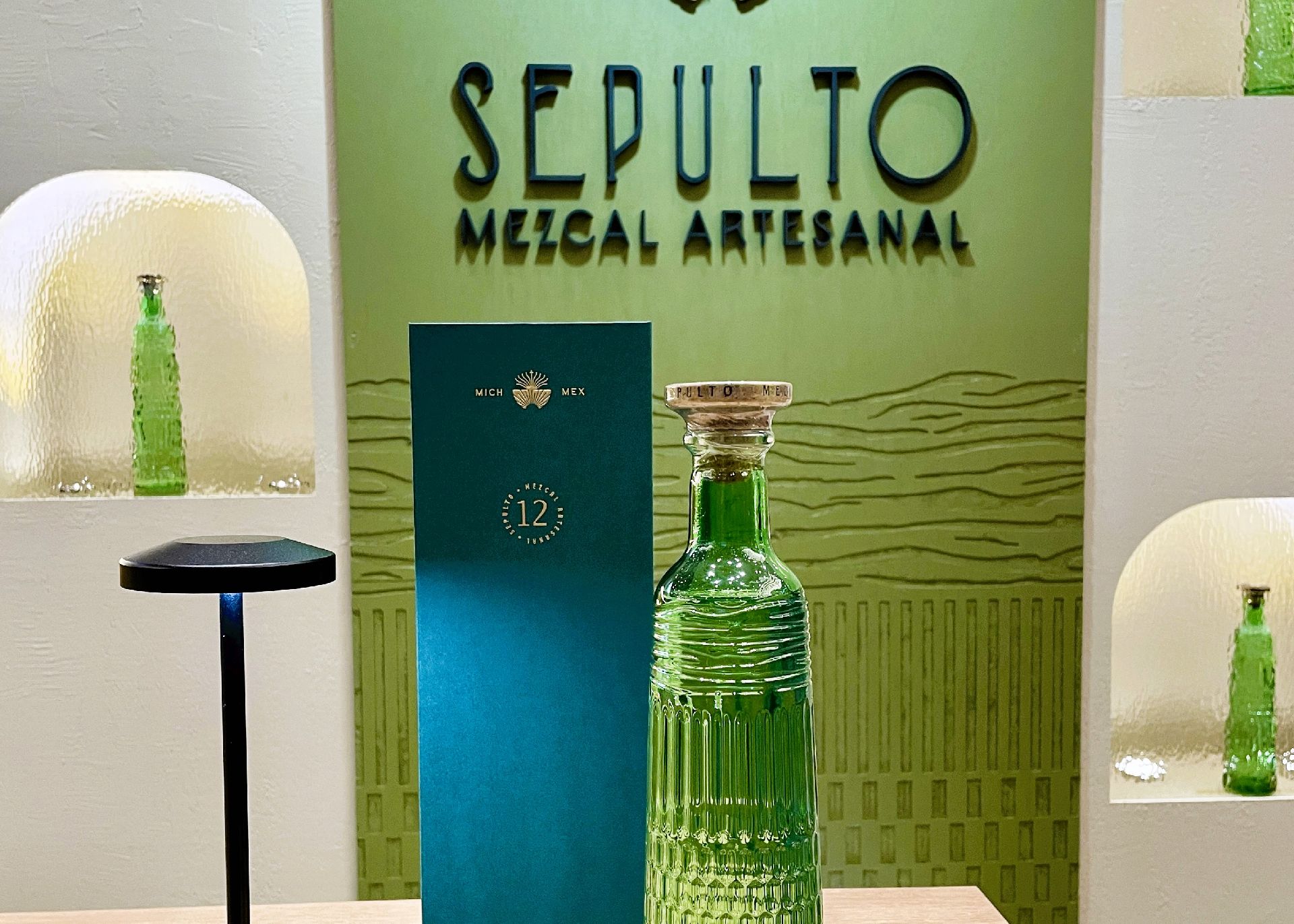
Sepulto Mezcal bottle

We attended WSWA’s Access LIVE 2024 event in Las Vegas, Nevada, and found quite a few products we think will pique the interest of restaurant and bar operators.

Agave spirits, perhaps unsurprisingly, seemed to dominate the floor. In particular, tequila was very well represented.

However, we also found notable vodkas, gins, whiskeys, sake, liqueurs, zero-proof beverages, and more. Below, several portfolios and items that really stood out to us.

Cheers!

Portfolio

Deluxe Distillery

This distillery, operating out of Belgium, has some of the most striking packaging I’ve seen in a while. I’m confident in saying that guests scanning a back bar would find Deluxe Distillery‘s bottles intriguing.

More importantly, of course, the liquid is just as outstanding. Deluxe produces three gins under the Blind Tiger label: Piper Cubeba, Imperial Secrets, and barrel-aged Liquid Gold. Their vodka, Mary White, pays homage to a famous bootlegger. And then there’s Yusibi, a honey-based aperitif in a unique bottle.

However, it’s Deluxe’s Sūpāsawā that really grabbed my attention at Access LIVE. This product, available in 30 states in the US already, makes batching not just a breeze but a more budget-friendly proposition. Cost per bottle should run around $9. The prebatched cocktail Deluxe Distillery was serving at their booth took less than five minutes to make.

As far as entire portfolios, Deluxe stood out the most to me.

Agave

Inspiro Tequila

This is clean tequila brand needs to be on your radar. There are currently two Inspiro Tequila expressions, Luna Blanco and Rosa Reposado. Both premium tequilas can be enjoyed neat, and Rosa is rested in rosé wine barrels sourced from France.

Inspiro is woman-owned, confirmed additive-free, certified Kosher, gluten-free, sugar-free, and zero carb. Oh, and the bottles are eye-catching.

Sepulto Mezcal Artesanal

This artisanal mezcal launched at this year’s Access Live event. And yes, this is another case of the bottle catching my eye and drawing me in.

Sepulto is aged for one year in glass, underground. As a result of the distiller’s cooking process, the complex notes of espadín, sahuayo, and papalote agaves come through with each sip. This is definitely a mezcal you’ll want to add to your super-premium agave spirits. In fact, it will be right at home on your back bar and menu next to your Don Julio 1942.

Vodka

Tenjaku Japanese Vodka

Don’t let the clean label fool you: Tenjaku is as fun a brand as it is a premium vodka. Click here to check out their packaging, which drives home my point.

Speaking of premium quality, Tenjaku Vodka is made from Yamada Nishiki rice, which is also used to make some of the best sake in the world. Further, the liquid is filtered not just through birch charcoal but also bamboo charcoal. The result is a vodka that tastes fresh and is delicate on the palate.

Herbesco Pepper Vodka

Looking for a great vodka that can serve as a spicy base for Bloody Marys and other hot cocktails straight from the bottle?

Herbesco Pepper Vodka is made with jalapeño, japones, chile de árbol, and bell pepper. Along with heat, expect herbal, fruity, and even chocolatey notes.

Gin

The Illusionist Dry Gin

Those familiar with Empress are familiar with what gives the gin its hue and color-shifting capability: butterfly pea flower. That botanical is also present in The Illusionist, which comes in a stylish, black Art Nouveau bottle.

Certified organic, The Illusionist delivers more than just visual impact. On the nose, licorice and citrus. Those notes are also present on the palate, along with fruity and floral flavors.

Whiskey

Yame Whisky

This Japanese whisky was introduced to me by Wine of Japan, an incredible portfolio of ultra-premium sake, beer, and spirits. Anyone who wants to add the highest quality sake from Japan need look no further. (In fact, I’ve been looking for a specific sake for over a decade. The VP or Wine of Japan knew exactly what I was talking about and had a sample at the booth. Amazing.)

Two expressions were available to try at Access LIVE, the 10 Year and 15 Year. The 10 Year features a 100-percent barley mashbill and is very easy to drink, delivering notes of vanilla and citrus. Think an easy-sipping bourbon. I found the 15 Year to a bit more complex, delivering dried fruit and grain on the palate. However, I had also sampled quite a few sake before trying this whisky.

In other words, you’re going to have to reach out to Wine of Japan and get tasted on both Yame expressions.

Tenjaku Whisky

There are two Tenjaku Whisky expressions currently: Blended and Pure Malt.

The former is sweet on the nose, with a touch of smoke. On the palate, Tenjaku Blended delivers grain, dried fruit, and a bit of spice.

The latter, Pure Malt, has nutty aroma with herbal notes. Expect wood and vanilla on the palate.

Niche

Wheyward Spirit

I could include woman-owned, operated, and distilled Wheyward in the whiskey category, but it’s too unique for that. The two available expressions are produced by upcycling whey.

Wheyward Spirit, the original expression, can stand in for vodka, gin, rum, sake, and even blanco tequila. The brand itself explains this innovative spirit quite succinctly: “Wheyward Spirit is one of a kind and was designed to take the best elements of vodka, sake, gin, and rum to be both a versatile and sippable clear spirit.”

There’s also Wheyward Spirit Wheyskey. Now that you’re familiar with the original, you can probably guess that this is a whey-based alternative to whiskey. This expression is barrel-aged Wheyward Spirit, and, like the original, is additive-, grain-, gluten-, and lactose-free. When I tasted Wheyskey, it most closely resembled a rye whiskey to me.

Alcohol-free

De Soi

“Savor the flavor, lose the booze, put the ‘fun’ in ‘functionality,’ and embrace the pleasure of restraint,” says non-alcohol brand De Soi.

This range of zero-proof apéritifs is loaded with interesting flavors, such as sparkling Très Rosé, citrusy and herbaceous Golden Hour, and jammy and bitter Champignon Dreams.

Operators looking to add sophisticated and unique non-alcohol beverage options should definitely look into De Soi.

Sparkling Wine

Rozoy Picot

If the production of this French sparkling wine didn’t involve a unique twist, I’m told Rozoy Picot would legally be Champagne.

However, these sparkling wines are blended with terpenes, the aromatic elements of cannabis. (Remember, terpenes don’t contain psychoactive elements, so this product doesn’t get you high.)

There’s a white varietal, Rozoy Picot OG Kush, and a red, Punch Rosé. I can only say that these must be smelled and tasted to be understood fully. Additionally, I can see these performing well at nightclubs as a unique bottle service option.

Image provided by author.

Bar Nightclub Pub Brewery Menu Development Drinks Food

by David Klemt David Klemt No Comments

TOTCF Unveils National Policy Initiative

TOTCF Unveils National Policy Initiative

by David Klemt

Tales of the Cocktail 2023 Singapore x Tales Residency

Yesterday, the Tales of the Cocktail Foundation announced the launch of their Policy Initiative, intended to update outdated labor standards and pay.

Along with advocating for both bartenders and servers, the initiative seeks to raise the subminimum wage to $2.13.

This news comes on the heels of the completion of an in-depth survey. The TOTCF surveyed more than 510 bartenders and other hospitality industry professionals about pay and other compensation.

In particular, more than half of bar workers want employers to provide health insurance. On the restaurant side, servers want to say increases in pay.

There’s much more, of course. Please visit this link to discover the finer details of the TOTCF Policy Initiative. Additionally, you’ll find TOTCF’s press release in its entirety below.

INTRODUCING THE TALES OF THE COCKTAIL FOUNDATION® POLICY INITIATIVE

TOTCF introduces a national initiative aimed at policy change in support of the hospitality community with first priority centered on improving labor standards for bar professionals

NEW ORLEANS, LA (February 13, 2024) — Tales of the Cocktail Foundation® (TOTCF) is pleased to announce the launch of the Tales of the Cocktail Foundation Policy Initiative, a multi-faceted effort designed to amplify and advocate for improved benefits and resources for hospitality professionals in the United States. The TOTCF Policy Initiative – which includes a robust nationwide survey and research project, coupled with support from the initiative’s advocacy committee members and partners – will catalyze an extensive campaign to create policy reform and positive change within the food and beverage community.

“Supporting an industry that has been historically underserved – from lack of industry research, common resources to educate and inform, and funding for coalitions – is crucial in breaking the cycles that have made it difficult to build a lifelong career in hospitality,” said Tales of the Cocktail Foundation CEO Eileen Wayner.

Intended to shift antiquated and subpar labor standards through industry support of positive policy action, the TOTCF Policy Initiative’s objectives include providing resources for employees and employers on labor standards and protections, conducting research and supporting efforts toward effective policy changes, information on healthcare access and benefits, sexual harassment training, and youth worker engagement – all with an emphasis on diversity and inclusion. The TOTCF Policy Initiative, along with its Bar Professional Policy Network Hub, will assist with the organization of grassroots development and advocacy efforts in industry professionals’ local communities, providing opportunities for advocates to be directly involved in policy and reform in their own communities.

“Given our unique position within the industry, we want to offer platforms and resources for productive conversations between policymakers, industry executives, bar owners and operators, and bar professionals, to ensure existing and future policy changes are reflective and inclusive,” said Tammera Catchings, Government Affairs Manager for Tales of the Cocktail Foundation. “For TOTCF, the process begins with supportive research data and intricate data analysis of bar industry professionals and their work.”

The Policy Initiative is centered around improving labor standards for hospitality professionals around the country and supporting increased protections that will help ensure bartending and serving are viable, long-term careers. One of the first priorities of the TOTCF Policy Initiative is to support efforts to increase the subminimum wage of $2.13 for bartenders and servers. Since 1990, employment in the hospitality industry has grown over 85%, while overall private-sector employment grew by only 24%. With more than one in ten U.S. workers employed in the hospitality industry, increasing the wage floor and improving labor standards would significantly improve the well-being of millions of Americans and their families and help reduce long-standing race and gender-based wage inequities.

Launched in spring 2022, Phase One of the Policy Initiative consisted of a robust research project, which culminated with an industry-specific data collection completed by more than 500 bartenders and servers nationwide, targeting topics such as job quality, compensation, tip culture, health benefits, and more. This research, which was analyzed by Dynata, the nation’s largest first-party data company, resulted in a compilation of data that highlights key trends in the hospitality community. By effectively utilizing the survey data to start a progressive dialog amongst hospitality executives, politicians, and advocates, the TOTCF Policy Initiative will encourage significant changes in the economic and labor standards for all bartenders and servers in the country. Research results will be published as analyzed on the Tales of the Cocktail Foundation Policy website in April 2024. In Phase Two of the initiative to support positive policy reform, TOTCF is partnering with Florida International University Chaplin School of Hospitality and Tourism Management to conduct further research and analysis into industry labor standards, culminating in research publication at the end of 2024.

TOTCF Policy Initiative Committee Members

TOTCF is pleased to share the collective of industry professionals who are dedicated to advancing and overseeing the Policy Initiative: 
  • Zen Castro: New Orleans, LA – Espiritu Mezcaleria Restaurant, Bartender; BeachBum Berry’s Latitude 29, Bar Back
  • Jayanthi Daniel: Los Angeles, CA – Restaurant Workers Community Foundation, Executive Director 
  • Lauren Darnell: New Orleans, LA – Made IN New Orleans, Executive Director
  • Amanda Gunderson: Los Angeles, CA – Another Round Another Rally, Co-Founder
  • Kaiden Hope: New York, NY – Beam Suntory, Multicultural Portfolio Associate
  • Alex Jump: Denver, CO – Focus on Health, Co-Founder and Director of Operations
  • Jesse Maguire: New York, NY – Beam Suntory, U.S. Trade Engagement Manager 
  • Lynnette Marrero: New York, NY – American Bartender, Mixologist, and Philanthropist 
  • Robin Nance: Albany, IN – Strategic Branding Expert
  • John Reyna: Dallas, TX – Texas Hospitality and Non-profit Law Center, Managing Attorney

Government Affairs Manager

  • Tammera Catchings, J.D., M.S.: Ridgeland, MS – Tales of the Cocktail Foundation
To learn more about the Tales of the Cocktail Foundation Policy Initiative and get involved, join the Bar Professional Policy Network. You can learn more about The Foundation via the Tales of the Cocktail Foundation website, Instagram, Twitter, and Facebook.

About Tales of the Cocktail Foundation

Tales of the Cocktail Foundation is a non-profit organization that educates, advances, and supports the global hospitality industry and creates lasting impact in our host communities. Tales of the Cocktail Foundation is the global leader in spirits education and a platform to tackle issues facing the industry. The pillars of the Foundation are to Educate, Advance, and Support the hospitality industry through programs that benefit individuals and organizations in the community and to make a lasting impact in communities that host our events. This year, TOTCF hosts its 22nd Tales of the Cocktail® (TOTC) conference in New Orleans from July 21-26, 2024, and celebrates the theme Inspire.

Image: Cory Fontenot

Bar Pub Brewery Nightclub Club Nightlife Business Plan

by David Klemt David Klemt No Comments

Taco Bell Reveals 2024 Marketing Calendar

“Thank You for Coming to My Taco Bell Talk”

by David Klemt

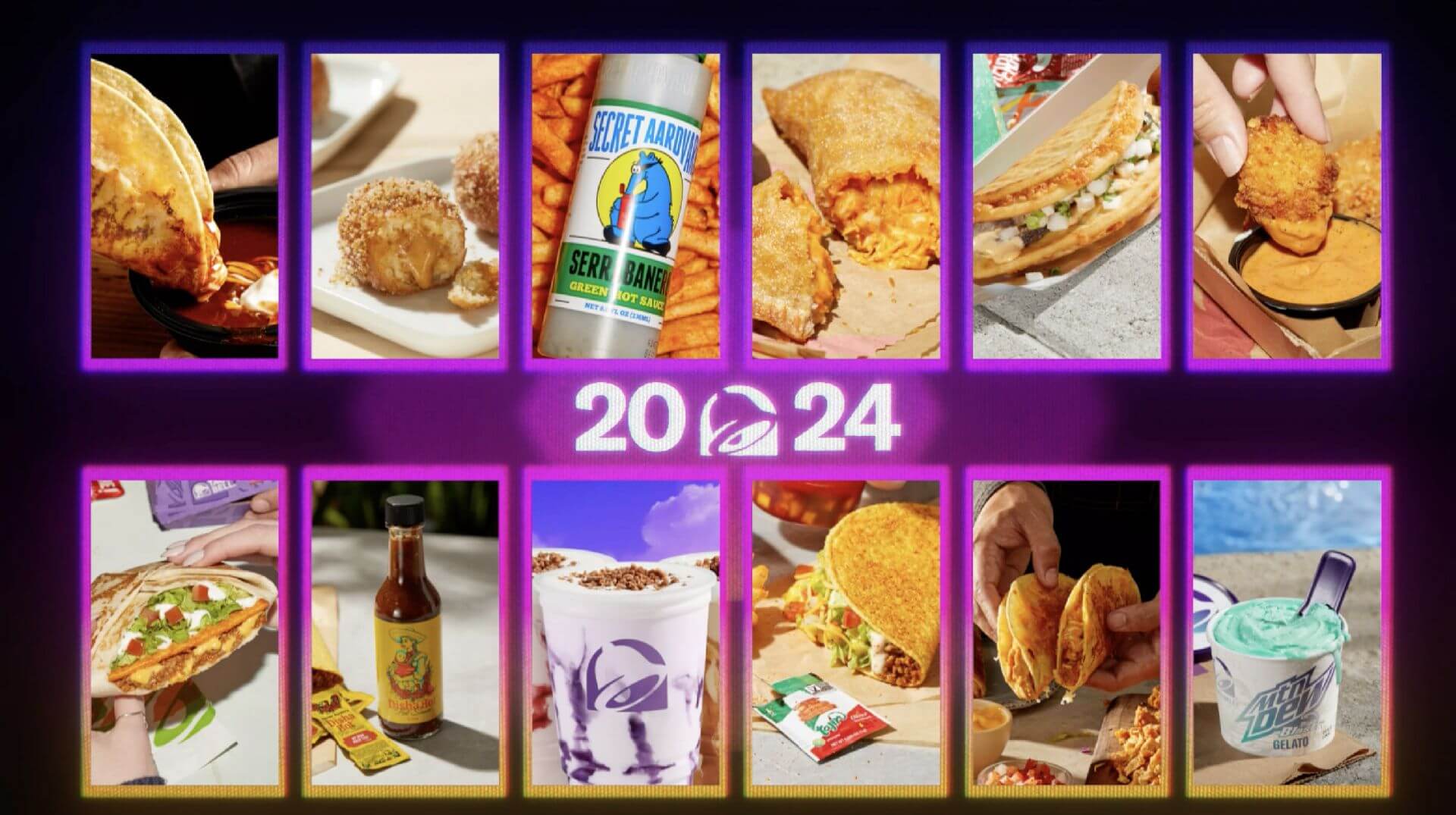
2024 Taco Bell menu item lineup

The showdown between the Kansas City Chiefs and San Francisco 49ers isn’t the only big news coming out of Las Vegas from Super Bowl LVIII weekend.

Of course, the game’s result is also big news. Congratulations to the Chiefs on their back-to-back world champion wins!

However, Super Bowl weekend kicked off with a unique event. On Friday, February 9, Taco Bell hosted their first-ever Live Más LIVE event.

As the event’s title suggests, Live Más LIVE was a livestream. And during that livestream, the undisputed Kings of the LTO did something they and their competitors simply don’t do. At Live Más LIVE, Taco Bell revealed their 2024 menu lineup.

Another way of putting this to illustrate the event’s significance is that Taco Bell just gave away their marketing calendar for the year.

Apparently, the inspiration for Live Más LIVE comes from Apple. The tech colossus has been hosting their annual Worldwide Developers Conference in earnest for more than 20 years. For the unfamiliar, Apple uses WDC to announce product news.

“I watch Apple’s Worldwide Developer’s Conference, and I just had this moment,” said Taylor Montgomery, Taco Bell’s chief marketing officer. So, I have to wonder if Live Más LIVE will become an annual or semi-annual event.

I’ll get to the items and opportunities Taco Bell unveiled in a moment. There’s a bigger point I believe operators should take away from Live Más LIVE.

A restaurant or bar’s menu is not just a list of items for sale. A menu is a powerful marketing tool. It’s a billboard. Arguably, the menu is the most powerful tool in an operator’s marketing toolbox.

QSR Innovation

Collaborations

While Taco Bell’s 2024 menu items are huge news, they’re not the only important revelation.

During Live Más LIVE, Taco Bell announced three emerging chefs who will launch the QSR giant’s TBX culinary program. Chefs Reuben Asaram, Jennifer Hwa Dobbertin, and Lawrence Smith will first be tasked with reinvigorating the Crunchwrap Supreme.

The announcement that these three chefs will bring their unique styles to Taco Bell speaks to the overall theme of the Super Bowl weekend event: Innovation.

This year, Taco Bell is going hard with new menu items, and they’re entering into compelling new collaborations to do so. These partnerships include:

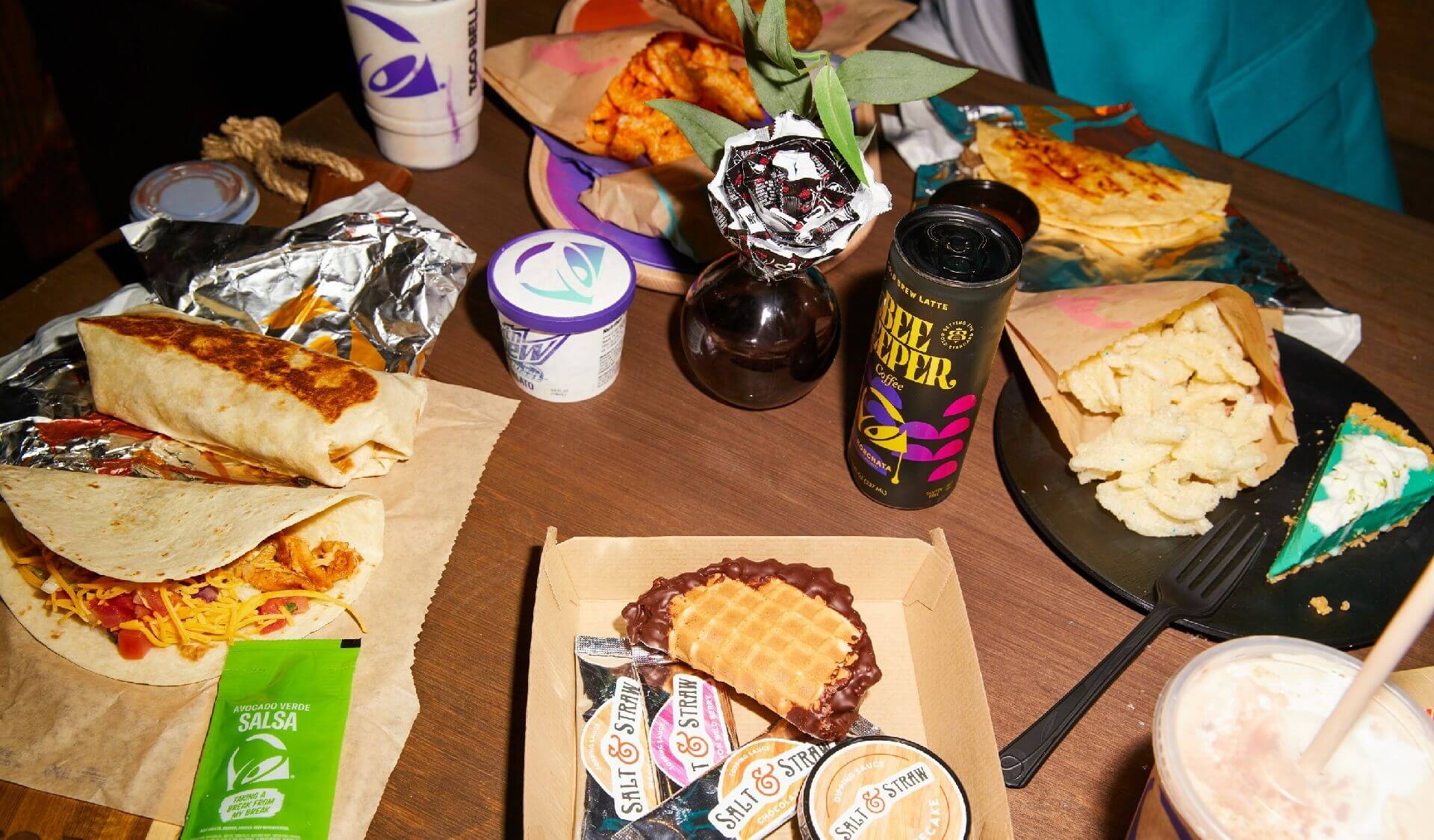
  • Beekeeper Coffee for Horchata Cold Brew Latte;
  • Cheez-It for the Cheez-It Crunchwrap, which features a Cheez-It cracker that’s 16 times (!) the size of a standard one;
  • Disha Hot for an exclusive sauce packet;
  • Salt & Straw for Ice Cream Chocolate Taco (think upscale Choco Taco), featuring cinnamon ancho ice cream;
  • Secret Aardvark for their Serrabanero sauce, which will accompany Nacho Fries; and
  • Tajín for an exclusive Taco Bell menu that will reportedly consist of a Tajín Crunchy Taco, Tajín Twists, and a Tajín Strawberry Freeze.

Having attended the Salt & Straw opening in Las Vegas (well, Spring Valley, but I won’t get into that further) I can say that I’m eager to sink my teeth into an Ice Cream Chocolate Taco.

On its own, these collaborations and menu testings are big news. However, Taco Bell’s event went bigger.

Menu Expansion

We all remember the Great Chicken Wars of the past several years. Well, Taco Bell has put their competitors on notice: They’re finally leaping into the fray.

According to Liz Matthews, Taco Bell’s chief food innovation officer, the company is lacking when it comes to having their “fair share of chicken.” The planned Cantina Chicken menu aims to fix this oversight.

2024 Live Mas Live Taco Bell event

Along with oven-roasted and shredded chicken seasoned with pasilla, other chilies, and spices, come a number of ingredients appearing at Taco Bell restaurants for the first time. Among them are purple cabbage, an Avocado Verde Salsa sauce packet, and white corn taco shells.

Debuting soon (hopefully) are are the Cantina Chicken Burrito, Cantina Chicken Taco (available in soft or crispy varieties), Cantina Chicken Quesadilla, and Cantina Chicken Bowl.

Those aren’t the only new chicken-centric items coming to the Taco Bell menu. There’s also the Cheesy Chicken Crispanada, featuring marinated and slow-cooked chicken.

Oh, and chicken nugget lovers, rejoice! Crispy Chicken Nuggets, made by marinating all-white chicken in spiced jalapeño buttermilk and frying them in a tortilla coating, are on their way.

This year, Taco Bell will also offer the Cheesy Enchilada Dipping Taco (slow-roasted chicken), and Cheesy Street Chalupa, which is available with slow-roasted chicken or grilled steak.

On the sweet side, Taco Bell is launching MTN DEW BAJA BLAST Gelato, and Dulce de Leche Cinnabon Delights.

As one might suspect, some of these items will be permanent, some will come in the form of LTOs. And if my suspicions prove correct, I think we’ll see a secret, unannounced menu item at least once in 2024.

Image: Taco Bell

KRG Hospitality. Restaurant Business Plan. Feasibility Study. Concept. Branding. Consultant. Start-Up.

by David Klemt David Klemt No Comments

Want Cinematic F&B Posts? Get Messy

Want Cinematic F&B Posts? Get Messy by David Klemt

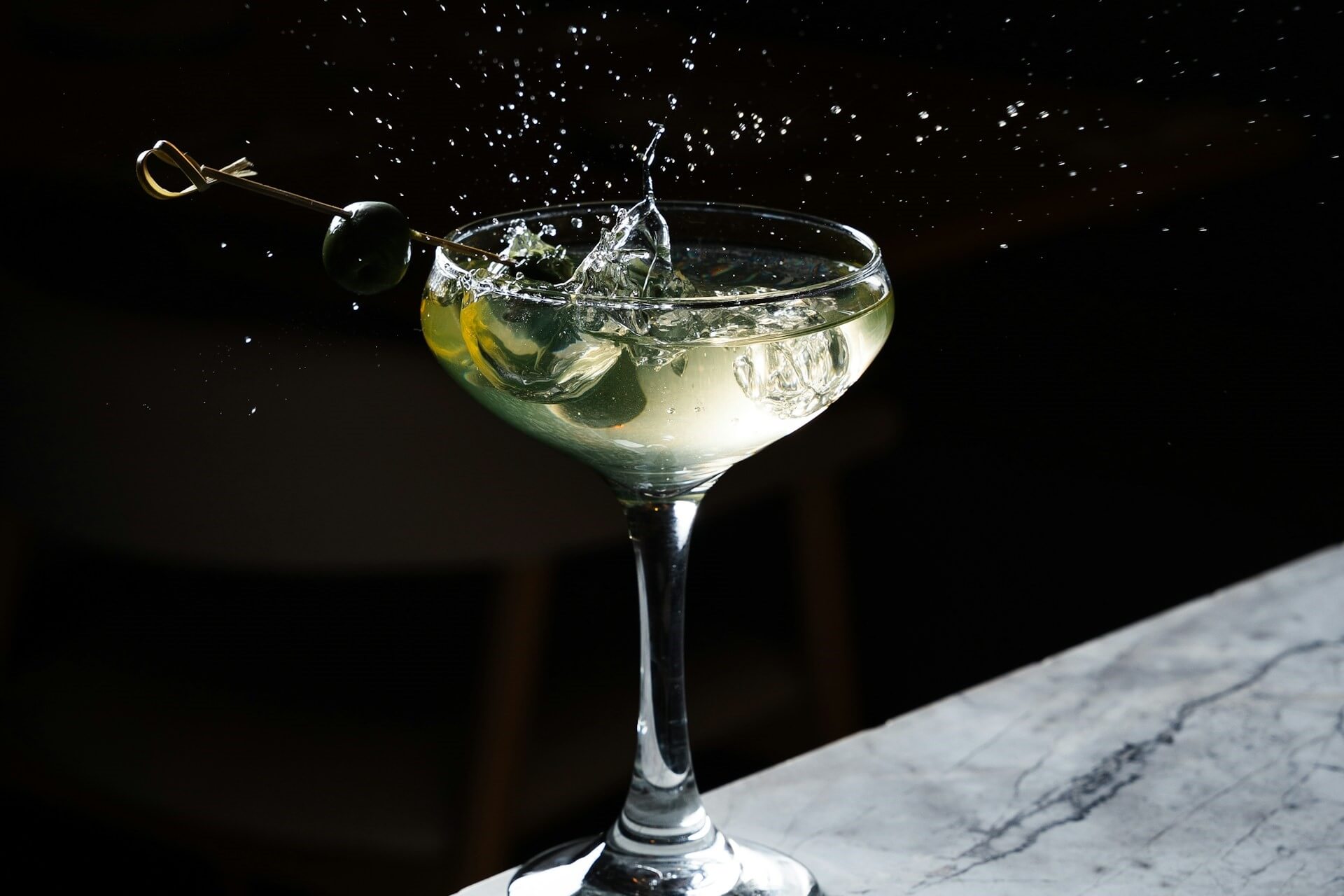
Cocktail splashing out of a cocktail coupe

Note: Photo not taken by Beautiful Booze or Little Lane Media.

Unsurprisingly, many people think that their social media and marketing photos and videos must be perfect. However, that’s not necessarily true.

The pressure to be “perfect” can lead people to stress out over posting F&B content to their social channels. Surely, composition must be flawless. If it’s not, why bother even posting?

After all, the century-plus-old phrase is “picture perfect,” not “picture imperfect.”

Well, you can stop fretting over every detail of your photos and vids. Two experts in social media marketing and content creation encourage you to be less than perfect.

During this year’s WSWA Access Live event in Las Vegas, Nevada, Natalie Migliarini and James Stevenson presented “Cinematic Cocktails: Mastering the Art of Visual Mixology.”

If you’re an avid consumer of social media content, you know Migliarini and Stevenson by the brands they’ve developed over a decade. Beautiful Booze, approaching 200,000 followers on Instagram, is run by Migliarini. Little Lane Media is a media agency operated by Stevenson.

Last week, I shared their tips for working with micro- (and nano-) influencers. Click here to learn why such collaborations can pay dividends for your business.

Today, I’m going to share a few of their tips for creating and posting your own engaging pics and vids.

Perfection is an Illusion

Throughout history, people have explained that perfection is an illusion. Worse, the self-imposed pursuit of perfection when during tasks can discourage a person from even trying.

So, don’t worry about being perfect. Instead, remove the pressure of perfection and just do your best. With that out of the way, Migliarini and Stevenson have a compelling argument against perfection.

In their experiencebear in mind that Beautiful Booze is a pioneer in the cocktail influencer spacethe general consumers of content are put off by content that appears too professional and heavily edited. Rather, people seem drawn to more casual content.

Let’s say you want to promote a new cocktail on your menu. So, you’re going to create a video of yourself or a bartender creating the drink.

If you make a mistake, it can be tempting to scrap the video of edit out the error. Well, you can relax.

According to Migliarini and Stevenson, being messy during some build steps can look better than a “flawless” video. In fact, the duo say a messy video can be “fantastic.” Why? Their reasoning is simple: the mistakes show that you’re not perfect.

You know who else isn’t perfect? The people watching your video. This makes you (or your bartender) more relatable. It also takes the pressure of them if they want to try to make the drink at home.

There’s also the fact that many people are cynical about content. Too professional equals “trying to sell me something.” They know even a casual video is trying to get them to visit your bar or restaurant, but it’s more acceptable.

So, liquid splashing out of the glass? Leave it. Did some booze spill from the jigger and miss the glass? Leave it in.

Tips and Tricks

Of course, you should still create content with some guidelines in place.

  • If you sell alcohol, you should probably keep cocktail, beer, wine, and spirits content to Instagram. TikTok may be a dominant video platform but you can’t be sure what ages are consuming your content. Best to err on the side of caution.
  • Migliarini and Stevenson have learned that people like transparent cocktail shakers when watching cocktail videos.
  • Get a tripod. It doesn’t have to be an expensive, professional one; a decent one from Amazon will do.
  • Any light is better than no light.
  • You can fill “dead space” in your photos with garnishes, coasters, etc.
  • Shoot in slow motion. If you want a truly cinematic post, this works wonders.
  • Aim to create 20-second videos.
  • Finally, and this one is very valuable, edit your video so your “hook” is up first. (Speaking of editing, try Final Cut Pro if editing via laptop or desktop, and InShot to edit on your phone.) You have to grab people’s attention, and Instagram counts the first three seconds as a view. Since it will be a loop, put your hook at the front and the build after that. This may seem odd to you at first but people watching won’t notice the “strange” cut.

Bonus tip: You don’t have to be perfect when performing a task for video. However, make sure your background is cleaned up (and consider blurring it). There are people who’ll pause and try to zoom to pick apart backgrounds; it happens.

With these tips in mind, it’s time to try your hand at some new video content.

Image: Isabella Kara on Unsplash

Bar Pub Brewery Nightclub Club Nightlife Brand Identity

by David Klemt David Klemt No Comments

Working with Local Influencers

Community Collaboration: Working with Local Influencers

by David Klemt

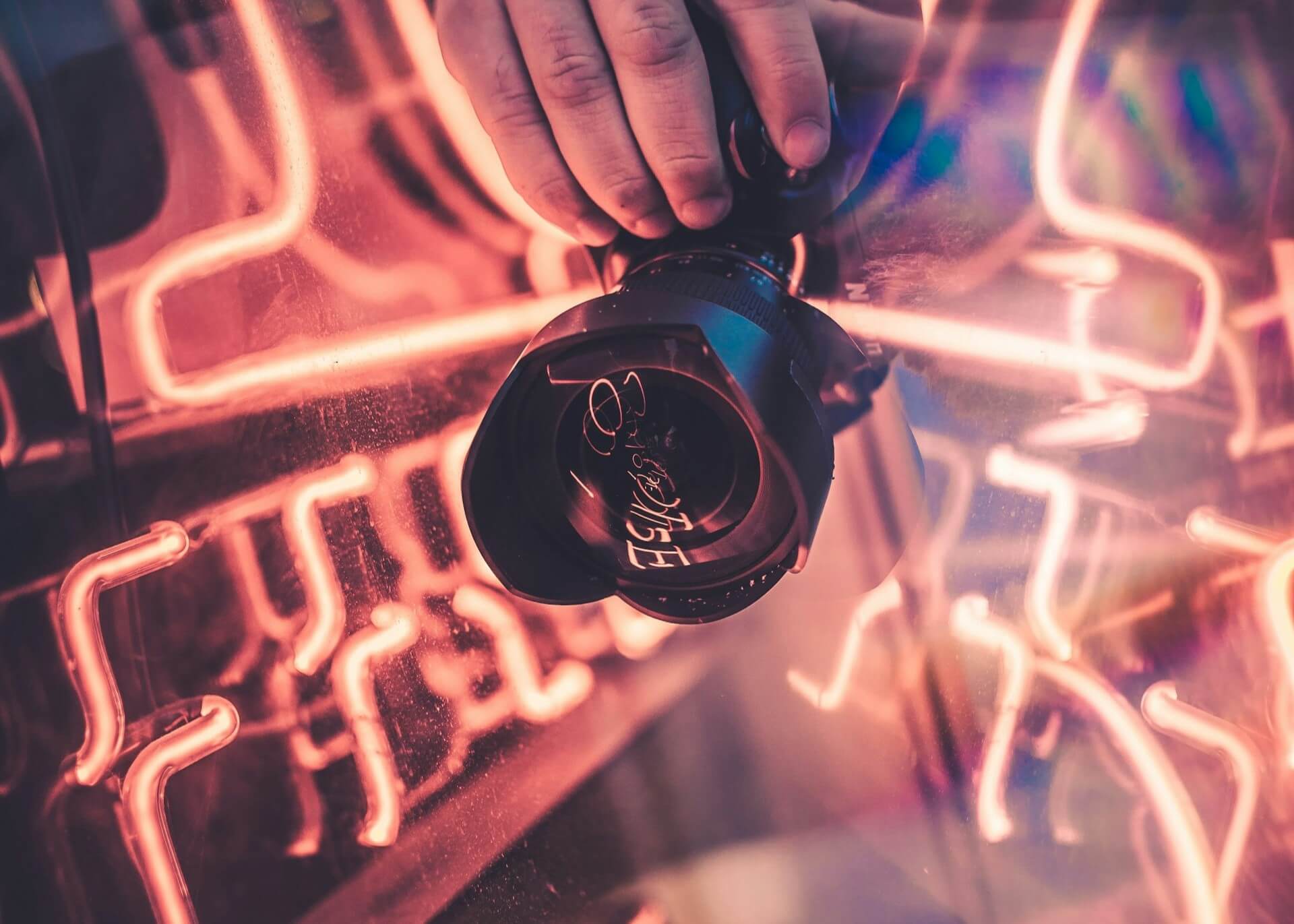
Photographer's hand holding DSLR camera by neon sign

One of the standout educational sessions from WSWA Access Live 2024 focused on finding and working with local influencers.

Natalie Migliarini, a.k.a. Beautiful Booze, and James Stevenson, a.k.a. Little Lane Media, presented “Successfully Engaging with Influential Content Creators in Your Community” in Las Vegas, Nevada, last week. The duo made the case for seeking to collaborate with influencers in your community.

“Local influencer” may give the impression of less popularity and less reach. After all, another designation for these people is “micro-influencer.”

However, there are several reasons why working with local or micro-influencers is a smart move for your bar, restaurant, nightclub, cafe, or hotel.

It helps to understand that some marketing experts categorize influencers by follower count:

  • Nano: 1,000 to 10,000 followers
  • Micro: 10,000 to 100,000 followers
  • Macro: 100,000 to 1,000,000 followers
  • Mega: 1,000,000-plus followers

I don’t know about you, but I think reaching a potential 10,000 followers local to my area of operation is an excellent value proposition. If you’re curious, Migliarini’s Beautiful Booze Instagram account falls into the macro category.

Of course, there are other appealing benefits as well.

Effective Marketing

What do You Want?

What are your goals when marketing your business? I’m willing to wager there are at least three:

  • To be discovered by new people.
  • Boosting traffic.
  • Increasing revenue.

And what’s one of your greatest concerns when it comes to your marketing efforts? I’ll bet that it’s budget.

Well, Migliarini and Stevenson believe local or micro-influencers (and I’d say nano-influencers, as well) can tick all of those boxes.

What do You Want to Spend?

Local influencers will likely be much more affordable than their macro or mega counterparts. There are celebrities—part of the mega-influencer category—that can make millions of dollars for a single promotional post. Macro-influencers can command five figures for just one post.

Now, think about social media. Depending on the platform (Migliarini and Stevenson favor Instagram), these pricey posts can have a lifespan as short as 15 minutes. That’s a lot of money to spend on marketing for just minutes or hours of relevancy.

Then consider engagement. According to Migliarini and Stevenson, engagement is more important than reach.

Who do You Want to Reach?

I’m sure the thought of people across the globe knowing your restaurant or bar is appealing. But would that really translate to more traffic and greater revenue?

Eventually, sure. But in the here and now, when building your brand and getting discovered, your local community is more important.

If you’re operating in the Chicago suburbs, will your revenue and margins improve because some social media users in Vancouver found your venue online? Or, would your business be better served by locals and people in the surrounding area visiting your spot on a regular basis?

I think you know the answer.

Well, this is where nano- and micro-influencers come into play. You want support from locals. Garnering that support via social media means you want influencers who are engaged with your community.

The partners you’re after are local influencers, not global (or national, until you’ve become a must-visit destination for tourists).

As Migliarini and Stevenson say, an influencer may be “micro” by follower count but “macro” in terms for their effectiveness in a particular market.

Effective Partnerships

How to Find Collaborators

The great news is that it’s not difficult to find local influencers. Let’s use Instagram as an example for finding collaborators.

When you pop open the app, you’ll see the search icon at the bottom of the screen. To make this very simple, it’s the magnifying glass to the right of the house icon.

Once you tap the magnifying glass icon, you’ll be able to search for basically anything in the search field. From this point, you’ll see several tabs to scroll through: For you, Accounts, Audio, Tags, Places, and Reels.

Of those fields, Tags will likely deliver some of the best results. Migliarini and Stevenson suggest following hashtags relevant to you and your business. From there, you’ll come across influencers local to your area of operation.

How to Select Collaborators

All engagement is not the same.

It’s going to be tempting to look for huge follower counts and tons of likes on posts. Well, Migliarini and Stevenson find a different metric far more effective in gauging an account’s engagement.

Instead of likes, look at comments. An influencer may have hundreds or thousands of posts. And those posts may have hundreds or thousands of likes.

Does that really mean much? If you use Instagram, think about your behavior on the app.

It’s likely that you scroll dozens of posts whenever you open Instagram. You probably hit the heart icon, liking a number of posts as you scroll.

Do you remember every post that you like? After liking posts, do you think about the account that posted it? Probably not.

Now, let’s say you liked a post so much that you felt compelled to take the extra steps of commenting on it. If that was a post about a dish or drink from a bar or restaurant, that comment may convert into a visit or delivery order.

When you’re looking for a local influencer and going through posts, look at the number of comments. Hundreds or thousands of likes with just a handful of comments may indicate there’s not much engagement. But dozens or hundreds of comments? That’s a great sign.

Of course, you should also sift through the comments. Doing so can show you if the posts are mostly attracting bots. Further, you want to make sure the comments are positive.

How to Engage Collaborators

It’s important to remember that this is going to be a professional relationship.

Stevenson says there’s nothing wrong with sliding into a potential marketing partner’s DMs. However, it’s wise to share your business email address when reaching out. This way, the conversation moves to a more professional platform, and important messages likely won’t get lost.

Once the conversation has turned to the business at hand, both sides need to be crystal clear regarding expectations. How many posts are expected? When will the influencer post them? What’s the budget? What will working on site look like?

Be as detailed as possible to avoid confusion, frustration, and disappointment; both sides will benefit when every expectation is understood.

There’s another key to these collaborations that Stevenson wants operators to understand. Social media influencers aren’t salespeople, they’re marketers. This is a marketing exercise; you’re paying them to communicate and help people discover your business.

Going deeper, there’s another difference. There are influencers, and there are content creators. An influencer is paid to influence, and a content creator is paid to create content for others.

Another way to look at it: Influencers are in front of the camera, content creators are behind the camera. The distinction is very important.

In their partnership, Migliarini is in front of the camera, operating Beautiful Booze. Stevenson is behind the camera, running Little Lane Media. Both partner with restaurants, bars, hotels, resorts, and brands. However, they do so in different ways.

Now that you know what to consider, go forth and find your local influencers.

Image: Max Bender on Unsplash

KRG Hospitality marketing support. Restaurant. Bar. Cafe. Lounge. Hotel. Resort.

by David Klemt David Klemt No Comments

Best and Worst Cities for Servers

Service Wins and Woes: Best and Worst Cities for Servers

by David Klemt

Aerial photograph of Pittsburgh, Pennsylvania, at night

A recent survey from gaming industry site Casinos.US identifies the 25 best and two-dozen worst cities for servers in America.

I can share two details about the methodology that Casinos.US employed.

One, they surveyed 2,000 current and former hospitality professionals. And two, they were asked to rate the overall rudeness of their guests on a scale of one to ten. One is the kindest, ten is the rudest.

Further, I can share that the average rudeness of guests being served in the US is 4.9 out of ten. Unfortunately, the three worst cities on the Casinos.US list rank between 7.0 and 7.6 on the rudeness scale. In fact, 22 of the 24 worst cities come in at 5.0 or above.

No city is perfect. The best of the best earns a score of 2.0, with the next best hitting a 3.0. Still, not bad at all.

Sadly, 45 percent of respondents reported finding themselves interacting with rude guests at least twice per day. As far as the worst of the worst, respondents identified “older adults” as the rudest, and Sunday as the day of the week with the most incidents. Do with that information as you will.

There are two sides to the coin, of course. Impressively, 24 percent of respondents “rarely” encounter rudeness from guests. Even better, 28 percent don’t expect to come across rude guests on a daily basis at work. So, there’s some hope out there.

To review the results of this survey for yourself, click here.

The Worst

Alright, let’s get it out of the way. Below, the worst cities in America for servers, according to Casinos.us.

To the right, their rudeness score. Again, the score is out of ten, with ten being the absolute worst.

  1. Washington, DC (4.9)
  2. Orlando, Florida (4.9)
  3. San Antonio, Texas (5.0)
  4. Sacramento, California (5.0)
  5. Columbus, Ohio (5.0)
  6. Buffalo, New York (5.0)
  7. Houston, Texas (5.1)
  8. St. Louis, Missouri (5.1)
  9. Atlanta, Georgia (5.1)
  10. Louisville, Kentucky (5.3)
  11. Miami, Florida (5.3)
  12. Nashville, Tennessee (5.4)
  13. New York, New York (5.4)
  14. Phoenix, Arizona (5.6)
  15. Detroit, Michigan (5.7)
  16. San Diego, California (5.8)
  17. Las Vegas, Nevada (5.8)
  18. New Orleans, Louisiana (5.8)
  19. Milwaukee, Wisconsin (6.0)
  20. Providence, Rhode Island (6.3)
  21. Oklahoma City, Oklahoma (6.3)
  22. Jacksonville, Florida (7.0)
  23. Cincinnati, Ohio (7.0)
  24. Virginia Beach, Virginia (7.6)

This list, if accurate, leaves me with one question: What’s going on, Virginia Beach? Sheesh. Calm down—your side of ranch isn’t that important, I promise.

It’s tempting to label this a tourist issue. Well over 10 million people—nearly 20 million in 2019—visit Virginia Beach annually.

And, hey, look at the rest of the list; it’s loaded with destination cities that draw millions upon millions of tourists each year.

However, when you look at the list of the best cities for servers below you’ll find more destination cities.

The Best

Now that we know the worst, let’s check out the best.

The cities below rank the lowest as far as rude behavior from guests.

  1. Dallas, Texas (4.8)
  2. Minneapolis, Minnesota (4.8)
  3. Boston, Massachusetts (4.8)
  4. Birmingham, Alabama (4.8)
  5. Salt Lake City, Utah (4.8)
  6. Los Angeles, California (4.7)
  7. San Francisco, California (4.7)
  8. Philadelphia, Pennsylvania (4.7)
  9. Raleigh, North Carolina (4.6)
  10. Riverside, California (4.5)
  11. Kansas City, Missouri (4.5)
  12. Seattle, Washington (4.5)
  13. Charlotte, North Carolina (4.4)
  14. Richmond, Virginia (4.3)
  15. Cleveland, Ohio (4.3)
  16. Indianapolis, Indiana (4.2)
  17. Chicago, Illinois (4.1)
  18. Denver, Colorado (4.1)
  19. Portland, Oregon (4.0)
  20. Tampa, Florida (3.8)
  21. Hartford, Connecticut (3.8)
  22. Austin, Texas (3.8)
  23. Baltimore, Maryland (3.7)
  24. Memphis, Tennessee (3.0)
  25. Pittsburgh, Pennsylvania (2.0)

Philly may be the City of Brotherly Love but the Steel City, Pittsburgh, is the best for servers in terms of guest behavior. At least, according to Casinos.US.

If you live in one of the cities above, go out to bars and restaurants, and aren’t a jerk to your servers, congratulations on being a decent person.

Takeaway

Let’s say you’re an owner, operator, or leadership team member. And let’s say you operate or work in one of the cities above, whether the best or worst.

If your service team routinely on edge, regularly upset, find out why. Leaders look out for their teams and strive to provide a healthy work environment.

I’m not saying you need to get into the details of their personal lives. What I am saying is that if there are issues in the workplace, you need to get to the bottom of them. More importantly, you then need to engage the team and get their feedback.

How do they want guest issues handled by the leadership team? Are their problematic regulars who need to be “fired” to protect the team? Some guests simply aren’t worth the revenue and tips in exchange for the emotional and mental distress they’re inflicting on the team.

That is, however, something that must be discussed. Most importantly, when the feedback is taken into account and a procedure is put in place, leadership must adhere to it and act accordingly. Any deviation will result in a loss of trust, and that will decimate team morale even more quickly than an encounter with a rude guest.

Lose trust from your team, lose the business.

Image: Venti Views on Unsplash

KRG Hospitality Start-Up Restaurant Bar Hotel Consulting Consultant Solutions Plans Services

by David Klemt David Klemt No Comments

Pizza Today’s 2024 Report Reveals Most Popular Cheeses

Pizza Today‘s informative 2024 Pizza Industry Trends Report is full of useful information, from top styles and toppings to new cheeses guests can choose.

Two weeks ago we did a deep dive into the top eleven pizza styles going into 2024, per Pizza Today. Click here to read that article.

Last week we checked out what the pizza publication had to say about top pizza styles by region. Additionally, we looked at the top toppings nationally and regionally. You can read that article here.

Now, we’re going to talk about what Pizza Today has learned about the top cheeses operators are putting on their menus.

by David Klemt

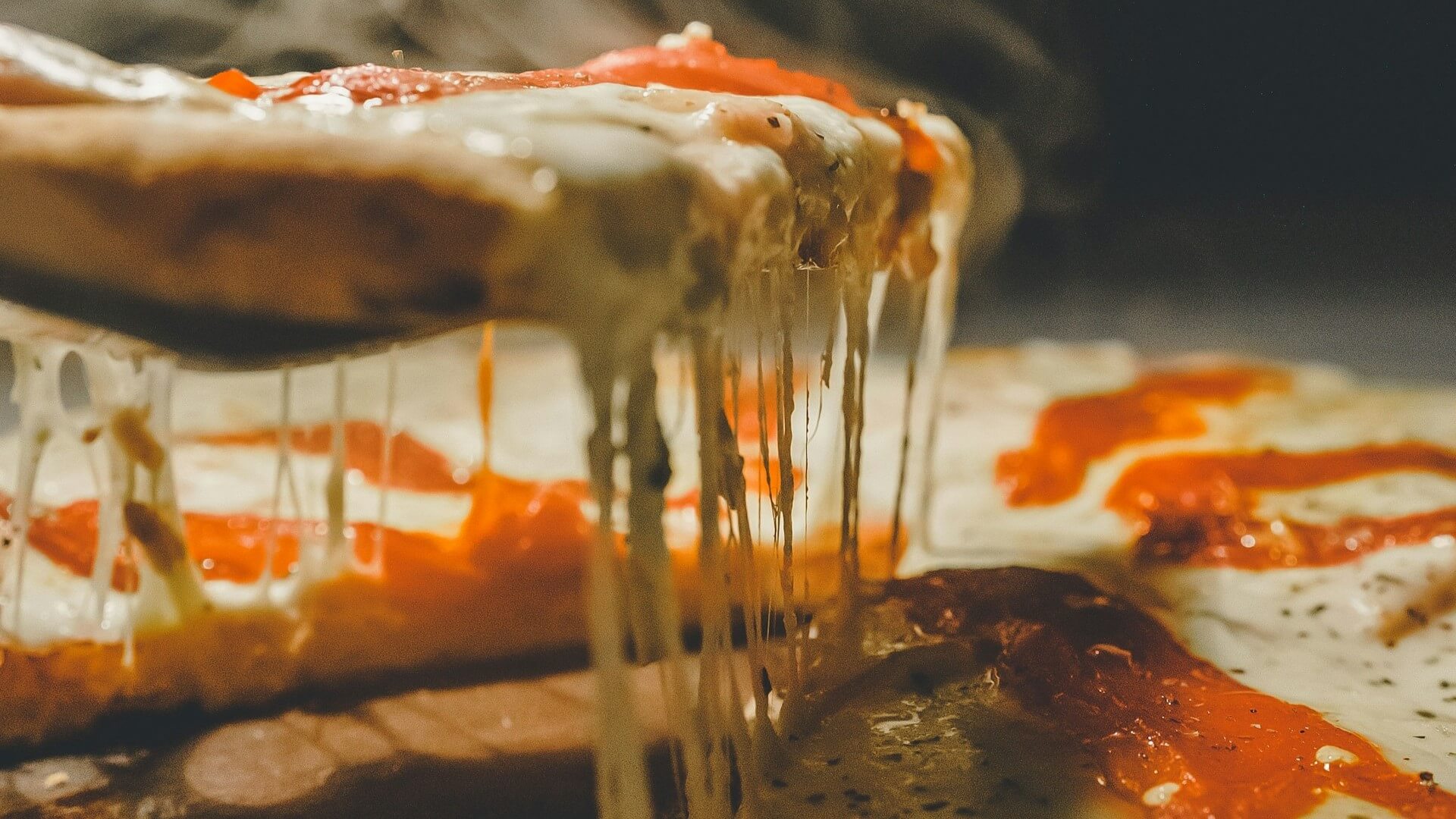
Cheese pull from cheese pizza

Top Pizza Styles, Nationally and Regionally

Before we jump into the cheeses, a quick recap of the top pizza styles in America.

  1. New York
  2. Traditional American
  3. Sicilian
  4. Deep Dish
  5. Neapolitan / Napoletana
  6. Chicago Thin / Tavern-style
  7. Detroit
  8. Grandma
  9. California / American Artisan
  10. NEOpolitan / Neo-Neapolitan and Chicago Thick (tie)

And now, the top trending pizza styles.

  1. Detroit
  2. Deep Dish and Grandma (tie)
  3. Sicilian
  4. New York
  5. Chicago Thin

Finally, the top pizza styles by region. For a more detailed explanation of each region, click here.

The West

  1. New York Style
  2. Traditional America
  3. California/American Artisan
  4. Sicilian
  5. Neapolitan

The South

  1. New York Style
  2. Traditional America
  3. Sicilian
  4. Deep Dish
  5. Neapolitan

The Midwest

  1. Traditional America
  2. Chicago Thin
  3. New York Style
  4. Deep Dish
  5. Detroit

The Northeast

  1. New York Style
  2. Sicilian
  3. Traditional America
  4. Neapolitan
  5. Grandma

Top Pizza Toppings, Nationally and Regionally

We’re almost to the cheeses. First, a recap of the most popular items to put on top of cheese.

Well, unless we’re talking a stuffed pizza. Click here and scroll to Deep Dish to see what I mean.

Now, the top toppings across the US.

  1. Pepperoni
  2. Sausage
  3. Mushroom
  4. Extra Cheese
  5. Bacon
  6. Chicken
  7. Onion
  8. Red/Green Bell Pepper
  9. Ham
  10. Black Olives
  11. Meatballs
  12. Canadian Bacon
  13. Jalapenos
  14. Pineapple
  15. Beef
  16. Basil
  17. Banana Peppers
  18. Fresh garlic
  19. Tomatoes
  20. Spinach

Below, how toppings break down regionally.

The West

  1. Pepperoni
  2. Sausage
  3. Mushroom
  4. Chicken
  5. Bacon

The South

  1. Pepperoni
  2. Sausage
  3. Mushroom
  4. Extra cheese
  5. Bacon

The Midwest

  1. Pepperoni
  2. Sausage
  3. Mushroom
  4. Bacon
  5. Onion

The Northeast

  • Pepperoni
  • Sausage
  • Mushroom
  • Extra cheese
  • Bacon

Top “New” Cheeses

Okay, so we’ve reviewed top pizza styles. We’ve done a recap for toppings.

So, what are some of the top “new” cheeses going onto those pizza styles and being covered in all those toppings?

It may seem odd the refer to the cheeses below as “new.” In this context, “new” means, “not mozzarella” or “not provolone,” for the most part. Or, if you’re in St. Louis, “not Provel.”

  • Ricotta
  • Cheddar
  • Fresh Mozzarella
  • Goat Cheese
  • Parmigiano Crema
  • Cotija Cheese
  • Scamorza
  • Vegan Cheese
  • Blue Cheese
  • Feta

Guests love personalization, and they love the opportunity to try new foods and new takes on foods they know.

Scamorza

For the most part, you’re likely familiar with all the cheeses above. However, if you’re like me, you may be unfamiliar with scamorza. If that’s the case, I looked into it for both of us.

Like mozzarella, scamorza is made from either stretched cow or water buffalo milk cheese curds. This cheese originates from Italy and comes in two styles: scamorza bianca or and scamorza affumicata. The former is white or natural, while the latter is smoked and brownish in appearance.

Further, bianca is a mild, somewhat sweet cheese. Affumicata, being smoked, delivers a more savory and, as one would expect, smoky flavor.

Vegan Cheese

If you aren’t offering vegan or plant-based cheese for your pizzas, you may not know what brands to use.

Well, don’t worry. I’ve also done some legwork into this topic.

Brands to check out are Violife, Diya, Chao, and Miyoko’s. As plant-based alternatives become more commonplace and expected by guests, I expect more commercial vegan-friendly cheeses to become available. Perhaps we’ll see some at this year’s National Restaurant Association Show.

Image: Pablo Pacheco on Unsplash

Related Reading

Work with Us

To work with us on your restaurant, bar, cafe, nightclub or other hospitality project, click the image below. Cheers!

Client Intake Form - KRG Hospitality

by David Klemt David Klemt No Comments

5 Books to Read this Month: February 2024

5 Books to Read this Month: February 2024

by David Klemt

Flipping through an open book

Our inspiring and informative February book selections will help you and your team transform your operations, business acumen, and F&B programming.

This month, we look at books covering an array of topics: design; learning to negotiate better; learning cocktail balance and build techniques; and finding your inner chef.

To review the book recommendations from January 2024, click here.

Let’s jump in!

Biophilic Design: The Theory, Science and Practice of Bringing Buildings to Life

This book was co-authored by the late Stephen R. Kellert, one of the developers of the biophilic design methodology. To learn more about biophilic design, click here. Then, pick up this book.

From Amazon: “This book offers a paradigm shift in how we design and build our buildings and our communities, one that recognizes that the positive experience of natural systems and processes in our buildings and constructed landscapes is critical to human health, performance, and well-being. Biophilic design is about humanity’s place in nature and the natural world’s place in human society, where mutuality, respect, and enriching relationships can and should exist at all levels and should emerge as the norm rather than the exception.”

The Cocktail Balance

Written by Stanislav Harcinik, The Cocktail Balance is about more than building cocktails. Readers will learn about the role senses play in cocktails and balance, along with presentation and service.

From thecocktailbalance.com: “My work isn’t focused solely on experienced bartenders, students are part of the target group. By including potential new bartenders, this book wishes to push the upcoming students into a broader, more creative mindset. The book itself is divided into 3 main sections – theory, practical part and legacy from the best bartenders in Slovakia. Theory, contains the basics and building blocks that allow the development of a professional approach, it also focuses on how to present yourself and how to take care of guests. Whereas in the practical section, readers will be able to learn to price a cocktail and to effectively go through a structured creative process. Other chapters also include gastrophysics and neurogastronomy. In other words how an aroma, a physical characteristics, a sound as well as visual stimulation affect the final flavour of a cocktail, and create a comprehensive and unforgettable experience for guests.”

Pick up your copy today.

Craft Cocktails at Home: Offbeat Techniques, Contemporary Crowd-Pleasers, and Classics Hacked with Science

Some bar professionals and guests like to understand the “why” behind what they consume. Why does this taste good? Why and how do certain processes affect spirits? Kevin Liu’s book answers these questions, and more. On top of that, there are 65 recipes to try.

From Amazon: “In Craft Cocktails at Home, you’ll embark upon a one-of-a-kind journey as you learn how to make some of the world’s most innovative, unique, and delicious cocktails. Taste scientists, engineers, and talented bartenders with decades of experience all contributed their expertise to create this must-have guide for novices and professionals alike. Ever wondered what makes water taste good? Curious about what really happens during the barrel-aging process? Interested in which “molecular” ingredients have the best texture? These questions and more, answered inside.”

Order the paperback here.

The Forgotten Chef

Simply put, this book is intended to inspire younger generations to pursue cooking as a career. If you know someone who has an interest in cooking but hasn’t taken steps to become a chef, this is the book you should gift them.

From Amazon: “The book moves quickly through food stories, tips and techniques to inspire and ignite the passion of its targeted reader. Through anecdotal food related stories, the book covers important topics such as the right mindset for cooking success, quality over quantity, kitchen organization (mise en place), kitchen tools (the Dirty Thirty), the celebrity chef conundrum (why people get discouraged in their cooking journey), introduction to knife skills/care, cookbook basics, food preservation and safety and other fun chapters such as saving Grandma’s recipes from extinction, the lost art of sharing (food), and the new-old method of cooking, sous vide.”

Click here to order the paperback.

Getting to Yes: Negotiating Agreement Without Giving In

Everyone needs to know how to negotiate. It’s a valuable skill not just for business but for life in general. Getting to Yes is a how-to manual that teaches you the art of negotiation, a skill you’ll need to develop if you’re an entrepreneur, aspiring business owner, or professional looking to progress in their career. And, as I’ve already said, it will help you in situations you’ll find yourself in outside of business.

From Amazon: “Getting to Yes offers a proven, step-by-step strategy for coming to mutually acceptable agreements in every sort of conflict. Thoroughly updated and revised, it offers readers a straight- forward, universally applicable method for negotiating personal and professional disputes without getting angry-or getting taken.”

Get it today.

Image: Mikołaj on Unsplash

Bar Nightclub Pub Brewery Operations Standard Operating Procedures SOP

by David Klemt David Klemt No Comments

Program for Unique Holidays: February 2024

Program for Unique Holidays: February 2024

by David Klemt

"Think about things differently" neon sign

Do you want to stand out from from other restaurants and bars in your area? Change how you think about your February holiday promotions.

Several holidays are set against every date on the calendar, and this month is no exception. These holidays range from mainstream to esoteric.

Pay attention to the “weird” or unique holidays to raise eyebrows, carve out a niche for your restaurant or bar, and attract more guests. Why do what everyone else is already doing? Why program only around the same holidays as everyone else?

Of course, you shouldn’t try to celebrate every holiday, strange or otherwise. Focus on the days that are authentic to your brand; resonate with your guests; and help you grab attention on social media.

You’ll find suggestions for promotions below. However, the idea behind our monthly holiday promotions roundup is to inspire you and your team to get creative and come up with unique programming ideas.

For our January 2024 holidays list, click here.

February 3: Ice Cream for Breakfast Day

I think we can all agree that life is too short to not indulge ourselves and have a treat occasionally. French toast, pancakes, crepes… All of these breakfast foods and more pair quite well with ice cream.

This holiday is even better if your back-of-house team can make ice cream from scratch.

February 4: National Homemade Soup Day

One of the most comforting foods on the planet, particularly during the winter, is a warm cup or bowl of homemade soup.

Of course, as an operator, you’ll want to consider rephrasing this holiday as “Housemade” or “Scratch-made” soup.

February 5: Start of Pride in Food Service Week

Pride in Food Service Week runs from February 5 to 9. The purpose is to celebrate foodservice professionals. For some, this means leaving a larger tip than normal. Some operators use this five-day holiday to host special events that highlight their team’s skills. I also recommend using this time to come up with ways you can honor your team, and improve their lives and careers.

February 11: National Peppermint Patty Day

Back in November of last year I wrote about how peppermint was overtaking pumpkin spice as the preferred flavor. Well, this is the perfect day to feature peppermint via a variety of F&B items on your menu, from cocktails and high-quality non-alcohol LTO beverages to tempting desserts.

February 13: National Cheddar Day

Cheddar is the most-popular cheese in the UK and one of the most-popular in the US. If you can slather it in Cheddar, create an LTO menu, feature it, and promote it.

February 16: National Almond Day

This is definitely the holiday to feature dishes with almonds, from appetizers and entrees to desserts. And, of course, there are drinks made with Disaronno, Baileys Almande, Cîroc Amaretto, and other liqueurs and spirits that can help your bar team serve up almond-flavored cocktails.

February 22: National Margarita Day

Nope, this is not an “out there” holiday. However, it is a fantastic time to showcase your signature Margaritas, alongside a classic build, of course.

February 23: National Skip the Straw Day

If you have been trying to be a more sustainable business, reducing and eliminating waste is key. I’m not saying you have to focus solely on replacing plastic straws. Instead, think about serving drinks without straws.

However, make sure you do have straws on hand for those guests who need them.

February 24: National Tortilla Chip Day

Nachos, nachos, nachos. Nachos piled high, nachos prepared in the traditional method, your bar or restaurant’s signature nachos… Time to create a promotion around the humble tortilla chip!

February 26: National Pistachio Day

Have you ever had a Pistachio Martini? How about a Pistachio Espresso Martini, Pistachio Sour, or Pistachio Fizz?

If you haven’t, odds are many of your guests haven’t, either. Could be a great idea for an LTO menu featuring pistachio, huh?

Image: Ivan Bertolazzi on Pexels

Bar Nightclub Pub Brewery Marketing Agency Team

by David Klemt David Klemt No Comments

The Drink to Dethrone the Espresso Martini

Will this Drink Dethrone the Espresso Martini?

by David Klemt

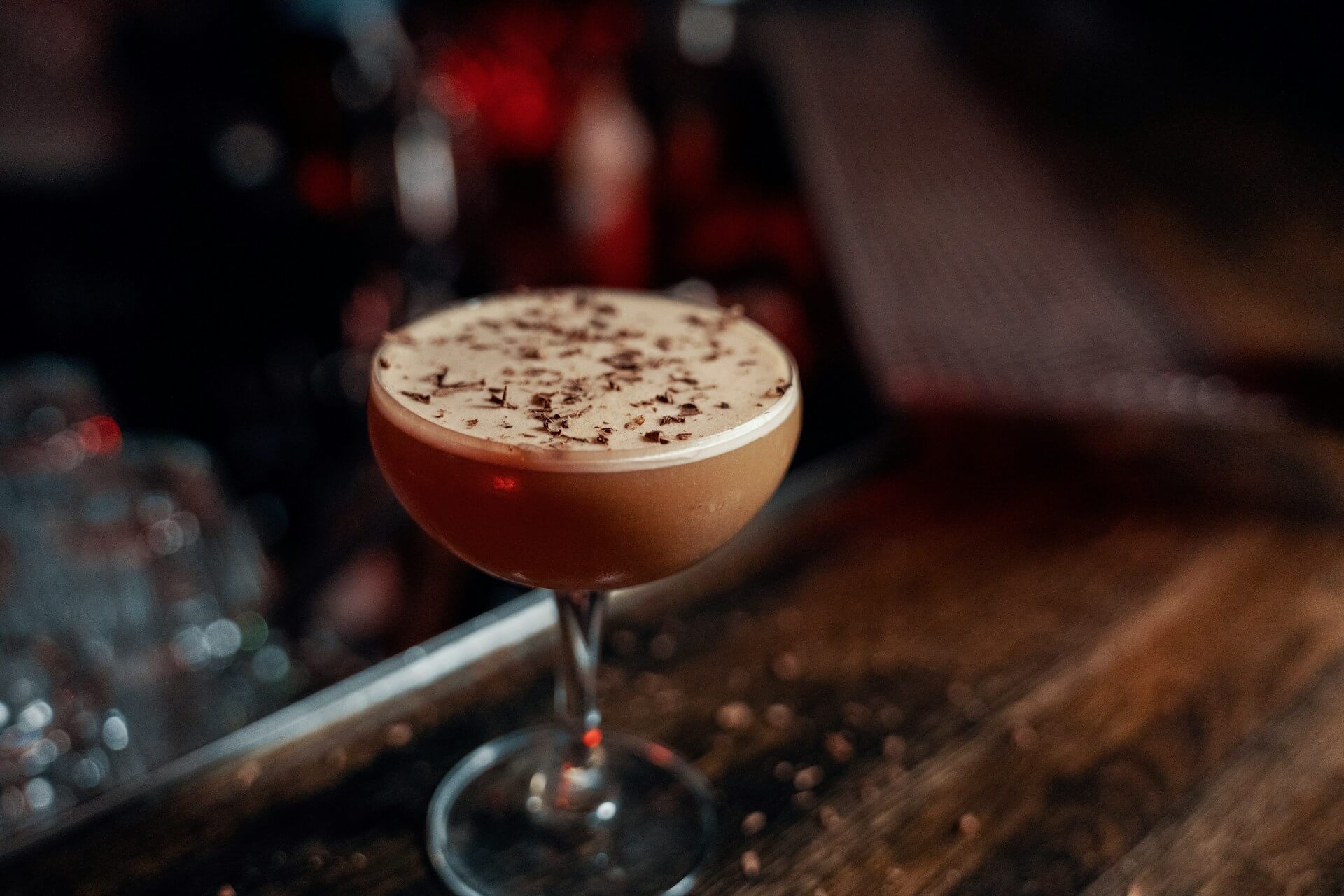
A coffee cocktail sitting on top of a bar

If we’re to take what industry pundits and cocktail aficionados are saying, 2024 may be the year that the Espresso Martini falls from grace.

Alright, that may be a bit dramatic. However, maybe we won’t read about how the Espresso Martini is having yet another “moment” this year.

Instead, it’s possible that 2024 will be the Year of the Carajillo.

This incredibly simple cocktail is receiving as muchif not morehype than the Negroni Sbagliato did in 2022. Only this time, bartenders may not roll their eyes whenever they hear someone mention it.

Before I dive into the Carajillo, a bit of clarification. I’m not anti-Espresso Martini. It isn’t like I think I’m above enjoying one of these not-Martinis from time to time. And I’m sure it makes registers ring plenty at bars around the world.

However, it seems like we’re told we’re in the midst of the Espresso Martini’s latest moment every time fall or winter comes around. Look, this is a modern classic that has been around for decades. It’s not “having a moment,” it has simply reached ubiquity.

So, the idea that a perhaps lesser-known coffee cocktail can have its moment this year is exciting. (And a bit of a relief.)

Let’s cannonball into the Carajillo!

Not So Simple

When you do a cursory search for the Carajillo you’ll encounter quite a few absolutes.

For example, there are people who say the drink only and always consists of hot espresso and Licor 43. You may read that the ratio is always one to one.

However, there’s more nuance surrounding the Carajillo.

This deceptively simple cocktail comes to us from Spain. From what I can find, it’s often a cold drink that varies from country to country, region to region. In Spain, it’s commonly coffee and brandy in a two-to-one ratio. Order one in Cuba and it will likely be a rum cocktail rather than brandy. In Mexico, while Licor 43 is said to be the standard, it’s not uncommon for mezcal or a coffee liqueur to accompany the coffee.

Now, as I’ve said, you’ll come across sources that say a Mexican Carajillo is espresso and Licor 43. So, let’s go with that recipe for now.

It’s a simple build: Fill a cocktail shaker with ice. Add two ounces of hot espresso or other hot coffee and two ounces of Licor 43. Shake until well chilled, then strain into a rocks glass. The shake should form a foamy head. Some people garnish with three coffee beans.

Make it Yours

Of course, there’s room to play with this recipe. You and bar team can change the ratio, change the garnish, experiment with glassware, replace the Licor 43 with another liqueur, add an ingredient…

As an example of the latter suggestion, Cazadores produces a coffee liqueur, Cazadores Café. This can replace Licor 43 or work alongside it.

Just know that if you replace the original liqueur, you’re missing out on a blend of 43 botanicals. That means your Carajillo will taste much different than the standard Mexican build. In that case, is it still a Carajillo?

Well, that’s up to your guests to decide, I suppose.

There are bars that make their Carajillo with cream, brandy, and Licor 43. Some serve theirs with a small bowl of sugar so guests can sweeten them to their liking.

At some bars, the build calls for heating the liqueur or base spirit with lemon and sugar. Others make Carajillos with mint and amaro.

So, you and your bartenders can do what has been done with the Espresso Martini: Alter the Carajillo to create your signature version. You can also simply serve the traditional build.

Or, and this is my recommendation, you can serve traditional Carajillos and offer one or more signature variations.

Cheers!

Image: Jeppe Mønster on Unsplash

KRG Hospitality Start-Up Restaurant Bar Hotel Consulting Consultant Solutions Plans Services

by David Klemt David Klemt No Comments

Top Pizza Styles & Toppings by Region in the USA

Now that we know the top 11 pizza styles in North America thanks to Pizza Today, let’s see how they break down by region.

Unfortunately, they don’t include regions throughout Canada in their trends report. However, the information is still incredibly valuable.

Pizza Today has put a lot of effort into their 2024 Pizza Industry Trends Report. So, make sure to click this link and check it out for yourself.

Before we jump into the regional breakdown, let’s check out which pizza toppings lead the way across the nation. As you’ll see later, while many regions follow national trends, they also deviate in notable ways.

If you read last week’s article, you already know which pizza styles dominate North America. For those of you haven’t yet read that article, click here.

That said, here are the top 20 toppings in America.

by David Klemt

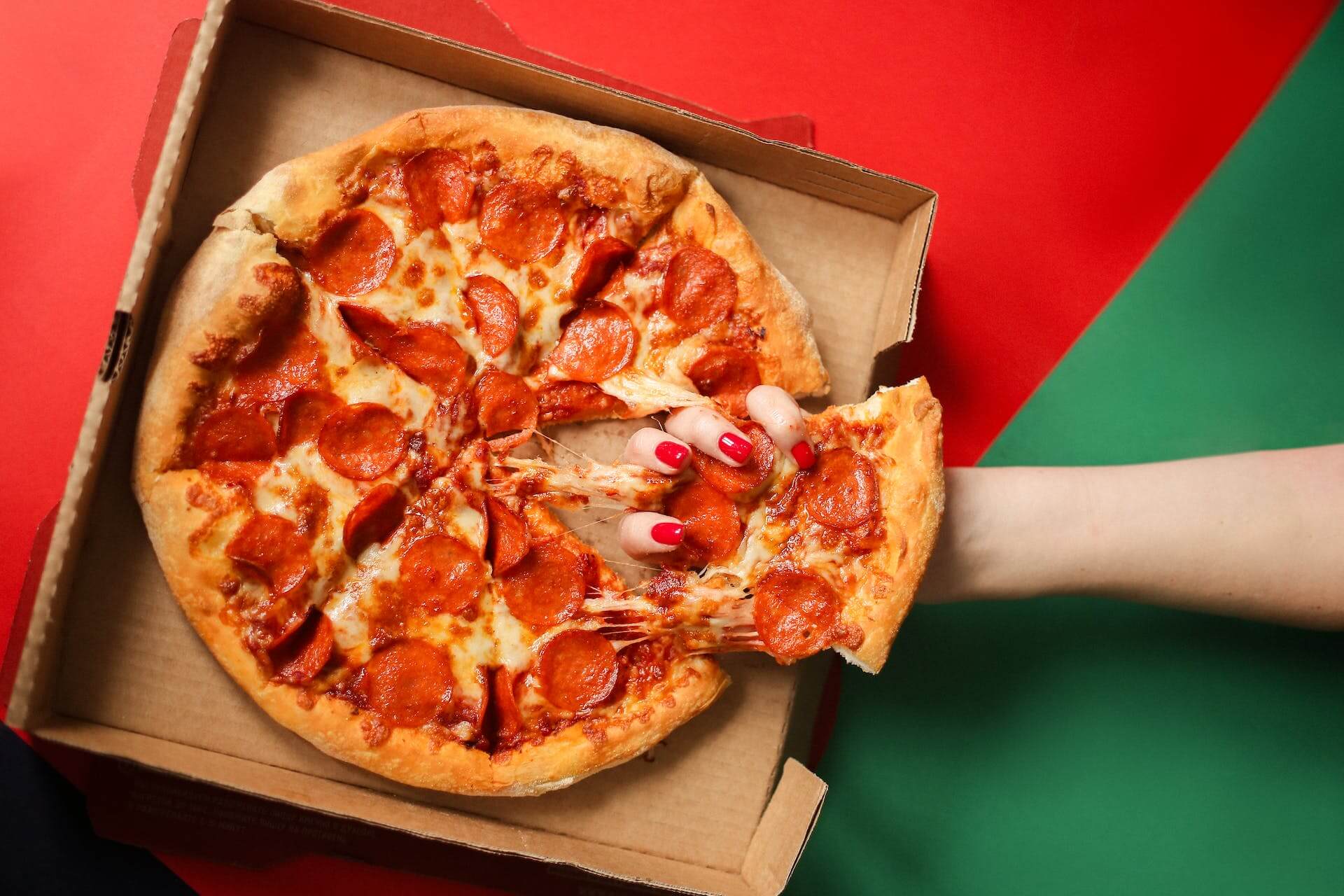
Person clawing slice of pepperoni pizza

That’s one way to pick up a slice of pizza…

Top Toppings: Nationwide

If you operate a pizzeria or pizza is a significant focus of your business, you probably know the number one topping.

The image at the top of this article is a hint.

Per Pizza Today, these are the top 20 toppings in the US:

  1. Pepperoni
  2. Sausage
  3. Mushroom
  4. Extra Cheese
  5. Bacon
  6. Chicken
  7. Onion
  8. Red/Green Bell Pepper
  9. Ham
  10. Black Olives
  11. Meatballs
  12. Canadian Bacon
  13. Jalapenos
  14. Pineapple
  15. Beef
  16. Basil
  17. Banana Peppers
  18. Fresh garlic
  19. Tomatoes
  20. Spinach

Due to outright bias, I hope to see meatballs break into the top ten one of these days. That’s my number one topping.

Now that we’ve shared the top 20 toppings according to Pizza Today, let’s check out the regional breakdown.

The West

This region includes two subregions, Pacific and Mountain.

In alphabetical order, the Pacific states are Alaska, California, Hawaii, Oregon, and Washington. The Mountain region includes Arizona, Colorado, Idaho, Montana, Nevada, New Mexico, Utah, and Wyoming.

So, if you’re in one of those 13 states, the info below is relevant to you.

Top Styles

  1. New York Style
  2. Traditional America
  3. California/American Artisan
  4. Sicilian
  5. Neapolitan

Number three makes sense, given this region includes California. Otherwise, the West follows the top five pizza styles in the US rather closely.

Top Toppings

  1. Pepperoni
  2. Sausage
  3. Mushroom
  4. Chicken
  5. Bacon
  6. Extra cheese
  7. Black Olives
  8. Onion
  9. Jalapenos
  10. Pineapple

In the West, the top three toppings are the same as the rest of the nation. However, chicken and bacon overtake extra cheese in the this region.

The South

Pizza Today divides the South into three subregions: East South Central, South Atlantic, and West South Central.

The former consists of Alabama, Kentucky, Mississippi, and Tennessee. The South Atlantic includes Delaware, Florida, Georgia, Maryland, North Carolina, South Carolina, Virginia, Washington, D.C., and West Virginia. And West South Central is made up of Arkansas, Louisiana, Oklahoma, and Texas.

As you’ll see, the top five pizza styles in the South are the same as the top across the US. Further, the top five toppings in the region are also the same top five nationally. It isn’t until numbers six through ten that we encounter deviations.

Top Styles

  1. New York Style
  2. Traditional America
  3. Sicilian
  4. Deep Dish
  5. Neapolitan

Top Toppings

  1. Pepperoni
  2. Sausage
  3. Mushroom
  4. Extra cheese
  5. Bacon
  6. Onion
  7. Chicken
  8. Red/Green pepper
  9. Beef
  10. Ham

Beef is number 15 nationally, if you don’t want to scroll up and check for yourself.

The Midwest

The Midwest, per Pizza Today, is organized into two subregions. Those are East North Central and West North Central.

Illinois, Indiana, Michigan, Ohio, and Wisconsin make up the former. Iowa, Kansas, Minnesota, Missouri, Nebraska, North Dakota, and South Dakota are the states in the latter subregion.

Top Styles

As a proud Midwesterner, I’m happy to report that the region didn’t disappoint when it comes to the region’s top pizza styles.

  1. Traditional America
  2. Chicago Thin
  3. New York Style
  4. Deep Dish
  5. Detroit

The argument that Chicago Thin (a.k.a. Chicago Tavern) rather than Deep Dish is the true Chicago pizza style is bolstered with these rankings.

Top Toppings

Pizza Today shares only five toppings for this region. Notably, extra cheese doesn’t make it in, kicked out by onion.

  1. Pepperoni
  2. Sausage
  3. Mushroom
  4. Bacon
  5. Onion

The Northeast

The Middle Atlantic and New England are the two subregions of the Northeast.

For their report, Pizza Today identifies New Jersey, New York, and Pennsylvania as the three Middle Atlantic states. New England is Connecticut, Maine, Massachusetts, New Hampshire, Rhode Island, and Vermont.

Top Style

Number five, given where it was reportedly created, isn’t a surprise.

In fact, the whole list makes sense:

  1. New York Style
  2. Sicilian
  3. Traditional America
  4. Neapolitan
  5. Grandma

It’s also not a surprise that Deep Dish doesn’t make it into the Northeast’s top five pizza styles.

Top Toppings

Further, the top five of ten top toppings in the Northeast are the same nationally.

  1. Pepperoni
  2. Sausage
  3. Mushroom
  4. Extra cheese
  5. Bacon
  6. Chicken
  7. Onion
  8. Red/Green pepper
  9. Meatballs
  10. Banana Peppers

However, as you can see, meatballs (my favorite) and banana peppers break into the top ten in this region.

Takeaways

Obviously, there are more than just 20 toppings finding their way onto pizzas in the US. Pizza Today reports that birria, fig jam, hot honey, pasilla peppers, and pickled vegetables have earned their way onto menus in at least the past 12 months.

And when it comes the top 20 toppings, there’s nuance. For example, there are multiple styles of pepperoni and preparation, and the same holds true for sausage.

All this is to say the following: A blend of popular, traditional toppings along with the unexpected and new is likely a winning combination. This can include exotic ingredients, plant-based analogs, and international herbs and spices.

Remember, it’s pizza; it’s supposed to tempting and fun.

Image: Maksim Goncharenok on Pexels
Related Reading

Work with Us

Click the image below to learn how you can work with KRG Hospitality!

Client Intake Form - KRG Hospitality

by David Klemt David Klemt No Comments

Drink Donnybrook: Brandy Alexander

Drink Donnybrook: Brandy Alexander

by David Klemt

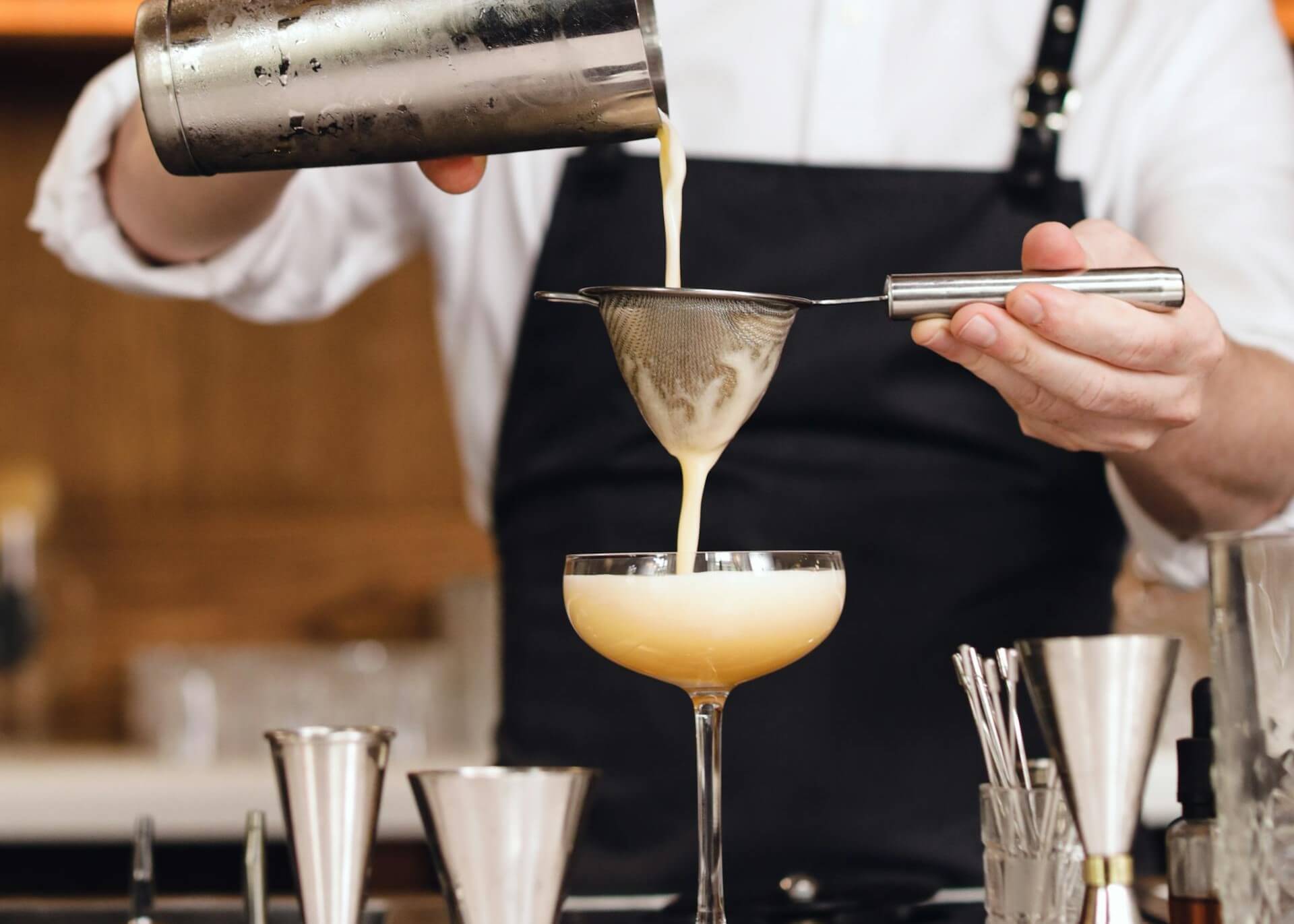
Bartender straining cocktail into glass

The classic Brandy Alexander cocktail, which we celebrate at the end of this month, is slowly approaching a century since its first appearance.

That is, of course, if we go solely by the first time this creamy cocktail’s recipe was printed in a book. For the curious, the book is Cafe Royal Cocktail Book by William J. Tarling. And that book was first published in 1937. Notably, Tarling’s book was published by the United Kingdom Bartenders Guild.

Now, since you’re reading this you know this is a new entry in the Drink Donnybrook series. So, you know that the Brandy Alexander’s history is unclear. You also know, if this isn’t you’re first time reading one of these articles, that I love a cocktail with a shadowy origin.

We do know, however, that the Brandy Alexander belongs to the Duos and Trios cocktail family. Per Gaz Regan, a Duo is a base spirit plus a liqueur. Add a cream or cream liqueur to the Duo and you get a Trio, which describes the Brandy Alexander.

Let’s dive into this creamy cocktail’s creation.

Firsts

The Brandy Alexander is itself a riff on a cocktail that predates its appearance in Cafe Royal Cocktail Book by twenty years.

First, there was the Alexander. This predecessor is made with gin. According to my deep dive, the gin-based recipe first appeared in Recipes For Mixed Drinks by Hugo Ensslin in 1917.

As time went on and more cocktail recipe books were published, something interesting happened. The gin-based recipe would commonly be referred to as Alexander #1, or the first recipe. As you may have already guessed, the brandy version would be listed as Alexander #2.

Per Tomas Curras, cocktail books seem to have changed the naming convention to Alexander and Brandy Alexander some time in the 1970s.

Of the two recipes, it appears that the Brandy Alexander is the more popular. So, while it didn’t show up first, it has taken first place (allegedly) among the Alexander cocktails.

But there’s another first within the Alexander lore, as you’ll see below.

Who Done It?

Prepare to have your mind blown: We don’t know.

At best, we think we know the creator of the gin Alexander, a.k.a. Alexander #1. I say “think” because better cocktail historians than I can’t say for certain that we know the Alexander’s creator.

However, the assumption does make a great deal of sense. It’s believed that Troy Alexander—check out that surname—invented what could be the eponymous cocktail in New York City at a restaurant called Rector’s.

This would place the first Alexander’s creation some time between 1899 and 1918, the years Rector’s was in operation. Rector’s, by the way, was the first restaurant in NYC to feature a revolving door.

Alexander created the cocktail for a party celebrating a successful ad campaign featuring the fictitious character Phoebe Snow. Snow, white…white cocktail.

But who was the first person to swap out the gin for brandy in the Alexander? It’s feasible that it was Troy Alexander, of course. If it wasn’t him, well…we don’t know who decided to substitute brandy for gin.

There’s more mystery surrounding the drink’s name, as well. Some say the Brandy Alexander is a nod to Russian tsar Alexander II. Or perhaps it honors Princess Victoria Alexandra Alice Mary. The classic could also pay homage to critic Alexander Woollcott (a claim he made himself) or Grover Cleveland Alexander, pitcher for the Philadelphia Phillies from 1911 to 1917.

So, there you have it: a mystery to share with your guests when they come to your bar or restaurant for your Brandy Alexander Day promotion on January 31. Cheers!

The Recipe

Interestingly, there’s some room to play with this classic. Some people follow the equal parts rule, some add a bit more brandy than creme de cacao or cocoa. Others double the amount of brandy.

You and your bar team should play with the measurements to create your signature take on the Brandy Alexander.

At any rate, fill a shaker with ice then add one, one-and-a-half, or two ounces of brandy, one ounce of the creme de cacao of your choice, and one ounce of cream. Shake until well chilled, then strain into cocktail glass or coupe. Garnish with freshly grated nutmeg.

Image: cottonbro studio on Pexels
Bar Nightclub Pub Brewery Menu Development Drinks Food

by David Klemt David Klemt No Comments

Nachogate: A Lesson in Standards

Nachogate: A Lesson in Standards

by David Klemt

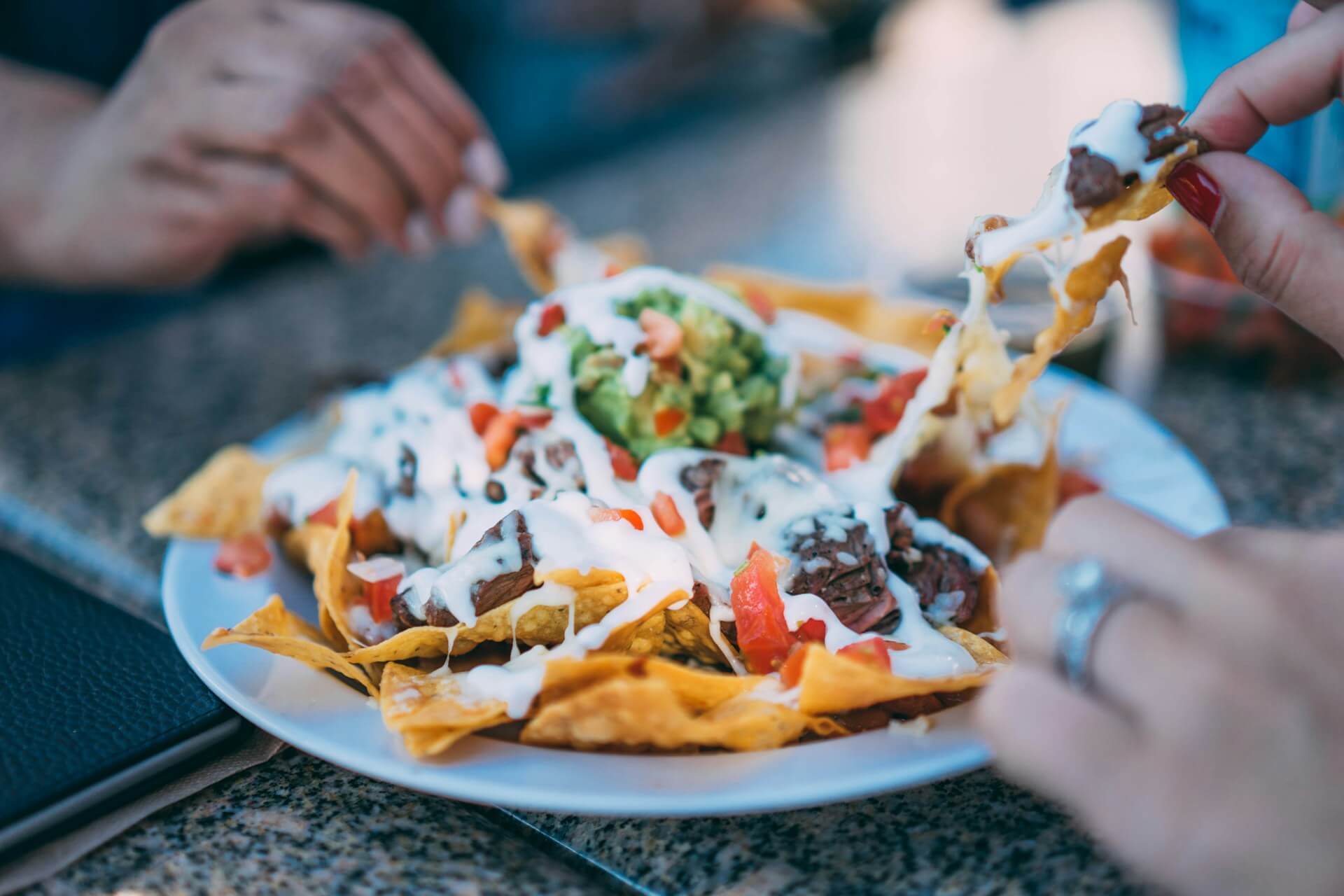
People sharing a plate of nachos

You wouldn’t think a social media post about a plate of nachos could cause a scandal but that’s exactly what’s happening, and it’s known as Nachogate.

Shockingly, this story comes to us from a luxury casino resort in Las Vegas.

A photo of a meager dish with six entire tortilla chips on it has 1.3 million views already. That’s pretty impressiveor unfortunate, depending on which side of the post you’re onconsidering the post is from this Monday.

One of the top comments on the post points out that there’s quite the disparity between chips and accompaniments.

“More condiments than chips. Wow,” reads the comment. To which the original poster responds, “They said it was so you can have the perfect bite.”

It should go without saying that every dish put in front of a guest needs to be as close to perfect as possible. If it’s on the menu, if it leaves the kitchen, it impacts the guest experience. There is no, “Well it’s only [insert item]. It’s not that big of a deal.”

That mindset simply has no place in hospitality.

No, not every dish or drink is perfect. Yes, everyone makes mistakes. The absolute lowest standard should be caring enough to catch mistakes before they affect guests.

Failing that, every operator and leadership team member needs to care enough to acknowledge mistakes that reach guests, handle them gracefully, and fix them. This includes listening to and rewarding servers, bartenders, barbacks, and hosts whenever they catch a mistake.

Of course, there’s another lesson here. When developing non-negotiable standards, aim high. Fountainbleau Las Vegas is a luxury lifestyle brand; I doubt Nachogate reflects the company’s standards.

#Nachogate Fallout

Look, it can feel good to say that we don’t have competitors in this industry, we have peers. In some ways that can be an accurate statement.

However, watch what happens when an operator makes a mistake and it blows up in spectacular fashion.

Case in point, Nachogate. Or, given how the situation went viral, #Nachogate.

It would be bad enough if The Tavern at Fountainbleau Las Vegas took a reputational hit solely with the guests it affected directly. Obviously, it gets exponentially worse when it takes off on social media and alters the perception of potential guests.

But #Nachogate got worse when the venue’s “peers” leveraged the situation to their advantage.

That’s just a handful of posts taking advantage of Fountainbleau Las Vegas’ mistake. And that’s a lot of free marketing leveraging an unforced error that transformed into a viral moment.

Resolution

Alright, so I probably haven’t made any friends at Fountainbleau for sharing this story. Well, allow me to extend an olive branch. After all, I’ve made plenty of mistakes and will make more in the future.

It appears that the issue has been addressed by the property. That says to me that there are indeed standards, and there are people who care enough to respond when they’re not met.

Again, mistakes happen. The key is to correct course and move forward. Fountainbleau has done just that.

That’s a smart move. A mistake was made, people piled on, and instead of ignoring the issue, the company acknowledged and corrected the mistake where it blew up: the public eye.

Fountainbleau Las Vegas is just over a month into serving the public. There are going to be growing pains. Indeed, anyone who has been following the casino resort is aware that there have been much larger issues. For example, the company is dealing with the departures of three high-level executives.

The point of this article isn’t to roast Fountainbleau further. Assuming the viral post is true and the nachos at The Tavern have indeed been improved, a mistake was made and was then addressed.

I’m sharing this story as an example to drive home the need for standards, for non-negotiables. That means sitting down, considering every element of operations and service, writing out standards, and training teams on those non-negotiables. It’s as important as identifying values, sharing them with the team, and adhering to them.

Sit down today and develop your standards. If you’ve done that in the past, review your standards, update them if necessary, and ensure they still have buy-in from your team.

Image: Herson Rodriguez on Unsplash

KRG Hospitality Start-Up Restaurant Bar Hotel Consulting Consultant Solutions Plans Services

by David Klemt David Klemt No Comments

Top 11 Pizza Styles in North America Going Into 2024

Pizza-centric publication Pizza Today‘s 2024 industry trends report contains an incredible amount of information, including the top pizza styles in North America.

There’s a tie for the tenth spot on their ranking, so I dive into 11 styles of pizza in this article. As you’ll see, having grown up in the area, I have a lot of thoughts on Chicago’s pizza styles.

This is one of the most fun topics I’ve ever researched and I hope you find this information helpful for your restaurant or bar.

Cheers!

by David Klemt

Pizza being put into a pizza oven

Top Pizza Styles

10. Chicago Thick (tie)

Because Deep Dish is also on this list, I’m going to assume Pizza Today means Pan pizza. If this is accurate, it’s the cooking vessel that’s the big difference.

Whereas Deep Dish is cooked in a cast-iron pan, Chicago-style Pan pizza is cooked in either a cake pan or cast-iron skillet. Another difference is the resulting crust: Deep Dish features a thick, pie-like crust, while Pan has a medium-thick crust that’s similar in texture and chew to bread.

One more big difference comes down to the layering of the ingredients. In a Pan pizza, the traditional order is followed: sauce goes on the crust, cheese goes on the sauce, and additional ingredients go on top of the cheese.

10. NEOpolitan/Neo-Neapolitan (tie)

As the name implies, this is a modern variation of the classic Neapolitan or Napoletana style. It’s also sometimes referred to as Neo-Classica.

The biggest overall difference between this style and its traditional counterpart is the adherence to strict rules. NEOpolitan eschews several rules, which you’ll find further down the list in this article.

Some deviations include oven style (NEOpolitan doesn’t require a wood-burning oven); temperature (700-730° F); cook time (120-150 seconds); and ingredients (anything goes).

9. California/American Artisan

The base of a California-style pizza is an Italian- or New York-style crust. From there, the tenets of California cuisine take over.

This style focuses on highlighting fresh, local, seasonal ingredients. So, think traditional crust with nontraditional ingredients when considering this style.

As far as the American Artisan designation, California style falls into this categorization. An artisan pizza is made by hand without the use of automation, so American Artisan is a style uniquely, well, American.

8. Grandma

The Grandma-style pizza is thought to come to us from Long Island, New York.

This simple style is usually rectangular due to being cooked in a sheet pan, and the pan is oiled heavily. The order of ingredients is crust, cheese, tomato sauce. However, these pizzas are often finished with a garlic-infused olive oil, oregano, and Pecorino Romano cheese.

Grandma pizza is thicker than New York-style but nowhere near as thick as Detroit, Sicilian, or Deep Dish. It’s cut into squares before being served.

7. Detroit

According to Pizza Today, this is the fastest-growing pizza style in America.

As the story goes, this descendant of thick Sicilian-style pizza was created in a speakeasy in mid-1940s Detroit. The owner of Buddy’s Rendezvous, Gus Guerra, wanted to add something new to his neighborhood bar’s menu. The history is a bit hazy regarding where he got the recipe for a Sicilian pizza, but he cooked it in a few (hopefully unused) deep, steel industrial pans from a friend who worked in a factory.

So, a traditional Detroit pizza is a Deep Dish cooked in a deep, rectangular, steel pan. The original version calls for a rich tomato sauce and Wisconsin brick Cheddar cheese topped with pepperonis, all cooked at 230° F. As for layers, it goes crust, pepperonis, sauce, then cheese, traditionally. Once the cheese is caramelized, any additional toppings are placed on top, along with more red sauce. On the Detroit pizzas I’ve had, the red sauce on top consisted of one horizontal stripe and one vertical.

If you think things are too quiet and boring while you’re hanging out at a restaurant that serves Detroit-style or Chicago-style Deep Dish pizza, comment loudly that one is better than the other and the “true” or “superior” Deep Dish.

Fun trivia: Domino’s, Little Caesars, and Hungry Howies are all from Michigan.

6. Chicago Thin

If you want to start a passionate debate, walk into a bar serving Chicago Thin or Tavern-style pizza and say it’s the city’s true style.

Half (or perhaps more) of the Chicagoans within earshot will agree with you. Others, not so much.

At any rate, this pizza is known for its thin, cracker-like crust. It’s round and will be cut into square before being served.

Oh, and if you’d like to start another “spirited” argument, mention St. Louis when talking about Chicago Thin or Tavern-style pizza. Some people from “the Gateway to the West” like to Amedeo Fiore invented this style. However, people from the south side of Chicago will let you know in no uncertain terms that the style didn’t find its way to St. Louis until after Fiore moved there from “the Windy City.” Further, Chicago’s (original) version consists of a dough made with yeast paired with mozzarella cheese. St. Louis style is made without yeast and features Provel cheese.

5. Neapolitan/Napoletana

This is arguably the pizza style with the strictest rules. For example, these pizzas must be cooked in a word-burning oven at 800° F for 90 seconds.

All of the ingredients must originate from Italy. Additionally, no more than three ingredients may be used for a single pizza.

Further, all Neapolitan or Napoletana pizzas must be finished with extra-virgin olive oil and fresh basil.

4. Deep Dish

People outside of Chicago likely believe the city’s pizza style is called Deep Dish. Unfortunately, that’s a prevalent misconception. Of course, it doesn’t help that Deep Dish is a Chicago invention, leading to most people thinking that Chicago Style and Deep Dish are synonymous. Yes, Chicago Deep Dish is a style, but so are Stuffed and Pan.

I’m going to take a stab at understanding what Pizza Today means when they refer to Deep Dish. Forewarning: I could be wrong.

Speaking generally, a Deep Dish pizza is cooked in an oiled cast-iron pan. Essentially, it’s a pie. The flaky crust is high (two inches isn’t uncommon) and the person prepping the pizza changes the traditional order of the layers. Unlike a traditional or Pan pizza, the order for a Deep Dish pizza is crust, cheese, sauce, other toppings. This approach to layering is to avoid burning the cheese since these pizzas spend so much time in ovens.

Now, if Pizza Today means Stuffed, there’s a bit of a difference between than that and Deep Dish. First, Stuffed is made in a pan even deeper than those that produce Deep Dish pizzas. Second, an extra layer of crust covers much more cheese than you’ll find in a Deep Dish pizza, and this layer is covered in sauce. So, the order is crust, toppings, lots of cheese, crust, sauce.

3. Sicilian

This is a style of pizza originating from, you guessed it, Sicily. Moreover, it’s one of the most traditional types of pizza…when we’re talking about Sicilian versus New York Sicilian.

For the former, the pizza is characterized by a square, thick, spongy dough. The sauce is made with tomato, onion, anchovy, and herbs. From what I understand, the sauce also contains no meat.

Traditionally speaking, hard goat or sheep’s cheese is grated on top, and the pizza is also topped with breadcrumbs.

When it arrived in America, tomato sauce and mozzarella replaced the traditional sauce and hard cheeses. This development very likely comes down to the ease of finding readily available and affordable ingredients. Additionally, some people made round Sicilian pizzas rather than square.

2. Traditional American

Simply put, Traditional American pizza is just a slightly different version of New York style.

It’s a bit thicker than New York, but it still has the raised “border” encircling it. Often, this style features more cheese than its Big Apple counterpart.

A Traditional American pizza can be hand-tossed, pressed, or hand-formed.

1. New York

Unless you’re from Chicago or Detroit, this is probably what you think of when you think “pizza.”

A New York pizza is hand-tossed, large, and defined by its characteristic thin crust. The slices tend to be extra large and capable of being folded for eating on the go. In fact, I once watched two friends, one from New York and one from Chicago, almost come to blows when the former threatened to attempt to fold his slice of Deep Dish in front of the latter. They had to be separated.

Traditionally, there are just two toppings on the crust: tomato sauce and cheese. However, these pizzas are a blank slate for all manner of toppings.

Top Trending Styles

As you’ll see, there’s a tie for second place as far as the trending pizza styles in 2024, according to Pizza Today.

  1. Chicago Thin
  2. New York
  3. Sicilian
  4. Deep Dish and Grandma (tie)
  5. Detroit

Per the pizza-centric publication, this is Detroit’s second year as the reigning trending pizza style.

Now that you know the top pizza styles in North America, know this: Pizza Today’s data indicate that today’s consumer expect to be able to order multiple styles of pizza from one pizzeria. Develop your menu accordingly.

Image: Fabrizio Pullara on Unsplash

Related Reading

Work with Us

Click the image below to work with us on your project, including developing your F&B program.

Client Intake Form - KRG Hospitality

by David Klemt David Klemt No Comments

Irish Distilleries You Need to Know

Irish Distilleries You Need to Know in 2024

by David Klemt

7-Year-Old Single Malt Mizunara Finish in Wicklow, Ireland

On Thursday, January 25, we honor a simple but delicious cocktail that can trace its roots back to Europe and the middle of the 19th century.

A bartender can serve this drink hot, chilled, or iced. And until somewhat recently, a bartender usually makes this cocktail with a spirit from one of just a few producers.

I’m talking about the venerable Irish Coffee.

Now, this could make for an interesting Drink Donnybrook. However, I’m going to focus on shining a spotlight on some Irish distilleries and labels you and your bar team should have on your radar.
Of course, there’s nothing wrong with making an Irish Coffee with one of the usual suspects. Indeed, it’s perfectly acceptable—traditional, even—to make yours with Jameson, Bushmills, Tullamore Dew, Redbreast, or Powers.

But while there’s nothing wrong with playing to expectations, making the choice to offer something different can set you, your team, and your venue apart.

As our buddy Chef Brian Duffy says, operators can charge premium menu prices only if they innovate. Pairing a lesser-known Irish whiskey with a local coffee roaster’s coffee would be an innovation that falls in line with Chef Duffy’s approach to pricing.
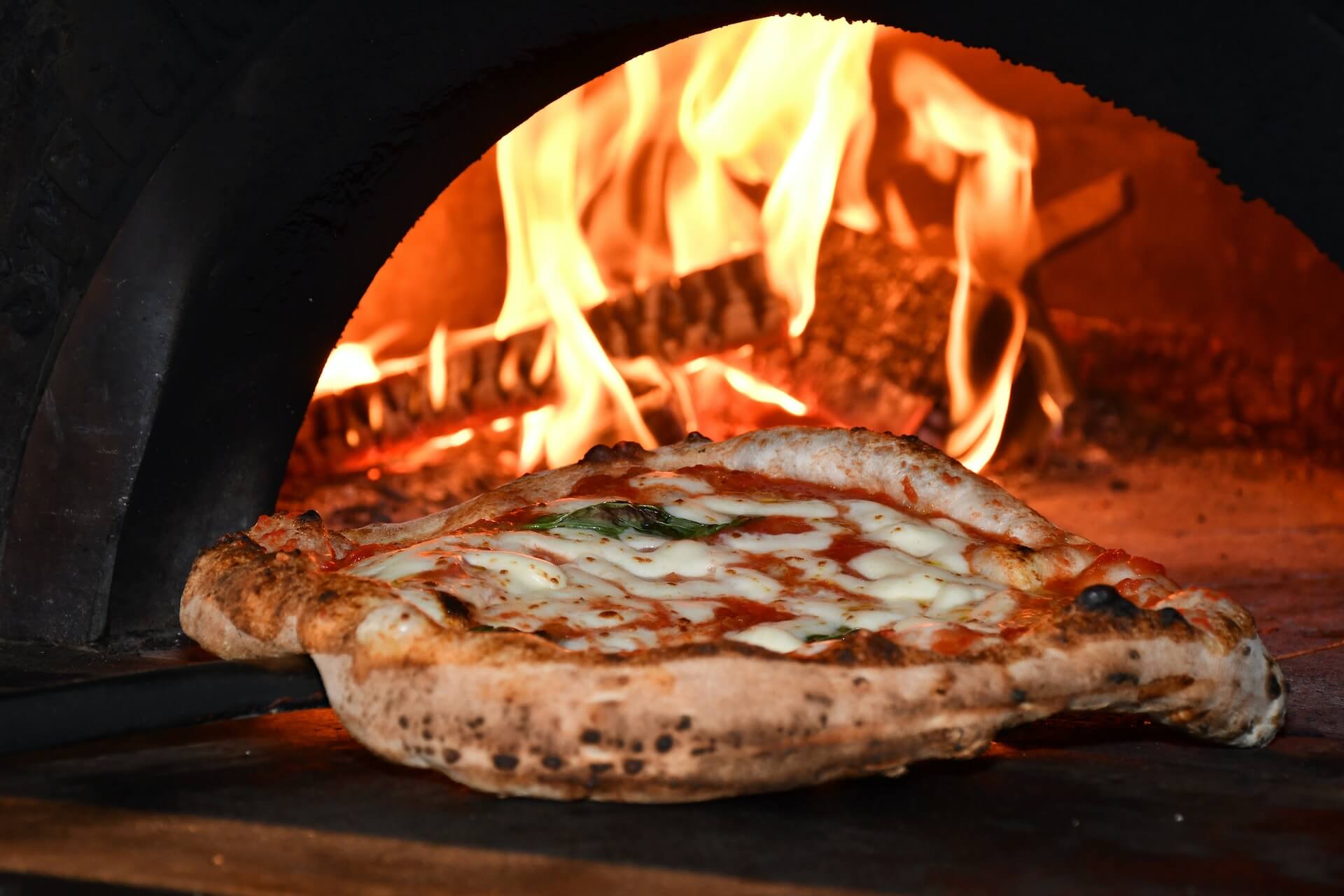
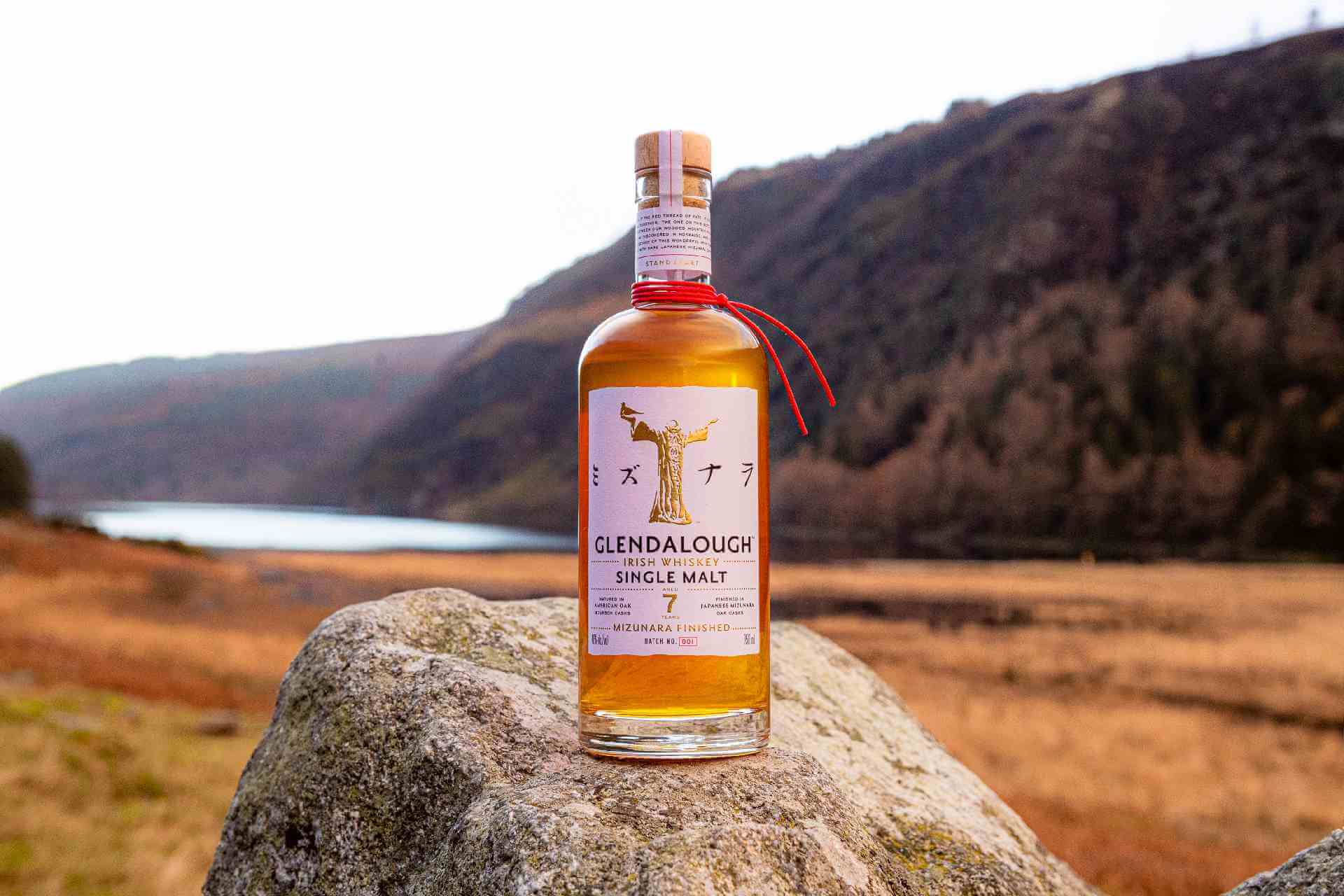
There are other ways to build an Irish Coffee as a premium cocktail. The quality of the whipped cream, for instance, is a consideration. For example, whipping the cream in front of guests is a premium touch.

Not the Usual Suspects

A lot is going on with Irish distilleries. We have more choice than we’ve had in several decades.

Check these Irish distilleries out today:

Several of these distilleries also produce other spirits, such as gin and vodka. And, of course, not every distillery produces spirits that are available to the US and Canada, currently.

Still, it’s good to be aware of these distilleries and their brands so we can encourage suppliers to bring them to North America and beyond.

To learn more about Glendalough Distillery in particular, please listen to the Bar Hacks podcast episode below:

Hot Coffee

Let’s assume you’re going to with piping hot coffee, not serve your Irish Coffee on ice or frozen.

You’re going to want to ensure your glassware is heat resistant, of course. Let’s not burn the hands of our guests.

To that heat-resistant glassware, add one-and-a-half to two ounces of Irish whiskey. Next, add two to four teaspoons of sugar, or a half- to two-thirds-ounce of demerara syrup. Add three to four ounces of hot coffee, then top with quality whipped cream. When I say add the cream, I mean an inch or so, not just a wee bit.

You’ll notice that I’m using ranges of measurements. This is because you’re going to want to play around with your Irish Coffee to make it one of your signatures. That includes selecting your sweetener, whether that translates to brown sugar, syrup, or something else.

Now, if you’re after something different, check out the Frozen Irish Coffee from Erin Rose in New Orleans, or the recipe for the Dead Rabbit‘s Irish Coffee.

Cheers!

Image: Glendalough Distillery

Bar Pub Brewery Nightclub Club Nightlife Marketing Plan

by David Klemt David Klemt No Comments

Conscious Construction: Biophilic Design

Conscious Construction: Biophilic Design

by David Klemt

Overhead view of Parkroyal Collection Singapore

One term you’ll likely be hearing more of as 2024 progresses is “biophilic design,” the practice of connecting people and nature through building design.

This design methodology was developed in part by the late Stephen R. Kellert, professor emeritus at the Yale University School of Forestry and Environmental Studies.

While Kellert didn’t coin the term “biophilia,” he is credited with coining the phrase “biophilic design.” However, the two terms share an intrinsic connection.

The biophilia hypothesis was first presented by psychoanalyst Erich Fromm in the 1960s. Simply put, the idea is that humans have an inherent drive to pursue connections with nature. Edward O. Wilson, a biologist, added to Fromm’s theory in the 1970s. Per Wilson, a key element of biophilia is “the rich, natural pleasure that comes from being surrounded by living organisms.”

In the 1980s, Kellert expanded on biophilia and applied it to design. Per Kellert and fellow biophilic design advocates, humans can experience a range of physical and psychological benefits when our living, work, and leisure spaces have a connection to nature.

According to biophilic design advocates, this methodology can reduce stress, affect mood positively, and improve cognitive performance, making us more productive. There are other benefits as well, of course.

When implemented with intention, biophilic spaces are sustainable; are capable of achieving significant energy efficiency; can reduce a building’s carbon footprint; and can even regulate temperature.

Clearly, this design approach speaks to a number of guest expectations and desires.

The Six Principles

There are, according to Kellert, two key aspects of biophilic design.

One over-arching aspect is organic. This is how shapes used in the design of a building connect people and nature.

The second aspect is place-based. As the term suggests, this is how design features connect a building to the local area in which it’s situated.

Within both the organic and place-based aspects or dimensions of biophilic design are six principles.

Environmental features, such as plants, natural materials, sunlight, water, and colors.

Natural shapes and forms that simulate natural forms. Think spirals, curves, arches, and other flowing design features. Put another way, biophilic design tries to limit 90-degree angles and straight lines.

Natural patterns and processes, which may seem, at first, to be the same as natural shapes and forms. However, these features resonate with our senses of sight, sound, smell, touch, and others.

Light and space, crucial to biophilic design, whether daylight, reflected, or diffused light. Designers who really go for it will come up with lighting programs that mimic how light changes throughout the day.

Place-based relationships, which helps a person develop a personal connection with a place.

Evolved human-nature relationships to evoke a range of reactions from humans in the space. This can be a desire to explore the space, or a feeling of safety and protection.

Examples

This article is just a crash course in biophilic design. Each of the above principles, for example, contains a number of key attributes.

So, let’s take a look at some examples of biophilic design in hospitality. The following hotels and restaurants should give you a clear understanding of this approach to design.

Parkroyal Collection Pickering

To learn more about this amazing hotel, click here.

Fandi Mata


View this post on Instagram


A post shared by Fandi Mata (@fandimatabklyn)

Click here to learn more.

Café Lido


View this post on Instagram


A post shared by Mar Monte Hotel (@marmontehotel)

Learn and see more here.

The West Hollywood EDITION

To see more, click here.

Tsuki


View this post on Instagram


A post shared by TSUKI (@tsuki_pune)

Click here for more.

Image: Lester on Unsplash

KRG Hospitality. Boutique Hotels. Resorts. Properties. Consultant. Feasibility Study. Business Plan

by David Klemt David Klemt No Comments

The Shrinking Globe: 2024 Food Trends

The Shrinking Globe: 2024 European Food Trends

by David Klemt

Loaded sweet potato fries bowl

It should come as no surprise that 2024 F&B trends are similar throughout Europe and the UK to those taking hold in North America.

Why do I refer to Europe and the UK separately? I’m aware that the UK is part of Europe. Regionally, one can think of the nation as northwestern Europe.

However, while geographers consider the UK part of Europe, many citizens of the UK don’t see things that simply. So, that’s why I mention the continent and nation separately.

With that out of the way: 2024 F&B trends. People like to say that the world is getting “smaller,” that the devices in our hands are making everything more accessible. That certainly seems to be the case with food and drink.

What you’ll likely notice is that the trends below follow what experts predict for North America rather closely. As David Allison says, people have far more in common with one another than they have differences.

The Consumer

Plants

I think it’s fair to say that plant-based diet mockery is defined by two characteristics.

One, people seem to aim their ridicule toward Americans. And two, it’s cliché at this point.

Much of the world already embraces plant-based diets. That doesn’t mean they’re only either vegetarian or vegan, either.

Estimates for how much of the world consists of flexitarians can reach over 40 percent. This particular diet limits or restricts the intake of animal-based foods. However, it’s not like veganism; flexitarians do consume some animal products. One can say that it’s a very individual diet. In fact, I doubt many flexitarians actually refer to themselves with that label.

Interestingly, though, plant-based brands must innovate if they’re going to succeed with consumers in Europe and the UK.

Hey, what do you know? That’s how it is in North America.

Now that plant-based protein alternatives are here to stay, people want to see innovative analogs.

They’ve seen nuggets and fingers. Burgers and patties aren’t anything new. People want plant-based counterparts for everything: seafood, steak, pork, etc.

Health & Wellness

Here’s a frighteningly hot take: People in Europe and the UK are concerned with their health. Shocking!

For the past few years, much has been made about North Americans and their “renewed” focus on their health and wellness. This is, of course, for obvious reasons.

Well, we can say the same about Europeans and Britons.

Generally speaking, people are trying to reduce their intake of processed foods. This ties to the section above in that many plant-based foods are highly processed. Brands will need to address this to achieve long-term success.

Along with avoiding processed foods, consumers in Europe and the UK are seeking out dishes that are higher in protein and fiber.

Across generations and Europe, people realize that a healthy diet is the top factor in feeling healthier.

The Operator

Happy Balance

Europeans and Britons have centuries upon centuries of history and tradition to contend with throughout their countries.

In some markets, this can lead to conflict or the misconception that operators can’t innovate.

This is, of course, an outdated way of thinking.

Whether operating in the UK or Europe, operators are embracing tech and finding ways to honor tradition while experimenting with the modern.

From the back of the house to the front, chefs and bartenders are drawing inspiration from culinary traditions. However, they’re also getting creative to put their own spins on the menu.

Perhaps more importantly, the guests they’re serving want to try these innovations.

From consumer-facing tech that enhances their visits to creative menu items that find inspiration from around the world, today’s guest is hungry and thirsty for what’s new. This is true regardless of how old and traditional a location may be.

Color

Just a few months ago, Frankfurt, Germany, played host to Food Ingredients Europe 2023.

One of the takeaways from last year’s show that stood out to me is the interest in color.

According to one market development specialist, it appears that Gen Z in Europe and the UK are over boring, bland shades. Instead, they want to be colorful.

From interior and physical menu design to food and drink items, European and British operators can deliver on that desire.

Of course, taking one’s concept in a more colorful direction necessitates knowing one’s guests. So, this is where exceptional service despite concept or category and robust tech platforms come into play.

If bold color is authentic to a concept and resonates with the guests, it could be time to reach out to an interior designer.

Speaking of reaching out, if you’re in Europe or the UK, have a concept you want to open or are already open and need some assistance, KRG Hospitality is excited to announce that we’re entering markets within both regions. Please contact uswe’re here to help.

Image: Ella Olsson on Unsplash

KRG Hospitality business plan. Restaurant. Bar. Cafe. Lounge. Hotel. Resort.

by David Klemt David Klemt No Comments

Welcome Back to the Culinary Arena

Welcome Back to the Culinary Arena: A Comprehensive Guide for 2024

by Nathen Dubé

"2024" dessert concept

The start of a new year is an exciting time in the restaurant world, offering a unique opportunity to reassess and rejuvenate your foodservice business.

From utilizing downtime effectively to setting strategic priorities, this guide is designed to help you navigate the year ahead with confidence and creativity.

Whether you’re a seasoned chef or a budding restaurateur, these insights will equip you with the tools to make 2024 a year of remarkable culinary experiences and business growth.

Part 1: Strategic Use of Downtime

Menu Innovation and Optimization

The start of the year is ideal for re-evaluating your menu.

Begin by analyzing customer feedback and sales data from the previous year. Identify which dishes were most popular and which underperformed. Consider removing items that aren’t selling well and focus on the dishes that your customers love.

This is also an excellent time to experiment with new flavors and culinary trends. For instance, with the growing demand for plant-based options, think about introducing a few vegan or vegetarian dishes.

Keep an eye on food trends. Are there new ingredients or cooking techniques that you can incorporate into your menu? This not only keeps your offerings fresh and exciting but also shows your commitment to culinary innovation.

Remember, a well-crafted menu is a balance between popular staples and innovative dishes. It should reflect your restaurant’s identity while also appealing to your target customer base.

Consider a seasonal menu that takes advantage of fresh, local produce, which can provide inspiration for new dishes and help reduce costs.

Staff Training and Empowerment

The quieter months are a perfect opportunity for staff training and development.

Conduct a skills audit to identify areas where your team could improve or learn new competencies. This could range from culinary skills, like mastering a new cooking technique, to soft skills, such as guest service or conflict resolution.

Training doesn’t have to be formal or expensive. You can leverage online courses, in-house mentoring, or even cross-training within your team.

For instance, front-of-house staff could benefit from basic kitchen training to better understand the dishes they are serving, while kitchen staff could learn about customer service to appreciate the end-to-end dining experience.

Team building is another key aspect. Organize activities that foster communication and collaboration. This could be something as simple as a team meal or a group outing.

A cohesive team that communicates well will provide better service, leading to happier guests and a more pleasant working environment.

Finally, empower your staff by involving them in decision-making processes. This could be in menu development, process improvements, or even marketing ideas.

When staff feel valued and part of the business, they are more likely to be motivated and committed.

Facility Revitalization

Use this quieter period to assess and upgrade your facilities.

Start with a thorough cleaning and maintenance check. This includes checking kitchen equipment, dining area furniture, and the overall infrastructure of your establishment.

Evaluate your kitchen equipment and consider if anything needs to be repaired or replaced. Upgrading to more efficient equipment can improve productivity and reduce long-term costs. For instance, investing in energy-efficient appliances not only cuts down on utility bills but is also better for the environment.

Look at your dining area from a customer’s perspective. Is the seating comfortable? Is the lighting appropriate? Small changes in décor can significantly enhance the dining experience. Consider refreshing the paint, adding new artwork, or even rearranging the layout to improve flow and ambiance.

Also, think about your back-of-house operations. Is your storage area organized? Can you improve the workflow in the kitchen? An efficient back-of-house leads to smoother service and a better customer experience.

Part 2: Setting Priorities for the Year

Elevating Customer Experience

The guest experience is paramount in the food service industry. This year, make it a priority to enhance every aspect of your guest’s journey.

From the moment they walk in, to the service they receive, to the food they enjoy, each element should contribute to a memorable experience.

Focus on training your staff to provide exceptional service. This includes being knowledgeable about the menu, attentive to guest needs, and quick to resolve any issues.

Personalized service can make a big difference. Remembering regulars’ preferences or celebrating special occasions with them can turn a one-time visit into repeat patronage.

Ambiance plays a crucial role in the dining experience. The right music, lighting, and décor can create an inviting atmosphere that complements your culinary offerings. If your budget allows, consider investing in upgrades that enhance the ambiance, such as new lighting fixtures or comfortable seating.

Implementing a feedback system is also important. Encourage customers to share their experiences, whether through comment cards, online reviews, or direct conversations. This feedback is invaluable for continuous improvement and can help you address any issues promptly.

Sustainability as a Cornerstone

Sustainability is becoming increasingly important to consumers, and incorporating sustainable practices into your business can have a significant impact. Start by assessing your current practices and identifying areas for improvement.

One key area is waste reduction. Conduct a waste audit to understand where most of your waste is coming from and develop strategies to reduce it. This could involve better inventory management to prevent overordering and spoilage, composting food waste, or finding creative ways to use leftovers.

Local sourcing is another aspect of sustainability. Building relationships with local suppliers not only supports the local economy but also reduces your carbon footprint. Local ingredients are often fresher and can inspire seasonal menus.

Also, consider the sustainability of your operations. This could involve using eco-friendly packaging, reducing energy consumption, or even installing water-saving devices.

Communicating your sustainability efforts to your customers can also enhance your brand’s image and attract environmentally conscious patrons.

Innovative and Integrated Marketing Strategies

In today’s digital age, effective marketing is crucial for any business.

Utilize social media platforms to engage with your audience. Share behind-the-scenes glimpses of your kitchen, showcase your signature dishes, and highlight your team. This not only promotes your offerings but also builds a connection with your guests.

Email marketing is another powerful tool. Regular newsletters can keep your guests informed about new menu items, special events, or promotions. Personalized emails on birthdays or anniversaries can make your guests feel special and encourage repeat visits.

Don’t overlook the power of community involvement. Participate in local events, collaborate with other businesses, or sponsor local sports teams. This can increase your visibility in the community and build goodwill.

Financial Health and Diversification

Keeping a close eye on your financials is crucial.

Regularly review your costs and revenues and look for ways to optimize them. This might involve renegotiating supplier contracts, adjusting menu prices, or reducing unnecessary expenses.

Consider diversifying your revenue streams. This could include offering catering services, hosting private events, or selling branded merchandise.

These additional streams can provide a buffer during slower periods and increase your overall profitability.

Conclusion

As we look forward to 2024, let’s embrace the opportunities and challenges that come our way.

By using downtime strategically, setting clear priorities, and striving for excellence continuously, we can ensure that this year is not just successful but also fulfilling.

Remember, in the dynamic world of foodservice, adaptation and innovation are key. Let’s make this year a celebration of our culinary passion, business acumen, and commitment to our guests.

Here’s to a year of delicious discoveries and unparalleled success in the culinary world!

Image: 愚木混株 cdd20 on Unsplash

KRG Hospitality operational assessments

by David Klemt David Klemt No Comments

Boutique Brand StandardX to Make Debut

Boutique Brand StandardX to Debut in February

by David Klemt

A white letter "X" painted on a black wall

Like The Standard’s logo, this letter X is upside-down.

Boutique hotel standard The Standard will debut its new brand, StandardX, in Melbourne when its first property opens in February of this year.

Not only will this new hotel be the first StandardX location to open, it’s also the first Standard hotel to open in Australia.

This new boutique hotel brand follows a growing and notable trend within the space. Many hotel groups are focusing on launching brands and imprints that focus on locality.

These brands aim to honor local cultures, striving to serve locals and their communities along with tourists. In fact, some of these brands appear more interested in locals than visitors.

Beyond staycations, these hotels work to gain buy-in from locals in several ways. One of the most obvious is through F&B programs. These new(er) brands seek to menu food and drink items that are authentic to their locations. Likewise, nightlife experiences.

However, it goes deeper than that. Many of these hotels welcome locals to use communal spaces for meetings, art installations, and more. The goal is to establish themselves as a pillars in the communities in which they operate. If done right—deeper than a thin veneer of local support—these hotels prove their locale loyalty.

All that said, only time will tell if StandardX Melbourne will find support in the brand’s chosen Melbourne neighborhood, Fitzroy. On paper, however, it should be a perfect match.

Two Decades of Cool, and Counting

The first Standard opened on the Sunset Strip in Los Angeles in 1999. It takes a lot of work be effortlessly cool, and the Standard Hollywood achieved that standard upon opening.

Artists, celebrities, people who wanted to see and be seen… All could be found at the Standard Hollywood. The hotel’s Rooftop bar and pool became one of LA’s hottest hotspots, a seemingly endless party featuring a seemingly endless parade of the cool and connected.

Starting life in 1967 as the Thunderbird Motel, the Standard Hollywood appears in Sex and the City, Entourage, Mortdecai, and Ocean’s Twelve. One of the property’s most notable details, one that undoubtedly generated coverage, whispers, and social media attention, was “The Box.”

This was a living art installation behind reception. Fifteen feet long, it was a box in which models lounged as guests checked in and navigated the lobby.

After a successful and impactful run of over a decade, the Standard Hollywood closed its doors at the start of 2022. While that meant the brand left California completely, the Standard operates seven properties across the globe, with plans for more standard Standards to come.

The StandardX hotels will take a minimalist approach while maximizing the Standard’s view on hospitality.

“This was an opportunity to return to raw, unbridled simplicity that was accessible to the next generation traveler looking to experience a city through the lens of The Standard brand,” said Standard International’s CEO, Amber Asher, in an interview with Travel + Leisure.

Considering how the Standard brand is associated with all things cool, it’s no surprise that their first foray into Australia is one of the coolest neighborhoods in the world.

Position, Position, Position

Yes, I know the maxim is, “Location, location, location.” Well, I’m being clever. See? See how clever I am? Am I cool yet?

Clearly, the Standard has put in the work to be positioned as one of the coolest brands in the hospitality, accommodation, travel, and leisure spaces.

So, it makes sense that they’ve done their homework and designed a brand and selected a location in keeping with that position.

We can argue whether or not being deemed “cool” makes or breaks your status as cool some other time. The fact is, Fitzroy is considered more than just one of the coolest neighborhoods in Victoria. It’s held up as more than just one of the coolest neighborhoods in Australia. Fitzroy is one of the coolest neighborhoods in the world.

The neighborhood is celebrated for its eclectic nature, local pubs, fantastic indie restaurants and boutiques, and killer nightlife. So, again, the StandardX making its debut there is fitting.

Characterized by 125 minimalist rooms, “cultural programming,” and compelling F&B, the StandardX Melbourne is clearly on a mission to establish itself as the coolest of the cool hotels in Australia.

Two F&B venues, BANG and the Roof, will serve up Thai-inspired dishes and “authentic Mexican,” with the latter accessible only to guests. That exclusivity and of itself will likely make the Roof a sought-after nightlife destination in short order.

Oh, and The Box is back. In a nod to a design feature and installation that separated the Standard from the rest, The Box is the property’s retail venue.

After Melbourne, StandardX is aiming to position itself in Bangkok, with Brooklyn and Austin to follow. Look at where the brand is headed and one thing is clear: their chasing the coolest scenes.

Image: Jen Theodore on Unsplash

KRG Hospitality. Boutique Hotels. Resorts. Properties. Consultant. Feasibility Study. Business Plan

by David Klemt David Klemt No Comments

The Sixth: Art of ITALICUS Returns

The Sixth: Art of ITALICUS Returns for 2024

by David Klemt

ITALICUS bottle surrounded by citrus fruits

Your bar team members have the opportunity to participate in the sixth-annual Art of ITALICUS Aperitivo Challenge and win an invaluable prize.

There are multiple prizes, really. For example, national finals winners take the title of ITALICUS Bar Artist for their country, for 2024. They also walk away with a ticket to the global finals, which take place in Rome.

After the global finals, one winner will earn the title ITALICUS Bar Artist of the Year 2024. However, taking nothing away from this title, there’s another prize that I feel should drive every competitor to truly outshine their competition.

The ITALICUS Bar Artist of the Year will head to the incredible Cafe La Trova in Miami to participate in a mentorship program. Given that Julio Cabrera is such an influential member of the hospitality world, this prize represents a once-in-a-lifetime opportunity.

Now, as an operator or leadership team member, you may wonder what this news has to do with you. It’s simple: Encouraging your bartenders to participate in this competition and others like it shows you care about their career progression.

Bar team members who want to take part in competitions get to show off their creativity to a wider audience, become known to brands, and network with peers outside of their local communities. They can also discover and bring back tips, techniques, and lessons to your bar, restaurant, nightclub, or hotel.

In this case, one bartender will return to their bar or restaurant with lessons from the Cafe La Trova team. That’s priceless insight that will benefit their entire team.

For crucial competition details, please read the Art of the ITALICUS Aperitivo Challenge press release below.

Good luck to all of the participants!

ART OF ITALICUS APERITIVO CHALLENGE RETURNS FOR 2024 IN PURSUIT OF THE BEST ART-INSPIRED APERITIVO COCKTAIL

New York, NY (January 9, 2024) – Today, The Art of ITALICUS Aperitivo Challenge returns for its sixth edition, inviting bartenders from around the world to create an original and unique aperitivo cocktail inspired by any form of art and crafted using ITALICUS Rosolio di Bergamotto.

The Winner of the renowned industry challenge will be crowned ITALICUS Bar Artist of the Year 2024 and win a trip to Miami for a once in a lifetime mentorship program with Cafe La Trova by Julio Cabrera. Nominated in 2023 as one of the World’s 50 Best Bars, Cafe La Trova is the true embodiment of hospitality, welcoming guests with impeccable warmth, attention to detail and service, crafting a truly memorable experience for anyone who visits. The “cantinero culture,” which is synonymous with the venue, embraces the most important values of the cocktail industry, making it the perfect inspiration for the new Art of Italicus participants. As part of the prize, the 2024 ITALICUS Bar Artist will have the opportunity to experience what makes this bar truly special and discover one of the most vibrant art cultures in Miami’s iconic surroundings.

Reflecting the brand’s passion for Italian art and design, The Art of ITALICUS Aperitivo Challenge is built on the belief that bartenders are artists and offers them the opportunity to expand their creativity whilst experimenting with new ingredients, techniques and glassware to showcase the versatility of ITALICUS. Each recipe must be in an aperitivo style and can be inspired by any form of art such as sculpture, painting, fashion, music, architecture and much more.

The competition will welcome entrants from 13 countries including Croatia/Slovenia, France, Greece, Hong Kong, Hungary, Italy, Norway, Portugal, Spain, Sweden, Swiss, United Kingdom and the United States. Bartenders from other countries will be able to apply through a Wild Card entry, offering them the opportunity to win a spot at the global final in May in Rome.

Giuseppe Gallo, founder and CEO of ITALICUS, comments:

“Now in its sixth year, The Art of ITALICUS Aperitivo Challenge celebrates aperitivo culture while encouraging bartenders to express their creativity, looking to art in its various forms as way of inspiration. Meeting with the industry’s emerging talent through this program gives me a great deal of pride and is something I hope continues for many years as a way of keeping our community connected, working together and empowering one another.”

The 2024 Competition

Competitors are tasked with creating an original aperitivo cocktail using a minimum of 40ml (1.5oz in US) of ITALICUS Rosolio di Bergamotto and a maximum of five ingredients. Participating bartenders must upload their unique recipe alongside an image of their creation including measurements, garnishes and glassware recommendations to the competition website before February 20, 2024 in order to be in with a chance of winning. Competitors are also required to share their inspiration and the story behind their aperitivo cocktail and encouraged to suggest food pairings for their recipe.

Applications for The Art of ITALICUS Aperitivo Challenge 2024 will be open from January 9 through February 20. Recipes can be submitted via the website: https://imbibemagazine.com/art-of-italicus/.

Entrants are also encouraged to share their creations on social media ahead of the competition, using the following hashtags: #ITALICUS #ROSOLIODIBERGAMOTTO #ARTOFITALICUS #AOI24

National Finals

The national finals will take place throughout March and April (March 4 – April 12) where the eight shortlisted bartenders will present their cocktail creation to the judging panel across eight minutes and including at least three serves. The winner of the national final will receive the title of ITALICUS Bar Artist of their country 2024 along with a ticket to participate in the global final which will be held in Rome.

Global Finals

On May 12, the national finalists will compete against one another in Rome in a bid to earn the coveted title of ITALICUS Bar Artist of the Year 2024 as well as a once in a lifetime opportunity and mentorship with one of the world’s most influential bars, Cafe La Trova by Julio Cabrera. During the trip to Miami, the winning bartender will be accompanied by a film crew who will document their experience and create a documentary video which will later be released on social media.

For further information on The Art of ITALICUS Aperitivo Challenge, please visit www.artofitalicus.com.

Image: ITALICUS

Bar Nightclub Pub Brewery Menu Development Drinks Food

by David Klemt David Klemt No Comments

Vegas Legend Addresses F1 Impact

Legendary Las Vegas Restaurateur Addresses F1 Impact

by David Klemt

Red vintage model race car against black background

As much as I dislike the cliched slogan, what happened behind the scenes in Las Vegas during last year’s Formula 1 race is absolutely not staying in Las Vegas.

Legendary restaurant owner Gino Ferraro has written an open letter exposing the negative impact F1 had on the city’s small business owners and locals.

While the Ferraro family’s restaurant story doesn’t start in 1985, that’s when the doors to their first location opened. Since then, the Ferraro family and their team have opened and closed restaurants throughout the city.

Their Ferraro’s Ristorante flagship has been located at the intersection of Paradise Road and East Harmon Avenue since 2009. This location is directly across from the Virgin resort and casino.

The iconic restaurant, revered for its authentic Italian food and incredible wine list, was directly impacted by F1. Roads needed to be improved, which meant snarled traffic and drops in traffic for operators of all manner of Las Vegas businesses.

In his letter, Ferraro claims that “Las Vegas was crippled for nine months,” and that the restaurant on Paradise lost more than $2 million in revenue as a result. Further, he states in the letter that his employees lost 20 percent of their pay in comparison to the same time in 2022.

“Disaster”

Below, the nearly viral letter, transcribed as presented:

F-1 Las Vegas Disaster

Gino Ferraro

4480 Paradise Rd Suite # 200

Las Vegas, NV 89169

702-461-2812

Having a restaurant or any business on the tourist corridor is no longer a positive experience. Through the construction for F-1, Las Vegas was crippled for nine months. Over this period, we had thousands of tourists and locals complaining about the traffic, as well as the increased cost of cabs and Uber rides. Customer’s shared fare receipts of over $100 for a mile ride from the strip, where it took over an hour to get to their destination.

We heard from countless tourists that they will not return to Vegas during that time of the year, not to mention many locals said they will not return to the strip until all this mess is over. This not only hurt our business immensely, but many surrounding local businesses were also negatively affected as well. We at Ferraro’s have lost an excess of 2 million dollars in revenue. It begs to bring up the question, how can our Las Vegas leadership allow that to happen, local businesses struggling and suffering all for a 3-4-day event. Who profited? A few hotels, it doesn’t make sense. How do we know what the ROI is with all the money that was spent to destroy the Strip, its surroundings, and ultimately people’s lives! We employ close to 80 people and their pay was 20 percent less than last year. Who will reimburse Ferraro’s and our staff?

In speaking to other people and hearing their opinions, the track should have been built somewhere else away from the Strip. The Strip and Vegas will always get exposure no matter where the event takes place. It doesn’t make sense to tear up the Strip and surroundings to resemble a carnival. To add fuel to the fire, Las Vegas leaders have approved another 81 road upgrades. This means more traffic delays, and Uber and cab drivers not wanting to work in these areas, because it’s impossible to navigate.

I could go on for hours on the negative impact this event has created for all Las Vegas residents and our tourists. I strongly believe we need to rethink the strategy on how we can accommodate our visitors prior to the race and during. We can’t destroy the city for on weekend.

Thank you ~

Gino Ferraro

Ferraro’s Ristorante

Takeaway

For a variety of reasons, operators are often wary of criticizing city leaders publicly.

As an example, when someone opens multiple concepts and locations throughout a city, they get to know local lawmakers. Obviously, blasting their decisions in an open letter and calling their motivations into question can be risky.

So, when a respected operator uses their voice to call for change, it can be powerful.

This situation could’ve been handled quietly. Ferraro could’ve sent emails. He could’ve had private calls to politicians, perhaps an in-person meeting or two.

Instead, Ferraro sent his letter to Nevada’s governor, county officials, tourism leaders, and other state politicians.

Now, I can’t speak to the accuracy of Ferraro’s claims. I don’t how much F1 impacted the restaurant’s staff and revenue.

But I do know Ferraro was willing to confront decision makers about how he believes small business owners were negatively impacted during a massive event.

Will this lead to change? To use another cliche, only time will tell.

Image: Jonathan Cosens Photography on Unsplash

KRG Hospitality. Restaurant Business Plan. Feasibility Study. Concept. Branding. Consultant. Start-Up.

by David Klemt David Klemt No Comments

2024 500-point Start-up Checklist

2024 KRG Hospitality 500-point Bar & Restaurant Start-up Checklist

by David Klemt

KRG Hospitality 2024 Bar & Restaurant 500-point Start-up Checklist

Opening a bar or restaurant is a daunting undertaking, with projects requiring the completion of 500 unique tasks within four phases before welcoming guests.

It takes strategic clarity along with a strong supportive team around you to ensure your dream doesn’t turn into a nightmare. To help you get ahead and start 2024 with the strongest opportunity for success, we’re giving you access to a number of free resources.

First, our 2024 Bar & Restaurant Start-up Costs Guide. If you haven’t already, download this informative guide today. And now, our 2024 500-point Bar & Restaurant Start-up Checklist.

KRG Hospitality’s feasibility studies, concept and brand development, and programming are unique and customized to every client. However, the journey from idea to grand opening is a well-worn path dotted by hundreds of waypoints.

There’s a reason we call our project plans Roadmaps to Success: we’re here to help guide our clients to and through each point on the map.

Below you’ll find 32—only six percent—of the 500 unique tasks we at KRG believe you must complete before your grand opening. Just these tasks alone should provide an idea of the enormity that is taking your concept from idea to brick and mortar.

To download your free copy of our 2024 500-point Bar & Restaurant Start-up Checklist, click here. As you’ll see once you open this checklist, it’s interactive. You can easily check off items as you complete them, and the document will save your progress.

Opening a bar or restaurant is challenging. We’re here to help make it easier.

Planning Phase

Self-assessment

  • Mindset assessment
  • Support network assessment

Feasibility Study

  • Market viability study
  • Technical viability study

Brand Strategy

  • Vision statemet
  • Frame of reference

Tech-stack Plan

  • Service technology plan
  • Payment processing technology

Project Set-up Phase

Job Scopes for Project

  • Landlord presentation
  • Equipment vendor presentation

Project Support Team Plan

  • Industry consultant
  • Legal Advisor

Menu Testing

  • Final flavor profile creation
  • Theoretical costing, food

Interior Design

  • Final choice in furniture
  • Final choice for millwork design

Operational Set-up Phase

Operational Vendors

  • Bar and kitchen smallware vendor
  • Refrigeration tech vendor
  • Hood cleaning vendor
  • Grease trap cleaning vendor

SOP Procedures/System

  • Finalize hourly operations plan
  • Application forms
  • Food safety quiz
  • Leadership team manual

Launch Phase

Marketing Execution

  • Creation of media package
  • Search engine optimization

Tech-stack execution

  • Point-of-sale systems
  • Menu management systems

Team Onboarding

  • Leadership team onboard
  • Team-building exercises

Soft Opening

  • Menu timing
  • Menu feedback

To download your free copy of our 2024 500-point Bar & Restaurant Start-up Checklist, click here now!

Image: KRG Hospitality

KRG Hospitality Start-Up Restaurant Bar Hotel Consulting Consultant Solutions Plans Services

by David Klemt David Klemt No Comments

WhistlePig Launches Dank January

WhistlePig Launches Dank January

by David Klemt

WhistlePig Dank Dank & Dry Old Fashioned Cocktail

You’ve heard of Dry January but WhistlePig Whiskey wants to usher in Dank January, and they’re giving back to bartenders to make it happen.

The craft whiskey producer, a finalist in the second annual Liquor Awards for Sustainable Producer of the Year, has released a head-turning new alcohol-free expression.

Already sold out at the time of publication, the limited edition Dank & Dry Old Fashioned promises a unique drinking experience. Luckily, we secured our Hot Box Bundle (information below) prior to this terpene-supercharged bottle selling out.

This eccentric bottle features reverse-distilled WhistlePig Piggyback Rye, which becomes Rye Non-Whiskey. WhistlePig blended the alcohol-free non-whiskey with barrel-aged maple syrup. Of course, that in and of itself would make for a fantastic bottled craft cocktail. However, its another ingredient that really stands out.

WhistlePig added what they’re calling Old Fashioned Terpenes to the non-whiskey and syrup. These terpenes were cultivated from cannabis that had been grown in whiskey barrels. To create the Old Fashioned Terpenes, the terpenes from the barrel-grown cannabis were isolated by Satori Premium Cannabis, a producer located in Vermont.

Before anyone rushes to any conclusions, no, Dank & Dry won’t get you high. Terpenes are aromatic compounds, not psychoactive. So, this limited edition bottled cocktail won’t get you drunk, high, or otherwise buzzed.

What it will do, I suspect, is deliver a truly unique flavor experience. I’ll report back with my thoughts after it arrives and I get to sit with it for a bit.

This bottle is also helping bartenders as 100-percent of Dank & Dry proceeds are set to go to Turning Tables. With any luck, WhistlePig will be inspired to bring this bottle back for every Dry (or Dank) January going forward.

Dank January is the New Dry January with WhistlePig’s Non-Alc, Terpene Maple Old Fashioned

World’s First Dank & Dry Cocktail Puff-Puff-Passes 100% of Proceeds to Bartenders

SHOREHAM, Vt.–WhistlePig Whiskey, the leader in independent craft whiskey, is highjacking Dry January with a Limited Edition Dank & Dry Old Fashioned Cocktail. Known for pushing the boundaries of whiskey making to craft the world’s best and most interesting whiskeys, WhistlePig is elevating the non-alcoholic cocktail experience with the addition of non-psychoactive cannabis terpenes to its signature Barrel Aged Maple Old Fashioned recipe. 100% of the proceeds of this Dank January Limited Edition will benefit the bartending community.

Crafted with 100% Rye Non-Whiskey, Barrel-Aged Maple Syrup and Vermont Cannabis Terpenes, the new terps non-alc is a salad bowl of superior ingredients never-before-seen in a non-alcoholic Old Fashioned. WhistlePig’s reverse distilled PiggyBack Rye ‘Non-Whiskey’ is balanced with Barrel-Aged Maple and locally sourced Old Fashioned Terpenes for a chronic non-alc cocktail experience. The non-psychoactive terpenes were cultivated from cannabis grown in whiskey barrels, and isolated by Satori Premium Cannabis in the Green Mountain State.

“At the intersection of non-alc and cannabis trends, terpenes offer a new frontier for flavor that we couldn’t resist experimenting with,” said Meghan Ireland, WhistlePig Head Blender. “The results are fire, with terpenes adding aromas and mouthfeel that are often missing from non-alc innovation. Whether you’re still walking the hog, enjoying the electric lettuce, or abstaining altogether, WhistlePig fans do not have to miss out on a great tasting Old Fashioned this January.”

WhistlePig’s Dank & Dry Old Fashioned Cocktail is available as both a ‘One Hitter’ (single 750ml bottle) for $49.99 MSRP or in the ‘Hot Box Bundle’ with the addition of a pig-shaped cocktail smoker and ‘dime baggie’ of cocktail smoking chips for $64.20 MSRP. Each bottle is presented in a Reefer Madness inspired gift box emblazoned with WhistlePig’s original logo (since retired) with the pig wielding a left-hoof-cigarette.

As a toke-n of thanks for bartenders who work their tails off during the holiday season only to be left high and dry in January, WhistlePig is puff-puff-passing 100% of Dank & Dry Old Fashioned proceeds to bartenders through Turning Tables, a New Orleans based non-profit whose vision is to cultivate leadership, create real opportunity and change the face of hospitality by establishing a model and standard for equitable access for the Black & Brown hospitality community of New Orleans.

WhistlePig Dank & Dry Old Fashioned is available online while supplies last.

To learn more about WhistlePig Whiskey, visit whistlepigwhiskey.com. You can also check out WhistlePig Whiskey on Facebook, X and Instagram.

About WhistlePig Whiskey

Located off the grid on a 500-acre Vermont farm, WhistlePig Whiskey is crafted by a new generation of whiskey distillers and blenders driven to reinvent and unlock the flavor of Rye whiskey. Through their rebellious pursuit of experimenting and pushing boundaries in the industry, WhistlePig has become the leading independent craft whiskey brand for innovation. WhistlePig is committed to becoming the best whiskey on and for the planet, starting with its locally sourced ingredients and sustainable supply chain and distilling process. For more information, head to whistlepigwhiskey.com.

About Turning Tables

Turning Tables was launched in 2019 by industry leaders and mentors who found a thirst for community and opportunity among Black and Brown hospitality professionals looking to take their careers to the next level. The Turning Tables 12-week intensive program connects each cohort of individuals with a foundation in spirits, cocktail and wine knowledge with access to career pathways within the three tier system, restaurant and bar management, trade advocacy, marketing, and hospitality leadership. Their process is both experiential and classroom-oriented. They partner with employers, brands and like-minded individuals who recognize pervasive racism and inequity in the industry and want to join them in challenging it.

Image: WhistlePig Whiskey

KRG Hospitality Start-Up Restaurant Bar Hotel Consulting Consultant Solutions Plans Services

by David Klemt David Klemt No Comments

Can It? NA Canned Cocktail Performance

Can It? Zero-proof Canned Cocktail Performance

by David Klemt

Moth Margarita canned cocktails stacked on a black, wood table

Veylinx, a behavioral research platform trusted by some of the world’s biggest brands, has turned their attention alcohol-free canned cocktails for a recent study.

They’ve researched demand for non-alcohol before. In fact, you can find our analysis of their 2022 study here. We’ve also covered their look into the effectiveness of Super Bowl ads.

For their latest study, consumer demand for non-alcoholic canned cocktails, Veylinx showed how seriously they take research and methodology.

Conducted between November and December of 2023, the platform created a fictional canned cocktail brand, Elixir. This was done to account for brand bias.

Further, the “brand” produced two benchmark products—alcohol and alcohol-free—and four variations. These non-alcoholic variants offered four different benefits: CBD, mood boost, zero-calorie, and natural detox.

All participants were 21 or older:

  • 21 to 25
  • 26 to 35
  • 36 to 45
  • 46 to 55
  • 56 to 65
  • Older than 65

Half of the study identified as male, and the other half as female. Most, 73 percent, were alcohol drinkers, while 27 percent were not.

For the study, Veylinx had each participant, 410 in total, bid on the six Elixir products with their own money. The bidding took place in randomized, sequential auction.

After the auction, the participants completed a questionnaire. The following is a sample question:

“What would be the main reasons for you NOT to buy non-alcoholic beverages? Please select all that apply.”

Possible answers to that question were: Limited availability, Limited variety, Flavor, and/or Other.

With methodology explained, let’s check out the results.

Canned Cocktails by the Numbers

While demand for non-alcohol canned cocktails appears to be growing, their counterparts remain most popular.

Per Veylinx, demand for Elixir’s alcoholic canned cocktails surged by 20 percent in their study. In comparison, average demand for the fictional brand’s non-alcoholic benchmark and variants canned cocktails increased by four percent.

Further, the full-proof and zero-proof CBD products garnered the most interest. The alcoholic version saw an uplift of seven percent, and CBD saw a three-percent uplift. Consumers showed the least interest in non-alcohol, zero-calorie variants.

Comparing 2022 to 2023, demand for “standard” alcohol-free canned cocktails is up 14 percent. This is followed by the CBD variant with four-percent growth in consumer demand. Next, non-alcoholic canned cocktails with a “mood-boosting” benefit, which grew by two percent. Natural detox saw an increase in demand of just one percent. And consumer demand for zero-calorie, zero-alcohol canned cocktails fell by one percent.

So, today’s consumer, at least according to research conducted by Veylinx, is most interested in alcoholic canned cocktails. Still, there’s growing interest in alcohol-free canned cocktails, something for operators to keep in mind.

Changes in Behavior

Speaking of interest in zero-proof, Veylinx uncovered some other interesting information.

In 2022, around 56 percent of consumers expressed interest reducing their alcohol consumption. That number fell by 18 percent to 38 percent in 2023. That’s still a significant percentage of consumers looking to make a big change in their lives.

Forty-one percent of consumers aged 21 to 35 are trying to reduce their alcohol intake. That number drops slightly to 36 percent for those aged 36 and older.

Veylinx also found that half of consumers would drink less alcohol if one simple change took place. All it would take is better-quality, non-alcohol versions at better prices to hit the market.

In fact, per Veylinx, consumers cited flavor and price as the two top influences on their decision to consume zero-proof canned cocktails. So far, energy drinks are the go-to for most consumers trying to drink less alcohol.

If they’re smart, brands with an interest in producing successful non-alcohol canned cocktails will work to improve costs, flavors, and health benefits, if this Veylinx study is taken to heart.

To review this study in its entirety yourself, click here. The press release for the study is below.

The Year of Canned Cocktails: Consumer Demand Increases for Non-Alcholic and Alcoholic Variations

NEW YORK, December 20, 2023 —  According to a new, year-over-year study from behavioral research platform Veylinx, consumer demand is increasing for both non-alcoholic and alcoholic canned cocktails. Using Veylinx’s proprietary methodology—which measures actual demand rather than intent— the study found that demand for non-alcoholic canned cocktails grew by 4%, while demand for alcoholic canned cocktails surged by 20% over last year.   

While interest remains strong for non-alcoholic alternatives, the percentage of people trying to reduce their alcohol consumption fell by 18%, to 38%. This decline from 2022 could lead to lower participation in abstinence events like Dry January. 

Half of respondents claimed they would drink less alcohol if better non-alcoholic alternatives were available, showing opportunity for yet more innovation in the beverage sector. Those looking to reduce their alcohol consumption are 50% more interested in non-alcoholic cocktails.

In 2022, “Never tried before,” was the top reason consumers gave for not buying canned non-alcoholic beverages. That is no longer the case in 2023, suggesting that non-alcoholic canned cocktails increased their market penetration over the last year. Flavor and price are now the primary reasons people don’t buy non-alcoholic cocktails.

“Even with fewer people trying to reduce their alcohol consumption, demand for non-alcoholic canned cocktails continues to grow,” said Veylinx founder and CEO Anouar El Haji. “Drinkers and non-drinkers alike are receptive to ready-to-drink alternatives that are better for their health and wallets.”

The study also measured demand for non-alcoholic cocktails enhanced with functional benefits like mood boosters, detoxifiers and CBD. Demand for the standard non-alcoholic version increased 14% from last year, while the enhanced variations increased only slightly and the zero-calorie version fell by 1%. This suggests consumers might be losing interest in what they perceive as marketing gimmicks. The CBD version saw a 4% increase in demand, remaining the most popular non-alcoholic variation. 

Additional key findings: 

  • The optimal price for non-alcoholic canned cocktails that maximizes revenue for brands is $12 for a four-pack

  • The brands consumers have tried the most are: 1) Mocktail Club, 2) Wild Tonic, 3) Spiritless, 4) DRY,  and 5) Hella Cocktail Co

  • 44% of people expressed support for an additional 10% tax on alcohol as a public health measure for reducing consumption 

  • For those aiming to drink less alcohol by replacing it with other beverages, energy drinks experienced the greatest increase in popularity

  • Physical Health and Cost are the two most popular reasons for reducing alcohol consumption

  • Grocery stores are the most popular place to buy non-alcoholic canned cocktails

  • Flavor options have the most influence on which brand consumers choose

  • A lower price would convince 20% of consumers to buy more non-alcoholic cocktails

To download more detailed results from the 2023 Non-Alcoholic Canned Cocktail study or for more information about Veylinx, visit https://veylinx.com/canned-cocktails

About the research 

Unlike typical surveys where consumers are simply asked about their preferences, Veylinx uses behavioral research to reveal how much consumers will pay for a product through a real bidding process. Consumers reveal their true willingness to pay by placing sealed bids on products and then answering follow-up questions about their reasons to buy or not to buy. The research was conducted in November and December 2023 among U.S. consumers ages 21 and over. It is a follow-up to a similar study Veylinx conducted in October 2022. The 2022 study can be found at https://info.veylinx.com/non-alcoholic-cocktails

Image: Ambitious Studio* – Rick Barrett on Unsplash

Bar Nightclub Pub Brewery Menu Development Drinks Food

Top