Customer experience

by David Klemt David Klemt No Comments

Service Failure: A Real Restaurant Experience Through 3 Lenses

We’ve returned from Las Vegas after attending the 2026 Bar & Restaurant Expo, at which Doug Radkey hosted an impactful education session.

Interestingly enough, his session addressed the top eight reasons for the failure rate in hospitality.

On our second evening we had a memorable restaurant experience. Unfortunately, it isn’t memorable because it was so amazing.

There’s something particularly frustrating (if not infuriating) about receiving bad service from a restaurant as a hospitality professional attending an industry trade show event at the host hotel.

Things go wrong, standards slip, and teams need to recover; perfection is an illusion. We’ve all been there, on the service side and the guest side. And we’ve all experienced smooth recoveries on both sides.

Having to recover due to a service drift isn’t the end of the world. In fact, I firmly believe recovery opportunities are valuable coaching moments that can improve the overall operation.

However, when multiple issues arise and zero recovery ever takes place, that’s a problem. There’s just something, as I’ve said, that really makes service failure stand out when one has just left a hospitality industry event during which one has connected with operators, educators, and consultants, walked a few hundred feet down a casino corridor, chosen a restaurant, and received poor service.

The irony of experiencing this hours after presenting a session on the failure rate in hospitality was not lost on us.

Again, these are learning opportunities. So, I’m going to break down the service failure through three lenses. 
by David Klemt

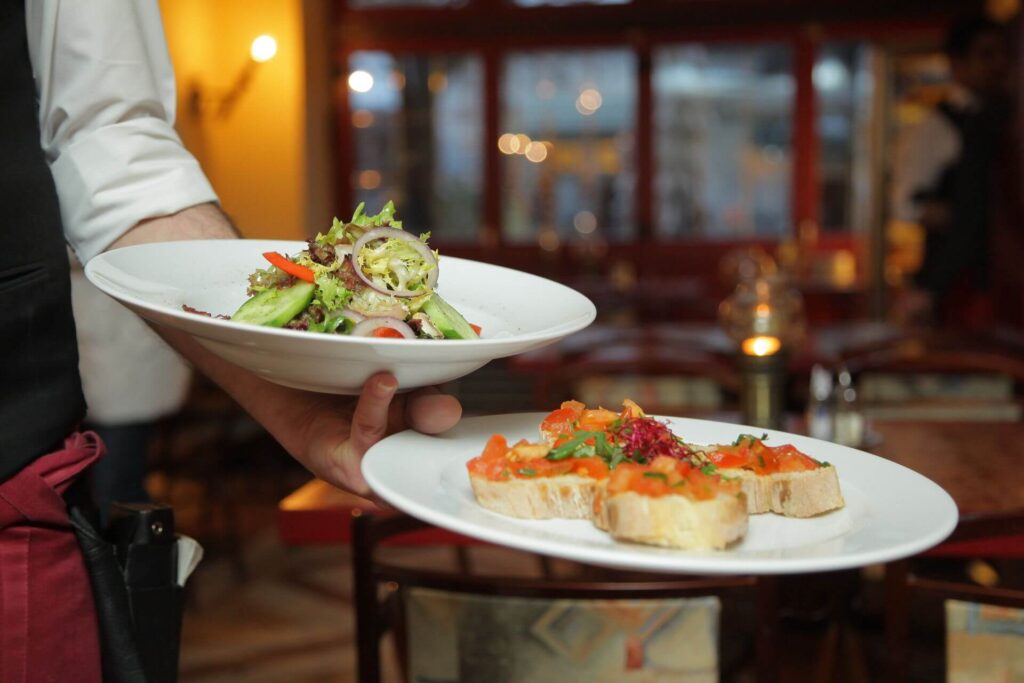
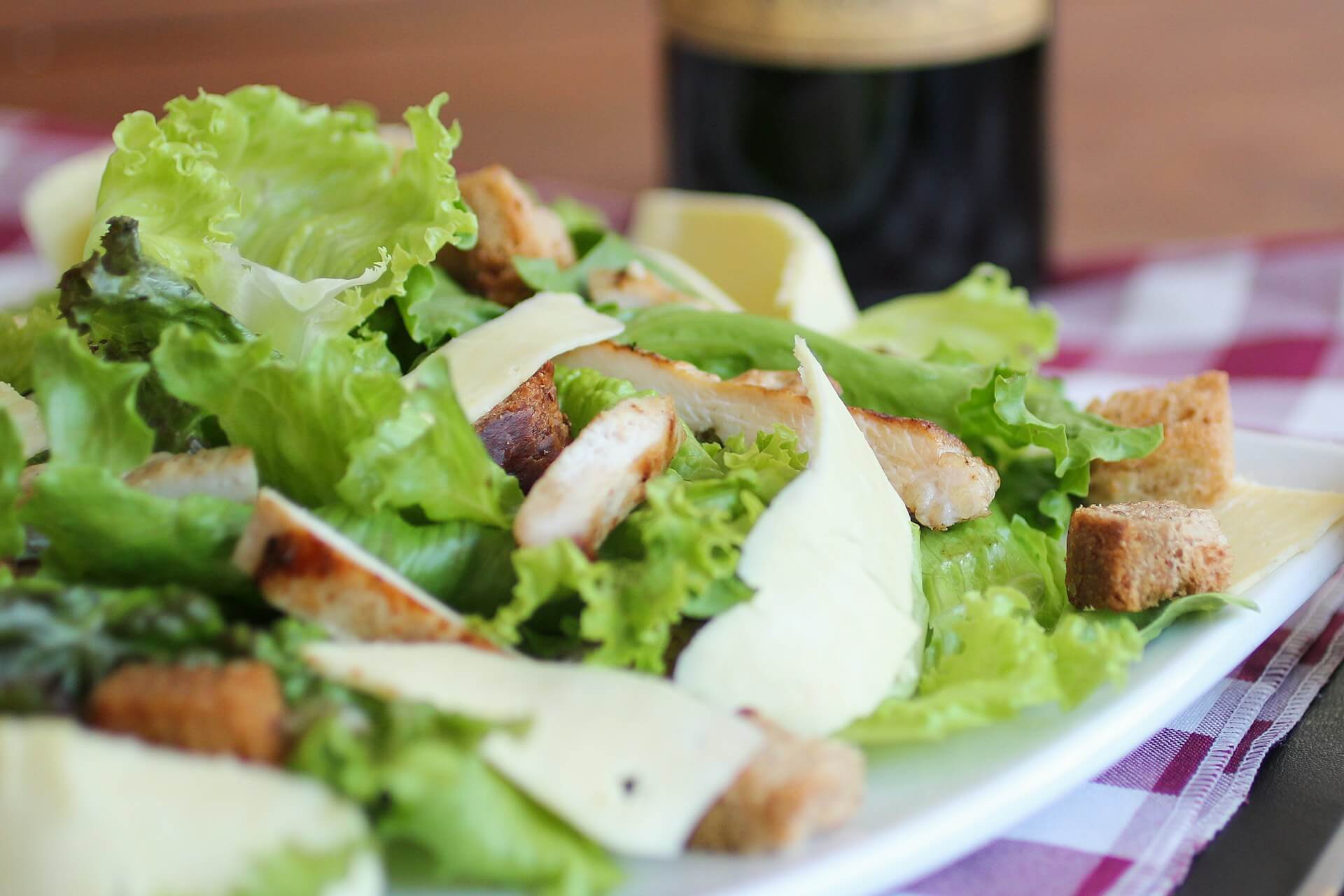
A salad with chicken and Parmesan cheese shavings.

All I wanted was a salad. Not this salad (I never got to see it), but one similar.

Let’s take a look at what went sideways from the guest perspective, coaching opportunity perspective, and strategist perspective.

The Service Failure

Everything started off well. The host stand was helmed by friendly employees. Servers looked like they were on their game.

The restaurant wasn’t slammed but it wasn’t dead; there were several tables available, and most seats at the bar were empty. Greatwe asked to sit at the bar, taking a corner seat on the opposite side of the service well.

From that seat, the server stations, corridor to the kitchen, main dining room area, and service bar were in view.

We ordered a cocktail and a beer from the bartender, placed our food orders…and that was the final interaction we had with the bar team until we were ready to pay our bill.

It may seem a bit odd, but as much as I wanted the quesabirria I had ordered, I was really looking forward to the Caesar salad. After a couple of days on the Strip, a morning and afternoon at the Las Vegas Convention Center, and a couple of hours at the Welcome Kickoff Party, something light and refreshing seemed like a great idea.

Unfortunately, that salad never came. Neither did the bartender after serving the single rounds of drinks we managed to order. There was no check-back on the drinks, nor any of the dishes that were dropped off by runners. In fact, the empty glasses were never removed, and the empty plates just sat in front of us, stacking up. And no, the bar wasn’t slammed; we were two of the half-dozen or so guests seated there.

The bartender seemed far more interested in preparing the bar for a close that was about two hours away. Worse, the manager on duty, often posted up at the service well, corrected none of the failure they could clearly see. They were busy expoing drinks, glancing at our empty glasses and plates, and not engaging with us or the bar team. [Note: Busy doesn’t indicate that you’re getting anything done or being efficient. In fact, it can indicate the opposite.]

The Guest Perspective

When a guest receives poor service, they’re not focusing solely on an item they didn’t receive. That’s a huge part of it, of course, but not the whole story.

Their frustration often goes beyond “I didn’t get one of my items.”

Depending on the person, they’ll likely feel a range of emotions and internalize what can be perceived as a personal slight.

Have they done something to start their visit on the wrong foot? Do they look like they don’t belong, somehow? Does the staff not like them for some reason?

Failing to deliver one item, refusing to check back with a guest, and ignoring their attempts to get your attention can easily make a guest feel alienated, irrelevant, and insignificant.

Hospitality is about making everyone feel welcome, relevant, and valued; the focus is on providing serving others. The concept of hospitality is betrayed when we do or say anything that tells a guest they don’t matter, or that they’re not “good enough” to get great service.

I felt none of that, but I’m also in hospitality; I don’t take it personally. I was busy attempting to discover the root cause of the failure and waiting for a recovery that wouldn’t come, beyond the salad that never appeared being taken off the bill at the end of our meal (after I was finally able to address it).

Guests who don’t work in hospitality, on the other hand, may take entirely avoidable service failures personally, leave feeling very much the opposite of welcome, and encourage others to never visit the offending restaurant.

The Coach Perspective

When a person in a leadership role notices standards slipping, the knee-jerk reaction is often to intervene immediately and solve the problem for their team. That’s entirely understandable, particularly when that leader plans to address the drift from standards at the next pre-shift meeting (and follows through on that plan).

That said, some service issues provide an excellent opportunity for leaders to develop a powerful and valuable skill: coaching.

Just as there are differences between strategists, consultants, and coaches, there are notable differences between managing and coaching.

Managers use direct, one-way communication; they tell the people who report to them what to do. When it comes to standards drifting, they tend to solve the problem for the team. (Good and great managers also take responsibility for the drift.)

Coaches use two-way communication to guide an individual to find the solution on their own. In that way, they develop people, empower them, and are often excellent mentors.

Ideally, a hospitality team’s leaders are managers and coaches, knowing when to leverage the strengths of both roles.

Had the MoD at the restaurant noticed our empty glasses, which we had slid across to the edge of the bar next to our empty plates, he may have pulled the bartender aside for a moment. In a coaching role, he could have asked a simple question: “What’s going on with Seats 1 and 2?” or “What do you see at 1 and 2?”

Either question would have told the bartender the MoD had spotted an issue and expects them to figure out what it is. That would also have told the bartender they need to reset and focus on guest service. Such a simple coaching move can help build a sharper, more engaged team.

Coaching redirects work for every role in the house, and they’re more powerful than many operators and their leaders may realize.

The Strategist Perspective

I’m more disappointed in the failure of the MoD to intervene than I am the bartender. And the fact that the bartender working service well didn’t intervene while the MoD was expoing drinks tells me a lot about the restaurant’s culture.

The service well bartender absolutely noticed our empty glasses and plates, and turned away when eye contact was made. If they saw me try to get their attention, they felt comfortable ignoring me by stepping to the other side of the bar, breaking sight line via the center back bar.

I’m not going to snap my fingers or raise my voice to get a bartender or server’s attention; the former is horrific, and the latter isn’t a pleasant guest experience. If my direct “excuse me” is ignored a few times, I’m going to enter assessment mode, settle in, and observe how the team works, with a focus on the venue’s leadership.

The service bartender also didn’t feel the need to say something to their peer who was supposed to be serving guests, or felt uncomfortable doing so. And the bartender who had (barely) served us was clearly quite comfortable ignoring two guests in front of the MoD, who could also see that we were not having a great experience.

Instead, when not rushing to the back of house, that bartender busied themselves with cleaning and straightening behind the bar. Interestingly, none of that busy work involved our section of the bar.

As the person in a leadership position, I place the responsibility for service failure entirely on the MoD. If they were the GM, the restaurant is flying a flock of red flags. If the issue is this one manager, the rot still runs deep; the team has learned that standards can drift when that manager is running the show.

Going deeper, that means the damage is done. If standards drift when one manager is on, poor habits don’t just disappear when a different manager is overseeing the restaurant. Instead, some team members (at least two that I can think of at this restaurant) learn how to hide their bad habits depending on which manager is working their shift. The culture needs to be addressed, starting with considering and reflecting on values, deciding on the non-negotiables, documenting SOPs clearly, and training on them, starting with the leadership team.

This restaurant team has likely learned that standards where they work are negotiable, which means they’re not standards at all. If they’re not standards, they’re just recommendations. And if what’s expected isn’t enforced as a true standard, the operation isn’t run by systems, it’s plagued by inconsistencies.

None of that leads to success.

Image: Raphael Nogueira via Unsplash

Related Reading

Work with Us

Click the image below to learn about our services, how easy it is to work with KRG Hospitality, and how we can help you with your concept.

Client Intake Form - KRG Hospitality

by David Klemt David Klemt No Comments

The Psychology of Dining Space Design

The Psychology of Dining Space Design

by Nathen Dubé

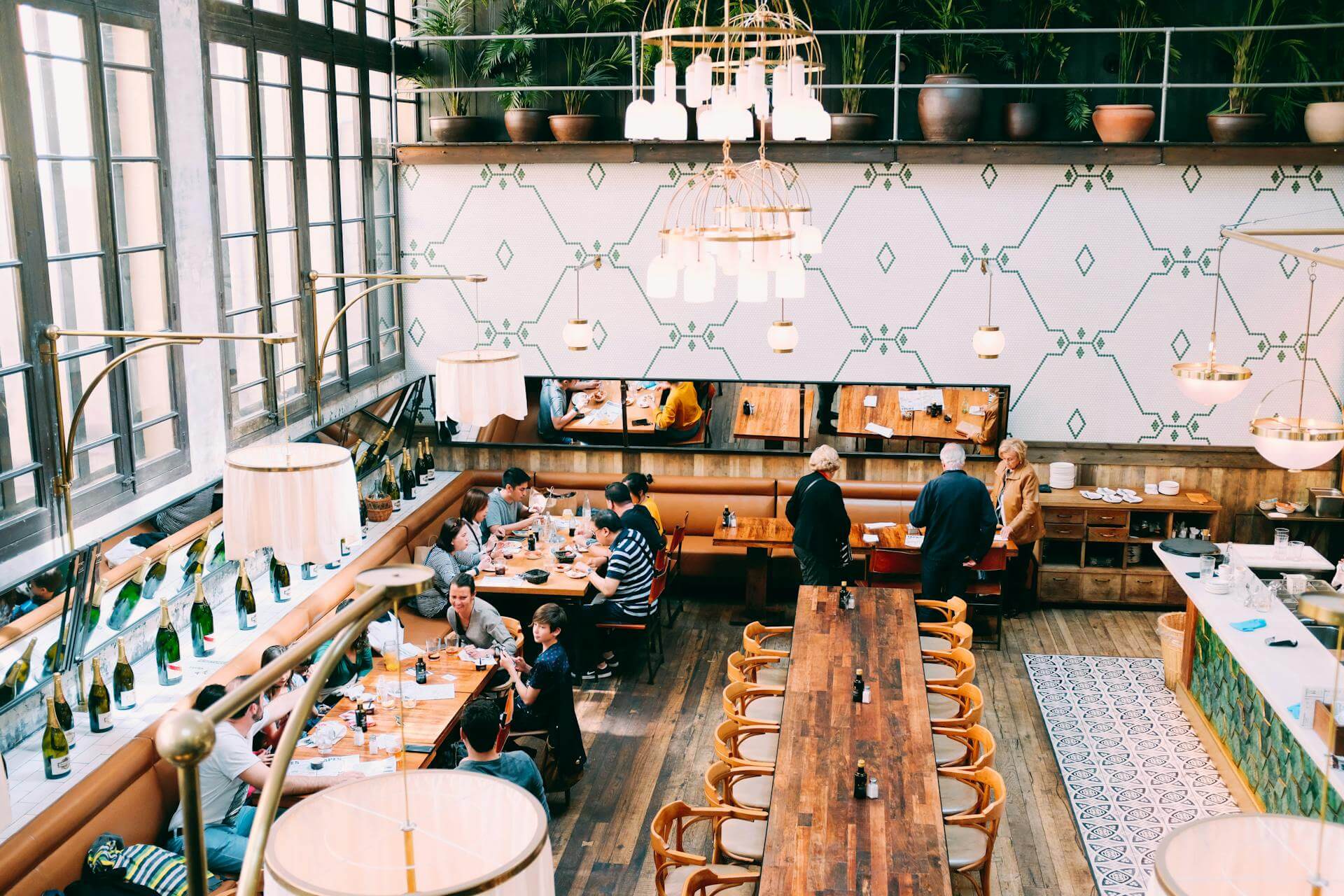
Bright, light and airy restaurant interior with communal seating across from the bar

When someone decides they’re going to dine out, they’re basing their selection on more than just what they want to eat; it’s about the entire experience.

The design and layout of a dining space impact guest behavior, emotions, and overall satisfaction to a significant degree. From the colors on the walls to the lighting overhead, every element plays a role in shaping the dining experience.

This article explores the psychological principles behind effective dining space design, offering insights into how restaurants can use these elements to enhance guest satisfaction, and boost sales.

The Impact of Color Schemes

How Different Colors Evoke Specific Emotions and Moods

Colors are powerful tools in setting the mood and atmosphere of a dining space. Different colors can evoke specific emotions and reactions, influencing how guests feel and behave in a restaurant.

Warm colors like reds, oranges, and yellows are stimulating, and can create a lively, energetic atmosphere, often used in fast-food restaurants to encourage quick eating and high turnover.

On the other hand, cool colors such as blues, greens, and purples have a calming effect, promoting relaxation and longer stays, making them ideal for fine-dining establishments.

Neutral colors like whites, grays, and beiges provide a clean and modern look, allowing other design elements to stand out, and making a space feel larger and more open.

Examples of Color Choices and Their Psychological Effects

Red is known to stimulate appetite and increase heart rate, making it a popular choice for fast-food chains.

However, it should be used sparingly in fine dining as it can be overwhelming.

Blue, on the other hand, suppresses appetite and promotes calmness, suitable for seafood restaurants or venues where a relaxed dining experience is desired. Green, associated with freshness and health, is often used in vegetarian and farm-to-table restaurants to reinforce the concept of natural, wholesome food.

Case Studies of Restaurants Using Color to Influence Dining Choices and Atmosphere

Consider McDonald’s use of red and yellow in its branding and interiors. These colors stimulate hunger, and create a sense of urgency, encouraging quick dining and high guest turnover.

In contrast, Starbucks uses a palette of warm browns and greens to create a cozy, inviting atmosphere that encourages guests to linger, increasing the likelihood of additional purchases.

Lighting and Its Psychological Effects

The Role of Lighting in Creating Ambiance and Influencing Guest Behavior

Lighting is a crucial aspect of dining space design, affecting the ambiance and guest experience significantly. Different types of lighting can evoke various moods, and influence how guests perceive the space and their meals.

Natural lighting enhances mood, and makes spaces feel more open and inviting. Restaurants with ample natural light are often perceived as more comfortable and welcoming. Ambient lighting sets the overall tone of the space. Soft, warm lighting can create an intimate and cozy atmosphere, while bright, cool lighting can energize the space. Task lighting focuses on specific areas, such as tables or bars, enhancing functionality and highlighting key features.

Differences Between Natural, Ambient, and Task Lighting

Natural lighting is best for creating a connection with the outdoors, and making spaces feel airy and fresh, often achieved through large windows and skylights.

Ambient lighting provides overall illumination, setting the mood and ensuring guests feel comfortable. Typically, ambient lighting is provided via ceiling lights, chandeliers, and wall sconces.

Task lighting is used for specific purposes, such as illuminating dining tables or highlighting menu boards, typically achieved with pendant lights and under-cabinet lighting.

How Lighting Affects the Perception of Space, Food, and Time Spent Dining

Bright lighting can make a small space feel larger, while dim lighting can create a more intimate and enclosed atmosphere.

Proper lighting enhances the visual appeal of food, making it look more appetizing. Warm, soft lighting is often used in fine dining to highlight the colors and textures of dishes.

Lighting can also influence how long guests stay. Dim, cozy lighting encourages lingering, while bright lighting can make people eat faster and leave sooner.

Acoustics and Soundscapes

The Impact of Noise Levels and Music on the Dining Experience

Sound is a critical yet often overlooked element of dining space design. Noise levels and the type of music played can impact the dining experience significantly.

High noise levels can create a sense of energy and excitement, but may also lead to discomfort and difficulty in conversation. It’s essential to strike a balance, ensuring the space is lively without being overwhelming.

Low noise levels promote relaxation and intimacy, suitable for fine dining or romantic settings. However, overly quiet spaces can feel uninviting and lack atmosphere.

Balancing Background Noise and Creating an Appropriate Sound Environment

Effective sound management involves balancing background noise, and creating a sound environment that complements the restaurant’s concept and ambiance.

Strategies include acoustic panels to absorb sound and reduce noise levels, creating a more comfortable environment. Soundproofing materials like carpets, curtains, and upholstered furniture can help dampen noise.

Music selection is also crucial, with the type of music and its volume aligning with the restaurant’s theme, and the desired guest experience.

Examples of Restaurants Using Sound to Enhance Guest Comfort and Satisfaction

Many upscale restaurants use a combination of soft background music and sound-absorbing materials to create a tranquil dining environment.

For example, the use of live piano music in high-end restaurants can enhance the ambiance without overwhelming conversation.

Seating Arrangements and Layout

The Psychological Impact of Different Seating Configurations

Seating arrangements and layout play a significant role in influencing guest behavior and satisfaction. The choice between booths, communal tables, and individual seating can impact how guests perceive the space, and interact with others.

Booths provide privacy and comfort, making them ideal for intimate gatherings and longer stays, creating a sense of enclosure and personal space. Communal tables encourage social interaction and a sense of community, suitable for casual dining, and environments that promote socializing. Individual seating offers flexibility and can cater to a variety of group sizes, allowing for easy reconfiguration of the space.

How Layout Affects Flow, Privacy, and Social Interactions

The layout of a dining space affects the flow of movement, privacy levels, and the nature of social interactions. Key considerations include:

  • ensuring there is enough space for guests and staff to move comfortably without congestion;
  • clear pathways; and
  • strategic placement of furniture to enhance flow.

Balancing the need for social interaction with the desire for privacy is essential, using partitions, plants, or varying seating heights to create distinct zones.

Design the space to facilitate the type of interaction you want to encourage, with communal tables and open layouts promoting socializing, while booths and nooks offer more private dining experiences.

Strategies for Optimizing Seating to Enhance Guest Comfort and Turnover Rates

Optimizing seating involves creating a comfortable environment while ensuring efficient use of space to maximize turnover rates.

Strategies include:

  • using a mix of seating types to cater to different guest needs and group sizes;
  • investing in high-quality, comfortable seating, which encourages longer stays and repeat visits; and
  • designing the layout to maximize the number of seats without compromising comfort to ensure tables are spaced adequately, allowing for easy movement and service.

Case Studies and Expert Insights

Interviews with Interior Designers and Behavioral Psychologists

Interviews with interior designers and behavioral psychologists provide valuable insights into the principles of effective dining space design. Experts can share their experiences and recommendations for creating spaces that enhance guest behavior and satisfaction.

Key Insights on Effective Design Strategies

Key insights from expert interviews include adopting a holistic design approach, considering all elements—color, lighting, acoustics, and layout—together to create a cohesive and inviting space.

Focusing on the needs and preferences of your target audience is crucial, designing with the guest experience in mind to create a memorable dining environment.

Continuous improvement is essential. This involves reviewing and updating your design regularly to keep it fresh and relevant, and staying informed about new trends and technologies in dining space design.

Real-World Examples of Restaurants That Have Successfully Utilized Design Psychology

Real-world examples highlight how restaurants have implemented design psychology principles successfully to enhance guest satisfaction and increase sales.

For instance, a fine-dining restaurant may use soft lighting, elegant color schemes, and acoustic panels to create an intimate and luxurious dining experience, resulting in a space where guests feel relaxed and pampered, leading to longer stays and higher spending.

Conversely, a casual eatery might incorporate vibrant colors, upbeat music, and communal seating to foster a lively and social atmosphere, attracting a younger crowd looking for a fun and engaging dining experience, boosting guest turnover and repeat visits.

Highlighting Specific Design Choices and Their Outcomes

Specific design choices, such as using warm lighting to highlight food presentation or arranging seating to encourage social interaction, can impact guest perceptions and behavior significantly.

Highlighting these choices and their outcomes provides practical examples of how design can influence the dining experience.

Practical Tips for Optimizing Dining Space Design

Actionable Advice for Restaurant Owners and Designers

Implementing effective dining space design requires practical and actionable steps.

Here are some tips to help restaurant owners and designers optimize their spaces:

  • Choose Colors Wisely: Select color schemes that align with your restaurant’s concept, and desired guest experience. Use warm colors for energetic spaces, and cool colors for calm, relaxing environments.
  • Optimize Lighting: Ensure a balance of natural, ambient, and task lighting to create the right ambiance, and enhance the dining experience. Use dimmers to adjust lighting levels based on the time of day, and desired mood.
  • Consider Acoustics: Use sound-absorbing materials and strategically placed music to create a comfortable sound environment. Avoid excessive noise that can detract from the dining experience.
  • Plan the Layout: Design the layout to maximize space efficiency while ensuring guest comfort. Use a mix of seating types, and ensure clear pathways for easy movement.
  • Align Design with Brand Identity: Ensure that all design elements, from colors to furniture, reflect your brand identity, and resonate with your target audience.

Tips on Choosing Colors, Lighting, and Furniture

Choosing the right colors, lighting, and furniture can have a significant impact on the dining experience:

  • Colors: Choose colors that evoke the desired emotions, and match your brand’s personality. Test different shades to find the perfect balance.
  • Lighting: Invest in quality lighting fixtures, and consider the color temperature of bulbs. Use lighting to highlight key areas, and create focal points.
  • Furniture: Select comfortable and durable furniture that complements the overall design. Consider ergonomic options to enhance guest comfort.

Conclusion

The design of a dining space is a crucial component of the guest experience. Understanding and applying the psychological principles of color, lighting, acoustics, and layout helps restaurant owners and designers to create environments that influence guest behavior, enhance satisfaction, and boost sales.

Thoughtful design not only improves the dining experience but also reinforces brand identity, and drives business success.

Image: Adrien Olichon via Pexels

KRG Hospitality Contact Request for Proposal 30 Minute Discovery Session

Book Below to Setup a 30-Minute Complimentary Discovery Call and Request for Proposal.


by David Klemt David Klemt No Comments

2024 Datassential 500: Guest Perception

2024 Datassential 500: Guest Perception

by David Klemt

An optical illusion consisting of black and white stripes that may be curving upward and outward

Last week we took a look at the data-driven findings that identify, organize, and rank chain restaurants in the US, forming the Datassential 500.

This annual report sorts the 500 top-performing chains by segment. Further, Datassential identifies the top chains by both number of units, and sales.

In doing so, the F&B intelligence agency uses hard numbers to determine numbers one through 500.

But what about guest perception? Unit and sales growth may appeal to board members, investors, executives, and other hospitality professionals, but what matters to the people their restaurants serve?

It’s doubtful that even the staunchest fans of a particular restaurant chain are aware of or, frankly, care about how many locations they operate. Nor are they likely all that concerned about their annual revenue, unless they’re an investor as well.

To get to the bottom of how the public perceives chain restaurants in the US, and what brands they rank at the top, Datassential looked at six key metrics.

Those metrics? Food quality, service, experience, affordability, value for dollar, and net promoter score.

While the results aren’t exactly shocking, they’re quite telling. A handful of US chains dominate the consumer-facing metrics. And for the most part, they’re not among the top ten of the 2024 Datassential 500.

Anyone interested in reading this year’s report can do so via this link. Alright, let’s check out how the public ranks US chain restaurants.

Perception Matters

To make the comparisons easier, the top 10 US restaurant chains by unit and by sales are below.

Top 10: Total Units

  1. Subway
  2. Starbucks
  3. McDonald’s
  4. Dunkin’
  5. Taco Bell
  6. Domino’s Pizza
  7. Burger King
  8. Pizza Hut
  9. Wendy’s
  10. Dairy Queen

Top 10: Total Sales

  1. McDonald’s
  2. Starbucks
  3. Chick-fil-A
  4. Taco Bell
  5. Wendy’s
  6. Dunkin’
  7. Burger King
  8. Chipotle
  9. Subway
  10. Domino’s Pizza

Guest Perception

Okay, so those are the top performers in the US, by the numbers. Units were counted, sales were analyzed.

Now, these are the brands that guests feel are at the very top, organized into six categories.

Food Quality

  1. Texas Roadhouse
  2. Chick-fil-A
  3. Longhorn Steakhouse
  4. Cheesecake Factory
  5. Ruth’s Chris Steak House

Service

  1. Chick-fil-A
  2. Texas Roadhouse
  3. Longhorn Steakhouse
  4. Cheesecake Factory
  5. In-N-Out Burger

Experience

  1. Chick-fil-A
  2. Ruth’s Chris Steak House
  3. Texas Roadhouse
  4. Maggiano’s Little Italy
  5. In-N-Out Burger

Affordability

  1. Little Caesars
  2. Freshii
  3. Papa Murphy’s
  4. Cici’s Pizza
  5. Pollo Tropical

Value for Dollar

  1. Papa Murphy’s
  2. Little Caesars
  3. Cici’s Pizza
  4. In-N-Out Burger
  5. Del Taco

Net Promoter Score

To determine this ranking, survey participants were asked “How likely would you be to recommend this chain to friends and family?”

  1. Chick-fil-A
  2. Texas Roadhouse
  3. In-N-Out Burger
  4. Longhorn Steakhouse
  5. Portillo’s Hot Dogs
  6. Cheesecake Factory
  7. The Capital Grille
  8. Ruth’s Chris Steak House
  9. Maggiano’s Little Italy
  10. Topgolf

Subway and McDonald’s may dominate the list in terms of number of units and annual sales, but Chick-fil-A dominates in one key area. Word-of-mouth marketing still matters, undeniably, and, according to Datassential, most consumers perceive Chick-fil-A as the restaurant chain to recommend.

Followed by Texas Roadhouse and In-N-Out Burger, smaller brands are delivering on important operational elements. Consumers at large appear to favor these brands when it comes to stretching their dollars, along with how they perceive the quality of food, the level of service, and the overall dining experience.

Operators interested in scaling their business need to set aside ego and desire, and look at their business objectively. They need to ensure they’re nailing the fundamentals and have the right systems in place first.

Image: BP Miller on Unsplash

KRG Hospitality Contact Request for Proposal 30 Minute Discovery Session

Book Below to Setup a 30-Minute Complimentary Discovery Call and Request for Proposal.


by David Klemt David Klemt No Comments

Balancing Menu Creativity with Preferences

Menu Design: Balancing Creativity and Guest Preferences

by Nathen Dubé

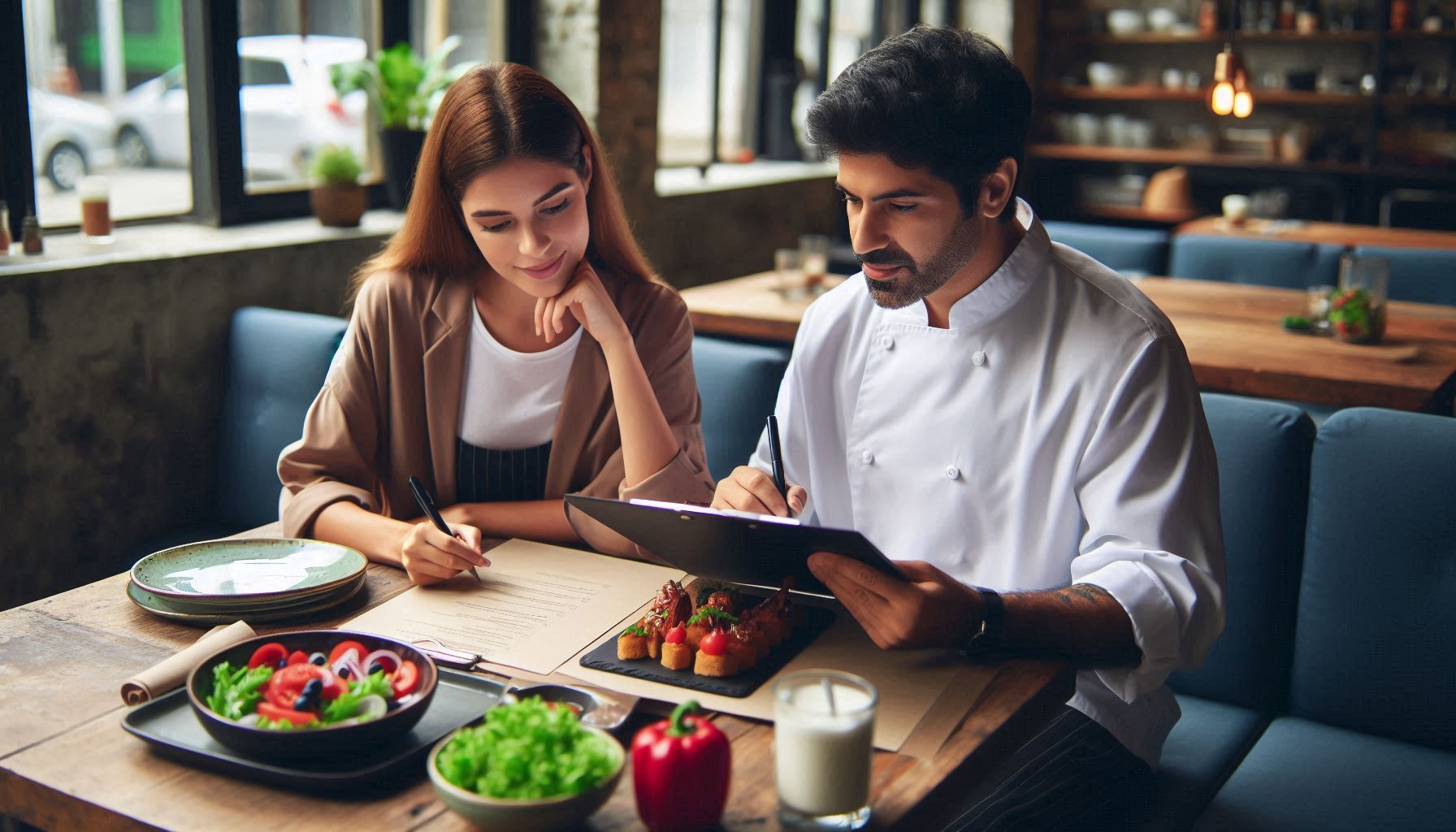
An AI-generated image of a chef-owner and head chef reviewing a restaurant menu

Note: AI-generated image.

A menu is not just a list of dishes; it’s a strategic tool that influences guest choices, enhances the dining experience, and maximizes sales.

Therefore, a well-designed menu is a crucial component of a restaurant’s success.

Come along with me and we’ll explore the principles of effective menu design, balancing creativity with guest preferences, and the role of menu psychology in driving decisions.

Key Principles of Effective Menu Design

Layout and Structure

The foundation of a great menu lies in its layout and structure. Organizing menu items logically—grouping appetizers, mains, desserts, and beverages into distinct sections—guides guests through their dining journey.

This structure helps in creating a seamless experience where guests can find what they are looking for easily. Subsections like “vegetarian,” “seafood,” or “grilled” can further refine the selection process.

Logical organization not only aids in navigation but also enhances the overall dining experience by reducing decision fatigue.

Item Placement

Item placement on the menu can have a significant impact on what guests decide to order.

The “Golden Triangle” concept suggests that guests’ eyes typically first gravitate to the center, then the top right, and finally, the top left of the menu. Placing high-margin items in these areas can drive sales.

Additionally, highlighting signature dishes and specials in these prime spots can make them more appealing. Strategic placement is essential for maximizing the visibility of certain items, encouraging guests to order the dishes that are most profitable or unique.

Readability

A menu should be easy to read and visually appealing. Choosing appropriate fonts and sizes ensures that the text is legible in various lighting conditions.

A key factor to bear in mind is maintaining clear spacing between items to prevent the menu from looking cluttered and overwhelming.

Ensuring the clarity and ease of reading is vital; if a guest struggles to read the menu, it detracts from their dining experience. Effective readability involves the thoughtful selection of fonts, sizes, and spacing to create a harmonious and inviting look.

Balancing Creativity and Guest Preferences

Creative Culinary Expression

A menu is an opportunity to showcase the chef’s creativity and culinary expertise. Innovative dishes that use unique ingredients or cooking techniques can set a restaurant apart from its competitors.

Creativity is crucial for developing a distinctive culinary identity, and offering guests an exciting and memorable dining experience.

However, it’s important to balance creativity with dishes that guests are familiar with and enjoy. Balancing innovation with tradition ensures that while the menu offers new and novel experiences, it also provides comfort and familiarity.

Popular Guest Preferences

To appeal to a broad audience, a menu should include a mix of creative dishes and popular favorites. Including familiar dishes alongside innovative options can cater to a wider audience, making everyone feel welcomed and valued.

Additionally, considering dietary restrictions and preferences is crucial. Offering vegetarian, vegan, gluten-free, and allergen-friendly options ensures that all guests can find something they love. Addressing dietary needs and preferences not only broadens the guest base but also demonstrates the restaurant’s commitment to inclusivity and guest satisfaction.

Market Trends

Staying updated with current culinary trends helps keep the menu fresh and exciting.

For instance, trends such as plant-based diets, sustainability, and ethnic fusion can attract trend-conscious diners. Incorporating these trends into the menu shows that the restaurant is contemporary and aware of its guests’ evolving tastes.

Aligning the menu with market trends can create a buzz and draw attention to the restaurant, enhancing its reputation as a forward-thinking and dynamic establishment.

The Role of Menu Psychology

Influencing Guest Choices

Menu psychology involves using strategic design and phrasing to influence what guests order.

Some effective techniques include strategic pricing methods like decoy pricing. This approach involves placing a high-priced item next to a mid-priced item to make the latter seem more reasonable. Another tactic is charm pricing, an approach that uses prices that end in “.99” to make them appear more attractive.

These subtle cues can guide guest decisions and encourage them to choose certain dishes. Understanding menu psychology allows restaurants to steer guests subtly towards higher-margin items without being overtly pushy.

Maximizing Sales

Highlighting profitable dishes with visual cues, such as boxes, borders, or bold text, can draw attention to these items. Descriptive language that evokes the senses can make dishes sound more appealing, and entice guests to try them.

For example, describing a dish as “succulent, slow-roasted pork with a caramelized apple glaze” creates a vivid image, and stimulates appetite.

Effective use of menu psychology can boost sales significantly, and enhance the dining experience by making the menu more engaging and enticing.

Enhancing Appeal with Descriptive Language and Visuals

Descriptive Language

Using evocative and sensory words to describe dishes can enhance their appeal. Highlighting unique ingredients, preparation methods, and the origin of the dish creates a story that resonates with guests.

Descriptive language adds depth and dimension to the menu, transforming it from a simple list of dishes into a narrative that engages the guest’s imagination. Phrases like “handcrafted,” “locally sourced,” and “artisanal” add a touch of sophistication and quality, making dishes sound more attractive and special.

Visuals

Including high-quality images or illustrations of key dishes can boost their appeal significantly. Visuals help guests imagine the dish, and can trigger an emotional response

A well-designed menu with complementary color schemes and design elements reinforces the restaurant’s theme, and creates a cohesive brand identity.

The use of appealing visuals can stimulate appetite, and make the decision-making process more enjoyable for guests, enhancing their overall dining experience.

Examples of Innovative Menus

Case Studies of Successful Menus

Analyzing menus from renowned restaurants provides valuable insights into successful design choices.

For instance, The French Laundry in California uses a minimalist menu design that emphasizes simplicity and elegance, allowing the focus to remain on the high-quality ingredients and sophisticated dishes.

Similarly, Nobu’s menu balances innovative Japanese-Peruvian fusion dishes with classic favorites, catering to a diverse clientele.

These examples illustrate how thoughtful menu design can enhance the dining experience, and create a distinctive brand identity.

Insights from Industry Experts

Menu design professionals and restaurateurs offer valuable best practices. Experts suggest evaluating and adapting the menu continuously to meet changing guest preferences and market trends.

Updating the menu regularly not only keeps it interesting for repeat guests but also allows for the introduction of seasonal ingredients and new culinary innovations.

Industry insights highlight the importance of flexibility and responsiveness in menu design, ensuring that the restaurant remains relevant and competitive.

Conclusion

A thoughtfully designed menu is a powerful tool in the restaurant industry. It balances creativity with guest preferences, uses psychology to influence choices, and enhances appeal through descriptive language and visuals.

Investing in effective menu design can enhance the dining experience, drive guest satisfaction, and boost sales. For restaurateurs, it’s an essential aspect of creating a successful and memorable dining establishment.

By understanding and implementing these principles, restaurant owners can craft menus that not only reflect their culinary vision but also resonate with their target audience, ensuring a winning formula for success.

A well-designed menu can transform the dining experience, making it more engaging, enjoyable, and, ultimately, profitable for the restaurant.

Image: Microsoft Designer

KRG Hospitality Contact Request for Proposal 30 Minute Discovery Session

Book Below to Setup a 30-Minute Complimentary Discovery Call and Request for Proposal.


by David Klemt David Klemt No Comments

Soup Season: Transforming Comfort Classics

Soup Season: Transforming Comfort Classics

by David Klemt

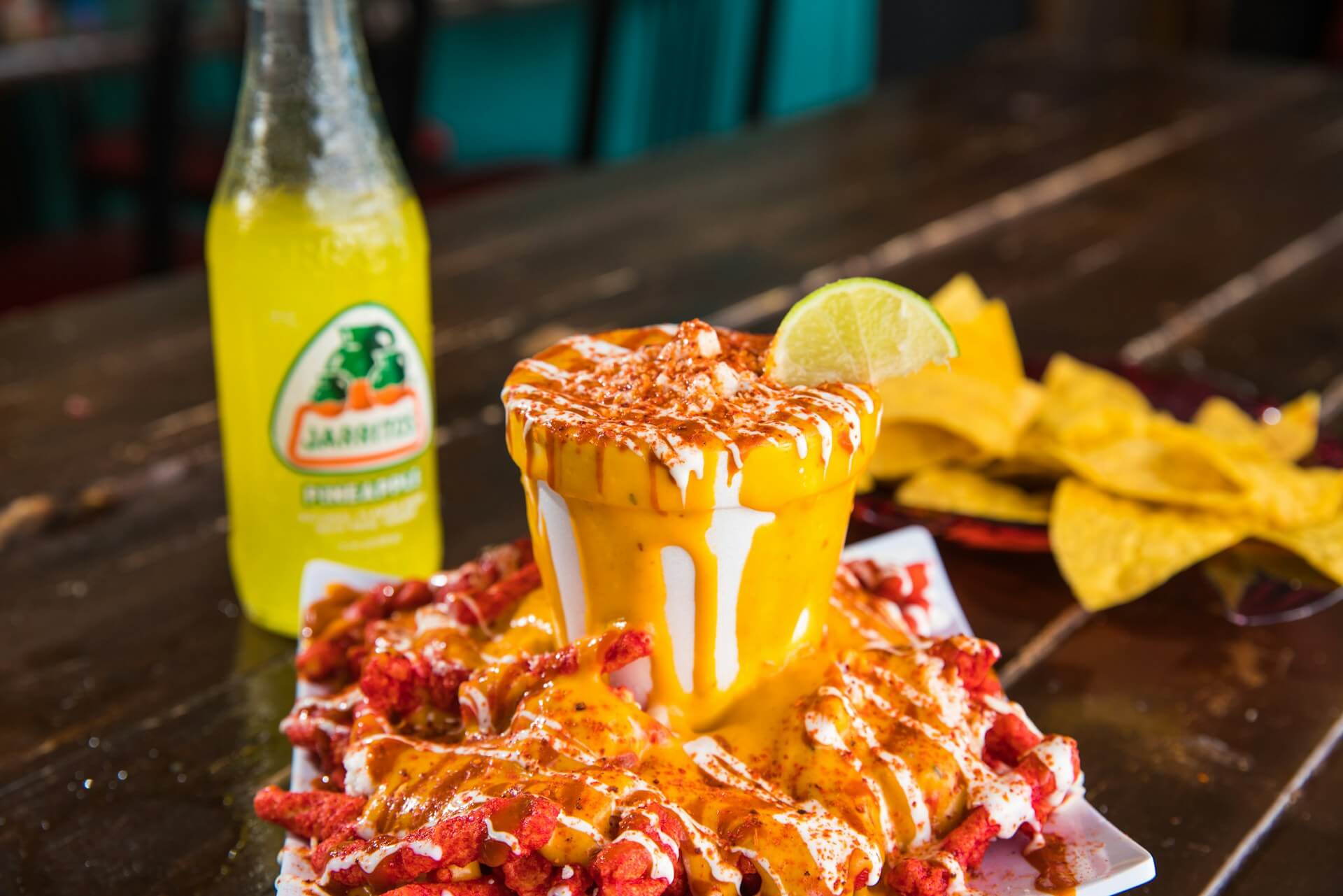
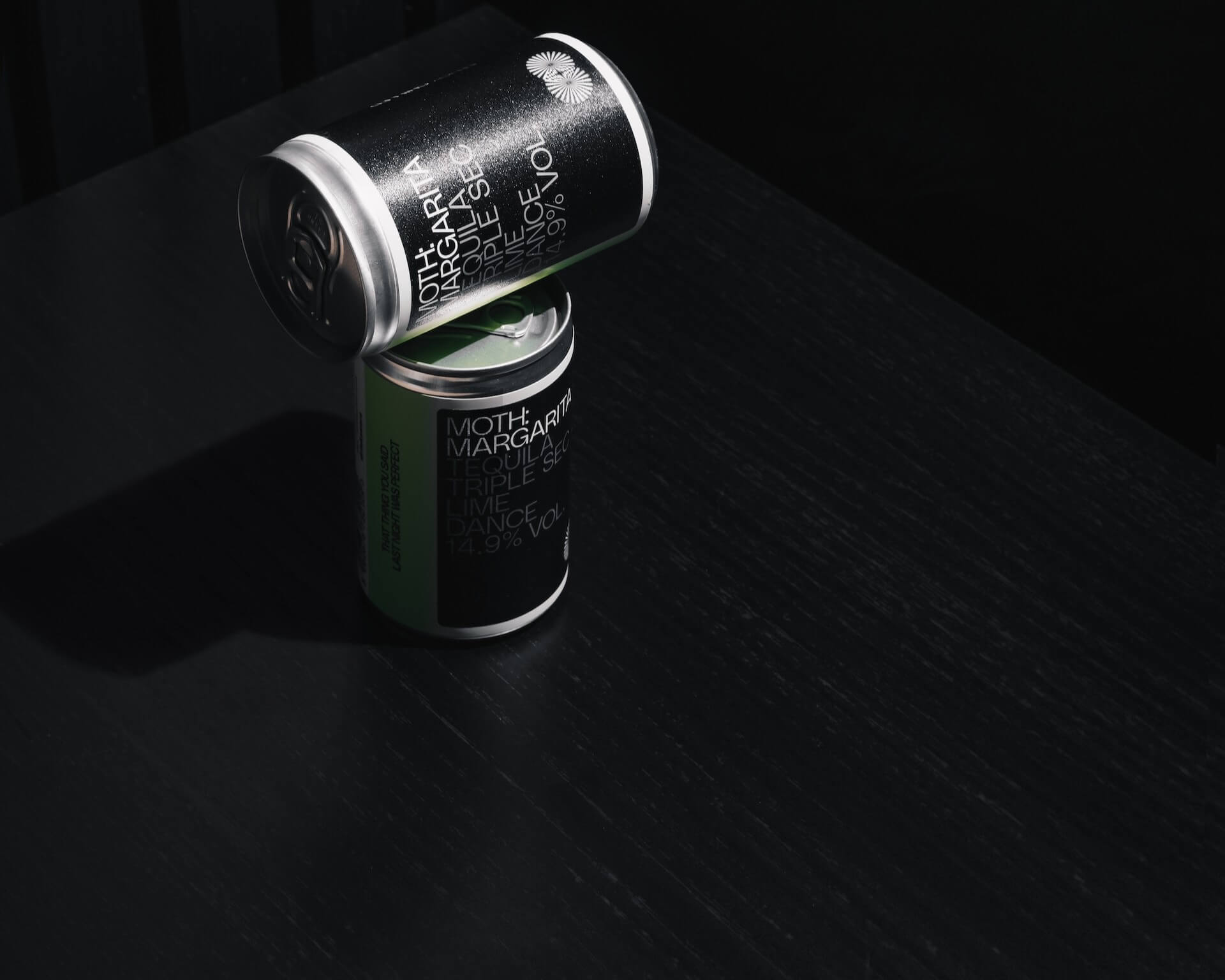
Elote en vaso, or vaso de elote, also known as street corn in a cup, on a bar

Elote en vaso or vaso de elote, also known as “street corn in a cup.”

The latest and greatest from Campbell’s Foodservice is all about operators making the most of cooler weather by maximizing soup season.

If you read KRG Hospitality articles regularly, you’re likely aware that we like the helpful information Campbell’s makes available. For example, I’ve written articles that share their tips for leveraging nostalgia, crushing it with LTOs, and 2024 culinary trends.

Their newest tips aim to help operators succeed with soup. Further, much of Campbell’s Foodservice’s tips are in direct response to Datassential and Technomic data. In fact, Campbell’s references Technomic’s Soup & Salad Consumer Trend Report directly.

To be sure, the first bit of advice that Campbell’s shares is the most obvious: Leverage seasonal flavors. In this case, we’re talking fall and winter flavors.

You may already see stores where you live and operate unleashing Halloween decorations. I know I have; it may be 105 degrees in Las Vegas as I write this, but people are getting into an autumnal mood.

Of course, when you take advantage of seasonality for LTOs or menu updates, it’s important to let your guests know.

“Calling out seasonal items on your menu demonstrates the operator is being relevant and using ingredients that are in season,” says Campbell’s Foodservice Executive Chef Gerald Drummond. “From a consumer standpoint, that’s something that they really look towards.”

We agree wholeheartedly. Going deeper, we recommend working with local suppliers to procure seasonal ingredients, and calling that out as well.

Another tip comes from Datassential and Technomic insights. Three in ten younger consumers would like to see soups that feature plant-based proteins. And around half want at least one vegetarian-friendly soup on a menu.

The Standout Tip

When you’re through reading this article, I encourage you to scroll back to the top, click the “soup season” link, and read this Campbell’s Foodservice report for yourself.

That way, you’ll see all of their latest tips for getting the most out of seasonal soups.

However, I’m going to share the tip that stood out the most to me: transforming comfort food dishes into soups. Hence, the image at the top of this article: vaso de elote, or elote en vaso. That dish translates to “street corn in a cup” from Spanish.

Now, elote or street corn is undeniably a comforting street food. If I see it on a menu, I’m going to order it. Were I to see street corn in a cup, particularly if it came with the presentation at the top of this article, I’m going to order it.

So, if a culinary team were to transform street corn in a cup into street corn in a cup of soup, I’m all in.

Think about your concept, the approach to cuisine, and the community you serve. Then, think about the comfort dishes that work well with your concept and resonate with your guests.

In their report, Campbell’s Foodservice recommends beer cheese soup, of which I’m a fan. They also suggest lasagna soup (I’d try it), and chicken pot pie soup (again, I’m down).

Real-Word, Professional Advice

I asked our chef consultant Nathen Dubé for a couple of quick tips for transforming a comforting food dish into a soup. (By the way, you can book a call with him to discuss your menu or kitchen here.)

“I would look at the overall profile of the dish, and then decide if you’re going to combine everything into a puree or a broth,” says Nathen.

Then, the kitchen team needs to decide “which ingredients would be incorporated, and which could be left whole afterwards for texture, and stronger stand-out flavours.” As he explained to me, some ingredients definitely translate better to slow cooking versus finishing towards the end of the process.

With that advice given, take a look at your menu. Do you have some comfort foods that would be intriguing to guests in soup form? What about some of your signature dishes?

Once you’ve determined which dishes to transform into seasonal, LTO soups, engage your kitchen team. They’ll likely be excited to do something new, and show off their culinary talent.

Some people may harbor the misconception that soup isn’t exciting. I think creative operators and culinary teams can disabuse skeptical guests of this notion. Cheers!

Image: Jarritos Mexican Soda on Unsplash

KRG Hospitality. Restaurant Business Plan. Feasibility Study. Concept. Branding. Consultant. Start-Up.

by David Klemt David Klemt No Comments

Eliminate Hesitation: Streamline Your Menu

Eliminate Hesitation: Streamline Your Menu

by David Klemt

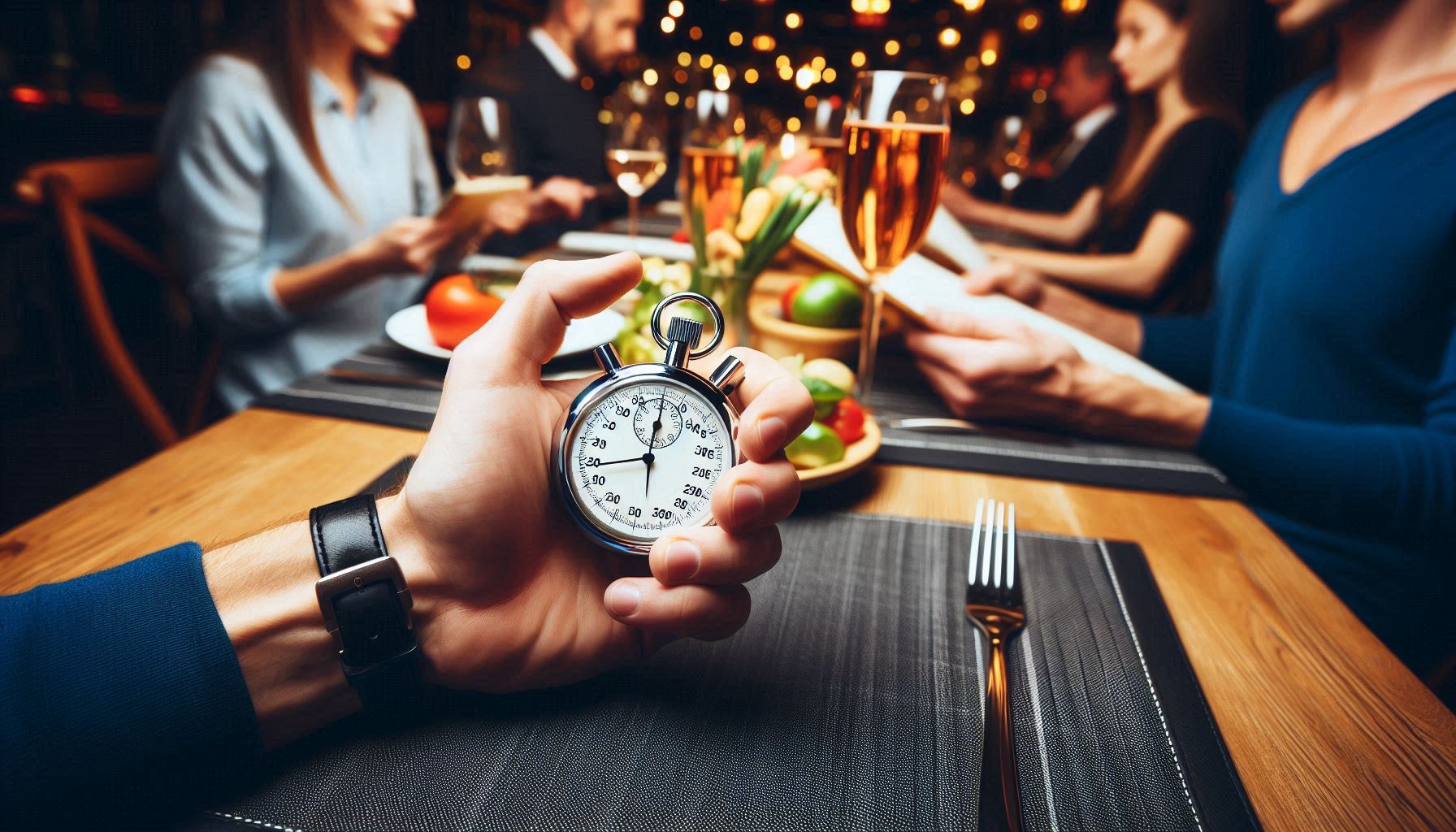
An AI-generated image of a person holding a stopwatch at a restaurant table while guests read the menu

That’s an interesting stopwatch layout. Also, we don’t recommend sitting with guests and timing them as they review your menu.

Operators should develop an understanding of the concept of the paradox of choice to understand how American guests make menu item selections.

So, allow me a crash course in this psychological concept. There are two prevailing components to the paradox of choice. One is that the more options one has, the less satisfaction they’ll feel upon making a choice. The other is that when presented with an overwhelming number of choices, also known as “choice overload,” people often just fall back to their usual choice rather than trying something new.

A quick note: The paradox of choice isn’t the same as the fallacy of choice. That concept relates to presenting someone with limited, extreme choices to drive them to ignore all of the other choices they could consider and select.

Understanding the paradox of choice will help an operator tackle a key task: streamlining their menus.

A survey from US Foods earlier this year contains quite a few intriguing revelations. Among their findings, one stands head and shoulders above the rest, at least to me: Almost 80 percent of Americans find deciding what they want to order at a restaurant difficult. Further, one factor outpaces all others when it comes to difficulty choosing.

Hence, my explanation of the paradox of choice at the top of this article.

Menus are too Big

There are two key factors making it difficult for Americans to choose what to order at a restaurant. Nearly a quarter of respondents23 percentindicate that they’re simply picky people. Alright, fair enough.

But the main factor, unsurprisingly, is that restaurants are presenting guests with too many options. That’s according to 54 percent of survey respondents. Quick math tells me that’s more than double the picky eaters.

Another 15 percent of US Foods survey respondents, however, say they have no trouble deciding what they want to order. Eight percent say they’re indifferent, which is an entirely different problem. A guest who’s indifferent to the restaurant and menu isn’t an engaged guest, and that’s not going to inspire loyalty and repeat visits.

Of course, no operator can please everyone, and some people aren’t going to be blown away no matter how good the food, drinks, and service can be.

So, does this mean that Americans are indecisive, facing paralysis whenever a servers asks for their order? Well…maybe. We have a lot going on, and “overwhelmed” would describe many of my fellow Americans right now.

However, the real culprit is menu size. In trying to please and retain guests, some operators are loathe to shrink their menus.

Most KRG clients can attest to the following: the president of our agency, Doug Radkey, prefers a smaller, streamlined menu. In fact, he prefers menus not pass the 25-item mark. Given his druthers, Radkey favors 12 to 15 items.

There are several reasons for this preference. Chief among these are controlling and reducing labor and food costs. (Radkey prefers to control costs rather than cut them, realistically.) Other reasons are less strain on the back of house, easier cross-utilization of ingredients, consistency, and reduced ticket times.

We can also add improving guest satisfaction to the list. On average, an American restaurant guest takes nine minutes to decide what they want to order at a restaurant. Streamline and shrink the menu, and this number should fall, while satisfaction rises.

Anyone should see that a smaller, sharper menu represents wins across the board.

AI image generator: Microsoft Designer

KRG Hospitality Start-Up Restaurant Bar Hotel Consulting Consultant Solutions Plans Services

by David Klemt David Klemt No Comments

Create a Memorable Guest Experience

Create a Memorable Dining Experience for Your Guests

by Nathen Dubé

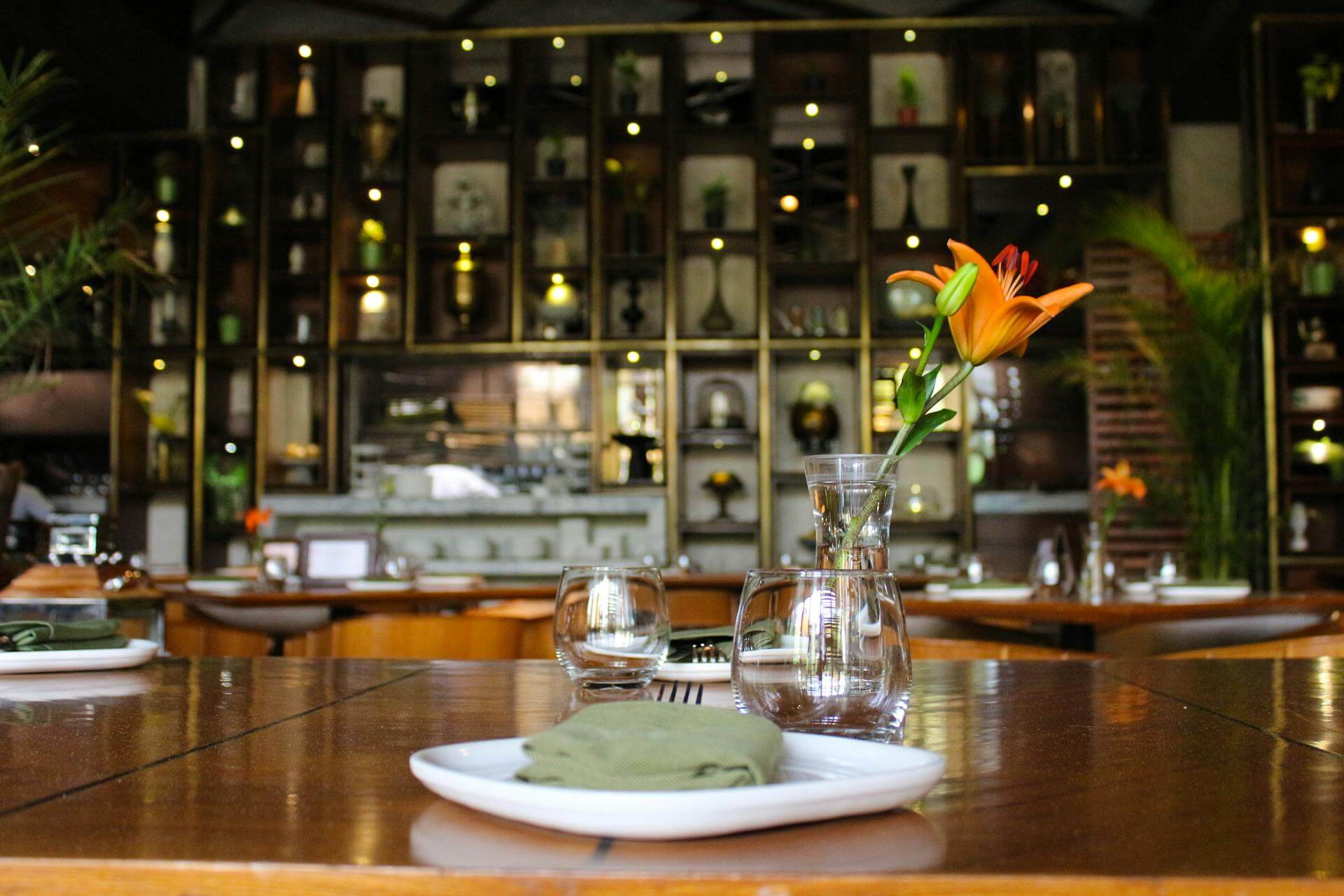
A table setting featuring white plates, green cloth napkins, and water glasses, with a vase and flower on the table

Creating a memorable dining experience goes beyond serving delicious food; it’s about crafting an atmosphere that engages all the senses.

When an operator and their team make someone feel special, they ensure that guest leaves with lasting memories.

Below, an exploration of the key elements that contribute to an unforgettable dining experience, from ambiance and service to unique touches that set your establishment apart.

Achieve the Right Ambiance

Lighting

Lighting plays a crucial role in creating the right mood for your dining space.

It can enhance the overall atmosphere, highlight key areas and features, and improve the dining experience significantly.

Benefits

  • Enhance the overall atmosphere.
  • Highlight key areas and features.
  • Improve the dining experience.

Implementation Tips

  • Use dimmable lights to adjust the ambiance throughout the day.
  • Incorporate a mix of task, ambient, and accent lighting.
  • Highlight architectural features or artwork with focused lighting.

Use a combination of chandeliers and strategically placed LED lights that can be dimmed to create a cozy, intimate setting for evening diners.

This setup creates a warm and inviting atmosphere, enhancing the overall dining experience significantly.

Music and Sound

The right music can complement the dining experience and contribute to the overall ambiance.

It’s important to gain an understanding of how music sets the tone and mood. From there, an operator can tailor playlists to enhance different dayparts.

Benefits

  • Set the tone and mood.
  • Enhance the dining atmosphere.
  • Can be tailored to different times of the day.

Implementation Tips

  • Curate playlists that match the theme and time of day.
  • Ensure the sound system provides clear, high-quality audio.
  • Keep the volume at a level that allows for conversation.

Implement a dynamic music system that plays upbeat tunes during breakfast and lunch, transitioning to softer, more relaxing music in the evening.

This thoughtful curation improves the guest dining experience significantly, making each visit unique and enjoyable.

Deliver Exceptional Service

Staff Training

Well-trained staff are essential to delivering top-notch service.

Proper training enhances guest satisfaction, improves operational efficiency, and promotes a positive dining experience.

Benefits

  • Enhance guest satisfaction.
  • Improve operational efficiency.
  • Promote a positive dining experience.

Implementation Tips

  • Train staff on service standards and etiquette regularly.
  • Encourage a guest-centric approach.
  • Provide ongoing feedback and development opportunities.

Client Story

At a popular bistro, we implemented a comprehensive training program with a focus on education, attentiveness and personalization. Staff are trained to remember guests’ preferences, which increases guest loyalty and positive reviews.

This approach ensures that guests feel valued and appreciated, enhancing their overall dining experience.

Personalization and Attention to Detail

Personalizing service makes guests feel as though they’re important (which they are) and an operator values their business.

A commitment to personalization helps create unique and memorable experiences. In turn, this approach encourages repeat visits and word-of-mouth referrals, and enhances guest satisfaction.

Benefits

  • Create a unique and memorable experience.
  • Encourage repeat visits and word-of-mouth referrals.
  • Enhance guest satisfaction.

Implementation Tips

  • Remember and acknowledge repeat guests.
  • Customize menu options to account for dietary preferences and restrictions.
  • Pay attention to small details like table settings and presentation.

Client Story

A dog-friendly cafe on which I consulted now offers personalized dog treats and complimentary toys for guests’ pets on special occasions.

This thoughtful gesture delivers a significant impact, making pet owners feel their furry friends are truly welcome and appreciated.

Unique Touches

Signature Dishes and Beverages

The creation of standout menu items sets an establishment apart.

Signature dishes and beverages attract guests looking for unique experiences. They also encourage social media sharing and word-of-mouth, boosting a restaurant’s reputation.

Benefits

  • Attract guests looking for unique experiences.
  • Encourage sharing on guests’ social media accounts, and leverage word-of-mouth marketing.
  • Build a restaurant’s reputation and standing in its community.

Implementation Tips

  • Develop signature dishes that showcase culinary prowess.
  • Offer unique, handcrafted beverages.
  • Highlight local ingredients and seasonal specials.

Notes from the Field

At our consultancy, we specialize in designing signature food and drink programs tailored to each new concept we work on.

Our process begins with understanding the unique vision and target audience of each concept. We then develop standout menu items that showcase culinary expertise and creativity, ensuring they become memorable highlights for guests.

These signature experiences not only attract new guests but also encourage social media sharing and word-of-mouth referrals. We focus on creating unique and engaging offerings to set up each concept to build a strong reputation as a must-visit destination, driving both engagement and growth.

Our personalized approach ensures that every guest project features distinctive, appealing elements that set it apart in the competitive hospitality landscape.

Engaging Decor and Theme

Well-considered decor and theme enhances the dining experience by creating a memorable and immersive environment.

These design elements differentiate an establishment from competitors, and enhances guest enjoyment and satisfaction.

Benefits

  • Create a memorable and immersive environment.
  • Differentiate a venue from competitors.
  • Enhance the guest experience and how guests perceive the brand.

Implementation Tips

  • Choose a theme that reflects the brand and cuisine.
  • Incorporate decor elements that tell a story and evoke emotion.
  • Ensure the design is cohesive and enhances the overall dining experience.

Notes from the Field

At KRG Hospitality, we excel at envisioning interiors that express and enhance the themes of each client concept.

For a seafood restaurant, we created an interior that brings the marine environment to life with subtle and sophisticated design elements. This immersive decor, combined with the restaurant’s fresh seafood menu, provides guests with a unique and memorable dining experience.

By aligning the interior design with the restaurant’s theme, we create spaces that delight guests and become talking points. Our attention to detail, coupled with the client’s commitment to high-level operation, encourages word-of-mouth referrals and repeat visits. The thematic details we pursue ensure that every project we work on delivers a cohesive and engaging experience that resonates with guests.

Conclusion

Creating a memorable dining experience requires a combination of ambiance, exceptional service, and unique touches. Focusing on these key elements ensures that an operator’s guests leave with lasting memories.

Crucially, this also stokes their desire to return.

Craft the right ambiance with thoughtful lighting and music. Train staff to deliver exceptional and personalized service. Add unique touches like signature dishes and engaging decor. Each of these are invaluable parts of a winning strategy that elevates a concept. These elements work together to create a dining experience that guests will remember and talk about long after they leave.

Are you ready to elevate your dining experience? Contact us today to learn how we can help you create an unforgettable environment for your guests.

Image: Pranav Jain via Pexels

KRG Hospitality Start-Up Restaurant Bar Hotel Consulting Consultant Solutions Plans Services

by David Klemt David Klemt No Comments

SevenRooms Drops Extensive 2024 Report

SevenRooms Drops Extensive 2024 Report

by David Klemt

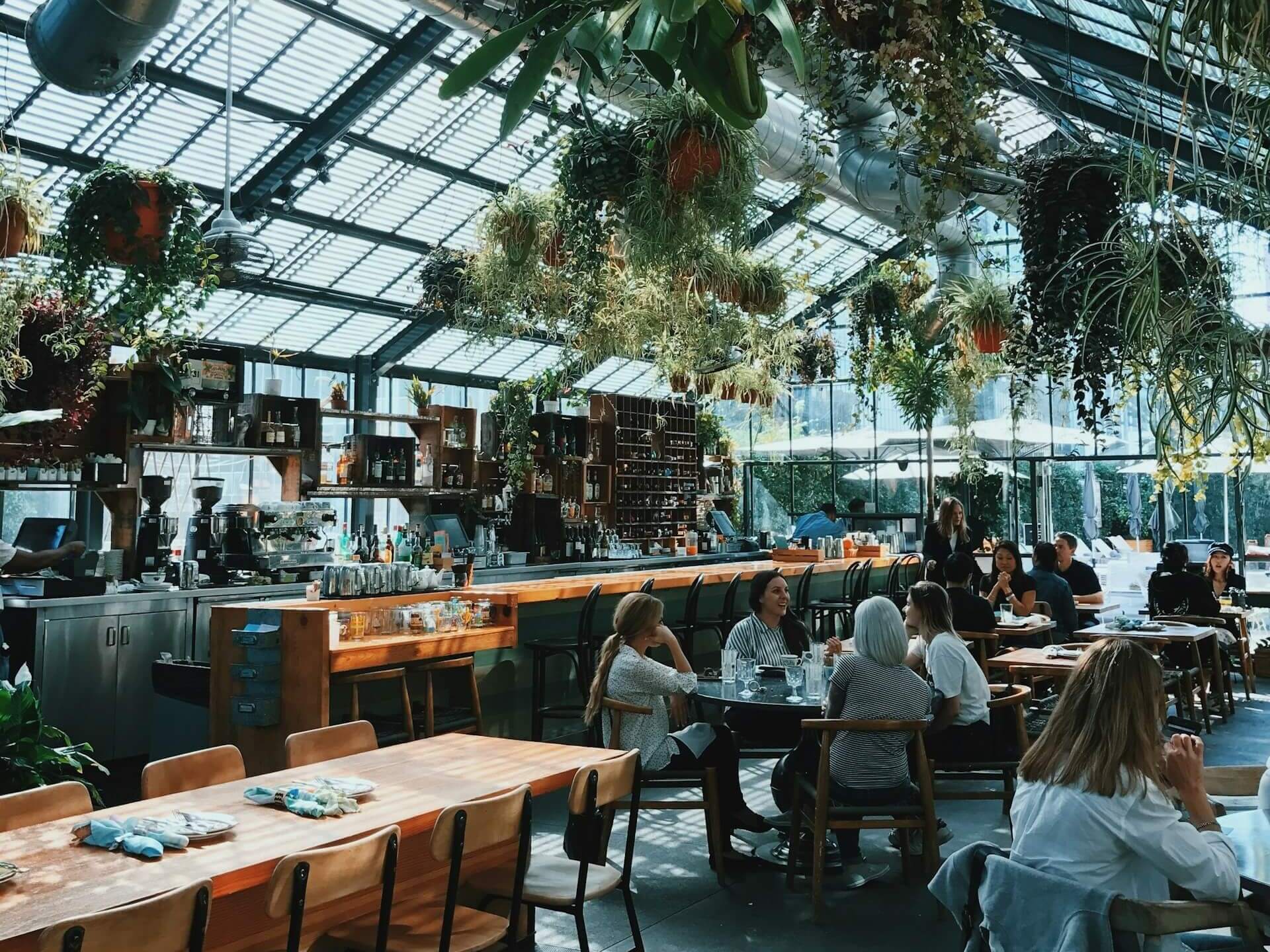
Guests dining in a light, bright restaurant featuring a glass ceiling and hanging plants

Today, we’re taking a look at the first-annual trends report from marketing and operations platform SevenRooms, which focuses on the guest experience.

To gain an understanding of the current state of affairs in America, SevenRooms analyzed the product data of more than 3,000 US clients. Further, the platform engaged over 250 operators, and 1,000 consumers.

The result is a data-rich report that offers helpful insights for operators.

Two findings are particularly interesting to me, and the team here at KRG Hospitality. One, it appears that Americans are back to seeking out their third spots. As a refresher, a third spot, space, or place is where one spends time when away from home or work. Consumers tend to be loyal to these places, making them part of their everyday or weekend routine.

Two, younger consumers are leading the way in terms of restaurant visits. Per SevenRooms, 38 percent of Millennials visit restaurants five or more times per month. Gen Z is also visiting restaurants frequently, with 24 percent visiting five times or more. However, that number climbs to 45 percent for Gen Z when it comes to three or four monthly visits. Among Millennials, 33 percent visit restaurants three or four times per month.

That tells us that younger consumers are eager to socialize, and restaurants can fulfill that desire. As savvy operators know, a person can eat or drink at home; food and beverages are just excuses to get out, hang out, and meet new people.

This also tells us that operators need to ensure they’re ticking several boxes to resonate with younger guests: value, convenience, and personalization. I’ll add that consumers have shown they want to support brands with values that align with their own.

There are many more insights in SevenRooms’ new report, which you can find below. To view the report in its entirety, click here.

SEVENROOMS RELEASES 2024 RESTAURANT TRENDS AND DINER EXPECTATIONS REPORT FOR THE HOSPITALITY INDUSTRY

Annual report gives an inside look at how restaurants are delivering better guest experiences and personalizing their marketing in the age of AI and automation

NEW YORK (August 6, 2024) – SevenRooms, the leading CRM, marketing and operations platform for growing restaurants, today released its first annual trends report, “2024 Restaurant Trends and Diner Expectations, highlighting how restaurants are filling the need for ‘third places’, connection spots outside the home and workplace, what consumers expect from their dining experiences, and how restaurants are leveraging AI and automation to keep diners coming back.

The study, commissioned through independent third-party research firm Censuswide, examines consumer and foodservice operator insights, alongside data from SevenRooms restaurant customers. It emphasizes the importance of restaurants understanding their guests and providing experiences and value to consumers, including marketing and tech trends that operators are paying attention to.

Diners Expect More From Restaurants

While it’s no surprise that diner expectations have evolved in recent years, consumers across generations and cities share key expectations when dining out — they’re looking for convenience, personalization and value from brands they trust. Restaurants must nail all aspects of the guest experience, from hospitality and service to ambiance and atmosphere, to transform diners into brand ambassadors and get them to bring their dollars back more often.

When looking across generations, Millennials are driving a dining resurgence – dining out most frequently with 38% saying they dine out more than 5x a month. They are seeking more from their restaurant visits, and are willing to spend more for elevated experiences, like theatrical elements or high-end items like caviar. For these experiences, Americans are willing to spend up to $63 per person with 45% of Gen Zers open to paying even more. As diners focus on the quality over quantity of their experiences, that means restaurants must do more to keep those diner dollars. Dining upgrades consumers are willing to spend more fall into three categories – experiential, luxurious and personal, including:

  • Experiential (e.g. tableside martini cart; fish presentation or deboning, etc.)
    Dallas – a menu item with some theater (86%)
    Washington DC – a menu item with some theater (71%)
  • Personal (e.g. birthday dessert; welcome drink)
    Chicago – a mocktail or personalized item (55%)
  • Luxurious (e.g. caviar, freshly shaved truffles, seafood tower)
    Los Angeles – high-end items like caviar (55%)
    New York – high-end items like caviar (48%)

Outside of these experiential offerings, restaurants must also capitalize on influential factors that bring diners back. For example, 34% of Gen Zers want personalized surprises in service like a free dessert. Meanwhile, 26% of Millennials care about the ease of making a reservation and 24% of Gen Xers consider the rapport they develop with front-of-house staff. Tailoring guest experience and service helps operators turn one-time diners into loyal customers.

“New consumer demands are pushing restaurants to find the right balance between hospitality and automation to create the experiences guests crave and return for,” said Joel Montaniel, CEO & Co-Founder at SevenRooms. “Diners want both access and recognition when spending their hard-earned dollars, and restaurants must embrace new strategies – and technologies like AI and automation – to enhance hospitality at every touch point. Whether leveraging platform data to personalize diner experiences or power marketing and retention programs, technology and data serve as a vehicle to execute hospitality that guests remember and return for. When technology is used effectively, it allows operators to focus on building deeper connections and delighting guests, one experience at a time.”

Loyalty is Never One-Size-Fits-All

In the U.S., there was a 21% year-over-year increase in reservations comparing Q1 2023 to Q1 2024 and restaurants are looking to a promising future. Whether operators are focused on opening new locations or revamping their social media marketing efforts, one factor remains the same – establishing personal relationships with diners is the strongest way to build and maintain loyal customers.

Consumers have a strong intent to dine with their favorite brands. If a guest can’t get a reservation at their preferred restaurant, 39% of guests look for a sister restaurant to dine at, and 27% check other sites for the same restaurant.

Cultivating loyalty is critical. Loyalty is not a one-size-fits-all effort and diners have different interests when it comes to the benefits they seek out from loyalty programs. Restaurants need to understand their diner demographics to curate operations and offerings, getting their guests to not only return more often but spend more in the process.

38% of diners who would spend $89-$126 on an average night are looking for exclusive VIP events, while 33% of consumers who dine out 7-8 times per month want VIP access to specialty seating areas. Breaking down generational differences:

  • 72% of Gen Zers care most about free menu items
  • 30% of Millennials care most about VIP access to specialty dining areas
  • 1 in 5 Gen Xers and Baby Boomers want early access to reservations

Genuine, Tailored Marketing is Critical to Success

When it comes to marketing, authenticity and personalization reign supreme for consumers. Guests want to be known by their favorite restaurants, and restaurants want to know and understand their guests. To reach these consumers, and serve up personalized marketing that makes guests want to return, restaurants have to use all the tools in their arsenal – from social media to email and text marketing automation – to create high-touch communications that are both authentic and personal.

79% of restaurant operators spend the majority of their marketing budget on social media. Their top social media goals are to drive bookings or online orders (39%), increase brand awareness (29%) and communicate with their audiences (29%). But not all content is created equal – 39% of operators say that organic posts drive the most bookings to their restaurants. Restaurants that showcase their personality – highlighting their team, food and drinks and atmosphere – will win with consumers as they look for more genuine content from brands.

Most diners like hearing about restaurant promotions and offers via email and text, and aren’t as interested in social media DMs or phone calls, but specific preferences vary by generation. 41% of Gen Zers prefer text marketing, whereas 38% of Millennials and 37% of Gen X prefer email marketing.

With targeted Email Marketing, the data report notes that operators see 23% higher open rates and 28% higher click-to-open rates, generating 2x more revenue per email. Text marketing is fairly new for restaurants, but has huge potential, with an average open rate of 98% and $1.64 average reservation revenue generated per text message on SevenRooms. For one SevenRooms customer, Fabio Viviani Hospitality, it drove $220,000 in revenue and 3,000 new guests in just 4 months.

“The biggest thing that excites me about text messaging is that it’s very hard to ignore. When our phones beep, we are just driven to look at them,” said Harry Kaminski, CMO at Fabio Viviani Hospitality. “It’s easier to ignore an email than it is a text.”

Artificial Intelligence (AI) Comes into Play

Every industry today is using AI and automation in some way to streamline their operations and help staff work more efficiently – and the same is true for the restaurant industry. 70% of operators surveyed said they use artificial intelligence in some way to run their business, including:

  • 35% – Processing reservations
  • 34% – Inventory management
  • 33% – Data analytics
  • 27% – Scheduling
  • 26% – Dynamic pricing

But there is room to grow with AI, with only 16% saying they use it to create marketing collateral and 15% for staff hiring and training. With personalized marketing a large focus for operators in 2024 and beyond, as well as hiring and retaining staff to deliver on high-touch hospitality, operators have an opportunity to use AI more effectively.

“AI elevates our storytelling around data,” said Kelly MacPherson, Chief Supply Chain and Technology Officer at Union Square Hospitality Group. “We have a wealth of data at our fingertips, but this can create analysis paralysis. With AI, we can more efficiently synthesize the data, create stories about what’s happening, why it’s happening, and what we can do about it, and then present these stories to our teams in a digestible format with actionable next steps.”

For more information about SevenRooms and to download the full report, please visit here.

About SevenRooms

SevenRooms is a CRM, marketing and operations platform for growing restaurants in the hospitality industry. From Michelin star gems to local favorites, the all-in-one platform helps restaurants increase sales, delight guests, and keep them coming back, automatically. The full suite of products includes reservations, waitlist and table management, review aggregation, referrals, email marketing, and marketing automation. Founded in 2011 and venture-backed by Amazon, Comcast Ventures and PSG, SevenRooms has more than 10,000 dining, hotel F&B, nightlife and entertainment clients globally, including: Marriott International, MGM Resorts International, Mandarin Oriental Hotel Group, Wynn Resorts, Jumeirah Group, Hard Rock Hotels & Resorts, Wolfgang Puck, Michael Mina, Bloomin’ Brands, Union Square Hospitality Group, Australian Venue Co., Maple & Ash, The Wolseley Hospitality Group, Dishoom, Groot Hospitality, MLSE, Live Nation and Topgolf.

Research Methodology

SevenRooms partnered with Censuswide Research – a third-party, professional research and consulting organization. Total sample size was 1,004 U.S. consumers. Fieldwork was undertaken between March 4-11, 2024. The survey was carried out online. The figures have been weighted and are representative of all U.S. adults (aged 16+).

SevenRooms partnered with Censuswide Research – a third-party, professional research and consulting organization. Total sample size was 251 U.S. operators (hospitality decision-makers). Fieldwork was undertaken between March 4-19, 2024. The survey was carried out online. The figures have been weighted and are representative of U.S. hospitality operators.

SevenRooms provided anonymized internal data representative of U.S.-based restaurants using the SevenRooms platform and surveyed a sample of operators at various restaurant sizes and types across the U.S. from March-May 2024.

Image: kayleigh harrington on Unsplash

KRG Hospitality Contact Request for Proposal 30 Minute Discovery Session

by David Klemt David Klemt No Comments

Welcome: Start the Experience Right

Welcome: How to Begin the Guest Experience Like a Pro

by David Klemt

Restaurant host or manager holding menus and leading guests to their table

When you think about the guest experience you and your team deliver, how much consideration do you give the welcome?

I don’t mean just the greeting your front-of-house team gives guests. That’s an important part of the equation, but it’s only one element.

Rather, I’m talking about developing SOPs for welcoming guests into your venue. As importantly, I’m also suggesting that you develop specific onboarding and training for anyone who will greet guests and lead them to their seats.

Luckily, one of the best front-of-house trainers in hospitality spoke at the 2024 Flyover Conference in Cincinnati about this topic. Bethany Lucas, director of operations for Maverick Theory, shared her best tips for startingand endingthe guest experience in a memorable way.

The tips Lucas shared during her Flyover session “Untapped Potential: How to Transform Your Front of House” will indeed transform your business and guest experience.

Now, a word of warning before I begin. Once you read these tips, you’ll likely find yourself analyzing your next few restaurant visits. Ever since sitting in on Lucas’ session, I’ve been unable to avoid paying more attention to how my restaurant visits have begun.

This has included sharing what I’ve noticed with the people in my group. Some of these friends will also pay more attention to the greeting they receive when walking into a restaurant now.

If you’re an operator or front-of-house leader, you’ll probably benefit from checking out restaurants in your area for their welcome procedures.

Invest in Your Door

Operators need to invest in their doors, because “it really is the brain of your restaurant,” says Lucas.

Therefore, it’s crucial that owners and operators understand what’s going on at their doors. Assuming your front-of-house team knows how to greet guests rather than training them on a procedure is a mistake.

Most operators know that hiring the right leaders, kitchen team, servers, and bartenders is imperative to the success of their business. However, the same attention must be paid to finding the right hosts and hostesses.

As Lucas says, “There is no ‘just a hostess.'” Bluntly put, the person running the door is the gatekeeper of the business. They’ll interact with just about every single guest since they serve as the first touchpoint.

So, Lucas encourages operators to ask a number of questions before initiating the hiring process:

  • Are the ideal candidates formal and proper, or friendly and casual? (Or something else entirely.)
  • Will the ideal hosts and hostesses need to be thick-skinned?
  • When considering the appearance of the host team, what does that look like to you? Lucas seeks out people who are polished and professional when building her teams.

These questions should inspire even more considerations, helping an operator identify who they want to run their door.

Welcome

During her presentation, Lucas provided an example of a less-than-ideal welcome. I think we’ve all experienced what she described.

How often have each of us walked into a restaurant, been greeted, and then led to a table by someone who just takes off? The host or hostess grabs menus, starts walking away toward a table, doesn’t speak to you, and doesn’t even look over their shoulder to see if you’re still following them closely.

I know it’s happened to me more times than I can count. Although, I’m happy to report that this hasn’t happened to me since attending Flyover. Maybe what Lucas put out into the world has had a greater impact than she expected.

A polished and professional host or hostess, per Lucas, will not take off when leading guests to their seats. Additionally, they won’t be silent, failing to engage with the guest verbally. Further, a polished, professional host or hostess doesn’t drop menus on a table and rush back to the door.

In fact, Lucas requires each member of her host teams to ask at least one question of guests being led to their seats. This can be as simple, she explained at Flyover, as the host or hostess turning and asking “How are you today?”

It’s important to note that this attention to the door team isn’t reserved for upscale or fine-dining venues. The beginning and end of a guest’s visit are too important to fail to plan them properly. Regardless of concept and category of venue, guests must feel welcome and valued.

Farewell

According to Lucas, the farewell can absolutely impact how a guest perceives their visit, and the brand overall. While the server or bartender who served the guest should thank them at the end of their visit, so should the person who first welcomed them.

A simple “thank you for visiting us” can go a long way and serve as a cherry on top of the entire experience.

However, there’s another tip Lucas shared that has really stuck with me. A truly a savvy host team will add a question after they thank a guest for their visit: “Can I make a reservation for you for your next visit?”

Doing so requires the ability to read a guest and their satisfaction with their visit. However, if executed well this is a brilliant way to increase your guest retention rate and convert a first-time guest into a repeat guest, and eventually a regular.

If you’ve read this far, I encourage you to consider your welcome SOPs and door team today. You and leadership team should observe the door and note how guests are being welcomed.

If the procedure doesn’t impress you, it’s not impressing your guests. And if it isn’t impressing your guests, ask yourself why they’d return.

Your door isn’t “just a door,” and your hosts aren’t “just hosts.” Remember that, and plan accordingly.

Image: Shutterstock. Disclaimer: This image was generated by an Artificial Intelligence (AI) system.

KRG Hospitality Start-Up Restaurant Bar Hotel Consulting Consultant Solutions Plans Services

by David Klemt David Klemt No Comments

Program for Unique Holidays: July 2024

Program for Unique Holidays: July 2024

by David Klemt

"Think about things differently" neon sign

Do you want to stand out from from other restaurants and bars in your area? Change how you think about your July holiday programming.

Several holidays are set against every date on the calendar, and this month is no exception. These holidays range from mainstream to esoteric.

Pay attention to the “weird” or unique holidays to raise eyebrows, carve out a niche for your restaurant or bar, and attract more guests. Why do what everyone else is already doing? Why program only around the same holidays as everyone else?

Of course, you shouldn’t try to celebrate every holiday, strange or otherwise. Focus on the days that are authentic to your brand; resonate with your guests; and help you grab attention on social media.

You’ll find suggestions for promotions below. However, the idea behind our monthly holiday promotions roundup is to inspire you and your team to get creative and come up with unique programming ideas.

For our June 2024 holidays list, click here.

July 7: National Dive Bar Day

Alright, dive and neighborhood bar operatorsthis is the day to really ensure you and your bar team shine. Show the community why your bar is one of the cornerstones of the neighborhood. This is an opportunity to pull out the stops to impress your regulars and reinforce their love of your bar, and to attract new neighbors to hang out at your place on a regular basis.

July 8: National SCUD Day

Let’s clarify this at the start: SCUD stands for “Savor the Comic and Unplug the Drama.” The intent is for people to relax, unplug, and enjoy some humor, or at least take a light-hearted approach to life. Now, if you happen to feature stand-up comedy or operate a comedy club, this holiday should be all the way in your wheelhouse.

July 9: Cow Appreciation Day

The humble cow provides a lot for us. In addition to all manner of food items, cows even help us make some very smooth vodkas. Given how much cows give, operators can make entire prix fixe menus dedicated to them: from appetizer to dessert, the cow can fill out an entire meal, including drinks.

However, you can take another approach to this holiday. Vegan restaurants, for example, can highlight alternatives to cow products by creating dishes, drinks, and prix fixe menus.

July 11: National Mojito Day

Here’s an easy one. After you’ve ensured that your bar team makes an excellent Mojito, create an LTO menu. Feature the traditional build, a high-end version, and a creative variant or two.

July 13: Embrace Your Geekness Day

How the times have changed, for the better in this instance. Not long ago, “geek” was a real insult. Now, we can’t wait as individuals to geek out with others over our hobbies, interests, and other passions.

Does your bar have an overall theme that can be amplified for maximum geekiness? Do you feature board games, card games, or even video games? Is it common for clubs to meet up at your place? Have you noticed something that several of your patrons seem to enjoy talking about and geeking out over? Lean as far into that as you can and create an amazing experience.

July 15: National Be a Dork Day

Maybe you don’t like the word “geek.” Perhaps, to you, being a dork is more about being a bit (or very) silly, and leaning into being “uncool” (which is actually cool).

At any rate, if you’re not into the idea of Embrace Your Geekness Day—or you want to showcase the difference between geeks and dorks—National Be a Dork Day may work well for you.

July 21: National Junk Food Day

We all have differing ideas about junk food. For some, junk food refers to candy and dessert foods, specifically. To others, it’s anything that isn’t considered a healthy food.

The approach I recommend is giving people an excuse to eat and drink whatever they want on this day, or taking a cheat day. Further, you can certainly create a cocktail menu that captures the flavors of people’s favorite candy bars, candies, etc. Or, build over-the-top burgers, come up with a signature food challenge, or create a signature pizza that features compelling and unique toppings.

July 22: National Mango Day

Mango Margaritas, Mango Mezcalritas, mango IPA, mango ale, mango salsa, mango-habanero-glazed short ribs… If you can mango it, put it on an LTO menu.

July 27: National Take Your Pants for a Walk Day

Are you in a walkable city? This is really just a more interesting way of saying, “Walk to our bar/restaurant to earn your treat and time out with friends.”

July 31: National Avocado Day

Don’t be avoca-don’tbe an avoca-do. If your dishes and drinks can feature avocado in some way, have your kitchen and bar teams lean into it. For example, this would be a fantastic day to impress with a signature guacamole, made table-side.

Image: Ivan Bertolazzi on Pexels

KRG Hospitality marketing support. Restaurant. Bar. Cafe. Lounge. Hotel. Resort.

by David Klemt David Klemt No Comments

SevenRooms Announces Powerhouse Ad Board

SevenRooms Announces Powerhouse Advisory Board

by David Klemt

"Good news is coming" sign taped to a pole on the street

One of our favorite hospitality technology platforms, SevenRooms, is back at it, showing off their commitment to growth through an announcement made today.

Regular readers of KRG Hospitality’s industry news section may recall an impressive announcement from SevenRooms toward the end of last year. In late November of 2023, the innovative hospitality CRM, operations, reservation, and marketing platform released not one, not two, but three powerful new tools:

  • Priority Alerts
  • Private Line
  • Word-of-Mouth Referrrals

Those who may have missed this announcement can read about these tools here.

Today’s news, however, isn’t based on the release of an innovative new tech feature. Rather, it has everything to do with SevenRooms looking toward the future. The hospitality tech leader is proud to announce CAB, their Customer Advisory Board.

Images of the SevenRooms inaugural Customer Advisory Board members

At the launch, CAB features five hospitality industry heavy hitters. Each represents a hospitality titan, such as MGM Resorts International, Union Square Hospitality Group, and Black Sheep Restaurants. Each member is tasked with analyzing AI, revenue management, and the future of hospitality, and the opportunities presented by each.

Personally, I’m particularly interested in what CAB members will have to say about AI in the industry by year’s end.

For more details, please review the official press release below.

SEVENROOMS ANNOUNCES LAUNCH OF CUSTOMER ADVISORY BOARD WITH GLOBAL HOSPITALITY LEADERS

MGM Resorts International, Union Square Hospitality Group, Black Sheep Restaurants, Australian Venue Co., and MJMK Restaurants join to provide strategic insights on the future of hospitality, emerging trends, and key technological opportunities

NEW YORK (June 4, 2024) – SevenRooms, the leading marketing and operations platform for the hospitality industry, today announced the creation of its inaugural Customer Advisory Board (CAB). Composed of hospitality experts and thought leaders from the United States, Hong Kong, Australia, and United Kingdom, SevenRooms’ CAB will serve as a strategic forum to explore, discuss and action opportunities within the hospitality industry.

CAB members joined SevenRooms executive leadership at the ARIA Resort & Casino in Las Vegas to discuss the 2024 board theme of “Future Proofing to Serve up Success.” CAB attendees gained deeper insight into industry trends and best practices from global markets, discussed the value of loyalty in building hospitality-focused businesses with their peers, and debated how technology can help bridge the gap between guests and restaurants to deliver revenue-driving experiences. Throughout 2024, CAB members will continue to explore the following areas of opportunity:

  • Future of Hospitality – consumer sophistication, technology consolidation and the preparing workforces for what’s to come
  • Artificial Intelligence – authenticity and the importance of maintaining human, hospitality-focused connections
  • Revenue Management – data storytelling and how to make more money from the
    same seats

As the consumer of tomorrow evolves, with new demands and expectations, SevenRooms’ CAB will continue to explore what authentic, hospitality-driven experiences look like for both hospitality operators and consumers. Plus, develop strategies for how technology like SevenRooms can provide a blueprint for growth to help operators own and elevate the guest experience to build loyalty. This includes leveraging CRM and marketing tools that not only help their businesses grow, but ensure they’re set up for long-term success by generating more predictable revenue, more often.

“We are excited to launch our Customer Advisory Board, welcoming this esteemed group of industry leaders deeper into our community,” said Joel Montaniel, CEO and Co-Founder of SevenRooms. “At SevenRooms, we are committed to the long-term success of our customers both now and in the future. As leaders in innovation, we empower operators to build sustainable, profitable businesses with guest experience at their core. With our board members’ diverse perspectives and deep industry knowledge, they will be instrumental in helping us better understand and address the needs of our customers and the wider global hospitality industry, ultimately, helping them better serve their guests.”

The inaugural members of the Customer Advisory Board include:

“Working with Joel and the SevenRooms team over many years, I’ve seen firsthand their commitment to the hospitality industry and its continued growth and evolution; passions I too hold very dear,” said Ari Kastrati, Chief Hospitality Officer at MGM Resorts International and Chairman of SevenRooms’ Customer Advisory Board. “I am honored to chair this new advisory group, with a collective goal of supporting and empowering hospitality businesses as they navigate an increasingly complex market and strive to elevate experiences for diners of today and tomorrow.”

For more information about SevenRooms and its Customer Advisory Board, please visit sevenrooms.com/customer-advisory-board.

About SevenRooms

SevenRooms is a leading marketing and operations platform for growing restaurants in the hospitality industry. From Michelin star gems to local favorites, the all-in-one platform helps restaurants increase sales, delight guests, and keep them coming back, automatically. The full suite of products includes reservations, waitlist and table management, review aggregation, referrals, email marketing, and marketing automation. Founded in 2011 and venture-backed by Amazon, Comcast Ventures and PSG, SevenRooms has more than 10,000 dining, hotel F&B, nightlife and entertainment clients globally, including: Marriott International, MGM Resorts International, Mandarin Oriental Hotel Group, Wynn Resorts, Jumeirah Group, Hard Rock Hotels & Resorts, Wolfgang Puck, Michael Mina, Bloomin’ Brands, Union Square Hospitality Group, Australian Venue Co., The Wolseley Hospitality Group, Dishoom, Live Nation and Topgolf. www.sevenrooms.com

Image: Jon Tyson on Unsplash

Bar Pub Brewery Nightclub Club Nightlife Technology Plan Tech Stack

by krghospitality krghospitality No Comments

Program for Unique Holidays: June 2024

Program for Unique Holidays: June 2024

by David Klemt

"Think about things differently" neon sign

Do you want to stand out from from other restaurants and bars in your area? Change how you think about your June holiday programming.

Several holidays are set against every date on the calendar, and this month is no exception. These holidays range from mainstream to esoteric.

Pay attention to the “weird” or unique holidays to raise eyebrows, carve out a niche for your restaurant or bar, and attract more guests. Why do what everyone else is already doing? Why program only around the same holidays as everyone else?

Of course, you shouldn’t try to celebrate every holiday, strange or otherwise. Focus on the days that are authentic to your brand; resonate with your guests; and help you grab attention on social media.

You’ll find suggestions for promotions below. However, the idea behind our monthly holiday promotions roundup is to inspire you and your team to get creative and come up with unique programming ideas.

For our May 2024 holidays list, click here.

June 6: National Gardening Exercise Day

Does your bar, restaurant, or hotel have an herb garden? If so, this is an excellent day to let your guests know about it, and highlight which drinks and dishes feature ingredients from said garden.

June 8: National Rosé Day

Your first instinct may be to feature your still and sparkling rosé wines on this day. However, there are also rosé spirits out there, like vodka and gin. Use this day to make your guests aware of your rosé program. Oh, and June 8 also happens to be World Gin Day, another reason to offer an LTO menu that features rosé gin.

However, you don’t have to stop the festivities on June 8. The next day is Day of La Rioja, and this Spanish province is world-renowned for its winemaking. In fact, there are more than 600 wineries in La Rioja, and some produce rosado or rosato, a.k.a. rosé.

June 10: National Herbs & Spices Day

If your kitchen makes its own spice blends, shout about them to the rooftop on June 10. And if you don’t yet make your own blends but would like to, here’s a tip from Chef Brian Duffy: make ten pounds of it, not just a quart, and store it in a clearly labeled flat tray. You’ll go through it faster than you anticipate if it’s a hit.

June 15: World Tapas Day

Really, who doesn’t love a small plate and sharing with friends? I know I’ve built a meal out of tapas on more than one occasion. Review your menu, get creative, and build your own brand-authentic and concept-specific tapas menu for June 15.

June 16: Turkey Lovers’ Day

This day lands close to the midway point leading to Thanksgiving. So, create a turkey-heavy LTO menu. Turkey tacos, turkey barbacoa burrito bowls, a full-on turkey dinner, turkey breasts…

June 16: World Sustainable Gastronomy Day

I tend to avoid doubling up on holidays but this one is important, so I’m breaking my own “rule.” Leading up to June 16, review your menu and operations to identify what you’re doing that’s producing sustainable dishes. Taking this a step farther, find out where you can improve to be more sustainable, and implement those initiatives by June 16.

June 21: National Take Back the Lunch Break Day

Do you offer pickup or delivery? And are you open for lunch? How fast are your kitchen times? These are all important operational elements to consider, particularly if you want to attract the lunch crowd. Should you feel that your lunch daypart operations are dialed in, lure in guests with intriguing lunch-time promotions.

June 22: National Onion Ring Day

Not only is this the perfect day to boast about your onion rings, it’s an excellent excuse to review their presentation and come up with something impactful and memorable. Consider an array of accompaniments, size and height, and playing with your batter.

June 27: International Pineapple Day

Ah, the pineapple, the international symbol of hospitality. If there was ever a day to go absolutely bonkers with a pineapple-forward F&B LTO menu, this is it!

June 29: National Waffle Iron Day

Who doesn’t love a waffle, particularly a build-your-own waffle? I think you know what to do on this holiday.

Image: Ivan Bertolazzi on Pexels

KRG Hospitality. Bar Consultant. Nightclub. Lounge. Mixology. Cocktails.

by David Klemt David Klemt No Comments

Want to Leverage Nostalgia? Spin It

Want to Leverage Nostalgia? Put Your Spin on It

by David Klemt

A recent report from Campbell’s Foodservicealong with supporting data from external sources—supports what many operators assume about food trends.

Our dive into Campbell’s Culinary TrendPulse 2024 report is here for those who want to take a look. Anyone who wants to download a copy of the report for themselves can click here.

However, I’m referencing a fresh, quick-hit report from Campbell’s. While it only takes a handful of minutes to read, it’s chock-full of useful insights.

In particular, this latest menu trend analysis looks into succeeding with nostalgia. Citing a study from Symrise in their post, 70 to 76 percent of guests ages 22 to 65 cherish nostalgic items.

Put simply, that translates to a truth most operators know: guests of all ages like comfort foods. This really doesn’t need much explanation. Comfort foods areinsert shocked Pikachu face herecomforting. And I think we’re all seeking comfort these days.

So, yes, operators shouldin an authentic mannerspeak to and fill this guest desire. Authentically in this context means putting comfort foods on the menu that make sense. Doing this successfully requires menu programming that fits with the brand and within the venue’s theme. It also necessitates really knowing your guests and what they expect.

For example, will a particular restaurant’s guests find mac and cheese comforting? Will they stop scanning the menu when they come across pozole? What about cacio e pepe or beef braciole? How receptive will they be to sukiyaki?

A sharp operator should know their guests’ tastes better than just about anyone. Therefore, they should know what foods they’ll find comforting.

However, there’s another way to succeed with nostalgia and enhance the guest experience.

“New” Nostalgia

There are a couple of ways to interpret the term “new nostalgia.”

One way is to tap into what foods, generally speaking since they’re not monoliths, different generations view as comfort foods. This can be something as simple as a certain candy or beverage from their childhood.

Another way is for an operator and their kitchen team to take a nostalgic dish and put their own spin on it. Using candy as an example again, a scratch-made interpretation of a treat to create a dessert may work.

Consider, as a real-world model for this approach, the Chocotini that Oceans Resort Casino featured toward the end of August in 2022. This was a direct response to the news that Klondike had retired the Choco Taco, a nostalgic treat for millions of people spanning multiple generations.

Of course, operators can also cross-utilize items to craft new menu items that tap into the craving for nostalgic comfort foods. These dishes can be permanent additions, seasonal menu updates, or LTOs.

Take a look at the image atop this article. Mac and cheese is a classic comfort dish. Now, feature it as a topping for a signature burger. That’s a prime example of new nostalgia.

Going farther, kitchen teams can combine nostalgia with another trend to get even more creative: global flavors. Are there tacos on the menu? Maybe bulgogi tacos featuring beef short rib, Korean slaw, and soy-lime dressing would resonate with guests.

I’m not saying anyone should menu these specific items. Rather, my aim here is to get operators and their kitchen and bar teams to put their heads together and create undeniable, irresistible takes on classics.

The key, again, is an understanding of the market, community, and guests. From there, it’s about getting creative and crafting dishes that guests can’t get anywhere else.

Image: Alex Haney on Unsplash

KRG Hospitality menu development. Restaurant. Bar. Cafe. Lounge. Hotel. Resort. Food. Drinks.

by David Klemt David Klemt No Comments

Program for Unique Holidays: May 2024

Program for Unique Holidays: May 2024

by David Klemt

"Think about things differently" neon sign

Do you want to stand out from from other restaurants and bars in your area? Change how you think about your May holiday programming.

Several holidays are set against every date on the calendar, and this month is no exception. These holidays range from mainstream to esoteric.

Pay attention to the “weird” or unique holidays to raise eyebrows, carve out a niche for your restaurant or bar, and attract more guests. Why do what everyone else is already doing? Why program only around the same holidays as everyone else?

Of course, you shouldn’t try to celebrate every holiday, strange or otherwise. Focus on the days that are authentic to your brand; resonate with your guests; and help you grab attention on social media.

You’ll find suggestions for promotions below. However, the idea behind our monthly holiday promotions roundup is to inspire you and your team to get creative and come up with unique programming ideas.

For our April 2024 holidays list, click here.

May 1: Motorcycle Safety Awareness Month

If your concept is one that attracts motorcyclists already, or one that can handle motorcyclists to show up en masse without alienating other guests, your venue can celebrate Motorcycle Safety Awareness Month any or every day in May.

Encourage your guests to ride safely, look out for motorcycles when they’re driving, and organize group rides that stop by your bar or restaurant. Responsibly, of course.

May 4: Beer Pong Day

Let’s face itbeer pong is a classic bar game. Importantly, it’s a classic bar game that anyone can learn to play (to varying degrees of skill), and it’s simple to organize a tournament.

Should your bar or restaurant have the room and the following to support a beer pong tournament, this holiday could do very well for you and your team.

May 6: National Beverage Day

I mean…look how open-ended this holiday is. Is your bar or restaurant known for a particular drink? More than one particular drink? Perfect! Now’s the time to really brag about that and bring people through your doors.

May 11: National Stamp Out Hunger Food Drive Day

Part of being a great operator is being an excellent neighbor and member of the community. One selfless act you and your team can participate in is to organize a food drive, acting as the central hub for donations and partnering with a food pantry, shelter, or other charitable organization.

May 17: National Pizza Party Day

Sure, the pizza party has become a corporate trope. That doesn’t mean that if you operate a pizzeria your business shouldn’t be the one that companies, families, and groups of friends call when it’s pizza party time.

May 19: World Baking Day

How are your kitchen team’s baking skills? This is the holiday to shine a light on them and create a baked well LTO.

May 20: World Bee Day

Not only are there some interesting cocktails with the word “bee” in their name, there are also plenty that call for honey as an ingredient.

However, as I pointed out on Earth Day, there are also vegan honey alternatives that can be used for F&B items. So, this could be the day to use those and make your guests aware of them.

May 21: International Tea Day

Tea is, obviously, an excellent drink on its own. However, tea can really shine as the base or mixer for an array of cocktails. Try creating an LTO menu of full-, low-, and no-ABV cocktails for your guests to try.

May 22: National Craft Distillery Day

Do you have a craft distillery in your market? In your state? This holiday is the perfect time to work on developing a relationship with them and crafting an LTO menu with their products.

May 30: National Mint Julep Day

Ah, the Mint Julep. It’s not just for the Kentucky Derby. It’s a classic for a reason, and one of those reasons is how refreshing it is on a hot day. Plus, there are several variants you can adjust to create an LTO menu.

Image: Ivan Bertolazzi on Pexels

Bar Nightclub Pub Brewery Marketing Agency Team

by David Klemt David Klemt No Comments

AI: Coming to a Loyalty Program Near You

AI: Coming to a Loyalty Program Near You

by David Klemt

In a logical step forward, artificial intelligence is now coming to restaurant loyalty programs to enhance personalization and encourage engagement.

Proponents say that AI is in a position to learn about program members and make recommendations. Most importantly, they claim that such technology learns to present offers that will motivate guests to make a purchase.

At the end of the day, that is the reason loyalty programs exist.

One international chain embracing AI tech to enhance their program is Wendy’s. As one would expect, they’re using AI to study an individual’s preferences, visit frequency, purchase history, and more.

Should this investment in AI prove successful, the Wendy’s loyalty program will further establish itself as one of the best in the industry. In addition to enhancing the gamification aspect of the app, offer uptake should increase.

It’s no secret that consumers want personalized offers. However, that doesn’t mean a marketing email with their first name in the greeting. A truly personalized offer is one that shows the company extending it understands the recipient.

For a surface-level example, let’s say a loyalty program user’s purchase history makes it clear they’re exclusively vegetarian or vegan. It’s incredibly likely that offering this person a deal on a double cheeseburger will fail. Over time, after receiving enough offers that don’t resonate, that user may decrease visits and even exit the loyalty program.

Toward the end of last year, Wendy’s said they expected sales driven by digital opportunities to reach nearly $2 billion. A key driver is, of course, their loyalty program.

It makes sense, therefore, for the QSR giant to invest in AI to enhance loyalty.

Punchh It

Wendy’s is partnering with PAR Tech to enhance their loyalty program via artificial intelligence.

In 2021, PAR Tech acquired a loyalty and guest engagement solutions provider called Punchh for $500 million. Now called PAR Punchh, the aim is to make it simpler for restaurants to leverage loyalty.

“With the Punchh acquisition, we are building a platform that enables restaurants to scale quickly, own their path to innovation, and take back their guest relationship. This eliminates the need for juggling disjointed vendors, developing cumbersome point-to-point integrations, and relying on 3rd party dependencies. At the same time, Punchh advances our ability to provide customers with an end-to-end solution, from guest-to-kitchen, through one unified data source,” said PAR Tech CEO and president Savneet Singh back in 2021.

Per PAR Tech, there are more than 200 enterprise-level restaurant chains using Punchh currently. It stands to reason that number will grow if partnering with the platform proves lucrative for brands like Wendy’s.

Further, as AI tech reaches ubiquity and delivers more desirable results, it should become more affordable for regional chains and independents to leverage it as well.

Operators of all sizes who offer loyalty programs should keep an eye on AI-enhanced programs and the opportunities they present.

Image: Alexander Sinn on Unsplash

Bar Pub Brewery Nightclub Club Nightlife Technology Plan Tech Stack

by David Klemt David Klemt No Comments

6 Sips for National Cocktail Day

6 Sophisticated Sips for National Cocktail Day

by David Klemt

The Rémy Sidecar cocktail in landscape orientation

Our friends at Cointreau, Mount Gay, Rémy Martin, St-Rémy Signature, Belle de Brillet, and METAXA want us to share some recipes with you.

And why do these purveyors of fine spirits want you to have these drink recipes? To inspire you and your team to craft a sophisticated National Cocktail Day menu, of course.

Now, you and your team are likely very familiar with Cointreau, Mount Gay, and Rémy Martin. After all, each are among the most well-known liqueurs, rums, and Cognacs on the planet.

However, you may be less familiar with some of the other spirits below. So, I’m going to provide a brief overview. Naturally, I’ll also encourage you to contact your reps so they can taste you and your team on each.

Let’s kick things of with METAXA. If your guests like brandy, they’re probably going to love METAXA. In particular, METAXA 7 Star is a Greek spirit that consists of Muscat wine, wine distillates, and Mediterranean aromatics and botanicals, aged in oak barrels. This is a truly unique spirit; your guests have likely never tasted anything quite like it.

Now, let’s look at Belle de Brillet. This is a French liqueur made with fine Brillet Cognac eau-de-vie and Poire Williams (Williams pears). Really, this is an elegant way to enjoy terroir via two fruits: pears and grapes. From what I can find, it takes 20 Williams pears to produce each bottle of Belle de Brillet.

That brings us to St-Rémy Signature. Also from France, St-Rémy Signature is the marriage of tradition and modern production techniques. For example, Signature undergoes a double-maturation process, unlike many fine brandies. When it comes to terroir, Signature takes people on a tour, as it’s made with dozens of grapes from all over France.

Whether you decide to create an LTO menu with the recipes below or put your spins on these drinks, your guests will thank you for helping them celebrate National Cocktail Day.

Cheers!

The Rémy Sidecar cocktail

The Rémy Sidecar

Fill a shaker with ice, then add first three ingredients. Shake well. Strain into a coupette, and garnish with a lemon peel.

The Original Margarita by Cointreau

The Original Margarita by Cointreau

  • 1 oz. Cointreau
  • 2 oz. Blanco tequila
  • 1 oz. Fresh lime juice
  • Lime wheel to garnish

Prepare a glass by rimming it with salt. Add all ingredients except for garnish to a shaker filled with ice. Shake well, then strain into the prepared glass. Garnish with lime wheel.

Mount Gay Orange Eclipse cocktail

Mount Gay Orange Eclipse

  • 2 oz. Mount Gay Eclipse
  • 1 oz. Fresh blood orange juice
  • 0.6 oz. Sweet vermouth
  • 4 dashes of Angostura Bitters
  • Orange peel to garnish

Prepare a coupe by filling it with ice and setting it aside. Alternatively, keep some coupes in a fridge to have chilled glassware on hand. Fill a shaker with ice, then add first four ingredients. Shake until well chilled, then strain into prepared coupe. Garnish with orange peel.

METAXA Greek Spritz cocktail

METAXA Greek Spritz

  • 1.4 oz METAXA 7 Stars
  • 1.4 oz Prosecco (or other sparkling wine)
  • 0.7 oz Splash of tonic
  • 3 Dashes of peach bitters or fresh peach juice
  • Peach wedge to garnish

Pour METAXA 7 Stars into a wine glass. Add ice, tonic, and bitters or juice to glass, then stir. Top with Prosecco or other sparkling wine. Garnish with peach wedge.

Belle de Brillet Belle Pamplemousse cocktail

Belle de Brillet Belle Pamplemousse

  • 1.75 oz. Belle de Brillet
  • 0.5 oz. Fresh lemon juice (optional)
  • 3.5 oz. Grapefruit soda
  • 1 oz. Prosecco
  • Slice of grapefruit to garnish

Add ice to a glass, then add all liquid ingredients. Stir, then garnish with grapefruit slice.

St-Rémy Signature Rose cocktail

St-Rémy Signature Rose

  • 1 oz. St-Rémy Signature
  • 0.7 oz. Fresh lemon juice
  • 0.3 oz. Grenadine syrup
  • 0.3 oz. Hibiscus syrup
  • 1 Egg white
  • Edible flower to garnish

Add ice and first five ingredients to a shaker. Shake well, then strain into a stemmed or footed glass. Garnish with an edible flower.

Disclaimer: Neither the author nor KRG Hospitality received compensation, monetary or otherwise, in exchange for this post.

Images provided by LaFORCE

Bar Nightclub Pub Brewery Menu Development Drinks Food

by David Klemt David Klemt No Comments

Loud Luxuries: Martinis and Caviar

Loud Luxuries: Opulent Martinis & Caviar Bumps

by David Klemt

Taking a look at what’s going down in the bar and restaurant world, it appears that luxury sips and bites are the latest darlings in the F&B space.

In particular, I’m talking about the stories going around about $40 Martinis. Oh, and the interest consumers are showing in caviar. Specifically, caviar bumps, though people seem to be craving this luxury bite any way they can get it.

At the risk of coming across as snobby or hipster-ish, Las Vegas has been offering guests caviar bumps at parties and restaurants for several years now. A close friend of mine has hired a caviar bump service for private business events and personal parties on more than one occasion.

To explain, a caviar bump is a much less formal way of consuming salt-cured roe. One takes a small spoon, dabs a bit of caviar in the area of their hand between their thumb and index finger, and licks it off. Contrary to what some people think (probably only once), the caviar isn’t snorted. Although, I’m not here to police how people choose to consume their food.

Interestingly, there are plant-based “caviar” brands on the market. So, vegetarian and vegan guests can get in on the caviar bump fun.

Now, back to the $40 Martinis. If that makes some operators and bartenders raise an eyebrow, their jaws will likely drop when they read what’s next. It’s not difficult to find Martinis that cost well in excess of $100.

This trend is belongs to the “loud luxury” movement. As one can infer reasonably, the phrase describes spending a lot of money on an item or experience because it’s expensive. Engaging in ostentatious spending is the point.

Given the state of many people’s finances these days, such flashy displays are justifiably viewed as vulgar by some. However, if recent stories are to be believed, 2024 is the year of loud luxury.

Get Loud

Or, more accurately, operators should encourage their guests to get loud.

That is, of course, if loud luxury matches the concept and market. Although, having a $40 Martini on a dive bar menu is only silly if it costs an operator money. There’s nothing wrong with putting such a drink on a menu if it doesn’t offend a venue’s base of loyal guests and run them off.

So, what’s in a $40-plus Martini? Pricey booze, put simply. These luxe libations aren’t made with $20 or $30 gins or vodkas. Rather, these spendy sips feature spirits that cost $100 or more.

Further, these trendy, tony tipples pair quite well with caviar bumps. There’s no reason an operator can’t leverage both of these extravagant trends simultaneously. Depending on which caviar is on offer, bumps can command upsell costs of $10 to $20 (or more).

That can mean that an operator’s $40 Martini can become a $50 or $60 Martini-and-caviar pairing experience.

Again, offering guests such an extravagant experience requires careful consideration and execution. Operators need to make an informed decision that includes understanding how their guests will respond to these loudly luxurious menu items.

That said, if a concept and brand can deliver such an over-the-top experience without alienating their guests, it can be fun, memorable, and profitable.

Something to consider as we approach Espresso Martini Day, which takes place on March 15. Who wants to take a shot at making one that costs more than $40?

Image: Ambitious Studio* – Rick Barrett on Unsplash

KRG Hospitality Start-Up Restaurant Bar Hotel Consulting Consultant Solutions Plans Services

by David Klemt David Klemt No Comments

Clash of the Coffee Cocktails

Clash of the Coffee Cocktail Titans: Espresso Martini vs. Carajillo

by David Klemt

AI-generated image of a Carajillo cocktail next to an Espresso Martini

It took quite a few attempts for AI to generate a Carajillo without a lemon wedge or wheel garnish, with oddly placed ice on top of the foam.

It’s National Espresso Martini Day on Friday, March 15, the day we celebrate a cocktail that has been having “a moment” for decades.

I doubt the man behind the Bramble thought the Espresso Martini (originally the Vodka Espresso) would take on the life it has. The late, legendary Dick Bradsell created this modern classic in London in the 1980s. Oh, and he was also leading the charge for London’s cocktail scene revival at the time.

For whatever reason, the Espresso Martini (also known as the Pharmaceutical Stimulant when served on the rocks) enjoys immense popularity but also suffers widespread mockery. Hey, I’m also guilty of cracking jokes at this stalwart’s expense. Although, my issue is the annual articles saying, “Espresso Martini, so hot right now. Espresso Martini.”

The drink itself? I’ve enjoyed my fair share. And, damn it, I’ll do it again.

Now, I’m mainly writing about National Espresso Martini Day to put it on your radar. This Bradsell creation is wildly popular, and this year’s holiday falls on a Friday. So, there’s ample opportunity to engage with guests, increase traffic, boost revenue, and get creative.

However, I did use the words “clash” and “versus” in the title of this article for a reason…

Clash of the Coffee Cocktail Titans

I submit that National Espresso Day is the perfect time to make guests not in the know aware of the Carajillo.

Look, I know it’s not cool to steal someone’s thunder on their big day. We know we shouldn’t propose to our significant other at someone’s wedding reception. And it’s poor form to pull focus on someone’s birthday with big life event news.

Still, I’m going to propose that operators use National Espresso Martini Day to introduce guests to its rival.

A great rivalry tends to be beneficial for both participants, so why not stoke a friendly feud between these two coffee cocktail heavyweights? To get people’s promotional wheels turning, allow me to suggest an approach.

One way to get guests acquainted with both cocktails is to have them order them back to back. Encourage the ordering of a traditional (or signature) Espresso Martini. Then, have the guest order a Carajillo, traditional specs or otherwise. Right there, operators have gotten a guest to order the important second drink.

If an operator really wants to lean into this approach, they can even create a prix fixe cocktail menu featuring the Espresso Martini and Carajillo. A third drink could be a signature or personalized riff on whichever cocktail the guest enjoyed most.

Espresso Martini

  • 2 oz. Vodka
  • 1 oz. Fresh-brewed espresso
  • 0.5 oz. Coffee liqueur
  • 0.25 oz. Simple syrup
  • 3 Coffee beans to garnish

Add ice to a cocktail glass to chill it. Alternatively, keep some chilled cocktail glasses on hand. Add all liquid ingredients to a cocktail shaker with ice. Shake well, then strain into prepared cocktail glass. Garnish with three coffee beans.

Carajillo

  • One part Licor 43
  • One part coffee
  • 3 Coffee beans to garnish (optional)

Add equal parts Licor 43 and coffee to a cocktail shaker with ice. Shake very well to create a foamy texture, then pour into a cocktail glass.

It’s important to note that a Carajillo can be poured over ice or served up. Also, one can use any type of coffee they prefer, including cold brew. Further, some people make a Carajillo with horchata, while others serve it with a small bowl of sugar. There are also people who use cinnamon sticks and chocolate shavings for garnish.

Going even deeper, some bars serve the Carajillo as a layered, stacked, or pousse-café drink, also known as puesto style.

Image: Shutterstock. Disclaimer: This image was generated by an Artificial Intelligence (AI) system.

KRG Hospitality Start-Up Restaurant Bar Hotel Consulting Consultant Solutions Plans Services

by David Klemt David Klemt No Comments

The Fourth Member of Your Team

The Fourth Member of Your Team

by David Klemt

Black puzzle piece slotting into illuminated puzzle

When looking at your organization, it’s crucial to realize ownership, leadership, and staff aren’t the only members of the team.

There’s another key member, and their input is among the most valuable. And you rely on them for the success of your business. They’re your guests.

It may seem painfully obvious that your guests are integral to the success of your business. After all, your registers won’t ring without guests coming through your doors, placing orders online or via phone, and spending their money at your venue.

When they become regularsparticularly vocal regulars who tell others about your great businessthey transform into unofficial brand ambassadors. That’s fantastic marketing that tends to cost you nothing.

However, their importance goes beyond the monetary. Further, it’s more than just free marketing.

Menu Streamlining

Do your guests provide you with feedback? Actually, scratch that; let’s start again.

Do you provide your guests with a simple, convenient way to give you feedback? And do you seek more than a thumbs up or thumbs down for their experience at your restaurant or bar?

It can be difficult to streamline your menu, particularly if you’re unable to look at every item objectively. There are operators and chefs out there who get attached to their personal favorite menu items. That’s fine, until it’s not.

Perhaps a dish took a long time and a lot of work to get just right. Maybe it was a family thing and you’re proud of it.

But if you’re too proud of it and it’s not selling, it’s just costing you money. Keeping it on the menu hoping it will become a hit is bad for business.

A while back, when Bar & Restaurant Expo was Nightclub & Bar, Chef Brian Duffy shared a simple method for streamlining a menu. You run a product mix report, then separate them into three categories: rock stars, solid performers, and dogs.

The former are your top-selling items, and the middle category perform consistently. But the latter…they don’t sell. Worse, if they require ingredients that you don’t cross-utilize to make other dishes or drinks, they aren’t just stagnant, they’re costing you money.

If an item isn’t selling, that’s your gueststhe fourth member of your team—letting you know they don’t want it. Removing such items is an easy way to begin the streamlining process. Some of the best bars and restaurants in the world audit their highly anticipated menu launches a few months after their release. Items that aren’t selling are refreshed or removed.

So, when you encourage your guests to give your feedback, ask them what they think about your menu. Also, ask your staff what guests are telling them about your food and drink.

Your Vision

If you’re anything like our clients (or you are one of our clients), you’ve spent a ton of time envisioning your perfect restaurant, bar, cafe, eatertainment concept, nightclub, or hotel.

With that comes a hypothetical but informed vision of the guest journey. You’ll have an idea of how your guests will use your space.

Well, what if your guests turn that idea on its head? How will you react if guests see your vision in a different way?

On today’s episode of the Bar Hacks podcast, guest James Grant says something that I have also been saying for quite some time: like me, he sees guests as an integral member of the team. They do, to a degree, have influence over your concept.
To paraphrase, Grant says guests are half of the reason people open and operate restaurants, bars, cafes, nightclubs, hotels, etc.

As an example, we have a client who saw their space a certain way. We helped develop their bar concept with their vision in mind. However, not long after opening, our client’s guests showed that they had a different perception of the bar. Our client adapted, and the bar team and guests are happy.

The brand didn’t change. Neither did the space, physically. Nor did the cocktail program. However, one key element did change, as far as the type of bar it was intended to be.

As another example, friends of mine opened a bar years back. The space was meant to be an upscale cocktail bar with a relaxed and sophisticated vibe. That vision was achieved, but influential guests added an element: the bar became a high-energy after-hours spot.

At first, my friends weren’t sure about this change or if they should encourage it. But when they saw that revenue and profits were up, well…sometimes change is a good thing.

Adaptation

You may be very proud of items you have on your menu. Along those lines, you may have a very specific vision for your F&B programs that tell the story of your brand and space.

If an item here or there doesn’t catch on, it doesn’t make you a failure. It can be disappointing if your personal favorite turns out to be a dud with guests; don’t take it personally. It’s just business. The items on your menu should earn money, not lose it.

And if a guest reads through your highly curated cocktail, beer, or wine menu and then orders something “basic,” that shouldn’t be seen as a personal affront.

Now, guests deciding your concept is something you never intended it to be is something else. If this happens, it requires looking at the experience, service, brand storytelling, and even the design with a critical eye.

That said, if none of that is “off,” and if your team is happy and profits go up because your guests see your business in a different way, it may be smart to adapt. This is particularly true if your team is making more money and the unexpected new direction is safe.

Operators have usually been creating their concepts in their minds for years. It can be a shock for guests to transform the business into something else.

But if the business is successful because of how guests decide to use it, is that a bad thing?

Only you can answer that question. It may be best for you to identify the “why” behind the possible concept disconnect and stamp it out. However, it may be best to lean into the unexpected new direction.

Image: Edge2Edge Media on Unsplash

KRG Hospitality Start-Up Restaurant Bar Hotel Consulting Consultant Solutions Plans Services

by David Klemt David Klemt No Comments

Best and Worst Cities for Servers

Service Wins and Woes: Best and Worst Cities for Servers

by David Klemt

Aerial photograph of Pittsburgh, Pennsylvania, at night

A recent survey from gaming industry site Casinos.US identifies the 25 best and two-dozen worst cities for servers in America.

I can share two details about the methodology that Casinos.US employed.

One, they surveyed 2,000 current and former hospitality professionals. And two, they were asked to rate the overall rudeness of their guests on a scale of one to ten. One is the kindest, ten is the rudest.

Further, I can share that the average rudeness of guests being served in the US is 4.9 out of ten. Unfortunately, the three worst cities on the Casinos.US list rank between 7.0 and 7.6 on the rudeness scale. In fact, 22 of the 24 worst cities come in at 5.0 or above.

No city is perfect. The best of the best earns a score of 2.0, with the next best hitting a 3.0. Still, not bad at all.

Sadly, 45 percent of respondents reported finding themselves interacting with rude guests at least twice per day. As far as the worst of the worst, respondents identified “older adults” as the rudest, and Sunday as the day of the week with the most incidents. Do with that information as you will.

There are two sides to the coin, of course. Impressively, 24 percent of respondents “rarely” encounter rudeness from guests. Even better, 28 percent don’t expect to come across rude guests on a daily basis at work. So, there’s some hope out there.

To review the results of this survey for yourself, click here.

The Worst

Alright, let’s get it out of the way. Below, the worst cities in America for servers, according to Casinos.us.

To the right, their rudeness score. Again, the score is out of ten, with ten being the absolute worst.

  1. Washington, DC (4.9)
  2. Orlando, Florida (4.9)
  3. San Antonio, Texas (5.0)
  4. Sacramento, California (5.0)
  5. Columbus, Ohio (5.0)
  6. Buffalo, New York (5.0)
  7. Houston, Texas (5.1)
  8. St. Louis, Missouri (5.1)
  9. Atlanta, Georgia (5.1)
  10. Louisville, Kentucky (5.3)
  11. Miami, Florida (5.3)
  12. Nashville, Tennessee (5.4)
  13. New York, New York (5.4)
  14. Phoenix, Arizona (5.6)
  15. Detroit, Michigan (5.7)
  16. San Diego, California (5.8)
  17. Las Vegas, Nevada (5.8)
  18. New Orleans, Louisiana (5.8)
  19. Milwaukee, Wisconsin (6.0)
  20. Providence, Rhode Island (6.3)
  21. Oklahoma City, Oklahoma (6.3)
  22. Jacksonville, Florida (7.0)
  23. Cincinnati, Ohio (7.0)
  24. Virginia Beach, Virginia (7.6)

This list, if accurate, leaves me with one question: What’s going on, Virginia Beach? Sheesh. Calm down—your side of ranch isn’t that important, I promise.

It’s tempting to label this a tourist issue. Well over 10 million people—nearly 20 million in 2019—visit Virginia Beach annually.

And, hey, look at the rest of the list; it’s loaded with destination cities that draw millions upon millions of tourists each year.

However, when you look at the list of the best cities for servers below you’ll find more destination cities.

The Best

Now that we know the worst, let’s check out the best.

The cities below rank the lowest as far as rude behavior from guests.

  1. Dallas, Texas (4.8)
  2. Minneapolis, Minnesota (4.8)
  3. Boston, Massachusetts (4.8)
  4. Birmingham, Alabama (4.8)
  5. Salt Lake City, Utah (4.8)
  6. Los Angeles, California (4.7)
  7. San Francisco, California (4.7)
  8. Philadelphia, Pennsylvania (4.7)
  9. Raleigh, North Carolina (4.6)
  10. Riverside, California (4.5)
  11. Kansas City, Missouri (4.5)
  12. Seattle, Washington (4.5)
  13. Charlotte, North Carolina (4.4)
  14. Richmond, Virginia (4.3)
  15. Cleveland, Ohio (4.3)
  16. Indianapolis, Indiana (4.2)
  17. Chicago, Illinois (4.1)
  18. Denver, Colorado (4.1)
  19. Portland, Oregon (4.0)
  20. Tampa, Florida (3.8)
  21. Hartford, Connecticut (3.8)
  22. Austin, Texas (3.8)
  23. Baltimore, Maryland (3.7)
  24. Memphis, Tennessee (3.0)
  25. Pittsburgh, Pennsylvania (2.0)

Philly may be the City of Brotherly Love but the Steel City, Pittsburgh, is the best for servers in terms of guest behavior. At least, according to Casinos.US.

If you live in one of the cities above, go out to bars and restaurants, and aren’t a jerk to your servers, congratulations on being a decent person.

Takeaway

Let’s say you’re an owner, operator, or leadership team member. And let’s say you operate or work in one of the cities above, whether the best or worst.

If your service team routinely on edge, regularly upset, find out why. Leaders look out for their teams and strive to provide a healthy work environment.

I’m not saying you need to get into the details of their personal lives. What I am saying is that if there are issues in the workplace, you need to get to the bottom of them. More importantly, you then need to engage the team and get their feedback.

How do they want guest issues handled by the leadership team? Are their problematic regulars who need to be “fired” to protect the team? Some guests simply aren’t worth the revenue and tips in exchange for the emotional and mental distress they’re inflicting on the team.

That is, however, something that must be discussed. Most importantly, when the feedback is taken into account and a procedure is put in place, leadership must adhere to it and act accordingly. Any deviation will result in a loss of trust, and that will decimate team morale even more quickly than an encounter with a rude guest.

Lose trust from your team, lose the business.

Image: Venti Views on Unsplash

KRG Hospitality Start-Up Restaurant Bar Hotel Consulting Consultant Solutions Plans Services

by David Klemt David Klemt No Comments

Top Pizza Styles & Toppings by Region in the USA

Now that we know the top 11 pizza styles in North America thanks to Pizza Today, let’s see how they break down by region.

Unfortunately, they don’t include regions throughout Canada in their trends report. However, the information is still incredibly valuable.

Pizza Today has put a lot of effort into their 2024 Pizza Industry Trends Report. So, make sure to click this link and check it out for yourself.

Before we jump into the regional breakdown, let’s check out which pizza toppings lead the way across the nation. As you’ll see later, while many regions follow national trends, they also deviate in notable ways.

If you read last week’s article, you already know which pizza styles dominate North America. For those of you haven’t yet read that article, click here.

That said, here are the top 20 toppings in America.

by David Klemt

Person clawing slice of pepperoni pizza

That’s one way to pick up a slice of pizza…

Top Toppings: Nationwide

If you operate a pizzeria or pizza is a significant focus of your business, you probably know the number one topping.

The image at the top of this article is a hint.

Per Pizza Today, these are the top 20 toppings in the US:

  1. Pepperoni
  2. Sausage
  3. Mushroom
  4. Extra Cheese
  5. Bacon
  6. Chicken
  7. Onion
  8. Red/Green Bell Pepper
  9. Ham
  10. Black Olives
  11. Meatballs
  12. Canadian Bacon
  13. Jalapenos
  14. Pineapple
  15. Beef
  16. Basil
  17. Banana Peppers
  18. Fresh garlic
  19. Tomatoes
  20. Spinach

Due to outright bias, I hope to see meatballs break into the top ten one of these days. That’s my number one topping.

Now that we’ve shared the top 20 toppings according to Pizza Today, let’s check out the regional breakdown.

The West

This region includes two subregions, Pacific and Mountain.

In alphabetical order, the Pacific states are Alaska, California, Hawaii, Oregon, and Washington. The Mountain region includes Arizona, Colorado, Idaho, Montana, Nevada, New Mexico, Utah, and Wyoming.

So, if you’re in one of those 13 states, the info below is relevant to you.

Top Styles

  1. New York Style
  2. Traditional America
  3. California/American Artisan
  4. Sicilian
  5. Neapolitan

Number three makes sense, given this region includes California. Otherwise, the West follows the top five pizza styles in the US rather closely.

Top Toppings

  1. Pepperoni
  2. Sausage
  3. Mushroom
  4. Chicken
  5. Bacon
  6. Extra cheese
  7. Black Olives
  8. Onion
  9. Jalapenos
  10. Pineapple

In the West, the top three toppings are the same as the rest of the nation. However, chicken and bacon overtake extra cheese in the this region.

The South

Pizza Today divides the South into three subregions: East South Central, South Atlantic, and West South Central.

The former consists of Alabama, Kentucky, Mississippi, and Tennessee. The South Atlantic includes Delaware, Florida, Georgia, Maryland, North Carolina, South Carolina, Virginia, Washington, D.C., and West Virginia. And West South Central is made up of Arkansas, Louisiana, Oklahoma, and Texas.

As you’ll see, the top five pizza styles in the South are the same as the top across the US. Further, the top five toppings in the region are also the same top five nationally. It isn’t until numbers six through ten that we encounter deviations.

Top Styles

  1. New York Style
  2. Traditional America
  3. Sicilian
  4. Deep Dish
  5. Neapolitan

Top Toppings

  1. Pepperoni
  2. Sausage
  3. Mushroom
  4. Extra cheese
  5. Bacon
  6. Onion
  7. Chicken
  8. Red/Green pepper
  9. Beef
  10. Ham

Beef is number 15 nationally, if you don’t want to scroll up and check for yourself.

The Midwest

The Midwest, per Pizza Today, is organized into two subregions. Those are East North Central and West North Central.

Illinois, Indiana, Michigan, Ohio, and Wisconsin make up the former. Iowa, Kansas, Minnesota, Missouri, Nebraska, North Dakota, and South Dakota are the states in the latter subregion.

Top Styles

As a proud Midwesterner, I’m happy to report that the region didn’t disappoint when it comes to the region’s top pizza styles.

  1. Traditional America
  2. Chicago Thin
  3. New York Style
  4. Deep Dish
  5. Detroit

The argument that Chicago Thin (a.k.a. Chicago Tavern) rather than Deep Dish is the true Chicago pizza style is bolstered with these rankings.

Top Toppings

Pizza Today shares only five toppings for this region. Notably, extra cheese doesn’t make it in, kicked out by onion.

  1. Pepperoni
  2. Sausage
  3. Mushroom
  4. Bacon
  5. Onion

The Northeast

The Middle Atlantic and New England are the two subregions of the Northeast.

For their report, Pizza Today identifies New Jersey, New York, and Pennsylvania as the three Middle Atlantic states. New England is Connecticut, Maine, Massachusetts, New Hampshire, Rhode Island, and Vermont.

Top Style

Number five, given where it was reportedly created, isn’t a surprise.

In fact, the whole list makes sense:

  1. New York Style
  2. Sicilian
  3. Traditional America
  4. Neapolitan
  5. Grandma

It’s also not a surprise that Deep Dish doesn’t make it into the Northeast’s top five pizza styles.

Top Toppings

Further, the top five of ten top toppings in the Northeast are the same nationally.

  1. Pepperoni
  2. Sausage
  3. Mushroom
  4. Extra cheese
  5. Bacon
  6. Chicken
  7. Onion
  8. Red/Green pepper
  9. Meatballs
  10. Banana Peppers

However, as you can see, meatballs (my favorite) and banana peppers break into the top ten in this region.

Takeaways

Obviously, there are more than just 20 toppings finding their way onto pizzas in the US. Pizza Today reports that birria, fig jam, hot honey, pasilla peppers, and pickled vegetables have earned their way onto menus in at least the past 12 months.

And when it comes the top 20 toppings, there’s nuance. For example, there are multiple styles of pepperoni and preparation, and the same holds true for sausage.

All this is to say the following: A blend of popular, traditional toppings along with the unexpected and new is likely a winning combination. This can include exotic ingredients, plant-based analogs, and international herbs and spices.

Remember, it’s pizza; it’s supposed to tempting and fun.

Image: Maksim Goncharenok on Pexels

Related Reading

Work with Us

Click the image below to learn how you can work with KRG Hospitality!

Client Intake Form - KRG Hospitality

by David Klemt David Klemt No Comments

Can It? NA Canned Cocktail Performance

Can It? Zero-proof Canned Cocktail Performance

by David Klemt

Moth Margarita canned cocktails stacked on a black, wood table

Veylinx, a behavioral research platform trusted by some of the world’s biggest brands, has turned their attention alcohol-free canned cocktails for a recent study.

They’ve researched demand for non-alcohol before. In fact, you can find our analysis of their 2022 study here. We’ve also covered their look into the effectiveness of Super Bowl ads.

For their latest study, consumer demand for non-alcoholic canned cocktails, Veylinx showed how seriously they take research and methodology.

Conducted between November and December of 2023, the platform created a fictional canned cocktail brand, Elixir. This was done to account for brand bias.

Further, the “brand” produced two benchmark products—alcohol and alcohol-free—and four variations. These non-alcoholic variants offered four different benefits: CBD, mood boost, zero-calorie, and natural detox.

All participants were 21 or older:

  • 21 to 25
  • 26 to 35
  • 36 to 45
  • 46 to 55
  • 56 to 65
  • Older than 65

Half of the study identified as male, and the other half as female. Most, 73 percent, were alcohol drinkers, while 27 percent were not.

For the study, Veylinx had each participant, 410 in total, bid on the six Elixir products with their own money. The bidding took place in randomized, sequential auction.

After the auction, the participants completed a questionnaire. The following is a sample question:

“What would be the main reasons for you NOT to buy non-alcoholic beverages? Please select all that apply.”

Possible answers to that question were: Limited availability, Limited variety, Flavor, and/or Other.

With methodology explained, let’s check out the results.

Canned Cocktails by the Numbers

While demand for non-alcohol canned cocktails appears to be growing, their counterparts remain most popular.

Per Veylinx, demand for Elixir’s alcoholic canned cocktails surged by 20 percent in their study. In comparison, average demand for the fictional brand’s non-alcoholic benchmark and variants canned cocktails increased by four percent.

Further, the full-proof and zero-proof CBD products garnered the most interest. The alcoholic version saw an uplift of seven percent, and CBD saw a three-percent uplift. Consumers showed the least interest in non-alcohol, zero-calorie variants.

Comparing 2022 to 2023, demand for “standard” alcohol-free canned cocktails is up 14 percent. This is followed by the CBD variant with four-percent growth in consumer demand. Next, non-alcoholic canned cocktails with a “mood-boosting” benefit, which grew by two percent. Natural detox saw an increase in demand of just one percent. And consumer demand for zero-calorie, zero-alcohol canned cocktails fell by one percent.

So, today’s consumer, at least according to research conducted by Veylinx, is most interested in alcoholic canned cocktails. Still, there’s growing interest in alcohol-free canned cocktails, something for operators to keep in mind.

Changes in Behavior

Speaking of interest in zero-proof, Veylinx uncovered some other interesting information.

In 2022, around 56 percent of consumers expressed interest reducing their alcohol consumption. That number fell by 18 percent to 38 percent in 2023. That’s still a significant percentage of consumers looking to make a big change in their lives.

Forty-one percent of consumers aged 21 to 35 are trying to reduce their alcohol intake. That number drops slightly to 36 percent for those aged 36 and older.

Veylinx also found that half of consumers would drink less alcohol if one simple change took place. All it would take is better-quality, non-alcohol versions at better prices to hit the market.

In fact, per Veylinx, consumers cited flavor and price as the two top influences on their decision to consume zero-proof canned cocktails. So far, energy drinks are the go-to for most consumers trying to drink less alcohol.

If they’re smart, brands with an interest in producing successful non-alcohol canned cocktails will work to improve costs, flavors, and health benefits, if this Veylinx study is taken to heart.

To review this study in its entirety yourself, click here. The press release for the study is below.

The Year of Canned Cocktails: Consumer Demand Increases for Non-Alcholic and Alcoholic Variations

NEW YORK, December 20, 2023 —  According to a new, year-over-year study from behavioral research platform Veylinx, consumer demand is increasing for both non-alcoholic and alcoholic canned cocktails. Using Veylinx’s proprietary methodology—which measures actual demand rather than intent— the study found that demand for non-alcoholic canned cocktails grew by 4%, while demand for alcoholic canned cocktails surged by 20% over last year.   

While interest remains strong for non-alcoholic alternatives, the percentage of people trying to reduce their alcohol consumption fell by 18%, to 38%. This decline from 2022 could lead to lower participation in abstinence events like Dry January. 

Half of respondents claimed they would drink less alcohol if better non-alcoholic alternatives were available, showing opportunity for yet more innovation in the beverage sector. Those looking to reduce their alcohol consumption are 50% more interested in non-alcoholic cocktails.

In 2022, “Never tried before,” was the top reason consumers gave for not buying canned non-alcoholic beverages. That is no longer the case in 2023, suggesting that non-alcoholic canned cocktails increased their market penetration over the last year. Flavor and price are now the primary reasons people don’t buy non-alcoholic cocktails.

“Even with fewer people trying to reduce their alcohol consumption, demand for non-alcoholic canned cocktails continues to grow,” said Veylinx founder and CEO Anouar El Haji. “Drinkers and non-drinkers alike are receptive to ready-to-drink alternatives that are better for their health and wallets.”

The study also measured demand for non-alcoholic cocktails enhanced with functional benefits like mood boosters, detoxifiers and CBD. Demand for the standard non-alcoholic version increased 14% from last year, while the enhanced variations increased only slightly and the zero-calorie version fell by 1%. This suggests consumers might be losing interest in what they perceive as marketing gimmicks. The CBD version saw a 4% increase in demand, remaining the most popular non-alcoholic variation. 

Additional key findings: 

  • The optimal price for non-alcoholic canned cocktails that maximizes revenue for brands is $12 for a four-pack

  • The brands consumers have tried the most are: 1) Mocktail Club, 2) Wild Tonic, 3) Spiritless, 4) DRY,  and 5) Hella Cocktail Co

  • 44% of people expressed support for an additional 10% tax on alcohol as a public health measure for reducing consumption 

  • For those aiming to drink less alcohol by replacing it with other beverages, energy drinks experienced the greatest increase in popularity

  • Physical Health and Cost are the two most popular reasons for reducing alcohol consumption

  • Grocery stores are the most popular place to buy non-alcoholic canned cocktails

  • Flavor options have the most influence on which brand consumers choose

  • A lower price would convince 20% of consumers to buy more non-alcoholic cocktails

To download more detailed results from the 2023 Non-Alcoholic Canned Cocktail study or for more information about Veylinx, visit https://veylinx.com/canned-cocktails

About the research 

Unlike typical surveys where consumers are simply asked about their preferences, Veylinx uses behavioral research to reveal how much consumers will pay for a product through a real bidding process. Consumers reveal their true willingness to pay by placing sealed bids on products and then answering follow-up questions about their reasons to buy or not to buy. The research was conducted in November and December 2023 among U.S. consumers ages 21 and over. It is a follow-up to a similar study Veylinx conducted in October 2022. The 2022 study can be found at https://info.veylinx.com/non-alcoholic-cocktails

Image: Ambitious Studio* – Rick Barrett on Unsplash

Bar Nightclub Pub Brewery Menu Development Drinks Food

by David Klemt David Klemt No Comments

2023 KRG Recap: Top 10 Articles

2023 KRG Recap: Top 10 Articles

by David Klemt

The roman numeral for the number 10 on a clock

Here it is! The final roundup of 2023, a collection of the top ten articles spanning all categories, including news, operations, and F&B.

Unlike our previous three year-end roundups, some of these articles aren’t from 2023. As an example, one of our most-read articles is from 2022, and it’s about the happiest provinces in Canada.

We’re humbled and grateful that you continue to view us as a trustworthy source of hospitality industry analysis, advice, and news. We look forward to serving you further in 2024.

Cheers!

Three hands holding up three pineapples

Raise the Bar: The 3 Ps of Hospitality

Nightlife, bar, and cocktail experts Mia Mastroianni, Phil Wills, and Art Sutley want operators to focus on what they call “the Three Ps.”

The engaging trio shared their trio of Ps recently in Las Vegas at the 2023 Bar & Restaurant Expo.

So, what are the Three Ps of hospitality? People, Place, and Product. Operators who pull the threads tighter on each of these crucial elements will be well on their way to improving operations and the guest experience.

People

Remember all the way back to a week ago when I shared Mastroianni, Wills, and Sutley’s thoughts on service versus hospitality? Consider the first P a deeper dive into that topic.

Operators need to focus on two categories of people who help their businesses succeed: their teams and their guests.

Addressing the former, the trio feels that operators are centering a disproportionate amount of their attention on guests in comparison to staff.

“We’re not lacking for people who want to work in the business and are outperforming other industries, but we’re not focusing on staff like we focus on guests,” says Wills. “Treat everyone with respect, including through the hiring process. If you don’t engage your staff, you won’t retain them. You need to show them they can grow in your business.”

According to Sutley, 89 percent of operators say that labor costs present a “significant challenge.” It follows, then, that committing to treating staff with respect and nurturing their careers isn’t just the right thing to do, it’s smart business.

Look for people with passion, those you can motivate to go above and beyond so you’re not stuck with a team full of space-fillers who are just after a paycheck, suggests Mastroianni.

Of course, operators and their teams must also focus on providing exceptional service and experiences to guests.

“Treat ever guest like a pearl in an oyster,” advises Wills. “They’re the pearl, we’re the oyster. We need to ‘protect’ them.” Anything less, cautions Sutley, and guests won’t return.

For the rest of the Three Ps, click here.

Tortilla with beans, cotija cheese and egg

Canadian Trends 2023: Technomic

Restaurant, bar, and hotel operators will find this year’s data-driven trend predictions from Technomic for 2023 insightful.

Interestingly but perhaps not surprisingly, some operators may be looking beyond North America for inspiration.

Per Technomic, Central and South American cuisines could influence menus in Canada this year. Other food trends that might take hold are “retro” health items, and all manner of pickled foods.

Of course, not every Canadian trend prediction involves F&B. According to Technomic, tech and the guest experience will play important roles.

To review last year’s Technomic predictions, click here. Now, let’s jump into Technomic’s 2023 predictions.

Guest Experience

Certainly, the guest experience should always be top of mind for operators, their leadership teams, and their staff.

In this instance, Technomic isn’t suggesting that the guest experience in general will be a trend. Obviously, with as important as it is to the success of any business, it’s a cornerstone.

Rather, Technomic predicts that guests will continue to feel the need to rein in their spending due to ricing costs and prices. However, the foodservice research firm also believes there’s still heavy desire for social interaction.

So, both those financial and social influences translate to the following: overdelivery.

Operators and their teams must ensure they position their brands well; make guests feel special every visit; and really dial in the guest experience. Specifically, Technomic suggests focusing on younger generations and menus with at least a couple specialty items that aren’t easy for a guest to replicate at home.

In other words, do whatever it takes to entice guests with memorable experience and quality menu items, and keep them coming back for more.

Follow this link to continue reading.

Server carrying two plates with one hand

Just.Safe.Food. and More Alternatives to ServSafe

ServSafe, the National Restaurant Association‘s food safety training program, isn’t the only food handler training game in town.

Certainly, the program is the most well known in our industry. However, it’s fair to say that ServSafe is closer to infamous than just ubiquitous due to a New York Times article from January.

While it’s the most recognizable of the food safety programs, it’s not the only one. Although, ServSafe’s omnipresence likely gives many the impression that it’s ServSafe or nothing.

There are, however, alternatives to ServSafe. In fact, one challenger was announced a day after the explosive New York Times article that thrust ServSafe into a spotlight the NRA probably isn’t enjoying. (After all, one result of that article was a letter from six US senators demanding answers from the NRA about ServSafe by March 3.)

At any rate, the newest alternative to ServSafe comes from One Fair Wage. The program is Just.Safe.Food. and costs just $10. (As a reminder, ServSafe costs $15.)

For that $10, Just.Safe.Food. gives an individual three attempts to pass their exam and unlimited access to training materials. Additionally, One Fair Wage (OFW) says profits they raise from the program will go toward advocating for restaurant workers.

OFW, as many in the industry know, is owned and operated by restaurant workers. Two cornerstones of the organization’s mission are increasing the minimum wage, and ending the tip credit. OFW is also attempting to convince lawmakers to stop accepting donations from the NRA.

Basically, OFW and the NRA are—and it appears always have been—at odds with with one another.

To learn more, click here.

Newfoundland and Labrador during daytime

These are the Happiest Provinces in Canada

If you’re wondering which province in Canada is the happiest, Statistics Canada has the answer—and the happiest may surprise you.

Of course, those who live and work in the happiest province won’t find it shocking. After all, they’re largely happy to be there.

However, if you expect the happiest province to be the home of Toronto, Vancouver, Montreal or Canada… Well, you’re in for a surprise.

Earlier this week we took a look at the happiest cities and states in America. Congratulations Fremont, California, and Hawaii, respectively. To learn where 181 other cities and 49 states rank, please click here.

The Happiness Survey

Or more accurately, the “life satisfaction” survey. For this survey, that’s what Statistics Canada reveals: life satisfaction.

Interestingly, the survey is very simple. Apparently, Statistics Canada simply asked participants to rate the satisfaction of living in their province, zero through ten. For this survey, zero is least satisfied, ten is most.

Ages 15 through 75 (and older) were able to participate. The survey was also broken down to gauge the satisfaction of men and women.

Before we jump into the breakdown of province satisfaction or happiness, some good news. Reviewing the Statistics Canada data, most participants across all age groups are happy. In fact, age groups 65 to 74 and 75-plus appear to be happiest.

On the other side, ages 15 to 54 had the most people who rated their life satisfaction between zero and five. Even so, just over 20 percent of survey respondents rated their satisfaction a five or less.

So, on the whole, Canadians seem satisfied or happy with their lives, regardless of the province in which they live. Personally, I find that to be great news.

Click here to keep reading.

Glendalough Distillery Wild Gin Irish gin

8 Glendalough Distillery Cocktail Recipes

Offer your guests something different for your St. Patrick’s Day promotion with Glendalough Distillery cocktail recipes.

Without a doubt, you should have plenty of the expected Irish whiskeys on hand. However, Glendalough Distillery Double Barrel, Pot Still, Wild Gin, and Rose Gin are extraordinary Irish whiskeys and gins.

Each spirit the distillery crafts honors the art of Irish distillation, a craft that stretches back centuries. What’s more, each whiskey Glendalough crafts is single malt—there are no light-bodied blends in their lineup.

To learn more, check out episode 71 of the Bar Hacks podcast with Glendalough Distillery co-founder and national brand ambassador Donal O’Gallachoir.

Sláinte!

Glendalough Distillery Double Barrel Single Malt Irish Whiskey

The Lough Inn

This highball is made with Glendalough Double Barrel, a single-grain Irish whiskey aged in ex-bourbon barrels before being finished in Oloroso sherry casks.

  • 2 oz. Glendalough Double Barrel Single Grain Irish Whiskey
  • 1 oz. Spiced honey syrup (see note)
  • 1 oz. Fresh lemon juice
  • Soda to top
  • Lemon wheel or slice to garnish
  • Mint leaf to garnish
  • 1 cup Honey for spiced honey syrup
  • 0.5 cup Water for spiced honey syrup
  • 4 Cinnamon sticks for spiced honey syrup
  • 1 pod Star anise for spiced honey syrup

Add ice to a highball glass, then add first three ingredients. Top with soda water. Garnish with lemon wheel or slice and freshly torn mint leaf.

For spiced honey syrup: Add honey, water, cinnamon sticks, and star anise to pot. Bring to a boil, then stir. Strain into container.

For more Glendalough Distillery recipes, click here.

White Russian cocktail made with Mr. Black Coffee Liqueur

7 Coffee Liqueurs You Need to Know

Whether you and your bar team are making Espresso Martinis, riffing on classics or creating something new, consider these coffee liqueurs.

National Espresso Martini Day takes place on Tuesday, March 15. Leading up to this bar holiday, the cocktail is experiencing yet another resurgence.

In fact, this cocktail more than any other seems to maintain an enviable rate of “surging back” in popularity. Maybe it’s time to just admit that it’s a modern classic people love to hate…but still order and enjoy.

Below are seven coffee liqueurs that shine in an Espresso Martini, Old Fashioned, Negroni, Irish Coffee, or any number of rich, flavorful cocktails. Cheers!

Mr. Black

Most of the reviews out there place Mr. Black at the top when it comes to coffee liqueurs. Once you’ve sipped it neat, you understand why. The coffee flavor is outstanding, and that should come as no surprise. After all, Mr. Black is crafted in Australia, a country with a rich coffee culture.

Additionally, Mr. Black occasionally releases special batches. In the past, the brand has produced Single Origin Ethiopia, Single Origin Colombia, and collaborations with WhistlePig and St. Ali Coffee Roasters. They also have a coffee amaro available.

Grind Espresso Shot

You really can’t go wrong making an Espresso Martini with an espresso liqueur. Grind Espresso Shot gives Mr. Black a run for their money in the coffee liqueur showdown.

This blend of Caribbean rum, espresso, coffee, and coffee extract that shines in just about any cocktail.

Click here for more coffee liqueurs to consider adding to your inventory.

Group of Big Game cocktails at Ocean Casino Resort

Ocean Casino Resort Offers Big Game Cocktails

Ocean Casino Resort, Atlantic City’s award-winning oceanfront casino and resort, is ready for the Big Game with four cocktails that team with the theme.

Now, by “Big Game,” we all know what I’m talking about. We know the sport, we the know the league, and we know precisely which game is under discussion.

However, due to very “enthusiastic” attorneys, we also have to talk like we’re spies or actors in a mob movie. We wouldn’t want to tempt anyone to file a lawsuit now, would we?

And I’m going to encourage you to continue following this childish way of speaking about the Big Game. When you’re promoting your Sunday, February 12 event, don’t use any trademarked terms, logos, images, etc.

Alright, the Big Game legalese is out of the way. Let’s talk themed cocktails!

Big Game Cocktail Inspiration

Midway through last year, Ocean Casino Resort showed us all their marketing prowess. When news of the Choco Taco’s demise made headlines, Ocean created a cocktail homage: the Chocotini.

To ensure the LTO could be enjoyed by most guests, the cocktail was available at four venues on the property.

Now, Ocean Casino Resort is tackling the Big Game. (Note: I’m legally required to include sports puns when writing about any major game.)

Guests have four specialty LTO cocktails from which to choose. Two representing the team from Philadelphia, two for the team in Kansas City. Each drink is available at venues throughout the casino resort, including their Topgolf Swing Suite (largest in America), Nola’s Bar & Lounge, and the Gallery Bar Book & Games.

In news that should appeal to you and your bar team, these drinks are quick to make. That’s a relief when you plan to be slammed on a particular day.

Of course, you don’t have to attempt to replicate these cocktails. They serve as excellent inspiration to motivate you and your team to come up with your own liquid homages and LTOs.

In case you’re wondering what to charge, Ocean is charging $14 each for the Brotherly Love, Hurts So Good, and Big Red cocktails. The Arrowhead carries a price tag of $15.

Click here to continue reading.

Closeup of keyboard

Can ChatGPT Write Food and Drink Menus?

After my “conversation” last month with ChatGPT about AI, I had another conversation during which I asked it to write me four menus.

Of course, I did this to prove a point. And upon reviewing the ChatGPT menus, you’ll likely reach the same conclusion.

Curious about how creative the AI-powered chatbot could be, I asked for four specific menus. As you’ll see, two are cocktail specific, one focuses on food, and one is a 20-item F&B menu for a specific event.

So, yes, ChatGPT can write food and drink menus. But there’s a caveat. I could leave you in suspense but that’s not very nice. Let’s jump in.

Write me a cocktail menu using the most popular cocktails from 2022.

Cocktail Menu

  1. Aperol Spritz – Aperol, Prosecco, and soda water, garnished with an orange slice
  2. Old Fashioned – Bourbon, sugar, bitters, and a citrus peel
  3. Margarita – Tequila, triple sec, lime juice, and salt rim
  4. Daiquiri – Rum, lime juice, and simple syrup
  5. Moscow Mule – Vodka, ginger beer, and lime juice
  6. Paloma – Tequila, grapefruit juice, lime juice, and soda water
  7. Pina Colada – Rum, pineapple juice, coconut cream, and a cherry garnish
  8. Whiskey Sour – Bourbon, lemon juice, and simple syrup
  9. French 75 – Gin, Champagne, lemon juice, and simple syrup
  10. Mai Tai – Rum, orange liqueur, lime juice, and orgeat syrup

*All cocktails are served over ice, unless otherwise requested.

Write me a cocktail menu using the most popular spirits and alcohol types of 2022.

Cocktail Menu

  1. Gin and Tonic – Gin, tonic water, and a lime wedge
  2. Vodka Martini – Vodka, dry vermouth, and an olive garnish
  3. Bourbon Manhattan – Bourbon, sweet vermouth, and bitters
  4. Tequila Sunrise – Tequila, orange juice, and grenadine syrup
  5. Rum Runner – Rum, blackberry liqueur, orange juice, pineapple juice, and grenadine
  6. Whiskey Sour – Bourbon, lemon juice, and simple syrup
  7. Margarita – Tequila, triple sec, lime juice, and salt rim
  8. Daiquiri – Rum, lime juice, and simple syrup
  9. Long Island Iced Tea – Vodka, gin, rum, tequila, triple sec, lemon juice, and cola
  10. Pina Colada – Rum, pineapple juice, coconut cream, and a cherry garnish

*All cocktails are served over ice, unless otherwise requested.

Click here to keep reading.

Developing a Bar Concept w/ Sensory Experiences

Once your idea has been researched and the market, location, technical, business, and financial viability of the idea has passed a series of reviews throughout a feasibility study, a concept development plan can then be started.

Remember, outside of being scalable, you want to build a concept that is sustainable, profitable, memorable, and consistent.

Bar concepts over the years have gone from being tame (or lame) or overplayed, like tiki bars or sports bars, to concepts that push the boundaries of what a bar can be. One of the best ways to build a customer base is to go off the beaten path to create a bold and fresh new bar concept.
A concept plan will focus on ‘chapters’ and visual storyboards that include an overall:

  • Concept Summary (a one page summarization similar to that of an Executive Summary)
  • Statement Overview (Value, Vision, Mission, Culture)
  • Architectural Design (characteristics, features, costs)
  • Bar/Kitchen Production (your equipment specs)
  • Entertainment & Guest Experience Summary
  • Menu Design Attributes (food & beverage)

Owning a bar is a dream for most that must be met with the right research, planning, and mind-set.

One’s market will, and must, define the concept. To be successful, you must be open to building a venue the market both wants and needs.
Concept development is giving your ‘idea’, both soul and character. A bar’s concept is the lifeline of its brand and longevity in the market. It makes your venue stand apart from the competition, and it’s ultimately your bar’s unique selling proposition.

Have you ever walked into a bar and been confused about its identity? The interior doesn’t match the beverage offerings, the social media experience doesn’t reflect the actual experience, and even the music doesn’t seem to match the vibe of the bar.

This is what happens when there isn’t a clear and detailed concept development plan in place, and it is a sure fire way to be just average at best.

Continue reading here.

How to Address Temporary Restaurant and Bar Closures: 5 Social Media Examples

Repeated restaurant and bar closures have, tragically, become a hallmark of 2020.

Operators have had to learn how to communicate closures to potential indoor guests, as well as delivery and takeout guests.

For most operators, the possibility of closing their doors—temporarily or otherwise—has moved well past “if” territory. At this point, it’s not even a question of when a restaurant or bar will have to close, it’s a matter of when it will happen again.

There are a few reasons a F&B business will have to close due to the Covid-19 outbreak: official mandate, reduced indoor and outdoor dining capacities, and voluntary temporary closures.

Mandated closures are, on the surface, straightforward. Government officials decree that certain types of businesses must close their doors by a specific date and time, and owners are expected to comply.

Closures induced by capacity restrictions are less straightforward. It has become woefully apparent that most lawmakers don’t understand (or don’t care) that at a certain threshold, reducing indoor and outdoor dining capacities is as good as forcing a restaurant or bar to close; the value proposition of remaining open simply isn’t there.

A voluntary temporary closure can come about because of capacity limitations, but they can also be the result of other factors. A significant workforce reduction, lack of traffic, rising costs of goods, or an internal Covid infection.

The stark reality is that the likelihood today’s operators are going to have to craft social media posts and emails announcing temporary (and possibly extended) closures is anything but slim.

Click here to keep reading.

Image: Anne Nygård on Unsplash

KRG Hospitality Start-Up Restaurant Bar Hotel Consulting Consultant Solutions Plans Services

by David Klemt David Klemt No Comments

2023 KRG Recap: Top 8 Ops Articles

2023 KRG Recap: Top 8 Operations Articles

by David Klemt

Close-up shot of a white neon "8" sign

The third installment in our annual article roundup is a collection of our readers’ favorite operations and service articles of 2023.

Below, articles about a multitude of topics: food safety, pricing, menu programming, leadership, setting your non-negotiable standards, and much more.

If you’re looking to really dial in your operations and service for 2024, these articles are an excellent place to start for tips and inspiration.

Cheers!

Server carrying two plates with one hand

Just.Safe.Food. and More Alternatives to ServSafe

ServSafe, the National Restaurant Association‘s food safety training program, isn’t the only food handler training game in town.

Certainly, the program is the most well known in our industry. However, it’s fair to say that ServSafe is closer to infamous than just ubiquitous due to a New York Times article from January.

While it’s the most recognizable of the food safety programs, it’s not the only one. Although, ServSafe’s omnipresence likely gives many the impression that it’s ServSafe or nothing.

There are, however, alternatives to ServSafe. In fact, one challenger was announced a day after the explosive New York Times article that thrust ServSafe into a spotlight the NRA probably isn’t enjoying. (After all, one result of that article was a letter from six US senators demanding answers from the NRA about ServSafe by March 3.)

At any rate, the newest alternative to ServSafe comes from One Fair Wage. The program is Just.Safe.Food. and costs just $10. (As a reminder, ServSafe costs $15.)

For that $10, Just.Safe.Food. gives an individual three attempts to pass their exam and unlimited access to training materials. Additionally, One Fair Wage (OFW) says profits they raise from the program will go toward advocating for restaurant workers.

OFW, as many in the industry know, is owned and operated by restaurant workers. Two cornerstones of the organization’s mission are increasing the minimum wage, and ending the tip credit. OFW is also attempting to convince lawmakers to stop accepting donations from the NRA.

Basically, OFW and the NRA are—and it appears always have been—at odds with with one another.

To learn more, click here.

Three hands holding up three pineapples

Raise the Bar: The 3 Ps of Hospitality

Nightlife, bar, and cocktail experts Mia Mastroianni, Phil Wills, and Art Sutley want operators to focus on what they call “the Three Ps.”

The engaging trio shared their trio of Ps recently in Las Vegas at the 2023 Bar & Restaurant Expo.

So, what are the Three Ps of hospitality? People, Place, and Product. Operators who pull the threads tighter on each of these crucial elements will be well on their way to improving operations and the guest experience.

People

Remember all the way back to a week ago when I shared Mastroianni, Wills, and Sutley’s thoughts on service versus hospitality? Consider the first P a deeper dive into that topic.

Operators need to focus on two categories of people who help their businesses succeed: their teams and their guests.

Addressing the former, the trio feels that operators are centering a disproportionate amount of their attention on guests in comparison to staff.

“We’re not lacking for people who want to work in the business and are outperforming other industries, but we’re not focusing on staff like we focus on guests,” says Wills. “Treat everyone with respect, including through the hiring process. If you don’t engage your staff, you won’t retain them. You need to show them they can grow in your business.”

According to Sutley, 89 percent of operators say that labor costs present a “significant challenge.” It follows, then, that committing to treating staff with respect and nurturing their careers isn’t just the right thing to do, it’s smart business.

Look for people with passion, those you can motivate to go above and beyond so you’re not stuck with a team full of space-fillers who are just after a paycheck, suggests Mastroianni.

Of course, operators and their teams must also focus on providing exceptional service and experiences to guests.

“Treat ever guest like a pearl in an oyster,” advises Wills. “They’re the pearl, we’re the oyster. We need to ‘protect’ them.” Anything less, cautions Sutley, and guests won’t return.

For the rest of the Three Ps, click here.

"Be optimistic" sign on black door

5 Toxic Mindsets that Hinder the Success of Your Business

Your frame of mind matters, and if you want a team and business that’s thriving and growing, it’s time to examine your own mindset.

How you show up day to day in your business and in your life will either hinder or promote your success. Like the popular phrase goes, “It starts from the top.”

You can set the tone for the day with the energy you bring. As Anese Cavanaugh, author of the book Contagious You, states, “Whatever we put out there and whatever we take on affects our ability to influence, lead, and create the impact we want.”

A positive mindset is contagious: it can inspire, motivate, and make others feel good. A toxic mindset is equally as contagious: it can halt growth, increase unhappiness, and lower productivity.

Here’s a list of five toxic thoughts that lead to a negative mindset and can hinder success.

Blame Game

Always looking for someone else to lay the blame on when things go wrong is a surefire way to a toxic team environment. If you’re quick to blame others when things go wrong, perhaps it’s time to take a step back and examine why something went wrong in the first place.

Was there inadequate training provided? Are there no clear systems to follow? Do you have an environment that’s hostile to asking for help? Fault rarely lies in one person only; there are typically several factors in play.

A positive mindset will examine facts, look at all potential causes, and then come up with solutions. Blame never enters the picture.

Second Guessing

Not being confident in the choices you make hinders growth. Uncertainty in your decision making leads others to question or doubt your role as leader.

If you don’t have the utmost confidence in making decisions, and it’s your business, how can you expect your team to have confidence in you or the work that they do?

This doesn’t mean that you have to make snap decisions without thinking them over. Planning and deliberating over the right move to make is critical to success. But once the decision is made…it’s made. If it doesn’t work out you can then problem solve to get back on the right path.

Second guessing your decisions along the entire way is only going to slow you and your business down.

Click here to continue reading.

Several spray paint cans next to one another

Raise the Bar: Service vs. Hospitality

During the 2023 Bar & Restaurant Expo in Las Vegas, Mia Mastroianni, Art Sutley, and Phil Wills addressed what separates service from hospitality.

For the sake of those who are unfamiliar, a brief summary of each member of this informative panel. Art Sutley is a nightlife and hospitality expert recognized by Forbes, the Wall Street Journal, and Thrillist (among other publications).

Phil Wills and Mia Mastroianni should be recognizable to anyone who has watched Bar Rescue. Wills co-founded Spirits in Motion, a beverage consulting agency. He’s also a bartender’s bartender who’s passionate about hospitality. Mastroianni, equally as passionate about the art of hospitality, is a seriously talented bar professional and hospitality expert who doesn’t take herself too seriously.

It’s difficult to imagine a more qualified trio when it comes to discussing the differences between service and hospitality.

What is Service?

Before they all dove in, Sutley shared a simple but impactful take on the guest experience.

“It’s checking boxes,” said Sutley. “We want each guest to check every box, and a few extra.”

That description helps draw a line between service and hospitality. Per Sutley, Mastroianni, and Wills, service is a transaction and meeting expectations. Reinforcing this idea, Wills said, “Service is black and white; it’s simple.”

Operators and their leadership teams, after developing their steps of service, can literally or figuratively track the service transaction. Training staff—from onboarding to pre-shifts—on the steps of service and an operator’s non-negotiable standards ensures the guest experience transaction is delivered as expected.

Worryingly, Mastroianni expressed her concern that the quality of service appears to be dropping. If that’s true, however, that provides an opportunity.

Per Sutley, the industry is getting more difficult. There are more competitors out there, and guest expectations are becoming increasingly stringent. So, if Mastroianni is correct and more concepts are failing to deliver on the expected service transaction, operators who commit to building and training teams that deliver high-level service will stand out.

Keep reading here.

Two restaurant food menus

Real-world Menu Tips from Chef Brian Duffy

Call it an education session, call it a workshop, one of the best features of the Bar & Restaurant Expo is live menu feedback from Chef Brian Duffy.

This is certainly true of the 2023 Bar & Restaurant Expo. During this year’s BRE (formerly Nightclub & Bar Show, or NCB), Chef Duffy delivered well over two hours of real-world menu feedback.

To be sure, BRE educational programming is always beneficial. Attendees who take the time to plan their schedules to include education sessions will take invaluable tips back to their businesses.

However, watching in real time as Chef Duffy critiques real menus submitted by BRE attendees provides insight that will impact the guest experience and success of a restaurant or bar immediately.

When delivering his feedback, Chef Duffy is unacquainted with the menus. He’s also unfiltered. So, attendees of these sessions are provided a window to Chef Duffy’s professional opinions, on the fly, in real time.

Take, for example, this blunt statement: “If you serve tilapia in your restaurant, you suck.” Before anyone has a conniption, Chef Duffy is referring to unethically farm-raised tilapia that’s often exposed to waste.

Technical Difficulties

Due to unforeseen AV issues, Chef Duffy was unable to use the large screens in the room to review menus for 30 to 40 minutes.

Now, some speakers may be shaken when encountering such a technical difficulty. This isn’t the case for Chef Duffy. In fact, all in attendance from the start of his session were lucky enough to gain insights beyond menu design because of the AV issues.

First, we all gained some insight into Chef Duffy’s consulting process. When engaged for restaurant consultation, he watches an evening service. Next day, he’s in your kitchen at 10:00 AM. What he sees in your kitchen tells him what’s happening throughout your restaurant. By the way, if he encounters just two spelling errors on your menu, he’s done reviewing it—you need a fresh start.

Second, inventory. Chef Duffy assumes you keep eleven percent of your overall revenue on your shelves. So, if you’re generating $100,000 each month, your shelves hold $11,000 of product. When reviewing your financial situation, take a look at that number for your own restaurant or bar.

Third, executive chefs versus head chefs. Chef Duffy has been on the ground for more than 100 restaurant openings. He has interviewed countless chefs. Have you ever wondered about the difference between an executive chef and a head chef? Knowledge of the financial aspects of running a kitchen. Without it, someone’s not an executive chef—they’re a head chef. Executive chefs know (and in theory can be trusted with) finances; head chefs make sure the brigade comes to work on time.

Finally, a cost-reduction tip. When you speak with your food reps, ask about DWO items: “Discontinued When Out.” You may be able to get your hands on some great items for a fraction of the cost.

Follow this link for more tips from Chef Brian Duffy.

Person writing down notes

The Importance of Sticking to Your Standards

One crucial task for all restaurant, bar, nightclub, and hotel operators is to set the acceptable standards and commit to maintaining them.

Hospitality operations are subject to an interesting paradox. We’re all told to prepare for things to go sideways during any given shift. We’re also told that adhering to our standards of service will help us weather a storm of challenges. Oftentimes, however, the first thing to slip at the first sign of trouble is: our standards.

When a client signs on with KRG Hospitality, they are given the task of identifying their core values. There’s an exercise for this key development step; it’s part of our standards.

Your core values inform your standards (and so much more): leadership team standards; front- and back-of-house team member standards; and standards of service. Additionally, you should spell out these standards during the onboarding process, utilizing an employee manual—which new hires must sign and date—and practical training.

It’s absolutely crucial that you and your team commit to your standards fully. They’re inviolable, what both KRG president Doug Radkey and Chef Brian Duffy call your “non-negotiables” during speaking engagements and when working with clients.

Are people going to make mistakes, including you? Yes. On occasion, a standard is going to slip. The key is understanding that maintaining standards helps reduce these occasions; panicking and allowing them to slip just drops us deeper into quicksand.

Someone on the team is going to miss a service step. Something will occur during a shift that’s not up to standards. What’s important in those moments is the ability for the team to recognize the slip quickly and correct course immediately.

Setting Standards

There are different ways for operators to select their standards. The example I provide at the top of this article is one approach KRG implements.

Michael Tipps, co-founder of Invictus Hospitality and friend of KRG Hospitality, has an intriguing approach of his own. He shared this during the 2023 Bar & Restaurant Expo in Las Vegas.

“Standards separate operators and their teams,” says Tipps. While he doesn’t encourage operators to look at every other operator in their market as competition, he does advocate for differentiation.

Tipps shared a three-step approach to standards. (Step two, by the way, is the one I find intriguing.)

  1. Create your standards. Again, there are different approaches.
  2. Pick your committee. I’m going to explain this further.
  3. Set standards against the grandest vision of your venue.

So, what does it mean to “pick your committee”? Well, it means surrounding yourself with people you respect…real or imagined. As Tipps explained during BRE, he has people in his life that he considers his committee. The real-life members of this committee are a sounding board for any number of ideas, questions, challenges, and even mistakes.

And yes, his committee also includes “imaginary” members, such as Michael Jordan and Phil Jackson. These are people that he doesn’t know personally but are known to have incredibly high standards. They’re high achievers and, of course, many have biographies and we can know their standards. Tipps has “asked” these committee members, “How should I handle X?”

This creative approach isn’t for everyone but every operator should at least give it a shot. When we step that far out of our comfort zones the results can be incredible.

Gain more insights via this link.

Chess pieces on chess board in grayscale

Do You Empower Your Team to Make Decisions?

Empowerment is about so much more than trusting someone to follow clearly defined rules; you must learn to trust your team’s judgement.

Yes, even when things don’t go according to plan. If you’re only training your team on the “rules,” you’re doing a disservice to them and yourself. So, let’s have a little chat about empowerment. What does it mean to you? What are your expectations of your team when you tell them they are empowered?

Looking back throughout your own work history, have you ever had a job where your boss told you that you were empowered to make decisions, but you didn’t actually know what to do or how to make decisions? Did anyone ever explain “the how” of decision making to you?

Now, look at yourself as a leader. Have you ever had employees that you’ve told are empowered to make decisions, yet they get a manager every time someone needs something out of the ordinary? Are you explaining to your staff “the how” of decision making, along with your expectations?

It’s frustrating to feel like the house might fall down when you’re not in it. That’s no way to operate a business. We all want our staff to be able to make educated decisions when we’re not around. We shouldn’t have to hold their hands and be part of every single decision.

Still, there are times when, left to their own devices, a team member doesn’t make the decision you’d want them to make. This makes owners and leadership team members feel as though they must be at work every second.

So, how do you move away from micromanagement and learn to trust your team’s decision making?

Leverage Teachable Moments

You’ll never be able to give an example of every possible situation that may arise. Therefore, you’ll never be able to train your team on everything that they’ll encounter on any shift.

How do you tell someone how to handle situations when you’re not around? You don’t, and I don’t suggest you even try. Instead, you need to instill a sense of empowerment in your team.

However, “empowerment” is just a word if you’re not educating your team. You need to teach staff how to make good decisions. And how do you even start to do that? Cash in on all the teachable moments that happen throughout the day!

Once upon a time we were all new to this industry. I’m sure you have a few stories of some mistakes you’ve made along the way. I know I certainly do.

Think back to those situations. Did someone explain to you why you made a mistake? More importantly, did they then help you understand what to do next time? Or did they just get mad and make you feel like a failure?

I’ve had the privilege of working with some amazing people over the years. There are several people that really put effort into teaching me. The different things they taught me helped me to understand the ins and outs of decision making, even in situations I know very little about.

Keep reading here.

White "Reserved" sign in wooden block on table

Why You Need to Use Direct Bookings

A new report from guest retention platform SevenRooms shows that like delivery, guests prefer to support restaurants directly when it comes to reservations.

Similar to their awareness of third-party delivery platform fees, today’s guest appears to be aware that third-party marketplaces cost restaurants and bars too much.

Let’s consider the guest discovery journey. According to their 2023 Dining Discovery & Booking Report, SevenRooms says most guests discover new restaurants via word of mouth. In fact, 61 percent of people rely on family, friends, and co-workers to find new restaurants. A third of diners use Google (33 percent), and nearly as many use social media (29 percent).

So, what role do third-party marketplaces play in restaurant and bar discovery? Per SevenRooms, not even ten percent of people who discover new places to grab a bite or a drink use such platforms.

Their research shows that just nine percent of diners use OpenTable to find new restaurants. However, that’s three times the number of diners that Resy (three percent) is seeing use their platform for discovery.

Okay, so what does this mean to you, the operator? It means that you should be leveraging a direct-booking feature. Guests are telling us how they want to experience restaurants and bars. They’ve let us know they prefer direct delivery. Now, they’re letting us know they prefer direct booking.

In other words, give them what they want: user-friendly ways to support your business. Make it easy to find you on social. Ensure your website is functional and easy to navigate. And give delivery and booking buttons prime real estate on your website so guests can find them quickly.

I also recommend communicating that you offer direct bookings, and thanking those who use that functionality for supporting your business directly. This can, of course, be done via automated marketing emails.

Click here to continue reading.

Image: Maximalfocus on Unsplash

KRG Hospitality Start-Up Restaurant Bar Hotel Consulting Consultant Solutions Plans Services

Top