Entrepreneurship

by David Klemt David Klemt No Comments

5 Books to Read this Month: December 2024

5 Books to Read this Month: December 2024

by David Klemt

Flipping through an open book

Our December book selections focus on nailing the fundamentals, an infamous drink, themed sips and bites, non-conformists, and more.

To review the book recommendations from November 2024, click here.

Let’s jump in!

The Hour of Absinthe: A Cultural History of France’s Most Notorious Drink

It’s undeniable that, until relatively recently, absinthe has been one of the most misunderstood beverages on the market. Who hasn’t heard or read that one of its most infamous effects is hallucinations? Well, it turns out that the people most famous for imbibing this legendary drink were just drinking so much of it, they were hammered out of their minds. There are no psychoactive ingredients in absinthe.

So, what else have we gotten wrong about “the green fairy”? This book answers that question, and so many more.

From Amazon: “At the height of its popularity in the late nineteenth century, absinthe reigned in the bars, cafés, and restaurants of France and its colonial empire. Yet by the time it was banned in 1915, the famous green fairy had become the green peril, feared for its connection with declining birth rates and its apparent capacity to induce degeneration, madness, and murderous rage in its consumers. As one of history’s most notorious drinks, absinthe has been the subject of myth, scandal, and controversy.”

Order your copy now.

The World Central Kitchen Cookbook: Feeding Humanity, Feeding Hope

We at KRG Hospitality support World Central Kitchen with donations, and have done so for years. WCK’s values align with our own, and its a charitable organization that truly supports people, and provides hope.

Their first-ever cookbook, aptly titled The Word Central Kitchen Cookbook, won a James Beard Award this year. Now, you can support the WCK and their campaigns, and recreate or find inspiration from their recipes. This book is well (and creatively) organized, with chapters titled Empathy, Urgency, Adaptation, Hope, Community, Resilience, and Joy.

From Amazon: “In their first cookbook, WCK shares recipes inspired by the many places they’ve cooked following disasters as well as inspiring narratives from the chefs and volunteers on the front lines. Photographs captured throughout the world highlight community and hope while stunning food photography showcases the mouthwatering recipes. ”

Get the spiral-bound version here!

Puncheons and Flagons: The Official Dungeons & Dragons Cocktail Book

There’s no doubt that Dungeons & Dragons has grown in popularity over the years. It appears this interest in the game can be credited at least partially to podcasts and videos of actual game play. In fact, I listen to three D&D-themed podcasts regularly, and try others from time to time…and I’ve never played the game.

If you operate a concept that encourages gamers to gather, play, socialize, drink, and eat, you’ll find value in the pages of Puncheons & Flagons. Alongside shareable snack recipes are cocktail and zero-proof drink builds. Basically, everything your gamer guests need to keep game play going strong.

From Amazon: “Entertain fabulously while you adventure in your next D&D campaign! Puncheons & Flagons is a delightful and fun-filled cocktail and snacks book filled with fare that would be served up at your character’s favorite tavern, inn, or market along the Sword Coast. All seventy-five dishes, created by a professional recipe developer, are easy to prepare and provide everything you need for hosting and entertaining with D&D flair.”

Hardcover available here.

Originals: How Non-Conformists Move the World

While we all need to understand and master the fundamentals, every operator and hospitality professional takes a personal journey to and through this business. We categorize concepts but each is different, and the vast majority are based on a unique vision. It’s a key driver for the team KRG Hospitality; we love learning about our client’s projects, where we can help, and working alongside them to bring their vision to reality.

In other words, this is an industry of non-conformists hellbent on making their own way. This book is a deep dive into the mindset that drives so many hospitality pros.

From Amazon: “Learn from an entrepreneur who pitches his start-ups by highlighting the reasons not to invest, a woman at Apple who challenged Steve Jobs from three levels below, an analyst who overturned the rule of secrecy at the CIA, a billionaire financial wizard who fires employees for failing to criticize him, and a TV executive who didn’t even work in comedy but saved Seinfeld from the cutting-room floor. The payoff is a set of groundbreaking insights about rejecting conformity and improving the status quo.”

Order the paperback here.

Bar Hacks: Developing The Fundamentals for an Epic Bar

It’s the last book roundup of the year and yes, I’m taking the opportunity to recommend KRG president and principal consultant Doug Radkey’s first book. In his this book he explains the importance of nailing the fundamentals in order to:

  • start your operator journey in the best possible position;
  • stabilize your business; and
  • scale when the time comes, if that’s what you want.

From Amazon: “This informative and conversational book is the perfect read for aspiring or seasoned bar, pub, lounge, or even restaurant owners, operators, and managers looking for that competitive edge in operations! If you’re looking for both fundamental and in-depth planning methods, strategies, and industry focused insight to either start or grow a scalable, sustainable, memorable, profitable, and consistent venue in today’s cut-throat industry–Bar Hacks is written just for you!”

Click here to get your copy today!

Image: Mikołaj on Unsplash

KRG Hospitality Contact Request for Proposal 30 Minute Discovery Session

Book Below to Setup a 30-Minute Complimentary Discovery Call and Request for Proposal.


by David Klemt David Klemt No Comments

5 Books to Read this Month: November 2024

5 Books to Read this Month: November 2024

by David Klemt

Flipping through an open book

Our November book selections focus on recognizing your own potential, developing and enhancing culinary and cocktail skills, and leadership.

To review the book recommendations from October 2024, click here.

Let’s jump in!

Soups, Salads, Sandwiches: A Cookbook

Who doesn’t appreciate dining on a soup, salad, and sandwich? It’s one of the most famous food-based trinities in the world. Each of these individual items is a blank canvas for creativity from your kitchen team; they can be as simple or complex and inventive as you and your team desire. A soup, salad, or sandwich can introduce guests to new flavors. When presented as a trio, they can also tell a cohesive, compelling culinary story. In this aptly named cookbook, Matty Matheson tells interesting stories, and shares more than 120 recipes.

From Amazon: “Packed with character, personal stories, 126 scrumptious recipes, and vivid photographs of a day-in-the-life with Matty and his family, Soups, Salads, Sandwiches will have you fearlessly whipping up your own combinations in the kitchen.”

Order your copy today on Amazon, or wherever you get books.

Unsliced: How to Stay Whole in the Pizzeria Industry

Mike Bausch, the author of Unsliced, was one of the first guests on the Bar Hacks podcast. If you’d like to give his episode a listen, it’s number number 18 (Spotify link | Apple Podcasts link). In his book, Bausch lays everything out for pizzeria operators, from leadership and marketing to adjusting your mindset.

These two sentences from the description of Unsliced say it all, and they resonate with me and my partners at KRG Hospitality: “It’s hard not to get discouraged in this business. But with the right perspective, smart systems, and hard work, your restaurant can thrive.”

From Amazon: “If you own a pizzeria, you know something most people don’t: the pizza business is more cutthroat, stressful, and multifaceted than Wall Street. Every day is a constant struggle to manage overhead, attract loyal customers, stand out from the pack, and keep your employees motivated.

“Running a pizzeria is hard. But it doesn’t have to be as hard as you think.”

Pick this book up here.

The Bartender’s Pantry: A Beverage Handbook for the Universal Bar

Published earlier this year, The Bartender’s Pantry by Jim Meehan and Bart Sasso offers a unique departure from the standard cocktail recipe book. As you glean from the word “pantry” in the title of this book, Meehan and Sasso encourage bartenders to take a culinary approach to crafting drinks. However, The Bartender’s Pantry is also aimed at cooks. Really, this is a great book that should help bring the front and back of houses together. There are more than 100 recipes, and this book is available in a flexibound version, which makes it infinitely cool.

From Amazon: “Each chapter features artfully illustrated recipes incorporating the featured ingredients that bring the reader into the kitchens of some of the world’s most revered bartenders, baristas, importers, and chefs. Their innovative takes on traditional recipes including horchata, matcha, Turkish coffee, sorrel, kvass, and ice cream are followed by full-page photos of over 50 cocktails that incorporate them including modern classics like the Gin Basil Smash, Earl Grey MarTEAni and Penicillin.”

Grab the flexibound version from Amazon.

Beyond the Hammer: A Fresh Approach to Leadership, Culture, and Building High Performance Teams

Author Brian Gottlieb identifies three challenges that just about every business faces: leading staff to take ownership of the work they do; friction between departments or separate teams; and producing inconsistent results. He also presents a strategy in Beyond the Hammer to overcome these challenges, in addition to high employee turnover, and burnout.

From Amazon: “These common issues create high turnover and force managers into crisis mode where they’re consumed putting out daily fires. Over time, the very nature of the business changes and a new culture emerges; one shaped by the lowest level of acceptable behavior.”

Hardcover available on Amazon.

Hidden Potential: The Science of Achieving Greater Things

If you’ve listened to episode 100 of the KRG Hospitality-produced Bar Hacks podcast (Spotify link | Apple Podcasts link), you’ve heard Tako Chang talk about discovering the Double Chicken Please team’s hidden talents. Moreover, you’ve heard how impressed she is with the team’s skills, and encouraging each member to develop them further. That’s an example of great leadership.

This book, written by organizational psychologist Adam Grant, addresses finding and exploring your own potential; doing the same for others; and why we should focus more on learning than working ourselves to the bone to achieve success.

From Amazon:Hidden Potential offers a new framework for raising aspirations and exceeding expectations. Adam Grant weaves together groundbreaking evidence, surprising insights, and vivid storytelling that takes us from the classroom to the boardroom, the playground to the Olympics, and underground to outer space. He shows that progress depends less on how hard you work than how well you learn. Growth is not about the genius you possess—it’s about the character you develop. Grant explores how to build the character skills and motivational structures to realize our own potential, and how to design systems that create opportunities for those who have been underrated and overlooked.”

The hardcover costs less than the paperback right now on Amazon.

Image: Mikołaj on Unsplash

KRG Hospitality Contact 60-Minute Impact Session

Looking to Start, Stabilize, or Scale? Book Below to Setup a 60-Minute Result-Driven Impact Session.


by David Klemt David Klemt No Comments

The Banks Have it Wrong

The Banks Have it Wrong

by Doug Radkey

AI-generated image of a closeup of a loan application and pen

It’s widely assumed that a well-written business plan will impress banks and SBA-type programs, and secure the funding required to launch a hospitality concept.

When starting a bar, restaurant, or hotel, most people are told exactly that: “You just need a business plan.”

The problem, however, lies in how these business plans are created. Too often, aspiring entrepreneurs turn to fill-in-the-blank templates provided by banks or online resources. They believe that simply completing the form will open the doors to financing, and start them on the path to building a successful business.

Unfortunately, this approach can do more harm than good. Let’s explore why the traditional reliance on business plan templates, including AI-generated business plans, can set both businesses and lenders up for failure.

In this article I dive into real-world examples, examine the success and failure rates of loans in the hospitality industry, and outline why banks and other programs need to rethink their loan approval processes to reduce risks for not only themselves but the entrepreneurs they serve.

The Problem with Business Plan Templates

Imagine this scenario: You’re excited to open a hospitality business, but you don’t know where to begin. You do some research, and learn quickly that you need a business plan to secure a loan. The bank or Small Business Administration (SBA) offers you a convenient template to complete, or you find one online that seems like it will do the job. You fill in the blanks, submit the plan, and, to your delight, the bank approves all or a portion of your loan.

However, the approval doesn’t mean your business plan is actually sound. Read that again.

It only means it meets the basic requirements of the bank’s loan approval checklist. A template provides a false sense of security, making entrepreneurs think they’ve covered all their bases when, in reality, crucial aspects of the business are left unaddressed.

For example, I recently reviewed a business plan for a client who had used a bank-provided template prior to our engagement. The plan was approved by the bank, but upon closer inspection, I found numerous errors: the start-up financial projections were unrealistic, the cash-flow analysis was incomplete, and crucial aspects of market analysis were missing.

The result? The project is on track to run out of money before it even opens its doors.

This example highlights a troubling issue: Templates don’t provide clarity, and they certainly don’t prompt critical thinking about the true costs to start, and the real challenges that the business will face once it’s operating.

The Risks of Using Templates

Business plan templates may seem like an easy solution, but they come with significant risks.

  1. False Sense of Security: A completed template may look professional, but it doesn’t guarantee that the plan is sound or comprehensive. Key elements can be glossed over, copy and pasted, or simply misunderstood.
  2. Lack of Critical Thinking: A template doesn’t ask tough or industry-specific questions. It doesn’t force you to analyze the competitive landscape, identify potential risks, or develop a clear financial strategy around a unique concept.
  3. Inadequate Financial Analysis: Templates often provide a basic structure for financial projections but fail to help you understand the true costs of starting and running a business. A template won’t be specific to your concept, your revenue and cost channels, or industry benchmarks. The template won’t catch errors in your financials, leaving you and the bank exposed to significant risk.
  4. Inability to Stand Out: In a crowded market such as the US, Canada, or Europe, differentiation is key. A cookie-cutter business plan won’t help you stand out from the competition. Despite handing them out, banks see thousands of these plans, and if you don’t demonstrate why your concept is unique and viable, you’re setting yourself up for denial.

The Dangers of AI-Generated Business Plans

As technology advances, AI-powered business plan generators are becoming more popular. I’ve seen a few ads for them over the past few months.

These tools claim to be able to create a business plan in minutes, promising efficiency and ease. However, relying on AI to write your business plan is just as dangerous as using a template. The same issues apply: lack of clarity, shallow financial analysis, and the absence of critical thinking.

AI-generated business plans may provide a surface-level solution, but they cannot replace the deep analysis required to make a business successful. Business plans need to be customized and thought out thoroughly, with insights drawn from real-world strategic planning.

Hospitality Industry Loans: Success and Failure Rates

The hospitality industry—particularly the accommodation and food service sectors—has one of the highest loan approval rates, but it also has some of the highest operator failure rates.

According to the U.S. Small Business Administration, in 2022 alone, 6,297 loans were approved for the accommodation and foodservice industry. These accounted for 13.2 percent of all small business loans, and 19.2 percent of total loan dollars. The average loan amount was US $784,768.

Despite these impressive loan numbers, the success rate of a business in this industry tells a different story. Only about 20 percent of hospitality businesses make it to their fifth year, and the average time to pay off a business loan ranges from five to ten years. The failure rates are driven by various factors, including cash-flow problems, a lack of market understanding, and poor financial planning.

So, why do banks continue to approve business loans based on inadequate business plans?

The Need for More than a Business Plan

Each reason for a business failing points to one underlying cause: lack of strategic clarity. In many cases, these businesses began with a standard business plan but skipped the other non-negotiable playbooks truly needed to be successful.

A well-rounded approach to strategic planning includes much more than a business plan.

Aspiring or seasoned bar, restaurant, and hotel operators need to develop feasibility studies to determine whether their business models can succeed in their target market. They also need concept development plans, prototype drawings, brand strategy plans, tech-stack plans, marketing plans, and financial playbooks.

Only after these steps are completed should the final business plan be written.

How Banks Can Improve Loan Success Rates

Banks have an opportunity to reduce their risks significantly—and increase the success rates of the businesses they fund—by requiring more than the completion of a business plan template during the loan approval process.

Instead, they should request detailed feasibility studies, along with the other playbooks, that go beyond the basics.

By working with entrepreneurs to ensure they have true clarity about their business model, market conditions, and financial outlook, banks can reduce default rates, and build stronger partnerships with their clients.

In addition, by encouraging the use of customized plans over templates or AI-generated plans, banks can ensure that they are investing in businesses with a clear path to success.

My Final Thoughts

Yes, a business plan is a vital tool for any entrepreneur, but it must be more than just a template, and lenders need to stop relying on these fill-in-the-blank approaches.

To build a successful business, you need more than a plan on paper; you need clarity, strategy, and a deep understanding of your market and financials. It’s time for banks, financing programs, and even angel investors to get it right and demand more than a standard business plan template. Only then will both the business and the lender see the long-term success they’re striving for.

Perhaps they, too, can then achieve success rates in the 90th percentile.

Image: Canva

KRG Hospitality Contact 60-Minute Impact Session

Looking to Start, Stabilize, or Scale? Book Below to Setup a 60-Minute Result-Driven Impact Session.


by David Klemt David Klemt No Comments

5 Books to Read this Month: October 2024

5 Books to Read this Month: October 2024

by David Klemt

Flipping through an open book

Our October book selections focus on restaurant and bar interior design, developing leadership skills, an infamous liqueur, and themed cocktails.

To review the book recommendations from September 2024, click here.

Let’s jump in!

Dining Out: The New Restaurant Interior Design

Impactful bar, restaurant, and hotel design is paramount. Your space is how your guests interact with your brand in person and online. It’s much more than just four walls; your venue is the physical manifestation and representation of your concept. Therefore, it’s important that you nail your design details. I think you’ll find Dining Out inspiring.

From Amazon: “The book takes the reader on a journey to some of the most cutting-edge examples in restaurant design and architecture from around the world. With a descriptive text for each project, it focuses on the craftmanship, color schemes, decorative details, lighting and furnishings that form the identity of the space, serving as a source of inspiration and reference for professional designers, foodies and other people involved in the restaurant business. Interior and exterior photographs, as well as blueprints of each design, present the reader with a rich range of styles, from modern minimalist spaces to ones defined by bold contemporary colors, a sleek industrial look or designs that look to the past for inspiration.”

Order your hardcover copy here.

Reset: How to Change What’s Not Working

Part of being an entrepreneur or member of a leadership team is implementing new initiatives. And sometimes, after monitoring these new initiatives for a set amount of time, we find out that they’re just not working. So, what do you do? This book will help you take decisive, timely action.

From Amazon: “Changing how we work can feel overwhelming. Like trying to budge an enormous boulder. We’re stifled by the gravity of the way we’ve always done things. And we spend so much time fighting fires—and fighting colleagues—that we lack the energy to shift direction.

“But with the right strategy, we can move the boulder. In Reset, Heath explores a framework for getting unstuck and making the changes that matter. The secret is to find ‘leverage points’: places where a little bit of effort can yield a disproportionate return. Then, we can thoughtfully rearrange our resources to push on those points.”

Place your pre-order for this book today.

Cocktails and Consoles: 75 Video Game-Inspired Drinks to Level Up Your Game Night

At the end of August, I shared some interesting information from a Datassential report. According to the intel agency, close to 200 million Americans are gamers, and that interest in gaming spans all ages. Further, gamers spent well over $50 billion on this particular hobby in 2023. Datassential also found that 45 percent of gamers have made F&B decisions after consuming video game-related ads or content, so this info is relevant to restaurant and bar operators.

From Amazon: “Created especially for video game fans, this cocktail book features controller-friendly recipes that all offer playful homage to favorite games and characters including The Oregon Trail Buck (The Oregon Trail), Pom of Power (Hades), The Miles Edgeworth MarTeani (Ace Attorney), The Cake Is a Lie (Portal), Stardrop Swizzle (Stardew Valley), Miriel, Pastor of Vows (Elden Ring), Ether (Final Fantasy XIV), Liquid Snake (Metal Gear Solid), Lady Dimitrescu Fizz (Resident Evil Village), Sardegna Simulator Spritz (Gran Turismo), Falcon Punch (Super Smash Bros.), and more. Cocktails and Consoles has the perfect drink for every player and every video game!

Click here to order your copy.

Malört: The Redemption of a Revered and Reviled Spirit

So, perhaps I’m a bit odd, but I like the taste of Malört. Strangely, even though I grew up outside of Chicago and began my journey in bars and nightclubs in the city, I didn’t try Malört until I moved to Las Vegas. If you haven’t tried it, and you have a distributor who can get it for your bar reliably, you, your staff, and your guests are in for an experience.

From Amazon: “Author and beer expert Josh Noel unpacks a uniquely American tale, equal parts culture, business, and personal relationships—involving secret love, federal prison, a David vs. Goliath court battle, and, ultimately, the 2018 sale of Jeppson’s Malört, which made Pat Gabelick, a 75-year-old Chicago woman who spent much of her life as a legal secretary, into an unlikely millionaire.”

Grab yours here!

Bar Hacks: Developing The Fundamentals for an Epic Bar

Yep, I’m taking the opportunity to recommend Doug Radkey’s first book. Radkey is, as you may know, the president of KRG Hospitality. In his this book he explains the importance of nailing the fundamentals in order to:

  • start your operator journey in the best possible position;
  • stabilize your business; and
  • scale when the time comes, if that’s what you want.

From Amazon: “This informative and conversational book is the perfect read for aspiring or seasoned bar, pub, lounge, or even restaurant owners, operators, and managers looking for that competitive edge in operations! If you’re looking for both fundamental and in-depth planning methods, strategies, and industry focused insight to either start or grow a scalable, sustainable, memorable, profitable, and consistent venue in today’s cut-throat industry–Bar Hacks is written just for you!”

Click here to get your copy today!

Image: Mikołaj on Unsplash

KRG Hospitality Contact Request for Proposal 30 Minute Discovery Session

Book Below to Setup a 30-Minute Complimentary Discovery Call and Request for Proposal.


by David Klemt David Klemt No Comments

Someone to Rely On: Accountability

Someone to Rely On: Accountability Partners

by Jennifer Radkey

Two people sitting outside on a bench, dressed professionally, discussing goals and business

To share or not to share, that is the question. More specifically, should you share your goals with others or should you keep them top secret?

I find there are three different groups of people when it comes to goal setting. There are the people who like to shout their goals from the mountaintop for everyone to hear. Then there are those who share with just a few select people. And, of course, the people who keep their goals entirely to themselves.

Is one approach better than another? The answer to that question depends on who you are telling your goals to, if anyone.

Be Strategic

You need to be strategic with whom you share your goals. Before you tell someone an intended goal you need to consider if sharing with them will affect your chances of reaching it.

There has been quite a lot of research recently on goal setting. One of these studies was done by NYU psychologist Peter Gollwitzer, and it included four tests.

In these tests subjects wrote down their goals, and then worked on them for up to 45 minutes. They were allowed to stop working on their goal at any time. Half of the test subjects kept the goals they had written down to themselves; the other half announced them out loud to the group.

Here’s the interesting thing: Those who had kept their goals to themselves spent the entire 45 minutes working on their goal, and still felt they had a ways to go before reaching it. The study participants who announced their goals to the group averaged only 33 minutes of working on their goal, and felt that they were close to completing it. So, they didn’t feel the need to continue working on it.

Essentially, they gave up on it.

Be Cautious

What does all this suggest? Well, due to how our brains work, sharing our goals gives us the same psychological satisfaction as actually achieving them. Therefore, we don’t do the same amount of hard work to reach them.

Hearing a lot of personal praise from others when we share a goal gives us that hit of satisfaction, making the process of achieving it less necessary. On the opposite end, hearing disapproval of our goals may make us doubt ourselves, and give up before even getting started.

So, should you keep your goals top secret? While research is still being done on this topic, it appears that sharing your goals with carefully selected individuals and reporting on your progress with them can actually aid you in achieving your goals.

You need an accountability partner.

Be Selective

When seeking an accountability partner you want to choose someone who embodies three main traits.  They need to be impartial, honest, and positive.

An impartial accountability partner is not personally invested in whether or not you reach your goal. They come from a neutral space, and while they are rooting for you to succeed, there’s nothing in it for them either way.

They are able to provide unbiased observations, and offer a very helpful outsider perspective that often allows for greater clarity.

Friends can serve in this role if they don’t have a personal stake in whether you reach your goal. They would like you to because they want to see you succeed, but there’s nothing in it for them, no matter the outcome.

If your goal is to open a new restaurant, your spouse, as supportive and amazing as they are, may not be the best accountability partner. This is because the outcome of you achieving or not achieving this goal is going to have implications on their own life as well.

An honest accountability partner can be relied on to tell you the truth, and to ask the questions needed for you to be honest with yourself. They don’t tell you what you want to hear; they tell you what you need to hear.

In order to reach goals you need someone who will spark light on reality, someone who will point out what you are doing well, and what you may not be doing competently. They are honest in a helpful way, never in a degrading way. I don’t believe in being brutally honest; we should all be honest while remaining respectful of others.

Be Mindful

Lastly, the best accountability partners have a positive mindset. They will help you seek ways in which you can improve and grow.

A great accountability partner will cheer on your successes, and help you create action plans when reaching your goals becomes challenging. An accountability partner is there to help you thrive, not bring you down.

Effective accountability partners can be difficult to find. This is one reason why the coaching industry has taken off like it has. A good life coach becomes an accountability partner, a sounding board, and creates space for self-discovery and planning.

Unless you are organized, resilient, and dedicated to taking action, you may want to share your goals with an accountability partner who can help you stay focused and motivated along the way.

As for the social media blasts sharing your newest goals…maybe hold off on those until you have reached the goal. As good as it may feel to share with everyone, you may actually be doing more harm than good.

Cheers to personal and professional growth!

Image: Medienstürmer on Unsplash

KRG Hospitality Contact Request for Proposal 30 Minute Discovery Session

Book Below to Setup a 30-Minute Complimentary Discovery Call and Request for Proposal.


by David Klemt David Klemt No Comments

How do You Measure Success?

How do You Measure Success?

by David Klemt

An AI-generated image of a tattooed female bartender, standing and smiling behind the bar

That’s a lot of pens…and possibly paintbrushes.

When you take a moment to reflect on your business, what does success mean to you, and what steps are you taking to achieve it?

One obvious measure of success, of course, is monetary. Whether you operate a bar, restaurant, cafe, lounge, nightclub, hotel or other hospitality business, this is a stressful business. Why subject yourself and your team to the hardships hospitality throws at us if there are no financial rewards?

To many, a successful business is one that operates a profit. One that provides the entire team with not just enough money to get by but to thrive and experience financial freedom.

I like to think that mostthe vast majority would be niceoperators want the people who believe in their vision enough to work with them to achieve it to make more than just a living wage.

Speaking of buy-in from others, finding people eager to work for them is a measure of success to some operators.

Others find success in achieving accolades. If we were to look at these operators and those who measure success financially, there would surely be an overlap in a Venn diagram.

Operators who find awards, invitations to share their stories, and opportunities to speak and educate others find the validation of their vision to mean they’re successful.

There’s absolutely nothing wrong with measuring success by profits and awards earned. After all, a hospitality business won’t be a business for long if it operates in the red, or people are unaware it exists.

But what about considering how your business makes you feel?

For Your Condsideration

Yes, I’m going to talk about feelings. Our industry is too challenging to pretend money is the only thing that matters. And we simply can’t keep ignoring the topic of mental health and the toll the hospitality industry can take on a person.

So, let’s take a moment to consider some key questions.

Is just the thought of your business accompanied by positive or negative feelings? When it’s time to head into your restaurant, bar or hotel, are you happy and excited? Or does the thought fill you with stress, or worse yet, dread?

I’m speaking on balance, of course. Stress is inescapable. New operator? Stress. A year or two in? Stress. Veteran operator? Stress.

On the whole, however, do you feel satisfied with what you’ve built, and what you’re operating? When you consider your business and brand, are you proud?

Satisfaction, Happiness, and Pride

I was reading a profile on Hotel Management a few days ago that I’m still thinking about.

Speaking of the brand and success, Red Roof Inn president Zack Gharib says, “To me, [ultimately], the measurement is, how are we making the people feel who are invested in us most—our employees, our franchisees, our communities, our guests? If there’s a sense of satisfaction and happiness and pride to be part of [the brand], then we have achieved success.”

Again, there’s nothing wrong with measuring the success of your business in financial terms. When we’re working with a client to bring their vision to life we’re laser focused on long-term financial viability.

However, leading your business toward becoming a brand you’re proud of and happy to operate should also be a consideration.

Picture operating your business so well that your team is proud to work for you. Imagine how you’d feel if the people you serve feel pride having your business in the community.

This business is too challenging to allow it to drain you psychologically, physically, and financially. If you’ve lost control of parts of your business or lost sight of your vision, it’s time to stabilize. Should you feel that you want to build your brand into something bigger, it’s time to consider scaling it. If you’re not proud to tell people about your business, you need a shift in mindset.

Image: Microsoft Designer

KRG Hospitality Contact Request for Proposal 30 Minute Discovery Session

Book Below to Setup a 30-Minute Complimentary Discovery Call and Request for Proposal.


by David Klemt David Klemt No Comments

Why You Should Invest in Strategy

Why You Should Invest in Strategy and Foresight

by Doug Radkey

A surprising trend is emerging: Many aspiring entrepreneurs, restaurateurs, hoteliers, and seasoned business owners are hesitant to invest in two key elements.

Those elements? Strategy and foresight.

Despite understanding the importance of strategic direction, they often prioritize more immediate needs such as hiring talent, refining processes, and other operational aspects. However, these efforts, while crucial, can lack cohesion and effectiveness without a well-defined strategy guiding them.

Financing can be tight but that’s not often the issue. I’ve witnessed business owners eagerly spend $25,000 on new tables and chairswhen they weren’t necessarywhile hesitating to invest the same amount in strategic planning that could yield a much higher return on investment.

It’s even more surprising to see new entrepreneurs pour over $1 million into launching a new bar or restaurant, only to balk at a $25,000, comprehensive strategy package.

This package, which includes a feasibility study, concept development playbook, brand strategy, marketing playbook, tech-stack playbook, financial playbook, and business strategy playbook, is often dismissed as “not in the budget.”

Yet, this investment in strategy is crucial for setting a strong foundation, and ensuring both short-term and long-term success. It’s like navigating without a map, or building a house without a blueprint; there may be some progress, but without a clear vision and destination, there’s a much greater risk of veering off course.

In terms of restaurants, bars, or hotels, a lack of strategy and foresight leads an owner to crumble their business to the ground.

This article explores the reasons why investing in strategy and foresight is not just a wise choice but an essential one for ensuring success and stability in an increasingly unpredictable industry.

What are Strategy and Foresight?

To overcome the laundry list of potential obstacles in this industry, you must prioritize strategic thinking, invest in the necessary resources and expertise, and cultivate a culture that values long-term planning.

No matter whether you’re starting, stabilizing, or scaling your brand, you need both strategy and foresight on your side.

Foresight

Foresight is the process of anticipating and envisioning potential future scenarios, trends, and developments. It involves analyzing emerging patterns, uncertainties, and possible disruptions to understand what the future might hold for you and your bar, restaurant, or hotel.

Foresight is not about predicting the future with certainty but about exploring a range of possibilities, and preparing for each of those scenarios.

Key Characteristics:

  • Explorative: Foresight explores multiple potential futures rather than focusing on a single expected outcome.
  • Long Term: Typically, a focus on the long-term implications of current trends and decisions.
  • Proactive: Foresight encourages proactive thinking and planning to anticipate changes, and prepare for various possibilities.
  • Qualitative and Quantitative Analysis: A combination of qualitative insights and quantitative data to create comprehensive future scenarios.

Strategy

Strategy, on the other hand, is the formulation and implementation of a plan to achieve specific goals and objectives. It involves making deliberate choices and decisions to allocate resources, navigate challenges, and capitalize on opportunities.

Strategy is focused on setting a clear direction, and determining the actions needed to reach desired outcomes.

Key Characteristics:

  • Directive: Strategy provides a clear roadmap and actionable steps to achieve goals.
  • Focused on Execution: The practical aspects of how to achieve desired outcomes, including resource allocation, prioritization, and performance measurement.
  • Short to Medium-Term: Strategy often addresses short to medium-term objectives, aligning current actions with long-term vision.
  • Decision Making: Strategic decisions based on the current understanding of the environment, resources, and capabilities.

Why You Should Integrate Strategy and Foresight

When you combine strategy with foresight you and your business can make more informed decisions. An informed decision is the consideration of both the present context and potential future developments.

Foresight provides valuable insights into emerging trends and uncertainties, helping your brand anticipate challenges and opportunities. This integration ensures that strategic decisions are based on a comprehensive understanding of possible future scenarios. Strategic decision reduce the risk of being caught off guard by unexpected changes.

Integrating foresight into the strategic planning process enhances your businesses adaptability and resilience. Foresight allows you to explore a range of possible futures, and develop contingency plans for different scenarios.

This proactive approach enables you and your team to respond quickly and effectively to changes in the external environment. Whether technological advancements, market shifts, or sociographic adjustments, you’ll be prepared to adapt quickly.

Innovation and Risk Management

Foresight provides a long-term vision, while strategy focuses on short-term actions. By integrating the two, your hospitality business can align its immediate goals and actions with its long-term vision. Doing so ensures consistency and coherence in decision-making, and helps you stay on track toward achieving your long-term objectives. It also helps bridge the gap between future aspirations and current realities, creating a more cohesive and actionable playbook.

When you act with foresight, you encourage the exploration of new ideas and potential innovations by identifying emerging trends and disruptions. Integrating foresight with strategy enables your business to pursue innovative solutions proactively, and capitalize on emerging opportunities. This combination fosters a culture of innovation, and encourages you and your team to think beyond the present, seeking ways to stay ahead of the competition continually.

Foresight helps identify potential risks and uncertainties that may impact your business in the future. Incorporate these insights into the strategic planning process so you can develop strategies for your business that mitigate or manage risks.

A proactive approach to risk management reduces vulnerability, and enhances organizational stability.

Foresight and Strategy Sample for Starting a Hospitality Brand

Strategy

Feasibility Study: Assess market demand, demographics, competition, and potential profitability. This foundational step provides a realistic view of the business opportunity and potential challenges.

Brand and Concept Development: Define the unique selling proposition (USP), story, target market, and brand identity. Develop a detailed playbook outlining the concept, including menu/room design, service style, and intended ambiance.

Site Selection and Design: Choose a location based on the completed feasibility study. Design the space to reflect the brand’s identity and concept with a reputable designer who follows the vision.

Foresight

Market Trends Analysis: Identify emerging food and beverage trends, changes in consumer preferences, and demographic shifts. Use this information to shape the concept and offerings.

Regulatory Landscape: Anticipate potential changes in regulations related to health, safety, and licensing. Prepare to adapt to these changes to ensure compliance and minimize disruptions.

Technological Integration: Explore advancements in restaurant and hotel technology. Plan for their implementation by developing a tech-stack that enhances the guest experience, and operational efficiency.

Foresight and Strategy Sample for Stabilizing a Hospitality Brand

Strategy

Operational Efficiency: Streamline processes, optimize inventory management, and implement cost-control measures. Review financial performance regularly to identify areas for improvement.

Marketing and Branding: Develop a cohesive marketing strategy to build brand awareness and loyalty. Leverage social media, local events, and partnerships to attract and retain guests.

Guest Experience: Standardize service protocols, and enhance staff training. Focus on delivering consistent and high-quality experiences to build a loyal guest base.

Foresight

Scenario Planning: Develop contingency plans for potential disruptions, such as economic downturns, supply chain issues, or changes in consumer behavior. This preparedness helps the business remain resilient in the face of uncertainty.

Competitive Analysis: Monitor competitors’ strategies and market positioning continuously. Adapt and differentiate the brand’s offerings to maintain a competitive edge.

Guest Feedback and Data Analysis: Collect and analyze guest feedback to identify emerging preferences, and areas for improvement. Use this data to refine offerings and enhance guest satisfaction.

Foresight and Strategy Sample for Scaling a Hospitality Brand

Strategy

Expansion Planning: Evaluate potential markets for expansion, considering factors such as demographics, market demand, and competition with a feasibility study. Develop a scalable business model and expansion strategy.

Brand Consistency: Develop and maintain brand standards, and ensure consistency across all locations. Implement standardized operating procedures and quality control measures.

Partnerships and Collaborations: Explore strategic partnerships with suppliers, local businesses and community partners, or other brands to enhance offerings and expand reach.

Foresight

Future Market Opportunities: Identify emerging markets and growth opportunities, such as new geographic regions, niche markets, or evolving guest segments. Plan to enter these markets with tailored offerings.

Innovation and Adaptation: Foster a culture of innovation by encouraging the exploration of new ideas, products, and services. Stay ahead of industry trends and incorporate innovative solutions to differentiate the brand.

Risk Management: Assess potential risks associated with scaling, such as supply chain complexities, cultural differences, or operational challenges. Develop an outlook to mitigate these risks and ensure smooth expansion.

In Summary

The integration of strategy and foresight into your hospitality business is not a luxury but a non-negotiable.

Investing in these areas will provide your business with the tools and insights needed to navigate uncertainties, anticipate market shifts, and make informed decisions that align with your goals. Far from being mere expense lines, strategy and foresight are foundational elements that drive growth, innovation, and resilience.

Prioritize strategic planning and future-oriented thinking so your business can create a cohesive and actionable roadmap that bridges the gap between current realities and future aspirations. This investment enables you to address potential challenges, capitalize on emerging opportunities, and maintain a competitive edge in a proactive manner.

Whether starting a new venture, stabilizing your operations, or scaling your business to new heights, the integration of strategy and foresight empowers you to outperform the competition in this ever-changing environment.

Ultimately, the value of investing in strategy and foresight goes beyond immediate financial returns. This integration cultivates a culture of continuous improvement, adaptability, and forward thinking, ensuring that your business is not only prepared for the future but also positioned to shape it.

As such, you should view these investments not as costs but as crucial assets that contribute to the success and sustainability of your brand.

Image: Canva

KRG Hospitality. Restaurant. Bar. Hotel. Feasibility Study. Business Plan.

by David Klemt David Klemt No Comments

Difference Between a Plan and Playbook

The Difference Between a Plan and a Playbook

by Doug Radkey

An AI-generated image of a business plan on one side, versus a playbook on the other side

Sometimes AI comes up with impressive images. This is one of them.

You’ve likely heard that 80 percent of hospitality businesses fail within the first five years.

When you ask those in the industry the question of why there is such a high rate of failure, they reply with a fairly predictable list of factors. These tend to be location, concept or brand confusion, lack of service standards, toxic workplace culture, sub-par marketing efforts, and mismanaged funds.

Many operators who fail try to quickly blame external factors, such as the economy.

When you ask the next questionwhat are the other 20 percent of operators doing differently to surpass five years in businessyou get one simple answer. The difference between those who drive a sustainable profit of 12, 15 or 20 percent (or more) and those who don’t boils down to one thing and one thing only: they have strategic clarity.

It’s not that the successful 20 percent did not battle challenges or the same tough economy or labor struggles. What they had was clarity, and a playbook detailing how to overcome a multitude of challenges.

So how do you achieve strategic clarity? Well, it’s much more than just writingor filling out a template fora business plan.

What is Strategic Clarity?

Strategic clarity is the comprehensive understanding and alignment within your hospitality business regarding its identity, direction, purpose, and the means to achieve its goals.

It involves clear communication and consensus on key aspects of the business, ensuring that everyone is working towards the same objectives. Below, the key components that define strategic clarity.

1. Understanding Who We Are

  • Core Identity: This includes the mission, vision, and core values of your business. It defines what the business stands for, and its fundamental purpose.
  • Strengths and Weaknesses: Recognizing the business’ strengths, weaknesses, opportunities, and threats (SWOT) aids in identifying the core competencies and areas for improvement.
  • Culture: The shared beliefs and practices that characterize the business’ internal environment, and how it interacts with both staff and guest perceptions.

2. Knowing Where We are Going

  • Vision: A clear and compelling picture of what the business aspires to become in the future. It serves as a guide for choosing current and future courses of action.
  • Long-term Goals: Specific, measurable, achievable, relevant, and time-bound (SMART) goals that outline the desired outcomes over an extended period.
  • Milestones: Intermediate targets that mark progress towards the long-term goals.

3. Understanding Why We are Doing This

  • Purpose: The fundamental reason for the business’ existence beyond making a profit. It encompasses the broader impact the business aims to have on its community.
  • Motivation: The driving force behind the business’ actions and strategies. This includes the values and principles that guide decision-making, as well as behavior.
  • Stakeholder Alignment: Ensuring that the goals and activities of the business align with the interests and needs of its stakeholders: guests, employees, investors, and the community.

4. How We are Going to Get There

  • Strategy: The overarching plan that outlines how the business will achieve its vision and long-term goals. It includes the allocation of resources and the selection of strategic initiatives.
  • Tactics: The specific actions and steps that will be taken to implement the strategy. This involves detailed planning, delegation, resources, and execution.
  • Performance Metrics: The criteria and tools used to measure progress and success. Key Performance Indicators (KPIs) and other metrics help track the effectiveness of strategies and tactics.
  • Continuous Improvement: The process of regularly reviewing and refining strategies and tactics based on performance data and changing circumstances.

Strategic clarity is essential for the cohesive and effective functionality of your bar, restaurant, or hotel business. This leadership approach ensures that all members understand and are aligned with the business’ identity, direction, purpose, and methods.

By achieving strategic clarity, organizations can navigate challenges, seize opportunities, and build upon sustainable long-term success. What we have found over the years that attributes to long-term clarity and success is a series of playbooks.

Understanding Plans and Playbooks

Let’s first dive into the critical distinction between a plan and a playbook, and why this matters for your bar, restaurant, or hotel. Understanding and utilizing both can significantly impact your business’ ability to start strong, stabilize effectively, and ultimately position you to scale successfully.

A traditional business plan, as you may know it, is a document that outlines your goals, and the steps you will take to achieve them. It’s often the number one consideration to secure funding and to set strategic direction.

However, it is, more often than not, missing plenty of crucial information, strategies, and guidance that end up planting a false sense of security.

A playbook, on the other hand, is a more comprehensive guide filled with detailed processes, best practices, and adaptable strategies tailored to your specific operations. Within this dynamic industry, you need more than a standard business plan if you want to be successful.

In fact, you should have eight different playbooks in place to position yourself within the top echelon of this industry.

The Power of Playbooks in Hospitality

While plans are often static or rigid (and often forgotten about shortly after they’re written), playbooks are designed to be flexible and adaptable.

Playbooks provide a step-by-step guide, ensure consistency and efficiency, and offer adaptable strategies and best practices to start, manage, and grow effectively.

Playbooks go into more granular details, and provide actionable steps. In this way, they’re notably different from a singular business plan.

The Eight Playbooks

No matter if you are operating a coffee shop, bar, restaurant or hotel (or any other concept within the hospitality industry), the following eight playbooks should be looked at as non-negotiables.

  1. Feasibility Study/Playbook: The foundational guide for assessing the viability of your hospitality business idea. It involves a comprehensive analysis of the market, competitive landscape, financial projections, and operational requirements. This playbook helps you determine whether your concept is realistic and profitable before committing significant resources.
  2. Concept Playbook: Focuses on refining your hospitality business idea into a clear and compelling concept. This playbook guides you through creating a unique value proposition, defining your target market, and outlining the core elements of your business, including service style, interior design, and internal programming.
  3. Prototype Playbook: A step-by-step guide to developing a tangible representation of your hospitality concept. This playbook helps you create a prototype that can be tested and refined before a full-scale launch. This playbook covers design specifications, operational workflows, fixtures/furniture/equipment, and detailed budgets.
  4. Brand Strategy & Identity Playbook: Defines the strategic approach to building and maintaining a strong brand. This playbook covers the creation of your brand identity, messaging, and positioning to ensure consistent and impactful brand communication. It involves color psychology, core values, mission statements, brand experiences, and more.
  5. Marketing Playbook: Outlines the strategies and tactics to attract, build, and retain your target guests. This playbook provides a roadmap for creating and executing effective marketing campaigns across various channels. It provides a step-by-step guide on content, social media management, database building, email marketing, partnerships, and community activations, along with detailed guest journey maps.
  6. Tech-stack Playbook: Provides guidance on selecting and implementing the correct technology solutions to enhance your hospitality operations. This playbook ensures that your technology infrastructure supports your business goals and improves efficiency. This playbook identifies technology gaps, software solutions, hardware requirements, and integration plans, plus training and support on technology.
  7. Financial Playbook: A comprehensive guide to manage your hospitality business’ finances. This playbook covers budgeting, financial forecasting, accounting practices, and financial performance analysis. It should highlight financial contingency plans, mock labor schedules, daily/weekly/monthly/seasonal traffic reports that align with the business, and financial objectives.
  8. Operational Playbook (a.k.a. Business Plan): Outlines the day-to-day operations in great detail, along with long-term strategies. This playbook ensures that all aspects of your operations are well-coordinated and aligned with your overall business goals, and the other seven playbooks. It should highlight standard operating procedures, labor plans, supply chain management, guest services, and measurable operational metrics.

You’ll notice there are seven other playbooks written before the business plan. Far too often, this is where people start. Without the other seven playbooks, it will be nearly impossible to craft a winning playbook for your day-to-day operations.

When Should You Use Playbooks

  • To Start: These eight playbooks are crucial to craft your success story right from the beginning. Build the foundations before signing a lease or purchasing a property.
  • To Stabilize: If you’re currently underperforming (profit margins under 12 percent for bars and restaurants, and under 15 percent for hotels), use playbooks to generate impactful results.
  • To Scale: These playbooks will help ensure that both your first locationand the next locationare prepared for consistent operations without diminishing your brand equity.

Strategic planning within detailed playbooks is essential for your hospitality business’ success.

Regardless of your current position, evaluate your use of business plans, and consider developing comprehensive playbooks instead. Make the time and commitment to achieving true clarity in your business, and position yourself to be on the correct side of this industry’s statistics.

AI image generator: DALL-E

KRG Hospitality Start-Up Restaurant Bar Hotel Consulting Consultant Solutions Plans Services

by David Klemt David Klemt No Comments

Entrepreneurship with Purpose

Entrepreneurship with Purpose: Your Why, How & What

by David Klemt

Black-and-gray, AI-generated image of a ram's skull covered partially by a shroud, with the word "death" underneath it

Don’t freak out! This is subtext, and a nod to the Death & Co. brand and their Big Horn Sheep cocktail mug.

Not every operator can transform their vision for owning a bar into building a hotel, so when someone who does just that wants to talk, it’s wise to listen.

I can’t be sure if the Death & Co. team knew they were building an empire when they opened their first cocktail bar. After listening to David Kaplan’s keynote at the 2024 Flyover Conference, I do believe the team laid the foundation to ensure their success before ever greeting their first guests.

Further, I like to think that opening in NYC on NYE and ushering in 2007 with a brand-new concept embodies the Death & Co. ethos. Literally, the bar and its first patrons marked the passage of time from one year to the next. Figuratively, death symbolizes change, and Death & Co. as a brand is certainly a metaphor for revolution and metamorphosis.

As a bar, Death & Co. is noteworthy for the significant contributions it made to the modern Cocktail Revival. Among the craft cocktail bar’s New York scene peers were Pegu Club, Milk & Honey, and Employees Only.

According to Kaplan, six years went by before the team even considered taking on a new location. In 2018, Death & Co. Denver opened inside The Ramble Hotel. A year later came Death & Co. Los Angeles. Four years after opening in LA, in 2023, the craft cocktail brand entered the Washington, DC, market. Announced a couple of weeks ago, there will be a fifth outpost in Seattle.

And those are just the Death & Co. locations.

Why, How & What

The type of unrelenting success achieved by the Death & Co. team doesn’t happen overnight. It takes drive and clarity, and a ruthless dedication to understanding purpose, process, and outcome.

Expanding on the point of clarity, Death & Co. falls under the Gin & Luck umbrella, of which Kaplan is the CEO.

During his keynote, titled “Crafting Success: The Journey of Purpose-Driven Entrepreneurship,” he shared his personal and professional approaches to business. Along with being engaging and informative, Kaplan is also transparent.

For example, he shared his personal core values and those of the Death & Co. brand. Kaplan’s are the pursuit of excellence, meaningful work, relationships, challenges, and creativity. As a brand, Death & Co. core values are curiosity, pursuit of excellence, Always Be Knowing (ABK), contagious joy, and connection.

But, I get ahead of myself. To start his keynote, Kaplan explained a few key terms and how they relate to one another. A person’s why, personal or professional, is their purpose for doing something. On a grander scale, their why can be the purpose that drives their entire life.

How is process, the systems and procedures that will move one forward. What, in this context, is outcome, or the result that a person is working to achieve.

As Kaplan explained, when one comes to understand their purpose, that leads them down the path of understanding and developing their process. Ultimately, understanding the why and how leads to an understanding of their what.

Do the Work

Among the excellent points made by Kaplan was this: None of us are born with an understanding of entrepreneurship (including those who make being an entrepreneur look so easy).

Rather, in Kaplan’s opinion, we’re all faking it until we make it. This goes for business partners and investors, as well. Basically, people who are faking it until they make it are walking into rooms with people who are doing the same, or have done so to get into a particular room themselves.

That doesn’t mean that every new business owner is being disingenuous. Nor does it mean that every partner is being deceitful about what they bring to the table.

In my interpretation of what Kaplan shared during his keynote, every entrepreneuruntil they’ve achieved their desired outcomeis an unknown quantity. They need to develop the confidence to share their vision clearly to their future leadership team, front- and back-of-house teams, partners, investors, and guests.

So, how does an entrepreneur develop an optimistic view of the challenges they’re about to face? And how do they gain the confidence to inspire others to buy into their ideas?

There are a number of exercises that will help a person understand their identity, path, and another “why.” Another way to state this is that one can find their true calling, take psychological ownership of their journey, and develop the entrepreneurial passion to make their dream a reality.

However, to gain this understanding, people need to put in the work.

Effective Exercises

If one works hard now, they can develop the psychological capital necessary to take on difficult challenges in the future.

In the context of Kaplan’s keynote, this means if a person works toward self-awareness today, they’ll put themselves in a better position to be a successful operator before they open their doors for the first time.

There are all manner of self-defining activities and questions that can help a person understand who they are. As importantly, they can give a person an idea of their true aspirations. A few examples are completing the University of Pennsylvania’s Values in Action Strength Test, practicing mindfulness (being present in the moment), journaling, and meditation.

As far as self-defining questions, here are a few examples:

  • What are my dreams and goals?
  • What’s my biggest strength?
  • What’s my biggest weakness?
  • Am I the type of person who makes decisions based on intuition or logic?

Again, that’s barely a handful of the questions one can ask themselves to gain self-awareness.

Another important exercise is to identify personal and professional core values. Kaplan recommends people do this in a setting outside of their normal routine. So, not at home, their current workplace, a cafe one frequents regularly, etc.

Core Values

When a client signs on with KRG Hospitality, part of the process includes identifying core values, as well as creating a mission statement. This important exercise is known as Napkinomics.

Questions and prompts include:

  • How important is growth to you, professionally and personally?
  • Where do you want to see the brand within the next five years?
  • Describe a similar brand, and why you’re drawn to it.

Helpfully, Kaplan shared his approach to identifying core values during his Flyover keynote.

First, he considers peak experiences. Then, crucially, he flips that on its head and recalls negative experiences. Another key step is considering important aspects to experiencing fulfillment. Ask yourself what feels essential, adding context to each answer. At the end of this exercise, one should have a list of personal core values. (As a reminder, Kaplan’s and Death & Co.’s core values are shared at the top of this article.)

There is, however, another step that Kaplan shared during his presentation: Revisiting core values.

As he said, a person canand I’ll add absolutely shouldrevisit their personal core values. They’ll likely change throughout the years. So, a person should update them from time to time.

Also, Kaplan advises people to give themselves grace; one should realize that they may not live their core values every day of the week. That’s perfectly acceptable. However, if someone finds that they’re routinely not living their core values, it’s time to revisit and update them.

The Mission

During his keynote Kaplan explained that a mission statement should encompass several key components. These are one’s skills and abilities, personality traits (a.k.a. how they operate), values, dreams, and passions.

A mission statement is a declaration of purpose, which is why it’s such a powerful tool. Again, we walk KRG Hospitality clients through this process utilizing Napkinomics.

During his keynote, Kaplan shared the following fill-in-the blanks-style sentence. It should provide someone with an idea of how to identify a personal or brand mission statement.

“I will [action] for [audience] by [skills] to [desired result].”

From there, one can polish and restructure the sentence to craft a non-negotiable declaration of purpose that fits them or their brand. For example, Kaplan shared Death & Co.’s mission statement:

“Creating experiences and connecting people through cocktail-anchored hospitality.”

Providing context, Kaplan shared a long-form version of the above: “We create experiences to foster and allow for deeper human connection through cocktail anchored hospitality.”

With the mission statement in place, Kaplan, his partners, and the Death & Co. team have been able to identify and work toward a key goal:

“To become the most established cocktail-anchored hospitality company in the world by December 31, 2028.” For the eagle-eyed, that’s a deadline of 20 years after the NYC bar’s grand opening.

Now, “most established” can be seen as somewhat nebulous. So, the Death & Co. team has identified metrics to ensure their lofty goal is SMART (specific, measurable, achievable, relevant, and time-bound):

  • A great place to work.
  • The thought leader in the space (being part of the overall hospitality conversation, and helping lead others).
  • A healthy, profitable business.
  • Regionally and globally recognized.

Tie it Together

Considering the symbolism of death as change, you and your team are undergoing a metamorphosis.

Taking the steps to pull your concept out of your imagination and bring it to life involves change. Changing your personal relationships, your position within the hospitality industry, your relationship with risk… Changing your life, and significantly so.

Furtherno pressureyou’re also transforming the lives of everyone who buys into your dream and decides to work with you. You’re asking people to bet on you as a leader, and buy into your vision. Whoever accepts that challenge is risking a lot, and this cannot be overstated.

Keeping your business alive and moving forward also requires change. It will have to evolve with the times and guest expectations. And should you scale your business you’ll once again face significant changes.

Becoming an entrepreneur requires the “death” of your previous life. In the infancy of this process, you’re going to feel discomfort. You may feel fear, and you’ll feel uncertainty. A deep understanding of why, how, and what are crucial to navigate the process and work through those feelings.

After all, if you don’t know what you’re working toward, why would you endure this challenge? How will you achieve your “what” if you haven’t developed the process to get there? And without a “why,” no entrepreneur’s vision becomes reality.

There’s no reason to fear the death of your life prior to the beginning of your journey as an entrepreneur and operator. The only things to fear are never taking the first step, and not starting off in the strongest position possible.

Sit down today to identify your why, your how, and your what. If you need help, we’re here for you.

Image: Shutterstock. Disclaimer: This image was generated by an Artificial Intelligence (AI) system.

Interested in checking out the Death & Co. Big Horn Sheep cocktail mug? Click here.

Bar Pub Brewery Nightclub Club Nightlife Concept Development

by David Klemt David Klemt No Comments

Questions Future Operators Need to Ask

Questions Future Operators Need to Ask Before Opening

by Jennifer Radkey

Black and orange question marks

Taking your dream bar or restaurant from vision to reality can be an exciting journey but too many people get ahead of themselves during the process.

What are some of the first actions a future operator takes when deciding to open a new restaurant or bar? Well, many will dive right into deciding on a concept, looking at locations, or figuring out costs. Some may take the time to wisely invest in feasibility, concept, and business plans.

Very few will ask themselves the crucial questions that will help them figure out if they are truly ready to take on this huge endeavorand be successful at it.

Before designing menus, hiring a real estate agent, or looking for investments, you need to sit down and gain a clear understanding of the state of your mindset. Successfully opening a restaurant or bar can be mentally and physically exhausting. Well before you open your doors you need to have acquired a mindset that is built on resilience, growth, leadership, and positivity.

Below are several questions to considerand answer truthfullybefore diving in.

Mindset Questions

  1. What is the purpose behind wanting to open a restaurant or bar? Why is this goal significant to you?
  2. How do you currently stay motivated and do you have a system in place to turn to when you lose motivation?
  3. Do you feel capable of handling the day to day pressures of starting and operating a business? Why or why not?
  4. Have you been in a leadership position before? On a scale of one to 10 (one being not successful at all and 10 being very successful), how successful of a leader were you?
  5. What kind of leader do you want to be and Is there someone in a leadership position you admire and can learn from?
  6. If you feel that you can not be the leader your business needs to succeed is there a partner you can rely on for this?
  7. Are you currently in a good position to be able to devote the time, energy, resources, and focus needed to undertake this endeavor?
  8. What non-negotiables do you have in your life? What are you willing to sacrifice for this dream and what are you not?
  9. How comfortable are you with meeting people and being open to others’ ideas?
  10. What are three key strengths you possess? How will they help you succeed?
  11. What are three weaknesses you possess? How might they hinder your success?
  12. Are you comfortable with delegating to others when you are not the best person for a task?
  13. Do you have a strong support system in place of people you can turn to when needed?
  14. Why are you choosing to open a business in the hospitality industry? How do you plan to leave your mark in it?
  15. Do you possess the knowledge to run the day to day operations of a restaurant or bar? If not, how do you plan to gain that knowledge?
  16. How open are you to continuous education and learning for yourself and your future team?
  17. How will you balance opening a new restaurant/bar with your personal life?
  18. Are you willing to adapt and pivot when needed, even if it means an entirely new concept?
  19. How do you currently deal with failure?
  20. How will opening a restaurant/bar impact other areas of your life?

Once you have answered these questions you will have a better understanding of where your mindset stands right now, what areas you may need to improve upon, and if you are truly ready to open your own restaurant or bar. There is a saying that knowledge is power, and self-knowledge is the most powerful kind!

Cheers to professional and personal well-being!

Image: Laurin Steffens on Unsplash

KRG Hospitality. Business Coach. Restaurant Coach. Hotel Coach. Hospitality Coach. Mindset Coach.

by David Klemt David Klemt No Comments

KRG Releases 2024 Start-Up Guide

KRG Hospitality Releases 2024 Restaurant Start-Up Cost Guide

by David Klemt

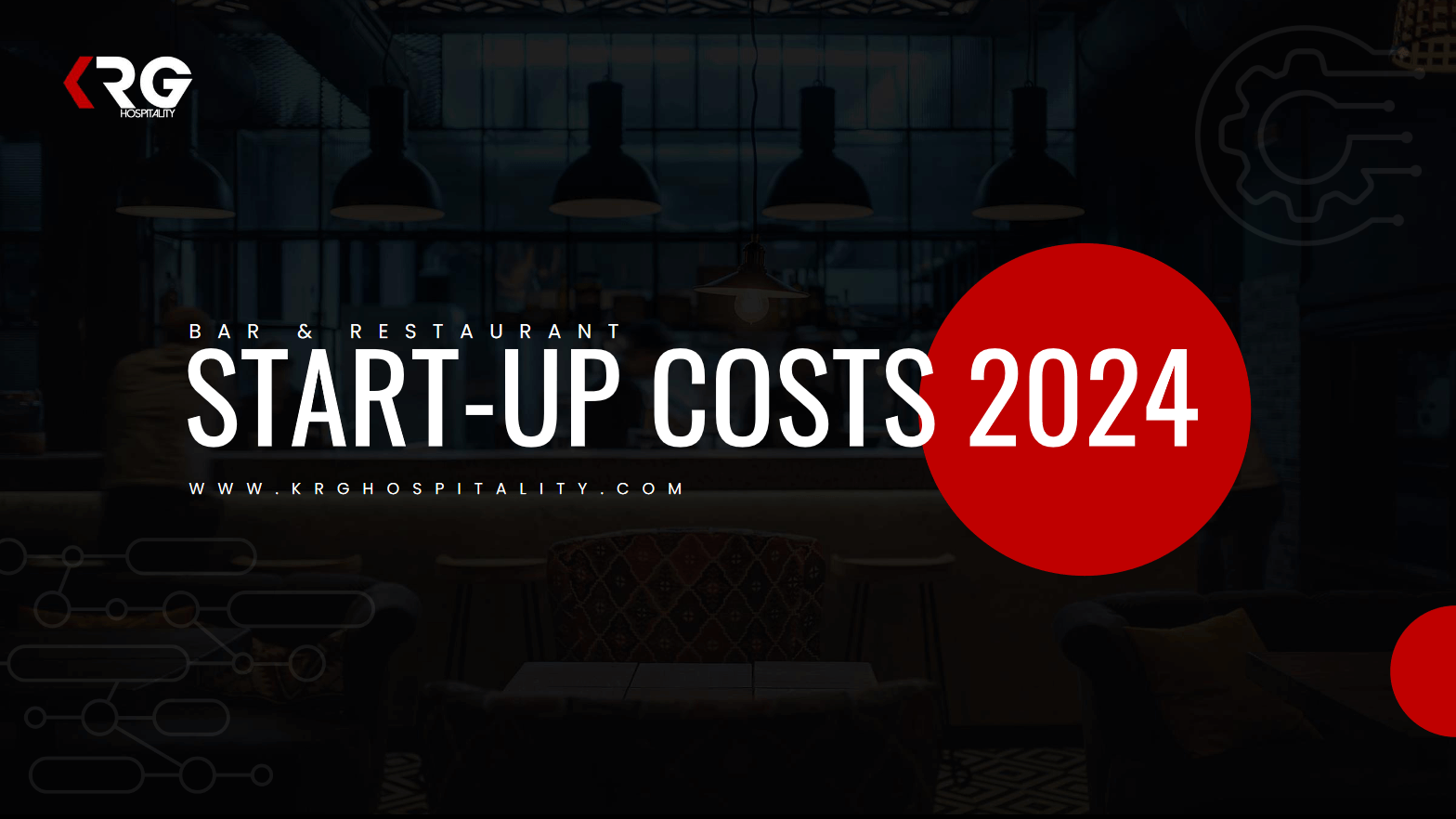
2024 KRG Hospitality Start-up Costs Guide

KRG HOSPITALITY RELEASES SIXTH ANNUAL RESTAURANT START-UP COST GUIDE

Toronto-based hospitality industry consulting firm with offices in key markets throughout Canada and the United States of America unveils their latest restaurant cost guide and interactive hospitality calculator.

December 21, 2024 (TORONTO)—Today, KRG Hospitality releases their 2024 Bar & Restaurant Start-up Costs Guide, which is free to download. The Toronto-based consulting firm specializes in startup restaurant and bar projects along with boutique hotels, experiential concepts, and entertainment venues. KRG Hospitality’s American headquarters is located in Las Vegas, Nevada.

For the past six years KRG has researched, reviewed, and published the annual start-up cost guide, one of the industry’s leading resources dedicated to restaurant project costing.

And each year this informative and transparent guide is used as a trusted budgeting tool by developers, lenders, contractors, consultants, and aspiring restaurateurs. The guide is founded upon KRG Hospitality’s proprietary database of previous project costs, which includes project data from restaurants, bars, and cafes developed over the past 24 months.

Further, this annual KRG Hospitality guide also includes the interactive KRG Hospitality Calculator, which is updated for 2024.

The costs to start a restaurant have been on a steady rise over the past six years. Major drivers are increases in inflation, interest, labor, construction, and equipment. Of course, there are also the unique materials required to deliver a scalable, sustainable, memorable, profitable, and consistent on-premise, off-premise, or hybrid-style concept.

Drawing upon this comprehensive guide, an industry-leading expert has analyzed the information and provided a succinct and user-friendly summary of the findings for each major start-up category. This isn’t simply a couple of pages identifying a few costs. Rather, the sixth annual guide is a deep dive that provides real insight into what to expect in 2024.

The guide is available now as a free download via this link.

About KRG Hospitality

KRG Hospitality is a storied and respected agency with proven success over the past decade, delivering exceptional and award-winning concepts throughout a variety of markets found within Canada, the United States, and abroad since 2009. Specializing in startups, KRG is known for originality and innovation, rejecting cookie-cutter approaches to client projects. The agency provides clients with a clear framework tailored to their specific projects, helping to realize their vision for a scalable, sustainable, profitable, memorable, and consistent business. Learn more at KRGHospitality.com. Connect with KRG Hospitality and the Bar Hacks podcast on social: KRG Twitter, Bar Hacks Twitter, KRG Media Twitter, KRG LinkedIn.

Disclaimer

While using this guide helps develop a rough preliminary financial and strategic milestone plan, it is strongly recommended that you seek professional expert advice to provide you with a more precise, project specific estimate as each concept and market will be slightly different. KRG Hospitality Inc. is not responsible for any project that is not currently under contract within the company.

Image: KRG Hospitality

KRG Hospitality Start-Up Restaurant Bar Hotel Consulting Consultant Solutions Plans Services

by David Klemt David Klemt No Comments

Hospitality Mindset: Bar Edition

Hospitality Mindset: Bar Edition

by Jennifer Radkey

Stylish bar and bar stools

Messages about the importance of mindset flood our social media feeds but what exactly does the word mean, and why is it so important?

You’re told you need to have a growth mindset to be successful. You must have a positive mindset for a happy and fulfilling life. Both are true statements, but what do they mean?

Simply stated, mindset is an individual’s usual attitude or mental state. It reflects someone’s way of thinking and motivates their actions. So, why is it important to be aware of your mindset?

Well, if your mindset is your usual attitude or how you show up in your life each and every day, it will influence all parts of your life. Your thoughts about yourself, others, your business, your opportunities, and your challenges are all influenced by your mindset. Your mindset can either hinder or promote your overall well-being and success in life.

The interesting thing about mindset is that it can change—if you want it to. Your mindset can also be influenced by your environment and those around you. These facts led me to question if the different sectors of the hospitality industry face unique mindset challenges.

To find answers and gain further insight, I decided to turn to our team at KRG Hospitality for their thoughts. In turn, I’ve begun a series of hospitality mindset articles.

In this first article I’ll explore the bar industry, with thoughts from master mixologist Jared Boller. Follow the series as I explore mindset in restaurants, hotels, and start-up operations.

Let’s dive in!

The Bar Industry

In the US, the bar and nightclub market is valued at an estimated $36 billion for 2023. The industry as a whole employs close to 600,000 people.

With businesses built off drinking culture, what unique challenges do operators and those working inside these establishments face?

Successful Operators

Operating a successful bar takes a certain mindset. You need to be flexible, open-minded to growth strategies, mindful of your market and competition, and compassionate to the needs of your team.

Interested in what makes a bar operator stand above their competition, I asked Jared what makes a bar operator successful.

“First and foremost, I think that every bar owner needs to understand their product and how they are going to differentiate themselves from the competition. Ultimately, it is up to the owner to realize what their goal is in owning a bar. It requires digging deep into themselves to ask what they want out of their business.

“Are you looking for a way to make extra cash? Are you looking to provide a local hangout for you and your friends? Do you want to win awards and have a buzzworthy place everyone wants to visit? This is a tough business that requires a lot of time and energy, and thick skin.

“Be organized, clean, a good leader, efficient, and provide a home that your employees want to come to. Try to know all aspects of the business: financials, technology, culinary, bar, service, management, etc.”

Operator Challenges

Operators need a resilient, positive, growth mindset to be successful. It’s the only path forward to running a bar they are both proud to work in and enjoy working at every day.

This is a mindset that will need tending to as there are challenges that will affect your daily thoughts, beliefs, and attitudes.

When asked what specific challenges bar operators face that may affect their mindset, Jared shared his thoughts.

Labor Shortage

Dealing with labor shortages as an operator can create feelings of frustration, stress, and resentment.

“It’s getting increasingly difficult to gain a competitive edge because of numerous factors, one of the biggest being labor shortage. It’s not a labor shortage where there’s not enough jobs, it’s an unwillingness to work and/or want to work in the hospitality industry because, quite frankly, ‘It’s tough.’

“I think that with inflation happening in the world, as well as the majority of establishments working off the Tips Blueprint, it doesn’t allow people to know what they’re making day in and day out. People are turning to different jobs or jobs outside of hospitality because they don’t want to be on their feet everyday working long hours and not knowing their future.”

Competition

If a bar operator isn’t careful they can very easily become lost in the game of comparison.

Yes, it is important to know what your competition is up to, but if the constant comparison leads to negative feelings about you, your team, and your establishment without any action for improvement, this is a surefire way to hurt your mindset and chances of success.

If you truly want to be competitive without getting lost in the comparison game, focus on your team.

“The time of pumping out commercial food and drink is gone, and legitimate professionals who are educated and professionally trained are few and far between. Additionally, there’s even a creative youth movement with ambition, but they have not been classically trained in their respective outlets.

“It’s difficult to be competitive without education, training, and bringing together a group that can keep an establishment afloat with similar perspectives. It takes an army to be competitive with everyone speaking the same language, understanding the establishment inside and out, and able to execute night in and night out with the same integrity.”

Social Media/Online Reviews

As a bar operator, you rely on your reputation within your community for the success of your business. This also holds true for your online community.

How you react and your thoughts about online reviews can affect your mindset. A negative online review can very easily incite feelings of anger, disappointment, and blame.

“We live in a world driven by star ratings, thumbs up, and everyday critics writing novels about how there was ‘too much ice in my drink,'” says Jared. “If you read too many negative comments, that could affect one’s mental health and hurt confidence.”

Coming up with a strategy for dealing with negative social media posts/reviews is critical for keeping a clear perspective and maintaining a positive mindset.

Employee Challenges

Your team experiences their own unique set of challenges that can effect their well-being and mindset as well.

Being aware of these challenges is important if you are hoping to create a culture of respect, collaboration, and trust.

When asked what specific challenges bar staff face, Jared had some insights.

Long Hours/Physicality

Bars are often open late into the night, with bartenders in particular being front and center at all times. This can lead to both physical and mental exhaustion if appropriate breaks aren’t provided.

“The physicality alone will eventually take a toll on the employee who is shaking drinks for eight to ten hours a day, working doubles, having minimal break times, and standing on their feet for the same amount of hours. On top of that, you are constantly on stage and typically in a vantage point of someone either sitting across from you at the bar or observing from a table. You are constantly having to engage, take care of, and put on a happy face even if you might be dealing with something in your personal life. Not being able to take a step away or breathe can make you feel claustrophobic or trapped at times.”

Job Security/Growth

If you are working in an unsupportive environment that does not feel safe and makes you feel as though your future with the business is unsure, it can create feelings of discomfort, resentment, anger, worry, and even fear.

Bar employees need to feel respected, heard, and valued.

“Every employee—pending they do the job well—should feel safe in their workspace. I also believe that employees should be able to grow in their workspace if they have the desire to learn and/or be promoted in the future.

“I think that if an employee does the work, and has mastered the role, they should be considered for advancement. Employees in this industry need to identify what speaks to their personal interests and try to master that. I personally wanted to master the craft of bartending so that’s the path I took. Employees should never be scared if they’re interested in growing with the brand.”

Harmful Beliefs in the Bar Industry

How you feel about the people you work with and/or work for can have major impacts on your overall mindset.

If your daily thoughts regarding your team are negative, it suddenly becomes very challenging to create a successful bar with a team who shows up wanting to do their best each and every day.

The bar industry has a few specific common harmful beliefs that are prevalent in many establishments. Being aware of these and knowing what to do with these beliefs to change them is critical to creating a more positive work environment.

Paranoia

When I asked Jared what one of the most prevalent harmful beliefs operators have about their team, he discussed the belief that everyone is taking advantage of you. Many owners believe that everyone is stealing from them.

“In all of my years working in bars and restaurants there was always this sense that employees would be taking money from them or pouring ‘free products’ off to their friends/family. Truth be told, it happens, but I think that employees wouldn’t do that if they were offered a simple ‘comp tab.’

“I’m not saying that offering a free drink here and there to a friend is right, but I think for an owner to say, ‘Buy your friends a drink every now and then to show you appreciate them coming here,’ is a nice gesture.

“I’ve worked in places where owners are transparent, honest, and trustworthy with their employees, and the employees are happy so they don’t go behind the owner’s back. I think ownership needs to be realistic and give back to their employees and visitors every now and then, because that will boost morale.”

Feeling Unappreciated

When it came to harmful beliefs that staff have about ownership, Jared shared that employees feel that ownership does not care about them. While in some cases these beliefs may unfortunately be valid, in many cases owners may just be legitimately unaware that there are issues or concerns that need to be addressed.

“A lot of hospitality employees don’t feel appreciated by their bosses. Employees often feel like they can’t have a voice. Sometimes owners are so tied up in everything else to maintain the business and they won’t recognize you unless you speak up and engage in conversation over frustrations. Staff members need to not overstep their boundaries, but if there is something that could potentially move the business forward, express your concern.

“I’ve always had a good relationship with owners because I try to throw out ideas they don’t see, and come up with a potential solution to an issue. Owners don’t know everything and a lot of time are caught up in the day-to-day business. You were hired there for a reason: because they trust you to do a good job.”

Moving Forward

Understanding the importance of cultivating and maintaining positive, growth mindsets will allow you to move forward with your team towards shared goals and dreams.

Nobody wants to hate where they work, and with commitment to tackling challenges and harmful beliefs, this won’t be likely to happen.

So, what positive changes have been incurring in the industry as a whole?

“Simple things. Team-building events, like a picnic, an annual dinner to celebrate the staff, a field trip to a farm, quick getaways, etc. When the ownership/management team gives back to their team they end up enjoying coming to their second home everyday.

“Ensuring there are appropriate breaks during the long days, and potentially offering a ‘family meal’ to boost energy and give them food they might not be able to afford at home. Promoting ‘in-house’ competitions, such as the person who has the best wine sales at the end of the week gets a free bottle of wine. Leveraging different companies—spirits, wine, food purveyors—to do in-house demos and educationals. Allowing the staff to be hands on and learn something that will provide value to their personal growth.

“With less and less people choosing to take the hospitality path, it creates a lack of talent or people willing to roll up their sleeves and do the work. That’s why it’s important that the venue gives back every once and awhile.”

Room for Improvement

Although we’re starting to see more awareness of the well-being of those working in this industry, there are still many changes that need to happen.

“There needs to be sustainable and livable wages established universally amongst staff. With a world of inflation and prices on everything sky-rocketing, people are not going to be able to work in this industry and survive.

“There needs to be more meetings amongst staff to ensure that everyone has a voice and that everyone is on the same page when it comes to their jobs. There are a lot of mental health issues to this day because the hospitality industry is a crazy, tangled-up web when there is no guidance and good leadership. Our industry still has substance abuse issues, with people self-medicating with drugs and alcohol to help numb their pain, in addition to consuming too much caffeine to stay afloat.

“There needs to be more support and coaching programs available to new operators—similar to what we offer through KRG—to ensure they understand what they are signing up for. Education, leadership, guidance, inspiration, and providing a great work/life balance need to be a primary focus. Out with the 70-hour work week—back to a sustainable work timetable.”

Final Thoughts

Winning mindsets create winning concepts and winning teams. Having a positive mindset doesn’t mean that you don’t experience challenges or that you don’t experience any negative feelings. We are all human; of course we are going to have negative thoughts now and again.

It’s what you choose to do with those thoughts. If you allow them to become your predominant attitude, that will determine your overall mindset. The bar industry may have it’s challenges but it is also a place of excitement, entertainment, and creativity, a hub for social interaction with a never-ending hum of humanity.

I’ll leave you with a few last words of wisdom from KRG’s master mixologist Jared Boller.

“Understand that every day is going to be different than the previous, and you have to constantly adapt to what’s being thrown at you. If you’re not adaptable and can’t bend to spontaneous requests you might find yourself going into a dark space. Know that everyone is different, with unique upbringings and alternative perspectives on life. You are not always right, nor are they.

“Establish your rules in this bar environment. Educate yourself so you know more than everyone else in the room about your business and your craft, and open your mind to learning new things. Don’t be a know-it-all because that’s just downright annoying.

“And, finally, my rules that I live by behind a bar: ‘If someone wants to speak religion, decline. If someone wants to get your beliefs on politics, decline. And when a woman asks you their age, don’t answer, or politely decline.’ Everything else is an open conversation.”

Cheers to personal and professional well-being!

Image: Rachel Claire on Pexels
KRG Hospitality Mindset Coaching

by David Klemt David Klemt No Comments

5 Books to Read this Month: June 2023

5 Books to Read this Month: June 2023

by David Klemt

Flipping through an open book

Our engaging and informative June book selections will take your front and back of house to the next level, and help develop your leadership skills.

To review the book recommendations from May 2023, click here.

Let’s jump in!

Start with Why: How Great Leaders Inspire Everyone to Take Action

This book written by Simon Sinek is considered one of the best books ever written about leadership. “Start with Why” isn’t just a clever title, it’s an important beginning point for all entrepreneurs and leaders.

Further, this book introduces the reader to what Sinek calls the Golden Circle. True leaders don’t micromanage. They don’t just delegate. Effective leaders inspire their teams, providing more motivation than, “Do what I say.” Grab this best seller today: click here.

The Sioux Chef’s Indigenous Kitchen

We saw this book while we were walking the floor in Chicago at the 2023 National Restaurant Association Show. I snapped a photo, looked up the book, and not only has it been named the Best Cookbook of 2017 by several publications, it’s also the 2018 James Beard Award winner for Best American Cookbook.

From Amazon: “Here is real food—our indigenous American fruits and vegetables, the wild and foraged ingredients, game and fish. Locally sourced, seasonal, “clean” ingredients and nose-to-tail cooking are nothing new to Sean Sherman, the Oglala Lakota chef and founder of The Sioux Chef. In his breakout book, The Sioux Chef’s Indigenous Kitchen, Sherman shares his approach to creating boldly seasoned foods that are vibrant, healthful, at once elegant and easy.”

The Maison Premiere Almanac

If you’ve been the Maison Premiere in Brooklyn, you know it’s a unique experience. That’s saying a lot given the level of the bars, restaurants, and hotels in that iconic borough. One of the standout features is an “absinthe drip” that was inspired by the legendary New Orleans saloon Old Absinthe House.

From Amazon: “As captivating as the bar itself, The Maison Premiere Almanac is both a visual delight—drawing on photography, illustration, and graphic design—and a detailed guide to the rarefied subjects that make Maison Premiere unique, including deep explorations into the art of the cocktail and cutting-edge bartending techniques and equipment.

“There are also primers on absinthe (a Maison specialty) and recipes for highly refined cocktails, including martinis, toddys, punches, and mint juleps. Tutorials on oysters include how to confidently select and prepare them at home and how to eat them with style. And while packed with curious information and useful knowledge on cocktails and bartending for both enthusiastic beginner bartenders and seasoned cocktail lovers, the Almanac is also a visually arresting objet d’art that will make a perfect addition to any bookshelf.” For all of this and 90 recipes, click here.

Tropical Standard: Cocktail Techniques & Reinvented Recipes

This book is the result of a collaboration between bartender Garret Richard and writer Ben Schaffer. As every great bartender knows, producing great drinks comes down to technique and understanding ratios.

From Amazon: “Crucial techniques are clearly detailed, including how to balance syrups, flash blend, handle carbonation, tackle tinctures, cordialize citrus, and power up juice with acid adjusting. Over the course of 84 recipes, vintage cocktails like the Rum Barrel, Mai Tai, and Ray’s Mistake are reimagined just as future classics are revealed, including the Beachcomber Negroni, Winter in L.A., and Field of Mars. These drinks honor founding legends such as Donn Beach, Trader Vic, and Harry Yee as well as modern icons, including Dale DeGroff, Audrey Saunders, Julie Reiner, and Dave Arnold.”

Grab this book today!

The Seasonal Cocktail

All the data support the statement that today’s guests are choosing to drink better. Better spirits, better ingredients, better drinks.

The Seasonal Cocktail is the perfect cocktail book for addressing this change in consumer behavior. Author Jason Hedges is the mastermind behind several of the world’s best cocktail programs, such as L’Ecole and Gotham. F. Paul Pacult has been called “the J.D. Power of liquor,” which is an incredible endorsement.

Together, these two beverage powerhouses share what it takes to build sophisticated yet simple seasonal drinks. Timely, given that we’re now hitting the summer months. Click here to grab this book now.

Image: Mikołaj on Unsplash

KRG Hospitality business plan. Restaurant. Bar. Cafe. Lounge. Hotel. Resort.

by David Klemt David Klemt No Comments

Consultant Versus Coach

Consultant vs. Coach: Similarities and Differences

by Jennifer Radkey

Double arrow, street ends sign

At some point in your journey as a business owner it’s inevitable that you’ll come up against a challenge that you struggle to overcome on your own; you may need to reach out for advice or guidance.

There are countless reasons why you may seek an expert’s help. Perhaps you’ve come up against a roadblock trying to reach a goal. Maybe you’re unexpectedly forced into a major transition. You may decide you’re ready to take your business to the next level but are unsure how to proceed.

The situation you find yourself in could be as big as the opening of a new restaurant or bar, or as vague as a general sense of something not being “right.”

Whatever the reason may be, you’ve exhausted your own pool of resources and are ready to seek outside help. So, who do you turn to?

Most likely you’ll be looking to hire either a consultant or a coach. Of course, this begs the question: Which do you choose?

I’m both the vice president of KRG Hospitality and a certified life coach. My husband Doug Radkey is the president of KRG Hospitality and our agency’s lead consultant. “Do I need a consultant or coach” is a question people ask of us quite often.

The answer is simple once you understand the similarities and differences between the two.

Similarities

Coaches and consultants are both third parties who provide an outsider’s clarity while maintaining an unbiased point of view.

They’re both knowledgeable and have their own unique approaches and expertise. Coaches and consultants come with the intention of helping you achieve your goals. While the majority of coaching and consulting is done one-on-one, team consulting and coaching are also options.

The differences between coaching and consulting can be found in the approaches used to help you achieve your goals.

Differences

The easiest way to learn the differences between a coach and a consultant is to take a closer look at how each one approaches how they help you. It’s an understanding of these differences that provide the clarity needed for you to choose the best solution.

Consultants

Consultants are industry-specific experts. When presented with a challenge you want to overcome or a goal you want to achieve, a consultant finds the solution using their knowledge and experience. They also diagnose any problems that are evident in your business and then make recommendations to correct them.

A consultant is someone you can turn to for technical and professional advice.

Once the consultant has determined the root of the problem or determined the best path forward to achieve your goal, the answers will be provided to you. And along with the answers come the steps necessary to solve the problem or reach the goal. You’ll be given a clear, detailed plan.

Consultants listen carefully to what’s going on. They ask specific questions, watch how your team interacts with your guests, and study your steps of service. Additionally, consultants analyze data and conduct research, and then communicate their findings clearly with you. Again, consultants give you the tools you need to execute a plan—including processes and proven methods—to achieve success.

If you’re in need of specific industry advice and expertise, a consultant is who you need to hire.

Coaches

Coaches are experts in placing the power in your hands to discover your own solutions and answers. You hire a coach to discover yourself, inspire confidence, explore possibilities, and find your own clarity. Entrepreneurs turn to coaches to help them transform into great leaders.

Through sincere and thoughtful inquiry, coaches will pull answers out of you that you didn’t know that you already had. They’ll also help you become aware of self-imposed limitations so you can overcome them. Rather than just giving you a plan, coaches help you develop your own strategies for uncovering your truth, and then help you understand how to move forward.

Coaches are sounding boards for discussing both personal and professional issues, providing a safe, judgment-free place for you to be heard. They’re interested in long-term results and the overall well-being of their client.

If you’re looking for overall growth and a better understanding of how you can reach your own goals and potential, a coach is who you need to hire.

Hiring a consultant or a coach is a positive step towards achieving both short-term and long-term goals. Knowing the difference between the two now empowers you to choose the best person to help you where you want to go.

Cheers to personal and professional growth!

Image: Robert Linder on Unsplash

KRG Hospitality Mindset Coaching, 2023 Icon

by David Klemt David Klemt No Comments

5 Books to Read this Month: March 2023

5 Books to Read this Month: March 2023

by David Klemt

Flipping through an open book

Our engaging and informative March book selections will help you hone your leadership, entrepreneurial, and operational skills to dial in your business.

To review the book recommendations from February 2023, click here.

Let’s jump in!

Whiskey Women: The Untold Story of How Women Saved Bourbon, Scotch, and Irish Whiskey

It shouldn’t come as a surprise that women have been involved with and influencing alcohol for centuries. Still, women’s contributions to the spirits, beer, and wine we imbibe are often overlooked. Fred Minnick’s Whiskey Women seeks to change that.

From Amazon: “Whiskey Women tells the tales of the women who created the industry, from Mesopotamia’s first beer brewers and distillers to America’s rough-and-tough Prohibition bootleggers. Women have long distilled, marketed, and owned significant shares in spirits companies, including Bushmills, Johnnie Walker, and Maker’s Mark. Williamson is one of many influential women who greatly influenced Scotch, bourbon, and Irish whiskey. Until now their stories have remained untold.”

Unvarnished: A Gimlet-eyed Look at Life Behind the Bar

Even now it seems like people don’t view the service industry as offering “real” careers. Indeed, some restaurant and bar owners are asked when their “real” plan is because it can’t possibly be running a hospitality business.

In Unvarnished, Eric Alperin, owner, manager and designer of the Varnish in LA, and author Deborah Stoll reject that idea. This fascinating book offers lessons learned from Sasha Petraske, Alperin’s partner and mentor; the many tiny details bar owners will turn over and over in their heads before finalizing plans; reasons to not date a bartender; and much, much more.

There are also 100 recipes that Alperin required hopeful bartenders to know before they could land a job at the Varnish.

Heads in Beds: A Reckless Memoir of Hotels, Hustles, and So-Called Hospitality

Last month we featured In the Weeds. In January, we recommended Your Table is Ready. Both books are similar to the amazing Kitchen Confidential, a book all hospitality professionals should read.

Heads in Beds is essentially Kitchen Confidential for those in the hotel business. The Amazon listing describes this book as “a funny, authentic, and irreverent chronicle of the highs and lows of hotel life, told by a keenly observant insider who’s seen it all. Prepare to be amused, shocked, and amazed as he spills the unwritten code of the bellhops, the antics that go on in the valet parking garage, the housekeeping department’s dirty little secrets—not to mention the shameless activities of the guests, who are rarely on their best behavior.”

There are also emotional stories and revelations about the darker side of the industry we all need to address.

Impactful Influence for Modern Leaders: How to Use the Power of Influence to Lead Other People Toward Success

None of us can really become a true leader without the ability to influence those who work for us. That means, however, that we must continually develop ourselves. Influencing those around us to perform at their best isn’t as simple as giving orders, of course.

And that’s where Impactful Influence for Modern Leaders comes in. This book will help you build trust with your team; mentor others effectively; learn to let go and trust your team; and much more.

Lady You Got Balls: The Gift of Being Underestimated

If you’re an entrepreneur, odds are you’ve experienced being underestimated. You’ve likely had a taste of office life and decided it wasn’t for you due to the politics and betrayals.

If that’s you, you have something in common with Patricia Stroberg, author of Lady You Got Balls. In this book, you’ll see why being an underestimated underdog can be to your advantage. Lady You Got Balls “is for anyone wanting to run a successful company and live a life of purpose when the challenges seem too overwhelming to overcome.”

Image: Mikołaj on Unsplash

KRG Hospitality Complete Bar Menu Audit

by David Klemt David Klemt No Comments

5 Books to Read this Month: June 2022

5 Books to Read this Month: June 2022

by David Klemt


Flipping through an open book

These engaging and informative book selections will help you develop next-level food and beverage skills, and motivate you throughout June, 2022.

To review May’s book recommendations, click here.

Let’s jump in!

Doctors and Distillers

As the historians in our industry have known for a while, cocktails were once considered medicinal. Of course, in some ways that’s still the case.

Industry author, speaker, and educator Camper English shows us how medicine and alcohol have long been connected throughout human history in Doctors and Distillers. Have you head of using wine as a dewormer? How about treating wounds with beer? Would you ever consider using spirits to heal a snakebite? Well, humans have done those things and more with booze. Pre-order this book today!

A Bartender’s Guide to the World

I’m just going to be blunt here: Lauren Mote probably knows more about spirits, liqueurs, and cocktails than you. That’s not a slam—she loves sharing her knowledge and helping people improve their craft and business.

Available for pre-order now for an October launch, A Bartender’s Guide to the World shares not only Mote’s journeys around the world but also more than 75 cocktail recipes. The book’s recipes are organized by their base ingredient. Additionally, there’s an entire chapter just addressing alcohol-free drinks.

The Portugal Cookbook

Chef Leandro Carreira shares well over 500 recipes in The Portugal Cookbook. These dishes range from traditional Portuguese cuisine to modern recipes.

Every region throughout Portugal is represented in this informative and mouth-watering book, including the Duoro Valley and Algarve coast. Portugal is known as a global destination for foodies and this book will definitely help you add some delicious, on-trend recipes to your menu.

Hacking the New Normal: Hitting the Reset Button on the Hospitality Industry

The world around us has changed. The food & beverage industry has changed. The hospitality industry has changed. But will some ways of life change for the better? In Doug Radkey’s second book, Hacking the New Normal, he asks the following: “Do you think you can hit the reset button on your approach to business? Do you think you can help hit the reset button on this industry? I have made the decision to do so. The question remains, have you?”

Trust and Inspire: How Truly Great Leaders Unleash Greatness in Others

Stephen M.R. Covey, author of The Speed of Trust, addresses the leadership crisis we face today. As the author of Trust and Inspire points out, the world is changing but leadership styles remain the same. That simply won’t work moving forward. It’s crucial we change how we view leadership, and develop new leadership styles and strategies if we’re going to succeed from now on.

Image: Mikołaj on Unsplash

by David Klemt David Klemt No Comments

5 Books to Read this Month: May 2022

5 Books to Read this Month: May 2022

by David Klemt

Flipping through an open book

These engaging and informative book selections will help you develop next-level beverage skills and motivate you throughout May, 2022.

To review April’s book recommendations, click here.

Let’s jump in!

Rum Rebels: A Celebration of Women Revolutionizing the Spirits Industry

Written by authors Martyna Halas and René van Hoven, Rum Rebels raises a glass to women in the rum world. Readers will learn the inspiring stories of Lorena Vasquez from Zacapa, Joy Spence of Appleton, and more women driving rum forward and shaping this iconic spirit’s flavors, aromas, and textures.

In addition, this book serves as a masterclass in rum production, from tasting to aging. And since that’s enough for these incredible and ambitious authors, Rum Rebels also contains rum cocktail recipes.

Drink Lightly: A Lighter Take on Serious Cocktails

Operators, bar managers, and bartenders should see value in the driving ethos behind this cocktail book. Drink Lightly, authored by Nitecap bartender Natasha David, pairs precision drink-building techniques with a relaxed drinking experience.

Drinking lightly doesn’t mean sipping drinks bereft of complexity and depth. Along with 100 recipes, readers will enjoy a foreword by Alex Day of Proprietors LLC, whose concepts include Death & Co. and Nitecap.

Call Me Chef, Dammit!: A Veteran’s Journey from the Rural South to the White House

Hospitality is rooted in sacrifice and a commitment to serving others. Chef Andre Rush and his story embody service. Call Me Chef, Dammit! is the inspiring story of Chef Rush.

The storied chef has led an incredible life which includes a career in the US Army that spanned 24 years, advocating for military personnel and veterans, and winning multiple awards as a chef. Oh, and Chef Rush and his 24-inch biceps have also worked in the White House for four US presidents.

While there are no recipes in this book, there is one hell of an inspiring story in these pages.

The New Kindred Spirits: Over 2,000 All-New Reviews of Whiskeys, Brandies, Liqueurs, Gins, Vodkas, Tequilas, Mezcal & Rums from F. Paul Pacult’s Spirit Journal

Anyone looking for a spirits bible need search no further. F. Paul Pacult’s The New Kindred Spirits includes over 2,400 in-depth reviews spanning a wide range of spirits. This tome evaluates a massive number of brandies, gins, liqueurs, rums, tequilas, vodkas, and whiskeys.

This all-encompassing compilation of spirit evaluations doesn’t just cover the usual suspects. The New Kindred Spirits also takes a deep dive into the craft side of the beverage industry.

Drinking & Knowing Things

Author and certified sommelier Michael Amon would like to know a couple things from those considering picking up Drinking & Knowing Things. “Do you want to uncork a bottle of whoop-ass on every winedouche and uppity sommelier?” And, “are you too lazy to spend any time whatsoever learning things?”

Anyone who answered “yes” to either or both questions needs this book. Amon says that readers who commit to spending five minutes reading the weekly wine recommendations found in Drinking & Knowing Things will give sommeliers a run for their wine-knowledge money. Wine intimidation? Not after reading this book.

Image: Mikołaj on Unsplash

Top