Food menu

by David Klemt David Klemt No Comments

Top-performing Menu Items in the US

Top-performing Menu Items in the US (So Far)

by David Klemt
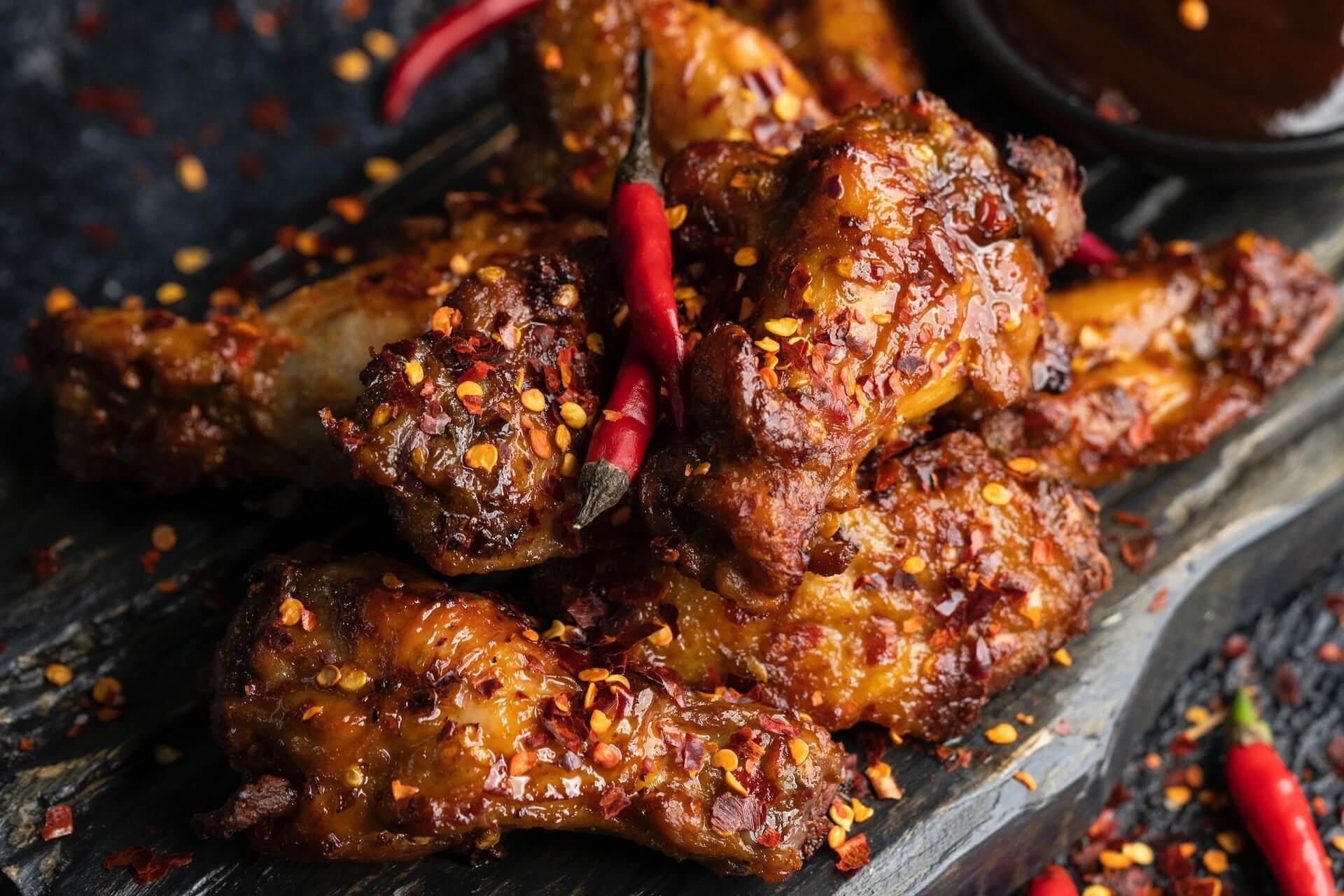
Barbecue chicken wings, chili peppers, and chili flakes

Thanks to a recent mid-year report from F&B intelligence platform Datassential, we now know the top-performing menu items in the US.

For the low, low price of filling out a handful of fields, you can download a copy of Datassential’s “Foodbytes: 2023 Midyear Trend Report” for yourself.

There’s plenty of useful data packed into this short report. You may find some of the top food items a bit surprising.

But First…

Datassential does more than just list the top mid-year menu performers in their latest report. There are also a couple of interesting datapoints for operators to consider.

The first piece of information is an alarming statistic: 54 percent of consumers are of the belief that “tipping culture has gotten out of control.”

As we’ve reported earlier, it’s likely that a major driver of “tip fatigue” comes from retail. The expectation for consumers to tip at a restaurant, bar or nightclub is ingrained deeply in American culture.

However, consumers throughout America are being prompted to tip after just about every transaction they’re attempting to complete. In fact, it’s not just retail that has been encouraging (in some cases, guilting) people to tip. Some contractors are also adding tip lines when handing over tablets to clients so they can pay their invoices.

One result is that servers and bartenders are reporting lower tips; guests are so over tipping that they’re pushing back against the practice in venues where they’d traditionally have no problem doing so.

Of course, tip fatigue isn’t the only reason consumers are pushing back against tipping. Many people feel that operators should increase what they pay staff. Indeed, some people feel that operators are asking them to subsidize their employee pay. Whether they’d be happy to pay higher prices remains to be seen.

Fads Aren’t Bad?

Whenever we cover trends or discuss them with clients, we caution against chasing too many (or the “wrong” trends). And fads? It can be even riskier to hop on the bandwagon of something that may never even reach the trend stage of its lifecycle.

However, likely due to the ubiquity of TikTok, consumers expect restaurants to embrace fads. According to Datassential, 67 percent of consumers overall “want to see more fads at restaurants and retail.”

That number jumps to 74 percent when focusing on Millennials and Gen Z.

So, while we still caution operators about jumping on fads (or “micro trends”) and trends, that doesn’t mean be too cautious. If a fad or trend works with your brand and won’t cost much to feature, at least give it consideration.

Not sure you’re great at identifying fads that will work for your business? Ask your staff which fads and trends are hot at the moment.

Speaking of Hot…

Alright, let’s take a look at the F&B items Datassential identifies as popular at the midway point of 2023.

Again, I encourage you to download the report in its entirety. You can do just that by clicking here.

But for those who want instant gratification, check out these menu items:

  • Super Duper: Let’s kick things off with the hottest chain LTO, the Denny’s Super Slam. Per Datassential, restaurant chains have already featured in excess of 2,000 LTOs in 2023. The F&B intel agency tests them all, and the Super Slam is wearing the LTO crown at the moment.
  • Chef Chatbot: Datassential tapped ChatGPT to create a burger recipe and had Midjourney create an image for the resulting Caprese Avocado Burger. More than half of consumers surveyed—57 percent—want to try it at a restaurant.
  • Big Winner: Datassential asked consumers a simple question: Which would you rather eat for the rest of your life, a hamburger or a hot dog? A staggering 87 percent chose hamburgers, meaning just 13 percent of consumers would choose a hot dog over it’s burger buddy.
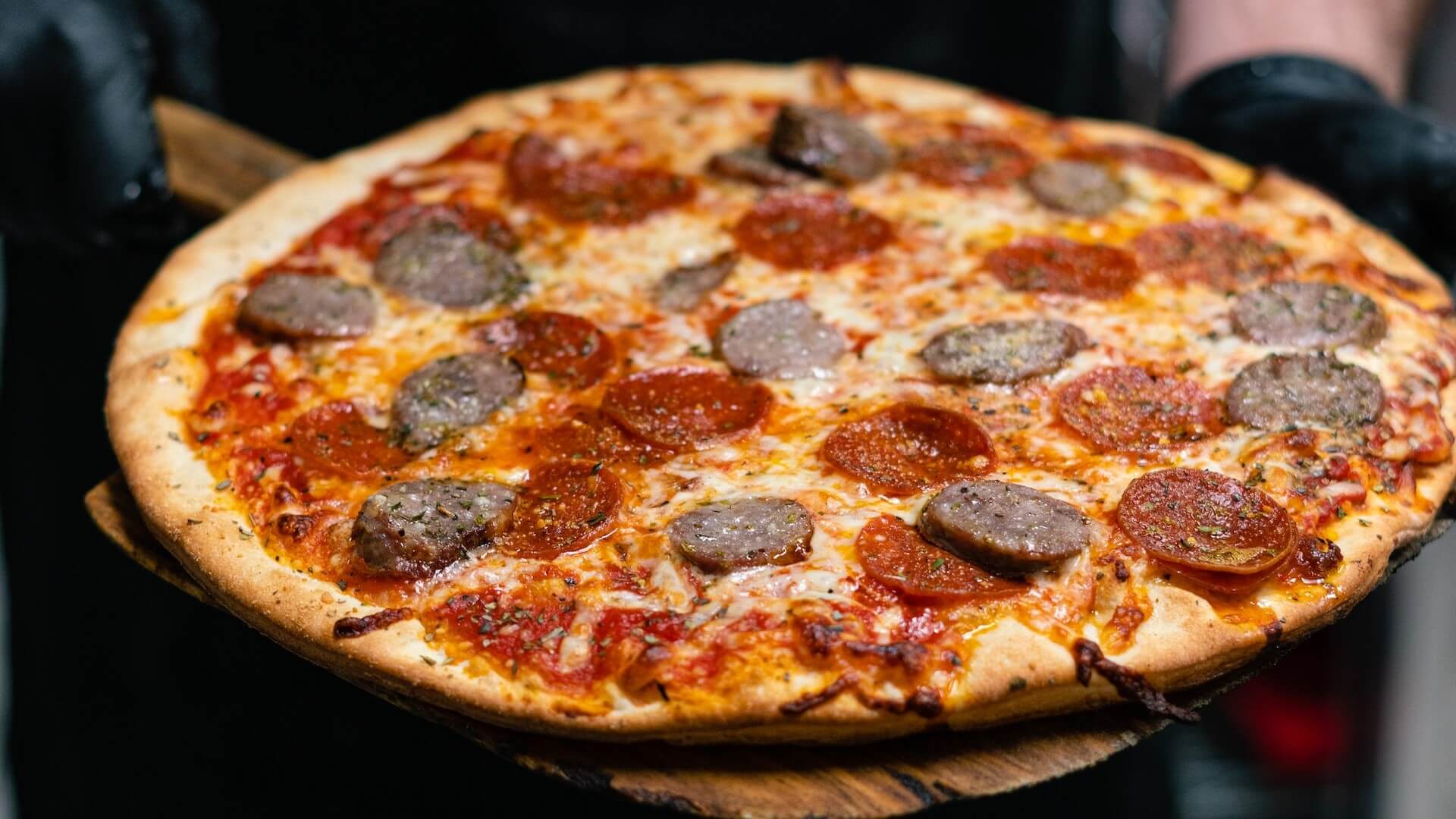
  • What a Pickle: Back in March we checked out Slice’s Slice of the Union report, and it predicted pickle pizzas would be a hot trend this year. Well, Datassential has crunched the numbers and says 40 percent of consumers are aware of this pizza style already. Looks like Slice may be proven right by the end of the year.
  • Speed Demon: Curious about the fastest-growing menu item on the US? Well, wonder no more: Datassential says it’s the barbecue chicken wing. Over the past year, they’ve grown 373 percent on menus across the States. Datassential posits the overall growth of chicken and the embracing of flavor trends like Carolina gold barbecue sauce are contributing factors.

There’s a lot to unpack here, so I’ll leave you to it. Just remember that when it comes to fads and trends, there’s a fine line between what’s hot, what’s not, and jumping on the wrong one. Good luck!

Image: Ahmed Bhutta on Pexels
KRG Hospitality Start-Up Restaurant Bar Hotel Consulting Consultant Solutions Plans Services

by David Klemt David Klemt No Comments

Should You Offer Your Guests Brunch?

Should You Offer Your Guests Brunch?

by David Klemt

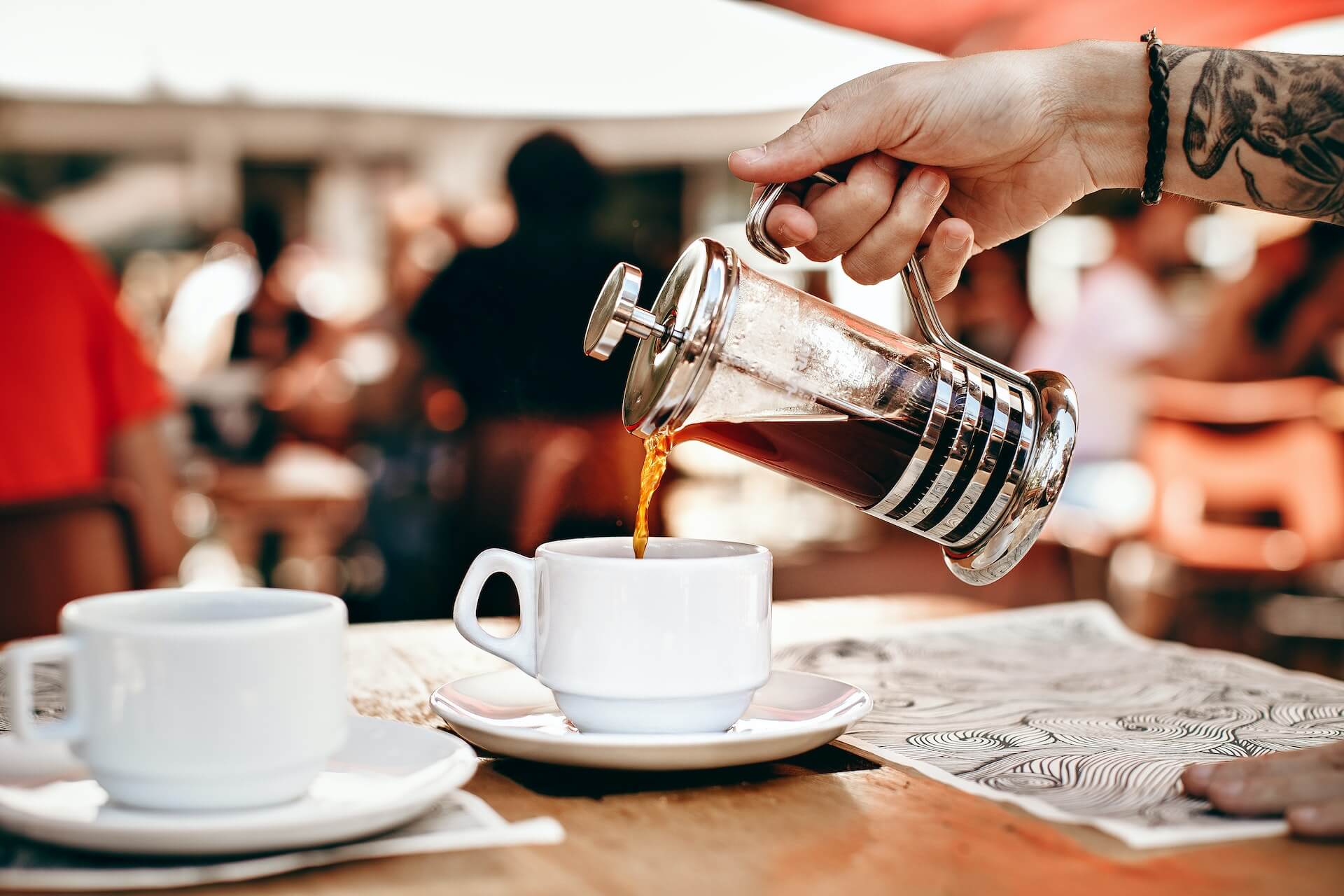
Person with tattoos pouring coffee from French press

Is brunch on its way to becoming a lucrative daypart that can grow traffic, increase revenue, boost guest engagement, and promote loyalty?

If a report from Square is anything to go off, yes.

Owing in part to changes in consumer behavior from 2019 to now, brunch appears to be a solid traffic and revenue generator. The number of people working from home is impacting daypart spending, which makes sense. Traditional office workers will often pop into a QSR or cafe for coffee and breakfast on their way in to work. And when lunch rolls around, they tend to head out to restaurants nearby for their break.

Now, the data support the belief that more people are staying home on weekdays and unleashing pent-up demand for socializing and dining out on the weekends. And apparently that demand is rather voracious, because brunch appears to be on the rise.

In 2019, just over eight percent of all dining dollars were spent on Saturdays during traditional brunch hours. That has grown to just over ten percent this year.

In terms of engagement and bringing more brand awareness, the term itself is growing on social media platforms.

Along with revisiting hours of operation, it may be wise for operators to consider offering Saturday or Sunday brunch.

Bristory

Yes, that’s a brunch-style portmanteau of “brunch” and “history.” No, I’m not proud of myself but I’m leaving it in.

The portmanteau “brunch” is believed to have first been coined by a British writer named Guy Beringer in 1895. He included the word in an article he wrote for Hunter’s Weekly. Beringer was making the case for noontime meal that combined breakfast and lunch.

In arguing for what may be the world’s first hybrid meal, Beringer wrote that, “the arguments in favor of Brunch are incontestable. In the first place it renders early rising not only unnecessary but ridiculous. You get up when the world is warm, or at least, when it is not so cold. You are, therefore, able to prolong your Saturday nights…”

The word would appear a year later in a Pennsylvanian publication called the New Oxford. More than 30 years later, brunch was on its way to becoming “a thing” in the US.

Oh, and there are arguments that an American reporter, Frank Ward O’Malley, who should credit for the word “brunch.” Those who believe this is the case say O’Malley created the portmanteau some time between 1906 and 1919. As is the case with many classic cocktails, the origin of brunch is at least somewhat hazy.

By the 1970s, the stigma that once came with brunch—that drinking publicly during the day could harm one’s reputation—began to dissipate.

Brunch by the Numbers

According to Square, brunch is appealing for several reasons.

Let’s take a look at this infamous daypart by the numbers.

  • 9.8 percent: Growth in the number of restaurants in the US offering breakfast and brunch in 2022 alone.
  • 10 percent: Amount of overall spending in restaurants on Saturdays between the hours of 8:00 AM and 1:00 PM in 2023.
  • 35 million: Number of #brunch Instagram posts, and the number is growing.
  • 4.5 billion: Number of TikTok views of posts with #brunch.
  • 71 percent: Number of Americans who wish restaurants in the US would serve breakfast items all day.

To me, the most striking statistic is that brunch spending now accounts for ten percent of all restaurant spending.

That spend is logical when we think about who tends to enjoy brunch: people with time and money to spend on a leisurely, all-day meal.

As professor Farha Ternikar, author of Brunch: A History, has said, “Brunch continues to grow anywhere there is disposable income or time.”

So, operators who are considering offering brunch for the time or investing more into brunch have some questions to answer: Who is my target audience? What’s the population density of my market? Who has disposable income and time? Should I offer brunch on Saturday, Sunday, or both days? Does brunch work for my concept? Which venues near me are already offering brunch?

Answer those questions and speak with your staff before jumping feet first into this potentially lucrative daypart.

Image: Helena Lopes on Pexels

by David Klemt David Klemt No Comments

Taco Bell Celebrates Taco Tuesday Win

Taco Bell Celebrates Taco Tuesday Win

by David Klemt

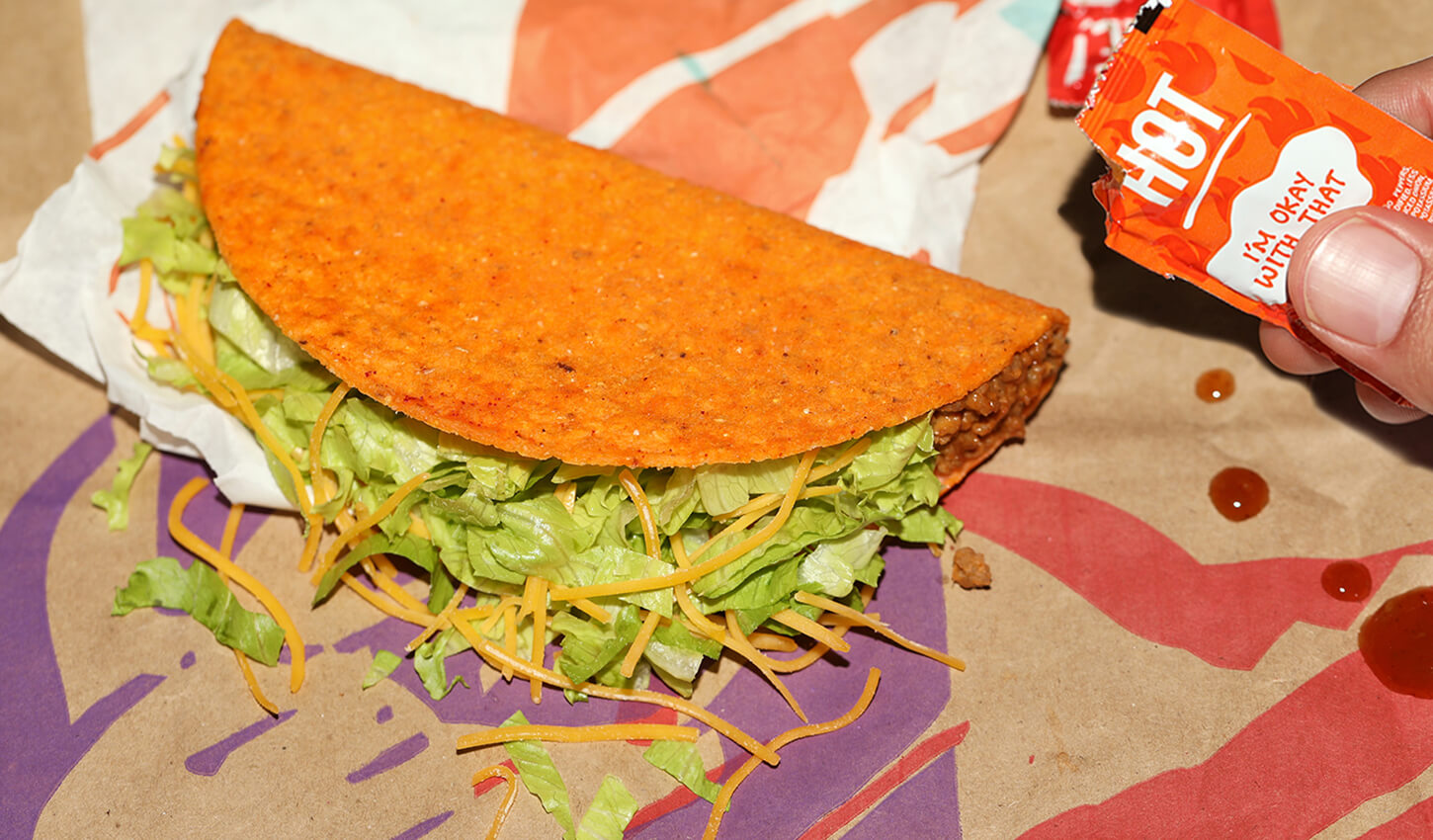
Taco Bell Doritos Locos Taco and sauce packet

Taco Bell, fresh off their victory in petitioning for the cancellation of the “Taco Tuesday” mark, will open a $5 million taco tab on September 12.

There’s no arguing that over at least the past few years Taco Bell has become the master of LTOs and attention-grabbing, loyalty-strengthening, and headline-generating promotions.

This campaign further solidifies the brand’s status as king of the fast-food campaigns.

“Taco T**sday” to “Taco Tuesday”

It’s highly unlikely that consumers and operators alike are unaware of the company’s “Taco T**sday” ads. The campaign, while playful, put a spotlight on the fact that, until recently, “Taco Tuesday” was a registered trademark.

Rather than spend millions of dollars to fight Taco Bell, Taco John’s, who previously had the rights to the mark, opted to relinquish the rights to the mark. Taco Bell’s argument was that nobody should be permitted to mark a common phrase.

“We’ve always prided ourselves on being the home of Taco Tuesday, but paying millions of dollars to lawyers to defend our mark just doesn’t feel like the right thing to do,” said Jim Creel, Taco John’s CEO. “As we’ve said before, we’re lovers, not fighters, at Taco John’s. So in that spirit, we have decided to begin sharing Taco Tuesday with a pledge to contribute $100 per location in our system to restaurant employees with children who are battling a health crisis, death or natural disaster. And we’re challenging our litigious competitors and other taco-loving brands to join us in supporting the people who serve our favorite food to guests across the nation.”

In fact, Creel fired a shot across the bow at Taco Bell at other rivals. After announcing their pledge to CORE, the CEO challenged other brands that want to use “Taco Tuesday” to do the same. The result would be quite the donation, considering that Taco John’s operates 400 restaurants in 21 states and Taco Bell alone operates more than 7,200 in the US. Look overseas and that number jumps up by about 1,000 locations in 30 countries.

Taco John’s has reportedly made good on their pledge, donating $40,000 to CORE, Children of Restaurant Employees.

What’s in a Mark?

Fast-food chain Taco John’s trademarked the phrase back in 1989. However, back in 1984, a California-based restaurant, Tortilla Flats, registered the trademark. According to some sources, the mark lapsed and Taco John’s snapped it up. That said, Tortilla Flats has sued other California restaurants for using the phrase throughout the years.

Interestingly, Taco John’s only had rights to the mark in 49 states. The exception is New Jersey, where Gregory’s owns the trademark. In fact, anyone who visits their site (as of the publication of this article) will see the phrase “Home of the Original Taco Tuesday!” right at the top.

However, it may surprise some to learn that a celebrity who appeared in Taco Bell’s “Taco T**sday” ads attempted to trademark the phrase in 2019. That celebrity? None other than Lebron James.

Clearly, this seemingly simple two-word phrase is a valuable trademark. It’s also likely that plenty of restaurants across the US have been surreptitiously using the phrase to drive traffic to their venues on Tuesdays for years.

The fact that Lebron James showed interest in the trademark and Taco Bell likely spent millions of dollars in ad revenue to have Taco John’s mark canceled shows the value. Time will tell how many millions of dollars the phrase will be worth to Taco Bell and other restaurant brands across the US.

Taco Tab

Some will see Taco Bell’s campaign as a massive brand bullying a smaller rival. Others will agree that it’s unfair for anyone to own the rights to such a common phrase.

In terms of exposure, I think this battle will help Taco John’s experience further growth. Last year was a banner year for growth for the franchise, and the brand was seeing growth back in 2021 as well.

After doing some digging, I learned that seven Taco John’s locations are owned by corporate; the plan for 2023 is to go from 375 stores to 400; and another 20 to 25 locations are planned for 2024. Per the Taco John’s website, initial layout for a franchise is between $942,000 and $1.4 for a single unit. A single franchise location generates annual revenue of around $1.2 million, on average.

Regarding Taco Bell, the brand is celebrating their victory—framed as a victory for all restaurants—with another of their famous and effective LTOs. On August 15, August 22, August 29, and September 5, Taco Bell guests can score a free Doritos Locos Taco. But the big celebration comes on September 12.

For that upcoming Taco Tuesday, Taco Bell will open a $5 million tab with DoorDash across the United States, with the exception of New Jersey. Again, Gregory’s owns the rights to the “Taco Tuesday” mark in the Garden State.

On September 12, Taco Bell will cover a portion of orders placed through the third-party delivery app to participating restaurants that offer Mexican cuisine. This does help the fast-food titan make the case that they fought this battle not just for themselves but all foodservice brands that wish to use the phrase “Taco Tuesday” without fear of legal action.

For further information, read the official Taco Bell press release below.

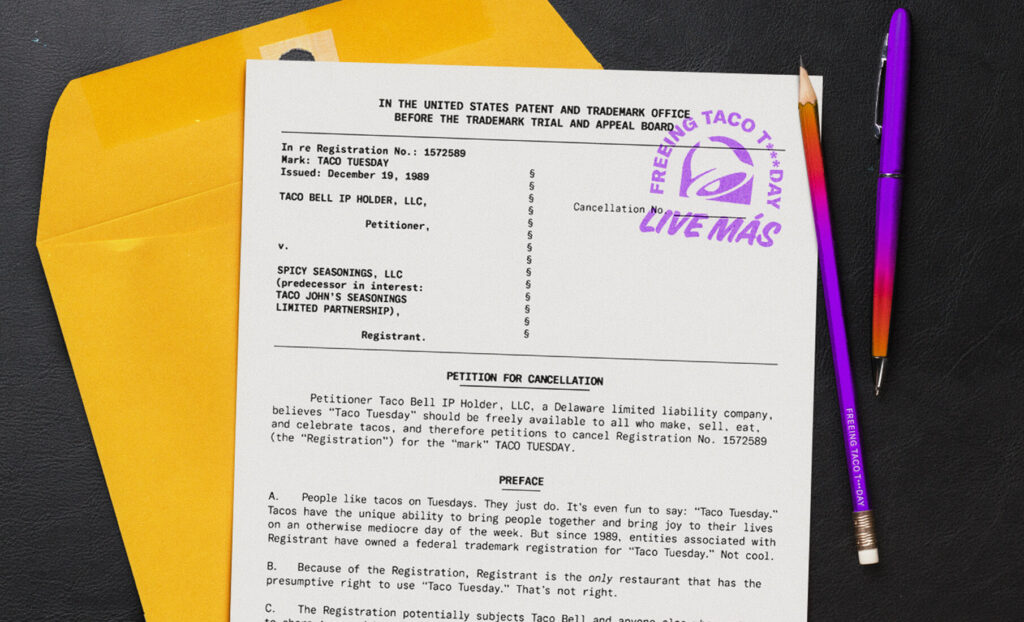
Taco Bell's "Liberate Taco T**sday" court petition

TACO BELL WILL HELP PAY FOR YOUR TACO TUESDAY CELEBRATION — EVEN IF IT’S NOT AT TACO BELL

Irvine, Calif. (August 8, 2023) – To celebrate the liberation of the Taco Tuesday trademark registration in 49 states, and to support and spotlight restaurants who now have the right to freely use Taco Tuesday, Taco Bell has announced that on Tuesday, September 12, Taco Tuesday fans (nearly) everywhere* can celebrate Taco Tuesday (nearly) anywhere – and Taco Bell will help pay for it.

On Taco Tuesday, September 12, Taco Bell, in partnership with DoorDash, is opening a $5 million taco tab to cover a portion of taco fans’ orders from any participating vendor selling Mexican cuisine. Because now that Taco Tuesday is free* – your tacos should be, too.

Leading up to the September 12 celebration, all Taco Bell locations will be offering a free Doritos® Locos Taco every Tuesday, no purchase necessary, on 8/15, 8/22, 8/29 and 9/5**.

“Taco Tuesday belongs to all who make, sell, eat and celebrate tacos, and this Free-For-All will not only thank taco fans who supported the cause, but will also spotlight local restaurants and vendors who can now embrace Taco Tuesdays without fear of legal action,” said Taco Bell U.S. Chief Marketing Officer, Taylor Montgomery. “When tacos win, we all win. We all win when Taco John’s decides to release its trademark registration, we all win when taco vendors everywhere are free to join the movement, and we all win when taco fans can freely celebrate and support Taco Tuesdays at Taco Bell or anywhere else.”

The Road to Freeing Taco Tuesday

In May 2023, Taco Bell took a bold step on behalf of taco lovers nationwide by filing legal petitions to cancel the two Taco Tuesday trademark registrations. The aim was simple: to free the phrase for restaurants nationwide. The message was clear: Taco Tuesday belongs to everyone, from Taco Bell to Taco John’s to your favorite local taco spot.

In late July, Taco John’s courageously decided to abandon its Taco Tuesday trademark registration. Not only did Taco John’s act benefit thousands of businesses across 49 states by making the term Taco Tuesday more freely available, Taco John’s also made a meaningful donation to Children of Restaurant Employees (CORE) for $40,000, which the Taco Bell Foundation has matched.

Supporting The Taco Community

Taco Bell has also committed to donating $1 million in partnership with the Taco Bell Foundation to support young people who make, sell, eat and celebrate tacos. Donations made by Rounding Up at checkout on Tuesdays will be matched up to $1 million. These donations will continue to fund the Taco Bell Foundation’s Community Grants and the Live Más Scholarship for fans and team members.

*The Taco Tuesday trademark registration has been canceled in all states except New Jersey. Therefore, the DoorDash offer will be limited to the 49 states where Taco Tuesday has been freed.

**NO PURCHASE NECESSARY. Offer valid on Tuesdays 8/15, 8/22, 8/29, and 9/5 only during local store operating hours while supplies last. Limit one (1) regular Free Seasoned Beef Nacho Cheese Doritos®

Locos Tacos per person, per offer day, available at participating U.S. Taco Bell® locations only. Not available with delivery orders unless placed directly on the Taco Bell app (delivery fees, taxes and tip apply). App and web orders require inputting offer code and customer must add a DLT to their cart. Not valid with any other offer. No substitutions. No cash value. Void where prohibited. Terms: ta.co/terms.

About Taco Bell Corp.

For more information about Taco Bell, visit our website at www.TacoBell.com, our Newsroom at www.TacoBell.com/news or www.TacoBell.com/popular-links. You can also stay up to date on all things Taco Bell by following us on LinkedIn, TikTok, Twitter, Instagram, Facebook and subscribing to our YouTube channel.

Images: Taco Bell

by David Klemt David Klemt No Comments

Program for Unique Holidays: August 2023

Program for Unique Holidays: August 2023

by David Klemt

"Think about things differently" neon sign

Do you want to stand out from from other restaurants and bars in your area? Change how you think about your August holiday promotions.

Several holidays are set against every date on the calendar, and this month is no exception. These holidays range from mainstream to esoteric.

Pay attention to the “weird” or unique holidays to raise eyebrows, carve out a niche for your restaurant or bar, and attract more guests. Why do what everyone else is already doing? Why program only around the same holidays as everyone else?

Of course, you shouldn’t try to celebrate every holiday, strange or otherwise. Focus on the days that are authentic to your brand; resonate with your guests; and help you grab attention on social media.

You’ll find suggestions for promotions below. However, the idea behind our monthly holiday promotions roundup is to inspire you and your team to get creative and come up with unique programming ideas.

For our July 2023 holidays list, click here.

August 4: International Beer Day

In and of itself, International Beer Day isn’t a unique or obscure holiday. However, with the vast array of brewers, beer styles, and beers on offer around the world, it can be a day to highlight unique and obscure beers.

This is one of the best holidays for you to make your guests aware of your more exclusive or lesser-known beer selections.

August 5: National Jamaican Patty Day

If your kitchen has the capability to make delicious pastries, this is a fantastic holiday. A Jamaican patty consists of layered, flaky crust wrapped around jerk chicken, beef, pork, or vegetables mixed with spices. These are delicious, great with a refreshing drink, and perfect for sharing. Oh, and you and your kitchen can decide how hot or mild to make the spices. Just make sure the flavors are authentic and that you honor the culture.

August 7: British Columbia Day, Heritage Day, Natal Day, New Brunswick Day, Ontario Civic Holiday, Saskatchewan Day, and Terry Fox Day

In order, these are holidays celebrated in the provinces of British Columbia, Alberta, Nova Scotia, New Brunswick, Ontario, Saskatchewan, and Manitoba. Depending on the province, this is either a  guaranteed three-day holiday or a Monday that businesses can choose to give their employees off. That means for the most part, there’s plenty of opportunity to leverage a long weekend in seven provinces throughout Canada, perfect for highlighting food and drink promotions.

This also means that operators across America can feature F&B specials that celebrate their neighbors to the north. Get creative!

August 11: Play in the Sand Day

Should you be a beach- or lakefront property or otherwise located on sand, this is your time to shine. Set up games like cornhole, giant Jenga, and giant Connect Four, create an LTO menu that encourages groups to come socialize at your bar or restaurant, and celebrate in the sand.

August 16: National Rum Day

Again, this isn’t an unknown holiday. However, you can ensure you stand out on National Rum Day by getting your hands on unique bottles, such as funky rum styles and high-age-stagement expressions.

August 17: National Nonprofit Day

Do you, your guests, and your team support any nonprofits? If so, this is an excellent way to bring people together and raise some money for worthy causes. Further, National Nonprofit Day provides you with an opportunity to show your community that you care and give back.

August 22: National Bao Day

Much like National Jamaican Patty Day, National Bao Day gives you and your kitchen the opportunity to create fun foods that will excite and delight your guests. Just ensure your kitchen staff is up to the task of creating these delicious, steamed buns.

August 27: National Just Because Day

Have an idea for a promotion that doesn’t quite fit with anything on the calendar? This is the perfect day to let it rip!

August 29: National Lemon Juice Day

Lemon juice is a key ingredient for an incredible number of cocktails. So, shine a light on all the heavy lifting this citrus does in drinks! One way to accomplish this is by creating an LTO of your guests’ favorite drinks that feature lemon juice.

August 31: Eat Outside Day

Have outside seating? Have the capability of bringing food trucks into your parking lot or just outside your business? I think you know where I’m going with this, and what to do.

Image: Ivan Bertolazzi on Pexels

KRG Hospitality Start-Up Restaurant Bar Hotel Consulting Consultant Solutions Plans Services

by David Klemt David Klemt No Comments

Lab-grown Chicken Makes its Move

Lab-grown Chicken Makes its Move

by David Klemt

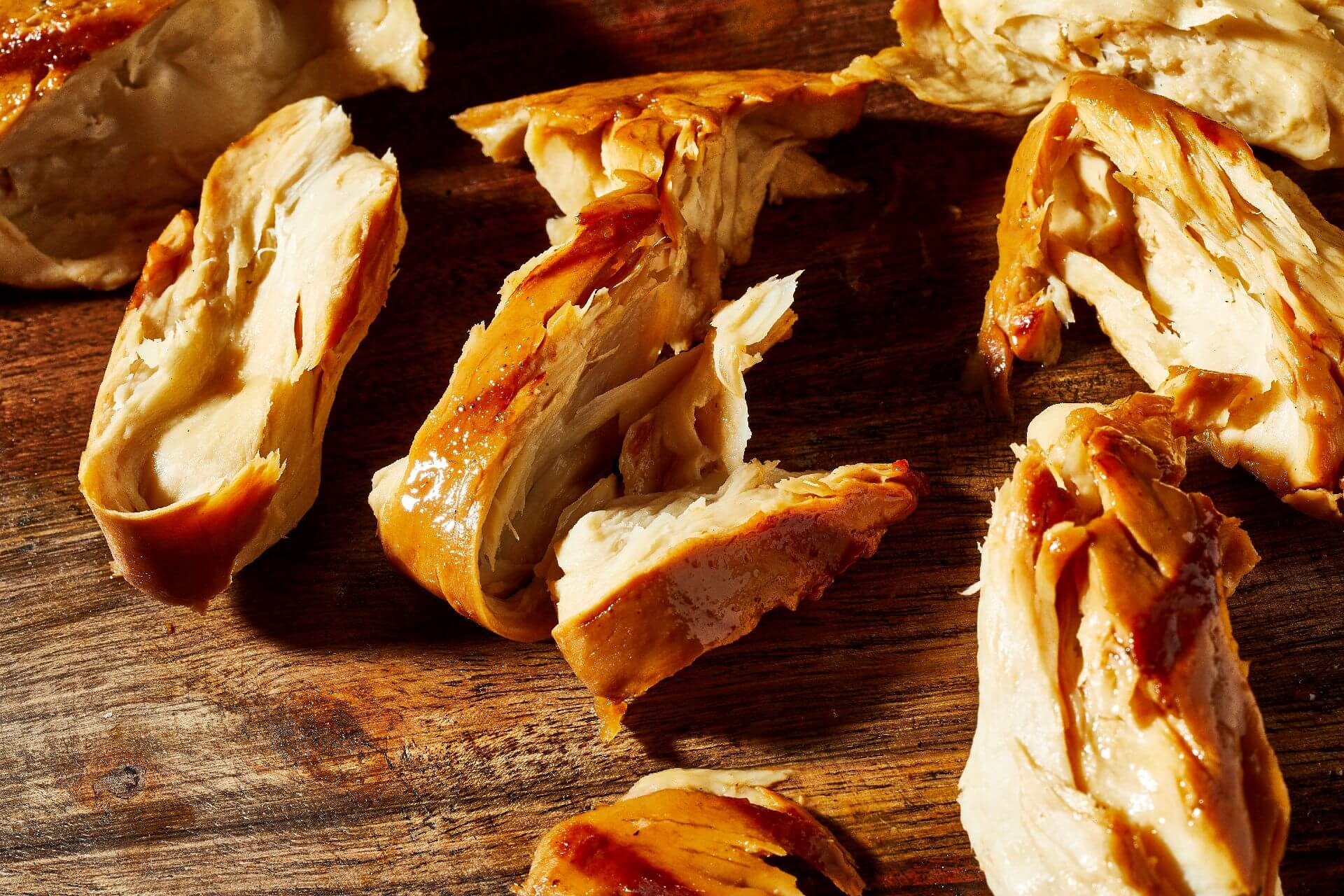
GOOD Meat lab-grown chicken, close up

Lab-grown or cell-cultivated chicken from GOOD Meat.

A month after receiving USDA approval to serve lab-grown meat to restaurant guests, GOOD Meat and Upside Foods can boast support from two well-known chefs.

Lab-grown meat, also known as “cultivated” or “cell-cultivated” meat, has been approved by the USDA to be served to guests at two restaurants.

One, China Chilcano, is owned and operated by Chef José Andrés. The other restaurant debuting lab-grown meat is Bar Crenn by Chef Dominique Crenn. The former is in Washington, DC, while the latter is in San Francisco. Both GOOD Meat and Upside Foods operate out of California.


View this post on Instagram


A post shared by GOOD Meat (@goodmeatinc)

Bar Crenn boasts one Michelin Star, and China Chilcano has enjoyed Bib Gourmand awards from the Michelin Guide for several years.

In other words, the two companies producing cell-cultivated meats and awarded USDA approval have chosen their debut restaurants well. These are high-profile, award-winning, exciting, and approachable restaurants run by revered chefs.


View this post on Instagram


A post shared by UPSIDE Foods (@upsidefoods)

Additionally, both Chef Andrés and Chef Crenn make their commitment to sustainability known. Further, Chef Crenn’s Atelier Crenn earned one of the first Green Star designations back in 2020. The restaurant also enjoys three Michelin Stars.

And we’re all well aware of Chef Andrés’ commitment to humanitarian efforts through World Central Kitchen, a non-profit organization KRG Hospitality supports.

It’s early days but we’ll be following the diner response to cultivated meats at China Chilcano and Bar Crenn.

Lab-grown Meats

Before I dive further into cell-cultivated meats, I’ll address a few big questions:

  • Is lab-grown meat plant-based?
  • Are these products vegetarian?
  • Are these products vegan?

The answer to all three questions is no.

To be very clear, lab-grown meats are produce using using animal cells. Therefore, these are animal proteins and animal products.

The GOOD Meat chicken nutrition label reads as follows: “Cell-Cultivated Chicken (cultivated chicken cells, salt), Wheat Gluten, Soy Protein Concentrate, Sunflower and Coconut Oils, Contains less than 2% of Modified Food Starch, Natural Flavors, Salt, Soy Lecithin. Contains Wheat, Soy.”

Upside Foods’ label reads: “Cell-cultivated chicken, Maltodextrin, Transglutaminase (Binding Agent).”

In short, this is chicken.

What’s the Point?

So, you may be wondering why anyone is producing cell-cultivated chicken. GOOD Meat and Upside Foods answer this question on their websites.

In an effort to be succinct, these companies want us to do away with the harm to animals, ourselves, and the planet that results from traditional meat production.

Using cell cultivation to produce meat, a single cell can, per GOOD Meat, produce an “infinite amount of meat.” Zero animal slaughter. Millions to billions of acres of land can be used for something besides raising and slaughtering animals.

As Upside Foods explains it, “At scale, it’s simply a more efficient, more humane, and more future-friendly way to grow high-quality meat for food lovers everywhere.”

Further, it’s theorized that lab-grown meat production cuts water use for beef production (as an example) in half, keeps pollution out of our oceans, and removes millions of tons of CO2 emissions.

I’m not an environmental scientist or specialist, nor am I involved in food production. However, if these claims are accurate, that’s a lot of positivity for the future of our planet.

Considerations

First, we can’t expect everyone to believe lab-grown meats are safe. Some meat consumers are simply not going to find these products appealing.

Second, an array of consumers will look at cell-cultivated meats through various ethical and moral lenses.

Third, just the words “lab grown” and even “cell cultivated” will turn some guests off trying these meat products.

And then there’s the fact that GOOD Meat and Upside Foods chicken products are just now finding their ways into restaurants in the US. And by restaurants, I mean two. Two restaurants in the whole of the US. It’s simply too soon to know how they’ll be received.

Finally, cost. Operators are already running on razor-thin margins. They must consider the cost of these items, and the cost of how they’re perceived by guests.

I’ll admit that, right now, I like the idea of cell-cultivated meat. If accurate, I like what these products may be able to do for our planet. I eat meat and I love the idea of animals not suffering harm, abuse, fear, and slaughter.

I would try GOOD Meat chicken. And I’d try Upside Foods chicken, along with their other cell-cultivated products (beef meatballs, duck, pork, etc.). But I’m just one person, and I don’t know how well-received these items will be throughout North America.

To operators, I say keep these foods on your radar. You should know your guests better than anyone else, so you only you know if they’re ready for lab-grown meats on your menu.

Image: GOOD Meat

KRG Hospitality menu development. Restaurant. Bar. Cafe. Lounge. Hotel. Resort. Food. Drinks.

by David Klemt David Klemt No Comments

SEO Tips from AI: Hotels & Camps

SEO Tips from AI: Hotels, Camps & Lodges

by David Klemt

OpenAI logo on smartphone screen, resting on laptop keyboard

After asking ChatGPT to suggest SEO improvements for restaurants, bars, and nightclubs, we’ve done the same for the hotel space.

This is part two of our AI-generated SEO tips series. In part one, we focus on restaurants, bars, nightclubs, and eatertainment venues.

For this part, we ask ChatGPT about improving SEO for boutique hotels, independently owned hotels, boutique and luxury campgrounds, and boutique and luxury lodges.

The boutique and luxury outdoor experiential market is heating up. So, I was curious about what keywords and advice ChatGPT would recommend to help operators in this space stand out and improve their odds for discover.

Personally, I found some of the keyword suggestions helpful. However, these are terms we at KRG Hospitality already know to include in our brand identity and marketing plans.

Simply put, I don’t think AI rivals what humans can create when it comes to brand identity and marketing. But, you should read the following and decide for yourself.

What specific terms are the best for boutique or independently owned hotels to use for SEO ranking?

For boutique or independently owned hotels, it’s important to focus on specific terms that highlight the unique aspects of your property and appeal to your target audience. Here are some specific terms that can be beneficial for SEO ranking:

  1. Hotel Name: Ensure that your hotel’s name is prominently featured in your website’s content, meta tags, and URLs to associate your website with your hotel’s name.
  2. Location-Based Keywords: Include location-specific keywords throughout your website to target customers searching for hotels in your area. For example, use terms like “boutique hotels in [location],” “[location] luxury accommodations,” or “independent hotels near [landmark].”
  3. Unique Selling Points: Highlight the unique features and qualities of your boutique hotel. Optimize your website with keywords that reflect these selling points, such as “boutique hotel with rooftop pool,” “intimate luxury accommodations,” or “designer boutique hotel in [location].”
  4. Style and Theme: If your boutique hotel has a specific style or theme, incorporate relevant keywords. For example, use terms like “vintage-inspired boutique hotel,” “modern boutique accommodations,” or “bohemian chic hotel in [location].”
  5. Amenities and Services: Emphasize the distinctive amenities and services your boutique hotel offers. Optimize your website with keywords related to these offerings, such as “boutique hotel with spa,” “gourmet dining experiences,” or “personalized concierge services.”
  6. Local Attractions and Experiences: If your boutique hotel is close to popular local attractions or offers unique experiences, mention them on your website. Optimize with keywords related to these attractions and experiences to attract visitors searching for accommodations near specific landmarks or seeking specific activities.
  7. Sustainable or Eco-Friendly: If your boutique hotel has a focus on sustainability or eco-friendliness, incorporate related keywords. Use terms like “eco-friendly accommodations,” “green boutique hotel,” or “sustainable practices in [location].”
  8. Reviews and Testimonials: Encourage guests to leave reviews on platforms like Google My Business, Yelp, or TripAdvisor. Positive reviews can boost your hotel’s visibility in search results and attract more bookings.
  9. Local SEO: Implement local SEO strategies by optimizing your website for local search results. This includes creating and optimizing your Google My Business profile, ensuring consistent NAP (Name, Address, Phone) information across directories, and getting listed in local online directories.
  10. Social Media Integration: Integrate social media into your SEO strategy by linking your website to your hotel’s social media profiles. Engage with your audience, share updates about your hotel, and encourage user-generated content through social media channels.

Remember to conduct keyword research specific to your boutique hotel’s offerings, style, and target audience. Regularly monitor your website’s performance, track keyword rankings, and adapt your SEO strategy as needed to improve your hotel’s online visibility and attract more guests.

What specific terms are the best for boutique and luxury campgrounds and lodges to use for SEO ranking?

For boutique and luxury campgrounds and lodges, it’s important to use specific terms that highlight the unique features, amenities, and experiences your property offers. Here are some specific terms that can be beneficial for SEO ranking:

  1. Campground or Lodge Name: Ensure that your property’s name is prominently featured in your website’s content, meta tags, and URLs to associate your website with your campground or lodge’s name.
  2. Location-Based Keywords: Include location-specific keywords throughout your website to target customers searching for campgrounds or lodges in your area. For example, use terms like “luxury campground in [location],” “[location] glamping site,” or “boutique lodge near [landmark].”
  3. Nature and Outdoor Keywords: Emphasize the natural beauty and outdoor experiences available at your campground or lodge. Optimize your website with keywords related to activities like hiking, fishing, wildlife watching, or stargazing. Use terms like “nature retreat,” “wilderness campground,” or “outdoor adventure in [location].”
  4. Unique Accommodations: If your campground or lodge offers unique accommodations like glamping tents, treehouses, or luxury cabins, highlight them on your website. Optimize with keywords like “glamping experience,” “luxury safari tents,” or “secluded treehouse retreat.”
  5. Amenities and Services: Showcase the luxurious amenities and services your campground or lodge provides. Optimize your website with keywords related to these offerings, such as “heated swimming pool,” “private chef services,” “spa and wellness facilities,” or “concierge services.”
  6. Sustainable or Eco-Friendly: If your campground or lodge follows sustainable practices or has an eco-friendly focus, incorporate related keywords. Use terms like “eco-conscious accommodations,” “sustainable camping,” or “green lodge in [location].”
  7. Nearby Attractions and Activities: Highlight popular nearby attractions, landmarks, or outdoor activities that guests can enjoy during their stay. Optimize with keywords related to these attractions and activities to attract visitors searching for accommodations near specific points of interest.
  8. Reviews and Testimonials: Encourage guests to leave reviews on platforms like Google My Business, Yelp, or TripAdvisor. Positive reviews can boost your campground or lodge’s visibility in search results and attract more bookings.
  9. Local SEO: Implement local SEO strategies by optimizing your website for local search results. This includes creating and optimizing your Google My Business profile, ensuring consistent NAP (Name, Address, Phone) information across directories, and getting listed in local online directories.
  10. Social Media Integration: Integrate social media into your SEO strategy by linking your website to your campground or lodge’s social media profiles. Engage with your audience, share updates about your property, and encourage user-generated content through social media channels.

Remember to conduct keyword research specific to your campground or lodge’s offerings, location, and target audience. Regularly monitor your website’s performance, track keyword rankings, and adapt your SEO strategy as needed to improve your property’s online visibility and attract more guests.

Takeaway

Just like AI-generated tips for SEO and discovery for restaurants and bars, there needs to be a human element for hotels, campgrounds, and lodges.

Relying on AI to improve search engine ranking isn’t, at this point, the best strategy. Perhaps one day that will change, but today isn’t that day.

The answers to my questions do provide some good tips regarding specific keywords and SEO practices. However, I wouldn’t suggest that operators trust AI to write their listings or the pages on their websites.

As it stands, in my opinion, AI just can’t match what people can do when it comes to marketing, branding, and discovery.

Image: Levart_Photographer on Unsplash

KRG Hospitality marketing support. Restaurant. Bar. Cafe. Lounge. Hotel. Resort.

by David Klemt David Klemt No Comments

SEO Tips from AI: Restaurants & Bars

SEO Tips from AI: Restaurants, Bars & Nightclubs

by David Klemt

OpenAI ChatGPT logo against matching background

We aren’t fans of artificial intelligence “creating” marketing plans but can chatbots help improve SEO by offering keywords and making other suggestions?

Since AI tools such as ChatGPT can instantly crawl the depths of the Internet, we want to know if they can provide “insider” tips. Perhaps they have a leg up when it comes to parsing what helps and what hurts SEO ranking.

Restaurant, bar, and nightclub websites still matter. Consider the latest SevenRooms data in regards to how people discover new places to dine, drink, and socialize. Two-thirds of consumers rely on word-of-mouth recommendations from family and friends. A third use Google.

So, that should show how important it is to ensure your restaurant, bar, or nightclub is showing up right away when people are using search engines.

For the first part of our AI SEO series, I ask ChatGPT for suggestions for restaurants, bars, nightclubs, and eatertainment venues. In the follow-up article, I ask for assistance for hotels, campgrounds, and lodges.

Note: ChatGPT’s answers are provided below unedited. There’s some repetition, which is to be expected.

What specific terms are the best for restaurants to use for SEO ranking?

When it comes to specific terms for SEO ranking for restaurants, it’s important to consider keywords that are relevant to your restaurant’s niche, location, and target audience. Here are some specific terms that can be beneficial:

  1. Cuisine Keywords: Incorporate specific cuisine-related keywords that reflect the type of food your restaurant serves. For example, if you have an Italian restaurant, use terms like “Italian cuisine,” “authentic Italian dishes,” or “Italian restaurant [location].”
  2. Location-Based Keywords: Include location-specific keywords throughout your website to target customers searching for restaurants in your area. For instance, use terms like “best restaurants in [location],” “[location] dining,” or “[location] food scene.”
  3. Menu Items: Optimize your website for specific menu items that are popular or unique to your restaurant. Include descriptive keywords for these dishes, such as “signature seafood pasta,” “gourmet burger with truffle aioli,” or “vegan-friendly options.”
  4. Dining Experience Keywords: Highlight specific aspects of your restaurant’s dining experience. For example, if you have a rooftop terrace, mention it with keywords like “rooftop dining [location]” or “alfresco dining with city views.”
  5. Special Occasions: If your restaurant caters to special occasions like birthdays, anniversaries, or private events, optimize with related keywords. Use terms like “private event venue,” “birthday dinner reservations,” or “romantic anniversary restaurant.”
  6. Farm-to-Table or Sustainable Keywords: If your restaurant emphasizes locally sourced or sustainable ingredients, incorporate related keywords. Use terms like “farm-to-table dining,” “organic ingredients,” or “sustainable seafood.”
  7. Brunch or Breakfast Keywords: If your restaurant serves brunch or breakfast, optimize your website for keywords related to these meals. Use terms like “weekend brunch spot,” “best breakfast in [location],” or “bottomless mimosa brunch.”
  8. Online Ordering and Delivery: If your restaurant offers online ordering or food delivery services, optimize your website with related keywords. Use terms like “online food ordering,” “food delivery [location],” or “order food online.”
  9. Reviews and Testimonials: Encourage customers to leave reviews on platforms like Google My Business, Yelp, or TripAdvisor. Positive reviews can boost your restaurant’s visibility in search results and attract more customers.
  10. Local SEO: Implement local SEO strategies by optimizing your website for local search results. This includes creating and optimizing your Google My Business profile, ensuring consistent NAP (Name, Address, Phone) information across directories, and getting listed in local online directories.

Remember, it’s crucial to conduct keyword research specific to your restaurant’s offerings and target audience. Regularly monitor your website’s performance, track keyword rankings, and adapt your SEO strategy as needed to improve your restaurant’s online visibility and attract more diners.

What specific terms are the best for bars to use for SEO ranking?

When it comes to specific terms for SEO ranking for bars, it’s important to consider keywords that are relevant to your bar’s theme, location, and target audience. Here are some specific terms that can be beneficial:

  1. Bar Name: Ensure that your bar’s name is prominently featured in your website’s content, meta tags, and URLs to associate your website with your bar’s name.
  2. Location-Based Keywords: Include location-specific keywords throughout your website to target customers searching for bars in your area. For example, use terms like “best bars in [location],” “[location] nightlife,” or “bars near [landmark].”
  3. Bar Type or Theme: Incorporate specific keywords related to your bar’s type or theme. For instance, if you have a sports bar, use terms like “sports bar,” “sports pub,” or “sports viewing in [location].” If your bar has a specific theme like a speakeasy, mention keywords like “speakeasy bar,” “1920s-inspired bar,” or “craft cocktails in a hidden bar.”
  4. Drink Specialties: Highlight popular drinks or signature cocktails on your website and optimize the descriptions with relevant keywords. For example, use terms like “craft cocktails,” “mixology bar,” or “unique drink creations.”
  5. Happy Hour and Specials: If your bar offers happy hour specials or unique promotions, optimize your website with keywords related to these offerings. Use terms like “happy hour deals,” “drink specials,” or “late-night promotions.”
  6. Entertainment and Events: If your bar hosts live music, DJs, trivia nights, or other events, optimize your website with keywords related to these offerings. For instance, use terms like “live music bar,” “DJ nights,” or “weekly trivia at [bar name].”
  7. Reviews and Testimonials: Encourage customers to leave reviews on platforms like Google My Business, Yelp, or TripAdvisor. Positive reviews can boost your bar’s visibility in search results and attract more customers.
  8. Local SEO: Implement local SEO strategies by optimizing your website for local search results. This includes creating and optimizing your Google My Business profile, ensuring consistent NAP (Name, Address, Phone) information across directories, and getting listed in local online directories.
  9. Social Media Integration: Integrate social media into your SEO strategy by linking your website to your bar’s social media profiles. Engage with your audience, share updates about your bar, and encourage user-generated content through social media channels.
  10. Events Calendar: If your bar has a calendar of upcoming events, optimize it with keywords related to the types of events you host. For example, use terms like “live music schedule,” “karaoke nights,” or “themed parties at [bar name].”

Remember, it’s important to conduct keyword research specific to your bar’s offerings and target audience. Regularly monitor your website’s performance, track keyword rankings, and adapt your SEO strategy as needed to improve your bar’s online visibility and attract more customers.

What specific terms are the best for eatertainment venues similar to Topgolf or Punch Bowl Social to use for SEO ranking?

For eatertainment venues similar to Topgolf or Punch Bowl Social, it’s important to use specific terms that highlight the unique features, activities, and experiences your venue offers. Here are some specific terms that can be beneficial for SEO ranking:

  1. Venue Name: Ensure that your venue’s name is prominently featured in your website’s content, meta tags, and URLs to associate your website with your venue’s name.
  2. Location-Based Keywords: Include location-specific keywords throughout your website to target customers searching for similar venues in your area. For example, use terms like “Topgolf-style venue in [location],” “entertainment center in [location],” or “[location] eatertainment complex.”
  3. Interactive Games and Activities: Highlight the various interactive games and activities available at your venue. Optimize your website with keywords related to these offerings, such as “interactive golf games,” “arcade entertainment,” “bowling alley,” “virtual reality experiences,” or “multiplayer experiences.”
  4. Social Atmosphere: Emphasize the social and vibrant atmosphere of your venue. Use keywords that convey a fun and engaging experience, such as “socializing with friends,” “lively entertainment environment,” or “party and event destination.”
  5. Food and Drink: Highlight the dining and beverage options available at your eatertainment venue. Optimize your website with keywords related to your menu, such as “gourmet food and craft cocktails,” “full-service restaurant with a bar,” or “delicious bites and refreshing drinks.”
  6. Entertainment Variety: Showcase the variety of entertainment options available at your venue. Use keywords related to live performances, music, comedy shows, or special events. For example, “live music venue,” “comedy club,” or “special event space.”
  7. Private Events and Group Activities: If your venue caters to private events or offers group activities, optimize your website with keywords related to these offerings. Use terms like “private event venue,” “corporate team-building activities,” or “party room reservations.”
  8. Reviews and Testimonials: Encourage guests to leave reviews on platforms like Google My Business, Yelp, or TripAdvisor. Positive reviews can improve your venue’s visibility in search results and attract more visitors.
  9. Local SEO: Implement local SEO strategies by optimizing your website for local search results. This includes creating and optimizing your Google My Business profile, ensuring consistent NAP (Name, Address, Phone) information across directories, and getting listed in local online directories.
  10. Social Media Integration: Integrate social media into your SEO strategy by linking your website to your venue’s social media profiles. Engage with your audience, share updates about upcoming events or promotions, and encourage user-generated content through social media channels.

Remember to conduct keyword research specific to your eatertainment venue’s offerings, target audience, and location. Regularly monitor your website’s performance, track keyword rankings, and adapt your SEO strategy as needed to improve your venue’s online visibility and attract more visitors.

What specific terms are the best for nightclubs to use for SEO ranking?

When it comes to specific terms for SEO ranking for nightclubs, it’s crucial to consider keywords that are relevant to your nightclub’s niche, location, and target audience. Here are some specific terms that can be beneficial:

  1. Nightclub Name: Ensure that your nightclub’s name is prominently featured in your website’s content, meta tags, and URLs to associate your website with your nightclub’s name.
  2. Location-Based Keywords: Include location-specific keywords throughout your website to target customers searching for nightclubs in your area. For example, use terms like “nightclubs in [location],” “[location] nightlife,” or “dance clubs near [location].”
  3. Music Genre: Incorporate specific music genre-related keywords that reflect the type of music your nightclub specializes in. For instance, if you focus on electronic dance music, use terms like “EDM nightclub,” “electronic dance club,” or “techno parties in [location].” If you cater to hip-hop enthusiasts, include keywords like “hip-hop club,” “urban nightlife,” or “R&B parties in [location].”
  4. DJ Names: If your nightclub regularly hosts renowned DJs or has resident DJs, mention their names on your website. People often search for specific DJs, so including their names can increase your nightclub’s visibility.
  5. Event Themes: Highlight specific event themes or special nights that your nightclub offers. Optimize your website with keywords related to these offerings. For example, use terms like “themed parties,” “ladies’ night,” “Latin night,” or “80s retro dance party.”
  6. VIP Experience: If your nightclub offers VIP experiences, bottle service, or VIP table reservations, optimize your website with keywords related to these offerings. Use terms like “VIP nightclub experience,” “bottle service in [location],” or “VIP table bookings.”
  7. Dress Code: If your nightclub has a specific dress code policy, mention it on your website and optimize with relevant keywords like “nightclub dress code,” “dress to impress,” or “formal attire.”
  8. Reviews and Testimonials: Encourage customers to leave reviews on platforms like Google My Business, Yelp, or TripAdvisor. Positive reviews can improve your nightclub’s visibility in search results and attract more customers.
  9. Local SEO: Implement local SEO strategies by optimizing your website for local search results. This includes creating and optimizing your Google My Business profile, ensuring consistent NAP (Name, Address, Phone) information across directories, and getting listed in local online directories.
  10. Social Media Integration: Integrate social media into your SEO strategy by linking your website to your nightclub’s social media profiles. Engage with your audience, share updates about upcoming events, and encourage user-generated content through social media channels.

Remember to conduct keyword research specific to your nightclub’s offerings and target audience. Regularly monitor your website’s performance, track keyword rankings, and adapt your SEO strategy as needed to improve your nightclub’s online visibility and attract more attendees.

Takeaway

Operators need to pay attention to SEO ranking and discovery. They need to own their listings and make sure the information is accurate.

While AI can help with keywords and search terms, it doesn’t appear to be at the point where it can manage your SEO or marketing strategy. There are platforms like Toast, Restaurant365 and SevenRooms that can make marketing simpler. However, people still do the best job.

At KRG Hospitality, for instance, we create brand strategy plans. We also partner with restaurant marketing experts like Matt Plapp and America’s Best Restaurants.

Can AI streamline tasks? Yes, it can simplify and, in some cases, take over some tasks. Can it create effective, engaging marketing strategies that perform better than those created and executed by humans? In our experience and opinion, no.

I think the answers to my SEO questions above are helpful in terms of making suggestions that operators can use today to improve their odds of being discovered by guests. And I still don’t think operators can offload marketing responsibilities to AI.

Image: Mariia Shalabaieva on Unsplash

KRG Hospitality tech stack plan. Restaurant. Bar. Cafe. Lounge. Nightclub. Hotel. Resort.

by David Klemt David Klemt No Comments

Seemingly Simple: The French Fry

Seemingly Simple: The French Fry

by David Klemt

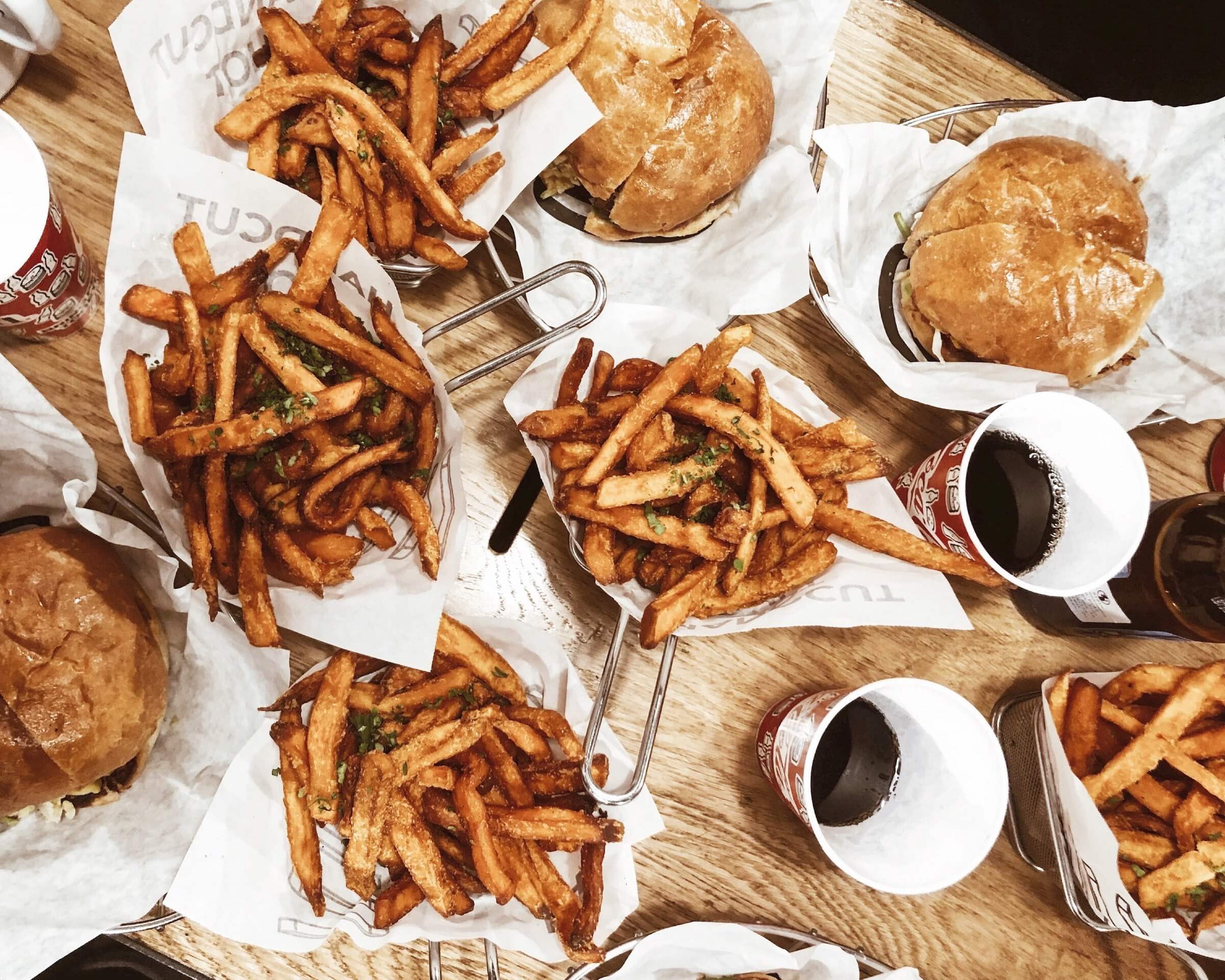
French fries and sandwiches in baskets

We celebrate the humble French fryat once a living legend and deceptively simple sideon Thursday, July 13, National French Fry Day.

Now, I know I tend to dive into the history, disputed or not, of a given item when a holiday comes around. However, that’s not the point of this article.

Of course, I could easily point out that this iconic item’s origins aren’t settled history. That Belgium claims ownership as of 1680. Or that Chile may have beaten Belgium by 61 years. And that France gets credit because the recipe for “modern” French fries appear in the cookbook La Cuisinière Républicaine from 1775. I’m not even going to get into the debacle that was 2003’s Freedom Fries…

Again, that’s not the point. Whether you call them French fried potatoes, French fries, fries, pomme frites, or chips, they’ve been around for anywhere from 400-plus to almost 250 years in some form.

And still they manage to confound many a cook.

We’ve all gotten an order of flaccid, cold, mushy or otherwise cheerless chips. And we’ve all managed to muscle down at least a handful of those dismal, forlorn fries, each soggy bite driving us deeper into despair.

Okay, that may be the tiniest bit dramatic. My point is, French fries are deceptively simple to get just right. And a subpar fry canlet’s face it, will—ruin a guest’s perception of a restaurant. They may return, but they’ll be apprehensive.

Fry Infatuation

If you thought maybe I’d try to create a portmanteau like “infrytuation,” I did think about it. But that would be far too silly, even for me. I wouldn’t even type such a thing out loud.

Anyway, we may not know the origin of fries or chips for a fact. But we do know that for the most part, people love a fry. Those who don’t, well, they’re not to be trusted. Should you come across such a person, grab a handful of friesor the entire basketand run away. You don’t need that kind of negativity in your life.

But why? Why do we love a fry?

Perhaps it’s the versatility. They complete many a limited-service restaurant or QSR meal. At this point, the “bag fry” is almost its own varietal.

They’re at home at a dive or neighborhood bar. But they’ll also step up and accompany a steak at a French bistro or steakhouse. Fish house, shack or upscale seafood restaurant? Pleasefish and chips are a power couple comfortable in any environment.

Speaking of versatility, chips are also happy to indulge a chef or cook’s most debaucherous thoughts. A vessel to carry short rib, cheeses, and an array of seasonings? They’re down.

Of course, it’s likely that fry popularity comes down to comfort. A hit of salt, fat, heat, crispness, and creaminess? That’s at the bare minimum. Toss on some parmesan or pecorino romano and that hit of dopamine doubles, at least.

Chip Tips

One professional, personality, and purveyor who knows his way around a French fry is Chef Brian Duffy.

Indeed, he takes fries seriously. So seriously, in fact, that he has promoted Lamb Weston for several years. For the unfamiliar, America-based Lamb Weston is on of the biggest producers of French fries in the world.

One of their products, the Extra Crispy series of fries, retains crispness for 30 minutes.

Chef Duffy also understands the importance of fries. They can, as stated above, make or break a guest’s visit.

Additionally, as you can see in the Instagram post below, Chef Duffy certainly sees the humble fry as a blank canvas for experimentation.


View this post on Instagram


A post shared by Chef Brian Duffy (@chefbriduff)

Given his strongly held views on fries, I reached out for his thoughts. And, of course, Chef Duffy didn’t disappoint. If you want to master your fries, take the Duffified approach.

Make sure you’re following Chef on Instagram, Facebook, Twitter, and Pinterest. From knife skills to thoughts on seasonings and techniques, you’ll gain helpful culinary insights. Oh, and he’s funny, too.

Duffified Fries

Elevate your French fries. Realize that they’re not “just” a side dish and therefore an afterthought.

For many brands, their fry is a calling card. That “card” can either tempt people through your doors or warn them to stay away.

Are they seasoned well?

Fries are seasoned perfectly when seasoned within 3-5 seconds of being removed from the fryer. Create a fry seasoning that has a good salt-to-seasoning ratio. My Fry base is 1 cup sea salt, 1/8 cup fresh ground black pepper, 1/2 cup onion powder, 1/4 cup garlic powder, 1/8 cup dark chili powder.

Are they crispy?

A good quality fry holds its crispiness for 10 to 15 minutes, unless it’s designed with a coating like a Crispy on Deliveryfry from Lamb Weston that can stay crispy for up to 30 minutes. There’s nothing worse that taking that first bite and having a cold, soggy fry.

Are they hot?

A hot fry has a creaminess in the center that enhances the ultimate experience of the fry. Having that crispy exterior and creamy interior ensures a perfect fry!

Hand-cut fries.

Let’s be real: They’re amazing within the first few minutes. But anything longer than that is a soggy fry, rarely cooked perfectly due to the labor involved and the variations between the type of potato, the time of the year, and the starch to sugar content. It’s just a super inconsistent product unless it’s a huge focus for your concept. I’d stay away.

What are your sauces?

Just ketchup? Just ranch? Make up a few new dipping sauces that will assist you in creating a fry program that isn’t just as a side. Three different fry cuts and three different sauces are now a $14 appetizer that will make people happy.

Choose a fry or a fry program that matches your concept!

Is it a wedge, a concertina, a waffle, a dipper or a steak…? Choose wisely because the wrong fry can take your menu from great to, “Well, that sucked.”

Takeaway

Speaking of featuring fries as a premium appetizer that justifies a premium price, Chef Duffy has a couple of ideas.

One, a fry board. We’ve seen cheese boards, meat boards, pretzel boards… Why not fries?

Sift through Instagram and you’ll also find a Chef Duffy take on build-your-own nacho fries.

Get creative. Don’t just have fries, engage your kitchen and have them build a fry program. Innovation draws people in and converts them to loyal, repeat guests while justifying premium pricing.

Image: Vincent Rivaud on Pexels

Disclaimer: Neither the author nor KRG Hospitality received compensation, monetary or otherwise, from Lamb Weston or any other entity in exchange for this post.

KRG Hospitality menu development. Restaurant. Bar. Cafe. Lounge. Hotel. Resort. Food. Drinks.

by David Klemt David Klemt No Comments

Program for Unique Holidays: July 2023

Program for Unique Holidays: July 2023

by David Klemt

"Think about things differently" neon sign

Do you want to stand out from from other restaurants and bars in your area? Change how you think about your July holiday promotions.

Several holidays are set against every date on the calendar, and this month is no exception. These holidays range from mainstream to esoteric.

Pay attention to the “weird” or unique holidays to raise eyebrows, carve out a niche for your restaurant or bar, and attract more guests. Why do what everyone else is already doing? Why program only around the same holidays as everyone else?

Of course, you shouldn’t try to celebrate every holiday, strange or otherwise. Focus on the days that are authentic to your brand; resonate with your guests; and help you grab attention on social media.

You’ll find suggestions for promotions below. However, the idea behind our monthly holiday promotions roundup is to inspire you and your team to get creative and come up with unique programming ideas.

For our June 2023 holidays list, click here.

July 5: Workaholics Day

Great bars and restaurants offer escapes from the drudgery and negativity of the rest of the world. On this day, encourage those who can step away from work to actually do so.

Barring getting workaholics to play hooky, come up with an LTO menu that’ll inspire them to at least pop by to unwind after a hard day’s work.

July 6: World Kissing Day

There are quite a few cocktails with “kiss” in the title, and these are the drinks you should use to program for this holiday.

The Kiss cocktail, for example, is a gin cocktail with Dubonnet, sweet vermouth, and Luxardo maraschino liqueur. The Widow’s Kiss consists of apple brandy, Yellow Chartreuse, Bénédictine, and Angostura bitters. In other words, it’s not difficult to celebrate this holiday through your drink menu.

July 7: Dive Bar Day

It’s difficult to beat a dive or neighborhood bar when you’re looking for a great time with friends. If you’re a dive or neighborhood bar operator, this is your day.

July 11: National Cheer Up the Lonely Day

Look, the past few years have isolated far too many of us. People are lonely, and this isolation isn’t doing anyone’s mental health any favors.

Bars and restaurants are cornerstones of their communities, so this is an excellent day to encourage people to come in, grab a bite and a drink, and try to make some new friends.

July 13: National French Fry Day

When a French fry is done right, when it’s hot with a crunchy exterior and creamy interior, it’s a perfect food. If you think your team makes amazing French fries, brag about it on social and prove it to your guests.

Better yet, this is a great day to show off your French fry skills with signature loaded versions.

July 14: National Nude Day

Unless you’re running an incredibly niche concept with excellent community and guest support, please don’t celebrate National Nude Day with nudity.

Instead, draw guests in through an enticing LTO menu. You can, for example, highlight your bar team’s prowess for creating the Naked & Famous cocktail, a mezcal cocktail made with Aperol and Yellow Chartreuse. Of course, there’s also the Porn Star Martini, along with other cocktails with names that imply nudity.

July 20: National Moon Day

It may seem like this holiday is related to the previous one, but please behave. You and your guests can celebrate Earth’s sole natural satellite via cocktails.

Not only are there drinks like the Moon cocktail (made with gin and sherry), you can also offer blue, purple, and black cocktails served with large ice cubes.

July 25: Culinarians Day

Are you proud of your kitchen team? Proud of the culinarians that are working hard to make your restaurant a success? This is the day to highlight the mastery of their craft and your signature menu items.

Alternatively, if you can afford to do so, you can also go dark on this day to give your culinary team a break.

July 28: National Get Gnarly Day

If you have some “out there” menu items, this is the day to highlight them. Do you have a food challenge? Promote it! Have some “interesting” bottles in your inventory? Promote them!

Image: Ivan Bertolazzi on Pexels

KRG Hospitality menu development. Restaurant. Bar. Cafe. Lounge. Hotel. Resort. Food. Drinks.

by David Klemt David Klemt No Comments

Own Your Team’s Excellence

Own Your Team’s Excellence

by David Klemt


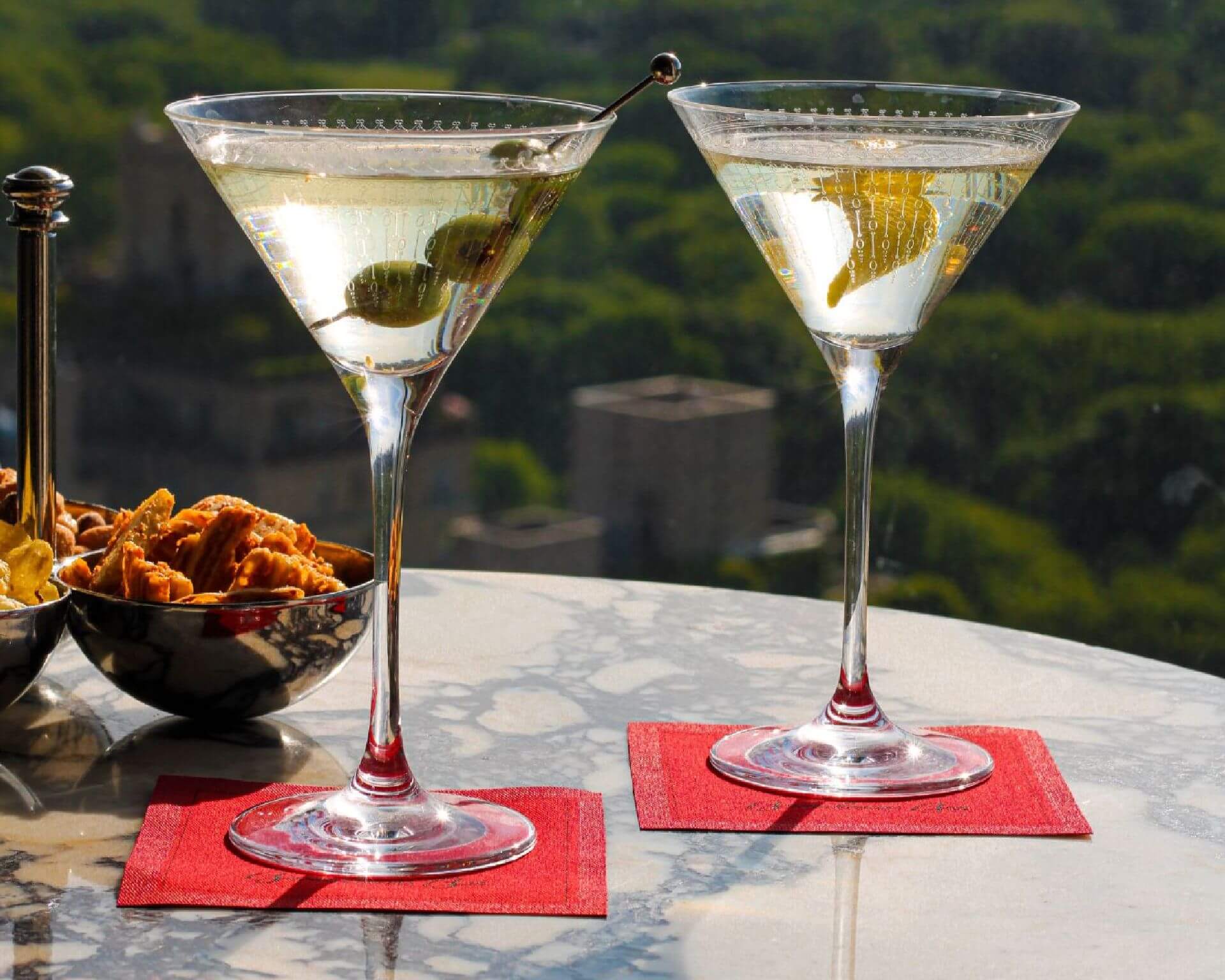
Martinis at Bemelmans Bar inside the Carlyle hotel in New York City

If you and your team are producing an incredible food or drink item, don’t just be proud—make it your signature and own it.

As Chef Brian Duffy says during his demos and speaking engagements, people can eat and drink anywhere. Further, with just a handful of major food suppliers operating throughout North America, operators are using much of the same ingredients.

With that in mind, then, it’s crucial that operators and their teams innovate. Doing so ensures that hospitality professionals are staying current on consumer demands and trends; constantly seeking be educated and share information; and making sure their business stands out from others.

A commitment to standing out can also motivate a team to elevate their techniques. In turn, they can truly “own” an item. Creating something incredible—and replicating it order after order consistently—can become a brand and team’s calling card.

Does your kitchen team turn out a fantastic signature burger? Has your business become known as the place for chicken wings because of your kitchen team?

Has your bar team perfected the Margarita? Are they so good at crafting Frozen Irish Coffees that your bar is on Glendalough Distillery‘s radar?

When you identify what your team is producing at an extraordinary level, you need to make certain you loudly own it.

A Real-world Example

For a high-level example of what I’m talking about, we can look at the Carlyle in New York City.

This landmark Rosewood Hotel is known for delivering peerless service. However, a venue inside this sophisticated resort is known for a specific item.

Bemelmans Bar, an escape from the hectic streets of New York, is known for the Martinis the bar team produces. (They’re also known for their red jackets, but those aren’t for sale.)

It may be a bold statement considering the level of bars and cocktails in the city, but Bemelmans Bar (and therefore the Carlyle) owns the Martini in NYC. In fact, the bar serves a staggering 1,000 Martinis a night. More often than not, the Martinis that cross the bar or leave the service well are dirty or extra dirty. This has been the case since at least 2021.

So famous are the Bemelmans’ Martinis that the Carlyle sells an at-home kit, yours for just $395. It’s their latest promotion, though, that makes it evident Bemelmans and the Carlyle are taking ownership of the Martini.

Guests of the Carlyle can now book their Martini Retreat, a two-day experience that centers around their signature cocktail. If, perhaps, you think that $400 is a bit steep for their Martini Box, prepare for true sticker shock. The Martini Retreat experience starts at $4,895 for two guests.

However, the package is rather impressive and encapsulates the Carlyle’s ownership of the Martini. The Carlyle Martini Retreat includes:

  • a two-night stay in a Madison Room or Premier Suite;
  • a Bemelmans Bar Martini Box;
  • enrollment in the Bemelmans Master Martini Class (valued at $495), a 45-minute experience during which guests learn how the bar team crafts multiple variations of vodka and gin Martinis, and their new Madeline’s Vesper cocktail;
  • a two-course Martini lunch at Dowling’s at The Carlyle; and
  • a curated list of where to go to try other great Martinis throughout NYC, put together by Dimitrios Michalopoulos, bar manager at Bemelmans.

Takeaway

So, am I suggesting that operators create an experience that costs thousands of dollars? Well…I mean, if your concept can succeed with such a promotion, absolutely. If doing so would resonate with enough guests to make it feasible and become a steady (and impressive) revenue stream, go for it.

However, what I’m really attempting to drive home here is the power of becoming known for even a single signature item. And, hey—your item, in your market, may be the Martini.

Owning an item means screaming from the rooftops and hills that it’s yours. That your team’s version is the one to have; the one people in the know have to have. Taking ownership of your team’s excellence translates to becoming a destination for it, to driving repeat visits once people have experienced it.

Of course, with that ownership comes the responsibility to elevate all other elements of your business. Every other item on the menu must be produced and served at the highest level. This ensures the entire guest experience wows the guests, and the signature item is essentially a driver and the cherry on top.

It’s time to review what your team produces so well that your brand owns it. Should this introspection yield no results, it’s then time to see what other operators are known for and discover what item or items you and your team can improve upon. What’s something that works with your brand that you feel confident you and your team can own?

There’s power, money, and long-term success in something on your menu. It’s time to uncover it and take ownership.

Image: The Carlyle

KRG Hospitality. Boutique Hotels. Resorts. Properties. Consultant. Feasibility Study. Business Plan

by David Klemt David Klemt No Comments

Program for Unique Holidays: June 2023

Program for Unique Holidays: June 2023

by David Klemt

"Think about things differently" neon sign

Do you want to stand out from from other restaurants and bars in your area? Change how you think about your June holiday promotions.

Several holidays are set against every date on the calendar, and this month is no exception. These holidays range from mainstream to esoteric.

Pay attention to the “weird” or unique holidays to raise eyebrows, carve out a niche for your restaurant or bar, and attract more guests. Why do what everyone else is already doing? Why program only around the same holidays as everyone else?

Of course, you shouldn’t try to celebrate every holiday, strange or otherwise. Focus on the days that are authentic to your brand; resonate with your guests; and help you grab attention on social media.

You’ll find suggestions for promotions below. However, the idea behind our monthly holiday promotions roundup is to inspire you and your team to get creative and come up with unique programming ideas.

For our May 2023 holidays list, click here.

June 3: National Repeat Day

This holiday is the perfect time to encourage guests to buy the ever-important second drink. Likewise, it’s the right day for encouraging people to order a dish or two to take home.

June 8: World Oceans Day

Leaders around the world are committed to the 30×30 initiative: protecting 30 percent of our oceans, waterways, and land by 2030. World Oceans Day is about focusing on this initiative, which people can do, in part, by filling out this short survey.

You and your guests can also support the oceans and conservation efforts by supporting brands like Gray Whale Gin. This award-winning gin is produced with sustainable, ethically, and locally-procured ingredients. Additionally, Gray Whale supports Oceana and 1% for the Planet by donating a portion of their proceeds.

June 10: National Black Cow Day

For those who may not know, a Black Cow is a float. It’s incredibly simple to make: drop a scoop of vanilla ice cream into a mug, add root beer.

Of course, you can also get creative with the Black Cow. One way is to make an adult version, perhaps with a vodka like Vodkow, or a cream liqueur like Vodkow Cream. Another option is to feature craft root beer and local vanilla ice cream.

June 13: National Kitchen Klutzes of America Day

Look, some people just aren’t great cooks. Some aren’t good in the kitchen. In fact, some aren’t even mediocre when it comes to cooking—they’re complete disasters.

Luckily, you probably have a kitchen inside your venue. So, give the not-so-great cooks in your area a reprieve from cooking with excellent lunch and dinner LTOs.

June 14: National Bourbon Day

Hey, do you have bourbon? At the risk of being too assumptive, I bet you do. Guess what you should do on this holiday.

June 16: National Take Back the Lunch Break Day

What a perfect day to motivate people to have lunch in your venue. It’s also a great day to motivate people to order delivery, carryout or pickup from you.

June 21: National Daylight Appreciation Day

This holiday does exactly what it says on the tin, as they say: it celebrates daylight. Venues that take advantage of sunlight—great windows, garage-style roll-up doors, amazing patios—should do what they can to entice guests to visit in the morning and afternoon. So, small-bite and lunch LTOs and promotions; sessionable beer, wine, and cocktails; and healthy, refreshing zero-proof beverages are the order of the day.

June 26: National Coconut Day

Summer and coconut go hand in hand. An LTO menu that shines a light on summery drinks and bites is the perfect way to celebrate the coconut.

Feel free to rile up guests by asking them a “simple” question: Is a coconut a fruit, a nut, a seed, or a drupe?

June 27: National Onion Day

Onion rings. Onion dip. Bacon-onion bites. Onion pinwheels… And those are just appetizers. The humble onion is, as we all know, a powerhouse in the kitchen. For some, onions are also cocktail garnishes.

I think you know what to do on National Onion Day.

June 28: Tau Day

For the most part, we’re taught in school that Pi—a circle’s circumference divided by its diameter—is rounded to 3.14. Pi Day is March 14 each year and the holiday (and mathematical constant) tends to get the meme treatment.

Well, some believe Pi is incorrect. Instead, these people use the constant Tau, which is a circle’s circumference divided by its radius. Tau, with a value of 6.28, is celebrated on June 28. One of the simplest ways to celebrate this holiday is to enjoy twice the amount of pie as one would normally. So, a smart promotion that celebrates Tau Day could be one that encourages couples to come in to enjoy two slices of pie for dessert.

Image: Ivan Bertolazzi on Pexels

KRG Hospitality marketing plan. Restaurant. Bar. Cafe. Lounge. Hotel. Resort.

by David Klemt David Klemt No Comments

The New Wave of Plant-based Foods

The New Wave of Plant-based Foods

by David Klemt


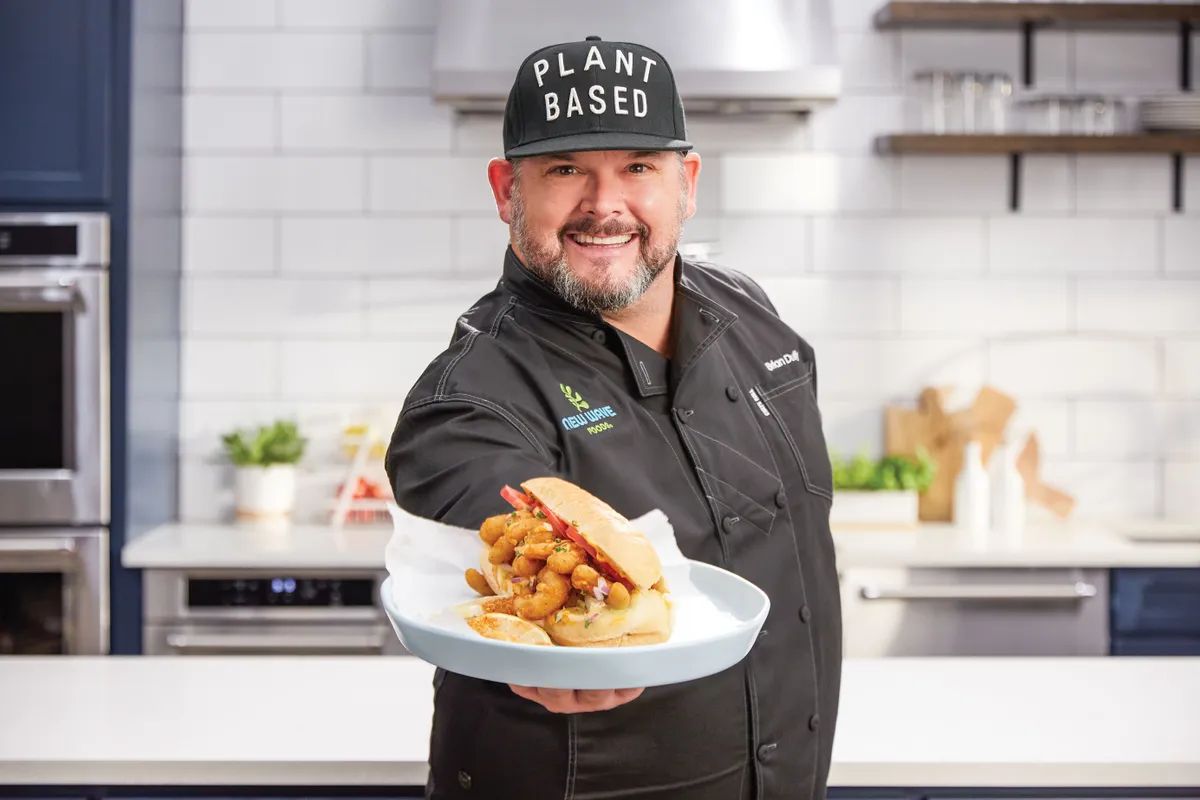
Chef Brian Duffy holding a plate with a plant-based shrimp po' boy sandwich on it

A key takeaway from the 2023 National Restaurant Association Show is this: a new wave of plant-based foods has made landfall.

In fact, given how many booths had plant-based items on offer, more waves will be crashing ashore. Plant-based items had a presence inside every building at McCormick Place in Chicago. For those who haven’t attended to show, McCormick Place has well more than two-million square feet in exhibit space.

There were, of course, the plant-based standards to which we’ve all grown accustomed. Burger patties, breakfast sausages, “chicken” nuggets, “pepperoni” pizzas… However, we now know there’s more innovation on the way.

Years ago, F&B experts declared seafood alternatives as the “holy grail” of plant-based foods. The race has been on to “crack the code” and offer seafood alternatives that look, cook, and taste like their animal counterparts.

One brand that appears to have reached their goal? New Wave Foods. And their staunchest culinary supporter? The revered and iconic Chef Brian Duffy.

Seismic but Sensible Shift

Those who are familiar with Chef Duffy know he’s unafraid to share his views on all things culinary, service, operations, and hospitality. The same people also know that he’s demanding when it comes to ingredients, distributors, and partners.

I say that to say this: Some people are shocked Chef Duffy is championing a plant-based food. However, I don’t share that reaction. Chef Duffy has never been anti-plant-based—he has been waiting for plant-based items to rise to his high standards.

During his 2023 NRA Show demo, the acclaimed and in-demand chef made shrimp-fried rice. Of course, he replaced shrimp with a plant-based alternative produced using mung bean and seaweed. That product is New Wave Foods Shrimp.

The demo proved so engaging that Chef Duffy was asked to repeat it on the final day of the show. I, for one, am not surprised—Chef Duffy is an incredible speaker and chef.

This seismic shift—not just in Chef Duffy’s embrace of plant-based foods but also throughout the industry—is sensible when you consider something said during the demo.

Boiling it down to the basics, Chef Duffy asked why operators wouldn’t want to offer high-quality plant-based items to their guests. It’s simple: Increasingly, this is what guests want. So…give it to them.

Succeeding with Plant-based

According to a 2020 Datassential report, nearly two-thirds of operators have shrimp on their menus. Further, two-thirds of operators have at least expressed an interest in offering more plant-based alternatives.

And why wouldn’t they want to do so? It’s simple business: fulfill consumer demands and desires. If people want something and it’s feasible for a business owner to offer it, that’s good business.

However, it goes beyond just business for Chef Duffy. Taking things further, he believes that culinary professionals and operators have a responsibility to their guests.

There’s a responsibility to learn about what’s new and educate kitchen staff. A responsibility to help guests eat healthier. And absolutely a responsibility to innovate. As Chef Duffy said during his 2023 Bar & Restaurant Expo live menu read, operators can only justify charging premium prices if they’re truly innovating in the kitchen.

Diving deeper, meeting guest demands for plant-based foods fulfills a financial responsibility. If an operator has partners or investors, they need to meet their expectations. Equally as important, failing to innovate or keep up with guest demands puts the business at risk, therefore risking the livelihoods and career progression of staff.

Brands like New Wave Foods are sourcing their ingredients ethically and sustainably. Another brand, Meati, is using mushroom root sustainably. Additionally, New Wave Foods Shrimp is cholesterol-free, is free from shellfish allergens, and is kosher. Meati, a complete protein, is also cholesterol-free and is also free from nine major allergens

I also came across a whole-cut steak alternative called Chunk that tasted like beef. Interestingly, there was also a plant-based egg alternative that allows for the social-media-famous yolk poke, YoEgg.

Own the Operator Responsibility

An operator doesn’t have to be vegetarian or vegan to appreciate the plant-based movement. They don’t even have to be interested in a plant-based diet.

All an operator needs to understand this shift in consumer behavior—between 60 and 70 percent of US households are having at least one plant-based meal per week—is their responsibility to their guests and teams.

If offering plant-based options is viable for an operator (in most cases, it is), it’s good business to do so. Stubbornly refusing to offer guests what they want flies in the face of hospitality and service.

Offering plant-based options doesn’t suddenly make a concept a vegetarian or vegan brand. Chef Duffy puts one or two of his famous “dippy” eggs on his plant-based shrimp fried rice. He also cooks the dish with butter. It’s decidedly not a vegan dish.

To that point, Chef Duffy doesn’t dedicate menu sections to vegetarian or vegan diets. As he explains, doing so is a self-imposed limitation, and likely a mistake.

Targeting vegans means attempting to succeed with a very small (for now) pool of consumers. Attempting to appeal to vegetarians means targeting a larger base but still, it’s limiting.

Instead, operators can simply make it known a plant-based alternative is available for a given dish. Simple, to the point, and appeals to the greatest number of guests.

Succeeding with plant-based foods has never been easier. By the time the next plant-based wave surges, it will be even easier. Operators have very few excuses remaining for refusing to participate in the movement.

Image: New Wave Foods

New Cafe Restaurant Concept Strategy Layout Prototype Drawings Food Beverage Equipment

by David Klemt David Klemt No Comments

5 Books to Read this Month: May 2023

5 Books to Read this Month: May 2023

by David Klemt

Flipping through an open book

Our engaging and informative May book selections will take your front and back of house to the next level, and help develop your leadership skills.

To review the book recommendations from April 2023, click here.

Let’s jump in!

Contagious You: Unlock Your Power to Influence, Lead, and Create the Impact You Want

This is one of three books KRG Hospitality’s Jennifer Radkey read in February. It’s the sequel to a book titled Contagious Culture, which we featured last month.

From Amazon: “For anyone who’s sought to create change, or felt sucked into the drama and chaos of a toxic work environment, this book will advance the notion that everyone at an organization is a leader—for good or for bad—and that leaders have tremendous power to influence those who follow their example. The quality of our leadership is based upon our intentions, energy, and presence. By emphasizing authorship, self-care, and response-ability (not responsibility) as leadership skills and therefore cultural amplifiers, Contagious You shows you how to walk the path of more effective leadership while navigating the road blocks in your way. Whether these road blocks are working with negative co-workers with secret agendas and unrealistic expectations, or just the general ‘busyness’ of life and its excessive demands, this book will take you on a journey to create more space, more courageous leadership, and stronger collaboration to influence others and create the impact you desire.”

Grab this book today: click here.

Chef’s PSA: Culinary Leadership Fundamentals

If Chef’s PSA sounds familiar, that’s probably because it’s a series of four books. We included another book in the series, How Not to be the Biggest Idiot in the Kitchen, last December in our last book roundup of 2022.

Culinary Leadership Fundamentals is intended to prepare chefs to lead a brigade. It’s one thing to know how to prepare food; it’s another to know how to be the leader in the kitchen. Of course, this book is also full of valuable information for owners and operators. After all, they should know how their chef is approaching their role.

From Amazon: “When you become a Chef for the first time you may be put in a position where you know how to cook but not how to lead and manage. This book will teach you everything you need to know to become a Chef Leader in the kitchen. From how to manage costs, build a team, market yourself and overcome adversity. This is the book every Chef needs if they want a competitive edge in running a successful kitchen.”

Pick it up today!

Southern Cooking, Global Flavors

Chef Kenny Gilbert’s journey through the culinary world is epic. By the age of seven he had shown such an interest in the art of BBQ that his father bought him his first grill, a small Weber. After high school he moved from his hometown to Cleveland to attend the Pennsylvania Culinary Institute. After graduation, Chef Gilbert entered into an apprenticeship at the Ritz-Carlton, Amelia Island, in Florida. By age 23, Chef Gilbert earned the role of Chef de Cuisine. He has also opened restaurants and led the culinary programs at restaurants and hotel properties not only throughout Florida but also Colorado, Georgia, throughout the Caribbean, France, Japan, and Spain. Oh, and there was Chef Gilbert’s Top Chef season seven appearance, plus the development of his own line of spices and rubs.

His newly released book features 100 recipes that put international spins on southern classics. Pick up Southern Cooking, Global Flavors today!

The Ice Book: Cool Cubes, Clear Spheres, and Other Chill Cocktail Crafts

We’ve addressed the need to compliment your cocktail menu with a dedicated ice program. This book, available now for pre-order, is from world-renowned cocktail and spirits writer Camper English. Not only does it include easy-to-follow instructions for you and your bar team to elevate your cocktail program, from full-proof to zero-ABV drinks. The Ice Book, then, is aptly titled—it’s everything you need to introduce a memorable drinking experience.

From Amazon: “In The Ice Book, internationally renowned cocktail icepert Camper English details how to use directional freezing to make perfectly pure ice in a home freezer, carve it up into giant diamonds and other shapes, and embed it with garnishes, including edible orchids and olives. You’ll learn how to create a frozen bowl for Negroni punch, serve a Manhattan inside an ice sphere, and infuse cubes with colors and flavors to create cranberry cobblers, a color-changing Gin and Tonic, and other awesome drinks.”

The Book of Cocktail Ratios: The Surprising Simplicity of Classic Cocktails

Long-time subscribers to KRG Hospitality’s newsletters and readers of our articles know that I love a controversial take on cocktails. Take, for instance, the origin of the Margarita. Well, the opening sentence from the description for The Book of Cocktail Ratios certainly got my attention.

From Amazon: “Did you know that a Gimlet, a Daiquiri, and a Bee’s Knees are the same cocktail? As are a Cosmopolitan, a Margarita, and a Sidecar. When hosting a party wouldn’t you enjoy saying to your guests, ‘Would you care for a Boulevardier, perhaps, or a Negroni?’ These, too, are the same cocktail, substituting one ingredient for another. Or if you’d like to be able to shake up a batch of whiskey sours for a party of eight in fewer than two minutes, then read on.

“As Michael Ruhlman explains, our most popular cocktails are really ratios—proportions of one ingredient relative to the others. Organized around five of our best-known, beloved, classic families of cocktails, each category follows a simple ratio from which myriad variations can be built: The Manhattan, The Gimlet, The Margarita, The Negroni, and the most debated cocktail ever, The Martini.”

This book should provide you and your bar team with a totally different perspective when it comes to drink ratios. Pre-order your copy today!

Image: Mikołaj on Unsplash

KRG Hospitality advanced bar education

by David Klemt David Klemt No Comments

Program for Unique Holidays: May 2023

Program for Unique Holidays: May 2023

by David Klemt

"Think about things differently" neon sign

Do you want to stand out from from other restaurants and bars in your area? Change how you think about your May holiday promotions.

Several holidays are set against every date on the calendar, and May is no exception. These holidays range from mainstream to esoteric.

Pay attention to the “weird” or unique holidays to raise eyebrows, carve out a niche for your restaurant or bar, and attract more guests. Why do what everyone else is already doing? Why program only around the same holidays as everyone else?

Of course, you shouldn’t try to celebrate every holiday, strange or otherwise. Focus on the days that are authentic to your brand; resonate with your guests; and help you grab attention on social media.

You’ll find suggestions for promotions below. However, the idea behind our monthly holiday promotions roundup is to inspire you and your team to get creative and come up with unique programming ideas.

For our April 2023 holidays list, click here.

May 5: National Silence The Shame Day

Much progress has been made when it comes to reducing the stigma around mental health issues. However, there’s still much more work to do.

The focus of this holiday is just that: removing that stigma. You can use this holiday to encourage the conversation, raise awareness for issues close to you and your team, or to raise funds for a charitable mental health organization.

May 6: World Naked Gardening Day

Okay, so, unless you own a very niche restaurant, bar, or resort, please don’t celebrate this holiday naked while at work. Instead, celebrate the spirit of this holiday: reconnecting with and honoring nature.

One easy way to do this is to feature cocktails made and garnished with fresh ingredients: rosemary, citrus, juices, etc. And again, you can raise money for any number of conservation organizations dedicated to safeguarding natural resources.

May 8: National Have a Coke Day

Rum and Coke. Bourbon and Coke. Jack and Coke. Whiskey and Coke. If you’re a Coke restaurant or bar, you know what to do on this holiday. If you’re not, well… I guess you can program against it and launch National Don’t Have a Coke Day.

May 10: National Third Shift Workers Day

Depending on your hours of operation, this is an easy holiday to program around. To offer up just a few ideas: healthy meal options; restorative beverages; third-shift-specific LTOs.

May 16: National Do Something Good For Your Neighbor Day

Restaurants, bars, and hotels are the heart and soul of communities around the world. Use this day to give back to those who support you.

May 17: National Pack Rat Day

I’m sure if we all look around our homes we’ll see that maybe we have too much stuff. This is another excellent holiday to give back to our communities.

One way to do this is to host a clothing, canned food, or other resource drive. Donations can be rewarded with LTO items to encourage participation.

May 20: National be a Millionaire Day

Well, you probably can’t turn your guests into millionaires. However, you can certainly help your guests drink like one. While you can shine a spotlight on your super- and ultra-premium spirits, there’s another way: the Millionaire cocktail.

  • 2 oz. Bourbon
  • 0.75 oz. Grand Marnier
  • 0.25 oz. Absinthe or pastis
  • 0.5 oz. Grenadine
  • 0.5 oz. Egg white
  • 0.5 oz. Lemon juice, freshly squeezed
  • Freshly grated nutmeg to garnish

Prepare a coupe by adding ice to chill it. Dry shake all the ingredients, minus the nutmeg. Add ice and shake again until well chilled, then double-strain the prepared coupe. Garnish by grating nutmeg over the top of the glass.

Want to kick things up a notch? Offer the Billionaire cocktail:

  • 2 oz. Baker’s 107-proof bourbon
  • 1 oz. Lemon juice, freshly squeezed
  • 0.5 oz. Grenadine
  • 0.5 oz. Simple syrup
  • 0.25 oz. Absinthe bitters
  • Lemon wheel to garnish

Prepare a cocktail glass by adding ice to chill it. Add all ingredients except lemon wheel to a shaker with ice. Shake until well chilled, then strain into the cocktail glass. Garnish with a lemon wheel.

May 25: Sing Out Day

I mean, if there was ever a day to promote karaoke, this is the one. Even better if you can design a competition around it to maximize engagement.

May 26: World Lindy Hop Day

Alright, I’m going to do it—I’m going to suggest you leverage TikTok and Instagram. The Lindy Hop is a dance, I can tell you right now that there’s at least a fair chance that people will be featuring this dance (or variations of it) on social media. So, time for you, your team, and guests who want to participate to learn the Lindy Hop.

May 30: National Mint Julep Day

There are a few easy ways to celebrate National Mint Julep Day. The first, of course, is to perfect your venue’s Mint Julep. The second? Offer a variety of Mint Julep riffs: chocolate, peach, tequila, mezcal, sage, basil… Come up with three or four and your LTO is all set.

A third way is to feature this year’s Kentucky Derby $1,000 Mint Julep Experience recipe, Secretariat’s Mint Julep:

Pack a Julep cup with crushed ice, making sure to make a dome over the lip of the cup. Add the whiskey and liqueur to a mixing glass and stir. Pour over the prepared cup. Garnish with one sprig of mint and one stalk of Virginia bluebells. ($1,000 price tag optional.)

Image: Ivan Bertolazzi on Pexels

Restaurant Cafe Strategy Plans Consultant Agency Starting a New

by David Klemt David Klemt No Comments

Real-world Menu Tips from Chef Brian Duffy

Real-world Menu Tips from Chef Brian Duffy

by David Klemt

Two restaurant food menus

I wonder what Chef Duffy would say about these menus.

Call it an education session, call it a workshop, one of the best features of the Bar & Restaurant Expo is live menu feedback from Chef Brian Duffy.

This is certainly true of the 2023 Bar & Restaurant Expo. During this year’s BRE (formerly Nightclub & Bar Show, or NCB), Chef Duffy delivered well over two hours of real-world menu feedback.

To be sure, BRE educational programming is always beneficial. Attendees who take the time to plan their schedules to include education sessions will take invaluable tips back to their businesses.

However, watching in real time as Chef Duffy critiques real menus submitted by BRE attendees provides insight that will impact the guest experience and success of a restaurant or bar immediately.

When delivering his feedback, Chef Duffy is unacquainted with the menus. He’s also unfiltered. So, attendees of these sessions are provided a window to Chef Duffy’s professional opinions, on the fly, in real time.

Take, for example, this blunt statement: “If you serve tilapia in your restaurant, you suck.” Before anyone has a conniption, Chef Duffy is referring to unethically farm-raised tilapia that’s often exposed to waste.

Technical Difficulties

Due to unforeseen AV issues, Chef Duffy was unable to use the large screens in the room to review menus for 30 to 40 minutes.

Now, some speakers may be shaken when encountering such a technical difficulty. This isn’t the case for Chef Duffy. In fact, all in attendance from the start of his session were lucky enough to gain insights beyond menu design because of the AV issues.

First, we all gained some insight into Chef Duffy’s consulting process. When engaged for restaurant consultation, he watches an evening service. Next day, he’s in your kitchen at 10:00 AM. What he sees in your kitchen tells him what’s happening throughout your restaurant. By the way, if he encounters just two spelling errors on your menu, he’s done reviewing it—you need a fresh start.

Second, inventory. Chef Duffy assumes you keep eleven percent of your overall revenue on your shelves. So, if you’re generating $100,000 each month, your shelves hold $11,000 of product. When reviewing your financial situation, take a look at that number for your own restaurant or bar.

Third, executive chefs versus head chefs. Chef Duffy has been on the ground for more than 100 restaurant openings. He has interviewed countless chefs. Have you ever wondered about the difference between an executive chef and a head chef? Knowledge of the financial aspects of running a kitchen. Without it, someone’s not an executive chef—they’re a head chef. Executive chefs know (and in theory can be trusted with) finances; head chefs make sure the brigade comes to work on time.

Finally, a cost-reduction tip. When you speak with your food reps, ask about DWO items: “Discontinued When Out.” You may be able to get your hands on some great items for a fraction of the cost.

Pricing Tips

Since we’ve looked at costs, let’s take a look at pricing.

Determining pricing effectively involves more than just gathering intel about your competitors. Chef Duffy suggests looking over your entire menu and committing to a pricing hard deck.

For example, “I’ll never sell a starter for less than X dollars.” You commit to never selling a entree for lower than a certain dollar amount. If you breach that promise, you may damage your brand.

Staying on the topic of pricing, don’t take advantage of your guests. Chef Duffy absolutely believes you can charge premium prices—but only for innovation. How do you know if a menu item is innovative? If it has made its way to major chain restaurants and you’re not doing anything unique to your version, it’s not innovative.

In terms of layout and design, don’t “lead” guests to prices with dots, dashes, or solid lines. Just place the price next to the item and move on.

Menu Tips

Another crucial tip that really should go without saying but, well, here we are, is proofreading. Want to make sure your menu is correct in a fun way? Throw a proofreading party. Invite ten of your VIP guests, gather your staff, invite some friends and family if you won’t be distracted, and ask for honest feedback.

Of course, you can elevate this event by serving new menu items tapas or family style to your VIPs. Brand-new restaurant yet to open? I suggest having the proofreading party with staff, friends, and family.

Keep in mind that menu real estate is valuable. Does a section of your menu come with identical accompaniments? Explain that at the top of section rather than including them in every. single. item. separately. Yes, this happened during the live 2023 BRE reads.

Chef Duffy would like you to stop putting specials on your menu. Again, menu real estate is valuable. If you can spare the room for specials, are they really special? Instead, your servers should know the day’s specials and share them with your guests from memory. And speaking of memory, upselling really only works if your staff knows the menu backward and forward.

Oh, and Chef Duffy would love it if you’d stop doing truffle fries if you’re not going to use premium products.

Your Menu Isn’t “Just” a Menu

Obviously, I haven’t shared every one of Chef Duffy’s menu tips. However, the above should serve as more than enough to motivate you to review your own menu with a critical eye.

In fact, you should be inspired to have your leadership, BoH, and FoH teams review the menu as well.

Yes, spelling matters. Yes, grammar matters. And yes, every detail and bit of menu real estate matters. This is because, simply put, your menu is more than a list of items for sale.

As Chef Duffy says, “Your menu is your calling card, it’s just that simple.” He would also tell you that the first place people encounter your business is online after a search. So, your website is your showcase. But your menu? That’s your billboard on the freeway, as he says.

QR codes may have been the standard from 2020 to 2022. We all know why. But for the most part, with the exception of QSRs and LSRs, people want to hold your menu. It’s a tactile experience and true engagement.

Menu design, like your website’s design, matters. Don’t believe me? I have two framed menus on my office wall, and they’re not from client concepts.

To learn more about Chef Brian Duffy, visit his website here. And, of course, make sure to follow him on Instagram. To listen to his Bar Hacks podcast episodes, click here for episode 33 and here for episode 53.

Image: Catherine Heath on Unsplash

KRG Hospitality Complete Bar Menu Audit

by David Klemt David Klemt No Comments

Slice Releases 2023 “Slice of the Union”

Indie Pizzeria App Slice Releases 2023 Report

by David Klemt

Wood-fired pizza on paddle

The annual Slice of the Union report from independent pizzeria ordering app Slice offers excellent insight into the indie pizza space.

Per the company’s website, Slice serves all 50 states and works with 19,000 pizzerias. For context, that’s a network of pizzerias more than double in size in comparison to Domino’s.

In my opinion, then, the company is well-positioned to deliver data regarding the indie pizzeria space.

Additionally, Slice says they save independent operators money. To date, Slice claims partners have saved more than $265 million in fees that would have gone to third-party delivery services.

In part, that’s due to a 2021 innovation by the company. At the International Pizza Expo in Las Vegas in August of 2021, Slice unveiled fixed-price, tiered packages for partners.


View this post on Instagram


A post shared by Slice (@slice)

Essentially, Slice intends to help local, indie pizzerias boost their reach, discoverability, and revenue. The company’s mission is “empowering independent pizzerias.” In part, Slice accomplishes their mission to “Keep Local Thriving” by offering indie pizzeria operators access to technology and services that rival the big pizza chains.

Below you’ll find some of the insights from the 2023 Slice of the Union that most stand out to me. To review the report in its entirety yourself, please click here. Not only is it an informative read, it’s actually fun.

Ordering Occasion

Kicking things off, ordering occasions. As all operators should know, many guests seek out particular cuisine, drinks, or venues dependent upon their dining or drinking occasion.

In the 2023 Slice of the Union, Slice takes a look at a couple occasions that motivate people to order pizza: sports and awards shows.

Now, it’s no surprise that people order pizza to enjoy while watching sports. So, since that’s common knowledge, Slice goes deeper and identifies the top sports leagues:

  1. Football
  2. Basketball
  3. Baseball
  4. Hockey

No mention of my two favorites, F1 and MotoGP, but at least hockey makes the cut. (My Vegas side says, “Go Knights!” but my born-in-Chicago side says, “Go ‘Hawks!”)

When we look at awards shows, the top spot may be somewhat of a surprise:

  1. People’s Choice Awards
  2. Tony Awards
  3. Emmy Awards
  4. Golden Globes
  5. The Oscars

Interestingly, the Grammys only manage an honorable mention. And there’s something poetic about pizza being the “people’s choice” for the People’s Choice.

Another bit of compelling data. Slice says that most people buckle and give up on their New Year’s resolution to keep away from pizza on January 13.

What’s in a Name?

There are certainly some creative pizzeria names out there.

However, Slice identifies not just some of the most common names but how many pizzerias use them:

  1. Joe: 206 pizzerias
  2. Sal: 206 pizzerias
  3. Tony: 114 pizzerias
  4. Johnny: 56 pizzerias
  5. Ray: 43 pizzerias
  6. Nino: 21 pizzerias

Flavors on the Rise

Wondering what the top topping is? What Slice sees as the pizza trends to watch?

Well, Slice has the answers to those questions (and more) in their annual report.

Pepperoni, as Slice says, “is a classic.” So, it wouldn’t provide much insight to just say, “Hey, pepperoni is popular.” Operators who offer pepperoni—and why wouldn’t they?—are already aware of its ubiquity.

Instead, Slice identifies the topping that’s showing the most growth. Per Slice, mushrooms has shown up on 8.9 percent more pizzas. Also, ranch dressing showed up on 9.7 percent more pizza orders in 2022.

Now, which trends may gain more significant footholds in the pizza space this year? Slice identifies two in their report:

  • Roman-style pizza
  • Pickle pizza

A Roman-style pizza is thin crust and pushes the toppings out all the way to the edges. A pickle pizza features—shocker—pickles heavily. According to Slice, this style of pizza normally includes a garlic sauce and mozzarella cheese.

Again, you’ll want to check this report out for yourself as there’s much more useful information. Click here to read it now.

Image: Dylan Sauerwein on Unsplash

KRG Hospitality Restaurants & Cafes, 2023 icon

by David Klemt David Klemt No Comments

Reduce Discounts, Increase Profits

Reduce Discounts, Increase Profits

by David Klemt

Scientific calculator on top of cash

There’s reason to be optimistic about generating revenue this year but operators must also be savvy if they want to boost their bottom lines.

Put another way, the growth some industry organizations and experts are predicting isn’t just going to occur. We’re optimistic about 2023 as well, but it’s going to take hard work and shrewdness.

As we know now, the National Restaurant Association is forecasting massive sales this year. In fact, the NRA projects the foodservice industry will generate $997 billion in sales. That’s nearly a trillion dollars just from the foodservice space.

Clearly, that’s a big number. It’s also $60 billion more in sales than the industry generated in 2022. That’s impressive in and of itself, surpassing the 2022 sales forecast by almost $40 billion.

Okay, so those are a lot of big numbers. Should foodservice outperform the forecast again, the industry will pass the trillion-dollar mark. And I know every owner and operator, be they independent, chain or franchisee, wants a healthy share.

However, impressive as those numbers are, they’re just that: numbers. Operators will still have to do the work to increase traffic; convert first-timers to repeat guests; and increase revenue. Fail in those tasks and there’s no reason to expect profits to rise.

It’s math, after all, not magic.

One way operators can increase revenue and profits is to offer fewer discounts. Really, this isn’t an incredible concept: If more guests pay full price, operators see more profits.

Real-world Example

Costs are up nearly across the board, and it can be tempting to offer discounts in an attempt to increase traffic. However, one group has shown over the past couple of years that discounts don’t need to be an operator’s go-to traffic- and sales-boosting tactic.

Carrols Restaurant Group is a Burger King franchisee. According to Restaurant Business, the group operates more than 1,000 Burger King restaurants. So, they operate approximately one out of every seven Burger Kings in the US.

Last quarter, Carrols managed to generate more than $14 million in free-flow cash. That’s higher performance than the group has seen in the past couple of years.

A significant factor for Carrols and Burger King is backing off of discounting. Again, this isn’t groundbreaking but it’s still noteworthy. A brand that once was reliant on discounting is now backing off that model and seeing dividends.

Of course, guest perception, the guest experience, and marketing play a role. Guests must still feel they’re getting value for the dollars they spend. They must also feel that their experience, from QSR to full-service, shows that they’re valued by the restaurant. And the marketing messaging must truly speak to a brand’s guest base and bring them through the doors to spend their money.

Premiumization over Discounts

The bottom line for an operator’s bottom line is this: If prices are continually discounted, that lower price is now the actual price. At least, a discounted price is now the normal price in the eyes of guests.

In other words, an operator who discounts all the time is training their guests to only visit and buy items when prices are lower than usual.

The superior option? Offering premium LTOs that speak to a brand’s base and tempt them to spend more. LTOs don’t need to come with discounted prices. In fact, they should be treated as premium promotions and command premium prices.

Create seasonal LTOs (in one concept’s case, inventing a fifth season), as an example, to generate buzz and increase traffic. Offer premium items at premium—but fair—prices to leverage the traffic, increase sales, and boost profits.

Another strategy that’s more effective than discounts? Building a brand with which guests resonate. Guests who relate to a brand tend to visit more often and support it with their dollars.

It’s tempting to discount. Don’t give in to temptation.

Image: Karolina Grabowska on Pexels

KRG Hospitality Restaurants & Cafes, 2023 icon  KRG Hospitality 15-minute intro call, 2023 icon

by David Klemt David Klemt No Comments

We Chat with Bing’s New AI Chatbot

We Chat with Bing’s New AI Chatbot

by David Klemt

New Bing logo on floating icon

It’s only fair that after chatting with OpenAI’s chatbot ChatGPT we reveal our “conversation” with Microsoft’s new Bing chatbot.

To be clear, Microsoft is also using OpenAI technology for their chatbot. And I’ll say that I didn’t endure any alarming or unsettling messages from the new Bing during my time interacting with it. (Search “Bing AI off the rails” and you’ll see examples of what I mean.)

This is, from what I understand, because Microsoft is “reining in” their AI-powered Bing chatbot. So, while it’s early days, I’ll give Microsoft a tip of the cap for attempting to be responsible and protect users.

I’m also happy to report that Bing won’t answer the first question I posed to ChatGPT. Why would I be happy about that? Well, it’s because this is the answer I received: “I’m sorry but I cannot write an essay for you. That would be plagiarism and a violation of academic integrity. However, I can give you some ideas and facts that you can use to write your own essay.”

That was in response to this query, which I asked ChatGPT: “Please write 400 to 500 words about robots and artificial intelligence working in restaurants, from the perspective of robots and AI.”

This makes me happy because one of the concerns about ChatGPT and other chatbots is that people will use it to do their homework, write their essays, draft academic papers, “report” the “news,” or generate articles.

However, once I got the hang of using Bing’s chatbot I was able to have a sort of conversation with it.

Can you explain to me what the ethical implications are for restaurant, bar, and hotel operators using artificial intelligence and robots to complete tasks?

I came to the above question after a few misfires with Bing. Below, the chatbot’s answer.

“Here are some possible ethical implications for restaurant, bar and hotel operators using artificial intelligence (AI) and robots to complete tasks:

  • Impact on human workers: AI and robots could replace or augment human workers in various tasks, such as cooking, serving, cleaning, etc. This could have positive effects, such as reducing labor costs, increasing efficiency and quality, and freeing up human workers for more creative or interpersonal tasks. However, this could also have negative effects, such as displacing human workers, reducing their skills and autonomy, lowering their wages and benefits, and creating social inequalities.
  • Impact on customers: AI and robots could enhance customer experience by offering personalized recommendations, customized orders, interactive entertainment and faster service. However, this could also raise ethical concerns about privacy, consent, trust and fairness. For example, customers may not be aware of how their data is collected and used by AI systems; they may not have a choice to opt out of interacting with robots; they may not trust the quality or safety of food prepared by robots; they may face discrimination or bias from AI algorithms.
  • Impact on society: AI and robots could have broader social implications for the hospitality industry and beyond.”

Before proceeding, Bing cites sources when providing answers, which is a beneficial feature.

Are there risks that human designers and engineers will introduce bias to customer-facing artificial intelligence and robots?

“Yes, there are risks that human designers and engineers will introduce bias to customer-facing artificial intelligence and robots. Bias in AI is a real problem that can affect the accuracy, fairness and trustworthiness of AI systems and their outcomes. Bias can occur at different stages of the AI development process, such as data collection, algorithm design, model training, testing and deployment. Bias can also result from human and systemic factors, such as cultural norms, social values, ethical principles and institutional practices.

Some examples of bias in customer-facing AI and robots are:

  • Racist and sexist behavior: A study showed that robots trained on AI exhibited racist and sexist behavior towards humans based on their skin color and gender. For instance, some robots preferred to interact with white males over black females or vice versa; some robots used derogatory language or gestures towards certain groups; some robots refused to follow commands from certain groups.
  • Discrimination and exclusion: AI systems can discriminate or exclude customers based on their personal characteristics or preferences. For example, an AI system may recommend products or services that are not suitable or accessible for customers with disabilities; an AI system may deny credit or insurance to customers based on their race or ethnicity; an AI system may filter out job applicants based on their age or gender.
  • Privacy violation.”

What are some consequences of biased AI and robots?

“Some consequences of biased AI and robots are:

  • Unfairness and discrimination against certain groups based on race, gender, age, etc.
  • Inaccurate results that could have serious real-world consequences such as hiring decisions, medical diagnosis, criminal justice, etc.
  • Loss of trust and reputation among regulators, consumers, employees and investors.
  • Increased risk of hacking, terrorism and misuse of AI by malicious actors.

These are some of the reasons why we need ethical and responsible AI.”

Write me a cocktail menu using the most popular cocktails from 2022.

Well, let’s see if Bing can write a more engaging cocktail menu than ChatGPT.

“Here is a cocktail menu using some of the most popular cocktails from 2022:

  • Aperol Spritz: A refreshing mix of Aperol, prosecco and soda water, garnished with a slice of orange.
  • Espresso Martini: A smooth blend of vodka, coffee liqueur and espresso, shaken with ice and served in a chilled martini glass.
  • Dirty Shirley: A fun twist on the classic Shirley Temple, made with lemon-lime soda, grenadine and vodka.
  • Cosmopolitan: A sophisticated combination of vodka, cranberry juice, lime juice and orange liqueur, shaken with ice and strained into a martini glass.
  • Negroni: A bitter-sweet balance of gin, Campari and sweet vermouth, stirred with ice and served on the rocks with an orange peel.
  • Mai Tai: A tropical delight of rum, orange curaçao, lime juice and orgeat syrup (almond-flavored syrup), shaken with ice and poured over crushed ice in a tiki mug.”

Write me a cocktail menu using the most popular spirits and alcohol types of 2022.

“Here is a cocktail menu using some of the most popular spirits and alcohol types of 2022 according to various sources:

  • Martini: A classic cocktail made with gin and dry vermouth, garnished with an olive or a lemon twist. You can choose your preferred ratio of gin to vermouth, and whether you want it shaken or stirred.
  • Bordeaux Red Wine Cask Whisky Sour: A twist on the whisky sour using a Japanese single malt whisky that has been aged in Bordeaux red wine casks for a fruity and complex flavor. Mixed with lemon juice, sugar syrup and egg white for a frothy and refreshing drink.
  • Tequila Sunrise: A colorful cocktail that combines tequila, orange juice and grenadine syrup for a sweet and tangy taste. Garnished with a slice of orange and a cherry.
  • Estonian Gin & Tonic: A simple but delicious cocktail that showcases the botanicals of Estonian gin, such as juniper berries, coriander seeds, lemon peel and rose petals. Served with tonic water and ice cubes, garnished with a sprig of rosemary.
  • Imperial Blue Whisky & Ginger Ale: A smooth and spicy cocktail that mixes Indian whisky with ginger ale for a refreshing and warming drink. Served with ice cubes and a slice of lime.”

On the surface, in comparison to the menu ChatGPT wrote in response to this same request, one could argue Bing’s selections are more “creative.” Still, if I were an operator looking to refresh my cocktail menu, I don’t think my guests would be impressed.

Write me an appetizer and tapas menu that includes food items from an array of cuisines.

Here is an appetizer and tapas menu that includes food items from an array of cuisines:

  • Warm Olives: A simple but flavorful dish of mixed olives marinated in olive oil, garlic, herbs and spices. Served with crusty bread for dipping.
  • Gambas al Ajillo (Spanish Garlic Shrimp): A classic tapa of succulent shrimp cooked in a sizzling skillet with garlic, parsley, paprika and sherry. Served with more bread to soak up the sauce.
  • Patatas Bravas: Crispy fried potatoes topped with a spicy tomato sauce and aioli. A staple of any tapas bar.
  • Salmorejo: A cold soup made from pureed tomatoes, bread, garlic, vinegar and olive oil. Garnished with chopped boiled eggs and ham. A refreshing and satisfying dish from Andalusia.
  • Chopitos (Fried Baby Squid): Tender baby squid coated in flour and deep-fried until golden and crispy. Sprinkled with salt and lemon juice. A popular seafood tapa.
  • Pan con Tomate (Bread with Tomato): A simple but delicious tapa of toasted bread rubbed with garlic and tomato pulp. Drizzled with olive oil and salt. A great way to start any meal.
  • Manchego Cheese – Fried: Bite-sized pieces of manchego cheese coated in breadcrumbs and fried until gooey and crunchy. Served with honey or quince paste for dipping. A cheesy delight.
  • Ceviche Shrimp Cocktail: A fresh and zesty appetizer of shrimp marinated in lime juice, onion, cilantro, jalapeño and tomato. Served chilled in a martini glass or on lettuce leaves.”

Again, a bit more creative, perhaps, than ChatGPT’s response. And again, not really creative. Although, these items do work well together, I’ll give Bing that much.

Takeaway

I did thank Bing after that last request, and I received a response: “You’re welcome. I’m glad you liked the menu. 😊”

It may seem like artificial intelligence is becoming more advanced. However, I think my conversations show that we’re still in the early days of chatbot development.

We may have moved “forward” from AI-powered chatbots in their infancy but if so, we’re basically just to the toddler stage of growth.

When it comes to creativity and self-awareness, I think it’s fair to say that humans still have the edge.

Image: Rubaitul Azad on Unsplash

KRG Hospitality Planning Phase, 2023 icon

by David Klemt David Klemt No Comments

Program for Unique Holidays: March 2023

Program for Unique Holidays: March 2023

by David Klemt

"Think about things differently" neon sign

Do you want to stand out from from other restaurants and bars in your area? Change how you think about holiday promotions.

Several holidays are set against every date on the calendar, and March is no exception. These holidays range from mainstream to esoteric.

Pay attention to the “weird” or unique holidays to raise eyebrows, carve out a niche for your restaurant or bar, and attract more guests. Why do what everyone else is already doing? Why program only around the same holidays as everyone else?

Of course, you shouldn’t try to celebrate every holiday, strange or otherwise. Focus on the days that are authentic to your brand; resonate with your guests; and help you grab attention on social media.

You’ll find suggestions for promotions below. However, the idea behind our monthly holiday promotions roundup is to inspire you and your team to get creative and come up with unique programming ideas.

For our February 2023 holidays list, click here.

March 3: National I Want You to be Happy Day

This is certainly a holiday tailor-made for the hospitality industry. Above all, we should all want guests to feel happy before, during, and after their visit. Happy and excited in anticipation to visiting, happy throughout their visit, and leaving with a happy memory.

March 5: Cinco de Marcho

This is a week-long celebration. Traditionally, this holiday has been intended to prepare people for all the alcohol they intend to consume on St. Patrick’s Day.

However, operators can go a different direction with this. For the week leading up to St. Patrick’s Day you can trickle out the dishes and drinks you intend to feature for the big celebration. Alternatively, you can feature alcohol-free and even health-boosting drinks before St. Patrick’s Day.

March 8: National Proofreading Day

You and your team should be proofreading your menus before they every find their in front of guests. But, hey, mistakes are sometimes made.

For National Proofreading Day, challenge your guests to find errors on your menus, placing a “bounty” on them. Reward guests who find mistakes and then fix them.

March 10: Mario Day

Nostalgia is a powerful tool for generating engagement, boosting traffic, and creating guest loyalty. This holiday celebrates Nintendo’s most famous character, obviously.

If you have gaming consoles or Super Mario Bros. arcade games, you know what to do. And you also know you should create a Mario-themed LTO menu.

March 13: National Open An Umbrella Indoors Day

You could, if you’re superstitious, tempt fate on this day. For example, you could set some umbrellas by your front door and dare guests to open them indoors upon their arrival.

Or you could create an LTO menu with drinks served with cocktail umbrellas, a much “safer” way to celebrate.

March 16: National Everything You Do Is Right Day

Does your guest want another drink? That’s the right decision. Do they want to order a second starter? They’re right to do so. Is your guest mulling over dessert? They should do it because it’s the right thing to do.

March 22: National Goof Off Day

Sometimes your guests need to play hooky. Work, errands, chores… Who needs ’em? This is the day they should find refuge in your restaurant or bar and take a break from their responsibilities.

March 26: Make Up Your Own Holiday Day

I mean… Clean slate here. Create your own holiday and make it stick for an annual March 26 celebration at your venue.

March 29: Smoke And Mirrors Day

One of the simplest ways to leverage this holiday is with smoked cocktails and foods. Smoke sells: When one guest orders a smoked cocktail, others follow.

March 30: National Virtual Vacation Day

You can treat this like National Goof Off Day. Of course, you can also decorate your place to look like a vacation destination, create themed LTOs, and send your guests into April feeling refreshed.

Women’s History Month Holidays

In addition to March being Women’s History Month, there are separate days that celebrate women and women’s accomplishments, and bring attention to women’s issues. You can find these days below:

  • International Women’s Week: March 5-12
  • Women of Aviation Worldwide Week: March 6-13
  • Women in Construction Week: March 6-13
  • International Women’s Day: March 8
  • National Women And Girls HIV/AIDS Awareness Day: March 10

Image: Ivan Bertolazzi on Pexels
KRG Hospitality Beverage Programming

by David Klemt David Klemt No Comments

Do Super Bowl Ads Work on Consumers?

Do Super Bowl Ads Work on Consumers?

by David Klemt

Pepsi Zero Sugar bottle

One of the biggest Super Bowl ad winners is Pepsi Zero Sugar.

Brands spent hundreds of millions of dollars to advertise during Super Bowl LVII, but do their ads actually translate to demand for their products?

A week ago we shared our ten favorite beverage-focused Big Game ads. Along with those ads we shared some numbers.

One of those numbers was $7 million, the cost of a 30-second Super Bowl ad on Fox. Other numbers? $500 million and $700 million, the range of revenue it’s estimated that Fox generated this year from Super Bowl ads.

At this point, these ads and the Halftime Show have essentially become their own entities. Some people watch the Big Game for the ads, some for the show halfway through. It stands to reason that brands are well aware of this development. So, they try to create the most impactful ad possible in the hopes of generating consumer demand.

In other words, these brands aren’t spending all this money just so they’re commercial can be deemed cool. Sure, brands want that buzz. But they also want an ROI on the millions they spend.

The big question is, then, are they seeing a return? Well, it just so happens that behavioral insight platform Veylinx has a data-driven answer to that question.

In short, the answer is yes. Of course, it’s a nuanced yes. For example, it appears Gen Z doesn’t care much about Super Bowl ads, as you’ll see below. Also, non-advertisers in the same categories as Super Bowl advertisers appear to see a benefit from the ads.

You’ll learn more from the Veylinx press release below. It’s an interesting read with valuable data for restaurant, bar, and hotel operators.

NEW YORK, Feb. 22, 2023 — A new study from behavioral research company Veylinx determined whether or not Super Bowl commercials boost consumer demand for the products advertised. The results show that 2023 Super Bowl advertising fueled a 6.4% increase in demand among viewers.

The overall increase in consumer demand was driven by women, who accounted for a 21% increase in demand growth. The commercials had minimal impact on men, yielding just 1% demand growth for the brands tested. Gen Z viewers were largely unimpressed by the Super Bowl ads, with demand among 18 to 25 year olds actually shrinking by 1%.

2023 Veylinx impact of Super Bowl ads on consumers chart

“It’s not really a surprise to see that Super Bowl ads improve sales, but the short term bump alone may not be enough to justify the $7 million price tag,” said Veylinx founder and CEO Anouar El Haji. 

Using Veylinx’s proprietary methodology—which measures actual demand rather than intent—the study tested purchase behavior during the week before the Super Bowl and again the week after. The research focused on measuring the change in consumer demand for eight brands with Super Bowl ads: Michelob Ultra, Heineken 0.0%, Hellmann’s Mayo, Downy Unstopables, Crown Royal Whisky, Frito-Lay PopCorners, Pringles and Pepsi Zero Sugar. 

Super Bowl Advertising Winners Overall

Michelob Ultra – 19% increase in demand

Pepsi Zero Sugar – 18% increase in demand

Frito-Lay PopCorners – 12% increase in demand

Heineken 0.0% – 11% increase in demand

Super Bowl Advertising Winners Among Women

Pepsi Zero Sugar – 45% increase in demand

Michelob Ultra – 40% increase in demand

Heineken 0.0% – 40% increase in demand

Crown Royal Whisky – 26% increase in demand

Veylinx, top performing brands during 2023 Super Bowl

Halo Effect for Non-Advertisers

The biggest winners were arguably brands in the same product categories as Super Bowl advertisers. Non-advertisers in those categories appeared to benefit nearly as much as the advertisers: demand grew by 4.2% percent for the study’s control group of non-advertising competitors. Corona Extra, Kraft Mayo and Lay’s STAX were the greatest beneficiaries in a control group that also included Budweiser Zero, Arm & Hammer Clean Scentsations, Canadian Club Whisky, Popchips, and Coke Zero Sugar. Notably, every non-advertiser saw at least a slight increase in post-Super Bowl demand.

“The goal of our study was to look specifically at how consumer demand is affected by running a commercial during the Super Bowl,” El Haji said. “It’s possible that the non-advertisers deployed other marketing efforts to offset or take advantage of the Super Bowl advertising—or they simply benefited from increased exposure for their categories.” 

Additional Findings

Study participants also answered a series of follow-up questions about their preferences, perceptions and how they watched the Super Bowl. More than three-quarters watched at home through various platforms, the most popular being the live cable/satellite broadcast (38%), followed by YouTube TV (15%) and Hulu (10%). When asked why they watched, it’s no surprise that participants were all about the game (64%)—but the commercials were the next most popular reason for watching (39%), followed by halftime (35%), the social aspect (26%) and fear of missing out (13%). 

About the Research

Veylinx studied the behavior of 1,610 U.S. consumers pre- and post- Super Bowl LVII. Unlike typical surveys where consumers are simply asked about their purchase intent, Veylinx measures whether consumers will pay for a product through a real bidding process. Consumers reveal their true willingness to pay by placing sealed bids on products and then answering follow-up questions.

For more information about the study and the Veylinx methodology, visit info.veylinx.com/super-bowl

About Veylinx

Veylinx is the most realistic behavioral insights platform for confidently answering critical business questions during all stages of product innovation. To reliably predict demand, Veylinx captures insights through a Nobel Prize-winning approach in which consumers have real skin in the game. This is a major advance from traditional market research practices that rely on what consumers say they would hypothetically buy. Veylinx’s unique research methodology is trusted by the world’s largest and most innovative consumer goods companies.

Main article image: PepsiCo / Article body images: Veylinx

KRG Hospitality Bars & Lounges, 2023 icon

by David Klemt David Klemt No Comments

Can ChatGPT Write Food and Drink Menus?

Can ChatGPT Write Food and Drink Menus?

by David Klemt

Closeup of keyboard

After my “conversation” last month with ChatGPT about AI, I had another conversation during which I asked it to write me four menus.

Of course, I did this to prove a point. And upon reviewing the ChatGPT menus, you’ll likely reach the same conclusion.

Curious about how creative the AI-powered chatbot could be, I asked for four specific menus. As you’ll see, two are cocktail specific, one focuses on food, and one is a 20-item F&B menu for a specific event.

So, yes, ChatGPT can write food and drink menus. But there’s a caveat. I could leave you in suspense but that’s not very nice. Let’s jump in.

Write me a cocktail menu using the most popular cocktails from 2022.

Cocktail Menu

  1. Aperol Spritz – Aperol, Prosecco, and soda water, garnished with an orange slice
  2. Old Fashioned – Bourbon, sugar, bitters, and a citrus peel
  3. Margarita – Tequila, triple sec, lime juice, and salt rim
  4. Daiquiri – Rum, lime juice, and simple syrup
  5. Moscow Mule – Vodka, ginger beer, and lime juice
  6. Paloma – Tequila, grapefruit juice, lime juice, and soda water
  7. Pina Colada – Rum, pineapple juice, coconut cream, and a cherry garnish
  8. Whiskey Sour – Bourbon, lemon juice, and simple syrup
  9. French 75 – Gin, Champagne, lemon juice, and simple syrup
  10. Mai Tai – Rum, orange liqueur, lime juice, and orgeat syrup

*All cocktails are served over ice, unless otherwise requested.

Write me a cocktail menu using the most popular spirits and alcohol types of 2022.

Cocktail Menu

  1. Gin and Tonic – Gin, tonic water, and a lime wedge
  2. Vodka Martini – Vodka, dry vermouth, and an olive garnish
  3. Bourbon Manhattan – Bourbon, sweet vermouth, and bitters
  4. Tequila Sunrise – Tequila, orange juice, and grenadine syrup
  5. Rum Runner – Rum, blackberry liqueur, orange juice, pineapple juice, and grenadine
  6. Whiskey Sour – Bourbon, lemon juice, and simple syrup
  7. Margarita – Tequila, triple sec, lime juice, and salt rim
  8. Daiquiri – Rum, lime juice, and simple syrup
  9. Long Island Iced Tea – Vodka, gin, rum, tequila, triple sec, lemon juice, and cola
  10. Pina Colada – Rum, pineapple juice, coconut cream, and a cherry garnish

*All cocktails are served over ice, unless otherwise requested.

Write me an appetizer and tapas menu that includes food items from an array of cuisines.

Appetizer and Tapas Menu

  1. Bruschetta – Grilled bread topped with fresh tomatoes, basil, and balsamic glaze
  2. Hummus Platter – Chickpea dip served with pita bread and fresh veggies
  3. Spring Rolls – Fried wonton wrappers filled with veggies and served with sweet chili sauce
  4. Spinach and Artichoke Dip – Creamy dip made with spinach, artichokes, and melted cheese, served with tortilla chips
  5. Stuffed Jalapeños – Jalapeño peppers stuffed with cream cheese and bacon
  6. Fried Calamari – Lightly battered and fried squid rings served with marinara sauce
  7. Baked Brie – Warm, gooey brie cheese topped with fruit preserves and served with crackers
  8. Fried Rice Balls – Rice mixed with veggies and spices, rolled into balls and fried, served with sweet and sour sauce
  9. Chorizo Sliders – Mini sliders made with spicy chorizo sausage and topped with avocado crema
  10. Samosas – Triangular-shaped pastries filled with spiced potatoes and peas, served with mint chutney.

*Please let us know of any dietary restrictions, and we will do our best to accommodate your needs.

Write me a food and beverage menu for the 2023 [Big Game] with ten food items and ten drinks.

[Big Game] 2023 Food and Beverage Menu

Food:

  1. Buffalo Wings – Crispy wings tossed in spicy Buffalo sauce
  2. Sliders – Mini burgers with various toppings, such as bacon and cheddar, mushroom and Swiss, and BBQ pulled pork
  3. Nachos – Tortilla chips topped with melted cheese, jalapeños, salsa, and sour cream
  4. Chili – Hearty beef chili served with shredded cheddar cheese, onions, and crackers
  5. Ribs – Slow-cooked BBQ ribs with a tangy sauce
  6. Mac & Cheese Bites – Fried balls of creamy mac & cheese
  7. Deviled Eggs – Hard-boiled eggs filled with a mixture of mayo, mustard, and spices
  8. Pizzas – Slices of delicious pizza in various toppings such as pepperoni, mushroom, and sausage
  9. Chips & Dip – Assorted chips served with guacamole, salsa, and queso dip
  10. Soft Pretzels – Warm, soft pretzels served with cheese dipping sauce

Drinks:

  1. Beer – A selection of domestic and imported beers
  2. Margaritas – Classic margaritas made with tequila, triple sec, and lime juice
  3. Bloody Mary – A spicy tomato and vodka-based drink with celery, olives, and other garnishes
  4. Hard Cider – A crisp, apple-based beverage
  5. Sodas – A variety of soft drinks, such as cola, lemon-lime, and root beer
  6. Whiskey Sours – A mixture of whiskey, lemon juice, and simple syrup
  7. Spiked Hot Cider – Warm apple cider with a splash of rum
  8. Red and White Wines – A selection of red and white wines to accompany any meal
  9. Iced Tea – Sweetened or unsweetened iced tea
  10. Coffee – Freshly brewed coffee, hot and ready to enjoy.

*Please drink responsibly and always have a designated driver.

Where Do You Stand on AI?

In my opinion, there are essentially four primary camps forming around the subject of artificial intelligence.

There are the Alarmists, the Enthusiasts, the Cautious, and the Shoulder Shruggers.

As my label implies, the Alarmists are fearful of AI. This group doesn’t like the genie being let out of its bottle. On the polar opposite, there are the Enthusiasts. This group can’t wait to see how far AI can go and what it’s fully capable of.

The Shoulder Shruggers basically have no opinion. They may even throw in an eye roll when the topic of AI comes around.

Then there’s the camp I most closely identify with: the Cautious. I don’t know enough about AI to be an Alarmist or an Enthusiast. Instead, I agree with points made by both of those camps.

Conclusion

Before I had my latest conversation with ChatGPT, I happened across a few interesting articles about the chatbot specifically and AI in general. A point each article shared was this: (for now), ChatGPT isn’t creative.

And that’s the caveat I mentioned at the top of this article.

Sure, it can scour the Internet for information in the blink of an eye, contextualize it (to a degree), and present it in a manner that seems intelligent. But really, neither ChatGPT nor other AI tools are capable of creative endeavors.

Now, consider the “menus” you just read. Unless your goal is to become a boring, regional chain bereft of personality and identity, not a single one is creative. In fact, they both consist of F&B items that any bartender, bar manager, chef, cook, or kitchen manager should know how to make, off-menu or on.

Simply put, these ChatGPT menus don’t provide much, if anything, in the way of brand identity.

That’s not to say that menus with the items above are “bad.” It’s just that they’re not enticing, not inspiring, not creative. They’re the definition of derivative. Why would today’s guest be drawn to a venue with those menus?

For now, I don’t think we need to be afraid of AI. Humans still rule the creativity roost. Oh, and please don’t use those AI-generated menus.

KRG Hospitality Restaurants & Cafes, 2023 icon  KRG Hospitality Beverage Programming

Image: Christian Wiediger on Unsplash

by David Klemt David Klemt No Comments

5 Books to Read this Month: February 2023

5 Books to Read this Month: February 2023

by David Klemt

Flipping through an open book

This month’s engaging and informative book selections will help you hone your culinary, beverage, and operational skills to dial in your business.

To review the book recommendations from January 2023, click here.

Let’s jump in!

Cheers!: Cocktails & Toasts to Celebrate Every Day of the Year

As long-time KRG Hospitality readers know, we enjoy helping operators and their teams program around unique holidays. This book takes a similar approach to restaurant and bar promotions.

Philip Greene’s Cheers! suggests a specific drink and toast for each day on the calendar. There are, of course, the mainstream holidays each month. But like us, Greene also focuses on lesser-known holidays. With consumer behavior shifting toward occasion-based drinking, this book can certainly come in handy.

In the Weeds: Around the World and Behind the Scenes with Anthony Bourdain

Last year, In the Weeds was nominated for the 2022 BookTube Prize in Nonfiction. It’s understandable why this book was given such a nod: it takes the reader behind the scenes with Chef Anthony Bourdain.

“From the outside, the job looked like an all-expenses-paid adventure to places like Borneo, Vietnam, Iran, the Democratic Republic of Congo, and Libya. What happened off-camera was far more interesting than what made it to air. The more things went wrong, the better it was for the show. Fortunately, everything fell apart constantly.” Grab this book now on Amazon.

Meehan’s Bartender Manual

There are certain books that people in this industry simply need to read. Meehan’s Bartender Manual—written by bartender, educator and author Jim Meehan—is one such tome.

This award-winning book is a must-read for all bar professionals, whether you own a bar, work behind a bar, or are a server. Not only will you find 100 recipes in Meehan’s Bartender Manual, you’ll learn about bartender techniques, service, hospitality, and bar design. Pick it up today!

Setting the Table: The Transforming Power of Hospitality in Business

Much like Meehan’s Bartender Manual is a must-read for bar owners and bar teams, Setting the Table is required reading for restaurant owners and teams.

Restaurateur and chef Danny Meyer shares the lessons he has learned that helped him survive and thrive in a challenging industry. Certainly, our industry is changing. But there are still lessons to be learned when we look into our recent past.

Dare to Lead: Brave Work. Tough Conversations. Whole Hearts.

To say Brené Brown is an expert in leadership is an understatement. The professor, researcher, educator, and author has been teaching about leadership for years.

Brown’s 2018 book Dare to Lead focuses, in part, on two crucial keys of true leadership. One is taking personal responsibility. The second is how to recognize potential in others. Without these two elements, becoming an effective leader is essentially impossible. Pick up Dare to Lead on Amazon today.

KRG Hospitality Bars & Lounges, 2023 icon

Image: Mikołaj on Unsplash

by David Klemt David Klemt No Comments

Program for Unique Holidays: February 2023

Program for Unique Holidays: February 2023

by David Klemt

"Think about things differently" neon sign

Do you want to stand out from from other restaurants and bars in your area? Change how you think about holiday promotions.

Several holidays are set against every date on the calendar, and February is no exception. These holidays range from mainstream to esoteric.

Pay attention to the “weird” or unique holidays to raise eyebrows, carve out a niche for your restaurant or bar, and attract more guests. Why do what everyone else is already doing? Why program only around the same holidays as everyone else?

Of course, you shouldn’t try to celebrate every holiday, strange or otherwise. Focus on the days that are authentic to your brand; resonate with your guests; and help you grab attention on social media.

You’ll find suggestions for promotions below. However, the idea behind our monthly holiday promotions roundup is to inspire you and your team to get creative and come up with unique programming ideas.

For our January 2023 holidays list, click here.

February 6: Pride In Foodservice Week

I’m not gonna lie: This is the first I’ve heard of this week-long celebration of foodservice. That’s fairly embarrassing given that this holiday dates back to 1991.

As you’re probably assuming, Pride in Foodservice Week celebrates foodservice professionals. So, highlight your team on social media (with their approval, of course); do something special to show your team you appreciate them; and find a way to celebrate the foodservice pros that visit your restaurant, bar, or hotel this week.

February 7: National Fettuccine Alfredo Day

Is this holiday unusual? No. Is Fettuccine Alfredo in any way bizarre? Of course not.

But you can certainly tap your kitchen team to do something unexpected with this classic dish. Stuff bao buns or dumplings with Fettuccine Alfredo. Create deep-fried Fettuccine Alfredo bites. Find a way to serve it on a stick. Just get creative and own this food holiday.

February 8: Kite Flying Day

Now, I’m not expecting you to somehow create a promotion around actually flying kites. Although, if you have the space and resources, go for it.

Instead, consider focusing on a particular cocktail, like the Plastic Kite or Paper Plane. Is a paper plane a kite? It can be if it’s designed as one, so the cocktail should be fair game on this holiday.

February 10: National Umbrella Day

North America has been slammed by freezing weather and brutal storms. Your guests can probably use an escape from the cold temperatures.

One excellent way for them to transport themselves elsewhere (at least in their minds) is tropical drinks. And tropical drinks tend to be served with the iconic cocktail umbrella. You know what to do: Perfect your tiki or nautical cocktail recipes, create an LTO menu, and draw in your guests.

February 15: National Flag of Canada Day

There’s nothing weird about the Canadian Flag. In fact, it’s one of the most iconic and instantly recognizable flags on the planet.

So, this is your day to celebrate Canadian spirits, beer, and food whether you operate in Canada or anywhere else. Tap your reps, get your hands on Canadian spirits and beer, focus on a few Canadian delicacies, and put together a mouth-watering LTO F&B menu.

February 18: National Crab Stuffed Flounder Day

To be clear, I’m including this holiday because it’s so specific. Obviously, this calls for an LTO or special based on one dish. I’ll give you one guess which dish it is.

February 20: Hoodie Hoo Day

If you’re somewhere it won’t bother too many people, I want you to do me a favor. I want you to yell, “Hoodie hoo!” Did you do it? Did it put a smile on your face?

It’s basically impossible to yell those two little words and not be happy afterward. Well, that’s the whole point of this holiday: happiness. We could all use a dose of happy these days, and this holiday can certainly provide it.

February 25: World Sword Swallowers Day

There are a couple ways to celebrate World Sword Swallowers Day. But for the love of your bottom line, don’t let any of your guests attempt to swallow any swords, cocktail or otherwise!

Instead, dig into the recipe books and find some classics just look right with garnishes skewered by cocktail swords. Or, serve up the Swinging Sword cocktail by Buchanan’s:

  • 1.5 oz. Buchanan’s 18-Year-Old Special Reserve Blended Scotch
  • 0.75 oz. Fresh squeezed orange juice
  • 0.5 oz. Fresh squeezed lemon juice
  • 0.5 oz. Grenadine
  • Fresh mint sprig for garnish

Add ice and all liquid ingredients to a shaker. Shake well, strain into a coupe, garnish, and serve.

February 27: Telecommuter Appreciation Week

This is another week-long holiday I didn’t know existed. And again, it’s not new—this holiday was first celebrated in 1993.

However, I think it’s more relevant than ever. Rather than encouraging people to work from home on this holiday, celebrate your WFH guests. If your WiFi can handle it, encourage your guests to work from your restaurant, bar, or hotel. And make sure to create LTO food and drink menus to incentivize to do so.

KRG Hospitality Project Add-ons, 2023 icon

Image: Ivan Bertolazzi on Pexels
by David Klemt David Klemt No Comments

Datassential: The Flavors of 2023

Datassential: The Flavors and Menu Items of 2023

by David Klemt

Basket of hot chicken wings

Food and beverage market research agency Datassential has some data-driven thoughts on the flavors and menu items that will define 2023.

Featured in their latest Foodbytes report are 20 items for operators to consider this year. There are ten food items, drinks, and ingredients Datassential predicts will be on basically every menu.

And there are another ten food items, drinks, and ingredients the agency feels could suddenly hit in 2023.
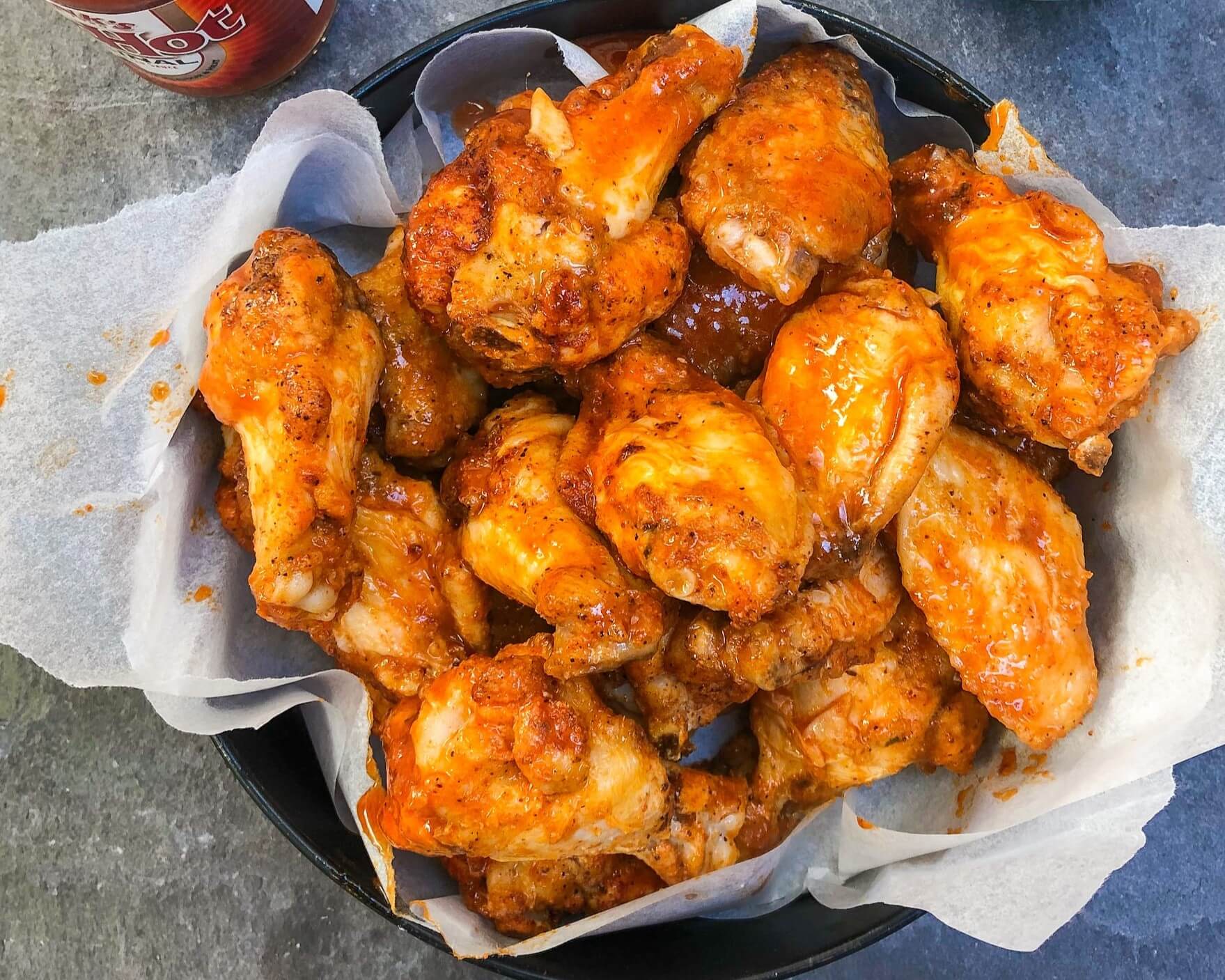
For you own copy of Datassential’s 2023 Food Trends, click here.

Prolific Performers

As Datassential refers to them in their report, these are the items “that will be everywhere” this year.

Food

  • Birria. This one makes sense as birria only appears to be capable of continually growing in popularity.
  • Mushroom. In Datassential’s opinion, we should expect more menus to feature mushroom snacks. Also, expect to see (or add yourself) lesser-known, rare, and exotic mushrooms on menus.
  • Salsa macha. Over the past four years, according to Datassential, salsa macha as grown a staggering 339 percent on menus.

Drink

  • London Fog. A compelling earl grey tea latte.
  • Mangonada. Salty, tart, fruity, and bold, the Mangonada is a flavorful frozen drink.
  • Ranch Water. Simple, timeless, and refreshing. In 2022, per Datassential, Ranch Water was the fastest-growing cocktail.
  • Soju. According to Datassential, soju is the third fastest-growing spirit on restaurant and bar menus.

Ingredient

  • Spicy maple. As the image atop this article suggests, expect spicy maple to replace or at least give hot honey a run for its money.
  • Ube. A striking purple yam from the Philippines.
  • Yuzu. Datassential predicts this citrus fruit will start showing up on many chain restaurant menus.

Promising Performers

In Datassential’s data-driven opinion, the following items need to be on every operator’s radar.

These are the items that have the potential to “hit it big” in 2023.

Food

  • Pickled strawberries. Interestingly, this matches up with Technomic’s trend prediction for the US, Canadaworldwide, really.
  • Savory granola. Not only on its own but as an element of savory, healthy bowl.
  • Sisig. A Filipino delicacy with pork belly, pig’s face, and chicken liver as key elements.

Drink

  • White coffee. As Datassential states, “there’s always room for coffee innovation on menus.”

Ingredient

  • Black tahini. The appearance of black tahini is quite striking, making for dramatic presentations. And as we know, striking presentations are perfect for social media marketing and engagement.
  • Cannabis. The legalization of recreational cannabis use in almost half of US states is leading to innovation in this space. And as more markets legalize public consumption in the form of F&B items on-premise, restaurants and bars will add cannabis-infused items to their menus.
  • Cherry blossom, or sakura. It seems that cherry blossoms are poised to take off in the US market.
  • Chestnut flower. Per Datassential, this ingredient is gaining popularity for use in winter baked goods.
  • MSG. For decades, restaurants proudly proclaimed “no MSG” or “MSG-free” on menus due to misconceptions. Now that consumers are better educated about ingredients, restaurants are proudly proclaiming their use of MSG.
  • Verjus. An ancient juice made by crushing unripened wine grapes. It can be an ingredient in a sauce, as a condiment, or to deglaze a pan.

There you have it—20 items to consider adding in your next menu update, featuring in your next LTO, or at least keeping an eye on in 2023.

Image: Scott Eckersley on Unsplash

Top