Hotel

by David Klemt David Klemt No Comments

2026: Animals vs. Plants?

2026: Animals vs. Plants?

by David Klemt

Fine-dining plating of beef at a gourmet dining experience in Alberta, Canada

Gourmet dining experience featuring Canadian beef.

According to Datassential, plant-based meat and seafood alternatives have reached a plateau, meaning that animal meats should go hard in 2026.

Last September, the F&B intelligence platform surveyed 993 consumers who eat both animal and plant-based meats. Most indicated that they were more interested in the former than the latter.

There are three primary factors driving this sentiment, per Datassential. The top factor is how natural one category is in comparison to the other. Second is versatility. And third, which is perhaps the most important to operators with food programs, is craveability.

More Natural

Of the 993 survey respondents, 65 percent indicated that animal meat is more natural to consume than its plant-based counterparts. This appears to be the top concern or motivating factor, as it represents the greatest sentiment per respondents.

This does make some sense, at least to me. Over the past several years I’ve heard variations of this point of view at restaurants, inside kitchens, in discussions with F&B peers, while speaking with clients, and at trade shows. A common misgiving can be summed up thusly: “We don’t know exactly what they’re putting in these products.”

That doesn’t bode well for overall consumer perception.

More Versatile

Survey respondents also expressed that they feel animal meats are more versatile than plant-based alternatives. In fact, 61 percent shared that opinion.

Again, I’ve heard variations of this statement several times, and I’m sure I’m not the only one. You’ll hear “But what do I do with it?” at trade shows where there are plant-based brands exhibiting at booths and doing demos.

More Craveable

Finally, craveability. This is an interesting one. Nearly 60 percent of respondents (59%) stated that they crave animal meat on a regular basis. On its own, that’s not an incredible stat. However, that majority opinion consists of people who don’t follow through on that craving.

In other words, even people who don’t eat animal meat regularly feel its pull. That doesn’t necessarily include people who adhere to vegetarian or vegan diets, but it’s possible.

More Meat

Along with this comes some insight into consumption habits. Per the Datassential survey, 37 percent of respondents increased their consumption of animal meat more than they boosted their intake of plant-based counterparts.

This is logical when we take the three sentiments above into account as a whole. If something is more natural, more versatile, and more craveable, it stands to reason consumers are going to choose to consume it, and even consume more of it more often.

It’s also possible this increase relates to consumer interest in proteinmaxxing.

More Choices

So, where does this leave operators and their food programs?

Well, it leaves them needing to make programming, menu, and inventory choices.

Datassential suggests that plant-based meats have plateaued in the retail space. It certainly seems that consumer sentiment toward plant-based meats has also plateaued among consumers, based on their survey results.

However, that doesn’t mean operators should abandon plant-based meats and altogether. The better, more intentional approach is to run reports, analyze the data, and make choices with surgical, informed precision.

What do the numbers indicate? Are plant-based meats lagging, and are they taking up valuable inventory space? If orders for plant-based meats are declining, what do sales for “center-of-plate” vegetables look like? What can be leaned into harder, what can be adjusted, and what should be removed?

And, crucially: Are the choices for moving forward being made in a well-considered, intentional manner, or are they just knee-jerk reactions and guesses?

It’s worth noting that Datassential’s consumer sentiment survey focuses on plant-based meats, not just plants. The survey respondents didn’t indicate a decline in interest for items like cauliflower or portobello steaks.

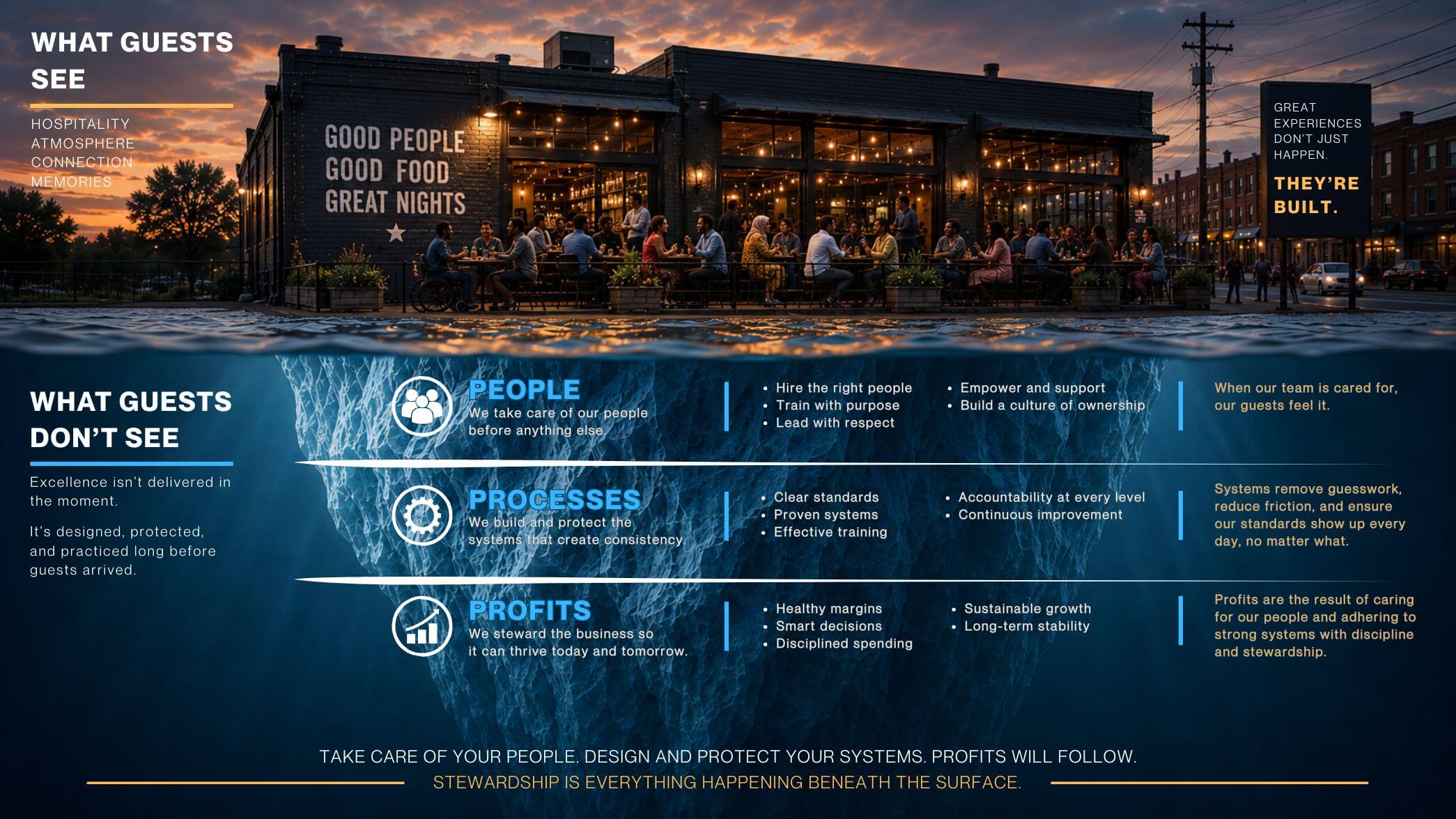
Whatever choices are made, operators need to leverage data and facts, and follow the Three Ps: People, Processes, and Profits.

Image: Deane Bayas via Pexels

Client Intake Form - KRG Hospitality

by David Klemt David Klemt No Comments

Tequila may Drive These 2026 Trends

Tequila may Drive These 2026 Trends

by David Klemt

Clear glasses filled with tea, served from a silver teapot at a restaurant

Is there alcohol in that teapot? Maybe.

While some of us continue to cross our fingers that tequila will have their year as the top spirit, other similar sips may rise up in 2026.

One can argue that tequila finally clinched the Top Spirit crown in the US and made 2025 its year. After all, it showed the fastest growth of any spirit last year.

Further, some sources report that tequila generated more revenue than any other major category in the US. Per reporting, premiumization is believed to be a major driver of tequila’s 2025 success.

However, other sources report that vodka still holds the throne due to volume sales. It probably won’t shock a single person that Tito’s holds the number one spot as 2025’s top-selling brand.

In Canada, beer earned the top spot by overall market share. However, Canadian whisky led in 2025 as the top spirit, though tequila garnered notable interest.

Meanwhile, two spirits similar to tequila may finally have meaningful moments in 2026 as vodka and the world’s most-famous agave spirit battle for the title. If Datassential and Nation’s Restaurant News are accurate in their predictions, raicilla and sotol may finally become even more well known to consumers this year.

What is Raicilla?

This agave spirit has been produced in Jalisco, Mexico (for the most part), for at least three centuries. And yet, it wasn’t granted its own Denominación de Origen (Designation of Origin, or DO) until 2019.

Authentic raicilla can only be produced in 16 municipalities throughout Jalisco, and, for some reason, one municipality in Nyarit, called Bahía de Banderas.

There are essentially two regional types of raicilla, de la costa and de la sierra. As the names imply, the former are coastal raicillas, and the latter are from mountainous areas.

Some varieties of raicilla will be familiar to tequila drinkers: joven, reposado, and añejo. There are also varieties that have been aged or matured in glass, abocado (infused raicilla), and artisanal double-distilled raicilla.

Unlike tequila, which can only be made from Blue Weber agave, raicilla is made from several different types of agave. Intriguingly, most raicilla is made with wild agave. The reason is simple: raicilla production is nowhere near the scale of tequila, so for the most part, producers don’t need to cultivate huge fields of agave.

Generally speaking, there are two primary approaches to cooking agave for raicilla, resulting in different flavor profiles. De la sierra producers tend to cook the agave above ground. Conversely, de la costa producers mainly utilize underground or pit ovens.

So, de la sierra raicilla usually doesn’t have smoky notes like mezcal, whereas de la costa raicilla is more likely to share that profile. Generalizing again, raicilla is characterized most often as being more floral and vegetal than tequila and mezcal. Really, a raicilla’s flavors and aromas are highly dependent on terroir.

What is Sotol?

Contrary to a common misunderstanding, sotol isn’t derived from agave. One common thread connecting tequila and sotol is the fact that they’re both traditional Mexican distilled spirits.

Another similarity is the production method: piñas are harvested and cooked, then fermented and distilled.

However, it’s a plant known as Dasylirion that’s used to produce sotol. Commonly known as “desert spoon,” this plant is a member of the asparagus family, as is agave. This may be what leads some to believe that sotol and tequila are both agave-based spirits.

Like tequila and raicilla, sotol is protected by a DO. This means true sotol can be produced exclusively in the Mexican states of Chihuahua, Coahuila, and Durango. It must be noted, though, that there are producers in Texas “don’t recognize” the DO and bottle what they call sotol.

A detail that may appeal to more sustainability-minded guests: sotol production is considered more eco-friendly in comparison to tequila and raicilla. When harvesting desert spoon for sotol, the roots aren’t dug up, meaning a single plant is capable of producing several bottles of sotol over its lifetime.

Desert spoon piñas are cooked in an earthen pit, and terroir is a factor. Depending on the regiondesert, forest, or prairiea sotol will have different flavor and aroma profiles.

For example, a forest sotol may have notes of pine, eucalyptus, and mushroom. In contrast, a desert sotol may be characterized by leather and pepper. Sotol is complex and will keep the adventurous engaged for quite some time.

How can Operators Capitalize?

One of the most effective ways to introduce guests to raicilla and sotol is to leverage the undeniable and seemingly unstoppable popularity of tequila.

And while it’s fun to nerd out over production, it’s likely a better idea, initially, to taste guests on tequila, raicilla, and sotol. While you’re there, you can also include mezcal.

Particularly notable is NRN itself predicting sotol as a trend of its own this year. Further, Datassential has identified raicilla as a trend in their own report.

Of course, there are also some compelling 2026 trend predictions you can leverage with these two traditional Mexican spirits.

Both raicilla and sotol are more than capable of standing in for tequila and mezcal in cocktails. However, raicilla can also tag in for gin, and sotol can act as substitute for gin and vodka.

Off the top of my head, raicilla or sotol Margaritas and Negronis should appeal to a wide range of guests.

This brings me to a simple trend that NRN predicts may take off in 2026: smaller cocktails.

Think (and Price) Small

That’s it; it’s that simple. People seem to be drinking less, not just in frequency but in ABV.

So, it may behoove operators to offer smaller cocktails, accompanied by appropriately reduced prices. This means the drinks are priced appropriately rather than offering discounts in the hopes of driving traffic.

Not only does this move, when intentional, speak to a current shift in guest imbibing behavior, and appeals to those who want to go out to bars and restaurants but don’t want to spend much.

The New Happy Hour

This is where a few trends converge. According to Datassential, “teatime is the new happy hour.”

And per The IWSR, playfulness may also take hold in 2026. I’m sure you can see where this is going.

In Datassential’s view, teatime rather than traditional happy hour gives operators more leeway in terms of dayparts. Noon, early afternoon, early evening, brunch… It’s all on the table, and there isn’t confusion around start and stop because it’s not referred to as a happy hour.

It also allows operators to offer tea-based cocktails made with raicilla and sotol (or any other spirit), and low- and no-ABV tea drinks. Again, this speaks to a range of consumer behaviors and expectations.

The Three Ps

Whatever trends operators choose to pursue this year, their decisions must be intentional.

That means viewing them through the lenses of People, Processes, and Profits.

People: Do we have the right people in place in the right roles? Are we serving our guests to the best of our abilities? Team member or guest, are we truly treating everyone with respect and gratitude?

Processes: How often are we reviewing each operational element? Are we reviewing our menus at regular intervals over the course of 12 months, or are we doing this annually (or not at all)? How are we approaching our pricing? When was the last time we reviewed and tested each and every one of our systems?

Profits: Total sales are great, but are we making money? As Doug Radkey, president and principal consultant of KRG Hospitality says, “Sales are a vanity metric. Profits tell the real story.” Do we know our numbers? Are we controlling costs? Do we make pricing and labor decisions proactively and strategically, or are we panicking and reacting without careful consideration?

Those are by no means all of the questions we need to ask on a regular basis, but they’ll give operators a solid baseline.

Image: Davey Gravy via Unsplash

Client Intake Form - KRG Hospitality

by David Klemt David Klemt No Comments

Is 2026 the Year of ‘Maxxing?

Is 2026 the Year of ‘Maxxing?

by David Klemt

Stark image of a speed limit sign that reads "MAXIMUM 30"

If we pretend this is referring to grams of fiber, that’s excellent fibermaxxing.

If recent reports and consumer behaviors are any indication, and I think they are, health-conscious “maxxing” trends are on the menu in 2026.

Currently, proteinmaxxing appears to be king of Diet Trend Hill.

In 2026, though, protein may face a realistic contender for the crown: fiber.

Look it up and you’ll see it’s not an entirely new trend, and has been on the upswing since at least the middle of 2025.

For operators, this is yet another consumer signal. The interest (some would say obsession) in high-protein diets has inspired menu changes across categories. Whether a QSR with global reach, a regional chain, or a local independent, restaurants have been responding to their guests’ desire to consume more protein.

Now, it’s possible an interest in a high-fiber diet may inspire more menu changes and additions.

What is GLP-1?

Would you like a healthy dose of pedantry? Fantastic.

“GLP-1” stands for “glucagon-like peptide 1,” which is a hormone found in our bodies. When we eat something, GLP-1 stimulates insulin secretion.

A GLP-1 drug is an “agonist.” That is, it mimics, in this case, a hormone to cause a response.

So, when we talk about GLP-1, it’s a hormone; when we talk about the drug, it’s a substance humans take predominantly via injection. Pedantry: complete.

It may seem as though these drugs came onto the market just before Covid ravaged the world. However, the hormone was discovered around 50 years ago, and the first GLP-1 medication was approved by the FDA just over 20 years back to treat type 2 diabetes. From 2018 to 2023, according to multiple analytics sources, interest in, and use of, GLP-1 drugs for weight loss exploded.

GLP-1 medications cause the body to delay emptying the stomach. Further, the drugs tell the brain to reduce the desire to eat. Both actions curb appetite, and tend to result in significant weight loss.

Of course, side effects have been reported widely. Those who experience rapid weight loss may experience “Ozempic face.” According to Harvard Health Publishing (2004), this appearance is characterized by:

  • a hollowed look to the face
  • changes in the size of the lips, cheeks, and chin
  • wrinkles on the face
  • sunken eyes
  • sagging jowls around the jaw and neck.

There are also several gastrointestinal side effects one can experience, but I’ll let you use your imagination rather than list them.

What is Proteinmaxxing?

This one is quite a bit simpler to understand: It’s focusing on the consumption of protein, and “maxxing” it out. I assume there are two Xs to really drive home the point that something is being maximized.

Taken to the max (or “maxx,” I guess), there are proteinmaxxers who aim to consume 200 grams of protein per day. According to Cargill, a company that distributes high-protein products, there are “entire ‘social subcultures'” built around the consumption of high-protein diets. Essentially, for some proteinmaxxers, the diet is more like an ideology.

However, some doctors believe consuming that much protein can be harmful, not healthy.

Recognizing that there’s a range when it comes to protein consumption (age, activity level, etc.), there are some general guidelines one can follow.

Using the standard 2,000-calorie-per-day diet, common guidance is that 10 to 35 percent of calories should come from protein. For an “average” person, daily protein consumption can be calculated at 0.8 grams per kilogram of body weight. So, someone who weighs 150 pounds (68 kilograms) should consume 54 grams of protein per day.

People tend to face muscle loss in their 40s or 50s, and therefore should aim for 1.0 to 1.2 grams of protein per kilogram of body weight. On the high end, for that hypothetical person weighing 150 pounds, that’s an increase to 82 grams of protein.

Those who exercise regularly should increase protein consumption to 1.1 to 1.5 grams; that rises to 1.2 to 1.7 grams for people who lift weights or do other strenuous exercise on a regular basis. Using the high end, that’s 102 grams of protein per day for the former, and 115 to 116 grams for the latter.

Consuming 2.0 grams of protein per kilogram of body weight is considered “excessive” by some.

What is Fibermaxxing?

If you’re guessing that fibermaxxing is similar to proteinmaxxing, you’ve nailed it.

That said, the numbers are absolutely not the same in comparison to proteinmaxxing.

Unless something changes, the current definition of fibermaxxing appears to fall in line with current dietary recommendations: 25 to 38 grams of fiber per day.

Going deeper, nutrition guidelines state that the source of fiber should be food rather than supplements.

However, most Americans and Canadians consume just 14 to 15 grams of fiber per day. That’s a shortfall of 10 to 11 grams, every day.

It must be noted, however, that some people need to adhere to low-fiber diets for medical reasons. Further, while there’s some debate, some believe 50 grams of fiber is excessive; others feel that too much fiber is closer to 70 grams per day.

How does excessive fiber intake manifest? Again, that’s largely gastrointestinal, and, again, I’ll leave that to your imagination.

That’s all to say this: proceed with caution when trying out any diet, and try to find what’s best for you and your body.

Like protein, fiber can aid in weight loss. So, with the rise of GLP-1 medications, it’s unsurprising that some people trying to lose weight are focused on fiber while some have lasered in on protein.

What is the Point?

“David… Seriously, what the hell? Thanks for the dietary info, but what are we doing here?” I can hear some of you asking.

Simply put, operators need to be aware of large-scale consumer trends. They must consider how it can affect their people, processes, and profits.

Per Datassential, just 13 percent of operators are aware of fibermaxxing.

Borrowing from Datassential’s trend ranking system (Inception, Adoption, Proliferation, and Ubiquity), it’s fair to say fibermaxxing consumers are either on the cusp of moving on from inception to adoption or are already there.

As far as proteinmaxxing, that’s definitely in proliferation territory. What’s my evidence? A QSR, Arby’s, to be precise, introduced Steak Nuggets in Q4 of 2025. That’s an entirely different spin on nuggets in fast food, and even if it’s not stated explicitly, that certainly appears to be an appeal to proteinmaxxers looking for a snack.

There’s also the seeming addition or infusion of protein to all manner of food and drink items on menus across all categories of restaurants.

Protein-infused coffee drinks, protein-enhanced pastries, QSR meal combos for people leading a high-protein lifestyle… There are lists online of the top orders at various chains for consumers seeking protein. Of course, there are also lists online identifying high-fiber items offered by various well-known restaurants.

Then we can look to retail labeling. Unsurprisingly, food brands want to leverage increased consumer interest in protein, fiber, and other nutritional values. These companies are calling out their protein and fiber values to encourage purchases and brand loyalty.

Restaurants and bars can do the same. In some cases (more than you many think), a given menu already has high-protein and high-fiber options; it’s just not called out directly.

What is the Takeaway?

As we kick off 2026, let’s change the approach. If you want to appeal to health-conscious guests, tell them exactly what they want to know.

Review your menu, identify what falls in line with various diets, and call out those values or qualities in the descriptions.

Some consumers are proteinmaxxing. Others are fibermaxxing. Somehow, I expect balancemaxxing (maximizing the focus on a balanced diet; did I just coin a phrase?) to take hold in 2026 or 2027.

Similarly, operators need to focus on profitmaxxing for the financial health of their business, the financial stability of their hardworking teams, and longevity in serving their communities.

It all comes down to the Three Ps: People, Processes, and Profits. Serve the people (including your team members) and perfect your processes, thereby maxxing your profits.

Image: Erik Mclean via Pexels

Client Intake Form - KRG Hospitality

by David Klemt David Klemt No Comments

Bar Hacks 2025: Top Episodes

Bar Hacks 2025: Top Episodes

by David Klemt

Bar Hacks Spotify for Creators Wrapped 2025 cover

Thank you to every one of our incredible guests and our amazing audience for listening to Bar Hacks and Bar Hacks: ReFire this year!

Season six, which spanned 2025, was another fantastic year for insightful and fun conversations.

Among our informative and engaging guests were Hayden Lambert, who shared his “simplexity” philosophy. Michael Suomi, the creative mind behind several award-winning designs, dropped by for a great chat.

Matty Rangel popped in to chat tending bar, dive and neighborhood bars, crafting engaging content, and more. KRG Hospitality design partner Nancy Kuemper of Mabel Design Co. shared her journey in hospitality design, and her tips for maximizing the client-designer relationship.

Bar Hacks host David Klemt addressed real-world hospitality business situations with Bradley Knebel over the course of several Bar Hacks: ReFire episodes.

Of course, that’s just a handful of the guests and topics from 2025. We’re grateful for everyone who takes the time to stop by and chat with us, and for everyone who listens, subscribes, likes, and shares.

Thank you all so much!

Below, the top episodes of 2025. We’ll see you in 2026! Cheers!

Episode 136 with Hayden Lambert

Our number one episode of 2025! Hayden Lambert, co-founder of the unique and award-winning Above Board bar in Melbourne, Australia, pops by for an incredible chat.

When Lambert would explain the reductionist philosophy behind the concept for Above Board to others in the industry, he was told it wouldn’t work. Well, nearly ten years of operation, a few appearances on the World’s 50 Best Bars list, and other accolades later, Above Board continues to prove that its unique approach works.

On this episode of the Bar Hacks podcast, Lamber discusses his journey through hospitality, traveling the world, still being tested as a bartender, “simplexity,” how brands can succeed in a bar without a back bar, the magic that is making guests feel like their experience was easy, and much, much more.

Lambert drops a ton of useful information and experience in this episode that veteran, new, and hopeful bar owners need to hear and consider.

Spotify

Apple Podcasts

Episode 141: Brand Authenticity: Robert Minucci of Talkhouse Encore

On this episode of Bar Hacks, host David Klemt sits down with Rob Minucci, CEO and co-founder of Talkhouse Encore, a premium RTD brand inspired by the legendary dive bar Stephen Talkhouse in the Hamptons. Together, they delve into the story behind the brand’s inception during the pandemic, discussing how Rob’s business partner Ruby Honerkamp (whose family owns the iconic bar), sought to bring the spirit of the Talkhouse to the masses through gluten-free vodka and tequila seltzers. Or, as Rob explains, dive bar classics in RTD form.

Rob shares insights into the challenges of launching a new beverage brand, from navigating distributor relationships to the importance of creating a standout product that resonates with consumers. He emphasizes the significance of authenticity and flavor, particularly for the Gen Z demographic, who are looking for more than just a drink;they want a story and a connection to the brand.

You’ll learn about the strategic decisions that shaped Talkhouse Encore, including its unique approach to market research and branding. Rob explains how they focused on building a strong local presence before considering expansion, ensuring that they meet consumer demands with quality ingredients and an engaging brand narrative.

Spotify

Apple Podcasts

Episode 134 with William Brooks

On this episode, host David Klemt sits down with William Brooks, the Global Brand Ambassador for Tequila Herradura. With a background from Johnson & Wales University and extensive experience in the spirits industry, William shares his fascinating journey from whiskey to agave.

Discover the unique qualities of tequila, as William dispels common myths and misconceptions. He dives into the importance of terroir, the differences between lowland and highland agave, and how these factors influence flavor profiles. The conversation also covers the innovative practices at Tequila Herradura, including sustainability efforts, and the creation of the reposado category.

Plus, William shares his favorite tequila cocktails, perfect food pairings, and tips on how to properly taste tequila (hint: replace the lime). Whether you’re a seasoned agave enthusiast or just starting to explore, this episode is packed with valuable insights and delicious ideas.

Spotify

Apple Podcasts

ReFire: Brilliant Burgers, Sloppy Service & Persnickety Perception

Guest experience drives perception, and perception shapes value. As you may have already learned, perception can be impacted on what may feel trivial to operators and their teams but is incredibly important from guest to guest.

On this episode of Bar Hacks: Refire, David Klemt, partner at KRG Hospitality, and co-host Bradley Knebel of Empowered Hospitality break down a real-world story of two restaurants offering the same menu and pricing, but with vastly different outcomes. One felt like a letdown because of disorganization and sloppy service; the other delivered a memorable experience simply by getting the fundamentals right.

The duo dig into why poor guest experience makes food and drinks taste worse; why discounting without strategy sends the wrong message; and why every detail—from lighting and music volume to greetings and check drop—matters. If your guests don’t feel good about the experience, they won’t feel good about the value. And if they don’t see value, they won’t see a point in returning for more visits.

Tune in to rethink what you’re really selling.

Spotify

Apple Podcasts

Episode 133 with Michael Suomi

Suomi Design Works is an award-winning hotel design studio dedicated to approaching every hospitality project with an exceptional level of creativity. In fact, Michael Suomi, president of the studio, actively seeks out unique, challenging projects.

On this episode of the Bar Hacks podcast, host David Klemt chats with Michael about a number of these extraordinary projects. Further, Michael shares his approach to onboarding clients, building unique teams for exceptional projects, trends he thinks may stand out in 2025 (and which he’d like to see disappear), and more.

Spotify

Apple Podcasts

Episode 139 with Matthew Rangel

We sit down with real-life bartender, actor, and social media creator Matthew Rangel (@therealmattyrangel) an hour before he needed to open one of the three bars at which he works in Wisconsin to talk neighborhood bars, dive bars, mental health, social media, and the Midwest.

For those who haven’t yet come across Matty’s bartending videos, they’re quick, funny, and relatable to anyone who has worked behind the stick, or worked at a bar or restaurant. Matty breaks down his approach to creating his videos, which is a quicker process than most would likely expect. He also explains that people don’t need to buy the most expensive recording gear or spend hours editing to make impactful videos.

Matty also discusses mental health and the hospitality space, in particular bartending. He hosts Mental Health Mondays each week, hoping for people to reach out, share, connect, and work through their struggles.

Spotify

Apple Podcasts

Episode 140 with Finian Sedgwick

Long-time listeners know we love it when previous guests return! On this episode, Finian Sedgwick, chief growth officer at BAXUS, comes back onto the podcast.

Finian and David chat about the growth of BAXUS and the BoozApp, including new features for the peer-to-peer marketplace, popular bottles and spirits categories, and the rabbit hole members can go down when searching for items to purchase and trade. They also talk about bottles that have grabbed Finian’s attention, why he’s bullish on wine, and how alcohol-free cocktail menus are more important than some operators may think.

Speaking of operators, the two also discuss the doom-and-gloom articles blaming Millennials and Gen Z for “killing” or otherwise “ruining” alcohol consumption and sales. Is that really the state of booze, or are people rage-baiting for clicks, and are some operators failing to meet their guests where they are?

Spotify

Apple Podcasts

Episode 130 with Giuseppe Gallo

Giuseppe Gallo has accomplished a lot in his two decades-plus in the hospitality and beverage spaces: he’s a respected vermouth and amaro expert, the winner of the 2014 Spirited Award for Best International Brand Ambassador, an educator and drinks historian, and a bartender’s bartender.

Among other topics, this episode explores the creation of SAVOIA Americano (and ITALICUS). Giuseppe introduces SAVOIA Orancio, an innovative new aperitivo made with natural orange wine. Throughout the conversation, Gallo
emphasizes the importance of bartender insights in shaping successful beverage brands, and the guest experience.

Spotify

Apple Podcasts

ReFire: Bad Behavior & Ridiculous Regulars

Hosts David Klemt and Bradley Knebel tackle two real-life restaurant and bar situations in the first ReFire of 2025.

The two tackle the topic of an operator who’s hesitant to believe it when multiple employees claim a culinary team member is rude, hostile, and abusive…but believes that team member when they make the same accusation against a quiet but hard-working back-of-house peer. Don’t worry – it gets worse!

Then, David and Bradley take a look at a stunning, on-the-spot termination of a bartender who had been in role since day one. The restaurant was busy, the bar was slammed, and the word of a regular got the bartender of five years fired instantly. Something doesn’t add up!

Look, firing someone is never pleasant. However, it’s going to happen. Operators and leadership team members need to have standards in place and communicated clearly, a process for terminations, and the understanding that how they fire people speaks to their credibility and reputation.

Spotify

Apple Podcasts

ReFire: “We’re Having DinnerYou’re Not”

We managed to squeeze three real-world hospitality situations into episode five of ReFire!

On the last episode, David and Bradley talked about guest perception, and how the “little” things can have a big impact. This time, they discuss brand perception, and how quickly a misstep can turn into a catastrophe.

Then, they talk about “skunking,” and how it impacts your team.

Finally, David and Bradley take a look at a restaurant’s new SOPs shared by a team member, and why they’re a problem.

Spotify

Apple Podcasts

Image: Spotify

Client Intake Form - KRG Hospitality

by David Klemt David Klemt No Comments

Project Management in Hospitality

Project Management in Hospitality

by Doug Radkey

A person reviewing project progress tracked via organized Post-It notes attached to a black brick wall inside an office

There’s a crucial element of hospitality that almost no one talks about publicly. It’s not glamorous, and it isn’t Instagram-worthy.

It isn’t the incredible plating or glassware moment, or even the lobby reveal.

It’s the part that happens long before the first cocktail is poured, before the first plate leaves the pass, before the first guest forms an opinion of your brand.

It’s the real work: the often messy, complicated, high-stakes world of project management for new hospitality concepts and brands.

And whether you’re opening a bar, restaurant, boutique hotel, or entertainment venue, what happens behind the scenes will determine your outcome far more than any design detail or menu item ever will.

This is where leadership begins. Where clarity is built, and chaos either begins or ends.

At KRG Hospitality, we’ve developed a 500-point pre-opening checklist for bars and restaurants, and a 750-point version for hotels. Both are testaments to the true magnitude of what it takes to open a hospitality business successfully.

These tasks aren’t theory, they’re scars. They’re lessons from the past 15-plus years. They’re real-world evidence of what separates the operators who crush it from those who crumble under the pressure.

Read on to learn why project management is leadership in motion, why the pre-opening phase is the heartbeat of your future, and why the way you lead this stage will shape your systems, your culture, and your guest experience directly for years to come.

The Illusion Killing new Concepts

There is a dangerous misconception in this industry that opening a hospitality business is about the vibe.

That it’s about the look, the food, the coffee. The room, or the furniture and fixtures.

People fall in love with the surface level.

But what they don’t see are the hundreds of steps below the surface: zoning, permitting, design, engineering, millwork, logistics, lead times, vendor negotiations, and inspections.

They don’t see the playbook development, constant budget balancing, financial modeling, team recruitment, and brand development.

The guest (and even many first-time operators) only ever see the top 20 percent of the iceberg.

The seasoned operators and consultants deal with the remaining 80 percent, the part that determines whether you open with strength or with struggle.

And this is why so many first-time operators get blindsided. They underestimate the workload and the decisions required. They underestimate the cost of rework.

But most importantly, they underestimate the need for leadership.

Because here’s the reality: In hospitality development, something always goes wrong, no matter how many times you’ve done this. Something always changes. Something always costs more or takes longer than expected.

This is normal. What’s not normal is having no leadership framework in place to respond to it.

Leadership is not Force, It’s Direction

Leadership during pre-opening isn’t about intensity, it’s about direction. It’s the ability to organize complexity so that people can function inside it.

A great leader creates simplicity inside the complexity. A great leader knows the difference between preferences and priorities. Greatness is anticipating friction instead of reacting to it.

A great leader protects momentum.

Without leadership, the project drifts. That costs time and money. When the money disappears, stress increases. When stress increases, decision quality collapses.

The project collapses long before the doors ever open.

This isn’t about charisma, it’s about clarity. Pre-opening leadership is the anchor that holds the entire system steady during the most difficult of times.

You Cannot Build Alone: The Power of a Support Team

A hospitality business is never built by one person.

It’s built by a support team, an often complex network of architects, engineers, designers, contractors, vendors, operators, inspectors, consultants, coaches, advisors, accountants, and legal professionals.

And here’s what every seasoned operator knows: Your support team can either elevate or drain you.

When communication breaks down between just one member of the team, the entire project feels the effect. If just one person delays, everyone is delayed. When one person misunderstands the concept, the project loses alignment and coherence.

This is why building the right team early matters so deeply. You need people with experience, people with judgment, people with accountability.

Most importantly, you need people who have clarity.

Hospitality development isn’t a place for ego, guesswork, or passengers along for the ride. Everyone must respect their lane and the responsibilities within it.

Teamwork is infrastructure. It’s the backbone of communication, and the foundation of execution.

Communication: The Number one Predictor of Success

Communication is the lifeline of any hospitality project. But communication cannot depend on memory or mood; it must be systematized.

This means having scheduled support team calls, shared documents, version control, project trackers, approval pathways, defined ownership, and deadlines.

The number one killer of hospitality development projects is not incompetence, it’s silence. Silence leads to assumptions. Assumptions lead to errors. Errors lead to rework. Rework leads to delays. Delays lead to cost overruns.

A project with poor communication becomes reactive. A project with structured communication becomes proactive.

Great communication isn’t noise, it’s clarity delivered consistently and intentionally.

Decision-Making Under Pressure

In the pre-opening stage, hundreds of decisions must be made before you generate a single dollar of revenue. The challenge isn’t the sheer number of decisions, the challenge is making decisions with intention.

Great decision-making in hospitality development is based on the concept, the budget, your market positioning, operational feasibility.

Above all, it’s centered on the staff and guest experience.

You do not decide based on emotion, comparison, pressure tactics, or impulse. You do not decide based on what your competitors are doing, or what your long-time friend might think would be “cool.”

This is where discipline comes in.

Decisions build the foundation of the business. Make quick decisions, yes, but decisions made from a position of clarity, never panic.

Tools Don’t Replace Leadership, They Amplify It

Hospitality development is too complex to track in your head. This is why communication tools and organized emails, plus project dashboards, timelines, and checklists must exist.

Our 500-point and 750-point checklists exist to prevent blind spots, anticipate missteps, and avoid costly oversights. They were crafted from real pain points experienced by real operators who learned the hard way.

But let’s be clear: technology and AI can only support you, they can’t lead for you.

AI can’t walk a construction site or negotiate with a contractor. AI can’t inspect equipment or interpret tension in a room. It can’t handle nuance, emotions, or judgment.

AI can accelerate thinking, but it can’t take responsibility. That responsibility belongs to the leader.

Responsibility is the heart of project management leadership.

Chaos or Clarity: You Choose Your Opening

The pre-opening phase of a bar, restaurant, or hotel will set the tone for everything that comes after.

If your development is chaotic, your opening will be chaotic.

If your opening is chaotic, your systems will be chaotic.

Your guest experience will be chaotic if you systems are chaotic.

Teams inherit the energy of the build-out. Guests feel the residue of your process in every detail and every decision through timing, cleanliness, flow, and service.

If your development is structured, your opening will be structured. Your team will feel your clarity, and your systems will reflect it. Your guests will experience your clarity.

Remember, opening day is not the beginning, it’s the result.

The Real Transformation of Project Management Leadership

When you lead development with discipline, communication, and intention, you reduce costs, delays, rework, and stress.

When you lead development with discipline, communication, and intention, you increase alignment, quality, team trust, operational efficiency, and long-term profitability.

This is the transformation.

This is how you open strong instead of scrambling.

It’s how you create a culture that respects clarity instead of chaos.

The businesses that succeed in hospitality aren’t always those with the most capital. Those businesses operate with the most clarity. They are guided by people who lead the development process as if their entire future depends on it, because it does.

Project management in hospitality is leadership in motion. It’s coordination, communication, and clarity repeated every single day. It determines your systems, your culture, your guest experience, and your future profitability.

Everything begins long before the first guest walks through the door.

Final Word: Lead with Intention or Risk Losing Momentum

If you’re developing a hospitality concept or planning to open one soon, here’s the greatest leadership lesson you can take from this:

Lead with clarity. Build with intention. Communicate relentlessly. Surround yourself with a team that respects the responsibility of development.

Do this, and you won’t just open, you’ll open strong. You’ll create a business built on discipline instead of chaos, a business that grows instead of reacts. You’ll create a business that lasts.

Hospitality isn’t built in the spotlight. It’s built behind the scenes through systems, leadership, and the courage to do things right long before the world ever sees it.

This is how you create hospitality brands that win. It’s is how you move from chaos to clarity.

Image: cottonbro studio via Pexels

Client Intake Form - KRG Hospitality

by David Klemt David Klemt No Comments

Where Americans are Moving

Where Americans are Moving

by David Klemt

An AI-generated image of a highly modified semi-truck and trailer in red, white, and blue livery, with a matching sportbike next to it.

If you’re going to move, move with some style. (AI-generated image. Shocking, I know.)

Migration has always reshaped the American hospitality landscape, and every wave of movement creates new winners, gaps, and demand curves.

The last several years have accelerated that reality.

People aren’t just moving for work anymore. While that’s still definitely happening, people are moving for many other reasons.

Affordability. Opportunity. Lifestyle. Emotional, mental, and physical safety. Sense of community.

Unsurprisingly, when people move, a market’s hospitality scene also changes.

Operators who understand where (and why) population is flowing hold an advantage. They can get a jump on emerging nightlife pockets, establish their brand, fill gaps in experiential demand, and shape the competitive landscape before it’s saturated.

I’ve addressed this topic a couple of times in the past, and I’ll say now what I’ve said then: Proceed with caution. Don’t move into an entirely new (to you and your business) market just because you see it on a list. Do your due diligence, collect data, and make an informed decision.

One source used for this article, the 2025 PODS Moving Trends dataset, gives us compelling insights. It identifies the top 20 move-in (inflow) markets and top 20 move-out (outflow) markets across the US.

Below is a breakdown of the cities Americans appear to be running toward, and the ones they may be running from, along with my thoughts on what this all may mean for operators who want to look toward the near and distant future.

Top 20 U.S. Inflow Cities/Regions (Operator-Focused Table)

Rank Market / Region Key Drivers Hospitality & Nightlife Opportunities
1 Myrtle Beach, SC/Wilmington, NC Cost, coastal lifestyle Strong tourist and transplant mix. Experiential nightlife.
2 Ocala, FL Affordability, space Upside for casual dining, sports bars, and entertainment hybrids.
3 Raleigh, NC Tech growth, livability Elevated cocktail, chef-driven concepts, and late-night growth.
4 Greenville–Spartanburg, SC Manufacturing boom Fast-growing bar scene. Needs mid-tier nightlife.
5 Dallas–Fort Worth, TX Jobs, affordability One of the hottest nightlife expansions in the US.
6 Charlotte, NC Banking/tech migration Strong brunch, rooftop, and upscale/ultra lounge demand.
7 Boise, ID Outdoor lifestyle Craft spirits, brewery culture, and boutique venues.
8 Knoxville, TN Affordability Venue conversions, and approachable F&B concepts.
9 Nashville, TN Cultural magnet Hyper-competitive but high upside for differentiated concepts.
10 Jacksonville, FL Space, weather Large-format nightlife, and beach-driven experiences.
11 Chattanooga, TN Quality of life Cocktail bars, and neighborhood venues.
12 Huntsville, AL STEM growth Upscale casual. Modern nightlife remains underrepresented.
13 Portland, ME Coastal lifestyle Elevated F&B, and small-format high-end bars.
14 Johnson City, TN Rising affordability Mid-market restaurants, and breweries and brewpubs.
15 Spokane, WA Outdoor migration Coffee/café culture. Need for mid-tier nightlife.
16 Atlanta, GA Urban migration High-volume nightlife, and premium dining.
17 Greensboro, NC Cost Local-driven, neighborhood-first hospitality.
18 Asheville, NC Tourism, creativity Craft-forward bars, chef-driven restaurants, and experiential concepts.
19 San Antonio, TX Population boom High-energy nightlife, and experiential, fusion-driven dining.
20 Dover, DE Cost, proximity Community-focused F&B concepts.

Top 20 U.S. Outflow Cities/Regions (Operator-Focused Table)

Rank Market / Region Key Push Factors Hospitality & Nightlife Challenges
1 Los Angeles, CA Cost of living Talent and guests disperse. Local nightlife softening in mid-tier venues.
2 Northern CA (SF Bay) Cost, taxes Dining scene polarizing: very high-end on one end, budget on the other.
3 South Florida (Miami) Cost spike High-end clubs thrive. Aid-market operators squeezed.
4 Long Island, NY Affordability Retention issues, and older venues struggle.
5 San Diego, CA Housing cost Neighborhood bars lose regulars.
6 Central Jersey Tax + cost Casual dining loses volume.
7 Chicago, IL Crime perception, taxes Migration draining mid-market dining spend.
8 Boston, MA Cost + limited housing Strong tourism but locals moving out.
9 Hudson Valley, NY Rising prices Saturation in small-town dining.
10 Denver, CO Cost, congestion High competition, and nightlife plateauing.
11 Santa Barbara, CA High cost Smaller venues face labor pressure.
12 Seattle, WA Cost + policy fatigue Operators shifting to suburbs.
13 Stockton–Modesto, CA Spillover cost Limited nightlife growth.
14 Washington, DC Cost + remote work Lunch and after-work traffic decline.
15 Hartford, CT Stagnant wages Weak nightlife demand.
16 Tampa Bay, FL Overheating housing Volume-driven nightlife cooling.
17 Fresno, CA Low wage growth Margins get even tighter for restaurants.
18 Austin, TX Cost spike Boomtown-to-bust warning signs.
19 Bakersfield, CA Cost stresses Entry-level dining shrinking.
20 Philadelphia, PA Cost + crime narrative Suburban shift in nightlife spend.

The Story the Data Tells

1. The Southeast: America’s New Nightlife Frontier

Both Carolinas, Tennessee, Florida (particularly the northern region), and parts of Georgia are capturing massive lifestyle-driven migration.

Importantly, these states are luring more than retirees.

These markets reward:

  • approachable, high-vibe nightlife;

  • chef-driven but not overly precious dining;

  • hybrid concepts (sports lounges, social-gaming eatertainment, music-forward bars); and

  • suburban entertainment anchored in community.

I’m confident in saying that the southeastern US is where the next wave of innovative, experiential F&B will emerge.

2. High-Cost Coastal Metros: Bleeding Residents

It’s not like Chicago, Boston, Los Angeles, San Francisco, and Seattle are ghost towns. When it comes to hospitality, they’re destination cities with bars, restaurants, clubs, and hotels that are recognized on national and global stages routinely.

But the magnetic, tourist-attracting, accolade-winning concepts tend to be in the premium tier. Those concepts are winning (at least on the surface), but the middle in these destination cities is thinning out.

Mid-tier concepts in outflow cities are feeling the exodus. Operators firmly in the $25–$55 check average zone are exposed.

Meanwhile, comparatively, their high-end and budget peers are seeing healthier traffic and revenue.

3. Talent Migration: Reshaping Labor Markets

This may come as a shock but…hospitality professionals are also among those migrating in the US.

Chefs, bartenders, servers, bar backs, managers and other leaders… A not-insignificant number of our hospitality peers are also moving inland and south. They’re applying for roles when they arrive in inflow cities, changing up the labor pool.

Looking at outflow cities, the employment landscape in formerly top-tier markets becomes more competitive, and can become more expensive.

This is to say nothing of what migration does to demand. Emerging markets can suddenly support more concepts, particularly those that are innovative.

Some people who leave major markets may do so for a change in lifestyle. However, many still want access to a wide variety of restaurants, bars, and clubs. In some cases, they make investments in F&B concepts, reshaping the hospitality landscape of inflow cities.

On the other hand, hospitality groups see where populations are spiking, study those cities and the surrounding areas, and make their moves. Some will see an opportunity to move into a “new” market early, establishing themselves there before their competitors. Others will remain in a market in which they enjoy a strong position, planning to strengthen it even further as others leave.

4. The Mid-Sized City: Now the Sweet Spot?

Are you laser-focused on meeting guests where they are?

If you really believe in your concept, would you move to make it happen?

Would you strategize around an emerging market if a feasibility supported its viability?

Markets like Greenville, Chattanooga, Raleigh, and Huntsville are offering:

  • lower operating costs;

  • strong transplant populations; and

  • rapidly evolving taste profiles.

I think it’s safe to refer to some of these markets as the “next” Austins. They’re hot, but not so hot (yet) that they come with bloated startup costs.

Emerging markets can often offer very attractive startup positioning. This comes not only in the form of lower startup capital needs but also in the ability to stand out from already established offerings.

Key Takeaways for Operators

  • Consider following affordability trends rather than hype cycles.

  • Act early in mid-sized southeast and inland markets before saturation hits.

  • Expect tighter margins and slower traffic in coastal outflow markets, and in cities traditionally seen as premium, top-tier destination markets.

  • Anchor new concepts to emotional safety, community, and consistency. Each of those factors is contributing, at least in part, to today’s migration decisions.

  • Data > Vibes. Predicting the next market requires data—intelligence, facts, evidence—not vibes. There’s a reason KRG Hospitality starts with a feasibility study and follows it up with six other playbooks before completing the business plan, the final playbook in a set of eight.

Main source: PODS 2025 Moving Trends Report

Image: Microsoft Designer

Client Intake Form - KRG Hospitality

by David Klemt David Klemt No Comments

Where Canadians are Moving

Where Canadians are Moving

by David Klemt

An AI-generated image of a highly modified tuner car turned into a moving truck, with a long trailer adorned with Canadian maple leaves.

I don’t think anyone understands how much I need this “moving truck” to be real, and how much I want to drive it.

Data relating to inflow and outflow throughout Canada point to implications for major metros, mid-size markets, and hospitality.

On one side of the coin, there appears to be affordability-driven migration (mainly to Alberta). Flip that coin over and we see lifestyle-oriented shifts into smaller Ontario and BC markets.

U-Haul’s 2024 Growth Index gives us the cleanest nationwide list of the top inflow cities across Canada. For outbound trends, I’m analyzing StatsCan’s inter-provincial migration data, which shows where Canadians are exiting.

Most notably, Montréal, Toronto, and Vancouver appear to be experiencing the greatest outflow. And when people move, hospitality follows.

The hospitality implications of significant migration are enormous. Talent pools shift, concept viability changes, new nightlife pockets emerge, and major metros face softened demand outside tourist cores.

Before I get any further, a word of caution: As I’ve said countless times in articles, on podcasts, and in conversations, don’t move to a new-to-you (and your brand) market without data supporting that decision. (Scaling within a market in which you already operate also requires data.)

Below, the top inflow and outflow cities across Canada. Both charts also include possible opportunities and impacts.

Top 20 Canadian Inflow Cities (Operator-Focused Table)

Rank Market Key Drivers Hospitality & Nightlife Opportunities
1 Calgary, AB Affordability, jobs Massive opportunity for mid- to high-energy nightlife, and modern dining.
2 Edmonton, AB Jobs, cost Strong demand for new concepts; large population of younger guests and workers.
3 Belleville, ON Affordability Community-focused dining, pubs, and breweries.
4 Trenton, ON Military, cost Family dining and approachable bars.
5 Pembroke, ON Affordability Neighborhood restaurants, and pubs.
6 Brantford, ON Growth corridor Casual dining, lounges, and modern pubs.
7 Medicine Hat, AB Affordability Simple, approachable concepts.
8 Collingwood, ON Lifestyle, tourism High-end dining, wine bars, and boutique nightlife.
9 Parry Sound, ON Outdoor lifestyle Seasonal F&B and experiential venues.
10 Chatham–Kent, ON Affordability Family and value-driven dining.
11 Innisfil, ON GTA spillover Suburban nightlife.
12 St. Thomas, ON Industrial growth Mid-market restaurants.
13 Barrie, ON Boom-town status Strong bar and nightlife demand.
14 Woodstock, ON Growth hub Casual dining and social eateries.
15 Lindsay, ON Cost-driven migration Local-first hospitality.
16 Chilliwack, BC Less expensive than Vancouver Breweries and modern-casual concepts.
17 Owen Sound–Meaford, ON Lifestyle Seasonal and local-driven experiences.
18 Peterborough, ON Education and affordability Bars and casual dining.
19 Sydney, NS Cost, lifestyle Pubs and maritime-inspired dining.
20 Sidney, BC Vancouver Island draw Café culture and upscale casual concepts.

Top 15 Canadian Outbound Cities (Operator-Focused Table)

Rank Market (CMA) Key Push Factors Hospitality & Nightlife Challenges
1 Toronto, ON Housing cost, density Outflow of both talent and spend; mid-tier F&B softens.
2 Montréal, QC Wages vs. cost of living Growth slowing; nightlife remains strong but barbell-shaped.
3 Vancouver, BC Extreme housing cost Smaller venues under pressure; locals priced out.
4 Ottawa–Gatineau Cost and limited housing Restaurant scene stabilizing, slower growth.
5 Hamilton, ON Spillover cost Casual restaurants feel the squeeze.
6 Mississauga/Brampton Rising costs Suburban nightlife flattening.
7 Winnipeg, MB Slow wage growth Low spend-per-guest challenges.
8 London, ON Cost pressures Hospitality demand shifting outside city core.
9 Québec City, QC Aging population Limited nightlife expansion.
10 Kitchener–Waterloo Tech slowdown Bars and casual dining face softer demand.
11 Halifax, NS Post-COVID cost spike Tight labor, and slower local traffic.
12 Laval, QC Cost, suburban stagnation Dining segmentation increases.
13 Surrey, BC Cost pressures Strong immigration, but inter-provincial losses.
14 Burnaby, BC Housing strain Small-format restaurant pressure.
15 Richmond, BC Cost and saturation High competition, and tough margins.

The Story the Data Tells

1. New Growth Engine: Alberta

Calgary and Edmonton are growing. And with that growth both cities are also redefining Canadian hospitality demand.

Younger populations, strong wages, and realistic housing costs mean:

  • nightlife is expanding;

  • new F&B concepts can find traction quickly; and

  • talent is more readily available than in major coastal cities.

This signals, at least to me, that Alberta is on track to become Canada’s hospitality growth engine.

2. Booming: Smaller Ontario Cities

From Collingwood to Barrie to Belleville, these markets reward:

  • neighborhood-first hospitality;

  • experiential dining at accessible price points; and

  • venues with strong community roots.

Quality-of-life migration is strengthening the hospitality scene outside of larger markets.

It’s important for operators from major markets looking at such areas to keep in mind that they can’t simply swan in and expect success. They need data to support their move, and they need to prove themselves as supportive, beneficial members of the community.

3. Major Metros: Tourism Takes the Lead

Let me be clear: Montréal, Toronto, and Vancouver aren’t failing cities. They’re not about to look like locations in an I Am Legend sequel or reboot.

However, Canada’s major markets are no longer “automatic wins” for operators. That is to say, metros that were once no-brainer target markets for starting or scaling must be approached with more caution.

It’s quite likely that the secondary markets surrounding major metros are now the superior choice in many instances for restaurants and bars just starting out. They’re also likely the more logical choice for brands looking to expand (particularly those operating in major metros already).

That said, primary locations like Montréal, Toronto, and Vancouver can (and should) leverage tourist traffic. Tourism is crucial to their downtowns, as is the case for essentially every destination city.

Tourists will become even more valuable to operators in major metros as locals continue to exit to more affordable, smaller cities.

However, this also highlights the importance of operators pulling every operational and guest experience thread tighter.

Support from locals remains paramount. Locals spend their money where their needs are met. They reward operators and teams for excellence, their coolness factor, goodness, and consistency.

Increasing the focus on tourists is wise; decreasing focus on locals would be foolish.

4. Risky Business: Labor and Cost Stacking

Operators are fighting:

  • high rents;

  • labor shortages; and

  • declining local spending.

This is the combination that closes otherwise good venues.

Operators experiencing this cost stack must pursue strategic clarity, and be more intentional with every detail.

Each element of the guest experience needs review, from discovery and stepping through the doors for the first time, to the exit and follow-up. Entertain your guests like you mean it, because you do mean it.

Actual processes for hiring, onboarding, and ongoing training must be carefully considered, implemented, and non-negotiable.

Costs must be controlled, not simply cut. Discounting isn’t strategic, it’s reactive.

Key Takeaways for Canadian Operators

  • Alberta and mid-sized Ontario markets look to be the near-term winners.

  • Large metros require precise, high-margin, experience-forward concepts. Generic offerings are going to close doors.

  • Lifestyle locales are emerging hot spots for elevated, boutique hospitality.

  • Follow the talent. Staff movement is often the earliest signal of a market shift.

Before making any move into a new market, remember that data is superior to vibes. Conduct a feasibility study, create a concept plan and the other playbooks you need to make an informed decision, and then craft your business plan. Your business plan does not come first; it’s informed by the seven playbooks that precede it.

Main sources: U-Haul 2024 Growth Index (Canada) and StatsCan inter-provincial migration deficits (2023–24)

Image: Microsoft Designer

Client Intake Form - KRG Hospitality

by David Klemt David Klemt No Comments

The Real Cost of Business

The Real Cost of Business: What Independent Operators Must Do to Win

by Doug Radkey

KRG Hospitality president and principal consultant Doug Radkey on stage with his fellow panelists at Bar & Restaurant Expo Denver 2025

On stage at BRE 2025 in Denver, Co.

We need to get much more comfortable having uncomfortable conversations about the reality of being a hospitality operator these days.

On a recent trip to Denver, I had the privilege of joining Ashley Bray, Chef Adrianne Calvo, and Lauren Barash on stage at The Hospitality Show and Bar & Restaurant Expo for a conversation that every operator needs to have.

The topic and panel title was “The Real Cost of Business: Economic Pressures & Policy Shocks for Independent Operators.”

This session wasn’t theory. It wasn’t sugar-coated optimism.

This session was raw, real, and filled with straight talk about what’s actually happening across the hospitality landscape right now.

And it was exactly the kind of conversation this industry needs more of, because let’s be honest: today’s operators aren’t just fighting one battle.

They’re fighting them all.

The Stacked Deck: What’s Hitting Operators Right Now

It’s no secret. Tariffs are up. Labor costs are up. Packaging and product costs are up. Rent is up.

And consumer spending? It’s currently on some shaky ground.

Margins continue to be thin for most operators, and while these operators are navigating inflation, interest rate hikes, and volatile supply chains, they’re also facing the human tolls: fatigue, burnout, and turnover at every level.

But here’s the thing: this industry is not broken. It may be bruised, and it may be tired. But it’s resilient.

The bigger problem? It’s too reactive. And reactivity is what often kills profitability.

Hospitality is built on anticipation, such as reading the room before the guest even realizes what they want. But too many owners have lost that skill.

Instead of leading, they fight fires. Rather than anticipate, they react.

To win in this era, you need a playbook supported by clarity, not chaos.

Back to the Fundamentals of Hospitality

Let’s start here, because it’s something I said on the panel. I’m going to keep saying it: Operators need to get back to the fundamentals of hospitality.

Hospitality is not a product, it’s a performance. It’s a feeling. Hospitality is how people are made to feel when they walk through your door.

This is a people-first business. This is a people-over-profits business.

That’s your anchor.

When operators start chasing trends instead of refining fundamentals, they lose sight of what this business is really about:connection.

The businesses that are navigating the challenges and winning right now aren’t necessarily the ones spending the most or cutting the deepest. They’re the ones doubling down on service, culture, and consistency.

Operators confronting today’s challenges successfully have strategic playbooks, onboarding systems, the right tech stack, SOPs, and leadership frameworks in place. Their well-developed systems turn daily operations into muscle memory.

That’s the foundation.

Lead with Strategy and Anticipation

One of the most powerful themes from our conversation was about mindset.

Operators who win in this climate are those who lead with strategy, not emotion.

They’re also the operators who anticipate challenges instead of just react to them.

It’s not strategic to wait for your accountant’s monthly report to tell you where you stand. By then, it’s too late.

You need to have real-time visibility into your numbers, your labor productivity, your inventory, and your guest behaviors.

That’s how you lead with anticipation rather than panic.

The right strategy doesn’t live on a whiteboard, it lives in your systems. It lives in your team meetings. It lives in the mindset you reinforce daily.

If your business only moves when you do, you don’t have a strategy, you have stress-induced operations.

Data is the New Cash

Here’s a truth that every operator should be repeating: Data is just as valuable as cash.

In a volatile market, your ability to make decisions quickly—based on evidence, not instinct—is your competitive edge.

You should know your key metrics at all times:

  • Guest frequency.
  • Average spend per guest.
  • Labor efficiency.
  • Food, beverage, and prime costs.
  • Revenue and profit per square foot.
  • Marketing conversion.

If you can’t track these easily, it’s time to upgrade your tech stack.

Technology shouldn’t stress you out, it should simplify your life. The tech you trust to help you run your business should help you see clearly.

It’s simple: When you understand your data, you control your business instead of being controlled by it.

Menus Built with Intention

Another powerful part of our discussion was about menus. During times of uncertainty, your menu is both your marketing strategy and your financial engine.

Here’s the shift: You need to develop your menu strategically. Focus on what sells, what tells your story, what aligns with your guest, and what aligns with your financial obligations.

Every menu item should have a purpose. Every ingredient should do double duty.

Have a menu of 12 to 15 items that are high-impact items.

Use storytelling to create perceived value. Guests don’t just buy what’s cheapest, they buy what feels meaningful to them.

That’s how you maintain profitability without discounting yourself into irrelevance.

As I said during the panel, “Focus on the guest experience first,” and “sales are a vanity metric. Profit tells your story.

Perception of Value Without Discounts

Discounting can become a slippery slope. It’s a tactic that has closed more restaurants than it has saved.

You don’t need to lower your price to drive traffic or raise perceived value. Instead of discounting, you need to improve your storytelling.

Bundle thoughtfully. Offer curated experiences. Create tiered packages. Add personalization.

A guest who feels understood will spend more, and return more often.

Discounts train guests to expect less from you; experiences train them to expect more of you.

That’s the difference between a transactional business and a memorable brand.

Build Around People, Processes, and Profit

It always comes back to this: Your people, your processes, and your profit.

If any one of those three is off-balance, your business becomes fragile.

Strong operators know how to hire for values, not just skill. They know how to train through systems, not emotion. They know how to communicate relentlessly and delegate with trust.

That’s not “soft leadership,” that’s a non-negotiable to win in this industry.

It’s also the reason some independent operators are scaling to multiple venues while others are still trapped in the trenches. The old adage remains: Work on your business, not in it.

Culture: Your Ultimate Competitive Advantage

Labor is expensive. Recruiting is hard. Retention is harder.

But the best operators aren’t competing on wage alone, they’re competing on culture.

If your business doesn’t feel purposeful to your team, you’ll never build staff loyalty.

You need to make your staff experience more than a paycheck. Your staff experience is just as important as your guest experience.

Show them the vision. Create career paths. Celebrate wins. Encourage ownership thinking.

And here’s something I say often: You don’t need a “family.” You need a champion team; people who want to win together.

Create stay interviews, not just exit interviews. Find out why your team loves working for you, and document their feedback. Build engagement before burnout.

When people feel seen and supported, they become your greatest marketing engine. In fact, they become your brand ambassadors.

Leadership in a Time of Pressure

Leadership today requires a new kind of stamina.

Stop trying to control people; empower them. Don’t bark orders in the kitchen or on the floor; build alignment. In an age where stress levels are high and margins are thin, empathy is not weakness, it’s strategy.

The best leaders know when to listen, when to decide, and when to step aside. They know that delegation isn’t a loss of control, it’s the gaining of stabilization and scale.

If you want to build a high-performing culture, communication and accountability must be daily habits, not quarterly goals.

Clarity is the Currency of the Future

When you strip everything back—the data, the menus, the systems, the tech—what this conversation in Denver really came down to was one word: clarity.

Clarity around who you are, and what you offer. Clarity around your numbers, your guests, your team, and your future.

Without clarity, you drift. With it, you build momentum.

The operators who have clarity are playing offense.

They’re not waiting for the next trend, policy, or economic shift to tell them what to do. They’re already five moves ahead.

Intentionality in Every Decision

Another phrase highlighted during the panel was “being intentional.”

Intentionality is everything.

Every decision you make, from menu design to hiring to marketing, should serve a clear purpose.

Don’t do things because “that’s what everyone else does,” or “this is how we’ve always done it.” Those mindsets keeps you average.

You need to differentiate.

Every single touchpoint should feel deliberate. Each and every staff and guest interaction should reflect your values. Every operational decision should move you closer to your vision.

Operators who just chase volume lose vision; operators who chase clarity create longevity.

The Operator’s Wellness: You Matter Too

Here’s something I made sure to say on stage, and something I’ll keep repeating until it sticks:

You, as the operator, matter too.

You can’t lead effectively when you’re depleted, and you can’t make smart decisions when you’re burnt out. Make time for yourself.

The energy of an independent business starts with its owner and operator. If your energy is chaos, your team feels it. If your energy is grounded, they follow.

Hospitality demands everything from us, but it doesn’t have to take everything from you.

Remember, structure, boundaries, and recovery are leadership traits, not weaknesses.

From Chaos to Clarity

When you zoom out, the message from our session in Denver was simple:

The independent operators who continue to win move from chaos to clarity.

They have systems and strategy.

They anticipate rather than feel anxious.

Their costs are controlled, not cut.

They understand that technology isn’t replacing hospitality, it’s refining it.

Their numbers are balanced with narrative.

They know their financials before their accountant does.

They lead from clarity, not fear.

The 45-Minute Reality Check

We covered all of this, and more, in just 45 minutes. It was so impactful.

Because conversations like this aren’t just about sharing ideas, they’re about sparking a mindset shift across the industry.

This business is tough. It always has been.

However, when you step back, create structure, and move forward with intention, it becomes something incredible.

We’ve survived prohibition, recessions, and a global pandemic. We’ll survive this era too.

But not by chance, by design.

The Final Challenge

I’ll leave you with you with two questions. First, are you running your business from clarity, or from chaos?

Because the truth is, your numbers won’t lie. Your systems won’t lie. Your team won’t lie.

If you’re still chasing hours instead of strategy, still reacting instead of leading, still trying to outwork the problems instead of out-thinking them, you’re not ready for what’s coming next.

But if you’re ready to anticipate, adapt, and lead with clarity, then your future isn’t just secure, it’s scalable. The operators who build systems and culture today will be the ones setting the standard tomorrow.

The second question is, which type of operator will you be?

Image: KRG Hospitality

Client Intake Form - KRG Hospitality

by David Klemt David Klemt No Comments

Ditch Draconian Drink Development

Ditch Draconian Drink Development

by David Klemt

Hand throwing two red dice on a dark gaming table

This is not a viable business strategy.

As we enter the holiday season we need to reiterate that a single person can influence the bar and restaurant decision for an entire group.

Let me be even more blunt, now that I’ve got you here. As we head into 2026, I find it a bit shocking that we still need to address alcohol-free programming.

A recent trip to Colorado is putting this topic back in the spotlight for me. Pair it with menu programming for clients and I simply can’t let it go.

KRG Hospitality was in Denver for The Hospitality Show and Bar & Restaurant Expo 2025. President and principal consultant Doug Radkey spoke on a panel with chef and restaurateur Adrianne Calvo and chief marketing officer Lauren Barash.

While we were in town for the show, we attended other education sessions. One of these was “Trend on Tap,” which focused on beverage trends.

The entire panel was insightful, but something said by Miranda Breedlove, the national director of bars for the Lifestyle Division of Hyatt Hotels, really stood out to me.

To summarize, a single person—the non-drinker—has the power to decide which bar or restaurant a group chooses to visit.

Who, not Why

Let’s be clear about a crucial point: It doesn’t matter why someone has chosen to not consume alcohol.

A person may never drink alcohol. They may choose to forego alcohol for a month, week, or day. Someone may decide to stop consuming alcohol during a visit to a bar or restaurant.

None of that matters. What’s important is being respectful of that decision, being hospitable regardless.

One effective way of showing respect for that choice is giving more than a few seconds consideration to your zero-proof options.

In this situation, the who is more important than the why.

Who is the guest your zero-proof program is trying to reach? The guest who decides they want a zero-proof drink.

Why don’t they want to drink alcohol? It doesn’t matter. Why doesn’t it matter? It’s nobody’s business.

The only “why” relevant to this situation is, why are you taking the time to consider a well-crafted, zero-proof program? To be hospitable and serve all of your guests to the best of your ability. That’s good business in the hospitality business.

Which Sounds Better?

I’m going to present you with two options to consider.

Which sounds like a more enjoyable experience to you:

Option 1: Guests who want a non-alcohol drink are limited to water, soda, or juice in a bottle or can, or off the gun.

Option 2: Guests find a curated, zero-proof section on your menu, and experience the same service and presentation as guests who order low- or full-proof cocktails.

Of those two options, which seems like it delivers a memorable guest experience? Which option ensures a guest who doesn’t want to consume alcohol feels comfortable and valued?

I know I wouldn’t bother returning to a bar or restaurant that made me feel alienated rather than welcomed. And if I’m in a group of people, as Breedlove said, I can influence them to avoid that venue while we’re discussing where to go.

Rolling the Dice

Failing to develop an intentional, well-curated non-alc program is rolling the dice.

You’re rolling the dice on the guest experience. Rolling the dice on transforming first-time visitors into repeat guests.

And, in 2025, nearing 2026, you’re rolling the dice on your brand’s perception.

Sure, ten years ago or so the viability of zero-proof was debatable. Some operators and bartenders saw the value in appealing to guests, whether sober or sober in the moment, and treating them to the same experience as every other guest.

In the other camp, operators and bartenders who saw non-alc cocktails as a waste of time. I remember hearing bartenders say that making zero-proof drinks was pointless because they didn’t make the bar money, and didn’t make them tips.

However, it’s no longer debatable; refusing to be intentional about a zero-proof program for your bar or restaurant is bad business.

The proof is in the decision-making process. If the non-alcohol drinker can make the final choice for bar or restaurant selection for an entire party, it proves the importance of non-alc.

Not Done Yet

Breedlove made another excellent point that also relates to outdated thinking about beverage programs.

To paraphrase Breedlove, “batching” is not a bad word.

This is particularly true for high-volume bars. Likewise, it’s true of high-demand signature drinks that drive sales for a particular bar or restaurant.

As Breedlove said, if the drink won’t suffer, put your high-volume orders on draft. The reasoning is simple: your team likely can’t put out as many of a high-performing, high-volume drink to order as they can if it’s batched.

More of that popular, revenue-driving order going across the bar means more revenue, more tips, and reduced ticket times. Overall, it’s a win-win: better for the bottom line, and better for the guest experience.

And, as I’m sure you’ve put together, this can apply to your zero-proof menu. Have a killer non-alc Margarita? Put it on draft, save time in service.

The key to success, whether batching alcohol or non-alcohol drinks, is in the presentation. Give careful consideration to your ice program, glassware, garnish, and presentation so guests don’t feel shafted regarding the experience.

We’re having to adapt in hospitality once again. We need to make sure we’re moving past outmoded ways of thinking so we can move forward quickly and with strategic clarity.

Image: Leon-Pascal Jc on Unsplash

Client Intake Form - KRG Hospitality

by David Klemt David Klemt No Comments

Excellence Fuels Influence in Hospitality

Excellence Fuels Influence in Hospitality

by David Klemt

The word "excellent" in a vintage script, superimposed over the image of a pint on a bar top.

Cool grabs attention. Good builds trust. And excellence? Excellence transforms your brand into an industry benchmark others want to emulate.

When someone recognizes a hospitality brand’s excellence, when they admire it, that means they respect how its team operates. They see consistency, character, leadership, and the brand’s aesthetic.

They see something that resonates with them. Something they’d recommend, talk about, maybe even want to copy to some degree. When a brand’s excellence is grounded in authenticity rather than performance, it becomes a serious competitive advantage.

The Five Traits of Excellence

When I first looked into these traits, they were described as “admirable,” or the characteristics associated with “admirability.”

However, I’ve had time to sit with these traits, and I feel it’s more appropriate to view them through the lens of excellence.

With that out of the way, research reveals five recurring traits of excellence (or admirability, if you prefer):

  • Attractive
  • Competent
  • Desirable
  • Friendly
  • Trendy

These traits represent perceived value. Not just operational performance, either. They’re tied to the vibe, confidence, and cultural relevance that set brands operating at a higher levelexcellenceapart from the rest.

Attractive: First Impressions Still Matter

Let’s not pretend aesthetics don’t matter.

Attractive brands look the part. They photograph well. They feel polished. However, the polish goes deeper than surface level. The aesthetic is part of a greater brand alignment.

Branding communicates and supports identity. Design supports the experience. Everything feels intentional.

You don’t need marble countertops or $300,000 lighting installs to succeed. Yes, those can be fantastic details, but they don’t automatically lead to excellence.

What’s necessary is cohesion, confidence, and strategic clarity in how your brand shows up every day.

Look like you believe in your concept. Most importantly, just don’t look it, live it.

Competent: Show Your Mastery Without Flash

Competence is often invisible when it’s done right. On the flip side, it’s painfully obvious when it’s missing.

Competent brands:

  • run tight ops;
  • deliver consistent product and/or service;
  • empower their teams to handle problems before they escalate; and
  • communicate clearly, inside and out.

Guests and staff trust competent brands because they follow through.

It’s not about perfection. As Bruce Lee is quoted as saying, “If you are cursed with perfectionism, then you’re absolutely sunk. This ideal is a yardstick which always gives you the opportunity to browbeat yourself.”

Instead, it’s all about professionalism and developing leadership skills.

Desirable: Create Pull Without the Performance

Desirability isn’t just about being booked out or trending. I’m not saying those are problems; both are excellent goals to pursue.

What I’m saying is an even better goal is to become someone’s desired brand. You want to lead your business to the level of excellence that makes it the first that comes to mind when someone wants to feel seen, celebrated, cool, or impressed.

People want to be associated with desirable brands. This absolutely applies to hospitality businesses. Guests want to be wowed and motivated to post about your business. They want to host their friends at your spot. They want to bring dates to you and your team, to visit with their colleagues and clients after meetings.

But you have to blow them away with excellence and make your brand desirable.

Desirability shows up when your space aligns with identity. It’s when people say, “This feels like me,” or, “I fit in here.”

Friendly: Be Approachable Without Losing Edge

Hospitality can’t be excellent if it’s cold. Friendliness is the bridge between capability and connection.

In admired brands, friendliness isn’t a script, it’s embedded.

It’s how the hosts greet guests. How managers lead the floor, and how bar teams communicate under pressure. Friendliness, like excellence itself, is achieved by nailing every step and every detail.

Your team is a reflection of your brand’s personality, and leadership’s reinforcement of standards surrounding tone and attitude. Regardless of personality, friendliness needs to be a pillar of your brand; it’s a cornerstone of hospitality.

That doesn’t mean dulling your edge if you, your team, and your brand have one. In that case, it means balancing edginess with professionalism and being warm and welcoming.

So, make sure friendliness isn’t something you or your team fake. Just like believing in your own brand, your team needs to actually live hospitality.

Trendy: Be Culturally Aware, Not Chameleonic

Trendiness is tricky.

Do it well and you feel current. You and your team are plugged in, exciting.

Do it wrong? You feel desperate.

Excellent, admirable brands don’t chase trends, they curate them. Excellent brands set the pace rather than follow someone else’s.

These are the brands that understand what fits their DNA, and, perhaps more importantly, what doesn’t.

Think of trendiness as a signal that you’re paying attention and evolving but not forgetting who you are and losing your brand identity.

Excellence Attracts Talent, and Keeps It

It’s no secret this industry has a labor challenge. But what’s often missed is that excellence works like gravity on guests and on talent.

People want to work somewhere led by someone that gives them a sense of pride. They want to work somewhere that gets talked about for the best reasons. They’re eager to be part of a brand that provides them near-daily opportunities to say, “I helped build this.”

So, give that to them. Become the leader in your market with the team that others are eager to join.

When your brand is admired, recruiting becomes less about chasing candidates and more about filtering them. You attract people aligned with your mission, energy, and culture.

Even better? Admiration born of excellence drives retention; people stay where they feel proud, seen, empowered, and challenged.

Excellence Inspires the Next Generation

When you lead your brand to excellence, you’re not just running a business, you’re helping shape the future of hospitality.

Operators who work toward, achieve, and maintain excellence become case studies. They get quoted, referenced, and emulated.

And whether they know it or not, they spark ambition in others. They inspire the bartender who dreams of opening their own cocktail bar. The server who’s sketching out a fast-casual concept. They’re a mentor to the GM who eventually moves on in their hospitality journey and launches their own successful concept.

Excellent leaders turn staff into students, and transform students into operators, and the cycle continues.

That’s a legacy. That’s leadership. It’s one of the most underrated impacts of getting all of this right.

Why Excellence Drives Long-Term Value

Cool is magnetic. Good is reliable. Excellence is memorable.

Excellent brands get the press, the partnerships, and the loyalty that goes beyond convenience.

They attract talent that wants to grow with them, not just collect a paycheck.

Admired brands:

  • operate with integrity;
  • evolve with purpose;
  • communicate with confidence; and
  • stay consistent in chaos.

To that last point, an excellent brand’s standards are so concrete, so non-negotiable, that they’re capable of thriving in chaotic situation. In fact, they defeat chaos and learn from it.

In short, excellence leads whether it’s trying to or not.

Reflection Questions for Operators

  1. What’s one thing your brand does that genuinely earns admiration rather than just attention?
  2. Are your aesthetics aligned with your service culture?
  3. Do your team members feel proud to represent your concept?
  4. What trends have you adopted that actually fit your identity?

The Final Bite: Know Who You Are, Then Amplify It

Now that you’ve seen all three dimensions —coolness, goodness, and excellenceyou’ve got a strategic lens most operators never even consider.

It may seem overwhelming to consider 19 traits and how they relate to your brand. Luckily, you don’t need to master all of them. What you need to do is lead with intention.

Know who you are, amplify that, and remember:

  • Cool gets them in.
  • Good keeps them in.
  • Excellence makes them talk.

Want to build a brand that lasts? Get intentional about how people perceive you, and how your team lives that perception every single shift.

Image: Canva

Client Intake Form - KRG Hospitality

Top