#KRGRestaurants

by David Klemt David Klemt No Comments

Who Really Owns the Kitchen?

Who Really Owns the Kitchen?

by David Klemt

AI-generated image of a clean, well-equipped restaurant kitchen

AI-generated image.

Who owns the kitchen? One of our favorites, Chef Brian Duffy, has some thoughts, and they boil down to taking ownership of the systems.

His 2025 Bar & Restaurant Expo session title, “Owners & Chefs: Who Owns the Kitchen?” sounded like Chef Duffy was teeing up a showdown: chef versus operator. But he had something else in mind.

During his session, Chef Duffy addressed ownership not as a title, but as an operating philosophy.

If you ask him who really owns the kitchen, his answer will be simple: Whoever takes responsibility for its systems.

Chef Duffy isn’t just theorizing from the pass. The chef and operator has opened more than 100 venues, and actively oversees ten restaurants each week. His experience and position in the business have helped him develop a uniquely sharp eye for what separates kitchen chaos from culinary consistency.

Spoiler alert: It’s not talent. It’s not even creativity.

What matters is taking ownership of systems, communication, and accountability. Are talent and creativity important in the kitchen? Absolutely. Will a restaurant survive (and thrive) without the development and strict adherence to effective systems? I think we all know the answer to that question.

Assumption Leads to Dysfunction

If you’ve ever attended a Duffified education session or demo, you know he jumps straight in. He’s passionate about this business. He loves talking about it, sharing his knowledge, sharing new ideas, and collaborating on ways to move the industry forward.

So, while I wasn’t fully expecting Chef Duffy’s opening provocation, it didn’t entirely surprise me that he kicked off his session with it: Restaurant owners are expecting too much without saying anything at all.

“They assume chefs and kitchen managers just know what to do,” he said. “Daily, weekly, monthly.”

That assumption is where dysfunction takes root.

Duffy plans six weeks out because that’s what it takes to run a kitchen like a business. With that proactive approach to lead time, he can lock in pricing with suppliers, ensure the products he needs are available, give teams time to plan events, schedule staff fairly and effectively, and control costs with precision.

When you don’t plan ahead (or don’t plan far enough ahead), your kitchen becomes reactive. Simply put, reactive kitchens are expensive.

Worse, they’re chaotic. And chaos burns people out.

Daily: Predictable Results

Chef Duffy doesn’t do ambiguity. Anyone who has spoken or worked with him can attest to this truth.

It should come as no surprise, then, that his expectations are decidedly unambiguous. They’re detailed, repeatable, and focused on communication, clarity, and control.

Here’s his daily checklist:

  • POS Counts: Know what you have. Open the line of communication with front-of-house.
  • Tasting: Everyone tastes the specials, cocktails, wines, and even a core menu item daily.
  • Pre-meal: Shift briefings with intention. Share what to sell, what’s 86ed, any kitchen concerns, etc.
  • Prep List: Created at the end of the shift, while everything’s fresh so nothing is missed.
  • Protein Counts: Same timing as the prep list to eliminate guessing on inventory.
  • Daily Recap: Communicate staffing, equipment, prep issues, and anything else those working the next shift should know.

You’ll notice none of these are flashy, and that’s the point: These rituals are how kitchens run efficiently, end of.

Chef Duffy’s clearly communicated expectations are how you reduce waste, avoid surprises, and build team alignment.

Crucially, he has tracked the results of his approach, and says a system like this can shave one to two percent off your costs. That’s a lot of dollars over the course of a year.

Know and Sell

One of Chef Duffy’s biggest irritants? Hearing a server say, “Let me go ask the chef.”

“If a guest asks if they can have a menu item without a certain ingredient, and the server doesn’t know the answer, it means the chef never had that conversation,” he said.

It’s a trust issue, an unforced service error. And it’s preventable.

Chef Duffy makes tasting part of the daily ritual. His teams rotate through core menu items so everyone understands the food. Therefore, they can talk about it like they believe in it.

The result? More confident service, better upsells, and fewer avoidable mistakes.

Let staff know the menu, and then step back and let them sell it.

Start with a Stretch, Not a Spiral

Culture isn’t built by luck or happenstance, it’s modeled. In some cases, it’s modeled physically.

Case in point: Chef Duffy uses pre-meal to reset the tone of the shift, not just brief the team. That includes a moment of breathing, and even light stretching.

“Don’t take last night’s negativity into today’s service,” he says when breathing and stretching with a team.

In high-stress environments, leaders don’t just direct traffic, they set the emotional baseline. That moment of reset might sound small, but it says something big: We show up intentionally.

Weekly: Breathing Room

Chef Duffy doesn’t stop at sharing day-to-day expectations.

Weekly deliverables create space for the kitchen to operate with their team, not against them.

  • Specials: Planned one to two weeks out.
  • Schedules: Also one to two weeks out. Give people time to plan and live their lives.
  • Inventory: Always on Mondays. It’s the cleanest window between Sunday close and Monday service.
  • Management Meeting: Review the past week, preview the next, and talk specials, events, holidays, and team concerns.

Chef Duffy also uses scheduling software that empowers the team to submit availability and day-off requests. Why? Because quality of life matters.

“Give your team a life,” he said.

People stay where they’re respected, and that absolutely, inarguably, non-negotiably includes considering their time.

Contests and Creativity

One of Duffy’s favorite ways to build buy-in? A little friendly competition.

He and I have talked about this on the Bar Hacks podcast, and I’ve shared this competitive approach of his in previous articles.

Like I said earlier, creativity is important; it just has its time and place.

“Go into the walk-in, come up with a special,” he’ll say to the kitchen team.

He’ll cost the special, price it out, and then add a dollar. For every special that sells (usually over a 30-day period), Chef Duffy gives that added dollar to the creator of the menu item.

It’s brilliant in its simplicity: The culinary team engages their creativity, the restaurant gets a low-risk special, and staff are rewarded directly.

That kind of engagement isn’t just fun, it’s a culture builder.

Monthly: Big Picture

Monthly meetings bring the business lens into focus.

For Chef Duffy, that includes:

  • Owner/Leadership Meetings: Discuss sales, budget, events, catering, and marketing.
  • Food & Labor Cost Reviews: Not just reporting numbers, but talking about them to ensure everyone understands the situation.
  • Marketing Roundtables: Let’s not forget that the kitchen is a core element of the brand experience.

There’s no mystery to what’s discussed. Everyone at the table knows what they’re accountable for, and what needs improvement.

Importantly, everyone must also be given the tools to improve. Otherwise, these big-picture sessions are essentially just performative.

The Common Thread

Chef Duffy flies more than 140,000 miles a year checking in on restaurant operations.

So, what’s the most persistent problem he encounters across his travels?

“Operators don’t talk to their teams,” he says.

That’s it. Not bad food (though that’s certainly a problem). Not weak concepts and uninspired menus (also issues, industry-wide). It’s poor communication.

To be honest, that’s such a mundane problem to have, and too many operators are letting it spiral out of control. Want to improve operations? Be clear about their expectations, and transparent about the business.

Communication fixes everything.

Clear communication is also a cost-controlling measure. Put yourself in the shoes of a back- or front-of-house team member. Which do you think inspires more confidence and buy-in, knowing exactly what’s expected of you every day, or having to figure things out as you go without direction? Clear communication is an effective retention tool.

It’s also a core element of consistency.

To that point, this is why Chef Duffy insists on daily, not weekly, prep lists. When lists are weekly, people feel like they’ve got time, and their urgency disappears. Tasks get pushed, and accountability drops.

Whenever a new chef joins one of his kitchens, Chef Duffy requires a manager to sign off on their prep tasks. This isn’t done to just check a box. Instead, this requirement confirms the food is tested, tasted, and good to go.

That’s ownership not in title but in action.

Heed Warning Signs

This is one of the quotes from Chef Duffy’s session that most resonated with me:

“If your head chef or kitchen manager has a problem with over-communication, that’s not your person.’

Too many operators ignore early warning signs in leadership. They tolerate resistance to systems, and avoid hard conversations.

To be blunt, that’s unacceptable. This is, at the end of the day, business. True leaders don’t run away from difficult discussions, they stride confidently toward them; it’s the job.

Red flags don’t get less red if they’re ignored; they start to glow. When left unaddressed, red flags just get more expensive.

Identifying issues is a leadership skill. Having the courage to address them immediately is a leadership skill. Taking ownership of systems is a leadership skill.

Last Bite: Ownership Is a Verb

This wasn’t a session about chefs versus owners; this session was about chefs and owners working together to own their restaurant’s systems.

It was a call to action for anyone leading a kitchen, hiring a chef, or trying to build a better back-of-house culture.

Ownership isn’t about who’s in charge, it’s about who’s committed to clarity, systems, and communication. Ownership is about who shows up consistently for the business: the team, the guests, and the bottom line.

Want to own your kitchen? Take ownership of your systems.

Image: Canva
Client Intake Form - KRG Hospitality

by David Klemt David Klemt No Comments

Understanding TAM, SAM, and SOM to Start, Stabilize or Scale Your Business

After working through this with a client the other day, we thought it would be a good opportunity to explain the acronyms of TAM, SAM, and SOM.

These concepts can help your business start, stabilize, or scale.

Let’s be real: in the hospitality industry, understanding your market and its potential is paramount for sustainable growth and profitability. This is where the concepts of TAM (Total Addressable Market), SAM (Serviceable Addressable Market), and SOM (Serviceable Obtainable Market) come into play.

For bars, restaurants, and hotels, these metrics aren’t just marketing or financial jargon. Each provides critical insights that inform feasibility studies, shape marketing strategies, and guide business decisions.

Below, we’ll break down each of these concepts, illustrate how to calculate them, and explain their role in building effective strategies for your hospitality business.

by Doug Radkey

Image of a person in a suit superimposed over a chart and city skyline

The Definitions

TAM (Total Addressable Market)

TAM represents the overall revenue opportunity available if your business held 100 percent of the market share. It is the entire potential market size without any constraints like geography, budget, sociographics, or operational limits.

Example: For a new bar, the TAM would represent the total annual spend of all consumers in your market who drink out, regardless of their preferences, location within a region, or budget.

SAM (Serviceable Addressable Market)

SAM is the portion of TAM that your business can reach realistically, given practical limitations like geographic location, regulatory constraints, more targeted sociographics, and operational scope. Going further, SAM also considers factors that make a portion of the TAM unfeasible for your business to serve.

Example: Using the same bar concept, SAM would represent all the people within a certain radius who are willing to visit a bar with a similar concept, who can afford your menu, and who are within your reach given your physical location.

SOM (Serviceable Obtainable Market)

SOM is the segment of the SAM that your business can capture. This metric accounts for your competitors, market share estimates, and your unique ability to attract your ideal guests within your SAM.

Example: For the bar, SOM would be the percentage of patrons within your SAM that you expect, realistically, to convert into regular guests, taking into account competition, unique value proposition, and brand positioning.

Why These Metrics Matter

Each of these metrics provides a progressively more realistic picture of your business’ revenue potential.

Your business plan cannot be “targeting males and females between 25 to 45 years old.” You have to go much deeper than that to be successful.

TAM shows you the broadest possible opportunity, but SAM narrows it down based on serviceable factors. SOM gives you a realistic goal to aim for based on your most targeted factors.

Their Role in Feasibility Studies and Marketing Plans

In hospitality, feasibility studies are essential for understanding whether a business idea is viable.

When you’re assessing the potential of a new bar, restaurant, or hotel, the TAM, SAM, and SOM calculations give you quantitative data that can help you avoid common mistakes such as overestimating your market potential, or failing to identify target demographics accurately.

Feasibility Studies

  • TAM Analysis: Helps validate whether there’s a broad demand for your concept.
  • SAM Analysis: Identifies a focused portion of the market that fits within your operational range.
  • SOM Analysis: Helps set realistic revenue goals by factoring in competition and market positioning.

When preparing a feasibility study, using TAM, SAM, and SOM ensures that your projections are grounded in reality, giving potential investors or stakeholders confidence in your plan.

Marketing Plans

Once you’ve established a feasible market, TAM, SAM, and SOM inform your marketing strategies.

  • TAM helps you understand the entire universe of potential guests, useful for broader brand awareness campaigns.
  • SAM directs you to specific geographic or demographic segments for targeted campaigns.
  • SOM guides the creation of highly focused, competitive strategies to capture and retain market share in a specific segment.

By utilizing TAM, SAM, and SOM, your marketing plan becomes tailored, efficient, and likely to generate a higher return on investment.

How to Calculate TAM, SAM, and SOM for Your Hospitality Business

Step 1: Define Your Target Market

Before calculating TAM, SAM, and SOM, it’s essential to understand and define your target market. This includes analyzing demographics (age, income, education) and psychographics or sociographics (lifestyle, preferences, values).

For a local bar, restaurant, or hotel, understanding these details about your audience is crucial because your business’ reach will likely be local or regional.

If, for example, you’re opening an elevated cocktail bar, you might define your target market as:

  • Travelers aged 30 to 50 with disposable income between $70,000 and $90,000 per year.
  • Downtown business professionals who are interested in after-office food and beverages.
  • Individuals and tourists seeking upscale F&B and unique guest experiences.

Did you know? In Canada and the US specifically, there are over 65 sociographic or “tapestry” profiles that make up the fabric of our neighborhoods.

Step 2: Calculate TAM

To calculate TAM, consider the total market demand for your type of service.

  • Formula: TAM = (Total number of potential customers) × (Average annual spend per customer)
  • Example for a Bar: If the estimated number of people in your city who visit bars is 200,000, and the average spend per person is $500 annually ($41.67 per month), the TAM would be 200,000 × $500 = $100 million.

Step 3: Calculate SAM

To calculate SAM, refine TAM by narrowing down to the guests you could reach realistically based on your location, budget, and other factors. Use your sociographic/tapestry profiles to help.

  • Formula: SAM = (Total number of reachable guests within your service area) × (Average spend)
  • Example for a Bar: Out of 200,000 potential guests, suppose only 50,000 are within a 10-mile radius who are between 25 and 45 years old, who drink, and who make between $50,000 and $70,000 per year. SAM would be 50,000 × $500 = $25 million.

Step 4: Calculate SOM

Finally, to determine SOM, evaluate how much of the SAM you believe you can capture realistically. This often depends on your competitive positioning, your marketing effectiveness, and operational capacity.

  • Formula: SOM = (Total number of targeted guests you can convert realistically) × (Average spend)
  • Example for a Bar: If you believe you can capture 10 percent of your SAM, SOM would be 5,000 guests × $500 = $2.5 million.
  • Now, compare that to your daily, weekly, and monthly traffic projections and your daily, weekly, and monthly revenue projections. How close are you?

Sample Calculations for a Boutique Hotel Business

To illustrate these calculations, let’s imagine a boutique hotel in a medium-sized city:

  1. TAM Calculation:
    • Target market: All tourists visiting the city annually.
    • Estimated annual visitors: One million.
    • Average annual spend per tourist on accommodations: $1,000.
    • TAM = 1 million × $1,000 = $1 billion.
  2. SAM Calculation:
    • Focused market: Visitors who prefer boutique hotels versus chain flags who are between 22 and 42 years old.
    • Estimated visitors who prefer boutique hotels: 20 percent of TAM (200,000).
    • SAM = 200,000 × $1,000 = $200 million.
  3. SOM Calculation:
    • Realistically, the hotel expects to capture five percent of SAM based on its operations, the number of rooms, its daily rates, and expected occupancy rates.
    • SOM = 10,000 guests × $1,000 = $10 million.

Why Defining Your Target Market is Crucial

All that said, calculating TAM, SAM, and SOM is only effective if you have a clearly defined target market. Hospitality businesses must understand their audience’s demographic and sociographic details, which is why initial market research is so essential.

For instance, if a new restaurant targets health-conscious millennials, knowing their spending patterns, dining preferences, and local competition will make the calculations more accurate.

With detailed sociodemographic insights, you can more precisely estimate TAM, SAM, and SOM, creating a feasibility study that reflects realistic market conditions.

The Benefits of Using TAM, SAM, and SOM in Your Business Planning

By incorporating TAM, SAM, and SOM into your feasibility studies and marketing plans, you can make data-driven decisions that increase your business’ chances of success.

Here’s how each metric adds value for you and your business:

  • Informed Decision-Making: These metrics offer clarity for market potential, helping you avoid costly mistakes.
  • Financial Confidence: TAM, SAM, and SOM provide stakeholders with measurable data, increasing confidence among investors or lenders.
  • Efficient Marketing: Focusing on SOM in marketing efforts allows you to deploy resources effectively, targeting guests you are most likely to convert.
  • Adaptability: These metrics aren’t static; you can adjust TAM, SAM, and SOM as market dynamics change, ensuring your business stays relevant.

Why Now is the Time to Embrace TAM, SAM, and SOM

In a competitive hospitality landscape, using TAM, SAM, and SOM can provide a strategic advantage. By understanding your true market potential, you can design a feasibility study and marketing plan that align with realistic growth goals.

While TAM shows you the big picture, SAM and SOM bring clarity to your specific opportunities, helping you prioritize resources and strategies that will yield the best return.

As you move forward with planning, remember: calculating TAM, SAM, and SOM is not a one-time task. Updating these metrics regularly as your business and the market evolve can provide insights that will keep your brand relevant and profitable.

My final thoughts: Before you dive into launching a new bar, restaurant, or hotel, take the time to do a deep dive into TAM, SAM, and SOM. It’s not just about understanding your market; it’s about maximizing your opportunity to stabilize and then scale within it.

By leveraging TAM, SAM, and SOM, you’ll be equipped to create a hospitality concept that doesn’t just survive but sets a new standard for success.

Image: Canva

Related Reading

Work with Us

Click the image below to learn more about working with us, and how TAM, SAM, and SOM applies to your concept.

Client Intake Form - KRG Hospitality

by David Klemt David Klemt No Comments

The Psychology of Dining Space Design

The Psychology of Dining Space Design

by Nathen Dubé

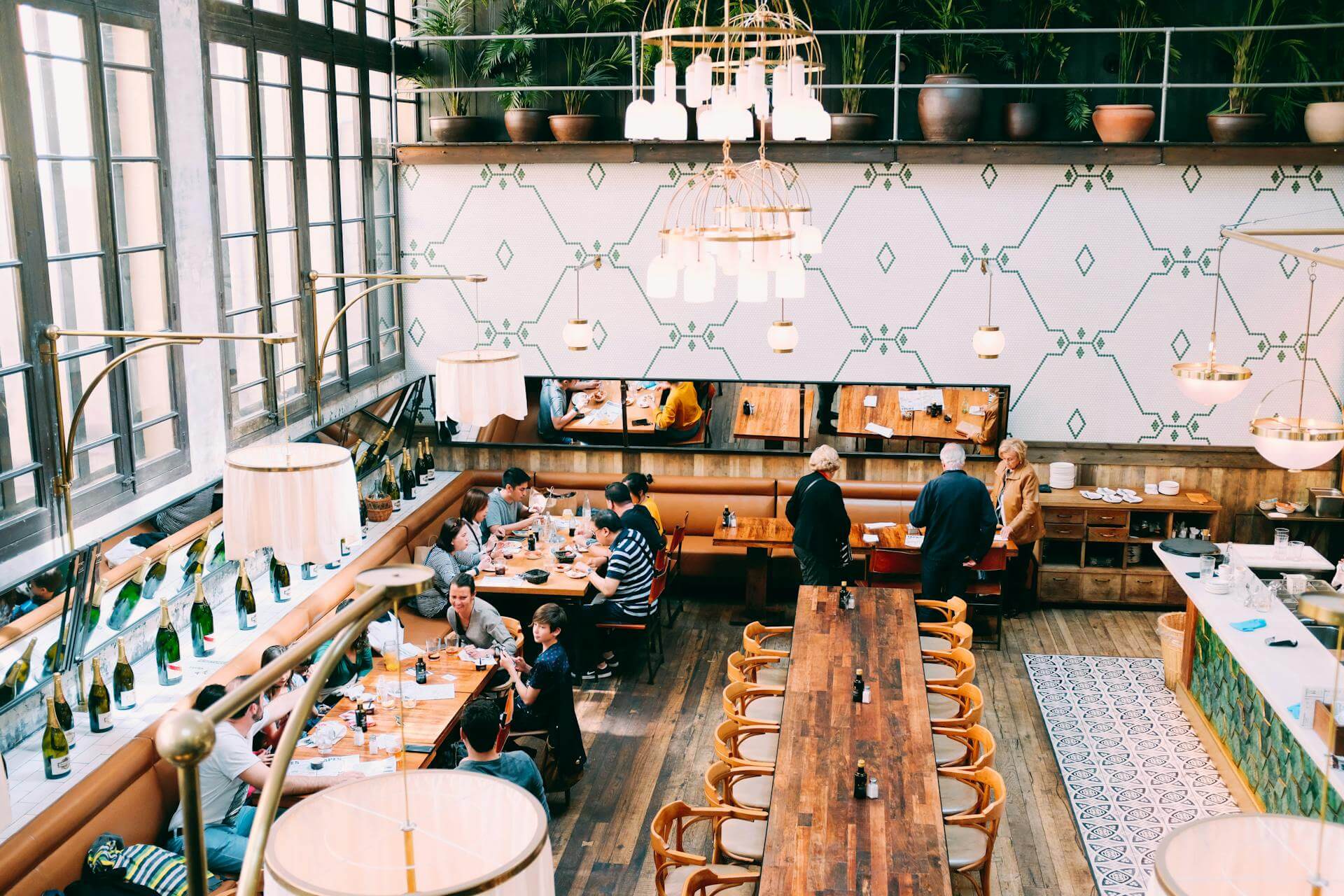
Bright, light and airy restaurant interior with communal seating across from the bar

When someone decides they’re going to dine out, they’re basing their selection on more than just what they want to eat; it’s about the entire experience.

The design and layout of a dining space impact guest behavior, emotions, and overall satisfaction to a significant degree. From the colors on the walls to the lighting overhead, every element plays a role in shaping the dining experience.

This article explores the psychological principles behind effective dining space design, offering insights into how restaurants can use these elements to enhance guest satisfaction, and boost sales.

The Impact of Color Schemes

How Different Colors Evoke Specific Emotions and Moods

Colors are powerful tools in setting the mood and atmosphere of a dining space. Different colors can evoke specific emotions and reactions, influencing how guests feel and behave in a restaurant.

Warm colors like reds, oranges, and yellows are stimulating, and can create a lively, energetic atmosphere, often used in fast-food restaurants to encourage quick eating and high turnover.

On the other hand, cool colors such as blues, greens, and purples have a calming effect, promoting relaxation and longer stays, making them ideal for fine-dining establishments.

Neutral colors like whites, grays, and beiges provide a clean and modern look, allowing other design elements to stand out, and making a space feel larger and more open.

Examples of Color Choices and Their Psychological Effects

Red is known to stimulate appetite and increase heart rate, making it a popular choice for fast-food chains.

However, it should be used sparingly in fine dining as it can be overwhelming.

Blue, on the other hand, suppresses appetite and promotes calmness, suitable for seafood restaurants or venues where a relaxed dining experience is desired. Green, associated with freshness and health, is often used in vegetarian and farm-to-table restaurants to reinforce the concept of natural, wholesome food.

Case Studies of Restaurants Using Color to Influence Dining Choices and Atmosphere

Consider McDonald’s use of red and yellow in its branding and interiors. These colors stimulate hunger, and create a sense of urgency, encouraging quick dining and high guest turnover.

In contrast, Starbucks uses a palette of warm browns and greens to create a cozy, inviting atmosphere that encourages guests to linger, increasing the likelihood of additional purchases.

Lighting and Its Psychological Effects

The Role of Lighting in Creating Ambiance and Influencing Guest Behavior

Lighting is a crucial aspect of dining space design, affecting the ambiance and guest experience significantly. Different types of lighting can evoke various moods, and influence how guests perceive the space and their meals.

Natural lighting enhances mood, and makes spaces feel more open and inviting. Restaurants with ample natural light are often perceived as more comfortable and welcoming. Ambient lighting sets the overall tone of the space. Soft, warm lighting can create an intimate and cozy atmosphere, while bright, cool lighting can energize the space. Task lighting focuses on specific areas, such as tables or bars, enhancing functionality and highlighting key features.

Differences Between Natural, Ambient, and Task Lighting

Natural lighting is best for creating a connection with the outdoors, and making spaces feel airy and fresh, often achieved through large windows and skylights.

Ambient lighting provides overall illumination, setting the mood and ensuring guests feel comfortable. Typically, ambient lighting is provided via ceiling lights, chandeliers, and wall sconces.

Task lighting is used for specific purposes, such as illuminating dining tables or highlighting menu boards, typically achieved with pendant lights and under-cabinet lighting.

How Lighting Affects the Perception of Space, Food, and Time Spent Dining

Bright lighting can make a small space feel larger, while dim lighting can create a more intimate and enclosed atmosphere.

Proper lighting enhances the visual appeal of food, making it look more appetizing. Warm, soft lighting is often used in fine dining to highlight the colors and textures of dishes.

Lighting can also influence how long guests stay. Dim, cozy lighting encourages lingering, while bright lighting can make people eat faster and leave sooner.

Acoustics and Soundscapes

The Impact of Noise Levels and Music on the Dining Experience

Sound is a critical yet often overlooked element of dining space design. Noise levels and the type of music played can impact the dining experience significantly.

High noise levels can create a sense of energy and excitement, but may also lead to discomfort and difficulty in conversation. It’s essential to strike a balance, ensuring the space is lively without being overwhelming.

Low noise levels promote relaxation and intimacy, suitable for fine dining or romantic settings. However, overly quiet spaces can feel uninviting and lack atmosphere.

Balancing Background Noise and Creating an Appropriate Sound Environment

Effective sound management involves balancing background noise, and creating a sound environment that complements the restaurant’s concept and ambiance.

Strategies include acoustic panels to absorb sound and reduce noise levels, creating a more comfortable environment. Soundproofing materials like carpets, curtains, and upholstered furniture can help dampen noise.

Music selection is also crucial, with the type of music and its volume aligning with the restaurant’s theme, and the desired guest experience.

Examples of Restaurants Using Sound to Enhance Guest Comfort and Satisfaction

Many upscale restaurants use a combination of soft background music and sound-absorbing materials to create a tranquil dining environment.

For example, the use of live piano music in high-end restaurants can enhance the ambiance without overwhelming conversation.

Seating Arrangements and Layout

The Psychological Impact of Different Seating Configurations

Seating arrangements and layout play a significant role in influencing guest behavior and satisfaction. The choice between booths, communal tables, and individual seating can impact how guests perceive the space, and interact with others.

Booths provide privacy and comfort, making them ideal for intimate gatherings and longer stays, creating a sense of enclosure and personal space. Communal tables encourage social interaction and a sense of community, suitable for casual dining, and environments that promote socializing. Individual seating offers flexibility and can cater to a variety of group sizes, allowing for easy reconfiguration of the space.

How Layout Affects Flow, Privacy, and Social Interactions

The layout of a dining space affects the flow of movement, privacy levels, and the nature of social interactions. Key considerations include:

  • ensuring there is enough space for guests and staff to move comfortably without congestion;
  • clear pathways; and
  • strategic placement of furniture to enhance flow.

Balancing the need for social interaction with the desire for privacy is essential, using partitions, plants, or varying seating heights to create distinct zones.

Design the space to facilitate the type of interaction you want to encourage, with communal tables and open layouts promoting socializing, while booths and nooks offer more private dining experiences.

Strategies for Optimizing Seating to Enhance Guest Comfort and Turnover Rates

Optimizing seating involves creating a comfortable environment while ensuring efficient use of space to maximize turnover rates.

Strategies include:

  • using a mix of seating types to cater to different guest needs and group sizes;
  • investing in high-quality, comfortable seating, which encourages longer stays and repeat visits; and
  • designing the layout to maximize the number of seats without compromising comfort to ensure tables are spaced adequately, allowing for easy movement and service.

Case Studies and Expert Insights

Interviews with Interior Designers and Behavioral Psychologists

Interviews with interior designers and behavioral psychologists provide valuable insights into the principles of effective dining space design. Experts can share their experiences and recommendations for creating spaces that enhance guest behavior and satisfaction.

Key Insights on Effective Design Strategies

Key insights from expert interviews include adopting a holistic design approach, considering all elements—color, lighting, acoustics, and layout—together to create a cohesive and inviting space.

Focusing on the needs and preferences of your target audience is crucial, designing with the guest experience in mind to create a memorable dining environment.

Continuous improvement is essential. This involves reviewing and updating your design regularly to keep it fresh and relevant, and staying informed about new trends and technologies in dining space design.

Real-World Examples of Restaurants That Have Successfully Utilized Design Psychology

Real-world examples highlight how restaurants have implemented design psychology principles successfully to enhance guest satisfaction and increase sales.

For instance, a fine-dining restaurant may use soft lighting, elegant color schemes, and acoustic panels to create an intimate and luxurious dining experience, resulting in a space where guests feel relaxed and pampered, leading to longer stays and higher spending.

Conversely, a casual eatery might incorporate vibrant colors, upbeat music, and communal seating to foster a lively and social atmosphere, attracting a younger crowd looking for a fun and engaging dining experience, boosting guest turnover and repeat visits.

Highlighting Specific Design Choices and Their Outcomes

Specific design choices, such as using warm lighting to highlight food presentation or arranging seating to encourage social interaction, can impact guest perceptions and behavior significantly.

Highlighting these choices and their outcomes provides practical examples of how design can influence the dining experience.

Practical Tips for Optimizing Dining Space Design

Actionable Advice for Restaurant Owners and Designers

Implementing effective dining space design requires practical and actionable steps.

Here are some tips to help restaurant owners and designers optimize their spaces:

  • Choose Colors Wisely: Select color schemes that align with your restaurant’s concept, and desired guest experience. Use warm colors for energetic spaces, and cool colors for calm, relaxing environments.
  • Optimize Lighting: Ensure a balance of natural, ambient, and task lighting to create the right ambiance, and enhance the dining experience. Use dimmers to adjust lighting levels based on the time of day, and desired mood.
  • Consider Acoustics: Use sound-absorbing materials and strategically placed music to create a comfortable sound environment. Avoid excessive noise that can detract from the dining experience.
  • Plan the Layout: Design the layout to maximize space efficiency while ensuring guest comfort. Use a mix of seating types, and ensure clear pathways for easy movement.
  • Align Design with Brand Identity: Ensure that all design elements, from colors to furniture, reflect your brand identity, and resonate with your target audience.

Tips on Choosing Colors, Lighting, and Furniture

Choosing the right colors, lighting, and furniture can have a significant impact on the dining experience:

  • Colors: Choose colors that evoke the desired emotions, and match your brand’s personality. Test different shades to find the perfect balance.
  • Lighting: Invest in quality lighting fixtures, and consider the color temperature of bulbs. Use lighting to highlight key areas, and create focal points.
  • Furniture: Select comfortable and durable furniture that complements the overall design. Consider ergonomic options to enhance guest comfort.

Conclusion

The design of a dining space is a crucial component of the guest experience. Understanding and applying the psychological principles of color, lighting, acoustics, and layout helps restaurant owners and designers to create environments that influence guest behavior, enhance satisfaction, and boost sales.

Thoughtful design not only improves the dining experience but also reinforces brand identity, and drives business success.

Image: Adrien Olichon via Pexels

KRG Hospitality Contact Request for Proposal 30 Minute Discovery Session

Book Below to Setup a 30-Minute Complimentary Discovery Call and Request for Proposal.


Top