Menu programming

by David Klemt David Klemt No Comments

Ditch Draconian Drink Development

Ditch Draconian Drink Development

by David Klemt

Hand throwing two red dice on a dark gaming table

This is not a viable business strategy.

As we enter the holiday season we need to reiterate that a single person can influence the bar and restaurant decision for an entire group.

Let me be even more blunt, now that I’ve got you here. As we head into 2026, I find it a bit shocking that we still need to address alcohol-free programming.

A recent trip to Colorado is putting this topic back in the spotlight for me. Pair it with menu programming for clients and I simply can’t let it go.

KRG Hospitality was in Denver for The Hospitality Show and Bar & Restaurant Expo 2025. President and principal consultant Doug Radkey spoke on a panel with chef and restaurateur Adrianne Calvo and chief marketing officer Lauren Barash.

While we were in town for the show, we attended other education sessions. One of these was “Trend on Tap,” which focused on beverage trends.

The entire panel was insightful, but something said by Miranda Breedlove, the national director of bars for the Lifestyle Division of Hyatt Hotels, really stood out to me.

To summarize, a single person—the non-drinker—has the power to decide which bar or restaurant a group chooses to visit.

Who, not Why

Let’s be clear about a crucial point: It doesn’t matter why someone has chosen to not consume alcohol.

A person may never drink alcohol. They may choose to forego alcohol for a month, week, or day. Someone may decide to stop consuming alcohol during a visit to a bar or restaurant.

None of that matters. What’s important is being respectful of that decision, being hospitable regardless.

One effective way of showing respect for that choice is giving more than a few seconds consideration to your zero-proof options.

In this situation, the who is more important than the why.

Who is the guest your zero-proof program is trying to reach? The guest who decides they want a zero-proof drink.

Why don’t they want to drink alcohol? It doesn’t matter. Why doesn’t it matter? It’s nobody’s business.

The only “why” relevant to this situation is, why are you taking the time to consider a well-crafted, zero-proof program? To be hospitable and serve all of your guests to the best of your ability. That’s good business in the hospitality business.

Which Sounds Better?

I’m going to present you with two options to consider.

Which sounds like a more enjoyable experience to you:

Option 1: Guests who want a non-alcohol drink are limited to water, soda, or juice in a bottle or can, or off the gun.

Option 2: Guests find a curated, zero-proof section on your menu, and experience the same service and presentation as guests who order low- or full-proof cocktails.

Of those two options, which seems like it delivers a memorable guest experience? Which option ensures a guest who doesn’t want to consume alcohol feels comfortable and valued?

I know I wouldn’t bother returning to a bar or restaurant that made me feel alienated rather than welcomed. And if I’m in a group of people, as Breedlove said, I can influence them to avoid that venue while we’re discussing where to go.

Rolling the Dice

Failing to develop an intentional, well-curated non-alc program is rolling the dice.

You’re rolling the dice on the guest experience. Rolling the dice on transforming first-time visitors into repeat guests.

And, in 2025, nearing 2026, you’re rolling the dice on your brand’s perception.

Sure, ten years ago or so the viability of zero-proof was debatable. Some operators and bartenders saw the value in appealing to guests, whether sober or sober in the moment, and treating them to the same experience as every other guest.

In the other camp, operators and bartenders who saw non-alc cocktails as a waste of time. I remember hearing bartenders say that making zero-proof drinks was pointless because they didn’t make the bar money, and didn’t make them tips.

However, it’s no longer debatable; refusing to be intentional about a zero-proof program for your bar or restaurant is bad business.

The proof is in the decision-making process. If the non-alcohol drinker can make the final choice for bar or restaurant selection for an entire party, it proves the importance of non-alc.

Not Done Yet

Breedlove made another excellent point that also relates to outdated thinking about beverage programs.

To paraphrase Breedlove, “batching” is not a bad word.

This is particularly true for high-volume bars. Likewise, it’s true of high-demand signature drinks that drive sales for a particular bar or restaurant.

As Breedlove said, if the drink won’t suffer, put your high-volume orders on draft. The reasoning is simple: your team likely can’t put out as many of a high-performing, high-volume drink to order as they can if it’s batched.

More of that popular, revenue-driving order going across the bar means more revenue, more tips, and reduced ticket times. Overall, it’s a win-win: better for the bottom line, and better for the guest experience.

And, as I’m sure you’ve put together, this can apply to your zero-proof menu. Have a killer non-alc Margarita? Put it on draft, save time in service.

The key to success, whether batching alcohol or non-alcohol drinks, is in the presentation. Give careful consideration to your ice program, glassware, garnish, and presentation so guests don’t feel shafted regarding the experience.

We’re having to adapt in hospitality once again. We need to make sure we’re moving past outmoded ways of thinking so we can move forward quickly and with strategic clarity.

Image: Leon-Pascal Jc on Unsplash
Client Intake Form - KRG Hospitality

by David Klemt David Klemt No Comments

Talkhouse Encore Aims for Iconic

Talkhouse Encore Aims for Iconic

by David Klemt

Person holding a can of Talkhouse Encore against their blue sweater with a bear on it

That’s a rad sweater.

In a move that highlights the brand’s forward-thinking commitment to growth, Talkhouse Encore is appointing a Vice President of Marketing.

If you’re a regular reader you’re aware that I don’t share every bit of industry news. Hospitality moves quickly, and developments flow steadily. Appointments, case sales, market expansions… There’s a lot to monitor.

However, I do love to watch Bar Hacks podcast guests grow. It’s a privilege to check in with them and share where they are in their journeys with listeners and readers. On episode 141,  I speak with Talkhouse Encore’s president and co-founder Robert Minucci.

We dive into the story behind the premium RTD brand’s inception: its connection to an iconic music venue, putting in the work to grow in a highly competitive category during the pandemic, and facing skeptical (sometimes cynical) distributors.

Minucci shares how his business partner, Ruby Honerkamp, sought to bring the spirit of Stephen Talkhouse to the masses through “dive bar classic” vodka and tequila seltzers.

At the brand’s core: authenticity and flavor. In particular, there’s a focus on earning brand loyalty from legal-age Gen Z consumers. Speaking broadly, Gen Z wants a story and a connection to a brand. Really, it’s what most people want these days.

Connection Through Authenticity

During our conversation, Minucci explains how the small-but-nimble team focuses on building a strong local presence before considering expansion, ensuring that they meet consumer demands with quality ingredients and an engaging brand narrative.

If, as the saying goes, you can’t do epic things with basic people, it stands to reason that you can’t build an iconic brand with a basic team. And when your brand has a direct connection to an icon—in this case, a revered live music venue—the pressure to reach similar status is very real.

This is where the newly-appointed Vice President of Marketing takes the stage to help tell the Talkhouse Encore story.

Boasting nearly a decade of experience building and growing brands, Courtney Roth is a clear signal to the market: Talkhouse Encore is here.

“At Talkhouse Encore, our mission is to be more than just another canned cocktail. We want to be the drink that brings people together for unforgettable moments,” says Roth. “I’m excited to lead marketing efforts that connect with consumers through authentic experiences, social storytelling, and grassroots programs that make Talkhouse Encore the go-to choice for today’s drinkers.”

Aiming for Iconic

Aiming for epic and iconic certainly seems to be a key driver of Roth’s brand storytelling. She developed her mastery of lifestyle brand marketing at Diageo. Pepsi benefited from her positioning prowess when she led their Super Bowl LVII activations.

Proving she knows how to build connections at the consumer level, Roth led the sampling of 1.5 million cans of Alani Nu. Earlier this year, Alani Nu was acquired for $1.8 billion by Celsius, which itself saw PepsiCo increase its stake in the energy drink brand juggernaut to 11 percent.

Those are just a few of Roth’s marketing and expansion accolades.

“I’m thrilled to step into the VP of Marketing role at Talkhouse Encore,” says Roth. “My focus is on building out an omni-channel marketing strategy that introduces more consumers to our premium vodka and tequila sodas. We’re setting the stage for significant growth in 2026 and beyond!”

This appointment is a signal that Talkhouse Encore intends to expand to an increasing number of markets over the course of the next 12 months. Keep your eyes peeled for activations and your opportunity to sample and engage with the brand.

To learn more about Talkhouse Encore, visit their website. Give them a follow an Instagram for news, activations, and more.

Disclaimer: Neither the author nor KRG Hospitality received compensation, monetary or otherwise, in exchange for this post.

Image provided by Talkhouse Encore

Client Intake Form - KRG Hospitality

by David Klemt David Klemt No Comments

Chicken Tenders with a Side of Red Flag

Chicken Tenders with a Side of Red Flag

by David Klemt

AI-generated image of a pile of chicken nuggets on a plate in a restaurant, wtih a red flag jutting out of them

Red flag! AI-generated image.

Chef Brian Duffy doesn’t mince words, and when it comes to restaurant menus, he has zero patience for mediocrity and the absence of creativity.

During his latest live menu read at Bar & Restaurant Expo 2025, Chef Duffy once again shared his unfiltered thoughts and tips in real time.

Reviewing menus submitted prior to his live menu read, Chef Duffy went after tired ingredients, uninteresting items, pricing, and menus that scream “I was designed by a supplier!”

For those who have yet to witness a Duffified live menu read, the process is simple. A call for menus is sent out, people send over their menus, and they’re put up on a large screen at the Bar & Restaurant Expo’s F&B Innovation Center or in a classroom.

A key element is that Chef Duffy doesn’t see the menus ahead of time; his thoughts are off the cuff and in the moment.

It’s important to note that not every menu is eviscerated. Chef Duffy points out strengths, and offers suggestions to make good menus great. And, without fail, attendees paying attention will walk away with a pile of helpful tips.

Oh, look, chicken tenders. Yay.

Which came first, the chicken tenders or the apathy?

“If chicken tenders are on your menu, you’re bastardizing your brand.”

That line alone set the tone for the session. Chef Duffy’s point? If you’re trying to build a unique, memorable food program—and you should be—then you can’t fall back on the same tired menu items as everyone else.

If your reports show that chicken tenders are at the top of your sales, that’s a justification for keeping them. However, at least consider getting creative with accompanying sauces, presentations, and enhancements so you stand out from the competition.

Chicken tenders may be “safe,” but safe isn’t what guests remember, photograph, post about, or come back for specifically. Not to slander big brands, but chicken tenders are what people expect from full-service national and global chain restaurants.

Meet with your culinary team, get creative, stand out.

Your first five items reveal everything.

Chef Duffy says he can tell, just from scanning the first five menu items, whether your menu was designed by you or handed down by the food purveyor.

The latter is a problem.

“Your menu is your brand,” Chef Duffy reminded the F&B Innovation Center. “It tells your story, your values, your creativity—or your lack of all three.”

As he has said before, your menu is also your billboard.

That means you need to ditch generic descriptions, rethink your item layout, and stop outsourcing identity to third-party salespeople.

“Everybody has the same shit on their menu,” Chef Duffy said just a year ago. “We’ve been told what to put on our menu buy our purveyors.”

Being honest with yourself, is your menu actually yours, or have you ceded control of your brand to your suppliers?

Pricing should be as intentional as plating.

“I’m all for a funky number, my friends,” Duffy said.

This statement was in response to a menu with less-standard pricing. Whole numbers ending in 0 or 5? Not exactly blowing anyone’s hair back. Rational numbers ending in a 5 or 9? Been done, haven’t they?

Chef Duffy’s reasoning is psychological: Funky numbers can create curiosity. Perhaps more importantly, nontraditional numbers communicate that the pricing wasn’t slapped on from a cost spreadsheet; it was considered.

Of course, you don’t have to pour nonstandard numbers all over your menu. There’s nothing wrong with sprinkling them around instead.

Just be sure that you’ve costed your items down to the temp picks in your burgers, and bev-naps that accompany your drinks, when pricing your menu.

Retire the balsamic.

If your go-to vinaigrette is still balsamic, it’s time to move on.

“It was cool in 1986,” Duffy quipped.

If that statement offends or surprises you, it may be time to check out some flavor trend news and reports. Also, ask your culinary team what they think about the dressings accompanying the salads and other items leaving the kitchen. Anything but enthusiasm should tell you that they have some ideas for more on-trend accompaniments. (Note: A disinterested kitchen is a disengaged kitchen. Get your team excited!)

I’m not saying, and Chef Duffy wasn’t suggesting, that tradition should be tossed in the trash. However, adhering strictly to decades-old tradition in the culinary world puts you, your menu, and your brand at risk of obsolescence.

You have a responsibility to embrace flavors that reflect today’s culinary trends and consumer palates if you work in F&B.

The same goes for buzzword-laden menus and what he calls “culinary white noise”—ingredients and terms that sound impressive but say nothing.

A box, a name, and a story.

When it comes to designing your menu, Chef Duffy likes to see creative item names, detailed but punchy descriptions, and a visual cue—like a box—surrounding (and therefore calling out) featured items.

Why?

Because you’re not just listing food, and that mindset needs a seismic shift.

Restaurant operators, their culinary and bar teams, and their service staff are curating a guest experience. The layout of your menu should help guide the guest journey, telling and reinforcing your brand’s story.

There’s limited real estate on a menu—including digital versions—so every millimeter requires careful consideration to maximize the results.

There’s no room for confusion.

Okay, this next one baffled not only Chef Duffy but every person who attended his live menu read. Honestly, if you have any idea what this meant, please email me with your thoughts.

One menu—remember, this is real life—that Chef Duffy reviewed included the phrase “choice of meat bar bbq” (written here exactly as it was on the menu). And where was this listed? Under the chicken wings.

Seriously, what does that even mean? If a room full of F&B professionals can’t figure it out, something has gone terribly wrong.

Put simply, ambiguity kills confidence. If a guest has to guess what they’re ordering—or worse, ask a server who also doesn’t know—you’ve very likely lost their return visit.

There’s nothing wrong with building mystery. Plenty of chefs, bartenders, and operators come up with item names and descriptions intended to pique guest curiosity.

But here’s the thing: That’s an intentional, curated choice. These items and descriptions are meant to provoke a response. It’s part of the experience, and each server and bartender can answer questions about such items confidently.

Put more simply, there’s a difference between, “Ooo, what’s that?” and, “Um, what’s that?”

Final Bite

Your menu is your voice, so make it count.

Chef Duffy’s latest live menu read was less a menu critique and more a rallying cry this year.

Stop giving up control of your inventory, menu, and brand to your purveyors. If you’re going to have the same dishes as other operators, at least get creative with the ingredients, sauces, and other accompanying items. Revisit your pricing strategy. And, hey, while you’re at it, revisit your dressings and other items, and determine if they’re still adding value.

Whether it’s weird pricing, boxed features, or creative naming conventions, every detail matters. Your menu doesn’t just feed your guests—it frames their expectations, defines your concept, and tells the world your brand story.

And if all else fails, just remember: Lose the chicken tenders and balsamic vinaigrette.

Image: Canva

Client Intake Form - KRG Hospitality

by David Klemt David Klemt No Comments

Go Orange this Valentine’s Day

Go Orange this Valentine’s Day (and Beyond)

by David Klemt

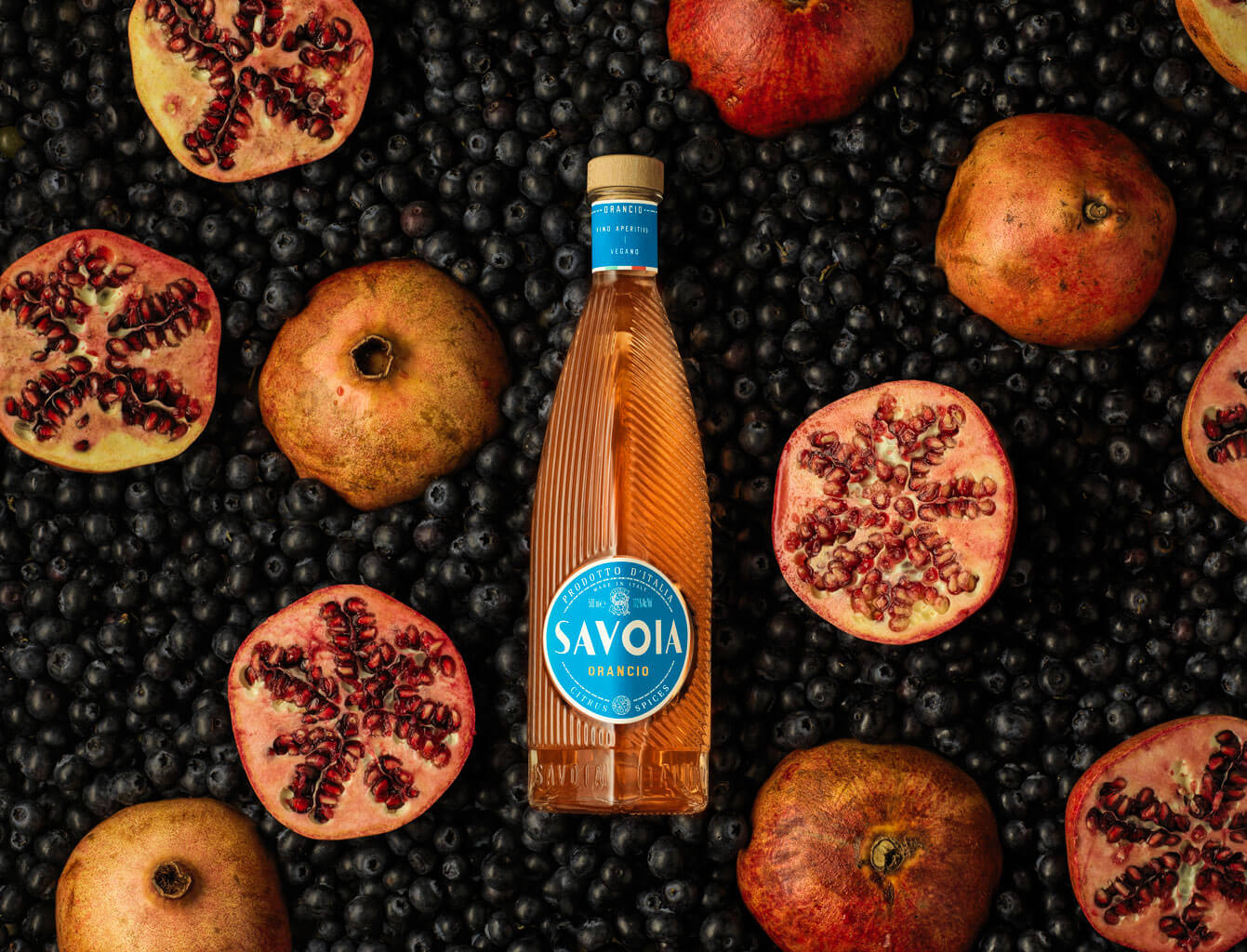
A bottle of SAVOIA Orancio resting on a bed of grapes and pomegranates

There’s a new, exciting aperitivo from the House of SAVOIA, and it’s flavor profile and color are perfect for celebrating Valentine’s Day.

In fact, SAVOIA Orancio is ideal for celebrating life on any day. Slowing down to appreciate and enjoy is the purpose, after all, of aperitivos and aperitivo culture.

I had the opportunity to chat with Giuseppe Gallo, founder of CASA-SAVOIA (and ITALICUS), about the new Orancio expression, and more on the Bar Hacks podcast.

The orange hue comes from this aperitivo’s base: natural orange wine. This wine is combined with Italian white wine, and spices that pay tribute to the famed Silk Road. These include cinnamon, ginger, and saffron.

Regular readers of KRG Hospitality articles, and listeners of our Bar Hacks podcast, are aware that I’m a strong proponent of bar programs executing an aperitivo hour in place of a traditional happy hour (if it meshes with the concept, of course).

Aperitivos aren’t simply a drink; they’re an integral element of socializing, and Italian drinking culture. Whereas a happy hour is often perceived by some guests as a window in which to visit a bar for discounted drinks and dishes, an aperitivo hour centers largely around bringing people together.

Whether friends or strangers, the key difference is that rather than focusing on downing many “cheaper” drinks before time runs out, the focus is on slowing down, letting go of the stress of the workday, gathering, and preparing for dinner.

To learn more about SAVOIA Orancio and aperitivo culture, listen to Bar Hacks episode 130 on Spotify, Apple Podcasts, or wherever you listen to podcasts. Cheers!

Orancio Spritz

We can trace the origins of the Spritz to 1800s Veneto, one of the 20 regions that comprises Italy. The Spritz evolved in the 1920s, adding bitters, soda, and ice. In the 1970s, as the story goes, the cocktail evolved again, calling for Prosecco rather than still wine.

  • 2 parts SAVOIA Orancio
  • 2 parts Prosecco
  • 3 Green and red grapes to garnish

Add ice to a wine or balloon glass, then add equal parts SAVOIA Orancio and Prosecco. Garnish with the grapes, and serve.

Orancio & Soda a.k.a. L’Americano

Proof that some of the best, most-refreshing cocktails are the simplest. The Americano is described as the link between Italian aperitivo drinking culture and American cocktail culture.

Fun fact: We’ve all come to understand that James Bond has an affinity for Vodka Martinis (as well as other Martinis). However, the first drink 007 ever orders in the first-ever James Bond novel is an Americano.

  • 2 parts SAVOIA Orancio
  • 2 parts Soda water
  • 3 Green and red grapes to garnish

Fill a highball glass with ice, and then add SAVOIA Orancio and soda water. Garnish with grapes, then serve.

Orancio Negroni

Yes, I’m aware that a traditional Negroni is an equal parts combination of Campari, London dry gin, and sweet vermouth. Trust meand more importantly, trust Giuseppe Gallothat this Negroni version is worthy of the name.

  • 2 parts SAVOIA Orancio
  • 1 part London dry gin
  • 3 Green and red grapes to garnish
  • Garnish alternative: Orange wedge or peel

Add ice cubes (or one large cube or sphere) to an Old Fashioned glass. Then, add SAVOIA Orancio and gin, and stir. Alternatively, add the two liquid ingredients and ice to a mixing glass for a more traditional preparation. Stir, and strain into a prepped Old Fashioned glass. Garnish with grapes, or with an orange peel to more closely resemble a Negroni. Alternatively, set an orange wedge on top for more of a Sbagliato presentation.

Orancio Margarita

Looking to offer your guests something a bit different? The Orancio Margarita is an Italian twist on one of the most-iconic cocktails ever created.

  • 1 part SAVOIA Orancio
  • 1 part Tequila blanco
  • Half-part fresh-squeezed lime juice
  • 1 barspoon Agave nectar
  • Lime wheel to garnish

Prepare a rocks glass by adding ice. (I also suggest experimenting with a salt rim.) Add ice and all liquid ingredients to a shaker, and shake well. Strain into the prepped rocks glass, and garnish with a lime wheel.

Image provided by SAVOIA

Note: Neither the author nor any representative of KRG Hospitality received compensation, monetary or otherwise, in exchange for this article.

Client Intake Form - KRG Hospitality

by David Klemt David Klemt No Comments

Program for Unique Holidays: February 2025

Program for Unique Holidays: February 2025

by David Klemt

Restaurant or bar owner sitting at the bar, working on a schedule or calendar

AI-generated image.

Do you want to stand out from from other restaurants and bars in your area? Change how you think about your February 2025 holiday programming.

Several holidays are set against every date on the calendar, and this month is no exception. These holidays range from mainstream to esoteric.

Pay attention to the “weird” or unique holidays to raise eyebrows, carve out a niche for your restaurant or bar, and attract more guests. Why do what everyone else is already doing? Why program only around the same holidays as everyone else?

To provide a handful of examples, February boasts National Pizza Day, National Cheddar Day, and National Retro Day. Those are all things you can get creative and program around, and celebrate with your guests.

Of course, you shouldn’t try to celebrate every holiday, strange or otherwise. Focus on the days that are authentic to your brand; resonate with your guests; and help you grab attention on social media.

You’ll find suggestions for promotions below. However, the idea behind our monthly holiday promotions roundup is to inspire you and your team to get creative and come up with unique programming ideas.

For our January 2025 holidays list, click here.

February 7: Rose Day

Rose presents interesting flavor and scent profiles. It can also be difficult to perfect; too little and it likely won’t register, too much and it will overpower. Notably, it doesn’t take much for rose to go in either direction. However, if your kitchen and bar teams are up to the task, rose dishes and drinks can be quite intriguing for your guests.

Of course, you can also go a different direction and celebrate Rose Day as Rosé Day with all manner of wine, spirits, and beers.

February 8: National Kite Flying Day

As one would expect, there are several drinks with “kite” in the name. Cocktails (including zero-proof versions), beers, and wines. Further, there’s the similar paper airplane, so you can feature the Paper Plane, as well.

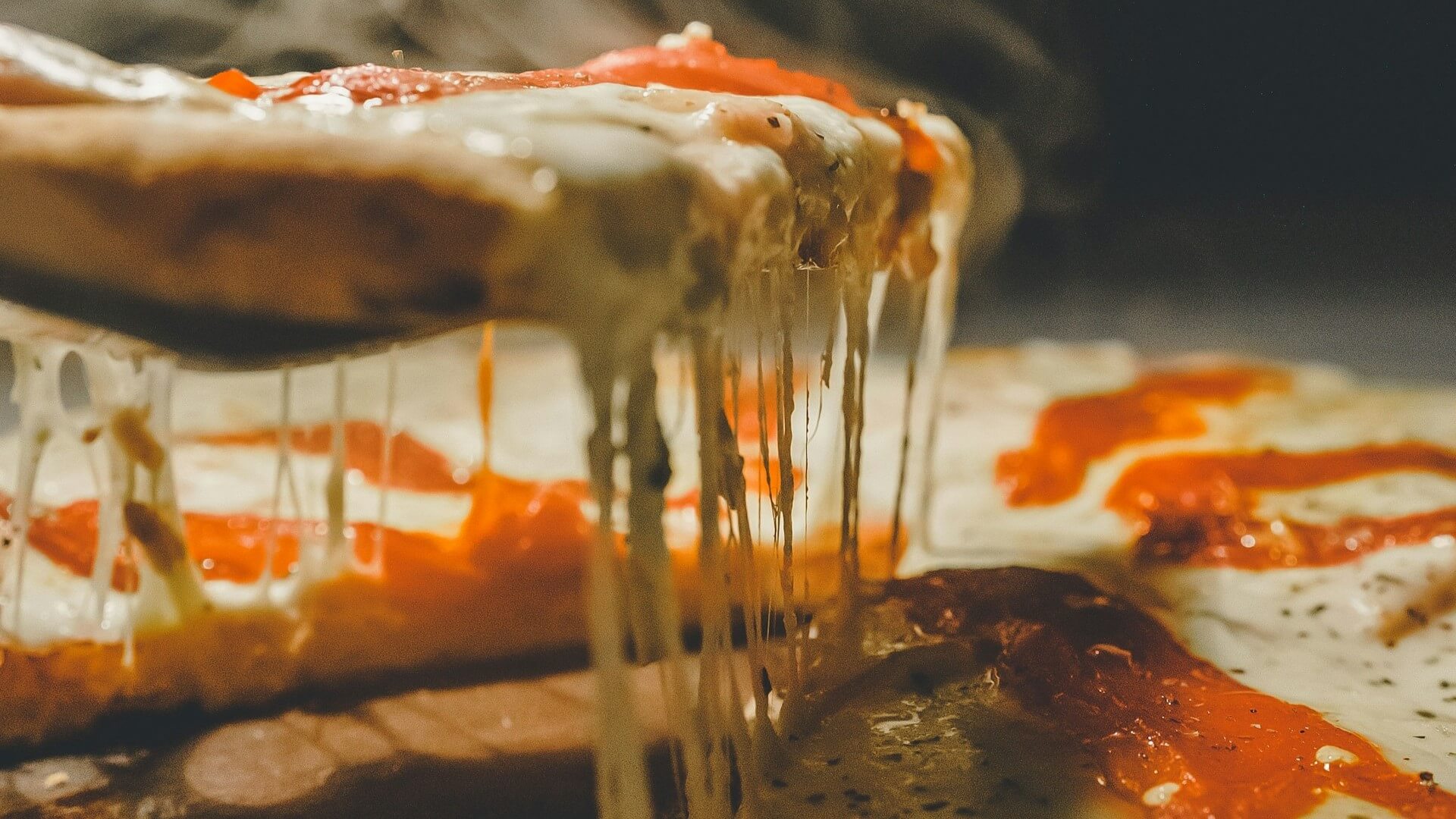
February 9: National Pizza Day

Is programming around pizza unusual, unexpected, or unique? On its face, no, of course not.

However, restaurant and bar operators can make National Pizza Day an unusual food holiday by featuring unique ingredients, and interesting pizza styles.

February 10: National Cream Cheese Brownie Day

Much like pizza, most brownies aren’t considered unique. That said, your culinary team’s interpretation can become a signature dessert (or appetizer

February 13: National Cheddar Day

Is everything better (or “beddar”) with cheddar? No, not everything. But there sure are a lot of menu items that are great with this hard cheese.

I’m confident that you and your kitchen team can find plenty of ways to feature cheddar on an LTO menu.

February 14: Start of Alzheimer’s and Dementia Care Education Week

This week is dedicated to Alzheimer’s and dementia awareness and education, along with raising funds for charitable organizations looking for a cure. If you think you can organize a charity drive, be it for one day or the entire week, go for it.

One way to execute is to donate proceeds from an LTO item or menu. If you have signature drink or dish, that item can lead the charge for raising charitable donations. This important week has a hashtag, so be sure to include it to spread the word: #AlzheimersDementiaCareEducationWeek.

February 20: National Comfy Day

Sure, operators can go for comfy dress to celebrate this holiday. It can be “cute” to have staff show up in comfy gear, or encourage guests to do so.

Or, operators can go a different direction: focusing on the comfort foods on their menus. Whether they’re traditional or creative takes on comfort classics, a comfort food LTO menu is perfect for February 20.

February 24: National Tortilla Chip Day

Who doesn’t love a tortilla chip, particularly when it’s carrying an array of delicious toppings? You know what to do: highlight your nachos (if you have them on your menu), and get creative with the presentation (we like to go sky high), proteins, and other ingredients.

February 27: National Retro Day

It seems like the phrase, “Everything old is new again,” is always relevant. National Retro Day is one of the best times to dive into vintage F&B recipe books and select classics that work with your theme and resonate with guests. Grasshoppers, anyone?

February 28: National Floral Design Day

Edible flowers are visually appealing, and can also enhance the dining and drinking experience. You know what to do!

Image: Microsoft Designer

Client Intake Form - KRG Hospitality

by David Klemt David Klemt No Comments

Watch These Drink Trends in 2025

Watch These Drink Trends in 2025

by David Klemt

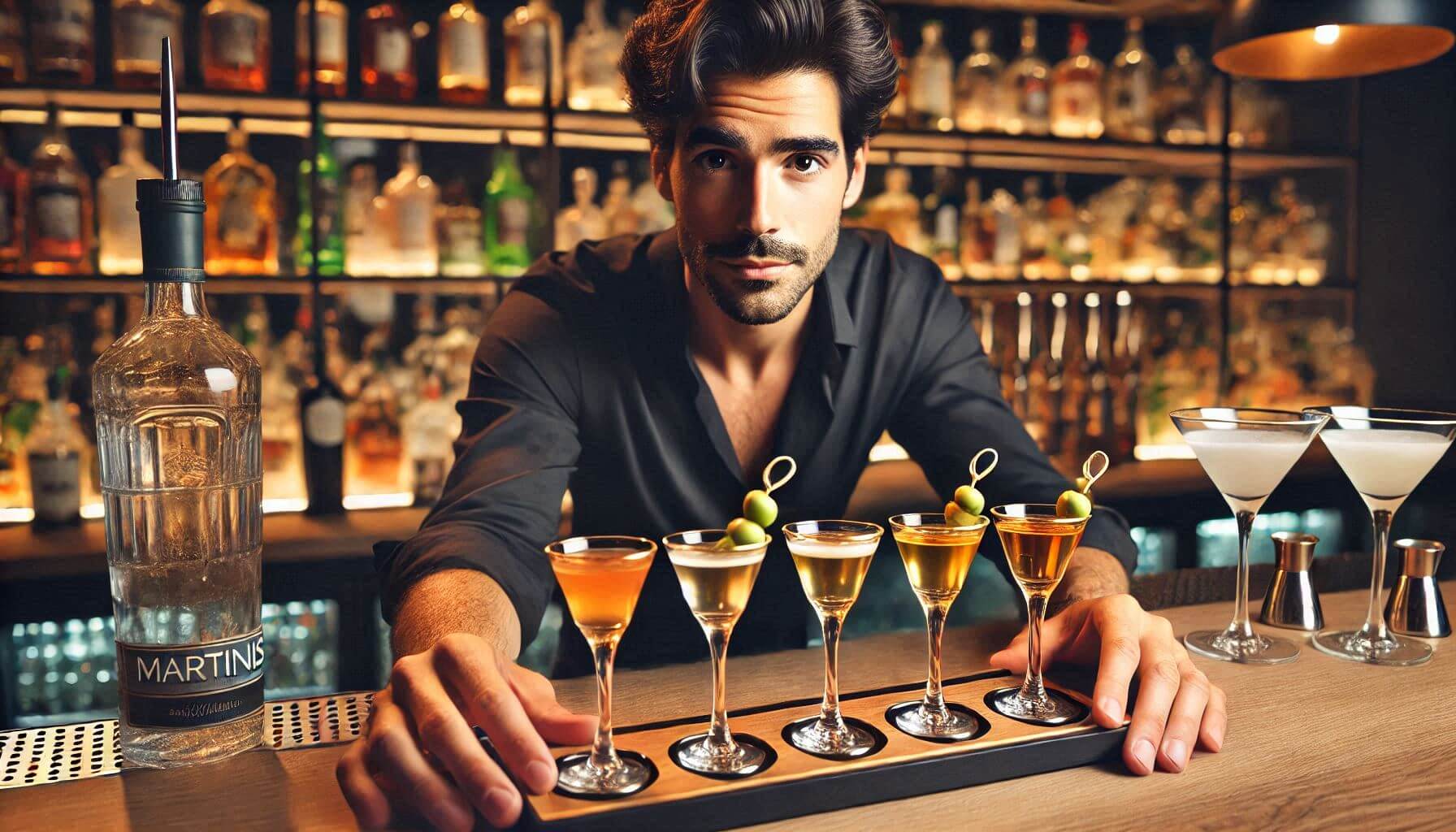
AI-generated image of a bartender serving miniature Martinis

Bottle of Martinis, anyone? In case you were uncertain, this image is AI-generated.

We’re nearing the end of 2024, and that means F&B intelligence platforms are releasing their year-end reports and predictions.

Among these platforms is Datassential. Recently, they released their Future of Drink preview report. You can sign up for your own copy here.

I’ve sifted through Datassential’s latest reports and trend-focused articles, and I’ve pulled a handful I think are among those that may perform the strongest in 2025.

Cheers!

Posh Jello Shots

Or as Datassential calls them in their report summary, “highbrow” jello shots.

This is the 2025 trend prediction that stands out the most to me. Your bar team will know how to produce jello shots (or learn how to make them reliably and consistently), but it’s not a difficult skill to develop.

Jello shots, or gelatin shots if you want to be pedantic, are most often associated with house parties and dive bars. However, gelatin is an interesting cocktail canvas, offering at the very least a different way to experience drinks texturally.

The simplest way to embrace this trend would be to use upmarket alcohol to craft these shots. Premium or super premium vodkas, for example. Another way would be to convert your signature cocktail(s) into jello form. And yet another approach would be layered jello shots, with each layer crafted using premium or super-premium ingredients.

An Alternative

Of course, operators don’t need to produce specialty, higher-end shots in gelatin form. With a bit of thought and experimentation, bar teams can produce shots that are essentially miniature versions of cocktails. Further, these can be offered as flights.

So, do you have a few specialty cocktails on your menu? Offer them as a flight of shots. Want to craft themed flights, such as a Negroni and two variants (Boulevardier and Sbagliato, for example)? That idea may just take off with your guests in 2025.

Creating shootable versions of more sophisticated cocktails elevates your program. Further, doing so can help introduce guests to a range of cocktails during a single visit in what can be a more responsible manner.

Think so-called “Mar-tinies” for inspiration: miniature Martinis served in miniature Martini glasses.

Heirloom Grains

It’s likely that you’re going to see “heirloom” or “heritage” a lot more in 2025 in relation to beer.

As both terms imply, brewers who produce these types of beer use grains they can trace back decades. Often times, heirloom grains are significant historically.

For example, Hanabi Lager Co. produces Haná Pilsner. Per the brewer, Haná is an heirloom grain that was used to produce the first-ever pilsner. In case you’re a beverage history buff or like sharing stories with guests who are interested, the first pilsner was brewed in 1842 by Josef Groll in the city of Pilsen.

Hanabi Lager Co. credits British farmers with “rescuing” Haná, pulling it back from the brink of extinction in 2015. Click here to check out other Hanabi beers made with heirloom barley and other heritage grains.

Operators who are interested in leveraging beers with notable ingredients should look for the words “heirloom,” “heritage,” and “ancient grain.” Further, they should ensure they know these beers would be of interest to their guests, and serve their concept in an authentic manner.

More Beer Trends

Other beer-centric trend predictions include global beers, hazy IPA, beer cocktails, and beer with a hint of lime.

I’m confident you don’t need an explanation of each of these 2025 trend predictions. However, it’s smart to approach each with careful consideration before adding them to your menu.

To provide an example, consider flights that focus on each trend: three to four hazy IPAs, half-sized beer cocktails, or specialty global beers.

Focusing on beer cocktails, or beertails or hoptails as I’ve seen over the years, I’m somewhat skeptical how they’ll rise in popularity. In my experience, they’ve never quite “hit” throughout the years. But, maybe 2025 is the year.

As far as beers with a hint of lime, consider creating snack pairings that pair well with such beers. Snacking as a trend is expected to rise in 2025, so it’s wise to engage your kitchen team to come up with a snack menu for your bar.

Cocktails on Tap

While I don’t recommend cocktails on tap of keg cocktails for every concept, I have certainly crafted beverage programs that leverage this trend.

And, in fact, I don’t consider these drinks to be a trend at all. In my opinion, cocktails on tap may not be ubiquitous, but they’re certainly no fad.

Why do I like cocktails on tap? For several reasons.

One of those is the speed of service, which benefits the team and the guest. While labor is necessary prior to service to prepare these drinks, kegged cocktails make up for all that effort. When the right cocktails are selected for the taps, they make it easy on the bar team to serve, and make it into the hands of guests in mere moments.

Another reason is the “novelty” of cocktails on tap. These drinks aren’t new yet many guests find the idea interesting, which piques their curiosity. Engaging guests is always good for business.

Now, think about bars and restaurants that include self-pour walls as a core feature of the concept. Guests have shown they’re interested in pouring their own beers and wines from pour walls. There are myriad reasons, including trying before they commit to something new to them. This applies to cocktails as well, and kegged cocktails are perfect for self-pour concepts.

Finally, they work for just about every category of bar, from casual neighborhood watering hole to upscale cocktail bar. When an operator focuses on glassware, garnish, and presentation, a cocktail on tap can appeal to even the most discerning cocktailian.

Image: Microsoft Designer

KRG Hospitality Contact Request for Proposal 30 Minute Discovery Session

Book Below to Setup a 30-Minute Complimentary Discovery Call and Request for Proposal.


by David Klemt David Klemt No Comments

Balancing Menu Creativity with Preferences

Menu Design: Balancing Creativity and Guest Preferences

by Nathen Dubé

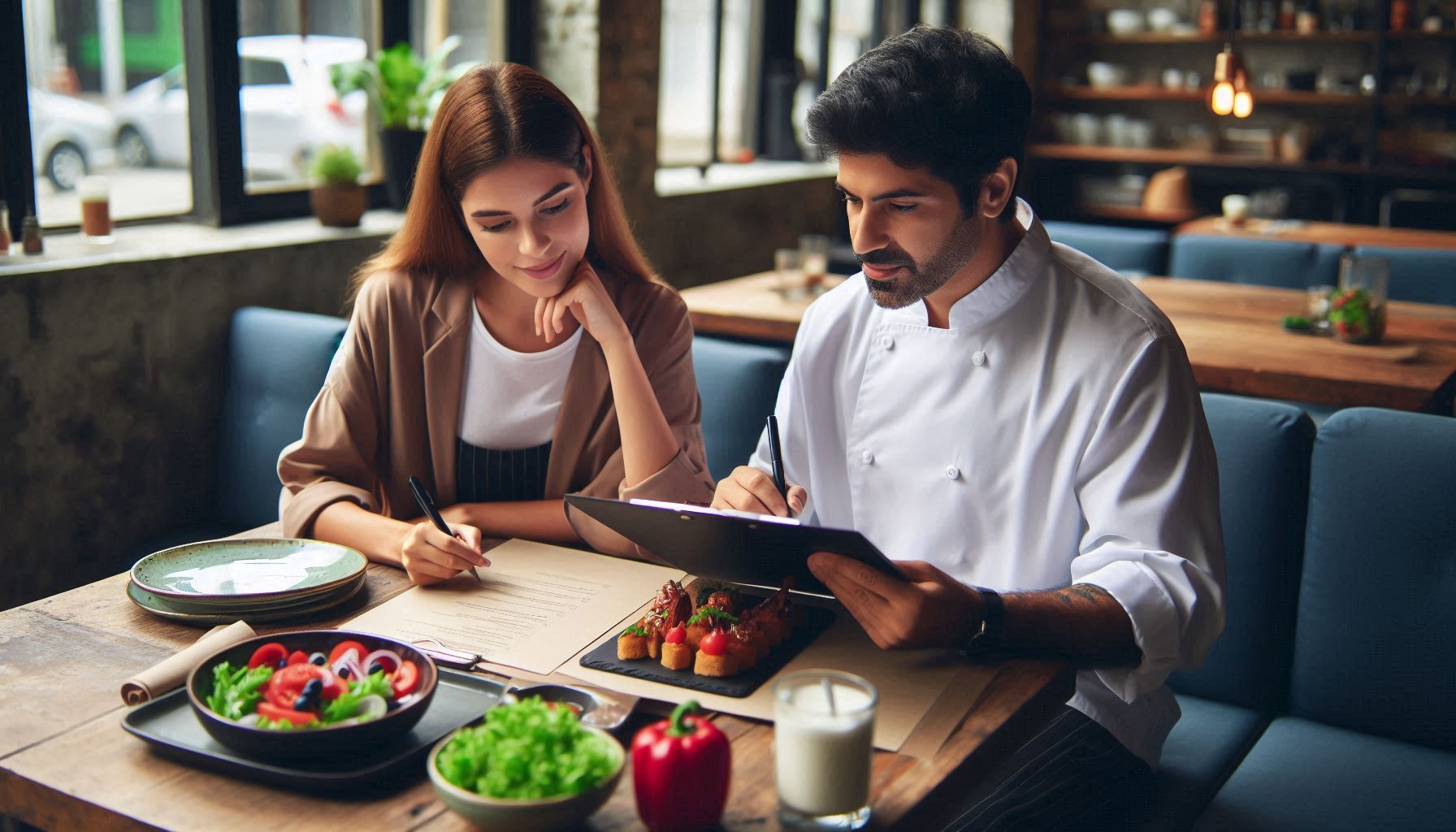
An AI-generated image of a chef-owner and head chef reviewing a restaurant menu

Note: AI-generated image.

A menu is not just a list of dishes; it’s a strategic tool that influences guest choices, enhances the dining experience, and maximizes sales.

Therefore, a well-designed menu is a crucial component of a restaurant’s success.

Come along with me and we’ll explore the principles of effective menu design, balancing creativity with guest preferences, and the role of menu psychology in driving decisions.

Key Principles of Effective Menu Design

Layout and Structure

The foundation of a great menu lies in its layout and structure. Organizing menu items logically—grouping appetizers, mains, desserts, and beverages into distinct sections—guides guests through their dining journey.

This structure helps in creating a seamless experience where guests can find what they are looking for easily. Subsections like “vegetarian,” “seafood,” or “grilled” can further refine the selection process.

Logical organization not only aids in navigation but also enhances the overall dining experience by reducing decision fatigue.

Item Placement

Item placement on the menu can have a significant impact on what guests decide to order.

The “Golden Triangle” concept suggests that guests’ eyes typically first gravitate to the center, then the top right, and finally, the top left of the menu. Placing high-margin items in these areas can drive sales.

Additionally, highlighting signature dishes and specials in these prime spots can make them more appealing. Strategic placement is essential for maximizing the visibility of certain items, encouraging guests to order the dishes that are most profitable or unique.

Readability

A menu should be easy to read and visually appealing. Choosing appropriate fonts and sizes ensures that the text is legible in various lighting conditions.

A key factor to bear in mind is maintaining clear spacing between items to prevent the menu from looking cluttered and overwhelming.

Ensuring the clarity and ease of reading is vital; if a guest struggles to read the menu, it detracts from their dining experience. Effective readability involves the thoughtful selection of fonts, sizes, and spacing to create a harmonious and inviting look.

Balancing Creativity and Guest Preferences

Creative Culinary Expression

A menu is an opportunity to showcase the chef’s creativity and culinary expertise. Innovative dishes that use unique ingredients or cooking techniques can set a restaurant apart from its competitors.

Creativity is crucial for developing a distinctive culinary identity, and offering guests an exciting and memorable dining experience.

However, it’s important to balance creativity with dishes that guests are familiar with and enjoy. Balancing innovation with tradition ensures that while the menu offers new and novel experiences, it also provides comfort and familiarity.

Popular Guest Preferences

To appeal to a broad audience, a menu should include a mix of creative dishes and popular favorites. Including familiar dishes alongside innovative options can cater to a wider audience, making everyone feel welcomed and valued.

Additionally, considering dietary restrictions and preferences is crucial. Offering vegetarian, vegan, gluten-free, and allergen-friendly options ensures that all guests can find something they love. Addressing dietary needs and preferences not only broadens the guest base but also demonstrates the restaurant’s commitment to inclusivity and guest satisfaction.

Market Trends

Staying updated with current culinary trends helps keep the menu fresh and exciting.

For instance, trends such as plant-based diets, sustainability, and ethnic fusion can attract trend-conscious diners. Incorporating these trends into the menu shows that the restaurant is contemporary and aware of its guests’ evolving tastes.

Aligning the menu with market trends can create a buzz and draw attention to the restaurant, enhancing its reputation as a forward-thinking and dynamic establishment.

The Role of Menu Psychology

Influencing Guest Choices

Menu psychology involves using strategic design and phrasing to influence what guests order.

Some effective techniques include strategic pricing methods like decoy pricing. This approach involves placing a high-priced item next to a mid-priced item to make the latter seem more reasonable. Another tactic is charm pricing, an approach that uses prices that end in “.99” to make them appear more attractive.

These subtle cues can guide guest decisions and encourage them to choose certain dishes. Understanding menu psychology allows restaurants to steer guests subtly towards higher-margin items without being overtly pushy.

Maximizing Sales

Highlighting profitable dishes with visual cues, such as boxes, borders, or bold text, can draw attention to these items. Descriptive language that evokes the senses can make dishes sound more appealing, and entice guests to try them.

For example, describing a dish as “succulent, slow-roasted pork with a caramelized apple glaze” creates a vivid image, and stimulates appetite.

Effective use of menu psychology can boost sales significantly, and enhance the dining experience by making the menu more engaging and enticing.

Enhancing Appeal with Descriptive Language and Visuals

Descriptive Language

Using evocative and sensory words to describe dishes can enhance their appeal. Highlighting unique ingredients, preparation methods, and the origin of the dish creates a story that resonates with guests.

Descriptive language adds depth and dimension to the menu, transforming it from a simple list of dishes into a narrative that engages the guest’s imagination. Phrases like “handcrafted,” “locally sourced,” and “artisanal” add a touch of sophistication and quality, making dishes sound more attractive and special.

Visuals

Including high-quality images or illustrations of key dishes can boost their appeal significantly. Visuals help guests imagine the dish, and can trigger an emotional response

A well-designed menu with complementary color schemes and design elements reinforces the restaurant’s theme, and creates a cohesive brand identity.

The use of appealing visuals can stimulate appetite, and make the decision-making process more enjoyable for guests, enhancing their overall dining experience.

Examples of Innovative Menus

Case Studies of Successful Menus

Analyzing menus from renowned restaurants provides valuable insights into successful design choices.

For instance, The French Laundry in California uses a minimalist menu design that emphasizes simplicity and elegance, allowing the focus to remain on the high-quality ingredients and sophisticated dishes.

Similarly, Nobu’s menu balances innovative Japanese-Peruvian fusion dishes with classic favorites, catering to a diverse clientele.

These examples illustrate how thoughtful menu design can enhance the dining experience, and create a distinctive brand identity.

Insights from Industry Experts

Menu design professionals and restaurateurs offer valuable best practices. Experts suggest evaluating and adapting the menu continuously to meet changing guest preferences and market trends.

Updating the menu regularly not only keeps it interesting for repeat guests but also allows for the introduction of seasonal ingredients and new culinary innovations.

Industry insights highlight the importance of flexibility and responsiveness in menu design, ensuring that the restaurant remains relevant and competitive.

Conclusion

A thoughtfully designed menu is a powerful tool in the restaurant industry. It balances creativity with guest preferences, uses psychology to influence choices, and enhances appeal through descriptive language and visuals.

Investing in effective menu design can enhance the dining experience, drive guest satisfaction, and boost sales. For restaurateurs, it’s an essential aspect of creating a successful and memorable dining establishment.

By understanding and implementing these principles, restaurant owners can craft menus that not only reflect their culinary vision but also resonate with their target audience, ensuring a winning formula for success.

A well-designed menu can transform the dining experience, making it more engaging, enjoyable, and, ultimately, profitable for the restaurant.

Image: Microsoft Designer

KRG Hospitality Contact Request for Proposal 30 Minute Discovery Session

Book Below to Setup a 30-Minute Complimentary Discovery Call and Request for Proposal.


by David Klemt David Klemt No Comments

A Brand-New Day: Celebrating ITALICUS

A Brand-New Day: Celebrating ITALICUS

by David Klemt

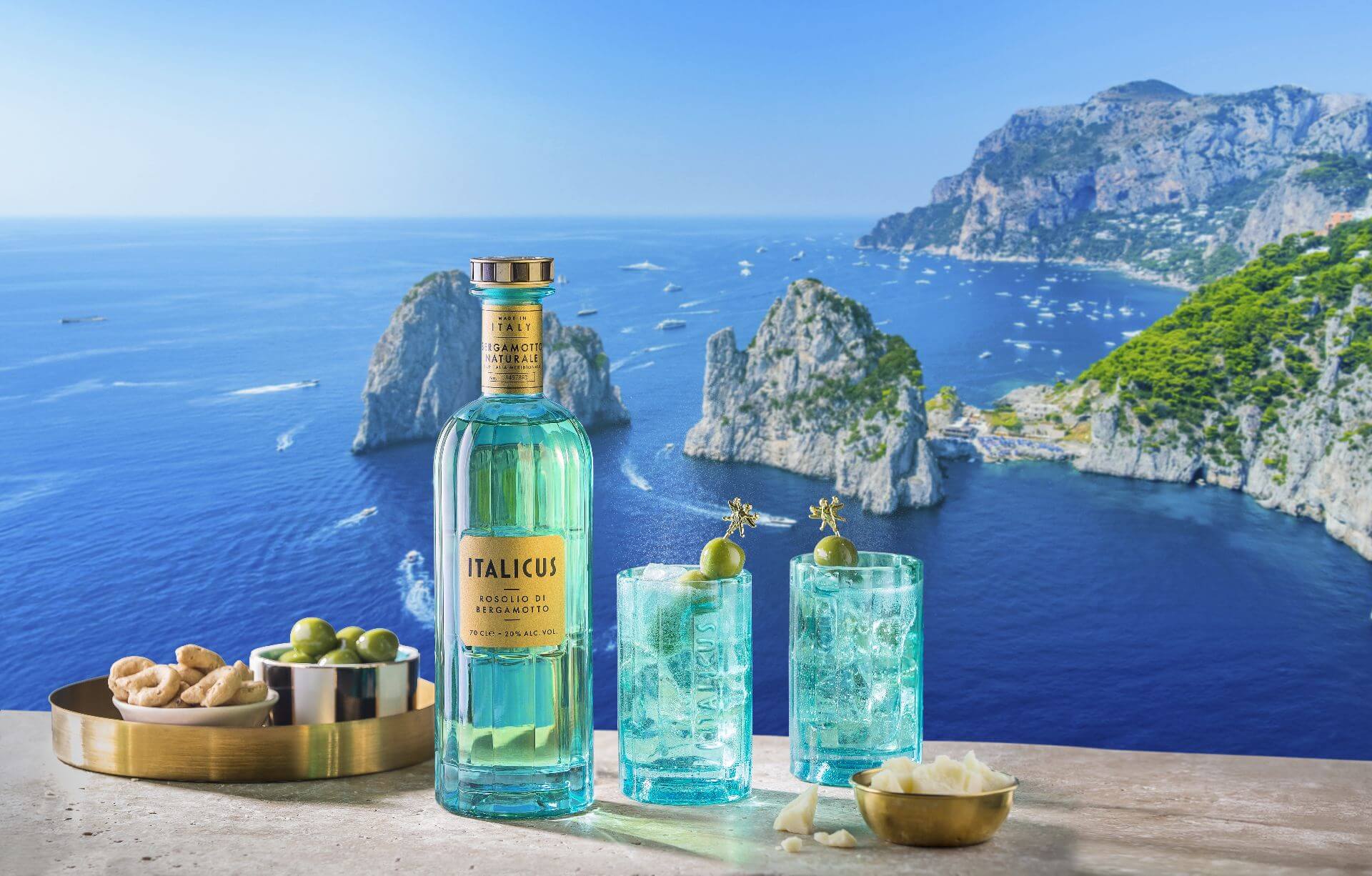
A bottle of ITALICUS Rosolio di Bergamotto and two cocktails, resting on a ledge overlooking the ocean.

I want to go to there, and drink that.

Operators, bar teams, and guests have the opportunity to partake in the first-ever National Rosolio Day, launched by ITALICUS Rosolio di Bergamotto.

The brand, known in part for its elegant and instantly recognizable bottle, is celebrating its eighth anniversary. To acknowledge their growth and mark this milestone, ITALICUS is launching the inaugural National Rosolio Day this coming Sunday, September 1.

I have to give the brand an approving nod here. They could be launching National ITALICUS Day. Instead, they’re celebrating the liqueur category that Giuseppe Gallo and the ITALICUS team have (re)introduced to modern cocktail lovers: rosolio.

I’ll get into the category in a moment. For now, there’s an interesting detail about the brand, the bottle, and the bar holiday launching on September 1.

Traditionally, eighth anniversaries are marked with gifts of bronze and pottery. Looking at the alluring, turquoise bottle, the label and stopper, one can argue, look bronze. Focusing on the stopper, there’s a relief of Bacchus, which looks like it could be porcelain, a form of pottery.

It’s almost like the team and bottle designer were prescient, and set the stage for this new bar holiday before the first case was ever shipped.

Global Celebration

Bars in France, Hong Kong, Hungary, Italy, New Zealand, the UK, the US, and Switzerland are participating via an exclusive cocktail menu.

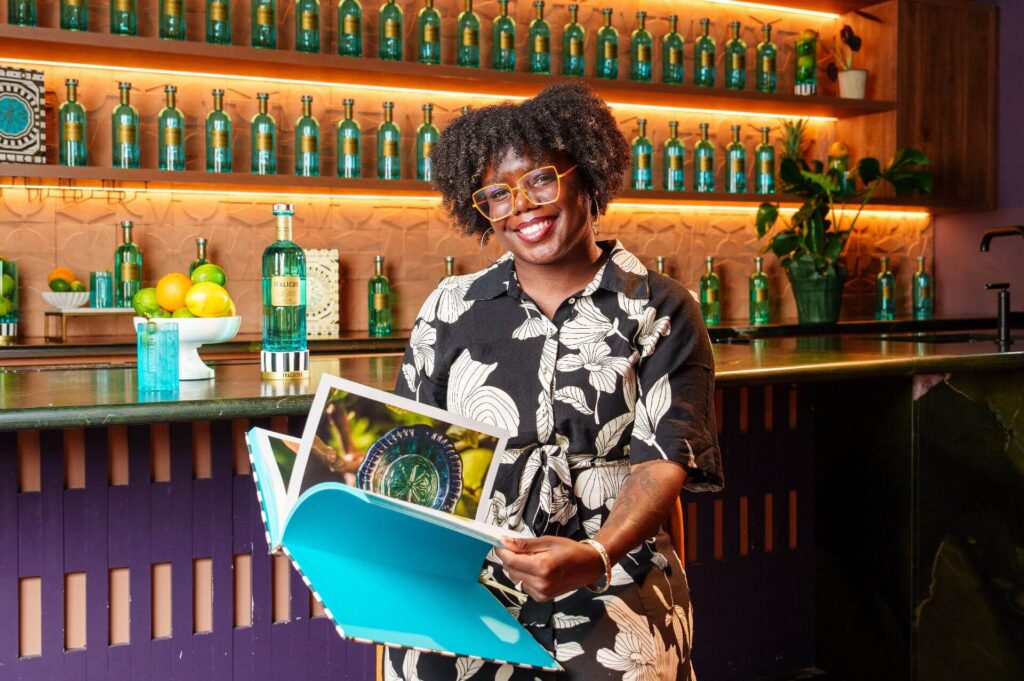
One bartender recognizable the world over is LP O’Brien. Fans of the Netflix show Drink Masters know that O’Brien won the first season.

LP O'Brien, the winner of the Netflix show Drink Masters, holding an ITALICUS book, surrounded by ITALICUS bottles.

I need that book, and that back bar.

Her part in the National Rosolio Day celebration includes a series that will educate people on ITALICUS and aperitivo culture. I’m certainly looking forward to learning more about the brand, rosoli, and apertivos from one of the best bartenders and mixologists in the business.

Of course, there’s no reason operators reading this can’t show their support for National Rosolio Day by introducing their guests to ITALICUS and aperitivo culture.

As this will become an annual celebration, bars can plan to participate officially in 2025 and beyond.

Cheers!

Roso-what-now?

So, you likely know what a liqueur is. And I’m willing to go out on a limb and assume you’re familiar with aperitivos.

But what, you may be wondering, is a rosolio?

This drinks category is a low-ABV Italian liqueur that, according to multiple sources, predates amaro, bitters, and vermouth. This ancient liqueur was, of course, homemade, so the botanicals varied wildly depending on region and who was creating a particular batch.

ITALICUS, for example, is crafted using Bergamot oranges from Calabria (considered by many to be the finest citrus in the world), citrons from Sicily, chamomile sourced from Lazio, and several Northern Italian herbs, including gentian, lavender, lemon balm, and yellow roses.

Clearly, these flavors are perfect for summer sipping. Of course, with a bit of creativity, creating cocktails that appeal to guests every season is quite an easy feat to accomplish.

Given its name, you may be curious about the use of rose petals in the production of rosolio. Well, while there are rosoli made with rose petals as an ingredient, rosolio translates to “morning dew,” or “dew of the sun.”

Operators and bar teams interested in implementing an Aperitivo Hour rather than (or in addition to) a standard happy hour have the perfect opportunity this coming Sunday. National Rosolio Day is ideal for leveraging the growing popularity of low-ABV drinks. This new holiday is also one of the best times to introduce guests to relaxing, socializing, and starting their evening with an aperitivo.

So, this weekend (and throughout the month of September), raise a glass to ITALICUS and the brand’s eighth anniversary.

For more details, check out the press release below.

ITALICUS CELEBRATES 8 YEARS WITH THE INAUGURAL NATIONAL ROSOLIO DAY ON SEPTEMBER 1st AND A MONTH DEDICATED TO THE APERITIVO

ITALICUS and mixologist LP O’Brien partner to celebrate the Italian Aperitivo culture across the world in honor of the brand’s 8th anniversary

NEW YORK, NEW YORK (August 28, 2024)ITALICUS Rosolio di Bergamotto announces the first ever National Rosolio Day on September 1st in honor of the brand’s 8th anniversary. During the month of September, the brand will celebrate the aperitivo around the world with 8 countries taking part to host week-long events featuring special cocktails created with ITALICUS to allow consumers to discover the Rosolio di Bergamotto through its drinks, story and innovation.

Founded in 2016 by Giuseppe Gallo, ITALICUS Rosolio di Bergamotto was created to bring back the forgotten Rosolio category. Made using the finest Italian ingredients, ITALICUS’ bottle design embodies the history and heritage of Italy’s distinctive regions, while telling the story of Rosolio’s traditional drinking occasion of aperitivo and its culture.

September 1st is officially recognized as National Rosolio Day thanks to ITALICUS. For this recurring holiday, ITALICUS has partnered with LP, Lauren O’Brien – renowned mixologist and winner of the Netflix series Drink Masters in 2023 – who will present a mini-series campaign to educate consumers about the brand, aperitivo category and culture. To further explore the best ways to enjoy ITALICUS, LP will be promoting ITALICUS through the art of mixology to demonstrate how you can drink ITALICUS and which easy-ingredient aperitivo cocktails can be replicated at home.

The 8 countries that are a part of the anniversary campaign include: Italy, France, Hong Kong, Hungary, New Zealand, The United Kingdom, The United States and Switzerland. Additionally, the bars that are a part of the initiative will be launching week-long activations whereby consumers can try delicious ITALICUS cocktails from an exclusive menu. The list of bars can be found through the website: https://rosolioitalicus.com/the-art-of-italicus/rosolio-day.

Along with these bars, ITALICUS can also be tasted and explored in some of the world’s 50 best bars including: Connaught Bar in London, Sips in Barcelona, Freni e Frizioni in Rome, Double Chicken Please in New York, Bar Leone in Hong Kong, Maybe Sammy in Sydney, Cafe La Trova in Miami and BKK Social Club in Bangkok.

“The aperitivo is a global trend started in Italy,” comments Giuseppe Gallo, founder of ITALICUS. “Now having a trendy moment around the world, the aperitivo blends tradition and innovation in its story and is served in many cocktails at the best global bars. For this campaign, we are extremely excited to partner with LP O’Brien – one of the most creative minds in the international mixology scene – to inaugurate Rosolio Day on September 1st.”

“Being part of the anniversary and ITALICUS’s launch of Rosolio Day is a tremendous honor,” explains LP. “I’m incredibly grateful to be associated with a brand that demonstrates such thoughtfulness in every aspect – from crafting the liquid to designing the bottle and creating a captivating story. Giuseppe, with his extensive experience in the beverage industry, has created something truly special with ITALICUS.” 

National Rosolio Day is dedicated to celebrating the history of the liqueur. Dating back to the Renaissance period, Rosolio is an Italian liqueur that was originally crafted in convents and monasteries as a medicinal tonic. Rosolio, meaning “dew of the sun,” is traditionally made from a base of alcohol, unrefined sugar, water and infused with botanicals, herbs, and fruits – with the most common flavors using spices or citrus fruits. Its preparation was a family traditional craft which was passed on from generation to generation. This liqueur was often used as a welcome drink (or “Cordiale” in Italian) at home.

Despite a decline in the 19th century, Rosolio has experienced a modern revival, driven by the craft cocktail movement and a renewed appreciation for conventional spirits. Today, Rosolio is enjoyed as an aperitif or digestif and brands like ITALICUS have revitalized the category by combining historic methods with contemporary flavors like the bergamot citrus orange – bringing the liqueur to a new generation of enthusiasts.

ITALICUS Rosolio di Bergamotto is sold in 700ml bottles at 20% ABV and is available at select retailers including Curiada and Total Wine for $39.99.

About ITALICUS® Rosolio Di Bergamotto

ITALICUS was created by the authority in Italian spirits, Giuseppe Gallo, to bring back the forgotten Rosolio category. With key notes of Calabrian bergamot, ITALICUS is made using the finest Italian ingredients to create a sip of Italy. The striking bottle design embodies the history and heritage of Italy’s distinctive regions, whilst telling the story of Rosolio’s time-honored traditional drinking occasion of Aperitivo.

ITALICUS is one of the top awarded aperitivo brands globally. ITALICUS Rosolio di Bergamotto was awarded Best New Spirit 2017 at the prestigious Tales of the Cocktail Spirited Awards, and Top Trending Liqueur Brand by Drinks International in the years from 2019 to 2024.

Additional awards include: DOUBLE GOLD – World Wine Spirits Trophy 2021; Italian Aperitif of the year GOLD MEDAL – NYISC 2021 and 2016; Tasting GOLD medal 2018, 2019 – Women & Wine and spirits awards; Best New European Spirit at the Mixology Awards 2017 in Berlin; Best Product at FIBAR 2017; Packaging awards GOLD MEDAL 2017 and Contemporary Awards TROPHY – International Wine & Spirits Competition 2017; Packaging Trophy – Harpers Design 2017; Gold Medal – San Francisco World Spirits Competition 2017; Platinum Best of Luxury – Pentawards 2017; Best New Product – Bar Awards 2016; EXCEPTIONAL quality certificate – Difford’s Guide 2016.

About Giuseppe Gallo

Giuseppe Gallo is one of the world’s most respected bartenders and drinks-industry innovators, with an unrivaled passion for the drinks business and an inimitable source of knowledge and insight into the world of aperitivo. Hailing from the Amalfi Coast, his passion for mixology stems from his strong Italian heritage. Giuseppe is widely considered a vermouth expert and he has spent over 15 years traveling the world and educating consumers and professionals on the category. This work has culminated in winning ‘International Ambassador of the Year’ at the prestigious awards in the drinks industry, Tales Of The Cocktail’s Spirited Awards in 2014. In September 2016 he created Italicus Rosolio di Bergamotto which reinvigorated a forgotten aperitivo category, which has won countless industry awards since its launch. In 2019, Giuseppe launched the Roma Bar Show, the first-ever international cocktail festival in the country.

About LP

LP O’Brien is an Afro-Boricua trailblazer in the world of mixology, research and development, renowned for her innovative approach and expertise in crafting exceptional beverages. She gained widespread recognition as the inaugural winner of the Netflix competition series Drink Master, where her creativity and skill set her apart from a field of talented competitors. Despite being sober for a little over a year, LP has continued to excel in her craft, demonstrating that a passion for mixology doesn’t require consuming alcohol. Her unique perspective and commitment to understanding the art of drink-making have made her a leading figure in the industry.

LP’s impressive portfolio includes collaborations with major corporations and celebrities. She has worked with Disney, Food & Wine, American Express, and has created bespoke beverage experiences for high-profile clients such as Christy Carlson Romano and Vanessa Hudgens, along with crafting the signature non-alcoholic beverage for the 2023 Primetime Emmy Awards. Her ability to blend flavors and create memorable drink experiences has earned her a reputation as a top-tier celebrity mixologist.

Images: ITALICUS

KRG Hospitality Start-Up Restaurant Bar Hotel Consulting Consultant Solutions Plans Services

by David Klemt David Klemt No Comments

Soup Season: Transforming Comfort Classics

Soup Season: Transforming Comfort Classics

by David Klemt

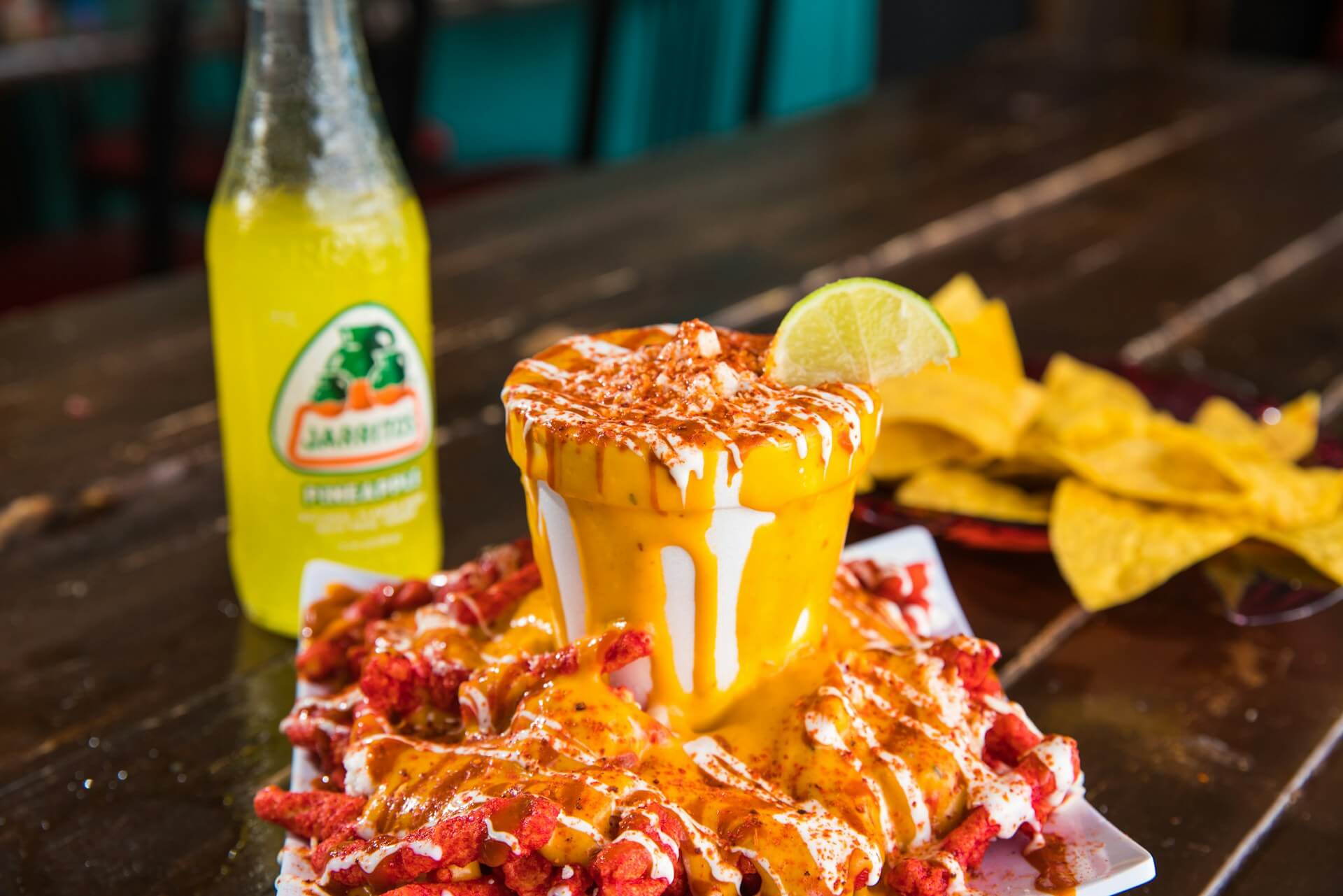
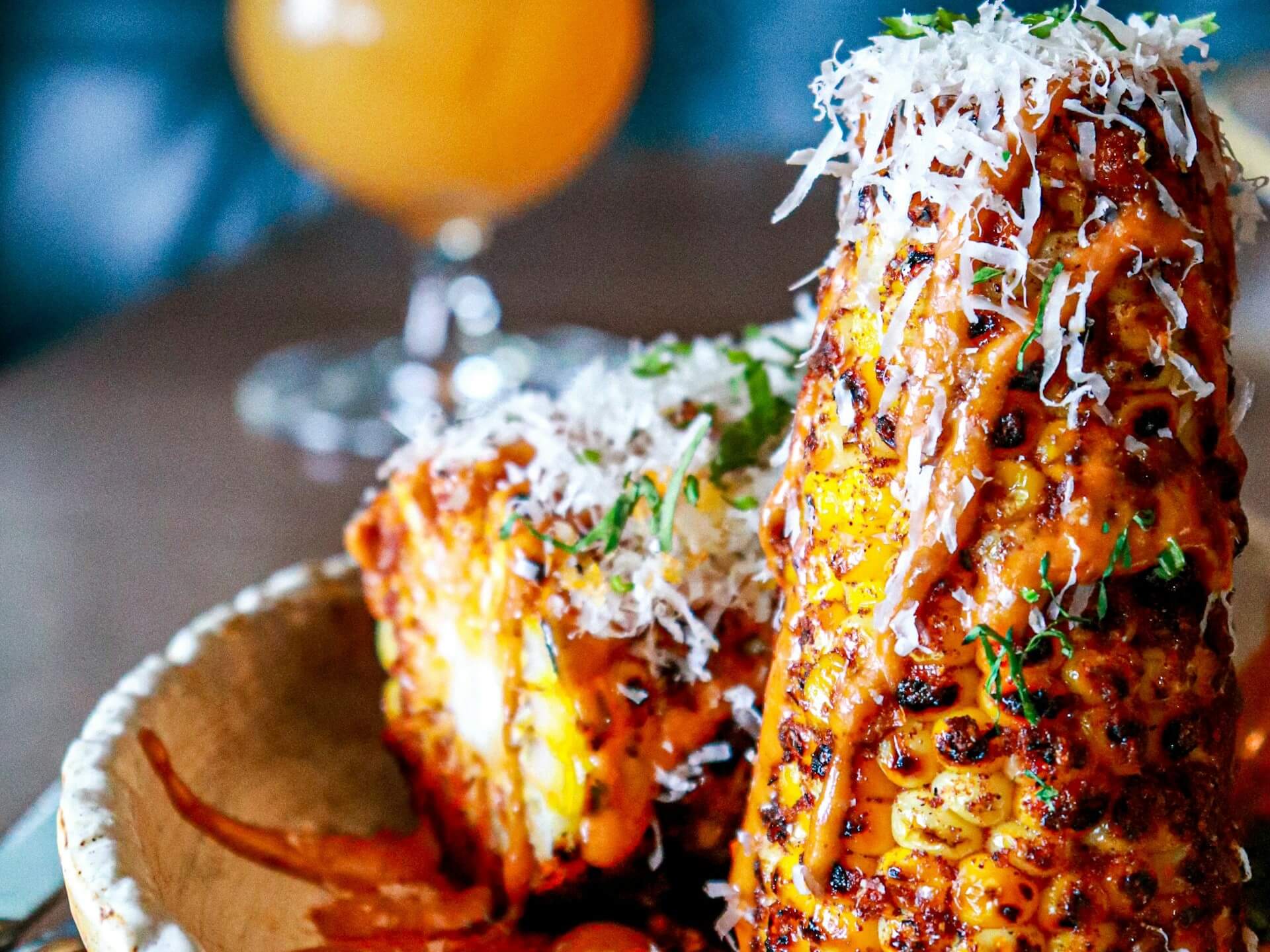
Elote en vaso, or vaso de elote, also known as street corn in a cup, on a bar

Elote en vaso or vaso de elote, also known as “street corn in a cup.”

The latest and greatest from Campbell’s Foodservice is all about operators making the most of cooler weather by maximizing soup season.

If you read KRG Hospitality articles regularly, you’re likely aware that we like the helpful information Campbell’s makes available. For example, I’ve written articles that share their tips for leveraging nostalgia, crushing it with LTOs, and 2024 culinary trends.

Their newest tips aim to help operators succeed with soup. Further, much of Campbell’s Foodservice’s tips are in direct response to Datassential and Technomic data. In fact, Campbell’s references Technomic’s Soup & Salad Consumer Trend Report directly.

To be sure, the first bit of advice that Campbell’s shares is the most obvious: Leverage seasonal flavors. In this case, we’re talking fall and winter flavors.

You may already see stores where you live and operate unleashing Halloween decorations. I know I have; it may be 105 degrees in Las Vegas as I write this, but people are getting into an autumnal mood.

Of course, when you take advantage of seasonality for LTOs or menu updates, it’s important to let your guests know.

“Calling out seasonal items on your menu demonstrates the operator is being relevant and using ingredients that are in season,” says Campbell’s Foodservice Executive Chef Gerald Drummond. “From a consumer standpoint, that’s something that they really look towards.”

We agree wholeheartedly. Going deeper, we recommend working with local suppliers to procure seasonal ingredients, and calling that out as well.

Another tip comes from Datassential and Technomic insights. Three in ten younger consumers would like to see soups that feature plant-based proteins. And around half want at least one vegetarian-friendly soup on a menu.

The Standout Tip

When you’re through reading this article, I encourage you to scroll back to the top, click the “soup season” link, and read this Campbell’s Foodservice report for yourself.

That way, you’ll see all of their latest tips for getting the most out of seasonal soups.

However, I’m going to share the tip that stood out the most to me: transforming comfort food dishes into soups. Hence, the image at the top of this article: vaso de elote, or elote en vaso. That dish translates to “street corn in a cup” from Spanish.

Now, elote or street corn is undeniably a comforting street food. If I see it on a menu, I’m going to order it. Were I to see street corn in a cup, particularly if it came with the presentation at the top of this article, I’m going to order it.

So, if a culinary team were to transform street corn in a cup into street corn in a cup of soup, I’m all in.

Think about your concept, the approach to cuisine, and the community you serve. Then, think about the comfort dishes that work well with your concept and resonate with your guests.

In their report, Campbell’s Foodservice recommends beer cheese soup, of which I’m a fan. They also suggest lasagna soup (I’d try it), and chicken pot pie soup (again, I’m down).

Real-Word, Professional Advice

I asked our chef consultant Nathen Dubé for a couple of quick tips for transforming a comforting food dish into a soup. (By the way, you can book a call with him to discuss your menu or kitchen here.)

“I would look at the overall profile of the dish, and then decide if you’re going to combine everything into a puree or a broth,” says Nathen.

Then, the kitchen team needs to decide “which ingredients would be incorporated, and which could be left whole afterwards for texture, and stronger stand-out flavours.” As he explained to me, some ingredients definitely translate better to slow cooking versus finishing towards the end of the process.

With that advice given, take a look at your menu. Do you have some comfort foods that would be intriguing to guests in soup form? What about some of your signature dishes?

Once you’ve determined which dishes to transform into seasonal, LTO soups, engage your kitchen team. They’ll likely be excited to do something new, and show off their culinary talent.

Some people may harbor the misconception that soup isn’t exciting. I think creative operators and culinary teams can disabuse skeptical guests of this notion. Cheers!

Image: Jarritos Mexican Soda on Unsplash
KRG Hospitality. Restaurant Business Plan. Feasibility Study. Concept. Branding. Consultant. Start-Up.

by David Klemt David Klemt No Comments

The Rise of Experimental Gastronomy

The Rise of Experimental Gastronomy

by Nathen Dubé

Experimental gastronomy method of food spherification.

Yes, that’s food. This is an example of spherification, a discipline within the experimental gastronomy movement.

The culinary world has always been a playground for creativity and innovation, but a new wave of chefs has pushed the boundaries even further in recent years.

This movement, known as experimental gastronomy, is revolutionizing the way we think about food.

From molecular gastronomy to avant-garde cooking techniques, experimental gastronomy blends science and artistry to create unforgettable dining experiences.

The Essence of Experimental Gastronomy

At its core, experimental gastronomy is about challenging traditional culinary norms, and exploring new possibilities. Chefs in this field use cutting-edge techniques and unconventional ingredients to create dishes that surprise and delight the senses.

Employing unique techniques allows chefs and their teams to create experiences that go beyond taste alone. These include using liquid nitrogen to freeze herbs instantly, or employing spherification to turn liquids into spheres that burst in your mouth.

Innovative Techniques and Ingredients

One of the hallmarks of experimental gastronomy is the use of innovative techniques that transform familiar ingredients into something entirely new.

For instance, sous-vide cooking allows chefs to cook food at precise temperatures, resulting in perfect textures and flavors.

Another technique, fermentation, is used to develop complex flavors in unexpected ways. Ingredients like edible flowers, seaweed, and insects are also being explored for their unique flavors and nutritional benefits.

  • Sous-vide cooking: This method involves cooking food sealed in airtight bags in a water bath at controlled temperatures. It ensures even cooking, and enhances the food’s natural flavors and textures.
  • Fermentation: Used to develop complex flavors, this technique leverages the transformative power of microbes. Foods like kimchi, kombucha, and miso are products of fermentation.
  • Spherification: This technique, popularized by molecular gastronomy, turns liquids into small, caviar-like spheres, providing a burst of flavor.

The Role of Creativity and Science

Creativity and science are the driving forces behind experimental gastronomy. Chefs often collaborate with scientists and food technologists to develop new methods and ingredients.

This fusion of disciplines has led to groundbreaking discoveries, such as the creation of edible foams and gels. It also encourages chefs to think outside the box, combining flavors and textures in ways that defy convention.

Driving Factors Behind Experimental Gastronomy

Several factors are driving the rise of experimental gastronomy.

  • Unique dining experiences: In a competitive culinary landscape, restaurants strive to offer unique and memorable experiences that go beyond traditional dining.
  • Advancements in food technology: Modern tools and techniques enable chefs to experiment with new cooking methods and ingredients.
  • Sustainability and ethical dining: There is a growing interest in sustainable practices and ethical dining, prompting chefs to explore alternative ingredients and methods that minimize waste and environmental impact.

Food as Art

In the realm of experimental gastronomy, food is not merely sustenance but a form of art. Chefs act as artists, using their creativity to craft dishes that are visually stunning and emotionally evocative.

The presentation of food becomes a crucial element, with each plate designed meticulously to tell a story or evoke a specific emotion. This artistic approach transforms dining into a multi-sensory experience, engaging not just the taste buds but all the senses.

Case Studies of Innovative Dishes

Experimental gastronomy has produced some truly memorable dishes that challenge our perceptions of food.

Below, a handful examples of innovative dishes.

  • Forest Floor: This dish uses dehydrated mushrooms, edible soil, and moss to evoke the experience of walking through a forest.
  • Fermented Seaweed Salad: This dish showcases the complex umami flavors developed through fermentation, highlighting the potential of seaweed as a sustainable ingredient.
  • Edible Balloons: Made from flavored gelatin, these balloons are filled with helium, and can be eaten after inhalation, adding a playful element to the dining experience.

Insights into the Future of Culinary Experimentation

As experimental gastronomy continues to evolve, the future looks promising. With advancements in food technology and a growing interest in sustainable and ethical dining, chefs are exploring new ways to innovate.

The possibilities include:

  • Lab-grown meats: These are developed from animal cells in a lab, offering a sustainable alternative to traditional meat production.
  • Plant-based substitutes: Ingredients derived from plants that mimic the texture and flavor of meat, appealing to both vegetarians and meat-eaters.
  • Pop-up restaurants: Temporary dining establishments that offer unique and immersive culinary experiences, allowing chefs to experiment with new concepts without long-term commitments.

Moreover, the rise of immersive dining experiences, where the environment and presentation are as important as the food itself, suggests that the demand for experimental cuisine is only growing. Restaurants are increasingly using technology such as virtual reality and interactive elements to enhance the dining experience.

Experimental gastronomy represents the cutting edge of culinary innovation, pushing the boundaries of what is possible in the kitchen. Combining creativity, science, and a willingness to take risks helps chefs in this field redefine the dining experience.

As we look to the future, it’s clear that experimental gastronomy will continue to inspire and challenge us, offering new and exciting ways to experience food.

Image: Chef Rudakova on Unsplash
Client Intake Form - KRG Hospitality

Top