Menu programming

by David Klemt David Klemt No Comments

Cheers to the 2023 World Beer Cup Winners

Cheers to the 2023 World Beer Cup Winners

by David Klemt
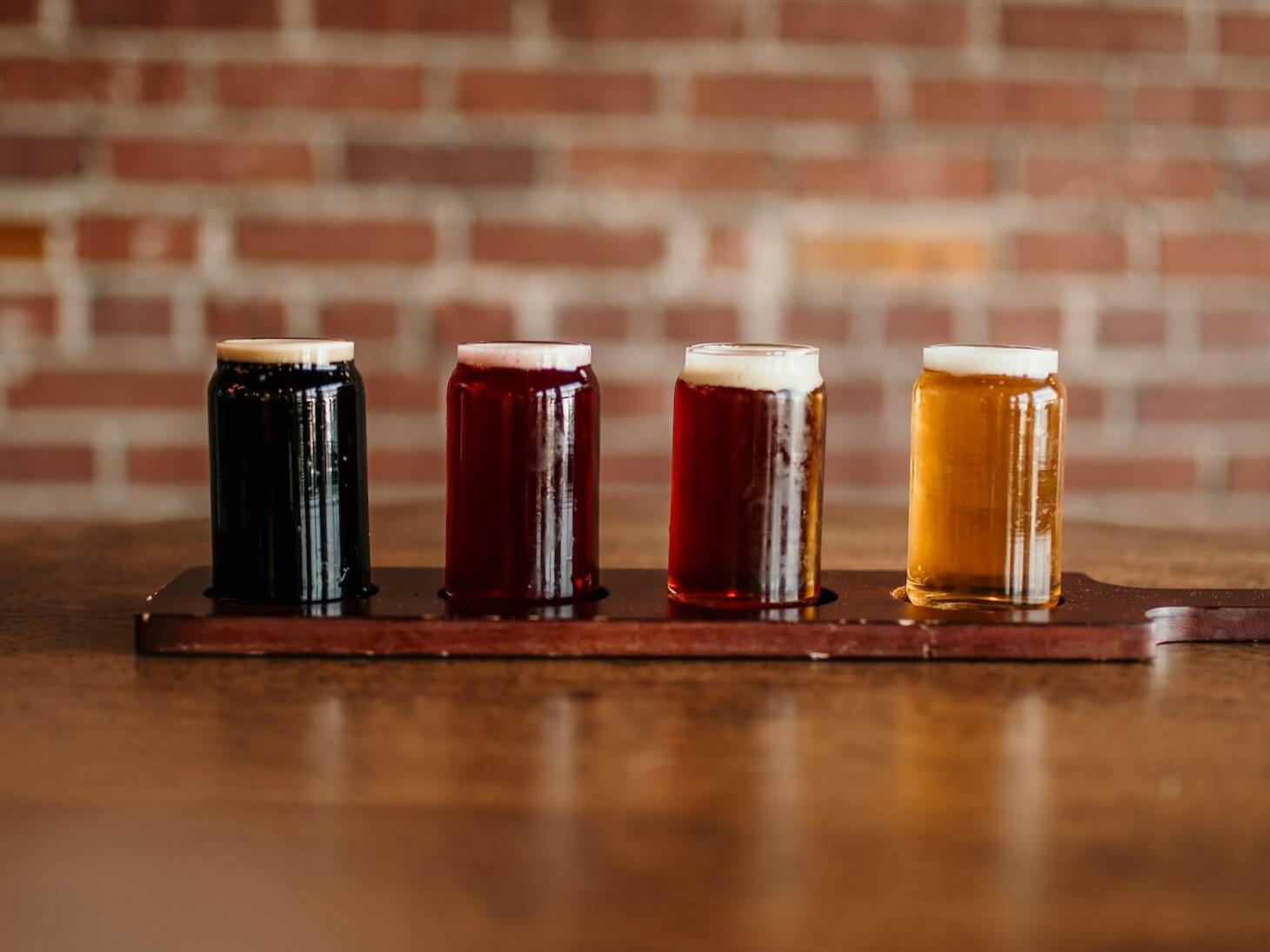
Flight of beers offering different styles

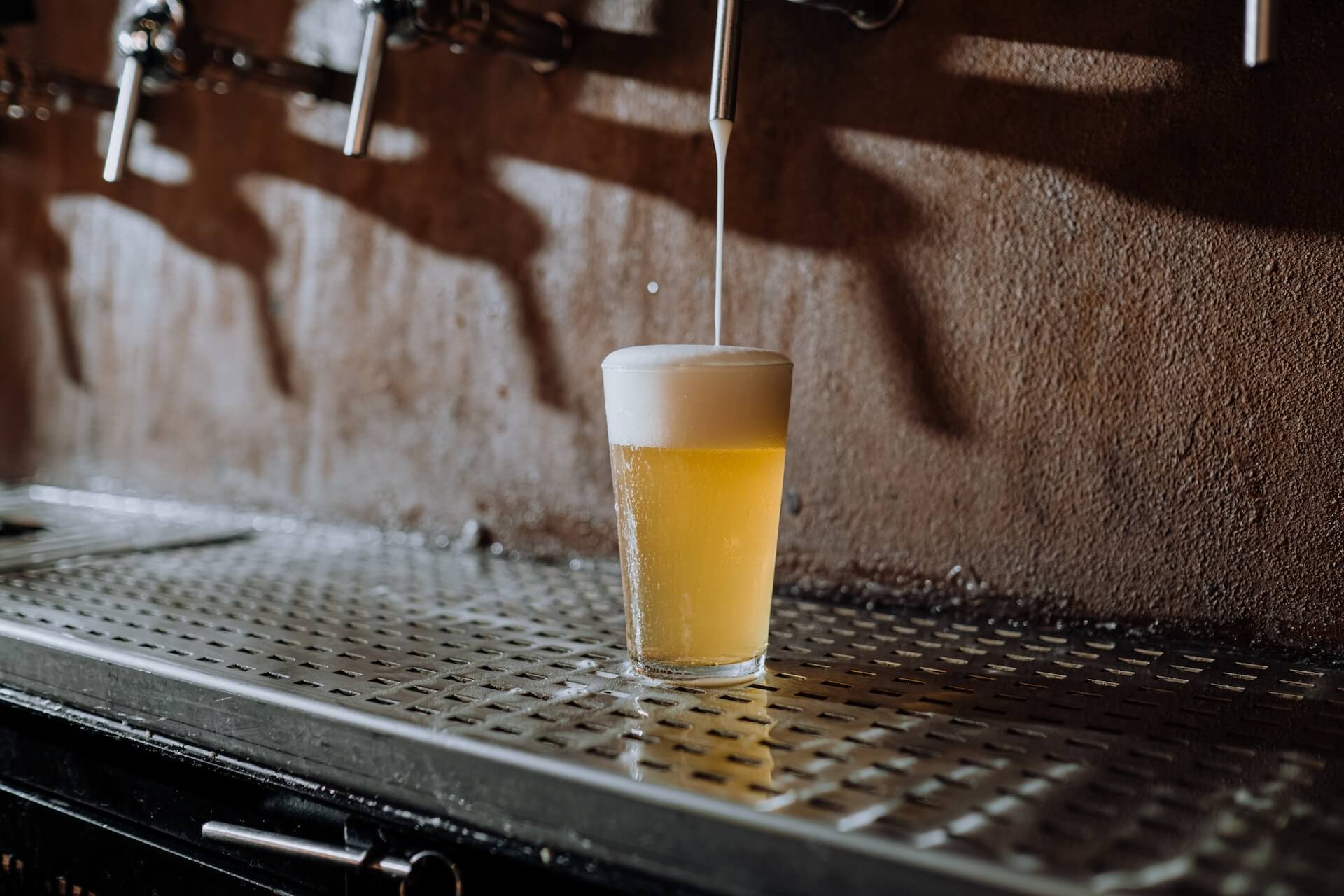
Raise a glass or hoist a stein in celebration of the 2023 World Beer Cup winners, a collection of some of the most incredible brews on the planet.

Since 1996, the World Beer Cup has established itself as “the Olympics of Beer” and is hosted by the Brewers Association. This year, 272 judges from 26 countries ranked submissions from 2,376 brewers across 103 categories. A staggering 10,213 beers were entered in the 2023 World Beer Cup.

On average, 99 beers are submitted for each category. Of note, no category is guaranteed to have three medalists. In theory, the judges assessing a given category may award only a silver or bronze medal, determining that there is no outstanding entrant deserving of gold.

While the average per category is 99 entrants, some styles have hundreds. The first five categories below boasted the most entrants in 2023.

For our coverage of the 2022 World Beer Cup winners, click here.

American-style India Pale Ale

412 entrants

  • Gold: Head Hunter (Fat Head’s Brewery & Saloon; North Olmsted, Ohio, USA)
  • Silver: Applied Science (Sunriver Brewing Co.; Sunriver, Oregon, USA)
  • Bronze: Old West (Craft Coast Beer & Tacos; Oceanside, California, USA)

Juicy or Hazy India Pale Ale

374 entrants

  • Gold: Wherever You Go (Green Cheek Beer Co.; Costa Mesa, California, USA)
  • Silver: Nectaronus Prime (Moksa Brewing Co.; Rocklin, California, USA)
  • Bronze: Nelson Hazy IPA (Prison Pals Brewing Co.; Doral, Florida, USA)

German-style Pilsener

233 entrants

  • Gold: Pils (Von Ebert Brewing, Pearl District; Portland, Oregon, USA)
  • Silver: Dollar Pils Y’all (Holler Brewing Co.; Houston, Texas, USA)
  • Bronze: Bibo (Creature Comforts Brewing Co., Southern Mills; Athens, Georgia, USA)

International Light Lager

220 entrants

  • Gold: Anne Bonny (Le Corsaire – Microbrasserie Pirate; Lévis, Québec, Canada)
  • Silver: 3Speed (Amsterdam Brewing Co.; Toronto, Ontario, Canada)
  • Bronze: Ultra Secret Enigma (Liability Brewing Co.; Greenville, South Carolina, USA)

Wood- and Barrel-aged Strong Stout

202 entrants

  • Gold: Big Mistake (11 Below Brewing Co.; Houston, Texas, USA)
  • Silver: BA Sexual Chocolate (Foothills Brewing; Winston-Salem, North Carolina, USA)
  • Bronze: Vladislav (Diebolt Brewing Co., Denver, Colorado, USA)

I selected another dozen categories, which you’ll find below. These include American Wheat Beer, Non-alcohol Beer, and Pumpkin Beer.

For the full list of 2023 World Beer Cup winners, please click here. Cheers!

Session India Pale Ale

  • Gold: Wild Gravity (Bend Brewing Co.; Bend, Oregon, USA)
  • Silver: Trump Hands (Cannonball Creek Brewing Co.; Golden, Colorado, USA)
  • Bronze: Summatime (603 Brewery; Londonberry, New Hampshire, USA)

American Wheat Beer

  • Gold: Taildragger 5G (Saddle Mountain Brewing Co.; Goodyear, Arizona, USA)
  • Silver: Meister (Eppig Brewing; Vista, California, USA)
  • Bronze: Miner’s Gold (Lewis & Clark Brewing Co.; Helena, Montana, USA)

Belgian Fruit Beer

  • Gold: Central City Brewing Framboise (Central City Brewers and Distillers; Surrey, British Columbia, Canada)
  • Silver: Vieux Bois Lambic Inspired Ale w/ Cranberry & Raspberry (Bozeman Brewing Co.; Bozeman, Montana, USA)
  • Bronze: Turtle Kriek (Peticolas Brewing Co.; Dallas, Texas, USA)

Belgian-style Sour Ale

  • Gold: Vintage 2022 (New Glarus Brewing Co.; New Glarus, Wisconsin, USA)
  • Silver: Chance, Luck and Magic 2020 (Garage Project; Wellington, New Zealand)
  • Bronze: Borealis (Lamplighter Brewing Co.; Cambridge, Massachusetts, USA)

English-style Brown Ale

  • Gold: Shhhhhh…This Is Ryan’s Award Winning Brown Ale (Green Cheek Beer Co., Costa Mesa; Costa Mesa, California, USA)
  • Silver: Black Cats (Streetside Brewery; Cincinnati, Ohio, USA)
  • Bronze: Brown Ale (Grid City Beer Works; Salt Lake City, Utah, USA)

South German-style Hefeweizen

  • Gold: Altstadt Hefe (Altstadt Brewery; Fredericksburg, Texas, USA)
  • Silver: Flying W Hefeweizen (Little Dry Creek Brewery; Greenwood Village, Colorado, USA)
  • Bronze: Fujizakura Kogen Beer Weizen (Fujizakura Heights Beer; Minamitsuru-gun, Yamanashi Prefecture, Japan)

Classic Saison

  • Gold: Saaz Dryhopped Saison (33 Brewing Experiment; Vancouver, British Columbia, Canada)
  • Silver: Juilletistes (Bruery Terreux; Placentia, California, USA)
  • Bronze: Valor (Tooth and Nail Brewing Co.; Ottawa, Ontario, Canada)

Pumpkin Beer

  • Gold: Pumpkin Ale (Backpocket Brewing; Coralville, Iowa, USA)
  • Silver: Pumpkinator (Saint Arnold Brewing Co.; Houston, Texas, USA)
  • Bronze: Jack O’Lantern Ale (Bond’s Brewing Co.; Laramie, Wyoming, USA)

Chili Beer

  • Gold: Yellow Fever (Comrade Brewing Co.; Denver, Colorado, USA)
  • Silver: Kimchi Sour (Dokkaebier; Oakland, California, USA)
  • Bronze: Oaxaca Choca Mexican Chocolate Stout (New Realm Brewing Co., Charleston; Charleston, South Carolina, USA)

Smoke Beer

  • Gold: Unearthing the Orb (Resolute Brewing Co.; Centennial, Colorado, USA)
  • Silver: Smokehaus Bock (Devils Backbone Basecamp Brewpub & Meadows; Roseland, Virginia, USA)
  • Bronze: Colossal 2 (Port City Brewing Co.; Alexandria, Virginia, USA)

Gluten-free Wheat Beer

  • Gold: Ghostfish 8th Anniversary Beer (Ghostfish Brewing Co.; Seattle, Washington, USA)
  • Silver: Seven Spice Anniversary Saison (Holidaily Brewing Co.; Golden, Colorado, USA)
  • Bronze: Ripped Jeans and Wolf Shirts (ALT Brew; Madison, Wisconsin, USA)

Non-alcohol Beer

  • Gold: Superb-Owl (Uiltje Brewing Co.; Haarlem, North Holland, Netherlands)
  • Silver: Just the Haze (Boston Beer Co., Samuel Adams Brewing Co.; Boston, Massachusetts, USA)
  • Bronze: Galactic Extra Dark (Big Drop Brewing Co.; Wilmington, Delaware, USA)

Image: Daniel Lee on Unsplash
KRG Hospitality Bar 101 Techniques

by David Klemt David Klemt No Comments

iPourIt Releases Their 2023 Pour Report

iPourIt Releases Their 2023 Pour Report

by David Klemt

Beer pouring into glass from tap

Interactive self-serve beer experience platform iPourIt‘s latest report, the 2023 Pour Report, is now available for download and review.

iPourIt is a pioneer in the self-serve beverage space. While it may seem counter-intuitive to some, many guests have shown time and again that they enjoy using self-serve walls. For these guests, a not in any way insignificant number, iPourIt installations enhance the guest experience, increase loyalty, and boost revenue.

And while many people associate iPourIt and self-serve programs with beer, these systems can also pour wine, cocktails on tap, spirits, non-alcohol beverages, and soft drinks.


View this post on Instagram


A post shared by Matt Plapp (@mattplapp)

Another benefit from iPourIt? Transparency and sharing of data. The company doesn’t limit providing valuable guest behavior insight to their clients. Rather, they make the data they collect available to anyone. Simply head to their website, fill out a few fields, and gain important beverage insights.

Anyone curious can choose between a standard report and a “pro” version. Both are free to download and peruse. People can also read our article that dives into their fourth-annual report via this link.

Below you’ll find key takeaways from their 2023 report. I strongly urge operators to download and review either report.

The Who

We agree that demographics are a metric that people and businesses often misuse. Valuegraphics can be far more effective for businesses looking to build loyalty and boost revenue.

Still, demographics can provide beneficial insights.

First, let’s look at how men and women used iPourIt systems in 2022. Men poured 20,477,288 ounces last year, whereas women poured 10,848,435 ounces. The average per pour for men was 6.4 ounces in comparison to 5.3 ounces per pour from women. On average, men spent $14.72 per visit to an iPourIt-equipped location; women spent $12.24.

Next, the generational breakdown. IPA was the number-one style poured for Baby Boomers, Generation X, and Millennials. For legal-drinking-age Generation Z drinkers, IPA came in second; their top pour style was cider. Likewise, Lager claimed second place for Boomers, Gen X, and Millennials. Second was IPA for Gen Z, and Lager was third. Wheat beer was third place for Boomers, fourth for Gen X and Millennials, and fifth for Gen Z. Sour came in fifth for Gen X and Millennials fourth for Gen Z; for Boomers, the style didn’t rank among the top five. Stout clinched the fifth spot for Boomers.

Finally, in terms of traffic, men of every age group poured more ounces than their female counterparts.

The What

Below, the top 10 styles of beer poured by men:

  1. Fruit beer
  2. Pale Ale
  3. Blonde
  4. Pilsner
  5. Stout
  6. Sour
  7. Wheat beer
  8. Cider
  9. Lager
  10. IPA

In descending order, the top five (download the report for the top ten) products poured by men were Michelob Ultra, Bud Light, Golden Road Brewing Mango Cart, Coors Light, and Modelo Especial.

And now the top styles of beer or category of beverage poured by women:

  1. Stout
  2. Fruit beer
  3. Blonde
  4. White wine
  5. Hard seltzer
  6. Wheat beer
  7. Sour
  8. Lager
  9. IPA
  10. Cider

Also in descending order, the top products poured by women were Michelob Ultra, Mango Cart by Golden Road Brewing, Bud Light, Ace Pineapple Cider, and Coors Light.

The Where

The 2023 Pour Report by iPourIt breaks the US down into five regions: West, Southwest, Midwest, Southeast, and Northeast.

Because our American head office is in Las Vegas and our hotel consultant is in Pennsylvania, we’ll look at the West and Northeast.

The top-five pours for the West in 2022 were:

  1. Bud Light
  2. Firestone Walker Brewing Co. 805
  3. Golden Road Brewing Mango Cart
  4. Coors Light
  5. Modelo Especial

While the top-five pours in the Northeast were:

  1. Blue Moon Brewing Co. Belgian White
  2. Allagash Brewing Co. White
  3. Lord Hobo Brewing Co. Boom Sauce
  4. Sloop Brewing Co. Juice Bomb
  5. Stella Artois

For the curious, Bud Light and Coors Light are categorized as American-style Light Lagers, 805 is a Blonde Ale, Mango Cart is a Wheat Ale, and Modelo Especial is a Mexican-style Pilsner. Blue Moon and Allagash White are both Belgian-style wheat beers (or Witbiers), Boom Sauce is a Double IPA, Juice Bomb is a Northeastern IPA, and Stella Artois is a Lager.

For further insights, please download this year’s iPourIt report here.

Image: cottonbro studio on Pexels

KRG Hospitality Beverage Programming

by David Klemt David Klemt No Comments

Sugar. Water. Whiskey. Mint.

Sugar. Water. Whiskey. Mint.

by David Klemt

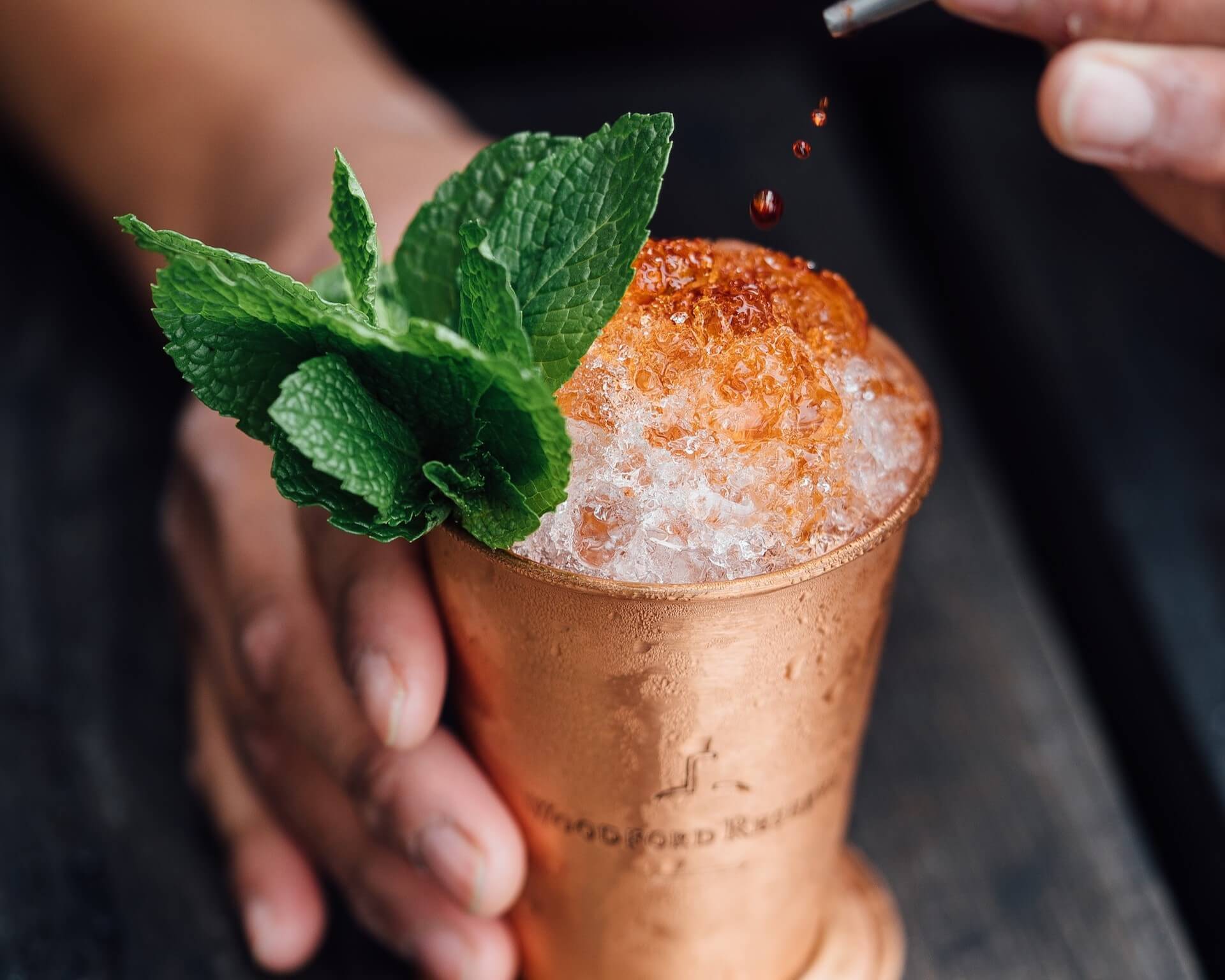
Mint Julep in copper Woodford Reserve cup

…and sometimes Angostura bitters.

Get ready to break out the stainless steel and copper cups, whiskey, and crushed ice: National Mint Julep Day is right around the corner.

This classic cocktail’s traditional time to shine—Derby Day—has come and gone. However, we celebrate this ice-cold drink on May 30. This year, FYI, this bar and restaurant holiday falls on a Tuesday.

While many people associate the Mint Julep with the Kentucky Derby and the South, the drink traces its origin to Persia. According to some historians—the fun experts who love researching culinary and drinking history—”julep” is a derivation of “julepe,” which derives from “golâb.” “Julepe” is a Spanish Arabic word that comes from “golâb,” a Persian word that translates to “rosewater.” As one might expect from the translation, golâb was a drink made by combining water with rose petals.

Over time, it’s believed, the rose petals were replaced by people making Juleps in the Mediterranean. The replacement? Mint leaves native to the area.

Eventually, like so many centuries-old drinks, medicinal elements were introduced. The English Julep, for example, added alcohol and camphor. To think, there are decades of human history where doctors prescribed cocktails to patients.

The Kentucky Connection

Of course, like so many centuries-old drinks, it’s difficult to separate the fictitious from the factual. Some say mentions of the Mint Julep can be traced to 1770s, others say the early 1800s.

As far as the Kentucky connection, there are historians that say Henry Clay, who served as a Kentucky senator and congressman, brought the Mint Julep to Washington, DC in 1850. Clay is said to have shared the recipe with the Round Robin Bar at the Willard’s Hotel (now the Willard InterContinental). The hotel’s website makes reference to this part of the Mint Julep’s history (or legend, as it were).

Chris Morris, Master Distiller for Woodford Reserve for 20 years and now the distillery’s Master Distillery Emeritus, supports the idea, historically, that the Mint Julep was a medicinal cocktail.

“The Mint Julep has a long history, and in the 1800s it was considered a morning drink,” Morris has said. “People working on horse farms or in the horse-racing industry during this time period may wake up with aches and pains.”

It’s safe to say Morris and Woodford know their way around a Mint Julep.

Further, if you dig deep enough, you’ll come across mentions of horse jockeys taking home Julep cups as trophies. Literal trophy cups, if you will.

Consequently, given its ties to horse racing, it makes sense that the Mint Julep would one day become the Kentucky Derby‘s official drink. Of course, as this brief and (hopefully mostly) factual history shows, the Mint Julep undoubtedly had a presence at the famous race long before 1939.

Craft Your Own

Below you’ll find two recipes for your National Mint Julep Day LTO menu. However, this is one classic that people don’t seem to gatekeep much.

In fact, industry experts like Chris Morris encourage experimentation and creation of signature Mint Juleps. So, engage your bar and culinary teams, highlight flavors authentic to your menu and brand, and come up with your own variation.

To help you get started, bear in mind that while spearmint is a common ingredient, there are other species of mint available. The base spirit can also be substituted. Per some cocktail historians, genever-powered Mint Juleps were a common variation in the 1800s.

There’s nothing wrong with sticking to tradition. However, the Mint Julep practically begs for experimentation. Flavored syrups, all manner of spirits and liqueurs, garnishes… National Mint Julep Day is perfect for the LTO treatment.

Cheers!

Mint Julep

  • 2 oz. Bourbon
  • 0.25 oz. Simple syrup
  • 6 to 8 Mint leaves
  • Mint sprig to garnish
  • Angostura bitters to garnish (optional)
  • Crushed or shaved ice

Add simple syrup and mint leaves to Julep cup, and muddle. Next, add bourbon and crushed or shaved ice. Tightly pack ice in cup, then stir until frost builds on exterior of Julep cup. Top with more crushed or shaved ice, and form a dome on top of cup. Add mint sprig to garnish. If desired, also garnish with two or three drops of Angostura bitters.

Woodford Reserve Secretariat’s Mint Julep

This recipe is for the special Mint Julep served at this year’s Kentucky Derby.

Pack a Julep cup with crushed ice, making sure to make a dome over the lip of the cup. Add the whiskey and liqueur to a mixing glass and stir. Pour over the prepared cup. Garnish with one sprig of mint and one stalk of Virginia bluebells.

Should you prefer a more traditional build, express the oils of a mint leaf inside the cup. Add the bourbon, chestnut liqueur, and crushed ice. Garnish with more crushed ice, mint, and Virginia bluebells, then serve.

Image: Adam Jaime on Unsplash
KRG Hospitality. Bar Consultant. Nightclub. Lounge. Mixology. Cocktails.

by David Klemt David Klemt No Comments

Consultant Versus Coach

Consultant vs. Coach: Similarities and Differences

by Jennifer Radkey

Double arrow, street ends sign

At some point in your journey as a business owner it’s inevitable that you’ll come up against a challenge that you struggle to overcome on your own; you may need to reach out for advice or guidance.

There are countless reasons why you may seek an expert’s help. Perhaps you’ve come up against a roadblock trying to reach a goal. Maybe you’re unexpectedly forced into a major transition. You may decide you’re ready to take your business to the next level but are unsure how to proceed.

The situation you find yourself in could be as big as the opening of a new restaurant or bar, or as vague as a general sense of something not being “right.”

Whatever the reason may be, you’ve exhausted your own pool of resources and are ready to seek outside help. So, who do you turn to?

Most likely you’ll be looking to hire either a consultant or a coach. Of course, this begs the question: Which do you choose?

I’m both the vice president of KRG Hospitality and a certified life coach. My husband Doug Radkey is the president of KRG Hospitality and our agency’s lead consultant. “Do I need a consultant or coach” is a question people ask of us quite often.

The answer is simple once you understand the similarities and differences between the two.

Similarities

Coaches and consultants are both third parties who provide an outsider’s clarity while maintaining an unbiased point of view.

They’re both knowledgeable and have their own unique approaches and expertise. Coaches and consultants come with the intention of helping you achieve your goals. While the majority of coaching and consulting is done one-on-one, team consulting and coaching are also options.

The differences between coaching and consulting can be found in the approaches used to help you achieve your goals.

Differences

The easiest way to learn the differences between a coach and a consultant is to take a closer look at how each one approaches how they help you. It’s an understanding of these differences that provide the clarity needed for you to choose the best solution.

Consultants

Consultants are industry-specific experts. When presented with a challenge you want to overcome or a goal you want to achieve, a consultant finds the solution using their knowledge and experience. They also diagnose any problems that are evident in your business and then make recommendations to correct them.

A consultant is someone you can turn to for technical and professional advice.

Once the consultant has determined the root of the problem or determined the best path forward to achieve your goal, the answers will be provided to you. And along with the answers come the steps necessary to solve the problem or reach the goal. You’ll be given a clear, detailed plan.

Consultants listen carefully to what’s going on. They ask specific questions, watch how your team interacts with your guests, and study your steps of service. Additionally, consultants analyze data and conduct research, and then communicate their findings clearly with you. Again, consultants give you the tools you need to execute a plan—including processes and proven methods—to achieve success.

If you’re in need of specific industry advice and expertise, a consultant is who you need to hire.

Coaches

Coaches are experts in placing the power in your hands to discover your own solutions and answers. You hire a coach to discover yourself, inspire confidence, explore possibilities, and find your own clarity. Entrepreneurs turn to coaches to help them transform into great leaders.

Through sincere and thoughtful inquiry, coaches will pull answers out of you that you didn’t know that you already had. They’ll also help you become aware of self-imposed limitations so you can overcome them. Rather than just giving you a plan, coaches help you develop your own strategies for uncovering your truth, and then help you understand how to move forward.

Coaches are sounding boards for discussing both personal and professional issues, providing a safe, judgment-free place for you to be heard. They’re interested in long-term results and the overall well-being of their client.

If you’re looking for overall growth and a better understanding of how you can reach your own goals and potential, a coach is who you need to hire.

Hiring a consultant or a coach is a positive step towards achieving both short-term and long-term goals. Knowing the difference between the two now empowers you to choose the best person to help you where you want to go.

Cheers to personal and professional growth!

Image: Robert Linder on Unsplash
KRG Hospitality Mindset Coaching, 2023 Icon

by David Klemt David Klemt No Comments

We ask Bard to Write Cocktail Menus

We ask Bard to Write Cocktail Menus

by David Klemt

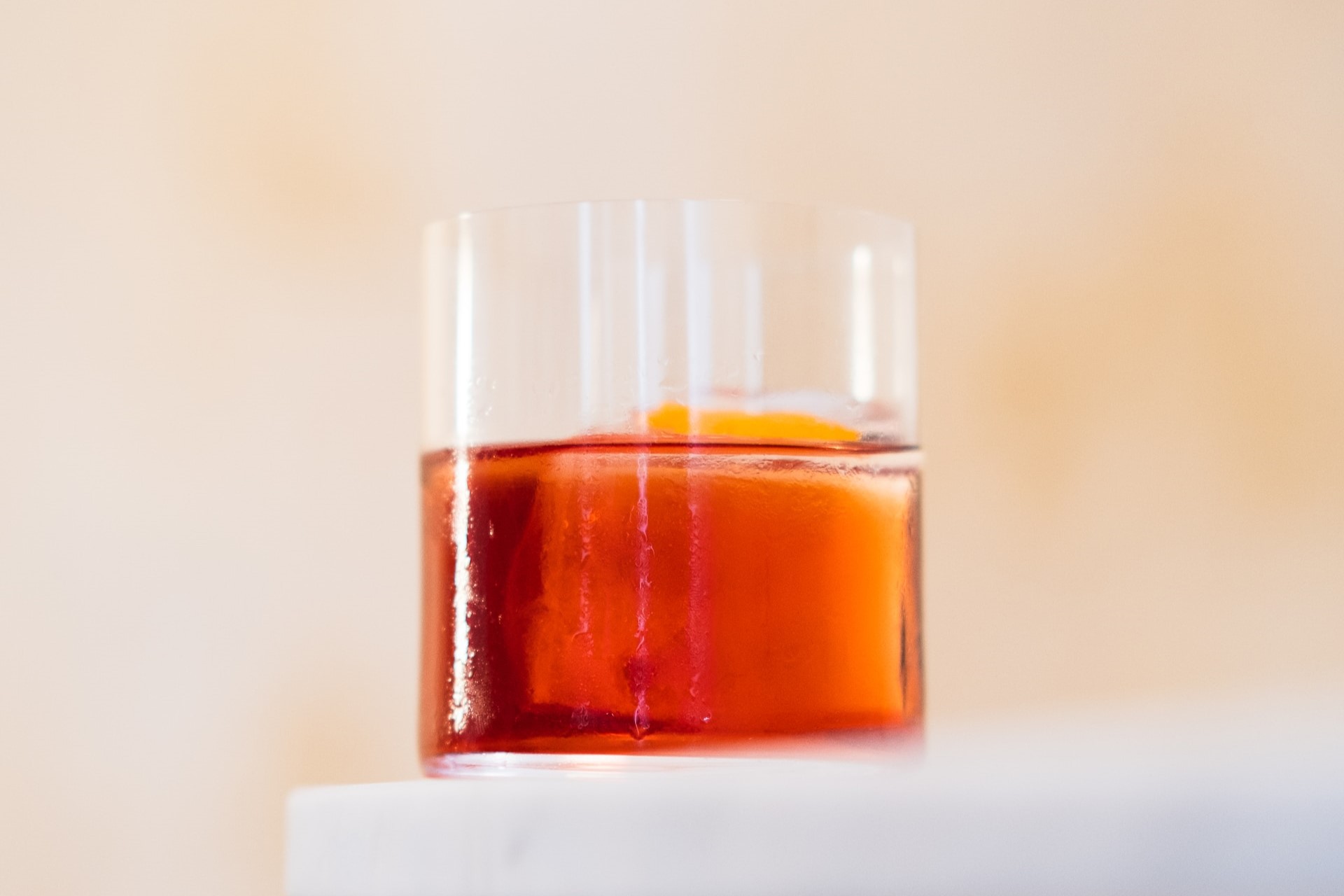
Red cocktail on white shelf

Asking Google’s Bard chatbot to write a couple cocktail menus—including recipes and prices—delivers some interesting results.

To be honest, by “interesting” I mean “shrug-inducing.” None of the menus are what I would deem creative.

Think about the basic cocktails you expect to see on any menu and you’ll have an idea of what to expect below.

Are you able to help restaurant and bar operators create their menus?

Yes, I can help restaurant and bar operators create their menus. I can access and process information from the real world through Google Search and keep my response consistent with search results. For example, if you ask me to create a menu for a restaurant that serves Italian food, I can research popular Italian dishes and ingredients, and then create a menu that incorporates those dishes and ingredients. I can also help you to price your menu, and to create marketing materials for your menu.

Here are some tips for creating a menu that is both appealing and profitable:

  • Choose a theme or concept for your menu. This will help you to narrow down your choices and to create a menu that is cohesive.
  • Research popular dishes and ingredients. What are people eating in other restaurants? What are the latest trends?
  • Create a menu that is both affordable and profitable. You want to make sure that you are charging enough to cover your costs, but you also want to make sure that your prices are not too high.
  • Use high-quality ingredients. This will help to ensure that your food tastes good and that your customers come back for more.
  • Be creative and innovative. Don’t be afraid to experiment with new dishes and ingredients.
  • Promote your menu. Use social media, print advertising, and other marketing channels to get the word out about your menu.

Please write me a cocktail menu with ten creative drinks for a modern steakhouse—including prices—located in Toronto, Ontario, Canada.

Sure, here is a cocktail menu with ten creative drinks for a modern steakhouse located in Toronto, Ontario, Canada, with prices:

1. The Old Fashioned

A classic American cocktail made with whiskey, sugar, and bitters.

  • 2 oz. Canadian Whiskey
  • 1/2 oz. simple syrup
  • 4 dashes bitters
  • Garnish: orange twist
  • Price: $15

2. The Manhattan

A classic American cocktail made with whiskey, sweet vermouth, and bitters.

  • 2 oz. Canadian Whiskey
  • 1 oz. sweet vermouth
  • 2 dashes bitters
  • Garnish: cherry
  • Price: $18

3. The Margarita

A classic Mexican cocktail made with tequila, lime juice, and triple sec.

  • 2 oz. Canadian Tequila
  • 1 oz. lime juice
  • 1 oz. triple sec
  • Garnish: lime wedge
  • Price: $14

4. The Daiquiri

A classic Cuban cocktail made with rum, lime juice, and simple syrup.

  • 2 oz. Canadian Rum
  • 1 oz. lime juice
  • 1/2 oz. simple syrup
  • Garnish: lime wedge
  • Price: $16

5. The Cosmopolitan

A refreshing and flavorful cocktail made with vodka, cranberry juice, Cointreau, and lime juice.

  • 2 oz. Canadian Vodka
  • 2 oz. cranberry juice
  • 1 oz. Cointreau
  • 1 oz. lime juice
  • Garnish: lime wedge
  • Price: $17

6. The Sex on the Beach

A fruity and refreshing cocktail made with vodka, peach schnapps, cranberry juice, and orange juice.

  • 2 oz. Canadian Vodka
  • 1 oz. peach schnapps
  • 2 oz. cranberry juice
  • 2 oz. orange juice
  • Garnish: orange slice
  • Price: $18

7. The Bellini

A refreshing and flavorful cocktail made with prosecco, peach puree, and simple syrup.

  • 4 oz. prosecco
  • 2 oz. peach puree
  • 1 oz. simple syrup
  • Garnish: peach slice
  • Price: $19

8. The Kir Royal

A refreshing and flavorful cocktail made with prosecco and crème de cassis.

  • 4 oz. prosecco
  • 1 oz. crème de cassis
  • Garnish: lemon twist
  • Price: $20

9. The Mimosa

A refreshing and flavorful cocktail made with champagne and orange juice.

  • 4 oz. champagne
  • 4 oz. orange juice
  • Garnish: orange slice
  • Price: $21

10. The Bloody Mary

A spicy and flavorful cocktail made with vodka, tomato juice, and spices.

  • 2 oz. Canadian Vodka
  • 4 oz. tomato juice
  • 1 oz. Worcestershire sauce
  • 1 oz. lemon juice
  • 1 oz. hot sauce
  • Garnish: celery stalk
  • Price: $22

These cocktails are sure to please your guests and add a touch of sophistication to your steakhouse.

Please write me a cocktail menu with ten creative drinks for a modern Italian restaurant—including prices—located in Las Vegas, Nevada, off the Strip.

Here is a cocktail menu with ten creative drinks for a modern Italian restaurant located in Las Vegas, Nevada, off the Strip:

1. The Gondolier

A refreshing and flavorful cocktail made with prosecco, Aperol, and lemon juice.

  • 2 oz. prosecco
  • 1 oz. Aperol
  • 1/2 oz. lemon juice
  • 1/4 oz. simple syrup
  • Club soda
  • Garnish: lemon twist
  • Price: $15

2. The Martini

A classic Italian cocktail made with gin and dry vermouth.

  • 2 oz. gin
  • 1 oz. dry vermouth
  • Garnish: lemon twist
  • Price: $17

3. The Negroni

A bitter and refreshing cocktail made with gin, Campari, and sweet vermouth.

  • 2 oz. gin
  • 1 oz. Campari
  • 1 oz. sweet vermouth
  • Garnish: orange twist
  • Price: $19

4. The Spritz

A refreshing and light cocktail made with prosecco, Aperol, and club soda.

  • 3 oz. prosecco
  • 1 oz. Aperol
  • 4 oz. club soda
  • Garnish: orange twist
  • Price: $15

5. The Americano

A refreshing and light cocktail made with Campari, sweet vermouth, and club soda.

  • 2 oz. Campari
  • 1 oz. sweet vermouth
  • 4 oz. club soda
  • Garnish: orange twist
  • Price: $17

6. The Limoncello

A sweet and refreshing cocktail made with limoncello, prosecco, and club soda.

  • 2 oz. limoncello
  • 3 oz. prosecco
  • 4 oz. club soda
  • Garnish: lemon twist
  • Price: $15

7. The Margarita

A classic Mexican cocktail made with tequila, lime juice, and triple sec.

  • 2 oz. tequila
  • 1 oz. lime juice
  • 1 oz. triple sec
  • Garnish: lime wedge
  • Price: $19

8. The Daiquiri

A classic Cuban cocktail made with rum, lime juice, and simple syrup.

  • 2 oz. rum
  • 1 oz. lime juice
  • 1/2 oz. simple syrup
  • Garnish: lime wedge
  • Price: $21

9. The Old Fashioned

A classic American cocktail made with whiskey, sugar, and bitters.

  • 2 oz. whiskey
  • 1/2 oz. simple syrup
  • 4 dashes bitters
  • Garnish: orange twist
  • Price: $23

10. The Manhattan

A classic American cocktail made with whiskey, sweet vermouth, and bitters.

  • 2 oz. whiskey
  • 1 oz. sweet vermouth
  • 2 dashes bitters
  • Garnish: cherry

Takeaways

The first thing I’ll say is that these menus are…fine. There’s nothing wrong with populating a cocktail menu with classics. After all, classics are the go-to for a large portion of guests.

However, I wouldn’t call any of the recipes above creative. And I certainly don’t think they’d blow anyone’s mind. I also call into question some of the specs. For example, a Negroni “should be” a 1:1:1 ratio.

Then there’s the Bloody Mary for a Toronto steakhouse. I’m not trying to speak for an entire population but that should be a Caesar. Additionally, this family of drinks should come with an array of add-ons for customization and personalization.

And what about that $18 Sex on the Beach? I don’t think I’d ever recommend that for an upscale steakhouse. If anything, I’d suggest a Porn Star Martini instead.

I don’t know what Bard would recommend for pricing the Manhattan since the chatbot didn’t include that detail. I’m guessing somewhere between $20 and $23.

Speaking of pricing, it’s fair to assume that Bard aggregated menu prices, averaged them, and spat out the results of its calculations. That may seem helpful but operators should bear a few things in mind when determining pricing:

  • ingredient costs;
  • labor costs;
  • target margins;
  • what specific markets and target guests will tolerate and sustain; and
  • dynamic menu pricing to address fluctuating costs.

Going back to the drinks themselves, it’s important for operators to consider the trends toward premiumization and luxury; signature cocktails; “owning” a specific drink or family of drinks; and speed, consistency, and presentation.

Artificial intelligence can tell you what’s trending online. But can it create real-world cocktail menus that will attract guests, drive traffic, and generate revenue? In my opinion, no—that’s still the realm of experienced and creative bar professionals.

Image: Timothé Durand on Unsplash
KRG Hospitality Beverage Programming

by David Klemt David Klemt No Comments

Program for Unique Holidays: April 2023

Program for Unique Holidays: April 2023

by David Klemt

"Think about things differently" neon sign

Do you want to stand out from from other restaurants and bars in your area? Change how you think about your April holiday promotions.

Several holidays are set against every date on the calendar, and April is no exception. These holidays range from mainstream to esoteric.

Pay attention to the “weird” or unique holidays to raise eyebrows, carve out a niche for your restaurant or bar, and attract more guests. Why do what everyone else is already doing? Why program only around the same holidays as everyone else?

Of course, you shouldn’t try to celebrate every holiday, strange or otherwise. Focus on the days that are authentic to your brand; resonate with your guests; and help you grab attention on social media.

You’ll find suggestions for promotions below. However, the idea behind our monthly holiday promotions roundup is to inspire you and your team to get creative and come up with unique programming ideas.

For our March 2023 holidays list, click here.

April 6: International Day of Sport For Development and Peace

Sure, sports can spark some bitter rivalries. However, it can also bring people together. Whether you choose to air sporting events this day (make sure you have the proper licensing to do so) or create a themed LTO menu, encourage guests to set aside their differences and come together at your restaurant or bar.

If you’re operating a sports- or game-focused eatertainment concept, this is also an excellent day to host a friendly tournament. Who knows? It could become a weekly, monthly, quarterly, or yearly promotion if it takes off.

April 7: National No Housework Day

Your guests are likely already burnt out on spring cleaning. Tell them to toss aside their brooms, mops, and sponges and reward themselves with a visit to your venue.

April 8: National All is Ours Day

I’ll bet that if you think about it for a moment you can come up with at least one incredible element or landmark in your community. This is the day to celebrate it with your guests. National All is Ours Day is dedicated to appreciating what we have and taking an adventure, however big or small.

April 10: Dyngus Day

This isn’t necessarily an “odd” holiday. However, those who didn’t grow up in a community with a significant Polish presence may not know about it.

On Dyngus Day, people who take part in Lent get to indulge and blow off some steam. Common food items enjoyed on this day are Polish hot dogs, potato pancakes (placki ziemniaczane), dumplings (pierogi), and donuts filled with custard (paczki).

April 11: National Barbershop Quartet Day

If you search for one hard enough, you can probably find a local barbershop quartet that sings current-day hits. It could be pretty cool to have them entertain your guests…

April 13: National Make Lunch Count Day

This is the day to really impress with an incredible lunch to boost pickup, delivery, and in-person traffic for this daypart.

April 23: National Take a Chance Day

Do you have a food or beverage item you have yet to put on your menu? Something you want to test but just haven’t gotten around to it yet? This is the day to entice your guests with something new and encourage them to try it. It’s also the perfect time to collect feedback to either revise the item, add it right away, or move on from it.

April 27: National Tell a Story Day

So, this day may be better served as a deadline for you. Do your website, social media channels, menu, and venue design tell your restaurant or bar’s story? If an honest assessment shows that they don’t, use April 27 as a deadline to tell your brand’s story to your guests. Storytelling is a powerful engagement tool, so make sure yours is dialed in.

April 29: National Sense of Smell Day

Personally, I’d program around this day with the help of brand reps. A tasting or guided pairing that engages the sense of smell can really wow your guests, delivering an incredible and memorable experience.

April 30: National Bubble Tea Day

Bubble tea isn’t the most unique beverage. However, learning how to craft boozy bubble tea drinks for your spring and summer menus…that’s a great way to celebrate this holiday and show off your bar team’s creativity.

Image: Ivan Bertolazzi on Pexels

KRG Hospitality Start-Up Restaurant Bar Hotel Consulting Consultant Solutions Plans Services

by krghospitality krghospitality No Comments

KRG Hospitality now Serving Midwest Region

KRG Hospitality adds Midwest Region

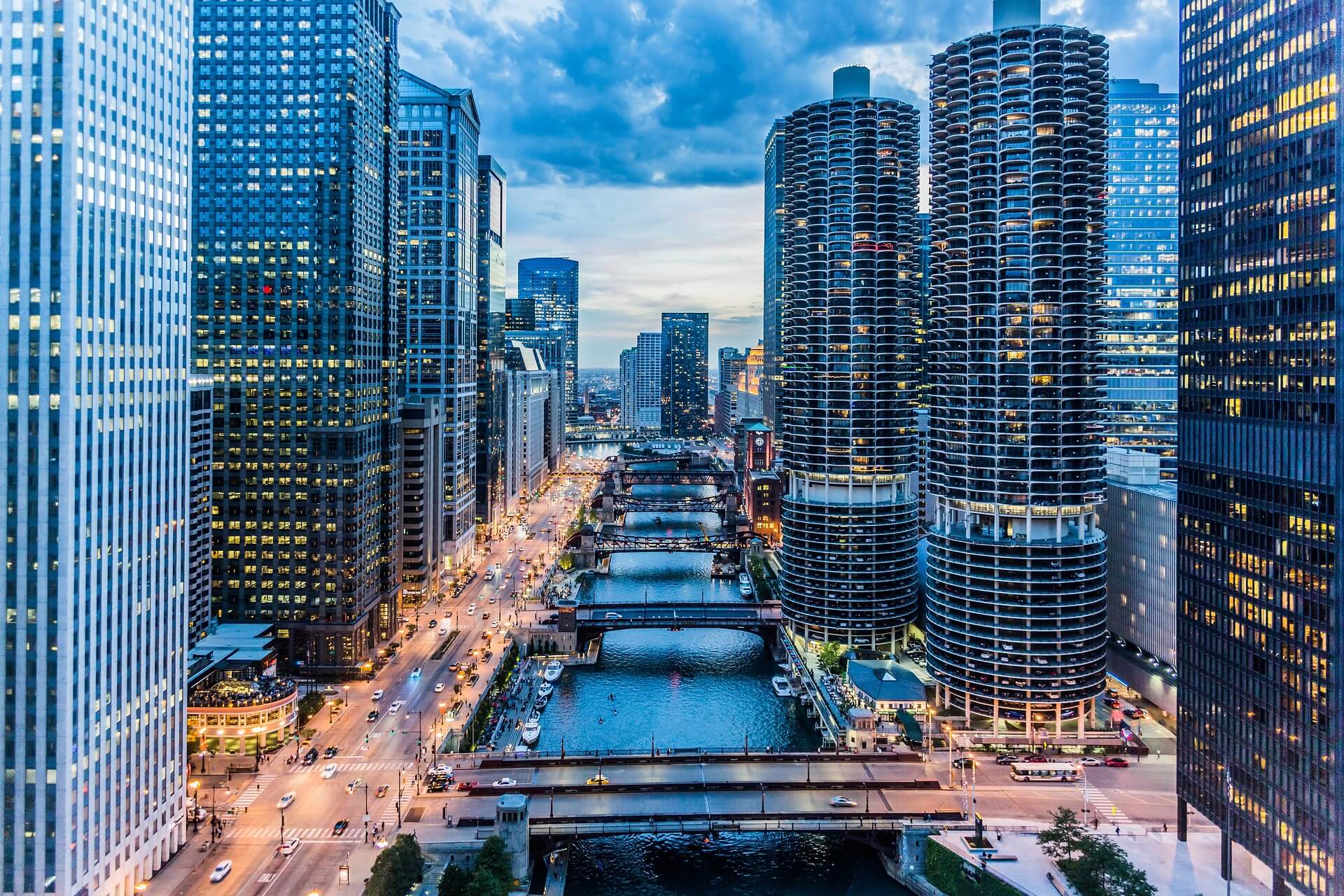
Marina City Towers in Chicago, Illinois

KRG HOSPITALITY NOW SERVING MIDWEST REGION

Toronto-based hospitality industry consulting firm with offices throughout Canada and the USA now serving the Midwest through Chicago office.

CHICAGO, IL (March 17, 2023)—Today, KRG Hospitality announces the addition of the Midwest region of the US to their North American service area. The team will operate out of an office in Chicago, Illinois. However, the agency will serve Midwest markets outside of Chicago as well.

KRG is excited to announce their presence in the region and their ability to serve clients effectively. The agency will offer the full suite of their proven hospitality solutions, including: hourly consulting and coaching; complete feasibility studies, fully customized concept plans; in-depth, focused business plans; project support and management; food and/or drink menu development and consulting; and personalized F&B education.

“I was born in Chicago and first entered the hospitality industry in the Northwest Suburbs. I got my first taste of nightlife in Chicago’s incredible bar and nightclub scene,” says David Klemt, partner and director of business development of KRG Hospitality. “Those experiences shaped my entire hospitality career trajectory. It will be an honor to serve the great people of the Midwest and bring their hospitality visions to life.”

“2023 is turning into quite the growth year for KRG, with the addition of team members Kim Richardson and Jared Boller, and now an exciting new market,” says Doug Radkey, KRG Hospitality founder, president, and project manager. “We see great opportunity in the Midwest, not only in Chicago, but many of the surrounding regions. The food, beverage, and hotel scene is incredibly strong, and we’re open to the challenge of not only helping launch new hospitality brands but helping transform existing brands scale and be successful in the new era ahead.”

KRG is ready to work with clients of all experience levels in the Midwest. The consulting agency’s suite of solutions serve new operators looking to open their first concept and veterans seeking a rebrand or expansion. From independent pizzerias and QSRs to multi-unit regional chains and boutique hotels, and everything in between, the KRG team is eager to take client visions and transform them into brick-and-mortar realities.

To schedule an introductory call to learn how the KRG Hospitality team serves clients, please follow this link.

About KRG Hospitality

KRG Hospitality is a storied and respected agency with proven success over the past decade, delivering exceptional and award-winning concepts throughout a variety of markets found within Canada, the United States, and abroad since 2009. Specializing in startups, KRG is known for originality and innovation, rejecting cookie-cutter approaches to client projects. The agency provides clients with a clear framework tailored to their specific projects, helping to realize their vision for a scalable, sustainable, profitable, memorable, and consistent business. Learn more at KRGHospitality.com. Connect with KRG Hospitality and the Bar Hacks podcast on social: KRG Twitter, Bar Hacks Twitter, KRG Media Twitter, KRG LinkedIn.

Image: Tobias Brunner from Pixabay

KRG Hospitality Start-Up Restaurant Bar Hotel Consulting Consultant Solutions Plans Services

by David Klemt David Klemt No Comments

The Incredible Rise of Luxury Whiskeys

There are Luxury Whiskeys. Then There are These…

by David Klemt

Closeup image of whiskey in a glass

Some investors look at whiskey as a luxury good worthy of parking their dollars, with some outperforming gold and the S&P 500 Index.

In fact, super- and ultra-premium whiskey has at times outperformed gold over the past decade. According to some reports, investments in whiskey casks performed better than gold, the S&P 500, and Bitcoin just a few years ago.

Of course, the hospitality and spirits worlds have long been reporting increased interest in luxury whiskey. Really, consumers have shown interest in premium, super-premium, and ultra-premium spirits across several categories.

In other words, it appears that the “drink better” movement continues to accelerate.

This is, of course, great news for operators. Premium and above spirits command higher prices on-premise, boosting revenue.

But there’s luxury, and then there’s luxury. There are ultra-premium spirits, and there are truly exclusive bottles. I suppose hyper-premium describes these incredibly rare expressions. After all, there are hypercars and hyperyachts, and the owners of such vehicles are the people who can afford hyper-premium spirits.

Two examples of such spirits made headlines recently, and wow—their prices are eyewatering.

The Highland Park 54 Year Old

Interested in a taste of the late ’60s? This Scotch was laid down back in 1968 by Highland Park.

And back in 2008, Highland Park master whisky maker Gordon Motion combined four refill butts and six refill hogsheads. That was also the year that Gordon Motion was named master whisky for the distillery. It seems Motion wasted no time in creating an awe-inspiring whisky for Highland Park.

Highland Park’s 54-year-old whisky is stunning, and just 225 bottles are available. This is, of course, a nod to the distillery’s big 2023 anniversary celebration. Highland Park was founded in 1798; 2023 is their 225-year anniversary.

So, what’s a 700ml, 46.9% ABV bottle of Highland Park 54 Year Old going for? Each one carries a price tag of £39,000, or nearly $47,000 USD. There is, of course, no telling what each bottle will be valued at in the future (or if they’ll appreciate, so be careful, investors).

As far as flavor profile, there are, of course, woody and peaty notes. However, there’s also camphor, pistachio, kiwi, and lychee. However, I’m sure whatever I write here will never do justice to experiencing a dram of 54 Year Old.

Gordon & MacPhail Generations 80-Years-Old

For once, I’m nearly speechless. This is the world’s oldest Scotch. And, until we learn otherwise, world’s oldest whisky.

Of particular note, this is Glenlivet liquid rested by father-and-son duo John and George Urquhart in a Gordon & MacPhail cask.

The liquid was laid down on February 3, 1940 and bottled on February 5, 2020. There are 250 decanters available, and these vessels are as stunning as the whisky they contain.

Architect and designer Sir David Adjaye OBE (knighted in 2017) designed the decanter and oak case. Glencairn Crystal Studio stepped up for production of the decanter. Wardour Workshops crafted the case from sustainably sourced oak.

As I stated above, Highland Park’s 54-year-old Scotch costs nearly $50,000. So, what does this Gordon & MachPhail 80-Years-Old Scotch cost?

Well, we won’t really know until October 7 of this year. That’s the date that Sotheby’s will auction off Generations 80-Years-Old Decanter #1.

The world-renowned luxury marketplace is estimating this lot will go for between $120,000 and $255,000. Although, that price could be driven higher should the auction heat up.

Some of the tasting notes from Charlie MacLean MBE include: almond oil, scented hand-soap, sandalwood, dates, salted plums, figs, dry Oloroso Sherry, and a menthol finish.

The Takeaway

I’m not suggesting that operators drop tens of thousands of dollars on hyper-premium bottles. While doing so could translate to hefty margins per ounce sold from such bottles, it’s not realistic for most restaurants and bars.

However, it’s clear that consumers are showing interest not only in learning about luxury spirits but also an inclination to splash out for a taste.

Are 50- to 80-year-old spirits extreme examples of luxury? Absolutely. Do they point to interest in more affordable examples of luxury? Again, absolutely.

Decades-old spirits are rare but not, if this makes sense, uncommon. While the two bottles above are generating headlines, there are others out in the world garnering interest. Examples are Morthlach 70-Year-Old and 75-Year-Old.

Moreover, these rare expressions generate interest in the distilleries that produced them. So, while the average guest may not be able shell out for a 50-year-old single malt, they could be persuaded to try one from that same distillery that’s half that age.

This is, of course, where storytelling comes into the guest experience. An educated, interested, and engaging front-of-house team can be a sales powerhouse.

Image: Anthony Torres on Unsplash
KRG Hospitality Beverage Programming

by David Klemt David Klemt No Comments

Do Super Bowl Ads Work on Consumers?

Do Super Bowl Ads Work on Consumers?

by David Klemt

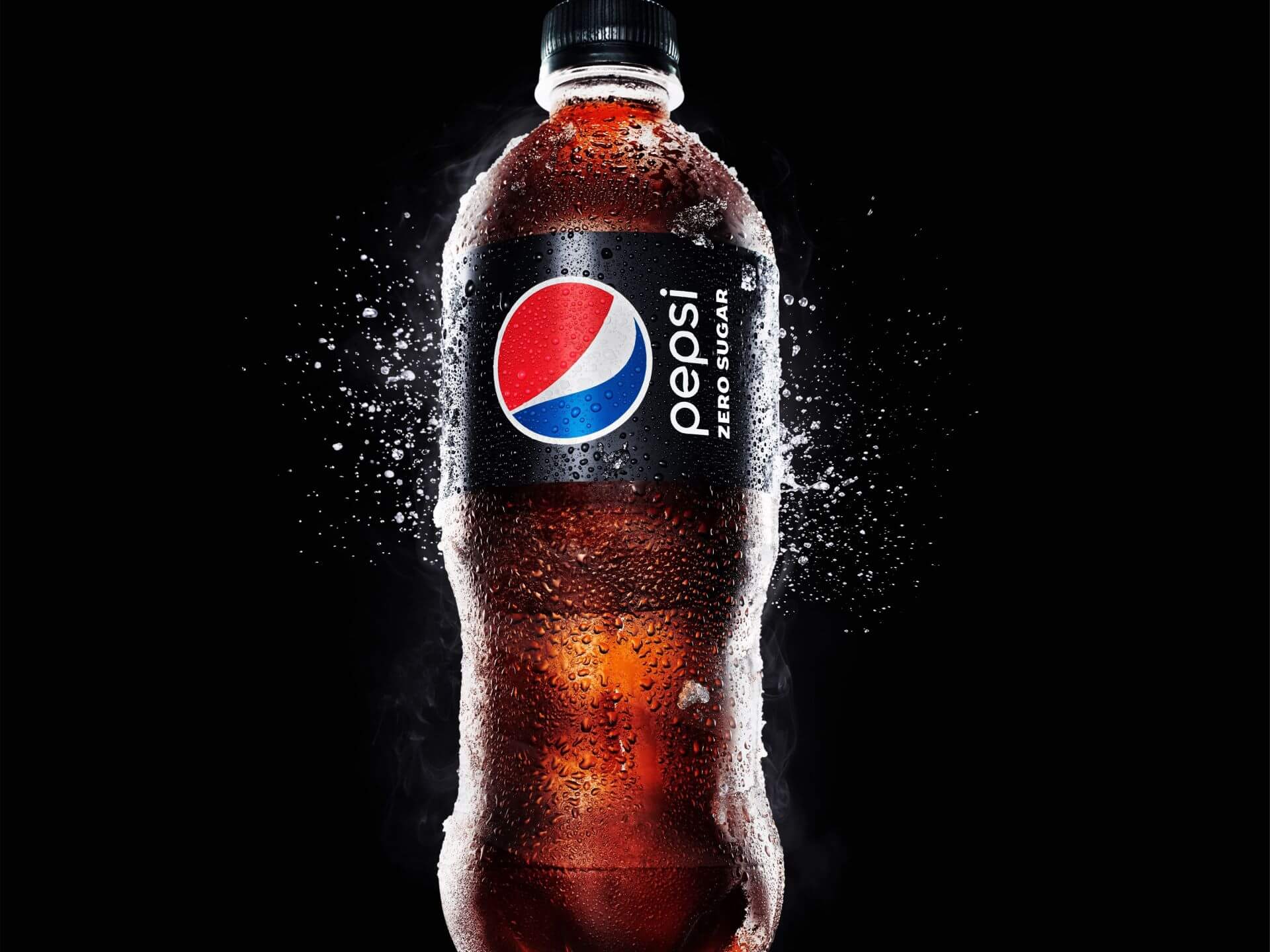
Pepsi Zero Sugar bottle

One of the biggest Super Bowl ad winners is Pepsi Zero Sugar.

Brands spent hundreds of millions of dollars to advertise during Super Bowl LVII, but do their ads actually translate to demand for their products?

A week ago we shared our ten favorite beverage-focused Big Game ads. Along with those ads we shared some numbers.

One of those numbers was $7 million, the cost of a 30-second Super Bowl ad on Fox. Other numbers? $500 million and $700 million, the range of revenue it’s estimated that Fox generated this year from Super Bowl ads.

At this point, these ads and the Halftime Show have essentially become their own entities. Some people watch the Big Game for the ads, some for the show halfway through. It stands to reason that brands are well aware of this development. So, they try to create the most impactful ad possible in the hopes of generating consumer demand.

In other words, these brands aren’t spending all this money just so they’re commercial can be deemed cool. Sure, brands want that buzz. But they also want an ROI on the millions they spend.

The big question is, then, are they seeing a return? Well, it just so happens that behavioral insight platform Veylinx has a data-driven answer to that question.

In short, the answer is yes. Of course, it’s a nuanced yes. For example, it appears Gen Z doesn’t care much about Super Bowl ads, as you’ll see below. Also, non-advertisers in the same categories as Super Bowl advertisers appear to see a benefit from the ads.

You’ll learn more from the Veylinx press release below. It’s an interesting read with valuable data for restaurant, bar, and hotel operators.

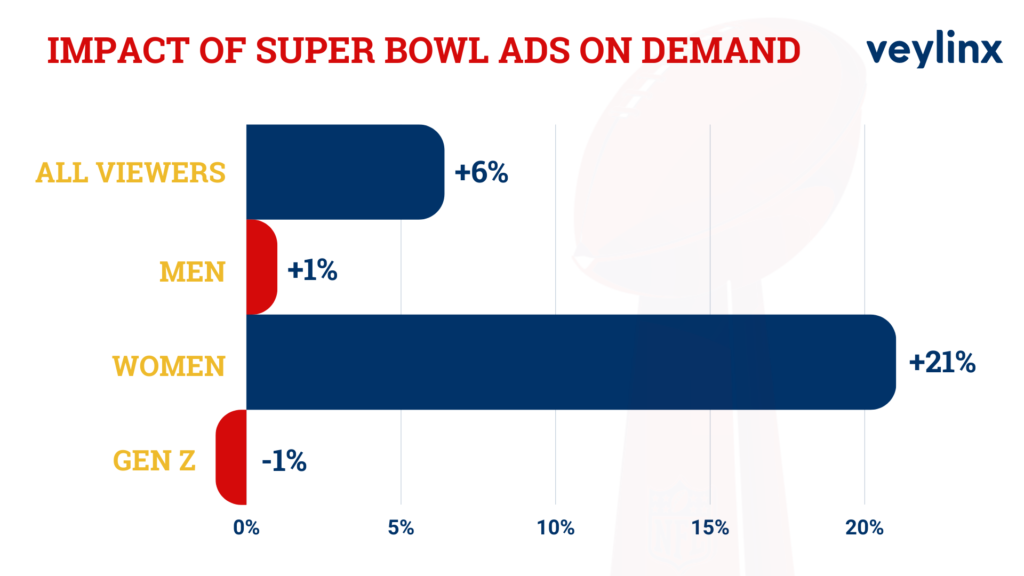
NEW YORK, Feb. 22, 2023 — A new study from behavioral research company Veylinx determined whether or not Super Bowl commercials boost consumer demand for the products advertised. The results show that 2023 Super Bowl advertising fueled a 6.4% increase in demand among viewers.

The overall increase in consumer demand was driven by women, who accounted for a 21% increase in demand growth. The commercials had minimal impact on men, yielding just 1% demand growth for the brands tested. Gen Z viewers were largely unimpressed by the Super Bowl ads, with demand among 18 to 25 year olds actually shrinking by 1%.

2023 Veylinx impact of Super Bowl ads on consumers chart

“It’s not really a surprise to see that Super Bowl ads improve sales, but the short term bump alone may not be enough to justify the $7 million price tag,” said Veylinx founder and CEO Anouar El Haji. 

Using Veylinx’s proprietary methodology—which measures actual demand rather than intent—the study tested purchase behavior during the week before the Super Bowl and again the week after. The research focused on measuring the change in consumer demand for eight brands with Super Bowl ads: Michelob Ultra, Heineken 0.0%, Hellmann’s Mayo, Downy Unstopables, Crown Royal Whisky, Frito-Lay PopCorners, Pringles and Pepsi Zero Sugar. 

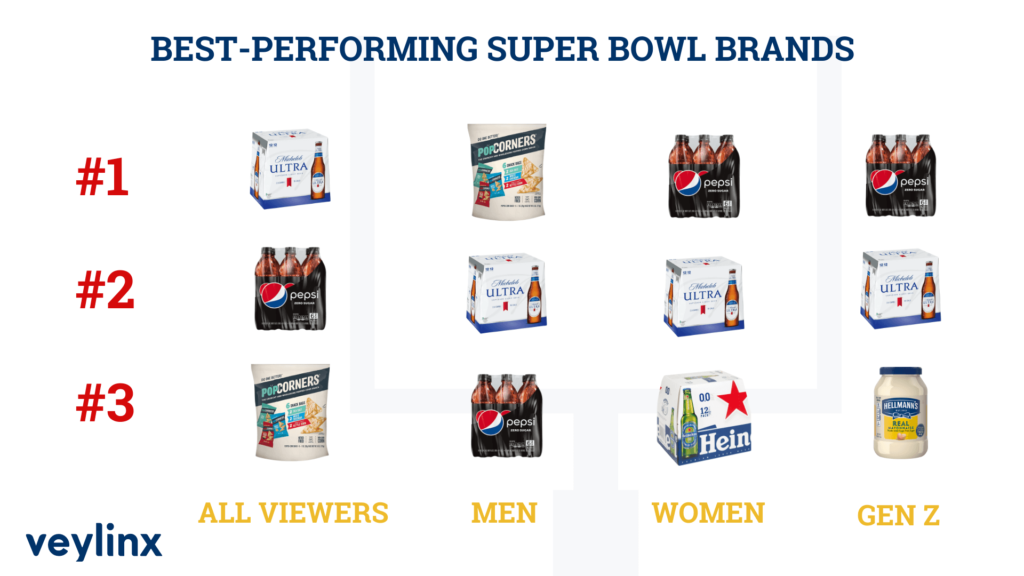
Super Bowl Advertising Winners Overall

Michelob Ultra – 19% increase in demand

Pepsi Zero Sugar – 18% increase in demand

Frito-Lay PopCorners – 12% increase in demand

Heineken 0.0% – 11% increase in demand

Super Bowl Advertising Winners Among Women

Pepsi Zero Sugar – 45% increase in demand

Michelob Ultra – 40% increase in demand

Heineken 0.0% – 40% increase in demand

Crown Royal Whisky – 26% increase in demand

Veylinx, top performing brands during 2023 Super Bowl

Halo Effect for Non-Advertisers

The biggest winners were arguably brands in the same product categories as Super Bowl advertisers. Non-advertisers in those categories appeared to benefit nearly as much as the advertisers: demand grew by 4.2% percent for the study’s control group of non-advertising competitors. Corona Extra, Kraft Mayo and Lay’s STAX were the greatest beneficiaries in a control group that also included Budweiser Zero, Arm & Hammer Clean Scentsations, Canadian Club Whisky, Popchips, and Coke Zero Sugar. Notably, every non-advertiser saw at least a slight increase in post-Super Bowl demand.

“The goal of our study was to look specifically at how consumer demand is affected by running a commercial during the Super Bowl,” El Haji said. “It’s possible that the non-advertisers deployed other marketing efforts to offset or take advantage of the Super Bowl advertising—or they simply benefited from increased exposure for their categories.” 

Additional Findings

Study participants also answered a series of follow-up questions about their preferences, perceptions and how they watched the Super Bowl. More than three-quarters watched at home through various platforms, the most popular being the live cable/satellite broadcast (38%), followed by YouTube TV (15%) and Hulu (10%). When asked why they watched, it’s no surprise that participants were all about the game (64%)—but the commercials were the next most popular reason for watching (39%), followed by halftime (35%), the social aspect (26%) and fear of missing out (13%). 

About the Research

Veylinx studied the behavior of 1,610 U.S. consumers pre- and post- Super Bowl LVII. Unlike typical surveys where consumers are simply asked about their purchase intent, Veylinx measures whether consumers will pay for a product through a real bidding process. Consumers reveal their true willingness to pay by placing sealed bids on products and then answering follow-up questions.

For more information about the study and the Veylinx methodology, visit info.veylinx.com/super-bowl

About Veylinx

Veylinx is the most realistic behavioral insights platform for confidently answering critical business questions during all stages of product innovation. To reliably predict demand, Veylinx captures insights through a Nobel Prize-winning approach in which consumers have real skin in the game. This is a major advance from traditional market research practices that rely on what consumers say they would hypothetically buy. Veylinx’s unique research methodology is trusted by the world’s largest and most innovative consumer goods companies.

Main article image: PepsiCo / Article body images: Veylinx

KRG Hospitality Bars & Lounges, 2023 icon

by David Klemt David Klemt No Comments

A New Challenger to the Margarita Emerges

A New Challenger to the Margarita Emerges

by David Klemt

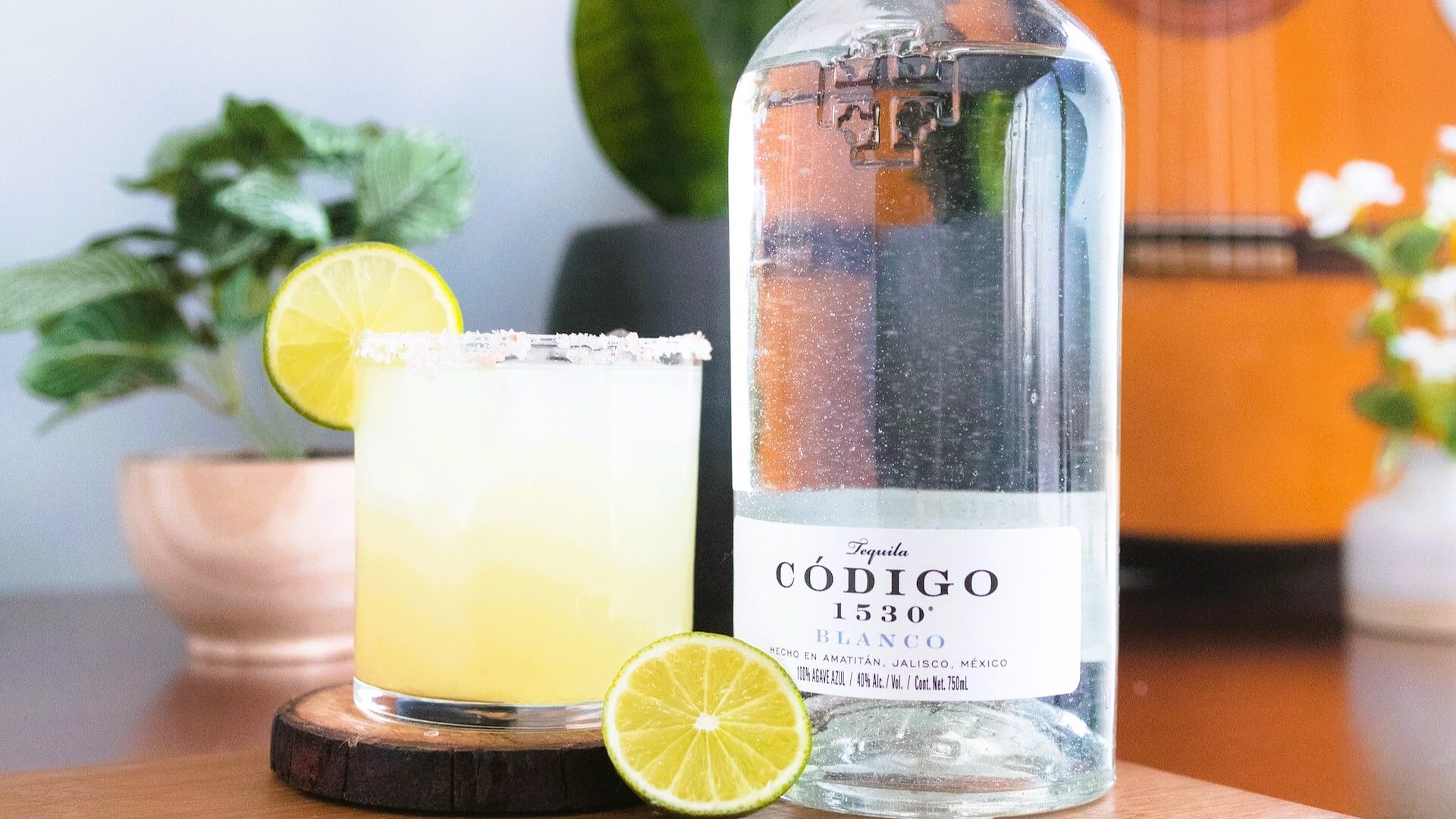
Margarita Código 1530 Blanco

The simple, three-ingredient Margarita continues its longstanding reign on the cocktail throne but there’s now a new number two.

Technically, of course, we haven’t had hard numbers regarding the Margarita’s sales for decades upon decades. Nielsen has only been officially tracking this type of cocktail data since 2016.

However, it’s not difficult to understand that America has been in love with the Margarita for decades. In fact, the cocktail may have been sitting on the throne for 50 (or more) years.

Some cocktail historians believe the Margarita is a member of the Daisy drink family. These sours consist of a spirit, citrus, simple syrup, and soda. Depending on who you believe, the Margarita came to life in the 1930s or 1940s.

An orange liqueur (triple sec) replaced the simple syrup, the soda was sent packing, and tequila became the required spirit. By the 1950s, the Margarita was on its way to winning the cocktail game of thrones.

Over the decades, many variations have appeared on the scene. Undoubtedly, this has helped the cocktail continue its reign. Tourist destinations have also strengthened its position; just think about the ubiquity of Margarita machines and blenders in Las Vegas and New Orleans.

But the simple, original recipe is the still “the One.” Ask a bartender or bar manager how they gauge someone’s skills behind the bar. The answer much (if not most) of the time? How that person makes a Margarita.

There’s nowhere to hide when a cocktail has but two or three ingredients. That’s why so many bar professionals judge bartenders by their Margs.

A “New” Challenger Appears

Unsurprisingly, the Margarita proved to be the most popular cocktail in America in 2022.

In contrast, according to the CGA Cocktail Sales Tracker by Nielsen IQ, the Manhattan fell out of the top ten.

The Moscow Mule, which has been rising in popularity for several years now, was in second place last year. In third, the Martini.

Now, before I address the “new” challenger to the Margarita, a note. The four newsworthy cocktails in terms of CGA and Nielsen tracking all have names beginning with the letter “M.” Does that mean anything? I have no idea. Maybe someone can look into cocktail names and how their perceived by guests to find out if “M” drinks outperform others.

So, we’ve got the Margarita, the Moscow Mule, the Martini, and the Manhattan (although for a different reason). Is the Moscow Mule currently eyeing the Margarita’s position up close and personally?

According to CGA by NielsenIQ data, no. The Martini is now sitting in the number two spot. Interestingly, this may be due to the rise in popularity—yet again—of the Espresso Martini.

So, while your bar team is ensuring their Margarita specs are dialed in for National Margarita Day, don’t neglect your Martinis. (Particularly your Espresso Martini.)

By the way, National Margarita Day is this Wednesday, February 22. Make sure you’re ready to thrown down.

Oh, and if you ever feel like starting an argument at a bar, ask the bartenders for their Margarita and Martini specs.

Image: Mathew Benoit on Unsplash

KRG Hospitality Beverage Programming

by David Klemt David Klemt No Comments

Can ChatGPT Write Food and Drink Menus?

Can ChatGPT Write Food and Drink Menus?

by David Klemt

Closeup of keyboard

After my “conversation” last month with ChatGPT about AI, I had another conversation during which I asked it to write me four menus.

Of course, I did this to prove a point. And upon reviewing the ChatGPT menus, you’ll likely reach the same conclusion.

Curious about how creative the AI-powered chatbot could be, I asked for four specific menus. As you’ll see, two are cocktail specific, one focuses on food, and one is a 20-item F&B menu for a specific event.

So, yes, ChatGPT can write food and drink menus. But there’s a caveat. I could leave you in suspense but that’s not very nice. Let’s jump in.

Write me a cocktail menu using the most popular cocktails from 2022.

Cocktail Menu

  1. Aperol Spritz – Aperol, Prosecco, and soda water, garnished with an orange slice
  2. Old Fashioned – Bourbon, sugar, bitters, and a citrus peel
  3. Margarita – Tequila, triple sec, lime juice, and salt rim
  4. Daiquiri – Rum, lime juice, and simple syrup
  5. Moscow Mule – Vodka, ginger beer, and lime juice
  6. Paloma – Tequila, grapefruit juice, lime juice, and soda water
  7. Pina Colada – Rum, pineapple juice, coconut cream, and a cherry garnish
  8. Whiskey Sour – Bourbon, lemon juice, and simple syrup
  9. French 75 – Gin, Champagne, lemon juice, and simple syrup
  10. Mai Tai – Rum, orange liqueur, lime juice, and orgeat syrup

*All cocktails are served over ice, unless otherwise requested.

Write me a cocktail menu using the most popular spirits and alcohol types of 2022.

Cocktail Menu

  1. Gin and Tonic – Gin, tonic water, and a lime wedge
  2. Vodka Martini – Vodka, dry vermouth, and an olive garnish
  3. Bourbon Manhattan – Bourbon, sweet vermouth, and bitters
  4. Tequila Sunrise – Tequila, orange juice, and grenadine syrup
  5. Rum Runner – Rum, blackberry liqueur, orange juice, pineapple juice, and grenadine
  6. Whiskey Sour – Bourbon, lemon juice, and simple syrup
  7. Margarita – Tequila, triple sec, lime juice, and salt rim
  8. Daiquiri – Rum, lime juice, and simple syrup
  9. Long Island Iced Tea – Vodka, gin, rum, tequila, triple sec, lemon juice, and cola
  10. Pina Colada – Rum, pineapple juice, coconut cream, and a cherry garnish

*All cocktails are served over ice, unless otherwise requested.

Write me an appetizer and tapas menu that includes food items from an array of cuisines.

Appetizer and Tapas Menu

  1. Bruschetta – Grilled bread topped with fresh tomatoes, basil, and balsamic glaze
  2. Hummus Platter – Chickpea dip served with pita bread and fresh veggies
  3. Spring Rolls – Fried wonton wrappers filled with veggies and served with sweet chili sauce
  4. Spinach and Artichoke Dip – Creamy dip made with spinach, artichokes, and melted cheese, served with tortilla chips
  5. Stuffed Jalapeños – Jalapeño peppers stuffed with cream cheese and bacon
  6. Fried Calamari – Lightly battered and fried squid rings served with marinara sauce
  7. Baked Brie – Warm, gooey brie cheese topped with fruit preserves and served with crackers
  8. Fried Rice Balls – Rice mixed with veggies and spices, rolled into balls and fried, served with sweet and sour sauce
  9. Chorizo Sliders – Mini sliders made with spicy chorizo sausage and topped with avocado crema
  10. Samosas – Triangular-shaped pastries filled with spiced potatoes and peas, served with mint chutney.

*Please let us know of any dietary restrictions, and we will do our best to accommodate your needs.

Write me a food and beverage menu for the 2023 [Big Game] with ten food items and ten drinks.

[Big Game] 2023 Food and Beverage Menu

Food:

  1. Buffalo Wings – Crispy wings tossed in spicy Buffalo sauce
  2. Sliders – Mini burgers with various toppings, such as bacon and cheddar, mushroom and Swiss, and BBQ pulled pork
  3. Nachos – Tortilla chips topped with melted cheese, jalapeños, salsa, and sour cream
  4. Chili – Hearty beef chili served with shredded cheddar cheese, onions, and crackers
  5. Ribs – Slow-cooked BBQ ribs with a tangy sauce
  6. Mac & Cheese Bites – Fried balls of creamy mac & cheese
  7. Deviled Eggs – Hard-boiled eggs filled with a mixture of mayo, mustard, and spices
  8. Pizzas – Slices of delicious pizza in various toppings such as pepperoni, mushroom, and sausage
  9. Chips & Dip – Assorted chips served with guacamole, salsa, and queso dip
  10. Soft Pretzels – Warm, soft pretzels served with cheese dipping sauce

Drinks:

  1. Beer – A selection of domestic and imported beers
  2. Margaritas – Classic margaritas made with tequila, triple sec, and lime juice
  3. Bloody Mary – A spicy tomato and vodka-based drink with celery, olives, and other garnishes
  4. Hard Cider – A crisp, apple-based beverage
  5. Sodas – A variety of soft drinks, such as cola, lemon-lime, and root beer
  6. Whiskey Sours – A mixture of whiskey, lemon juice, and simple syrup
  7. Spiked Hot Cider – Warm apple cider with a splash of rum
  8. Red and White Wines – A selection of red and white wines to accompany any meal
  9. Iced Tea – Sweetened or unsweetened iced tea
  10. Coffee – Freshly brewed coffee, hot and ready to enjoy.

*Please drink responsibly and always have a designated driver.

Where Do You Stand on AI?

In my opinion, there are essentially four primary camps forming around the subject of artificial intelligence.

There are the Alarmists, the Enthusiasts, the Cautious, and the Shoulder Shruggers.

As my label implies, the Alarmists are fearful of AI. This group doesn’t like the genie being let out of its bottle. On the polar opposite, there are the Enthusiasts. This group can’t wait to see how far AI can go and what it’s fully capable of.

The Shoulder Shruggers basically have no opinion. They may even throw in an eye roll when the topic of AI comes around.

Then there’s the camp I most closely identify with: the Cautious. I don’t know enough about AI to be an Alarmist or an Enthusiast. Instead, I agree with points made by both of those camps.

Conclusion

Before I had my latest conversation with ChatGPT, I happened across a few interesting articles about the chatbot specifically and AI in general. A point each article shared was this: (for now), ChatGPT isn’t creative.

And that’s the caveat I mentioned at the top of this article.

Sure, it can scour the Internet for information in the blink of an eye, contextualize it (to a degree), and present it in a manner that seems intelligent. But really, neither ChatGPT nor other AI tools are capable of creative endeavors.

Now, consider the “menus” you just read. Unless your goal is to become a boring, regional chain bereft of personality and identity, not a single one is creative. In fact, they both consist of F&B items that any bartender, bar manager, chef, cook, or kitchen manager should know how to make, off-menu or on.

Simply put, these ChatGPT menus don’t provide much, if anything, in the way of brand identity.

That’s not to say that menus with the items above are “bad.” It’s just that they’re not enticing, not inspiring, not creative. They’re the definition of derivative. Why would today’s guest be drawn to a venue with those menus?

For now, I don’t think we need to be afraid of AI. Humans still rule the creativity roost. Oh, and please don’t use those AI-generated menus.

KRG Hospitality Restaurants & Cafes, 2023 icon  KRG Hospitality Beverage Programming

Image: Christian Wiediger on Unsplash

by David Klemt David Klemt No Comments

Datassential: The Flavors of 2023

Datassential: The Flavors and Menu Items of 2023

by David Klemt

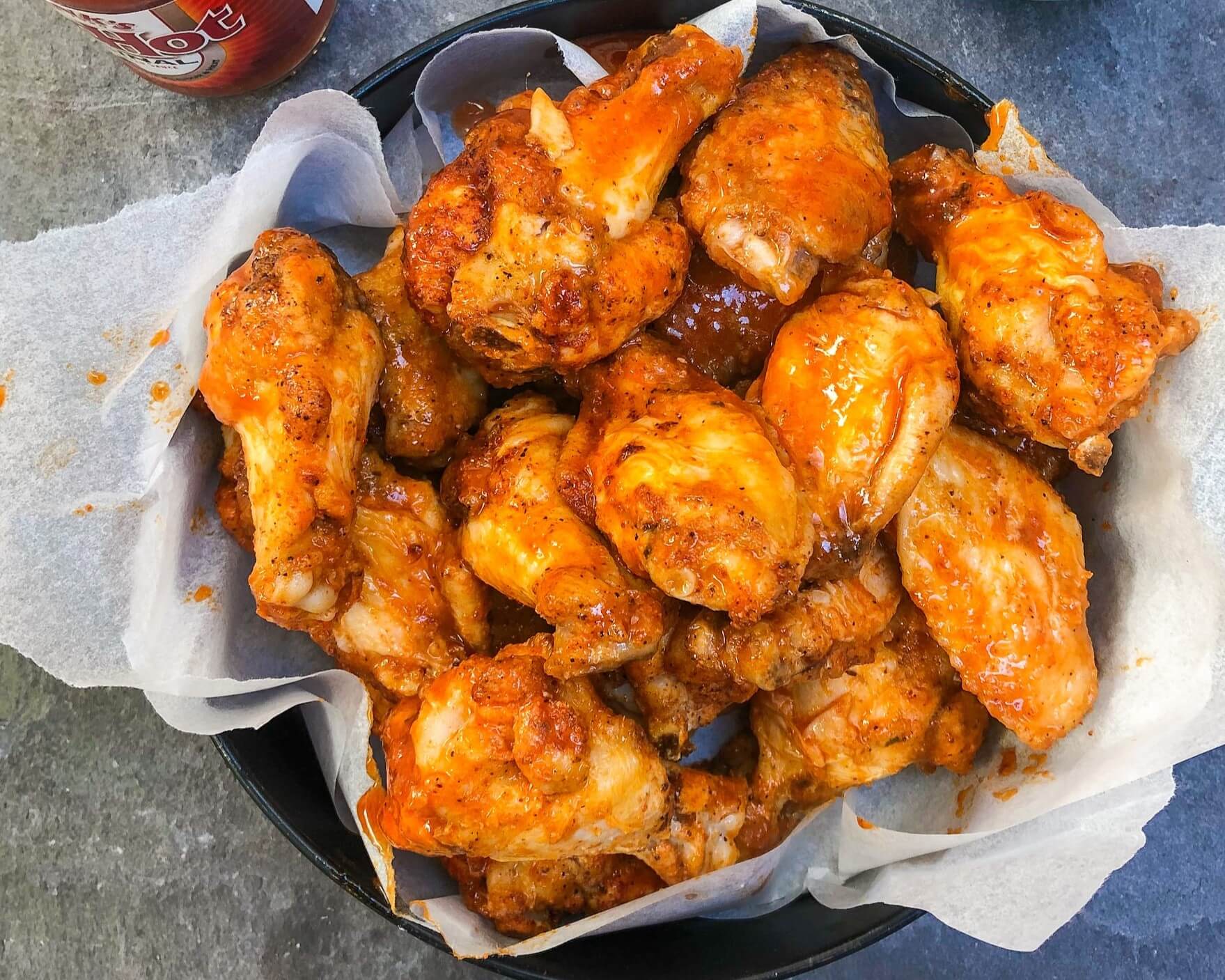
Basket of hot chicken wings

Food and beverage market research agency Datassential has some data-driven thoughts on the flavors and menu items that will define 2023.

Featured in their latest Foodbytes report are 20 items for operators to consider this year. There are ten food items, drinks, and ingredients Datassential predicts will be on basically every menu.

And there are another ten food items, drinks, and ingredients the agency feels could suddenly hit in 2023.

For you own copy of Datassential’s 2023 Food Trends, click here.

Prolific Performers

As Datassential refers to them in their report, these are the items “that will be everywhere” this year.

Food

  • Birria. This one makes sense as birria only appears to be capable of continually growing in popularity.
  • Mushroom. In Datassential’s opinion, we should expect more menus to feature mushroom snacks. Also, expect to see (or add yourself) lesser-known, rare, and exotic mushrooms on menus.
  • Salsa macha. Over the past four years, according to Datassential, salsa macha as grown a staggering 339 percent on menus.

Drink

  • London Fog. A compelling earl grey tea latte.
  • Mangonada. Salty, tart, fruity, and bold, the Mangonada is a flavorful frozen drink.
  • Ranch Water. Simple, timeless, and refreshing. In 2022, per Datassential, Ranch Water was the fastest-growing cocktail.
  • Soju. According to Datassential, soju is the third fastest-growing spirit on restaurant and bar menus.

Ingredient

  • Spicy maple. As the image atop this article suggests, expect spicy maple to replace or at least give hot honey a run for its money.
  • Ube. A striking purple yam from the Philippines.
  • Yuzu. Datassential predicts this citrus fruit will start showing up on many chain restaurant menus.

Promising Performers

In Datassential’s data-driven opinion, the following items need to be on every operator’s radar.

These are the items that have the potential to “hit it big” in 2023.

Food

  • Pickled strawberries. Interestingly, this matches up with Technomic’s trend prediction for the US, Canadaworldwide, really.
  • Savory granola. Not only on its own but as an element of savory, healthy bowl.
  • Sisig. A Filipino delicacy with pork belly, pig’s face, and chicken liver as key elements.

Drink

  • White coffee. As Datassential states, “there’s always room for coffee innovation on menus.”

Ingredient

  • Black tahini. The appearance of black tahini is quite striking, making for dramatic presentations. And as we know, striking presentations are perfect for social media marketing and engagement.
  • Cannabis. The legalization of recreational cannabis use in almost half of US states is leading to innovation in this space. And as more markets legalize public consumption in the form of F&B items on-premise, restaurants and bars will add cannabis-infused items to their menus.
  • Cherry blossom, or sakura. It seems that cherry blossoms are poised to take off in the US market.
  • Chestnut flower. Per Datassential, this ingredient is gaining popularity for use in winter baked goods.
  • MSG. For decades, restaurants proudly proclaimed “no MSG” or “MSG-free” on menus due to misconceptions. Now that consumers are better educated about ingredients, restaurants are proudly proclaiming their use of MSG.
  • Verjus. An ancient juice made by crushing unripened wine grapes. It can be an ingredient in a sauce, as a condiment, or to deglaze a pan.

There you have it—20 items to consider adding in your next menu update, featuring in your next LTO, or at least keeping an eye on in 2023.

Image: Scott Eckersley on Unsplash

by David Klemt David Klemt No Comments

Global Trends 2023: Technomic

Global Trends 2023: Technomic

by David Klemt

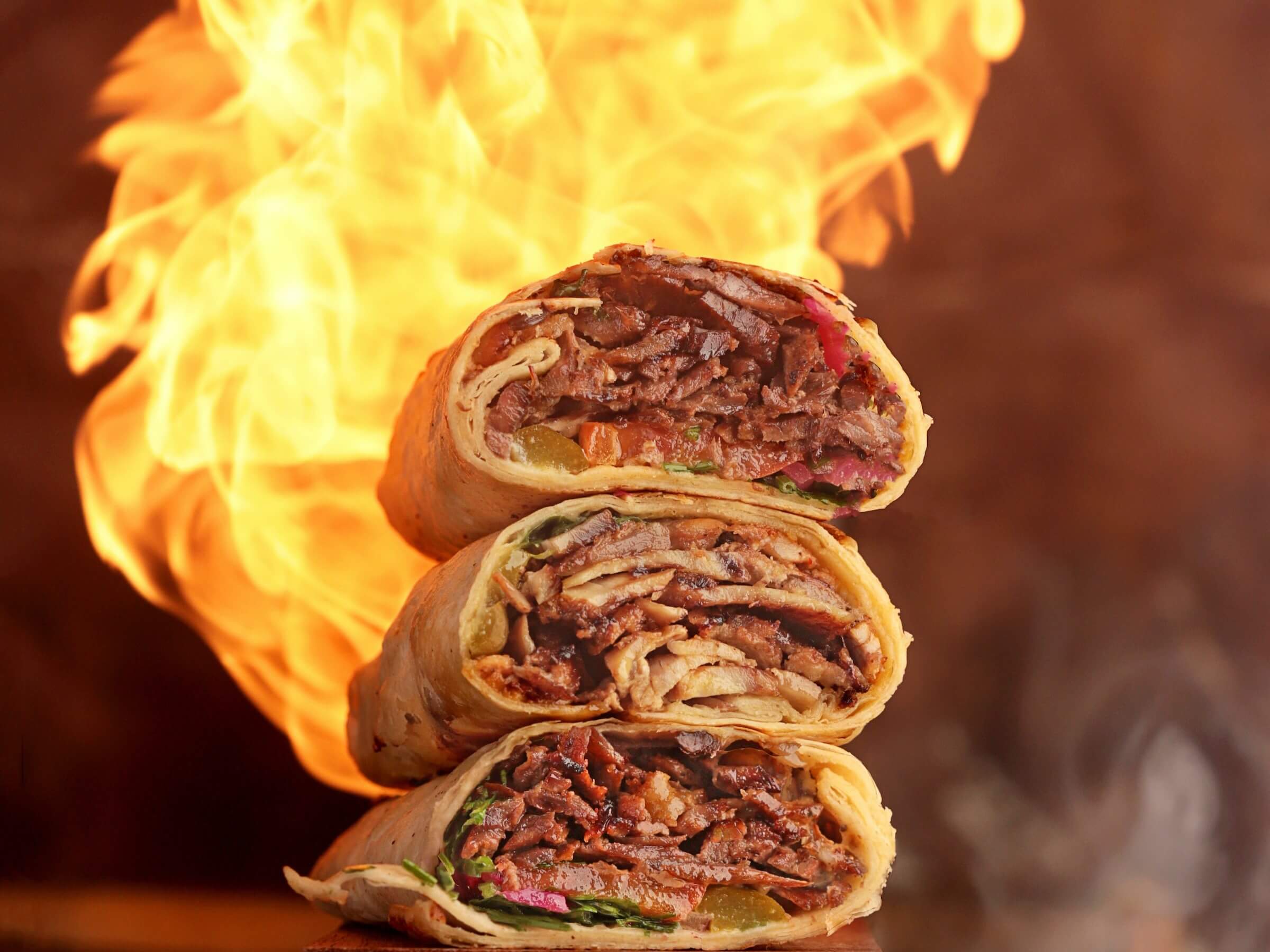
Shawarma stacked with fire in the background

Not content to focus solely on North America, foodservice research firm Technomic is predicting foodservice trends that will span the globe in 2023.

As the firm points out themselves, making predictions is a best-guess proposition. Many of Technomic’s 2022 predictions for Canada, the USA, and the globe have proven true. However, a handful of their trend predictions have yet to manifest.

Further, not all trends will work for all operators and their concepts. Chasing every passing fad or trend is great if you like to watch your costs spiral. Doing so is also an excellent way to confuse guests and stress staff.

So, when considering any trend, make sure it works with your concept, has some staying power, and will resonate with your guests. Speaking to that last point, this is one reason it’s crucial to collect guest data. Making important menu and guest-impacting operational decisions without data just doesn’t make sense.

When you’re done with this article, take a look at our examination of Technomic’s other predictions. The firm’s Canadian predictions are here. And you can read the American trends by clicking this link.

For your own copy of Technomic’s international trends report, click here.

Operations

For 2023, Technomic is making predictions that certainly appear plausible. A number of them pertain to operations.

Kicking things off, sustainability. Driven in part by the global impact of the pandemic, the health of our planet is top of mind for many people.

For example, Canada’s single-use plastics ban is now in effect. England plans to move forward with a similar ban by October of this year.

Alongside such bans, Technomic believes operators—small independents and global chains alike—will implement entire sustainability strategies. These will range “from packaging and restaurant operations to marketing and menu development.”

Does your concept have a dedicated pickup window? Perhaps a takeaway counter? Maybe even a drive-thru? If not, 2023 may be the year you make that change. Not only that, you’ll likely want to position them front and center.

Per Technomic, many consumers are done with delivery. From rising costs outweighing convenience to delivery failures, pickup may become more appealing. Pickup is still convenient, it’s less expensive, and the consumer is in control.

Additionally, many people are well aware of how costly third-party platforms are to operators. In fact, Technomic identifies these platforms and their fees as “the biggest industry villain” of 2023.

Menu

One of Technomic’s predictions is particularly enticing: Lebanese street foods. To clarify, the firm believes all manner of street foods from around the globe will perform well in 2023.

However, they feel Lebanon’s street foods will stand out from the rest. So, think shawarma, labneh, kibbe, and pickled vegetables. That last item, by the way, follows Technomic’s prediction that pickling and fermenting will be hot trends in the US and Canada.

Of course, there are other items that Technomic thinks will shine in 2023. If the firm is correct, there’s a new “holy trinity” to keep an eye on and consider for your menu: sushi, poke, and ceviche. According to Technomic, each performs very well when it comes to takeout.

Interestingly, the research firm suggests that this particular holy trinity will spawn new virtual brands. If Technomic’s predictions prove accurate, some of these brands will focus on fried chicken or plant-based versions.

Speaking to that last point, Technomic is predicting that plant-based will “evolve” in 2023. This evolution will focus on more traditional meat counterparts. Providing examples, Technomic suggests that avocado, modern takes on black bean patties, cauliflower, tofu, tempeh, and seitan will be this year’s plant-based rock stars.

Are this year’s 2023 Technomic predictions going to prove accurate? It’s far too early to tell. However, one thing I can say with confidence is this: their predictions are rooted deeply in data. When Technomic makes a “guess,” it’s always an informed one.

Click here to read Technomic’s report in its entirety.

Image: Slashio Photography on Unsplash

KRG Hospitality Restaurants & Cafes, 2023 icon

by David Klemt David Klemt No Comments

American Trends 2023: Technomic

American Trends 2023: Technomic

by David Klemt

Pink pineapple against pink background

Foodservice research firm Technomic has some interesting predictions for the hospitality industry in the United States of America this year.

On the topic of operations, Technomic foresees more negotiating power among workers. Additionally, the firm looks at both the economy and pent-up guest demand.

When it comes to food, the US and Canada have a trend prediction in common. And as the image atop this article signifies, a particular color may be a hit on menus in 2023.

Before we jump in, Technomic’s 2023 Canadian trend predictions are here. Last year’s Technomic predictions for America are here. Curious readers can review the firm’s 2023 predictions in their entirety here.

Okay, let’s go!

Think Pink

I want to address this prediction first. According to Technomic, pink is going to be the F&B color of 2023.

As they explain, the color is fun, nostalgic, and photogenic. Yes, operators must still consider the Instagram-worthiness of their menu items. That may change one day, but it’s not today.

Per Technomic, pink also signals that a food or drink may have antioxidants.

Some of the items the research firm names specifically: pink pineapple, pink salt, pink celery, cara cara oranges, and schisandra berries.

Pickle It

This is the culinary trend that, per Technomic, Canada and America will share in 2023.

Along with fermenting, pickling gives the kitchen and bar teams a unique experimentation method to explore. So, encourage these teams to get creative and add pickling and fermentation to your next menu update.

Of course, that’s not the only reason to consider putting pickling front and center. For many, these preparations indicate a healthy F&B choice. Think kombucha, as an example.

As we know, healthy choices continue to be top of mind for many guests.

One more note: Technomic suggests being transparent and identifying the pickling and fermenting processes your team leverages to produce each menu item.

Economics

For those looking for a bit of optimism in these trying times, Technomic may have what you’re looking for. This year’s report, What We Foresee for 2023, says the following about the possibility of a recession:

“There is reason for optimism in the coming year, however, as any recession is expected to be relatively mild.”

Yes, that’s just one source’s opinion. However, Technomic is known for their voraciousness when it comes to data. So, if this firm is optimistic it could be a solid sign that things are looking up in 2023.

“Pent-up consumer demand” and variations thereof have been making the rounds since 2o21. However, it’s still a relevant phrase.

As it pertains to 2023, Technomic believes on-premise dining may “bounce back” this year. In fact, the firm suggests that people want to socialize and dine in person now more than ever.

Also, delivery and pickup times appear to be growing. So, plenty of people will see in-person dining as the more appealing option in 2023.

Operations

In part due to legislation addressing minimum wage and workplace conditions, employees may have the upper hand this year.

Add the fact that many people seeking work know many operators are dealing with a labor shortage and their negotiating position looks even stronger.

So, we could finally be in for a significant change when it comes to how the industry looks at compensation. More and more workers—and the guests they serve—are taking issue with tipping. Instead, many people outside and inside of the industry want to see operators pay staff a competitive, living wage.

Of course, there are also the hospitality professionals who prefer tips to minimum wage. In 2023, the industry could experience the start of a sea change. Time will tell.

For more predictions and this Technomic report in its entirety, please click here.

Image: Alex Gruber on Unsplash

by David Klemt David Klemt No Comments

5 Books to Read this Month: January 2023

5 Books to Read this Month: January 2023

by David Klemt

Flipping through an open book

This month’s engaging and informative book selections will help you hone your culinary, beverage, and operational skills to dial in your business.

To review the book recommendations from December 2022, click here.

Let’s jump in!

The Vegan Chinese Kitchen

Today, people have certain ideas that flash before them when they hear or read “plant based.” For many, it’s a phrase that indicates a food item is an impossible meat alternative that attempts to go beyond it’s animal counterpart, hint hint.

However, plant-based also means…plants. Just plants, that’s all. The Vegan Chinese Kitchen, Chef Hannah Che’s plant-based cookbook, dives into traditional and modern Chinese vegan cuisine. Remember, plant-based doesn’t only mean “meat alternative made with plants.” Buy here.

Tea: Wine’s Sober Sibling

Have you ever considered drinking tea as an alternative to consuming wine? I know I hadn’t until I came across this book.

There are more than 70 recipes in Tea: Wine’s Sober Sibling, several of which are Dry January-friendly. Along with best practices for restaurant operators, there are also pairings, like tea and cheese, and tea and chocolate. Grab this book and consider using tea in different ways at your restaurant or bar.

Conversations Behind the Kitchen Door: 50 American Chefs Chart Today’s Food Culture

Where is the culinary world headed in 2023? Chef Emmanuel Laroche and his colleagues have some thoughts.

From Amazon: “Emmanuel’s podcast Flavors Unknown, as well as his worldwide search for new foods and flavors, are at the core of Conversations Behind the Kitchen Door. Scores of chefs offer essential insights and entertaining observations about the food scene today—information that will be of interest to new and aspiring chefs, as well as foodies and home cooks who follow trends in restaurants and recipes. Readers will walk away from Conversations Behind the Kitchen Door with a deeper understanding ofthe minds and creative practices of famous chefs, as well as a map to begin to create sensational dishes of their own.”

Pick up Conversations Behind the Kitchen Door from Amazon.

Build: An Unorthodox Guide to Making Things Worth Making

I’m willing to bet that you’ve heard of the following products: the iPod, the iPhone, and Nest thermostat. And I’m certain you realize an entire team of people was the behind the creation of those devices. Tony Fadell, the person who ran those teams is the author of Build.

You don’t have to be in tech to benefit from this book. Really, Build is about leadership, decision making, mentorship, bouncing back from failure, and more. Essentially, this helpful and informative book is “a mentor in a box.” One of the key takeaways of this book should motivate you to read it: “You don’t have to reinvent how you lead and manage.”

Your Table Is Ready: Tales of a New York City Maître D

Author Michael Cecchi-Azzolina was the maître d’ at several of New York’s hottest restaurants for decades. Scoring reservations for some of these destinations was viewed as more important than landing a table at one of NYC’s top-tier nightclubs.

Cecchi-Azzolina tells stories of a (mostly) bygone era while also providing his take on the restaurant industry. For some, this book will be amusing and relatable. Others will find this representative of an era best left behind as we move the industry forward. Order Your Table is Ready today.

Image: Mikołaj on Unsplash

by David Klemt David Klemt No Comments

5 Books to Read this Month: December 2022

5 Books to Read this Month: December 2022

by David Klemt

Flipping through an open book

This month’s engaging and informative book selections will help you hone your culinary, cocktail, and operational skills to dial in your business.

To review November’s book recommendations, click here.

Let’s jump in!

The Book of Cocktail Ratios: The Surprising Simplicity of Classic Cocktails

Understanding recipe ratios will help any bar professional produce balanced, delicious, and memorable cocktails. In fact, getting a grasp on ingredient ratios is a fundamental bartender skill, and it’s crucial to the guest experience.

Author Michael Ruhlman organizes The Book of Cocktail Ratios into five cocktail families. And interestingly, Ruhlman makes a bold claim: many popular cocktails are actually the same cocktail—adjusting the ratios makes them seem different. Grab this book here.

Chef’s PSA: How Not to be the Biggest Idiot in the Kitchen

Look, most of us have been in at least one situation or new workplace where we may have felt like the biggest idiot there. It’s not a pleasant feeling, but at least it’s a feeling we can get over.

This collection of “culinary truisms” aims to set new chefs up for their first steps into a new kitchen: “This book is filled with short little lessons or PSA’s that every cook needs to know to get along successfully in the kitchen. The great thing about this book is that it is a guide for you early in your career and later when you are developing others.” Pick up Chef’s PSA here.

Jacques Pépin Art Of The Chicken

Chef Jacques Pépin loves chicken. In fact, Chef Pépin loves chickens so much that he doesn’t just honor them in the kitchen, they’re the subject of his paintings as well.

Not only will you find beautiful illustrations in Jacques Pépin Art Of The Chicken, you’ll learn about Chef Pépin’s journey through the culinary world. And, of course, there are recipes to learn. Purchase via Amazon here.

The Death of Demographics: Valuegraphic Marketing for a Values-Driven World

Regular listeners of the Bar Hacks podcast will recognize author and speaker David Allison. He has, after all, been a guest twice, appearing on episode 46 and episode 67.

The Valuegraphics Project founder’s latest book, The Death of Demographics, is available in hardcover, paperback, and Kindle formats. From Amazon: “By focusing on deep values rather than surface habits or traits, valuegraphics uncover what drives and unites us. Based on decades of behavioral science research, adding valuegraphics to your insights can improve your marketing effectiveness by a factor of eight or more.” Purchase this book here.

The Business Scaling Blueprint: Building a Foundation to Grow Your Brand

Author and business mentor Tony DiSilvestro has started more than 30 businesses over the course of 30 years. As a mentor, he shares the lessons he’s learned with CEOs and entrepreneurs, and now he’s sharing his experience in book form. The Business Scaling Blueprint is, as the name implies, a practical path toward growing brands.

As a business owner, operators need to grow and scale their restaurants, bars, and hotels. Even if there’s no intention to expand to a multi-location or multi-concept business, growth and scalability are crucial to any business. Available for pre-order on Amazon.

Image: Mikołaj on Unsplash

by David Klemt David Klemt No Comments

Stand Out with Weird Holidays: Dec. 2022

Stand Out with Weird Holidays: December 2022

by David Klemt

Stay Weird neon sign with purple background

Want to stand out from from other restaurants and bars in your area? Then commit to keeping it weird.

Several “holidays” are set against every date on the calendar, and December is no exception. These holidays range from mainstream to “weird.” For example, I’m sure you’re familiar with Hanukkah, Christmas, Kwanzaa, and a little event we call New Year’s Eve.

Pay attention to the “weird” or unique holidays to raise eyebrows, carve out a niche for your restaurant or bar, and attract more guests. Why do what everyone else is already doing?

Of course, you shouldn’t try to celebrate every holiday, weird or otherwise. And this month’s list in no way includes every odd holiday.

Focus on the days that are authentic to your brand; resonate with your guests; and help you grab attention on social media.

For November’s list, click here.

December 5: Bathtub Party Day

So, technically this day is about encouraging people to take a bath rather than a shower. However, this can be a great day for celebrating gin and prohibition-era cocktails.

Why gin in particular? For many, winter is gin season. Additionally, when people think of prohibition they tend to think of “bathtub gin.”

December 6: World Trick Shot Day

This is another holiday that celebrates something specific. In the case of World Trick Shot Day, it’s the basketball trick shot.

However, not every venue has basketball available to their guests. Many eatertainment venues do, but the same can’t be said for every restaurant or bar. But if your business has other bar games on offer, you can certainly adapt this holiday to encourage your guests to take their best shots.

December 8: National Pretend to be a Time Traveler Day

Yes, Halloween is over. That doesn’t mean people won’t dress up and have some fun. From Doctor Who to Marty McFly, there are plenty of characters, movies, and TV shows out there your guests can use as inspiration to celebrate this holiday.

December 11: International Mountain Day

Our mountains are incredible, powerful, and crucial resources. So, on this holiday, highlight brands from mountainous regions and those committed to sustainability efforts.

December 12: Gingerbread House Day

This one can get messy but it can also draw in a lot of guests. There are a few ways to go about celebrating Gingerbread House Day, of course. One way I can think of is to encourage your guests to come by and help decorate a large gingerbread version of your restaurant or bar.

December 16: National Ugly Christmas Sweater Day

Fine, this isn’t exactly the weirdest holiday out there. At this point, the ugly Christmas/holiday sweater is a movie and television show trope. That doesn’t make it any less fun.

Come up with your own twist to bring guests through your doors this National Ugly Christmas Sweater Day. That can mean creating a particular theme for ugly sweaters, for example.

December 21: Phileas Fogg Win A Wager Day

When I came across this holiday I knew I’d be including it on this list. The name of the day is ridiculous, and the specificity is impressive. How could I resist?

This holiday, should you choose to accept celebrating it, is dedicated to Phileas Fogg. Who’s that? Fogg is the character in Around the World in Eighty Days who accepts the challenge referenced in the book’s title.

December 22: National Re-gifting Day

People participate in a lot of holiday gatherings throughout December. Many take place before the start of Hanukkah or Christmas Day.

That means a lot of people get gifts before December 22 that they’d perhaps rather not keep. So, encourage your guests to roll in on National Re-gifting Day for a drink, a bite, and an exchange of gifts.

December 23: National Pfeffernüsse Day

No, this isn’t a weird holiday—it’s mostly a fun word to say: “pfeffernüsse.” For non-German speakers, that’s probably a “weird” word. Most importantly, it’s a delicious, spiced cookie that makes for a great treat or fun interpretation as a holiday season cocktail.

December 30: No Interruptions Day

We all need time to disconnect, to log off and be unreachable. Your restaurant or bar is the perfect place for people to hit “do not disturb” on their devices and escape before New Year’s Eve.

Image: Dan Parlante on Unsplash

by David Klemt David Klemt No Comments

The NRA’s 2023 Culinary Trend Forecast

The National Restaurant Association’s 2023 Culinary Trend Forecast

by David Klemt

Cheesy chicken sandwich on paper wrapper

Ahead of the beginning of a new year, the National Restaurant Association unveils their culinary trend predictions for 2023.

The report is the result of a collaboration between the NRA, Technomic, and the American Culinary Federation (ACF).

For those unfamiliar, Technomic is at the forefront of foodservice trend tracking, industry research, and analysis. Likewise, the ACF is a premier industry organization. Tracing its founding to 1929, the ACF promotes “the professional image of American chefs worldwide through education of culinarians at all levels.”

To predict what will be “hot” next year, the NRA, Technomic, and ACF sent the 17th annual What’s Hot survey to thought leaders and chefs. In direct partnership with the Technomic Menu Research & Insights Division, the NRA predicted the top menu trends from 110 items spanning 11 categories.

Now, this isn’t a full dive into the report in its entirety. Rather, we strongly encourage our readers to download a copy of What’s Hot 2023 Culinary Forecast for themselves and their teams.

What readers will find below are the top 10 trends for 2023. Additionally, we’ll share the top three macro trends for next year, as forecast by the NRA and their partners.

More than Food

Somewhat surprisingly, the NRA’s top-ten list of culinary trends isn’t just a list of food items. Instead, this forecast paints a picture of where restaurants are heading in 2023.

While there are some specific cuisine predictions, the NRA’s top culinary predictions show us, in part, how consumers want to experience the restaurants they visit.

  1. Southeast Asian cuisines (examples: Vietnamese, Singaporean)
  2. Zero waste/Sustainability/Upcycled foods
  3. Globally inspired salads
  4. Sriracha variations
  5. Menu streamlining
  6. Flatbread sandwiches/Healthier wraps
  7. Comfort fare
  8. Charcuterie boards
  9. Fried chicken sandwiches and Chicken sandwiches “3.0” (example: fusion of flavors)
  10. Experiences/Local culture and community

As we can see, operators and consumers expect tighter, more concept-specific menus. Also, comfort foods; shareable (and “Instagrammable”) items like charcuterie boards; and items that show local and global influences may be hot in 2023.

One can consider, then, streamlining their menu to include their top sellers along with local and/or global flavors authentic to their brand.

Below, readers will see that three of the trends above make up the NRA’s top-three 2023 macro trends:

  1. Menu streamlining
  2. Comfort fare
  3. Experiences/Local culture and community

Operator and Consumer Behavioral Shifts

Looking at the macro trends, it’s reasonable to believe the past few years will influence 2023 heavily.

Operators are dealing with inflation, higher costs for everything, labor shortages. Further, according to Datassential, more than a third of American operators are experiencing low traffic and sales levels.

We can expect these issues to follow us into 2023, at least for Q1 and Q2. Therefore, the NRA’s macro trends forecast makes sense. Streamlining menus often leads to streamlining the back and front of house. In turn, doing so can lower costs and boost staff retention.

On the consumer side, it appears comfort foods, chicken sandwiches, and experiences are driving visits and online orders. These are, as we all know, behavioral shifts we can trace back to the start of the pandemic.

We always suggest proceeding with caution, logic, and data when considering embracing trends. Missing out on trends can be just as costly as latching onto a trend too late.

That said, the macro trends certainly seem reasonable. Only time will tell, but the NRA’s 2023 forecast certainly contains several items operators and their teams should give serious consideration.

Image: Arabi Ishaque on Unsplash

by David Klemt David Klemt No Comments

5 Books to Read this Month: November 2022

5 Books to Read this Month: November 2022

by David Klemt

Flipping through an open book

This month’s engaging and informative book selections will help you hone your culinary, cocktail, and leadership skills to dial in your menus and operations.

To review October’s book recommendations, click here.

Let’s jump in!

Shaya: An Odyssey of Food, My Journey Back to Israel: A Cookbook

The next time you visit New Orleans, plan to dine at least once at the James Beard Award-winning Shaya. I’ve had the opportunity to do so and the experience was stunning. Of course, you’ll also want to check out Domenica and Pizza Domenica while in NOLA. To give you an idea of what to expect, pick up the Shaya cookbook.

Chef Alon Shaya’s personal journey through cooking is truly unique, embracing Israeli, Italian, and American Southern cuisines. Shaya tells Chef-operator Shaya’s moving story and more than 100 incredible recipes. Pick it up at Amazon.

Turkey and the Wolf: Flavor Trippin’ in New Orleans

After moving to New Orleans and working in fine dining, Chef Mason Hereford opened his own restaurant and put his stamp on the scene: Turkey and the Wolf. Both the restaurant and this cookbook focus on creative and enticing takes on Southern cooking.

Fancy deviled-egg tostadas? Fried bologna sandwiches absolutely heaving with potato chips? How about purposely burnt tomato casserole? Well, you’ll find these recipes and 92 others in this book, along with photographs and illustrations. This is sure to get you salivating and get your creative wheels turning. Grab Turkey and the Wolf here on Amazon.

Last Call at Coogan’s: The Life and Death of a Neighborhood Bar

As those of us in the industry know, restaurants and bars are the cornerstones of the communities they serve. Last Call at Coogan’s is the true tale of a neighborhood bar that, unfortunately, closed its doors for good during the pandemic after more than 30 years in operation.

From Amazon: “This book touches on many serious issues facing the country today: race relations, policing, gentrification, and the COVID-19 pandemic. Along the way, readers will meet the bar’s owners and an array of its most colorful regulars.” Purchase here via Amazon.

Spiritual Coffee

Bar co-founder, bartender, brand ambassador, and author Martin Hudak’s informative and exciting cocktail book is available now for purchase. Hudak is one of the brilliant minds behind Sydney destinations Maybe Sammy and Sammy Junior. Also, he’s a brand ambassador for Mr. Black, the ridiculously tasty coffee liqueur.

Spiritual Coffee focuses on coffee cocktails, a passion of Hudak’s. However, you’ll get more than recipes when you purchase this entertaining book. In these pages you’ll also find a wealth of coffee history, knowledge, and stories. Buy here!

The Future Is Analog: How to Create a More Human World

This book, from award-winning author David Sax, asks poignant culture questions about our rush toward a digital world, an undertaking that was supercharged during the pandemic.

“Is our future inevitably digital? Can we reject the downsides of digital technology without rejecting change?” Sax asks. “Can we innovate not for the sake of productivity but for the good of our social and cultural lives? Can we build a future that serves us as humans, first and foremost?” Purchase here via Amazon.

Image: Mikołaj on Unsplash

by David Klemt David Klemt No Comments

Menus in Canada: Who Wants What Items?

Menus in Canada: Who Wants What Items?

by David Klemt

Bar and restaurant food and drink menus

Nobody has a crystal ball telling them what they should put on their menus to boost traffic and revenue, but we do have data.

In this instance, we have useful data regarding Canadian consumers specifically. Not only do we have helpful information from Restaurants Canada, David Henkes from Technomic has also weighed in. For those who are unfamiliar, Technomic is one of the best foodservice research and consulting firms.

Before we dive into Restaurant Canada’s menu trend information, this is not a review of the top menu item orders in Canada. For a deep dive into that topic in particular, please read our article “F&B in Canada: Top Menu Items.”

Instead, in this article we’re reviewing broader menu categories and interest in them among Canadian consumers. For your own copy of the 2022 Foodservice Facts report, click here.

Word of Warning

Now, it’s important to bear in mind that the data below is a snapshot. It’s important, informative data but it shouldn’t influence your menu completely.

In other words, when considering revising your menu in any way, make sure you’re staying true to your brand and the community you serve. If your data differs from Restaurants Canada and Technomic data, that’s okay.

Not only are there always outliers, not all data applies to every concept. So, don’t take drastic action on your menus based solely on the data below.

For this particular topic, Restaurants Canada asked three age groups about their interest in eight menu categories.

The groups are: 18 to 34, 35 to 54, and 55-plus. The industry advocacy group then reviewed the numbers for those who indicated they’re “very interested” or “somewhat interested” for each category or item.

Who Wants What?

The menu category generating the most interest from Canadian consumers, according to Restaurants Canada data, is food sourced from local farmers. Overall, 93 percent of survey respondents very or somewhat interested. Those in the 55-plus age group are the most interested.

More than 80 percent are interested in comfort foods, or creative riffs on comfort foods. Age groups 18 to 34 and 35 to 54 have the most interest. Precisely 80 percent are interested in trying globally inspired foods and flavors, led by the 18 to 34 age group.

Foods that promote health and wellness come next, with 79 percent of Canadian consumers showing interest. The 55-plus age group is particularly interested. However, dishes that utilize ingredients that boost one’s immune system are only popular among 53 percent of survey respondents. Interestingly, it’s the 18 to 34 age group with the most interest in this category.

In what’s possibly a contrast from American consumers, the final three categories have no more than 41 percent of survey respondents’ interest. Forty-one percent have interest in meatless and vegetarian items. Next, just 38 percent show interest in alcohol-free cocktails. Finally, just 33 percent are interested in plant-based burgers and sausages.

For each of those categories, the greatest interest comes from the 18 to 34 age group, and the 55-plus group shows the least amount of interest.

Recommended Reading

We’ve been reviewing the 2022 Foodservice Facts report from Restaurants Canada in depth for several weeks. To learn more about this important report, please read the following:

Image: Samuel Regan-Asante on Unsplash

by David Klemt David Klemt No Comments

F&B in Canada: Top Menu Items

F&B in Canada: Top Menu Items

by David Klemt

Closeup of hands holding burger

Those wondering what food and beverage menu items are performing best among consumers throughout Canada need wonder no more.

And why is that? Well, Restaurants Canada has the answers, revealing the top ten food and top ten beverage items.

Further, the organization compares each item’s performance. In this instance, Restaurants Canada analyses the percentage of orders that contained each food or beverage item from January to April 2022 in comparison to 2019.

These insights (and many more) are available in Restaurants Canada’s 2022 Foodservice Facts report. In fact, you can find our reviews of several of the restaurant advocacy group’s report topics via the links below:

For your own copy of this year’s Foodservice Facts report, click here.

Top 10 Canadian Drink Menu Trends

As you’ll see below, coffee is outperforming nearly every other beverage category. Specifically, Hot coffee is at the top, while Iced or frozen coffee is ranked third.

Unsurprisingly, Carbonated soft drinks / Pop / Soda split the two coffee categories. According to Restaurants Canada, the Carbonated soft drink category can credit its performance in large part to QSRs.

  1. Milk: 1.8% (2019) to 1.8% (2022)
  2. Iced tea: 2.9% (2019) to 1.6% (2022)
  3. Milkshakes / Smoothies: 2.1% (2019) to 2.0% (2022)
  4. Fruit juice: 3.8% (2019) to 3.0% (2022)
  5. Hot tea: 5.5% (2019) to 4.5% (2022)
  6. Alcohol beverages: 5.1% (2019) to 5.7% (2022)
  7. Water: 6.6% (2019) to 5.0% (2022)
  8. Iced or frozen coffee: 5.3% (2019) to 7.5% (2022)
  9. Carbonated soft drinks / Pop / Soda: 19.7% (2019) to 20.2% (2022)
  10. Hot coffee: 40.9% (2019) to 41.9% (2022)

Compellingly, Alcohol beverage performance in restaurants fluctuated by age group between 2021 and 2022. Alcohol order shares in restaurants, per Restaurants Canada:

  • Legal drinking Age (LDA) to 34: 46% (2021) to 43% (2022)
  • 35 to 49: 17% (2021) to 21% (2022)
  • 50-plus: 37% (2021) to 36% (2022)

Alcohol order shares in bars, according to Restaurants Canada:

  • LDA to 34: 35% (2021) to 35% (2022)
  • 35 to 49: 17% (2021) to 19% (2022)
  • 50-plus: 49% (2021) to 47% (2022)

Overall, the 35 to 49 age group appears to be consuming less alcohol in bars and restaurants in comparison to the LDA to 34 and 50-plus cohorts.

Top 10 Canadian Food Menu Trends

As Restaurants Canada notes, the Sandwich / Sub category has grown in 2022. Interestingly, the category just below it in growth, Chicken, is partially responsible for boosting Sandwich / Sub performance.

As far as entrees or “main attractions,” the Burger category remains at the top, beating out Breakfast, Sandwich / Sub, Chicken, and Pizza menu items.

  1. Cake / Squares / Muffins: 3.7% (2019) to 3.3% (2022)
  2. Salad: 4.3% (2019) to 3.8% (2022)
  3. Donuts / Beignets: 3.0% (2019) to 3.8% (2022)
  4. Breads: 4.3% (2019) to 3.4% (2022)
  5. Pizza / Panzerotti / Calzone: 4.1% (2019) to 4.3% (2022)
  6. Chicken: 7.6% (2019) to 8.5% (2022)
  7. Sandwich / Sub: 8.0% (2019) to 8.5% (2022)
  8. Breakfast: 10.8% (2019) to 11.4% (2022)
  9. Burger: 9.0% (2019) to 10.9% (2022)
  10. French fries / Potato / Sweet potato / Onion rings: 15.0% (2019) to 16.1% (2022)

Image: Nathan Dumlao on Unsplash

by David Klemt David Klemt No Comments

Go Clean this International G&T Day

Go Clean this International G&T Day

by David Klemt

CleanCo Clean G bottle

Today we raise a glass to a centuries-old spirit and a classic cocktail that historians can trace back to at least the mid-1800s.

In other words, happy International Gin & Tonic Day!

Now, I’m willing to go out on a limb and say that you and your bar team probably have your G&T builds down. It’s one of—if not the—most well-known highballs in existence.

So, no, I’m not going to write an article about how to make a G&T. It’s elegant, it’s simple, and bar professionals shouldn’t be behind the stick if they can’t make at least a decent one.

Instead, I want to introduce you to a non-alcohol spirits brand you should know: CleanCo. As an alcohol-free brand, CleanCo is ideal for Sober October and beyond.

If you already know CleanCo, cheers! But if this is you’re first time getting to know the brand, here’s what you need to know.

About CleanCo

Spencer Matthews founded CleanCo in 2018. At just a few years old, this isn’t a brand-new company.

However, anyone who knows the beverage industry knows it takes time for young brands to fight through the noise and be heard. Suffice to say, CleanCo is making themselves known in 2022.

Before starting the alcohol alternative brand, Matthews “lived in a cycle of drinking excessively for most” of his twenties. In fact, under the About section on the CleanCo website, Matthews states he sought out jobs that encouraged his hard-drinking lifestyle. That changed before the arrival of his first child. Matthews decided to “go clean” and says it changed his life.

However, Matthews doesn’t expect others to abstain from alcohol consumption completely. That is, of course, a personal choice. Rather, Matthews seeks to provide an alternative that people will actually want to drink.

Whether a guest is choosing to not consume alcohol for a round, an evening, a week, a month, or for the foreseeable future, CleanCo’s mission is to help deliver a seamless drinking experience without the alcohol.

Along with Clean G, CleanCo’s gin alternative, the brand offers rum, vodka, and tequila expressions that are 0.5-percent ABV or lower.

Clean G&T

Just like the original classic this non-alcohol-cocktail mimics, the Clean G&T is simple to make.

In fact, the ratio of Clean G gin alternative to tonic is same as its full-alcohol counterpart.

  • 2 oz. Clean G
  • 4 oz. Tonic
  • Two lime slices or wheels to garnish

To build, add Clean G and tonic to a tall glass. Next, add ice along with one lime slice or wheel to layer the garnish throughout the length of the drink. Finally, place the other lime slice or wheel on top, and serve.

Image: CleanCo

by David Klemt David Klemt No Comments

End the Month with this Sour Cocktail

End the Month with this Sour Cocktail

by David Klemt

Sour cocktail on table in high-end bar

End the month of August with a promotion focusing on one of the most popular members of the iconic sour cocktail family.

As I’ve been saying in several of this month’s articles, August is full of bar holidays. This month we celebrate Albariño, Cabernet Sauvignon, Pinot Noir, and Prosecco. And that’s just the wine holidays, which also include National White Wine Day and National Red Wine Day.

Additionally, National Rum Day and Mai Tai Day in August. Apparently, however, eight bar holidays just isn’t enough. And that’s awesome.

You see, we have another bar holiday to celebrate this month. National Whiskey Sour Day takes place on Thursday, August 25.

The Sour Family

Family, category, type… There are several ways to distinguish groups of cocktails.

And depending on your source preference, there are either a handful of families or at least twenty. Hey, why make things easy when we can obsess over minutiae and argue with our peers?

One of the most popular lists of families comes from Gary “Gaz” Regan, an icon in his own right. Sadly, he died on November 15, 2019. Regan’s 2003 book Joy of Mixology identifies “sours” amongst 19 other families.

In 1862, Jerry Thomas included several sours in his book The Bar-Tenders Guide. (a.k.a. How to Mix Drinks). You’ll find the Brandy Sour, Gin Sour, Santa Cruz Sour, and Whiskey SOur. However, a cocktail need not include “Sour” in its name to be part of this cocktail family.

Consider the characteristics of a sour: a base spirit, lemon or lime juice, and a sweetener. In some cases, also egg whites.

So, those defining elements place the Collins, Daiquiri, Margarita, French 75, Gimlet, Mojito, Paloma, Rickey, Sidecar, and Southside in the sour family. However, some would place the members of this group that call for a carbonated element into either the Champagne or so-called “sparkling sour” family.

Now, if you really want to get pedantic, the Whiskey Sour could be a member of the Punch family as well.

The Whiskey Sour

So, does it surprise you to learn that we don’t know the exact origin of the Whiskey Sour? As in, we don’t know precisely who to credit for creating this classic?

Well, it shouldn’t, as cocktail history is quite often murky and mysterious at best.

However, we know that the first appearance of the Whiskey Sour recipe is from Jerry Thomas’ The Bar-Tenders Guide. So, that means the cocktail was known in 1862.

Yet, it’s believed that this recipe was known for at least a hundred years prior. Interestingly, one can argue that the Whiskey Sour is sibling to Grog. In the 1700s, British Vice-Admiral Edward Vernon commanded captains to allow sailors to purchase sugar and limes to make their watered down rum rations taste better.

Hey, sounds like a base spirit, lemon or lime juice, and sweetener to me.

Alright, that’s enough history for you to share with your guests. To celebrate National Whiskey Sour Day, create a handful of LTOs. This can be as easy as offering a Whiskey Sour menu featuring an array of bourbons or other whiskeys. Additionally, you can menu a signature Whiskey Sour and have variants such as the New York Sour or Penicillin accompany it.

Also, if your local legislature permits the discounting of alcohols, you can offer a discount on Whiskey Sours. For food pairings, consider barbecue pork dishes, Cheddar cheese, or brie.

“Gaz” Regan’s Cocktail Families

For the curious, below is the list of cocktail families according to “Gaz” Regan, in alphabetical order:

  1. Beer- and Cider-based
  2. Bottled
  3. Champagne
  4. Cobblers
  5. Duos and Trios
  6. French-Italian
  7. Frozen
  8. Highballs
  9. Hot
  10. Infusions
  11. Jelly Shots
  12. Juleps
  13. Milanese
  14. Muddled
  15. Orphans
  16. Pousse-cafes
  17. Punches
  18. Snappers
  19. Sours
  20. Tropical

Image: Ambitious Creative Co. – Rick Barrett on Unsplash

by David Klemt David Klemt No Comments

Celebrate Two August Bar Holidays with Rum

Celebrate Two August Bar Holidays with Rum

by David Klemt

Rum and Coke cocktail

If you and your team have a commitment to programming and promotions, you have to love all the bar holidays available to you in August.

Not only are there six wine holidays in August, there are two holidays that call for rum. In fact, August is National Rum Month.

On August 16 you have the opportunity to program for National Rum Day. Obviously, rum is a legendary spirit with loads of history. So, you’ll want to honor it correctly—get creative and pull out all the stops.

Of course, one excellent way to celebrate rum is with famous perfect builds of classic rum cocktails. One of these classics is the iconic Mai Tai. Oh, yeah—that’s the other rum holiday in August!

After you program for Tuesday, August 16, prepare for Mai Tai Day on Tuesday, August 30.

June 30 is NOT Mai Tai Day

Now, if you Google “National Mai Tai Day” or “Mai Tai Day,” you’ll get an interesting result. You’ll see that some say National Mai Tai Day is June 30.

Well, Trader Vic’s says that’s absolutely not the case. In fact, a proclamation from the City of Oakland declares August 30 is Mai Tai Day.

On August 30, 2009, at-large councilmember Rebecca Kaplan made it official.

But why, I hear you asking (maybe, possibly), should we take Kaplan’s word for it? For me, it’s because Trader Vic’s themselves confirm that August 30 is “the real” Mai Tai Day.

Okay, but why should we take Trader Vic’s word for it? Because Trader Vic himself is the inventor of the Mai Tai.

Fact not Fiction

As I often point out when diving into cocktail history, much of what we “know” about certain drinks is lore. Either we simply can’t be 100-percent certain about a cocktail’s origins or multiple people are given the credit.

I mean, in some cases multiple people take the credit (and the glory) for themselves.

However, that’s not the case with the legendary Mai Tai. We know that Victor J. “Trader Vic” Bergeron is the classic cocktail’s creator.

Getting inspiration from traveling and operator peer Donn “Don the Beachcomber” Beach, Bergeron transformed his bar Hinky Dink into Trader Vic’s.

So, what do many (most, if we’re honest) operators like to do when they open or rebrand their business? Come up with a signature drink or dish.

In the case of Trader Vic’s, the Mai Tai was born.

The Real Mai Tai

Interestingly—perhaps sadly—the Mai Tai is often the subject of “mistreatment.” In part, we can blame Trader Vic for this.

Now, before you break out your pitchfork, I’m not vilifying Trader Vic. However, he did refuse to share his Mai Tai recipe with others. Author Wayne Curtis explains that this secrecy is “why we have so many bad Mai Tais with pineapple juice and other hideous additions.”

Those hideous additions? Juices, an array of rum styles, floats, garnishes beyond a lime shell and mint sprig… It’s likely you’ve never seen consistency in Mai Tai builds.

As Trader Vic himself tells it: “I took down a bottle of 17-year old rum. It was J. Wray & Nephew rum from Jamaica—surprisingly golden in color, medium bodied but with the rich pungent flavor particular to the Jamaican blends.”

So, that dispels the notion that you use a light rum and a dark rum to build a Mai Tai. He also only added orgeat, orange curaçao, rock candy syrup (the recipe calls for demerara simple), and fresh lime juice.

To be fair, it’s said that the popularity of the Mai Tai forced the J. Wray & Nephew rum (almost) to “extinction.” Rumor has it that original bottles can command auction prices of $50,000 or more.

Trader Vic’s Original Mai Tai Recipe

A lot of us like to put our spin on things. However, there’s an official recipe from the official creator of the Mai Tai.

So, let’s honor Trader Vic and his iconic creation. Below is the recipe that most closely follows the Trader Vic’s spec. Obviously, nobody expects you to track down a $50,000 bottle of rum to follow the original with ruthless precision.

  • 1 oz. Light rum
  • 1 oz. Dark rum
  • Fresh lime juice (keep half of the squeezed lime’s shell)
  • 0.5 oz. Orange curaçao
  • 0.25 oz. Orgeat
  • 0.25 oz. Simple syrup
  • Fresh Mint Sprig
  • 1 cup Crushed ice

Add crushed ice to a shaker. Some bartenders also add some ice cubes. Next, add the liquid ingredients, and shake. Pour—without straining—into a double Old Fashioned glass. Garnish with the lime shell and mint spring. That’s right—the original recipe doesn’t call for a pineapple wedge or cherry.

Image: Blake Wisz on Unsplash

Top