Restaurant

by David Klemt David Klemt No Comments

Multi-gen Recipe Becomes RTD

Multi-gen Recipe Becomes RTD

by David Klemt

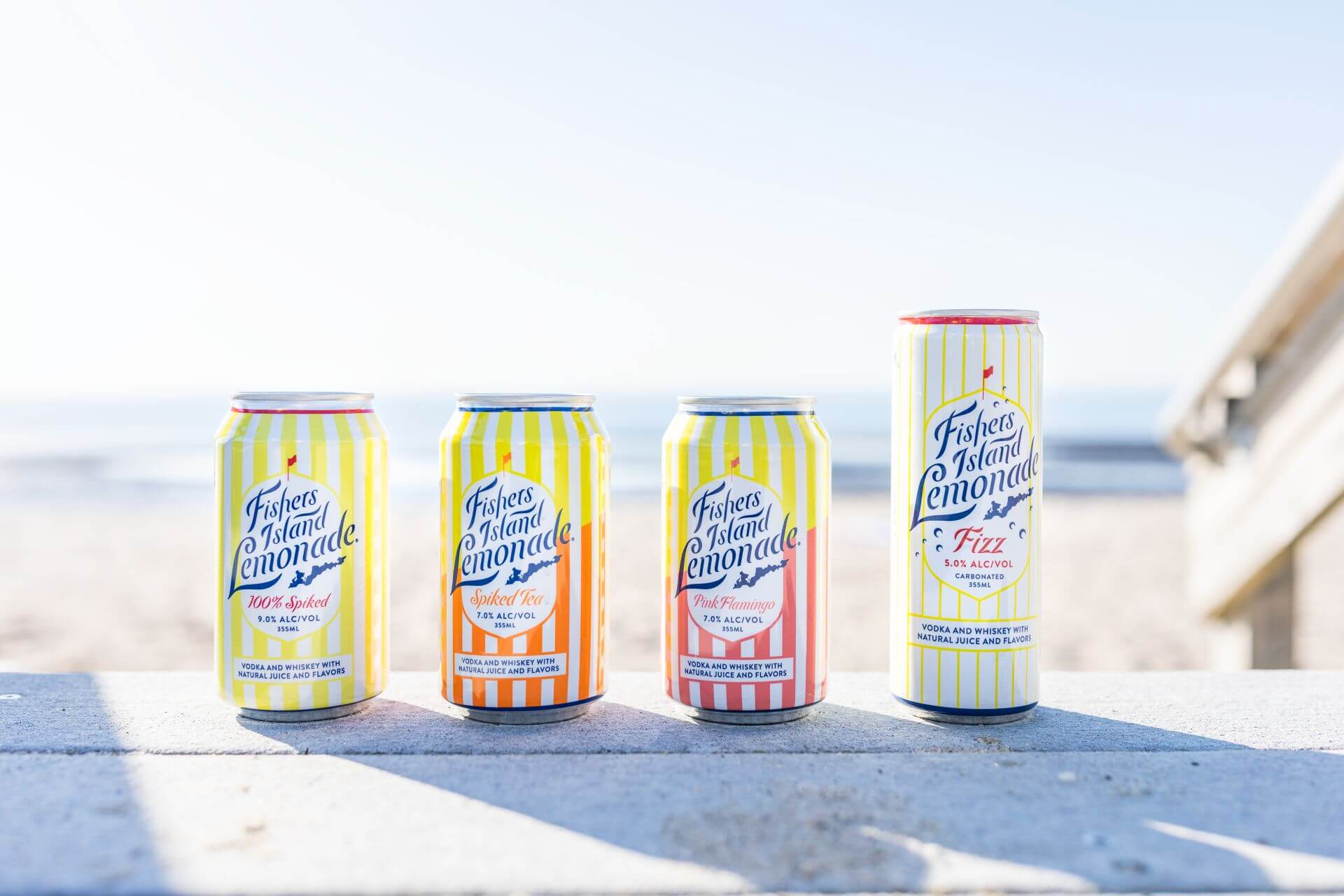
Fishers Island Lemonade cans and flavors

Not just another RTD, Fishers Island Lemonade is a premium brand that transforms a multi-generational recipe into a can cocktail.

Now, the brand is launching four new expressions, right in time for summer.

Let’s take a look at these craft RTD cocktails.

A Recipe with History

There’s only one place to drink on Fishers Island in New York, the Pequot Inn. The restaurant and bar is known for its signature cocktails.

One intrepid member of the Shillo family, who owned the Pequot for more than two decades, is putting her spin on one of the signature cocktails into cans.

Bronya Shillo tended bar at the Pequot when it was under her family’s ownership. She launched Fishers Island Lemonade (FIL) in 2014.

FIL’s original expression is a 9.0-percent blend of premium vodka, barrel-aged whiskey, lemon and honey. Now, the Original spiked lemonade has four new friends: Spiked Tea, Pink Flamingo, Fizz, and Frozen Spirits Pops.

Brand Expansion

Like Original FIL, the brand’s new lineup consists of signature cocktail recipes. In fact, you’ll find several FIL recipes on the brand’s website.

FIL Spiked Tea and Pink Flamingo both ring in at 7.0 percent ABV. The former is the original recipe with black tea, while the latter is made with cranberry.

Fishers Island Fizz is the lower-ABV version of Original FIL, coming in at a more sessionable 5.0 percent ABV.

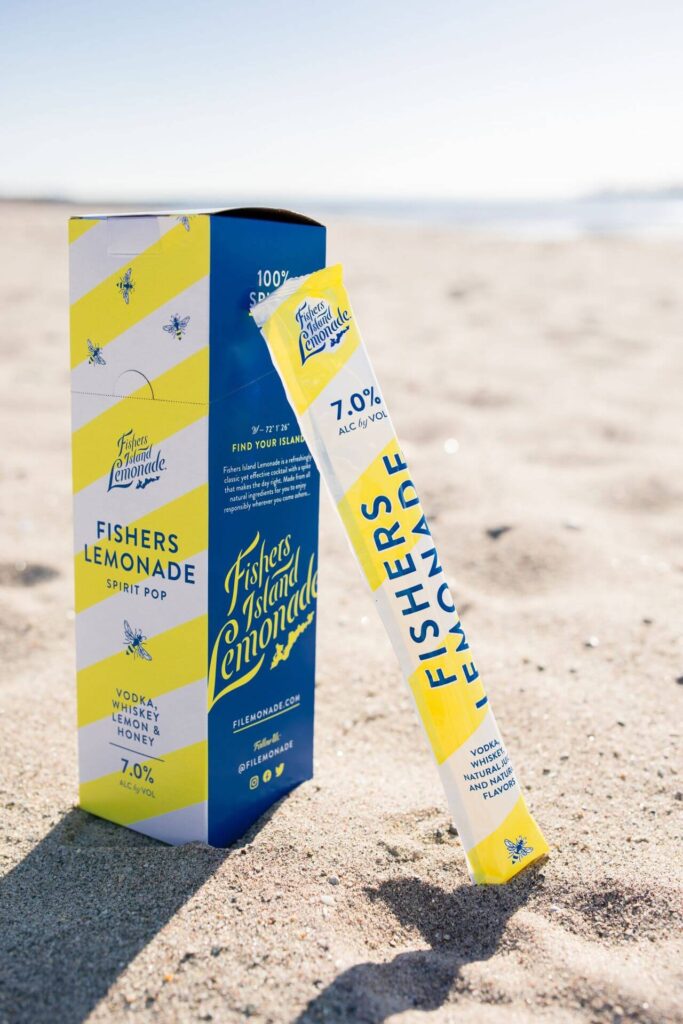
Fishers Island Lemonade Frozen Spirits Pops

Perfect for summer, FIL Frozen Spirits Pops are exactly what they sound like: popsicles made with Original FIL.

Finding FIL

Currently, FIL is available in Colorado, Connecticut, Georgia, Maine, Massachusetts, New Hampshire, New Jersey, New York, and Rhode Island.

However, the brand is utilizing direct-to-consumer sales to reach consumers across America. FIL is also available on Drizly.

A four-pack of FIL RTDs have an SRP of $15.99. The Frozen Spirits Pops come in ten-packs with an SRP of $27.99.

Images provided by Fishers Island Lemonade

by David Klemt David Klemt No Comments

Summer of White Claw 2.0?

Summer of White Claw 2.0?

by David Klemt

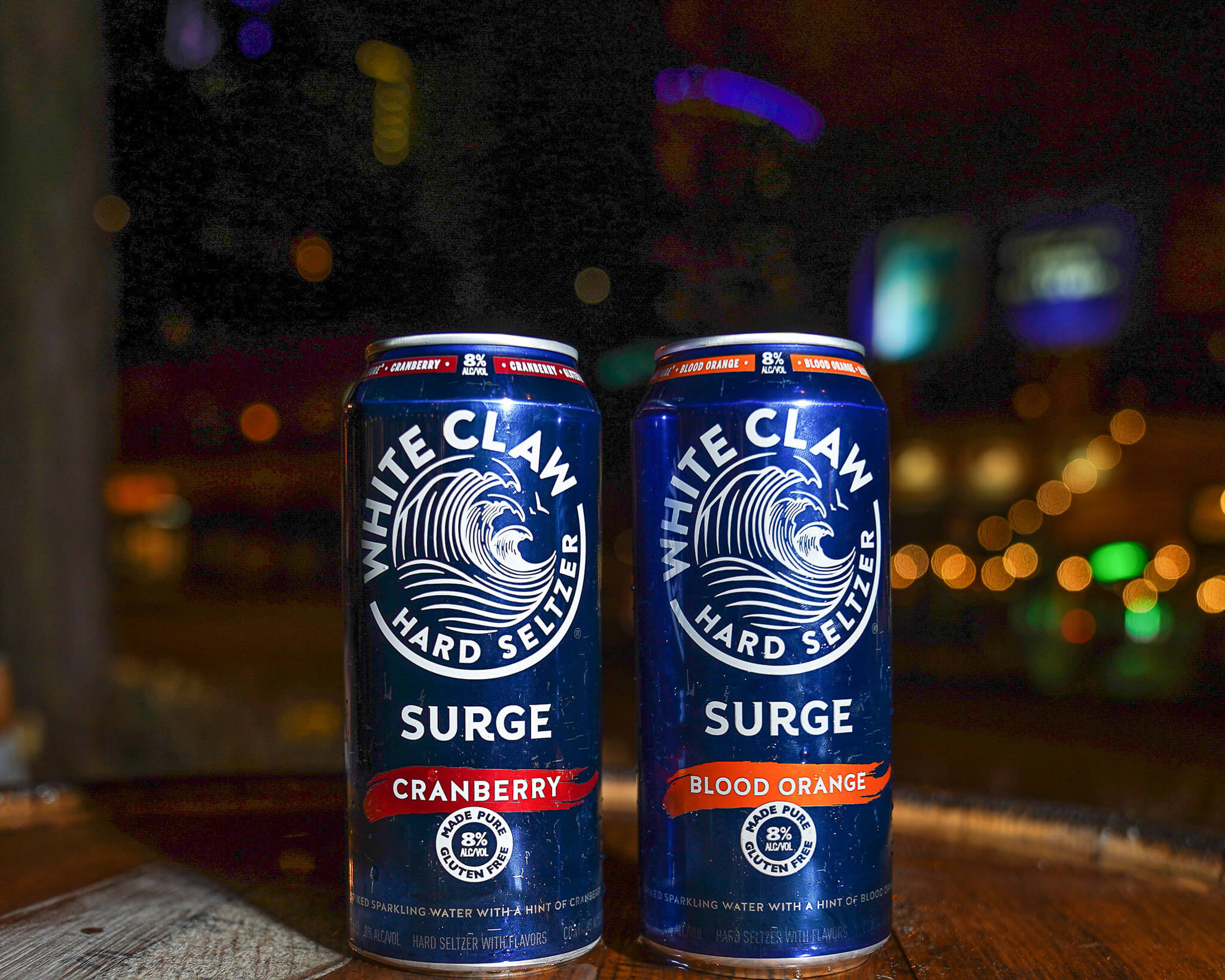
White Claw Surge Blood Orange and White Claw Surge Cranberry hard seltzer cans

White Claw is ready to leverage the surge in pent-up consumer demand to get out and party this summer with their latest innovation, Surge.

The new expressions are notable for several reasons. The most obvious, of course, is that they ring in at 8.0% ABV.

Odds are strong that we may be on the verge of a Summer of Surge.

Summer of White Claw 2.0

Let’s look back at the brief but bold history of White Claw.

Imagine it’s 2016. Hard seltzer isn’t quite the powerhouse beverage category that it is today. There’s no snappy, “Ain’t no laws when you’re drinking Claws,” tagline. Neither is there a “ClawLife” hashtag…yet. However, White Claw launches.

Fast-forward to 2018. Fanatics are sharing their devotion to White Claw all over social media. They’re tagging posts #ClawLife. The memes are everywhere, as are the white cans of hard seltzer.

That leads us to 2019. It almost seems simpler to ask what Big Brands aren’t trying to copy White Claw’s success. Try as they might, nobody dethrones King Claw.

Summer 2019 is the Summer of White Claw. The brand essentially singlehandedly grows hard seltzer into the powerhouse beverage category it is today.

In 2021, the hard seltzer kingpin certainly seems set to take over summer once again with White Claw Surge Cranberry and White Claw Surge Blood Orange.

Surging Forward

White Claw Surge’s higher ABV—a boost from 5.0% to 8.0%—isn’t the only departure from the “standard” Claws.

Surge is available only in 16-ounce cans, whereas standard White Claw comes in 12-ounce cans and tall boy versions are 19.2 ounces.

Another big difference? Standard White Claw flavors in 12-ounce cans contain 100 calories. Surge, with 220 calories, has more than twice that amount.


View this post on Instagram


A post shared by White Claw Hard Seltzer (@whiteclaw)

Should White Claw Surge perform as expected, it will represent an interesting evolution in hard seltzer. For many, hard seltzer is a stand-in for beer and other beverage alcohol options because of its low calorie count. If higher-proof, high-calorie hard seltzer becomes popular, it’s a notable shift in consumer behavior.

#ClawLife 2.0

Surge isn’t the only innovation coming from White Claw in time for Summer 2021.

The new White Claw Iced Tea flavors will likely prove to be a popular refresher as the weather gets warmer. These expressions—Lemon, Raspberry, Mango, and Peach—are 100 calories and 5.0% ABV (in 12-ounce cans) like standard Claws.

There are also three new expressions of White Claw available in Variety Pack Flavor Collection No. 3: Strawberry, Pineapple, and Blackberry.

With all of these new hard seltzers on the market and pent-up consumer demand, it’s difficult to see how we’re not headed toward Summer of White Claw 2.0.

Image: White Claw

by krghospitality krghospitality No Comments

SBA Releases RRF Guide and Forms

SBA Releases RRF Guide and Forms

by David Klemt

"This is the sign you've been looking for" white neon sign on brick wall

Operators in the United States are nearing the opening of the Restaurant Revitalization Fund application process.

The Small Business Administration’s RRF program guide and sample application are now available.

Let’s jump in!

RRF at a Glance

In simple terms, the RRF is the most targeted relief the industry in America has received since the pandemic took hold.

Eligible entities apply for a tax-free grant equal to the amount of a their pandemic-related revenue losses.

To calculate a grant amount, an applicant subtracts 2020 gross receipts from 2019 gross receipts. Applicants must deduct first-draw PPP and second-draw PPP loans, even if they’re paid back or forgiven. Any economic disaster loans—Economic Injury Disaster Loans, for example—are not RRF deductions.

Per the SBA, operators do not need to register for a System for Award Management (SAM.gov) account, meaning they no longer need to acquire a DUNS number.

RRF Eligibility

As the SBA’s RRF program guide states, eligible businesses A) must not be closed permanently, and B) are places where customers gather primarily to consume food or drink. Such entities include:

  • restaurants;
  • bars;
  • saloons;
  • lounges;
  • taverns;
  • food trucks, carts and stands;
  • snack and non-alcoholic beverage bars;
  • licensed facilities or premises of a beverage alcohol producer where the public may taste, sample, or purchase product; and
  • other similar places of business in which the public or patrons assemble for the primary purpose of being served food or drink.

However, that’s in no way the entire list of eligible businesses. Bakeries, breweries, microbreweries, brewpubs, taprooms, distilleries, wineries, and tasting rooms are eligible if they can provide documentation (which must accompany their application) that:

  • on-site sales to the public comprised at least 33% of gross receipts in 2019; or
  • original business model should have contemplated at least 33% of gross receipts in on-site sales to the public if they’ve yet to open or opened in 2020.

Interestingly, it’s possible for an inn to be eligible for the RRF. Such a business is subject to the same eligibility requirements as bakeries, breweries, etc.

Eligible Expenses

Businesses that receive an RRF grant may use the funds for eligible expenses during their covered period. That timeframe is the “period beginning on February 15, 2020 and ending on March 11, 2023.” Should the business close permanently, that period will end when the business permanently closes or on March 11, 2023, whichever occurs sooner.”

A grant recipient must return any funds to the Treasury if they’re unable to use for eligible expenses by the end of the covered period.

So, which expenses are eligible per the SBA for the RRF program? Below is a short list of eligible expenses:

  • Payroll costs (sick leave, costs for group health care, life, disability, vision, or dental benefits during periods of paid sick, medical, or family leave, and group health care, life, disability, vision, or dental insurance premiums).
  • Payments on any business mortgage obligation, both principal and interest (Note: Excludes any prepayment of principal on a mortgage obligation).
  • Business rent payments, including rent under a lease agreement (Note: Excludes any prepayment of rent).
  • Construction of outdoor seating.
  • Business supplies (including protective equipment and cleaning materials).

For the full list of eligible expenses and many more RRF details, please click here to download and view the entire SBA RRF program guide. To view the sample application and prepare for the process to begin, click here.

Disclaimer

This content is for informational purposes only, and should not be used as legal, tax, investment, financial, or other advice. This article does not constitute professional and/or financial advice, nor does any information constitute a comprehensive or complete statement of the matters discussed or the law. This information is of a general nature and does not address the circumstances of a specific individual or entity. The reader of this information alone assumes the sole responsibility of evaluating the merits and risks associated with the use of any information before making any decisions based on such information.

Image: Austin Chan on Unsplash 

by David Klemt David Klemt No Comments

Las Vegas CEO Offers Vaccination Bonus

Las Vegas CEO Offers Vaccination Bonus

by David Klemt

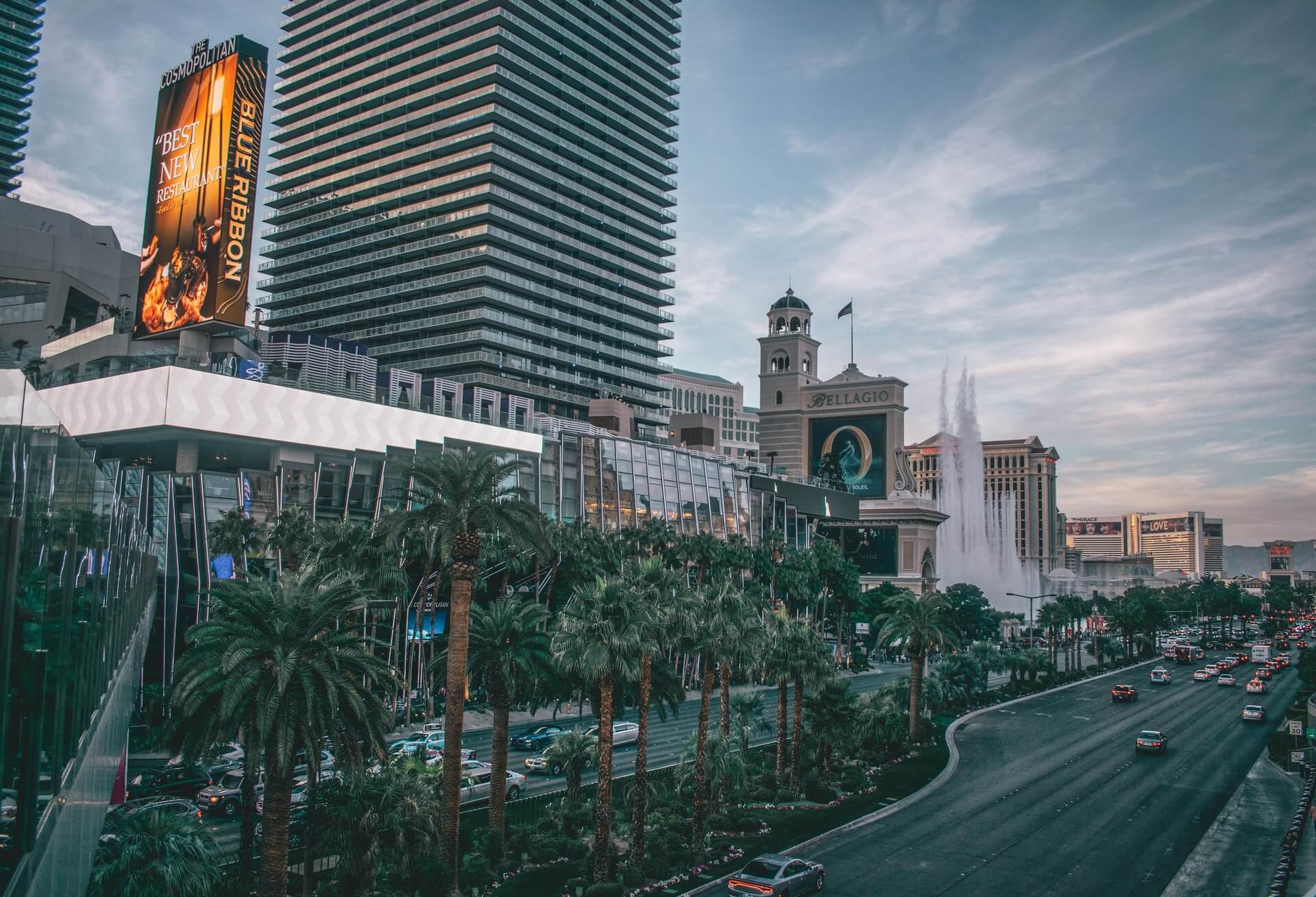
The Cosmopolitan on the Las Vegas Strip

One CEO in the hospitality and lodging industries is offering employees a bonus for getting the Covid-19 vaccine.

William McBeath, president and CEO of The Cosmopolitan of Las Vegas, is incentivizing the resort’s staff with cash bonuses.

Conversely, workers who decline inoculation must take weekly Covid-19 tests.

Cash Incentive

Per the Review-Journal, the largest daily newspaper in Nevada, McBeath is using a tiered approach to the bonuses.

If the resort meets the vaccination goal, the property could pay $1 million to staff.

According to reporting, The Cosmo is pushing for at least 80 percent of staff to receive first doses of a Covid-19 vaccine by the first of May.

The tiered system works as follows:

  • 60 Percent Vaccination Rate: $50
  • 70 Percent Vaccination Rate: $100
  • 80 Percent Vaccination Rate: $250
  • 90 Percent Vaccination Rate: $350
  • 100 Percent Vaccination Rate: $500

The most an employee stands to make is a one-time bonus of $500. Clearly, the 80 percent vaccination rate bonus is an amount the resort finds motivational and a reasonable cost.

Weekly Tests

There are a number of reasons someone may decide against a vaccine. Operators must understand that vaccination is a personal choice.

Requiring staff receive vaccinations is a slippery slope. Setting aside legal ramifications, doing so will likely result in staff attrition, awful PR, and long-term damage to a business.

That’s to say nothing of the failure in emotional intelligence that forcing vaccinations on employees would highlight.

Instead, McBeath’s approach respects an individual worker’s autonomy. The president and CEO isn’t forcing The Cosmo’s staff to receive vaccines. Rather, he’s incentivizing workers to reach the goal set for the resort.

There are no credible reports of Cosmopolitan employees facing termination for refusing vaccination. I was also unable to find any reports of retaliation.

According to Review-Journal reporting, unvaccinated workers will undergo Covid-19 testing. Starting May 1, Cosmo employees who work a maximum of three days per week will be given a test once per week. Those who work four or more days per week will be tested twice per week.

Nevada Seeks to Increase Occupancy Limits, Reopen State

McBeath’s May 1 deadline makes even more sense when one considers current occupancy limits and reopening plans.

Currently, casinos in the Silver State are operating at 50-percent capacity. On May 1, the Nevada Gaming Control Board will be responsible for deciding gaming floor occupancy. In preparation, the NGC wants more of Nevada’s hospitality workers to receive vaccinations.

Additionally, Governor Steve Sisolak has set a June 1 date against reaching 100-percent occupancy statewide. So, The Cosmo’s goal of 80-percent staff inoculation by May 1 makes a lot of sense.

Operators in hospitality and lodging can use McBeath’s incentive program in their own businesses. If it’s crucial to them and their businesses, operators should set a staff vaccination rate goal and implement a bonus schedule that appeals to workers while remaining realistic.

Image: Zachary DeBottis from Pexels

by David Klemt David Klemt No Comments

Celebrate National Takeout Day!

Celebrate National Takeout Day!

by David Klemt

Canadian flag against blue sky and white clouds

Today is the big day: National Takeout Day in Canada!

Canada Takeout is challenging Canadians to place takeout orders and set a national record.

Obviously, this national challenge is very straightforward—if you’re in Canada, order takeout!

Take Part

As an operator, make sure your loyal customers know to participate today. You know what that means—flood social media.

If there was ever a right time to leverage your social media channels, it’s today.

Post about your takeout menu. Post about any specials you’re offering to entice your customers to place takeout orders. Show off your food. Use the hashtags #takeoutday and #Canadatakeoutrecord. Encourage your customers to post their orders and use the same hashtags.

Also, ensure your receipt printing system is set to label takeout orders as “Takeout” on receipts. That makes it possible for your customers to upload their receipts to the Takeout Tracker; make sure you tell your customers to do that so they can be counted.

Go All In

Canada Takeout’s mission is “reminding Canadians to order takeout.” The organization is helping Canada set the all-time record for takeout orders today in several ways.

We’ve been over their hashtags and that you should absolutely use them. However, Canada Takeout has also created social media assets anyone can download and use. One of these assets features a fantastic slogan: “Eat well. Support local. Set a record.”

Click here, scroll down, and download. While you’re at it, make sure you’re following Canada Takeout on Instagram and Facebook.

Keep it Going

This isn’t Canada Takeout’s first initiative. The organization launched the inaugural National Takeout Day last year, April 15, 2020.

Per a press release, the hashtag #takeoutday has earned more than 160 million impressions, reaching nearly 53 million people.

Canada Takeout also celebrates other food-related holidays. Visit the site and you’ll see that they’re looking forward to Thai Food Day (April 21), Tomato Day (April 28), and Mexican Food Day (May 5).

Get your takeout menu ready, promote it on social, and help set a record today!

Image: chris robert on Unsplash

by David Klemt David Klemt No Comments

5 Books to Read this Month

5 Books to Read this Month

by David Klemt

Flipping through an open book

Spring is traditionally the time when we’re meant to reinvent or otherwise better ourselves. These books can help you do just that.

Some will help you expand or enter this business, others will boost your marketing and social media, and a couple will help you refresh your drink menu.

With restrictions easing and vaccination rates in the United States growing, now’s the time to improve yourself and your business.

Prepare now for pent-up demand for in-person dining and drinking.

Food Truck Business Guide for Beginners

Looking to enter this industry with a food truck or expand your existing business with one? This book is a great place to start.

Food Truck Business Guide for Beginners is a comprehensive guide that covers:

  • common mistakes that lead to food truck failure, and exactly how to avoid them;
  • the most successful ways to secure funding;
  • how to master marketing;
  • best practices for passing health inspections;
  • tackling and mastering marketing for your business;
  • and many more topics.

The Terroir of Whiskey: A Distiller’s Journey Into the Flavor of Place

Dr. Rob Arnold is a plant biochemist and the master distiller at TX Distillery. To say he understands the science of whiskey and terroir is obvious.

What’s less obvious is the direction Dr. Arnold’s book heads into. He takes readers to distilleries in Kentucky, Ireland, Scotland and elsewhere, but he takes things further.

In The Terroir of Whiskey, Dr. Arnold shines a light on plant breeders, local farmers, and distillers bringing back “lost” grains. These same innovators are also attempting to create new grains to further develop terroir.

This book will definitely enhance your whiskey knowledge and engagement with guests.

Rad Cocktails

Yes, this book’s description states that it focuses on the home bartender.

No, that doesn’t mean bartenders, operators, and other hospitality pros can’t learn from it.

Rad Cocktails, in addition to including awesome illustrations, also embodies a growing cocktail trend: simplification. Innovative cocktails don’t have to be complicated or take ten minutes to build.

Beautiful Booze: Stylish Cocktails to Make at Home

Natalie Migliarini, also known as Beautiful Booze, has more than 95,000 followers on Instagram. Her cocktail recipes, photographs and mastery of social media help her stand out in a roiling sea of influencers.

Her first book, Beautiful Booze: Stylish Cocktails to Make at Home, also targets home bartenders…on the surface. This book, creative cocktail recipes, can help elevate anyone’s bartending skills. The beautiful photography will also help inspire anyone to take their social media shooting to the next level.

Hacking the New Normal: Hitting the Reset Button on the Hospitality Industry

Alright, this may seem self-serving. However, I wouldn’t have written the foreword for a book I didn’t believe this book would truly help people.

Millions of hospitality industry professionals’ lives were imperiled at the start of last year. We continue to innovate and adapt to overcome unprecedented challenges.

Hacking the New Normal addresses the need for an industry-wide reset and seeks to guide operators through rebuilding for the long term, and to strengthen the industry moving forward.

Image: Mikołaj on Unsplash 

by David Klemt David Klemt No Comments

Stand Out with Weird Holidays: April

Stand Out with Weird Holidays: April

by David Klemt

Stay Weird neon sign with purple background

Want to stand out from from other restaurants and bars in your area? Then commit to keeping it weird.

Several “holidays” are set against every date on the calendar. They range from mainstream to food focused to weird.

Focus on the latter to raise eyebrows, carve out a niche for your restaurant or bar, and attract more guests.

Of course, you shouldn’t try to celebrate every holiday, weird or otherwise. Focus on the days that are authentic to your brand; resonate with your guests; and help you grab attention on social media.

April 14: National Reach as High as You Can Day

This is a holiday that will likely work best on social media. Just like there’s always a holiday and people like to say “there’s always a tweet,” there’s always a hashtag.

Use this day (and its accompanying hashtag) to highlight staff who want to participate, along with your venue.

Of course, if you want to involve your guests in person, go for it. Put your head together with your staff and get creative.

April 15: National Take a Wild Guess Day

You can take promotions centered around this day in several directions. The simplest way is to use the holiday to engage with followers on your social channels.

Consider borrowing from the “wrong answers only” posts on Instagram. Post a blurred, pixelated or “censored” item, like a bottle. In the caption, ask followers to “guess” what it is—wild guesses only.

This holiday also works well with blind tasting events.

April 16: Wear Pajamas to Work Day

I’d say this holiday is fairly self-explanatory. Let your front-of-house staff participate by wearing pajamas, with full team buy-in. Or, encourage your guests to wear their pajamas to your restaurant or bar.

If this holiday fell on a Saturday or Sunday, this would be a great day for a brunch promo. Of course, there’s nothing to say you can’t execute a Friday brunch.

April 16: National Bean Counter Day

In the United States, this holiday is taking place a month before the Tax Day deadline. If you’re so inclined, you could offer a deal to all the tax preparers and accountants in your area.

Although, you can also go a completely different direction. You can fill a large jar with beans—coffee would be great—and have guests guess how many there are. You can even post the jar full of beans to social, encouraging follower engagement. Closest guess wins a prize.

April 22: National Jelly Bean Day

Oh, hey… Remember that bean-counting holiday from way up there? I wonder if that bean-guessing idea would work for this holiday…

April 23: National Talk Like Shakespeare Day

If you think you or your social media manager can handle it, encourage your followers to describe your restaurant or bar as though they’re the Bard himself.

Or, as a Shakespearean translator would explain it, “Encourageth thy followeth’rs to describeth thy restaurant ‘r bar as though those gents’re the Bard himself.”

April 25: National DNA Day

Yesterday, I shared how our DNA plays a significant role in how we perceive bitter flavors. National DNA Day would be a great time to plan and execute a PTC strip and cocktail event.

April 27: National Tell a Story Day

How well do your loyal guests know you and your brand? How well do they know your staff?

National Tell a Story Day is an excellent time to leverage the story features on your social channels. Show off the venue and tell your brand’s story. If you have team members who want to participate and tell share a story, that’s a great way to engage with followers and guests.

April 28: National Superhero Day

If there was a ever a day to encourage your staff and/or guests to dress up for a fun time… National Superhero Day also leverages Shudder’s “Halfway to Halloween” event.

To take this holiday in another direction, you can also celebrate members of your community who give back to others by giving back to them.

“Weird” holidays aren’t just a dynamic way to engage with guests. Asking your team for ideas for holiday promotions is an excellent way to keep them engaged, which is a smart way to retain staff.

Image: Dan Parlante on Unsplash 

by David Klemt David Klemt No Comments

The Science of Bitter Flavors

The Science of Bitter Flavors

by David Klemt

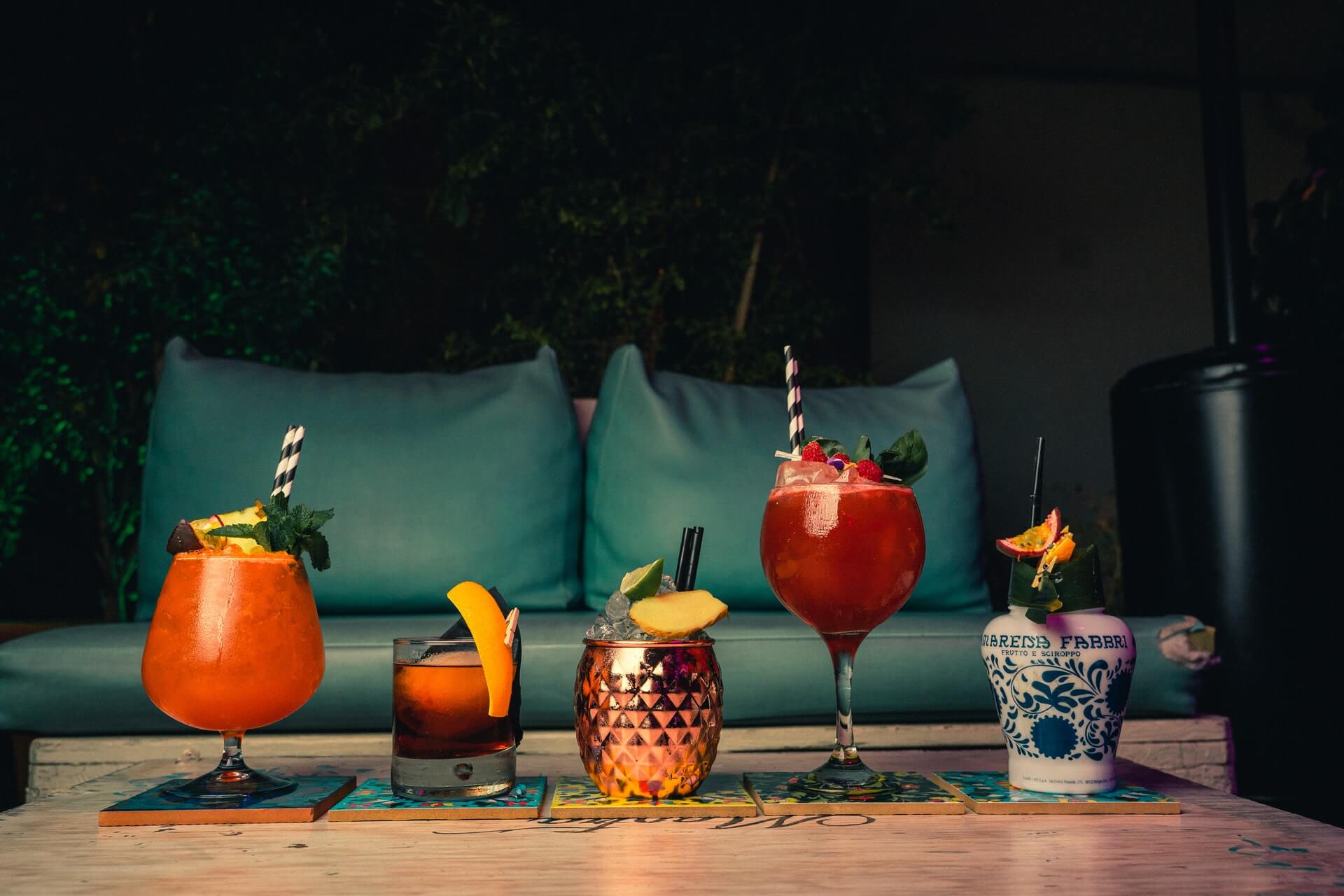
Selection of cocktails on table on patio of bar

Not only do bitter cocktail ingredients add depth and complexity to drinks, individual DNA plays a role in how we perceive them.

Campari, one of the best-known bitter aperitifs, adds herbal bitterness to cocktails.

However, not everyone perceives bitterness the same way. This is why some of your guests love bitter drinks, some can’t stand them, and others don’t have much of a response at all.

The Bitter Response

Dr. Danielle Reed is associate director of the Monell Chemical Senses Center. As her research summary states, why different people taste and smell differently, and how genotypes play a role in that perception.

A recent Campari digital event, “In a Sense: Decoding the Science of Bitter,” dives into the bitter response of humans. During this webinar, host Alison Mouratis, a Campari portfolio representative in Chicago, hosts Dr. Reed and Micah Melton, beverage director at the Alinea Group.

In the webinar, Dr. Reed asks, “Where does bitter come from?” The answer is: plants.

Obviously, plants can’t defend themselves like animals. If a predator chooses a plant as its prey, it doesn’t really have to worry about teeth and talons.

Instead, plants employ secondary defense chemicals, and they do so in an instant. Some of these defense chemicals are poisonous and humans perceive them as bitter. Often, bitter flavors activate our salivary glands to dilute the poison and protect us.

Phenylthiocarbamide

Yes, that. Phenylthiocarbamide (PTC) is a chemical compound that tastes bitter…to some of us.

As Dr. Reed explains, not everyone can detect PTC. Our parents determine whether the receptor that picks up PTC is broken or not.

In some of us (about 30 percent of people), the receptor is broken. Turns out, it’s broken in yours truly. In others, one parent passes on the receptor. And for some people, both parents pass it on and the reaction to PTC is strong.

Test Your Receptor

I discovered my receptor is broken during the Campari event on screen with more than a dozen other participants.

How does one test their reaction to PTC? Via PTC strips. One takes a strip, places it in their mouth, and they’ll know quite quickly if their receptor is active.

Not only is this interesting to do just out of personal curiosity, operators can host an event similar to Campari’s. Guests are looking for new ways to engage with the brands, restaurants, bars, and bar teams they support.

PTC strips are available for on Amazon, and they’re not expensive. Vials of 100 PTC strips can cost as little as five dollars.

Not only is this type of event educational, it’s entertaining and can help drive drink sales.

Image: Chino Rocha on Unsplash 

by David Klemt David Klemt No Comments

2020 Craft Brewing Production Infographic

2020 Craft Brewing Production Infographic

by David Klemt

Stack of beer kegs in black and white

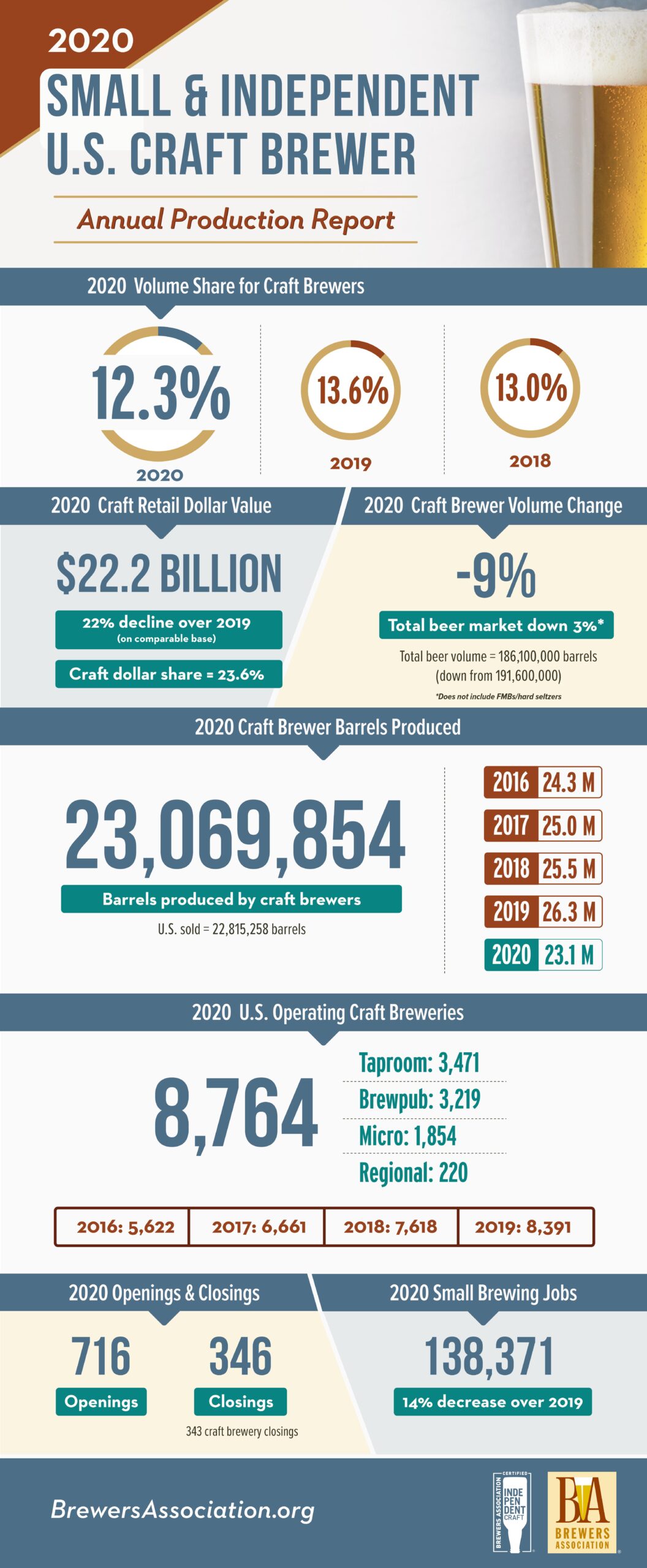
The Brewers Association‘s latest report and infographic reveal 2020 small and independent craft brewery production numbers.

Like their restaurant, bar and brewpub cohorts, brewers are facing enduring struggles due to the Covid-19 pandemic.

However, the Brewers Association did find some good news.

First, the challenges.

Overall Market Drop

The BA’s report reveals that small and independent craft brewer production is down nine percent from 2019. Overall, draught beer sales dropped 40 percent last year.

That equates to an overall market share of 12.3 percent in 2020. Comparing 2020 to 2019, that’s a decline of 1.3 percent.

Unfortunately, 2020 craft brewer numbers also reveal significant job loss for the industry. In comparison to 2019, direct craft beer jobs are down 14 percent.

In terms of small and independent brewery closures, 2020 saw 346 brewers close their doors permanently.

Some Silver Linings

There is some good news for craft beer. Not every closure is attributable to Covid-19.

Reviewing the 2020 numbers, the BA says there are 8,764 craft breweries operating in the United States. That’s an all-time high.

The breakdown is as follows:

  • 220 Regional craft breweries
  • 1,854 Microbreweries
  • 3,219 Brewpubs
  • 3,471 Taproom breweries

Impressively, the number of new craft brewery openings more than double the number of closures at 716.

Per Bart Watson, chief economist at the BA, the total number of craft breweries and openings in 2020 proves the “resilient and entrepreneurial nature” of small and independent brewers.

BA Infographic

You’ll find more information below. The BA’s infographic neatly tells the story of the association’s latest report.

Perhaps the biggest positive takeaway is the steady growth in operational craft breweries. Since 2016, the number of breweries in this category has increased by nearly 3,100.

That’s an average of 785 new brewery openings each year. Given the number of openings in 2020, it’s possible craft brewers will gain ground on the jobs lost over the course of last year.

It’s also likely production and sales numbers will see a boost in 2021 through a culmination of easing restrictions, reopening markets, pent-up demand, vaccination rates, and guest comfort levels.

2020 Small and Independent US Craft Brewer Annual Production Report

Infographic: Brewers Association

Image: Hennie Stander on Unsplash

by David Klemt David Klemt No Comments

Dial In Your Brunch Before Mother’s Day

Dial In Your Brunch Before Mother’s Day

by David Klemt

Warming weather, pent-up demand, and less-restrictive Covid rules—at least in the United States—make brunch viable in many markets.

Plus, we’re just a month away from Mother’s Day. If everything goes right, dining restrictions won’t keep operators from capitalizing on this big brunch holiday.

Considering your brunch menu now—including your Champagne and sparkling drinks—will help you dial it in before Mother’s Day.

To help you perfect your brunch operations, let’s look at a casual chain, a taco shack, a fine-dining restaurant, and a casual independent restaurant that focuses on comfort foods.

Las Vegas

Things are looking up for Las Vegas. Nevada’s current Covid-19 status is Mitigation.

Restaurants, bars, pubs, breweries, distilleries and wineries may operate at 50-percent indoor capacity. There’s no occupancy limit for outdoor dining, but operators must follow social distancing guidelines.

The city is known for its buffets, of course. Some are open again, thanks to the easing of restrictions. However, Las Vegas buffets are known globally—let’s focus on a more traditional restaurant for this list. I also want to venture off the Strip—but not too far.

Lazy Dog is a casual dining chain with a focus on craft beer and dog-friendly operations. Canine buddies are welcome on their patios.

You may be wondering why, given all the incredible restaurants in Las Vegas, I’m looking at a casual chain. The answer, quite simply, is that I want to offer an array of suggestions to get you thinking about your own brunch offerings.

First, there’s the $20 DIY Mimosa. For $20, guests get a 750mL of Freixenet Cava with either orange juice of Kern’s Peach Nectar.

Then there are the brunch menu food items. There’s a generous portion of avocado toast that comes with cheesy scrambled eggs; a Breakfast Burger; a Breakfast Club Sandwich; a couple of breakfast quiches; and Bacon Candy, which is bacon with brown sugar, crushed red pepper chili flakes and black pepper.

Lazy Dog’s brunch is a good example of how to make bottle service fun and accessible, and elevating brunch menus in a way that’s familiar and appealing to guests.

Nashville

It’s still standard operating procedure for guests in restaurants and bars to wear face coverings unless eating or drinking. Capacity is 175 people maximum per floor. There’s a limit of 10 guests per table inside, 25 outside.

However, restaurants and bars are open in Nashville for indoor dining. Venues that serve alcohol must cease service at 1:00 AM and close at 2:00 AM. If there is no alcohol service, a restaurant may remain open for 24 hours.

Redheaded Stranger takes brunch in a deceptively simple direction: breakfast tacos. Brunch doesn’t have to be standard breakfast foods, after all.

Flour tortillas are made in house and pair well with mouthwatering brunch fillings. There are tacos with bacon, tater tots, egg and cheddar cheese; chorizo, egg, sour cream and cheddar; and tater tots, jalapeño crema, red hatch chiles, and American cheese. Oh, and don’t forget their inventive sauces, like Dr. Pepper Hot Sauce.

Of course, no brunch is complete without cool, refreshing drinks. The taco hot spot offers Bloody Marys, Mimosas, Margaritas, and frozen cocktails.

Orlando

Florida is in Phase 3 of their reopening plan. That means restaurants, bars and nightlife venues are open for business.

There’s an executive order in place in Orange County, Florida, mandating face masks in public settings. Orlando is in Orange County.

Otherwise, it’s business as usual.

Chef’s Table at the Edgewater is an award-winning fine dining restaurant. People travel from all over the world for the food and experience.

The Chef’s Table brunch menu features upscale but accessible fare. There are Duck Fat Fries to share (or keep to yourself); Lobster Mac & Cheese; a trio of Mini Beef Wellingtons; Chicken and Waffles made with sweet-tea-brined chicken and bourbon maple syrup; Vegan Chilaquiles Verdes to which one can add a sunny-side-up egg.

Philadelphia

As of April 4, restaurants and bars are able to enjoy relaxed Covid restrictions. One of the biggest reasons for restaurants and bars to rejoice is the return of bar services. Barriers are required promote social distancing.

As far as indoor capacity restrictions, restaurants and bars that self-certify may operate at 75 percent. Venues that don’t self-certify may open at 50 percent indoor capacity.

Establishments can serve alcohol without the purchase of food, and there’s no longer a curfew for removing alcohol from tables.

One Philly restaurant that got our attention with their brunch menu is the Twisted Tail. The Headhouse Square eatery offered a $39/person prix fixe menu for Easter, taking full advantage of Pennsylvania’s new Covid regulations.

Their “standard” brunch menu features creative items such as Crawfish Mac & Cheese, Beer-Battered Cheese Curds, and Buttermilk Chicken Sandwich.

Image: Natasha Kapur on Unsplash 

by David Klemt David Klemt No Comments

Let’s Talk About Bitcoin

Let’s Talk About Bitcoin

by David Klemt

A Bitcoin on top of a $100 bill

Bitcoin and cryptocurrency in general are no strangers to media attention, but it seems like the coverage is increasing.

Of course, it helps when people who are excellent at garnering attention talk about it. Consider the explosion in news stories and online conversations about cryptocurrencies when Elon Musk tweeted about Dogecoin.

Then there’s the mystery factor. Many people don’t understand Bitcoin, Ethereum or other forms of cryptocurrency. The word itself—”crypto”—lends to the enigmatic air of this form of currency.

As a business owner, you should at least have a cursory understanding of cryptocurrency. After all, some people may try to pay you with it and you should at least consider meeting these guests where they are.

Before we proceed: I’m not a cryptocurrency or financial expert. I’m sharing information I’ve come across in my research over the years. Don’t make any financial or business decisions solely based upon what you read here—learn more for yourself and consult with experts before making investment decisions.

Crypto is Relevant to Our Industry

I’ve written about cryptocurrency—Bitcoin in particular—in the past. In one article, I wrote about a “nightclub” within a nightclub in Las Vegas devoted to cryptocurrency.

The club, MORE, had its own “coin” (MORE Coin), accepted other cryptocurrencies, and tailored its experience to crypto fanatics. It has become more of a members’ club, offering access to and preferential treatment at an array of venues, along with other perks. The club’s coin is purchased via Bittrex, a popular exchange platform

There are also hotels in Las Vegas (and other cities, of course) that accept cryptocurrencies like Bitcoin for rooms. Bitcoin ATMs scattered throughout Vegas allow people to access their wallets and convert crypto to cash.

Paying with crypto may become more commonplace than we think, sooner than we think.

Crypto Basics

Let’s address the term “cryptocurrency.” In this case, “crypto” is a reference to the encryption technology that protects a cryptocurrency network.

Bitcoin and other digital tokens, such as Ethereum and Dogecoin, are decentralized currencies. That is, there’s no main server, no government, no bank that controls or owns the network.

A digital token is incredibly difficult—if not impossible—to counterfeit or “double-spend.” This is due to sophisticated encryption technology and the blockchain.

The blockchain is a peer-to-peer distributed ledger technology that makes it incredibly difficult (again, if not impossible) to take over a crypto network. Every transaction is public knowledge; open to inspection; duplicated and distributed throughout an entire network; and  unalterable.

It’s that last point that made Bitcoin viable. Unlike attempts in the past to create digital currencies, the blockchain makes crypto trustworthy in that someone can’t just make up a new currency, wait for people to buy in, and then take it all for themselves.

Bitcoin has become synonymous with cryptocurrency. It’s the first viable digital token as we know it, the most popular, and at the moment, the most valuable.

Interestingly, it’s widely accepted that Ethereum is the second-most popular digital token but the most-utilized blockchain.

Finally, Bitcoin is finite. There are exactly 21 million Bitcoins—that’s it. Once they’re all mined, no more will be made.

Beyond the Basics

Fewer than 2.4 million Bitcoins remain to be mined. Currently, one Bitcoin is worth about $58,000.

A person uses a digital “wallet” to send and receive Bitcoin. Some people store their unique wallet on their computer; a separate and dedicated hard drive; a thumb drive; or a “cold” wallet, a device that’s not connected to the Internet to protect it from hackers.

If a person loses their wallet or password, they lose their Bitcoin(s).  There’s no way yet to know how many of the 21 million Bitcoins have been lost.

Bitcoin is a software system. Therefore, it can be copied. That’s the reason crypto beyond Bitcoin—such as the aforementioned Ethereum and Elon Musk-promoted Dogecoin—exists.

One of the biggest questions people have about bitcoin is, “Is this a scam?” Search online and you’ll get a mix of results.

There are high-profile people like Jack Dorsey and Elon Musk who are apparently heavily invested in crypto. There are critics calling the whole thing a scam and fraud. Then there are some former critics, like Jordan “The Wolf of Wall Street” Belfort, who were highly critical and suspicious of crypto but have changed their tunes.

Support from hotels, restaurant chains, financial institutions and other legitimate businesses seems to answer the scam question. However, operators must proceed with caution, as they would for any change in their business or investment.

Accepting Bitcoin Payments

Businesses that decide to accept Bitcoin and/or other digital tokens will need a POS app or platform to do so.

Starbucks is reportedly using Bakkt to accept Bitcoin.

Other options include BitPay Checkout, Bitcoin Cash Register, Anypay, and Paytomat.

Some solutions create a QR code the guest scans with their phone to complete a transaction. Others convert digital tokens to cash to accept payment.

It’s important to note that the IRS treats cryptos differently than US dollars. Before choosing to accept cryptocurrencies as payment, consult with your tax professional and accountant to ensure you don’t run afoul of any laws.

Canadian operators should note that while crypto is legal in the country. However, only the Canadian considered official legal tender in Canada. Again, this is why it’s so important to consult relevant experts before proceeding with crypto in your business.

Disclaimer

The information provided in this post does not constitute investment advice, financial advice, trading advice, or any other sort of advice. Neither the author nor KRG Hospitality recommend that any cryptocurrency should be bought, sold, or held by you. Conduct your own due diligence and consult your financial advisor before making any investment decisions.

Image: Bermix Studio on Unsplash 

by David Klemt David Klemt No Comments

Grilled Cheese Day: Mastering the Melt

Grilled Cheese Day: Mastering the Melt

by David Klemt

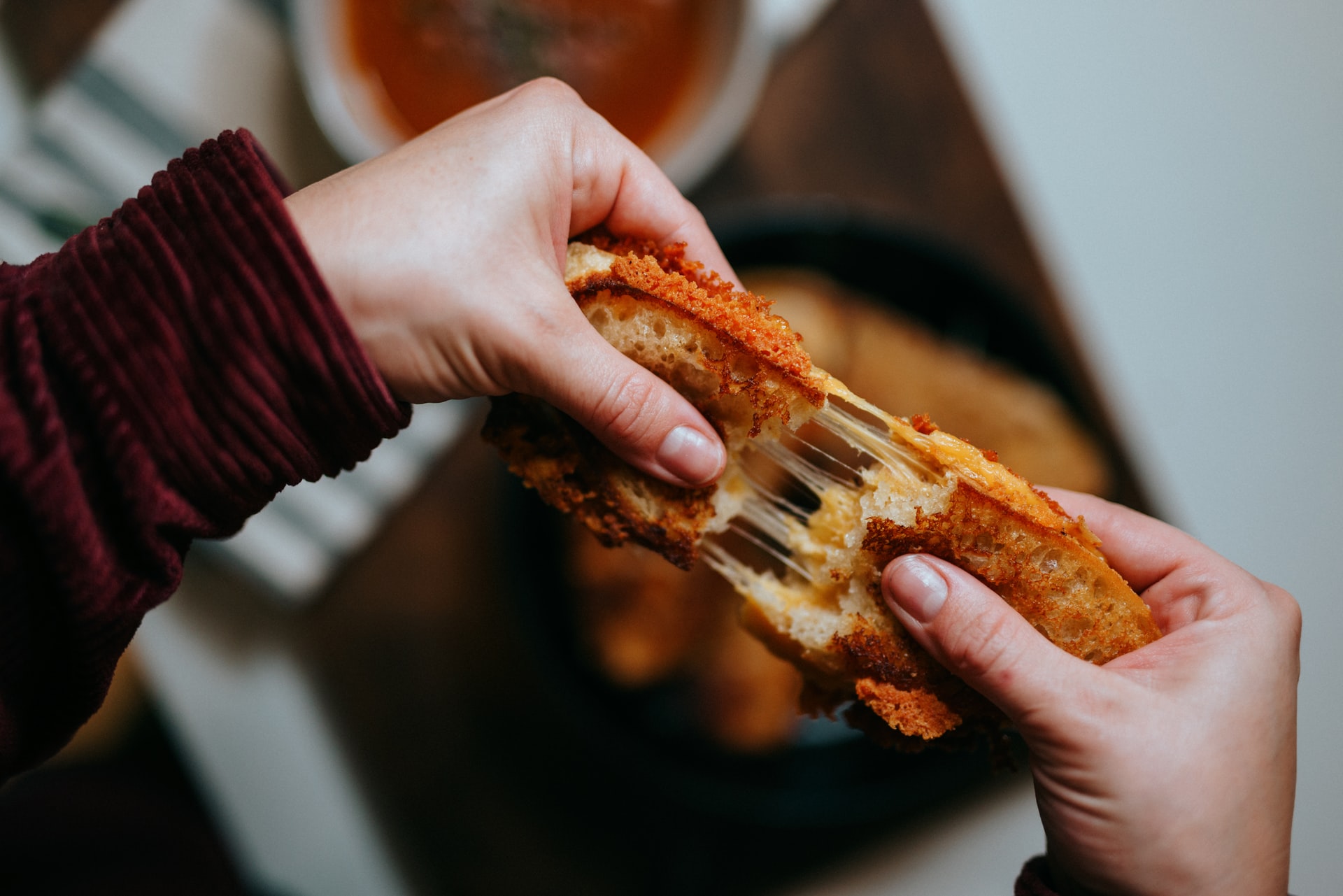
Person pulling apart melty grilled cheese sandwich

There are few comfort foods more popular than a well-made, melty grilled cheese sandwich.

It’s such a perfect comfort food that it has its own national holiday in the United States.

National Grilled Cheese Sandwich Day is April 12 in the US. From what I’ve read, Canada also gets in on the fun.

Melt Mastery

If you want to make the best grilled cheese sandwiches, not just any cheese will do.

The saying goes that you can’t squeeze blood from a stone. Well, you also can’t squeeze a melt out of a hard cheese cheese.

So, you want to make one of the comfiest of comfort foods. Cheese selection matters. Here’s what to consider:

  • Moisture content. Hard cheeses have very little water content and therefore don’t fully liquify.
  • Fat content. Cheeses with a high fat content melt very well.
  • Acidity. Cheeses that are highly acidic get stringy when melted. Acid-curded cheeses (vegan, many goat cheeses) don’t melt much, if at all.
  • Age. If you want melty cheese that results in that visually appealing cheese pull, look for fresh and unaged cheeses.

Melt Mates

It’s tempting to throw the cheese drawer at a sandwich. If one cheese is great, more cheeses are even better, right?

Wrong. Certain cheeses melt together better than others. Consider this:

There are restaurants that have grilled cheese eating challenges. Complete such a challenge, bask in glory forever. The reason this particular challenge must be completed quickly is melting points. As the sandwich cools, the cheeses congeal. The harder, lower-fat cheeses make it much more difficult to finish the admittedly ridiculous challenge sandwich.

So, which challenges melt the best and tend to play well together? Check out the list below:

  • American
  • Blue Cheese
  • Brie (works particularly well with fruit slices, jam and aged Cheddar)
  • Cheddar (look for younger versions for the best melt)
  • Colby
  • Comté
  • Fontina
  • Gruyère (again, younger versions tend to be better for grilled cheese sandwiches)
  • Monterey Jack
  • Mozzarella
  • Muenster
  • Pepper Jack
  • Provolone
  • Raclette
  • Taleggio

Become Legend

Comfort foods have become big-time revenue generators during the pandemic in America and Canada. There’s no reason to believe that’s going to change any time soon.

Master your melt and your sandwiches will become legend. Master the sides, dips and other accoutrements that enhance your legendary sandwich(es) and you’ll become a grilled cheese god.

Image: Nathan Dumlao on Unsplash

by David Klemt David Klemt No Comments

This Would Be a Good Time for a Beer

This Would Be a Good Time for a Beer

by David Klemt

Draft beer on bar

New Beer’s Eve and National Beer Day are relatively new American holidays closely related to prohibition and Repeal Day.

I’m sure you’re thinking, “Wait a second—Repeal Day takes place in December. What’s wrong with you?”

First, you’re right. Second, we don’t have time to get into all of that.

However, beer became legal again well before the Eighteenth Amendment was repealed.

The Cullen–Harrison Act

It’s 1933 and a United States Senator and a Congressman sponsor a bill changing the definition of “intoxicating beverage.”

The bill is aptly known as the Cullen-Harrison Act. It doesn’t legalize all beer but it makes it legal to sell beer with alcohol content no greater than 3.2 percent.

Such alcohol content, it’s thought, is so low as to not be intoxicating.

Congress enacts the so-called Beer Permit Act on March 21, 1933. President Franklin D. Roosevelt signs the act into law the next day, and it goes into effect April 7, 1933.

President Roosevelt, signing the Cullen-Harrison Act, famously says, “I think this would be a good time for a beer.”

National Impact

Beer drinkers—and very likely people just looking for a legal drink—rejoice, obviously.

Across the United States, people gather in droves outside breweries. According to reports, people will consume 1.5 million barrels of beer the day the Cullen-Harrison Act becomes the law of the land.

Fast forward to 2009. Justin Smith, who lives in Richmond, Virginia, at the time celebrates the first National Beer Day. Smith sets off a chain of events involving social media and Untappd. In 2017, Virginia officially recognizes National Beer Day.

Let’s Celebrate!

National Beer Day is accompanied by New Beer’s Eve.

The latter celebrates those brave and thirsty souls that lined up outside our nation’s breweries the day before the Cullen-Harrison Act went into effect.

We get to celebrate two beer holidays this week: New Beer’s Eve on Tuesday and National Beer Day on Wednesday.

New Beer’s Eve is an excellent day for operators to showcase their newest beers.

Both days are ideal for highlighting 0.0 and 0.5 beers, along with what we now refer to as “session” beers (5.0 percent and lower).

Oh, and don’t forget to use President Roosevelt’s famous quote when promoting these two holidays: “I think this would be a good time for a beer.”

Image: cottonbro from Pexels

by David Klemt David Klemt No Comments

The 5 Ds of Bystander Intervention

The 5 Ds of Bystander Intervention

by David Klemt

Busy bar in black and white

One non-negotiable for operating a restaurant, bar, nightclub or other hospitality venue is ensuring the safety of guests.

Harassing, threatening and violent behavior cannot be tolerated, period. Some venues employ trained and certified security tasked with keeping patrons safe.

However, not every business in this industry, restaurants for example, employ or retain security personnel. There are online and in-person security courses that owners, managers and staff can complete, and I encourage operators to look into doing so. Some courses can not only empower participants, they can result in the lowering of insurance premiums they’re considered so effective.

Additionally, it’s wise to study conflict resolution and de-escalation. Both are valuable skills in hospitality and other areas of our lives.

In the meantime, a global movement called Hollaback! has come up with the Five Ds of Bystander Intervention. These began as the Three Ds by Green Dot in the early 2000s. In 2015, they became the Four Ds. In 2017, a fifth “D” was introduced.

You’ll find the Five Ds below. Not every step works perfectly on the operations side but they’re still helpful. Doing nothing is simply not an option.

Distract

Per Hollaback!, distraction is a subtle and creative way to intervene, and the goal is “to derail the incident by interrupting it.” The witness employing distraction engages the victim of harassment directly, ignoring the harasser. Hollaback! provides the following examples of distraction:

  • Pretend to be lost. Ask for the time. Pretend you know the person being harassed. Talk to them about something random and take attention off of the harasser.
  • Get in the way. Continue what you were doing, but get between the harasser and the target.
  • Accidentally-on-purpose spill your coffee, the change in your wallet, or make a commotion.

It’s important to note that staff will need to read the situation if they witness harassment. Also, some of the above examples don’t really work in a hospitality setting, but you understand the idea.

Delegate

Delegation is simply asking for assistance or help. In many cases, if a staff member is witnessing harassment they’ll have a manager on duty on which they can rely for assistance.

Conversely, a manager can delegate to a staff member to employ the distract technique. In this situation, the staff member engages the victim of harassment and asks if they want them to call law enforcement. The manager can also direct a staff member to call law enforcement.

However, as Hollaback! notes, “a history of being mistreated by law enforcement has led to fear and mistrust of police interventions,” so the victim may not want to involve police. However, the venue must also protect themselves, so it may be necessary to involve law enforcement for documentation and other purposes.

Document

Along with protecting the victim and putting a stop to harassment, documentation is a crucial step.

All hospitality venues should be set up to complete incident reports. This protects victims (and therefore other guests and the community) and the business.

Hollaback! instructs a bystander to assess the situation first. If another bystander is already intervening, the witness must assess their own safety. Record the incident only if safe to do so.

Anyone who records the incident should ask the victim what to do with the recording. Don’t post it online—this is a traumatic experience and doing so is a violation in and of itself.

Delay

As Hollaback! explains, many incidents of harassment take place very quickly. It’s possible the incident will be over before a bystander can distract, delegate or document the harassment.

In a restaurant, bar or other hospitality setting, the harasser may exit the venue immediately, before staff can step in. That doesn’t mean everything is back to “normal.”

Hollaback! suggests engaging the victim in the following ways:

  • Ask them if they’re okay and tell them you’re sorry that happened to them.
  • Ask them if there’s any way you can support them.
  • Offer to accompany them to their destination or sit with them for awhile.
  • Share resources with them and offer to help them make a report if they want to.
  • If you’ve documented the incident, ask them if they want you to send it to them.

Direct

More than likely—and unfortunately—this is the step most familiar to bartenders, servers and other front-of-house staff.

Direct means to confront the harasser directly. Of course, this is the riskiest step.

Hollaback! suggests assessing the situation to ensure the bystander is safe physically; the victim is safe physically; the victim wants someone to intervene; and the situation may be unlikely to escalate if they confront the harasser.

Again, operators will have to come up with a plan for addressing harassment, threats and violence. Staff must be aware of policies and what’s expected of them, and they should feel comfortable sharing their thoughts on policies.

Incidents can happen at any type of venue in any location at any time. Doing nothing, however, is unacceptable.

Disclaimer

This content is for informational purposes only, and should not be used as legal or other advice. This article does not constitute professional advice, nor does any information constitute a comprehensive or complete statement of the matters discussed, the law, or liability. This information is of a general nature and does not address the circumstances of a specific individual or entity. The reader of this information alone assumes the sole responsibility of evaluating the merits and risks associated with the use of any information before making any decisions based on such information.

Image: Pixabay

by David Klemt David Klemt No Comments

Meet Customers Where They Are, Part 2

Meet Customers Where They Are, Part 2

by David Klemt

Preparing a cocktail at home for living room tasting event

We seem to approaching a semblance of normalcy but some consumer behaviors—drinking at home among them—are likely here to stay.

Per Distill Ventures, the living room is the new tasting room.

Consumers are drinking at home, drinking during the day, and prioritizing convenience.

So, will you get creative and meet your customers where they are—their living rooms?

The New Tasting Room

Fresh off their third whisky summit, Distill Ventures believes consumers will seek out more at-home experiences.

This is partly due to some regions around the world locking down. Additionally, consumers know they can partake in experiential guests at home.

Consider what some brands are putting together to engage with people at their homes:

  • Cynar: CynArts & Crafts, Paint by Numbers Virtual Party, complete with brushes and paints sent to participants.
  • Campari: Decoding the Science of Bitter, including a PTC strip sent to participants to gauge their bitter response.
  • Espolòn Tequila: Virtual Espolotería, an online bingo-style game.

Distill Ventures and the panelists of their third summit see people’s living rooms as a viable place to engage consumers.

While the latest summit focuses specifically on whisky distillers, brand marketers and retailers, the findings are transferrable.

Don’t Be Left Out

If consumers are going to engage more with brands at home, operators must meet them in their living rooms. That means going beyond offering standard delivery.

Obviously, operators need to attract guests to their brick-and-mortar locations. And pent-up demand for in-person experiences is set to explode.

However, that initial explosion in traffic will eventually taper off, and more quickly than we think. That gradual slow-down will make digital engagement crucial.

This industry requires adaptability and agility to survive and thrive. Operators and their teams will need to focus on social, YouTube and webinar-style engagement to engage with current and new customers.

Bar team members who want to participate can share recipes and techniques via live videos. Of course, kitchen team members can do the same.

Scheduling digital events—guided tastings and cooking classes—can also draw customers. Operators should just make sure they don’t give too much away to their audience so they’ll feel compelled to visit in person as often as they can.

Succeeding with these events opens the door to potentially lucrative collaborations. Operators should reach out to brand partners for branded, themed events.

With enough lead time, packages can be put together and delivered with partner help. Of course, in “help” in this context means “dollars and/or product.”

You’ll never know what support your partners are willing to provide if you don’t ask.

Image: Boozy Events on Unsplash 

by David Klemt David Klemt No Comments

PPP 2nd Draw vs ERTC vs RRF: What to Know

PPP 2nd Draw vs ERTC vs RRF: What to Know

by David Klemt

The face on a bank note

Some regions, states and people are behaving like the pandemic is over but our industry is still in crisis.

There is good news in the form of a few resources business owners can utilize.

Let’s take a look at the the Employee Retention Tax Credit, second Paycheck Protection Program draw, and Restaurant Revitalization Fund.

Paycheck Protection Program

Today is your last day to apply for the second PPP draw. That’s why we’re starting here and why, if you haven’t yet, you need to apply now.

According to the Small Business Administration, a borrower is (generally speaking) eligible if they:

  • previously received a first-draw PPP loan and will use (or has used) the full amount only for authorized uses;
  • have no more than 300 employees; and
  • are able to demonstrate at least a 25-percent reduction in gross receipts between comparable quarters in 2019 and 2020.

Applicants seeking a second draw need to know the following:

  • No extension date has been announced for the second PPP draw.
  • Each single borrower is limited to a $2 million loan.
  • Using the first draw as a model, the average loan size may be around $128,000.
  • The terms of second-draw PPP loans are the same regardless of who is borrowing and who is lending.

Use SBA Lender Match to find a lender today.

Employee Retention Tax Credit

When it comes to relief for this industry, much of the focus is on the PPP and RRF.

However, the ERTC can be a valuable resource for eligible restaurants.

First, what’s the ERTC? It’s a payroll tax credit—fully refundable—meant to persuade employers to keep and compensate their workers when they’re not fully operational.

Second, who’s eligible? To claim ERTC for a given calendar quarter, restaurant operators must show:

  • full or partial suspension as a result of orders from a governmental authority limiting commerce, travel or group meetings due to Covid-19; or
  • they experienced a significant decline in gross receipts during the calendar quarter when compared to 2019.

The above criteria apply to the quarter an operator is applying for the ERTC.

To better understand the ERTC, we’re including an example from the National Restaurant Association:

Henry’s Hotcakes (HH) received a $120,000 PPP loan in April 2020. These funds were fully spent on its 10 employees by September 20, 2020. Previously, HH would not have qualified for ERTC. However, HH can now reach back to its wages for the fourth quarter of 2020 (OCTDEC) and obtain up to $5,000 per eligible employee (50% credit of up to $10,000 in eligible wages) in ERTC.

Click here to read more about the ERTC on the IRS website.

Restaurant Revitalization Fund

The Restaurant Revitalization Fund is the most recent relief resource to come to fruition, so it stands to reason that it’s top of mind for most operators.

According to recent reporting, the SBA—the agency responsible for overseeing the RRF—is aiming for early April to launch the fund.

Here’s what restaurant and bar operators need to know now:

  • A grant is equal to the amount of a restaurant’s pandemic-related revenue losses.
  • Grants are tax-free.
  • To calculate a grant amount, subtract 2020 gross receipts from 2019 gross receipts. Operations must deduct first-draw PPP and second-draw PPP loans, even if they’re paid back or forgiven.
  • Any economic disaster loans—Economic Injury Disaster Loans, for example—are not RRF deductions.
  • Per the SBA, operators do not need to register for a System for Award Management (SAM.gov) account, meaning they no longer need to acquire a DUNS number.

The following are eligible RRF expenses:

  • broad operational expenses;
  • payroll, rent, and mortgage interest;
  • “normal” food and beverage inventory;
  • various supply purchases (PPE, for example);
  • property damage costs related to public disturbances in 2020;
  • debt obligations to suppliers before covered period;
  • interest payments on any other debt obligations incurred prior to Feb 15, 2020; and
  • refinancing EIDL.

Bear in mind that when it comes to the PPP, ERTC and RRF, changes in requirements and other processes are subject to change. Operators must stay up to date on these and other programs.

Disclaimer

This content is for informational purposes only, and should not be used as legal, tax, investment, financial, or other advice. This article does not constitute professional and/or financial advice, nor does any information constitute a comprehensive or complete statement of the matters discussed or the law. This information is of a general nature and does not address the circumstances of a specific individual or entity. The reader of this information alone assumes the sole responsibility of evaluating the merits and risks associated with the use of any information before making any decisions based on such information.

Image: Freddie Collins on Unsplash

by David Klemt David Klemt No Comments

Restaurant or Bar Dream? Make Your Move

Restaurant or Bar Dream? Make Your Move

by David Klemt

Chess pieces on a chessboard

If your dream is to open a restaurant, bar or nightclub, you’re not doing yourself any favors by waiting to make it a reality.

The same goes for starting up any other type of hospitality business.

We’re in uncharted territory and things seem unstable. But waiting to move forward with your concept is setting you back.

Industry Challenges

We can all agree that the destruction wrought upon the hospitality industry in 2020 continues to be felt today.

Tens of thousands of business closures. Millions of jobs and hundreds of billions of dollars in revenue lost.

Some experts say the veteran operators and workers won’t be back. The financial damage and psychological trauma will drive them out of the industry. Others disagree, myself included, saying those operators won’t stay down for long. This industry works its way into people’s blood.

The pandemic is responsible for the permanent or long-term closure of nearly 20 percent of restaurants in America. Most of the restaurants lost were well-established operations. The industry is down 2.5 million jobs that it will take years to recover.

Since March of last year, Canada has seen the closure of 10,000 restaurants. The country is facing the loss of 800,000 industry jobs.

Waiting to open a restaurant or bar, therefore, seems to make sense. Only no, it doesn’t.

Don’t Wait

Time is rarely on anyone’s side. And I’m not the first to say that perfection is an illusion. Our industry would be a fraction of what it is if people chose to wait for the “perfect time” to open.

That doesn’t mean it’s great to throw caution—and hundreds of thousands of dollars—to the wind.

Rather, those with a vision for a business in this industry owe it to themselves to move forward.

Let me put it this way: If you have an idea but you’re waiting for “the right time,” you’re already behind.

Forward Progress

The key is being strategic, making calculated decisions.

There are operators who successfully opened new concepts in the midst of the pandemic. We’re going to see new entrants in this industry this year as well. Will you be among them?

Maybe you’re not ready to break ground or sign a lease. Perhaps you’re not ready to send in a crew to renovate a space.

However, there are crucial moves you can make so that when you’re ready ready, you can move quickly. Think agility.

Will you be applying for a grant to fund part of your business? Complete the paperwork and submit it now.

Do you need a consultant? Do your research now and schedule those conversations.

You need demographic, feasibility and other studies done. Will you do them? Will you retain the services of an industry researcher?

If you’re not yet ready, take meaningful steps today because your future competitors are making their moves. It takes longer than you think for each crucial step to be completed, and there are dozens.

Your concept won’t become a reality if it only lives in your head. Don’t watch your opportunity to thrive in this industry pass you by.

Image: Kei Scampa from Pexels

by David Klemt David Klemt No Comments

Container Kitchens: The New Footprint

Container Kitchens: The New Footprint

by David Klemt

Make My Ghost Kitchen container exterior

Would it be a surprise to anyone after the past twelve months that shipping containers may be the new commercial kitchens?

According to two 2021 Restaurants Canada Show panelists, custom containers are the future.

A partnership between a builder and designer is providing restaurateurs with an intriguing solution.

Meet the Problem Solvers

Jonathan Auger is the president of Juiceworks Exhibits. The company operates out of Mississauga, Ontario, Canada.

Juiceworks designs, engineers, and fabricates memorable exhibits and installations. Click here to view projects for clients such as Genesis, Infiniti and Volvo.

Nicholas Goddard is the founder of Portage Design Group, located in Toronto.

Portage specializes in interior design and offers a full suite of services, including research, sophisticated design, and construction management. The company’s restaurant design work can be seen here.

Together with a small but skilled team, Auger and Goddard have formed Make My Ghost Kitchen.

Custom Container Flexibility

In some cases, a smaller restaurant footprint is attractive to operators. This is due in part to guest behavior we’ve seen since 2020. That is, guests haven’t been able to or felt comfortable with dining indoors at restaurants.

Then, of course, there’s the cost factor. A smaller footprint, generally speaking, equals lower initial investment and rent. An operator with a new concept can use a container before investing in a brick-and-mortar location.

Other benefits relate to market testing; expansion; virtual and ghost kitchen operations; and delivery and pickup.

Operators looking to expand or add retail, along with QSRs, are showing interest in Make My Ghost Kitchen’s containers. One explanation for the interest is simple: containers are highly mobile.

An operator sends their kitted out container to a potential market. They open up shop and test the viability of their concept. If the reaction is less than desirable, they move the container to another market.

For example, one client set up a container complete with a delivery window. In just six hours they sold 3,600 burgers.

Custom Container Costs

Make My Ghost Kitchen’s custom containers come with the necessary equipment. They also feature a delivery window and fabricated with a small pickup vestibule.

Obviously, prices go up with the quality of equipment. Other customizations, it stands to reason, can also push container costs up.

On average, however, Auger says an eight-foot by 20-foot container can be had for as low as $20 per square foot. Prices can climb north of $50 to $75 per square foot, however.

Whether functioning as a ghost kitchen or marketing showpiece, operators can choose from ventilation solutions. The containers can vent to interior (which heats them up quickly) or exterior. Another cost to consider is water. If a municipality doesn’t grant access to their water it will need to be trucked in.

Finally, a custom-kitted kitchen can be an asset. If an operator decides it’s time to move on, they have the potential to sell their container.

Image: Make My Ghost Kitchen

by David Klemt David Klemt No Comments

AAPI-Owned Restaurants in Canada

AAPI-Owned Restaurants in Canada

by David Klemt

Stop Asian hate signs

KRG Hospitality stands in solidarity with the Asian American and Pacific Islanders (AAPI) community in Canada.

The hate and violence directed toward AAPI communities is unacceptable and reprehensible—it has no place in this country.

Below, we’ve listed AAPI-owned restaurants people can support in the three main Canadian markets in which we operate. Of course, we encourage people to find additional AAPI-owned businesses they can support.

We must come together and support one another. The hospitality industry is about diversity and inclusion.

We’re a family that looks out for each other and the communities we serve. The divisiveness and hate must stop.

Calgary

Silver Dragon (Cantonese and Szechuan cuisine). Located in Chinatown.

Foreign Concept (Modern Pan-Asian cuisine). Located in Beltline.

U & Me (Chinese cuisine). Located in Chinatown.

Pho Dau Bo (Vietnamese cuisine). Located in Forest Lawn.

Pad Thai Restaurant (Thai cuisine). Located in North Mount Pleasant.

Lola’s Filipino Kitchen (Filipino cuisine). Located in Meridian.

Ke Charcoal Kitchen (Yakitori and sushi). Located in Beltline.

Toronto

R&D (Modern Asian cuisine). Located in Chinatown.

Nami (Japanese cuisine). Located in Moss Park.

Tinuno (Filipino cuisine). Located in St. Jamestown.

Phở Hưng (Vietnamese cuisine). Located in Chinatown.

Dumpling House (Chinese cuisine). Located in Chinatown.

Hong Kong Bistro Cafe (Hong Kong-style comfort and fast food). Located in Chinatown.

House of Gourmet (Chinese cuisine). Located in Chinatown.

Vancouver

Chinatown BBQ (Modern Cantonese-style cuisine). Located in Chinatown.

Bao Bei (Chinese cuisine). Located in Chinatown.

Kulinarya Filipino Eatery (Filipino cuisine). Located in Grandview-Woodland.

Viet House (Vietnamese cuisine). Located in the Lower Mainland.

Yuwa (Japanese cuisine). Located on the West Side.

Maenam (Thai cuisine). Located in Kitsilano.

Torafuku (Pan-Asian cuisine). Located in Strathcona.

Image: Jason Leung on Unsplash 

by David Klemt David Klemt No Comments

AAPI-Owned Restaurants to Support

AAPI-Owned Restaurants to Support

by David Klemt

Stop Asian Hate protest sign in San Francisco, CA

We at KRG Hospitality stand in solidarity with the Asian American and Pacific Islanders (AAPI) community across the United States.

The hate and violence directed toward AAPI communities has no place in this country—enough is enough.

We want to bring attention to Stop AAPI Hate, a nonprofit organization with multiple resources, including incident reporting.

Below, we’ve listed AAPI-owned restaurants people can support in the four main American markets in which we operate. Of course, we encourage people to do their own research and find additional AAPI-owned businesses they can support.

The hospitality industry is multi-cultural and all about diversity and inclusion. We’re a family that looks out for each other and the communities we serve.

We need to come together and support one another. The divisiveness and hate needs to stop.

Las Vegas

Oming’s Kitchen (Filipino cuisine). Located southwest of Silverton Casino Hotel.

Lotus of Siam (Northern Thai cuisine). Located in University District or Southridge.

Soho Japanese Restaurant (Japanese cuisine). Located in Concorde Plaza.

Soho SushiBurrito (Sushi burritos, rice bowls, salads and nachos). Located in Rancho Sereno, northwest of Silverton Casino Hotel, and at the UNLV campus.

Momfuku (Contemporary Japanese, Korean and Asian-American cuisine). Located inside the Cosmopolitan.

Nashville

Steamboys (Chinese comfort food). Located in Germantown, Hermitage and Nolensville.

Soy Bistro (Korean-inspired cuisine). Located in Brentwood, TN.

Miss Saigon (Vietnamese cuisine). Located in Charlotte Park.

The Smiling Elephant (Thai cuisine). Located in Historic Waverly.

Tànsuo (Chinese cuisine). Located in North Gulch.

Orlando

Sticky Rice Lao Street Food (Laotian cuisine). Located in Colonialtown South.

Kadence (Sushi and sake bar). Located in Audubon Park.

BBB Tofu House (Korean cuisine). Located in Westside Crossings.

Taglish (Filipino cuisine). Located in Lotte Market.

Kai Asian Street Fare (Asian cuisine). Located in Winter Park, FL.

Philadelphia

Chubby Cattle (Chinese cuisine). Located in Chinatown.

Mi ‘n Tea (Vietnamese bánh mì and Taiwanese bubble tea). Located in Manayunk.

Perla (Filipino cuisine). Located in East Passyunk.

Philly Poké (Hawaiian poke bowls, sushi, Japanese and Chinese cuisines). Located in Chinatown Square.

Seorabol Center City (Korean cuisine, Korean barbecue and sushi). Located in

Image: Jason Leung on Unsplash 

by krghospitality krghospitality No Comments

NRN Shares Inclusion Insights Report

NRN Shares Inclusion Insights Report

by David Klemt

Light bulb idea concept on wood background

Featuring insights from their 2021 Power List, an inclusion report from American trade publication Nation’s Restaurant News is now available.

Overall, NRN’s 2021 Power List consists of C-suite and executive heavy hitters from some of the most influential restaurant groups.

For example, Domino’s, Yum Brands, &pizza, and Momofuku Restaurant Group, are on this year’s list.

To compile their 2021 Power List: Leadership & Inclusion Insights report, NRN asked their power players to identify a team member who embody inclusivity.

Lessons Learned from 2020

NRN’s report is broken down into five sections; this is the first.

Reading through the insights in this section, you’ll find that agility and adaptability are crucial to navigating crises. That will come as no surprise to many.

However, what really strikes me are the words of Donnie Upshaw, SVP for people at Wingstop. Upshaw cites the importance of culture and core values:

“Our core values, known as ‘The Wingstop Way’—service-minded, authentic, entrepreneurial and fun—have been and will continue to be our guiding light through all seasons of our business.”

Those core values, along with Wingstop culture and a focus on retaining top talent, are keys to their successful navigating of the pandemic.

Accomplishments During a Pandemic

The pandemic has torn apart the hospitality industry and continues to do so. In America, we’re just now seeing specific relief targeting foodservice businesses.

Given the situation, just surviving the pandemic is an accomplishment.

Still, chain and independent operators are forging paths forward and inspiring others inside and outside of the industry.

Erika Palomar, COO of the Independent Restaurant Coalition, says the group “faced the darkest hours, together.”

Palomar continues: “They held fast to their commitment to change the most lives possible. This group has the remarkable ability to look beyond their door and inspire others to take action and make bold changes that will serve this industry and our society for the better.”

Importance of Leadership & Impact

The job of owners, operators, managers, and mentors is to lead. Doing so is one of the most effective tools for growing a business and retaining talent.

Adversity, of course, is one of the—if not the—greatest challenges to leadership.

Beth Scott, president of Fleming’s, says building trust is the first step in realizing the core of what it means to be a leader: inspiring and influencing, not commanding.

Jason Crain, CRO of Slutty Vegan, says, “Leading is dynamic and solution oriented.” Crain points to knowing when to implement different forms of leadership as a crucial element.

Further Insights

NRN’s report has two more categories, “Fostering Diversity & Inclusion” and “The Future of Foodservice.” There are insights from several more power players who drive the missions of inclusivity, diversity and equity.

We encourage you to follow this link and review the report for invaluable motivation and inspiration for your own business.

Image: Free-Photos from Pixabay

by krghospitality krghospitality No Comments

Kitchen Showdown: Virtual vs. Ghost

Kitchen Showdown: Virtual vs. Ghost

by David Klemt

Person ordering Uber Eats

The lines between virtual and ghost kitchens are growing increasingly blurry as they rise in popularity.

The terms aren’t interchangeable—they’re separate concepts.

Let’s snap the two into focus so operators can decide for themselves which, if either, is for them.

Virtual Kitchen

A virtual kitchen or virtual restaurant supports a brick-and-mortar concept. This includes food trucks.

Standard process is as follows:

  • A concept in a certain category seeks to expand their menu options without diluting or otherwise damaging their brand.
  • They create new menu items and sometimes a new brand.
  • Their existing kitchen or kitchens create these new items, which are online- and delivery-only.

A virtual kitchen has a brick-and-mortar location in a technical sense, but the brand’s existence is essentially digital as far as consumers know.

Ghost Kitchen

These facilities are delivery-only and commonly produce virtual brands’ items, which is a possible source of the confusion surrounding ghost and virtual kitchens. A truly virtual brand is only available online, either via its own ordering site or a delivery app—it has no brick-and-mortar location of its own.

We’ve known since the Chicken Wars first started that chicken sells, apparently in all forms. Several virtual brands, largely focused on wings and sandwiches, are succeeding with the help of ghost kitchens.

However, ghost kitchens also rent themselves out to or otherwise enter into contracts with third-party concepts with brick-and-mortar locations of their own to produce their delivery menu items.

The explosive rise of delivery is driving investment in ghost kitchens (former Uber executive Travis Kalanick’s CloudKitchens is an excellent example). It’s also the reason that so many industry experts and speculators declare ghosts “the future of restaurants.”

Not the Same

This quick rundown should clarify the differences between virtual kitchens and ghosts. Their missions may be similar but their operations are not.

Image: Charles Deluvio on Unsplash
by David Klemt David Klemt No Comments

Is Gen Z the Workforce Solution?

Is Gen Z the Workforce Solution?

by David Klemt

Momofuku Las Vegas interior

Is Gen Z the solution to the industry’s workforce problem?

That’s one big question posed during the 2021 Restaurants Canada Show.

A panel consisting of Philip Mondor, president and CEO of Tourism HR Canada; Adam Morrison, president and CEO of Ontario Tourism Education Corporation; Jody Palubiski, CEO of the Charcoal Group; and Lori Wilson, manager of people and change at BDO Consulting have answers.

The Problem

Canada’s hospitality industry is facing a labour shortage. In fact, that has been the case since before the pandemic.

According to several sources, the hospitality industry is Canada’s fourth-largest private-sector employer. And yet, there’s a labour crisis.

This is partially due to Baby Boomers retiring. As they leave the workforce, there’s a disparity in the number of people in Canada working or seeking work.

According to a January 2020 report from The Globe and Mail, there were at least 60,000 empty positions in foodservice before Covid-19 lockdowns.

Mondor concurs with that article’s sentiment. He expects “a very large shortfall” over the next year that could force the industry into a four-year recovery.

The Solution?

Neither Wilson, Mondor, Morrison or Palubiski see Gen Z as the solution to Canada’s labour shortage problem.

Now, that isn’t to suggest that operators and managers should dismiss Gen Z. Rather, Mondor suggests including this generation as they enter the workforce without viewing them as the only solution.

“Relying on youth alone is not going to meet the demand,” says Mondor.

Instead, Mondor posits that new Canadians—immigrants—will play a significant role in the hospitality industry moving forward. In fact, Mondor expects immigrants to make up 50 percent of Canada’s workforce.

Recruitment and Training

Palubiski says that what separates Gen Z from other generations is how connected and informed they are. Screen time provides Gen Zers plenty of information about social, regional and global issues.

To recruit Gen Z, Palubiski suggests brands and businesses be transparent about their stances on issues such as sustainability and the climate.

However, that approach to recruiting isn’t just effective when it comes to Gen Z—employees and guests alike want to know where a brand stands.

Morrison says that it’s important to be cognizant of the employment market. Knowing what people are being paid, even if an operator can’t match or beat that rate, is helpful. It’s also part of an effective strategy, says Morrison, to understand the ambitions of candidates to see if available roles will match their motivations.

Retention

Once an operator has built a team, the next step—training—is key to staff retention. And not just training for the specifics of one particular role in a restaurant or bar.

Rather, the panel agrees that this industry does a poor job of documenting transferrable skills. For example, operators can help develop employees’ leadership and conflict resolution skills (among many others) that they can take into other careers. Operators must explain that benefit to employees and help nurture it.

Additionally, the panel suggests looking at training and retention in the following ways to adapt and make businesses in this industry stronger:

  • Invest in people, don’t just hire them. That means training and developing their skills and careers.
  • View hiring and training as investments, not costs.
  • Everyone makes mistakes. True leaders admit their mistakes, fix them, and move forward.
  • Ask this question: Do your employees feel a greater affinity for this industry and your business after they’ve started working with you?

In parting, operators and managers should consider this: Palubiski had to furlough 950 employees due to the pandemic. A staggering 95 percent returned when they were called back. That is effective hiring, training, development and retention to emulate.

Image: Jason Leung on Unsplash

by David Klemt David Klemt No Comments

Rediscovering Your Guests in 2021

Rediscovering Your Guests in 2021

by David Klemt

Guests in a restaurant and bar

Labatt Breweries of Canada wants operators to get to know their guests all over again in 2021.

Luckily, this isn’t a massive undertaking. However, it requires commitment and an understanding of altered consumer behavior.

During the 2021 Restaurants Canada Show, Labatt presented “Rediscover Your Guest: The 2021 Consumer.”

Christina Veira, bar and beverage curator for the RC Show, hosted the digital session. Labatt panelists included Michelle Tham, head of education and certified Cicerone, and Megan Harris, director of insights and strategy. Casey Ferrell, vice president of US and Canada Monitors for Kantar Consulting rounded out the panel.

Who’s Your 2021 Guest?

The good news is that Canadians are still consuming beverage alcohol. The less-good news is that they’ve gotten used to drinking mainly at home.

In fact, per Megan Harris, 95 percent of beverage alcohol occasions now happen at home. Harris also says there’s excitement about a return to in-person restaurant and bar service. However, several pandemic-driven behaviors will persist, including:

  • Takeout
  • Delivery
  • Daytime drinking
  • Working from home

Guests are set to unleash a torrent of pent-up demand when they can safely return to restaurants and bars. They want to indulge themselves, have fun and new experiences, but also feel safe.

Generally speaking, younger guests are more tolerant of risk. Conversely, guests over 50 years old are more cautious.

Vaccine Influence

Per Ferrell, there are four distinct vaccine groups in Canada and the United States:

  • People have gotten a Covid-19 vaccine.
  • People who can’t wait to get a Covid-19 vaccine.
  • People who are unsure about Covid-19 vaccines.
  • People who refuse to get a Covid-19 vaccine.

Ferrell says to remove the final group on that list. Doing so shows that about two-thirds of Canadians (and Americans) are in the process of getting the vaccine. Therefore, operators need consider how to address vaccination safety along with vaccination requirements for guests and employees. For Ferrell, the best lever to pull is the one that addresses Covid-19 and vaccine risks.

Additionally, just because the calendar ticked over to 2021 doesn’t mean everything is different. Accordingly, Ferrell feels that Q1 is the “More of 2021” stage of this year. He expects people to open up their bubbles during possibly Q2 or Q3, the “Less Covid-19” stage. Parties that include multiple households will return in force in Q4.

How to Meet 2021 Guest Expectations

First, we must be cautious when people return to restaurants, bars and other venues en masse. That initial boost in traffic driven by pent-up demand will ebb quicker than one would expect.

To get people through the doors, operators will need to focus on:

  1. health and safety;
  2. staff expectations and training;
  3. social interactions and the joy deficit; and
  4. guest experience and journey.

Harris sums up the first point succinctly: Anything that can be touchless, should be touchless. Operators should expect contactless features to remain moving forward. The expectation for hygiene will also remain. Guests will want to see employees cleaning and sanitizing, for instance.

Speaking of employees, operators must address the role they’ll plan in crowd management. Unfortunately, management and employees will have to be ready to enforce health and safety protocols strongly.

As Ferrell notes, long-term lockdown means large swaths of the population need to re-learn how to interact with others. One way to drive guests through restaurant or bar doors is promoting the role they play in socializing. Hospitality businesses facilitate social interaction—it’s one of the industry’s greatest strengths. Equally, restaurants and bars fill people’s joy deficits.

Operators, says Harris, need to consider:

  • every way they can offer an experience guests can’t have at home;
  • how they can capitalize on the daytime drinking experience;
  • how to extend the guest experience—pre-visit and post-visit;
  • how to attract older guests to their venues;
  • leveraging patio spaces; and
  • focusing on messaging that promotes escapism and excitement.

Another interesting consideration concerns table distances. Every operator needs to weigh square feet per guest and distancing tables. Social distance will likely remain important to guests for at least a little while post-pandemic.

Bonus

Ferrell answered a question I asked about Las Vegas specifically. Dayclubs, which largely focus on elevating pool parties, are an integral part of Vegas hospitality.

So, how can they signal their commitment to health and safety as relates to infections?

Ferrell’s answer is that evidence appears to indicate that pools are Covid-19 infection spreaders. Therefore, dayclub operators should focus more on the crowd control aspect of health and safety. Additionally, messaging should focus on indulgence.

After all, says Ferrell, not much is more indulgent than saying, “I’m going to take the day for myself and go to a daylife venue.”

Image: Nick Hillier on Unsplash

Top