
Staff

by David Klemt David Klemt No Comments

Why Communication and Empowerment Matter

Why Communication and Empowerment Matter

by David Klemt
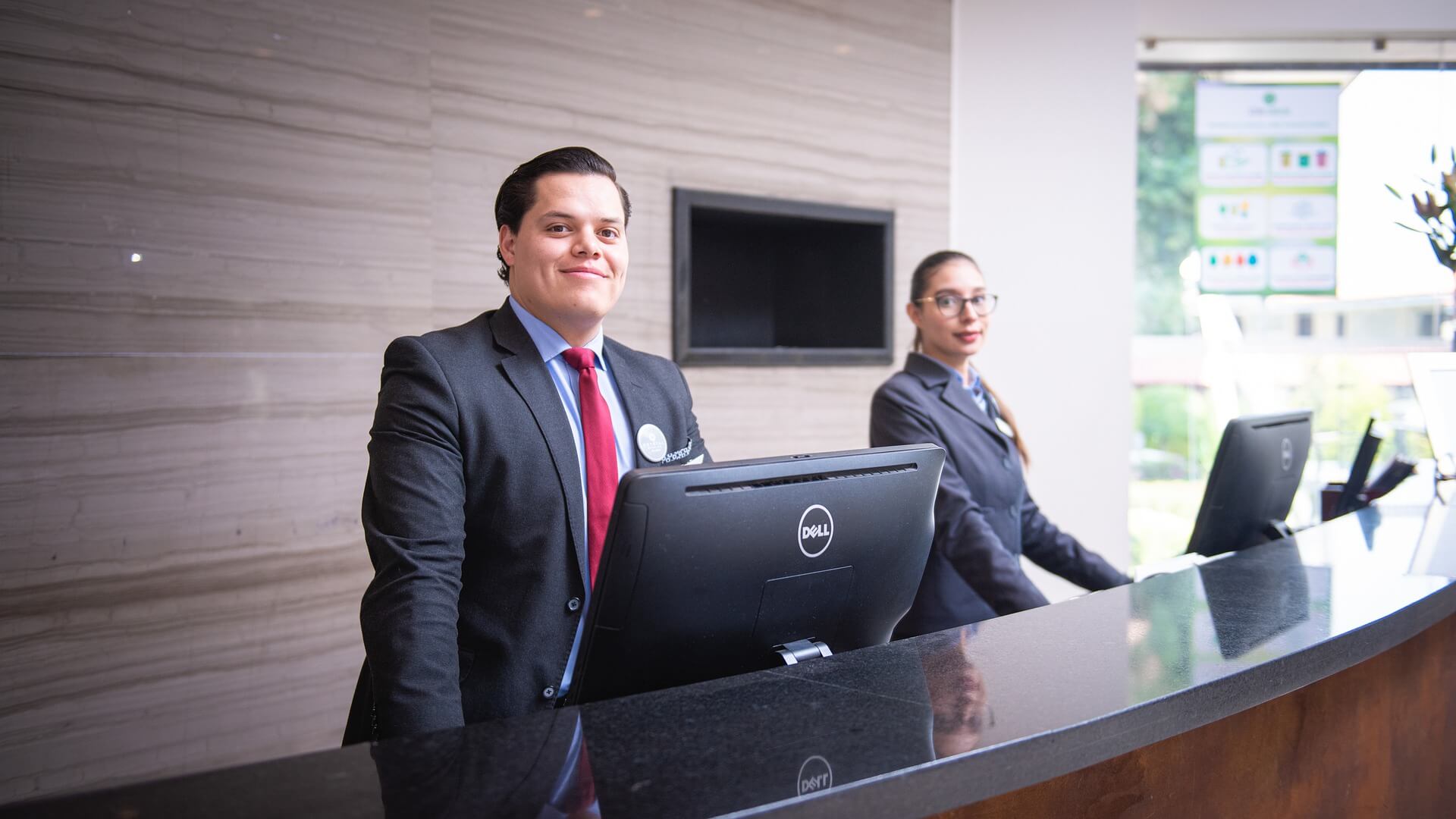
Employees at front desk in hotel lobby

To truly embody the spirit of hospitality, internal communication and empowering staff must be part of your operation’s culture.

A situation KRG Hospitality president Doug Radkey found himself in recently could have been resolved quickly and smoothly.

However, it’s clear the staff lacked communication from the top. Nor did they have the ability to solve problems as they arose.

Let’s dive in.

Guest Experience

First, I’m not going to reveal where this incident took place. In fact, I’m not even going to provide the location.

Second, the problem arose at the front desk of a hotel. A well-staffed front desk—there were four team members working.

The issue was fairly minor but impacted the guest experience.

So, Doug and Jennifer Radkey booked a hotel over the weekend. They made their decision in part because of an available package. Among the perks of the package was a $50 gift card for a nearby restaurant.

Stopping by the desk on the way up to their room, Doug asked for the gift card. The desk clerk he asked had no idea what he was talking about.

In fact, none of the four front desk clerks knew about the promotion. Doug pulled up the hotel’s website and promotion on his phone, and showed the clerks.

Doing so jogged one clerk’s memory. However, details were still mostly unknown. There was no manager on duty and the staff searched through drawers looking for the restaurant gift cards.

After about ten minutes of searching, Doug said he and Jennifer were headed up to their room to get ready for dinner. They’d be down in an hour for the card (hopefully).

A Resolution, Kind Of

True to their word, Doug and Jennifer returned to the front desk for the gift card.

Miraculously, the front desk clerks had found one. (However, Doug thinks one of the team members ran over to the restaurant, bought a card, and brought it back to the hotel.)

One more note: A housekeeping team member had overheard the incident at the front desk as it was unraveling. She chimed in to suggest the front desk just knock $50 off the hotel stay or give Doug and Jennifer $50 cash to take to dinner.

Instead, as I just explained, the front desk clerks got their hands on a gift card.

But let’s look at what wrong here:

  • The guest encountered a service issue and waited more than ten minutes for any sort of resolution.
  • That resolution didn’t come for more than an hour.
  • It’s clear the staff received insufficient notice and details about the promotion.
  • The staff was also most likely not empowered to provide quick resolutions to guest problems.

Doug’s incident could have been resolved quickly and smoothly through communication and staff empowerment.

Communication

Clearly, communication is key for any business to operate smoothly. That’s not limited in any way to hotels or hospitality—all businesses in all industries need to value communication.

In fact, clear communication is a foundational value. Communicating clearly needs to be part of every operator’s core values and ingrained in their brand’s culture.

If there’s a promotion, if there’s a special, if there’s anything “unique” happening at a hotel, restaurant, bar, entertainment venue, etc., the staff needs to know.

Operators should email the details to staff members. Managers should share the details of a promotion or special during shift meetings. Staff should know how to enter promotions into the POS.

It’s doubtful that Doug would’ve encountered this gift card issue if clear communication was an important element of the hotel’s culture.

The front desk clerks would’ve known about it, and likely would’ve handed over the gift card upon check-in. Barring that, they would’ve known where to find the cards quickly and easily so they could’ve handed one out upon request for those guests who booked a room via the promotion.

Empowerment

There’s a second element of this particular guest experience equation: empowerment.

Had the front desk staff been empowered to correct mistakes as quickly as they may arise, it’s possible Doug would never have noticed there was an issue.

As difficult as it may be, operators and managers need to trust their staff. If that’s not happening, there are deeper issues at play that must be addressed and corrected.

If this hotel staff—remember, four clerks deep—were accustomed to adapting and resolving problems on the fly, that would’ve been evident.

This article wouldn’t exist because Doug wouldn’t have had a memorable negative guest experience to share with me.

Up to a reasonable point, guest-facing staff need to be empowered to solve problems quickly. It’s up to individual operators to decide what’s reasonable.

Upset guests don’t like encountering issues, obviously. Do you know what they really don’t like? Having to repeat themselves or watch staff flounder to reach a satisfactory resolution.

An empowered staff can assess a situation, target the problem, and resolve it without involving anyone else. And they can do so quickly and smoothly.

A Better Resolution

How could this issue have been resolved faster, accounting for the poor communication regarding the promotion? A daily or weekly “marketing fund.”

Some operators set aside an amount of cash for bartenders or other front-of-house staff to use at their discretion to solve problems. When that marketing fund is accessed, it’s reported and management can review the who, how much, and why at the end of the night.

In this case, $50 could have been handed over and accounted for with a, “I’m so sorry, we seem to be out of gift cards at the moment, this offer has been so popular,” and Doug would’ve only had a slight inkling of an issue.

Again, there were four front desk clerks present when this happened. Three didn’t know about the promotion. One clerk had a foggy idea about the promotion.

This wasn’t a staffing issue, nor was it a pandemic issue. And 19 months in, as harsh as this may seem, the pandemic can’t be the fallback excuse for every issue that comes up.

The following day, a manager learned of the incident upon Doug and Jennifer checking out the next day. He apologized and knocked $50 off their stay.

That wouldn’t have been necessary had leadership communicated about the promotion clearly. It certainly wouldn’t have been a painful incident had the staff felt empowered to make impactful guest experience decisions.

Today, commit to reviewing your operation’s communication. In all honesty, is it clear? Can it be improved? Have there been issues lately that could’ve been avoided if clear communication was part of your brand’s culture?

Once you’ve reviewed communication, as yourself if your staff feels empowered to solve guest issues quickly and reasonably. If not, that must change as soon as possible.

Image: Rodrigo Salomón Cañas from Pixabay

by David Klemt David Klemt No Comments

Leadership: The Other 10-second Rule

Leadership: The Other 10-second Rule

by David Klemt

Watch face showing seconds and minutes

Those who remember last week’s Friday post will recall that there’s more than one 10-second rule.

Interestingly, this “other” rule also relates to communication.

As we all know, communication is paramount to leading teams and building relationships with others.

Last Week’s Rule

Deceptively simple, last week’s 10-second rule focuses on easing tensions.

If a situation is about to boil over or is already out of control, going silent for 10 seconds can cool things off.

First, shutting up for ten seconds stops the argument cold. Second, it provides time for the person leveraging this tactic to respond rationally.

Third, it humanizes the other person. Rather than seeing an opponent, the person going quiet for ten seconds remembers that this is a team member they’re engaging.

Finally, people who use this rule say going silent tends to snap the other party out of their hostility.

Treating others with respect and dignity, along with encouraging open communication and a free flow of ideas, are hallmarks of a healthy workplace culture.

This Week’s Rule

There are, of course, similarities between this week’s rule and last week’s. Obviously, they both call for a ten-second “timeout” to talking.

Also, they both focus on humanizing the other person in the conversation.

I came across the other 10-second rule on the Accounting Today website. Accountant and author Kyle Walters writes that his rule is also simple: If Walters talks for ten consecutive seconds during a client meeting, he stops to ask an open-ended question. Crucial to the process is that Walters then gives the person answering time to talk.

Now, while Walters applies this to client meetings, it’s useful for conversation in general. As he points out, it breaks the bad habits of dominating conversations; giving off the impression that you’re selfish and don’t care about the others in conversations; and not listening to others.

Anyone who leads a team; needs to develop relationships with suppliers, distributors, contractors, investors, banks, inspectors, etc.; and wants to build relationships with guests knows that listening is crucial.

Sure, ten seconds doesn’t seem like a lot of time. However, take the time to actually see how many thoughts you can fire off in ten seconds. You’ll see how much talking for that “small” amount of time can quickly seem domineering if you don’t stop to include others in the conversation.

There’s also the “small” detail that you’re not having a conversation if you’re not listening—you’re just delivering a speech…and it’s probably not a good one.

It takes work to break bad habits. However, the benefit to your personal growth, leadership abilities, and business are worth the effort.

Image: Agê Barros on Unsplash

by David Klemt David Klemt No Comments

Leadership: What is the 10 Second Rule?

Leadership: What is the 10 Second Rule?

by David Klemt

Message icon and emoji in form of white neon sign

Anyone who spends any time reading publications that focus on business will come across the “10 Second Rule.”

So, what is this rule? And why should you care?

After all, many entrepreneurs who enter hospitality do so partially to reject “corporate life.”

Adapt Rather than Reject

First, let me say that we understand the allure of eschewing the traditional business world. KRG Hospitality is itself a rebellion against corporate life.

However, we believe that some proven business strategies absolutely have a place in independent restaurant and bar operations.

Indeed, there are lessons independent and boutique operators can learn from their chain and corporate counterparts.

Conversely, independent and boutique entrepreneurs can teach chains quite a few things.

In fact, there are chain operations out there that go to great lengths to appear independent. They strive to leverage the perception that they’re local and small.

So, rather than outright reject corporate strategies and tactics, operators should adapt them to streamline operations, reduce costs, maximize profits, and thrive long-term.

Ten Seconds

Hospitality and foodservice are fast-paced—that’s not news. When front and back of house find themselves in the weeds, passions rise quickly. Often, a blow-up is on the menu.

The same can be true during shift and staff meetings. Perhaps one or two employees aren’t engaging, or maybe there’s a long-simmering issue that’s close to boiling over.

Or, perhaps a change to operations and expectations—the reason for the meeting—immediately ruffles feathers. This rule also applies to one-on-one discussions between ownership, management, and staff.

Engaging in a dust-up can be tempting. Not many people appreciate having their authority questioned or perceived slight left unaddressed.

The 10 Second Rule I’m addressing pertains to communication. Of course, we all know communication is often two things: crucial and difficult.

Simply put, the 10 Second Rule tells us to be quiet for ten seconds. If tensions are rising (often accompanied by volume), put an end to the situation by shutting up and counting to ten.

According to people who champion this rule, a few things happen: the person who implements stops feeding the tension; that same person can now respond without emotion; it provides time to remember that the other party isn’t just an opponent; and the other party tends to also cool off.

It’s a simple rule that can have a huge impact on workplace culture. A healthier, more positive culture leads to happier staff, which improves recruiting and retention. That’s a huge payoff for just ten seconds.

Image: Jason Leung on Unsplash

by David Klemt David Klemt No Comments

EEOC Clarifies Vaccine Stance

EEOC Clarifies Vaccine Stance

by David Klemt

Covid-19 vaccine vial on blue background

American employers have the right to require Covid-19 vaccination as a condition of employment.

This is according to recent clarifications from the Equal Employment Opportunity Commission (EEOC).

Perhaps learning from yet more missteps from the Centers for Disease Control and Prevention, the EEOC is making their position clearer.

Requirements

Per the EEOC, requiring workers to get a Covid-19 vaccine doesn’t violate federal law.

However, an employer failing to provide “reasonable accommodation” in accordance with the Americans with Disabilities Act would be illegal.

According to the EEOC’s guidance update:

“Federal EEO laws do not prevent an employer from requiring all employees physically entering the workplace to be vaccinated for COVID-19, so long as employers comply with the reasonable accommodation provisions of the ADA and Title VII of the Civil Rights Act of 1964 and other EEO considerations. Other laws, not in EEOC’s jurisdiction, may place additional restrictions on employers.”

Additionally, employers who offer on-site vaccinations take on an additional responsibility. They must keep confidential any personal medical information gleaned during employee pre-vaccination screenings.

Of course, the agency’s guidance isn’t only for employers. Employees can access a fact sheet explaining pandemic-specific protections that are in place.

Incentives

The EEOC’s update also addresses the right for employers to offer employees vaccine incentives.

In short, the agency says incentives are legal as long as they’re not coercive. Of course, legal experts will argue that one person’s perception of coercion will differ from another’s.

Really, the only example the EEOC provides for what may constitute a coercive incentive is “a very large incentive” that may make an employee “feel pressured to disclose protected medical information.”

Per a survey by Arizona State University and the Rockefeller Foundation, two-thirds of employers plan to offer vaccination incentives rather than mandates. However, nearly half say they’ll implement mandates if incentives don’t work. Only one-third of survey respondents don’t plan to impose vaccination requirements on employees.

Challenges

Look, we all know America is a litigious society. Given that, it shouldn’t come as a surprise that some states have already banned vaccine requirements and passports.

Nor should it be a shock that lawsuits have been filed by employees challenging the legality of vaccine requirements. At least half of US states have introduced bills seeking to seek to limit COVID-19 vaccine mandates.

Operators have a lot to consider when it comes to vaccine requirements and incentives. For example, offering the incentive that fully vaccinated employees can go maskless at work while non-vaccinated workers must wear masks can be a form of discrimination.

Beyond legal challenges, operators must also contend with public perception and backlash. With the divisions plaguing America currently, operators have a lot to think about before requiring Covid-19 vaccines for employees. While some guests will view such requirements as a responsible move that protects employees, guests and the public, others will see it as a massive violation of personal freedoms and a form of tyranny.

Truly, this is a time when operators must seriously draw on their leadership abilities, empathy, and emotional intelligence.

Clearly, the topics of vaccine requirements and vaccine incentives necessitate careful consideration. This is an important leadership moment that hinges on an operator’s understanding of their team, their guests, and the market in which they operate.

Do not make vaccine decisions lightly.

Disclaimer

This content is for informational purposes only, and should not be used as legal or other advice. This article does not constitute legal advice, nor does any information constitute a comprehensive or complete statement of the matters discussed or the law. This information is of a general nature and does not address the circumstances of a specific individual or entity. The reader of this information alone assumes the sole responsibility of evaluating the merits and risks associated with the use of any information before making any decisions based on such information.

Image: Daniel Schludi on Unsplash

Top