Boutique hotel

by David Klemt David Klemt No Comments

Lab-grown Chicken Makes its Move

Lab-grown Chicken Makes its Move

by David Klemt

GOOD Meat lab-grown chicken, close up

Lab-grown or cell-cultivated chicken from GOOD Meat.

A month after receiving USDA approval to serve lab-grown meat to restaurant guests, GOOD Meat and Upside Foods can boast support from two well-known chefs.

Lab-grown meat, also known as “cultivated” or “cell-cultivated” meat, has been approved by the USDA to be served to guests at two restaurants.

One, China Chilcano, is owned and operated by Chef José Andrés. The other restaurant debuting lab-grown meat is Bar Crenn by Chef Dominique Crenn. The former is in Washington, DC, while the latter is in San Francisco. Both GOOD Meat and Upside Foods operate out of California.


View this post on Instagram


A post shared by GOOD Meat (@goodmeatinc)

Bar Crenn boasts one Michelin Star, and China Chilcano has enjoyed Bib Gourmand awards from the Michelin Guide for several years.

In other words, the two companies producing cell-cultivated meats and awarded USDA approval have chosen their debut restaurants well. These are high-profile, award-winning, exciting, and approachable restaurants run by revered chefs.


View this post on Instagram


A post shared by UPSIDE Foods (@upsidefoods)

Additionally, both Chef Andrés and Chef Crenn make their commitment to sustainability known. Further, Chef Crenn’s Atelier Crenn earned one of the first Green Star designations back in 2020. The restaurant also enjoys three Michelin Stars.

And we’re all well aware of Chef Andrés’ commitment to humanitarian efforts through World Central Kitchen, a non-profit organization KRG Hospitality supports.

It’s early days but we’ll be following the diner response to cultivated meats at China Chilcano and Bar Crenn.

Lab-grown Meats

Before I dive further into cell-cultivated meats, I’ll address a few big questions:

  • Is lab-grown meat plant-based?
  • Are these products vegetarian?
  • Are these products vegan?

The answer to all three questions is no.

To be very clear, lab-grown meats are produce using using animal cells. Therefore, these are animal proteins and animal products.

The GOOD Meat chicken nutrition label reads as follows: “Cell-Cultivated Chicken (cultivated chicken cells, salt), Wheat Gluten, Soy Protein Concentrate, Sunflower and Coconut Oils, Contains less than 2% of Modified Food Starch, Natural Flavors, Salt, Soy Lecithin. Contains Wheat, Soy.”

Upside Foods’ label reads: “Cell-cultivated chicken, Maltodextrin, Transglutaminase (Binding Agent).”

In short, this is chicken.

What’s the Point?

So, you may be wondering why anyone is producing cell-cultivated chicken. GOOD Meat and Upside Foods answer this question on their websites.

In an effort to be succinct, these companies want us to do away with the harm to animals, ourselves, and the planet that results from traditional meat production.

Using cell cultivation to produce meat, a single cell can, per GOOD Meat, produce an “infinite amount of meat.” Zero animal slaughter. Millions to billions of acres of land can be used for something besides raising and slaughtering animals.

As Upside Foods explains it, “At scale, it’s simply a more efficient, more humane, and more future-friendly way to grow high-quality meat for food lovers everywhere.”

Further, it’s theorized that lab-grown meat production cuts water use for beef production (as an example) in half, keeps pollution out of our oceans, and removes millions of tons of CO2 emissions.

I’m not an environmental scientist or specialist, nor am I involved in food production. However, if these claims are accurate, that’s a lot of positivity for the future of our planet.

Considerations

First, we can’t expect everyone to believe lab-grown meats are safe. Some meat consumers are simply not going to find these products appealing.

Second, an array of consumers will look at cell-cultivated meats through various ethical and moral lenses.

Third, just the words “lab grown” and even “cell cultivated” will turn some guests off trying these meat products.

And then there’s the fact that GOOD Meat and Upside Foods chicken products are just now finding their ways into restaurants in the US. And by restaurants, I mean two. Two restaurants in the whole of the US. It’s simply too soon to know how they’ll be received.

Finally, cost. Operators are already running on razor-thin margins. They must consider the cost of these items, and the cost of how they’re perceived by guests.

I’ll admit that, right now, I like the idea of cell-cultivated meat. If accurate, I like what these products may be able to do for our planet. I eat meat and I love the idea of animals not suffering harm, abuse, fear, and slaughter.

I would try GOOD Meat chicken. And I’d try Upside Foods chicken, along with their other cell-cultivated products (beef meatballs, duck, pork, etc.). But I’m just one person, and I don’t know how well-received these items will be throughout North America.

To operators, I say keep these foods on your radar. You should know your guests better than anyone else, so you only you know if they’re ready for lab-grown meats on your menu.

Image: GOOD Meat

KRG Hospitality menu development. Restaurant. Bar. Cafe. Lounge. Hotel. Resort. Food. Drinks.

by krghospitality krghospitality No Comments

5 Ways to Elevate the Hotel Experience

5 Inexpensive Ways to Elevate Your Hotel Guest Experience

by Kim Richardson

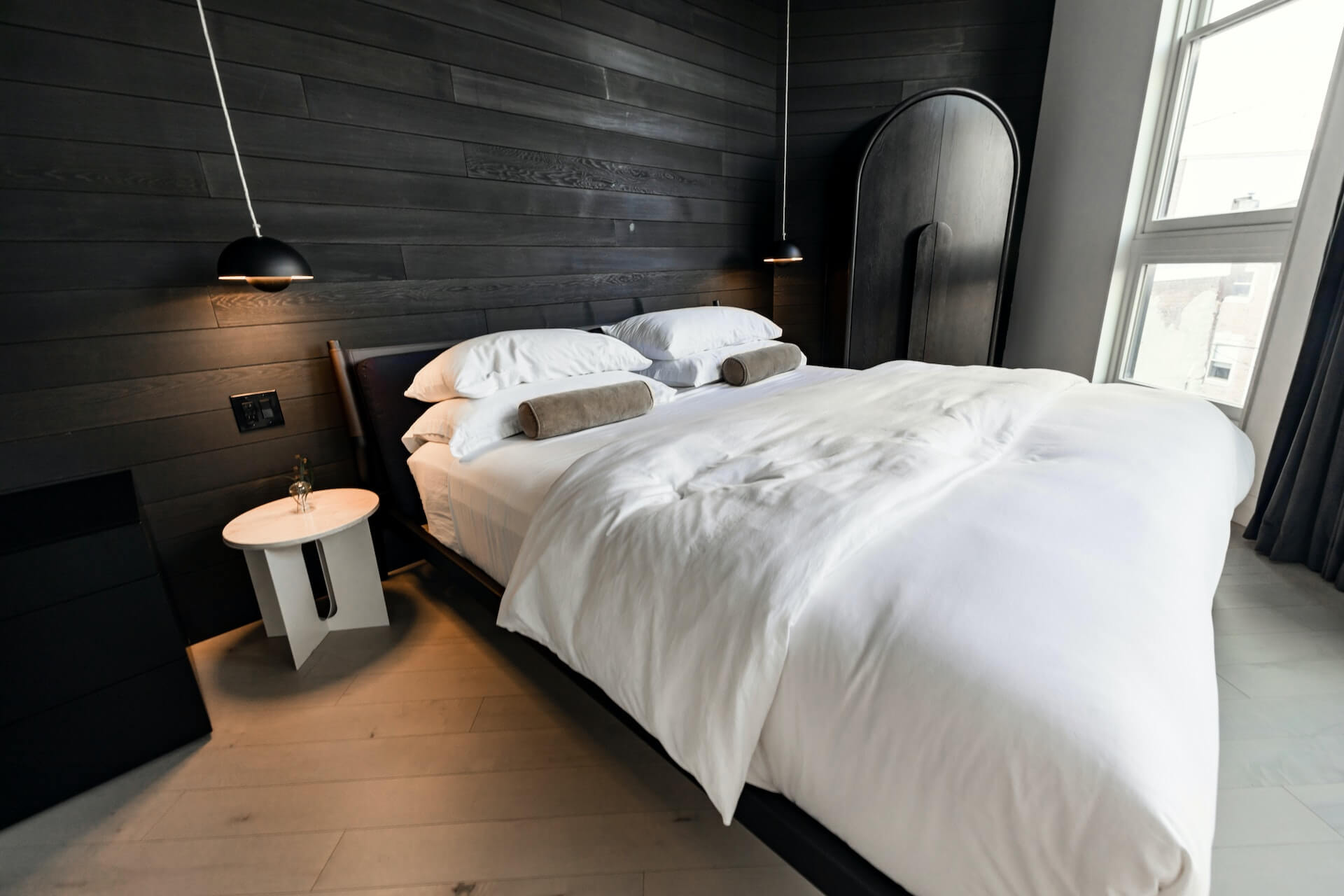
Boutique hotel room with black and white walls and linens

With all the different amenities today’s travelers are looking for, you’re not going to be able to accommodate all of them.

It’s no secret: Happy hotel guests make for happy employees and happy owners. They’re the true advertisement for our hotel and resort locations.

But as the maxim goes, you can’t make all the people happy all the time. With very exceptionsbrands that can afford to embody the money-no-object version of unreasonable hospitality—it’s not realistic to think you can satisfy every guest’s every whim.

With all the different amenities today’s travelers are looking for, you’re not going to be able to accommodate every single preference. Some of them may not be in your budget, and others may not make sense for your business.

With that in mind, here are some basic items that every hotel location can provide with little to no cost.

Get back to the basics of your business and make sure the machine is running smoothly before you worry about adding things that cost you additional money. A little goes a long way!

1 Create a seamless and friendly arrival experience.

Whether your guests spend days traveling to you or maybe just take a 10-minute car ride, it’s important that their stay starts off with a warm and welcoming experience. This sets the tone for their entire stay.

How does your staff greet them at the door and front desk? Are the details of the reservation correct? Is the room ready on time? Is the room the correct type? Do you and your team acknowledge special details and requests? More importantly, do you follow through to deliver on those requests?

People put a lot of time into planning a trip. A rocky arrival or a mishandled request can really put a damper on someone’s getaway whether it’s for business or pleasure. When they start off with a bad experience, they’re more likely to nitpick the rest of their stay.

The guest experience starts well before arrival. Don’t forget to keep in mind all the interactions they have prior to arrival: ease of reservation process, user-friendly websites, and pleasant interactions with any staff they might have.

2 Personalize the experience. Send a welcome note and acknowledge special occasions.

Sending a welcome note to a guest is a great way to personalize the experience, and I do mean personalize! Try to stay away from generic welcome letters.

Use their name in the letter. If they’re a repeat guest, use phrases such as “Welcome back.” If you see something in the reservation notes about them celebrating a special occasion, be sure to acknowledge it in the welcome note and wish them well.

Welcome notes can be sent as an email, something that is handed to them at the front desk, or a card in their room. Consider sending a small gift when you know someone is celebrating a special occasion. The gift doesn’t have to be expensive; its purpose is to make them feel noticed.

A small treat can be enough.

3 Partner with companies for amenities you are not able to provide (ex: gym, restaurants, transportation, spa/salon).

Partnering with nearby companies is a great way to add extra amenities to your hotel. This doesn’t have to be something that costs you money.

You can discuss the terms case by case with each business. They may be willing to offer a discount coupon (complimentary to you) for allowing them to put collateral in your lobby or on your website. You can also discuss trades of service.

If you’re not a full-service hotel, a discount at a nearby restaurant or cafe can go a long way. Similar to this, if you don’t have a fitness center maybe there is one nearby that is willing to offer your guests complimentary access (or for a discount). Spa/salons are also a great amenity you can feature.

If you’re not located in a walkable area (or maybe there’s a big attraction nearby that’s not walkable), consider teaming up with a transportation company that can be available to your guests.

When partnering with these nearby businesses, it’s important that they actually are nearby and accessible to your guests. We’ve all been in situations, be it a hotel or a membership, that comes with discounts, but then when you go to look at them, they’re not convenient to use. Don’t be that business.

4 Master the basics. Keep a clean property and deliver on all amenities promised.

This sounds like an obvious one, but this is often where we drop the ball as an industry.

It’s not always about being a five-star hotel and having tons of luxurious extras. Meeting guest expectations by following through on what you promised should be a given, but it’s truly not.

Regardless of the level of hotel, a clean property is important. Guests shouldn’t find dirty items from the last guest. All public spaces should be clean and stocked with any amenities you offer.

If you offer complimentary coffee in the lobby until 10:00 AM, make sure it’s really there and available until that time. Don’t put the last container out at 9:00 or 9:30 AM and stop checking on it.

I’m the guest who goes down for coffee at the last minute it’s available. I can’t tell you how many times I’ve started filling my cup and heard the trickle of the container running out. Then I’m left with going to find coffee elsewhere or hunting down a staff member to get more.

These types of experiences might not warrant a guest complaint but they do create a feeling of not getting what they pay for.

Keep your guests notified of any unexpected changes to the promised amenities. If your lobby is under renovation, your famous restaurant is closed for a private party, or the pool isn’t available, send proper notification to your guests prior to arrival. Consider offering some type of compensation as a show of good faith prior to the complaints rolling in.

Things don’t always go according to plan, and we can’t always be perfect, but you have the power to dictate whether this is a good or bad experience for your guest.

5 Provide readily available directions and info on the local area (restaurants, local attractions, tours, shopping).

No matter how hard your guests work on researching the area ahead of time, there is nothing better than hearing from the locals about the real places to check out.

Be sure to have a varied list of places to recommend to the guests based on their specific interests. As our travelers often are without a car, make sure you’re able to tell them the best way to get there.

Any additional information you can provide on these places is great. Consider having brochures on hand, websites, apps, and QR codes. Consider compiling a list of your staff’s favorite places to go. This can be posted in a public space, done as a handout that can be given to guests upon request, or distributed electronically.

As you can see, you don’t have to throw tons of money at your hotel to make a big, positive impact on your guests. Thinking ahead, partnering with local businesses, and ensuring your staff adheres to your steps of service, policies, and procedures can deliver big dividends.

For more tips, be sure to sign up for the KRG Hospitality newsletters (email and LinkedIn) and follow me on Instagram!


View this post on Instagram


A post shared by Kim Richardson (@hospitalityby.kim)

Image: Andrea Davis on Pexels

KRG Hospitality. Boutique Hotels. Resorts. Properties. Consultant. Feasibility Study. Business Plan

by David Klemt David Klemt No Comments

SEO Tips from AI: Hotels & Camps

SEO Tips from AI: Hotels, Camps & Lodges

by David Klemt

OpenAI logo on smartphone screen, resting on laptop keyboard

After asking ChatGPT to suggest SEO improvements for restaurants, bars, and nightclubs, we’ve done the same for the hotel space.

This is part two of our AI-generated SEO tips series. In part one, we focus on restaurants, bars, nightclubs, and eatertainment venues.

For this part, we ask ChatGPT about improving SEO for boutique hotels, independently owned hotels, boutique and luxury campgrounds, and boutique and luxury lodges.

The boutique and luxury outdoor experiential market is heating up. So, I was curious about what keywords and advice ChatGPT would recommend to help operators in this space stand out and improve their odds for discover.

Personally, I found some of the keyword suggestions helpful. However, these are terms we at KRG Hospitality already know to include in our brand identity and marketing plans.

Simply put, I don’t think AI rivals what humans can create when it comes to brand identity and marketing. But, you should read the following and decide for yourself.

What specific terms are the best for boutique or independently owned hotels to use for SEO ranking?

For boutique or independently owned hotels, it’s important to focus on specific terms that highlight the unique aspects of your property and appeal to your target audience. Here are some specific terms that can be beneficial for SEO ranking:

  1. Hotel Name: Ensure that your hotel’s name is prominently featured in your website’s content, meta tags, and URLs to associate your website with your hotel’s name.
  2. Location-Based Keywords: Include location-specific keywords throughout your website to target customers searching for hotels in your area. For example, use terms like “boutique hotels in [location],” “[location] luxury accommodations,” or “independent hotels near [landmark].”
  3. Unique Selling Points: Highlight the unique features and qualities of your boutique hotel. Optimize your website with keywords that reflect these selling points, such as “boutique hotel with rooftop pool,” “intimate luxury accommodations,” or “designer boutique hotel in [location].”
  4. Style and Theme: If your boutique hotel has a specific style or theme, incorporate relevant keywords. For example, use terms like “vintage-inspired boutique hotel,” “modern boutique accommodations,” or “bohemian chic hotel in [location].”
  5. Amenities and Services: Emphasize the distinctive amenities and services your boutique hotel offers. Optimize your website with keywords related to these offerings, such as “boutique hotel with spa,” “gourmet dining experiences,” or “personalized concierge services.”
  6. Local Attractions and Experiences: If your boutique hotel is close to popular local attractions or offers unique experiences, mention them on your website. Optimize with keywords related to these attractions and experiences to attract visitors searching for accommodations near specific landmarks or seeking specific activities.
  7. Sustainable or Eco-Friendly: If your boutique hotel has a focus on sustainability or eco-friendliness, incorporate related keywords. Use terms like “eco-friendly accommodations,” “green boutique hotel,” or “sustainable practices in [location].”
  8. Reviews and Testimonials: Encourage guests to leave reviews on platforms like Google My Business, Yelp, or TripAdvisor. Positive reviews can boost your hotel’s visibility in search results and attract more bookings.
  9. Local SEO: Implement local SEO strategies by optimizing your website for local search results. This includes creating and optimizing your Google My Business profile, ensuring consistent NAP (Name, Address, Phone) information across directories, and getting listed in local online directories.
  10. Social Media Integration: Integrate social media into your SEO strategy by linking your website to your hotel’s social media profiles. Engage with your audience, share updates about your hotel, and encourage user-generated content through social media channels.

Remember to conduct keyword research specific to your boutique hotel’s offerings, style, and target audience. Regularly monitor your website’s performance, track keyword rankings, and adapt your SEO strategy as needed to improve your hotel’s online visibility and attract more guests.

What specific terms are the best for boutique and luxury campgrounds and lodges to use for SEO ranking?

For boutique and luxury campgrounds and lodges, it’s important to use specific terms that highlight the unique features, amenities, and experiences your property offers. Here are some specific terms that can be beneficial for SEO ranking:

  1. Campground or Lodge Name: Ensure that your property’s name is prominently featured in your website’s content, meta tags, and URLs to associate your website with your campground or lodge’s name.
  2. Location-Based Keywords: Include location-specific keywords throughout your website to target customers searching for campgrounds or lodges in your area. For example, use terms like “luxury campground in [location],” “[location] glamping site,” or “boutique lodge near [landmark].”
  3. Nature and Outdoor Keywords: Emphasize the natural beauty and outdoor experiences available at your campground or lodge. Optimize your website with keywords related to activities like hiking, fishing, wildlife watching, or stargazing. Use terms like “nature retreat,” “wilderness campground,” or “outdoor adventure in [location].”
  4. Unique Accommodations: If your campground or lodge offers unique accommodations like glamping tents, treehouses, or luxury cabins, highlight them on your website. Optimize with keywords like “glamping experience,” “luxury safari tents,” or “secluded treehouse retreat.”
  5. Amenities and Services: Showcase the luxurious amenities and services your campground or lodge provides. Optimize your website with keywords related to these offerings, such as “heated swimming pool,” “private chef services,” “spa and wellness facilities,” or “concierge services.”
  6. Sustainable or Eco-Friendly: If your campground or lodge follows sustainable practices or has an eco-friendly focus, incorporate related keywords. Use terms like “eco-conscious accommodations,” “sustainable camping,” or “green lodge in [location].”
  7. Nearby Attractions and Activities: Highlight popular nearby attractions, landmarks, or outdoor activities that guests can enjoy during their stay. Optimize with keywords related to these attractions and activities to attract visitors searching for accommodations near specific points of interest.
  8. Reviews and Testimonials: Encourage guests to leave reviews on platforms like Google My Business, Yelp, or TripAdvisor. Positive reviews can boost your campground or lodge’s visibility in search results and attract more bookings.
  9. Local SEO: Implement local SEO strategies by optimizing your website for local search results. This includes creating and optimizing your Google My Business profile, ensuring consistent NAP (Name, Address, Phone) information across directories, and getting listed in local online directories.
  10. Social Media Integration: Integrate social media into your SEO strategy by linking your website to your campground or lodge’s social media profiles. Engage with your audience, share updates about your property, and encourage user-generated content through social media channels.

Remember to conduct keyword research specific to your campground or lodge’s offerings, location, and target audience. Regularly monitor your website’s performance, track keyword rankings, and adapt your SEO strategy as needed to improve your property’s online visibility and attract more guests.

Takeaway

Just like AI-generated tips for SEO and discovery for restaurants and bars, there needs to be a human element for hotels, campgrounds, and lodges.

Relying on AI to improve search engine ranking isn’t, at this point, the best strategy. Perhaps one day that will change, but today isn’t that day.

The answers to my questions do provide some good tips regarding specific keywords and SEO practices. However, I wouldn’t suggest that operators trust AI to write their listings or the pages on their websites.

As it stands, in my opinion, AI just can’t match what people can do when it comes to marketing, branding, and discovery.

Image: Levart_Photographer on Unsplash

KRG Hospitality marketing support. Restaurant. Bar. Cafe. Lounge. Hotel. Resort.

by David Klemt David Klemt No Comments

The 2023 HD Award Finalists and Winners

The 2023 HD Award Finalists and Winners

by David Klemt
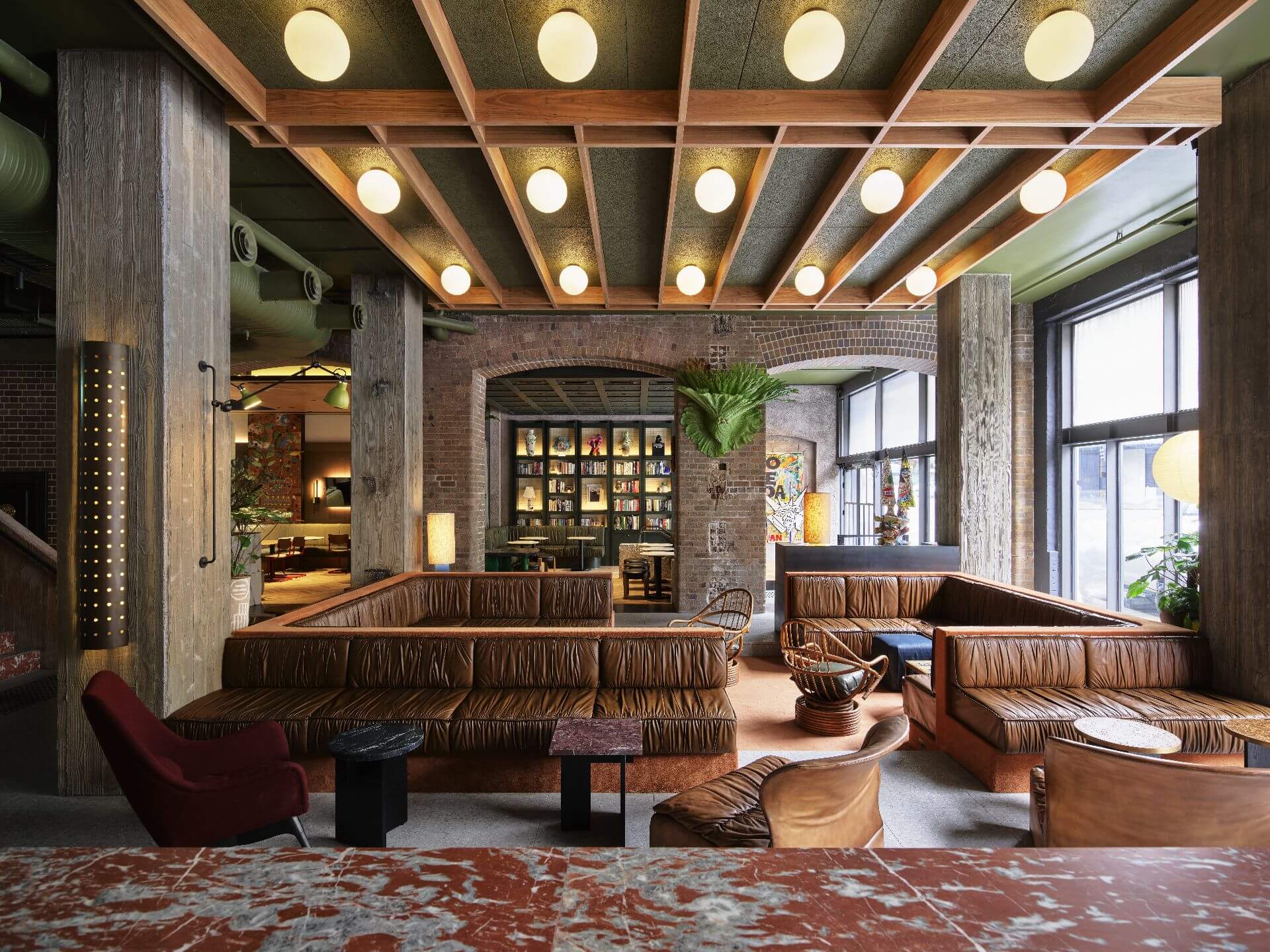
The lobby of ACE Hotel Sydney

As one would expect, the finalists and winners of the 2023 Hospitality Design Awards are a stunning collection of brands from which operators should pull inspiration.

Anyone looking for cutting-edge hospitality design would do well to look into each of the winners and finalists below.

The full list of award finalists and winners, and the architecture, interior design, and purchasing firms (along with owners and operators) can be found on the Hospitality Design website. Just click this link for the full details.

For our past coverage of the HD Expo, please click here.
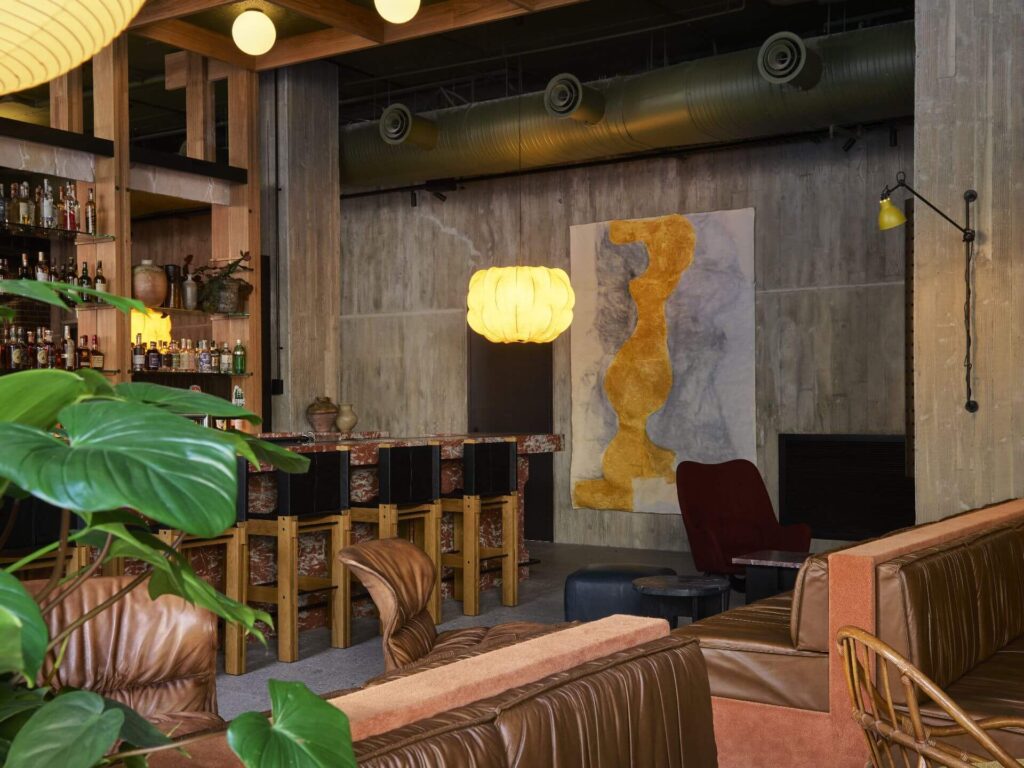
View into The Lobby inside ACE Hotel Sydney

View into The Lobby inside ACE Hotel Sydney, which offers craft cocktails and small plates.

Lifestyle Hotel

Winner

Ace Hotel Sydney (Sydney, New South Wales, Australia)

  • Architecture Firm: Bates Smart, Melbourne
  • Interior Design Firm: Flack Studio (hotel), Melbourne
  • Owner: Golden Age Group
  • Operator: Ace Hotel Group
  • Purchasing Firm: Marques Interior Services

Finalists

Canoe Place Inn & Cottages (Hampton Bays, New York)

Our Habitas San Miguel (San Miguel de Allende, Guanajuato, Mexico)

Sisan·Shuanglang Hotel (DaLi, YunNan, China)

Fan Woods Hotel (Zhangjiakou City, Hebei Province, China)

Lifestyle Hotel Public Space

Winner

The Tampa EDITION

  • Architecture and Interior Design Firms: Morris Adjmi Architects, and ISC Design Studio, New York
  • Owner: Strategic Property Partners
  • Operator: Marriott International
  • Purchasing Firm: The Parker Company

Finalists

Ace Hotel Sydney (Sydney, New South Wales, Australia)

The Standard (Hua Hin, Thailand)

Luxury Hotel

Winner

The Londoner (London, England) United Kingdom)

  • Architecture Firm: Woods Bagot, London
  • Interior Design Firm: Yabu Pushelberg, New York and Toronto
  • Owner and Operator: Edwardian Hotels London

Finalists

Wildflower Farms, Auberge Resorts Collection (Gardiner, New York)

Kimpton Bamboo Grove Suzhou (Suzhou, Jiangsu, China)

Luxury Hotel Public Space

Winner

The Madrona (Healdsburg, California)

  • Architecture Firm: Strening Architects, Santa Rosa, California
  • Interior Design Firm: Jay Jeffers, San Francisco
  • Owners: Jay Jeffers, Kyle Jeffers, and investors
  • Operator: Mosaic Hotel Group
  • Purchasing Firm: Summa International

Finalists

The Madrid EDITION (Madrid, Spain)

Pillows Maurits at the Park (Amsterdam, Netherlands)

Wildflower Farms, Auberge Resorts Collection (Gardiner, New York)

Upscale Hotel

Winner

Six Senses Rome (Rome, Italy)

  • Architecture and Interior Design Firm: Patricia Urquiola Design, Milan
  • Owner: Six Senses

Finalists

HAY boutique hotel & SPA by Edem Family (Bukovel, Ukraine)

The Standard, Bangkok Mahanakhon (Bangkok, Thailand)

Belmonte Hotel Krynica Zdrój (Krynica-Zdrój, Poland)

Upscale Hotel Public Space

Winner

The Standard, Bangkok Mahanakhon (Bangkok, Thailand)

  • Architecture Firm: Buro Ole Scheeren, Bangkok
  • Interior Design Firms: The Standard in-house design team, New York; Hayon Studio, Valencia, Spain; and Studio Freehand, Bangkok
  • Owner and Purchasing Firm: King Power
  • Operator: Standard International

Finalists

Thompson Buckhead (Atlanta, Georgia, USA)

The Royal (Picton, Ontario, Canada)

Midscale Hotel

Winner

Ace Hotel Toronto (Toronto, Ontario, Canada)

  • Architecture Firm: Shim-Sutcliffe Architects, Toronto
  • Interior Design Firm: Atelier Ace, New York
  • Owners: Alterra, B-right, Finer Space Corporation, Prowinko, and Zinc Developments
  • Operator: Ace Hotel Group
  • Purchasing Firm: Benjamin West

Finalists

High Country Motor Lodge (Flagstaff, Arizona, USA)

Albor San Miguel de Allende, Tapestry Collection by Hilton (San Miguel de Allende, Guanajuato, Mexico)

Hotel Indigo Jiuzhai (Sichuan, China)

Midscale Hotel Public Space

Winner

Ace Hotel Toronto (Toronto, Ontario, Canada)

  • Architecture Firm: Shim-Sutcliffe Architects, Toronto
  • Interior Design Firm: Atelier Ace, New York
  • Owners: Alterra, B-right, Finer Space Corporation, Prowinko, and Zinc Developments
  • Operator: Ace Hotel Group
  • Purchasing Firm: Benjamin West

Finalists

Albor San Miguel de Allende, Tapestry Collection by Hilton (San Miguel de Allende, Guanajuato, Mexico)

Crystal Orange Hotel Shanghai Pudong Lujiazui (Shanghai, China)

High Country Motor Lodge (Flagstaff, Arizona, USA)

Select Service Hotel

Winner

The Beach Motel (Southampton, Ontario, Canada)

  • Architecture, Interior Design, and Purchasing Firm: Common Good Studio, Toronto
  • Owner: DASA Properties

Finalists

Hotel Tupelo (Tupelo, Mississippi, USA)

The Shàng | Artyzen Qiantan Shanghai (Shanghai, China)

Select Service Hotel Public Space

Winner

Hotel Tupelo (Tupelo, Mississippi, USA)

  • Architecture Firm: Sarah Newton Architect, Hattiesburg, Mississippi
  • Owner and Interior Design Firm: The Thrash Group, Dallas
  • Operator: Tandem Hospitality Management
  • Purchasing Firm: J Desterbecq & Associates

Finalist

The Beach Motel (Southampton, Ontario, Canada)

Resort

Winner

Naviva, A Four Seasons Resort (Punta Mita, Nayarit, Mexico)

  • Architecture and Interior Design Firm: Luxury Frontiers
  • Owner: Four Seasons Hotels and Resorts

Finalists

Etéreo, Auberge Resorts Collection (Riviera Maya, Quintana Roo, Mexico)

Centara Reserve Samui (Koh Samui, Thailand)

Lodges + Camps

Winner

AutoCamp Joshua Tree (Joshua Tree, California, USA)

  • Architecture Firm: HKS, San Francisco
  • Interior Design Firm: Narrative Design Studio, San Francisco
  • Owner and Operator: AutoCamp
  • Purchasing Firm: Benjamin West

Finalists

AutoCamp Catskills (Saugerties, New York)

Getaway Outdoor Suites (Ottawa, Illinois)

Restorations, Transformations + Conversions

Winner

Tin Building by Jean-Georges (New York, New York)

  • Architecture Firm: Cass Calder Smith, New York
  • Interior Design Firm: Roman and Williams Buildings and Interiors, New York
  • Owner: Howard Hughes Corporation
  • Purchasing Firm: Summa International

Finalists

Aman New York (New York, New York)

Virgin Hotels Edinburgh (Edinburgh, Scotland, United Kingdom)

Casa Cody (Palm Springs, California, USA)

Ace Hotel Sydney (Sydney, New South Wales, Australia)

New Brand Launch

Winner

Blue Iris by Life House (Nantucket, Massachusetts, USA)

  • Architecture Firm: Emeritus, Austin
  • Owner: Blue Flag Partners
  • Operator, Interior Design, and Purchasing Firm: Life House

Finalists

Revo Munich (München, Germany)

The Julius (Prague, Czech Republic)

Sweetbee Café + Bar (Brooklyn, New York, USA)

Event Space

Winner

Seattle Convention Center Summit Building (Seattle, Washington, USA)

  • Architecture and Interior Design Firm: LMN Architects, Seattle
  • Owner: Seattle Convention Center

Finalists

The Madrona (Healdsburg, California)

The Standard, Bangkok Mahanakhon (Bangkok, Thailand)

Hybrid Hospitality

Winner

Little Banchan Shop / Meju (Queens, New York, USA)

  • Architecture Firm: David K. UH, New York
  • Interior Design Firm: CRÈME, Brooklyn, New York
  • Owner: Chef Hooni Kim

Finalists

Capital One Hybrid Bank and Café (New York, New York, USA)

Changsha Fundolandπ (Changsha, Hunan, China)

Beyond Hospitality

Winner

The Water Drop Library (Shuangyue Bay, Huizhou City, Guangdong, China)

  • Architecture and Interior Design Firm: 3andwich Design / He Wei Studio, Beijing
  • Owner: Huizhou Shuangyue Bay Real Estate Investment and Development Co., Ltd.

Finalists

The Africa Centre (London, England, United Kingdom)

Aqua Foro Pool Club at Piazza Alta (Philadelphia, Pennsylvania, USA)

Wellness + Wellbeing

Winner

Paste Dental (Toronto, Ontario, Canada)

  • Interior Design Firm: Studio Author, Toronto
  • Owner: Dr Derek Chung

Finalists

Naviva, A Four Seasons Resort (Punta Mita, Nayarit, Mexico)

Dundas Square Barbers (Toronto, Ontario, Canada)

Sustainable

Winners

Chleo (Kingston, New York, USA)

  • Interior Design Firm: Islyn Studio, Brooklyn, New York
  • Owners: Hope and Charles Mathews
  • Purchasing Firm: Wagner Hamill

Six Senses Rome (Rome, Italy)

  • Architecture and Interior Design Firm: Patricia Urquiola Design, Milan
  • Owner: Six Senses

Finalists

Villa Le Blanc Gran Meliá (Sant Tomàs, Illes Balears, Spain)

1 Hotel Nashville (Nashville, Tennessee, USA)

Guestrooms

Winner

Centara Reserve Samui (Koh Samui, Thailand)

  • Architecture Firm: Begray, Bangkok
  • Interior Design Firm: AvroKO, Bangkok
  • Owner, Operator, and Purchasing Firm: Centara Hotels & Resorts

Finalists

Central Hotel Macau (Macau, China)

Albor San Miguel de Allende, Tapestry Collection by Hilton (San Miguel de Allende, Guanajuato, Mexico)

Wildflower Farms, Auberge Resorts Collection (Gardiner, New York)

Suites

Winner

Venice Simplon Orient Express (Vienna, Austria; Budapest, Hungary; and Prague, Czech Republic)

  • Interior Design Firm: Wimberly Interiors, London
  • Owner: Belmond

Finalists

The Standard, Bangkok Mahanakhon (Bangkok, Thailand)

Sands Premier Suite, Marina Bay Sands (Singapore)

Casual Restaurant

Winner

Great White – Melrose (West Hollywood, California, USA)

  • Architecture Firm: Natalie Kazanjian Architect, Los Angeles
  • Interior Design Firm: Great White Partners in partnership with Buca Studios, Los Angeles
  • Owner, Operator, and Purchasing Firm: Great White Partners

Finalists

Marcus at Baha Mar (Nassau, Bahamas)

MOVA (Dnipro, Ukraine)

Good Ground Tavern at Canoe Place Inn & Cottages (Hampton Bays, New York, USA)

Shikigiku Japanese Restaurant (IFC Mall) – Café & Bar Area (Hong Kong)

Upscale Restaurant

Winner

Oiji Mi (New York, New York, USA)

  • Architecture Firm: David Bucovy Architect, New York
  • Interior Design Firm: AvroKO, New York
  • Owner: Oiji Hospitality

Finalists

Amal (Miami, Florida, USA)

53 (New York, New York, USA)

Terra (Lviv, Ukraine)

Bar, Club + Lounge

Winner

Andra Hem (Philadelphia, Pennsylvania, USA)

  • Architecture Firm: Stokes Architecture + Design, Philadelphia
  • Interior Design Firm: Ghislaine Viñas, New York
  • Owner: Paige West

Finalists

Punch Room (Tampa, Florida, USA)

Ritz Bar (Paris, France)

Bar Cima (New York, New York, USA)

Gair (Brooklyn, New York, USA)

Equipment Room (Austin, Texas, USA)

Visual Identity

Winner

Saint June at the Ritz-Carlton, Grand Cayman (Grand Cayman, Cayman Islands, Greater Antilles)

  • Branding and Interior Design Firm: Goodrich, New York
  • Owner: Dart
  • Operator: The Ritz-Carlton Hotel Company
  • Purchasing Firm: The Parker Company

Finalists

Zou Zou’s and Chez Zou (New York, New York, USA)

Uniforms at the Standard, Bangkok Mahanakhon (Bangkok, Thailand)

Orto (Belfast, Ireland, United Kingdom)

Student

Winner

Sarah Choudhary, New York School of Interior Design: Hotel Cirque (Montréal, Québec, Canada)

Finalists

Bryann Brophy, Brittany Noble, Olivia Fletcher, and Hannah Randall, Iowa State University: Hotel Rina (Rome, Italy)

Hsiang-Ting Huang, School of Visual Arts, New York: A Transitional Place of Love (New York, New York, USA)

Images courtesy of ACE Hotel Sydney
KRG Hospitality. Boutique Hotels. Resorts. Properties. Consultant. Feasibility Study. Business Plan

by David Klemt David Klemt No Comments

The Art of the Preparation

The Art of the Preparation

by David Klemt

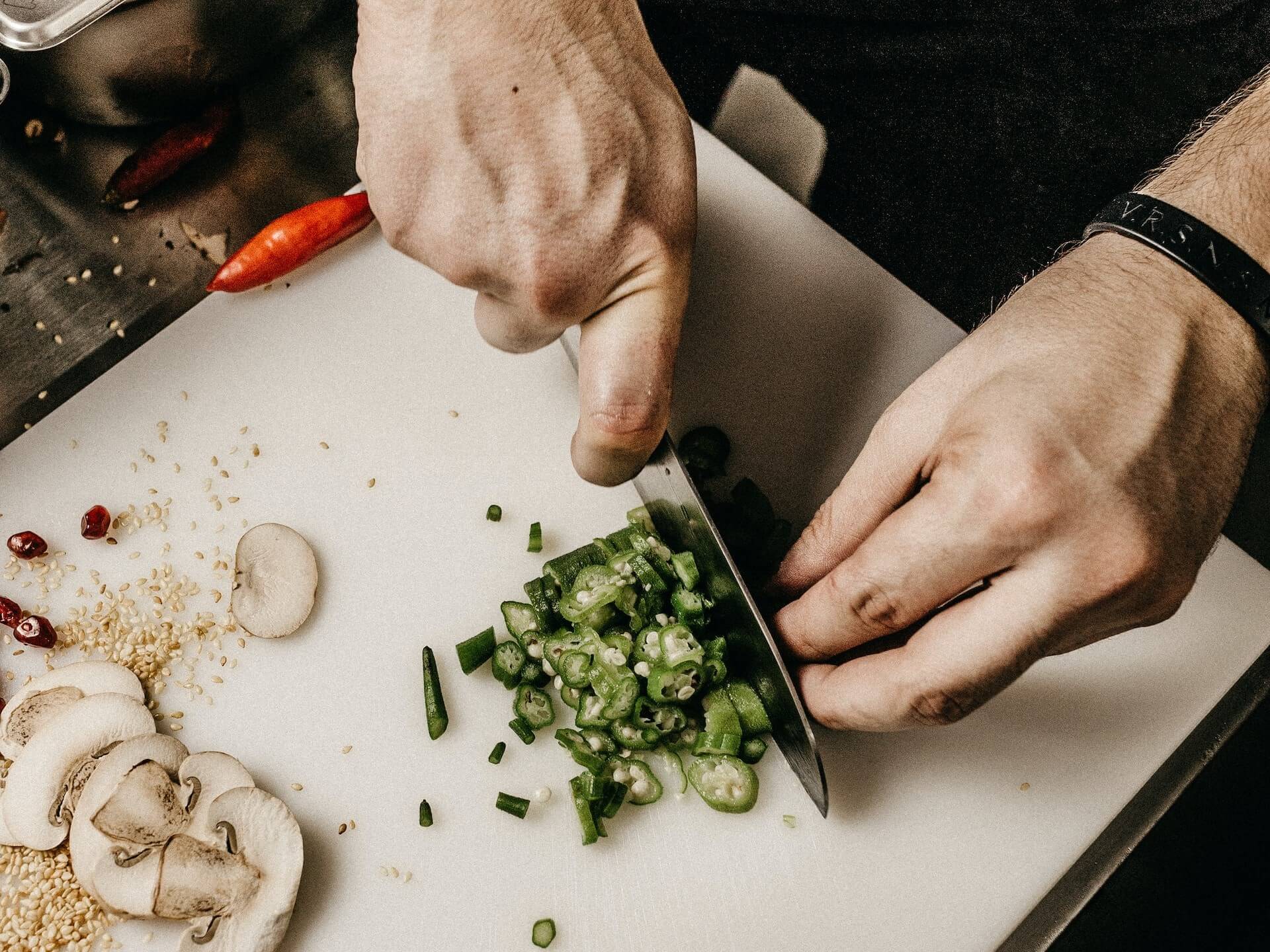
Overhead view of chef slicing and chopping ingredients

Chef Brian Duffy‘s take on preparation and its overall impact on the guest experience extends to every aspect of operations.

In one sentence during his 2023 National Restaurant Association Show in Chicago cooking demo, Chef Duffy sums up the power of the proper mindset.

“The art of the preparation creates the experience,” says Chef Duffy.

Now, he was preparing plant-based shrimp from New Wave Foods at the time. After preparing a pan, the revered chef was readying a pound of FABI Award-winning New Wave Shrimp for Duffified Shrimp Fried Rice.


View this post on Instagram


A post shared by Chef Brian Duffy (@chefbriduff)

When making this dish, Chef Duffy chops roughly half the New Wave Shrimp in half. He does so to enhance the dish’s texture, and therefore the guest experience. Additionally, Chef Duffy likes to toast basmati rice before adding it to the pan with the shrimp and vegetables.

Again, Chef Duffy shared his view on the guest experience when cutting animal-alternative shrimp (the product is made with sustainable seaweed and mung bean).

Preparation

Okay, so what does slicing or chopping shrimp have to do with the guest experience? It’s the attention to what others may consider a tiny detail. In fact, some may deem important details “optional.”

Whether front-of-house, back-of-house, or back office, everyone’s mindset matters. How one views their role and how they approach their responsibilities impacts every element of a restaurant, bar, nightclub, or hotel’s success.

Choosing to halve half the shrimp because it will deliver a better experience speaks volumes. It’s a commitment to perfect the “small” details so every guest walks away wanting to return.

If an operator wants to know if they have a chef or an executive chef, this is one way to tell. Is the chef teaching their brigade? Guiding them? Implementing policies around preparation? Or are they just punching the clock, making sure the rest of the team shows up, and sending out food that’s “good enough”?

Operators can apply versions of those questions to every role in the house, including their own. Is their pride in preparing every element of service and operation? Or is the team just muddling through each shift?

There are no Small Details

Interestingly, most guests likely won’t ever be aware of every detail operators and their teams get right. However, they will feel every choice each team member makes. They may not know precisely what goes right, but they take home with them that their visit was exceptional.

Pulling the threads tighter separates operators and their brands from one another. Guests can get a bite and a drink anywhere. They reward outstanding service and experiences with their time and money.

It’s a simple equation to understand: Operators want to create an army of loyal guests, guests expect exceptional experiences. The operators who deliver on guest expectations are rewarded with loyalty.

Chef Duffy isn’t “just” slicing shrimp. He’s not “just” toasting rice. Chef’s not “just” making “the world’s most perfect dippy egg.” In reality, he’s ensuring every decision he, his teams, and his clients make enhance the guest experience exponentially.

There are no small details. There are no small decisions. The art of the preparation, as Chef Duffy says, creates the experience. Indeed, preparation also separates the mediocre from the exceptional.

Image: Jonathan Borba on Unsplash

KRG Hospitality Mindset Coaching

by David Klemt David Klemt No Comments

Sticking to Your Standards

The Importance of Sticking to Your Standards

by David Klemt

Person writing down notes

One crucial task for all restaurant, bar, nightclub, and hotel operators is to set the acceptable standards and commit to maintaining them.

Hospitality operations are subject to an interesting paradox. We’re all told to prepare for things to go sideways during any given shift. We’re also told that adhering to our standards of service will help us weather a storm of challenges. Oftentimes, however, the first thing to slip at the first sign of trouble is: our standards.

When a client signs on with KRG Hospitality, they are given the task of identifying their core values. There’s an exercise for this key development step; it’s part of our standards.

Your core values inform your standards (and so much more): leadership team standards; front- and back-of-house team member standards; and standards of service. Additionally, you should spell out these standards during the onboarding process, utilizing an employee manual—which new hires must sign and date—and practical training.

It’s absolutely crucial that you and your team commit to your standards fully. They’re inviolable, what both KRG president Doug Radkey and Chef Brian Duffy call your “non-negotiables” during speaking engagements and when working with clients.

Are people going to make mistakes, including you? Yes. On occasion, a standard is going to slip. The key is understanding that maintaining standards helps reduce these occasions; panicking and allowing them to slip just drops us deeper into quicksand.

Someone on the team is going to miss a service step. Something will occur during a shift that’s not up to standards. What’s important in those moments is the ability for the team to recognize the slip quickly and correct course immediately.

Setting Standards

There are different ways for operators to select their standards. The example I provide at the top of this article is one approach KRG implements.

Michael Tipps, co-founder of Invictus Hospitality and friend of KRG Hospitality, has an intriguing approach of his own. He shared this during the 2023 Bar & Restaurant Expo in Las Vegas.

“Standards separate operators and their teams,” says Tipps. While he doesn’t encourage operators to look at every other operator in their market as competition, he does advocate for differentiation.

Tipps shared a three-step approach to standards. (Step two, by the way, is the one I find intriguing.)

  1. Create your standards. Again, there are different approaches.
  2. Pick your committee. I’m going to explain this further.
  3. Set standards against the grandest vision of your venue.

So, what does it mean to “pick your committee”? Well, it means surrounding yourself with people you respect…real or imagined. As Tipps explained during BRE, he has people in his life that he considers his committee. The real-life members of this committee are a sounding board for any number of ideas, questions, challenges, and even mistakes.

And yes, his committee also includes “imaginary” members, such as Michael Jordan and Phil Jackson. These are people that he doesn’t know personally but are known to have incredibly high standards. They’re high achievers and, of course, many have biographies and we can know their standards. Tipps has “asked” these committee members, “How should I handle X?”

This creative approach isn’t for everyone but every operator should at least give it a shot. When we step that far out of our comfort zones the results can be incredible.

The Cheat Code

On the specific topic of service standards, Tipps has a cheat code for operators: hotels. “The hotel mindset is a hospitality cheat code,” says Tipps.

How so? It’s quite enlightening.

Think about your restaurant. Now, think about it as the first-floor cornerstone of an upscale hotel. Imagine that there are 250 incredible boutique hotel rooms above your restaurant. These rooms command rates of several hundred dollars per night. Now think about how you would treat each guest in these expensive rooms if they ask for a straw.

“Make the effort to care like nobody else can,” says Tipps.

Always bear in mind that hospitality is how you make people feel. Your mission should be for each and every guest to feel relevant.

Generally speaking, most people don’t want to be alone. They’re not just coming to your restaurant because they’re hungry, to your bar because they’re thirsty. In reality, as Tipps would tell you, they’re coming to be around other people. They’re using your F&B as a reason to be around other people and feel relevant.

Your mission is to ensure people feel relevant when they spend time at your venue with your team. The package you send to accomplish this mission is your standards of service.

“Self-inflicted mediocrity is the result of laziness and lack of accountability,” Tipps says.

Hold everyone accountable for enforcing your standards—including yourself—and you’ll level up in every facet.

Image: Owen Michael Grech on Unsplash

KRG Hospitality Start-Up Restaurant Bar Hotel Consulting Consultant Solutions Plans Services

by David Klemt David Klemt No Comments

Addressing Employee Theft

Addressing Employee Theft

by David Klemt

Security camera stencil graffiti design

Recent posts about employee theft in the hospitality industry throughout Canada and the US have the KRG Hospitality team talking.

Indeed, the statistics are startling. For instance, there’s the claim that a staggering 75 percent of employees admit to stealing from their employers “at least once.”

A few years back, the Retail Council of Canada reported that while “customers” stole $175 on average, employees stole $2,500 before being caught.

Then there’s the incredible economic impact. Multiple sources claim employee theft in the US costs businesses $50 billion annually. In Canada, theft costs businesses more than $1 billion per year. Both numbers are shocking.

Looking at US restaurants specifically, the number ranges from $3 billion to $6 billion in losses due to employee theft. According to Business.com, employee theft affects four percent of a restaurant’s sales and accounts for 75 percent of shortages in inventory.

At this point, you’re probably Googling security cameras. But hold on for a moment.

Disclaimer

Before proceeding, know this: I’m going to make a few points that will seem like victim blaming. In part, this perception will be the result of my addressing recruiting, hiring, onboarding, training, the leadership team, and workplace culture.

Let me be clear: I’m not excusing employee theft. I don’t think there’s any justification for it.

Despite what a (hopefully) small number of loud voices claim on various social media platforms and forums, I don’t think it’s acceptable to steal from a corporation or business owner. No, theft isn’t a justifiable response to feeling slighted by ownership or leadership. And no, it’s not “okay” because a company generates “so much” revenue, has insurance, and can “write it off.”

With that out of the way, let’s proceed.

People are Going to Steal

Here’s one immutable fact: You’re going to hire someone who’s going to steal from your business.

Is your business up and running and serving guests? You employ someone right now who has either stolen from you already or is going to steal.

So, you can run your business under a cloud of suspicion and distrust. Or, you can improve your odds of reducing theft and ferreting out thieves before they do too much damage.

Again, you can install security cameras and place them above each POS terminal and every cash drawer. You can ensure you have clear, cutting-edge CCTV coverage of the entire bar and dining areas. Walk-ins and storage areas can have clear, high-resolution camera coverage.

Honestly, you should have that type of coverage. That type of security can improve employee and guest safety, and your insurance carrier will likely be happy about it.

But you don’t need to impose an atmosphere of suspicion, fear, and intimidation along with the cameras. If you were an employee, would you want to work somewhere that makes it clear you’re always under suspicion? Would you want to work alongside a leadership team whose default setting is that all employees are thieves unworthy of trust?

Workplace Culture

You’re never going to have a theft-free business, period. That’s another reason to not “lead” with fear, anger, and suspicion.

Truly, all that style of leadership will do is drive good, honest employees out. So, the approach should be attracting honest workers. You build a strong, trustworthy team through respect and empowerment.

Yes, there will be employees who take advantage of that respect. They were going to behave that way and steal or otherwise disrespect you, your business, and the team regardless.

Putting in the work to reflect on your leadership style and that of your leadership team pays dividends. It aids in recruitment and fosters an atmosphere of respect and honesty.

Become known for a healthy, positive workplace and you’ll attract the best workers. Nurture that culture and the team will police itself; they won’t tolerate anyone harming the business.

Am I suggesting you view your business through rose-colored lenses? Absolutely not. Install security cameras. Maintain the right insurance coverage. Conduct regular inventory checks. Review comps and voids for irregularities. Limit access to cash. Outline what constitutes theft—including time theft—and make consequences clear.

And here’s a crucial item: Prove you respect and care about your workers. Not say it, prove it.

You don’t need to know their life stories and everything going on in their lives. But you can let it be known that if they’re struggling with something, you and your leadership team are there to listen and help how they’re able.

Nothing you do will eradicate employee theft completely. You can, however, reduce it and learn to quickly stamp it out. And you can do that while maintaining a happy, healthy workplace.

Image: Tobias Tullius on Unsplash

KRG Hospitality. Business Coach. Restaurant Coach. Hotel Coach. Hospitality Coach. Mindset Coach.

by David Klemt David Klemt No Comments

Infographic Shows Massive Tech Growth

Infographic Shows Massive Hospitality Industry Tech Growth

by David Klemt

White robot hand

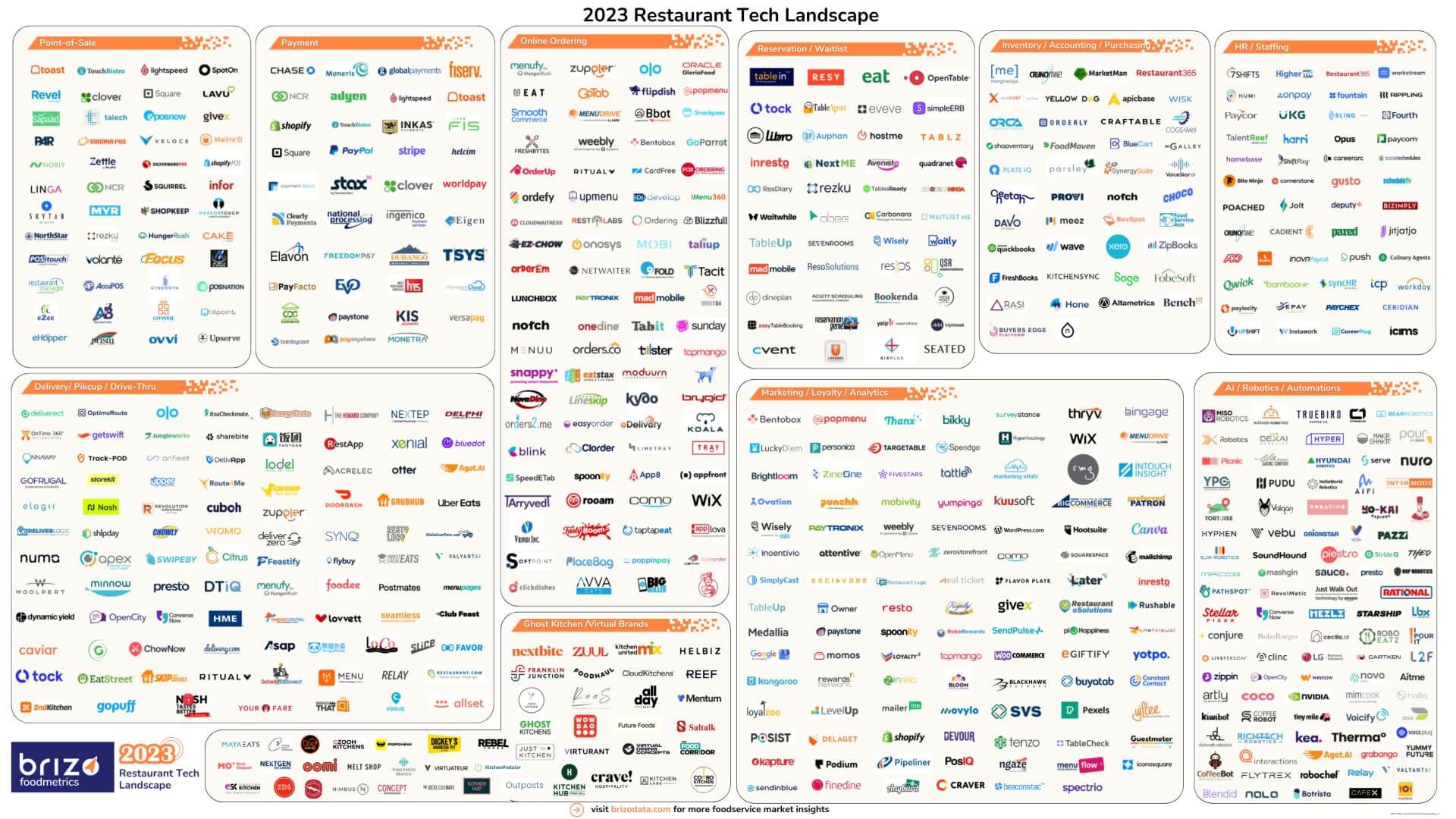
An infographic from Brizo FoodMetrics puts the explosive growth of the hospitality industry technology landscape on display.

It appears that operators, once largely hesitant to embrace new technology, are seeking it out. So, too, it seems, are guests. Intriguingly, many guests expect restaurants, bars, and hotels to innovate technologically.

In a sign of this change, SpotOn is predicting 2023 to be the year when independent operators upgrade their POS systems.

And that’s just one area where tech companies are innovating for our industry. As their infographic shows, Brizo FoodMetrics identifies ten areas of innovation:

  • POS systems
  • Payment platforms
  • Online ordering solutions
  • Reservation and waitlist platforms
  • Inventory, accounting, and purchasing solutions
  • Human resources and staffing
  • Delivery, pickup, and drive-thru tech
  • Marketing, loyalty, and analytics platforms
  • Artificial intelligence, robotics, and automation
  • Ghost kitchen and virtual brand tech

Looking just at Brizo’s POS section, they list 48 platforms as part of their “2023 Restaurant Tech Landscape.” That’s four dozen POS systems, and that’s not even every platform available to operators.

Some will be familiar to operators—Toast, TouchBistro, Clover—as they’re basically synonymous with POS systems. Others, like Tillpoint and OVVI, may be less known. However, that doesn’t mean they’re not worthy of research and consideration.

Explosive Growth and Innovation

Again, the Brizo infographic doesn’t list every single available platform. For instance, I don’t see OpenSimSim under the HR/Staffing section. But the fact that there are still dozens of other platforms—more than in the POS section—shows that tech companies finally want their share of the hospitality pie.

This is, of course, beneficial for operators and their teams for several reasons. One such reason is innovation.

On one hand, the established platforms must innovate to fend off competitors. And on the other hand, upstarts must prove themselves to operators. In other words, new platforms must show they’re not vaporware; they have longevity and won’t abandon their own platform any time soon; they’ll update constantly; they’re simple to learn and use; they integrate with other systems; and that they’re worth an operator’s money and time.
We’re just two months into 2023. Imagine what the 2024 tech landscape is going to look like. And bear in mind, this is a restaurant-focused map—there are categories like property management systems for hotels that aren’t included.

If you’re in the market for a new POS system, want to upgrade scheduling, or are just curious about where the industry is heading, check out the infographic below. Select a few brands that are unfamiliar and look them up.

Brizo FoodMetrics 2023 Restaurant Tech Landscape

To view this infographic on the Brizo FoodMetrics website, click here.

KRG Hospitality Planning Phase, 2023 icon

Image: Possessed Photography on Unsplash

by David Klemt David Klemt No Comments

The Most-stressed Cities in the US

These are the Most-stressed Cities in the US

by David Klemt

Deflated smiley face balloon in street
There’s a simple argument to be made that one characteristic the happiest cities share is being among the least stressful to live.

Yesterday we took a look at the happiest cities in the US, according to WalletHub analysis. Click here in case you haven’t yet read that article.

Today, let’s check out the most- and least-stressed cities in America. As with their happiest and least-happy cities list, WalletHub ranks 182 cities based on stress levels.

Of course, “least stressed” doesn’t mean “stress-free.” Nor should it—some stress is good for us. After all, stress can push us to perform our best, bring out our problem-solving creativity, and even energize us.

The rankings below may surprise you. Like me, you may even find yourself raising an eyebrow and disagreeing with some of them.

However, it’s a compelling list worth reviewing if you’re an operator, leadership team member, hospitality professional, or in the site-selection portion of opening a restaurant or bar.

The Top 25 Cities of Stress

When determining their results, WalletHub ranked 182 cities according to four main categories. Those categories are: work stress; financial stress; family stress; and health and safety stress. The categories consist of 40 key metrics in total.

I think it’s safe to assume that no city wants to be in the top 25 of this list, or even the top 50. Neither, I’m certain, does any city want to wear the crown of “Most Stressed US City.”

Unfortunately, someone must be number one. Below, the top 25 “Cities of Stress,” per WalletHub:

  1. Cleveland, Ohio
  2. Detroit, Michigan
  3. Gulfport, Mississippi
  4. Baltimore, Maryland
  5. Philadelphia, Pennsylvania
  6. Memphis, Tennessee
  7. New Orleans, Louisiana
  8. Birmingham, Alabama
  9. Louis, Missouri
  10. Toledo, Ohio
  11. Augusta, Georgia
  12. Jackson, Mississippi
  13. North Las Vegas, Nevada
  14. San Bernadino, California
  15. Fayetteville, North Carolina
  16. Akron, Ohio
  17. Wilmington, Delaware
  18. Houston, Texas
  19. Montgomery, Alabama
  20. Shreveport, Louisiana
  21. Cincinnati, Ohio
  22. Newark, New Jersey
  23. Mobile, Alabama
  24. Columbus, Georgia
  25. Indianapolis, Indiana

Alas (I don’t get to use this word much), Ohio has four cities on this list. In fact, the Buckeye State has two cities in the top ten.

Of course, Ohio isn’t the only state with multiple cities in the top 25 stressed cities. Alabama has three cities among the top 25. Also, Mississippi and Louisiana each have two cities on this part of the list, unfortunately.

Cities 26 Through 91

As you’ll see below, Ohio shows up a couple of times in this portion of the list. However, so do a handful of other states.

For example, ten Texas cities land on this part of the list. That means Texas has 11 cities among the “top” half of the most-stressed US cities.

  1. Baton Rouge, Louisiana
  2. Las Vegas, Nevada
  3. Huntington, West Virginia
  4. Springfield, Missouri
  5. Dover, Delaware
  6. Norfolk, Virginia
  7. Milwaukee, Wisconsin
  8. Chicago, IL
  9. Newport News, Virginia
  10. Washington, DC
  11. Dallas, Texas
  12. Richmond, Virginia
  13. Tulsa, Oklahoma
  14. Chattanooga, Tennessee
  15. Bridgeport, Connecticut
  16. San Antonia, Texas
  17. Atlanta, Georgia
  18. Glendale, Arizona
  19. New York, New York
  20. Tucson, Arizona
  21. Columbia, South Carolina
  22. Columbus, Ohio
  23. Knoxville, Tennessee
  24. New Haven, Connecticut
  25. Brownsville, Texas
  26. Rochester, New York
  27. Casper, Wyoming
  28. Vancouver, Washington
  29. Oklahoma City, Oklahoma
  30. Jacksonville, Florida
  31. Corpus Christi, Texas
  32. Charleston, West Virginia
  33. Henderson, Nevada
  34. Phoenix, Arizona
  35. Modesto, California
  36. Wichita, Kansas
  37. Winston-Salem, North Carolina
  38. Little Rock, Arkansas
  39. Moreno Valley, California
  40. Louisville, Kentucky
  41. Stockton, California
  42. Spokane, Washington
  43. Fresno, California
  44. Miami, Florida
  45. Kansas City, Missouri
  46. El Paso, Texas
  47. Salem, Oregon
  48. Hialeah, Hawaii
  49. Los Angeles, California
  50. Fort Smith, Arizona
  51. Fort Worth, Texas
  52. Denver, Colorado
  53. Arlington, Texas
  54. Buffalo, New York
  55. Greensboro, North Carolina
  56. Bakersfield, California
  57. Fort Wayne, Indiana
  58. Providence, Rhode Island
  59. Tacoma, Washington
  60. Port St. Lucie, Florida
  61. Lewiston, Maine
  62. Laredo, Texas
  63. Cape Coral, Florida
  64. Grand Prairie, Texas
  65. Garland, Texas
  66. Aurora, Colorado

Cities 92 Through 137

This is where things begin to turn around, at least mathematically. This is the “bottom” half of the list.

Or, to phrase it another way, this section starts identifying the least-stressed cities in America.

  1. Portland, Oregon
  2. Ontario, California
  3. Lubbock, Texas
  4. Reno, Nevada
  5. Huntsville, Alabama
  6. Sacramento, California
  7. Amarillo, Texas
  8. Albuquerque, New Mexico
  9. Tampa, Florida
  10. Long Beach, California
  11. Colorado Springs, Colorado
  12. Fontana, California
  13. Tallahassee, Florida
  14. Las Cruces, New Mexico
  15. Worchester, Massachusetts
  16. Orlando, Florida
  17. West Valley City, Utah
  18. Fort Lauderdale, Florida
  19. Peoria, Arizona
  20. Riverside, California
  21. Mesa, Arizona
  22. Nashville, Tennessee
  23. Des Moines, Iowa
  24. Nampa, Idaho
  25. Tempe, Arizona
  26. Irving, Texas
  27. Oakland, California
  28. Grand Rapids, Michigan
  29. Charlotte, North Carolina
  30. Rancho Cucamonga, California
  31. Boston, Massachusetts
  32. Pittsburgh, Pennsylvania
  33. Honolulu, Hawaii
  34. Oceanside, California
  35. Pearl City, Hawaii
  36. Anchorage, Alaska
  37. Warwick, Rhode Island
  38. Virginia Beach, Virginia
  39. Cheyenne, Wyoming
  40. Petersburg, Florida
  41. Chesapeake, Virginia
  42. Billings, Montana
  43. Lexington-Fayette, Kentucky
  44. Durham, North Carolina
  45. Santa Ana, California
  46. Jersey City, New Jersey

Cities 138 through 182

Finally, we reach what cities, according to WalletHub analysis, experience the least amount of stress.

  1. Salt Lake City, Utah
  2. Aurora, Illinois
  3. Santa Clarita, California
  4. Glendale, California
  5. Manchester, New Hampshire
  6. Paul, Minnesota
  7. Garden Grove, California
  8. Pembroke Pines, Florida
  9. Yonkers, New York
  10. Chandler, Arizona
  11. Oxnard, California
  12. Juneau, Alaska
  13. Anaheim, California
  14. Santa Rosa, California
  15. Chula Vista, California
  16. Charleston, South Carolina
  17. Raleigh, North Carolina
  18. San Francisco, California
  19. Huntington Beach, California
  20. Omaha, Nebraska
  21. San Diego, California
  22. Gilbert, Arizona
  23. Scottsdale, Arizona
  24. Rapid City, South Dakota
  25. Austin, Texas
  26. Seattle, Washington
  27. Minneapolis, Minnesota
  28. Missoula, Montana
  29. Boise, Idaho
  30. Nashua, New Hampshire
  31. Plano, Texas
  32. Cedar Rapids, Iowa
  33. Lincoln, Nebraska
  34. Portland, Maine
  35. Irvine, California
  36. Burlington, Vermont
  37. Sioux Falls, South Dakota
  38. Bismarck, North Dakota
  39. San Jose, California
  40. Columbia, Maryland
  41. Fargo, North Dakota
  42. Overland Park, Kansas
  43. Madison, Wisconsin
  44. South Burlington, Vermont
  45. Fremont, California

Twelve of the cities on this part of the list are in California. Further, the least-stressed city in California: Fremont. If you read yesterday’s article, you know that WalletHub ranked Fremont, California, the happiest city in the US.

Image: Nathan Dumlao on Unsplash

by David Klemt David Klemt No Comments

Top 10 States Attracting High Earners

Top 10 States Attracting High Earners

by David Klemt

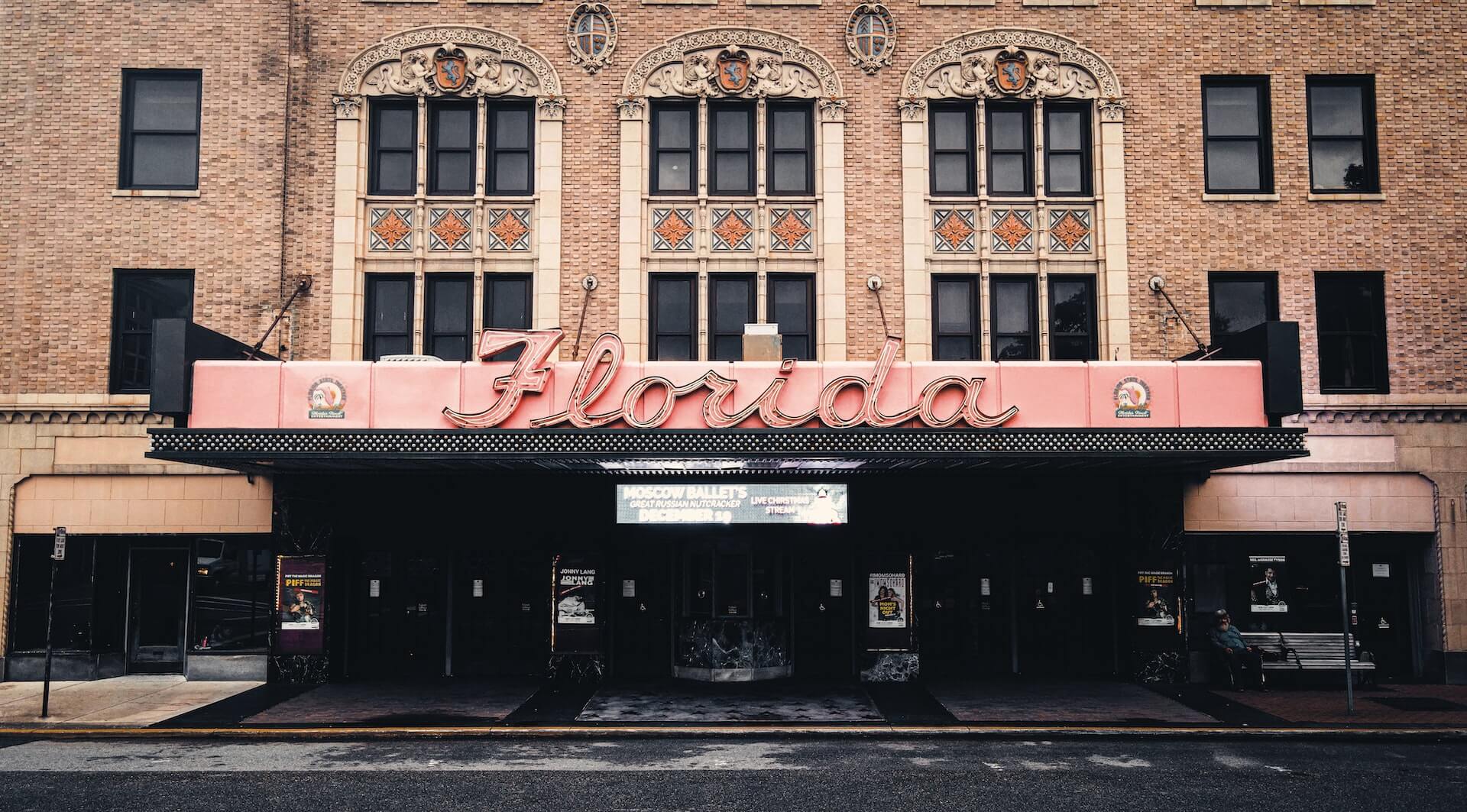
The Florida Theater in Jacksonville, Florida

Using the inflow and outflow data of tax filers earning $200,000 or more, SmartAsset identifies the top ten states attracting high earners.

When it comes to the number-one state, “it’s not even close,” says SmartAsset Advisors. Not surprisingly, several top inflow cities (according to Redfin data) line up with SmartAsset’s top inflow state list.

So, why should this information matter to operators? Plainly, it’s important market information. Population, household income, and age information are crucial considerations when opening any business.

In fact, KRG Hospitality includes such data (and much, much more) when conducting research for our proprietary feasibility, business, and concept plans. Among many elements of opening a restaurant, bar, hotel, or entertainment venue, the income of one’s target audience is crucial.

Knowing where high-income households are leaving and moving to can inform many operator decisions. Where should one open their first concept? Which markets should one consider for expansion? What type of concept will work in a market? What are the threshold price points for menu items? How will this information help inform design choices?

Operators need to recoup their outlay. The income of a concept’s ideal guest should be as important to an operator as knowing their costs.

Top Ten Inflow States

Interestingly, the top state on this list did experience significant outflow in 2020. In fact, the state lost 11,756 high-earning households in 2020.

However, the state also added 32,019 such households, netting 20,263 high earners.

  1. Utah
  2. Idaho
  3. Nevada
  4. Colorado
  5. Tennessee
  6. South Carolina
  7. North Carolina
  8. Arizona
  9. Texas
  10. Florida

Another compelling detail of the states on this list pertains to income tax. In short, three of the states don’t levy personal income tax.

Above, they’re the states in bold: Florida, Nevada, and Texas.

Top 10 Outflow States

So, above are the ten states are seeing the greatest an inflow of high-earning households. Which means, of course, there’s an inverse.

Below, the ten states experiencing the greatest outflow of high earners. Unsurprisingly, SmartAsset deems several entries on the list high-tax states. Also, Washington, DC, is a high-tax area.

Moreover, the list below includes five of the top ten high personal income tax jurisdictions (in bold).

  1. Ohio
  2. Minnesota
  3. Washington, DC
  4. Maryland
  5. New Jersey
  6. Virigina
  7. Massachusetts
  8. Illinois
  9. California
  10. New York

However, it’s not as though these states are seeing a massive exodus of high-earning households. In fact, per SmartAsset, these states have more high-income households than the national average.

Nationally, high-earning households account for less than seven percent of all tax filers. According to SmartAsset, nearly nine percent of tax filers are high-income households in the top ten outflow states.

Image: Trevor Neely on Unsplash

by David Klemt David Klemt No Comments

What’s Next in the F&B Design Space?

What’s Next in the F&B Design Space?

by David Klemt

Interior of world's first crypto bar

Design driven by a story and narrative, technological innovation, and people’s desire to socialize are what’s next in hospitality design.

The influences above are factoring into the current approach to design in the F&B space. Be it a hotel or restaurant, the F&B landscape is going to look different for several reasons.

Five leading industry experts addressed this topic during HD Expo 2022‘s “F&B Trends: What’s Next?” panel.

Technology

Well, let’s start with arguably the biggest “trend” in F&B. Our industry is finally making major advancements in the area of technology.

It may not seem like it to some, but speaking generally, hospitality hasn’t always found itself on tech’s bleeding edge. That’s changing.

In fact, some industry experts feel we may be moving too quickly. For example, an interesting prediction from Restaurant Leadership Conference 2022 is a more deliberate approach to developing and implementing hospitality-specific tech.

Now, that doesn’t mean we’ll see a significant slowdown in tech innovation. Rather, innovators may take a more calculated approach to truly relieve hospitality pain points.

For example, Adam Crocini, senior vice president and global head of food and beverage brands for Hilton, points to a few innovations now common throughout the industry. Digital order, digital pay, and the ability to deliver food essentially anywhere within a hotel, resort or casino property are tech solutions driving efficiency.

However, Crocini sees one segment in need of a specific solution. In the luxury segment, guests prefer in-person engagement with staff and tactile engagement with physical menus.

Ari Kastrati, chief hospitality officer for MGM Resorts International, seems to agree. Tech, says Kastrati, shouldn’t replace human connections. Rather, technology needs to enable and enhance.

The Experience

When it comes to design, much of the focus is on the impact it will have on the guest or consumer. However, the end user is hardly the starting point.

For Kastrati, a successful project begins with the development of a relationship. That relationship is between the designer, the operator, and the concept. If care isn’t taken to nurture that relationship, it will likely show in the final product.

In Crocini’s eyes, that relationship informs the development of the operator’s concept. How? Through the development of a story and narrative.

If the designer and operator can develop a story, the design can be grounded in said story. Further, every element of a design can be held up against that story to see if it “fits.” If it does, the design will deliver a holistic experience and engage the guest or consumer.

In terms of F&B, Kastrati and Crocini make similar points. Both feel knowing the guest and anticipating their needs is crucial.

Addressing design elements that impact the experience, Crocini believes design should start with lighting. A design without proper lighting, Crocini says, is like a Scorsese film without the score.

Alexis Readinger, founder of Preen, is focusing in part on unique floorplan design. In particular, Readinger likes features that encourage interaction between guests, such as communal loveseats. However, “protecting the introverts” is also important for some guests’ comfort levels.

It’s safe to say that Caroline Landry Farouki, partner at Farouki Farouki, agrees with Readinger and Crocini. Seating, says Landry Farouki, can create different levels of intimacy to engage extroverts and introverts, and lighting designers are crucial and can really tell the story.

F&B Trends

In terms of consumer trends, Kastrati points to something specific he’s seeing in Las Vegas. People are seeking out specialty restaurants and luxury retail. At least anecdotally, this confirms what many reports and experts have been saying for the past few years: Consumers are showing increased interest in luxury.

However, Kastrati’s focus in the F&B space isn’t solely on guests and consumers. Rather, he suggests that the next step is bringing people back to the workforce. As Kastrati says, there’s no hospitality without people. Kastrati believes all of us in the industry need to encourage people to pursue hospitality careers.

Switching gears, Jessica Gidari, director of design and concept development for Union Square Hospitality Group, points to an effective pivot as a possible industry trend.

At least one concept in the Union Square portfolio has pivoted from a restaurant to a cocktail bar. A menu with shareable plates leverages guest desire to socialize and share. Gidari also says doing away with some traditional two- and four-top tables and replacing them with communal seating can “rebrand” a space as a “convivial” lounge.

Landry Farouki thinks operators can count on two compelling trends in the F&B space. One is the return of the restaurant as “the bar.” As someone who lives and works in Las Vegas, I can attest to treating restaurants more as bars myself.

Another possible trend Landry Farouki predicts is “mature dining” replacing fine dining. Explaining mature dining, Landry Farouki says such a concept is chef-driven but doesn’t focus solely on the chef.

Trend predictions must be taken with a grain of salt. However, I only see upside for design that helps operators engage guests more from the start.

Image: LYCS Architecture on Unsplash

by David Klemt David Klemt No Comments

The 2022 Hospitality Design Forecast

The 2022 Hospitality Design Forecast

by David Klemt

Perspective shot of neon hotel sign

Four 2022 HD Expo panelists are focusing on very specific design elements and considerations informing the future of hospitality design.

It should come as no surprise that their industry forecasts embody the themes of this year’s hospitality design show.

In fact, each panelist appears to be embracing the overall theme: Community. For these experts, designers must be mindful of their impact on communities.

Sustainable Practices

Enrique Vela, director of interiors at Olson Kundig, prefers the term “performance building” to sustainability. At Olson Kundig, performance building informs every stage of each project.

Further, the firm doesn’t focus solely on their approach to sustainable design, construction, and operation. According to Vela, Olson Kundig wants to know how their vendors approach sustainability as well.

And going even further, Vela and the firm want to see a commitment in sustainability (or performance building) from their clients. On that front, Olson Kundig’s are showing more interest in sustainability.

The firm’s desire to see commitment from their clients makes sense. After all, getting close to net zero during a build is difficult in the best of conditions. If a client has a laissez-faire attitude toward a core design tenet, the project isn’t off to a great start.

Andrew Lieberman, design director at AvroKO, seems to take a similar view as Vela and Olson Kundig.

As Lieberman sees it, “the entire ecosystem is impacted by a project.” Therefore, social consciousness needs to be a core element of a project.

Per Lieberman, he and AvroKO are seeing an increase in interest in sustainability from clients.

Focus on Wellness

Meghann Day, partner at Hirsch Bedner Associates, is seeing the interest in wellness proliferating beyond the hospitality space. HBA’s multi-family projects are incorporating wellness amenities into design in increasingly prominent ways.

For instance, clients are showing interest in infrared saunas and other cutting-edge wellness features in their homes. Per Day, wellness is quickly steering away from taking up a corner in a space and driving toward inhabiting entire floors.

Why should hospitality designers care about what’s going on in residential design? Simple: Hotels and resorts are homes away from home. In fact, they’re also becoming offices away from home offices.

What people want in their homes (and workspaces) they also want—and expect—from the hotels and resorts they visit.

For now, HBA is seeing the growth in wellness through traditional amenities. However, new elements will become more common in the near future.

Lieberman and AvroKO are also experiencing increasing interest in wellness design features. This interest is coming from the firm’s clients, meaning guests and residents are seeking out wellness amenities.

Community Engagement

Interestingly, the panelists have a clear interest in off-premises service. And no, I’m not referring to F&B delivery or offering guests local experiences.

Rather, today’s designers are enthusiastically designing for the communities in which they and their clients are building.

As Vela sees it, designers must consider the community. For him, engaging the community is crucial to a project’s success. The reasoning is simple: A project is inarguably tapping into the build site’s culture, heritage, history, and people.

For Lieberman, wellness and sustainability in the hospitality space combine feeling good, doing good, and impacting the community. A community is its own ecosystem, and that ecosystem is impacted by a designer and their client’s project.

Another way of viewing a hotel or resort is that it’s a portal into the community, per Lieberman.

He and Vela believe a project will be far more engaging if the community and its culture are honored through its design. As Vela says, we create the best memories when all of our sense are engaged.

F&B Memberships

While not a large focus of this HD Expo 2022 panel, food and beverage did come up. However, it didn’t focus just on people’s desire to return to restaurants.

For example, Lieberman is seeing interest in F&B memberships. In his version, a membership space lives within the main restaurant. For these spaces, designers and operators can go overt or covert.

In one example, the members-only space is accessed via the main dining room. That means guests without memberships can see the members going to their exclusive space. In turn, that should generate interest in memberships.

On the opposite end, a membership space could be kept secret. Loyal guests may not know about these memberships and spaces for months or years.

Either way, the key to executing these spaces is creative, multi-faceted design, according to Lieberman.

Another way to use F&B spaces comes from Day. This downtime solution is simple and can generate much-needed revenue.

As Day explains, the approach is similar to that of a WeWork space. The operator creates a WeWork-like membership. During slow hours, these members have access to the restaurant.

Their membership entitles them to WiFI and menu access. Members would still pay for F&B items, but at a discount.

Technology

When it comes to technology, Ken Patel and EV Hotel are taking things as far as possible without turning off guests.

Patel is the founder and CEO of EV Hotel, and he has nearly three decades in the industry. Three years ago he had the vision for what is now EV Hotel.

Putting his view of hotel design and tech bluntly, he says that the only innovation in this space has been replacing small TVs with bigger versions. That may seem harsh, but consider what Patel is really saying: Hospitality, in his opinion, isn’t innovating fast enough.

Well, that’s certainly not the case with EV Hotel.

EV has launched the world’s first crypto rewards program. They’re the first hotel group to enter the metaverse fully built, and they operate the first-ever crypto trade floor. What’s more, Patel predicts that the metaverse will be an $8 trillion industry in a mere six years.

According to Patel, each EV Hotel room contains between 15 and 18 brand-specific tech developments. And while they may not have a dedicated fitness center, EV features an interactive exercise bike studio.

Now, it may seem at first glance that EV is developing and implementing tech innovations simply for the sake of doing so. However, Patel would argue against that perception of his brand.

“We have to match innovation to technology,” he says. That means reducing the amount of tasks employees take on that have nothing to do with serving guests directly.

Automating backend tasks allows EV team members—they all carry the title experience employee—to focus much more on the hospitality experience for guests. And a greater focus on hospitality means a greater focus on personalized experiences.

Takeaway

Thoughtful design that combines wellness, sustainability, and technology will not only serve communities, it will build them as well.

There’s the community in which a hotel or resort operates and which it must take care to honor and serve. There’s the community of employees serving guests and the community at large. And there’s the community of guests that frequent the property.

The future of hospitality design is looking bright, indeed.

Image: Francesco Ungaro

by David Klemt David Klemt No Comments

SevenRooms Reveals Hotel Guest Study

SevenRooms Reveals Hotel Guest Study Results

by David Klemt

Male passenger with suitcase at airport

Americans eager to get back to normal and make up for lost time are traveling in droves, and hotels will have to adapt in order to earn their business.

To give hotel and resort operators an edge, SevenRooms today reveals the results of their latest study.

“Booking Behaviors: Exploring Hotel Guest Loyalty,” contains datapoints all hotel operators should know.

The report, a collaboration with YouGov, focuses on two types of travelers.

Competitive Incentives

Before I address the who, let’s take a look at data that highlights the what.

According to the SevenRooms and YouGov report, nearly half of consumers say that loyalty programs are important. Per SevenRooms, loyalty programs influence hotel choice for 44 percent of guests.

Regarding American hotel guests specifically, 34 percent of guests will consider rebooking if their loyalty status receives recognition upon check-in.

However, loyalty status recognition isn’t enough for guests to book a hotel again. To understand what will influence that decision we need to take a look at SevenRooms’ traveler types.

Leisure

SevenRooms and YouGov look at two travelers for their report. There’s the Personal Patron and the Business Traveler.

Let’s focus on the former first. Per SevenRooms, to say the Personal Patron is eager to return to travel is an understatement.

The Personal Patron is a leisure traveler who has been climbing their walls for more than two years. They’re planning to travel “with a vengeance” this summer.

Diving deeper, the Personal Patron is most probably a female over the age of 35.

While recognizing this traveler for their loyalty program membership is smart, it’s not enough to influence a rebook. Rather, the Personal Patron places greater value on:

  • receiving more loyalty program points in exchange for dining and drinking at property-operated restaurants and bars;
  • enhanced credit card rewards; and
  • earning dining credits upon reaching a new loyalty program tier.

However, there’s a problem inherent to the Personal Patron and loyalty programs. Just 45 percent—so nearly half—of this traveler type are loyalty program members.

The reason for that low program buy-in? Almost 60 percent don’t think they travel enough to benefit from hotel loyalty programs.

Per SevenRooms, there’s a rather simple solution: local benefits. Tempt Personal Patrons with staycations and access to amenities at hotels in their home markets. Another idea is to offer points exclusively for dining that this traveler can use where they live.

Business

Obviously, the business traveler is now different. In fact, SevenRooms considers two versions of the Business Traveler.

On the one hand, there’s the extended-stay version traveling all over the country. And on the second hand, there’s the long-distance Business Traveler who’s seeking a midweek “home base” hotel.

Either way, the Business Traveler is most likely a male aged 18 to 34.

Per SevenRooms—and as most hotel operators likely know—this traveler probably doesn’t have time (or interest) in exploring off property. Therefore, the Business Traveler can be influenced to rebook through incentives that make their stays better.

These include:

  • receiving more loyalty program points in exchange for dining and drinking at property-operated restaurants and bars (like the Personal Patron);
  • receiving recognition for being a loyalty program member; and
  • getting a complimentary drink on check-in; or
  • being given a choice of an F&B amenity on arrival.

Unsurprisingly, the Business Traveler is more likely than the Personal Patron to join a hotel loyalty program. Per SevenRooms, 55 percent of Business Travelers say that the ability to participate in such a program influences their hotel choice.

Focusing on perks that “reward” the Business Traveler for their hard work can convert a Business Traveler to become a loyal guest for a particular hotel or hotel group.

SevenRooms suggests priority reservations for the lunch daypart at restaurants on property. Also, providing their favorite drink (wine, cocktail, beer, etc.) with their room service orders can be influential.

Takeaway

Travel is gaining steam, restaurants and bars are seeing an influx of reservations, and hotel operators need to prepare for summer travelers.

As a reservation, guest experience, and guest retention platform, SevenRooms can ensure operators can easily collect guest data. Guest data, for example, like F&B and room preferences.

More importantly, the platform makes it simple to use that data responsibly, effectively, and simply.

To learn more about SevenRooms, click here.

Image: JESHOOTS.COM on Unsplash

by David Klemt David Klemt No Comments

Key Themes from HD Expo 2022

Key Themes from HD Expo 2022

by David Klemt

Mandalay Bay Resort & Casino Las Vegas

The educational conference sessions at Hospitality Design Expo 2022 in Las Vegas were connected by a number of key, overarching themes.

Hosted by the Mandalay Bay Convention Center, HD Expo packed each day with invaluable education. Founders, designers, highly placed executives, and other influential industry professionals addressed a wide range of crucial topics.

Below are five key topics and themes from HD Expo 2022.

Sustainability

Unsurprisingly, sustainability was one of the most-discussed topics.

Of course, conversations about sustainable design, construction, and operational practices have been at the forefront of hospitality for several years now. However, the topic seemed supercharged this year at HD Expo.

Drilling down, speakers at the 2022 show are focusing on “building performance,” light-touch construction, and waste recovery, to name but a few session topics.

When some think about sustainability, they think of low- and no-waste practices, energy efficiency, and upcycling. For others, being sustainable means building in an eco-friendly or green way.

However, several HD Expo 2022 speakers, their teams and agencies, and their partners and clients are thinking more locally. The impact of building and operating on local communities is now a greater focus.

For example, Victor Body-Lawson, founder and principal of Body Lawson Associates Architects & Planners. During a panel he co-presented, Body-Lawson addressed the importance of designing, building, and operating for the local community.

In short, he explained how not using local materials and labor has a significant negative impact on the environment. Additionally, Body-Lawson feels that the objective of design is that whomever engages with end product—commercial or residential—comes out better.

Wellness

Refreshingly, it appears the stigma surrounding wellness is dissipating. More people seem to be more comfortable discussing their mental and emotional health openly.

Designers and their clients, particularly in the hotel and resort space, are taking note.

Long a staple amenity, the health center is undergoing reinvention. In fact, many resorts and hotels are focusing on wellness centers and programming.

In fact, a number of concepts are more wellness and healing getaway than hotel or resort. One such project coming to market is the Jenesis House.

The creation of Jenesis Laforcarde, this concept’s focus is explicitly mental health, physical well-being, and self-care. Additional core values are community, hiring local, and engaging with local small businesses.

Diversity, Equity, Inclusion

Like the topic of wellness, DEI has received more earnest attention during the pandemic. And why not? Diversity, inclusion, and equity are inextricably connected to wellness.

Of course, DEI is also connected to community. Moving forward, designers, their partners, and their clients must focus on DEI within their companies and local communities.

One hotel brand that seeks to embody this mission is Caption, part of the Hyatt portfolio. Crystal Vinisse Thomas, VP and global brand leader of lifestyle and luxury brands for Hyatt, is bringing Caption to market.

At this brand’s core is community. Locals are as important as the travelers staying at a Caption property. And, again, why shouldn’t that be the case?

Locals will work at the hotel. Locals will use the hotel. And locals will feel the impact—positive or negative—of the hotel.

A visit to the website provides all the proof anyone needs that Caption is committed to locals:

  • “The people make the place here. We hire local, buy local, and vibe local.”
  • “We strive to be a good neighbor.”

Interestingly, Thomas tied DEI and the community together. While it may be a difficult conversation to start, if a designer, executive, partner, or client sees that a project isn’t representing the community, they need to address it.

Staying silent isn’t how things move forward. In fact, it’s a sure-fire way to take steps backward.

Discovery

What keeps guests coming back? Is it the amenities of a hotel? The food and beverage? Do guests return because of the service they receive?

Of course. However, a shift in guest behavior and expectations shows that F&B, amenities, and service may no longer be enough to motivate repeat visits.

When it comes to hotel and resort design, the future is discovery. Another way to think about discovery is the “hotel within the hotel,” or “resort inside the resort.” A concept that embraces this approach reveals layers that guests can discover.

Perhaps their first stay is in the main or more traditional space. Then, the guest discovers that there are different areas they can book for a stay. These could be villas, luxury tents, a pre-fab luxury Moliving unit (as an example)…

The point is that the guest knows they can engage with the property differently during each stay. While there are core elements that define a particular brand, they can deliver different experiences on the same property.

Of course, such a concept also ties into the themes of community and wellness. Many brands are eschewing the traditional operational ethos of attempting to keep a guest on property for as long as possible. Instead, the local community is a key experiential element of a hotel or resort.

The future of hospitality design—indeed, of hospitality as a whole—encompasses each of these themes. Perhaps most importantly, each theme serves a greater concept: Community.

Image: tommao wang on Unsplash

by David Klemt David Klemt No Comments

Forward Progress: Trends by Venue Type

Forward Progress: Trends by Venue Type

by David Klemt

High contrast image of blue cocktail with lemon zest

One notable difficulty with considering new trends is that they’re not all necessarily a universal fit for all venue types.

For example, what may work well in an upscale restaurant perhaps won’t perform as well in a sports bar. Pursuing a trend that isn’t a good fit, obviously.

As any operator with experience knows, chasing fads and trends just to chase them can be costly. Doing so costs money (inventory, training, labor hours) and time deserving of better allocation.

However, failing to embrace any trends can also be costly. Watching a lucrative trend pass by can cost an operator guest engagement, perception, and traffic.

Take, for instance, the success of White Claw. Plenty of operators and consumers scoffed at the hard seltzer category as a whole at first.

Then, some people decided it was a drink category “for women.” As it exploded in popularity, hard seltzers proved immensely popular with men.

Basically, it’s an incredibly strong beverage alcohol category that resonates with a wide range of consumers. On some menus, hard seltzers are listed alongside beers.

So, hard seltzer, led largely by White Claw, showed itself to be a worthwhile trend to adopt.

Clearly, however, hard seltzer doesn’t resonate with all guests on all occasions in all types of hospitality venue types. For instance, generally speaking, a bucket of White Claws likely to be a top seller in a high-end restaurant specializing in seven- to nine-course meals.

Drink Trends by Venue

During Bar & Restaurant Expo in March of this year, Amanda Torgerson of Datassential presented 2022 drink trends operators should know.

One trend has essentially proliferated the industry. Really, it’s likely wise for us to all view this trend—hard seltzer—as mainstream now.

In the context of Torgerson’s presentation, Datassential is saying that hard seltzers are here to stay.

Among other trends, Torgerson shared Datassential’s data-backed view of drink trends segmented by venue category.

While every venue is unique and not every trend will work for every bar or restaurant in a given category, the results are no less intriguing.

Pubs: Dry-hopped beers, pastry stouts, and hard or spiked coffee.

Sports Bars: Mini-beers, hard seltzer, and reusable growlers.

Casual Bars: Seltzers with unique flavors, hard tea, hard lemonade, and drinks featuring local ingredients.

Upscale Bars: Negroni, wine-barrel-aged spirits, and flaming cocktails.

Nightclubs: Hard seltzers served with spirits, cocktails and punch bowls served with dry ice, and flaming cocktails.

Casual Restaurants: Wine cocktails, elevated brunch cocktails, and tea-based alcohol beverages.

Upscale Restaurants: Flaming cocktails (smoked may be better), all-natural wines, and made-to-order cocktail cart presentations.

Hotels, Resorts and Casinos: Made-to-order cocktail carts, alcohol vending machines, and drinks made with cold-pressed juices.

Interestingly, a few of the above trends identified by Datassential appear in multiple venue types.

The main things for an operator to keep in mind is what will resonate with their guests and what’s authentic to their brand. When it comes to trends, one size doesn’t fit all and an individual venue’s mileage will vary.

However, the above list should at least show operators what Datassential sees resonating with guests in an array of venues.

Image: Ozge Karabal on Pexels

by David Klemt David Klemt No Comments

8 Glendalough Cocktail Recipes for St. Patrick’s Day and Beyond

Offer your guests something different for your St. Patrick’s Day promotion with Glendalough Distillery cocktail recipes.

Without a doubt, you should have plenty of the expected Irish whiskeys on hand. However, Glendalough Distillery Double Barrel, Pot Still, Wild Gin, and Rose Gin are extraordinary Irish whiskeys and gins.

Each spirit the distillery crafts honors the art of Irish distillation, a craft that stretches back centuries. What’s more, each whiskey Glendalough crafts is single malt—there are no light-bodied blends in their lineup.

To learn more, check out episode 71 of the Bar Hacks podcast with Glendalough Distillery co-founder and national brand ambassador Donal O’Gallachoir.

by David Klemt

Glendalough Distillery Wild Gin Irish gin

8 Amazing Irish Whiskey and Gin Cocktails

Below, eight refreshing and sophisticated drink recipes made with Glendalough whiskeys and gins. Sláinte!

Glendalough Distillery Double Barrel Single Malt Irish Whiskey

The Lough Inn

This highball is made with Glendalough Double Barrel, a single-grain Irish whiskey aged in ex-bourbon barrels before being finished in Oloroso sherry casks.

  • 2 oz. Glendalough Double Barrel Single Grain Irish Whiskey
  • 1 oz. Spiced honey syrup (see note)
  • 1 oz. Fresh lemon juice
  • Soda to top
  • Lemon wheel or slice to garnish
  • Mint leaf to garnish
  • 1 cup Honey for spiced honey syrup
  • 0.5 cup Water for spiced honey syrup
  • 4 Cinnamon sticks for spiced honey syrup
  • 1 pod Star anise for spiced honey syrup

Add ice to a highball glass, then add first three ingredients. Top with soda water. Garnish with lemon wheel or slice and freshly torn mint leaf.

For spiced honey syrup: Add honey, water, cinnamon sticks, and star anise to pot. Bring to a boil, then stir. Strain into container.

Glendalough Distillery Pot Still single malt Irish whiskey

Pot Still Highball

Deceptively simple to build, this cocktail highlights the terroir of the land surrounding Glendalough Distillery.

  • 1.5 oz. Glendalough Pot Still
  • Soda to top
  • Grapefruit peel to garnish
  • Mint leaf to garnish (freshly torn and slapped, of course)

Prepare a highball glass with an ice shard, spear or cylinder. Pour in Glendalough Pot Still whiskey, then top with soda. Glendalough Distillery recommends a 1:2 ratio, Pot Still to soda. Garnish with mint leaf.

Glendalough Distillery Wild Gin Negroni cocktail

Glendalough Negroni

The foraged botanicals in Glendalough Wild Gin add even more complexity and depth to the classic Negroni. In fact, the flavors work so well this recipe maintains the Negroni’s crucial 1:1:1 ratio.

Prepare an Old Fashioned with ice. Add first three ingredients to glass in the above order. Add more ice if necessary. Stir, express orange peel, and place as garnish.

Glendalough Distillery Wild Gin Irish gin

Glendalough Wicklow 75

Bubbles make everything better and everyone happier.

Add all ingredients to shaker. Add ice and shake until well chilled. Strain into Champagne flute, top with Prosecco, and garnish with lemon twist.

Glendalough Distillery Rose Gin Irish gin and cocktails

Glendalough Rose G&T

This simple classic receives a huge visual and aromatic boost from Glendalough Rose Gin.

  • 2 oz. Glendalough Rose Gin
  • Tonic to top (the higher the quality, the better)
  • Lime slice
  • Mint leaves

Add ice to glass, then add Rose Gin. Top with tonic, and garnish with lime slice and mint leaves.

Glendalough Distillery Rose Gin Fizz

Glendalough Rose Gin Fizz

One way to elevate the highball is to use a striking pink-hued Irish gin.

  • 1.5 oz. Glendalough Rose Gin
  • 0.5 oz. Elderflower liqueur
  • Raspberry & Lime sparkling water to top
  • Lime wheel to garnish

Add ice (spear, shard or cylinder for impact), Rose Gin, and liqueur to highball glass. Stir, then add sparkling water to top. Garnish with lime wheel.


View this post on Instagram


A post shared by Glendalough US (@glendaloughus)

Glendalough Rose Collins

Boost the classic Collins with Glendalough’s striking rose-petal gin.

  • 1.5 oz. of Glendalough Rose Gin
  • 1 oz. of Lemon juice (freshly squeezed)
  • 0.5 oz. of Sugar syrup (1:1 ratio, hot water to sugar)
  • Soda to top
  • Lemon peel to garnish
  • Cherry to garnish

Combine first three ingredients in a shaker with a cup of ice. Place an ice shard, spear or cylinder to a highball glass. Shake until well chilled, then strain into glass. Top with soda, and garnish with lemon peel and cherry.

Glendalough Distillery Rose Gin Hibiscus Rose

Glendalough Hibiscus Rose

Refreshing and flavorful, the hibiscus tea syrup plays incredibly well with Glendalough Rose Gin.

  • 1.5 oz. Glendalough Rose Gin
  • 0.5 oz. Hibiscus tea syrup (see note)
  • 0.5 oz. Lemon juice (fresh squeezed)
  • Prosecco to top
  • Dehydrated lemon wheel to garnish
  • Rose petals to garnish
  • 33 oz. Water for hibiscus tea syrup
  • 16 oz. Sugar for hibiscus tea syrup

Add first three ingredients and ice to a shaker. Shake until well chilled and double strain into a coupe.  Top with Prosecco, and garnish with dehydrated lemon wheel and rose petals.

For the hibiscus tea syrup: Steep seven hibiscus tea bags in 33 ounces of water for 15 minutes. Add 16 ounces of sugar.

Images & Recipes: Glendalough Distillery

Related Reading

Work with Us

Click the image below to partner with us on your project.

Client Intake Form - KRG Hospitality

Top