Menu

by David Klemt David Klemt No Comments

Top 10 States Attracting High Earners

Top 10 States Attracting High Earners

by David Klemt

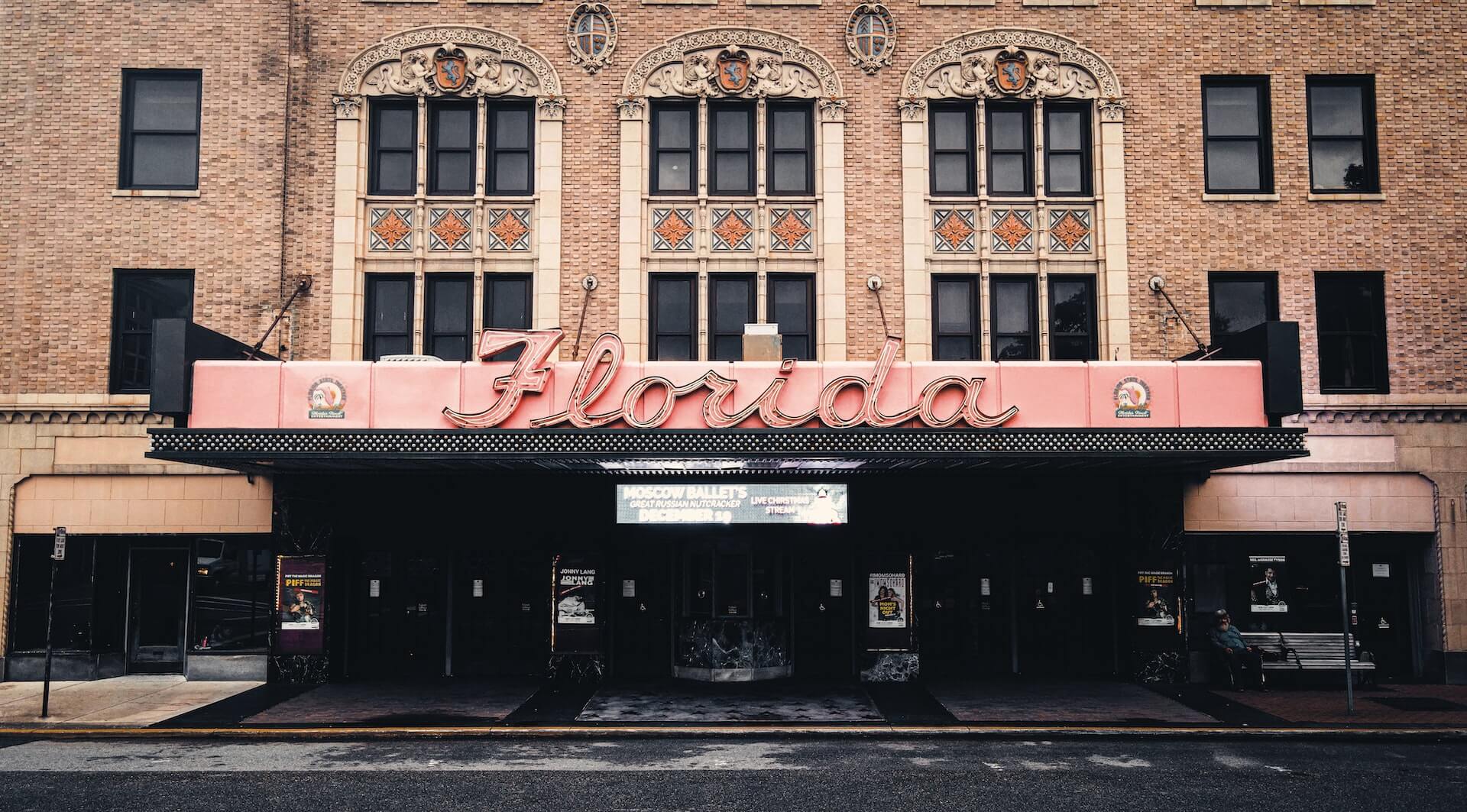
The Florida Theater in Jacksonville, Florida

Using the inflow and outflow data of tax filers earning $200,000 or more, SmartAsset identifies the top ten states attracting high earners.

When it comes to the number-one state, “it’s not even close,” says SmartAsset Advisors. Not surprisingly, several top inflow cities (according to Redfin data) line up with SmartAsset’s top inflow state list.

So, why should this information matter to operators? Plainly, it’s important market information. Population, household income, and age information are crucial considerations when opening any business.

In fact, KRG Hospitality includes such data (and much, much more) when conducting research for our proprietary feasibility, business, and concept plans. Among many elements of opening a restaurant, bar, hotel, or entertainment venue, the income of one’s target audience is crucial.

Knowing where high-income households are leaving and moving to can inform many operator decisions. Where should one open their first concept? Which markets should one consider for expansion? What type of concept will work in a market? What are the threshold price points for menu items? How will this information help inform design choices?

Operators need to recoup their outlay. The income of a concept’s ideal guest should be as important to an operator as knowing their costs.

Top Ten Inflow States

Interestingly, the top state on this list did experience significant outflow in 2020. In fact, the state lost 11,756 high-earning households in 2020.

However, the state also added 32,019 such households, netting 20,263 high earners.

  1. Utah
  2. Idaho
  3. Nevada
  4. Colorado
  5. Tennessee
  6. South Carolina
  7. North Carolina
  8. Arizona
  9. Texas
  10. Florida

Another compelling detail of the states on this list pertains to income tax. In short, three of the states don’t levy personal income tax.

Above, they’re the states in bold: Florida, Nevada, and Texas.

Top 10 Outflow States

So, above are the ten states are seeing the greatest an inflow of high-earning households. Which means, of course, there’s an inverse.

Below, the ten states experiencing the greatest outflow of high earners. Unsurprisingly, SmartAsset deems several entries on the list high-tax states. Also, Washington, DC, is a high-tax area.

Moreover, the list below includes five of the top ten high personal income tax jurisdictions (in bold).

  1. Ohio
  2. Minnesota
  3. Washington, DC
  4. Maryland
  5. New Jersey
  6. Virigina
  7. Massachusetts
  8. Illinois
  9. California
  10. New York

However, it’s not as though these states are seeing a massive exodus of high-earning households. In fact, per SmartAsset, these states have more high-income households than the national average.

Nationally, high-earning households account for less than seven percent of all tax filers. According to SmartAsset, nearly nine percent of tax filers are high-income households in the top ten outflow states.

Image: Trevor Neely on Unsplash

by David Klemt David Klemt No Comments

Celebrate Two August Bar Holidays with Rum

Celebrate Two August Bar Holidays with Rum

by David Klemt

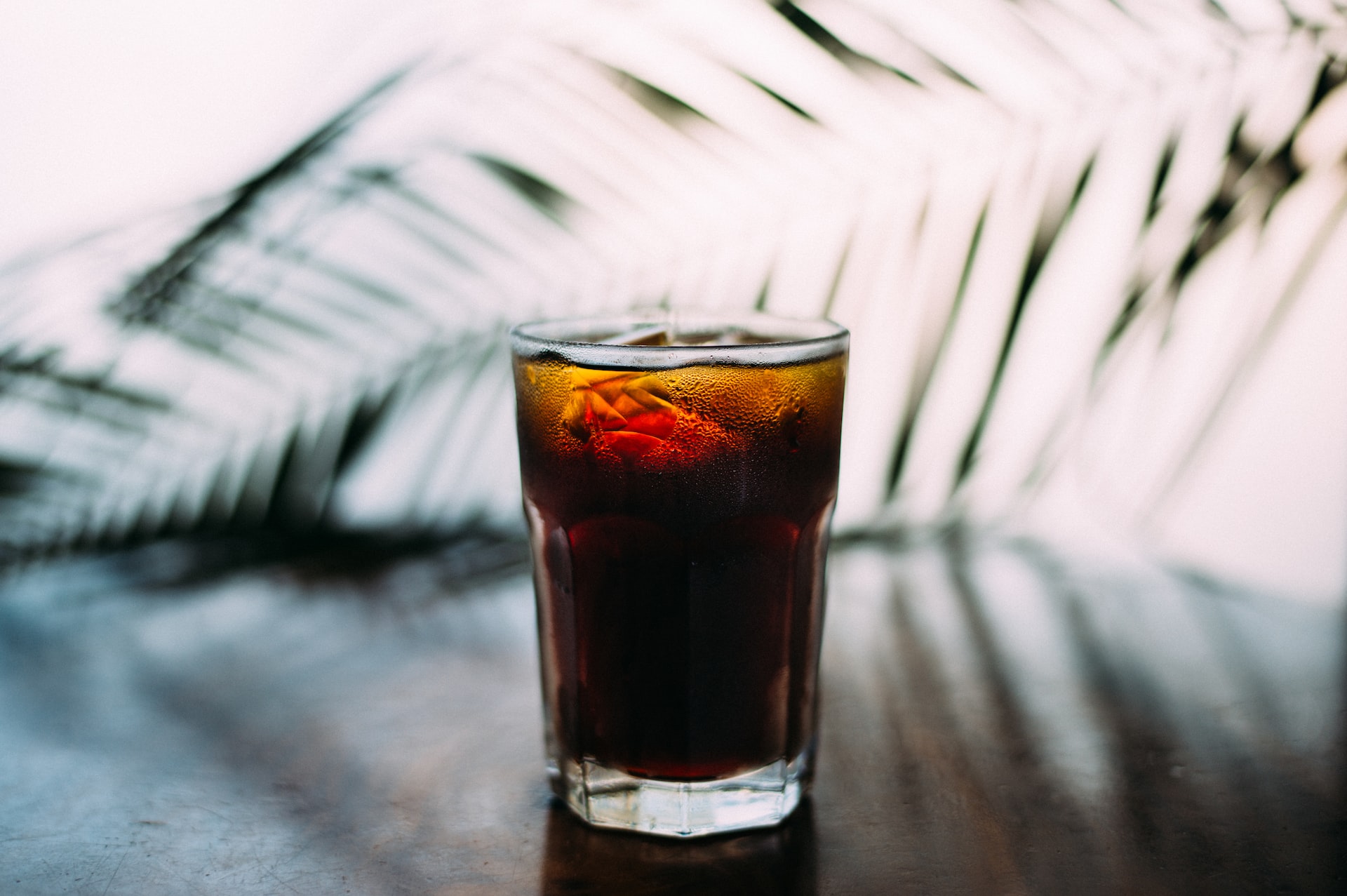
Rum and Coke cocktail

If you and your team have a commitment to programming and promotions, you have to love all the bar holidays available to you in August.

Not only are there six wine holidays in August, there are two holidays that call for rum. In fact, August is National Rum Month.

On August 16 you have the opportunity to program for National Rum Day. Obviously, rum is a legendary spirit with loads of history. So, you’ll want to honor it correctly—get creative and pull out all the stops.

Of course, one excellent way to celebrate rum is with famous perfect builds of classic rum cocktails. One of these classics is the iconic Mai Tai. Oh, yeah—that’s the other rum holiday in August!

After you program for Tuesday, August 16, prepare for Mai Tai Day on Tuesday, August 30.

June 30 is NOT Mai Tai Day

Now, if you Google “National Mai Tai Day” or “Mai Tai Day,” you’ll get an interesting result. You’ll see that some say National Mai Tai Day is June 30.

Well, Trader Vic’s says that’s absolutely not the case. In fact, a proclamation from the City of Oakland declares August 30 is Mai Tai Day.

On August 30, 2009, at-large councilmember Rebecca Kaplan made it official.

But why, I hear you asking (maybe, possibly), should we take Kaplan’s word for it? For me, it’s because Trader Vic’s themselves confirm that August 30 is “the real” Mai Tai Day.

Okay, but why should we take Trader Vic’s word for it? Because Trader Vic himself is the inventor of the Mai Tai.

Fact not Fiction

As I often point out when diving into cocktail history, much of what we “know” about certain drinks is lore. Either we simply can’t be 100-percent certain about a cocktail’s origins or multiple people are given the credit.

I mean, in some cases multiple people take the credit (and the glory) for themselves.

However, that’s not the case with the legendary Mai Tai. We know that Victor J. “Trader Vic” Bergeron is the classic cocktail’s creator.

Getting inspiration from traveling and operator peer Donn “Don the Beachcomber” Beach, Bergeron transformed his bar Hinky Dink into Trader Vic’s.

So, what do many (most, if we’re honest) operators like to do when they open or rebrand their business? Come up with a signature drink or dish.

In the case of Trader Vic’s, the Mai Tai was born.

The Real Mai Tai

Interestingly—perhaps sadly—the Mai Tai is often the subject of “mistreatment.” In part, we can blame Trader Vic for this.

Now, before you break out your pitchfork, I’m not vilifying Trader Vic. However, he did refuse to share his Mai Tai recipe with others. Author Wayne Curtis explains that this secrecy is “why we have so many bad Mai Tais with pineapple juice and other hideous additions.”

Those hideous additions? Juices, an array of rum styles, floats, garnishes beyond a lime shell and mint sprig… It’s likely you’ve never seen consistency in Mai Tai builds.

As Trader Vic himself tells it: “I took down a bottle of 17-year old rum. It was J. Wray & Nephew rum from Jamaica—surprisingly golden in color, medium bodied but with the rich pungent flavor particular to the Jamaican blends.”

So, that dispels the notion that you use a light rum and a dark rum to build a Mai Tai. He also only added orgeat, orange curaçao, rock candy syrup (the recipe calls for demerara simple), and fresh lime juice.

To be fair, it’s said that the popularity of the Mai Tai forced the J. Wray & Nephew rum (almost) to “extinction.” Rumor has it that original bottles can command auction prices of $50,000 or more.

Trader Vic’s Original Mai Tai Recipe

A lot of us like to put our spin on things. However, there’s an official recipe from the official creator of the Mai Tai.

So, let’s honor Trader Vic and his iconic creation. Below is the recipe that most closely follows the Trader Vic’s spec. Obviously, nobody expects you to track down a $50,000 bottle of rum to follow the original with ruthless precision.

  • 1 oz. Light rum
  • 1 oz. Dark rum
  • Fresh lime juice (keep half of the squeezed lime’s shell)
  • 0.5 oz. Orange curaçao
  • 0.25 oz. Orgeat
  • 0.25 oz. Simple syrup
  • Fresh Mint Sprig
  • 1 cup Crushed ice

Add crushed ice to a shaker. Some bartenders also add some ice cubes. Next, add the liquid ingredients, and shake. Pour—without straining—into a double Old Fashioned glass. Garnish with the lime shell and mint spring. That’s right—the original recipe doesn’t call for a pineapple wedge or cherry.

Image: Blake Wisz on Unsplash

by David Klemt David Klemt No Comments

Stand Out with Weird Holidays: August 2022

Stand Out with Weird Holidays: August 2022

by David Klemt

Stay Weird neon sign with purple background

Want to stand out from from other restaurants and bars in your area? Then commit to keeping it weird.

Several “holidays” are set against every date on the calendar, and August is no exception. These holidays range from mainstream to “weird.”

Pay attention to the latter to raise eyebrows, carve out a niche for your restaurant or bar, and attract more guests. Why do what everyone else is already doing?

Of course, you shouldn’t try to celebrate every holiday, weird or otherwise. And this month’s list in no way includes every odd holiday.

Focus on the days that are authentic to your brand; resonate with your guests; and help you grab attention on social media.

For July’s list, click here.

August 5: National Work Like A Dog Day

It probably sounds like this day is all about being as productive as possible at work. However, National Work Like a Dog Day is a celebration of service animals (mainly dogs). So, this is the day to invite your guests with service animals to grab a bite and drink and make new friends—four-legged and otherwise—at your bar or restaurant.

August 8: National Happiness Happens Day

This is a day that focuses on finding happiness wherever we can. And as we know, there’s plenty of happiness to be found in local restaurants and bars. National Happiness Happens Day is a blank canvas on which to create a fun, engaging promotion.

August 8: National Dollar Day

For the history nerds out there—and I say that with reverence, not ridicule—the first US dollar was minted in 1794. Leveraging this holiday is as simple as offering a food or drink item for $1. Of course, that’s if such a discount is legal where you’re operating. And I recommend requiring the purchase of a full-price item to receive the discount.

August 11: National Rasberry Bombe Day

If you’re not familiar with the raspberry bombe, you’re probably not alone. This tasty treat isn’t a commonly known dessert item. A raspberry bombe is a pastry that consists of heavy cream, sugar, candied fruit (raspberries, in this case), and nuts placed in a spherical design. The bombe is then frozen before being served. Bonus points for adding rum before freezing.

August 12: National Vinyl Record Day

There are a couple ways to celebrate this holiday. One, you can require your house DJ or hired gun to spin actual records. Two, you can team up with your local vinyl store to create a mutually beneficial promotion. Get a little creative and celebrate that warmest of sonic mediums, the vinyl record.

August 15: Discovery Day

This day likely isn’t very weird to Canadians. In particular, it’s well-known among those familiar with the Yukon. But for the rest of us, this is a celebration of the discovery of gold in this famed area. Celebrate with gold-flaked F&B items, caramel-drizzled desserts and cocktails, and whatever else you can think of where gold makes sense.

August 20: World Honey Bee Day

Where would we be without the honey bee? Not in a good place at all, that’s where. Perfect your Bee’s Knees and other cocktails that feature honey. And, of course, feature honey in some creative places on your food menu as well.

August 27: National Just Because Day

Obviously, this is another awesome blank-slate cocktail. You can essentially create any promotion you want to celebrate this day. Why? Because whatever you choose to do, it’s just because.

August 29: According to Hoyle Day

Here’s an odd one for you. On According to Hoyle Day, you live life according to one of the 300 (!) games for which Edmond Hoyle wrote the rules. This day certainly requires getting creative but card games and cocktails do go hand in hand.

August 31: National Eat Outside Day

Hey, guess how this day is celebrated…

Image: Dan Parlante on Unsplash

by David Klemt David Klemt No Comments

How One Resort Fills the Choco Taco Void

How One Resort is Filling the Choco Taco Void

by David Klemt

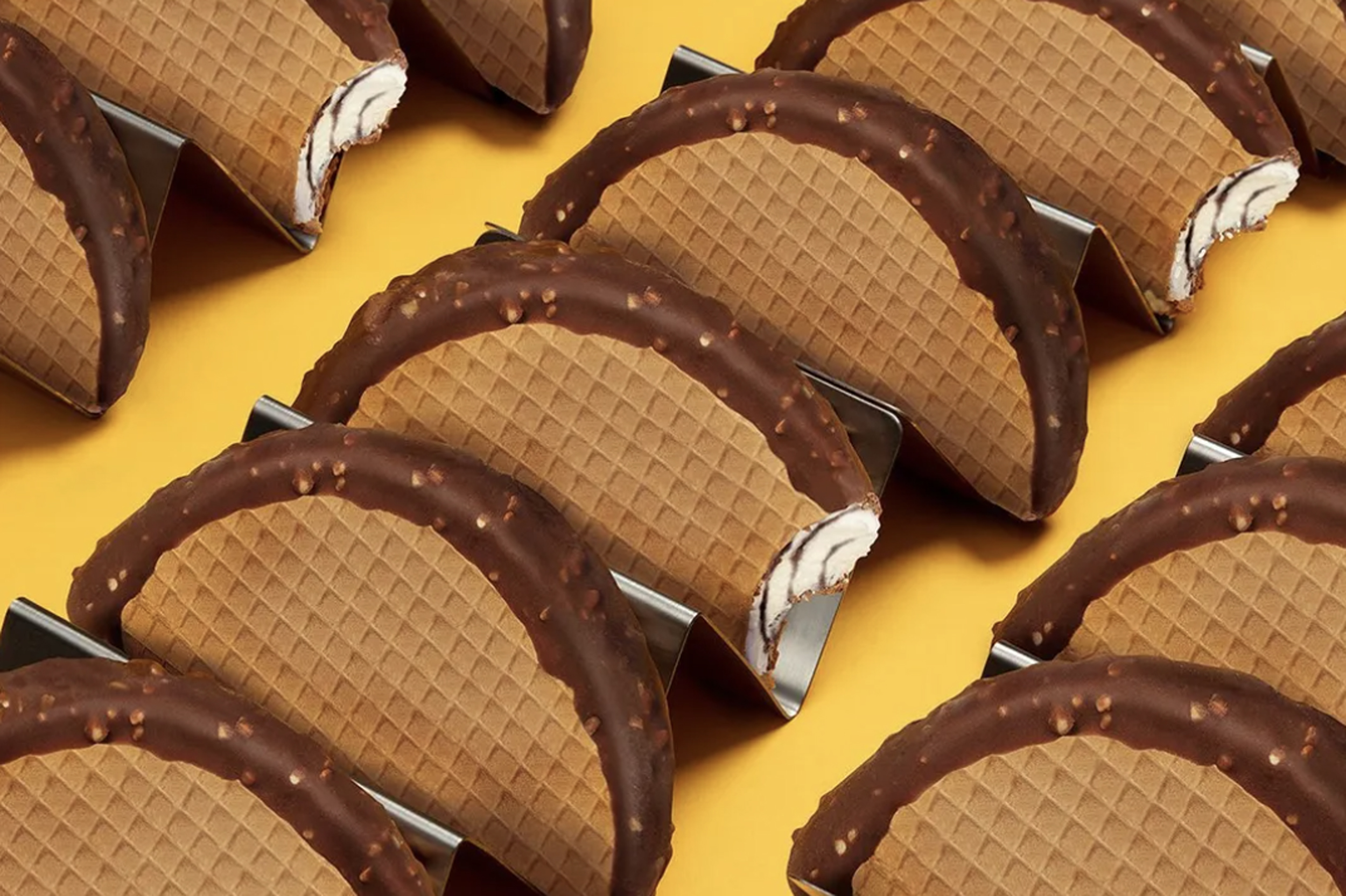
Klondike Original Choco Taco

We hate to be the bearers of bad news but after 40 years Klondike is officially retiring the Choco Taco, now a casualty in the supply chain battle.

According to the Klondike website, the decision to discontinue the Choco Taco comes down to demand. After four decades, the Choco Taco is falling to the wayside so that Klondike can focus on the rest of their legendary portfolio.

Unfortunately, sometimes intense consumer demand can lead to hard choices. Per Klondike, a spike in demand for their product lineup means narrowing their focus. So, we must all bid a fond but bitter farewell to the Choco Taco.

Now, lest we raise an eyebrow and cast a cynical eye toward this news, Klondike provides an assurance this isn’t a PR stunt. Cruise on over to their Instagram account and you’ll see a post denying any stunt Choco Taco retirement. Observe:


View this post on Instagram


A post shared by Klondike (@klondikebar)

It’s a bummer and a fake or quasi-discontinuation would be welcome. However, this appears to really be happening.

Filling the Void

Now, the great news is that restaurant and bar owners can recreate the flavors of the Choco Taco. Below, you’ll find a recipe from a casino resort offering their guests a taste of their favorite ice cream treat.

Calling Atlantic City home, Oceans Casino Resort and their F&B team are the masterminds behind the Chocotini. This $11 cocktail is available at Oceans now through the end of August.

Wisely, Oceans is making the Chocotini available to guests via four locations on property. Guests can order one at the Lobby Bar, restaurants Distrito and Makai, and the property’s Topgolf Swing Suite. Notably, Ocean Casino Resort boasts the largest Topgolf Swing Suite in America.


View this post on Instagram


A post shared by Ocean Casino Resort (@theoceanac)

In fact, Oceans recently completed a $15 million property improvement—and has committed to investing a further $85 million into the resort. With amenities like HQBeachclub, this casino resort rivals Las Vegas night- and daylife. Sets by Tiësto, DJ Snake, and Steve Aoki near the Atlantic City Boardwalk? Yes, please, and hand me a Chocotini.

Of course, you and your bar team can also create a creamy, chocolatey Martini to provide guests with a Choco Taco-like treat. I recommend also testing out a non-alcohol version for a tasty and booze-free sip.

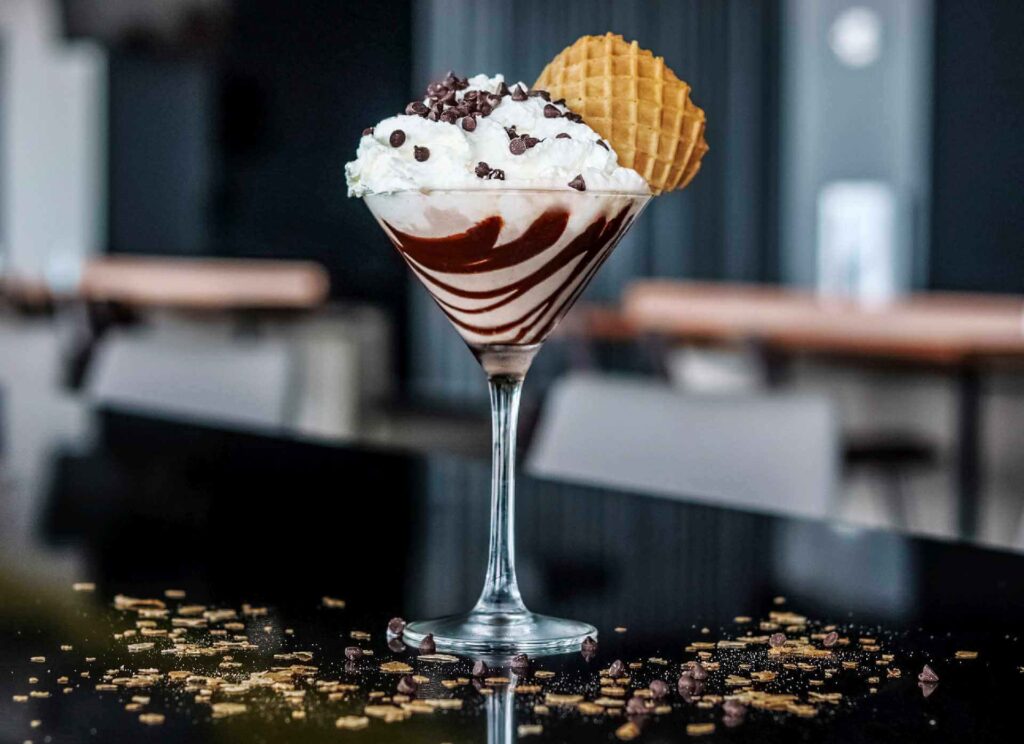
Chocotini

Oceans Casino Resort Chocotini

Recipe and image courtesy of Ocean Casino Resort

First, prepare a Martini glass by striping the interior with chocolate syrup. If preferred, place in refrigerator to chill glass and harden syrup striping. Add vodka, liqueurs, and cream to a shaker with ice. Next, shake until well chilled and strain into prepared Martini glass. Top with whipped cream, and garnish with chocolate chips and waffle cone piece.

Image: Klondike

by David Klemt David Klemt No Comments

Cheese Pairings: Wine, Beer, Spirits

Cheese Pairings: Wine, Beer, Spirits

by David Klemt

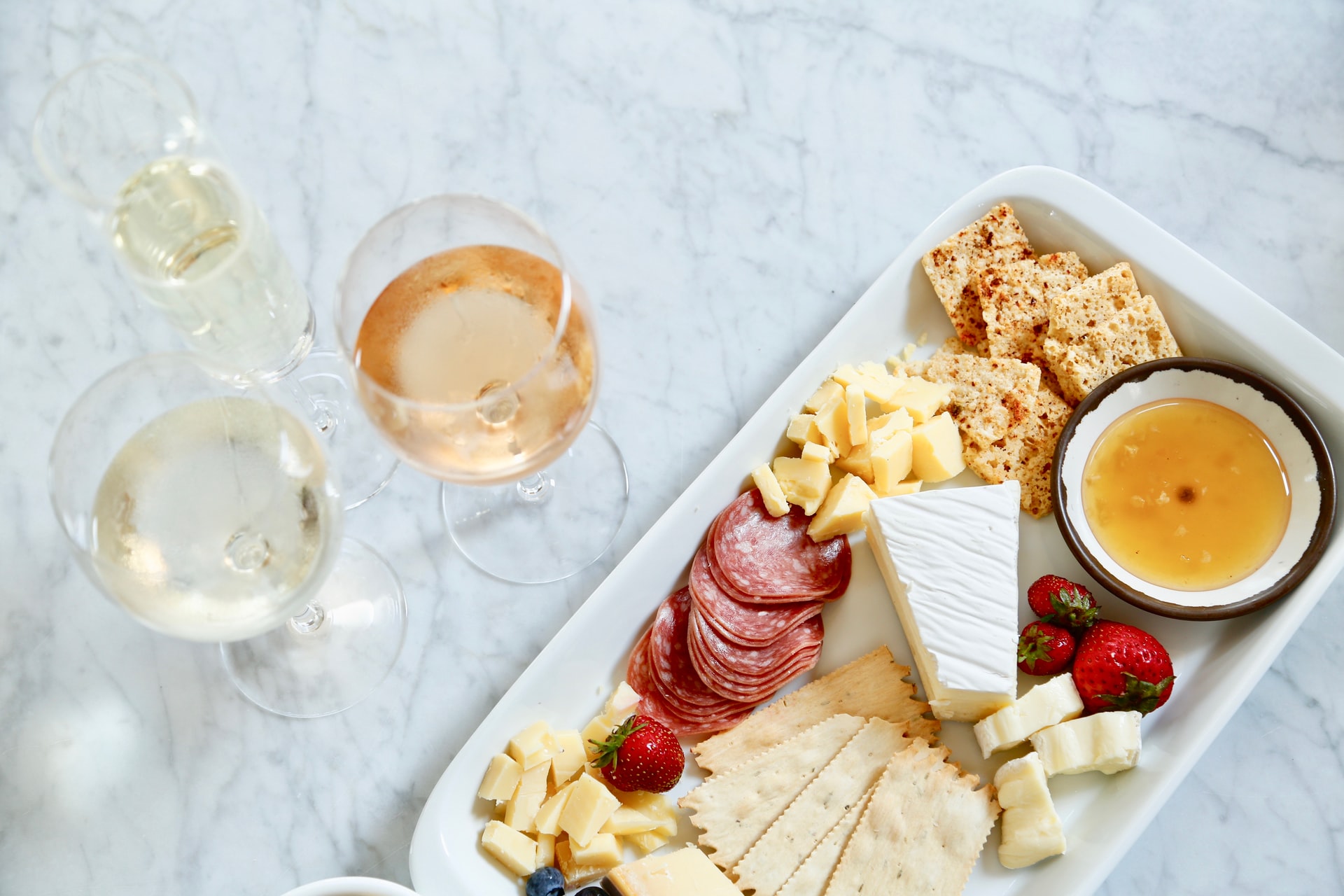
Wine glasses and cheese board

National Wine and Cheese Day is Monday, July 25, so let’s take a look at pairings that will get mouths watering.

According to historians, people have been pairing wine with cheese for several centuries. And per scientists, this legendary pairing makes a lot of sense.

Cheese is, obviously, fatty. Further, fat is oily. Then we have alcohol, which is astringement. When we eat cheese or other fatty/oily foods, they coat the mouth. As we also know, alcohol tends to dry out our mouths.

So, the theory as to why pairing cheese with wine works comes down to balance. Of course, there’s a term for this balance you likely know: mouthfeel.

However, science has an additional theory about wine and cheese. For this theory, we look at the “flavor spectrum.” Flavors that are far apart from one another are often pleasant to us.

As an example, not many of us would appreciate a slice of cheddar cheese on top of a cheddar cheese-flavored cracker dipped in cheddar cheese sauce. That would be monotonous and boring.

Wine Pairings

  • Chardonnay and Camembert
  • Riesling and Raclette
  • Gewürztraminer and Edam
  • Pinot Grigio/Gris and Parmigiano Reggiano
  • Chenin Blanc and Chèvre
  • Sauvignon Blanc and Gouda
  • Champagne and Brie
  • Prosecco and Asiago
  • Rosé and Havarti or Fontina
  • Pinot Noir and Gruyère
  • Merlot and Camembert or Gorgonzola
  • Shiraz (Australian-style varietal) and sharp Cheddar or smoked Gouda
  • Syrah (French-style varietal) and Pecorino or Roquefort
  • Malbec and Manchego
  • Sangiovese and Fontina or Parmigiano Reggiano

Beer Pairings

Perhaps your guests would prefer to celebrate National Wine and Cheese Day with a substitution. Like, for instance, swapping out wine for beer.

Well, it turns out cheese goes great with many styles of beer.

  • American Pale Ale and American Cheddar
  • Amber Ale and Gouda or Brie
  • Witbier and goat cheese
  • Hefeweisen and Feta
  • American Lager and Mozzarella
  • American Pilsner and Chèvre
  • IPA and Parmigiano Reggiano or Blue Cheese
  • Brown Ale and Gouda
  • Porter and Muenster or Gruyère
  • Stout and Blue Cheese

Spirits Pairings

Hey, beer isn’t the only beverage that we can swap with wine. Interestingly, several categories of spirit pair well with cheese.

As with wine and beer, it’s crucial to try pairings with specific spirits before offering them to guests.

  • Vodka and Cheddar or Blue Cheese
  • Gin: London Dry and Pecorino; Genever and Triple Cream Brie; Plymouth and Époisses de Bourgogne
  • Brandy and Butterkäse
  • Rum and Fontina
  • Mezcal and aged Cheddar or Pecorino
  • Tequila: Blanco and Brie or Feta; Reposado and Manchego; Añejo and Parmigiano Reggiano
  • Bourbon and Parmigiano Reggiano
  • Rye and Gouda
  • Irish whiskey and Brie or Camembert
  • Scotch: Light-bodied and Comté; Full-bodied and Stilton. For a deeper dive into pairing Scotch with cheese, click here.

Image: Allison Kettlety on Unsplash

by David Klemt David Klemt No Comments

2022 World’s 50 Best Restaurants: 1-50

2022 World’s 50 Best Restaurants: 1-50

by David Klemt

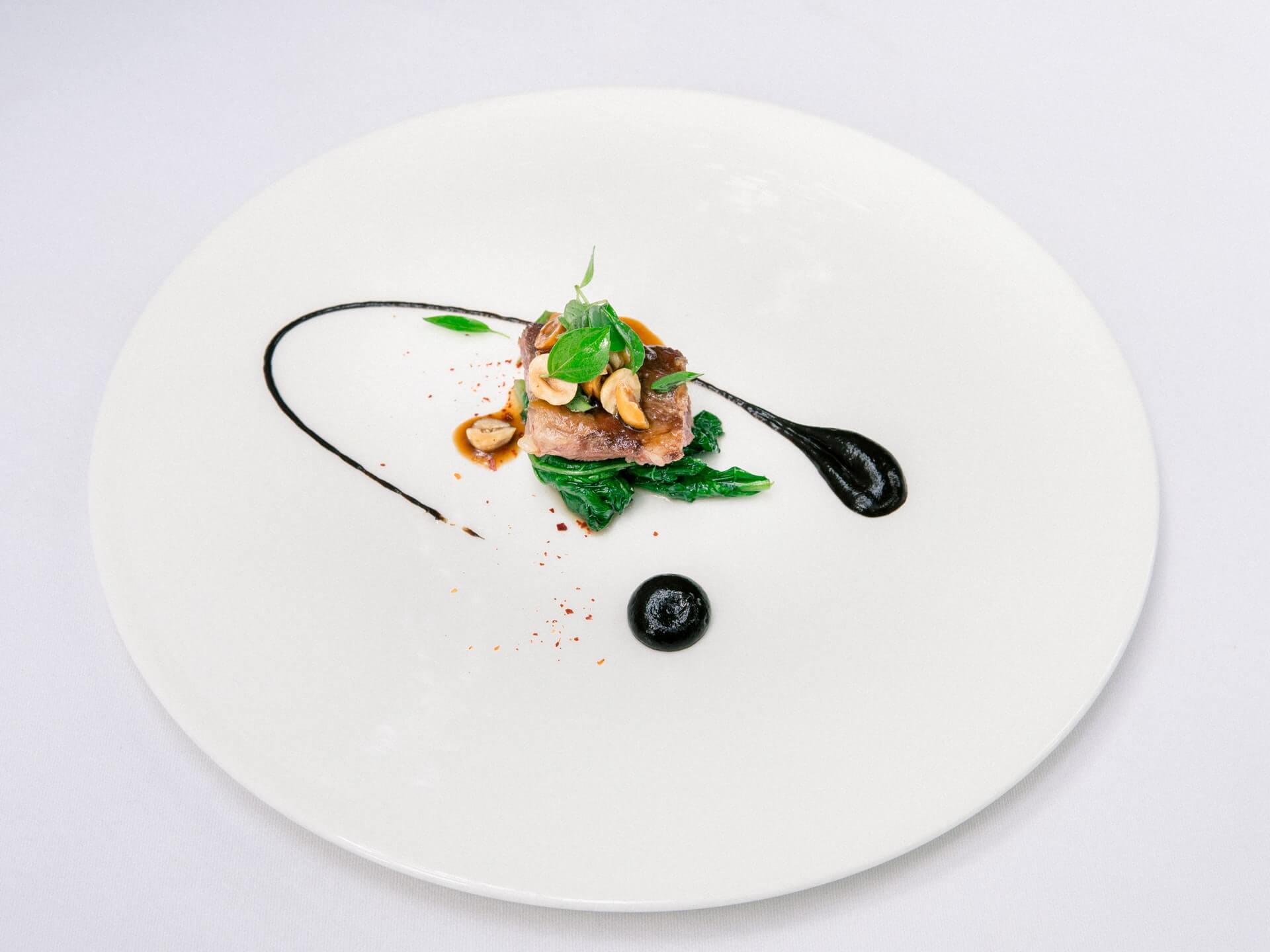
Gourmet dish on white background

Finally, the World’s 50 Best announces the World’s 50 Best Restaurants, an impressive list of the finest places to dine across the globe.

Of course, this highly anticipated news comes on the heels of the World’s 50 Best Restaurants, 51 to 100. Last night, host Stanley Tucci and special guest co-hosts announced the winners in London.

Perhaps not too surprisingly, only three American restaurants are among this year’s top fifty. Of those three, one is in Healdsburg, California, which is the wine-producing region of Sonoma County. The other two American restaurants are in New York City, which isn’t exactly a surprise. And of those two restaurants, one, number 33 on this year’s list, is the winner of the Gin Mre Art of Hospitality Award.

Unfortunately, there are no Canadian restaurants on the World’s 50 Best Restaurants 2022 list. That applies to the back half of the list, numbers 51 to 100, as well.

Interestingly, the restaurant taking home the title of World’s Best Restaurant 2022 took the number two spot in 2021. Another hint: This year’s number one, by clinching the top slot, is also the Best Restaurant in Europe 2022.

So, do you think you know what restaurant is the best in the world? Scroll down to see if you’re right.

The World’s 50 Best Restaurants 2022: 50 to 1

  1. Single Thread (Healdsburg, California, USA)
  2. Ikoyi (London, England)
  3. Leo (Bogotá, Colombia)
  4. Oteque (Rio de Janeiro, Brazil)
  5. Belcanto (Lisbon, Portugal)
  6. Narisawa (Tokyo, Japan)
  7. Le Bernardin (New York, New York, USA)
  8. Boragó (Santiago, Chile)
  9. Quique Dacosta (Dénia, Spain)
  10. La Cime (Osaka, Japan)
  11. Schloss Schauenstein (Fürstenau, Switzerland)
  12. Sorn (Bangkok, Thailand)
  13. Jordnær (Copenhagen, Denmark)
  14. Fyn (Cape Town, South Africa)
  15. Odette (Singapore)
  16. The Clove Club (London, England)
  17. Hiša Franko (Kobarid, Slovenia)
  18. Atomix (New York, New York, USA)(Gin Mare Art of Hospitality Award 2022)
  19. Mayta (Lima, Peru)
  20. Arpège (Paris, France)
  21. Florilège (Tokyo, Japan)
  22. St. Hubertus (San Cassiano, Italy)
  23. Le Clarence (Paris, France)
  24. Hof Van Cleve (Kruishoutem, Belgium)
  25. Restaurant Tim Raue (Berlin, Germany)
  26. Frantzén (Stockholm, Sweden)
  27. The Chairman (Hong Kong)
  28. The Jane (Antwerp, Belgium)
  29. Septime (Paris, France)
  30. Mugaritz (San Sebastian, Spain)
  31. Den (Tokyo, Japan)
  32. Piazza Duomo (Alba, Italy)
  33. The Alchemist (Copenhagen, Denmark)
  34. Nobelhart & Schmutzig (Berlin, Germany)(Villa Massa Highest Climber Award 2022)
  35. Elkano (Getaria, Spain)
  36. Reale (Castel di Sangro, Italy)
  37. Don Julio (Buenos Aires, Argentina)
  38. Steirereck (Vienna, Austria)
  39. Uliassi (Senigallia, Italy)(Highest New Entry Award 2022)
  40. Maido (Lima, Peru)
  41. Le Calandre (Rubano, Italy)
  42. Quintonil (Ciudad de México, México)(Estrella Damm Chef’s Choice Award: Chef Jorge Vallejo)
  43. Lido 84 (Gardone Riviera, Italy)
  44.  A Casa do Porco (São Paulo, Brazil)
  45. Asador Etxebarri (Atxondo, Spain)
  46. Pujol (Ciudad de México, México)
  47. Diverxo (Madrid, Spain)
  48. Disfrutar (Barcelona, Spain)
  49. Central (Lima, Peru)
  50. Geranium (Copenhagen, Denmark)

Image: Delightin Dee on Unsplash

by David Klemt David Klemt No Comments

Brutal: These Drinks are Heavy

Brutal: These Drinks are Heavy

by David Klemt

Marshall amplifier closeup

Several legendary and iconic heavy metal bands are stepping into the arena of the drinks industry, from beer to whiskey, and more.

You won’t find a celebrity rosé wine or mezcal on this list. Instead, you’ll find bourbon and rye blends, unique processes, full beer lineups, and small-batch releases.

Most importantly, these are products that deserve a place on your menus. These aren’t spirits and beers that rely on band names and their global recognition. Each of these can stand on their own.

In fact, one whiskey from Slipknot and an Iowa distillery won an award from Fred Minnick in 2019.

Metallica

You may familiar with Blackened, a rye and bourbon blend that finishes in brandy casks. This limited-edition, super-premium whiskey is also subjected to the proprietary Black Noise process.

In short, each batch of Blackened is enhanced by the frequencies of curated Metallica playlists. This whiskey is a true collaboration. Legendary Master Distiller Dave Pickerell partnered with Metallica and Meyer Sound for the recipe and process.

However, Master Distiller and Blender Rob Dietrich has crafted a rye expression. Rye the Lightning is, as you can likely tell from the name, a rye whiskey. This expression also undergoes a very specific Black Noise process.

To craft Rye the Lightning, the live recording of Ride the Lightning in its entirety from Metallica’s Orion Music + More set is played to enhance the liquid. Taking things a step further, Rye the Lightning is finished in Madeira and rum casks.

Not content with just two expressions, there are also the Master of Whiskey Series and limited edition whiskeys available.

Iron Maiden

Iconic English heavy metal band Iron Maiden has steered heavily into the beer business. You won’t find a limited-release Lager here and a Pilsner there. No, Iron Maiden has a full lineup of beers in several styles.

Trooper, named for their song “The Trooper,” is the name under which the band crafts their beers in partnership with brewers like Bodebrown and Robinsons. You’ll find many beer styles under the Trooper label: Strong Bitter, English Extra Special, Porter, Golden, IPA, and more.


View this post on Instagram


A post shared by Trooper (@ironmaidenbeer)

Of course, there are limited editions. And why shouldn’t there be? Iron Maiden and there brewer partners want to have rock out, like they did with the Number of the Beast, a Bitter.

Motörhead

Since there’s a bourbon and a beer carrying the Motörhead name, you can create a Boilermaker honoring the heavy band. And as you may imagine, one-half of the Boilermaker is named after the song “Ace of Spades.”

In this case, Ace of Spades is a bourbon crafted in Fargo, North Dakota, by Proof Artisan Distillers. This distillery produced North Dakota’s first-ever bourbon, Crooked Furrow. Ace of Spades is a full-bodied, 90-proof high-rye bourbon with warm, sweet notes and a cinnamon finish.

For the beer, Motörhead tapped Madison, Wisconsin, brewers Ale Asylum. Röad Crew is a crisp, hoppy American Pale Ale with citrus notes.

Cannibal Corpse

This whiskey, Golden Blood, is actually the inspiration for this article and product roundup. Golden Blood by Cannibal Corpse, one of the heaviest bands on this list, is crafted in collaboration with Three Floyds Distilling.

Since opening their doors in 2017, Three Floyds has been known for doing things differently. In fact, the distillery itself says their approach is “not normal.” So, this collaboration with Cannibal Corpse makes a lot of sense.

According to Three Floyds, the band itself selected the liquid. A single barrel straight malt whiskey, Golden Blood was aged four years in new, charred oak. And the label is sure to draw attention on your back bar.

GWAR

As the story goes, GWAR is not of this planet. Rather, GWAR is an intergalactic rock band that arrived on Earth via comet.

Well, when you have an origin mythology that incredible, you can’t phone in products tied to your name. I promise that you’ve never encountered a whiskey-crafting process like the one that produces Catoctin Creek Ragnarök Rye:

“The mad scientists at Catoctin Creek conducted experiments on aging the blood of GWAR in barrels made from the different types of wood scorched by the comet’s blast. They used the rarest of grains and watered their mash bill with the melted Antarctic ice to create a 92 strength rye whisky, pot stilled and then aged in charred new white oak. Members of GWAR then hurled the whiskey barrels into the orbit of the moon, causing contraction to take place as the barrels spun under the influence of the deathly coldness of space and the life-giving heat of the sun.”

Well, that’s different.

Slipknot

Cedar Creek Distillery in Iowa crafts two whiskey expressions for Slipknot. The first expression is Slipknot No.9, a four-year-old blend of straight bourbon and straight rye whiskeys.

Then there’s Slipknot No. 9 Reserve. For this special release, award-winning Cedar Creek bottles the same bourbon and rye blend at 99 proof. Fred Minnick named Slipknot No. 9 Reserve the Best Celebrity Whiskey in 2019. That’s no small feat.


View this post on Instagram


A post shared by Slipknot Whiskey (@slipknotwhiskey)

An equally daunting feat? Getting your hands on Slipknot co-founder and percussionist Clown’s Iowa Shine. If you can find it, this bottle is Clown’s very own moonshine.

Honorable Mentions

The Deftones have partnered with Belching Beaver to craft an IPA called Deftones Phantom Bride. This IPA, a collaboration between head brewer Thomas Peters and the Deftones’ Chino Moreno, is made using Amarillo, Citra, Simcoe and Mosaic hops.

And then there’s Bay Shore, New York’s Great South Bay Brewery. The brewery has honored Pantera with a limited edition beer called Vulgar Display of Lager. Obviously, this is intended to honor the 30th anniversary of the thrash metal band’s brutal 1992 Vulgar Display of Power album.

Image: Alexander Kampmann from Pixabay

by David Klemt David Klemt No Comments

2022 World’s 50 Best Restaurants: 51-100

’22 World’s 50 Best Restaurants: 51-100

by David Klemt

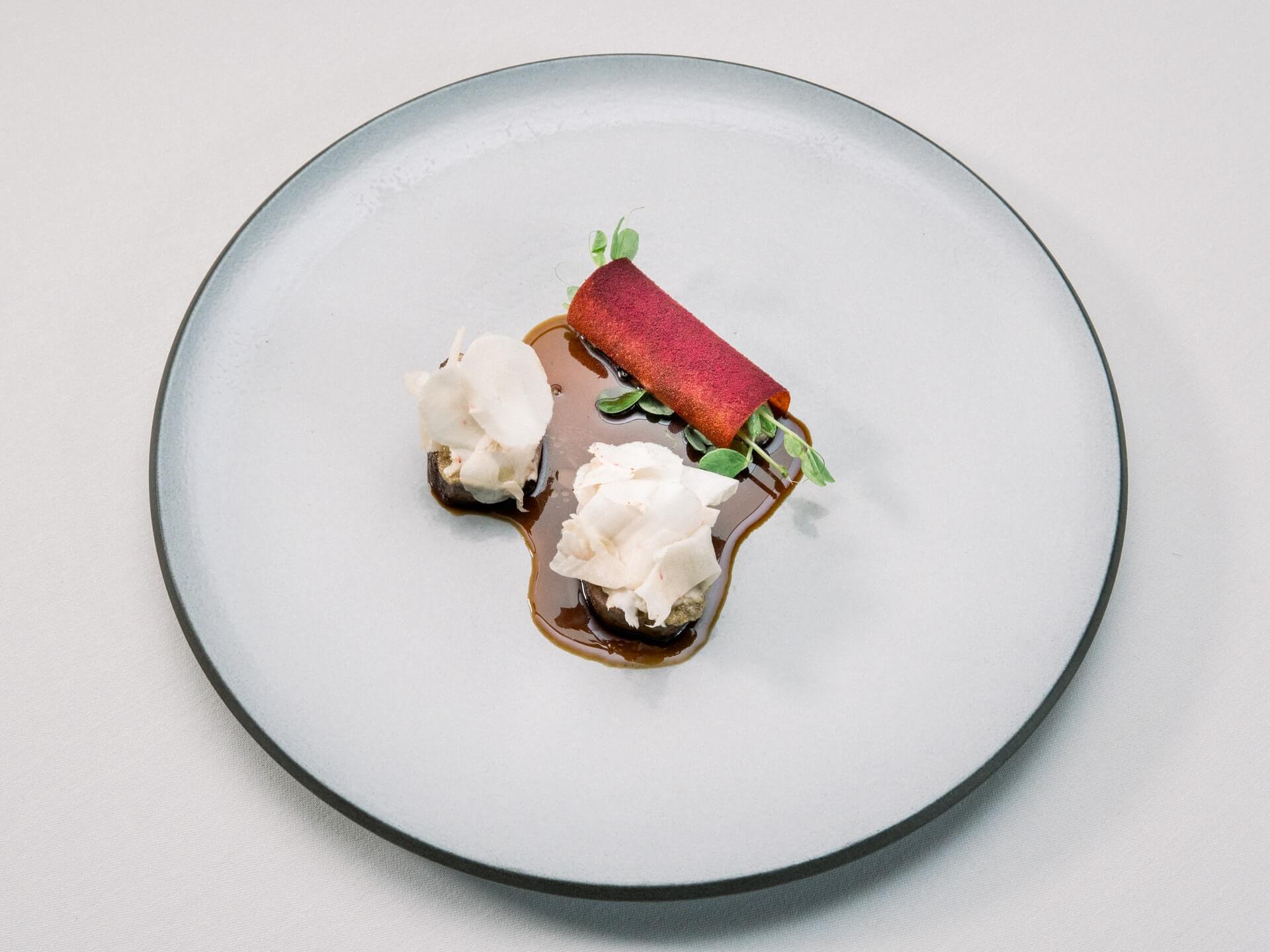
High-end plate of food

Just a week away from their big 2022 reveal, numbers 51 through 100 of the World’s 50 Best Restaurants is now available.

As one expects, these restaurants represent the pinnacle of dining. The 2022 list also represents a number of changes in comparison to 2021.

For example, a number of restaurants in the Middle East are among this year’s 51 to 100 rankings. Notably, these restaurants were not included on last year’s list. In fact, nearly half of the restaurants are new entries on the 51 to 100 list.

Additionally, the 2022 list represents six continents. This year, four “new” countries and a sovereign island city-state make the 51 to 100 rankings:

  • Argentina
  • China
  • Germany
  • Singapore
  • UAE

The regional breakdown is as follows:

  • Asia: 14 restaurants
  • Europe: 13 venues
  • North America: 11 concepts
  • Middle East: 2 restaurants
  • Africa: 2 concepts
  • Oceania: 1 venue
  • South America: 7 restaurants

Just six American restaurants are on the list. Three are in New York, two in San Francisco, and one is in Chicago. Disappointingly, zero Canadian restaurants are among the 51 to 100 rankings.

Restaurants one through 50 will be revealed on Monday, July 18. Numbers 51 to 100 of the World’s 50 Best Bars will be revealed Tuesday, September 27.

The World’s 50 Best Restaurants 2022: 51 to 100

  1. Alcalde (Guadalajara, Jalisco, México)
  2. Sud 777 (Ciudad de México, México)
  3. D.O.M. (São Paulo, SP, Brazil)
  4. Lyle’s (London, England)
  5. Azurmendi (Larrabetzu, Biscay, Spain)
  6. La Colombe (Cape Town, Western Cape, South Africa)
  7. Trèsind Studio (Dubai, UAE)
  8. Alléno Paris au Pavillon Ledoyen (Paris, France)
  9. Sazenka (Tokyo, Japan)
  10. Rosetta (Ciudad de México, México)
  11. La Grenouillère (La Madelaine-sous-Montreuil, France)
  12. Ernst (Berlin, Germany)
  13. Chef’s Table at Brooklyn Fare (New York, NY, USA)
  14. Fu He Hui (Shanghai, People’s Republic of China)
  15. Le Du (Bangkok, Thailand)
  16. Sühring (Bangkok, Thailand)
  17. Evvai (São Paulo, SP, Brazil)
  18. Kjolle (Barranco, Lima, Perú)
  19. Cosme (New York, NY, USA)
  20. Zén (Singapore)
  21. Mingles (Seoul, South Korea)
  22. Atelier Crenn (San Francisco, CA, USA)
  23. Kol (London, England)
  24. Blue Hill at Stone Barns (Pocantico Hills, Mount Pleasant, NY, USA)
  25. Samrub Samrub (Bangkok, Thailand)
  26. Neighborhood (Hong Kong)
  27. Table by Bruno Verjus (Paris, France)
  28. Lasai (Rio de Janeiro, RJ, Brazil)
  29. Estela (New York, NY, USA)
  30. AM par Alexandre Mazzia (Marseille, France)
  31. Brat (London, England)
  32. Sézanne (Tokyo, Japan)
  33. El Chato (Bogotá, DC, Colombia)
  34. Gimlet at Cavendish House (Melbourne, Victoria, Australia)
  35. Raan Jay Fai (Bangkok, Thailand)
  36. Mikla (Beyoğlu/İstanbul, Turkey)
  37. Orfali Bros Bistro (Dubai, UAE)
  38. Mishiguene (Buenos Aires, Argentina)
  39. Máximo Bistrot (Ciudad de México, México)
  40. Wolfgat (Paternoster, Western Cape, South Africa)
  41. Oriole (Chicago, IL, USA)
  42. Indian Accent (New Delhi, Delhi, India)
  43. Hertog Jan at Botanic Sanctuary (Antwerp, Belgium)
  44. Burnt Ends (Singapore)
  45. Meta (Singapore)
  46. Maní (São Paulo, SP, Brazil)
  47. Benu, San Francisco, CA, USA)
  48. Tantris (München, Germany)
  49. Flocons de Sel (Megève, France)
  50. Wing (Hong Kong)

*Bold denotes new entry

Image: Delightin Dee on Unsplash

by David Klemt David Klemt No Comments

Meat-limiters Driving Change

Meat-limiters Driving Change

by David Klemt

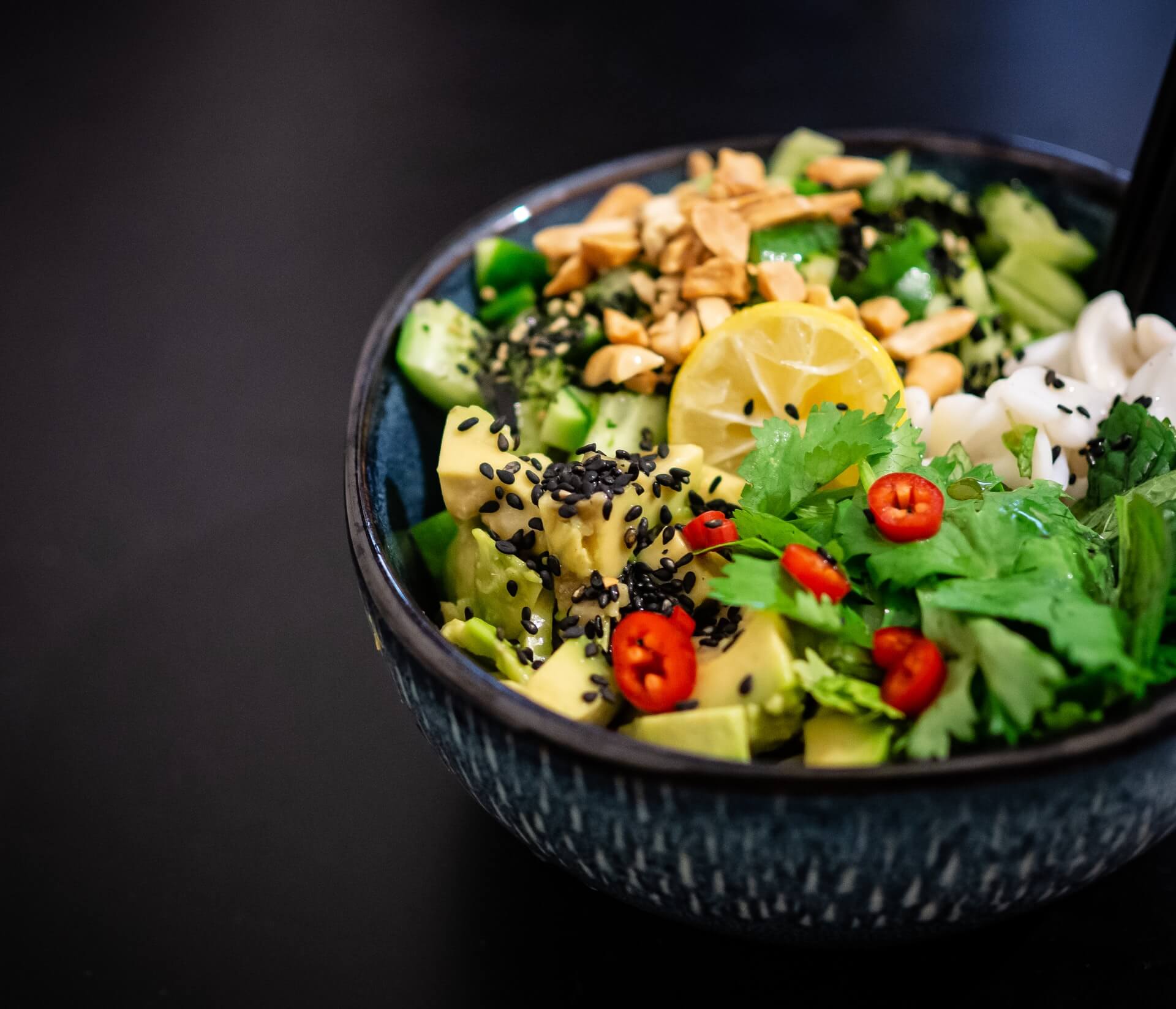
Plant-based food bowl

You’re likely familiar with dietary terms like vegetarian, vegan, pescatarian, and even flexitarian, but what about meat-limiter?

As the name implies, a meat-limiter is a person actively choosing to reduce their meat intake. It’s also an umbrella term that includes vegan, vegetarian, pescatarian, or flexitarian diets.

Earlier this year, Datassential took a look at plant-based opportunities. Over the course of a week, 1,500 Americans ages 18 to 88 were surveyed online.

Datassential conducted their research with three partners:

  • The Culinary Institute of America
  • Food for Climate League
  • Menus of Change University Research Collaborative

The results are revealed within Datassential’s “2022 Plant-Forward Opportunity” report. To access a number of free reports, sign up with Datassential today.

Meat-limiter Guests

Just over a quarter of Americans—29 percent—are meat-limiters in some way. That number climbs to 36 percent for Gen Z, per this Datassential survey.

Of four major diets (vegetarian, vegan, pescatarian, flexitarian), vegetarian and vegan are the least common. The overall US population consists overwhelmingly of meat eaters (71 percent). Nearly a quarter, 22 percent, are flexitarian.

For Gen Z, those same numbers are 65 percent and 19 percent, respectively. Interestingly, Gen Z has more vegetarians and vegans than other generations.

But then there’s this: When it comes to the daily consumption of animal proteins, Gen Z is at the top. It’s Millennials who consume the most plant-based proteins on a daily basis.

Animal proteins are still at the top across generations. However, people are consciously reducing their meat intake and seeking plant-based alternatives.

What’s Driving Meat-limiters?

In comparison to 2021, Datassential hit on a compelling finding. A mere six percent of the US population was actively reducing meat intake last year.

That number has skyrocketed in 2022. This year, per Datassential, 21 percent of consumers can be considered meat-limiters.

Given the pandemic, it makes sense to assume this dietary change is due to personal health. However, climate change is a major driver.

Overall, 55 percent of consumers feel climate change is important. That number climbs to 71 percent for meat-limiters, 69 percent of students.

Half of consumers also feel that plant-based foods, in general, are better for the planet. Nearly half (47 percent) feel these foods are also more sustainable. Again, the number increases for meat-limiters and students (and Millennials, as well).

Interestingly, two-thirds of consumers feel traditional plant-based food items are healthier than new plant-based meat alternatives. However, a little over 60 percent of consumers find both plant-based food categories healthy.

Takeaway

Before proceeding, it’s important to recognize that a survey of just 1,500 people comes with a margin of error.

Still, the results are compelling and provide insight into today’s consumer. Among the top insights:

  • Consumers are trying more plant-based menu items.
  • Climate change and sustainability are driving consumer decisions.
  • More consumers are concerned with their health.

Per Datassential, one way to appeal to a wide range of guests is offering “mixed dishes.” These are menu items that combine animal and plant proteins. Another way forward is menuing plant-forward dishes that include a small amount of meat, poultry, fish, or dairy.

If we accept that only a tiny fraction of the US population is vegetarian or vegan, targeting flexitarians and daily meat eaters in this way makes sense.

Image: Yoav Aziz on Unsplash

by David Klemt David Klemt No Comments

Datassential IDs LTO Keys

Datassential Identifies Limited-time-offer Keys

by David Klemt

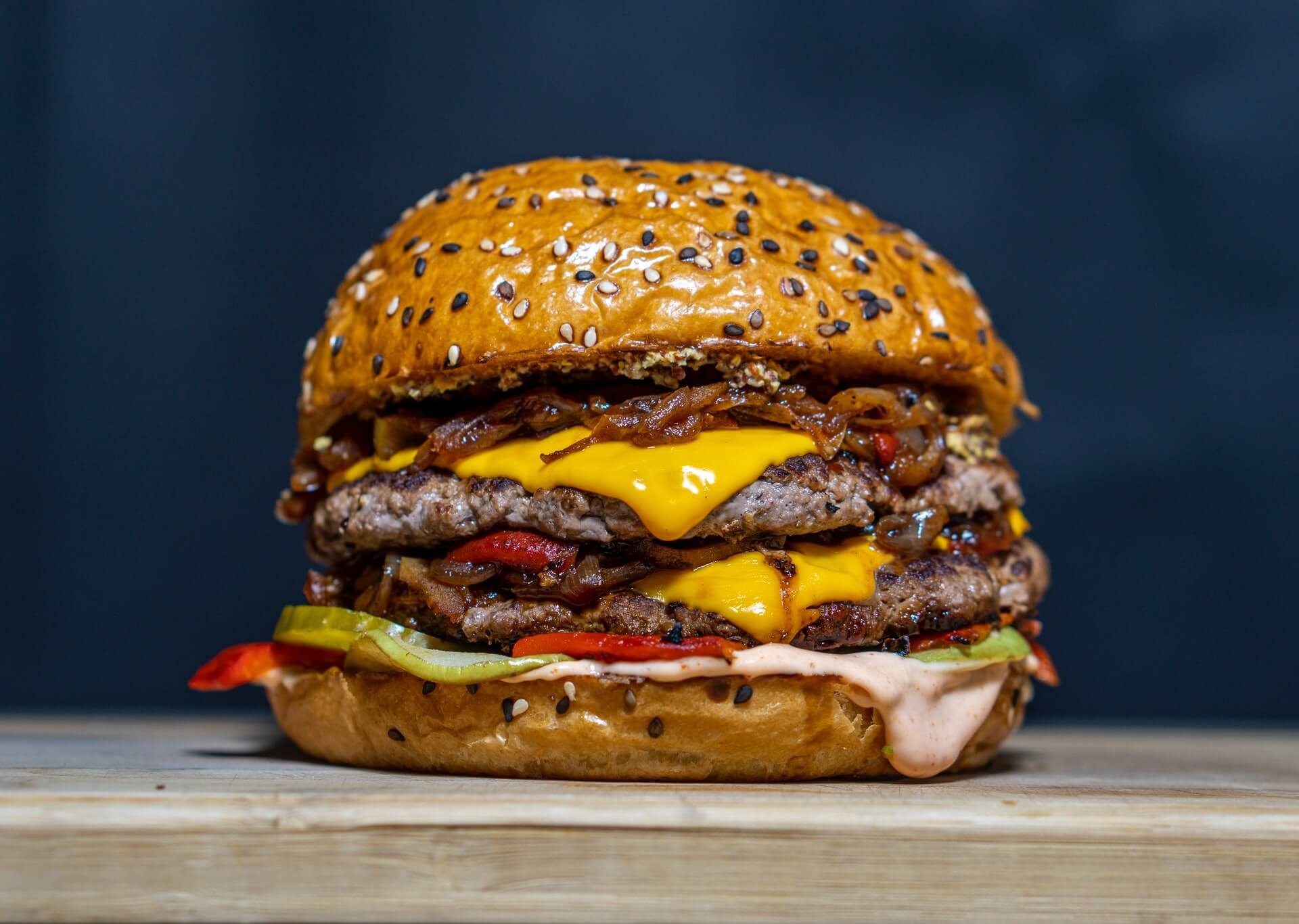
Double cheeseburger on sesame bun

Food and beverage market research firm Datassential turns their attention to limited-time offers in one of their latest reports.

Part of the FoodBytes series of resources, “A Look at Limited-time Offers” is a free Datassential trend report. If you have yet to do so, sign up for Datassential FoodBytes reports.

There are several ways for savvy operators to drive traffic. Loyalty programs and subscriptions are two popular modern-day solutions.

However, the LTO is tried, true, and can boost traffic, engagement, loyalty, sales, and revenue.

Of course, there are different ways to execute LTOs. There’s the recurring, anticipation-driving item: McDonald’s McRib. Then there’s the seasonal offering: Starbucks Peppermint Mocha. And the return of a popular item eliminated years prior: Taco Bell Mexican Pizza and Wendy’s Spicy Chicken Nuggets.

Some LTOs have been going strong for years, others are leveraging a sense of nostalgia. In fact, some appear to be a direct response to Internet chatter.

Which LTO?

Per Datassential, 63 percent of LTOs most recently purchased by consumers were impulse decisions. And when the firm dives into LTOs in general, they find that one product stands above the others.

The top-performing LTO food item in terms of order frequency is the burger.

Now, does that mean you have to menu an LTO burger to succeed with this type of promotion? Of course not.

A successful LTO is one that’s authentic to your brand. And, clearly, it needs to be one that interests your guests. If you’ve been reading KRG Hospitality articles for a while, you know what I’m going to say next.

But for those who are new around here, I’m going to tell you to review your consumer data. What items are performing best? What flavors are resonating with your guests?

Now, look at the industry. What flavors and items are trending? How can you leverage them—in an authentic way—into an LTO?

If a burger may not work, will a different type of sandwich do the job? How about nuggets, breakfast items, a dessert, or a beverage?

Know your brand, know your guest, know what’s bringing the heat.

How Long?

Once you know what you’re offering, the next question should be obvious. How long are you going to make it available?

Every concept is different. What works for one may not work for another. However, analyzing what others do in terms of LTO duration and frequency can help inform you.

And as it turns out, Datassential’s latest FoodBytes report addresses “LTO cadence.”

The majority of operators—43 percent—run an LTO once every one to three months. Considering the popularity of seasonal LTOs, this frequency makes sense.

Interestingly, a quarter of operators offer an LTO more than once per month. Just about as many execute one every three to six months.

Far, far less common is running an LTO once every six to 12 months. In fact, this is the approach of just seven percent of operators. A mere two percent of operators run an LTO less than once every 12 months.

Again, there’s no “right” answer here. Some operations can succeed with multiple LTOs each month, some find success rarely offering one at all.

Takeaway

Operators know their brands best. They should know their guests equally as well, or at least strive to do so. As such, an operator should have an idea of what to offer in terms of LTO food or beverage items.

And, of course, operators should data-obsessive. That’s the only real way to have an idea of what LTOs will work, how often they should run, and how frequently one should be available.

But there’s more to know. Datassential also reveals challenges that deserve serious consideration before executing any LTO:

  • Do you have time to train staff on the new item?
  • Is your staff strong when it comes to upselling?
  • Will your guests complain when the new product is no longer available?
  • Do you have to source one or more ingredients for this item?
  • Is/Are the ingredient(s) necessary readily available?

The LTO is a proven marketing and promotion tool when done well. Challenging, yes, but worth the effort.

Image: amirali mirhashemian on Unsplash

by David Klemt David Klemt No Comments

5 Books to Read this Month: July 2022

5 Books to Read this Month: July 2022

by David Klemt

Flipping through an open book

This month’s engaging and informative book selections will help you develop next-level beverage techniques and drink menus throughout 2022.

To review June’s book recommendations, click here.

Let’s jump in!

The Bartender’s Manifesto

Spirits, cocktail and industry author Emma Janzen partners with Toby Maloney and the bar team at the Violet Hour. Since 2007, the Violet Hour has not only been serving incredible cocktails in Chicago, the bar has also been leading the way in cocktail training.

So, who better to learn from to nail the fundamentals, tap into your creativity, and understand every element of crafting cocktails? Pick up The Bartender’s Manifesto today. As of publication of this article, Amazon is offering $2.70 off the hardcover.

Black Mixcellence: A Comprehensive Guide to Black Mixology

Marketing strategist and award-winning author Tamika Hall collaborates with one of my favorite industry people, Colin Asare-Appiah, to bring us this awesome book.

Black Mixcellence delves into the impact of Black entrepreneurs, educators, and mixologists on the hospitality, spirits, and cocktail spaces. Along with the incredible stories, there are 70 cocktail recipes included in Black Mixcellence. Place your pre-order today!

Smoked Cocktails: From Mixology To Smoking Techniques

You and your bar team may have noticed that smoking cocktails is once again “on trend.” To be fair, I don’t think this cocktail build and presentation technique ever became unpopular.

In Smoked Cocktails you’ll learn not only how smoke plays with and enhances other flavors and aromas, author Benji O’Day also covers cocktail history, bartending techniques, and much more. Grab the paperback from Amazon today.

Cocktail Chemistry

Leveraging nostalgia and pop culture can be a lucrative way of boosting traffic, generating revenue, and increasing social media engagement. Written and curated by Nick Fisher, Cocktail Chemistry features cocktail recipes from iconic and beloved movies and television shows.

In addition, this informative cocktail book includes how-tos spanning a range of important bar techniques, from making clear ice to creating your own infusions. Pick up this hardcover now.

The Concise Guide to Wine and Blind Tasting: Volume 1

Do you have a robust wine program? Are you interested in demystifying wine and enhancing your front-of-house team’s knowledge of wine? Do you just not want your bar team or servers to answer guests’ wine questions with a frustrating “I don’t know”?

This guide, according to The Times Literary Supplement, delivers a “comprehensive education in wine.” Included in The Concise Guide to Wine and Blind Tasting: Volume 1 are the philosophy and history of wine, the distinctive characteristics of several wine regions, the science and art behind blind wine tasting, and more.

Image: Mikołaj on Unsplash

by David Klemt David Klemt No Comments

Raise a 7&7 to National Dive Bar Day

Raise a 7&7 to National Dive Bar Day

by David Klemt

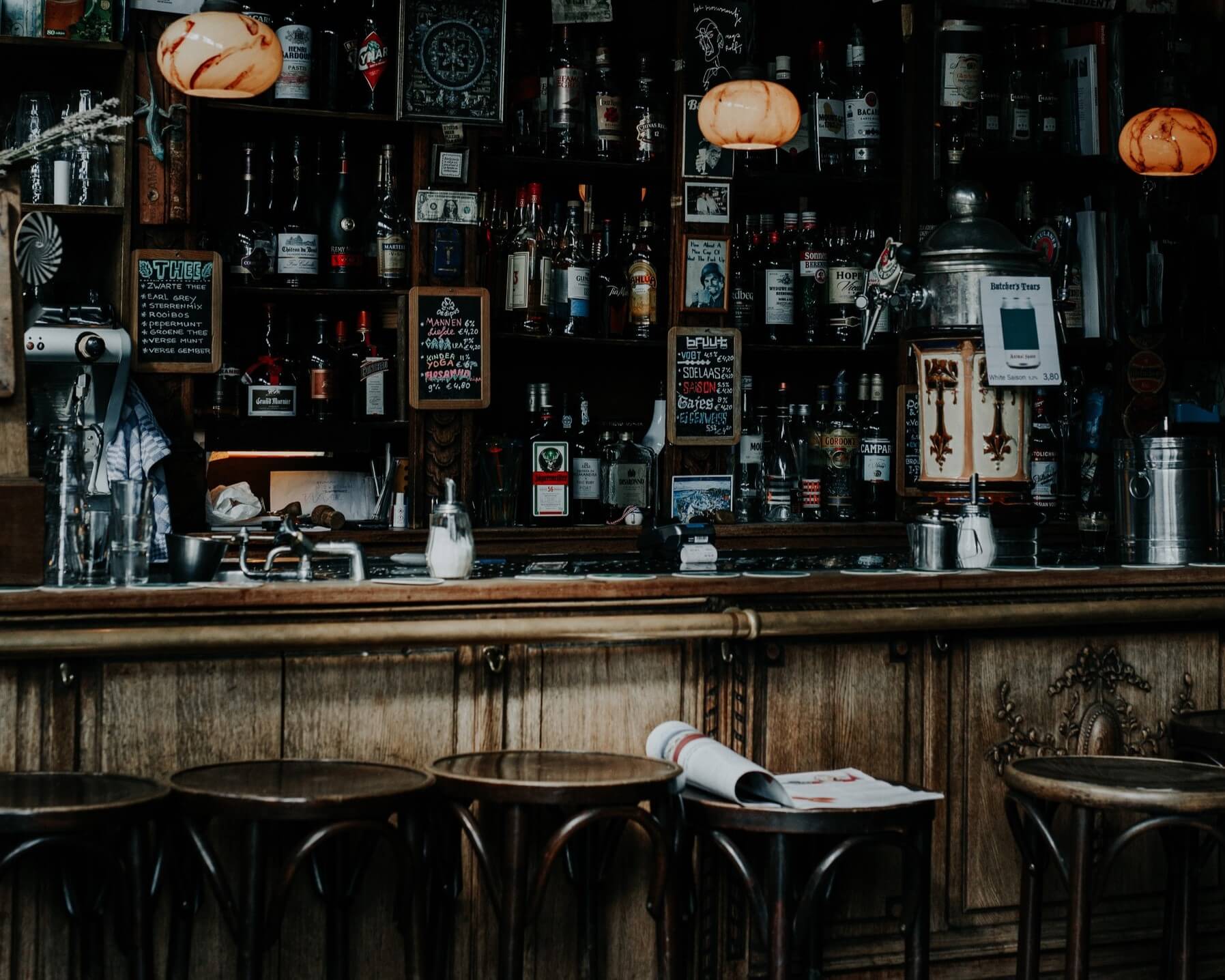
Dive bar or neighborhood bar

We celebrate one of the most hallowed of drinking establishments on July 7, also known as National Dive Bar Day.

Look, we love a visit to a high-end, luxurious cocktail bar. But there’s nothing quite like discovering a casual, comfortable, unpretentious bar that feels like home.

Often times, the local watering hole is a cornerstone of a given community. So, we’re looking forward to the fifth annual National Dive Bar Day in just over two weeks.

You should have plenty of time if you’re a dive or neighborhood bar owner to create your National Dive Bar Day promotion.

A Little History

It’s hard to believe that National Dive Bar Day is a mere five years old. In fact, Seagram’s 7 Crown launched the first annual celebration in 2018.

Not only does this holiday honor a true institution, Seagram’s donated $25,000 to the National Trust for Historic Preservation on its inception. (This year, Seagram’s 7 Crown is supporting Main Street Alliance.)

This makes a lot sense when you think about it. After all, dive bars are often located in a historic building or are landmarks themselves.

Some people may not like it, but drinking culture is an integral part of many a community across not just America, not just North America, but the world.

Not so long ago a bartender could set beers and shots in front of two people with opposing views and they’d find common ground to bond over. The optimist in me hopes we can return to those days, visiting our local neighborhood bars and focusing on what we all have in common rather than letting ourselves grow further divided.

Where some people see a “just” a dive bar, those of us in the know see social and cultural centers that support neighborhoods and communities.

Given their commitment to unpretentious and welcoming service, we need to support and protect our local dives.

What Makes a Dive Bar?

There are some key elements that set dive bars apart from other drinking establishments.

Characters on both sides of the bar, inexpensive drinks, familiar bar food, and an approachable feel are, I would say, the hallmarks.

Now, there are those who think a dive bar also includes an “earthy” smell, to be generous. They may also feel that they call dirty buildings with questionable structural integrity home.

However, “dive” doesn’t have to mean filthy. First and foremost, a dive bar needs to be comfortable and welcoming. Filth tends to give off an unwelcoming, dangerous vibe. That’s not exactly the spirit of hospitality.

Just as a great dive bar should be clean, it should also have a solid F&B program. Inexpensive doesn’t have to mean cheap. Oh, and no, the staff doesn’t have to be surly and untrained.

Dives are Neighborhood Bars

When I first learned about Nickel City, as an example, I saw what a dive bar should be. Both locations, Austin and Fort Worth, are described by co-owner Travis Tober as “anytime bars.”

Nickel City commits to serving the community, and they’re open when people need them. In fact, as you’ll learn during episode 50 of the Bar Hacks podcast, Tober made sure they were open to serve people during the infamous winter storm of 2021 that shut down much of Texas.

In speaking with Tober and reading other interviews with him, I learned that he prefers the term “neighborhood” to “dive.” Due in part to the negative perception some have of dive bars, I can understand his preference.

In my opinion, the difference lies in subtle but important nuances. However, I’ll probably still refer to neighborhood bars as dive bars.

Either way, Nickel City is a dive bar done right and a concept that other operators should certainly study. Nickel City is exemplary, a standard that dive/neighborhood bars should aspire to reach.

The 7&7

As far as Seagram’s is concerned, the 7&7 is “the quintessential Dive Bar drink.” It’s difficult to argue: it’s a highball, it’s fast and simple to make, it’s refreshing, and it shouldn’t be pricey.

But, hey, if you’ve never made or ordered one, here’s the recipe:

Simply prepare a highball glass with ice, add Seagram’s 7 Crown and 7UP, and stir. Then just stir, garnish, and serve.

Cheers!

Image: Florencia Viadana on Unsplash

by David Klemt David Klemt No Comments

Plants Dominate 2022 NRA Show

Plants Dominate 2022 National Restaurant Association Show

by David Klemt

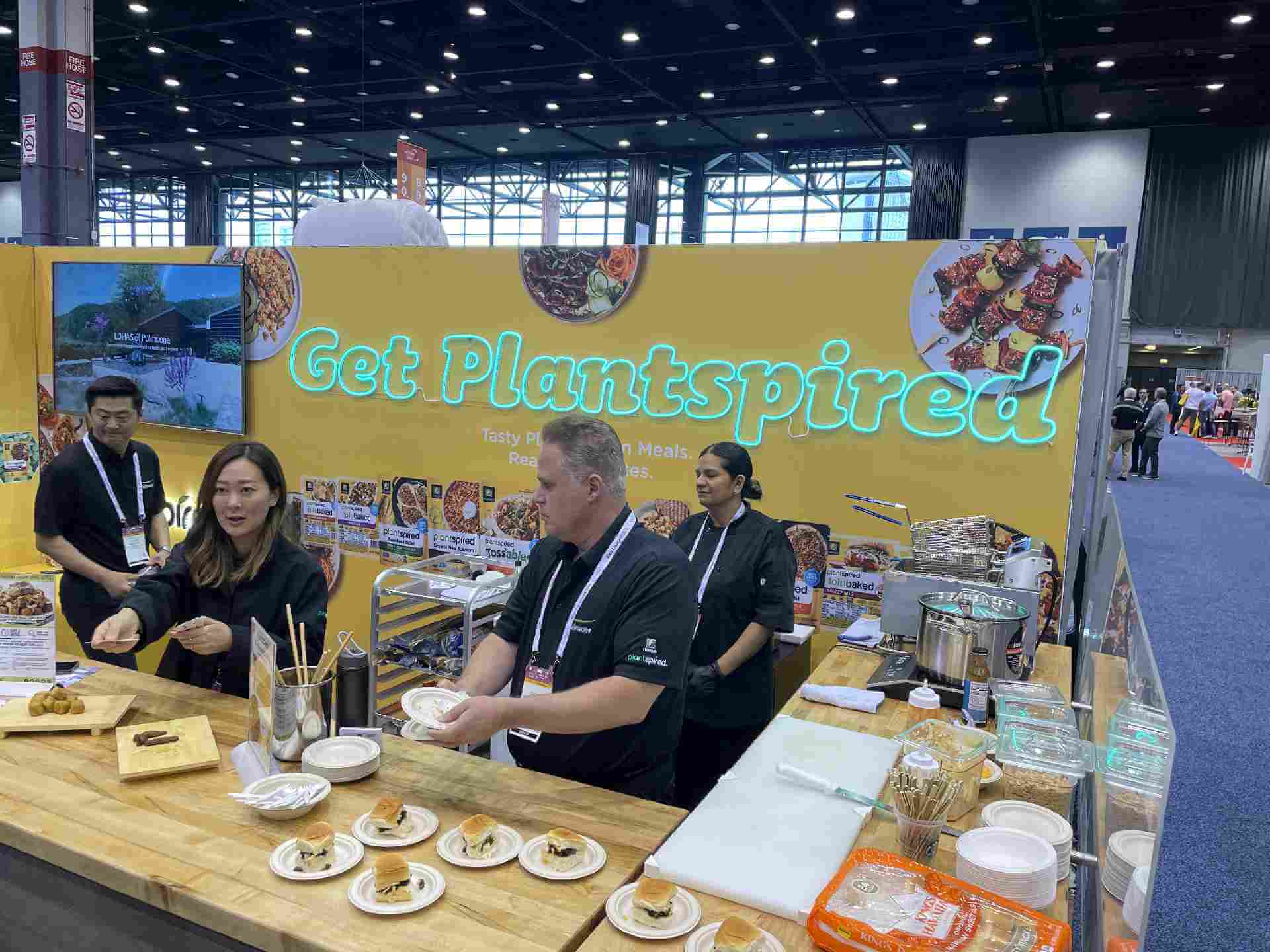
Plantspired plant-based foods

The National Restaurant Association Show is back in a big way, and meat alternative brands are establishing themselves as much more than a trend.

In particular, plant-based brands made their presence known in the Lakeside Center.

However, some big companies also showcased their animal alternatives in the South Building. Among them, Beyond and Daiya.

Notably, Daiya brought with them their freshly reformulated cream cheese alternative. They also had a creamy, flavorful queso at their booth.

Chik’n

Unsurprisingly, meatless chicken—often stylized as “chik’n”—dominated the NRA Show floor.

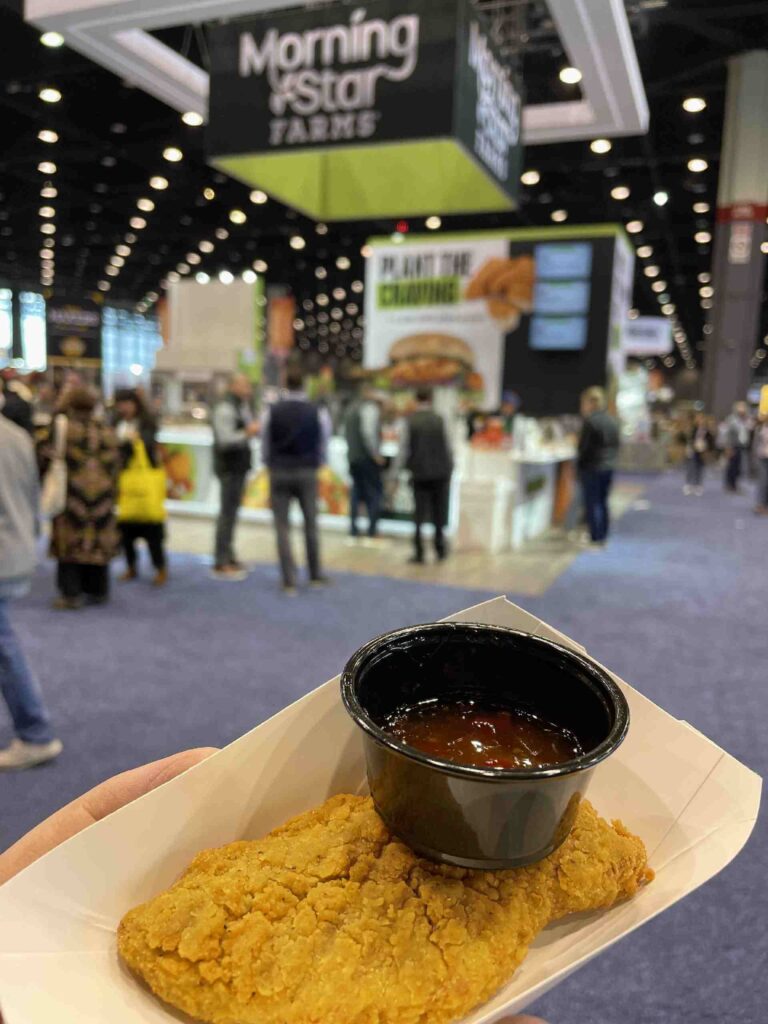
Morning Star Farms chicken

However, exhibitors showed off more than just nuggets and fingers. This year was more about innovation.

For example, more than one company is rolling out chik’n wings. Of course, there are no bones, so they’re more akin to nuggets.

Essentially, these chicken alternatives are boneless “wings.” And as we all know, boneless chicken wings are just chicken chunks with better marketing.

Really, it’s the seasoning, heat, and shape that define the chik’n wing. At least, that’s what they are for now. I expect further innovation and refinement for these wings.

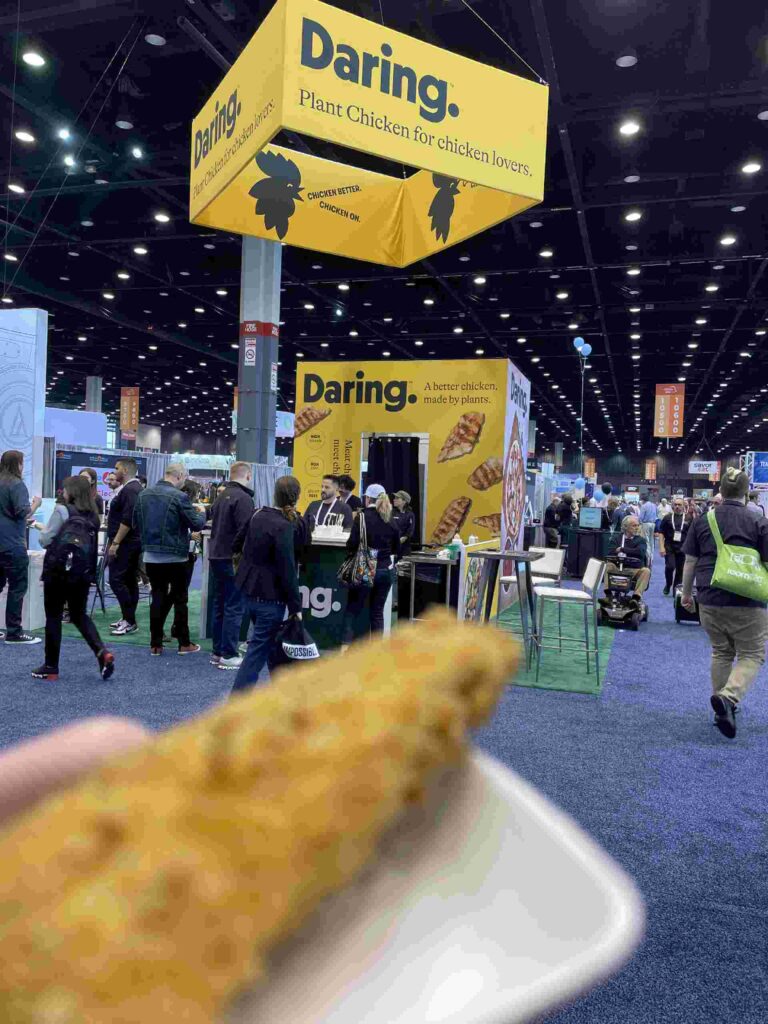
Daring plant-based chicken

Interestingly, some brands appear to be taking on the chicken breast. Now, there weren’t many meatless companies featuring these on the NRA Show floor. Still, there were a couple and their products looked the part.

The textures are also quite close to their meaty counterparts. But I think there’s still work to do.

Plant-based Seafood

Of all the plant-based alternatives, seafood was the star. The CEOs of big brands have been working on these products for several years.

Well, we certainly saw the fruits of their investments at this year’s NRA Show.

Fish fillets, crab cakes, fish patties (including salmon), fish sticks, tuna flakes, shrimp… All were available to sample at exhibitor booths.

Crucially, the flavors and textures were close to the real thing. However, the shrimp mostly relied on being coated in seasoning to mimic their animal-based counterpart.

That said, seeing so many brands committed to bringing plant-based seafood to market was impressive.

Further, the seafood-focused companies are touting the eco-friendliness of their products. Plant-based seafood, they say, can help stop overfishing and stop the reduction of biodiversity in our oceans.

If they appeal to consumers and reduce harm to the planet, these products could perform well in foodservice. Good for the planet and good for the bottom line seems like a win-win to me.

Takeaway

As the 2022 NRA Show showed, plant-based is no longer a trend. These products ceased being a fad long ago.

Now, it’s clear the category is here to stay. The products categories like chik’n are seeing more innovation. Seafood will improve. Other meat alternatives are also improving.

Of course, whether they’re healthy, well, that’s another story. However, consumers seem to want these items regardless.

One thing is obvious, though: The plant-based category is proliferating and will soon reach ubiquity.

Images taken by author

by David Klemt David Klemt No Comments

Drinks for Your World Whisky Day Menu

Drinks for Your World Whisky Day Menu

by David Klemt

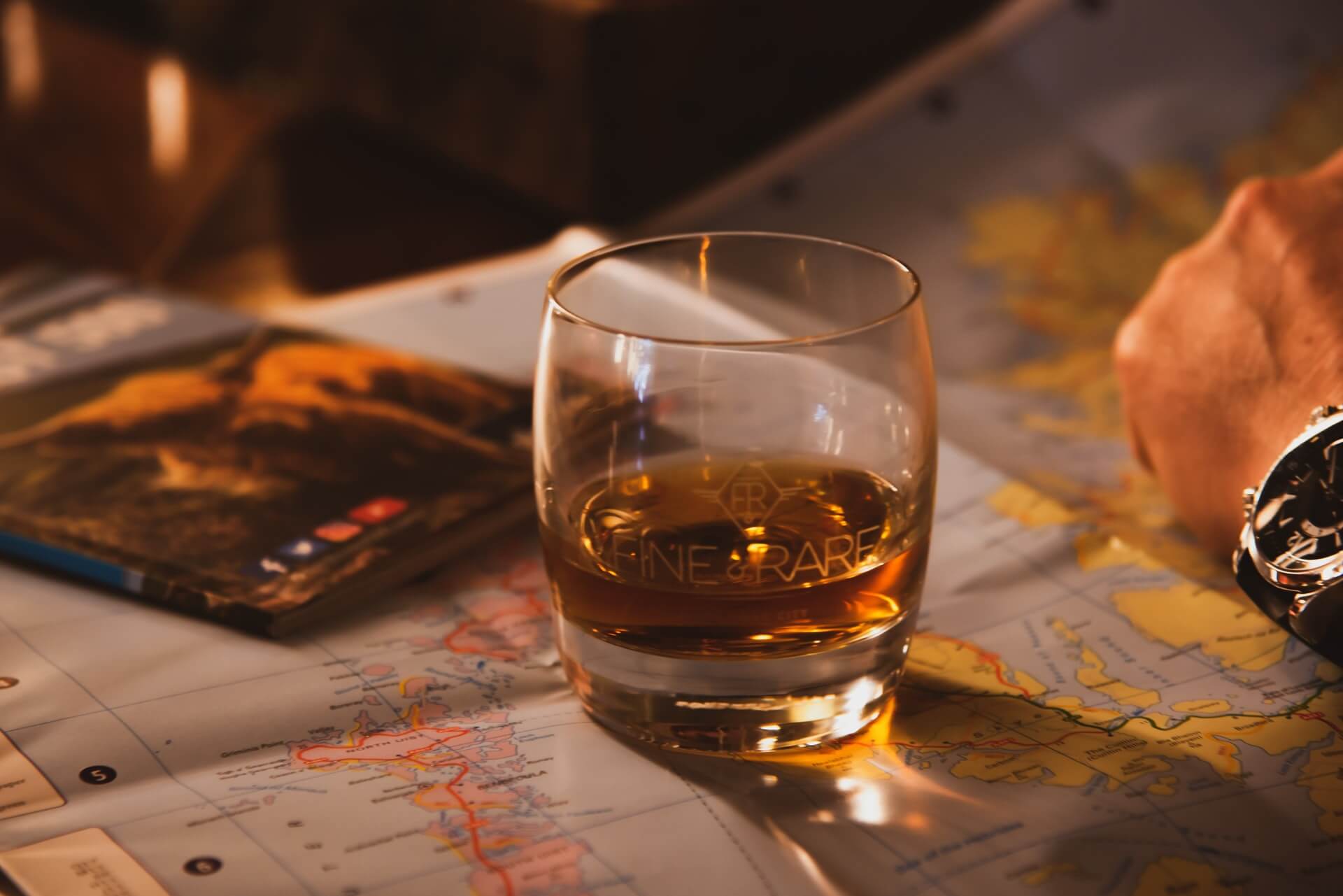
Whiskey in Fine & Rare NYC glass

This Saturday is the eleventh annual celebration of World Whisky Day, the perfect day to highlight your whisky and cocktail menus.

One revenue-generating method of drawing in guests is a promotion showcasing popular, lesser-known, or rare whiskies. Operators can also create a whisky and beer combo promotion.

Of course, there’s also the specialty cocktail menu. There are a few different approaches to this promotion.

An operator and their bar team can focus on one specific cocktail, offering three or four “takes” on it. Another way to make this work is to take the same cocktail and feature a different whisky in each one.

A different approach is to create a World Whisky Day menu consisting of three or more of the most popular whisky cocktails. To help you identify which drinks to feature we looked into the top whisky drinks. Check them out below.

Old Fashioned

C’mon—you knew this was going to be on the list before you read past the title of this article. Drinks Digest ranked the Old Fashioned the number-one cocktail of 2021.

VinePair‘s list didn’t rank their most-popular cocktails overtly but this classic got its expected mention.

Manhattan

Just like the Old Fashioned, you expected this drink to make this list. While it can certainly be made with bourbon or an array of single malt American whiskies, the Manhattan shines when made with rye.

Whisky Sour

As Drinks International points out, the Whisky Sour may not be the top drink in most bars. In fact, it may not make it into their top three.

However, the simple but refreshing Whisky Sour is at least in the top ten of several bars, making it a solid choice for your specialty menu.

Boulevardier

Want to get some of the cocktail aficionados among your guests to flip out? Tell them loudly and confidently that the Boulevardier is better than the Negroni. That’ll certainly get them talking.

Or, hey, don’t do that. Just perfect this bourbon cocktail, a cousin of the Negroni, and highlight your build for World Whisky Day.

Mint Julep

The Kentucky Derby may be over but summer is just around the corner. People are still craving this centuries-old cocktail and VinePair called it “essential” last year.

Sazerac

Like many classics, the Sazerac was “medicinal” when it was first created in the 1830s. In 2008, this drink was made the official cocktail of New Orleans by the Louisiana state legislature.

The Sazerac is another cocktail recipe that VinePair said was an essential one for bars in 2021.

Vieux Carré

It’s difficult to overstate the important role New Orleans has played and continues to play in American cocktail culture.

The recipe, created about 100 years after the Sazerac, combines American whisky (rye, traditionally), Cognac, Bénédictine, sweet vermouth, and Peychaud’s bitters.

Penicillin

Created by Sam Ross when he was behind the stick at Milk & Honey, this is my favorite whisky cocktail. The recipe was one of Punch’s most popular last year, and it was on Drinks International’s top 50 list for 2021.

On a personal note, this is one of my all-time favorite whisky cocktails. In fact, the Penicillin is one of my favorite cocktails in general.

Honorable Mentions

These may not be top sellers for most bars (if any) but they’re worth consideration for World Whisky Day.

The Chauncey is a 1:1:1:1 combination of rye whisky, Cognac, gin, and sweet vermouth plus two dashes of orange bitters, served up.

Of course, there’s also the Mule, which lends itself to an incredible number of riffs. Select a whisky or two to come up with specialty Mules of your own.

Irish whisky stands out in an Irish coffee, which can be served iced/frozen when it’s hot outside.

And then we have the Rob Roy. If you want to be glib about it, this is a Manhattan made with Scotch rather than rye whisky.

Your Own Data

There’s an excellent resource for determining what drinks to feature at your restaurant or bar. It’s quite literally at your fingertips: your POS.

If you want to know what your guests are drinking and what they want, run a report.

How deep you get into the data is up to you, of course. Monthly, quarterly, seasonally, annually… There are myriad methods to determine your World Whisky Day’s best options.

Sure, you can probably safely assume that your top whisky cocktails are the same as those above. But why not be absolutely certain with your own data? You invest money and time into your POS—wring everything you can out of it.

Also, your bar team and servers. Ask them what whiskies guests have been asking for that you don’t have.

Use your POS to identify the whiskies gathering dust in your stockroom, then find a way to move them quickly (a well-priced LTO should work) and replace them with what guests want.

Image: YesMore Content on Unsplash

by David Klemt David Klemt No Comments

5 Books to Read this Month: May 2022

5 Books to Read this Month: May 2022

by David Klemt

Flipping through an open book

These engaging and informative book selections will help you develop next-level beverage skills and motivate you throughout May, 2022.

To review April’s book recommendations, click here.

Let’s jump in!

Rum Rebels: A Celebration of Women Revolutionizing the Spirits Industry

Written by authors Martyna Halas and René van Hoven, Rum Rebels raises a glass to women in the rum world. Readers will learn the inspiring stories of Lorena Vasquez from Zacapa, Joy Spence of Appleton, and more women driving rum forward and shaping this iconic spirit’s flavors, aromas, and textures.

In addition, this book serves as a masterclass in rum production, from tasting to aging. And since that’s enough for these incredible and ambitious authors, Rum Rebels also contains rum cocktail recipes.

Drink Lightly: A Lighter Take on Serious Cocktails

Operators, bar managers, and bartenders should see value in the driving ethos behind this cocktail book. Drink Lightly, authored by Nitecap bartender Natasha David, pairs precision drink-building techniques with a relaxed drinking experience.

Drinking lightly doesn’t mean sipping drinks bereft of complexity and depth. Along with 100 recipes, readers will enjoy a foreword by Alex Day of Proprietors LLC, whose concepts include Death & Co. and Nitecap.

Call Me Chef, Dammit!: A Veteran’s Journey from the Rural South to the White House

Hospitality is rooted in sacrifice and a commitment to serving others. Chef Andre Rush and his story embody service. Call Me Chef, Dammit! is the inspiring story of Chef Rush.

The storied chef has led an incredible life which includes a career in the US Army that spanned 24 years, advocating for military personnel and veterans, and winning multiple awards as a chef. Oh, and Chef Rush and his 24-inch biceps have also worked in the White House for four US presidents.

While there are no recipes in this book, there is one hell of an inspiring story in these pages.

The New Kindred Spirits: Over 2,000 All-New Reviews of Whiskeys, Brandies, Liqueurs, Gins, Vodkas, Tequilas, Mezcal & Rums from F. Paul Pacult’s Spirit Journal

Anyone looking for a spirits bible need search no further. F. Paul Pacult’s The New Kindred Spirits includes over 2,400 in-depth reviews spanning a wide range of spirits. This tome evaluates a massive number of brandies, gins, liqueurs, rums, tequilas, vodkas, and whiskeys.

This all-encompassing compilation of spirit evaluations doesn’t just cover the usual suspects. The New Kindred Spirits also takes a deep dive into the craft side of the beverage industry.

Drinking & Knowing Things

Author and certified sommelier Michael Amon would like to know a couple things from those considering picking up Drinking & Knowing Things. “Do you want to uncork a bottle of whoop-ass on every winedouche and uppity sommelier?” And, “are you too lazy to spend any time whatsoever learning things?”

Anyone who answered “yes” to either or both questions needs this book. Amon says that readers who commit to spending five minutes reading the weekly wine recommendations found in Drinking & Knowing Things will give sommeliers a run for their wine-knowledge money. Wine intimidation? Not after reading this book.

Image: Mikołaj on Unsplash

by David Klemt David Klemt No Comments

Forward Progress: 2022 Drink Trends

Forward Progress: 2022 Drink Trends

by David Klemt

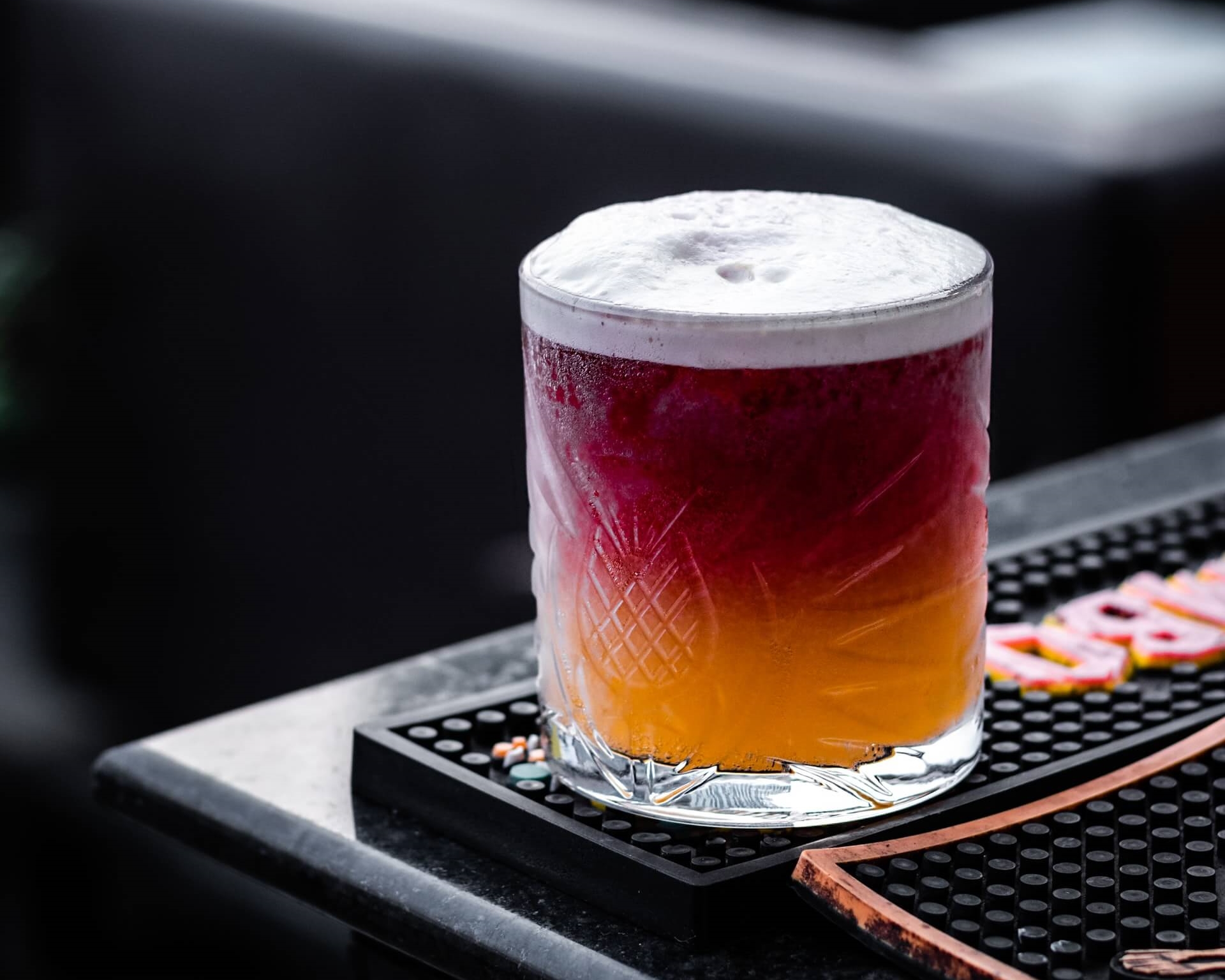
Cocktail on bar mat behind bar

Curious about what drink trends to leverage throughout 2022 to fulfill guest desires and expectations? Datassential has answers.

Of course, nobody has a crystal ball. However, as their name suggests, Datassential has something similar: data.

A trove of their valuable data was shared during Bar & Restaurant Expo 2022. Amanda Torgerson, senior account manager at Datassential, revealed the trends operators should be aware of this year.

Datassential MegaTrends

During this informative session, Torgerson shared what Datassential has identified as three “megatrends.” In other words, two trends that are particularly noteworthy.

First up, self-service. Whether beer, wine, or cocktails, Datassential thinks today’s guest wants more control.

Self-service beverage alcohol taps offer control in multiple ways, pour size and customization among them.

In addition, guests don’t have to wait for servers or bartenders when serving themselves. And, of course, self-service cuts down on front-of-house labor costs.

Second, experiential imbibing. In this context, this doesn’t simply relate to occasion, service, location, and ambiance.

Rather, the drink itself is an experience. Experiential cocktails engage multiple senses and include:

  • color-changing cocktails (those using butterfly pea powder, for example);
  • cocktail carts (similar to tableside guacamole preparations, tableside cocktail prep and service);
  • fire and smoke: smoked, charred, and burnt cocktails;
  • drinks that invoke nostalgia and guests’ childhoods;
  • frozen drinks; and
  • beer, wine, spirit, and cocktail flights.

Finally, botanicals. As we know, scent is a crucial component of taste. Botanicals, obviously, activate one’s olfactory sense.

Additionally, botanicals can affect a drink’s appearance and taste. So, break out the Chartreuse, Lillet, and elderflower liqueurs.

And while your team is at it, consider how else scent can be used to entice guests and enhance the drinking experience.

Best of the Rest

Treating this as more of a speed round, let’s review Datassential’s trend predictions in four major categories.

Seltzer/Beer

When it comes to hard seltzer, Datassential has (re)confirmed what we all know: This category has staying power. And as many operators found out during the pandemic, seltzers can boost to-go and delivery sales.

Beer cocktails are also trending up, per Datassential. Mini-bottles of beer also having a moment, and can easily tie into the beer cocktail trend.

Finally, heirloom beers—those made with heirloom grains—are proving popular with consumers.

Wine

According to Torgerson, wine seltzer is poised for a moment. Relating it to the hard seltzer trend, consider this Wine Cooler 2.0, as Torgerson said.

Other key wine trends are frizzante and red sparkling wines, orange wines, and canned sake.

Then there’s fruit wines, which means any wine not made from grapes. During her session, Torgerson suggested using these in cocktails.

Cocktail

In addition to cocktails on tap, Datassential sees the following as cocktail trends to watch:

  • Drinks made with genever.
  • Hybrid rums, blends of light and dark rums.
  • Ranch Water (typically a highball made with tequila and lime juice, topped with Topo Chico).
  • Single-serve, premade cocktails such as RTDs. These are great for off-premise sales.
  • Boozy frozen desserts.

Global

Focusing first on increasingly popular spirits, Datassential’s data shows that pisco, mezcal, and Japanese whisky are trending up.

In terms of wine, operators should look into regions that are perhaps “lesser known” in North America. Some examples from Torgerson’s presentation are Georgian and Hungarian wines.

And finally, what Datassential identifies as “drinking for a cause.” Such causes and beverage activations can be local or global as the world is so much more connected.

Image: ABHISHEK HAJARE on Unsplash


by David Klemt David Klemt No Comments

Stand Out with Weird Holidays: April 2022

Stand Out with Weird Holidays: April 2022

by David Klemt

Stay Weird neon sign with purple background

Want to stand out from from other restaurants and bars in your area? Then commit to keeping it weird.

Several “holidays” are set against every date on the calendar, and April is no exception. These holidays range from mainstream to “weird.”

Pay attention to the latter to raise eyebrows, carve out a niche for your restaurant or bar, and attract more guests. Why do what everyone else is already doing?

Of course, you shouldn’t try to celebrate every holiday, weird or otherwise. And this month’s list in no way includes every odd holiday.

Focus on the days that are authentic to your brand; resonate with your guests; and help you grab attention on social media.

For last month’s list, click here.

April 1: National One Cent Day

Please, please, please tell me you’re not going to indulge in an April Fool’s Day “prank” today. Instead, consider—if your jurisdiction will allow it—getting rid of dead stock for a penny with a purchase of a food and/or beverage item. You won’t get rich doing it but you also won’t be sitting on stock that’s just taking up space.

April 2: National Handmade Day

An easy riff on “handmade” is “housemade.” So, on this crafty holiday you can easily promote the housemade items on your menu. Make your own bitters? Promote it. Craft your own sauces? Let the world know.

April 6: National Tartan Day

No, it’s not “weird” to wear tartan. And no, it isn’t weird to celebrate anything and everything Scottish. However, this isn’t exactly the best-known holiday, so we’re including it on this list.

This is an easy one: Encourage your guests to wear tartan, take photos, and post it on social media (tagging your business, of course). Create a promo highlighting a Scottish whisky and/or gin and you’ve got a winner.

April 13: National Make Lunch Count Day

It’s fairly easy to celebrate and program on this holiday. The entire point of this day is to make lunch the best meal. Operators, you should know exactly what to do to execute a promo for this holiday.

April 15: National Take A Wild Guess Day

Who among us hasn’t taken a wild guess for a prize? We all know how this works: A jar or a convertible (why not, right?) is filled with jelly beans, gumballs, etc. People guess how many of said item are in said container. The person who guesses the closest wins a prize.

April 19: National Hanging Out Day

Talk about the perfect day to encourage your guests to spend a morning, afternoon, evening or night at your business with their friends. This holiday can be as simple as coming up with a few F&B promotions that will keep butts in seats for a while.

April 23: National German Beer

Hey, can you guess how you should celebrate this day? Hint: The clue is in the name.

April 24: National Pet Parents Day

If you allow dogs and other pets inside your venue or on the patio, this is the time to celebrate pet parents. Just remember when creating your promo that you need to include pet-safe F&B items.

April 27: National Tell a Story Day

As an operator, you know the importance of telling a story. Whether that story is that of your brand’s, a brand you feature, or a food or beverage item, it’s a powerful engagement technique. So, you can use this holiday to tell your brand’s story or encourage your guests to engage by telling their own stories. In fact, this is a great day to help facilitate connections between guests.

April 30: National Sense of Smell Day

Experts estimate that anywhere from 70 to 90 percent of taste is smell. Creating a promotion focusing on our sense of smell can be complicated but the payoff can be huge. So, activate your reps and see how they can help you show your guests the power of their sense of smell.

Image: Dan Parlante on Unsplash

by David Klemt David Klemt No Comments

Who Was the Legendary King Gambrinus?

Who Was the Legendary King Gambrinus?

by David Klemt

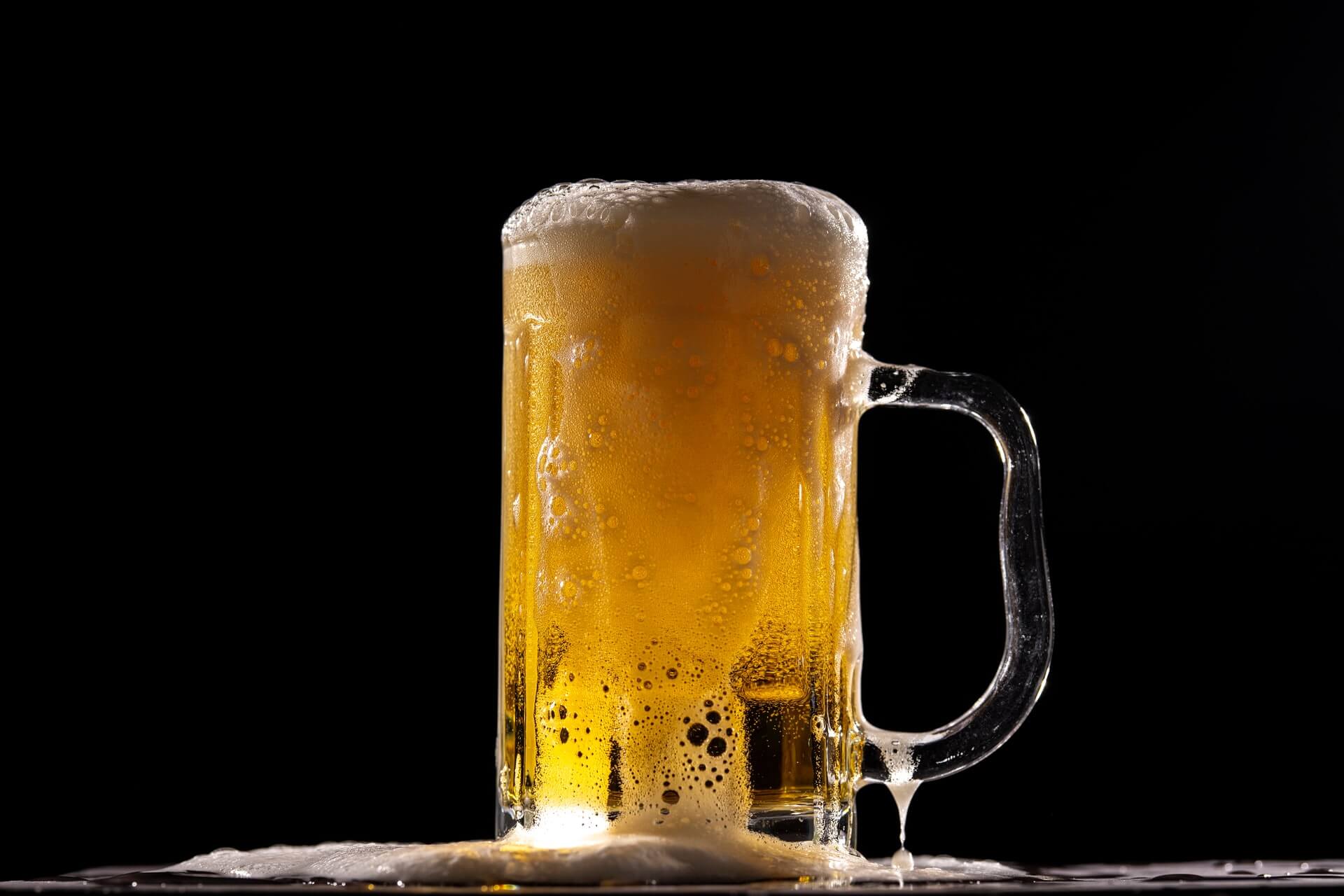
Beer mug overflowing with foam and beer

Just who is Gambrinus, the cultural icon beer lovers honor and celebrate on April 11, King Gambrinus Day?

Most simply, he’s an excellent excuse to enjoy a pint. More importantly, he’s a fantastic reason for operators to execute a beer promotion to drive traffic and revenue.

But who was Gambrinus? And was he actually a king?

Let’s dive in!

A King?

Gambrinus may want a word with Budweiser. After all, they’ve claimed the title “King of Beers” since around the 1950s.

If one runs a search for Gambrinus and scans the results quickly, he was a king. Although, other sources identify him as a duke. Or maybe he was a count.

Intriguingly, he’s often referred to as the inventor of beer. Sometimes, he’s lauded as the patron saint of beer.

Gambrinus is also known as the embodiment of joviality, conviviality, and incredible feats of drinking. Legend has it, he could put away 144 beers in a single sitting.

And how did he become credited with this most magnificent of creations? In a completely natural way, of course.

As the totally reasonable story goes, Gambrinus was taught the secret to brewing beer over 500 years ago by the Egyptian gods Osiris and Isis.

However, a German historian has said this character was based on another mythical character: Gambrivius. This German king, who may also have been named Gampar, also learned beer brewing by Isis and Osiris.

In other words…Gambrinus very likely never existed.

Gambrinus, Cultural Icon

Real or (most likely) not, Gambrinus is deeply embedded in beer and brewing culture.

There are breweries, restaurants, and bars that feature Gambrinus—as a king, of course—around the world.

In fact, if one takes a look at a can of Victoria beer, they may find the fabled king in the logo. He’s wearing regal finery and holding a beer aloft, admiring it.

And should anyone find themselves in Porte Alegre, Brazil, they’ll find Restaurante Gambrinus. Guess who the restaurant’s name pays homage to.

Of course, the king has made it America. Reportedly, Pabst Brewing has commissioned at least three Gambrinus statues. The first iteration was crafted in 1967 and is named King Gambrinus, Legendary Patron of Brewing.

So, fine—King Gambrinus Day doesn’t honor a “real” king. Is that such a bad thing? What we’re really celebrating on April 11 is beer itself.

We’re paying homage to brewers, breweries, and beer lovers across the globe. There’s nothing wrong with celebrating what some call the nectar of the gods, and others call the drink of kings.

Before April 11, take a look at your beer menu and program. Review how your bar team pulls and serves a pint. Make certain you know what beer-loving guests want to drink, and have plenty on hand.

Let’s all raise a pint to Gambrinus, king, duke, count, or mythical figure. Cheers!

Image: engin akyurt on Unsplash

by David Klemt David Klemt No Comments

Single Malts for International Whiskey Day

5 Single Malts for International Whiskey Day

by David Klemt

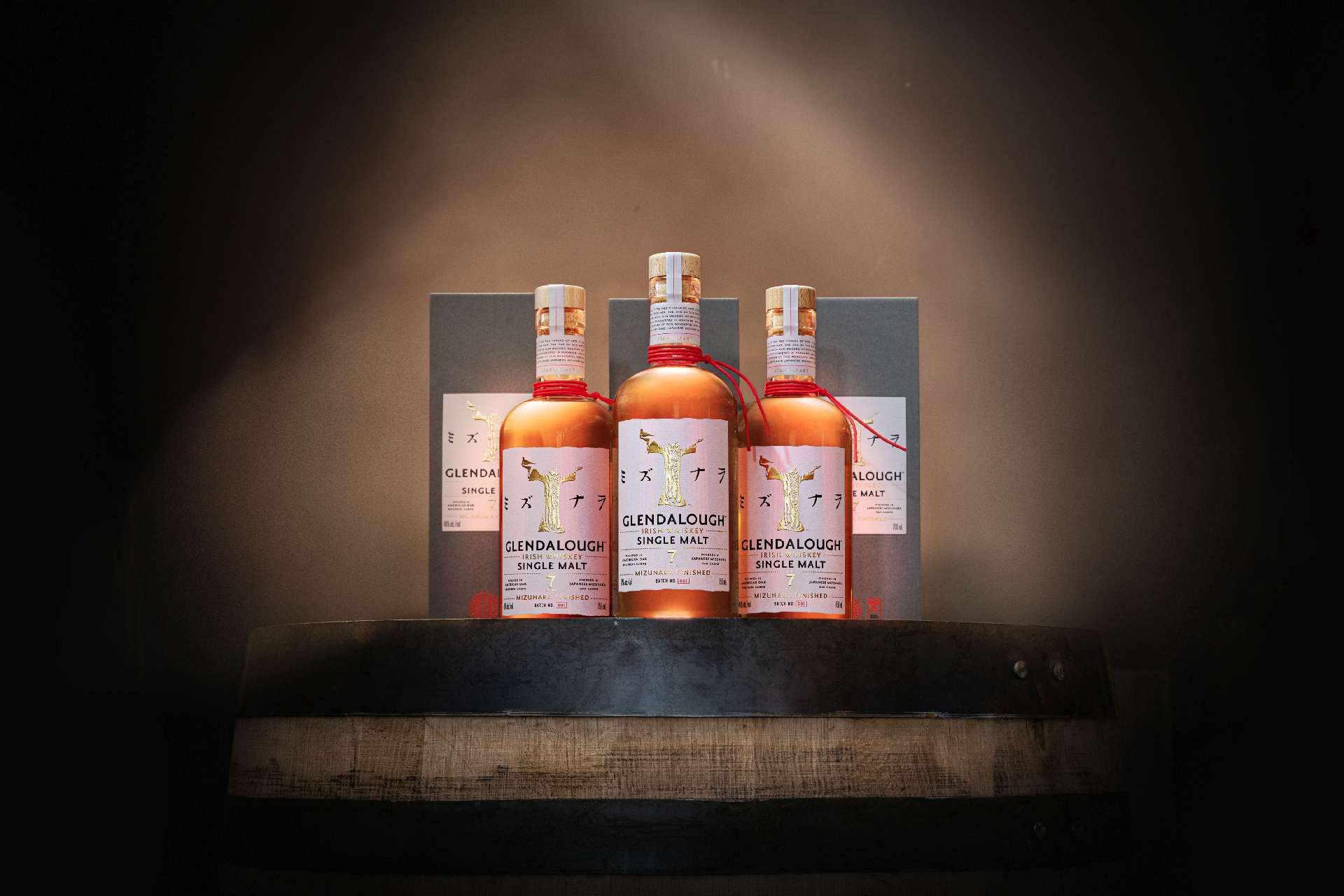
Bottles of Glendalough Distillery 7 Year Old Mizunara Finish on top of a barrel

In case it isn’t yet obvious, March is full of an array of wonderful cocktail and spirits holidays perfect for restaurants and bar promotions.

So, it’s pretty impressive that we can end this month with International Whiskey Day. Or, if you prefer, International Whisky Day.

Wondering which you should use, “whiskey” or “whisky”? Well, there’s a (mostly) accepted method for distinguishing the two.

As some spirits aficionados and historians explain it, if a country has the letter “E” in its name, so should the word “whiskey.” No “E”? Then it’s “whisky.”

Or, and this may be controversial, you can just use whichever you prefer. Or perhaps use the spelling that’s on your favorite label. Alternately, if executing a promotion with a sponsor, ask their preference and use it.

At any rate, we all get to celebrate uisce beatha (Irish) or uisge beatha (Scottish) on Sunday, March 27.

Below you’ll find some suggestions for bottles to showcase on International Whisk(e)y Day. Cheers!

American Whiskey

Obviously, there’s a glaring issue with trying to choose a single bottle of whiskey to represent the US. In short, there are dozens (at a minimum) of bottles from which to choose.

So, to make things easier (on me, I suppose), I’m limiting this list to single malts. Look, I had to draw a line somewhere.

Honestly, this doesn’t make things incredibly simple. You may find it surprising to learn that the US has the American Single Malt Whiskey Commission (ASMWC). Not only that, but the commission has nearly 100 members.

To promote and protect American single malt, the ASMWC defines this whiskey as:

  • made from 100-percent malted barley;
  • produced at one distillery;
  • mashed, distilled and matured in the US;
  • matured in 700-liter or smaller oak casks;
  • distilled to no more than 160 proof (80-percent ABV); and
  • bottled at 80 proof or more (40-percent ABV).

There are, thankfully, several dozen bottles to choose from to represent American single malt whiskey. For my list, I’m selecting Westward American Single Malt Whiskey Cask Strength.

Produced in Portland, OR, this double-gold winner is the 125-proof version of Westward’s original single malt whiskey. Bold, assertive, rich, and complex, this bottle embodies this American whiskey category.

Canadian Whisky

When it comes to whisky, Canada is known for its blends. Canada’s whiskey world is also known for bold but smooth rye.

However, there are distillers paying homage to their Scottish roots and traditions. These masters of their craft are working hard to put single-malt Canadian whiskies on the map.

In particular, craft distillers in Vancouver are producing single malts that deserve the world’s time and attention.

Now, when it comes to Canadian single malt, I’m a neophyte. However, I believe you and your guests will appreciate my selection.

Commodore Canadian Single Malt Whisky is crafted by Odd Society Spirits. The distillery is located in Vancouver, British Columbia.

Compellingly, Commodore is produced with malted barley grown in BC. Weighing in at 92 proof, expect pepper and tobacco on the palate, balanced with dark fruit and sweetness.

Irish Whiskey

Another country known for its blends is Ireland. Jameson, Bushmills, Red Breast, Powers… Each distillery produces world-famous, revered blends.

However, Ireland crafted several styles of whiskey over the course of many centuries. Single malts were certainly among them.

Of course, that style fell to wayside as the thousands of distilleries in Ireland shut down decades ago. Luckily, some modern-era distilleries are tapping into centuries of Irish distillation history.

Among these is Glendalough Distillery, our guest for episode 71 of the Bar Hacks podcast. Co-founder Donal O’Gallachoir reveals their latest expression, an Irish single malt finished in exceedingly rare Japanese mizunara casks.

So, for my Irish single malt selection, I choose Glendalough 7-Year-Old Mizunara Finished. You can learn more about this bottle and Glendalough listening to the podcast linked above or reading this article.

Scottish Whisky

If it’s difficult to choose just one American single malt whiskey, it’s nearly impossible to land on only a single single malt Scotch.

Do I choose the highest age statement (and an immense price tag)? Is the smart move the “most accessible” bottle? A peat monster?

What about the most traditional bottle? The most experimental? In the end, I opted for a single malt whisky that falls into the latter category.

At this point, we expect to see Oloroso sherry, port, and bourbon cask finishes. What’s a bit more unusual is a rum cask finish.

So, I’m going with the Balvenie Caribbean Cask. This 14-year-old single malt spends 14 years maturing in American oak casks. Then, it’s finished in ex-rum barrels.

The result is a unique and compelling whisky with notes of banana, cocoa, brown sugar, fresh fruit, and toffee.

Australian Whisky

When he started Starward, founder David Vitale had one mission: Craft the whisky that would come to define the entire category. No pressure.

To accomplish this mission, Vitale and company aim to capture Australia’s terroir in every bottle of every expression.

Their barley is sourced in Australian. Local malt masters (malters? maltsters?) malt said barley. The yeast comes from local Australian brewers.

And it doesn’t stop there. Any ingredient used to craft Starward Whisky must be within one day’s drive of the distillery. That distillery is located in Melbourne.

Why Melbourne? Because it’s the Foodie Capital of Australia. Why does that matter? Because Starward is also meant to be enjoyed with food.

You can learn more about Starward and David Vitale on episode 63 of Bar Hacks.

So, which bottle did I choose? Starward’s very first whisky, the single malt Starward Solera. If you and your guests want to experience Australian single malt, this is where to start.

You really can’t go wrong with any of these bottles. If you’re celebrating International Whiskey Day, life is great. Enjoy!

Image: Glendalough Distillery

by David Klemt David Klemt No Comments

Heritage & Innovation: Glendalough

Heritage & Innovation: Glendalough Distillery

by David Klemt
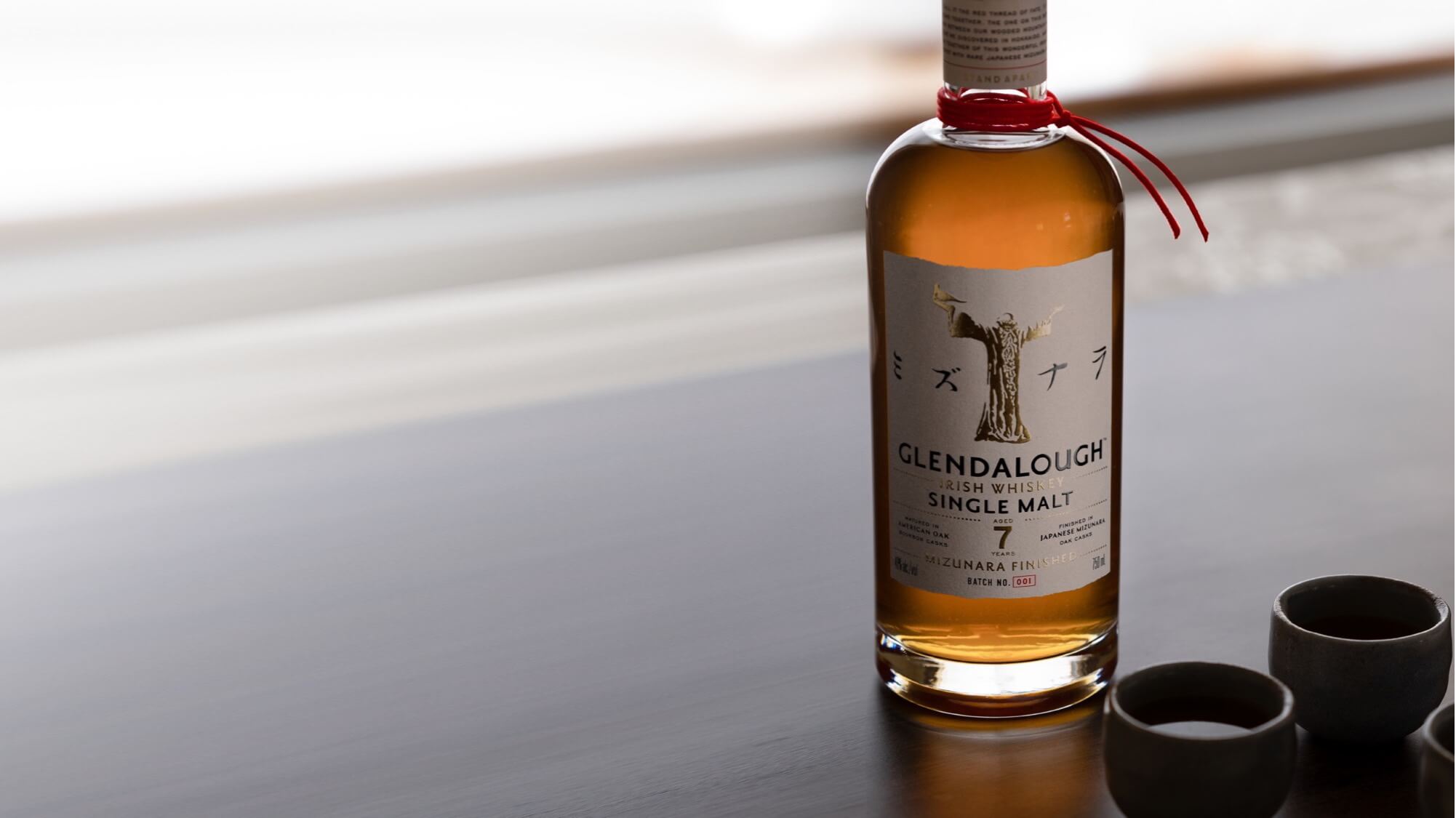
Glendalough Distillery 7 Years Mizunara single malt Irish whiskey and glasses

Glendalough Distillery’s five founders are on a mission to honor Ireland’s rich distilling history and heritage.

As Bar Hacks guest Donal O’Gallachoir describes them, the whiskeys Glendalough crafts are remarkably different. O’Gallachoir, co-founder, national brand ambassador, and cheeky bottlewasher, aims to elevate Irish spirits.

More accurately, Glendalough’s founders want to return Irish whiskey to its rightful, historic place. That place? Among the top whiskeys in the world.

As you’ll learn, Glendalough will elevate your St. Patrick’s Day menu. In fact, these whiskeys and gins will elevate your entire menu, period.

Centuries of History

On episode 71 of Bar Hacks, O’Gallachoir briefly but compellingly shares Irish whiskey’s story. As he tells it, it was once estimated Irish whiskey accounted for up to 90 percent of world whiskey consumption.

That’s easy to believe when you factor in how Irish whiskey production can be traced back to at least the sixth century. There’s also the fact that Irish distillers were crafting, as O’Gallachoir puts it, “a wealth of styles.”

Unfortunately, a terrible string of wars—literal and economic—all but eradicated Ireland’s distilleries. When I say eradicated, I mean that when Glendalough Distillery opened in 2011, it became the fourth or fifth distillery in the country.

There used to be 200 licensed distilleries in the country, along with around 1,800 unlicensed distilleries. For decades of the 20th century, there were only two to three licensed distilleries in operation.

So, it makes sense that consumers outside of Ireland think the country produces only one style of whiskey: Irish. Meaning, light-bodied, sweet, and meant to be thrown back as a shot.

O’Gallachoir is well aware of the compelling paradox of modern Irish distillation. If the blended style of Irish whiskey most people know today hadn’t kept the industry alive, Glendalough and its expressions may not exist today.

Distillation Innovation

All Glendalough whiskeys are single malt and chill filtered. This stands in stark contrast to blended Irish whiskeys, the current dominant (modern) style.

Glendalough is, to oversimplify it, honoring centuries of Irish whiskey production. Single-malt Irish whiskey was what we would now label super- or ultra-premium. The difference between Irish and Scotch whiskey was the latter’s smoked, peated profile. The former was once preferred worldwide.

Glendalough is dedicated to crafting super-premium Irish whiskey. Doing so means they don’t make things easy on themselves.
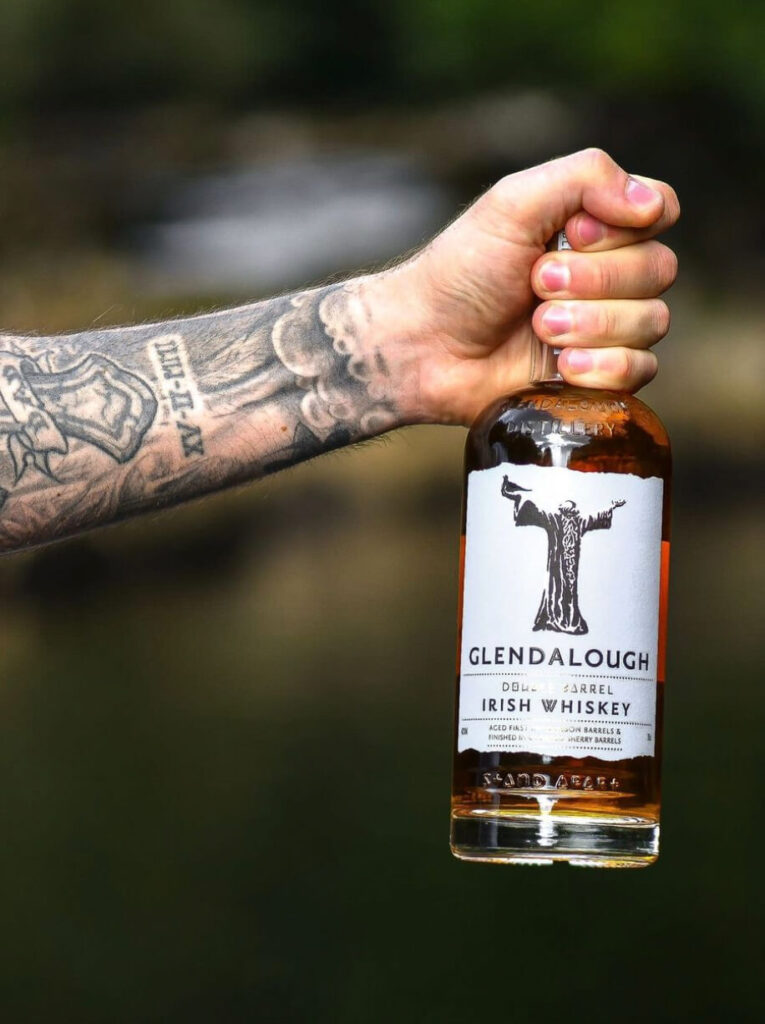
Glendalough Distillery Double Barrel single grain Irish whiskey

Let’s start with Glendalough’s Double Barrel expression.

As the name suggests, this whiskey is finished twice. First, it’s aged in ex-bourbon barrels. Second, it’s matured in Oloroso sherry casks. Eschewing blends, Glendalough studies the science of different types of barrels to craft its styles.
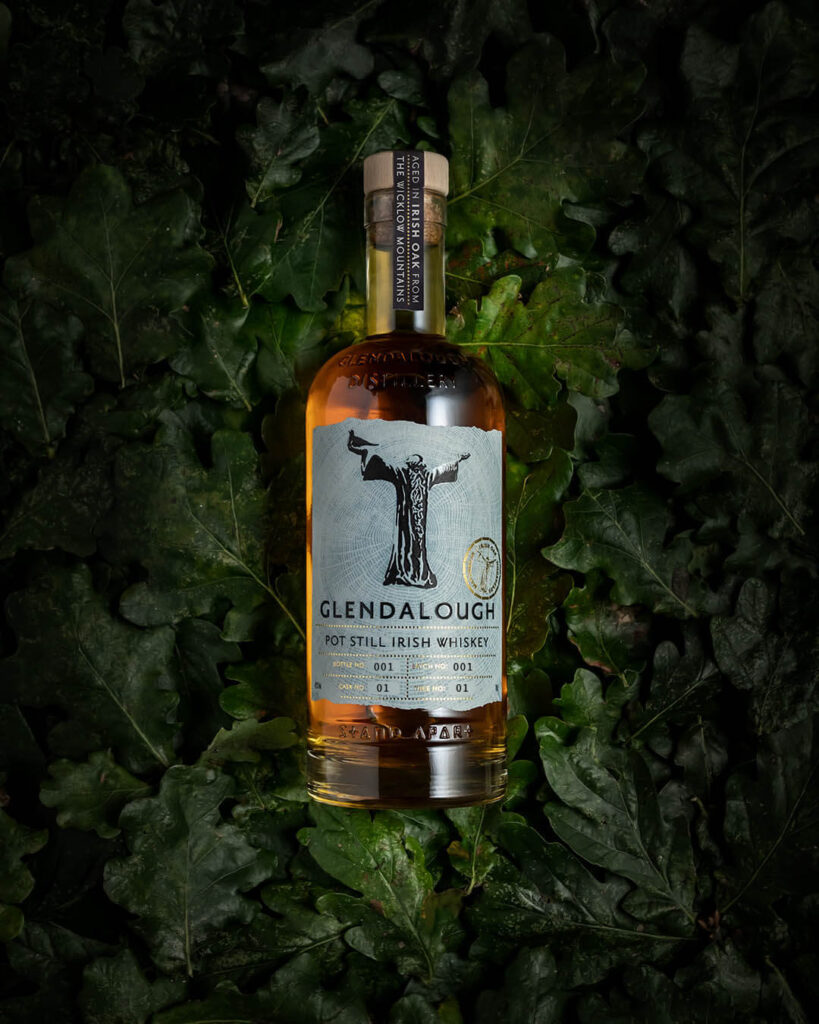
Glendalough Distillery Pot Still single malt Irish whiskey

Of course, they also honor Irish distilling heritage through another expression: Glendalough Pot Still. To say no other style of whiskey embodies Irish production like pot still doesn’t do this distillation method justice.

In fact, Irish pot still whiskey is geographically protected; it can only be crafted in Ireland. However, when it comes to honoring Ireland, Pot Still doesn’t end there.

Glendalough initially ages Pot Still in ex-bourbon barrels. However, it’s finished in Irish oak. Truly, this expression captures the terroir of the mountainous region Glendalough calls home.

In other words, Pot Still is a super-premium taste of Ireland in a bottle.

And then there’s the distillery’s newest expression.

The Red String of Fate

About two weeks ago, Glendalough released their latest innovation: 7-Year-Old Single Malt Mizunara Finish.
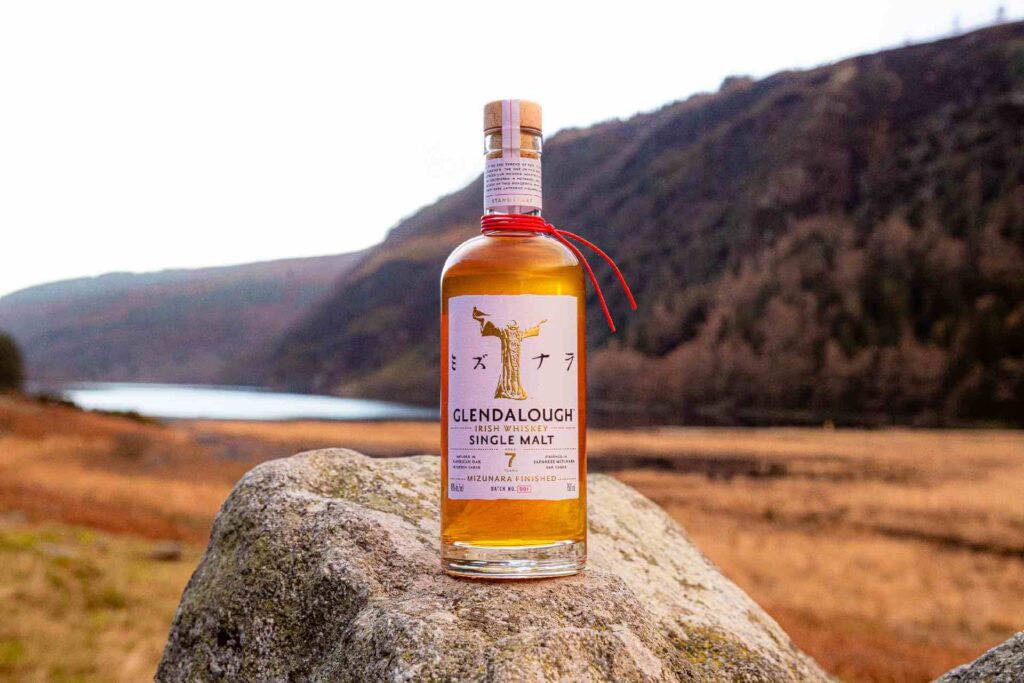
7-Year-Old Single Malt Mizunara Finish in Wicklow, Ireland

Whiskey aficionados will recognize mizunara instantly and begin scheming to add this bottle to their collections.

Mizunara, Japanese oak, is renowned for several reasons. The wood imparts incredible flavors unlike those from other barrels. But, like all things rare and magical, mizunara is also incredibly challenging.

The challenges begin with the trees themselves, which can take hundreds of years to grow fully. This oak doesn’t grow straight, so crafting even one stave can be difficult.

Then there’s the water content. Mizunara translates to “water oak,” and it’s not an ironic nickname. The water content of mizunara is sky high, and it’s also highly porous.

It takes fantastic skill and experience for coopers to craft mizunara barrels that don’t crack or leak. To learn more, please click here to hear O’Gallachoir tell the story of Glendalough traveling to Hokkaido in Japan to form a relationship with an independent cooperage to craft Mizunara Finish casks.

Incredibly, the latest Glendalough expression isn’t a limited-edition release. Rather, this joins the core lineup and will be released twice per year. Be on the lookout for batch 001.

It seems that Glendalough whiskey and mizunara barrel coopers were fated to find one another. In fact, the red thread on each bottle of Mizunara Finish pays homage to the Japanese legend of the red thread of fate.

An invisible red thread connects those who are destined to find one another. It grows shorter and shorter as their paths collide.

Going Wild

You may recall that I said Glendalough doesn’t make things easy on themselves. This is evidenced by their gin.

Unlike other distilleries, Glendalough started with whiskey distillation and later pursued gin production.
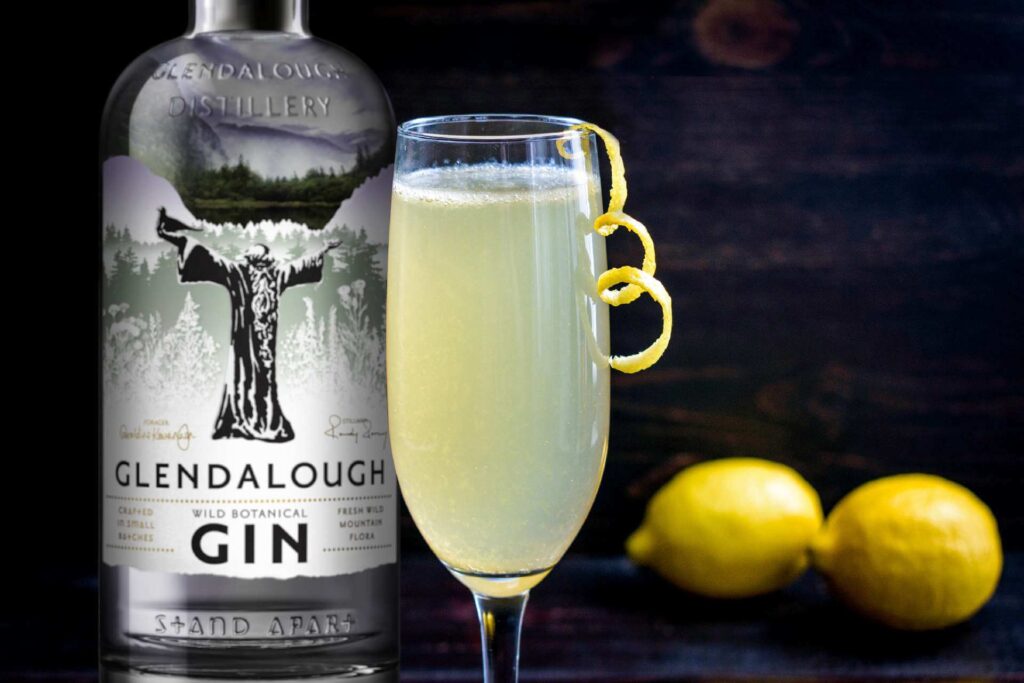
Glendalough Distillery Wild Gin Irish gin

They also forage for the ingredients used to craft their Wild Gin. If it’s not within ten miles of the distillery and growing wild, it’s not in the bottle.

According to O’Gallachoir, it takes a year to produce one bottle of this gin. Rejecting easier methods of production like automation, each batch of Wild Gin is crafted by taste and aroma.
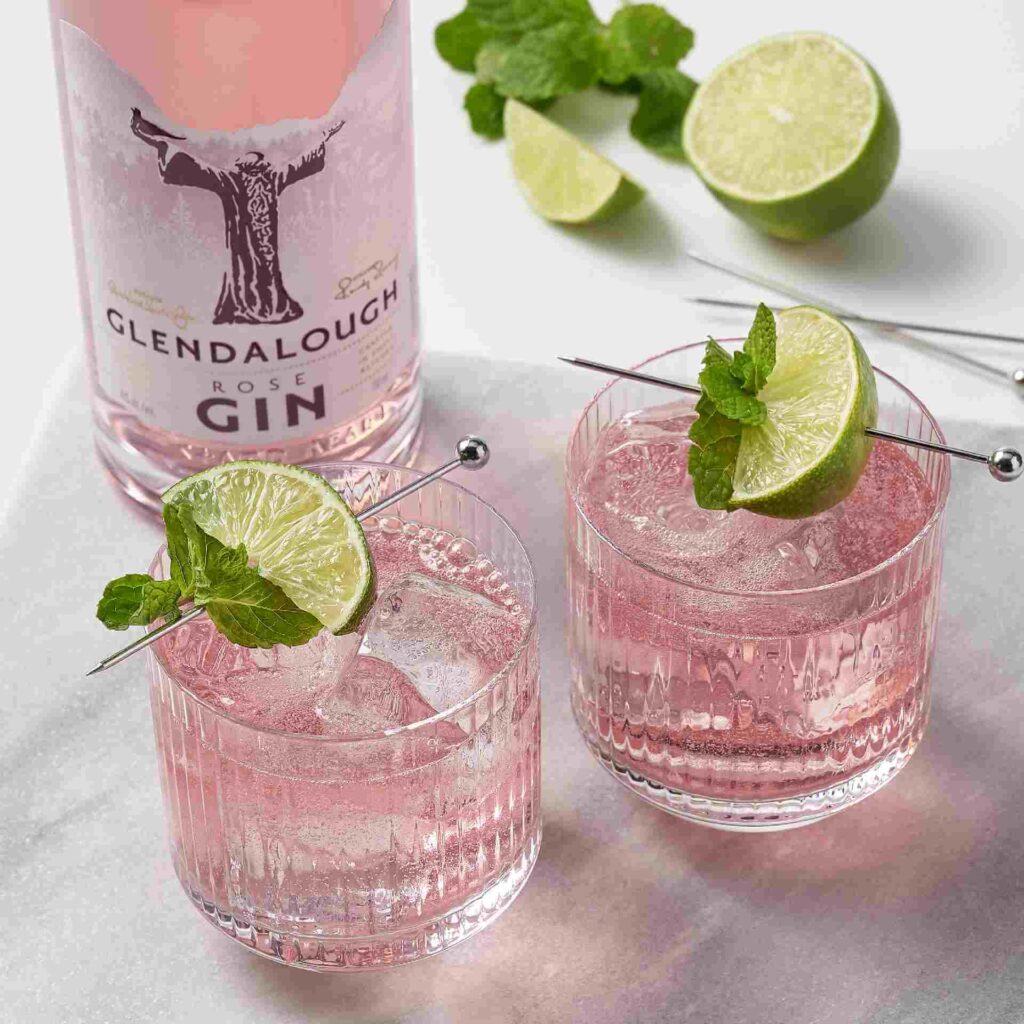
Glendalough Distillery Rose Gin Irish gin and cocktails

Then there’s the visually and aromatically impactful Rose Gin. Crafted to honor Glendalough’s head distiller’s mother Rose, this is a rose-petal gin.

Now, you may assume it’s like drinking a bottle of decades-old, overpowering, rose-scented perfume. However, O’Gallachoir assures me this is absolutely not the case.

Instead, this striking bottle is intensely floral but balanced, and undeniably unique. O’Gallachoir suggests trying it in a Bee’s Knees.

In just over a decade, Glendalough has elevated Irish craft spirits. There are more innovations to come and I can’t wait to try them.

To learn more about O’Gallachoir and Glendalough Distillery, please listen to episode 71 of the Bar Hacks podcast.

Image: Glendalough Distillery

by David Klemt David Klemt No Comments

A Lesson in Guest Perception

A Lesson in Guest Perception

by David Klemt

Broadway-style McDonald's sign in Chicago, Illinois

At this point, it’s becoming more of a surprise to not be told that the ice cream machine isn’t working at a McDonald’s restaurant.

Per a report from earlier this year, 25 percent of their machines are broken at any time. In fact, the brand made a joke about it in 2020.

Interestingly, with all the road trips and flights I’ve taken, I had never encountered a nonfunctional ice cream at a McDonald’s. Until last week.

Feeling nostalgic, I drove to a McDonald’s near my home for a Shamrock Shake. Growing up, my father always enjoyed the Shamrock Shake LTO. I’ve had maybe one or two in my entire life.

So, I drove over, got in line, and confidently asked for a Shamrock Shake and a Mint Oreo Shamrock McFlurry. And then I heard the words I’d never heard before:

“I’m so sorry, our machine isn’t working.”

Devastated, I did what any well-adjusted adult would do: I ordered a double cheeseburger and a 10-piece Chicken McNuggets combo. Same thing as a shake and McFlurry, right?

Guest Perception

I won’t dive too far into the minutiae of the longstanding McDonald’s ice cream machine saga. By now, we’re all familiar:

  • These machines break so often there’s a website dedicated to the problem. McBroken shows people where ice cream machines are working and where they’re broken. (If only I had used that before my ill-fated visit…)
  • The machines reportedly take four hours per day to clean.
  • There are claims that Taylor, the manufacturer of the machines, makes 25 percent of their revenue from performing repairs.
  • Outlets have reported the FTC is investigating the situatithe machine’s manufacturer, Taylor.
  • The latest news is that Kytch is suing McDonald’s for $900 million.

I’m not a McDonald’s board member, nor am I a franchisee. So, I’m not privy to any discussions swirling around the ice cream machines in use currently.

However, I do find it surprising that a brand as massive as McDonald’s would allow this issue to continue. For a brand that claims nothing is more important than delivering a high-standard of quality food, this joke is no longer funny.

What’s more, the issue is an opening for their competitors.

Leave an Opening and a Competitor will Take it

Jack in the Box has roasted McDonald’s for their ice cream machines in the past. This month, however, they’ve amped up their trolling.

Now that the Shamrock Shake has returned, Jack in the Box has pounced.

It would’ve been enough for Jack to mock McDonald’s on Twitter during Shamrock Shake season. But nope—Jack is dragging McDonald’s even harder.

Head over to McBroken and you’ll see a huge banner that reads, “DON’T GET McSHAMMED.” You’ll notice that the map is now also populated with Jack in the Box locations.

Click the aforementioned banner and you’ll find yourself on the Jack in the Box website. More specifically, it’s a page promoting their mobile app.

Taking it further, there’s currently a promotion encouraging the download: using the code “McSHAMMED” scores the user a $2 shake.

Since we’re in Shamrock Shake season, Jack is offering their new Oreo Cookie Mint Shake. And yes, it’s green.

Innovation and Problem Solving are Crucial

Look, I’m in no position to tell McDonald’s how to run their business. If they’re comfortable with negative guest perception and experiences, that’s on them.

It’s also on them if they want to show their guests and competitors a failure to innovate, solve problems, and be agile.

The ice cream machine debacle should be a lesson for all operators. Leave an opening and your competition will take it, slamming it shut behind them.

At best, maybe you’ll be able to adapt and overcome. At worst, they’ll be social media and marketing savvy, and roast you publicly. Once a brand’s perception slips, it can be incredibly difficult to get it back to where it once was.

As an operator, you’re an entrepreneur. Entrepreneurs innovate and solve problems.

Image: Joshua Austin on Unsplash

by David Klemt David Klemt No Comments

Durham Distillery’s Pandemic Pivot

Durham Distillery’s Pandemic Pivot

by David Klemt

Durham Distillery Navy Strength Gin in a snowbank
Distillers throughout the world are experiencing supply chain issues affecting their ability to produce and bottle their spirits.

One particular issue impacting distillers—and therefore the businesses that sell their products—is a glass bottle shortage.

Obviously, bottles are every bit as important to a brand as the liquid inside. We would all likely ace a quiz calling for us to match bottle silhouettes and brands.

Of course, other issues are also confounding producers, and the restaurants and bars that rely on them.

Labor challenges throughout the world reduced spirit, beer, and wine production. Using a particular spirit as an example, an agave shortage is impacting tequila.

However, consumption hasn’t slowed. Therefore, many distillers, brewers, and winemakers find themselves unable to meet demand.

The situation is dire enough for some retailers and even entire municipalities to ration certain products.

Pandemic Pivot

A distillery in North Carolina is turning a necessary pivot (everyone’s favorite pandemic word) into a limited-edition run for two of their products.

Durham Distillery, located in Durham, NC, produces CONNIPTION Gin. There are two core expressions, both crafted using traditional methods but with a modern approach.

CONNIPTION Gin American Dry is, of course, crafted with juniper berries. However, there’s also Angelica root, cardamom, cucumber, honeysuckle, Indian coriander, and orange peel.

Durham’s Navy Strength expression of CONNIPTION is crafted with bay leaf, caraway, cardamom, fig, Indian coriander, juniper berries, lemon, and rosemary.

Fans of these gins, along with craft spirit aficionados, are familiar with CONNIPTION’s signature bottle shape: American Dry and Navy Strength use rectangular bottles (see image above).

Faced with either slowing production due to an inability to obtain signature bottles or using a more readily available bottle, Durham Distillery chose the latter.
Durham Distillery CONNIPTION Gin Pandemic Pivot American Dry cylindrical bottle
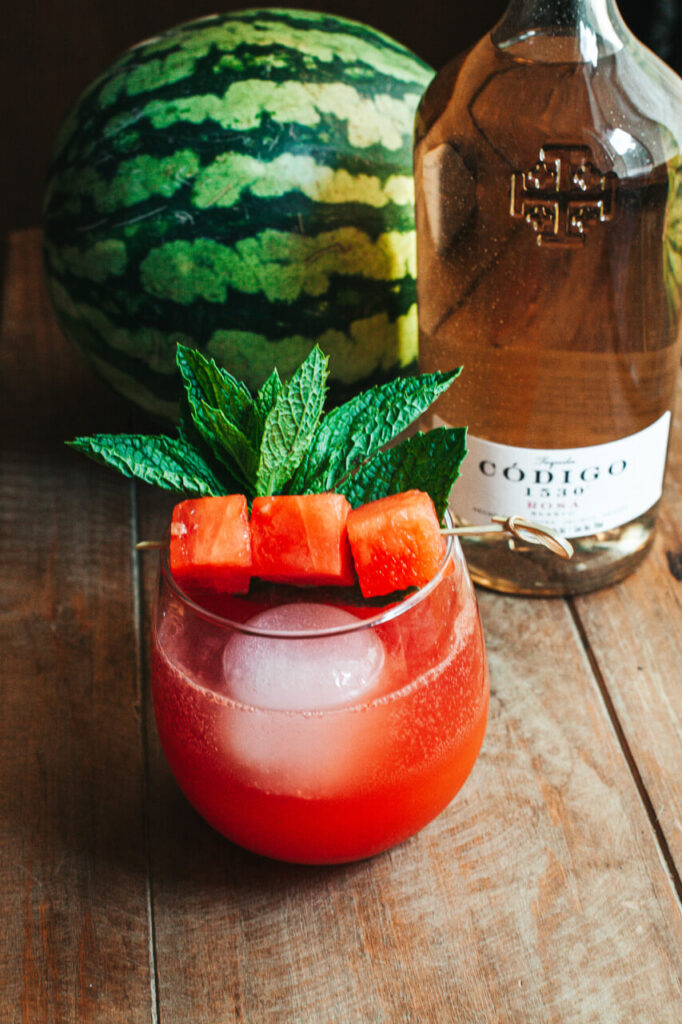
“Given the global supply chain issues so many of our friends and colleagues here in North Carolina and beyond are currently facing, we knew we had two options: give in or lean in and make the best of the situation while keeping our focus on continuing to deliver our award-winning gin to our amazing, loyal customers throughout the state,” says Durham Distillery co-founder and CEO Melissa Katrincic. “The supply chain had an actual conniption and we’re pleased we could be nimble to pivot to solve for our needs.”
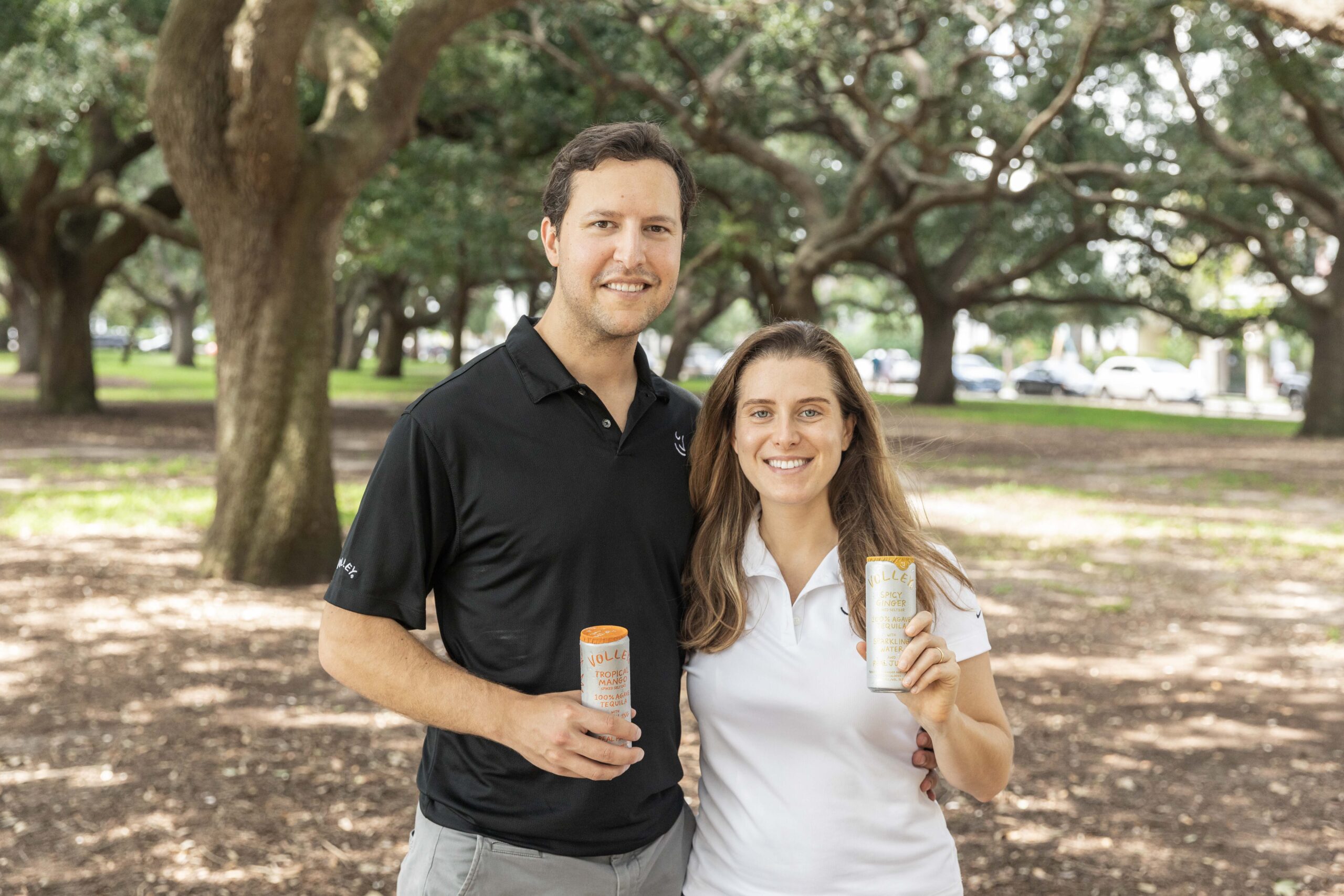
Like Durham’s Cold Distilled Cucumber Vodka, both CONNIPTION expressions are available in a cylindrical bottle. Of course, this is only for a limited time.

In fact, the labels on the round bottles read, “same delicious gin but round,” “NC Exclusive Pandemic Pivot,” and, “Temporary Due to Glass Shortage.”

Durham Distillery CONNIPTION Gin Pandemic Pivot Navy Strength cylindrical bottle
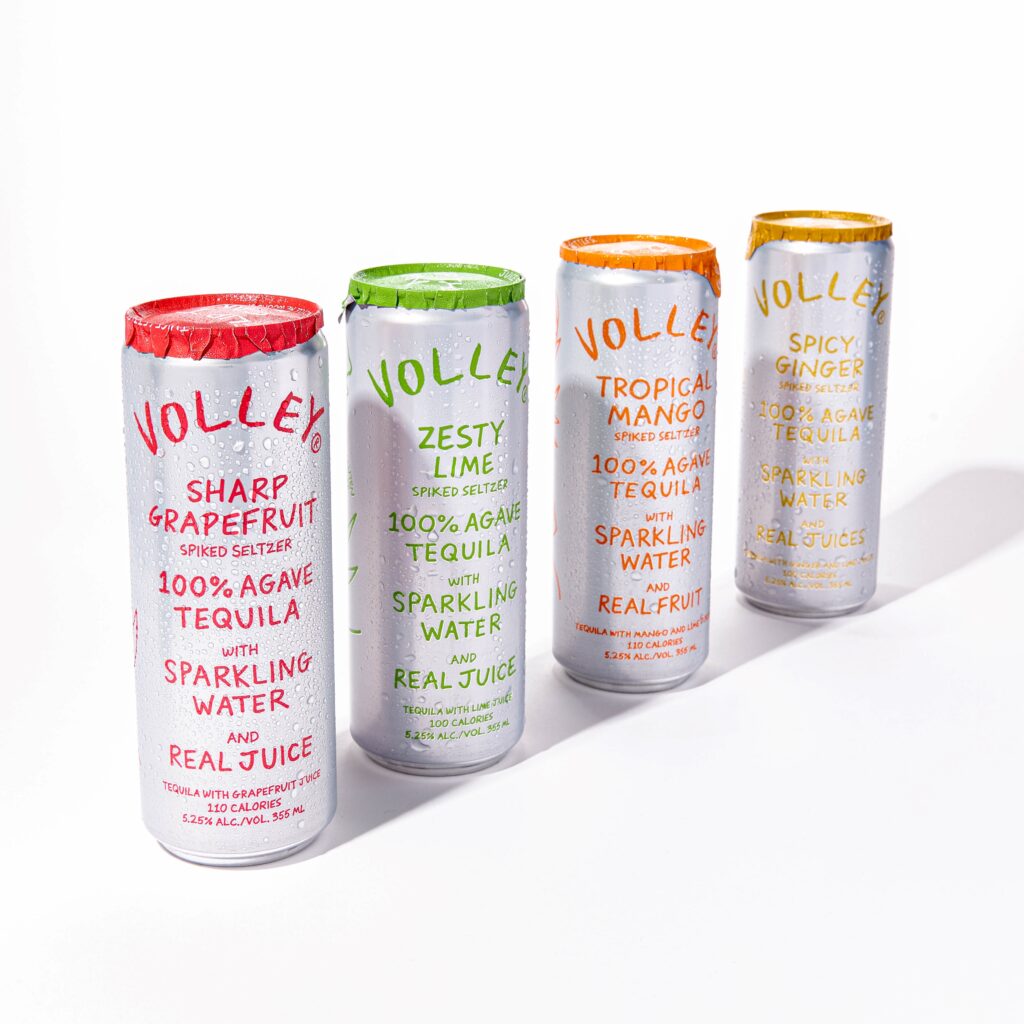
This particular pandemic pivot is deceptively simple. Altering packaging may seem like no big deal but it’s a gamble for established brands.

In the case of Durham’s CONNIPTION, this pivot seems like a fun and engaging win.

Image: Hayes Potter on Unsplash

by David Klemt David Klemt No Comments

5 Premium Recipes for Margarita Day

5 Premium Recipes for National Margarita Day

by David Klemt

Código 1530 Tequila Rosa Blasberry Margarita

National Margarita Day is just around the corner and our friends at Código 1530 Tequila sent us five recipes for your cocktail menu.

For years, the Margarita has reigned supreme, steadily claiming the number-one spot on most-popular cocktail lists around the world. While this cocktail is now seeing its grip on the crown loosened by the Negroni and Old Fashioned, it’s hard to ignore the lure of a well-made Marg.

That’s even more true when its made with incredible tequila.

Each delicious, refreshing recipe below is made with super-premium Código 1530 Blanco or Rosa. However, you and your bar team should certainly experiment with other expressions in the range.

Considering the quality of Código 1530, operators can boost revenue by charging a premium for these magnificent Margs.

To learn more about Código 1530 Tequila and the creator of these recipes, company mixologist Collin De Laval, check out Bar Hacks episode 57.

Código 1530 Tequila Blanco Margarita

Blanco Margarita

  • 2 oz. Código 1530 Blanco Tequila
  • 1 oz. Triple sec
  • 1.5 oz. Lemon juice (freshly squeezed, preferably)
  • 0.5 oz. Agave nectar
  • Lime wedge or wheel for garnish

Prepare a rocks glass by rimming it with salt. Combine all ingredients in a shaker with ice. Shake, pour into the prepared rocks glass with ice, and garnish with a lime.

Código 1530 Tequila Cucumber Mint Margarita

Cucumber Mint Margarita

  • 1.5 oz. Código 1530 Blanco Tequila
  • 1 oz. Cucumber juice (freshly pressed, preferably)
  • 1 oz. Lemon juice (freshly squeezed, preferably)
  • 0.25 oz. Agave nectar
  • Mint leaves, some to garnish
  • Salt and Tajín (50/50 mixture for rim)
  • Cucumber ribbons to garnish
  • Lemon wheel to garnish

To build, prepare a glass by rimming with lemon and rolling in salt and Tajín mixture and adding crushed ice. Add Código 1530 Blanco, cucumber and lemon juices, agave nectar, and mint leaves to a shaker with ice. Shake, strain into prepared glass, and garnish with cucumber ribbons, lemon wheel, and mint leaves.

Código 1530 Tequila Rosa Blasberry Margarita

Rosa Blasberry Margarita

  • 2 oz. Código 1530 Rosa Tequila
  • 1.5 oz. Lime juice (freshly squeezed, preferably)
  • 0.5 oz. Agave nectar
  • Handful of raspberries, some to garnish
  • Handful of blueberries, some to garnish
  • Soda water to top

Add berries and lime juice to shaker, and muddle. Next, fill shaker with ice and add Código 1530 Rosa and agave nectar. Shake, strain, and garnish with berries.

Código 1530 Tequila Rosa Skinny Margarita with lavender garnish

Rosa Skinny Margarita with Lavender

  • 2 oz. Código 1530 Rosa Tequila
  • 1 oz. Lime juice (freshly pressed, preferably)
  • 1 oz. Agave nectar
  • Lime wedge or wheel to garnish
  • Lavender to garnish (optional)

For this simple but refreshing Margarita, add the first three ingredients to a shaker with ice. Shake, strain, and garnish with lime wedge or wheel and lavender.

Código 1530 Tequila Watermelon Mint Margarita

Watermelon Mint Margarita

  • 2 oz. Código 1530 Rosa Tequila
  • 3 oz. Pressed watermelon juice (freshly pressed, preferably)
  • 0.75 oz. Lime juice (freshly squeezed, preferably)
  • 0.25 oz. Agave nectar
  • Watermelon slices to garnish

Fill a shaker with ice and add Código 1530 Rosa, juices, and nectar. Shake for 30 seconds, pour into glass, and garnish with watermelon slices.

Images: Código 1530 Tequila

by David Klemt David Klemt No Comments

Volley RTD: Clean, Lean & Green

Volley Tequila Seltzer: Clean, Lean & Green

by David Klemt

Chris Wirth and Camila Soriano, founders of Volley Tequila Seltzer holding cans of Volley

The founders of the world’s first clean tequila RTD, Volley Tequila Seltzer, are on a mission that values transparency and giving back to the planet.

Dynamic entrepreneurial duo Chris Wirth and Camila Soriano are the guests on episode 66 of the Bar Hacks podcast.

The two share the Volley story, including what drove them to create the brand and their mission.

Transparency is Challenging

It turns out that being transparent on your labeling isn’t as easy as it sounds. When it comes to beverage alcohol in the US, there are limits on what a brand can include.

You see, alcohol labeling isn’t the FDA’s purview. Rather, it falls under the authority of the Alcohol and Tobacco Tax and Trade Bureau, or TTB.

A little bit of digging reveals that when the Alcohol Administration Act was passed in 1935—two years after prohibition was repealed—the Federal Alcohol Administration was created.

This federal body replaced the Federal Alcohol Control Administration. The Federal Alcohol Administration had statutory powers and, as the name implies, had authority over the alcohol industry.

Seventy years later, the TTB was created and is the federal agency tasked with alcohol industry regulation. That means they control alcohol labeling.

So, when the FDA implemented nutrition labels, alcohol was unaffected. As far as the TTB is concerned currently, there’s no requirement for the labeling of alcohol similar to what’s required for packaged food.

But David, I bet you’re not asking, just because it’s not required doesn’t mean I couldn’t choose to include transparent nutrition labeling for my bottle of spirits or ready-to-drink canned cocktail, right?

Apparently, no—that’s incorrect. As you’ll hear in episode 66 with Soriano and Wirth, it’s not that simple. In fact, the TTB may reject your information-laden packaging for being too transparent.

Without policy changes, there’s no incentive for alcohol producers to be more transparent—and they may be prohibited from doing so.

Simple Changes are Impactful

All that said, Soriano and Wirth were able to introduce new packaging after just launching in 2020.

You may have seen people wipe off the tops of cans before opening and drinking from them. In fact, you may be one of these people. If so, great—you know why Volley now has foil covering the tops of their cans.

As Soriano explains on the Bar Hacks podcast, the tops of canned drinks are horrifyingly unsanitary. And as far she and Wirth are aware, Volley is the only canned beverage other than San Pellegrino with foil caps (in the US, anyway).

Volley Tequila Seltzer RTD can lineup with new foil packaging

This simple packaging change carries a big impact. Likewise, it fits with the brand’s identity and mission. The brand is driven to be healthier, more thoughtful, and more transparent.

A single 12-ounce can comes in at just 100 or 110 calories, depending on expression (there are four). All Volley RTDs are gluten-free and free of added sugars. You won’t find fermented cane sugar, corn syrup, fake sugars, essences, or “natural” flavors.

In fact, there are just three ingredients in a can of Volley: 100-percent blue agave tequila, 100-percent organic fruit juices (never from concentrate), and sparkling water. And yes, Soriano and Wirth can tell you exactly who their sources are for each ingredient.

Win-Win-Win Mission

That brings us to their drive to give back and be responsible stewards of the planet. Volley is in a partnership with Leave No Trace, a non-profit committed to caring for the outdoors.

If some industry experts are proven correct, 2022 will be the year that tequila dethrones vodka as the top-selling spirit throughout North America. Not only does Volley resonate with tequila lovers, the brand is also at the forefront of other trends popular with today’s consumer: sustainability, ethical business practices, active lifestyles, transparency, and healthier options.

Add the facts that RTDs make for excellent delivery order add-ons and can be served as quickly as a beer and you’ve got a no-brainer for your restaurant, bar, hotel or resort.

We love a brand that offers upside in droves. Volley is a win for consumers, a win for operators, a winning brand, and a win for the planet.

Disclaimer: Neither the author nor KRG Hospitality received compensation, monetary or otherwise, from Volley or any other entity in exchange for this post.

Image: Volley Tequila Seltzer

Top