Food & Beverage

by David Klemt David Klemt No Comments

Bring the Heat: It’s Spicy Margarita Day!

Bring the Heat: It’s Spicy Margarita Day!

by David Klemt

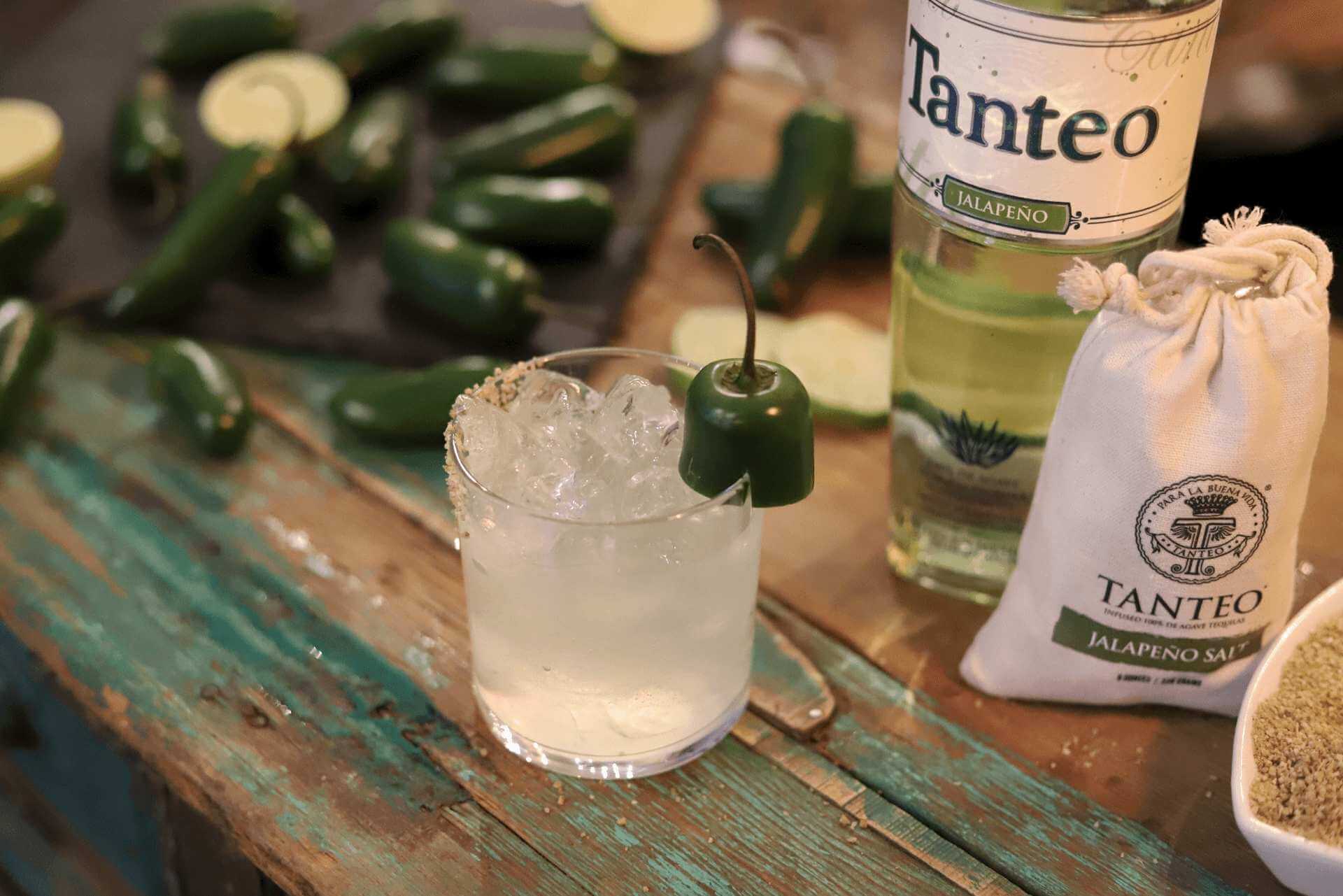
Tanteo Tequila Jalapeño Margarita made with Tanteo Jalapeño Tequila

Today is the day to dial up the heat and deliver some fiery flavors to your guests with spicy Margaritas.

Why? Because it’s the second annual National Spicy Margarita Day!

Originally known as Founder’s Day, this bar holiday comes to us from Tanteo Tequila.

Participation is easy enough, and even easier if you have Tanteo Jalapeño, Habanero, and Chipotle bottles.

Tanteo CEO and Master Blender Neil Grosscup explains the signature cocktail holiday on the Bar Hacks podcast. During episode 64, Grosscup shares that the inaugural celebration honored late Tanteo founder Jonathan Rojewski. The holiday also highlights the brand’s mission: Crafting a tequila that makes the world’s best spicy Margarita.

However, it’s not just about promoting the brand and their favorite cocktail. Rather, Tanteo leverages this holiday to encourage people to give back.

Sustainability Initiatives

As Grosscup explains on Bar Hacks, he and the Tanteo team value three forms of sustainability:

  • Economic
  • Social
  • Environmental

The Tanteo distillery’s ownership spans 84 agave-farming families. Tanteo Tequila is the 85th owner. This business model—the only distillery owned by a co-op of agave farmers—is an example of economic sustainability.

There are a few reasons for this approach. One of those is that it helps the farmers weather market swings. Indeed, agave is acutely susceptible to shifts in market value. When there’s too much agave, the value of a kilo of agave can plummet quickly. Another reason for the Tanteo co-op is transparency.

About 150 bars are participating in this year’s National Spicy Margarita Day. For every spicy Margarita made with Tanteo Tequila sold at these venues through January 30, $1 will go to a variety of waterway cleanup charities:

  • Chattahoochee Riverkeeper
  • Friends of the Chicago River
  • Friends of the LA River
  • Keep the TN River Beautiful
  • Ohio River Foundation
  • Orange County Coastkeeper
  • San Diego River Park Foundation
  • Trinity River Audubon Center
  • Un Salto Con Destino. This organization is cleaning up the Rio Santiago. The Tanteo distillery is in Juanacatlán, Jalisco, Mexico, and the Rio Santiago is crucial the surrounding community.

How to Participate

It’s a little late to join officially as a bar partner with Tanteo. However, that doesn’t mean you shouldn’t celebrate the holiday.

Serving up spicy Margaritas is always a great idea. One simple way to leverage National Spicy Margarita Day is to create a small specialty menu. With at least three Margaritas, you can boost the heat level of each version to appeal to different guest’s spice preferences. You can alter heat levels using different Tanteo expressions, infusions, bitters, syrups, etc.

Or, you can simply perfect your restaurant or bar’s signature spicy Margarita. Either way, promote your participation on across your social platforms.

Speaking of social, snap a pic of your Margarita(s) and use the tag #NationalSpicyMargDay. Notice the spelling: the hashtag uses “Marg,” not “Margarita.” For every social media post tagged #NationalSpicyMargDay, Tanteo will donate $1.

See below for three Tanteo spicy Margarita recipes. ¡Salud!

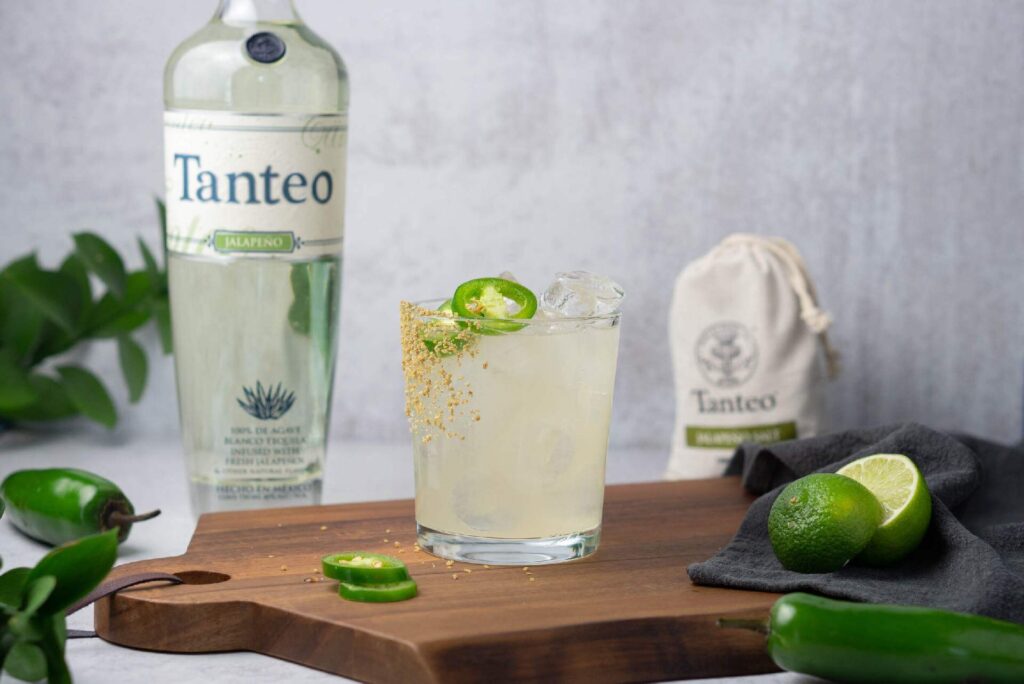
Tanteo Jalapeño Margarita

Tanteo Jalapeño Margarita cocktail and bottle of tequila

  • 2 oz. Tanteo Jalapeño Tequila

  • 1 oz. Fresh lime juice

  • ¾ oz. Agave nectar

Prepare a rocks glass by adding ice. Optionally, rim glass with Tanteo Jalapeño Salt or your signature blend. Add all ingredients to a shaker with ice. Shake well and strain into prepared rocks glass. Garnish with a lime wedge or jalapeño slice (or both).

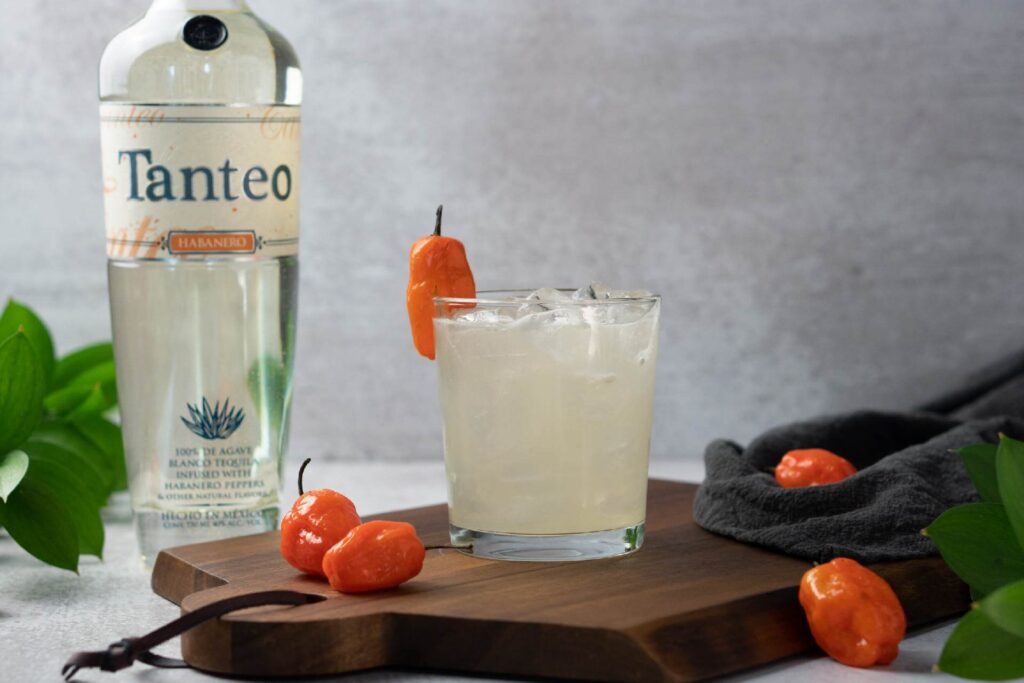
Tanteo Habanero Margarita

Tanteo Habanero Margarita on a board with habanero peppers with tequila bottle in background


  • 2 oz. Tanteo Habanero Tequila

  • 1 oz. Fresh Lime Juice

  • ¾ oz. Agave Nectar

Prepare a rocks glass by adding ice. Optionally, rim glass with Tanteo Jalapeño Salt or your signature blend. Add all ingredients to a shaker with ice. Shake well and strain into prepared rocks glass. Garnish with a habanero pepper.

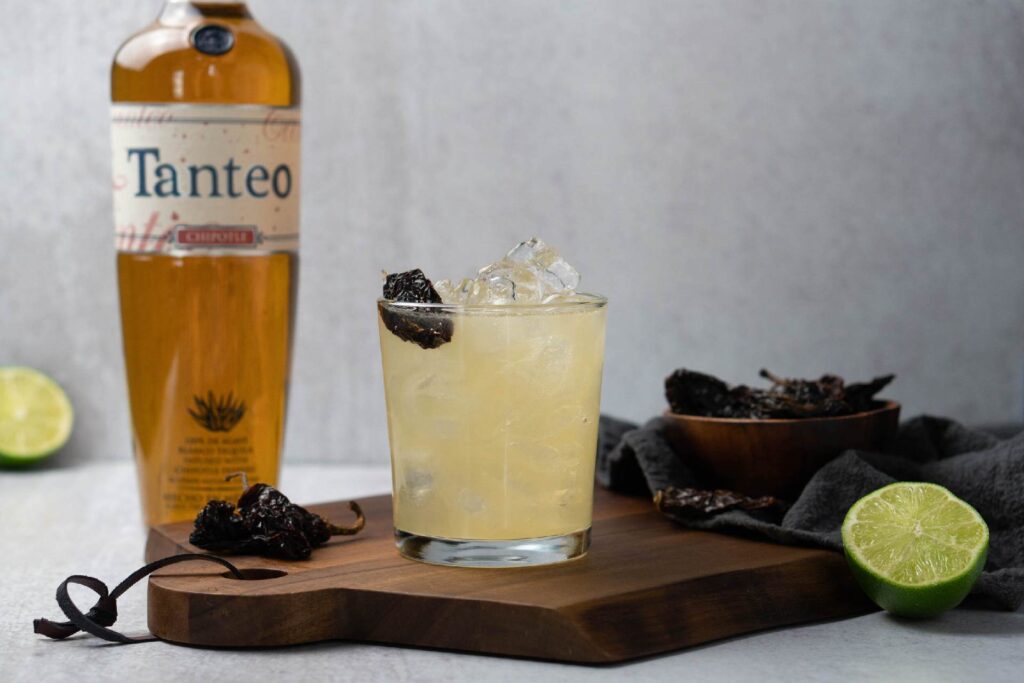
Tanteo Chipotle Margarita

Tanteo Chipotle Margarita in garnished rocks glass next to tequila bottle

  • 2 oz. Tanteo Chipotle Tequila

  • 1 oz. Fresh Lime Juice

  • 1/2 oz. Agave Nectar

Prepare a rocks glass by adding ice. Add all ingredients to a shaker with ice. Shake well and strain into prepared rocks glass. Garnish with a chipotle pepper, orange slice, or lime wedge.

Image: Tanteo Tequila

by David Klemt David Klemt No Comments

Launch of the Irish: Whiskeys You Want

Launch of the Irish: Whiskeys You Want in 2022

by David Klemt

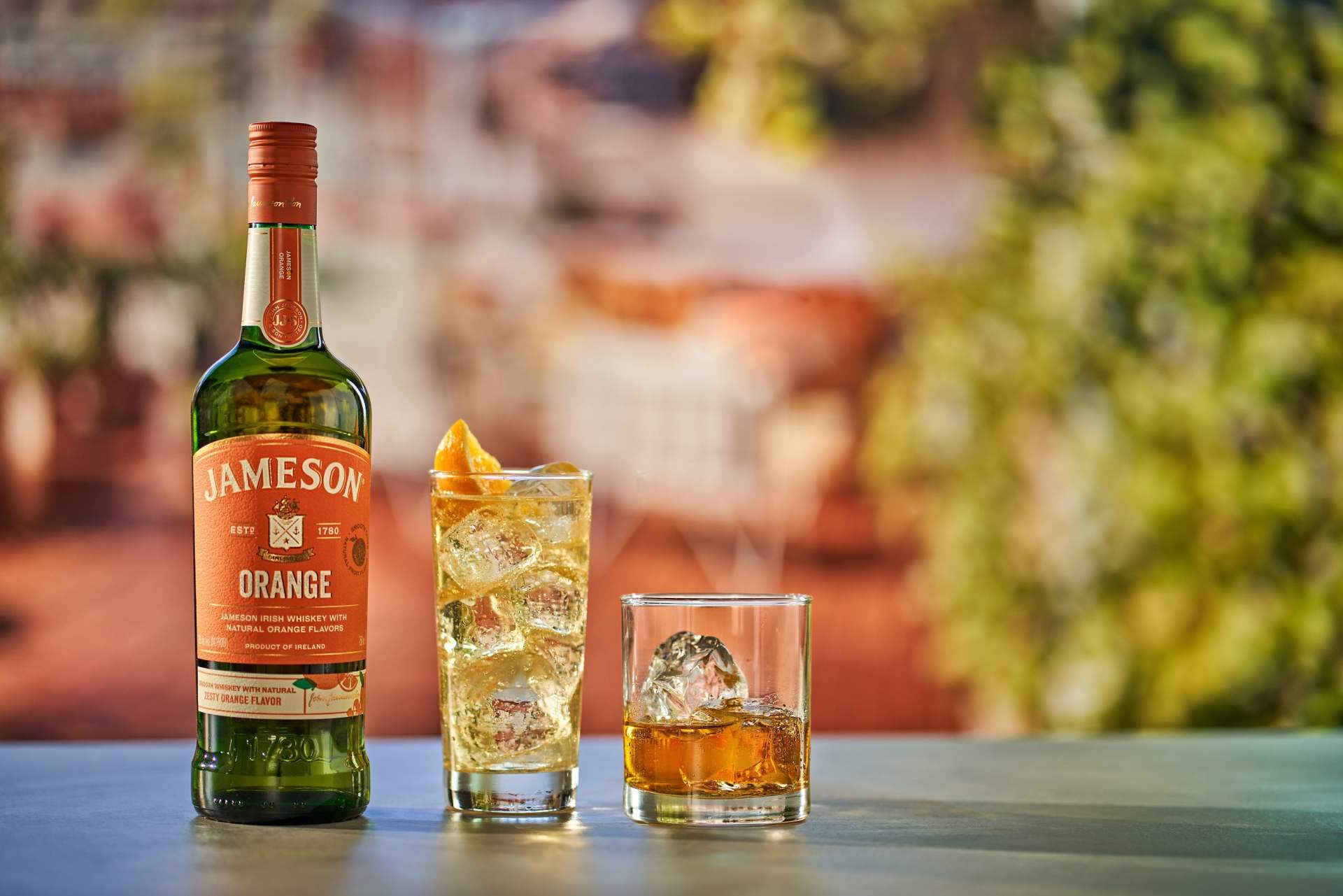
Jameson Orange Irish Whiskey bottle and cocktails

Tomorrow is National Irish Coffee Day. What better time to take a look at the Irish distilleries and releases to look out for in 2022?

From the looks of things, Ireland’s distillers are set to unleash a flood of enticing whiskeys this year. This bodes well for whiskey lovers, Irish coffee and St. Patrick’s Day fans, and your menu.

Below you’ll find ten bottles to update the Irish whiskey section of your menu. Sláinte!

Jameson Orange ($24.99 SRP)

From arguably the most recognizable name in Irish whiskey comes Jameson Orange . You can check out the bottle in the image above. With natural orange flavor, Jameson says Orange works well neat, on the rocks, and in cocktails. In particular, simple drinks like Jameson Orange and Cranberry.

Bushmills Causeway Collection 27-Year-Old Bourbon Cask ($745 SRP)

You can take two things away from this Bushmills bottle’s name. First, this ultra-premium Irish whiskey comes with hefty price tag. Second, the maturation process involves bourbon barrels. In fact, the first 21 years of maturing takes place in first-fill bourbon casks from Kentucky.

Tullamore DEW XO Caribbean Rum Cask Finish ($39.99 SRP)

Looking to switch things up with your tiki or nautical bar menu? Want to offer a new take on tropical drinks? Replace the rum with Tullamore DEW XO Caribbean Rum Cask Finish. To craft this unique expression, Tullamore DEW finishes their whiskey in former demerara rum casks, which impart notes of bananas, dates, and raisins.

Midleton Very Rare Dair Ghaelach Kylebeg Wood, Tree No. 2 ($352 SRP)

An important element of the whiskey experience—all spirits, ideally—is getting a taste of the region from which originates. With Dair Ghaelach, which translates to “Irish oak” in Irish or Scottish Gaelic, Midleton aims to deliver a taste of the heart of Ireland. They do this by finishing this expression in casks made from virgin Irish oak from, of course, Kylebeg Wood.

Method And Madness Single Malt ($95 SRP)

Micro Distillery in Midleton, Ireland, which you’ll find in County Cork, first laid this whiskey down in 2002. The liquid matures in bourbon casks before finishing in Fresnch Limousin Oak barrels. Expect cereal malt notes on the nose; barley, ice cream cone and cinnamon stick on the palate; and bon-bons on the finish.

The Pogues Single Malt ($24.99 SRP) and Blended ($28.99 SRP)

Yep—the Pogues. The Celtic band teamed up with Master Distiller Frank McHardy to craft two Irish whiskeys. Single Malt, packaged in a bold red bottle, offers a smooth sip with notes of chocolate, cinnamon, marshmallow, nougat, wood, and spice. The Pogues Blended Irish Whiskey combines grain and malt whiskeys, delivering dark chocolate, citrus, dark fruit, and spice on the nose and palate.

Roe & Co. ($29.99 SRP)

Straight out of Dublin, Roe & Co. produces creamy smooth, warm and inviting blended Irish whiskey. This bottle just may become a favorite among your guests on St. Patrick’s Day this year.

Micil Inverin Small Batch ($51.99 SRP)

This bottle comes from the first distillery to open legally in Galway, a coastal town on the west side of Ireland. Founder Pádraic Ó Griallais is a sixth-generation poitín (very generally speaking, “Irish moonshine”) distiller. The Scotch drinkers among your guests will appreciate the charred wood and peat characteristics of Iverin Small Batch. I would definitely try this in a Penicillin.

Sailor’s Home The Journey ($51.99 SRP)

Hailing from Limerick, Ireland, Sailor’s Home crafts four expressions of Irish whiskey. For this roundup, I’m sharing The Journey, a Gold Medal winner at the 2021 International Spirits Challenge. As the distillery suggests, this may become your guests’ new go-to Irish whiskey, and likely in short order. First, whiskey is aged in virgin American oak casks. The liquid is then moved to American bourbon barrels. Finally, that liquid is combined with malt Irish whiskey that was matured in American bourbon barrels and finished in Jamaican rum casks. As the distillery says, “No other Irish whiskey is made like this.”

Shanky’s Whip ($24.99 SRP)

Fine, this isn’t strictly an Irish whiskey. Shanky’s Whip is a blend of liqueur and Black Irish whiskey. Perfect for shooting, in a highball with cola, or dropped into a pint of stout.

Prices in USD. Image: Jameson 

by David Klemt David Klemt No Comments

Stories Sell: Whiskey Maturing and Aging

Stories Sell: Whiskey Maturing and Aging

Glass of whiskey neat against black background

The whiskey emoji in real life.

When it comes to tempting a guest out of their comfort zone or introducing someone to a new spirit, telling a compelling story is key.

Now, when we’re talking about whiskey, there are several directions the relevant stories can take.

We can focus on a distillery’s heritage and legacy. There are the histories of master distillers and master blenders. And there are innovations that pertain to maturing and aging.

Look, it’s been a heavy week. The National Day of Action to Save Restaurants took place on Tuesday. Half of this week’s KRG Hospitality were focused on that crucial campaign.

So, I think we need to end this week with something fun. Remember, when your guests are having fun at your venue, they’re more apt to order that second or third drink. Of course, a fun experience also encourages first-time guests to convert to loyal, repeat guests.

You know what’s fun? Checking out how distillers are innovating and crafting special releases. Many limited-run expressions leverage attention-grabbing maturing and aging techniques to stand out.

Below are a few unique expressions. Sometimes, short and snappy is the best sales approach. Quickly sharing how a particular bottle was matured or aged can sell a dram quickly and effectively.

Jefferson’s Ocean

This bottle, a “very small batch” blend of straight bourbon whiskeys, goes on journey before arriving in your guest’s glass.

How great a journey? According to Jefferson’s Bourbon, Jefferson’s Ocean barrels travel on the deck of a ship 25 ports across five continents. During this aging process, the barrels also cross the equator twice.

The result is a unique bourbon with hints of salted caramel popcorn, tropical fruit, and brine. In short, the salt air of the sea is captured in each barrel that takes this impressive trip.

Starward Two-Fold, Nova, and Solera

David Vitale, the founder of Starward Whisky, is the guest on episode 63 of the Bar Hacks podcast.

During his episode, Vitale explains that Starward matures in Australian wine barrels. And to make sure the Australian distillery gets the most out of these barrels, Starward sources them from wineries that are within a day’s drive.

Vitale calls Two-Fold the “Swiss Army knife of whiskies.” Working well neat, on the rocks, in cocktails (like a Two-Fold & Tonic, says Vitale), and with food. Nova, also matures in barrels once filled with Australian red wine. The result is a whisky that Vitale says makes the world’s best Manhattan.

For Solera, Starward takes a slightly different approach. The distillery utilizes the Spanish Solera method for this expression, as the name implies. However, to really deliver a dram that embodies its home, Solera is matured in former Apera barrels. Apera, an Australian fortified wine, is similar to sherry.

Starward Ginger Beer Cask

If ocean aging and wine barrel maturation doesn’t grab your attention, this bottle may at least get an eyebrow raise out of your and your guests.

Now, before I proceed, this is a highly allocated Starward expression. During his podcast interview, Vitale told me even he, the founder, only gets one of these bottles when they come up for release.

The 2022 Starward Ginger Beer Cask is the seventh bottling of this experimental expression. To craft this rare spirit, Starward brews alcoholic ginger beer (Vitale comes from the craft beer brewing world in Australia) and finishes their single malt whisky in those ex-ginger beer casks.

Expect strong, spicy, warm notes of ginger, along with candied citrus, dark chocolate, vanilla, and pineapple.

American Highway Bourbon

When country music superstar Brad Paisley went on tour in 2019, he brought along something unique. That special something? A world first: 90 barrels of whiskey inside a 53-foot trailer.

That “rolling rickhouse” traveled coast to coast across 25 states. The 90 barrels toured and aged with Brad Paisley for more than 7,300 miles.

When the tour concluded, the trailered whiskey was blended with three Kentucky bourbons to create Batch One: one three year, one 13 year, and one 15 year. American Highway Reserve, in collaboration with Bardstown Bourbon Company, was born.

Batch Two is coming in 2022. For this expression, the rolling rickhouse followed Paisley’s 2021 tour.

Each of the bottles above tell a unique, tempting story. Better yet, these stories can be told to guests quickly. Upselling is an art, and these bottles make it easier.

Image: Mathew Schwartz on Unsplash

by David Klemt David Klemt No Comments

SevenRooms Kicks Off 2022 with Growth

SevenRooms Kicks Off 2022 with Growth

by David Klemt

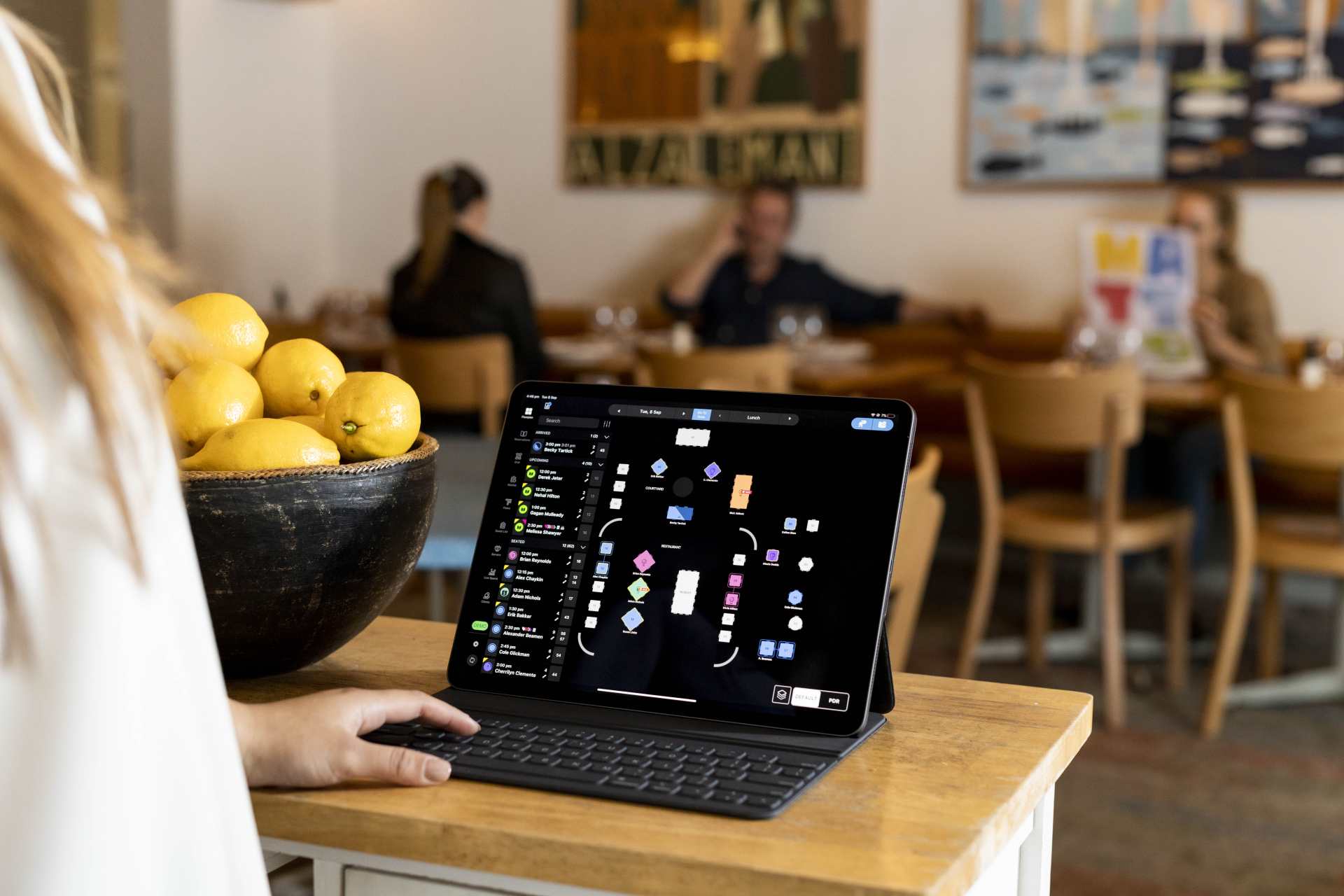
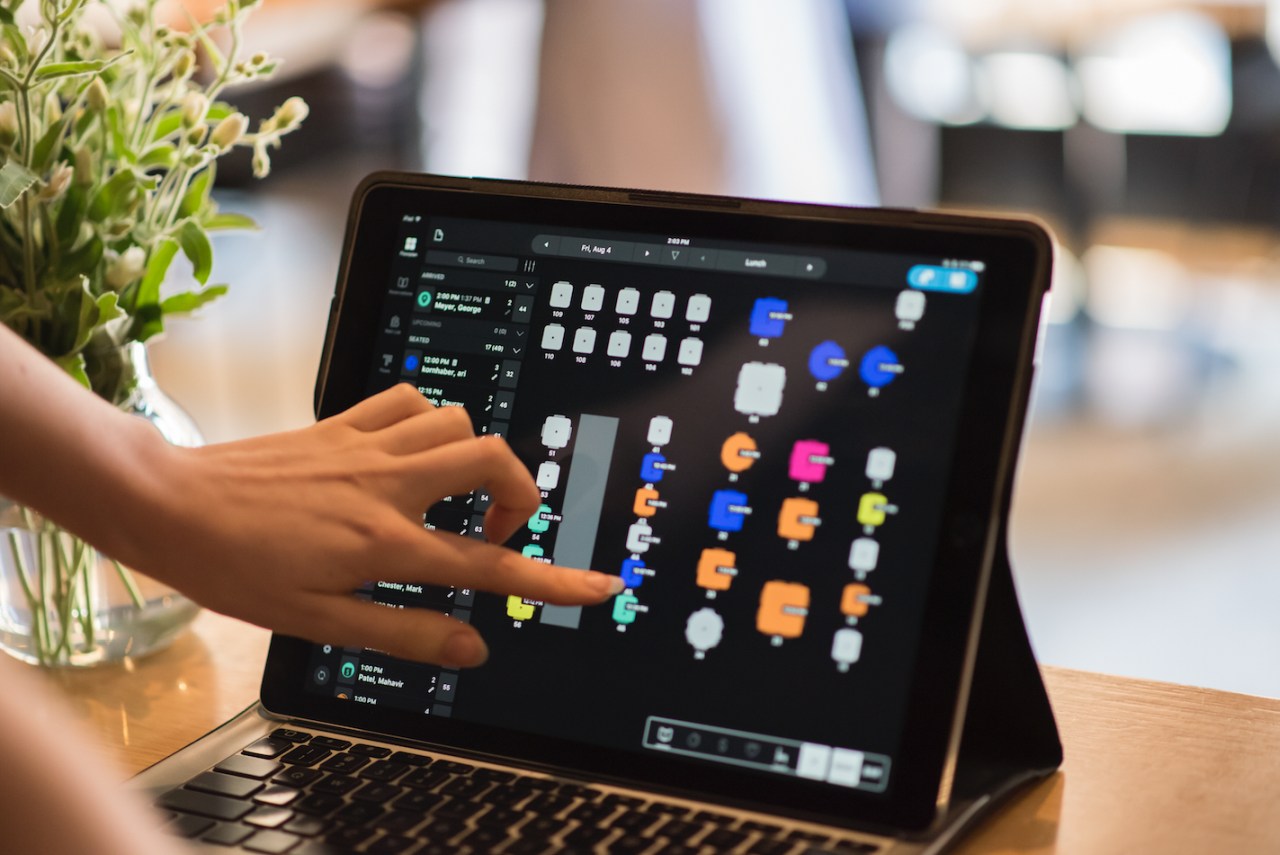
Restaurant worker using SevenRooms on tablet

SevenRooms continues their growth by kicking off 2022 with the announcement of a new, crucial addition to the team.

Today, the hospitality technology company announces the hiring of Brent-Stig Kraus. Formerly the senior vice president of sales for ChowNow, Kraus will take on the role of chief revenue officer at SevenRooms.

As CRO, Kraus will play a crucial role in further accelerating SevenRooms’ impressive global growth. The company’s new CRO will accomplish this goal by identifying and pursuing partnership opportunities, targeting high-growth sales, and scaling sales globally.

Steady Growth

In March of last year, SevenRooms brought on Pamela Martinez as the company’s chief financial officer.

By September of 2021, the platform announced a multi-year partnership with TheFork. In particular, this was major news for operators throughout Europe and Australia. Additionally, this partnership illustrates how SevenRooms is pursuing long-term global growth.

A month later, in October of last year, the company entered into a partnership with Olo. In doing so, SevenRooms ensures clients who also use Olo can capture their off-premise customers’ information. That data then creates profiles for those customers automatically, meaning operators can learn more about and effectively market to customers who engage with them via online orders.

In December of 2021, SevenRooms and ThinkFoodGroup—the hospitality company behind Chef José Andrés’ portfolio of restaurants—announced their partnership. Interestingly, this partnership sees ThinkFoodGroup joining SevenRooms in an advisory role.

And it’s not just filling crucial C-suite roles and entering into partnerships that benefit operators and the industry that are examples of SevenRooms’ rapid growth.

Along with hiring Martinez as CFO, the platform launched Direct Delivery in March 2021. This online ordering solution helped operators eliminate third-party fees; retain control of guest data; and fulfill guest desire to order from restaurants directly and seamlessly.

Finally, the company ended 2021 by sharing their 2022 trend predictions.

Why this Matters

Tech innovations are crucial to the long-term future of the hospitality industry. Restaurateurs, bar owners, and hoteliers, were once wary of adopting new tech.

Now, they’re investing more to streamline operations; automate reservations, online ordering, and marketing campaigns; and improving customer and staff relationships.

However, without growth a platform eventually becomes outdated. When that happens, the investment made by an operator to include it in their tech stack becomes a burden and liability.

As SevenRooms continues their growth, they prove worthy of an operator’s support and investment. We continue to support SevenRooms—without receiving any compensation for doing so—in large part because of the platform’s growth.

In addition to their available tools, we’re always eager to see what they’ll release next to make life simpler for operators.

Image: SevenRooms

by David Klemt David Klemt No Comments

Top 2021 KRG Hospitality Articles

Top 2021 KRG Hospitality Articles

by David Klemt

Page in Olympia typewriter with "2021" typed onto it

We’ve gathered the top KRG Hospitality articles from 2021 and separated them into five distinct categories: Food, Beverage, Operations, Marketing & Promotions, and Industry News

Food

Delivery and Takeout Food Trends for 2021: Canada

It should come as no surprise that interest in what food items Canadian consumers wanted to order for delivery and takeout skyrocketed last year. (link)

Delivery and Takeout Food Trends for 2021: United States

Obviously, owners, operators and management wanted to stay current on consumer food trends in the USA as well. (link)

Have a Slice of Nostalgia: The Return of Viennetta

Never underestimate the marketing, promotions, and profitability power of nostalgia. This is particularly true when people are seeking comfort. (link)

Beverage

Uncorked: 2021 Wine Trends to Watch

Understanding what wines are trending is an effective way to boost profits and overcome wine intimidation. (link)

Fever-Tree Cola: Set Aside Your Soda Gun

Outright eliminating soda guns may be a long shot. However, cocktails crafted using bottled craft ingredients can justify premium prices. (link)

These are the Drinking Trends to Watch in 2021

We may not have a crystal ball but we have the next best thing: Data. (link)

Operations

Container Kitchens: The New Footprint

Several industry experts and intelligence agencies predict smaller restaurant footprints moving forward. Container kitchens are certainly a viable method to shrink venue sizes. (link)

The Reality of Hiring Right Now

It really doesn’t need to be said but I’ll do it anyway: The labor shortage and “Great Resignation” are real. (link)

The 5 Ds of Bystander Intervention

Sure, great food and beverage are crucial to luring people in, wowing them, and converting them to repeat guests. However, so is the experience. A key element of a positive memorable experience is ensuring guests feel safe. (link)

SevenRooms Reveals Third Party Delivery Impact

The high-tech reservation platform shows what many suspected to be true: Direct delivery is better for operators than third-party delivery. (link)

Marketing & Promotions

How SevenRooms Improves Operations

Not only does SevenRooms make handling reservations easier, it also makes setting up marketing campaigns simple and effective. (link)

This Generation is Most Likely to Dine In

If you want to know who to market in-person dining to, here’s your answer. (link)

0.0 to 0.5 Beers to Know for Dry January and Beyond

Dry January (along with Damp January) is here to stay. This is a sampling of alcohol-free and low-ABV craft beers to offer Dry and Damp January guests. (link)

Industry News

I Tried the Mask Made for & by Hospitality

None of us enjoy wearing face masks. This mask is comfortable to wear and amplifies the wearer’s voice. (link)

What’s the RRF Replenishment Act?

Well, here’s one take on an answer to this question: It’s the bill to replenish the RRF that has made zero progress since June of 2021. (link)

Build Back Better…Without Restaurants or Bars?

The BBB Act was passed in November. Of course, it didn’t include the Replenish RRF or ENTREE acts. It’s much easier for politicians and lawmakers to say they care about and support our industry than actually prove it. (link)

Image: Markus Winkler on Unsplash

by David Klemt David Klemt No Comments

Moderation Movement: Damp January

Moderation Movement: Damp January

by David Klemt

Cocktail resting on a ledge in front of a window

Move over, Dry January, there’s yet another alternative to “traditional” alcohol consumption at the start of a new year.

As we know, Dry January consists of abstaining from drinking any alcohol for 31 days. Also known by the awkward name Dryuary, this annual practice continues to gain popularity.

However, not everyone is comfortable with this all-or-nothing approach. Instead, there are those who want to try Damp January.

What is It?

You’re likely already guessing how Damp January works. Rather than abstinence, participants practice moderation.

Generally speaking, that’s it—it isn’t a complex concept. However, there are many approaches to Damp January.

Some people set hard limits for themselves. For example, a wine drinker may resolve to only consume three glasses of wine per week. A beer drinker may choose to only have two beers from Monday through Friday.

Another approach is to determine how many full alcohol drinks one consumes on a weekend. Then, they decide to reduce that consumption by 50 or 75 percent.

However one chooses to participate in Damp January, the goal is reduction and moderation.

Is this a Fad?

In a word, no. Whatever label is put on it—moderation, sober curious, reduction—many consumers are looking to drink less alcohol.

Dry January was once seen as a fad. Instead, it’s safe to say it’s much closer to being mainstream.

Of course, time will tell if Damp January will earn as much buy-in as its abstinence-focused counterpart.

However, it’s easy to see how Damp January may become long-term behavior for some consumers.

What Does this Mean for Operators?

There are those who simply want to be more mindful of their alcohol consumption. Their goal isn’t to stop drinking alcohol, it’s to make lifestyle changes and reduce their drinking.

Sift through social media, forum and blog posts, and articles on the subject, and you’ll come across interesting motivations for moderation. In many cases, people point to alcohol playing a role in their social lives.

Of course, that means drinking with friends, coworkers, and family members at restaurants, bars, and nightclubs. They simply want to consume less alcohol per visit.

This doesn’t have to present as a threat to operators. The increasing popularity of alcohol-free beers, zero-proof spirits, and low-ABV options can prove profitable for a restaurant or bar’s bottom line.

Guests who making the decision to not consume alcohol or seek out low-proof options still want to socialize. They still want to visit bars and restaurants. More importantly, they want to feel comfortable in their choice.

So, it’s up to operators to ensure Damp and Dry January guests don’t feel alienated or mocked for reducing or abstaining from drinking. Providing low- and zero-proof drinks—and highlighting them on menus—shows these guests they’re welcome and supported.

Additionally, it’s crucial that these guests receive the same level of service and presentation as other people at your bar or restaurant. A little thought to make sure they’re treated the same will go a long way.

Image: Mathew MacQuarrie on Unsplash

by David Klemt David Klemt No Comments

5 Books to Read this Month: January ’22

5 Books to Read this Month: January ’22

by David Klemt

Flipping through an open book

This month’s fun and informative book selections will help you develop next-level culinary, beverage and leadership skills as we kick off 2022.

To review December 2021’s book recommendations, click here.

Let’s jump in!

Try Dry: The Official Guide to a Month Off Booze

For those who want to learn more about Dry January, Try Dry is an insightful resource. Of course, this book is also informative beyond the first month of the year. As living alcohol-free movement becomes more mainstream, it’s important for operators to understand the movement. Whether permanent or temporary, there are myriad reasons some guests decide against drinking alcohol.

Of Peats and Putts: A Whisky and Golf Tour of Scotland

During the pandemic, interest in golf skyrocketed. In part, this has led to increased interest in golf simulators, driving ranges, and nine-hole rounds of golf rather than full, 18-hole outings. Of Peats and Putts tells the story of golf and whisky in Scotland. A compelling read for operators looking to bring golf into their businesses.

The Way of the Cocktail: Japanese Traditions, Techniques, and Recipes

Not even two months on the market and already causing quite the buzz! The Way of the Cocktail comes from Julia Momosé, one of the minds behind Chicago cocktail destination Kumiko. From classics to new riffs, the recipes in this book are based on 24 micro-seasons.

Bourbon [Boxed Book & Ephemera Set]: The Story of Kentucky Whiskey

Clay Risen is considered an authority on spirits. In particular, he’s lauded as an expert on whiskey. Bourbon lovers will appreciate the Bourbon: The Story of Kentucky Whiskey box set for what it is: a definitive history of America’s native spirit. Along with profiles of Kentucky distillers, Risen has included interviews and photographs to tell the story of bourbon.

Amaro: The Spirited World of Bittersweet, Herbal Liqueurs, with Cocktails, Recipes, and Formulas

There are many reasons to love amaro. Bitter and bittersweet notes, complex flavor profiles, and their utility when it comes to crafting low-ABV cocktails are among those reasons. Amaro by Brad Thomas Parsons explores the rich history of amaro and includes over 100 recipes.

Image: Mikołaj on Unsplash

by David Klemt David Klemt No Comments

Stand Out with Weird Holidays: January ’22

Stand Out with Weird Holidays: January ’22

by David Klemt

Stay Weird neon sign with purple background

Want to stand out from from other restaurants and bars in your area? Then commit to keeping it weird.

Several “holidays” are set against every date on the calendar, and January is no exception. These holidays range from mainstream to food-centric to weird.

Pay attention to the latter to raise eyebrows, carve out a niche for your restaurant or bar, and attract more guests. Why do what everyone else is already doing?

Of course, you shouldn’t try to celebrate every holiday, weird or otherwise. And this month’s list in no way includes every odd holiday.

Focus on the days that are authentic to your brand; resonate with your guests; and help you grab attention on social media.

For last month’s list, click here.

January 5: National Bird Day

The Jungle Bird. Grey Goose. Famous Grouse. Redbreast. Eagle Rare. Wild Turkey. Kentucky Owl. Chicken wings. Duck fat. Use this holiday to feature your bird-themed cocktails, spirits, beers, and foods.

January 7: National Tempura Day

When it comes to 2022 trend predictions, comfort food is right at the top of many experts’ lists. And when it comes to comfort foods, battering and frying is always a winner. If you can batter and fry it, put it on your menu and promote it.

January 11: National Milk Day

This is the day to perfect and promote your milk cocktails. The Coquito, Bourbon Milk Punch, the Grasshopper, the Mudslide… National Milk Day is easy and fun to celebrate.

January 14: National Dress Up Your Pet Day

Does your business permit guests to bring their dogs or other pets to tag along when they visit? Encourage them to dress up their pets, and make sure you document the results on your venue’s social media channels.

January 19: National Popcorn Day

Is popcorn weird? No, of course not. Is tricking out your popcorn with seasonings weird? That depends on how creative you and your back of house can be. Think outside the popcorn tub, craft some intriguing popcorn flavors, and get your guests talking on social media.

January 20: National Get to Know Your Customers Day

Yep, I’m gonna encourage your strongly to collect the data of every guest who visits and spends money at your business. This would be a great holiday to launch or heavily promote your loyalty program.

January 24: National Beer Can Appreciation Day

Creative beer can design goes hand in hand with craft beer brewing. A lot of thought goes into beer can design and particularly eye-catching labels deserve more than a passing glance. Feature the most creative and attention-grabbing beers on your menu on National Beer Can Appreciation Day. And yes, you should definitely feature them on your social media channels.

January 29: National Corn Chip Day

Ah, the corn chip, a perfect vessel for hearty dips. They’re also ideal for walking tacos, a.k.a. tacos-in-a-bag. If you have corn chips and taco fixin’s, you can offer your guests walking tacos on National Corn Chip Day.

January 31: National Backward Day

There are several ways you can celebrate this day with your guests and staff. One simple but fun way to do so is to encourage your guests to dine in backwards order: dessert first, entrée, and then appetizer. Of course, you could print a specialty menu backwards but that runs the risk of annoying your guests. But still…interesting idea.

Image: Dan Parlante on Unsplash

by David Klemt David Klemt No Comments

Keep Up Your Momentum in 2022

Keep Up Your Momentum in 2022

by David Klemt

Start of 2022 track or path concept

In 2022, our focus needs to be on recovery, which means starting strong, gaining steam, and keeping momentum going throughout the year.

The past two years have been a nonstop flurry of starts, stops, and false starts for American and Canadian operators.

Every challenge operators face during a “normal” day has been compounded. Recruiting, hiring, training, marketing, increasing traffic and revenue, managing inventory…it’s all more challenging.

However, “challenging” doesn’t mean “impossible.” Under the best of conditions, restaurant, bar, and hotel operations are a challenge. Overcoming adversity, in other words, is a consistent element of daily operations.

Now, whether we should view constantly overcoming challenges as a badge of honor… Well, that’s a different conversation, one about industry-wide changes that are long overdue.

For this post, my focus is on starting 2022 off right, building momentum, and keeping it.

KRG Momentum

Last year, we launched a coaching program called KRG Mindset.

KRG is known for our Roadmaps to Success, which include of our in-depth feasibility studies and detailed business plans, both of which help operators secure funding. However, some of our clients aren’t ready for our full suite of startup and expansion solutions.

For these clients, we have the KRG Mindset program. This valuable program’s keystone is a dedicated, certified life coach: Jennifer Radkey.

Both starting and operating a hospitality business can be stressful, exhausting, and time consuming, and it’s easy for your vision, clarity, self-care, and relationships to become lost along the way.

That’s where Jennifer comes in. With a dedicated, certified life coach by your side to ask powerful questions and hold you accountable, the pathway towards achieving your goals will become smoother.

A clear and focused mind and a regular routine of self-care will help you survive both the start-up and day-to-day operating phases, not to mention leading you towards personal and professional success.

Let’s Go!

All hospitality professionals—from business owners to staff—are members of a tight-knit family. Unless you’ve lived hospitality, you just don’t know the challenges, risks and rewards.

That means that startup operators and established operators don’t have to try to navigate the industry alone. Whether you aren’t sure where to even begin your ownership journey or aren’t sure how to overcome the hurdles you’re facing, the team at KRG Hospitality is here for you.

If you’re ready for us to help, click here to learn more about KRG Momentum. And click here to schedule an introductory call.

Image: Tumisu from Pixabay

by David Klemt David Klemt No Comments

Current Restrictions: Canada

Current Restaurant Restrictions: Canada

by David Klemt

Four disposable medical face masks in a pile

KRG Hospitality’s headquarters is in Toronto but we operate in three major Canadian markets: Alberta, British Columbia, and Ontario.

I was visiting the Toronto office, traveling from Las Vegas, when new restrictions were announced due to Omicron.

By the time I landed, I knew each province in which we operate would be at least discussing possible restrictions.

Alberta

The following restrictions apply to restaurants, bars, nightclubs, cafes, and pubs participating in the Restrictions Exemption Program (REP):

  • No more than ten people may be sat at one table.
  • Alcohol service must terminate by 11:00 PM.
  • These businesses must close by 12:30 AM.
  • Billiards, dancing, darts, and other “interactive” activities are prohibited.

As a refresher, the REP program requires operators to require patrons age 12 and above to:

  • provide proof of vaccination, negative results from a test taken within 72 hours of service, or medical exemption; and
  • comply with mandatory masking.

Alternatively, operators can comply with all restrictions as outlined in Alberta’s public health orders.

However, businesses not participating in REP face the restrictions below:

  • Indoor dining is prohibited.
  • Outdoor dining is permitted. No more than six people may sit at the same table.
  • Groups are restricted to one household or two close contacts (for those living alone).
  • Alcohol service must terminate by 10:oo PM. Consumption must conclude by 11:00 PM.

British Columbia

At the time of publication, restaurants, cafes, and pubs can still offer both indoor and outdoor dining.

However, there are restrictions in British Columbia:

  1. No more than six people may be sat at one table.
  2. When not seated, guests must wear face masks.
  3. Guests may not move to between tables, visit other tables, or dance.
  4. Indoor gatherings are limited to 10 people (down from 25).
  5. Outdoor gatherings are limited to 25 people (down from 100).
  6. Operators must maintain physical distancing or barriers between tables.
  7. Alcohol can be served during normal service hours.

Unfortunately, bars, nightclubs, and lounges aren’t facing restrictions, they’ve been forced to close.

These restrictions and closures will remain in place until January 18, 2022. Exceptions include bullet points 2 and 3, which are expected to remain until January 31, 2022.

Ontario

As of December 19, 2021, restrictions that impact restaurants, bars, strip clubs, and other food or beverage venues went into effect:

  • Capacity reduced to 50 percent.
  • No more than 10 people may sit at one table.
  • Guests must remain seated. Only performers or workers may dance.
  • Venues must close for indoor and outdoor dining and drinking by 11:00 PM. However, businesses may offer delivery and takeout past that time.
  • On-premise alcohol sales are prohibited after 10:00 PM. Consumption of alcohol on-premises is restricted after 11:00 PM.

It’s crucial that operators and leadership teams remain up to date on their province’s (and city’s) restrictions. At the start, 2022 will be challenging but opportunities for recovery will present themselves

Image: Markus Winkler on Unsplash

by David Klemt David Klemt No Comments

Soft Versus Stealth Closures

Soft Versus Stealth Closures

by David Klemt

Movie theater sign that reads "This is just intermission" temporary closure message

Restaurants, bars, and entertainment venues throughout North America are closing temporarily due to spikes in Covid-19 infections.

These closures are voluntary and out of an abundance of caution for staff, guest and community health and safety. While not in any way ideal, these voluntary closures are admirable.

Restaurants, bars, and other hospitality-focused businesses are cornerstones of their communities. Putting safety ahead of profits highlights dedication to service.

There are two types of temporary closures an operator can choose, soft and stealth or silent.

Soft Closure

Simply put, a soft closure is the counterpart to a mandated closure. No local, state or federal authority has forced the closure.

Instead, an operator decides it’s best for their staff and community for them to close their doors for a period of time. Currently, the timeframe I’m most often coming across spans Christmas to December 29 or 30.

So, what are the reasons operators are giving for soft closures? The following are the most common I’m encountering:

  • Rises in infections and hospitalizations in a given location.
  • Teams too small to provide service due to infections, mostly driven by Omicron currently.
  • A desire to protect teams from increased risk of infection.
  • Giving staff off from Christmas or Christmas Eve through December 29 or 30 to recharge for New Year’s Eve.

In Canada, some provinces are prohibiting normally lucrative NYE events. So, some operators are closing because it’s not worth attempting to operate as normal until restrictions expire.

Stealth Closure

The difference between a soft and stealth closure are subtle. However, it’s important to understand a stealth closure, and why many operators find them upsetting.

A stealth closure is essentially a type of soft closure. The main difference—which is causing a bit of an uproar—is that the operator doesn’t use their voice to tell the public why they’re closing.

Closing stealthily or silently doesn’t express to the public and lawmakers how dire the situation is for the industry, both locally and overall. Many operators find this unacceptable because the industry isn’t receiving the relief necessary to recover throughout 2022.

To some, a stealth closure lets state and federal legislators shrug off the fact that Covid-19 is once again decimating the industry. I can’t say that I disagree with this assessment.

Of course, operators are free to do as they wish. They must make the best decisions for their businesses, staff, and community.

However, an explanation of the factors that drove the decision sends a clear message that the industry needs relief. Coming together and pressuring lawmakers is the only way we’re going to get the help we need.

Image: Nick Bolton on Unsplash

by David Klemt David Klemt No Comments

Current Restaurant & Bar Restrictions: USA

Current Restaurant & Bar Restrictions: USA

by David Klemt

Four medical face masks on a blue background

According to reporting worldwide, the Omicron variant of Covid-19 is surging and accounting for the majority of new infections.

Scientists, medical professionals, and some lawmakers and politicians are expressing concern. This is due to Omicron apparently being much more transmissible in comparison to other variants.

So far, it appears the current administration isn’t suggesting lockdowns. The CDC isn’t recommending restaurants and bars close down.

And dozens of states are not—for now—imposing new restrictions on people and businesses. However, there are nearly 20 states that have restrictions in place for restaurants and bars currently.

Of course, this situation is fluid and subject to change on a whim. As of the date of publication for this article, this is the currents state of the USA.

No Restrictions

There are, so far, 31 states have no state-mandated restrictions in place:

  1. Alabama
  2. Alaska
  3. Arizona
  4. Arkansas
  5. Delaware
  6. Florida
  7. Georgia
  8. Idaho
  9. Indiana
  10. Iowa
  11. Kentucky
  12. Louisiana
  13. Maine
  14. Michigan
  15. Minnesota
  16. Mississippi
  17. Montana
  18. New Hampshire
  19. New Jersey
  20. North Dakota
  21. Oklahoma
  22. Pennsylvania (Note: Indoor diners must wear masks. Businesses can require proof of vaccination.)
  23. Rhode Island
  24. South Carolina
  25. South Dakota
  26. Tennessee
  27. Texas
  28. Utah
  29. Vermont
  30. West Virginia
  31. Wyoming

Your state may be on this list. If so, it’s still important to remain knowledgeable of current restrictions and guidelines in your area(s) of operation.

Restrictions

The following 19 states have restrictions in place. Most commonly, these are mask requirements for indoor diners.

  1. California: Indoor diners must show proof of vaccination in Los Angeles and San Francisco. Regardless of vaccine status, indoor diners must wear masks.
  2. Connecticut: Unvaccinated required to wear masks indoors.
  3. Colorado: All indoor diners must wear masks. In Boulder County, businesses can apply to receive an indoor mask exemption if they require proof of vaccination.
  4. Hawaii: All indoor diners must wear masks.
  5. Illinois: All indoor diners must wear masks.
  6. Kansas: Requirements vary by county for indoor dining, so check current local guidelines.
  7. Maryland: Requirements vary by county for indoor dining, so check current local guidelines.
  8. Massachusetts: In Boston, indoor diners must wear masks regardless of vaccination status.
  9. Missouri: Requirements vary by county for indoor dining, so check current local guidelines.
  10. Nebraska: Requirements vary by county for indoor dining, so check current local guidelines.
  11. Nevada: Requirements vary by county but for the most part, all indoor diners must wear masks.
  12. New Mexico: All indoor diners must wear masks.
  13. New York: Indoor diners must show proof of vaccination, and masks are required to dine indoors. Unvaccinated required to wear masks indoors.
  14. North Carolina: Requirements vary by county for indoor dining, so check current local guidelines.
  15. Ohio: Requirements vary by county for indoor dining, so check current local guidelines.
  16. Oregon: All indoor diners must wear masks. If physical distancing isn’t possible in outdoor areas, masks must be worn by outdoor guests as well.
  17. Virginia: All indoor diners must wear masks.
  18. Washington: All indoor diners must wear masks.
  19. Wisconsin: Requirements vary by county for indoor dining, so check current local guidelines.

So Far, No Lockdowns

Some restaurants and bars have closed temporarily. These decisions are fueled by myriad factors, including spikes in infections in their markets or staff testing positive for Covid. So far, many of these businesses plan to reopen a day or two before New Year’s Eve.

It may be difficult to be optimistic at the moment. However, more than 70 percent of Americans have received one dose of an approved vaccine. Over 60 percent have received two doses. And nearly 20 percent have received a booster.

While alarmed, reporting shows that scientists and medical professionals aren’t anticipating nationwide lockdowns.

Image: Tamanna Rumee on Unsplash

by David Klemt David Klemt No Comments

Global Trends 2022: Technomic

Global Trends 2022: Technomic

by David Klemt

"For the World" neon sign

What? You didn’t think we would focus only on Canada and America when it comes to 2022 trends, did you?

It’s difficult to keep up with restaurant, bar, and cuisine trends if you keep your focus too narrow.

Technomic is acutely aware of this. So, we took a look at senior research manager Aaron Jourden’s 2022 Global Restaurant Trends Forecast report.

One specific item, a coffee, is a striking standout. But we’ll get to that in a moment…

Operations

First, let’s take a look at restaurant and bar operations.

It’s not just North America that’s facing a labor shortage. And in 2022, Technomic expects this challenge to persist.

There are a few ways we can look at labor shortages and other challenges.

One: We can make no internal changes, pretending hope is a strategy and things will work themselves out magically. Two: We can get cynical and hostile, putting the blame on workers.

Three: We can look at the industry as a whole and operations in particular to make meaningful changes. Working conditions can be improved, leadership skills can be developed, operations can be streamlined, inventory can be cross-utilized and maximized. What are we offering workers and guests? What can be changed to reduce costs, and to increase traffic and revenue?

In other words, operators are in a position to adapt, innovate, and make meaningful changes that will ensure our industry’s long-term survival.

Labor, supply chain, and cost issues will continue in 2022. However, Technomic predicts that 2022 will be the year of measurable recovery.

Fading Ghosts

Technomic isn’t saying that ghost kitchens are going put to rest.

Rather, the firm expects the hype around them to fade away. To be sure, ghost (and virtual—not the same thing) kitchens enjoyed quite a bit more than 15 minutes of fame in 2020 and 2021.

However, we’ve seen recent reports of certain ghost kitchen chains facing logistic and legal troubles. The shine very much seems to be dulling on this pandemic trend.

Again, Technomic doesn’t think ghost kitchens will suddenly disappear. But the incessant coverage? That may be on the way out in 2022.

Food & Flavor Trends

Now, the fun stuff. If Jourden’s report proves accurate, menus throughout the world are going to see some intriguing additions:

  • Breakfast Comes Back. With people heading back to the office and children back in school, the breakfast daypart will return. Operators who did away with breakfast may see value in bringing breakfast food and beverages back.
  • Chicken or the Egg? Per Jourden’s report, the egg sandwich is in a position to knock chicken sandwiches off their pedestal. So, chicken wins either way. Jourden points to an interesting element of this prediction: Eggs are fun, allowing for puns on menus, marketing, and branding.
  • Regional vs. Global. A number of regional brands will stand out against global brands in 2022. Regional brands speak to what today’s consumer wants: locality and hyper-locality; sustainability and responsible business practices; and a focus on healthfulness.
  • What Coffee?! Jourden’s report identifies a number of truly innovative and intriguing F&B trends for 2022. The one that grabbed my attention immediately? Avocado coffee. Already popular in Indonesia, avocado coffee is expected to find its way onto menus across the globe. Other items Jourden thinks will gain traction in 2022: Pão de queijo (Brazilian cheese bread), Mexican flatbreads, vegetarian-friendly meat alternative halloumi, mutabal or moutabal (baba ghanoush’s cousin), regional comfort soups, and plant-based eggs.
  • Functional Foods. If you didn’t find avocado coffee intriguing, what about dessert foods imbued with healthful characteristics? Jourden identifies a few desserts that do more than satisfy a sweet tooth: Hand pies that boost immune systems, macarons made to enhance moods, and even ice cream that will enhance a person’s skin health and appearance.

Next year is going to be challenging. That simply isn’t up for debate. But it’s also going to be rife with opportunity and innovation for savvy operators.

Image: Jon Tyson on Unsplash

by David Klemt David Klemt No Comments

American Trends 2022: Technomic

American Trends 2022: Technomic

by David Klemt

Wooden spoon loaded with salt

Two weeks ago, I reviewed and shared Technomic’s “Canadian Trends: Looking Ahead to 2022” report, and now it’s America’s turn.

Not too surprisingly, the US and Canada are similar in terms of a few 2022 trend predictions.

And while the Omicron variant of Covid-19 is causing some restaurants and bars to close, there is some good news from Technomic.

Salt

First, a difference between America and Canada. As you may recall from my review of Canadian predictions, Technomic predicts butter will be even more important next year.

Interestingly, salt is the big prediction for the United States. The reasoning is similar: people are seeking out comfort in these difficult times.

Technomic’s “2022: The Year of the Climb” report states flat out that, “Salt is the new fat.”

The industry intelligence firm predicts that salt will be increasingly important in kitchens—and on tables—in 2022.

For example, Technomic expects operators to focus salt-cured fish and meats. Of course, that doesn’t just meet a predicted consumer demand. Cured foods can be preserved for longer, which is appealing to operators.

Seaweeds, salt blends, and salty sauces will be used in the kitchen. According to Technomic, some of those will replace (or accompany) traditional salt on tables.

Going further, Technomic predicts that salt will find its way into cocktails. This can be in the form of salty ingredients or salt water, a trend from a few years ago.

Creative Prep

Let’s stick with the kitchen a bit longer.

This is one of the strongest similarities shared by the US and Canada. Technomic predicts that operators will need to focus on cross-utilization and creativity.

As you’ve likely already figured out, this is because of supply chain issues. The more ways items can be used without introducing new SKUs, the easier things may be for operators.

Some examples of cross-utilization suggested by Technomic:

  • Roasting, grilling, and blistering items normally served raw.
  • Pickling ingredients.
  • Fermenting items.
  • Turning some items into jams.
  • Aging some ingredients.

Labor Challenges

Obviously, the labor shortage is felt throughout North America. Unfortunately, this is another similarity when comparing Technomic’s American and Canadian 2022 trend predictions.

KRG Hospitality has addressed the need for the industry to make significant changes several times this year. In particular, founder and president Doug Radkey published a book, Hacking the New Normal, calling for change to improve working conditions and the industry’s long-term survival.

Technomic is suggesting the same. The firm predicts the following for 2022:

  • Wage increases across the board.
  • Benefits (healthcare, emergency child care, 401(k), and more).
  • Virtual hiring events.
  • Referral and signing bonuses.

However, more needs to be done. The industry doesn’t simply need to revamp its image, it needs to:

  • address—and not dismiss—issues raised by current hospitality professionals;
  • solve the problems that led to so many hospitality workers quitting jobs and giving up on the industry;
  • implement real solutions for the problems the industry has faced and, frankly, nurtured for decades.

And that’s just the start. If we don’t face our industry’s challenges head-on, there won’t be much of an industry in the future.

The Battle for Comfort

Yes, comfort food will be important next year. Hence the entire section on salt above.

However, when I mention comfort in this section I’m referring to personal comfort levels.

You’ve likely been hearing from industry peers and seeing on social media that a number of bars are closing until December 29 or December 30. These temporary closures are due to spikes in positive Covid-19 cases, mostly driven by Omicron.

Many Americans, eager to return to a semblance of their pre-Covid lives, want to spend time in restaurants and bars. However, people need to balance their comfort levels with their desire for social experiences.

In response, Technomic predicts that operators will need to balance the on-premise and off-premise. In other words, omni-channel operators must dial in their offerings.

Per Technomic, operators have to figure out their mix: interactive in-person experiences, takeout, and delivery.

Good News

Technomic is making two 2022 predictions that should come as a relief to operators.

First, Q1 of 2022, per Technomic, “will reveal a particularly strong year-over-year performance” in comparison to 2021.

Overall, the firm projects a 10.4-percent sales increase for 2022 when compared to 2019 sales.

There is, however, a caveat. We’ll have to take rising menu prices into account when analyzing this year’s and next year’s sales levels.

For those wondering which category is predicted to perform the best, Technomic identifies limited-service restaurants will recover quickest.

In contrast, full-service will see slower recovery. Business, leisure, and indeed “bleisure” travel will have an impact on full-service traffic.

So, 2022 isn’t going to magically return to pre-pandemic “normal.” However, should Technomic’s conservative sales prediction prove accurate, recovery is on the menu.

Image: Jason Tuinstra on Unsplash

by David Klemt David Klemt No Comments

Square: 2022 Threats & Opportunities

Square: 2022 Threats & Opportunities

by David Klemt

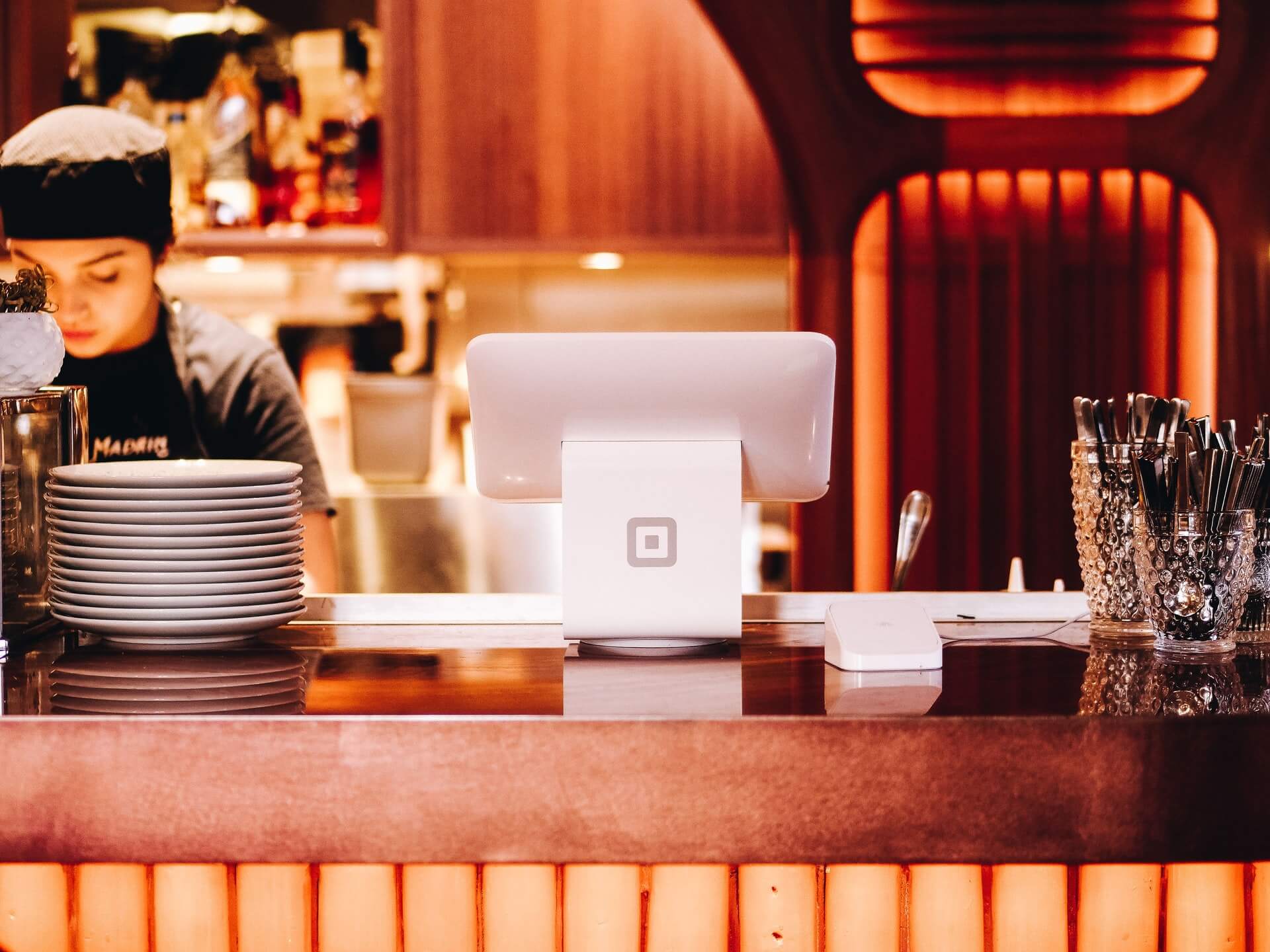
Square terminal in restaurant kitchen

As all hospitality professionals know, the past nearly two years is imposing rapid change on the industry, necessitating rapid, strategic adaptation.

The key word in the above sentence isn’t “adaptation,” it’s “strategic.”

Of course, it’s hard to make strategic choices without as much information as possible.

To that end, we’ve reviewed Square‘s recently released “Future of Restaurants: 2022 Edition.” This is the company’s second annual Future of Restaurants report.

Square partnered with Wakefield Research, surveying 500 operators and 1,000 consumers to identify 2022 threats and opportunities.

Threat: Labor Shortage

Most operators aren’t going to want to read this prediction from Square. However, we can’t identify and adapt for opportunities if we don’t acknowledge threats.

Per Square’s report, the labor shortage may never see a correction. In other words, welcome to yet another new normal.

More than 70 percent of operators say they’re facing a labor shortage, per Square. Just over 20 percent of available positions were, at the time the survey was conducted, unfilled.

Instead, operators will likely, according to Square, need to make operational and work culture changes:

  • Improve working conditions. For example, encouraging and acting on team feedback. Another example? Modernizing scheduling.
  • Ensure workers are being mentored and not simply managed.
  • Hire, train, assign tasks, and schedule more strategically to operate with a smaller team.
  • Offering incentives that entice higher-quality candidates to work for you.

One participant quoted in the Square report claims that QR code ordering dropped their labor cost percentage by 150 percent.

Threat: Lack of Tech

As SevenRooms suggested when looking forward to 2022, technology solutions can lessen the burden of labor shortages. That leads us to another big threat: failing to embrace tech.

Some operators bristle at the word “automation.” For many, it conjures an image of robots in the kitchen and delivering food to tables.

Obviously, we’re opposed to replacing staff with any form of automation. However, we support automating tasks if that means team members are better utilized.

Why not automate inventory? Why not automate online order filling? If it improves operations and the guest experience, automation is less threatening.

According to Square’s report, 62 percent of operators think automation is appealing for managing online, delivery, and contactless orders. Ninety percent of operators say that back-of-house automation—if staff can focus on more important tasks—is a good idea.

More than 90 percent think automated inventory is an appealing solution.

It has taken a lot of time for hospitality to catch up to other industries in embracing tech. But Square reports that 36 percent of restaurants upgraded their business tech in 2021.

Of course, automation will become a threat if operators lean too heavily into it and stop paying attention to detail.

Phrased another way, be tech-savvy, not tech-reliant.

Opportunity: Omni-channel

Square see implementing an omni-channel strategy as the way forward. In fact, their general manager for Square Restaurants, Bryan Solar, said the following:

“We see the time of the dine-in only or takeout only as largely done forever.”

Going omni-channel (diversifying) in the restaurant space means making online ordering and delivery important elements within the overall business strategy. To that end, Solar posits kitchens will grow in size to better handle online orders.

Square’s survey reveals some intriguing numbers:

  • 13 percent of consumers say they’ll avoid restaurants that don’t offer online ordering.
  • Among restaurants with online ordering, those channels generate 34 percent of their revenue.
  • Over the past year, 54 percent of restaurants either added or expanded online ordering channels.
  • Online ordering is likely here to stay: 69 percent of respondents plan to offer it post-Covid-19.
  • 24 percent of operators are planning to allow guests to order alcohol from them online.

Another interesting set of numbers pertains to first- and third-party delivery. As we’ve stated several times, we much prefer operators offer first-party or direct delivery. According to Square, 49 percent of operators plan go direct delivery. More than half—62 percent—will pursue third-party delivery. That suggests that some operators will offer both.

Opportunity: Direct Ordering

When it comes to engaging online guests, operators need to control the experience. As I wrote for another publication years ago, a restaurant or bar’s website is still very important.

This statistic proves that statement true: Per Square, 68 percent of online guests want to order via a restaurant’s website or app, not a third-party.

More than likely, a significant portion of those guests want to know they’re supporting a restaurant and its staff directly. Hence the importance placed on ordering via the website or their own branded app.

So, operators would do well to ensure their websites feature an ordering widget. Or, they can opt to have an app built (or at least skinned) for their business.

Opportunity: Kiosks

According to Square’s survey results, 79 percent of consumers prefer ordering from kiosks over ordering from staff.

Most consumers and operators likely associate ordering kiosks with fast food restaurants. However, other categories can also benefit from these devices.

Close to half—45 percent—identified it as a preference when ordering at a casual-dining restaurant.

And fine dining isn’t immune to the convenience of tech. A little over 20 percent of consumers prefer to order via kiosk in the fine-dining space.

Overall, kiosks speak to the guest desires for convenience and safety. More than a third indicated that ordering via digital menu is appealing because they don’t have to touch a menu someone else has touched. And 37 percent like a digital option because they don’t have to wait for a server to bring them a physical menu.

Eleven percent of Square survey respondents will avoid a restaurant if they don’t offer digital menus.

Nearly half (45 percent) of restaurants are planning to offer QR code menus post-Covid-19. Another benefit of digital menus is dynamic pricing. As costs fluctuate, operators can increase or reduce prices easily without printing new menus.

Outlook

Representing a stark contrast from 2020 survey results, nearly 60 percent of operators say the survival of their restaurants is a concern in 2022.

That’s still a high number but vastly lower than how operators answered about 2021. Last year, 92 percent of operators surveyed said they were worried about survival.

According to Square’s report, operators are looking past surviving and making long-term plans. That’s a welcome sign that confidence is improving.

To review Square’s “Future of Restaurants: 2022 Edition” report in its entirety, click here.

Image: Patrick Tomasso on Unsplash

by David Klemt David Klemt No Comments

SevenRooms Predicts 2022

SevenRooms Predicts 2022

by David Klemt

SevenRooms guest data image

As we near the end of a tumultuous 2021 we must look ahead to 2022 to set our industry up for best strategies, innovations, and recovery.

SevenRooms is doing just that, looking at what operators should consider to meet guest expectations next year.

In a blog post on the company’s website, SevenRooms reveals what they believe are the keys to success in 2022.

Let’s jump in.

More is More

The first quarter of 2022 will mark two years of the pandemic and its affects on the industry.

As SevenRooms says, some guests will not have been out of their homes for two years. The company predicts this contingent will be looking to unleash pent-up demand.

Of course, that represents an opportunity for operators. Another wave of pent-up demand can mean a boost in traffic and revenue.

However, guest expectations will be sky high. That cliché that less is more? Yeah, you can toss that right out.

More will be more for this contingent of guests looking to dine and drink out after feeling cooped up for month after endless month.

Sure, some guests are aware that operators are facing labor shortages, increased costs, and other pandemic-driven challenges. They know that workers are overwhelmed and finding themselves in hostile confrontations they certainly don’t deserve.

And sure, some guests are sympathetic to those struggles. However, they have their demands and expect restaurants, bars, and hotels to meet them.

What can operators do to meet those demands? In fact, what can they do to anticipate and overdeliver on guest expectations?

SevenRooms has a couple suggestions.

Collect guest data. At this point, this should be a given. How can an operator engage with and retain guests if they don’t really know anything about them?

Embrace more tech. Platforms like SevenRooms can handle a restaurant or bar’s reservations quickly and easily. This is a feature that, per SevenRooms, more than half of guests expect a restaurant or bar offer. Some platforms can also automate marketing; send guests post-visit surveys; and tackle review aggregation.

Convenience Reigns Supreme

Here’s a quick, impromptu survey:

Do you prefer a seamless restaurant, bar or hotel experience, or do you like frustrating dining, drinking and lodging experiences?

I’m going to go ahead and assume you prefer the former option. In other words, you like what your guests like: convenience.

Well, SevenRooms is predicting that the desire for convenience will only grow stronger among guests.

Yes, delivering on the increasingly important topic of convenience will rely on collecting data. But rather than view it as just one more task, SevenRoom suggests looking at it in a more positive light.

A number of the conveniences guests expect can be automated. They can even help ease the burden of the labor shortage somewhat.

For example, contactless ordering and contactless pay are close to becoming standards. Offering those features to guests means meeting expectations, thereby delivering an excellent guest experience. On-demand ordering and paying can also ease some front- and back-of-house pressure.

Collecting guest data allows management and front-of-house staff to add personal touches before a guest is even seated. Again, seamless, excellent guest service.

Another convenience? Online ordering. SevenRooms isn’t the first to predict that on-demand ordering is here to stay. In fact, a suite of conveniences will be important moving forward:

  • Online ordering during in-person visits and for delivery or pickup.
  • A user-friendly reservation system that goes deeper than just picking a date and time. Why not allow guests to select seats and even request upgrades?
  • A virtual waitlist. Not only is this convenient, SevenRooms says this feature can boost walk-in traffic and reduce abandonment.
  • Contactless, mobile paying options.

There you have it. Two seemingly basic predictions—higher expectations and a desire for even more convenience—with the potential to boost traffic, loyalty, and revenue.

Image: SevenRooms

by David Klemt David Klemt No Comments

What Does Omni-channel Mean?

What Does Omni-channel Mean in Hospitality?

by David Klemt

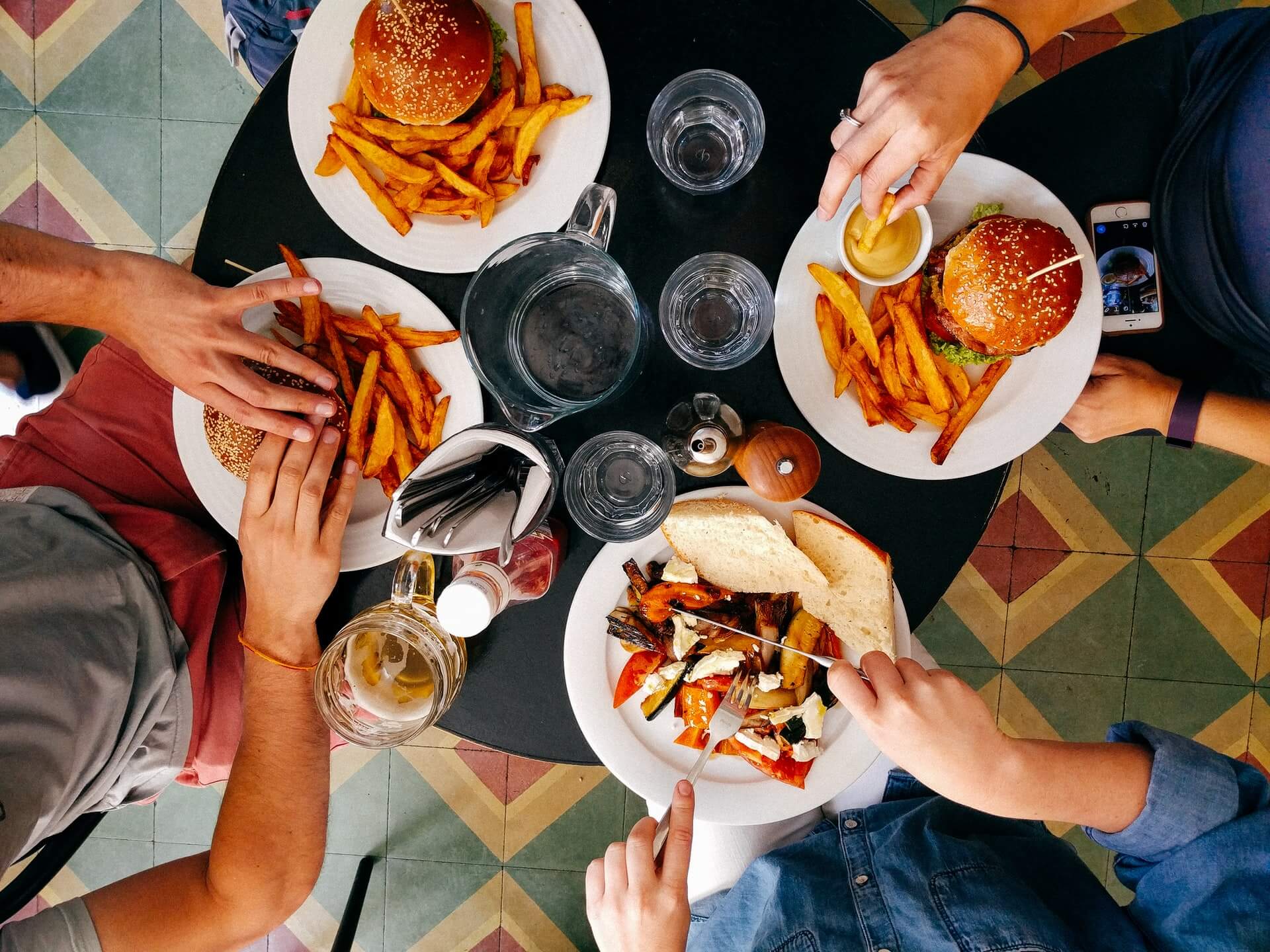
Restaurant diners eating burgers, fries and roasted vegetables

Buzzword or professional jargon, the term “omni-channel” seems to come up more often as our industry embraces more innovations.

As more social and digital platforms (channels) pop up, your job as marketer becomes more complex.

For a pessimistic take, your marketing efforts are like a ship. Every new marketing channel that gains traction is like a hole you have to plug. Fail to do so and you risk your marketing ship sinking.

Now for an optimistic take. Every channel you can add to your marketing is an opportunity to grow your reach. Increasing the amount of people who become familiar with your brand represents the potential to grow loyalty and sales.

If you want to meet your guests where they are—and you should—you need to have a presence where they are to engage with them.

And that’s just marketing. There are also omni-channel operational tactics you can implement. Unsurprisingly, you’ll likely realize many of those solutions are also digital.

So, what does “omni-channel” mean for operators? It means offering seamless guest experiences pre-, per- and post-visit.

Staying top of mind is also an element of an omni-channel strategy.

Traditional Channels

In terms of marketing, let’s break down the different types of channels available to operators.

A simple way to look at “traditional” marketing channels is that they don’t leverage digital mediums:

  • Newspaper and magazine ads
  • Radio and television ads
  • Direct mail
  • Billboards
  • Vehicle wraps
  • Flyers

Now, some of the above may seem outdated. However, those channels still have reach.

The key is knowing your brand and audience to know if a traditional channel will deliver an ROI. You also need to take the time to figure out where your dollars and time are best spent.

Digital Channels

So, there’s a reason I put the word traditional in quotation marks in the previous section.

There may be a time when digital channels become so ubiquitous that they’re considered traditional.

Just look at the digital channels below and consider how commonplace they’ve become:

  • Social media
  • Email marketing
  • Company websites
  • Search engine marketing
  • Newsletters
  • Text messages

It’s easy to see how one day the channels above will overtake their non-digital counterparts and become the traditional way we market.

The reasons for this are obvious. Digital campaigns are easily measurable, they allow for incredibly specific targeting, and they tend to be more engaging.

Really, the biggest cons that pertain to digital marketing channels are: being viewed as annoying/intrusive; being lost in the sea of ads people encounter every day.

On the execution side, it can still be overwhelming to engage just in social media marketing. However, there are platforms that can help make this task less daunting.

Other Channels

Like I wrote earlier, omni-channel doesn’t only pertain to marketing.

Of course, the term and practice are most often associated with marketing. However, operators have more to think about to truly become omni-channel.

The way your guests interact with your restaurant are also channels. Your front-of-house staff is a channel, technically speaking.

Now, we all know that the pandemic forced operational changes. Many of those changes are here to stay.

So, let’s look at a potential guest journey:

  • The potential guest receives a promotional offer via email.
  • They follow the link to an online reservation platform.
  • After arriving at the restaurant with their party, they check in with the host in person.
  • The server greets the party, some of whom request a physical menu. Others in the party pull out their phones and access the menu via QR code.
  • Throughout the meal, the server touches the table to ensure the visit is going well, refill drinks, take additional drink orders, etc.
  • When it’s time to pay, the party quietly does so via a touchless option and leaves.
  • A follow-up email is sent for feedback.
  • After a number of days, a text message is sent out to encourage another visit.

The marketing channels are just one element that makes the hypothetical restaurant an omni-channel operation. Providing digital, touchless menu access and payment are also omni-channel elements.

Those are just a few examples. If you take the time to review your operations; where you can reach new and repeat guests; threats such as third-party delivery; and innovations you can implement, you’ll see where you can make changes to become an omni-channel restaurant.

Image: Dan Gold on Unsplash

by David Klemt David Klemt No Comments

ABV: Does it Have to Be All or Nothing?

ABV: Does it Have to Be All or Nothing?

by David Klemt

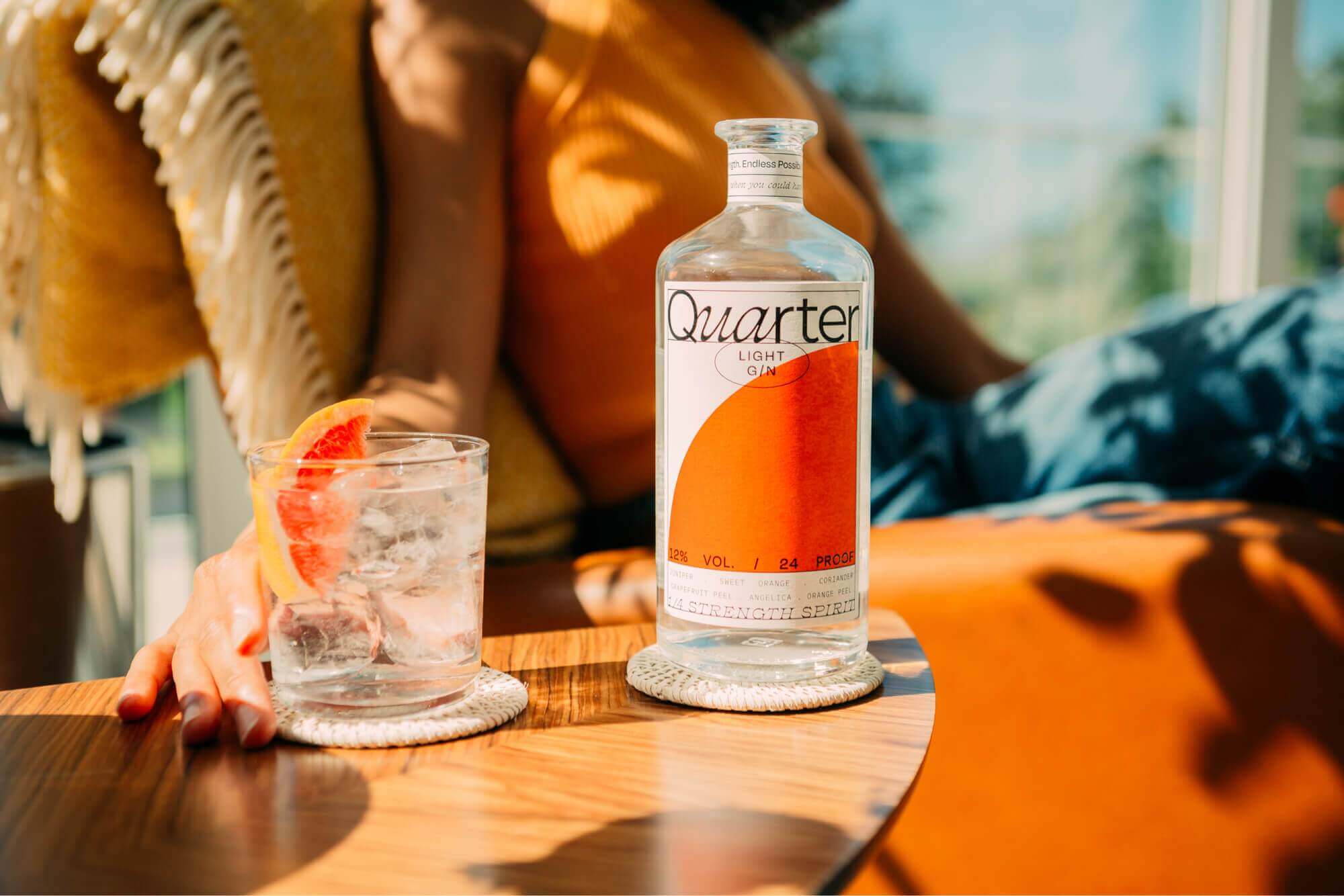
Quarter Proof Light Gin bottle and cocktail

In the discussion of alcohol, it seems to be an all-or-nothing topic: spirits and drinks are either full-proof or zero-proof.

Innovations in the space take two paths. There are brands like Seedlip that create alcohol-free spirits using botanicals, herbs and other ingredients. Resulting products are original creations with unique flavor profiles.

Another path is taken by brands such as Lyre’s. Rather than creating entirely new spirits, these producers craft alcohol-free that mimic their full-proof counterparts. For example, Lyre’s vast range includes a zero-proof bourbon and rum.

When it comes to drink builds, things get a little deeper. Yes, the all-or-nothing approach still applies to a point. Obviously, there are standard and high-proof cocktails. And yes, there are alcohol-free, zero-proof cocktails, also known as “mocktails.”

However, there’s also a third approach: low-ABV cocktails. Two popular build techniques are:

  • making low-proof liqueurs and wines the stars in Spritzers and other drinks; and
  • reverse cocktails.

When the conversation around lower-proof cocktails first gained steam, Spritzers, Fizzes and other options were brought to the forefront.

Then came the reverse cocktails, which I’ll explain briefly using a Reverse Martini build:

Let’s say your traditional recipe calls for two ounces of gin, a half-ounce of sweet vermouth (we can fight about this some other time), and a dash of orange bitters. To build the Reverse Martini, half the gin, quadruple the sweet vermouth, and keep the bitters the same.

Crafting reverse cocktails isn’t an overly complex process. But what if there was a third entry in the full-proof versus zero-proof battle?

Quarter Proof

It turns out, there is another path those seeking to consume lower-proof cocktails can take.

As the brand Quarter Proof says (or asks), “Who said it had to be all or nothing?” As the name implies, this brand intends to craft spirits that ring in at a quarter of the proof of their traditional counterparts.


View this post on Instagram


A post shared by Quarter G/N (@quarterproof)

The brand’s first product, G/N, is produced in the same manner as full-proof gin: copper pot distillation. Like traditional gin, G/N is made with juniper berries.

However, because the resulting liquid is just 12-percent ABV and not 37.5 percent, European law says it can’t be designated “gin.” So, Quarter Proof got creative with the name.

Quarter Proof G/N is like a full-proof London Dry Gin in every way—aroma, flavor profile, mouthfeel, finish—save alcohol content. Along with juniper berry, expect coriander, sweet orange, and grapefruit on the nose and palate.

This is an intriguing development in the world of spirits and I’m eager to see what Quarter Proof crafts next. “Light spirits” produced to deliver the full drinking experience with moderation from the ground up are a compelling option.

Image: Quarter Proof

by David Klemt David Klemt No Comments

The Winter Cocktail Your Menu Craves

The Winter Cocktail Your Menu Craves

David Klemt

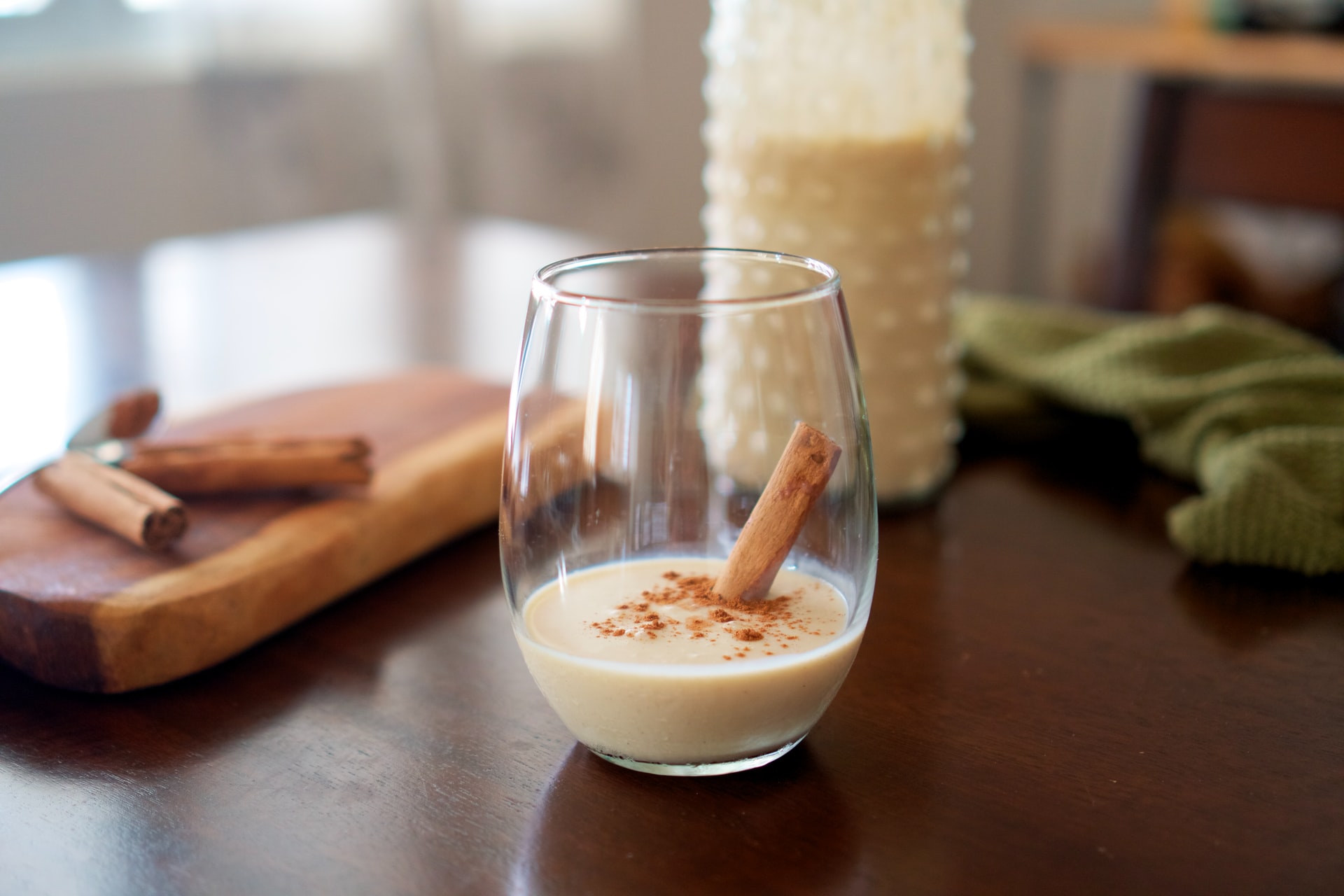
Coquito cocktail garnished with cinnamon stick

Sure, you can throw eggnog onto your menu and call it a cold day but what about a tastier winter rum cocktail that will wow your guests?

It’s the Coquito and we celebrate it on Tuesday, December 21 this year.

This creamy and rich rum drink makes an ideal LTO during the winter holiday season. And what better day to launch it than National Coquito Day?

So, let’s dive into the Coquito.

Origins

This delicious rum cocktail comes to us from Puerto Rico. There, it’s a traditional Christmas drink.

The name translates to “little coconut” in Spanish. Given that it’s made with coconut milk or cream of coconut, the name makes a lot sense.

Simple, straightforward, rich and creamy, the Coquito is easy to make and easier to drink.

Spiced with cinnamon, nutmeg and vanilla, this amazing drink embodies the flavors of the season.

Recipe

Bacardí lays claim to the original Coquito recipe. Like the phrase “No Negroni without Campari,” the rum brand says, “It’s not an original Coquito without Bacardí.”

The Bacardí Coquito recipe is as follows:

  • 1L bottle of Bacardí Superior Rum
  • 15 oz. Cream of coconut
  • 14 oz. Condensed milk
  • 12 oz. Evaporated milk
  • 2 Tbsp. Vanilla extract
  • Cinnamon to taste

Add all ingredients to a punch bowl and refrigerate until well chilled. Pour into mugs or cordial glasses and garnish with a cinnamon stick and/or a sprinkle of cinnamon.

Traditionally, the Coquito is served in a shot glass.

However, there are several alternative ways to make the Coquito. For example, the Liquor.com Coquito recipe:

  • 750 mL White, añejo or spiced Puerto Rican rum
  • 56 oz. Sweetened condensed milk
  • 48 oz. Evaporated milk
  • 24 oz. Cream of coconut
  • 4 tsps. Vanilla extract
  • 4 tsps. Ground cinnamon
  • 1 tsp. Ground nutmeg
  • Cinnamon sticks (one stick per bottle of prebatched Coquito, two per individual serving)

Add all ingredients except for rum and cinnamon sticks to a saucepan over medium heat. Stir constantly, bring to a simmer, and then let cool. Add the rum and stir. Pour into bottles that can be sealed, and add one cinnamon stick. Seal bottles and store in refrigerator (some sources say the Coquito can be stored for up to two weeks). Serve in rocks glasses and garnish with two cinnamon sticks.

Riffs

Some people add eggs to the saucepan version of the Coquito. The thickness of the drink can also be altered by reducing or increasing heating times.

Alternatively, swapping the cream of coconut out in exchange for coconut milk means a lower fat content. Obviously, that will affect mouthfeel and thickness.

Further, using different brands and expressions of rum will affect flavor. In fact, some recipes call for chocolate-flavored rum or adding chocolate liqueur.

Finally, using a zero-proof alternative to rum will allow guests who aren’t drinking to participate and engage with your winter menu. Lyre’s White Cane Spirit, Dark Cane Spirit, and Spiced Cane Spirit are clever alternatives. Ritual Rum Alternative is also a great zero-ABV option.

So, there are several ways to make the Coquito your bar team’s own. Spices, liqueurs, milk versus cream, garnishes, and glassware can put your stamp on your Coquito.

Mark your calendars and ready your marketing channels: Tuesday, December 21 is National Coquito Day.

Image: Maria Moledo on Unsplash

by David Klemt David Klemt No Comments

Winter Sangria for the Holidays

Winter Sangria for the Holidays

by David Klemt

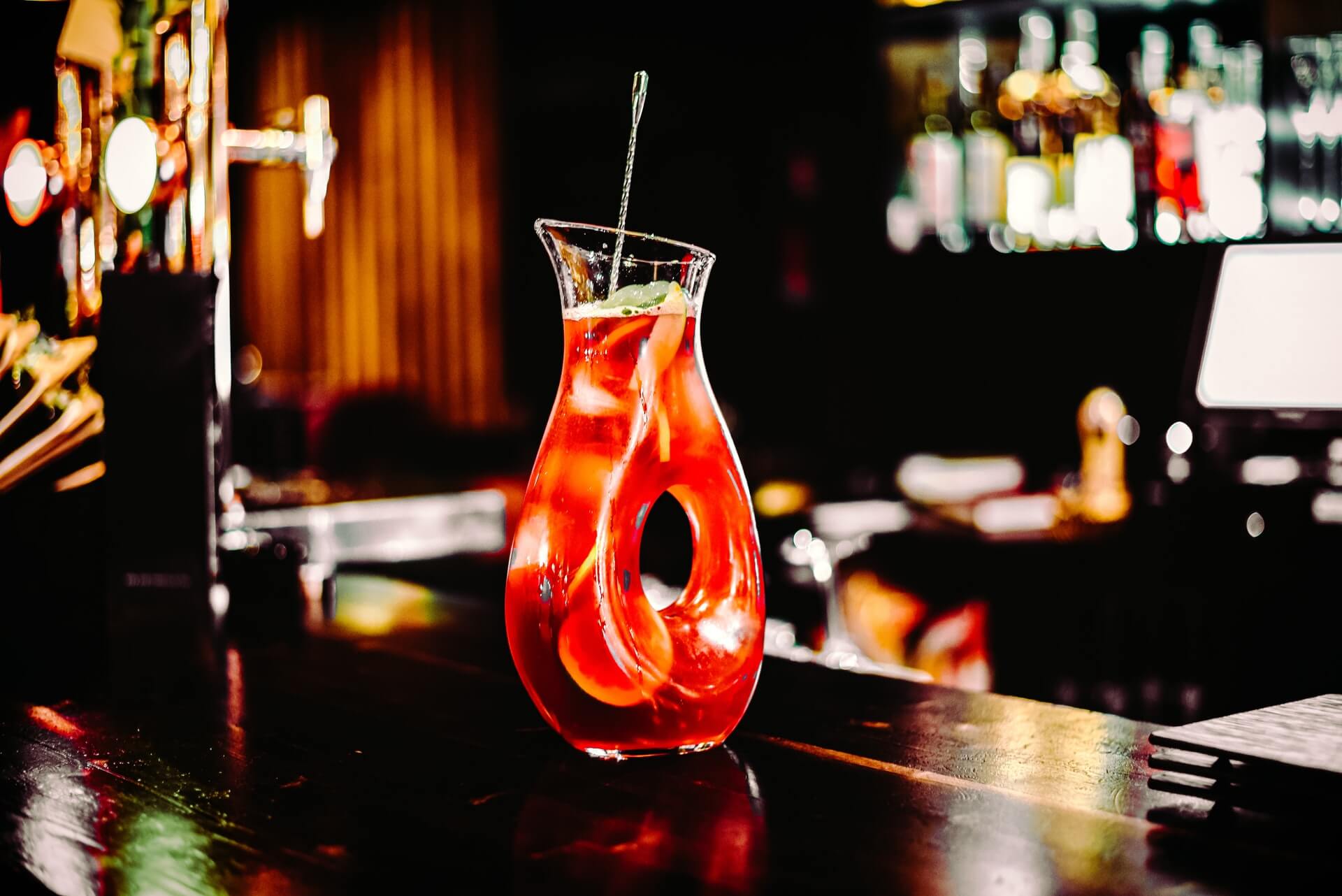
Sangria in a pitcher on a bar

Most people may associate Sangria with summer months and tropical locales.

However, Sangria can certainly shine during the winter months and holiday parties.

All you really need is a rich and perhaps somewhat sweet red wine and seasonal spices.

What is Sangria?

We celebrate National Sangria Day on December 20. That may seem strange to people who view it as a summer drink.

However, with the right wines and spices, Sangria easily transforms into a season-specific libation.

At its core, Sangria is a punch. It’s commonly accepted that this wine-based drink was created during the 18th century. Supposedly, the predecessor to Sangria (“bloodletting” in Spanish) was served cold or hot.

However, the cold version found its way onto American shores in the 1940s. There are stories that claim Sangria took off in the mid-1960s because of the 1964 World’s Fair.

So, what are the basics? Traditionally, Sangria consists of:

  • Red wine (Rioja is most traditional)
  • Chopped fruit (local fruits are most traditional)
  • Fruit juices (in place of some or all chopped fruits)
  • Sweeteners (orange juice and/or sugar)
  • An alcohol boost (brandy or liqueur)
  • Sparkling water or soda (for texture)

There are also Sangria recipes that use white wine, sparkling wine, and even combinations of red and white wine.

Winter Red Wines

Since you’ll be using seasonal fruits and spices to flavor your Sangria, the case can be made that the red wine base doesn’t matter.

However, your housemade recipe will benefit from careful consideration. Also, your guests will appreciate you putting some thought into your recipe.

The following red wines are excellent during the winter:

  • Red Zinfandel
  • Malbec
  • Petite Sirah
  • Petit Verdot
  • Merlot
  • Cabernet Sauvignon
  • Shiraz
  • Sirah/Syrah
  • Sangiovese
  • Grenache/Garnacha
  • Tempranillo

These varietals tend to have warming flavors and aromas, along with medium to full bodies.

Of particular note are Grenache, Garnacha and Tempranillo. Those varietals, along with red Riojas, are commonly used to make Sangria in Spain. By the way, Grenache and Garnacha are the same grape; it’s called Garnacha in Spain, Grenache anywhere else.

Winter Fruits and Spices

This is where you really make your winter Sangria stand out.

First, select your wine. Obviously, you don’t need to use one of your pricier wines. Get to know it, tasting it with your bar team. Consider what fruit notes and body characterize the wine. Note its level of sweetness.

Next, consider the spices that define the holiday and winter season. Cinnamon, nutmeg, star anise, clove, ginger, and allspice all come to my mind.

Now, the fruits. Pears, pomegranates, cranberries, kiwis, oranges, grapefruits, Meyer lemons, kumquats, persimmons, and tangerines are all in season in the winter.

After that, decide if you want to add a modifier like Gran Marnier, brandy, ginger ale, or just sugar.

Then, experiment with your wine choice, spices, and fruits until your housemade Sangria is to your liking and authentic to your brand.

The final step? Costing and pricing. This will be a seasonal item or LTO, so you can probably get away with charging a bit more for it than you would for a standard cocktail.

Make sure to jot down your recipe. That’s not only so it remains consistent. Doing so will also help you create new Sangria recipes for each season.

And there you have it. Not only will you be able to wow your guests on National Sangria Day, you now have a Sangria recipe you can modify on a seasonal basis.

Image: Ralph (Ravi) Kayden on Unsplash

by David Klemt David Klemt No Comments

ThinkFoodGroup Partners with SevenRooms

ThinkFoodGroup Partners with SevenRooms

by David Klemt

Front of house staff member using SevenRooms

Reservation and guest engagement and retention platform SevenRooms and ThinkFoodGroup announce their new partnership today.

This announcement marks at least the third high-profile partnership involving SevenRooms.

One partnership from earlier this year is with online ordering platform Olo. Another is between SevenRooms and TheFork.

As is normally the case when it comes to SevenRooms partnerships, the relationship will be collaborative.

ThinkFoodGroup be onboarding the restaurants in their portfolio onto the platform. This maneuver will deliver several benefits through the full SevenRooms suite:

  • Reservation, waitlist and table management
  • Marketing automation
  • Online ordering capability
  • Rating aggregation

Additionally, ThinkFoodGroup will be joining SevenRooms in an advisory role. The platform will benefit from the expertise of Chef José Andrés and the ThinkFoodGroup team.

In short, ThinkFoodGroup will gain valuable insight into their guests throughout their entire portfolio. SevenRooms will gain valuable insights they can use to improve their platform and better serve the hospitality industry.

Interestingly, ThinkFoodGroup appears to have been using SevenRooms prior to this newly announced partnership. The platform is already in use at:

  • The Bazaar by José Andrés at the SLS South Beach
  • Bazaar Meat by José Andrés at The Sahara Las Vegas
  • China Chilcano in Washington, D.C.
  • China Poblano at The Cosmopolitan of Las Vegas
  • é by José Andrés at The Cosmopolitan of Las Vegas
  • Jaleo at The Cosmopolitan of Las Vegas

From Joel Montaniel, CEO and founder of SevenRooms:

“With the hospitality industry returning to full-speed, it’s more important than ever for operators to prioritize technology platforms that are hyper-focused on helping restaurants thrive. We’re thrilled to welcome the ThinkFoodGroup team to our SevenRooms family, helping them build upon their incredible guest experiences across their properties. Most importantly, we look forward to learning from José and his team’s incredible expertise and unique perspective. Supporting and advocating for the hospitality industry has always been at the core of our business. There is so much work for us to do as the industry recovers, and we look forward to walking in lockstep with José and his team to build back better.”

From Chef José Andrés, CEO, co-founder and executive chairman of ThinkFoodGroup:

“Providing outstanding experiences for our guests has always been a priority. In light of the challenges brought on by COVID, we realized just how important it was to have a partner who can help us bring them to life in a seamless way. I am excited to bring SevenRooms into our restaurants globally, and for ThinkFoodGroup to also join the company as an industry advisor.”

From Sam Bakhshandehpour, President of ThinkFoodGroup:

“Pushing the limits of what’s expected in hospitality is at the core of our business. SevenRooms is completely transforming the restaurant technology platform, and we’re thrilled to partner with a like-minded company who thinks progressively and has the cutting-edge technology to challenge the status quo. Together, we will collaborate on building solutions that put operators’ success at the forefront.”

This year’s SevenRooms partnerships, announcement of a new CFO, and innovations (such as their Direct Delivery module), show the platform’s commitment to improvement and supporting the industry.

When operators are selecting the platforms to include in their tech stacks, ease of use and integration, along with growth, should be among their considerations. So, too, should be industry advocacy.

SevenRooms continues to prove that they deserve top marks for each of those crucial elements.

Image: SevenRooms

Quotes provided by SevenRooms via press release

by David Klemt David Klemt No Comments

Canadian Trends 2022: Technomic

Canadian Trends 2022: Technomic

by David Klemt

Yellow neon "butter" sign and scaffolding

Curious about what to expect in 2022 as a Canadian restaurant, bar or hotel operator?

Technomic has some predictions for next year.

Reviewing their “Canadian Trends: Looking Ahead to 2022” report, creativity and streamlining will be keys to success.

Let’s jump in!

Butter

Yes, this is why I chose the image above. Technomic is very specifically identifying butter as an important 2022 F&B trend.

And no, they don’t appear to be predicting the popularity a particularly rare or esoteric butter. The industry intelligence firm means butter will prove important in 2022.

In large part, Technomic is pointing to comfort food as a driver for butter.

Generally, the firm points to how versatile butter is in the kitchen. Browned and herb-infused butters, says Technomic, will find its way into cocktails.

Flavor and texture will play an important role, extending the butter prediction into buttery foods territory. For example, Technomic predicts butterscotch, buttermilk and ghee will see a boost in usage and demand.

Additionally, the plant-based movement will help nut butters grow more popular. In fact, Technomic says nut butters will find their ways onto burgers and into cocktails.

Interestingly, the firm’s butter prediction gives operators two larger trends to watch: comfort food and plant-based.

Cross-utilization

You don’t need me to tell you that North America—and the rest of the world—is facing supply chain issues.

I know you’re exhausted from just the past nearly two years of constant adaptation and pivoting. In 2022, you’ll have to continue with your creative problem solving.

The supply chain challenge (there’s an understatement) requires creativity in several areas. This includes the kitchen and menu.

Technomic suggests that one path forward through supply chain problems involves ingredient preparations:

  • Pickling
  • Candying
  • Salt-baking

The firm says these creative takes on ingredients operators already have will extend product life; add new flavors to dishes; and deliver new textures. Those last two offer guests new experiences.

In addition, getting creative with the ingredients you may be able to get more readily will help streamline and update 2022 menus. However, revising your menu will require careful consideration of your supply chain and cross-utilization, with a heavy helping of creative prep.

Running Lean

Smaller footprints. Shrunken staff. Streamlined menus. Smaller, shrunken, streamlined, optimized, leaner…

Call the process whatever you want, Technomic is predicting that operators will need to “optimize” (read: make smaller) their businesses.

Of course, there isn’t a one-size-fits-all solution. We’ve read and heard predictions since last year about what will need to shrink moving forward.

While some recent news reports say that ghost kitchens are out, Technomic seems to think that’s not the case. Technomic suggests ghost kitchens will remain viable for operators who want to expand without investing in real estate.

Additionally, Technomic’s report suggests something that should come as no surprise. In short, if it works for a brand or location, smaller may be better and here to stay.

Growth

Now, this is the most promising of Technomic’s predictions: Growth.

Per the firm, the foodservice industry in Canada was down 29 percent in Q1 of 2021. Pre-pandemic, sales reached $95 billion. That represents a loss of nearly $30 billion.

However, there’s reason to be optimistic in 2022, according to Technomic.

The firm expects growth of 21 percent in 2022 over 2021, or sales of $74.8 billion. Should this prediction prove accurate, 2022 would close just three percent under pre-pandemic sales.

Technomic identifies full-service as the foodservice segment to experience the most growth next year at 26.2 percent. In comparison, the firm predicts limited-service to grow 7.3 percent.

Next year won’t be easy. 2022 won’t be a magical return to normalcy. But there is room for optimism if Technomic’s predictions are correct.

Image: Jon Tyson on Unsplash

by David Klemt David Klemt No Comments

2021 KRG Holiday Bottle & Can Guide

2021 KRG Holiday Bottle & Can Guide

by David Klemt

Red and black gift boxes and bows on black background

We’re bringing you new products and gift ideas for the 2021 holiday season for your specialty menus, raffles, and employee incentives.

Whether because they’re unique or leverages eye-catching bottling, labeling and packaging, you can’t go wrong with the bottles below.

In fact, you should probably consider adding some of these to your inventory and seasonal menu. A number of these bottles will attract attention from guests when they spot them on your back bar.

And, hey, we won’t tell anyone if you decide to treat yourself to one of these gifts. You’ve earned it.

Brandy

Few spirits shine more during the holiday season and winter months than brandy.

Château de Breuil Réserve Du Château 8 Year

This is the first entry in Château de Breuil’s “Hors d’Age” range, which means this Calvados is older than six years. The youngest Calvados in this release is eight years old, and there’s plenty of warming, comforting apple on the nose, palate and finish.
Hennessy V.S.O.P Privilège x Julien Colombier Cognac

Hennessy V.S.O.P Privilège x Julien Colombier 

This striking bottle, adorned with an original design by Julien Colombier, definitely stands out from the standard V.S.O.P Privilège.

Hine Cigar Reserve XO

This blend of 20 eau-de-vie is intended specifically to be enjoyed with a fine cigar. In particular, a fine Cuban cigar. A Cognac meant to help unplug, slow down, and enjoy the moment.

Gin

There is an incredible array of gins available that can sway even the staunchest “I don’t drink gin” drinkers out there.

Glendalough Rose Gin

The Glendalough distillery operates via three mantras: Wild foraged. Fresh distilled. Stand apart. Glendalough Rose Gin hits all those marks, particularly standing apart from other gins.

Hardshore Original Gin

There are a few ways to approach crafting a gin. Hardshore Distilling Company’s approach is to be simple in order to be complex. Just five botanicals are used in the production of Hardshore Original Gin: Tuscan juniper, coriander, rosemary, mint, and orris root.
New Junipero Gin bottle

Junipero Gin

With it’s striking new appearance, Junipero Gin’s bottle is now as bold as the liquid inside.

Mezcal & Tequila

The growth of the agave spirit category doesn’t seem like it will stop anytime soon. In particular, luxury mezcals and tequilas seem to be benefitting from consumers interested in spending more to drink higher-quality spirits.

Código 1530 Artesanal & Ancestral

As discussed on episode 57 of Bar Hacks with Collin De Laval, Código 1530 recently released two mezcals, super-premium Artesanal and ultra-premium Ancestral.
Sombra Reposé mezcal reposado bottle and cocktails

Sombra Reposé

This unique mezcal represents a world first: A mezcal aged in Bordeaux wine casks. It doesn’t hurt that the bottle is also attractive.

Tanteo Navidad

There are just 5,000 bottles of Tanteo Navidad, an ultra-premium añejo tequila infused with the flavors of the holiday season: cinnamon, clove, nutmeg, cocoa beans, ginger, and pequin chilis.

RTD

With so many hard seltzer and canned cocktail brands hitting the market, it’s difficult picking just a few standout RTDs.
Karbach Brewing Ranch Water hard seltzers in cans

Karbach Brewing

When it comes to RTDs, Ranch Water was basically destined to end up in cans. As a blend of Topo Chico, tequila and lime, Ranch Water has a legitimate claim to the hard seltzer throne. Karbach Ranch Water is available in Original, Grapefruit, Meyer Lemon, Prickly Pear, and Watermelon. It’s also produced by a brewery in a state that knows a little somethin’ about Ranch Water: Texas.

Speaking of Texas…

Shiner Tall ‘Tails

Texas’ famous brewer has entered the hard seltzer space with four expressions based on classic cocktails: Texas Mule, Mexican Martini, Watermelon Margarita, and Ruby Red Paloma.

WESAKE

Given how easily drinkable sake is, I’m surprised there aren’t more RTD sakes on the market. Four cans of Junmai Ginjo WESAKE equal one bottle.

Rum

It’s always exciting to come across something new in any spirit category. The two selections below are from countries people don’t often think of when the topic of rum arises.

Kasama

How about small-batch rum from the Philippines, aged seven years and produced by Alexandra Dorda. If that last name sounds familiar it’s likely because Alexandra is the daughter of Tad Dorda, co-founder of Belvedere and Chopin vodkas.

Phraya Deep Matured Gold Rum

When’s the last time you sipped a rum from Thailand? The answer is most likely never. A beautiful bottle of Phraya Deep Matured Gold Rum—aged seven to 12 years—can certainly fix that.
Zanj Rum Ak Zanj "with angels" Haitian rum

Zanj Rum Ak Zanj

The name of this expression of Haitian rum translates to “with angels” in Haitian Creole. Made using only pure sugarcane juice (no sugar added) and aged exclusively in Limousin oak barrels, Ak Zanj is characterized by caramel, fruit, vanilla and honey notes. The bottle also looks great on a back bar or home bar.

Vodka

All eyes may seem to be on tequila, mezcal and whiskey, but the vodka category isn’t resting on its laurels. There have been a lot of innovations in this space, such as revisiting traditional processes, playing with flavoring, and even sourcing very specific grapes for production.
Belvedere Heritage 176 vodka

Belvedere Heritage 176

As the name suggests, Heritage 176 is an homage to the old ways of producing vodka. To that end, this expression makes use of malting or kiln-drying rye for deeper, more complex flavors.

Hangar 1 Smoke Point

Produced in partnership with Crimson Wine Group, Hangar 1 used smoke-tinged grapes affected by Norther California’s disastrous Glass Fire to create Smoke Point vodka.

Wild Roots Vodka

This corn-based vodka is made in the Pacific Northwest and infused with more than a pound of real fruit. There are several flavors available in addition to the neutral expression, such as winter-friendly Apple & Cinnamon and Cranberry.

Whiskey

This category isn’t just immensely popular, it’s immense in and of itself. It was difficult to narrow it down to just three selections, particularly when it came to bourbon.

Glenmorangie A Tale of Winter Scotch bottle

Glenmorangie A Tale of Winter

Your guests, staff, family and friends aren’t the only people who wear Christmas sweaters. A Tale of Winter grabs the eye during the holiday season with a label that looks like it’s ready for your restaurant, bar, nightclub or hotel’s holiday party. This Scotch encapsulates the season with notes of cocoa powder, orange toffee, clover, ginger, and cinnamon.

High West High Country Single Malt

It may be an oversimplification to call High Country Single Malt an homage to single malt Scotch but it’s still an accurate summation. When producing the distillery’s latest release, High West uses “on-the-grain” distillation, along with fresh-charred and second-use barrels during maturation.

Redemption Cognac Cask Finish

Bottled at 99 proof, this high-rye bourbon is aged in Pierre Ferrand Cognac barrels. Expect bold but elegant flavors with baking spices, rye and sweetness on the palate.
Woodford Reserve 2021 Holiday Bottle

Woodford Reserve 2021 Holiday Bottle

Every holiday and Kentucky special edition bottle of Woodford Reserve has been a winner. However, I find the artwork on this year’s holiday bottle by Nick Hirst to the best yet.

Wine

Well, in particular, sparkling wine. When it comes to celebrating, it’s hard to beat the craving for bubbles.

Dom Maria

You can’t go wrong with Dom Maria Brazilian Sparkling Brut or Rosé. The packaging is sleek, modern and makes a statement. Both DM expressions are 60 percent Chardonnay, 40 percent Pinot Noir.


View this post on Instagram


A post shared by Perrier-Jouët (@perrierjouet)

Perrier-Jouët Blanc de Blancs

It’s fair to say that most people are most familiar with Perrier-Jouët’s Belle Époque bottles, adorned as they are with Japanese anemone flowers outlined in gold. However, on episode 56 of Bar Hacks, Maxime Lecocq says that when he sees someone order a bottle of Perrier-Jouët Blanc de Blancs, “they know what they’re doing.”

Yarden Blanc de Blancs

Looking for a Kosher blanc de blancs option for the holiday season? Look no further than Yarden Blanc de Blancs produced by the Golan Heights Winery, currently releasing their 2012 vintage.

Low- and Zero-proof

There are a number of high-quality alcohol-free spirts, beers and other beverages out there. With that number growing, the biggest challenge is deciding which brands and expressions to pick as gifts and add to your menu.

The County Soda Co.

Much attention is paid to the spirits in cocktails, and for obvious reasons. However, crafting the best possible cocktail requires using the best possible ingredients. The County Soda Co. crafts “soda pop for adults” by using real cane sugar and juice concentrates, and by eschewing artificial sweeteners. Proudly produced in small batches in Prince Edward County, Ontario, Canada, County Soda includes flavors such as Root Beer, Cola, Ginger Ale, Blackcurrant Lime, and Orange Cream Soda.

Lyre’s

This innovative brand is named for a bird famous for it’s accurate mimicry of its avian peers, and for good reason. Lyre’s crafts zero-proof expressions that taste like their full-proof counterparts, including sparkling wine and RTDs. You can even purchase cocktail kits that provide everything necessary to make alcohol-free Negronis, Espresso Martinis, and more.

To learn more, fire up episode 28 of Bar Hacks with Tim Rita.

Partake Radler

Ted Fleming started Partake Brewing partially out of frustration. He made the choice to live sober but had no intention of giving up socializing in bars with friends. Unfortunately, the options for alcohol-free beer were incredibly slim. So, he founded Partake Brewing to produce 0.3-percent craft beer. The highly sought-after Partake Radler is back just in time for the holidays!

Learn more from Ted Fleming on Bar Hacks episode 31.

Q Tropical Ginger Beer

How does a tropical take on ginger beer sound? To me, it sounds refreshingly different. I’m a big ginger beer fan, so Q Tropical Ginger Beer, with its agave, mango, passion fruit, and pineapple notes, is intriguing.

Image: Tamanna Rumee on Unsplash

by David Klemt David Klemt No Comments

Hard Numbers for the Holidays

Hard Numbers for the Holidays

by David Klemt

Classic vintage Dodge pickup truck with winter wreath on grille

From comfort foods and specific seasonal flavors to LTOs and traditional tastes, data reveal what consumers want this holiday season.

As we reported last week, there’s reason to be optimistic about this year’s holiday season.

According to Datassential, consumers are eager to visit sit-down restaurants this month. One of their key findings was that the average group size will likely be smaller than normal.

Specifically, most groups will probably consist of seven to 12 guests. Crucially, Datassential sees potential from people eager to gather with family and friends for the holidays. Even better, of all options, sit-down restaurants are the top choice for gatherings outside of homes.

But drilling down deeper, what do guests want from restaurants during the holidays?

The Numbers

So, when it comes to the holidays, Datassential wants operators to remember that December includes more than Christmas and New Year’s Eve.

To that end, the first numbers I’m presenting are dates:

  • Hanukkah: November 28 to December 6 (ends this evening!)
  • Soyal: December 21
  • Christmas: December 25
  • Boxing Day: December 26
  • Kwanzaa: December 26 to January 1
  • New Year’s Eve: December 31
  • New Year’s Day: January 1

Those dates reveal something compelling: Plenty of opportunity to get creative and ramp up limited-time offers. Per Datassential, nearly half (44 percent) of consumers look forward to seasonal, holiday-themed LTOs.

In fact, roughly two out of five consumers find seasonality to be an important factor in their decisions to order LTOS and new menu items.

However, it’s important to know your audience and brand when coming up with special menu items. That’s because according to Datassential, 62 percent of consumers, at least for 2021, want classics and comfort food this season.

So, Datassential cautions operators against veering “too far” from traditional seasonal menu items and comfort foods. That said, you should know how far outside the box you can push your guests.

The Flavors

We’re not technically out of the fall just yet. The start of winter is December 21.

It can be smart to begin transitioning from fall to winter flavors over the next week or so. However, it may not be wise to toss fall flavors out entirely.

Datassential identifies the following as key fall flavors:

  • Apple cranberry
  • Butternut squash
  • Chestnut
  • Duck
  • Pumpkin pie
  • Stuffing

And these are important winter flavors, per Datassential:

  • Chocolate almond
  • Candy cane
  • Lobster cream
  • Lox
  • Red velvet
  • Toasted coconut

Those are by no means the only fall and winter flavors that will appeal to your guests. However, Datassential identifies them as top fall and winter flavors.

Something to think about when finalizing your winter LTO food and beverage menus.

Another thing to think about? Updating your listings to include holiday hours, LTOs, and other menu changes.

Image: Ryan Wallace on Unsplash

Top