News

by David Klemt David Klemt No Comments

Current Restrictions: Canada

Current Restaurant Restrictions: Canada

by David Klemt

Four disposable medical face masks in a pile

KRG Hospitality’s headquarters is in Toronto but we operate in three major Canadian markets: Alberta, British Columbia, and Ontario.

I was visiting the Toronto office, traveling from Las Vegas, when new restrictions were announced due to Omicron.

By the time I landed, I knew each province in which we operate would be at least discussing possible restrictions.

Alberta

The following restrictions apply to restaurants, bars, nightclubs, cafes, and pubs participating in the Restrictions Exemption Program (REP):

  • No more than ten people may be sat at one table.
  • Alcohol service must terminate by 11:00 PM.
  • These businesses must close by 12:30 AM.
  • Billiards, dancing, darts, and other “interactive” activities are prohibited.

As a refresher, the REP program requires operators to require patrons age 12 and above to:

  • provide proof of vaccination, negative results from a test taken within 72 hours of service, or medical exemption; and
  • comply with mandatory masking.

Alternatively, operators can comply with all restrictions as outlined in Alberta’s public health orders.

However, businesses not participating in REP face the restrictions below:

  • Indoor dining is prohibited.
  • Outdoor dining is permitted. No more than six people may sit at the same table.
  • Groups are restricted to one household or two close contacts (for those living alone).
  • Alcohol service must terminate by 10:oo PM. Consumption must conclude by 11:00 PM.

British Columbia

At the time of publication, restaurants, cafes, and pubs can still offer both indoor and outdoor dining.

However, there are restrictions in British Columbia:

  1. No more than six people may be sat at one table.
  2. When not seated, guests must wear face masks.
  3. Guests may not move to between tables, visit other tables, or dance.
  4. Indoor gatherings are limited to 10 people (down from 25).
  5. Outdoor gatherings are limited to 25 people (down from 100).
  6. Operators must maintain physical distancing or barriers between tables.
  7. Alcohol can be served during normal service hours.

Unfortunately, bars, nightclubs, and lounges aren’t facing restrictions, they’ve been forced to close.

These restrictions and closures will remain in place until January 18, 2022. Exceptions include bullet points 2 and 3, which are expected to remain until January 31, 2022.

Ontario

As of December 19, 2021, restrictions that impact restaurants, bars, strip clubs, and other food or beverage venues went into effect:

  • Capacity reduced to 50 percent.
  • No more than 10 people may sit at one table.
  • Guests must remain seated. Only performers or workers may dance.
  • Venues must close for indoor and outdoor dining and drinking by 11:00 PM. However, businesses may offer delivery and takeout past that time.
  • On-premise alcohol sales are prohibited after 10:00 PM. Consumption of alcohol on-premises is restricted after 11:00 PM.

It’s crucial that operators and leadership teams remain up to date on their province’s (and city’s) restrictions. At the start, 2022 will be challenging but opportunities for recovery will present themselves

Image: Markus Winkler on Unsplash

by David Klemt David Klemt No Comments

Soft Versus Stealth Closures

Soft Versus Stealth Closures

by David Klemt

Movie theater sign that reads "This is just intermission" temporary closure message

Restaurants, bars, and entertainment venues throughout North America are closing temporarily due to spikes in Covid-19 infections.

These closures are voluntary and out of an abundance of caution for staff, guest and community health and safety. While not in any way ideal, these voluntary closures are admirable.

Restaurants, bars, and other hospitality-focused businesses are cornerstones of their communities. Putting safety ahead of profits highlights dedication to service.

There are two types of temporary closures an operator can choose, soft and stealth or silent.

Soft Closure

Simply put, a soft closure is the counterpart to a mandated closure. No local, state or federal authority has forced the closure.

Instead, an operator decides it’s best for their staff and community for them to close their doors for a period of time. Currently, the timeframe I’m most often coming across spans Christmas to December 29 or 30.

So, what are the reasons operators are giving for soft closures? The following are the most common I’m encountering:

  • Rises in infections and hospitalizations in a given location.
  • Teams too small to provide service due to infections, mostly driven by Omicron currently.
  • A desire to protect teams from increased risk of infection.
  • Giving staff off from Christmas or Christmas Eve through December 29 or 30 to recharge for New Year’s Eve.

In Canada, some provinces are prohibiting normally lucrative NYE events. So, some operators are closing because it’s not worth attempting to operate as normal until restrictions expire.

Stealth Closure

The difference between a soft and stealth closure are subtle. However, it’s important to understand a stealth closure, and why many operators find them upsetting.

A stealth closure is essentially a type of soft closure. The main difference—which is causing a bit of an uproar—is that the operator doesn’t use their voice to tell the public why they’re closing.

Closing stealthily or silently doesn’t express to the public and lawmakers how dire the situation is for the industry, both locally and overall. Many operators find this unacceptable because the industry isn’t receiving the relief necessary to recover throughout 2022.

To some, a stealth closure lets state and federal legislators shrug off the fact that Covid-19 is once again decimating the industry. I can’t say that I disagree with this assessment.

Of course, operators are free to do as they wish. They must make the best decisions for their businesses, staff, and community.

However, an explanation of the factors that drove the decision sends a clear message that the industry needs relief. Coming together and pressuring lawmakers is the only way we’re going to get the help we need.

Image: Nick Bolton on Unsplash

by David Klemt David Klemt No Comments

Current Restaurant & Bar Restrictions: USA

Current Restaurant & Bar Restrictions: USA

by David Klemt

Four medical face masks on a blue background

According to reporting worldwide, the Omicron variant of Covid-19 is surging and accounting for the majority of new infections.

Scientists, medical professionals, and some lawmakers and politicians are expressing concern. This is due to Omicron apparently being much more transmissible in comparison to other variants.

So far, it appears the current administration isn’t suggesting lockdowns. The CDC isn’t recommending restaurants and bars close down.

And dozens of states are not—for now—imposing new restrictions on people and businesses. However, there are nearly 20 states that have restrictions in place for restaurants and bars currently.

Of course, this situation is fluid and subject to change on a whim. As of the date of publication for this article, this is the currents state of the USA.

No Restrictions

There are, so far, 31 states have no state-mandated restrictions in place:

  1. Alabama
  2. Alaska
  3. Arizona
  4. Arkansas
  5. Delaware
  6. Florida
  7. Georgia
  8. Idaho
  9. Indiana
  10. Iowa
  11. Kentucky
  12. Louisiana
  13. Maine
  14. Michigan
  15. Minnesota
  16. Mississippi
  17. Montana
  18. New Hampshire
  19. New Jersey
  20. North Dakota
  21. Oklahoma
  22. Pennsylvania (Note: Indoor diners must wear masks. Businesses can require proof of vaccination.)
  23. Rhode Island
  24. South Carolina
  25. South Dakota
  26. Tennessee
  27. Texas
  28. Utah
  29. Vermont
  30. West Virginia
  31. Wyoming

Your state may be on this list. If so, it’s still important to remain knowledgeable of current restrictions and guidelines in your area(s) of operation.

Restrictions

The following 19 states have restrictions in place. Most commonly, these are mask requirements for indoor diners.

  1. California: Indoor diners must show proof of vaccination in Los Angeles and San Francisco. Regardless of vaccine status, indoor diners must wear masks.
  2. Connecticut: Unvaccinated required to wear masks indoors.
  3. Colorado: All indoor diners must wear masks. In Boulder County, businesses can apply to receive an indoor mask exemption if they require proof of vaccination.
  4. Hawaii: All indoor diners must wear masks.
  5. Illinois: All indoor diners must wear masks.
  6. Kansas: Requirements vary by county for indoor dining, so check current local guidelines.
  7. Maryland: Requirements vary by county for indoor dining, so check current local guidelines.
  8. Massachusetts: In Boston, indoor diners must wear masks regardless of vaccination status.
  9. Missouri: Requirements vary by county for indoor dining, so check current local guidelines.
  10. Nebraska: Requirements vary by county for indoor dining, so check current local guidelines.
  11. Nevada: Requirements vary by county but for the most part, all indoor diners must wear masks.
  12. New Mexico: All indoor diners must wear masks.
  13. New York: Indoor diners must show proof of vaccination, and masks are required to dine indoors. Unvaccinated required to wear masks indoors.
  14. North Carolina: Requirements vary by county for indoor dining, so check current local guidelines.
  15. Ohio: Requirements vary by county for indoor dining, so check current local guidelines.
  16. Oregon: All indoor diners must wear masks. If physical distancing isn’t possible in outdoor areas, masks must be worn by outdoor guests as well.
  17. Virginia: All indoor diners must wear masks.
  18. Washington: All indoor diners must wear masks.
  19. Wisconsin: Requirements vary by county for indoor dining, so check current local guidelines.

So Far, No Lockdowns

Some restaurants and bars have closed temporarily. These decisions are fueled by myriad factors, including spikes in infections in their markets or staff testing positive for Covid. So far, many of these businesses plan to reopen a day or two before New Year’s Eve.

It may be difficult to be optimistic at the moment. However, more than 70 percent of Americans have received one dose of an approved vaccine. Over 60 percent have received two doses. And nearly 20 percent have received a booster.

While alarmed, reporting shows that scientists and medical professionals aren’t anticipating nationwide lockdowns.

Image: Tamanna Rumee on Unsplash

by David Klemt David Klemt No Comments

Global Trends 2022: Technomic

Global Trends 2022: Technomic

by David Klemt

"For the World" neon sign

What? You didn’t think we would focus only on Canada and America when it comes to 2022 trends, did you?

It’s difficult to keep up with restaurant, bar, and cuisine trends if you keep your focus too narrow.

Technomic is acutely aware of this. So, we took a look at senior research manager Aaron Jourden’s 2022 Global Restaurant Trends Forecast report.

One specific item, a coffee, is a striking standout. But we’ll get to that in a moment…

Operations

First, let’s take a look at restaurant and bar operations.

It’s not just North America that’s facing a labor shortage. And in 2022, Technomic expects this challenge to persist.

There are a few ways we can look at labor shortages and other challenges.

One: We can make no internal changes, pretending hope is a strategy and things will work themselves out magically. Two: We can get cynical and hostile, putting the blame on workers.

Three: We can look at the industry as a whole and operations in particular to make meaningful changes. Working conditions can be improved, leadership skills can be developed, operations can be streamlined, inventory can be cross-utilized and maximized. What are we offering workers and guests? What can be changed to reduce costs, and to increase traffic and revenue?

In other words, operators are in a position to adapt, innovate, and make meaningful changes that will ensure our industry’s long-term survival.

Labor, supply chain, and cost issues will continue in 2022. However, Technomic predicts that 2022 will be the year of measurable recovery.

Fading Ghosts

Technomic isn’t saying that ghost kitchens are going put to rest.

Rather, the firm expects the hype around them to fade away. To be sure, ghost (and virtual—not the same thing) kitchens enjoyed quite a bit more than 15 minutes of fame in 2020 and 2021.

However, we’ve seen recent reports of certain ghost kitchen chains facing logistic and legal troubles. The shine very much seems to be dulling on this pandemic trend.

Again, Technomic doesn’t think ghost kitchens will suddenly disappear. But the incessant coverage? That may be on the way out in 2022.

Food & Flavor Trends

Now, the fun stuff. If Jourden’s report proves accurate, menus throughout the world are going to see some intriguing additions:

  • Breakfast Comes Back. With people heading back to the office and children back in school, the breakfast daypart will return. Operators who did away with breakfast may see value in bringing breakfast food and beverages back.
  • Chicken or the Egg? Per Jourden’s report, the egg sandwich is in a position to knock chicken sandwiches off their pedestal. So, chicken wins either way. Jourden points to an interesting element of this prediction: Eggs are fun, allowing for puns on menus, marketing, and branding.
  • Regional vs. Global. A number of regional brands will stand out against global brands in 2022. Regional brands speak to what today’s consumer wants: locality and hyper-locality; sustainability and responsible business practices; and a focus on healthfulness.
  • What Coffee?! Jourden’s report identifies a number of truly innovative and intriguing F&B trends for 2022. The one that grabbed my attention immediately? Avocado coffee. Already popular in Indonesia, avocado coffee is expected to find its way onto menus across the globe. Other items Jourden thinks will gain traction in 2022: Pão de queijo (Brazilian cheese bread), Mexican flatbreads, vegetarian-friendly meat alternative halloumi, mutabal or moutabal (baba ghanoush’s cousin), regional comfort soups, and plant-based eggs.
  • Functional Foods. If you didn’t find avocado coffee intriguing, what about dessert foods imbued with healthful characteristics? Jourden identifies a few desserts that do more than satisfy a sweet tooth: Hand pies that boost immune systems, macarons made to enhance moods, and even ice cream that will enhance a person’s skin health and appearance.

Next year is going to be challenging. That simply isn’t up for debate. But it’s also going to be rife with opportunity and innovation for savvy operators.

Image: Jon Tyson on Unsplash

by David Klemt David Klemt No Comments

American Trends 2022: Technomic

American Trends 2022: Technomic

by David Klemt

Wooden spoon loaded with salt

Two weeks ago, I reviewed and shared Technomic’s “Canadian Trends: Looking Ahead to 2022” report, and now it’s America’s turn.

Not too surprisingly, the US and Canada are similar in terms of a few 2022 trend predictions.

And while the Omicron variant of Covid-19 is causing some restaurants and bars to close, there is some good news from Technomic.

Salt

First, a difference between America and Canada. As you may recall from my review of Canadian predictions, Technomic predicts butter will be even more important next year.

Interestingly, salt is the big prediction for the United States. The reasoning is similar: people are seeking out comfort in these difficult times.

Technomic’s “2022: The Year of the Climb” report states flat out that, “Salt is the new fat.”

The industry intelligence firm predicts that salt will be increasingly important in kitchens—and on tables—in 2022.

For example, Technomic expects operators to focus salt-cured fish and meats. Of course, that doesn’t just meet a predicted consumer demand. Cured foods can be preserved for longer, which is appealing to operators.

Seaweeds, salt blends, and salty sauces will be used in the kitchen. According to Technomic, some of those will replace (or accompany) traditional salt on tables.

Going further, Technomic predicts that salt will find its way into cocktails. This can be in the form of salty ingredients or salt water, a trend from a few years ago.

Creative Prep

Let’s stick with the kitchen a bit longer.

This is one of the strongest similarities shared by the US and Canada. Technomic predicts that operators will need to focus on cross-utilization and creativity.

As you’ve likely already figured out, this is because of supply chain issues. The more ways items can be used without introducing new SKUs, the easier things may be for operators.

Some examples of cross-utilization suggested by Technomic:

  • Roasting, grilling, and blistering items normally served raw.
  • Pickling ingredients.
  • Fermenting items.
  • Turning some items into jams.
  • Aging some ingredients.

Labor Challenges

Obviously, the labor shortage is felt throughout North America. Unfortunately, this is another similarity when comparing Technomic’s American and Canadian 2022 trend predictions.

KRG Hospitality has addressed the need for the industry to make significant changes several times this year. In particular, founder and president Doug Radkey published a book, Hacking the New Normal, calling for change to improve working conditions and the industry’s long-term survival.

Technomic is suggesting the same. The firm predicts the following for 2022:

  • Wage increases across the board.
  • Benefits (healthcare, emergency child care, 401(k), and more).
  • Virtual hiring events.
  • Referral and signing bonuses.

However, more needs to be done. The industry doesn’t simply need to revamp its image, it needs to:

  • address—and not dismiss—issues raised by current hospitality professionals;
  • solve the problems that led to so many hospitality workers quitting jobs and giving up on the industry;
  • implement real solutions for the problems the industry has faced and, frankly, nurtured for decades.

And that’s just the start. If we don’t face our industry’s challenges head-on, there won’t be much of an industry in the future.

The Battle for Comfort

Yes, comfort food will be important next year. Hence the entire section on salt above.

However, when I mention comfort in this section I’m referring to personal comfort levels.

You’ve likely been hearing from industry peers and seeing on social media that a number of bars are closing until December 29 or December 30. These temporary closures are due to spikes in positive Covid-19 cases, mostly driven by Omicron.

Many Americans, eager to return to a semblance of their pre-Covid lives, want to spend time in restaurants and bars. However, people need to balance their comfort levels with their desire for social experiences.

In response, Technomic predicts that operators will need to balance the on-premise and off-premise. In other words, omni-channel operators must dial in their offerings.

Per Technomic, operators have to figure out their mix: interactive in-person experiences, takeout, and delivery.

Good News

Technomic is making two 2022 predictions that should come as a relief to operators.

First, Q1 of 2022, per Technomic, “will reveal a particularly strong year-over-year performance” in comparison to 2021.

Overall, the firm projects a 10.4-percent sales increase for 2022 when compared to 2019 sales.

There is, however, a caveat. We’ll have to take rising menu prices into account when analyzing this year’s and next year’s sales levels.

For those wondering which category is predicted to perform the best, Technomic identifies limited-service restaurants will recover quickest.

In contrast, full-service will see slower recovery. Business, leisure, and indeed “bleisure” travel will have an impact on full-service traffic.

So, 2022 isn’t going to magically return to pre-pandemic “normal.” However, should Technomic’s conservative sales prediction prove accurate, recovery is on the menu.

Image: Jason Tuinstra on Unsplash

by David Klemt David Klemt No Comments

Hotel Trends to Watch in 2022

Hotel Trends to Watch in 2022

by David Klemt

Unlit hotel sign against blue sky background

Partially driven by the pandemic, in part driven by the march of innovation, these are the hotel (and motel) trends to watch in 2022.

As is the case with restaurant and bar trends from the last two years, these trends are likely to quickly evolve into industry standards.

Once slower on the uptake in comparison to other industries, hospitality is now embracing tech innovations rapidly.

Of course, not every 2022 and beyond trend relies on tech. However, most of the big changes involve tech in some way.

Below are the trends (soon to be standards) to watch and adopt next year.

Digital Room Keys

We do everything on our phones. So, why shouldn’t we access hotel and motel room keys via the devices always in our hands or pockets?

Many tech-forward hotel properties have made it possible to unlock hotel rooms via phone apps. As consumers feel more comfortable that it’s safe, secure and reliable, we can expect physical room keys to become obsolete.

One can also make the argument that doing away with millions of plastic keycards is a more sustainable practice.

Your Face is Your Passport

Points* to anyone who gets the movie I just referenced. (*Points have no value and are not redeemable for anything. But we think you’re cool for racking them up regardless.)

Some properties will make it possible to access a hotel room via biometrics. CLEAR travelers will already be familiar with this tech process.

In short, a guest will be able to unlock their room with their face. In terms of personalization—a guest expectation that’s only growing—facial recognition tech can instantly deliver on a guest’s temp, lighting, and other preferences.

I can also see this technology permitting guests to access clubs; club levels; health centers; pool areas; and order and pay for everything from food and beverage to their entire visit.

Of course, this form of tech relies heavily on people’s comfort levels concerning privacy. So, operators will need to prove themselves responsible with guest data.

Touchless Everything

Convenience works both ways. Guests want frustration-free visits. Operators and managers want to eliminate pain points wherever possible.

Guests are becoming familiar and comfortable with checking in via their phones or kiosks. In some hotels, guests navigate the lobby without ever engaging with an employee.

With the proliferation of digital assistants in homes, guests are already comfortable with voice-based functionality. Ordering room service, turning on the TV and streaming, playing music, drawing automated shades, adjust room temperatures and lights… Digital assistants eliminate several more touchpoints.

AI tech also means hotels can operate with smaller teams effectively. So, hotel design is likely to keep evolving: lobbies will look different, as will rooms, restaurants, bars, and other amenities.

Virtual Room Selection

Speaking of AI, what about VR?

Tech-savvy guests will appreciate being able to “tour” different room options in the virtual space. Such a feature can start a guest’s visit off on the right foot before they ever step onto property.

They’ll know they’re getting the features and views they want, setting up a positive experience. It’s likely VR room tours and selection will also help hotels upsell guests on rooms and features.

Cryptocurrency

There are already hotels and resorts out there accepting crypto. There’s no reason to believe this will fall out of favor any time soon.

In fact, it’s likely guests who prefer to pay via digital currency will be able to pay for every element of their visit with crypto. For these guests, a tech-heavy experience will be appealing:

  • Check out room options via virtual reality before booking;
  • Book their room in the VR space.
  • Utilize digital check-in, then unlocking their room via phone or facial scan.
  • Paying for premium amenities and F&B via crypto ties to biometrics.
  • Contactless check-out.

Guest Who

Unsurprisingly, business travelers were the first to return to hotels during the pandemic. A percentage of these guests sought out hotels that could offer them a work-from-anywhere option.

For the most part, these guests simply needed a fast, reliable WiFI connection. Of course, many of them chose properties for more leisure-focused amenities. This led to the coining of a new industry term: bleisure, a portmanteau of “business” and “leisure” travelers.

It’s likely hotels, motels and resorts will see more traffic from bleisure, solo, and staycation guests in 2022 and beyond.

Many guests will also make property selections based on a brand or group’s sustainability efforts. So, operators will need to ensure they’re being provably sustainable and not just green-washing to attract these guests.

As we can see, technology will feature heavily in the changing hospitality landscape. Initial outlay may be pricy, but as innovations become more commonplace, costs will be driven down. But offering the features that will increase traffic and guest spend? A healthy bottom line is worth it.

Image: NeONBRAND on Unsplash

by David Klemt David Klemt No Comments

Square: 2022 Threats & Opportunities

Square: 2022 Threats & Opportunities

by David Klemt

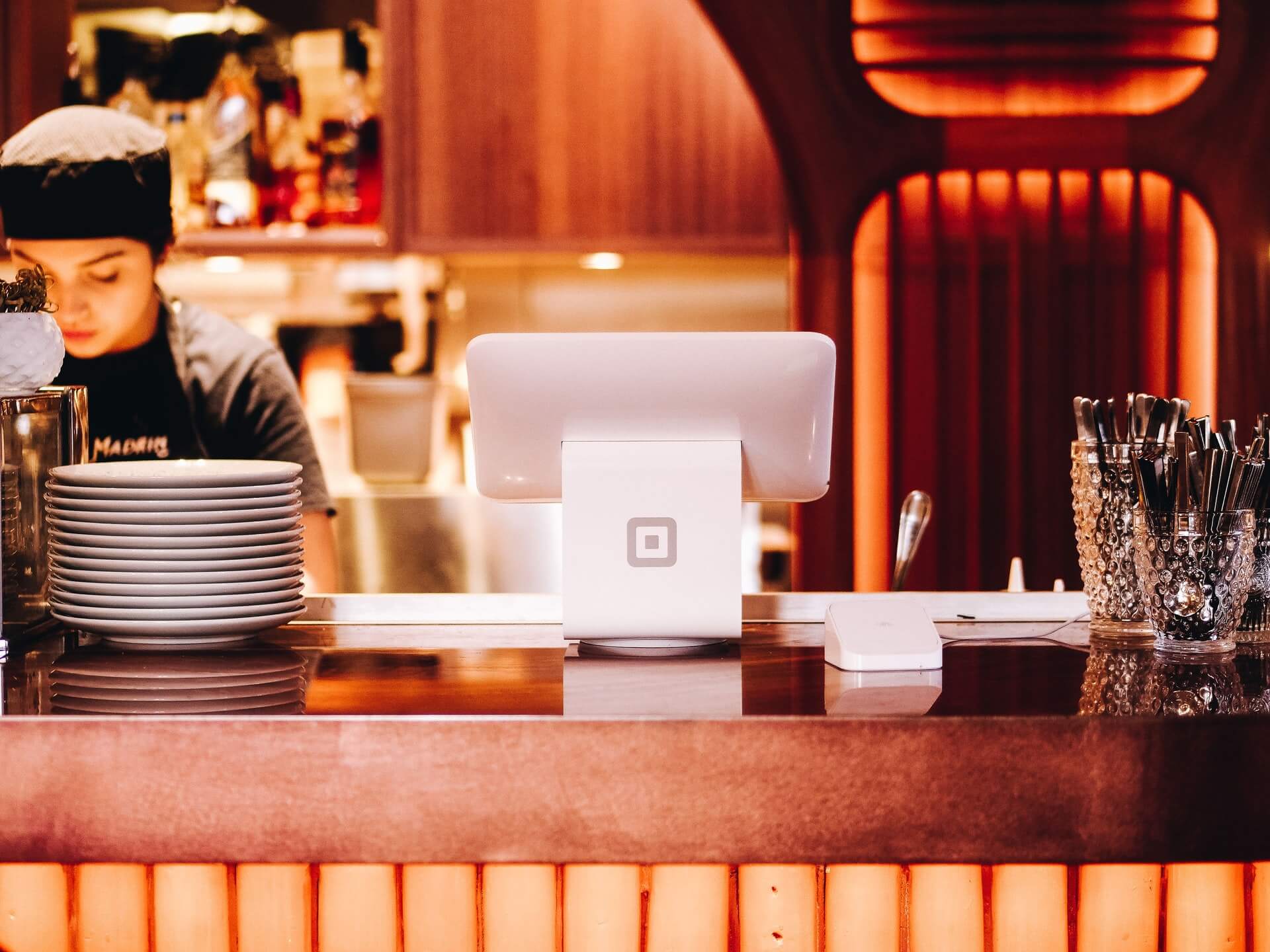
Square terminal in restaurant kitchen

As all hospitality professionals know, the past nearly two years is imposing rapid change on the industry, necessitating rapid, strategic adaptation.

The key word in the above sentence isn’t “adaptation,” it’s “strategic.”

Of course, it’s hard to make strategic choices without as much information as possible.

To that end, we’ve reviewed Square‘s recently released “Future of Restaurants: 2022 Edition.” This is the company’s second annual Future of Restaurants report.

Square partnered with Wakefield Research, surveying 500 operators and 1,000 consumers to identify 2022 threats and opportunities.

Threat: Labor Shortage

Most operators aren’t going to want to read this prediction from Square. However, we can’t identify and adapt for opportunities if we don’t acknowledge threats.

Per Square’s report, the labor shortage may never see a correction. In other words, welcome to yet another new normal.

More than 70 percent of operators say they’re facing a labor shortage, per Square. Just over 20 percent of available positions were, at the time the survey was conducted, unfilled.

Instead, operators will likely, according to Square, need to make operational and work culture changes:

  • Improve working conditions. For example, encouraging and acting on team feedback. Another example? Modernizing scheduling.
  • Ensure workers are being mentored and not simply managed.
  • Hire, train, assign tasks, and schedule more strategically to operate with a smaller team.
  • Offering incentives that entice higher-quality candidates to work for you.

One participant quoted in the Square report claims that QR code ordering dropped their labor cost percentage by 150 percent.

Threat: Lack of Tech

As SevenRooms suggested when looking forward to 2022, technology solutions can lessen the burden of labor shortages. That leads us to another big threat: failing to embrace tech.

Some operators bristle at the word “automation.” For many, it conjures an image of robots in the kitchen and delivering food to tables.

Obviously, we’re opposed to replacing staff with any form of automation. However, we support automating tasks if that means team members are better utilized.

Why not automate inventory? Why not automate online order filling? If it improves operations and the guest experience, automation is less threatening.

According to Square’s report, 62 percent of operators think automation is appealing for managing online, delivery, and contactless orders. Ninety percent of operators say that back-of-house automation—if staff can focus on more important tasks—is a good idea.

More than 90 percent think automated inventory is an appealing solution.

It has taken a lot of time for hospitality to catch up to other industries in embracing tech. But Square reports that 36 percent of restaurants upgraded their business tech in 2021.

Of course, automation will become a threat if operators lean too heavily into it and stop paying attention to detail.

Phrased another way, be tech-savvy, not tech-reliant.

Opportunity: Omni-channel

Square see implementing an omni-channel strategy as the way forward. In fact, their general manager for Square Restaurants, Bryan Solar, said the following:

“We see the time of the dine-in only or takeout only as largely done forever.”

Going omni-channel (diversifying) in the restaurant space means making online ordering and delivery important elements within the overall business strategy. To that end, Solar posits kitchens will grow in size to better handle online orders.

Square’s survey reveals some intriguing numbers:

  • 13 percent of consumers say they’ll avoid restaurants that don’t offer online ordering.
  • Among restaurants with online ordering, those channels generate 34 percent of their revenue.
  • Over the past year, 54 percent of restaurants either added or expanded online ordering channels.
  • Online ordering is likely here to stay: 69 percent of respondents plan to offer it post-Covid-19.
  • 24 percent of operators are planning to allow guests to order alcohol from them online.

Another interesting set of numbers pertains to first- and third-party delivery. As we’ve stated several times, we much prefer operators offer first-party or direct delivery. According to Square, 49 percent of operators plan go direct delivery. More than half—62 percent—will pursue third-party delivery. That suggests that some operators will offer both.

Opportunity: Direct Ordering

When it comes to engaging online guests, operators need to control the experience. As I wrote for another publication years ago, a restaurant or bar’s website is still very important.

This statistic proves that statement true: Per Square, 68 percent of online guests want to order via a restaurant’s website or app, not a third-party.

More than likely, a significant portion of those guests want to know they’re supporting a restaurant and its staff directly. Hence the importance placed on ordering via the website or their own branded app.

So, operators would do well to ensure their websites feature an ordering widget. Or, they can opt to have an app built (or at least skinned) for their business.

Opportunity: Kiosks

According to Square’s survey results, 79 percent of consumers prefer ordering from kiosks over ordering from staff.

Most consumers and operators likely associate ordering kiosks with fast food restaurants. However, other categories can also benefit from these devices.

Close to half—45 percent—identified it as a preference when ordering at a casual-dining restaurant.

And fine dining isn’t immune to the convenience of tech. A little over 20 percent of consumers prefer to order via kiosk in the fine-dining space.

Overall, kiosks speak to the guest desires for convenience and safety. More than a third indicated that ordering via digital menu is appealing because they don’t have to touch a menu someone else has touched. And 37 percent like a digital option because they don’t have to wait for a server to bring them a physical menu.

Eleven percent of Square survey respondents will avoid a restaurant if they don’t offer digital menus.

Nearly half (45 percent) of restaurants are planning to offer QR code menus post-Covid-19. Another benefit of digital menus is dynamic pricing. As costs fluctuate, operators can increase or reduce prices easily without printing new menus.

Outlook

Representing a stark contrast from 2020 survey results, nearly 60 percent of operators say the survival of their restaurants is a concern in 2022.

That’s still a high number but vastly lower than how operators answered about 2021. Last year, 92 percent of operators surveyed said they were worried about survival.

According to Square’s report, operators are looking past surviving and making long-term plans. That’s a welcome sign that confidence is improving.

To review Square’s “Future of Restaurants: 2022 Edition” report in its entirety, click here.

Image: Patrick Tomasso on Unsplash

by David Klemt David Klemt No Comments

SevenRooms Predicts 2022

SevenRooms Predicts 2022

by David Klemt

SevenRooms guest data image

As we near the end of a tumultuous 2021 we must look ahead to 2022 to set our industry up for best strategies, innovations, and recovery.

SevenRooms is doing just that, looking at what operators should consider to meet guest expectations next year.

In a blog post on the company’s website, SevenRooms reveals what they believe are the keys to success in 2022.

Let’s jump in.

More is More

The first quarter of 2022 will mark two years of the pandemic and its affects on the industry.

As SevenRooms says, some guests will not have been out of their homes for two years. The company predicts this contingent will be looking to unleash pent-up demand.

Of course, that represents an opportunity for operators. Another wave of pent-up demand can mean a boost in traffic and revenue.

However, guest expectations will be sky high. That cliché that less is more? Yeah, you can toss that right out.

More will be more for this contingent of guests looking to dine and drink out after feeling cooped up for month after endless month.

Sure, some guests are aware that operators are facing labor shortages, increased costs, and other pandemic-driven challenges. They know that workers are overwhelmed and finding themselves in hostile confrontations they certainly don’t deserve.

And sure, some guests are sympathetic to those struggles. However, they have their demands and expect restaurants, bars, and hotels to meet them.

What can operators do to meet those demands? In fact, what can they do to anticipate and overdeliver on guest expectations?

SevenRooms has a couple suggestions.

Collect guest data. At this point, this should be a given. How can an operator engage with and retain guests if they don’t really know anything about them?

Embrace more tech. Platforms like SevenRooms can handle a restaurant or bar’s reservations quickly and easily. This is a feature that, per SevenRooms, more than half of guests expect a restaurant or bar offer. Some platforms can also automate marketing; send guests post-visit surveys; and tackle review aggregation.

Convenience Reigns Supreme

Here’s a quick, impromptu survey:

Do you prefer a seamless restaurant, bar or hotel experience, or do you like frustrating dining, drinking and lodging experiences?

I’m going to go ahead and assume you prefer the former option. In other words, you like what your guests like: convenience.

Well, SevenRooms is predicting that the desire for convenience will only grow stronger among guests.

Yes, delivering on the increasingly important topic of convenience will rely on collecting data. But rather than view it as just one more task, SevenRoom suggests looking at it in a more positive light.

A number of the conveniences guests expect can be automated. They can even help ease the burden of the labor shortage somewhat.

For example, contactless ordering and contactless pay are close to becoming standards. Offering those features to guests means meeting expectations, thereby delivering an excellent guest experience. On-demand ordering and paying can also ease some front- and back-of-house pressure.

Collecting guest data allows management and front-of-house staff to add personal touches before a guest is even seated. Again, seamless, excellent guest service.

Another convenience? Online ordering. SevenRooms isn’t the first to predict that on-demand ordering is here to stay. In fact, a suite of conveniences will be important moving forward:

  • Online ordering during in-person visits and for delivery or pickup.
  • A user-friendly reservation system that goes deeper than just picking a date and time. Why not allow guests to select seats and even request upgrades?
  • A virtual waitlist. Not only is this convenient, SevenRooms says this feature can boost walk-in traffic and reduce abandonment.
  • Contactless, mobile paying options.

There you have it. Two seemingly basic predictions—higher expectations and a desire for even more convenience—with the potential to boost traffic, loyalty, and revenue.

Image: SevenRooms

by David Klemt David Klemt No Comments

What Does Omni-channel Mean?

What Does Omni-channel Mean in Hospitality?

by David Klemt

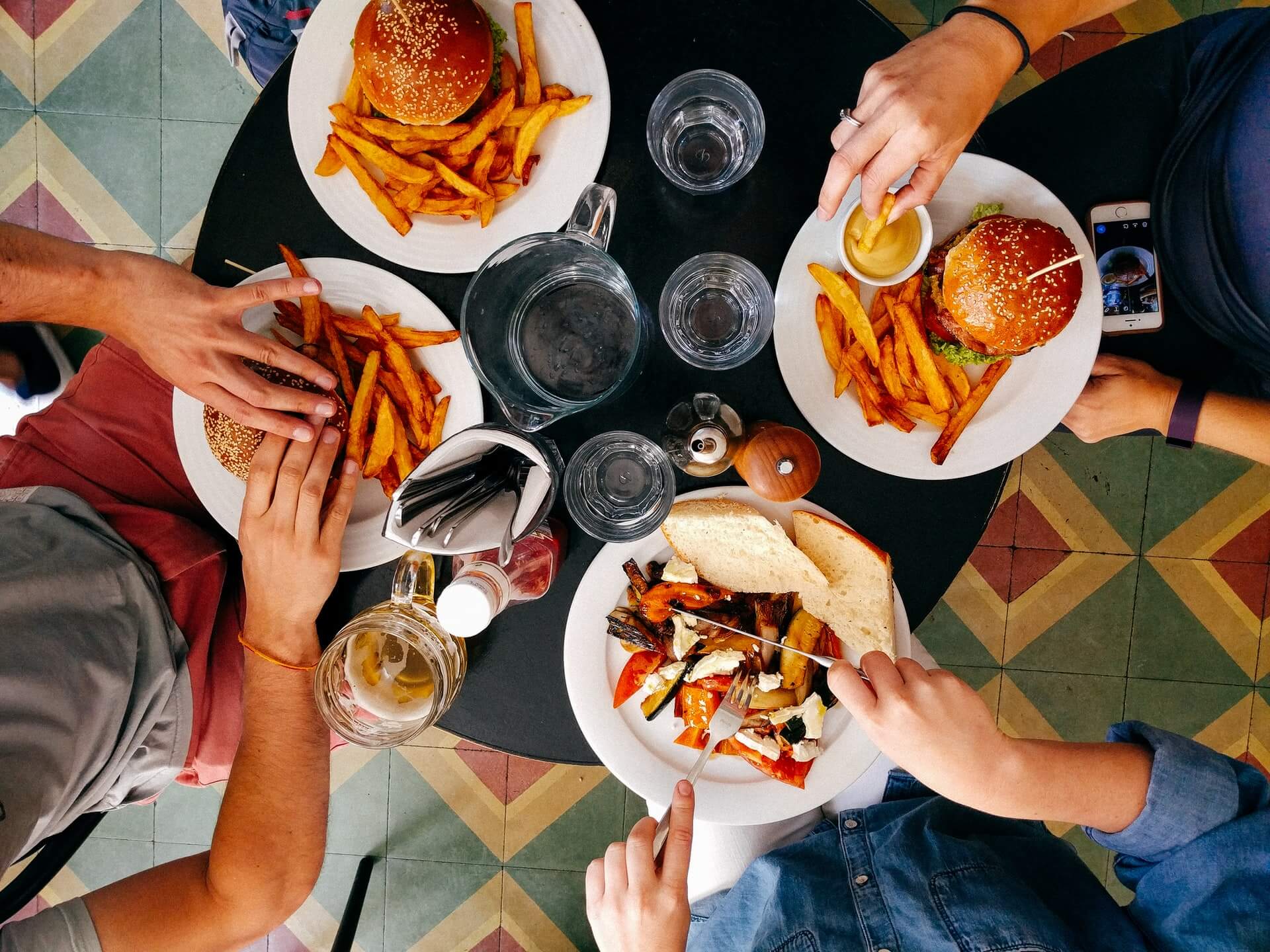
Restaurant diners eating burgers, fries and roasted vegetables

Buzzword or professional jargon, the term “omni-channel” seems to come up more often as our industry embraces more innovations.

As more social and digital platforms (channels) pop up, your job as marketer becomes more complex.

For a pessimistic take, your marketing efforts are like a ship. Every new marketing channel that gains traction is like a hole you have to plug. Fail to do so and you risk your marketing ship sinking.

Now for an optimistic take. Every channel you can add to your marketing is an opportunity to grow your reach. Increasing the amount of people who become familiar with your brand represents the potential to grow loyalty and sales.

If you want to meet your guests where they are—and you should—you need to have a presence where they are to engage with them.

And that’s just marketing. There are also omni-channel operational tactics you can implement. Unsurprisingly, you’ll likely realize many of those solutions are also digital.

So, what does “omni-channel” mean for operators? It means offering seamless guest experiences pre-, per- and post-visit.

Staying top of mind is also an element of an omni-channel strategy.

Traditional Channels

In terms of marketing, let’s break down the different types of channels available to operators.

A simple way to look at “traditional” marketing channels is that they don’t leverage digital mediums:

  • Newspaper and magazine ads
  • Radio and television ads
  • Direct mail
  • Billboards
  • Vehicle wraps
  • Flyers

Now, some of the above may seem outdated. However, those channels still have reach.

The key is knowing your brand and audience to know if a traditional channel will deliver an ROI. You also need to take the time to figure out where your dollars and time are best spent.

Digital Channels

So, there’s a reason I put the word traditional in quotation marks in the previous section.

There may be a time when digital channels become so ubiquitous that they’re considered traditional.

Just look at the digital channels below and consider how commonplace they’ve become:

  • Social media
  • Email marketing
  • Company websites
  • Search engine marketing
  • Newsletters
  • Text messages

It’s easy to see how one day the channels above will overtake their non-digital counterparts and become the traditional way we market.

The reasons for this are obvious. Digital campaigns are easily measurable, they allow for incredibly specific targeting, and they tend to be more engaging.

Really, the biggest cons that pertain to digital marketing channels are: being viewed as annoying/intrusive; being lost in the sea of ads people encounter every day.

On the execution side, it can still be overwhelming to engage just in social media marketing. However, there are platforms that can help make this task less daunting.

Other Channels

Like I wrote earlier, omni-channel doesn’t only pertain to marketing.

Of course, the term and practice are most often associated with marketing. However, operators have more to think about to truly become omni-channel.

The way your guests interact with your restaurant are also channels. Your front-of-house staff is a channel, technically speaking.

Now, we all know that the pandemic forced operational changes. Many of those changes are here to stay.

So, let’s look at a potential guest journey:

  • The potential guest receives a promotional offer via email.
  • They follow the link to an online reservation platform.
  • After arriving at the restaurant with their party, they check in with the host in person.
  • The server greets the party, some of whom request a physical menu. Others in the party pull out their phones and access the menu via QR code.
  • Throughout the meal, the server touches the table to ensure the visit is going well, refill drinks, take additional drink orders, etc.
  • When it’s time to pay, the party quietly does so via a touchless option and leaves.
  • A follow-up email is sent for feedback.
  • After a number of days, a text message is sent out to encourage another visit.

The marketing channels are just one element that makes the hypothetical restaurant an omni-channel operation. Providing digital, touchless menu access and payment are also omni-channel elements.

Those are just a few examples. If you take the time to review your operations; where you can reach new and repeat guests; threats such as third-party delivery; and innovations you can implement, you’ll see where you can make changes to become an omni-channel restaurant.

Image: Dan Gold on Unsplash

by David Klemt David Klemt No Comments

ABV: Does it Have to Be All or Nothing?

ABV: Does it Have to Be All or Nothing?

by David Klemt

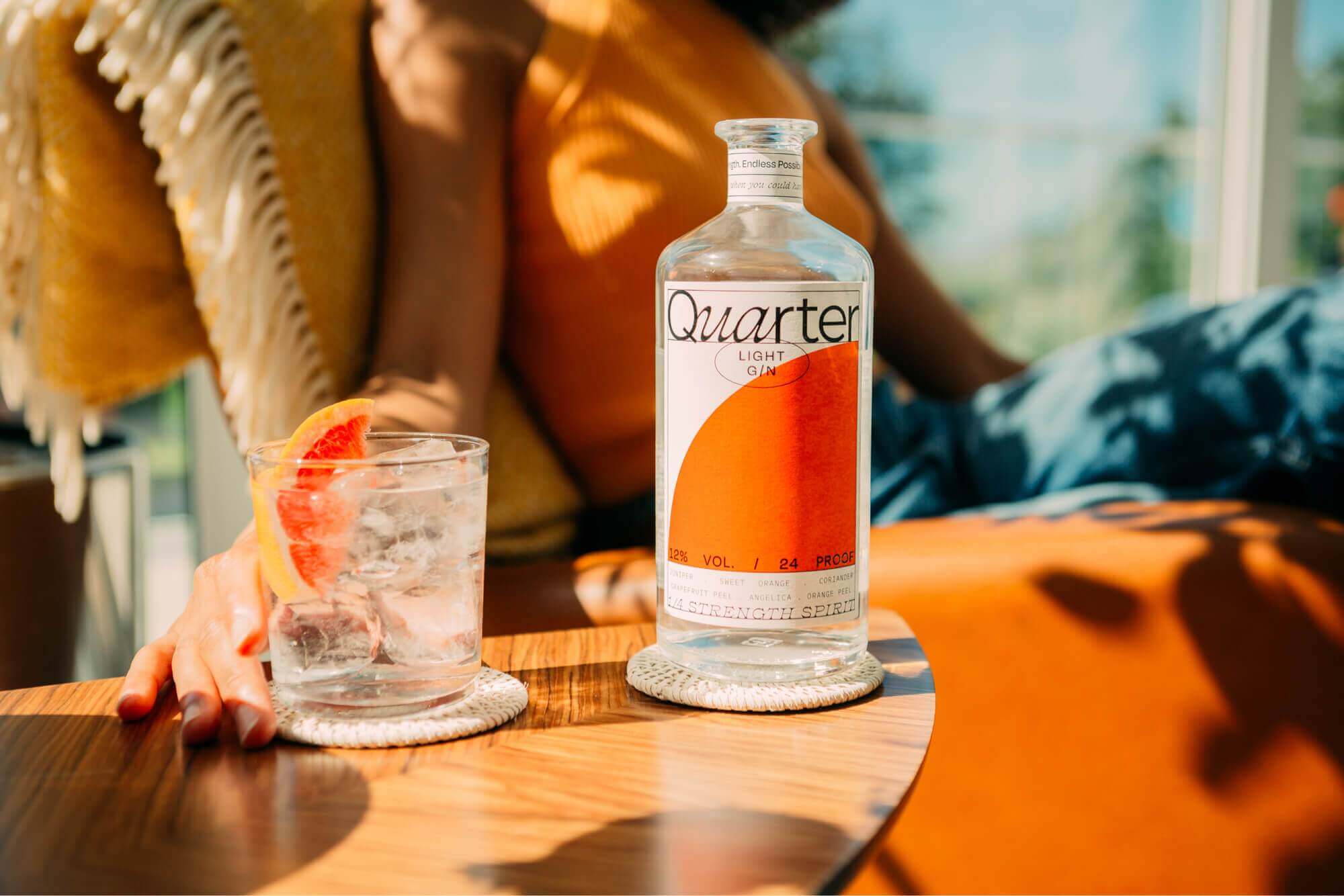
Quarter Proof Light Gin bottle and cocktail

In the discussion of alcohol, it seems to be an all-or-nothing topic: spirits and drinks are either full-proof or zero-proof.

Innovations in the space take two paths. There are brands like Seedlip that create alcohol-free spirits using botanicals, herbs and other ingredients. Resulting products are original creations with unique flavor profiles.

Another path is taken by brands such as Lyre’s. Rather than creating entirely new spirits, these producers craft alcohol-free that mimic their full-proof counterparts. For example, Lyre’s vast range includes a zero-proof bourbon and rum.

When it comes to drink builds, things get a little deeper. Yes, the all-or-nothing approach still applies to a point. Obviously, there are standard and high-proof cocktails. And yes, there are alcohol-free, zero-proof cocktails, also known as “mocktails.”

However, there’s also a third approach: low-ABV cocktails. Two popular build techniques are:

  • making low-proof liqueurs and wines the stars in Spritzers and other drinks; and
  • reverse cocktails.

When the conversation around lower-proof cocktails first gained steam, Spritzers, Fizzes and other options were brought to the forefront.

Then came the reverse cocktails, which I’ll explain briefly using a Reverse Martini build:

Let’s say your traditional recipe calls for two ounces of gin, a half-ounce of sweet vermouth (we can fight about this some other time), and a dash of orange bitters. To build the Reverse Martini, half the gin, quadruple the sweet vermouth, and keep the bitters the same.

Crafting reverse cocktails isn’t an overly complex process. But what if there was a third entry in the full-proof versus zero-proof battle?

Quarter Proof

It turns out, there is another path those seeking to consume lower-proof cocktails can take.

As the brand Quarter Proof says (or asks), “Who said it had to be all or nothing?” As the name implies, this brand intends to craft spirits that ring in at a quarter of the proof of their traditional counterparts.


View this post on Instagram


A post shared by Quarter G/N (@quarterproof)

The brand’s first product, G/N, is produced in the same manner as full-proof gin: copper pot distillation. Like traditional gin, G/N is made with juniper berries.

However, because the resulting liquid is just 12-percent ABV and not 37.5 percent, European law says it can’t be designated “gin.” So, Quarter Proof got creative with the name.

Quarter Proof G/N is like a full-proof London Dry Gin in every way—aroma, flavor profile, mouthfeel, finish—save alcohol content. Along with juniper berry, expect coriander, sweet orange, and grapefruit on the nose and palate.

This is an intriguing development in the world of spirits and I’m eager to see what Quarter Proof crafts next. “Light spirits” produced to deliver the full drinking experience with moderation from the ground up are a compelling option.

Image: Quarter Proof

by David Klemt David Klemt No Comments

50 Best Announces 2021 Winning Bars

50 Best Announces 2021 Winning Bars

by David Klemt

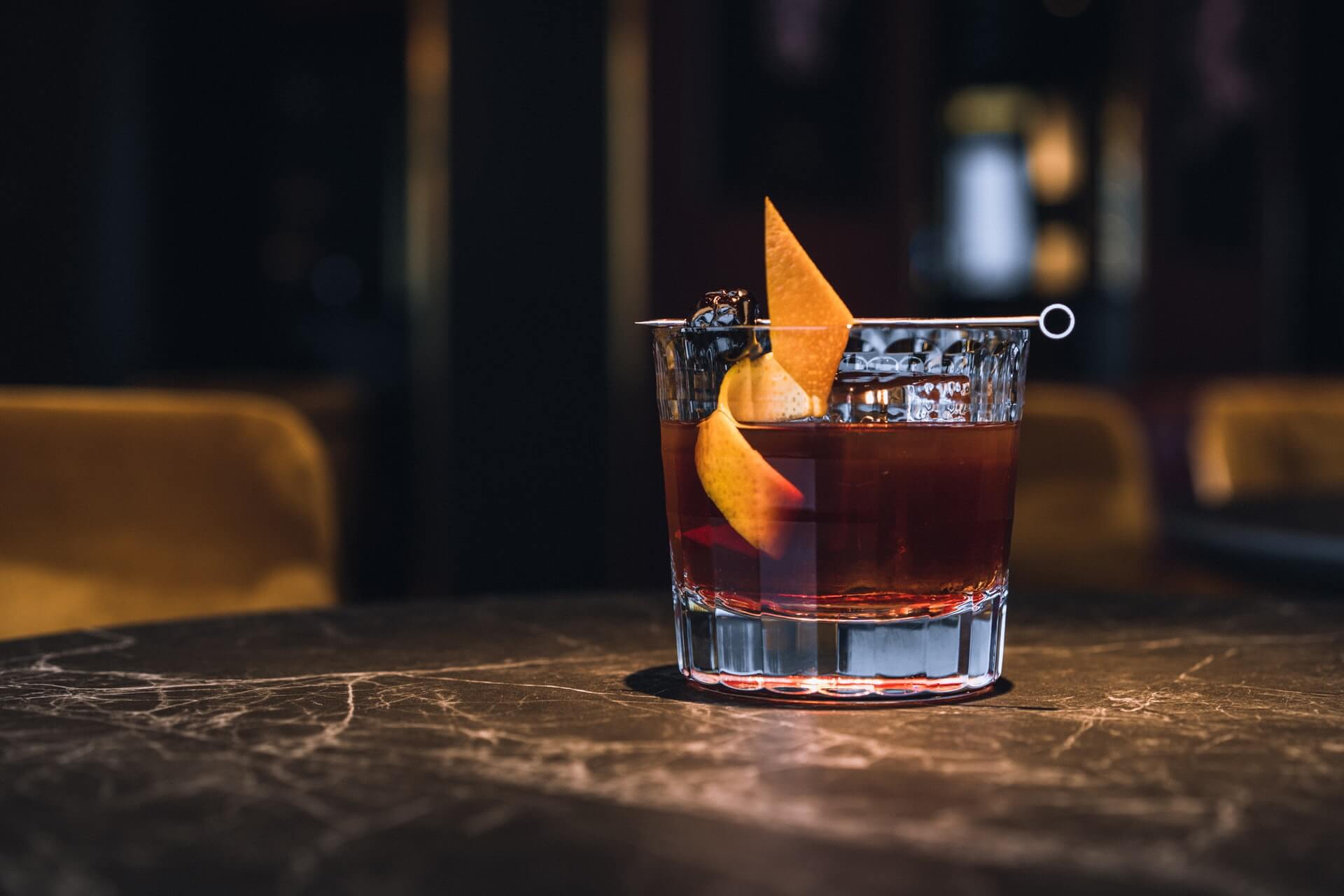
Old Fashioned cocktail garnished with orange peel and cherry on bar

The world’s best bars have been reviewed and ranked, and were announced by the aptly-named World’s 50 Best Bars on December 7.

In reality, the list is split into two and ranks the 100 best bars in the world.

Now, it may seem strange to some to review and rank bars during a pandemic. However, our industry and the top performers within it deserve recognition.

Interestingly (and somewhat disappointingly), only four of the top 50 are American operations. There are no Canadian bars among the top 100.

When it comes bars 51 through 100, there are seven American bars on the list. That makes a total of 11 American bars appearing on the global list of best bars.

Clearly, the organization needs to pay more attention to Canadian’s provinces and their bar scenes.

American Bars

Below are the American bars that made the cut. Their ranks and locations are included:

  • Katana Kitten, New York City, NY (Rank: 10)
  • Café La Trova, Miami, FL (Rank: 28)
  • Dante, New York City, NY (Rank: 30)
  • Attaboy, New York City, NY (Rank: 34)
  • Double Chicken Please, New York City, NY (Rank: 54)
  • Employees Only, New York City, NY (Rank: 60)
  • Kumiko, Chicago, IL (Rank: 61)
  • Thunderbolt, Los Angeles, CA (Rank: 66)
  • Sweet Liberty, Miami, FL (Rank: 89)
  • Death & Co., Los Angeles, CA (Rank: 99)
  • Leyenda, New York City, NY (Rank: 100)

Does anything jump out at you? Half of the American bars that made the Top 50 and 51-100 lists are in NYC. Miami and Los Angeles are tied for second-most bars on the list, with a single Chicago bar claiming a spot.

The World’s 50 Best Bars

  1. Connaught Bar, London, UK
  2. Tayer + Elementary, UK
  3. Paradiso, Barcelona, Spain
  4. The Clumsies, Athens, Greece
  5. Floreria Atlantico, Buenos Aires, Argentina
  6. Licoreria Limantour, Mexico City, Mexico
  7. Coa, Hong Kong, China
  8. El Copitas, St. Petersburg, Russia
  9. Jigger & Pony, Singapore
  10. Katana Kitten, New York, America
  11. Two Schmucks, Barcelona, Spain
  12. Hanky Panky, Mexico City, Mexico
  13. Insider Bar, Moscow, Russia
  14. Baba Au Rum, Athens, Greece
  15. Manhattan, Singapore
  16. Atlas, Singapore
  17. Zuma, Dubai, UAE
  18. The SG Club, Tokyo, Japan
  19. Drink Kong, Rome, Italy
  20. 1930, Milan, Italy
  21. Presidente, Buenos Aires, Argentina
  22. Maybe Sammy, Sydney, Australia
  23. Catina OK!, Sydney, Australia
  24. Salmon Guru, Madrid, Spain
  25. Handshake Speakeasy, Mexico City, Mexico
  26. No Sleep Club, Singapore
  27. Camparino In Galleria, Milan, Italy
  28. Cafe La Trova, Florida, USA
  29. Little Red Door, Paris, France
  30. Dante, New York, USA
  31. Kwant, London, UK
  32. Bar Benfiddich, Tokyo, Japan
  33. Tres Monos, Buenos Aires, Argentina
  34. Attaboy, New York, USA
  35. Lucy’s Flower Shop, Stockholm, Sweden
  36. MO Bar, Singapore
  37. Sips, Barcelona, Spain
  38. Baltra Bar, Mexico City, Mexico
  39. Sober Company, Shanghai, China
  40. Tjoget, Stockholm, Sweden
  41. Epic, Shanghai, China
  42. Charles H, Seoul, South Korea
  43. Tippling Club, Singapore
  44. Above Board, Melbourne, Australia
  45. Galaxy Bar, Dubai, UAE
  46. Re, Sydney, Australia
  47. Sidecar, New Delhi, India
  48. Union Trading Company, Shanghai, China
  49. Darkside, Hong Kong, China
  50. Quinary, Hong Kong, China

This is the second consecutive year that the Connaught has clinched the number one spot.

Just 16 of the bars that made the top 50 are new to the list. Take from that what you will.

As you can see, there are more bars located in Singapore and China than anywhere else among the top 50. Of the bars in China, they’re split evenly between Hong Kong and Shanghai.

Criteria

The World’s 50 Best Bars is owned and organized by William Reed Business Media. Per the website’s “How the voting works” tab, no employees or sponsors “has any influence over the results.”

Voters are said to all be “bar experts.” According to the website, 50 percent of voters are bar owners and bartenders. A quarter are drinks writers, and another 25 percent are “well-traveled cocktail experts.” Overall, at least 25 percent must be new voters each year.

There are a total of 600 voters (so, 300 are bar owners and bartenders, and so on). Each voter casts seven votes. Their votes are based on the best bar visits they’ve had from the previous 18 months.

Voters must only vote for bars they’ve actually visited; pop-ups cannot receive votes; and voters can’t vote for bars they own or in which they have a financial interest.

Previously, participants had to cast at least two votes for bars located outside of their home countries. However, due to the pandemic, that requirement was tossed out for the 2021 lists.

According to the organization’s website, votes are confidential and voters are anonymous.

Image: Pylyp Sukhenko on Unsplash

by David Klemt David Klemt No Comments

ThinkFoodGroup Partners with SevenRooms

ThinkFoodGroup Partners with SevenRooms

by David Klemt

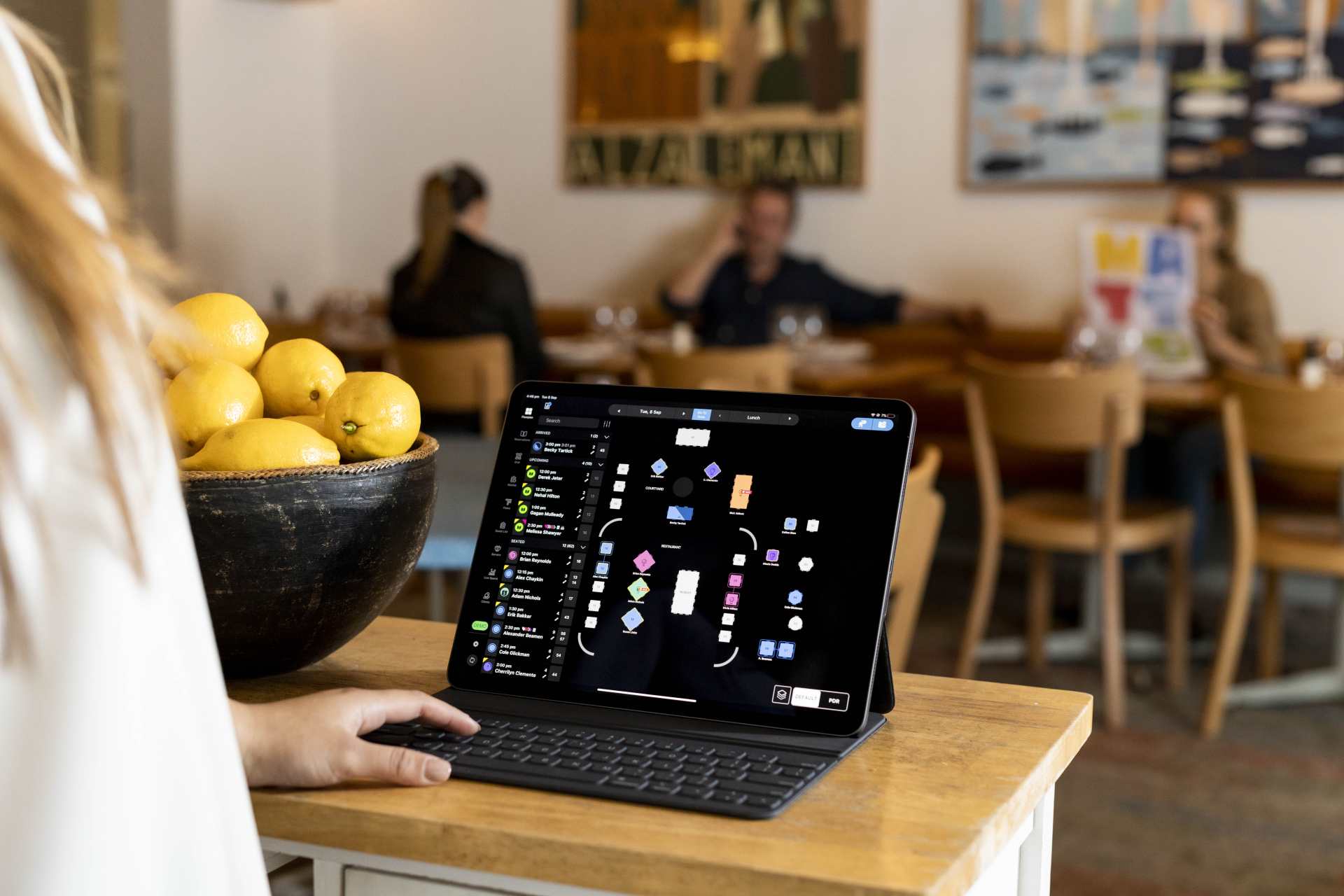
Front of house staff member using SevenRooms

Reservation and guest engagement and retention platform SevenRooms and ThinkFoodGroup announce their new partnership today.

This announcement marks at least the third high-profile partnership involving SevenRooms.

One partnership from earlier this year is with online ordering platform Olo. Another is between SevenRooms and TheFork.

As is normally the case when it comes to SevenRooms partnerships, the relationship will be collaborative.

ThinkFoodGroup be onboarding the restaurants in their portfolio onto the platform. This maneuver will deliver several benefits through the full SevenRooms suite:

  • Reservation, waitlist and table management
  • Marketing automation
  • Online ordering capability
  • Rating aggregation

Additionally, ThinkFoodGroup will be joining SevenRooms in an advisory role. The platform will benefit from the expertise of Chef José Andrés and the ThinkFoodGroup team.

In short, ThinkFoodGroup will gain valuable insight into their guests throughout their entire portfolio. SevenRooms will gain valuable insights they can use to improve their platform and better serve the hospitality industry.

Interestingly, ThinkFoodGroup appears to have been using SevenRooms prior to this newly announced partnership. The platform is already in use at:

  • The Bazaar by José Andrés at the SLS South Beach
  • Bazaar Meat by José Andrés at The Sahara Las Vegas
  • China Chilcano in Washington, D.C.
  • China Poblano at The Cosmopolitan of Las Vegas
  • é by José Andrés at The Cosmopolitan of Las Vegas
  • Jaleo at The Cosmopolitan of Las Vegas

From Joel Montaniel, CEO and founder of SevenRooms:

“With the hospitality industry returning to full-speed, it’s more important than ever for operators to prioritize technology platforms that are hyper-focused on helping restaurants thrive. We’re thrilled to welcome the ThinkFoodGroup team to our SevenRooms family, helping them build upon their incredible guest experiences across their properties. Most importantly, we look forward to learning from José and his team’s incredible expertise and unique perspective. Supporting and advocating for the hospitality industry has always been at the core of our business. There is so much work for us to do as the industry recovers, and we look forward to walking in lockstep with José and his team to build back better.”

From Chef José Andrés, CEO, co-founder and executive chairman of ThinkFoodGroup:

“Providing outstanding experiences for our guests has always been a priority. In light of the challenges brought on by COVID, we realized just how important it was to have a partner who can help us bring them to life in a seamless way. I am excited to bring SevenRooms into our restaurants globally, and for ThinkFoodGroup to also join the company as an industry advisor.”

From Sam Bakhshandehpour, President of ThinkFoodGroup:

“Pushing the limits of what’s expected in hospitality is at the core of our business. SevenRooms is completely transforming the restaurant technology platform, and we’re thrilled to partner with a like-minded company who thinks progressively and has the cutting-edge technology to challenge the status quo. Together, we will collaborate on building solutions that put operators’ success at the forefront.”

This year’s SevenRooms partnerships, announcement of a new CFO, and innovations (such as their Direct Delivery module), show the platform’s commitment to improvement and supporting the industry.

When operators are selecting the platforms to include in their tech stacks, ease of use and integration, along with growth, should be among their considerations. So, too, should be industry advocacy.

SevenRooms continues to prove that they deserve top marks for each of those crucial elements.

Image: SevenRooms

Quotes provided by SevenRooms via press release

by David Klemt David Klemt No Comments

Canadian Trends 2022: Technomic

Canadian Trends 2022: Technomic

by David Klemt

Yellow neon "butter" sign and scaffolding

Curious about what to expect in 2022 as a Canadian restaurant, bar or hotel operator?

Technomic has some predictions for next year.

Reviewing their “Canadian Trends: Looking Ahead to 2022” report, creativity and streamlining will be keys to success.

Let’s jump in!

Butter

Yes, this is why I chose the image above. Technomic is very specifically identifying butter as an important 2022 F&B trend.

And no, they don’t appear to be predicting the popularity a particularly rare or esoteric butter. The industry intelligence firm means butter will prove important in 2022.

In large part, Technomic is pointing to comfort food as a driver for butter.

Generally, the firm points to how versatile butter is in the kitchen. Browned and herb-infused butters, says Technomic, will find its way into cocktails.

Flavor and texture will play an important role, extending the butter prediction into buttery foods territory. For example, Technomic predicts butterscotch, buttermilk and ghee will see a boost in usage and demand.

Additionally, the plant-based movement will help nut butters grow more popular. In fact, Technomic says nut butters will find their ways onto burgers and into cocktails.

Interestingly, the firm’s butter prediction gives operators two larger trends to watch: comfort food and plant-based.

Cross-utilization

You don’t need me to tell you that North America—and the rest of the world—is facing supply chain issues.

I know you’re exhausted from just the past nearly two years of constant adaptation and pivoting. In 2022, you’ll have to continue with your creative problem solving.

The supply chain challenge (there’s an understatement) requires creativity in several areas. This includes the kitchen and menu.

Technomic suggests that one path forward through supply chain problems involves ingredient preparations:

  • Pickling
  • Candying
  • Salt-baking

The firm says these creative takes on ingredients operators already have will extend product life; add new flavors to dishes; and deliver new textures. Those last two offer guests new experiences.

In addition, getting creative with the ingredients you may be able to get more readily will help streamline and update 2022 menus. However, revising your menu will require careful consideration of your supply chain and cross-utilization, with a heavy helping of creative prep.

Running Lean

Smaller footprints. Shrunken staff. Streamlined menus. Smaller, shrunken, streamlined, optimized, leaner…

Call the process whatever you want, Technomic is predicting that operators will need to “optimize” (read: make smaller) their businesses.

Of course, there isn’t a one-size-fits-all solution. We’ve read and heard predictions since last year about what will need to shrink moving forward.

While some recent news reports say that ghost kitchens are out, Technomic seems to think that’s not the case. Technomic suggests ghost kitchens will remain viable for operators who want to expand without investing in real estate.

Additionally, Technomic’s report suggests something that should come as no surprise. In short, if it works for a brand or location, smaller may be better and here to stay.

Growth

Now, this is the most promising of Technomic’s predictions: Growth.

Per the firm, the foodservice industry in Canada was down 29 percent in Q1 of 2021. Pre-pandemic, sales reached $95 billion. That represents a loss of nearly $30 billion.

However, there’s reason to be optimistic in 2022, according to Technomic.

The firm expects growth of 21 percent in 2022 over 2021, or sales of $74.8 billion. Should this prediction prove accurate, 2022 would close just three percent under pre-pandemic sales.

Technomic identifies full-service as the foodservice segment to experience the most growth next year at 26.2 percent. In comparison, the firm predicts limited-service to grow 7.3 percent.

Next year won’t be easy. 2022 won’t be a magical return to normalcy. But there is room for optimism if Technomic’s predictions are correct.

Image: Jon Tyson on Unsplash

by David Klemt David Klemt No Comments

2021 KRG Holiday Bottle & Can Guide

2021 KRG Holiday Bottle & Can Guide

by David Klemt

Red and black gift boxes and bows on black background

We’re bringing you new products and gift ideas for the 2021 holiday season for your specialty menus, raffles, and employee incentives.

Whether because they’re unique or leverages eye-catching bottling, labeling and packaging, you can’t go wrong with the bottles below.

In fact, you should probably consider adding some of these to your inventory and seasonal menu. A number of these bottles will attract attention from guests when they spot them on your back bar.

And, hey, we won’t tell anyone if you decide to treat yourself to one of these gifts. You’ve earned it.

Brandy

Few spirits shine more during the holiday season and winter months than brandy.

Château de Breuil Réserve Du Château 8 Year

This is the first entry in Château de Breuil’s “Hors d’Age” range, which means this Calvados is older than six years. The youngest Calvados in this release is eight years old, and there’s plenty of warming, comforting apple on the nose, palate and finish.

Hennessy V.S.O.P Privilège x Julien Colombier Cognac

Hennessy V.S.O.P Privilège x Julien Colombier 

This striking bottle, adorned with an original design by Julien Colombier, definitely stands out from the standard V.S.O.P Privilège.

Hine Cigar Reserve XO

This blend of 20 eau-de-vie is intended specifically to be enjoyed with a fine cigar. In particular, a fine Cuban cigar. A Cognac meant to help unplug, slow down, and enjoy the moment.

Gin

There is an incredible array of gins available that can sway even the staunchest “I don’t drink gin” drinkers out there.

Glendalough Rose Gin

The Glendalough distillery operates via three mantras: Wild foraged. Fresh distilled. Stand apart. Glendalough Rose Gin hits all those marks, particularly standing apart from other gins.

Hardshore Original Gin

There are a few ways to approach crafting a gin. Hardshore Distilling Company’s approach is to be simple in order to be complex. Just five botanicals are used in the production of Hardshore Original Gin: Tuscan juniper, coriander, rosemary, mint, and orris root.

New Junipero Gin bottle

Junipero Gin

With it’s striking new appearance, Junipero Gin’s bottle is now as bold as the liquid inside.

Mezcal & Tequila

The growth of the agave spirit category doesn’t seem like it will stop anytime soon. In particular, luxury mezcals and tequilas seem to be benefitting from consumers interested in spending more to drink higher-quality spirits.

Código 1530 Artesanal & Ancestral

As discussed on episode 57 of Bar Hacks with Collin De Laval, Código 1530 recently released two mezcals, super-premium Artesanal and ultra-premium Ancestral.

Sombra Reposé mezcal reposado bottle and cocktails

Sombra Reposé

This unique mezcal represents a world first: A mezcal aged in Bordeaux wine casks. It doesn’t hurt that the bottle is also attractive.

Tanteo Navidad

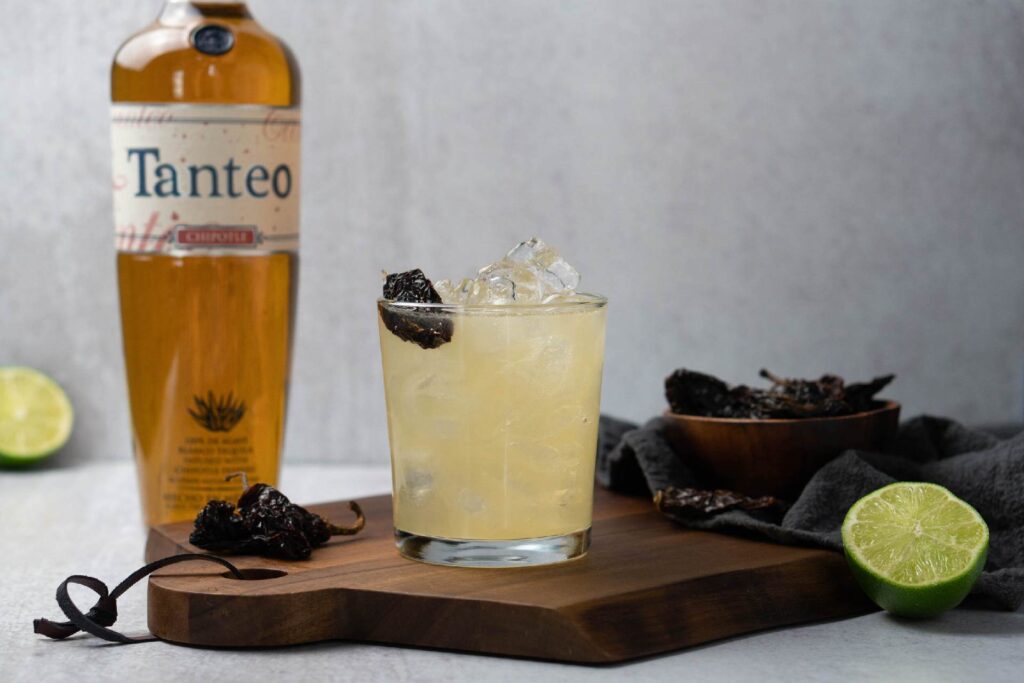
There are just 5,000 bottles of Tanteo Navidad, an ultra-premium añejo tequila infused with the flavors of the holiday season: cinnamon, clove, nutmeg, cocoa beans, ginger, and pequin chilis.

RTD

With so many hard seltzer and canned cocktail brands hitting the market, it’s difficult picking just a few standout RTDs.

Karbach Brewing Ranch Water hard seltzers in cans

Karbach Brewing

When it comes to RTDs, Ranch Water was basically destined to end up in cans. As a blend of Topo Chico, tequila and lime, Ranch Water has a legitimate claim to the hard seltzer throne. Karbach Ranch Water is available in Original, Grapefruit, Meyer Lemon, Prickly Pear, and Watermelon. It’s also produced by a brewery in a state that knows a little somethin’ about Ranch Water: Texas.

Speaking of Texas…

Shiner Tall ‘Tails

Texas’ famous brewer has entered the hard seltzer space with four expressions based on classic cocktails: Texas Mule, Mexican Martini, Watermelon Margarita, and Ruby Red Paloma.

WESAKE

Given how easily drinkable sake is, I’m surprised there aren’t more RTD sakes on the market. Four cans of Junmai Ginjo WESAKE equal one bottle.

Rum

It’s always exciting to come across something new in any spirit category. The two selections below are from countries people don’t often think of when the topic of rum arises.

Kasama

How about small-batch rum from the Philippines, aged seven years and produced by Alexandra Dorda. If that last name sounds familiar it’s likely because Alexandra is the daughter of Tad Dorda, co-founder of Belvedere and Chopin vodkas.

Phraya Deep Matured Gold Rum

When’s the last time you sipped a rum from Thailand? The answer is most likely never. A beautiful bottle of Phraya Deep Matured Gold Rum—aged seven to 12 years—can certainly fix that.

Zanj Rum Ak Zanj "with angels" Haitian rum

Zanj Rum Ak Zanj

The name of this expression of Haitian rum translates to “with angels” in Haitian Creole. Made using only pure sugarcane juice (no sugar added) and aged exclusively in Limousin oak barrels, Ak Zanj is characterized by caramel, fruit, vanilla and honey notes. The bottle also looks great on a back bar or home bar.

Vodka

All eyes may seem to be on tequila, mezcal and whiskey, but the vodka category isn’t resting on its laurels. There have been a lot of innovations in this space, such as revisiting traditional processes, playing with flavoring, and even sourcing very specific grapes for production.

Belvedere Heritage 176 vodka

Belvedere Heritage 176

As the name suggests, Heritage 176 is an homage to the old ways of producing vodka. To that end, this expression makes use of malting or kiln-drying rye for deeper, more complex flavors.

Hangar 1 Smoke Point

Produced in partnership with Crimson Wine Group, Hangar 1 used smoke-tinged grapes affected by Norther California’s disastrous Glass Fire to create Smoke Point vodka.

Wild Roots Vodka

This corn-based vodka is made in the Pacific Northwest and infused with more than a pound of real fruit. There are several flavors available in addition to the neutral expression, such as winter-friendly Apple & Cinnamon and Cranberry.

Whiskey

This category isn’t just immensely popular, it’s immense in and of itself. It was difficult to narrow it down to just three selections, particularly when it came to bourbon.

Glenmorangie A Tale of Winter Scotch bottle

Glenmorangie A Tale of Winter

Your guests, staff, family and friends aren’t the only people who wear Christmas sweaters. A Tale of Winter grabs the eye during the holiday season with a label that looks like it’s ready for your restaurant, bar, nightclub or hotel’s holiday party. This Scotch encapsulates the season with notes of cocoa powder, orange toffee, clover, ginger, and cinnamon.

High West High Country Single Malt

It may be an oversimplification to call High Country Single Malt an homage to single malt Scotch but it’s still an accurate summation. When producing the distillery’s latest release, High West uses “on-the-grain” distillation, along with fresh-charred and second-use barrels during maturation.

Redemption Cognac Cask Finish

Bottled at 99 proof, this high-rye bourbon is aged in Pierre Ferrand Cognac barrels. Expect bold but elegant flavors with baking spices, rye and sweetness on the palate.

Woodford Reserve 2021 Holiday Bottle

Woodford Reserve 2021 Holiday Bottle

Every holiday and Kentucky special edition bottle of Woodford Reserve has been a winner. However, I find the artwork on this year’s holiday bottle by Nick Hirst to the best yet.

Wine

Well, in particular, sparkling wine. When it comes to celebrating, it’s hard to beat the craving for bubbles.

Dom Maria

You can’t go wrong with Dom Maria Brazilian Sparkling Brut or Rosé. The packaging is sleek, modern and makes a statement. Both DM expressions are 60 percent Chardonnay, 40 percent Pinot Noir.


View this post on Instagram


A post shared by Perrier-Jouët (@perrierjouet)

Perrier-Jouët Blanc de Blancs

It’s fair to say that most people are most familiar with Perrier-Jouët’s Belle Époque bottles, adorned as they are with Japanese anemone flowers outlined in gold. However, on episode 56 of Bar Hacks, Maxime Lecocq says that when he sees someone order a bottle of Perrier-Jouët Blanc de Blancs, “they know what they’re doing.”

Yarden Blanc de Blancs

Looking for a Kosher blanc de blancs option for the holiday season? Look no further than Yarden Blanc de Blancs produced by the Golan Heights Winery, currently releasing their 2012 vintage.

Low- and Zero-proof

There are a number of high-quality alcohol-free spirts, beers and other beverages out there. With that number growing, the biggest challenge is deciding which brands and expressions to pick as gifts and add to your menu.

The County Soda Co.

Much attention is paid to the spirits in cocktails, and for obvious reasons. However, crafting the best possible cocktail requires using the best possible ingredients. The County Soda Co. crafts “soda pop for adults” by using real cane sugar and juice concentrates, and by eschewing artificial sweeteners. Proudly produced in small batches in Prince Edward County, Ontario, Canada, County Soda includes flavors such as Root Beer, Cola, Ginger Ale, Blackcurrant Lime, and Orange Cream Soda.

Lyre’s

This innovative brand is named for a bird famous for it’s accurate mimicry of its avian peers, and for good reason. Lyre’s crafts zero-proof expressions that taste like their full-proof counterparts, including sparkling wine and RTDs. You can even purchase cocktail kits that provide everything necessary to make alcohol-free Negronis, Espresso Martinis, and more.

To learn more, fire up episode 28 of Bar Hacks with Tim Rita.

Partake Radler

Ted Fleming started Partake Brewing partially out of frustration. He made the choice to live sober but had no intention of giving up socializing in bars with friends. Unfortunately, the options for alcohol-free beer were incredibly slim. So, he founded Partake Brewing to produce 0.3-percent craft beer. The highly sought-after Partake Radler is back just in time for the holidays!

Learn more from Ted Fleming on Bar Hacks episode 31.

Q Tropical Ginger Beer

How does a tropical take on ginger beer sound? To me, it sounds refreshingly different. I’m a big ginger beer fan, so Q Tropical Ginger Beer, with its agave, mango, passion fruit, and pineapple notes, is intriguing.

Image: Tamanna Rumee on Unsplash

by David Klemt David Klemt No Comments

Hard Numbers for the Holidays

Hard Numbers for the Holidays

by David Klemt

Classic vintage Dodge pickup truck with winter wreath on grille

From comfort foods and specific seasonal flavors to LTOs and traditional tastes, data reveal what consumers want this holiday season.

As we reported last week, there’s reason to be optimistic about this year’s holiday season.

According to Datassential, consumers are eager to visit sit-down restaurants this month. One of their key findings was that the average group size will likely be smaller than normal.

Specifically, most groups will probably consist of seven to 12 guests. Crucially, Datassential sees potential from people eager to gather with family and friends for the holidays. Even better, of all options, sit-down restaurants are the top choice for gatherings outside of homes.

But drilling down deeper, what do guests want from restaurants during the holidays?

The Numbers

So, when it comes to the holidays, Datassential wants operators to remember that December includes more than Christmas and New Year’s Eve.

To that end, the first numbers I’m presenting are dates:

  • Hanukkah: November 28 to December 6 (ends this evening!)
  • Soyal: December 21
  • Christmas: December 25
  • Boxing Day: December 26
  • Kwanzaa: December 26 to January 1
  • New Year’s Eve: December 31
  • New Year’s Day: January 1

Those dates reveal something compelling: Plenty of opportunity to get creative and ramp up limited-time offers. Per Datassential, nearly half (44 percent) of consumers look forward to seasonal, holiday-themed LTOs.

In fact, roughly two out of five consumers find seasonality to be an important factor in their decisions to order LTOS and new menu items.

However, it’s important to know your audience and brand when coming up with special menu items. That’s because according to Datassential, 62 percent of consumers, at least for 2021, want classics and comfort food this season.

So, Datassential cautions operators against veering “too far” from traditional seasonal menu items and comfort foods. That said, you should know how far outside the box you can push your guests.

The Flavors

We’re not technically out of the fall just yet. The start of winter is December 21.

It can be smart to begin transitioning from fall to winter flavors over the next week or so. However, it may not be wise to toss fall flavors out entirely.

Datassential identifies the following as key fall flavors:

  • Apple cranberry
  • Butternut squash
  • Chestnut
  • Duck
  • Pumpkin pie
  • Stuffing

And these are important winter flavors, per Datassential:

  • Chocolate almond
  • Candy cane
  • Lobster cream
  • Lox
  • Red velvet
  • Toasted coconut

Those are by no means the only fall and winter flavors that will appeal to your guests. However, Datassential identifies them as top fall and winter flavors.

Something to think about when finalizing your winter LTO food and beverage menus.

Another thing to think about? Updating your listings to include holiday hours, LTOs, and other menu changes.

Image: Ryan Wallace on Unsplash

by David Klemt David Klemt No Comments

5 Books to Read this Month: December

5 Books to Read this Month: December

by David Klemt

Flipping through an open book

This month’s fun and informative book selections will help you develop next-level culinary, beverage and leadership skills this December.

To review November’s book recommendations, click here.

Let’s dive in!

Can I Mix You a Drink?

Superstar T-Pain partners with mixologist Maxwell Britten, formerly the bar director for James Beard Award winner Maison Premier. The fifty recipes in Can I Mix You a Drink? match up with a lyric or sentiment from T-Pain songs. There are amusing and insightful anecdotes from T-Pain, and the high-end, glossy photography in the book match the high-end recipes. Overall, this book is a vibe, much like a great cocktail bar.

The Oxford Companion to Spirits & Cocktails

David Wondrich and Noah Rothbaum team up for likely the deepest dive into the role alcohol plays in human history. The Oxford Companion to Spirits and Cocktails is everything you ever wanted to know about fermentation, distillation, aging, cocktails, cocktail bars, and more. In addition to global techniques and processes, readers will be treated to illustrations, a guide to making drinks, and even a timeline of distillation and spirits.

The Alchemist Cocktail Book: Master the Dark Arts of Mixology

When one thinks of chains, they tend to think of global fast-food and fast-casual brands. However, The Alchemist stands in stark contrast to that thinking. The Alchemist is a chain of stunning, experimental cocktail “theaters.” These cocktail bar and restaurant venues elevate the cocktail to new heights, paying just as much attention to experiential and atmosphere details as drink build details. The Alchemist Cocktail Book shares 100 original Alchemist recipes, including low- and no-alcohol drinks.

Market Fresh Mixology Presents Life, Love, Happiness & Cocktails

If you’ve ever wondered what inspired someone when they were creating a now-famous cocktail, this is the book you want. Not only does mixologist Bridget Albert, senior national director of education for Beam Suntory and founder of the Academy of Spirits and Fine Service, tell the stories behind 40 cocktail recipes, she invites others to join her. Life, Love, Happiness & Cocktails features Tony Abou-Ganim, Julie Reiner, and more telling the personal stories behind their recipes.

Hacking the New Normal

Are you ready to take your restaurant, bar, lounge, hotel or resort from concept to reality in 2022? Treat yourself this holiday season to a gift that will help you achieve your goal and dream of operating a successful hospitality venue. Do you know someone who has been talking about opening a restaurant, bar or hotel but hasn’t made their move yet? Hacking the New Normal is the perfect gift for them this holiday season.

Image: Mikołaj on Unsplash

by David Klemt David Klemt No Comments

Stand Out with Weird Holidays: December

Stand Out with Weird Holidays: December

by David Klemt

Stay Weird neon sign with purple background

Want to stand out from from other restaurants and bars in your area? Then commit to keeping it weird.

Several “holidays” are set against every date on the calendar, and December is no exception. These holidays range from mainstream—Thanksgiving Eve and Thanksgiving, anyone?—to food-centric to weird.

Pay attention to the latter to raise eyebrows, carve out a niche for your restaurant or bar, and attract more guests. Why do what everyone else is already doing?

Of course, you shouldn’t try to celebrate every holiday, weird or otherwise. And this month’s list in no way includes every odd holiday.

Focus on the days that are authentic to your brand; resonate with your guests; and help you grab attention on social media.

For November’s list, click here.

December 4: National Dice Day

I’m not including this holiday simply because I live in Las Vegas. Dice are for far more than just craps. Board games, role-playing games, making life decisions in a very strange manner… We need dice and they deserve a day of celebration.

One of the simplest ways to celebrate National Dice Day with your guests is to create a small beer, wine, spirits and/or cocktail menu. Then, put numbers against each offering and have guests roll the dice. Whatever number comes up, they’re getting the correlating drink. Easy.

December 5: Bathtub Party Day

Okay, let me be clear. I’m not encouraging events that involve people coming to your restaurant or bar to party in bathtubs. Rather, I’m suggesting celebrating Repeal Day (these holidays share the same date) with a cheeky nod to homemade booze made infamous during Prohibition.

Of course, you should absolutely not celebrate Bathtub Party Day by offering illicit alcohol. Instead, feature an array of gins and gin-based cocktails. You can also feature a brand like Ole Smoky Moonshine.

December 8: Pretend to Be a Time Traveler Day

This is a list of weird holidays, so how could I possibly pass up this gem? If you think one day of dress-up and pretending isn’t enough (looking at you, Halloween), here’s a very specific holiday just for you. Just make sure you prepare your front-of-house staff because wow—this could get weird (read: annoying).

You can also get a little more creative and put together a tasting for a spirit or brand with a history that spans several decades or centuries.

December 9: Weary Willie Day

Hey—get your mind out of the gutter. This is another holiday that there was no way I could ignore. Weary Willie Day is a celebration of clowns. In particular, it celebrates a character created by Emmett Kelly, Weary Willie. Why do we celebrate this unique holiday on this specific date? Emmett Kelly was born on December 9, 1898.

If you’ve got a plug, this is a fantastic holiday to feature Clown Shoes beers, distributed via Mass Bay Brewing Co.

December 11: National Noodle Ring Day

What? You don’t know what a noodle ring is? Well, neither did I until very recently. If you have a kitchen and, more importantly, a kitchen staff that loves to experiment and make new items, this is an awesome holiday.

A noodle ring is essentially what it sounds like. Noodle rings tend to be savory bites inspired by pasta dishes. Set noodles and other ingredients in a mold, bake, finish, and serve. Perfect for guests who want to try something new. And comforting on a winter’s day.

December 12: National Ding-a-Ling Day

This holiday isn’t about hurling a pretty innocuous insult at people. Yeah, sorry to burst your bubble. Instead, this day is all about reconnecting with people. The idea is to give someone a ring and rekindle that relationship. Now, I’m not telling anyone what to do…but please don’t use this holiday to annoy your ex. Please. Don’t do.

Anyway, you know where’s a great place to meet up after reconnecting? A restaurant or bar, of course! So, encourage people who have reconnected with someone during the holiday season to meet up at your venue.

December 13: Green Monday

Black Friday. Cyber Monday. Yes, those are the two busiest shopping days of the year. Do you know the third? It’s Green Monday, which takes place on the second Monday of December.

Green Monday 2021 is the 15th annual celebration of this holiday. How can a restaurant or bar participate in what’s generally a retail holiday? By offering gift cards, gift card deals (spend $100, get an additional $25, for example), and then promote the hell out of your gift card promotions. Start a week or a few days before Green Monday, and then really promote them via social, your email lists, and your text lists on the day itself.

December 17: National Ugly Christmas Sweater Day

Fine, this isn’t exactly a weird holiday anymore. At this point, ugly sweaters are basically a requirement for any holiday gathering taking place during December. However, it’s important to note that there’s an official holiday in December that calls for people to wear their ugly Christmas sweaters. Leveraging this holiday is easy, obviously. You know what to do.

December 23: National Pfeffernüsse Day

Would you like a pepper nut? Well, what about a pfeffernüsse? The name of this German gingerbread cookie translates to “pepper nut” in English. What sets this gingerbread cookie apart from the type we’re all most familiar with is that they’re rolled into balls before being baked, and then finished with confectioner’s sugar.

This tasty German cookie (also popular in Denmark and the Netherlands) certainly fits with the holiday season. And I bet you can think of a few beers, wines, spirits, and cocktails that pair well these cookies, which are made with all-spice, anise, black pepper, cardamom, cinnamon, cloves, ginger, mace, and nutmeg.

Image: Dan Parlante on Unsplash
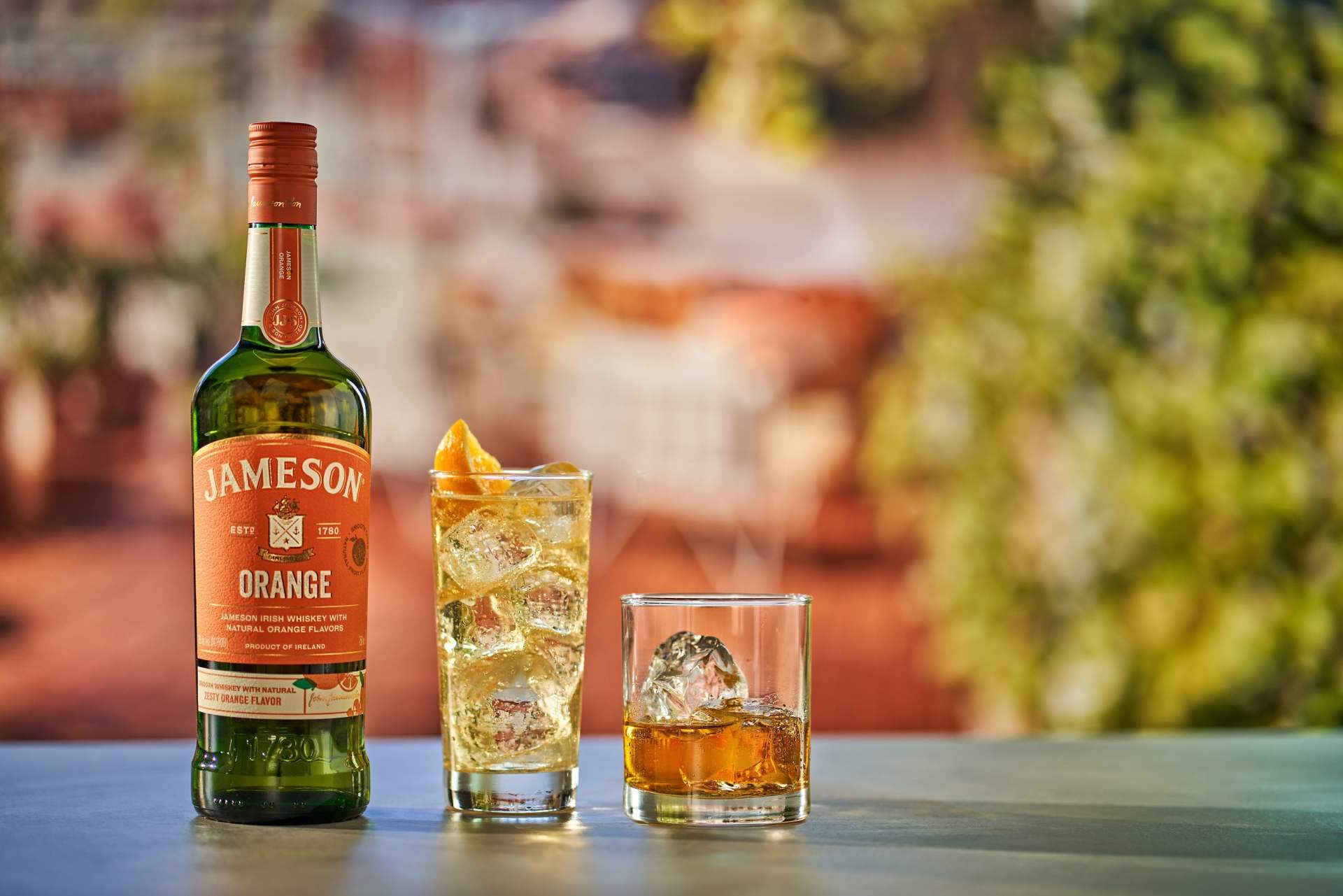
by David Klemt David Klemt No Comments

Global Cuisine Performance

Global Cuisine Performance

by David Klemt

Cook making handmade pasta noodles

We don’t have a crystal ball to help us see which cuisines will be most popular. Obviously, the same holds true for knowing which are just now getting recognition.

However, we do have the next-best thing: data from Datassential.

Recently, the food and beverage analytics firm ranked dozens of global cuisines according to their current state of popularity among diners.

Then, they shared that information in October during their “Around the World in 80 Trends” webinar.

“Ubiquity”

When analyzing food and beverage trends, Datassential funnels them into four distinct designations: Inception, Adoption, Proliferation, and Ubiquity.

Arguably, once a trend reaches Proliferation and Ubiquity it becomes a mainstay. So, we can more than likely stop referring to it as a trend.

Now, the two most precarious stages for a trend are Inception and Adoption. Plenty of trends die on the Inception vine. Several won’t make it out of Adoption.

When you see Datassential’s list of global cuisines that fly under the Ubiquity banner, I doubt there will be much surprise:

  • Italian
  • Southern
  • Mexican
  • Creole/Cajun
  • Tex Mex
  • Chinese

So, any shocks to your system there? Most likely not.

“Proliferation”

Another to label this Datassential designation is “second most popular.” Each of these cuisines has a clear shot at reaching Ubiquity.

In fact, I find one of the global cuisines in this category surprising. It’s the first one in this list:

  • Japanese
  • Regional Italian
  • Regional Mexican
  • Greek
  • Mediterranean
  • Regional US
  • Southwestern
  • Cuban

As you’ll see, the lists grow longer steadily as we move down from Ubiquity.

“Adoption”

For me, it’ll be interesting to review follow-up data from Datassential regarding global cuisines.

As such, I’m eager to learn which cuisine from the list below reaches Proliferation in 2022:

  • Caribbean
  • Indian
  • French
  • Regional Chinese
  • Oaxacan
  • German
  • Middle Eastern
  • Korean
  • Ashkenazi
  • Hawaiian
  • Vietnamese
  • Venezuelan
  • Spanish
  • Sicilian
  • Jamaican
  • Israeli
  • Thai
  • British

To be honest, my first reaction to seeing French cuisine under the Adoption banner was surprise. Of course, I then thought back to how many French restaurants we have here in Las Vegas.

Sure, this little city in the desert is a foodie destination. However, French restaurants don’t dot the landscape like those that focus on other cuisines.

“Inception”

That brings us to the first stage of any trend: Inception.

Now, the first thing you’ll notice is that this category contains the most global cuisines. Whereas Adoption features 18, Proliferation lists eight, and a mere six have reached Ubiquity, Inception identifies two dozen.

They are as follows:

  • Brazilian
  • Mizrahi
  • Russian
  • Malaysian
  • Croatian
  • Moroccan
  • Lebanese
  • South African
  • Native American
  • Central American
  • Argentinian
  • Peruvian
  • Filipino
  • Appalachian
  • Sephardic
  • Ethiopian
  • Senegalese
  • Scandinavian
  • Sonoran
  • Nigerian
  • Iranian
  • Persian
  • Turkish
  • Polish

Again, there are some surprises here, at least for me. For example, I expected Ethiopian cuisine to have reached Adoption by now.

Takeaways

Of course, there are multiple ways to interpret this data.

First, you can embrace Ubiquity, leveraging their incredible popularity. However, standing out and building traffic will be challenging.

Second, you can feature Proliferation cuisine. Sure, these have yet to reach the Ubiquity stage. But they’re close to doing so, and you’ll also face stiff competition.

Third, focusing on cuisine from the Adoption designation involves taking a risk but mitigating it somewhat. These cuisines are developing a following and guest demand.

Finally, the riskiest move, depending on location: featuring Inception cuisines. But with risk comes reward. Identify a gap in a certain area—something we can do with our signature feasibility studies—and you may realize staggering success.

So, what do you think? Did you find any of Datassential’s designations surprising for certain cuisines? Let us know on our Instagram, Facebook, Twitter or LinkedIn pages!

Image: Jorge Zapata on Unsplash

by David Klemt David Klemt No Comments

Things Looking Up For December

Things Looking Up For December

by David Klemt

Friends toasting with Champagne outside during the winter

Food and beverage research and analytics firm Datassential’s end-of-year insights point to a positive outlook for restaurants in December.

While many consumers still have reservations about spending time in public, others are eager to return to “normal.”

Restaurants and bars are expected to play an important role in reaching normalcy this holiday season.

Let’s take a look at Datassential’s 2021 Holiday Issue statistics.

Hesitancy Waning?

Let’s get the less-promising data out of the way first. Some consumers still find the idea of in-person restaurant visits uncomfortable.

Nearly half of Boomers surveyed by Datassential (46 percent) said they’re “significantly less likely” to visit a fast-casual or fast-food restaurant in December.

And, interestingly, 42 percent of men gave the same answer for visiting traditional sit-down restaurants.

However, of all the in-person options presented to participants by Datassential, restaurants performed the best.

More than half of all respondents—men, women, Gen Z, Millennials, Gen X, Boomers—plan to visit fast-casual, fast-food, and sit-down restaurants more in December than they have in recent months.

It’s most likely that anticipation for restaurant visits is driven by the desire to gather and celebrate the holidays.

Overall, 57 percent of respondents plan to visit fast-casual and fast-food restaurants more. And 47 percent expect to visit sit-down restaurants more.

That makes those two options the top answers.

Only 16 percent of respondents indicated they don’t plan on visiting any on-site foodservice venues.

Regarding bars, sports bars, lounges, and nightclubs, men are “significantly more likely” (23 percent) to visit those types of venues in December.

Holiday Opportunity

According to Datassential’s report, the opportunity for holiday bookings is out there.

More than likely, gatherings will simply be smaller than they were prior to the pandemic.

Asked about plans to gather at restaurants in December, get-togethers are expected to be “moderately sized.”

Almost half of survey respondents (44 percent) plan on gathering at restaurants in parties of seven to twelve.

Just over a quarter (29 percent) plan on get-togethers of six or fewer of people. Only 18 percent of respondents are planning large (13 to 18 people) gatherings at restaurants in December.

As far as parties of 19 or more, just nine percent of respondents plan “very large” gatherings.

Of course, individual operations’ results will vary. However, this information gives us an idea of what traffic may look like for many operators.

2021 Spending

This is where the news looks even better for restaurants, bars and nightclubs in December.

When asked about spending money on going out to eat and for drinks, just 18 percent of respondents said they planned to spend less this year than in 2020.

Very nearly half (49 percent) plan to spend the same as they did last year. However, 32 percent said they think they’ll increase their spending.

When it comes to New Year’s Eve, the numbers shift a bit. However, 50 percent of respondents plan to spend the same on NYE in 2021 as they did in 2020.

Twenty-six percent plan to spend more on NYE in 2021. Just 24 percent plan to spend less this year on NYE.

Per Datassential, Millennials are most likely to splash out for NYE this year.

So, things won’t be returning to pre-pandemic normalcy by 2021’s end. However, if Datassentials findings prove accurate, things are looking healthier for December.

Image: Christine Jou on Unsplash

by David Klemt David Klemt No Comments

How is Plant-based Performing?

How is Plant-based Performing On-premise?

by David Klemt

Plant-based food bowl

With plant-based food options making their way to global fast food chains, it’s clear the category is continuing to heat up.

In fact, it’s likely time to stop referring to plant-based menu items as a trend. Obviously, they’re here to stay.

But how are these items actually performing on-premise? Is the category experiencing real growth or barely noticeable?

“Proliferation”

We’re full throttle into the holiday season. People are focusing on spending time with family and friends.

And what does that mean? Gathering for meals.

So, if restaurant traffic is going to tick up, it makes sense to see if plant-based should be more prevalent on menus.

To that end, Datassential revealed data on this category two weeks ago during their “Holidays Ahead!” webinar. Of four trend-tracking designations—Inception, Adoption, Proliferation, Ubiquity—Datassential notes plant-based menu items are in the Proliferation stage on-premise.

Analyzing data from 2011 to 2021, Datassential showed that the category started growing in terms of menu placement in 2018. As of this year, plant-based items are on nearly five percent of restaurant menus.

That may not seem like impressive growth. However, there was zero-point-zero-percent growth between 2011 and 2014. In 2015 and 2016, Datassential shows that only 0.1 percent of restaurants offered plant-based menu items. That growth doubled in 2017 (0.2 percent), then doubled again in 2018 (0.4 percent).

In 2019, the category quadrupled to inclusion on 1.6 percent of restaurant menus. Last year, that growth more than doubled to 3.5 percent.

According to Datassential, 28 percent of consumers like or love plant-based menu items. Interestingly, the research agency finds that all types of consumers like plant-based items, not just vegetarians or vegans.

The Datassential breakdown of plant-based menu proliferation by restaurant category is as follows:

  • Fast Casual: 11.5%
  • Casual Dining: 5.4%
  • Midscale: 3.9%
  • Quick Service: 3.4%
  • Fine Dining: 1.8%

Chains are more likely, at this time, to feature plant-based menu items.

Upscale Options

Wanting to include plant-based options and knowing where to start are two different things.

As it happens, Datassential featured a timely real-world menu to that should inspire operators this season.

Watercourse Foods in Denver, Colorado, offers mains and sides that will resonate with holiday diners:

  • Seitan Roast (wheat, soy, blend of herbs) which stands in for roast turkey.
  • Pot Pie consisting of carrots, celery, onions and mushroom.
  • Root Vegetable Stuffing made with root veggies (obviously), savory herbs, and housemade bread.
  • Mac and Cheese featuring shells tossed in cheese fondue and topped with shiitake “bacon” bits and breadcrumbs.

As you’ll notice, you don’t need to limit your menu to products from Beyond or Impossible. Obviously, you can leverage their brand recognition but you can also utilize your current plant-based inventory to create housemade menu items.

If you’re ready to embrace plants at your restaurant or bar, activate your kitchen team. With a bit of creativity you can take advantage on the rise in popularity of everything plant-based.

Image: Hermes Rivera on Unsplash

by David Klemt David Klemt No Comments

Thanksgiving Eve by the Numbers

Thanksgiving Eve by the Numbers

by David Klemt

Two shot glasses garnished with salt rim and lemon wedges

Tonight, guests will be looking to celebrate a bar holiday that’s traditionally lucrative for operators: Thanksgiving Eve, a.k.a. Drinksgiving.

It’s difficult to imagine that any operator or hospitality worker is unaware of Thanksgiving Eve’s status.

Sure, some mark the start of end-of-year celebrations with Halloween or Thanksgiving. However, I feel Thanksgiving Eve truly ushers in the holiday season.

I’d also argue that while retailers have Black Friday and Cyber Monday, operators have the night before Thanksgiving. Yes, New Year’s Eve is also huge, but Thanksgiving Eve is considered the busiest night of the year for bars.

Interestingly, this is a holiday that benefits bars across the nation. In fact, it’s not exclusive to destination cities.

After all, the reason it’s so big, traditionally, is that people are traveling back to their hometowns. And while Thanksgiving is for their families, Thanksgiving Eve is for catching up with childhood and high school friends.

Obviously, there are fantastic bars located in cities outside of their destination counterparts. Hot take, I know.

So, does Thanksgiving Eve deserve its hype ?

The Evidence

Unfortunately, data from 2020 isn’t readily available, for obvious reasons.

However, we do have some data, largely thanks to restaurant management and POS platform Upserve.

One of the simplest ways to analyze Thanksgiving Eve’s impact is to compare it to the previous Wednesday.

Per Upserve, guest counts rose 23 percent in 2018 when compared to the Wednesday prior to Thanksgiving Eve.

Looking at data from more than 10,000 restaurants and bars, Upserve found that guest count totaled 496,883 on November 14, 2018. One week later, that number rose to 643,637.

As Upserve content marketing coordinator Stephanie Resendes says in her Thanksgiving Eve article, “More people = more money.”

Of the 10,000-plus Upserve clients whose data was analyzed, net sales were $17.250 million on the Wednesday preceding Thanksgiving Eve 2018. That number jumped to $22.296 million.

So, looking just at a relatively small sample size from 2018, Thanksgiving Eve’s impact doesn’t seem overblown.

The Drinks

According to Upserve, beer was the year-over-year winner through 2018. It saw the most growth by far on Thanksgiving Eve 2018 when compared to the Wednesday prior and the same period in 2017.

Spirits and wine, at least for Thanksgiving Eve 2018, were nearly tied for second place.

Now, looking at the data for Thanksgiving Eve 2019, spirits saw the most growth overall. Resendes shared that shot sales increased 173 percent on Thanksgiving Eve 2019 when compared to the Wednesday prior.

Tequila led the charge for spirits, rising 156 percent. Vodka saw a 144-percent boost, rum increased 120 percent, whiskey went up 65 percent, and gin saw a lift of 47 percent. For its part, beer sales rose 65 percent.

Not content to simply look at traffic and sales numbers, Upserve also split their clients into four regions. In this way, they identified who parties hardest on Thanksgiving Eve and who needs to ramp things up.

The four regions and their net sales growth from Thanksgiving Eve 2019 compared to the Wednesday prior are below:

  • Midwest: 34 percent
  • Northeast: 34 percent
  • South: 33 percent
  • West: 22 percent

Clearly, there was still growth in the Western region. However, the Midwest and Northeast led the way, with the South just behind them.

We’ll have to wait to see how Thanksgiving Eve 2021 plays out. We’re still waiting on the numbers from 2020. However, Upserve’s data shows that Thanksgiving Eve remains crucial to restaurants and bars throughout America.

Image: Alena Plotnikova on Unsplash

by David Klemt David Klemt No Comments

Giving Tuesday: World Central Kitchen

Giving Tuesday: World Central Kitchen

by David Klemt

Food bank charity donations

November 30 is Giving Tuesday, “a global generosity movement” that focuses on all acts of kindness and giving, large and small.

KRG Hospitality vice president Jennifer Radkey explains Giving Tuesday in-depth in her article from last week.

In her article, Jennifer puts forth ways to involve your business and staff in acts of kindness.

She also explains that November 30 is an opportunity for operators to give back. After all, communities supported restaurants and bars during the pandemic. Now’s the time to provide support for those communities.

All acts of kindness and generosity are encouraged on Giving Tuesday. Monetary donations, volunteering time, hosting charitable organizations free of charge… There are endless ways to participate in Giving Tuesday.

“In other words, it doesn’t matter how you give,” says Jennifer. It just matters that you take part.

World Central Kitchen

At KRG Hospitality, we support World Central Kitchen. Founded in 2010 by Chef José Andrés and his wife Patricia, WCK has been fighting food insecurity for nearly 12 years.

One reason we give to WCK is exemplified in an announcement from earlier this month.

World Central Kitchen is committing to providing $1 billion over the next ten years via their Climate Disaster Fund.

Another reason we give to World Central Kitchen? The 501(c)(3) non-profit gave more than $250 million in 2020 to feed communities around the world.

However, it’s WCK’s overall approach to fighting food insecurity is what we find compelling. The charitable organization doesn’t just show up to a community, hand out food, and leave.

Rather, WCK commits to long-term, local solutions. They create food programs to improve a community’s overall health; offer culinary training and provide jobs; and work to build food security.

If you have the means, please consider following this link to make a donation to World Central Kitchen. Per Charity Navigator, WCK enjoys the highest rating for a charity: four out of four stars.

Donations can be one-time or monthly, for any amount, and in someone’s honor or memory.

Image: Joel Muniz on Unsplash

by David Klemt David Klemt No Comments

Build Back Better…Without Restaurants?

Build Back Better…Without Restaurants or Bars?

by David Klemt

Abandoned bar or restaurant

The Build Back Better Act was passed by the House last Friday without the inclusion of the Restaurant Revitalization Fund Replenishment Act.

For those keeping count—me, for instance—the RRF Replenishment Act has seen zero movement since June.

We’re now six months without RRF Replenishment progress. The RRF application portal closed on May, 24.

To put it bluntly, the House once again failed our industry.

Of the $1.7 trillion dollars in the Build Back Better Act, zero are earmarked to replenish the RRF.

Applicants in Limbo

According to the National Restaurant Association, there are at least 177,000 RRF applicants awaiting grants.

Unless the RRF is replenished, those applicants will receive nothing.

For six months now, two bills seeking $60 billion to replenish the RRF have languished. Those bills are the aforementioned RRF Replenishment Act and the ENTREE Act.

The former was introduced by a bipartisan group of representatives and senators. Rep. Blaine Luetkemeyer (R-MO) introduced the latter.

Unfortunately, the chance to replenish the RRF via a unanimous consent motion was shot down in August. Sen. Rand Paul (R-KY) objected to $43 billion in emergency funding, killing the RRF.

At this point, it’s difficult to take any statement of support for our industry from members of Congress seriously.

NRA Speaks Out

The same day that the Build Back Better Act passed, NRA vice president Sean Kennedy released a statement.

“We are disappointed that the House passed the Build Back Better Act without including the Restaurant Revitalization Fund Replenishment Act… Passing this bill without including RRF replenishment leaves thousands of small business restaurants teetering on the brink of closure,” reads Kennedy’s statement.

Kennedy also points to specific elements of the Build Back Better Act that can cause further harm to operators and our industry.

In particular, Kennedy states that the NRA “specifically asked Congress to not pass any legislation that would harm restaurants as they rebuild.” Instead, the Build Back Better Act imposes new taxes on small businesses, including restaurants and bars.

Per Kennedy, “this bill newly applies the net investment income tax (NIIT) to active business income for pass-through businesses.”

Read Kennedy’s statement in full here.

It’s possible that the Senate will make changes to the bill. And it’s possible that replenishing the RRF will be among those changes. If that happens, the bill will be sent back to the House, further delaying the crucial assistance our industry needs.

Oh, and the deadline to avoid a government shutdown is December 3.

To tell your lawmakers to replenish the RRF, click here. I know I’ve asked you to do this several times. As frustrating as it’s getting, we need to stick together and keep up the pressure.

Image: Wokandapix from Pixabay

by David Klemt David Klemt No Comments

Código 1530 Tequila Closes the Loop

Código 1530 Tequila Closes the Loop

by David Klemt

Upscale tequila bar with luxury bottles on back bar

The evidence that consumers are showing increasing interest in luxury spirits continues to mount, with tequila benefiting greatly.

According to DISCUS, the luxury category of tequila continues to grow. Sales volume is up 30.7 percent annually since 2015 for luxury tequila brands.

While it’s easy to point to brand recognition, cache and perception, there may be another reason for this growth.

In a word, “responsibility.”

Sustainability is Sexy

Episode 57 of Bar Hacks features Collin De Laval. He’s the company mixologist for Código 1530 Tequila, and he’s intimately familiar with the brand.

So, De Laval knows more than every nuance of each Código 1530 expression. He also understands the ethos that drives the brand and its processes.

One of Código’s values is responsibility, which it manifests through sustainability efforts. As De Laval explains, “we try and close a lot of the waste loop, as much as we can.”

Not only does Código utilize naturally filtered water, they cut the water back out of their heads and tails. That water is then reused. The brand uses broken pieces of barrel and spent agave to char new barrels.

Further, Código is a small craft distiller. They don’t level thousands upon thousands of agave each day. Instead, they’re selective and take only what’s necessary.

“We’re treating the land a lot better in that way,” says De Laval.

These efforts are increasingly appealing to consumers. It’s not just the liquid in the bottle that matters. How that liquid got into the bottle is important to them.

“Now it’s like, ‘I know this brand. I know they do good stuff,'” De Laval says.

That “good stuff” doesn’t reference only the quality of the spirits but a brand’s responsibility and sustainability.

Drinking Better

“People are drinking ‘up’ now,” says De Laval. “Gone are the eras of, ‘Let me get whatever’s well.'”

He’s not talking about how a guest orders their drink. By “up” De Laval means they’re choosing top-shelf spirits.

Six years of steady growth for luxury or ultra-premium spirits supports this claim.

De Laval isn’t the only Bar Hacks guest who notices this trend. During episode 56, Pernod-Ricard Prestige sales manager Maxime Lecocq mentions the trend as well.

If luxury spirits and wines had suffered during the pandemic, that would’ve made sense. It could’ve been explained as people being cautious with their money.

Indeed, consumers were cautious. However, not in the way that many would assume. The numbers support the belief that consumers were spending more to drink higher-quality bottles.

Interestingly, drinking better doesn’t appear to refer only to quality or price. Many small, luxury craft distillers enjoy the perception as more responsible than large, industrial producers.

Drinking better now seems to mean drinking what’s better for the environment. And if what’s more responsible and sustainable happens to be ultra-premium, consumers are willing to pay for it.

Image: Spencer Pugh on Unsplash

Top