News

by David Klemt David Klemt No Comments

Bridge the Gap: Tech and Hospitality

Bridging the Gap Between Technology and Personal Development in Hospitality

by Doug Radkey

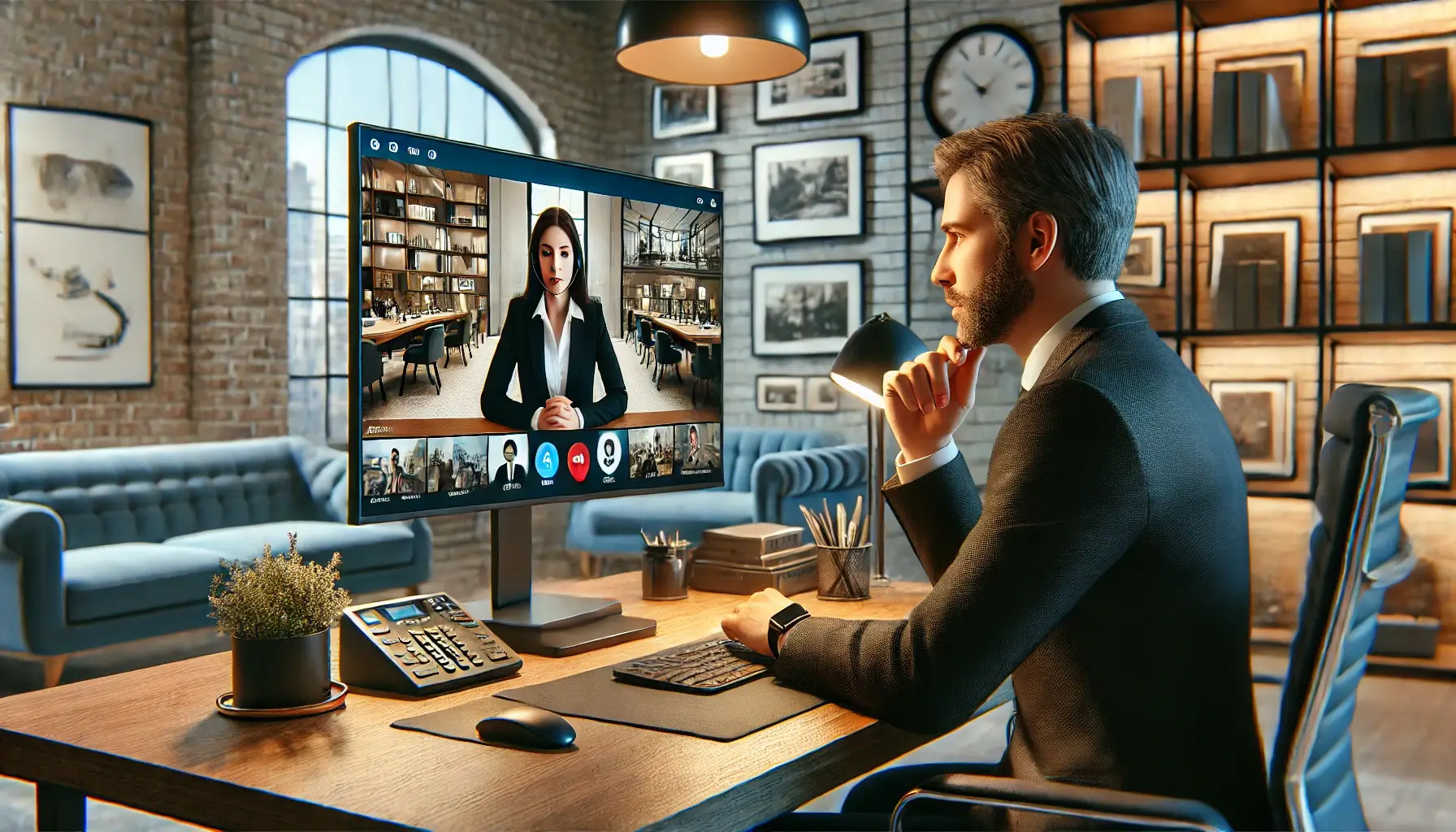
An AI-generated image of a split screen, technology versus people

We shouldn’t have to say this, but the above is an AI-generated image.

It’s said that between 70 percent and 80 percent of hospitality businesses plan to increase their investment in technology and AI over the next five years.

As the industry evolves, the key to success lies in bridging the gap between technology and personal development.

Exploring how integrating technology, artificial intelligence, and personal development can transform your hospitality business is more important now than ever before. It’s crucial that today’s operators understand and leverage these elements to improve operations, enhance guest experiences, and foster staff growth.

The Role of Technology in Modern Hospitality

In today’s fast-paced world, the hospitality industry is undergoing a significant transformation, driven by the rapid advancement of technology.

Hotels, restaurants, and bars are increasingly leveraging innovative tools such as AI, IoT (Internet of things), and data analytics to improve efficiency, personalize services, and to stay competitive. As these technological advancements continue to evolve, they are reshaping the landscape of this hospitality, making it more dynamic and responsive to the ever-changing needs of guests.

While technology offers numerous benefits to the hospitality industry, it also presents several challenges and potential downsides. One significant concern is the risk of de-personalization, as the increased use of automated systems and AI can create a barrier between guests and staff. This barrier has the potential to diminish the personalized touch that is a hallmark of exceptional hospitality.

Additionally, the learning curve for staff can be steep. Team members may require extensive training and ongoing support to utilize new technologies effectively. This can lead to initial inefficiencies and frustration as employees adapt to unfamiliar tools and processes.

Balancing technological advancements with human interaction is crucial to maintaining the warmth and personalized service that guests expect, while also ensuring that staff are adequately equipped, and comfortable with the technological tools at their disposal.

The Emergence of AI in Hospitality

There is no better example of the transformative impact of technology on modern hospitality than the recent developments in artificial intelligence. Hospitality-centric AI applications range from chatbots and predictive analytics such as dynamic pricing tools to personalized marketing platforms, offering a plethora of benefits.

Leading hotel chains like Marriott and Hilton have successfully implemented AI-driven guest services and operational efficiencies, setting new standards in the industry.

For example, these hotels are increasingly using AI to personalize the guest experience, from check-in to check-out. Hilton’s Connie, powered by IBM Watson‘s AI, acts as a concierge, assisting guests with information about hotel amenities, dining recommendations, and local attractions.

AI enhances guest personalization by tailoring services to individual preferences while streamlining operations through automation, and providing valuable insights into guest behavior and preferences.

However, these advancements are not without challenges. Data privacy concerns are paramount, requiring stringent measures to protect guest information. Additionally, ongoing management and updates necessitate in-depth training and processes for staff to effectively integrate AI into their daily routines.

Balancing these challenges with the benefits is crucial to harnessing this technology to its full potential in hospitality.

The Importance of Personal Development in Hospitality

The rapid advancement of technology in the hospitality industry underscores the critical importance of continuous staff training and development. As new tools and systems are introduced, keeping staff updated with the latest technological advancements is essential.

Continuous training programs ensure that employees are proficient in using these new technologies, which not only enhances their productivity but also improves the overall guest experience.

For instance, regular workshops and online courses can help staff stay abreast of the latest AI applications and digital tools, enabling them to seamlessly integrate these advancements into their daily operations.

In addition to keeping up with technology, skill enhancement plays a crucial role in personal development. Key skills for hospitality staff must now include digital literacy, adaptability, and emotional intelligence on top of the core values team members should come to understand during onboarding.

Three Keys

Digital literacy ensures that employees can navigate and utilize various digital platforms and tools effectively. Adaptability is essential in a fast-paced industry where change is constant, enabling your staff to adjust quickly to new processes and technologies. Emotional intelligence, which involves understanding and managing one’s emotions and those of others, is particularly important in hospitality, where guest services and interaction are paramount.

Developing these skills through targeted training programsalong with onboarding those that fit your valuescan enhance staff performance and guest satisfaction significantly. Moreover, personal development initiatives can greatly influence staff motivation and retention by investing in the continuous growth and development of your employees.

When staff feel valued and see opportunities for personal and professional growth, they are more likely to stay with your business, reducing turnover rates. This is particularly important in this industry, where high turnover can disrupt operations and negatively impact service quality.

By fostering a culture of continuous learning and development despite the advancements in technology, your business can create a motivated and loyal workforce that is committed to delivering exceptional guest experiences.

Bridging the Gap: Integrating Technology and Personal Development

To truly revolutionize this industry, it is essential to adopt a holistic approach that integrates technology while maintaining a strong focus on human elements. A balanced approach ensures that while technology streamlines operations and enhances guest experiences, the human touch remains a key component of hospitality.

This integration involves not only the implementation of advanced technologies but also the development of staff skills to use these tools effectively.

Such an approach ensures your business can harness the full potential of both technology and its workforce, creating a seamless and enriching experience for both staff and guests.

Creating effective training programs is a critical step in this integration. These programs should include comprehensive education on technology and AI, ensuring that staff are not only familiar with new tools but also confident in using them.

Keys to Effective Training

Training should be continuous and not a one-off or a one-hour briefing, and should cover practical aspects of technology use.

For example, this may include operating digital check-in systems or utilizing AI-driven guest service platforms, as well as theoretical understanding of how these technologies enhance operations and guest satisfaction.

Regular workshops, online courses, and hands-on training sessions can help staff stay updated with technological advancements, and develop the necessary skills to leverage these tools in their daily tasks.

Fostering a collaborative culture is equally important in helping staff embrace these new technologies. Encouraging a culture of collaboration and continuous improvement can significantly ease the transition to a technology-enhanced workplace. Involving staff in the decision-making process and encouraging feedback ensures that team member feel valued. Therefore, they are more likely to engage with new technologies.

Bridging the gap between technology and personal development requires a balanced approach that integrates technological advancements with comprehensive training programs and a collaborative culture. This holistic strategy ensures that the hospitality industry can leverage the benefits of technology while maintaining the essential human touch that defines the exceptional service we all love and strive for.

Integrating the Technology

Integrating technology and personal development doesn’t set aside the requirement for careful assessment and planning. Begin by evaluating your current technology and training needs to identify gaps, and opportunities for improvement.

Conduct an audit of your existing systems and processes (tech-based and non-tech-based systems), gather feedback from your staff, and set clear objectives for integration. A thorough assessment helps create a strategic playbook that aligns technological advancements with the developmental needs of your staff, ensuring a cohesive approach.

When it comes to technology adoption, it’s crucial to select and implement new tools that complement your personal development goal, operational needs, and guest experiences. Choose technologies and AI tools that enhance operational efficiency and guest experiences without compromising the human element.

Consider factors such as ease of use, scalability, and integration capabilities. Pilot testing new technologies before full implementation can help identify potential issues, and ensure a smoother transition.

Regular updates and feedback are essential for maintaining the effectiveness of your technology and training programs. Take the time to establish a continuous feedback loop where staff can share their experiences and suggestions for improvement, and then update your systems and training materials regularly to reflect the latest advancements and best practices.

This proactive approach ensures that your team remains equipped with the knowledge and skills needed to leverage new technologies more effectively.

Overcoming Resistance to Change

If you’ve been operating for a number of years and the embracing of technology is new to your style of operations, you may receive resistance from staff who have been with you for a while. Addressing potential resistance to change is a common challenge in integrating technology (or any other type of change).

Strategies for overcoming this resistance may include involving staff in the decision-making process, providing comprehensive training, and highlighting the benefits of new technologies. Developing a growth-based mindset within your workplace culturethrough positive reinforcement and recognition of early adopterscan also help encourage acceptance and enthusiasm for change.

Lastly, continuous improvement is vital for sustaining the benefits of technology and personal development initiatives while positioning your brand for the new era that’s upon us.

Evaluate the impact of new technologies and training programs on your operations regularly, and be aware of guest satisfaction scores. Use performance metrics and feedback to identify areas for improvement, and make necessary adjustments.

This commitment to ongoing development ensures that your hospitality business remains competitive and adaptive to future industry changes.

Bridging the gap between technology and personal development is essential for creating a seamless and enriching experience for both staff and guests. Embrace these approaches so your business can innovate and thrive, while still maintaining the warmth and personalized service that define exceptional hospitality.

Image: DALL-E

Tech-Stack Consulting for Motels Hotels Resorts

by David Klemt David Klemt No Comments

Campbell’s Shares Tips for LTOs

Campbell’s Shares Tips for LTOs that Generate ROI

by David Klemt

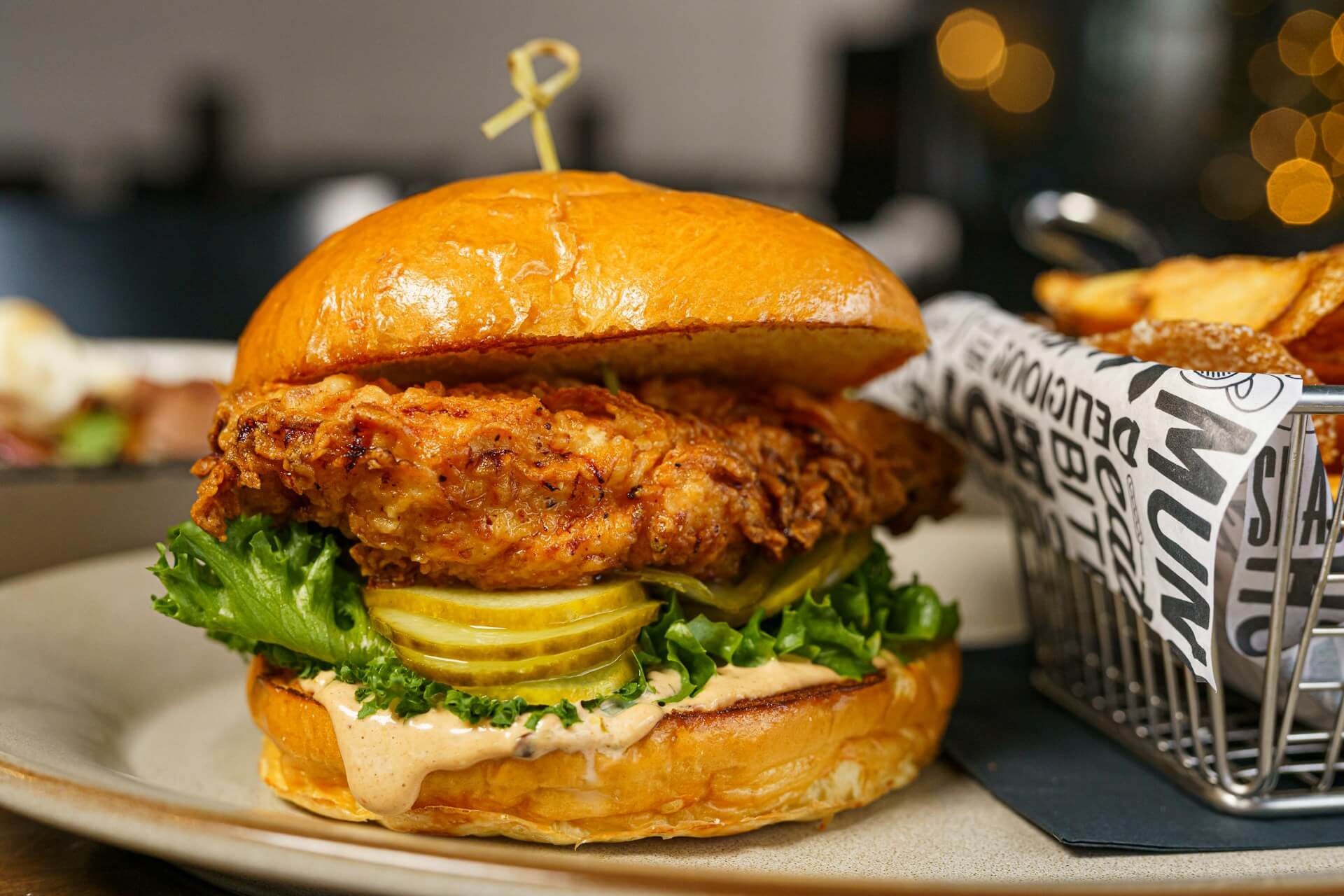
A well-crafted chicken sandwich with pickles, lettuce, and sauce, served next to a basket of French fries

Yes, the Chicken Sandwich Wars are still going strong in 2024.

We appreciate Campbell’s Foodservice’s reports and posts, and their most recent insights address how operators can succeed with LTOs.

For example, our look into their tips for leveraging nostalgia is here. And our thoughts on Campbell’s Culinary TrendPulse 2024 report are here for your review.

This time out, Campbell’s Foodservice, utilizing data from Technomic, Datassential, and other sources, is tackling LTOs.

If you’re a regular reader of KRG Hospitality’s industry insights, you know we love an LTOif an operator executes it effectively. Along those lines, you probably also know that we view Taco Bell as a leader in the industry when it comes to leveraging the power of LTOs.

Not only does the QSR giant know what their guests want, they know how to generate demand. In fact, Taco Bell understands the power not just of LTOs but of tying them to their subscriptions. Take, for example, their Taco Lover’s Pass and the Toasted Breakfast Taco menu drop.

When approached with thoughtful consideration, well-executed LTOs are a crucial element of an operator’s marketing and branding strategy. They drive traffic and sales, boost guest engagement and loyalty, and attract attention from first-time guests.

Of course, crafting a gainful LTO—gaining profits, loyalty, and positive public perception—can be easier said than done. However, there are a number of steps you can take to get the ball rolling and come up with one that reflects your brand, and resonates with guests.

Four Steps

Kicking off their tips, Campbell’s Foodservice recommends keeping LTOs simple. As they say in their report, which you can read here, operators need not “reinvent the wheel” when developing these promotions.

You can differentiate an LTO menu item from its standard counterpart in a number of simple ways. A few examples are using a unique cooking process, crafting a limited-edition sauce, and featuring a distinctive and specific topping or two.

Another tip is to do your best to offer LTOs that embrace current trends. While sharing these tips, Campbell’s cites Datassential and the revelation that just 20 percent of all LTOs are recurring. That means that the vast majority of LTOs are new creations, not stalwarts like the McRib. To draw the attention of a wider swath of guests, feature regional and local items and flavors. Per Datassential, 70 percent of guests are interested in such LTOs.

Speaking of attention, operators should learn how to take and edit attractive F&B images. Or, as Campbell’s says, “make LTOs pretty.” Per Datassential, roughly a third of consumers will try an LTO if it looks appealing in an advertisement or in-store imagery.

Finally, and this one is crucial as it embodies the previous three tips, leverage seasonality. It’s currently summer, so what can you add in the way of flavor to an existing item? Is that item regional and locally sourced? Will photographing it and crafting a sharp post communicate the season and inspire a bit of FOMO? These questions can help guide your approach to crafting profitable LTOs.

Oh, and to help you get started, I’ve shared Campbell’s season flavor suggestions below. Cheers!

Campbell’s Foodservice Seasonal Flavors

Not only did Campbell’s share tips for succeeding with LTOs, they also provided several examples of seasonal flavors to inspire you and your team.

Since it’s July, I’ll start with their summer suggestions.

Summer: basil, blackberries, corn, cucumbers, peaches, tomatoes, watermelon, zucchini

Fall: artichokes, cranberries, edamame, parsnips, pears, pumpkin, sweet peppers, tomatillos, turnips,

Winter: butternut squash, persimmons, radishes, salsify (a root vegetable), sunchokes, sweet potatoes, tangerines

Spring: asparagus, fava beans, pea greens, rhubarb, snap peas, spring onions, strawberries

Campbell’s Foodservice sources:

  1. Foodservice and Hospitality: A strong LTO strategy helps operators retain and grow their customer base (March 2024)
  2. Datassential: Limited Time Offers Keynote Report
  3. Technomic: 162 Best-in-Class LTOs for 2023
  4. Food & Drink Resources: A Limited Time Offer Strategy For Restaurants
  5. Your Guide to Seasonal Fruits and Vegetables, The Spruce Eats
  6. Datassential: State of the LTO 2024

Image: Hybrid Storytellers on Unsplash
Bar Nightclub Pub Brewery Menu Development Drinks Food

by David Klemt David Klemt No Comments

Cheers to the 2024 Spirited Award Winners!

Cheers to the 2024 Spirited Award Winners!

by David Klemt

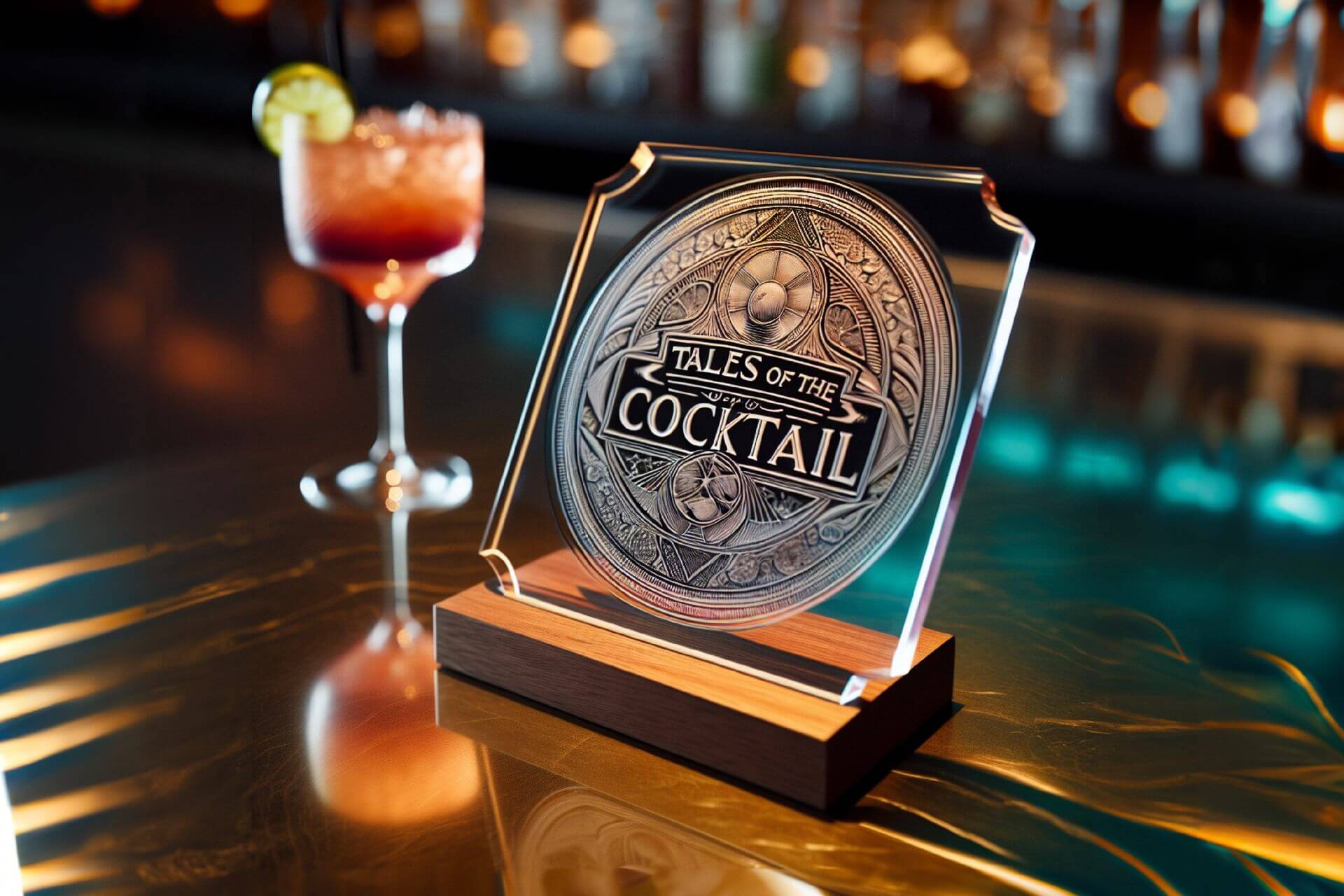
AI-generated image of the Tales of the Cocktail Spirited Award on top of a bar, next to a cocktail

This image depicting what an AI system “thinks” a Spirited Award looks like will always amuse me.

We didn’t attend Tales of the Cocktail this year but we did watch the Spirited Award livestream to celebrate our peers receiving the recognition they deserve.

Let’s dive right into it!

A massive congratulations to the team at ALQUÍMICO in Cartagena des Indias, Colombia, for grabbing the World’s Best Bar crown.

Two incredible and generous bar pros, Alex Jump and Danil Nevsky, are this year’s Best US Bar Mentor and Best International Bar Mentor, respectively. I want to thank Jump for using her time on stage to call out the mental and physical health threats our industry continues to face.

This year’s Timeless US Award goes to The Buena Vista in San Francisco, California, while the Timeless International Award winner is Café Pacifico in London, UK. Hidetsugu Ueno’s commitment to the craft of bartending, hospitality, mentorship, and community earned him the 2024 Helen David Lifetime Achievement Award. Colin Asare-Appiah (“Get involved, bruv!”) is the more-than-deserving winner of this year’s Tales Visionary Award.

A special congratulations to Nectaly Mendoza, Joy Figueroa, and the team at Cleaver in Las Vegas for earning the Best US Restaurant Bar award. Yes, my civic pride is showing.

Another tip of the cap goes to Handshake Speakeasy in Mexico City, Mexico, for picking up three Spirited Awards: World’s Best Cocktail Menu, Best International Bar Team, and International Bartender of the Year. Congratulations to Eric van Beek!

Allegory at the Eaton Hotel takes two Spirited Awards back to DC: Best US Hotel Bar, and US Bartender of the Year. Cheers to Kapri Robinson!

Should you want a refresher regarding the four finalists from each award category, click here. The top-ten nominees are listed here, and the top-ten regional honorees can be found via this link.

Below, the award winners in the order they were revealed during the 2024 ceremony. Cheers!

Best New International Cocktail Bar

Bar Leone (Hong Kong)

New New US Cocktail Bar

Superbueno (New York, New York)

Best Cocktail & Spirits Publication

The Cocktail Lovers

Best Cocktail & Spirits Writing

“A New Spirit Confronts the Consequences of Colonialism,” by Adaorah Oduah, for Punch

Best International Brand Ambassador

Dave Mitton, Lot 40 / J.P. Wiser’s

Best US Brand Ambassador

Anna Mains, Monkey Shoulder

Best Broadcast, Podcast, or Online Video Series

Bartender At Large, hosted by Erick Castro

World’s Best Cocktail Menu

Handshake Speakeasy (Mexico City, Mexico)

Best International Restaurant Bar

Danico (Paris, France)

Best US Restaurant Bar

Cleaver – Butchered Meats, Seafood & Classic Cocktails (Las Vegas, Nevada)

Best International Bar Team

Handshake Speakeasy (Mexico City, Mexico)

Best US Bar Team

Jewel of the South (New Orleans, Louisiana)

Best International Hotel Bar

BKK Social Club at Four Seasons Bangkok (Bangkok, Thailand)

Best US Hotel Bar

Allegory at the Eaton Hotel (Washington, DC)

Best New Book on Drinks Culture, History, or Spirits

Juke Joints, Jazz Clubs, and Juice: A Cocktail Recipe Book Cocktails from Two Centuries of African American Cookbooks by Toni Tipton-Martin

Best New Cocktail or Bartending Book

The Ice Book: Cool Cubes, Clear Spheres, and Other Chill Cocktail Crafts by Camper English

Best International Cocktail Bar

ALQUÍMICO (Cartagena des Indias, Colombia)

Best US Cocktail Bar

Yacht Club (Denver, Colorado)

World’s Best Spirits Selection

Baba Au Rum (Athens, Greece)

Best New Spirit or Cocktail Ingredient

YUZUCO Yuzu Super Juice

International Bartender of the Year

Eric van Beek, Handshake Speakeasy (Mexico City, Mexico)

US Bartender of the Year

Kapri Robinson, Allegory at the Eaton Hotel (Washington, DC)

Best International Bar Mentor

Danil Nevsky

Best US Bar Mentor

Alex Jump

Image: Shutterstock. Disclaimer: This image was generated by an Artificial Intelligence (AI) platform.

KRG Hospitality. Bar Consultant. Nightclub. Lounge. Mixology. Cocktails.

by David Klemt David Klemt No Comments

Feedback: Friend or Foe?

Feedback: Friend or Foe?

by Jennifer Radkey

A team meeting at a table, with people taking notes on notepads

Feedback can be used as a powerful tool for personal and professional growth, so why is it that the majority of people purposefully avoid it?

The short answer is that we don’t like to be told that we aren’t doing a good job. Even if the feedback is all positive, there is that slight chance that there might be some negative feedback. Therefore, it’s avoided all together.

There needs to be a mind shift towards feedback. Instead of thinking of it as a criticism of you personally, think of it as constructive advice for how to become a better version of you. Once you accept that, you can use that feedback to build a better version of your business.

Feedback is subjective to the person who is giving it. It is dependent upon that person’s experiences, values, and beliefs, which is why it can not be taken at face value. Feedback needs to be heard without judgment, and then examined for validity.

Assessments and feedback are tools that, when used properly, can give you an edge over your competition.

These tools provide clarity, and allow you to see potential areas for growth that you may not have been able to notice otherwise. When the feedback is positive, it highlights strengths for you to celebrate. When it is negative, it shines light on areas that need to be examined and possibly improved upon.

Who wouldn’t want that opportunity? So, instead of hiding or running away from feedback, what should you be doing?

Seek it Out

Make it a goal to actively seek feedback from others. Shifting your mindset and perception of feedbackpositive or negativeto accept that it will help improve your business is powerful. If you are the one seeking feedback, then there is no room to fear it.

Who should you be asking for feedback from? Everyone!

Let’s start with your team. Your business is only as strong as your team. Your success relies heavily upon their performance.

You are most likely already providing constructive feedback to your team and celebrating their successes. (If this is not the case, you need to make this change.)

Are you asking for their feedback though?

Knowing how your team feels about working in your establishment is critical for creating a positive culture, lowering turnover, and building a reputation that makes people clamor to work for you. Create anonymous surveys or bring in a third party to conduct stay interviews to obtain the most valid and truthful feedback from your team. Many may be too fearful to share their honest opinion face to face with an owner or a member of a leadership team.

Next up, you need feedback from your guests.

Most operators already have a system in place for hearing customer feedback, whether it be Google reviews, Facebook reviews, or another platform. The question is…what are you doing with those reviews? Are they being read and considered, and replied to with a thoughtful response?

All three of those actions need to happen to take full advantage of the feedback guests provide. A guest who feels heard and valued is a guest who will respect your business.

Lastly, what feedback do your colleagues have for you? What are your competitors saying about you? Do vendors have a positive experience interacting with you?

The more you know about how others view your business, the more power you have to make informed, effective changes.

Analyze It

Once you have received feedback it’s time to approach it from a curious and analytical mindset. Remove emotional response (or accept your emotional response and put it aside) so that you can benefit from whatever the feedback may be.

Yes, if the feedback is negative you may have an initial negative response. You may feel defensive, angry, anxious, or frustrated. Accept that these are natural responses and then move on.

You will not be able to clearly analyze the feedback if you are stuck in a negative mindset.

A successful operator uses strategic thinking as their main tool to gain clarity. Get curious and start asking questions.

Is the feedback relevant? Is there truth in it? What experience led to it? How was that opinion formed?

Some feedback will require action to be taken on your end, others will not. It’s up to you to analyze and decide.

Implement It

After requesting and analyzing feedback, it’s time to implement it!

Purposeful action defeats fear every time. Take what you have discovered through the feedback that you sought out, and put it into action.

Create S.M.A.R.T. goals and an action plan for you and your team. Or, if the action is larger in scale, host a team meeting, and work together to create the goals and plan. Creating goals as a team allows for everyone to take ownership of the process and the results.

Don’t forget that it’s not only negative feedback that may need to be addressed with action, but positive feedback as well.

How are you going to share positive feedback with your team, and how will you celebrate it? Success is not only built upon implementing change where needed but also in the act of practicing gratitude when needed. Make sure you are doing both.

So, it’s time to stop hiding from feedback; it is your friend.

Seek it, analyze it, and then implement it. Not all feedback requires action on your end, but sometimes you will receive valuable feedback that may create a change in your business that could propel you to another level of success. Be ready for it.

Cheers to personal and professional growth!

Image: Dylan Gillis on Unsplash
KRG Hospitality. Business Coach. Restaurant Coach. Hotel Coach. Hospitality Coach. Mindset Coach.

by David Klemt David Klemt No Comments

Top Kitchen Design Trends of 2024

Top Commercial Kitchen Design Trends of 2024

by Nathen Dubé

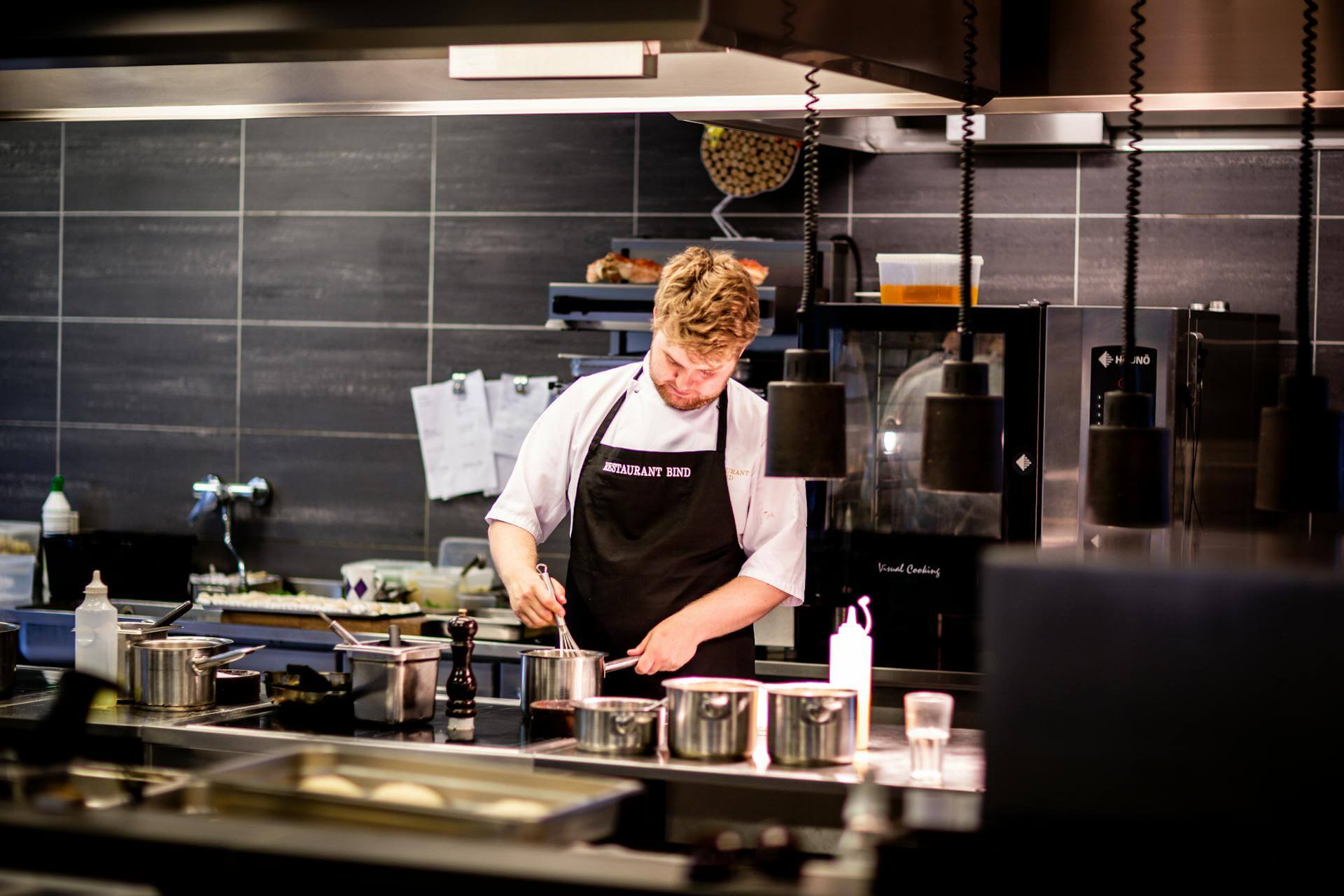
A young male chef preparing a dish in a clean, modern commercial kitchen

Commercial kitchen design continues to evolve, driven by advancements in technology, an emphasis on sustainability, and the need for efficiency and flexibility.

The latest trends reflect these priorities, offering solutions that enhance both functionality and aesthetics in professional kitchens.

This article explores the top commercial kitchen design trends of 2024, highlighting their benefits and offering practical implementation tips. Going further, I also include real-world examples of successful trend adoption.

1. Sustainability and Eco-friendly Practices

Sustainability is at the forefront of commercial kitchen design in 2024.

Restaurants and foodservice operators are increasingly adopting eco-friendly practices. Key reasons include reducing their environmental footprint, and meeting consumer demand for responsible business practices.

Key Trends

  • Energy-efficient appliances: The use of ENERGY STAR-rated appliances that consume less energy, and reduce operational costs.
  • Sustainable materials: Incorporating materials like recycled steel, reclaimed wood, and eco-friendly countertops.
  • Waste reduction systems: Implementation of composting and recycling systems to manage waste more effectively.

Benefits

  • Reduce operational costs through lower energy consumption.
  • Enhance brand reputation by demonstrating a commitment to sustainability.
  • Meet regulatory requirements and green certification standards.

Implementation Tips

  • Choose ENERGY STAR appliances: Invest in appliances that are certified for energy efficiency to cut down on utility costs, and reduce environmental impact.
  • Incorporate sustainable materials: Opt for materials that are durable and have a lower environmental impact, such as recycled or reclaimed materials.
  • Implement waste management systems: Set up composting and recycling systems to manage kitchen waste efficiently.

Client Story

A farm-to-table restaurant I worked with revamped their kitchen to include energy-efficient appliances, reclaimed wood decor, and a comprehensive waste management system.

These changes not only reduce their operational costs but also enhance their brand’s commitment to sustainability, attracting environmentally-conscious customers.

2. Smart Kitchens and Technology Integration

Technology is transforming commercial kitchens, making them more efficient, safer, and easier to manage.

Smart kitchens equipped with advanced technology are becoming the norm in 2024.

Key Trends

  • Smart appliances: Ovens, refrigerators, and dishwashers that can be monitored and controlled remotely.
  • Automated inventory systems: Systems that track inventory levels in real-time, reducing waste and ensuring timely reordering.
  • Kitchen management software: Software that integrates scheduling, task management, and equipment maintenance.

Benefits

  • Enhance operational efficiency, and reduces labor costs.
  • Improve food safety, and quality control.
  • Streamline inventory management, and reduces waste.

Implementation Tips

  • Invest in smart appliances: Choose appliances that offer remote monitoring and control capabilities for better efficiency and oversight.
  • Use automated inventory systems: Implement inventory management software to keep track of stock levels, and reduce food waste.
  • Adopt kitchen management software: Integrate software solutions that help manage kitchen tasks, staff schedules, and maintenance routines.

Client Story

A high-volume catering QSR company integrated smart kitchen technology, including smart ovens and automated inventory systems.

The approach allows them to monitor cooking processes remotely, optimize their inventory management, and streamline operations. The result is significant cost savings, and improvements to service quality.

3. Flexible and Modular Kitchen Designs

Flexibility and adaptability are key considerations in modern commercial kitchen design.

Modular kitchens that can be easily reconfigured to meet changing needs are becoming increasingly popular.

Key Trends

  • Modular equipment: Equipment that can be moved and reconfigured as needed.
  • Multi-functional spaces: Areas that can serve multiple purposes, such as prep stations that double as serving counters.
  • Open kitchen concepts: Designs that promote transparency and interaction with customers.

Benefits

  • Adapt to changing menu requirements and operational needs.
  • Maximize space utilization and efficiency.
  • Enhance the dining experience by promoting transparency.

Implementation Tips

  • Choose modular equipment: Invest in equipment that can be moved and reconfigured easily to suit different needs.
  • Design multi-functional spaces: Create areas that can serve multiple purposes to maximize space efficiency.
  • Consider open kitchen designs: Implement open kitchen concepts to enhance customer interaction and experience.

Client Story

A fast-casual restaurant redesigned their kitchen to incorporate modular equipment and multi-functional spaces. This flexibility allows the operator and their team to adapt to menu changes easily.

In addition, the change increases functional space, and streamlines their operations, leading increases in efficiency and customer satisfaction.

4. Enhanced Food Safety and Sanitation

Food safety and sanitation are paramount in commercial kitchens.

In 2024, new design trends are focusing on creating hygienic environments that minimize contamination risks.

Key Trends

  • Touchless technology: Faucets, dispensers, and doors that operate without physical contact.
  • Sanitization stations: Dedicated areas for handwashing, and sanitizing equipment.
  • Antimicrobial surfaces: Use of materials that resist bacteria, and are easy to clean.

Benefits

  • Reduce the risk of foodborne illnesses.
  • Meet health and safety regulations.
  • Enhance the overall cleanliness of the kitchen.

Implementation Tips

  • Install touchless technology: Implement touchless faucets, dispensers, and entry systems to reduce contamination risks.
  • Create sanitization stations: Designate areas specifically for handwashing, and sanitizing tools and equipment.
  • Use antimicrobial surfaces: Choose materials that are resistant to bacteria, and easy to clean for work surfaces and high-touch areas.

5. Ergonomic and Worker-friendly Designs

Ergonomic designs that prioritize the well-being and efficiency of kitchen staff are gaining traction.

These designs focus on reducing physical strain, and improving workflow.

Key Trends

  • Ergonomic workstations: Adjustable workstations that reduce strain and fatigue.
  • Improved ventilation systems: Systems that provide better air quality, and reduce heat stress.
  • Ample lighting: Sufficient and well-placed lighting to reduce eye strain and enhance visibility.

Benefits

  • Increase staff productivity, and job satisfaction.
  • Reduce the risk of workplace injuries.
  • Enhance the overall efficiency of kitchen operations.

Implementation Tips

  • Design ergonomic workstations: Invest in adjustable workstations that can be tailored to individual needs.
  • Improve ventilation: Ensure your kitchen has effective ventilation to maintain air quality, and reduce heat.
  • Enhance lighting: Use ample and strategically placed lighting to improve visibility, and reduce strain.

Client Story

A large-scale restaurant redesigned their kitchen to include ergonomic workstations and improved ventilation.

These changes have resulted in a more comfortable and efficient working environment, leading to higher staff morale and productivity.

Address Your Kitchen’s Design

The commercial kitchen design trends of 2024 reflect a focus on sustainability, technology integration, flexibility, food safety, and ergonomics.

These trends not only enhance the functionality and efficiency of commercial kitchens but also address the growing demands for environmentally responsible and worker-friendly environments.

Are you ready to transform your commercial kitchen with these cutting-edge trends? Contact us today to learn how we can help you implement these designs and create a kitchen that meets the demands of modern culinary operations.

Image: Rene Terp via Pexels

Bar Nightclub Pub Brewery Menu Development Drinks Food

by David Klemt David Klemt No Comments

Difference Between a Plan and Playbook

The Difference Between a Plan and a Playbook

by Doug Radkey

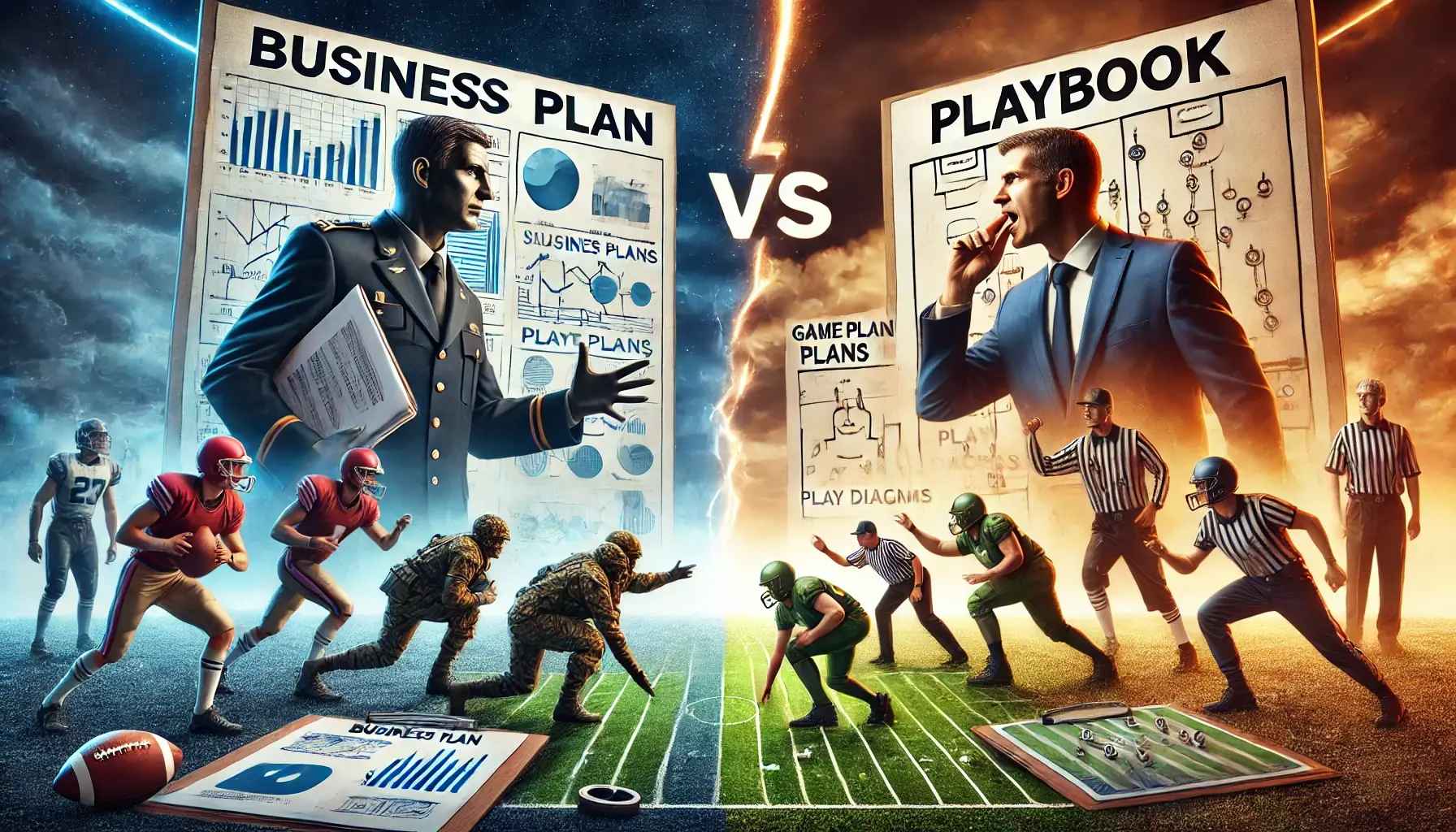
An AI-generated image of a business plan on one side, versus a playbook on the other side

Sometimes AI comes up with impressive images. This is one of them.

You’ve likely heard that 80 percent of hospitality businesses fail within the first five years.

When you ask those in the industry the question of why there is such a high rate of failure, they reply with a fairly predictable list of factors. These tend to be location, concept or brand confusion, lack of service standards, toxic workplace culture, sub-par marketing efforts, and mismanaged funds.

Many operators who fail try to quickly blame external factors, such as the economy.

When you ask the next questionwhat are the other 20 percent of operators doing differently to surpass five years in businessyou get one simple answer. The difference between those who drive a sustainable profit of 12, 15 or 20 percent (or more) and those who don’t boils down to one thing and one thing only: they have strategic clarity.

It’s not that the successful 20 percent did not battle challenges or the same tough economy or labor struggles. What they had was clarity, and a playbook detailing how to overcome a multitude of challenges.

So how do you achieve strategic clarity? Well, it’s much more than just writingor filling out a template fora business plan.

What is Strategic Clarity?

Strategic clarity is the comprehensive understanding and alignment within your hospitality business regarding its identity, direction, purpose, and the means to achieve its goals.

It involves clear communication and consensus on key aspects of the business, ensuring that everyone is working towards the same objectives. Below, the key components that define strategic clarity.

1. Understanding Who We Are

  • Core Identity: This includes the mission, vision, and core values of your business. It defines what the business stands for, and its fundamental purpose.
  • Strengths and Weaknesses: Recognizing the business’ strengths, weaknesses, opportunities, and threats (SWOT) aids in identifying the core competencies and areas for improvement.
  • Culture: The shared beliefs and practices that characterize the business’ internal environment, and how it interacts with both staff and guest perceptions.

2. Knowing Where We are Going

  • Vision: A clear and compelling picture of what the business aspires to become in the future. It serves as a guide for choosing current and future courses of action.
  • Long-term Goals: Specific, measurable, achievable, relevant, and time-bound (SMART) goals that outline the desired outcomes over an extended period.
  • Milestones: Intermediate targets that mark progress towards the long-term goals.

3. Understanding Why We are Doing This

  • Purpose: The fundamental reason for the business’ existence beyond making a profit. It encompasses the broader impact the business aims to have on its community.
  • Motivation: The driving force behind the business’ actions and strategies. This includes the values and principles that guide decision-making, as well as behavior.
  • Stakeholder Alignment: Ensuring that the goals and activities of the business align with the interests and needs of its stakeholders: guests, employees, investors, and the community.

4. How We are Going to Get There

  • Strategy: The overarching plan that outlines how the business will achieve its vision and long-term goals. It includes the allocation of resources and the selection of strategic initiatives.
  • Tactics: The specific actions and steps that will be taken to implement the strategy. This involves detailed planning, delegation, resources, and execution.
  • Performance Metrics: The criteria and tools used to measure progress and success. Key Performance Indicators (KPIs) and other metrics help track the effectiveness of strategies and tactics.
  • Continuous Improvement: The process of regularly reviewing and refining strategies and tactics based on performance data and changing circumstances.

Strategic clarity is essential for the cohesive and effective functionality of your bar, restaurant, or hotel business. This leadership approach ensures that all members understand and are aligned with the business’ identity, direction, purpose, and methods.

By achieving strategic clarity, organizations can navigate challenges, seize opportunities, and build upon sustainable long-term success. What we have found over the years that attributes to long-term clarity and success is a series of playbooks.

Understanding Plans and Playbooks

Let’s first dive into the critical distinction between a plan and a playbook, and why this matters for your bar, restaurant, or hotel. Understanding and utilizing both can significantly impact your business’ ability to start strong, stabilize effectively, and ultimately position you to scale successfully.

A traditional business plan, as you may know it, is a document that outlines your goals, and the steps you will take to achieve them. It’s often the number one consideration to secure funding and to set strategic direction.

However, it is, more often than not, missing plenty of crucial information, strategies, and guidance that end up planting a false sense of security.

A playbook, on the other hand, is a more comprehensive guide filled with detailed processes, best practices, and adaptable strategies tailored to your specific operations. Within this dynamic industry, you need more than a standard business plan if you want to be successful.

In fact, you should have eight different playbooks in place to position yourself within the top echelon of this industry.

The Power of Playbooks in Hospitality

While plans are often static or rigid (and often forgotten about shortly after they’re written), playbooks are designed to be flexible and adaptable.

Playbooks provide a step-by-step guide, ensure consistency and efficiency, and offer adaptable strategies and best practices to start, manage, and grow effectively.

Playbooks go into more granular details, and provide actionable steps. In this way, they’re notably different from a singular business plan.

The Eight Playbooks

No matter if you are operating a coffee shop, bar, restaurant or hotel (or any other concept within the hospitality industry), the following eight playbooks should be looked at as non-negotiables.

  1. Feasibility Study/Playbook: The foundational guide for assessing the viability of your hospitality business idea. It involves a comprehensive analysis of the market, competitive landscape, financial projections, and operational requirements. This playbook helps you determine whether your concept is realistic and profitable before committing significant resources.
  2. Concept Playbook: Focuses on refining your hospitality business idea into a clear and compelling concept. This playbook guides you through creating a unique value proposition, defining your target market, and outlining the core elements of your business, including service style, interior design, and internal programming.
  3. Prototype Playbook: A step-by-step guide to developing a tangible representation of your hospitality concept. This playbook helps you create a prototype that can be tested and refined before a full-scale launch. This playbook covers design specifications, operational workflows, fixtures/furniture/equipment, and detailed budgets.
  4. Brand Strategy & Identity Playbook: Defines the strategic approach to building and maintaining a strong brand. This playbook covers the creation of your brand identity, messaging, and positioning to ensure consistent and impactful brand communication. It involves color psychology, core values, mission statements, brand experiences, and more.
  5. Marketing Playbook: Outlines the strategies and tactics to attract, build, and retain your target guests. This playbook provides a roadmap for creating and executing effective marketing campaigns across various channels. It provides a step-by-step guide on content, social media management, database building, email marketing, partnerships, and community activations, along with detailed guest journey maps.
  6. Tech-stack Playbook: Provides guidance on selecting and implementing the correct technology solutions to enhance your hospitality operations. This playbook ensures that your technology infrastructure supports your business goals and improves efficiency. This playbook identifies technology gaps, software solutions, hardware requirements, and integration plans, plus training and support on technology.
  7. Financial Playbook: A comprehensive guide to manage your hospitality business’ finances. This playbook covers budgeting, financial forecasting, accounting practices, and financial performance analysis. It should highlight financial contingency plans, mock labor schedules, daily/weekly/monthly/seasonal traffic reports that align with the business, and financial objectives.
  8. Operational Playbook (a.k.a. Business Plan): Outlines the day-to-day operations in great detail, along with long-term strategies. This playbook ensures that all aspects of your operations are well-coordinated and aligned with your overall business goals, and the other seven playbooks. It should highlight standard operating procedures, labor plans, supply chain management, guest services, and measurable operational metrics.

You’ll notice there are seven other playbooks written before the business plan. Far too often, this is where people start. Without the other seven playbooks, it will be nearly impossible to craft a winning playbook for your day-to-day operations.

When Should You Use Playbooks

  • To Start: These eight playbooks are crucial to craft your success story right from the beginning. Build the foundations before signing a lease or purchasing a property.
  • To Stabilize: If you’re currently underperforming (profit margins under 12 percent for bars and restaurants, and under 15 percent for hotels), use playbooks to generate impactful results.
  • To Scale: These playbooks will help ensure that both your first locationand the next locationare prepared for consistent operations without diminishing your brand equity.

Strategic planning within detailed playbooks is essential for your hospitality business’ success.

Regardless of your current position, evaluate your use of business plans, and consider developing comprehensive playbooks instead. Make the time and commitment to achieving true clarity in your business, and position yourself to be on the correct side of this industry’s statistics.

AI image generator: DALL-E

KRG Hospitality Start-Up Restaurant Bar Hotel Consulting Consultant Solutions Plans Services

by David Klemt David Klemt No Comments

Cien Años Después: Michelin Hits Mexico

Cien Años Después: Michelin Guide Hits Mexico

by David Klemt

In news that may come as a shock to many, the Michelin Guide is covering Mexico for the first time in its 124-year history.

If, like me, you’re surprised, I think that’s justifiable. I raised an eyebrow when I learned that the Michelin Guide didn’t cover the US with an American edition until 2005.

Should you be curious about what cities were featured in that first American guide…it was only New York. From what I’ve gathered, 500 restaurants throughout the city’s boroughs received coverage. Of the 50 hotels included in that guide, all were in Manhattan.

And when it comes to Canada, Toronto and Vancouver guides didn’t exist until 2022. So, to learn that the Michelin Guide has just now arrived in Mexico was mind blowing.

However, the country is certainly attempting to make up for lost time (a total of 124 years of lost time). Coming out swinging for their first guide, more than 150 restaurants throughout Mexico earned recognition.

In 2024, 97 restaurants earned Michelin recommendations. A total of 42 Bib Gourmands were awarded. Six restaurants in Mexico earned Michelin Green Stars. Five restaurants received Michelin Special Awards, such as the Exceptional Cocktail Award, and the Mentor Chef Award.

Now, on to the “big” awards: Michelin Stars. Sixteen restaurants in Mexico now have one Michelin Star. Just two, both in Mexico City, earned two Michelin Stars: Quintonil, and Pujol.

Interestingly, both restaurants also earned placement on the World’s 50 Best Restaurants 2024 rankings. Pujol grabbed 33 on the list, while Quintonil is number seven.

Unfortunately, not a single restaurant in Mexico has been awarded three Mexican Stars. But, I think it’s only a matter of time.

But wait…

Finding out that the Michelin Guide hadn’t come to Mexico until 2024 piqued my interest. So, I did some digging and found myself sliding down a rabbit hole.

It may be difficult to believe at first glance, but the entirety of France was home to less than 3,000 cars in the year 1900. That’s not great if you happen to be in a few businesses: automobile manufacturing, tire manufacturing, and hospitality.

The demand for privately owned automobiles would need to increase if manufacturers were to succeed. This includes tire manufacturers. New vehicles coming off assembly lines would mean more tire sales. More drivingmore miles driven, specifically—would mean more tire repairs and replacements. And with more people driving across an entire country, tourism would increase. That, of course, is great for hotels, restaurants, cafes, pubs, and taverns.

So, to increase the demand for automobiles, and therefore tires and tourism (but mostly the tires), two brothers hatched a plan.

Édouard and André Michelin published the first Michelin Guide. Or, more accurately, the first Guide Michelin. Around 35,000 copies of the guide were distributed throughout France. 1900’s Guide Michelinwhich was free—contained maps; locations of hotels; locations of gas stations and repair shops; and instructions for repairing and replacing tires.

I haven’t read it, but I feel like the main instruction is, “Buy another Michelin tire. In fact, buy four more. No, five more—get yourself a spare. Or, hey, get eight so you have four spares, as long as they’re Michelin.”

…there’s more…

The iconic (or infamous) Star system was first introduced in 1926, with only one Star awarded. Five years later, the full Star system was developed (none, one, two, three). Yet another five years later, the meaning of each Star rating was revealed to the public.

As far as other countries not receiving Michelin Guide coverage, Italy first got a guide in 1956…and zero stars. Great Britain has received coverage off and on, but the Michelin Guide as we know itnarrowing its focus strictly to restaurants and hotelscame out in 1974. This edition also featured Ireland.

Okay, now it’s time for what’s truly astonishing: countries, cities, and city-states, apparently via their tourism boards, pay for Michelin Guide coverage.

I’ve heard “accusations” of corrupt lists, and payment in exchange for coverage of a certain city or country. However, I didn’t pay much heed to these claims.

But, apparently it’s confirmed that countries and cities do see the Michelin Guide as a worthwhile investment in their tourism industries.

While I’m not certain that I’d go so far as to label this exchange corruption, I do agree that it’s eyebrow-raising.

…and more.

For example, Atlanta, Georgia, became the seventh American city to receive a Michelin Guide. And according to an interview between travel news and research site Skift and Discover Atlanta CEO and President William Pate, the city invested $1 million in the Michelin Guide for three years of coverage.

Per Pate, restaurants featured in the Atlanta Michelin Guide saw growth of 30 percent. Further, restaurants not even featured saw a bump of about ten percent.

South Korea reportedly paid about $1 million in 2016 for a Michelin Guide, and it’s said that the government was unhappy with the coverage. I suppose that’s where some of the accusations of corruption or “scandal” could stem from. It’s reported that Thailand paid well over $4 million for Bangkok to receive five years of coverage, starting in 2017.

Turning our attention to Canada, the UAE, Malaysia, and Vietnam, sources claim they paid for coverage. However, in each case, the sum is described as “an undisclosed amount.”

A Smart Investment?

I can certainly understand why a country or city may choose to invest in Michelin Guide coverage. If it’s true that restaurants in Atlanta that weren’t even featured saw increased sales and traffic, that’s a commendable ROI.

According to several sources, restaurants that receive a recommendation or up to three Stars can see increases in business of anywhere from ten to 30 percent. In some cases, their business doubles. So, again, it may be wise for tourism boards to make these investments and put their restaurants scenes on the map. Or, in the case of known scenes, give them a significant boost.

I should note that, from what I’ve found, the Michelin Guide doesn’t hide their financial relationships. They appear to be open about payments (investments, contributions…choose your favorite term) received from government agencies or tourism boards.

At this time, I can’t state with any certainty if Mexico invested in the Michelin Guide to receive coverage. Therefore, I can’t say how much they invested to have their first guide published.

What I can say is that it’s about time that Mexico’s rich, vibrant, and sophisticated dining scene received this recognition.

Image: Raul Angel on Unsplash
KRG Hospitality. Restaurant Business Plan. Feasibility Study. Concept. Branding. Consultant. Start-Up.

by David Klemt David Klemt No Comments

Asia’s 50 Best Bars 2024 Reveals #1

Asia’s 50 Best Bars 2024 Reveals 1 to 50

by David Klemt

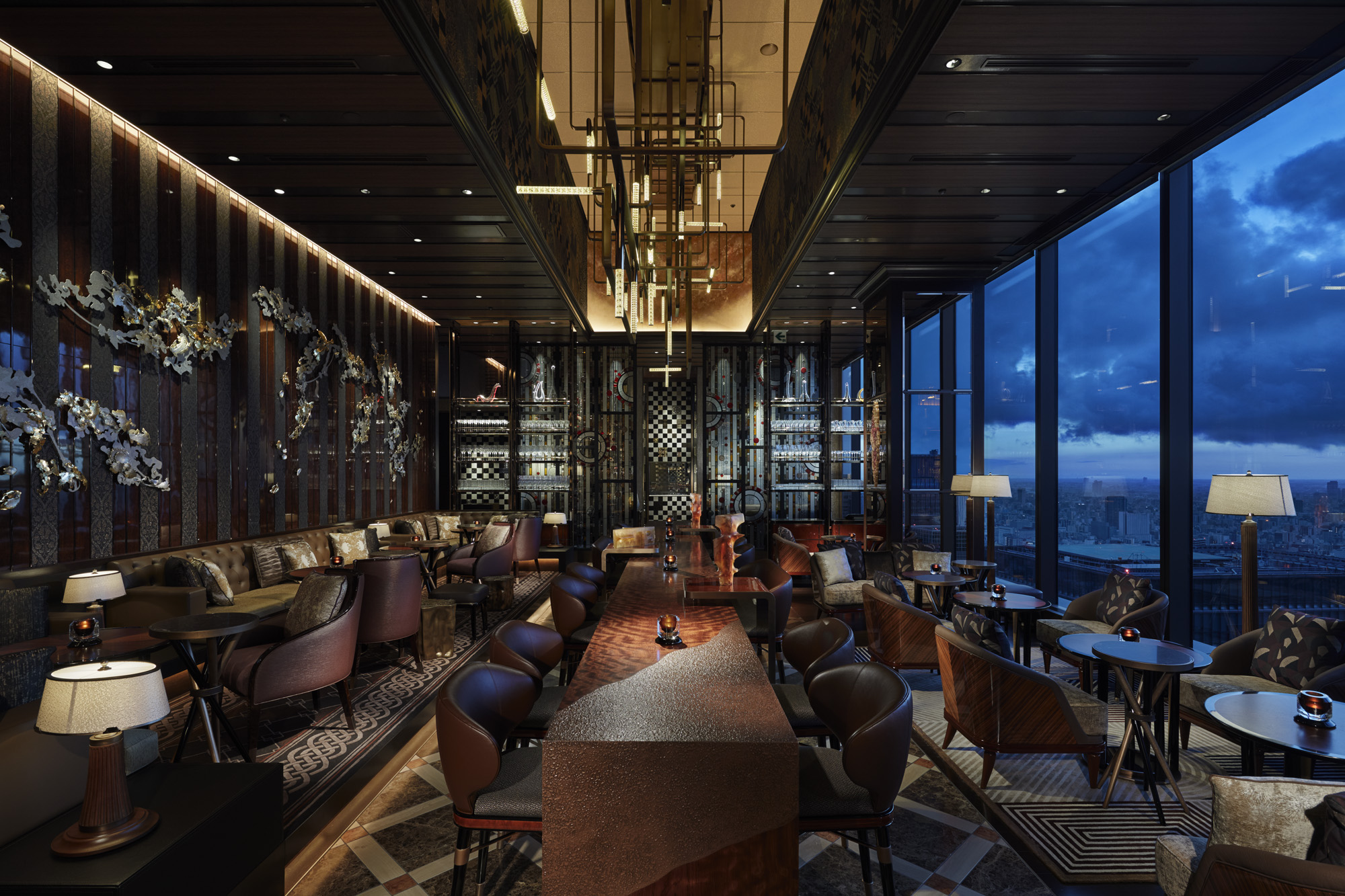
The interior of Virtù bar in Tokyo, Japan

Virtù in Tokyo, Japan. Number 11 on the Asia’s 50 Best Bars 2024 list, and the winner of the Michter’s Art of Hospitality Award.

Cheers to the Best Bar in Asia, which also happens to be the Best Bar in Hong Kong, and the winner of the 2024 Disaronno Highest New Entry Award.

Connecting the dots, that means the bar that has earned the number one spot has achieved something stunning. Looking back at the previous eight editions of Asia’s 50 Best Bars, no other bar has taken the top spot on its first appearance on this list.

The top bar in Asia is taking home three awards, plus a record.

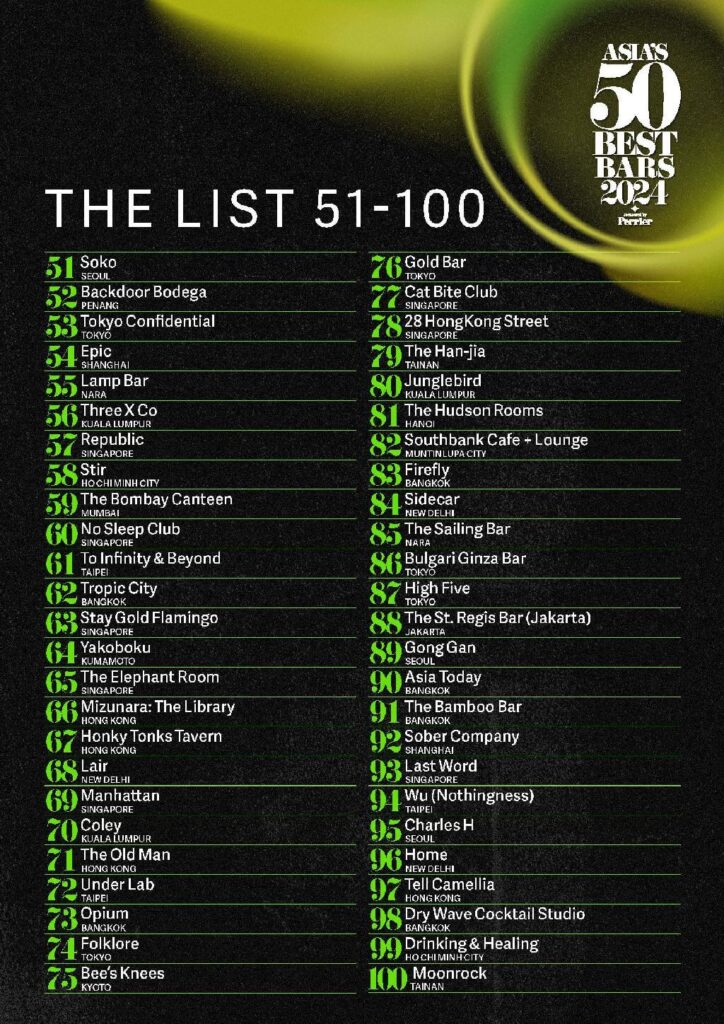
Now, let’s look back at last week’s list. In revealing the expanded rankingbars number 51 to 100—I identified three cities that appeared to be on the rise. These are Ho Chi Minh City, Vietnam; Nara, Japan; and Tainan City, Taiwan.

I was curious as to whether any (or all) of these cities would be home to bars on the one to 50 list. While they weren’t, I think it’s only a matter of time before a bar in at least one of the cities breaks into the main list. On the topic of keeping an eye out, Dry Wave Cocktail Studio in Bangkok, Thailand, earned this year’s Campari One to Watch Award.

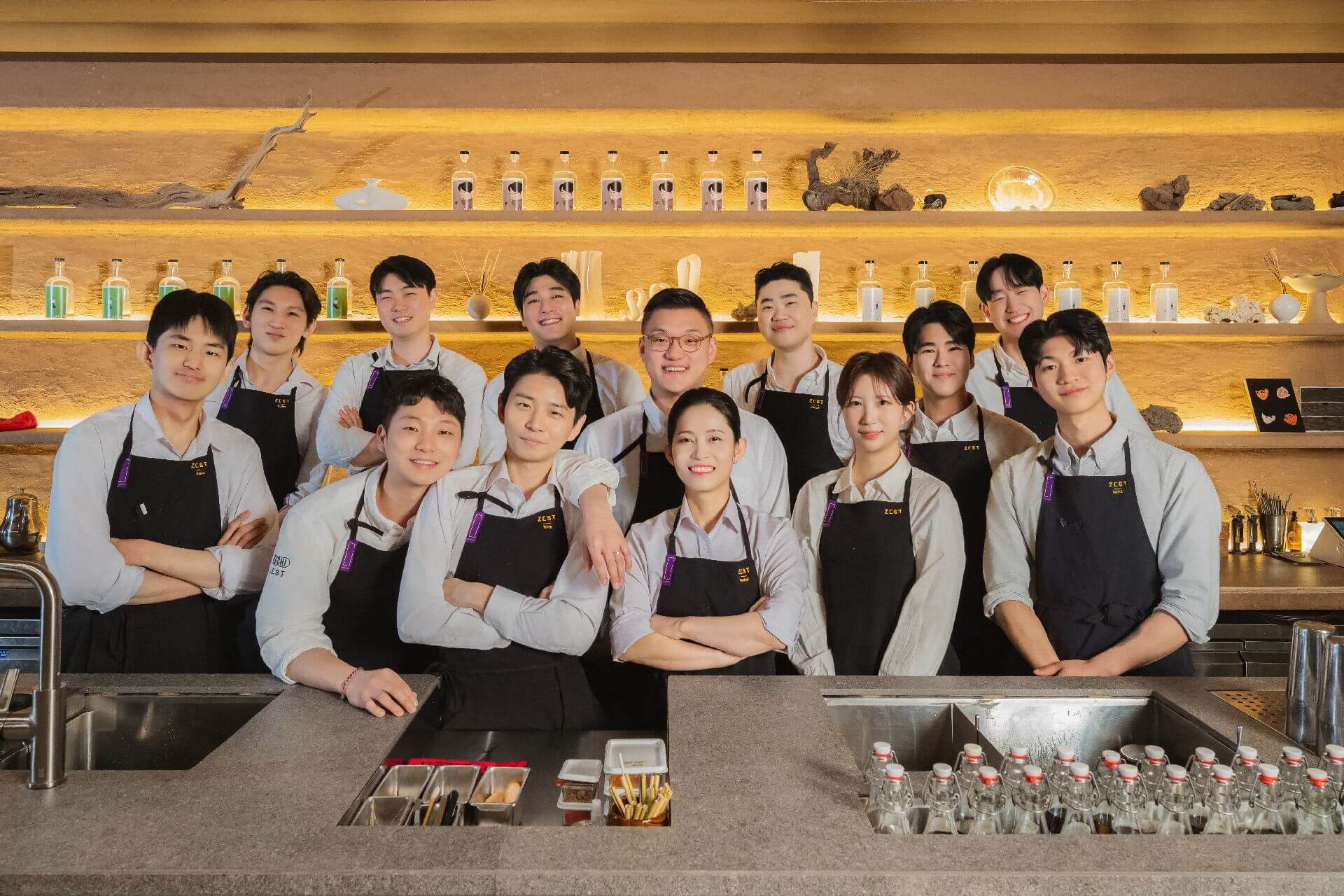
In perhaps unsurprising news, Singapore boasts the most bars on this year’s list, claiming 11 spots. If we were to combine all of mainland China plus special administrative regions of the People’s Republic of China, there are 15 bars to Singapore’s eleven. Seoul, South Korea, is home to five bars that earned placement this year, including Zest at number two. Bangkok, Thailand, claims four bars, with BKK Social Club landing at number seven.

Take a look at the list below to find out which bar is the best in Asia. Cheers!

Asia’s 50 Best Bars 2024: 50 to 11

  1. Pine & Co (Seoul, South Korea)
  2. Atlas (Singapore)(Rémy Martin Legend of the List Award 2024; Bareksten Best Bar Design Award 2024)
  3. Le Chamber (Seoul, South Korea)
  4. The Haflington (Hanoi, Vietnam)
  5. Alice (Seoul, South Korea)
  6. Mostly Harmless (Hong Kong, China)
  7. The Public House (Taipei, Taiwan)
  8. CMYK (Changsha, China)
  9. Fura (Singapore)(Ketel One Sustainable Bar Award 2024)
  10. Reka (Kuala Lumpur, Malaysia)
  11. ZLB23 (Bengaluru, India)(The Best Bar in India)
  12. Barc (Kathmandu, Nepal)(The Best Bar in Nepal)
  13. Employees Only (Singapore)
  14. Bar Mood (Taipei, Taiwan)
  15. Bar Trigona (Kuala Lumpur, Malaysia)
  16. Analogue Initiative (Singapore)
  17. The Bellwood (Tokyo, Japan)
  18. The Curator (Manila, Philippines)(The Best Bar in Philippines)
  19. Origin Bar (Singapore)
  20. Native (Singapore)
  21. Vender (Taichung, Taiwan)(The Best Bar in Taiwan)
  22. Smoke & Bitters (Hiriketiya, Sri Lanka)(The Best Bar in Sri Lanka)
  23. Craftroom (Osaka, Japan)
  24. Pantja (Jakarta, Indonesia)
  25. Quinary (Hong Kong, China)
  26. Offtrack (Singapore)
  27. Penicillin (Hong Kong, China)
  28. The SG Club (Tokyo, Japan)
  29. The St. Regis Club (Macau) (Macau, China)(The Best Bar in Macau)
  30. Bar Us (Bangkok, Thailand)
  31. Bar Cham (Seoul, South Korea)
  32. The Savory Project (Hong Kong, China)
  33. Mahaniyom Cocktail Bar (Bangkok, Thailand)
  34. Darkside (Hong Kong, China)
  35. Night Hawk (Singapore)
  36. Sago House (Singapore)
  37. Hope & Sesame (Guangzhou, China)(The Best Bar in Mainland China)
  38. Vesper (Bangkok, Thailand)
  39. The Cocktail Club (Jakarta, Indonesia)(The Best Bar in Indonesia)
  40. Virtù (Tokyo, Japan)(Michter’s Art of Hospitality Award 2024)

Asia’s 50 Best Bars 2024: 10 to 1

  1. The Aubrey (Hong Kong, China)
  2. Argo (Hong Kong, China)
  3. Penrose (Kuala Lumpur, Malaysia)(The Best Bar in Malaysia; Nikka Highest Climber Award 2024)
  4. BKK Social Club (Bangkok, Thailand)(The Best Bar in Thailand)
  5. Nutmeg & Clover (Singapore)
  6. Bar Benfiddich (Tokyo, Japan)(The Best Bar in Japan)
  7. Coa (Hong Kong, China)
  8. Jigger & Pony (Singapore)(The Best Bar in Singapore)
  9. Zest (Seoul, South Korea)(The Best Bar in Korea; Altos Bartenders’ Bartender Award 2024: Dohyung “Demie” Kim)
  10. Bar Leone (Hong Kong, China)(The Best Bar in Asia; The Best Bar in Hong Kong; Disaronno Highest New Entry Award 2024)

Cheers to Asia’s 50 Best Bars 2024! For more information, please review the official press release below.

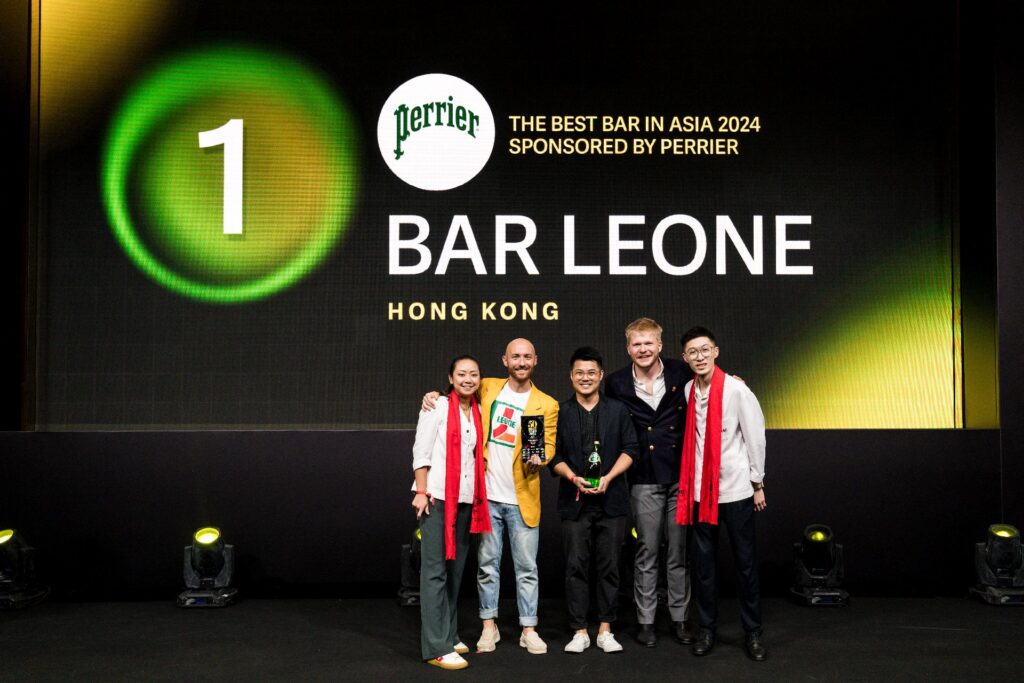
The Bar Leone team from Hong Kong

Cheers to Bar Leone!

BAR LEONE IN HONG KONG NAMED THE BEST BAR IN ASIA, SPONSORED BY PERRIER, AS THE ASIA’S 50 BEST BARS 2024 LIST IS REVEALED

The prestigious list and several special awards were announced at a live ceremony in Hong Kong, featuring bars from 18 destinations across the region

  • Bar Leone ranks 1 and is named The Best Bar in Asia, sponsored by Perrier, and The Best Bar in Hong Kong
  • Bar Leone also wins the Disaronno Highest New Entry Award
  • The list features 15 new entries spanning 11 destinations
  • Singapore leads with 11 bars on the list, as Jigger & Pony ranks No.3 and is named The Best Bar in Singapore for the fifth consecutive year
  • Singapore’s Atlas wins the inaugural Bareksten Best Bar Design Award in Asia, as well as theRémy Martin Legend of the List Award
  • The Savory Project in Hong Kong is the recipient of the London Essence Best New Opening Award
  • Bar veteran Yangdup Lama of New Delhi’s Sidecar is awarded the Roku Industry Icon Award
  • Penrose, Kuala Lumpur, is named winner of the Nikka Highest Climber Award after rising 42 places in the rankings
  • New entrant Fura in Singapore takes the Ketel One Sustainable Bar Award
  • Dry Wave Cocktail Studio from Bangkok receives the Campari One To Watch Award
  • Nest by Pun, Taipei, takes the Siete Misterios Best Cocktail Menu Award
For the full 1-50 list, please scroll to the top of this article.

16 July 2024 – The list of Asia’s 50 Best Bars 2024, sponsored by Perrier, was announced at a live awards ceremony this evening in Hong Kong. The ceremony, hosted in collaboration with destination partner Hong Kong Tourism Board, featured bars from 18 cities across Asia, including 15 new entries, culminating in Bar Leone in Hong Kong being named The Best Bar in Asia.

Bar Leone has achieved the remarkable feat of debuting at the coveted No.1 spot, clinching The Best Bar in Hong Kong title, as well as the Disaronno Highest New Entry Award. This marks the first time in 50 Best Bars history that The Best Bar in Asia has been a new entry on the list. The one-year-old neighbourhood bar in Central, Hong Kong, founded by bartender Lorenzo Antinori, embodies the Italian ethos of ‘cocktail popolari’ or ‘cocktails for the people’. With behind-the-bar experience at Argo in Hong Kong and top bars in Seoul and London, Antinori brings expertise to a beverage programme focused on classic, approachable cocktails that are inspired by the traditional Roman bars of his home country.

The bar programme focuses on revived classics made with a low-intervention, seasonal approach, and is complemented by minimalist garnishes, like manicured citrus peels and quality olives. The relaxed and fun vibe mirrors Lorenzo’s playful personality, with decor featuring burnt orange banquettes, a mahogany bar, church candles, Italy-themed posters, a 70s-80s Italian pop soundtrack and personal knick-knacks – all of which combine to create a space that feels both homely and high end.

Emma Sleight, Head of Content for Asia’s 50 Best Bars, says: “We are thrilled to be back in Hong Kong celebrating Asia’s vibrant bar community. The region’s bars continuously redefine exceptional drinking experiences, showcased by the talent and creativity at this year’s winning establishments. With 15 new entries, the list is bound to entice and excite even seasoned cocktail enthusiasts. Huge congratulations to the tour de force that is Lorenzo Antinori and the whole team at Bar Leone for the impressive – and previously unheard of – feat of entering the ranking at No.1. This is undoubtedly a strong testament to the bar’s irreverent and casual approach to cocktails, design, service and hospitality.”

At No.2 is the intimate low-waste bar, Zest in Seoul, which has ascended three spots, making it The Best Bar in Korea. A consistent presence in the top five is Jigger & Pony in Singapore at No.3, making it The Best Bar in Singapore for the fifth year running. Last year’s top spot holder, Coa, comes in at No.4, and No.5 is Tokyo’s Bar Benfiddich, which takes the title of The Best Bar in Japan.

Destination Success Stories

A total of 15 bars from Mainland China, Hong Kong, Macau and Taiwan made the list this year, while Hong Kong leads the region with nine spots, with Coa at No.4 and Argo at No.9. The 25th-floor izakaya with sweeping views of Victoria Harbour, The Aubrey, has risen seven spots to No.10. Darkside comes in at No.17 and new entrant The Savory Project debuts at No.19. Penicillin rises two places to No.24, while Quinary climbs five spots to No.26 and Mostly Harmless rounds off Hong Kong’s showing at No.45.

From Taichung, the vending machine-themed craft cocktail den, Vender, climbs 11 places to No.30, earning the title of The Best Bar in Taiwan. In Taipei, Bar Mood re-enters the rankings at No.37, while The Public House is at No.44. Guangzhou’s Hope & Sesame, a technique-driven speakeasy, is now at No.14, ascending 25 spots and holding onto The Best Bar in Mainland China title. CMYK from Changsha debuts at No.43, where award-winning bartender Ethan Liu has created a high-energy, multi-room drinking den inside an old residential building. This also marks Changsha’s first appearance in the rankings. Additionally, The St. Regis Bar at No.22 is Macau’s sole representative and is named The Best Bar in Macau.

Singapore tops the rankings with 11 coveted spots: alongside Jigger & Pony (No.3), Nutmeg & Clove, founded by bar veteran and former Roku Industry Icon winner Colin Chia, rises to No.6. Sago House follows at No.15, while new entrant Night Hawk debuts at No.16. Offtrack, another new entry at No.25, offers a music-focused drinks experience with local DJs and lesser-known classic cocktails.

Native climbs 11 places to No.31, and Origin, another new entrant at No.32, features interiors resembling an old-school train station with cocktails themed around the city’s five districts. Analogue Initiative is at No.35, followed by Employees Only at No.38. Newcomer Fura comes in at No.42, while Atlas rounds-off Singapore’s showing at No.49.

Bars from Seoul secured five positions on the list, led by Zest at No.2, making it The Best Bar in Korea. Sustainability-forward Zest is helmed by Dohyung ‘Demie’ Kim alongside Korean bartending stalwarts Sean Woo, Jisu Park and Noah Kwon. Bar Cham is at No.20, followed by Alice at No.46 and Le Chamber at No.48. Closing the list at No.50 is new entrant Pine & Co, a bar resembling a scientist’s R&D lab, known for its future-forward cocktails.

In Japan, Tokyo’s Bar Benfiddich secures the No.5 spot, maintaining its title as The Best Bar in Japan for the third consecutive year. Following closely is Virtù which climbs nine places to No.11, The SG Club takes No.23, while The Bellwood has surged 15 places to No.34. Hailing from Osaka, newcomer Craftroom debuts at No.28. This petite, six-seater bar, led by revered bartender Ryu Fujii, offers classic cocktails within a seasonally changing menu.

Bangkok also holds five spots on the list, with BKK Social Club leading the pack at No.7, also earning the title of The Best Bar in Thailand. Vesper follows at No.13, while the funky, fun and immersive Mahaniyom Cocktail Bar climbs four spots to No.18. Finally, new entrant Bar Us debuts impressively at No.21, offering a high-concept ‘drinking room’ with all-black interiors and bartenders sporting freshly-pressed white lab coats.

Penrose in Kuala Lumpur makes an impressive climb of 42 places to reach No.8, earning the title of The Best Bar in Malaysia and earning the Nikka Highest Climber Award 2024. Also hailing from Kuala Lumpur, Bar Trigona maintains its position at No.36 while newcomer Reka, a self-proclaimed ‘post- modern flavour lab’, enters the list at No.41. Indonesia is represented by two bars from Jakarta: The Cocktail Club ascends seven spots to claim No.12 and secures the title of The Best Bar in Indonesia, followed by Pantja, which enjoys a two-spot hike to No.27.

India is represented on the list by Bengaluru’s ZLB23 at No.40. This newcomer claims the title of The Best Bar in India, serving prohibition-style cocktails in a venue accessed through a secret entrance hidden within a working kitchen. Hiriketiya’s Smoke & Bitters climbs 11 places to No.29 and is crowned The Best Bar in Sri Lanka. From Kathmandu, Barc debuts at No.39 as The Best Bar in Nepal, offering an upmarket, elegant space accompanied by a sophisticated selection of cocktails. Manila’s The Curator ascends one spot to No.33, earning the title of The Best Bar in the Philippines.

Meanwhile, Hanoi’s The Haflington enters the list at No.47 – this immersive, vintage-themed space offers an adventurous cocktail menu inspired by The Jungle Book, securing the title of The Best Bar in Vietnam.

Special Awards

Dry Wave Cocktail Studio, Bangkok (No.73 on the 51-100 list), has won the Campari One To Watch Award, hand-picked by the 50 Best team as a bar that it feels has the potential to break into the 1-50 list in the future. Dry Wave Cocktail Studio runs a stellar beverage programme of classic and creative libations, led by veteran bartender-owner Supawit ‘Palm’ Muttarattana, who formerly helmed Vesper (No.12 on Asia’s 50 Best Bars 2023 and No.55 on The World’s 50 Best Bars 2023).

Bartender, entrepreneur and author Yangdup Lama has been crowned the Roku Industry Icon 2024.

Owner of New Delhi’s Sidecar, Lama is a legendary figure in the industry and the subcontinent’s leading mixologist. Under his leadership, Sidecar has earned several placements in Asia’s and The World’s 50 Best Bars rankings. Lama inspires with his creative cocktails and advocacy for regional ingredients, and as a mentor and trainer, he proudly showcases India’s bartending talent on the global stage.

Singapore’s Atlas (No.49), a jazz-age-inspired gin bar, has been honoured with the Rémy Martin Legend of the List Award, recognising an establishment that has consistently performed well in the rankings since the list’s inception in 2016. It is a double win for Atlas this year, as it also receives the inaugural Bareksten Best Bar Design Award in Asia for its spectacular art deco style and a 15-metre-tall gin tower housing around 900 labels. This new accolade celebrates bars with thoughtful designs emphasising accessibility, sustainability and market appropriateness.

The Savory Project, Hong Kong, is awarded the London Essence Best New Opening Award and enters the list at No.19. Founded by the award-winning team behind former top spot holder Coa, this newcomer spotlights craft cocktails with savoury and umami notes made with unorthodox ingredients.

Fura (No.42) in Singapore wins the Ketel One Sustainable Bar Award for its groundbreaking, low-carbon footprint cocktails, circular ethos and commitment to low-waste practices. Fura exclusively uses local ingredients in its drinks, highlighting its dedication to a sustainable beverage programme.

The Siete Misterios Best Cocktail Menu award goes to Nest by Pun in Taipei. This reservations-only speakeasy features a thematic menu reflecting its bee and honeycomb design elements, enhancing its mysterious charm. The menu is thoughtfully crafted to help patrons narrow down their drink choices based on preferred ingredients and flavour profiles. Guests can expect not only cocktail mastery, but also a captivating storytelling experience.

Pre-announced special award winners that accepted their accolades at the live awards ceremony include Virtù in Tokyo, winner of the Michter’s Art of Hospitality Award, and Dohyung ‘Demie’ Kim from Seoul, winner of the Altos Bartenders’ Bartender Award.

The Asia’s 50 Best Bars 2024 awards ceremony was streamed live and is available to view on The

World’s 50 Best Bars Facebook and 50 Best Bars TV YouTube Channel.

Voting Process

50 Best works with professional services consultancy Deloitte as its official independent adjudication partner to help protect the integrity and authenticity of the voting process and the resulting list of Asia’s 50 Best Bars 2024. See more details on the Asia’s 50 Best Bars voting process here.

About Asia’s 50 Best Bars

Asia’s 50 Best Bars is the first regional event of The World’s 50 Best Bars brand, created in 2016 with the purpose of showcasing the best and most innovative talent in the drinks industry in this region. The annual ranking is based on the votes of the Asia’s 50 Best Bars Academy, comprising the most knowledgeable and travelled members of the bar industry, drinks media and mixology experts from across Asia. The Academy spans dozens of cities across the continent, reflecting the relative development and importance of bar scenes in different locations and the diversity of the drinking scene in Asia. Asia’s 50 Best Bars, The World’s 50 Best Bars and North America’s 50 Best Bars are owned and organised by William Reed, the group behind The World’s 50 Best Restaurants and The World’s 50 Best Hotels.

About the host destination partner: Hong Kong Tourism Board

The Hong Kong Tourism Board (HKTB) is a Government-subvented body. Operating 15 offices around the world and representative offices in seven different markets, its primary mission is to maximise the social and economic contribution that tourism makes to the community of Hong Kong, and consolidate the city’s position as a world- class destination. The HKTB works closely with the Government, travel industry and other partners to promote Hong Kong worldwide, widen the range of tourism products and elevate service standards, as well as enhance the experiences of visitors during their stay.

For more details on Asia’s 50 Best Bars and selection process, please visit:

https://www.worlds50bestbars.com/asia/

Our Partners:

  • Hong Kong Tourism Board – Official Host Partner
  • Perrier – Official Water Partner; sponsor of The Best Bar in Asia
  • Michter’s – Official American Whiskey Partner; sponsor of Michter’s Art of Hospitality Award
  • Nikka Whisky – Official Whisky of the World Partner; sponsor of Nikka Highest Climber Award and The Best Bar in Malaysia
  • Ketel One – Official Vodka Partner; sponsor of Ketel One Sustainable Bar Award
  • Siete Misterios – Official Mezcal Partner; sponsor of Siete Misterios Best Cocktail Menu Award
  • The London Essence – Official Mixers Partner; sponsor of London Essence Best New Opening Award
  • Disaronno – Official Italian Liqueur Partner; sponsor of Disaronno Highest New Entry Award
  • Roku Gin – Official Gin Partner; sponsor of Roku Industry Icon Award
  • Altos Tequila – Official Tequila Partner; sponsor of Altos Bartenders’ Bartender
  • Matusalem – Official Rum Partner; sponsor of The Best Bar in Mainland China and ceremonial scarves
  • Naked Malt – Official Scotch Whisky Partner; sponsor of The Best Bar in Korea
  • Rémy Martin – Official Cognac Partner; sponsor of Rémy Martin Legend of the List
  • Campari – Official Bitters Partner; sponsor of Campari One To Watch Award
  • Mancino Vermouth – Official Vermouth Partner; sponsor of The Best Bar in Taiwan and ceremonial shakers
  • Amaro Lucano – Official Amaro Partner; sponsor of The Best Bar in Indonesia and ceremonial shakers
  • Tia Maria – Official Coffee Liqueur Partner; sponsor of The Best Bar in Singapore
  • Torres Brandy – Official Brandy Partner; sponsor of The Best Bar in Japan
  • Scrappy’s Bitters – Official Cocktail Bitters Partner; sponsor of The Best Bar in Thailand
  • Bareksten – Official Aquavit Partner; sponsor of Bareksten Best Bar Design Award
  • Rosewood Hong Kong – Official Hotel and Venue Partner
  • The Ritz-Carlton Hong Kong – Official Hotel and Venue Partner
  • Aqua Hong Kong – Official Venue Partner

Images courtesy of Asia’s 50 Best Bars/The World’s 50 Best

KRG Hospitality. Bar Consultant. Nightclub. Lounge. Mixology. Cocktails.

by David Klemt David Klemt No Comments

Developing a Legacy with a Boutique Hotel

Developing a Legacy and Brand Equity with a Boutique Hotel

by Doug Radkey

White neon sign that reads "HOTEL," with concentric white neon rings

Imagine staying at a boutique hotel that leaves a lasting impression, so much so that you share your experience with everyone that you know.

We’ve all surely been there and experienced that at some point in time and realisticallythat should be the goal of every operating property. Does this happen with every property? Surely not.

However, when this does happen, it often means that the hotel ownership and leadership team has put in the strategic fundamentals of building a legacy.

Understanding Legacy and Brand Equity

In the context of a boutique hotel, legacy is about creating a lasting impact that transcends time, and resonates deeply with guests and the broader community. It involves crafting memorable guest experiences that linger in the minds of visitors long after their stay, whether through exceptional service, unique design, or personalized touches.

Cultural significance is often another crucial aspect. This is achieved when the hotel embodies and promotes local culture and traditions, contributing to a sense of place and identity.

The combination of lasting impact, memorable experiences, and cultural relevance not only elevates the hotel’s brand but also develops a profound connection with guests, encouraging loyalty and positive word-of-mouth, thus enhancing the hotel’s brand equity over time.

Brand equity, if you’re wondering, refers to the value that your hotel brand adds beyond its underlying functional benefits (such as a restful sleep that every hotel should be providing).

Essentially, brand equity is built on three pillars: perception, loyalty, and market positioning.

Brand perception encompasses the associations consumers makeand attitudes they holdtoward the brand.  Marketing efforts, public relations, and experiences all influence this perception. Loyalty is reflected in repeat business opportunities, and the willingness of guests to choose the hotel brand over local competitors, often allowing the brand to command premium pricing. Market positioning refers to the hotel brand’s place in the competitive landscape, how it differentiates itself from others, and its overall reputation in the community.

Together, these elements contribute to the financial and strategic value of the brand, making brand equity a key asset for your business.

A strong legacy contributes to building brand equity and vice versa, creating a virtuous cycle of growth and reputation.

The Foundations of a Boutique Hotel’s Legacy

At the heart of every successful boutique hotel lies a unique story and vision that sets it apart from the competition. This narrative often stems from the hotel’s origins, its founder’s passion, or a distinctive theme that resonates with its location and clientele.

A compelling story not only provides guests with a memorable backdrop but also creates an emotional connection that builds loyalty and word-of-mouth opportunities. The vision of the hotel should follow its long-term goals, the type of experiences that it aims to offer, and its commitment to excellence.

Further, core values and principles form the ethical backbone of a boutique hotel, guiding its operations, decision-making, and interactions with guests and staff. These values might include commitments to exceptional service, environmental sustainability, community engagement, and cultural preservation, to name a few. By consistently adhering to these principles, a boutique hotel can build a strong, trustworthy brand identity that resonates with guests.

For instance, a boutique hotel may emphasize its dedication to sustainability and local culture, weaving these two elements into its story and vision to attract environmentally-conscious guests, and those seeking authentic experiences. This hotel, prioritizing sustainability, might implement green practices such as energy-efficient systems, locally-sourced organic food, and water-waste reduction initiatives.

By aligning its operations with its core values, the hotel not only differentiates itself in a crowded market but also attracts guests who share similar values, thereby outlining the fundamentals for a loyal and engaged guest.

Understanding the Guest

In addition to value and story-telling, creating purposeful guest experiences that exceed expectations is crucial for establishing a lasting legacy. This involves understanding and anticipating guest needs, offering personalized services, and creating memorable moments in time that guests will cherish long after their stay.

From personalized welcome amenities, curated local experiences and community partnerships to exceptional service and attention to detail, every touchpoint should reflect the hotel’s commitment to excellence.

That same sustainable boutique hotel from the example above might offer tailored excursions that highlight the local culture along with harvesting farmlands that integrate the hotel’s commitment to farm-to-table programming. Doing so will provide guests with unique and enriching experiences.

By consistently delivering above and beyond what guests come to expect, the hotel can build a reputation for providing the best experiences. That leads to repeat business and positive reviews, which are essential for long-term success and brand equity.

Building Brand Equity

Establishing a strong brand identity is a key element of building brand equity for a boutique hotel. Brand identity encompasses the visual, verbal, and experiential elements that distinguish a hotel from its competitors.

This includes the logo, color scheme, typography, and overall aesthetic, as well as the tone and style of its communications. A well-defined brand identity creates a cohesive and recognizable image that resonates with guests and instills a sense of trust and reliability.

For instance, a boutique hotel might emphasize a luxurious, eco-friendly brand identity, using natural materials and earth tones in its design and marketing materials to appeal to environmentally-conscious travelers. By consistently presenting a unique and compelling brand identity, the hotel can attract and retain guests, thereby increasing its brand equity.

Furthermore, quality and consistency are critical factors in building and maintaining brand equity. Guests expect a certain level of service and experience when they choose a boutique hotel, and meeting or exceeding these expectations consistently is essential. This involves maintaining high standards across all aspects of the property, from room cleanliness and staff communication to the quality of on-premise food and amenities.

Consistency ensures that guests know what to expect and feel confident in their choice to stay at the hotel.

Emotional Connections

In addition to brand identity, quality, and consistency, building an emotional connection with guests is a powerful way to enhance brand equity. Such connections are created by delivering personalized experiences, genuine interactions, and thoughtful touches that make guests feel valued and appreciated.

A boutique hotel team must anticipate guest needs, provide tailored services, and create memorable moments that resonate on a personal level. By developing a deep emotional connection, the hotel can transform guests into loyal advocates who not only return for future stays but also recommend the hotel to others.

This emotional loyalty is a key driver of brand equity, as it builds a strong, lasting relationship between the hotel and its guests.

In summary, the difference between boutique hotels that focus on building a legacy and brand equityand those that do notcan be stark. Hotels that invest in creating a unique story and vision, adhering to core values, and delivering exceptional guest experiences establish a lasting impact and cultural significance. They build strong brand equity through effective messaging, consistent quality, emotional connections, and strategic marketing and public relations efforts.

These hotels are able to attract loyal guests, secure positive media coverage, and maintain a reputable and recognizable brand.

In contrast, hotels that neglect these aspects often struggle with inconsistent service, lack of guest loyalty, and minimal market presence, leading to an unstable business model. In failing to create a compelling brand identity and invest in personal development and effective marketing, they miss out on the opportunity to build a strong legacy, along with equity in their brand.

Ultimately, the sustained success and growth of a boutique hotel depends on its commitment to these foundational elements, which differentiate it from competitors and ensure its place as a leader in today’s often saturated market.

Image: Firstname Lastname on Unsplash
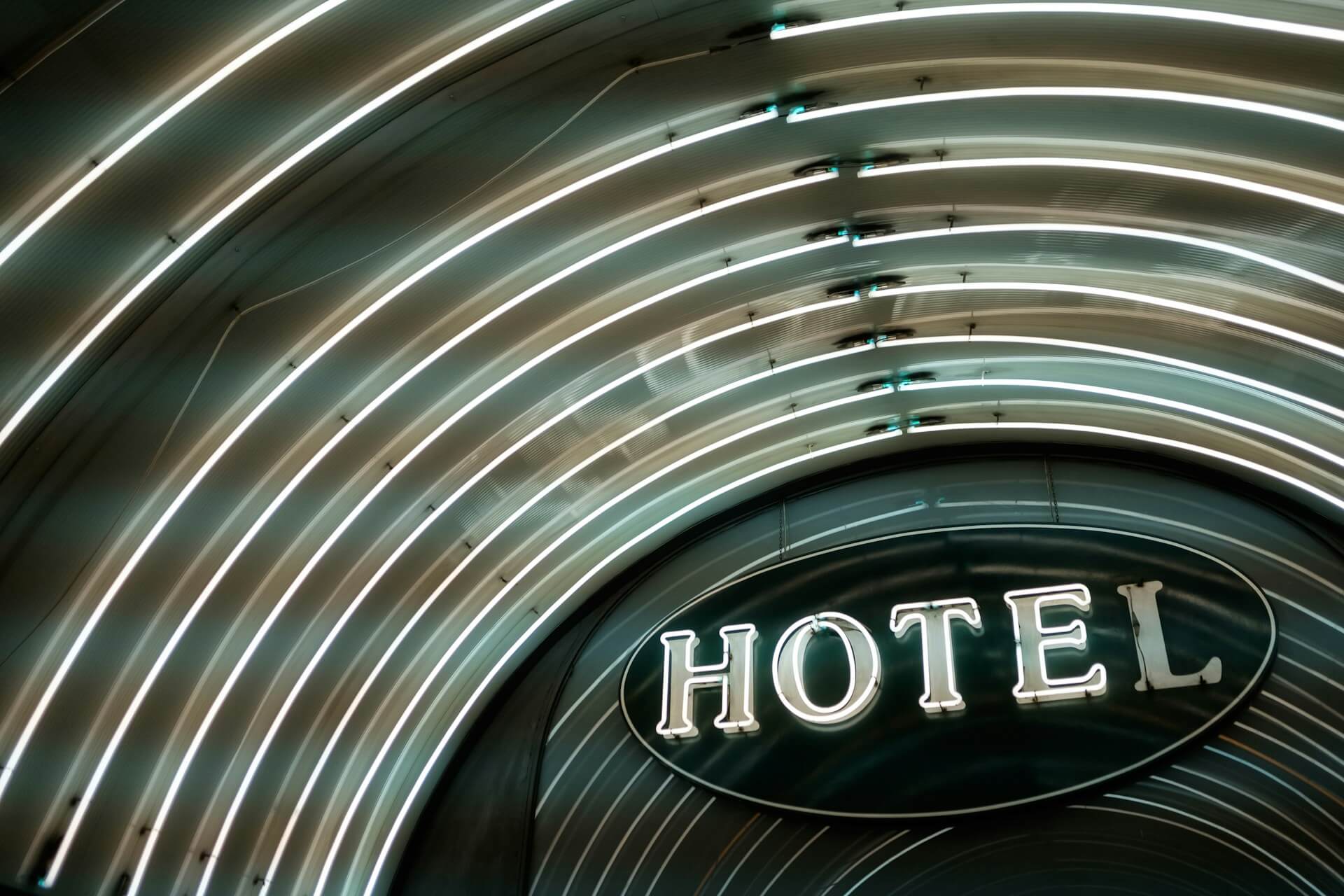
KRG Hospitality. Boutique Hotels. Resorts. Properties. Consultant. Feasibility Study. Business Plan

by David Klemt David Klemt No Comments

French Cocktail Culture: More than Champs

French Cocktail Culture: More than Champagne

by David Klemt

An AI-generated, street-style image of a red and a blue cocktail crossed at the glass stems, against a blue, white, and red graffiti background

That’s some interesting stemware…and the cocktail on the right is an interesting color.

The French have contributed more than Champagne, Cognac, Armagnac, Grand Marnier, and Cointreau to global cocktail culture.

There at least a dozen cocktails that originate from France. And, of course, there are even more from one of the most French-influenced cities in the US, New Orleans.

Since Bastille Day is almost upon us I want to share ten cocktail recipes with origin stories we can trace back to France. Now, if celebrating Bastille Day isn’t your thing, you can celebrate National Grand Marnier Day instead.

Basically, if a cocktail below calls for orange liqueur, you and your bar team can use Grand Marnier. But…allow me to nerd out for a moment about orange liqueur and France.

Orange Liqueur vs. Triple Sec vs. Orange Curaçao

As we’re taught early on, all squares are rectangles (and rhombuses). However, not all rectangles (or rhombuses) are squares. Why am I bringing up geometric shapes in an article about cocktails?

Think of orange liqueur as a rectangle or rhombus. All orange curaçaos and triple secs can be considered orange liqueurs, but not all orange liqueurs are triple secs or orange curaçaos, if we want to be pedantic.

Generally speaking, triple sec is French orange liqueur. Cointreau, as an example, is a triple sec. It’s also an orange liqueur, and one can argue it’s an orange curaçao, although it isn’t made with Lahara orange. Grand Marnier is French but is not a triple sec. Why not? Because Grand Marnier is triple sec blended with Cognac. Pedantry strikes again!

Why does this matter? When choosing your orange liqueur, keep in mind that they don’t all taste the same. Their unique flavors will have an impact on a given cocktail. So, if you were to build a Sidecar with Grand Marnier rather than Cointreau, they’d taste noticeably different. This is, in part, due to the fact that the Sidecar is a Cognac recipe, and Grand Marnier is made with Cognac.

Thank you for indulging me there. Feel free to share that knowledge with your guests, but stop if their eyes start glazing over.

Consider featuring any of the cocktail recipes below this weekend. Sunday, July 14, is Bastille Day, or National Grand Marnier Day, if you prefer. Cheers!

French 75

This classic’s original form can be tracked to the 1910s and the famous New York Bar, located in Paris. Eventually, the venue would become Harry’s New York Bar, named for proprietor, bartender, and writer Harry MacElhone.

By the 1920s, the “final form” of the French 75 we all know and love would come into existence. However, people are still tweaking this classic’s build.

For the traditionalists out there, the French 75 is easy to make: one part gin, and a half-part each of lemon juice and simple syrup, topped with three parts sparkling wine. Don’t forget the lemon twist to garnish!

Boulevardier

As was the case with so many others during the modern Cocktail Revivaland the subsequent Negroni crazethe Boulevardier was my go-to cocktail for quite some time. Interestingly, this cocktail supposedly never “took” until the 2000s.

Like the French 75, the Boulevardier can be traced to Harry’s New York Bar and 1920s Paris. However, the credit for this one goes to a magazine publisher, according to Harry himself.

For this recipe, pretend you’re making a Negroni…but swap out the gin for bourbon or rye. Oh, and forget the 1:1:1 Negroni ratio; this isn’t an equal parts situation. Instead, combine one part Campari with one part sweet vermouth, but bump up the whiskey to one-and-one-quarter parts.

Old Pal

The Old Pal is thought to be a spin on the Boulevardier by that cocktail’s creator, Harry MacElhone, at his bar in Paris.

Whereas the Boulevardier is considered by someone a whiskey-based riff on the Negroni, that’s not an equal-parts build. This, however, is.

Stir equal parts rye whiskey, Campari, and dry vermouth in a mixing glass with ice. Then, strain it into a chilled coupe. Some modern recipes call for doubling the rye, so experimentation is in order.

Sidecar

Okay, let’s start a fight: the Sidecar was created at the Ritz Paris, in Paris, in the 1920s. Why should that cause a kerfuffle? Well, the drink could also be a Pat MacGarry creation, invented in London.

Making this even more contentious is that Harry (yes, of Harry’s New York Bar) went from crediting MacGarry to claiming credit himself. Oh, and sources in both Paris and London claim the same story to be true: a guest arrived at their bar on a motorcycle, and the bartender at the time came up with this drink for said guest.

But wait, il y a plus! Living legend Dale DeGroff has stated that he believes the name references a bonus shot. This is the amount of cocktail left over after shaking and straining the drink, and served on the side in a shot glass.

Regardless of the true story, add three-quarters of an ounce each orange liqueur and lemon juice, then double that amount of Cognac. Prep a coupe with a sugar rim, shake the mixture, strain it into the glass, and garnish with an orange twist.

Between the Sheets

Are you getting the impression that we should just credit with Harry MacElhone with the creation of every drink originating from Paris? I won’t blame you if you are, since he’s credited with Between the Sheets as well. Is he actually the creator? Maybe I’ll address that in a future Drink Donnybrook.

To build this cocktail, pretend you’re making a Sidecar. Then, pick up a bottle of rum. This is an equal parts cocktail, calling for three-quarters of a part of Cognac, rum, and orange liqueur, and a quarter-part of lemon juice.

White Lady

This MacElhone creation has an interesting history. As the story goes, he created the original version in London in the late 1910s. He served it in its precursor form, then overhauled the recipe in Paris. At his bar. In the 1920s. Déjà vu, anyone?

And what an overhaul the recipe underwent. The original White Lady was a blend of crème de menthe, triple sec, and lemon juice. However, MacElhone eschewed crème de menthe in Paris, replacing it with gin. Additionally, he added an egg white and a dry shake.

Mimosa

Surely, the simple two-ingredient Mimosa must have a clear origin, right? Well…maybe.

Some say the Mimosa was created at the Ritz Hotel in Paris in the mid-1920s. Others believe it was invented in the 1930s. Honestly, I wouldn’t be surprised if the drink was first crafted in the 1910s or earlier by someone who simply wanted to toss some sparkling wine into their orange juice.

Ritz bartender Frank Meier may be the drink’s creator. However, people who dispute this point to his 1936 book The Artistry of Mixing Drinks. Recipes with Meier’s initials inside of a diamond next to recipes marked this as his creations. No such symbol appears next to the Mimosa.

If you need this complex recipe, it’s two ounces of chilled orange juice, topped with sparkling wine. I prefer Crémant to Champagne, but do whatever works best. In fact, operators can upsell the bubbles for their signature Mimosas.

Death in the Afternoon

I’m hesitant to include this cocktail, for a couple of reasons. One, I’m not sure it was created in France. There’s reason to believe it was invented as an homage to France, but outside of the country.

Second, Ernest Hemingway is given the credit as its creator. However, Hemingway historians have been dubious of claims involving the author and his relationship to certain drinks and bars.

That said, Hemingway purportedly came up with this drink while spending time in France in the 1920s. Add one-and-a-half parts absinthe to a coupe, then add three times that amount of chilled Champagne until the mixture is “milky” in appearance. Next, I assume, comes a nap.

Yellow

How about a modern classic? Yellow is a signature cocktail at Cravan, owned by restaurateur, bartender, and historian Franck Audoux.

If you’re visiting Paris, the original Cravan location is in the 16th arrondissement of the capital city. However, a second location, the result of a partnership between Audoux and Moët Hennessy, is in the 6th arrondissement. If you’re curious, there are 20 arrondissements in Paris.

Audoux, again, a historian, created the Yellow as an homage to a cocktail said to have been popular in the Côte d’Azur, or French Riviera: gin, Suze and Yellow Chartreuse. To make Audoux’s Yellow, add ice to a shaker, along with equal parts London Dry gin, Suze, Yellow Chartreuse, and lemon juice. Shake, then double strain into a chilled cocktail glass or coupe.

L’Expérience 1

Hey, speaking of modern classics… Back in 2007, Experimental Group opened its first venue in Paris, Experimental Cocktail Club. Seventeen years later, the group has built an empire spanning eleven cities all over the world.

Moreover, Experimental Group operates not just bars but restaurants, clubs, and hotels. That said, while the group has grown, they haven’t forgotten their roots. L’Experience 1 appeared on the menu at their first-ever venue, and it remains their signature cocktail.

To make this modern drink, chill a Martini glass. Add three-quarters of a part each of fresh-squeezed lemon juice and elderflower liqueur, plus one-and-three-quarter parts of premium or super-premium vodka to a cocktail shaker. Before adding ice, add a basil leaf and one hand-crushed blade of lemongrass to the shaker as well. Shake, strain into the prepared glass, and garnish with a lemongrass leaf.

Santé!

AI image generator: Microsoft Designer

Bar, Pub, Nightclub, Nightlife, Feasibility Study

by David Klemt David Klemt No Comments

Asia’s 50 Best Bars 2024 Reveals 51 to 100

Asia’s 50 Best Bars 2024 Reveals 51 to 100

by David Klemt

The Zest bar team, led by Dohyung "Demie" Kim, in Seoul, South Korea

The bar team at Zest (No. 5, Asia’s 50 Best Bars 2023) in Seoul, South Korea, led by Dohyung “Demie” Kim.

As we near the ceremony for the ninth edition of Asia’s 50 Best Bars, taking place in Hong Kong on July 16, we can congratulate numbers 51 to 100.

Clearly one of the hottest bar markets in the world, Singapore dominates the 51 to 100 list this year. Unsurprisingly, the city-state also featured the most bars on the Asia’s 50 Best Bars 2023 51 to 100 list. Interestingly, Singapore boasted eight bars on the list last year, and the same in 2024.

In second place on the expanded list in terms of number of bars is Bangkok. The legendary nightlife city claims six spots on the 2024 51 to 100 ranking.

Seoul, South Korea, is not only home to three barsincluding number 51the city is also the home to Zest. This is noteworthy in part because Dohyung “Demie” Kim is the winner of the Altos Bartenders’ Bartender Award 2024, one of two awards announced ahead of the Asia’s 50 Best Bars 2024 ceremony.

Kim is the co-founder of Zest, which took home the fifth spot on the Asia’s 50 Best Bars 2023 list. With that ranking, the bar also claimed the title of the Best Bar in Korea. Further, Zest earned number 18 on the World’s 50 Best Bars 2023 list.

On another note, it appears that the we should keep an eye on Tainan City, Taiwan; Ho Chi Minh City, Vietnam; and Nara, Japan. Each of these cities holds two spots on the 2024 expanded list, a 100-percent increase over 2023. Last year, Lamp Bar, located in Nara, earned spot number 23 on Asia’s 50 Best Bars list. It’ll be interesting to see if these cities are represented on the one to 50 list for this year.

On that note, we’ll find out which bars are ranked one to 50 on July 16. Mark your calendars. Cheers!

Asia’s 50 Best Bars 2024: 100 to 51

  1. Moonrock (Tainan City, Taiwan)
  2. Drinking & Healing (Ho Chi Minh City, Vietnam)
  3. Dry Wave Cocktail Studio (Bangkok, Thailand)
  4. Tell Camellia (Hong Kong, China)
  5. Home (New Delhi, India)
  6. Charles H (Seoul, South Korea)
  7. Wu (Nothingness) (Taipei, Taiwan)
  8. Last Word (Singapore)
  9. Sober Company (Shanghai, China)
  10. The Bamboo Bar (Bangkok, Thailand)
  11. Asia Today (Bangkok, Thailand)
  12. Gong Gan (Seoul, South Korea)
  13. The St. Regis Bar (Jakarta) (Jakarta, Indonesia)
  14. High Five (Tokyo, Japan)
  15. Bulgari Ginza Bar (Tokyo, Japan)
  16. The Sailing Bar (Nara, Japan)
  17. Sidecar (New Delhi, India)
  18. Firefly (Bangkok, Thailand)
  19. Southbank Cafe + Lounge (Muntinlupa City, Philippines)
  20. The Hudson Rooms (Hanoi, Vietnam)
  21. Junglebird (Kuala Lumpur, Malaysia)
  22. The Han-jia (Tainan City, Taiwan)
  23. 28 HongKong Street (Singapore)
  24. Cat Bite Club (Singapore)
  25. Gold Bar (Tokyo, Japan)
  26. Bee’s Knees (Kyoto, Japan)
  27. Folklore (Tokyo, Japan)
  28. Opium (Bangkok, Thailand)
  29. Under Lab (Taipei, Taiwan)
  30. The Old Man (Hong Kong, China)
  31. Coley (Kuala Lumpur, Malaysia)
  32. Manhattan (Singapore)
  33. Lair (New Delhi, India)
  34. Honky Tonks Tavern (Hong Kong, China)
  35. Mizunara: The Library (Honh Kong, China)
  36. The Elephant Room (Singapore)
  37. Yakoboku (Kumamoto, Japan)
  38. Stay Gold Flamingo (Singapore)
  39. Tropic City (Bangkok, Thailand)
  40. To Infinity & Beyond (Taipei, Taiwan)
  41. No Sleep Club (Singapore)
  42. The Bombay Canteen (Mumbai, India)
  43. Stir (Ho Chi Minh City, Vietnam)
  44. Republic (Singapore)
  45. Three X Co (Kuala Lumpur, Malaysia)
  46. Lamp Bar (Nara, Japan)
  47. Epic (Shanghai, China)
  48. Tokyo Confidential (Tokyo, Japan)
  49. Backdoor Bodega (Penang, Malaysia)
  50. Soko (Seoul, South Korea)

ASIA’S 50 BEST BARS UNVEILS THE ESTABLISHMENTS VOTED ONTO THE EXTENDED 51-100 LIST FOR 2024

The fourth edition of this prestigious list announces 15 new entries across Asia, with bars from Singapore, Bangkok and Tokyo leading the region

9 July 2024 – Shining the spotlight on an extended collection of bars across the region, Asia’s 50 Best Bars, sponsored by Perrier, releases the prestigious 51st to 100th list for the fourth year running. The ranking is revealed one week ahead of its live awards ceremony in Hong Kong and is created from the overall Asia’s 50 Best Bars voting process, which sees its 265-member strong Academy – consisting of a gender-balanced group of bartenders, bar owners, drinks writers and cocktail aficionados – place independent and anonymous votes for what they believe constitutes a “best bar experience”.

The 51-100 list: A Snapshot

  • This year’s 51-100 list includes 15 new entries from across the region
  • The list comprises bars spanning 19 different cities across Asia
  • Singapore leads with 8 bars on the extended list, among which Cat Bite Club at No.77 is a new entrant
  • Bangkok is represented by 6 bars, while Tokyo follows with 5 places on the list
  • A bar from Muntinlupa City debuts on the list with Southbank Cafe + Lounge at82

For the full 51-100 list, please refer to the accompanying graphic or scroll to the bottom of this release.

Bars from Singapore command eight places on the 51-100 list, with Republic leading the pack at No.57. This ultra-luxe drinking den at the Ritz-Carlton is inspired by the swinging sixties, with a cocktail menu focused on art, cinema, fashion and music. It is followed by No Sleep Club at No.60, which has moved up fourteen places from last year, Stay Gold Flamingo (No.63), The Elephant Room (No.65), and Manhattan (No.69). At No.77, specialising in rice and agave spirits, Cat Bite Club, is a new entrant, while 28 HongKong Street at No.78 and Last Word at No.93 round off Singapore’s showing.

Bangkok follows with six spots on the list, led by Tropic City at No.62 and Opium at No.73. New entrant Firefly, at No.83, is the Sindhorn Kempinski’s lavish lobby bar where whimsical cocktails and live jazz are complemented by a cigar parlour, followed by Asia Today at No.90 and The Bamboo Bar at No.91. Closing Bangkok’s showing at No.98 is another new entrant, Dry Wave Cocktail Studio, which runs a stellar beverage programme of classic and creative libations led by veteran bartender-owner Supawit ‘Palm’ Muttarattana, who formerly helmed Vesper (No.12 on Asia’s 50 Best Bars 2023 and No.55 on The World’s 50 Best Bars 2023).

Tokyo maintains a strong showing with five bars on the extended list, starting with new entrants Tokyo Confidential (No.53) and Folklore (No.74). The former is an edgy rooftop craft cocktail bar, while Folklore, a modern minimalist space, spotlights avant-garde sake and shochu cocktails. Gold Bar comes in at No.76, followed by another new entrant, Bulgari Ginza Bar at No.86, which promises an Italian aperitivo experience within Tokyo’s iconic Ginza Tower. High Five (No.87) rounds off Tokyo’s representation on the list.

In Hong Kong, Mizunara: The Library has moved up twenty places to No.66, alongside three other bars on the list: Honky Tonks Tavern, which climbs thirty-one places to No.67; The Old Man at No.71; and Tell Camellia at No.97. Topping the 51-100 list is Seoul’s Soko at No.51, followed by new entrant Gong Gan at No.89, a bar housed in a traditional Korean home reimagined with modern design elements and a focus on upcycling. At No.95, Charles H from Seoul rounds off the city’s representation.

Kuala Lumpur, New Delhi and Taipei boast three spots each on the list. From Kuala Lumpur, Three X Co ascends twenty-one places to No.56 and is followed by Coley (No.70) and Junglebird (No.80). While in New Delhi, the modern speakeasy Lair (No.68) is a new entrant, followed by regulars on the list Sidecar (No.84) and Home (No.96). To Infinity & Beyond leads Taipei’s representation at No.61, followed by two new entries, the laboratory-like cocktail den, Under Lab at No.72 and the offbeat, ‘classic cocktails only’ Wu (Nothingness) at No.94.

Ho Chi Minh City, Nara, Shanghai, and Tainan each occupy two spots on the extended list. From the Vietnamese capital, Stir rises twenty-four places to No.58, followed by Drinking & Healing at No.99, a new entrant boasting ‘industrial chic’ interiors and cocktails with local ingredients. Nara is represented by Lamp Bar (No.55) and The Sailing Bar (No.85), which has ascended three places. In Shanghai, Epic moves up sixteen places to No.54, followed by Sober Company, re-entering the rankings at No.92. The Han-jia from Tainan is a new entrant at No.79, offering a luxurious space with industrial design elements, a global whisky selection, and inventive cocktails; and Moonrock rounds off the list at No.100.

Several destinations are represented on the extended list with one bar each. From Penang, Backdoor Bodega re-enters the rankings at No.52, while The Bombay Canteen from Mumbai comes in at No.59. Kumamoto’s Yakoboku ascends twenty places to No.64; Kyoto’s Bee’s Knees is at No.75, and The Hudson Rooms – the 1920s-inspired oyster and cocktail den on the rooftop of The Capella in Hanoi – is a new addition at No.81. In Indonesia, a new entrant from Jakarta, The St. Regis Bar (No.88) enters the list for its New York-inspired signature cocktails paired with a live jazz band and ultra-luxe interiors.

Marking its debut on the rankings is Muntinlupa City in the Philippines, with Southbank Cafe + Lounge (No.82) – a self-proclaimed ‘drinking room’ that focuses on technique-heavy cocktails within a Melbourne-inspired space.

Emma Sleight, Head of Content for Asia’s 50 Best Bars, says: “We are thrilled to welcome this diverse cohort of bars on the 51-100 list as part of this year’s 50 Best rankings. Since introducing the extended list in 2021, we have been consistently impressed by the innovative drinking experiences Asia has to offer, and it is beyond exciting to see the large number of new entries and new destinations that have made the list this year. With this recognition, we are hopeful that more bar talent will step forward annually, creating fresh and dynamic cocktail experiences for enthusiasts across the region.”

50 Best works with professional services consultancy Deloitte as its official independent adjudication partner to help protect the integrity and authenticity of the voting process and the resulting list of Asia’s 50 Best Bars 2024. See more details on the Asia’s 50 Best Bars voting process here.

The ninth edition of Asia’s 50 Best Bars, sponsored by Perrier, will be announced at a live awards ceremony in Hong Kong on 16 July 2024 and is hosted in collaboration with destination partner Hong Kong Tourism Board. The awards ceremony will also be streamed live on the 50 Best Facebook channel via the link here and the YouTube channel via the link here. The announcement of the list and individual awards can be followed via the 50 Best social media channels, with the livestream beginning at 20:25 Hong Kong time/13:25 UK time.

Asia's 50 Best Bars 2024, 51 to 100 chart

About Asia’s 50 Best Bars

Asia’s 50 Best Bars is the first regional event of The World’s 50 Best Bars brand, created in 2016 with the purpose of showcasing the best and most innovative talent in the drinks industry in this region. The annual ranking is based on the votes of the Asia’s 50 Best Bars Academy, comprising the most knowledgeable and well-travelled members of the bar industry, drinks media and mixology experts from across Asia. The Academy spans dozens of cities across the continent, reflecting the relative development and importance of bar scenes in different locations and the diversity of the drinking scene in Asia. Asia’s 50 Best Bars, The World’s 50 Best Bars and North America’s 50 Best Bars are owned and organised by William Reed, the group behind The World’s 50 Best Restaurants and The World’s 50 Best Hotels.

About the host destination partner: Hong Kong Tourism Board

The Hong Kong Tourism Board (HKTB) is a Government-subvented body. Operating 15 offices around the world and representative offices in seven different markets, its primary mission is to maximise the social and economic contribution that tourism makes to the community of Hong Kong, and consolidate the city’s position as a world- class destination. The HKTB works closely with the Government, travel industry and other partners to promote Hong Kong worldwide, widen the range of tourism products and elevate service standards, as well as enhance the experiences of visitors during their stay.

For more details on Asia’s 50 Best Bars and selection process, please visit: https://www.worlds50bestbars.com/asia/

Image:

KRG Hospitality. Bar Consultant. Nightclub. Lounge. Mixology. Cocktails.

by David Klemt David Klemt No Comments

Cheers to the Flyover Conference!

Cheers to the Flyover Conference and Cincy!

by David Klemt

The John A. Roebling Suspension Bridge over the Ohio River, heading toward Over-the-Rhine in Cincinnati, Ohio

Just pretend the temporary SkyStar Wheel isn’t in this picture.

The successful and exciting launch of the Flyover Conference makes it clear that co-founders Sarah Engstrand and Greg Newman are onto something big.

Big, yet intimate. There’s a real feeling of community when a small-but-driven group gathers with purpose. That’s exactly what Flyover embodies.

Now, I know some people who live between the east and west coasts in the US find the term “flyover” irritating, if not outright offensive. As someone born and raised in the Midwest, I understand the frustration. However, I can assure anyone raising a skeptical eyebrow or frowning at the name of the conference that it isn’t meant as a pejorative.

Rather, Engstrand and Newman are giving a cheeky middle finger (likely two, really) to those who dismiss “secondary” and “tertiary” markets. In fact, their intention is to shine a spotlight onand servecities that don’t receive the same attention as “primary” markets.

By primary, I think you know main culprits: New York, Los Angeles, Chicago, Boston, and Miami. In contrast, Las Vegas, Phoenix, Cincinnati, and Detroit carry the “secondary” label (as do many other cities).

So, a core element of the conference is featuring speakers who have, up until now, mostly spoken at highly visible trade shows that take place in major host cities. For example, the National Restaurant Association in Chicago.

For the inaugural Flyover, the co-founders put in the work to provide Cincinnati with a powerhouse lineup of hospitality industry speakers. Additionally, this year’s F&B sponsors delivered an awesome array of sips and bites.

Killer Kickoff Keynote

Truly, Flyover’s mission is to deliver maximum impact over the course of just two days. The 2024 speaker lineup serves as a testament to their dedication.

So, too, is how the 2024 show utilized the two speaker stages, provided by Rhinegeist Brewery. Flyover attendees and speakers were close to one another, not separated by the vast expanse of a ballroom or elevation of a platform.

David Kaplan, CEO of Gin & Luck, the parent company of the world’s first cocktail bar chain (for lack of a better term, really) kicked off the event. Perhaps multi-location craft concept is a better phrase to explain Death & Co. in five words or less.

During his informative and inspiring keynote, he detailed he and his team’s approach to entrepreneurship. As Kaplan explains, when someone understands their purpose (why), they come to an understanding that helps develop their process (how). In turn, that gives an entrepreneur an understanding of the outcome they’re working toward, or their “what.”

I’ll dive much deeper into his keynote in a future article, because Kaplan’s approach goes much further than why, how, and what. In fact, in keeping with his status as one of the most transparent people in hospitality, Kaplan shares his personal core values, along with those of Death & Co.

Engaging Education

Bartender-cum-licensed psychotherapist (and soon-to-be organizational psychologist) Laura Louise Green took on a topic afflicting all of hospitality: burnout. The founder of Healthy Pour, Green explained that burnout is not only different than stress, it’s certainly not a sign of weakness to take the time to address it.

One of my favorites, Chef Brian Duffy, took a different approach to the topic of menus. Instead of reviewing a handful of submissions, Duffy took questions and addressed issues with food purveyors directly in a frank and open discussion.

Encouraging operators to take greater risks, Michael Tipps, co-founder of Maverick Theory, drove home a compelling point. Oftentimes, operators are fearless when developing their concepts. However, something curious often happens when it’s time to welcome the public into the space: second guessing, and blunting the sharpness of the original vision.

Oh, and I shared the KRG Hospitality approach to systems, starting, stabilizing, and scaling, my second time every presenting at a conference. Most people assume that because I host a podcast I’m comfortable talking to anyone, anywhere. That’s mostly true. However, I, like millions of other people, find public speaking anxiety-inducing. So, a huge thanks to the Flyover team, fellow speakers, and mostly the attendees for setting me at ease.

The above are but a handful of the education sessions that Flyover provided for attendees. Other topics ranged from the need for fully realized non-alcohol bar programs, building events in house, and operators handling their own PR campaigns, to leadership skills and leveraging the power of an effective door team.

Bang for Buck

Anyone who has attended one of the big hospitality industry conferences has probably been subjected to the experience below.

You file into a session featuring a topic of particular interest to you and your business. Even better, the speaker is someone you’re excited to see and hear. The presentation ends and…awkward silence. Almost everyone is too afraid to ask a question that they feel may make them look “stupid,” or like they’re not a good operator. Finally, someone asks a question, and that leads to a few more questions.

Unfortunately, the presentation was 45 to 50 minutes long, and with the awkward pause after its conclusion, there are barely ten minutes left for the speaker to answer questions. When they’re shooed off the stage, they’re swarmed in the hallway. You think they may be overwhelmed, you don’t want to add to that or inconvenience someone you admire, and you never get to meet them, ask them an important question, and exchange business cards.

That’s not an indictment of the large, more mainstream conferences. It’s just how it is when you pack dozens upon dozens of speakers, and thousands of attendees, into a conference hall. Further, schedules tend to be so loaded in order to attract attendees and boost ticket sales that people are forced to make difficult choices and miss out on some awesome sessions.

In contrast, Flyover intends to limit their ticket sales. And while there will always be a choice to make at a conference, they seek to mitigate that prevalent issue. Was this year’s show perfect? No, there were growing pains, as expected. Will this team learn and improve the show to maximize the impact for attendees? I have every confidence that the answer is a resounding “yes.”

Future Flyovers

I have to say, I’m deeply interested in the future of Flyover Conference. In fact, schedule permitting, I would attend even if I weren’t asked to speak at future shows.

It was an honor to be part of something of so impactful.

The entire point of this industryhospitalitycan sometimes fall to the wayside at conferences, trade shows, and expos. Another way of saying that is that while we all speak the same language, we often forget to take the time to connect with one another.

While there’s work to do, Flyover addresses this issue. The show is set up so that attendees, speakers, and sponsors are sharing the same spaces; there’s an actual sense of community. When it comes the host city, there’s a real sense of place, and that’s important.

Speaking of the host city…the next Flyover will take place in a city I mentioned at the top of this article. The most populous city in Michigan, DetroitMotor City itself—will host the second Flyover Conference. Looking forward to it, Hockeytown.

Be sure to connect with Flyover for updates and announcements.

Cheers!

Image: Jake Blucker on Unsplash
KRG Hospitality Start-Up Restaurant Bar Hotel Consulting Consultant Solutions Plans Services

by David Klemt David Klemt No Comments

3 Spins on Classics for July 4th

3 Refreshing Spins on Classics for July 4th

by David Klemt

The METAXA Sour cocktail made with METAXA 12 Stars, in landscape orientation

Our friends over at Rémy Cointreau want to help you celebrate the 4th of July with your guests, so they sent over these three enticing cocktail recipes.

Back in January of this year they sent us cocktails dedicated to the 2024 Pantone Color of the Year, Peach Fuzz. And about four months ago, Rémy Cointreau shared National Cocktail Day recipes with us. In turn, we shared them with you.

More importantly, two of these builds are reinterpretations and refreshes of well-known classics. Below, you’ll find a reinvention of a Whiskey Sour and a Mojito.

There’s also a frozen Margarita, a perfect refresher for hot summer days and nights. Although, one can argue that this is a spin on the original, figuratively and literally since it’s going into a blender.

Of these three drinks, the METAXA Sour is the one I’m most eager to try. Most people are likely familiar with Cointreau and Rémy Martin Cognac.

However, they’re probably less acquainted with METAXA. Guests who appreciate a fine Cognac or complex whiskey or rum will likely enjoy METAXA 12 Stars. This brandy is the marriage of sweet Muscat wine from the Greek island Samos, fine wine distillates aged for up to 12 years, and Mediterranean botanicals.

Before being bottled, METAXA 12 Stars is aged in heavily toasted oak barrels for at least 12 months. Along with spice, expect dried citrus fruit, toffee, coffee, and chocolate on the nose and palate.

Personally, I recommend experimenting with METAXA 12 Stars (and its peer 7 Stars) in your brandy, bourbon, rye, and rum cocktails.

Cheers!

METAXA Sour cocktail, made with METAXA 12 Stars spirit from Greece

METAXA Sour

  • 1.7 oz. METAXA 12 Stars
  • 0.7 oz. Fresh lemon juice
  • 0.3 oz. Sugar syrup
  • 0.7 oz. Egg white, or 1 Tbsp. Meringue
  • Orange zest to garnish

The METAXA Sour is a spicy, citrusy, and bright take on the traditional sour. First, prepare a rocks by adding a large sphere or cube of ice. Next, simply add all of the ingredients (minus the garnish, of course) to a shaker filled with ice. Shake well, then strain, and dry shake to emulsify. Note: Some bartenders prefer dry shaking first, then adding ice, and then shaking again. Finally, pour into the prepared rocks glass, garnish, and serve.

Frozen Berry Margarita cocktail made with Cointreau

Frozen Berry Margarita

  • 1 oz. Cointreau
  • 2 oz. Blanco tequila
  • 0.75 oz. Fresh lime juice
  • 0.5 cup Frozen berries
  • 0.25 oz. Simple syrup
  • 5 Ice cubes
  • Speared lime wheel and berries to garnish

Break out the blender. Oh, and try to sell more than one at a time to be more efficient.

This recipe is easy: add all of the ingredients except the garnish to a blender. I bet you know what’s nextblend everything together. Pour into a Margarita glass, garnish, and serve.

The Rémy Mojito cocktail, made with Rémy Martin 1738 Accord Royal

The Rémy Mojito

  • 1.5 oz. Rémy Martin 1738 Accord Royal
  • 1 oz. Fresh lime juice
  • 0.5 oz. Simple syrup
  • 1 0z. Sparkling water
  • Handful of mint leaves to muddle
  • Mint sprig to garnish

This recipe is a bit of a departure from the traditional Mojito your guests know and love. Therefore, it’s a new way to re-engage with a classic and have a new experience.

Start by adding pebble ice, Rémy Martin 1738 Accord Royal, lime juice, simple syrup, and a handful of mint leaves to a shaker. Per the recipe, using pebble ice should prevent the mint leaves from being broken and torn apart. Shake well, pour into a Collins glass, and top with the sparkling water. Garnish with mint sprig, and serve.

Disclaimer: Neither the author nor KRG Hospitality received compensation, monetary or otherwise, in exchange for this post.

Images courtesy of LaFORCE on behalf of Rémy Cointreau

Bar Nightclub Pub Brewery Menu Development Drinks Food

by David Klemt David Klemt No Comments

Cheers to the 2024 Tales Catalysts!

Cheers to the 2024 Tales Catalyst Honorees!

by David Klemt

Please join us in congratulating this year’s Tales Catalyst honorees, announced this week by the Tales of the Cocktail Foundation.

In addition to unveiling the 2024 Tales of the Cocktail agenda, and revealing the top four Spirited Awards finalists, Tales is recognizing two industry leaders as Tales Catalysts.

Becky Paskin, an award-winning whisky journalist, consultant, and presenter, and chief curating officer for Pictures and Cocktails LLC, Keyatta Mincey Parker, are this year’s honorees.

Both Paskin and Mincey Parker are being recognized, in large part, for their commitment to community, inclusivity, equity, and innovation. That’s to say nothing of the education they provide to others in the industry.

To learn more about Paskin and Mincey Parker, including their contributions to the industry, please review the official press release below.

Cheers!

TALES OF THE COCKTAIL FOUNDATION ANNOUNCES TALES CATALYST HONOREES

Tales of the Cocktail Foundation names Becky Paskin and Keyatta Mincey Parker as this year’s Tales Catalysts, continuing a 12-year tradition of championing leading industry members who represent marginalized groups and foster meaningful change within their communities

NEW ORLEANS, LA (June 26, 2024) — Tales of the Cocktail Foundation (TOTCF) is pleased to announce the 2024 Tales Catalyst honorees, recognizing members of the cocktail community who are elevating the industry to greater heights. The 2024 International Honoree is Becky Paskin and the U.S. Honoree is Keyatta Mincey Parker, presented by Diageo Bar Academy. Tales Catalysts reflects a more inclusive and intersectional space for recognizing and celebrating leaders in the industry, solely for their contributions to making the drinks industry a more inclusive space – without barriers of gender or identity. Tales Catalyst, in partnership with SevenFifty Daily and Beverage Media (Provi publications), the official Tales Catalyst media partners, will take place during Tales of the Cocktail® on Tuesday, July 23 at 3:00 PM, at The Ritz-Carlton New Orleans. The event will feature speeches by the honorees followed by a cocktail hour, with this year’s honorees speaking to their unique vision and personal efforts in fostering inclusivity in the drinks industry.

“I am overjoyed to see these new Catalyst Award recipients being honored at Tales of the Cocktail,” said Catalyst Co-Chair Tiffanie Barriere. “Their innovative contributions and consistent dedication to advancing the cocktail and spirits industry set them apart as true pioneers. Each recipient has demonstrated an exceptional ability to inspire, educate, and elevate our community, making profound impacts through their creativity and commitment. Their recognition is not only well-deserved but also a testament to the future and innovation of our craft.”

This year’s honorees were selected from a pool of over 100 qualified applicants and carefully chosen by Tales Catalyst Committee Members.

“Our two honorees are the definition of community builders. Each a Catalyst in their own way,” said Catalyst Co-Chair Robin Nance. “Keyatta has created and cultivated a space for her community and continues to expand and elevate what is possible. Becky took her disappointment and frustration and created a space that celebrates women in a category that often leaves them out of the conversation. They are both incredibly deserving and I can’t wait to honor them in July!”

Guests are invited to celebrate this year’s Tales Catalyst Honorees during Tales of the Cocktail® on Tuesday, July 23 at 3:00 PM. For those who are interested in attending, tickets may be purchased on the TOTCF website.

2024 Catalyst Honorees:

2024 Catalyst International Honoree:

Becky Paskin

Becky Paskin is an award-winning whisky journalist, presenter, and consultant, and founder of the OurWhisky Foundation. Formerly editor of leading online magazine Scotchwhisky.com and global trade title The Spirits Business, her writing appears in a variety of publications from Club Oenologique and Waitrose to Whisky Magazine and the Daily Beast. She is a regular drinks presenter for television and radio, including ITV’s Love Your Weekend and This Morning, and regularly presents educational seminars at global drinks festivals.

Becky is an advocate for equality and inclusion within the global whisky industry; her work has led her to being named Icons of Whisky Communicator of the Year, IWSC Spirits Communicator of the Year, SevenFifty Daily’s Drinks Innovator of the Year, and listed as About Time Magazine’s Top 10 Women to Watch in Drinks. She is also a Keeper of the Quaich and has been named one of the 50 most influential people in the global drinks industry by Drinks International for the past four years.

2024 Catalyst U.S. Honoree:

Keyatta Mincey Parker

Keyatta Mincey Parker, a prominent figure in the spirits and cocktails industry, serves as the Chief Curating Officer at Pictures and Cocktails LLC. With over two decades of experience in the food service and hospitality sector, she brings a unique blend of expertise, merging her knowledge from hotels, fine dining, dynamic dance clubs, and her rich Liberian heritage. Recognized by Thrillist and Tastemakers as a must-know bartender and one of the Top 50 Bartenders in the South, Keyatta has garnered attention from prestigious publications such as Forbes, Food and Wine, The Atlanta Journal Constitution, The Huffington Post, Business Insider, and Southern Living Magazine.

Collaborating with influential spirit brands, chefs, celebrities, and farmers, Keyatta Mincey Parker is known for creating visually stunning and innovative cocktails. As the driving force behind Pictures and Cocktails, she designs bespoke cocktails and experiences. Additionally, she is the Founder and Executive Director of A Sip of Paradise Garden, a non-profit community garden for bartenders and hospitality professionals in Atlanta.

Keyatta’s impressive repertoire includes crafting the celebratory cocktail for the Liberian Olympic National Team, which has been adopted as the team’s official drink. She has been inducted into the Atlanta chapter of Les Dames d’Escoffier International and recognized as a member of Wine Enthusiast’s 2023 Future 40. Recently, she joined the board of Slow Foods Atlanta, aiming to expand her influence from the creative side of food to food justice, advocating for clean, fair, and healthy food for all.

As an esteemed speaker, Keyatta addresses topics such as philanthropy, community building, mental health, gardening, agriculture, black land ownership, equity in hospitality, and women in leadership. Despite her diverse interests, her passion for cocktails remains a constant focal point.

Tales Catalyst Partners

Catalyst is proud to share its presenting, supporting, and media partners, who help make the 2024 Tales Catalyst possible. Tales Catalyst 2024 is presented by Diageo Bar Academy with support from Don Q Rum, Korbel, Laird & Co, and Lyre’s Non-Alcoholic. Thank you to the Official Water of TOTC2024: Maison Perrier. The official Tales Catalyst Media Partner for 2024 is Provi.

Tales of the Cocktail® 2024

Tales of the Cocktail Foundation is a non-profit organization that educates, advances, and supports the global hospitality industry and creates lasting impact in our host communities. Tales of the Cocktail Foundation is the global leader in spirits education and a platform to tackle issues facing the industry. The pillars of the Foundation are to Educate, Advance, and Support the hospitality industry through programs that benefit individuals and organizations in the community and to make a lasting impact in communities that host our events. This year, Tales of the Cocktail Foundation hosts its 22-year anniversary Tales of the Cocktail® (TOTC) conference in New Orleans from July 21-26, 2024, and will celebrate the theme of “Inspire.”

For more information on Tales of the Cocktail or Tales Catalyst, please visit the Tales of the Cocktail Foundation website, Instagram, Twitter, and Facebook.

ABOUT TALES OF THE COCKTAIL FOUNDATION:

Tales of the Cocktail Foundation is a non-profit organization that educates, advances, and supports the global hospitality industry and creates lasting impact in our host communities. Tales of the Cocktail Foundation is the global leader in spirits education and a platform to tackle issues facing the industry. The pillars of the Foundation are to Educate, Advance, and Support the hospitality industry through programs that benefit individuals and organizations in the community and to make a lasting impact in communities that host our events. This year, TOTCF hosts its 22nd Tales of the Cocktail® (TOTC) conference in New Orleans from July 21-26, 2024, and celebrates the theme Inspire.

ABOUT SEVENFIFTY DAILY AND BEVERAGE MEDIA GROUP:

SevenFifty Daily is an award-winning online magazine about the business and culture of the beverage alcohol industry. Beverage Media Group contains a network of national, market-specific publications with industry insights and printed distributor pricing by region. Covering the three tiers of the alcohol industry, the publications connect a global community of drinks professionals, creating a space that fosters conversation and a platform for showcasing the people and ideas moving the industry forward. Both SevenFifty Daily and Beverage Media Group are Provi publications.

Image: 2023 Tales Catalysts event by Rush Jagoe

KRG Hospitality. Bar Consultant. Nightclub. Lounge. Mixology. Cocktails.

by krghospitality krghospitality No Comments

The Power of an ImpactMAP™

The Power of an ImpactMAP™

by Doug Radkey

KRG Hospitality ImpactMAP, main image

Let’s be honest, the line between success and failure often hinges on the ability to act decisively and act with purpose.

In this article, we’re going to explore two areas of your hospitality business that are under your control: creating a plan, and taking action.

Understanding the Risk of Inaction

The concept surrounding the Risk of Inaction—arguably a new form of ROI—captures the potential losses businesses face when they fail to take strategic actions.

Inaction in the hospitality industry can manifest in various harmful ways. Inaction can also stem from multiple sources: fear of change, lack of resources, or simply underestimating the competition.

Regardless of the manifestation or cause, the consequences are usually the same: stagnation, decline, and, ultimately, a shuttered business.

Let’s put this into context by taking a look at a sample of both a restaurant and a hotel business.

Failure to Innovate

If a restaurant does not act to continuously re-engineer its menu, it risks diminishing profits, providing a low-level guest experience, and mismanaging inventory. Without regular strategic updates, the menu may fail to reflect current culinary trends and guest preferences, which can lead to a decrease in interest and satisfaction.

Additionally, sticking with a static menu can prevent the restaurant from optimizing ingredient use, productivity, and cost-efficiency.

At the end of the day, this lack of adaptation and innovation will result in diminishing sales and profitability, making it difficult for the restaurant to sustain its operations.

Failure to Update Systems

If a hotel on the other hand decides to not use a modern and fully integrated Property Management System (PMS), it risks operating inefficiently and falling behind in today’s technology-driven hospitality environment.

A non-existent, outdated, or fragmented PMS can lead to significant operational issues, such as slow check-in and check-out processes, errors in room availability and booking management, and ineffective communication between different departments. That’s just to name a few crucial issues.

This inefficiency can impact guest experiences negatively, leading to dissatisfaction and potentially harming the hotel’s reputation.

Furthermore, without a modern PMS, a hotel may struggle with data management, limiting its ability to effectively analyze performance metrics, forecast demand, and implement dynamic pricing strategies. These disadvantages will result in lost revenue and reduced competitiveness in a space where guest expectations and operational efficiency are increasingly driven by technological advancements.

In each example above, the risk of inaction leads to missed opportunities and underperformance.

The Power of an ImpactMAP™

To combat the risks associated with inaction, your hospitality business can benefit significantly from developing an ImpactMAP™.

This strategic tool can help you identify where you currently stand, define where you want to go, and outline the steps required to get there, thereby helping you create not only strategic clarity, but drive and accountability.

KRG Hospitality ImpactMAP, flowchart and map

The Assessment

To create an ImpactMAP™ and to take action immediately, you need to first assess your operations.

An assessment of your hospitality business is a comprehensive evaluation process aimed at analyzing various aspects of your business to identify strengths, weaknesses, and areas for improvement or opportunity. The goal is to gather actionable insights that can help optimize operations, enhance guest experiences, and massively improve your profitability.

The assessment should involve on-site observations, staff interviews, and a deep dive into the following eight categories, culminating in a detailed report that provides recommendations and a strategic plan for future growth and sustainability.

For each of the eight categories, consider a 3x matrix with three responses to the following questions:

  • Where are we now?
  • Where do we want to go?
  • What resources do we need?
  • What’s holding us back?

Then, create a SMART (Specific, Measurable, Achievable, Relevant, Timely) goal for each response in your “Where We Want to Go” list.

What are the eight assessment categories?

1. Brand Strategy

Assessment: Review your core values, story, messaging, philosophy, design, and reputation.

Opportunity: Enhance brand alignment across all touchpoints to ensure consistency while refining your brand messaging to better connect with targeted guest profiles.

2. Internal Programming

Assessment: Review your pricing strategy, guest experiences, property / menu / room management systems and programs.

Opportunity: Optimize your offerings based on guest preference data and a profitability analysis, along with potential upgrades to your amenities to enhance guest satisfaction and to compete with today’s market standards. In summary, implement efficiencies to improve guest experiences and operational workflow with a focus on your internal programming.

3. Marketing Plans

Assessment: Review guest profiles, guest journey maps, guest databases, awareness and retention strategies, and your digital marketing portfolio.

Opportunity: Integrate advanced digital marketing techniques to increase reach and engagement while developing targeted promotions and partnerships, and by leveraging data analytics to tailor marketing efforts more precisely to guest behaviors and trends.

4. Tech-Stack Plans

Assessment: Review guest facing technology, POS / PMS system, integrations, and marketing.

Opportunity: Identify current technology gaps and plan for a strategic integration of systems that enhance guest experiences while streamlining operations.

5. Standard Operating Procedures

Assessment: Review of all internal and external systems, plus training programs and SOPs.

Opportunity: Ensuring that all staff are clear on their roles and responsibilities, which enhances overall service quality through the development of standardized procedures that ensure consistency and efficiency across the business. Implement feedback systems to continually refine and improve SOPs based on real-time challenges and successes.

6. People and Culture

Assessment: Review of staff experiences, onboarding, productivity, growth, and retainment.

Opportunity: Strengthen employee engagement through improved communication and support systems. Foster a culture of innovation and openness in which employees feel valued and motivated. Develop leadership from within to enhance management effectiveness and succession planning.

7. Financial Health

Assessment: Review of all financials, including Revenue, COGs, KPIs, Expenses, Debt, and Profit.

Opportunity: Identify cost-saving opportunities without compromising service quality. Explore new revenue streams that align with your brand values and market opportunities. Implement more rigorous financial tracking and forecasting tools (such as technology) to better predict financial trends and react proactively.

8. Mindset

Assessment: Daily habits, work / life balance, decisiveness, communications, and growth-based thinking.

Opportunity: Develop a mindset of continuous improvement among all staff levels (starting with yourself) to foster an environment of excellence. Cultivate resilience by planning for crisis management and business continuity. Promote a guest-centric approach, aligning all business decisions with guest satisfaction and personal development outcomes.

Creating the ImpactMAP™

By following the above 3x strategy for each category, you will have created 24 SMART objectives that will be the foundation of your ImpactMAP™ to move your business forward over the next one to six to 12 months.

Importance of SMART Objectives

What does SMART mean and how does it work?

  • Specific, Clarity, and Focus: SMART objectives provide clear and concise goals that everyone in your business can understand and rally behind. This clarity helps to focus efforts and resources on what’s most important.
  • Measurability and Tracking: By setting measurable goals, your business can track progress and make data-driven decisions. This measurability allows for adjustments to be made in strategies or tactics to ensure the objectives are met.
  • Achievability: Goals that are achievable motivate staff. Setting impossible goals can lead to frustration and disengagement, whereas achievable objectives encourage team effort and commitment.
  • Relevance: Ensuring that each objective is relevant to the broader business goals ensures that every effort made contributes to the overall success of your brand.
  • Timeliness: Incorporating a timeframe provides urgency, a deadline, and accountability, which can help prioritize daily tasks and long-term plans.

However, you shouldn’t try to accomplish all 24 objectives at the same time. Once you’ve set your 24 impactful objectives, prioritizing them is crucial to stabilize your hospitality business and aim for scalable growth.

Best Practices for Prioritizing Objectives

  • Assess Business Needs: Start by conducting that thorough assessment of your business to identify key areas that need improvement.
  • Impact Analysis: Evaluate the potential impact of each objective. Prioritize objectives that offer the greatest benefits in terms of guest satisfaction, revenue growth, and operational efficiency.
  • Resource Availability: Consider the resources available, including budget, people, and technology. Prioritize objectives that align with current resources or where adjustments can be made to accommodate necessary changes.
  • Quick Wins: Identify objectives that can be achieved quickly and with minimal disruption to your ongoing operations. These quick wins can boost morale and provide visible improvements that justify further investments in other areas.
  • Strategic Importance: Some objectives, while not providing immediate benefits, are crucial for long-term success. Prioritize these based on their strategic importance to the business’s future.
  • Stakeholder Input: Engage with various stakeholders, including management, staff, and guests, to gain insights into which objectives they feel are most critical. This can help in aligning the goals with the needs and expectations of those most affected by the changes.
  • Balanced Scorecard: Use a balanced scorecard approach to ensure that objectives across different areas such as guest services, internal processes, financial performance, and learning and growth are all being addressed.
  • Iterative Review: Regularly review the priorities as situations and business dynamics evolve. What may be a priority today might change based on market conditions or internal business changes over the next three to six months.

Once you have your objectives prioritized, it’s time to assign or delegate them as needed and have those assignees (including yourself) take ownership of the objectives with their signature to add another level of accountability.

Implementing the ImpactMAP™

Before starting, ask yourself one final question: What will happen if we don’t take action?

Be detailed and mindful of what the short-term and long-term consequences might be if you don’t act.

Effective implementation of an ImpactMAP™ requires knowledge of these consequences, along with a commitment from all levels of your business. It starts with comprehensive training sessions followed by regular review meetings, which are both essential to assess progress, address challenges, and refine strategies as needed.

Take a SMART-ER approach, which is where you Evaluate and Re-adjust the SMART objectives halfway through the timeline you’ve set.

Conclusion

Risk of inaction is a silent threat that can undermine any business, particularly in this dynamic industry.

Adopting an ImpactMAP™ and making a commitment to take massive action allows you to manage your operations proactively, adapt to changing market conditions, and set a course for sustainable success.

This strategic approach not only mitigates risks but also empowers your hospitality business to thrive in a competitive landscape—but it starts with you and your mindset toward taking action.

Image: KRG Hospitality

KRG Hospitality. Restaurant Business Plan. Feasibility Study. Concept. Branding. Consultant. Start-Up.

by David Klemt David Klemt No Comments

Drink Donnybrook: Mojito

Drink Donnybrook: Mojito

by David Klemt

An AI-generated image of a male bartender preparing a Mojito cocktail

Hey, AI may be getting better at drawing hands. Also, I’m not sure about some of these bar tools…

Happy 440th-ish birthday to a rum-powered classic cocktail with a mashed-up, medicinal, mysterious, and complicated history: the Mojito.

Given that we can trace the Mojito to the 16th century, this drink more than justifies its classic cocktail status. Perhaps it’s deserving of placement on another tier of classic cocktail. Prototypical tipple, perhaps?

At any rate, some cocktail historians believe the Mojito’s origins reach as far back as 1586. However, we don’t know if we have to reach even further back in history for its creation. And nobody seems 100-percent certain who to credit for the creation of the Mojito.

Currently, most historians appear to think Sir Francis Drake is the inventor.

Now, before I proceed, let’s address Drake’s history.

A History of Significant Violence

Don’t let his title fool you into thinking he was a well-mannered gentleman; Drake was a pirate. Worse, he was a slave trader.

In fact, some label him one of the pioneers of the British slave trade.

He and his crews sacked and pillaged villages. They attacked ships for the sole purpose of plundering them. Drake was present for the Rathlin Island massacre, where in excess of 600 Scots and Irish were killed.

We’ll never know the overall death toll attributable to Drake and those under his command. Given that he was heavily involved in the slave trade, piracy, and raids, it’s at least in the hundreds.

“Firewater of Sugar Cane”

Personally, I don’t believe that we should give credit to Drake for inventing the Mojito. That honor should go to whoever gave him and his crew the ingredients for the drink.

If we accept that Drake and a small contingent landed on Cuban soil in search of medicine for scurvy and dysentery, an inhabitant of the island country created what would become the Mojito.

As a prevailing story goes, the Mojito was a tonic for a number of ailments, including the aforementioned scurvy and dysentery. In 1586, one of Drake’s crews was suffering from both (and probably other illnesses).

Upon their return from the shores of Cuba, the crew mixed the lime juice (which provided the vitamin C needed to combat scurvy), sugar cane juice, mint leaves, and aguardiente de caña they had been given by locals.

That last ingredient, the base for the tonic, translates to “firewater of sugar cane.”

Of course, we can argue over whether Drake or someone among his crew decided to create the tonic, or if they were told to so by the locals. I feel the answer is the latter, but I can’t prove my theory.

That said, aguardiente de caña can be considered the progenitor to rum. Dependent on a country’s rules regarding production and aging, aguardiente is the stage before the liquid can be labeled “rum” legally.

There was a time that a cocktail called “El Draque,” supposedly named for Drake, was popular in Cuba. So, where does the name “Mojito” come into the story?

No Concrete Answer

Prepare for a surprise: We don’t know with absolute certainty who named this cocktail, or when it attained its current moniker. This is in stark contrast to our previous Drink Donnybrook, which looks into the history of the Sazerac.

It’s possible, per historians, that African slaves named this drink. It could be tied to the Spanish word mojadito, which translates to “a little wet.” Or, perhaps, the cocktail is named for mojo, a Cuban seasoning with a lime base.

So, we don’t know exactly when the Mojito was invented. We don’t know exactly who invented it. And we don’t know who named it. We don’t even know when rum replaced aguardiente de caña in the recipe.

Even more frustrating is a bit of trivia related to one of the Mojito’s supposed greatest fans.

Supposedly, Earnest Hemingway loved Daiquiris and Mojitos. The following quote is attributed to the legendary writer:

“My Mojito in La Bodeguita and my Daiquiri in El Floridita.”

Allegedly (or allegedlies for my Letterkenny fans), Hemingway wrote that quote on the wall of La Bodeguita del Medio, where he supposedly crushed quite a few Mojitos.

Unfortunately, Hemingway biographers are dubious. They’re not not convinced Hemingway was a regular at La Bodeguita. Nor are they certain that the Mojito was in Hemingway’s cocktail repertoire.

What We Know

Well, I know this: We celebrate this iconic cocktail on July 11, National Mojito Day.

Oh, and we know that this drink holiday falls on a Thursday in 2024.

Of course, we also know that the Mojito is made with rum (now). Further, if you’d like to start an argument, I know that you can either declare the Mojito a member of the Sour, Fizz, or Punch family.

Finally, people around the world know the recipe, which you’ll find below. Cheers!

Mojito

  • 2 oz. White rum
  • 0.75 oz. Fresh-squeezed lime juice
  • 0.5 oz. Cane syrup or simple syrup
  • 10 Fresh mint leaves
  • Soda water to top
  • Mint leaves to garnish
  • Lime wheel or wedges to garnish

In a shaker or mixing glass, muddle the fresh mint leaves and syrup. Add the rum, fresh-squeezed lime juice, and ice. Either shake well or stir until well chilled. Strain into Collins glass over ice, then top with soda water, and garnish. Note: To serve as a swizzle, fill glass with pebble ice, strain the cocktail, gently swizzle, garnish, and serve.

Image: Shutterstock. Disclaimer: This image was generated by an Artificial Intelligence (AI) system.

Bar Pub Brewery Nightclub Club Nightlife Concept Development

by David Klemt David Klemt No Comments

Fast-food Giant Halts AI Ordering

Fast-food Giant Halts AI Order Taking

by David Klemt

AI-generated image of a caramel sundae surrounded by pats of butter and chicken nuggets

Ironically, this image is AI generated. So, how many pats of butter and nuggies do like with your sundae?

Roughly two years after first experimenting with artificial intelligence-driven ordering technology, McDonald’s is pulling the plug…for now.

The fast-food behemoth made its interest in artificial intelligence abundantly clear in 2019. In Q2 of that year, the company purchased Dynamic Yield for a reported $300 million. Immediately after making the acquisition, McDonald’s implemented Dynamic Yield’s machine-learning tech to an estimated 8,000 drive-thrus.

KRG Hospitality readers may recall that the fast-food company faced a class-action privacy lawsuit in Illinois. The plaintiff alleged that McDonald’s “violated BIPA because it failed to obtain proper consent prior to collecting and disseminating Plaintiff’s and the other class members’ voiceprint biometrics who interacted with its AI voice assistant at its Illinois locations.”

Around six months after making that acquisition, McDonald’s picked up Apprente. Interestingly, the voice-powered ordering tech platform had only been founded in 2017.

Following the purchase, the Apprente team became founding members of McD Tech Labs, a group that fell under the McDonald’s Global Technology Team umbrella. Two years later, McDonald’s would sell McD Tech Labs to IBM.

Put simply, McDonald’s was interested in testing voice-activated “automated order taking” (AOT). In theory, an effective platform could take orders, speeding up drive-thrus and streamlining operations.

Well, it appears that the answer is no. At least, not to the standards of McDonald’s, and satisfaction of the company’s guests.

Speed, Convenience, and Accuracy

A drive-thru needs to be fast. There’s no question about it, that’s the entire point.

The speed, after all, makes a drive-thru convenient. Otherwise, people would just park and place their orders at a counter or kiosk.

However, speed means nothing without accuracy. An LSR, QSR or fast-casual restaurant with a drive-thru could promise a guest will wait in line for no more than ten seconds after ordering. If they don’t get what they ordered, it doesn’t matter.

Poke around social mediaTikTok in particularand you’ll come across some viral AOT moments. There’s the addition of several “butter portions” to an ice cream order. Also, the addition of bacon to an order for ice cream, which I’m not entirely confident I’d correct. At least one guest popping into an AI-powered McDonald’s drive-thru had hundreds of dollars of McNuggets added to their order.

So, by July 26 of this year, as reported by Restaurant Business, the experiment will end. This partnership between McDonald’s and IBM to test AOT will be no more.

However, McDonald’s also said that IBM will remain a partner for other efforts. Further, McDonald’s shutting down AOT (for now) doesn’t seem to have turned other brands off from the idea. Per reporting, IBM says other fast-food chains are inquiring about AOT.

This story makes a few things clear to me. First, McDonald’s is confident that investing in tech is the way forward. They’ve spent hundreds of millions of dollars to test and implement new tech solutions. Second, someone has to go first and test in earnest, and it appears that LSRs and QSRs are leading the charge in hospitality.

And third, AI isn’t ready for prime time just yet. It’s wise to keep up to date with AI-powered innovations, but it’s also smart to be cautious.

Image: Shutterstock. Disclaimer: This image was generated by an Artificial Intelligence (AI) system.

Tech-Stack Consulting for Motels Hotels Resorts

by David Klemt David Klemt No Comments

Concept Development: Idea to Execution

Restaurant Concept Development: From Idea to Execution

by Nathen Dubé

A street-art-style image of a thought bubble coming from a chef

A big light bulb means a great, big idea is coming.

Creating a restaurant concept is an intricate process that requires blending creativity, an understanding of a given market, and business acumen.

From the initial idea to the grand opening, each step is crucial in ensuring that the restaurant not only stands out in a competitive market but also delivers a memorable dining experience.

In this comprehensive guide, we’ll explore the essential stages of restaurant concept development, providing insights and strategies to turn your vision into a thriving reality.

1. Ideation: Craft Your Vision

The journey of developing a restaurant concept begins with a compelling idea. This idea should reflect your passion, culinary expertise, and a clear understanding of your target market.

Below, how to start down the path from vision to reality.

Identify Your Niche

A deep understanding of the niche you want to fill in the market is critical. Are you aiming for a high-end fine dining experience, a casual eatery, a fast-casual concept, or a food truck?

Research current market trends, consumer preferences, and gaps in the market to find your unique angle.

Define Your Concept

Your concept should be a detailed description of your restaurant’s identity. This includes the cuisine, service style, ambiance, target audience, and overall theme.

For example, are you creating a rustic Italian trattoria, a chic urban sushi bar, or a family-friendly diner?

Create a Vision Statement

A vision statement is a concise description of what you want your restaurant to achieve, and how it will stand out. This statement will guide your decisions throughout the development process.

2. Market Research: Understanding the Landscape

Thorough market research is essential to validate your concept and refine your strategy. This step involves analyzing the competitive landscape, understanding customer preferences, and identifying potential challenges.

Analyze Competitors

Visit and analyze restaurants that could be considered competitors. Evaluate their strengths and weaknesses, menu offerings, pricing strategies, and guest experience.

Understanding what works and what doesn’t can help you position your restaurant effectively.

Understand Your Target Audience

Identify your target demographic in terms of age, income, lifestyle, and dining preferences. Conduct surveys, focus groups, and interviews to gather insights into what will attract and resonate with your guests.

Evaluate Location Options

Location is a critical factor in the success of a restaurant. Analyze different locations based on foot traffic, accessibility, visibility, and proximity to competitors. Consider the demographics of the area to ensure they align with your target audience.

3. Business Planning: Laying the Foundation

A well-crafted business plan is essential for securing funding and guiding the execution of your restaurant concept. It should outline your strategy, financial projections, and operational plan.

Executive Summary

Provide a concise overview of your restaurant concept, including the vision statement, target market, and unique selling proposition (USP).

Market Analysis

Summarize your market research, including competitor analysis, target audience insights, and location evaluation.

Marketing Strategy

Detail how you plan to attract and retain customers. This includes branding, advertising, promotions, and social media strategies.

Operational Plan

Describe your restaurant’s daily operations, including staff roles and responsibilities, supplier relationships, and inventory management.

Financial Projections

Provide detailed financial projections, including startup costs, operating expenses, revenue forecasts, and break-even analysis. This section should also include funding requirements, and potential sources of financing.

4. Branding and Design: Creating an Identity

Your restaurant’s brand and design play a crucial role in attracting guests, and creating a memorable dining experience.

This step involves developing your brand identity, designing the physical space, and creating marketing materials.

Develop Your Brand Identity

Your brand identity includes your restaurant’s name, logo, color scheme, typography, and overall visual style. Ensure that it reflects your concept and appeals to your target audience.

Design the Interior and Exterior

Work with architects and interior designers to create a space that reflects your concept and enhances the dining experience.

Consider factors such as layout, seating arrangements, lighting, and décor. The exterior should be inviting and reflect the brand’s identity.

Create Marketing Materials

Develop a website, social media profiles, menus, and promotional materials that align with your brand. High-quality photography and compelling content are essential for attracting customers and creating a strong online presence.

5. Menu Development: Crafting Culinary Offerings

The menu is the heart of your restaurant concept. It should reflect your vision, appeal to your target audience, and be feasible to execute consistently.

Design a Balanced Menu

Create a menu that offers a variety of dishes that reflect your concept. Ensure a balance of flavors, textures, and price points.

Consider dietary restrictions and preferences to cater to a diverse customer base.

Cost and Pricing

Accurately cost each menu item to ensure profitability. Consider ingredient costs, portion sizes, and preparation time.

Set prices that reflect the value of your offerings while remaining competitive in the market.

Test and Refine

Conduct taste tests and gather feedback from potential guests, industry professionals, and staff. Use this feedback to refine your dishes and ensure they meet your quality standards.

6. Staffing and Training: Building Your Team

Your staff is a crucial component of your restaurant’s success. Hiring the right team and providing comprehensive training ensures a consistent and high-quality dining experience.

Hire Skilled Staff

Recruit chefs, servers, bartenders, and other staff who have the skills and experience needed to execute your concept. Look for individuals who are passionate about your vision and have a strong work ethic.

Develop Training Programs

Create comprehensive training programs that cover everything from food preparation and presentation to customer service and safety protocols. Regular training sessions and evaluations help maintain high standards.

Foster a Positive Culture

Encourage a positive and collaborative work environment. Recognize and reward outstanding performance, and address issues promptly to maintain morale and productivity.

7. Marketing and Promotion: Attracting Customers

Effective marketing and promotion are essential for attracting customers and building a loyal guest base. This involves both online and offline strategies to generate buzz and drive traffic.

Leverage Social Media

Use social media platforms to showcase your restaurant’s unique offerings, engage with potential customers, and build a community. Share high-quality photos, behind-the-scenes content, and promotions to attract and retain followers.

Collaborate with Influencers

Partner with local influencers and food bloggers to reach a wider audience. Inviting them to dine at your restaurant and share their experiences can generate valuable word-of-mouth promotion.

Host Events and Promotions

Organize events such as soft openings, tastings, and special promotions to generate excitement and attract customers.

Consider loyalty programs and discounts to encourage repeat visits.

Public Relations

Reach out to local media outlets and food critics to secure coverage of your restaurant. Positive reviews and features can significantly boost your visibility and credibility.

8. Execution: Bringing Your Concept to Life

The final step is the execution of your concept.

This involves managing the logistics of opening day, ensuring a smooth operation, and continually refining your approach based on feedback and performance.

Prepare for Opening Day

Ensure that all permits and licenses are in place, staff are trained, and inventory is stocked.

Conduct a soft opening to test your operations and make any necessary adjustments.

Monitor Operations

Regularly evaluate your restaurant’s performance, including customer feedback, financial metrics, and operational efficiency. Use this data to identify areas for improvement and implement changes as needed.

Stay Adaptable

The restaurant industry is dynamic, and trends can change quickly. Stay informed about industry developments and be willing to adapt your concept to meet evolving customer preferences and market conditions.

Conclusion

Restaurant concept development is a multifaceted process that requires careful planning, creativity, and execution.

Following these steps to guide your vision and transform it into a brick-and-mortar reality. Doing so will give you the strongest chance to create a restaurant that stands out in the market, and that delivers a memorable dining experience.

Remember, the key to success lies in a clear vision, thorough research, strategic planning, and a commitment to excellence.

Embrace the journey, learn from each step, and watch your restaurant concept come to life, delighting diners and making a lasting impact in the culinary world.

Image: Shutterstock. Disclaimer: This image was generated by an Artificial Intelligence (AI) system.

KRG Hospitality. Restaurant Business Plan. Feasibility Study. Concept. Branding. Consultant. Start-Up.

by David Klemt David Klemt No Comments

The 2024 Spirited Awards: Top 4 Finalists

The 2024 Spirited Awards: Top 4 Finalists

by David Klemt

AI-generated image of the Tales of the Cocktail Spirited Award on top of a bar, next to a cocktail

This is what Shutterstock’s AI think a Spirited Award looks like. At least the spelling is accurate.

We’re excited to share the top finalists in each of the 2024 Spirited Awards categories, announced by the Tales of the Cocktail Foundation.

It’s a monumental task to come up with the top-ten nominees, I’m certain. So, I can only imagine what it’s like to remove six well-deserving nominees from each category.

As regular readers of KRG Hospitality probably know by now, I do have a bit of bias for venues and industry pros in Las Vegas, New Orleans, Chicago, and basically the entirety of Canada. The same can be said for Bar Hacks podcast guests.

However, I’m just excited to see such amazing people, venues, and outlets receive Spirited Awards recognition. This time around, I’ll keep my bar biases to myself.

With that said, we do know four of this year’s recipients already. We’ll learn who took home the rest of the awards on Thursday, July 25.

Helen David Lifetime Achievement Award presented by William Grant & Sons
  • Hidetsugu Ueno
Timeless International Award presented by Tales of the Cocktail Foundation
  • Café Pacifico — London, UK
Timeless U.S. Award presented by Tales of the Cocktail Foundation
  • The Buena Vista — San Francisco, CA
Tales Visionary Award Presented by Johnnie Walker
  • Colin Asare-Appiah

Congratulations to the winners above, and cheers to the finalists below!

US Categories

US Bartender of the Year presented by Pernod Ricard

  • McLain Hedges — Yacht Club, Denver, CO
  • Christine Kim — Service Bar, Washington, D.C.
  • Kapri Robinson — Allegory, Washington, D.C.
  • Masa Urushido — Katana Kitten, New York, NY

Best US Bar Mentor presented Jameson Irish Whiskey

  • Anu Apte
  • Jason Asher
  • Kate Gerwin
  • Alex Jump

Best US Brand Ambassador presented Tales of the Cocktail Foundation

  • Tad Carducci — Gruppo Montenegro
  • Benny Hurwitz — Campari American Whiskeys
  • Anna Mains — Monkey Shoulder
  • Natasha Sofia — Mijenta Tequila

Best US Bar Team presented by William Grant & Sons

  • Century Grand — Phoenix, AZ
  • Jewel of the South — New Orleans, LA
  • Pacific Cocktail Haven — San Francisco, CA
  • Service Bar — Washington, D.C.

Best US Cocktail Bar presented by Del Maguey Mezcal

  • Double Chicken Please — New York, NY
  • Happy Accidents — Albuquerque, NM
  • Overstory — New York, NY
  • Yacht Club — Denver, CO

Best US Hotel Bar presented by Grey Goose

  • Allegory at the Eaton Hotel — Washington, D.C.
  • Little Rituals at the Residence Inn/Courtyard by Marriott — Phoenix, AZ
  • Pacific Standard at the KEX Portland — Portland, OR
  • The Sazerac Bar at The Roosevelt New Orleans — New Orleans, LA

Best US Restaurant Bar presented by Tales of the Cocktail Foundation

  • Cleaver – Butchered Meats, Seafood & Classic Cocktails — Las Vegas, NV
  • Jaguar Sun — Miami, FL
  • Kumiko — Chicago, IL
  • Palomar — Portland, OR

Best New US Cocktail Bar presented by Diageo Bar Academy

  • Cobra — Columbus, OH
  • Medium Cool Cocktail Lounge — Miami Beach, FL
  • Paradise Lost — New York, NY
  • Superbueno — New York, NY

International Categories

International Bartender of the Year presented by Tales of the Cocktail Foundation

  • Lorenzo Antinori — Bar Leone, Hong Kong, China
  • Kate Boushel — Atwater Cocktail Club, Milky Way Cocktail Bar, Bon Délire, Montreal, QC, Canada
  • Eric van Beek — Handshake Speakeasy, Mexico City, Mexico
  • Luke Whearty — BYRDI, Melbourne, Australia

Best International Bar Mentor presented by Tales of the Cocktail Foundation

  • Ryan Chetiyawardana
  • Iain McPherson
  • Danil Nevsky
  • Christina Veira

Best International Brand Ambassador presented by Tales of the Cocktail Foundation

  • Claudia Cabrera — Fratelli Branca
  • Jesse Estes —Tequila Ocho
  • Caitlin Hill — Rémy Cointreau
  • Dave Mitton — Lot 40 / J.P. Wiser’s

Best International Bar Team presented by Tales of the Cocktail Foundation

  • Handshake Speakeasy — Mexico City, Mexico
  • Hanky Panky — Mexico City, Mexico
  • Jigger & Pony at the Amara Hotel — Singapore
  • Panda & Sons — Edinburgh, Scotland

Best International Cocktail Bar presented by PATRÓN Tequila

  • 🔶🟥🔵— London, UK
  • ALQUÍMICO — Cartagena des Indias, Colombia
  • Handshake Speakeasy — Mexico City, Mexico
  • Satan’s Whiskers — London, UK

Best International Hotel Bar presented by Fords Gin

  • ARGO at the Four Seasons — Hong Kong, China
  • BKK Social Club at Four Seasons Bangkok — Bangkok, Thailand
  • Charles H. at the Four Seasons Hotel — Seoul, South Korea
  • Side Hustle at The NoMad Hotel London — London, UK

Best International Restaurant Bar presented by Gin Mare

  • ARCA Tulum — Tulum, Mexico
  • Bar Kismet — Halifax, NS, Canada
  • Burnt Ends Bar — Singapore
  • Danico — Paris, France

Best New International Cocktail Bar presented by Diageo Bar Academy

  • Bar Leone — Hong Kong, China
  • Bar Nouveau — Paris, France
  • Bar Us — Bangkok, Thailand
  • Cat Bite Club — Singapore

Global Categories

Best New Spirit or Cocktail Ingredient presented by Tales of the Cocktail Foundation

  • Don Fulano 20th Anniversary Añejo
  • J. Rieger & Co. Monogram Whiskey 2023 Kansas City Whiskey – Solera Reserve
  • Worthy Park 109
  • YUZUCO Yuzu Super Juice

World’s Best Cocktail Menu presented by Diageo Bar Academy

  • Allegory at the Eaton Hotel — Washington, D.C.
  • ALQUÍMICO — Cartagena des Indias, Colombia
  • Handshake Speakeasy — Mexico City, Mexico
  • Jigger & Pony at the Amara Hotel — Singapore

World’s Best Spirits Selection presented by Tales of the Cocktail Foundation

  • Baba Au Rum — Athens, Greece
  • Eleven Madison Park — New York, NY
  • Multnomah Whisk{e}y Library — Portland, OR
  • Origin Bar at the Shangri-La Hotel — Singapore

Writing & Media Categories

Best Cocktail & Spirits Publication presented by Tales of the Cocktail Foundation

  • CLASS magazine
  • SevenFifty Daily
  • The Cocktail Lovers
  • The Spirits Business

Best Broadcast, Podcast, or Online Video Series presented by Tales of the Cocktail Foundation

  • Bartender At Large
  • Like•a•ble Cocktails by Kaitlyn
  • Perspectives by Campari Academy
  • Radio Imbibe

Best Cocktail & Spirits Writing presented by Tales of the Cocktail Foundation

  • “A New Spirit Confronts the Consequences of Colonialism,” by Adaorah Oduah, for Punch
  • “Facing Rum’s Problematic Past Is Allowing Producers to Embrace the Spirit’s Future,” by Christine Sismondo, for Imbibe
  • “Indigenous Women Working in Mezcal Are Ready to Be Recognized for Their Work,” by Shayna Conde, for Wine Enthusiast
  • “Meet the People Keeping Queer Bars Safe,” by Rax Will, for Punch

Best New Cocktail or Bartending Book presented by Tales of the Cocktail Foundation

  • Slow Drinks: A Field Guide to Foraging and Fermenting Seasonal Sodas, Botanical Cocktails, Homemade Wines, and More by Danny Childs
  • The Book of Cocktail Ratios: The Surprising Simplicity of Classic Cocktails by Michael Ruhlman
  • The Ice Book: Cool Cubes, Clear Spheres, and Other Chill Cocktail Crafts by Camper English
  • TROPICAL STANDARD: Cocktail Techniques and Reinvented Recipes by Garret Richard & Ben Schaffer

Best New Book on Drinks Culture, History, or Spirits presented by Tales of the Cocktail Foundation

  • How to Taste: A Guide to Discovering Flavor and Savoring Life by Mandy Naglich
  • ICE: From Mixed Drinks to Skating Rinks–a Cool History of a Hot Commodity by Amy Brady
  • Juke Joints, Jazz Clubs, and Juice: A Cocktail Recipe Book Cocktails from Two Centuries of African American Cookbooks by Toni Tipton-Martin
  • The Maison Premiere Almanac Cocktails, Oysters, Absinthe, and Other Essential Nutrients for the Sensualist, Aesthete, and Flaneur: A Cocktail Recipe Book by Joshua Boissy, Krystof Zizka, Jordan Mackay, William Eilliott

TALES OF THE COCKTAIL FOUNDATION ANNOUNCES 2024 SPIRITED AWARDS® TOP FOUR FINALISTS

The 18th annual Spirited Awards® celebrates global excellence in the drinks industry and recognizes professionals, organizations, and establishments shaping the cocktail community

NEW ORLEANS, LA (June 17, 2024) — Tales of the Cocktail Foundation (TOTCF) is honored to announce the Top Four Finalists for the 18th annual Spirited Awards®. Since its founding in 2007, the Spirited Awards® has become one of the industry’s most revered awards, recognizing beverage professionals, products, and establishments across every facet of the spirits and cocktail community on a global scale. In partnership with Forbes, the Spirited Awards® official media partner, TOTCF will honor recipients during the Tales of the Cocktail® (TOTC) conference, which is celebrating its 22nd-year in New Orleans from July 21-26, 2024.

The Spirited Awards® are comprised of industry accolades, both domestic and international, writing and media awards, and overall awards that transcend regionality, including World’s Best Cocktail Bar and World’s Best Cocktail Menu. Today, Tales of the Cocktail Foundation is proud to announce the Top Four finalists of each category, in addition to the recipients of the Helen David Lifetime Achievement Award, Timeless U.S. and International Awards, and the Tales Visionary Award. The awards categories spotlight a range of talent from bartenders, journalists, brand ambassadors, and industry luminaries, to brands and media, to ensure each aspect of the industry is represented and recognized for its incomparable contributions.

“It is with immense pleasure that we celebrate those propelling the cocktail industry forward and amplifying their craft within their respective communities,” said Charlotte Voisey, Spirited Awards® Overall Chair. “We are honored to announce our Top Four Finalists for the 2024 Spirited Awards and recognize the incredibly talented individuals receiving the Helen David Lifetime Achievement Award, Timeless U.S. and International Awards, and the Tales Visionary Award. Their love-affair with hospitality and dedication to advancing the industry is awe-inspiring. We are excited to celebrate and honor them at the 18th annual Spirited Awards.”

[See above for the top-four finalists in each category.]

The 18th Annual Spirited Awards® Ceremony

The 18th annual Spirited Awards® Ceremony will be celebrated on July 25, 2024, at the Fillmore New Orleans. For those who are interested in attending the Spirited Awards®, two tiers of tickets are now available – Spirited Awards® Ceremony Side Seating and Spirited Awards® Ceremony Stadium Seating. Additional information and to purchase tickets, please visit the Spirited Awards® website.

Spirited Awards® Judges

Below is a list of Spirited Awards® Chairs, responsible for overseeing the judging process this year:

  • Spirited Awards® Overall Chair
    • Charlotte Voisey
  • Asia Pacific Co-Chairs
    • Sam Bygrave
    • Andrew Ho
    • Symphony Loo
    • Charmaine Thio
  • Canada Co-Chairs
    • Kate Boushel
    • Jonathan Smolensky
  • Europe Co-Chairs
    • Stephanie Jordan
    • Roberta Mariani
  • Latin America & Caribbean Co-Chairs
    • Carlos Aguinsky
    • Georgina Barbachano García
  • Middle East & Africa Co-Chairs
    • Stephen “KOJO” Aidoo
    • Caitlin Hill
    • Nana Sechere
  • U.S. Central Co-Chairs
    • Joshua Gandee
    • Lynn M. House
  • U.S. East Co-Chairs
    • Jackson Cannon
    • Jaymee Mandeville
  • U.S. West Co-Chairs
    • Jason Asher
    • Erin Schaeferle
  • Timeless Co-Chairs
    • Jared Brown
    • Anistatia Miller
  • Writing & Media Co-Chairs
    • Ryan Chetiyawardana
    • Emma Janzen
    • Sandrae Lawrence

Spirited Awards® judges are a collection of respected bartenders, bar owners, educators, and writers from across the globe entrusted with this critical calling. Drawing on their years of experience and their knowledge of the current work being done locally, nationally, and internationally, together the judges can evaluate nominees from far and wide to ensure that the Spirited Awards® represents the breadth and diversity of the global drinks industry.

Tales of the Cocktail Foundation’s Spirited Awards® Committee is dedicated to valuing the inclusion of the communities the foundation serves, by ensuring that our judging panel reflects their incredible diversity in terms of race, gender, ethnicity, and sexuality. Recognizing that inclusion is key to a well-represented committee, TOTCF strives to ensure that we have an equitable representation of gender across the judging panel. The Spirited Awards® are not based on popular vote and all nominations are evaluated by their respective judging committees.

Spirited Awards® Directory

Tales of the Cocktail is pleased to share the Spirited Awards® Directory giving discerning imbibers a comprehensive compendium of all Spirited Awards® winners and nominees from the past 18 years. This resource is updated annually, making it a go-to guide for planning the perfect drinking and dining itinerary. Access Spirited Awards® Directory to explore award-winning bars.

A Special Thanks: Spirited Awards® Sponsors

Tales of the Cocktail Foundation would like to thank all of its Spirited Awards® sponsors: Del Maguey Mezcal, Diageo Bar Academy, Fords Gin, G. H. Mumm Champagne, Gin Mare, Grey Goose, House of Lustau, Jameson Irish Whiskey, Johnnie Walker, Lyre’s Non-Alcoholic, PATRÓN Tequila, Pernod Ricard, and William Grant & Sons.

To follow along for additional information on the Tales of the Cocktail Foundation, please visit the website, Instagram, Twitter, and Facebook.

About Tales of the Cocktail Foundation

Tales of the Cocktail Foundation is a non-profit organization that educates, advances, and supports the global hospitality industry and creates lasting impact in our host communities. Tales of the Cocktail Foundation is the global leader in spirits education and a platform to tackle issues facing the industry. The pillars of the Foundation are to Educate, Advance, and Support the hospitality industry through programs that benefit individuals and organizations in the community and to make a lasting impact in communities that host our events.

About Forbes

Forbes champions success by celebrating those who have made it, and those who aspire to make it. Forbes convenes and curates the most influential leaders and entrepreneurs who are driving change, transforming business and making a significant impact on the world. The Forbes brand today reaches more than 140 million people worldwide through its trusted journalism, signature LIVE and Forbes Virtual events, custom marketing programs and 42 licensed local editions in 68 countries. Forbes Media’s brand extensions include real estate, education and financial services license agreements.

Image: Shutterstock. Disclaimer: This image was generated by an Artificial Intelligence (AI) platform.

KRG Hospitality Start-Up Restaurant Bar Hotel Consulting Consultant Solutions Plans Services

by David Klemt David Klemt No Comments

Drink Donnybrook: The Sazerac

Drink Donnybrook: The Sazerac

by David Klemt

A Sazerac cocktail on a counter inside a rustic apothecary shop

That’s quite a full Sazerac, but I’m more interested in what this particular AI platform thinks that powder next to the cocktail is…

We celebrate the Sazerac, nearly 200 years old and known to many as America’s first cocktail, on Sazerac Cocktail Day, which falls on a Sunday this year.

Refreshingly, we know who should credit for its creation. Further, we can trace it back to a year, and even a location.

In that regard, this won’t be like other Drink Donnybrook articles. The only bold, debate-inducing claims I can really make relate to the base spirit, year of creation, and that my first-ever Sazerac was awful. Oddly, this less-than-stellar Sazerac was made for me at an incredibly popular bar in New Orleans.

Well, sometimes bartenders have off days. I’ve been back to that bar, and had a great time with a great Sazerac. It’s absinthe under the bridge.

Speaking of absinthe, that anise-flavored spirit is a core element of this classic cocktail. Much like some people say “No Negroni without Campari,” there’s no Sazerac without an absinthe rinse.

Now, onto the base of this legendary drink. While bartenders have been making it with rye whiskey for decades, the original recipe calls for Cognac. More specifically, it was made with Sazerac de Forge & Fils. Voilathe drink bears the name of the brandy used at its creation. (Hey, speaking of brandy, check out my Donnybrook article about the Brandy Alexander.)

Cold water, an ice cube, and Peychaud’s bitters round out the ingredients list for a Sazerac. And it’s that last item that reveals the drink’s creator.

The Official Cocktail of New Orleans

Roughly a decade into the 1800s, Antoine Peychaud arrived in New Orleans, Louisiana. Reliable records are a bit difficult to come by, so we don’t know his precise arrival date.

However, historians seem confident that Peychaud did open an apothecary in New Orleans in 1832. (According to one source I came across, Pharmacie Peychaud was opened in 1841.) The next time you’re in NOLA, you can visit the location of said apothecary: 437 Royal Street. Originally, the address was 123 Royal Street. Today, it’s the home of James H. Cohen Antique Weapons & Rare Coins. It’s a fun spot to pop into, by the way.

As you’re likely well aware, apothecaries were precursors to pharmacists and chemists. They served their communities from ye olde apothecary shoppes, and their medicine often consisted of alcohol.

Peychaud crafted his namesake bitters and used them to create an elixir that treated his customers’ illnesses. That medicinal elixir would become the Sazerac. Again, this potion was made with Sazerac de Forge & Fils Cognac, absinthe, and Peychaud’s bitters.

Intriguingly (to me), the Sazerac Housea must-see attraction in NOLAclaims the Sazerac became famous in the 1850s at the Sazerac Coffee House. So, it could’ve taken the Sazerac 20 years to evolve from medicine to cocktail.

On the topic of cocktails, some people attribute Peychaud with inventing the word “cocktail.” Many historians have labeled this claim as false.

Over time, it became difficult to source the cocktail’s eponymous brandy, so the recipe changed to rye whiskey. Some bartenders craft their Sazeracs with other spirits, and will even split their bases. For example, you should try a Sazerac made with a split base of Cognac and rye.

Original Sazerac

Behold, the original Sazerac cocktail recipe.

  • 2 oz. Sazerac de Forge & Fils Cognac
  • 3 to 4 dashes Peychaud’s Bitters
  • 0.5 teaspoon Cold water
  • 1 Sugar cube
  • Absinthe, to rinse
  • Lemon peel, to garnish

You’ll want to have chilled rocks glasses on hand for this cocktail. To start, rinse the glass with absinthe. In a mixing glass, muddle the bitters, water, and sugar cube. Add ice and the Cognac to the mixing glass, and stir until well chilled. Strain, garnish, and serve.

As stated earlier, most modern-day recipes call for rye whiskey rather than Cognac. Experiment with basesincluding splitsto craft your signature Sazerac.

In 2008, lawmakers in Louisiana passed legislation that made the Sazerac the Official Cocktail of New Orleans. Sazerac Cocktail Day is on June 23, which falls on a Sunday in 2024. Cheers!

Image: Shutterstock. Disclaimer: This image was generated by an Artificial Intelligence (AI) system.

Beverage Cocktail Program Coaching Consulting Bars Restaurants Hotels

by David Klemt David Klemt No Comments

FAST Act Fallout far from Finished

FAST Act Fallout far from Finished

by David Klemt

A frustrated cartoon slice of pizza carrying a suitcase and leaving the state of California

Have you ever seen a more frustrated slice of pizza in your life? I doubt it.

The battle over the implementation of California’s FAST Act appears to be heating up further, with multiple parties attempting to land blows on one another.

Depending on the source, the Golden State’s fast-food minimum-wage hike to $20 per hour is either killing jobs or adding them. One side says that limited-service and quick-service restaurants have shed nearly 10,000 jobs since Governor Gavin Newsom signed the FAST Act into law.

On the other side, proponents are pointing to data the Bureau of Labor Statistics (BLS) released recently to paint the situation in a better light. According to this data, LSRs in California added 4,500 jobs between September of last year and April of this year.

However, those unhappy with the FAST Act have downplayed this net gain in fast-food jobs. According to reports, that increase in jobs represents a recurring seasonal trend. Further, some sources claim that the data showing a gain in jobs includes restaurants other than LSRs, so the information is being spun to look positive.

One group is so unhappy with Gov. Newsom’s implementation of the FAST Act, they released an obituary-style ad to make their grievance known.

“In Memoriam”

Below, a social media post displaying the “in memoriam” ad from the California Business and Industrial Alliance (CABIA).

The full-page ad is available for viewing here.

Jonathan Maze, editor-in-chief of Restaurant Business, also spoke out against California’s $20 minimum wage for fast-food workers.

During an appearance on FOX & Friends First, Maze addressed how the state handled the pay hike.

“You’ve got two issues, really. You have the fact that it was done almost overnight,” said Maze. “You have the fact that it was a 25-percent increase in the wage rate. Both of those things happening simultaneously, is a really hard thing for restaurants’ bottom line, and you’re seeing the effects of it.”

Brand Relocation

In a development that won’t assuage Gov. Newsom’s critics, a California-born fast-food brand has announced it’s leaving the state.

Blaze Pizza, which opened its first location in Irvine, California, in 2012, has announced the relocation of its headquarters to Atlanta, Georgia. Currently, the brand’s headquarters is located in Pasadena. The move will take place later this year, and it’s not expected to impact the company’s roughly 7,500 employees.

It will, however, impact Blaze Pizza’s taxes. Moving to Atlanta will reduce the QSR’s corporate tax rate by at least a third.

This begs a couple questions: Is this simply a business-savvy move that will reduce Blaze’s taxes and allow it to allocate more resources to further the brand’s growth? Or did the brand analyze the FAST Act’s impact on its bottom line and decide to flee the state for greener pastures?

One can argue the situation is closer to the former than the latter, as Blaze has stated that store-level employees won’t be impacted by the reorganization.

But on the other side of the coin, one can argue the move to Atlanta is a direct response to FAST. Cutting taxes by a third (if not more) may help Blaze avoid restaurant-level job cuts or store closures.

Messy

One thing is mostly clear regarding California and the FAST Act: the situation, so far, is messy.

The tendency is usually to say that as things play out, data will tell the tale. Unfortunately, as this situation is showing us, that’s not always the case. Data is being spun to support agendas.

One thing I’ll say is that I’m happy some fast-food workers’ lives are improving. Or, at least their wages have gotten better. But, of course, if their employers are cutting hours or eventually closing stores, is that improvement sustainable?

And then there are the guests. Reports appear to indicate that more and more Americans now perceive fast food to be a luxury. That doesn’t bode well for LSRs and QSRs in California in particular, nor for fast-food operators across the US.

This situation is complex, with many factors impacting California’s restaurant workers, operators, and guests. We likely won’t know the true impact of the FAST Act until the end of this year, at the earliest.

Other states looking at implementing similar measures should keep their eyes trained on California before moving forward. Legislators need to meet and actually listen to independent and chain operators, along with people representing the workers in good faith.

Image: Shutterstock. Disclaimer: This image was generated by an Artificial Intelligence (AI) system.

KRG Hospitality. Restaurant Business Plan. Feasibility Study. Concept. Branding. Consultant. Start-Up.

by David Klemt David Klemt No Comments

Try, Try Again: Creating Positive Habits

Try, Try Again: Creating Positive Habits

by Jennifer Radkey

Two people jogging through a city at sunrise, going in opposite directions

It turns out that some AI platforms aren’t good at telling time, so instead of an image of an alarm clock, here’s the 5 A.M. Club going for a jog.

Ever wonder why some people seem to effortlessly achieve their goals while others struggle? It’s all about the habits they have cultivated.

We all have great intentions to practice healthy habits that are good for our body, mind, and soul…but we face roadblocks in committing to them.

Do any of these thoughts sound familiar?

  • “How does she have the time to workout, run a business, take care of her family, and have hobbies? She must be part of that 5 A.M. Club. I could never do that; I’m not a morning person.”
  • “I wish I could post to social media daily. I know I could reach more potential customers if I do. I don’t know how to come up with that much content though.”
  • “I want to feel stronger. My friend has started strength training, and he seems so much more confident and happier, but I’m a cardio person.”
  • “I wish I could take a few courses, but I don’t have time for that.”

All of the statements above have one thing in common: They have already given up before even trying.

There’s a wish to become better at something, and then there’s an immediate shut down.

Here’s the thingyou don’t know that a habit will work for you or not until you try it.

You Have to Work at It

Experience eclipses all for learning about yourself. You tell yourself that you aren’t a morning person and you can never wake up at 5 a.m. But until you try it…how do you know that?

Developing new habits takes time and commitment. If you’re serious about making changes to your life and you know that certain habits will help you achieve that goal faster, you owe it to yourself to try.

On average it can take at least two months to actually form a new habit. Trying something for a week and deciding it’s not for you doesn’t do you, your goals, or the habit proper justice. Give things time.

If, after several weeks, you feel that the change really isn’t for you, no problem! At least you’ll know that it doesn’t work from experience, not from your limiting beliefs.

The same advice applies to your team. If you’re trying to encourage daily habits in the work environment, it’s going to take time before everyone’s consistently participating.

Yes, they’re going to need daily and weekly reminders. Yes, it’s going to take more than a week or two. If the habit you’re trying to implement will create a more efficient, successful business, it deserves time and commitment from you.

Mindset is contagious, just as action and inaction are contagious. If you want your team to adopt a new habit, you and your leadership team must show up and participate in the habit as well.

Make it positive. Demonstrate the value of doing it. Have patience while your team practices the new habit.

Positive habits are the powerhouses behind personal and professional success. By consistently doing small things, you can create a ripple effect of positive change.

Image: Shutterstock. Disclaimer: This image was generated by an Artificial Intelligence (AI) system.

KRG Hospitality. Business Coach. Restaurant Coach. Hotel Coach. Hospitality Coach. Mindset Coach.

by David Klemt David Klemt No Comments

Emerging Trend: Cicada Skewer, Anyone?

Emerging Trend: Cicada Skewer, Anyone?

by David Klemt

Cartoon image of an anthropomorphic cicada wearing a toque and holding a pot

Need a cicada tattoo? Here ya go!

Two broods of cicadas, numbering in the trillions of insects, have been emerging throughout the US, and this may present operators with opportunity.

Brood XIII is emerging throughout the Midwest, while Brood XIX is making their presence known in the Midwest and Southeast.

I think it’s clear where I’m going with this: operators can put cicadas on their menus.

This suggestion comes with a few crucial caveats:

  • Harvesting must be done with care, and in safe areas.
  • The preparation must ensure guests can handle and consume the cicadas safely.
  • Operators must do their due diligence to make certain that preparing and serving cicadas is permitted in their venue’s jurisdiction.

With that out of the way, eating cicadas isn’t as unusual as it sounds. According to experts on the subject, people have been eating cicadas for centuries.

It’s likely anyone reading this has heard over the years that some insects are excellent sources of protein. Well, according to people who know more about eating bugs than I, this applies to cicadas. I’ve eaten a scorpion (not a live one) but it wasn’t prepared to make it delicious or even palatable, so…I’m no expert. (For those wondering, it was dry, mostly flavorless, and I didn’t enjoy it.)

Since there are people out there who know about these things, and because the internet exists, I dug into the topic of eating cicadas. I’m not telling anyone they need to put these on their menu, of course. But for those who are curious and enterprising enough to do so, what I’ve learned is below.

Harvesting

If an operator’s going to bring cicadas into theirr business, they need to be smart and careful about it, and do so within the bounds of the law.

The source area should be free from pesticides. Along those lines, the cicadas need to come from an area free of other contaminants.

From what I found online, one of the best approaches is to venture to places that don’t see much traffic. This should reduce the possibility of guests consuming harmful chemicals.

Think about it: If someone’s just grabbing cicadas out of a busy neighborhood or within a commercial or industrial area, the critters may have been subjected to lead, fertilizers, unsafe fluids, gasoline, diesel, etc.

But what about actually catching them? Well, there’s more than one approach. One can either hunt them quite early in the morning, when they’ve emerged and are starting to climb trees or tree stumps. Or, they can try an hour or two after dark, looking around the lower part of tree trunks and stumps. Cicadas with white wings are in their teneral state, which means they’re soft.

Another tip? The exoskeletons aren’t pleasant. So, some experts suggest waiting for them to molt before grabbing them. Most sources I foundI think I’ve read too much about this topicrecommended freezing cicada hauls immediately.

I’ll add this, as well. Operators who know foragers in their area of business can check in with them to see if they’re harvesting cicadas. Again, operators need to find out as much as they can about where the cicadas come from, how they’re being harvested, etc.

Preparation

While researching this topic, cooking cicadas before consuming them was a constant refrain. Eating them raw is viewed as not worth the risk of making one’s self sick.

Anyone still reading this and considering putting cicadas on their menu must keep the guest experience in mind. Sure, this is an adventurous, gimmicky thing to try. It still needs to be memorable and enjoyable.

So, serving cicadas that haven’t been “shelled” should be avoided. Further, the wings and legs should be removed as these can be very hard and unpleasant in terms of mouthfeel.

Along with not eating them raw, experts also want people to wash cicadas thoroughly before cooking them. In fact, I’m going to go ahead and opine that operators and their kitchen teams handle cicadas as though they’re raw chicken. Behave accordingly and responsibly.
A couple sources suggested blanching cicadas in boiling water for at least a minute, then freezing them until it’s time to prepare them.

When it comes to actually cooking them, it seems the sky’s the limit. Boil them, fry them, air fry them, grill them, roast them…

KRG Hospitality’s very own chef-consultant, Nathen Dubé, has a couple of suggestions for operators to consider.

First off, he suggests battering and frying cicadas. Serve them with a lime aioli “to play off the earthy asparagus and green pea flavour of the cicadas.”

Nathen also recommends skewering cicadas and grilling them over charcoal. Brush the cicadas with a soy-ginger-scallion sauce continuously “to play off the natural nutty flavour.” You can read culinary articles from Nathen here, here, and here.

I don’t know if Brood XIII and Brood XIX taste differently, or which is nutty and which is earthy. So, operators are going to have to try them to find out.

Caution

Multiple sources warn that cicadas can be unsafe for people with shellfish allergies.

So, people who are allergic to shrimp, for example, probably shouldn’t eat cicadas. Owners, operators, kitchen team, and servers and bartenders need to know this, and caution guests appropriately.

Another important warning? Cicadas can, it turns out, be high in mercury. This means that women who are pregnant or lactating, and young children, should either limit how many cicadas they consume or avoid them altogether.

Lastly, I did look up the safe minimum internal temperature for cicadas. Supposedly, that temperature is 145 degrees Fahrenheit.

As far as pricing, I’ll put this here: I found an online source selling a tin of five cicada nymphs for $13. Also, a restaurant that creates a buffet-style, bug-eating experience charges about $17 per adult.

Putting cicadas on the menu can be a lucrative opportunity to drive traffic and engage with guests. However, preparation and service must be done legally and responsibly.

Disclaimers: 1. This content is for informational purposes only, and should not be used as legal or other advice. This article does not constitute professional advice, nor does any information constitute a comprehensive or complete statement of the matters discussed, the law, or liability. This information is of a general nature and does not address the circumstances of a specific individual or entity. The reader of this information alone assumes the sole responsibility of evaluating the merits and risks associated with the use of any information before making any decisions based on such information. 2. The image at the top of this article was generated by an Artificial Intelligence (AI) system.

Image: Shutterstock.

Bar Nightclub Pub Brewery Menu Development Drinks Food

by David Klemt David Klemt No Comments

Happy Hundredth to the Caesar Salad!

Happy Hundredth to the Caesar Salad!

by David Klemt

AI-generated image of a Caesar salad in a bowl on a table with a birthday cake on top of it

AI generated some truly unhinged abominations before creating this image.

In about a month you and your kitchen team have the opportunity to pull out all the stops and celebrate an iconic menu item with your guests.

Whereas it’s often difficult to impossible, in contrast, to trace the origins of classic cocktails, we know much of the history of this particular dish. Driven by a restaurant in Tijuana, the Caesar salad will receive recognition on its hundredth “birthday” on July 4.

Or, more accurately, Caesar’s Restaurante Bar is planning a festival to celebrate the salad during the first week of July.

Given the attention this festival is receiving, savvy operators can also plan promotions around the Caesar salad.

Origins: Known

First, let’s get one of the greatest misconceptions surround this salad out of the way. No, it’s not named for Julius Caesar.

Next, let’s dispel another myth. No, the Caesar salad wasn’t around in Rome during Caesar’s reign. Well over two thousand years separate his five-year rule and the creation of this salad.

Rather, the salad carries the name, quite simply, of its creator, Cesare Cardini.

In 1913, Cardini traveled to New York City, and then headed to Montréal. He would return to Italy eventually, then come back to the US in 1919.

Before heading to Tijuana, Cardini ran at least one restaurant in Sacramento. Per reporting, he chose Tijuanawhere he operated several restaurants and a hotelto get around Prohibition.

Cardini’s daughter Rosa shared the salad’s story in 1987 with the Honolulu Star-Bulletin. According to Rosa, an overwhelming number of guests arrived at her father’s hotel a hundred years ago. Of course, these guests also slammed the restaurant.

Cardini didn’t have enough fresh veggies to feed everyone, so he chose to improvise. Part of that improvisation was putting on a performance, preparing the first-ever Caesar salad in the dining room in front of the guests.

So, tableside is the traditional, original preparation, an interesting detail.

More Misconceptions

The Caesar, in its original preparation, consists of a handful of specific ingredients. Cardini used romaine hearts, eggs, lemons, Worcestershire sauce, garlic-infused oil, Parmesan cheese, salt, and croutons.

However, per Rosa, it’s not just the namesake of the salad and its country of origin that people get incorrect. You’ll notice that anchovies aren’t among the ingredients. Neither are mayonnaise or Dijon mustard. And as far as the finer details, Rosa told the Honolulu Star-Bulletin that her father didn’t use raw eggs. Instead, they had been coddled, or boiled for one minute.

Another mistake for which Rosa expressed her disdain is tableside preppers putting all of the ingredients into a bowl at the same time to toss them. There’s a proper order, and you’ll find it at the bottom of this article.

Finally, Rosa noted that the appropriate method of tossing the romaine hearts is to use a gentle, under-over rolling technique. This approach prevents bruising of the leaves when done correctly.

Now, guests visiting bars and restaurants in America will have expectations on the Fourth of July. It’s likely that celebrating the Caesar salad isn’t one of them. So, operators should consider promoting their Caesars in the days before and just after that major holiday.

The Original

Below, the proper order to prepare a traditional Caesar salad, per Rosa Cardini. Following the instructions will yield four servings.

I’m going to skip the steps of making the garlic-infused oil and croutons in house.

  1. The hearts (outer leaves removed) of two medium romaine lettuce heads  should be cold and crisp. These can be kept whole or broken into two-inch lengths.
  2. Pour four ounces of the infused oil over the leaves, and sprinkle them with salt and pepper.
  3. Using the aforementioned proper technique, toss the leaves two or three times.
  4. Break the coddlednot raweggs over the leaves. Add eight to ten drops of Worcestershire sauce along with the juice of two lemons. Again, toss two or three times.
  5. Add six to eight tablespoons of Parmesan cheese and a half-cup of croutons (made with day-old white bread and a touch of the infused oil, traditionally), and toss again.
  6. Serve on chilled salad plates.

There you have it. The original preparation.

According to Rosa, many guests simply picked up the leaves and ate them like slices of toast. Today’s guests will likely prefer a fork, but that’s an interesting note.

Of course, people enjoy putting their spin on this classic dish. In particular, adding all manner of proteins is a popular way to personalize a Caesar salad.

Recently, I tried a Caesar to which Everything But the Bagel seasoning had been added. Not bad.

Given its adaptability, it could be a good idea to create an LTO Caesar menu with the original at the top, along with two or three variations.

And, hey, while you’re at it, consider offering a Caesar cocktail (another very customizable item) alongside the Caesar salad. Why not?

Image: Shutterstock. Disclaimer: This image was generated by an Artificial Intelligence (AI) system.

Bar Nightclub Pub Brewery Menu Development Drinks Food

Top