F&B news

by David Klemt David Klemt No Comments

Game On: Datassential’s Midyear Report

Game On: Datassential’s Midyear Trends Report

by David Klemt

An Xbox One controller sitting on a Scorpion Gaming mouse pad

Brought to you by Xbox, Scorpion Gaming, and cool photography.

The 2024 Midyear Trends Report released by Datassential earlier this month contains an intriguing revelation that savvy operators can leverage.

There is, of course, interesting and useful information throughout. After all, Datassential conducted a survey of 1,500-plus US consumers, along with 400 US foodservice operators.

Surveying nearly 2,000 people is going to garner some helpful insights.

For example, we know that many people are concerned with their nutrition. Along with that comes reading nutrition labels. However, US consumers appear to throw that behavior to the wayside when dining out.

According to Datassential’s survey results, 62 percent of consumers in the US read the nutrition labels on new items before selecting them for purchase at grocery stores. But nearly that same percentage of consumers, 58 percent, don’t consider diets or nutrition when choosing where they’re going to eat.

What that says to me is that people still viewing dining out as a treat or an occasion. Most people, when treating themselves and others, see it as an escape. An escape from the stresses of work, of life, and from eating “boring” foods.

People are still driven to leave home to gather, socialize, and have fun. And restaurants and bars still play a major role in meeting those needs and desires.

Negative and fear-mongering stories may be getting all the clicks, but Datassential’s findings are much less on the doom-and-gloom side of the equation. Per their midyear report, nearly 90 percent of US restaurant operators have seen increases in traffic (46 percent) or had their traffic remain the same (42 percent) so far this year. Just 12 percent of operators reported decreases in traffic, according to Datassential.

Game On

Now, let’s look at the data in this report that really caught my attention.

The Datassential report reveals that 61 percent of survey respondents play video games. Citing Entertainment Software Association data, close to 200 million Americans are gamers. Going further, gaming spans all ages. Last year, gamers spent well over $50 billion on this particular hobby. MarketWatch claims even combined, the global sports and movie industries don’t outperform video games financially.

Of all respondents to the Datassential survey, a quarter aren’t gamers, and 15 percent “used to” play video games. That latter group consists mainly of Gen Xers. And, hey, fair enoughsome people don’t enjoy or have time for video games.

In contrast, however, 23 percent of survey respondents label themselves “avid gamers.” Gen Z, Millennials, and men make up the majority of this group of consumers.

Almost 40 percent (38%) classify themselves as “casual.” This group consists mainly of Gen X, Gen Z, and women.

Alright, so…what does this have to do with restaurant operators? Well, gamers spent $57 billion just on video games. Per Datassential, 45 percent of survey respondents have made F&B purchases after consuming video game-related ads or content. This is true of 63 percent of US Gen Z consumers, and 56 percent of US Millennials.

These stats tell me that gaming pays not just for console manufacturers and game producers, but also for F&B operators. It would seem to me, then, that operators with concepts that can leverage video games in an authentic manner should give strong consideration to doing so.

So, game on?

Image: Jose Gil on Unsplash

KRG Hospitality Start-Up Restaurant Bar Hotel Consulting Consultant Solutions Plans Services

by David Klemt David Klemt No Comments

Cien Años Después: Michelin Hits Mexico

Cien Años Después: Michelin Guide Hits Mexico

by David Klemt

In news that may come as a shock to many, the Michelin Guide is covering Mexico for the first time in its 124-year history.

If, like me, you’re surprised, I think that’s justifiable. I raised an eyebrow when I learned that the Michelin Guide didn’t cover the US with an American edition until 2005.

Should you be curious about what cities were featured in that first American guide…it was only New York. From what I’ve gathered, 500 restaurants throughout the city’s boroughs received coverage. Of the 50 hotels included in that guide, all were in Manhattan.

And when it comes to Canada, Toronto and Vancouver guides didn’t exist until 2022. So, to learn that the Michelin Guide has just now arrived in Mexico was mind blowing.

However, the country is certainly attempting to make up for lost time (a total of 124 years of lost time). Coming out swinging for their first guide, more than 150 restaurants throughout Mexico earned recognition.

In 2024, 97 restaurants earned Michelin recommendations. A total of 42 Bib Gourmands were awarded. Six restaurants in Mexico earned Michelin Green Stars. Five restaurants received Michelin Special Awards, such as the Exceptional Cocktail Award, and the Mentor Chef Award.

Now, on to the “big” awards: Michelin Stars. Sixteen restaurants in Mexico now have one Michelin Star. Just two, both in Mexico City, earned two Michelin Stars: Quintonil, and Pujol.

Interestingly, both restaurants also earned placement on the World’s 50 Best Restaurants 2024 rankings. Pujol grabbed 33 on the list, while Quintonil is number seven.

Unfortunately, not a single restaurant in Mexico has been awarded three Mexican Stars. But, I think it’s only a matter of time.

But wait…

Finding out that the Michelin Guide hadn’t come to Mexico until 2024 piqued my interest. So, I did some digging and found myself sliding down a rabbit hole.

It may be difficult to believe at first glance, but the entirety of France was home to less than 3,000 cars in the year 1900. That’s not great if you happen to be in a few businesses: automobile manufacturing, tire manufacturing, and hospitality.

The demand for privately owned automobiles would need to increase if manufacturers were to succeed. This includes tire manufacturers. New vehicles coming off assembly lines would mean more tire sales. More drivingmore miles driven, specifically—would mean more tire repairs and replacements. And with more people driving across an entire country, tourism would increase. That, of course, is great for hotels, restaurants, cafes, pubs, and taverns.

So, to increase the demand for automobiles, and therefore tires and tourism (but mostly the tires), two brothers hatched a plan.

Édouard and André Michelin published the first Michelin Guide. Or, more accurately, the first Guide Michelin. Around 35,000 copies of the guide were distributed throughout France. 1900’s Guide Michelinwhich was free—contained maps; locations of hotels; locations of gas stations and repair shops; and instructions for repairing and replacing tires.

I haven’t read it, but I feel like the main instruction is, “Buy another Michelin tire. In fact, buy four more. No, five more—get yourself a spare. Or, hey, get eight so you have four spares, as long as they’re Michelin.”

…there’s more…

The iconic (or infamous) Star system was first introduced in 1926, with only one Star awarded. Five years later, the full Star system was developed (none, one, two, three). Yet another five years later, the meaning of each Star rating was revealed to the public.

As far as other countries not receiving Michelin Guide coverage, Italy first got a guide in 1956…and zero stars. Great Britain has received coverage off and on, but the Michelin Guide as we know itnarrowing its focus strictly to restaurants and hotelscame out in 1974. This edition also featured Ireland.

Okay, now it’s time for what’s truly astonishing: countries, cities, and city-states, apparently via their tourism boards, pay for Michelin Guide coverage.

I’ve heard “accusations” of corrupt lists, and payment in exchange for coverage of a certain city or country. However, I didn’t pay much heed to these claims.

But, apparently it’s confirmed that countries and cities do see the Michelin Guide as a worthwhile investment in their tourism industries.

While I’m not certain that I’d go so far as to label this exchange corruption, I do agree that it’s eyebrow-raising.

…and more.

For example, Atlanta, Georgia, became the seventh American city to receive a Michelin Guide. And according to an interview between travel news and research site Skift and Discover Atlanta CEO and President William Pate, the city invested $1 million in the Michelin Guide for three years of coverage.

Per Pate, restaurants featured in the Atlanta Michelin Guide saw growth of 30 percent. Further, restaurants not even featured saw a bump of about ten percent.

South Korea reportedly paid about $1 million in 2016 for a Michelin Guide, and it’s said that the government was unhappy with the coverage. I suppose that’s where some of the accusations of corruption or “scandal” could stem from. It’s reported that Thailand paid well over $4 million for Bangkok to receive five years of coverage, starting in 2017.

Turning our attention to Canada, the UAE, Malaysia, and Vietnam, sources claim they paid for coverage. However, in each case, the sum is described as “an undisclosed amount.”

A Smart Investment?

I can certainly understand why a country or city may choose to invest in Michelin Guide coverage. If it’s true that restaurants in Atlanta that weren’t even featured saw increased sales and traffic, that’s a commendable ROI.

According to several sources, restaurants that receive a recommendation or up to three Stars can see increases in business of anywhere from ten to 30 percent. In some cases, their business doubles. So, again, it may be wise for tourism boards to make these investments and put their restaurants scenes on the map. Or, in the case of known scenes, give them a significant boost.

I should note that, from what I’ve found, the Michelin Guide doesn’t hide their financial relationships. They appear to be open about payments (investments, contributions…choose your favorite term) received from government agencies or tourism boards.

At this time, I can’t state with any certainty if Mexico invested in the Michelin Guide to receive coverage. Therefore, I can’t say how much they invested to have their first guide published.

What I can say is that it’s about time that Mexico’s rich, vibrant, and sophisticated dining scene received this recognition.

Image: Raul Angel on Unsplash

KRG Hospitality. Restaurant Business Plan. Feasibility Study. Concept. Branding. Consultant. Start-Up.

by David Klemt David Klemt No Comments

Reinvigorate Your Menu with Revivalist Gin

Reinvigorate Your Menu with Revivalist Garden Gin

by David Klemt


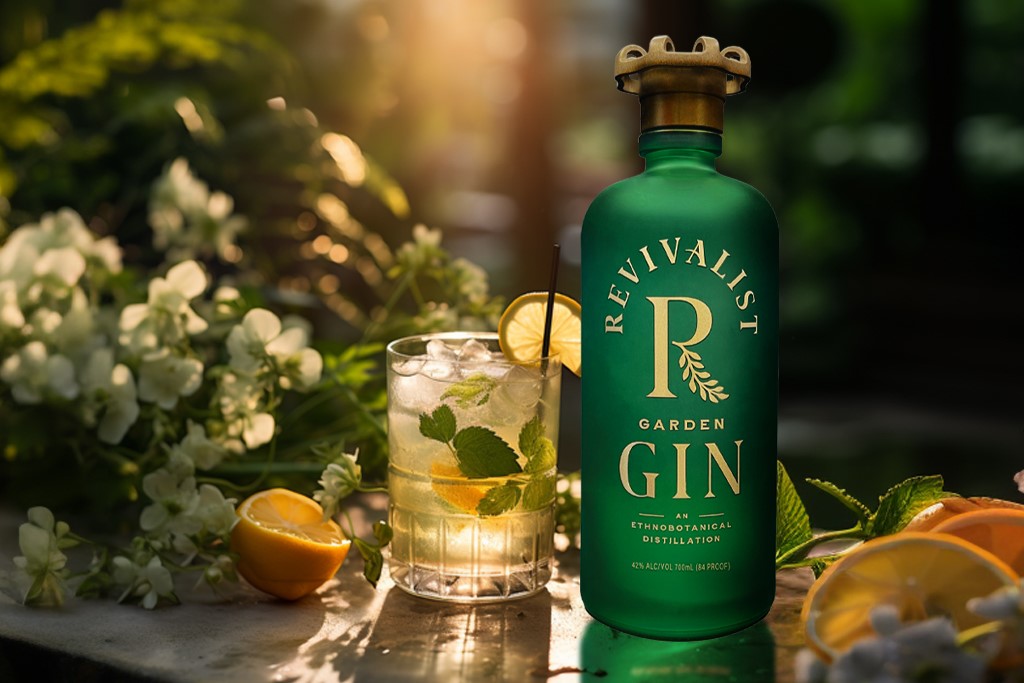
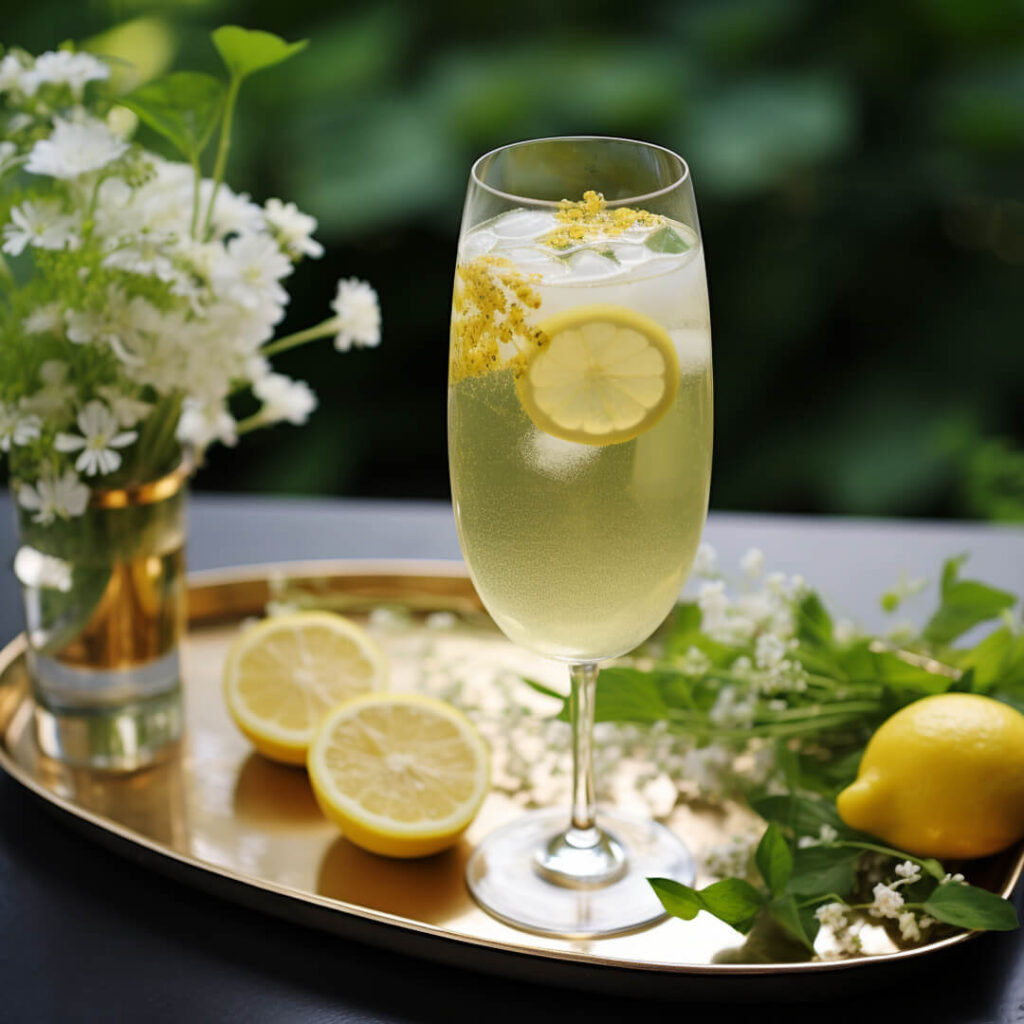
A bottle of Revivalist Garden Gin next to a cocktail, surrounded by flowers and lemon wedges

Earth Day may be over but we’re still celebrating Earth Month, so I want to put the intriguing Revivalist Garden Gin on your radar.

Created by Brendan Bartley, bar director and general manager at the acclaimed Baththub Gin in New York City, this gin brand is focused heavily on responsible and sustainable production methods.

Notably, Revivalist Garden Gin uses water recycling during the distillation process. According to the brand, this innovation saves around 30,000 gallons monthly.

Further sustainable practices include giving spent grains to farmers to feed their cattle and hogs, reducing waste.

However, the sourcing of the botanicals used to craft this super-premium gin deserve praise.

If the term “ethnobotany” is new to you, you’re not alone. Bartley and the Revivalist team are committed to using only ethically sourced national and international ingredients. Moreover, the ingredients are selected to craft an authentic flavor profile free of additives, artificial flavors, preservatives, or doses of sugar.

Compellingly, the brand goes deeper. Ethnobotany’s practitioners seek cultural understanding when considering the relationship between humans and plants. So, rather than simply creating a flavor profile and then sourcing the ingredients in the most affordable and convenient way, the Revivalist team approaches the selection of each botanical with purpose.

On the palate, citrus comes from lemon verbena leaf, while an earthy counterpoint is introduced via ashwagandha. Rose hips and plum add floral and sweet notes, respectively, further balancing this enticing gin. In what may prove to be an unexpected twist for some drinkers, hemp adds a nutty note that guarantees Revivalist will stand out from its peers.

Below, six cocktails featuring this Earth-friendly, carefully considered gin. Cheers!

Revivalist Garden Gin Negroni Cocktail

Negroni

  • 1.5 oz. Revivaist Garden Gin
  • 0.75 oz. Aperol
  • 0.75 oz. Dolin Sweet Vermouth
  • Grapefruit twist to garnish

Add Revivalist, Aperol, and sweet vermouth to a mixing glass, and stir. Pour into a rocks glass over ice, and garnish.

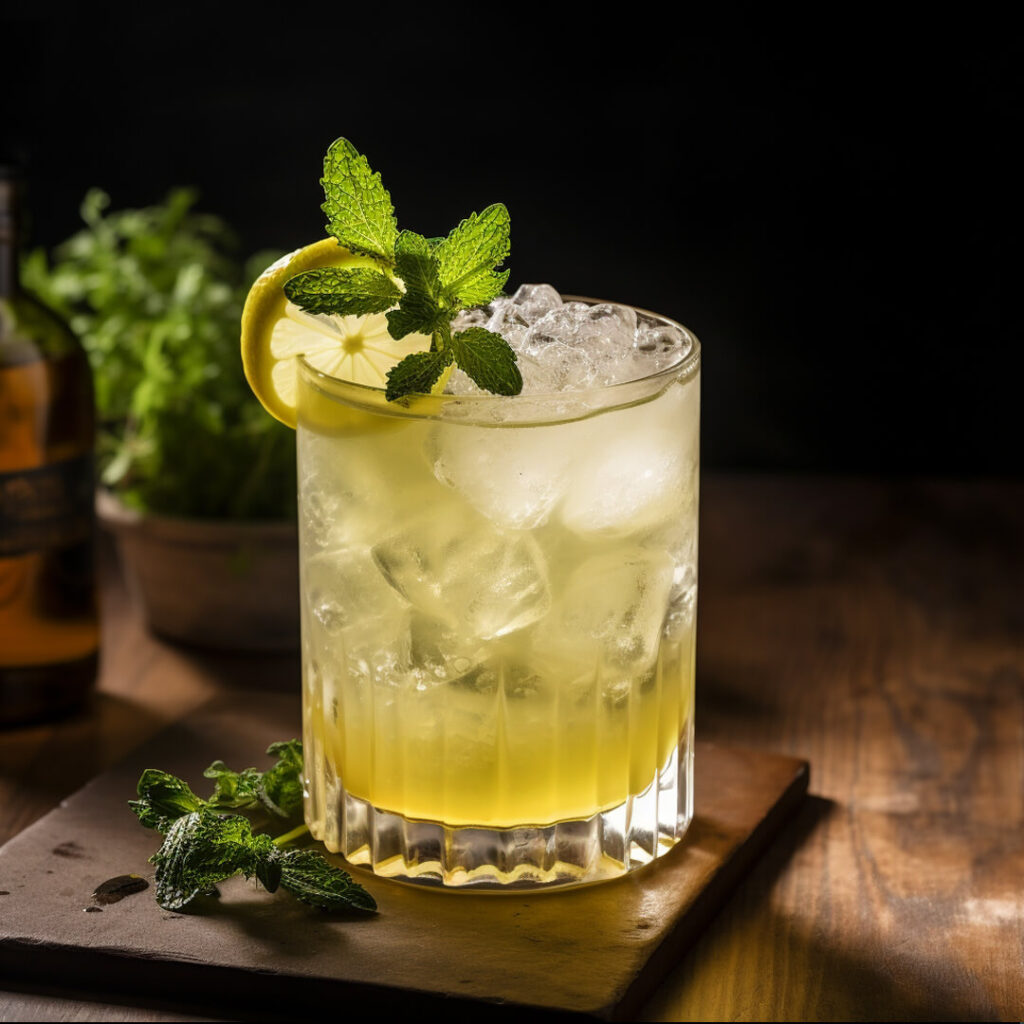
Revivalist Garden Gin Garden Punch cocktail

Garden Punch

  • 2 oz. Revivalist Garden Gin
  • 0.75 oz. Fresh lemon juice
  • 0.75 oz. Simple syrup
  • 1–2 oz. Chamomile tea
  • Lemon wheel to garnish
  • Mint sprig to garnish (optional)
  • Lavender sprig to garnish (optional)

Prepare a rocks glass by adding a large ice cube or sphere. Add all liquid ingredients to a shaker with ice, and shake well. Strain into the prepared rocks glass, then garnish.

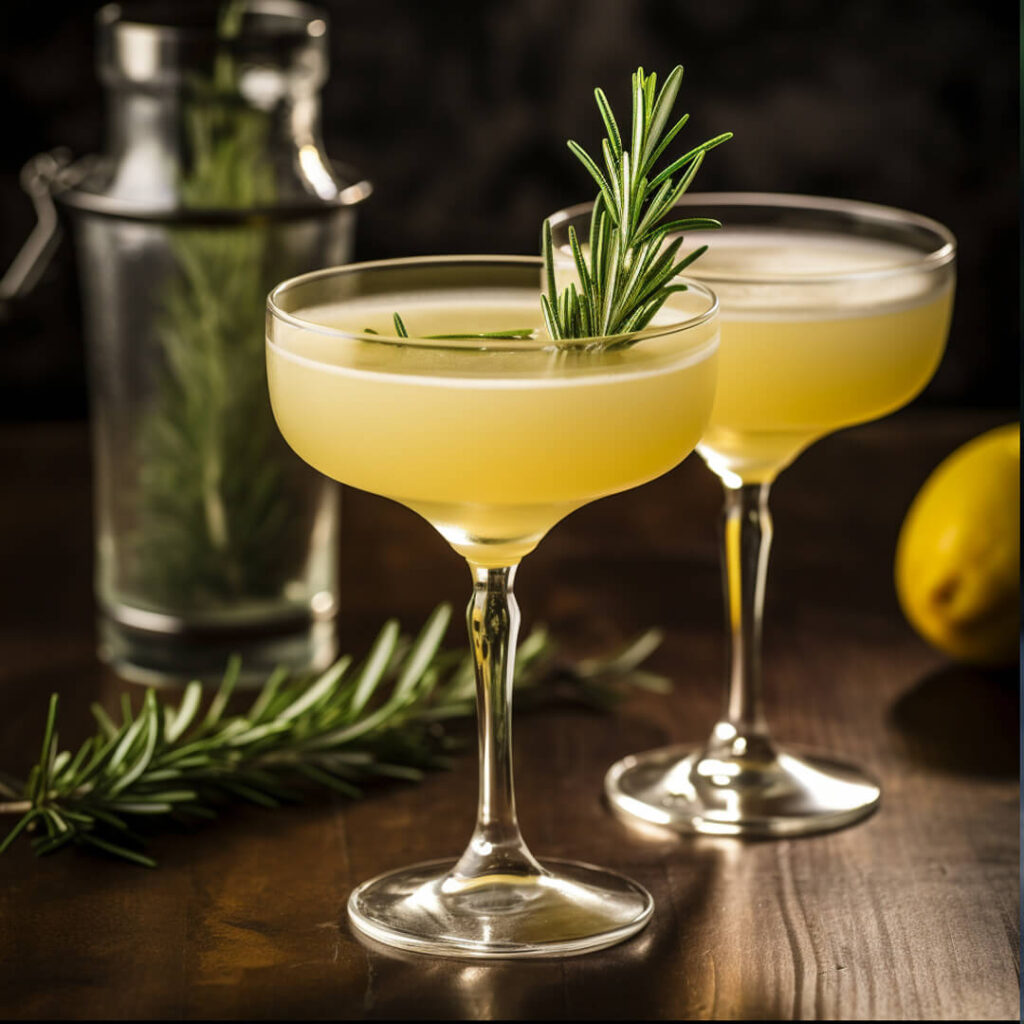
Revivalist Garden Gin Easy Beesy cocktail

Easy Beesy

  • 2 oz. Revivalist Garden Gin
  • 1.0 oz. Fresh lemon juice
  • 0.75 oz. Honey ginger syrup
  • 2 Small sprigs of rosemary to garnish (optional)
  • Lemon twist to garnish (optional)

Combine ice and the first three ingredients to a cocktail shaker. Shake hard for about 10 seconds, then double strain into a coupe. Garnish with rosemary sprigs or a lemon twist.

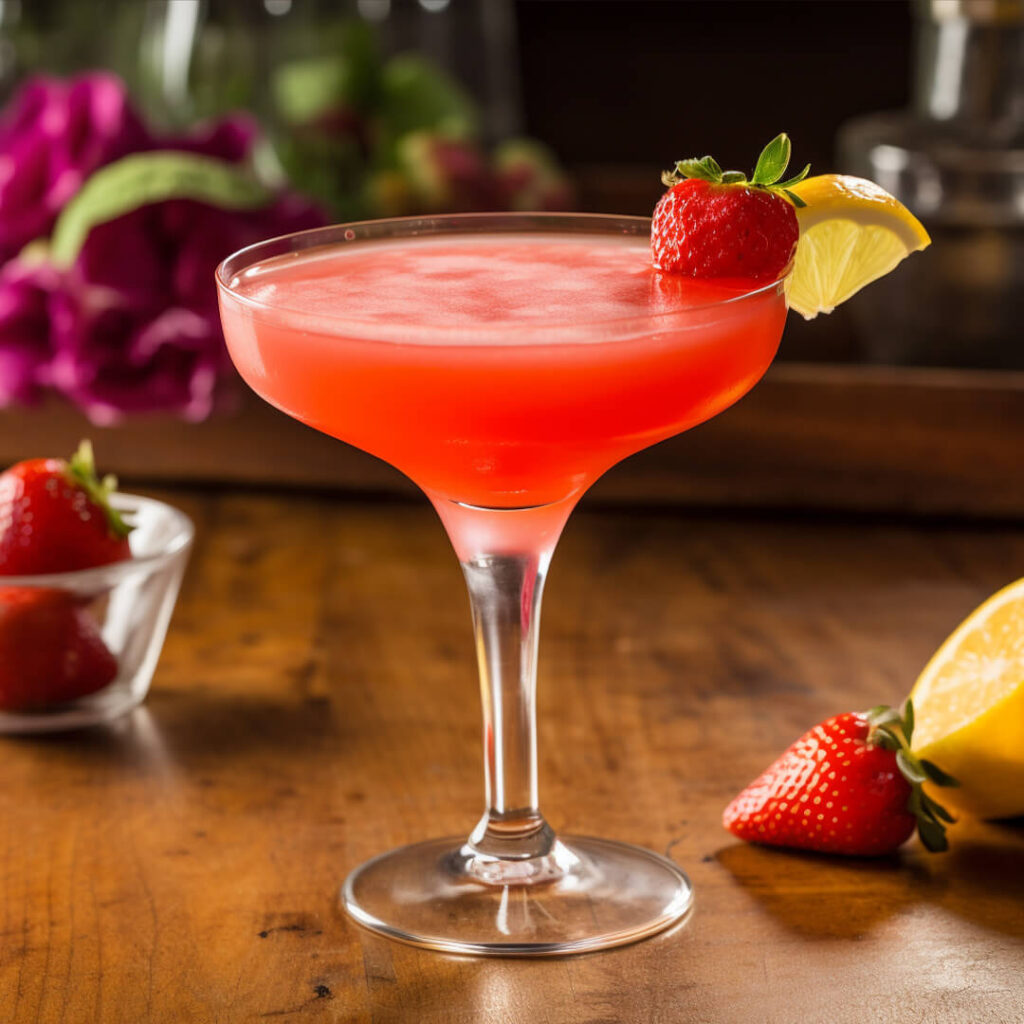
Revivalist Garden Gin Chester County Breakfast cocktail

Chester County Breakfast

  • 1.5 oz. Revivalist Garden Gin
  • 0.5 oz. Grand Marnier
  • 0.75 oz. Fresh lemon juice
  • 1 bar spoon Strawberry jam
  • 1 bar spoon Simple syrup
  • Strawberry slice or raspberries to garnish

Add all ingredients except for garnish to a shaker. You may need to break up the jam with a quick stir with a bar spoon. Next, add ice to the shaker, and shake well. Double strain into a coupe, then garnish.

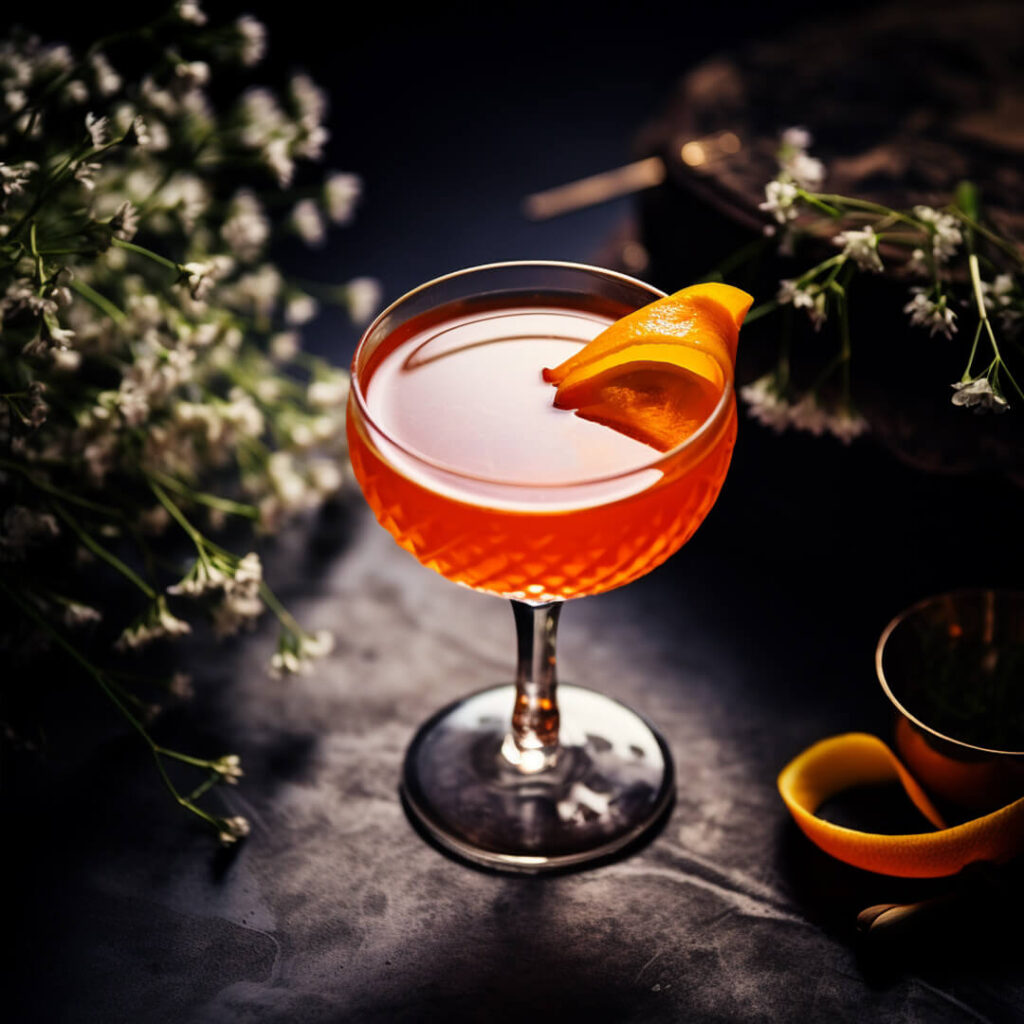
Revivalist Garden Gin Full Monty cocktail

The Full Monty

  • 1.25 oz. Revivalist Garden Gin
  • 0.75 oz. Triple sec
  • 0.75 oz. Aperol
  • 0.75 oz. Dry vermouth
  • Expressed orange peel to garnish

Fill a mixing glass three-quarters of the way with ice, then add all four liquid ingredients. Stir for one minute, then double strain into a Nick & Nora glass. Garnish with an expressed orange peel.

Revivalist Garden Gin Flower Bed cocktail

Flower Bed

  • 1 oz. Revivalist Garden Gin
  • 0.5 oz. Fresh lemon juice
  • 0.5 oz. Elderflower syrup
  • 4 oz. Chilled Champagne
  • Lemon twist to garnish

Add the gin, lemon juice, syrup, and ice to a shaker, and shake hard. Next, double strain into a chilled Champagne flute. Finally, garnish and serve.

Disclaimer: Neither the author nor KRG Hospitality received compensation, monetary or otherwise, in exchange for this post.

Images: Revivalist Garden Gin

KRG Hospitality. Bar Consultant. Nightclub. Lounge. Mixology. Cocktails.

by David Klemt David Klemt No Comments

What’s Going on with Chili Crisp?

What’s Going on with Chili Crisp?

by David Klemt

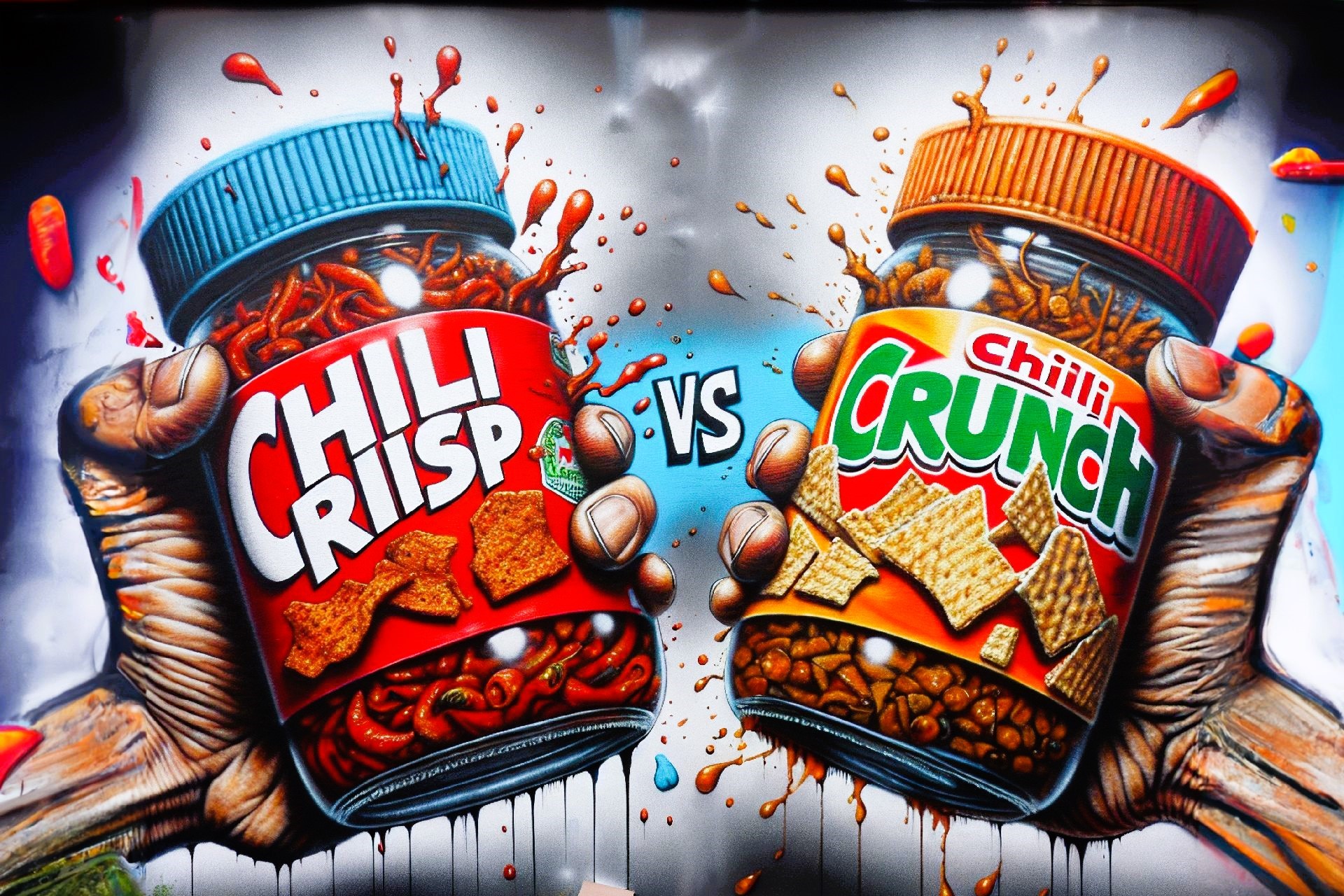
A street-art-style image of a jar of chili crisp versus a jar of chili crunch

I’m not convinced that AI platforms know much about chili crisp or human hands.

UPDATE (April 15, 2024): David Chang has reportedly stated that Momofuku will no longer enforce the “Chile Crunch” trademark. He made the statement on his The Dave Chang Show podcast.

A legal battle over a chili crisp trademark is spilling into the public arena, and people are taking sides and making their feelings known on social media.

More specifically, Momofuku appears to be defending its “Chile Crunch” and “Chili Crunch” trademarks vigorously. To say some people aren’t exactly fans of this legal news is an understatement.

To provide context for the unfamiliar, Momofuku is a restaurant group first established in 2004 by David Chang. By 2019, the group had expanded, opening 20 venues. In 2020, Momofuku Goods began selling some of its culinary products in the retail space.

Among the products carrying the Momofuku name and peach logo is Chili Crunch. This is the brand’s version of chili crisp, a condiment consisting of oil, fried chili pepper, and other elements, such as garlic and onion (and other peppers).

From what I can find, it’s widely accepted that chili crisp originated in China, and has been around for centuries. How many centuries? I have no idea.

However, I can say with certainty that Momofuku has owned the “chile crunch” trademark since 2023. And I know that Momofuku acquired the rights to that trademark from Chile Colonial, LLC. That acquisition was part of a settlement.

Interestingly, Chile Colonial took action against Momofuku last year for trademark infringement for using the product name Chile Crunch. The former had been selling its Chile Crunch since 2008, and registered the trademark in 2015.

Now, it’s Momofuku, who apparently licenses the trademark to others, taking action to defend the trademark. Toward the end of last month, the company applied to trademark “chili crunch.”

Cease and Desist

As several outlets have reported, a number of chili crisp producers have received cease-and-desist letters.

Eater has reported that one producer, Homiah, received such a letter after they renamed their Crispy Sambal product to Sambal Chili Crunch.

The letter reads, in part, “Momofuku trusts that Homiah did not adopt the CHILI CRUNCH mark in bad faith or with an intent to create confusion. But because trademark law requires brand owners to police use of their trademarks—and because Momofuku is concerned that consumers may actually be confused here—we write to request Homiah’s cooperation.”

One element of the requested cooperation is that Homiah stop using the name Sambal Chili Crunch within 90 days.

It seems that it hasn’t taken long for these legal requests to find their way to the public at large. And, yes, sides have been taken.

Sifting through the comments on Eater’s Instagram post about this situation paints a vivid, albeit not entirely unexpected, picture.


View this post on Instagram


A post shared by Eater (@eater)

This is a great way to ensure that I’ll never buy Chang’s version,” reads one comment.

If no one owns RANCH, no one should own this,” says another Instagram user.

No, this is absurd. Heinz didn’t trademark ketchup, they trademarked Heinz, this is so ridiculous. He can trademark momofuko and the peach logo. But this is so stupid,” is a comment with nearly 400 likes.

Finally, there’s this simple statement: “You can’t trademark culture.”

Los Angeles Times columnist Jenn Harris would agree with that last comment. Addressing Momofuku’s legal actions, she writes, “I reject the notion that someone could exclusively own something so ingrained in my culture, a food I consider an intrinsic part of my identity.” You can, and should, read her column here.

Must Defend

There’s more at play here when it comes to trademarks.

Speaking in incredibly general termsand without providing any legal adviceonce a trademark has been granted, the owner must defend it. Failing to do so, which includes filing variations and taking action against others, can result in the loss of the rights associated with the trademark.

So, on one finger on one hand, Momofuku must defend “chile crunch” and, if granted, “chili crunch,” if the company wants to retain their trademark rights. On another, does the blame lie with the United States Patent and Trademark Office (USPTO) for granting the trademark in the first place?

Going deeper, should Momofuku have negotiated different settlement terms that wouldn’t preclude others from calling their chili crisp products Chile Crunch? I’m not remotely qualified to speak on the legal dispute between Chile Colonial, LLC, and Momofuku, so I can’t even begin to form an opinion. If the settlement was “pricey,” I understand Momofuku being sensitive about other products potentially cutting into their sales.

Per reporting, Susan Hojel, the owner of Chile Colonial, has said she was “going broke” defending the Chile Crunch trademark. Many of the cease-and-desist letters were going to large companies. In that sense, Hojel saw herself in the role of David, going after corporate Goliaths.

Now, however, the public views David Chang and Momofuku as Goliath, attempting to crush noble Davids. Therefore, I have to wonder if the real issue is public perception, not legality. After all, I’ve seen the label “trademark bully” affixed not to just Momofuku but Chang as well.

Worth It?

I don’t know what the answer is for the questions swirling around this legal fight. All I can do is wonder if defending this trademark is worth the backlash.

At the moment, we’re seeing comments expressing disappointment and disdain. What happens if those comments manifest in damaged brand perception?

Put another way, there’s defending your brand…and there’s defending your brand.

Image: Shutterstock. Disclaimer: This image was generated by an Artificial Intelligence (AI) system.

Bar Pub Brewery Nightclub Club Nightlife Brand Identity

by David Klemt David Klemt No Comments

New RTD Sprinter Kicks off Coachella

New Vodka Soda RTD Sprinter Kicks off Coachella

by David Klemt

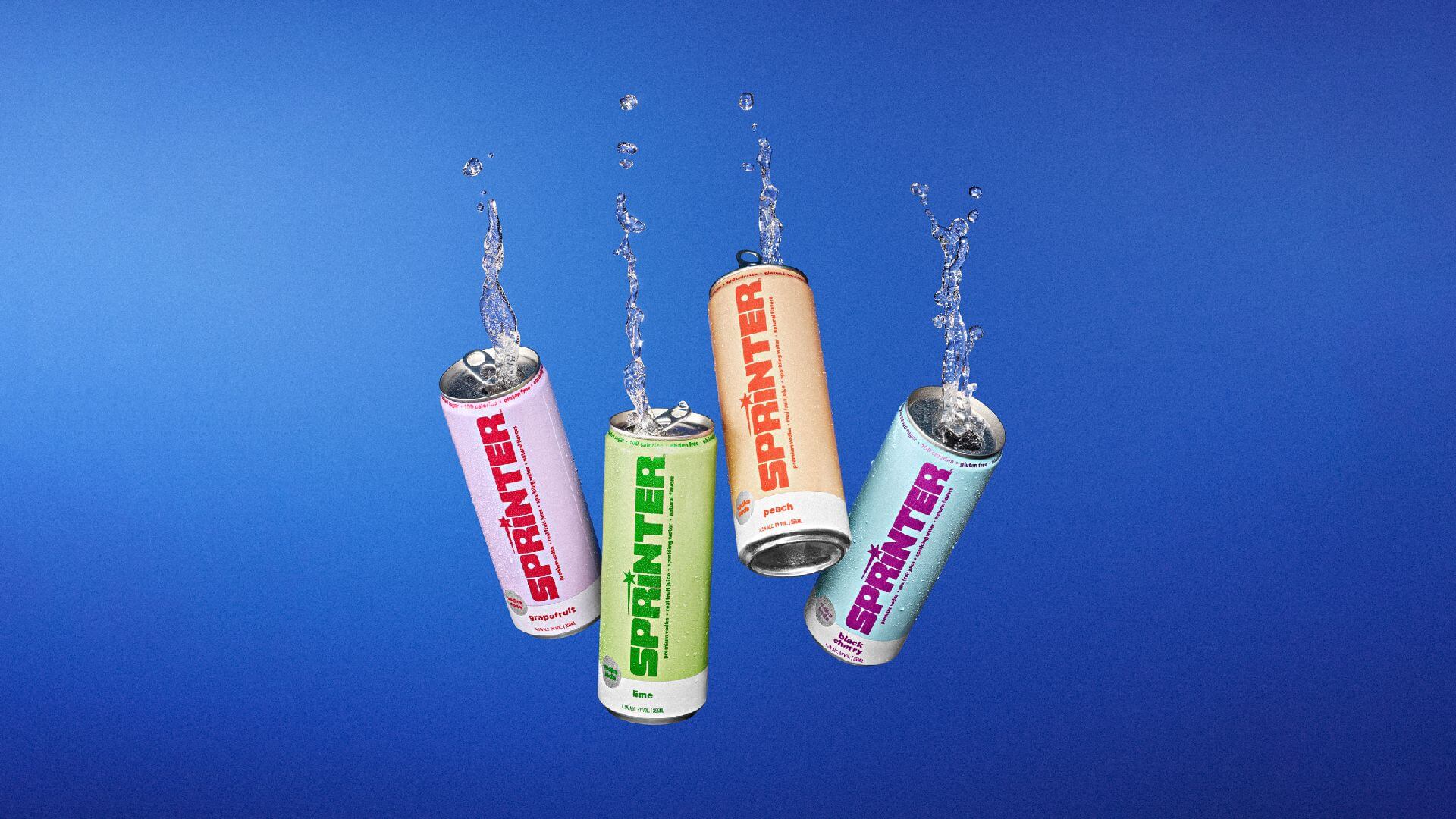
In partnership with GoPuff, Sprinter, the new vodka soda RTD founded by Kylie Jenner, is kicking off Coachella with a surprise delivery activation.

Available in four flavorsGrapefruit, Lime, Peach, and Black Chery—Sprinter is one of the newest RTDs to hit the market.

These ready-to-drink Vodka Sodas are made with just three core ingredients: premium vodka, real fruit juice, and sparkling water. Weighing in at just 4.5-percent ABV, Sprinters are intended to delivery bold fruit flavor in a sessionable format.

Sprinter aims to make a splash during Coachella, headlined this year by No Doubt, Lana Del Rey, Tyler the Creator, and Doja Cat. Anyone of legal drinking age in Palm Springs, Coachella, and Indio who places an order for Sprinter could be in for a surprise.

That surprise? A delivery of Sprinter swag in decked-out Sprinter vans, along with GoPuff swag. The delivery platform, which leverages “micro-fulfillment centers” to deliver orders quickly, is Sprinter’s chosen partner for this activation.

Now, if you’re an operator, bar or restaurant leadership team member, or bartender, you may wonder what this Sprinter promotion has to do with you. It’s simple: fulfilling guest expectations.

There’s little question that guests will be on the lookout to try Sprinter this summer. The RTD is owned by Kylie Jenner and will garner plenty of attention during Coachella. This will translate to nationwide (if not international) interest. Adding Sprinter to your menu may prove lucrative.

Check out the press release below for more information. Cheers!

Kylie Jenner Introduces Sprinter, A Premium Canned Vodka Soda

Launching nationwide March 21, Sprinter Vodka Soda features four fruit flavors, no added sugar and only 100 calories

Los Angeles, CA—Today, entrepreneur Kylie Jenner announces Sprinter, the ultimate vodka soda in a can. Made with simple, high-quality ingredients—premium vodka, sparkling water and real fruit juice—and created in four true-to-fruit flavors, Sprinter is a bold and refreshing new entry into the RTD space.

“Sprinter is my answer to the growing consumer demand for quality canned cocktails—we’re adding to a market dominated by only a few players with an incredibly delicious vodka soda in a can,” says founder Kylie Jenner. “Not only does Sprinter have a unique bold branding that captures the feeling of fun with your friends, it is also the best tasting vodka soda I’ve ever tried—and I’ve tried a lot. I can’t wait for people to taste it for themselves.”

Jenner tapped Chandra Richter, a female beverage development expert with over 20 years of beverage alcohol industry experience and a PhD in molecular biology, to serve as Head of Product Development and Operations at Sprinter. After over a year of taste testing, the duo achieved the perfect balance of flavors and Sprinter was born—a 100-calorie, 4.5% ABV canned vodka soda made with real fruit juice and with no added sugar, available in four fruit-forward flavors: Black Cherry, Peach, Grapefruit and Lime.

“It’s been such a pleasure developing Sprinter with Kylie,” says Chandra Richter. “We held numerous tastings over the past year to ensure each of our four flavors are as natural and true-to-fruit as possible. Sprinter is a mouthwatering vodka soda in a can that makes every moment an occasion.”

Bold, vibrant and eye-catching on the shelf, Sprinter will be available in an 8-can variety pack for an SRP of $19.99. Sprinter launches nationwide on March 21. To sign up for more information and to find Sprinter near you, visit @drinksprinter and drinksprinter.com.

Disclaimer: Neither the author nor KRG Hospitality received compensation, monetary or otherwise, in exchange for this post.

Can image: Travis Rathbone

Bar Nightclub Pub Brewery Menu Development Drinks Food

by krghospitality krghospitality No Comments

XO Night: A New Nightlife Tradition?

Rémy Martin XO Night: A New Nightlife Tradition

by David Klemt

A brand-new release from Rémy Martin seeks to not only solidify itself as a new way to start a night out but also prove Cognac isn’t an old-fashioned drink.

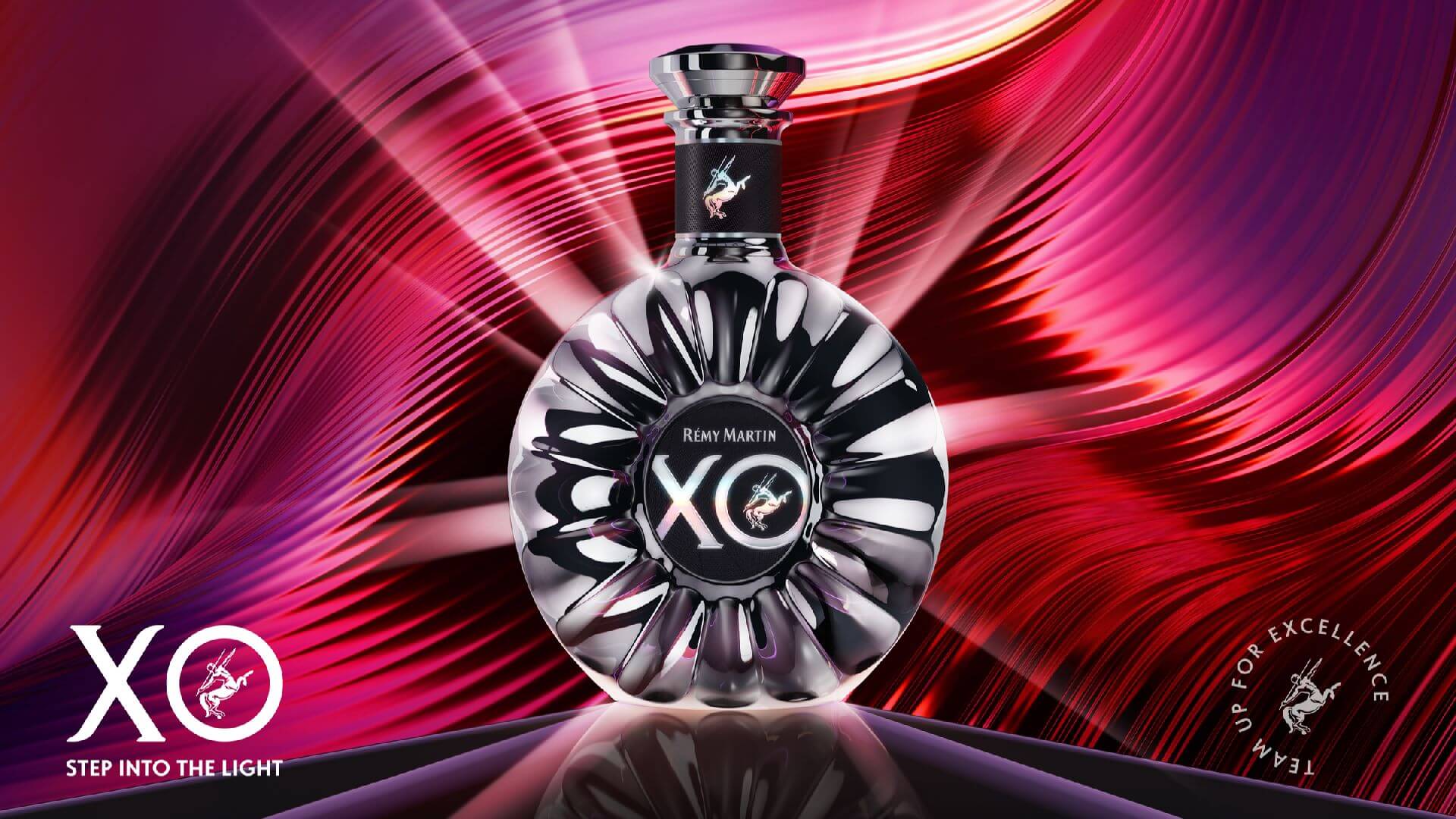
XO Night, the newest member of the Rémy Martin family, is dressed for a night out at the club. Just take a look at the decanter: black, mirrored, and adorned with holographic enhancements.

This is a bottle of Cognac meant to grab attention. There’s no denying that XO Night will stand out on a nightclub back bar. And as far as bottle service…it’s perfect for an over-the-top Las Vegas nightclub-style delivery.

In other words, this isn’t your great-grandfather’s Cognac.

Obviously, the House of Rémy Martin is aiming to alter the perception of Cognac with XO Night. Aesthetically, the bottle is clearly a departure from tradition. Further, by targeting nightlife specifically, Rémy Martin is signaling their interest in courting younger, legal-drinking-age consumers.

Cheekily, Rémy Martin seems willing to set aside tradition to appeal to the nightclub crowd. In fact, the storied Cognac house is taking a shot at changing the way people view Cognac and nightcaps. Rather than a sip intended to signal the end of the evening, Rémy Martin hopes people will choose to begin their night out with XO Night.

In terms of tasting notes, XO Night is XO, but dressed to show out at the club. Expect fruity and floral notes on the nose, and candied orange, spices, ripe plum, and roasted cocoa beans on the palate. The finish is classic XO: smooth, full-bodied, and long.

Personally, I think it’s great to see a Cognac house with nearly three centuries of history thinking about their portfolio differently. Keep an eye out for XO Night activations throughout 2024.

RÉMY MARTIN UNVEILS XO NIGHT, A NEW MEMBER OF THE XO FAMILY

Rémy Martin Reinvents Night-time Celebrations with XO Night Uncapped

NEW YORK, April 9, 2024The House of Rémy Martin, announces the launch of XO Night, a new addition to the Rémy Martin portfolio that lives at the epicenter of night-time celebrations. Radiant, luxurious, and full of life, XO Night is the ultimate cognac of choice for those seeking a new opulent attitude to nightlife.

With Rémy Martin XO Night, the notion of a night uncapped takes on a whole new meaning. Unlike the traditional nightcap which signals the end of the evening, a night uncapped with XO Night signifies the night is just beginning. It’s an invitation to embrace the vibrant energy of the night, to savor every moment, and to revel in the possibilities that lie ahead. Whether enjoying XO Night at a high-end club, a lively rooftop bar, or a chic lounge, each sip of XO Night ignites the senses and sets the stage for unforgettable experiences.

“At Rémy Martin, we’re thrilled to unveil our latest venture into the dynamic world of nightlife. With XO Night, we aim to redefine the traditional nightcap and show how a night uncapped with Rémy Martin has endless possibilities,” says Nicolas Beckers, Chief Executive Officer, Rémy Cointreau Americas. “Through innovative rituals and immersive experiences, we’re engaging our consumers in unforgettable ways, inviting them to unlock new ways to enjoy the night.”

THE LOOK

Rémy Martin XO Night dials up the party in a mirrored black decanter. Its signature solarised shape radiates light from every angle. Holographic flashes and UV details ignite it further, with a minimalistic design that pumps up the XO stamp and catches the Rémy Martin Centaur in action.

THE EXPERIENCE

Rémy Martin will bring XO Night to life with activations throughout the year in key markets across the United States, including New York, Los Angeles, Las Vegas, Atlanta, and Miami. These cities are renowned for their dynamic nightlife scenes, making them the perfect backdrop to unveil XO Night and introduce consumers to a night uncapped.

THE RÉMY MARTIN XO FAMILY

New Rémy Martin XO Night joins Rémy Martin XO classic as a choreographer of celebration. Rémy Martin XO Cognac Fine Champagne is now dressed in two styles, giving you different ways to illuminate every occasion, day or night.

  • Rémy Martin XO Night. The new icon of night-time celebrations. Opulent, edgy and vibrant, XO Night is the go-to cognac for high end clubbing, friends and fun. This is XO dressed for the party.
  • Rémy Martin XO. Rémy Martin XO was launched in 1981 by our Cellar Master André Giraud. It was the first XO composed of eaux-de-vie coming exclusively from Grande Champagne and Petite Champagne, thus the first Cognac Fine Champagne XO.

THE CRAFT

Rémy Martin XO Night captures the creativity of generations. This Cognac Fine Champagne* is a testimony to the magic of assemblage. A rich and unique fusion of eaux-de-vie, the cognac reflects the Maison’s mastery of blending from Cellar Master to Cellar Master. The eaux-de-vie originates from the two prized central crus of the Cognac region, with at least 50% coming from Grande Champagne and the remainder from Petite Champagne. These are extra old, aged for at least 10 years.

TASTING NOTES

Rémy Martin XO boasts a fiery mahogany hue with opal tones, offering a smooth, full-bodied experience. It entices with a powerful yet subtle aroma, featuring fruity notes like plums and dried figs, complemented by hints of honey and floral fragrances. The taste is an astonishing generosity of flavors, from fresh passion fruit enhanced by deeper notes of ripe autumn fruits (mature fig and candied orange) to spicy notes with a hint of nutmeg and freshly ground hazelnuts. The aromas of XO unfurl gradually throughout the tasting, finishing with gourmet notes of roasted cocoa beans, honey, and gingerbread.

For more information, please see HERE and follow along on social media at:

Instagram @RemyMartinUS | Twitter @RemyMartinUS | Facebook RemyMartinUSA

#RemyXONight #XONightUncapped

ABOUT RÉMY MARTIN XO NIGHT

Vibrant, opulent and radiant, this exceptionally abundant, aromatic cognac is expertly blended from a multitude of eaux-de-vie from Grande Champagne and Petite Champagne, aged for at least 10 years. Rémy Martin XO Night is dressed for the evening, at the center of night-time celebrations, lighting up the party, the club and the fun.

ABOUT RÉMY MARTIN

Since 1724, the House of Rémy Martin has produced premium spirits that consistently appeal to the world’s most discerning connoisseurs. A profound love of the land, a continuity of family ownership and a passionate commitment to excellence has sustained Rémy Martin for nearly three centuries. As a result of its masterful production and generations of tradition in Cognac, Rémy Martin today produces Cognacs Fine Champagne, including Rémy Martin® XO Night, Rémy Martin® XO, Rémy Martin Tercet®, Rémy Martin 1738 Accord Royal® Rémy Martin CLUB® and Rémy Martin® V.S.O.P. For more information visit www.RemyMartin.com

*The appellation “Cognac Fine Champagne” is an AOC (“Appellation d’Origine Controlée” / Controlled Designation of Origin) and defines a blend of eaux-de-vie sourced in Grande Champagne and Petite Champagne, with at least 50% Grande Champagne.

Disclaimer: Neither the author nor KRG Hospitality received compensation, monetary or otherwise, in exchange for this post.

Image: Rémy Martin

KRG Hospitality. Bar Consultant. Nightclub. Lounge. Mixology. Cocktails.

by David Klemt David Klemt No Comments

Salt & Straw Celebrates Earth Month

Salt & Straw’s Upcycled Foods Series Returns

by David Klemt

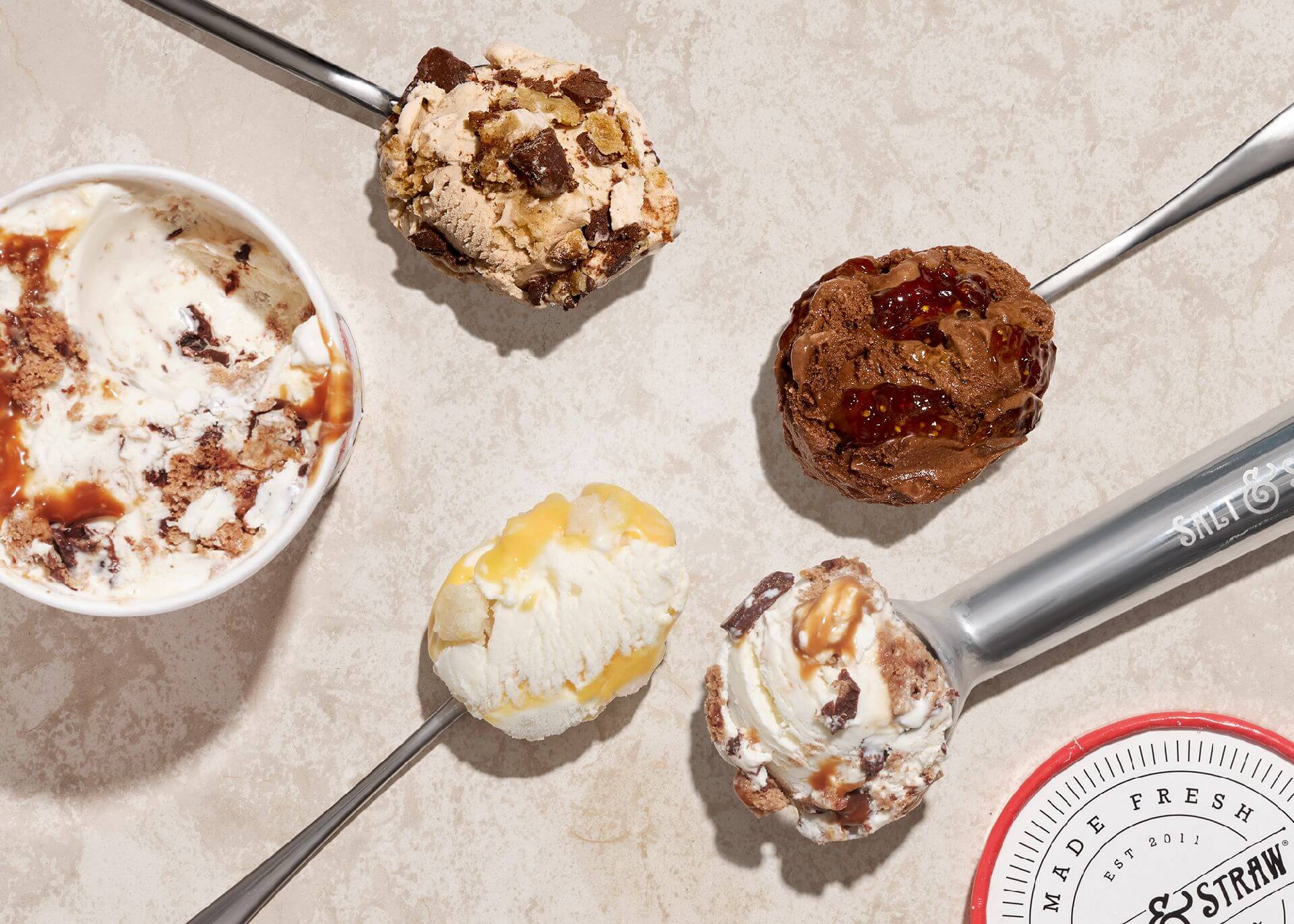
Scoops of Salt & Straw's 2024 Upcycled Food Series ice cream flavors

To celebrate this year’s Earth Month, innovative small-batch ice cream shop concept Salt & Straw is bringing back their Upcycled Food Series.

Last Friday, three returning flavors and two new creations hit Salt & Straw locations in five US states. Currently, the artisanal ice cream shop chain operates in California, Florida, Oregon (the brand’s home state), Nevada, and Washington.

Among other important operational elements, Salt & Straw is known for innovative, chef-driven flavors. This is, in part, due to the concept’s commitment to ensuring at least 20 percent of the menu is dairy-free and vegan-friendly.

However, the brand also shines a spotlight on sustainability and combating restaurant food waste. In 2023, Salt & Straw launched their first Upcycled Food Series. A key element of the LTO menu’s execution is collaboration. Specifically, collaborating with partners that focus on upcycling ingredients.

For example, the bananas Salt & Straw uses to craft one of this year’s brand-new flavors come from Urban Gleaners. That non-profit rescued bananas from grocery stores and restaurants before they were tossed out.

After doing some digging, I found that it’s believed about 40 percent of the entire food supply in the US goes to waste per year. That’s 60 to 80 million tons of food, wasted. Supposedly, 60 percent of the food supply goes to waste in Canada.

So, I think it’s admirable that Salt & Straw leverages Earth Month to expose the alarming issue of food waste. More importantly, the brand shows that a little creativity can go a long way to fight this serious problem.

2024 Upcycled Food Series Flavors

Returning Creations

Three flavors are back for the 2024 Upcycled Food Series.

  • Day-Old Bread Pudding & Chocolate Ganache: Urban Gleaners partners with Salt & Straw on this flavor, collecting bread throughout Portland, Oregon, before it’s thrown out or otherwise goes to waste. The result is an enticing layering of custard bread pudding ice cream and chocolate ganache, as the name implies.
  • Malted Chocolate Barley Milk: In collaboration with Evergrain, a business focusing on sustainable ingredients, this vegan option is produced in part using the spent grains from the beer-brewing process. Malted Chocolate Barley milk is a “malty, fudgy, ooey-gooey vegan dream. This flavor takes us behind the curtain into beer brewing and answers the question: What happens to the spent grains after they brew beer? The brilliant food scientists at EverGrain are revolutionizing ways to extract the immense nutrients left in the grain and using it in our everyday foods, like protein-packed barley milk. We churned this barley milk with cocoa, making for a dense and creamy textured chocolate base before drizzling in a homemade fig fudge that make those rich, jammy flavors pop.”
  • Salted Caramel & Chocolate Brownies: This returning flavor is also vegan and a collaboration with an upcycled food company called Renewal Mill. As described by Salt & Straw on their website: “Behold the ultimate trifecta of salty, sweet, and bitter thanks to our friends at Renewal Mill. Their chef-crafted baking mixes are made with okara—a delicate soy flour upcycled from plant-based milk production. We fell in love with their unbelievably moist and chewy chocolate brownies, baking them in our kitchen before generously frosting them with a rich caramel. These delectable treats are folded into a sweet bed of oat milk for a vegan flavor you have to taste to believe.”

New Creations

There are two brand-new flavors on the Upcyled Food Series menu for this year’s Earth Month.

  • Chocolate Caramel Potato Chip Banana Bread: Of all the flavors, this is the one I’m most eager to try. Salt & Straw expands their partnership with Urban Gleaners for this creation, this time tasking them with saving bananas. However, a second partner helps out to make this flavor possible. Uglies provides the potato chips, which are produced using “imperfect” potatoes. To craft this one, Salt & Straw roasts “bunches and bunches of bananas in honey and spices to make a jammy banana bread ice cream you simply can’t resist. Next, we coat “Uglies” potato chips made from potatoes with slight imperfections in the most beautiful chocolate possible and drizzle in a perfect ribbon of handmade caramel.”
  • Passionfruit Yuzu Mochi Donuts & Whey Curd: To create this flavor, Salt & Straw takes frozen yogurt and enhances it with The Spare Food Co.’s upcycled whey base. I expect powerful but pleasant tanginess on the palate from this flavor based on the website description: “Bright, acidic flavors with a decidedly delicious twist. Our friends at The Spare Food Co. are concocting drinks of liquid gold by working with Greek yogurt makers around the country and turning their whey, a typically overlooked by-product of yogurt making, into a super-drink. We lean into the yogurt whey’s natural pop of acidity and the unique flavor of their sparkling tonic by making a whey-infused frozen yogurt with a passionfruit-spiked lemon curd, and then fold in homemade butter mochi donuts glazed in yuzu frosting. This flavor sings on your tastebuds and makes you think of new wheys to use traditionally wasted products.”

Images: Salt & Straw

KRG Hospitality Start-Up Restaurant Bar Hotel Consulting Consultant Solutions Plans Services

by David Klemt David Klemt No Comments

Banfi and One Warm Coat Launch Partnership

Banfi and One Warm Coat Launch Partnership

by David Klemt

A rack of winter coats

Wine producer and importer Banfi Vintners is partnering with non-profit One Warm Coat to help people in need and encourage others to host coat drives.

For anyone unfamiliar, One Warm Coat is a national 501 (c)(3) nonprofit operating throughout the US. Established in 1992, the nonprofit has helped organize nearly 50,000 coat drives. More than 5,500 of these drives took place during the 2022 to 2023 season, providing in excess of 550,000 coats.

So far, with their partners, they’ve collected and distributed close to eight million coats. These partners include Land’s End, J.Crew, Todd Snyder, Duluth Trading Co., and now Banfi.

To launch their partnership, Banfi seeded the program with a donation that will provide 50,000 coats. In announcing this partnership, Banfi and One Warm Coat hope to encourage others to give back, host coat drives, and help those in need within their communities.

Canadian operators and their teams can find One Warm Coat partners by clicking here and searching their city. I found partners in and around Toronto, Vancouver, Calgary, and Edmonton.

In addition to helping provide people in need with coats, sustainability is key to One Warm Coat’s mission. To date, the organization has helped keep 19.4 million pounds of clothing out of landfills.

Charity Navigator, which rates the trustworthiness of charities, gives One Warm Coat a score of 98 percent.

To learn more, please review the press release below.

BANFI VINTNERS PARTNERS WITH ONE WARM COAT TO SUPPORT LOCAL COMMUNITY

Italian wine producer and importer offers support to individuals in need through seasonal coat drive

NEW YORK, NY—Banfi, producer and importer of fine wines, proudly announces its partnership with national non-profit organization, One Warm Coat. Banfi kicked off the program with a donation that will warm 50,000 people in need. 

 “One Warm Coat is thrilled to team up with Banfi this holiday season to share warmth with those in need across the country while promoting volunteerism and environmental sustainability,” shares Beth Amodio, President and CEO, One Warm Coat. 

In addition, the partnership with One Warm Coat allows Banfi to spread the word and encourage coat drives at various retail and restaurant accounts across the country, extending the program’s reach and multiplying the number of donations collected. One example can be found not too far from Banfi’s NY headquarters; based in upstate New York, Banfi’s distributor partner, Empire Merchants North has made it a key focus to promote the brand’s initiative on their website and social channels to bolster the partnership and encourage dozens of retailers to support the cause. 

“Empire Merchants North proudly joined Banfi’s One Warm Coat program to extend our commitment beyond beverages. Embracing social responsibility, we believe in making a positive impact by contributing to the well-being of our community, aligning seamlessly with Banfi’s philanthropic mission. Our enthusiastic employees joyfully embraced this initiative, embodying our shared commitment to making a meaningful difference in the lives of those in need,” shares President and CEO of Empire Merchants North Eric Pfeil. 

“One of our favorite aspects of working with One Warm Coat is its ability to support the local community. The donations stay in the community where they’re collected, so it’s truly heartening to see the widespread response in the market,” shares Banfi President and CEO Cristina Mariani-May.

About Banfi Wines

Banfi, producer and importer of fine wines, was founded in 1919 and is today woman-owned and operated by third-generation family proprietor Cristina Mariani-May. Banfi is the sole U.S. importer of the Mariani family’s internationally renowned wine estates in Italy: Castello Banfi of Montalcino, Tuscany, and Banfi Piemonte of Strevi, Piedmont. Castello Banfi is credited with pioneering a new era in Brunello and bringing the wine world’s attention to Montalcino, while Banfi Piemonte produces the family’s sparkling wines. Banfi’s wide range of wines offers affordable luxury and includes the flagship Brunello di Montalcino, Super Tuscans, Tuscan Pinot Grigio, Chianti, Sparkling and more varieties.

About One Warm Coat

One Warm Coat is a national cloud-based 501 (c)(3) nonprofit organization that provides free coats to individuals in need. Since 1992, One Warm Coat has facilitated 49,000 coat drives across the country, collecting 8 million coats that have been distributed through more than 1,500 nonprofit partners.  Individuals and organizations can get involved by donating coats, holding coat drives, and making financial donations. One Warm Coat believes in each person’s right to shelter from the elements and is committed to sharing warmth, without discrimination, one coat at a time.

Image: Markus Spiske on Unsplash

KRG Hospitality Start-Up Restaurant Bar Hotel Consulting Consultant Solutions Plans Services

by David Klemt David Klemt No Comments

Indies: Which Cities Lead the Way?

Independents: Which Cities Lead the Way?

by David Klemt

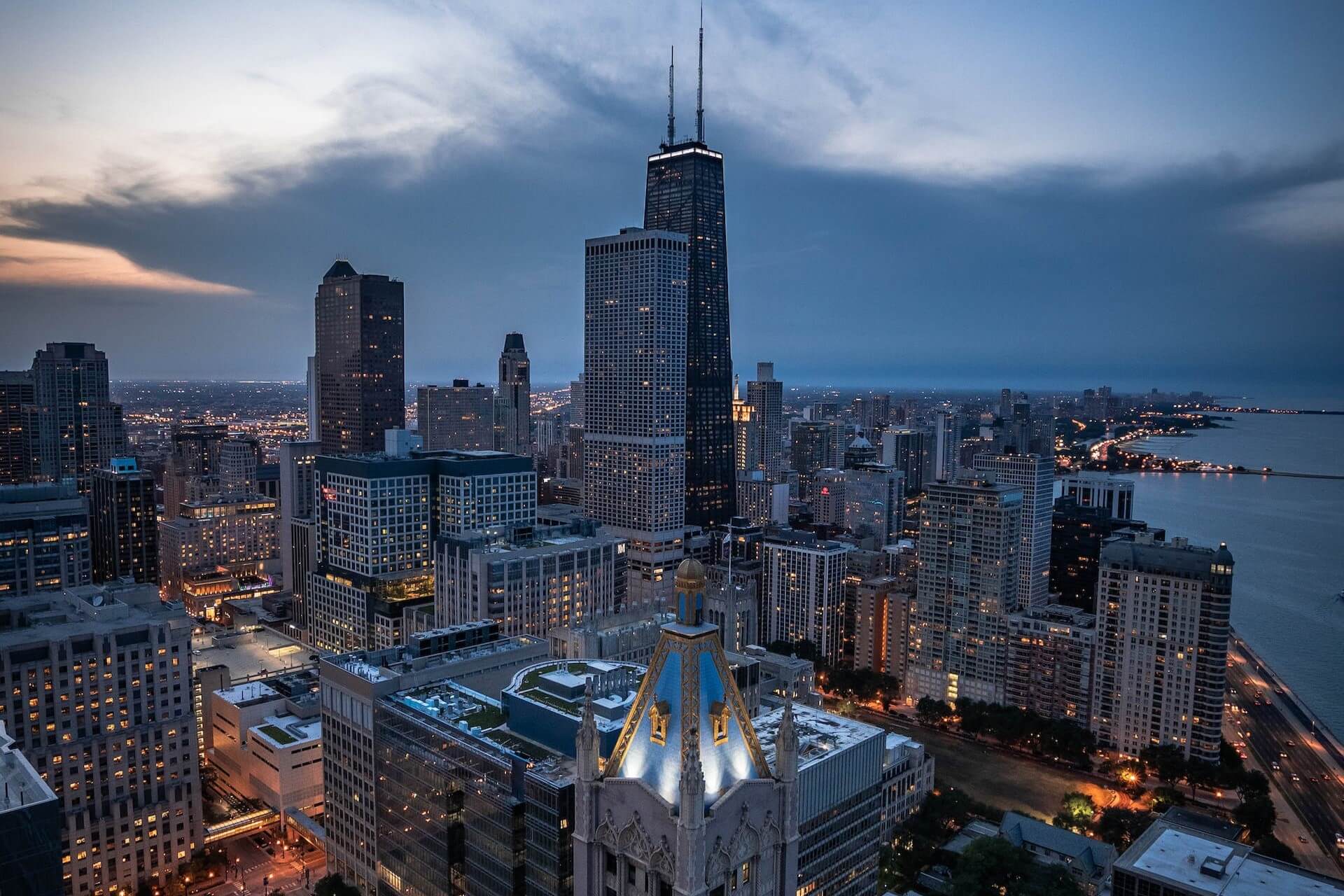
Aerial view of Chicago skyline and Lake Michigan coastline

The majority of the top ten indie restaurants on the Restaurant Business Top 100 Independents ranking are in two American cities.

Those two cities are Miami Beach, Florida, and Chicago, Illinois. While Miami Beach claims two spots among the top three, Chicago has the most restaurants in the top ten. However, the top three indies are all in Florida, with number two being the Boathouse in Orlando.

So, Florida and Illinois are home to nearly the entire top ten of Restaurant Business’ Top 100 Independents. That’s impressive.

What’s even more impressive is the combined annual sales figure of the top ten: $333.4 million. Now, let’s separate Miami Beach. The three indies in the Florida city generated nearly $114 million themselves. Chicago’s four indies among the top ten generated $118 million.

Taken together, the top 100 indies generated $1.95 billion.

All told, 14 of the top 100 indies as ranked by Restaurant Business are in Chicago. Five are in Miami Beach, and five are in Miami. Before I move on, no, Miami Beach and Miami aren’t the same city; they’re entirely separate municipalities. In total, 16 restaurants on this list are in Florida.

New York boasts 15 restaurants on the list. Four are in San Francisco, and just two are in Los Angeles. However, California claims 15 restaurants in total.

However, as you’ll see below, this Restaurant Business list consists of more than just the usual big cities.

Restaurant Business Top 100 Independents: The Top Ten

Below, the top ten independent restaurants, per Restaurant Business.

  1. Joe’s Stone Crab Restaurant (Miami Beach, Florida)
  2. The Boathouse (Orlando, Florida)
  3. Komodo Miami (Miami Beach, Florida)
  4. Maple & Ash Chicago (Chicago, Illinois)
  5. Mila (Miami Beach, Florida)
  6. Sierra Mar (Big Sur, California)
  7. Gibsons Bar & Steakhouse (Chicago, Illinois)
  8. Gibsons Italia (Chicago, Illinois)
  9. Alexxa’s (Las Vegas, Nevada)
  10. Alinea (Chicago, Illinois)

Alinea commands the highest average check among the top ten, at $650. The most reasonable is the Boathouse, averaging $45.

Interestinglyand perhaps logicallythese two restaurants find themselves in the inverse when it comes to annual meals served. The Boathouse serves the most: just over one million. And Alinea, among the top ten indies, serves the least: nearly 45,700.

Notably, when we move on to numbers 11 to 20, Las Vegas, Miami, and New York account for six restaurants.

However, it’s also notable that it’s not just the usual big cities with restaurants on this list. Smaller cities, such as Frankenmuth in Michigan, are home to some of America’s top-performing independent restaurants.

For some context, Frankenmuth has a population of less than 5,200 people. However, Michigan’s “Little Bavaria” draws three million tourists per year. So, it’s no surprise that Zehnder’s Restaurant generates more than $19 million in annual sales.

Restaurant Business Top 100 Independents: The Bottom Ten

Just for fun, let’s take a look at the bottom ten on the Restaurant Business list.

  1. Siena Tavern (Chicago, Illinois)
  2. Fleet Landing Restaurant & Bar (Charleston, South Carolina)
  3. Electric Lemon NY (New York, New York)
  4. Bar Siena (Chicago, Illinois)
  5. El Vez (Philadelphia, Pennsylvania)
  6. Mi Vida (Washington, DC)
  7. Scoma’s Restaurant (San Francisco, California)
  8. Mexican Sugar (Las Colinas, Texas)
  9. The Shed Barbecue & Blues Joint (Ocean Springs, Mississippi)
  10. Chef Adrianne’s Vineyard Restaurant and Bar (Miami, Florida)

Adding context, these ten restaurants have generated $114.6 million in annual sales. That’s roughly the same amount of annual sales as the three restaurants in Miami Beach in the top ten.

Each of the “bottom” ten has annual sales ranging from $11.2 million to $11.9 million.

Takeaway

We all know the following axiom: “Location, location, location.”

It’s tempting to assume this means a business must be in a major city. That’s a woeful oversimplification. Myriad considerations must be made when looking at a market, whether the population is in the hundreds or millions. Assuming a concept will drive traffic and generate millions of dollars solely because it’s in a major city is foolish.

Let’s take another look at Zehnder’s in Frankenmuth. The restaurant, number 47 on the list, generated $19.2 million in annual sales. Moreover, it’s in a town with a population under 5,200.

Number 46 generated $19.3 million and is in (on?) Waimea in Hawaii. Number 48 boasted annual sales of $19 million and is in a city with a population of almost 2.7 million: Chicago.

Clearly, tourism a key contributing factor to the success of Zehnder’s. Not population, not the demographics of the permanent residents, not big-city status.

So, what about check average? Alinea, number ten, has the highest at $650 and generated $28.3 million in sales. However, the Spot, number 85, has an average check of $18 and generated $12.3 million.

The success of any restaurant, bar, nightlife or eatertainment concept doesn’t come down to a single element. What sets a concept apart is a deep understanding of a specific market, the surrounding markets, “sister” sites and competitors, guest desires and expectations, and so much more.

How does an operator come to understand their operation and their market? A feasibility study to start. Then comes a thorough, coherent concept plan and a complete business plan, and an obsession with data.

Operators who put in the work to attain strategic clarity have the potential to earn their way onto the Top 100 Independents list.

Image: Cameron Casey on Pexels

Bar Pub Brewery Nightclub Club Nightlife Business Plan

by David Klemt David Klemt No Comments

Wallethub Ranks the Best Foodie Cities in the US

Comparing 182 cities across more than two dozen “food-friendliness” indicators, Wallethub has revealed their rankings for America’s best foodie cities in 2023.

Why 182 cities? Wallethub started with 150 of America’s most-populous cities. Then, they added “at least two” of the most-populous cities in each state.

Regarding the ranking itself, Wallethub compared the cities against two key measures: affordability, and diversity, accessibility, and quality. Those two measures consist of 28 key indicators, including:

  • cost of groceries;
  • restaurant meal cost;
  • sales tax;
  • food tax;
  • restaurants per capita;
  • ratio of full-service to fast-food restaurants; and
  • restaurant diversity.

Using a 100-point grading system, affordability was worth up to 30 points. Simple math shows diversity, accessibility, and quality indicators were worth up to 70 points.

Further, Wallethub valued indicators anywhere from half-weight (international grocery stores per capita) to triple weight (restaurants per capita).

Now, it’s important to contextualize Wallethub’s use of the word “foodie city” here. For their ranking, the company is identifying “the best and cheapest” cities for consumers for whom eating is an experience, hobby, and/or lifestyle.

“These wallet-friendly cities cater to diners who prefer to cook at home, explore the local flavors or both,” reads their post, which can be reviewed in its entirety here.

by David Klemt

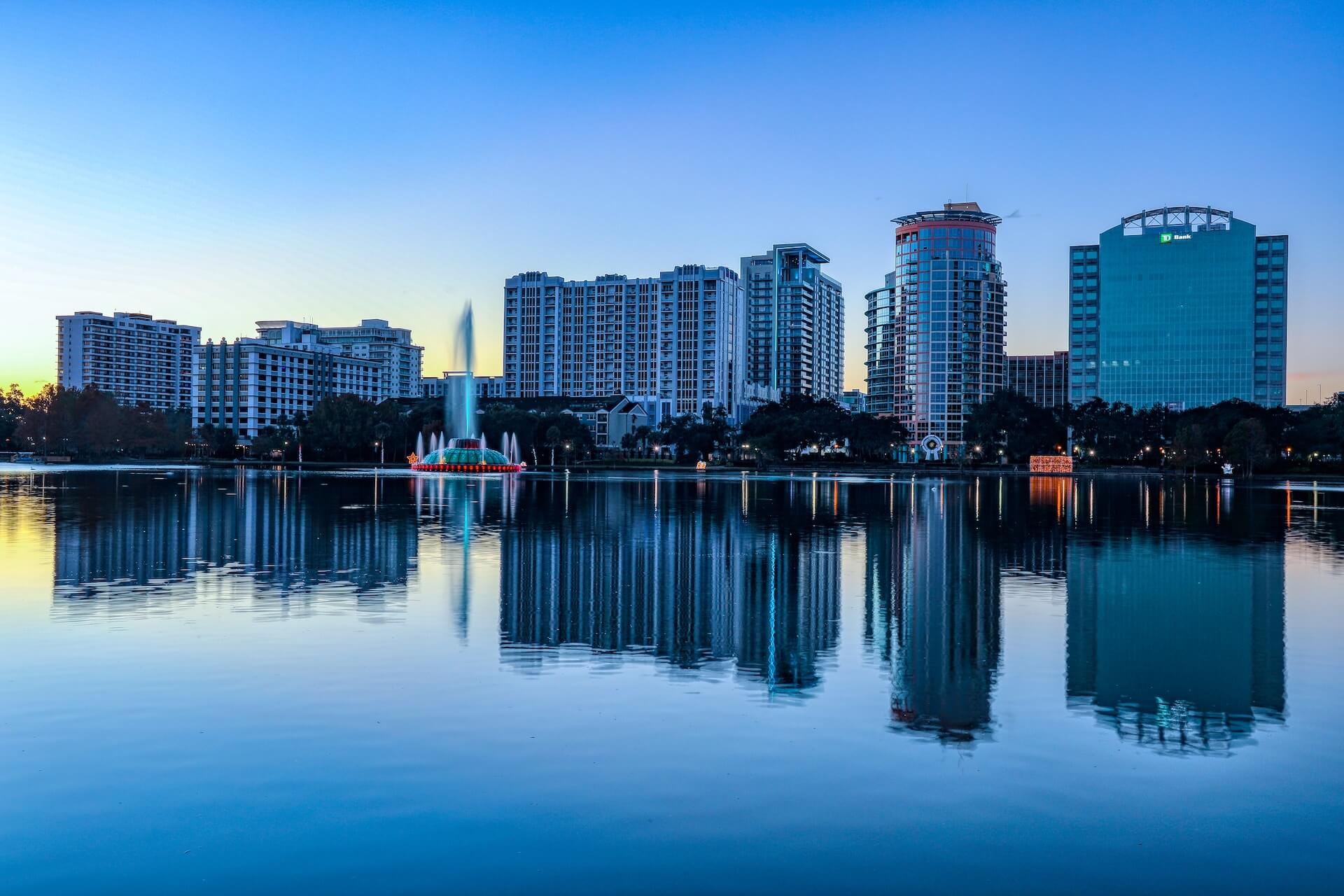
Eola Lake Park in Orlando, Florida

The Top 25

So, per Wallethub, the cities below are the top 25 among the 182 “best foodie cities in America in 2023.”

  1. Orlando, Florida
  2. Portland, Orgeon
  3. Sacramento, California
  4. Miami, Florida
  5. San Francisco, California
  6. Tampa, Florida
  7. San Diego, California
  8. Las Vegas, Nevada
  9. Austin, Texas
  10. Seattle, Washington
  11. Denver, Colorado
  12. Atlanta, Georgia
  13. Los Angeles, California
  14. Chicago, Illinois
  15. Richmond, Virginia
  16. Pittsburgh, Pennsylvania
  17. Washington, DC
  18. St. Louis, Missouri
  19. Houston, Texas
  20. New York, New York
  21. Oakland, California
  22. Phoenix, Arizona
  23. Santa Ana, California
  24. Grand Rapids, Michigan
  25. Cincinnati, Ohio

Interestingly, you’ll find the “usual” foodie scene suspects on this list. However, a mere handful of those cities are ranked in the top ten: Miami, San Francisco, and Las Vegas.

Chicago (14), Los Angeles (13), and New York (20) don’t make the three or five. In fact, they’re out of the top ten entirely here.

If affordability is a major factor here, it raises an eyebrow that Miami is among the top five foodie cities. After all, sources show the cost of living in the city is 20 percent higher than the national average. The cost of living in San Francisco is nearly 80 percent higher.

At any rate, Orlando, per Wallethub’s methodology, is the number-one foodie city in America.

Compelling Comparisons

With the top 25 foodie cities out of the way, let’s check out a few other interesting comparisons.

Cost of Groceries

Lowest-cost cities, in descending order:

  1. Brownsville, Texas
  2. Corpus Christi, Texas
  3. Laredo, Texas
  4. Fayetteville, North Carolina
  5. Austin, Texas

The cities with the highest cost of groceries are Honolulu and Pearl City in Hawaii.

Restaurants per Capita

The cities with the most restaurants per capita, again in descending order:

  1. Miami, Florida
  2. Orlando, Florida
  3. Las Vegas, Nevada
  4. San Francisco, California
  5. Los Angeles, California

It’s important to note each of the cities on this list is, per Wallethub, tied for first place.

The city with the fewest restaurants per capita is Pearl City, Hawaii.

Ratio, FSR to Fast Food Restaurants

On this list, the five cities with the highest ratio of full-service restaurants to their fast-food counterparts (yes, in descending order):

  1. Cape Coral, Florida
  2. Santa Rosa, California
  3. Portland, Maine
  4. Burlington and South Burlington, Vermont

That leaves the city with the lowest ration, which is Jackson, Mississippi.

The Bottom Ten

Now that we know which cities Wallethub identifies the best foodie cities in the US, let’s take a look at the bottom of their list.

  1. Augusta, Georgia
  2. Fontana, California
  3. Jackson, Mississippi
  4. Moreno Valley, California
  5. Mobile, Alabama
  6. Montgomery, Alabama
  7. West Valley City, Utah
  8. Nampa, Idaho
  9. Shreveport, Louisiana
  10. Pearl City, Hawaii

Personally, I find the data regarding restaurants per capita and the FSR to fast-food ratio the most useful.

To review this report in its entirety, including Wallethub’s methodology, please click here.

Image: Mick Haupt on Unsplash

Related Reading

Work with Us

Click the image below to work with us on starting, stabilizing, or scaling your hospitality concept.

Client Intake Form - KRG Hospitality

by David Klemt David Klemt No Comments

Rémy Martin Pays Homage to Sobremesa

Rémy Martin Pays Homage to Sobremesa

by David Klemt
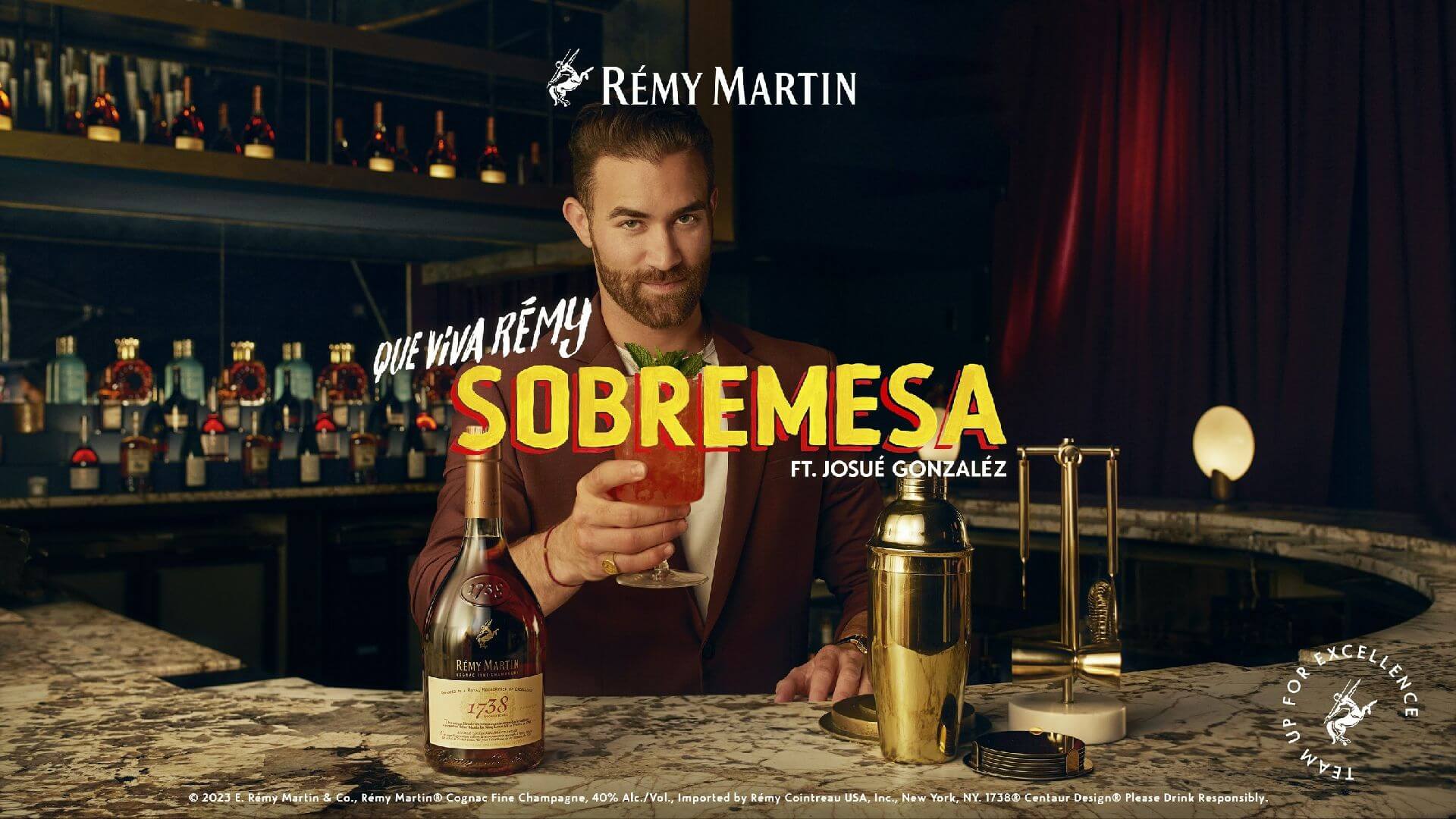
Josué Gonzaléz for the Rémy Martin "Que Viva Rémy Sobremesa" campaign

Mixologist Josué Gonzaléz for the Rémy Martin “Que Viva Rémy Sobremesa” campaign

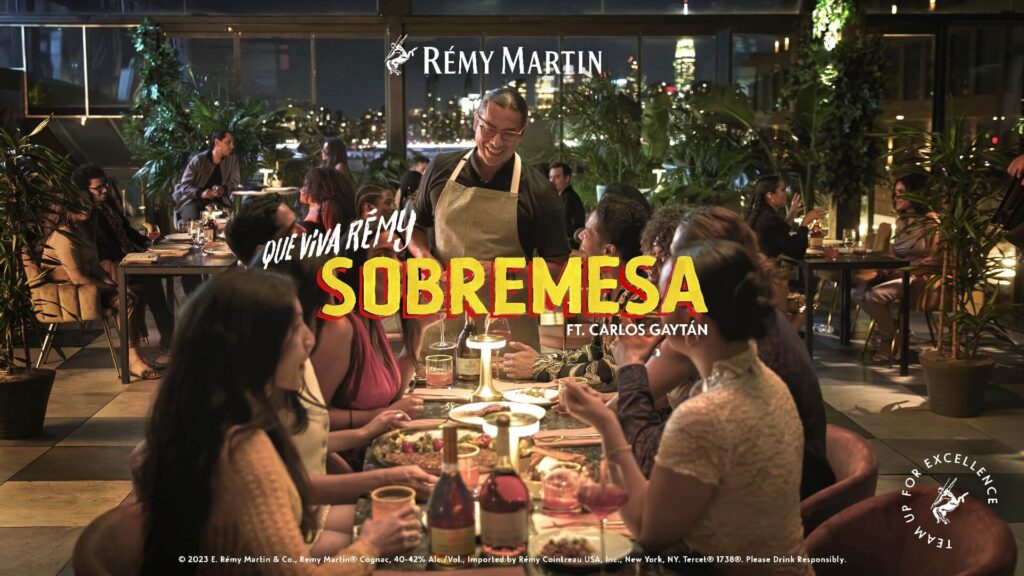
Rémy Martin is teaming up with the Hispanic Restaurant Association to celebrate Hispanic Heritage Month by honoring a post-dinner tradition.

That tradition, an important element of a number of Hispanic cultures, is called “sobremesa.” Translating to “at the table” or “upon the table,” sobremesa is the period of time after a meal during which people relax, chat, and digest.

This is, of course, one of the most important elements of a great meal and gathering of friends and family. While sobremesa may fly in the face of the “turn-and-burn” approach to operation, a hallmark of a wonderful time out at a restaurant is the post-meal vibe.

Are guests lingering with smiles on their faces, ordering post-dinner drinks and chatting, giving off a good energy? That would indicate an operator and their team have delivered excellent service and a memorable guest experience.

To celebrate Hispanic Heritage Month and sobremesa, Rémy Martin is launching a new campaign: “Que Viva Rémy Sobremesa.”


View this post on Instagram


A post shared by Rémy Martin US (@remymartinus)

Que Viva Rémy Sobremesa

A core element of this collaboration between Rémy Martin and the Hispanic Restaurant Association is bringing food and beverage together.

To achieve this, Que Viva Rémy Sobremesa is bringing together three influential F&B professionals.
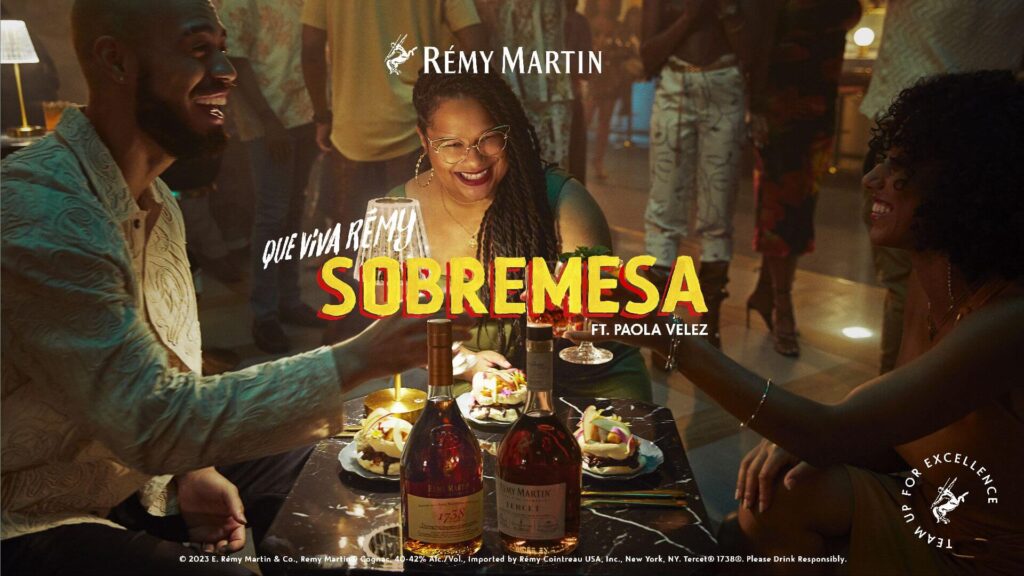
Chef Paola Velez for the Rémy Martin "Que Viva Rémy Sobremesa" campaign

Hailing from the Bronx with a career that has brought her to Washington, DC, Chef Paola Velez is an entrepreneur, activist, and the founder of Bakers Against Racism.
Chef Carlos Gaytán for the Rémy Martin "Que Viva Rémy Sobremesa" campaign

A restaurateur with restaurants in Mexico and Chicago—and his sights on California’s dining scene—Chef Carlos Gaytán is the first Mexican-born chef to earn a Michelin star.

Miami native and revered bartender Josué Gonzaléz brings an understanding of the culinary to his craft, beginning his journey in hospitality as a Johnson & Wales culinary student. His résumé includes some of the best bars and restaurants in America.

This powerhouse trio has been tasked with creating cocktails and culinary pairings that feature Rémy Martin and shine a spotlight on sobremesa. Their hard work will be showcased through immersive experiences throughout the US. Click here for Chef Velez’s recipes, here for Chef Gaytán’s creations, and here for Gonzaléz’s recipes.

However, Que Viva Rémy Sobremesa doesn’t stop with the conclusion of a meal. Rémy Martin, the Hispanic Restaurant Association, and their featured chefs and bartender also seek to add a new element to sobremesa.

Rather than sobremesa representing the end of a night out, Que Viva Rémy Sobremesa aims to transform the tradition into the start. In other words, “last call” now signals “the first call of the rest of the night.” Instead of asking, “When can we do this again,” the campaign encourages friends and family to ask, “What’s next tonight?”

The Mambo Mango Royale

To provide an idea of the creations coming from the Que Viva Rémy Sobremesa collaborations, here’s a cocktail recipe from Josué Gonzaléz.

  • 1.5 oz Rémy Martin Tercet
  • 0.75 oz Mango Syrup
  • 0.5 oz Lemon Juice
  • Bar spoon Galliano
  • Champagne to top
  • Decorative mango and edible flower to garnish

Add the first four ingredients and ice to a shaker. Shake vigorously for about ten seconds, then add a splash of Champagne. Pour into a flute or cocktail coupe, then garnish.

For more information, please read the press release below in its entirety. Cheers!

RÉMY MARTIN LAUNCHES ‘QUE VIVA RÉMY SOBREMESA’ CAMPAIGN TO CELEBRATE HISPANIC HERITAGE MONTH AND HONOR THE CHERISHED SOBREMESA TRADITION

Notable culinary and cocktail personalities come together to share custom recipes featuring Rémy Martin 1738 Accord Royal and Tercet and create lively experiences while embracing cultures of excellence and the tradition of Sobremesa

NEW YORK—To celebrate Hispanic Heritage Month, Rémy Martin is launching Que Viva Rémy Sobremesa, an homage to Sobremesa, the post-dining tradition found throughout many Hispanic cultures. The campaign brings influential culinary and mixology tastemakers together, including award-winning chefs Carlos Gaytán and Paola Velez, and renowned Mixologist Josué Gonzaléz, to create a variety of curated cocktails featuring Rémy Martin 1738 Accord Royal and Tercet along with culinary pairings showcasing how Sobremesa comes to life across different Hispanic cultures. The tastemakers and their pairings will be presented at a series of immersive events across the country.

With nearly 300 years of excellence producing Cognac Fine Champagne and symbolizing the diversity of craft and tradition, Rémy Martin continues to be at the forefront of moments that bring people together. As the kickoff to Hispanic Heritage Month, Rémy Martin is immersing cocktail connoisseurs in Sobremesa, a tradition where one finds themself lost in deep conversation – talking, sipping cocktails and spending time with those who matter most – often for hours after dining.

Getting lost in conversation and savoring the post-dinner experience is the essence of Sobremesa and with Que Viva Rémy Sobremesa, Rémy Martin will challenge the notion of “last call” by signaling Sobremesa as the start of the night ahead. After all, the most dispiriting words heard when you’re out are “last call” and “kitchen’s closed” – but with Rémy Martin the last call can now be the first call of the rest of the night.

“Rémy Martin’s passion for excellence, family values and traditions offer a moment for us all to partake in Sobremesa and we are thrilled to be teaming up with a variety of notable personalities to kick off the celebration this Hispanic Heritage Month,” said Tina Reejsinghani, Vice President of Luxury Brands at Rémy Cointreau Americas. “Enjoying classic recipes and sparking conversations around the table is at the heart of Hispanic heritage and Rémy Martin is excited to lead in the festivities of the time-honored tradition.”

As part of the campaign and the brand’s ongoing commitment to advancing the world of gastronomy, Rémy Martin is teaming up with the Hispanic Restaurant Association (HRA) and their Global Ambassador, Chef Fernando Stovell to support and further the careers of aspiring chefs, culinary entrepreneurs, restaurant managers, and industry professionals within the Hispanic community, uplifting the next generation of gastronomic excellence.

“At the Hispanic Restaurant Association, our vision is focused on fostering education and uplifting the Hispanic community across generations,” said John Jaramillo, Co-Founder and CEO of the Hispanic Restaurant Association. “As we work to elevate the culinary artistry within the Hispanic community, our partnership with Rémy Martin will play an integral part in extending our mission and vision across the country, allowing us to continue fostering a richer culinary perspective and build lasting bridges within the community.”

Throughout Hispanic Heritage Month, Rémy Martin will invite cocktail and culinary aficionados in New York and Miami to join the brand at the Rémy Martin Sobremesa Social Club. The events will feature lively entertainment alongside the unique dishes and cocktails curated by Carlos Gaytán, Paola Velez and Josué Gonzaléz, each inspired by their backgrounds. Chef Carlos, Chef Paola and Josué Gonzaléz will make appearances at the events, to showcase their creations and celebrate Sobremesa with guests. For more information and to purchase tickets for a VIP table experience, please visit Rémy Martin Sobremesa Social Club. Proceeds will benefit the Hispanic Restaurant Association.

Rémy Martin will also be capturing the essence of the Sobremesa tradition with a series of curated craft cocktails that highlight the opulent and complex flavor profiles of Rémy Martin 1738 Accord Royal and Rémy Martin Tercet. To keep the flavors going strong and accentuate each Rémy Martin expression, world-renowned chefs Carlos Gaytán and Paola Velez and Mixologist Josué Gonzaléz have created a variety of culinary and cocktail recipes representing their own cultures. From the Flamingo 1738 cocktail inspired by Josué’s childhood in Cuba and Chef Carlos’s nod to the sweet and savory elements of Mexican cooking with the Foie and Chocolate dish, to Chef Paola’s Nutmeg Pavlova recipe which combines her Dominican roots with the flavors of autumn, this campaign will take patrons on a culinary journey around the world.

The Que Viva Rémy Sobremesa campaign was developed in collaboration with creative agency FRED & FARID New York and will be featured across billboards and kiosks in Houston, TX; Los Angeles, CA; Miami, FL and New York, NY in addition to digital media and social content throughout Hispanic Heritage Month. For more information on the campaign, recipes and events, visit RemyMartin.com and follow along on social media on Instagram @RemyMartinUS | Twitter @RemyMartinUS | Facebook RemyMartinUSA

#QueVivaRemySobremesa #TeamUpForExcellence

ABOUT RÉMY MARTIN

Since 1724, the House of Rémy Martin has produced premium spirits that consistently appeal to the world’s most discerning connoisseurs. A profound love of the land, a continuity of family ownership and a passionate commitment to excellence has sustained Rémy Martin for nearly three centuries. As a result of its masterful production and generations of tradition in Cognac, the House of Rémy Martin produces award winning Cognacs Fine Champagne including Rémy Martin® XO, which was named Cognac of the Year 2022 by USA Spirits Ratings, and The Cognac Masters gold medal winning Rémy Martin® Tercet®, Rémy Martin® 1738 Accord Royal and Rémy Martin® V.S.O.P.

ABOUT HISPANIC RESTAURANT ASSOCIATION

Looking ahead, our vision is focused on fostering education and uplifting the Hispanic community across generations. We aspire to create a comprehensive impact by fostering economic growth and entrepreneurial endeavours through a range of interconnected networks, educational platforms, events, and supportive infrastructure.

ABOUT CHEF CARLOS GAYTÁN

A native of Mexico, chef and restaurateur Carlos Gaytán has made his mark in the culinary industry. From a young age, he was enamored with cooking, exploring a full spectrum of flavor while perfecting heirloom recipes alongside his mother. With a seamless unification of his Mexican heritage and his love of French culinary style, Carlos became the first Mexican-born chef to earn a coveted Michelin star in 2013. Gaytán appeared on Bravo’s Top Chef in 2013 and has since been widely featured as a host and judge on numerous culinary programs. He has opened two award-winning restaurants — one in Mexico in 2017, and another in Chicago in 2019. In 2024, he will open three new restaurants in California.

ABOUT CHEF PAOLA VELEZ

Award-winning chef, entrepreneur and community activist Paola Velez is the multihyphenate for a new generation of lifestyle personalities. Growing up between the Bronx and the Dominican Republic, Velez is fluent in cultures of city and island life, bringing infectious positivity and a keen eye on the micro-trends of the moment to the table. Her unique perspective has catapulted her to the pages of Food & Wine, and garnered her a nomination for Rising Star Chef by the James Beard Foundation, “Pastry Chef of the Year” from Esquire and “Best New Chef” from Food & Wine. Most recently, Paola founded the organization Bakers Against Racism as a social community, connecting bakers and creatives all across the globe to fight against racism in all of its forms. Looking ahead, under her lifestyle brand Dōekï Dōekï, a reflection of her Afro-Latina heritage, Velez is launching a series of collaborations and pop-up dinners across the country in addition to her first cookbook in 2024.

ABOUT MIXOLOGIST JOSUÉ GONZALÉZ

Josué Gonzaléz is a Miami native with a true passion for hospitality. As a culinary student at Johnson & Wales University, he accepted a barback position at Zuma Miami to gain industry experience, setting a decorated front-of-house career into motion. Josué found a friend and mentor in renowned Miami bartender Rob Ferrara, helping both achieve great success with openings at Swine Southern Table & Bar, Lure Fishbar and The Rum Line. As an individual, Josué was named one of Zagat Miami’s 30 under 30 in 2014, and went on to win and place in the top of various cocktail competitions. As part of the opening team at Sweet Liberty Bar & Supply, Josué was integral in the venue as it was awarded Best New Cocktail Bar in America at the Tales of the Cocktail Spirited Awards.  In 2018 Josué moved to Washington DC to open and manage the bar at Seven Reasons, a Latin concept, with Enrique Limardo. The restaurant was named Best New Restaurant in America 2019 by Esquire Magazine. Josué brings his talents and experience back to Miami in his work with Unfiltered Hospitality where he makes experiences better for people in every facet of the service industry.

Image: Rémy Martin

KRG Hospitality Start-Up Restaurant Bar Hotel Consulting Consultant Solutions Plans Services

by David Klemt David Klemt No Comments

Pumpkin Spice Everything is Already Here

Pumpkin Spice Everything is Already Here

by David Klemt

Black and white image of jack-o'-lantern with smoke coming of its eyes

In what perhaps is an attempt to encourage people to think of cooler autumnal temperatures, pumpkin spice is descending upon us earlier than ever before.

Operators who are finalizing their pumpkin spice menu items are basically already late to the party.

Luckily, it isn’t like the brands for which fall’s most infamous LTO flavor works are too far behind. A significant percentage of consumers are drawn to pumpkin spice menu items like trick or treaters to homes handing out full-size candy bars.

So, operators still have time to put the final touches on pumpkin spice menu items…but they’ll want to get a move on.

That’s exactly what restaurant chains did this year. Their pumpkin spice-flavored onslaught began with the start of this month.

Pumpkin Spice, Now a Summer Flavor?

Spirit Halloween stores. Christmas music. And now, it appears, Pumpkin Spice.

What do these three things have in common? Well, it seems like they’re making their debuts earlier and earlier each year.

When we think of summer and seasonality, I don’t think pumpkin or even baking spices enters into most people’s minds.

Unless, however, those people are in marketing and branding.

According to Restaurant Business, Krispy Kreme went all in on pumpkin spice on August 7. On that day, the chain unveiled four donuts and a number of beverages featuring pumpkin flavors.

Interestingly, the company’s global chief brand officer, Dave Skena, states that their pumpkin spice releases came one day earlier this year. Last year, they say, pumpkin spice arrived “significantly earlier than the year before.”

7-11 may have crossed the pumpkin spice dateline first this year. Dunkin’ is already offering pumpkin spice F&B items. And Starbucks, famous for their PSL LTO, is rumored to be launching their specialty menu this Thursday.

Given these August releases, can we expect a brand to attempt to get the jump on everyone else and launch pumpkin spice LTOs in July?

Consumer Cravings

Brands wouldn’t gamble on releasing their pumpkin spice LTOs in August if they didn’t think their decision would pay off.

Considering what Krispy Kreme’s Skena says about pumpkin spice’s August arrival, consumers have already spoken. Apparently, a significant percentage of people have an interest in fall flavors midway through summer.

Of course, there are a few considerations for independent operators in terms of seasonal releases. Rolling out new menus and menu items can be a costly endeavor. Pulling the plug on one revenue-generating seasonal menu or LTO in favor of significantly different items may be harmful to the bottom line.

One approach operators could take is to plan far enough ahead to pull the trigger on LTOs when 7-11, Dunkin’, or Starbucks launch theirs. In other words, be ready, but don’t jump the gun.

This also speaks to the importance of operators knowing their core guests and listening to feedback. Are front-of-house staff hearing murmurs from guests that they’re craving new flavors? Perhaps it could be lucrative to leverage that anticipation.

Image: Colton Sturgeon on Unsplash

KRG Hospitality Start-Up Restaurant Bar Hotel Consulting Consultant Solutions Plans Services

by David Klemt David Klemt No Comments

Top-performing Menu Items in the US

Top-performing Menu Items in the US (So Far)

by David Klemt

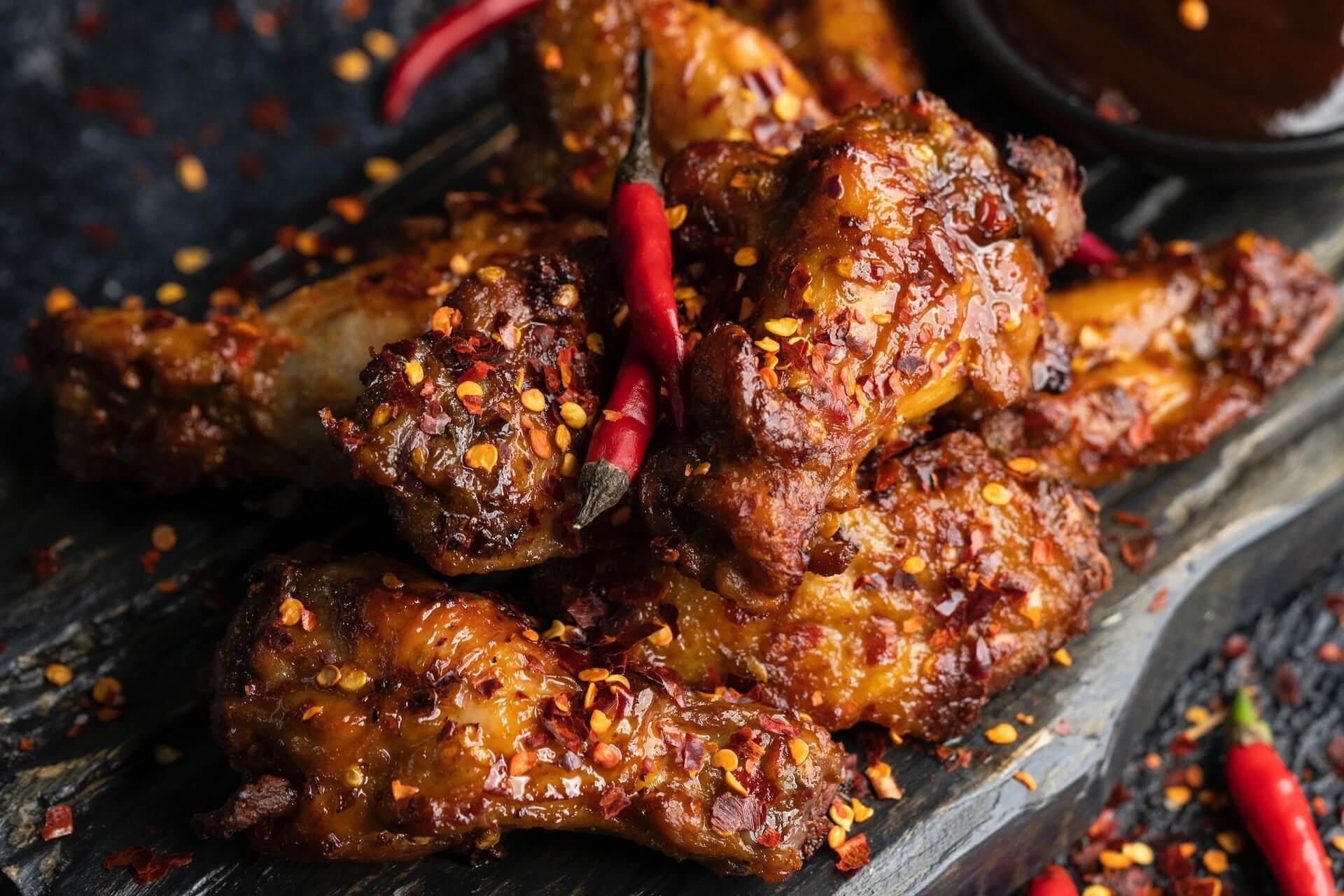
Barbecue chicken wings, chili peppers, and chili flakes

Thanks to a recent mid-year report from F&B intelligence platform Datassential, we now know the top-performing menu items in the US.

For the low, low price of filling out a handful of fields, you can download a copy of Datassential’s “Foodbytes: 2023 Midyear Trend Report” for yourself.

There’s plenty of useful data packed into this short report. You may find some of the top food items a bit surprising.

But First…

Datassential does more than just list the top mid-year menu performers in their latest report. There are also a couple of interesting datapoints for operators to consider.

The first piece of information is an alarming statistic: 54 percent of consumers are of the belief that “tipping culture has gotten out of control.”

As we’ve reported earlier, it’s likely that a major driver of “tip fatigue” comes from retail. The expectation for consumers to tip at a restaurant, bar or nightclub is ingrained deeply in American culture.

However, consumers throughout America are being prompted to tip after just about every transaction they’re attempting to complete. In fact, it’s not just retail that has been encouraging (in some cases, guilting) people to tip. Some contractors are also adding tip lines when handing over tablets to clients so they can pay their invoices.

One result is that servers and bartenders are reporting lower tips; guests are so over tipping that they’re pushing back against the practice in venues where they’d traditionally have no problem doing so.

Of course, tip fatigue isn’t the only reason consumers are pushing back against tipping. Many people feel that operators should increase what they pay staff. Indeed, some people feel that operators are asking them to subsidize their employee pay. Whether they’d be happy to pay higher prices remains to be seen.

Fads Aren’t Bad?

Whenever we cover trends or discuss them with clients, we caution against chasing too many (or the “wrong” trends). And fads? It can be even riskier to hop on the bandwagon of something that may never even reach the trend stage of its lifecycle.

However, likely due to the ubiquity of TikTok, consumers expect restaurants to embrace fads. According to Datassential, 67 percent of consumers overall “want to see more fads at restaurants and retail.”

That number jumps to 74 percent when focusing on Millennials and Gen Z.

So, while we still caution operators about jumping on fads (or “micro trends”) and trends, that doesn’t mean be too cautious. If a fad or trend works with your brand and won’t cost much to feature, at least give it consideration.

Not sure you’re great at identifying fads that will work for your business? Ask your staff which fads and trends are hot at the moment.

Speaking of Hot…

Alright, let’s take a look at the F&B items Datassential identifies as popular at the midway point of 2023.

Again, I encourage you to download the report in its entirety. You can do just that by clicking here.

But for those who want instant gratification, check out these menu items:

  • Super Duper: Let’s kick things off with the hottest chain LTO, the Denny’s Super Slam. Per Datassential, restaurant chains have already featured in excess of 2,000 LTOs in 2023. The F&B intel agency tests them all, and the Super Slam is wearing the LTO crown at the moment.
  • Chef Chatbot: Datassential tapped ChatGPT to create a burger recipe and had Midjourney create an image for the resulting Caprese Avocado Burger. More than half of consumers surveyed—57 percent—want to try it at a restaurant.
  • Big Winner: Datassential asked consumers a simple question: Which would you rather eat for the rest of your life, a hamburger or a hot dog? A staggering 87 percent chose hamburgers, meaning just 13 percent of consumers would choose a hot dog over it’s burger buddy.
  • What a Pickle: Back in March we checked out Slice’s Slice of the Union report, and it predicted pickle pizzas would be a hot trend this year. Well, Datassential has crunched the numbers and says 40 percent of consumers are aware of this pizza style already. Looks like Slice may be proven right by the end of the year.
  • Speed Demon: Curious about the fastest-growing menu item on the US? Well, wonder no more: Datassential says it’s the barbecue chicken wing. Over the past year, they’ve grown 373 percent on menus across the States. Datassential posits the overall growth of chicken and the embracing of flavor trends like Carolina gold barbecue sauce are contributing factors.

There’s a lot to unpack here, so I’ll leave you to it. Just remember that when it comes to fads and trends, there’s a fine line between what’s hot, what’s not, and jumping on the wrong one. Good luck!

Image: Ahmed Bhutta on Pexels

KRG Hospitality Start-Up Restaurant Bar Hotel Consulting Consultant Solutions Plans Services

by David Klemt David Klemt No Comments

Should You Offer Your Guests Brunch?

Should You Offer Your Guests Brunch?

by David Klemt

Person with tattoos pouring coffee from French press

Is brunch on its way to becoming a lucrative daypart that can grow traffic, increase revenue, boost guest engagement, and promote loyalty?

If a report from Square is anything to go off, yes.

Owing in part to changes in consumer behavior from 2019 to now, brunch appears to be a solid traffic and revenue generator. The number of people working from home is impacting daypart spending, which makes sense. Traditional office workers will often pop into a QSR or cafe for coffee and breakfast on their way in to work. And when lunch rolls around, they tend to head out to restaurants nearby for their break.

Now, the data support the belief that more people are staying home on weekdays and unleashing pent-up demand for socializing and dining out on the weekends. And apparently that demand is rather voracious, because brunch appears to be on the rise.

In 2019, just over eight percent of all dining dollars were spent on Saturdays during traditional brunch hours. That has grown to just over ten percent this year.

In terms of engagement and bringing more brand awareness, the term itself is growing on social media platforms.

Along with revisiting hours of operation, it may be wise for operators to consider offering Saturday or Sunday brunch.

Bristory

Yes, that’s a brunch-style portmanteau of “brunch” and “history.” No, I’m not proud of myself but I’m leaving it in.

The portmanteau “brunch” is believed to have first been coined by a British writer named Guy Beringer in 1895. He included the word in an article he wrote for Hunter’s Weekly. Beringer was making the case for noontime meal that combined breakfast and lunch.

In arguing for what may be the world’s first hybrid meal, Beringer wrote that, “the arguments in favor of Brunch are incontestable. In the first place it renders early rising not only unnecessary but ridiculous. You get up when the world is warm, or at least, when it is not so cold. You are, therefore, able to prolong your Saturday nights…”

The word would appear a year later in a Pennsylvanian publication called the New Oxford. More than 30 years later, brunch was on its way to becoming “a thing” in the US.

Oh, and there are arguments that an American reporter, Frank Ward O’Malley, who should credit for the word “brunch.” Those who believe this is the case say O’Malley created the portmanteau some time between 1906 and 1919. As is the case with many classic cocktails, the origin of brunch is at least somewhat hazy.

By the 1970s, the stigma that once came with brunch—that drinking publicly during the day could harm one’s reputation—began to dissipate.

Brunch by the Numbers

According to Square, brunch is appealing for several reasons.

Let’s take a look at this infamous daypart by the numbers.

  • 9.8 percent: Growth in the number of restaurants in the US offering breakfast and brunch in 2022 alone.
  • 10 percent: Amount of overall spending in restaurants on Saturdays between the hours of 8:00 AM and 1:00 PM in 2023.
  • 35 million: Number of #brunch Instagram posts, and the number is growing.
  • 4.5 billion: Number of TikTok views of posts with #brunch.
  • 71 percent: Number of Americans who wish restaurants in the US would serve breakfast items all day.

To me, the most striking statistic is that brunch spending now accounts for ten percent of all restaurant spending.

That spend is logical when we think about who tends to enjoy brunch: people with time and money to spend on a leisurely, all-day meal.

As professor Farha Ternikar, author of Brunch: A History, has said, “Brunch continues to grow anywhere there is disposable income or time.”

So, operators who are considering offering brunch for the time or investing more into brunch have some questions to answer: Who is my target audience? What’s the population density of my market? Who has disposable income and time? Should I offer brunch on Saturday, Sunday, or both days? Does brunch work for my concept? Which venues near me are already offering brunch?

Answer those questions and speak with your staff before jumping feet first into this potentially lucrative daypart.

Image: Helena Lopes on Pexels

by David Klemt David Klemt No Comments

Taco Bell Celebrates Taco Tuesday Win

Taco Bell Celebrates Taco Tuesday Win

by David Klemt

Taco Bell Doritos Locos Taco and sauce packet

Taco Bell, fresh off their victory in petitioning for the cancellation of the “Taco Tuesday” mark, will open a $5 million taco tab on September 12.

There’s no arguing that over at least the past few years Taco Bell has become the master of LTOs and attention-grabbing, loyalty-strengthening, and headline-generating promotions.

This campaign further solidifies the brand’s status as king of the fast-food campaigns.

“Taco T**sday” to “Taco Tuesday”

It’s highly unlikely that consumers and operators alike are unaware of the company’s “Taco T**sday” ads. The campaign, while playful, put a spotlight on the fact that, until recently, “Taco Tuesday” was a registered trademark.

Rather than spend millions of dollars to fight Taco Bell, Taco John’s, who previously had the rights to the mark, opted to relinquish the rights to the mark. Taco Bell’s argument was that nobody should be permitted to mark a common phrase.

“We’ve always prided ourselves on being the home of Taco Tuesday, but paying millions of dollars to lawyers to defend our mark just doesn’t feel like the right thing to do,” said Jim Creel, Taco John’s CEO. “As we’ve said before, we’re lovers, not fighters, at Taco John’s. So in that spirit, we have decided to begin sharing Taco Tuesday with a pledge to contribute $100 per location in our system to restaurant employees with children who are battling a health crisis, death or natural disaster. And we’re challenging our litigious competitors and other taco-loving brands to join us in supporting the people who serve our favorite food to guests across the nation.”

In fact, Creel fired a shot across the bow at Taco Bell at other rivals. After announcing their pledge to CORE, the CEO challenged other brands that want to use “Taco Tuesday” to do the same. The result would be quite the donation, considering that Taco John’s operates 400 restaurants in 21 states and Taco Bell alone operates more than 7,200 in the US. Look overseas and that number jumps up by about 1,000 locations in 30 countries.

Taco John’s has reportedly made good on their pledge, donating $40,000 to CORE, Children of Restaurant Employees.

What’s in a Mark?

Fast-food chain Taco John’s trademarked the phrase back in 1989. However, back in 1984, a California-based restaurant, Tortilla Flats, registered the trademark. According to some sources, the mark lapsed and Taco John’s snapped it up. That said, Tortilla Flats has sued other California restaurants for using the phrase throughout the years.

Interestingly, Taco John’s only had rights to the mark in 49 states. The exception is New Jersey, where Gregory’s owns the trademark. In fact, anyone who visits their site (as of the publication of this article) will see the phrase “Home of the Original Taco Tuesday!” right at the top.

However, it may surprise some to learn that a celebrity who appeared in Taco Bell’s “Taco T**sday” ads attempted to trademark the phrase in 2019. That celebrity? None other than Lebron James.

Clearly, this seemingly simple two-word phrase is a valuable trademark. It’s also likely that plenty of restaurants across the US have been surreptitiously using the phrase to drive traffic to their venues on Tuesdays for years.

The fact that Lebron James showed interest in the trademark and Taco Bell likely spent millions of dollars in ad revenue to have Taco John’s mark canceled shows the value. Time will tell how many millions of dollars the phrase will be worth to Taco Bell and other restaurant brands across the US.

Taco Tab

Some will see Taco Bell’s campaign as a massive brand bullying a smaller rival. Others will agree that it’s unfair for anyone to own the rights to such a common phrase.

In terms of exposure, I think this battle will help Taco John’s experience further growth. Last year was a banner year for growth for the franchise, and the brand was seeing growth back in 2021 as well.

After doing some digging, I learned that seven Taco John’s locations are owned by corporate; the plan for 2023 is to go from 375 stores to 400; and another 20 to 25 locations are planned for 2024. Per the Taco John’s website, initial layout for a franchise is between $942,000 and $1.4 for a single unit. A single franchise location generates annual revenue of around $1.2 million, on average.

Regarding Taco Bell, the brand is celebrating their victory—framed as a victory for all restaurants—with another of their famous and effective LTOs. On August 15, August 22, August 29, and September 5, Taco Bell guests can score a free Doritos Locos Taco. But the big celebration comes on September 12.

For that upcoming Taco Tuesday, Taco Bell will open a $5 million tab with DoorDash across the United States, with the exception of New Jersey. Again, Gregory’s owns the rights to the “Taco Tuesday” mark in the Garden State.

On September 12, Taco Bell will cover a portion of orders placed through the third-party delivery app to participating restaurants that offer Mexican cuisine. This does help the fast-food titan make the case that they fought this battle not just for themselves but all foodservice brands that wish to use the phrase “Taco Tuesday” without fear of legal action.

For further information, read the official Taco Bell press release below.

Taco Bell's "Liberate Taco T**sday" court petition

TACO BELL WILL HELP PAY FOR YOUR TACO TUESDAY CELEBRATION — EVEN IF IT’S NOT AT TACO BELL

Irvine, Calif. (August 8, 2023) – To celebrate the liberation of the Taco Tuesday trademark registration in 49 states, and to support and spotlight restaurants who now have the right to freely use Taco Tuesday, Taco Bell has announced that on Tuesday, September 12, Taco Tuesday fans (nearly) everywhere* can celebrate Taco Tuesday (nearly) anywhere – and Taco Bell will help pay for it.

On Taco Tuesday, September 12, Taco Bell, in partnership with DoorDash, is opening a $5 million taco tab to cover a portion of taco fans’ orders from any participating vendor selling Mexican cuisine. Because now that Taco Tuesday is free* – your tacos should be, too.

Leading up to the September 12 celebration, all Taco Bell locations will be offering a free Doritos® Locos Taco every Tuesday, no purchase necessary, on 8/15, 8/22, 8/29 and 9/5**.

“Taco Tuesday belongs to all who make, sell, eat and celebrate tacos, and this Free-For-All will not only thank taco fans who supported the cause, but will also spotlight local restaurants and vendors who can now embrace Taco Tuesdays without fear of legal action,” said Taco Bell U.S. Chief Marketing Officer, Taylor Montgomery. “When tacos win, we all win. We all win when Taco John’s decides to release its trademark registration, we all win when taco vendors everywhere are free to join the movement, and we all win when taco fans can freely celebrate and support Taco Tuesdays at Taco Bell or anywhere else.”

The Road to Freeing Taco Tuesday

In May 2023, Taco Bell took a bold step on behalf of taco lovers nationwide by filing legal petitions to cancel the two Taco Tuesday trademark registrations. The aim was simple: to free the phrase for restaurants nationwide. The message was clear: Taco Tuesday belongs to everyone, from Taco Bell to Taco John’s to your favorite local taco spot.

In late July, Taco John’s courageously decided to abandon its Taco Tuesday trademark registration. Not only did Taco John’s act benefit thousands of businesses across 49 states by making the term Taco Tuesday more freely available, Taco John’s also made a meaningful donation to Children of Restaurant Employees (CORE) for $40,000, which the Taco Bell Foundation has matched.

Supporting The Taco Community

Taco Bell has also committed to donating $1 million in partnership with the Taco Bell Foundation to support young people who make, sell, eat and celebrate tacos. Donations made by Rounding Up at checkout on Tuesdays will be matched up to $1 million. These donations will continue to fund the Taco Bell Foundation’s Community Grants and the Live Más Scholarship for fans and team members.

*The Taco Tuesday trademark registration has been canceled in all states except New Jersey. Therefore, the DoorDash offer will be limited to the 49 states where Taco Tuesday has been freed.

**NO PURCHASE NECESSARY. Offer valid on Tuesdays 8/15, 8/22, 8/29, and 9/5 only during local store operating hours while supplies last. Limit one (1) regular Free Seasoned Beef Nacho Cheese Doritos®

Locos Tacos per person, per offer day, available at participating U.S. Taco Bell® locations only. Not available with delivery orders unless placed directly on the Taco Bell app (delivery fees, taxes and tip apply). App and web orders require inputting offer code and customer must add a DLT to their cart. Not valid with any other offer. No substitutions. No cash value. Void where prohibited. Terms: ta.co/terms.

About Taco Bell Corp.

For more information about Taco Bell, visit our website at www.TacoBell.com, our Newsroom at www.TacoBell.com/news or www.TacoBell.com/popular-links. You can also stay up to date on all things Taco Bell by following us on LinkedIn, TikTok, Twitter, Instagram, Facebook and subscribing to our YouTube channel.

Images: Taco Bell

by David Klemt David Klemt No Comments

Cheers to the 2023 World Beer Cup Winners

Cheers to the 2023 World Beer Cup Winners

by David Klemt

Flight of beers offering different styles

Raise a glass or hoist a stein in celebration of the 2023 World Beer Cup winners, a collection of some of the most incredible brews on the planet.

Since 1996, the World Beer Cup has established itself as “the Olympics of Beer” and is hosted by the Brewers Association. This year, 272 judges from 26 countries ranked submissions from 2,376 brewers across 103 categories. A staggering 10,213 beers were entered in the 2023 World Beer Cup.

On average, 99 beers are submitted for each category. Of note, no category is guaranteed to have three medalists. In theory, the judges assessing a given category may award only a silver or bronze medal, determining that there is no outstanding entrant deserving of gold.

While the average per category is 99 entrants, some styles have hundreds. The first five categories below boasted the most entrants in 2023.

For our coverage of the 2022 World Beer Cup winners, click here.

American-style India Pale Ale

412 entrants

  • Gold: Head Hunter (Fat Head’s Brewery & Saloon; North Olmsted, Ohio, USA)
  • Silver: Applied Science (Sunriver Brewing Co.; Sunriver, Oregon, USA)
  • Bronze: Old West (Craft Coast Beer & Tacos; Oceanside, California, USA)

Juicy or Hazy India Pale Ale

374 entrants

  • Gold: Wherever You Go (Green Cheek Beer Co.; Costa Mesa, California, USA)
  • Silver: Nectaronus Prime (Moksa Brewing Co.; Rocklin, California, USA)
  • Bronze: Nelson Hazy IPA (Prison Pals Brewing Co.; Doral, Florida, USA)

German-style Pilsener

233 entrants

  • Gold: Pils (Von Ebert Brewing, Pearl District; Portland, Oregon, USA)
  • Silver: Dollar Pils Y’all (Holler Brewing Co.; Houston, Texas, USA)
  • Bronze: Bibo (Creature Comforts Brewing Co., Southern Mills; Athens, Georgia, USA)

International Light Lager

220 entrants

  • Gold: Anne Bonny (Le Corsaire – Microbrasserie Pirate; Lévis, Québec, Canada)
  • Silver: 3Speed (Amsterdam Brewing Co.; Toronto, Ontario, Canada)
  • Bronze: Ultra Secret Enigma (Liability Brewing Co.; Greenville, South Carolina, USA)

Wood- and Barrel-aged Strong Stout

202 entrants

  • Gold: Big Mistake (11 Below Brewing Co.; Houston, Texas, USA)
  • Silver: BA Sexual Chocolate (Foothills Brewing; Winston-Salem, North Carolina, USA)
  • Bronze: Vladislav (Diebolt Brewing Co., Denver, Colorado, USA)

I selected another dozen categories, which you’ll find below. These include American Wheat Beer, Non-alcohol Beer, and Pumpkin Beer.

For the full list of 2023 World Beer Cup winners, please click here. Cheers!

Session India Pale Ale

  • Gold: Wild Gravity (Bend Brewing Co.; Bend, Oregon, USA)
  • Silver: Trump Hands (Cannonball Creek Brewing Co.; Golden, Colorado, USA)
  • Bronze: Summatime (603 Brewery; Londonberry, New Hampshire, USA)

American Wheat Beer

  • Gold: Taildragger 5G (Saddle Mountain Brewing Co.; Goodyear, Arizona, USA)
  • Silver: Meister (Eppig Brewing; Vista, California, USA)
  • Bronze: Miner’s Gold (Lewis & Clark Brewing Co.; Helena, Montana, USA)

Belgian Fruit Beer

  • Gold: Central City Brewing Framboise (Central City Brewers and Distillers; Surrey, British Columbia, Canada)
  • Silver: Vieux Bois Lambic Inspired Ale w/ Cranberry & Raspberry (Bozeman Brewing Co.; Bozeman, Montana, USA)
  • Bronze: Turtle Kriek (Peticolas Brewing Co.; Dallas, Texas, USA)

Belgian-style Sour Ale

  • Gold: Vintage 2022 (New Glarus Brewing Co.; New Glarus, Wisconsin, USA)
  • Silver: Chance, Luck and Magic 2020 (Garage Project; Wellington, New Zealand)
  • Bronze: Borealis (Lamplighter Brewing Co.; Cambridge, Massachusetts, USA)

English-style Brown Ale

  • Gold: Shhhhhh…This Is Ryan’s Award Winning Brown Ale (Green Cheek Beer Co., Costa Mesa; Costa Mesa, California, USA)
  • Silver: Black Cats (Streetside Brewery; Cincinnati, Ohio, USA)
  • Bronze: Brown Ale (Grid City Beer Works; Salt Lake City, Utah, USA)

South German-style Hefeweizen

  • Gold: Altstadt Hefe (Altstadt Brewery; Fredericksburg, Texas, USA)
  • Silver: Flying W Hefeweizen (Little Dry Creek Brewery; Greenwood Village, Colorado, USA)
  • Bronze: Fujizakura Kogen Beer Weizen (Fujizakura Heights Beer; Minamitsuru-gun, Yamanashi Prefecture, Japan)

Classic Saison

  • Gold: Saaz Dryhopped Saison (33 Brewing Experiment; Vancouver, British Columbia, Canada)
  • Silver: Juilletistes (Bruery Terreux; Placentia, California, USA)
  • Bronze: Valor (Tooth and Nail Brewing Co.; Ottawa, Ontario, Canada)

Pumpkin Beer

  • Gold: Pumpkin Ale (Backpocket Brewing; Coralville, Iowa, USA)
  • Silver: Pumpkinator (Saint Arnold Brewing Co.; Houston, Texas, USA)
  • Bronze: Jack O’Lantern Ale (Bond’s Brewing Co.; Laramie, Wyoming, USA)

Chili Beer

  • Gold: Yellow Fever (Comrade Brewing Co.; Denver, Colorado, USA)
  • Silver: Kimchi Sour (Dokkaebier; Oakland, California, USA)
  • Bronze: Oaxaca Choca Mexican Chocolate Stout (New Realm Brewing Co., Charleston; Charleston, South Carolina, USA)

Smoke Beer

  • Gold: Unearthing the Orb (Resolute Brewing Co.; Centennial, Colorado, USA)
  • Silver: Smokehaus Bock (Devils Backbone Basecamp Brewpub & Meadows; Roseland, Virginia, USA)
  • Bronze: Colossal 2 (Port City Brewing Co.; Alexandria, Virginia, USA)

Gluten-free Wheat Beer

  • Gold: Ghostfish 8th Anniversary Beer (Ghostfish Brewing Co.; Seattle, Washington, USA)
  • Silver: Seven Spice Anniversary Saison (Holidaily Brewing Co.; Golden, Colorado, USA)
  • Bronze: Ripped Jeans and Wolf Shirts (ALT Brew; Madison, Wisconsin, USA)

Non-alcohol Beer

  • Gold: Superb-Owl (Uiltje Brewing Co.; Haarlem, North Holland, Netherlands)
  • Silver: Just the Haze (Boston Beer Co., Samuel Adams Brewing Co.; Boston, Massachusetts, USA)
  • Bronze: Galactic Extra Dark (Big Drop Brewing Co.; Wilmington, Delaware, USA)

Image: Daniel Lee on Unsplash

KRG Hospitality Bar 101 Techniques

by David Klemt David Klemt No Comments

Celebrate the Negroni, Support Slow Food

Celebrate the Negroni and Support Slow Food

by David Klemt

Bartender pouring Negroni into glass

This month, operators will have the opportunity to sign their bars up to take part in the tenth-anniversary celebration of Negroni Week.

For 2023, Negroni Week hosts Imbibe Magazine and Campari are raising funds for Slow Food. Sponsors also include Cinzano, Bulldog Gin, Bols Genever, and Coopers’ Craft Bourbon.


View this post on Instagram


A post shared by Campari USA (@campariusa)

Negroni Week will take place from September 18 through September 24. Registration is now live and operators can sign up their bars via this link.

So, we’re helping spread the word early and giving operators and their teams plenty of time to prepare to participate this year.

Negroni Week 2023

After first launching in 2013, Negroni Week is celebrating their decennial year.

Over the course of ten years, Imbibe and Campari have seen tremendous growth and results. In its inaugural year (or perhaps inaugural week is more accurate), a little over 100 venues participated. In its second year, 1,300 venues registered for Negroni Week.

Now, thousands of venues sign up every year, helping to raise money for worthy causes. To date, Negroni Week boasts more than $4 million in funds for charitable organizations.

Participation really couldn’t be any simpler: register, make a donation of at least $25, serve Negronis and/or variations of Negronis, and donate proceeds from your Negroni Week LTO menu.

After completing registration and making at least the minimum donation, an operator’s venue will gain placement on the Negroni Week website. The listings are searchable by state and city. Venues that donate $250 or more will carry a Premium Donor designation.

Those looking for inspiration for their charity LTO menus can click here to sift through Negroni Week’s recipe database.

Slow Food

Simply put, Slow Food’s mission is to help everyone access food that’s good for them, good the people who grow it, and good the planet as a whole.

An even more succinct description comes from the Slow Food website: access to food that’s “good, clean, and fair for all.”

Further, Slow Food seeks to prevent the loss local food cultures, along with food traditions. The organization was founded in 1989 and is now active in more than 160 countries.

In the US, Slow Food operates as a 501(c)(3) organization and has been active in Canada for several years. The charitable organization has had a strong presence in the provinces of British Columbia, Calgary, Montréal, and Ontario.

Get Ready

With just three ingredients in a 1:1:1 ratio, any bar team should be able to handle putting delicious Negronis across the bar.

So, operators should ensure their team can craft a traditional Negroni while encouraging them to work on some creative variations.

We’ll see in a little over a month to celebrate Negroni Week!

Image: Jonathan Borba on Unsplash

KRG Hospitality Complete Bar Menu Audit

by David Klemt David Klemt No Comments

Novo Fogo Reformulates Brazilian RTDs

Novo Fogo Reformulates and Redesigns Brazilian RTDs

by David Klemt

Redesigned and reformulated Novo Fogo ready-to-drink canned cocktails

Just before Tales of the Cocktail kicks off, Novo Fogo Organic Cachaça announces the reformulation of their award-winning ready-to-drink cocktail line.

As founder and CEO Dragos Axinte reveals on episode 97 of the Bar Hacks podcast, the RTD series now features key changes.

For example, the RTDs now come in 12-ounce slim cans rather than their original eight-ounce cans. As you can see, the design is also much more colorful and eye-catching.

Of course, the changes aren’t simply cosmetic. Inside the can, each expression represents a new recipe. The last iteration of Novo Fogo RTDs was delicious and showcased their Silver Cachaça brilliantly. However, the new formulation offers even more robust flavor and drops the sweetness a bit.


View this post on Instagram


A post shared by Dragoș Axinte (@treerestrial)

Most importantly, the new RTDs are truly a pioneering beverage. Novo Fogo’s new canned cocktails are the first RTDs made with Brazilian cachaça ever to achieve USDA Organic certification.

This means that Novo Fogo’s entire lineup, from core expressions to special releases, is USDA-certified 100-percent organic. That’s a huge win for the company, for operators who feature their products, and for operators’ guests.

Operators will be able to introduce these new 12-ounce, nine-percent ABV RTDs to their guests shortly. They’re perfect as a refreshing summer cocktail, served on ice in buckets with limes for garnish.

NOVO FOGO ANNOUNCES NEW BRAZILIAN ORGANIC COCKTAIL

RTD Line Sets Industry Standard as the First-Ever USDA-Certified Organic Canned Cocktail Made with Brazilian Cachaça

SEATTLE, WANovo Fogo Organic Cachaça today announces that they have completely redesigned and reformulated their popular line of award-winning Brazilian canned cocktails, offering consumers a fresh way to experience their carbonated twist on Brazil’s national cocktail, the Caipirinha. Novo Fogo Brazilian Organic Cocktails come in three tropical flavors and are USDA-certified organic.

The award-winning, sustainability-oriented cachaça producer makes handcrafted cachaça from estate-grown sugarcane in Brazil’s Atlantic Rainforest and is a pioneer in spirit-based ready-to-drink (RTD) beverages. For over six years, Novo Fogo’s canned cocktails have introduced North American drinkers to Brazilian cachaça in an approachable, convenient, and delicious format. The current product evolution represents a giant leap forward in organic ingredient certification, packaging design, and flavor.

Novo Fogo’s Brazilian Organic Cocktails highlight three traditional Brazilian flavors—Lime, Passion Fruit, and Mango—that complement the base spirit of Novo Fogo Silver Cachaça, beloved by bartenders across the globe. The 100% natural ingredients have been reformulated to create a cocktail that is now certified organic by the USDA, a first for any cachaça-based RTD and a big win for Mother Earth. This breakthrough now makes Novo Fogo’s entire product line USDA-certified organic.

The colorful design of the 12 oz sleek cans evokes Novo Fogo’s origins in the Brazilian rainforest and emerged in collaboration with multi-Grammy-nominated dance music duo, SOFI TUKKER, who became co-owners and global ambassadors of Novo Fogo in October 2022. SOFI TUKKER’s vibrant, inclusive, and global perspective on electronic music has attracted legions of adoring fans worldwide, and Novo Fogo’s Brazilian Organic Cocktails are poised to accompany SOFI TUKKER’s music as the perfect concert cocktail.

Novo Fogo Brazilian Organic Cocktails feature new recipes that are full-flavored and not too sweet, each at 9% ABV with 150 calories and 12 grams of carbohydrates per serving. The aluminum cans have grown to 12 oz in volume, with 1.8 proper cocktail servings per can. Although they are new in every way, these updated cocktails continue to combine freshness, deliciousness, and shelf stability by virtue of their organic-certified ingredients that harmonize as balanced, carbonated drinks. Drink ‘em how you like ‘em, as long as they’re cold: straight from the chilled can, over ice in a glass, and with or without an extra squeeze of lime.

Novo Fogo is an award-winning Brazilian cachaça producer that handcrafts their spirits at their zero-waste distillery at the edge of the Atlantic Forest in Brazil’s southern state of Paraná. The purest representation of USDA-certified 100% organic sugarcane, Novo Fogo’s Silver Cachaça is the result of single pot distillation in small batches to maximize the flavors of local terroir in the finished spirit. Silver Cachaça is the base spirit for all three Brazilian Organic Cocktails.

“We have always been committed to genuinely reflect Brazilian culture in our brand persona, while also observing and respecting North American consumer trends. These new organic cocktails are a natural evolution of our understanding of the world and incorporate the positive, colorful, and vivid inspiration that SOFI TUKKER brought to the brand. As with everything we do these days, our new Brazilian Organic Cocktails represent the intersection of integrity and joy,” says Novo Fogo’s founder and CEO, Dragos Axinte.

Novo Fogo Brazilian canned cocktails are sold to distributors nationwide by 375 Park Avenue Spirits and online with a suggested retail price of $3.75 per can and $14.99 for a four-pack. To learn more about Novo Fogo products, please visit www.novofogo.com.

About Novo Fogo

A passionate advocate for sustainable practices in the spirits industry, Novo Fogo is a carbon-negative company that produces USDA-certified 100% organic cachaças at its zero-waste distillery in the heart of Brazil’s Atlantic Rainforest. Its production methods prioritize human and environmental sustainability; the company is proud of its all-female distiller team and its legacy reforestation project, The Un-Endangered Forest, which seeks to restore 44 species of threatened native trees. Extending this ethos to its cocktail audience, Novo Fogo has been a trailblazer for sponsoring health and wellness initiatives for spirit industry members. The company’s product line intersects traditional Brazilian culture with modern cocktail trends of healthier drinking, such as low carbs, low ABV, and low calories. Seeking to build a business that can last 100 years, Novo Fogo has partnered with multi-Grammy-nominated global dance music duo SOFI TUKKER to foster increased awareness towards its brand of conscientious capitalism. Find Your Own Brazilian Zen™ by visiting https://www.novofogo.com.

About 375 Park Avenue Spirits

375 Park Avenue Spirits specializes in the premium- to luxury-spirit categories and their portfolio includes numerous expressions from leading international producers.  Founded as Luctor International, LLC in 1981, 375 Park Avenue Spirits joined the Sazerac Company in early 2015 to act as an independent, yet fully integrated sales and marketing affiliate. The company is known today for creating an environment of growth for supplier partners in the domestic market for renown brands like Van Gogh Vodka from Holland, Sobieski Vodka from Poland, Cutty Sark Blended Scotch, J.P. Wiser’s Canadian Whisky, Paul John Single Malt Whisky from India, Scapegrace Gin from New Zealand, Novo Fogo Cachaça and many others. For more information on 375 Park Avenue Spirits, please visit www.375park.com.

Images courtesy of Novo Fogo Organic Cachaça

KRG Hospitality Start-Up Restaurant Bar Hotel Consulting Consultant Solutions Plans Services

by David Klemt David Klemt No Comments

Are You Making MargaRights or MargaWrongs?

Cointreau Wants to Know: Are You Making MargaRights?

by David Klemt

Aubrey Plaza holding a Margarita made with Cointreau

Temperatures are rising and people are socializing, so Cointreau wants to make sure you and your team make Margaritas right.

In fact, they’re so serious about Margarita specs that they’re partnering with Aubrey Plaza educate the public. To celebrate the 75th anniversary of the Margarita, the iconic brand is launching the MargaRight campaign.

Challengers come and go but so far, the Margarita is the top cocktail in the US. This has been the case for many, many years. Of course, it’s also a popular cocktail around the world and has been number one in other countries as well.

Now that we’re a week away from the “official” start of summer, it’s paramount to make sure your Margaritas are MargaRight. For one thing, it’s the perfect summer sipper. For another, people are eager to socialize in restaurants and bars, and the Margarita is sure to join groups of friends as they hang out together.

But there’s another reason to ensure your Margs are on point: The wrath of Aubrey Plaza. More accurately, avoiding incurring Plaza’s wrath for putting MargaWrongs across your bar.

Margarita mix? Anger. No Cointreau? Fury.

To borrow a refrain from fanatics of another classic cocktail, it’s safe to say that Plaza would agree with, “No Margarita without Cointreau.”

The Original Margarita

Some, including Cointreau, support the belief that the Margarita’s creation traces back to 1948. For this origin story, Dallas socialite Margarita Sames is either the inventor of the Margarita or asked for a signature cocktail for a party she was hosting at her Acapulco home. Going further, another claim is that Tommy Hilton was a party guest and brought the recipe to Hilton properties, helping to make it famous.

Another claim is that the Margarita is simply a logical evolution of the Daisy. The mid-1800s tipple has a cocktail family named after it, and the Margarita, Sidecar, Cosmopolitan, and Daiquiri sprang forth from it.

Regardless of what origin story you choose to believe, Cointreau champions the original recipe: Cointreau, blanco tequila, fresh lime juice, and a lime wheel to garnish. It’s this classic recipe that Cointreau and Plaza are adamant about for the MargaRight campaign.

To learn more about the MargaRight campaign and Cointreau’s celebration of the Margarita, please read the press release below. Cheers!

Cointreau and Aubrey Plaza Make Your Margarita MargaRight This Summer

Plaza celebrates summer and 75 Years of The Original Margarita

NEW YORK – June 14, 2023 – Cointreau, the iconic orange liqueur, is teaming up with Aubrey Plaza to launch a new creative campaign where the actor insists that the only way to enjoy a Margarita is the MargaRight way, and that is with Cointreau, of course.

Who better to show you MargaRight from MargaWrong than the famously irreverent Aubrey Plaza, who is known for her fearless honesty and unparalleled wit. “I love Margaritas – and the only way to make them MargaRight starts with three ingredients: Cointreau, tequila and fresh lime juice,” said Plaza. “Otherwise, it’s just MargaWrong.” Plaza continued, “This summer, you’ll only catch me ordering Margaritas MargaRight, and Cointreau will always be at any party of mine.”

Cointreau is an essential ingredient in The Original Margarita, and has been for 75 years, since Dallas socialite Margarita Sames created the recipe in 1948. In celebration of its 75th anniversary, Cointreau debuts today its largest creative campaign to-date across connected TV, digital, and social platforms. Captured in both home entertaining and bar and restaurant settings, Cointreau’s summer campaign creatively captures a comedic tone alongside its elevated style. The campaign has a range of video spots and photo stills showcasing how Margaritas should be enjoyed all summer long, always with Cointreau. To check out the NEW campaign, head to https://www.cointreau.com/us/en/whats-new/margaright.

“Cointreau has a history of cinematic storytelling with continued investment in marketing and partnering with top-tier celebrity talent, now including Aubrey Plaza,” said Nicolas Beckers, President and CEO at Rémy Cointreau America. “We want to continue to invite consumers to enjoy our brand wherever they are, and Aubrey is the perfect partner to showcase how three simple ingredients – Cointreau, tequila and fresh lime juice – are all you need to make your summer and Margarita MargaRight.”

As Margarita Sames once said, “a Margarita without Cointreau is not worth its salt.” Whether you’re ordering one at a bar or shaking it up at home, make your Margarita MargaRight and head to Cointreau.com to learn more.

The Original Margarita:

Ingredients:

  • 1 oz. Cointreau
  • 2 oz. Blanco tequila
  • 1 oz. Fresh lime juice

Directions:

  1. Rim your rocks glass with salt
  2. Combine all ingredients in a shaker with ice
  3. Shake vigorously until well chilled
  4. Strain into a rocks glass filled with fresh ice
  5. Garnish with a lime wheel

About Cointreau:

Iconic orange liqueur creator and cocktail pioneer, Maison Cointreau was founded in 1849 in Angers, France. The brand’s heritage as a liquorist-distiller lives on today at the heart of more than 500 cocktails, including the original Margarita and Cosmopolitan. Cointreau liqueur’s distinctive character is the result of the meticulous selection, harmony, and distillation of sweet and bitter orange peel essences, a task entrusted to Maison Cointreau’s Master Distiller. Unique and boasting exceptional organoleptic qualities, it’s a staple for bartenders and at-home cocktail enthusiasts around the world. Visit www.cointreau.com and follow us on Instagram for more.

To learn more about Cointreau, visit www.cointreau.com or follow Cointreau on Instagram via @Cointreau_US or Facebook via @cointreauUS.

About Rémy Cointreau:

All around the world, there are clients seeking exceptional experiences; clients for whom a wide range of terroirs means a variety of flavors. Their exacting standards are proportional to our expertise – the finely-honed skills that we pass down from generation to generation. The time these clients devote to drinking our products is a tribute to all those who have worked to develop them. It is for these men and women that Rémy Cointreau, a family-owned French Group, protects its terroirs, cultivates exceptional multi-centenary spirits and undertakes to preserve their eternal modernity. The Group’s portfolio includes high-end and singular brands, such as the Rémy Martin and Louis XIII cognacs, and Cointreau liqueur. Rémy Cointreau has a single ambition: becoming the world leader in exceptional spirits. To this end, it relies on the commitment and creativity of its 1,850 employees and on its distribution subsidiaries established in the Group’s strategic markets. Rémy Cointreau is listed on Euronext Paris.
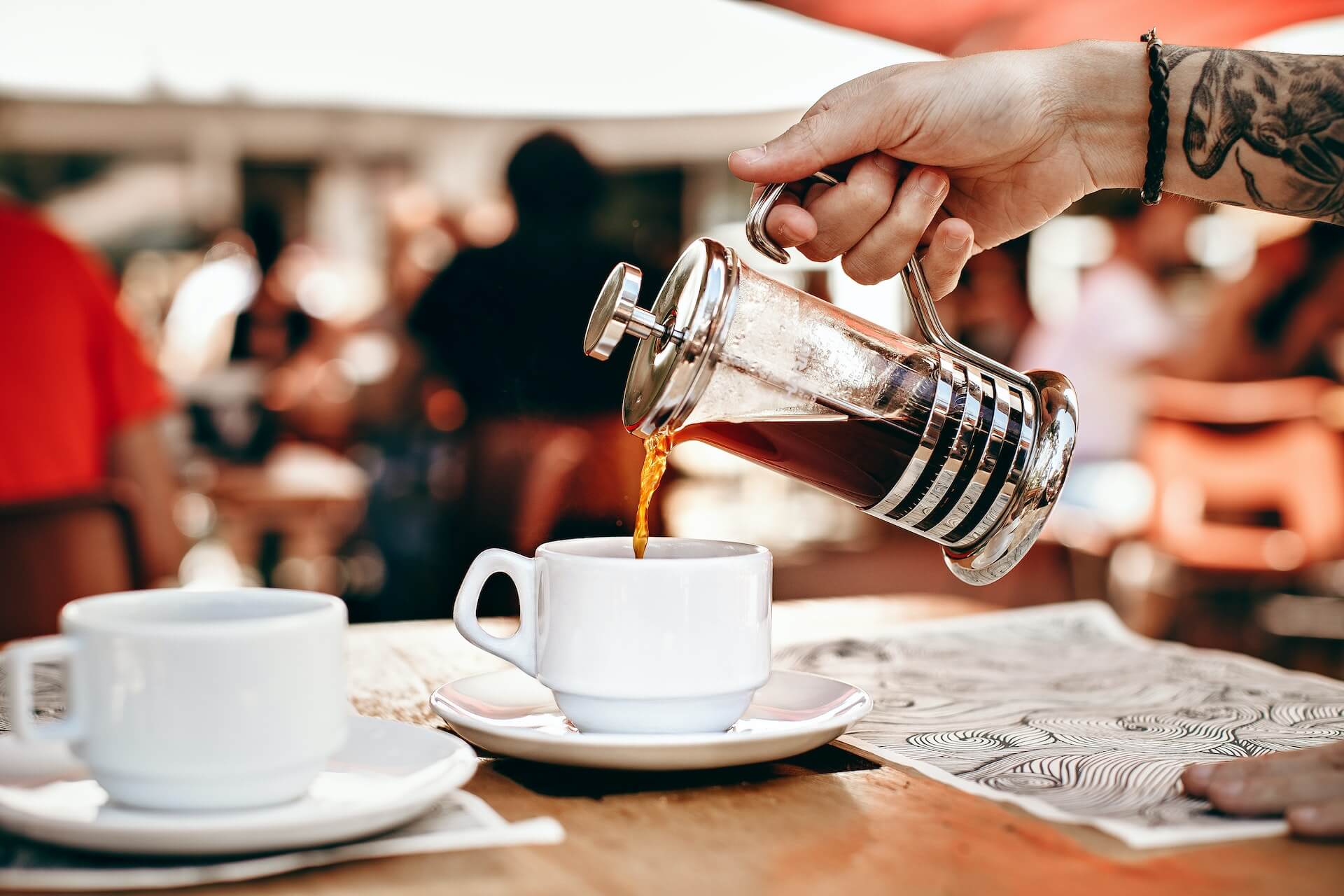

Disclaimer: Neither the author nor KRG Hospitality received compensation, monetary or otherwise, from Rémy Cointreau, Cointreau, or any other entity in exchange for this post.

Image and videos courtesy of Cointreau

KRG Hospitality Beverage Programming

by David Klemt David Klemt No Comments

Alternatives to ServSafe

Just.Safe.Food. and More Alternatives to ServSafe

by David Klemt

Server carrying two plates with one hand

ServSafe, the National Restaurant Association‘s food safety training program, isn’t the only food handler training game in town.

Certainly, the program is the most well known in our industry. However, it’s fair to say that ServSafe is closer to infamous than just ubiquitous due to a New York Times article from January.

While it’s the most recognizable of the food safety programs, it’s not the only one. Although, ServSafe’s omnipresence likely gives many the impression that it’s ServSafe or nothing.

There are, however, alternatives to ServSafe. In fact, one challenger was announced a day after the explosive New York Times article that thrust ServSafe into a spotlight the NRA probably isn’t enjoying. (After all, one result of that article was a letter from six US senators demanding answers from the NRA about ServSafe by March 3.)

At any rate, the newest alternative to ServSafe comes from One Fair Wage. The program is Just.Safe.Food. and costs just $10. (As a reminder, ServSafe costs $15.)

For that $10, Just.Safe.Food. gives an individual three attempts to pass their exam and unlimited access to training materials. Additionally, One Fair Wage (OFW) says profits they raise from the program will go toward advocating for restaurant workers.

OFW, as many in the industry know, is owned and operated by restaurant workers. Two cornerstones of the organization’s mission are increasing the minimum wage, and ending the tip credit. OFW is also attempting to convince lawmakers to stop accepting donations from the NRA.

Basically, OFW and the NRA are—and it appears always have been—at odds with with one another.

Other ServSafe Alternatives

Before I list a few other alternatives, let me be clear: KRG Hospitality isn’t advocating for any food safety training program in particular. Operators and their team members will need to decide which program is best for them.

Whether that decision is based on employer requirements, state or local requirements, cost, ideology, or another reason makes no difference to us.

However, I will say that the more competent and comprehensive options there are, the better. Nobody should have a monopoly on food safety.

The key factor to consider is whether the particular state or county regulations are met by the program. If anyone is uncertain, they should reach out to their local health department before proceeding with any program. It’s likely the department only accepts food safety programs that are ANSI-certified.

That said, some alternatives to ServSafe are:

Operators and food-handler restaurant workers can also search for local programs that are accepted by their state/county.

Food Handler Requirements

Food safety isn’t, it turns out, universal throughout the US. Workers can be subject to state or county requirements. In some states, food handler certification is voluntary.

And then there are food safety manager regulations to consider, and those can also be state- or county-specific.

I can’t reiterate enough how important it is to know your state/county/local food handler requirements. As with many regulations, there are nuances and hospitality professionals need to know them.

Below, how different *states regulate food handler training.

State Requirements

  • Alabama
  • Alaska
  • California
  • Florida
  • Georgia
  • Hawaii
  • Illinois
  • North Carolina
  • Ohio
  • Oregon
  • South Carolina
  • Texas
  • Utah
  • Washington

County Requirements

  • Alabama
  • Arizona
  • Kansas
  • Kentucky
  • Missouri
  • Montana
  • Nebraska
  • Nevada
  • New Jersey
  • New Mexico
  • New York
  • North Dakota
  • Oklahoma
  • Virginia
  • West Virginia

Voluntary

  • Arkansas
  • Colorado
  • Connecticut
  • Delaware
  • Idaho
  • Indiana
  • Iowa
  • Louisiana
  • Maine
  • Maryland
  • Massachusetts
  • Michigan
  • Minnesota
  • Mississippi
  • New Hampshire
  • North Carolina
  • Pennsylvania
  • Rhode Island
  • South Dakota
  • Tennessee
  • Wyoming

*This information is believed accurate at the time of publication. No warranty of accuracy is given.

Image: Pixabay on Pexels

by David Klemt David Klemt No Comments

Do Super Bowl Ads Work on Consumers?

Do Super Bowl Ads Work on Consumers?

by David Klemt

Pepsi Zero Sugar bottle

One of the biggest Super Bowl ad winners is Pepsi Zero Sugar.

Brands spent hundreds of millions of dollars to advertise during Super Bowl LVII, but do their ads actually translate to demand for their products?

A week ago we shared our ten favorite beverage-focused Big Game ads. Along with those ads we shared some numbers.

One of those numbers was $7 million, the cost of a 30-second Super Bowl ad on Fox. Other numbers? $500 million and $700 million, the range of revenue it’s estimated that Fox generated this year from Super Bowl ads.

At this point, these ads and the Halftime Show have essentially become their own entities. Some people watch the Big Game for the ads, some for the show halfway through. It stands to reason that brands are well aware of this development. So, they try to create the most impactful ad possible in the hopes of generating consumer demand.

In other words, these brands aren’t spending all this money just so they’re commercial can be deemed cool. Sure, brands want that buzz. But they also want an ROI on the millions they spend.

The big question is, then, are they seeing a return? Well, it just so happens that behavioral insight platform Veylinx has a data-driven answer to that question.

In short, the answer is yes. Of course, it’s a nuanced yes. For example, it appears Gen Z doesn’t care much about Super Bowl ads, as you’ll see below. Also, non-advertisers in the same categories as Super Bowl advertisers appear to see a benefit from the ads.

You’ll learn more from the Veylinx press release below. It’s an interesting read with valuable data for restaurant, bar, and hotel operators.

NEW YORK, Feb. 22, 2023 — A new study from behavioral research company Veylinx determined whether or not Super Bowl commercials boost consumer demand for the products advertised. The results show that 2023 Super Bowl advertising fueled a 6.4% increase in demand among viewers.

The overall increase in consumer demand was driven by women, who accounted for a 21% increase in demand growth. The commercials had minimal impact on men, yielding just 1% demand growth for the brands tested. Gen Z viewers were largely unimpressed by the Super Bowl ads, with demand among 18 to 25 year olds actually shrinking by 1%.

2023 Veylinx impact of Super Bowl ads on consumers chart

“It’s not really a surprise to see that Super Bowl ads improve sales, but the short term bump alone may not be enough to justify the $7 million price tag,” said Veylinx founder and CEO Anouar El Haji. 

Using Veylinx’s proprietary methodology—which measures actual demand rather than intent—the study tested purchase behavior during the week before the Super Bowl and again the week after. The research focused on measuring the change in consumer demand for eight brands with Super Bowl ads: Michelob Ultra, Heineken 0.0%, Hellmann’s Mayo, Downy Unstopables, Crown Royal Whisky, Frito-Lay PopCorners, Pringles and Pepsi Zero Sugar. 

Super Bowl Advertising Winners Overall

Michelob Ultra – 19% increase in demand

Pepsi Zero Sugar – 18% increase in demand

Frito-Lay PopCorners – 12% increase in demand

Heineken 0.0% – 11% increase in demand

Super Bowl Advertising Winners Among Women

Pepsi Zero Sugar – 45% increase in demand

Michelob Ultra – 40% increase in demand

Heineken 0.0% – 40% increase in demand

Crown Royal Whisky – 26% increase in demand

Veylinx, top performing brands during 2023 Super Bowl

Halo Effect for Non-Advertisers

The biggest winners were arguably brands in the same product categories as Super Bowl advertisers. Non-advertisers in those categories appeared to benefit nearly as much as the advertisers: demand grew by 4.2% percent for the study’s control group of non-advertising competitors. Corona Extra, Kraft Mayo and Lay’s STAX were the greatest beneficiaries in a control group that also included Budweiser Zero, Arm & Hammer Clean Scentsations, Canadian Club Whisky, Popchips, and Coke Zero Sugar. Notably, every non-advertiser saw at least a slight increase in post-Super Bowl demand.

“The goal of our study was to look specifically at how consumer demand is affected by running a commercial during the Super Bowl,” El Haji said. “It’s possible that the non-advertisers deployed other marketing efforts to offset or take advantage of the Super Bowl advertising—or they simply benefited from increased exposure for their categories.” 

Additional Findings

Study participants also answered a series of follow-up questions about their preferences, perceptions and how they watched the Super Bowl. More than three-quarters watched at home through various platforms, the most popular being the live cable/satellite broadcast (38%), followed by YouTube TV (15%) and Hulu (10%). When asked why they watched, it’s no surprise that participants were all about the game (64%)—but the commercials were the next most popular reason for watching (39%), followed by halftime (35%), the social aspect (26%) and fear of missing out (13%). 

About the Research

Veylinx studied the behavior of 1,610 U.S. consumers pre- and post- Super Bowl LVII. Unlike typical surveys where consumers are simply asked about their purchase intent, Veylinx measures whether consumers will pay for a product through a real bidding process. Consumers reveal their true willingness to pay by placing sealed bids on products and then answering follow-up questions.

For more information about the study and the Veylinx methodology, visit info.veylinx.com/super-bowl

About Veylinx

Veylinx is the most realistic behavioral insights platform for confidently answering critical business questions during all stages of product innovation. To reliably predict demand, Veylinx captures insights through a Nobel Prize-winning approach in which consumers have real skin in the game. This is a major advance from traditional market research practices that rely on what consumers say they would hypothetically buy. Veylinx’s unique research methodology is trusted by the world’s largest and most innovative consumer goods companies.

Main article image: PepsiCo / Article body images: Veylinx

KRG Hospitality Bars & Lounges, 2023 icon

Top