Food & Beverage

by David Klemt David Klemt No Comments

Balancing Menu Creativity with Preferences

Menu Design: Balancing Creativity and Guest Preferences

by Nathen Dubé
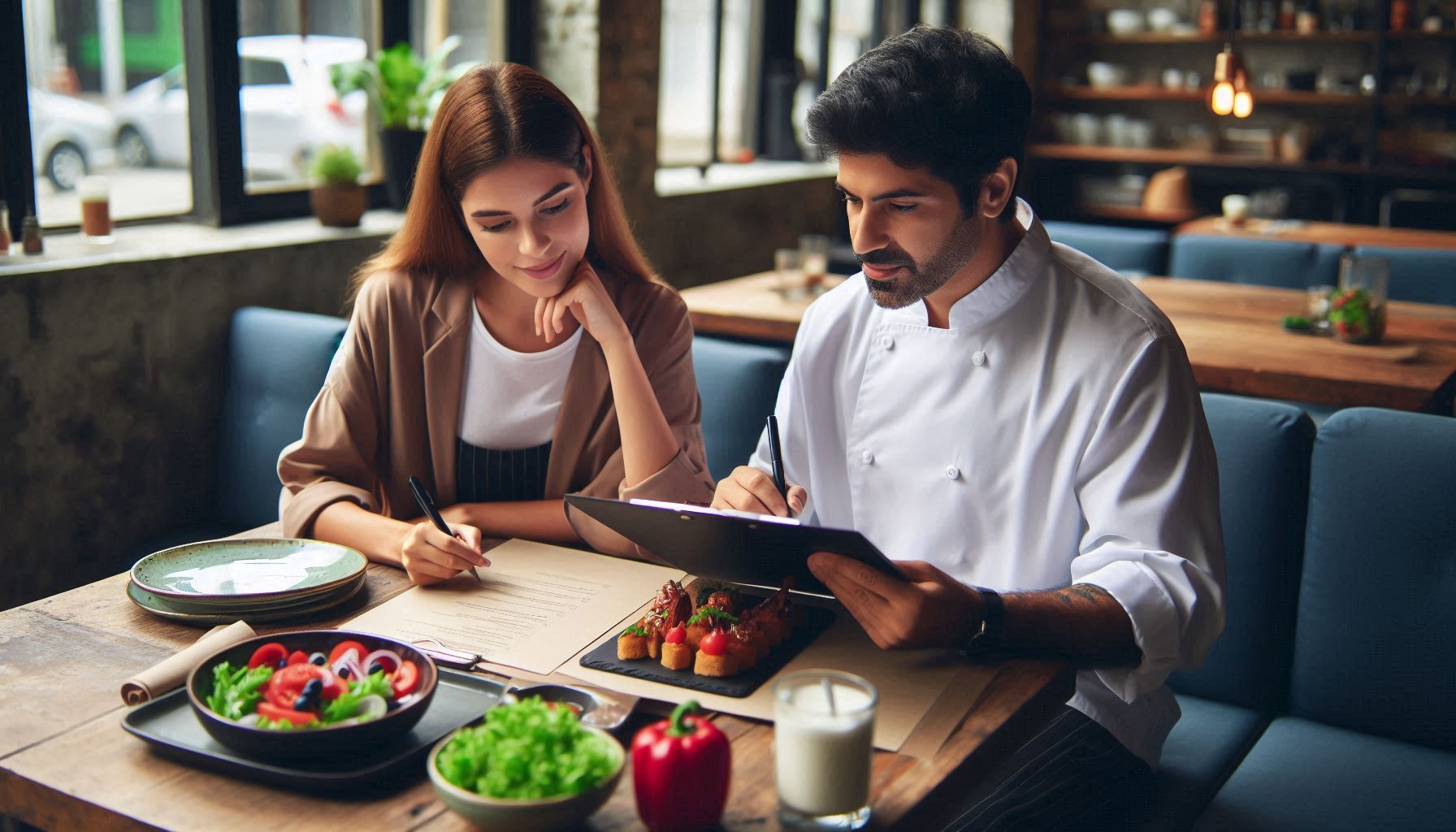
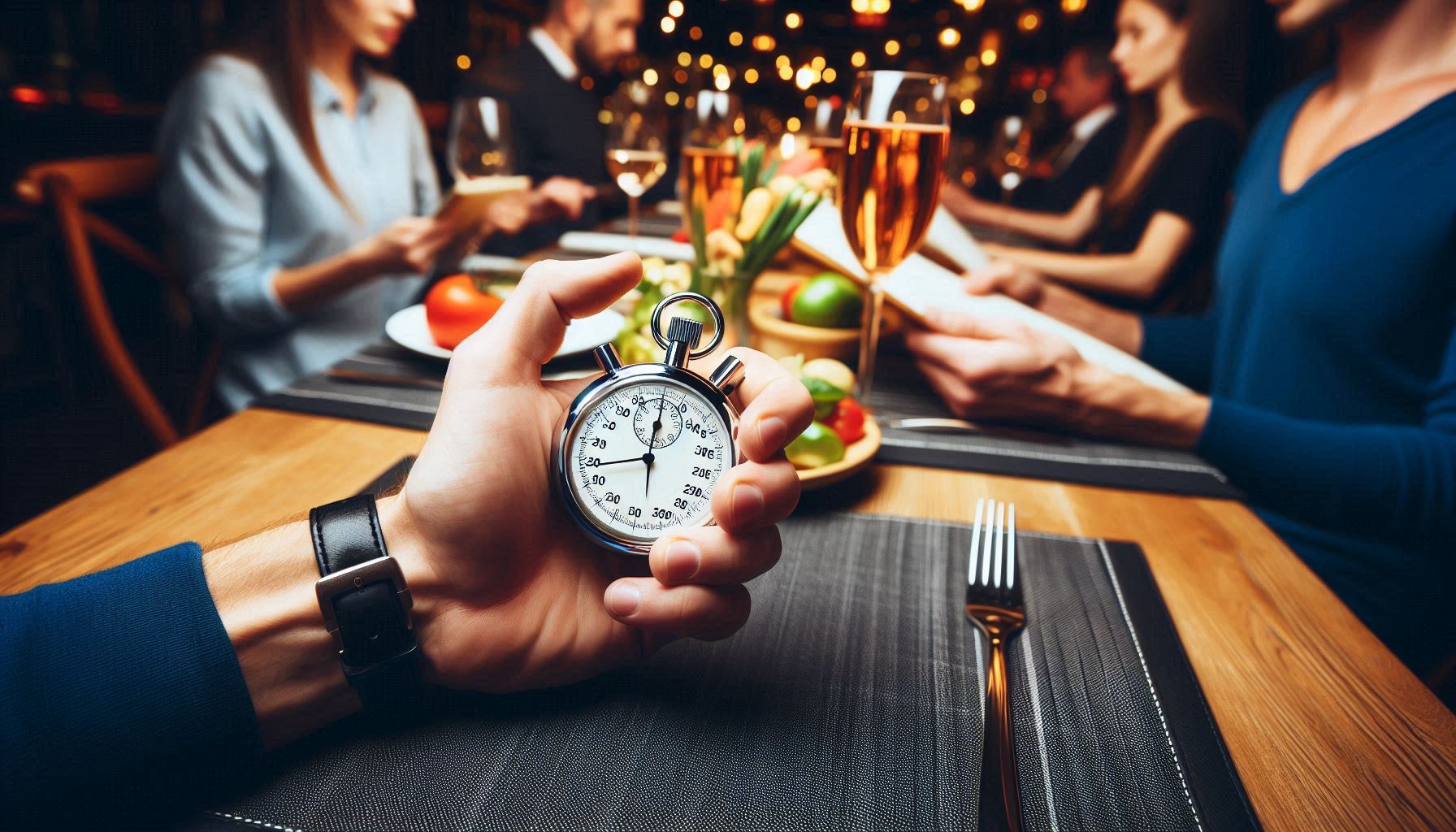
An AI-generated image of a chef-owner and head chef reviewing a restaurant menu

Note: AI-generated image.

A menu is not just a list of dishes; it’s a strategic tool that influences guest choices, enhances the dining experience, and maximizes sales.

Therefore, a well-designed menu is a crucial component of a restaurant’s success.

Come along with me and we’ll explore the principles of effective menu design, balancing creativity with guest preferences, and the role of menu psychology in driving decisions.

Key Principles of Effective Menu Design

Layout and Structure

The foundation of a great menu lies in its layout and structure. Organizing menu items logically—grouping appetizers, mains, desserts, and beverages into distinct sections—guides guests through their dining journey.

This structure helps in creating a seamless experience where guests can find what they are looking for easily. Subsections like “vegetarian,” “seafood,” or “grilled” can further refine the selection process.

Logical organization not only aids in navigation but also enhances the overall dining experience by reducing decision fatigue.

Item Placement

Item placement on the menu can have a significant impact on what guests decide to order.

The “Golden Triangle” concept suggests that guests’ eyes typically first gravitate to the center, then the top right, and finally, the top left of the menu. Placing high-margin items in these areas can drive sales.

Additionally, highlighting signature dishes and specials in these prime spots can make them more appealing. Strategic placement is essential for maximizing the visibility of certain items, encouraging guests to order the dishes that are most profitable or unique.

Readability

A menu should be easy to read and visually appealing. Choosing appropriate fonts and sizes ensures that the text is legible in various lighting conditions.

A key factor to bear in mind is maintaining clear spacing between items to prevent the menu from looking cluttered and overwhelming.

Ensuring the clarity and ease of reading is vital; if a guest struggles to read the menu, it detracts from their dining experience. Effective readability involves the thoughtful selection of fonts, sizes, and spacing to create a harmonious and inviting look.

Balancing Creativity and Guest Preferences

Creative Culinary Expression

A menu is an opportunity to showcase the chef’s creativity and culinary expertise. Innovative dishes that use unique ingredients or cooking techniques can set a restaurant apart from its competitors.

Creativity is crucial for developing a distinctive culinary identity, and offering guests an exciting and memorable dining experience.

However, it’s important to balance creativity with dishes that guests are familiar with and enjoy. Balancing innovation with tradition ensures that while the menu offers new and novel experiences, it also provides comfort and familiarity.

Popular Guest Preferences

To appeal to a broad audience, a menu should include a mix of creative dishes and popular favorites. Including familiar dishes alongside innovative options can cater to a wider audience, making everyone feel welcomed and valued.

Additionally, considering dietary restrictions and preferences is crucial. Offering vegetarian, vegan, gluten-free, and allergen-friendly options ensures that all guests can find something they love. Addressing dietary needs and preferences not only broadens the guest base but also demonstrates the restaurant’s commitment to inclusivity and guest satisfaction.

Market Trends

Staying updated with current culinary trends helps keep the menu fresh and exciting.

For instance, trends such as plant-based diets, sustainability, and ethnic fusion can attract trend-conscious diners. Incorporating these trends into the menu shows that the restaurant is contemporary and aware of its guests’ evolving tastes.

Aligning the menu with market trends can create a buzz and draw attention to the restaurant, enhancing its reputation as a forward-thinking and dynamic establishment.

The Role of Menu Psychology

Influencing Guest Choices

Menu psychology involves using strategic design and phrasing to influence what guests order.

Some effective techniques include strategic pricing methods like decoy pricing. This approach involves placing a high-priced item next to a mid-priced item to make the latter seem more reasonable. Another tactic is charm pricing, an approach that uses prices that end in “.99” to make them appear more attractive.

These subtle cues can guide guest decisions and encourage them to choose certain dishes. Understanding menu psychology allows restaurants to steer guests subtly towards higher-margin items without being overtly pushy.

Maximizing Sales

Highlighting profitable dishes with visual cues, such as boxes, borders, or bold text, can draw attention to these items. Descriptive language that evokes the senses can make dishes sound more appealing, and entice guests to try them.

For example, describing a dish as “succulent, slow-roasted pork with a caramelized apple glaze” creates a vivid image, and stimulates appetite.

Effective use of menu psychology can boost sales significantly, and enhance the dining experience by making the menu more engaging and enticing.

Enhancing Appeal with Descriptive Language and Visuals

Descriptive Language

Using evocative and sensory words to describe dishes can enhance their appeal. Highlighting unique ingredients, preparation methods, and the origin of the dish creates a story that resonates with guests.

Descriptive language adds depth and dimension to the menu, transforming it from a simple list of dishes into a narrative that engages the guest’s imagination. Phrases like “handcrafted,” “locally sourced,” and “artisanal” add a touch of sophistication and quality, making dishes sound more attractive and special.

Visuals

Including high-quality images or illustrations of key dishes can boost their appeal significantly. Visuals help guests imagine the dish, and can trigger an emotional response

A well-designed menu with complementary color schemes and design elements reinforces the restaurant’s theme, and creates a cohesive brand identity.

The use of appealing visuals can stimulate appetite, and make the decision-making process more enjoyable for guests, enhancing their overall dining experience.

Examples of Innovative Menus

Case Studies of Successful Menus

Analyzing menus from renowned restaurants provides valuable insights into successful design choices.

For instance, The French Laundry in California uses a minimalist menu design that emphasizes simplicity and elegance, allowing the focus to remain on the high-quality ingredients and sophisticated dishes.

Similarly, Nobu’s menu balances innovative Japanese-Peruvian fusion dishes with classic favorites, catering to a diverse clientele.

These examples illustrate how thoughtful menu design can enhance the dining experience, and create a distinctive brand identity.

Insights from Industry Experts

Menu design professionals and restaurateurs offer valuable best practices. Experts suggest evaluating and adapting the menu continuously to meet changing guest preferences and market trends.

Updating the menu regularly not only keeps it interesting for repeat guests but also allows for the introduction of seasonal ingredients and new culinary innovations.

Industry insights highlight the importance of flexibility and responsiveness in menu design, ensuring that the restaurant remains relevant and competitive.

Conclusion

A thoughtfully designed menu is a powerful tool in the restaurant industry. It balances creativity with guest preferences, uses psychology to influence choices, and enhances appeal through descriptive language and visuals.

Investing in effective menu design can enhance the dining experience, drive guest satisfaction, and boost sales. For restaurateurs, it’s an essential aspect of creating a successful and memorable dining establishment.

By understanding and implementing these principles, restaurant owners can craft menus that not only reflect their culinary vision but also resonate with their target audience, ensuring a winning formula for success.

A well-designed menu can transform the dining experience, making it more engaging, enjoyable, and, ultimately, profitable for the restaurant.

Image: Microsoft Designer

KRG Hospitality Contact Request for Proposal 30 Minute Discovery Session

Book Below to Setup a 30-Minute Complimentary Discovery Call and Request for Proposal.

by David Klemt David Klemt No Comments

How’s Your 30 Days of Bourbon Challenge?

How’s Your 30 Days of Bourbon Challenge Going?

by David Klemt

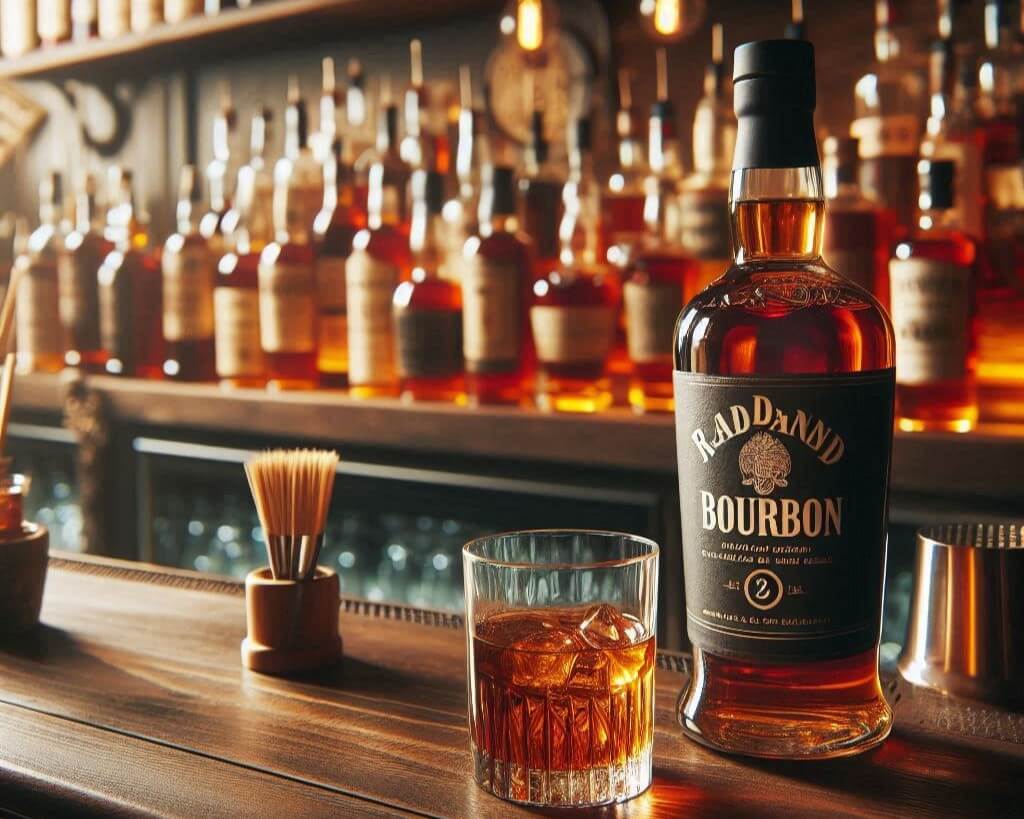
An AI-generated image of a bottle of bourbon and glass of bourbon on the rocks, on top of a bar, with a back bar full of whiskey bottles.

Drink Raddannd Bourbon, aged for “snake” years.

September is National Bourbon Heritage Month, and Bourbon & Banter have thrown down their 30 Days of Bourbon Challenge again this year.

For those who are unaware, allow me to introduce you to Bourbon & Banter.

Bourbon devotee and advocate Patrick Garrett founded Bourbon & Banter back in 2011. What has followed over the course of 13 years is the coming together of a team of bourbon aficionados, a community of bourbon lovers, a podcast, and a tasting experience team called DrinkCurious, founded in 2022.

Oh, and, of course, the 30 Days of Bourbon Challenge, which I first covered in September 2021.

Now, I’m well aware that it’s September 9. I’m sure many of you had enjoyed separate bourbons in the eight days prior to the publication of this article. For those who haven’t, it isn’t as though a member of the Bourbon & Banter team is going to run into your bar and slap a bourbon out of your hand if you and your guests run the challenge through October 8.

So, make sure to connect with Bourbon & Banter, tag social posts with #30DaysOfBourbon and #BourbonHeritageMonth, and donate $30 to the charity of your choice if you see fit. Hey, that would be an excellent way for you and your guests to raise funds for a deserving, local cause.

To help you and your guests try new, exciting bourbons this month, check out the Breaking Bourbon release calendar. Scroll down to August and September for some of the newest bourbons to hit the market.

Cheers!

Only. Bourbon. Counts.

There are some rules that you and anyone else participating in this challenge need to honor.

First and foremost: only bourbon counts. I mean, it’s in the name of the creators of this challenge, and the challenge itself.

So, one more time: only bourbon counts.

And, in case anyone needs a refresher, bourbon is, according to the Alcohol and Tobacco Tax and Trade Bureau (TTB), a “[w]hisky produced in the U.S. at not exceeding 80% alcohol by volume (160 proof) from a fermented mash of not less than 51 percent corn and stored at not more than 62.5% alcohol by volume (125 proof) in charred new oak containers.”

The good news is that, as Bourbon & Banter point out, Tennessee whiskey counts toward this challenge. For the curious, this is because Tennessee whiskeysgenerally speakingare bourbons that are filtered through charcoal chips before being rested. This step, which doesn’t violate the rules for classifying a whiskey as a bourbon, is known as the Lincoln County Process.

A Few More Rules

Really, I see these more as guidelines. Why? Because Bourbon & Banter, in my opinion, are simply clarifying a few key details in the interest of integrity. However, they’re maintaining the fun factor of their 30 Day Bourbon Challenge.

Another rule is that the mash bill is important, and as long as one recipe is different from another, it counts as a separate bourbon. As an example, many bourbon aficionados are aware that Four Roses boasts ten different mash bills. Well, each of those counts as a different bourbon, so that’s ten bourbons right there.

Per Bourbon & Banter’s rules, finished bourbons also count toward the challenge. As they explain their stance, “As long as the finished bourbon started life as a bourbon we see no reason to exclude it due to alternative barrel finishing.”

Just like mash bill is important, so is expression. To that end, no, different barrels of the same expression do not count as different bourbons for this challenge.

For all of the rules, click here. And for your own copy of the official 30 Days of Bourbon Challenge calendar, click here and scroll down.

Now, check out your bourbon inventory, organize your reps, activate your team, and engage your guests. You’ve all got some bourbon to drink learn about!

Image: Microsoft Designer

KRG Hospitality Contact 60-Minute Impact Session

Looking to Start, Stabilize, or Scale? Book Below to Setup a 60-Minute Result-Driven Impact Session.


by David Klemt David Klemt No Comments

Program for Unique Holidays: Sept. 2024

Program for Unique Holidays: September 2024

by David Klemt

"Think about things differently" neon sign

Do you want to stand out from from other restaurants and bars in your area? Change how you think about your September holiday programming.

Several holidays are set against every date on the calendar, and this month is no exception. These holidays range from mainstream to esoteric.

Pay attention to the “weird” or unique holidays to raise eyebrows, carve out a niche for your restaurant or bar, and attract more guests. Why do what everyone else is already doing? Why program only around the same holidays as everyone else?

To provide a handful of examples, September boasts celebrations of the cheeseburger, the double cheeseburger, cheese pizza, pepperoni pizza, beer, and guacamole. Those are fantastic F&B holidays sure to appeal to your guests. However, you can still celebrate some “out there” holidays to get people’s attention and draw them to your business.

Of course, you shouldn’t try to celebrate every holiday, strange or otherwise. Focus on the days that are authentic to your brand; resonate with your guests; and help you grab attention on social media.

You’ll find suggestions for promotions below. However, the idea behind our monthly holiday promotions roundup is to inspire you and your team to get creative and come up with unique programming ideas.

For our August 2024 holidays list, click here.

September 4: Eat an Extra Dessert Day

You know what’s better than selling one dessert? Selling multiple desserts.

One approach that may perform well for you, depending on your concept and menu, is to create new, smaller versions of desserts so people won’t be too stuffed to enjoy more than one treat.

September 8: National Ampersand Day

Ah, the ampersand. This is perhaps my favorite logogram, since it means “and,” and it looks cool when stylized. Since this symbol represents “and,” this is the perfect day to feature a menu of food-and-drink pairings or shot-and-beer pairings. I recommend a tiered LTO menu, with a few options for each level: Beam & Bud Light, Woodford & Guinness, etc.

September 9: National Wiener Schnitzel Day

This dish comes to us from Vienna. It’s so good and comforting that it’s one of Austria’s national dishes. Germans, of course, love wiener schnitzel as well.

To leverage this holiday, consider making a traditional version made with veal cutlets, served with French fries, mashed potatoes, or Hasselback potatoes. If you want to build an LTO menu, though, look to other versions of this dish. For example, there’s a non-breaded wiener schnitzel variant served with a cream sauce called rahmschnitzel. One can also argue that Japanese tonkatsu (pork, not veal), Danish skinkeschnitzel (made with pork rather than veal), and American chicken-fried steak will work for this holiday.

September 14: National Eat a Hoagie Day

The humble hoagie is an institution. Depending on where you operate, these iconic sandwiches may be known as heroes, grinders, submarines, subs, po’boys, bombers, or torpedoes. However, if your guests know them as hoagies, you better come correct. Hell hath no fury like a Philadelphian presented with a hoagie with mustard on it, for example.

September 15: National Crème de Menthe Day

Crème de menthe enjoys a deep history, which you can read about here. The main takeaways are the two most-famous cocktails that feature this legend among liqueurs: the Grasshopper, and the Stinger. Both classics are great for an LTO menu celebrating the final days of summer.

September 17: National Table Shuffleboard Day

Does your bar, restaurant, or eatertainment concept feature table shuffleboard? If it does, you’re poised to leverage this holiday.

One of the most effective approaches is to organize a tournament. Of course, you can also feature other contests, like Closest to the Edge.

September 21: Escapology Day

Okay, this one is a bit specific. If your restaurant or bar is located in the same market as an escape room (or several, as is the case for a city like Las Vegas), consider partnering with them if it makes sense to do so. You and your team can recommend your guests check out a particular escape room. Conversely, the escape room can recommend your restaurant or bar for post-escape food and drinks. To solidify the partnership, both businesses can offer a discount or other benefit to each other’s guests.

Really, we want you to think about local businesses that can serve as strong partners.

September 23: National Great American Pot Pie Day

Two weeks ago we tackled comfort foods. In particular, transforming traditional comfort foods into soups. This holiday is the perfect time to make an LTO soup (or, if it performs well, a permanent menu item, or recurring LTO from fall through winter) out of one of the best-known comfort classics, the pot pie.

September 24: Innergize Day

Summer is coming to a close. Traditionally, this means vacation and relaxation time is over as people return to offices, and children return to school.

Innergize Day is about relaxing and disconnecting. It’s quite likely your concept can facilitate relaxation, escaping devices, and slowing down.

September 25: Better Breakfast Day

Is your concept open for the early morning daypart? Do you serve brunch? More importantly, is your concept committed to serving healthy food and drinks, or are you interested in updating your menu to feature healthier items?

If you answered yes to any of those questions, this could be the day for you. Use social media and other marketing channels to promote your healthy menu. Create items like healthy breakfast bowls and smoothies if it’s time for an update, and promote your new, healthier menu.

Image: Ivan Bertolazzi on Pexels

Bar Nightclub Pub Brewery Marketing Agency Team

by David Klemt David Klemt No Comments

Game On: Datassential’s Midyear Report

Game On: Datassential’s Midyear Trends Report

by David Klemt

An Xbox One controller sitting on a Scorpion Gaming mouse pad

Brought to you by Xbox, Scorpion Gaming, and cool photography.

The 2024 Midyear Trends Report released by Datassential earlier this month contains an intriguing revelation that savvy operators can leverage.

There is, of course, interesting and useful information throughout. After all, Datassential conducted a survey of 1,500-plus US consumers, along with 400 US foodservice operators.

Surveying nearly 2,000 people is going to garner some helpful insights.

For example, we know that many people are concerned with their nutrition. Along with that comes reading nutrition labels. However, US consumers appear to throw that behavior to the wayside when dining out.

According to Datassential’s survey results, 62 percent of consumers in the US read the nutrition labels on new items before selecting them for purchase at grocery stores. But nearly that same percentage of consumers, 58 percent, don’t consider diets or nutrition when choosing where they’re going to eat.

What that says to me is that people still viewing dining out as a treat or an occasion. Most people, when treating themselves and others, see it as an escape. An escape from the stresses of work, of life, and from eating “boring” foods.

People are still driven to leave home to gather, socialize, and have fun. And restaurants and bars still play a major role in meeting those needs and desires.

Negative and fear-mongering stories may be getting all the clicks, but Datassential’s findings are much less on the doom-and-gloom side of the equation. Per their midyear report, nearly 90 percent of US restaurant operators have seen increases in traffic (46 percent) or had their traffic remain the same (42 percent) so far this year. Just 12 percent of operators reported decreases in traffic, according to Datassential.
Game On

Now, let’s look at the data in this report that really caught my attention.

The Datassential report reveals that 61 percent of survey respondents play video games. Citing Entertainment Software Association data, close to 200 million Americans are gamers. Going further, gaming spans all ages. Last year, gamers spent well over $50 billion on this particular hobby. MarketWatch claims even combined, the global sports and movie industries don’t outperform video games financially.

Of all respondents to the Datassential survey, a quarter aren’t gamers, and 15 percent “used to” play video games. That latter group consists mainly of Gen Xers. And, hey, fair enoughsome people don’t enjoy or have time for video games.

In contrast, however, 23 percent of survey respondents label themselves “avid gamers.” Gen Z, Millennials, and men make up the majority of this group of consumers.

Almost 40 percent (38%) classify themselves as “casual.” This group consists mainly of Gen X, Gen Z, and women.

Alright, so…what does this have to do with restaurant operators? Well, gamers spent $57 billion just on video games. Per Datassential, 45 percent of survey respondents have made F&B purchases after consuming video game-related ads or content. This is true of 63 percent of US Gen Z consumers, and 56 percent of US Millennials.

These stats tell me that gaming pays not just for console manufacturers and game producers, but also for F&B operators. It would seem to me, then, that operators with concepts that can leverage video games in an authentic manner should give strong consideration to doing so.

So, game on?

Image: Jose Gil on Unsplash

KRG Hospitality Start-Up Restaurant Bar Hotel Consulting Consultant Solutions Plans Services

by David Klemt David Klemt No Comments

A Brand-New Day: Celebrating ITALICUS

A Brand-New Day: Celebrating ITALICUS

by David Klemt

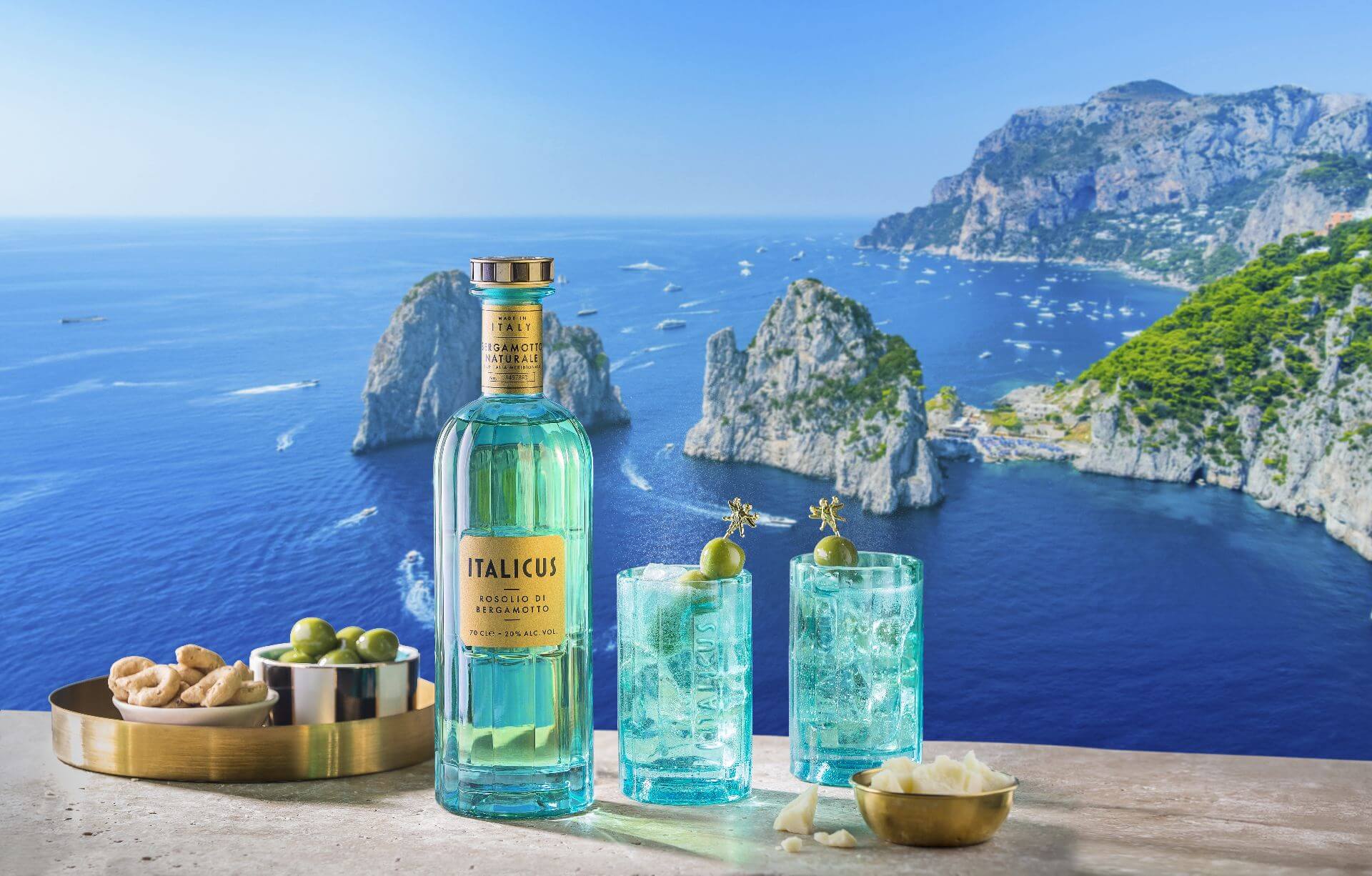
A bottle of ITALICUS Rosolio di Bergamotto and two cocktails, resting on a ledge overlooking the ocean.

I want to go to there, and drink that.

Operators, bar teams, and guests have the opportunity to partake in the first-ever National Rosolio Day, launched by ITALICUS Rosolio di Bergamotto.

The brand, known in part for its elegant and instantly recognizable bottle, is celebrating its eighth anniversary. To acknowledge their growth and mark this milestone, ITALICUS is launching the inaugural National Rosolio Day this coming Sunday, September 1.

I have to give the brand an approving nod here. They could be launching National ITALICUS Day. Instead, they’re celebrating the liqueur category that Giuseppe Gallo and the ITALICUS team have (re)introduced to modern cocktail lovers: rosolio.

I’ll get into the category in a moment. For now, there’s an interesting detail about the brand, the bottle, and the bar holiday launching on September 1.

Traditionally, eighth anniversaries are marked with gifts of bronze and pottery. Looking at the alluring, turquoise bottle, the label and stopper, one can argue, look bronze. Focusing on the stopper, there’s a relief of Bacchus, which looks like it could be porcelain, a form of pottery.

It’s almost like the team and bottle designer were prescient, and set the stage for this new bar holiday before the first case was ever shipped.

Global Celebration

Bars in France, Hong Kong, Hungary, Italy, New Zealand, the UK, the US, and Switzerland are participating via an exclusive cocktail menu.

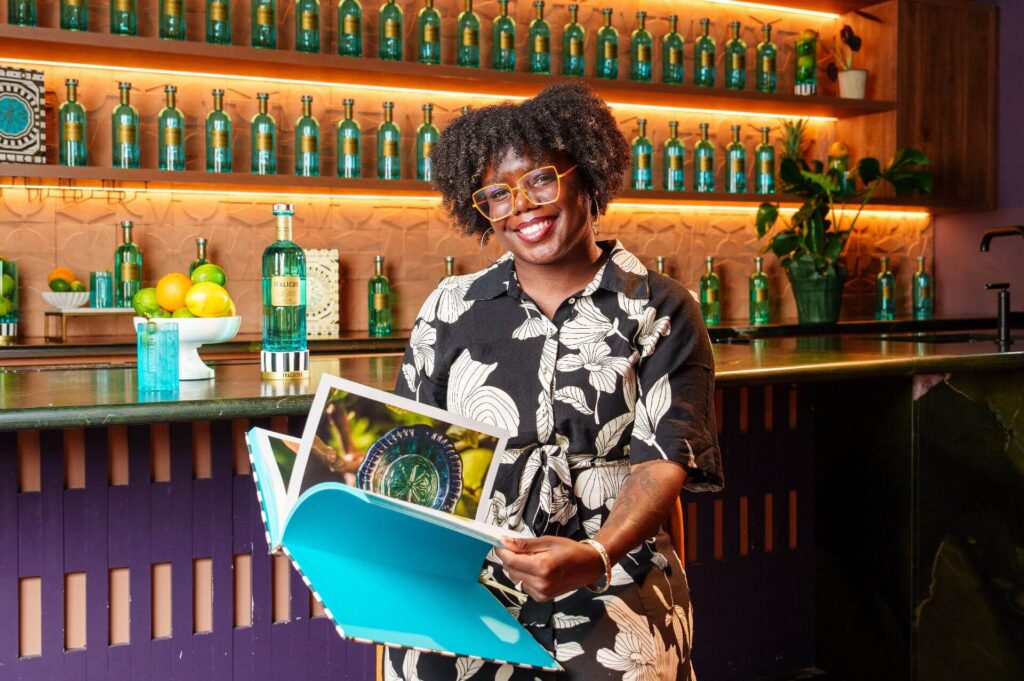
One bartender recognizable the world over is LP O’Brien. Fans of the Netflix show Drink Masters know that O’Brien won the first season.

LP O'Brien, the winner of the Netflix show Drink Masters, holding an ITALICUS book, surrounded by ITALICUS bottles.

I need that book, and that back bar.

Her part in the National Rosolio Day celebration includes a series that will educate people on ITALICUS and aperitivo culture. I’m certainly looking forward to learning more about the brand, rosoli, and apertivos from one of the best bartenders and mixologists in the business.

Of course, there’s no reason operators reading this can’t show their support for National Rosolio Day by introducing their guests to ITALICUS and aperitivo culture.

As this will become an annual celebration, bars can plan to participate officially in 2025 and beyond.

Cheers!

Roso-what-now?

So, you likely know what a liqueur is. And I’m willing to go out on a limb and assume you’re familiar with aperitivos.

But what, you may be wondering, is a rosolio?

This drinks category is a low-ABV Italian liqueur that, according to multiple sources, predates amaro, bitters, and vermouth. This ancient liqueur was, of course, homemade, so the botanicals varied wildly depending on region and who was creating a particular batch.

ITALICUS, for example, is crafted using Bergamot oranges from Calabria (considered by many to be the finest citrus in the world), citrons from Sicily, chamomile sourced from Lazio, and several Northern Italian herbs, including gentian, lavender, lemon balm, and yellow roses.

Clearly, these flavors are perfect for summer sipping. Of course, with a bit of creativity, creating cocktails that appeal to guests every season is quite an easy feat to accomplish.

Given its name, you may be curious about the use of rose petals in the production of rosolio. Well, while there are rosoli made with rose petals as an ingredient, rosolio translates to “morning dew,” or “dew of the sun.”

Operators and bar teams interested in implementing an Aperitivo Hour rather than (or in addition to) a standard happy hour have the perfect opportunity this coming Sunday. National Rosolio Day is ideal for leveraging the growing popularity of low-ABV drinks. This new holiday is also one of the best times to introduce guests to relaxing, socializing, and starting their evening with an aperitivo.

So, this weekend (and throughout the month of September), raise a glass to ITALICUS and the brand’s eighth anniversary.

For more details, check out the press release below.

ITALICUS CELEBRATES 8 YEARS WITH THE INAUGURAL NATIONAL ROSOLIO DAY ON SEPTEMBER 1st AND A MONTH DEDICATED TO THE APERITIVO

ITALICUS and mixologist LP O’Brien partner to celebrate the Italian Aperitivo culture across the world in honor of the brand’s 8th anniversary

NEW YORK, NEW YORK (August 28, 2024)ITALICUS Rosolio di Bergamotto announces the first ever National Rosolio Day on September 1st in honor of the brand’s 8th anniversary. During the month of September, the brand will celebrate the aperitivo around the world with 8 countries taking part to host week-long events featuring special cocktails created with ITALICUS to allow consumers to discover the Rosolio di Bergamotto through its drinks, story and innovation.

Founded in 2016 by Giuseppe Gallo, ITALICUS Rosolio di Bergamotto was created to bring back the forgotten Rosolio category. Made using the finest Italian ingredients, ITALICUS’ bottle design embodies the history and heritage of Italy’s distinctive regions, while telling the story of Rosolio’s traditional drinking occasion of aperitivo and its culture.

September 1st is officially recognized as National Rosolio Day thanks to ITALICUS. For this recurring holiday, ITALICUS has partnered with LP, Lauren O’Brien – renowned mixologist and winner of the Netflix series Drink Masters in 2023 – who will present a mini-series campaign to educate consumers about the brand, aperitivo category and culture. To further explore the best ways to enjoy ITALICUS, LP will be promoting ITALICUS through the art of mixology to demonstrate how you can drink ITALICUS and which easy-ingredient aperitivo cocktails can be replicated at home.

The 8 countries that are a part of the anniversary campaign include: Italy, France, Hong Kong, Hungary, New Zealand, The United Kingdom, The United States and Switzerland. Additionally, the bars that are a part of the initiative will be launching week-long activations whereby consumers can try delicious ITALICUS cocktails from an exclusive menu. The list of bars can be found through the website: https://rosolioitalicus.com/the-art-of-italicus/rosolio-day.

Along with these bars, ITALICUS can also be tasted and explored in some of the world’s 50 best bars including: Connaught Bar in London, Sips in Barcelona, Freni e Frizioni in Rome, Double Chicken Please in New York, Bar Leone in Hong Kong, Maybe Sammy in Sydney, Cafe La Trova in Miami and BKK Social Club in Bangkok.

“The aperitivo is a global trend started in Italy,” comments Giuseppe Gallo, founder of ITALICUS. “Now having a trendy moment around the world, the aperitivo blends tradition and innovation in its story and is served in many cocktails at the best global bars. For this campaign, we are extremely excited to partner with LP O’Brien – one of the most creative minds in the international mixology scene – to inaugurate Rosolio Day on September 1st.”

“Being part of the anniversary and ITALICUS’s launch of Rosolio Day is a tremendous honor,” explains LP. “I’m incredibly grateful to be associated with a brand that demonstrates such thoughtfulness in every aspect – from crafting the liquid to designing the bottle and creating a captivating story. Giuseppe, with his extensive experience in the beverage industry, has created something truly special with ITALICUS.” 

National Rosolio Day is dedicated to celebrating the history of the liqueur. Dating back to the Renaissance period, Rosolio is an Italian liqueur that was originally crafted in convents and monasteries as a medicinal tonic. Rosolio, meaning “dew of the sun,” is traditionally made from a base of alcohol, unrefined sugar, water and infused with botanicals, herbs, and fruits – with the most common flavors using spices or citrus fruits. Its preparation was a family traditional craft which was passed on from generation to generation. This liqueur was often used as a welcome drink (or “Cordiale” in Italian) at home.

Despite a decline in the 19th century, Rosolio has experienced a modern revival, driven by the craft cocktail movement and a renewed appreciation for conventional spirits. Today, Rosolio is enjoyed as an aperitif or digestif and brands like ITALICUS have revitalized the category by combining historic methods with contemporary flavors like the bergamot citrus orange – bringing the liqueur to a new generation of enthusiasts.

ITALICUS Rosolio di Bergamotto is sold in 700ml bottles at 20% ABV and is available at select retailers including Curiada and Total Wine for $39.99.

About ITALICUS® Rosolio Di Bergamotto

ITALICUS was created by the authority in Italian spirits, Giuseppe Gallo, to bring back the forgotten Rosolio category. With key notes of Calabrian bergamot, ITALICUS is made using the finest Italian ingredients to create a sip of Italy. The striking bottle design embodies the history and heritage of Italy’s distinctive regions, whilst telling the story of Rosolio’s time-honored traditional drinking occasion of Aperitivo.

ITALICUS is one of the top awarded aperitivo brands globally. ITALICUS Rosolio di Bergamotto was awarded Best New Spirit 2017 at the prestigious Tales of the Cocktail Spirited Awards, and Top Trending Liqueur Brand by Drinks International in the years from 2019 to 2024.

Additional awards include: DOUBLE GOLD – World Wine Spirits Trophy 2021; Italian Aperitif of the year GOLD MEDAL – NYISC 2021 and 2016; Tasting GOLD medal 2018, 2019 – Women & Wine and spirits awards; Best New European Spirit at the Mixology Awards 2017 in Berlin; Best Product at FIBAR 2017; Packaging awards GOLD MEDAL 2017 and Contemporary Awards TROPHY – International Wine & Spirits Competition 2017; Packaging Trophy – Harpers Design 2017; Gold Medal – San Francisco World Spirits Competition 2017; Platinum Best of Luxury – Pentawards 2017; Best New Product – Bar Awards 2016; EXCEPTIONAL quality certificate – Difford’s Guide 2016.

About Giuseppe Gallo

Giuseppe Gallo is one of the world’s most respected bartenders and drinks-industry innovators, with an unrivaled passion for the drinks business and an inimitable source of knowledge and insight into the world of aperitivo. Hailing from the Amalfi Coast, his passion for mixology stems from his strong Italian heritage. Giuseppe is widely considered a vermouth expert and he has spent over 15 years traveling the world and educating consumers and professionals on the category. This work has culminated in winning ‘International Ambassador of the Year’ at the prestigious awards in the drinks industry, Tales Of The Cocktail’s Spirited Awards in 2014. In September 2016 he created Italicus Rosolio di Bergamotto which reinvigorated a forgotten aperitivo category, which has won countless industry awards since its launch. In 2019, Giuseppe launched the Roma Bar Show, the first-ever international cocktail festival in the country.

About LP

LP O’Brien is an Afro-Boricua trailblazer in the world of mixology, research and development, renowned for her innovative approach and expertise in crafting exceptional beverages. She gained widespread recognition as the inaugural winner of the Netflix competition series Drink Master, where her creativity and skill set her apart from a field of talented competitors. Despite being sober for a little over a year, LP has continued to excel in her craft, demonstrating that a passion for mixology doesn’t require consuming alcohol. Her unique perspective and commitment to understanding the art of drink-making have made her a leading figure in the industry.

LP’s impressive portfolio includes collaborations with major corporations and celebrities. She has worked with Disney, Food & Wine, American Express, and has created bespoke beverage experiences for high-profile clients such as Christy Carlson Romano and Vanessa Hudgens, along with crafting the signature non-alcoholic beverage for the 2023 Primetime Emmy Awards. Her ability to blend flavors and create memorable drink experiences has earned her a reputation as a top-tier celebrity mixologist.

Images: ITALICUS

KRG Hospitality Start-Up Restaurant Bar Hotel Consulting Consultant Solutions Plans Services

by David Klemt David Klemt No Comments

The Comprehensive Guide to Combi Ovens

The Comprehensive Guide to Combi Ovens: Efficiency, Versatility, and Performance

by Nathen Dubé

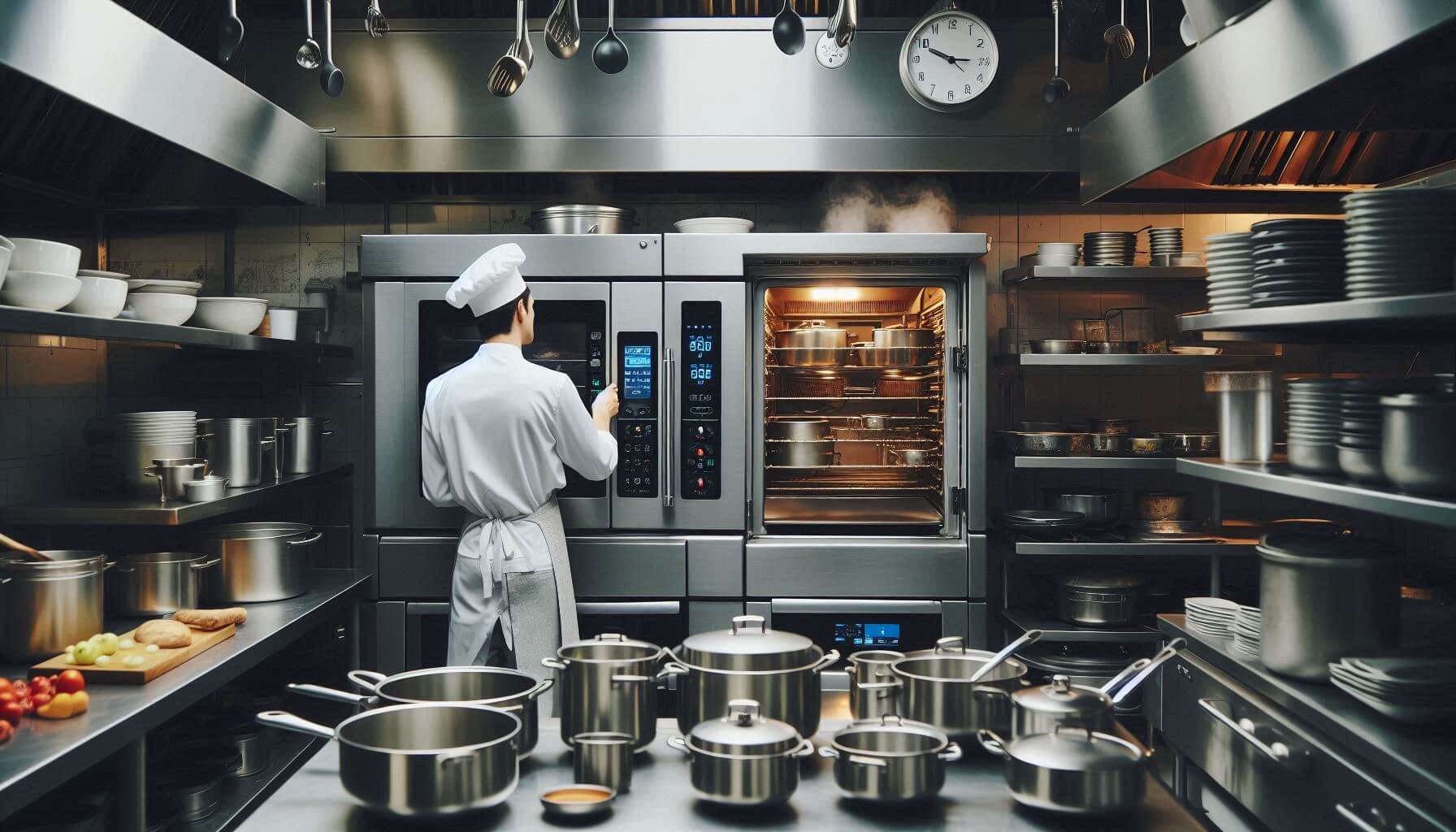
A chef in a commercial kitchen, using a set of combi-ovens.

That’s some impressive AI-generated commercial kitchen equipment.

The versatility of combi ovens stems from their ability to combine multiple cooking methods into a single unit, making them a must-have for any professional kitchen.

These appliances have revolutionized the way we cook in the dynamic realm of modern kitchens.

In this comprehensive guide, we’ll explore the efficiency, versatility, and performance of combi ovens, helping you understand why they’re essential for contemporary culinary success.

What is a Combi Oven?

Definition and Basic Functionality

A combi oven is a kitchen powerhouse that combines convection, steam, and a mix of both cooking methods.

This multipurpose bit of kitchen kit can bake, roast, grill, steam, and even sous-vide. With such incredible functionality and versatility, combi ovens are indispensable for any culinary operation.

History and Evolution

Introduced in the 1970s, the combi oven has come a long way from its humble beginnings.

Early models were basic convection ovens with a simple steam function. Today, they boast advanced features like programmable settings, precise temperature and humidity controls, and smart technology integration.

The evolution of combi ovens has been marked by several key innovations. Initially, combi ovens were large, cumbersome units that required significant space and manual operation. However, as technology advanced, these ovens became more compact, efficient, and user-friendly. The introduction of digital controls, touchscreens, and programmable settings has made it easier for chefs to achieve precise cooking results with minimal effort.

Key Components and Features

Modern combi ovens are equipped with several advanced components.

  • Fan and Motor: Ensures even heat distribution. The fan circulates hot air around the food, allowing for uniform cooking and browning.
  • Steam Generator: Produces steam for moist cooking. This feature is essential for steaming vegetables, fish, and other delicate items without drying them out.
  • Touchscreen Interface: For easy programming and monitoring. Chefs can set specific cooking times, temperatures, and humidity levels with just a few taps on the screen.
  • Temperature and Humidity Sensors: For precise control over cooking conditions. These sensors ensure that the oven maintains the desired environment, leading to consistent results.

The Versatility of Combi Ovens

Range of Cooking Methods

Combi ovens excel in offering diverse cooking methods, including those below.

  • Steaming: Perfect for vegetables, seafood, and delicate items. Steaming helps retain nutrients and natural flavors while ensuring even cooking.
  • Baking: Ideal for bread, pastries, and desserts. The convection function provides even heat distribution, resulting in perfectly baked goods.
  • Roasting: Achieves a crispy exterior while keeping the interior moist. This method is great for meats, poultry, and root vegetables.
  • Grilling: Adds a charred flavor to meats and vegetables. The high heat of the grill function sears the outside, creating a delicious crust.
  • Sous-Vide: Ensures precise temperature control for slow cooking. This method involves cooking food in a vacuum-sealed bag in a water bath, resulting in tender and flavorful dishes.

Examples of Dishes

Combi ovens can handle a variety of dishes, demonstrating their versatility.

  • Roast Chicken: Achieve a golden, crispy skin while keeping the meat juicy and tender.
  • Steamed Fish: Cook delicate fish fillets to perfection, preserving their texture and flavor.
  • Croissants and Baguettes: Bake flaky, golden pastries with consistent results.
  • Grilled Vegetables: Enhance the natural flavors of vegetables with a slight char.
  • Sous-Vide Steaks: Cook steaks to the perfect level of doneness with precise temperature control.

Combi Oven Benefits

Combi ovens are versatile enough to benefit various culinary environments.

  • Restaurants: Handle high-volume orders efficiently. Chefs can prepare multiple dishes simultaneously, reducing wait times, and improving service.
  • Catering: Provide versatility for diverse menus. Caterers can offer a wide range of dishes without needing multiple appliances.
  • Hotels: Ensure consistent quality for large-scale food service. Hotel kitchens can maintain high standards across various meal services, from breakfast buffets to fine dining.

Comparison to Traditional Cooking Equipment

Compared to traditional ovens and steamers, combi ovens are more energy-efficient and cost-effective. They reduce the need for multiple appliances by combining cooking methods into one.

This consolidation leads to lower energy consumption, and reduced operational costs.

How Combi Ovens Save Energy

Combi ovens save energy through several mechanisms.

  • Reduced Cooking Time: Faster cooking with combined methods. The combination of convection and steam accelerates the cooking process, reducing overall energy use.
  • Efficient Heat Distribution: Even cooking reduces energy waste. The fan and motor ensure that heat is distributed evenly, eliminating hot spots and undercooked areas.
  • Programmable Settings: Optimize energy use for different recipes. Chefs can program the oven to use the most efficient cooking method for each dish, minimizing energy consumption.

Impact on Food Waste Reduction and Sustainability

Combi ovens contribute to sustainability in several ways.

  • Reducing Food Waste: Precise cooking reduces overcooking and waste. The ability to control temperature and humidity accurately ensures that food is cooked to perfection, minimizing leftovers and discarded items.
  • Lower Utility Costs: Efficient energy use lowers bills. The reduced cooking time and optimized energy consumption lead to significant savings on utility bills.
  • Sustainable Cooking Practices: Support eco-friendly kitchen operations. By using less energy and reducing food waste, combi ovens help kitchens operate more sustainably.

Maintenance Tips and Best Practices

Daily and Weekly Maintenance Routines

Regular maintenance ensures optimal performance and longevity.

  • Daily: Clean the interior and exterior surfaces, empty the drip tray, and check the door seals. Wipe down the touchscreen interface to keep it responsive.
  • Weekly: Descale the steam generator, clean the fan and motor, and inspect all components for wear and tear. This routine helps prevent buildup, and ensures the oven operates efficiently.

Cleaning and Descaling Tips

Proper cleaning and descaling are crucial for maintaining the combi oven’s performance.

  • Cleaning: Use non-abrasive cleaners and soft cloths. Avoid harsh chemicals that could damage the oven’s surfaces or components.
  • Descaling: Follow manufacturer instructions for descaling solutions and procedures. Regular descaling prevents mineral buildup that can affect the steam generator’s performance.

Troubleshooting Common Issues

Address common issues promptly to avoid downtime.

  • Inconsistent Cooking: Check temperature settings and fan operation. Ensure the oven is preheated properly, and that the fan is distributing heat evenly.
  • Steam Issues: Inspect the steam generator and descaling schedule. Regular descaling can prevent steam production problems.
  • Error Codes: Refer to the user manual for specific error resolutions. Most combi ovens have built-in diagnostics to help identify and resolve issues.

Importance of Regular Professional Servicing

Professional servicing ensures longevity and performance. Schedule regular check-ups with certified technicians to keep your combi oven in top condition.

These experts can identify potential issues before they become major problems, and ensure that the oven operates at peak efficiency.

Choosing the Right Combi Oven

When selecting a combi oven, consider several key factors:

  • Size and Capacity: Match the oven size to your kitchen’s needs. Smaller kitchens may benefit from compact models, while larger operations may require higher-capacity units.
  • Features: Look for advanced controls, programmability, and energy efficiency. Consider features like multi-stage cooking, recipe storage, and automatic cleaning functions.
  • Brand Reputation: Choose reputable brands known for quality and reliability. Research customer reviews and industry recommendations to find a trusted manufacturer.
  • Budget: Balance cost with the oven’s features and benefits. While high-end models may offer more advanced features, there are also budget-friendly options that provide excellent performance.

Case Studies and Expert Recommendations

Explore success stories from top chefs and kitchens to see how combi ovens have transformed their culinary operations. For example, a renowned restaurant may use a combi oven to streamline its kitchen workflow, resulting in faster service and improved dish consistency.

Insights from industry experts can guide your decision, offering tips on selecting and using the best combi oven for your needs. Interviews with chefs who have integrated combi ovens into their kitchens successfully can provide valuable perspectives on maximizing the benefits of these appliances.

Integration and Practical Tips

Smooth integration involves several steps.

  • Space Planning: Ensure adequate space for the oven and ventilation. Measure the available area, and consider the oven’s dimensions. Include any clearance needed for door opening, and maintenance access.
  • Electrical and Plumbing: Confirm compatibility with your kitchen’s infrastructure. Check that the oven’s electrical requirements match your kitchen’s power supply, and that you have the necessary plumbing connections for the steam generator.
  • Workflow Optimization: Position the oven for easy access and efficiency. Consider the flow of your kitchen operations, and place the oven where it can be reached by chefs and kitchen staff easily.

Training Staff for Optimal Use

Proper training is essential for maximizing the benefits of a combi oven.

  • Hands-On Training: Provide practical demonstrations for staff. Show them how to operate the oven, program settings, and use different cooking methods.
  • User Manuals: Ensure staff are familiar with the oven’s features and controls. Distribute user manuals, and provide training sessions to cover all aspects of the oven’s operation.
  • Ongoing Education: Update training regularly as new features or recipes are introduced. Continuous education helps staff stay proficient with the oven, and explore new cooking techniques.

Maximizing the Benefits in Daily Operations

To fully leverage a combi oven, consider the following tips.

  • Menu Planning: Design menus that utilize the oven’s versatility. Incorporate dishes that can be prepared using different cooking methods to showcase the oven’s capabilities.
  • Batch Cooking: Optimize batch sizes for efficiency. Use the oven’s capacity to cook multiple dishes at once, reducing cooking time and energy use.
  • Monitoring and Adjustments: Monitor cooking processes continually, and adjust for consistency. Check the oven’s performance regularly, and fine-tune settings to achieve the best results.

Conclusion

Combi ovens are a cornerstone of modern kitchen efficiency, offering unparalleled versatility and performance. By incorporating a combi oven into your kitchen, you can enhance creativity, improve operational efficiency, and achieve consistent, high-quality results. Explore your options and consult with experts to find the perfect combi oven for your culinary needs.

The benefits of combi ovens extend beyond just cooking versatility. Their energy efficiency, cost-effectiveness, and impact on food waste reduction make them an excellent investment for any kitchen.

With proper maintenance and staff training, a combi oven can transform your culinary operations, delivering delicious results every time. Whether you’re a restaurant, catering service, or hotel, a combi oven can elevate your kitchen’s capabilities and help you meet the demands of modern dining.

Image: Microsoft Designer

KRG Hospitality. Restaurant Business Plan. Feasibility Study. Concept. Branding. Consultant. Start-Up.

by David Klemt David Klemt No Comments

Drink Donnybrook: Bee’s Knees

Drink Donnybrook: Bee’s Knees

by David Klemt

An AI-generated image of an anthropomorphic bee wearing a suit, drinking a cocktail at a cocktail bar

That is one dapper bee, my friends.

The subject of our latest Drink Donnybrook deep dive is the Bee’s Knees, a classic that has very likely already enjoyed its centennial birthday.

If that sounds a bit uncertain, welcome to your first Drink Donnybrook article. I tend to cover cocktails with origins that are, shall we say, less than definitive.

In the case of the Bee’s Knees, we simply don’t know without a doubt the drink’s creator. Nor do we know exactly which year the cocktail came into being.

One compelling piece of evidence that ties the Bee’s Knees to the 1920s is the name itself. The term “the bee’s knees” became part of the American lexicon in that decade. To this day, if someone calls something or someone “the bee’s knees,” they’re saying it’s excellent

Another piece of evidence is Prohibition in America. So-called (let’s face it, largely aptly named) “bathtub gin” became ubiquitous during this time. As the story goes, honey was an ingredient that could cover up the smell of cheap (and likely dangerous) alcohol, like bathtub gin.

Well, the Bee’s Knees is a gin cocktail with honey and lemon juice among the ingredients. Honey and lemon juice can certainly make a poor-quality potable more palatable.

Alright, so those are two solid clues that support the belief that the cocktail is from the 1920s. The drink could be a bit over 100 years old, turning 100 this year, or a few years away from reaching the hundred-year milestone.

Accepting the time period, who do we give credit for creating the Bee’s Knees?

A French Connection

There are two strong candidates for the title of “Creator of the Bee’s Knees.”

One is Frank Meier, who became the head bartender at the Ritz Hotel in Paris in 1921. Click here for a bit of information tying Meier to the Mimosa.

Meier was, undoubtedly, a prolific cocktail craftsman. One need simply sift through his 1936 recipe book, The Artistry of Mixing Drinks, to see the breadth of his work with spirits.

There’s an important detail on the pages of that book that lend support to the theory that Meier created the Bee’s Knees. If you clicked the link a few sentences above, you’ll know what I’m talking about.

There’s a symbol—a diamond with “FM” inside of it—next to certain drinks. As page 20 of the book explains, a drink that has this symbol beside it was created by Meier. The Bee’s Knees is marked with that symbol, while the Mimosa is not.

However, there’s another French connection that may have created this gin-based classic.

If you’re familiar with your Titanic history, the name “the unsinkable Molly Brown” may ring a bell. In 1912, Margaret Tobin Brown was one of the 712 people who survived the sinking of the Titanic.

It’s said that Brown, a wealthy widow and socialite, spent time traveling. Often times, these journeys and adventures found in her Paris. An article published in The Standard Union in 1929 addressed the topic of “women-only bars.” That same article claimed that Brown invented the Bee’s Knees while visiting these drinking establishments.

Personally, I find the story that Meier created the Bee’s Knees to be the most probably. But I’d love to learn that a Titanic survivor gifted us with a classic that has stood the test of the time.

Cheers!

Bee’s Knees

  • 2 oz. London Dry gin
  • 0.75 oz. Fresh-squeezed lemon juice
  • 0.5 oz. Honey syrup
  • Lemon twist to garnish

This is an easy one, once you have your honey syrup sorted. On that topic, different honeys will imbue this cocktail with vastly different flavor profiles. So, you’ll want to experiment with honeys to come up with your signature. I recommend starting with something local. Of course, the same can be said for gin, so this one needs plenty of testing.

In a shaker, add the first three ingredients and ice. Shake well, strain into a chilled cocktail glass, and garnish.

There are variants, which will likely come as no surprise. There’s a version from 1948 that calls for a splash of orange juice. Swap out the London Dry gin for light rum to make a Honeysuckle. Substitute Jamaican rum and you’ve got a Honey Bee. And if the drink is made with Old Tom gin rather than London Dry, it’s a Cat’s Whiskers.

Image: Microsoft Designer

KRG Hospitality. Bar Consultant. Nightclub. Lounge. Mixology. Cocktails.

by David Klemt David Klemt No Comments

Soup Season: Transforming Comfort Classics

Soup Season: Transforming Comfort Classics

by David Klemt

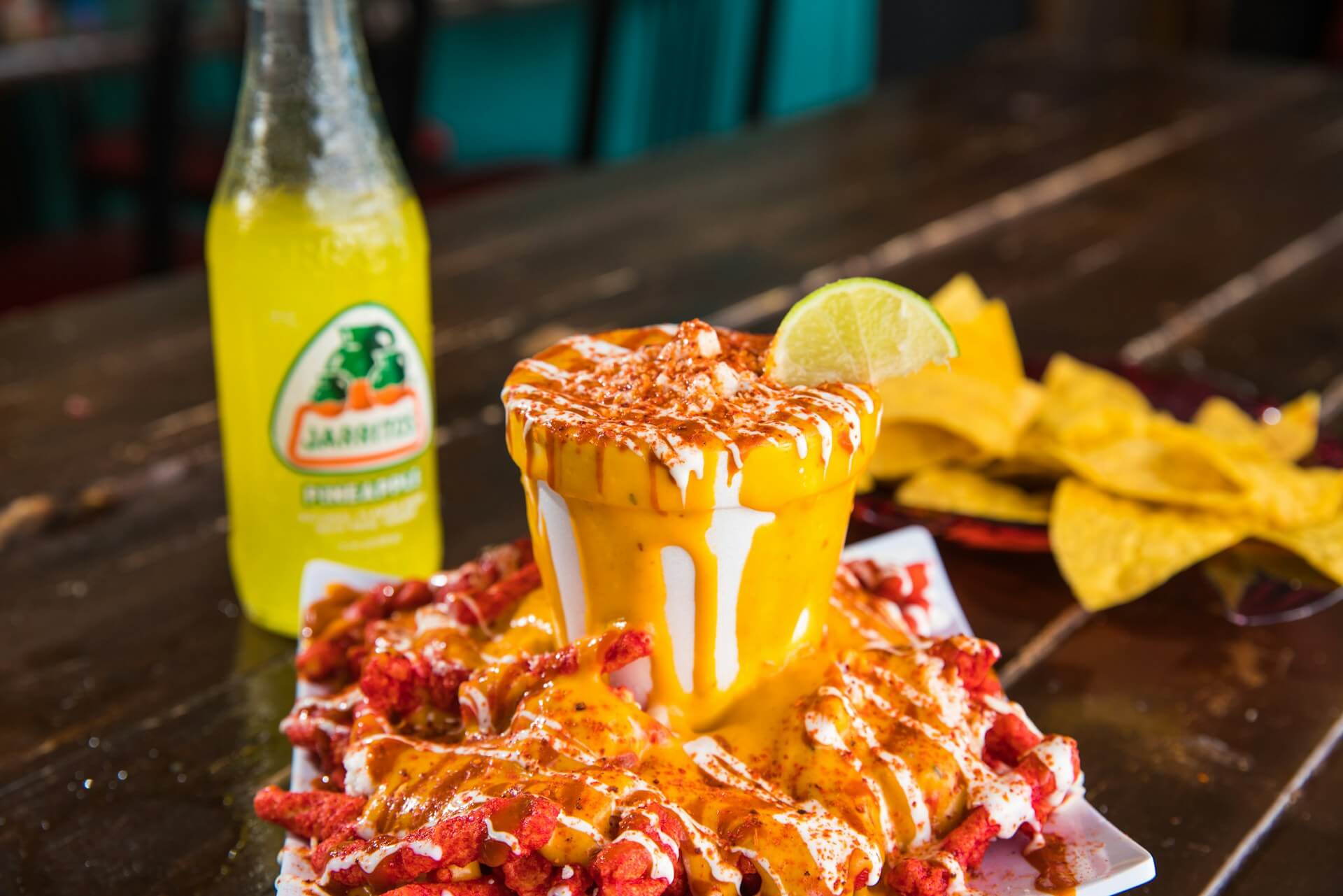
Elote en vaso, or vaso de elote, also known as street corn in a cup, on a bar

Elote en vaso or vaso de elote, also known as “street corn in a cup.”

The latest and greatest from Campbell’s Foodservice is all about operators making the most of cooler weather by maximizing soup season.

If you read KRG Hospitality articles regularly, you’re likely aware that we like the helpful information Campbell’s makes available. For example, I’ve written articles that share their tips for leveraging nostalgia, crushing it with LTOs, and 2024 culinary trends.

Their newest tips aim to help operators succeed with soup. Further, much of Campbell’s Foodservice’s tips are in direct response to Datassential and Technomic data. In fact, Campbell’s references Technomic’s Soup & Salad Consumer Trend Report directly.

To be sure, the first bit of advice that Campbell’s shares is the most obvious: Leverage seasonal flavors. In this case, we’re talking fall and winter flavors.

You may already see stores where you live and operate unleashing Halloween decorations. I know I have; it may be 105 degrees in Las Vegas as I write this, but people are getting into an autumnal mood.

Of course, when you take advantage of seasonality for LTOs or menu updates, it’s important to let your guests know.

“Calling out seasonal items on your menu demonstrates the operator is being relevant and using ingredients that are in season,” says Campbell’s Foodservice Executive Chef Gerald Drummond. “From a consumer standpoint, that’s something that they really look towards.”

We agree wholeheartedly. Going deeper, we recommend working with local suppliers to procure seasonal ingredients, and calling that out as well.

Another tip comes from Datassential and Technomic insights. Three in ten younger consumers would like to see soups that feature plant-based proteins. And around half want at least one vegetarian-friendly soup on a menu.

The Standout Tip

When you’re through reading this article, I encourage you to scroll back to the top, click the “soup season” link, and read this Campbell’s Foodservice report for yourself.

That way, you’ll see all of their latest tips for getting the most out of seasonal soups.

However, I’m going to share the tip that stood out the most to me: transforming comfort food dishes into soups. Hence, the image at the top of this article: vaso de elote, or elote en vaso. That dish translates to “street corn in a cup” from Spanish.

Now, elote or street corn is undeniably a comforting street food. If I see it on a menu, I’m going to order it. Were I to see street corn in a cup, particularly if it came with the presentation at the top of this article, I’m going to order it.

So, if a culinary team were to transform street corn in a cup into street corn in a cup of soup, I’m all in.

Think about your concept, the approach to cuisine, and the community you serve. Then, think about the comfort dishes that work well with your concept and resonate with your guests.

In their report, Campbell’s Foodservice recommends beer cheese soup, of which I’m a fan. They also suggest lasagna soup (I’d try it), and chicken pot pie soup (again, I’m down).

Real-Word, Professional Advice

I asked our chef consultant Nathen Dubé for a couple of quick tips for transforming a comforting food dish into a soup. (By the way, you can book a call with him to discuss your menu or kitchen here.)

“I would look at the overall profile of the dish, and then decide if you’re going to combine everything into a puree or a broth,” says Nathen.

Then, the kitchen team needs to decide “which ingredients would be incorporated, and which could be left whole afterwards for texture, and stronger stand-out flavours.” As he explained to me, some ingredients definitely translate better to slow cooking versus finishing towards the end of the process.

With that advice given, take a look at your menu. Do you have some comfort foods that would be intriguing to guests in soup form? What about some of your signature dishes?

Once you’ve determined which dishes to transform into seasonal, LTO soups, engage your kitchen team. They’ll likely be excited to do something new, and show off their culinary talent.

Some people may harbor the misconception that soup isn’t exciting. I think creative operators and culinary teams can disabuse skeptical guests of this notion. Cheers!

Image: Jarritos Mexican Soda on Unsplash

KRG Hospitality. Restaurant Business Plan. Feasibility Study. Concept. Branding. Consultant. Start-Up.

by David Klemt David Klemt No Comments

The Rise of Experimental Gastronomy and its Impact on the Guest Experience

The culinary world has always been a playground for creativity and innovation, but a new wave of chefs has pushed the boundaries even further in recent years.

This movement, known as experimental gastronomy, is revolutionizing the way we think about food.

From molecular gastronomy to avant-garde cooking techniques, experimental gastronomy blends science and artistry to create unforgettable dining experiences.

This article will give you an understanding of the creativity and innovation that are the hallmarks of experiential gastronomy.

by Nathen Dubé

Experimental gastronomy method of food spherification.

Yes, that’s food. This is an example of spherification, a discipline within the experimental gastronomy movement.

The Essence of Experimental Gastronomy

At its core, experimental gastronomy is about challenging traditional culinary norms, and exploring new possibilities. Chefs in this field use cutting-edge techniques and unconventional ingredients to create dishes that surprise and delight the senses.

Employing unique techniques allows chefs and their teams to create experiences that go beyond taste alone. These include using liquid nitrogen to freeze herbs instantly, or employing spherification to turn liquids into spheres that burst in your mouth.

Innovative Techniques and Ingredients

One of the hallmarks of experimental gastronomy is the use of innovative techniques that transform familiar ingredients into something entirely new.

For instance, sous-vide cooking allows chefs to cook food at precise temperatures, resulting in perfect textures and flavors.

Another technique, fermentation, is used to develop complex flavors in unexpected ways. Ingredients like edible flowers, seaweed, and insects are also being explored for their unique flavors and nutritional benefits.

  • Sous-vide cooking: This method involves cooking food sealed in airtight bags in a water bath at controlled temperatures. It ensures even cooking, and enhances the food’s natural flavors and textures.
  • Fermentation: Used to develop complex flavors, this technique leverages the transformative power of microbes. Foods like kimchi, kombucha, and miso are products of fermentation.
  • Spherification: This technique, popularized by molecular gastronomy, turns liquids into small, caviar-like spheres, providing a burst of flavor.

The Role of Creativity and Science

Creativity and science are the driving forces behind experimental gastronomy. Chefs often collaborate with scientists and food technologists to develop new methods and ingredients.

This fusion of disciplines has led to groundbreaking discoveries, such as the creation of edible foams and gels. It also encourages chefs to think outside the box, combining flavors and textures in ways that defy convention.

Driving Factors Behind Experimental Gastronomy

Several factors are driving the rise of experimental gastronomy.

  • Unique dining experiences: In a competitive culinary landscape, restaurants strive to offer unique and memorable experiences that go beyond traditional dining.
  • Advancements in food technology: Modern tools and techniques enable chefs to experiment with new cooking methods and ingredients.
  • Sustainability and ethical dining: There is a growing interest in sustainable practices and ethical dining, prompting chefs to explore alternative ingredients and methods that minimize waste and environmental impact.

Food as Art

In the realm of experimental gastronomy, food is not merely sustenance but a form of art. Chefs act as artists, using their creativity to craft dishes that are visually stunning and emotionally evocative.

The presentation of food becomes a crucial element, with each plate designed meticulously to tell a story or evoke a specific emotion. This artistic approach transforms dining into a multi-sensory experience, engaging not just the taste buds but all the senses.

Case Studies of Innovative Dishes

Experimental gastronomy has produced some truly memorable dishes that challenge our perceptions of food.

Below, a handful examples of innovative dishes.

  • Forest Floor: This dish uses dehydrated mushrooms, edible soil, and moss to evoke the experience of walking through a forest.
  • Fermented Seaweed Salad: This dish showcases the complex umami flavors developed through fermentation, highlighting the potential of seaweed as a sustainable ingredient.
  • Edible Balloons: Made from flavored gelatin, these balloons are filled with helium, and can be eaten after inhalation, adding a playful element to the dining experience.

Insights into the Future of Culinary Experimentation

As experimental gastronomy continues to evolve, the future looks promising. With advancements in food technology and a growing interest in sustainable and ethical dining, chefs are exploring new ways to innovate.

The possibilities include:

  • Lab-grown meats: These are developed from animal cells in a lab, offering a sustainable alternative to traditional meat production.
  • Plant-based substitutes: Ingredients derived from plants that mimic the texture and flavor of meat, appealing to both vegetarians and meat-eaters.
  • Pop-up restaurants: Temporary dining establishments that offer unique and immersive culinary experiences, allowing chefs to experiment with new concepts without long-term commitments.

Moreover, the rise of immersive dining experiences, where the environment and presentation are as important as the food itself, suggests that the demand for experimental cuisine is only growing. Restaurants are increasingly using technology such as virtual reality and interactive elements to enhance the dining experience.

Experimental gastronomy represents the cutting edge of culinary innovation, pushing the boundaries of what is possible in the kitchen. Combining creativity, science, and a willingness to take risks helps chefs in this field redefine the dining experience.

As we look to the future, it’s clear that experimental gastronomy will continue to inspire and challenge us, offering new and exciting ways to experience food.

Image: Chef Rudakova on Unsplash

Related Reading

Work with Us

Click the image below to work with us on starting, stabilizing, or scaling your F&B concept.

Client Intake Form - KRG Hospitality

by David Klemt David Klemt No Comments

Drink Donnybrook: Grasshopper & Stinger

Drink Donnybrook: Grasshopper & Stinger

by David Klemt

An AI-generated image of a green grasshopper and dark scorpion facing off over a bottle of creme de menthe

You won’t believe this…but this isn’t a photo, it’s an AI image *gasp*

The Grasshopper and Stinger are two classic cocktails that seem worlds apart from one another, but they share a common ingredient.

That ingredient is crème de menthe. Like many of the cocktails I break down in Drink Donnybrook features, this legendary liqueur’s origins are up for debate.

So, this Donnybrook goes beyond the well-known twofer; it’s a threefer. Crème de menthe and it’s two best-known cocktail appearancesthe Grasshopper and Stingereach have nebulous geneses.

Really, though, this Donnybrook is about crème de menthe. And why am I focusing on this liqueur? To give operators and their bar teams time to prepare LTO menus for Sunday, September 15, which is National Crème de Menthe Day.

Cheers!

Mint Cream

Despite the crème in its name, this liqueur doesn’t contain any dairy. In fact, “mint cream” is said to be vegan by some sources: it contains no animal products unless otherwise specified.

The term “crème” on French labels indicates that there’s a lot of sugar in a product.

All you need to make crème de menthe is grain alcohol, mint or peppermint, and sugar. One simply steeps the mint in the alcohol for several days, adds sugar, and can opt to age the liquid (usually about a month).

This sweet, minty liqueur tends to weigh in at 15- to 20-percent ABV. However, there are 30-percent ABV versions on the market. So, this seemingly harmless drink can pack quite a wallop.

Producing crème de menthe may be simple, but nailing down its origin story? Not quite as easy.

It’s possible that one of this liqueur’s ancestors dates as far back as the early 1500s. A book from 1512 about distillation, written by a German botanist and surgeon, touches on a water infused with “red mint.” If one could time travel to Boston in 1712, they’d be able to visit a tavern that sold a drink made of rum and water infused with mint.

That time traveler could then jump ahead 63 years, heading to France in 1775. It’s at this time that a pharmacist created what could possibly be the first known recipe for crème de menthe. However, another recipe, one that we could consider a “commercial” version, became available in France in 1796.

Nearly a century later, Emile Giffard would bring his crème de menthe to market. If that name sounds familiar, there’s good reason: he’s the namesake of La Maison Giffard. The brand has been making liqueurs and syrups for generations.

The Stinger

Alright, now that we’ve basically settled nothing regarding the origins of crème de menthe (other than Emile Giffard getting most of the credit for its creation as we know it today), let’s dive into cocktails.

Two classics are perhaps best-known for the inclusion of crème de menthe in their recipes. One of these is the Stinger.

I’m starting with the Stinger because it predates the other famous crème de menthe cocktail by five years. Or maybe 16 years. Or maybe even longer. We think.

We can choose to believe Stinger was first crafted in 1914. That would require us to accept as evidence that the recipe was first published that year in the book Drinks. Possible, but the recipe could’ve been floating around before that book came out.

Another option is to give Reginald Vanderbiltfather of Gloria Vanderbilt, and grandfather to Anderson Coopercredit as the creator. David Wondrich, cocktail historian extraordinaire, has mentioned that Reginald helped make the Stinger famous. It’s said that he would serve what was apparently his favorite tipple to guests.

Going further, an Ohio newspaper supposedly named Reginald as the drink’s inventor in the 1920s.

What I can say is this: the Stinger may date back to the 1890s, and nobody can tell us definitively who deserves the credit for creating the recipe.

The Grasshopper

It’s possible that the Grasshopper was invented in New Orleans in 1918.

Tujague’s Restaurant, located in the French Quarter, first opened its doors in 1856. Around 1914, the restaurant was sold to Philip Guichet, Sr. To this day, Tujague’s gives credit to Guichet for inventing the Grasshopper.

Anyone who has read previous Drink Donnybrooks probably isn’t surprised to learn that we aren’t sure who actually invented the Grasshopper. By the way, Tujague’s also appears to take credit for creating the Whiskey Punch.

What drink historians do appear to agree on is that it took around four decades for the Grasshopper to become popular. And when it did, the American South appeared to lead the charge.

The original recipepossibly from Philip Guichet, Sr.calls for three ingredients in equal parts: green crème de menthe, white crème de cacao, and heavy cream. (Oh, did I mention that crème de menthe comes in either colorless or green versions? Well, now I have done.)

However, bartenders have been playing around with Grasshopper build specs for many years.

One simple variant comes from Dale DeGroff. Shake one part green crème de menthe, one part white crème de cacao, and two parts heavy cream with ice. Strain into a chilled glass, then dust with grated nutmeg.

Original (maybe?) Stinger

  • 3 parts Brandy
  • 1 part White/Colorless crème de menthe

Add ingredients and ice to a mixing glass, and stir. Strain into a rocks glass, as the original was served neat before Prohibition. After Prohibition, serving Stingers over cracked ice became common practice. Further, modern bartenders tend to use Fine Cognac, premium crème de menthe (like Giffard’s), and serve Stingers over large ice cubes.

Original (could be?) Grasshopper

Add equal parts of green crème de menthe, crème de cacao, and heavy cream to a shaker with ice. Shake well, then strain into a glass.

Image: Microsoft Designer

Bar Nightclub Pub Brewery Menu Development Drinks Food

by David Klemt David Klemt No Comments

Cultivating Your Food Program

Cultivating Your Food Program: From Farm to Table

by Nathen Dubé

A black-and-white image of a vintage Farmall tractor in a field on a farm

When I think of farms, I think of vintage tractors.

The farm-to-table concept has become a cornerstone of modern cuisine, emphasizing the importance of sustainability, local sourcing, and community support.

Developing a sustainable food program that embodies these principles not only enhances the quality of your offerings but also fosters a deeper connection with your community and the environment.

Come along with me as I explore the steps to create a successful farm-to-table food program, the benefits it brings, and how to overcome common challenges along the way.

Understanding the Farm-to-Table Concept

The farm-to-table movement is rooted in the idea of sourcing food directly from local farms and producers, minimizing the distance food travels from harvest to plate. This approach prioritizes freshness, sustainability, and supporting local economies.

Historically, farm-to-table practices were the norm before the rise of industrial agriculture. The resurgence of this movement reflects a growing awareness of the environmental and health benefits of local sourcing.

My journey into the farm-to-table approach began with a profound appreciation for the origins of food.

Growing up in northern Canada, where hunting, fishing, and visiting family farms were common, I developed an early respect for the land and the bounty it provides. This background fueled my passion for integrating farm-to-table principles into my culinary practices.

Steps to Develop a Farm-to-Table Food Program

Research and Planning

The first step in developing a farm-to-table program is thorough research and planning.

Identifying local farms and suppliers who align with your values is crucial. Building relationships with these producers ensures a reliable and sustainable supply chain.

When I start any farm-to-table program, I spend considerable time visiting local farms, understanding their practices, and establishing partnerships.

Developing a personal connection with producers not only ensures the quality of ingredients but also builds a network of trust and collaboration.

Menu Design and Ingredient Sourcing

Creating a seasonal menu that focuses on available produce is central to the farm-to-table philosophy. This approach celebrates the natural cycles of the land, and offers diners the freshest ingredients.

Incorporating local ingredients into your dishes requires creativity and flexibility. Designing a menu around what is seasonally available can lead to innovative dishes that highlight the best of what each season has to offer.

For instance, one summer, I crafted a menu featuring heirloom tomatoes, fresh herbs, and locally caught fish, creating dishes that were vibrant and full of flavor.

Logistics and Supply Chain Management

Setting up an efficient supply chain for fresh produce involves addressing logistical challenges such as delivery schedules and storage. Maintaining the integrity of fresh ingredients requires careful planning and coordination with your suppliers.

One logistical challenge I’ve faced is the coordination of delivery schedules with multiple local farms. One viable solution has been to establish a central drop-off point, working closely with suppliers to streamline the process. This has helped ensure that kitchens receive fresh produce without compromising quality.

Staff Training and Involvement

Educating your team about the farm-to-table philosophy is essential for the success of the program. Training staff on how to handle and prepare local ingredients enhances their skills and instills a sense of pride and ownership in the program.

During a training session focused on the farm-to-table approach, we invited local farmers to speak about their produce and farming practices. This firsthand interaction helped our team understand the importance of sustainability, and the effort behind each ingredient, fostering a deeper connection to our mission.

Benefits of a Farm-to-Table Program

Quality and Freshness

The most immediate benefit of a farm-to-table program is the enhanced flavor and nutritional value of fresh, local produce. Ingredients that are harvested at peak ripeness and delivered quickly retain their natural flavors and nutrients, elevating the quality of your dishes.

Feedback from guests often highlights the noticeable difference in taste and freshness.

I recall one diner remarking that a summer saladmade with just-picked greens, fresh herbs, and vine-ripened tomatoeswas the best they had ever tasted, attributing the quality to the farm-to-table approach.

Community and Economic Impact

Supporting local farmers and the local economy is another significant benefit of the farm-to-table movement. By sourcing locally, you contribute to the sustainability of small farms, and foster a sense of community.

One program we developed impacted local producers positively by providing them with a stable and reliable market for their products. One farmer shared that our partnership allowed them to expand their operations and invest in sustainable farming practices, demonstrating the broader economic benefits of local sourcing.

Environmental Sustainability

The reduction of a carbon footprint through local sourcing, along with the promotion of sustainable farming practices, are crucial aspects of the farm-to-table movement.

Shortening the supply chain reduces transportation emissions, and supporting farms that use sustainable practices helps protect the environment.

Our commitment to sustainability has not only reduced our environmental impact but also resonates with guests. Many of our patrons appreciate knowing that their dining choices support eco-friendly practices, adding another layer of value to their experience.

Case Studies and Success Stories

Successful Farm-to-Table Programs

Several well-known restaurants excel in farm-to-table practices, setting a benchmark for others to follow.

For example, Chez Panisse in Berkeley, California, is renowned for its dedication to local sourcing and seasonal menus, serving as an inspiration for many chefs. Another example is Blue Hill at Stone Barns in New York, where the farm and restaurant work in tandem to create a closed-loop system that exemplifies sustainability.

These establishments highlight the potential for farm-to-table programs to succeed on both large and small scales.

Personal Successes

Implementing our own farm-to-table programs has been a journey of learning and growth.

One of our notable successes was the introduction of a seasonal tasting menu that not only showcased local produce but also told a story of the region’s agricultural heritage. This menu became a favorite among our guests, and earned positive reviews for its creativity and quality.

Challenges and How to Overcome Them

Seasonal Variability and Availability

Adapting to changes in seasonal produce can be challenging. However, embracing this variability allows for creativity and innovation in menu design.

Strategies for menu flexibility include preserving ingredients when they are in peak season, and incorporating preserved items into the menu during off-seasons.

For instance, during the winter months in the past, I have used preserved tomatoes and pickled vegetables from summer harvests. This has ensured that kitchen teams I’ve worked on in the past continued to offer vibrant and flavorful dishes, even when fresh produce was more difficult to find.

Cost Management

Balancing cost with quality and sustainability is a common challenge in farm-to-table programs. Finding cost-effective solutions without compromising on principles requires careful planning and negotiation with suppliers.

KRG Hospitality’s approach to cost management involves working closely with farmers to plan our purchasing around their production cycles, allowing us to secure better prices for bulk orders.

Additionally, minimizing waste through efficient use of ingredients helps control costs while maintaining high standards.

Conclusion

Developing a farm-to-table food program involves careful planning, dedication, and a commitment to sustainability.

The steps outlined above—research and planning, menu design, logistics, and staff training—are essential for creating a successful program. Enhanced quality, community support, environmental sustainability, and other benefits far outweigh the challenges.

I encourage you to embark on your own farm-to-table journey. By sharing your experiences and joining the movement, you can contribute to a more sustainable and connected culinary world.

The rewarding aspects of farm-to-table practices extend beyond the kitchen. They foster a deeper connection to the food we prepare and serve, enhance our relationships with local producers, and contribute to a more sustainable future.

As we continue to embrace these principles, we can look forward to a future where sustainable dining is not just an option but a standard. Let’s continue to cultivate our food programs with care, passion, and a commitment to excellence.

Image: Sean Stratton on Unsplash

KRG Hospitality menu development. Restaurant. Bar. Cafe. Lounge. Hotel. Resort. Food. Drinks.

by David Klemt David Klemt No Comments

Eliminate Hesitation: Streamline Your Menu

Eliminate Hesitation: Streamline Your Menu

by David Klemt

An AI-generated image of a person holding a stopwatch at a restaurant table while guests read the menu

That’s an interesting stopwatch layout. Also, we don’t recommend sitting with guests and timing them as they review your menu.

Operators should develop an understanding of the concept of the paradox of choice to understand how American guests make menu item selections.

So, allow me a crash course in this psychological concept. There are two prevailing components to the paradox of choice. One is that the more options one has, the less satisfaction they’ll feel upon making a choice. The other is that when presented with an overwhelming number of choices, also known as “choice overload,” people often just fall back to their usual choice rather than trying something new.

A quick note: The paradox of choice isn’t the same as the fallacy of choice. That concept relates to presenting someone with limited, extreme choices to drive them to ignore all of the other choices they could consider and select.

Understanding the paradox of choice will help an operator tackle a key task: streamlining their menus.

A survey from US Foods earlier this year contains quite a few intriguing revelations. Among their findings, one stands head and shoulders above the rest, at least to me: Almost 80 percent of Americans find deciding what they want to order at a restaurant difficult. Further, one factor outpaces all others when it comes to difficulty choosing.

Hence, my explanation of the paradox of choice at the top of this article.

Menus are too Big

There are two key factors making it difficult for Americans to choose what to order at a restaurant. Nearly a quarter of respondents23 percentindicate that they’re simply picky people. Alright, fair enough.

But the main factor, unsurprisingly, is that restaurants are presenting guests with too many options. That’s according to 54 percent of survey respondents. Quick math tells me that’s more than double the picky eaters.

Another 15 percent of US Foods survey respondents, however, say they have no trouble deciding what they want to order. Eight percent say they’re indifferent, which is an entirely different problem. A guest who’s indifferent to the restaurant and menu isn’t an engaged guest, and that’s not going to inspire loyalty and repeat visits.

Of course, no operator can please everyone, and some people aren’t going to be blown away no matter how good the food, drinks, and service can be.

So, does this mean that Americans are indecisive, facing paralysis whenever a servers asks for their order? Well…maybe. We have a lot going on, and “overwhelmed” would describe many of my fellow Americans right now.

However, the real culprit is menu size. In trying to please and retain guests, some operators are loathe to shrink their menus.

Most KRG clients can attest to the following: the president of our agency, Doug Radkey, prefers a smaller, streamlined menu. In fact, he prefers menus not pass the 25-item mark. Given his druthers, Radkey favors 12 to 15 items.

There are several reasons for this preference. Chief among these are controlling and reducing labor and food costs. (Radkey prefers to control costs rather than cut them, realistically.) Other reasons are less strain on the back of house, easier cross-utilization of ingredients, consistency, and reduced ticket times.

We can also add improving guest satisfaction to the list. On average, an American restaurant guest takes nine minutes to decide what they want to order at a restaurant. Streamline and shrink the menu, and this number should fall, while satisfaction rises.

Anyone should see that a smaller, sharper menu represents wins across the board.

AI image generator: Microsoft Designer

KRG Hospitality Start-Up Restaurant Bar Hotel Consulting Consultant Solutions Plans Services

by David Klemt David Klemt No Comments

SevenRooms Drops Extensive 2024 Report

SevenRooms Drops Extensive 2024 Report

by David Klemt

Guests dining in a light, bright restaurant featuring a glass ceiling and hanging plants

Today, we’re taking a look at the first-annual trends report from marketing and operations platform SevenRooms, which focuses on the guest experience.

To gain an understanding of the current state of affairs in America, SevenRooms analyzed the product data of more than 3,000 US clients. Further, the platform engaged over 250 operators, and 1,000 consumers.

The result is a data-rich report that offers helpful insights for operators.

Two findings are particularly interesting to me, and the team here at KRG Hospitality. One, it appears that Americans are back to seeking out their third spots. As a refresher, a third spot, space, or place is where one spends time when away from home or work. Consumers tend to be loyal to these places, making them part of their everyday or weekend routine.

Two, younger consumers are leading the way in terms of restaurant visits. Per SevenRooms, 38 percent of Millennials visit restaurants five or more times per month. Gen Z is also visiting restaurants frequently, with 24 percent visiting five times or more. However, that number climbs to 45 percent for Gen Z when it comes to three or four monthly visits. Among Millennials, 33 percent visit restaurants three or four times per month.

That tells us that younger consumers are eager to socialize, and restaurants can fulfill that desire. As savvy operators know, a person can eat or drink at home; food and beverages are just excuses to get out, hang out, and meet new people.

This also tells us that operators need to ensure they’re ticking several boxes to resonate with younger guests: value, convenience, and personalization. I’ll add that consumers have shown they want to support brands with values that align with their own.

There are many more insights in SevenRooms’ new report, which you can find below. To view the report in its entirety, click here.

SEVENROOMS RELEASES 2024 RESTAURANT TRENDS AND DINER EXPECTATIONS REPORT FOR THE HOSPITALITY INDUSTRY

Annual report gives an inside look at how restaurants are delivering better guest experiences and personalizing their marketing in the age of AI and automation

NEW YORK (August 6, 2024) – SevenRooms, the leading CRM, marketing and operations platform for growing restaurants, today released its first annual trends report, “2024 Restaurant Trends and Diner Expectations, highlighting how restaurants are filling the need for ‘third places’, connection spots outside the home and workplace, what consumers expect from their dining experiences, and how restaurants are leveraging AI and automation to keep diners coming back.

The study, commissioned through independent third-party research firm Censuswide, examines consumer and foodservice operator insights, alongside data from SevenRooms restaurant customers. It emphasizes the importance of restaurants understanding their guests and providing experiences and value to consumers, including marketing and tech trends that operators are paying attention to.

Diners Expect More From Restaurants

While it’s no surprise that diner expectations have evolved in recent years, consumers across generations and cities share key expectations when dining out — they’re looking for convenience, personalization and value from brands they trust. Restaurants must nail all aspects of the guest experience, from hospitality and service to ambiance and atmosphere, to transform diners into brand ambassadors and get them to bring their dollars back more often.

When looking across generations, Millennials are driving a dining resurgence – dining out most frequently with 38% saying they dine out more than 5x a month. They are seeking more from their restaurant visits, and are willing to spend more for elevated experiences, like theatrical elements or high-end items like caviar. For these experiences, Americans are willing to spend up to $63 per person with 45% of Gen Zers open to paying even more. As diners focus on the quality over quantity of their experiences, that means restaurants must do more to keep those diner dollars. Dining upgrades consumers are willing to spend more fall into three categories – experiential, luxurious and personal, including:

  • Experiential (e.g. tableside martini cart; fish presentation or deboning, etc.)
    Dallas – a menu item with some theater (86%)
    Washington DC – a menu item with some theater (71%)
  • Personal (e.g. birthday dessert; welcome drink)
    Chicago – a mocktail or personalized item (55%)
  • Luxurious (e.g. caviar, freshly shaved truffles, seafood tower)
    Los Angeles – high-end items like caviar (55%)
    New York – high-end items like caviar (48%)

Outside of these experiential offerings, restaurants must also capitalize on influential factors that bring diners back. For example, 34% of Gen Zers want personalized surprises in service like a free dessert. Meanwhile, 26% of Millennials care about the ease of making a reservation and 24% of Gen Xers consider the rapport they develop with front-of-house staff. Tailoring guest experience and service helps operators turn one-time diners into loyal customers.

“New consumer demands are pushing restaurants to find the right balance between hospitality and automation to create the experiences guests crave and return for,” said Joel Montaniel, CEO & Co-Founder at SevenRooms. “Diners want both access and recognition when spending their hard-earned dollars, and restaurants must embrace new strategies – and technologies like AI and automation – to enhance hospitality at every touch point. Whether leveraging platform data to personalize diner experiences or power marketing and retention programs, technology and data serve as a vehicle to execute hospitality that guests remember and return for. When technology is used effectively, it allows operators to focus on building deeper connections and delighting guests, one experience at a time.”

Loyalty is Never One-Size-Fits-All

In the U.S., there was a 21% year-over-year increase in reservations comparing Q1 2023 to Q1 2024 and restaurants are looking to a promising future. Whether operators are focused on opening new locations or revamping their social media marketing efforts, one factor remains the same – establishing personal relationships with diners is the strongest way to build and maintain loyal customers.

Consumers have a strong intent to dine with their favorite brands. If a guest can’t get a reservation at their preferred restaurant, 39% of guests look for a sister restaurant to dine at, and 27% check other sites for the same restaurant.

Cultivating loyalty is critical. Loyalty is not a one-size-fits-all effort and diners have different interests when it comes to the benefits they seek out from loyalty programs. Restaurants need to understand their diner demographics to curate operations and offerings, getting their guests to not only return more often but spend more in the process.

38% of diners who would spend $89-$126 on an average night are looking for exclusive VIP events, while 33% of consumers who dine out 7-8 times per month want VIP access to specialty seating areas. Breaking down generational differences:

  • 72% of Gen Zers care most about free menu items
  • 30% of Millennials care most about VIP access to specialty dining areas
  • 1 in 5 Gen Xers and Baby Boomers want early access to reservations

Genuine, Tailored Marketing is Critical to Success

When it comes to marketing, authenticity and personalization reign supreme for consumers. Guests want to be known by their favorite restaurants, and restaurants want to know and understand their guests. To reach these consumers, and serve up personalized marketing that makes guests want to return, restaurants have to use all the tools in their arsenal – from social media to email and text marketing automation – to create high-touch communications that are both authentic and personal.

79% of restaurant operators spend the majority of their marketing budget on social media. Their top social media goals are to drive bookings or online orders (39%), increase brand awareness (29%) and communicate with their audiences (29%). But not all content is created equal – 39% of operators say that organic posts drive the most bookings to their restaurants. Restaurants that showcase their personality – highlighting their team, food and drinks and atmosphere – will win with consumers as they look for more genuine content from brands.

Most diners like hearing about restaurant promotions and offers via email and text, and aren’t as interested in social media DMs or phone calls, but specific preferences vary by generation. 41% of Gen Zers prefer text marketing, whereas 38% of Millennials and 37% of Gen X prefer email marketing.

With targeted Email Marketing, the data report notes that operators see 23% higher open rates and 28% higher click-to-open rates, generating 2x more revenue per email. Text marketing is fairly new for restaurants, but has huge potential, with an average open rate of 98% and $1.64 average reservation revenue generated per text message on SevenRooms. For one SevenRooms customer, Fabio Viviani Hospitality, it drove $220,000 in revenue and 3,000 new guests in just 4 months.

“The biggest thing that excites me about text messaging is that it’s very hard to ignore. When our phones beep, we are just driven to look at them,” said Harry Kaminski, CMO at Fabio Viviani Hospitality. “It’s easier to ignore an email than it is a text.”

Artificial Intelligence (AI) Comes into Play

Every industry today is using AI and automation in some way to streamline their operations and help staff work more efficiently – and the same is true for the restaurant industry. 70% of operators surveyed said they use artificial intelligence in some way to run their business, including:

  • 35% – Processing reservations
  • 34% – Inventory management
  • 33% – Data analytics
  • 27% – Scheduling
  • 26% – Dynamic pricing

But there is room to grow with AI, with only 16% saying they use it to create marketing collateral and 15% for staff hiring and training. With personalized marketing a large focus for operators in 2024 and beyond, as well as hiring and retaining staff to deliver on high-touch hospitality, operators have an opportunity to use AI more effectively.

“AI elevates our storytelling around data,” said Kelly MacPherson, Chief Supply Chain and Technology Officer at Union Square Hospitality Group. “We have a wealth of data at our fingertips, but this can create analysis paralysis. With AI, we can more efficiently synthesize the data, create stories about what’s happening, why it’s happening, and what we can do about it, and then present these stories to our teams in a digestible format with actionable next steps.”

For more information about SevenRooms and to download the full report, please visit here.

About SevenRooms

SevenRooms is a CRM, marketing and operations platform for growing restaurants in the hospitality industry. From Michelin star gems to local favorites, the all-in-one platform helps restaurants increase sales, delight guests, and keep them coming back, automatically. The full suite of products includes reservations, waitlist and table management, review aggregation, referrals, email marketing, and marketing automation. Founded in 2011 and venture-backed by Amazon, Comcast Ventures and PSG, SevenRooms has more than 10,000 dining, hotel F&B, nightlife and entertainment clients globally, including: Marriott International, MGM Resorts International, Mandarin Oriental Hotel Group, Wynn Resorts, Jumeirah Group, Hard Rock Hotels & Resorts, Wolfgang Puck, Michael Mina, Bloomin’ Brands, Union Square Hospitality Group, Australian Venue Co., Maple & Ash, The Wolseley Hospitality Group, Dishoom, Groot Hospitality, MLSE, Live Nation and Topgolf.

Research Methodology

SevenRooms partnered with Censuswide Research – a third-party, professional research and consulting organization. Total sample size was 1,004 U.S. consumers. Fieldwork was undertaken between March 4-11, 2024. The survey was carried out online. The figures have been weighted and are representative of all U.S. adults (aged 16+).

SevenRooms partnered with Censuswide Research – a third-party, professional research and consulting organization. Total sample size was 251 U.S. operators (hospitality decision-makers). Fieldwork was undertaken between March 4-19, 2024. The survey was carried out online. The figures have been weighted and are representative of U.S. hospitality operators.

SevenRooms provided anonymized internal data representative of U.S.-based restaurants using the SevenRooms platform and surveyed a sample of operators at various restaurant sizes and types across the U.S. from March-May 2024.

Image: kayleigh harrington on Unsplash

KRG Hospitality Contact Request for Proposal 30 Minute Discovery Session

by David Klemt David Klemt No Comments

5 Books to Read this Month: August 2024

5 Books to Read this Month: August 2024

by David Klemt

Flipping through an open book

Our August book selections focus on the 2024 Spirited Award finalists and winner of the 2024 Best New Cocktail or Bartending Book.

These books cover an array of topics, from mastering ice and drink ratios to foraging for botanical cocktail ingredients.

To review the book recommendations from July 2024, click here.

Let’s jump in!

The Ice Book: Cool Cubes, Clear Spheres, and Other Chill Cocktail Crafts

The winner of the 2024 Spirited Award for Best New Cocktail or Bartending Book. This is much more than just a guide for making crystal clear ice cubes or sphere. While that’s certainly a focus, The Ice Book includes tips on embossing and branding ice, creating huge slabs, and even making ice bowls for punches and other large-format drinks. Truly, this book will help you master ice.

From Amazon: “In The Ice Book, internationally renowned cocktail icepert Camper English details how to use directional freezing to make perfectly pure ice in a home freezer, carve it up into giant diamonds and other shapes, and embed it with garnishes, including edible orchids and olives. You’ll learn how to create a frozen bowl for Negroni punch, serve a Manhattan inside an ice sphere, and infuse cubes with colors and flavors to create cranberry cobblers, a color-changing Gin and Tonic, and other awesome drinks.”

Grab this book now.

Slow Drinks

With a shift in mindset you’ll likely notice the incredible world of cocktail ingredients at your fingertips during something as simple as a walk around your neighborhood. The author of this book, Danny Childs, is an ethnobotanist who can guide you through that change. Further, this informative book is more than just a list of botanicals you can grow and forage. You’ll learn how to pickle, infuse, and even ferment, taking your cocktail creation to incredible new heights. If there was ever an excuse to start and maintain a garden dedicated to your bar team, it’s picking up this book.

From Amazon: “Organized by season, Slow Drinks teaches home cooks, industry pros, homebrewers, and foragers how to transform botanical ingredients—whether gleaned, grown in the garden, or purchased from the store—into singular beverages and cocktails. With transporting photography and gorgeous color illustrations, Slow Drinks is the definitive guide to backyard mixology that can live just as comfortably in your basket on a foraging trip, as it can on the coffee table as a conversation piece.

Click here for the hardcover.

Tropical Standard: Cocktail Techniques & Reinvented Recipes

What if a bartender married modern cocktail-crafting techniques to dozens upon dozens of classic cocktail recipes? Well, odds are they’d be Garrett Richard, bar manager of Sunken Harbor Club. And documenting this marriage would be drinks author Ben Schaffer.

When it comes to drinks, some bartenders feel the original variants are sacred; techniques, ratios, and ingredients aren’t to be altered. However, there’s no reason classics can’t be honored and built in more modern ways, for modern palates.

From Amazon: “Crucial techniques are clearly detailed, including how to balance syrups, flash blend, handle carbonation, tackle tinctures, cordialize citrus, and power up juice with acid adjusting. Over the course of 84 recipes, vintage cocktails like the Rum Barrel, Mai Tai, and Ray’s Mistake are reimagined just as future classics are revealed, including the Beachcomber Negroni, Winter in L.A., and Field of Mars. These drinks honor founding legends such as Donn Beach, Trader Vic, and Harry Yee as well as modern icons, including Dale DeGroff, Audrey Saunders, Julie Reiner, and Dave Arnold.”

Pick it up here.

The Book of Cocktail Ratios: The Surprising Simplicity of Classic Cocktails

Speaking of cocktail ratios…this is your book if you and your bar team want to achieve a deeper understanding of balance. If you think about it for a moment, you’ll understand the importance than ratios and balance have on a cocktail. It goes beyond ensuring a particular drink tastes great. And it goes further than guaranteeing consistency. Shift one ingredient enough and you’re not just altering the taste, you’re likely making a different drink entirely. As author Michael Ruhlman points out, a Gimlet, Daiquiri, Bee’s Knees are the same cocktail; it’s the ratios that separate them.

From Amazon: “As Michael Ruhlman explains, our most popular cocktails are really ratios—proportions of one ingredient relative to the others. Organized around five of our best-known, beloved, classic families of cocktails, each category follows a simple ratio from which myriad variations can be built: The Manhattan, The Gimlet, The Margarita, The Negroni, and the most debated cocktail ever, The Martini.”

Order yours now.

Hacking the New Normal: Hitting the Reset Button on the Hospitality Industry

Doug Radkey‘s followup book to Bar Hacks! The world around us has changed. The food and beverage industry has changed. The hospitality industry has changed. But will some ways of life change for the better? Will perhaps the restaurant, bar, and hospitality industry come out even stronger? With the right changes to the previous status quo, it is possible. There’s no question, resets are major undertakings, but a major reset will provide us with a clean start and that’s what this industry needs.

From Amazon: “Whether or not you’re a hotelier, restaurateur, bar owner or a front-line staff memberthis book will position you for success in the new normal. With a spotlight on hybrid business models, real estate, profit margins, technology, guest experiences, culture, diversity, and mindset, Hacking the New Normal is the guidance you need.

Click here to pick your copy up today.

Image: Mikołaj on Unsplash

KRG Hospitality. Bar Consultant. Nightclub. Lounge. Mixology. Cocktails.

by David Klemt David Klemt No Comments

Essential Kitchen Equipment for Every Chef

Essential Kitchen Equipment for Every Chef

by Nathen Dubé

Close-up photograph of a chef sharpening a cleaver

In the world of culinary arts, the right equipment can make all the difference between cooking a good dish and crafting an extraordinary one.

Whether you’re a home cook or a professional chef, having the right tools at your disposal is crucial for efficiency, precision, and creativity in the kitchen.

Tag along as I explore the essential kitchen equipment every chef should have, from basic must-haves to advanced tools. I also share usage tips, maintenance advice, and personal stories about my favorite equipment.

Equipment: The Essentials

Knives

A good set of knives is the cornerstone of any kitchen. High-quality knives can improve your cooking experience significantly, making prep work faster and more precise.

The key types of knives every chef should have include a chef’s knife, paring knife, bread knife, and boning knife. A chef’s knife is versatile, suitable for chopping, slicing, and dicing, while a paring knife is ideal for peeling and intricate work. A bread knife, with its serrated blade, is perfect for slicing bread and pastries, and a boning knife is essential for de-boning meat and fish.

To make the most of these tools, it’s important to keep knives sharp, as sharp blades ensure clean cuts, and reduce the risk of accidents.

Use the appropriate knife for each task to maintains efficiency and precision. Hone knives regularly with a honing steel to maintain their edges, and sharpen them with a whetstone or professional service periodically to ensure long-term performance.

Hand wash and immediately dry knives to prevent rust and damage, which will prolong the life of your knives.

My chef’s knife is my most trusted kitchen companion. I remember purchasing my first high-quality chef’s knife early in my career. The difference it made in my chopping speed and accuracy was astounding.

Cutting Boards

Cutting boards are essential for providing a safe and efficient surface for food preparation.

The primary types of cutting boards include wooden, plastic, and composite boards. Wooden cutting boards are gentle on knives and durable, while plastic cutting boards are easy to sanitize, and are often used for raw meat and poultry. Using separate cutting boards for raw meat and vegetables is crucial to prevent cross-contamination.

Secure the cutting board with a damp cloth underneath to prevent slipping, and ensure safety.

Wooden cutting boards require regular oiling to prevent drying and cracking, while plastic cutting boards should be cleaned with hot soapy water and sanitized in the dishwasher. It’s also important to replace cutting boards that show deep grooves or signs of wear to maintain hygiene and efficiency.

I’ve always been partial to wooden cutting boards for their durability and aesthetic appeal.

Cookware

Quality cookware is essential for various cooking methods, from sautéing to baking.

Essential cookware includes a skillet, saucepan, stockpot, baking sheets, and a Dutch oven. A skillet is versatile for frying, searing, and sautéing, while a saucepan is perfect for making sauces, boiling, and simmering. A stockpot is ideal for soups, stews, and boiling large quantities. Baking sheets are indispensable for baking cookies, roasting vegetables, and more. A Dutch oven is great for slow cooking, braising, and baking bread.

To ensure even cooking and avoid overcrowding, it’s important to use the correct size of pan for the job. Preheat pans before adding ingredients to achieve better searing and browning.

Avoid metal utensils on non-stick cookware to prevent scratching, and clean cookware according to the manufacturer’s instructions to maintain their non-stick properties and finish. Season cast-iron cookware regularly to maintain a non-stick surfaceand prevent rust—to extend its lifespan.

Mixing Bowls

Mixing bowls are essential for combining ingredients, marinating, and more.

The main types of mixing bowls include stainless steel, glass, and plastic. Stainless steel bowls are durable and resistant to stains and odors, while glass bowls are non-reactive and versatile for mixing and serving. Plastic bowls are lightweight, and often come with lids for storage.

Use larger bowls than you think you need to prevent spillage when mixing. Also, ensure you have a variety of sizes on hand so you’re prepared for different tasks. Clean bowls thoroughly after each use to prevent residue build-up, and avoid abrasive cleaners on glass bowls to to prevent scratching.

Mandolin

A mandolin is an essential tool for achieving uniform slices and julienne cuts, which are crucial for presentation and even cooking.

With adjustable blades, a mandolin can slice vegetables, fruits, and even cheeses to precise thicknesses.

Using a mandolin can be dangerous without proper handling, so always use the hand guard, and work slowly to avoid accidents. Clean the blades regularly and make sure they’re sharp to maintain the efficiency and safety of this tool.

One of my favorite uses for the mandolin is preparing vegetables for ratatouille. The uniform slices not only show off their color and texture but preserve their crunch.

Equipment: Advanced

Stand Mixer

A stand mixer is an invaluable tool for any chef, capable of mixing, kneading, and whipping with ease.

Stand mixers come with various attachments, including a paddle for mixing, a whisk for whipping, and a dough hook for kneading. Starting on a low speed prevents ingredients from splattering out of the bowl and ensures thorough mixing.

To maintain a stand mixer, clean attachments and bowls immediately after use to prevent residue from hardening. Check and tighten the attachments regularly to ensure they are secure.

My stand mixer has been a game-changer, particularly for baking. I remember making my first batch of bread dough with it. The ease and consistency it provides are unparalleled, allowing me to focus on perfecting recipes rather than spend valuable time on manual kneading.

Food Processor

A food processor is essential for tasks like chopping, slicing, grating, and pureeing.

Use the pulse function to control the consistency of chopped ingredients, and avoid overfilling the bowl to ensure even processing. Clean the bowl, blades, and attachments promptly to prevent food from drying on them, and handle blades carefully as they’re extremely sharp.

My food processor has saved me countless hours of prep work. Creating salsas, dips, and marinades are a breeze with the press of a button!

Sous Vide Machine

Sous vide cooking involves vacuum-sealing food and cooking it in a water bath at a precise temperature, which results in perfectly cooked dishes. Season food before vacuum-sealing it to enhance flavor, and use a container with a lid or cover the water bath with plastic wrap to minimize water evaporation.

Clean the sous vide machine according to the manufacturer’s instructions, and regularly descale it if you use hard water to prevent build-up.

My sous vide machine revolutionized the way I cook proteins. I recall preparing a sous-vide steak for a dinner party; the precise temperature control ensured it was cooked to perfection.

Immersion Blender

An immersion blender, or hand blender, is perfect for pureeing soups, sauces, and smoothies in the pot or container directly. Move the blender up and down for blending, and avoid overfilling the container to prevent splattering.

Clean the blade and shaft immediately after use so food doesn’t dry on them, and be cautious when handling the blade as it is sharp.

My immersion blender has been a versatile tool in my kitchen. Again, soups, sauces, jams, etc. are all done directly in the pot, saving time (and mess) from transferring to a food processor.

Digital Scale

A digital scale is an essential tool for any chef, particularly for baking, where precision is key. Measuring ingredients by weight rather than volume ensures accuracy and consistency, which is crucial for successful recipes.

To use a digital scale effectively, always set the scale to zero after placing your container on it to ensure you are only measuring the ingredients. Calibrate the scale regularly, and replace the batteries when necessary so it maintains its accuracy.

I use my digital scale extensively when baking bread. Precise measurements of flour, water, and other ingredients are crucial to achieve the perfect texture and rise. This tool has improved the consistency significantly.

Set of Ring Molds

Ring molds are invaluable for creating uniform and aesthetically pleasing presentations, particularly in fine dining. They are used for shaping and plating dishes such as tartares, layered salads, and desserts.

Use ring molds to elevate the presentation of your dishes; they’ll ensure a professional and well-crafted appearance. Ensure the molds are well-greased or lined to prevent sticking and achieve clean edges.

Equipment: Maintenance Tips

Proper maintenance and care of your kitchen equipment are essential for longevity and performance. Regular cleaning prevents food from hardening and becoming difficult to remove, and proper storage in a dry, safe place prevents damage and ensures easy accessibility.

Perform routine maintenance checks, such as sharpening knives, seasoning cast iron, and descaling appliances, to keep equipment in optimal condition. Follow the manufacturer’s instructions for care and usage to avoid voiding warranties and ensure optimal performance.

Having the right kitchen equipment is crucial for any chef, whether professional or amateur. From basic essentials like knives and cutting boards to advanced tools like stand mixers and sous vide machines, each piece of equipment plays a vital role in creating culinary masterpieces.

Proper usage and maintenance of these tools ensure they perform well and last for years, enhancing your cooking experience and efficiency.

Invest in quality kitchen equipment to improve your cooking and make the process more enjoyable. Take care of your tools and learn how to use them effectively, and you’ll elevate your culinary skills and create dishes that impress and delight.

Image: Los Muertos Crew via Pexels

KRG Hospitality Start-Up Restaurant Bar Hotel Consulting Consultant Solutions Plans Services

by David Klemt David Klemt No Comments

Campbell’s Shares Tips for LTOs

Campbell’s Shares Tips for LTOs that Generate ROI

by David Klemt

A well-crafted chicken sandwich with pickles, lettuce, and sauce, served next to a basket of French fries

Yes, the Chicken Sandwich Wars are still going strong in 2024.

We appreciate Campbell’s Foodservice’s reports and posts, and their most recent insights address how operators can succeed with LTOs.

For example, our look into their tips for leveraging nostalgia is here. And our thoughts on Campbell’s Culinary TrendPulse 2024 report are here for your review.

This time out, Campbell’s Foodservice, utilizing data from Technomic, Datassential, and other sources, is tackling LTOs.

If you’re a regular reader of KRG Hospitality’s industry insights, you know we love an LTOif an operator executes it effectively. Along those lines, you probably also know that we view Taco Bell as a leader in the industry when it comes to leveraging the power of LTOs.

Not only does the QSR giant know what their guests want, they know how to generate demand. In fact, Taco Bell understands the power not just of LTOs but of tying them to their subscriptions. Take, for example, their Taco Lover’s Pass and the Toasted Breakfast Taco menu drop.

When approached with thoughtful consideration, well-executed LTOs are a crucial element of an operator’s marketing and branding strategy. They drive traffic and sales, boost guest engagement and loyalty, and attract attention from first-time guests.

Of course, crafting a gainful LTO—gaining profits, loyalty, and positive public perception—can be easier said than done. However, there are a number of steps you can take to get the ball rolling and come up with one that reflects your brand, and resonates with guests.

Four Steps

Kicking off their tips, Campbell’s Foodservice recommends keeping LTOs simple. As they say in their report, which you can read here, operators need not “reinvent the wheel” when developing these promotions.

You can differentiate an LTO menu item from its standard counterpart in a number of simple ways. A few examples are using a unique cooking process, crafting a limited-edition sauce, and featuring a distinctive and specific topping or two.

Another tip is to do your best to offer LTOs that embrace current trends. While sharing these tips, Campbell’s cites Datassential and the revelation that just 20 percent of all LTOs are recurring. That means that the vast majority of LTOs are new creations, not stalwarts like the McRib. To draw the attention of a wider swath of guests, feature regional and local items and flavors. Per Datassential, 70 percent of guests are interested in such LTOs.

Speaking of attention, operators should learn how to take and edit attractive F&B images. Or, as Campbell’s says, “make LTOs pretty.” Per Datassential, roughly a third of consumers will try an LTO if it looks appealing in an advertisement or in-store imagery.

Finally, and this one is crucial as it embodies the previous three tips, leverage seasonality. It’s currently summer, so what can you add in the way of flavor to an existing item? Is that item regional and locally sourced? Will photographing it and crafting a sharp post communicate the season and inspire a bit of FOMO? These questions can help guide your approach to crafting profitable LTOs.

Oh, and to help you get started, I’ve shared Campbell’s season flavor suggestions below. Cheers!

Campbell’s Foodservice Seasonal Flavors

Not only did Campbell’s share tips for succeeding with LTOs, they also provided several examples of seasonal flavors to inspire you and your team.

Since it’s July, I’ll start with their summer suggestions.

Summer: basil, blackberries, corn, cucumbers, peaches, tomatoes, watermelon, zucchini

Fall: artichokes, cranberries, edamame, parsnips, pears, pumpkin, sweet peppers, tomatillos, turnips,

Winter: butternut squash, persimmons, radishes, salsify (a root vegetable), sunchokes, sweet potatoes, tangerines

Spring: asparagus, fava beans, pea greens, rhubarb, snap peas, spring onions, strawberries

Campbell’s Foodservice sources:

  1. Foodservice and Hospitality: A strong LTO strategy helps operators retain and grow their customer base (March 2024)
  2. Datassential: Limited Time Offers Keynote Report
  3. Technomic: 162 Best-in-Class LTOs for 2023
  4. Food & Drink Resources: A Limited Time Offer Strategy For Restaurants
  5. Your Guide to Seasonal Fruits and Vegetables, The Spruce Eats
  6. Datassential: State of the LTO 2024

Image: Hybrid Storytellers on Unsplash

Bar Nightclub Pub Brewery Menu Development Drinks Food

by David Klemt David Klemt No Comments

Cien Años Después: Michelin Hits Mexico

Cien Años Después: Michelin Guide Hits Mexico

by David Klemt

In news that may come as a shock to many, the Michelin Guide is covering Mexico for the first time in its 124-year history.

If, like me, you’re surprised, I think that’s justifiable. I raised an eyebrow when I learned that the Michelin Guide didn’t cover the US with an American edition until 2005.

Should you be curious about what cities were featured in that first American guide…it was only New York. From what I’ve gathered, 500 restaurants throughout the city’s boroughs received coverage. Of the 50 hotels included in that guide, all were in Manhattan.

And when it comes to Canada, Toronto and Vancouver guides didn’t exist until 2022. So, to learn that the Michelin Guide has just now arrived in Mexico was mind blowing.

However, the country is certainly attempting to make up for lost time (a total of 124 years of lost time). Coming out swinging for their first guide, more than 150 restaurants throughout Mexico earned recognition.

In 2024, 97 restaurants earned Michelin recommendations. A total of 42 Bib Gourmands were awarded. Six restaurants in Mexico earned Michelin Green Stars. Five restaurants received Michelin Special Awards, such as the Exceptional Cocktail Award, and the Mentor Chef Award.

Now, on to the “big” awards: Michelin Stars. Sixteen restaurants in Mexico now have one Michelin Star. Just two, both in Mexico City, earned two Michelin Stars: Quintonil, and Pujol.

Interestingly, both restaurants also earned placement on the World’s 50 Best Restaurants 2024 rankings. Pujol grabbed 33 on the list, while Quintonil is number seven.

Unfortunately, not a single restaurant in Mexico has been awarded three Mexican Stars. But, I think it’s only a matter of time.

But wait…

Finding out that the Michelin Guide hadn’t come to Mexico until 2024 piqued my interest. So, I did some digging and found myself sliding down a rabbit hole.

It may be difficult to believe at first glance, but the entirety of France was home to less than 3,000 cars in the year 1900. That’s not great if you happen to be in a few businesses: automobile manufacturing, tire manufacturing, and hospitality.

The demand for privately owned automobiles would need to increase if manufacturers were to succeed. This includes tire manufacturers. New vehicles coming off assembly lines would mean more tire sales. More drivingmore miles driven, specifically—would mean more tire repairs and replacements. And with more people driving across an entire country, tourism would increase. That, of course, is great for hotels, restaurants, cafes, pubs, and taverns.

So, to increase the demand for automobiles, and therefore tires and tourism (but mostly the tires), two brothers hatched a plan.

Édouard and André Michelin published the first Michelin Guide. Or, more accurately, the first Guide Michelin. Around 35,000 copies of the guide were distributed throughout France. 1900’s Guide Michelinwhich was free—contained maps; locations of hotels; locations of gas stations and repair shops; and instructions for repairing and replacing tires.

I haven’t read it, but I feel like the main instruction is, “Buy another Michelin tire. In fact, buy four more. No, five more—get yourself a spare. Or, hey, get eight so you have four spares, as long as they’re Michelin.”

…there’s more…

The iconic (or infamous) Star system was first introduced in 1926, with only one Star awarded. Five years later, the full Star system was developed (none, one, two, three). Yet another five years later, the meaning of each Star rating was revealed to the public.

As far as other countries not receiving Michelin Guide coverage, Italy first got a guide in 1956…and zero stars. Great Britain has received coverage off and on, but the Michelin Guide as we know itnarrowing its focus strictly to restaurants and hotelscame out in 1974. This edition also featured Ireland.

Okay, now it’s time for what’s truly astonishing: countries, cities, and city-states, apparently via their tourism boards, pay for Michelin Guide coverage.

I’ve heard “accusations” of corrupt lists, and payment in exchange for coverage of a certain city or country. However, I didn’t pay much heed to these claims.

But, apparently it’s confirmed that countries and cities do see the Michelin Guide as a worthwhile investment in their tourism industries.

While I’m not certain that I’d go so far as to label this exchange corruption, I do agree that it’s eyebrow-raising.

…and more.

For example, Atlanta, Georgia, became the seventh American city to receive a Michelin Guide. And according to an interview between travel news and research site Skift and Discover Atlanta CEO and President William Pate, the city invested $1 million in the Michelin Guide for three years of coverage.

Per Pate, restaurants featured in the Atlanta Michelin Guide saw growth of 30 percent. Further, restaurants not even featured saw a bump of about ten percent.

South Korea reportedly paid about $1 million in 2016 for a Michelin Guide, and it’s said that the government was unhappy with the coverage. I suppose that’s where some of the accusations of corruption or “scandal” could stem from. It’s reported that Thailand paid well over $4 million for Bangkok to receive five years of coverage, starting in 2017.

Turning our attention to Canada, the UAE, Malaysia, and Vietnam, sources claim they paid for coverage. However, in each case, the sum is described as “an undisclosed amount.”

A Smart Investment?

I can certainly understand why a country or city may choose to invest in Michelin Guide coverage. If it’s true that restaurants in Atlanta that weren’t even featured saw increased sales and traffic, that’s a commendable ROI.

According to several sources, restaurants that receive a recommendation or up to three Stars can see increases in business of anywhere from ten to 30 percent. In some cases, their business doubles. So, again, it may be wise for tourism boards to make these investments and put their restaurants scenes on the map. Or, in the case of known scenes, give them a significant boost.

I should note that, from what I’ve found, the Michelin Guide doesn’t hide their financial relationships. They appear to be open about payments (investments, contributions…choose your favorite term) received from government agencies or tourism boards.

At this time, I can’t state with any certainty if Mexico invested in the Michelin Guide to receive coverage. Therefore, I can’t say how much they invested to have their first guide published.

What I can say is that it’s about time that Mexico’s rich, vibrant, and sophisticated dining scene received this recognition.

Image: Raul Angel on Unsplash

KRG Hospitality. Restaurant Business Plan. Feasibility Study. Concept. Branding. Consultant. Start-Up.

by David Klemt David Klemt No Comments

3 Spins on Classics for July 4th

3 Refreshing Spins on Classics for July 4th

by David Klemt

The METAXA Sour cocktail made with METAXA 12 Stars, in landscape orientation

Our friends over at Rémy Cointreau want to help you celebrate the 4th of July with your guests, so they sent over these three enticing cocktail recipes.

Back in January of this year they sent us cocktails dedicated to the 2024 Pantone Color of the Year, Peach Fuzz. And about four months ago, Rémy Cointreau shared National Cocktail Day recipes with us. In turn, we shared them with you.

More importantly, two of these builds are reinterpretations and refreshes of well-known classics. Below, you’ll find a reinvention of a Whiskey Sour and a Mojito.

There’s also a frozen Margarita, a perfect refresher for hot summer days and nights. Although, one can argue that this is a spin on the original, figuratively and literally since it’s going into a blender.

Of these three drinks, the METAXA Sour is the one I’m most eager to try. Most people are likely familiar with Cointreau and Rémy Martin Cognac.

However, they’re probably less acquainted with METAXA. Guests who appreciate a fine Cognac or complex whiskey or rum will likely enjoy METAXA 12 Stars. This brandy is the marriage of sweet Muscat wine from the Greek island Samos, fine wine distillates aged for up to 12 years, and Mediterranean botanicals.

Before being bottled, METAXA 12 Stars is aged in heavily toasted oak barrels for at least 12 months. Along with spice, expect dried citrus fruit, toffee, coffee, and chocolate on the nose and palate.

Personally, I recommend experimenting with METAXA 12 Stars (and its peer 7 Stars) in your brandy, bourbon, rye, and rum cocktails.

Cheers!

METAXA Sour cocktail, made with METAXA 12 Stars spirit from Greece

METAXA Sour

  • 1.7 oz. METAXA 12 Stars
  • 0.7 oz. Fresh lemon juice
  • 0.3 oz. Sugar syrup
  • 0.7 oz. Egg white, or 1 Tbsp. Meringue
  • Orange zest to garnish

The METAXA Sour is a spicy, citrusy, and bright take on the traditional sour. First, prepare a rocks by adding a large sphere or cube of ice. Next, simply add all of the ingredients (minus the garnish, of course) to a shaker filled with ice. Shake well, then strain, and dry shake to emulsify. Note: Some bartenders prefer dry shaking first, then adding ice, and then shaking again. Finally, pour into the prepared rocks glass, garnish, and serve.

Frozen Berry Margarita cocktail made with Cointreau

Frozen Berry Margarita

  • 1 oz. Cointreau
  • 2 oz. Blanco tequila
  • 0.75 oz. Fresh lime juice
  • 0.5 cup Frozen berries
  • 0.25 oz. Simple syrup
  • 5 Ice cubes
  • Speared lime wheel and berries to garnish

Break out the blender. Oh, and try to sell more than one at a time to be more efficient.

This recipe is easy: add all of the ingredients except the garnish to a blender. I bet you know what’s nextblend everything together. Pour into a Margarita glass, garnish, and serve.

The Rémy Mojito cocktail, made with Rémy Martin 1738 Accord Royal

The Rémy Mojito

  • 1.5 oz. Rémy Martin 1738 Accord Royal
  • 1 oz. Fresh lime juice
  • 0.5 oz. Simple syrup
  • 1 0z. Sparkling water
  • Handful of mint leaves to muddle
  • Mint sprig to garnish

This recipe is a bit of a departure from the traditional Mojito your guests know and love. Therefore, it’s a new way to re-engage with a classic and have a new experience.

Start by adding pebble ice, Rémy Martin 1738 Accord Royal, lime juice, simple syrup, and a handful of mint leaves to a shaker. Per the recipe, using pebble ice should prevent the mint leaves from being broken and torn apart. Shake well, pour into a Collins glass, and top with the sparkling water. Garnish with mint sprig, and serve.

Disclaimer: Neither the author nor KRG Hospitality received compensation, monetary or otherwise, in exchange for this post.

Images courtesy of LaFORCE on behalf of Rémy Cointreau

Bar Nightclub Pub Brewery Menu Development Drinks Food

by David Klemt David Klemt No Comments

Program for Unique Holidays: July 2024

Program for Unique Holidays: July 2024

by David Klemt

"Think about things differently" neon sign

Do you want to stand out from from other restaurants and bars in your area? Change how you think about your July holiday programming.

Several holidays are set against every date on the calendar, and this month is no exception. These holidays range from mainstream to esoteric.

Pay attention to the “weird” or unique holidays to raise eyebrows, carve out a niche for your restaurant or bar, and attract more guests. Why do what everyone else is already doing? Why program only around the same holidays as everyone else?

Of course, you shouldn’t try to celebrate every holiday, strange or otherwise. Focus on the days that are authentic to your brand; resonate with your guests; and help you grab attention on social media.

You’ll find suggestions for promotions below. However, the idea behind our monthly holiday promotions roundup is to inspire you and your team to get creative and come up with unique programming ideas.

For our June 2024 holidays list, click here.

July 7: National Dive Bar Day

Alright, dive and neighborhood bar operatorsthis is the day to really ensure you and your bar team shine. Show the community why your bar is one of the cornerstones of the neighborhood. This is an opportunity to pull out the stops to impress your regulars and reinforce their love of your bar, and to attract new neighbors to hang out at your place on a regular basis.

July 8: National SCUD Day

Let’s clarify this at the start: SCUD stands for “Savor the Comic and Unplug the Drama.” The intent is for people to relax, unplug, and enjoy some humor, or at least take a light-hearted approach to life. Now, if you happen to feature stand-up comedy or operate a comedy club, this holiday should be all the way in your wheelhouse.

July 9: Cow Appreciation Day

The humble cow provides a lot for us. In addition to all manner of food items, cows even help us make some very smooth vodkas. Given how much cows give, operators can make entire prix fixe menus dedicated to them: from appetizer to dessert, the cow can fill out an entire meal, including drinks.

However, you can take another approach to this holiday. Vegan restaurants, for example, can highlight alternatives to cow products by creating dishes, drinks, and prix fixe menus.

July 11: National Mojito Day

Here’s an easy one. After you’ve ensured that your bar team makes an excellent Mojito, create an LTO menu. Feature the traditional build, a high-end version, and a creative variant or two.

July 13: Embrace Your Geekness Day

How the times have changed, for the better in this instance. Not long ago, “geek” was a real insult. Now, we can’t wait as individuals to geek out with others over our hobbies, interests, and other passions.

Does your bar have an overall theme that can be amplified for maximum geekiness? Do you feature board games, card games, or even video games? Is it common for clubs to meet up at your place? Have you noticed something that several of your patrons seem to enjoy talking about and geeking out over? Lean as far into that as you can and create an amazing experience.

July 15: National Be a Dork Day

Maybe you don’t like the word “geek.” Perhaps, to you, being a dork is more about being a bit (or very) silly, and leaning into being “uncool” (which is actually cool).

At any rate, if you’re not into the idea of Embrace Your Geekness Day—or you want to showcase the difference between geeks and dorks—National Be a Dork Day may work well for you.

July 21: National Junk Food Day

We all have differing ideas about junk food. For some, junk food refers to candy and dessert foods, specifically. To others, it’s anything that isn’t considered a healthy food.

The approach I recommend is giving people an excuse to eat and drink whatever they want on this day, or taking a cheat day. Further, you can certainly create a cocktail menu that captures the flavors of people’s favorite candy bars, candies, etc. Or, build over-the-top burgers, come up with a signature food challenge, or create a signature pizza that features compelling and unique toppings.

July 22: National Mango Day

Mango Margaritas, Mango Mezcalritas, mango IPA, mango ale, mango salsa, mango-habanero-glazed short ribs… If you can mango it, put it on an LTO menu.

July 27: National Take Your Pants for a Walk Day

Are you in a walkable city? This is really just a more interesting way of saying, “Walk to our bar/restaurant to earn your treat and time out with friends.”

July 31: National Avocado Day

Don’t be avoca-don’tbe an avoca-do. If your dishes and drinks can feature avocado in some way, have your kitchen and bar teams lean into it. For example, this would be a fantastic day to impress with a signature guacamole, made table-side.

Image: Ivan Bertolazzi on Pexels

KRG Hospitality marketing support. Restaurant. Bar. Cafe. Lounge. Hotel. Resort.

by David Klemt David Klemt No Comments

Drink Donnybrook: Mojito

Drink Donnybrook: Mojito

by David Klemt

An AI-generated image of a male bartender preparing a Mojito cocktail

Hey, AI may be getting better at drawing hands. Also, I’m not sure about some of these bar tools…

Happy 440th-ish birthday to a rum-powered classic cocktail with a mashed-up, medicinal, mysterious, and complicated history: the Mojito.

Given that we can trace the Mojito to the 16th century, this drink more than justifies its classic cocktail status. Perhaps it’s deserving of placement on another tier of classic cocktail. Prototypical tipple, perhaps?

At any rate, some cocktail historians believe the Mojito’s origins reach as far back as 1586. However, we don’t know if we have to reach even further back in history for its creation. And nobody seems 100-percent certain who to credit for the creation of the Mojito.

Currently, most historians appear to think Sir Francis Drake is the inventor.

Now, before I proceed, let’s address Drake’s history.

A History of Significant Violence

Don’t let his title fool you into thinking he was a well-mannered gentleman; Drake was a pirate. Worse, he was a slave trader.

In fact, some label him one of the pioneers of the British slave trade.

He and his crews sacked and pillaged villages. They attacked ships for the sole purpose of plundering them. Drake was present for the Rathlin Island massacre, where in excess of 600 Scots and Irish were killed.

We’ll never know the overall death toll attributable to Drake and those under his command. Given that he was heavily involved in the slave trade, piracy, and raids, it’s at least in the hundreds.

“Firewater of Sugar Cane”

Personally, I don’t believe that we should give credit to Drake for inventing the Mojito. That honor should go to whoever gave him and his crew the ingredients for the drink.

If we accept that Drake and a small contingent landed on Cuban soil in search of medicine for scurvy and dysentery, an inhabitant of the island country created what would become the Mojito.

As a prevailing story goes, the Mojito was a tonic for a number of ailments, including the aforementioned scurvy and dysentery. In 1586, one of Drake’s crews was suffering from both (and probably other illnesses).

Upon their return from the shores of Cuba, the crew mixed the lime juice (which provided the vitamin C needed to combat scurvy), sugar cane juice, mint leaves, and aguardiente de caña they had been given by locals.

That last ingredient, the base for the tonic, translates to “firewater of sugar cane.”

Of course, we can argue over whether Drake or someone among his crew decided to create the tonic, or if they were told to so by the locals. I feel the answer is the latter, but I can’t prove my theory.

That said, aguardiente de caña can be considered the progenitor to rum. Dependent on a country’s rules regarding production and aging, aguardiente is the stage before the liquid can be labeled “rum” legally.

There was a time that a cocktail called “El Draque,” supposedly named for Drake, was popular in Cuba. So, where does the name “Mojito” come into the story?

No Concrete Answer

Prepare for a surprise: We don’t know with absolute certainty who named this cocktail, or when it attained its current moniker. This is in stark contrast to our previous Drink Donnybrook, which looks into the history of the Sazerac.

It’s possible, per historians, that African slaves named this drink. It could be tied to the Spanish word mojadito, which translates to “a little wet.” Or, perhaps, the cocktail is named for mojo, a Cuban seasoning with a lime base.

So, we don’t know exactly when the Mojito was invented. We don’t know exactly who invented it. And we don’t know who named it. We don’t even know when rum replaced aguardiente de caña in the recipe.

Even more frustrating is a bit of trivia related to one of the Mojito’s supposed greatest fans.

Supposedly, Earnest Hemingway loved Daiquiris and Mojitos. The following quote is attributed to the legendary writer:

“My Mojito in La Bodeguita and my Daiquiri in El Floridita.”

Allegedly (or allegedlies for my Letterkenny fans), Hemingway wrote that quote on the wall of La Bodeguita del Medio, where he supposedly crushed quite a few Mojitos.

Unfortunately, Hemingway biographers are dubious. They’re not not convinced Hemingway was a regular at La Bodeguita. Nor are they certain that the Mojito was in Hemingway’s cocktail repertoire.

What We Know

Well, I know this: We celebrate this iconic cocktail on July 11, National Mojito Day.

Oh, and we know that this drink holiday falls on a Thursday in 2024.

Of course, we also know that the Mojito is made with rum (now). Further, if you’d like to start an argument, I know that you can either declare the Mojito a member of the Sour, Fizz, or Punch family.

Finally, people around the world know the recipe, which you’ll find below. Cheers!

Mojito

  • 2 oz. White rum
  • 0.75 oz. Fresh-squeezed lime juice
  • 0.5 oz. Cane syrup or simple syrup
  • 10 Fresh mint leaves
  • Soda water to top
  • Mint leaves to garnish
  • Lime wheel or wedges to garnish

In a shaker or mixing glass, muddle the fresh mint leaves and syrup. Add the rum, fresh-squeezed lime juice, and ice. Either shake well or stir until well chilled. Strain into Collins glass over ice, then top with soda water, and garnish. Note: To serve as a swizzle, fill glass with pebble ice, strain the cocktail, gently swizzle, garnish, and serve.

Image: Shutterstock. Disclaimer: This image was generated by an Artificial Intelligence (AI) system.

Bar Pub Brewery Nightclub Club Nightlife Concept Development

by David Klemt David Klemt No Comments

Drink Donnybrook: The Sazerac

Drink Donnybrook: The Sazerac

by David Klemt

A Sazerac cocktail on a counter inside a rustic apothecary shop

That’s quite a full Sazerac, but I’m more interested in what this particular AI platform thinks that powder next to the cocktail is…

We celebrate the Sazerac, nearly 200 years old and known to many as America’s first cocktail, on Sazerac Cocktail Day, which falls on a Sunday this year.

Refreshingly, we know who should credit for its creation. Further, we can trace it back to a year, and even a location.

In that regard, this won’t be like other Drink Donnybrook articles. The only bold, debate-inducing claims I can really make relate to the base spirit, year of creation, and that my first-ever Sazerac was awful. Oddly, this less-than-stellar Sazerac was made for me at an incredibly popular bar in New Orleans.

Well, sometimes bartenders have off days. I’ve been back to that bar, and had a great time with a great Sazerac. It’s absinthe under the bridge.

Speaking of absinthe, that anise-flavored spirit is a core element of this classic cocktail. Much like some people say “No Negroni without Campari,” there’s no Sazerac without an absinthe rinse.

Now, onto the base of this legendary drink. While bartenders have been making it with rye whiskey for decades, the original recipe calls for Cognac. More specifically, it was made with Sazerac de Forge & Fils. Voilathe drink bears the name of the brandy used at its creation. (Hey, speaking of brandy, check out my Donnybrook article about the Brandy Alexander.)

Cold water, an ice cube, and Peychaud’s bitters round out the ingredients list for a Sazerac. And it’s that last item that reveals the drink’s creator.

The Official Cocktail of New Orleans

Roughly a decade into the 1800s, Antoine Peychaud arrived in New Orleans, Louisiana. Reliable records are a bit difficult to come by, so we don’t know his precise arrival date.

However, historians seem confident that Peychaud did open an apothecary in New Orleans in 1832. (According to one source I came across, Pharmacie Peychaud was opened in 1841.) The next time you’re in NOLA, you can visit the location of said apothecary: 437 Royal Street. Originally, the address was 123 Royal Street. Today, it’s the home of James H. Cohen Antique Weapons & Rare Coins. It’s a fun spot to pop into, by the way.

As you’re likely well aware, apothecaries were precursors to pharmacists and chemists. They served their communities from ye olde apothecary shoppes, and their medicine often consisted of alcohol.

Peychaud crafted his namesake bitters and used them to create an elixir that treated his customers’ illnesses. That medicinal elixir would become the Sazerac. Again, this potion was made with Sazerac de Forge & Fils Cognac, absinthe, and Peychaud’s bitters.

Intriguingly (to me), the Sazerac Housea must-see attraction in NOLAclaims the Sazerac became famous in the 1850s at the Sazerac Coffee House. So, it could’ve taken the Sazerac 20 years to evolve from medicine to cocktail.

On the topic of cocktails, some people attribute Peychaud with inventing the word “cocktail.” Many historians have labeled this claim as false.

Over time, it became difficult to source the cocktail’s eponymous brandy, so the recipe changed to rye whiskey. Some bartenders craft their Sazeracs with other spirits, and will even split their bases. For example, you should try a Sazerac made with a split base of Cognac and rye.

Original Sazerac

Behold, the original Sazerac cocktail recipe.

  • 2 oz. Sazerac de Forge & Fils Cognac
  • 3 to 4 dashes Peychaud’s Bitters
  • 0.5 teaspoon Cold water
  • 1 Sugar cube
  • Absinthe, to rinse
  • Lemon peel, to garnish

You’ll want to have chilled rocks glasses on hand for this cocktail. To start, rinse the glass with absinthe. In a mixing glass, muddle the bitters, water, and sugar cube. Add ice and the Cognac to the mixing glass, and stir until well chilled. Strain, garnish, and serve.

As stated earlier, most modern-day recipes call for rye whiskey rather than Cognac. Experiment with basesincluding splitsto craft your signature Sazerac.

In 2008, lawmakers in Louisiana passed legislation that made the Sazerac the Official Cocktail of New Orleans. Sazerac Cocktail Day is on June 23, which falls on a Sunday in 2024. Cheers!

Image: Shutterstock. Disclaimer: This image was generated by an Artificial Intelligence (AI) system.

Beverage Cocktail Program Coaching Consulting Bars Restaurants Hotels

by David Klemt David Klemt No Comments

Emerging Trend: Cicada Skewer, Anyone?

Emerging Trend: Cicada Skewer, Anyone?

by David Klemt

Cartoon image of an anthropomorphic cicada wearing a toque and holding a pot

Need a cicada tattoo? Here ya go!

Two broods of cicadas, numbering in the trillions of insects, have been emerging throughout the US, and this may present operators with opportunity.

Brood XIII is emerging throughout the Midwest, while Brood XIX is making their presence known in the Midwest and Southeast.

I think it’s clear where I’m going with this: operators can put cicadas on their menus.

This suggestion comes with a few crucial caveats:

  • Harvesting must be done with care, and in safe areas.
  • The preparation must ensure guests can handle and consume the cicadas safely.
  • Operators must do their due diligence to make certain that preparing and serving cicadas is permitted in their venue’s jurisdiction.

With that out of the way, eating cicadas isn’t as unusual as it sounds. According to experts on the subject, people have been eating cicadas for centuries.

It’s likely anyone reading this has heard over the years that some insects are excellent sources of protein. Well, according to people who know more about eating bugs than I, this applies to cicadas. I’ve eaten a scorpion (not a live one) but it wasn’t prepared to make it delicious or even palatable, so…I’m no expert. (For those wondering, it was dry, mostly flavorless, and I didn’t enjoy it.)

Since there are people out there who know about these things, and because the internet exists, I dug into the topic of eating cicadas. I’m not telling anyone they need to put these on their menu, of course. But for those who are curious and enterprising enough to do so, what I’ve learned is below.

Harvesting

If an operator’s going to bring cicadas into theirr business, they need to be smart and careful about it, and do so within the bounds of the law.

The source area should be free from pesticides. Along those lines, the cicadas need to come from an area free of other contaminants.

From what I found online, one of the best approaches is to venture to places that don’t see much traffic. This should reduce the possibility of guests consuming harmful chemicals.

Think about it: If someone’s just grabbing cicadas out of a busy neighborhood or within a commercial or industrial area, the critters may have been subjected to lead, fertilizers, unsafe fluids, gasoline, diesel, etc.

But what about actually catching them? Well, there’s more than one approach. One can either hunt them quite early in the morning, when they’ve emerged and are starting to climb trees or tree stumps. Or, they can try an hour or two after dark, looking around the lower part of tree trunks and stumps. Cicadas with white wings are in their teneral state, which means they’re soft.

Another tip? The exoskeletons aren’t pleasant. So, some experts suggest waiting for them to molt before grabbing them. Most sources I foundI think I’ve read too much about this topicrecommended freezing cicada hauls immediately.

I’ll add this, as well. Operators who know foragers in their area of business can check in with them to see if they’re harvesting cicadas. Again, operators need to find out as much as they can about where the cicadas come from, how they’re being harvested, etc.

Preparation

While researching this topic, cooking cicadas before consuming them was a constant refrain. Eating them raw is viewed as not worth the risk of making one’s self sick.

Anyone still reading this and considering putting cicadas on their menu must keep the guest experience in mind. Sure, this is an adventurous, gimmicky thing to try. It still needs to be memorable and enjoyable.

So, serving cicadas that haven’t been “shelled” should be avoided. Further, the wings and legs should be removed as these can be very hard and unpleasant in terms of mouthfeel.

Along with not eating them raw, experts also want people to wash cicadas thoroughly before cooking them. In fact, I’m going to go ahead and opine that operators and their kitchen teams handle cicadas as though they’re raw chicken. Behave accordingly and responsibly.

A couple sources suggested blanching cicadas in boiling water for at least a minute, then freezing them until it’s time to prepare them.

When it comes to actually cooking them, it seems the sky’s the limit. Boil them, fry them, air fry them, grill them, roast them…

KRG Hospitality’s very own chef-consultant, Nathen Dubé, has a couple of suggestions for operators to consider.

First off, he suggests battering and frying cicadas. Serve them with a lime aioli “to play off the earthy asparagus and green pea flavour of the cicadas.”

Nathen also recommends skewering cicadas and grilling them over charcoal. Brush the cicadas with a soy-ginger-scallion sauce continuously “to play off the natural nutty flavour.” You can read culinary articles from Nathen here, here, and here.

I don’t know if Brood XIII and Brood XIX taste differently, or which is nutty and which is earthy. So, operators are going to have to try them to find out.

Caution

Multiple sources warn that cicadas can be unsafe for people with shellfish allergies.

So, people who are allergic to shrimp, for example, probably shouldn’t eat cicadas. Owners, operators, kitchen team, and servers and bartenders need to know this, and caution guests appropriately.

Another important warning? Cicadas can, it turns out, be high in mercury. This means that women who are pregnant or lactating, and young children, should either limit how many cicadas they consume or avoid them altogether.

Lastly, I did look up the safe minimum internal temperature for cicadas. Supposedly, that temperature is 145 degrees Fahrenheit.

As far as pricing, I’ll put this here: I found an online source selling a tin of five cicada nymphs for $13. Also, a restaurant that creates a buffet-style, bug-eating experience charges about $17 per adult.

Putting cicadas on the menu can be a lucrative opportunity to drive traffic and engage with guests. However, preparation and service must be done legally and responsibly.

Disclaimers: 1. This content is for informational purposes only, and should not be used as legal or other advice. This article does not constitute professional advice, nor does any information constitute a comprehensive or complete statement of the matters discussed, the law, or liability. This information is of a general nature and does not address the circumstances of a specific individual or entity. The reader of this information alone assumes the sole responsibility of evaluating the merits and risks associated with the use of any information before making any decisions based on such information. 2. The image at the top of this article was generated by an Artificial Intelligence (AI) system.

Image: Shutterstock.

Bar Nightclub Pub Brewery Menu Development Drinks Food

by David Klemt David Klemt No Comments

Happy Hundredth to the Caesar Salad!

Happy Hundredth to the Caesar Salad!

by David Klemt

AI-generated image of a Caesar salad in a bowl on a table with a birthday cake on top of it

AI generated some truly unhinged abominations before creating this image.

In about a month you and your kitchen team have the opportunity to pull out all the stops and celebrate an iconic menu item with your guests.

Whereas it’s often difficult to impossible, in contrast, to trace the origins of classic cocktails, we know much of the history of this particular dish. Driven by a restaurant in Tijuana, the Caesar salad will receive recognition on its hundredth “birthday” on July 4.

Or, more accurately, Caesar’s Restaurante Bar is planning a festival to celebrate the salad during the first week of July.

Given the attention this festival is receiving, savvy operators can also plan promotions around the Caesar salad.

Origins: Known

First, let’s get one of the greatest misconceptions surround this salad out of the way. No, it’s not named for Julius Caesar.

Next, let’s dispel another myth. No, the Caesar salad wasn’t around in Rome during Caesar’s reign. Well over two thousand years separate his five-year rule and the creation of this salad.

Rather, the salad carries the name, quite simply, of its creator, Cesare Cardini.

In 1913, Cardini traveled to New York City, and then headed to Montréal. He would return to Italy eventually, then come back to the US in 1919.

Before heading to Tijuana, Cardini ran at least one restaurant in Sacramento. Per reporting, he chose Tijuanawhere he operated several restaurants and a hotelto get around Prohibition.

Cardini’s daughter Rosa shared the salad’s story in 1987 with the Honolulu Star-Bulletin. According to Rosa, an overwhelming number of guests arrived at her father’s hotel a hundred years ago. Of course, these guests also slammed the restaurant.

Cardini didn’t have enough fresh veggies to feed everyone, so he chose to improvise. Part of that improvisation was putting on a performance, preparing the first-ever Caesar salad in the dining room in front of the guests.

So, tableside is the traditional, original preparation, an interesting detail.

More Misconceptions

The Caesar, in its original preparation, consists of a handful of specific ingredients. Cardini used romaine hearts, eggs, lemons, Worcestershire sauce, garlic-infused oil, Parmesan cheese, salt, and croutons.

However, per Rosa, it’s not just the namesake of the salad and its country of origin that people get incorrect. You’ll notice that anchovies aren’t among the ingredients. Neither are mayonnaise or Dijon mustard. And as far as the finer details, Rosa told the Honolulu Star-Bulletin that her father didn’t use raw eggs. Instead, they had been coddled, or boiled for one minute.

Another mistake for which Rosa expressed her disdain is tableside preppers putting all of the ingredients into a bowl at the same time to toss them. There’s a proper order, and you’ll find it at the bottom of this article.

Finally, Rosa noted that the appropriate method of tossing the romaine hearts is to use a gentle, under-over rolling technique. This approach prevents bruising of the leaves when done correctly.

Now, guests visiting bars and restaurants in America will have expectations on the Fourth of July. It’s likely that celebrating the Caesar salad isn’t one of them. So, operators should consider promoting their Caesars in the days before and just after that major holiday.

The Original

Below, the proper order to prepare a traditional Caesar salad, per Rosa Cardini. Following the instructions will yield four servings.

I’m going to skip the steps of making the garlic-infused oil and croutons in house.

  1. The hearts (outer leaves removed) of two medium romaine lettuce heads  should be cold and crisp. These can be kept whole or broken into two-inch lengths.
  2. Pour four ounces of the infused oil over the leaves, and sprinkle them with salt and pepper.
  3. Using the aforementioned proper technique, toss the leaves two or three times.
  4. Break the coddlednot raweggs over the leaves. Add eight to ten drops of Worcestershire sauce along with the juice of two lemons. Again, toss two or three times.
  5. Add six to eight tablespoons of Parmesan cheese and a half-cup of croutons (made with day-old white bread and a touch of the infused oil, traditionally), and toss again.
  6. Serve on chilled salad plates.

There you have it. The original preparation.

According to Rosa, many guests simply picked up the leaves and ate them like slices of toast. Today’s guests will likely prefer a fork, but that’s an interesting note.

Of course, people enjoy putting their spin on this classic dish. In particular, adding all manner of proteins is a popular way to personalize a Caesar salad.

Recently, I tried a Caesar to which Everything But the Bagel seasoning had been added. Not bad.

Given its adaptability, it could be a good idea to create an LTO Caesar menu with the original at the top, along with two or three variations.

And, hey, while you’re at it, consider offering a Caesar cocktail (another very customizable item) alongside the Caesar salad. Why not?

Image: Shutterstock. Disclaimer: This image was generated by an Artificial Intelligence (AI) system.

Bar Nightclub Pub Brewery Menu Development Drinks Food

by David Klemt David Klemt No Comments

5 Books to Read this Month: June 2024

5 Books to Read this Month: June 2024

by David Klemt

Flipping through an open book

Our inspiring June book selections will give you a new perspective on goal-setting and teamwork, develop leadership skills, and improve your F&B program.

To review the book recommendations from May 2024, click here.

Let’s jump in!

Love & Whiskey: The Remarkable True Story of Jack Daniel, His Master Distiller Nearest Green, and the Improbable Rise of Uncle Nearest

I first had the opportunity to hear Fawn Weaver tell her story, the story of Uncle Nearest, and boldly proclaim the superiority of Tennessee whiskey to Kentucky bourbon six or seven years ago at Tales of the Cocktail. Her presentation, literally kneeling on a bar for nearly an hour so everyone in the room could see and hear her, blew me away. I’ve been a huge fan every since. If you ever get the chance to hear Weaver speak, don’t think about it, just do it. And make sure to pre-order this book today because this story is incredible.

From Amazon: “Embark on a captivating journey with Love & Whiskey. New York Times bestselling author Fawn Weaver unveils the hidden narrative behind one of America’s most iconic whiskey brands. This book is a vibrant exploration set in the present day, delving into the life and legacy of Nearest Green, the African American distilling genius who played a pivotal role in the creation of the whiskey that bears Jack Daniel’s name.”

Pre-order this book here!

A Quick Drink: The Speed Rack Guide to Winning Cocktails for Any Mood

I can’t imagine that Lynnette Marrero and Ivy Mix need introductions at this point in their careers. Both are icons of the industry, and both have dedicated themselves to not only the crafts of bartending and hospitality but also giving back. Not only will you find more than 100 cocktail recipes in A Quick Drink, a portion of the proceeds are going to breast cancer charities.

From Amazon: “Award-winning mixologists Ivy Mix and Lynnette Marrero co-founded Speed Rack, a global all-women bartending competition where competitors show off their talents making both classic and original drinks as quickly as their arms can shake and stir—all in the name of raising money for breast cancer charities… Shining a spotlight on the most influential women behind the bar today and their inventive drinks, this hot pink celebration of the incredible Speed Rack community is an unconventional, inspiring resource for home bartenders and professionals alike.”

Order your copy today!

Open Wide: A Cookbook for Friends

Benny Blanco wears a lot of hatsartist, actor, music producer, and now author—and now he’s adding an apron to the mix. This cookbook is irreverent and informative, and I learned about it from a mention on Matty Matheson’s Instagram. If Matheson digs it, that’s all the endorsement I need to pick up a copy.

From Amazon: “I’ve been told some of the finest stories over meals. I’ve laughed so hard I thought I was going to actually die. I’ve fallen in love—sometimes with the food, sometimes with the person across the table. I’ve cried in good ways, and I’ve cried in bad ways. I hope you’ve been lucky enough to have all these same memories and then some. But if you haven’t, I can make you a promise. If you follow these three simple steps, it will all become a reality: Open this book. Open your heart. And open wide, baby.”

Pick it up now.

How to Lead with Purpose: Lessons in Life and Work from the Gloves-off Mentor

Look, you’re going to make mistakes as a leader. We all do, and we’ll continue to make them as life goes on. However, we can avoid some mistakes by learning from others’ experiences. Similarly, we can mitigate the damage when we make those same mistakes by, again, learning from others. Moreover, great leaders can make the world a better place by making a positive impact on the people they lead.

From Amazon: “Liam Black has been supporting social entrepreneurs and purpose-driven leaders for decades, and he understands what it takes to do work that goes beyond the bottom line – and what it can take out of you, too.

“In this no-bullshit, woo-woo-free book, he reveals how to align purpose and leadership, how to deal with uncertainty, imposter syndrome, anxiety and loneliness along the way, how to exercise authority (even in the face of endemic sexism), and when it’s right to walk away.”

Place your order or download it here.

Start Less, Finish More: Building Strategic Agility with Objectives and Key Results

As an entrepreneur or member of a leadership team, you’re likely familiar with the abbreviation “KPI.” However, the abbreviation “OKR” may be new to you. Whereas the former means, “key performance indicators,” the latter stands for, “objectives and key results.” To provide a quick explanation, the OKR approach usually consists of stating a huge goal, then creating a strategy around the measurable metrics that will help an organization know if they’re on track to achieving said goal. There are some people who prefer KPI to OKR. I think both can be implemented by different members within the leadership team.

From Amazon: “Written with senior leaders in mind, Start Less Finish More is an accessible and to-the-point manual that will give you practical, step-by-step tools for implementing OKRs in your organization. OKR leadership begins with the development of a lean, engaging, adaptive strategy that is translated into short term—typically 90-120 day—stretch goals. Leading OKRs is a transparent, engaging process that aligns the whole organization to your strategy, building collaboration, commitment and accountability at all levels.”

Get yours today!

Image: Mikołaj on Unsplash

KRG Hospitality Start-Up Restaurant Bar Hotel Consulting Consultant Solutions Plans Services

Top