Foodservice news

by David Klemt David Klemt No Comments

Is Demand for Delivery Down?

Is Demand for Delivery Down?

by David Klemt

AI-generated image of a person carrying takeout bags from restaurant to their motorcycle

I have done this. Cargo straps required.

Not too long ago, it seemed as delivery was going to overtake people’s desire to enjoy a restaurant in person, but that trend may be on a downward swing.

At first, this trend made perfect sense, for obvious reasons. For a while, the best way for consumers to enjoy their favorite restaurants and show support was to order delivery.

Rideshare companies jumped on delivery, as did several platforms. When guests were able to visit restaurants in person freely, delivery had become a habit for many of them. In fact, ordering delivery had become the de facto method of engaging with restaurants for a not-insignificant percentage of people.

However, operators and their teams weren’t shy about exposing their delivery “partners.” I think it’s fair to describe the fees operators were being charged by some of these partners as outrageous.

When the public found out about these fees, they didn’t sit well. Takeout, carryout, takeaway, order for pickup… Whatever your preferred nomenclature, people began seeing it as superior to delivery. This shift in consumer behavior was driven by a desire to support their favorite restaurants.

Of course, there are other factors that affected people’s move away from delivery. I’m confident in saying that most of us who have ordered delivery at some point in the last couple of years has experienced at least one of several downsides.

However, has delivery really fallen out of favor? Have takeout or drive-up pickup actually been passing up delivery?

Datassential’s 2024 Midyear Trends Report has some insights that can answer those questions. You can (and should) check it out for yourself here.

The State of Takeout and Delivery

To obtain a snapshot of the state of the performance of delivery and takeout, Datassential conducted a survey in May of this year. The F&B intelligence platform surveyed 400 US operators and more than 1,500 US consumers.

According to Datassential, nearly half of restaurant operators reported increases in guests dining in person at their restaurants.

Perhaps more telling, however, is that Datassential’s survey reveals that half of restaurants aren’t even offering delivery. I don’t know the breakdown of operators who once offered delivery and stopped doing so versus operators who never offered delivery.

What I do know is that there are, as I alluded to up top, many reasons for people to eschew delivery. Chief among these are cost, and the condition of the order when it arrives to the guest.

On the operator side, cost is once again a consideration, as are negative reviews and complaints. More than one study has shown that operators often get the blame when a third party botches an element of the delivery. These complaints can include food being delivered lukewarm or cold, parts of the delivery missing, or the wrong items being delivered to someone.

But, again, is demand for delivery slipping?

Per Datassential’s report, takeout and catering are outpacing the growth of delivery for US operators. Almost 40 percent of operators who participated in Datassential’s survey reported an increase in frequency for takeout and catering orders. In comparison, just 20 percent of respondents ordered an increase in delivery order.

Just eight percent of operators indicated a decrease in takeout and delivery. In fact, the greatest decrease impacts catering (14 percent), according to Datassential’s report.

Takeaway

Delivery, simply put, doesn’t work for every operator or every concept. Moreover, it looks like consumer desire for takeout is on a greater upswing in contrast to delivery.

For concepts that succeed with delivery, it’s imperative that operators control the process rather than cede to third parties, in my opinion.

The best way forward will vary from business to business. Operators and their teams need to be ruthless the quality, consistency, accuracy, and value of all orders, whether placed in person, for takeout, or for delivery. Further, when it comes to takeout and delivery, the ordering process must be convenient.

What’s clear is that every operator needs to dive into their data, determine how guests prefer to order from their restaurant, and pursue those preferences to enhance the guest experience.

Image: Microsoft Designer

KRG Hospitality Contact Request for Proposal 30 Minute Discovery Session

Book Below to Setup a 30-Minute Complimentary Discovery Call and Request for Proposal.


by David Klemt David Klemt No Comments

2 Eco-friendly F&B Items for Earth Day

2 Eco-friendly F&B Items for Earth Day

by David Klemt

An AI-generated image of a bee flying over seaweed, headed toward the horizon

This bee is having the time of its AI-generated life, frolicking over the sea.

It’s April 22, also known as Earth Day, and with that in mind I would like to introduce you to two products that focus on sustainability.

One is replacement for the standard cooking oils we know and love. The other is a practical stand-in for traditional honey.

The topics of sustainability, environmental friendliness, and responsible business practices are multifaceted. There’s combating food waste, upgrading to energy-efficient equipment and items that use less water… And there’s sourcing ingredients.

In the case of the two products below, both aim to be made with responsible production methods. The first seeks to use just a fraction of the resources needed to produce its traditional analogs. The other focuses on habitat restoration and protecting our planet’s all-important pollinators.

Algae Cooking Club

Seaweed isn’t just for scaring the hell out of people swimming in lakes or oceans. Instead, it’s now a viable substitute for vegetable, olive, canola, and other cooking oils.

Since it’s Earth Day (and Earth Month, of course), I want operators to be aware of this environmentally friendly alternative to traditional cooking oils.

According to the Algae Cooking Club website, “Many cooking oils are still sourced from industrial farming methods, while climate change is radically reducing crop yields. An estimated 1.4 billion acres of new farmland will be needed to feed a growing world. Algae offers an exciting alternative. Instead of waiting entire seasons to harvest, algae has the potential to produce high-quality fats, proteins, and nutrients in a matter of days with a fraction of the land, water, and carbon needed, without sacrificing flavor and quality.”

Per Elisabeth Sherman, writing for Food & Wine, Algae Cooking Club can credibly claim that production of their algae oil produces just half the carbon emissions in comparison to avocado, canola, and olive oil. Oh, it’s also packaged in a recyclable aluminum bottle.

There are several seaweed- or algae-based cooking oils available. I’m focusing on Algae Cooking Club’s oil because one of the world’s best restaurants is reportedly using it moving forward.

That restaurant is Eleven Madison Park, helmed by owner and chef, Chef Daniel Humm. Not only is the restaurant one of the best, it was named the World’s Best Restaurant by the World’s 50 Best Restaurants in 2017. Chef Humm claims that Algae Cooking Club’s oil doesn’t overpower delicate flavors, nor does it taste off or burnt.

So, if it’s good enough for one of the best restaurants and one of the best chefs in the world, it’s going to have my attention.

Mellody

I don’t want to start a debate here, but it’s important to note that there’s a dispute over whether honey is vegetarian or vegan.

On the vegetarian side of the discussion, it’s not meat or fish. Also, most people would say that bees aren’t harmed during the production of honey.

However, on the vegan side, honey is an animal product. Further, it’s a product produced by exploiting an animal. Therefore, honey can’t be vegan. And, yes, that means vegans will try to avoid consuming it.

Well, what if there existed a product that looked, tasted, cooked, and overall behaved like honey that didn’t exploit any bees? There is.

From Mellody Foods comes Mellody Plant-based Honey. Currently, there are two expressions: Golden Clover, and Spicy Habanero. Both, according to Mellody, are 1:1 matches to honey produced by bees.

The company claims that Golden Clover and Spicy Habanero tastes, drips, drizzles, and sticks like traditional honey. Each flavor is vegan, gluten- and glyphosate-free, and pollinator-friendly.

Crucially, both plant-based honeys are made using sugars, acids, and botanical extracts. Of course, Spicy Habanero includes its namesake pepper as well.

You and your culinary and bar teams can learn about Mellody here.

Takeaway

Eco-friendliness and sustainability are important values to a not-insignificant portion of the world.

It follows that a percentage of consumers seek out and want to support restaurants and bars that share their values. So, if the above products make sense for your concept, give them careful consideration.

If they’re not a fit, that’s fine. However, it’s a good idea to look into what products and practices you can embrace to become a more sustainable operator.

It’s possible you’re already greener than you think. Keep going.

Disclaimer: Neither the author nor KRG Hospitality received compensation, monetary or otherwise, in exchange for this post.

Image: Shutterstock. Disclaimer: This image was generated by an Artificial Intelligence (AI) system.

KRG Hospitality Start-Up Restaurant Bar Hotel Consulting Consultant Solutions Plans Services

by David Klemt David Klemt No Comments

Put Your Finger on the Culinary TrendPulse

Put Your Finger on the Culinary TrendPulse

by David Klemt

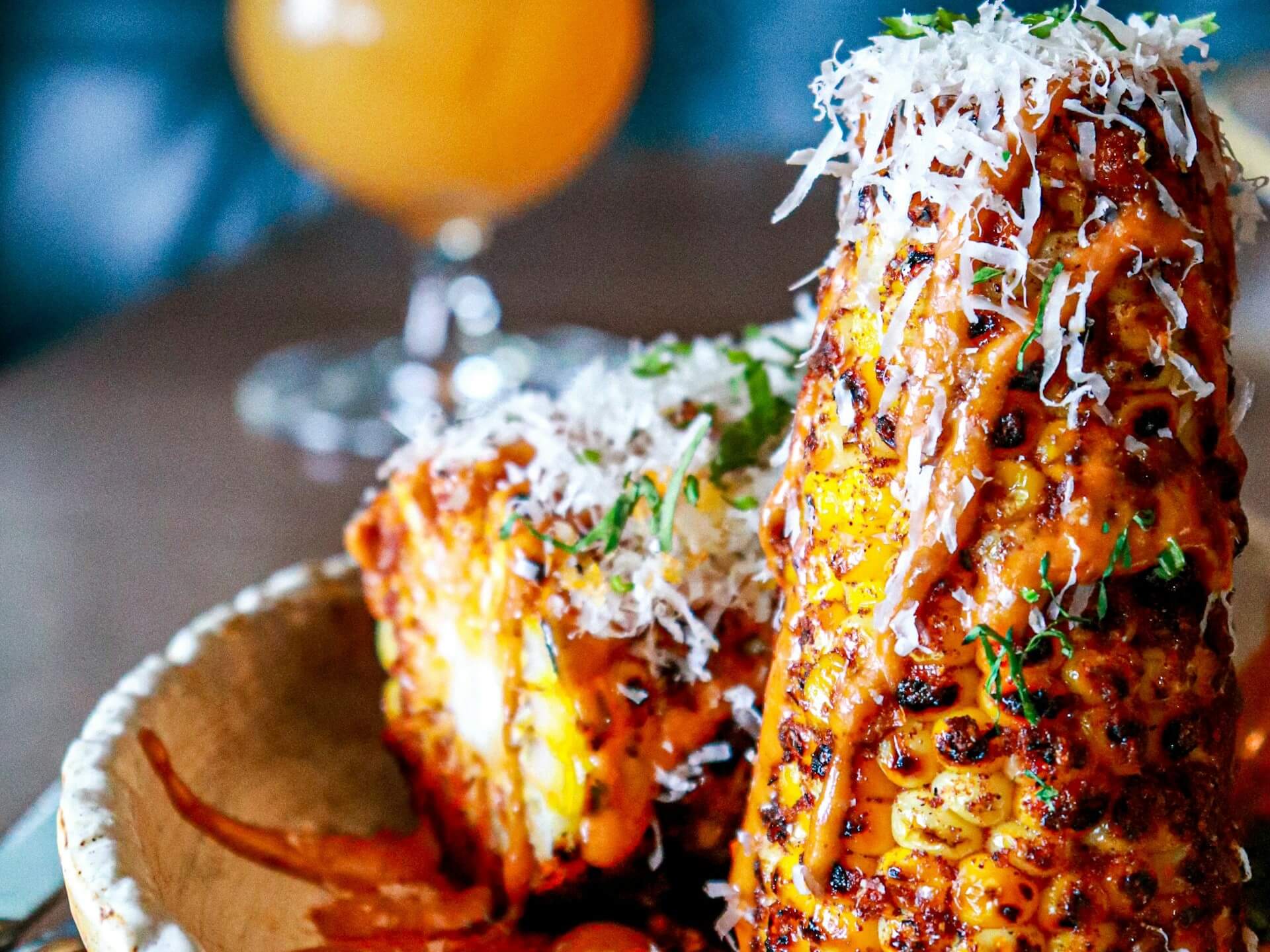
Elote or street corn-style dish on a table

An informative and engaging culinary trend report from Campbell’s Foodservice provides compelling insight that will help operators refresh their menus.

Recently, Campbell’s dropped their Culinary TrendPulse 2024 report. To download your own copy, click here.

Executive chef Gerald Drummond and senior chef Greg Boggs have identified four culinary trends for 2024. The chefs analyzed data provided by Campbell’s Foodservice and the company’s partners.

As has become commonplace, Campbell’s also took note of food and flavor social media mentions and conversations. This makes sense; if people are talking about it on social media, it’s probably growing in demand.

Now, I’m going to share each of the trends below. However, I’m going to laser in on one in particular. My reasoning is simple: It’s a compelling take on segment that has been experiencing growth, along with the accompanying growing pains.

To start, though, a brief look at three of the 2024 culinary trends identified by Chefs Drummond and Boggs.

TrendPulse 2024: Trends 1, 3 and 4

To put it bluntly, I think the first trend in this report is here to stay. It’s safe to say it has reached the proliferation stage.

So, when I see “global cuisine” in reports, I don’t really consider it a trend. What I want to see is specific cuisines, dishes or flavors identified as trending.

Fortunately, Chefs Drummond and Boggs have identified three global cuisines on the rise. Per the chefs and Campbell’s, Mexican, Asian, and North African cuisines are on an upward trend in the US.

In particular, operators should be aware of the following:

  • Asian cuisine: Korean, Souteast Asian, and Thai food are on the rise.
  • Mexican cuisine: birria, quesabirria, birriamen, chamoy, and street corn mentions have grown in menu mentions and social discussions.
  • North African cuisine is projected to grow by more than 12 percent on menus, year over year. Currently, operators should look at harissa, tagine, and peri-peri (a.k.a. piri-piri, or peli-peli).

Another trend from this report is “new nostalgia.” As the term suggests, consumers are showing interest in creative spins on well-known comfort foods.

Likely driven at least in part by global cuisines, heat is also on the rise. I mean that figuratively and literally.

Per a Tastewise data point cited in the Campbell’s report, sweet and spicy mentionsknown as “swicy”—have grown nearly 50 percent over the past year.

TrendPulse 2024: Trend 2

Alright, so here’s the trend that stands out to me.

According to Chefs Drummond and Boggs, consumers are still very much interested in plant-based cuisine. However, they want actual plants to be the stars.

Or, as Campbell’s puts it in their report, one of their top trends is “putting plants back in plant-based.” Interestingly, this trend fits with the first one in the Campbell’s report: global cuisine.

Per a Technomic report cited by Campbell’s, 41 percent of consumers eat a vegetarian or vegan dish at least once per week. However, it seems that these same consumers are showing a preference for actual plants.

Most plant-based meat alternatives are processed foods. In fact, some sources designate them “ultra-processed foods.” Today’s consumer is more educated on processed foods and seeks to avoid them.

So, operators should menu more dishes that feature plants. There’s a place for plant-based meat alternatives but their highly processed nature may be putting off a not-insignificant number of consumers.

In their report, Campbell’s suggests offering dishes featuring the following proteins: beans, legumes, and pulses.

Look, trend predictions are guesses. In this case, they’re data-driven and educated, but they’re still guesses. When considering menu changes, operators need to make choices that make sense for their business, guests, and market.

If you’re like me, you’ve noticed that all four of these trends pair well with one another. Operators should encourage their kitchen teams to get creative and craft new dishes that leverage two or more of the above trends.

Image: Aleisha Kalina on Unsplash

by David Klemt David Klemt No Comments

Which Chains are America’s Favorites?

NRN & Technomic Identify America’s Favorite Chains

by David Klemt

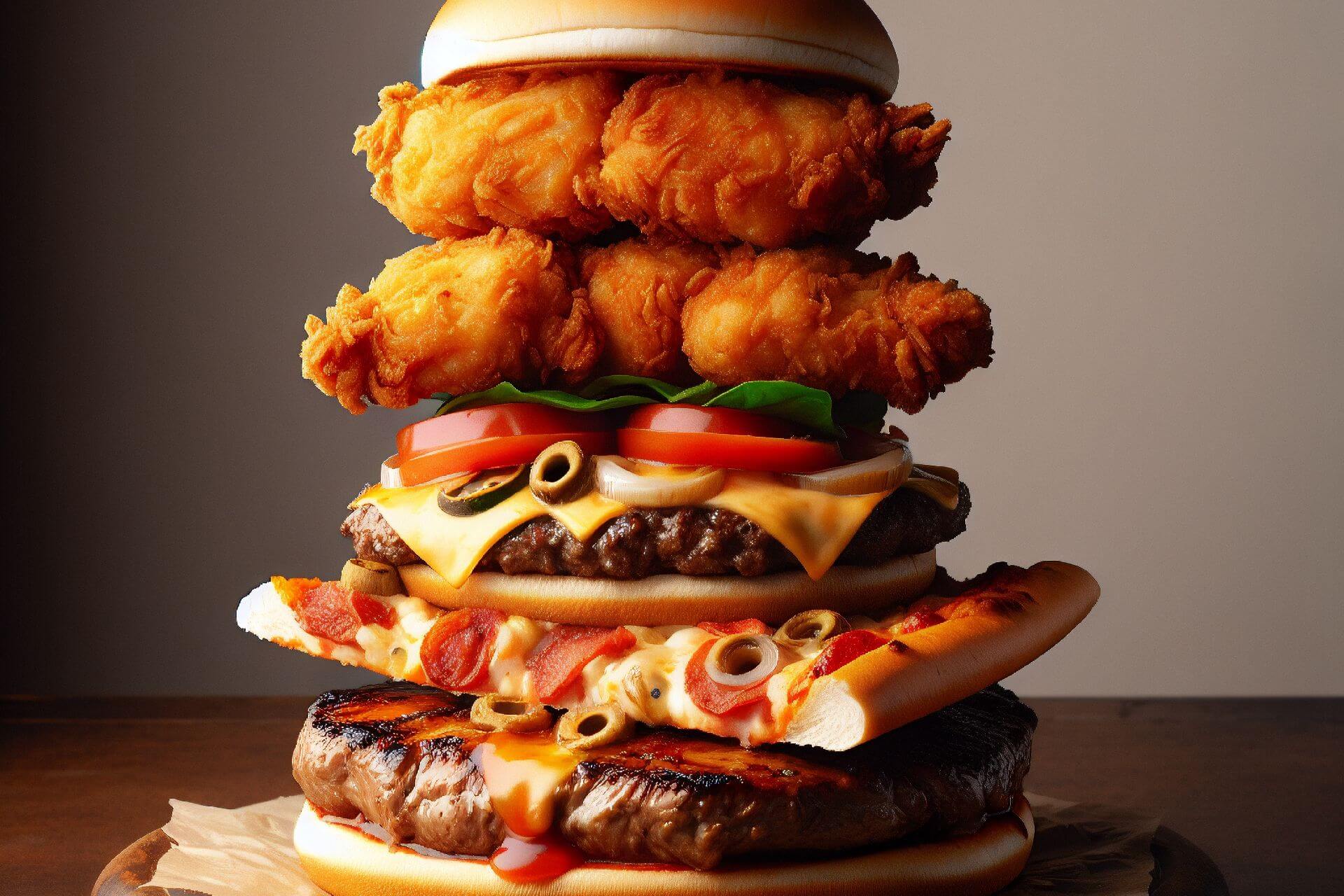
A cheeseburger with chicken patties, pizza, and steak on it

Alright, which one of you maniacs out there is going to make this AI-generated chicken-patty-pizza-steak burger a reality and put it on your menu?

Toward the beginning of 2024, Nation’s Restaurant News collaborated with Technomic to identify America’s favorite restaurant chains.

To my understanding, this is the first such partnership between the independent foodservice publication and the foodservice intelligence platform.

Providing more than just a glimpse into America’s favorite chains, the rankings span several categories. For instance, the partnership between NRN and Technomic reveals the top QSRs, along with the country’s favorite fast-casual, family-style, and miscale restaurants.

However, the top three chains across more granular categories are also identified. Examples include America’s favorite chicken, pizza, burger, and Mexican restaurants.

In fact, I’m going to kick things off with the more specific, specialized categories. Then, I’ll move into the broader segments.

That said, I encourage you to review NRN‘s article revealing America’s favorite midscale, casual, QSR, etc. restaurants for yourself. Written by Joanna Fantozzi, the piece is full of valuable insights beyond simple rankings.

Further, you may find it interesting to compare these rankings to the results of BrandVue’s Most Loved Eating Out Brands 2023 report, which we reviewed here.

Cheers to NRN and Technomic! Here’s to hoping that this becomes an annual release.

Beverage or Snack

  1. Tropical Smoothie Cafe
  2. Smoothie King
  3. Jamba

Burger

  1. Culver’s
  2. In-N-Out
  3. Freddy’s Frozen Custard & Steakburger

Chicken

  1. Chick-fil-A
  2. Jollibee
  3. Raising Cane’s

Italian (FSR)

  1. Carrabba’s Italian Grill
  2. Maggiano’s Little Italy
  3. Mellow Mushroom

Mexican

  1. Chuy’s Tex-Mex
  2. Torchy’s Tacos
  3. Moe’s Southwest Grill

Pizza

  1. Papa Murphy’s
  2. Marco’s Pizza
  3. Cici’s Pizza

Sandwich

  1. Jersey Mike’s Subs
  2. Newk’s Eatery
  3. Jason’s Deli

Steak

  1. Ruth’s Chris Steak House
  2. Fleming’s Prime Steakhouse
  3. Longhorn Steakhouse

Varied Menu

  1. Seasons 52
  2. Bahama Breeze Island Grille
  3. Cooper’s Hawk

QSR

  1. Dutch Bros Coffee
  2. Topical Smoothie Cafe
  3. Smoothie King
  4. Cold Stone Creamery
  5. Chik-fil-A

Fast Casual

  1. Jersey Mike’s Subs
  2. Newk’s Eatery
  3. Jason’s Deli
  4. McAlister’s Deli
  5. Sweetgreen

Family Style

  1. First Watch
  2. Cracker Barrel
  3. Golden Corral

Casual

  1. Seasons 52
  2. Bahama Breeze Island Grille
  3. Bonefish Grill
  4. Longhorn Steakhouse
  5. Cooper’s Hawk

Midscale

  1. First Watch
  2. Cracker Barrel
  3. Golden Corral
  4. Shoney’s
  5. Black Bear Diner

Favorite Chains: Overall

  1. Ruth’s Chris Steak House
  2. Season 52
  3. Dutch Bros Coffee
  4. Fleming’s Prime Steakhouse
  5. Bahama Breeze Island Grille
  6. Longhorn Steakhouse
  7. Cooper’s Hawk
  8. Tropical Smoothie Cafe
  9. The Capital Grille
  10. Smoothie King

When it comes to this list of the top-ten favorite chain restaurants, Technomic data scores a number of crucial insights.

Click here to see how each of these industry leaders ranked in:

  • Service and hospitality
  • Unit appearance and ambience
  • F&B
  • Convenience and takeout
  • Value

Image: Shutterstock. Disclaimer: This image was generated by an Artificial Intelligence (AI) system.

KRG Hospitality. Restaurant Business Plan. Feasibility Study. Concept. Branding. Consultant. Start-Up.

by David Klemt David Klemt No Comments

Slice Releases 2024 Report

Indie Pizzeria App Slice Releases 2024 Report

by David Klemt

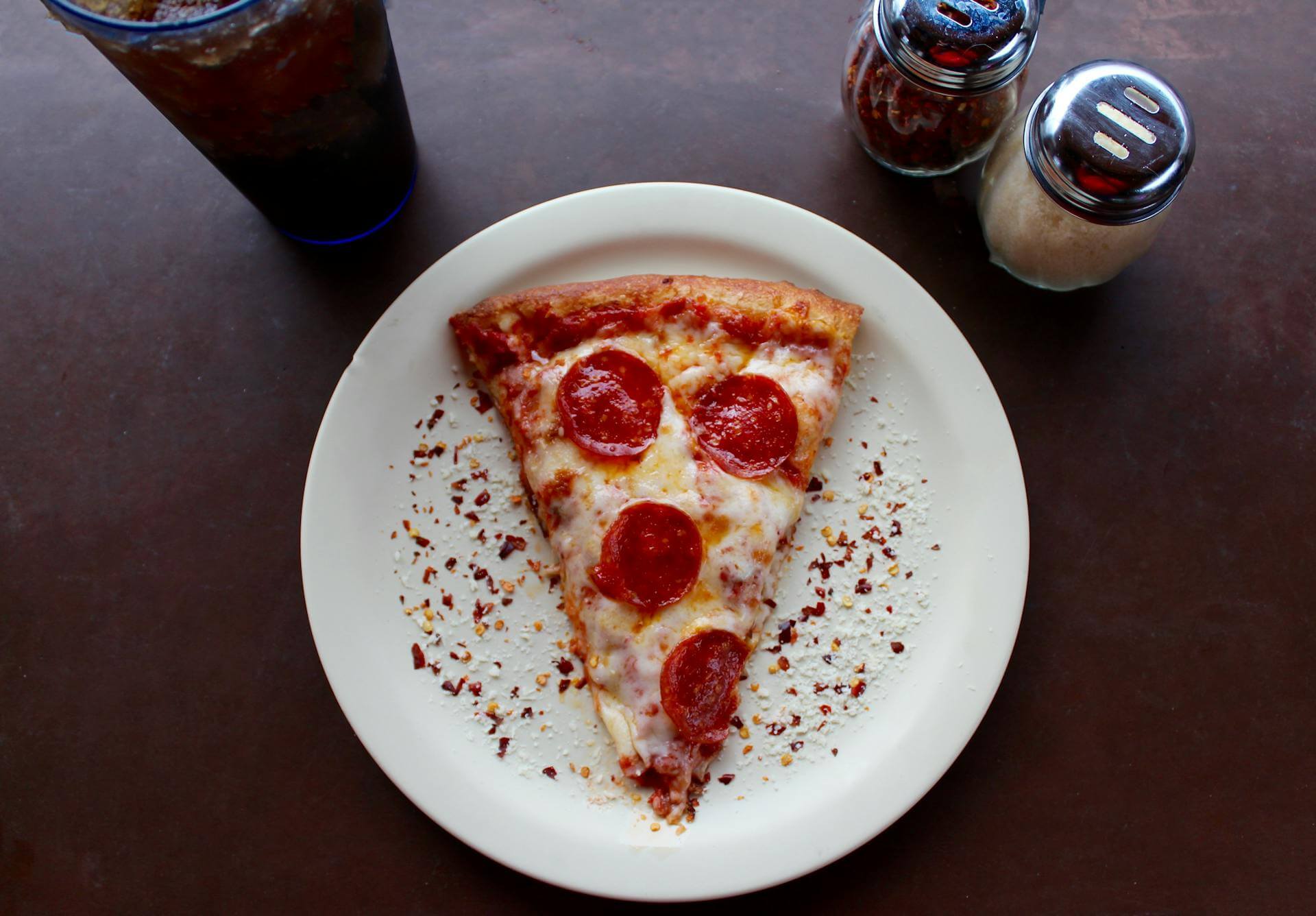
Slice of pepperoni pizza on a plate, on top of a table

Still the most popular pizza topping.

It’s finally here, one of our favorite food-forward hospitality industry reports providing operators with valuable insider insights.

In keeping with tradition, Slice released their 2024 Slice of the Union report the day before National Pizza Day. Truly, this is one of the reports I most look forward to each year.

As one would expect, the fifth-annual Slice of the Union is stuffed with helpful information.

Before we dig in, a quick rundown of Slice. The platform serves all 50 states and works with more than 20,000 independent pizzerias. To put that in context, that’s a network of pizzerias in the US larger than Domino’s, Little Caesars, and Pizza Hut combined.

If you’re an independent pizzeria owner and you have yet to partner with Slice, I encourage you to look into doing so. Should a partnership with Slice be feasible, it should increase brand awareness, engagement, traffic, and revenue to a notable degree.

Seasoning

Kicking things off, Slice sprinkles a bit of trivia onto this year’s report.

Last year, consumers apparently gorged themselves on pizza. How much was eaten? Just over 29,000 tons.

Providing context, Slice says to imagine 11,572,064,136 pennies. That’s a Scrooge McDuck dive-worthy pile of coins.

However, one category of pizza experienced a drop in popularity last year. According to Slice, pizzerias saw a 5.21-percent dip in vegan pizza orders.

Now, on to toppings.

Toppings

There’s a reason I chose a photo of a single slice of pepperoni pizza for this article.

Operators who track their data probably already know what I’m about to say: According to Slice, pepperoni is the most popular pizza topping in the US.

This is followed by, in descending order of popularity, mushrooms, sausage, extra cheese, onions, bacon, and black olives. For those wondering, kale was one of the “least-loved” toppings last year.

If you read through the 2023 Slice of the Union report or read our article reviewing it, you know they made a couple of trend predictions. Last year, Slice guessed that pickle pizzas would be in demand. Well, they were right. Orders for pickle pizzas jumped by 32 percent in 2023.

So, when Slice makes a pizza-based prediction, it’s probably in your best interest to take it to heart. Oh, waitSlice has a prediction for 2024. According to the platform, tinned fish will be a standout pizza topping this year.

Sauce

In case you’re wondering about how much data Slice has at their fingertips, here’s an interesting bit of trivia. Last year, 4,744 people ordered pizzas with anchovies, garlic, or onions on Valentine’s Day. Alrighty, then.

They also know that orders for pizza with pineapple as a topping saw an increase of nearly six percent in 2023.

Further, the 2024 Slice of the Union reveals the most and least “pizzaful” days of 2023. The former? December 1. And the latter? Thanksgiving.

Last year, Fridays accounted for the most orders, at 23.5 percent. However, only 8.7 percent of pizza orders were placed on Mondays.

For data that’s a bit more esoteric, what if Slice could reveal which Zodiac signs order the most and least pizza? Would this be useful to operators? Honestly, it could be, I suppose. Particularly for those who have loyalty programs and engage with their guests via email and text marketing.

Apparently, a Taurus (April 20 to May 20) is the most likely to order pizza. Conversely, Capricorns (December 22 to January 19) either don’t like placing food orders in general or don’t like eating pizza specifically, because they ordered the least amount last year.

By the way, if you happen to operate a pizzeria in New Jersey, you may want to search for a guest named Dominic. According to Slice, someone named Dominic in NJ placed 348 pizza orders in 2023. Sounds like Dom has earned a special perk from his favorite pizza joint.

Extra Cheese

Pizzeria owners and their teams in Hawaii, Alabama, Oregon, South Carolina, and Montana may have the happiest wallets. That’s because people who ordered pizza for delivery in those five states tipped their drivers the most.

However, people who order pizza in Washington may have slightly lighter wallets than their fellow Americans. That’s because while the average price for a large cheese pizza in the US is $18.33, that number jumps to $25.75 in the Evergreen State.

If you’d like to see the average price for a large cheese pizza in each of the 50 states, click here. As an example, the average price in Nevada (KRG Hospitality’s American HQ is in Las Vegas) is $21.09.

Speaking of price, while Dom in NJ placed the most pizza orders, Frances in New York placed the most expensive order last year: $2,867.07. Frances, I want to attend one of your pizza parties (I think).

Finally, let’s end on data that can help operators when reviewing their labor costs. On average, pizza delivery distance was 9.14 miles in 2023. And, on average, pizzerias completed the process of producing an order and delivering it in 42.5 minutes.

For more insights from the 2024 Slice of the Union, click here.

Image: Sydney Troxell on Pexels

KRG Hospitality. Restaurant Business Plan. Feasibility Study. Concept. Branding. Consultant. Start-Up.

by David Klemt David Klemt No Comments

What are You Changing in 2024?

What are You Changing in Your Restaurant or Bar in 2024?

by David Klemt

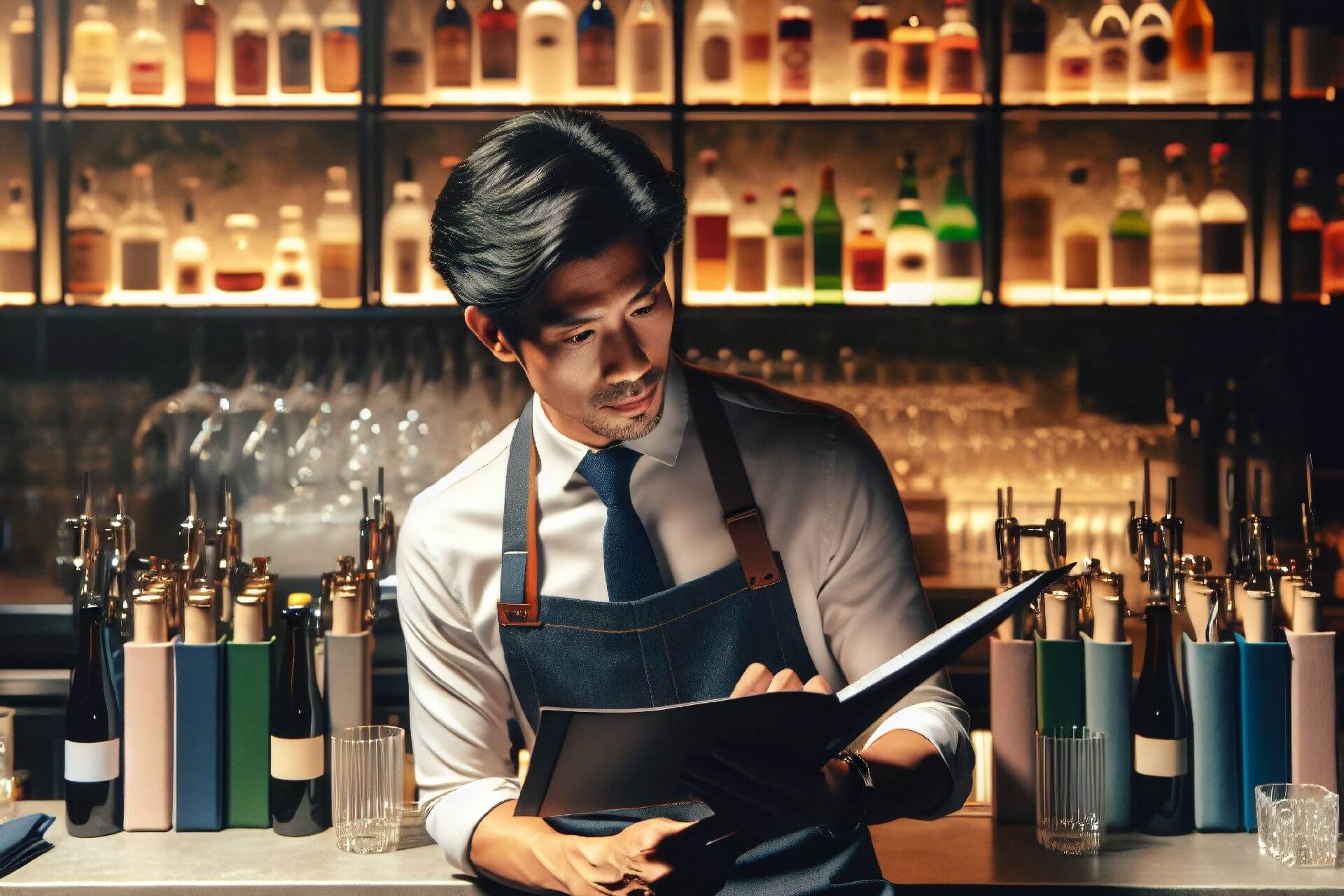
Restaurant owner reviewing their menu

More fun with AI-generated images. That’s quite the busy bar setup.

Toward the end of last year, Nation’s Restaurant News identified what changes operators chose to make after analyzing their operational data.

The publication surveyed hundreds of operators about how data drove their decisions. This survey was an element of their year-end report, Market Leader Report: The Data-driven Restaurant.

As one would imagine, this report focuses on data collection, analysis, and usage. However, NRN‘s report doesn’t just address the importance of data collection in the F&B space. Rather, they seek to understand if operators are collecting the “right” data; whether they can optimize the data they collect; what metrics they’re tracking; and how they’re acting on all that data.

Simply put, it’s an important report addressing a topic crucial to today’s restaurant and bar operations. Those who want their own copy of The Data-driven Restaurant can download it free here.

While entire report is valuable, the focus of this article is one question and the answers provided. Below, to provide context, is a breakdown of the survey respondents.

The Who

Most of the respondents identified as independent restaurant operators.

  • Indie: 37 percent
  • Chain (franchisee): 21 percent
  • Chain (company owned): 18 percent
  • Multi-concept: 15 percent
  • Single-site operator: 6 percent
  • HQ or brand level of foodservice company: 3 percent

By a slim margin, most survey respondents categorized their restaurants as full service or casual dining.

Perhaps unsurprisingly, the fewest respondents operate in the upscale or fine dining category.

  • Full service / casual dining: 30 percent
  • Fast casual: 28 percent
  • Quick service: 20 percent
  • Midscale / family dining: 15 percent
  • Upscale / fine dining: 7 percent

The What

So, what question caught our attention at KRG Hospitality?

“In the past 12 months, which initiatives did your organization undertake after analyzing data?”

NRN conducted this survey in November 2023. Not surprisingly, respondents mostly made changes to their menus after reviewing their data. Streamlining menus and adjusting prices were two of the biggest operational trends last year, as many operators are no doubt well aware.

That theory is supported by the survey results. Below, the top four answers to the question above.

  • Changed menu prices (48 percent)
  • Removed items from or added items to our menu (47 percent)
  • Improved the way we trained our staff (26 percent)
  • Adjusted our loyalty program’s rewards and/or incentives (24 percent)

Honestly, it’s heartening to see that training is among the top-three data-driven actions operators took last year. And, of course, it’s not shocking that the menu was the focus of the most attention. Streamlining is an effective way to reduce food and labor costs. Further, pricing is always (please excuse the pun) on the menu.

Our question is: What changes, if any, do you plan to implement this year now that we’re headed into Q3?

The What: The Sequel

If the menu received the most attention after operators reviewed their data, what received the least?

Well, it appears marketing fell to the wayside, along with the kitchen. The following are the bottom four answers to the question in the section above:

  • A/B tested marketing campaigns and increased ROI (6 percent)
  • Changed specs on our kitchen equipment or technology (10 percent)
  • Identified lapsed customers and marketed to them (11 percent)
  • Increased throughput in our kitchen during peak periods (13 percent)

Now, I’ll concede that one marketing action found itself in the middle of the pack when it came to this survey question. Upon analyzing their data, 18 percent of respondents identified new potential guests and marketed to those people.

Still, in comparison to making changes to menus, the fewest respondents took marketing action or made changes to the kitchen directly.

Does this mean that menu changes have the greatest impact on guests and ROI? Well, that’s possible. However, I think something else is at play.

Personally, I think collecting data is the easy part. At this point, most platforms serving our industry are collecting data for operators.

But tracking the correct metrics, analyzing the associated data, and knowing what to do after analyzing said data? That’s difficult. It can be overwhelming, which is why it’s so important to build and implement the proper tech stack for a specific concept. This is why one of the services we offer our clients is tech-stack development.

Further, the tech stack needs to be built around an operator and their leadership team. If nobody knows how to use it or what to do with the data they’re collecting, it’s useless.

Image: Shutterstock. Disclaimer: This image was generated by an Artificial Intelligence (AI) system.

Bar Pub Brewery Nightclub Club Nightlife Technology Plan Tech Stack

by David Klemt David Klemt No Comments

Woodford Reserve 2024 Derby Bottle

Woodford Reserve Unveils 2024 Kentucky Derby Bottle

by David Klemt

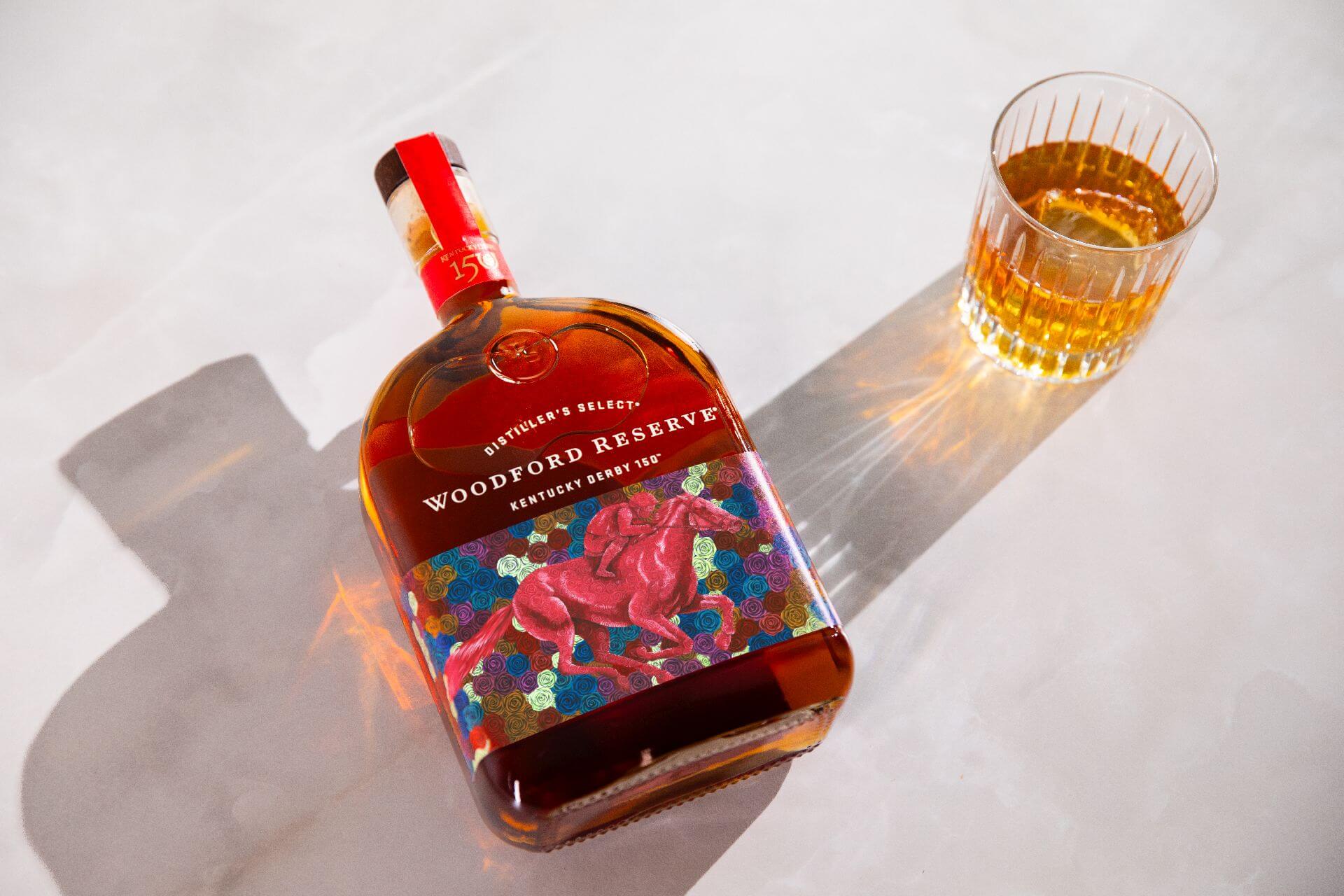
Woodford Reserve 2024 "Adorned with Flowers" bottle

Commemorating the 150th running of the iconic Kentucky Derby, Woodford Reserve’s 2024 Derby bottle is now available for purchase.

In keeping with tradition, the bottle’s label features a Kentucky artist’s work.

For 2024, Woodford Reserve collaborated with artist Wylie Caudill, who crafted the painting “Adorned with Roses.” The art is a clear nod to another tradition: adorning the winning horse with a garland consisting of hundreds of roses, the Derby’s official flower.

This should grab an operator’s attention for a few reasons. To start, some operators enjoy collecting bottles. So, they can now get their hands on this annual release.

Further, it’s time to start thinking about this year’s Derby, which takes place on May 4. Millions of people watch the Kentucky Derby every year. Operators need to ensure their Mint Juleps and riffs are dialed in, including the appropriate drinkware.

Impressively, while it has been postponed twice, it has never been cancelled.

Traditionally, the Derby is run on the first Saturday in May. The race was run in June in 1945 due to World War II. And in 2020, Covid-19 restrictions pushed the race to September. Incredibly, a world war and a pandemic couldn’t thwart the Derby.

2024’s race is the 150th running of the Kentucky Derby. It stands to reason that even more people will show an interest in watching and celebrating this year’s race. Woodford’s commemorative bottle at least be on the back bar of any venue running a Derby promotion. It would also make for a great raffle item on race day.

Finally, we celebrate International Whiskey Day this month. The more special edition whiskeys available on March 27, the better.

Learn more about this year’s Woodford Reserve Derby bottle below. Cheers!

Woodford Reserve Releases 2024 Bottle Celebrating 150th Anniversary of the Kentucky Derby

Bottle features the art of Kentuckian Wylie Caudill 

Versailles, KY (March 5, 2024) — Woodford Reserve®, the Presenting Sponsor of the Kentucky Derby®, is honoring “The Most Exciting Two Minutes in Sports®” with the release of its 2024 commemorative Derby bottle.

This year’s special release celebrates the 150th running of the Kentucky Derby® and features the artwork of Kentucky native Wylie Caudill, known for his bold, repetitive patterns, and his signature roses. His painting, “Adorned in Roses,” depicts a racing thoroughbred covered with red roses, with a background of multi-colored roses.

The one-liter bottle retails for $55 and is available for purchase globally. A special presale on ReserveBar begins March 5. It also is for sale at Woodford Reserve Distillery and in the Woodford Reserve online store starting March 5.

“Wylie’s artwork embodies the spirit of Woodford Reserve, the liveliness of Churchill Downs during race day, and the heart of Kentucky,” Woodford Reserve Master Distiller Elizabeth McCall said. “We’re thrilled to have a Kentuckian’s artwork on our bottle during this monumental year.”

Caudill grew up drawing and painting in Cynthiana, Kentucky. During college, he spent his free time creating chalk drawings, leaving his mark around campus and leading to his title ‘chalk guy’ among locals. He expanded his public street art to painting murals in Lexington after college, and many of his murals can be seen across Kentucky today. Caudill also created the Official Art of the Kentucky Derby for Churchill Downs for the 150th Derby, marking the first year that Woodford Reserve and Churchill Downs used the same artist.

“As a Kentucky native, I am honored to be a part of this milestone celebration,” Caudill said. “I have painted my signature roses many times over the years, but this one is truly special. The colorful roses symbolize the diverse Derby fans from around the world, connecting people beyond the track.”

Woodford Reserve’s Derby bottle has been an annual collector’s item anticipated by bourbon and racing fans since 1999.

About Woodford Reserve

Woodford Reserve, “Presenting Sponsor of the Kentucky Derby,” is crafted at the historic Woodford Reserve Distillery, tucked in the heart of thoroughbred country in Versailles, Kentucky. A National Historic Landmark, the Woodford Reserve Distillery represents craftsmanship with a balance of historic heritage and modern practices. Woodford Reserve is a product of the Brown-Forman Corporation, a premier producer and marketer of fine quality beverage alcohol brands including Jack Daniel’s, Finlandia, Korbel, Tequila Herradura, Old Forester, Sonoma-Cutrer and Chambord. Please enjoy your bourbon responsibly. To learn more about Woodford Reserve, visit us www.woodfordreserve.com  or check us out on Facebook at www.facebook.com/woodfordreserve.

Kentucky Straight Bourbon Whiskey, 45.2% Alc. by Vol., produced and bottled by the Woodford Reserve Distillery, Versailles, KY ©2024

Disclaimer: Neither the author nor KRG Hospitality received compensation, monetary or otherwise, in exchange for this post.

Image provided by Woodford Reserve

Bar Nightclub Pub Brewery Menu Development Drinks Food

by David Klemt David Klemt No Comments

The Batching Superpower of Sūpāsawā

The Batching Superpower of Sūpāsawā

by David Klemt

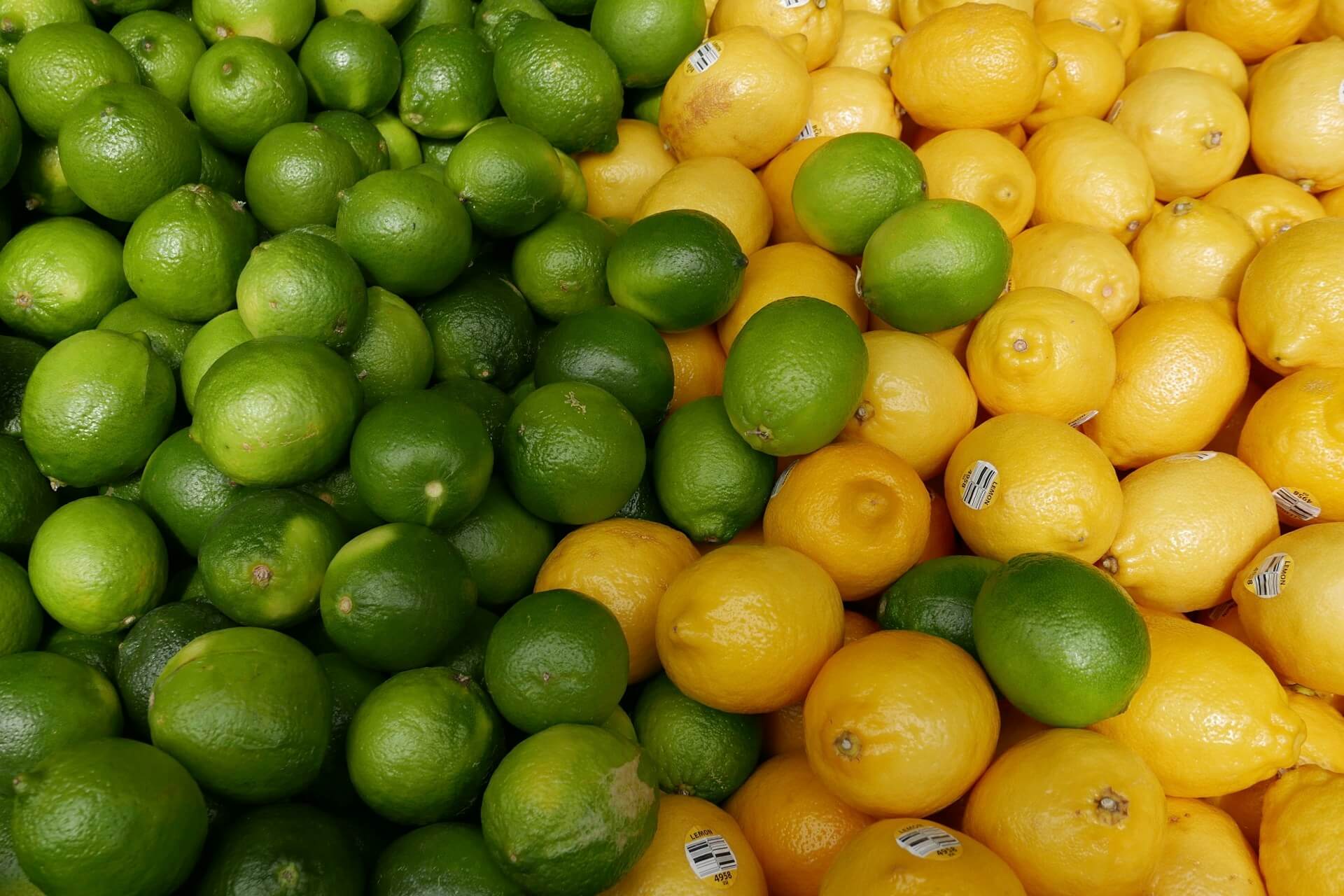
A bunch of limes and lemons

One of our favorite products from WSWA’s Access LIVE 2024 event in Las Vegas can save operators and bar teams time and money.

Access LIVE, the annual Wine & Spirit Wholesalers of America (WSWA) event is always chock full of notable items. However, this one in particular stood out to me and my colleagues.

Coming out of Deluxe Distillery in Belgium, Sūpāsawā Seriously Sour Cocktail Mixer is here to make lives easier.

Of course, it’s not surprising that this mixer is so impressive. Sūpāsawā is produced alongside high-quality stablemates, after all: Blind Tiger Handcrafted Gin, Mary White Premium Vodka, and Yusibi Honey Based Aperitif.


View this post on Instagram


A post shared by Supasawa (@supasawaco)

In short, this innovative mixer can replace citrus. Importantly, it’s also widely available around the world. Speaking to the core of our audience and clients, it’s available in Canada and the US. When I asked about availability in the US, I was told it’s in 30 states currently.

Operators in the UK, Europe, Australia, and many more regions should also be able to get their hands on Sūpāsawā.

So, what is this magical mixer, exactly? It’s a simple and clean stand-in for expensive and time-consuming citrus.

Deluxe’s super sour mixer is distilled water, citric acid, malic acid, tartaric acid, phosphoric acid, and succinic acid. The liquid is crystal clear, aroma-free, and an incredibly convenient substitute for lemons and limes.

Real-life Scenario

Consider the following real-life hypothetical that shines a light on Sūpāsawā’s real-life benefits.

Let’s say someone hires an operator for a catered event. Included in this event is bar service, and involves more than pouring wine and beer.

Along with a handful of calls, the client and their guests expect a signature cocktail. Well, batching a cocktail or two ahead of the event would be a smart move.

However, we all know what that means: purchasing and juicing citrus. And we also all know what else that means: labor costs for all that prep.

What if one bartender or bar back could batch a cocktail in less than five minutes? Yes, I’m talking under five minutes for the entire batching process.

That scenario is nearly identical to Deluxe Distillery’s Access LIVE 2024 situation.

Deluxe showed the convenience and superpower of Sūpāsawā at their booth via batching. According to the bartender and ambassador who prepared the standout cocktail, he added all the ingredients—including the super sour mixer—to a jug, shook it, and it was ready to go in less than five minutes.

Real-life Benefits

Does this mean you’ll never have to buy lemons and/or limes again? For the vast majority of bars, no. However, the more drinks you can make with Sūpāsawā, the more you can plan for and control the cost of citrus.

Per Deluxe, operators can expect to save 15 minutes per liter of citrus juiced. The distillery also says each bottle of Sūpāsawā represents 35 pieces of fruit an operator won’t have to purchase. On average, a single cocktail requires just 20 ml of Sūpāsawā, or 2/3 of an ounce. With each bottle coming in at 700 ml, that’s 35 individual cocktails per.

When I asked about unit cost at their Access Live 2024 booth, Deluxe said operators can expect a price of $9 per unit. People who do the math can see the benefit of getting their hands on Sūpāsawā for individual, kegged, and batched cocktails.

In terms of storage, the slim bottle can last for about two years unopened. After it’s opened, Sūpāsawā should last for up to a year. Compare that to the two- to three-day shelf life of lemon or lime juice.

Notably, using Sūpāsawā leads to consistency. Because it always tastes the same, drink consistency is improved. And, of course, using this super sour mixer leads to producing less food waste.

Click here to learn more about Sūpāsawā and what it can do for an operator’s bar program, catering, and bottom line. Oh, and click here for recipes. Cheers!

Disclaimer: Neither the author nor KRG Hospitality received compensation, monetary or otherwise, from Deluxe Distillery, WSWA, or any other entity in exchange for this post.

Image: Irina on Unsplash

KRG Hospitality Start-Up Restaurant Bar Hotel Consulting Consultant Solutions Plans Services

by David Klemt David Klemt No Comments

Best and Worst Cities for Servers

Service Wins and Woes: Best and Worst Cities for Servers

by David Klemt

Aerial photograph of Pittsburgh, Pennsylvania, at night

A recent survey from gaming industry site Casinos.US identifies the 25 best and two-dozen worst cities for servers in America.

I can share two details about the methodology that Casinos.US employed.

One, they surveyed 2,000 current and former hospitality professionals. And two, they were asked to rate the overall rudeness of their guests on a scale of one to ten. One is the kindest, ten is the rudest.

Further, I can share that the average rudeness of guests being served in the US is 4.9 out of ten. Unfortunately, the three worst cities on the Casinos.US list rank between 7.0 and 7.6 on the rudeness scale. In fact, 22 of the 24 worst cities come in at 5.0 or above.

No city is perfect. The best of the best earns a score of 2.0, with the next best hitting a 3.0. Still, not bad at all.

Sadly, 45 percent of respondents reported finding themselves interacting with rude guests at least twice per day. As far as the worst of the worst, respondents identified “older adults” as the rudest, and Sunday as the day of the week with the most incidents. Do with that information as you will.

There are two sides to the coin, of course. Impressively, 24 percent of respondents “rarely” encounter rudeness from guests. Even better, 28 percent don’t expect to come across rude guests on a daily basis at work. So, there’s some hope out there.

To review the results of this survey for yourself, click here.

The Worst

Alright, let’s get it out of the way. Below, the worst cities in America for servers, according to Casinos.us.

To the right, their rudeness score. Again, the score is out of ten, with ten being the absolute worst.

  1. Washington, DC (4.9)
  2. Orlando, Florida (4.9)
  3. San Antonio, Texas (5.0)
  4. Sacramento, California (5.0)
  5. Columbus, Ohio (5.0)
  6. Buffalo, New York (5.0)
  7. Houston, Texas (5.1)
  8. St. Louis, Missouri (5.1)
  9. Atlanta, Georgia (5.1)
  10. Louisville, Kentucky (5.3)
  11. Miami, Florida (5.3)
  12. Nashville, Tennessee (5.4)
  13. New York, New York (5.4)
  14. Phoenix, Arizona (5.6)
  15. Detroit, Michigan (5.7)
  16. San Diego, California (5.8)
  17. Las Vegas, Nevada (5.8)
  18. New Orleans, Louisiana (5.8)
  19. Milwaukee, Wisconsin (6.0)
  20. Providence, Rhode Island (6.3)
  21. Oklahoma City, Oklahoma (6.3)
  22. Jacksonville, Florida (7.0)
  23. Cincinnati, Ohio (7.0)
  24. Virginia Beach, Virginia (7.6)

This list, if accurate, leaves me with one question: What’s going on, Virginia Beach? Sheesh. Calm down—your side of ranch isn’t that important, I promise.

It’s tempting to label this a tourist issue. Well over 10 million people—nearly 20 million in 2019—visit Virginia Beach annually.

And, hey, look at the rest of the list; it’s loaded with destination cities that draw millions upon millions of tourists each year.

However, when you look at the list of the best cities for servers below you’ll find more destination cities.

The Best

Now that we know the worst, let’s check out the best.

The cities below rank the lowest as far as rude behavior from guests.

  1. Dallas, Texas (4.8)
  2. Minneapolis, Minnesota (4.8)
  3. Boston, Massachusetts (4.8)
  4. Birmingham, Alabama (4.8)
  5. Salt Lake City, Utah (4.8)
  6. Los Angeles, California (4.7)
  7. San Francisco, California (4.7)
  8. Philadelphia, Pennsylvania (4.7)
  9. Raleigh, North Carolina (4.6)
  10. Riverside, California (4.5)
  11. Kansas City, Missouri (4.5)
  12. Seattle, Washington (4.5)
  13. Charlotte, North Carolina (4.4)
  14. Richmond, Virginia (4.3)
  15. Cleveland, Ohio (4.3)
  16. Indianapolis, Indiana (4.2)
  17. Chicago, Illinois (4.1)
  18. Denver, Colorado (4.1)
  19. Portland, Oregon (4.0)
  20. Tampa, Florida (3.8)
  21. Hartford, Connecticut (3.8)
  22. Austin, Texas (3.8)
  23. Baltimore, Maryland (3.7)
  24. Memphis, Tennessee (3.0)
  25. Pittsburgh, Pennsylvania (2.0)

Philly may be the City of Brotherly Love but the Steel City, Pittsburgh, is the best for servers in terms of guest behavior. At least, according to Casinos.US.

If you live in one of the cities above, go out to bars and restaurants, and aren’t a jerk to your servers, congratulations on being a decent person.

Takeaway

Let’s say you’re an owner, operator, or leadership team member. And let’s say you operate or work in one of the cities above, whether the best or worst.

If your service team routinely on edge, regularly upset, find out why. Leaders look out for their teams and strive to provide a healthy work environment.

I’m not saying you need to get into the details of their personal lives. What I am saying is that if there are issues in the workplace, you need to get to the bottom of them. More importantly, you then need to engage the team and get their feedback.

How do they want guest issues handled by the leadership team? Are their problematic regulars who need to be “fired” to protect the team? Some guests simply aren’t worth the revenue and tips in exchange for the emotional and mental distress they’re inflicting on the team.

That is, however, something that must be discussed. Most importantly, when the feedback is taken into account and a procedure is put in place, leadership must adhere to it and act accordingly. Any deviation will result in a loss of trust, and that will decimate team morale even more quickly than an encounter with a rude guest.

Lose trust from your team, lose the business.

Image: Venti Views on Unsplash

KRG Hospitality Start-Up Restaurant Bar Hotel Consulting Consultant Solutions Plans Services

by David Klemt David Klemt No Comments

Pizza Today’s 2024 Report Reveals Most Popular Cheeses

Pizza Today‘s informative 2024 Pizza Industry Trends Report is full of useful information, from top styles and toppings to new cheeses guests can choose.

Two weeks ago we did a deep dive into the top eleven pizza styles going into 2024, per Pizza Today. Click here to read that article.

Last week we checked out what the pizza publication had to say about top pizza styles by region. Additionally, we looked at the top toppings nationally and regionally. You can read that article here.

Now, we’re going to talk about what Pizza Today has learned about the top cheeses operators are putting on their menus.

by David Klemt

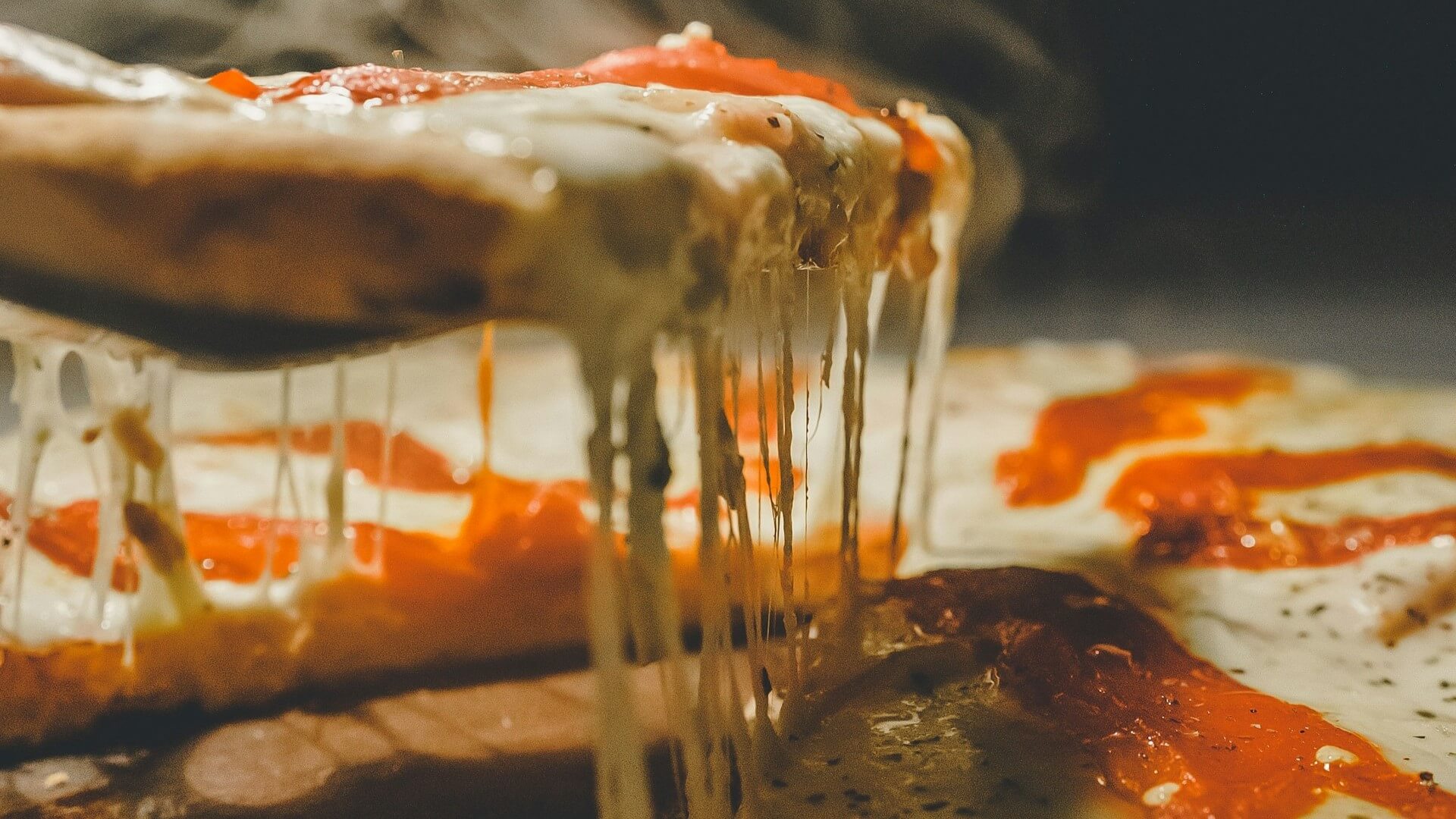
Cheese pull from cheese pizza

Top Pizza Styles, Nationally and Regionally

Before we jump into the cheeses, a quick recap of the top pizza styles in America.

  1. New York
  2. Traditional American
  3. Sicilian
  4. Deep Dish
  5. Neapolitan / Napoletana
  6. Chicago Thin / Tavern-style
  7. Detroit
  8. Grandma
  9. California / American Artisan
  10. NEOpolitan / Neo-Neapolitan and Chicago Thick (tie)

And now, the top trending pizza styles.

  1. Detroit
  2. Deep Dish and Grandma (tie)
  3. Sicilian
  4. New York
  5. Chicago Thin

Finally, the top pizza styles by region. For a more detailed explanation of each region, click here.

The West

  1. New York Style
  2. Traditional America
  3. California/American Artisan
  4. Sicilian
  5. Neapolitan

The South

  1. New York Style
  2. Traditional America
  3. Sicilian
  4. Deep Dish
  5. Neapolitan

The Midwest

  1. Traditional America
  2. Chicago Thin
  3. New York Style
  4. Deep Dish
  5. Detroit

The Northeast

  1. New York Style
  2. Sicilian
  3. Traditional America
  4. Neapolitan
  5. Grandma

Top Pizza Toppings, Nationally and Regionally

We’re almost to the cheeses. First, a recap of the most popular items to put on top of cheese.

Well, unless we’re talking a stuffed pizza. Click here and scroll to Deep Dish to see what I mean.

Now, the top toppings across the US.

  1. Pepperoni
  2. Sausage
  3. Mushroom
  4. Extra Cheese
  5. Bacon
  6. Chicken
  7. Onion
  8. Red/Green Bell Pepper
  9. Ham
  10. Black Olives
  11. Meatballs
  12. Canadian Bacon
  13. Jalapenos
  14. Pineapple
  15. Beef
  16. Basil
  17. Banana Peppers
  18. Fresh garlic
  19. Tomatoes
  20. Spinach

Below, how toppings break down regionally.

The West

  1. Pepperoni
  2. Sausage
  3. Mushroom
  4. Chicken
  5. Bacon

The South

  1. Pepperoni
  2. Sausage
  3. Mushroom
  4. Extra cheese
  5. Bacon

The Midwest

  1. Pepperoni
  2. Sausage
  3. Mushroom
  4. Bacon
  5. Onion

The Northeast

  • Pepperoni
  • Sausage
  • Mushroom
  • Extra cheese
  • Bacon

Top “New” Cheeses

Okay, so we’ve reviewed top pizza styles. We’ve done a recap for toppings.

So, what are some of the top “new” cheeses going onto those pizza styles and being covered in all those toppings?

It may seem odd the refer to the cheeses below as “new.” In this context, “new” means, “not mozzarella” or “not provolone,” for the most part. Or, if you’re in St. Louis, “not Provel.”

  • Ricotta
  • Cheddar
  • Fresh Mozzarella
  • Goat Cheese
  • Parmigiano Crema
  • Cotija Cheese
  • Scamorza
  • Vegan Cheese
  • Blue Cheese
  • Feta

Guests love personalization, and they love the opportunity to try new foods and new takes on foods they know.

Scamorza

For the most part, you’re likely familiar with all the cheeses above. However, if you’re like me, you may be unfamiliar with scamorza. If that’s the case, I looked into it for both of us.

Like mozzarella, scamorza is made from either stretched cow or water buffalo milk cheese curds. This cheese originates from Italy and comes in two styles: scamorza bianca or and scamorza affumicata. The former is white or natural, while the latter is smoked and brownish in appearance.

Further, bianca is a mild, somewhat sweet cheese. Affumicata, being smoked, delivers a more savory and, as one would expect, smoky flavor.

Vegan Cheese

If you aren’t offering vegan or plant-based cheese for your pizzas, you may not know what brands to use.

Well, don’t worry. I’ve also done some legwork into this topic.

Brands to check out are Violife, Diya, Chao, and Miyoko’s. As plant-based alternatives become more commonplace and expected by guests, I expect more commercial vegan-friendly cheeses to become available. Perhaps we’ll see some at this year’s National Restaurant Association Show.

Image: Pablo Pacheco on Unsplash

Related Reading

Work with Us

To work with us on your restaurant, bar, cafe, nightclub or other hospitality project, click the image below. Cheers!

Client Intake Form - KRG Hospitality

by David Klemt David Klemt No Comments

Top Pizza Styles & Toppings by Region in the USA

Now that we know the top 11 pizza styles in North America thanks to Pizza Today, let’s see how they break down by region.

Unfortunately, they don’t include regions throughout Canada in their trends report. However, the information is still incredibly valuable.

Pizza Today has put a lot of effort into their 2024 Pizza Industry Trends Report. So, make sure to click this link and check it out for yourself.

Before we jump into the regional breakdown, let’s check out which pizza toppings lead the way across the nation. As you’ll see later, while many regions follow national trends, they also deviate in notable ways.

If you read last week’s article, you already know which pizza styles dominate North America. For those of you haven’t yet read that article, click here.

That said, here are the top 20 toppings in America.

by David Klemt

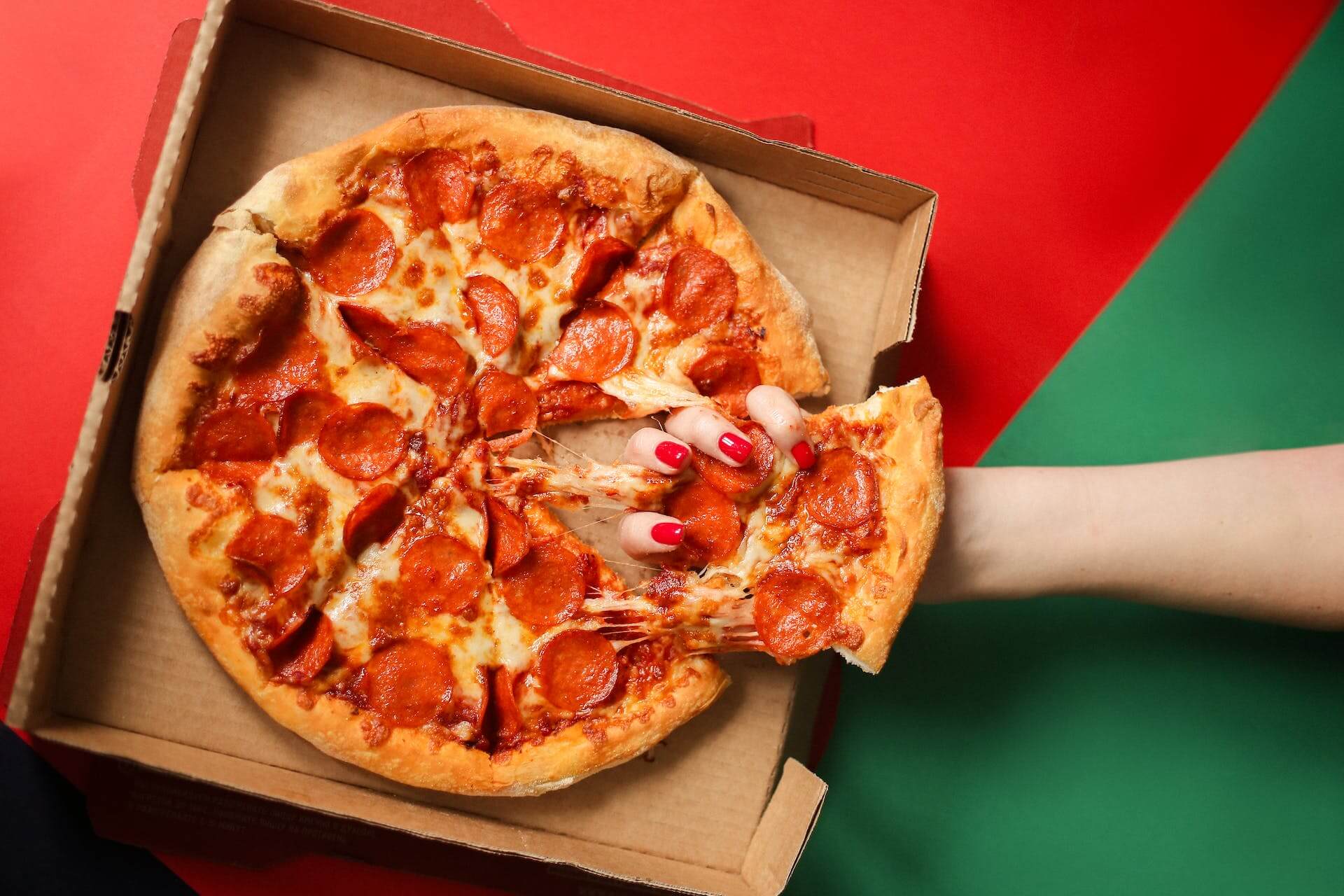
Person clawing slice of pepperoni pizza

That’s one way to pick up a slice of pizza…

Top Toppings: Nationwide

If you operate a pizzeria or pizza is a significant focus of your business, you probably know the number one topping.

The image at the top of this article is a hint.

Per Pizza Today, these are the top 20 toppings in the US:

  1. Pepperoni
  2. Sausage
  3. Mushroom
  4. Extra Cheese
  5. Bacon
  6. Chicken
  7. Onion
  8. Red/Green Bell Pepper
  9. Ham
  10. Black Olives
  11. Meatballs
  12. Canadian Bacon
  13. Jalapenos
  14. Pineapple
  15. Beef
  16. Basil
  17. Banana Peppers
  18. Fresh garlic
  19. Tomatoes
  20. Spinach

Due to outright bias, I hope to see meatballs break into the top ten one of these days. That’s my number one topping.

Now that we’ve shared the top 20 toppings according to Pizza Today, let’s check out the regional breakdown.

The West

This region includes two subregions, Pacific and Mountain.

In alphabetical order, the Pacific states are Alaska, California, Hawaii, Oregon, and Washington. The Mountain region includes Arizona, Colorado, Idaho, Montana, Nevada, New Mexico, Utah, and Wyoming.

So, if you’re in one of those 13 states, the info below is relevant to you.

Top Styles

  1. New York Style
  2. Traditional America
  3. California/American Artisan
  4. Sicilian
  5. Neapolitan

Number three makes sense, given this region includes California. Otherwise, the West follows the top five pizza styles in the US rather closely.

Top Toppings

  1. Pepperoni
  2. Sausage
  3. Mushroom
  4. Chicken
  5. Bacon
  6. Extra cheese
  7. Black Olives
  8. Onion
  9. Jalapenos
  10. Pineapple

In the West, the top three toppings are the same as the rest of the nation. However, chicken and bacon overtake extra cheese in the this region.

The South

Pizza Today divides the South into three subregions: East South Central, South Atlantic, and West South Central.

The former consists of Alabama, Kentucky, Mississippi, and Tennessee. The South Atlantic includes Delaware, Florida, Georgia, Maryland, North Carolina, South Carolina, Virginia, Washington, D.C., and West Virginia. And West South Central is made up of Arkansas, Louisiana, Oklahoma, and Texas.

As you’ll see, the top five pizza styles in the South are the same as the top across the US. Further, the top five toppings in the region are also the same top five nationally. It isn’t until numbers six through ten that we encounter deviations.

Top Styles

  1. New York Style
  2. Traditional America
  3. Sicilian
  4. Deep Dish
  5. Neapolitan

Top Toppings

  1. Pepperoni
  2. Sausage
  3. Mushroom
  4. Extra cheese
  5. Bacon
  6. Onion
  7. Chicken
  8. Red/Green pepper
  9. Beef
  10. Ham

Beef is number 15 nationally, if you don’t want to scroll up and check for yourself.

The Midwest

The Midwest, per Pizza Today, is organized into two subregions. Those are East North Central and West North Central.

Illinois, Indiana, Michigan, Ohio, and Wisconsin make up the former. Iowa, Kansas, Minnesota, Missouri, Nebraska, North Dakota, and South Dakota are the states in the latter subregion.

Top Styles

As a proud Midwesterner, I’m happy to report that the region didn’t disappoint when it comes to the region’s top pizza styles.

  1. Traditional America
  2. Chicago Thin
  3. New York Style
  4. Deep Dish
  5. Detroit

The argument that Chicago Thin (a.k.a. Chicago Tavern) rather than Deep Dish is the true Chicago pizza style is bolstered with these rankings.

Top Toppings

Pizza Today shares only five toppings for this region. Notably, extra cheese doesn’t make it in, kicked out by onion.

  1. Pepperoni
  2. Sausage
  3. Mushroom
  4. Bacon
  5. Onion

The Northeast

The Middle Atlantic and New England are the two subregions of the Northeast.

For their report, Pizza Today identifies New Jersey, New York, and Pennsylvania as the three Middle Atlantic states. New England is Connecticut, Maine, Massachusetts, New Hampshire, Rhode Island, and Vermont.

Top Style

Number five, given where it was reportedly created, isn’t a surprise.

In fact, the whole list makes sense:

  1. New York Style
  2. Sicilian
  3. Traditional America
  4. Neapolitan
  5. Grandma

It’s also not a surprise that Deep Dish doesn’t make it into the Northeast’s top five pizza styles.

Top Toppings

Further, the top five of ten top toppings in the Northeast are the same nationally.

  1. Pepperoni
  2. Sausage
  3. Mushroom
  4. Extra cheese
  5. Bacon
  6. Chicken
  7. Onion
  8. Red/Green pepper
  9. Meatballs
  10. Banana Peppers

However, as you can see, meatballs (my favorite) and banana peppers break into the top ten in this region.

Takeaways

Obviously, there are more than just 20 toppings finding their way onto pizzas in the US. Pizza Today reports that birria, fig jam, hot honey, pasilla peppers, and pickled vegetables have earned their way onto menus in at least the past 12 months.

And when it comes the top 20 toppings, there’s nuance. For example, there are multiple styles of pepperoni and preparation, and the same holds true for sausage.

All this is to say the following: A blend of popular, traditional toppings along with the unexpected and new is likely a winning combination. This can include exotic ingredients, plant-based analogs, and international herbs and spices.

Remember, it’s pizza; it’s supposed to tempting and fun.

Image: Maksim Goncharenok on Pexels

Related Reading

Work with Us

Click the image below to learn how you can work with KRG Hospitality!

Client Intake Form - KRG Hospitality

by David Klemt David Klemt No Comments

Nachogate: A Lesson in Standards

Nachogate: A Lesson in Standards

by David Klemt

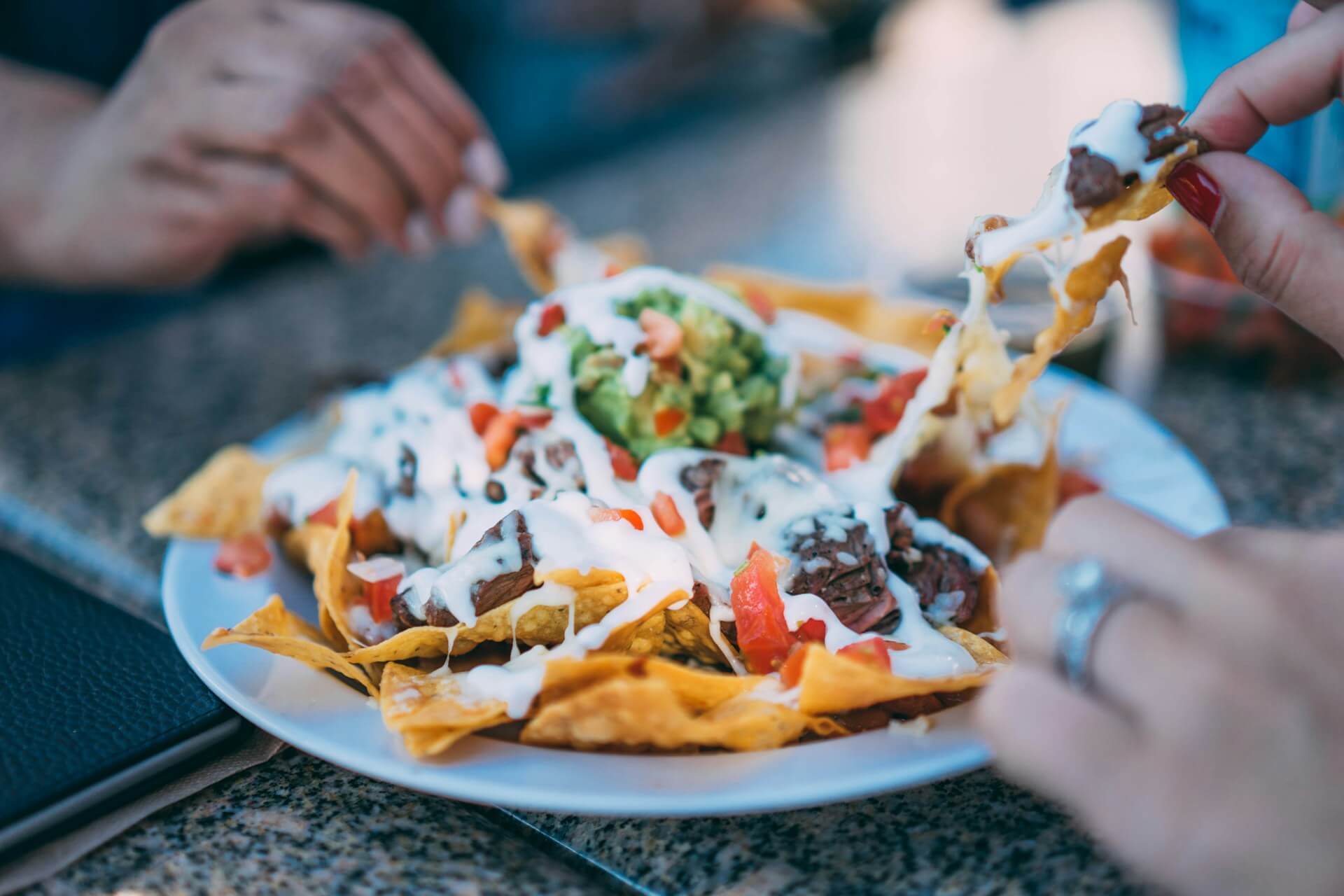
People sharing a plate of nachos

You wouldn’t think a social media post about a plate of nachos could cause a scandal but that’s exactly what’s happening, and it’s known as Nachogate.

Shockingly, this story comes to us from a luxury casino resort in Las Vegas.

A photo of a meager dish with six entire tortilla chips on it has 1.3 million views already. That’s pretty impressiveor unfortunate, depending on which side of the post you’re onconsidering the post is from this Monday.

One of the top comments on the post points out that there’s quite the disparity between chips and accompaniments.

“More condiments than chips. Wow,” reads the comment. To which the original poster responds, “They said it was so you can have the perfect bite.”

It should go without saying that every dish put in front of a guest needs to be as close to perfect as possible. If it’s on the menu, if it leaves the kitchen, it impacts the guest experience. There is no, “Well it’s only [insert item]. It’s not that big of a deal.”

That mindset simply has no place in hospitality.

No, not every dish or drink is perfect. Yes, everyone makes mistakes. The absolute lowest standard should be caring enough to catch mistakes before they affect guests.

Failing that, every operator and leadership team member needs to care enough to acknowledge mistakes that reach guests, handle them gracefully, and fix them. This includes listening to and rewarding servers, bartenders, barbacks, and hosts whenever they catch a mistake.

Of course, there’s another lesson here. When developing non-negotiable standards, aim high. Fountainbleau Las Vegas is a luxury lifestyle brand; I doubt Nachogate reflects the company’s standards.

#Nachogate Fallout

Look, it can feel good to say that we don’t have competitors in this industry, we have peers. In some ways that can be an accurate statement.

However, watch what happens when an operator makes a mistake and it blows up in spectacular fashion.

Case in point, Nachogate. Or, given how the situation went viral, #Nachogate.

It would be bad enough if The Tavern at Fountainbleau Las Vegas took a reputational hit solely with the guests it affected directly. Obviously, it gets exponentially worse when it takes off on social media and alters the perception of potential guests.

But #Nachogate got worse when the venue’s “peers” leveraged the situation to their advantage.

That’s just a handful of posts taking advantage of Fountainbleau Las Vegas’ mistake. And that’s a lot of free marketing leveraging an unforced error that transformed into a viral moment.

Resolution

Alright, so I probably haven’t made any friends at Fountainbleau for sharing this story. Well, allow me to extend an olive branch. After all, I’ve made plenty of mistakes and will make more in the future.

It appears that the issue has been addressed by the property. That says to me that there are indeed standards, and there are people who care enough to respond when they’re not met.

Again, mistakes happen. The key is to correct course and move forward. Fountainbleau has done just that.

That’s a smart move. A mistake was made, people piled on, and instead of ignoring the issue, the company acknowledged and corrected the mistake where it blew up: the public eye.

Fountainbleau Las Vegas is just over a month into serving the public. There are going to be growing pains. Indeed, anyone who has been following the casino resort is aware that there have been much larger issues. For example, the company is dealing with the departures of three high-level executives.

The point of this article isn’t to roast Fountainbleau further. Assuming the viral post is true and the nachos at The Tavern have indeed been improved, a mistake was made and was then addressed.

I’m sharing this story as an example to drive home the need for standards, for non-negotiables. That means sitting down, considering every element of operations and service, writing out standards, and training teams on those non-negotiables. It’s as important as identifying values, sharing them with the team, and adhering to them.

Sit down today and develop your standards. If you’ve done that in the past, review your standards, update them if necessary, and ensure they still have buy-in from your team.

Image: Herson Rodriguez on Unsplash

KRG Hospitality Start-Up Restaurant Bar Hotel Consulting Consultant Solutions Plans Services

by David Klemt David Klemt No Comments

Vegas Legend Addresses F1 Impact

Legendary Las Vegas Restaurateur Addresses F1 Impact

by David Klemt

Red vintage model race car against black background

As much as I dislike the cliched slogan, what happened behind the scenes in Las Vegas during last year’s Formula 1 race is absolutely not staying in Las Vegas.

Legendary restaurant owner Gino Ferraro has written an open letter exposing the negative impact F1 had on the city’s small business owners and locals.

While the Ferraro family’s restaurant story doesn’t start in 1985, that’s when the doors to their first location opened. Since then, the Ferraro family and their team have opened and closed restaurants throughout the city.

Their Ferraro’s Ristorante flagship has been located at the intersection of Paradise Road and East Harmon Avenue since 2009. This location is directly across from the Virgin resort and casino.

The iconic restaurant, revered for its authentic Italian food and incredible wine list, was directly impacted by F1. Roads needed to be improved, which meant snarled traffic and drops in traffic for operators of all manner of Las Vegas businesses.

In his letter, Ferraro claims that “Las Vegas was crippled for nine months,” and that the restaurant on Paradise lost more than $2 million in revenue as a result. Further, he states in the letter that his employees lost 20 percent of their pay in comparison to the same time in 2022.

“Disaster”

Below, the nearly viral letter, transcribed as presented:

F-1 Las Vegas Disaster

Gino Ferraro

4480 Paradise Rd Suite # 200

Las Vegas, NV 89169

702-461-2812

Having a restaurant or any business on the tourist corridor is no longer a positive experience. Through the construction for F-1, Las Vegas was crippled for nine months. Over this period, we had thousands of tourists and locals complaining about the traffic, as well as the increased cost of cabs and Uber rides. Customer’s shared fare receipts of over $100 for a mile ride from the strip, where it took over an hour to get to their destination.

We heard from countless tourists that they will not return to Vegas during that time of the year, not to mention many locals said they will not return to the strip until all this mess is over. This not only hurt our business immensely, but many surrounding local businesses were also negatively affected as well. We at Ferraro’s have lost an excess of 2 million dollars in revenue. It begs to bring up the question, how can our Las Vegas leadership allow that to happen, local businesses struggling and suffering all for a 3-4-day event. Who profited? A few hotels, it doesn’t make sense. How do we know what the ROI is with all the money that was spent to destroy the Strip, its surroundings, and ultimately people’s lives! We employ close to 80 people and their pay was 20 percent less than last year. Who will reimburse Ferraro’s and our staff?

In speaking to other people and hearing their opinions, the track should have been built somewhere else away from the Strip. The Strip and Vegas will always get exposure no matter where the event takes place. It doesn’t make sense to tear up the Strip and surroundings to resemble a carnival. To add fuel to the fire, Las Vegas leaders have approved another 81 road upgrades. This means more traffic delays, and Uber and cab drivers not wanting to work in these areas, because it’s impossible to navigate.

I could go on for hours on the negative impact this event has created for all Las Vegas residents and our tourists. I strongly believe we need to rethink the strategy on how we can accommodate our visitors prior to the race and during. We can’t destroy the city for on weekend.

Thank you ~

Gino Ferraro

Ferraro’s Ristorante

Takeaway

For a variety of reasons, operators are often wary of criticizing city leaders publicly.

As an example, when someone opens multiple concepts and locations throughout a city, they get to know local lawmakers. Obviously, blasting their decisions in an open letter and calling their motivations into question can be risky.

So, when a respected operator uses their voice to call for change, it can be powerful.

This situation could’ve been handled quietly. Ferraro could’ve sent emails. He could’ve had private calls to politicians, perhaps an in-person meeting or two.

Instead, Ferraro sent his letter to Nevada’s governor, county officials, tourism leaders, and other state politicians.

Now, I can’t speak to the accuracy of Ferraro’s claims. I don’t how much F1 impacted the restaurant’s staff and revenue.

But I do know Ferraro was willing to confront decision makers about how he believes small business owners were negatively impacted during a massive event.

Will this lead to change? To use another cliche, only time will tell.

Image: Jonathan Cosens Photography on Unsplash

KRG Hospitality. Restaurant Business Plan. Feasibility Study. Concept. Branding. Consultant. Start-Up.

by David Klemt David Klemt No Comments

2024 500-point Start-up Checklist

2024 KRG Hospitality 500-point Bar & Restaurant Start-up Checklist

by David Klemt

KRG Hospitality 2024 Bar & Restaurant 500-point Start-up Checklist

Opening a bar or restaurant is a daunting undertaking, with projects requiring the completion of 500 unique tasks within four phases before welcoming guests.

It takes strategic clarity along with a strong supportive team around you to ensure your dream doesn’t turn into a nightmare. To help you get ahead and start 2024 with the strongest opportunity for success, we’re giving you access to a number of free resources.

First, our 2024 Bar & Restaurant Start-up Costs Guide. If you haven’t already, download this informative guide today. And now, our 2024 500-point Bar & Restaurant Start-up Checklist.

KRG Hospitality’s feasibility studies, concept and brand development, and programming are unique and customized to every client. However, the journey from idea to grand opening is a well-worn path dotted by hundreds of waypoints.

There’s a reason we call our project plans Roadmaps to Success: we’re here to help guide our clients to and through each point on the map.

Below you’ll find 32—only six percent—of the 500 unique tasks we at KRG believe you must complete before your grand opening. Just these tasks alone should provide an idea of the enormity that is taking your concept from idea to brick and mortar.

To download your free copy of our 2024 500-point Bar & Restaurant Start-up Checklist, click here. As you’ll see once you open this checklist, it’s interactive. You can easily check off items as you complete them, and the document will save your progress.

Opening a bar or restaurant is challenging. We’re here to help make it easier.

Planning Phase

Self-assessment

  • Mindset assessment
  • Support network assessment

Feasibility Study

  • Market viability study
  • Technical viability study

Brand Strategy

  • Vision statemet
  • Frame of reference

Tech-stack Plan

  • Service technology plan
  • Payment processing technology

Project Set-up Phase

Job Scopes for Project

  • Landlord presentation
  • Equipment vendor presentation

Project Support Team Plan

  • Industry consultant
  • Legal Advisor

Menu Testing

  • Final flavor profile creation
  • Theoretical costing, food

Interior Design

  • Final choice in furniture
  • Final choice for millwork design

Operational Set-up Phase

Operational Vendors

  • Bar and kitchen smallware vendor
  • Refrigeration tech vendor
  • Hood cleaning vendor
  • Grease trap cleaning vendor

SOP Procedures/System

  • Finalize hourly operations plan
  • Application forms
  • Food safety quiz
  • Leadership team manual

Launch Phase

Marketing Execution

  • Creation of media package
  • Search engine optimization

Tech-stack execution

  • Point-of-sale systems
  • Menu management systems

Team Onboarding

  • Leadership team onboard
  • Team-building exercises

Soft Opening

  • Menu timing
  • Menu feedback

To download your free copy of our 2024 500-point Bar & Restaurant Start-up Checklist, click here now!

Image: KRG Hospitality

KRG Hospitality Start-Up Restaurant Bar Hotel Consulting Consultant Solutions Plans Services

by David Klemt David Klemt No Comments

HM Makes 2024 Culinary Predictions

Hotel Management Makes 2024 Culinary Predictions

by David Klemt

Tartare of mushrooms on a plate

Two weeks before we rang in 2024, Hotel Management revealed a handful of compelling culinary predictions for the new year.

Of course, time will tell if these are accurate. After all, it’s just January 5. Still, they’re all worth a look.

One in particular stands out from the rest, at least for me. You’ll find that prediction at the bottom of this article.

Alright—let’s dive in!

Streamlining Menus

Perhaps it’s a validation of the paradox of choice. Maybe it’s that people are overwhelmed and want to make less decisions.

Either way, Hotel Management thinks operators will offer fewer choices to improve the guest experience.

That may sound nonsensical to some operators. Shrinking the menu to enhance a person’s enjoyment?

However, there’s more nuance than simply eliminating items. Indeed, Hotel Management points to focusing on local, seasonal ingredients to create curated menus.

Further, a smaller menu allows the kitchen team to innovate, develop their skills, and truly build impressive dishes.

There’s also, of course, the benefit of lowered costs. This is particularly true for operators who embrace the art of the cross-utilization of ingredients.

Don’t Hassle Me, I’m Local

Sourcing and highlighting local ingredients is mainstream at this point. At least in my opinion, it has gone from fad to trend and become a staple of successful operation.

That doesn’t make it any less important, of course. In fact, it appears more important than ever.

Guests want to connect with the restaurants and bars they visit. One effective method of making this connection is to offer a true taste of location.

Utilizing local ingredients—even better if they’re unique to the area—also supports the community. Fostering connections with guests, producers and other small businesses is a win-win-win.

Shroom, Shroom

It makes sense that when some people read or hear the phrase “plant-based” they think of Impossible or Beyond.

However, plant-based dishes and menus just consist primarily of vegetables, whole grains, legumes, nuts, seeds, fruits, or fungi.

It’s that last one that Hotel Management thinks will have a moment in 2024.

Among the reasons for this prediction? Mushrooms absorb flavors easily, impart umami, and are versatile.

Oh, and a fun bit of trivia: While often categorized as vegetables, mushrooms are considered neither plant- or animal-based; they’re a type of fungus.

One brand embracing the culinary magic of mushrooms is Meati. I expect these products to become as well-known as Impossible, Beyond, Gardein, and Morningstar Farms.

This is the One

So, this is the prediction that jumped out at me: seacuterie.

As the name suggests, it’s charcuterie but with seafood. Simply put, you salt, smoke, and cure seafood, then present it as you would charcuterie.

Hotel Management provides three interesting examples of seacuterie that will likely grab your guests’ attention:

  • pastrami-style tuna loin;
  • octopus salami; and
  • swordfish ham.

I know that if I saw at least the salami and ham, I’d raise an eyebrow.

Now, it’s all well and good to identify seacuterie as a menu item with potential to grow in 2024. But what if you’re not sure where to start with it? Well, I dug into it to learn more and provide you with a real-world example.

Chef Aaron Black, chef de cuisine at PB Catch Seafood + Bar in Palm Beach, Florida, is a seacuterie pioneer. And it just so happens that PB Catch provides guests the opportunity to build their own seacuterie boards.

Guests can choose three seacuterie items for $24 and six for $45, with the option to add an additional item for $8. Selections include salmon pastrami, octopus torchon, and mero bass jerky.

If it fits with your concept, seacuterie should re-energize your regulars and tempt new guests to check out your restaurant.

Image: jevgeni mironov on Unsplash

KRG Hospitality menu development. Restaurant. Bar. Cafe. Lounge. Hotel. Resort. Food. Drinks.

by David Klemt David Klemt No Comments

2023 KRG Recap: Top 10 Articles

2023 KRG Recap: Top 10 Articles

by David Klemt

The roman numeral for the number 10 on a clock

Here it is! The final roundup of 2023, a collection of the top ten articles spanning all categories, including news, operations, and F&B.

Unlike our previous three year-end roundups, some of these articles aren’t from 2023. As an example, one of our most-read articles is from 2022, and it’s about the happiest provinces in Canada.

We’re humbled and grateful that you continue to view us as a trustworthy source of hospitality industry analysis, advice, and news. We look forward to serving you further in 2024.

Cheers!
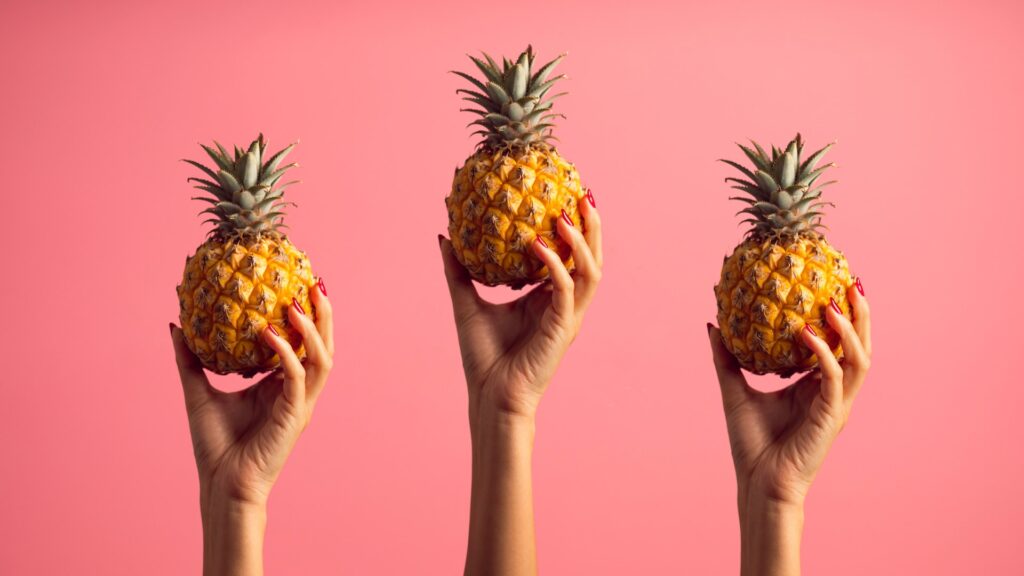
Three hands holding up three pineapples

Raise the Bar: The 3 Ps of Hospitality

Nightlife, bar, and cocktail experts Mia Mastroianni, Phil Wills, and Art Sutley want operators to focus on what they call “the Three Ps.”

The engaging trio shared their trio of Ps recently in Las Vegas at the 2023 Bar & Restaurant Expo.

So, what are the Three Ps of hospitality? People, Place, and Product. Operators who pull the threads tighter on each of these crucial elements will be well on their way to improving operations and the guest experience.

People

Remember all the way back to a week ago when I shared Mastroianni, Wills, and Sutley’s thoughts on service versus hospitality? Consider the first P a deeper dive into that topic.

Operators need to focus on two categories of people who help their businesses succeed: their teams and their guests.

Addressing the former, the trio feels that operators are centering a disproportionate amount of their attention on guests in comparison to staff.

“We’re not lacking for people who want to work in the business and are outperforming other industries, but we’re not focusing on staff like we focus on guests,” says Wills. “Treat everyone with respect, including through the hiring process. If you don’t engage your staff, you won’t retain them. You need to show them they can grow in your business.”

According to Sutley, 89 percent of operators say that labor costs present a “significant challenge.” It follows, then, that committing to treating staff with respect and nurturing their careers isn’t just the right thing to do, it’s smart business.

Look for people with passion, those you can motivate to go above and beyond so you’re not stuck with a team full of space-fillers who are just after a paycheck, suggests Mastroianni.

Of course, operators and their teams must also focus on providing exceptional service and experiences to guests.

“Treat ever guest like a pearl in an oyster,” advises Wills. “They’re the pearl, we’re the oyster. We need to ‘protect’ them.” Anything less, cautions Sutley, and guests won’t return.

For the rest of the Three Ps, click here.
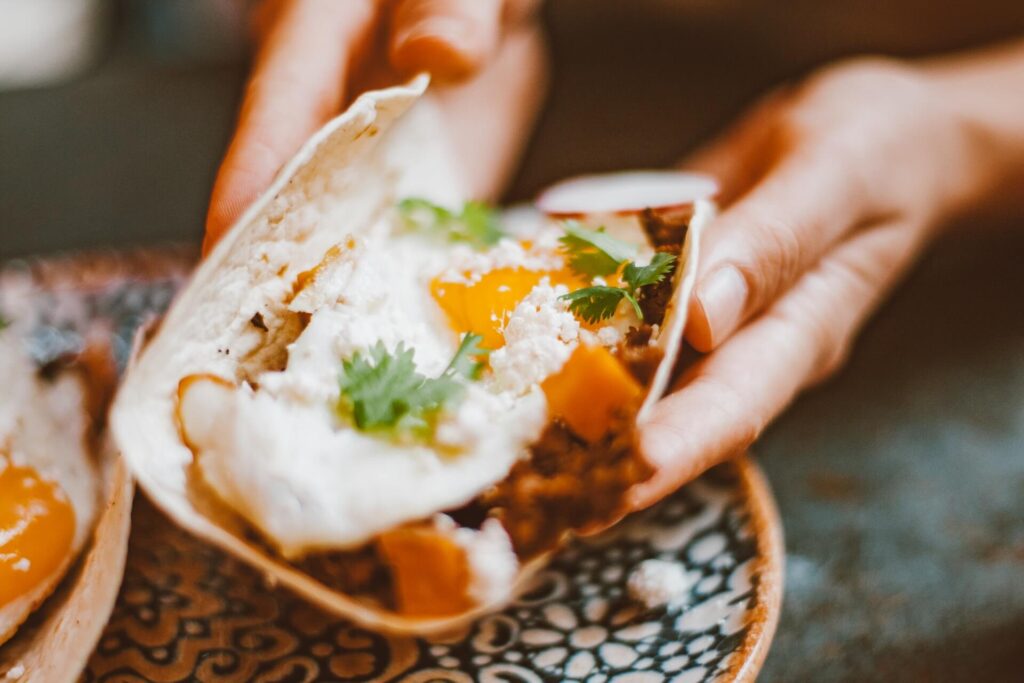
Tortilla with beans, cotija cheese and egg

Canadian Trends 2023: Technomic

Restaurant, bar, and hotel operators will find this year’s data-driven trend predictions from Technomic for 2023 insightful.

Interestingly but perhaps not surprisingly, some operators may be looking beyond North America for inspiration.

Per Technomic, Central and South American cuisines could influence menus in Canada this year. Other food trends that might take hold are “retro” health items, and all manner of pickled foods.

Of course, not every Canadian trend prediction involves F&B. According to Technomic, tech and the guest experience will play important roles.

To review last year’s Technomic predictions, click here. Now, let’s jump into Technomic’s 2023 predictions.

Guest Experience

Certainly, the guest experience should always be top of mind for operators, their leadership teams, and their staff.

In this instance, Technomic isn’t suggesting that the guest experience in general will be a trend. Obviously, with as important as it is to the success of any business, it’s a cornerstone.

Rather, Technomic predicts that guests will continue to feel the need to rein in their spending due to ricing costs and prices. However, the foodservice research firm also believes there’s still heavy desire for social interaction.

So, both those financial and social influences translate to the following: overdelivery.

Operators and their teams must ensure they position their brands well; make guests feel special every visit; and really dial in the guest experience. Specifically, Technomic suggests focusing on younger generations and menus with at least a couple specialty items that aren’t easy for a guest to replicate at home.

In other words, do whatever it takes to entice guests with memorable experience and quality menu items, and keep them coming back for more.

Follow this link to continue reading.
Server carrying two plates with one hand

Just.Safe.Food. and More Alternatives to ServSafe

ServSafe, the National Restaurant Association‘s food safety training program, isn’t the only food handler training game in town.

Certainly, the program is the most well known in our industry. However, it’s fair to say that ServSafe is closer to infamous than just ubiquitous due to a New York Times article from January.

While it’s the most recognizable of the food safety programs, it’s not the only one. Although, ServSafe’s omnipresence likely gives many the impression that it’s ServSafe or nothing.

There are, however, alternatives to ServSafe. In fact, one challenger was announced a day after the explosive New York Times article that thrust ServSafe into a spotlight the NRA probably isn’t enjoying. (After all, one result of that article was a letter from six US senators demanding answers from the NRA about ServSafe by March 3.)

At any rate, the newest alternative to ServSafe comes from One Fair Wage. The program is Just.Safe.Food. and costs just $10. (As a reminder, ServSafe costs $15.)

For that $10, Just.Safe.Food. gives an individual three attempts to pass their exam and unlimited access to training materials. Additionally, One Fair Wage (OFW) says profits they raise from the program will go toward advocating for restaurant workers.

OFW, as many in the industry know, is owned and operated by restaurant workers. Two cornerstones of the organization’s mission are increasing the minimum wage, and ending the tip credit. OFW is also attempting to convince lawmakers to stop accepting donations from the NRA.

Basically, OFW and the NRA are—and it appears always have been—at odds with with one another.

To learn more, click here.

Newfoundland and Labrador during daytime

These are the Happiest Provinces in Canada

If you’re wondering which province in Canada is the happiest, Statistics Canada has the answer—and the happiest may surprise you.

Of course, those who live and work in the happiest province won’t find it shocking. After all, they’re largely happy to be there.

However, if you expect the happiest province to be the home of Toronto, Vancouver, Montreal or Canada… Well, you’re in for a surprise.

Earlier this week we took a look at the happiest cities and states in America. Congratulations Fremont, California, and Hawaii, respectively. To learn where 181 other cities and 49 states rank, please click here.

The Happiness Survey

Or more accurately, the “life satisfaction” survey. For this survey, that’s what Statistics Canada reveals: life satisfaction.

Interestingly, the survey is very simple. Apparently, Statistics Canada simply asked participants to rate the satisfaction of living in their province, zero through ten. For this survey, zero is least satisfied, ten is most.

Ages 15 through 75 (and older) were able to participate. The survey was also broken down to gauge the satisfaction of men and women.

Before we jump into the breakdown of province satisfaction or happiness, some good news. Reviewing the Statistics Canada data, most participants across all age groups are happy. In fact, age groups 65 to 74 and 75-plus appear to be happiest.

On the other side, ages 15 to 54 had the most people who rated their life satisfaction between zero and five. Even so, just over 20 percent of survey respondents rated their satisfaction a five or less.

So, on the whole, Canadians seem satisfied or happy with their lives, regardless of the province in which they live. Personally, I find that to be great news.

Click here to keep reading.
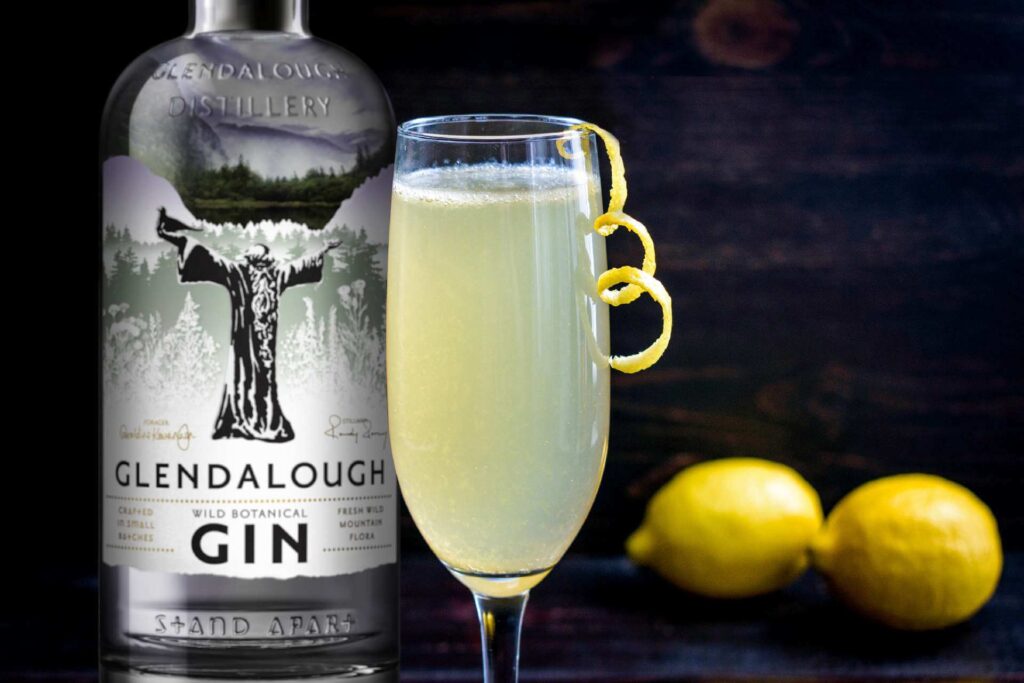
Glendalough Distillery Wild Gin Irish gin

8 Glendalough Distillery Cocktail Recipes

Offer your guests something different for your St. Patrick’s Day promotion with Glendalough Distillery cocktail recipes.

Without a doubt, you should have plenty of the expected Irish whiskeys on hand. However, Glendalough Distillery Double Barrel, Pot Still, Wild Gin, and Rose Gin are extraordinary Irish whiskeys and gins.

Each spirit the distillery crafts honors the art of Irish distillation, a craft that stretches back centuries. What’s more, each whiskey Glendalough crafts is single malt—there are no light-bodied blends in their lineup.

To learn more, check out episode 71 of the Bar Hacks podcast with Glendalough Distillery co-founder and national brand ambassador Donal O’Gallachoir.

Sláinte!
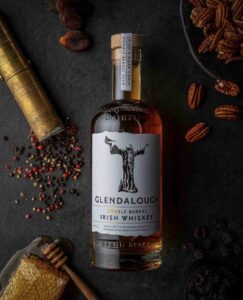
Glendalough Distillery Double Barrel Single Malt Irish Whiskey

The Lough Inn

This highball is made with Glendalough Double Barrel, a single-grain Irish whiskey aged in ex-bourbon barrels before being finished in Oloroso sherry casks.

  • 2 oz. Glendalough Double Barrel Single Grain Irish Whiskey
  • 1 oz. Spiced honey syrup (see note)
  • 1 oz. Fresh lemon juice
  • Soda to top
  • Lemon wheel or slice to garnish
  • Mint leaf to garnish
  • 1 cup Honey for spiced honey syrup
  • 0.5 cup Water for spiced honey syrup
  • 4 Cinnamon sticks for spiced honey syrup
  • 1 pod Star anise for spiced honey syrup

Add ice to a highball glass, then add first three ingredients. Top with soda water. Garnish with lemon wheel or slice and freshly torn mint leaf.

For spiced honey syrup: Add honey, water, cinnamon sticks, and star anise to pot. Bring to a boil, then stir. Strain into container.

For more Glendalough Distillery recipes, click here.
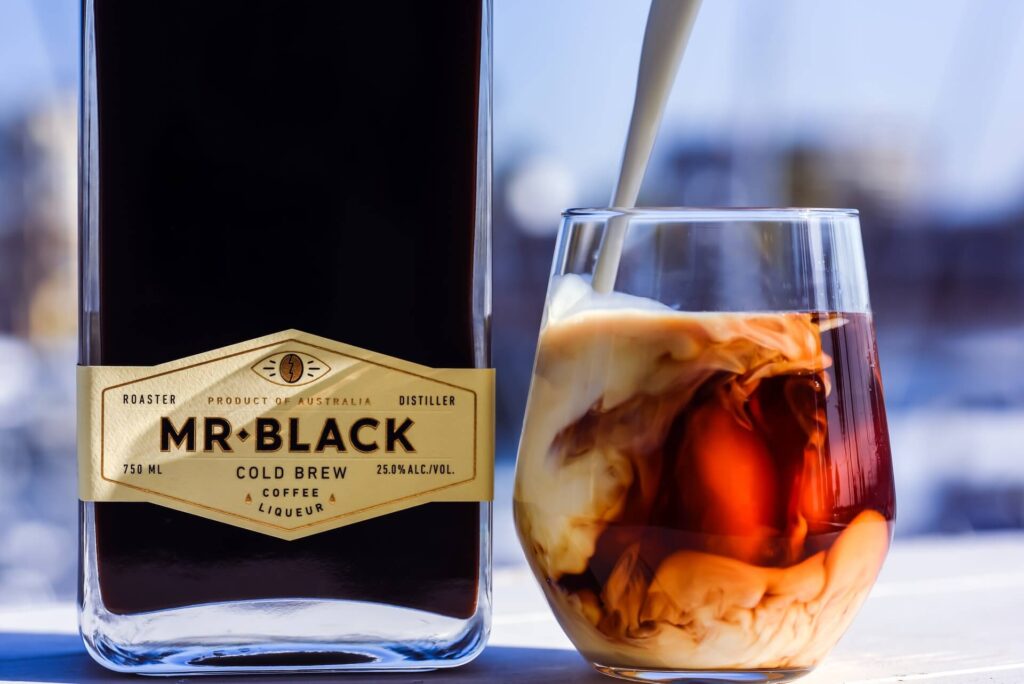
White Russian cocktail made with Mr. Black Coffee Liqueur

7 Coffee Liqueurs You Need to Know

Whether you and your bar team are making Espresso Martinis, riffing on classics or creating something new, consider these coffee liqueurs.

National Espresso Martini Day takes place on Tuesday, March 15. Leading up to this bar holiday, the cocktail is experiencing yet another resurgence.

In fact, this cocktail more than any other seems to maintain an enviable rate of “surging back” in popularity. Maybe it’s time to just admit that it’s a modern classic people love to hate…but still order and enjoy.

Below are seven coffee liqueurs that shine in an Espresso Martini, Old Fashioned, Negroni, Irish Coffee, or any number of rich, flavorful cocktails. Cheers!

Mr. Black

Most of the reviews out there place Mr. Black at the top when it comes to coffee liqueurs. Once you’ve sipped it neat, you understand why. The coffee flavor is outstanding, and that should come as no surprise. After all, Mr. Black is crafted in Australia, a country with a rich coffee culture.

Additionally, Mr. Black occasionally releases special batches. In the past, the brand has produced Single Origin Ethiopia, Single Origin Colombia, and collaborations with WhistlePig and St. Ali Coffee Roasters. They also have a coffee amaro available.

Grind Espresso Shot

You really can’t go wrong making an Espresso Martini with an espresso liqueur. Grind Espresso Shot gives Mr. Black a run for their money in the coffee liqueur showdown.

This blend of Caribbean rum, espresso, coffee, and coffee extract that shines in just about any cocktail.

Click here for more coffee liqueurs to consider adding to your inventory.
Group of Big Game cocktails at Ocean Casino Resort

Ocean Casino Resort Offers Big Game Cocktails

Ocean Casino Resort, Atlantic City’s award-winning oceanfront casino and resort, is ready for the Big Game with four cocktails that team with the theme.

Now, by “Big Game,” we all know what I’m talking about. We know the sport, we the know the league, and we know precisely which game is under discussion.

However, due to very “enthusiastic” attorneys, we also have to talk like we’re spies or actors in a mob movie. We wouldn’t want to tempt anyone to file a lawsuit now, would we?

And I’m going to encourage you to continue following this childish way of speaking about the Big Game. When you’re promoting your Sunday, February 12 event, don’t use any trademarked terms, logos, images, etc.

Alright, the Big Game legalese is out of the way. Let’s talk themed cocktails!

Big Game Cocktail Inspiration

Midway through last year, Ocean Casino Resort showed us all their marketing prowess. When news of the Choco Taco’s demise made headlines, Ocean created a cocktail homage: the Chocotini.

To ensure the LTO could be enjoyed by most guests, the cocktail was available at four venues on the property.

Now, Ocean Casino Resort is tackling the Big Game. (Note: I’m legally required to include sports puns when writing about any major game.)

Guests have four specialty LTO cocktails from which to choose. Two representing the team from Philadelphia, two for the team in Kansas City. Each drink is available at venues throughout the casino resort, including their Topgolf Swing Suite (largest in America), Nola’s Bar & Lounge, and the Gallery Bar Book & Games.

In news that should appeal to you and your bar team, these drinks are quick to make. That’s a relief when you plan to be slammed on a particular day.

Of course, you don’t have to attempt to replicate these cocktails. They serve as excellent inspiration to motivate you and your team to come up with your own liquid homages and LTOs.

In case you’re wondering what to charge, Ocean is charging $14 each for the Brotherly Love, Hurts So Good, and Big Red cocktails. The Arrowhead carries a price tag of $15.

Click here to continue reading.

Closeup of keyboard

Can ChatGPT Write Food and Drink Menus?

After my “conversation” last month with ChatGPT about AI, I had another conversation during which I asked it to write me four menus.

Of course, I did this to prove a point. And upon reviewing the ChatGPT menus, you’ll likely reach the same conclusion.

Curious about how creative the AI-powered chatbot could be, I asked for four specific menus. As you’ll see, two are cocktail specific, one focuses on food, and one is a 20-item F&B menu for a specific event.

So, yes, ChatGPT can write food and drink menus. But there’s a caveat. I could leave you in suspense but that’s not very nice. Let’s jump in.

Write me a cocktail menu using the most popular cocktails from 2022.

Cocktail Menu

  1. Aperol Spritz – Aperol, Prosecco, and soda water, garnished with an orange slice
  2. Old Fashioned – Bourbon, sugar, bitters, and a citrus peel
  3. Margarita – Tequila, triple sec, lime juice, and salt rim
  4. Daiquiri – Rum, lime juice, and simple syrup
  5. Moscow Mule – Vodka, ginger beer, and lime juice
  6. Paloma – Tequila, grapefruit juice, lime juice, and soda water
  7. Pina Colada – Rum, pineapple juice, coconut cream, and a cherry garnish
  8. Whiskey Sour – Bourbon, lemon juice, and simple syrup
  9. French 75 – Gin, Champagne, lemon juice, and simple syrup
  10. Mai Tai – Rum, orange liqueur, lime juice, and orgeat syrup

*All cocktails are served over ice, unless otherwise requested.

Write me a cocktail menu using the most popular spirits and alcohol types of 2022.

Cocktail Menu

  1. Gin and Tonic – Gin, tonic water, and a lime wedge
  2. Vodka Martini – Vodka, dry vermouth, and an olive garnish
  3. Bourbon Manhattan – Bourbon, sweet vermouth, and bitters
  4. Tequila Sunrise – Tequila, orange juice, and grenadine syrup
  5. Rum Runner – Rum, blackberry liqueur, orange juice, pineapple juice, and grenadine
  6. Whiskey Sour – Bourbon, lemon juice, and simple syrup
  7. Margarita – Tequila, triple sec, lime juice, and salt rim
  8. Daiquiri – Rum, lime juice, and simple syrup
  9. Long Island Iced Tea – Vodka, gin, rum, tequila, triple sec, lemon juice, and cola
  10. Pina Colada – Rum, pineapple juice, coconut cream, and a cherry garnish

*All cocktails are served over ice, unless otherwise requested.

Click here to keep reading.

Developing a Bar Concept w/ Sensory Experiences

Once your idea has been researched and the market, location, technical, business, and financial viability of the idea has passed a series of reviews throughout a feasibility study, a concept development plan can then be started.

Remember, outside of being scalable, you want to build a concept that is sustainable, profitable, memorable, and consistent.

Bar concepts over the years have gone from being tame (or lame) or overplayed, like tiki bars or sports bars, to concepts that push the boundaries of what a bar can be. One of the best ways to build a customer base is to go off the beaten path to create a bold and fresh new bar concept.

A concept plan will focus on ‘chapters’ and visual storyboards that include an overall:

  • Concept Summary (a one page summarization similar to that of an Executive Summary)
  • Statement Overview (Value, Vision, Mission, Culture)
  • Architectural Design (characteristics, features, costs)
  • Bar/Kitchen Production (your equipment specs)
  • Entertainment & Guest Experience Summary
  • Menu Design Attributes (food & beverage)

Owning a bar is a dream for most that must be met with the right research, planning, and mind-set.

One’s market will, and must, define the concept. To be successful, you must be open to building a venue the market both wants and needs.

Concept development is giving your ‘idea’, both soul and character. A bar’s concept is the lifeline of its brand and longevity in the market. It makes your venue stand apart from the competition, and it’s ultimately your bar’s unique selling proposition.

Have you ever walked into a bar and been confused about its identity? The interior doesn’t match the beverage offerings, the social media experience doesn’t reflect the actual experience, and even the music doesn’t seem to match the vibe of the bar.

This is what happens when there isn’t a clear and detailed concept development plan in place, and it is a sure fire way to be just average at best.

Continue reading here.

How to Address Temporary Restaurant and Bar Closures: 5 Social Media Examples

Repeated restaurant and bar closures have, tragically, become a hallmark of 2020.

Operators have had to learn how to communicate closures to potential indoor guests, as well as delivery and takeout guests.

For most operators, the possibility of closing their doors—temporarily or otherwise—has moved well past “if” territory. At this point, it’s not even a question of when a restaurant or bar will have to close, it’s a matter of when it will happen again.

There are a few reasons a F&B business will have to close due to the Covid-19 outbreak: official mandate, reduced indoor and outdoor dining capacities, and voluntary temporary closures.

Mandated closures are, on the surface, straightforward. Government officials decree that certain types of businesses must close their doors by a specific date and time, and owners are expected to comply.

Closures induced by capacity restrictions are less straightforward. It has become woefully apparent that most lawmakers don’t understand (or don’t care) that at a certain threshold, reducing indoor and outdoor dining capacities is as good as forcing a restaurant or bar to close; the value proposition of remaining open simply isn’t there.

A voluntary temporary closure can come about because of capacity limitations, but they can also be the result of other factors. A significant workforce reduction, lack of traffic, rising costs of goods, or an internal Covid infection.

The stark reality is that the likelihood today’s operators are going to have to craft social media posts and emails announcing temporary (and possibly extended) closures is anything but slim.

Click here to keep reading.

Image: Anne Nygård on Unsplash
KRG Hospitality Start-Up Restaurant Bar Hotel Consulting Consultant Solutions Plans Services

by David Klemt David Klemt No Comments

2023 KRG Recap: Top 8 News Articles

2023 KRG Recap: Top 8 News Articles

by David Klemt

Eight ball floating against black background

We’re kicking off our annual year-in-review article roundup by gathering the top eight news articles of 2023, which address an array of noteworthy developments.

For example, you’ll find a “Big Game” cocktail promotion, SevenRooms innovations, award winners, and legislation affecting our industry.

We look forward to sharing hospitality news with you as it breaks in 2024.

Cheers!

Group of Big Game cocktails at Ocean Casino Resort

Ocean Casino Resort Offers Big Game Cocktails

Ocean Casino Resort, Atlantic City’s award-winning oceanfront casino and resort, is ready for the Big Game with four cocktails that team with the theme.

Now, by “Big Game,” we all know what I’m talking about. We know the sport, we the know the league, and we know precisely which game is under discussion.

However, due to very “enthusiastic” attorneys, we also have to talk like we’re spies or actors in a mob movie. We wouldn’t want to tempt anyone to file a lawsuit now, would we?

And I’m going to encourage you to continue following this childish way of speaking about the Big Game. When you’re promoting your Sunday, February 12 event, don’t use any trademarked terms, logos, images, etc.

Alright, the Big Game legalese is out of the way. Let’s talk themed cocktails!

Big Game Cocktail Inspiration

Midway through last year, Ocean Casino Resort showed us all their marketing prowess. When news of the Choco Taco’s demise made headlines, Ocean created a cocktail homage: the Chocotini.

To ensure the LTO could be enjoyed by most guests, the cocktail was available at four venues on the property.

Now, Ocean Casino Resort is tackling the Big Game. (Note: I’m legally required to include sports puns when writing about any major game.)

Guests have four specialty LTO cocktails from which to choose. Two representing the team from Philadelphia, two for the team in Kansas City. Each drink is available at venues throughout the casino resort, including their Topgolf Swing Suite (largest in America), Nola’s Bar & Lounge, and the Gallery Bar Book & Games.

In news that should appeal to you and your bar team, these drinks are quick to make. That’s a relief when you plan to be slammed on a particular day.

Of course, you don’t have to attempt to replicate these cocktails. They serve as excellent inspiration to motivate you and your team to come up with your own liquid homages and LTOs.

In case you’re wondering what to charge, Ocean is charging $14 each for the Brotherly Love, Hurts So Good, and Big Red cocktails. The Arrowhead carries a price tag of $15.

Click here to continue reading.

Abraham Lincoln's face on $5 bill

What’s up with the Restaurant Revitalization Tax Credit?

If you’re wondering what’s going on with the Restaurant Revitalization Tax Credit bills in the House and Senate, you’re probably not alone.

And if you find yourself wondering about them, that’s likely because there isn’t much news about the bills. Unfortunately, it appears that no meaningful progress has been made on HR 9574 or S.5219.

A quick check shows that both bills share the same status: Introduced. As for the House bill, HR 9574, that was introduced on December 15, 2022 by Representative Earl Blumenauer (D-OR). The Senate bill, S.5219, was introduced by Senator Benjamin Cardin (D-MD) on December 8, 2022.

It’s important to note that Sens. Cardin, Patty Murray (D-A), and Sherrod Brown (D-OH) reintroduced S.5219 in January of this year. However, that apparently didn’t mean much as the Congress.gov trackers show no progress.

Last year, some opined that neither bill would receive a vote until January 2023 at the earliest. That “prediction” has proven true, of course—it’s now the end of March.

Restaurant Revitalization Tax Credit Act Summary

Let’s take a quick look at HR 9574 and S.5219.

Both bills propose a $25,000 payroll offset for restaurants. Eligibility requirements are also identical: applicants must have applied for but not awarded a Restaurant Revitalization Fund grant.

Additional, eligible applicants are:

  • restaurants with operating losses of at least 30 percent in 2020 and 2021 in comparison to 2019; or
  • restaurants with losses of at least 50 percent in either 2020 or 2021 in comparison to 2019.

So, those are elements that both the Senate and House bills share. What about the differences between the two bills?

Mainly, differences come down to the number of employees. For S.5219, restaurants with ten employees or fewer could be eligible for the maximum payroll tax credit. That credit, as a reminder, is up to $25,000 for 2023. For every employee over ten, the refund cap drops by $2,500.

Now, HR 9574. Restaurants with ten or fewer employees would receive the full $25,000 payroll tax offset. For restaurants with between 11 and 20 employees, the offset would be “partially refundable.”

Keep reading here.

Front of house staff member using SevenRooms

EHI and Danny Meyer Invest in SevenRooms

EHI and Danny Meyer Invest in SevenRooms

SevenRooms is showing no signs of resting on their laurels, announcing a major new investor: Enlightened Hospitality Investments.

EHI, a private-equity fund, traces its launch back to 2016. The fund, launched by and affiliated with Union Square Hospitality Group, typically makes investments in the $10-25 million range. Generally speaking, EHI makes non-control investments.

As you’re likely well aware, USHG’s founder and executive chairman is none other than restaurateur Danny Meyer. The Shake Shack chairman is also the managing partner of EHI.

Investment in SevenRooms by EHI—and by extension Danny Meyer—is huge news. Meyer now joins other high-profile chef and restaurateur investors in SevenRooms:

“At EHI, we always pay close attention to transformative tech that advances high touch,” says Meyer. “Far more than a reservations platform, SevenRooms provides abundant tools to create highly customized guest experiences and equips both restaurant and hotel teams to do what they do best—deliver truly memorable hospitality.”

Gloved hand pressing down on cheeseburger

A Group of Senators has Questions About ServSafe

The National Restaurant Association and the ServSafe program are now in the crosshairs of a group of Democratic senators.

I doubt any organization or individual wants to learn that lawmakers have questions for them. For those who may not know, ServSafe isn’t just in a partnership with the National Restaurant Association—the NRA owns the program.

That’s part of why six senators, led by Sen. Elizabeth Warren (D-MA), have sent a letter to the NRA. To describe the tone of this letter in one word, I think “aggressive” is accurate.

For more, including the text of the letter, click here.

Double Chicken Please cocktail bar interior

The 50 Best Bars in North America in 2023

The buildup toward this year’s World’s 50 Best Bars is growing with the recent announcement of North America’s 50 Best Bars.

Mexico City, the 2023 North America’s 50 Best Bars host city, is home to several of this year’s rankings. A true cocktail destination loaded with extraordinary bars, Mexico City boasts eight entries. Overall, 14 of the 50 bars on the 2023 list are in Mexico.

Of course, New York City also claims an impressive number of bars earning spots on the list. In fact, NYC boasts 12 of the 50 best bars in North America. More than half of the bars—28—are in the US.

Not that anyone asked, two of the bars on the 2023 list are in the city where I was born, Chicago: Kumiko and Milk Room. And I’m going to give a special nod to Herbs & Rye, number 27 and located in my hometown of Las Vegas (and the US headquarters of KRG Hospitality).

Of the 50 best bars in North America, Canada is home to seven. Four of these are in Toronto (where KRG Hospitality’s global headquarters are located), two are in Montreal, and one is in Vancouver.

Just one bar in the Caribbean makes the 2023 North America’s 50 Best Bars list. But what a bar: La Factoría is number 24.

Below you’ll find this year’s rankings; destination awards; and individual awards. Speaking of, congratulations to Julio Cabrera and Christine Wiseman! You’ll see why as you scroll. To review last year’s list, please click here.

Congratulations to all the bars and their bar teams representing the best of North America in 2023!

You can review the list here.

The lobby of ACE Hotel Sydney

The 2023 HD Award Finalists and Winners

As one would expect, the finalists and winners of the 2023 Hospitality Design Awards are a stunning collection of brands from which operators should pull inspiration.

Anyone looking for cutting-edge hospitality design would do well to look into each of the winners and finalists below.

The full list of award finalists and winners, and the architecture, interior design, and purchasing firms (along with owners and operators) can be found on the Hospitality Design website. Just click this link for the full details.

For our past coverage of the HD Expo, please click here.

Lifestyle Hotel

Winner

Ace Hotel Sydney (Sydney, New South Wales, Australia)

  • Architecture Firm: Bates Smart, Melbourne
  • Interior Design Firm: Flack Studio (hotel), Melbourne
  • Owner: Golden Age Group
  • Operator: Ace Hotel Group
  • Purchasing Firm: Marques Interior Services

Finalists

Canoe Place Inn & Cottages (Hampton Bays, New York)

Our Habitas San Miguel (San Miguel de Allende, Guanajuato, Mexico)

Sisan·Shuanglang Hotel (DaLi, YunNan, China)

Fan Woods Hotel (Zhangjiakou City, Hebei Province, China)

Lifestyle Hotel Public Space

Winner

The Tampa EDITION

  • Architecture and Interior Design Firms: Morris Adjmi Architects, and ISC Design Studio, New York
  • Owner: Strategic Property Partners
  • Operator: Marriott International
  • Purchasing Firm: The Parker Company

Finalists

Ace Hotel Sydney (Sydney, New South Wales, Australia)

The Standard (Hua Hin, Thailand)

Luxury Hotel

Winner

The Londoner (London, England) United Kingdom)

  • Architecture Firm: Woods Bagot, London
  • Interior Design Firm: Yabu Pushelberg, New York and Toronto
  • Owner and Operator: Edwardian Hotels London

Finalists

Wildflower Farms, Auberge Resorts Collection (Gardiner, New York)

Kimpton Bamboo Grove Suzhou (Suzhou, Jiangsu, China)

Luxury Hotel Public Space

Winner

The Madrona (Healdsburg, California)

  • Architecture Firm: Strening Architects, Santa Rosa, California
  • Interior Design Firm: Jay Jeffers, San Francisco
  • Owners: Jay Jeffers, Kyle Jeffers, and investors
  • Operator: Mosaic Hotel Group
  • Purchasing Firm: Summa International

Finalists

The Madrid EDITION (Madrid, Spain)

Pillows Maurits at the Park (Amsterdam, Netherlands)

Wildflower Farms, Auberge Resorts Collection (Gardiner, New York)

Click here for the full list of finalists and winners.

Hand holding several credit cards

Credit Card Competition Act, Take Three

Here we go again: Bipartisan lawmakers in the House and Senate are taking another shot at the Credit Card Competition Act.

After the incredibly underwhelming progress of the Credit Card Competition Act of 2022, lawmakers are making another move. Now, a bipartisan effort is coalescing around the Credit Card Competition Act of…2023.

The “new” bill was introduced on June 7. On the Senate side, Senators Dick Durbin (D-IL) and Roger Marshall (R-KS) are trying to push the bill forward. In the House, Representatives Lance Gooden (R-TX) and Zoe Lofgren (D-CA) are driving the effort.

Roughly eight months ago it was revealed that 1,802 merchants drafted, signed, and sent a letter to the House and Senate. To summarize quickly, the merchants were pushing for the bill to become law. Another supporter of the CCCA? The National Restaurant Association, claiming that the bill could save merchants $11 billion a year in fees.

Of course, a lot is going on since the introduction of the CCCA of 2022. For one, it’s being widely reported that House Republicans are “revolting,” blocking bills and effectively paralyzing the chamber. There’s also the matter of the second indictment of a former president.

However, reporters who know far more than I about the inner workings of Congress seem optimistic. While there’s drama in the lower chamber, there are articles circulating that seem to think the CCCA of 2023 has enough bipartisan support to pass.

Continue reading here.

The Pontiac bar in Hong Kong

Asia’s 50 Best Bars 2023 Revealed: 51 to 100

One week from the ceremony revealing bars one through 50 of Asia’s 50 Best Bars, the World’s 50 Best Bars announces venues 51 to 100.

Sponsored by Perrier, the World’s 50 Best Bars will announce the top 50 bars in Asia on Tuesday, July 18. This year’s ceremony will take place in Hong Kong at 20:25 local time.

However, we now know which bars have earned placement on the back half of this year’s list. As Mark Sansom, director of content for the World’s 50 Best points out on episode 82 of Bar Hacks, an expansion for their lists is necessary. There are simply too many outstanding operators and teams to not honor an additional 50 venues.

To that end, the list below represents the third edition of Asia’s 50 Best Bars, 51 to 100. In my opinion, and I think the World’s 50 Best and bar professionals across the world agree, this list is every bit as prestigious as one through 50. Let’s not downplay the fact that these are 50 of the best bars in all of Asia. It’s no small feat to earn a spot on this list.

If you’re interested in finding more amazing venues throughout Asia (and around the world), click here to learn about the World’s 50 Best Discovery tool.

By the Numbers

As you’ll see below, Singapore dominates this year’s 51 to 100 list with eight bars. I expect Singapore pick up even more spots next week.

Japan boasts seven bars on the list, with Osaka, Okinawa, and Kumamoto making debuts. Hong Kong, Taiwan, and India each have claim five slots. Bangkok and Kuala Lumpur are also well represented with four bars each.

Vietnam and China each have three bars among this year’s 51 to 100. Two bars in Seoul, South Korea, earned placement as well.

However, it’s Kathmandu, Nepal, with two bars that stands out the most to me. Numbers 100 and 70 belong to Kathmandu, and are both new to the list.

To review the list on the World’s 50 Best website, please click here.

Keep reading here.

Image: Mediocre Studio on Unsplash
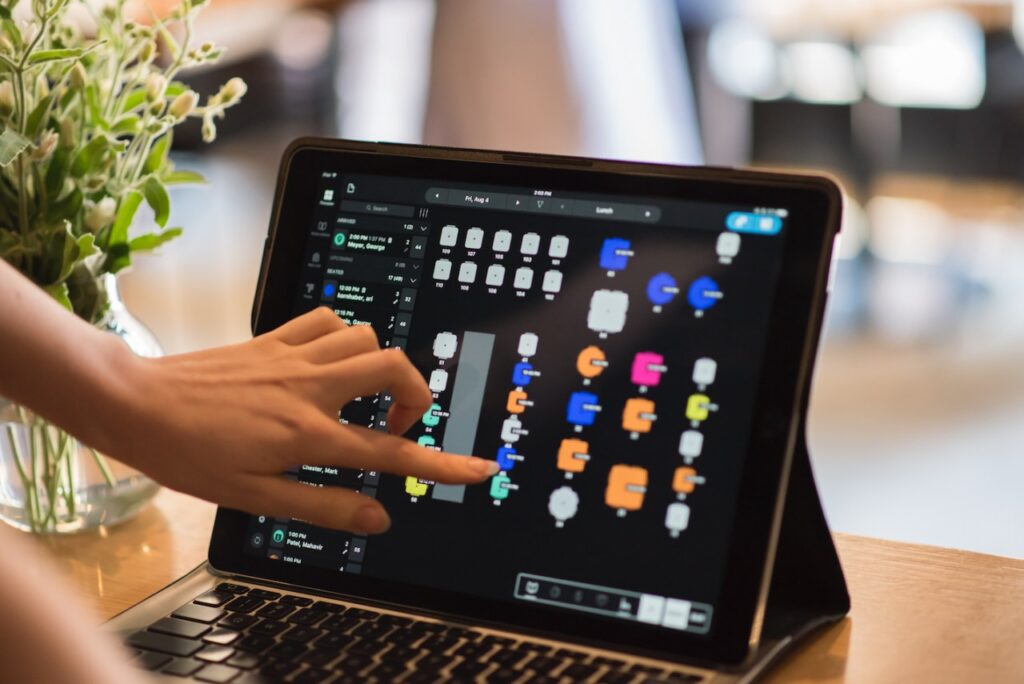
by David Klemt David Klemt No Comments

2023 KRG Recap: Top Bar Hacks Episodes

2023 KRG Recap: Top Bar Hacks Episodes

by David Klemt

Gold number 10 on a teal or aqua background

For your listening pleasure and convenience we’ve rounded up the top ten Bar Hacks episodes of 2023, also known as season four of the podcast.

Every year we reflect on the caliber of the guests who take time out of their busy lives to come onto the podcast. And every year we’re grateful for the honor of helping to share their stories and insights.

Below are the top ten Bar Hacks episodes of 2023. We’re presenting them in numeric order—no playing favorites here! To make it easy to enjoy these conversations, we’ve embedded the Spotify version of each episode.

And if you’re curious, these ten only just edge out the rest of this year’s episodes. We thank our loyal listeners for giving all of our guests and episodes a listen.

Cheers!

Episode 89 with Doug Radkey

Doug Radkey, co-founder and president of KRG Hospitality, stops by the Bar Hacks podcast. Not only is Doug the co-founder and president of KRG, he’s also the author of the book Bar Hacks and its followup Hacking the New Normal, and the creator of the Bar Hacks podcast.

During his visit, Doug and David talk about their expectations for 2023, what KRG is working on in the new year so far, the importance of technology in hospitality, and dynamic pricing versus dynamic menus. Doug also shares his thoughts on what operators can work on starting today to position themselves for success in 2023 and beyond.

Episode 90 with Mark Sansom

Mark Sansom, content director for the World’s 50 Best Bars, drops by the Bar Hacks podcast to share some big news. After years of dialing in the process and waiting out the pandemic, the World’s 50 Best Hotels will be revealed at a ceremony in September 2023! If you haven’t watched or attended a World’s 50 Best Bars ceremony, they truly take great pains to ensure they’re the Oscars of bar awards. So, we expect the World’s 50 Best Hotel awards ceremony to blow us out of the water.

This list and its accompanying specialty awards completes the hospitality and travel puzzle. Restaurants and bars, after all, are inextricably intertwined with hotels and resorts. Mark shares the details of the World’s 50 Best Hotels Academy Chairs, voting panel, and voting process in this episode. As a bonus, you’ll also get to hear host David Klemt try and fail to say “inaugural awards” without any issue!

Episode 93 with Adrián Michalčík

In September 2022, Adrián Michalčík earned the title of Diageo World Class Global Bartender of the Year. Colloquially, this achievement is known as the Best Bartender in the World. That’s a bold and weighty mantle but as you’ll learn during this conversation, Adrián is humble and focused on his team and guests.

Adrián is the director of mixology at the award-winning Pier 42 inside the Amerikalinjen hotel in Oslo, Norway. The bar has been recognized by the World’s 50 Best and has won Best Bar of Norway twice. In addition to taking home the title of 2022 Diageo World Class Global Bartender of the Year, Adrián has won several bartending competitions throughout the years.

He popped by the Bar Hacks podcast to chat with host David Klemt about his bartender journey. Adrián has worked in several types of bars and each helped him develop the skills that allowed him to elevate his skills behind the bar. Mentors, his endless quest for knowledge, his passion for hosting others, and his focus on empathy have informed his approach to team building, delivering top-level hospitality, and tapping into his creativity to develop Pier 42’s cocktail menus.

Adrián shares the three pillars he believes great bars are built upon, what he looks for in bar team members, transforming people from guests to friends, the importance of storytelling, and much more.

Episode 95 with Bob Peters

We know it’s been a few weeks. Between client projects and trade shows we had to take a little break. But we’re back!

And to make our absence up to you, our loyal listeners, we’re bringing you a great chat with an awesome guest. Bob Peters returns to the Bar Hacks podcast for episode 95!

Bob has big news to share, and you can hear in his voice how excited he is to share it with everyone. He’s taking on the perfect role. In fact, he calls it his dream job during this episode. Cocktails and cuisine are about to get even better in North Carolina and South Carolina…

But it doesn’t stop there! Bob also shares his approach to bar training to make sure everyone is engaged; his assessment of the Charlotte dining and drinking scene; a simple step all restaurants and bars can take today to improve operations, team engagement, and the guest experience; a very cool project he’s taking on; and more.

Episode 97 with Dragos Axinte

Dragos Axinte, the founder of Novo Fogo Organic Cachaça, returns to the Bar Hacks podcast. Axinte and Novo Fogo have been very busy since, his first appearance on the pod.

On this episode, Axinte shares the details and stories behind three important Novo Fogo initiatives and partnerships: Tree-keeper, with Seattle Sounders goalkeeper Stefan Frei, the Un-endangered Forest, and the brand’s new Chief Alegrias Officers (ChAOs), Sophie Hawley-Weld and Tucker Halpern, also known as SOFI TUKKER.

The two also discuss Axinte’s approach to partnerships—a philosophy that will serve operators and entrepreneurs very well—as well as distillers “discovering” amburana wood finishing. And, of course, Axinte shares product news and insights. If you’re headed to Tales of the Cocktail this year, you’re in for some incredible news. This conversation spans several topics and Axinte always imparts wisdom when he speaks in approachable and helpful ways.

Episode 99 with Michele Mariotti

Bartender Michele Mariotti leads an illustrious career. He has worked behind the bars at some of the best hotels around the world, including the Savoy in London and Mandarin Oriental in Singapore.

As of 2020, Michele has held the title head of bars at the Gleneagles Hotel in Perthshire, Scotland. In this role, he heads the programs at 11 F&B venues on the property, overseeing dozens of bar professionals.

On this episode, Michele and Bar Hacks podcast host David Klemt talk about mentorship, interviewing potential bartenders, menu development, using a flavor map when assigning new cocktail builds to bar team members, finding inspiration, interesting hotel guests, bespoke glassware, investing in platforms and programs that boost staff retention, and more.

Episode 101 with Ryan Chetiyawardana a.k.a. Mr. Lyan

Ryan Chetiyawardana, also known as Mr. Lyan, is one of the bar world’s true visionaries. He opened his first bar, White Lyan, in 2013 and the venue immediately achieved its intended purpose. Beyond being an award-winning bar and one of London’s best places to grab a drink, White Lyan started a much-needed conversation about sustainability in the industry.

Dandelyan, Lyaness, Super Lyan, Cub, and Silver Lyan would follow shortly after, making an even bigger splash not only in London but also Amsterdam and Washington, DC. All Mr. Lyan venues, while showcasing incredible innovation, accomplish something just as important: each bar is a place people to want to spend their time and money, and where professionals want to work.

During this fantastic conversation, Ryan shares insights into the menu programming processes at each venue; discusses seasonality; provides a look into hiring and engaging each team; the reissue of his book and his foray into the RTD cocktail space; and much more. Cheers!

Episode 102 with Jordan Bushell

Thank you for being patient during our summer hiatus. We’re back with a great conversation with an awesome guest.

Global Hennessy brand ambassador Jordan Bushell returns to the Bar Hacks podcast. While Jordan may know people with more Cognac knowledge, we don’t know anyone who knows more about this spirit category. More importantly, he’s as generous with his time as he is knowledgeable about Cognac. If you have a question about the spirit of Hennessy you can reach out to him and he’ll answer you.

On this episode of Bar Hacks, Jordan talks about special Hennessy releases, initiatives, collaborations, and what sets the maison apart from others in the Cognac region of France. He also talks about how operators can introduce guests to Cognac and Hennessy, including paying attention how they price their menus. Cheers!

Episode 104 with Simone Caporale

Simone Caporale, an internationally renowned bartender and operator, swings by the Bar Hacks podcast to talk spirits, branding, the guest experience, and operations.

Noticing a gap in the industry and seeing a way to lend his expertise to help grow spirits brands, Simone and Luca Missagli founded Cocktail Concierge, a brand-building agency focusing on craft spirits brands. One of the most recent brands Cocktail Concierge has helped introduce to the world is Amaro Santoni.

Of course, Simone is also one of forces behind SIPS Drinkery House, number three on the World’s 50 Best Bars list, and the World’s Best Bar according to Tales of the Cocktail. Simone shares his thoughts on what he thinks makes SIPS so successful, why he views service as a privilege, three tips operators can implement today to plant the seeds for long-term success, and more!

Episode 107 with Anne Becerra

When it comes to curating a beer program, creating a complementary cocktail program, and delivering an incredible beer program, we can’t think of anyone better than Anne Becerra. And lucky for us, she stopped by the Bar Hacks podcast!

Anne is the first female Certified Cicerone in New York City and has been working in beer for more than a decade. More importantly, however, she’s as passionate as she is educated about beer. Anne’s also passionate about hospitality, which comes across in this conversation. Truly, she loves hospitality, the beverage world, and how the two pair to make people feel amazing.

On this episode Anne talks introducing guests to beer; serving beer aficionados, beer neophytes, and the beer wary; how to make guests feel comfortable in a beer-centric concept; what she’s excited about in the beer world; tips for operators who want to succeed with a beer-forward venue; and much, much more. Cheers!

Image: Miguel Á. Padriñán on Pexels

KRG Hospitality. Bar Consultant. Nightclub. Lounge. Mixology. Cocktails.

by David Klemt David Klemt No Comments

The Liquor Awards Return!

The Liquor Awards Return!

by David Klemt

"Number one" hand emoji neon sign

The second-annual Liquor Awards from Liquor.com highlights the best of hospitality of 2023, shining a light on bars, individuals, and organizations.

Liquor.com launched the Liquor Awards back in 2022. For the 2022 winners and runners-up, click here. Follow this link to review the 2022 Liquor Awards honorable mentions.

Differentiating themselves from other industry awards, the Liquor Awards recognize bars, individuals, and organizations via some unique categories.

For example, Platypus in St. Louis, Missouri, receives recognition among the 2023 winners and finalists via the Under the Radar category.

Other categories include Best Classic Bar, Best Neighborhood Bar, Global Spotlight, and Community Builders of the Year.

For those who are curious, I’ve run the numbers in terms of markets and the number of finalists and winners.

New York City (including Brooklyn) leads the way with eight total finalist nods and wins. New Orleans claims six finalists and winners, and Chicago is home to five. Coming in third are San Francisco and Washington, DC, with four finalists and winners, total. Denver and Portland have three each, while Los Angeles, Phoenix, and Cartagena, Colombia, have two.

Las Vegas, KRG Hospitality‘s US headquarters, is home to just one finalist, Herbs & Rye. And Toronto, KRG’s global headquarters, is home to the Health & Wellness Liquor Award winner.

For the full list of finalists and winners, see below.

Bar Award Winners and Finalists

Best New Bar

Winner

Pacific Standard (Portland, Oregon)

Finalists

  • The Butterscotch Den (San Francisco, California)
  • Martiny’s (New York City, New York)
  • Milady’s (New York City, New York)
  • Mírate (Los Angeles, California)

Best Classic Bar

Winner

Attaboy (New York City, New York)

Finalists

  • Anvil (Houston, Texas)
  • Cure (New Orleans, Louisiana)
  • The Violet Hour (Chicago, Illinois)
  • Williams & Graham (Denver, Colorado)

Best Craft Cocktail Bar

Winner

Overstory (New York City, New York)

Finalists

  • Century Grand (Phoenix, Arizona)
  • Double Chicken, Please (New York City, New York)
  • Dovetail (New Orleans, Louisiana)
  • True Laurel (San Francisco, California)

Best Neighborhood Bar

Winner

ABV (San Francisco, California)

Finalists

  • 16th Street Bar & Lounge (Chicago, Illinois)
  • Best Intentions (Chicago, Illinois)
  • The Long Island Bar (Brooklyn, New York)
  • Occidental (Denver, Colorado)

Best Restaurant Bar

Winner

Jewel of the South (New Orleans, Louisiana)

Finalists

  • Bicyclette (Los Angeles, California)
  • Kimball House (Decatur, Georgia)
  • Kumiko (Chicago, Illinois)
  • Palomar (Portland, Oregon)

Best Hotel Bar

Winner

Allegory (Washington, DC)

Finalists

  • Chandelier Bar (New Orleans, Louisiana)
  • Death & Co. (Denver, Colorado)
  • Little Rituals (Phoenix, Arizona)
  • Silver Lyan (Washington, DC)

Expertise in Hospitality

Winner

La Factoría (San Juan, Puerto Rico)

Finalists

  • Allegory (Washington, DC)
  • Bar Leather Apron (Honolulu, Hawaii)
  • Herbs & Rye (Las Vegas, Nevada)
  • Jewel of the South (New Orleans, Louisiana)

Global Spotlight

Winner

Alquímico (Cartagena, Colombia)

Finalists

  • Bar Orchard Ginza (Tokyo, Japan)
  • El Gallo Altanero (Guadalajara, Jalisco, Mexico)
  • Little Red Door (Paris, France)
  • Tjoget (Stockholm, Sweden)

Sustainable Bar Program of the Year

Winner

Owamni by the Sioux Chef (Minneapolis, Minnesota)

Finalists

  • Alquímico (Cartagena, Colombia)
  • Lighthouse (Brooklyn, New York)
  • Rhodora Wine Bar (Brooklyn, New York)
  • Silo (London, England, United Kingdom)

Best Spirits Selection

Winner

Delilah’s (Chicago, Illinois)

Finalists

  • The Gin Room (St. Louis, Missouri)
  • Jack Rose Dining Saloon (Washington, DC)
  • Multnomah Whiskey Library (Portland, Oregon)
  • Tommy’s Mexican Restaurant (San Francisco, California)

Individual Award Winners and Finalists

Creating an Inclusive Space

Winner

Tiffanie Barriere

Finalists

  • Ashtin Berry
  • Kate Gerwin
  • Kapri Robinson
  • Chockie Tom

Bartender of the Year

Winner

Kapri Robinson

Liquor Legend

Winner

Julie Reiner

Organization Award Winners and Finalists

Community Builders of the Year

Winner

Turning Tables (New Orleans, Louisiana)

Finalists

Health & Wellness

Winner

Not 9 to 5 (Toronto, Ontario, Canada)

Finalists

Sustainable Producer of the Year

Winner

Mijenta Tequila

Finalists

  • Barr Hill Gin
  • Empirical
  • Maker’s Mark
  • WhistlePig Whiskey

Cheers to the finalists and award winners!

Please click here to review the list on Liquor.com and learn more about the winners.

Image: Ellie Burgin on Pexels

KRG Hospitality Start-Up Restaurant Bar Hotel Consulting Consultant Solutions Plans Services

by David Klemt David Klemt No Comments

Grubhub Reveals 2023 Order Trends

Grubhub Reveals 2023 Order Trends

by David Klemt

A veritable sea of pickle chips

Just under the wire Grubhub releases their annual end-of-year report, revealing their customers’ top ordering trends of 2023.

Uber Eats and DoorDash unveiled their reports at the end of October and start of November, respectively.

To revisit 2022 for a moment, the top food item ordered via Grubhub was the burrito. So, the unofficial theme of last year’s annual report was warmth and comfort wrapped in layers.

I’m providing that context because this year’s report also comes with a theme. This year, it’s “doing it for the vibes.” For Grubhub, this means that users of the service broke out of their comfort zones to try new F&B items.

Providing an example, one of the standout trends for 2023 is heat. As in, Grubhub users added spice to quite a lot of orders, as you’ll see below.

Click here to review Grubhub’s top 2022 food orders, and here for their 2022 beverage orders. To review this year’s Grubhub report in its entirety, click here.

Now, let’s take a look at a number of this year’s ordering trends.

Soft Drinks & Coffee

Usually, I start with food items when reviewing these reports. Well, once you become predictable, you become beatable. So, I’m going to shake things up and begin with beverages.

According to Grubhub, a TikTok trend—#dietcokebreak—is responsible for the growth of Diet Coke on the platform. In fact, the third-party delivery service says that in-office orders of Diet Coke grew by 17 percent. No surprise, then, that the soda grabbed the top spot in 2023.

Top 5 Sodas

  • Diet Coke
  • Coke
  • Sprite
  • Dr. Pepper
  • Ginger Ale

Next, coffee orders. Per this year’s Grubhub report, people weren’t shy about ordering coffee outside of the breakfast and lunch dayparts.

According to their data, more than 10 million coffee orders were placed after 5:00 PM.

Top 5 Coffee Orders

  • Iced Coffee
  • Caramel Frappe
  • Mocha Frappe
  • Cappuccino
  • Hot Coffee

Food & Flavors

Here’s an interesting revelation: more than 600,000 Grubhub users chose to order salads with a side of French fries.

In fact, the French fry is the top ordered side in 2023 on the platform. So, Grubhub ranked fries by style.

Top 5 French Fry Styles

  • Classic cut
  • Waffle fries
  • Cheese fries
  • Sweet potato fries
  • Curly fries

Hey, let’s reignite the pineapple on pizza debate. According to Grubhub’s year-end report, pineapple as a pizza topping grew by 33 percent in comparison to 2022.

However, Hawaiian pizza has some more growth to do if it wants to take the number one spot.

Top 5 Pizza Styles

  • Cheese Pizza
  • Margherita Pizza
  • Pepperoni Pizza
  • Buffalo Chicken Pizza
  • Hawaiian Pizza

Finally, top flavors. In short, heat is a hit.

Grubhub users added spice to a staggering 53 million orders this year. For further context, sriracha was added to more than 91,000 orders.

And when it comes to chicken wings, Buffalo was the dominant style. I find it interesting, though, that no style of wing made the top five for this category.

Top 5 Spicy Items

  • Spicy potato soft tacos
  • Spicy chicken sandwich
  • Spicy tuna roll
  • Hot and sour soup
  • Drunken noodles

Bringing this report to a close, the item with the most growth. Pickles grew by 89 percent in 2023, accounting for 6.9 million orders.

So, I guess make sure your pickles, French fries, cheese pizzas, and salads are on point as we head into the New Year.

Image: Nathan Dumlao on Unsplash
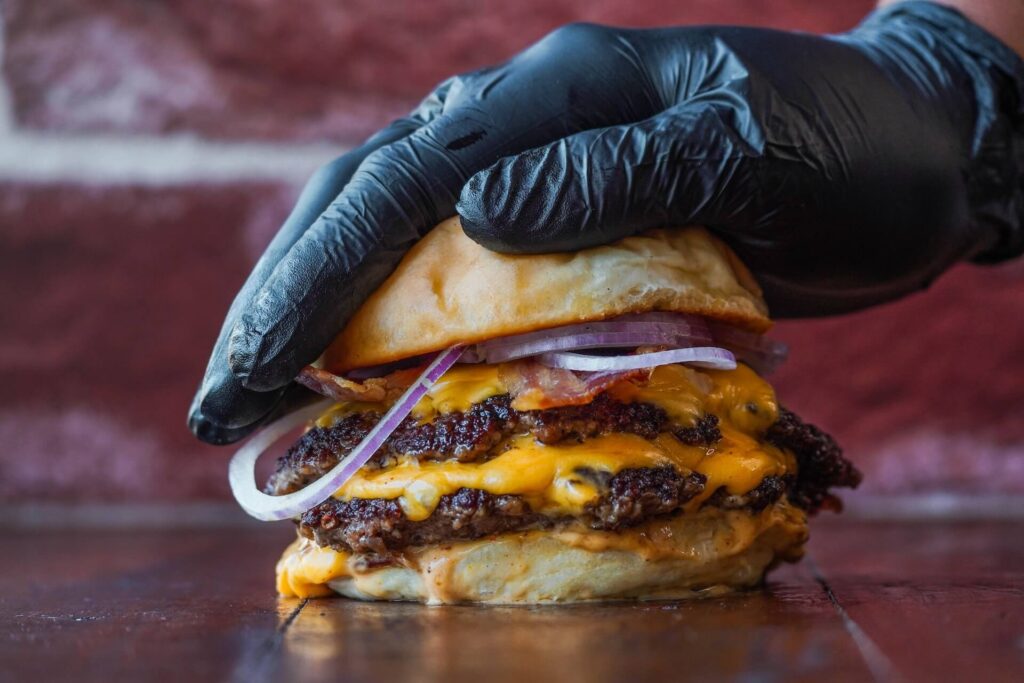
by David Klemt David Klemt No Comments

Transactional vs. Experiential Service

Is Your Business Transactional or Experiential?

by David Klemt

Gloved chef's hand pressing down on cheeseburger bun

When you consider your restaurant or bar honestly, is the service you and your team are providing to guests transactional or experiential?

It’s an important distinction, and it applies to every restaurant and bar category. Whether operating a QSR or FSR, today’s guests want more for more their money.

Further, they expect more just for choosing to leave their homes. A recent report from CWB Franchise Finance, in partnership with Circana and fsStrategy, indicates strongly that experiential concepts are on the path to weathering economic challenges and achieving long-term success.

Now, to be clear, of course all businesses are transactional. In that regard, restaurants and bars are clearly no different from other businesses.

Guests come in, they place orders, and they pay for the goods they receive. Transactional, right?

However, restaurants and bars are in a position to deliver memorable experiences.

Sure, for some people those memories are fleeting. There are those who are always seeking the next thing. But operators who become known for providing more than just menu items will remain on the radar of even the most fickle guest.

When a restaurant or bar delivers goods plus phenomenal services, when the guest experience involves more than just ordering and paying, it becomes experiential.

Think back to the times this year you’ve popped into a QSR or fast-casual restaurant. Can you remember much about the experience? If yes, fantastic—that operator understands the power of an experiential business model. Should the answer be no, that operator sees value only in being transactional.

Which are you happy to return to in the future?

Experience is King

I’m going to assume you’re much happier to return to an experiential concept than a strictly transactional one. And if that’s a correct assumption, you should apply that to your own restaurant or bar.

According to studies Circana has conducted over the past couple of years, Canadian consumers are reacting to economic uncertainty and financial instability as one would expect: cutting back on discretionary spending.

Generally speaking, that means reducing their spending at restaurants and bars. However, there’s a bit of good news tucked into those Circana studies.

Per Circana, half of Canadians plan to increase spending on something in particular: experiences. Further, 91 percent of Canadians say they’ve spent money at experiential restaurants recently.

“A restaurant visit isn’t necessarily just about nourishment, but instead is a platform for socializing, entertainment and exploration,” reads the joint CWB, Circana, and fsStrategy report.

Importantly, an operator need not go to extremes to deliver an experience. Something as simple as creating an LTO around craveable drinks can pay huge dividends. For proof of that, simply look at McDonald’s in the US and the hype that surrounded the berry-flavored Grimace Shake.

Operators throughout Canada and around the globe need to understand how impactful being experiential can be.

Takeaway

It’s true that operators are competing against one another. However, it goes deeper than that now.

Operators are also battling convenience and comfort. Between working from home, pandemic-induced isolation, and technology, people are used to staying in and ordering whatever they want.

So, not only are operators faced with the challenge of standing out from one another, they’re up against the phones in people’s pockets.

For many people, choosing to leave home to dine and drink in person is a big deal. To some, restaurants and bars are about celebrating special occasions or socializing. For others, the motivation is as simple as the need to finally get out of their home.

It’s imperative, therefore, for operators to be more than transactional. Being experiential, whether the experience is small but impactful or over the top and unforgettable, is the way forward.

Restaurants and bars that deliver a memorable experience are better positioned to remain top of mind for a guest’s future in-person visits, delivery and takeout orders, and large-party special events. Don’t think of being experiential just in terms of nailing each visit, think of elevating the guest experience to capture future business.

A focus on the experiential builds loyalty from existing guests, and it encourages those guests to become ambassadors of your brand. Ask what you can do with your menu, team, and space today to become more experiential than transactional.

Image: Thiago Miranda on Pexels

Bar Nightclub Pub Brewery Marketing Agency Team

by David Klemt David Klemt No Comments

FTC Targets Restaurant Fees and Surcharges

FTC Targets Restaurant Fees and Surcharges

by David Klemt

The Federal Trade Commission Building

The Apex Building, also known as the Federal Trade Commission Building in Washington, DC.

Well, that didn’t take long. Less than two months after asking for the public’s input, the Federal Trade Commission is proposing legislation targeting additional fees and surcharges.

The proposed rule is known as the “Unfair or Deceptive Fees” rule. As one may imagine, the FTC is going after hidden and so-called “junk” fees.

As it stands, according to multiple outlets, this rule would prohibit restaurant and bar operators from surcharges that are commonplace. For example, larger-party fees, delivery surcharges, and even credit card processing charges would be banned by the rule.

Instead, operators would be compelled to list total prices on menus, whether for goods or services. Further, the FTC is directing operators to provide larger groups with “larger group” menus. These separate menus would show total prices calculated to include any surcharges.

Even further, it’s being reported that the FTC is also addressing tips. The Commission’s rule directs operators who charge service fees in place of tips to remove the fee and return to tipping.

Interestingly, the National Restaurant Association is reporting that the FTC never identified restaurants as a targeted industry when asking for public comments about junk fees. However, other sources claim that restaurants were indeed included when the FTC put forth the request for public feedback.

Regardless, it’s a fair statement to say that the Commission doesn’t understand restaurant operation and costs. It appears that the FTC either didn’t work with any operators when drafting these proposed rules. Or, if they did seek out restaurant operator input, they put very little stock into it.

Costing Independents

One thing that’s clear is these proposed rules will cost operators. In particular, compliance will cost independent operations, which account for nearly 70 percent of American restaurants.

According to the NRA, the cost of changing menus will cost nearly $5,000 per operator, for starters.

“The FTC doesn’t take the realities of the restaurant industry into consideration,” reads the Association’s fact sheet. “Its estimated compliance cost—$3.5 billion—would equal a cost of $4,818.27 per operator for menus alone. Small independent operators run on a 3-5% margin and make an average of $45,000/year. The cost of making this change would be approximately 10% of their total income.”

As independent operators can attest, credit card swipe fees are a dynamic cost that affects them disproportionately in comparison to their chain restaurant counterparts. Since these fees are calculated on a per-transaction basis and not fixed, adjusting menu prices to comply with the FTC’s rule puts them at a costly disadvantage.

Then there’s the simple fact that when restaurants raise prices, traffic tends to drop. When traffic drops, revenue goes with it. And when traffic and revenue drops, hours are cut back, and people lose their jobs.

Harmful Legislation

As far as I can tell, this is another example of a government agency attempting to impose rules on an industry it doesn’t understand.

When drafting legislation that affects restaurants, a group of operators and industry advocates that truly represents those who will be impacted should be impaneled. Input should be taken into thoughtful consideration before drafting rules, and drafts should be provided to the panel to receive feedback.

Unfortunately, the past few years have made it clear that our industry has very few friends the federal government. Our lobby, such as it is, simply isn’t respected as valuable enough to warrant consideration before imposing harmful rules on the industry.

This, despite the fact restaurants and bars in America employ more than 12 million people. That’s a lot of voters too many elected lawmakers are willing to dismiss as unimportant.

Image: ipse dixit on Unsplash
by David Klemt David Klemt No Comments

af&co. x Carbonate: 2024 Trends to Watch

af&co. x Carbonate: 2024 Trends to Watch

by David Klemt

Paddle and ball on pickleball court

Marketing and creative agencies af&co. and Carbonate Group‘s 16th annual Hospitality Trends Report provides in-depth insight across several categories.

This is an in-depth, insightful report operators should review in its entirety. The “Sweet Sixteen” edition of this yearly report is available for download here.

There are two interesting details toward the end of af&co. and Carbonate’s report. First, a list of 2023 clients. Second, an explanation for the design of the report itself.

This makes sense: Carbonate is a creative agency that works in the hospitality space, after all. Further, af&co. is a hospitality industry marketing agency.

Now, I won’t be sharing every trend or insight found in these two agencies’ report. Rather, I’m highlighting a number of items across four of the report’s six categories. Again, I think operators and leadership team members should download the report for themselves.

Food

While af&co. and Carbonate identify specific cuisines and items that are trending, it’s their 10,000-foot view of food that I find most compelling. In terms of the big picture, “rigid” adherence to authentic cuisine is falling out of favor.

Chefs, in the agencies’ opinions, are taking a more modern approach to menus. Instead of following the “rules” of certain cuisines, they’re creating dishes and programs that defy labels. Of course, for those who feel the need to label, one could call this approach “contemporary fusion.”

Examples given are Good Luck Gato’s Okonomiyaki Baked Potato, and the Birria Dumplings at Little Bull.

Cuisine Trends

Of course, af& co. and Carbonate also zoom in on food. Their Cuisine of the Year goes to Korean.

Dessert of the Year goes to the Pavlova or Eton Mess. So, one can argue that operators should connect with their back-of-house teams about meringue-based desserts.

Other food trends include making pastries with buckwheat; getting inventive with mortadella; serving borek in snack and entree size; and Brazilian-style pizza.

However, it’s a presentation trend that stood out the most to me. Accompanied by a timeline complete with images, the agencies state confidently that we’re in the “Crescent Moon” era of plating.

Visualize a plate, then place all of the food along the edge, with roughly two-thirds of the space open. That’s the crescent moon presentation.

Beverage

A number of the trends in this section aren’t exactly new. That tells me that some are likely on the brink of moving from trend to ubiquity.

That, or they’re at risk of bumping against their expiration date.

Two trends that have been popping their fins out of the sea of cocktails for a bit make it into the af&co. and Carbonate report. One is clarified cocktails.

Spend a bit of time looking up cocktails on social media and you’ll see these are a bit divisive. Some bartenders are all for them, some appear to absolutely despise this trend. Guests, however, seem to like the novelty of well-known, opaque or translucent classic turning transparent.

Another drink trend? Culinary cocktails. For food-driven concepts, it makes perfect sense to encourage the bar team to work closely with the kitchen team. Offering culinary cocktails is one method of pulling a concept’s threads tighter, telling a more complete story.

Along those lines, the agencies identify another divisive cocktail trend: cheese.

Personally, cocktails that feature cheese aren’t my thing. However, these drinks are, at the minimum, going to grab a guest’s attention. And those who order these drinks aren’t likely to forget the experience any time soon, good or bad.

That last point is important for operators and their teams to remember. A negative experience can be more powerful and stick with a guest longer than a positive one. So, pursue trends with caution.

Hotel

One of the biggest hotel developments the Hospitality Trends Report identifies is the dual-brand hotel. This is also a trend with which KRG Hospitality is well acquainted, both through industry research and client projects.

So far, the most common approach tends to include two towers, a shared lobby and fitness center, and shared F&B concepts. However, there are properties that incorporate not only brand-specific design for each tower but separate the bars and restaurants as well.

Notably, Marriott opened the first-ever tri-brand hotel in Nashville in 2019. The hotel and resort colossus combined an AC Hotel, a Residence Inn, and a SpringHill Suites.

Another interesting hotel trend? Eco-friendly, pre-fab construction. An excellent example of this approach is Moliving. To learn more about this brand, check out Bar Hacks podcast episode 68 with Jordan and Hanna Bem.

Interest by consumers in supporting eco-friendly brands informs two other trends identified by af&co. and Carbonate. One of these is hotels and resorts including e-bikes among their amenities.

Another is rewarding guests for engaging in a number of green initiatives. For example, cleaning up the beach in front of a hotel, or helping to plant trees on or near the property.

Speaking further of amenities, hotel and resort operators are likely aware that if they have courts for racquet sports, they need to include pickleball.

Design

Operators considering a refresh or starting from a clean slate for a new space may want to work with a designer on the following approach: maximalism.

According to the 16th annual Hospitality Trends Report, this bold, playful design language is on the rise. Following this trend, af&co. and Carbonate think that maximalism is working particularly well for “concept-driven, design-forward” bars.

As far as colors and materials operators may want to ask designers about, the agencies suggest pink, bronze, gold, and velvet. These colors are warm and welcoming, exactly what a hospitality venue should be.

To download the Hospitality Trends Report, click here. Two categories not covered in this article are Marketing Ideas and Social Media Trends, so follow that link!

Image: Mason Tuttle on Pexels

Bar Nightclub Pub Brewery Menu Development Drinks Food

by David Klemt David Klemt No Comments

Banfi and One Warm Coat Launch Partnership

Banfi and One Warm Coat Launch Partnership

by David Klemt

A rack of winter coats

Wine producer and importer Banfi Vintners is partnering with non-profit One Warm Coat to help people in need and encourage others to host coat drives.

For anyone unfamiliar, One Warm Coat is a national 501 (c)(3) nonprofit operating throughout the US. Established in 1992, the nonprofit has helped organize nearly 50,000 coat drives. More than 5,500 of these drives took place during the 2022 to 2023 season, providing in excess of 550,000 coats.

So far, with their partners, they’ve collected and distributed close to eight million coats. These partners include Land’s End, J.Crew, Todd Snyder, Duluth Trading Co., and now Banfi.

To launch their partnership, Banfi seeded the program with a donation that will provide 50,000 coats. In announcing this partnership, Banfi and One Warm Coat hope to encourage others to give back, host coat drives, and help those in need within their communities.

Canadian operators and their teams can find One Warm Coat partners by clicking here and searching their city. I found partners in and around Toronto, Vancouver, Calgary, and Edmonton.

In addition to helping provide people in need with coats, sustainability is key to One Warm Coat’s mission. To date, the organization has helped keep 19.4 million pounds of clothing out of landfills.

Charity Navigator, which rates the trustworthiness of charities, gives One Warm Coat a score of 98 percent.

To learn more, please review the press release below.

BANFI VINTNERS PARTNERS WITH ONE WARM COAT TO SUPPORT LOCAL COMMUNITY

Italian wine producer and importer offers support to individuals in need through seasonal coat drive

NEW YORK, NY—Banfi, producer and importer of fine wines, proudly announces its partnership with national non-profit organization, One Warm Coat. Banfi kicked off the program with a donation that will warm 50,000 people in need. 

 “One Warm Coat is thrilled to team up with Banfi this holiday season to share warmth with those in need across the country while promoting volunteerism and environmental sustainability,” shares Beth Amodio, President and CEO, One Warm Coat. 

In addition, the partnership with One Warm Coat allows Banfi to spread the word and encourage coat drives at various retail and restaurant accounts across the country, extending the program’s reach and multiplying the number of donations collected. One example can be found not too far from Banfi’s NY headquarters; based in upstate New York, Banfi’s distributor partner, Empire Merchants North has made it a key focus to promote the brand’s initiative on their website and social channels to bolster the partnership and encourage dozens of retailers to support the cause. 

“Empire Merchants North proudly joined Banfi’s One Warm Coat program to extend our commitment beyond beverages. Embracing social responsibility, we believe in making a positive impact by contributing to the well-being of our community, aligning seamlessly with Banfi’s philanthropic mission. Our enthusiastic employees joyfully embraced this initiative, embodying our shared commitment to making a meaningful difference in the lives of those in need,” shares President and CEO of Empire Merchants North Eric Pfeil. 

“One of our favorite aspects of working with One Warm Coat is its ability to support the local community. The donations stay in the community where they’re collected, so it’s truly heartening to see the widespread response in the market,” shares Banfi President and CEO Cristina Mariani-May.

About Banfi Wines

Banfi, producer and importer of fine wines, was founded in 1919 and is today woman-owned and operated by third-generation family proprietor Cristina Mariani-May. Banfi is the sole U.S. importer of the Mariani family’s internationally renowned wine estates in Italy: Castello Banfi of Montalcino, Tuscany, and Banfi Piemonte of Strevi, Piedmont. Castello Banfi is credited with pioneering a new era in Brunello and bringing the wine world’s attention to Montalcino, while Banfi Piemonte produces the family’s sparkling wines. Banfi’s wide range of wines offers affordable luxury and includes the flagship Brunello di Montalcino, Super Tuscans, Tuscan Pinot Grigio, Chianti, Sparkling and more varieties.

About One Warm Coat

One Warm Coat is a national cloud-based 501 (c)(3) nonprofit organization that provides free coats to individuals in need. Since 1992, One Warm Coat has facilitated 49,000 coat drives across the country, collecting 8 million coats that have been distributed through more than 1,500 nonprofit partners.  Individuals and organizations can get involved by donating coats, holding coat drives, and making financial donations. One Warm Coat believes in each person’s right to shelter from the elements and is committed to sharing warmth, without discrimination, one coat at a time.

Image: Markus Spiske on Unsplash
KRG Hospitality Start-Up Restaurant Bar Hotel Consulting Consultant Solutions Plans Services

Top