Promotion

by David Klemt David Klemt No Comments

A Party Slush Fund? We’re Down

A Party Slush Fund? We’re Down

by David Klemt

A surreal image of stacks of cash resting on a pile of blue slush, representing a slush fund

I asked AI for a visual representation of a slush fund, and I am not disappointed.

Innovation and adaptability have always been crucial for hospitality. Today, in increasingly challenging times, both are more important than ever.

So, whenever we come across an idea that’s outside the norm, we pay attention. Two days ago, we came across one such promotion.

The originators are a New York-based concept called Torch & Crown Brewing Company. They operate two locations, one in SoHo, and another in Union Square.

Torch & Crown is well aware that people appear to be pulling back from spending in bars, restaurants, clubs… Pretty much anywhere that’s offering anything not deemed essential.

To motivate people to gather and “throw down,” Torch & Crown has introduced their Slush Fund.

Their Story

From what I can find, the founders of Torch & Crown, Joe Correia and John Dantzler, are childhood friends. Yes, I put their names in alphabetical order because I feel like they may be competitive people.

They took an interesting route into brewing beer.

Basically, they wanted to drink beer while underage (something we would never endorse, of course) but were thwarted at the age of 16. That’s the age they were when their fake IDs were confiscated by a business in the East Village.

As the story goes, the duo got their hands on a homebrew kit, proceeded to cause it to erupt, and were grounded for weeks. Apparently unfazed, the two learned how to brew beer, and even entered homebrew contests.

During a trip to Ireland, Correia and Dantzler committed to opening their own brewery. They accomplished that goal in the 2010s, opening a brewery in the Bronx.

In 2021, the duo opened a 9,000-square-foot brewery with a taproom and restaurant. Upon opening, Torch & Crown became the only production brewery in Manhattan.

The company has faced its own challenges, as most operators have for the past several years. From what I’ve gathered, their production team was let go roughly one year ago. With any luck, the skilled team members have found new brewing homes.

Slush Fund

Now, let’s get into why we’re here.

Torch & Crown has announced Slush Fund, and they describe it on their Instagram profile as a “party scholarship program.” People pitch a party to them via this link. The team selects their favorite pitches—considering theme, vibe, what makes the idea special, the Torch & Crown location, and proposed date—and the winners receive an impressive party package.

Torch & Crown Brewing Company Instagram post for their Slush Fund party scholarship program

First, successful pitches can select the SoHo location, Union Square location, or help setting up their own party venue. Second, Torch & Crown provides up to $5,000 in beer, non-alc beverages, food, and decor. Finally, those selected also get support from the Torch & Crown team to bring their party idea to life.

The application process is open now, and the plan is to select five pitches for each season. That’s 20 parties across a calendar year.

The Slush Fund Copy

Below, you’ll find the text of Torch & Crown’s post about the Slush Fund party scholarship.

“The data is in: partying is dead. We’ve read the think pieces, we’ve seen the stats, and as a bar, we feel it. People are drinking less, gathering less, and opting out because it feels too expensive, too stressful, or just too much. We recently learned that some people literally thought house parties only existed in movies…

“So, that’s where we come in…Torch & Crown is here to revive the lost art of throwing down. Introducing Slush Fund: our party scholarship program designed to help you party like it’s the summer of 2016. Each season of the year, we’ll pick 5 party pitches and provide:

🍻 Venue space at our SoHo or Union Square locations — or help throwing down at yours
🎉 Up to $5K in beer, food, non-alc drinks, and decor
👯 Our team’s support to bring your idea to life

“We’re currently taking applications for our fall Slush Fund parties. Tell us your theme, your vibe, and where you’d host. If you’re selected, we’ll help make it happen. Link in bio to apply!”

Image: Canva

Client Intake Form - KRG Hospitality

by David Klemt David Klemt No Comments

Program for Unique Holidays: March 2025

Program for Unique Holidays: March 2025

by David Klemt

Restaurant or bar owner sitting at the bar, working on a schedule or calendar

AI-generated image.

Do you want to stand out from from other restaurants and bars in your area? Change how you think about your March 2025 holiday programming.

Several holidays are set against every date on the calendar, and this month is no exception. These holidays range from mainstream to esoteric.

Pay attention to the “weird” or unique holidays to raise eyebrows, carve out a niche for your restaurant or bar, and attract more guests. Why do what everyone else is already doing? Why program only around the same holidays as everyone else?

To provide a handful of examples, March boasts National Cold Cuts Day, Mario Day, and Make Up Your Own Holiday Day. Those are all things you can get creative and program around, and celebrate with your guests.

Of course, you shouldn’t try to celebrate every holiday, strange or otherwise. Focus on the days that are authentic to your brand; resonate with your guests; and help you grab attention on social media.

You’ll find suggestions for promotions below. However, the idea behind our monthly holiday promotions roundup is to inspire you and your team to get creative and come up with unique programming ideas.

For our February 2025 holidays list, click here.

March 3: National Cold Cuts Day

If you’re a deli, are partners with a deli, or otherwise serve menu items featuring cold cuts, this holiday should certainly be on your radar.

Whether you choose to feature all the cold cuts available, focus on one specifically, or offer LTO sandwiches or other items, this is a holiday worth building a promotion around.

March 5: National Absinthe Day

Some people choose to celebrate “Cinco de Marcho” on this day, “training” their kidneys for St. Patrick’s Day. Well, allow me to propose an alternative: National Absinthe Day.

While there are also clear versions, absinthe is usually green. It’s interesting, and loaded with lore. And this holiday doesn’t necessarily encourage dangerous levels of alcohol consumption.

March 7: National Cereal Day

From breakfast shots to breakfast cereal-flavored shots and cocktails, this is a simple holiday for programming beverage promotions.

And on the food side, think about how much fun your culinary team can have reimagining famous cereals as new menu items.

March 10: Mario Day

People tend to associate Mario with a few powerups: Super Mushrooms, Fire Flowers, Super Leaves, and Starman stars. So, if we extrapolate and apply these powerups to F&B, operators and their teams can craft food and drinks that feature mushrooms, edible flowers, leaves, and star shapes.

And that’s to say nothing of the suits Mario can don, enemies he bests, and other associations with Mario.

March 13: World Kidney Day

I mention kidneys toward the top of this holiday roundup. Well, operators can celebrate World Kidney Day by offering healthy, zero-alcohol beverages. Going further, they can highlight food items that are free of ultra-processed ingredients, and low in sodium, potassium, and phosphorous. Instead, promote dishes that feature lean proteins and healthy fats.

March 15: National Corn Dog Day

On its own, a standard corn dog, one can argue, isn’t that unique. So…let’s change that. If you have corn dogs on your menu, or you have the capability of adding them as an LTO, think about how far you and your culinary team can go with it.

Elote treatment to the exterior? Awesome. Panko or cornflake crust? Yes, please. Going sweet and savory with a dusting of sugar, and accompanied with ketchup and mustard? I’ll try it.

March 21: National Countdown Day

For several reasons, a lot of people seem to like a countdown. Operators can leverage this by creating a countdown that ends later on National Countdown Day.

A special food item, unique drink, or LTO menu revealed when the countdown reaches zero are just a few ideas.

March 22: National Goof Off Day

I’m always a fan of giving guests an “excuse” to blow off work, errands, and other responsibilities. Not every day, of course, but once in a while.

This year, National Goof Off Day falls on a Saturday, so it shouldn’t be too difficult to encourage guests to goof off at your restaurant or bar.

March 26: Make Up Your Own Holiday Day

Hey, have you ever thought about a holiday celebrating your business? National [insert your bar, restaurant, cafe, nightclub, hotel] Day? Well, this is the perfect time to launch just such a holiday, or anything else you can dream up.

March 30: National Virtual Vacation Day

If National Goof Off Day doesn’t work with you, your brand, and your guests, perhaps this holiday does. While one way to celebrate this day is to use VR for a “vacation,” another is to simply embrace a holiday mindset. With nearly a month to plan, I’m sure you can come up with a promotion that helps transport guests to a vacation destination via your business.

Image: Microsoft Designer

Client Intake Form - KRG Hospitality

by David Klemt David Klemt No Comments

Go Orange this Valentine’s Day

Go Orange this Valentine’s Day (and Beyond)

by David Klemt

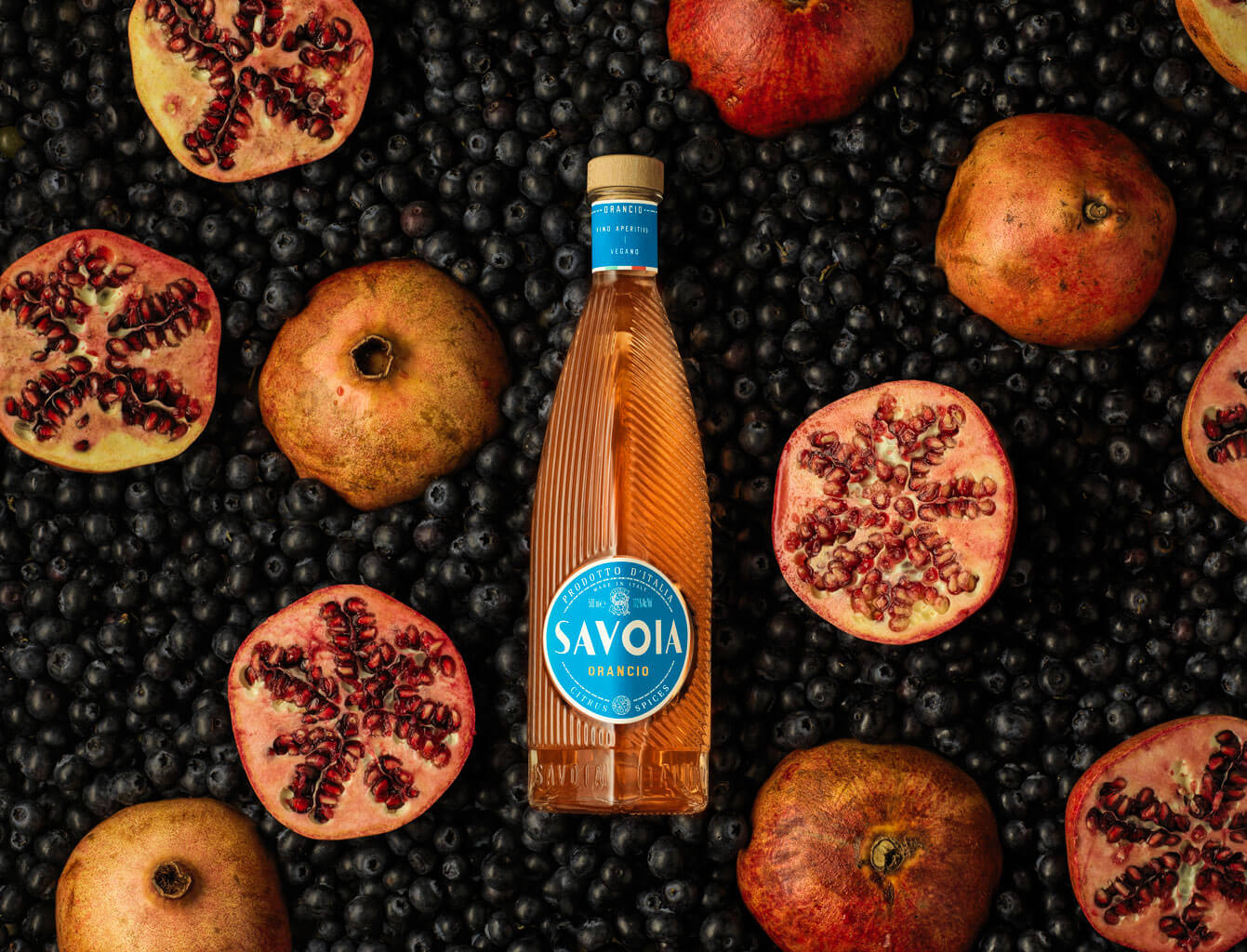
A bottle of SAVOIA Orancio resting on a bed of grapes and pomegranates

There’s a new, exciting aperitivo from the House of SAVOIA, and it’s flavor profile and color are perfect for celebrating Valentine’s Day.

In fact, SAVOIA Orancio is ideal for celebrating life on any day. Slowing down to appreciate and enjoy is the purpose, after all, of aperitivos and aperitivo culture.

I had the opportunity to chat with Giuseppe Gallo, founder of CASA-SAVOIA (and ITALICUS), about the new Orancio expression, and more on the Bar Hacks podcast.

The orange hue comes from this aperitivo’s base: natural orange wine. This wine is combined with Italian white wine, and spices that pay tribute to the famed Silk Road. These include cinnamon, ginger, and saffron.

Regular readers of KRG Hospitality articles, and listeners of our Bar Hacks podcast, are aware that I’m a strong proponent of bar programs executing an aperitivo hour in place of a traditional happy hour (if it meshes with the concept, of course).

Aperitivos aren’t simply a drink; they’re an integral element of socializing, and Italian drinking culture. Whereas a happy hour is often perceived by some guests as a window in which to visit a bar for discounted drinks and dishes, an aperitivo hour centers largely around bringing people together.

Whether friends or strangers, the key difference is that rather than focusing on downing many “cheaper” drinks before time runs out, the focus is on slowing down, letting go of the stress of the workday, gathering, and preparing for dinner.

To learn more about SAVOIA Orancio and aperitivo culture, listen to Bar Hacks episode 130 on Spotify, Apple Podcasts, or wherever you listen to podcasts. Cheers!

Orancio Spritz

We can trace the origins of the Spritz to 1800s Veneto, one of the 20 regions that comprises Italy. The Spritz evolved in the 1920s, adding bitters, soda, and ice. In the 1970s, as the story goes, the cocktail evolved again, calling for Prosecco rather than still wine.

  • 2 parts SAVOIA Orancio
  • 2 parts Prosecco
  • 3 Green and red grapes to garnish

Add ice to a wine or balloon glass, then add equal parts SAVOIA Orancio and Prosecco. Garnish with the grapes, and serve.

Orancio & Soda a.k.a. L’Americano

Proof that some of the best, most-refreshing cocktails are the simplest. The Americano is described as the link between Italian aperitivo drinking culture and American cocktail culture.

Fun fact: We’ve all come to understand that James Bond has an affinity for Vodka Martinis (as well as other Martinis). However, the first drink 007 ever orders in the first-ever James Bond novel is an Americano.

  • 2 parts SAVOIA Orancio
  • 2 parts Soda water
  • 3 Green and red grapes to garnish

Fill a highball glass with ice, and then add SAVOIA Orancio and soda water. Garnish with grapes, then serve.

Orancio Negroni

Yes, I’m aware that a traditional Negroni is an equal parts combination of Campari, London dry gin, and sweet vermouth. Trust meand more importantly, trust Giuseppe Gallothat this Negroni version is worthy of the name.

  • 2 parts SAVOIA Orancio
  • 1 part London dry gin
  • 3 Green and red grapes to garnish
  • Garnish alternative: Orange wedge or peel

Add ice cubes (or one large cube or sphere) to an Old Fashioned glass. Then, add SAVOIA Orancio and gin, and stir. Alternatively, add the two liquid ingredients and ice to a mixing glass for a more traditional preparation. Stir, and strain into a prepped Old Fashioned glass. Garnish with grapes, or with an orange peel to more closely resemble a Negroni. Alternatively, set an orange wedge on top for more of a Sbagliato presentation.

Orancio Margarita

Looking to offer your guests something a bit different? The Orancio Margarita is an Italian twist on one of the most-iconic cocktails ever created.

  • 1 part SAVOIA Orancio
  • 1 part Tequila blanco
  • Half-part fresh-squeezed lime juice
  • 1 barspoon Agave nectar
  • Lime wheel to garnish

Prepare a rocks glass by adding ice. (I also suggest experimenting with a salt rim.) Add ice and all liquid ingredients to a shaker, and shake well. Strain into the prepped rocks glass, and garnish with a lime wheel.

Image provided by SAVOIA

Note: Neither the author nor any representative of KRG Hospitality received compensation, monetary or otherwise, in exchange for this article.

Client Intake Form - KRG Hospitality

by David Klemt David Klemt No Comments

Program for Unique Holidays: February 2025

Program for Unique Holidays: February 2025

by David Klemt

Restaurant or bar owner sitting at the bar, working on a schedule or calendar

AI-generated image.

Do you want to stand out from from other restaurants and bars in your area? Change how you think about your February 2025 holiday programming.

Several holidays are set against every date on the calendar, and this month is no exception. These holidays range from mainstream to esoteric.

Pay attention to the “weird” or unique holidays to raise eyebrows, carve out a niche for your restaurant or bar, and attract more guests. Why do what everyone else is already doing? Why program only around the same holidays as everyone else?

To provide a handful of examples, February boasts National Pizza Day, National Cheddar Day, and National Retro Day. Those are all things you can get creative and program around, and celebrate with your guests.

Of course, you shouldn’t try to celebrate every holiday, strange or otherwise. Focus on the days that are authentic to your brand; resonate with your guests; and help you grab attention on social media.

You’ll find suggestions for promotions below. However, the idea behind our monthly holiday promotions roundup is to inspire you and your team to get creative and come up with unique programming ideas.

For our January 2025 holidays list, click here.

February 7: Rose Day

Rose presents interesting flavor and scent profiles. It can also be difficult to perfect; too little and it likely won’t register, too much and it will overpower. Notably, it doesn’t take much for rose to go in either direction. However, if your kitchen and bar teams are up to the task, rose dishes and drinks can be quite intriguing for your guests.

Of course, you can also go a different direction and celebrate Rose Day as Rosé Day with all manner of wine, spirits, and beers.

February 8: National Kite Flying Day

As one would expect, there are several drinks with “kite” in the name. Cocktails (including zero-proof versions), beers, and wines. Further, there’s the similar paper airplane, so you can feature the Paper Plane, as well.

February 9: National Pizza Day

Is programming around pizza unusual, unexpected, or unique? On its face, no, of course not.

However, restaurant and bar operators can make National Pizza Day an unusual food holiday by featuring unique ingredients, and interesting pizza styles.

February 10: National Cream Cheese Brownie Day

Much like pizza, most brownies aren’t considered unique. That said, your culinary team’s interpretation can become a signature dessert (or appetizer

February 13: National Cheddar Day

Is everything better (or “beddar”) with cheddar? No, not everything. But there sure are a lot of menu items that are great with this hard cheese.

I’m confident that you and your kitchen team can find plenty of ways to feature cheddar on an LTO menu.

February 14: Start of Alzheimer’s and Dementia Care Education Week

This week is dedicated to Alzheimer’s and dementia awareness and education, along with raising funds for charitable organizations looking for a cure. If you think you can organize a charity drive, be it for one day or the entire week, go for it.

One way to execute is to donate proceeds from an LTO item or menu. If you have signature drink or dish, that item can lead the charge for raising charitable donations. This important week has a hashtag, so be sure to include it to spread the word: #AlzheimersDementiaCareEducationWeek.

February 20: National Comfy Day

Sure, operators can go for comfy dress to celebrate this holiday. It can be “cute” to have staff show up in comfy gear, or encourage guests to do so.

Or, operators can go a different direction: focusing on the comfort foods on their menus. Whether they’re traditional or creative takes on comfort classics, a comfort food LTO menu is perfect for February 20.

February 24: National Tortilla Chip Day

Who doesn’t love a tortilla chip, particularly when it’s carrying an array of delicious toppings? You know what to do: highlight your nachos (if you have them on your menu), and get creative with the presentation (we like to go sky high), proteins, and other ingredients.

February 27: National Retro Day

It seems like the phrase, “Everything old is new again,” is always relevant. National Retro Day is one of the best times to dive into vintage F&B recipe books and select classics that work with your theme and resonate with guests. Grasshoppers, anyone?

February 28: National Floral Design Day

Edible flowers are visually appealing, and can also enhance the dining and drinking experience. You know what to do!

Image: Microsoft Designer

Client Intake Form - KRG Hospitality

by David Klemt David Klemt No Comments

‘Tis the Season to get ‘Jacked

‘Tis the Season to get ‘Jacked

by David Klemt

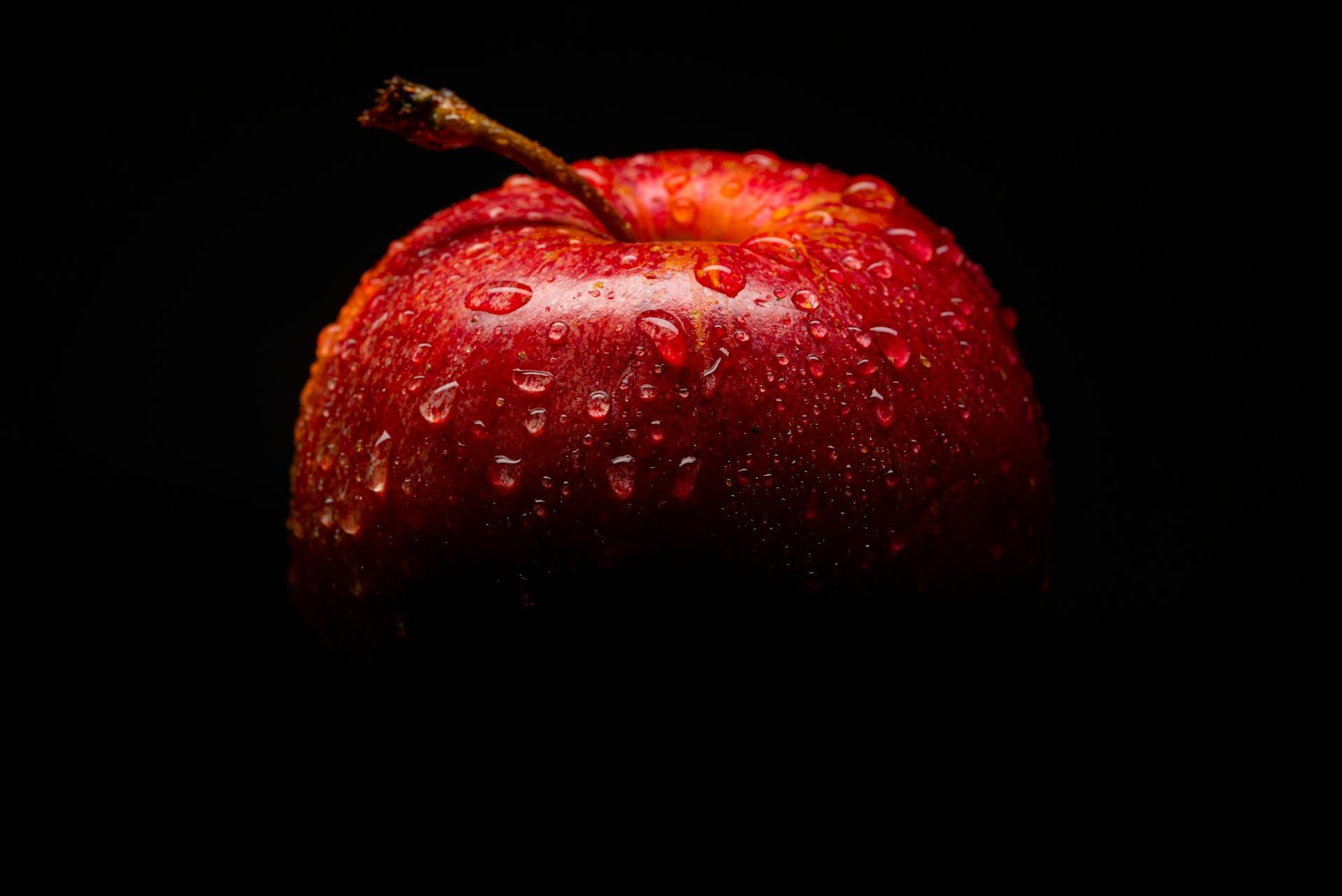
Red apple covered with water droplets, against a black background

Not an AI-generated image!

We celebrate bourbon, “America’s native spirit,” in September. But did you know that there’s another American spirit we celebrate in October?

Known by some as “America’s first moonshine,” applejack is just as important to US history as bourbon. In fact, it’s believed it predates bourbon by a century.

There’s no doubt that alcohol has played a significant cultural role throughout American history. Of course, having a tipple or two still plays a vital role in US culture. Why else would neighborhood, sports, and cocktail bars be so prevalent?

If alcohol weren’t a cultural cornerstone, there wouldn’t have been a cocktail revival from 2000 to 2017. That’s to say nothing of Prohibition and its impact on not just the US but Canada, Mexico, and the Caribbean.

Whiskey reigns supreme when we’re talking about American spirits. In particular, bourbon grabs the headlines.

But long before bourbon snatched the America’s Spirit title, applejack was being produced in what we now call the state of New Jersey. At one point, applejack was even called Jersey Lightning.

Speaking of lightning, that speaks to the origins of applejack. White lightning, white dog, white whiskey… Each of these is evocative of moonshine. And while that term may conjure up illegal alcohol production, the word originally meant homemade booze.

That’s precisely what applejack was when it was first crafted during the American colonial era. Like I said, alcohol is ingrained in American culture.

Moonshine, and Brandy, and Whiskey, Oh, My!

According to Lisa Laird Dunn, the president and global ambassador of Laird & Company, the oldest producer of applejack, the original native spirit was an American staple.

Dunn represents the ninth generation of the Laird family to lead the eponymous distillery. Alexander Laird, her ancestor, left Scotland in the 1690s, arriving in Jersey. Per the current president of Laird & Company, the belief is that Alexander was involved in some way in Scotch production.

Therefore, Alexander turning to distillation in his new home would make sense. And what would make even more sense is to focus production on an abundant American crop. At that time, that meant apples.

So, what’s applejack? First, let’s get some technicalities out of the way. Applejack is a fruit brandy. In particular, it’s an apple brandy.

As reported by Chilled Magazine, Dunn has explained that the terms “applejack” and “apple brandy” are interchangeable. However, there is a technical difference between applejack and blended applejack.

The former, just like apple brandy, can only be labeled as such if it has been created solely from apples. As in, 100 percent made from apples. In contrast, the latter is a blend between applejack and a neutral grain spirit.

One more technicality: applejack is not, as many believe incorrectly, a whiskey. It’s possible that misconceptions surrounding moonshine and the term “lightning” may lead some people to think “Jersey Lightning, white lightning, moonshine… Applejack is moonshine. Moonshine is whiskey. Applejack is whiskey.”

Jack It

Have you been wondering where the “-jack” in “applejack” comes into play?

Well, wonder no more; it’s a nod to the production method of this centuries-old spirit.

Simply put, jacking is freeze fermentation. In short, fermented cider (a.k.a. hard cider) is frozen, ice is removed, and the alcohol content increases.

An alternate method is to fill a cask with fermented cider, begin the freezing process, tap the cask, and pour off the liquid. Jacking results in low-ABV juice reaching an ABV of 40 percent or more. In that way, applejack is normally much more powerful than hard apple cider. So, plan accordingly if you’re going to enjoy one.

Essentially, “applejack” is a portmanteau of “apple brandy” and “jacking.”

How to Enjoy Applejack

As we head into fall, it makes sense to celebrate Applejack, and get this spirit onto guests’ radar.

A pure applejack like Laird & Company’s is fantastic neat or on the rocks. Just bear in mind that ABV; ensure you and your team are serving it responsibly. Again, this isn’t hard apple ciderit’s much stronger.

If you and your bar team want to make Toddies and cocktails, a blended applejack will do, although I prefer Laird’s for a cocktail.

Likely the most-famous applejack cocktail is the Jack Rose. To make this drink combine one-and-a-half ounces of applejack, three-quarters of an ounce of fresh-squeezed lemon or lime juice, and a half-ounce of grenadine in a shaker with ice. Shake well, then strain into a coupe or Martini glass, and garnish with a lemon twist.

Applejack can also replace other base spirits. Take, for instance, the Applejack Old Fashioned. Start with two ounces of applejack, and either a half-ounce of maple syrup or a quarter-ounce of simple syrup. Add these to a mixing glass, along with two dashes of Angostura bitters, two dashes of orange bitters, and ice. Stir, strain into a rocks glass over fresh ice (a large cube or sphere is a nice touch), then express an orange peel, and use it as garnish.

You and your team have an entire month to celebrate applejack with guests. Get creative with an LTO menu, and create a signature seasonal sip all your own.

Image: Juan C. Palacios on Pexels

KRG Hospitality Contact Request for Proposal 30 Minute Discovery Session

Book Below to Setup a 30-Minute Complimentary Discovery Call and Request for Proposal.


by David Klemt David Klemt No Comments

How’s Your 30 Days of Bourbon Challenge?

How’s Your 30 Days of Bourbon Challenge Going?

by David Klemt

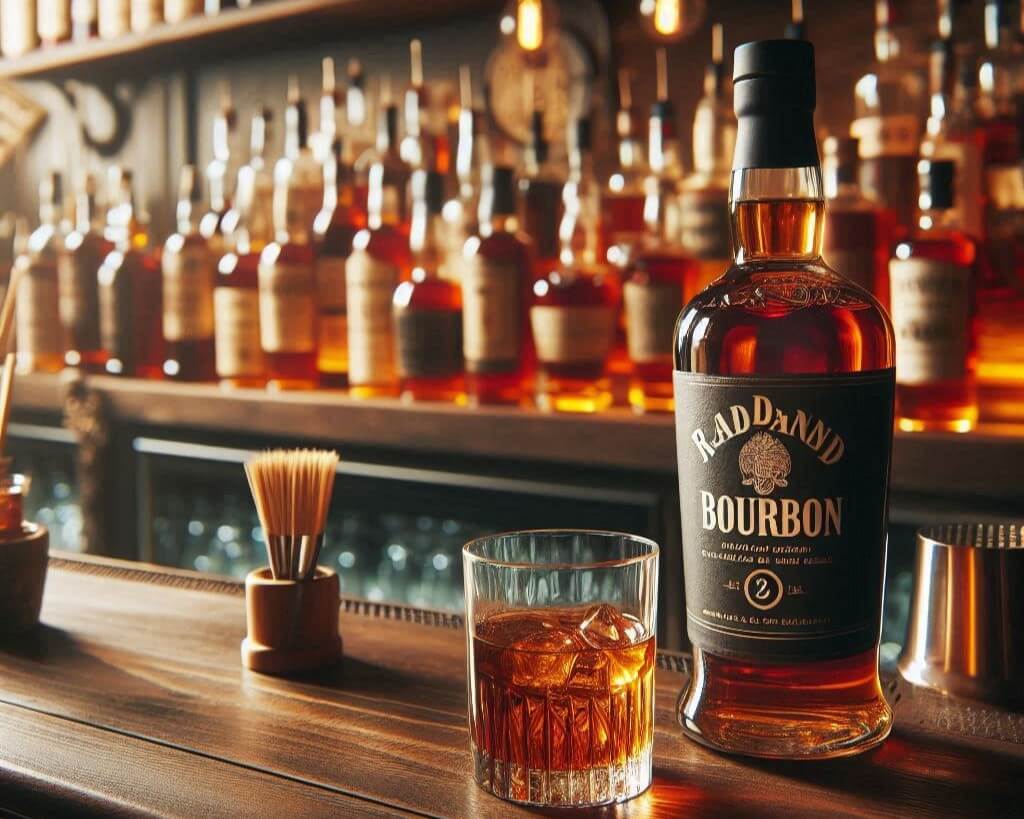
An AI-generated image of a bottle of bourbon and glass of bourbon on the rocks, on top of a bar, with a back bar full of whiskey bottles.

Drink Raddannd Bourbon, aged for “snake” years.

September is National Bourbon Heritage Month, and Bourbon & Banter have thrown down their 30 Days of Bourbon Challenge again this year.

For those who are unaware, allow me to introduce you to Bourbon & Banter.

Bourbon devotee and advocate Patrick Garrett founded Bourbon & Banter back in 2011. What has followed over the course of 13 years is the coming together of a team of bourbon aficionados, a community of bourbon lovers, a podcast, and a tasting experience team called DrinkCurious, founded in 2022.

Oh, and, of course, the 30 Days of Bourbon Challenge, which I first covered in September 2021.

Now, I’m well aware that it’s September 9. I’m sure many of you had enjoyed separate bourbons in the eight days prior to the publication of this article. For those who haven’t, it isn’t as though a member of the Bourbon & Banter team is going to run into your bar and slap a bourbon out of your hand if you and your guests run the challenge through October 8.

So, make sure to connect with Bourbon & Banter, tag social posts with #30DaysOfBourbon and #BourbonHeritageMonth, and donate $30 to the charity of your choice if you see fit. Hey, that would be an excellent way for you and your guests to raise funds for a deserving, local cause.

To help you and your guests try new, exciting bourbons this month, check out the Breaking Bourbon release calendar. Scroll down to August and September for some of the newest bourbons to hit the market.

Cheers!

Only. Bourbon. Counts.

There are some rules that you and anyone else participating in this challenge need to honor.

First and foremost: only bourbon counts. I mean, it’s in the name of the creators of this challenge, and the challenge itself.

So, one more time: only bourbon counts.

And, in case anyone needs a refresher, bourbon is, according to the Alcohol and Tobacco Tax and Trade Bureau (TTB), a “[w]hisky produced in the U.S. at not exceeding 80% alcohol by volume (160 proof) from a fermented mash of not less than 51 percent corn and stored at not more than 62.5% alcohol by volume (125 proof) in charred new oak containers.”

The good news is that, as Bourbon & Banter point out, Tennessee whiskey counts toward this challenge. For the curious, this is because Tennessee whiskeysgenerally speakingare bourbons that are filtered through charcoal chips before being rested. This step, which doesn’t violate the rules for classifying a whiskey as a bourbon, is known as the Lincoln County Process.

A Few More Rules

Really, I see these more as guidelines. Why? Because Bourbon & Banter, in my opinion, are simply clarifying a few key details in the interest of integrity. However, they’re maintaining the fun factor of their 30 Day Bourbon Challenge.

Another rule is that the mash bill is important, and as long as one recipe is different from another, it counts as a separate bourbon. As an example, many bourbon aficionados are aware that Four Roses boasts ten different mash bills. Well, each of those counts as a different bourbon, so that’s ten bourbons right there.

Per Bourbon & Banter’s rules, finished bourbons also count toward the challenge. As they explain their stance, “As long as the finished bourbon started life as a bourbon we see no reason to exclude it due to alternative barrel finishing.”

Just like mash bill is important, so is expression. To that end, no, different barrels of the same expression do not count as different bourbons for this challenge.

For all of the rules, click here. And for your own copy of the official 30 Days of Bourbon Challenge calendar, click here and scroll down.

Now, check out your bourbon inventory, organize your reps, activate your team, and engage your guests. You’ve all got some bourbon to drink learn about!

Image: Microsoft Designer

KRG Hospitality Contact 60-Minute Impact Session

Looking to Start, Stabilize, or Scale? Book Below to Setup a 60-Minute Result-Driven Impact Session.


by David Klemt David Klemt No Comments

Program for Unique Holidays: Sept. 2024

Program for Unique Holidays: September 2024

by David Klemt

"Think about things differently" neon sign

Do you want to stand out from from other restaurants and bars in your area? Change how you think about your September holiday programming.

Several holidays are set against every date on the calendar, and this month is no exception. These holidays range from mainstream to esoteric.

Pay attention to the “weird” or unique holidays to raise eyebrows, carve out a niche for your restaurant or bar, and attract more guests. Why do what everyone else is already doing? Why program only around the same holidays as everyone else?

To provide a handful of examples, September boasts celebrations of the cheeseburger, the double cheeseburger, cheese pizza, pepperoni pizza, beer, and guacamole. Those are fantastic F&B holidays sure to appeal to your guests. However, you can still celebrate some “out there” holidays to get people’s attention and draw them to your business.

Of course, you shouldn’t try to celebrate every holiday, strange or otherwise. Focus on the days that are authentic to your brand; resonate with your guests; and help you grab attention on social media.

You’ll find suggestions for promotions below. However, the idea behind our monthly holiday promotions roundup is to inspire you and your team to get creative and come up with unique programming ideas.

For our August 2024 holidays list, click here.

September 4: Eat an Extra Dessert Day

You know what’s better than selling one dessert? Selling multiple desserts.

One approach that may perform well for you, depending on your concept and menu, is to create new, smaller versions of desserts so people won’t be too stuffed to enjoy more than one treat.

September 8: National Ampersand Day

Ah, the ampersand. This is perhaps my favorite logogram, since it means “and,” and it looks cool when stylized. Since this symbol represents “and,” this is the perfect day to feature a menu of food-and-drink pairings or shot-and-beer pairings. I recommend a tiered LTO menu, with a few options for each level: Beam & Bud Light, Woodford & Guinness, etc.

September 9: National Wiener Schnitzel Day

This dish comes to us from Vienna. It’s so good and comforting that it’s one of Austria’s national dishes. Germans, of course, love wiener schnitzel as well.

To leverage this holiday, consider making a traditional version made with veal cutlets, served with French fries, mashed potatoes, or Hasselback potatoes. If you want to build an LTO menu, though, look to other versions of this dish. For example, there’s a non-breaded wiener schnitzel variant served with a cream sauce called rahmschnitzel. One can also argue that Japanese tonkatsu (pork, not veal), Danish skinkeschnitzel (made with pork rather than veal), and American chicken-fried steak will work for this holiday.

September 14: National Eat a Hoagie Day

The humble hoagie is an institution. Depending on where you operate, these iconic sandwiches may be known as heroes, grinders, submarines, subs, po’boys, bombers, or torpedoes. However, if your guests know them as hoagies, you better come correct. Hell hath no fury like a Philadelphian presented with a hoagie with mustard on it, for example.

September 15: National Crème de Menthe Day

Crème de menthe enjoys a deep history, which you can read about here. The main takeaways are the two most-famous cocktails that feature this legend among liqueurs: the Grasshopper, and the Stinger. Both classics are great for an LTO menu celebrating the final days of summer.

September 17: National Table Shuffleboard Day

Does your bar, restaurant, or eatertainment concept feature table shuffleboard? If it does, you’re poised to leverage this holiday.

One of the most effective approaches is to organize a tournament. Of course, you can also feature other contests, like Closest to the Edge.

September 21: Escapology Day

Okay, this one is a bit specific. If your restaurant or bar is located in the same market as an escape room (or several, as is the case for a city like Las Vegas), consider partnering with them if it makes sense to do so. You and your team can recommend your guests check out a particular escape room. Conversely, the escape room can recommend your restaurant or bar for post-escape food and drinks. To solidify the partnership, both businesses can offer a discount or other benefit to each other’s guests.

Really, we want you to think about local businesses that can serve as strong partners.

September 23: National Great American Pot Pie Day

Two weeks ago we tackled comfort foods. In particular, transforming traditional comfort foods into soups. This holiday is the perfect time to make an LTO soup (or, if it performs well, a permanent menu item, or recurring LTO from fall through winter) out of one of the best-known comfort classics, the pot pie.

September 24: Innergize Day

Summer is coming to a close. Traditionally, this means vacation and relaxation time is over as people return to offices, and children return to school.

Innergize Day is about relaxing and disconnecting. It’s quite likely your concept can facilitate relaxation, escaping devices, and slowing down.

September 25: Better Breakfast Day

Is your concept open for the early morning daypart? Do you serve brunch? More importantly, is your concept committed to serving healthy food and drinks, or are you interested in updating your menu to feature healthier items?

If you answered yes to any of those questions, this could be the day for you. Use social media and other marketing channels to promote your healthy menu. Create items like healthy breakfast bowls and smoothies if it’s time for an update, and promote your new, healthier menu.

Image: Ivan Bertolazzi on Pexels

Bar Nightclub Pub Brewery Marketing Agency Team

by David Klemt David Klemt No Comments

A Brand-New Day: Celebrating ITALICUS

A Brand-New Day: Celebrating ITALICUS

by David Klemt
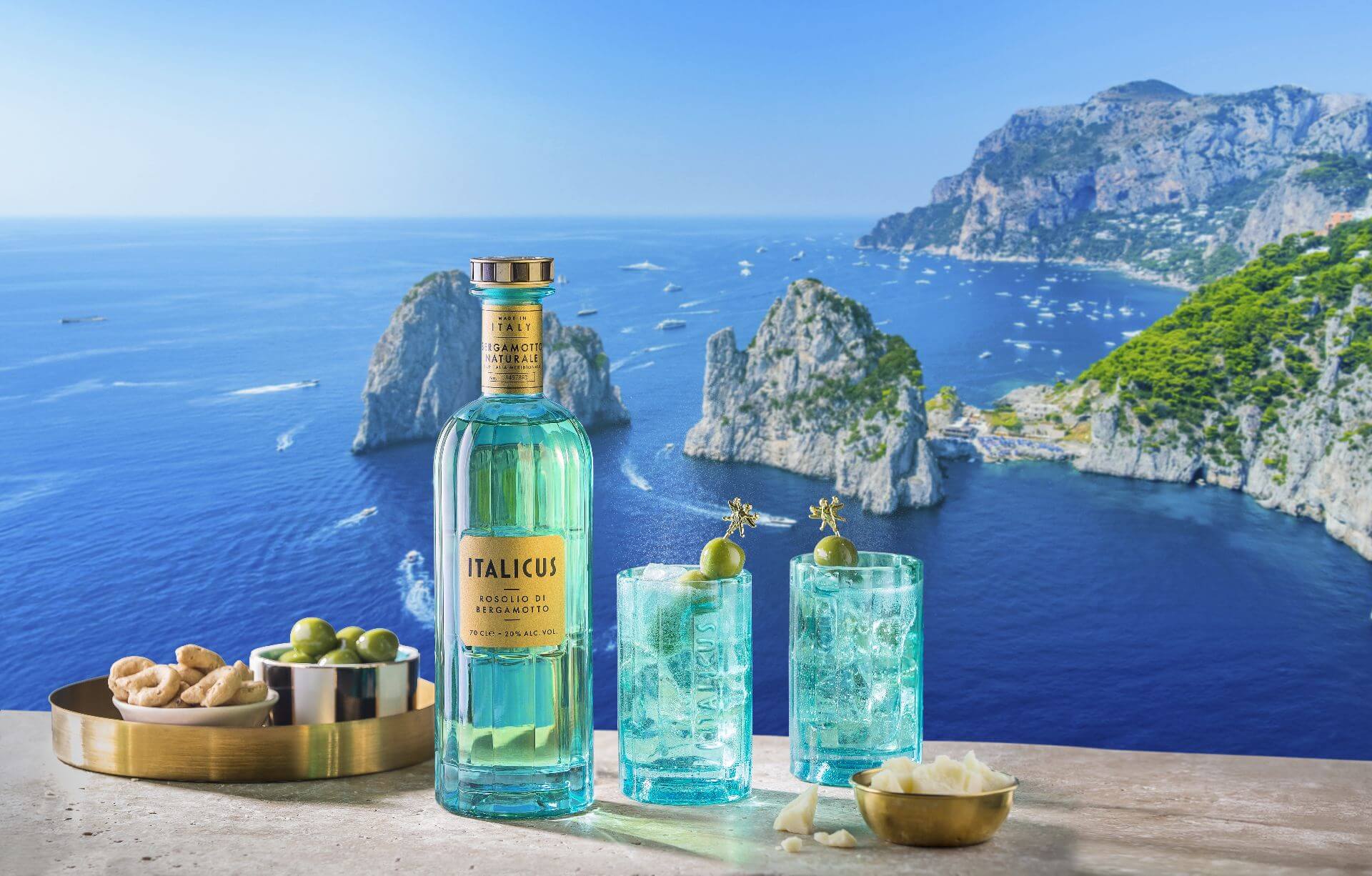
A bottle of ITALICUS Rosolio di Bergamotto and two cocktails, resting on a ledge overlooking the ocean.

I want to go to there, and drink that.

Operators, bar teams, and guests have the opportunity to partake in the first-ever National Rosolio Day, launched by ITALICUS Rosolio di Bergamotto.

The brand, known in part for its elegant and instantly recognizable bottle, is celebrating its eighth anniversary. To acknowledge their growth and mark this milestone, ITALICUS is launching the inaugural National Rosolio Day this coming Sunday, September 1.

I have to give the brand an approving nod here. They could be launching National ITALICUS Day. Instead, they’re celebrating the liqueur category that Giuseppe Gallo and the ITALICUS team have (re)introduced to modern cocktail lovers: rosolio.

I’ll get into the category in a moment. For now, there’s an interesting detail about the brand, the bottle, and the bar holiday launching on September 1.

Traditionally, eighth anniversaries are marked with gifts of bronze and pottery. Looking at the alluring, turquoise bottle, the label and stopper, one can argue, look bronze. Focusing on the stopper, there’s a relief of Bacchus, which looks like it could be porcelain, a form of pottery.

It’s almost like the team and bottle designer were prescient, and set the stage for this new bar holiday before the first case was ever shipped.

Global Celebration

Bars in France, Hong Kong, Hungary, Italy, New Zealand, the UK, the US, and Switzerland are participating via an exclusive cocktail menu.

One bartender recognizable the world over is LP O’Brien. Fans of the Netflix show Drink Masters know that O’Brien won the first season.
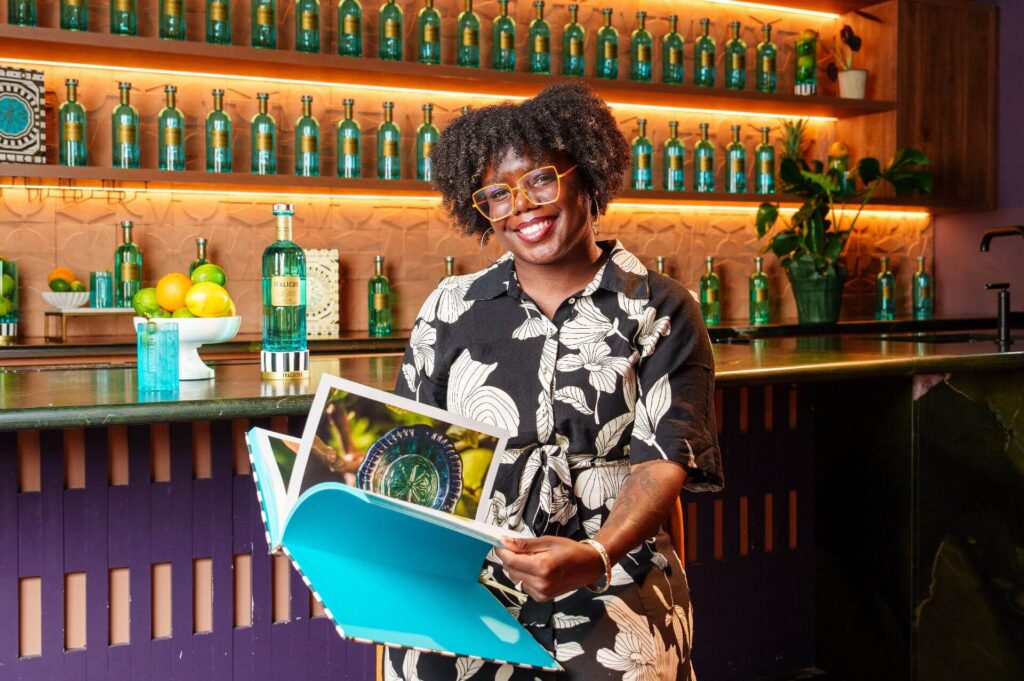
LP O'Brien, the winner of the Netflix show Drink Masters, holding an ITALICUS book, surrounded by ITALICUS bottles.

I need that book, and that back bar.

Her part in the National Rosolio Day celebration includes a series that will educate people on ITALICUS and aperitivo culture. I’m certainly looking forward to learning more about the brand, rosoli, and apertivos from one of the best bartenders and mixologists in the business.

Of course, there’s no reason operators reading this can’t show their support for National Rosolio Day by introducing their guests to ITALICUS and aperitivo culture.

As this will become an annual celebration, bars can plan to participate officially in 2025 and beyond.

Cheers!

Roso-what-now?

So, you likely know what a liqueur is. And I’m willing to go out on a limb and assume you’re familiar with aperitivos.

But what, you may be wondering, is a rosolio?

This drinks category is a low-ABV Italian liqueur that, according to multiple sources, predates amaro, bitters, and vermouth. This ancient liqueur was, of course, homemade, so the botanicals varied wildly depending on region and who was creating a particular batch.

ITALICUS, for example, is crafted using Bergamot oranges from Calabria (considered by many to be the finest citrus in the world), citrons from Sicily, chamomile sourced from Lazio, and several Northern Italian herbs, including gentian, lavender, lemon balm, and yellow roses.

Clearly, these flavors are perfect for summer sipping. Of course, with a bit of creativity, creating cocktails that appeal to guests every season is quite an easy feat to accomplish.

Given its name, you may be curious about the use of rose petals in the production of rosolio. Well, while there are rosoli made with rose petals as an ingredient, rosolio translates to “morning dew,” or “dew of the sun.”

Operators and bar teams interested in implementing an Aperitivo Hour rather than (or in addition to) a standard happy hour have the perfect opportunity this coming Sunday. National Rosolio Day is ideal for leveraging the growing popularity of low-ABV drinks. This new holiday is also one of the best times to introduce guests to relaxing, socializing, and starting their evening with an aperitivo.

So, this weekend (and throughout the month of September), raise a glass to ITALICUS and the brand’s eighth anniversary.

For more details, check out the press release below.

ITALICUS CELEBRATES 8 YEARS WITH THE INAUGURAL NATIONAL ROSOLIO DAY ON SEPTEMBER 1st AND A MONTH DEDICATED TO THE APERITIVO

ITALICUS and mixologist LP O’Brien partner to celebrate the Italian Aperitivo culture across the world in honor of the brand’s 8th anniversary

NEW YORK, NEW YORK (August 28, 2024)ITALICUS Rosolio di Bergamotto announces the first ever National Rosolio Day on September 1st in honor of the brand’s 8th anniversary. During the month of September, the brand will celebrate the aperitivo around the world with 8 countries taking part to host week-long events featuring special cocktails created with ITALICUS to allow consumers to discover the Rosolio di Bergamotto through its drinks, story and innovation.

Founded in 2016 by Giuseppe Gallo, ITALICUS Rosolio di Bergamotto was created to bring back the forgotten Rosolio category. Made using the finest Italian ingredients, ITALICUS’ bottle design embodies the history and heritage of Italy’s distinctive regions, while telling the story of Rosolio’s traditional drinking occasion of aperitivo and its culture.

September 1st is officially recognized as National Rosolio Day thanks to ITALICUS. For this recurring holiday, ITALICUS has partnered with LP, Lauren O’Brien – renowned mixologist and winner of the Netflix series Drink Masters in 2023 – who will present a mini-series campaign to educate consumers about the brand, aperitivo category and culture. To further explore the best ways to enjoy ITALICUS, LP will be promoting ITALICUS through the art of mixology to demonstrate how you can drink ITALICUS and which easy-ingredient aperitivo cocktails can be replicated at home.

The 8 countries that are a part of the anniversary campaign include: Italy, France, Hong Kong, Hungary, New Zealand, The United Kingdom, The United States and Switzerland. Additionally, the bars that are a part of the initiative will be launching week-long activations whereby consumers can try delicious ITALICUS cocktails from an exclusive menu. The list of bars can be found through the website: https://rosolioitalicus.com/the-art-of-italicus/rosolio-day.

Along with these bars, ITALICUS can also be tasted and explored in some of the world’s 50 best bars including: Connaught Bar in London, Sips in Barcelona, Freni e Frizioni in Rome, Double Chicken Please in New York, Bar Leone in Hong Kong, Maybe Sammy in Sydney, Cafe La Trova in Miami and BKK Social Club in Bangkok.

“The aperitivo is a global trend started in Italy,” comments Giuseppe Gallo, founder of ITALICUS. “Now having a trendy moment around the world, the aperitivo blends tradition and innovation in its story and is served in many cocktails at the best global bars. For this campaign, we are extremely excited to partner with LP O’Brien – one of the most creative minds in the international mixology scene – to inaugurate Rosolio Day on September 1st.”

“Being part of the anniversary and ITALICUS’s launch of Rosolio Day is a tremendous honor,” explains LP. “I’m incredibly grateful to be associated with a brand that demonstrates such thoughtfulness in every aspect – from crafting the liquid to designing the bottle and creating a captivating story. Giuseppe, with his extensive experience in the beverage industry, has created something truly special with ITALICUS.” 

National Rosolio Day is dedicated to celebrating the history of the liqueur. Dating back to the Renaissance period, Rosolio is an Italian liqueur that was originally crafted in convents and monasteries as a medicinal tonic. Rosolio, meaning “dew of the sun,” is traditionally made from a base of alcohol, unrefined sugar, water and infused with botanicals, herbs, and fruits – with the most common flavors using spices or citrus fruits. Its preparation was a family traditional craft which was passed on from generation to generation. This liqueur was often used as a welcome drink (or “Cordiale” in Italian) at home.

Despite a decline in the 19th century, Rosolio has experienced a modern revival, driven by the craft cocktail movement and a renewed appreciation for conventional spirits. Today, Rosolio is enjoyed as an aperitif or digestif and brands like ITALICUS have revitalized the category by combining historic methods with contemporary flavors like the bergamot citrus orange – bringing the liqueur to a new generation of enthusiasts.

ITALICUS Rosolio di Bergamotto is sold in 700ml bottles at 20% ABV and is available at select retailers including Curiada and Total Wine for $39.99.

About ITALICUS® Rosolio Di Bergamotto

ITALICUS was created by the authority in Italian spirits, Giuseppe Gallo, to bring back the forgotten Rosolio category. With key notes of Calabrian bergamot, ITALICUS is made using the finest Italian ingredients to create a sip of Italy. The striking bottle design embodies the history and heritage of Italy’s distinctive regions, whilst telling the story of Rosolio’s time-honored traditional drinking occasion of Aperitivo.

ITALICUS is one of the top awarded aperitivo brands globally. ITALICUS Rosolio di Bergamotto was awarded Best New Spirit 2017 at the prestigious Tales of the Cocktail Spirited Awards, and Top Trending Liqueur Brand by Drinks International in the years from 2019 to 2024.

Additional awards include: DOUBLE GOLD – World Wine Spirits Trophy 2021; Italian Aperitif of the year GOLD MEDAL – NYISC 2021 and 2016; Tasting GOLD medal 2018, 2019 – Women & Wine and spirits awards; Best New European Spirit at the Mixology Awards 2017 in Berlin; Best Product at FIBAR 2017; Packaging awards GOLD MEDAL 2017 and Contemporary Awards TROPHY – International Wine & Spirits Competition 2017; Packaging Trophy – Harpers Design 2017; Gold Medal – San Francisco World Spirits Competition 2017; Platinum Best of Luxury – Pentawards 2017; Best New Product – Bar Awards 2016; EXCEPTIONAL quality certificate – Difford’s Guide 2016.

About Giuseppe Gallo

Giuseppe Gallo is one of the world’s most respected bartenders and drinks-industry innovators, with an unrivaled passion for the drinks business and an inimitable source of knowledge and insight into the world of aperitivo. Hailing from the Amalfi Coast, his passion for mixology stems from his strong Italian heritage. Giuseppe is widely considered a vermouth expert and he has spent over 15 years traveling the world and educating consumers and professionals on the category. This work has culminated in winning ‘International Ambassador of the Year’ at the prestigious awards in the drinks industry, Tales Of The Cocktail’s Spirited Awards in 2014. In September 2016 he created Italicus Rosolio di Bergamotto which reinvigorated a forgotten aperitivo category, which has won countless industry awards since its launch. In 2019, Giuseppe launched the Roma Bar Show, the first-ever international cocktail festival in the country.

About LP

LP O’Brien is an Afro-Boricua trailblazer in the world of mixology, research and development, renowned for her innovative approach and expertise in crafting exceptional beverages. She gained widespread recognition as the inaugural winner of the Netflix competition series Drink Master, where her creativity and skill set her apart from a field of talented competitors. Despite being sober for a little over a year, LP has continued to excel in her craft, demonstrating that a passion for mixology doesn’t require consuming alcohol. Her unique perspective and commitment to understanding the art of drink-making have made her a leading figure in the industry.

LP’s impressive portfolio includes collaborations with major corporations and celebrities. She has worked with Disney, Food & Wine, American Express, and has created bespoke beverage experiences for high-profile clients such as Christy Carlson Romano and Vanessa Hudgens, along with crafting the signature non-alcoholic beverage for the 2023 Primetime Emmy Awards. Her ability to blend flavors and create memorable drink experiences has earned her a reputation as a top-tier celebrity mixologist.

Images: ITALICUS
KRG Hospitality Start-Up Restaurant Bar Hotel Consulting Consultant Solutions Plans Services

by David Klemt David Klemt No Comments

Soup Season: Transforming Comfort Classics

Soup Season: Transforming Comfort Classics

by David Klemt

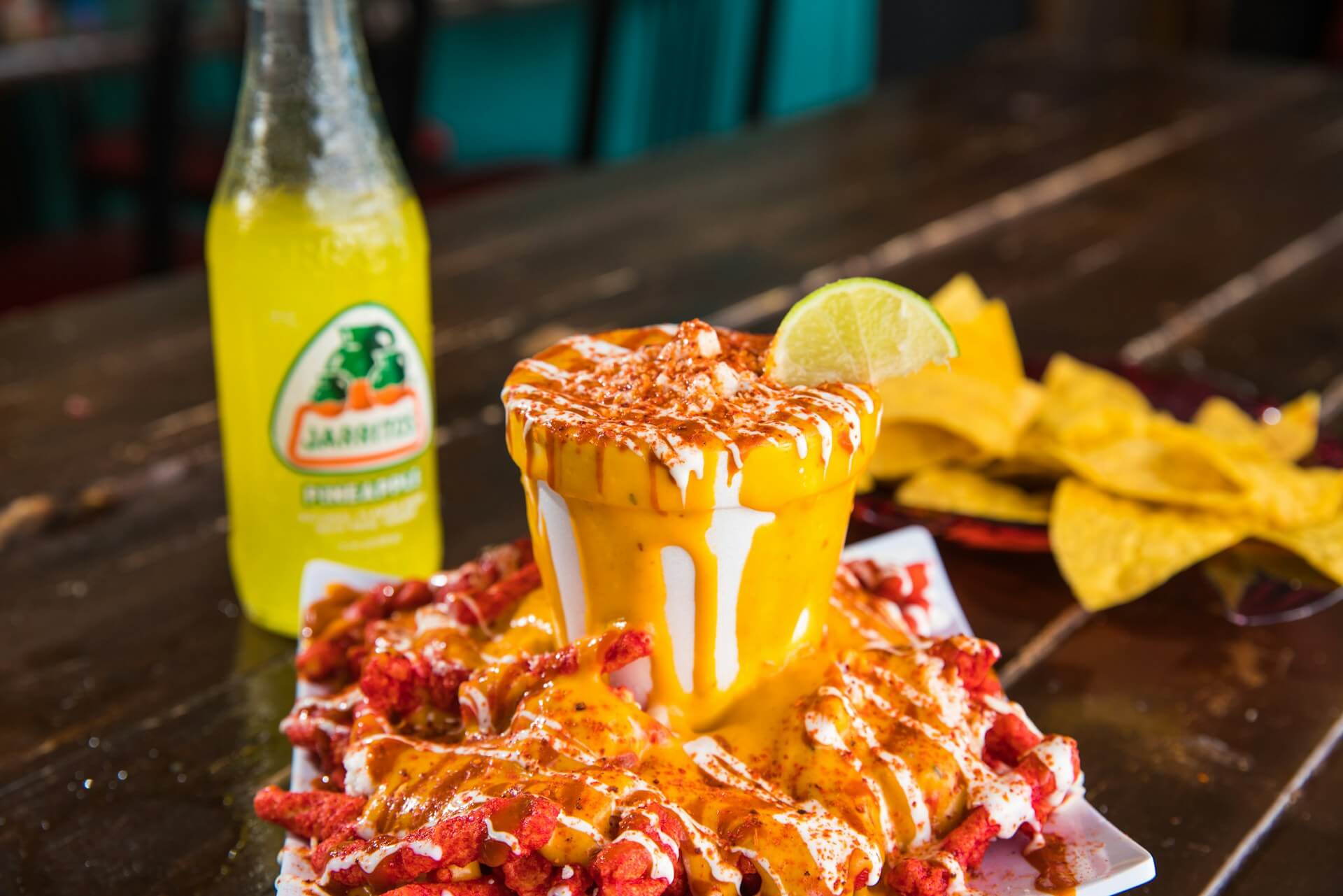
Elote en vaso, or vaso de elote, also known as street corn in a cup, on a bar

Elote en vaso or vaso de elote, also known as “street corn in a cup.”

The latest and greatest from Campbell’s Foodservice is all about operators making the most of cooler weather by maximizing soup season.

If you read KRG Hospitality articles regularly, you’re likely aware that we like the helpful information Campbell’s makes available. For example, I’ve written articles that share their tips for leveraging nostalgia, crushing it with LTOs, and 2024 culinary trends.

Their newest tips aim to help operators succeed with soup. Further, much of Campbell’s Foodservice’s tips are in direct response to Datassential and Technomic data. In fact, Campbell’s references Technomic’s Soup & Salad Consumer Trend Report directly.

To be sure, the first bit of advice that Campbell’s shares is the most obvious: Leverage seasonal flavors. In this case, we’re talking fall and winter flavors.

You may already see stores where you live and operate unleashing Halloween decorations. I know I have; it may be 105 degrees in Las Vegas as I write this, but people are getting into an autumnal mood.

Of course, when you take advantage of seasonality for LTOs or menu updates, it’s important to let your guests know.

“Calling out seasonal items on your menu demonstrates the operator is being relevant and using ingredients that are in season,” says Campbell’s Foodservice Executive Chef Gerald Drummond. “From a consumer standpoint, that’s something that they really look towards.”

We agree wholeheartedly. Going deeper, we recommend working with local suppliers to procure seasonal ingredients, and calling that out as well.

Another tip comes from Datassential and Technomic insights. Three in ten younger consumers would like to see soups that feature plant-based proteins. And around half want at least one vegetarian-friendly soup on a menu.

The Standout Tip

When you’re through reading this article, I encourage you to scroll back to the top, click the “soup season” link, and read this Campbell’s Foodservice report for yourself.

That way, you’ll see all of their latest tips for getting the most out of seasonal soups.

However, I’m going to share the tip that stood out the most to me: transforming comfort food dishes into soups. Hence, the image at the top of this article: vaso de elote, or elote en vaso. That dish translates to “street corn in a cup” from Spanish.

Now, elote or street corn is undeniably a comforting street food. If I see it on a menu, I’m going to order it. Were I to see street corn in a cup, particularly if it came with the presentation at the top of this article, I’m going to order it.

So, if a culinary team were to transform street corn in a cup into street corn in a cup of soup, I’m all in.

Think about your concept, the approach to cuisine, and the community you serve. Then, think about the comfort dishes that work well with your concept and resonate with your guests.

In their report, Campbell’s Foodservice recommends beer cheese soup, of which I’m a fan. They also suggest lasagna soup (I’d try it), and chicken pot pie soup (again, I’m down).

Real-Word, Professional Advice

I asked our chef consultant Nathen Dubé for a couple of quick tips for transforming a comforting food dish into a soup. (By the way, you can book a call with him to discuss your menu or kitchen here.)

“I would look at the overall profile of the dish, and then decide if you’re going to combine everything into a puree or a broth,” says Nathen.

Then, the kitchen team needs to decide “which ingredients would be incorporated, and which could be left whole afterwards for texture, and stronger stand-out flavours.” As he explained to me, some ingredients definitely translate better to slow cooking versus finishing towards the end of the process.

With that advice given, take a look at your menu. Do you have some comfort foods that would be intriguing to guests in soup form? What about some of your signature dishes?

Once you’ve determined which dishes to transform into seasonal, LTO soups, engage your kitchen team. They’ll likely be excited to do something new, and show off their culinary talent.

Some people may harbor the misconception that soup isn’t exciting. I think creative operators and culinary teams can disabuse skeptical guests of this notion. Cheers!

Image: Jarritos Mexican Soda on Unsplash

KRG Hospitality. Restaurant Business Plan. Feasibility Study. Concept. Branding. Consultant. Start-Up.

by David Klemt David Klemt No Comments

Campbell’s Shares Tips for LTOs

Campbell’s Shares Tips for LTOs that Generate ROI

by David Klemt

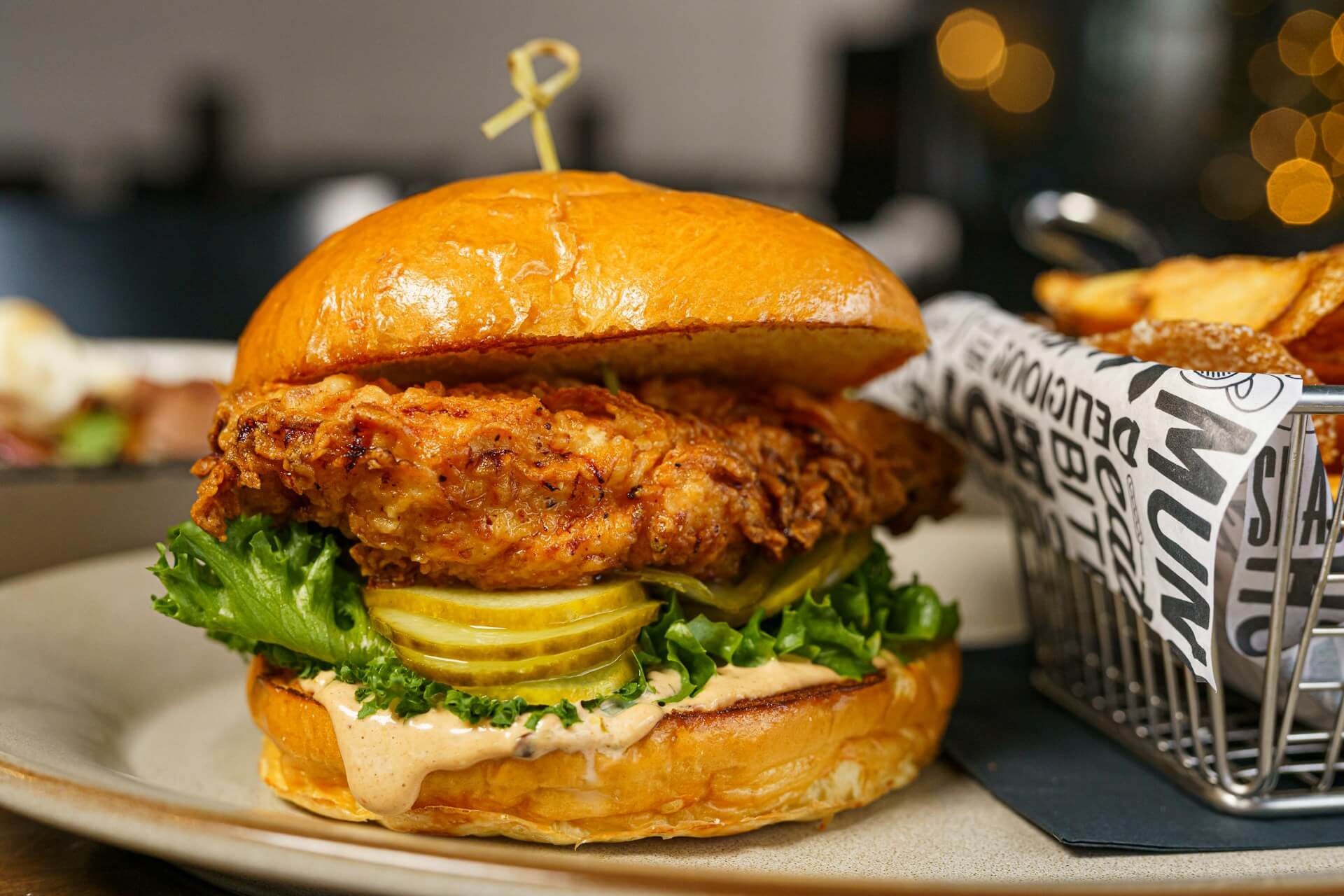
A well-crafted chicken sandwich with pickles, lettuce, and sauce, served next to a basket of French fries

Yes, the Chicken Sandwich Wars are still going strong in 2024.

We appreciate Campbell’s Foodservice’s reports and posts, and their most recent insights address how operators can succeed with LTOs.

For example, our look into their tips for leveraging nostalgia is here. And our thoughts on Campbell’s Culinary TrendPulse 2024 report are here for your review.

This time out, Campbell’s Foodservice, utilizing data from Technomic, Datassential, and other sources, is tackling LTOs.

If you’re a regular reader of KRG Hospitality’s industry insights, you know we love an LTOif an operator executes it effectively. Along those lines, you probably also know that we view Taco Bell as a leader in the industry when it comes to leveraging the power of LTOs.

Not only does the QSR giant know what their guests want, they know how to generate demand. In fact, Taco Bell understands the power not just of LTOs but of tying them to their subscriptions. Take, for example, their Taco Lover’s Pass and the Toasted Breakfast Taco menu drop.

When approached with thoughtful consideration, well-executed LTOs are a crucial element of an operator’s marketing and branding strategy. They drive traffic and sales, boost guest engagement and loyalty, and attract attention from first-time guests.

Of course, crafting a gainful LTO—gaining profits, loyalty, and positive public perception—can be easier said than done. However, there are a number of steps you can take to get the ball rolling and come up with one that reflects your brand, and resonates with guests.

Four Steps

Kicking off their tips, Campbell’s Foodservice recommends keeping LTOs simple. As they say in their report, which you can read here, operators need not “reinvent the wheel” when developing these promotions.

You can differentiate an LTO menu item from its standard counterpart in a number of simple ways. A few examples are using a unique cooking process, crafting a limited-edition sauce, and featuring a distinctive and specific topping or two.

Another tip is to do your best to offer LTOs that embrace current trends. While sharing these tips, Campbell’s cites Datassential and the revelation that just 20 percent of all LTOs are recurring. That means that the vast majority of LTOs are new creations, not stalwarts like the McRib. To draw the attention of a wider swath of guests, feature regional and local items and flavors. Per Datassential, 70 percent of guests are interested in such LTOs.

Speaking of attention, operators should learn how to take and edit attractive F&B images. Or, as Campbell’s says, “make LTOs pretty.” Per Datassential, roughly a third of consumers will try an LTO if it looks appealing in an advertisement or in-store imagery.

Finally, and this one is crucial as it embodies the previous three tips, leverage seasonality. It’s currently summer, so what can you add in the way of flavor to an existing item? Is that item regional and locally sourced? Will photographing it and crafting a sharp post communicate the season and inspire a bit of FOMO? These questions can help guide your approach to crafting profitable LTOs.

Oh, and to help you get started, I’ve shared Campbell’s season flavor suggestions below. Cheers!

Campbell’s Foodservice Seasonal Flavors

Not only did Campbell’s share tips for succeeding with LTOs, they also provided several examples of seasonal flavors to inspire you and your team.

Since it’s July, I’ll start with their summer suggestions.

Summer: basil, blackberries, corn, cucumbers, peaches, tomatoes, watermelon, zucchini

Fall: artichokes, cranberries, edamame, parsnips, pears, pumpkin, sweet peppers, tomatillos, turnips,

Winter: butternut squash, persimmons, radishes, salsify (a root vegetable), sunchokes, sweet potatoes, tangerines

Spring: asparagus, fava beans, pea greens, rhubarb, snap peas, spring onions, strawberries

Campbell’s Foodservice sources:

  1. Foodservice and Hospitality: A strong LTO strategy helps operators retain and grow their customer base (March 2024)
  2. Datassential: Limited Time Offers Keynote Report
  3. Technomic: 162 Best-in-Class LTOs for 2023
  4. Food & Drink Resources: A Limited Time Offer Strategy For Restaurants
  5. Your Guide to Seasonal Fruits and Vegetables, The Spruce Eats
  6. Datassential: State of the LTO 2024

Image: Hybrid Storytellers on Unsplash

Bar Nightclub Pub Brewery Menu Development Drinks Food

by David Klemt David Klemt No Comments

3 Spins on Classics for July 4th

3 Refreshing Spins on Classics for July 4th

by David Klemt

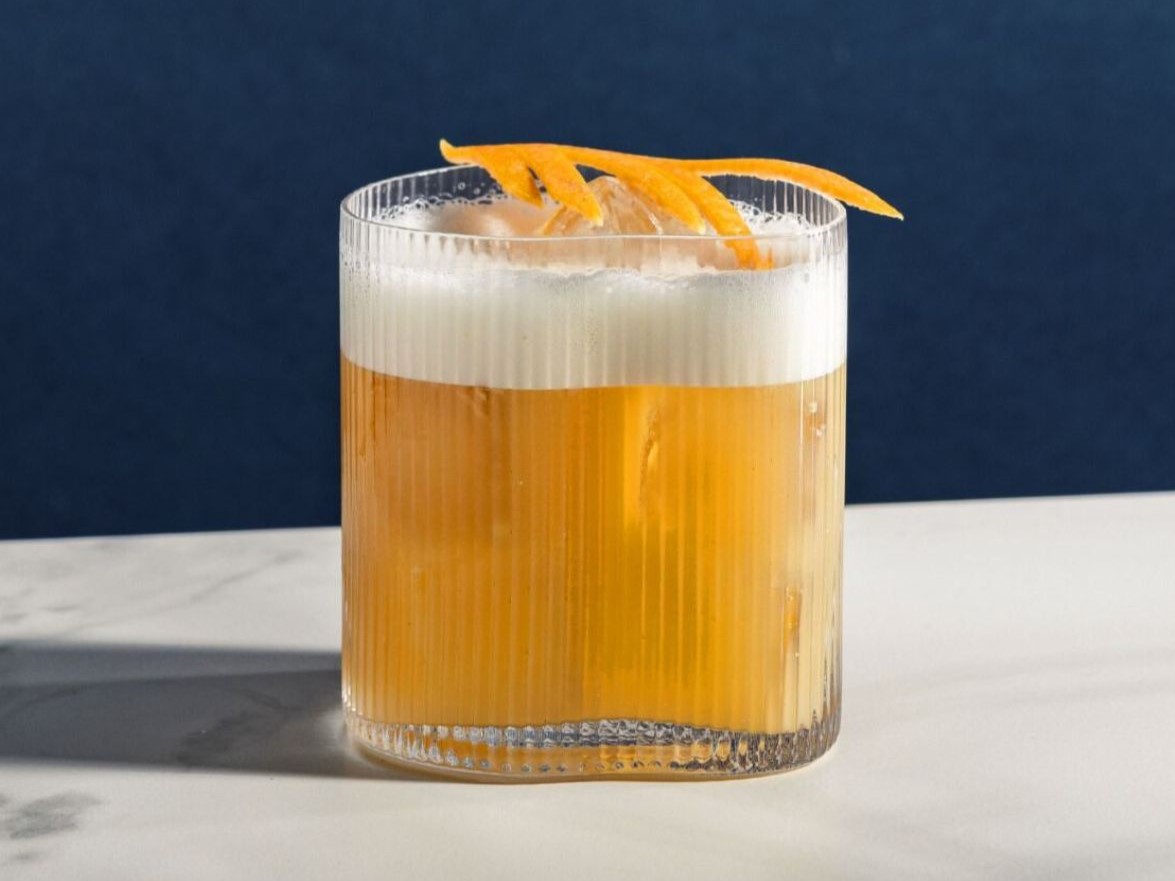
The METAXA Sour cocktail made with METAXA 12 Stars, in landscape orientation

Our friends over at Rémy Cointreau want to help you celebrate the 4th of July with your guests, so they sent over these three enticing cocktail recipes.

Back in January of this year they sent us cocktails dedicated to the 2024 Pantone Color of the Year, Peach Fuzz. And about four months ago, Rémy Cointreau shared National Cocktail Day recipes with us. In turn, we shared them with you.

More importantly, two of these builds are reinterpretations and refreshes of well-known classics. Below, you’ll find a reinvention of a Whiskey Sour and a Mojito.

There’s also a frozen Margarita, a perfect refresher for hot summer days and nights. Although, one can argue that this is a spin on the original, figuratively and literally since it’s going into a blender.

Of these three drinks, the METAXA Sour is the one I’m most eager to try. Most people are likely familiar with Cointreau and Rémy Martin Cognac.

However, they’re probably less acquainted with METAXA. Guests who appreciate a fine Cognac or complex whiskey or rum will likely enjoy METAXA 12 Stars. This brandy is the marriage of sweet Muscat wine from the Greek island Samos, fine wine distillates aged for up to 12 years, and Mediterranean botanicals.

Before being bottled, METAXA 12 Stars is aged in heavily toasted oak barrels for at least 12 months. Along with spice, expect dried citrus fruit, toffee, coffee, and chocolate on the nose and palate.

Personally, I recommend experimenting with METAXA 12 Stars (and its peer 7 Stars) in your brandy, bourbon, rye, and rum cocktails.

Cheers!

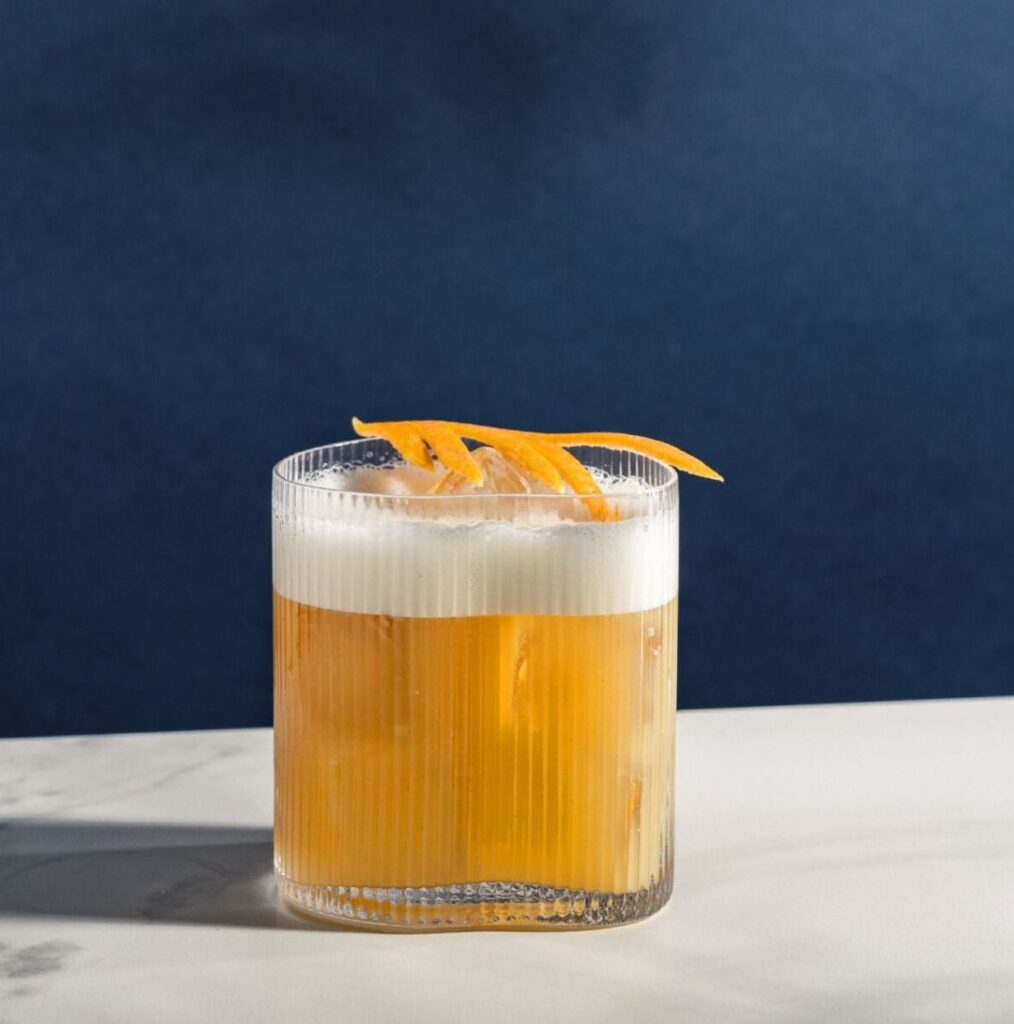
METAXA Sour cocktail, made with METAXA 12 Stars spirit from Greece

METAXA Sour

  • 1.7 oz. METAXA 12 Stars
  • 0.7 oz. Fresh lemon juice
  • 0.3 oz. Sugar syrup
  • 0.7 oz. Egg white, or 1 Tbsp. Meringue
  • Orange zest to garnish

The METAXA Sour is a spicy, citrusy, and bright take on the traditional sour. First, prepare a rocks by adding a large sphere or cube of ice. Next, simply add all of the ingredients (minus the garnish, of course) to a shaker filled with ice. Shake well, then strain, and dry shake to emulsify. Note: Some bartenders prefer dry shaking first, then adding ice, and then shaking again. Finally, pour into the prepared rocks glass, garnish, and serve.

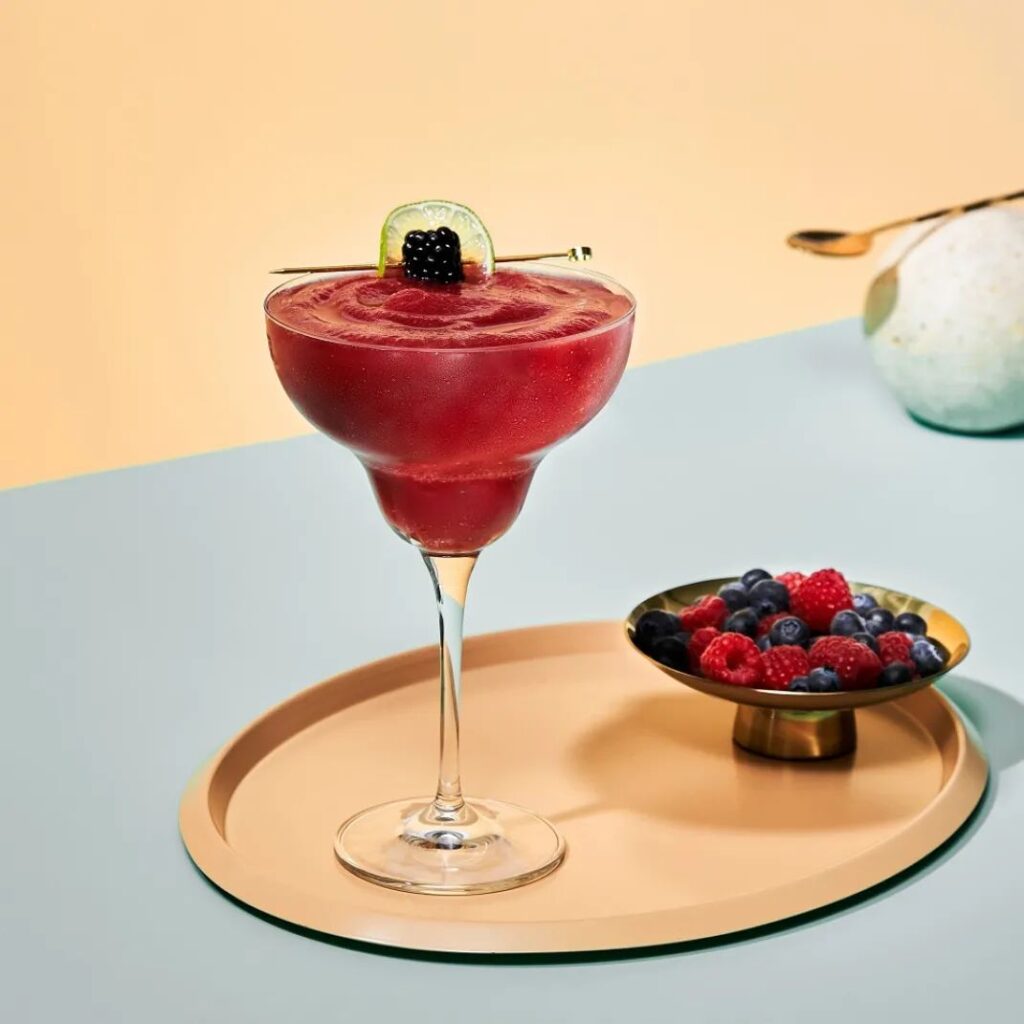
Frozen Berry Margarita cocktail made with Cointreau

Frozen Berry Margarita

  • 1 oz. Cointreau
  • 2 oz. Blanco tequila
  • 0.75 oz. Fresh lime juice
  • 0.5 cup Frozen berries
  • 0.25 oz. Simple syrup
  • 5 Ice cubes
  • Speared lime wheel and berries to garnish

Break out the blender. Oh, and try to sell more than one at a time to be more efficient.

This recipe is easy: add all of the ingredients except the garnish to a blender. I bet you know what’s nextblend everything together. Pour into a Margarita glass, garnish, and serve.

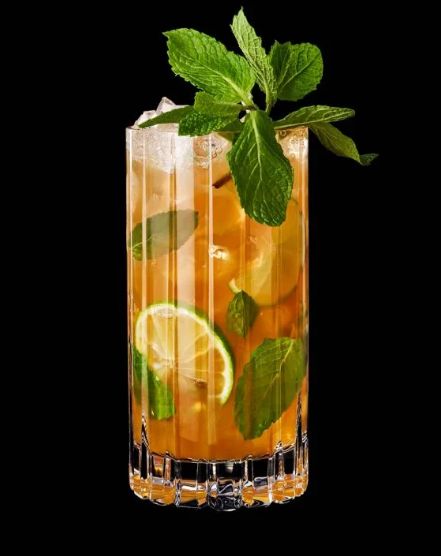
The Rémy Mojito cocktail, made with Rémy Martin 1738 Accord Royal

The Rémy Mojito

  • 1.5 oz. Rémy Martin 1738 Accord Royal
  • 1 oz. Fresh lime juice
  • 0.5 oz. Simple syrup
  • 1 0z. Sparkling water
  • Handful of mint leaves to muddle
  • Mint sprig to garnish

This recipe is a bit of a departure from the traditional Mojito your guests know and love. Therefore, it’s a new way to re-engage with a classic and have a new experience.

Start by adding pebble ice, Rémy Martin 1738 Accord Royal, lime juice, simple syrup, and a handful of mint leaves to a shaker. Per the recipe, using pebble ice should prevent the mint leaves from being broken and torn apart. Shake well, pour into a Collins glass, and top with the sparkling water. Garnish with mint sprig, and serve.

Disclaimer: Neither the author nor KRG Hospitality received compensation, monetary or otherwise, in exchange for this post.

Images courtesy of LaFORCE on behalf of Rémy Cointreau

Bar Nightclub Pub Brewery Menu Development Drinks Food

by David Klemt David Klemt No Comments

Woodford Reserve 2024 Derby Bottle

Woodford Reserve Unveils 2024 Kentucky Derby Bottle

by David Klemt

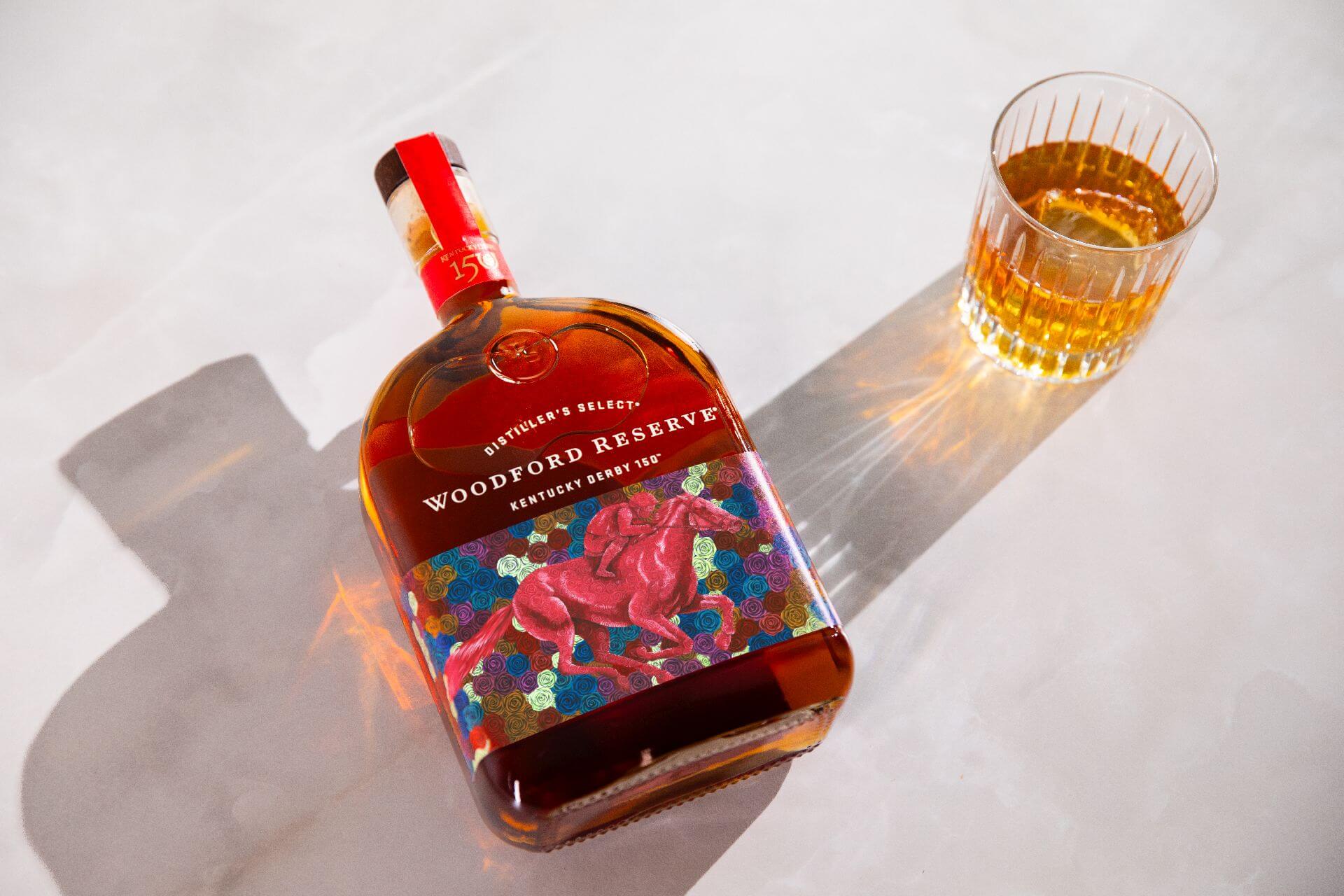
Woodford Reserve 2024 "Adorned with Flowers" bottle

Commemorating the 150th running of the iconic Kentucky Derby, Woodford Reserve’s 2024 Derby bottle is now available for purchase.

In keeping with tradition, the bottle’s label features a Kentucky artist’s work.

For 2024, Woodford Reserve collaborated with artist Wylie Caudill, who crafted the painting “Adorned with Roses.” The art is a clear nod to another tradition: adorning the winning horse with a garland consisting of hundreds of roses, the Derby’s official flower.

This should grab an operator’s attention for a few reasons. To start, some operators enjoy collecting bottles. So, they can now get their hands on this annual release.

Further, it’s time to start thinking about this year’s Derby, which takes place on May 4. Millions of people watch the Kentucky Derby every year. Operators need to ensure their Mint Juleps and riffs are dialed in, including the appropriate drinkware.

Impressively, while it has been postponed twice, it has never been cancelled.

Traditionally, the Derby is run on the first Saturday in May. The race was run in June in 1945 due to World War II. And in 2020, Covid-19 restrictions pushed the race to September. Incredibly, a world war and a pandemic couldn’t thwart the Derby.

2024’s race is the 150th running of the Kentucky Derby. It stands to reason that even more people will show an interest in watching and celebrating this year’s race. Woodford’s commemorative bottle at least be on the back bar of any venue running a Derby promotion. It would also make for a great raffle item on race day.

Finally, we celebrate International Whiskey Day this month. The more special edition whiskeys available on March 27, the better.

Learn more about this year’s Woodford Reserve Derby bottle below. Cheers!

Woodford Reserve Releases 2024 Bottle Celebrating 150th Anniversary of the Kentucky Derby

Bottle features the art of Kentuckian Wylie Caudill 

Versailles, KY (March 5, 2024) — Woodford Reserve®, the Presenting Sponsor of the Kentucky Derby®, is honoring “The Most Exciting Two Minutes in Sports®” with the release of its 2024 commemorative Derby bottle.

This year’s special release celebrates the 150th running of the Kentucky Derby® and features the artwork of Kentucky native Wylie Caudill, known for his bold, repetitive patterns, and his signature roses. His painting, “Adorned in Roses,” depicts a racing thoroughbred covered with red roses, with a background of multi-colored roses.

The one-liter bottle retails for $55 and is available for purchase globally. A special presale on ReserveBar begins March 5. It also is for sale at Woodford Reserve Distillery and in the Woodford Reserve online store starting March 5.

“Wylie’s artwork embodies the spirit of Woodford Reserve, the liveliness of Churchill Downs during race day, and the heart of Kentucky,” Woodford Reserve Master Distiller Elizabeth McCall said. “We’re thrilled to have a Kentuckian’s artwork on our bottle during this monumental year.”

Caudill grew up drawing and painting in Cynthiana, Kentucky. During college, he spent his free time creating chalk drawings, leaving his mark around campus and leading to his title ‘chalk guy’ among locals. He expanded his public street art to painting murals in Lexington after college, and many of his murals can be seen across Kentucky today. Caudill also created the Official Art of the Kentucky Derby for Churchill Downs for the 150th Derby, marking the first year that Woodford Reserve and Churchill Downs used the same artist.

“As a Kentucky native, I am honored to be a part of this milestone celebration,” Caudill said. “I have painted my signature roses many times over the years, but this one is truly special. The colorful roses symbolize the diverse Derby fans from around the world, connecting people beyond the track.”

Woodford Reserve’s Derby bottle has been an annual collector’s item anticipated by bourbon and racing fans since 1999.

About Woodford Reserve

Woodford Reserve, “Presenting Sponsor of the Kentucky Derby,” is crafted at the historic Woodford Reserve Distillery, tucked in the heart of thoroughbred country in Versailles, Kentucky. A National Historic Landmark, the Woodford Reserve Distillery represents craftsmanship with a balance of historic heritage and modern practices. Woodford Reserve is a product of the Brown-Forman Corporation, a premier producer and marketer of fine quality beverage alcohol brands including Jack Daniel’s, Finlandia, Korbel, Tequila Herradura, Old Forester, Sonoma-Cutrer and Chambord. Please enjoy your bourbon responsibly. To learn more about Woodford Reserve, visit us www.woodfordreserve.com  or check us out on Facebook at www.facebook.com/woodfordreserve.

Kentucky Straight Bourbon Whiskey, 45.2% Alc. by Vol., produced and bottled by the Woodford Reserve Distillery, Versailles, KY ©2024

Disclaimer: Neither the author nor KRG Hospitality received compensation, monetary or otherwise, in exchange for this post.

Image provided by Woodford Reserve

Bar Nightclub Pub Brewery Menu Development Drinks Food

by David Klemt David Klemt No Comments

Drink Donnybrook: Brandy Alexander

Drink Donnybrook: Brandy Alexander

by David Klemt

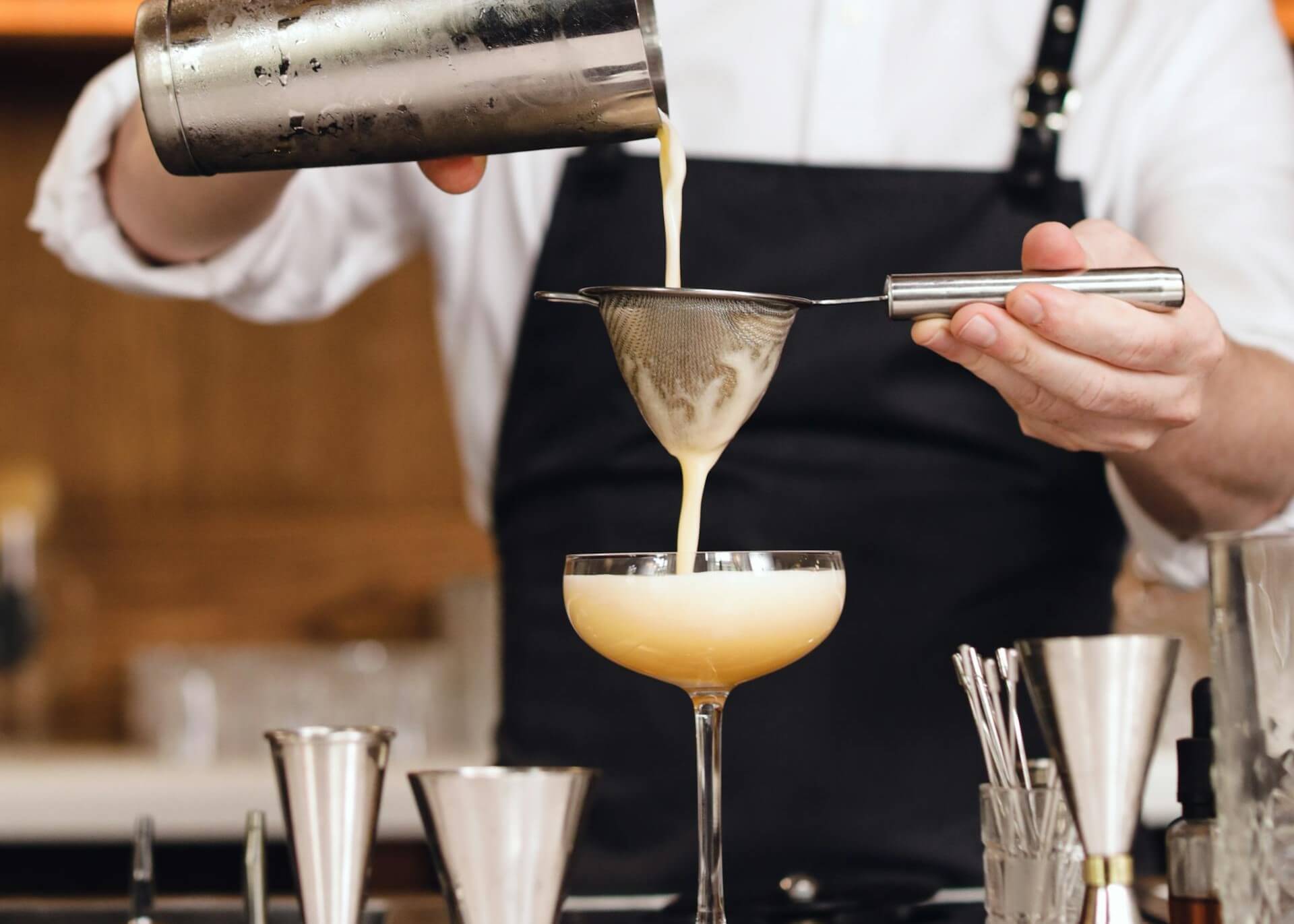
Bartender straining cocktail into glass

The classic Brandy Alexander cocktail, which we celebrate at the end of this month, is slowly approaching a century since its first appearance.

That is, of course, if we go solely by the first time this creamy cocktail’s recipe was printed in a book. For the curious, the book is Cafe Royal Cocktail Book by William J. Tarling. And that book was first published in 1937. Notably, Tarling’s book was published by the United Kingdom Bartenders Guild.

Now, since you’re reading this you know this is a new entry in the Drink Donnybrook series. So, you know that the Brandy Alexander’s history is unclear. You also know, if this isn’t you’re first time reading one of these articles, that I love a cocktail with a shadowy origin.

We do know, however, that the Brandy Alexander belongs to the Duos and Trios cocktail family. Per Gaz Regan, a Duo is a base spirit plus a liqueur. Add a cream or cream liqueur to the Duo and you get a Trio, which describes the Brandy Alexander.

Let’s dive into this creamy cocktail’s creation.

Firsts

The Brandy Alexander is itself a riff on a cocktail that predates its appearance in Cafe Royal Cocktail Book by twenty years.

First, there was the Alexander. This predecessor is made with gin. According to my deep dive, the gin-based recipe first appeared in Recipes For Mixed Drinks by Hugo Ensslin in 1917.

As time went on and more cocktail recipe books were published, something interesting happened. The gin-based recipe would commonly be referred to as Alexander #1, or the first recipe. As you may have already guessed, the brandy version would be listed as Alexander #2.

Per Tomas Curras, cocktail books seem to have changed the naming convention to Alexander and Brandy Alexander some time in the 1970s.

Of the two recipes, it appears that the Brandy Alexander is the more popular. So, while it didn’t show up first, it has taken first place (allegedly) among the Alexander cocktails.

But there’s another first within the Alexander lore, as you’ll see below.

Who Done It?

Prepare to have your mind blown: We don’t know.

At best, we think we know the creator of the gin Alexander, a.k.a. Alexander #1. I say “think” because better cocktail historians than I can’t say for certain that we know the Alexander’s creator.

However, the assumption does make a great deal of sense. It’s believed that Troy Alexander—check out that surname—invented what could be the eponymous cocktail in New York City at a restaurant called Rector’s.

This would place the first Alexander’s creation some time between 1899 and 1918, the years Rector’s was in operation. Rector’s, by the way, was the first restaurant in NYC to feature a revolving door.

Alexander created the cocktail for a party celebrating a successful ad campaign featuring the fictitious character Phoebe Snow. Snow, white…white cocktail.

But who was the first person to swap out the gin for brandy in the Alexander? It’s feasible that it was Troy Alexander, of course. If it wasn’t him, well…we don’t know who decided to substitute brandy for gin.

There’s more mystery surrounding the drink’s name, as well. Some say the Brandy Alexander is a nod to Russian tsar Alexander II. Or perhaps it honors Princess Victoria Alexandra Alice Mary. The classic could also pay homage to critic Alexander Woollcott (a claim he made himself) or Grover Cleveland Alexander, pitcher for the Philadelphia Phillies from 1911 to 1917.

So, there you have it: a mystery to share with your guests when they come to your bar or restaurant for your Brandy Alexander Day promotion on January 31. Cheers!

The Recipe

Interestingly, there’s some room to play with this classic. Some people follow the equal parts rule, some add a bit more brandy than creme de cacao or cocoa. Others double the amount of brandy.

You and your bar team should play with the measurements to create your signature take on the Brandy Alexander.

At any rate, fill a shaker with ice then add one, one-and-a-half, or two ounces of brandy, one ounce of the creme de cacao of your choice, and one ounce of cream. Shake until well chilled, then strain into cocktail glass or coupe. Garnish with freshly grated nutmeg.

Image: cottonbro studio on Pexels

Bar Nightclub Pub Brewery Menu Development Drinks Food

by David Klemt David Klemt No Comments

Irish Distilleries You Need to Know

Irish Distilleries You Need to Know in 2024

by David Klemt

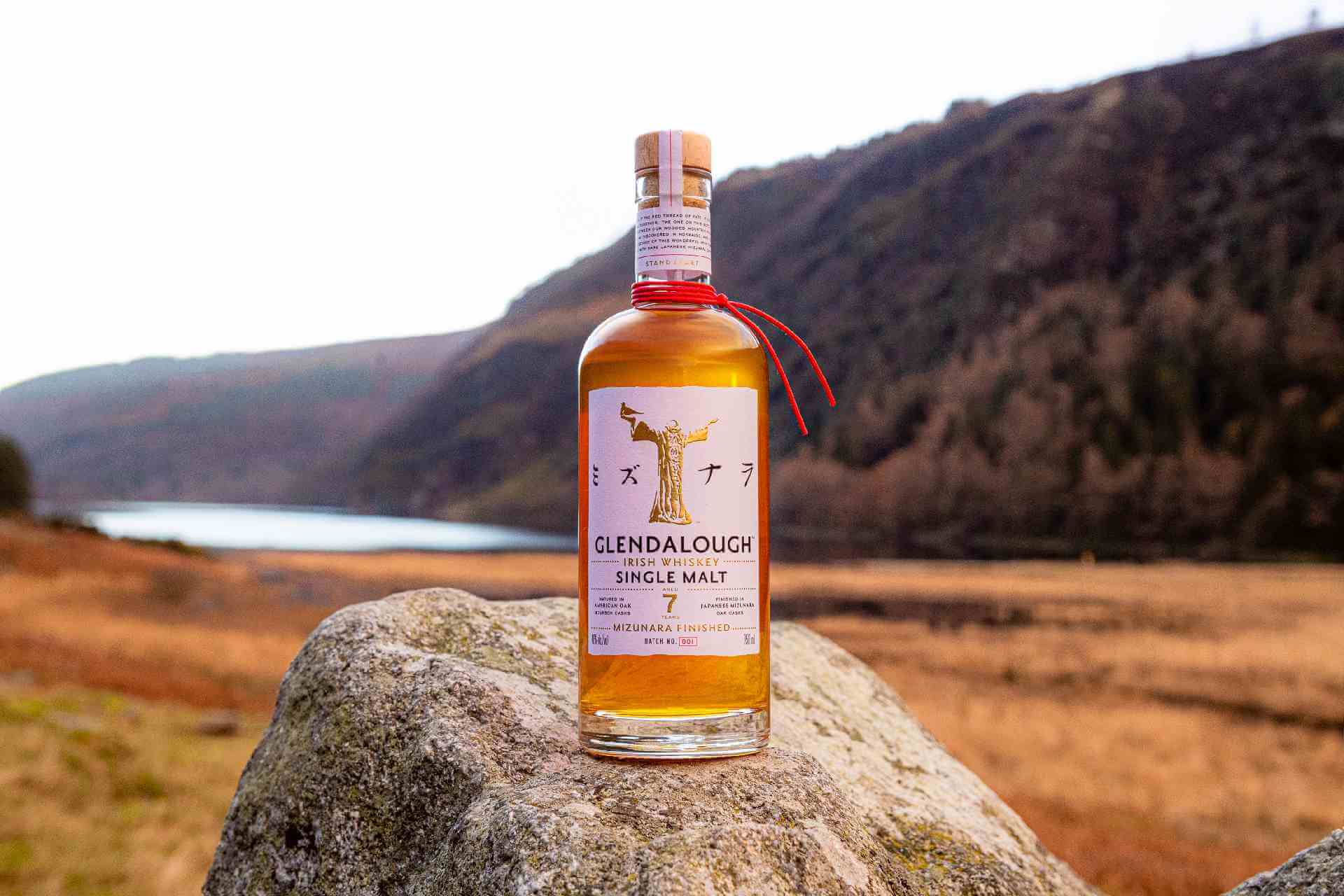
7-Year-Old Single Malt Mizunara Finish in Wicklow, Ireland

On Thursday, January 25, we honor a simple but delicious cocktail that can trace its roots back to Europe and the middle of the 19th century.

A bartender can serve this drink hot, chilled, or iced. And until somewhat recently, a bartender usually makes this cocktail with a spirit from one of just a few producers.

I’m talking about the venerable Irish Coffee.

Now, this could make for an interesting Drink Donnybrook. However, I’m going to focus on shining a spotlight on some Irish distilleries and labels you and your bar team should have on your radar.

Of course, there’s nothing wrong with making an Irish Coffee with one of the usual suspects. Indeed, it’s perfectly acceptable—traditional, even—to make yours with Jameson, Bushmills, Tullamore Dew, Redbreast, or Powers.

But while there’s nothing wrong with playing to expectations, making the choice to offer something different can set you, your team, and your venue apart.

As our buddy Chef Brian Duffy says, operators can charge premium menu prices only if they innovate. Pairing a lesser-known Irish whiskey with a local coffee roaster’s coffee would be an innovation that falls in line with Chef Duffy’s approach to pricing.

There are other ways to build an Irish Coffee as a premium cocktail. The quality of the whipped cream, for instance, is a consideration. For example, whipping the cream in front of guests is a premium touch.

Not the Usual Suspects

A lot is going on with Irish distilleries. We have more choice than we’ve had in several decades.

Check these Irish distilleries out today:

Several of these distilleries also produce other spirits, such as gin and vodka. And, of course, not every distillery produces spirits that are available to the US and Canada, currently.

Still, it’s good to be aware of these distilleries and their brands so we can encourage suppliers to bring them to North America and beyond.

To learn more about Glendalough Distillery in particular, please listen to the Bar Hacks podcast episode below:

Hot Coffee

Let’s assume you’re going to with piping hot coffee, not serve your Irish Coffee on ice or frozen.

You’re going to want to ensure your glassware is heat resistant, of course. Let’s not burn the hands of our guests.

To that heat-resistant glassware, add one-and-a-half to two ounces of Irish whiskey. Next, add two to four teaspoons of sugar, or a half- to two-thirds-ounce of demerara syrup. Add three to four ounces of hot coffee, then top with quality whipped cream. When I say add the cream, I mean an inch or so, not just a wee bit.

You’ll notice that I’m using ranges of measurements. This is because you’re going to want to play around with your Irish Coffee to make it one of your signatures. That includes selecting your sweetener, whether that translates to brown sugar, syrup, or something else.

Now, if you’re after something different, check out the Frozen Irish Coffee from Erin Rose in New Orleans, or the recipe for the Dead Rabbit‘s Irish Coffee.

Cheers!

Image: Glendalough Distillery

Bar Pub Brewery Nightclub Club Nightlife Marketing Plan

by David Klemt David Klemt No Comments

Taco Bell Leveraging Subscriptions & LTOs

Taco Bell Leveraging Subscriptions & LTOs

by David Klemt

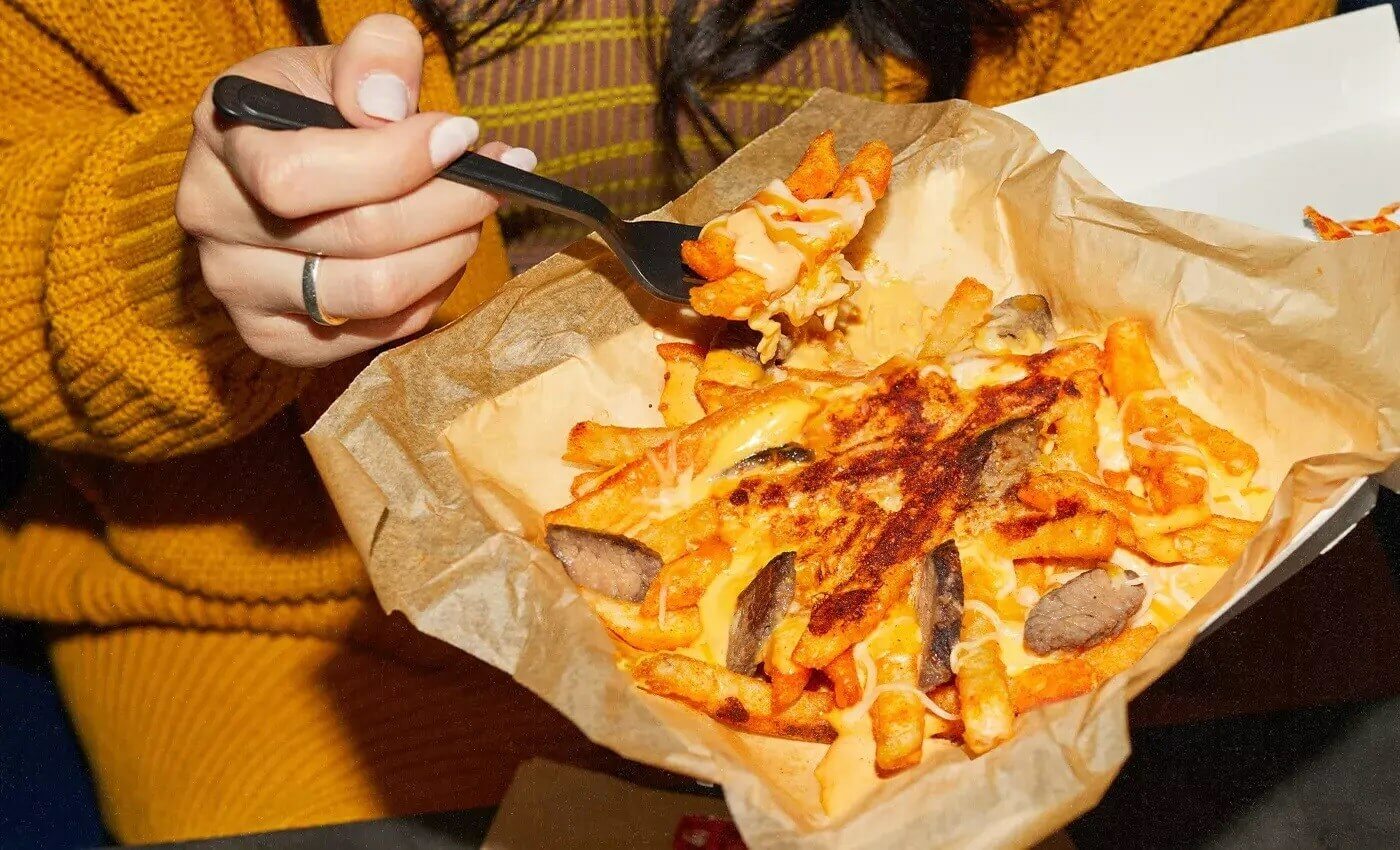
Taco Bell Grilled Cheese Nacho Fries

Not for the first time, Taco Bell is showing the industry the power of offering fan-favorite limited-time offers and leveraging subscriptions.

These days, everything seems to be subscription-based. We stream shows and movies via subscriptions. We can have food, clothing, gadgets, collectibles, and knick-knacks delivered to us by subcription.

Car features like heated seats, remote engine start, and self-driving? Subscriptions. Want to use software we used to buy once and install? Now we’re paying monthly to use it (or up front for a “discounted” yearly fee).

So, why should people find it odd to subscribe to one of their favorite restaurants? If the value is there for a consumer it’s no different than paying a monthly fee for other products and services to which they subscribe.

Clearly, Taco Bell has an acute understanding of people’s comfort with subscriptions. For many consumers, they’re the norm, just part of their daily routine.

As evidence, I introduce Exibit A, the Taco Lover’s Pass.

What makes this subscription noteworthy is the fact that it’s only a few years old, and it’s not even a permanent subscription. As Taco Bell Rewards members know all too well, only they can cop a Taco Lover’s Pass, and it only comes available every so often.

Most times, members have just one day to grab a pass. However, people had two whole days to decide the last time it became available.

And now, Exhibit B, the Nacho Fries Lover’s Pass.

An LTO Subscription and Item

Look, tens of millions of people love tacos. So, it’s logical that the Taco Lover’s Pass is so successful.

And if the past several years have shown us anything, millions of people also love Nacho Fries. The LTO menu item first appeared in Taco Bell restaurants in 2018. A few years later, in 2021, the Taco Lover’s Pass was tested in Arizona.

Why wouldn’t we eventually see a Nacho Fries Lover’s Pass, given the hype that follows every reintroduction of this popular item? Taco Bell has mastered the art of the LTO and the subscription. More specifically, they’ve mastered the recurring subscription. Remember, their passes aren’t permanent offerings.

Further, the iconic QSR also understands the power of the “drop.” At this point, it seems as though Taco Bell has noticed the rabid stir a limited-edition shoe or clothing drop can create for the fashion industry, studied it, and adapted it to foodservice.

With that said, the last Taco Lover’s Pass was accompanied by a menu item drop: the Toasted Breakfast Taco. If you think the Nacho Fries Lover’s Pass also ushered in an LTO, you’re correct.

The first-ever Nacho Fries Lover’s Pass comes along with the limited-time-only offer of Grilled Cheese Nacho Fries.

Take the Nacho Fries, slather them in a sauce of melted mozzarella, monterey pepper jack, and cheddar cheeses, add Taco Bell nacho cheese and chipotle sauce, and toss on some marinated steak. There you go—Grilled Cheese Nacho Fries. They’re just $4.99 while supplies last, and there’s a spicy version made with jalapeños.

It’s no surprise that Taco Bell is BrandVue’s most-loved Mexican restaurant brand, and number eight on their overall list of most-loved restaurant brands.

Takeaway

Loyalty and rewards programs, subscription services, hyped LTO menu drops… These aren’t the exclusive domain of global chain restaurants.

Independent operators can absolutely leverage LTOs and subscriptions. Moreover, indies can do so with as much—if not more—specificity. Independent and regional chain operators tend to be far more nimble than their large chain counterparts.

After all, it’s much easier to implement change in one or a handful of restaurants than it is hundreds or thousands of locations. In theory, single-unit operators also know their loyal guests on a more intimate level. Where that’s the case, they should know what levers to pull to generate interest and encourage repeat visits.

It’s no small task to create a subscription program, let alone a free-to-use-but-engaging, branded rewards program. And that’s to say nothing of coming up with menu item so powerful that taking it away for months at a time is a feasible, profitable thing to do. Although, if you’ve shrunk your menu and eliminated a decent food or drink performer, you may have somewhere to start.

With time and thoughtful consideration, independent and regional operators can absolutely nail rewards, subscriptions, and LTOs.

Image: Taco Bell

Bar Nightclub Pub Brewery Menu Development Drinks Food

by David Klemt David Klemt No Comments

Last-minute Halloween Cocktails!

Last-minute Halloween Cocktails!

by David Klemt

Jameson Irish Whiskey Witches' Brew cocktail

If you perhaps let Halloween preparations get by you, have no fear: here are three Jameson Irish Whiskey cocktails that pair well with different candies.

These aren’t just any three cocktails, however. Instead, Jameson is recommending these drinks because they happen to pair well with three distinct flavors:

  • Tart and sour;
  • sweet; and
  • chocolate.

Makes sense, right? As guests arrive, hopefully in costumes, they may bring candy with them. Or, you may be serving up some mini-candies along with the drinks crossing your bar.

Either way, the drinks below will enhance the guest experience by pairing with an array of candies.

Cheers! Or, boo! Whatever you think is clever, I dunno.

Tart & Sour

Let’s say a guest is munching on some SweeTARTS, Sour Patch Kids, or Warheads. Basically, they’re enjoying tart and/or sour candies this Halloween.

The drink below, according to Jameson, will pair well with those candy flavors.

Jameson Irish Whiskey Witches' Brew cocktail

Witches’ Brew

Out of these three cocktails, this one requires the most prep. You’re going to steep teabags in boiling water and let it cool.

And if you choose to make your own raspberry syrup, your bar team will have to simmer water with sugar and raspberries for a couple of minutes. This will also have to cool before use.

However, this is a large-format drink, so the following recipe allows you to prebatch before guests descend on your bar.

  • 1 bottle Jameson Irish Whiskey
  • 1 carton Cranberry juice
  • 17 oz. Mint tea
  • 3.5 oz. Raspberry syrup
  • 6 Whole limes
  • 1 Orange
  • 12 Raspberries

Start by filling a large vessel with 17 ounces of boiling water. Add six mint teabags and let steep. Once cool, remove teabags. Juice the limes, slice the orange, and add to the vessel with the raspberries. Add the Jameson, cranberry juice, and syrup. Serve in a rocks glass over ice and garnish with raspberries and lime zest.

To make the syrup: In case you haven’t made syrup before, simply add 250mg of water, 250mg of sugar, and 100 grams of raspberries to a pot or saucepan and boil. After reducing to a simmer for two minutes, remove the pot or pan from heat. Let the syrup steep until cool, strain, bottle, and toss in a fridge.

Sweet

Does your guest have a sweet tooth? Are they chowing down on sweet, overly sugary candy? Maybe they’re throwing handfuls of candy corn down their gullet.

This is the drink for them!

Jameson Irish Whiskey Blood Rising cocktail

Blood Rising

From the most complex cocktail on this list to a simpler recipe.

Per Jameson, this cocktail is also known as the Blood Boiler.

  • 1 2/3 parts Jameson Black Barrel
  • 1 2/3 parts Lillet Rouge
  • 1 2/3 parts Orange juice
  • 1 1/6 parts Berry Syrup
  • Orange wedge to garnish
  • Berries to garnish

Prepare a rocks glass by placing a large ice cube inside. Combine all the liquid ingredients in the glass over the cube. Stir, then garnish with the orange and berries

To make the berry syrup: See the instructions above for the raspberry syrup.

Chocolate

I mean…chocolate. C’mon, it’s a loaded Halloween candy category. Snickers, Kit Kat bars, Milky Way bars, M&Ms, it doesn’t matter.

If a guest can’t resist the siren song of chocolate, the cocktail below will pair well with chocolatey notes.

Jameson Irish Whiskey Cold Brew Bittersweet Goodbye cocktail

Jameson Cold Brew Bittersweet Goodbye

If you’ve left your Halloween drink menu to the last minute, this is probably the quickest recipe on this list.

  • 1 1/3 parts Jameson Cold Brew
  • 1 1/3 parts Campari
  • 1 part Blood orange juice
  • 3 parts Tonic water
  • 1 Slice of a blood orange or red grapefruit to garnish

Fill a highball with ice, then add the first three ingredients. Add the tonic water and garnish.

Note: Orange also goes well with chocolate, so consider playing with Jameson Orange Whiskey if you have the time.

Images via Jameson Irish Whiskey

Bar Nightclub Pub Brewery Menu Development Drinks Food

by David Klemt David Klemt No Comments

Celebrating the Espresso Martini

Celebrate the Espresso Martini with Mr. Black

by David Klemt

Two Espresso Martinis on a bar

For the second time in its brief but exciting history, Mr. Black Espresso Martini Fest is coming to bars throughout America.

Last year, 70 bars in eight cities across the US took part to celebrate the Espresso Martini. This year, participation more than doubles.
Fourteen cities in ten states will play host to more than 200 bars during the fest. For 2023, Austin, Boston, Dallas, Denver, Nashville, Phoenix, and Seattle are joining in on the fun.


View this post on Instagram


A post shared by Mr Black Spirits (@mrblackspirits)

I, for one, expect Espresso Martini Fest to have the same staying power as other cocktail celebrations. The inaugural event took place in 2016 in Australia. In 2018, the Fest spread to the UK. After launching in the US, the week-long event growth has doubled over the course of just one year.

Logically, Mr. Black Espresso Martini Fest should join the ranks of Negroni Week, Old Fashioned Week, and Bee’s Knees Week.

Now, I know I’ve called the Espresso Martini “the cocktail that won’t die.” And yes, I’ve pointed out that it’s not technically a Martini, and that many bartenders hate it for the time it can take to make. That doesn’t mean participating in Espresso Martini Fest is a bad idea.

This is a cocktail that guests enjoy. It’s a drink that generates headlines each year. And clearly it’s a beverage that can drive traffic and generate revenue. At the end of the day, participation is a smart move.

2023 Espresso Martini Fest Cities

Given that the Fest runs from October 9 to 15, it’s unlikely the organizers are still vetting venues for participation. However, at the time of this article’s publication, the portal appeared to be open. It’s a worth a shot if you want your bar to join Espresso Martini Fest!

At least you’re aware of the event now so you can prepare to sign up next year.

Bars in the following cities are taking part in this year’s Fest:

  • Austin, Texas
  • Boston, Massachusetts
  • Chicago, Illinois
  • Dallas, Texas
  • Denver, Colorado
  • Houston, Texas
  • Los Angeles, California
  • Miami, Florida
  • Nashville, Tennessee
  • New York, New York
  • Phoenix, Arizona
  • San Diego, California
  • San Francisco, California
  • Seattle, Washington

I certainly anticipate this list growing by at least 50 percent for 2024. Cheers!

Image: Krists Luhaers on Unsplash

KRG Hospitality. Bar Consultant. Nightclub. Lounge. Mixology. Cocktails.

by David Klemt David Klemt No Comments

Drink Donnybrook: Let’s Talk Rum Punch

Drink Donnybrook: Let’s Talk Rum Punch

by David Klemt

Spider Island Rum bottle and rum cocktail

Like this, but at least four times bigger. And made with more than just one spirit.

With National Rum Punch Day coming up on September 20, I think it’s time we shine the Drink Donnybrook light on another classic, large-format drink.

I argue, and I’m likely not the only one, that the legendary Scorpion Bowl is a Rum Punch. That is, of course, if the recipe calls for rum.

Like Rum Punch, a Scorpion Bowl is a large-format cocktail. Both are meant for sharing, and both aren’t exactly known for being “weak” drinks.

Speaking of weak, both can also follow the classic Barbadian rhyme we all know: “One of sour, two of sweet, three of strong, four of weak.”

So, why focus on the Scorpion Bowl specifically on National Rum Punch Day? In part, because it may help you stand out from the crowd. I also argue the name is a bit more attention-grabbing. Additionally, a Scorpion Bowl tells potential guests to gather their friends for a great time.

A Bit of History: Rum Punch

Punch is one of the oldest types of cocktails that we know about. As with myriad classics, it origin proudly wears a shroud of mystery.

However, we can trace written references to punch back to the 17th century. So, we know that punch, as far as a mixed alcohol drink, is at least a few centuries old.

For the most part, British sailors are credited with creating Rum Punch. That means we have to address an unfortunate reality: Rum Punch is, as far as we know, a result of British colonization. As spirits and cocktail historian David Wondrich puts it when talking about punch, “It’s inseparable from the colonial experience.”

Wondrich also addresses the (likely) mythologized belief that “punch” comes from the Indostan word “paunch,” which means “five.” History suggests that East India Company sailors typically made punch with five ingredients: a spirit, sugar, spice, citrus, and water. The sugar trade, pursued by the East India Company, eventually led to rum being the spirit of choice for punch.

In his 2010 book Punch: The Delights (and Dangers) of the Flowing Bowl, Wondrich points out that there are recipes with less than five ingredients. And, of course, there are recipes that call for the use of more than five ingredients to make punch. Therefore, we can call the origin of this centuries-old cocktail’s naming convention into question.

A Bit of History: Scorpion Bowl

Similar to Rum Punch, there’s a bit of uncomfortable history when it comes to the Scorpion Bowl.

This large-format drink is a classic tiki cocktail. Over the past few years, there has been pushback for bar owners using tiki iconography, and even the word itself. “Nautical” or “tropical” are the preferences for people who feel that tiki is an offensive appropriation of Pacific Island culture in general, and Maori culture specifically.

Do with that information as you will; it’s just a note on how some people view tiki bars, tiki drinks, and tiki culture. It’s important for bar owners and operators to be aware of terminology and themes that may keep some people away.

That said, the Scorpion—the precursor to the Scorpion Bowl—has an origin as muddled as the leaves, simple, and bourbon in a Mint Julep.

To this day, from what I can find, we don’t know the bartender or bar owner who should get credit for the Scorpion. The belief is that they worked behind the stick at a bar in Hawaii called the Hut. As the story goes, the 1930s recipe includes rum, brandy, orgeat, and citrus, and is a large-format drink.

The legendary Victor J. “Trader Vic” Bergeron stopped by the bar in the 1940s and afterward created his own version, the Scorpion Bowl. Oh, and the best part is that even Trader Vic couldn’t decide on a definitive recipe for this shareable cocktail; he changed his recipe constantly.

Rum Punch vs. Scorpion Bowl

Okay, let’s look at these two literal titans of the cocktail world.

Bothare members of the tiki family of drinks, or, if one prefers, the nautical or tropical family. The usual serve for both is a large-format vessel, though individual servings are possible. Rum plays an important role in both, as do citrus and sugar.

In terms of differences, Rum Punch “traditionally” calls for the use of two rums (a light and a dark). When it comes to a Scorpion Bowl, the recipe calls for a rum and a brandy, and sometimes bartenders throw in gin and wine. In fact, I’d say that in the modern cocktail era, a Scorpion Bowl is less about a traditional recipe and more about a tropical-style drink served in a bowl.

What that tells me is this: the Scorpion Bowl is a Rum Punch, if it has rum in it.

So, be different this upcoming National Rum Punch Day and mark the holiday with Scorpion Bowls.

Image: Odeani Baker on Pexels

KRG Hospitality. Bar Consultant. Nightclub. Lounge. Mixology. Cocktails.

by David Klemt David Klemt No Comments

Prepare Now for Old Fashioned Week

Prepare Now for Old Fashioned Week

by David Klemt

Lynn House making Old Fashioned cocktails for Elijah Craig

Lynn House making Old Fashioneds for Elijah Craig Old Fashioned Week.

It may be nearly two months away but it’s not too early to register your bar and team for Elijah Craig Old Fashioned Week.

This year’s event, the fourth annual Old Fashioned Week, will take place from Friday, October 13 to Sunday, October 22.

As was the case in 2022, the Southern Smoke Foundation will be this year’s beneficiary. In 2020 and 2021, Elijah Craig Old Fashioned Week raised a combined $200,000 for the Restaurant Workers’ Community Foundation.

Just last year, to add context, Old Fashioned Week helped make it possible for Southern Smoke to provide nearly $110,000 in relief grants to food and beverage workers.

Those interested in participating this year can register their venue for free via this link. Create an Old Fashioned LTO menu—or simply make standard Old Fashioneds with Elijah Craig bourbon—and Elijah Craig will donate $1 for every Old Fashioned sold (up to $100,000).

There really couldn’t be a simpler way to deliver a fantastic, classic cocktail experience to guests while supporting a great cause.

Elijah Craig Old Fashioned Cocktail Contest

There’s more to Elijah Craig Old Fashioned Week. You and your bartenders have the opportunity to participate in a cocktail contest, too.

From now until October 31, anyone who wants to throw their hat in the ring can submit their recipe for their own signature Old Fashioned.

The winner of the Elijah Craig Old Fashioned Cocktail Contest will win $5,000. They’ll also have their winning recipe included in Elijah Craig’s 2024 cocktail recipe book.

Recipes can be submitted through this link. For contest rules and judging criteria, please click here.

To learn more about Elijah Craig and the Old Fashioned, check out episode 52 of the Bar Hacks podcast with special guest Lynn House.

Four unique takes on the Old Fashioned can be found below.

4 Day Weekend

Recipe by Stephanie Andrews

  • 2 oz. Elijah Craig Bourbon
  • 1/2 oz. Grilled Peach Gomme Syrup (see note)
  • 4 dashes Lapsang Souchong Tea–Honey Mustard Bitters (see note)
  • BBQ Spritz (see note)
  • Grilled peach slice to garnish
  • Lemon zest to garnish

Prepare an Old Fashioned glass with a large ice sphere or cube. Add ice and first three ingredients to mixing glass. Stir, then strain into prepared glass. Mist BBQ spritz over drink, then garnish.

Note for syrup: Prepare five ripe peaches, removing pits and slicing into pieces. Grill over high heat until peach pieces have grill marks. Dissolve two tablespoons gum arabic in one quart of water in saucepan, whisking constantly. When gum arabic has dissolved fully, add four cups sugar. Again, whisk until dissolved fully. Add peach pieces and steep overnight. Strain, discard peaches, and store in airtight container in refrigerator for up to two months.

Note for bitters: Add 750ml of neutral grain spirit, two tablespoons Lapsang souchong tea leaves, and two tablespoons black tea leaves to a mason jar and shake vigorously. Next, add the peel of one lemon, one cinnamon stick, one teaspoon grains of paradise, and one tablespoon honey mustard to mason jar. Allow mixture to rest for one to two weeks, then strain into a bottle. Bitters may be stored for up to two months at room temperature.

Note for spritz: This recipe is a bit…different. Char eight high-quality beef hotdogs on a grill. Once charred, chop hotdogs into small pieces, place into a sous-vide bag with 750ml of Elijah Craig bourbon, and cook for two hours at 165 degrees Fahrenheit. Strain and pout into an atomizer or mister. The spritz can be stored for up to two months at room temperature.

Borrowed Time

Recipe by Alec Bales

  • 1.25 oz. Elijah Craig Small Batch Bourbon
  • 0.75 oz. St. Lucian Bounty dark rum
  • 0.25 oz. Sorghum syrup
  • 2 dashes Angostura bitters
  • 2 dashes Regans’ orange bitters
  • Round of lemon peel to garnish

Stir all ingredients except for garnish in a rocks glass. Stir, add ice, then stir again. Express oils from lemon peel, then drop into glass to garnish.

A Swallow’s Leave

Recipe by Caer Maiko

  • 2 oz. Butter chestnut–infused Elijah Craig bourbon (see note)
  • 0.25 oz. Soy-caramel syrup (see note)
  • 3 dashes Adzuki bean–Angostura bitters (see note)
  • Coin-shaped orange peel to garnish

As with the recipe above, add all ingredients minus garnish to an Old Fashioned glass, add ice, and stir. Flame the orange peel, then drop into glass to garnish

Note for infusion: Melt a teaspoon of unsalted butter in a saucepan over medium heat. Add eight shelled chestnuts to pan. Cook chestnuts until lightly charred and butter is lightly browned. Add a 750ml bottle of Elijah Craig bourbon and, while still warm, the contents of the saucepan to a mason jar. Leave jar in a freezer for eight hours, then fine strain back into original bottle.

Note for syrup: Simmer three ounces brown sugar, three ounces turbinado sugar, and a half-ounce soy sauce in six ounces of water in a saucepan over medium heat for ten minutes. Ensure all solids dissolve fully, then let cool and pour into appropriate container.

Note for bitters: Wash the syrup from a half-cup of canned adzuki beans. Place into a glass container with four ounces of Angostura bitters. Muddle, then cover container and leave for 12 to 24 hours before passing mixture through a strainer into another appropriate container.

Santiago’s Luck

Recipe by Jake Powell; makes 10 servings

  • 15 oz. Elijah Craig bourbon
  • 5 oz. Cold-brew concentrate
  • 1.5 oz. Yellow Chartreuse
  • 1.5 oz. Amaro Nonino
  • 1.5 oz. Cinnamon-infused banana liqueur (preferably Tempus Fugit; see note)
  • 0.25 oz. Orange bitters
  • Optional: Pinch of salt
  • Orange twist to garnish

Add all ingredients, minus garnish but including pinch of salt if you so choose, to a 750ml bottle. One serving is two ounces over a large ice sphere or cube in a rocks glass.

Note for infusion: Prepare a 750ml bottle of banana liqueur by adding three or four cinnamon sticks to it. Let sit for 24 hours at room temperature, then strain into either a separate 750ml bottle or into another container, then back into original bottle.

Image: Elijah Craig

KRG Hospitality Beverage Programming

by David Klemt David Klemt No Comments

Drink Donnybrook: Let’s Talk Mai Tai

Drink Donnybrook: Let’s Talk Mai Tai

by David Klemt

Bartender serving a tiki cocktail

Is there a Mai Tai in there? Maybe…?

There are two big drink holidays coming up in August for your programming pleasure, and the best part is that they both play incredibly well with one another.

One of these holidays you can create a promotion around is National Rum Day, August 16. This year, this spirit-forward holiday falls on a Wednesday. Hey, who couldn’t use a rum drink on Hump Day?

The other is more specific, celebrating a particular drink: August 30, also known as Mai Tai Day. Hey, what do you know—this cocktail holiday also falls on a Wednesday in 2023! It’s almost like these two festive days are exactly two weeks apart or something…

As you’re likely already deducing, these days are related: rum is the base for a Mai Tai. So, creating an LTO around this classic tiki drink gives operators the opportunity to celebrate for two weeks straight, or at least for two weekends. That means it’s also an excellent way to bid August farewell and prepare for the fall.

Controversy!

Scandal! Strife! Squabble! Other words that are synonymous with controversy!

Not only has there been a bit of a debate regarding the creator of the Mai Tai, there has been debate about the day we celebrate this classic cocktail.

Oh, and there’s been plenty of debate over specs. And there will likely be bickering over the correct build forever.

But back to the day we celebrate the Mai Tai. If you Google “National Mai Tai Day” or “Mai Tai Day,” you’ll likely see there’s debate over the correct date.

For a while at least, there were people claiming that National Mai Tai Day is June 30. Well, two crucial sources say that’s flat-out wrong: Trader Vic’s and the City of Oakland, California.

Some people may shrug at that first source, given that there’s still some debate over the drink’s inventor. However, in 2009, Rebecca Kaplan, an at-large councilmember of the city of Oakland, declared August 30 to be Mai Tai Day officially.

Fighting Words

Want to make some cocktail history and bartender nerds heads explode? Just say that Donn Beach, also known as “Don the Beachcomber,” is the father of the Mai Tai.

That should all but guarantee a donnybrook with whomever you target with that statement.

However, unlike the Martini, Piña Colada, and Whiskey Sour, we have a (mostly) definitive answer to the question of who created the Mai Tai.

While there are some who say that Don the Beachcomber created the Mai Tai in 1933, it would be more accurate to say that he created the predecessor of the Mai Tai. Cocktail historians who back Trader Vic as the inventor of this classic would agree.

You see, Don the Beachcomber created a drink called the QB Cooler, and historians say, perhaps generously, that Trader Vic was riffing on Don’s drink when he invented the Mai Tai in 1944. Now, if you really want to kick the donnybrook up a notch, perhaps turn it into a slugfest, see who thinks the Mai Tai tastes like the QB Cooler and which think they taste completely different. Fun times.

Then there’s this: It’s possible we don’t know the exact original recipe for the Mai Tai. Famously—or infamously, if we want to be dramatic—it’s said that Trader Vic never shared his actual specs with anyone. One could argue, then, that nobody has ever had the “real” version if they didn’t drink one made for them by Trader Vic himself. He’ll have passed 30 years ago in October of 2024, so I’m not sure how many people in the industry currently can say Trader Vic made them a Mai Tai personally.

Authentic or Abomination?

Did you read the caption underneath the image at the top of this article? If not, wow—thanks.

If so, you’ll recall that I ask if the drink in the tiki mug in the image contains a Mai Tai. And I answer my own question indicating that, at best, I can only say “maybe.”

Sure, it’s being served in a tiki drinkware, so one could argue that there’s a tiki drink in there. The Mai Tai, as we know, is a tiki classic. The drink is also garnished with mint, which is correct.

But then we look at the rest of the garnish: a raspberry and what appears to be desiccated orange. Oh, and a Mai Tai should be served in a double rocks glass.

Of course, bartenders around the world serve cocktails in drinkware that deviates from the “right” vessel. However, the proper garnish is mint and a lime wheel…to the best of our knowledge.

Ultimately, guests decide with their dollars whether they believe a bar makes them the “right” Mai Tai. You and your bar team will need to dial in a signature version if you want your bar to be known for its Mai Tai, and perhaps come up with a great riff or two.

The Original…Maybe

The original recipe, cocktail historians and drink nerds believe, is:

  • 1 oz. Light rum
  • 1 oz. Dark rum
  • Fresh lime juice (keep half of the squeezed lime’s shell)
  • 0.5 oz. Orange curaçao
  • 0.25 oz. Orgeat
  • 0.25 oz. Simple syrup
  • 1 cup Crushed ice
  • Fresh mint sprig to garnish
  • Lime wheel to garnish

Fill a shaker with crushed ice and add the light rum, lime juice, curaçao, simple, and orgeat. In other words, hold back the dark rum! Shake for a few seconds and pour the contents into a double rocks glass. If you want to be fancy, add fresh crushed ice to the double rocks glass and strain the shaker into it. Float the dark rum, then garnish and serve.

Technically, a bartender should use J. Wray & Nephew rum…but a bottle, if one can be found, goes for at least $50,000 last I checked. Bartenders should also refrain from adding pineapple juice, orange juice, or grapefruit juice. And they shouldn’t garnish with cherries or pineapple wedges. But, here we are; all of those things and more happen.

Oh, there are also tequila, mezcal, amaro, and whiskey versions, plus riffs made with avocado and variants that call for an array of bitters. What you do with this information is up to you and your bar team.

Image: Andrea Piacquadio on Pexels

KRG Hospitality. Bar Consultant. Nightclub. Lounge. Mixology. Cocktails.

by David Klemt David Klemt No Comments

Celebrate the Negroni, Support Slow Food

Celebrate the Negroni and Support Slow Food

by David Klemt

Bartender pouring Negroni into glass

This month, operators will have the opportunity to sign their bars up to take part in the tenth-anniversary celebration of Negroni Week.

For 2023, Negroni Week hosts Imbibe Magazine and Campari are raising funds for Slow Food. Sponsors also include Cinzano, Bulldog Gin, Bols Genever, and Coopers’ Craft Bourbon.


View this post on Instagram


A post shared by Campari USA (@campariusa)

Negroni Week will take place from September 18 through September 24. Registration is now live and operators can sign up their bars via this link.

So, we’re helping spread the word early and giving operators and their teams plenty of time to prepare to participate this year.

Negroni Week 2023

After first launching in 2013, Negroni Week is celebrating their decennial year.

Over the course of ten years, Imbibe and Campari have seen tremendous growth and results. In its inaugural year (or perhaps inaugural week is more accurate), a little over 100 venues participated. In its second year, 1,300 venues registered for Negroni Week.

Now, thousands of venues sign up every year, helping to raise money for worthy causes. To date, Negroni Week boasts more than $4 million in funds for charitable organizations.

Participation really couldn’t be any simpler: register, make a donation of at least $25, serve Negronis and/or variations of Negronis, and donate proceeds from your Negroni Week LTO menu.

After completing registration and making at least the minimum donation, an operator’s venue will gain placement on the Negroni Week website. The listings are searchable by state and city. Venues that donate $250 or more will carry a Premium Donor designation.

Those looking for inspiration for their charity LTO menus can click here to sift through Negroni Week’s recipe database.

Slow Food

Simply put, Slow Food’s mission is to help everyone access food that’s good for them, good the people who grow it, and good the planet as a whole.

An even more succinct description comes from the Slow Food website: access to food that’s “good, clean, and fair for all.”

Further, Slow Food seeks to prevent the loss local food cultures, along with food traditions. The organization was founded in 1989 and is now active in more than 160 countries.

In the US, Slow Food operates as a 501(c)(3) organization and has been active in Canada for several years. The charitable organization has had a strong presence in the provinces of British Columbia, Calgary, Montréal, and Ontario.

Get Ready

With just three ingredients in a 1:1:1 ratio, any bar team should be able to handle putting delicious Negronis across the bar.

So, operators should ensure their team can craft a traditional Negroni while encouraging them to work on some creative variations.

We’ll see in a little over a month to celebrate Negroni Week!

Image: Jonathan Borba on Unsplash

KRG Hospitality Complete Bar Menu Audit

by David Klemt David Klemt No Comments

Seemingly Simple: The French Fry

Seemingly Simple: The French Fry

by David Klemt

French fries and sandwiches in baskets

We celebrate the humble French fryat once a living legend and deceptively simple sideon Thursday, July 13, National French Fry Day.

Now, I know I tend to dive into the history, disputed or not, of a given item when a holiday comes around. However, that’s not the point of this article.

Of course, I could easily point out that this iconic item’s origins aren’t settled history. That Belgium claims ownership as of 1680. Or that Chile may have beaten Belgium by 61 years. And that France gets credit because the recipe for “modern” French fries appear in the cookbook La Cuisinière Républicaine from 1775. I’m not even going to get into the debacle that was 2003’s Freedom Fries…

Again, that’s not the point. Whether you call them French fried potatoes, French fries, fries, pomme frites, or chips, they’ve been around for anywhere from 400-plus to almost 250 years in some form.

And still they manage to confound many a cook.

We’ve all gotten an order of flaccid, cold, mushy or otherwise cheerless chips. And we’ve all managed to muscle down at least a handful of those dismal, forlorn fries, each soggy bite driving us deeper into despair.

Okay, that may be the tiniest bit dramatic. My point is, French fries are deceptively simple to get just right. And a subpar fry canlet’s face it, will—ruin a guest’s perception of a restaurant. They may return, but they’ll be apprehensive.

Fry Infatuation

If you thought maybe I’d try to create a portmanteau like “infrytuation,” I did think about it. But that would be far too silly, even for me. I wouldn’t even type such a thing out loud.

Anyway, we may not know the origin of fries or chips for a fact. But we do know that for the most part, people love a fry. Those who don’t, well, they’re not to be trusted. Should you come across such a person, grab a handful of friesor the entire basketand run away. You don’t need that kind of negativity in your life.

But why? Why do we love a fry?

Perhaps it’s the versatility. They complete many a limited-service restaurant or QSR meal. At this point, the “bag fry” is almost its own varietal.

They’re at home at a dive or neighborhood bar. But they’ll also step up and accompany a steak at a French bistro or steakhouse. Fish house, shack or upscale seafood restaurant? Pleasefish and chips are a power couple comfortable in any environment.

Speaking of versatility, chips are also happy to indulge a chef or cook’s most debaucherous thoughts. A vessel to carry short rib, cheeses, and an array of seasonings? They’re down.

Of course, it’s likely that fry popularity comes down to comfort. A hit of salt, fat, heat, crispness, and creaminess? That’s at the bare minimum. Toss on some parmesan or pecorino romano and that hit of dopamine doubles, at least.

Chip Tips

One professional, personality, and purveyor who knows his way around a French fry is Chef Brian Duffy.

Indeed, he takes fries seriously. So seriously, in fact, that he has promoted Lamb Weston for several years. For the unfamiliar, America-based Lamb Weston is on of the biggest producers of French fries in the world.

One of their products, the Extra Crispy series of fries, retains crispness for 30 minutes.

Chef Duffy also understands the importance of fries. They can, as stated above, make or break a guest’s visit.

Additionally, as you can see in the Instagram post below, Chef Duffy certainly sees the humble fry as a blank canvas for experimentation.


View this post on Instagram


A post shared by Chef Brian Duffy (@chefbriduff)

Given his strongly held views on fries, I reached out for his thoughts. And, of course, Chef Duffy didn’t disappoint. If you want to master your fries, take the Duffified approach.

Make sure you’re following Chef on Instagram, Facebook, Twitter, and Pinterest. From knife skills to thoughts on seasonings and techniques, you’ll gain helpful culinary insights. Oh, and he’s funny, too.

Duffified Fries

Elevate your French fries. Realize that they’re not “just” a side dish and therefore an afterthought.

For many brands, their fry is a calling card. That “card” can either tempt people through your doors or warn them to stay away.

Are they seasoned well?

Fries are seasoned perfectly when seasoned within 3-5 seconds of being removed from the fryer. Create a fry seasoning that has a good salt-to-seasoning ratio. My Fry base is 1 cup sea salt, 1/8 cup fresh ground black pepper, 1/2 cup onion powder, 1/4 cup garlic powder, 1/8 cup dark chili powder.

Are they crispy?

A good quality fry holds its crispiness for 10 to 15 minutes, unless it’s designed with a coating like a Crispy on Deliveryfry from Lamb Weston that can stay crispy for up to 30 minutes. There’s nothing worse that taking that first bite and having a cold, soggy fry.

Are they hot?

A hot fry has a creaminess in the center that enhances the ultimate experience of the fry. Having that crispy exterior and creamy interior ensures a perfect fry!

Hand-cut fries.

Let’s be real: They’re amazing within the first few minutes. But anything longer than that is a soggy fry, rarely cooked perfectly due to the labor involved and the variations between the type of potato, the time of the year, and the starch to sugar content. It’s just a super inconsistent product unless it’s a huge focus for your concept. I’d stay away.

What are your sauces?

Just ketchup? Just ranch? Make up a few new dipping sauces that will assist you in creating a fry program that isn’t just as a side. Three different fry cuts and three different sauces are now a $14 appetizer that will make people happy.

Choose a fry or a fry program that matches your concept!

Is it a wedge, a concertina, a waffle, a dipper or a steak…? Choose wisely because the wrong fry can take your menu from great to, “Well, that sucked.”

Takeaway

Speaking of featuring fries as a premium appetizer that justifies a premium price, Chef Duffy has a couple of ideas.

One, a fry board. We’ve seen cheese boards, meat boards, pretzel boards… Why not fries?

Sift through Instagram and you’ll also find a Chef Duffy take on build-your-own nacho fries.

Get creative. Don’t just have fries, engage your kitchen and have them build a fry program. Innovation draws people in and converts them to loyal, repeat guests while justifying premium pricing.

Image: Vincent Rivaud on Pexels

Disclaimer: Neither the author nor KRG Hospitality received compensation, monetary or otherwise, from Lamb Weston or any other entity in exchange for this post.

KRG Hospitality menu development. Restaurant. Bar. Cafe. Lounge. Hotel. Resort. Food. Drinks.

by David Klemt David Klemt No Comments

Program for Unique Holidays: July 2023

Program for Unique Holidays: July 2023

by David Klemt

"Think about things differently" neon sign

Do you want to stand out from from other restaurants and bars in your area? Change how you think about your July holiday promotions.

Several holidays are set against every date on the calendar, and this month is no exception. These holidays range from mainstream to esoteric.

Pay attention to the “weird” or unique holidays to raise eyebrows, carve out a niche for your restaurant or bar, and attract more guests. Why do what everyone else is already doing? Why program only around the same holidays as everyone else?

Of course, you shouldn’t try to celebrate every holiday, strange or otherwise. Focus on the days that are authentic to your brand; resonate with your guests; and help you grab attention on social media.

You’ll find suggestions for promotions below. However, the idea behind our monthly holiday promotions roundup is to inspire you and your team to get creative and come up with unique programming ideas.

For our June 2023 holidays list, click here.

July 5: Workaholics Day

Great bars and restaurants offer escapes from the drudgery and negativity of the rest of the world. On this day, encourage those who can step away from work to actually do so.

Barring getting workaholics to play hooky, come up with an LTO menu that’ll inspire them to at least pop by to unwind after a hard day’s work.

July 6: World Kissing Day

There are quite a few cocktails with “kiss” in the title, and these are the drinks you should use to program for this holiday.

The Kiss cocktail, for example, is a gin cocktail with Dubonnet, sweet vermouth, and Luxardo maraschino liqueur. The Widow’s Kiss consists of apple brandy, Yellow Chartreuse, Bénédictine, and Angostura bitters. In other words, it’s not difficult to celebrate this holiday through your drink menu.

July 7: Dive Bar Day

It’s difficult to beat a dive or neighborhood bar when you’re looking for a great time with friends. If you’re a dive or neighborhood bar operator, this is your day.

July 11: National Cheer Up the Lonely Day

Look, the past few years have isolated far too many of us. People are lonely, and this isolation isn’t doing anyone’s mental health any favors.

Bars and restaurants are cornerstones of their communities, so this is an excellent day to encourage people to come in, grab a bite and a drink, and try to make some new friends.

July 13: National French Fry Day

When a French fry is done right, when it’s hot with a crunchy exterior and creamy interior, it’s a perfect food. If you think your team makes amazing French fries, brag about it on social and prove it to your guests.

Better yet, this is a great day to show off your French fry skills with signature loaded versions.

July 14: National Nude Day

Unless you’re running an incredibly niche concept with excellent community and guest support, please don’t celebrate National Nude Day with nudity.

Instead, draw guests in through an enticing LTO menu. You can, for example, highlight your bar team’s prowess for creating the Naked & Famous cocktail, a mezcal cocktail made with Aperol and Yellow Chartreuse. Of course, there’s also the Porn Star Martini, along with other cocktails with names that imply nudity.

July 20: National Moon Day

It may seem like this holiday is related to the previous one, but please behave. You and your guests can celebrate Earth’s sole natural satellite via cocktails.

Not only are there drinks like the Moon cocktail (made with gin and sherry), you can also offer blue, purple, and black cocktails served with large ice cubes.

July 25: Culinarians Day

Are you proud of your kitchen team? Proud of the culinarians that are working hard to make your restaurant a success? This is the day to highlight the mastery of their craft and your signature menu items.

Alternatively, if you can afford to do so, you can also go dark on this day to give your culinary team a break.

July 28: National Get Gnarly Day

If you have some “out there” menu items, this is the day to highlight them. Do you have a food challenge? Promote it! Have some “interesting” bottles in your inventory? Promote them!

Image: Ivan Bertolazzi on Pexels

KRG Hospitality menu development. Restaurant. Bar. Cafe. Lounge. Hotel. Resort. Food. Drinks.

by David Klemt David Klemt No Comments

Are You Making MargaRights or MargaWrongs?

Cointreau Wants to Know: Are You Making MargaRights?

by David Klemt

Aubrey Plaza holding a Margarita made with Cointreau

Temperatures are rising and people are socializing, so Cointreau wants to make sure you and your team make Margaritas right.

In fact, they’re so serious about Margarita specs that they’re partnering with Aubrey Plaza educate the public. To celebrate the 75th anniversary of the Margarita, the iconic brand is launching the MargaRight campaign.

Challengers come and go but so far, the Margarita is the top cocktail in the US. This has been the case for many, many years. Of course, it’s also a popular cocktail around the world and has been number one in other countries as well.

Now that we’re a week away from the “official” start of summer, it’s paramount to make sure your Margaritas are MargaRight. For one thing, it’s the perfect summer sipper. For another, people are eager to socialize in restaurants and bars, and the Margarita is sure to join groups of friends as they hang out together.

But there’s another reason to ensure your Margs are on point: The wrath of Aubrey Plaza. More accurately, avoiding incurring Plaza’s wrath for putting MargaWrongs across your bar.

Margarita mix? Anger. No Cointreau? Fury.

To borrow a refrain from fanatics of another classic cocktail, it’s safe to say that Plaza would agree with, “No Margarita without Cointreau.”

The Original Margarita

Some, including Cointreau, support the belief that the Margarita’s creation traces back to 1948. For this origin story, Dallas socialite Margarita Sames is either the inventor of the Margarita or asked for a signature cocktail for a party she was hosting at her Acapulco home. Going further, another claim is that Tommy Hilton was a party guest and brought the recipe to Hilton properties, helping to make it famous.

Another claim is that the Margarita is simply a logical evolution of the Daisy. The mid-1800s tipple has a cocktail family named after it, and the Margarita, Sidecar, Cosmopolitan, and Daiquiri sprang forth from it.

Regardless of what origin story you choose to believe, Cointreau champions the original recipe: Cointreau, blanco tequila, fresh lime juice, and a lime wheel to garnish. It’s this classic recipe that Cointreau and Plaza are adamant about for the MargaRight campaign.

To learn more about the MargaRight campaign and Cointreau’s celebration of the Margarita, please read the press release below. Cheers!

Cointreau and Aubrey Plaza Make Your Margarita MargaRight This Summer

Plaza celebrates summer and 75 Years of The Original Margarita

NEW YORK – June 14, 2023 – Cointreau, the iconic orange liqueur, is teaming up with Aubrey Plaza to launch a new creative campaign where the actor insists that the only way to enjoy a Margarita is the MargaRight way, and that is with Cointreau, of course.

Who better to show you MargaRight from MargaWrong than the famously irreverent Aubrey Plaza, who is known for her fearless honesty and unparalleled wit. “I love Margaritas – and the only way to make them MargaRight starts with three ingredients: Cointreau, tequila and fresh lime juice,” said Plaza. “Otherwise, it’s just MargaWrong.” Plaza continued, “This summer, you’ll only catch me ordering Margaritas MargaRight, and Cointreau will always be at any party of mine.”

Cointreau is an essential ingredient in The Original Margarita, and has been for 75 years, since Dallas socialite Margarita Sames created the recipe in 1948. In celebration of its 75th anniversary, Cointreau debuts today its largest creative campaign to-date across connected TV, digital, and social platforms. Captured in both home entertaining and bar and restaurant settings, Cointreau’s summer campaign creatively captures a comedic tone alongside its elevated style. The campaign has a range of video spots and photo stills showcasing how Margaritas should be enjoyed all summer long, always with Cointreau. To check out the NEW campaign, head to https://www.cointreau.com/us/en/whats-new/margaright.

“Cointreau has a history of cinematic storytelling with continued investment in marketing and partnering with top-tier celebrity talent, now including Aubrey Plaza,” said Nicolas Beckers, President and CEO at Rémy Cointreau America. “We want to continue to invite consumers to enjoy our brand wherever they are, and Aubrey is the perfect partner to showcase how three simple ingredients – Cointreau, tequila and fresh lime juice – are all you need to make your summer and Margarita MargaRight.”

As Margarita Sames once said, “a Margarita without Cointreau is not worth its salt.” Whether you’re ordering one at a bar or shaking it up at home, make your Margarita MargaRight and head to Cointreau.com to learn more.

The Original Margarita:

Ingredients:

  • 1 oz. Cointreau
  • 2 oz. Blanco tequila
  • 1 oz. Fresh lime juice

Directions:

  1. Rim your rocks glass with salt
  2. Combine all ingredients in a shaker with ice
  3. Shake vigorously until well chilled
  4. Strain into a rocks glass filled with fresh ice
  5. Garnish with a lime wheel

About Cointreau:

Iconic orange liqueur creator and cocktail pioneer, Maison Cointreau was founded in 1849 in Angers, France. The brand’s heritage as a liquorist-distiller lives on today at the heart of more than 500 cocktails, including the original Margarita and Cosmopolitan. Cointreau liqueur’s distinctive character is the result of the meticulous selection, harmony, and distillation of sweet and bitter orange peel essences, a task entrusted to Maison Cointreau’s Master Distiller. Unique and boasting exceptional organoleptic qualities, it’s a staple for bartenders and at-home cocktail enthusiasts around the world. Visit www.cointreau.com and follow us on Instagram for more.

To learn more about Cointreau, visit www.cointreau.com or follow Cointreau on Instagram via @Cointreau_US or Facebook via @cointreauUS.

About Rémy Cointreau:

All around the world, there are clients seeking exceptional experiences; clients for whom a wide range of terroirs means a variety of flavors. Their exacting standards are proportional to our expertise – the finely-honed skills that we pass down from generation to generation. The time these clients devote to drinking our products is a tribute to all those who have worked to develop them. It is for these men and women that Rémy Cointreau, a family-owned French Group, protects its terroirs, cultivates exceptional multi-centenary spirits and undertakes to preserve their eternal modernity. The Group’s portfolio includes high-end and singular brands, such as the Rémy Martin and Louis XIII cognacs, and Cointreau liqueur. Rémy Cointreau has a single ambition: becoming the world leader in exceptional spirits. To this end, it relies on the commitment and creativity of its 1,850 employees and on its distribution subsidiaries established in the Group’s strategic markets. Rémy Cointreau is listed on Euronext Paris.

Disclaimer: Neither the author nor KRG Hospitality received compensation, monetary or otherwise, from Rémy Cointreau, Cointreau, or any other entity in exchange for this post.

Image and videos courtesy of Cointreau

KRG Hospitality Beverage Programming

Top