
Author: David Klemt

by David Klemt David Klemt No Comments

Las Vegas Vegan Culinary School Slated for April Opening

Las Vegas Vegan Culinary School Slated for April Opening

by David Klemt

This has been a big year for veganism already.

Multiple sources have named vegan food as a hot (and therefore lucrative) “trend” to watch this year.

The Michelin Guide France awarded a star to an entirely vegan restaurant in France for the first time in history.

And now, news out of Las Vegas is further making this Veganuary one for the books.

Global destination that it is, Las Vegas does its best to appeal to the greatest number of people possible. There are close to two dozen restaurants considered wholly vegan, and hundreds of other venues have vegan-friendly options. For several years now, every restaurant at Wynn Las Vegas has had vegan options on their menus.

The fact that Las Vegas is picking up steam as a vegan-friendly hotspot can be attributed to a few factors.

One, destination cities are about delivering on top-notch experiences. Vegas is no exception—amazing experiences keep people coming back. Two, if it’s trending, it’s very likely available somewhere in Vegas. The more popular it becomes, the more widely available it is throughout the city. And three, Las Vegas operators aren’t in the habit of letting a lucrative opportunity slide by them. People are willing to pay money for vegan food? Then vegan food they shall have!

Vegas Vegan Culinary School & Eatery is slated to open in April 2021. Located in the Arts District of Downtown Las Vegas, the venue will operate as a vegan deli, coffee shop, weekly meal delivery service, space for events and fundraisers, and brick-and-mortar and online culinary school.

According to Vegas Vegan’s Instagram page, demo at their location began around the middle of this month. A post from two days ago shows buildout progress.

This type of project moving from concept to buildout is a big deal for the city, culinary students, vegans, and those curious about the vegan diet. It’s also a big development for vegan food in general.

It’s certainly too early to declare 2021 food trend predictions accurate, of course. However, the opening of a dedicated vegan culinary school and restaurant certainly hints at vegan food ramping up in popularity this year. The same can be said for vegetarian and plant-based diets as well.

Moving forward, it’s going to be important and profitable for operators to have at least a few vegan-friendly F&B menu options. To fail to do so is to alienate vegans, and in this industry alienation equals lost revenue, something no operator can afford.

For those uncertain about what food items to add to their main, delivery and takeout menus, Grubhub listed the below as their top five vegan orders of 2020:

  1. Tofu spring rolls (263 percent more popular in 2020 than 2019)
  2. Plant based burger (251 percent more popular in 2020 than 2019)
  3. Black bean taco (242 percent more popular in 2020 than 2019)
  4. Vegan chocolate cake (211 percent more popular in 2020 than 2019)
  5. Vegan ramen (183 percent more popular in 2020 than 2019)

Succeeding with vegan or other diet-specific items comes down to thoughtful consideration of what will be authentic to a particular restaurant or bar. Just slapping anything vegan on the menu is simply not good enough.

Image: Free To Use Sounds on Unsplash

by David Klemt David Klemt No Comments

Recently Awarded Michelin Star Shines Spotlight on Vegan Menus and Operations

Recently Awarded Michelin Star Shines Spotlight on Vegan Menus and Operations

by David Klemt

If there was any question that vegan restaurant concepts are viable, a recently awarded Michelin star has provided a firm and affirmative answer.

Michelin Guide France awarded ONA (Origine Non Animale or “Non-Animal Origin” in English) a Michelin star earlier this week. This marks the first time in the award’s history that a restaurant in France that uses no animal products received a star.

Chef and owner Claire Vallée opened ONA in the city of Arès in the southwest of France in 2016 leveraging a combination of crowdfunding a loan from La Nef, an ethical bank. It has been reported that volunteers helped to finish the project when funds ran out before construction had been completed.

The vegan diet has endured mockery for decades in the United States and Canada. It’s only in recent years that veganism has flourished, bolstered by a belief that the diet is healthier, more sustainable, and more ethical. Growing interest in plant-based diets have also no doubt boosted veganism.

In France, however, the vegan diet hasn’t been embraced as widely as it has throughout North America. Sifting through online searches, travel blogs and posts shows that, generally speaking, vegan options aren’t widely available throughout France’s rich and storied restaurant scene.

For ONA to win a Michelin star shows that attitudes toward the vegan diet in one of the gastronomy and culinary capitals of the world is undergoing a possibly seismic shift.

A number of chefs have returned their Michelin stars or requested their restaurants not be considered for the accolade. For now, however, Michelin stars still recognize outstanding food and operations.

The awarding of a star to ONA is a significant achievement for Chef Vallée and her team.

Image: Jo Sonn on Unsplash

by David Klemt David Klemt No Comments

Delivery and Takeout Food Trends for 2021: United States

Delivery and Takeout Food Trends for 2021: United States

by David Klemt

Yesterday we reviewed food delivery data and 2021 food trend predictions for Canada. Now it’s the United States’ turn.

Before we jump into the data and predictions, a word on succeeding with delivery in 2021 and beyond.

As I pointed out yesterday, when an operator signs up with a third-party delivery service, their guest data becomes the delivery company’s data.

That means that company and not the restaurant or bar owns the guest journey and guest engagement, and therefore owns the guest for all intents and purposes.

When a restaurant, bar or other F&B business enters into a contract with a third-party delivery company—unless otherwise explicitly stated—they give up control of targeted marketing efforts. In other words, third-party delivery platforms disrupt the guest journey.

Delivery became a way for many businesses to generate revenue during 2020, for obvious reasons. Operators who can afford to implement first-part and last-mile delivery should do so to maximize their revenue and control the guest journey and marketing.

To help operators own delivery, we’ve reviewed end-of-year reports from three delivery titans—UberEats, Grubhub and DoorDash—to share their 2020 findings. When it comes to the most ordered items, cuisines and categories, some third-party platforms are willing to share data.

According to UberEats, comfort foods were the most popular category:

  • Burgers and fries
  • Burritos
  • Pad Thai
  • Mac and cheese
  • California rolls
  • Chicken Tikka Masala
  • Miso soup
  • Mozzarella sticks

Per the platform, the following cuisines proved most popular:

  • American
  • Italian
  • Mexican
  • Chinese
  • Japanese
  • Thai
  • Indian
  • French
  • Caribbean
  • Greek

As UberEats stated in their report, it appears that customers found a way to travel after all—they just did it through food.

Pizza, bagels, wings, tacos, burgers and dumplings led the way for Grubhub in 2020. The most popular pizza order was Hawaiian (because some people are monsters and put pineapple on their pies), while the most popular burger was garlic mushroom. Grubhub revealed that their top French fry was the loaded curly fry, and the most popular plant-based item was the eggplant burger.

In descending order, the top F&B Grubhub orders overall from 2020 were:

  • Spicy chicken sandwich
  • Chicken burrito bowl
  • Chicken wings
  • Waffle fries
  • Cold brew coffee
  • Steak quesadilla
  • Iced latte
  • Fish and chips
  • Strawberry shake
  • Roast beef sandwich

Per Grubhub, the top breakfast item was the acai bowl, the top side dish was French fries, the number-one late-night order was strawberry cheesecake, and the most ordered dessert was apple pie.

Moving on to DoorDash, the platform identified their top ten 2020 items back in November:

  • Chicken fingers and French fries
  • Fried chicken sandwich
  • Mac and cheese
  • Chips and guacamole
  • Apple pie
  • Pad Thai
  • Chicken quesadilla
  • Iced coffee
  • California roll
  • Chicken Tikka Masala

The UberEats, Grubhub and DoorDash revelations align with data collected by the National Restaurant Association between November and December of 2020. Per the NRA, the following were the top items sold by full-service casual, family and fine-dining restaurants:

  • Burgers
  • Seafood
  • Pizza
  • Steak
  • Chicken (excluding chicken wings)
  • Breakfast items
  • Pasta
  • Mexican food
  • Sandwiches, subs and wraps
  • Chicken wings

According to the NRA, the items below were the most popular for limited-service restaurants (fast casual, quick-service, coffee and snack):

  • Sandwiches, subs and wraps
  • Pizza
  • Burgers
  • Chicken (excluding chicken wings)
  • Ice cream, cookies and cakes
  • Baked goods
  • Breakfast items
  • Mexican food
  • BBQ items
  • Seafood

For 2021, DoorDash predicted the following items to see a lift:

  • Sausage, egg and cheese on a biscuit
  • Create your own omelettes
  • Carrot cake
  • Cinnamon roll
  • Caramel latte
  • Chocolate brownies
  • Black coffee
  • Donuts
  • Blueberry muffin
  • Biscuits

DoorDash revealed that Mexican, Chinese and Tex-Mex were the top cuisines ordered via the platform. The company also predicted five cuisines would be popular in 2021:

  • Taiwanese
  • French
  • Filipino
  • Australian
  • Moroccan

When it comes to 2021, multiple sources have named vegetarian, vegan, plant-based, and health and wellness items as the foods to watch. Even this early into the year it’s not exactly a controversial statement to say that all of those categories are going to perform well in 2021.

According to DoorDash, nearly half of Americans (47 percent) plan to consume more plant-based items. Whether it’s truly healthier than its traditional counterparts, plant-based is perceived that way. In total, per DoorDash, 72 percent of Americans plan to make a concerted effort to eat healthier in 2021. This is likely due to an increased interest in boosting immune systems due to Covid-19.

Put another way, operators will likely struggle if they don’t add vegan, vegetarian, and plant-based foods to their streamlined menus, another trend expected to continue through 2021.

Predictions from the Specialty Food Association in particular caught our attention. For 2021, the association has predicted spices and herbs native to West Africa (Senegal, for example) will be in demand. Scandinavian and Cambodian flavors are also expected to perform well, as are Latin American and Southeast Asian items.

Due to interest in tahini sauce and black sesame, the SFA expects halva, which is a Middle Eastern confection, to get plenty of attention. The SFA and Datassential both named fermented honey as an item to watch in 2021.

Along with vegan and plant-based items, creative meal kits are expected to perform well. Restaurants and bars will continue to face restrictions and indoor dining bans over the course of at least the next few months. Creative meal kits will get the attention of customers who have grown tired of preparing the same meals over and over.

Whether an operator chooses to stick with their current menu or embrace one or more food trends, they should look into first-party or last-mile delivery. It’s imperative that operators own their guest journey and marketing efforts.

For more information about first-party and last-mile delivery, please listen to Bar Hacks episode 13 with “Rev” Ciancio, an advocate of keeping delivery and data in-house.

Image: Robert Anasch on Unsplash

by David Klemt David Klemt No Comments

Delivery and Takeout Food Trends for 2021: Canada

Delivery and Takeout Food Trends for 2021: Canada

by David Klemt

Patrons, analysts and experts have spoken: delivery and takeout will remain standards in the new era of hospitality.

Analysts and experts have spoken with data, and consumers have spoken with their dollars.

But there’s another consequential voice that matters when it comes to delivery: that of the operator.

There’s no denying that the operator is shoved aside in the third-party delivery relationship. At the very least, that’s the overwhelming perception. Once an operator signs on with such a service, their guest data becomes the delivery company’s data.

Whatever company owns the data owns the guest, their journey and engagement, and the targeted marketing efforts. That means a restaurant or bar’s guests receive offers and promotions for their competitors.

In short, third-party delivery platforms disrupt the guest journey.

However, there are some data the third-party delivery services do share. As we saw midway through 2020, for example, Uber Eats and Grubhub released the top orders and other useful information in publicly available reports. Some of the services also release end-of-year or year-in-review reports, as SkipTheDishes did for Canada.

Most of these reports are laser-focused on the United States. That’s logical given the number of bars, restaurants and other hospitality businesses to which Grubhub, Uber Eats, Postmates, Instacart, Seamless and other services have access.

SkipTheDishes, for the Americans reading this, is the Grubhub of Canada. For the Canadians reading, below are SkipTheDishes’ data regarding top orders, cuisine, and demographics in 2020:

  • Top Cuisines: Chinese, Italian, American/Canadian
  • Top Orders (General): Asian dishes, pizza, burgers
  • Top Orders by Item: Chicken sandwiches (also the top item in 2020 in the US), burgers, and French fries (mid-year data)
  • Top Vegan Provinces: Manitoba, Saskatchewan, British Columbia
  • Top Organic Provinces: British Columbia, Ontario, Alberta
  • Top Gluten-free Provinces: Manitoba, Alberta, The Maritimes
  • Top Dairy-free Provinces: British Columbia, Alberta, The Maritimes
  • Top Kosher Provinces: Alberta, Ontario, Saskatchewan
  • Top Dayparts: 5:00 PM was the most popular order time, and late afternoon (3:00-4:00 PM) and weekdays saw lifts. Late-night ordering (9:00 PM and beyond) slowed. (Mid-year data.)
  • Top Pre-order Daypart: 5:00 PM. More Canadians got into the habit of pre-ordering their dinners. (Mid-year data.)
  • Fastest-growing Segment by Age Group: 65+
  • Most Revealing Datum: 81% of customers ordered from restaurants they’d never visited in person.

That was last year. What’s in store for Canada this year? A scan of a few sources—Food Network Canada, Restaurants Canada, and Chatelaine—offers some valuable insights.

Plant-based items and foods recognized for boosting a person’s immune system are expected to be popular. The pandemic has given many consumers a reason to reevaluate what they’re putting into their bodies. All three sources predict people will be interested in and order plant-based foods and focus on health and wellness.

Both Food Network Canada and Chatelaine predicted chickpeas—an inexpensive, versatile and plant-based protein source—will be among the top food items sought out by restaurant guests (in-person) and customers (takeout, delivery). Most operators should be able to adapt and get creative to add chickpea-based items to their menus. The two sources also predicted that snacking will replace meals (at least occasionally), so snackable items and sides may take off this year.

Food Network Canada pointed to sauerkraut as an example of a health and wellness food item that may see a boost in popularity and demand due to its probiotic and gut health properties. The source also predicted that coffee and coffee-based F&B items will get a lift in 2021.

Restaurants Canada predicted that comfort food, popular throughout 2020, will remain in high demand. However, 2021 will bring in an interest in elevated riffs on comfort food classics. Citing specific examples, Restaurants Canada suggested Pad Thai French fries and Pulled Pork Mac and Cheese. The Canadian food industry association predicted that interest in and support of Black, Indigenous, and People of Color (BIPOC) cuisine, flavors and businesses will continue through 2021.

All three sources listed plant jerky as food item to watch in 2021.

What else should be in store for this year? Operators embracing first-party or so-called “last-mile” delivery to grab their share of the orders of this year’s trendy food items. Platforms such as Lunchbox, Olo, ChowNow can provide operators with the ability to own delivery and therefore the entire guest journey in the new era of hospitality. It’s likely an operator’s current POS can be updated to “unlock” in-house delivery, which would then need to be supported by a delivery menu, delivery supplies, and staff training.

For more information about first-party and last-mile delivery, please listen to Bar Hacks episode 13 with “Rev” Ciancio, an advocate of keeping delivery and data in-house.

Image: Norma Mortenson from Pexels

by David Klemt David Klemt No Comments

Tobin Ellis and Barmagic’s Relief Dashboard Contains Hundreds of Restaurant and Bar Resources

Tobin Ellis and Barmagic’s Relief Dashboard Contains Hundreds of Restaurant and Bar Resources

by David Klemt

In keeping with this week’s focus on good news, KRG Hospitality would like to shine a light on Barmagic’s Bar & Restaurant Revival Guide.

First, some background.

Tobin Ellis founded Barmagic of Las Vegas in 1997. He’s done so much for the hospitality industry that it feels almost criminal to just attach a few labels to describe him, but here we are.

Ellis is a hospitality industry innovator, advocate, designer, marketer and consultant. Anyone who has ever attended an hospitality trade show and sat in on a presentation, panel or Q&A session featuring him knows he’s passionate, quick-witted, real-world solution-oriented, and doesn’t suffer pretenders lightly.

He’s also more than put in the work to for the recognition he deserves as an industry icon. Ellis has been in the trenches for decades, beginning his hospitality journey washing dishes in upstate New York. He has worked around the world in essentially every type of venue, from sleepy dives to hyperkinetic high-volume cocktail bars, and everything in between.

A few years back, Perlick partnered with Ellis to create the Tobin Ellis Signature Cocktail Station. This innovative hardware was designed with ergonomics in mind, focusing on improving bar team member’s physical comfort and safety.

Since restaurants and bars found themselves fully in the devastating and nearly inescapable grip of the pandemic, Ellis has focused on the health and longevity of the industry as a whole.

To help operators navigate the pandemic and the myriad challenges (again, a criminal label for what operators and workers have been facing for almost 12 months) it continues to present, Ellis added a Hospitality Relief dashboard to the Barmagic website.

Visitors will find hundreds of links for US- and Canada-based resources, including a relief map for those who need aid or who want to donate to relief efforts. There’s also a link to the Barmagic Bar & Restaurant Revival Guide, a 96-page download loaded with information and ideas that Ellis hopes “might just spark a thought or two” in the minds of restaurant and bar owners, operators, leaders and workers.

We’re not going to get through this if we don’t come together, save as many businesses as possible, and help new venues open and flourish. We applaud the Barmagic relief resources—more like this, please.

Image:

by David Klemt David Klemt No Comments

Athletic Brewing Co. Proves Viability of Alcohol-free Beer

Athletic Brewing Co. Proves Viability of Alcohol-free Beer

by David Klemt

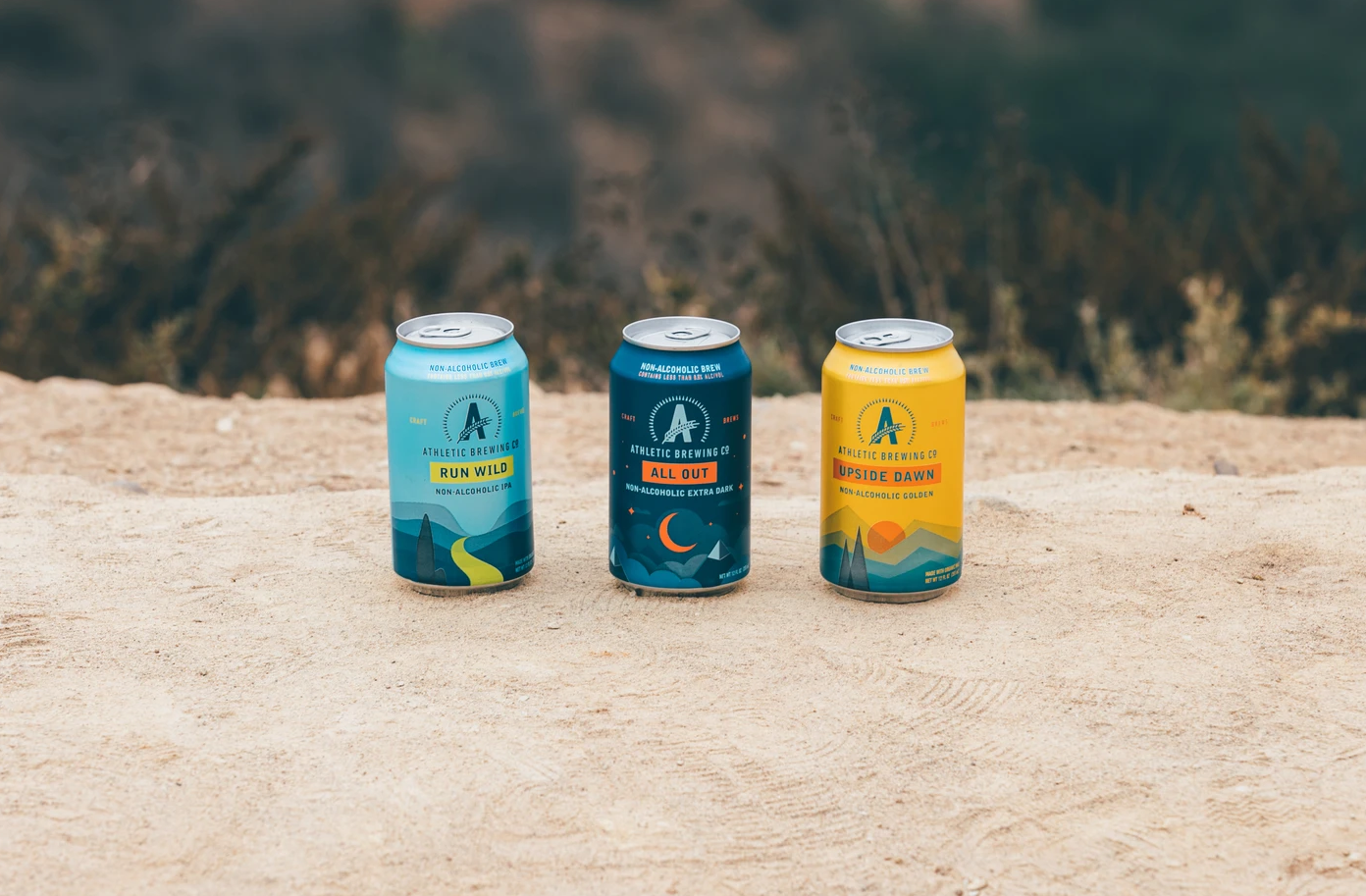
Doubters and detractors of non-alcoholic beer have only to look at Athletic Brewing Co. to understand the category has a long, bright future ahead of it.

Athletic Brewing opened its first taproom in Stratford, CT, back in May of 2018. A month later, the non-alcoholic brewer signed on with a distributor to launch two of their flagship beers statewide. Two years after that milestone was reached, Athletic took over a 100,000-barrel capacity facility in San Diego once owned by Ballast Point.

That would be impressive growth for any brewer, traditional or non-alcoholic. But there’s another element that really highlights the explosive growth and potential of Athletic: investment rounds.

In August of 2017, Athletic raised $250,000 in seed funding. One year later, in September, the brewer raised $500,000 in another seed funding round. A third funding round resulted in $3,122,221 in December 2019. And then came March 2020: Athletic raised $17,500,000 in Series B funding.

According to a report written by Kate Krader and published earlier this week by Bloomberg, some of Athletic’s investors are celebrities, something that had remained quiet for a few years now.

David Chang, the founder of Momofuku, NFL players Justin Tuck and JJ Watt, and Lance Armstrong are some of the celebrity backers identified by Krader as Athletic Brewing Co. backers. According to Crunchbase, Blake Mycoskie, founder of TOMS Shoes, participated in the 2020 Series B funding round.

That these investments remained under the radar shows that celebrities and other investors believe Athletic and the non-alcoholic beer category is here to stay.

We’ve grown accustomed to celebrity-backed spirits and wines. At least three celebs have scored massive paydays in spirits. George Clooney and Rande Gerber sold Casamigos to Diageo for $1 billion in 2017. Last year, Aviation Gin, owned by Ryan Reynolds, sold to Diageo for a deal worth up to $610 million.

Athletic is one of the brewers we showcased in our January 1 article “0.0 to 0.5 Beers to Know for Dry January and Beyond.” We shared some of Athletic’s story and how founder Bill Shufelt was motivated to fill a void in the market. Namely, refreshing and flavorful non-alcoholic craft beers.

Shufelt, like so many people who have chosen to live an alcohol-free lifestyle or reduce their alcohol intake, still enjoys going out to bars and restaurants to socialize. Athletic and other non-alcoholic brewers offer guests a drinking and dining experience without a sacrifice in quality.

I can clearly see an opportunity for people to invest in Athletic Brewing Co., Partake Brewing, WellBeing Brewing, Surreal Brewing Company, and others moving forward. It’s obvious that craft non-alcoholic beers have a future beyond Dry January, and it’s likely more talented brewers and celebrities will enter the category. In fact, 2021 may be the Year of NA Beer.

Image: Athletic Brewing Co.

by David Klemt David Klemt No Comments

The 2021 Restaurant Start-Up Cost Guide & Checklist is Here! Download Today

The 2021 Restaurant Start-Up Cost Guide & Checklist is Here! Download Today

by David Klemt

This guide gives anyone starting a restaurant, bar, brewpub or other F&B venue the best chance for success in 2021.

Hospitality has endured a nearly endless thrashing for almost an entire year. The calendar has ticked over to 2021 but still, the pummeling doesn’t have an end date.

However, the industry has endured and continues to do so. We don’t know when Covid-19 will cease presenting a threat but we know this: there’s no end to the fight in those in the hospitality community.

Veteran and neophyte owners and operators are still going to open new venues in 2021, pandemic be damned. That fact means it’s more crucial than ever before that owners are positioned for success.

The KRG Hospitality 2021 Restaurant Start-Up Cost Guide & Checklist aims to structure the process of opening a restaurant or bar to maximize an owner’s opportunity. The guide contains 2021 start-up costs, renovation costs, scaled costs, an in-depth milestone checklist, and more that will help readers understand the process and keep them on track to go from concept to opening doors as smoothly as possible.

Click here to download the guide and start down the path of restaurant or bar success today.

by David Klemt David Klemt No Comments

Dave Portnoy, Other Celebrities Provide Financial Support for Restaurants and Other Small Businesses

Dave Portnoy, Other Celebrities Provide Financial Support for Restaurants and Other Small Businesses

by David Klemt

Famous chefs and restaurateurs aren’t the only people lending their celebrity to raise money for struggling businesses and the workers they employ.

Well, notoriety may be a better descriptor for Dave Portnoy‘s influence than celebrity. He may not be an operator but he is one of the most prolific pizza reviewers and influencers on the planet. And there’s no denying he’s been in the corner of restaurants, criticizing how officials and their responses have dealt lethal blows to the industry.

The Barstool Sports founder was challenged to put his money where his mouth is by Marcus Lemonis after “ranting” about the plight of Covid-19-ravaged restaurants and bars. Rising to the challenge, Portnoy seeded the Barstool Fund with a personal donation of $500,000, which Lemonis matched.

That half-million dollars isn’t the only donation Lemonis has made to help small businesses. The entrepreneur, philanthropist and television show host launched the Nashville 30 Day Fund by putting in $500,000 of his own money just days after December 25, 2020. This particular fund provides small businesses and individuals that operate or reside within a half-mile radius of the Christmas Day bombing site in Nashville with forgivable loans up to $100,000

Back to the Barstool Fund. Bolstered by celebrity backing and support from more than 175,000 donors and counting, the fund has raised more than $22 million in less than a month and helped more than 100 businesses.

Guy Fieri, who helped grow the Restaurant Employee Relief Fund to well over $20 million, has donated money to the Barstool Fund. So have Aaron Rodgers (who reportedly pitched in $500,000), Tom Brady, Dana White, and Kid Rock.

One crucial element for small businesses applying to the Barstool Fund is that they must still be paying their employees. There are no regional restrictions, but applicants do need to explain the intended use for whatever funds they may receive. According to a Newsweek article, checks will be given to businesses selected for Barstool Fund support on a month-t0-month basis.

Below you’ll find the restaurants, bars, pubs, taverns and even a soda shop that have received Barstool Fund grants as of yesterday afternoon, January 11. To apply for funds, please click here. If you can afford to contribute, please follow this link and click “Contribute to the Fund.”

Northeast

Gaetano’s Tavern on Main (Wallingford, CT), Laskara (Wallingford, CT),  Piggy’s Cafe (Hartford, CT), Red Rock Tavern (Hartford, CT), Abbey Burger Bistro (Baltimore, MD), Claddagh Pub (Baltimore, MD), Don’t Know Tavern (Baltimore, MD), Dough Boy Fresh Pretzel Company (Dundalk, MD), Atlas Pub & Kitchen (Chicopee, MA), Casa Mia (Marblehead, MA), Jalapeno’s Mexican Grill (Walpole, MA), Jimmy’s Pub & Restaurant (Mansfield, MA), The Park Lunch (Newburyport, MA), The Village Trestle (Goffstown, NH), Hoboken Beer & Soda Outlet (Hoboken, NJ), Jack’s Cafe (Verona, NJ), Marandola’s (Bradley Beach, NJ), Mia Restaurant (Oceanport, NJ), Nanni Ristorante (Rochelle Park, NJ), Tim Kerwin’s Tavern (Middlesex, NJ), The Underdog Bar & Grill (Haledon, NJ), Acquista Trattoria (Fresh Meadows, NY), Bayview Tavern (Seaford, NY), Borrelli’s (East Meadow, NY), The Café (Long Beach, NY), Chadwick’s Restaurant (Brooklyn, NY), Durf’s Family Restaurant (Fairport, NY), The Eagle House (Williamsville, NY), Holbrooks Backporch (Holbrook, NY), Johny’s Luncheonette (New York, NY), Kabooz’s Bar and Grill (New York, NY), Kirvens (Bronx, NY),La Conca D’Oro (Catskill, NY), Mama Mia 44 SW (New York, NY), Mary Ann’s Mexican Restaurant (Port Chester, NY), Mulligan’s Fireside Pub (Bronx, NY), Portobello Restaurant (Staten Island, NY), Roomers Bar (Lake Placid, NY), San Martino Ristorante (Yonkers, NY), Squire’s Tap Room (Tonawanda, NY), Trattoria L’incontro (Queens, NY), Flanigan’s Boathouse (Conshohocken, PA), Jack’s Spot Tavern (Pitman, PA), Kelly’s Seafood (Philadelphia, PA), La Collina (Bala Cynwyd, PA)

Midwest

Manny’s Cafeteria & Delicatessen (Chicago, IL), Ken’s Diner (Skokie, IL), Que Rico (Chicago, IL), The Rathskeller (Indianapolis, IN), Special Dogs & More (Columbus, IN), The Bomber Restaurant (Ypsilanti, MI), Champ’s Pub (Brighton, MI), Kennedy’s Irish Pub (Waterford, MI), Mac’s Acadian Seafood Shack (Saline, MI), Water Street Tavern (Kent, OH), Dairy Land Family Restaurant (Madison, WI), Gray Brewing Company (Janesville, WI), J&B’s Bar & Blue Ribbon Tap Room (Milwaukee, WI)

Rocky Mountains

Durango Diner (Durango, CO)

Southeast

Play Louisville (Louisville, KY), Steak Street (High Point, NC), Freddie’s Beach Bar (Arlington, VA), Wonju Korean Restaurant (Roanoke, VA)

Southwest

Al J’s Tavern (Tucson, AZ), Coney Island Hot Weiners (Tulsa, OK), Mack’s Tenders (Houston, TX)

Pacific

Anaheim White House (Anaheim, CA), Cactus Cantina (Riverside, CA), Dessert’D Organic Bake Shop (Mammoth Lakes, CA), Locale Farm to Table Eatery (Bakersfield, CA), Mexican Riviera (Torrance, CA), Mitla Cafe (San Bernardino, CA), Rubi’s Frosty Freeze (Whittier, CA), Tadich Grill (San Francisco, CA), Vincenzo’s Terrazza (West Covina, CA), Banks Billiards (Banks, OR), Mayan Mexican Family Restaurants (Lacey, WA)

For the full list of Barstool Fund recipients, click here.

Image: Vladimir Solomyani on Unsplash

by David Klemt David Klemt No Comments

Serve Up a Slice of Nostalgia: Viennetta Returns

Have a Slice of Nostalgia: The Return of Viennetta

by David Klemt

A British confection launched in the ’80s is headed back to the United States.

Wall’s brought what’s considered by some the first-ever branded ice cream dessert—Viennetta—to the world almost 40 years ago. The British frozen dessert and ice cream producer, owned by Unilever, launched the legendary treat in 1982.

Viennetta is said to be based on a multi-layered pastry known as mille-feuille. The original Wall’s product consists of layers of vanilla ice cream and compound chocolate that create the dessert’s signature wavy top.

Viennetta ice cream dessert

While Viennetta was a product of Wall’s in Europe, it came to America under Unilever’s Breyers label. At one point in the ’90s, the product disappeared from the United States, though it maintained a presence throughout Europe, Australia, New Zealand, and elsewhere.

As an ’80s kid, I remember seeing Viennetta commercials late in the decade,  or perhaps I saw them in the early ’90s. Either way, the images of what passed for elegance and sophistication back then informed me that Viennetta must be a “fancy” dessert. I mean, c’mon—it was served on a silver platter!

Alas, I never had the opportunity to taste what I could only assume back then was an opulent dessert before it was so cruelly whisked out of the country. But that will change this year.

Unilever is bringing at least the original vanilla flavor back to the States in 2021 under their Good Humor brand. Back in the ’80s, Viennetta wasn’t available solely at supermarkets—it was also sold at KFCs and Pizza Huts. I’ve found no announcements from Unilever or Good Humor that Viennetta will be available through a partnership at any restaurants this year, but it would make sense.

Can you experience nostalgia if you’ve never actually owned, enjoyed or consumed a product in the past personally? Apparently the answer is yes, because when I saw Viennetta was returning to America my first thought was, “Finally—I’ll have my chance,” followed by a flood of images from my childhood and early teen years.

Should I be ashamed? Maybe. But I’m not. And I know I’m not alone. And I know something else: Operators looking to leverage nostalgia, particularly if they’re ’80s- or ’90s-themed or feature programming around those decades, should be excited about this news.

Image: Wikimedia Commons

by David Klemt David Klemt No Comments

Operators Remain Caught in Vortex of Open-Close-Open Cycle

Operators Remain Caught in Vortex of Open-Close-Open Cycle

by David Klemt

Another week, another round of changes for restaurant and bar operators in different states.

It has become all too familiar for those in the hospitality industry: Orders governing capacities, party sizes, bar seating, capacities, and operating hours are issued, and within weeks or days, new orders are issued.

The result is a costly high-wire act forcing restaurant, bar and nightclub owners, operators, managers and workers to deal with an inordinate amount of stress. Every cost-incurring change threatens the longevity of each affected business and the livelihoods of those they employ.

That includes reopening. What officials likely view in a positive light isn’t that cut and dry for the business owners. Whether its ignorance or indifference, governors and other officials don’t seem to realize that permitting people to resume operation isn’t as simple as turning on lights and unlocking doors. Even a small bar is a machine with many moving parts.

As anyone who has been involved in mandated close-reopen cycles knows, there are myriad operational elements that must be aligned before throwing open the doors once again. Product must be secured, a workforce must be contacted and assembled, equipment must be checked, required health and safety protocols must be reviewed and shared with staff, the word must go out to potential guests… Those challenges and more must be overcome quickly while the threat of another closure or more restrictions loom not far in the distance.

Just a week ago, we shared the story of a Minnesota operator facing a five-year liquor license suspension for defying the order issued in November of last year that banned indoor dining. On Monday, January 11, Governor Tim Walz announced restaurants and bars will be able to open again—with restrictions, of course. Indoor event and entertainment venues will also be permitted to open.

Gov. Walz’s order allows restaurants and bars to resume indoor service at 50-percent capacity, with overall capacity maxed out at 150 people. Reservations will be required, parties may not exceed six guests and must be socially distanced six feet from other parties, bar seating will be restricted to parties of two, and dine-in service must cease at by 10:00 PM.

Indoor event venues such as bowling alleys are also limited to a maximum capacity of 150 people but are restricted to 25 percent capacity. Foodservice is required to stop by 10:00 PM if the venue serves food. Gov. Walz’s orders are, reportedly, a response to infection rates falling from 13 percent to six percent.

In another (partial) reversal, bars that don’t serve food have been ordered to close in some counties in Texas. The state’s 254 counties have been separated into 22 Trauma Service Areas (TSA). Per an order from Gov. Greg Abbott, if a TSA’s hospital capacity consists of 15 percent or more of Covid-19 patients for seven consecutive days, specific restrictions are triggered. Those restrictions are only lifted when the TSA falls beneath the 15-percent threshold for seven days straight.

TSA Q, which includes Houston, restaurants are now required to restrict capacity from 75 percent to 50 percent. Bars—businesses with gross sales of alcohol of 51 percent or greater—must close. A judge overseeing Coryell County has reportedly defended the three bars in his county, stating that he sees “no reason why our three establishments should be penalized.” Judge Roger Miller doesn’t think the bars have contributed significantly to increased infections in the county and is said to be asking for an exemption so they can remain open.

For bar owners unable or unwilling to make the transition to restaurant designation, the restriction is a lethal blow. Facing reduced traffic and rising costs, even a week-long closure can spell disaster. It’s no wonder more than 3,000 Texas bars have maneuvered to offer food and increase food sales in order to be categorized as restaurants—it’s a viable means of survival. At least restaurants in Texas are able to operate 50-percent capacity rather than the 25 percent other states have mandated should they operate in a TSA that triggers Gov. Abbott’s enhanced restrictions.

The ever-shifting rules and regulations operators face across the country make it more important than ever that they receive significant, targeted aid. Yes, vaccines have been approved. Yes, foodservice workers have been recommended for the third stage of vaccine rollout. That’s not enough. A new meeting of Congress was sworn in January 3 and the pressure campaign to demand the passage and signing into law of the RESTAURANTS Act or a similar bill must continue.

This is not meant in any way to diminish the appalling chaos and terroristic violence visited upon our Capitol Building two days ago. That reprehensible act of insurrection was an attack on us all and our elected officials must reckon with that appalling assault.

However, what occurred on January 6, a date that will certainly live on in infamy throughout our great nation’s history, does not absolve Congress from their duty to save our industry and the millions of workers it employs. If anything, it highlights their responsibility to help rather than harm all Americans.

Image: Nick Fewings on Unsplash

by David Klemt David Klemt No Comments

These are the Drinking Trends to Watch in 2021

These are the Drinking Trends to Watch in 2021

by David Klemt

It was so much fun reviewing 2021 food trend predictions that we felt compelled to do the same for drinks.

We checked out Liquor.com, VinePair, Wine Enthusiast, SmartBrief and Forbes to see what they had to say about how and what people will be drinking in 2021. As we predicted, a number of the predictions were identical or at least similar, lending them even more weight.

Let’s get into the top trends for 2021!

To-Go Cocktails are Here to Stay

What was once a defining characteristic of partying in New Orleans and Las Vegas quickly became a necessity for operators throughout the United States. To-go drinks provided operators with a way to generate some revenue during the pandemic (to varying degrees of success, of course). VinePair and Wine Enthuisast have both predicted this trend will swing more toward a stand element of operations through at least 2021. Similarly, SmartBrief and VinePair predict that alcohol delivery also isn’t going anywhere anytime soon. Also here to stay? Contactless/touchless menus. Guests have gotten used to them, and that’s unlikely to change.

When building out their cocktails-to-go menu sections, operators should consider another Wine Enthusiast trend prediction: the growth of low- and no-alcohol drinks. This trend has been growing for at least the past two years, so it’s worth noting and leveraging.

Cans, Hard Seltzer & RTDs Continue Their Rise

Canned wines, canned cocktails, hard lemonades, hard seltzers growing in the on-premise space… VinePair, Forbes, SmartBrief, and Wine Enthusiast all made similar predictions. Wine Enthusiast went a step further and more specifically suggested that the popularity of canned cocktails may be strongest in the first half of 2021. It stands to reason that what consumers make popular off-premise will be in demand on-premise sooner or later. Operators should probably assume they’ll be selling buckets of hard seltzers, hard lemonades and canned cocktails once people can resume dining and drinking in person like they did pre-pandemic.

Responsible, Ethical & Transparent Businesses are the Future

And the near future, at that. This shouldn’t come as a surprise—people vote with their dollars and today’s consumer wants to know they’re supporting restaurants, bars, hotels, resorts, and other businesses that align with their values. Wine Enthusiast and Forbes predict that consumers will seek out businesses that operate ethically and that brands, cognizant of this expectation, will work harder to be more sustainable and responsible.

Connection Becomes Even More Important

The statement that humans are social creatures by nature isn’t exactly a hot take—we all know this. Having been largely deprived of the ability to socialize, people are starving for interaction. SmartBrief predicts that consumers will look to connect more with the brands they support. This is largely down to people becoming accustomed to engaging with brands and people via Zoom and other platforms—they’re going to want to continue this engagement in person. Bars, restaurants and brands that have hosted tasting, cooking, home bartending and other events online should capitalize by hosting them in person when it becomes safe to do so.

Wine Enthusiast, in a similar fashion, predicts that people will be seeking out unique cocktail experiences, as does SmartBrief. Whereas VinePair predicts a return to classic cocktails, Wine Enthusiast thinks guests will seek out opportunities to try complex and esoteric drinks. Savvy operators may be able to save time and headaches by batching complex cocktails (at least in part), a trend Liquor.com predicts for 2021.

Operators can leverage the Liquor.com prediction that pop-up bars will grow in popularity this year. These types of experiences became more common in 2020 and bar and restaurant guests have spoken: they love them. Bar takeovers, partnerships with restaurants and food trucks… Operators have the chance to get creative with these events and attract guests craving new experiences.

Speaking of the importance of connection, Liquor.com fears the nation may lose a significant number of local distillers. The pandemic took a serious toll on distillers as tasting rooms were ordered to shutter or suffered from slow to no traffic due to the pandemic. This is an opportunity for operators and distillers: As consumers seek to connect with brands, operators can leverage the drive toward supporting local by featuring local distillers on their menus and back bars. It’s win-win-win.

Tiki is Out

This prediction speaks to responsible and ethical business practices and connection. Wine Enthusiast and Liquor.com, pointing to the colonialist roots of tiki culture and the appropriation Indigenous cultures. Liquor.com goes so far as to say tiki bars “are fast on their way to extinction,” using the example of Lost Lake in Chicago removing the word “tiki” from the bar’s lexicon. Instead, the words “tropical” and “nautical” are in favor, and the designs of such bars are eschewing the use of Indigenous images, symbols, stereotypes and language.

Honorable Mentions

Other predictions made by the publications and websites we reviewed ranged from the standard to the esoteric. For instance, Wine Enthusiast predicts that Cognac, tequila, mezcal and whiskey will continue their notable growth through 2021, with Irish whiskey in particular performing well while blended Scotch whiskey will be an exception. The publication also predicted, as at least on source does each year, that rum may finally have its moment in the United States.

Forbes thinks we’ll see rosé expressions of Champagne and Prosecco will have “a moment,” as will orange wines. Liquor.com predicts spirits will embrace and promote their individual terroir, and that “sophisticated” Jell-O shots will rise in popularity. The site, pointing to consumer concerns about health and safety, will reject shared cocktails like Scorpion Bowls for obvious reasons.

Two of the most unique predictions come from VinePair and SmartBrief. The former predicts more alcohol producers will make suspect health benefit claims, while the latter says we may see a demand for drinks infused with cannabis or psychedelic properties.

Image: Louis Hansel @shotsoflouis on Unsplash

by David Klemt David Klemt No Comments

0.0 to 0.5 Beers to Know for Dry January and Beyond

0.0 to 0.5 Beers to Know for Dry January and Beyond

by David Klemt

As consumers become more conscious of their drinking habits, alcohol-free beer options are becoming more appealing.

Interest in NA beers grows during Dry January, but shifting consumer habits show that it’s wise to offer alcohol-free options year-round.

Putting both quality non-alcohol and true-zero beers on your menu as part of everyday operations is just good business. Doing so makes guests who have given up alcohol permanently or temporarily will feel included and they’ll remember that your business offered them a complete and enjoyable experience.

Below are several options that will help you develop the NA portion of your menu thoughtfully, split into two categories: 0.5 or lower and true zero.

0.5 or Lower Beers

Mikkeller: The world-famous, revered Danish brewer prepared for Dry January by curating a bundle of five 0.0 to 0.3 beers. Mikkeller Limbo Riesling and Drink’in the Sun are 0.3, and Kinder Series Xtra Grapefruit, Weird Weather and Limbo Raspberry complete the five-pack.

BrewDog: The manifesto for this awesome brewer states that BrewDog is “determined to make a stand for independence, a stand for quality and stand for craft.” This extends to their alcohol-free beers. There are six BrewDog alcohol-free beers, one of which, Ghost Walker, is a collaboration with metal band Lamb of God.

Partake Brewing: Founder and CEO Ted Fleming created Partake Brewing in response to the lack of quality, drinkable alcohol-free beers on the market. Fleming gave up alcohol more than ten years ago but missed drinking a good beer. The Canadian craft brewer has been making inroads into the United States, providing Americans with a high-quality NA beer choice. There are five styles in the Partake Brewing portfolio: Blonde, Pale, IPA, Red, and Stout.

Athletic Brewing Co.: Bill Shufelt, the founder of Athletic Brewing, explains on the Connecticut company’s website that he chose to lead an alcohol-free lifestyle but still enjoyed going out to bars and restaurants. What he didn’t enjoy were the subpar alcohol-free beers that were the only options at most places he visited. So, he filled that void with Athletic Brewing, which currently offers six non-alcohol brews.

Surreal Brewing Company: Husband and wife team Tammer Zein-El-Abedein and Donna Hockey, who live an alcohol-free lifestyle, felt excluded by the lack of quality beer choices available. So, they did something about it: they created their own craft NA beer company operating in California. There are currently seven brews in the Surreal Brewing Company portfolio: Natural Bridges Kolsch, Creatives IPA, Juicy Mavs Hazy IPA, Milkshake IPA, Chandelier Red IPA, 17 Mile Porter, and Pastry Porter.

WellBeing Brewing: This Missouri-based brewer has a singular focus—brewing craft alcohol-free beer. Founder Jeff Stevens, similar to other founders and CEOs of brewers who gave up drinking alcohol, still liked going out to bars and live-music venues. He also ran into a similar problem: NA beers that didn’t offer an enjoyable experience. WellBeing Brewing currently offers five non-alcohol beers, three of which are vegan and therefore work for Veganuary: Heavenly Body Golden Wheat, Hellraiser Dark Amber, and WellBeing Victory Wheat Sports Brew (with electrolytes). Intentional IPA and Intrepid Traveler Coffee Cream Stout round out the portfolio.

Clausthaler: German brewer Clausthaler claims the title of most-awarded non-alcohol beer brewer. Clausthaler offers five alcohol-free options that taste, smell and look like beer: Original, Unfiltered, Dry Hopped, Lemon, and Grapefruit.

Lagunitas IPNA: A 0.5 beer, Lagunitas IPNA is brewed with Citra, Mosaic & CTZ (Columbus, Tomahawk, Zeus) hops so the alcohol-free offering is still as hoppy and full-bodied as its traditional counterparts.

Coors: Launched toward the end of 2019, Coors Edge replaced Coors Non-alcoholic and is intended to taste like Coors Banquet.

0.0 Beers

Budweiser 0.0: Brewed with two-row and six-row barley malt, Budweiser Zero achieves true zero-alcohol status and weighs in at just 50 calories and 11.5 grams of carbs.

Heineken 0.0: It took years, according to Heineken, to get the recipe for Heineken 0.0 just right, which uses the brewer’s famous A-Yeast.

Bitburger Drive: A completely alcohol-free brew from a brewer that adheres German Beer Purity Laws, Bitburger Drive is 0.0 pilsner.

Image: Alex Knight from Pexels

by David Klemt David Klemt No Comments

86 Restaurant Struggle Campaign a Quarter of the Way to Million-dollar Goal

86 Restaurant Struggle Campaign a Quarter of the Way to Million-dollar Goal

by David Klemt

It’s a new year and we could all use a lift and some great news.

I think a grassroots campaign to provide financial assistance to struggling restaurant workers should restore a bit of faith in humanity.

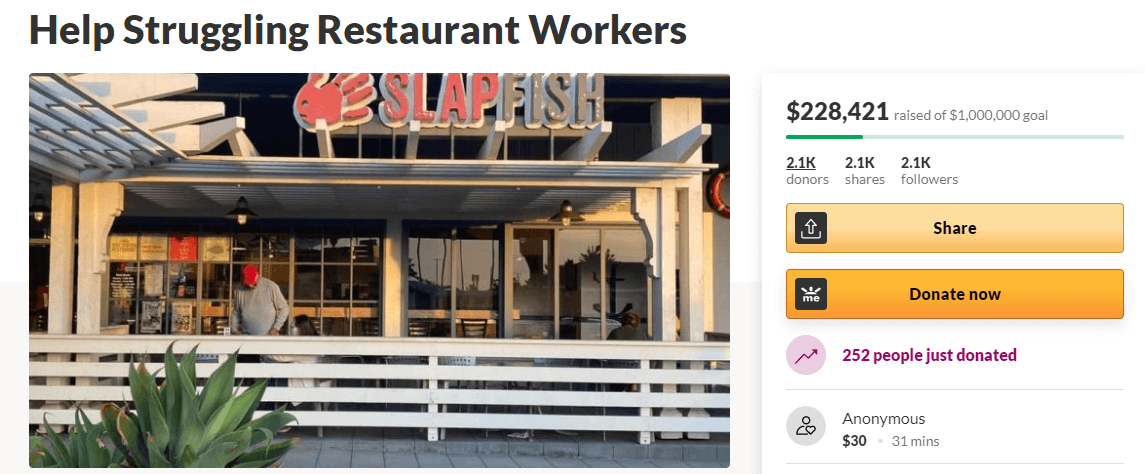
Chef Andrew Gruel, CEO and executive chef of the Slapfish chain of seafood restaurants, along with wife Lauren Gruel and Slapfish vice president of operations Brad Hall, launched the 86 Restaurant Struggle campaign on GoFundMe in December 2020. The goal is to raise $1 million for restaurant workers enduring hardship.

This news gets better and better:

  • 86 Restaurant Struggle has raised over $228,000 of the $1 million goal.
  • More than 2,100 people have donated to the GoFundMe campaign.
  • So far, half of the donations fall within the $5-100 range, meaning that even during these incredibly difficult times, people are coming together to give whatever they can afford to share.
  • The funds are being dispersed immediately to restaurant workers in need.
  • Turnaround time for 86 Restaurant Struggle fund applicants to be screened and receive their funds is, so far, less than two days.
  • As of two days ago, the campaign has managed to quickly disperse more than $100,000 of the funds raised.

The campaign is inspiring, even if the reason for its existence is the maddening failure of government to provide meaningful assistance to the hospitality industry and the millions of hard-working people it employs. This industry is made up of people who don’t leave others behind and who won’t wait for the government to decide anyone’s fate if they can help it.

Hey, we may not all like one another but we have each other’s backs. It’s important for our mental and emotional health to keep that in mind, as difficult as that may be sometimes.

To learn more about 86 Restaurant Struggle, please click here. To apply for assistance, click here. To follow Chef Gruel and track the progress of 86 Restaurant Struggle, click here.

by David Klemt David Klemt No Comments

Defiance of Sweeping Restaurant and Bar Restrictions is Growing

Defiance of Sweeping Restaurant and Bar Restrictions is Growing

by David Klemt

Defiance of Covid-19-related bar and restaurant restrictions is growing.

Operators across the United States are showing their willingness to refuse to comply with orders they feel are unjust. From being restricted to delivery and takeout only to crippling capacity limits, restaurant and bar owners are making it clear they have no intention to quietly let their employees and businesses suffer.

The pushback has taken various forms so far, from civil disobedience to organized, peaceful protests.

There’s the #OPENSAFE movement in Orange County, California, to which several dozen operators have committed. These business owners have pledged to operate safely and responsibly but have refused to comply with Governor Gavin Newsom’s orders that banned in-person dining.

86 Politicians, a grassroots movement coming out of Los Angeles County in California, was created as a response to the sweeping orders kneecapping the hospitality industry. If politicians are going to hurt rather than help operators and their employees, 86 Politicians supports recalling and removing them from office.

In New York City, the Latino Restaurant Bar and Lounge Association of New York State and New York City Hospitality Alliance organized a peaceful protest just over two weeks ago. Several hundred restaurant and bar owners, operators and workers gathered and marched against Governor Andrew Cuomo’s ban on indoor dining. Gov. Cuomo’s order was itself defiant: it defied logic and went against the state’s own contact-tracing data.

Now, an operator in Minnesota is facing a five-year suspension of her bar and bistro’s liquor license for defying orders. Lisa Hanson, owner of the Interchange Wine and Coffee Bistro in Albert Lea, roughly 90 minutes south of Minneapolis-Saint Paul, refuses to comply with Governor Tim Walz’s executive order banning indoor service. Hanson has been engaged in this fight since at least December of last year.

Hanson organized a protest—a reportedly peaceful one—of around 200 people yesterday. Protestors marched and chanted from city hall to the courthouse, walking past the Interchange at one point.

The bar and bistro, which has been hit with a temporary restraining order and had its license revoked by the Minnesota Department of Health, has a sign up declaring it a “Constitutionally Compliant Business.” That sign, which appeared in a WCCO 4 News clip and bears the logo, phone number and weblink for the Constitutional Law Group, states that the Interchange doesn’t follow any government official or agency’s “orders or suggestions” for face masks or social distancing.

According to a news report, the Minnesota Department of Public Safety is moving forward with a 60-day suspension of the Interchange’s liquor license. Hanson told reporter David Schuman that she had two choices: “Either I closed permanently or I opened fully.”

Hanson chose the latter. The Interchange’s owner is entitled to a court hearing before her suspension goes into effect. A tip jar at the bar and bistro has been transformed into a legal fund collection.

Whether one agrees with Hanson’s decision to make a stand and risk her liquor license and therefore business is somewhat beside the point. The #OPENSAFE and 86 Politicians movements, the protests in New York City, the story of the Interchange (which has yet to reach its conclusion), all point to increasing tensions.

Many restaurant and bar owners and operators don’t feel as though their voices are being heard. They feel like politicians at all levels of government are targeting them, using the businesses as scapegoats. More and more, the words “arbitrary” and “unfair” are coming up in conversations about rules that are crippling—if not outright killing—the hospitality industry.

Well over 100,000 restaurants and bars in the US have closed permanently since the start of the pandemic in March of last year. Unless officials listen to operators and at least gain a cursory understanding of their needs and challenges, more closures and job losses are imminent.

To be clear, we at KRG Hospitality aren’t against logical, common sense health and safety protocols aimed halting the spread of Covid-19. One of the cornerstones of hospitality is ensuring the safety of guests and employees. However, government officials and agencies are implementing and executing orders that are, quite clearly, uninformed and severely harmful. What works for retail and other industries doesn’t work for our industry.

It’s crucial that pressure be kept on Congress and Senate to vote on the RESTAURANTS Act and ensure it’s signed into law. The 117th Congress was sworn in yesterday and we must continue to demand they do their jobs and save our industry. We’ve been targeted as scapegoats—it’s beyond time we receive targeted relief.

Politicians can expect more protests and less faith in their abilities to govern if restaurant and bar owners and professionals continue to be harmed by their orders. Perhaps the only way to persuade them to help the industry and, in turn, keep their constituents employed, is to imperil their political influence and careers. Eighty-six ignorant and harmful politicians, indeed.

Image of Minnesota State Capitol: Bao Chau on Unsplash

by David Klemt David Klemt No Comments

Dry January Will Be Different in 2021

Dry January Will Be Different in 2021

by David Klemt

Tomorrow marks the start of the first Dry January we’ve ever experienced under stay-at-home shutdowns and bar, restaurant and nightclub restrictions.

Like Veganuary—remember way back to yesterday when we wrote about it?—the movement as we’ve come to know can be traced back to the UK. People have chosen t abstain from alcohol in January for decades but Dry January really took off after the trademark was registered by a non-profit called Alcohol Change.

Understandably, many operators have taken issue with Dry January. Taking a hit to the bottom line for a month (or more) because of a reduction in alcohol sales isn’t an exciting proposition.

However, Dry January may be different this year. The convergence of a number of consumer behaviors driven by restricted access to restaurants and bars may present an opportunity.

Throughout most of 2020 we’ve been inundated with reports about unprecedented boosts in online alcohol sales. Premium and ultra-premium spirits grew at a faster rate than they had pre-pandemic. Operators have been forced to pivot, relying heavily on delivery, (somewhat) traditional takeout, and curbside pickup.

Put those all together but substitute premium spirits for premium alcohol-free options and there’s the potential for operators to generate revenue directly linked to zero-proof sales.

One of the keys to succeeding with zero-ABV drinks is presentation. Many alcohol-free brands are dedicated to elevating the category, meaning they can be treated the same as their low- and full-proof counterparts. Curated zero-proof drink kits that include quality modifiers, mixers, garnishes and drinkware can help generate sales. Post quick how-to videos to social media showing a member of the bar team building zero-proof cocktails to create interest.

Those are just two ideas. It shouldn’t be difficult for operators to pivot and offer alcohol-free options that are authentic to their brand and therefore resonate with their guests.

Operators that nail their Dry January menu programming lay the groundwork for succeeding with the alcohol-free category throughout the rest of the year. We finally live in an age where sober, sober-curious and intermittently abstinent consumers don’t feel uncomfortable visiting a bar. Make them feel welcome. Operators who alienate these guests will drive them straight to their competitors to ring their registers instead.

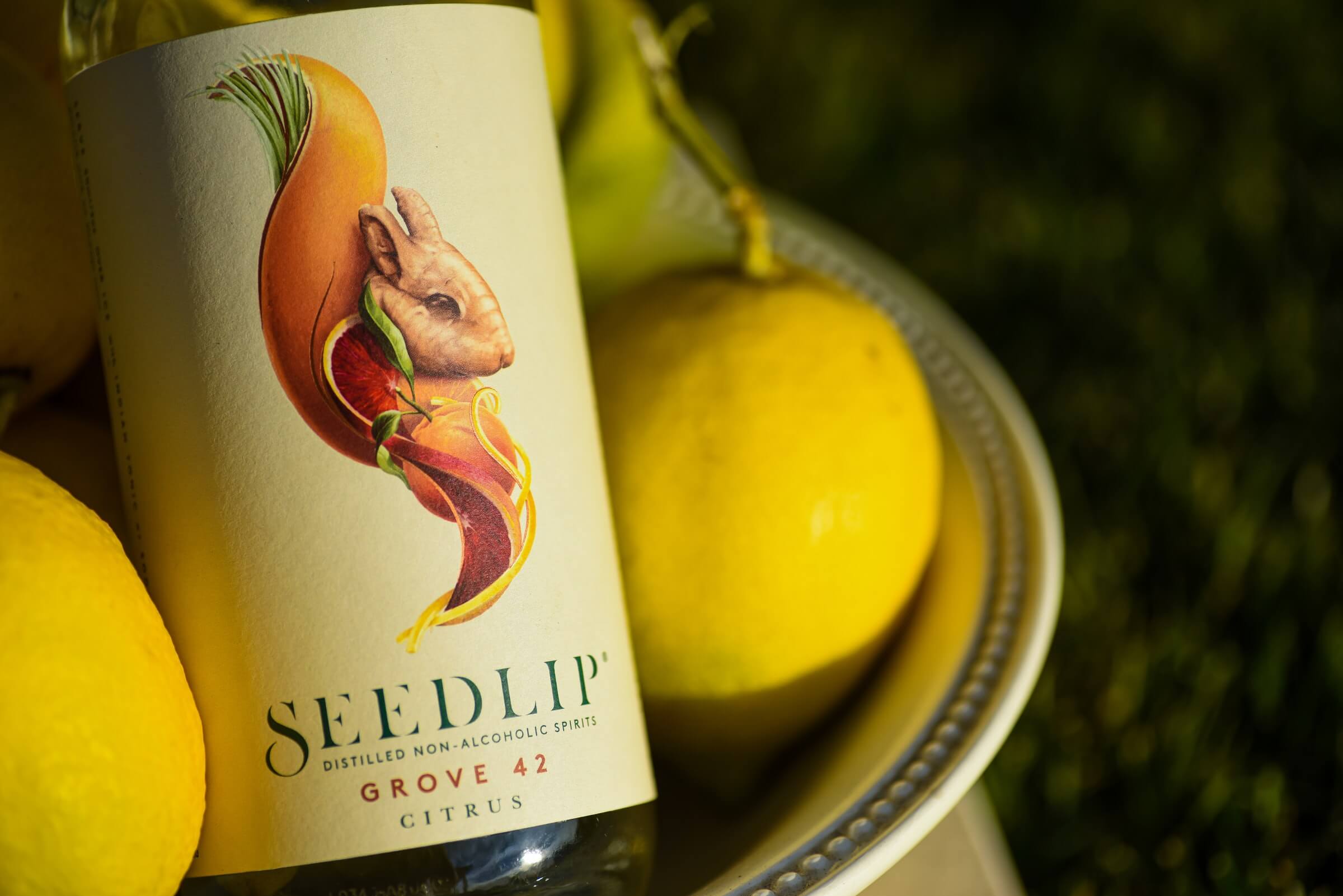
Seedlip is probably the best-known within the alcohol-free category but more premium brands are emerging. Operators should familiarize themselves with the following: Lyre’s (which crafts zero-proof spirits that taste like their traditional counterparts), Wilderton (which uses a distillation method that never introduces alcohol), and Shoki (which showcases African and Caribbean heritage and flavors). There are also brewers embracing the alcohol-free movement, such as Calgary’s Partake Brewing (which is beginning to cross into the US) and Lagunitas and their IPNA, an alcohol-free IPA.

Image: YesMore Content on Unsplash

by David Klemt David Klemt No Comments

The 2021 Food Trends to Know for Veganuary

The 2021 Food Trends to Know for Veganuary

by David Klemt

Strange or even inappropriate as it may seem, it’s time to review food trend data and predictions because we’re hurtling toward 2021.

January also plays host to two monthlong traditions that impact F&B operations: Dry January and Veganuary. For this post, we’re focusing on the latter.

Veganuary may not have claimed “tradition” status just yet, to be honest, but it appears to be well on its way. The movement began in the United Kingdom in 2014 as a social and eco-friendly campaign intended to make the transition to adopting a vegan diet as easy as possible.

The movement has been growing each year with 2018 through 2020 seeing the biggest increases in participation. In 2017, a reported 50,000 people had signed up for Veganuary. That number jumped to a reported 170,000 in 2018; 250,000 in 2019; and 400,000 in 2020. According to the Veganuary campaign, 2020’s participation represented more than one million animal lives and the CO2 equivalent of 450,000 flights.

“Research shows that health is a significant driver for so many people going vegan, especially American consumers. But the reasons to test this lifestyle and decrease consumption of animal-based products are countless, from improving health, to reducing animal suffering, and helping to preserve the planet,” said Veganuary CEO Simon Winch in 2018. “Research shows that not only are there more people curious about going vegan, but more people are sticking with the lifestyle after taking part in Veganuary, which is great news! We are thrilled with the enthusiasm and growing response from Americans taking the pledge and will continue to do our part in making it as easy as possible to try vegan, for as many people as possible.”

Participants sign up for free and are challenged to stick to a vegan diet for the entirety of January. While Covid-19 vaccines have been approved, they’re not widely available to the general public. Many markets are still restricted to outdoor dining, delivery and pickup. It’s important that operators stay current with food and consumer behavior trends to remain top of mind and continue generating revenue.

We reviewed multiple sources to find common vegan-friendly food trends for operators to leverage when programming their 2021 menus.

Plant-based (Datassential, Delish)

One big difference between plant-based and vegan is that the latter’s focus on moral and ethical reasons for choosing the diet. Regardless, plant-based is expected to grow in popularity and therefore demand across the globe.

Tofu (Food & Wine, Whole Foods Market)

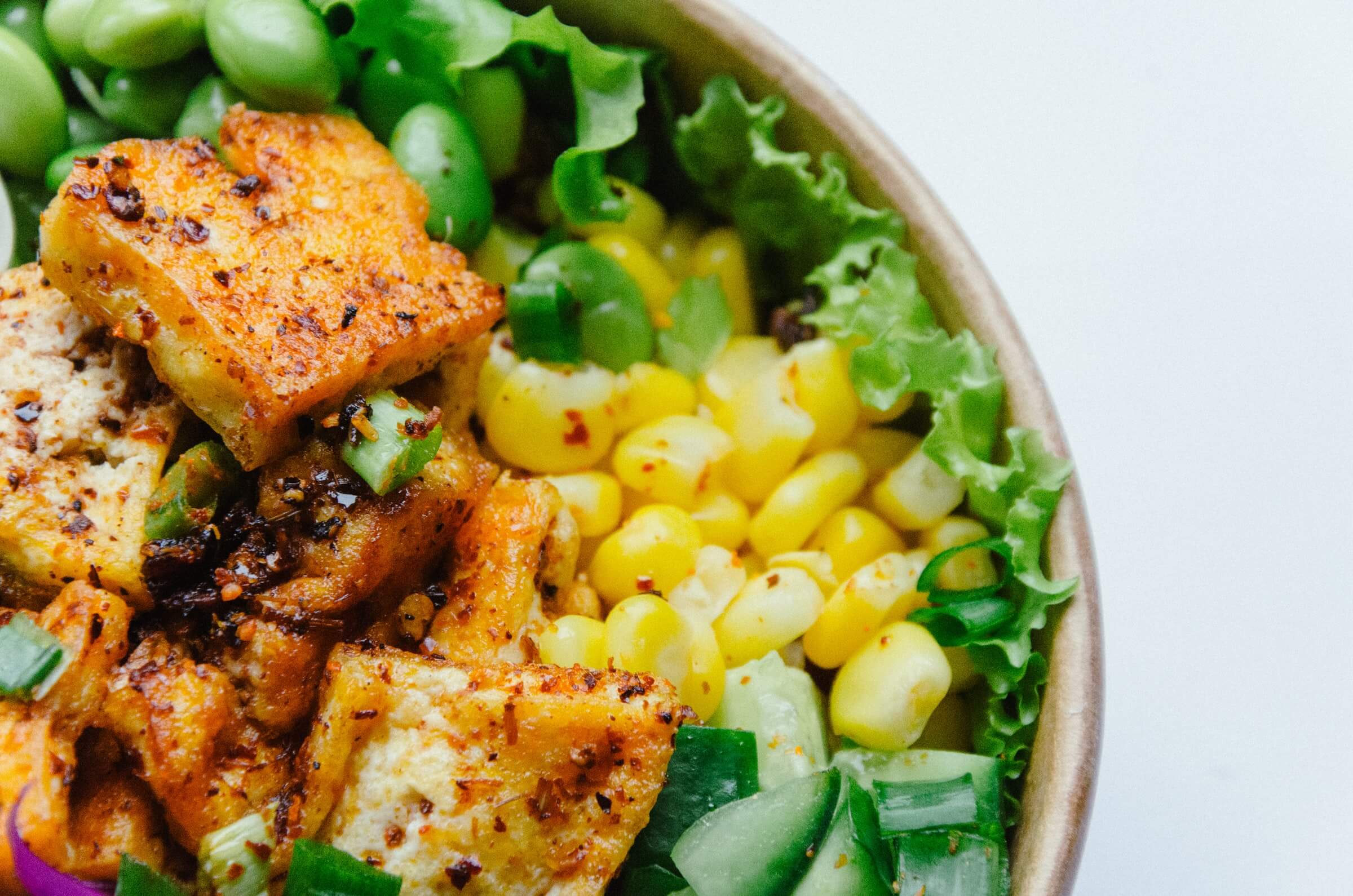
The great thing about tofu, a sentence I never thought I’d type, is that the back of house can get as creative as they want with it. Tofu “scrambles” (no eggs, just peppers, onions and sweet potato cubes), fishless tacos (breaded and brined tofu), and spaghetti with tofu riffs elevate this ingredient.

Mushrooms (Food & Wine, Whole Foods Market)

Portobello mushrooms, for example, are more than capable of starring in an array of dishes, replacing animal proteins rather easily. There’s also the fact that mushrooms are being used to make to-go packaging, giving eco-minded guests another reason to support a particular restaurant.

Chickpeas (Whole Foods Market, Martha Stewart.com)

“You can chickpea anything,” says Whole Foods Market. In fact, they claim it’s the cauliflower, taking several forms, like pasta and flour.

Hyper-local (Food & Wine, MarthaStewart.com, The New York Times)

The push for restaurants to source ingredients locally and highlight them on their menus isn’t expected to slow. These publications and more are recognizing supporting local as a “trend” (it’s more a movement at this point) that will get stronger in 2021.

Meal kits (Food & Wine, Delish, MarthaStewart.com, The New York Times)

These, as several publications have stated, are here to stay. Consumers got used to these when subscription services exploded in popularity. Some restaurants offered them pre-pandemic as a response to the meal-kit subscription craze, and they’ve become more prevalent since Covid-19 ripped apart the world. They’re a hit with consumers, so operators should consider vegan-friendly meal kits during Veganuary.

Home cooking classes (Datassential, Whole Foods Market, Delish)

Many of us probably feel like our entire lives are one big Zoom meeting at this point. Well, that’s not expected to change any time soon. A great way to connect with guests staying at home is to host cooking classes—with a focus on vegan cooking in January—and follow up with curated meal kits.

Datassential also identified baby carrots and ramen among their 2021 food trend predictions (and both are vegan-friendly), and carob, chicory root, “future” produce (specialty produce varities), and honeysuckle as flavor trends to follow next year.

Two trends that are not considered vegan? Avocados and fermented honey because the reliance on bees to produce and cultivate both are considered “exploitation” by vegans. Remember the moral and ethical difference between vegan and plant-based from above? There you go.

Image: Anh Nguyen on Unsplash

by David Klemt David Klemt No Comments

Make Your Restaurant Concept ABSURᗡ in 2021

Make Your Restaurant Concept ABSURᗡ in 2021

by David Klemt

Those seeking new restaurant opportunities in 2021 should give serious consideration to Absurd! Kitchen Co., KRG Hospitality’s unique turnkey QSR.

Development of the concept was motivated by the realization that operators need to continue to pivot to survive the pandemic and thrive in a post-pandemic world.

“At KRG Hospitality, we immediately pivoted in March 2020 into ‘rescue mode,’ understanding the immediate needs of so many independent operators,” says Doug Radkey, president of KRG Hospitality.

Moving forward into 2021, guests will be more concerned health, safety and their comfort than ever before. Absurd! was developed as a response to heightened guest expectations and to create a path forward for operators in the post-Covid-19 era. Not only is the concept forward-looking, it’s designed for turnkey operation.

Restaurant guests were growing accustomed to the convenience of frictionless ordering, pick-up and delivery. Lock downs, restrictions, and health and safety concerns have pushed delivery and pickup closer to the forefront of guest expectation. Absurd! leverages the latest in technology and utilizes a subscription element to reward loyalty while offering a convenient and safe QSR experience.

In the new era of restaurant operation we can expect guests to be less tolerant of waiting in lines. Multiple publications have published articles hypothesizing that the Covid-19 pandemic we lead to the end of waiting. Considering the importance of social distancing and how commonplace curbside pickup has become, it’s understandable that many guests have developed a preference for speedy, safe service.

Equally understandable is a guest wishing to keep interactions with other people to a minimum. The ability to peruse a menu via QR code or pay their bill using their own device has offered a level of comfort to guests during the pandemic. It’s logical to believe these guest habits are here to stay.

At Absurd! locations there are no traditional lines. By design, there’s no contact between guests and staff. Guests interact with a location via designated pick-up or drive-through areas. In the pick-up area, guests access food-safe storage units through their mobile devices to grab their orders. The drive-throughs only serve delivery drivers or those who have placed pre-orders. Convenient, safe, time-saving restaurant features for a post-pandemic world.

Absurd! cuisine is inspired by Southern flavors and dishes such as loaded chicken strips, fried waffle sticks, breakfast bowls, and sandwiches. There are options for the full range of dietary needs and preferences, such as dairy-free, gluten-free and vegan meat alternatives. Along with a competitive, high-quality menu, KRG Hospitality has developed a retail offerings that include branded dry spices and meal kits, leveraging another trend that has seen significant growth during the pandemic. The concept’s packaging is sustainable, and adding a food truck can expand an Absurd! operation’s reach.

“Approximately 85 percent of the food menu will be prepared on-site, including the seasoning mix and ‘dredge’ for the fried chicken, which is intended to also be gluten-free and dairy-free,” says Radkey. “The brand is able to accomplish this by maintaining a small but robust and strategic menu mix over the breakfast, lunch, and dinner day-parts. Other food items such as the chile cornbread, breakfast biscuits, and sandwich buns will be sourced through regional partnerships.”

While developing Absurd!, KRG has created a loyalty program to go along with it that’s relevant to today’s guest preferences and consumer habits. Loyalty programs have made the news lately, with attention being paid to how they’ve been changing for the past couple of years. Tech has emerged as a driver for such programs, combining guest data and personalized digital interactions to increase loyalty. However, creativity is a crucial element as well. Recognizing the value of a unique but easily understood loyalty program that offers an attractive value proposition, KRG’s approach for Absurd! is a beverage-based subscription service.

“With a low monthly cost of approximately $8.99 USD per month, the Absurd! beverage subscription program, which is optional, gives the brand an easy way to attract customers and convince them to change their traditional F&B ordering habits while building a strong base of loyalty (and data),” says Radkey. “Consumers today are accustomed to low-cost monthly subscriptions. Therefore, we think it is time for restaurants to tap into that opportunity. The ‘unlimited drinks’ within this program include coffee, iced tea, lemonade, and an assortment of flavored soda waters.”

Absurd! Kitchen Co. isn’t unique for the sake of being different. First and foremost, the concept was designed for experienced and new operators alike so they can thrive in the new era of hospitality. The dedication of KRG Hospitality to helping operators flourish with concepts that are scalable, sustainable, profitable, memorable and consistent is ingrained in Absurd’s DNA.

The concept is a recession- and pandemic-proof QSR that doesn’t rely heavy upon day-to-day involvement by the owners, making it ideal for operators of any level, from the neophyte to the experienced hospitality group.

Click here to learn more about Absurd! and visit www.AbsurdKitchen.com to download this turnkey concept’s information packet.

Image: KRG Hospitality

by David Klemt David Klemt No Comments

You Need to Watch “Restaurant Hustle 2020: All on the Line” Now

You Need to Watch Restaurant Hustle 2020: All on the Line Now

by David Klemt

Whether you own, operate, manage, are employed by or have ever spent time at a restaurant as a guest, you need to watch Food Network’s Restaurant Hustle 2020: All on the Line.

Guy Fieri, who has helped raise $24 million (and counting) for restaurant industry workers, executive produced and co-directed the documentary, which aired last night. He tasked skeleton production crews (one would assume given the pandemic) with following four incredible chefs—Marcus Samuelsson, Maneet Chauhan (and her husband Vivek), Christian Petroni, and Antonia Lofaso—and said he wanted them to keep the cameras rolling to capture “the good, the bad and the ugly.”

When the scope of Covid-19 became clearer and the industry began to see how much devastating its impact would be on restaurants, bars and other hospitality venues, Fieri says in the documentary that he had two thoughts: “’No way can this happen,’ and, ‘Oh my god, this is gonna be worse than we ever imagined.’”

He’s angry about what’s happening to the industry and millions of people it employs and feeds.

“I was mad. I’m still mad,” says Fieri in Restaurant Hustle 2020. “Wrecked lives, wrecked families… Changed the history of the industry.”

Per the documentary, Fieri felt compelled to help his “millions of brothers and sisters” in whatever ways possible: “There was no words. It’s coming. Prepare. Stick together. What can we do?”

The documentary begins with three indisputable facts that speak volumes to the importance of the industry: The restaurant industry employs over 15 million people. That equals up to 20 percent of America’s workforce. The industry generates over $850 billion in sales.

From there, Restaurant Hustle 2020 introduces the four chefs, their restaurants, their challenges, and their collective hustle. Like so many in this industry, there’s no giving up in these people—there’s only fight.

Chef Marcus Samuelsson

Seeking community after 9/11, Chef Samuelsson opened the Harlem location of Red Rooster in 2010. That location employed 180 people—Chef Samuelsson had 30 venues located in eight countries when Covid-19 hit. Pre-pandemic, Red Rooster in Harlem would see around 1,100 guests on a Saturday night, and Chef Samuelson was just a week out from opening the doors of Red Rooster in Miami.

“It’s taken me 25 years to build this moment, but it took ten days to tear it all down. I don’t wish it on my worst enemy,” says Chef Samuelsson.

Chef Maneet Chauhan

Chef Chauhan and her husband Vivek operate four restaurants and three breweries within the Morph Hospitality Group portfolio in Nashville, Tennessee. At their peak, they served 2,500 guests over the course of a weekend. Morph employed nearly 300 people but by March they made the heart-wrenching decision to close their doors. Recalling the difficult choice, Chef Chauhan is brought to tears talking about how gracious her employees were about it.

However, Chef Chauhan and husband Vivek are willing to fight for their dreams and their employees: “The thing is, we are scrappy. We are immigrants,” she says.

Vivek focused on developing and strategizing reopening plans, and the duo fully embody the meaning of the Hindi word “jugaad,” or “a flexible approach to a problem.” While it only represented maybe a tenth of their regular sales, Morph implemented curbside pickup at three of their venues. They rotated availability offering curbside at a different location on Friday, Saturday and Sunday. This allowed them to bring back a handful of employees.

Chef Christian Petroni

There are five locations of Chef Petroni‘s Italian restaurant concept Fortina throughout New York’s tri-state area: Armonk, Brooklyn, Rye Brook, Stamford, and Yonkers. Heading into 2020, they were set to have another amazing year after doing very well in 2019.

“We were just gearing up to take over the world,” says Chef Petroni.

The first Covid-19 death in the United States was reported on February 28 in King County in Washington State. As we know, on March 16, 2020, NYC shut down around 27,000 restaurants, resulting in the loss of 225,000 jobs. Chef Petroni employed nearly 300 people but had to reduce his workforce to less than twenty. To help the communities they serve and generate some revenue, Chef Lofaso created Pies for the People so customers were able to buy pies for those in need or who needed a morale boost (such as hospital workers and EMTs).

Chef Antonia Lofaso

Over the course of a decade, Chef Lofaso has built and operated three restaurant concepts in Los Angeles, California. Her restaurants employed almost 500 people and back in February, serving 1,200 guests over the course of just two weekend evenings was common. Chef Lofaso’s biggest passion is the hospitality aspect of restaurant operation and being “the facilitator of the good time.” That good time came crashing down in March.

“It’s taken me ten years to build these three restaurants and it took a matter of a week for it all to be torn down,” says Chef Lofaso.

She admits to feeling sadness and anger, in large part because she had to lay off nearly 500 employees. Chef Lofaso says that she feels responsible to her team members because they help her build her dream. By March she was able to bring back roughly 20 workers, convert her locations into markets, and sell liquor, which allowed her to bring back 90 percent of her back-of-house employees for at least two days per week and double sales.

For the rest of the story, people will have to watch Restaurant Hustle 2020. The importance of Food Network, Guy Fieri and these chefs capturing this crucial moment in history cannot be overstated.

As Fieri says in the documentary, it’s “a historical moment in time in an industry that is so important to all of us in so many ways, shapes and forms, and these four very brave chef-restaurant owners captured it. Something you’ve never seen. Something you’ll probably never see again.”

As we move forward into 2021, it’s crucial we remember that this story is still unfolding—we don’t know what the new year holds for this or any industry. We know that without targeted aid, the lives of millions of Americans are in jeopardy. We know that even with vaccines available, we’re not out of harm’s way yet.

We don’t know what the industry will look like when the world returns to “normal,” whatever that may be. But we know this industry is made up of fighters and we look out for our own. We’ll get through this together.

Food Network is available via several streaming platforms, including Amazon Fire TV, Roku and Apple TV.

Photo by Shangyou Shi on Unsplash

by David Klemt David Klemt No Comments

Buy a Shirt. Fight Cancer.

Buy a Shirt. Fight Cancer.

by David Klemt

It’s the giving season and the hospitality industry is one that takes care of its own.

We all have the opportunity to help an industry veteran and also support an incredible cause.

In July of this year, Chris Patino was diagnosed with stage four pancreatic cancer. One night he went to bed feeling fine and the next morning he was unable to get out of bed.

Patino is an industry advocate who has focused on elevating the art and craft of bartending, brand education, and executing incredible events. He’s a partner in the award-winning Raised by Wolves, founder of the strategic marketing agency Simple Serve, and a Bartender’s Weekend organizer.

Now, Patino has launched This T-Shirt Fights Cancer. The proceeds of each This T-Shirt Fights Cancer tee, designed by Dave Stolte, based on a design by Woodrow Guthrie, and originally sketched on the back of a napkin—so fitting for this industry—go to the Pancreatic Cancer Action Network (PANCAN).

Like Patino, PANCAN is dedicated to building community, sharing information, and advocacy. The organization fights to improve the lives of those living with pancreatic cancer through advancements in research.

As we near the end of the year, please consider joining the fight against cancer and purchasing a This T-Shirt Fights Cancer tee. To quote Patino on his campaign page, “And as always, f*ck cancer.”

Image: This T-Shirt Fights Cancer

by David Klemt David Klemt No Comments

Foodservice Workers Recommended for Phase 1c of Covid-19 Vaccines

Foodservice Workers Recommended for Phase 1c of Covid-19 Vaccines

by David Klemt

The Centers for Disease Control and Prevention (CDC) has recommended that foodservice workers be included in phase 1c of the Covid-19 vaccine plan.

On Sunday, the Advisory Committee on Immunization Practices met to vote on phases 1b and 1c.

The committee identified those next in line for the two Covid-19 vaccines authorized for use in the United States from Pfizer/BioNTech and Moderna as “frontline essential workers” and people aged 75 years and older (phase 1b), and “other essential workers” (phase 1c).

Phase 1a consists of 24 million healthcare workers, residents of long-term care facilities (LTCF), and staff members who work at such facilities.

An estimated 49 million people are included in phase 1b. Roughly 30 million people in this group are categorized as frontline essential workers. Those in education (teachers, daycare workers, support staff), First Responders, United States Postal Service workers, corrections officers, grocery store workers, food and agriculture workers, those in manufacturing, and people who work in public transit will be inoculated in phase 1b.

People aged 16 to 64 who have high-risk medical conditions, those aged 65 to 74, and the other essential workers have been voted into phase 1c. Foodservice workers are among the roughly 57 million included in this phase, along with the media; construction workers; those who work in shelter and housing; transportation and logistics workers; those in finance, IT, communications, and the legal sector; people who work in the water and water waste industries; public safety workers; and the energy sector.

A lone dissent among the 13-1 vote came from Dr. Henry Bernstein. The doctor felt that, based on the available science, people aged 65 to 74 should have been included in phase 1b.

It’s important to note that states can go against the CDC’s “Phased Allocation of Covid-19 Vaccines” recommendations. For example, Governor Ron DeSantis has stated that the vaccines, which are not yet available to the general public, will go to people aged 70 and up in Florida in phase 1b. In Texas, those aged 65 years and older and people with certain chronic illnesses are said to be the state’s phase 1b priorities.

Other states may follow suit and deviate from the CDC’s phased allocations.

Image: Gustavo Fring from Pexels

by David Klemt David Klemt No Comments

75% of American Restaurant Operators Expect Decreased Sales Through Start of 2021

75% of American Restaurant Operators Expect Decreased Sales Through January

by David Klemt

The fifth National Restaurant Association COVID-19 Restaurant Impact Survey results have been released.

Unsurprisingly and unfortunately, the news is not good.

For their fifth installment, the NRA surveyed 6,000 restaurant operators and 250 supply chain businesses between November 17 and 30. Full-service and limited-service restaurant operators, independent and chain, reported their sales had slipped in October.

Only 12 percent of restaurant operators reported seeing sales growth. In comparison, 79 percent said sales were down.

Per the NRA survey, one reason for the decline in sales is outdoor dining season coming to a close. In New York City, per Governor Andrew Cuomo’s order banning indoor dining, outdoor dining is the only option beyond delivery and takeout. However, the weather is less than attractive for outdoor diners.

Costs are disproportionate to sales for most operators. Nearly 60 percent of survey participants reported increased labor costs when compared to the start of the Covid-19 pandemic in the United States.

Profit margins, historically thin even at the best of times, were reported by 86 percent of operators who partook in the survey to also be lower than the they were prior to the pandemic.

The NRA’s predicted outcome for the industry is that without targeted and significant federal relief specifically for restaurants and bars, more temporary and permanent closures are coming, as are further losses of jobs.

According to an estimate from the NRA, more than 110,000 restaurants and bars had closed by December 1. On average, these establishments employed 32 people, and 17 percent of the closed businesses employed a minimum of 50 people.

Close to 40 percent of survey participants indicated they were considering closing their restaurants or bars temporarily and waiting out the pandemic. That means layoffs that could affect dozens of employees per establishment. Almost 60 percent of survey participants expect a reduction in their workforces over the coming three months.

Sales are expected to lag through the start of next year. The majority of operators surveyed, 75 percent, expect sales to fall even further from their already lower levels through the start of next year.

If that logical assumption becomes reality, slowed sales may trigger a domino effect: reduced traffic, plummeting sales, and increased operational costs leading to layoffs, temporary closures, and ultimately permanent closures.

Restaurants and bars require targeted relief for the industry to survive. If that help doesn’t come soon, if the RESTAURANTS Act or similar legislation isn’t signed into law, the country will lose millions of jobs permanently. The economy will be dealt a lethal blow, losing out on tens of billions of dollars.

Now is not the time to back off the pressure being put on Congress and Senate to pass the RESTAURANTS Act. Click here to tell them time is up—they must return to Washington in January to save our restaurants and bars.

Image: Enrico Hänel from Pexels

by David Klemt David Klemt No Comments

“More help is on the way.” But not for restaurants and bars.

“More help is on the way.” But not for restaurants and bars.

by David Klemt

Speaking about the economic relief package, Senate Majority Leader Mitch McConnell (R-KY) struck what can be generously described as tainted altruism.

“More help is on the way,” said McConnell on the Senate floor on Sunday. He also took the time to attempt to absolve Republican leadership of any blame for the glacier-paced movement forward on relief, laying the fault at Democrats’ feet.

To be blunt, both parties have failed the American people and small businesses in terms of providing federal assistance during the pandemic.

After months of inaction on relief—with the exception of a Congressional vote in September that failed to pass in the Senate—and weeks of discussions and partisan sniping, negotiators finally managed to zero in on a bill with a strong likelihood of becoming law.

Yet sifting through remarks made by some politicians regarding pandemic relief over the course of the past several months, variants of the word “prompt” were bandied about.

If the package passes—which is expected to happen later today—members of Congress and Senate will no doubt perform self-congratulatory victory laps for finally doing their jobs after months of failing to do much of anything in the way of relief. Meanwhile, millions of Americans will continue to face life-altering challenges, reaching out for lifelines that are simply not there.

Included in the package are a number of details identified as “key” to both political parties:

  • The ability for businesses that had received Paycheck Protection Program loans which had been forgiven to deduct the costs said loans covered on their federal tax returns.
  • Speaking of the PPP, it will be reopened with over $284 billion intended for small businesses.
  • $12 billion in available PPP funds for minority-owned and “very small” businesses.
  • $15 billion made available in PPP funds specifically for independent movie theaters, live music venues, and cultural institutions like museums.
  • $600 stimulus checks for qualifying adults (and each child in a household) who earned $75,000 or less in 2019. The amount would be reduced for people who earned more. Those who made $99,000 or more last year are not expected to receive a stimulus check.
  • A $300 boost to unemployment benefits for 11 months, with a possible implementation date of December 27.
  • Gig and contract workers enrolled in the PUA or PEUC programs can expect the same $300 boost to their benefits for 11 to 13 weeks.
  • The deadline to spend billions of dollars made available to cities and states via the CARES Act is expected to be extended from the end of this year to be an entire year.
  • $25 billion in emergency assistance for renters.
  • A moratorium on evictions expected to be extended through the end of January.

What’s not in the package expected to be rushed through Congress? Hundreds of billions of dollars in state and local aid Democrats wanted, liability shields for corporations Republicans wanted, the $120 billion RESTAURANTS Act, or the $240 billion Restaurant and Foodservice Industry Recovery Fund.

Despite McConnell’s declaration that federal assistance is on the way, the economic relief plan leaves an industry that employs millions of American workers and contributes hundreds of billions of dollars to the nation’s GDP (four percent before the pandemic) to fend for itself.

Guy Fieri, in all seriousness, has done more for more unemployed restaurant workers than the government, raising more than $21 million in relief funds in under two months.

The hospitality jobs lost due to Covid-19 aren’t expected to return. With more than 110,000 restaurants closed—and counting—the economic impact will be felt nationwide and, in all probability, have global ramifications.

The PPP turned out to be an absolute farce: billions of dollars went to businesses that are anything but small by definition. There’s little reason to believe the process will improve much (if at all) this time around.

And while restaurants and bars have been crucial to nurturing community, connections and culture since inception, they’re clearly not considered culturally relevant institutions by politicians.

With Congress facing an uphill battle in terms of drafting the language for the relief bill and then voting on it, expecting our elected officials to propose, negotiate, draft and vote on a bill for the hospitality industry seems foolish. That means the earliest the industry can expect help—which seems exceedingly unlikely to ever materialize—is in late February of 2021.

Apparently restaurants, bars, and the foodservice professionals they employ aren’t key to politicians on any side of the aisle. Well, not until they need venues to host their campaign fundraisers, that is.

Image: Andrew Seaman on Unsplash

by David Klemt David Klemt No Comments

How a Famous Pub Combo May Help Combat Climate Change

How a Famous Pub Combo May Show Us How to Combat Climate Change

by David Klemt

A small UK start-up has pioneered a solution to climate change that other country’s can follow.

And it centers around a wildly popular combination ordered in pubs throughout the United Kingdom.

Beer and crisps is a combination as ubiquitous in the UK as fish and chips, bangers and mash, and steak and chips.

It turns out that the pairing may be more than just a delicious drink and snack pairing—it may just save the planet.

Alright, that may be hyperbole. But one company has found a way to cut carbon dioxide emissions and reduce manufacturing waste using beer, crisps and innovation.

CCm Technologies, formerly CCm Research, is a small cleantech firm that focuses on capturing and converting carbon dioxide so it can be used by industries like agriculture and food production.

After a successful trial, Walkers, a UK brand owned by PepsiCo and based in Leicester, England, announced their intention to install CCm Technologies equipment at their factory.

The plan will work like this: Carbon dioxide captured during the fermentation process at breweries will be mixed with potato waste and converted to fertilizer. That fertilizer will be used to grow the next crop of potatoes destined to become Walkers crisps.

Walkers makes crisps (North Americans, think of them as potato chips), and the company says the plan will cut their mission by 70 percent. Breweries tend to produce significant amounts of carbon dioxide during their fermentation processes.

While the breweries that will participate in the Walkers-CCm scheme have yet to be announced, the plan will help reduce the carbon dioxide emissions they and the PepsiCo-owned brand generate.

Americans and Canadians also love beer and potato chips, so the plan has huge potential for North America, as well. In addition to Walkers, PepsiCo owns Lay’s, Tostitos, Cheetos and Fritos brands. If the circular carbon dioxide and food waste reduction plan works out in the UK, it would be great to see it implemented in the US and Canada.

In the (hopefully near) future, bartenders and servers in the US and Canada may offer guests a planet-saving yet classic combo.

Image: StockSnap from Pixabay

by David Klemt David Klemt No Comments

New York City Restaurant Operators Rally Against Governor Cuomo’s Orders

New York Restaurant City Operators Rally Against Gov. Cuomo’s Orders

by David Klemt

Just one day after Governor Andrew Cuomo’s ban on indoor dining went into effect, New York City restaurant operators came together to protest.

Gov. Cuomo announced the ban on Friday, December 11. New Yorkers reportedly flocked to restaurants and bars that weekend for “last suppers.” The ban went into effect Monday, December 14.

New York City’s ban on indoor dining will last at least two weeks. It has been reported that state officials are considering a statewide ban on indoor dining, depending on Covid-19 trends.

Whereas New York City restaurants have been forced to operate at 25-percent capacity since the end of September, New York State restaurants have been operating at a 50-percent capacity limit.

Restaurants are permitted to offer delivery, takeout and outdoor dining. However, a massive nor’easter winter storm is blasting the east coast. Freezing weather is more than likely to keep New York City restaurants’ outdoor dining areas empty.

The Latino Restaurant Bar and Lounge Association of New York State is being credited with organizing Tuesday’s rally. The New York City Hospitality Alliance joined the protest against the indoor dining ban, as did hundreds of other restaurant and bar owners, operators and workers.

Protestors gathered at Times Square before marching from Duffy Square (the northern part of Times Square) to Midtown East where Gov. Cuomo’s office is located.

The order appears to prove the point Joe Rogan makes on the Joe Rogan Experience podcast episode with Richard Rawlings, released this week. During the episode, Rogan says the decisions politicians are making regarding restaurants and bars are arbitrary.

There’s no science, nothing. It’s arbitrary decisions that are made by politicians,” says Rogan. “And that’s the minimum: The outdoor dining thing is the most egregious because you have all these people that spent so much money to try to convert their restaurants and make these outdoor dining [spaces]—spent thousands of dollars that they didn’t even fucking have.”

According to current New York contact tracing data, Gov. Cuomo’s ban isn’t based on science. Their own data regarding Covid-19 shows that restaurants and bars account for just 1.43 percent of infections. In contrast, based on 46,000 Covid-19 cases from September to November, private household gatherings are responsible for 74 percent of exposures.

That data also makes clearer the disparity between restrictions imposed on New York City restaurants compared to the rest of the state. Long Island restaurants, for example, have not been ordered to close their indoor dining areas.

The governor’s statement that “restaurants have adapted and New Yorkers have really adapted” rings rather hollow when, per survey results released by the New York State Restaurant Association and National Restaurant Association, 54 percent of New York restaurants are expected to close within the next six month unless they receive meaningful, targeted relief.

An argument can be made that Gov. Cuomo is, as some New York operators have stated, scapegoating restaurants and bars during the pandemic. When announcing the indoor dining ban, the governor appeared to be following through with a threat rather than acting in the best interest of public safety and New York residents.

“We said that we would watch it, if the stabilization, if the hospital rate didn’t stabilize, we would close indoor dining,” he said. “It is now. We’re gonna close indoor dining in the city on Monday.”

The numbers simply don’t support that decision.

Yesterday, New York operators asked Gov. Cuomo to repeal the ban. At the time of publication, that request has been ignored.

The protestors also called for the governor to help the industry rather than hobble it, along with demanding the RESTAURANTS Act finally be voted into law at the federal level.

Every day that passes without the RESTAURANTS Act also passing thrusts the industry further into peril. More restaurants and bars close permanently each day while Congress prepares to leave for the remainder of 2020. If Congress fails to act before leaving, the industry will be without relief through at least February.

Cities across the country imposing crippling capacity limits and dining restrictions should prepare for future protests organized by restaurant and bar owners, operators, workers and supporters.

State representatives can be contacted about the RESTAURANTS Act via this link from the National Restaurant Association.

Image: Anthony Rosset on Unsplash

Top