Author: David Klemt

by David Klemt David Klemt No Comments

Meet Customers Where They Are

Meet Customers Where They Are

by David Klemt

Suburban community

If news stories are to be believed, Americans are fleeing big, expensive cities en masse.

Are those stories accurate or examples of sensationalism?

Mass Exodus?

The pandemic is, without any doubt, reshaping the United States. It is, in fact, transforming any nation on which it has gained a significant foothold.

Several sources claim that a mass exodus to the suburbs and rural towns is taking shape across America.

The authors of these stories often cite survey results, housing and rental price fluctuations, financial struggles and the cost of living in many cities, and anecdotal “evidence” to make their points.

On its face, just the argument that cities like Los Angeles and New York City are too expensive to live in with so many people struggling financially makes sense. And stories about astronomically high rent compared to square footage and median income in dense, expensive cities are commonplace.

Haute Exodus?

Still other stories tell tales of the wealthy migrating from major cities to “wait out” the pandemic.

Since wealthy people have the means, they’re able to leave densely populated areas for destinations with smaller populations. The logic being, the less people in an area, the lower risk of infection.

There are reports referring to NYC as a “ghost town” and describing San Francisco as a shell of its former densely-populated, well-heeled self.

Again, much of the reporting is supported by anecdotal and social media “evidence.”

Half-thruths

Forbes, which has published articles supporting mass exodus claims and also disputing them, has made the argument that the situation is nuanced.

Eric Martel, a Forbes Councils Member, analyzed U-Haul Migration Index (UMI) and uncovered some interesting data. Martel finds that net migration in San Francisco and Los Angeles is lower—significantly so in LA—than it was in 2018. In NYC, net migration looks higher.

More reasonable conclusions regarding Americans and the pandemic seem to be:

  • Large numbers of people have moved out of some major cities. NYC seems to be a good example.
  • Some of the wealthy have temporarily left highly-populated cities, choosing to stay in places normally considered vacation destinations for longer periods of time.
  • People appear to be moving toward the outskirts of larger cities where rent and prices tend to be lower than that of city centers.
  • Suburbs near the outskirts of major cities appear to be popular migration targets.
  • Some of this “migration” is temporary, driven by the ability to work remotely. It’s likely that some people who have moved out of cities will return when they perceive things have returned to “normal.”

Adapt

Jack Li, co-founder and CEO of Datassential, suggests operators check out so-called second-tier cities—Austin, Nashville and Charlotte, for example—and the areas where cities meet suburbs. The reasons are simple:

  • Innovation and food trends tend to start cities, reaching rural areas last. That means second-tier cities, city outskirts, and suburbs are quicker to embrace trends and innovations. (Location.)
  • Less-expensive commercial real estate prices. (Cost.)
  • Potential increase in the number of families. (Customer density.)
  • Potential increase in the number of seniors with financial means. (Customer density.)

The impact the pandemic has had makes informed decisions that much more critical to success in this industry. Demographic and feasibility studies are more important now than ever.

Both are cornerstones of the KRG Hospitality approach, whether an operator has several years’ experience or is a neophyte. Click here to learn more about how KRG Hospitality can help you and your concept, click here to learn about KRG Mindset Coaching, and click here to download the KRG 2021 Start-up Cost Guide & Checklist.

Image: The Lazy Artist Gallery from Pexels
by David Klemt David Klemt No Comments

Your Drink Menu Deserves an Ice Program

Your Drink Menu Deserves an Ice Program

by David Klemt

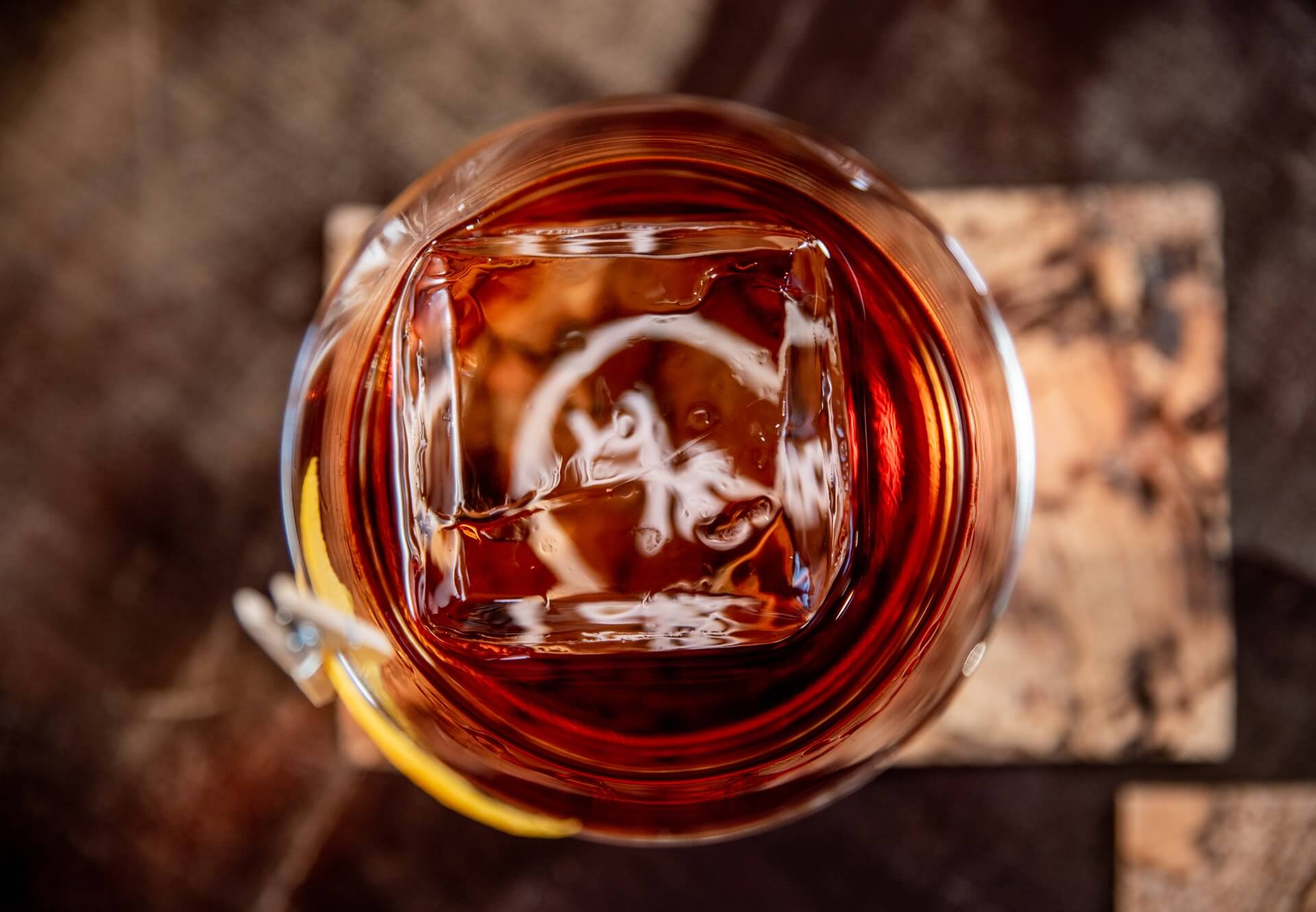
Cocktail with large king ice cube, overhead view

All ice is not created equal—there’s a reason behind their shapes and sizes.

Taking the time to consider your ice and build a dedicated program that includes it is crucial for your beverage program and the guest experience.

Remember that just like there are rules for building cocktails, there are rules for using ice:

  • Dilution is your friend. Water is a crucial component for cocktails.
  • Is your ice floating? Your build balance is off.
  • Store ice in plastic bags if it’s not being used right away.
  • Don’t use ice that’s two weeks old or older.

Types of Ice

Standard Cube (1 inch x 1 inch): These absolutely have a place in the cocktail glass. Just adhere to this standard when using standard ice cubes: Never use a water source you wouldn’t drink.

King Cubes (2 inches x 2 inches): Use these for spirit-forward drinks for consistent temperature and dilution. Examples: Manhattan, Negroni, Old Fashioned, Vieux Carré.

Collins Spear/Shard/Cylinder: For highballs. These make a Tom Collins or G&T look elegant and cool.

Ice Block: Use blocks in punches to keep large-format cocktails cold and control dilution over time.

Ice Slab: These are impressive blocks of ice bars and restaurants use to cut and shape their own cubes and spheres, often providing guests with entertainment (see below). Operators either form slabs in-house or retain the services of producers who drop them off. (In fact, there are services out there that will provide perfect and bespoke cubes, spheres and spheres.)

Sphere: Ice spheres are ideal for stirred cocktails and enjoying spirits straight. They melt very slowly in comparison to other shapes and deliver an impressive visual impact, so they often wind up in cocktails that call for king cubes.

Pebble/Crushed: Use in drinks that are heavy on syrup and/or juice, tiki drinks, and drinks served in hot climates. Examples: Frozen Daiquiri, Margarita, Mint Julep, Moscow Mule, Swizzle.

Hands-on Approach

According to many well-known bartenders, mixologists and operators, the best method for perfectly clear ice is “directional freezing.” Camper English outlined the process on the Alcademics site in 2009. But what do you do to turn a single slab into several cubes?

You’ll need an ice saw to get through the slab, a traditional single-prong ice pick to break off smaller cubes, a three-prong ice pick to break off smaller cubes and shape them into spheres if you prefer (be careful!), and an ice mallet to help the ice picks do their jobs.

Treat this process as a show for the guests. For a real-world example, the bars inside Zuma restaurants have ice stations dedicated to turning an ice slab into ice cubes. These stations are an experiential feature of the cocktail program.

Semi-hands-on Approach

An aluminum ice sphere mold is a type of “set it and forget it” device.

It may seem like these would be time-consuming to use and low-yield, but most take just a minute to form a ready-to-use sphere. Most manufacturers claim their molds can produce 30 to 40 spheres per hour.

While the mold is creating a perfect sphere of ice, the bartender grabs a glass and builds the cocktail. The guest, meanwhile, enjoys the “drama” of drink production versus ice sphere production: Will the drink and ice be ready at the same time?

Ice sphere molds range in price from under $200 to $800 (and beyond). The molds themselves are appealing to the eye, simple to use, and justify higher cocktail prices. Yes, there are bars that successfully charge more for large ice spheres, often offering different types of ice for at additional charge.

Molds make spheres in a range of diameters, normally from 1.2 inches to 2.8 inches. Higher-end models also offer shapes, such as perfect spheres, diamonds or snowflakes. Several bars that use these molds utilize custom versions that “brand” the ice with their logo.

Ice Machines

There are multiple manufacturers of commercial-grade icemakers. However, there are two that are considered top of the food chain.

Hoshizaki America’s headquarters is in Georgia and the company makes dozens of icemakers. People can choose from ice shape and the pounds of ice a machine produces in a day. We’re fans of Hoshizaki for their quality and the pandemic information they added to their FAQs last year.

Manitowoc operates out of Wisconsin and manufactures several models. There are cubers, flakers, nugget producers, and there are several solutions that work for an array of venue types, layouts and service volumes.

To learn even more about creating an epic beverage program, click here for our latest download.

Image: Moritz Mentges on Unsplash

by David Klemt David Klemt No Comments

Restaurant Revitalization Fund Passes

Restaurant Revitalization Fund Passes

by David Klemt

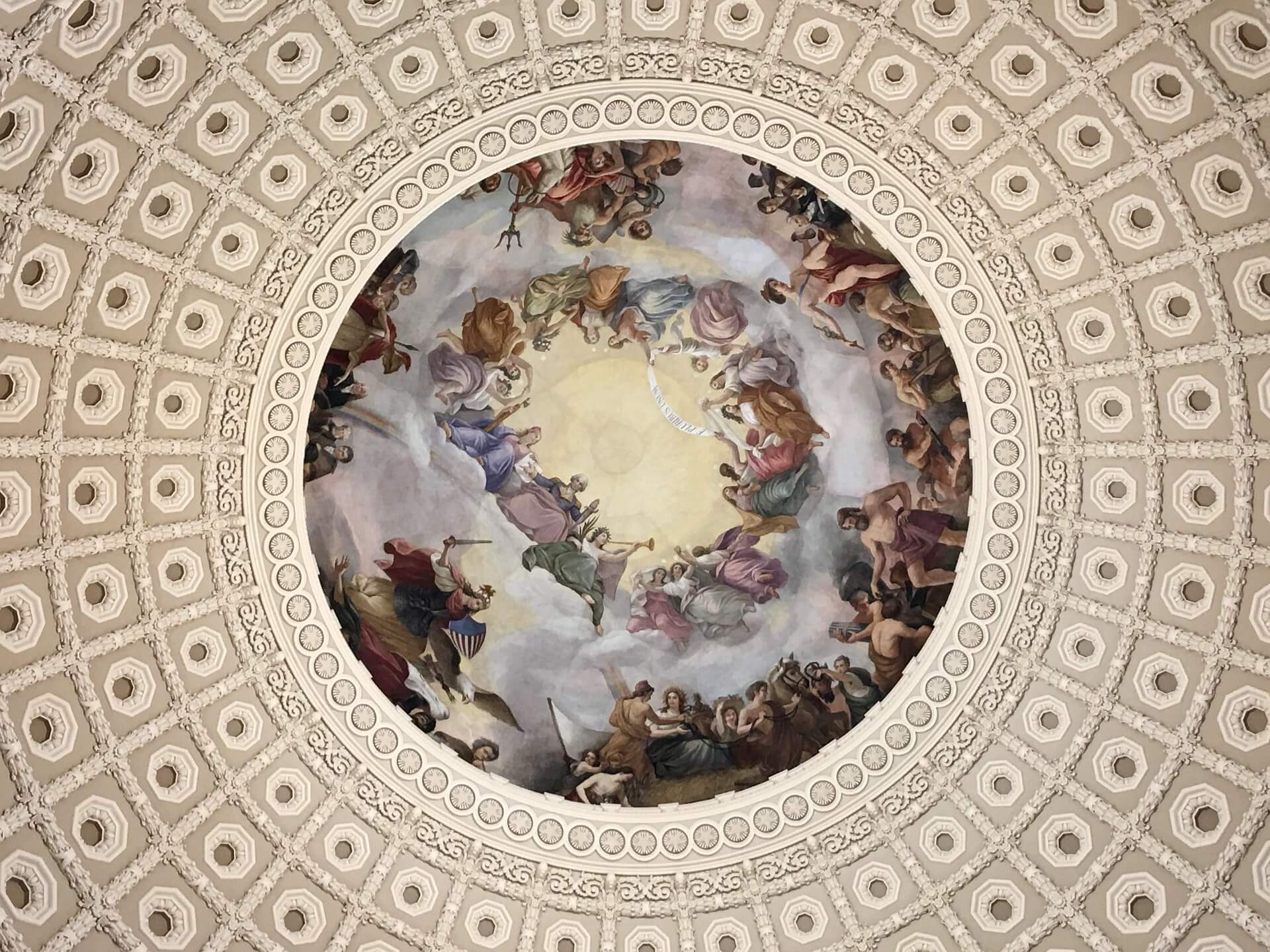
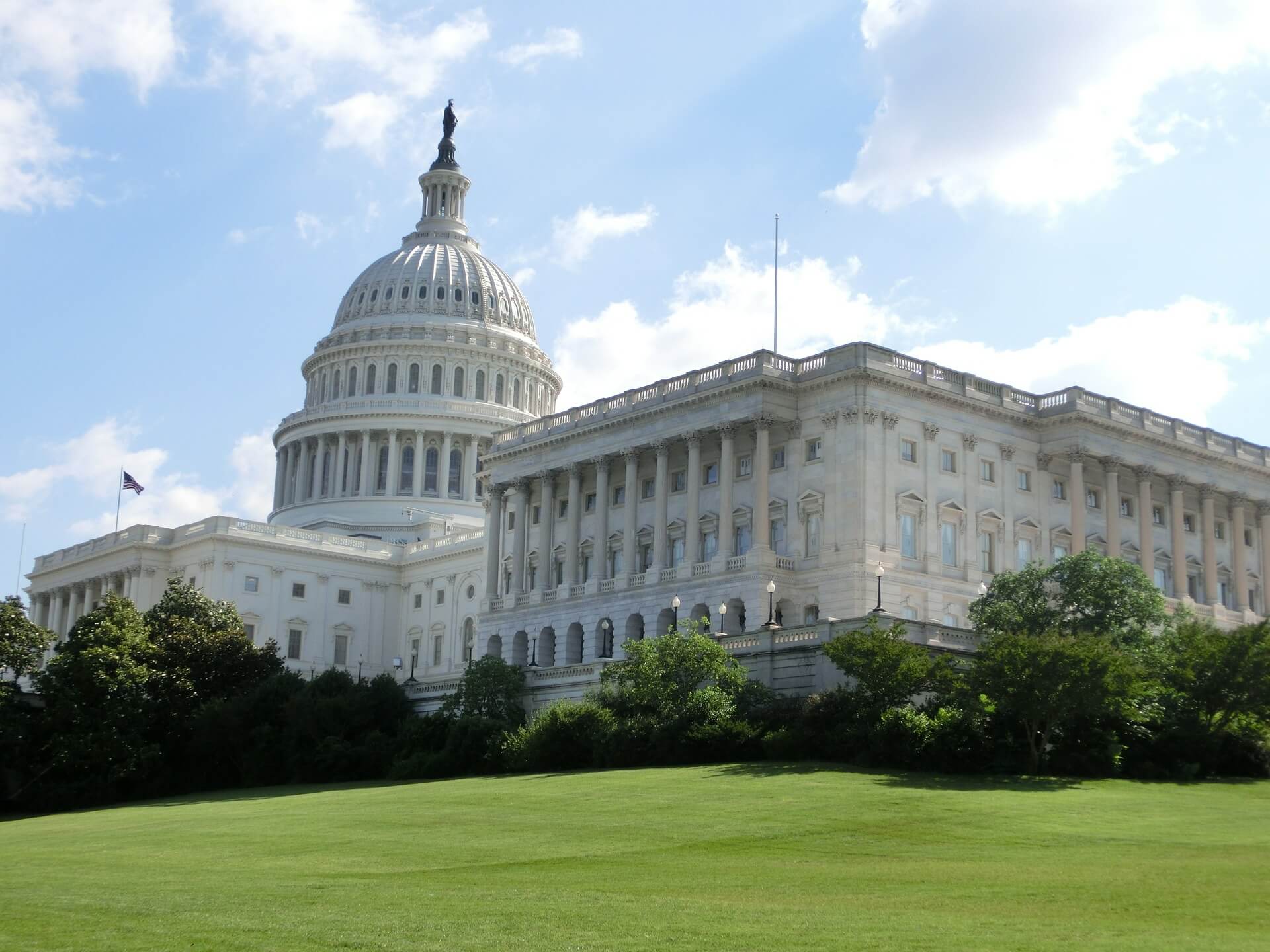
United States Capitol Building

Congress has once again voted to pass targeted relief for restaurants and bars.

The American Rescue Plan Act of 2021, which includes the Restaurant Revitalization Fund Passes, made it through Congress by a vote of 219 to 212.

All Republicans and two Democrats voted against the $1.9 billion bill, which now goes to the Senate.

Now What?

After a year of being mostly left to fend for ourselves—save for the flawed Paycheck Protection Program—operators may finally receive some relief.

The $300-per-week federal boost to unemployment, which the American Rescue Plan Act increases to $400 per week, expires on March 14. There’s some pressure on the Senate to pass the bill so it can be signed into law before or by that date.

However, we’ve been down this road before: Congress has voted in favor of a bill that contains relief for restaurants, bars and other foodservice and drinking establishments, the Senate goes a different direction, and the Congressional victory turns to ashes in our hands rather than becoming law.

Democrats control the House. A Democrat sits at the Resolute Desk. And while the 50-50 Senate is “controlled” by Democrats since Vice President Kamala Harris can break tie votes, the party can’t afford any defections if they hope to pass the American Rescue Plan.

Once again, targeted relief isn’t a certainty.

What’s in the Plan?

In short, not the RESTAURANTS Act. The American Rescue Plan provides a fraction of the $120 billion for which the industry has been campaigning for a year now.

Instead, a $25 billion grant program called the Restaurant Revitalization Fund (RRF) has been carved out for restaurants, bars and other eligible providers of food and drink.

There’s another $15 billion allocated for targeted Economic Injury Disaster Loan (EIDL) advance payments, and $1.25 billion for shuttered venue operators.

Just $7.25 billion would be pumped into the PPP and the application deadline wouldn’t be extended beyond March 31. This is likely because the PPP has disbursed over $662 billion in just under a year, and there’s still roughly $140 billion available.

In addition, the current bill includes $1,400 direct stimulus payments for individuals earning up to $75,000 or $2,800 for married couples earning up to $150,000. Payments would phase out completely for individuals earning $100,000 or married couples earning $200,000.

What’s the Restaurant Revitalization Fund?

The RRF carves out $25 billion for restaurants, bars, saloons, inns, taverns, lounges, tasting rooms, brewpubs, taprooms, food trucks, food carts, food stands, caterers, and eligible providers of food and/or drink.

Grants, should the bill pass the Senate and be signed into law, will be equal to pandemic-related revenue loss as calculated by subtracting 2020 revenue from 2019 revenue. Eligible entities could receive of up to $10 million, or a physical location could receive a maximum grant of $5 million.

RRF grants are required to be used for:

  • payroll costs;
  • principal and interest payments on a mortgage, excluding prepayments on the principal;
  • rent payments, excluding prepayments;
  • utilities;
  • supplies, including personal protective equipment (PPE) and cleaning materials;
  • F&B expenses within the eligible entity’s scope of “normal business practice” before the covered period: February 15, 2020, through December 31, 2021 (or another date as determined by the Small Business Administration);
  • maintenance expenses, including construction accommodating outdoor seating and walls, floods, deck surfaces, furniture, fixtures, and equipment;
  • covered supplier costs;
  • operational expenses;
  • paid sick leave; and
  • any other expenses the SBA determines to be essential to maintaining the eligible entity.

The SBA would be responsible for awarding $20 billion of the $25 billion fund in “an equitable manner to eligible entities of different sizes based on annual gross receipts.” The remaining $5 billion would be set aside, per the bill in its current form, for eligible applicants with 2019 gross receipts of $500,000 or less.

Click here to find your senators and urge them to pass the Restaurant Revitalization Fund.

Image: Jens Junge from Pixabay 

by David Klemt David Klemt No Comments

Self-ordering Kiosks Gaining Ground

Self-ordering Kiosks Gaining Ground

by David Klemt

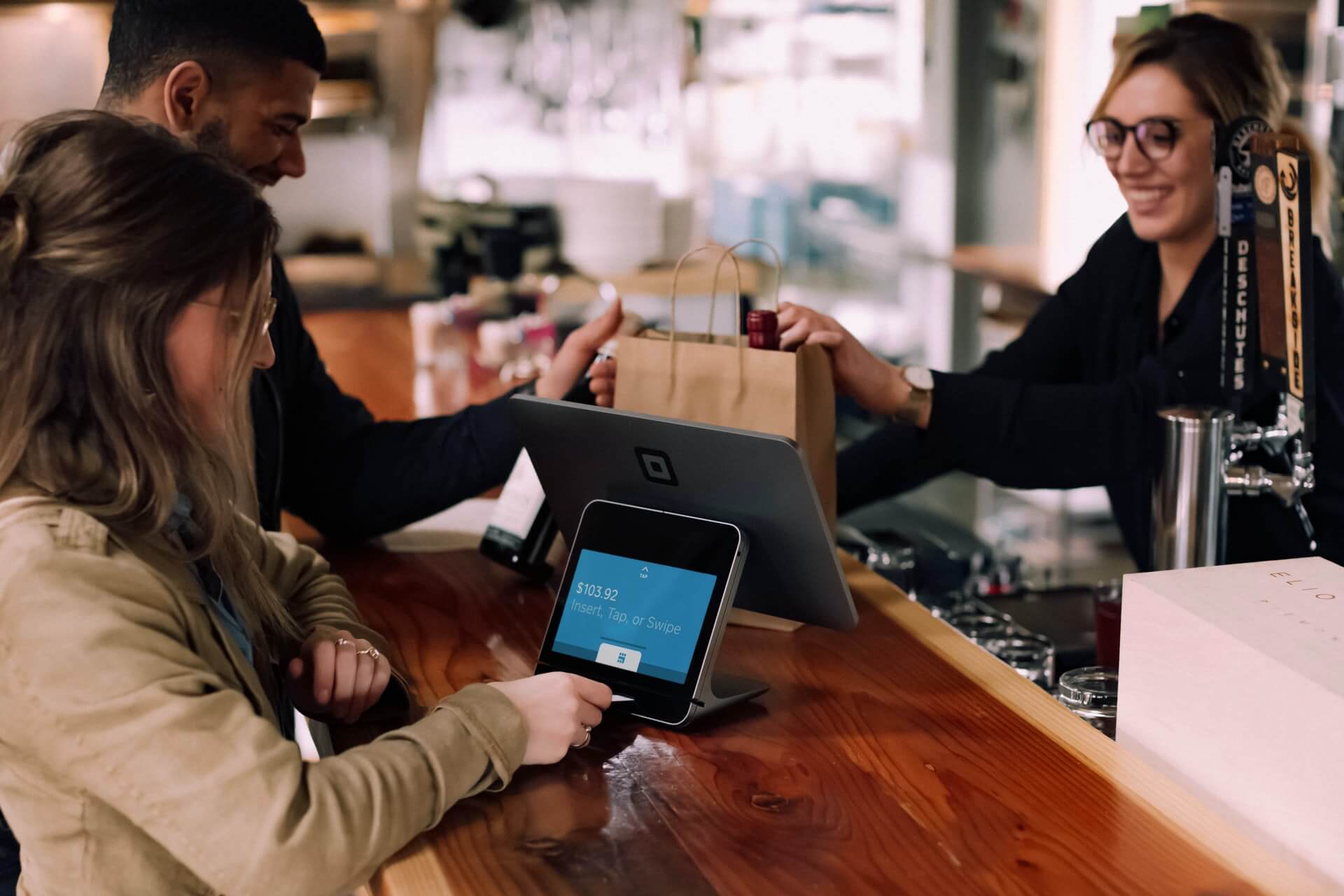
Ordering kiosks and the convenience they offer have become more commonplace, even before the pandemic plunged its claws into the world.

In addition to the convenience factor, self-ordering kiosks provide guests with a contactless option that keeps them and front-of-house workers safer than ordering face to face.

Proliferation

This technology was on its way from trend to operational mainstay long before Covid-19 savaged the planet and tore through the hospitality industry.

The presence of ordering kiosks at the National Restaurant Association Show reportedly tripled from 2017 to 2018. Quick-service, fast-casual restaurants and limited-service were earlier adopters of self-ordering tech.

It took just a couple of years for McDonald’s, as an example, to outfit thousands of locations with such kiosks.

For several months, industry pros and experts have been saying there clearly defined types of guests with which operators will have to contend post-pandemic:

  • Those who will comfortably return to restaurants and bars, treating them as they did pre-pandemic.
  • Those who will return to in-person restaurant and bar visits cautiously.
  • Those who won’t return to in-person dining until they have been vaccinated and are confident others have been as well.

One can see how self-ordering kiosks appeal to cautious guests, along with those who will use them but take their order to-go.

Types of Kiosks

Anecdotal evidence suggests there are three types or styles of kiosks that are most prevalent: terminals, tablets and tabletop systems.

Ease of function and integration has made tablet-based systems popular.

Toast and TouchBistro are two of the most popular restaurant POS systems on the market, and both offer kiosk functionality. Toast is Android-based, TouchBistro is iOS-based.

Some operators choose to mount their tablet-based kiosks on countertops, some create ordering locations with tablets affixed to stands.

There are also kiosk terminals that are similar in size to ATMs, not based on tablets, and Windows-based.

ADA Compliance

Similar to how it’s important for operators to consider their guests and comfort levels with new (or newer) tech, consideration must be paid to ADA compliance when choosing kiosks.

No guest should feel alienated, excluded, forgotten about, or valued less than other guests. Counter- and table-top ordering devices should be easily accessible by all guests, as should tablet-based systems mounted to free-standing pedestals.

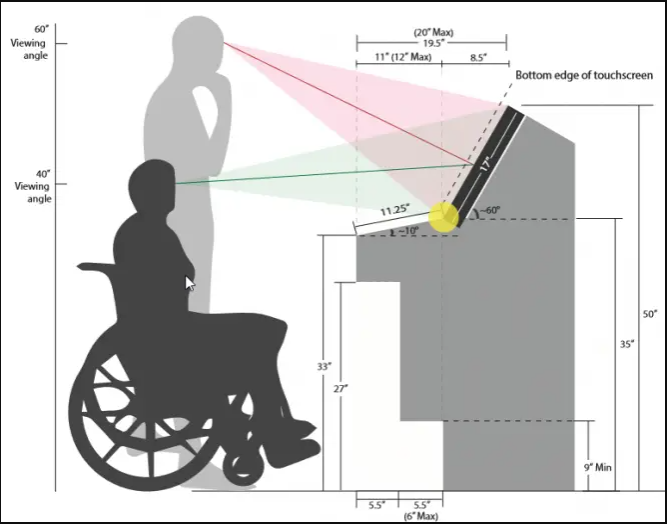
Operators who choose larger ordering terminals must appraise such systems on their ADA compliance. Last week, the Kiosk Manufacturers Association posted a 14-point ADA compliance checklist that end users can use to assess whatever kiosk is under consideration.

Kiosk Manufacturers Association ADA checklist

Image: Kiosk Manufacturers Association

One can read through the checklist in its entirety here, which includes such considerations as:

  • Depth, clearance, maneuvering and protruding objects.
  • Assistive considerations like Braille and tactile guidance.
  • Assistive technologies such as speech-output enabled display screens.
  • The Big Seven: Captions, contrast, audio, focus, target size, errors and labels

Self-ordering tech and kiosks will continue to evolve and become part of everyday operations for several foodservice business categories. While they may not become commonplace in the fine-dining space, they’re likely to dominate QSRs and fast-casual, and gain more traction in casual and family dining.

Not every restaurant, bar or hotel will benefit from this self-ordering kiosks. Operators who want to implement this tech must consider initial investment, POS integration, hardware, guest comfort, and ADA compliance.

Image: Christiann Koepke on Unsplash

by David Klemt David Klemt No Comments

Hakkasan Group Announces Reopenings

Hakkasan Group Announces Reopenings

by David Klemt

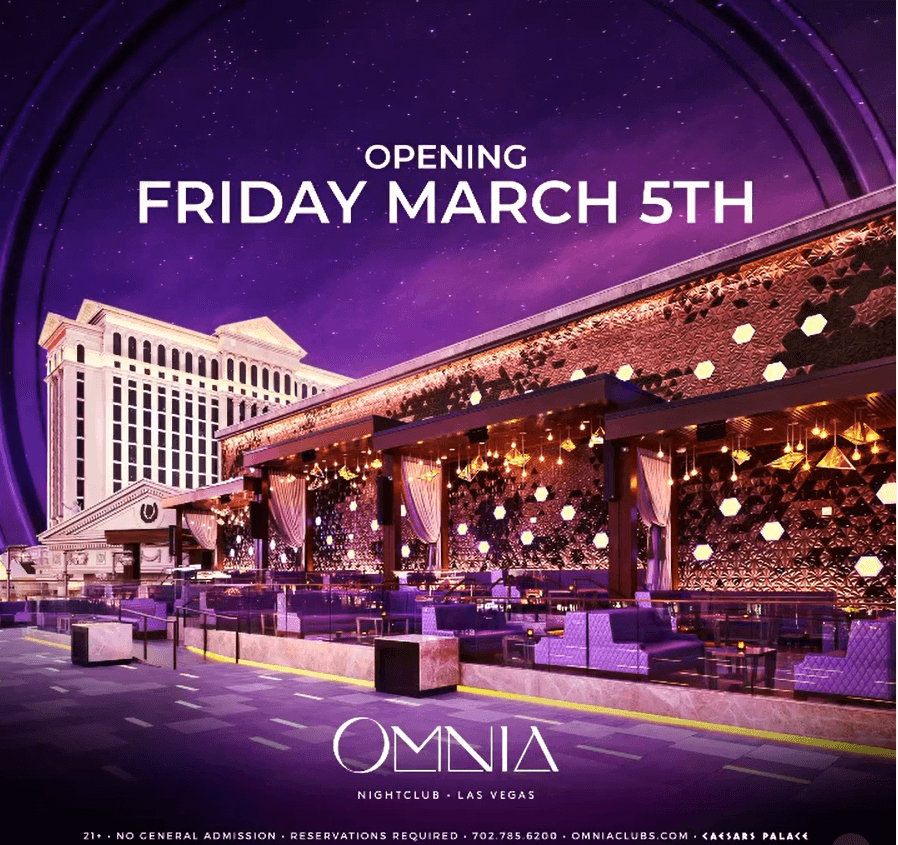
OMNIA Nightclub Las Vegas Terrace

In a positive sign for Las Vegas nightlife, daylife and tourism, Hakkasan Group has set dates against the reopening of three major venues in its portfolio.

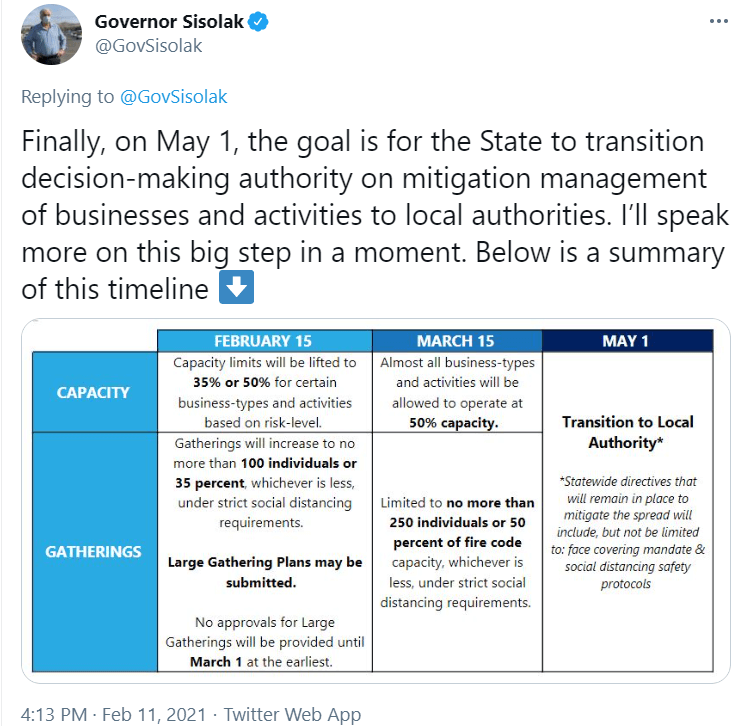
The announcement came less than a week after Governor Steve Sisolak unveiled Nevada’s Roadmap to Recovery Safe Reopening Plan.

Two Hakkasan Group properties will reopen on March 5. A third will resume business a week later on March 12.

OMNIA

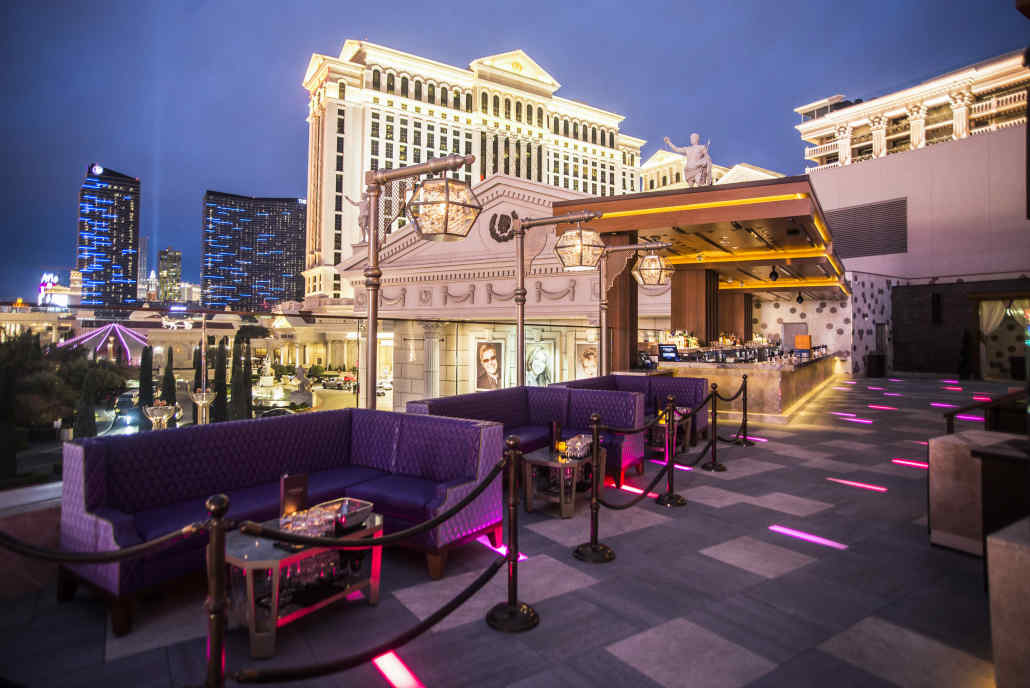
Two years after Hakkasan ushered in a new era of nightlife in 2013, OMNIA opened its doors inside Caesars Palace. Known for its “dancing” chandelier (click here for images) and opulence, OMNIA quickly established itself as a nightlife bucket list destination, attracting guests from all over the globe. The nightclub gives Hakkasan’s namesake venue a run for the title of portfolio flagship.

OMNIA is scheduled to reopen the property’s terrace area as a lounge on Friday, March 5. Restrictions mandated by the State of Nevada include reservations for nightclubs and dayclubs. In terms of health and safety protocols, a statement on the OMNIA website reads: “With health and safety protocols at the forefront: the venue has moved to touchless menu system via a scannable QR code from cell phones; VIP sections will be separated to allow for physical distancing; and rigorous cleaning plans will also be implemented.

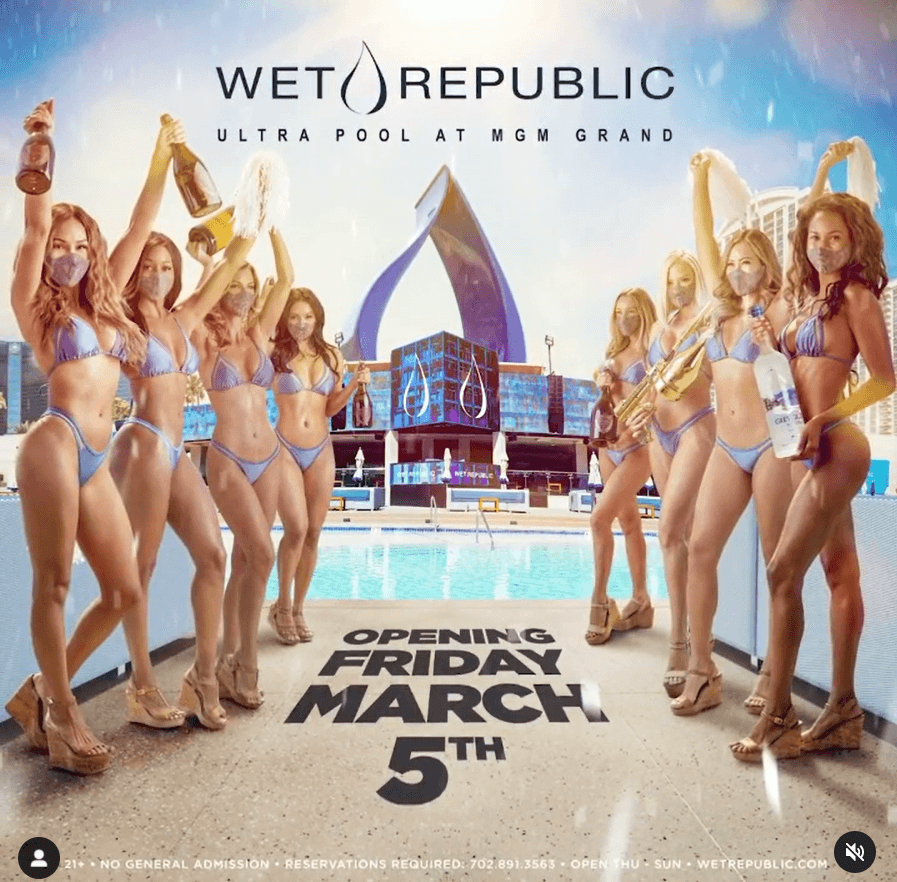
Wet Republic

The dayclub that redefined the category, Wet Republic opened in 2008. If Rehab at the Hard Rock was the pioneer in the dayclub space, ultra-pool Wet Republic is the undisputed heir to the throne. There are no plans to relinquish that crown any time soon, either.

Just before the pandemic forced Las Vegas nightclubs to close, Wet Republic unveiled renovations made to the 54,000-square-foot property. The venue was able to operate in a limited capacity midway through 2020 but it wasn’t quite the same.

On Friday, March 5, more guests will finally be able to see the refreshed dayclub, located at MGM Grand. General admission is prohibited; reservations are required and the venue is following the same health and safety protocols as OMNIA.

Liquid Pool

Located at Aria Las Vegas, Liquid Pool is an upscale adults-only venue designed to pamper guests and provide a luxe pool experience. At 16,000 square feet, Liquid is less than a third the size of Wet Republic, delivering a more relaxed and intimate vibe than its larger sibling.

There are eight cabanas, several daybeds, multiple dipping pools, and upscale F&B programming at Liquid Pool. On Friday, March 12, Liquid Pool will welcome the start of Las Vegas pool season in reserved-but-elevated style. Like OMNIA and Wet Republic, Liquid Pool requires reservations.

Image: Hakkasan Group

by David Klemt David Klemt No Comments

Datassential Finds Operators Optimistic

Datassential Finds Operators Optimistic

by David Klemt

Restaurant open sign hanging in window

The latest report from Datassential finds that the vast majority of operators are optimistic or at least confident their businesses will survive the pandemic.

Per Datassential, operator outlook appears to be more positive than it was in December.

That’s largely due to the distribution of the Covid-19 vaccine.

Datassential Covid-19 Resources & Reports

Datassential has been releasing informative Covid-19 reports throughout the pandemic to provide helpful industry, consumer and operator data.

Trending Upward” is Datassential’s 46th installment, and the research firm provides their Covid-19 resources at no charge.

For this report, Datassential surveyed 400 “decision makers for restaurants and on-site foodservice locations.”

Operator Outlook

Most of the operators surveyed, 220 or 55 percent, are still concerned about the challenges facing them and the industry. However, they’re “fairly confident” that their businesses will make it through.

That 55 percent represents no change from December of last year, when Datassential last gauged operator outlook.

The next two survey respondent segments tell the tale of optimism.

Of the 400 operators surveyed, 148 or 37 percent are “cautiously optimistic.” In fact, they expect to be even stronger post-pandemic.

Compared to December, that’s a seven-percent increase in operators who feel optimistic. That seven percent shifted from the “very nervous” segment,

Just 32 of survey respondents (eight percent) reported that they don’t think they’ll survive the pandemic. Losing any businesses to the pandemic and its terrible impact on the industry is beyond horrific, and the results of this Datassential report in no way minimize that awful truth. However, the percentage of operators who feel “very nervous” or otherwise pessimistic reducing by nearly half provides at least a semblance of hope for the future of the industry.

Staff Cuts

According to Datassential, more than 80 percent of operators who were forced to cut staff at some point during the pandemic have been able to bring back some of their workers.

Of the 400 respondents surveyed by Datassential, 21 percent of operators reported they hadn’t laid off any of their employees

Another 20 percent had to cut staff but were able to rehire all of them.

Nearly half (48 percent) have only been able to hire some of the staff they laid off back. Twelve percent have been unable to rehire any of the staff they had to let go.

Takeaway

Optimism is great for emotional and mental health. So is targeted relief. Operators and employees will likely feel far more confident and relieved if the industry receives actual targeted relief. This Datassential report’s findings are positive but we need Congress to act.

Click here to tell your representatives to pass the RESTAURANTS Act now.

Image: Artem Beliaikin from Pexels
by David Klemt David Klemt No Comments

Does the Margarita Still Reign Supreme?

Does the Margarita Still Reign Supreme?

by David Klemt

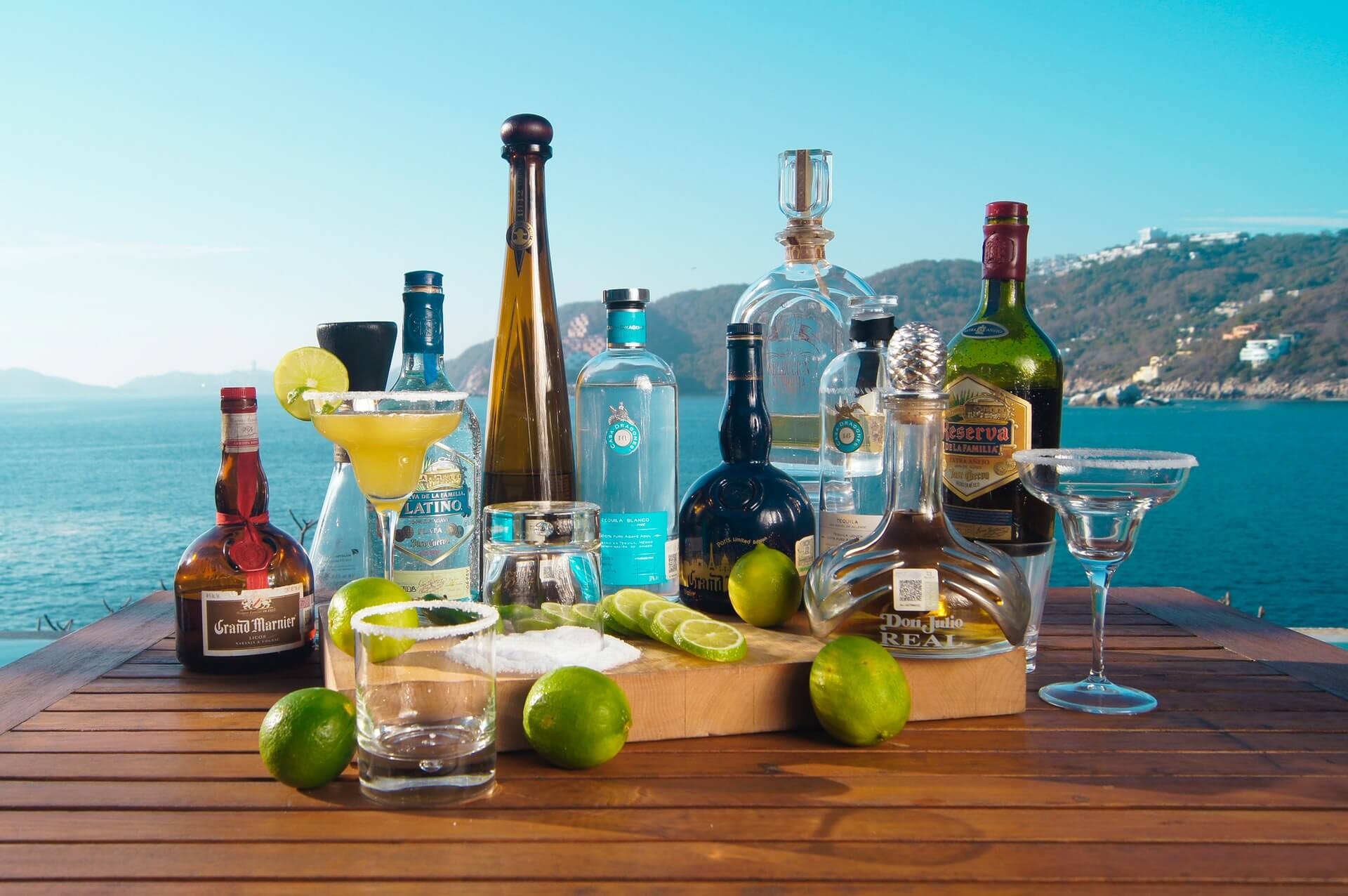
Whatever’s happening here, I’m in…

The Margarita has maintained the title of Most Popular Cocktail in the United States year after year.

But is the classic cocktail still wearing the crown and clutching the scepter?

Most Popular 2020 Cocktails

Midway through last year, Google revealed the top cocktail searches in each state:

  • Alabama: Hurricane
  • Alaska: Whiskey Sour
  • Arizona: Paloma
  • Arkansas: Frozen Daiquiri
  • California: Paloma
  • Colorado: Hurricane
  • Connecticut: Margarita
  • Delaware: Screwdriver
  • Washington, DC: Old Fashioned
  • Florida: Cuba Libre
  • Georgia: Sazerac
  • Hawaii: Lemon Drop Martini
  • Idaho: Kamikaze
  • Illinois: Manhattan
  • Indiana: French 75
  • Iowa: Kamikaze
  • Kansas: Screwdriver
  • Kentucky: Lily
  • Louisiana: Bushwacker
  • Maine: Margarita
  • Maryland: Kamikaze
  • Massachusetts: Old Fashioned
  • Michigan: Cosmo
  • Minnesota: Oliveto
  • Mississippi: Painkiller
  • Missouri: Gin and Tonic
  • Montana: Blue Hawaiian
  • Nebraska: Old Fashioned
  • Nevada: Grasshopper
  • New Hampshire: Old Fashioned
  • New Jersey: Manhattan
  • New Mexico: Old Fashioned
  • New York: Manhattan
  • North Carolina: Bushwacker
  • North Dakota: Kamikaze
  • Ohio: Boulevardier
  • Oklahoma: Black Russian
  • Oregon: Old Fashioned
  • Pennsylvania: Whiskey Sour
  • Rhode Island: Cosmo
  • South Carolina: Tequila Sunrise
  • South Dakota: Screwdriver
  • Tennessee: Buschwacker
  • Texas: Paloma
  • Utah: Cape Cod
  • Vermont: Cosmopolitan
  • Virginia: Old Fashioned
  • Washington: Old Fashioned
  • West Virginia: Kamikaze
  • Wisconsin: Grasshopper
  • Wyoming: White Russian

Margarita Slipping?

As you can see, the Margarita was only the top search in two states, Connecticut and Maine. Perhaps their access to the Atlantic Ocean coastline motivated residents of those states to enjoy the refreshing classic that invokes summer and escapism.

Regardless, the Margarita didn’t even make it into the top three. Third place went to the Cosmo, Manhattan and Screwdriver in a three-way tie, with each the most popular in three states.

Second place went to Kamikaze, the top cocktail search in Idaho, Iowa, Maryland, North Dakota and West Virginia.

Before I get to the first-place cocktail—according to a snapshot of time by Google—I have to address the clear winner of the Most Unique Search title. Minnesota’s top search was for the Oliveto cocktail, shaken and strained into a rocks glass:

  • 2 oz. Dry gin
  • 1 oz. fresh Lemon juice
  • 1/4 oz. Simple syrup
  • 1/4 oz. Licor 43
  • 1/2 oz. full-bodied Extra virgin olive oil
  • 1 fresh Egg white
  • Ice cubes

New Number One?

The Old Fashioned, clinching seven states, was the number-one cocktail…for about 30 days in 2020.

Much has also been made about a supposed surge in interest for the Gin & Tonic.

However, scouring the Internet for data and articles, the Margarita is still sitting comfortably on the throne. According to multiple sources, the Margarita is a to-go cocktail mainstay, it’s succeeding in the RTD space (meaning it’s performing well on- and 0ff-premise), and home bartenders are driving up sales of tequila and cordials.

Trends are fun but classics are classics for a reason. So, make sure your Margs, G&Ts, Old Fashioneds, Manhattans and other staples are dialed in this year.

Image: Menú Acapulco on Unsplash

by David Klemt David Klemt No Comments

Uncorked: 2021 Wine Trends to Watch

Uncorked: 2021 Wine Trends to Watch

by David Klemt

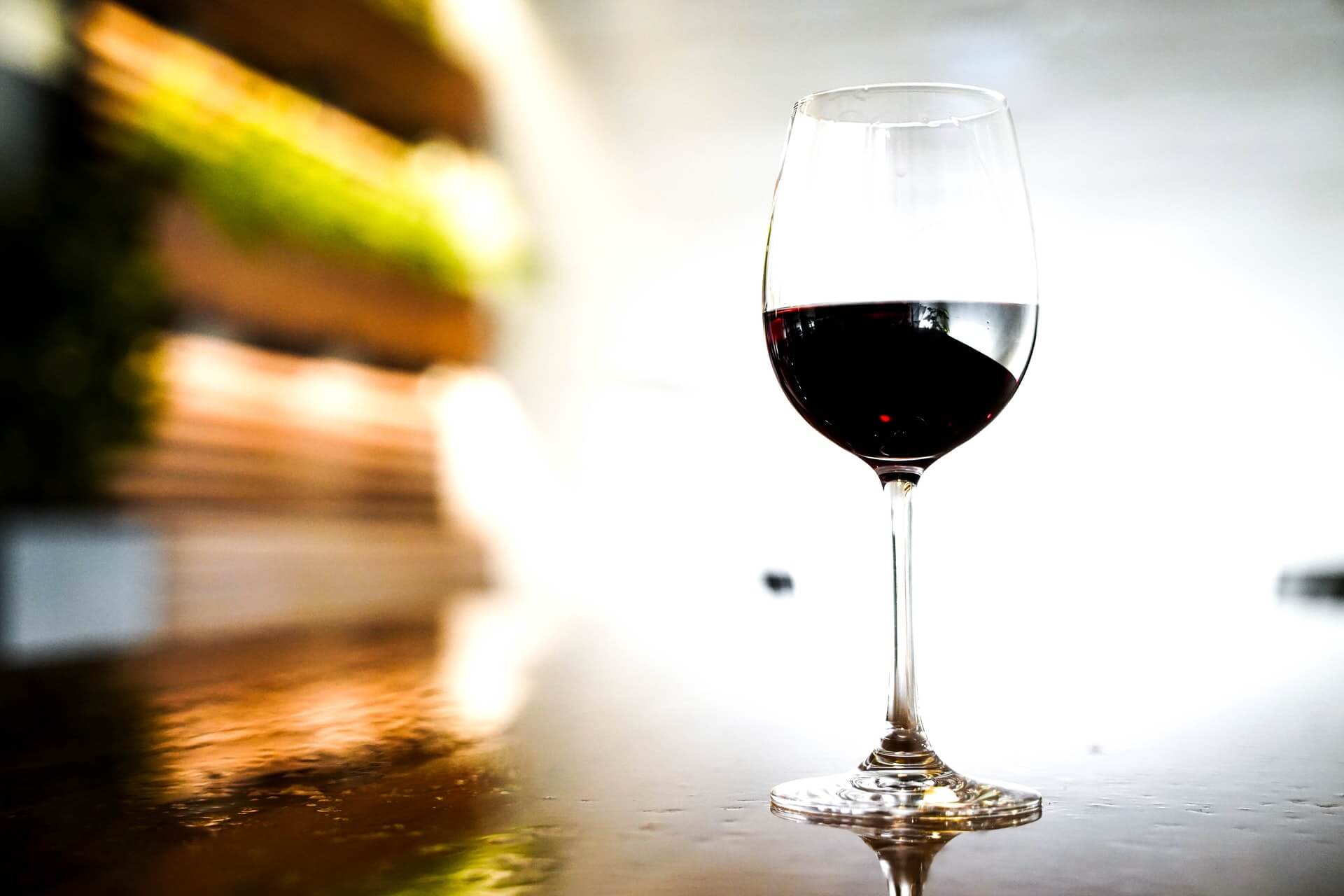
Glass of red wine

What’s up with wine in 2021? We reviewed multiple sources to find out.

One great thing about hunting for wine trends is that it’s easy—there’s no shortage of sources willing to make predictions.

Common Wine Trends

The IWSR, without a doubt a reputable source for information about all things beverage, expects wine consumption to “bounce back” this year.

Along with Forbes, Wine Intelligence, just-drinks, and bar inventory platform Backbar, the IWSR expects e-commerce to be crucial for wine sales. Continuing with tech influence, the IWSR and Wine Intelligence expect wine producers and sellers to engage more with consumers online. Forbes pointed to orange wine benefiting from Instagram posts as a specific example of digital engagement.

Forbes, the IWSR, and Wine Intelligence predict alternative packaging to really take off in 2021. Canned wines are well positioned but other options—wine-in-box and “letterbox” bottles, for example—will perform well this year.

Forbes, the IWSR, and WineMemoir expect sustainability to be even more important in 2021. The IWSR mentioned organic and low-intervention wine, and they pointed to biodynamic wine, as did WineMemoir. Zero-waste winemaking was mentioned by Forbes.

The IWSR and Forbes expect sparkling wine—Prosecco specifically—to have a moment this year. Drinking occasions, per the IWSR, have come to include Prosecco more often; sparkling is no longer just for celebrating.

Breakout Wine Trends

Speaking of moments, rosé Champagne will have on in 2021, according to Forbes. The publication also expects the wealthy to continue “drinking richly,” so operators with rare, exclusive and high-dollar bottles should consider promoting them.

With the explosive growth of hard seltzer that has taken place over the past few years, Wine Intelligence predicts 2021 to be the year the wine seltzer market is established.

People will choose “safe” wine options, meaning they’ll be less likely to experiment and move out of their comfort zones, according to just-drinks. The magazine is also more cautious about the category’s growth this year, pointing to slowed economies and rises in alcohol duty rates.

Backbar, explaining that wine dollar value slipped but sales volume rose in 2020, predicts restaurants will offer more affordable wines. Along with that trend, they predict restaurants will hold less inventory to reduce costs, meaning wine lists will shrink.

Specific varietals Backbar predicts will perform well due to a turn toward affordable wines: South American Cabernet Sauvignon, Chardonnay and Malbec; South African Chenin Blanc; Portuguese reds; red blends; and American wines in general.

2021 will be the Year of Cabernet Franc, according to WineMemoir. Bordeaux will see a resurgence in popularity, and wines from Abruzzo and Jura will see a lift.

Image: Carson Masterson on Unsplash

by David Klemt David Klemt No Comments

Infographic: NRA Raise the Wage Survey

Infographic: NRA Raise the Wage Survey

by David Klemt

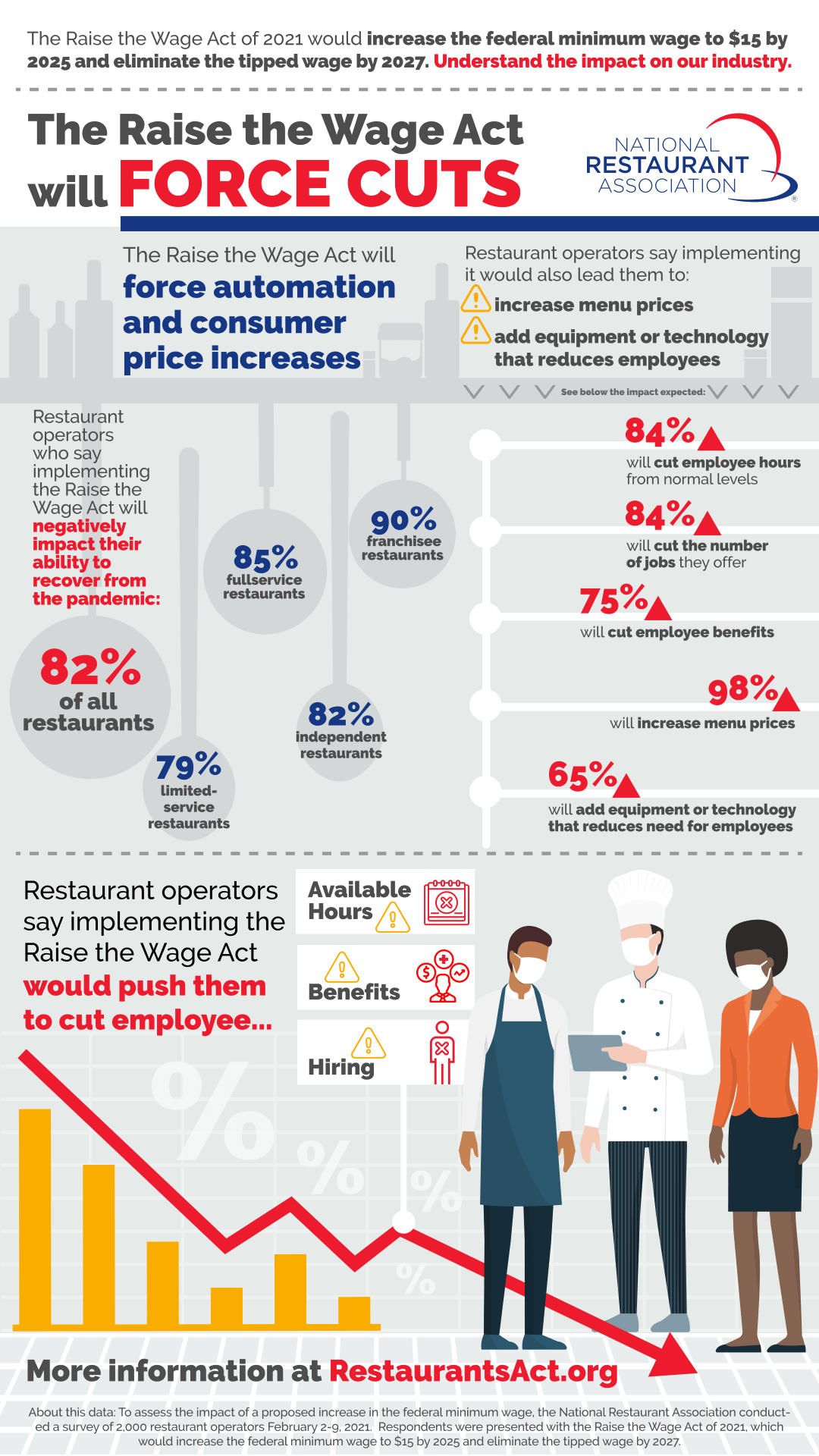
The results of a survey conducted by the National Restaurant Association to gauge operator reaction to the Raise the Wage Act are in.

Per the NRA’s infographic detailing the participant responses, there’s not much support for increasing the federal minimum wage and eliminating the tip credit.

What’s in the Raise the Wage Act?

If signed into law, the Raise the Wage Act will represent significant change for employers and employees.

The federal minimum wage will be raised incrementally to $15 by 2025. Two years later, in 2027, the tipped wage will be eliminated.

Survey Results

The NRA surveyed 2,000 restaurant operators between February 2 and 9. Respondents are clearly opposed to the Raise the Wage Act.

National Restaurant Association Raise the Wage infographic

What Does This Mean?

A vast majority of survey respondents—along with the NRA—definitely view the bill as a threat to the industry. An email sent by the NRA’s executive vice president of public affairs, Sean Kennedy, includes this succinct statement:

“These results make one point crystal clear—after seeing over 110,000 restaurants close and over 2.5 million jobs lost, increasing labor costs is going to make it more likely that more operators close their doors and lay off their staff. Tipped servers will lose with the end of a system that allows them to make $19-$25 an hour in tips under the current tip credit system.”

To the best of my knowledge, the NRA has not yet conducted a targeted survey of restaurant workers for their opinions of a $15 federal minimum wage and the elimination of the tax credit.

However, fast-food workers from McDonald’s and other chains have gone on strike in at least 15 cities in the United States to demand a raise to $15 per hour. That speaks volumes for how foodservice workers who aren’t typically tipped feel about the Raise the Wage Act.

What’s Next?

According to the NRA, the bill is slated to be fast-tracked and voted on in just a few weeks.

Agree that the Raise the Wage Act is going to hurt operators, workers and the industry? Click here to let Congress know.

Want Congress to pass the bill? Click here to find your representatives and let them know.

Infographic: National Restaurant Association

Image: lucas Favre on Unsplash

by David Klemt David Klemt No Comments

Mardi Gras Transforms Into Yardi Gras

Mardi Gras Transforms Into Yardi Gras

by David Klemt

In a glaring, neon sign of the times, Mardi Gras is built for socially distanced enjoyment this year.

This year, the parade “floats” will be stationary and the revelers will come to them.

Initially created as a grassroots campaign to raise money for artists who craft Mardi Gras parade floats, “Yardi” Gras just may become an annual tradition. In fact, it has been reported that artists have already been commissioned for Yardi Gras in 2022.

What is Yardi Gras??

It’s simple. Well, it’s simple to understand—designing and constructing a Mardi Gras float is a complex undertaking that takes about a year.

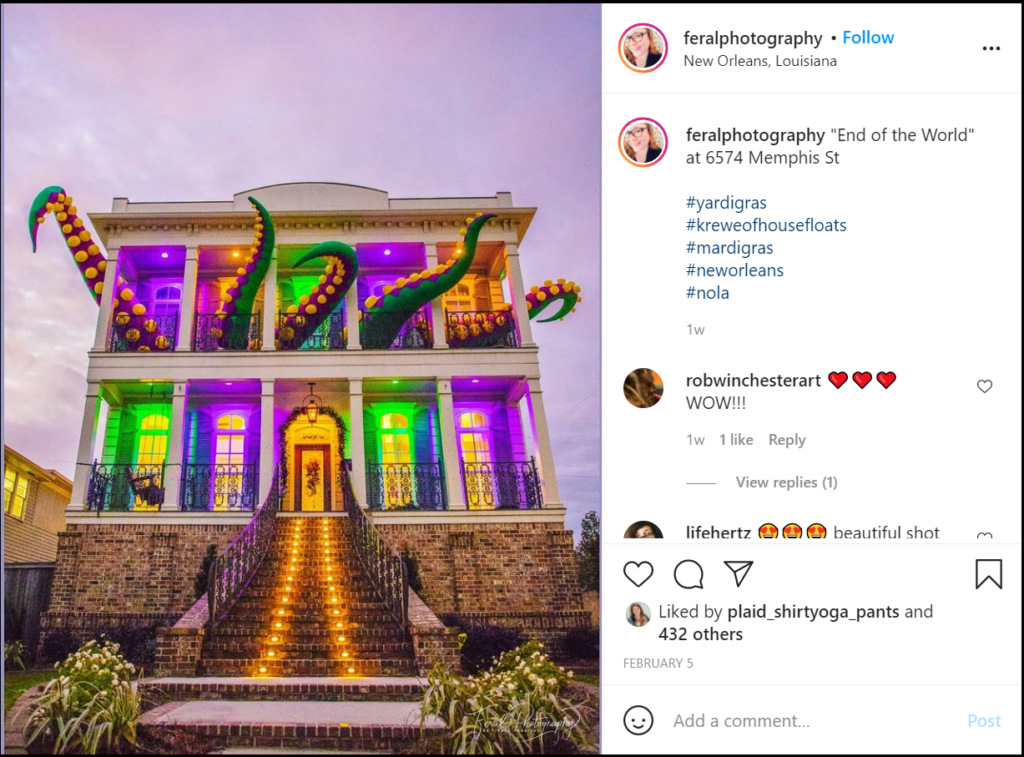
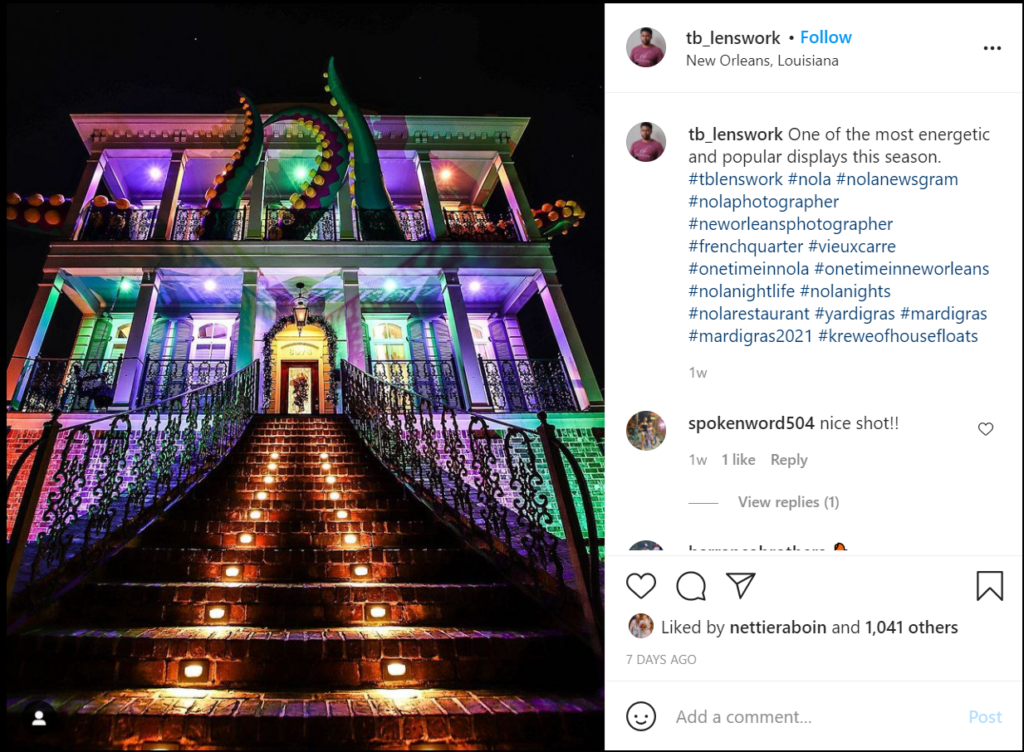
Anyway, Yardi Gras celebrates Mardi Gras by transforming buildings into stand-ins for their float counterparts. As you read this, there are hundreds of homes and businesses decorated to celebrate Carnival.

Given that the most common way to enjoy Yardi Gras is via driving tours, I can see this taking off in cities across the world…in conjunction with traditional Mardi Gras parades, of course.

Via @nolashirtclub on Instagram

Alright, Who Did This?

The Krewe of Red Beans has been credited with kicking off what I hope becomes a tradition in NOLA (along with the return of floats, of course) and other cities. To raise funds for Mardi Gras artists and float builders who found themselves out of work when the city canceled parades.

A krewe, by the way, is a social group that organizes Carnival parades or balls.

Announced via press release another krewe, the Krewe of House Floats, also supported artists and the community: The Krewe of House Floats (KoHF) today announced a giving campaign to raise $100,000 for those affected by COVID-19 restrictions and Mardi Gras event cancellations, with Culture Aid NOLA and Grace at the Greenlight as the first partners for the initiative. The magic of Carnival, while often billed as the ‘Greatest Free Show on Earth,’ isn’t possible without float artisans, service industry workers, musicians, Mardi Gras Indians and other culture bearers.”

Click here to donate via the Krewe of Red Beans, and click here to give to the Krewe of House Floats. The latter has created a map of Yardi Gras participants.

Via @tb_lenswork on Instagram

Why Am I So into this Idea?

In its 164-year history, Mardi Gras has only been canceled 14 times. Mardi Gras is most closely associated with New Orleans, a city that should hold a place a reverence in the hearts of all hospitality workers.

Las Vegas, New York City, Chicago, San Francisco, and Orlando come to most people’s minds when they think of US cities known for hospitality. However, New Orleans deserves a top ranking on any hospitality list.

New Orleans has nurtured the careers of several notable chefs, bartenders and operators:

  • Chef Leah Chase, who passed in 2019, was anointed the Queen of Creole Cuisine. Dooky Chase, her NOLA restaurant, has been recognized as one of the most important restaurants and was an important gathering spot for the Civil Rights Movement.
  • Emeril “So Famous You Don’t Need to Hear His Last Name to Know Who I’m Talking About” Lagasse helmed the storied Commander’s Palace in NOLA.
  • The Brennan family took ownership of Commander’s Palace in 1969 and has succeeded in building a family-owned restaurant empire.
  • Chef Nina Compton is a James Beard Award winner who worked in NYC and Miami. Before opening the award-winning Compère Lapin in 2015 and Bywater American Bistro in 2018 in NOLA, Chef Compton competed on season 11 of Top Chef.
  • Chris Hannah worked at the world-famous Arnaud’s 75 for close to 15 years before opening Manolito and Jewel of the South with Nick Dietrich.
  • Jeff “Beachbum” Berry cemented his legacy as one of the most influential people in the bar world long before he opened Latitude 29 in the French Quarter. He has written seven books focused on cocktail and culinary history, “lost” recipes, and culture.

That’s just a tiny handful of culinary and cocktail influencers with ties to New Orleans.

Cocktails Created in New Orleans

NOLA is the home of several classic cocktails, including:

  • Sazerac. Antoine Peychaud, the inventor of Peychaud’s Bitters, is credited as the creator of the Sazerac.
  • Vieux Carré. It means “Old Quarter” in French and references what we now know as the French Quarter.
  • Brandy Crusta. Created by Joseph Santini in the 1850s at the “original” Jewel of the South bar.
  • Ramos Gin Fizz. Originally called the New Orleans Gin Fizz but eventually changed to honor its creator, Henry Ramos.
  • Hurricane. Invented at Pat O’Brien’s Bar, which is still in operation and has been serving Hurricanes since the 1940s.

Next time you serve or enjoy one of these classics, toast New Orleans.

We hope you have a great Mardi Gras or Yardi Gras!

Image: beebutter from Pixabay

by David Klemt David Klemt No Comments

This Generation is Most Likely to Dine In

This Generation is Most Likely to Dine In

by David Klemt

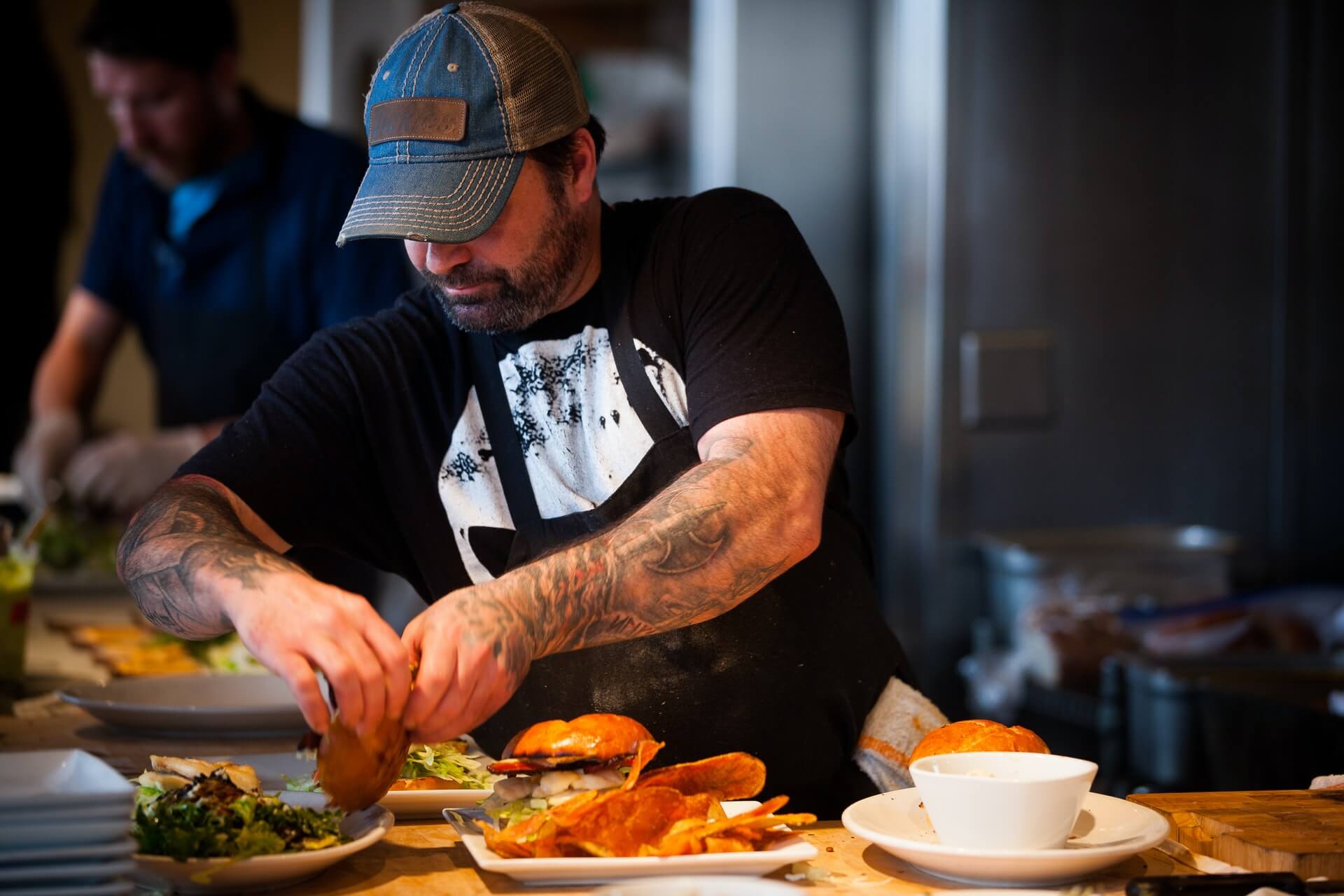
Chef preparing burgers inside restaurant

The National Restaurant Association’s 2021 State of the Restaurant Industry report revealed the generation most likely to dine in-person at a restaurant.

That is, of course, if such restaurant service—from quick-service to fine dining—is permitted where they’re located.

So, do you have a guess? Because we have the answer.

Most Likely to Dine In

Per an NRA survey, Gen Z is most eager to return to in-person restaurant dining.

However, it’s more of a simple majority that’s after a restaurant experience beyond delivery, takeout and curbside pickup than an overwhelming one.

Just 53 percent of adult members of Gen Z surveyed by the NRA are willing to dine inside restaurants over the course of the next few months.

Overall, 67 percent of Gen Z, Millennial, Gen X and Baby Boomer adults would like to engage with restaurants like they did before the pandemic. That’s not a huge stretch, of course; we all want to return to normal and put Covid-19 behind us.

Still, the survey results make it clear there’s demand for in-person dining. The convenience of interacting with and ordering from restaurants is here to stay. However, that convenience hasn’t replaced the desire to dine (and socialize) out.

So, Who’s Most Likely to Order In?

You’d be forgiven for assuming the answer to this question is also Gen Z. After all, just about every development regarding technology and how people engage with the world has been laid at their feet.

When Gen Z isn’t being accused of “killing” a tradition, sense of normalcy or an entire industry, the finger is pointed at Millennials.

Well, it turns out the usual finger-pointing suspects are the consumers most likely to order from restaurants.

According to the NRA’s report, 81 percent of Boomers and 80 percent of Gen X will continue to order from restaurants, at least for the next few months.

Put it All Together

At least for the next several months, the industry’s recovery will hinge on the full-strength return of in-person service and the convenience of delivery and takeout.

In other words, some consumers are champing at the bit to once again make restaurant visits a regular part of their lives while others plan to proceed with caution. Successful restaurant operations will maintain a mixture of traditional and digitally-driven services.

Nearly 90 percent of adults surveyed by the NRA say they enjoy going out to restaurants and that doing so with family and friends is a better way to spend leisure time than cooking at home.

“Restaurants are the cornerstone of our communities, and our research shows a clear consumer desire to enjoy restaurants on-premises more than they have been able to during the pandemic. We’ve also found that even as the vaccine becomes more available and more social occasions return to restaurants, consumers will continue to desire expanded off-premises options going forward. Both will continue to be key for industry growth,” said Hudson Riehle, senior vice president, Research and Knowledge Group, NRA, in a press release announcing the Association’s 2021 State of the Restaurant Industry. “With more than half of adults saying that restaurants are an essential part of their lifestyle, we are confident that, with time, the industry is positioned for successful recovery.”

The NRA predicts foodservice sales to reach $731 billion in 2021, an 11 percent increase over 2020. Unfortunately, that estimate is about 15 percent lower than sales generated in 2019.

Still, that’s a reason to be optimistic. Consumers are pent-up and eager to make restaurants a significant part of their lives once again.

Nobody is more eager, evidently, than Gen Z.

Image: Jesson Mata on Unsplash

by David Klemt David Klemt No Comments

2021 Technomic Outlook: United States

2021 Technomic Outlook: United States

by David Klemt

Technomic has been providing the foodservice industry with valuable insights on a global level for 50 years.

The research and consulting firm has been one of my go-to information sources for at least a decade.

A few weeks ago, I reviewed American food delivery trends from multiple sources. This week, I’m taking a look at Technomic’s foodservice predictions for the US.

Unprecedented and Unpredictable

Before we proceed, keep this in mind: predictions are best guesses. Technomic’s approach is scientific and data-driven but it’s important to approach any prediction with caution.

As the firm itself points out in their 2021 foodservice report, the global pandemic has plunged the industry deep into unprecedented territory.

It seems the only thing predictable about Covid-19 in relation to restaurants, bars and other hospitality businesses is that this industry will continue to bear the brunt of closures and restrictions.

That said, I trust Technomic to lead the industry through unprecedented and unpredictable moments in time.

7 Key Trends

Technomic has made seven predictions for foodservice in the US.

  1. Streamlined menus. Technomic expects the trend toward reducing SKUs to continue. However, that may lead to innovative and healthy items replaced removed items. Leafy greens, environmentally-friendly, and health-conscience items such as immune boosters are expected to be menued.
  2. Tech is the future. This prediction can be summed up quickly: If it’s a tech-based, can improve operations and help a brand differentiate itself from others, the industry is going to implement it.
  3. Top three cuisines. Chinese, Italian and Mexican food and drink are expected by Technomic to perform the best in 2021, particularly if operators move beyond the classics and incorporate lesser-known ingredients. However, Technomic expects more interest in West African and Caribbean cuisine.
  4. Social justice. Operators will have to be transparent about their stances on social justice issues and make meaningful statements—hashtags won’t cut it with younger consumers.
  5. Umami will reign supreme. Technomic uses the phrase “new-mami” to describe “intense, mouthwatering fare.” Think fruit vinegars beyond apple, candy cap mushrooms, seafood meatballs, and so much more.
  6. Communal concepts must adapt. Food halls, eatertainment concepts, and venues with communal seating will have to reimagine their spaces and how guests use them during an era characterized by social distancing, constant sanitizing, and off-premise business models. Traditional guest experiences may return but there’s no telling when that will happen.
  7. Revenue recovery. Technomic expects the industry to start recovering in 2021. However, sales levels are unlikely to reach those of 2019.

Bring it all Together

Chasing trends can be a fool’s errand. Not every prediction made by Technomic will work for every restaurant or bar in Canada.

Just like Technomic collects and analyzes industry data, operators must review their guest, sales and operations data to make informed decisions. This is another reason it’s crucial to own the guest journey in its entirety.

Click here to view Technomic’s “2021 U.S. Trend Outlook” webinar.

Image: Justin Cron on Unsplash

by David Klemt David Klemt No Comments

2021 Technomic Outlook: Canada

2021 Technomic Outlook: Canada

by David Klemt

Technomic has been providing the foodservice industry with valuable insights on a global level for five decades.

The research and consulting firm has been one of my go-to information sources for at least ten years.

A few weeks ago, I reviewed Canadian food delivery trends from multiple sources. This week, I’m taking a look at Technomic’s foodservice predictions for Canada.

Unprecedented and Unpredictable

First things first: predictions are best guesses. Technomic’s approach is scientific and data-driven but it’s important to approach any prediction with caution.

As the firm itself points out in their 2021 foodservice report, the global pandemic has thrown the industry into unprecedented territory.

It seems the only predictable element related to Covid-19 is that restaurants, bars and other hospitality businesses will bear the brunt of closures and restrictions.

That said, I trust Technomic to lead the industry through unpredictable, unprecedented moments in time.

5 Key Trends

Technomic has made five predictions for foodservice in Canada.

  1. 2021 will represent the start of financial recovery for foodservice. Technomic predicts moderate sales growth this year, below levels of 2019. However, limited-service restaurants are expected to perform better than their counterparts and return to 2019 revenue levels. Not surprisingly, Technomic expects full-service restaurants to be the most challenged.
  2. Operators will make their stances on social issues known. Multiple sources say today’s consumers want transparency from the brands they support. They want to know what company’s believe about climate change, food insecurity, social inequalities, diversity and hiring practices, fair pay for employees, and other issues. Technomic expects more operators to “double down” on transparency.
  3. On-premise operations will invest in off-premise business models. Again, multiple sources have reported that significant percentages of consumers are uncertain or uncomfortable about returning to restaurants and bars for in-person dining and drinking. Technomic expects operators to invest in smaller dining rooms so they can offer more limited-contact and contactless options to guests: walk-up ordering windows, multiple drive-thru lanes, designated curbside pickup locations, and in-store pickup and grab-and-go stations. The firm also expects more operators to embrace first-party/direct delivery, along with technologies like mobile ordering and geofencing.
  4. Comfort, quirkiness and indulgence. Technomic expects comfort foods to continue to perform well and encourages operators to get creative—even quirky—with this category. They caution that health will still be a focus of many guests and suggest that some operators will “disguise better-for-you meals as indulgent.”
  5. Our home and native land. Hyperlocality will play a crucial role in driving traffic given the travel restrictions imposed throughout Canada. Operators will likely forge relationships with local farms to attract local visitors to their venues. Technomic expects to see grassroots movements promoting support for small regional chains and local independent operations to gain traction.

Bring it all Together

Chasing trends can be a fool’s errand. Not every prediction made by Technomic will work for every restaurant or bar in Canada.

Just like Technomic collects and analyzes industry data, operators must review their guest, sales and operations data to make informed decisions. This is another reason it’s crucial to own the guest journey in its entirety.

Click here to view Technomic’s “2021 Canadian Trends Outlook” webinar.

Image: Hermes Rivera on Unsplash

by David Klemt David Klemt No Comments

E-Commerce Alters Drinking Occasion

E-Commerce Alters Drinking Occasion

by David Klemt

According to estimates, beverage alcohol e-commerce grew by 40 percent in 2020.

Per data from the IWSR, ten “core countries” are driving that growth: Australia, Brazil, China, France, Germany, Italy, Japan, Spain, United Kingdom, and the United States. China, the reigning campion of beverage alcohol e-commerce, is expected to be toppled by the US by the end of this year.

Of particular note: growth in the above markets more than doubled from 2019, when online alcohol retail grew by 11 percent.

What this Means for Brick-and-Mortar Operations

We all know what drove the growth in online alcohol sales.

In their quest to find comfort in the midst of the global 2020 pandemic, they became comfortable with purchasing alcohol online as a long-term behavior. Alcohol brands were forced to pivot to online sales channels due to restaurants, bars, lounges, nightclubs and other brick-and-mortar F&B operations facing constantly shifting restrictions and closures. (See also: Los Angeles County restaurant restrictions.)

To compete, operators must continue to do what they’ve had to even before a pandemic absolutely ravaged the hospitality industry and millions of people’s livelihoods: adapt.

For at least several more months, drinking at home will be its own occasion, for obvious reasons. The IWSR expects brands to invest more into online alcohol retail. If that proves to be the case, operators can expect–as a worst-case scenario–fewer dollars spent on their brick-and-mortar operations.

Getting creative with alcohol delivery, takeout and pickup is crucial to give operators the best chance to be included in the at-home drinking occasion.

The Trends to Watch

In terms of delivery trends, you can click here for food trends so you can consider complimentary beverages. Click here for 2021 drink trends, which certainly include alcohol-free beer.

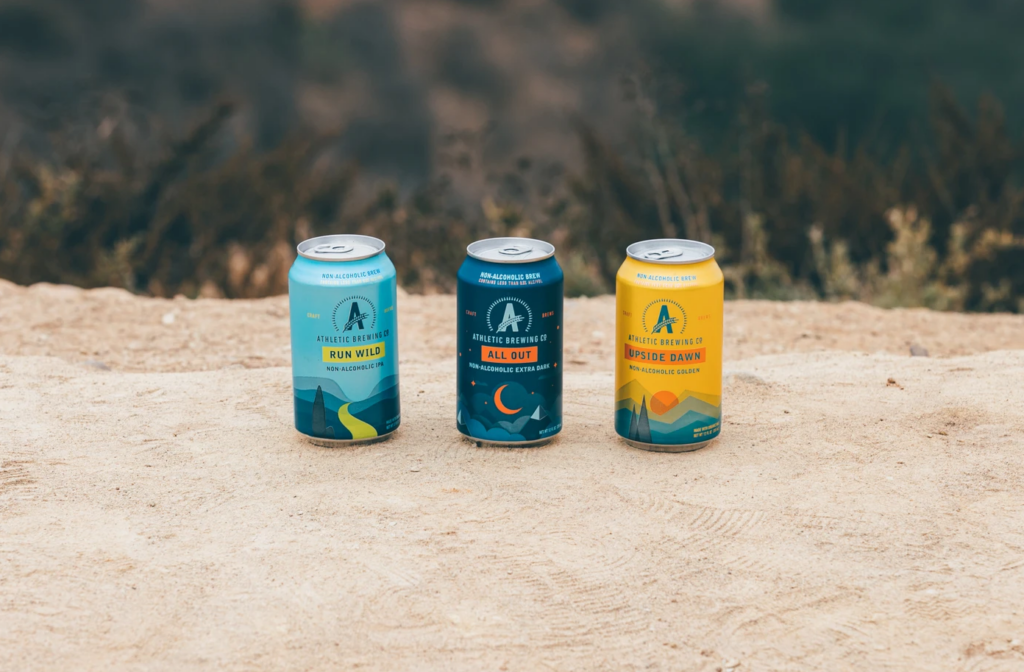
Athletic Brewing Co. alcohol-free craft beers.

Athletic Brewing Co. alcohol-free craft beers. Image: Athletic Brewing Co.

Speaking of delivery, the growth in alcohol e-commerce makes owning the guest journey by offering direct delivery even more important.

The IWSR has identified their own set of trends tied to the growth of alcohol e-commerce:

  1. As touched on above, at-home drinking becoming its own occasion outright.
  2. Premiumization will change. Some consumers will experiment less and focus on their favorite brands, and others will turn to brick-and-mortar channels for premium experiences.
  3. Politics will play a noticeable role on beverage alcohol, not just in the US but across the globe. Tariffs could change and strict e-commerce regulations could loosen.
  4. RTDs will remain strong or get stronger. Per the IWSR, “innovation in alcohol bases, exploration of new and increasingly local flavors, and premium product offerings” will ensure RTDs remain a crucial beverage category in 2021.
  5. Low- and zero-alcohol drink options will continue their evolution. Once stigmatized, these drinks exploded in popularity in 2020. For 2021, the IWSR expects them to become aspirational.

Last year changed the industry. Comfort, convenience, and a heightened awareness of health and wellness are altering how people consume and engage with brands, restaurants and bars. Operators, already facing challenges from all sides, must take the time to develop strategies to compete for e-commerce dollars.

Image: mentatdgt from Pexels

by David Klemt David Klemt No Comments

Introducing KRG Mindset Coaching

Introducing KRG Mindset Coaching

by David Klemt

KRG Hospitality Mindset Coaching

Seeking an alternative to complete start-up planning and project management? The solution you’re looking for is KRG Mindset Coaching.

Just like every operator is unique, each project brings with it distinct challenges that require individual approaches and plans.

Some projects are already under way but need help moving forward. KRG Mindset gives these projects the help needed to cross the finish line and achieve long-term success.

What is Mindset Coaching?

Owning a hospitality business may look great on paper, but starting a hospitality business can be really quite stressful:

  • There are what seem to be endless hours of planning.
  • There are numerous third-parties involved.
  • There are often hundreds of thousands of dollars at stake.
  • There are over 500 unique tasks to complete.

It doesn’t matter if this is your first, fifth, or twentieth project—it’s crucial that you be both prepared and organized when opening a new concept or expanding operations.

However, not every project requires our full suite of targeted solutions, which includes feasibility studies, conceptual planning, business planning, brand development, guest experience strategies, food & beverage programs, and operational assessments.

If you’re beyond the idea stage but find your project is struggling to reach the finish line, we’re here to help. And just like a project in its earliest days, you’ll receive the unique, fully customized KRG treatment.

Is Mindset the Solution for You?

KRG Mindset provides a unique, coaching-style program that helps your start-up make continual forward progress:

  • Receive a dedicated consultant who will be an approachable advisor for you and your project. They’ll review and navigate your start-up questions and challenges, and be your compass to provide you with a clear path towards a successful opening.
  • Weekly 1-on-1 video/phone sessions with access to a private calendar: a weekly session in which we evaluate the past week and define required actions for the next week with a focus on budgets, timelines, and industry-specific consulting.
  • Your dedicated consultant is also available for second opinions and the review of: key documents, location, concept, branding, layouts, equipment, menu, service, technology, labor and financial optimization, system development, operations, marketing, and overall strategic clarity.
  • Your consultant will help you see the blind spots throughout your project, positioning you to maintain your budget and desired opening date.
  • Your consultant will help you make strong, educated decisions throughout your start-up project that will have a positive impact on the successful start of your restaurant, bar or hospitality brand.
  • And finally, your advisor will coach you so you become more confident, energized, and motivated about your opening while holding you accountable and helping you become a better leader through the creation of new habits, communication methods, and decision-making processes.

Click here to schedule a call.

Or, if you’re looking for a more hands-on approach where we develop the winning plans and property for and with you, we invite you to learn more by choosing your preferred option: Restaurants & Cafes, Bars & Lounges, Boutique Hotel & Resorts, or Golf, Gaming & Entertainment.

Images: KRG Hospitality

by David Klemt David Klemt No Comments

What You Need to Know About SBA Form 3508S

What You Need to Know About SBA Form 3508S

by David Klemt

Midway through last month, the Small Business Administration maneuvered to make the PPP loan forgiveness process simpler for loans up to $150,000.

In December of 2020, Congress passed a Covid-19 relief bill that pumped $284 billion into the Paycheck Protection Program.

Twelve billion dollars were made available to minority-owned and “very small” businesses, and $15 billion were made available to independent movie theaters, live music venues, and cultural institutions.

What is SBA Form 3508S?

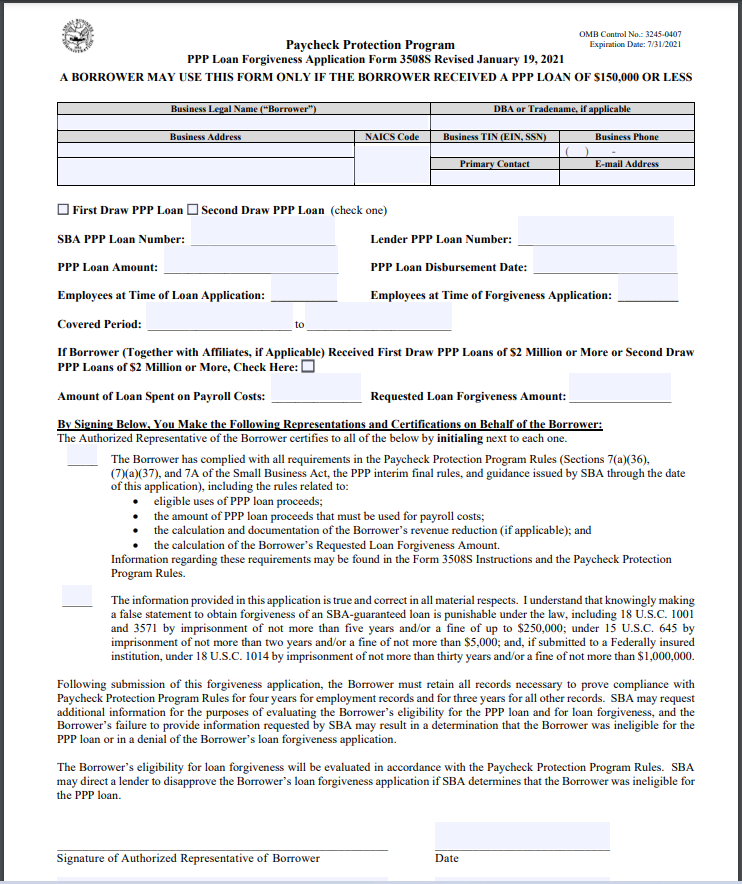
Simply put, 3508S is a simplified, one-page PPP loan forgiveness form.

When Congress passed December’s relief bill, they included a requirement for the SBA to offer streamlined loan forgiveness forms.

To that end, 3508S is for businesses that received loans of $150K or less. Again, it’s a single page. As you’ll see when you check out SBA Form 3508S, the form comes with instructions.

What information do you need to provide?

With Form 3508S, you’re not even filling out an entire page. And the first roughly third is simple. Assuming you’re the person filling out, certifying and signing the form:

  • Business legal name (“Borrower”)
  • If applicable, the DBA or Tradename
  • Business address
  • North American Industry Classification System (NAICS) code (Accommodation and Food Services is 72; Arts, Entertainment and Recreation is 71, for reference)
  • Business Taxpayer Identification Number (TIN), Employer Identification Number (EIN), or Social Security Number (SSN)
  • Primary contact
  • Email address

After filling out that section and ticking the box for first-draw PPP loans or second draw, you’ll need the following info:

  • SBA PPP loan number
  • Lender PPP loan number
  • PPP loan amount
  • PPP loan disbursement date
  • The number of employees at the time of the loan application
  • Number of employees at time of loan forgiveness application
  • Covered period of PPP loan. Per the form instructions, “The Covered Period begins on the date the loan was originally disbursed. It ends on a date selected by the
    Borrower that is at least 8 weeks following the date of loan disbursement and not more than 24 weeks after the date of loan disbursement.”
  • Total amount of loan spent on payroll costs
  • Requested amount of loan forgiveness

From there, you initial two boxes–if you can do so accurately and honestly–next to certification statements. Then you sign, print and the date form and include your title.

There’s an optional demographic information section at the top of page two of Form 3508S.

SBA Form 3508A. Sample only.

What additional documentation must you provide?

None, which is what makes this form so simple. In fact, you’re not even required to show any of your calculations corresponding form sections. However, we strongly suggest you run those calculations as you’ll need to certify that you did so and you’ll need them if the SBA audits the loan.

And while you don’t have to submit additional documents, it’s likewise required and smart that you retain required documentation for a number of years. The SBA may ask for certain documents when your application comes up for review, so you’ll want to know where they are to make the process as smooth as possible.

What’s the loan forgiveness deadline?

There’s no specific date in terms of an SBA PPP loan deadline. However, the SBA’s PPP loan forgiveness FAQ states the following:

  • “Borrowers may submit a loan forgiveness application any time before the maturity date of the loan, which is either two or five years from loan origination.”
  • “[I]f a borrower does not apply for loan forgiveness within 10 months after the last day of the borrower’s loan forgiveness covered period, loan payments are no longer deferred and the borrower must begin making payments on the loan.

You may notice that Form 3508S has an expiration date of July 31, 2021 in the upper right-hand corner. This simply indicates the SBA’s compliance with the Paperwork
Reduction Act.

There are other SBA PPP loan forgiveness applications as well. SBA Form 3508-EZ is for borrowers who meet specific conditions, and Form 3508D is for borrowers to disclose controlling interests in the business by other companies, along with government officials involved in the business.

If none of those forms are right for you, you’ll have to fill out the standard, five-page Form 3508.

Image: Cytonn Photography from Pexels
by David Klemt David Klemt No Comments

Finalizing Your Big Game Menu? Google is Here to Help

Finalizing Your Big Game Menu? Google is Here to Help

by David Klemt

Operators putting the final touches on their delivery, takeout, meal kit and Big Game menus for February 7 could probably use some help.

None of us have a crystal ball but we do all have access to Google Trends intel, which is often just as good.

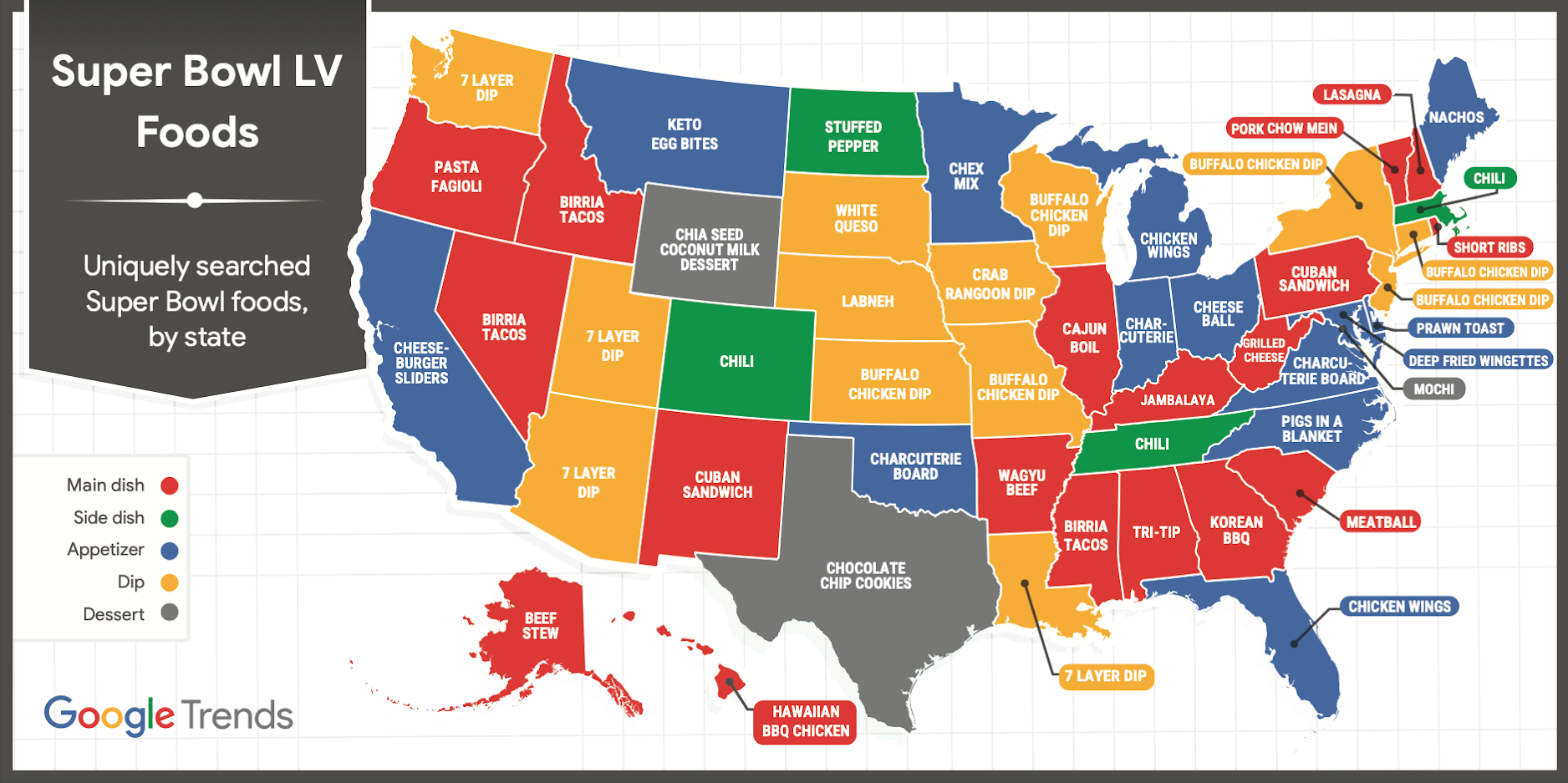
Google’s latest data-driven infographic is just in time for this coming weekend: Uniquely searched Super Bowl foods, by state.”

The information, neatly categorized by food item type, provides insight into what people in each state are interested in ordering from restaurants or featuring at their at-home gathering. Such data can help operators dial in their menus and create Big Game packages, offering customers a convenient way to enjoy their favorite foods while they watch the Big Game.

Unique Super Bowl Food Searches

Google color-coded their infographic. Red represents main dishes, green is for side dishes, appetizers are blue, dip is yellow, and grey denotes dessert. As the Google map shows, several states are more into snacks than entrees.

Eighteen states are red. Interestingly, a specific item is the top search in three states. Nevada, Idaho and Mississippi are dominated by birria tacos. Cuban sandwich was the top search in two states: New Mexico and Pennsylvania. The other 13 states each have top searches unique to them:

  • Oregon: Pasta fagioli
  • Alaska: Beef stew
  • Hawaii: Hawaiian BBQ chicken
  • Illinois: Cajun boil
  • Arkansas: Wagyu beef
  • Kentucky: Jambalaya
  • Alabama: Tri-tip
  • Georgia: Korean BBQ
  • South Carolina: Meatball
  • West Virginia: Grilled cheese
  • Rhode Island: Short ribs
  • Vermont: Pork chow mein
  • New Hampshire: Lasagna

Just four states are green, and chili is the top search in 75 percent of those: Colorado, Tennessee and Massachusetts. North Dakota is the outlier with stuffed peppers.

There are 13 states colored blue. The top football food search in three of those—Oklahoma, Virginia and Indiana—is charcuterie board. Surprisingly, chicken wings are the top search in just two states, and neither is their state of origin: Michigan and Florida. The most unique appetizer, at least in our view, is Montana’s interest in keto egg bites. Although, Maryland’s search for deep fried wingettes is very specific and Delaware’s search for prawn toast is rather distinct. What’s commonly assumed to be a sports bar and Super Bowl staple, nachos, was only the top search in one state: Maine. California searched for cheeseburger sliders, Minnesota looked up Chex Mix, Ohio is most interested in cheese ball, and North Carolina is all about pigs in a blanket.

Another 13 states are most interested, per Google data, in dip (yellow states). In particular, Buffalo chicken dip reigns supreme. It’s the top search in six states: Kansas, Missouri, Wisconsin, New Jersey, Connecticut and, somewhat predictably, New York. However, 7-layer dip is a close second, dominating four states: Washington, Arizona, Utah and Louisiana. Nebraska may lay claim to Most Unique Dip Search with labneh. South Dakota looked up white queso the most, and Iowa prefers crab rangoon dip.

Only two states and Washington, DC, searched for dessert items the most. Wyoming’s top search was incredibly specific: chia seed coconut milk dessert. Texas wants chocolate chip cookies, and our nation’s capital searched for mochi.

Unfortunately, this Google Trends data doesn’t include Puerto Rico. You can view the infographic by scrolling down.

Takeaways

Top main dish: Birria tacos

Top side dish: Chili

Top appetizer: Charcuterie board

Top dip: Buffalo chicken

Google Trends most unique Super Bowl LV food search

Super Bowl LV: Uniquely searched Super Bowl Foods, by state. Google Trends.

Map image: Google

Featured image: Jeswin Thomas on Unsplash

by David Klemt David Klemt No Comments

Los Angeles Restaurants Face New Outdoor Dining Restrictions

After Weeks of Prohibition, This is What Los Angeles Restaurants are Facing

by David Klemt

Limited to delivery and takeout for several weeks, Los Angeles restaurants and breweries may now offer outdoor dining.

Of course, that easing of restrictions comes with a raft of new limitations.

The outdoor dining ban was lifted last Friday, January 29. Governor Gavin Newsom rescinded California’s statewide stay-at-home order four days prior, January 25.

Operators, still caught firmly in the vortex of opens, closures and ever-shifting restrictions, will have to weigh the potential to generate in-person dining revenue against limitations and costs.

Outdoor dining capacity of restaurants, breweries and wineries (able to open for outdoor tastings) is restricted to 50 percent. Even an operator with a significant outdoor footprint may find the revenue generated from in-person dining incapable of offsetting associated costs.

Speaking of footprint, operators must also contend with new distance requirements. Outdoor tables must now be spaced a minimum of eight feet apart to ensure guests aren’t seated back to back. This increase from six feet must be measured from the edges of each table.

Any employee who “may come in contact” with a guest is required to wear a face mask and a face shield for the duration of such an interaction, which can’t include tableside preparations.

No live entertainment is permitted, and televisions must remain turned off. Couple the television ban with a prohibition on “coordinated, organized or invited events or gatherings” and Super Bowl parties are clearly not permitted.

Additional limitations pertain to guests and group size. No more than six people may be seated at a table, and each guest must be a member of the same household. Signage informing guests of the household requirement must be posted, and guests must also be given this information verbally.

A “household” in Los Angeles County is defined as “persons living together as a single living unit.” Click here for the County of Los Angeles Department of Public Health’s “Protocol for Restaurants, Breweries and Wineries: Appendix I.”

According to Dr. Barbara Ferrer, Los Angeles County health director, operators can expect increased scrutiny and enforcement of Covid-19 protocols.

Evidence of enhanced enforcement efforts was seen last week. LA County filed two suits on January 27 against Cronies Sports Grill in Agoura Hills and Tinhorn Flats in Burbank for failing to adhere to health directives. Both suits label the establishments as “public nuisances.”

Some Los Angeles operators may find limited outdoor dining better than no in-person dining at all. However, others may conclude that labor and PPE costs alone aren’t worth restricted reopening, to say nothing of contending with increased governmental scrutiny.

Image: David Mark from Pixabay

by David Klemt David Klemt No Comments

Current Restaurant, Bar and Travel Restrictions: Eastern Caribbean

Current Restaurant, Bar and Travel Restrictions: Eastern Caribbean

by David Klemt

KRG Hospitality has turned hospitality industry visions into reality throughout the Eastern Caribbean for several years.

We’ve reviewed and gathered the current Covid-19-based travel and operator restrictions for Puerto Rico, the US Virgin Islands, the British Virgin Islands, St. Martin and Sint Maarten to help current operators and those considering taking the next steps in their journey toward opening their own businesses.

To book a 15-minute introductory call to discuss your project and how we can help you realize your vision, click here.

Puerto Rico

Earlier this month, Governor Pedro Pierluisi revised Puerto Rico’s Covid-19 protocols.

Travel Requirements

  • Complete travel declaration and:
  • arrive with proof of a negative (molecule-based) Covid-19 test; or
  • self-quarantine (at traveler’s expense) either 14 days or the duration of your trip, whichever is shorter.
  • While in Puerto Rico, travelers must:
    • wear a mask at all times when in public;
    • wash hands frequently;
    • wipe down high-touch surfaces;
    • practice social distancing; and
    • keep track of and minimize places visited and interactions with people.

Requirements

  • Island-wide curfew from 11:00 PM to 5:00 AM.
  • Hotels: Common areas closed from 11:00 PM to 5:00 AM.
  • Restaurants: Limited to 30-percent capacity.
  • Bars and Discos: Closed.
  • Movie theaters and casinos: Limited to 30-percent capacity.
  • All businesses must close by 10:00 PM.

Recommendations

  • Reservations for restaurants visits.

US Virgin Islands

The Virgin Islands Department of Health has provided incredibly detailed guidance for restaurants, bars and nightclubs. Click here for the full details. The USVI include the main islands of Saint Croix, Saint John, and Saint Thomas, and several so-called “minor” islands.

Travel Requirements

  • All air and sea travelers to the US Virgin Islands five years of age or older are required to use the USVI Travel Portal and submit a Covid-19 test before travel. This includes anyone in-transit to another destination.
    • Acceptable tests: COVID-19 molecular from a nasal or throat or saliva swab, COVID-19 antigen (rapid) test from a nasal or throat swab, Covid-19 antibody finger stick or blood draw.
  • Travelers who originate in the USVI and return to the territory, including those who return within a five-day period, are required to take a Covid-19 test before returning or have proof of a positive antibody test result within the previous four months.

Requirements

  • All restaurant, bar and nightclub employees reporting for work must be screened for Covid-19 using this questionnaire.
  • Employers can either conduct temperature checks onsite with a no-touch thermometer or employees may check their temperatures before arriving at the workplace and have the results verified by management onsite. Temperatures should not exceed 100.3 degrees Fahrenheit.
  • Employees and guests must wear masks at all times unless eating or drinking.
  • At the minimum, ask guests the following questions before allowing entry:
    • Have you been in close contact with a confirmed case of COVID-19?
    • Are you experiencing a cough, shortness of breath or sore throat?
    • Have you had a fever in the last 48 hours?
  • Capacity is limited to 50 percent (as defined by Business License or the Fire Marshall) or 100 guests, whichever is fewer.
  • Space tables and barstools six feet apart.
  • No more than six guests may be seated at the same table.
  • Serving alcohol at bar counters is prohibited.
  • Guests picking up takeout orders must wait outside until their order is ready.
  • The sale of alcohol between 11:00 PM and 8:00 AM by all restaurants and establishments with a Tavern Keeper A or Tavern Keeper B license is prohibited.
  • Restaurants must remain closed between the hours of midnight and 6:00 AM.
  • All bars and nightclubs are permitted to operate only for seated service.
  • Cabarets remain closed.
  • Last call for bars and nightclubs—without exception—is at 11:00 PM.
  • Guests of bars and nightclubs are required to wear masks unless seated at their designated table.
  • Live music and DJs must cease performances at closing time: Midnight.

Recommendations

  • Whenever possible, require reservations for visits and deliveries.
  • If possible, prioritize curbside pickup and takeout over in-person dining.

British Virgin Islands

The BVI, which consist of Tortola, Virgin Gorda, Anegada, and Jost Van Dyke and more than 50 smaller islands and cays, were closed for nine months before reopening to travelers on December 1, 2020. The Government of the Virgin Islands, however, imposed a travel ban on anyone travelling from the United Kingdom and the Dominican Republic to the BVI effective January 11.

Travel Requirements

  • Travelers must start their application no later than 48 hours before travel.
  • Applications on the BVI Gateway portal must be completed a minimum of 24 hours before travel date and time.
  • All applicants who are in “pending” status and haven’t completed their necessary requirements 24 hours prior to travelling will be denied entry.
  • Travelers must have proof of negative Covid-19 PCR test taken within 5 days prior to day of travel and proof of medical insurance that includes coverage for Covid-19.
  • Visitors are required to quarantine for four days on the property of their approved accommodations or at their own home. Arrival day is considered day zero.
  • Air travelers: Visitors can arrive at the Terrance B. Lettsome Airport (EIS) on Tortola.
  • Sea travelers: Visitors can arrive at Road Town Ferry Terminal.

Requirements

  • As of January 28, a curfew is in place from 2:01 AM to 4:59 AM daily until February 11. Businesses are permitted to operate between the hours of 5:00 AM to 2:00 AM daily if they’ve been inspected and approved by the Social Distancing Monitoring Task Force and certified by the Environmental Health Division.
  • Gold Seal Professional Level Certification: A nine-hour training course (three hours over three days) that incorporates COVID-19 training and professional-level hospitality service training required for front-line personnel across all hospitality industry sectors, specifically front desk representatives, guest room attendants, restaurant servers and kitchen cooks.

St. Martin and Sint Maarten

This 37-square-mile island has two sides, the St. Martin (the French) and Sint Maarten (the Dutch).

Travel Requirements

  • All travelers arriving by air must complete Electronic Health Authorization System (EHAS) application.
  • As of January 27, 2021, all travelers embarking in Aruba are required to submit a negative rt-PCR test within 72 hours before departure to Sint Maarten (until further notice)
  • As of February 12, 2021, the rt-PCR test time frame will be reduced from 120 to 72 hours, before departure to St. Maarten for all travelers originating from a high-risk country (last leg in case of connecting flights).
  • Travelers arriving via sea from a low-risk country are exempt from Covid-19 testing.
  • Travelers arriving via sea from a moderate- to high-risk country must complete an rt-PCR test 120 hours prior to departure from last port (must be the immediate last departure point).

Requirements

  • Restaurants, bars and nightclubs must close by midnight. This applies to the Dutch side of St. Maarten as well.
  • Casinos on the Dutch side must close by 2:00 AM.
  • No more than 6 people may be seated at any given table.
  • Tables and contact surfaces must be thoroughly disinfected with an antiviral product.
  • It is mandatory for staff and customers to wear a mask when moving around.

Last updated: January 28, 2021. Please note that Covid-19 guidance, restrictions and protocols are subject to swift change. One should monitor their jurisdictions for the latest updates.

Image: Colin Chong on Unsplash

by David Klemt David Klemt No Comments

Current Restaurant and Bar Restrictions: Las Vegas, Nashville, Philadelphia, Orlando

Current Restaurant and Bar Restrictions: Las Vegas, Nashville, Philadelphia, Orlando

by David Klemt

KRG Hospitality has turned hospitality industry visions into reality throughout the United States for several years.

Currently, we operate in Las Vegas, Nashville, Philadelphia and Orlando, along with the surrounding areas. Of course, we’re available to take projects from the idea phase to opening doors and beyond in other markets.

We’ve reviewed and gathered the current Covid-19-based restrictions for each of the four main US markets in which KRG operates to help current operators and those considering taking the next steps in their journey toward opening their own businesses.

To book a 15-minute introductory call to discuss your project and how we can help you realize your vision, click here.

Las Vegas

Set to expire on January 15, Nevada’s statewide “pause,” first implemented on November 24, was extended January 11 for a further 30 days. Guidance can be found here.

Requirements

  • Restaurants and bars must reduce capacity from 50 percent to 25 percent for both indoor and outdoor dining.
  • Bar seating must be social distanced.
  • Walk-ins are prohibited. Guests must make reservations.
  • Masks must be worn when a guest isn’t eating or drinking.
  • No more than four people may share the same table.
  • Nightclubs and dayclubs aren’t permitted to open.

Recommendations

  • Curbside, delivery, and/or takeout are encouraged.
  • Restaurants and bars should continue to make hand sanitizer available and conduct health screenings and/or temperature checks.
  • Limit personal gatherings to ten people from a maximum of two families.
  • Wear masks at indoor and outdoor gatherings.

Nashville

Among Nashville’s restaurant and bar guidance is the “No Seat, No Service” mantra. Additional requirements and recommendations are below, and detailed information can be found here.

Requirements

  • All residents and all visitors must wear face coverings when in public.
  • Restaurants and bars limited to 5o-percent capacity, with social distancing.
  • Tables must be socially distanced. Limited to eight people per table.
  • Surfaces must be cleaned after they’ve been used by patrons.
  • Standing at the bar is prohibited–bars are seated-service only.
  • Remember “No Shirt, No Service”? The new rule is “No Seat, No Service.”
  • Customers must wear a mask when standing up and walking through the restaurant or bar.
  • Entertainment is permitted but barriers must be in place between performers and customers. However, dance floors are prohibited.
  • Bar games and activities like darts, arcade games, etc., must be sanitized in between uses.
  • Last call for service is 10:00 PM, which is also the cutoff for entry.
  • No self-service food or condiments are permitted.

Recommendations

  • Governor Bill Lee urges Tennesseans to wear a mask, gather only with immediate household members.
  • Display this sign to show commitment to mandated and recommended health and safety rules and practices.
  • Use contactless, virtual or disposable menus.

Philadelphia

The current restrictions went into effect November 20. Click here for the full list of requirements and recommendations. You’ll find the city’s complete hotel guidance here.

Requirements

  • Required protections: Masks, Barriers, Staff education, Employee symptom screening and isolation of infected employees, Ensure employees can remain six feet away from one another; Handwashing on employee arrival and in accordance to established food safety precautions, Follow Department of Public Health Food Safety regulations.
  • 25-percent capacity of stated fire code occupancy.
  • Guests may not stand in the restaurant or sit at the bar.
  • Alcohol may only be served on-premises if it’s part of the same transaction as a meal.
  • Table capacity of four people of the same household or less.
  • Outdoor dining capacity limited to fewer than 50 people.
  • Operators must plan for inclement weather in regards to outdoor dining.
  • No entertainment permitted.
  • Indoor catered events prohibited.
  • Last call for orders must take place at 11:00. Business must be closed for service by midnight.

Recommendations

  • Servers should wear face shields and/or goggles along with a mask.
  • Temperature checks for employees and customers aren’t required but no-touch thermometer should be used by establishments that choose to conduct them. Anyone with a temperature of 100.4 degrees or higher should be turned away.
  • Consider using physical barriers in between tables.
  • Use contactless payment methods.
  • Promote online ordering, delivery, and curbside pickup options.

Hotel Requirements

  • Required protections: Provide masks to employees, Staff education, Employee symptom screening and isolation of infected employees, Ensure employees can remain six feet away from one another; Provide employees hourly handwashing breaks.
  • Separate staff from customers at ticket and information desks with plastic barriers.
  • Utilize contactless room service delivery.
  • Outdoor events and gatherings are prohibited from exceeding 10 percent of maximum occupancy (maximum of 2,000 persons), even with masks and social distancing. If no maximum occupancy is known, occupancy may not exceed more than 10 persons per 1,000 square feet.
  • Remove self-serve F&B stations from public areas.
  • Remove magazines, menus, and other reusable items that can’t be cleaned from guest rooms.
  • Indoor gatherings and events are prohibited.

Hotel Recommendations

  • Use contactless payment methods.
  • Increase building ventilation.

Orlando

Unlike Las Vegas, Nashville and Philadelphia, Orlando, because it’s located in Florida, has lifted restrictions on restaurants. Section 3: Restaurants of Executive Order 20-244 states:

“Pursuant to Chapter 252, including sections 252.36(5)(b ), (g) and (h), Florida Statutes, and in order to safeguard the economic vitality of this state, any restaurant may operate as set forth below.

“A. Restaurants, including any establishment with a food service license, may not be limited by a COVID-19 emergency order by any local government to less than fifty
percent (50%) of their indoor capacity. If a restaurant is limited to less than one hundred percent (100%) of its indoor capacity, such COVID-19 emergency order
must on its face satisfy the following:

“1. quantify the economic impact of each limitation or requirement on those restaurants; and 2. explain why each limitation or requirement is necessary for public health.

“B. Nothing in this order preempts or supersedes a non-COVID-19 municipal or county order.

“Section 4. Suspension of COVID-19-related Individual Fines and Penalties This order, consistent with Executive Order 20-92, suspends the collection of fines and
penalties associated with COVID-19 enforced upon individuals.”

The order that closed bars has also been rescinded: “Bars and other alcoholic beverage vendors may operate for consumption on premise effective Monday, Sept. 14th
under Phase 2… Adhere to social distancing rules, table seating [six feet] between tables. Alcohol allowed for take-out and delivery.”

However, Executive Order 20-192 is still in place and states:

“WHEREAS, on March 17, 2020, I issued Executive Order 20-68, as extended by Executive Order 20-112, which authorized the Department of Business and Professional
Regulation to ensure all restaurants implement employee screening and to prohibit any restaurant employee from entering the restaurant premises if he or she meets certain criteria indicative of concerns related to COVID-19.”

More details can be found here.

Last updated: January 27, 2021. Please note that Covid-19 guidance, restrictions and protocols are subject to swift change. One should monitor their state, county and city for the latest updates.

Image: Katy Anne on Unsplash

by David Klemt David Klemt No Comments

Current Restaurant and Bar Restrictions: Toronto, Calgary, Vancouver

Current Restaurant and Bar Restrictions: Toronto, Calgary, Vancouver

by David Klemt

For more than a decade, KRG Hospitality has turned hospitality industry visions into reality throughout Canada.

Currently, we operate in Toronto, Calgary and Vancouver and the surrounding areas.

We’ve reviewed and gathered the current Covid-19-based restrictions in Ontario, Alberta and British Columbia to help current operators and those considering taking the next steps in their journey toward opening their own businesses.

To book a 15-minute introductory call to discuss your project and how we can help you realize your vision, click here.

Toronto

On January 25, the province of Ontario officially extended the current state of emergency (which includes a stay-at-home order) by 14 days by Premier Doug Ford. Had Premier Ford not extended the emergency order, it would’ve expired Tuesday of this week. Unless extended again, it will expire February 11.

What this means for restaurants, bars and other types of F&B establishments is that indoor and outdoor dining are banned currently. Delivery, takeout and drive-through service are permitted.

Individuals face $750 fines (up to a maximum of $100,000) and corporations could be hit with $1,000 fines (up to a maximum of $500,000 for a director or officer) for a violation of emergency orders.

When the state of emergency expires or is otherwise rescinded, Ontario is expected to revert to the regulations found within the Reopening Ontario Act (currently suspended). Should Ontario find itself immediately colour-coded Grey, the current restrictions on restaurants and bars will remain identical: only delivery, takeout and drive-through service will be allowed.

Among other restrictions, a Red control level means restaurants are restricted to indoor dining capacity of ten people, outdoor dining is permitted, customers must be seated and two metres apart from one another, liquor may only be sold within a 9:00 AM to 9:00 PM window, face coverings must be worn except when eating or drinking, and nightclubs may only operate as a restaurant or bar.

Orange level restrictions include a 50-person capacity limit, a maximum of four people per table, customers must be screened before entry, liquor may only be sold between the hours of 9:00 AM and 9:00 PM, establishments must close by 10:00 PM, and gentlemen’s clubs must remain closed.

The Yellow control level is marked by the following restrictions: no more than six people may be seated at the same table, liquor may only be sold between 9:00 AM and 11:00 PM, establishments must close by midnight, music levels may not exceed that of a “normal conversation,” and all seated patrons must provide contact information.

Green control doesn’t mean everything is back to pre-pandemic “normalcy.” Tables must still be at least two metres apart, customers must be seated, face coverings must be worn except when eating or drinking, no buffet-style service is permitted, nightclubs may only operate as restaurants or bars, and contact information for at least one person per party must be collected. Restricted dancing, singing, performing and karaoke (no private rooms) are permitted.

Calgary

On December 13, 2020, indoor and outdoor dining was banned throughout Alberta. Current Covid-19-related public health measures and restrictions have been extended until further notice. The province’s restrictions affect restaurants, bars, cafes, pubs, and lounges (and other businesses, of course).

Only delivery, takeout and curbside pickup are permitted in Alberta. However, this is expected to change on February 8, 2021.

Hotels, motels and lodges are open but may not offer access to gyms, pools or spas. Indoor dining is banned but room service permitted. Casinos must remain closed.

Movie theatres, bowling alleys, pool halls and other entertainment businesses may not open for business.

If Alberta returns to the previous relaunch strategy, the province will be subject to a three-stage reopening. However, the document hasn’t been updated since June 2020.

Update: Alberta allowed restaurants and bars to reopen for in-person services yesterday, February 8. Indoor alcohol service must end by 10:00 PM, and indoor dining service must cease by 11:00 PM. Contact information from one person of the dining party must be collected, there’s a limit of six people maximum per table and each individual must be from the same household. Alternatively, the maximum per table for an individual living alone is there two close contacts. Tables must be spaced two metres apart and no entertainment is permitted.

Vancouver

British Columbia is far less restrictive than Ontario and Alberta, at least at the moment. The restrictions in place currently affect restaurants, bars, cafes, cafeterias, coffee shops, lounges, and tasting rooms. Nightclubs, however, must remain closed.

Requirements

  • Unless a physical barrier is in place, customers not in the same party must be at least two metres away from one another.
  • No more than six people may be seated at the same table or booth, even if they’re members of the same party.
  • If seated at a counter, customers must be two metres apart unless they’re in the same party or physical barriers are in place.
  • No more than six customers of the same party may be seated at a counter less than two metres from one another.
  • Businesses that offer self-serve food or non-alcohol drink stations must: ensure alcohol-based hand sanitizer or handwashing facilities are “within easy reach”; signage reminding customers to wash or sanitize their hands before touching anything on the stations and to maintain two metres from other customers must be present; utensils and high-touch surfaces at the stations must be cleaned and sanitized “frequently.”
  • Dance floors must be closed, and karaoke, singing, jam sessions, open mic sessions, and dancing are prohibited.
  • Background music or sounds may not be amplified or exceed the volume of a “normal” conversation.

Further details can be found here.

Last updated: February 9, 2021. Please note that Covid-19 guidance, restrictions and protocols are subject to swift change. One should monitor the country, provinces and cities for the latest updates.

Image: James Wheeler from Pexels
by David Klemt David Klemt No Comments

Rise of the ‘Not’ Delivery Platforms

Rise of the ‘Not’ Delivery Platforms

by David Klemt

The big third-party delivery services are facing pushback in the form of community-based competition.

We’ve kept our eye on this burgeoning trend and the push for operators to implement first-party delivery, also known as direct delivery.

It isn’t directly related to hospitality but the first of the “not” sites that grabbed our attention was Not Amazon. As the name suggests, Not Amazon is…well…not Amazon.

The founder highlights businesses owned and operated by women and BIPOC and LGBTQA+ people. However, Not Amazon goes even further, as illustrated in their mission statement:

“Providing the most we can, while taking as little as possible, in order to build a new kind of community.”

Community and neighborhood support is at the core of Not Amazon. The digital era has been marked by local, mom-and-pop brick-and-mortar businesses suffering in the wake of online shopping. Convenience has outweighed community. More often than not, women-, BIPOC- and LGBTQA+-owned businesses have been disproportionately affected by “convenience.”

Of course, it makes sense with a global pandemic to shop online. Not Amazon, which currently serves Calgary, Halifax, Toronto and Vancouver, provides a viable alternative to its behemoth of an online retail counterpart.

That brings us to two compelling hospitality industry-specific platforms.

It’s not a secret that KRG Hospitality supports first-party and last-mile delivery. In fact, we’ve very clearly explained that operators lose guest data and control over the guest journey when they sign with a third-party delivery company.

That’s to say nothing of the fees third-party services charge their F&B “partners.” Is it convenient that DoorDash, UberEats, Postmates and other companies provide a semblance of infrastructure, the lure of reaching a larger pool of customers, and drivers (including the associated liability)? Sure.

But are the costs associated with doing business with a third-party delivery company worth it? Most likely not.

Studies have also shown that when a delivery goes wrong on the third-party’s end–cold food, for instance–it’s the restaurant that tends to get the blame.

There are two websites that, like Not Amazon, have popped up to put supporting local restaurants front and center: Not UberEats and NotGrubhub.

The former serves Toronto and operates as a non-profit, according to their FAQ page. The latter is mainly focused on the United States, offers the option to purchase gift cards, and is powered by Lunchbox. NotGubhub also boasts more than 100,000 direct ordering links.

Both operate in similar fashion: Restaurants submit their information to be added to the respective platforms, provide an ordering link, and obtain a listing. From there, people can search by location for restaurants in their area to place a delivery order.

In the case of NotUberEats, deliveries are fulfilled by Ritual or DoorDash. As noted on their FAQ page, Ritual is offering Toronto restaurants free delivery through 2021. Restaurants can also DoorDash because, as NotUberEats explains in their FAQs, the service is charging a flat rate and not collecting any commissions.

People can also send restaurant information to NotUberEats to help grow their listings. Anyone who wishes to do so is asked to provide at least 50 businesses in their city and submit them here.

Operators ready to make the move to first-party/direct delivery and own their guest journey should consider the following platforms:

With delivery here to stay, the sooner operators transition to direct delivery, the better. There’s no longer a reason to lose control of guests, a profitable operational element, or costs.

Image: Nathan Dumlao on Unsplash

by David Klemt David Klemt No Comments

California’s Restrictive Regional Stay-at-Home Order Rescinded

California’s Restrictive Regional Stay-at-Home Order Rescinded

by David Klemt

Expectation became reality yesterday when Governor Gavin Newsom rescinded California’s highly restrictive regional stay-at-home order.

It had been reported for at least a day prior that Gov. Newsom was expected to do so on January 25.

The order, which choked the life out of restaurants, bars and other businesses, has been in place since the start of December 2020.

As we reported several weeks ago, a group of Orange County operators pushed back against the order shortly after it was imposed. The #OPENSAFE collective released a statement announcing their intention to protest Gov. Newsom’s stay-at-home order by remaining open for in-person dining.

Other states that imposed seemingly arbitrary and illogical orders that crushed restaurants and bars also experienced open defiance from operators. One of the highest-profile protests came from New York City restaurants.

Speaking for the first time in well over a week about California’s efforts to combat Covid-19, Gov. Newsom said, “Everything that should be up is up, everything that should be down is down.”

That’s an interesting claim given California experienced a record number of Covid-19-related deaths on January 21 with 761. During his press conference, the embattled governor claimed he lifted his stay-at-home order due to ICU numbers and not because of the multiple lawsuits filed against him or the current recall campaign.

Rather, Gov. Newsom said that he made his decision based on Covid-19 cases and hospitalizations decreasing while vaccination rates are reportedly trending upward. However, as one source cited, just 26 percent of California’s allotted vaccine doses had been administered as of last week.

The rescinding of the regional stay-at-home order doesn’t mean that businesses can reopen and resume operations as usual. Each of the state’s counties will be color-coded according to California’s “Blueprint for a Safer Economy.” Projections will be set aside for actual transmission rate data.

Tier 4 is color-coded yellow and its Covid-19 transmission risk is labeled “Minimal.” Tier 3 is orange and “Moderate,” where as Tier 2 is red and “Substantial.” Tier 1, which is purple, is labeled “Widespread.”

At the moment, most counties in California are purple.

Restaurants located in a Tier 1 county can offer only outdoor in-person dining. Those in Tier 2 can offer indoor dining but only at 25-percent capacity or 100-person maximum capacity (whichever is lower). Tier 3 bumps capacity to 50 percent or 200 people, and Tier 4 dictates a maximum of 50 percent capacity.

As expected, bars (along with breweries distilleries) that don’t serve food receive much harsher treatment than restaurants. Those located in a county designated purple or red must close. Bars in orange counties can open for outdoor service only, and those in yellow counties can offer indoor service at 50-percent maximum capacity. Bars “where [a] meal is provided” follow restaurant guidelines for the four applicable tiers.

Movie theaters, for context concerning how bars are being treated, are subject to the same guidance as restaurants in California’s blueprint. Such venues aren’t exactly known for providing meals.

Before operators who have chosen to work within California’s guidelines throw their doors open, they need to know two things. One, county officials are permitted to impose their own restrictions. If they choose to do so, those restrictions can be stricter than those that come down from state officials.

Two, for those operators in Los Angeles County, confusion remains regarding outdoor dining. Some interpret the rescinding of the state’s prohibition on outdoor dining as a lifting the ban. However, LA County implemented its own ban before the state did so. That county-issued ban expired on December 16 but outdoor dining was banned under the statewide stay-at-home order.

It may seem cut and dry that the expiration of the county order and the lifting of the state’s ban shifts LA County to Tier 1 restrictions. Operators should make sure they’re clear to resume outdoor service before incurring the costs associated with doing so.

How long California will revert back to the state’s Blueprint for a Safer Economy is anyone’s guess. Operators in several states have found themselves caught in a vicious open-close, open-close vortex. At any rate, 25-percent capacity restrictions will still more than likely make it more cost-effective for some operations to remain closed for indoor service.

Image: Paul Hanaoka on Unsplash

by David Klemt David Klemt No Comments

February’s Big Game Presents an Opportunity for Operators

February’s Big Game Presents an Opportunity for Operators

by David Klemt

The most American of sporting events goes down on February 7.

This season’s Super Bowl match-up was decided yesterday.

In the NFC Championship game, the 14-5 Tampa Bay Buccaneers, led by Tom Brady, defeated Aaron Rodgers and the 14-4 Green Bay Packers. The game was close, with the Bucs winning 31 to 26.

Later in the day, Patrick Mahomes and the 16-2 Kansas City Chiefs, led by Josh Allen, knocked the 15-4 Buffalo Bills out of the championship game yesterday, beating them 38-24. That 14-point win clinched the AFC Championship for the Chiefs.

The final contest of the season will take place on February 7 at Raymond James Stadium in Tampa, Florida. Kickoff is scheduled for 6:30 PM EST.

2020 marked an unusual 101st season for the NFL. Making it even more unique is the fact that the 2021 Super Bowl marks the first time in history that a team competing in the big game will play at their own stadium.

Super Bowl LV is the third NFL Championship game to be played at Raymond James Stadium and the fifth to take place in Tampa. The Weeknd will headline the halftime show.

Another unique development concerns Super Bowl advertising. Reportedly, Budweiser, Pepsi, Coca-Cola, Little Caesars, Ford, Hyundai, Avocados From Mexico, and Olay won’t be running ads during this year’s game.

The pandemic, unemployment, and political division have been cited as reasons some corporations have decided to pass on Super Bowl LV. Several companies don’t believe it’s possible to produce and air a commercial that won’t offend and be met with backlash.

Operators who have yet to finalize their Super Bowl promotions need to jump on that now. Of course, state Covid-19 protocols will play a major role in big game planning.

For example, Governor Gavin Newsom is expected to “relax” California’s stay-at-home restrictions later today. It has been reported that restaurants will be permitted to offer outdoor dining. Of course, local officials could impose limits on businesses, so California operators must monitor the situation closely.

Football fans and people who are simply eager to get out of their homes will likely flock to any restaurant, bar, brewery or distillery able to host an in-person Super Bowl event.

While that represents opportunities to generate revenue—and possibly turn a much-needed profit—it’s important that operators work within their mandated pandemic guidelines. Businesses hosting Super Bowl parties should expect to face increased scrutiny and must be as prepared as possible to avoid fines, shutdowns or suspended licenses.

That said, delivery and takeout packages programmed around the Super Bowl will likely be attractive to customers. Pizza, chicken wings, chicken sandwiches, burgers, snacks and other popular items should be considered for packages. Click here for our coverage of the top delivery items for 2020 and 2021 predictions.

One other word of caution: The NFL is notoriously protective—and litigious—when it comes to their branding. Operators must keep that in mind when promoting Super Bowl events and specials.

Avoid mentioning the NFL, both teams, and the term Super Bowl when marketing February 7’s event. For years, “the big game” has been the go-to to avoid legal trouble. (We’re not attorneys, so proceed with caution when advertising the Super Bowl as this warning doesn’t constitute legal advice.)

Operators have a real opportunity to ring their registers in two weeks. Be informed, be creative, be fun, and be cautious but optimistic.

Image: 3D Animation Production Company from Pixabay

Top