Hospitality industry

by David Klemt David Klemt No Comments

North America’s 50 Best Bars: 2024

Cheers to the 50 Best Bars in North America in 2024

by David Klemt

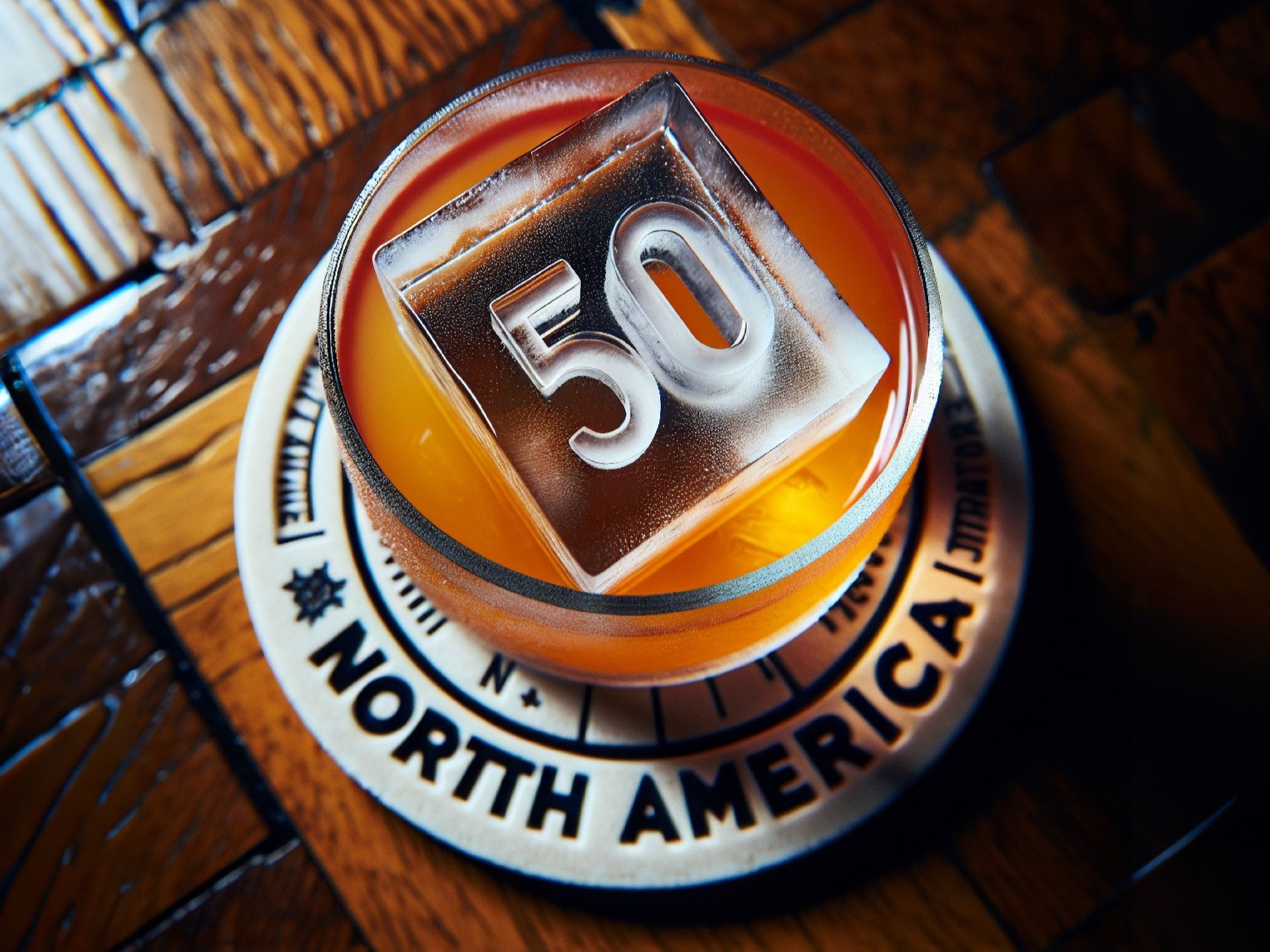
AI-generated image of a cocktail with an ice cube branded with the number 50, resting on a white coaster that reads "North America"

I’d drink that, and probably steal that coaster.

Cheers to the 2024 class of North America’s 50 Best Bars, freshly crowned after an evening of celebration, recognition, community, and hospitality.

Launched in 2022, this year marks the third edition of the World’s 50 Best Bars list that recognizes standout North American concepts and the teams behind their success.

For the 2024 ceremony, North America’s 50 Best Bars returned to the city of San Miguel de Allende in the state of Guanajuato, Mexico. Actor Diego Alfaro, known for The Ultimate Mixologist and The Law of the Jungle, took on host duties.

This year’s Campari One to Watch Award went to Toronto’s Simple Things. As a refresher, the One to Watch is a bar that voters believe has an excellent shot at breaking into the 50 Best Bars list.

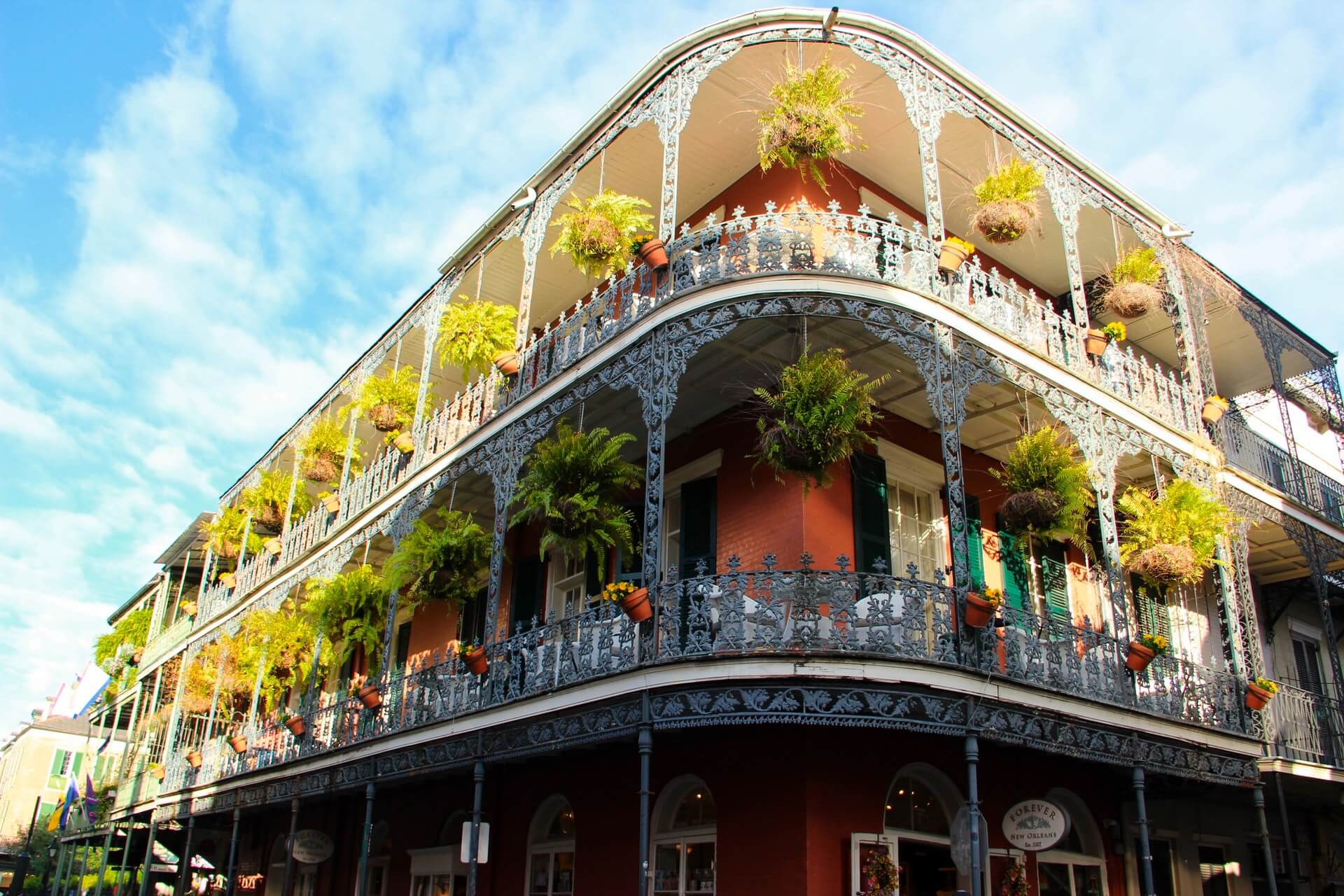
The acclaimed Jewel of the South took the Michter’s Art of Hospitality Award home to New Orleans. Jewel of the South also grabbed spot number six on this year’s list, along with being named the Best Bar in the South in the US. Chicago’s Meadowlark earned the 2024 Siete Misterios Best Cocktail Menu Award. The bar is a new entry to the list and also clinched spot 32. A new award, the Bareksten Best Bar Design Award was presented to Avondale Bowl from Chicago.

Cheers to Claudia Cabrera, this year’s winner of the Roku Industry Icon Award. Voted by her peers, Kate Boushel earned the Altos Bartenders’ Bartender Award.

For all of you out there who have a strong sense of civic pride, New York boasts 12 entries on this year’s list, Mexico City claims nine, and Toronto is home to three. Host city San Miguel de Allende lays claim to the bar at number 27 on the list.

North America’s 50 Best Bars, 2024

  1. Atwater Cocktail Club (Montréal, Québec, Canada)
  2. The Keefer Bar (Vancouver, British Columbia, Canada)
  3. Best Intentions (Chicago, Illinois, US)
  4. Cure (New Orleans, Louisiana, US)
  5. Mírate (Los Angeles, California, US)
  6. Brujas (Mexico City, Mexico)
  7. M’lady’s (New York, New York, US)
  8. Angel’s Share (New York, New York, US)
  9. Hanky Panky (Mexico City, Mexico)
  10. Maison Premiere (New York, New York, US)
  11. Bar Mordecai (Toronto, Ontario, Canada)
  12. Cloakroom (Montréal, Québec, Canada)
  13. Pacific Cocktail Haven (San Francisco, California, US)
  14. Arca (Tulum, Quintana Roo, Mexico)
  15. Century Grand (Phoenix, Arizona, US)
  16. Library by the Sea (Grand Cayman, Greater Antilles, Caribbean)(London Essence Best New Opening Award)
  17. Selva (Oaxaca, Mexico)
  18. The Dead Rabbit (New York, New York, US)
  19. Meadowlark (Chicago, Illinois, US)
  20. Attaboy (New York, New York, US)
  21. True Laurel (San Francisco, California, US)(Ketel One Sustainable Bar Award)
  22. Bar Pompette (Toronto, Ontario, Canada)
  23. Kaito del Valle (Mexico City, Mexico)
  24. Bekeb (San Miguel de Allende, Guanajuato, Mexico)
  25. Baltra Bar (Mexico City, Mexico)
  26. Herbs & Rye (Las Vegas, Nevada, US)
  27. Botanist Bar (Vancouver, British Columbia, Canada)
  28. Allegory (Washington DC, US)
  29. Service Bar (Washington DC, US)
  30. Civil Liberties (Toronto, Ontario, Canada)(The Best Bar in Canada sponsored by Naked Malt)
  31. Dante (New York, New York, US)
  32. Kumiko (Chicago, Illinois, US)(The Best Bar in Midwest USA sponsored by Torres Brandy)
  33. La Factoría (San Juan, Puerto Rico, US)(The Best Bar in the Caribbean sponsored by Amaro Lucano)
  34. Café de Nadie (Mexico City, Mexico)
  35. Aruba Day Drink (Tijuana, Baja California, Mexico)
  36. Employees Only (New York, New York, US)
  37. El Gallo Altanero (Guadalajara, Jalisco, Mexico)
  38. Café la Trova (Miami, Florida, US)
  39. Katana Kitten (New York, New York, US)
  40. Zapote Bar (Playa del Carmen, Quintana Roo, Mexico)

The Top Ten

  1. Tlecān (Mexico City, Mexico)
  2. Licorería Limantour (Mexico City, Mexico)
  3. Thunderbolt (Los Angeles, California, US)(The Best Bar in West USA sponsored by Rémy Martin)
  4. Double Chicken Please (New York, New York, US)
  5. Jewel of the South (New Orleans, Louisiana, US)(The Best Bar in South USA sponsored by Tia Maria)
  6. Rayo (Mexico City, Mexico)
  7. Martiny’s (New York, New York, US)(Highest Climber Award sponsored by Nikka Whisky, from number 29 to 4)
  8. Overstory (New York, New York, US)
  9. Superbueno (New York, New York, US)(Highest New Entry, The Best Bar in Northeast USA sponsored by Disaronno)
  10. Handshake Speakeasy (Mexico City, Mexico)(The Best Bar in Mexico, The Best Bar in North America sponsored by Perrier)

Image: Shutterstock. Disclaimer: This image was generated by an Artificial Intelligence (AI) platform.

KRG Hospitality. Bar Consultant. Nightclub. Lounge. Mixology. Cocktails.

by David Klemt David Klemt No Comments

Spring Clean Your Business!

7 Ways to Give Your Business a Spring Cleaning!

by Kim Richardson & David Klemt

White mops against red and white wall

In case you’re so busy you didn’t catch it, we’re officially—finally—in spring, and that means it’s time to spring clean your business.

Below you’ll find a spring cleaning slideshow with helpful advice from KRG Hospitality consultant Kim Richardson.

Each slide contains her best advice for reviewing, refreshing, and improving your business. For your convenience, Kim organizes her spring cleaning advice in just seven slides.

It’s time to look at your business through fresh, energized eyes! Your team, guests, and bottom line will thank you.

[metaslider id=78443]

Note: Unable to view the slides above? Each slide is transcribed below.

1 Re-plant Your Core Values

  • Review your core values with your team.
  • Post them where everyone can see them daily.
  • Foster core values through consistent training.
  • What kind of experiences are you offering your team?
  • Hire a coach to help you discover your core values.

2 Tidy up Your Guest Journey Map

  • Walk through your business from the guest perspective.
  • Review your website for content, ease of use, current info.
  • Review your technology and potential pain-points.
  • Touch up items that may have become run down: paint, signage, furniture, equipment, etc.
  • Review your flow of service and communication.

3 Spruce up Your SOP & Training Programs

  • Evaluate how well current SOPs are being followed.
  • Evaluate how well you continuously train your team.
  • Make updates as needed and add any new procedures.
  • Ensure SOPs are easily accessible by your team.
  • Discuss your standards during pre-shift meetings.

4 Deep Clean Your Financial Books

  • Review your budgets and projections for the year ahead.
  • Review and organize the financials tracking processes; receipts, invoices, files, etc. and digitize what you can.
  • Consider updating your financial tracking technology or bringing in a third party to assist.

5 Dust off Your Business Plan

  • Evaluate the progress of your business plan.
  • Acknowledge what you have accomplished.
  • Are you on track to achieve your goals this year?
  • Do all of your goals still make sense?
  • Make any necessary updates and create a game plan to stay on track; review every 30 days.

6 Freshen up Your Marketing Plan

  • Budget time and money to dedicate towards marketing for the next 90 days.
  • Create strategic campaigns that will create awareness, build a database, and retain your targeted customers.
  • Consider working with a third party or having someone dedicated to this role internally.

7 Declutter Your Mind

  • Perform a calendar audit.
  • Review goals and formulate action plans.
  • Practice mindfulness through journaling or meditation.
  • Consider hiring a mindset coach to help you organize your life and your business.

Image: PAN XIAOZHEN on Unsplash / Slideshow Images: Kim Richardson / KRG Hospitality

KRG Hospitality. Business Coach. Restaurant Coach. Hotel Coach. Hospitality Coach. Mindset Coach.

by David Klemt David Klemt No Comments

Infographic Shows Massive Tech Growth

Infographic Shows Massive Hospitality Industry Tech Growth

by David Klemt

White robot hand

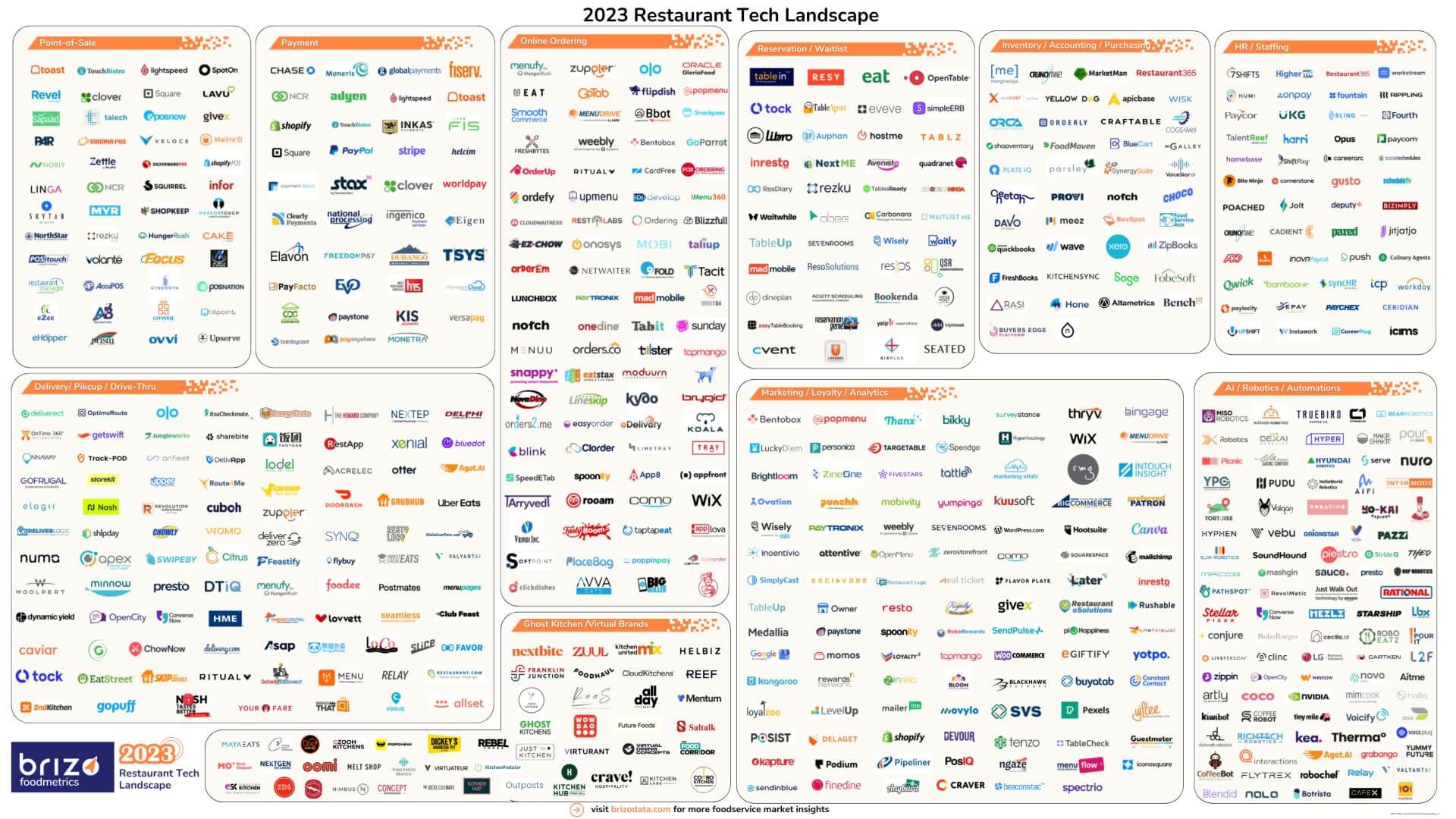
An infographic from Brizo FoodMetrics puts the explosive growth of the hospitality industry technology landscape on display.

It appears that operators, once largely hesitant to embrace new technology, are seeking it out. So, too, it seems, are guests. Intriguingly, many guests expect restaurants, bars, and hotels to innovate technologically.

In a sign of this change, SpotOn is predicting 2023 to be the year when independent operators upgrade their POS systems.

And that’s just one area where tech companies are innovating for our industry. As their infographic shows, Brizo FoodMetrics identifies ten areas of innovation:

  • POS systems
  • Payment platforms
  • Online ordering solutions
  • Reservation and waitlist platforms
  • Inventory, accounting, and purchasing solutions
  • Human resources and staffing
  • Delivery, pickup, and drive-thru tech
  • Marketing, loyalty, and analytics platforms
  • Artificial intelligence, robotics, and automation
  • Ghost kitchen and virtual brand tech

Looking just at Brizo’s POS section, they list 48 platforms as part of their “2023 Restaurant Tech Landscape.” That’s four dozen POS systems, and that’s not even every platform available to operators.

Some will be familiar to operators—Toast, TouchBistro, Clover—as they’re basically synonymous with POS systems. Others, like Tillpoint and OVVI, may be less known. However, that doesn’t mean they’re not worthy of research and consideration.

Explosive Growth and Innovation

Again, the Brizo infographic doesn’t list every single available platform. For instance, I don’t see OpenSimSim under the HR/Staffing section. But the fact that there are still dozens of other platforms—more than in the POS section—shows that tech companies finally want their share of the hospitality pie.

This is, of course, beneficial for operators and their teams for several reasons. One such reason is innovation.

On one hand, the established platforms must innovate to fend off competitors. And on the other hand, upstarts must prove themselves to operators. In other words, new platforms must show they’re not vaporware; they have longevity and won’t abandon their own platform any time soon; they’ll update constantly; they’re simple to learn and use; they integrate with other systems; and that they’re worth an operator’s money and time.

We’re just two months into 2023. Imagine what the 2024 tech landscape is going to look like. And bear in mind, this is a restaurant-focused map—there are categories like property management systems for hotels that aren’t included.

If you’re in the market for a new POS system, want to upgrade scheduling, or are just curious about where the industry is heading, check out the infographic below. Select a few brands that are unfamiliar and look them up.

Brizo FoodMetrics 2023 Restaurant Tech Landscape

To view this infographic on the Brizo FoodMetrics website, click here.

KRG Hospitality Planning Phase, 2023 icon

Image: Possessed Photography on Unsplash

by David Klemt David Klemt No Comments

Focus: See Your Business for the Trees

Focus: See Your Business for the Trees

by Jennifer Radkey

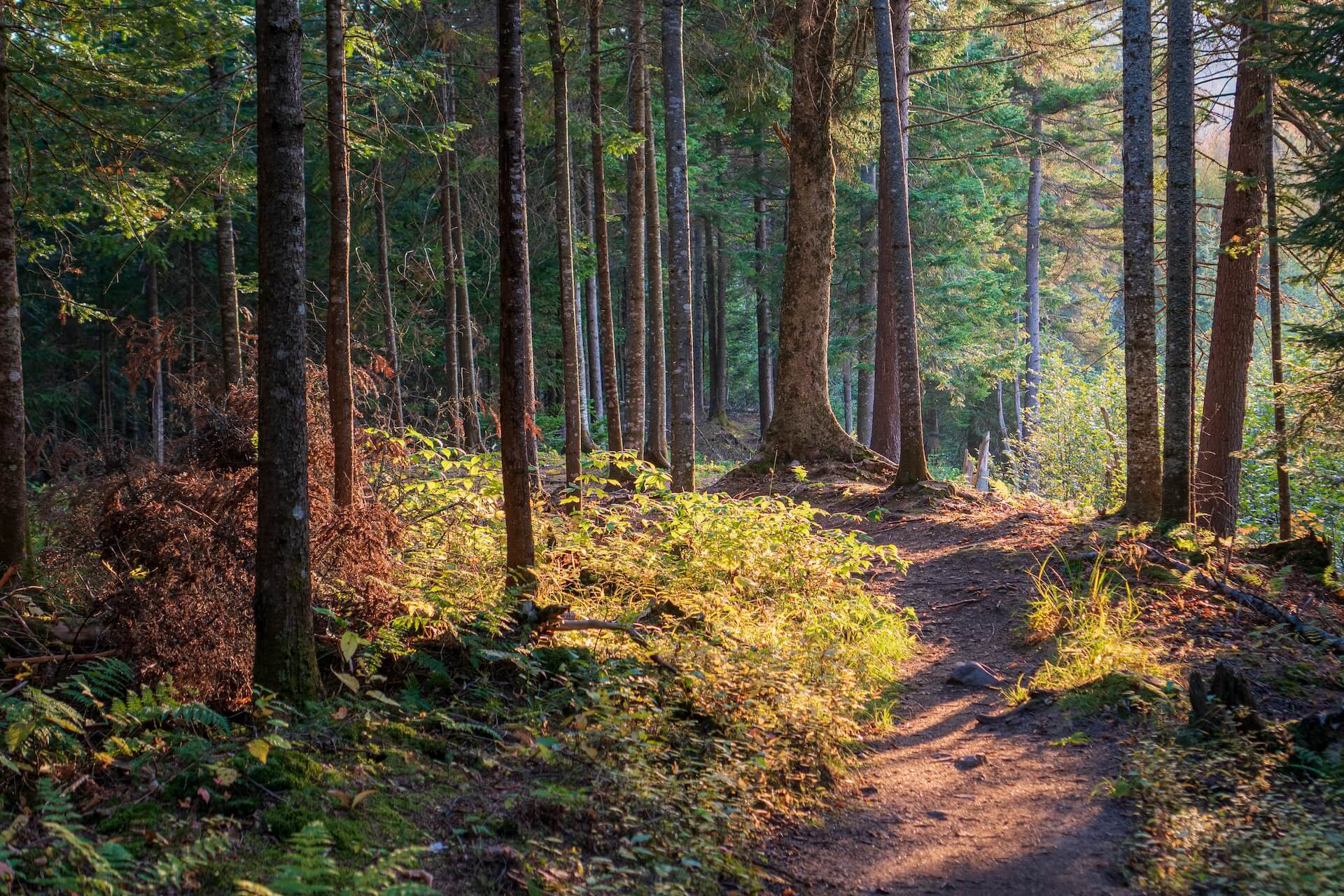
Trees along forest path

It happens to us all: Sometimes we get so caught up in the small details of our day-to-day lives that we fail to see the bigger picture.

So common is this element of the human experience there’s a popular saying about it: “Sometimes it’s hard to see the forest through the trees.”

Today, however, I’m going to suggest that the opposite can also be true: “Sometimes it’s hard to see the trees when immersed in the forest.” In other words, when walking along the same path in a forest every day, we often stop seeing the individual trees.

Okay, forests and trees, nature and walks along paths—what does any of this have to do with operating a successful restaurant, bar, or hotel? Stick with me.

The forest is your venue. Your path is your daily routine from the minute you step into your venue until the minute you walk out the door at the end of your day.

The trees? They’re all the little details that make up your establishment: your team, the signage, tables and chairs, music playing, lighting, decor, food, drinks, website, online reviews, social media posts… These, plus many more, are the little things that add up to create your “forest.”

You walk through your venue daily and have become, for the most part, so used to your surroundings that you’re almost blind to them. This can sometimes lead to a false sense of everything being “fine.” You miss small details you need to improve, and also things that you and your team need to celebrate.

What I would like to challenge you to do is to take a step back, clear your mind, pretend you’re experiencing your venue for the very first time, and really notice the details. Walk a new path through your forest and see the trees.

How do you do that? Pretend you’re a guest visiting your establishment and follow the guest journey.

Here’s a list of five places you should stop along your path to gain a fresh perspective.

Your Online Presence

Start with your website.

When did you last update it? Are pictures fresh and eye-catching? Is the website easy to navigate on mobile devices? Is the menu easy to access? Can you make a reservation easily? What story is your website telling?

Next, scroll through your social media (if it exists).

When did you post last? What content are you sharing? Does it tell a story? Does it make you want to visit your venue? Are people engaging with your content? Are you engaging with others?

How about online reviews? See what people are saying about you.

Have you responded to reviews, good and bad? How are you responding? If you were a potential new guest would these reviews and your responses keep you away or entice you to visit?

More often than not, the first impression a guest has of your business happens long before they actually step foot inside your venue for the first time. What impression are you giving them?

Curb Appeal

The next place you want to stop on your path is right in front of your venue.

As you drive up, what do you notice? What’s the condition of your signage? Is it welcoming and attention-grabbing?

When walking up to the entrance, look for things that you may overlook but a first-time guest may not. Cleanliness of the front entrance area, proper lighting, current signage, these should all be checkpoints on your list.

Also, how does it feel to enter your venue? Is it welcoming? Exciting? Does it feel safe?

If you have stellar curb appeal with awesome signage are you celebrating and promoting it through great photos for your website and social media?

These are all things to consider when viewing your venue from the curb.

Interior

Next up on your path is the interior of your venue.

Is it clean? Are there any minor repairs that need to be done? Is the lighting just right?

Have a seat in a few different places in your venue. What’s your customer’s visual experience when they come to visit you?

You want the interior of your venue to represent your brand and its values, and you want it to appeal to your target market. Is it doing those things?

Again, if you have an amazing interior design element, are you showcasing it to its fullest in person and online? Make any notes of things you would like to change or improve upon.

One more note on the interior: Do not forget the washrooms. Nothing turns a visit into an unpleasant experience faster than an unclean washroom.

Service

As you’re viewing your venue with clarity, take a few minutes to step back and watch how your staff engages with your guests.

Whatever your brand’s values are for the guest experience, are they being conveyed through your staff’s engagement?

If you’re promoting a fun, energetic vibe, is your staff upbeat, positive, and energized when communicating with guests? Are the pillars of excellent customer service in place? When your guest leaves are they going to say, “Wow, our server was so friendly/nice/funny/knowledgeable,” etc.

Or are they going to leave saying nothing at all?

If staff appear unmotivated, what can you do to help inspire your team? If they’re stellar employees are you recognizing their incredible work?

Food and Drink

When was the last time you sat and really enjoyed a meal at your own establishment? Before you answer: As if you were a guest and not the owner.

Is food coming out in a timely manner? How does it look, smell, and, of course, taste?

Would you grab for your phone before taking the first sip or bite to snap a photo for Instagram? If you would, have you done exactly that for your own social media feeds?

As an owner you can become very attached to your menu, but pay attention to see if your guests and staff are raving about your food and drink.

Final Steps

The final steps of your path will be the same as your guest’s final steps.

Is your bill brought to the table when you’re ready to leave? Is payment easy to make? What are the final last impressions you’re left with? How is your team bidding farewell to guests? What will entice them to return?

You want your guests to feel satisfied and to tell their friends and family about what an amazing experience they had.

It can feel strange to step back from the forest and to notice the trees, but it will lead to improved clarity and perhaps even a roadmap for change and improvements to take your hospitality venue to the next level. Stepping back will also improve your overall mindset as you experience your business through the eyes of another.

So step back, clear your mind, and see what you may have been missing all this time.

Cheers to professional and personal growth!

Image: Lucas Parker on Unsplash

KRG Hospitality Mindset Coaching, 2023 Icon

by David Klemt David Klemt No Comments

This is How Guests are Using Resy

This is How Guests are Using Resy

by David Klemt

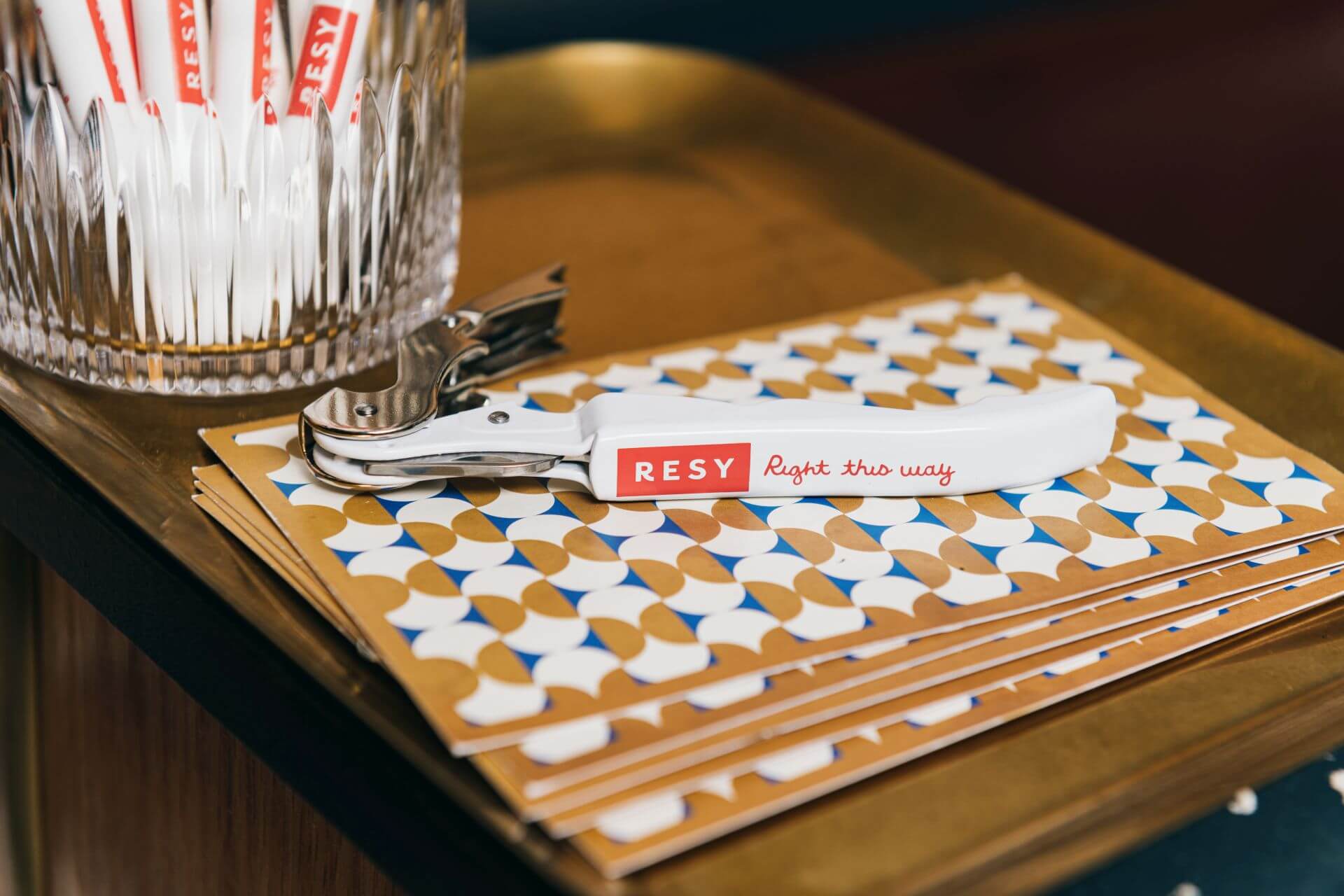
Resy "Right this way" printed on wine key

Demand for in-person visits seems to be the big prediction of 2023, which means reservation platforms like Resy are crucial.

Of course, the value isn’t just the automation of reservations. Nor are these platforms just about simplifying waitlists.

Indeed, those are essentially the two functions such platforms must execute, and execute flawlessly. However, there’s more to modern reservation and waitlist platforms.

Today, guest-facing platforms should offer another feature to operators: discoverability.

This should go without saying but I’m going to address it anyway. With few exceptions, being discoverable is crucial for restaurants, bars, and hotels.

That means social media presence is crucial. Websites are still crucial. Operators ensuring they own their online review and travel site profiles is crucial.

In other words, if it’s online, has a search function, and makes recommendations to users, it’s crucial. It should also go without saying that operators need to meet potential guests where they are. And, again with few exceptions, they’re online.

As you may assume by now, Resy is a reservation platform that helps users discovers restaurants and bars. And if it’s helping guests discover these venues, it’s helping operators increase their reach and get discovered.

Reservation List Curation

The first feature I’m going to share is Climbing, which is what it sounds like.

When a tourist visits or someone moves to a new city, they tend to want to find their places. Which restaurants and bars will be their third spots, or the place they spend time between work and home?

Word of mouth is great, of course. But these days, reviews and comments are digital word of mouth. So, a curated list of “what’s hot” amongst restaurants in a given city is powerful for discoverability.

“Climbing on Resy is the only data-driven list powered by your reservations,” reads the Resy site. “Consider it a curated guide by locals, for locals.”

For ease of use, which is crucial for any platform, users can edit dates and party size within the Climbing tab.

The Hit List

Climbing isn’t the only list Resy curates on the platform. There’s also the Hit List.

This is a list Resy publishes each month for each major market in which they operate. It consists of ten venues that “should be on your radar.”

Using Philadelphia as an example, the city’s January Hit List per Resy is comprised of:

  • CO-OP Restaurant & Bar
  • Sor Ynez
  • City Winery
  • Condesa
  • Ocean Harbor
  • Fiore
  • Rittenhouse Grill
  • Forsythia
  • Second District Brewing
  • Vernick

The Hit List also includes the neighborhood or town where each recommendation is located. Again, not just discoverability but also ease of use.

Notify and More

Resy does more than just help people make reservations. There’s also the platform’s approach to waitlist management, Notify.

As the company describes it themselves, Notify is “a future waitlist.” Users can specify their date and time reference, and add themselves to a restaurant’s list.

On the operator side, they add the guest and an email or push notification is sent out. When a table that matches the waitlist user’s preferences opens up, they get an alert.

Users can also take advantage of Top Rated, New on Resy, and Book Tonight lists. Getting more granular, there are also other curated lists, such as:

  • Great Tasting Menus Under $125
  • Essential Cozy Locales
  • Splurge-worthy Dining
  • Where to Dine with a Crew
  • Date Night, Covered
  • Best Outdoor Dining

Additionally, Resy is in a partnership with American Express. So, eligible cardholders can use Global Dining Access by Resy for incredible experiences.

When considering their tech stack, platforms, and partnerships, operators need to consider an array of functions. More and more each day, discoverability is a function that needs to be top of mind.

Image: Resy

KRG Hospitality Sports & Entertainment, 2023 icon

by David Klemt David Klemt No Comments

We Ask ChatGPT About Robots and AI

We Ask ChatGPT About Robots and AI in Restaurants

by David Klemt

Vintage toy robot face and torso

Earlier this week we had “a conversation” with ChatGPT, the now (in)famous chatbot from artificial intelligence research and development company OpenAI.

For my first time interacting with this type of tool, I keep things simple. I attempt to phrase my questions correctly, focusing on the topic of AI and robots in hospitality.

Initially, I receive a response that probably isn’t much of a surprise. But as you’ll see, the chatbot highlights an item or two that aren’t always top of mind with this topic.

Below you’ll find ChatGPT’s responses to one request and two questions.

Please write 400 to 500 words about robots and artificial intelligence working in restaurants, from the perspective of robots and AI.

“Robots and artificial intelligence (AI) are becoming increasingly prevalent in the restaurant industry. This is in part due to the many benefits that these technologies can offer, such as increased efficiency, improved safety, and reduced labor costs. However, it is also important to consider the perspective of the robots and AI systems themselves, and how they are integrated into the restaurant workforce.

One of the main ways that robots and AI are used in restaurants is through automation of tasks that would otherwise be performed by human workers. For example, robots can be programmed to cook food, mix drinks, and serve customers. This can help to improve the efficiency of the restaurant, as robots are able to work faster and more accurately than humans. Additionally, robots can be designed to perform tasks that are dangerous or difficult for humans, such as handling hot oil or sharp knives. This can help to improve safety in the kitchen and other areas of the restaurant.

However, the use of robots and AI in restaurants also raises some important ethical and social issues. Some people may worry that robots will take jobs away from human workers, especially in an industry that already has high turnover rates. Additionally, there may be concerns about the social and emotional impact of having robots as a major presence in the workplace. For example, some people may find it uncomfortable or strange to interact with robots in a social setting, such as a restaurant.

The robots and AI perspective, they are programed to perform their task efficiently without any error. They don’t have any emotions or preferences hence they are not impacted by the same issues that human employees may face like fatigue, stress or burnout. They can work in any environment without needing breaks or vacation days, this can help reduce labor costs, as restaurants can operate with fewer employees. However, it also means that human workers may need to be trained in new skills that allow them to work alongside robots and AI systems.

In conclusion, the integration of robots and AI in the restaurant industry can provide many benefits, including increased efficiency and improved safety. However, it is important to consider the ethical and social implications of these technologies, and to ensure that they are implemented in a way that benefits both the restaurant and its employees. With proper planning and training, robots and AI can be an [sic] valuable asset to restaurant workforce.”

Can you explain to me, in 300 to 400 words, what the ethical implications are for restaurant, bar, and hotel operators using artificial intelligence and robots to complete tasks?

For the most part, ChatGPT repeats talking points from our first interaction. This is likely due to the phrasing of my question. Also, this chatbot is still in its “infancy.”

However, ChatGPT brings up a few new points, and expands on others.

“The use of artificial intelligence (AI) and robots in restaurants, bars, and hotels raises a number of ethical implications that should be considered by operators. One of the main concerns is the potential for these technologies to displace human workers. In an industry that already has high turnover rates and relatively low wages, the use of robots and AI could make it even more difficult for human workers to find and keep jobs. This could lead to increased unemployment, reduced income and work-life imbalance among the impacted employees.

Another ethical concern is the impact that these technologies may have on the customer experience. For example, some customers may find it unsettling or uncomfortable to interact with robots in a social setting, such as a restaurant or hotel. Additionally, customers may feel that the use of robots and AI detracts from the human element of the service experience, and could harm the overall reputation of the business. There may also be concerns about how the data collected by these systems is used and protected, raising question about data privacy and security.

Additionally, some concerns about the way these AI and robots are designed and how they make their decisions, there could be potential for bias, especially when the systems are provided with data that is not representative of the whole population. This could lead to unfair treatment of customers, employees and other stakeholders.

There are also concerns about how the maintenance and repair of these technologies are managed and who is responsible for any accidents or malfunctions that may occur. This is particularly important for safety critical tasks, such as cooking or cleaning. Operators need to ensure that the AI and robots are designed and maintained to the highest standards to prevent any harm to employees or customers.”

Are there risks that human designers and engineers will introduce bias to customer-facing artificial intelligence and robots?

Since ChatGPT mentions bias in response to my first question, I run with that train of thought.

Below is what the chatbot has to say about that topic as it relates to AI and robots.

“Yes, there is a risk that human designers and engineers may introduce bias into customer-facing artificial intelligence (AI) and robots. This can happen in a number of ways, including:

  1. Data bias: If the AI system is trained on a dataset that is not representative of the population it will be serving, it may make decisions or predictions that are biased towards certain groups of people. For example, if an AI system used in a hotel is trained on data from primarily white and wealthy guests, it may have difficulty understanding and serving guests from other backgrounds.
  2. Algorithm bias: The way an AI system is designed and the algorithms it uses can also introduce bias. For example, if an algorithm is designed to prioritize certain inputs over others, it may make decisions that are biased towards certain groups of people.
  3. Human bias: Human bias can be introduced into AI systems through the decisions made by designers and engineers about what the system should do, how it should work and how it should interact with people. For example, if a designer and engineers decide that the robot should be more polite to older customers, it may be less polite to younger customers, or if the system is designed to recognize only certain languages, it may not be able to understand and serve customers who speak other languages.

It is important for human designers and engineers to be aware of the potential for bias in AI systems, and to take steps to minimize it. This can be done by using diverse and representative data when training the AI system, being mindful of the potential for bias in the algorithms used, and involving stakeholders from diverse backgrounds in the design and testing process. Additionally, monitoring and audit the system performance regularly, and providing ways for users to provide feedback on the performance and make adjustments accordingly.

It is important to remember that this is an ongoing process and it requires continuous monitoring and adjustment as the data and environment changes. There is also a need for more research in the field of explainable AI, which would allow human designers and engineers to understand why the AI system is making certain decisions, which can help to identify and mitigate any biases that may have been introduced.”

Takeaways

Obviously, I don’t think ChatGPT “speaks” for the machines. And I don’t think the chatbot was attempting to convince me of anything. There’s nothing overtly nefarious afoot here—this was mainly an entertaining exercise with a newsworthy tool.

That said, I’m not entirely certain how I feel about my interaction with ChatGPT. On one hand, the answers in favor of AI and robots are what one expects: efficiency, speed, consistency, cost reductions, improvements to safety.

But what about what ChatGPT says about biases, programming, representation, and human interactions with tech? To alter a phrase, “Who watches the programmers?”

Hospitality is about the human element. It’s about service and the guest experience. Personally, I don’t think the world will be in a better place if we reduce human interaction.

Dropping baskets into hot oil? Slicing and dicing? Sure, send in the robots…maybe. Reducing the human element in the name of efficiency and profits? I don’t see a benefit worth the risks.

Image: Rock’n Roll Monkey on Unsplash

by David Klemt David Klemt No Comments

Minimum Wage Rises for Most of USA

Minimum Wage Rises for Most of USA

by David Klemt

Closeup of Ben Franklin on $100 bill

More than half of the states across America are either now seeing a boost to minimum wage or plan to increase the hourly minimum by the middle of this year.

In total, minimum wage is up in 27 states. However, the rise isn’t yet in place in a handful of states, including Nevada.

Now, the federal minimum wage still has yet to go up. That rate remains at $7.25 per hour, where it has been since 2009. For the curious, if a person works 40 hours per week and is compensated at the federal minimum rate, that’s just over $15,000 per year—before taxes.

Per Motley Fool: “If we factor in inflation, [federal minimum wage] would have had to grow to $10.20 to let people buy the same amount of goods and services today [as in 2009]. In real terms, the current minimum wage has shrunk by almost 30% since it was set.”

You’ll see below that I didn’t list the increases for tipped workers. As an operator, you should already be well aware of the minimum rate your tipped workers must be paid. In all likelihood, your suite of software is already updated to the current requirements (but check yourself to be certain).

The list will provide an idea of what you’re up against. It’s difficult to recruit rock stars if you’re unable to offer wages above minimum wage, never mind at minimum wage.

Today, for most workers, the minimum isn’t going to cut it. So, when you’re looking at what you can offer, keep in mind the minimum wage for both tipped and un-tipped workers in your area.

Also, know what other operators are paying. To remain competitive, consider what else you can offer, including your values and culture.

States Increasing Minimum Wage

Below, the states with an increase to the minimum wage. Rather than organize the list by hourly rate or rate of increase, I set it up alphabetically.

  1. Alaska: $10.85 per hour
  2. Arizona: $13.85 per hour
  3. California: $15.50 per hour
  4. Colorado: $13.65 per hour
  5. Connecticut: $15 per hour (June 1)
  6. Delaware: $11.75 per hour
  7. Florida: $11 per hour (September 30)
  8. Hawaii: $12 per hour
  9. Illinois: $13 per hour
  10. Maine: $13.80 per hour
  11. Maryland: $13.25 per hour
  12. Massachusetts: $15 per hour
  13. Michigan: $10.10 per hour (could rise further; lawsuit pending)
  14. Minnesota: $8.63 per hour (small employer); $10.59 per hour (large employer)
  15. Missouri: $12 per hour
  16. Montana: $9.95 per hour
  17. Nebraska: $10.50 per hour
  18. Nevada: $11.25 per hour (July 1)
  19. New Jersey: $14.13 per hour
  20. New Mexico: $12 per hour
  21. New York: $14.20 per hour (excluding some areas); $15 per hour for fast food workers
  22. Ohio: $10.10 per hour
  23. Rhode Island: $13 per hour
  24. South Dakota: $10.80 per hour
  25. Vermont: $13.18 per hour
  26. Virginia: $12 per hour
  27. Washington: $15.74 per hour

Among the states on the list above, four are lifting minimum wage to at least $15. Those states are Connecticut, Massachusetts, California, and Washington. Additionally, the minimum wage is $15 per hour in parts of New York.

Interestingly, employers in Nevada can reduce the minimum wage by one dollar if they pay qualifying health insurance. In such a case, the hourly minimum will be $10.25.

Only one of these states, Montana, will remain under $10.

Cities, Counties, Districts

As stated above, some parts of New York have a minimum wage higher than $14.20.

There are also cities, counties, and districts boosting the minimum wage.

  • Denver, Colorado: $17.29 per hour
  • Long Island, New York: $15 per hour
  • New York City, New York: $15 per hour
  • Washington, DC: $16.50 per hour
  • Westchester County, New York: $15 per hour

Overall, more than half the country either already increased the minimum wage or will do so later this year.

Image: Adam Nir on Unsplash

by krghospitality krghospitality No Comments

Dynamic Pricing or Dynamic Menus?

Dynamic Pricing or Dynamic Menus?

by Doug Radkey

Two sportbikes racing

A key phrase used throughout 2022 was “the new normal.” In 2023, a key term you will likely hear a lot is “dynamic pricing.”

What is dynamic pricing? It can get quite complex, but the global consulting company, McKinsey, defines dynamic pricing as “the (fully or partially) automated adjustment of prices.”

The term is not entirely new to hospitality. Hotels and the overall travel industry have used modules of the pricing model for years. But for restaurants and even bars, yes, it is something new.

It is also a model getting a lot of attention of late, which begs the following question: Why?

As the bar and restaurant industry recovers from the effects of the pandemic, a dynamic pricing model that optimizes revenue opportunities may seem quite attractive. After all, our industry is looking to rejuvenate its sales to pre-pandemic levels.

Essentially, a dynamic pricing model within this industry would work like this: increase prices when demand is up (peak periods), decrease prices to draw guests in when demand is down (off-peak times).

But should this be a model that disrupts the industry in 2023 and into 2024?

While I am all for a little disruption, the industry needs to tread carefully through this potential transition to dynamic pricing (or perhaps just around the phrase itself) that’s based on demand levels.

Guest Experiences

We all know (or should know) that we do not sell a product. What we sell is an experience.

If we can create a positive, memorable guest experience first and foremost, the revenue will follow.

While hotels and travel, as examples, have boasted “positive financial results” over the years through their different approaches to dynamic pricing (while still trying to focus on the end-user guest experience), independent bar and restaurant brands must be careful not to create a hostile brand perception.

Why? Because many consumers view changing prices based solely on levels of demand as being unfair.

Being unfair will certainly create a negative guest experience and/or brand perception. The hotel and airline industries have been able to navigate this perception successfully by offering alternatives. For example, different rooms and amenities or less convenient flight times at different price points. Essentially, companies in lodging and travel provide options and flexibility before customers make the choice to spend.

What about rideshare and surge pricing as another example? Many of you reading this have likely been burned by surge pricing as a consumer, which can be by definition a form of dynamic pricing.

Have you ever tried to book a rideshare during peak periods in a major market? What would normally be a $20 ride is suddenly $40 to $60 (or more) because of their dynamic pricing model.

What did I do in this situation during a recent business trip? I walked another 25 feet up to the cab staging area of the airport and got my ride for $25.

The end results? I had a negative customer experience with the rideshare company, first and foremost. Additionally, that negative experience drove me to the competition. The key here is I was given a choice.

Now let’s switch that scenario to a restaurant.

The Restaurant Scenario

You book a table at your favorite restaurant and order that incredible steak dinner you always enjoy. But instead of it being $50 like you have grown accustomed to, it is now $75 or more. How are you as a consumer going to feel about this new price just because you visited your favorite spot during a “peak period” on a Saturday night? Were you given a choice before the spend?

Of course, this can work in the opposite direction: ordering a meal during a non-peak time and getting it for a cheaper price, thereby getting a discount.

But should we be confusing our customers based on their chosen, convenient time to visit your restaurant or bar? Should you also focus on “discounting” to drive people to your business?

I have even seen recommendations for offering an increased price for peak period but using what was the previous regular price during the non-peak times, labeling the normal price a “discount.”

Should we be framing our regular priced menu options as a discount just so we can charge and make more during a peak period? Is this being fair and ethical to your loyal customers? Should we be going down this road?

With this model (and the phrase “dynamic pricing”), which is based on demand, it is very easy to see how you can quickly confuse or alienate your loyal guests. Unless the industry in its entirety migrates over to this demand-driven model, a similar scenario as outlined above can play out for you and your guests.

Without extremely strong but transparent communication systems in place (which will be a challenge in itself), it is safe to assume that they will likely visit another restaurant up the street and/or provide negative feedback because they feel your pricing model is confusing or unfair.

Dynamic Menus

The phrase that is much more simplified and will be more easily embraced by both operators and guests is “dynamic menu.”

So, what’s the difference?

While it is still by definition “the (fully or partially) automated adjustment of prices,” it is not based on demand throughout the day. Rather, pricing is based on simple supply chain and operational cost adjustments.

According to the National Restaurant Association:

  • 95 percent of restaurants have recently had significant supply delays or shortages of key food items; and
  • 75 percent of restaurants have had to change their menu because of supply chain issues.

With a more dynamic menu, you can adjust pricing to suit those changes accordingly, through the lens of real-time ingredient cost, labor costs, productivity levels, and even the availability of certain menu items.

This simply means that the incredible steak dinner a guest has always enjoyed at your place is perhaps now $53 instead of $50 because the price of beef went up the past week or month. This ensures that as an operator, you will have a minimal gap between your theoretical and actual food costs.

Again, this should work both ways, meaning if the price of beef has gone down, so too should the price.

This means that your guests are paying an accurate value for each item, based on your intended sales mix and contributions, without a loss in margin on your end or negative experience on the guest end.

This means that everything on your menu is “market price” or MP. Where have we seen that before…?

Market Price

We all know restaurant menus will commonly deduct a price and replace it with the term “market price” (often abbreviated to “MP”). This means the price of the menu item depends on the market price of the ingredients, and the price is available upon request. It has been used for years for seafood in particular—most notably lobsters and oysters—in many restaurants.

Therefore, this pricing model is not entirely new. So, why should it stop at just high-priced seafood?

The reason many operators would use the abbreviated MP was because they did not want to reprint menus every single day as the prices fluctuated greatly.

As we move towards digitally savvy restaurant operations, implementing integrated technology and menus, we can begin to find alternatives and ensure that we are actively pricing our menus accordingly based on the market (and overhead costs) to strengthen top- and bottom-line results.

Knowledge is Power

To make a dynamic menu work, whether you’re a QSR, sports bar, casual-dining or fine-dining concept, or any other category of bar or restaurant, you need to know your target customers, provide a targeted menu, and know your numbers (the data).

Curating and engineering a menu should be a simplified process. To be honest, this should have been streamlined prior to the pandemic.

Your menu should be developed based on data, consumer sentiment, regional ingredients, regional suppliers, and local talent within the confines of the overall concept. Food and beverage programs should be developed with thought, care, speed, precision, execution, and last-but-not-least: consistent profits in mind.

Keeping menus “small” (10 to 12 or even 15 items at maximum) will be the new threshold of a successful, more profitable operation. This size of menu will allow bars and kitchens to operate more efficiently; keep inventory costs both low and controlled; control training and labor costs; and provide guests with the most flavorful and exciting items that they truly want.

Be Nimble

You also want to provide menu flexibility by continually reviewing your supply chain. Maintaining a strong personal relationship with your suppliers is imperative. You must also review your costs and inventory on a daily and weekly basis to make dynamic menus work.

To keep inventory, purchase orders, and potential waste to a minimum, it will be crucial that you to ensure your menu is small but innovative. The only way to accomplish this is through effective data management.

However, the new challenge for many independent brands is making data timely, relevant, digestible, and actionable for operators and their leadership teams. The ability to collect, interpret, and effectively react to key datapoints is going to be crucial for anyone who wants to implement a dynamic menu, and for moving forward in general.

At the end of the day, profiting from a dynamic menu is all about making decisions based on accurate cost and productivity data. Of course, there’s only one way to obtain data: embrace technology and create strategic clarity around it.

The Tech Stack

The key to successfully implementing a dynamic menu is integrating a stack of technology that provides real-time data and trend reports.

From point-of-sale software and reports to accounting software, inventory and recipe management software, and invoice management software or a suite that includes all of the above that’s integrated and working together, you can obtain real-time data to adjust your pricing based on real-time ingredient and productivity costs on a daily or weekly basis.

You want seamless movement of data from front- to back-of-house that will position you to make decisions and have a more complete picture of inventory stock levels, costs, and ordering needs, plus itemized sales, contribution margins, and productivity levels.

In Summary

While we must find ways to be innovative, potentially price-gouging our guests during peak periods and discounting during slow periods is not the way for this industry to recuperate and build loyal customers.

Building a strong brand through the creation of memorable experiences and by building connection with your community along with strategic planning, effective marketing, the elements of culture, and efficient operations, you can build sustainable revenue and profit channels.

By following a more dynamic menu approach within your operations, you can still maintain transparency with your guests with less challenging communication methods, remain a fair and well-respected brand within your community, and improve your margins by three to five percent or more with the right people and systems in place.

That sounds like a pretty good deal to me. The question here remains: Are you Team Dynamic Pricing or Team Dynamic Menus?

Image: Joe Neric on Unsplash
by krghospitality krghospitality No Comments

KRG Hospitality Adds to Team

KRG Hospitality Enters New Era of Growth with Addition to Team

by David Klemt

KRG Hospitality Licensing Program logo

Kim Richardson joins the KRG Hospitality team, representing Philadelphia and the Northeastern US region via the agency’s new license program.

PHILADELPHIA, PA—KRG Hospitality today announces an exciting new addition to the consulting agency’s team. Following several years of success, KRG is now entering a new phase of growth.

Kim Richardson, who has more than 23 years of experience in the hotel and restaurant industry, will represent KRG at the agency’s Philadelphia office. Further, Richardson will be KRG’s representative for the Northeastern region of the United States, serving Connecticut, Delaware, Maine, Massachusetts, New Hampshire, Maryland, New Jersey, New York, Pennsylvania, Rhode Island, and Vermont.

As the newest member of the KRG team, Richardson is excited to bring all her hospitality industry knowledge and experience to the Philadelphia area. From Five Diamond Hotels to brick-and-mortar restaurants, she has had her hands in the Philadelphia hospitality scene since moving to the city in 2003. With an admiration for the industry since a very young age, she has a passion for all things hospitality. Most importantly, Richardson brings with her a passion and eagerness to help grow the industry and lead others to success.

“There’s nothing more rewarding than understanding a client’s dream, perfecting it, and bringing that vision to life,” says Richardson.

This exciting new addition to the KRG team represents the launch of the agency’s new licensed consultant program. KRG operates in several key markets—Toronto, Las Vegas, Calgary, Vancouver, Philadelphia, Nashville, Orlando, and the Caribbean—and is planning to add more partners as regional representatives throughout 2023.

“As we move forward from the pandemic era, we look forward to positioning the brand for continued and further success,” says KRG Hospitality president Doug Radkey. “Creating a licensed consultant program provides us the opportunity to reach a wider audience, provide additional value and support for our clients, and help push this exciting industry forward.”

About KRG Hospitality

KRG Hospitality is a storied and respected agency with proven success over the past decade, delivering exceptional and award-winning concepts throughout a variety of markets found within Canada, the United States, and abroad since 2009. Specializing in startups, KRG is known for originality and innovation, rejecting cookie-cutter approaches to client projects. The agency provides clients with a clear framework tailored to their specific projects, helping to realize their vision for a scalable, sustainable, profitable, memorable, and consistent business. Learn more at KRGHospitality.com. Connect with KRG Hospitality and the Bar Hacks podcast on social: KRG Twitter, Bar Hacks Twitter, KRG Media Twitter, KRG LinkedIn.

Image: KRG Hospitality

by David Klemt David Klemt No Comments

Are You Surveying Your Team?

Are You Surveying Your Team?

by David Klemt

Interesting "Information" typography

Successful recruitment is only one element of overcoming the current labor shortage—retention is another crucial element.

In fact, employee turnover can be incredibly costly. According to the Center for Hospitality Research at Cornell, employee turnover costs nearly $6,000 per hourly team member.

Now, consider what it costs to hire a single employee. On average, it costs $3,500 to hire that worker in the first place. So, the math is simple: Losing an employee costs an operator more than hiring one.

Unsurprisingly, turnover cost more than doubles—nearly $14,000—for a restaurant manager. In short, employee retention is arguably more important than recruitment and hiring.

Labor Shortage

Per Datassential, 33 percent of 801 survey respondents say the labor shortage is their greatest challenge in 2022. More than 70 percent of those respondents are independent operators.

However, independent, chain, and franchise operators appear to agree on one particular element of the challenge. Across segments, hiring hourly back-of-house employees is the most difficult.

In fact, Datassential’s latest FoodBytes report states that restaurants are coming up short in the kitchen. Two-thirds of restaurants are struggling to fill open hourly cook positions.

So, what’s the solution? Higher starting wages? Bonuses for remaining in role for 90 days? Benefits like health insurance and a 401K?

Each of those does work—for recruitment and hiring. What keeps a new hire from leaving after 90 days with their bonus cash, heading down the road to the next restaurant or bar?

It’s commonly agreed that the first 90 days of a new hire’s employment are the most crucial. Wages and benefits keep them in role for roughly three months. During that time, they’re deciding if their role and the employer’s culture are for them.

Employee Engagement

If you’re an owner, operator, or member of the leadership team, you know the importance of data. In fact, you should be obsessed with data collection and analysis.

Truly, the best way to make decisions that will impact the business is with information. Guesswork just doesn’t cut it. Yes, you should pay close attention to your “gut.” However, you should avoid acting on gut instincts before analysing the relevant data.

Wisely, many operators encourage their guests to complete satisfaction surveys. After all, their feedback is crucial to the success of any business. But what about employee surveys? Your team is equally as important as your guests.

Unhappy team members, unhappy guests. Unhappy guests, reduction in traffic. Team members fleeing your business? Your guests pick up on turnover. Eventually, you won’t have a business.

Now, you can assume your team is happy. You can feel like your leadership team is ensuring employee satisfaction and engagement. Or, you can know.

How do you know? You ask.

Satisfaction Surveys

Call it a satisfaction survey, call it a happiness survey… Either way, you’re asking your team members how happy they are with you and their role.

Operators will likely want to keep these surveys anonymous. Several sources that address employee surveys claim most employees prefer anonymity. Unfortunately, this is due to a fear of retribution from ownership or the leadership team.

Even with a healthy workplace culture, anonymity is probably the best for these surveys. Of course, if you’re implementing a 90-day happiness survey for new hires, anonymity doesn’t make much sense.

As far as company-wide survey frequency, there are several options. Once per year is obviously the bare minimum. Therefore, it’s not very effective. Every six months is better but is checking in on your team’s happiness twice per year enough?

The sweet spot appears to be quarterly surveys. More than that—monthly or bi-monthly—will likely get annoying.

Survey Questions

Below are a few questions to consider for your surveys. You’ll have to decide if you want to use multiple-choice, yes or no, matrix, or open-ended questions, or a mix of each type.

Another consideration is how your team will access the survey. The process needs to be as painless as possible. So, consider pushing a link via your scheduling platform, text, or QR code.

  • How happy are you working here?
  • How happy are you in your current role?
  • Would you recommend us to friends and family as a good place to work?
  • Does the leadership team make you feel valuable?
  • Do you see yourself working here a year from now?
  • Are we helping you succeed in your role?
  • Are we giving you what you need to progress in your career?

Image: Roman Kraft on Unsplash

by David Klemt David Klemt No Comments

Datassential’s State of the Operator 2022

Datassential’s State of the Operator 2022

by David Klemt

Guests sitting at the bar inside a restaurant

The latest addition to the Datassential FoodBytes research series shares insights into the top three challenges most—if not all—operators are facing.

Now, some of what the report reveals paints a bleak picture. Inflation, the labor shortage, and supply chain issues persist even past the midway point of 2022.

However, operators are a tenacious and innovative group of business owners. Of course, that tenacity seems to manifest in people thinking this industry can weather any storm. That perception can come at operators’ detriment. Exhibit A: The Inflation Reduction Act of 2022 not including replenishing of the RRF. But, I digress.

“The State of the Operator & the Road Ahead,” which you can download here, is helpful and informative. As you may be aware, we’re fans of Datassential and their FoodBytes reports. In fact, you can find our synopses of FoodBytes reports here and here.

Below are some key points that operators should be aware for consideration. I strongly urge you to download this free report today.

Operator Outlook

First, let’s take a look at traffic. As Datassential points out, some hospitality business segments are performing better than others currently.

In large part, this is due to two factors: People working from home, and people returning to travel. So, operators who rely heavily on commuters and in-person workers are struggling. On the other hand, operators inside or around hotels are, per Datassential, performing the strongest at the moment.

Interestingly, though, nearly half of operators (47 percent) are seeing an increase in traffic in comparison to pre-Covid levels. Fourteen percent of operators are reporting no change in traffic. Unfortunately, traffic is lower for 39 percent of operators.

Next, sales. In comparison to pre-Covid times, more than half (51 percent) of operators report an increase. Again, 14 percent of operators are experiencing no change. But 35 percent of operators are experiencing a decrease in sales.

Finally, profit margins. Half of operators may be seeing increases in traffic in sales, but profit margins are taking a hit. On average, the industry’s profit margin is now hovering at 13 percent. That’s an eight-percent drop in comparison to pre-Covid levels.

Segment Performance

The findings regarding profit margins are likely to be the most alarming to operators. Historically, our industry has operated on razor-thin margins for decades. Dropping from an average of 21 percent to 13 is concerning.

However, context is important. The segments seeing the lowest profit margins in 2022 are: Business & Industry (B&I), Healthcare, and Colleges & Universities (C&U). Again, remote work (and learning) are largely responsible for those particular segments watching their profit margins tumble.

The strongest performers are: Quick-Service Restaurants (QSR) at 17 percent; Fast Casual at 15 percent); and Midscale, Casual Dining, and Fine Dining, each at 13 percent. Lodging is just below the current average at 12 percent.

Operator Adaptation

Inflation, rising food costs, supply chain issues, labor shortages… Operators are finding ways to cope, and in some situation, thrive.

Unsurprisingly, the vast majority of operators are increasing menu prices. In the past 12 months, 77 percent of operators have raised menu prices at least once.

These increases range from one percent a staggering 30 percent. However, the majority have kept these increases to one to ten percent. Most (31 percent) have implemented increases of no more than five percent. Just one percent of operators boosted prices between 25 to 30 percent.

Of course, raising prices isn’t the only strategy operators have at their disposal. Forty percent of operators are streamlining their menu, reducing the sizes of their menus. However, it’s wise for operators to review their menus at least every three months to eliminate poor performers.

Other strategies include focusing on value for guests (27 percent); utilizing LTOs and launching new menu items (26 percent); eliminating a specific daypart or portion of the menu (25 percent); and making portion sizes small, or “shrinkflation” (18 percent).

There’s much more revealed in Datassential’s latest FoodBytes report. Download your copy today.

Image: Luca Bravo on Unsplash

by David Klemt David Klemt No Comments

2022 World’s 50 Best Restaurants: 1-50

2022 World’s 50 Best Restaurants: 1-50

by David Klemt

Gourmet dish on white background

Finally, the World’s 50 Best announces the World’s 50 Best Restaurants, an impressive list of the finest places to dine across the globe.

Of course, this highly anticipated news comes on the heels of the World’s 50 Best Restaurants, 51 to 100. Last night, host Stanley Tucci and special guest co-hosts announced the winners in London.

Perhaps not too surprisingly, only three American restaurants are among this year’s top fifty. Of those three, one is in Healdsburg, California, which is the wine-producing region of Sonoma County. The other two American restaurants are in New York City, which isn’t exactly a surprise. And of those two restaurants, one, number 33 on this year’s list, is the winner of the Gin Mre Art of Hospitality Award.

Unfortunately, there are no Canadian restaurants on the World’s 50 Best Restaurants 2022 list. That applies to the back half of the list, numbers 51 to 100, as well.

Interestingly, the restaurant taking home the title of World’s Best Restaurant 2022 took the number two spot in 2021. Another hint: This year’s number one, by clinching the top slot, is also the Best Restaurant in Europe 2022.

So, do you think you know what restaurant is the best in the world? Scroll down to see if you’re right.

The World’s 50 Best Restaurants 2022: 50 to 1

  1. Single Thread (Healdsburg, California, USA)
  2. Ikoyi (London, England)
  3. Leo (Bogotá, Colombia)
  4. Oteque (Rio de Janeiro, Brazil)
  5. Belcanto (Lisbon, Portugal)
  6. Narisawa (Tokyo, Japan)
  7. Le Bernardin (New York, New York, USA)
  8. Boragó (Santiago, Chile)
  9. Quique Dacosta (Dénia, Spain)
  10. La Cime (Osaka, Japan)
  11. Schloss Schauenstein (Fürstenau, Switzerland)
  12. Sorn (Bangkok, Thailand)
  13. Jordnær (Copenhagen, Denmark)
  14. Fyn (Cape Town, South Africa)
  15. Odette (Singapore)
  16. The Clove Club (London, England)
  17. Hiša Franko (Kobarid, Slovenia)
  18. Atomix (New York, New York, USA)(Gin Mare Art of Hospitality Award 2022)
  19. Mayta (Lima, Peru)
  20. Arpège (Paris, France)
  21. Florilège (Tokyo, Japan)
  22. St. Hubertus (San Cassiano, Italy)
  23. Le Clarence (Paris, France)
  24. Hof Van Cleve (Kruishoutem, Belgium)
  25. Restaurant Tim Raue (Berlin, Germany)
  26. Frantzén (Stockholm, Sweden)
  27. The Chairman (Hong Kong)
  28. The Jane (Antwerp, Belgium)
  29. Septime (Paris, France)
  30. Mugaritz (San Sebastian, Spain)
  31. Den (Tokyo, Japan)
  32. Piazza Duomo (Alba, Italy)
  33. The Alchemist (Copenhagen, Denmark)
  34. Nobelhart & Schmutzig (Berlin, Germany)(Villa Massa Highest Climber Award 2022)
  35. Elkano (Getaria, Spain)
  36. Reale (Castel di Sangro, Italy)
  37. Don Julio (Buenos Aires, Argentina)
  38. Steirereck (Vienna, Austria)
  39. Uliassi (Senigallia, Italy)(Highest New Entry Award 2022)
  40. Maido (Lima, Peru)
  41. Le Calandre (Rubano, Italy)
  42. Quintonil (Ciudad de México, México)(Estrella Damm Chef’s Choice Award: Chef Jorge Vallejo)
  43. Lido 84 (Gardone Riviera, Italy)
  44.  A Casa do Porco (São Paulo, Brazil)
  45. Asador Etxebarri (Atxondo, Spain)
  46. Pujol (Ciudad de México, México)
  47. Diverxo (Madrid, Spain)
  48. Disfrutar (Barcelona, Spain)
  49. Central (Lima, Peru)
  50. Geranium (Copenhagen, Denmark)

Image: Delightin Dee on Unsplash

by David Klemt David Klemt No Comments

Is Your Business in a Top Time Out City?

Is Your Business in a Top Time Out City?

by David Klemt

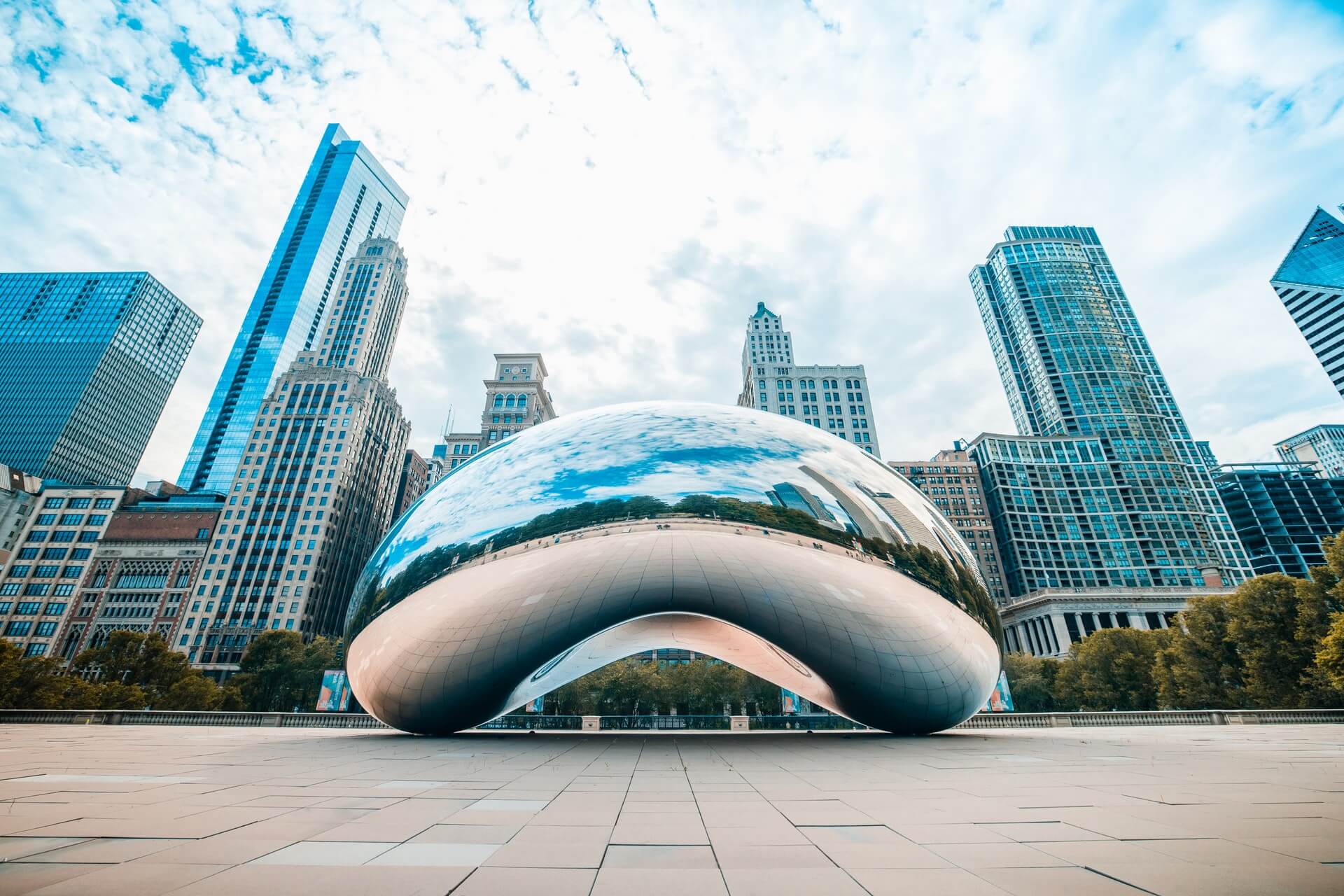
The Bean aka Cloud Gate in Chicago

Hot off the presses, Time Out is now revealing the results of their Time Out Index 2022, an annual list identifying the world’s top cities.

The global publication, founded in the late 1960s, surveyed 20,000 “city dwellers.” Time Out focuses on cities’ restaurant, bar, nightlife, entertainment, and art scenes.

For 2020 and 2021, Time Out put emphasis on the pandemic and how cities maintained resiliency and kept communities together. In 2022, priority is given to flourishing nightlife, dining, and drinking, along with culture.

Additionally, Time Out gives weight to a city’s sustainability, safety, walkability, and affordability. To learn more about how Time Out analyzes data, click here.

Compelling Rankings

Below, you’ll find Time Out’s ranking of the best 53 cities in the world for 2022. I’ve broken the list into sections: 53 to 11, and ten to number one.

Interestingly, the 20,000 survey respondents note the dining, drinking, and nightlife of the top five cities. In fact, the nightlife scene of number three is “the world’s best.”

And city number two? Survey takers think it’s the most fun—”funnest,” according to Time Out—in the world.

Now, I know our audience is largely American and Canadian, so I’ll get to how both rank. Six cities—the usual suspects, basically—in the US are on the list. Only one American city is in the top ten, and it’s likely not the one you think. As for Canada, one city claims the 27 spot, another is number nine.

You’ll find the Canadian and American cities in bold below. Champing at the bit to see the results? Scroll down!

Time Out Cities 53 to 11

  1. Doha, Qatar
  2. Hong Kong
  3. Bangkok, Thailand
  4. Istanbul, Turkey
  5. Johannesburg, South Africa
  6. Rio de Janeiro, Brazil
  7. Auckland, New Zealand
  8. Sydney, Australia
  9. Abu Dhabi, United Arab Emirates
  10. Singapore
  11. Accra, Ghana
  12. Los Angeles, California, USA
  13. Rome, Italy
  14. Dubai, United Arab Emirates
  15. Barcelona, Spain
  16. Miami, Florida, USA
  17. São Paulo, Brazil
  18. Dublin, Ireland
  19. Athens, Greece
  20. Manila, Philippines
  21. Kuala Lumpur, Malaysia
  22. Paris, France
  23. Tel Aviv, Israel
  24. Mexico City, Mexico
  25. Boston, Massachusetts, USA
  26. Lisbon, Portugal
  27. Toronto, Ontario, Canada
  28. Delhi, India
  29. San Francisco, California, USA
  30. Tokyo, Japan
  31. Stockholm, Sweden
  32. Birmingham, England
  33. Buenos Aires, Argentina
  34. New York, New York, USA
  35. Lyon, France
  36. Porto, Portugal
  37. London, England
  38. Taipei, Taiwan
  39. Melbourne, Victoria, Australia
  40. Mumbai, India
  41. Manchester, England
  42. Madrid, Spain
  43. Cape Town, South Africa

The Top Ten Time Out Cities

  1. Copenhagen, Denmark
  2. Montréal, Québec, Canada
  3. Berlin, Germany
  4. Marrakech, Morocco
  5. Prague, Czech Republic
  6. Amsterdam, Netherlands
  7. Glasgow, Scotland
  8. Medellín, Colombia
  9. Chicago, Illinois, USA
  10. Edinburgh, Scotland

Congratulations to the top 53 cities in the world! We expect big things from their dining, drinking, and nightlife moving forward.

Image: Christopher Alvarenga on Unsplash

by David Klemt David Klemt No Comments

2022 World’s 50 Best Restaurants: 51-100

’22 World’s 50 Best Restaurants: 51-100

by David Klemt

High-end plate of food

Just a week away from their big 2022 reveal, numbers 51 through 100 of the World’s 50 Best Restaurants is now available.

As one expects, these restaurants represent the pinnacle of dining. The 2022 list also represents a number of changes in comparison to 2021.

For example, a number of restaurants in the Middle East are among this year’s 51 to 100 rankings. Notably, these restaurants were not included on last year’s list. In fact, nearly half of the restaurants are new entries on the 51 to 100 list.

Additionally, the 2022 list represents six continents. This year, four “new” countries and a sovereign island city-state make the 51 to 100 rankings:

  • Argentina
  • China
  • Germany
  • Singapore
  • UAE

The regional breakdown is as follows:

  • Asia: 14 restaurants
  • Europe: 13 venues
  • North America: 11 concepts
  • Middle East: 2 restaurants
  • Africa: 2 concepts
  • Oceania: 1 venue
  • South America: 7 restaurants

Just six American restaurants are on the list. Three are in New York, two in San Francisco, and one is in Chicago. Disappointingly, zero Canadian restaurants are among the 51 to 100 rankings.

Restaurants one through 50 will be revealed on Monday, July 18. Numbers 51 to 100 of the World’s 50 Best Bars will be revealed Tuesday, September 27.

The World’s 50 Best Restaurants 2022: 51 to 100

  1. Alcalde (Guadalajara, Jalisco, México)
  2. Sud 777 (Ciudad de México, México)
  3. D.O.M. (São Paulo, SP, Brazil)
  4. Lyle’s (London, England)
  5. Azurmendi (Larrabetzu, Biscay, Spain)
  6. La Colombe (Cape Town, Western Cape, South Africa)
  7. Trèsind Studio (Dubai, UAE)
  8. Alléno Paris au Pavillon Ledoyen (Paris, France)
  9. Sazenka (Tokyo, Japan)
  10. Rosetta (Ciudad de México, México)
  11. La Grenouillère (La Madelaine-sous-Montreuil, France)
  12. Ernst (Berlin, Germany)
  13. Chef’s Table at Brooklyn Fare (New York, NY, USA)
  14. Fu He Hui (Shanghai, People’s Republic of China)
  15. Le Du (Bangkok, Thailand)
  16. Sühring (Bangkok, Thailand)
  17. Evvai (São Paulo, SP, Brazil)
  18. Kjolle (Barranco, Lima, Perú)
  19. Cosme (New York, NY, USA)
  20. Zén (Singapore)
  21. Mingles (Seoul, South Korea)
  22. Atelier Crenn (San Francisco, CA, USA)
  23. Kol (London, England)
  24. Blue Hill at Stone Barns (Pocantico Hills, Mount Pleasant, NY, USA)
  25. Samrub Samrub (Bangkok, Thailand)
  26. Neighborhood (Hong Kong)
  27. Table by Bruno Verjus (Paris, France)
  28. Lasai (Rio de Janeiro, RJ, Brazil)
  29. Estela (New York, NY, USA)
  30. AM par Alexandre Mazzia (Marseille, France)
  31. Brat (London, England)
  32. Sézanne (Tokyo, Japan)
  33. El Chato (Bogotá, DC, Colombia)
  34. Gimlet at Cavendish House (Melbourne, Victoria, Australia)
  35. Raan Jay Fai (Bangkok, Thailand)
  36. Mikla (Beyoğlu/İstanbul, Turkey)
  37. Orfali Bros Bistro (Dubai, UAE)
  38. Mishiguene (Buenos Aires, Argentina)
  39. Máximo Bistrot (Ciudad de México, México)
  40. Wolfgat (Paternoster, Western Cape, South Africa)
  41. Oriole (Chicago, IL, USA)
  42. Indian Accent (New Delhi, Delhi, India)
  43. Hertog Jan at Botanic Sanctuary (Antwerp, Belgium)
  44. Burnt Ends (Singapore)
  45. Meta (Singapore)
  46. Maní (São Paulo, SP, Brazil)
  47. Benu, San Francisco, CA, USA)
  48. Tantris (München, Germany)
  49. Flocons de Sel (Megève, France)
  50. Wing (Hong Kong)

*Bold denotes new entry

Image: Delightin Dee on Unsplash

by David Klemt David Klemt No Comments

What Politicians Get Wrong about Us

What Politicians Get Wrong about Our Industry

by David Klemt

Restaurant and bar with exterior windows open

It still stings that the 43 senators chose to vote against replenishing the Restaurant Revitalization Fund.

The fact that four senators didn’t vote at all on S.4008 is nearly as insulting and painful.

Now, while all the “nay” votes came from Republican senators, I’m not here to bash one party in particular. Four Republicans voted “yea,” as did two Independents.

Unfortunately, given how hostile Democrats and Republicans in Congress seem to be, it’s difficult to be objective. Right now, it appears that the RRF was left to die a slow death because many—not all, of course—Republicans in power don’t want their Democrat peers to “win” at anything.

To be used as political pawns and be left out in the cold… It’s a bitter pill to swallow.

Cornerstones

Too many politicians, it seems, view restaurants and bars as they would other types of businesses. Perhaps the perceived success of national and global brands paint the picture that independent venues and small chains don’t need any help.

More disappointingly, maybe politicians, from local lawmakers to state representatives, take our business’ role for granted.

Look at the history of restaurants and bars, of hospitality. Think about the rich history of hospitality in America alone, let alone globally.

Yes, independent restaurants and bars are small businesses. But like so many small businesses in so many towns across the country, they’re so much more.

Restaurants and bars are pillars, cornerstones of the communities they serve. These are businesses that welcome people in, treat them like family. They’re there for them as they move through their lives.

People who were seemingly at odds with another routinely found common ground over a bite and a sip. More often than not, that’s still the case.

Operators and their teams give back to their communities through food drives, quietly feeding those in need, and finding other ways to give back.

And they look out for their communities.

Lifesavers

Last week, the team at a cafe in the Bronx called the Chipper Truck helped rescue a woman from an alleged hostage situation.

Permitted by her assailant to place a food order via Grubub, the victim thought quickly and sent a life-saving note with her order:

“Please call the police… don’t make it obvious.”

A staff member read the note in the “additional instructions” section of the order and called one of the owners. Nobody at the Chipper Truck knew if the situation was real but they chose to err on the side of caution.

When the alleged assailant—who was arrested and charged with a list of serious offenses—opened the door for the Grubhub order, he was met with police officers.

A Facebook post from the cafe addressing the situation read, in part, “I’ve often heard of this happening but never thought it would happen to us. Thankfully we were open and able to help her.”

It’s terrifying that this happens enough that the cafe owners hear about it “often.” But it’s telling of the role restaurants and bars play in their communities that they’ve saved multiple lives.

This is to say nothing of the restaurants and bars that have put coded safety systems in place to help patrons who find themselves in danger.

No Such Thing as “Just” a Restaurant or Bar

There isn’t a restaurant or bar out there that’s “only” a restaurant or “only” a bar.

Every one is a source for food, for socializing, for an escape from the stresses of life. Restaurants and bars are committed to service and sacrifice.

They’re pillars of their communities, the cornerstones that play important roles in our everyday lives and the special moments as well.

Perhaps our politicians, local and otherwise, need to a reminder. Restaurants and bars play crucial roles in the lives of the people politicians are supposed to represent.

Too many politicians claim to support small businesses while their actions and votes prove otherwise. Talk, as we all know, is cheap.

Restaurants are not “just” restaurants. Bars are not “just” bars. We deserve better.

Image: Scott Webb on Unsplash

by David Klemt David Klemt No Comments

Top 10 2022 Spirited Award Finalists

Top 10 2022 Spirited Award Finalists

by David Klemt

Bartender presenting cocktail

With just six weeks to go until the 20th anniversary of Tales of the Cocktail, the foundation announces their Spirited Award finalists.

Unsurprisingly, a number of the nominees can also be found on the North America’s 50 Best Bars list.

However, the Spirited Awards honor more than bars. The awards span four categories: US, International, Global, and Writing & Media.

Along with bar nominees, you’ll find mentors, bar teams, brand ambassadors, spirits, cocktail ingredients, books, articles, podcasts, videos, and publications in the list below.

Congratulations to the Spirited Awards’ top ten nominees! We’ll see you in New Orleans.

Cheers!

US Categories

US Bartender of the Year presented by Del Maguey

  • Josh Davis (16th Street Bar, Chicago, IL)
  • Chris Elford (Trade Winds Tavern, Navy Strength, Rob Roy, Here Today Brewing, Seattle, WA)
  • Chris Hannah (Jewel of the South, New Orleans, LA)
  • Caer Maiko Ferguson (DrinkWell, Austin, TX)
  • Chris McMillian (Revel Bar & Cafe, New Orleans, LA)
  • Shauna O’Neil (Sweet Liberty, Miami, FL)
  • Kapri Robinson (Allegory, Washington, DC)
  • Christian Suzuki-Orellana (Wildhawk, San Francisco, CA)
  • Masahiro “Masa” Urushido (Katana Kitten, New York, NY)
  • Christine Wiseman (BarLab Hospitality Group, Miami, FL)

Best US Bar Mentor presented by BarSmarts

  • Colin Asare-Appiah
  • Julio Cabrera
  • Kevin Diedrich
  • Meaghan Dorman
  • Alba Huerta
  • Alex Jump
  • Sean Kenyon
  • ms franky marshall
  • Nectaly Mendoza
  • Jeffrey Morgenthaler

Best US Brand Ambassador presented by Libbey Glass

  • Kiowa Bryan (Spiribam)
  • Chris Cabrera (Bacardí USA)
  • Tad Carducci (Gruppo Montenegro)
  • Cameron George (Ardbeg)
  • Vance Henderson (Hendrick’s Gin)
  • Lynn House (Heaven Hill)
  • Jenna Murray (The Glenlivet)
  • Natasha Sofia Velez (Davos Brands)
  • Ryan Wainwright (Bombay Sapphire)
  • Daniel Warrilow (Campari America)

Best US Bar Team presented by William Grant & Sons

  • Attaboy (New York, NY)
  • Cleaver: Butchered Meats, Seafood & Classic Cocktails (Las Vegas, NV)
  • Half Step (Austin, TX)
  • Jaguar Sun (Miami, FL)
  • Jewel of the South (New Orleans, LA)
  • Katana Kitten (New York, NY)
  • The Long Island Bar (Brooklyn, NY)
  • The Roosevelt Room (Austin, TX)
  • The Snug (Sacramento, CA)
  • Thunderbolt (Los Angeles, CA)

Best US Cocktail Bar presented by Absolut Vodka

  • Bar Goto (New York, NY)
  • Beachbum Berry’s Latitude 29 (New Orleans, LA)
  • Bitter & Twisted Cocktail Parlour (Phoenix, AZ)
  • DrinkWell (Austin, TX)
  • Julep (Houston, TX)
  • Katana Kitten (New York, NY)
  • Occidental (Denver, CO)
  • Pearl Diver (Nashville, TN)
  • The Roosevelt Room (Austin, TX)
  • Thunderbolt (Los Angeles, CA)

Best US Hotel Bar presented by Grey Goose

  • Bar Marilou at Maison de la Luz (New Orleans, LA)
  • Champagne Bar at The Surf Club Miami (Miami, FL)
  • Dear Irving on Hudson at the Aliz Hotel (New York, NY)
  • Hey Love at The Jupiter (Portland, OR)
  • King Cole Bar at The St. Regis New York (New York, NY)
  • Libertine Social at the Mandalay Bay (Las Vegas, NV)
  • Little Rituals at the Residence Inn/Courtyard by Marriott (Phoenix, AZ)
  • Midnight Rambler at the Joule (Dallas, TX)
  • Mountaineering Club at the Graduate Seattle Hotel (Seattle, WA)
  • Silver Lyan at the Riggs Washington DC (Washington, DC)

Best US Restaurant Bar presented by Maison Ferrand

  • Café La Trova (Miami, FL
  • Cleaver: Butchered Meats, Seafood & Classic Cocktails (Las Vegas, NV)
  • Crown Shy (New York, NY)
  • Gramercy Tavern (New York, NY)
  • Jewel of the South (New Orleans, LA)
  • Kimball House (Decatur, GA)
  • Kumiko (Chicago, IL)
  • L’Oursin (Seattle, WA)
  • Republique (Los Angeles, CA)
  • Spoon and Stable (Minneapolis, MN)

Best New US Cocktail Bar presented by Aviation Gin

  • Double Chicken Please (New York, NY)
  • Happy Accidents (Albuquerque, NM)
  • Kona’s Street Market (San Francisco, CA)
  • Law Bird (Columbus, OH)
  • Overstory (New York, NY)
  • Palmetto (Oakland, CA)
  • Temple Bar (New York, NY)
  • Tiki Tatsu-Ya (Austin, TX)
  • Trade Winds Tavern (Seattle, WA)
  • Yacht Club (Denver, CO)

International Categories

International Bartender of the Year presented by Patrón

  • Moe Aljaff (Two Schmucks, Barcelona, Spain)
  • Lorenzo Antinori (ARGO / Four Seasons Hotel & Resorts, Hong Kong, China)
  • Giorgio Bargiani (The Connaught Bar, London, UK)
  • Kate Boushel (Atwater Cocktail Club / Milky Way Cocktail Bar, Montréal, Québec, Canada)
  • James Grant (Little HK, Edmonton, Canada)
  • Keith Motsi (Charles H. Seoul at the Four Seasons Hotel, Seoul, South Korea)
  • Rémy Savage (🔶🟥🔵 A Bar with Shapes for a Name, London, UK)
  • Daniel Schofield (SCHOFIELD’S BAR, Manchester, UK)
  • Ezra Star (Mostly Harmless, Hong Kong, China)
  • Luke Whearty (BYRDI, Melbourne, Australia)
  • Matt Whiley (RE, Sydney, Australia)

Best International Bar Mentor presented by Lyre’s Non-Alcoholic

  • Monica Berg
  • Arijit Bose
  • Simone Caporale
  • Renato “Tato” Giovannoni
  • Tim Etherington Judge
  • Trevor Kallies
  • Dre Masso
  • Lauren Mote
  • Danil Nevsky
  • Agostino Perrone
  • Christina Veira
  • Camille Vidal

*Includes 12 nominees due to a tie

Best International Brand Ambassador presented by Lyre’s Non-Alcoholic

  • Jenna Ba (Diageo)
  • Claudia Cabrera (Fratelli Branca)
  • Irene Díaz (Ron Diplomático)
  • Martin Hudák (Mr. Black Spirits)
  • Daniyel Jones (House of Angostura)
  • Ally Martin (Hendrick’s Gin)
  • Dave Mitton (Lot No. 40 / JP Wiser’s)
  • Ricardo Nava (Bacardí Latin America)
  • Tim Phillips-Johansson (Johnnie Walker)
  • Nicola Riske (The Macallan)

Best International Bar Team presented by House of Angostura

  • ALQUÍMICO (Cartagena, Colombia)
  • Atwater Cocktail Club (Montréal, Québec, Canada)
  • Jigger & Pony at the Amara Hotel (Singapore)
  • La Factoría (San Juan, Puerto Rico)
  • MAYBE SAMMY (Sydney, Australia)
  • Salmon Guru (Madrid, Spain)
  • Tayēr + Elementary (London, UK)
  • The Clumsies (Athens, Greece)
  • Tres Monos (Buenos Aires, Argentina)
  • Two Schmucks (Barcelona, Spain)

Best International Cocktail Bar presented by Tequila Fortaleza

  • ALQUIMICO (Cartagena, Colombia)
  • Atwater Cocktail Club (Montréal, Québec, Canada)
  • Cause Effect Cocktail Kitchen & Cape Brandy Bar (Cape Town, South Africa)
  • COA (Hong Kong, China)
  • Florería Atlántico (Buenos Aires, Argentina)
  • MAYBE SAMMY (Sydney, Australia)
  • Paradiso (Barcelona, Spain)
  • Salmon Guru (Madrid, Spain)
  • Satan’s Whiskers (London, UK)
  • Tayēr + Elementary (London, UK)
  • Three Sheets (London, UK)
  • Two Schmucks (Barcelona, Spain)

*Includes 12 nominees due to a tie

Best International Hotel Bar presented by Perrier

  • Bar Trigona at the Four Seasons Hotel (Kuala Lumpur, Malaysia)
  • Botanist at the Fairmont Pacific Rim Hotel (Vancouver, BC, Canada)
  • Bulgari Bar at The Bvlgari Resort (Dubai, UAE)
  • Charles H. Seoul at the Four Seasons Hotel (Seoul, South Korea)
  • Fifty Mils at the Four Seasons Hotel (Mexico City, Mexico)
  • Jigger & Pony at the Amara Hotel (Singapore)
  • Lyaness at Sea Containers London (London, UK)
  • MO BAR at the Mandarin Oriental (Singapore)
  • Origin Bar at The Shangri-La Hotel (Singapore)
  • The American Bar at The Stafford London (London, UK)
  • The Donovan Bar at the Brown’s Hotel (London, UK)

*Includes 11 nominees due to a tie

Best International Restaurant Bar presented by Tales of the Cocktail Foundation

  • Bar Kismet (Halifax, Nova Scotia, Canada)
  • Caffe Fernet (Singapore)
  • Danico (Paris, France)
  • Le Mary Celeste (Paris, France)
  • Locale Firenze (Florence, Italy)
  • LPM Restaurant & Bar (Dubai, UAE)
  • Pujol (Mexico City, Mexico)
  • Sexy Fish (London, UK)
  • The Continental Deli (Newtown, Australia)
  • Tjoget (Stockholm, Sweden)
  • Zuma Dubai — Dubai, UAE)

*Includes 11 nominees due to a tie

Best New International Cocktail Bar presented by Stranger & Sons

  • 🔶🟥🔵 A Bar with Shapes for a Name (London, UK)
  • Amaro Bar (London, UK)
  • ARGO (Hong Kong, China)
  • Dead End Paradise (Beirut, Lebanon)
  • DEAN & NANCY (Sydney, Australia)
  • RE (Sydney, Australia)
  • Schofield’s Bar (Manchester, UK)
  • Side Hustle at the NoMad (London, UK)
  • SIPS (Barcelona, Spain)
  • Wax On (Berlin, Germany)

Global Categories

Best New Spirit or Cocktail Ingredient presented by Tales of the Cocktail Foundation

  • Abasolo Ancestral Corn Whisky
  • ANGOSTURA® cocoa bitters
  • Citadelle Gin Jardin d’été
  • Del Maguey Single Village Mezcal Vida de Muertos
  • Equiano Light Rum
  • Fever-Tree Sparkling Lime & Yuzu
  • Fever-Tree Sparkling Pink Grapefruit
  • Hendrick’s Lunar Gin
  • Lyre’s Non-Alcoholic – Italian Orange
  • Nixta Licor de Elote
  • Lost Irish
  • Ojo de Tigre Mezcal Artesanal
  • SAVOIA Americano

*Includes 13 nominees due to a tie

World’s Best Cocktail Menu presented by Diageo Bar Academy

  • ALQUÍMICO (Cartagena de Indias, Colombia)
  • Dante NYC (New York, NY)
  • Himkok (Oslo, Norway)
  • Little Red Door (Paris, France)
  • Lyaness at Sea Containers London (London, UK)
  • Mace Bar (New York, NY)
  • Paradiso (Barcelona, Spain)
  • Scarfes Bar at the Rosewood London (London, UK)
  • Swift Soho (London, UK)
  • Tayēr + Elementary (London, UK)

World’s Best Spirits Selection presented by Beam Suntory

  • ATLA (New York, NY)
  • Brandy Library (New York, NY)
  • In-Situ Mezcaleria (Oaxaca City, Mexico)
  • Jack Rose Dining Saloon (Washington, DC)
  • Origin Bar at The Shangri-La Hotel (Singapore)
  • Rumba (Seattle, WA)
  • Sexy Fish (London, UK)
  • Swift Soho (London, UK)
  • The Bamboo Room at Three Dots and a Dash (Chicago, IL)
  • The Doctor’s Office (Seattle, WA)

Writing and Media Categories

Best Cocktail & Spirits Publication presented by Diageo Bar Academy

  • CLASS magazine
  • Difford’s Guide
  • Discard the Zine
  • DRiNK Magazine Asia
  • Drinks International
  • Liquor.com
  • The Cocktail Lovers magazine
  • The Spirits Business
  • VinePair
  • Whisky Magazine

Best Broadcast, Podcast, or Online Video Series presented by Diageo Bar Academy

  • A Life In Whisky: The Dennis Malcolm Story (A documentary by Whisky Magazine)
  • Behind the Bar with Cara Devine
  • El Club de los Cantineros (Documentary)
  • Freepour
  • Happy Hour History
  • Hospitality Forward Podcast by Hanna Lee Communications
  • Radio Imbibe
  • Shōshin Art Club
  • The Cocktail Lovers Podcast
  • The Speakeasy Podcast

Best Cocktail & Spirits Writing presented by Diageo Bar Academy

  • “Get Real: The bar world looks beyond feel-good measures on sustainability and climate change” by Max Falkowitz, for Imbibe Magazine
  • “Getting high from a new supply: a revolutionary flavour extraction method for cocktails is being pioneered in South Africa” by Leah van Deventer, for TheWorlds50Best.com
  • “Has the Coronavirus Pandemic Destroyed American Bar Culture?” by Jeffrey Morgenthaler, for Daily Beast
  • “Making it Through: How a Bar’s Regulars Helped During a Pandemic,” by Rebecca Cate as told to Paul Clarke, Imbibe
  • “Marc Farrell Wants to Change the Way You Think About Rum” by Yolanda Evans, for Food & Wine
  • “Meet the Eco-Packaging Innovations Transforming the Drinks Industry” by Betsy Andrews, for SevenFifty Daily
  • “Mexican Terroir” by Liza Weisstuch, for Whisky Magazine
  • “The Greatest Drinking Contest in History” by David Wondrich, for Daily Beast
  • “The Hard Reset – Creating a New Hospitality Culture” by Anna Sebastian, for CLASS
  • “Turns Out Rye Whiskey Isn’t an American Creation After All” by Lew Bryson, for Daily Beast

Best New Cocktail or Bartending Book presented by Lyre’s Non-Alcoholic

  • Claridge’s The Cocktail Book by Denis Broci and Nathan McCarley-O’Neill
  • COCKTAIL DIVE BAR: Real Drinks, Fake History, and Questionable Advice from New Orleans’s Twelve Mile Limit by T. Cole Newton
  • Death & Co: Welcome Home by Alex Day, Nick Fauchald, and David Kaplan
  • Difford’s Guide to Cocktails Sixteenth Edition by Simon Difford
  • Mezcal and Tequila Cocktails by Robert Simonson
  • The Cocktail Seminars by Brian D. Hoefling
  • The Japanese Art of the Cocktail by Masahiro Urushido and Michael Anstendig
  • The Way of the Cocktail: Japanese Traditions, Techniques, and Recipes by Julia Momosé with Emma Janzen
  • Tokyo Cocktails by Nicholas Coldicott
  • Zero Proof: 90 Non-Alcoholic Recipes for Mindful Drinking by Elva Ramirez

Best New Book on Drinks Culture, History, or Spirits presented by Diageo Bar Academy

  • A Good Drink: In Pursuit of Sustainable Spirits by Shanna Farrell
  • Bourbon: The Story of Kentucky Whiskey by Clay Risen
  • Drunk: How We Sipped, Danced, and Stumbled Our Way to Civilization by Edward Slingerland
  • Girly Drinks: A World History of Women and Alcohol by Mallory O’Meara
  • L’Ora dell’Americano by Mauro Mahjoub & Lucio Tucci
  • Something & Tonic by Nick Kokonas
  • The Big Book of Amaro by Matteo Zed
  • The New Kindred Spirits by F. Paul Pacult
  • The Oxford Companion to Spirits and Cocktails edited by David Wondrich with Noah Rothbaum
  • The Spirit of Rye by Carlo DeVito

Image: Jia Jia Shum on Unsplash

by David Klemt David Klemt No Comments

TOTC 2022 Agenda and Tickets Now Live

Tales of the Cocktail 2022 Conference Agenda and Tickets Now Available

by David Klemt

Greetings from NOLA artwork

The time is now to grab your Tales of the Cocktail tickets and plan your trip to New Orleans for the last week of July.

Not only are tickets available for purchase via this link right now, you can also check out the schedule here.

Of particular note is the amount of complimentary programming available to 20th anniversary TOTC attendees.

Free to Attend

Attendees will have access to several activations and workshops that are free to attend.

Beginning Sunday, complimentary programming is available throughout the week. For example, the Day of Service on Sunday, July 24 is free attend and a way to give back.

Also on Sunday, the 11th annual Pig & Punch Volunteer Day of Service. This is another opportunity for those in the industry to do some good in the NOLA community.

The return of Pig & Punch was mentioned by an excited Lola Thomas on episode 72 of the Bar Hacks podcast.

On Monday, all attendees can attend the keynote address; Diversity Distilled Career Fair; the Welcome to Wellness! therapeutic stretch and self-massage session; and “#FromTheBarToTheFarm” sustainability workshop.

There are several more workshops—such as “Safe Bars: Crafting a New Culture of Safety and Respect” and the immersive “Mind Full” experience—that are free to attend on Tuesday and Wednesday.

Incredible Activations

More reasons to plan your trip around an action-packed Sunday? Speed Rack Redemption, the National Tequila Day Pool Party at the Royal Sonesta, and Ode to the Bowl.

The rest of the week is absolutely packed. From workshops to seminars, cocktail tours to tasting rooms, and all manner of activations, parties, and events in between, the 20th anniversary celebration of Tales of the Cocktail will be an experience to remember.

On the subject of cocktail tours, there are eight such experiences available during this year’s Tales. For example, attendees can register and secure tickets for Hunting Down the Sazerac, Downriver: Bars Beyond the French Quarter, the Big Gay Bar Tour, and Bourbon Street and How it Got that Way.

Learn More

To be honest, there’s simply too much going on at this year’s TOTC to list here. The sheer number of workshops, seminars, and activations must be checked out online.

And that’s to say nothing of the industry icons that will be presenting seminars and workshops, and hosting activations and special events.

Simply put, there’s programming for everyone. Health and wellness? Yes. Furthering your career? Absolutely. Perfecting technique and tasting new products? Of course. Business, culture, advocacy, diversity, inclusion, equity… Check, check, check, check, check, check!

We hope to see you at Tales of the Cocktail 2022! Be sure to check out the agenda and grab your tickets today.

Image: mana5280 on Unsplash

by David Klemt David Klemt No Comments

TOTC Launches New Philanthropic Committee

TOTC Launches New Philanthropic Committee

by David Klemt

New Orleans, Louisiana, architecture in the French Quarter

Continuing their growth and commitment to supporting the spirits and hospitality industries, Tales of the Cocktail announces a new committee.

Formerly known as the Grants Committee, this committee will act as an advisory board to TOTC Foundation. In this capacity, the new Philanthropy & Development Committee will guide decisions regarding the TOTCF’s portfolio of philanthropic endeavors.

In launching the Philanthropy & Development Committee, the TOTCF is responding directly to the needs of the spirits community.

Commitment to Philanthropy

Supporting the industry is a TOTCF cornerstone. This commitment was supercharged when the Solomon Group and Neal Bodenheimer, Jr. took over in 2018.

Upon purchasing the rights, the Solomon family and Bodenheimer, Jr. transformed TOTC into a non-profit. Since then, the organization has developed ways to benefit New Orleans and the spirits and hospitality industries.

One major avenue of support came by way of the TOTCF Grants Committee. Their mission was straightforward and lofty: “to support nascent or existing programs, non-profit organizations, and individuals developing a specific project that will impact the global hospitality community present day and beyond.”

In selecting recipients, the Grants Committee reviewed submissions. Recipients needed to support the TOTCF’s core pillars with a focus on diversity, representation, and inclusivity: Advancement, education, and support.

One such recipient that exemplifies the Grant Committee’s work is Turning Tables. From their website:

“Turning Tables advocates for equity in the hospitality industry by providing mentorship, educational tools, and platforms for exposure in a system of support for the black and brown communities of New Orleans.”

New Name, Bigger Mission

To be clear, the Philanthropy & Development Committee is still offering grants. However, the past two years saw the expansion of the Grants Committee’s mission.

In addition to grants, the committee:

  • provided direct relief to industry professionals;
  • entered into more non-profit partnerships;
  • boosted the number of Beyond the Bar activations;
  • engaged in advocacy and policy efforts;
  • and expanded mental health and wellness capabilities.

Given the evolution of the committee’s work, transforming to the Philanthropy & Development Committee better communicates the mission.

“I’m really excited about this new era of the committee,” says Philanthropy & Development Committee co-chair Kellie Thorn. “While grant-giving will still be a focus, we will now have the opportunity to diversify the way that we serve the drinks community as well as continue to provide thoughtful insight to the Foundation about our industry.”

Continental Drift and Drift Kitchen owner Eric Bennett co-chairs the committee alongside consultant and educator Thorn. The eleven current committee members are:

  • Tiffanie Barriere
  • Chris Cabrera
  • Claudia Cabrera
  • Samuel Jimenez
  • Nandini Khaund
  • Yisell Muxo
  • Lisa Nguyen
  • Chris Patino
  • Vivian Pei
  • Kelsey Ramage
  • Morgan Schick

To learn more about the Philanthropy & Development Committee, click here.

Image: Aya Salman on Unsplash

by David Klemt David Klemt No Comments

2021 Spirited Awards Winners

Congratulations to the 2021 Spirited Awards Winners

by David Klemt

15th annual Tales of the Cocktail Spirited Awards winners 2021

The Tales of the Cocktail Foundation and Forbes, this year’s Spirited Awards official media partner, have announced the 2021 winners.

Due to the incredible difficulty of the past 18 months, Tales felt it was necessary to acknowledge the hospitality industry’s innovation, determination, and drive to survive.

To that end, this year’s Spirited Awards are different than years’ prior, honoring select categories the foundation felt could be judged fairly.

“We always knew we were a truly determined, tenacious community, but the way in which we’ve seen our peers navigate this year with such grace and grit has been nothing short of incredible,” says Eileen Wayner, CEO of the  Tales of the Cocktail Foundation. “Tales of the Cocktail Foundation is proud to recognize the winners of the 15th Annual Spirited Awards, and we thank them for their outstanding contributions that are advancing the beverage industry.”

2021 Spirited Awards®  Winners

Helen David Lifetime Achievement Award presented by William Grant & Sons

Pioneer Award presented by The Blend

Timeless International Award presented by Perrier

Timeless U.S. Award presented by Q Mixers

2021 Writing and Media Spirited Awards® Winners

Best Cocktail & Spirits Publication presented by Diageo Bar Academy

Best Broadcast, Podcast, or Online Video Series presented by Diageo Bar Academy

Best Cocktail & Spirits Writing presented by Tales of the Cocktail Foundation

Best New Cocktail or Bartending Book presented by Diageo Bar Academy

Best New Book on Drinks Culture, History, or Spirits presented by Diageo Bar Academy

Image: Tales of the Cocktail Foundation

by David Klemt David Klemt No Comments

“More help is on the way.” But not for restaurants and bars.

“More help is on the way.” But not for restaurants and bars.

by David Klemt

Speaking about the economic relief package, Senate Majority Leader Mitch McConnell (R-KY) struck what can be generously described as tainted altruism.

“More help is on the way,” said McConnell on the Senate floor on Sunday. He also took the time to attempt to absolve Republican leadership of any blame for the glacier-paced movement forward on relief, laying the fault at Democrats’ feet.

To be blunt, both parties have failed the American people and small businesses in terms of providing federal assistance during the pandemic.

After months of inaction on relief—with the exception of a Congressional vote in September that failed to pass in the Senate—and weeks of discussions and partisan sniping, negotiators finally managed to zero in on a bill with a strong likelihood of becoming law.

Yet sifting through remarks made by some politicians regarding pandemic relief over the course of the past several months, variants of the word “prompt” were bandied about.

If the package passes—which is expected to happen later today—members of Congress and Senate will no doubt perform self-congratulatory victory laps for finally doing their jobs after months of failing to do much of anything in the way of relief. Meanwhile, millions of Americans will continue to face life-altering challenges, reaching out for lifelines that are simply not there.

Included in the package are a number of details identified as “key” to both political parties:

  • The ability for businesses that had received Paycheck Protection Program loans which had been forgiven to deduct the costs said loans covered on their federal tax returns.
  • Speaking of the PPP, it will be reopened with over $284 billion intended for small businesses.
  • $12 billion in available PPP funds for minority-owned and “very small” businesses.
  • $15 billion made available in PPP funds specifically for independent movie theaters, live music venues, and cultural institutions like museums.
  • $600 stimulus checks for qualifying adults (and each child in a household) who earned $75,000 or less in 2019. The amount would be reduced for people who earned more. Those who made $99,000 or more last year are not expected to receive a stimulus check.
  • A $300 boost to unemployment benefits for 11 months, with a possible implementation date of December 27.
  • Gig and contract workers enrolled in the PUA or PEUC programs can expect the same $300 boost to their benefits for 11 to 13 weeks.
  • The deadline to spend billions of dollars made available to cities and states via the CARES Act is expected to be extended from the end of this year to be an entire year.
  • $25 billion in emergency assistance for renters.
  • A moratorium on evictions expected to be extended through the end of January.

What’s not in the package expected to be rushed through Congress? Hundreds of billions of dollars in state and local aid Democrats wanted, liability shields for corporations Republicans wanted, the $120 billion RESTAURANTS Act, or the $240 billion Restaurant and Foodservice Industry Recovery Fund.

Despite McConnell’s declaration that federal assistance is on the way, the economic relief plan leaves an industry that employs millions of American workers and contributes hundreds of billions of dollars to the nation’s GDP (four percent before the pandemic) to fend for itself.

Guy Fieri, in all seriousness, has done more for more unemployed restaurant workers than the government, raising more than $21 million in relief funds in under two months.

The hospitality jobs lost due to Covid-19 aren’t expected to return. With more than 110,000 restaurants closed—and counting—the economic impact will be felt nationwide and, in all probability, have global ramifications.

The PPP turned out to be an absolute farce: billions of dollars went to businesses that are anything but small by definition. There’s little reason to believe the process will improve much (if at all) this time around.

And while restaurants and bars have been crucial to nurturing community, connections and culture since inception, they’re clearly not considered culturally relevant institutions by politicians.

With Congress facing an uphill battle in terms of drafting the language for the relief bill and then voting on it, expecting our elected officials to propose, negotiate, draft and vote on a bill for the hospitality industry seems foolish. That means the earliest the industry can expect help—which seems exceedingly unlikely to ever materialize—is in late February of 2021.

Apparently restaurants, bars, and the foodservice professionals they employ aren’t key to politicians on any side of the aisle. Well, not until they need venues to host their campaign fundraisers, that is.

Image: Andrew Seaman on Unsplash

by David Klemt David Klemt No Comments

Competing Stimulus Plans Fail to Include RESTAURANTS Act

Competing Stimulus Plans Fail to Include RESTAURANTS Act

by David Klemt – 12/3/2020

Talk out of Washington, D.C., about yet more stimulus relief package negotiations is making one thing starkly clear: We’re on our own.

There’s no help coming, not from the federal government.

Unfortunately—but perhaps unsurprisingly—it appears the bipartisan support the RESTAURANTS Act received in Congress was an exercise in optics. The result? Fleeting hope.

Without a signature from the president, it doesn’t matter that Congress voted to pass a revised HEROES Act two months ago. Lest anyone forget, the last time a meaningful Covid-19 relief package was signed by the current president on March 27 of this year.

Another way to put that is that our elected officials haven’t managed to pass a stimulus package signed into law for 251 days. They did, however, find the time for a week-long recess for Thanksgiving.

It was announced just two days ago that a bipartisan group of congresspeople and senators had negotiated a $908 billion stimulus package. The intention was to strike a middle ground between Majority Leader Mitch McConnell’s (R-KY) desire for a $500 billion package and House Speaker Nancy Pelosi’s (D-CA) proposed $2 trillion-plus bill.

Yesterday, multiple sources reported that the $908 billion—which apparently didn’t include the RESTAURANTS Act—was dead on arrival.

Of note, at least to me, is that Senator Mark Warner (D-VA) is reported to have mentioned that this week’s touted bipartisan package had been negotiated “over pizza or pasta at people’s houses.” I have to wonder if the pizza or pasta was prepared, provided and delivered by restaurants that are among the hundreds of thousands facing permanent closure if the government doesn’t actually act in a meaningful way.

Treasury Secretary Steven Mnuchin, on his way to a House committee meeting, reportedly said, “The president will sign the McConnell proposal that he put forward yesterday, and we look forward to making progress on that.”

From what I was able to glean, the RESTAURANTS Act isn’t included in McConnell’s bill either. Neither are stimulus checks nor a federal boost to unemployment insurance payments. Supposedly it does include an extension of the problematic Paycheck Protection Program (PPP); liability protection for schools and businesses; and a $332 million grant for theaters and live venues.

If the tone of this article comes across as angry, I freely admit that’s an accurate assessment. The RESTAURANTS Act was first introduced to Congress on June 15. Elected officials have had 171 days to help the hospitality industry.

The industry that employs more than 16 million people—11 million of which are employed by independent restaurants. The industry that generates well over $760 billion in annual sales. The industry that accounts for 3.5 percent of America’s GDP. The industry that has for years provided venues, food and drinks for elected officials’ countless re-election campaign fundraisers.

The industry that, should tens or hundreds of thousands of restaurants close their doors permanently, will shed millions of jobs that will not return.

And that’s just what’s happening to the industry in the United States. The industry is similarly at extremely high risk for irreversible devastation in Canada and throughout the world.

So, yes—I’m angry. I’m angry that the millions of jobs and hundreds of billions of dollars this industry contributes just to America apparently don’t mean much to government officials.

I suppose I can only blame myself for holding out hope that the RESTAURANTS Act would be signed into law. After all, the president, speaking about restaurants back in March, said, “they’ll all come back in one form or another,” adding, “It may not be the same restaurant, it may not be the same ownership, but they’ll be back.”

They won’t be back. We’ve already suffered permanent closures. There was no prescience—or empathy—in the president’s statement. Let me make this clear: I’m not laying all of this solely at his feet. America’s politicians on all sides have failed the hospitality industry and therefore millions of Americans.

Restaurants, bars, lounges, nightclubs, hotels… This is an industry that consists of incredibly resilient people. There comes a point, however, that even the most resilient need help.

As hospitality professionals fight to return to their feet, bloodied and battered from countless blows, it doesn’t seem that the government is in their corner. Nothing would make me happier than to be proven wrong, but we’ve been at this crossroads for months now.

Image: Caleb Perez on Unsplash

Top