Leadership

by krghospitality krghospitality No Comments

Loneliness and the Entrepreneur

5 Steps Entrepreneurs can take to Combat Loneliness

by Jennifer Radkey

Empty road leading off to the horizon

Author John Donne may have penned the quote, “No man is an island,” in the 17th century but, like many truths of human nature, it’s still relevant today.

We’re all attached to each other in some way; our humanity is intertwined. It’s when we lose sight of this that we may start to feel lonely. We may also feel as though we’re in isolation from the world around us.

Entrepreneurs often walk a lonely road. The success of your business relies on the effort you put into it daily. With a drive to succeed and a passion for what you are doing, it can often be hard to separate life as an entrepreneur from anything else.

There can be a level of pride in the entrepreneur’s journey that makes it challenging to acknowledge that there’s genuine struggle. When society paints a rosy picture of the life of the entrepreneur—setting your own schedule, doing what you love, earning your own riches, etc.—it can feel as if you aren’t doing something “right” when you’re running a successful business yet feel stress, loneliness, and gloom.

Being an entrepreneur has its perks and many would tell you they can’t imagine doing anything other than running their own business. However, this doesn’t mean that the path is easy or without its risks of social isolation, anxiety, burnout, and depression.

It’s time that we acknowledge all aspects of being an entrepreneur—the good, the bad, and the ugly—to peel back the façade of perfection. We need to allow space for honesty, connection, and self-care.

Below are five steps entrepreneurs can take to combat loneliness as an entrepreneur.

1. Find like-minded individuals who can relate.

Often, entrepreneurs may feel as if no one else understands them, no matter how well-meaning or supportive friends and family may be.

Connect with people who you can be honest with and who will listen with little judgement. This can be through a social group that connects entrepreneurs not for the purpose of business growth and networking, but to build friendships and share stories.

If a group like this does not exist, consider starting one yourself.

2. Practice mindfulness with your external relationships.

 Share with loved ones when you’re feeling particularly disconnected or stressed. They may not understand life as an entrepreneur, but they have your best interest at heart and can help you find balance between your work life and personal life.

Finding time to spend with the people who care for you as a whole person is important. Doing so can remind you to acknowledge and respect all the different sides of who you are, not just the entrepreneur side.

3. Learn how to be in a healthy relationship with yourself.

Acknowledge when you need social time. Recognize when you’re not getting enough sleep. Take time to enjoy hobbies or participate in physical activity. Take time to appreciate your accomplishments and feel proud of what you achieve.

Try journaling or participating in the things you loved doing before you became an entrepreneur to create connections and feel less alone.

4. Share the burden.

As an entrepreneur you often quietly place a tremendous amount of responsibility onto your shoulders. This can lead to feeling entirely on your own—even if you have a team surrounding you.

Learn to place trust in your team and to release some of those responsibilities to others. If you are a solopreneur, perhaps look to other professionals to whom you can outsource some of your tasks ( virtual assistant, social marketer, etc.).

5. Seek professional help if needed.

If you feel alone in the process and don’t have anyone you feel you can speak to, consider seeking a professional to help.

Consider hiring a professional life coach If you’re looking to create stronger social connections; need help with work/life balance or stress management; or wish to manage external relationships better.

If you suspect a mental illness, such as an anxiety disorder or depression, reach out to a registered therapist. There’s no shame in asking for help if it means living a well-rounded life that’s successful not only professionally but personally.

Entrepreneurs are masters of paving the way for their visions to come to life. However, the road they pave doesn’t need to be a lonely one. Applying the same drive to your personal well-being as to the success of your business will only have positive outcomes!

Cheers to your personal and professional growth!

Image: Gustavo Zambelli on Unsplash

by David Klemt David Klemt No Comments

5 Books to Read this Month: April 2023

5 Books to Read this Month: April 2023

by David Klemt

Flipping through an open book

Our engaging and informative April book selections will help you take your bar, restaurant or hotel to higher levels, and develop your leadership skills.

To review the book recommendations from March 2023, click here.

Let’s jump in!

Unreasonable Hospitality: The Remarkable Power of Giving People More Than They Expect

When Will Guidara took over the famous Eleven Madison Park, the restaurant had just two stars and he was only in his mid-twenties. Before his 40th birthday, the changes and strategies he implemented helped the restaurant earn the title of the Best Restaurant in the World.

One of cornerstone’s of Guidara’s was “bespoke hospitality.” He and his team truly went above and beyond. Examples of the Eleven Madison Park team’s approach to hospitality illustrate just how over the top they went to deliver memorable guest experiences. If you’re looking for inspiration to step up your hospitality, pick up or download Unreasonable Hospitality today.

Blue Ocean Strategy, Expanded Edition: How to Create Uncontested Market Space and Make the Competition Irrelevant

I’m going to address the viability of the blue ocean strategy before getting into the book. Creating a hospitality concept without competition isn’t really feasible. Go too far into “blue waters” and there won’t be any “fish” (traffic). And where, exactly, would one put their restaurant, bar, or hotel where there’s no competition but still enough traffic to generate a profit?

Those issues addressed, this book is still valuable to owners and operators. One need not eliminate competition completely to take lessons from the blue ocean strategy. Businesses must still differentiate themselves from competitors, and they must look for unique opportunities to help them stand out. Blue Ocean Strategy may not work perfectly but much is still very helpful.

Contagious Culture: Show Up, Set the Tone, and Intentionally Create an Organization that Thrives

Anese Cavanaugh’s Contagious Culture addresses a topic that we often discuss with clients, in our articles, and during speaking engagements: workplace culture. From large corporations and regional or national restaurant chains, to independent restaurants, bars, and hotels, culture will make or break an organization. Cavanaugh’s techniques will improve your workplace culture and energize your team, an undeniable key to success.

From Amazon: “This is Contagious Culture, a game-changing guide to transforming corporate culture from within, developed by the award-winning creator of The IEP Method to strengthen your ‘Intentional Energetic Presence.’ This is more than a leadership book―this is your future calling.”

Bar Hacks: Developing The Fundamentals for an Epic Bar

Doug Radkey is the founder, president, and lead strategist of KRG Hospitality. He’s also a hospitality industry speaker, educator, and author. This is his first book, Bar Hacks, which is also the name of the podcast we produce through KRG Hospitality.

Now, while the title states this book is a guide for developing and running an epic bar, the strategies carry over to restaurants, hotels, and other hospitality concepts. It’s difficult—if not impossible—to elevate one’s skills and service without first mastering the fundamentals. Whether you’re new to the industry or are a veteran who feels the need to reset and revisit the fundamentals, Bar Hacks is your guide.

Hacking the New Normal: Hitting the Reset Button on the Hospitality Industry

There’s a first book, which means there must be at least one other one, right? Right! Hacking the New Normal is Doug’s second book.

This book is a direct response to the pandemic, what it did to the industry, and the issues many operators would prefer to ignore. However, the devastation is so great that ignoring the changes that should have been made decades ago isn’t a viable option. With a spotlight on hybrid business models, real estate, profit margins, technology, guest experiences, culture, diversity, and mindset, Hacking the New Normal will position you for success in our new hospitality landscape.

Image: Mikołaj on Unsplash

KRG Hospitality. Consultant. Consulting. Culinary. Bar. Hotel. Mixology. Technology.

by David Klemt David Klemt No Comments

Empower Your Team to Make Decisions

Do You Empower Your Team to Make Decisions?

by Kim Richardson

Chess pieces on chess board in grayscale

Empowerment is about so much more than trusting someone to follow clearly defined rules; you must learn to trust your team’s judgement.

Yes, even when things don’t go according to plan. If you’re only training your team on the “rules,” you’re doing a disservice to them and yourself. So, let’s have a little chat about empowerment. What does it mean to you? What are your expectations of your team when you tell them they are empowered?

Looking back throughout your own work history, have you ever had a job where your boss told you that you were empowered to make decisions, but you didn’t actually know what to do or how to make decisions? Did anyone ever explain “the how” of decision making to you?

Now, look at yourself as a leader. Have you ever had employees that you’ve told are empowered to make decisions, yet they get a manager every time someone needs something out of the ordinary? Are you explaining to your staff “the how” of decision making, along with your expectations?

It’s frustrating to feel like the house might fall down when you’re not in it. That’s no way to operate a business. We all want our staff to be able to make educated decisions when we’re not around. We shouldn’t have to hold their hands and be part of every single decision.

Still, there are times when, left to their own devices, a team member doesn’t make the decision you’d want them to make. This makes owners and leadership team members feel as though they must be at work every second.

So, how do you move away from micromanagement and learn to trust your team’s decision making?

Leverage Teachable Moments

You’ll never be able to give an example of every possible situation that may arise. Therefore, you’ll never be able to train your team on everything that they’ll encounter on any shift.

How do you tell someone how to handle situations when you’re not around? You don’t, and I don’t suggest you even try. Instead, you need to instill a sense of empowerment in your team.

However, “empowerment” is just a word if you’re not educating your team. You need to teach staff how to make good decisions. And how do you even start to do that? Cash in on all the teachable moments that happen throughout the day!

Once upon a time we were all new to this industry. I’m sure you have a few stories of some mistakes you’ve made along the way. I know I certainly do.

Think back to those situations. Did someone explain to you why you made a mistake? More importantly, did they then help you understand what to do next time? Or did they just get mad and make you feel like a failure?

I’ve had the privilege of working with some amazing people over the years. There are several people that really put effort into teaching me. The different things they taught me helped me to understand the ins and outs of decision making, even in situations I know very little about.

Example 1: The Restaurant

For my first job ever, I was a hostess at an Italian restaurant and pizzeria. During the training process I was told to rotate sections when seating tables. That’s easy enough, right? Well…maybe not.

Sometimes I’d see exceptions to this rule. The same section would get sat twice in a row, for example. I watched exceptions to “the rule” get made with no clue as to why.

One day, I sat the same section twice in a row. I don’t remember why, but I do remember the server’s reaction.

Right after seating the second party in the server’s section she let me know how annoyed she was by my decision. Now, I knew I messed up immediately—she let me know. But I didn’t know why it wasn’t okay that I had double-sat her this time.

All I knew is there was a rule I was expected to follow…unless I wasn’t supposed to follow it. Sometimes it was okay to disregard the rule, sometimes not. The rule wasn’t clarified before I began my role as a hostess, it wasn’t explained during training, and it wasn’t explained in the moment I “broke” the rule.

At some point it was explained to me that there were several factors that influenced the “double-seating rule.” For instance, you might skip a section in the rotation if they were just sat a big party. You might double-seat someone if they were regulars, family or friends and the server was able to accommodate an additional table. Of course, there were several other factors that could come into play.

The biggest issue is that none of that was explained to me during training. Moreover, I was left to figure out the nuances of seating on my own.

Example 2: The Hotel Sales Office

I worked at a hotel in the sales office for my first job out of college handling group room blocks.

The contracts I sent out to clients had cutoff dates 30 days prior to the event. Again, sounds pretty simple, doesn’t it?

One day a bride emailed me asking if she could extend the cutoff date. The cutoff date fell on a holiday weekend and she was concerned that people might not have time to book their rooms. I wrote her back and very politely told her no. So she reached out to my boss, Jill, who told her yes.

And then I got called into Jill’s office.

I remember that conversation like it was yesterday. Jill was very nice about the situation and explained that it was okay to make exceptions for people sometimes. Sometime later, I extended a cutoff date for another group. Should be an acceptable exception, right?

Nope. I got my hand slapped on that one. There was a citywide event going on over those dates. The hotel was fully sold out and turning away business. In this circumstance, it was actually a huge problem to extend the cutoff date.

Great—here we go again with a rule that exists in a gray area, and no one explained its nuances. As it turns out, there are factors that go into extending a cutoff date, such as how many rooms the group has already picked up; how busy the hotel is over the dates of their room block; and the relationship you have with the client.

I don’t know if anyone ever flat out explained these gray areas to me. Instead, I was left to figure out the nuances through trial and error.

Example 3: The Dish Tub Incident

At that same hotel several years later I started handling banquet events. One day, a client told me their registration desk needed dish tubs lined with cloth napkins. I threw it on the banquet event order.

Well, I happened to work at a Five Diamond hotel. Dish tubs with napkins sitting out in view of the public? That’s not how we did things. Enter: Bruce the Banquet Manager.

No detail, however small, escaped Bruce. Referring to the dish tubs and napkins, Bruce asked me why they were necessary. I actually had no idea what the client wanted with the tubs and napkins. So, I reached out to the client.

Turns out all she needed was a way to store welcome packets for event attendees. These days, we just put up a QR code and call it good. Once I let Bruce know what the containers were actually for, he understood. However, we weren’t about to load unsightly dish tubs with welcome packets. Instead, we found something more aesthetically pleasing and in line with our level of service.

I spoke about the Dish Tub Incident with Jill. To her credit, she helped me understand that people who are planning meetings so frequently are sending standard specs. Sometimes there would be a request on a BEO that wouldn’t make sense for the venue. Crucially, she taught me that if I ever saw something that didn’t make sense I needed to ask questions.

Truthfully, I don’t remember if it was that conversation or another but Jill taught me one of the best lessons: Ask the client what goal they’re trying to achieve. By understanding their goals we could provide solutions that made sense for us and honored their wishes. Additionally, we’d deliver the excellent service they had come to expect.

Example 4: The Hotel Cafeteria

Let’s take a little break from talking about my mistakes and talk about somebody else’s.

Many years later, I was working at another hotel. One day, I went to the cafeteria and the fruit bowls had Asian pears in them. I love Asian pears, so I was really excited about those bowls.

Now, those particular pears were probably a day away from being spoiled. I went to the cafeteria the next week and there were the Asian pears again! This time, they were perfectly fresh, crisp pears.

Well, I certainly enjoyed that. You want to know who didn’t enjoy that? The executive chef!

As it turns out, Chef sent the pears that were about to go bad to the cafeteria because they were leftovers from something else. He didn’t want them to go to waste. But the fresh, crisp pears that were out the following week? Those were a different story.

There was a kitchen team member who saw the Asian pears go down the week before. When he was setting up the cafeteria the following week he threw some in the fruit bowl. No one had told him that Asian pears are expensive. Also, no one had told him the pears were just going down to the cafeteria because they were close to spoiling. They’re not typically the type of thing set out in the employee cafeteria.

While I would never expect Chef to stop and explain every single decision he’s making, it’s the perfect example of seeing one of your superiors doing something and thinking you’re supposed to do the same.

Leaders Teach

When I look back on some of the mistakes I made, they seem pretty obvious with many years of hindsight.

The solutions to unexpected situations are common knowledge to me now. If you also have some years in this industry, they’re likely common knowledge to you.

And that’s my point.

I was young. I was inexperienced. People didn’t always tell me the things they had learned that were common knowledge to them. So, they also didn’t share their expectations with me.

I can only assume that you have people on your team that are young and inexperienced. As seasoned hospitality professionals, we all make decisions every day that can be teaching moments. These moments are part of the learning experience. Using them to shape your team will help your business run better.

Have you implemented an onboarding process? Do you have a detailed employee manual? Do you have actual systems in place? If so, great—you’re ahead of the curve.

But do you think that you’re training new and existing employees on every situation that will ever pop up during their shifts? Really, that’s impossible. Instead, be on the lookout for teachable moments. Put people on your leadership and empower them to do the same.

In turn, they’ll help empower your staff to make the “right” decisions for your business. And importantly, they’ll feel empowered to learn from mistakes so they don’t repeat them. Over time, and it won’t take long, you and your leadership team will be able to step away and work on other parts of the business. In fact, you’ll find that you can step away from the business from time to time.

People are going to make mistakes. That includes you. Don’t let these teachable opportunities go to waste.

Image: Hassan Pasha on Unsplash

KRG Hospitality. Boutique Hotels. Resorts. Properties. Consultant. Feasibility Study. Business Plan

by krghospitality krghospitality No Comments

Do Goals Have an Expiration Date?

Do Goals Expire?

by Jennifer Radkey

Hourglass against red background

A compelling question came up in a recent coaching call with a client: When is the last time you took inventory of your goals?

Like many other people, my client is a goal-setter, and not just small goals but big life goals. These goals follow all of the “rules” of goal setting: they are clearly written, attainable, and measurable.

Some of the goals are achieved and checked off the list and new goals have been made. And yet there is still a feeling of dissatisfaction.

So where is this feeling coming from?

We are always changing and adapting to the world around us. We are changed by life circumstances. We’re influenced by the places we visit and the people we meet. We grow, and over time we come to deeper understandings of what we value and want from life.

As we grow and change our goals do as well…but what do we do with our old goals? What do we do with goals that are no longer applicable to our life?

Do goals expire?

The answer is yes. Goals can expire. What you wanted for your life when you were 16 is most likely not what you want for your life now. The career goals you set in your early 20s probably do not apply to you in your 30s. The goals geared towards interests you had in your 30s may not apply in your 40s, etc.

This doesn’t just apply to personal goals, either.

If you own a business, the goals you have for your business can expire as well. It’s why business plans need to be revisited yearly.

The goals you had when you first opened may have changed in the year(s) since. A business can be likened to a living, breathing entity. It grows and adapts and interacts with the environment surrounding it.

Targets will be hit, new objectives will be identified. So, what do we do with our old goals?

If old, unmet goals are not recognized and processed, they will sit as unfinished business in the back of your mind. You may be acquiring all kinds of levels of success and achieving new goals, but if you are allowing old goals to remain without acknowledging them, it will show up in your mindset.

This can manifest as dissatisfaction, disappointment, confusion, anxiousness, a general feeling that something is “off,” or a never-ending quest for perfection.

So, what do we do with expired goals?

It’s time to sit down and take inventory of all of the goals you have for your life or business. The new and the old. The unmet and those in progress.

If you are like many of us on the path to success and self-improvement, this may be a lengthy list. Try categorizing goals to make them more approachable.

Once you have listed all of your goals it’s time to get real with them and ask yourself some questions:

  • Why was this goal unmet?
  • Why was it important, at the time, to have this goal?
  • What feelings are associated with this goal?
  • Most importantly: Does this goal serve me now?

If the goal no longer fits in your life, if it no longer serves a purpose, it is time for that goal to expire.

It’s okay to let go and move on.

Make peace with the fact that a goal can belong in a previous part of your life but does not need to be a part of your life now.

Accept that it was not completed, give yourself compassion, and move on. That goal does not need to take up space in your thoughts anymore.

If a goal still serves a purpose now and you would like to keep it, ask yourself why it is so important to you to keep that goal. Then ask yourself why it hasn’t been achieved yet.

Is this goal important enough to keep it and strategize new ways to break it down and make it achievable? If the answer is yes, great! Sit down with that goal, rewrite it, and come up with a new action plan to achieve it.

If the answer is no, let that goal expire, and let it go.

This process will take time and introspection but will provide you with overwhelming relief and a new sense of clarity.

Life is too short to hold onto expired dreams and goals! Give yourself freedom to be present and future focused, without unfinished business holding you down.

Cheers to personal and professional growth!

Image: Daniele Franchi on Unsplash

KRG Hospitality Mindset Coaching, 2023 Icon

by David Klemt David Klemt No Comments

5 Books to Read this Month: March 2023

5 Books to Read this Month: March 2023

by David Klemt

Flipping through an open book

Our engaging and informative March book selections will help you hone your leadership, entrepreneurial, and operational skills to dial in your business.

To review the book recommendations from February 2023, click here.

Let’s jump in!

Whiskey Women: The Untold Story of How Women Saved Bourbon, Scotch, and Irish Whiskey

It shouldn’t come as a surprise that women have been involved with and influencing alcohol for centuries. Still, women’s contributions to the spirits, beer, and wine we imbibe are often overlooked. Fred Minnick’s Whiskey Women seeks to change that.

From Amazon: “Whiskey Women tells the tales of the women who created the industry, from Mesopotamia’s first beer brewers and distillers to America’s rough-and-tough Prohibition bootleggers. Women have long distilled, marketed, and owned significant shares in spirits companies, including Bushmills, Johnnie Walker, and Maker’s Mark. Williamson is one of many influential women who greatly influenced Scotch, bourbon, and Irish whiskey. Until now their stories have remained untold.”

Unvarnished: A Gimlet-eyed Look at Life Behind the Bar

Even now it seems like people don’t view the service industry as offering “real” careers. Indeed, some restaurant and bar owners are asked when their “real” plan is because it can’t possibly be running a hospitality business.

In Unvarnished, Eric Alperin, owner, manager and designer of the Varnish in LA, and author Deborah Stoll reject that idea. This fascinating book offers lessons learned from Sasha Petraske, Alperin’s partner and mentor; the many tiny details bar owners will turn over and over in their heads before finalizing plans; reasons to not date a bartender; and much, much more.

There are also 100 recipes that Alperin required hopeful bartenders to know before they could land a job at the Varnish.

Heads in Beds: A Reckless Memoir of Hotels, Hustles, and So-Called Hospitality

Last month we featured In the Weeds. In January, we recommended Your Table is Ready. Both books are similar to the amazing Kitchen Confidential, a book all hospitality professionals should read.

Heads in Beds is essentially Kitchen Confidential for those in the hotel business. The Amazon listing describes this book as “a funny, authentic, and irreverent chronicle of the highs and lows of hotel life, told by a keenly observant insider who’s seen it all. Prepare to be amused, shocked, and amazed as he spills the unwritten code of the bellhops, the antics that go on in the valet parking garage, the housekeeping department’s dirty little secrets—not to mention the shameless activities of the guests, who are rarely on their best behavior.”

There are also emotional stories and revelations about the darker side of the industry we all need to address.

Impactful Influence for Modern Leaders: How to Use the Power of Influence to Lead Other People Toward Success

None of us can really become a true leader without the ability to influence those who work for us. That means, however, that we must continually develop ourselves. Influencing those around us to perform at their best isn’t as simple as giving orders, of course.

And that’s where Impactful Influence for Modern Leaders comes in. This book will help you build trust with your team; mentor others effectively; learn to let go and trust your team; and much more.

Lady You Got Balls: The Gift of Being Underestimated

If you’re an entrepreneur, odds are you’ve experienced being underestimated. You’ve likely had a taste of office life and decided it wasn’t for you due to the politics and betrayals.

If that’s you, you have something in common with Patricia Stroberg, author of Lady You Got Balls. In this book, you’ll see why being an underestimated underdog can be to your advantage. Lady You Got Balls “is for anyone wanting to run a successful company and live a life of purpose when the challenges seem too overwhelming to overcome.”

Image: Mikołaj on Unsplash

KRG Hospitality Complete Bar Menu Audit

by David Klemt David Klemt No Comments

5 Books to Read this Month: February 2023

5 Books to Read this Month: February 2023

by David Klemt

Flipping through an open book

This month’s engaging and informative book selections will help you hone your culinary, beverage, and operational skills to dial in your business.

To review the book recommendations from January 2023, click here.

Let’s jump in!

Cheers!: Cocktails & Toasts to Celebrate Every Day of the Year

As long-time KRG Hospitality readers know, we enjoy helping operators and their teams program around unique holidays. This book takes a similar approach to restaurant and bar promotions.

Philip Greene’s Cheers! suggests a specific drink and toast for each day on the calendar. There are, of course, the mainstream holidays each month. But like us, Greene also focuses on lesser-known holidays. With consumer behavior shifting toward occasion-based drinking, this book can certainly come in handy.

In the Weeds: Around the World and Behind the Scenes with Anthony Bourdain

Last year, In the Weeds was nominated for the 2022 BookTube Prize in Nonfiction. It’s understandable why this book was given such a nod: it takes the reader behind the scenes with Chef Anthony Bourdain.

“From the outside, the job looked like an all-expenses-paid adventure to places like Borneo, Vietnam, Iran, the Democratic Republic of Congo, and Libya. What happened off-camera was far more interesting than what made it to air. The more things went wrong, the better it was for the show. Fortunately, everything fell apart constantly.” Grab this book now on Amazon.

Meehan’s Bartender Manual

There are certain books that people in this industry simply need to read. Meehan’s Bartender Manual—written by bartender, educator and author Jim Meehan—is one such tome.

This award-winning book is a must-read for all bar professionals, whether you own a bar, work behind a bar, or are a server. Not only will you find 100 recipes in Meehan’s Bartender Manual, you’ll learn about bartender techniques, service, hospitality, and bar design. Pick it up today!

Setting the Table: The Transforming Power of Hospitality in Business

Much like Meehan’s Bartender Manual is a must-read for bar owners and bar teams, Setting the Table is required reading for restaurant owners and teams.

Restaurateur and chef Danny Meyer shares the lessons he has learned that helped him survive and thrive in a challenging industry. Certainly, our industry is changing. But there are still lessons to be learned when we look into our recent past.

Dare to Lead: Brave Work. Tough Conversations. Whole Hearts.

To say Brené Brown is an expert in leadership is an understatement. The professor, researcher, educator, and author has been teaching about leadership for years.

Brown’s 2018 book Dare to Lead focuses, in part, on two crucial keys of true leadership. One is taking personal responsibility. The second is how to recognize potential in others. Without these two elements, becoming an effective leader is essentially impossible. Pick up Dare to Lead on Amazon today.

KRG Hospitality Bars & Lounges, 2023 icon

Image: Mikołaj on Unsplash

by David Klemt David Klemt No Comments

Focus: See Your Business for the Trees

Focus: See Your Business for the Trees

by Jennifer Radkey

Trees along forest path

It happens to us all: Sometimes we get so caught up in the small details of our day-to-day lives that we fail to see the bigger picture.

So common is this element of the human experience there’s a popular saying about it: “Sometimes it’s hard to see the forest through the trees.”

Today, however, I’m going to suggest that the opposite can also be true: “Sometimes it’s hard to see the trees when immersed in the forest.” In other words, when walking along the same path in a forest every day, we often stop seeing the individual trees.

Okay, forests and trees, nature and walks along paths—what does any of this have to do with operating a successful restaurant, bar, or hotel? Stick with me.

The forest is your venue. Your path is your daily routine from the minute you step into your venue until the minute you walk out the door at the end of your day.

The trees? They’re all the little details that make up your establishment: your team, the signage, tables and chairs, music playing, lighting, decor, food, drinks, website, online reviews, social media posts… These, plus many more, are the little things that add up to create your “forest.”

You walk through your venue daily and have become, for the most part, so used to your surroundings that you’re almost blind to them. This can sometimes lead to a false sense of everything being “fine.” You miss small details you need to improve, and also things that you and your team need to celebrate.

What I would like to challenge you to do is to take a step back, clear your mind, pretend you’re experiencing your venue for the very first time, and really notice the details. Walk a new path through your forest and see the trees.

How do you do that? Pretend you’re a guest visiting your establishment and follow the guest journey.

Here’s a list of five places you should stop along your path to gain a fresh perspective.

Your Online Presence

Start with your website.

When did you last update it? Are pictures fresh and eye-catching? Is the website easy to navigate on mobile devices? Is the menu easy to access? Can you make a reservation easily? What story is your website telling?

Next, scroll through your social media (if it exists).

When did you post last? What content are you sharing? Does it tell a story? Does it make you want to visit your venue? Are people engaging with your content? Are you engaging with others?

How about online reviews? See what people are saying about you.

Have you responded to reviews, good and bad? How are you responding? If you were a potential new guest would these reviews and your responses keep you away or entice you to visit?

More often than not, the first impression a guest has of your business happens long before they actually step foot inside your venue for the first time. What impression are you giving them?

Curb Appeal

The next place you want to stop on your path is right in front of your venue.

As you drive up, what do you notice? What’s the condition of your signage? Is it welcoming and attention-grabbing?

When walking up to the entrance, look for things that you may overlook but a first-time guest may not. Cleanliness of the front entrance area, proper lighting, current signage, these should all be checkpoints on your list.

Also, how does it feel to enter your venue? Is it welcoming? Exciting? Does it feel safe?

If you have stellar curb appeal with awesome signage are you celebrating and promoting it through great photos for your website and social media?

These are all things to consider when viewing your venue from the curb.

Interior

Next up on your path is the interior of your venue.

Is it clean? Are there any minor repairs that need to be done? Is the lighting just right?

Have a seat in a few different places in your venue. What’s your customer’s visual experience when they come to visit you?

You want the interior of your venue to represent your brand and its values, and you want it to appeal to your target market. Is it doing those things?

Again, if you have an amazing interior design element, are you showcasing it to its fullest in person and online? Make any notes of things you would like to change or improve upon.

One more note on the interior: Do not forget the washrooms. Nothing turns a visit into an unpleasant experience faster than an unclean washroom.

Service

As you’re viewing your venue with clarity, take a few minutes to step back and watch how your staff engages with your guests.

Whatever your brand’s values are for the guest experience, are they being conveyed through your staff’s engagement?

If you’re promoting a fun, energetic vibe, is your staff upbeat, positive, and energized when communicating with guests? Are the pillars of excellent customer service in place? When your guest leaves are they going to say, “Wow, our server was so friendly/nice/funny/knowledgeable,” etc.

Or are they going to leave saying nothing at all?

If staff appear unmotivated, what can you do to help inspire your team? If they’re stellar employees are you recognizing their incredible work?

Food and Drink

When was the last time you sat and really enjoyed a meal at your own establishment? Before you answer: As if you were a guest and not the owner.

Is food coming out in a timely manner? How does it look, smell, and, of course, taste?

Would you grab for your phone before taking the first sip or bite to snap a photo for Instagram? If you would, have you done exactly that for your own social media feeds?

As an owner you can become very attached to your menu, but pay attention to see if your guests and staff are raving about your food and drink.

Final Steps

The final steps of your path will be the same as your guest’s final steps.

Is your bill brought to the table when you’re ready to leave? Is payment easy to make? What are the final last impressions you’re left with? How is your team bidding farewell to guests? What will entice them to return?

You want your guests to feel satisfied and to tell their friends and family about what an amazing experience they had.

It can feel strange to step back from the forest and to notice the trees, but it will lead to improved clarity and perhaps even a roadmap for change and improvements to take your hospitality venue to the next level. Stepping back will also improve your overall mindset as you experience your business through the eyes of another.

So step back, clear your mind, and see what you may have been missing all this time.

Cheers to professional and personal growth!

Image: Lucas Parker on Unsplash

KRG Hospitality Mindset Coaching, 2023 Icon

by David Klemt David Klemt No Comments

5 Toxic Mindsets that Hinder Success

5 Toxic Mindsets that Hinder the Success of Your Business

by Jennifer Radkey

Your frame of mind matters, and if you want a team and business that’s thriving and growing, it’s time to examine your own mindset.

How you show up day to day in your business and in your life will either hinder or promote your success. Like the popular phrase goes, “It starts from the top.”

You can set the tone for the day with the energy you bring. As Anese Cavanaugh, author of the book Contagious You, states, “Whatever we put out there and whatever we take on affects our ability to influence, lead, and create the impact we want.”

A positive mindset is contagious: it can inspire, motivate, and make others feel good. A toxic mindset is equally as contagious: it can halt growth, increase unhappiness, and lower productivity.

Here’s a list of five toxic thoughts that lead to a negative mindset and can hinder success.

Blame Game

Always looking for someone else to lay the blame on when things go wrong is a surefire way to a toxic team environment. If you’re quick to blame others when things go wrong, perhaps it’s time to take a step back and examine why something went wrong in the first place.

Was there inadequate training provided? Are there no clear systems to follow? Do you have an environment that’s hostile to asking for help? Fault rarely lies in one person only; there are typically several factors in play.

A positive mindset will examine facts, look at all potential causes, and then come up with solutions. Blame never enters the picture.

Second Guessing

Not being confident in the choices you make hinders growth. Uncertainty in your decision making leads others to question or doubt your role as leader.

If you don’t have the utmost confidence in making decisions, and it’s your business, how can you expect your team to have confidence in you or the work that they do?

This doesn’t mean that you have to make snap decisions without thinking them over. Planning and deliberating over the right move to make is critical to success. But once the decision is made…it’s made. If it doesn’t work out you can then problem solve to get back on the right path.

Second guessing your decisions along the entire way is only going to slow you and your business down.

Absolutism

“It’s my way or the highway.” Absolutism is the inability or refusal to consider others’ ideas. This toxic thought process destroys team culture and growth.

As an owner, you’re heavily invested in your business. Therefore, it can be challenging to let go of how you think things should be done and consider different approaches. However, failing to listen to the ideas of others on your team will build walls and possibly create resentment. That’s definitely not a positive atmosphere to work in.

Be open-minded to doing things differently and show interest in the recommendations of others to promote instead of hinder success.

Hyper-negativity

Sometimes when you want to succeed it’s easy to zone in on the negatives: “This isn’t good enough.” “We aren’t making enough money.” “We don’t have enough followers online,” etc.

The desire to do well can make you hyper-focused on what isn’t right in order to fix it, instead of noticing what’s really great and celebrating that instead. Yes, you need to be aware of areas that need improvement, but you also need to be equally aware of the positive and promote it.

Think of a conversation with two random people you meet at a party. The first person grumbles about the weather, complains about the food, music, etc., and scowls. The second person is smiling, laughing at jokes, and genuinely interested in getting to know you.

Who would you rather be around?

Settling for Average

Nothing will kill growth and success faster than settling for the way things are because “that’s the way it’s always been,” or because “it’s working.” You want more than just “it’s working.”

You want to thrive, to make more money, to gain more followers, to hire more team members, to open more locations. If you aren’t living your absolute best life, if your business isn’t performing at its absolute highest level, then there should be no settling.

Settling for average teaches your team to settle for average, and that means your customer is settling for average. Avoid this toxic mindset by continuously setting goals (even small ones) and looking for ways to do better, feel better, and be better.

While it’s completely normal to fall into these toxic thoughts from time to time, it’s refusing to allow them to become you daily mindset that’s important.

The amazing thing about the human mind is that it can be changed—you can work on improving your mindset. Trust me when I say that you will not regret it.

Cheers to professional and personal growth!

Image: Nathan Dumlao on Unsplash

by David Klemt David Klemt No Comments

5 Books to Read this Month: January 2023

5 Books to Read this Month: January 2023

by David Klemt

Flipping through an open book

This month’s engaging and informative book selections will help you hone your culinary, beverage, and operational skills to dial in your business.

To review the book recommendations from December 2022, click here.

Let’s jump in!

The Vegan Chinese Kitchen

Today, people have certain ideas that flash before them when they hear or read “plant based.” For many, it’s a phrase that indicates a food item is an impossible meat alternative that attempts to go beyond it’s animal counterpart, hint hint.

However, plant-based also means…plants. Just plants, that’s all. The Vegan Chinese Kitchen, Chef Hannah Che’s plant-based cookbook, dives into traditional and modern Chinese vegan cuisine. Remember, plant-based doesn’t only mean “meat alternative made with plants.” Buy here.

Tea: Wine’s Sober Sibling

Have you ever considered drinking tea as an alternative to consuming wine? I know I hadn’t until I came across this book.

There are more than 70 recipes in Tea: Wine’s Sober Sibling, several of which are Dry January-friendly. Along with best practices for restaurant operators, there are also pairings, like tea and cheese, and tea and chocolate. Grab this book and consider using tea in different ways at your restaurant or bar.

Conversations Behind the Kitchen Door: 50 American Chefs Chart Today’s Food Culture

Where is the culinary world headed in 2023? Chef Emmanuel Laroche and his colleagues have some thoughts.

From Amazon: “Emmanuel’s podcast Flavors Unknown, as well as his worldwide search for new foods and flavors, are at the core of Conversations Behind the Kitchen Door. Scores of chefs offer essential insights and entertaining observations about the food scene today—information that will be of interest to new and aspiring chefs, as well as foodies and home cooks who follow trends in restaurants and recipes. Readers will walk away from Conversations Behind the Kitchen Door with a deeper understanding ofthe minds and creative practices of famous chefs, as well as a map to begin to create sensational dishes of their own.”

Pick up Conversations Behind the Kitchen Door from Amazon.

Build: An Unorthodox Guide to Making Things Worth Making

I’m willing to bet that you’ve heard of the following products: the iPod, the iPhone, and Nest thermostat. And I’m certain you realize an entire team of people was the behind the creation of those devices. Tony Fadell, the person who ran those teams is the author of Build.

You don’t have to be in tech to benefit from this book. Really, Build is about leadership, decision making, mentorship, bouncing back from failure, and more. Essentially, this helpful and informative book is “a mentor in a box.” One of the key takeaways of this book should motivate you to read it: “You don’t have to reinvent how you lead and manage.”

Your Table Is Ready: Tales of a New York City Maître D

Author Michael Cecchi-Azzolina was the maître d’ at several of New York’s hottest restaurants for decades. Scoring reservations for some of these destinations was viewed as more important than landing a table at one of NYC’s top-tier nightclubs.

Cecchi-Azzolina tells stories of a (mostly) bygone era while also providing his take on the restaurant industry. For some, this book will be amusing and relatable. Others will find this representative of an era best left behind as we move the industry forward. Order Your Table is Ready today.

Image: Mikołaj on Unsplash

by David Klemt David Klemt No Comments

Leadership Facepalm, Part Three

Leadership Facepalm, Part Three

by David Klemt

Frustrated man sitting on couch

We almost got to next year without another viral leadership facepalm moment but then an Olive Garden manager sent a memo.

In case you’re unaware of the now-infamous Olive Garden memo, here’s a recap:

  • Zero tolerance for calling off.
  • Sick team members must come in and prove they’re ill.
  • If someone’s dog dies, they must bring the dead animal in to prove its death.
  • Family emergencies are not private and must come with an explanation.

The manager who authored the memo also takes time to boast about their perfect attendance record.

For the curious, the first entry in our leadership facepalms is here. Part two is here.

The Letter

Below you’ll find the letter, addressed to “ALL Team Members.” To read it in its entirety, click here.

“Our call offs are occurring at a staggering rate. From now on, if you call off, you might as well go out and look for another job. We are no longer tolerating ANY excuse for calling off. If you’re sick, you need to come prove it to us. If your dog died, you need to bring him in and prove it to us.”

I highly doubt that’s Olive Garden or Darden policy.

“If its a ‘family emergency’ and you can’t say, too bad. Go work somewhere else. If you only want morning shifts, too bad go work at a bank. If anyone from here on out calls out more than ONCE in the next 30 days you will not have a job.”

It doesn’t get any better when the manager brings up their own track record:

“Do you know in my 11.5 years at Darden how many days I called off? Zero. I came in sick. I got in a wreck literally on my to work one time, airbags went off and my car was totaled, but you know what, I made it to work, ON TIME! There are no more excuses.”

Interestingly, the manager implies they’re speaking for all the leaders:

“Us, collectively as a management team have had enough.”

A Breaking Point

First, I’m not pretending a staggering amount of operators, leadership teams, and team members aren’t at their breaking points. The labor shortage and staffing struggles are a real crisis in our industry (and others, of course).

Second, I’m not suggesting that operators and their teams aren’t justified in their frustration and anger.

If we’re to accept just this year’s reporting alone, it appears many people are comfortable being rude to service workers. It’s a disturbing trend, and it’s motivating people to leave public-facing roles. As they’re leaving, many are swearing off the hospitality industry entirely.

Third, I think the memo above highlights our need to address mental health in this industry. Sure, it’s easy to write this manager off as a jerk and terrible leader. But what if we look at this through the lens of stress?

The memo could easily be the manifestation of a breaking point. It’s also possible the entire management team was behind this email.

Damage Done

Let’s look at this situation solely as an example of poor judgment and leadership. Imagine the damage it could do to any restaurant or bar, chain or independent.

What do you think a memo like this does to the ability to recruit? To retain? How does such an email do anything but exacerbate labor problems?

Darden, Olive Garden’s parent, went into crisis management mode when this memo went viral. It appeared on Reddit, was picked up by news outlets and other websites, and exploded.

Ultimately, Darden terminated the manager to whom the memo is attributed: “We strive to provide a caring and respectful work environment for our team members. This message is not aligned with our company’s values. We can confirm we have parted ways with this manager.”

The Olive Garden location in Kansas where this situation took place may recover. They’re a large chain, people tend to have short memories for news, and regulars will likely stay loyal.

But what if this occurred at an independent restaurant? The damage could be irreparable.

Work Culture

Now, it should be obvious that from a simply operational standpoint, this situation highlights an unhealthy work environment and culture. That should go without saying.

So, instead I want to say something else.

Operators need to check in with their team members. Leaders, front of house, back of house—everyone. Stress levels are reaching breaking points and every one of your team members needs to know they matter, they’re safe, and they’re supported.

Check in. Survey your team. Be empathetic. And if you’re an operator, you need a support system of your own.

Being a leader doesn’t mean being infallible. It’s not poor leadership or weakness to admit you need help.

Image: Nik Shuliahin 💛💙 on Unsplash

by David Klemt David Klemt No Comments

5 Books to Read this Month: November 2022

5 Books to Read this Month: November 2022

by David Klemt

Flipping through an open book

This month’s engaging and informative book selections will help you hone your culinary, cocktail, and leadership skills to dial in your menus and operations.

To review October’s book recommendations, click here.

Let’s jump in!

Shaya: An Odyssey of Food, My Journey Back to Israel: A Cookbook

The next time you visit New Orleans, plan to dine at least once at the James Beard Award-winning Shaya. I’ve had the opportunity to do so and the experience was stunning. Of course, you’ll also want to check out Domenica and Pizza Domenica while in NOLA. To give you an idea of what to expect, pick up the Shaya cookbook.

Chef Alon Shaya’s personal journey through cooking is truly unique, embracing Israeli, Italian, and American Southern cuisines. Shaya tells Chef-operator Shaya’s moving story and more than 100 incredible recipes. Pick it up at Amazon.

Turkey and the Wolf: Flavor Trippin’ in New Orleans

After moving to New Orleans and working in fine dining, Chef Mason Hereford opened his own restaurant and put his stamp on the scene: Turkey and the Wolf. Both the restaurant and this cookbook focus on creative and enticing takes on Southern cooking.

Fancy deviled-egg tostadas? Fried bologna sandwiches absolutely heaving with potato chips? How about purposely burnt tomato casserole? Well, you’ll find these recipes and 92 others in this book, along with photographs and illustrations. This is sure to get you salivating and get your creative wheels turning. Grab Turkey and the Wolf here on Amazon.

Last Call at Coogan’s: The Life and Death of a Neighborhood Bar

As those of us in the industry know, restaurants and bars are the cornerstones of the communities they serve. Last Call at Coogan’s is the true tale of a neighborhood bar that, unfortunately, closed its doors for good during the pandemic after more than 30 years in operation.

From Amazon: “This book touches on many serious issues facing the country today: race relations, policing, gentrification, and the COVID-19 pandemic. Along the way, readers will meet the bar’s owners and an array of its most colorful regulars.” Purchase here via Amazon.

Spiritual Coffee

Bar co-founder, bartender, brand ambassador, and author Martin Hudak’s informative and exciting cocktail book is available now for purchase. Hudak is one of the brilliant minds behind Sydney destinations Maybe Sammy and Sammy Junior. Also, he’s a brand ambassador for Mr. Black, the ridiculously tasty coffee liqueur.

Spiritual Coffee focuses on coffee cocktails, a passion of Hudak’s. However, you’ll get more than recipes when you purchase this entertaining book. In these pages you’ll also find a wealth of coffee history, knowledge, and stories. Buy here!

The Future Is Analog: How to Create a More Human World

This book, from award-winning author David Sax, asks poignant culture questions about our rush toward a digital world, an undertaking that was supercharged during the pandemic.

“Is our future inevitably digital? Can we reject the downsides of digital technology without rejecting change?” Sax asks. “Can we innovate not for the sake of productivity but for the good of our social and cultural lives? Can we build a future that serves us as humans, first and foremost?” Purchase here via Amazon.

Image: Mikołaj on Unsplash

by David Klemt David Klemt No Comments

How a Chain Lost My Business Forever

How the Staff at a National Chain Lost My Business Forever

by David Klemt

Chocolate cookie and cookie crumbles

An unfortunate and entirely avoidable guest experience debacle guarantees that I’ll never spend another dollar at a particular national American chain.

What was supposed to be a small treat and excuse to get outside for a bit went downhill quickly.

Now, before I begin, I tend to shrug at poor service. Truly, a front-of-house team member has to go pretty far for me to do more than raise an eyebrow.

Given how the past two years-plus have gone, my tolerance has only grown. Everyone has bad days, including restaurant, bar, and hotel staff. In fact, I tend to assume that someone is simply having an off day due to an array of reasons: working several days in a row, opening and closing multiple times a week; having more responsibilities heaped on them due to being short staffed; a seeming increase in abuse from guests; stress spilling over onto the job; etc.

However, that doesn’t mean I’ll always return to be subjected to poor service in the future. What I experienced yesterday falls into this category: I won’t spend my money with this chain ever again.

Third-party Issues

As stated above, my visit to this national chain (600-plus locations) was intended to be a small treat. It was Halloween, they specialize in a particular type of confection, so why not?

Also, the temperatures have been in the 70s and lower in Las Vegas—perfect for a trip on my motorcycle. So, two treats in one, really.

Okay, so I’m going to do something I don’t like doing here: making an assumption or two. I think, however, I’m basing them on sound reasoning.

Additionally, I don’t like to use third-party delivery. In this case, the order was placed via Uber Eats for pickup using a monthly credit. Zero offense to third-party delivery drivers—it’s the corporations behind the services and the fees they charge operators I don’t support.

So, my assumption is that because the order came in via Uber Eats the staff figured I was “just” a delivery driver.

Downhill Fast

I’ll concede that this visit didn’t start off on the wrong foot: I received a decent welcome. Since I was picking up the order, I stood at the pickup counter, and confirmation came in before I arrived that the order was ready.

There were three guests waiting when I walked in, and one by one they got their orders and left. I didn’t think anything was going wrong until people walked in after me and received their orders. In terms of this chain, my order was on the smaller side.

After several minutes of being ignored, I was asked if I was picking up for Uber Eats. I clarified that no, I’m not an Uber Eats driver, I was picking up my order placed via Uber Eats.

Another several minutes went by as I watched larger orders get fulfilled ahead of mine. And then I was asked again—by the same staff member—who I was picking up for. Again, not an Uber Eats driver—my order.

At this point, I had been waiting more than 10 minutes. When I was finally given my order, I noticed another difference. Staff members showed guests their orders to confirm the contents before handing them over. My order, however, was taped closed behind the counter and handed to me.

It didn’t strike me that this is how this staff treats Uber Eats driver until I was on my bike. And that’s the problem.

Standards of Service

If this is how staff treats third-party delivery drivers, it’s appalling. There’s no excuse for treating drivers differently just because they aren’t the guest themselves or fellow employees.

Let’s be clear: anyone walking through a restaurant, bar or hotel’s doors deserves at least decent service. There are several reasons for this, and I shouldn’t have to address them. But, hey, we’re already here, so why not address a couple?

First, standards. If your staff is purposely treating a group of people poorly because they think they can do so without ramifications, your standards have slipped or there simply aren’t any. That’s a problem.

Are team members going to get to know regulars? Absolutely. Are they going to have favorites. Of course! And there’s nothing wrong with that. In fact, that’s what should happen—every front-of-house team member should cultivate their own regulars.

So, yes, some guests will treated differently. There’s a huge difference, however, between subjecting some guests to poor service intentionally and delivering outstanding service to favorites.

Quite simply, the minimum standard of service should be great service. “Decent” sucks; great should be the baseline.

Regulars and guests who staff have rapport with should receive service that’s above and beyond the standard level. Rock star servers and bartenders deliver outstanding service to everyone, regular or first-timer, gracious guest or grump.

Different Treatment?

Second, your staff shouldn’t be treating third-party delivery workers like they don’t matter. There’s zero room in hospitality for treating people poorly—doing so is in direct opposition to the spirit of this profession.

In fact, they shouldn’t treat difficult guests with anything but your expected standards. Leadership team members should be confronting rude or difficult guests, protecting the rest of the team.

I’ve read and heard about restaurant staff treating third-party delivery drivers poorly. Always, of course, with justifications thrown in: retaliation toward rude drivers, drivers not tipping…pick a reason. Again, if there’s a rude driver, staff should alert leadership and they should handle it.

Look, I’ve made no secret of my view on third-party delivery apps. Their fees and taking advantage of operators, particularly during the pandemic, infuriate me. And it’s easy to point at me and say I’m part of the problem, using a credit to place a third-party delivery. I’ll accept that criticism.

What I won’t do is return to a business with staff who think it’s acceptable to allow standards to slip and treat delivery drivers poorly. Most people seem to take delivery jobs to make ends meet. Hell, some of them are likely service industry professionals themselves working another job or jobs.

The labor shortage isn’t a valid justification for slipping standards or poor service. Dislike of third-party delivery services is no justification, either.

In fact, this chain obviously sees these delivery services as a viable income stream. The fact their staff doesn’t is a problem. If there’s a standard of service for this chain, it certainly wasn’t met when I was there. And if there’s a standard that I didn’t receive, there are several other problems.

Either way, the damage is done.

Image: Andre Moura via Pexels

by David Klemt David Klemt No Comments

5 Books to Read this Month: October 2022

5 Books to Read this Month: October 2022

by David Klemt

Flipping through an open book

This month’s engaging and informative book selections will help you develop next-level leadership skills and dial in your F&B menus.

To review September’s book recommendations, click here.

Let’s jump in!

Down and Out in Paradise: The Life of Anthony Bourdain

First things first: This biography by author Charles Leerhsen about chef and modern philosopher Anthony Bourdain isn’t authorized. However, this book purports to offer a deep dive into the late, revered chef’s life, from childhood to his final days.

Just be forewarned that this book is already and for good reason considered controversial.

Down and Out in Paradise will be available on October 11. Click here to pre-order this book today.

The Ethical Leader: Why Doing the Right Thing Can Be the Key to Competitive Advantage

Written by Morgen Witzel, The Ethical Leader addressed ethical behavior in business. Far too often, for far too many business owners and leadership team members, behaving ethically isn’t a non-negotiable. Rather, doing the right thing in business is “nice,” not “necessary.”

For this leadership book, Witzel explains why gaining and maintaining the trust and respect of team members and customers is crucial to the success of any business. “Trust engenders loyalty and good reputation, which in turn builds brand value… Ethical behavior is the key to trust-building, but it needs to go deeper than something managers do out of a sense of moral duty.”

Pour Me Another: 250 Ways to Find Your Favorite Drink

It may not happen every shift but bar team members and servers do encounter the restless guest from time to time. Their go-to drink, for whatever reason, just isn’t cutting it during a particular visit. Of course, this is an excellent time to improve their visit and the guest experience. And it’s the perfect time to introduce a guest to their new favorite drink.

JM Hirsch’s Pour Me Another helps people find that new favorite. Bar professionals and servers will find it useful for guiding guests through a cocktail discovery process. Click here to pre-order this book for its October 4 release.

Twist: Your Guide to Creating Inspired Craft Cocktails

The classics are a litmus test for any bar professional. It’s all well and good to invent and craft signature drinks, but if you can’t nail the classics there’s something wrong. Author Jordan Hughes, over the course of 75 recipes, combines the classics with creation in Twist.

This new book, set for release on December 13, teaches the classics. However, Hughes also helps the reader develop the skills to riff on these timeless recipes to put their stamp on the industry. Pre-order today!

Boards and Spreads: Shareable, Simple Arrangements for Every Meal

So, you’re familiar with how much people on Instagram love a good cheese and charcuterie board. In fact, you have some artisanal, eye-catching boards just waiting to be photographed and posted to social media by your guests. But do they really just sit around until someone orders either cheese, charcuterie, or a combination thereof?

It doesn’t have to be that way. Yasmin Fahr’s book Boards and Spreads provides plenty of other uses for your fancy Instagrammable boards. Oh, and there just happen to be several dip and spread recipes to refresh your menu.

Image: Mikołaj on Unsplash

by David Klemt David Klemt No Comments

5 Books to Read this Month: September 2022

5 Books to Read this Month: September 2022

by David Klemt

Flipping through an open book

This month’s engaging and informative book selections will help you develop next-level leadership skills and dial in your drink menu.

To review August’s book recommendations, click here.

Let’s jump in!

Your Restaurant Culture Sucks!: Stop surviving. Start thriving. Escape mediocrity

Donald Burns, the Restaurant Coach and friend of KRG Hospitality, completes his Your Restaurant Sucks! trilogy. For the third book in the self-improvement and hospitality industry leadership series, Burns tackles culture.

In Your Restaurant Culture Sucks!, Burns helps owners, operators, and leadership team members understand the importance of workplace and company culture. Instead of complaining that “nobody wants to work anymore,” look inside and find out why perhaps nobody wants to work for you. That kind of honesty helps implement real change, change that sets you apart and improves recruitment, hiring, and retention.

“All restaurants can buy from the same vendors and hire from the same labor pool. What separates the good, from the great to the outstanding is culture!”

Subtract

Sometimes changing our outlook and improving our leadership skills is about streamlining.

“We pile on ‘to-dos’ but don’t consider ‘stop-doings.’ We create incentives for good behavior, but don’t get rid of obstacles to it. We collect new-and-improved ideas, but don’t prune the outdated ones. Every day, across challenges big and small, we neglect a basic way to make things better: we don’t subtract.”

With Subtract, Leidy Klotz explains how changing how we approach solutions can be life changing. Maybe we need to stop adding and start subtracting to improve our strategies.

Cure: New Orleans Drinks and How to Mix ’Em from the Award-Winning Bar

If you travel to New Orleans and you’re in this industry, you probably make sure to include Cure on your itinerary. For more than a decade this 2018 James Beard Award winner (Outstanding Bar Program) has been integral to the city’s craft cocktail scene.

Whether you’re after a deceptively simple beer and shot or a cocktail made with a rare, allocated bourbon, Cure is there to elevate your French Quarter visit. And soon you’ll be able to bring Cure home with you, and to your restaurant or bar as well. Available now for preorder, Cure includes 100 cocktail recipes that tell the tale of NOLA from past, present, and future.

Craft Beer Design: The Design, Illustration and Branding of Contemporary Breweries

Anyone who pauses to consider beer can design knows that it’s becoming nearly as important as the liquid. With thousands of breweries all over the US alone, how does a brewer stand out? How does a small, independent craft brewer grab a potential new customer’s attention in a sea of options? In part, through their can designs. Of course the beer itself is crucial and the most important element. However, a consumer has to be motivated to try a beer before they learn how good it tastes.

Craft Beer Design dives deep into craft beer design, featuring real-world examples and interviews with the designers themselves.

Think Again: The Power of Knowing What You Don’t Know

Curiosity keeps us learning. The pursuit of knowledge keeps us sharp. Learning helps us improve ourselves, our leadership, and our operations. The belief that we’ve learned all there is to know, however, prevents us from learning to our own detriment.

Much like Subtract teaches us how to remove rather than add, Think Again proposes a new approach: unlearning and rethinking. Why do we get defensive when we’re wrong? Why are we so afraid of challenges to long-held beliefs? Admitting when we’re wrong and seeking facts is a strength, not a weakness.

Image: Mikołaj on Unsplash

by David Klemt David Klemt No Comments

Viral Post Highlights Real Leadership

What a Viral Reddit Post Reveals About Leadership in Hospitality

by David Klemt

Reddit app icon on smartphone

A text exchange between a restaurant manager and delivery driver posted to Reddit went viral last month.

Refreshingly, it didn’t make the rounds on news sites for the wrong reasons. Rather, the text conversation is a succinct example of emotional intelligence, empathy, and leadership.

Those interested in reading the text exchange in its entirety can follow this link. However, I’ll sum it up here.

Posted to the subreddit Kitchen Confidential, the conversation begins with the manager checking in on the driver, asking, “You doing OK?”

The driver says they’re “doing better but” is still dealing with a lot. After the manager asks if they should cover their shift that night, the driver reveals they may need to quit the job.

Instead of blowing up at the driver, trying to talk them out of their decision, or cutting the exchange short, they say, “It’s alright [sic].”

Going further, the manager says, “You’re [sic] happiness is more important.” They add that the business hopes the driver will return to the job when they’re ready.

Shall I Cover You Tonight?

Now, I tend to believe that most members of restaurant, bar, and hotel leadership teams are empathetic. I also lean toward believing that most are competent problem solvers.

However, we’ve all come across people who don’t belong in a leadership role. In some cases, a person’s lack of leadership qualifications doesn’t manifest until they’ve been in the role for some time.

My business partner Doug Radkey and I have had conversations about leaders who don’t seem to lead. At best, they’re examples of what not to do. At worst, they’re chasing away a business owner’s staff and guests.

Most recently, these conversations have centered around managers insisting that staff solve scheduling problems themselves.

Before I proceed, I acknowledge fully that we’re facing an unprecedented labor shortage. That’s no excuse for poor leadership.

What, exactly, is the leadership team doing that they can’t manage the schedule? Further, with today’s modern scheduling platforms, why is filling available roles difficult for leaders? Several scheduling apps make it a painless, automated process.

The manager in this Reddit text exchange doesn’t demand the driver find someone to cover their shift. Instead, they behave like a manager and handle it themselves.

Don’t Ever Discount Yourself

If you’re active on LinkedIn and have a sizeable hospitality-centric network, you’ve likely seen posts about how the industry needs to be more people-focused. Not in terms of guests—that’s obvious.

Rather, the consensus is that we’re not going to solve the labor problem if we don’t treat staff as well as we treat guests. Some of these posts may be a bit saccharine, but they’re not incorrect.

Let’s review the texts from this manager:

  • “You doing OK?”
  • Your “happiness is more important.”
  • “We love having you here.”
  • “You’re an awesome person.”
  • “Don’t ever discount yourself.”

When’s the last time you and other members of the leadership team asked a staff member if they’re okay? And if you’ve asked recently, did you get an honest answer? Did you want an honest answer?

A restaurant or bar team that doesn’t trust leadership isn’t going to bother providing an honest answer to that question—they feel like the leaders don’t care about them.

Looking at the rest of the texts above, do you and your leaders take the time to recognize and thank staff? Even the shyest team member wants recognition for a job well done.

Those in leadership roles need to develop their skills constantly. Contrary to some in those positions, leaders aren’t there simply to lord their authority over others and dish out punishments.

So, before your next team meeting, gather the leaders. Find out if every member of the team is checking on staff, valuing their health and wellness, and tackling the mundane tasks that are inherent to their roles.

The maxim is true: People don’t quit jobs, they quit people. If your leadership team isn’t leading with empathy, you can expect your labor issues to compound. No amount of excuses will turn that around.

This article by KRG Hospitality director of business development David Klemt was first published by Bar Business and can be read in its entirety by following this link.

Image: Brett Jordan on Unsplash

by David Klemt David Klemt No Comments

Back of House Report: The Labor Challenge

Back of House Report: The Labor Challenge

by David Klemt

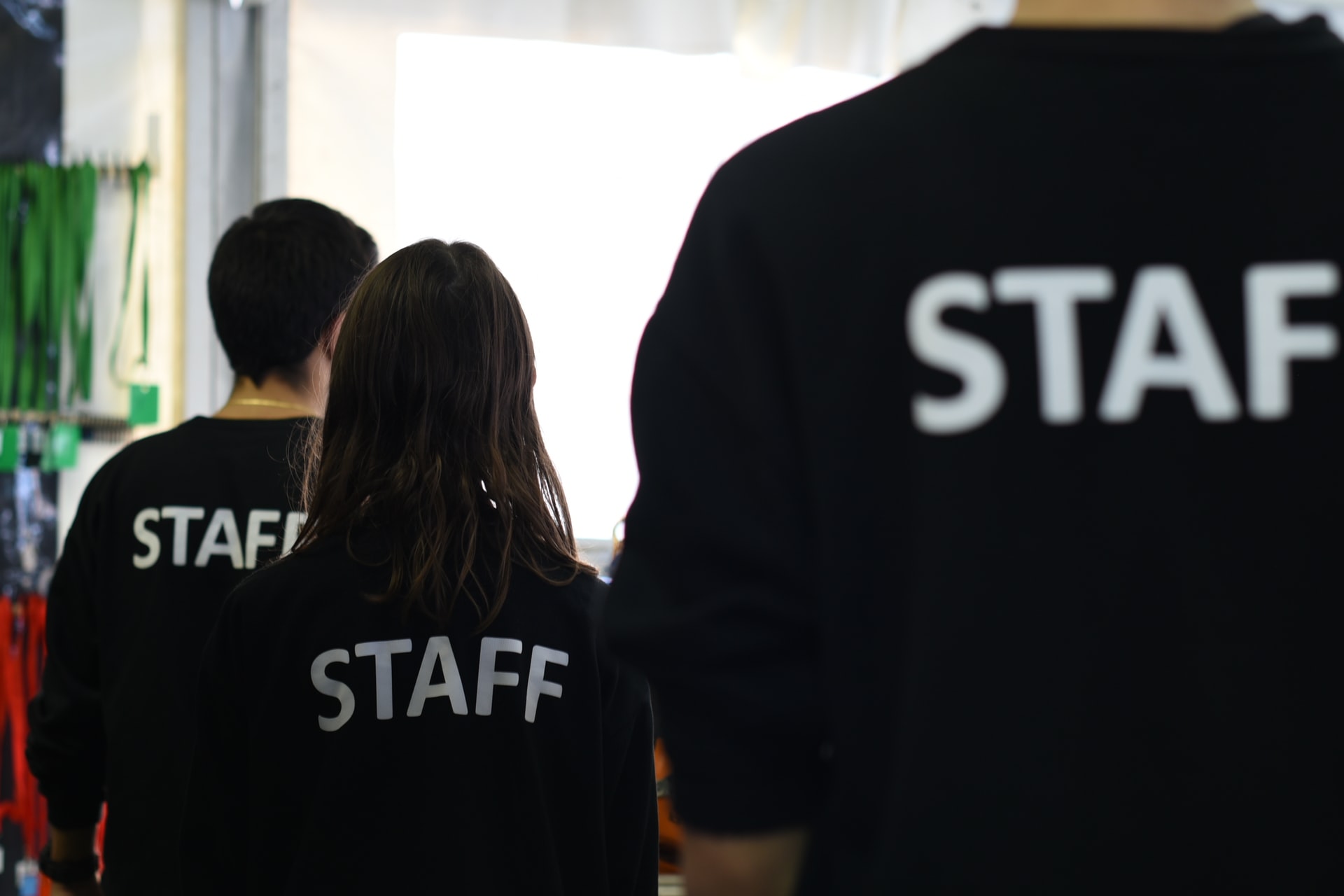
Employees wearing black staff T-shirts

A recent report from Back of House reveals opportunities for operators amidst the current staffing challenge.

In their report, the restaurant technology platform suggests effective hiring and retention solutions. For example, helping staff find meaning in their work.

To download and access the report in its entirety, please visit BackOfHouse.io.

For some of the platform’s insights into staffing, keep reading.

Why People Leave the Industry

Obviously, people take jobs for a variety of reasons. Often, a person’s first job has one or two motivations: money and/or experience.

Some estimates put a gig in the restaurant industry as the first job for a third of Americans. In Canada, restaurants are the top employers for those under 25 years of age.

However, Back of House sees value in looking at a different metric: Why people leave the industry.

As Back of House states, knowing why someone would leave their job helps an operator determine what benefits to offer to retain talent.

Now, it may be tempting to assume pay is the top reason people leave jobs. Per Back of House, however that’s not the case. Broken down by age group, below you’ll find the reasons people are leaving hospitality:

  • Pay: 26 to 35
  • Schedule: 46 to 55
  • Lack of opportunities: 26 to 35
  • Lack of benefits: 26 to 35
  • Work environment: 18 to 25

Look at these issues through the lens of someone moving through life. When first entering the workforce, more people want to find the right employer and workplace. From their twenties to thirties, more concern is placed on moving up, making more money, and receiving benefits. And, per Back of House’s findings, time becomes more of a consideration as people age.

Meaning and Value

Per Back of House, there are two important elements of employment that keep people engaged.

One, meaning in the work they do. In other words, feeling that their work has value. Two, staff want to feel that they’re employers value them.

Of course, both make sense, no? If a person doesn’t see their role in the industry as valuable, they’ll always be looking for the escape hatch. And if they feel that they’re employer doesn’t value them, why would they continue working for them? People, as they say, quit bosses, not jobs.

So, Back of House recommends that operators demonstrate they value their team members by:

  • investing in their staff;
  • supporting their staff; and
  • respecting their staff.

Now, good leaders should already do all of the above. It should go without saying but if someone feels a lack of respect, support, and interest from their employer, they’re not going to remain in their role for long.

And who could blame them? That seems like a terrible workplace and a waste of a hospitality professional’s valuable time. Time, of course, that can be better spent finding a good leader to work for who will help them progress in their career.

There are further insights one can glean from Back of House’s report. To download “Understanding the Staffing Challenge,” please click here.

Disclaimer: Neither KRG Hospitality nor its representatives received compensation to promote this report. The team at KRG simply feels all operators will find value in downloading and reading it, and considering the information contained therein.

Image: Joao Viegas on Unsplash

by David Klemt David Klemt No Comments

5 Books to Read this Month: June 2022

5 Books to Read this Month: June 2022

by David Klemt


Flipping through an open book

These engaging and informative book selections will help you develop next-level food and beverage skills, and motivate you throughout June, 2022.

To review May’s book recommendations, click here.

Let’s jump in!

Doctors and Distillers

As the historians in our industry have known for a while, cocktails were once considered medicinal. Of course, in some ways that’s still the case.

Industry author, speaker, and educator Camper English shows us how medicine and alcohol have long been connected throughout human history in Doctors and Distillers. Have you head of using wine as a dewormer? How about treating wounds with beer? Would you ever consider using spirits to heal a snakebite? Well, humans have done those things and more with booze. Pre-order this book today!

A Bartender’s Guide to the World

I’m just going to be blunt here: Lauren Mote probably knows more about spirits, liqueurs, and cocktails than you. That’s not a slam—she loves sharing her knowledge and helping people improve their craft and business.

Available for pre-order now for an October launch, A Bartender’s Guide to the World shares not only Mote’s journeys around the world but also more than 75 cocktail recipes. The book’s recipes are organized by their base ingredient. Additionally, there’s an entire chapter just addressing alcohol-free drinks.

The Portugal Cookbook

Chef Leandro Carreira shares well over 500 recipes in The Portugal Cookbook. These dishes range from traditional Portuguese cuisine to modern recipes.

Every region throughout Portugal is represented in this informative and mouth-watering book, including the Duoro Valley and Algarve coast. Portugal is known as a global destination for foodies and this book will definitely help you add some delicious, on-trend recipes to your menu.

Hacking the New Normal: Hitting the Reset Button on the Hospitality Industry

The world around us has changed. The food & beverage industry has changed. The hospitality industry has changed. But will some ways of life change for the better? In Doug Radkey’s second book, Hacking the New Normal, he asks the following: “Do you think you can hit the reset button on your approach to business? Do you think you can help hit the reset button on this industry? I have made the decision to do so. The question remains, have you?”

Trust and Inspire: How Truly Great Leaders Unleash Greatness in Others

Stephen M.R. Covey, author of The Speed of Trust, addresses the leadership crisis we face today. As the author of Trust and Inspire points out, the world is changing but leadership styles remain the same. That simply won’t work moving forward. It’s crucial we change how we view leadership, and develop new leadership styles and strategies if we’re going to succeed from now on.

Image: Mikołaj on Unsplash

by David Klemt David Klemt No Comments

5 Books to Read this Month: May 2022

5 Books to Read this Month: May 2022

by David Klemt

Flipping through an open book

These engaging and informative book selections will help you develop next-level beverage skills and motivate you throughout May, 2022.

To review April’s book recommendations, click here.

Let’s jump in!

Rum Rebels: A Celebration of Women Revolutionizing the Spirits Industry

Written by authors Martyna Halas and René van Hoven, Rum Rebels raises a glass to women in the rum world. Readers will learn the inspiring stories of Lorena Vasquez from Zacapa, Joy Spence of Appleton, and more women driving rum forward and shaping this iconic spirit’s flavors, aromas, and textures.

In addition, this book serves as a masterclass in rum production, from tasting to aging. And since that’s enough for these incredible and ambitious authors, Rum Rebels also contains rum cocktail recipes.

Drink Lightly: A Lighter Take on Serious Cocktails

Operators, bar managers, and bartenders should see value in the driving ethos behind this cocktail book. Drink Lightly, authored by Nitecap bartender Natasha David, pairs precision drink-building techniques with a relaxed drinking experience.

Drinking lightly doesn’t mean sipping drinks bereft of complexity and depth. Along with 100 recipes, readers will enjoy a foreword by Alex Day of Proprietors LLC, whose concepts include Death & Co. and Nitecap.

Call Me Chef, Dammit!: A Veteran’s Journey from the Rural South to the White House

Hospitality is rooted in sacrifice and a commitment to serving others. Chef Andre Rush and his story embody service. Call Me Chef, Dammit! is the inspiring story of Chef Rush.

The storied chef has led an incredible life which includes a career in the US Army that spanned 24 years, advocating for military personnel and veterans, and winning multiple awards as a chef. Oh, and Chef Rush and his 24-inch biceps have also worked in the White House for four US presidents.

While there are no recipes in this book, there is one hell of an inspiring story in these pages.

The New Kindred Spirits: Over 2,000 All-New Reviews of Whiskeys, Brandies, Liqueurs, Gins, Vodkas, Tequilas, Mezcal & Rums from F. Paul Pacult’s Spirit Journal

Anyone looking for a spirits bible need search no further. F. Paul Pacult’s The New Kindred Spirits includes over 2,400 in-depth reviews spanning a wide range of spirits. This tome evaluates a massive number of brandies, gins, liqueurs, rums, tequilas, vodkas, and whiskeys.

This all-encompassing compilation of spirit evaluations doesn’t just cover the usual suspects. The New Kindred Spirits also takes a deep dive into the craft side of the beverage industry.

Drinking & Knowing Things

Author and certified sommelier Michael Amon would like to know a couple things from those considering picking up Drinking & Knowing Things. “Do you want to uncork a bottle of whoop-ass on every winedouche and uppity sommelier?” And, “are you too lazy to spend any time whatsoever learning things?”

Anyone who answered “yes” to either or both questions needs this book. Amon says that readers who commit to spending five minutes reading the weekly wine recommendations found in Drinking & Knowing Things will give sommeliers a run for their wine-knowledge money. Wine intimidation? Not after reading this book.

Image: Mikołaj on Unsplash

by David Klemt David Klemt No Comments

This Simple Test Reveals Process Problems

This Simple Test Reveals Process Problems

by David Klemt

Server helping guest in restaurant

There’s an easy way to identify whether there are changes that need to be made to processes and practices that only requires observation and time.

Luckily, it doesn’t take much time, either. In less than a week, an operator can determine if there are issues relating to onboarding new hires.

This simple test was shared during the 2022 Restaurant Leadership Conference in Scottsdale.

Interviews are Just the Start

It should go without saying but here we go: The hiring process doesn’t end with the interview.

An operator or their leadership team found an amazing job candidate? Awesome! That’s no small feat these days.

However, that’s just the first step in hiring and building a rock star restaurant, bar or hotel team.

Step two is onboarding, step three is training, and step four is advancement.

For KRG Hospitality, onboarding goes far beyond filling out federal and state paperwork. There’s more to it than setting up direct deposit and getting a new hire on the schedule.

Rather, operators need to implement a fully developed onboarding process. The key word there is “process.”

True onboarding includes the review of an employee handbook and an introduction to the business. During this process new hires should become familiar with the brand’s history, vision, culture, mission, and core values.

By the end of this process, a new team member should understand what’s expected of them, both in their individual role and behaviorally. Additionally, they should be introduced to the entire team.

In reality, the onboarding process is the development of a professional relationship.

The Test

Technically, the actual test for operators is for them to have in-depth hiring, onboarding and training processes in place.

So, operators should take a moment to review whether they have those processes.

However, the test I’m talking about here relates to onboarding directly. It’s simple and it was shared during RLC 2022 by Jim Thompson, COO of Chicken Salad Chick.

The only requirement is a few days’ time and an observant operator and/or leadership team.

Let’s say a candidate nails the interview. In particular, their personality is perfect for the available role. As the the hospitality industry maxim goes, hire for personality, train for skills.

The new hire works their first shift but their personality doesn’t shine through. However, that could be first-day jitters. Unfortunately, that personality the leadership team hired for is nowhere to be seen during their next few shifts.

According to Thompson, if a new hire’s personality doesn’t shine through within four shifts, there’s likely a process and practices issue. The lack of personality is an indicator that the new team member doesn’t feel confident in their role.

The onboarding process—either too shallow or nonexistent—is a likely culprit. Operators can use this test, a simple four-shift observation of a new hire, to determine if there’s a problem.

Once identified, the operator and their leaders can put their heads together, review the issue, and implement effective, positive change.

Image: Caroline Attwood on Unsplash

by David Klemt David Klemt No Comments

The Uber Effect: Recruit and Retain

The Uber Effect: Recruit and Retain

by David Klemt

Person using Uber app on phone

To better understand how to recruit and retain top talent these days we can simply look at what’s known as the Uber Effect.

We just got back from the Restaurant Leadership Conference in Scottsdale, Arizona. The education was top-notch, featuring a wide range of restaurant industry experts.

One outstanding session illustrates the need for operators—chain and independent—to change their approach to recruiting and retaining staff.

Flexibility in the Workplace

According to Jennifer Grimes, senior vice president of client services for Service Management Group, people in the labor pool are after three things when seeking employment.

Generally speaking, they want better pay, better benefits, and better scheduling. Gone are the days of people focusing only on their paychecks.

And per Jim Thompson, chief operating officer of Chicken Salad Chick, the Uber Effect is largely responsible for this shift in focus. The Uber Effect refers to people realizing they can be much more in control of their careers.

In simplest terms, Uber drivers are in control of their workdays. They can work as often as they want, whatever hours they want, and wear what they want while working.

Of course, it’s not complete anarchy. There are rules, there are expectations, there are standards. However, there’s also flexibility.

Along with more flexibility in scheduling, people want the following:

  • workload balance;
  • ability to trade shifts;
  • better communication; and
  • paid vacations.

Today’s modern scheduling platforms make it simple for operators and their leadership teams to meet these expectations. With these apps, operators and leadership can:

  • assign specific roles to individual team members;
  • communicate clearly with staff;
  • allow staff to trade, drop, and pick up shifts; and
  • fill available shifts.

One Size Doesn’t Fit All

Thompson has an interesting anecdote about availability.

A Chicken Salad Chick manager conducting interviews didn’t proceed with a candidate. Asked by Thompson why they wouldn’t be moving forward, the manager pointed to the candidate’s availability.

During the interview, the candidate provided only a single day and the manager felt that wasn’t enough. However, Thompson disagreed with the manager’s assessment.

What if, Thompson posited Thompson, their availability filled a currently open shift? At least there would be one less shift for leadership to worry about.

But it went deeper than just that point. Good operators and leaders know that job interviews aren’t one-way streets. Candidates are also interviewing their potential employer.

What if this candidate provided limited availability because they’re unsure about a particular employer? They may not know the brand all that well, they likely don’t know the leadership team, and they don’t yet understand the workplace’s culture.

As Thompson says, “One size fits all is over.” Operators and their leadership teams need to be flexible.

It’s highly possible that just a few shifts in, if the narrow-availability team member is a good fit and finds the job engaging, they’ll broaden they’re availability.

Developing the Culture

Of course, the above scenario comes down to culture. And Thompson has an interesting thought on that operational element.

If an operator isn’t constantly developing their culture, it will grow stagnant. Maintaining the current culture isn’t good enough.

Failing to do so will ultimately lead to a decline in guest satisfaction. When that happens, a decline in traffic comes along with it.

It’s really rather simple: How an operator and the leadership team treats employees trickles down to guests. Unhappy and unsatisfied staff provide poor service. How long are guests going to tolerate negative guest experiences?

And no, simply offering competitive compensation doesn’t automatically equate to treating staff well.

“Competitive pay, to me, is the cost of entry,” says Thompson.

To this point, the COO, also the self-appointed chief smile officer, addresses how the restaurant chain respects personal time.

Chicken Salad Chick, founded in 2008, is closed on Sundays. This isn’t due to any religious influence. Rather, the founders, per Thompson, were influenced by what they perceived as a high divorce rate in the restaurant space.

So, the brand wants employees to have family time. That’s also why there stores are also closed by 8:00 PM. In some cases, they close at 5:00 or 7:00 PM. Again, personal and family time.

Could they generate more revenue if they opened earlier and closed later? Probably. However, their culture is crucial to their success.

Takeaway

If operators want to begin the process of truly developing a positive workplace culture, there are several questions Thompson suggests operators and their leaders should ask.

Is the brand purpose driven? Does focus on fun, family, and culture?

How can the business offer incremental value to staff? Are the pay and benefits competitive? Is the workplace safe and are their opportunities for staff to advance?

What’s the community like within the four walls? How’s the energy within those walls?

Are the processes and practices in place helping or hindering recruitment and retention? How can the processes be simplified so employees learn what they need to know quickly?

How flexible is the business, honestly? What’s being done to truly help leadership create better relationships with the team?

Finally, I’ll end on something interesting from Grimes. Analyzing employee engagement, SMG has found that isn’t just about compensation.

In fact, when it comes to what makes most people perceive their job as fulfilling, the top influencer is working with people they like. Second is salary and benefits. Third, rewarding work.

Operators need to adapt to employee expectations, just as they need to focus on those of guests. Sitting down with their leadership teams to discuss Thompson’s questions is a great first step toward developing a culture that works and rewards.

Image: Priscilla Du Preez on Unsplash

by David Klemt David Klemt No Comments

Leadership Facepalm, Part Two

Leadership Facepalm, Part Two

by David Klemt

Airplane email icon set against white brick wall

In a stunning example of tone-deafness and callousness, a franchisee executive sent an email that led to severe consequences.

And no, I’m not talking about the termination of the offending exec. That, in my opinion, was well deserved.

In this instance, the email has led to mass resignations and damage to a global restaurant chain’s reputation. What’s more, the negative impact to the brand’s reputation comes from consumers and employees.

Of course, I’m talking about the now-infamous Applebee’s “gas prices” email.

The Email: Labor

Let’s just jump right into the email, because…wow.

“Most of our employee base and potential employee base lives paycheck to paycheck,” writes the executive. “Any increase gas prices cuts into their disposable income.”

This could have been an excellent example of awareness and perhaps even empathy. In the context of this email, it’s appalling.

Why? Mainly because this executive appears to be celebrating the fact that Applebee’s employees, at least those who work for this franchisee, are barely earning a living wage.

“As inflation continues to climb and gas prices continue to go up, that means more hours employees will need to work to maintain their current level of living,” continues the author.

In this exec’s view, this franchisee is “no longer competing with the government when it comes to hiring.” He cites stimulus payments and boosted unemployment support have run out. Therefore, he reasons that people will be forced to return to the workforce.

The author further points to competitors increasing wages to recruit and retain employees. This, he figures, is untenable and some will have to close their doors. So, the labor pool will fill up and this franchisee will benefit.

The Email: Wages

Some of what I’ve laid out above is accurate. According to some estimates, about two-thirds of Americans live paycheck to paycheck.

Additionally, it’s accurate to state that some employees will seek more hours to combat the effects of rising costs. Further, yes, the labor market is turbulent and challenging.

And, unfortunately, some independent operators are facing incredibly difficult decisions. To recruit and retain, they’ll need to be competitive and raise their wages. To pay for that, they’ll need to raise prices, passing on rising costs to customers. In some instances, for some operators, that will prove unsustainable.

However, an executive in this industry shouldn’t be delighted about any of this. And they certainly shouldn’t see it as an opportunity to potentially pay employees even less.

You see, the author of this email suggests that the franchisee can bring in new workers “at a lower wage to decrease our labor (when able).”

He then recommends monitoring employee morale to ensure that the Applebee’s operated by this franchisee is their “employer of choice.”

For me, however, the most eyeroll-inducing line is this: “Most importantly, have the culture and environment that will attract people.”

Images of printouts of the email reveal that at least a handful of recipients agreed. “Great message Sir! [sic]” reads one response. Another paints the email as “Words of wisdom.”

Clearly, the culture and environment are unhealthy.

The Consequences

Before I proceed, know this: I’m not going to name the author. It’s not remotely difficult to find the author’s name if you feel the need.

However, I will name the franchisee that finally fired him. American Franchise Capital reportedly owns more than 120 Applebee’s and Taco Bell locations in nine states.

So, to be clear, this executive didn’t work for Applebee’s directly. In fact, Applebee’s has disavowed the former executive and the email.

In the interest of clarity, it’s possible the author worked for Apple Central LLC, owned by American Franchise Capital.

As far as fallout, it was swift. According to reports, consequences were realized immediately. A Kansas franchise manager was shown the emails, printed them out for staff to discover, and comped the meals of everyone at the location. Then, he quit and the staff walked out.

Per reporting, four other Applebee’s managers quit, as did several employees. The location remained closed for at least the following day.

If reports are accurate, Applebee’s lost five managers, nearly a dozen employees, and sales from a location for at least two days. That’s just the localized fallout.

Applebee’s, of course, is distancing the company from the former executive. However, that’s not going to stanch the reputational bleeding and turnover.

As we know, a significant percentage of consumers want to know their dollars and support are going to companies that align with their values. The same is true of employees; they want to work for companies with values they can get behind.

A Final Thought

This now-infamous email was sent March 9. Just two weeks later, it was circulated and went viral. The author, gleeful about being able to hire employees “at a lower wage,” was fired before the end of March.

I’ve seen several takes on this situation, and I’ve read some accompanying leadership advice. One in particular caught my attention.

Unfortunately, it’s not because I thought it was great advice: Be cautious about what you send via blast emails.

I’m not saying one shouldn’t be careful about what they send out in emails—that’s good advice. However, that’s not the lesson I’ve learned from this situation.

Personally, I see this as a lesson in emotional intelligence, relationship intelligence, brand culture, and work environment.

At least two companies, one with annual sales in the billions of dollars, another in the hundreds of millions, have had their reputations tarnished. The fault may not lie with Applebee’s but they’ll be dealing with the consequences regardless.

If an operator is going to learn anything about being cautious, it’s this: Be cautious when hiring those in leadership positions. Be cautious about those with whom you enter into partnerships. And be careful about how you view those who work for you.

If you aren’t seeing those who choose to work for you as people worthy of your respect, as human beings, your brand’s culture is poisoned.

Image: Daria Nepriakhina on Unsplash

by David Klemt David Klemt No Comments

Leadership Facepalm: Don’t Do This

Leadership Facepalm: Don’t Do This

by David Klemt

Close-up shot of person texting on phone in a restaurant

Here’s a hot take on the employer-employee dynamic: Don’t text staff at 3:00 in the morning demanding they come in on their day off.

In fact, let’s compress this piece of advice. Don’t text staff at 3:00 in the morning.

Really, I shouldn’t have to explain the myriad reasons that doing so isn’t acceptable. However, a post on Reddit shows that this topic needs addressing.

Are You Serious?

Yes, I’m using a Reddit post as an example of what not to do. And yes, I’m going to assume the post is legitimate for the purposes of education.

Owners, operators, and members of leadership teams need to lead. Micromanaging, assuming staff is at their beck and call, and domineering behavior only lead to high turnover.

A high staff churn rate is costly, and not just financially. Yes, it costs thousands of dollars to replace a single member of staff. However, immediate financial costs shouldn’t be the only concern.

Churning through staff also damages a restaurant, bar, hotel, or owner’s reputation. Should they become known as a bad employer—word gets around quickly in this industry—and eventually an operator won’t be able to hire rock star talent.

Over time, they’ll only draw in workers that chase away their guests. After that, the operator will be closing the doors.

“You Need to Be a Team Player”

Interestingly, the Reddit post that’s inspiring this article isn’t brand new. The post in question is about six months old.

But these days, with the shift in the employee-employer dynamic that’s taking place, stories of “epic” or “savage” quitting garner attention.

Again, there are myriad reasons people are drawn to these stories. Rather than read through those, let’s take a look at this quitting story.

A bartender took to Reddit (again, I’m assuming this is a fact) to share texts from his (former) manager. The timestamp on the first text? 2:59 in the morning.

“I need you to come in from 11a-10p today,” starts the text. The reason? Only one bartender is on the schedule for an event that day.

In response, the bartender says, “No thank you,” stating it’s their day off. And then the manager makes a demand using a term that gets thrown around far too much when some people in a position of authority don’t get the response they want (in my opinion).

The bartender is told they need to be a “team player,” and that “it isn’t all about you.” On a positive note, the manager does then say “please” and asks the bartender to come in.

Putting their cards on the table, the bartender says they’ve had a few drinks and don’t want to work an eleven-hour shift with a hangover. Personally, I don’t think the manager was due that explanation but okay.

This doesn’t sit well with the manager, who now attempts to police the bartender’s personal time. According to the texts, the bartender needs “to stay ready for work.” This is apparently because “getting too drunk is not a good look if you can’t stay prepared.”

“Fed Up with You”

After a few more texts back and forth, the manager fast-tracks this situation’s escalation. The bartender is told that they’re going to talk about the bartender’s “attitude” when they “come in Sunday.”

Well, it’s highly unlikely that conversation ever took place. According to screengrabs of the texts, the bartender replies, “No we’re not.” They then proceed to remind the manager that “dozens” of places are hiring bartenders. They’re happy to go work for one of those businesses.

Unsurprisingly, the manager attempts to backpedal. They say that the bartender is making a rash decision “because you’re drunk” and will regret it the next day. That approach doesn’t work.

Now, there’s one sentence that suggests to me, if this situation is real, that the owner needs to address this manager. Or, if this manager is the owner of the business, that they need to work on developing leadership skills.

That line? “I’m fed up with you.”

Sure, they could mean they’re fed up with them in this instance. However, the line follows the bartender saying that their are several other places they can find work instead.

My interpretation is that at a minimum, these two have a problem with one another. Worst case, this manager isn’t doing the owner (or themselves) any favors with their “leadership” style.

Just…Don’t Do This

Please, please, please, don’t text or call staff at 3:00 in the morning. There are perhaps a tiny handful of reasons to ignore this advice. As I see it, those reasons all involve emergencies.

And no, being short-staffed for an event the following morning is not an emergency worthy of texting or calling an employee to cover a shift so late at night/early in the morning.

There are several leadership and scheduling solutions that can prevent this type of situation. In this particular instance, since the bartender was “fed up with” this manager, they were going to quit sooner or later.

Which brings me to my first point: Operators need to know what their leaders are doing. How are they treating staff? How does the staff perceive the leadership teams?

Secondly, how do the operator and other leaders perceive one another? Is everything running smoothly or is one “leader” not really leading?

And finally, scheduling technology. These days, there’s really no excuse for many kinds of scheduling problems. Several scheduling apps integrate well with popular restaurant, bar, and hotel POS systems.

For example, HotSchedules gives staff the ability to give away, swap, and pick up shifts. Another example is OpenSimSim, which provides an open shift invite feature. Staff can also set their profiles to auto-accept shifts as they become available.

7shifts and Schedulefly can also help fill shifts. And like HotSchedules and OpenSimSim, leaders can message groups and individuals, and vice versa.

Perhaps the biggest takeaway here is this: The maxim, “People don’t leave jobs, they leave managers,” is accurate. Leaders need to respect their team members and their personal time.

Image: Alex Ware on Unsplash

by David Klemt David Klemt No Comments

5 Books to Read this Month: April 2022

5 Books to Read this Month: April 2022

by David Klemt

Flipping through an open book

This month’s engaging and informative book selections will help you develop next-level culinary, beverage and marketing skills throughout 2022.

To review February’s book recommendations, click here.

Let’s jump in!

My America: Recipes from a Young Black Chef

This book is scheduled to be released on May 17 of this year. I anticipate this cookbook by Chef Kwame Onwuachi, which includes 125 recipes, to come flying off the shelves. In addition to more than 100 recipes, Chef Onwuachi connects his personal journey to food, culture, and places. Pre-order My America now!

Paddy Drinks: The World of Modern Irish Whiskey Cocktails

Jack McGarry, Sean Muldoon, and Jillian Vose are back with their latest Dead Rabbit book. The trio’s latest release, Paddy Drinks, shares Irish whiskey drink recipes you’ll find on the actual Dead Rabbit menu. However, that’s just one portion of this informative book. Inside are whiskey flavor wheels, tasting notes, illustrations depicting whiskey production, and more. And if that’s not enough for you, David Wondrich provides the foreword.

Founder Brand: Turn Your Story Into Your Competitive Advantage

In Founder Brand, Dave Gerhardt explains why your brand’s story is one of the most valuable assets you own as an entrepreneur.

From the Amazon listing: “This is a tactical guidebook that first shows you how to tell your story, then how to put your story to use as a marketing strategy. You’ll learn how social media provides a bridge between you and your customers, the platforms that are appropriate for your business, and how to measure results to truly determine value.”

Finding Mezcal: A Journey into the Liquid Soul of Mexico

You don’t have to be a veteran bartender or spirits expert to know that mezcal continues to rise in popularity. Written by Ron Cooper, founder of artisanal mezcal brand Del Maguey, Finding Mezcal includes 40 cocktail recipes from bartenders and chefs; photographs; Cooper’s own artwork; and much more.

Bar Hacks: Developing The Fundamentals for an Epic Bar

Industry expert and KRG Hospitality president Doug Radkey wrote this informative and conversational book. This is the perfect read for aspiring or seasoned bar, pub, lounge, or even restaurant owners, operators, and managers looking for that competitive edge in operations. If you’re looking for both fundamental and in-depth planning methods, strategies, and industry focused insight to either start or grow a scalable, sustainable, memorable, profitable, and consistent venue in today’s cut-throat industry, Bar Hacks is written just for you

Image: Mikołaj on Unsplash

by David Klemt David Klemt No Comments

Prepare for the New Rules of Hospitality

Prepare for the New Rules of Hospitality

by David Klemt

People toasting with a variety of cocktails

Guests are returning to bars, restaurants, and hotels, so you need to prepare now for the new rules of hospitality.

If you’re wondering what those rules are, wonder no more. We have a number of articles addressing them, some of which are here, here, and here.

Phil Wills, owner and partner of the Spirits in Motion and Bar Rescue alum, also has some thoughts. In fact, Wills shared his approach to what he identifies as the new rules of hospitality last week.


View this post on Instagram


A post shared by Phil Wills (@phil_i_am11)

During Bar & Restaurant Expo 2022, Wills presented “The New Rules of Hospitality: What a Post-pandemic Consumer Wants.”

Below, you’ll find what Wills has to say about hospitality in 2022 and beyond in three categories.

Hospitality

Wills kicked off his session with a simple question: How do you define “hospitality”? And yes, he put attendees on the spot, asking them for their answers.

It’s always at least a bit amusing that even the most outgoing operator gets shy in a conference setting. I’ve never seen so many people suddenly need to check their phones, shoes, or the ceiling tiles as when they’re asked to participate in a class or education session.

For Wills, the definition is “making a guest feel welcome, as though they’re in your home.”

Obviously, the answer is different for everyone. As Wills says, the key is considering how you and your brand define hospitality. If that seems easier said than done, Wills has some tips, presented in the context of a guest visit.

First, guests take in the sights, sounds, and smells of your space. They also consume your menu items, and converse with your staff, their party, and other guests.

Look at your business through the eyes of your guests. Now, this can be a difficult exercise, particularly if you spend a lot of time in your restaurant, bar or hotel.

So, ask team members to do the same and provide feedback. We take for granted what our spaces, food, and drinks look like.

To improve the guest experience, pay attention to ticket times and F&B consistency. This will reduce recovery incidents and phrases.

Finally, Wills recommends engaging with guests (if that’s what they want). However, he also suggests facilitating connections between guests.

Interestingly, Wills also says, “Regulars are old money. You want to get that new money.” Then, you want to convert that new money into old money. Rinse, repeat.

Training

As relates to training, Wills categorizes new hires in two ways: toll takers and moneymakers.

Toll takers take a toll on your business. They cost you money, and if they don’t receive the proper training they can chase guests away.

So, you’ll need to spend time and money to convert toll takers into moneymakers.

Speaking strictly in a technical sense, training needs to provide team members with the knowledge and tools to become moneymakers. To accomplish this, Wills has three keys to making training stick:

  1. Don’t make training too easy. If training is easy, team members won’t retain what they’re taught. Challenge your staff.
  2. Vary your training. There are a number of training methods at your disposal. Use multiple methods to engage your staff. Wills suggests combining shift work, book work, and tests, at a minimum.
  3. Turn training into a competition. At this point, we’re gamifying just about anything. So, Wills recommends the platform 1Huddle to gamify your training.

Labor

Simply put, Wills says we need to find new ways to make this industry exciting to new hires.

According to the National Restaurant Association, we’re still seeing significant job losses in hospitality, foodservice, and lodging and accommodation.

In fact, we’re down 14 percent when it comes to full-service restaurant jobs. For bars and taverns, the number is 25 percent.

For Wills, offering incentives, mental health breaks, and even cash bonuses for staying in role for a number of months can draw the attention of new workers.

However, he also has another interesting idea: making people smile. On average, according to Will’s research, people smile 20 times each day. He wants to find ways to make people smile 20 times during a single visit to a restaurant or bar.

Now, Wills admits he’s still working on how to accomplish this lofty goal. I believe a key component is creating a working environment that inspires team members to smile 20 times per shift.

Image: Kelly Sikkema on Unsplash

Top