Restaurant technology

by David Klemt David Klemt No Comments

4 Takeaways from Resy’s State of Dining

4 Takeaways from Resy’s State of Dining Report

by David Klemt

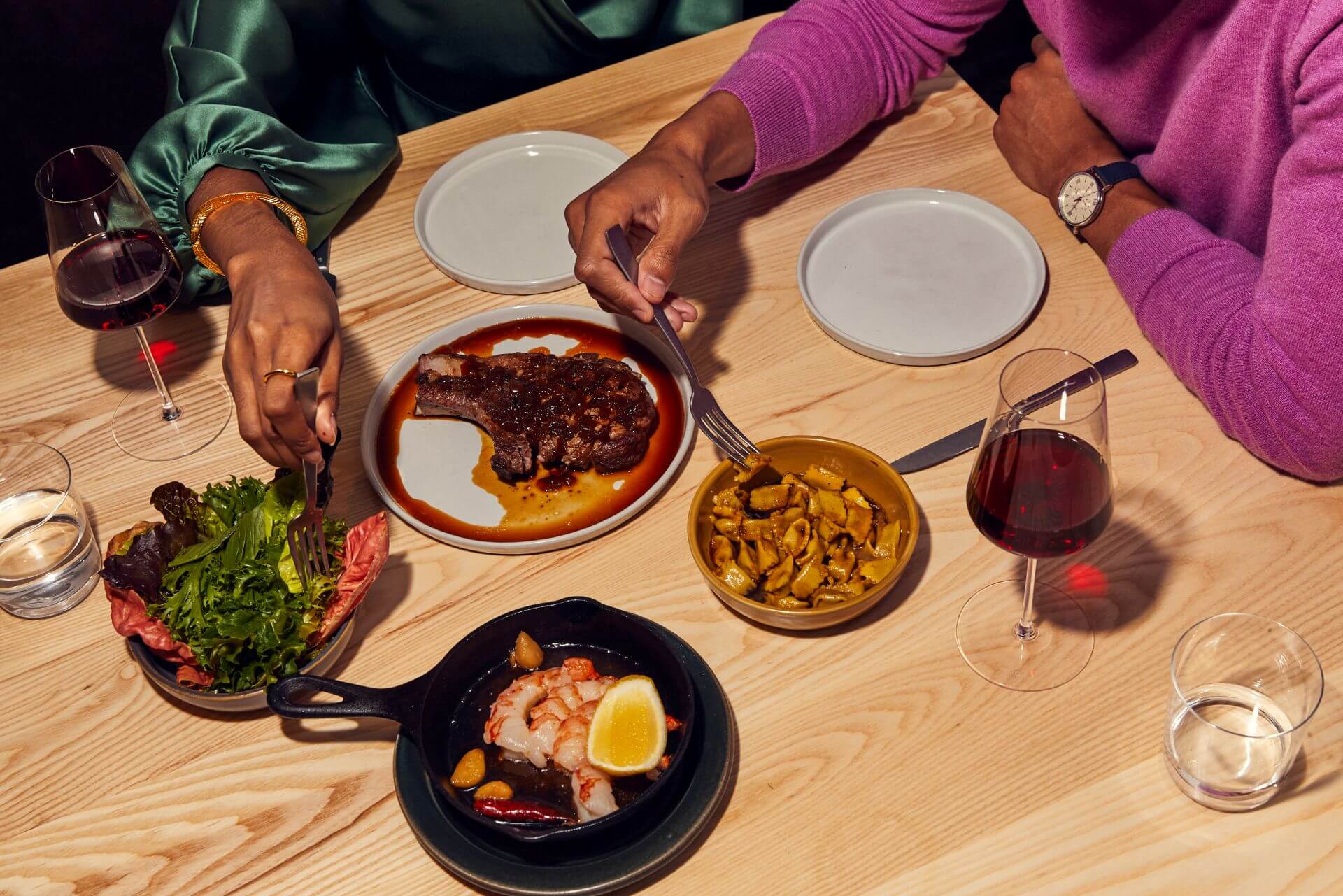
Guests enjoying an array of dishes at a restaurant

The State of Dining and What’s To Come in 2023 from Resy is an informative report that highlights several key developments to watch this year.

In fact, Resy’s report shines a light on ten trends and predictions for operators to consider. However, I’m going to address the four that stand out the most (to me).

For those who may be unfamiliar with Resy, the company is an online reservation platform. While Resy mostly serves major American cities, it does have a presence in Toronto, Canada, and London, UK.

Most importantly, the platform has a unique view of the industry. Resy looks at the industry through the lens of reservations, meaning they collect data concerning consumer behavior in real time.

So, let’s start with some compelling revelations based on reservation data. To view this report in its entirety, visit Resy via this link.

1. 5:00 PM

According to Resy, one reservation time is standing out from the rest. In comparison to 2019 and 2021, 5:00 PM reservations grew by two percent in 2022.

Now, two percent may seem like insignificant growth. However, given Resy’s reach and the platform’s number of active users, the opposite is true.

A two percent increase equates to hundreds of thousands of reservations.

Now, think about your restaurant or bar and consider your reservation distribution. Do you know which hour sees the most reservations? Not an assumption—do you have the data and therefore know the time?

If not, that’s information you need. Not only is this important for scheduling and controlling costs, it’s the benchmark you need to know if you have any chance of tracking change.

2. The Return of In-person Dining

This is one prediction that multiple industry (and even non-industry) publications are making for 2023. It’s the same for hospitality industry platforms: Companies see 2023 as the year restaurants and bars really come roaring back.

But when Resy makes this prediction, they’re using their reservation data to back it up.

First, last summer represents the single busiest season in the platform’s nine-year history. Second, a specific event, a dinner with chef-operator Massimo Bottura, sold out via Resy in a minute.

Third, October 2022. Why is this month worth pointing out in particular? By October, more Resy users had visited restaurants in 2022 than they had during the entirety of 2021.

Clearly, Resy expects this trend to continue and strengthen in 2023. Given their access to reservation data, this seems like a well-informed prediction.

3. Miami

In December of last year we checked out the best states in America for starting a business. Pennsylvania stood out to us for obvious reasons: our Northeastern office is in Philadelphia, with Kim Richardson at the helm.

Overall, Pennsylvania holds the number four spot on the Forbes list. For comparison, Florida slots in at number 45.

However, Miami appears to be an outlier for restaurant and bar entrepreneurs when it comes to Florida.

Per Resy, the restaurant footprint in Miami grew fourfold from 2017 to 2022. Moreover, Resy is seeing continuous growth in Miami. Going even further, this growth is coming from local and outside operators.

In fact, Resy describes South Florida as “white hot for high-profile sequels.” An operator has a top-tier concept? They’re likely to expand into Miami.

4. TikTok

Last week I addressed Datassential weighing in on photos versus videos. According to the F&B research firm, video is now dominating social media engagement.

And also last week, I explained the importance of discovery functionality. Operators who are considering adding a platform to their tech stack should consider whether it will help people discover their restaurant, bar, or hotel.

Resy is a platform that doesn’t just offer discoverability, it’s a core feature. So, when they say that TikTok appears to be a powerful discovery tool for restaurants and bars, that’s likely true.

Now, a poll Resy cites in their report reveals that traditional word of mouth is the top method of discovery. However, the same poll cites that TikTok is the top discovery platform for 43 percent of Gen Zers. Or, in other words, video, or digital word of mouth.

Should operators jump on TikTok? That’s something only individuals can determine is good for their business.

But if they’re courting Gen Z, well…they may need to add TikTok to their social media toolbox.

KRG Hospitality Success Session, 2023 icon

Image: Meredith Jenks for Resy

by David Klemt David Klemt No Comments

Chief Marketing Officer Joins SevenRooms

Chief Marketing Officer Joins SevenRooms

by David Klemt

"The only way is up" sign

Just weeks after revealing a new partnership to start 2023, SevenRooms is now announcing their first-ever chief marketing officer.

Today, the guest retention platform takes another massive step in their march toward continuous growth. Josh Todd, former CMO of Mindbody, will serve as CMO of SevenRooms moving forward.

“Over the past year, I was able to get to know Joel and the SevenRooms team and see the differences they are making across the hospitality industry through data and insights,” says Todd. “Throughout my career, I have been passionate about deepening the human connections and experiences within the industries I’ve worked in, and I immediately recognized that SevenRooms truly embodies the operator-first mentality, making this a natural move for me. I’m honored to join the team and look forward to bringing my expertise and storytelling to the table.”

Todd’s appointment to CMO is yet another example of SevenRooms’ seemingly unstoppable growth. Each year, the platform strategizes, analyzes how their moves can benefit operators, and expands while streamlining.

It’s this growth that shows operators they’re here to serve the industry for the foreseeable future. And it’s this growth that should make operators confident about implementing SevenRooms in their tech stacks.

“As we head towards the next growth stage for SevenRooms, we are thrilled to welcome an experienced, proven leader in Josh to the team,” says Joel Montaniel, CEO and co-founder of SevenRooms. “Josh is a true full-stack marketer, highly analytical, and brings a strong point of view on what drives successful marketing organizations… With a background rooted in doing what’s best for operators and a true passion for bringing incredible experiences to life, we know his customer-centric approach will help propel us into the future.”

Continual Growth

In March 2021, SevenRooms appointed Pamela Martinez as the company’s chief financial officer.

By September of the same year, the platform had entered into a multi-year partnership with TheFork. This was significant news for operators throughout Europe and Australia. Additionally, this partnership illustrated how SevenRooms is pursuing global growth.

A month later, in October of 2021, the company formed a partnership with Olo. With this move, SevenRooms ensured clients who also use Olo were able to capture a key group’s data: off-premise customers. Using that information, profiles for those customers are created automatically. That means operators can learn more about—and effectively market to—customers who engage with them via online orders.

Then in December 2021, SevenRooms and ThinkFoodGroup—the hospitality company behind Chef José Andrés’ portfolio of restaurants—publicized their partnership. Interestingly, this partnership also saw ThinkFoodGroup joining SevenRooms in an advisory role.

To kick things off in 2022, the platform announced the hiring of a chief revenue officer, Brent-Stig Kraus.

Oh, and just weeks ago, to ring in 2023, SevenRooms entered into a partnership with Competitive Social Ventures.

Of course, not all of SevenRooms’ growth over the past few years involves crucial C-suite roles and entering into partnerships. While those moves benefit operators and our industry, there are other developments worth noting.

Along with hiring Martinez as CFO, the platform launched Direct Delivery in March 2021. This online ordering solution makes it easier for operators eliminate third-party fees; maintain control of the guest data they collect; and fulfill the guest desire to order from restaurants directly and effortlessly.

Image: Nick Fewings on Unsplash

KRG Hospitality 15-minute intro call, 2023 icon

by David Klemt David Klemt No Comments

This is How Guests are Using Resy

This is How Guests are Using Resy

by David Klemt

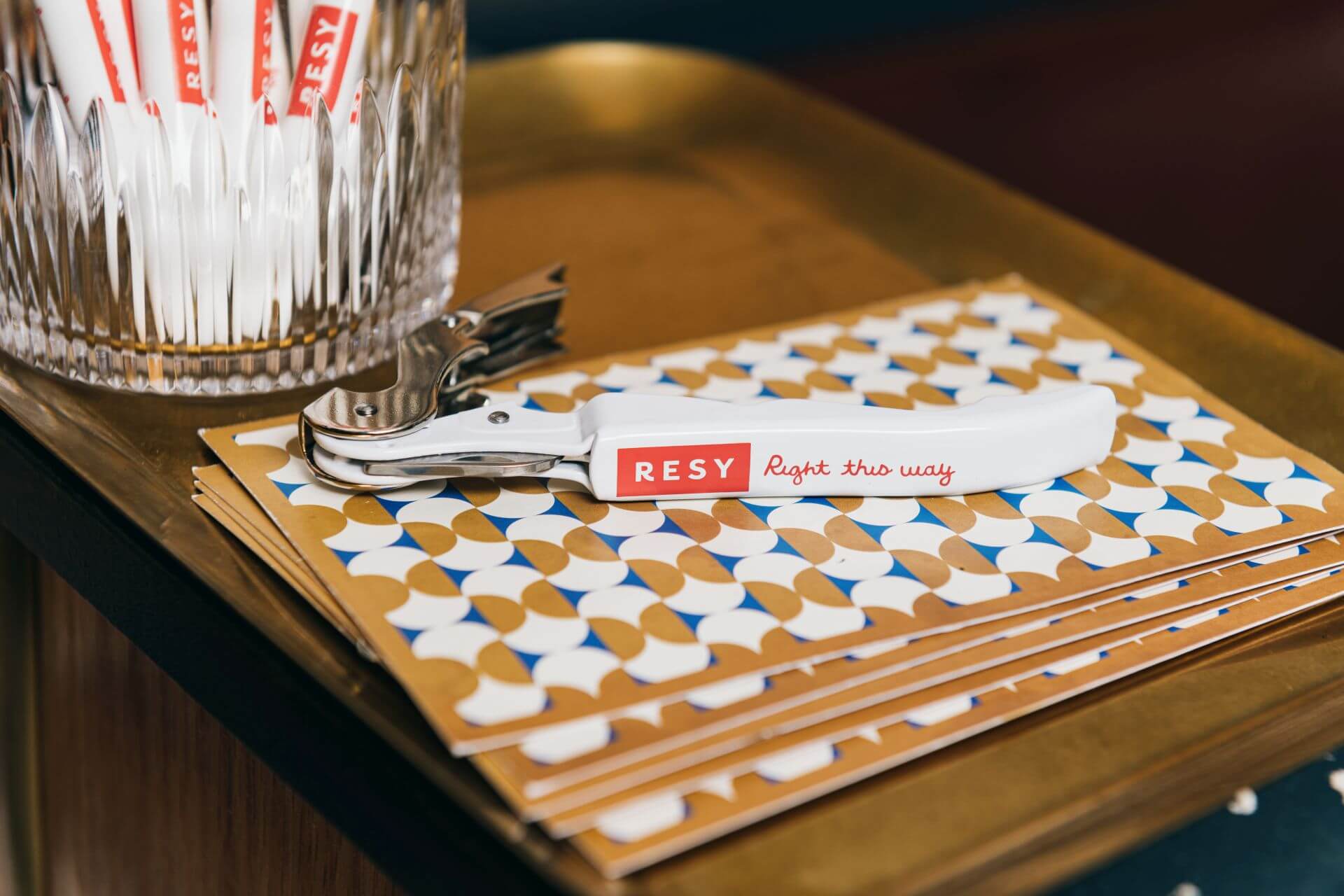
Resy "Right this way" printed on wine key

Demand for in-person visits seems to be the big prediction of 2023, which means reservation platforms like Resy are crucial.

Of course, the value isn’t just the automation of reservations. Nor are these platforms just about simplifying waitlists.

Indeed, those are essentially the two functions such platforms must execute, and execute flawlessly. However, there’s more to modern reservation and waitlist platforms.

Today, guest-facing platforms should offer another feature to operators: discoverability.

This should go without saying but I’m going to address it anyway. With few exceptions, being discoverable is crucial for restaurants, bars, and hotels.

That means social media presence is crucial. Websites are still crucial. Operators ensuring they own their online review and travel site profiles is crucial.

In other words, if it’s online, has a search function, and makes recommendations to users, it’s crucial. It should also go without saying that operators need to meet potential guests where they are. And, again with few exceptions, they’re online.

As you may assume by now, Resy is a reservation platform that helps users discovers restaurants and bars. And if it’s helping guests discover these venues, it’s helping operators increase their reach and get discovered.

Reservation List Curation

The first feature I’m going to share is Climbing, which is what it sounds like.

When a tourist visits or someone moves to a new city, they tend to want to find their places. Which restaurants and bars will be their third spots, or the place they spend time between work and home?

Word of mouth is great, of course. But these days, reviews and comments are digital word of mouth. So, a curated list of “what’s hot” amongst restaurants in a given city is powerful for discoverability.

“Climbing on Resy is the only data-driven list powered by your reservations,” reads the Resy site. “Consider it a curated guide by locals, for locals.”

For ease of use, which is crucial for any platform, users can edit dates and party size within the Climbing tab.

The Hit List

Climbing isn’t the only list Resy curates on the platform. There’s also the Hit List.

This is a list Resy publishes each month for each major market in which they operate. It consists of ten venues that “should be on your radar.”

Using Philadelphia as an example, the city’s January Hit List per Resy is comprised of:

  • CO-OP Restaurant & Bar
  • Sor Ynez
  • City Winery
  • Condesa
  • Ocean Harbor
  • Fiore
  • Rittenhouse Grill
  • Forsythia
  • Second District Brewing
  • Vernick

The Hit List also includes the neighborhood or town where each recommendation is located. Again, not just discoverability but also ease of use.

Notify and More

Resy does more than just help people make reservations. There’s also the platform’s approach to waitlist management, Notify.

As the company describes it themselves, Notify is “a future waitlist.” Users can specify their date and time reference, and add themselves to a restaurant’s list.

On the operator side, they add the guest and an email or push notification is sent out. When a table that matches the waitlist user’s preferences opens up, they get an alert.

Users can also take advantage of Top Rated, New on Resy, and Book Tonight lists. Getting more granular, there are also other curated lists, such as:

  • Great Tasting Menus Under $125
  • Essential Cozy Locales
  • Splurge-worthy Dining
  • Where to Dine with a Crew
  • Date Night, Covered
  • Best Outdoor Dining

Additionally, Resy is in a partnership with American Express. So, eligible cardholders can use Global Dining Access by Resy for incredible experiences.

When considering their tech stack, platforms, and partnerships, operators need to consider an array of functions. More and more each day, discoverability is a function that needs to be top of mind.

Image: Resy

KRG Hospitality Sports & Entertainment, 2023 icon

by David Klemt David Klemt No Comments

We Ask ChatGPT About Robots and AI

We Ask ChatGPT About Robots and AI in Restaurants

by David Klemt

Vintage toy robot face and torso

Earlier this week we had “a conversation” with ChatGPT, the now (in)famous chatbot from artificial intelligence research and development company OpenAI.

For my first time interacting with this type of tool, I keep things simple. I attempt to phrase my questions correctly, focusing on the topic of AI and robots in hospitality.

Initially, I receive a response that probably isn’t much of a surprise. But as you’ll see, the chatbot highlights an item or two that aren’t always top of mind with this topic.

Below you’ll find ChatGPT’s responses to one request and two questions.

Please write 400 to 500 words about robots and artificial intelligence working in restaurants, from the perspective of robots and AI.

“Robots and artificial intelligence (AI) are becoming increasingly prevalent in the restaurant industry. This is in part due to the many benefits that these technologies can offer, such as increased efficiency, improved safety, and reduced labor costs. However, it is also important to consider the perspective of the robots and AI systems themselves, and how they are integrated into the restaurant workforce.

One of the main ways that robots and AI are used in restaurants is through automation of tasks that would otherwise be performed by human workers. For example, robots can be programmed to cook food, mix drinks, and serve customers. This can help to improve the efficiency of the restaurant, as robots are able to work faster and more accurately than humans. Additionally, robots can be designed to perform tasks that are dangerous or difficult for humans, such as handling hot oil or sharp knives. This can help to improve safety in the kitchen and other areas of the restaurant.

However, the use of robots and AI in restaurants also raises some important ethical and social issues. Some people may worry that robots will take jobs away from human workers, especially in an industry that already has high turnover rates. Additionally, there may be concerns about the social and emotional impact of having robots as a major presence in the workplace. For example, some people may find it uncomfortable or strange to interact with robots in a social setting, such as a restaurant.

The robots and AI perspective, they are programed to perform their task efficiently without any error. They don’t have any emotions or preferences hence they are not impacted by the same issues that human employees may face like fatigue, stress or burnout. They can work in any environment without needing breaks or vacation days, this can help reduce labor costs, as restaurants can operate with fewer employees. However, it also means that human workers may need to be trained in new skills that allow them to work alongside robots and AI systems.

In conclusion, the integration of robots and AI in the restaurant industry can provide many benefits, including increased efficiency and improved safety. However, it is important to consider the ethical and social implications of these technologies, and to ensure that they are implemented in a way that benefits both the restaurant and its employees. With proper planning and training, robots and AI can be an [sic] valuable asset to restaurant workforce.”

Can you explain to me, in 300 to 400 words, what the ethical implications are for restaurant, bar, and hotel operators using artificial intelligence and robots to complete tasks?

For the most part, ChatGPT repeats talking points from our first interaction. This is likely due to the phrasing of my question. Also, this chatbot is still in its “infancy.”

However, ChatGPT brings up a few new points, and expands on others.

“The use of artificial intelligence (AI) and robots in restaurants, bars, and hotels raises a number of ethical implications that should be considered by operators. One of the main concerns is the potential for these technologies to displace human workers. In an industry that already has high turnover rates and relatively low wages, the use of robots and AI could make it even more difficult for human workers to find and keep jobs. This could lead to increased unemployment, reduced income and work-life imbalance among the impacted employees.

Another ethical concern is the impact that these technologies may have on the customer experience. For example, some customers may find it unsettling or uncomfortable to interact with robots in a social setting, such as a restaurant or hotel. Additionally, customers may feel that the use of robots and AI detracts from the human element of the service experience, and could harm the overall reputation of the business. There may also be concerns about how the data collected by these systems is used and protected, raising question about data privacy and security.

Additionally, some concerns about the way these AI and robots are designed and how they make their decisions, there could be potential for bias, especially when the systems are provided with data that is not representative of the whole population. This could lead to unfair treatment of customers, employees and other stakeholders.

There are also concerns about how the maintenance and repair of these technologies are managed and who is responsible for any accidents or malfunctions that may occur. This is particularly important for safety critical tasks, such as cooking or cleaning. Operators need to ensure that the AI and robots are designed and maintained to the highest standards to prevent any harm to employees or customers.”

Are there risks that human designers and engineers will introduce bias to customer-facing artificial intelligence and robots?

Since ChatGPT mentions bias in response to my first question, I run with that train of thought.

Below is what the chatbot has to say about that topic as it relates to AI and robots.

“Yes, there is a risk that human designers and engineers may introduce bias into customer-facing artificial intelligence (AI) and robots. This can happen in a number of ways, including:

  1. Data bias: If the AI system is trained on a dataset that is not representative of the population it will be serving, it may make decisions or predictions that are biased towards certain groups of people. For example, if an AI system used in a hotel is trained on data from primarily white and wealthy guests, it may have difficulty understanding and serving guests from other backgrounds.
  2. Algorithm bias: The way an AI system is designed and the algorithms it uses can also introduce bias. For example, if an algorithm is designed to prioritize certain inputs over others, it may make decisions that are biased towards certain groups of people.
  3. Human bias: Human bias can be introduced into AI systems through the decisions made by designers and engineers about what the system should do, how it should work and how it should interact with people. For example, if a designer and engineers decide that the robot should be more polite to older customers, it may be less polite to younger customers, or if the system is designed to recognize only certain languages, it may not be able to understand and serve customers who speak other languages.

It is important for human designers and engineers to be aware of the potential for bias in AI systems, and to take steps to minimize it. This can be done by using diverse and representative data when training the AI system, being mindful of the potential for bias in the algorithms used, and involving stakeholders from diverse backgrounds in the design and testing process. Additionally, monitoring and audit the system performance regularly, and providing ways for users to provide feedback on the performance and make adjustments accordingly.

It is important to remember that this is an ongoing process and it requires continuous monitoring and adjustment as the data and environment changes. There is also a need for more research in the field of explainable AI, which would allow human designers and engineers to understand why the AI system is making certain decisions, which can help to identify and mitigate any biases that may have been introduced.”

Takeaways

Obviously, I don’t think ChatGPT “speaks” for the machines. And I don’t think the chatbot was attempting to convince me of anything. There’s nothing overtly nefarious afoot here—this was mainly an entertaining exercise with a newsworthy tool.

That said, I’m not entirely certain how I feel about my interaction with ChatGPT. On one hand, the answers in favor of AI and robots are what one expects: efficiency, speed, consistency, cost reductions, improvements to safety.

But what about what ChatGPT says about biases, programming, representation, and human interactions with tech? To alter a phrase, “Who watches the programmers?”

Hospitality is about the human element. It’s about service and the guest experience. Personally, I don’t think the world will be in a better place if we reduce human interaction.

Dropping baskets into hot oil? Slicing and dicing? Sure, send in the robots…maybe. Reducing the human element in the name of efficiency and profits? I don’t see a benefit worth the risks.

Image: Rock’n Roll Monkey on Unsplash

by David Klemt David Klemt No Comments

Canadian Trends 2023: Technomic

Canadian Trends 2023: Technomic

by David Klemt

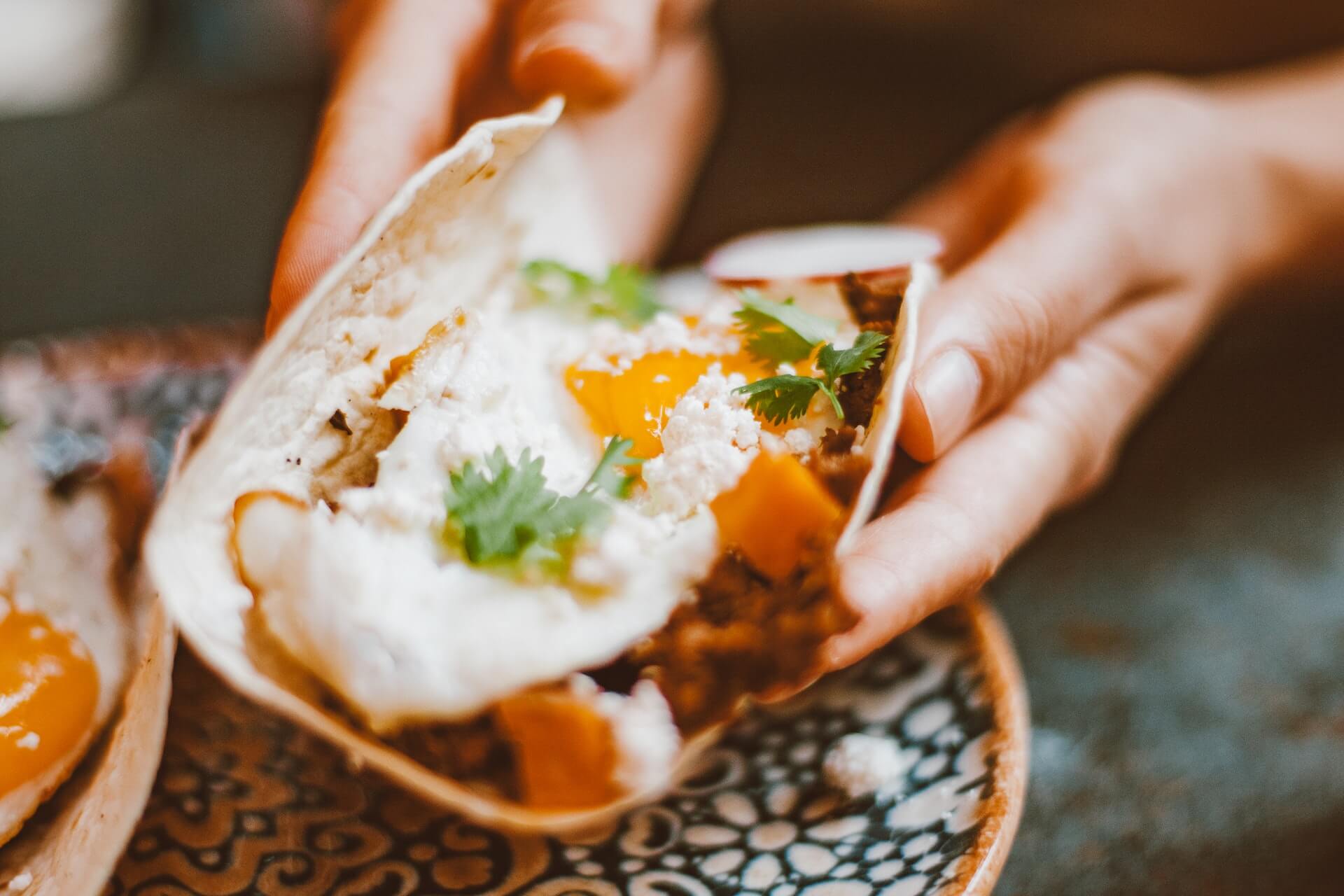
Tortilla with beans, cotija cheese and egg

Restaurant, bar, and hotel operators will find this year’s data-driven trend predictions from Technomic for 2023 insightful.

Interestingly but perhaps not surprisingly, some operators may be looking beyond North America for inspiration.

Per Technomic, Central and South American cuisines could influence menus in Canada this year. Other food trends that might take hold are “retro” health items, and all manner of pickled foods.

Of course, not every Canadian trend prediction involves F&B. According to Technomic, tech and the guest experience will play important roles.

To review last year’s Technomic predictions, click here. Now, let’s jump into Technomic’s 2023 predictions.

Guest Experience

Certainly, the guest experience should always be top of mind for operators, their leadership teams, and their staff.

In this instance, Technomic isn’t suggesting that the guest experience in general will be a trend. Obviously, with as important as it is to the success of any business, it’s a cornerstone.

Rather, Technomic predicts that guests will continue to feel the need to rein in their spending due to ricing costs and prices. However, the foodservice research firm also believes there’s still heavy desire for social interaction.

So, both those financial and social influences translate to the following: overdelivery.

Operators and their teams must ensure they position their brands well; make guests feel special every visit; and really dial in the guest experience. Specifically, Technomic suggests focusing on younger generations and menus with at least a couple specialty items that aren’t easy for a guest to replicate at home.

In other words, do whatever it takes to entice guests with memorable experience and quality menu items, and keep them coming back for more.

Technology

Multiple industry sources believe that 2023 is the Year of Tech for the hospitality industry. In particular, some sources believe that POS systems will receive significant attention from operators looking to upgrade.

Compellingly, Technomic sees the situation a bit differently. In particular, they’re suggesting that QR code menus may find themselves on the sidelines. Traditional menu, according to Technomic, will make their comeback this year.

Also making a (possible) resurgence? Per Technomic, in-person ordering for carryout and in-person dining.

As far as tech innovations that Technomic expects to take off this year, they see the following as standouts:

  • loyalty programs;
  • enhanced/upgraded cooking equipment;
  • automated inventory software/platforms; and
  • digital menu boards for back of house.

Culinary

As hinted at above, Central and South American cuisines are expected to take off in Canada, per Technomic.

The research firm provides specific—and delicious—examples:

  • Honduras: Baleadas tacos
  • Dominican Republic: Wasakaka sauce
  • El Salvador: Curtido slaw or relish
  • Peru: Aji amarillo and rocoto peppers
  • Bolivia: Saltenas, similar to empanadas

Another culinary trend Technomic predicts will perform well in Canada? Pickled everything.

Okay, maybe not everything. However, Technomic expects “pickling, fermenting, dehydrating and freeze-drying” to “increasingly pop up on menus.” The firm expects that operators will offer a wide range of “unusually pickled items outside of the typical veggies, including proteins and seeds.”

So, if you’re an operator reading this, it may be time to motivate your back-of-house staff to get creative with their pickling ideas.

Finally, pandemic-driven, health-based trend foods like turmeric and ginger may start to fade in popularity. Instead, predicts Technomic, items with “classic” health descriptors such as “natural,” “real,” “free,” “reduced,” and “lower” will get attention from guests looking to eat and drink healthier.

For your own copy of this Technomic report in its entirety, click here.

Image: Roman Odintsov on Pexels

by krghospitality krghospitality No Comments

Dynamic Pricing or Dynamic Menus?

Dynamic Pricing or Dynamic Menus?

by Doug Radkey

Two sportbikes racing

A key phrase used throughout 2022 was “the new normal.” In 2023, a key term you will likely hear a lot is “dynamic pricing.”

What is dynamic pricing? It can get quite complex, but the global consulting company, McKinsey, defines dynamic pricing as “the (fully or partially) automated adjustment of prices.”

The term is not entirely new to hospitality. Hotels and the overall travel industry have used modules of the pricing model for years. But for restaurants and even bars, yes, it is something new.

It is also a model getting a lot of attention of late, which begs the following question: Why?

As the bar and restaurant industry recovers from the effects of the pandemic, a dynamic pricing model that optimizes revenue opportunities may seem quite attractive. After all, our industry is looking to rejuvenate its sales to pre-pandemic levels.

Essentially, a dynamic pricing model within this industry would work like this: increase prices when demand is up (peak periods), decrease prices to draw guests in when demand is down (off-peak times).

But should this be a model that disrupts the industry in 2023 and into 2024?

While I am all for a little disruption, the industry needs to tread carefully through this potential transition to dynamic pricing (or perhaps just around the phrase itself) that’s based on demand levels.

Guest Experiences

We all know (or should know) that we do not sell a product. What we sell is an experience.

If we can create a positive, memorable guest experience first and foremost, the revenue will follow.

While hotels and travel, as examples, have boasted “positive financial results” over the years through their different approaches to dynamic pricing (while still trying to focus on the end-user guest experience), independent bar and restaurant brands must be careful not to create a hostile brand perception.

Why? Because many consumers view changing prices based solely on levels of demand as being unfair.

Being unfair will certainly create a negative guest experience and/or brand perception. The hotel and airline industries have been able to navigate this perception successfully by offering alternatives. For example, different rooms and amenities or less convenient flight times at different price points. Essentially, companies in lodging and travel provide options and flexibility before customers make the choice to spend.

What about rideshare and surge pricing as another example? Many of you reading this have likely been burned by surge pricing as a consumer, which can be by definition a form of dynamic pricing.

Have you ever tried to book a rideshare during peak periods in a major market? What would normally be a $20 ride is suddenly $40 to $60 (or more) because of their dynamic pricing model.

What did I do in this situation during a recent business trip? I walked another 25 feet up to the cab staging area of the airport and got my ride for $25.

The end results? I had a negative customer experience with the rideshare company, first and foremost. Additionally, that negative experience drove me to the competition. The key here is I was given a choice.

Now let’s switch that scenario to a restaurant.

The Restaurant Scenario

You book a table at your favorite restaurant and order that incredible steak dinner you always enjoy. But instead of it being $50 like you have grown accustomed to, it is now $75 or more. How are you as a consumer going to feel about this new price just because you visited your favorite spot during a “peak period” on a Saturday night? Were you given a choice before the spend?

Of course, this can work in the opposite direction: ordering a meal during a non-peak time and getting it for a cheaper price, thereby getting a discount.

But should we be confusing our customers based on their chosen, convenient time to visit your restaurant or bar? Should you also focus on “discounting” to drive people to your business?

I have even seen recommendations for offering an increased price for peak period but using what was the previous regular price during the non-peak times, labeling the normal price a “discount.”

Should we be framing our regular priced menu options as a discount just so we can charge and make more during a peak period? Is this being fair and ethical to your loyal customers? Should we be going down this road?

With this model (and the phrase “dynamic pricing”), which is based on demand, it is very easy to see how you can quickly confuse or alienate your loyal guests. Unless the industry in its entirety migrates over to this demand-driven model, a similar scenario as outlined above can play out for you and your guests.

Without extremely strong but transparent communication systems in place (which will be a challenge in itself), it is safe to assume that they will likely visit another restaurant up the street and/or provide negative feedback because they feel your pricing model is confusing or unfair.

Dynamic Menus

The phrase that is much more simplified and will be more easily embraced by both operators and guests is “dynamic menu.”

So, what’s the difference?

While it is still by definition “the (fully or partially) automated adjustment of prices,” it is not based on demand throughout the day. Rather, pricing is based on simple supply chain and operational cost adjustments.

According to the National Restaurant Association:

  • 95 percent of restaurants have recently had significant supply delays or shortages of key food items; and
  • 75 percent of restaurants have had to change their menu because of supply chain issues.

With a more dynamic menu, you can adjust pricing to suit those changes accordingly, through the lens of real-time ingredient cost, labor costs, productivity levels, and even the availability of certain menu items.

This simply means that the incredible steak dinner a guest has always enjoyed at your place is perhaps now $53 instead of $50 because the price of beef went up the past week or month. This ensures that as an operator, you will have a minimal gap between your theoretical and actual food costs.

Again, this should work both ways, meaning if the price of beef has gone down, so too should the price.

This means that your guests are paying an accurate value for each item, based on your intended sales mix and contributions, without a loss in margin on your end or negative experience on the guest end.

This means that everything on your menu is “market price” or MP. Where have we seen that before…?

Market Price

We all know restaurant menus will commonly deduct a price and replace it with the term “market price” (often abbreviated to “MP”). This means the price of the menu item depends on the market price of the ingredients, and the price is available upon request. It has been used for years for seafood in particular—most notably lobsters and oysters—in many restaurants.

Therefore, this pricing model is not entirely new. So, why should it stop at just high-priced seafood?

The reason many operators would use the abbreviated MP was because they did not want to reprint menus every single day as the prices fluctuated greatly.

As we move towards digitally savvy restaurant operations, implementing integrated technology and menus, we can begin to find alternatives and ensure that we are actively pricing our menus accordingly based on the market (and overhead costs) to strengthen top- and bottom-line results.

Knowledge is Power

To make a dynamic menu work, whether you’re a QSR, sports bar, casual-dining or fine-dining concept, or any other category of bar or restaurant, you need to know your target customers, provide a targeted menu, and know your numbers (the data).

Curating and engineering a menu should be a simplified process. To be honest, this should have been streamlined prior to the pandemic.

Your menu should be developed based on data, consumer sentiment, regional ingredients, regional suppliers, and local talent within the confines of the overall concept. Food and beverage programs should be developed with thought, care, speed, precision, execution, and last-but-not-least: consistent profits in mind.

Keeping menus “small” (10 to 12 or even 15 items at maximum) will be the new threshold of a successful, more profitable operation. This size of menu will allow bars and kitchens to operate more efficiently; keep inventory costs both low and controlled; control training and labor costs; and provide guests with the most flavorful and exciting items that they truly want.

Be Nimble

You also want to provide menu flexibility by continually reviewing your supply chain. Maintaining a strong personal relationship with your suppliers is imperative. You must also review your costs and inventory on a daily and weekly basis to make dynamic menus work.

To keep inventory, purchase orders, and potential waste to a minimum, it will be crucial that you to ensure your menu is small but innovative. The only way to accomplish this is through effective data management.

However, the new challenge for many independent brands is making data timely, relevant, digestible, and actionable for operators and their leadership teams. The ability to collect, interpret, and effectively react to key datapoints is going to be crucial for anyone who wants to implement a dynamic menu, and for moving forward in general.

At the end of the day, profiting from a dynamic menu is all about making decisions based on accurate cost and productivity data. Of course, there’s only one way to obtain data: embrace technology and create strategic clarity around it.

The Tech Stack

The key to successfully implementing a dynamic menu is integrating a stack of technology that provides real-time data and trend reports.

From point-of-sale software and reports to accounting software, inventory and recipe management software, and invoice management software or a suite that includes all of the above that’s integrated and working together, you can obtain real-time data to adjust your pricing based on real-time ingredient and productivity costs on a daily or weekly basis.

You want seamless movement of data from front- to back-of-house that will position you to make decisions and have a more complete picture of inventory stock levels, costs, and ordering needs, plus itemized sales, contribution margins, and productivity levels.

In Summary

While we must find ways to be innovative, potentially price-gouging our guests during peak periods and discounting during slow periods is not the way for this industry to recuperate and build loyal customers.

Building a strong brand through the creation of memorable experiences and by building connection with your community along with strategic planning, effective marketing, the elements of culture, and efficient operations, you can build sustainable revenue and profit channels.

By following a more dynamic menu approach within your operations, you can still maintain transparency with your guests with less challenging communication methods, remain a fair and well-respected brand within your community, and improve your margins by three to five percent or more with the right people and systems in place.

That sounds like a pretty good deal to me. The question here remains: Are you Team Dynamic Pricing or Team Dynamic Menus?

Image: Joe Neric on Unsplash

by David Klemt David Klemt No Comments

SevenRooms and CSV form Partnership

SevenRooms and Competitive Social Ventures form Partnership

by David Klemt

The word "play" painted on a wall

Guest experience and retention platform SevenRooms will kick off 2023 with a partnership with Competitive Social Ventures.

This new partnership is yet another example of SevenRooms’ continuous growth. For technology in general and our industry in particular, this is excellent news.

Consider how long it has taken, up until recently, for hospitality to embrace tech innovations. Navigating tech solutions can be daunting. Equally intimidating can be the cost of implementing new tech in a restaurant, bar, or hotel.

Watching a tech platform continue to innovate and grow, therefore, is good news for operators and their teams.

SevenRooms traces their founding to 2011. In comparison, many “solutions” never escape the vaporware stage, existing only on paper. With more than a decade of operation under its belt, SevenRooms is established and positioned for longevity.

In other words, the platform is worthy of operator consideration and investment. We make no secret of our preference for SevenRooms at KRG Hospitality. Unless they prove we should think otherwise, the platform is our favorite tech-based guest retention solution.

Beyond functionality, ease of use, and effectiveness, the company’s continuous growth motivates our support. Look at how SevenRooms grew in 2021 alone:

The platform also started 2022 with the hiring of a chief revenue officer, Brent-Stig Kraus.

Social Entertainment

With its headquarters in Alpharetta, Georgia, Competitive Social Ventures blends sports, socializing, and entertainment.

In fact, the company refers to the brands it has brought to market as “competitive socializing entertainment concepts.”

Last year, CSV brought Fairway Social Alpharetta and Roaring Social Alpharetta to market. The former focuses on sports simulators. Roaring Social, on the other hand, delivers a speakeasy experience combined with bowling.

Arriving in 2023, the real estate holding company plans to launch Pickle & Social concepts throughout the Metro Atlanta. As the name suggests, the concept features indoor and outdoor pickleball courts. Guests will also have access to table tennis. And like Fairway Social and Roaring Social, Pickle & Social will feature live music and an elevated F&B experience.

CSV already makes use of SevenRooms’ reservation and guest data management tools. Going into 2023, this partnership will evolve into review aggregation, marketing automation, and table waitlist management. The latter makes it easier for any concept to handle walk-ins as painlessly as possible.

Most importantly, the partnership with SevenRooms empowers CSV to pursue their growth plans. While the growth of SevenRooms is impressive and confidence-inspiring, their commitment to client growth is the real story here.

When choosing their tech stack, operators need to know the relationship is mutually beneficial. In fact, they need to be confident that each platform is here for long-term success.

In fact, operators should look at every relationship through this lens: Is every partner working to help you grow?

Image: Ben Hershey on Unsplash

by krghospitality krghospitality No Comments

2023: Year of the POS Systems?

2023: Year of the POS Systems?

by David Klemt

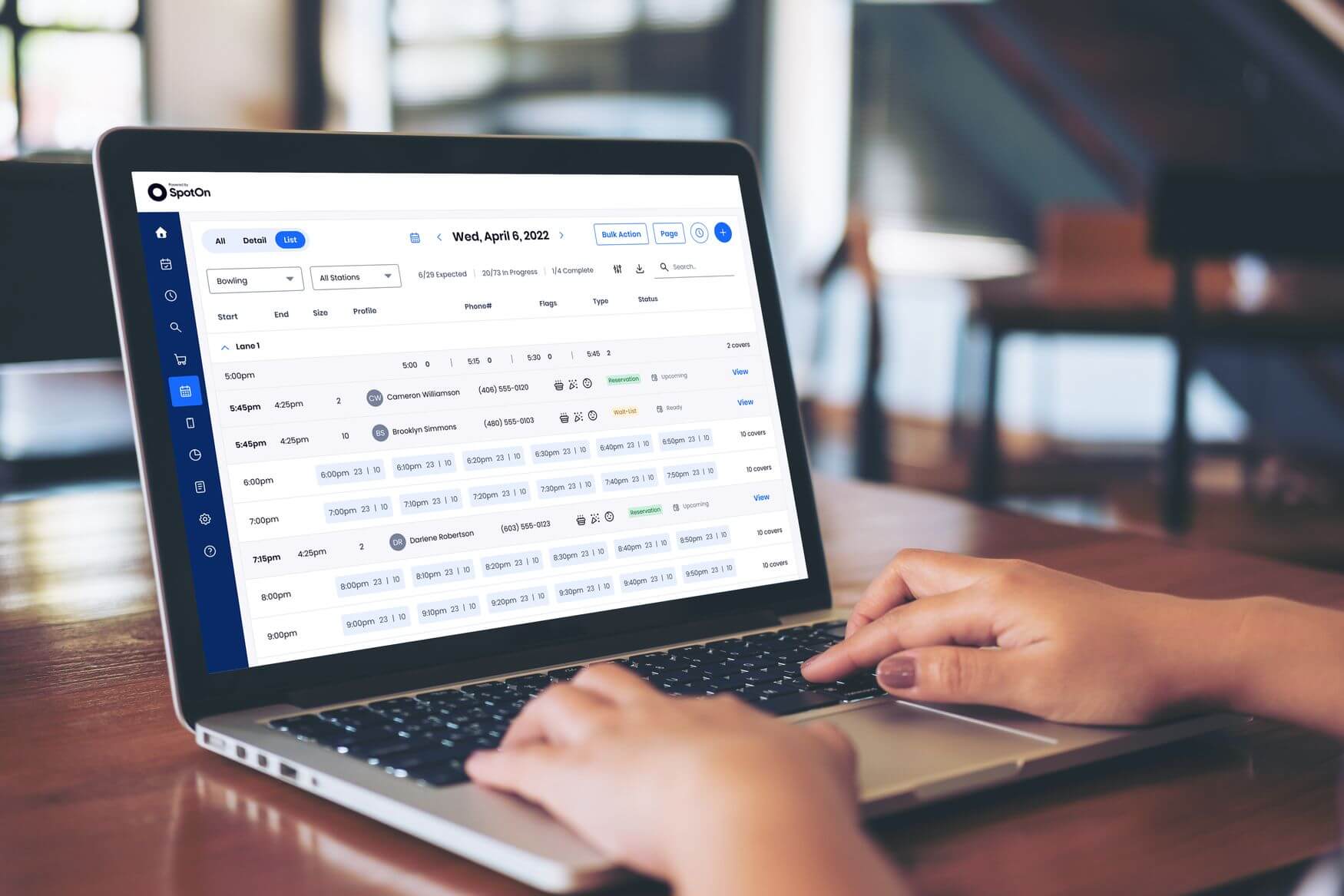
SpotOn POS system on laptop

Image from SpotOn press release

According to SpotOn, the industry could be in for a tech revolution next year as independent operators pursue more powerful POS solutions.

The results of a survey conducted by the cloud-based POS platform are rather revealing. In an effort to better understand where the industry is heading, SpotOn surveyed 300 independent and small-chain restaurant operators.

Both full-service and limited-service (LSR) concept operators participated in this SpotOn survey. Intended to identify the challenges operators face currently, the results reveal much more.

Below, the picture these survey results paint for the industry.

Legacy vs. Innovation

This isn’t the first time I’ve stated the following: Our industry hasn’t been the fastest to implement new technology.

However, we did appear to turn that around in 2021. Now, heading into 2023, our industry may be pursuing cutting-edge tech solutions even more fervently. Today’s guest expects more tech, and your team likely wants access to more modern tech that makes their jobs easier.

Per SpotOn’s survey, 81 percent of independent operators still use so-called “legacy” POS systems. These are “traditional” systems from companies that have been around for quite some time.

It’s not difficult to understand why the vast majority of independent operators continue using legacy systems:

  • Investing in a new platform requires expenditures of money and time.
  • Introducing a new POS platform requires staff training.
  • Staff need to grow adept at using the new system.
  • It can be daunting to research the available platforms and implementing change.

So, independent and small-chain operators have a choice to make: Stick with the familiar or invest in the future. Change can not only be intimidating, it can be expensive.

However, it seems that most operators are ready to throw comfort to the wayside and embrace innovation.

State-of-the-art Benefits

Should the SpotOn survey prove to be accurate snapshot of the industry, 75 percent of operators will implement new tech next year. According to SpotOn, this is largely in response to growing labor challenges, such as scheduling and retention.

The restaurant, bar, nightclub, and food truck platform found that operators are spending as much as 20 hours per week on administrative tasks. State-of-the-art POS systems can slash those hours by:

  • streamlining operations;
  • making scheduling simpler;
  • calculating tips and payout for payroll; and
  • managing overtime, an increasingly common task.

More modern POS platforms can automate labor management tasks, saving operators time, money, and frustration. Automation and streamlining give operators something invaluable: time.

In particular, innovative and helpful tech solutions provide an operator with time to focus on growing their business. When weighing whether to keep a familiar but less feature-rich POS system or invest in a modern platform that seamlessly integrates many solutions, ask yourself a couple important questions:

  • What’s my time worth?
  • What am I focusing on every day?
  • Am I growing my business or stagnating?
  • Is my current POS system helping or hindering my team?
  • Does my POS system streamline and automate any tasks?

Image: SpotOn

by David Klemt David Klemt No Comments

Your Guests are Likely Ready for More Tech

Your Guests are Likely Ready for More Tech

by David Klemt


Raspberry Pi motherboard

After the past few years of innovation and implementation in our industry, guests are probably ready to use even more technology.

Driven in large part by operator adaptation to ever-changing restrictions in 2020 and 2021, guest-facing tech is far more prevalent than ever. This is particularly true in the quick-service restaurant space.

Of course, tech has certainly become a crucial operational component in the full-service space as well. However, operators many FSR operators find themselves walking a fine between tech innovation and providing personalized service.

Restaurants Canada addresses QSR and FSR tech implementation in their 2022 Foodservice Facts report. Click here for your own copy of the report.

QSR vs FSR Implementation

One benefit of updating a given operation’s tech stack is automation. After all, more tasks handled automatically via tech solutions means a reduction in labor costs.

In theory, removing mundane tasks from front-of-house team members should equate to guests receiving more personalized service. Equally as impactful: Many guests would rather have more control over their visit in the names of convenience and speed.

A couple of examples are placing orders and paying via tablet or other table-side device. For some guests, this is more convenient than the traditional method.

As stated above, QSRs have been quick to embrace and implement tech innovations. And according to a Restaurants Canada survey, nearly three-quarters of QSR operators will wade deeper into tech waters within the next two years. Almost half—49 percent—of QSR survey respondents “probably will” increase their usage of technology by April 2024; a quarter “definitely will.”

On the FSR side, operators are a bit more cautious in their approach to their tech stacks. Of these survey respondents, 37 percent will probably adopt more tech within the next two years, while 15 percent say they “definitely will” do so.

Per Restaurants Canada, the three main concerns of operators relating to implementing more tech are:

  • cost;
  • guest acceptance; and
  • people being able to relate to the equipment (which to me seems directly tied to guest acceptance).

However, FSR operators have also indicated another concern: the perception from guests that tech innovations are leading to a loss of personalized service. So, individual operators must decide not just what tech solutions to embrace but how they may impact the guest experience in negative ways.

Guest Expectations

When Restaurants Canada looked into tech in the restaurant space, they didn’t just focus on operators. The restaurant industry advocacy organization also surveyed consumers.

Perhaps unsurprisingly, the 18 to 34 age group appears to be the most eager to embrace new tech in restaurants. However, they’re not that far ahead of the 35 to 54 group. Interestingly, the 55-plus demographic is less tech-resistant in at least one area than one may assume.

Let’s take a look at Restaurant Canada’s survey results, broken down by tech solution.

  • Order and pay via tablet at FSR: 18 to 34 (55%), 35 to 54 (54%), 55+ (41%)
  • Place an order for food that’s prepared by automated method, either robots or other systems: 18 to 34 (27%), 35 to 54 (17%), 55+ (11%)
  • Order food that’s delivered on-premises by an automated system or a robot: 18 to 34 (32%), 35 to 54 (28%), 55+ (18%)
  • Place an order through a ghost or virtual kitchen: 18 to 34 (34%), 35 to 54 (26%), 55+ (13%)
  • Order food that’s then delivered off-premises via robot or self-driving car: 18 to 34 (36%), 35 to 54 (29%), 55+ (19%)

Considerations

Looking at the above data, most guests are already comfortable placing orders and paying through a tablet. Interestingly, the age group people think of as most tech-averse seem to be open to the idea of robots preparing and delivering their orders.

The keys to implementing tech solutions are deceptively simple: initial costs, subscription costs, maintenance fees, ease of use by staff, and ease of use by guests.

With inflation driving costs up, operators are likely most concerned with what it will cost to add to or upgrade their tech stacks. However, there may be a significant reduction in labor costs that justifies the initial costs. Additionally, some solutions can be leased rather than purchased up front.

But the comfort levels of guests must also receive careful consideration. If a solution is going to alienate or drive away a significant portion of guests, it’s likely not worth the time and cost of implementing it.

Your guests likely want more tech in your restaurant, but it has to be the right tech. Solutions need to deliver convenience and speed without failing to deliver on hospitality.

Image: Harrison Broadbent on Unsplash

by David Klemt David Klemt No Comments

Date Night Desires and Dealbreakers

Date Night Desires and Dealbreakers

by David Klemt

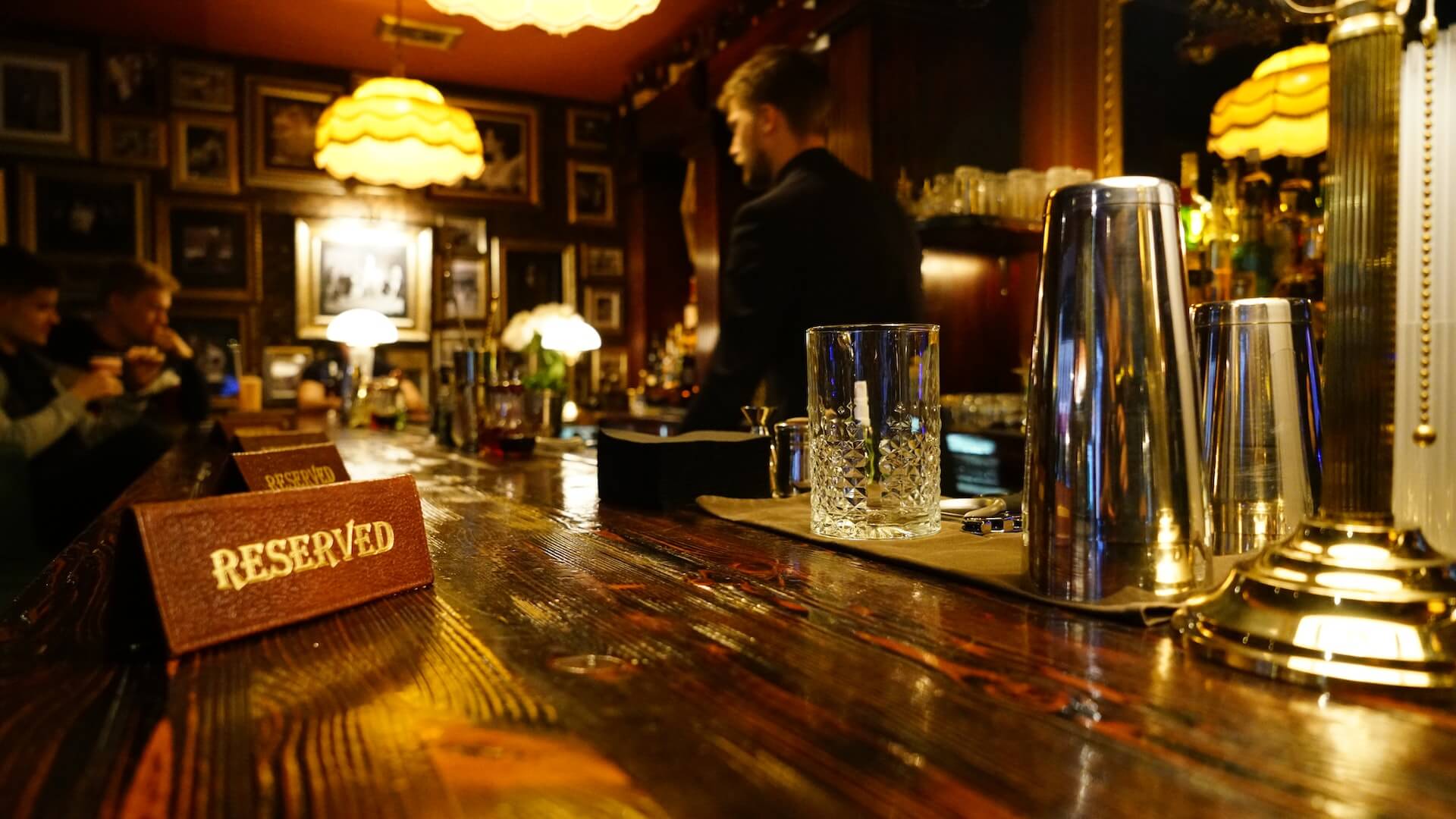
Reserved seats at a bar

Focusing on date night, guest experience and retention tech platform SevenRooms is sharing their latest data-driven report.

Their “Date Night Diner Report” is another successful collaboration with YouGov. Previous reports from this partnership include:

One of the reasons we at KRG Hospitality appreciate and recommend SevenRooms is their dedication to data. The platform’s commitment to sharing the data they collect to the benefit of operators is impressive.

“A resurgence of the American date night is here, and these date night diners are flipping the script on what that experience should look and feel like,” says Allison Page, co-founder and chief product officer at SevenRooms.

So, operators who want to succeed with date night should review this new report. In fact, all operators would be wise to read this report. After all, it addresses reservations, waitlists, walk-ins, and much more.

Released today, this brand-new report can be downloaded here. Read the press release here.

Date Night Details

A lot has changed over the past two-plus years. What hasn’t changed are the two most popular date nights in the US: Friday and Saturday.

Both Friday and Saturday night are preferred by 26 percent of the 763 survey respondents who go on dates. In total, SevenRooms and YouGov surveyed 1,153 individuals.

Generally speaking, these dates are return visits. People who go on dates tend to make reservations at restaurants they’ve dined at previously.

However, 46 percent of such guests are open to reserving a table at a restaurant they haven’t visited before. And speaking of those tables reservations, 53 percent are for two people.

Looking at two major populations, tables for two are the most popular reservations. In New York, they account for 50 percent of reservations. That number increases to 56 percent in Los Angeles.

Interestingly, however, is this bit of date: 53 percent of Americans don’t make reservations for date night. Rather, they’re walk-in guests, meaning they’ll likely become waitlist guests.

Date Night Desires

So, now operators know that the majority of today’s date-night reservations are for two. That doesn’t mean setting aside two-tops and side-by-side seats at the bar is enough for success.

No, there are also guest expectations to consider. SevenRooms identifies the following as the top date-night desires:

  1. A complimentary cocktail or dessert. (33 percent)
  2. Ability to earn extra rewards (24 percent), highlighting the value of loyalty programs.
  3. Incentives that encourage repeat date-night visits. (23 percent)

Furthermore, personalization continues to be a key factor in the dining decision. One-third of guests consider the ability to personalize their dining experience more important than factors such as menu variety or receiving their order quickly.

Date Night Dealbreakers

Of course, if there are desires there are also dealbreakers.

According to SevenRooms, the following are the dealbreakers operators must avoid:

  1. People on a date receiving their meals at different times. In this case, more than ten to 15 minutes apart. (45 percent)
  2. The restaurant being so loud the guests on their date can’t hold a conversation. (43 percent)
  3. A restaurant not having the menu items the guests were looking forward to ordering. (31 percent)
  4. Being sat too close to another table. (31 percent)
  5. Sitting next to a table speaking “too loudly.” (26 percent)
  6. The restaurant being so crowded that a guest can’t find their date. (24 percent)

How important is it to avoid these dealbreakers? Well, the survey respondents say they won’t return to a restaurant if they experience any of them.

To read the full report, click here. And to learn more about SevenRooms, listen to Bar Hacks episode 24, featuring SevenRooms CEO Joel Montaniel.

Image: Dmitri Nesteruk on Unsplash

by David Klemt David Klemt No Comments

iPourIt Releases Fourth Annual Pour Report

iPourIt Releases Fourth Annual Pour Report

by David Klemt

Black and white beer taps

Self-serve beverage platform iPourIt’s informative fourth annual Pour Report identifies their top beer and wine pours from 2021.

iPourIt is a pioneer in the self-serve space, enhancing the guest experience and boosting revenue. However, their annual reports are another key reason operators should consider this platform.

Unlike other industry platforms, iPourIt doesn’t limit their resources to clients. Nor do they place resources like their annual Pour Report behind a pay wall. So, this is a transparent company that clearly views their relationships with clients as partnerships.

You can check out their resources for yourself by following this link. To download a copy of the 2021 Annual Pour Report, click here.

Below you’ll find key datapoints from the latest iPourIt report. I encourage you to download and review the report in its entirety.

Key Demographic Information

When it comes to men and women using iPourIt self-serve systems, men are respsonsible for 64 percent of total ounces poured.

On average, men served themselves 6.4 ounces per pour and spent $14.21 on iPourIt per visit. For men, the top pours were IPA, Lager, Cider, Hefeweizen, and Sour.

Conversely, women served themselves nearly 11 million ounces via iPourIt systems. That’s 36 percent of total ounces poured.

On average, women served themselves 5.3 ounces per pour and spent $11.95 per visit. For women, the top pours were Cider, IPA, Sour, Lager, and Hefeweizen.

Interestingly, the top pour for both men and women was Michelob Ultra.

Key Beer Takeaways

The 2021 Pour Report analyzes data from more than 300 iPourIt systems, over 8,800 taps, and 49 million total ounces of beer and wine poured.

In total, patrons consumed nearly 14,600 total products. Further, the data above represents 1.9 million guests served 3.1 million pints. Compellingly, that’s $26.2 million in revenue generated by iPourIt systems.

In terms of iPourIt systems and patrons, cider claimed the number two slot for the top 15 poured beer styles. Perhaps unsurprisingly, IPA claims the top spot. In fact, iPourIt systems served more than 10 million ounces of IPA.

As far as beer styles that are growing in popularity, three styles are on the rise. These climbers are Belgian, Cream Ale, and fruit beer. Conversely, Lager, Red Ale, and Witbier slipped down the list. Interestingly, Witbier slid four slots on iPourIt’s top 15 beer styles list. For the first time since iPourIt has been releasing reports, Seltzer made it onto the list, claiming the 11 spot.

Another interesting bit of data concerns consumer preferences. IPA may be the beer style seeing the most pours but domestic Lagers and light Ales are the top-selling products across iPourIt systems. The platforms interprets this as consumers trying small samples of IPA but going with Lagers and Ales for full serves.

Top Beer Pours by Category

Helpfully, iPourIt breaks down their Pour Report into several categories. So, let’s take a look at the top five from several of their lists.

As for the top products poured overall, Michelob Ultra claims the top spot. In descending order, it’s followed by Bud Light, Golden Road Mango Cart, Ace Pineapple Cider, and Modelo Especial.

For domestic pours, numbers one and two are the same as above. However, Coors Light, Miller Lite, and Pabst Blue Ribbon. The top five import products are Modelo Especial, Delirium Tremens, Rekorderlig Strawberry-Lime, Stella Artois, and Dos Equis Lager Especial.

Switching gears to craft and microbrew, Mango Cart claims the number one spot. Numbers two through five are Space Dust, 805, Kona Big Wave, and Big Storm Oak & Stone Snowbird Pilsner.

Of course, the report goes much deeper than just those four categories. There’s also the top 25 IPAs, and the top 15 Lagers, Ciders, Hefeweizens, Sours, Stouts, Blonde Ales, Pilsners, and Pale Ales.

New for the annual Pour Report are the top 15 fruit beers and Seltzers.

Key Wine Takeaways

Before we proceed, iPourIt systems aren’t limited to beer and wine. If it’s a beverage without pulp or sediment intended to be poured cold, iPourIt can handle it.

So, cold brew coffee, kombucha, sodas…these are all revenue-generating serves to pour alongside beer and wine.

Now, onto the 2021 report. The key wine takeaway focuses on sparkling wine. In short, sparking wines have proven popular with iPourIt patrons. So, the platform suggests using their systems to offer guests build-your-own Mimosas, as well as promoting self-serve as an enhancement to brunch.

Addressing the top-performing wines for iPourIt systems, the top five overall in descending order are:

  1. Boca Barrel Boca Frizzante
  2. Starborough Sauvignon Blanc
  3. Carletto Prosecco (up two spots)
  4. Stemmari Pinot Grigio
  5. Archer Roose Bubbly

Boca Frizzante is a “Prosecco-style” white wine sparkler. Archer Roose Bubbly is also a Prosecco-style white. An actual Prosecco climbed the top 10 to reach spot number three. Essentially, three Proseccos are among the top five most-poured wine products for iPourIt patrons.

Interestingly, the top five are all white wines. In fact, there are only two reds among the top ten, both of them Cabernet Sauvignons.

Image: Josh Olalde on Unsplash

by David Klemt David Klemt No Comments

5 Self-serve Beverage Brands to Know

5 Self-serve Beverage Brands to Know

by David Klemt

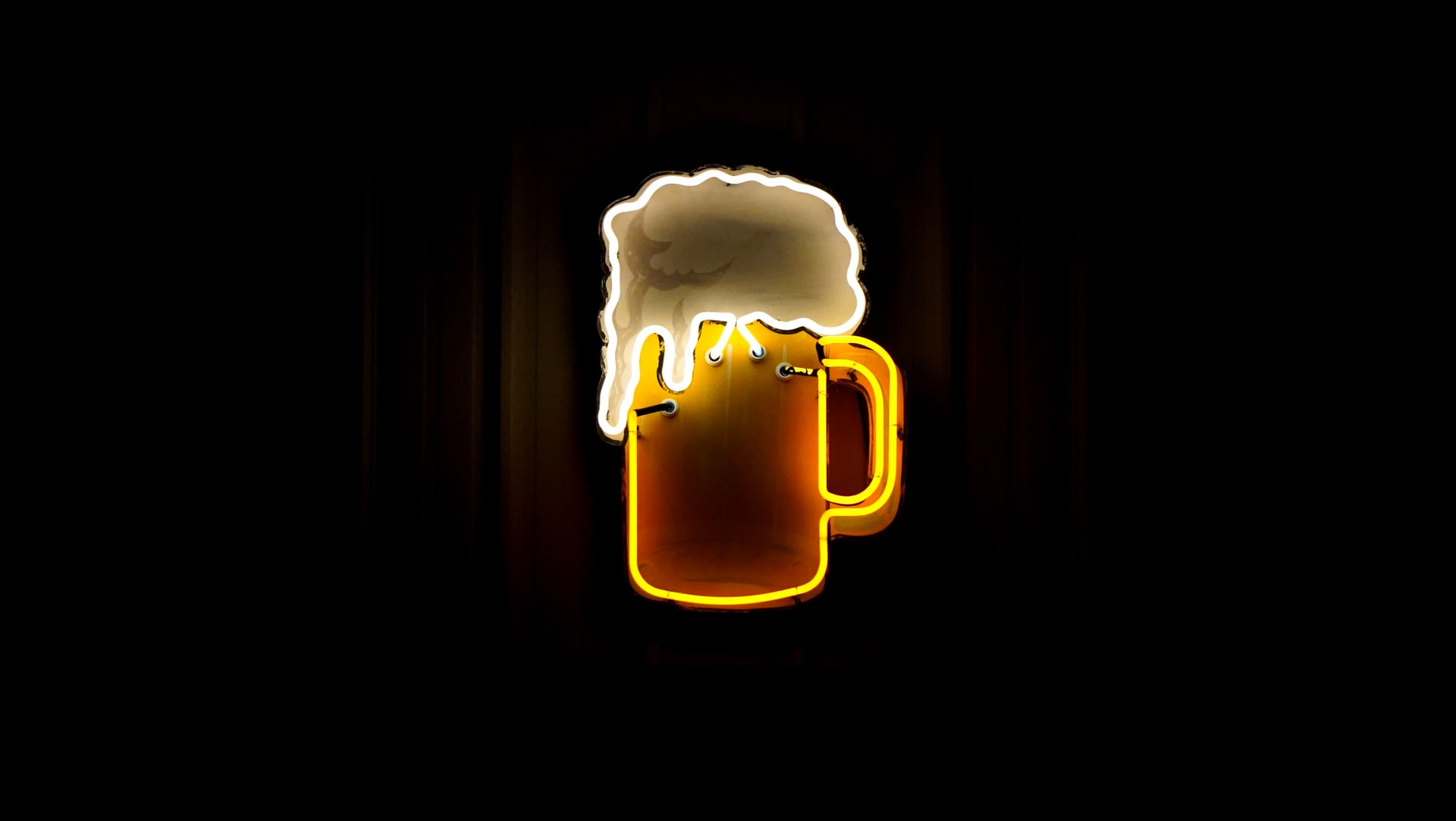
Neon beer mug sign

If you’re an operator who wants to leverage the popularity of self-serve beverages, these are the brands you should consider.

There are several reasons to invest in self-serve beverage solutions:

  • Reducing costs
  • Reduction in waste
  • Guest convenience
  • Guest experience
  • System customization
  • Real-time system management and reports
  • Security

Truthfully, had I been told ten years ago that guests would want to serve themselves beer, wine, and other drinks, I would have raised an eyebrow. It’s possible, sure, but I would’ve been skeptical.

Well, it turns out that I would’ve been wrong. Indeed, today’s guest seems to enjoy pouring their own drinks from self-serve systems.

From convenience to control over their experience, these platforms are proving popular with consumers. An appealing factor appears to be the ability to sample a range of beverages to discover new favorites. And, of course, they can do so without having to purchase full drinks or asking a bartender or server for a sample.

So, below are some of the brands in the self-serve beverage world that operators need to know and consider.

Operator Benefits

In terms of P&L, your bottom line will thank you for embracing self-serve solutions.

First, the popularity of these systems increases sales. Guests can sample an array of drinks easily, choose a favorite or two, and serve themselves at their convenience. Additionally, guests tend to view self-serve systems in a positive light due to perceived value.

Second, an impressive self-serve beverage wall can be a sight to behold. There are venues with 100 self-serve taps and screens, which is an impressive sight. There are also all manner of designs not dependent on a wall. One great example is the rotating self-serve beer system at the Famous Foods Center Bar inside Resort World Las Vegas.

In other words, self-serve beverage systems help concepts stand out among competitors.

Third, self-serve systems allow operators to streamline operations and reduce costs. For example, labor costs can be reduced, as can waste.

And fourth, these solutions can lead to improvements in the guest experience. Not having to wait in line and being able to engage more with front-of-house staff aids in guest perception.

iPourIt

According to the brand itself, iPourIt installed the world’s very first beer wall. Since then, the platform has worked tirelessly to improve their solutions.

One way they’ve improved involves the security and usability of their system. As you’ll see with most self-serve brands that pour alcohol, guests are locked out of these systems without RFID access.

IPourIt offers several types of RFID solutions, from bracelets to fobs. Of course, other systems use similar tech. However, iPourIt prides themselves in offering touch-free RFID access and eschewing the need to leave cards in slots when pouring.

Another benefit is that as long as the beverage isn’t meant to be poured hot or doesn’t have pulp/sediment, iPourIt can handle it.

PourMyBeer

This company is iPourIt’s main rival. When you review how they can improve an operators’s bottom line, it’s not hard to see why.

PourMyBeer claims some impressive stats:

  • 45 percent sales increase
  • 50 percent increase in profits
  • 20 percent reduction to labor costs
  • Less than three percent waste

Like other systems, PourMyBeer can help operators leverage wall space. In addition, a single PourMyBeer screen can control four taps, so a wall doesn’t haven’t to be overloaded with screens.

Impressively, this platform also boasts the most POS integrations among the self-serve systems. Obviously, this is beneficial to the vast array of operators.

Table Tap

For operators looking for both a pioneer in the self-serve space, Table Tap may be the perfect partner. In particular, the use of “underage cards” by underage guests to access non-alcohol drinks is a nice feature. So, children up to early college-age students can get in on the fun.

Standing out from other platforms, Table Tap offers wall systems and table-mounted systems. Truly, offering a self-serve wall and a number of tables with the same tech is impressive.

In fact, if I were to install both solutions I would consider the tables a self-service take on VIP seating. And, I’d charge accordingly. Just something operators may want to consider.

Another cool feature relates to Table Tap’s software. While not the most mind-blowing functionality, guests can control an operator’s sound system via the TableTab ordering platform. Better yet, if an operator charges fees to select songs on their jukebox, TabelTab adds them to guest tabs.

To learn more about Table Tap, give episode 22 of Bar Hacks a listen.

Drink Command

“We do everything self pour, and more,” proclaims the Drink Command website.

Is an operator looking for a killer self-pour wall? Done. Table-mounted taps? Check. What about a self-serve tower, self-serve mobile kegerator, or a heavy-duty, mobile, self-serve counter? Drink Command has all three.

In other words, Drink Command makes it easy for operators to get creative and implement a range of self-pour solutions. Additionally, with mobile solutions, operators who want to expand into catering, pop-ups, and special events can do so easily.

For a list of other benefits—including foam-free beer pours, advertising interstitials, and consumption limits—click here.

Napa Technology

Makers of the TapStation, Napa Technology promises a boost to the guest experience. In part, this is because guests don’t have to wait in long lines at the bar.

Additionally, as stated prior, today’s guest enjoys using self-serve beverage systems.

Unlike other platforms, the Napa Technology TapStation doesn’t rely on wall installations. Instead, TapStation dispensers are available in two- and four-keg systems. These stations can be placed anywhere on the floor rather than a wall.

The TapStation can serve beer, wine, kombucha, and cold-brew coffee, ensuring it’s as versatile as the systems above.

Image: Brad on Unsplash

by David Klemt David Klemt No Comments

Tech Shows Up in a Big Way at NRA Show

Tech Shows Up in a Big Way at 2022 National Restaurant Association Show

by David Klemt

NCR Aloha NRA Show booth

The number of tech platforms and solutions at the 2022 National Restaurant Association Show in Chicago was a sight to behold.

Once seemingly technology averse, our industry is awash in platform integrations, apps, and smart devices.

Drive-thru signs are reading license plates and collecting data. Digital menu signs are implementing facial recognition software. Automation is taking on more and more tasks.

Amazingly, the digital paint on the innovations we’re seeing isn’t even dry yet. While some developments may have taken years to come to market, it feels like they’re only one or two years “old.”

Here to Stay

People are still talking about a “return to normal” when it comes to the Covid-19 pandemic. To some, that means going back to their 2019 habits and lifestyles.

Well, that’s not going to happen in the restaurant, bar, or lodging spaces.

Delivery? Here to stay. Contactless payment? Not going anywhere. QR and digital menus? Commonplace at this point.

And contactless pickup? NRA Show 2022 attendees exploring the North Building encountered multiple pickup platforms.

To state the obvious, delivery is expensive. Combine inflation and rising gas prices with third-party delivery platform fuel surcharges and it’s only getting pricier.

Clearly, contactless pickup is becoming a more appealing solution for operators and their customers.

On the one hand, operators who invest in smart, contactless pickup lockers can avoid the exorbitant costs they incur from third-delivery companies. And on the other hand, customers know they can save money by picking up their orders themselves. Moreover, they know they can do so safely with contactless pickup.

Operators can now choose from an array of smart locker setups to leverage customer demand for safe, convenient takeout.

Your New Marketing Partner

Remember when people were blown away by QR code menus? Well, those are already old news.

As an aside, the fine-dining and luxury categories have been over QR codes for quite some time. However, they’re probably not going to be interested in the latest menu innovation. No, they’re much more eager to return to traditional, tactile, luxurious physical menus.

Other categories, though, will likely be interested in smart digital menus. As this tech gets smarter—perhaps terrifyingly so—your menu will be a supercharged sales associate.

There are digital menus coming to market that can recognize an operators guests…and then attempt to upsell them. The more a guest visits a venue with smart signs, the more the platform learns about them and their preferences. From there, the signs can attempt to sell them on a promotion like an LTO item.

Not long ago at all we learned that texting a consumer is a powerful way to market to them. Well, now we’re going to have the opportunity to sell them in a direct, interactive way straight from our menus.

Oh, and if this isn’t impressive enough, there are digital sign platforms capable of displaying surge prices. In the blink of an eye an operator will be able to leverage this type of pricing and revenue generation.

More Powerful POS

There were no shortage of powerful POS systems at the 2022 NRA Show. If anything, there are almost too many options out there for operators to consider.

However, we don’t think this is a bad problem to have. In fact, tech stack selection is one of KRG Hospitality’s key services.

Now, I’m not saying operators need to chase the newest, shiniest POS on the market. If what an operator has is working smoothly and they’re getting the most of their POS every day, there’s no reason to invest in a completely new platform.

But along with POS developments come powerful integrations. Case in point, Lunchbox. In simple terms, Lunchbox is an online ordering, marketing, loyalty, and guest subscription platform.

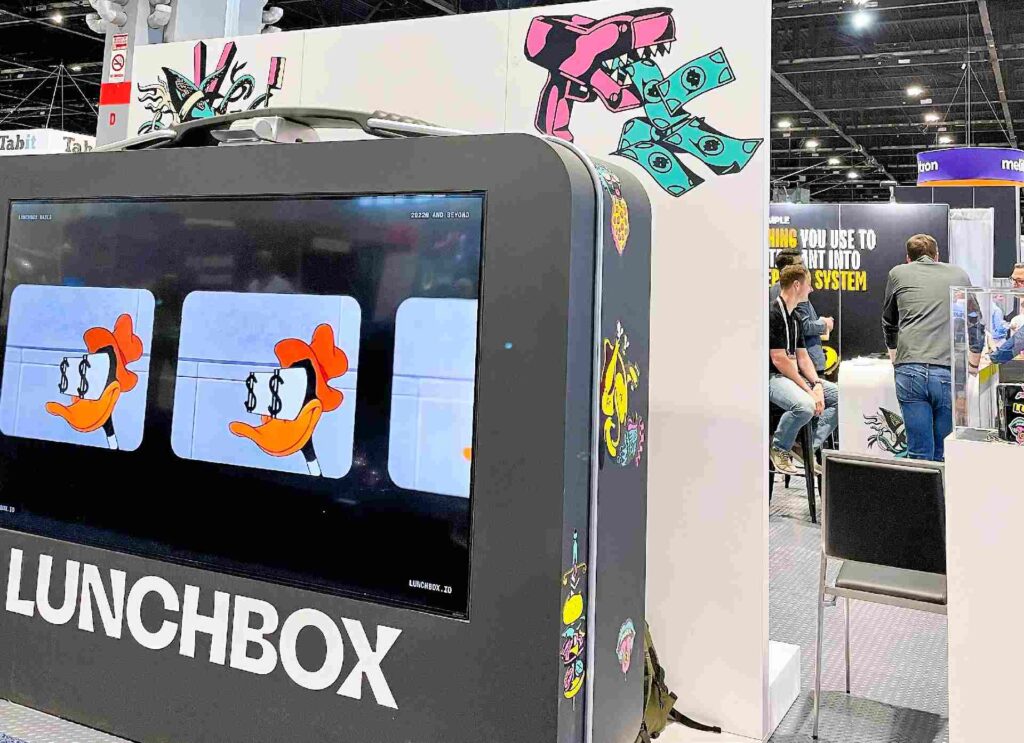
Lunchbox 2022 NRA Show booth display

Recently revamped, this fun brand (one of the coolest booths at the show, if not the coolest) boasts an average increase in same-store sales of 52 percent. Additionally, Lunchbox customers (per the company) experience an average of 42 percent month-over-month revenue growth.

As impressive is the fact that this platform integrates with several top POS systems, including Toast, Oracle’s Micros, NCR’s Aloha, and Revel.

What a time, eh?

Photos taken by and property of author

by David Klemt David Klemt No Comments

Alright, Seriously—WTF, Grubhub?

Alright, Seriously—WTF, Grubhub?

by David Klemt

Or, more to the point, stop working with “partners” who exploit our industry rather than support it.

In spectacular and entirely predictable fashion, Grubhub’s “free lunch” further reveals that third-party delivery platforms don’t care about restaurants.

Of course, they all say they support restaurant owners and operators. And, of course, they’re quick to pat themselves on their backs for being a pandemic lifeline.

But…no. Time and time again, mainly through their exorbitant and exploitative fees, they prove the opposite is true.

Restaurants and bars aren’t third-party delivery partners. Rather, these relationships are adversarial and detrimental. So much so, in fact, that some states passed laws to limit third-party delivery fees.

In Nevada, for example, Clark County Commissioners passed an emergency ordinance in August 2020 capping those fees at 15 percent. Clearly, we need to stop enriching companies that prove they don’t support the hospitality industry but cause it significant harm.

Free Lunch?

They say there’s no such thing as a free lunch. Apparently, Grubhub really wants to prove that maxim true.

That’s one of the takeaways from their disastrous promotion. Last Tuesday, in what’s being reported as an attempt to claim the delivery throne in New York City, Grubhub offered “free” lunch to anyone who placed an order for delivery.

The requirements for this promotion? Place an order for delivery through Grubhub on May 17 between 11:00 AM and 2:00 PM and use the code “freelunch.”

Of course, customer orders weren’t entirely free. Rather, the code was good for a $15 discount. Still, a wildly attractive offer as the ensuing debacle reveals.

Unsurprisingly, the promotion made for some eye-grabbing and eye-rolling headlines. Buzzfeed News published the most attention-grabbing one: “GrubHub Was Getting 6000 Orders A Minute During Its Promo Today That Left Restaurant Workers Stressed And Customers Hangry.”

Six thousand orders per minute during a promotion with a three-hour window in a single market.

In addition, the outlet reported that one unsatisfied customer was number 3,630 in the Grubhub customer service queue. Apparently—and who can blame him—he hung up before he could speak with a Grubhub rep about his missing order.

Duh

Who could’ve seen this coming? Any of the restaurant owners, operators, or team members Grubhub “serves,” that’s who.

In fact, anyone who works in this industry with on-premise experience knew this was going to happen. So, too, any journalist who specializes in hospitality.

The fact that whoever came up with this promotion didn’t see this coming is revealing. Unless the creators of these apps and services have real-world restaurant experience, they don’t understand the business.

How can one effectively and properly serve an industry without an understanding of how it operates? Hospitality is about service. Shouldn’t the companies attempting to work within our industry work hard to serve alongside us?

Let’s be clear—this promotion was in no way designed to help struggling restaurants. It wasn’t intended to boost their traffic and revenue. Rather, it was solely created to serve Grubhub’s desire to be number one.

As we all know, we’re experiencing major staff shortages. There are also supply shortages making it difficult for operators to obtain product reliably. Grubhub made those problems exponentially worse.

Some restaurants stopped taking delivery orders. Others canceled orders. There were operators who closed in an effort to catch up with orders and prevent the situation from worsening.

According to news stories, some social media users posted that they planned to stop ordering through third-party platforms.

Negative Impact

If you’re new to KRG Hospitality, welcome. You’re likely realizing that we’re not fans of third-party delivery.

Those of you who are familiar with us have known for quite some time that we support direct delivery. That is, delivery controlled and executed by the restaurant itself.

It’s not that we’re against innovation. Rather, our dislike of these platforms, generally speaking, comes from our perception of their behavior.

In our opinion, they take control away from operators and cost them money. Again, speaking generally, they collect customer data that operators should control. Their fees are ridiculous in most cases. And when it comes to the customer experience, their inconsistencies and shortcomings reflect poorly on the operators far too often.

Studies show that customers who have issues with third-party deliveries often place the blame on the restaurant. Food the wrong temperature? Order arrive late? Packages in less-than-ideal condition? While those issues and others can be the fault of the driver, the restaurant often takes the brunt of a customer’s dissatisfaction.

Of course, there’s also the financial impact of third-party delivery on restaurants. A SevenRooms report from last year reveals how these platforms harm operators and their bottom lines.

The Solution

Look, we know operators have a ton on their plates. But protecting and boosting the bottom line is a non-negotiable element of this business.

Yes, it’ll take some time, effort, and money to set up direct delivery. However, it’s the best solution.

Direct delivery means the operator collects and control valuable data. Likewise, the operator can ensure consistency. Through direct delivery, the operator shapes and controls the experience.

Control. Inherently, third-party delivery takes some control away from operators. That’s not a good thing, and neither is their financial impact.

Look into setting up direct delivery, take control, and protect your revenue ASAP. Friend of KRG “Rev” Ciancio and SevenRooms CEO Joel Montaniel each address delivery on the Bar Hacks podcast. Listen to episode 13 with Rev and episode 24 with Joel to learn more about delivery.

We need to stop rewarding companies that exploit our industry and take advantage of our owners, operators, and hard-working staff members.

Direct delivery is the answer. Take steps to implement it today.

Image: Rosie Kerr on Unsplash

by David Klemt David Klemt No Comments

What’s Next in the F&B Design Space?

What’s Next in the F&B Design Space?

by David Klemt

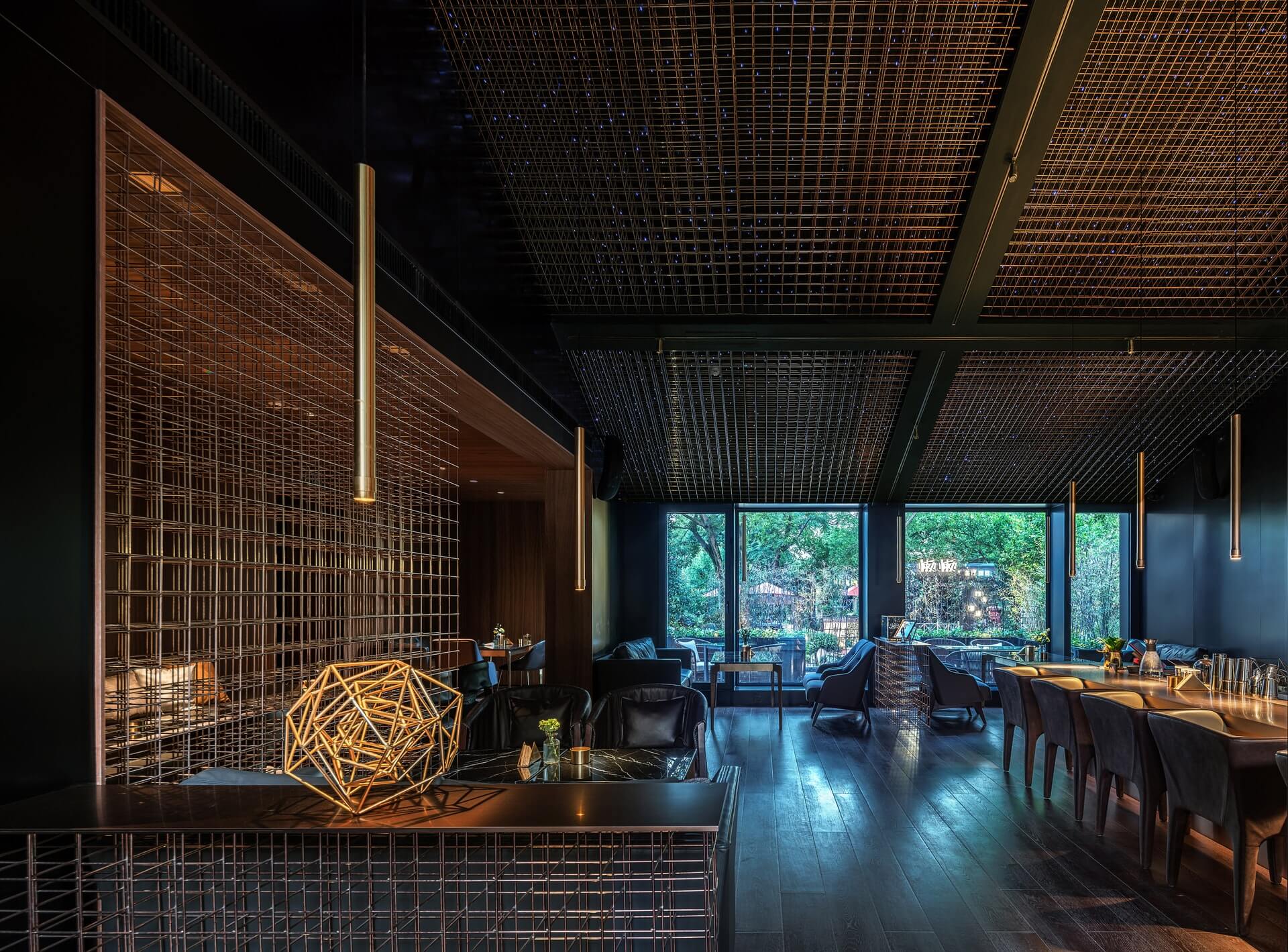
Interior of world's first crypto bar

Design driven by a story and narrative, technological innovation, and people’s desire to socialize are what’s next in hospitality design.

The influences above are factoring into the current approach to design in the F&B space. Be it a hotel or restaurant, the F&B landscape is going to look different for several reasons.

Five leading industry experts addressed this topic during HD Expo 2022‘s “F&B Trends: What’s Next?” panel.

Technology

Well, let’s start with arguably the biggest “trend” in F&B. Our industry is finally making major advancements in the area of technology.

It may not seem like it to some, but speaking generally, hospitality hasn’t always found itself on tech’s bleeding edge. That’s changing.

In fact, some industry experts feel we may be moving too quickly. For example, an interesting prediction from Restaurant Leadership Conference 2022 is a more deliberate approach to developing and implementing hospitality-specific tech.

Now, that doesn’t mean we’ll see a significant slowdown in tech innovation. Rather, innovators may take a more calculated approach to truly relieve hospitality pain points.

For example, Adam Crocini, senior vice president and global head of food and beverage brands for Hilton, points to a few innovations now common throughout the industry. Digital order, digital pay, and the ability to deliver food essentially anywhere within a hotel, resort or casino property are tech solutions driving efficiency.

However, Crocini sees one segment in need of a specific solution. In the luxury segment, guests prefer in-person engagement with staff and tactile engagement with physical menus.

Ari Kastrati, chief hospitality officer for MGM Resorts International, seems to agree. Tech, says Kastrati, shouldn’t replace human connections. Rather, technology needs to enable and enhance.

The Experience

When it comes to design, much of the focus is on the impact it will have on the guest or consumer. However, the end user is hardly the starting point.

For Kastrati, a successful project begins with the development of a relationship. That relationship is between the designer, the operator, and the concept. If care isn’t taken to nurture that relationship, it will likely show in the final product.

In Crocini’s eyes, that relationship informs the development of the operator’s concept. How? Through the development of a story and narrative.

If the designer and operator can develop a story, the design can be grounded in said story. Further, every element of a design can be held up against that story to see if it “fits.” If it does, the design will deliver a holistic experience and engage the guest or consumer.

In terms of F&B, Kastrati and Crocini make similar points. Both feel knowing the guest and anticipating their needs is crucial.

Addressing design elements that impact the experience, Crocini believes design should start with lighting. A design without proper lighting, Crocini says, is like a Scorsese film without the score.

Alexis Readinger, founder of Preen, is focusing in part on unique floorplan design. In particular, Readinger likes features that encourage interaction between guests, such as communal loveseats. However, “protecting the introverts” is also important for some guests’ comfort levels.

It’s safe to say that Caroline Landry Farouki, partner at Farouki Farouki, agrees with Readinger and Crocini. Seating, says Landry Farouki, can create different levels of intimacy to engage extroverts and introverts, and lighting designers are crucial and can really tell the story.

F&B Trends

In terms of consumer trends, Kastrati points to something specific he’s seeing in Las Vegas. People are seeking out specialty restaurants and luxury retail. At least anecdotally, this confirms what many reports and experts have been saying for the past few years: Consumers are showing increased interest in luxury.

However, Kastrati’s focus in the F&B space isn’t solely on guests and consumers. Rather, he suggests that the next step is bringing people back to the workforce. As Kastrati says, there’s no hospitality without people. Kastrati believes all of us in the industry need to encourage people to pursue hospitality careers.

Switching gears, Jessica Gidari, director of design and concept development for Union Square Hospitality Group, points to an effective pivot as a possible industry trend.

At least one concept in the Union Square portfolio has pivoted from a restaurant to a cocktail bar. A menu with shareable plates leverages guest desire to socialize and share. Gidari also says doing away with some traditional two- and four-top tables and replacing them with communal seating can “rebrand” a space as a “convivial” lounge.

Landry Farouki thinks operators can count on two compelling trends in the F&B space. One is the return of the restaurant as “the bar.” As someone who lives and works in Las Vegas, I can attest to treating restaurants more as bars myself.

Another possible trend Landry Farouki predicts is “mature dining” replacing fine dining. Explaining mature dining, Landry Farouki says such a concept is chef-driven but doesn’t focus solely on the chef.

Trend predictions must be taken with a grain of salt. However, I only see upside for design that helps operators engage guests more from the start.

Image: LYCS Architecture on Unsplash

by David Klemt David Klemt No Comments

Dining Room Tech on the Rise

Dining Room Tech on the Rise

by David Klemt

Printed circuit board with gold details

After years of restaurant technology adoption moving at a glacial pace, the industry now appears to be embracing innovations at light speed.

In fact, in just two short years some in the industry think it may be time to slow down. New tech can be exciting but jumping on every “innovation” is expensive, time consuming, and inefficient.

However, slowing down doesn’t equate to hitting the pause button.

Dining room tech was a topic of discussion at the 2022 Restaurant Leadership Conference in Scottsdale, Arizona. The two speakers agree that our industry needs to ease off the tech throttle a bit.

However, they also feel that tech innovations in the restaurant space will continue at a faster rate than they did pre-pandemic.

Session host Raymond Howard, a co-founder of Ziosk, interviewed Chris DeFrain and Hernan Mujica about dining room tech. DeFrain is a CPA at Lehigh Valley Restaurant Group, which operators 21 Red Robin franchises throughout Pennsylvania. Mujica is CIO for Texas Roadhouse.

Red Robin

Industry professionals and consumers alike should be familiar with Ziosk. After all, Red Robin has been a client with tech company since August, 2012.

Anyone who has visited a Red Robin has certainly interacted with a Ziosk terminal.

According to DeFrain, there are some interesting consumer behaviors taking place in Red Robin dining rooms. When it comes to tech, guests appear satisfied to place orders for appetizers and desserts via Ziosk terminals.

As DeFrain sees it, the guest would rather not wait for a server for ordering those types of food items. However, guests do seem to prefer ordering entrees from a server.

That’s a positive in DeFrain’s opinion, as he believes that ordering must remain the domain of servers. While he contends that the tech-based ordering process needs streamlining, DeFrain doesn’t appear interested in taking it out of servers’ hands completely.

This makes sense; the server as an integral element of the guest experience. How can a casual dining restaurant build guest loyalty and deliver a memorable guest experience without an engaging front-of-house team?

Of course, dining room tech should do more than accept orders, summon a server, and offer tableside payments. Today, data is king. Powerful platforms collect as much useful data as possible.

To that end, DeFrain appreciates that Ziosk provides data Red Robin leadership teams can share with staff. For example, a server can be shown how much they’re making in tips during their shift.

Finally, DeFrain says that guest usage of Ziosk terminals is improving feedback and comments.

Texas Roadhouse

In comparison to Red Robin, Texas Roadhouse took longer to sign on with Ziosk. In part, interestingly, this was due to the redesign of the terminal itself.

Turns out, Texas Roadhouse waited for a Ziosk terminal that took up less space and looked better on the chain’s tables.

Per Mujica (and any Texas Roadhouse guest), the in-person experience is core to the brand. Therefore, dining room tech must be an enhancement, not a detriment.

Like Red Robin, the chain has no interest in adopting tech that replaces FoH staff.

Another consideration regarding dining room tech should be important to all operators: The tech must be user friendly. According to Mujica, restaurant guests are happy to embrace tech innovations—if it’s easy to use.

So, operators must be careful and deliberate when choosing their tech stack. Generally speaking, native tech users (Gen Z) will likely be much quicker to learn how to use a particular technology than a Baby Boomer or even Gen X counterpart.

As such, operators must know their guests in order to adopt tech that enhances rather than alienates.

Another reason Texas Roadhouse chose Ziosk, per Mujica, comes down to mobile pay. In short, the chain didn’t like the mobile pay guest experience.

In terms of the future, Mujica predicts that handheld, tableside ordering is the future of dining room tech.

Takeaway

Like Mujica says, operators have now seen what tech innovations can do for them. In short, there’s no turning back.

And I agree with Mujica and DeFrain: it’s likely (and necessary) that tech development will slow a bit moving forward. Honestly, we all need room to breathe, consider the innovations available currently, and decide what works best for a particular business.

Likewise, I agree that tech can’t be allowed to alter the service model. Technology shouldn’t be seen as a replacement for staff.

Interestingly, restaurateur David Chang addressed this very subject during a 2022 RLC conversation. In his opinion, tech won’t replace restaurant roles, it will streamline them. At most, said Chang, tech will replace small, repetitive tasks, such as the physical flipping of a burger.

In closing, when deciding on the tech stack, operators should consider the following: ease of use for guests, ease of use for staff, streamlining of operations, and cost.

In this space, tech should never be embraced simply because it’s shiny and new. Not only is that costly in terms of investment, it can cost guest loyalty and visit frequency.

Image: Vishnu Mohanan on Unsplash

by David Klemt David Klemt No Comments

SevenRooms Kicks Off 2022 with Growth

SevenRooms Kicks Off 2022 with Growth

by David Klemt

Restaurant worker using SevenRooms on tablet

SevenRooms continues their growth by kicking off 2022 with the announcement of a new, crucial addition to the team.

Today, the hospitality technology company announces the hiring of Brent-Stig Kraus. Formerly the senior vice president of sales for ChowNow, Kraus will take on the role of chief revenue officer at SevenRooms.

As CRO, Kraus will play a crucial role in further accelerating SevenRooms’ impressive global growth. The company’s new CRO will accomplish this goal by identifying and pursuing partnership opportunities, targeting high-growth sales, and scaling sales globally.

Steady Growth

In March of last year, SevenRooms brought on Pamela Martinez as the company’s chief financial officer.

By September of 2021, the platform announced a multi-year partnership with TheFork. In particular, this was major news for operators throughout Europe and Australia. Additionally, this partnership illustrates how SevenRooms is pursuing long-term global growth.

A month later, in October of last year, the company entered into a partnership with Olo. In doing so, SevenRooms ensures clients who also use Olo can capture their off-premise customers’ information. That data then creates profiles for those customers automatically, meaning operators can learn more about and effectively market to customers who engage with them via online orders.

In December of 2021, SevenRooms and ThinkFoodGroup—the hospitality company behind Chef José Andrés’ portfolio of restaurants—announced their partnership. Interestingly, this partnership sees ThinkFoodGroup joining SevenRooms in an advisory role.

And it’s not just filling crucial C-suite roles and entering into partnerships that benefit operators and the industry that are examples of SevenRooms’ rapid growth.

Along with hiring Martinez as CFO, the platform launched Direct Delivery in March 2021. This online ordering solution helped operators eliminate third-party fees; retain control of guest data; and fulfill guest desire to order from restaurants directly and seamlessly.

Finally, the company ended 2021 by sharing their 2022 trend predictions.

Why this Matters

Tech innovations are crucial to the long-term future of the hospitality industry. Restaurateurs, bar owners, and hoteliers, were once wary of adopting new tech.

Now, they’re investing more to streamline operations; automate reservations, online ordering, and marketing campaigns; and improving customer and staff relationships.

However, without growth a platform eventually becomes outdated. When that happens, the investment made by an operator to include it in their tech stack becomes a burden and liability.

As SevenRooms continues their growth, they prove worthy of an operator’s support and investment. We continue to support SevenRooms—without receiving any compensation for doing so—in large part because of the platform’s growth.

In addition to their available tools, we’re always eager to see what they’ll release next to make life simpler for operators.

Image: SevenRooms

by David Klemt David Klemt No Comments

Square: 2022 Threats & Opportunities

Square: 2022 Threats & Opportunities

by David Klemt

Square terminal in restaurant kitchen

As all hospitality professionals know, the past nearly two years is imposing rapid change on the industry, necessitating rapid, strategic adaptation.

The key word in the above sentence isn’t “adaptation,” it’s “strategic.”

Of course, it’s hard to make strategic choices without as much information as possible.

To that end, we’ve reviewed Square‘s recently released “Future of Restaurants: 2022 Edition.” This is the company’s second annual Future of Restaurants report.

Square partnered with Wakefield Research, surveying 500 operators and 1,000 consumers to identify 2022 threats and opportunities.

Threat: Labor Shortage

Most operators aren’t going to want to read this prediction from Square. However, we can’t identify and adapt for opportunities if we don’t acknowledge threats.

Per Square’s report, the labor shortage may never see a correction. In other words, welcome to yet another new normal.

More than 70 percent of operators say they’re facing a labor shortage, per Square. Just over 20 percent of available positions were, at the time the survey was conducted, unfilled.

Instead, operators will likely, according to Square, need to make operational and work culture changes:

  • Improve working conditions. For example, encouraging and acting on team feedback. Another example? Modernizing scheduling.
  • Ensure workers are being mentored and not simply managed.
  • Hire, train, assign tasks, and schedule more strategically to operate with a smaller team.
  • Offering incentives that entice higher-quality candidates to work for you.

One participant quoted in the Square report claims that QR code ordering dropped their labor cost percentage by 150 percent.

Threat: Lack of Tech

As SevenRooms suggested when looking forward to 2022, technology solutions can lessen the burden of labor shortages. That leads us to another big threat: failing to embrace tech.

Some operators bristle at the word “automation.” For many, it conjures an image of robots in the kitchen and delivering food to tables.

Obviously, we’re opposed to replacing staff with any form of automation. However, we support automating tasks if that means team members are better utilized.

Why not automate inventory? Why not automate online order filling? If it improves operations and the guest experience, automation is less threatening.

According to Square’s report, 62 percent of operators think automation is appealing for managing online, delivery, and contactless orders. Ninety percent of operators say that back-of-house automation—if staff can focus on more important tasks—is a good idea.

More than 90 percent think automated inventory is an appealing solution.

It has taken a lot of time for hospitality to catch up to other industries in embracing tech. But Square reports that 36 percent of restaurants upgraded their business tech in 2021.

Of course, automation will become a threat if operators lean too heavily into it and stop paying attention to detail.

Phrased another way, be tech-savvy, not tech-reliant.

Opportunity: Omni-channel

Square see implementing an omni-channel strategy as the way forward. In fact, their general manager for Square Restaurants, Bryan Solar, said the following:

“We see the time of the dine-in only or takeout only as largely done forever.”

Going omni-channel (diversifying) in the restaurant space means making online ordering and delivery important elements within the overall business strategy. To that end, Solar posits kitchens will grow in size to better handle online orders.

Square’s survey reveals some intriguing numbers:

  • 13 percent of consumers say they’ll avoid restaurants that don’t offer online ordering.
  • Among restaurants with online ordering, those channels generate 34 percent of their revenue.
  • Over the past year, 54 percent of restaurants either added or expanded online ordering channels.
  • Online ordering is likely here to stay: 69 percent of respondents plan to offer it post-Covid-19.
  • 24 percent of operators are planning to allow guests to order alcohol from them online.

Another interesting set of numbers pertains to first- and third-party delivery. As we’ve stated several times, we much prefer operators offer first-party or direct delivery. According to Square, 49 percent of operators plan go direct delivery. More than half—62 percent—will pursue third-party delivery. That suggests that some operators will offer both.

Opportunity: Direct Ordering

When it comes to engaging online guests, operators need to control the experience. As I wrote for another publication years ago, a restaurant or bar’s website is still very important.

This statistic proves that statement true: Per Square, 68 percent of online guests want to order via a restaurant’s website or app, not a third-party.

More than likely, a significant portion of those guests want to know they’re supporting a restaurant and its staff directly. Hence the importance placed on ordering via the website or their own branded app.

So, operators would do well to ensure their websites feature an ordering widget. Or, they can opt to have an app built (or at least skinned) for their business.

Opportunity: Kiosks

According to Square’s survey results, 79 percent of consumers prefer ordering from kiosks over ordering from staff.

Most consumers and operators likely associate ordering kiosks with fast food restaurants. However, other categories can also benefit from these devices.

Close to half—45 percent—identified it as a preference when ordering at a casual-dining restaurant.

And fine dining isn’t immune to the convenience of tech. A little over 20 percent of consumers prefer to order via kiosk in the fine-dining space.

Overall, kiosks speak to the guest desires for convenience and safety. More than a third indicated that ordering via digital menu is appealing because they don’t have to touch a menu someone else has touched. And 37 percent like a digital option because they don’t have to wait for a server to bring them a physical menu.

Eleven percent of Square survey respondents will avoid a restaurant if they don’t offer digital menus.

Nearly half (45 percent) of restaurants are planning to offer QR code menus post-Covid-19. Another benefit of digital menus is dynamic pricing. As costs fluctuate, operators can increase or reduce prices easily without printing new menus.

Outlook

Representing a stark contrast from 2020 survey results, nearly 60 percent of operators say the survival of their restaurants is a concern in 2022.

That’s still a high number but vastly lower than how operators answered about 2021. Last year, 92 percent of operators surveyed said they were worried about survival.

According to Square’s report, operators are looking past surviving and making long-term plans. That’s a welcome sign that confidence is improving.

To review Square’s “Future of Restaurants: 2022 Edition” report in its entirety, click here.

Image: Patrick Tomasso on Unsplash

by David Klemt David Klemt No Comments

SevenRooms Announces New Partnership

SevenRooms Announces Huge New Partnership

by David Klemt

Handshake emoji neon sign signifying partnership

SevenRooms announces today a major partnership that will change the game for operators in the UK, Australia, and across Europe.

The online reservation platform is entering a multi-year partnership with TheFork.

Fortunately, the hospitality industry, once slow to embrace new technology, is now adopting tech at a rapid pace.

This collaboration between SevenRooms and TheFork represents both a giant leap in tech innovation and support for our industry.

SevenRooms

By now, there should be no question that SevenRooms is among the most powerful tools an operator can wield.

On the surface, SevenRooms is “just” a reservation platform. In reality, the platform offers a full suite of guest engagement and retention tools; automated marketing tools; front- and back-of-house management; direct and third-party delivery management; and much more.

Additionally, the company has long been supportive of the hospitality industry. The founders didn’t just assume their reservation and engagement solutions were effective.

Rather, they spent time in the trenches. They took reservations, checked coats, and hung out with hospitality teams when their shifts were over.

During the pandemic, the platform studied the impact of third-party delivery on operators. To that end, they developed a launched a direct delivery module to help operators protect their bottom lines.

TheFork

Operating in more than 20 countries, TheFork is a TripAdvisor company.

Per TheFork, the company boasts more than 80,000 partner restaurants across the globe. Additionally, TheFork’s app has 28 million downloads and counting, and their site features over 22 million restaurant reviews.

In other words, TheFork enjoys a unique position in terms of connecting guests with restaurants.

The platform features a loyalty program; exclusive deals for guests who make reservations via TheFork; an “insider” feature that connects with guests with trendy and gourmet restaurants and entices them with a special offer; and more.

The Partnership

When one reviews how both platforms work, this partnership is a no-brainer. Going deeper, it appears the companies share similar values and commitment to the industry.

For example, SevenRooms subsidized more than $10 million in licensing fees to help operators during the pandemic. TheFork dedicated nearly $30 million to the industry within the 22 countries in which they operate.

This partnership is culminating in a two-way integration. Customers of SevenRooms will gain access to millions of diners who use TheFork to make reservations. In turn, TheFork now has access to SevenRooms’ marketing and venue management tools.

The result? Operators will be able to more easily and consistently fill their seats and attract new guests. The powerful tools that are at the disposal of SevenRooms customers will help to engage and retain those new guests, converting them to loyal regulars.

Hospitality seems to be steadily entering its Collaboration Era. Operators and platforms are seeking beneficial partnerships, all the while embracing more and more tech that enhances the guest experience and boosts the bottom line.

It will be exciting to see where we go from here.

Image: Charles Deluvio on Unsplash

by David Klemt David Klemt No Comments

Restaurant Tech Map Illustrates Innovation

Restaurant Tech Map Illustrates Innovation

by David Klemt

TechTable - Culterra Capital Restaurant Tech Map sponsored by Back-of-House

The hospitality industry’s embracing of new technologies is experiencing rapid and welcome acceleration in less than two years.

In comparison to the restaurant technology map by TechTable and Better Food Ventures from 2019, there are two entirely new categories: Shared / Ghost Kitchens, and Food Safety / Quality.

More than a dozen platforms on the 2021 map from TechTable and Culterra Capital (sponsored by Back-of-House) now fall into those two categories.

Changing Landscape

It’s a sign of current industry trends and what will matter to guests moving forward that ghost kitchens and food safety are emerging as separate tech segments.

Obviously, the pandemic didn’t create the ghost kitchen category. However, it did fuel a meteoric rise in delivery and takeout. In turn, ghost kitchens are more prevalent than ever.

After all, a former Uber executive Travis Kalanick owns CloudKitchens and Applebee’s is testing a ghost kitchen pilot program.

What was once the domain of murky, unpermitted virtual brands is now its own successful business model.

However, today’s guest isn’t concerned solely with convenience. In general, guests now take their health and safety more seriously since the pandemic

Tech platforms that can ensure the food guests are consuming is safe will ease some concerns.

Increase in Platforms

Again, in comparison to just two years ago, the acceleration in new tech for the industry is astounding. It’s also long overdue.

As a whole, the hospitality industry has been surprisingly slow to take on new tech. Although, it’s fair to say that there wasn’t much new to adopt until somewhat recently.

Now that there’s more to try out, operators seem keen to embrace tech that can help them streamline operations; improve inventory monitoring and ordering; hire employees and manage teams; engage with and market to customers intelligently; and much more.

Even better, the above map doesn’t include all of the available platforms. That’s excellent news as it means operators have an increasing number of choices to help improve their business in every category of operation.

For example, Barventory isn’t listed within the Purchasing / Inventory / Ordering segment. The platform makes taking inventory, gaining a real-time inventory snapshot, and efficient ordering a breeze. Barventory also features the world’s first live keg scale.

It’s challenging to find positives from the past 14 to 15 months. However, one good thing may be the leaps in technology our industry is experiencing.

If they continue, these innovations may make it easier for operators and their employees to recover.

A concept’s tech stack is crucial to operations and will only grow more important moving forward. Whether opting for a full KRG Hospitality package or the Mindset program, we can help operators make informed tech selections.

Map by TechTable and Culterra Capital, sponsored by Back-of-House

Featured image: Pepper by SoftBank Robotics (photo by Alex Knight on Unsplash)

by David Klemt David Klemt No Comments

McDonald’s Facing Privacy Lawsuit

McDonald’s Facing Privacy Lawsuit

by David Klemt

Statue of McDonald's mascot Ronald McDonald waving

A McDonald’s customer in Illinois, a state with some of the strictest privacy laws in America, is suing the fast food giant.

The largest fast food chain in the world is testing artificial intelligence in select drive-thrus throughout the Prairie State.

In theory, the technology will become a valuable operational element and enhance the guest journey.

However, one plaintiff in Illinois says McDonald’s is violating the state’s Biometric Information Privacy Act (BIPA).

AI-powered Drive-Thrus

Two years ago, McDonald’s made two significant technology company acquisitions.

In March of 2019, the fast food company purchased Dynamic Yield for a reported $300 million. Six months later, McDonald’s acquired Apprente.

The former acquisition brought “decision tech” to the QSR, using its digital billboards and ordering kiosks to make recommendations to guests depending on preferences, item popularity, and time of day.

The latter purchase is intended to bring automated voice ordering to McDonald’s drive-thrus through artificial intelligence.

Per CNBC, McDonald’s CEO Chris Kempczinski says AI is delivering an 85-percent order accuracy rate in its test stores. Currently, AI is taking 80 percent of the orders at ten Illinois McDonald’s locations.

Clearly, McDonald’s is investing in tech the company believes will enhance and speed up the guest drive-thru experience.

Lawsuit

Shannon Carpenter’s class-action lawsuit alleges that McDonald’s “violated BIPA because it failed to obtain proper consent prior to collecting and disseminating Plaintiff’s and the other class members’ voiceprint biometrics who interacted with its AI voice assistant at its Illinois locations.”

Carpenter filed the lawsuit after visiting a McDonald’s location last year in Lombardi, Illinois. The location is one of ten test stores.

The complaint also says, “McDonald’s AI voice assistant goes beyond real-time voiceprint analysis and recognition and also incorporates “machine-learning routines” that utilize voiceprint recognition in combination with license plate scanning technology to identify unique customers regardless of which location they visit and present them certain menu items based on their past
visits.”

In short, the plaintiff is alleging that McDonald’s is violating Illinois’ BIPA law by:

  • collecting biometric information (voiceprints in this case specifically) without consent;
  • not making the company’s data retention policies public;
  • failing to declare how long customer biometric data will be stored; and
  • not starting how the company intends to use the collected biometric data.

So far, McDonald’s has not released a statement addressing Carpenter’s lawsuit.

Customer Data

How much is one’s privacy worth? The price of a Big Mac or a Quarter Pounder combo?

Guest data and user privacy is a hot-button topic. For example, Apple made big news this year with the rollout of iOS 14.5 and its accompanying privacy features.

Carpenter’s lawsuit against McDonald’s carries implications for how businesses can collect and use guest data.

However, it also highlights an element of operating a restaurant in our tech-driven world.

It has been suggested by some business experts that the adage “cash is king” should be replaced by “data is king.” And yes, customer/guest data is incredibly valuable.

But so is reassuring guests that their data is safe with a given business. Operators, therefore, should be transparent about what guest data they’re collecting and what they intend to do with it.

And, as the McDonald’s lawsuit makes abundantly clear, there are laws governing the collection and handling of guest data. Operators should ensure that they and their partners are handling guest data legally, ethically, and responsibly.

Image: Vijaya narasimha from Pixabay

Top