Steakhouse

by David Klemt David Klemt No Comments

3 Ways to Build Revenue on Mother’s Day

3 Ways Restaurants Can Build Revenue This Mother’s Day

by Austen Asadorian

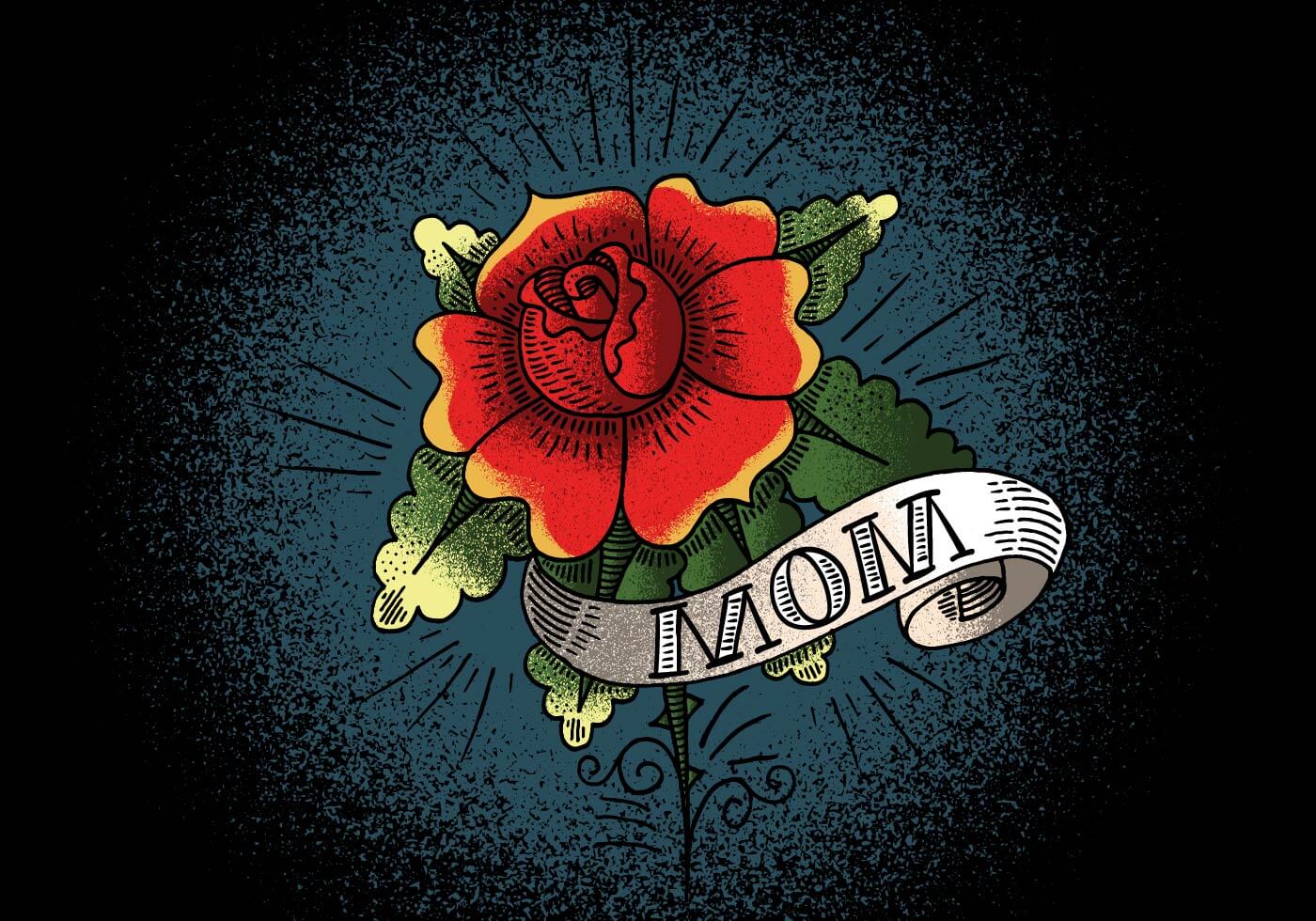
Tattoo-style rose with "Mom" ribbon

With Mother’s Day quickly approaching, there’s no doubt that operators across the country are preparing for the celebratory—yet extremely busy—day.

During their preparations, it’s important that operators find and incorporate new tools and innovative marketing tactics. Doing so will not only fill seats, it will ensure they capitalize on a key opportunity to drive incredible revenue.

Below are three simple but powerful ways operators can generate revenue and loyalty on—and beyond—this Mother’s Day.

Encourage Reservations & Offer Upgrades

An easy way to make this busy day seamless for guests—and, ultimately, staff—is to encourage and allow guests to make a reservation before they arrive. Reservations give operators insight into who will be dining with them, help optimize seatings and covers, and provide a idea of how much to order to eliminate food waste if a special menu is being offered.

Using a reservation system also provides operators with the opportunity to offer diners upgrades during the booking process, even including prepayment should they want to go that route. This not only allows operators to earn additional revenue before a guest even visits, but also a convenient way to offer guests peace of mind knowing they’ve handled that “something special” for Mom way before the big day.

These upgrades don’t have to be anything crazy or extreme (although that’s always an option). In fact, according to the National Restaurant Association, consumers want special touches and discounts over everything else. So, an upgrade can be something as simple as a beautiful flower arrangement waiting on the table to a special off-menu dessert brought out at the end of the meal.

Use Email & Social Media to Your Advantage

Properly promoting Mother’s Day offerings to guests is extremely important because if no one knows about it, who will come?

Operators should utilize tools like email marketing to send personalized communications to their guest database promoting the venue’s Mother’s Day reservation availability or special offerings. Better yet, these tools can be used to offer loyal guests reservations before they open to the general public, further creating a special experience for those faithful diners.

In the same vein, operators should harness the power of social media, too. Operators can target paid marketing efforts on social channels like Facebook and Instagram to drive even more awareness and revenue for their restaurant by creating an event, including the details of the activities, specials, or Mother’s Day promotions, and exporting the names of top guests and email data.

Surprise Them with a Second Visit

While Mother’s Day is the focus right now, it doesn’t stop there for operators. To drive the revenue they need, it’s important to turn these celebratory diners into repeat guests.

To do so, operators should consider offering Mother’s Day diners complimentary gift cards or discounts (even via email post-visit) to bring them back. This could be for an upcoming graduation, Father’s Day (so Dad can also get the love), or even for a future birthday.

This “surprise and delight” factor is one of the easiest strategies to capitalize on holiday traffic and get diners to return to a restaurant once again as a loyal guests.

Here’s to You, Mom

Moms should be celebrated every day, but especially on Mother’s Day, and it’s important to make sure they have the best experience when dining out.

By incorporating simple tactics like offering reservations and custom upgrades or even a special surprise at the end of the meal, operators not only succeed in making the day memorable, but create a guest who will return over and over again.

About Austen Asadorian

Austen Asadorian is the Vice President of Sales at SevenRooms, where he is tasked with supporting SevenRooms’ global expansion efforts and accelerating the company’s goal of being the best-in-class solution for hospitality operators globally. Prior to joining SevenRooms, Austen was Peloton’s Director of Sales, leading the company’s go-to-market strategy for retail growth and expansion. He started his career at Hillstone Restaurant Group where he cut his teeth learning how to run efficient and profitable restaurants at scale. Austen was ultimately promoted into an executive role where he oversaw the company’s Manager in Training Program and Back of House Operations. Austen graduated from the Culinary Institute of America (CIA).

Image: grumpymonstergroup via Vecteezy.com

KRG Hospitality marketing plan. Restaurant. Bar. Cafe. Lounge. Hotel. Resort.

by David Klemt David Klemt No Comments

SevenRooms Introduces New Tool: Pre-Shift

SevenRooms Introduces New Tool: Pre-Shift

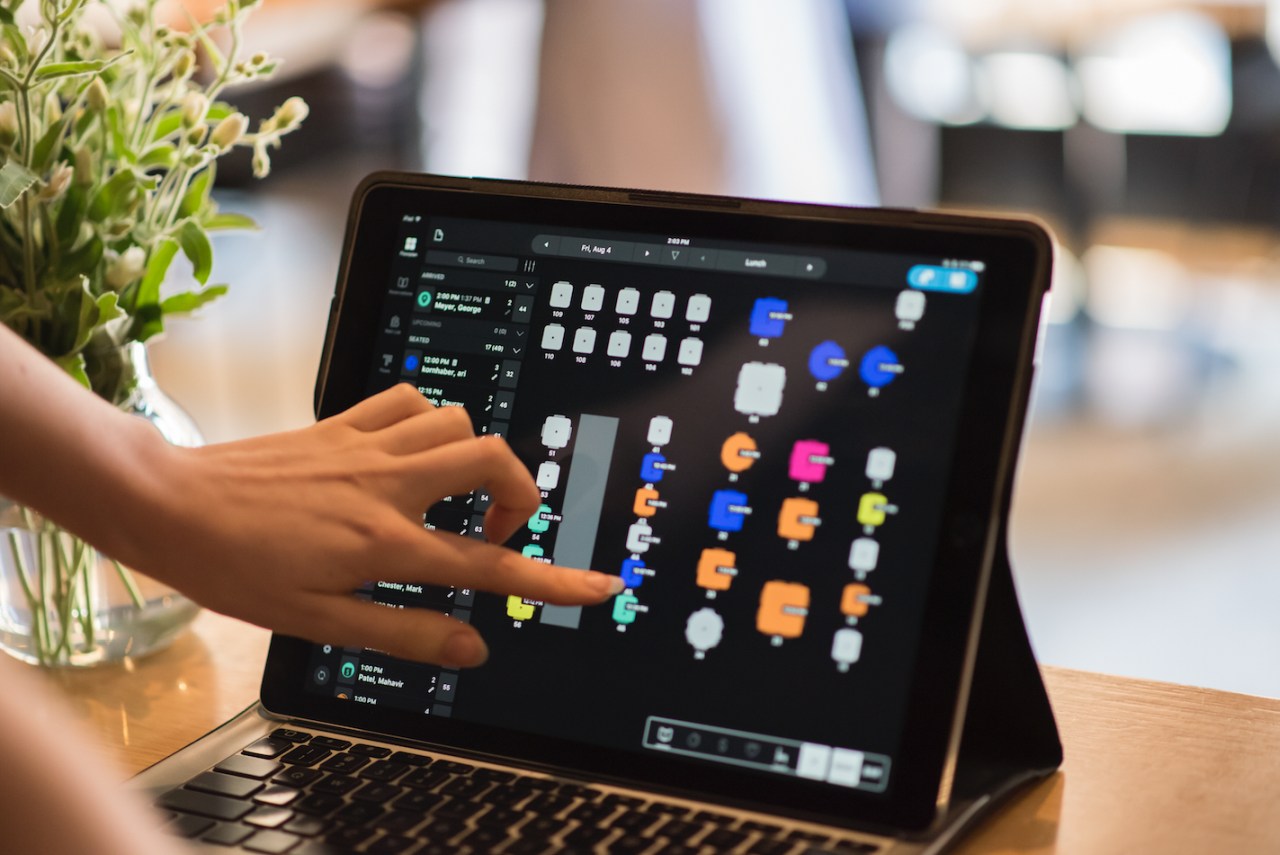
Front of house staff member using SevenRooms

A new tool from SevenRooms will help operators and their teams make the most of pre-shift meetings to deliver exceptional service.

Aptly named, Pre-Shift provides a real-time, data-driven picture of a given shift’s reservations. Operators and their leadership team members will no longer need to hit the office, navigate to the day’s reservations, and print out guest data—assuming they have such valuable information.

Further, this new feature is accessible via the venue’s devices (tablets, phones, etc.). Pre-Shift, then, offers a real-time view of reservations and robust guest data. Well ahead of arrivals, staff will know a guest’s seating preference, relationship with the venue, reviews they’ve left, allergies, and much more.

Intriguingly, Spago has been testing Pre-Shift ahead of SevenRooms’ announcement and launch. Per Steve Scott Springer, the GM of Spago of Beverly Hills, this new tool is a game-changer for restaurants.

Less than two months ago, SevenRooms launched Email Marketing. It’s likely we can expect more new features to roll out throughout 2023.

To learn more, please review the Pre-Shift press release below.

SEVENROOMS’ PRE-SHIFT FEATURE EMPOWERS TEAMS TO STREAMLINE PRE-SERVICE OPERATIONS

New data-driven tool serves as a one-stop-shop for restaurant teams to enhance the guest experience and build guest loyalty

NEW YORK (May 3, 2023) – SevenRooms, a global guest experience and retention platform for the hospitality industry, today announced a new product feature, Pre-Shift, which provides operators with key shift details they can leverage to inform and lead pre-service meetings. Pre-Shift is built to power and simplify pre-service meetings for restaurant operators and their staff around the world.

The new feature provides operators a real-time, unified view of everything they need ahead of each shift and saves employees’ time with an out-of-the-box informational report. Instead of paper print-outs and laborious briefing forms, Pre-Shift allows teams to harness rich customer data with up-to-the-minute information on every guest joining during that shift.

With ongoing labor shortages, Pre-Shift is a crucial tool in helping operators save time on administrative tasks like pulling guest and reservation data to optimize a team’s pre-shift meeting ahead of service with all stakeholders. This allows operators and staff to instead focus on delivering exceptional, personalized experiences the moment that guest walks through the door. Operators have the ability to embrace new consumer expectations to provide an incredible guest journey from start to finish.

By incorporating this tool, staff can utilize SevenRooms’ rich guest data and Auto-Tags to educate themselves on incoming guests. The tool highlights valuable insights such as allergy information, dining preferences, previous experiences with the restaurant, and positive/negative reviews. It also provides a quick snapshot of that day’s notes on menu specials, private events or special requests, making it easy for staff to reference back to quickly throughout the course of service. Whether it’s the maître d, host, server or back of house employees, Pre-Shift enables all staff with the information they need to deliver exceptional service, build guest loyalty, and keep up with diner expectations as they continue to evolve.

Pre-Shift helps restaurants deliver personalized hospitality at scale with invisible technology. Guest and reservation data can be accessed on the fly without double clicks or additional navigation via iPhone and iPads for the utmost convenience. No other reservation management product on the market today offers such a robust overview with automated guest data incorporated into its dashboard, saving operators time as they set up for service.

“The magic of SevenRooms is in the way that we’re able to serve up relevant guest information to restaurants at key points of service. Our new Pre-shift view takes that magic one step further by strategically aggregating the most important guest insights before service even begins,” said Allison Page, Co-Founder & Chief Product Officer at SevenRooms. “We seamlessly take the data available for a shift and serve up key insights that the front of house should be aware of heading into service – for instance, guests with a high propensity to spend, guests who have previously left negative reviews, guests with allergies and more. Pre-Shift provides operators a real-time, unified view that takes pre-service preparation to a whole new level, ultimately providing guests with exceptional, frictionless experiences.”

“Pre-Shift is a great addition to Spago’s pre-service meeting,” said Steve Scott Springer, General Manager at Spago Beverly Hills. “When we began using the group-by server feature, it really was an ‘a-ha’ moment. This is exactly the way every restaurant wants to prep their employees ahead of a shift. We put the entire view up on a screen so our team can see and follow along. This is so much easier than what we used to do – it’s a no-brainer.”

For more information about SevenRooms and its services, please visit www.sevenrooms.com.

About SevenRooms

SevenRooms is a guest experience and retention platform that helps hospitality operators create exceptional experiences that drive revenue and repeat business. Trusted by thousands of hospitality operators around the world, SevenRooms powers tens of millions of guest experiences each month across both on- and off-premises. From neighborhood restaurants and bars to international, multi-concept hospitality groups, SevenRooms is transforming the industry by empowering operators to take back control of their businesses to build direct guest relationships, deliver exceptional experiences and drive more visits and orders, more often. The full suite of products includes reservation, waitlist and table management, online ordering, mobile order & pay, review aggregation, email marketing and marketing automation. Founded in 2011 and venture-backed by Amazon, Comcast Ventures, PSG and Highgate Ventures, SevenRooms has dining, hotel F&B, nightlife and entertainment clients globally, including: MGM Resorts International, Mandarin Oriental Hotel Group, The Cosmopolitan of Las Vegas, Wynn Resorts, Jumeirah Group, Wolfgang Puck, Michael Mina, Bloomin’ Brands, Giordano’s, LDV Hospitality, Zuma, Australian Venue Company, Altamarea Group, AELTC, The Wolseley Hospitality Group, Dishoom, Live Nation and Topgolf.  www.sevenrooms.com

Image: SevenRooms

by David Klemt David Klemt No Comments

5 Books to Read this Month: May 2023

5 Books to Read this Month: May 2023

by David Klemt

Flipping through an open book

Our engaging and informative May book selections will take your front and back of house to the next level, and help develop your leadership skills.

To review the book recommendations from April 2023, click here.

Let’s jump in!

Contagious You: Unlock Your Power to Influence, Lead, and Create the Impact You Want

This is one of three books KRG Hospitality’s Jennifer Radkey read in February. It’s the sequel to a book titled Contagious Culture, which we featured last month.

From Amazon: “For anyone who’s sought to create change, or felt sucked into the drama and chaos of a toxic work environment, this book will advance the notion that everyone at an organization is a leader—for good or for bad—and that leaders have tremendous power to influence those who follow their example. The quality of our leadership is based upon our intentions, energy, and presence. By emphasizing authorship, self-care, and response-ability (not responsibility) as leadership skills and therefore cultural amplifiers, Contagious You shows you how to walk the path of more effective leadership while navigating the road blocks in your way. Whether these road blocks are working with negative co-workers with secret agendas and unrealistic expectations, or just the general ‘busyness’ of life and its excessive demands, this book will take you on a journey to create more space, more courageous leadership, and stronger collaboration to influence others and create the impact you desire.”

Grab this book today: click here.

Chef’s PSA: Culinary Leadership Fundamentals

If Chef’s PSA sounds familiar, that’s probably because it’s a series of four books. We included another book in the series, How Not to be the Biggest Idiot in the Kitchen, last December in our last book roundup of 2022.

Culinary Leadership Fundamentals is intended to prepare chefs to lead a brigade. It’s one thing to know how to prepare food; it’s another to know how to be the leader in the kitchen. Of course, this book is also full of valuable information for owners and operators. After all, they should know how their chef is approaching their role.

From Amazon: “When you become a Chef for the first time you may be put in a position where you know how to cook but not how to lead and manage. This book will teach you everything you need to know to become a Chef Leader in the kitchen. From how to manage costs, build a team, market yourself and overcome adversity. This is the book every Chef needs if they want a competitive edge in running a successful kitchen.”

Pick it up today!

Southern Cooking, Global Flavors

Chef Kenny Gilbert’s journey through the culinary world is epic. By the age of seven he had shown such an interest in the art of BBQ that his father bought him his first grill, a small Weber. After high school he moved from his hometown to Cleveland to attend the Pennsylvania Culinary Institute. After graduation, Chef Gilbert entered into an apprenticeship at the Ritz-Carlton, Amelia Island, in Florida. By age 23, Chef Gilbert earned the role of Chef de Cuisine. He has also opened restaurants and led the culinary programs at restaurants and hotel properties not only throughout Florida but also Colorado, Georgia, throughout the Caribbean, France, Japan, and Spain. Oh, and there was Chef Gilbert’s Top Chef season seven appearance, plus the development of his own line of spices and rubs.

His newly released book features 100 recipes that put international spins on southern classics. Pick up Southern Cooking, Global Flavors today!

The Ice Book: Cool Cubes, Clear Spheres, and Other Chill Cocktail Crafts

We’ve addressed the need to compliment your cocktail menu with a dedicated ice program. This book, available now for pre-order, is from world-renowned cocktail and spirits writer Camper English. Not only does it include easy-to-follow instructions for you and your bar team to elevate your cocktail program, from full-proof to zero-ABV drinks. The Ice Book, then, is aptly titled—it’s everything you need to introduce a memorable drinking experience.

From Amazon: “In The Ice Book, internationally renowned cocktail icepert Camper English details how to use directional freezing to make perfectly pure ice in a home freezer, carve it up into giant diamonds and other shapes, and embed it with garnishes, including edible orchids and olives. You’ll learn how to create a frozen bowl for Negroni punch, serve a Manhattan inside an ice sphere, and infuse cubes with colors and flavors to create cranberry cobblers, a color-changing Gin and Tonic, and other awesome drinks.”

The Book of Cocktail Ratios: The Surprising Simplicity of Classic Cocktails

Long-time subscribers to KRG Hospitality’s newsletters and readers of our articles know that I love a controversial take on cocktails. Take, for instance, the origin of the Margarita. Well, the opening sentence from the description for The Book of Cocktail Ratios certainly got my attention.

From Amazon: “Did you know that a Gimlet, a Daiquiri, and a Bee’s Knees are the same cocktail? As are a Cosmopolitan, a Margarita, and a Sidecar. When hosting a party wouldn’t you enjoy saying to your guests, ‘Would you care for a Boulevardier, perhaps, or a Negroni?’ These, too, are the same cocktail, substituting one ingredient for another. Or if you’d like to be able to shake up a batch of whiskey sours for a party of eight in fewer than two minutes, then read on.

“As Michael Ruhlman explains, our most popular cocktails are really ratios—proportions of one ingredient relative to the others. Organized around five of our best-known, beloved, classic families of cocktails, each category follows a simple ratio from which myriad variations can be built: The Manhattan, The Gimlet, The Margarita, The Negroni, and the most debated cocktail ever, The Martini.”

This book should provide you and your bar team with a totally different perspective when it comes to drink ratios. Pre-order your copy today!

Image: Mikołaj on Unsplash

KRG Hospitality advanced bar education

by David Klemt David Klemt No Comments

Program for Unique Holidays: May 2023

Program for Unique Holidays: May 2023

by David Klemt

"Think about things differently" neon sign

Do you want to stand out from from other restaurants and bars in your area? Change how you think about your May holiday promotions.

Several holidays are set against every date on the calendar, and May is no exception. These holidays range from mainstream to esoteric.

Pay attention to the “weird” or unique holidays to raise eyebrows, carve out a niche for your restaurant or bar, and attract more guests. Why do what everyone else is already doing? Why program only around the same holidays as everyone else?

Of course, you shouldn’t try to celebrate every holiday, strange or otherwise. Focus on the days that are authentic to your brand; resonate with your guests; and help you grab attention on social media.

You’ll find suggestions for promotions below. However, the idea behind our monthly holiday promotions roundup is to inspire you and your team to get creative and come up with unique programming ideas.

For our April 2023 holidays list, click here.

May 5: National Silence The Shame Day

Much progress has been made when it comes to reducing the stigma around mental health issues. However, there’s still much more work to do.

The focus of this holiday is just that: removing that stigma. You can use this holiday to encourage the conversation, raise awareness for issues close to you and your team, or to raise funds for a charitable mental health organization.

May 6: World Naked Gardening Day

Okay, so, unless you own a very niche restaurant, bar, or resort, please don’t celebrate this holiday naked while at work. Instead, celebrate the spirit of this holiday: reconnecting with and honoring nature.

One easy way to do this is to feature cocktails made and garnished with fresh ingredients: rosemary, citrus, juices, etc. And again, you can raise money for any number of conservation organizations dedicated to safeguarding natural resources.

May 8: National Have a Coke Day

Rum and Coke. Bourbon and Coke. Jack and Coke. Whiskey and Coke. If you’re a Coke restaurant or bar, you know what to do on this holiday. If you’re not, well… I guess you can program against it and launch National Don’t Have a Coke Day.

May 10: National Third Shift Workers Day

Depending on your hours of operation, this is an easy holiday to program around. To offer up just a few ideas: healthy meal options; restorative beverages; third-shift-specific LTOs.

May 16: National Do Something Good For Your Neighbor Day

Restaurants, bars, and hotels are the heart and soul of communities around the world. Use this day to give back to those who support you.

May 17: National Pack Rat Day

I’m sure if we all look around our homes we’ll see that maybe we have too much stuff. This is another excellent holiday to give back to our communities.

One way to do this is to host a clothing, canned food, or other resource drive. Donations can be rewarded with LTO items to encourage participation.

May 20: National be a Millionaire Day

Well, you probably can’t turn your guests into millionaires. However, you can certainly help your guests drink like one. While you can shine a spotlight on your super- and ultra-premium spirits, there’s another way: the Millionaire cocktail.

  • 2 oz. Bourbon
  • 0.75 oz. Grand Marnier
  • 0.25 oz. Absinthe or pastis
  • 0.5 oz. Grenadine
  • 0.5 oz. Egg white
  • 0.5 oz. Lemon juice, freshly squeezed
  • Freshly grated nutmeg to garnish

Prepare a coupe by adding ice to chill it. Dry shake all the ingredients, minus the nutmeg. Add ice and shake again until well chilled, then double-strain the prepared coupe. Garnish by grating nutmeg over the top of the glass.

Want to kick things up a notch? Offer the Billionaire cocktail:

  • 2 oz. Baker’s 107-proof bourbon
  • 1 oz. Lemon juice, freshly squeezed
  • 0.5 oz. Grenadine
  • 0.5 oz. Simple syrup
  • 0.25 oz. Absinthe bitters
  • Lemon wheel to garnish

Prepare a cocktail glass by adding ice to chill it. Add all ingredients except lemon wheel to a shaker with ice. Shake until well chilled, then strain into the cocktail glass. Garnish with a lemon wheel.

May 25: Sing Out Day

I mean, if there was ever a day to promote karaoke, this is the one. Even better if you can design a competition around it to maximize engagement.

May 26: World Lindy Hop Day

Alright, I’m going to do it—I’m going to suggest you leverage TikTok and Instagram. The Lindy Hop is a dance, I can tell you right now that there’s at least a fair chance that people will be featuring this dance (or variations of it) on social media. So, time for you, your team, and guests who want to participate to learn the Lindy Hop.

May 30: National Mint Julep Day

There are a few easy ways to celebrate National Mint Julep Day. The first, of course, is to perfect your venue’s Mint Julep. The second? Offer a variety of Mint Julep riffs: chocolate, peach, tequila, mezcal, sage, basil… Come up with three or four and your LTO is all set.

A third way is to feature this year’s Kentucky Derby $1,000 Mint Julep Experience recipe, Secretariat’s Mint Julep:

Pack a Julep cup with crushed ice, making sure to make a dome over the lip of the cup. Add the whiskey and liqueur to a mixing glass and stir. Pour over the prepared cup. Garnish with one sprig of mint and one stalk of Virginia bluebells. ($1,000 price tag optional.)

Image: Ivan Bertolazzi on Pexels

Restaurant Cafe Strategy Plans Consultant Agency Starting a New

by David Klemt David Klemt No Comments

Nikka Age Statement Whiskey Returns to US

Nikka Age Statement Whiskey Returns to US

by David Klemt

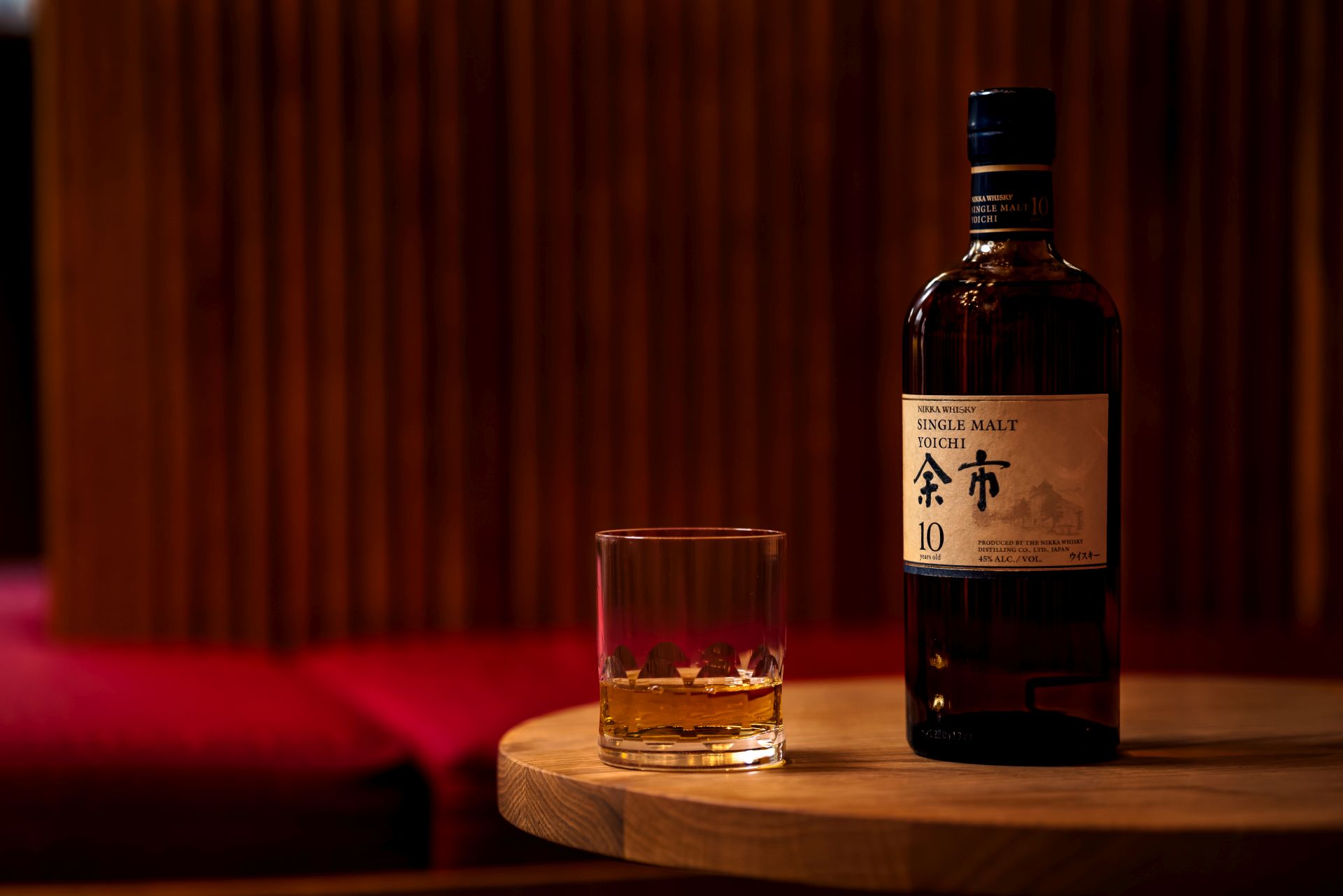
Nikka Whisky Yoichi Single Malt 10 Year Old bottle

After an eight-year hiatus, Nikka is bringing age-statement whisky back to the United States, starting with Yoichi Single Malt 10-Year-Old.

Operators with robust whisky programs, their guests, and collectors will recall what happened back in 2015. That was the year that Nikka’s Yoichi age statement whisky line was shelved. The Yoichi portfolio’s stars—10, 12, 15 and 20 Year Old whiskies—were replaced by an expression labeled “No Age Statement.”

Interestingly, we can trace the withdrawal of age-statement Japanese whisky and disappearance of iconic bottles to the 1980s. In response to a slowdown in demand, Japanese distillers reduced production. While that move helped deal with the drop in demand and sales, there would be consequences decades later.

Eventually, the world discovered some of the most iconic whiskies on the planet: Hibiki 12 and 17, Yamazaki 12 and 18, and the aforementioned Yoichi 15 and 20.

Of course, the rabid demand for Japanese age statement whiskies resulted in an extinction event, of sorts. The reduced production that gave the world some of the most amazing luxury whiskies ever known, coupled with intense (and likely unforeseen) demand, eventually put distilleries in dire straits.

Simply put, Japanese distillers needed time to replenish their precious liquids. So, for several years, whisky lovers have been waiting for new aged-statement whiskies from Japan. Around 2017, articles and blog posts started sounding the alarm. Whisky experts told us we’d have to wait at least five years to see the return of age-statement expressions. And, as Nikka’s announcement shows, they were right.

To be clear, no-age-statement expressions have proven themselves compelling portfolio-mates during our wait. However, seeing a bonafide return to age statement whiskies is exciting.

Yoichi Single Malt 10-Year-Old

Not only is Nikka returning to age statements, they’re paying tribute with this 10-year-old release, a brand-new addition to the portfolio. Yoichi Single Malt 10-Year-Old commemorates Yoichi Distillery attaining “Important Cultural Properties” status.

More specifically, ten buildings on the grounds of Yoichi Distillery earned this important designation. Ten buildings, ten years of aging.

“We are honored for the Yoichi Distillery to receive this designation from Japan’s Agency for Cultural Affairs. This designation helps ensure we will pass on the history of Japanese whisky to future generations,” says Emiko Kaji, Nikka Whisky global marketing and sales general manager. “To celebrate this special honor, we welcomed the return of Nikka Whisky aged statements and released the Yoichi Single Malt 10-Year-Old, a new expression created by the current blenders.”


View this post on Instagram


A post shared by Nikka Whisky (@nikkawhiskyusa)

This new, 45-percent ABV expression will be available in limited quantities. However, Nikka says the production will be “ongoing” and release on an annual basis. The suggested retail price is $175.

“A momentous moment for Nikka Whisky, we are so excited to bring the release of Yoichi Single Malt 10-Year-Old to the US,” says Dan Leese, CEO and president of Hotaling & Co. “As Nikka Whisky looks to celebrate its 90th anniversary in 2024, this release is a testament to their historical significance in the world of whisky and a preview of what’s to come as they continue to build and enrich their traditional range.”

Momentous, indeed. I’m eager to see more age-statement expressions become available throughout North America. Yoichi 10 is a fantastic start.

Image: Nikka Whisky

KRG Hospitality spirit education

by David Klemt David Klemt No Comments

Kitchen Doctrine: The Culinary Holy Trinity Across Cuisines

To some, the Holy Trinity refers to the Christian doctrine of the Father, the Son, and the Holy Spirit. But what’s the Cajun Holy Trinity?

Well, that’s a whole different story with which some people may not be as familiar. However, it carries equal weight in certain kitchens of the world.

Lending its name from religious credo, the Cajun Holy Trinity was developed in the state of Louisiana in the southern United States. Chef Paul Prudhomme gets the credit for introducing the term in 1981, along its popularization.

Cajun or Creole cuisine evolved from French, Spanish, and West African immigrants. French traditions blended into a melting pot of West African, Spanish, and Native American cuisines. The French and the Acadians (French colonists deported from Acadia in what is now Nova Scotia, Canada) both influenced Louisiana’s cuisine. The Acadians became known as Cajuns to English speakers, and thus Cajun cooking grew out of necessity in Louisiana.

It’s incredible what three (and sometimes just one or two more) simple ingredients can do to create incredible dishes.

by Nathen Dubé

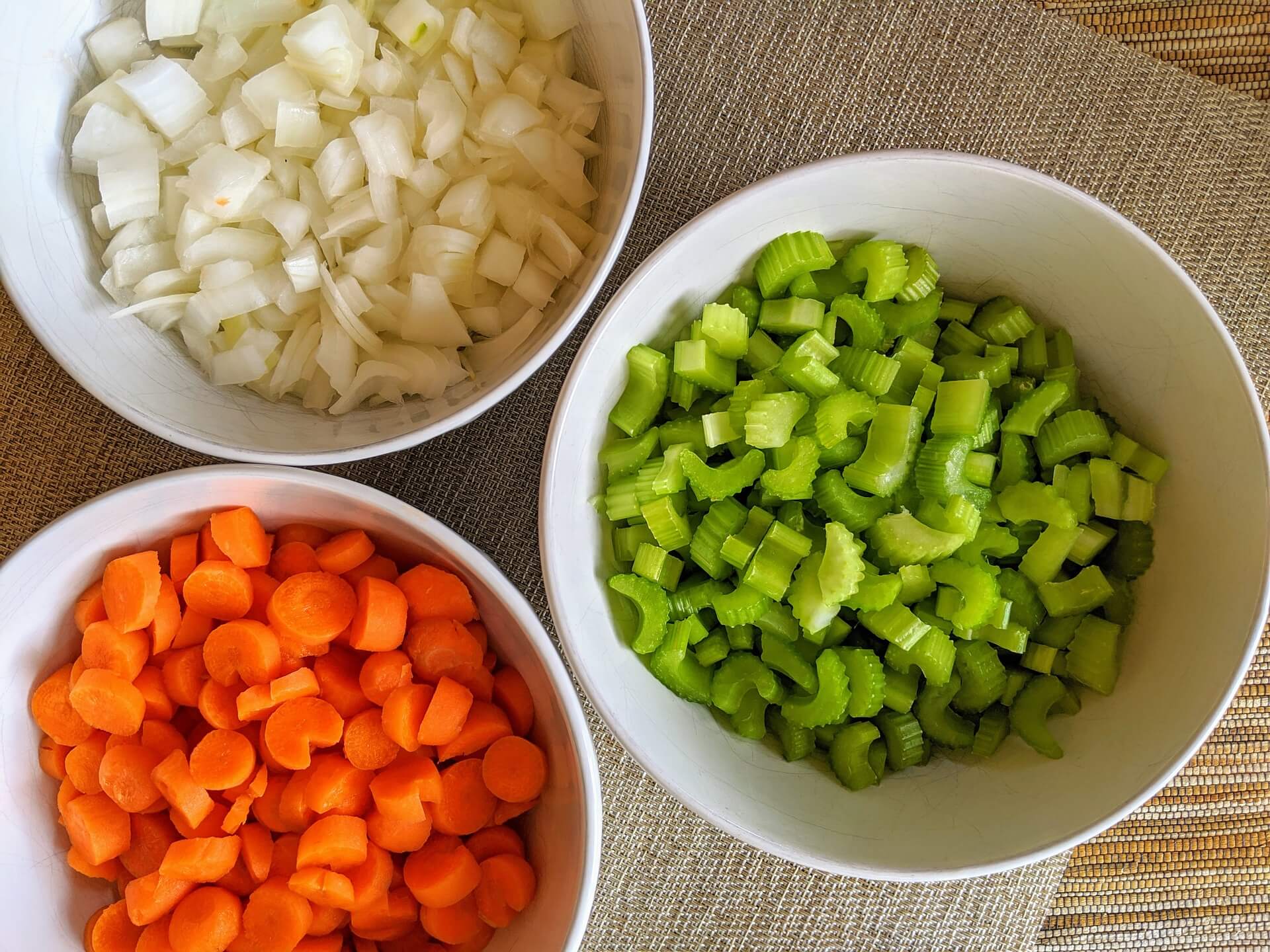
Carrots, celery and onions

Understanding the Culinary Holy Trinity

Mirepoix 101

The French contributed two staples directly to Cajun and Creole cooking: roux-based cooking and the trinity of mirepoix, or onions, celery, and carrots. In Louisiana, however, carrots didn’t grow as easily as bell peppers. So, bell peppers, typically the more bitter green version, replaced them.

Some cooks were so bold as to add garlic to the Holy Trinity, referring to it as the Pope. Other variants use garlic, parsley, or shallots in addition to the three Trinity ingredients. Unlike the elaborate French dishes using mirepoix, the Holy Trinity is more symbolic of rustic, family-style meals.

These ingredients are the first to go into the pot or skillet, creating a flavorful foundation for gumbo, jambalaya, crawfish étouffée, and more. Often, by adding a bit of flour and whisking, a roux is built right on top of these sweet and colorful aromatics to form a thicker base.

The ratio is also overturned from the traditional mirepoix of two parts onion, one part celery, one part carrot, with three parts onions to two parts celery to one part bell pepper.

Practical Application

So, now that we know what it is, how do we use it?

First, the ingredients are finely diced, then sauteed in oil, fat, or butter until translucent and tender. This stage of cooking draws the water from the vegetables, concentrating their natural flavors.

You can continue cooking the ingredients down until they’re caramelized, which is to say the sugars come out and brown them in the pan. They’ll become easy to break down with the back of a spoon. There’s a further concentration of flavors but we’re approaching the law of diminishing returns.

The shorter the cooking time of the end dish, the smaller size the pieces should be. For longer times, they can be cut into larger pieces. For obvious reasons, we want our ingredients to cook evenly, as well as withstand the timeframe of the cooking. You don’t want minced vegetables in a stock that’s going to simmer for 10 hours, the same way we don’t want giant chunks in a soup that’s done in 30 minutes. Texture of the end product are also important, not just flavor.

Here are examples of some recipes that include the Cajun Holy Trinity:

  • Chicken and Sausage Jambalaya
  • Cajun Gumbo with Andouille Sausage
  • Chicken and Okra Gumbo

Looking at other cuisines of the world, we’ll find some interesting variations. Interestingly, however, we’ll find similarities in the use of a category of vegetables and herbs called “aromatics.” In the Western world, these are vegetables like garlic, onions, carrots, celery, and herbs like bay leaves, thyme, parsley, and peppercorns.

In Asia you’ll find green onions, ginger, garlic, and warming spices like cinnamon and clove. These mixes are usually sautéed to slowly draw out flavors that can carry a dish. Sofrito and its Italian counterpart, soffritto, literally mean to stir-fry.

French Cuisine

The term mirepoix is encountered regularly in French culinary texts by the 19th century.

In 1814, Antoine Beauvillier wrote a recipe for Sauce à la Mirepoix in his book L’Art du Cuisinier. It’s a short recipe for a buttery, wine-laced stock garnished with an aromatic mixture of carrots, onions, and a bouquet garni. Marie-Antoine Carême created a similar recipe in 1816, calling it simply “Mire-poix.”

The origins are cloudy but what’s clear is the basic mirepoix ratio: two parts onions, one part celery, one part carrots by weight. These vegetables are often finely chopped and sautéed, but they can be used whole or roughly chopped in slowly simmered stocks or braises. A simple ratio for bones to mirepoix for a stock is 10:1.

When chopping, be particular about uniformity. This ensures even cooking when sweating or deeply browning them for a heartier flavor.

If cooking further, the addition of tomato purée creates a mixture called pinçage, which smells incredibly rich and transforms a braise into a near-religious experience. The addition of some chopped thyme and rosemary elevates further.

Another alternative is the mirepoix au gras (“with fat”): the addition of diced ham or pork belly.

Hands down, however, the most famous example of the power of French mirepoix is the humble chicken soup. It capitalizes on the aromatic qualities and depth of the caramelized vegetables. Similar combinations—both in and out of the French culinary repertoire—can include leeks, parsnips, garlic, tomatoes, shallots, mushrooms, bell peppers, chilies, and ginger.

White mirepoix (which substitutes leeks and parsnips for the onions and carrots) is used when you want a white color in the final dish. It might be a stretch to include the French duxelles (mushrooms and often onion or shallot and herbs, reduced to a paste), but leave no stone unturned, I say.
Mirepoix Recipes to Try

  • Roasted meats, like turkey
  • Chicken Noodle Soup
  • Braised Short Ribs
  • Vegetable soups

Italian Soffritto

Referred to as battuto before it’s cooked, soffritto is the combination of onions, celery, carrots, garlic, and parsley, although there are quite a few variations on this mixture. Soffritto can also include bell peppers, fennel, and finely diced cured meats like pancetta or prosciutto.

There’s no set ratio for the ingredients. This combination forms the foundation for soups like minestrone, the base for pasta sauces such as ragù, stews, and braises throughout Italian cuisine.

While both mirepoix and soffritto serve as building blocks of flavor, there are a few subtle differences.

Mirepoix is made by sweating onions, celery, and carrots. Soffritto uses minced rather than diced vegetables. And, indicative of Italy, the use of olive oil trumps butter in the cooking process.

Soffritto recipes to try

  • Ragú Bolognese
  • Italian Wedding Soup
  • Pasta e Fagioli (Pasta and Bean Soup)
  • Braised Sausage, and Kale with Rosemary

Spanish Sofrito

While saffron and seafood are the clear stars of the classic paella, it’s sofrito—the mixture of onion, garlic, bell peppers, and tomatoes (sometimes paprika) cooked in olive oil—that sets the stage. Although it may seem ludicrous, the removal of the sofrito and not the prime seafood on top would do more damage to the final dish.

This is where we begin to see the introduction of the New World. After the 16th century, Catalonia in particular “discovered” the tomato and began using it in everything. Bell peppers, onions, and garlic are the other ingredients that make up sofrito.

The medieval recipe book Libre de Sent Sovi shows that Catalan cuisine historically used native ingredients to make sofregit. Most Old World-style dishes call for onions, leeks, carrots, and salt pork, in place of the yet to be discovered tomato, so the sofritos of the 1300s can be interpreted loosely.

From the Mexican American border to the tip of Argentina, and all of the islands in between, Latin America has taken the Spanish sofrito and adapted it to its local offerings. Cuban sofrito tends to look the closest to Chef Prudhomme’s Holy Trinity, but with more garlic, while the Ecuadorian version includes freshly toasted cumin, tomatoes, onions, garlic, and sweet cubanelle peppers.

Sofrito recipes to try

  • Seafood Paella
  • Spanish Beef Stew with Pimentón and Piquillo Peppers
  • Spanish Chickpea and Spinach Stew
  • Nicaraguan Arroz con Pollo

Puerto Rican Sofrito

In Puerto Rico, many dishes start with recaíto, the perfumed flavor of culantro, ají dulce, onions, cubanelle peppers, and garlic. Often referred to as “blessed thistle,” the long, jagged-edged, leafy culantro has a similar taste to cilantro.

For this Caribbean island’s sofrito, known as recaíto, culantro leaves are minced and added to ajíes dulces, small but essential chilies in Puerto Rican cuisine. Add onions, cubanelles, garlic, and cilantro, and you have a mild, bright-green paste that adds a fresh, herbal punch to stews and rice dishes.

In the Caribbean, sofrito refers to a wide variety of mixtures; one common type includes lard colored with annatto seeds and mixed with ingredients like chiles, bell peppers, onion, cilantro, oregano, and ham. You can find variations on this sofrito throughout Central and South America.

Suppengrün

In case the umlaut didn’t give it away, the German answer to mirepoix—suppengrün—translates to “soup greens.” The Dutch equivalent is soepgroente.

Suppengrün typically consists of carrots, celery root, and leeks in no set ratio. Sometimes onions, parsnips, and potatoes are added. It may also contain parsley, thyme, celery leaves, rutabaga (a.k.a. swede), or parsley root.

The mix depends on regional traditions. Vegetables used are cold-climate roots and bulbs with long shelf lives. Suppengrün acts like herbs and imparts hearty, strong flavors to the soup or sauce, providing a foil for other strong-tasting ingredients such as dried peas and beans, or pot roast.

Large chunks of vegetables can be slow cooked to make rich soups and stocks, and are discarded when they have given up most of their flavor. Finely chopped suppengrün are browned in fat and create the base for a finished sauce. The vegetables may be cooked long enough to fall apart and become part of the sauce or pureed.

Suppengrün recipes to try

  • Beef Sauerbraten with Red Cabbage and Pretzel Dumplings

Włoszczyzna

From Poland, włoszczyzna is similar to its German counterpart but with red cabbage as the main ingredient.

Włoszczyzna is the Polish word for “soup vegetables” or greens. The literal translation is “Italian stuff,” stemming from Queen Bona Sforza d’Aragona—who was Italian—who married Polish King Sigismund I the Old in 1518. The queen no doubt brought her own cooks to the Polish court and introduced this concept to Polish cuisine.

A włoszczyzna may consist of carrots, parsnips or parsley root, celery root or celeriac, leeks, and savoy or white cabbage leaves. Sometimes, cooks also use celery leaves and flat-leaf parsley. Bay leaves and allspice grains are found in certain iterations.

The most typical packaged combination is celery root, parsley root, carrots, and leeks. Włoszczyzna is usually cut to uniform size and boiled as a flavor base for soups and stews.

Włoszczyzna recipes to try

  • Pork, Cabbage, and Potato
  • Barszcz (traditional Polish borscht)

Other Variations from Around the World

The Ukrainian or Russian smazhennya or zazharka consists of onion, carrot, and beets (and sometimes celery).

Refogado is the Portuguese base is made from onions, olive oil, minced garlic, and bay leaf. There’s a variation with tomato paste instead of fresh tomato influenced by the Eastern Mediterranean and Balkans regions.

Chinese/Cantonese cooking uses a base of scallions, ginger, and garlic. In Sichuan cooking you’ll often find a mixture of chili peppers, Sichuan peppercorns, and white pepper.

The amount of varied flavors and spices in Indian cuisine is incredibly vast and can differ from neighbor to neighbor. However, many of these dishes begin with basic mixture of garlic, ginger, and onion.

West African cuisine is another example of a huge amount of variety, but one common flavor base is the trio of tomatoes, onions, and spicy chiles.

The Haitian Epis has African origins with similarities to sofrito which is used in Hispanic cuisine. Parsley, scallions, garlic, citrus juice, and Scotch bonnet peppers are combined to create this base. Haitian Epis is used for finishing sauces, marinating meat and fish, and flavoring rice and bean dishes, as well as soups, and stews.

Hopefully you’re now inspired to try out a new combination or two, or even make up your own Holy Trinity. The possibilities are literally endless. But first, you owe it to yourself to learn a new Cajun recipe, starting with Chef Prudhomme’s Holy Trinity.

Image: Cindy from Pixabay

Related Reading

Work with Us

Click the image below to work with us on your restaurant concept.

Client Intake Form - KRG Hospitality

by David Klemt David Klemt No Comments

Real-world Menu Tips from Chef Brian Duffy

Real-world Menu Tips from Chef Brian Duffy

by David Klemt

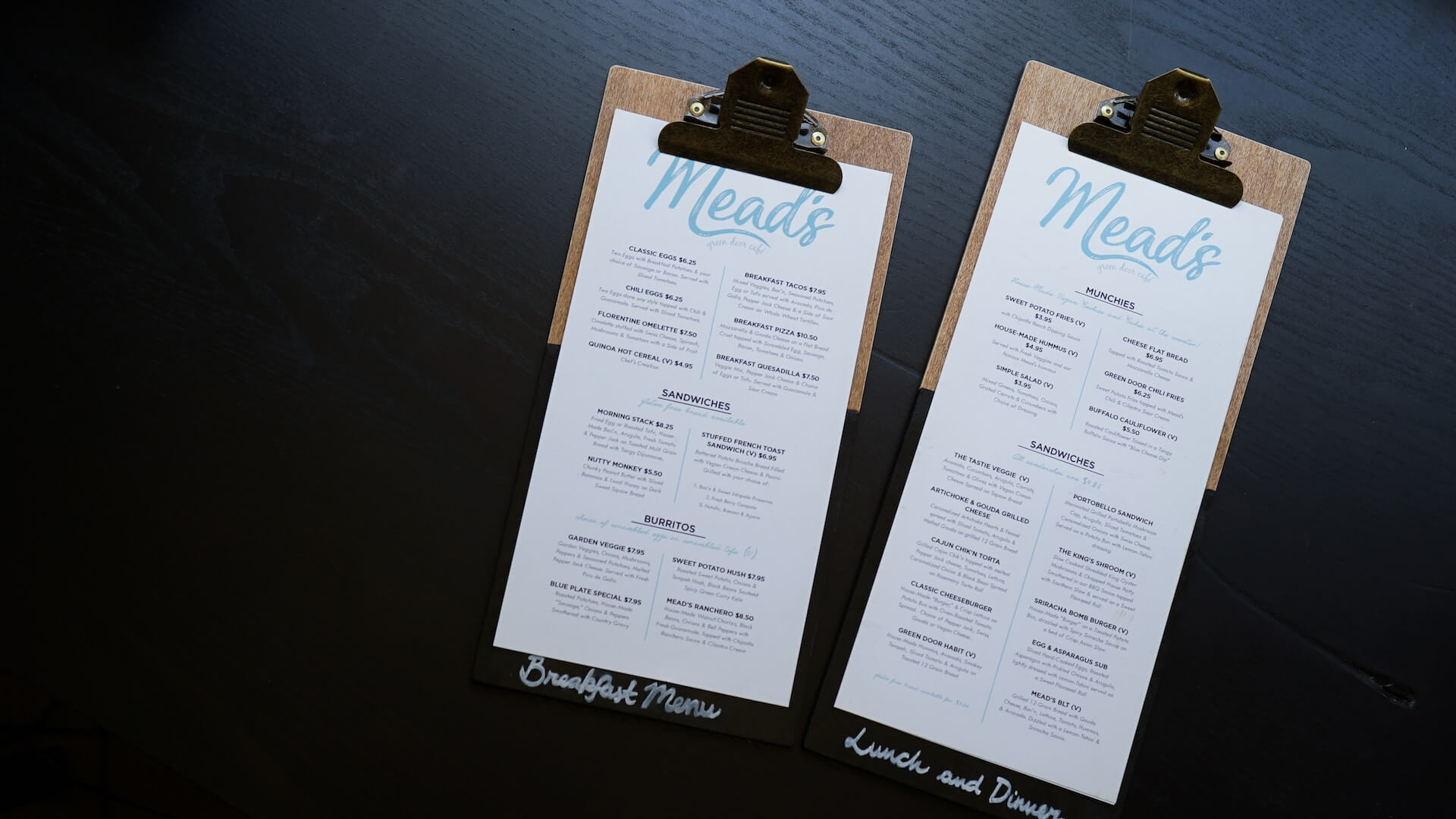
Two restaurant food menus

I wonder what Chef Duffy would say about these menus.

Call it an education session, call it a workshop, one of the best features of the Bar & Restaurant Expo is live menu feedback from Chef Brian Duffy.

This is certainly true of the 2023 Bar & Restaurant Expo. During this year’s BRE (formerly Nightclub & Bar Show, or NCB), Chef Duffy delivered well over two hours of real-world menu feedback.

To be sure, BRE educational programming is always beneficial. Attendees who take the time to plan their schedules to include education sessions will take invaluable tips back to their businesses.

However, watching in real time as Chef Duffy critiques real menus submitted by BRE attendees provides insight that will impact the guest experience and success of a restaurant or bar immediately.

When delivering his feedback, Chef Duffy is unacquainted with the menus. He’s also unfiltered. So, attendees of these sessions are provided a window to Chef Duffy’s professional opinions, on the fly, in real time.

Take, for example, this blunt statement: “If you serve tilapia in your restaurant, you suck.” Before anyone has a conniption, Chef Duffy is referring to unethically farm-raised tilapia that’s often exposed to waste.

Technical Difficulties

Due to unforeseen AV issues, Chef Duffy was unable to use the large screens in the room to review menus for 30 to 40 minutes.

Now, some speakers may be shaken when encountering such a technical difficulty. This isn’t the case for Chef Duffy. In fact, all in attendance from the start of his session were lucky enough to gain insights beyond menu design because of the AV issues.

First, we all gained some insight into Chef Duffy’s consulting process. When engaged for restaurant consultation, he watches an evening service. Next day, he’s in your kitchen at 10:00 AM. What he sees in your kitchen tells him what’s happening throughout your restaurant. By the way, if he encounters just two spelling errors on your menu, he’s done reviewing it—you need a fresh start.

Second, inventory. Chef Duffy assumes you keep eleven percent of your overall revenue on your shelves. So, if you’re generating $100,000 each month, your shelves hold $11,000 of product. When reviewing your financial situation, take a look at that number for your own restaurant or bar.

Third, executive chefs versus head chefs. Chef Duffy has been on the ground for more than 100 restaurant openings. He has interviewed countless chefs. Have you ever wondered about the difference between an executive chef and a head chef? Knowledge of the financial aspects of running a kitchen. Without it, someone’s not an executive chef—they’re a head chef. Executive chefs know (and in theory can be trusted with) finances; head chefs make sure the brigade comes to work on time.

Finally, a cost-reduction tip. When you speak with your food reps, ask about DWO items: “Discontinued When Out.” You may be able to get your hands on some great items for a fraction of the cost.

Pricing Tips

Since we’ve looked at costs, let’s take a look at pricing.

Determining pricing effectively involves more than just gathering intel about your competitors. Chef Duffy suggests looking over your entire menu and committing to a pricing hard deck.

For example, “I’ll never sell a starter for less than X dollars.” You commit to never selling a entree for lower than a certain dollar amount. If you breach that promise, you may damage your brand.

Staying on the topic of pricing, don’t take advantage of your guests. Chef Duffy absolutely believes you can charge premium prices—but only for innovation. How do you know if a menu item is innovative? If it has made its way to major chain restaurants and you’re not doing anything unique to your version, it’s not innovative.

In terms of layout and design, don’t “lead” guests to prices with dots, dashes, or solid lines. Just place the price next to the item and move on.

Menu Tips

Another crucial tip that really should go without saying but, well, here we are, is proofreading. Want to make sure your menu is correct in a fun way? Throw a proofreading party. Invite ten of your VIP guests, gather your staff, invite some friends and family if you won’t be distracted, and ask for honest feedback.

Of course, you can elevate this event by serving new menu items tapas or family style to your VIPs. Brand-new restaurant yet to open? I suggest having the proofreading party with staff, friends, and family.

Keep in mind that menu real estate is valuable. Does a section of your menu come with identical accompaniments? Explain that at the top of section rather than including them in every. single. item. separately. Yes, this happened during the live 2023 BRE reads.

Chef Duffy would like you to stop putting specials on your menu. Again, menu real estate is valuable. If you can spare the room for specials, are they really special? Instead, your servers should know the day’s specials and share them with your guests from memory. And speaking of memory, upselling really only works if your staff knows the menu backward and forward.

Oh, and Chef Duffy would love it if you’d stop doing truffle fries if you’re not going to use premium products.

Your Menu Isn’t “Just” a Menu

Obviously, I haven’t shared every one of Chef Duffy’s menu tips. However, the above should serve as more than enough to motivate you to review your own menu with a critical eye.

In fact, you should be inspired to have your leadership, BoH, and FoH teams review the menu as well.

Yes, spelling matters. Yes, grammar matters. And yes, every detail and bit of menu real estate matters. This is because, simply put, your menu is more than a list of items for sale.

As Chef Duffy says, “Your menu is your calling card, it’s just that simple.” He would also tell you that the first place people encounter your business is online after a search. So, your website is your showcase. But your menu? That’s your billboard on the freeway, as he says.

QR codes may have been the standard from 2020 to 2022. We all know why. But for the most part, with the exception of QSRs and LSRs, people want to hold your menu. It’s a tactile experience and true engagement.

Menu design, like your website’s design, matters. Don’t believe me? I have two framed menus on my office wall, and they’re not from client concepts.

To learn more about Chef Brian Duffy, visit his website here. And, of course, make sure to follow him on Instagram. To listen to his Bar Hacks podcast episodes, click here for episode 33 and here for episode 53.

Image: Catherine Heath on Unsplash

KRG Hospitality Complete Bar Menu Audit

by David Klemt David Klemt No Comments

5 Books to Read this Month: April 2023

5 Books to Read this Month: April 2023

by David Klemt

Flipping through an open book

Our engaging and informative April book selections will help you take your bar, restaurant or hotel to higher levels, and develop your leadership skills.

To review the book recommendations from March 2023, click here.

Let’s jump in!

Unreasonable Hospitality: The Remarkable Power of Giving People More Than They Expect

When Will Guidara took over the famous Eleven Madison Park, the restaurant had just two stars and he was only in his mid-twenties. Before his 40th birthday, the changes and strategies he implemented helped the restaurant earn the title of the Best Restaurant in the World.

One of cornerstone’s of Guidara’s was “bespoke hospitality.” He and his team truly went above and beyond. Examples of the Eleven Madison Park team’s approach to hospitality illustrate just how over the top they went to deliver memorable guest experiences. If you’re looking for inspiration to step up your hospitality, pick up or download Unreasonable Hospitality today.

Blue Ocean Strategy, Expanded Edition: How to Create Uncontested Market Space and Make the Competition Irrelevant

I’m going to address the viability of the blue ocean strategy before getting into the book. Creating a hospitality concept without competition isn’t really feasible. Go too far into “blue waters” and there won’t be any “fish” (traffic). And where, exactly, would one put their restaurant, bar, or hotel where there’s no competition but still enough traffic to generate a profit?

Those issues addressed, this book is still valuable to owners and operators. One need not eliminate competition completely to take lessons from the blue ocean strategy. Businesses must still differentiate themselves from competitors, and they must look for unique opportunities to help them stand out. Blue Ocean Strategy may not work perfectly but much is still very helpful.

Contagious Culture: Show Up, Set the Tone, and Intentionally Create an Organization that Thrives

Anese Cavanaugh’s Contagious Culture addresses a topic that we often discuss with clients, in our articles, and during speaking engagements: workplace culture. From large corporations and regional or national restaurant chains, to independent restaurants, bars, and hotels, culture will make or break an organization. Cavanaugh’s techniques will improve your workplace culture and energize your team, an undeniable key to success.

From Amazon: “This is Contagious Culture, a game-changing guide to transforming corporate culture from within, developed by the award-winning creator of The IEP Method to strengthen your ‘Intentional Energetic Presence.’ This is more than a leadership book―this is your future calling.”

Bar Hacks: Developing The Fundamentals for an Epic Bar

Doug Radkey is the founder, president, and lead strategist of KRG Hospitality. He’s also a hospitality industry speaker, educator, and author. This is his first book, Bar Hacks, which is also the name of the podcast we produce through KRG Hospitality.

Now, while the title states this book is a guide for developing and running an epic bar, the strategies carry over to restaurants, hotels, and other hospitality concepts. It’s difficult—if not impossible—to elevate one’s skills and service without first mastering the fundamentals. Whether you’re new to the industry or are a veteran who feels the need to reset and revisit the fundamentals, Bar Hacks is your guide.

Hacking the New Normal: Hitting the Reset Button on the Hospitality Industry

There’s a first book, which means there must be at least one other one, right? Right! Hacking the New Normal is Doug’s second book.

This book is a direct response to the pandemic, what it did to the industry, and the issues many operators would prefer to ignore. However, the devastation is so great that ignoring the changes that should have been made decades ago isn’t a viable option. With a spotlight on hybrid business models, real estate, profit margins, technology, guest experiences, culture, diversity, and mindset, Hacking the New Normal will position you for success in our new hospitality landscape.

Image: Mikołaj on Unsplash

KRG Hospitality. Consultant. Consulting. Culinary. Bar. Hotel. Mixology. Technology.

by David Klemt David Klemt No Comments

Program for Unique Holidays: April 2023

Program for Unique Holidays: April 2023

by David Klemt

"Think about things differently" neon sign

Do you want to stand out from from other restaurants and bars in your area? Change how you think about your April holiday promotions.

Several holidays are set against every date on the calendar, and April is no exception. These holidays range from mainstream to esoteric.

Pay attention to the “weird” or unique holidays to raise eyebrows, carve out a niche for your restaurant or bar, and attract more guests. Why do what everyone else is already doing? Why program only around the same holidays as everyone else?

Of course, you shouldn’t try to celebrate every holiday, strange or otherwise. Focus on the days that are authentic to your brand; resonate with your guests; and help you grab attention on social media.

You’ll find suggestions for promotions below. However, the idea behind our monthly holiday promotions roundup is to inspire you and your team to get creative and come up with unique programming ideas.

For our March 2023 holidays list, click here.

April 6: International Day of Sport For Development and Peace

Sure, sports can spark some bitter rivalries. However, it can also bring people together. Whether you choose to air sporting events this day (make sure you have the proper licensing to do so) or create a themed LTO menu, encourage guests to set aside their differences and come together at your restaurant or bar.

If you’re operating a sports- or game-focused eatertainment concept, this is also an excellent day to host a friendly tournament. Who knows? It could become a weekly, monthly, quarterly, or yearly promotion if it takes off.

April 7: National No Housework Day

Your guests are likely already burnt out on spring cleaning. Tell them to toss aside their brooms, mops, and sponges and reward themselves with a visit to your venue.

April 8: National All is Ours Day

I’ll bet that if you think about it for a moment you can come up with at least one incredible element or landmark in your community. This is the day to celebrate it with your guests. National All is Ours Day is dedicated to appreciating what we have and taking an adventure, however big or small.

April 10: Dyngus Day

This isn’t necessarily an “odd” holiday. However, those who didn’t grow up in a community with a significant Polish presence may not know about it.

On Dyngus Day, people who take part in Lent get to indulge and blow off some steam. Common food items enjoyed on this day are Polish hot dogs, potato pancakes (placki ziemniaczane), dumplings (pierogi), and donuts filled with custard (paczki).

April 11: National Barbershop Quartet Day

If you search for one hard enough, you can probably find a local barbershop quartet that sings current-day hits. It could be pretty cool to have them entertain your guests…

April 13: National Make Lunch Count Day

This is the day to really impress with an incredible lunch to boost pickup, delivery, and in-person traffic for this daypart.

April 23: National Take a Chance Day

Do you have a food or beverage item you have yet to put on your menu? Something you want to test but just haven’t gotten around to it yet? This is the day to entice your guests with something new and encourage them to try it. It’s also the perfect time to collect feedback to either revise the item, add it right away, or move on from it.

April 27: National Tell a Story Day

So, this day may be better served as a deadline for you. Do your website, social media channels, menu, and venue design tell your restaurant or bar’s story? If an honest assessment shows that they don’t, use April 27 as a deadline to tell your brand’s story to your guests. Storytelling is a powerful engagement tool, so make sure yours is dialed in.

April 29: National Sense of Smell Day

Personally, I’d program around this day with the help of brand reps. A tasting or guided pairing that engages the sense of smell can really wow your guests, delivering an incredible and memorable experience.

April 30: National Bubble Tea Day

Bubble tea isn’t the most unique beverage. However, learning how to craft boozy bubble tea drinks for your spring and summer menus…that’s a great way to celebrate this holiday and show off your bar team’s creativity.

Image: Ivan Bertolazzi on Pexels

KRG Hospitality Start-Up Restaurant Bar Hotel Consulting Consultant Solutions Plans Services

by David Klemt David Klemt No Comments

Empower Your Team to Make Decisions

Do You Empower Your Team to Make Decisions?

by Kim Richardson

Chess pieces on chess board in grayscale

Empowerment is about so much more than trusting someone to follow clearly defined rules; you must learn to trust your team’s judgement.

Yes, even when things don’t go according to plan. If you’re only training your team on the “rules,” you’re doing a disservice to them and yourself. So, let’s have a little chat about empowerment. What does it mean to you? What are your expectations of your team when you tell them they are empowered?

Looking back throughout your own work history, have you ever had a job where your boss told you that you were empowered to make decisions, but you didn’t actually know what to do or how to make decisions? Did anyone ever explain “the how” of decision making to you?

Now, look at yourself as a leader. Have you ever had employees that you’ve told are empowered to make decisions, yet they get a manager every time someone needs something out of the ordinary? Are you explaining to your staff “the how” of decision making, along with your expectations?

It’s frustrating to feel like the house might fall down when you’re not in it. That’s no way to operate a business. We all want our staff to be able to make educated decisions when we’re not around. We shouldn’t have to hold their hands and be part of every single decision.

Still, there are times when, left to their own devices, a team member doesn’t make the decision you’d want them to make. This makes owners and leadership team members feel as though they must be at work every second.

So, how do you move away from micromanagement and learn to trust your team’s decision making?

Leverage Teachable Moments

You’ll never be able to give an example of every possible situation that may arise. Therefore, you’ll never be able to train your team on everything that they’ll encounter on any shift.

How do you tell someone how to handle situations when you’re not around? You don’t, and I don’t suggest you even try. Instead, you need to instill a sense of empowerment in your team.

However, “empowerment” is just a word if you’re not educating your team. You need to teach staff how to make good decisions. And how do you even start to do that? Cash in on all the teachable moments that happen throughout the day!

Once upon a time we were all new to this industry. I’m sure you have a few stories of some mistakes you’ve made along the way. I know I certainly do.

Think back to those situations. Did someone explain to you why you made a mistake? More importantly, did they then help you understand what to do next time? Or did they just get mad and make you feel like a failure?

I’ve had the privilege of working with some amazing people over the years. There are several people that really put effort into teaching me. The different things they taught me helped me to understand the ins and outs of decision making, even in situations I know very little about.

Example 1: The Restaurant

For my first job ever, I was a hostess at an Italian restaurant and pizzeria. During the training process I was told to rotate sections when seating tables. That’s easy enough, right? Well…maybe not.

Sometimes I’d see exceptions to this rule. The same section would get sat twice in a row, for example. I watched exceptions to “the rule” get made with no clue as to why.

One day, I sat the same section twice in a row. I don’t remember why, but I do remember the server’s reaction.

Right after seating the second party in the server’s section she let me know how annoyed she was by my decision. Now, I knew I messed up immediately—she let me know. But I didn’t know why it wasn’t okay that I had double-sat her this time.

All I knew is there was a rule I was expected to follow…unless I wasn’t supposed to follow it. Sometimes it was okay to disregard the rule, sometimes not. The rule wasn’t clarified before I began my role as a hostess, it wasn’t explained during training, and it wasn’t explained in the moment I “broke” the rule.

At some point it was explained to me that there were several factors that influenced the “double-seating rule.” For instance, you might skip a section in the rotation if they were just sat a big party. You might double-seat someone if they were regulars, family or friends and the server was able to accommodate an additional table. Of course, there were several other factors that could come into play.

The biggest issue is that none of that was explained to me during training. Moreover, I was left to figure out the nuances of seating on my own.

Example 2: The Hotel Sales Office

I worked at a hotel in the sales office for my first job out of college handling group room blocks.

The contracts I sent out to clients had cutoff dates 30 days prior to the event. Again, sounds pretty simple, doesn’t it?

One day a bride emailed me asking if she could extend the cutoff date. The cutoff date fell on a holiday weekend and she was concerned that people might not have time to book their rooms. I wrote her back and very politely told her no. So she reached out to my boss, Jill, who told her yes.

And then I got called into Jill’s office.

I remember that conversation like it was yesterday. Jill was very nice about the situation and explained that it was okay to make exceptions for people sometimes. Sometime later, I extended a cutoff date for another group. Should be an acceptable exception, right?

Nope. I got my hand slapped on that one. There was a citywide event going on over those dates. The hotel was fully sold out and turning away business. In this circumstance, it was actually a huge problem to extend the cutoff date.

Great—here we go again with a rule that exists in a gray area, and no one explained its nuances. As it turns out, there are factors that go into extending a cutoff date, such as how many rooms the group has already picked up; how busy the hotel is over the dates of their room block; and the relationship you have with the client.

I don’t know if anyone ever flat out explained these gray areas to me. Instead, I was left to figure out the nuances through trial and error.

Example 3: The Dish Tub Incident

At that same hotel several years later I started handling banquet events. One day, a client told me their registration desk needed dish tubs lined with cloth napkins. I threw it on the banquet event order.

Well, I happened to work at a Five Diamond hotel. Dish tubs with napkins sitting out in view of the public? That’s not how we did things. Enter: Bruce the Banquet Manager.

No detail, however small, escaped Bruce. Referring to the dish tubs and napkins, Bruce asked me why they were necessary. I actually had no idea what the client wanted with the tubs and napkins. So, I reached out to the client.

Turns out all she needed was a way to store welcome packets for event attendees. These days, we just put up a QR code and call it good. Once I let Bruce know what the containers were actually for, he understood. However, we weren’t about to load unsightly dish tubs with welcome packets. Instead, we found something more aesthetically pleasing and in line with our level of service.

I spoke about the Dish Tub Incident with Jill. To her credit, she helped me understand that people who are planning meetings so frequently are sending standard specs. Sometimes there would be a request on a BEO that wouldn’t make sense for the venue. Crucially, she taught me that if I ever saw something that didn’t make sense I needed to ask questions.

Truthfully, I don’t remember if it was that conversation or another but Jill taught me one of the best lessons: Ask the client what goal they’re trying to achieve. By understanding their goals we could provide solutions that made sense for us and honored their wishes. Additionally, we’d deliver the excellent service they had come to expect.

Example 4: The Hotel Cafeteria

Let’s take a little break from talking about my mistakes and talk about somebody else’s.

Many years later, I was working at another hotel. One day, I went to the cafeteria and the fruit bowls had Asian pears in them. I love Asian pears, so I was really excited about those bowls.

Now, those particular pears were probably a day away from being spoiled. I went to the cafeteria the next week and there were the Asian pears again! This time, they were perfectly fresh, crisp pears.

Well, I certainly enjoyed that. You want to know who didn’t enjoy that? The executive chef!

As it turns out, Chef sent the pears that were about to go bad to the cafeteria because they were leftovers from something else. He didn’t want them to go to waste. But the fresh, crisp pears that were out the following week? Those were a different story.

There was a kitchen team member who saw the Asian pears go down the week before. When he was setting up the cafeteria the following week he threw some in the fruit bowl. No one had told him that Asian pears are expensive. Also, no one had told him the pears were just going down to the cafeteria because they were close to spoiling. They’re not typically the type of thing set out in the employee cafeteria.

While I would never expect Chef to stop and explain every single decision he’s making, it’s the perfect example of seeing one of your superiors doing something and thinking you’re supposed to do the same.

Leaders Teach

When I look back on some of the mistakes I made, they seem pretty obvious with many years of hindsight.

The solutions to unexpected situations are common knowledge to me now. If you also have some years in this industry, they’re likely common knowledge to you.

And that’s my point.

I was young. I was inexperienced. People didn’t always tell me the things they had learned that were common knowledge to them. So, they also didn’t share their expectations with me.

I can only assume that you have people on your team that are young and inexperienced. As seasoned hospitality professionals, we all make decisions every day that can be teaching moments. These moments are part of the learning experience. Using them to shape your team will help your business run better.

Have you implemented an onboarding process? Do you have a detailed employee manual? Do you have actual systems in place? If so, great—you’re ahead of the curve.

But do you think that you’re training new and existing employees on every situation that will ever pop up during their shifts? Really, that’s impossible. Instead, be on the lookout for teachable moments. Put people on your leadership and empower them to do the same.

In turn, they’ll help empower your staff to make the “right” decisions for your business. And importantly, they’ll feel empowered to learn from mistakes so they don’t repeat them. Over time, and it won’t take long, you and your leadership team will be able to step away and work on other parts of the business. In fact, you’ll find that you can step away from the business from time to time.

People are going to make mistakes. That includes you. Don’t let these teachable opportunities go to waste.

Image: Hassan Pasha on Unsplash

KRG Hospitality. Boutique Hotels. Resorts. Properties. Consultant. Feasibility Study. Business Plan

by David Klemt David Klemt No Comments

What’s Up with the Restaurant Tax Credit?

What’s up with the Restaurant Revitalization Tax Credit?

by David Klemt

Abraham Lincoln's face on $5 bill

If you’re wondering what’s going on with the Restaurant Revitalization Tax Credit bills in the House and Senate, you’re probably not alone.

And if you find yourself wondering about them, that’s likely because there isn’t much news about the bills. Unfortunately, it appears that no meaningful progress has been made on HR 9574 or S.5219.

A quick check shows that both bills share the same status: Introduced. As for the House bill, HR 9574, that was introduced on December 15, 2022 by Representative Earl Blumenauer (D-OR). The Senate bill, S.5219, was introduced by Senator Benjamin Cardin (D-MD) on December 8, 2022.

It’s important to note that Sens. Cardin, Patty Murray (D-A), and Sherrod Brown (D-OH) reintroduced S.5219 in January of this year. However, that apparently didn’t mean much as the Congress.gov trackers show no progress.

Last year, some opined that neither bill would receive a vote until January 2023 at the earliest. That “prediction” has proven true, of course—it’s now the end of March.

Restaurant Revitalization Tax Credit Act Summary

Let’s take a quick look at HR 9574 and S.5219.

Both bills propose a $25,000 payroll offset for restaurants. Eligibility requirements are also identical: applicants must have applied for but not awarded a Restaurant Revitalization Fund grant.

Additional, eligible applicants are:

  • restaurants with operating losses of at least 30 percent in 2020 and 2021 in comparison to 2019; or
  • restaurants with losses of at least 50 percent in either 2020 or 2021 in comparison to 2019.

So, those are elements that both the Senate and House bills share. What about the differences between the two bills?

Mainly, differences come down to the number of employees. For S.5219, restaurants with ten employees or fewer could be eligible for the maximum payroll tax credit. That credit, as a reminder, is up to $25,000 for 2023. For every employee over ten, the refund cap drops by $2,500.

Now, HR 9574. Restaurants with ten or fewer employees would receive the full $25,000 payroll tax offset. For restaurants with between 11 and 20 employees, the offset would be “partially refundable.”

Now What?

If you believe that you’re eligible for this tax credit, it’s time to let your representatives know you want them to act.

To make things simple for everyone, I’m including the links you need to find and contact senators and representatives.

For senators, click here. And for representatives, click here.

Let them know that it’s time for action on S.5219 and HR 9574. And let them know exactly what action you expect them to take.

Image: Karolina Grabowska on Pexels

KRG Hospitality Start-Up Restaurant Bar Hotel Consulting Consultant Solutions Plans Services

by David Klemt David Klemt No Comments

WSWA Presents Cannabis Regulation Plan

WSWA Presents Cannabis Regulation Plan to Congress

by David Klemt

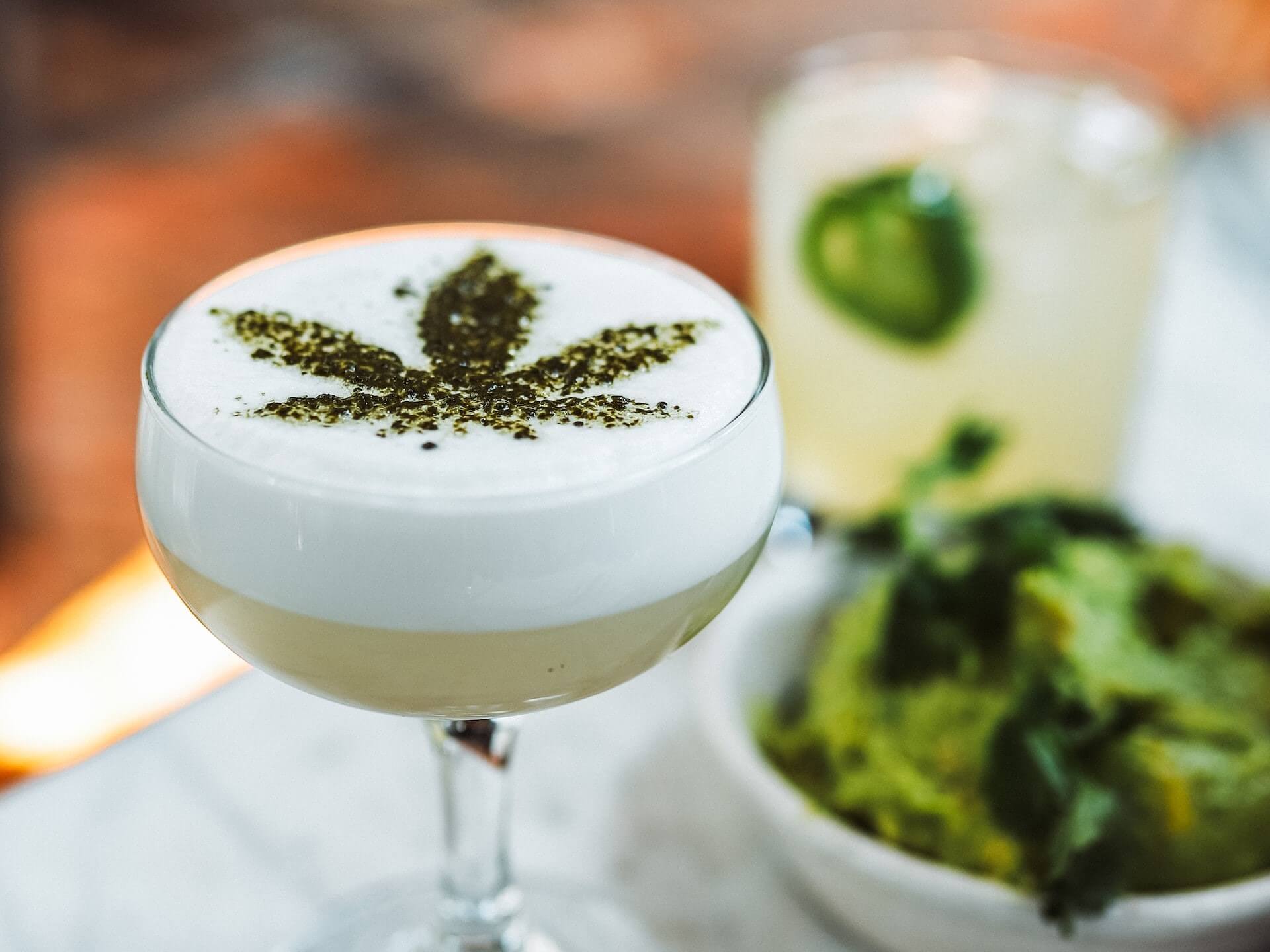
Drink with cannabis leaf artwork on top

The Wine & Spirits Wholesalers of America are making their support for federal adult-use cannabis legalization and regulation known.

In summary, the WSWA is urging Congress to treat cannabis in a similar manner to alcohol. Impressively, the organization is doing more than just imploring members of Congress to legalize and regulate adult-use cannabis.

Rather, the WSWA is showing their commitment by doing much heavy lifting. Click here and you’ll find the WSWA Principles for Comprehensive Federal Legalization and Oversight of the Adultuse Cannabis Supply Chain. This is a comprehensive document that serves as a framework for the federal government to take action.

“The time has come for Congress to legalize and regulate adult-use cannabis at the federal level,” says Francis Creighton, CEO and president of the WSWA. “The success of our alcohol regulatory system offers a proven model for cannabis regulation, one that will promote public health and safety as well as a fair and competitive marketplace.”

Why Does the WSWA Care About Cannabis?

It’s clear when reading the WSWA letter to Congress and the organization’s framework document that they anticipate this question.

In a letter to House Speaker Kevin McCarthy, Majority Leader Charles Schumer, Minority Leader Hakeem Jeffries, and Minority Leader Mitch McConnell, the WSWA lays out precisely why they’re addressing federal legalization and regulation:

I am writing to you today to announce that we at the Wine & Spirits Wholesalers of America (WSWA) believe the time has come for Congress to legalize and regulate adultuse cannabis at the federal level.

We have reached this position because the current conflict between state and federal law is not only causing adverse consequences for consumers and nonconsumers of cannabis but will also have longterm public health and safety costs that are too great to ignore. Twentyone states and the District of Columbia representing roughly half the U.S. population have already legalized adultuse cannabis, yet the markets in these states remain illegal under federal legislation. This conflict undermines the rule of law and weakens public health and safety, while leaving states unsupported in their efforts to create safe, regulated markets and eliminate dangerous blackmarket activity.”

What Does the WSWA Want?

Essentially, the WSWA wants the US government to apply the same principles of federal beverage alcohol regulation to adult-use cannabis:

  • Award permits to cannabis producers, testing facilities, importers, and distributors;
  • approve and regulate cannabis products;
  • collect federal excise tax efficiently and effectively; and
  • implement effective public safety measures.

To that last point, the WSWA calls for the development of “a reliable standard for all types of impaired driving, similar to blood alcohol concentration.” In other words, a BAC equivalency for cannabis.

Of course, I don’t think I’m coming to any groundbreaking conclusion in assuming the organization foresees financial benefits. Alcohol importers and distributors, for example, know how to maneuver through the red tape of federal regulation already. And they’re well positioned to apply for permits, should they be allowed to handle both alcohol and cannabis.

This is an interesting development, one that many will support. The WSWA makes a compelling point. Additionally, providing framework is a wise strategic move.

However, we’re in highly partisan, politically charged times. There’s no reason yet to assume Congress will take up federal legalization and regulation any time soon.

Image: Justin Aikin on Unsplash

KRG Hospitality Mixology Training with Jared Boller

by David Klemt David Klemt No Comments

8 Glendalough Cocktail Recipes for St. Patrick’s Day and Beyond

Offer your guests something different for your St. Patrick’s Day promotion with Glendalough Distillery cocktail recipes.

Without a doubt, you should have plenty of the expected Irish whiskeys on hand. However, Glendalough Distillery Double Barrel, Pot Still, Wild Gin, and Rose Gin are extraordinary Irish whiskeys and gins.

Each spirit the distillery crafts honors the art of Irish distillation, a craft that stretches back centuries. What’s more, each whiskey Glendalough crafts is single malt—there are no light-bodied blends in their lineup.

To learn more, check out episode 71 of the Bar Hacks podcast with Glendalough Distillery co-founder and national brand ambassador Donal O’Gallachoir.

by David Klemt

Glendalough Distillery Wild Gin Irish gin

8 Amazing Irish Whiskey and Gin Cocktails

Below, eight refreshing and sophisticated drink recipes made with Glendalough whiskeys and gins. Sláinte!

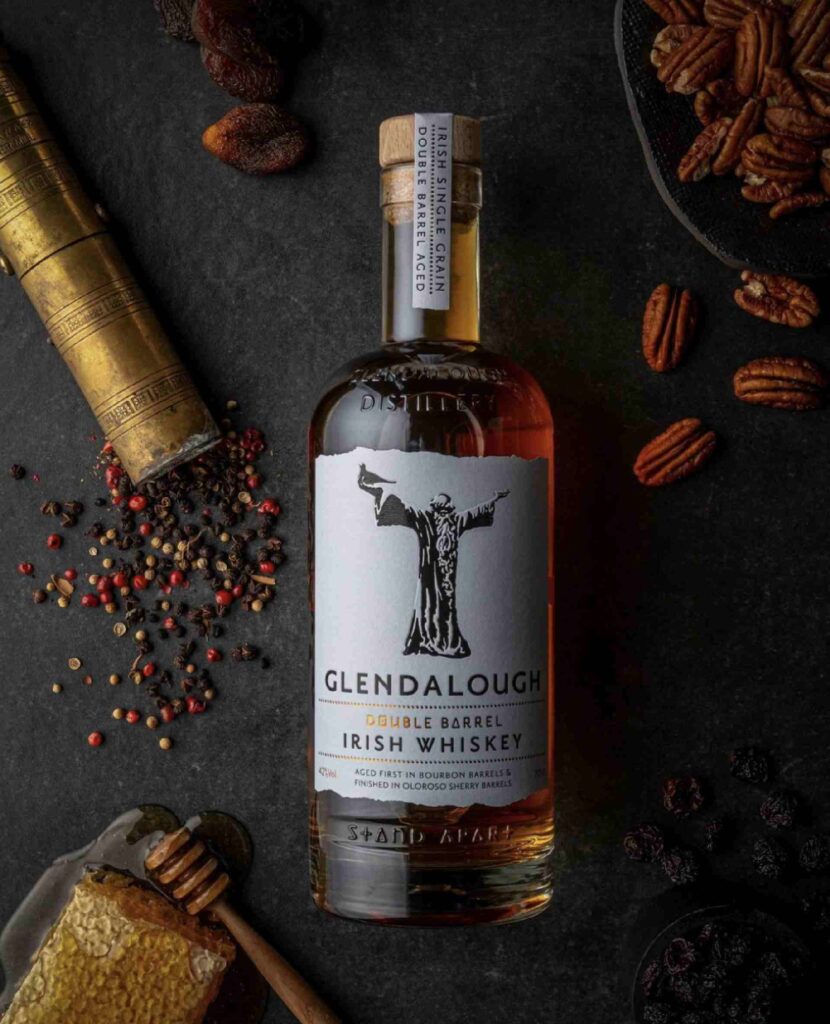
Glendalough Distillery Double Barrel Single Malt Irish Whiskey

The Lough Inn

This highball is made with Glendalough Double Barrel, a single-grain Irish whiskey aged in ex-bourbon barrels before being finished in Oloroso sherry casks.

  • 2 oz. Glendalough Double Barrel Single Grain Irish Whiskey
  • 1 oz. Spiced honey syrup (see note)
  • 1 oz. Fresh lemon juice
  • Soda to top
  • Lemon wheel or slice to garnish
  • Mint leaf to garnish
  • 1 cup Honey for spiced honey syrup
  • 0.5 cup Water for spiced honey syrup
  • 4 Cinnamon sticks for spiced honey syrup
  • 1 pod Star anise for spiced honey syrup

Add ice to a highball glass, then add first three ingredients. Top with soda water. Garnish with lemon wheel or slice and freshly torn mint leaf.

For spiced honey syrup: Add honey, water, cinnamon sticks, and star anise to pot. Bring to a boil, then stir. Strain into container.

Glendalough Distillery Pot Still single malt Irish whiskey

Pot Still Highball

Deceptively simple to build, this cocktail highlights the terroir of the land surrounding Glendalough Distillery.

  • 1.5 oz. Glendalough Pot Still
  • Soda to top
  • Grapefruit peel to garnish
  • Mint leaf to garnish (freshly torn and slapped, of course)

Prepare a highball glass with an ice shard, spear or cylinder. Pour in Glendalough Pot Still whiskey, then top with soda. Glendalough Distillery recommends a 1:2 ratio, Pot Still to soda. Garnish with mint leaf.

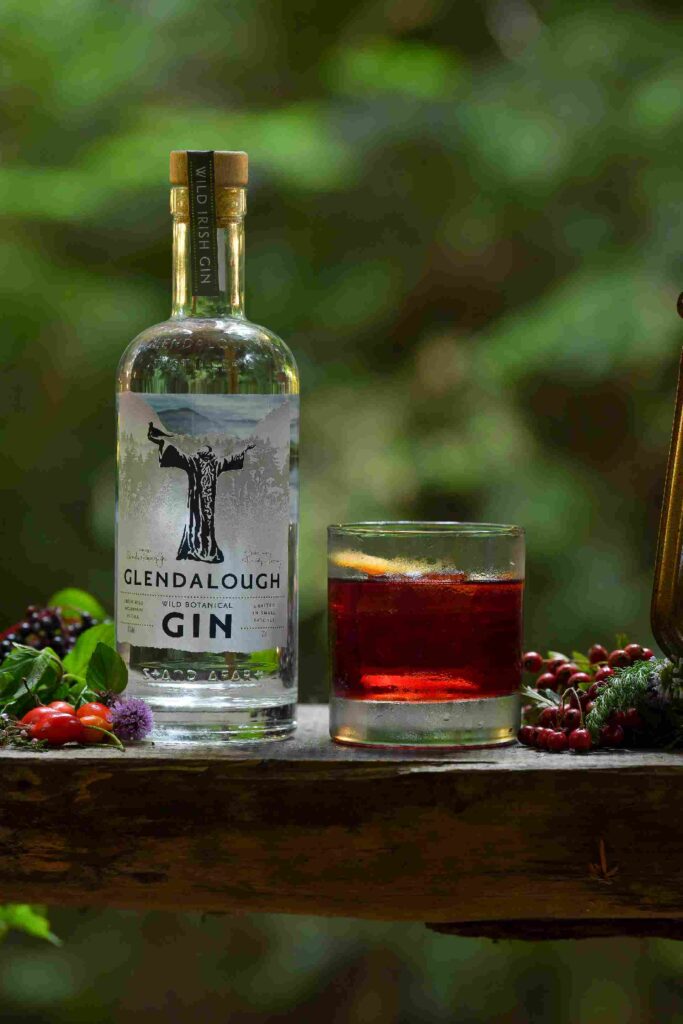
Glendalough Distillery Wild Gin Negroni cocktail

Glendalough Negroni

The foraged botanicals in Glendalough Wild Gin add even more complexity and depth to the classic Negroni. In fact, the flavors work so well this recipe maintains the Negroni’s crucial 1:1:1 ratio.

Prepare an Old Fashioned with ice. Add first three ingredients to glass in the above order. Add more ice if necessary. Stir, express orange peel, and place as garnish.

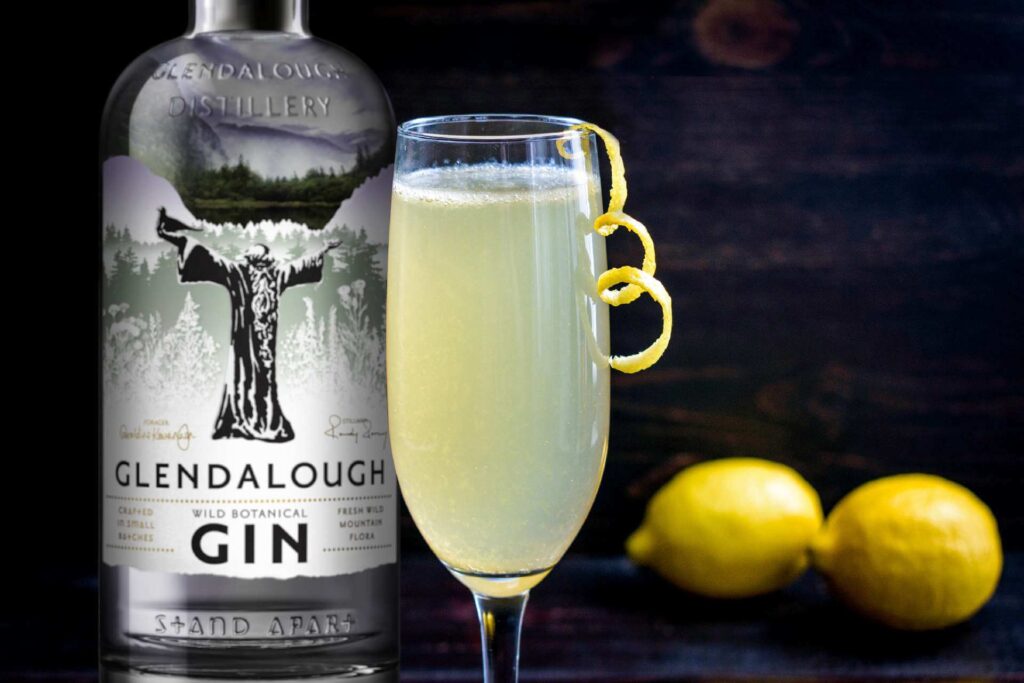
Glendalough Distillery Wild Gin Irish gin

Glendalough Wicklow 75

Bubbles make everything better and everyone happier.

Add all ingredients to shaker. Add ice and shake until well chilled. Strain into Champagne flute, top with Prosecco, and garnish with lemon twist.

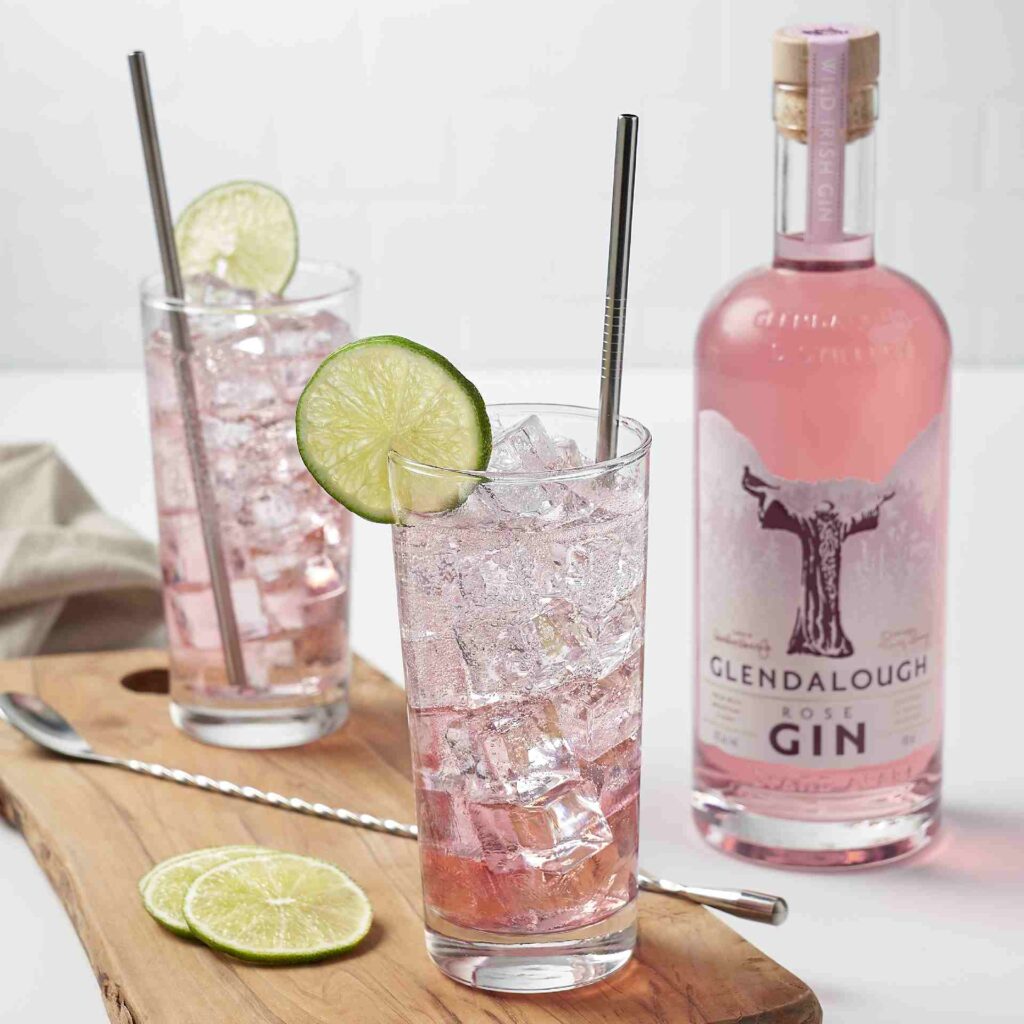
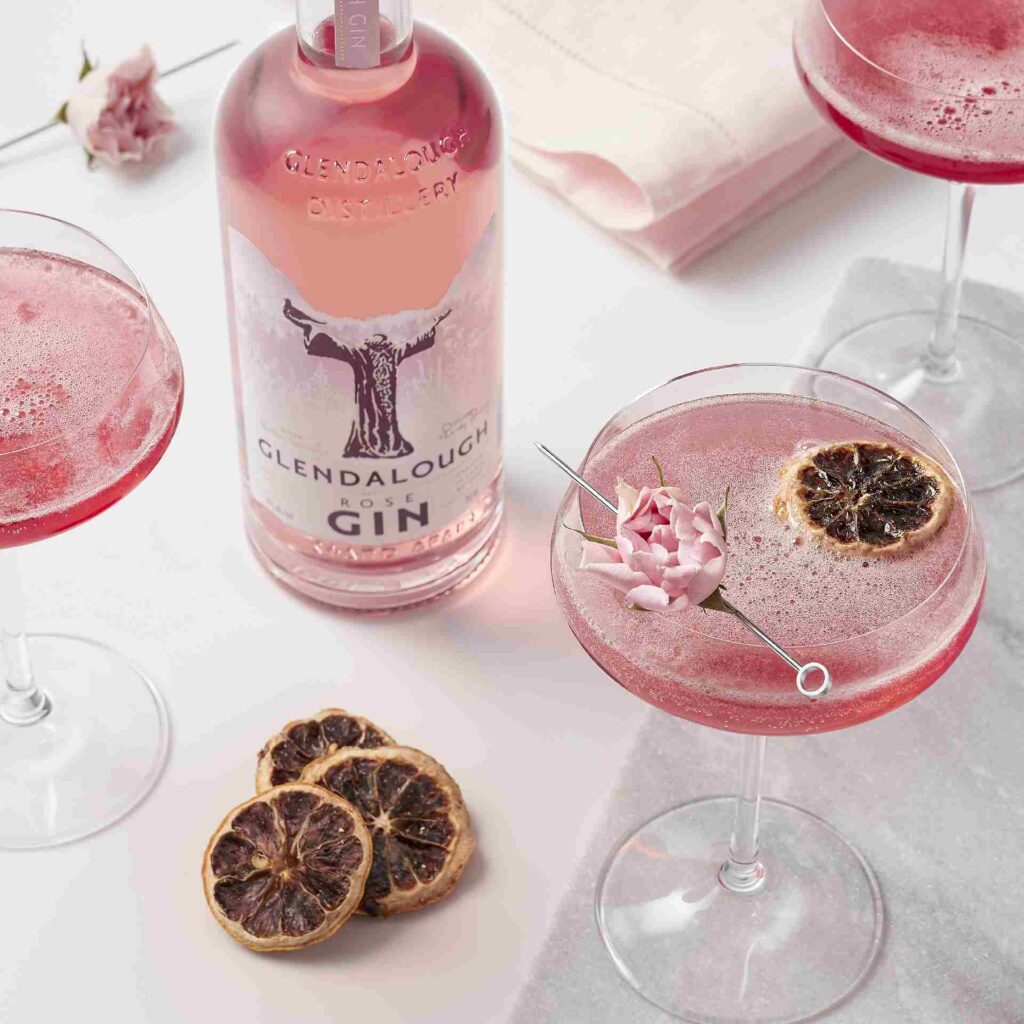
Glendalough Distillery Rose Gin Irish gin and cocktails

Glendalough Rose G&T

This simple classic receives a huge visual and aromatic boost from Glendalough Rose Gin.

  • 2 oz. Glendalough Rose Gin
  • Tonic to top (the higher the quality, the better)
  • Lime slice
  • Mint leaves

Add ice to glass, then add Rose Gin. Top with tonic, and garnish with lime slice and mint leaves.

Glendalough Distillery Rose Gin Fizz

Glendalough Rose Gin Fizz

One way to elevate the highball is to use a striking pink-hued Irish gin.

  • 1.5 oz. Glendalough Rose Gin
  • 0.5 oz. Elderflower liqueur
  • Raspberry & Lime sparkling water to top
  • Lime wheel to garnish

Add ice (spear, shard or cylinder for impact), Rose Gin, and liqueur to highball glass. Stir, then add sparkling water to top. Garnish with lime wheel.


View this post on Instagram


A post shared by Glendalough US (@glendaloughus)

Glendalough Rose Collins

Boost the classic Collins with Glendalough’s striking rose-petal gin.

  • 1.5 oz. of Glendalough Rose Gin
  • 1 oz. of Lemon juice (freshly squeezed)
  • 0.5 oz. of Sugar syrup (1:1 ratio, hot water to sugar)
  • Soda to top
  • Lemon peel to garnish
  • Cherry to garnish

Combine first three ingredients in a shaker with a cup of ice. Place an ice shard, spear or cylinder to a highball glass. Shake until well chilled, then strain into glass. Top with soda, and garnish with lemon peel and cherry.

Glendalough Distillery Rose Gin Hibiscus Rose

Glendalough Hibiscus Rose

Refreshing and flavorful, the hibiscus tea syrup plays incredibly well with Glendalough Rose Gin.

  • 1.5 oz. Glendalough Rose Gin
  • 0.5 oz. Hibiscus tea syrup (see note)
  • 0.5 oz. Lemon juice (fresh squeezed)
  • Prosecco to top
  • Dehydrated lemon wheel to garnish
  • Rose petals to garnish
  • 33 oz. Water for hibiscus tea syrup
  • 16 oz. Sugar for hibiscus tea syrup

Add first three ingredients and ice to a shaker. Shake until well chilled and double strain into a coupe.  Top with Prosecco, and garnish with dehydrated lemon wheel and rose petals.

For the hibiscus tea syrup: Steep seven hibiscus tea bags in 33 ounces of water for 15 minutes. Add 16 ounces of sugar.

Images & Recipes: Glendalough Distillery

Related Reading

Work with Us

Click the image below to partner with us on your project.

Client Intake Form - KRG Hospitality

Top