Canada

by David Klemt David Klemt No Comments

Canada’s Emerging Culinary Hubs and Why Strong Ecosystems Matter Now

Canada’s culinary identity isn’t defined by a handful of famous restaurant cities, but by a nationwide shift toward chef-driven regional expression.

These are culinary hubs where local ingredients, immigrant influence, and cultural revival are turning entire neighborhoods and secondary markets into the country’s next great dining destinations.

For years, conversations about Canadian dining have centered on a few obvious cities. However, that myopic view misses the real story unfolding across the country.

What’s happening now isn’t just growth, it’s decentralization. Chefs are leaning into regional identity, immigrant culinary traditions are shaping modern menus, Indigenous and heritage cuisines are experiencing a resurgence, and smaller markets are building serious food credibility.

The result? Canada’s culinary gravity is spreading outward, neighborhood by neighborhood, province by province. It’s creating a network of emerging hubs that operators, investors, and food travelers alike should be watching closely. Established culinary hubs are positioned for even more growth, and new, exciting destinations are poised for their time to shine.

Canada’s most exciting food scenes are no longer limited to major cities. Chef-driven regional cuisine and culturally rooted neighborhoods across every province are creating the country’s next wave of culinary destinations.

While this is exciting, it reveals a stark truth: closures will also reshape Canada’s culinary markets. Survival won’t be random.

The areas most likely to endure are those with strong culinary identity, independent operator density, regional ingredient stories, and genuine destination pull. These are ecosystems that tend to consolidate rather than collapse. This makes them particularly valuable ground for operators selecting a location to start their first concept, those working to stabilize operations, and for brands preparing to scale, offering a more resilient foundation than generic commercial strips.

by David Klemt

A close-up view of the gourmet plating of proteins, taken in Toronto, Canada

Ontario

How best to boil down Ontario’s rich culinary scene? If I had to pick just a few accurate descriptors, I’d say it’s chef-driven, globally-inspired, and diverse, and that last one may be an understatement.

It’s also undeniable that the farm-to-table movement has taken hold throughout the province.

Watch Riverside/Leslieville in Toronto, where independent, chef-driven concepts continue to cluster east of the core, and Prince Edward County, which is evolving from wine-country getaway into a year-round culinary destination. Also, monitor Ottawa’s Wellington West corridor, where neighborhood-scale dining energy keeps building beyond ByWard’s traditional gravity.

Toronto

Top Culinary Hubs

  • Chinatown
  • The Danforth
  • Gerrard East
  • Kensington Market
  • Koreatown
  • Queen West

Ottawa

Top Culinary Hubs

  • ByWard Market
  • Elgin Street
  • The Glebe
  • Little Italy
  • Wellington West

Québec

Anyone looking for rich and indulgent dining experiences will be rewarded in Québec. Smoked meats, duck, pork, wild game, incredible cheese production, a focus on charcuterie and pâtisserie, and a vibrant maple syrup culture all define the province’s approach to cuisine.

Rather than focusing on broad, already-established neighborhoods, watch micro-corridors within Montréal’s Mile End and Plateau. These areas are where new independent kitchens are pushing modern Québécois and immigrant-influenced cuisine forward.

In Québec City, Saint-Sauveur and the expanding Saint-Roch fringe show the strongest signs of becoming the city’s next chef-driven growth zones.

Québec City

Top Culinary Hubs

  • Grande-Allée
  • The Island of Orléans
  • Limoilou
  • The Old Port
  • The Petit Champlain District
  • Saint-Roch

Montréal

Top Culinary Hubs

  • Atwater Market
  • Chinatown
  • Downtown
  • Le Central
  • Little Italy
  • Mile End
  • Old Montreal
  • Plateau
  • Time Out Market

British Columbia

Anyone who has spent time diving into BC’s culinary scene knows a few things to be true: the food is clean and captures the Pacific’s terroir, the province’s chefs are masters of seasonal fare, several Asian cuisines are well represented, and seafood and wine are shine.

Kelowna is solidifying itself as BC’s most complete emerging culinary city, where wine, agriculture, and chef ambition intersect. Kamloops is building quiet momentum through event-driven food culture and local-forward dining. Within Vancouver, watch continued restaurant density growth in Mount Pleasant and the Commercial Drive area, where neighborhood dining culture is deepening.

Vancouver

Top Culinary Hubs

  • Chinatown
  • Gastown
  • Granville Island
  • Kitsilano
  • Richmond
  • The West End

Victoria

Top Culinary Hubs

  • Downtown
  • Chinatown
  • Fisherman’s Wharf
  • Inner Harbour
  • James Bay
  • Old Town

Alberta

Where’s the beef? It’s in the finest restaurants across the world, as Alberta’s known for its ranches and super-premium beef. Of course, there’s also elk, bison, and incredible wild game.

The province is largely renowned for its rustic cooking, bold flavors, and growing craft beer and spirits scenes.

In Edmonton, keep an eye on the Jasper Avenue corridor and adjacent downtown-adjacent districts, where revitalization and restaurant clustering are aligning. In the Rockies, Canmore is steadily transitioning from tourist stop to serious dining town, with chef-led concepts raising the ceiling on expectations.

Calgary

Top Culinary Hubs

  • 17th Avenue SW
  • Downtown
  • Eau Claire
  • Inglewood
  • Kensington

Edmonton

Top Culinary Hubs

  • 104th Street
  • 124th Street
  • Brewery District
  • Downtown
  • Garneau
  • Glenora
  • Mill Creek
  • Old Strathcona
  • Ritchie
  • Wîhkwêntôwin (formerly Oliver)

Manitoba

The province is known for freshwater treasures like Lake Winnipeg pickerel, along with cuisine influenced by immigrant comfort foods. Of note, Ukrainian, Mennonite, and Eastern European dishes.

Manitoba is also making a name for itself through foraged foods and wild rice.

Beyond Winnipeg’s established districts, Corydon Village continues to evolve into a more chef-driven dining strip, while Wolseley shows signs of strengthening as a neighborhood-scale food destination built around independent operators rather than chains.

Winnipeg

Top Culinary Hubs

  • Downtown
  • Exchange District
  • The Forks
  • Red River
  • Sports, Hospitality and Entertainment District (SHED)
  • Waterfront

Brandon

Top Culinary Hubs

  • Downtown
  • 18th Street Corridor
  • West End

Saskatchewan

New Prairie cuisine is a chef-driven movement putting modern spins on traditional dishes. In Saskatchewan, the province’s status as an agricultural powerhouse helps this movement shine. Saskatchewan is also experiencing an indigenous culinary revival.

Riversdale in Saskatoon is evolving from up-and-coming to culinary identity district, driven by independent restaurants and walkable density. In Regina, the Warehouse District continues to position itself as the city’s most concentrated food-and-nightlife corridor.

Saskatoon

Top Culinary Hubs

  • Briarwood
  • City Park
  • Downtown
  • Nutana
  • Stonebridge

Regina

Top Culinary Hubs

  • Albert Street
  • Cathedral Village
  • Downtown

Nova Scotia

Given its status as “the Seafood Capital of Canada,” driven in part by the billions in seafood the province exports to dozens of countries, it’s tough to beat Nova Scotia’s maritime-focused food scene. While there are rustic bites, there’s pride in Nova Scotia in producing elegant and refined dishes.

The Annapolis Valley (in particular, Wolfville) is becoming a true food-and-wine ecosystem rather than just a scenic stop, with agriculture, vineyards, and ambitious chefs converging into destination dining appeal.

Halifax

Top Culinary Hubs

  • Agricola Street
  • Argyle Street
  • Downtown
  • Halifax Seaport Farmer’s Market
  • The Halifax Waterfront

New Brunswick

A coastal powerhouse, New Brunswick will give any coastal location a run for its culinary money. Just consider that Shediac is referred to as “the Lobster Capital of the World,” and Cap-Pelé is considered by many to be “the Smoked Herring Capital of the World.”

And those are but two examples of New Brunswick’s incredible seafood. It’s undeniable that the province’s vibrant Acadian culture has influenced New Brunswick’s maritime mastery and rich food scene.

In Moncton, watch downtown-adjacent corridors near the core rather than any single street; restaurant growth is spreading outward. Coastal communities like Cap-Pelé and Shediac will continue gaining attention as regional seafood identity centers rather than purely seasonal stops.

Fredericton

Top Culinary Hubs

  • Downtown
  • Historic Garriston District
  • Northside

Moncton

Top Culinary Hubs

  • Downtown
  • St. George Street
  • West End

Newfoundland & Labrador

If rustic, heritage-driven cuisine is what someone craves, this province’s chefs deliver. Newfoundland & Labrador’s culinary scenes are rich with both traditional and modern takes on comforting, nostalgic dishes, and chef-driven concepts are modernizing dining options throughout the province.

The Bonavista Peninsula (including Bonavista and nearby coastal communities) is developing into a recognized culinary subregion, where chef-driven coastal gastronomy and heritage cooking are drawing national attention.

St. John’s

Top Culinary Hubs

  • Downtown
  • Duckworth Street
  • Quidi Vidi Village
  • Pleasantville
  • St. John’s Farmer’s Market
  • Water Street

Prince Edward Island

It may be the smallest province but Prince Edward Island boasts super-clean ingredients, be they in the form of seafood or its agricultural bounty. PEI delivers huge flavor and pristine bites.

Beyond Charlottetown, Rustico and Brackley Beach show the strongest signs of developing into seasonal micro-hubs built around seafood, agriculture, and destination-focused dining. These may be smaller in scale, but they’re high in culinary quality.

Charlottetown

Top Culinary Hubs

  • Downtown
  • Richmond Street
  • Victoria Row
  • Waterfront
  • West Royalty

Outside of Charlottetown

  • New Glasgow
  • New London
  • Summerside
  • Victoria-by-the-Sea

Image: Javon Swaby via Pexels

Along with other sources, the author reviewed the Destination Canada website for information.

Related Reading

Work with Us

Click the image below to work with us on starting, stabilizing, or scaling your hospitality concept.

Client Intake Form - KRG Hospitality

by David Klemt David Klemt No Comments

Raise Your Glass to Canadian Beer Day

Raise Your Glass to Canadian Beer Day

by David Klemt

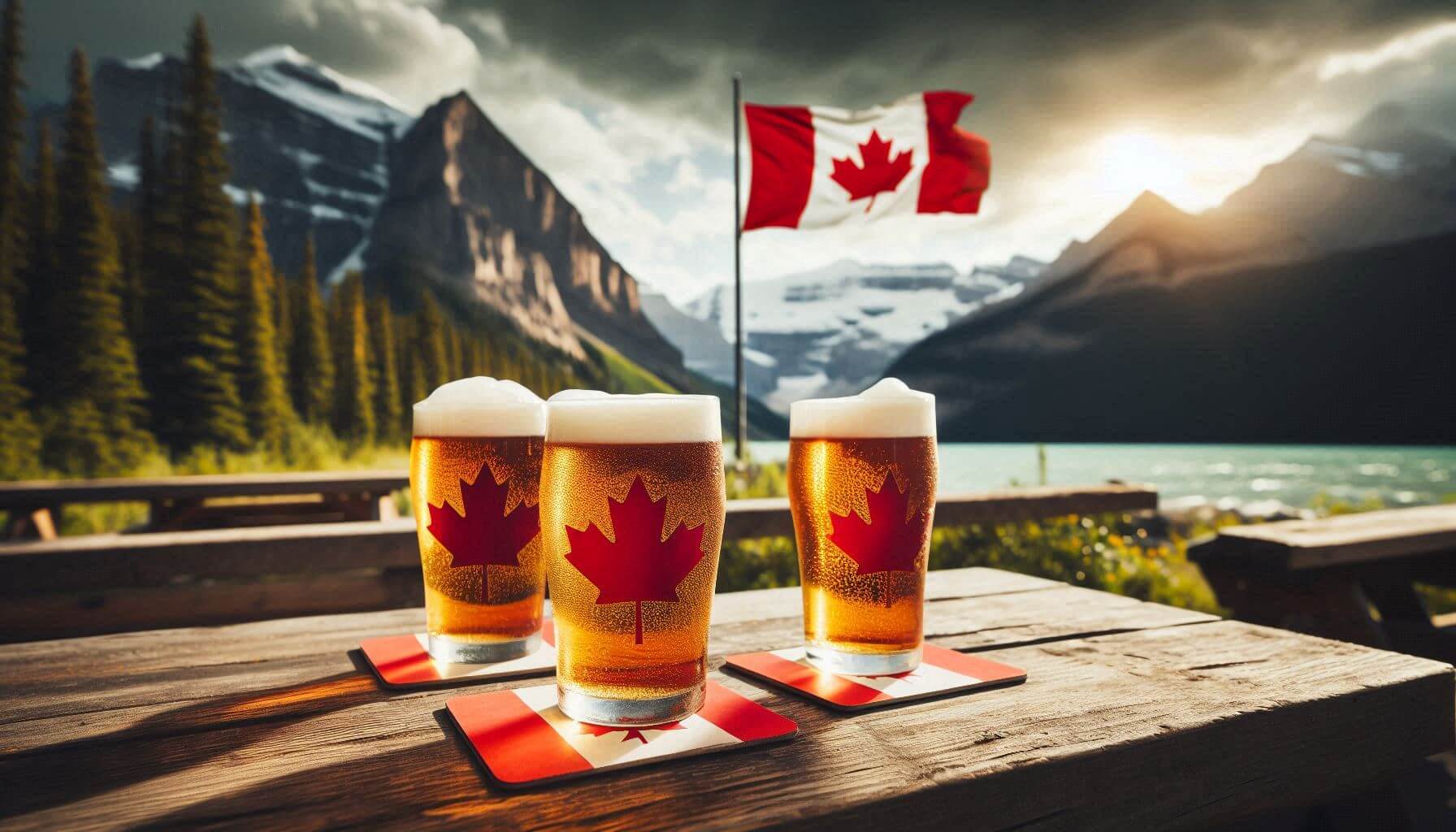
An AI-generated image of three pint glasses filled with beer sitting on Canadian flag coasters on a picnic table, with a mountain, lake, and Canadian flag in the background

This is an AI-generated image, but I still want to visit and drink those beers.

Operators and their guests will raise their glasses and celebrate Canadian beer on October 9, also known as Canadian Beer Day.

This year represents the sixth-annual Canadian Beer Day. Beer Canada created the holiday, with first event launching in 2019.

Not only does this beer-centric holiday honor one of the world’s most-popular drinks, it’s a day to observe its impact on Canada. According to the Beer Canada website, which is an excellent resource that I recommend everyone visit, brewers in the country employ 21,000 Canadians directly.

Zoom out and that number jumps to nearly 150,000 Canadians overall. There are farmers, bartenders, retailers, truckers, designers, and many other people whose employment relies on beer production. Further, almost 90 percent of beer purchased in Canada is brewed locally.

Each year, Beer Canada crafts a theme to go along with Canadian Beer Day. This year, that theme celebrates the cultural significance of the nation’s beer culture.

As an American, I think I’m qualified to say that people have seemed more divided over the past decade than in recent memory. At least, that’s what we’re often being told in the US, Canada, and other countries.

But think about how powerful gathering in pubs and bars has been for breaking down barriers. Having a beer with a stranger and finding middle ground can lower temperatures, and go a long way toward healing communities.

We should all strive to get back to that simple, comforting practice.

“Local” Impact

I may date myself a bit here but I remember the first Canadian beer I ever tried. Growing up in the Midwest in America, it was common to have friends who visited or had family and friends in Canada.

One day in the Nineties, some friends of mine and I got into a lighthearted debate about beer. One of our friends, who had just come back from a trip to Canada, scoffed at our light American pilsners and lagers, stating that we were essentially drinking water.

Then, he opened a cooler and pulled out bottles of Moose Drool Brown Ale. Not long after that moment, I’d be introduced to Moosehead and Labatt.

I still think about that first sip of Moose Drool, particularly when a beer debate heats up. I’m just one person but Canadian beer has had an impact on little old American me.

Canadian Beer

Head to Montréal, Québec, and you can visit the Talon Vaults, the archaeological remains of Canada’s first commercial brewery.

This important bit of beer-brewing history dates back to the late 1660s, when La Brasseries du Roy was opened by Jean Talon in Québec City. However, beer brewing in Canada dates back to at least the 1620s.

In 1786, the legendary John Molson established the Molson Brewery, also in Québec City. I think we all know how significant the Molson story is to Canadian beer.

Today, there are more than 1,300 breweries operating and employing people across Canada. Most are located in Ontario, Québec, British Columbia, and Alberta. Although, there at least a single brewery in every province. For example, there’s one brewery in the Northwest Territories, and one in Nunavut.

Per Statista data, the Canadian beer industry generated $18.43 billion (US $13.6 billion) in 2023, with $7.8 billion (US $5.8 billion) coming from restaurants and bars.

Those are big numbers being put up by just 1,300 breweries.

Celebrate in Style

Along with having a beer and getting to know someone, a great beer and food pairing can improve your day.

So, I asked Nathen Dubé, our chef consultant at KRG Hospitality, for some of his favorite beer pairings. And, wow, did he deliver.

Check out his recommendations below, and consider using them for a Canadian Beer Day limited-time-offer menu.

Let’s start with his favorite personal pairing.

“One of my favorite beer and food pairings is a robust, malty, Canadian brown ale with a perfectly grilled bison burger topped with aged cheddar, caramelized onions, and a touch of maple bacon,” says Nathen. “The rich malt character of the brown ale complements the hearty, gamey flavor of the bison, while the subtle sweetness from the caramelized onions and bacon plays beautifully with the ale’s caramel notes. The cheddar adds a creamy, sharp contrast, making each bite and sip a delightfully balanced experience.”

Now, let’s jump into Nathen’s LTO suggestions. This Canadian Beer Day, he recommends crafting unique, gourmet poutines.

Traditional Poutine

Beer Pairing: Local Pale Ale

Description: Hand-cut fries topped with squeaky cheese curds and a rich beef gravy. The pale ale’s mild bitterness cuts through the gravy’s richness, while its effervescence balances the cheese’s creaminess.

Butter Chicken Poutine

Beer Pairing: Indian Pale Ale (IPA)

Description: Fries smothered in creamy, spiced butter chicken sauce, topped with fresh cilantro and a dollop of yogurt. The hoppy and citrusy notes of the IPA enhance the spices in the butter chicken, creating a vibrant and aromatic pairing.

Pulled Pork BBQ Poutine

Beer Pairing: Smoked Porter

Description: Crispy fries loaded with slow-cooked pulled pork, tangy BBQ sauce, and cheddar cheese. The smoked porter’s roasted malt flavors complement the smoky pork, while its subtle sweetness balances the BBQ sauce’s tang. This poutine can be—or rather should be—prepared and served individually. As a general, Nathen always thinks the darker the beer, the stronger the cheese. On the other flavor profile side, the lighter/fruitier beer, the lighter the cheese.

Be sure to add these tempting poutines to your LTO menu, and visit the Canadian Beer Day website to download their digital and social media assets. Cheers!

Image: Microsoft Designer

KRG Hospitality Contact Request for Proposal 30 Minute Discovery Session

Book Below to Setup a 30-Minute Complimentary Discovery Call and Request for Proposal.


by David Klemt David Klemt No Comments

Ontario Updates Employment Standards Act

Ontario Updates Employment Standards Act

by David Klemt

Daytime photo of the Toronto, Ontario, Canada, skyline

Yesterday, Ontario, Canada’s government tabled updates to the province’s Employment Standards Act meant largely to protect restaurant and hospitality workers.

These explicit protections are known as Bill 79, Working for Workers Four Act, 2023.

Interestingly and timely, the updates seem to be, at least in part, a direct response to technological developments.

For example, Bill 79 addresses digital payment apps and artificial intelligence. I’ll expand on that below.

These updates certainly appear to have been drawn up to protect restaurant workers specifically, and hospitality professionals overall.

An End to Unpaid Trial Shifts

One of the most significant updates addresses hours and pay.

It likely shouldn’t have to be said but, according to Ontario law, an employee must be paid for all the hours they work. This includes trial shifts.

Specifically, the new legislation expressly prohibits unpaid trial shifts.

Pooling Tips

Employers in Ontario are well within their rights to share in pooled tips. That is, if the employer is performing the same tasks as staff.

However, there’s now an update to this practice within the Employment Standards Act.

If any employer intends to share in a tip pool, they must make this clear and inform staff.

Speaking of Tips…

For the most part, digital payment platforms bring with them transaction fees. This includes fees for restaurant workers to get their tips.

“We’re seeing apps that are taking a cut every time…a worker accesses their tips, and that’s not acceptable,” says Piccini.

So, moving forward, employees who are paid tips via direct deposit will have more control. The updates to the Employment Standards Act now state that employees paid this way can choose where their tips will be deposited.

Deducting Wages

Per multiple studies, one in 20 diners has dined and dashed. Apparently, it has been common practice for some employers to deduct wages in response.

Personally, I think it’s ridiculous for any employers to pass a business loss on to their workers. That’s neither good leadership, ethical, or a healthy work culture. I’m not saying I’m surprised it happens; I’m disgusted that it still happens.

Now, the practice of penalizing employees monetarily for guests dining and dashing is prohibited specifically. Will that stop it from happening? Probably not, although perhaps it will happen much less moving forward.

This also includes language that makes it illegal to deduct pay from employees due to customer “gassing and dashing.” For anyone wondering, gas theft affected Ontario businesses to the tune of $3 million CAD in 2022.

Artificial Intelligence

Some employers, as many job hunters are aware, use artificial intelligence during the hiring process.

Now, these employers will have to disclose their use of AI in job listings. In theory, this update addresses privacy and data collection concerns.

Further, job listings will now have to include salary ranges. Also, employers are now prohibited from requiring work Canadian work experience in their job listings or on their application forms.

To review Bill 79 in its entirety, click here.

Image: mkdrone_ on Unsplash

Bar Nightclub Pub Brewery Operations Standard Operating Procedures SOP

by David Klemt David Klemt No Comments

Indies in the US & Canada: The Numbers

Independents in the US & Canada: The Numbers

by David Klemt

Canadian and America flags flying together

Operators who wonder how many independent restaurants there are throughout America and Canada finally have their answer thanks to Datassential.

The well-known food and beverage research and intelligence platform’s recent infographic reveals the state of indies in both countries.

For the purposes of their infographic, Datassential splits restaurants into two overarching categories. One major category is full-service restaurants, the other is limited-service.

From there, the platform organizes restaurants into five segments: casual, QSR, midscale, fast casual, and fine dining.

To my understanding, QSR and fast casual fall under Datassential’s limited-service designation. Casual, midscale, and fine dining are full-service restaurants.

To review the infographic yourself, please click here.

Number of Indie Restaurants: America

According to Datassential, there are 483,885 independent restaurants in the US.

Of those restaurants, 57 percent are full-service. It follows, then, that 43 percent are limited-service.

Close to half—44 percent—of full-service restaurants in the US boast more than five years of being open. Just a quarter of limited-service restaurants (26 percent) can claim the same.

This does, anecdotally, make some sense. QSRs and fast-casual brands have been on the rise over the past couple of years. In fact, some casual chains are developing and launching QSR brands off the strength of the category.

Finally, 21 percent of full-service restaurants in the US see annual sales under $500,000. That number climbs to 27 percent for limited-service restaurants.

Now, let’s take a look at independent restaurants in Canada.

Number of Indie Restaurants: Canada

Per Datassential, there are a total of 59,914 independent restaurants throughout Canada.

The split between full-service restaurants and limited-service restaurants is just about even. Fifty-one percent of indie restaurants in Canada are full-service. Forty-nine percent are limited-service operations.

A little under 40 percent of full-service independent restaurants in Canada (36 percent) can say they’ve been operating for more than five years. That number is 28 percent for limited-service restaurants.

Interestingly, just five percent of independent full-service restaurants in Canada bring in less than $500,000 in sales annually. That number jumps to 34 percent when we look at the limited-service category.

Indie Restaurants by Segment

The breakdown of the five Datassential independent restaurant categories is the same for America and Canada.

Most independent restaurants in either country are casual. Following, in descending order of number of restaurants, are QSR, midscale, fast casual, and fine dining.

For America, the numbers are as follows:

  • Casual: 37 percent
  • QSR: 34 percent
  • Midscale: 19 percent
  • Fast casual: 9 percent
  • Fine dining: 1 percent

And for Canada the breakdown is nearly identical:

  • Casual: 37 percent
  • QSR: 30 percent
  • Midscale: 18 percent
  • Fast casual: 14 percent
  • Fine dining: 1 percent

There are eight times as many independent restaurants in America as there are in Canada. But as you can see, the industry segmentation by country is nearly the same.

Future independent operators can look at this information a few different ways. They can choose to join the most popular segments and differentiate themselves from the competition. They can look for and fill a need for an indie fast-casual or fine-dining concept. Or they can shoot for the middle and go midscale, a segment that’s gaining traction across several hospitality industry sectors.

For you own copy of Datassential’s infographic, follow this link.

Image: chris robert on Unsplash

KRG Hospitality. Restaurant Business Plan. Feasibility Study. Concept. Branding. Consultant. Start-Up.

by David Klemt David Klemt No Comments

Canada’s Single-use Plastics Ban

How Canada’s Single-use Plastics Ban Affects Operators

by David Klemt

Single-use plastic straws and utensils

With a few exceptions, Canada’s ban on the manufacture, importation, and sale of single-use plastics is now officially in effect.

However, that doesn’t mean restaurant and bar operators need to worry about current inventories just yet. While the Single-use Plastics Prohibition Regulations are in effect, operators have a year to deplete their stocks.

SUPPR is a crucial element of Canada’s overall plan to combat pollution and reach a goal of zero plastic waste by 2030. The single-use plastics ban was announced in June of this year.

“We promised Canadians we would deliver a ban on single-use plastics. Today, that’s exactly what we’ve done,” said Minister of Environment and Climate Change Steven Guilbeault the day SUPPR was announced. “By the end of the year, you won’t be able to manufacture or import these harmful plastics. After that, businesses will begin offering the sustainable solutions Canadians want, whether that’s paper straws or reusable bags. With these new regulations, we’re taking a historic step forward in reducing plastic pollution, and keeping our communities and the places we love clean.

Now, six months later, it’s the law of the land.

What’s Banned?

Essentially, Canadian operators must evaluate everything they use for delivery and takeout or pickup. If any items are single-use plastic, they must be gone by December 2023.

Per SUPPR, the manufacture, importation, and sale of the following is prohibited:

  • Checkout bags designed to carry purchased goods from a business and typically given to a customer at the retail point of sale.
  • Cutlery includes:
    • knives
    • forks
    • spoons
    • sporks
    • chopsticks
  • Foodservice ware designed for serving or transporting food or beverage that is ready to be consumed, and that:
    • contains
      • expanded polystyrene foam
      • extruded polystyrene foam
      • polyvinyl chloride
      • carbon black
      • an oxo-degradable plastic
    • are limited to the following items
      • clamshell containers
      • lidded containers
      • boxes
      • cups
      • plates
      • bowls
  • Ring carriers are flexible and designed to surround beverage containers in order to carry them together.
  • Stir sticks designed to stir or mix beverages, or to prevent a beverage from spilling from the lid of its container.
  • Straws include:
    • straight drinking straws, and
    • flexible straws, which have a corrugated section that allows the straw to bend, packaged with beverage containers (juice boxes and pouches)

For accuracy, the above comes from the Government of Canada website directly, unedited.

What does this mean for Operators?

Again, operators in Canada don’t need to toss their current stock of the above items.

However, Restaurants Canada does recommend that operators contact suppliers and customers if they import, export, or sell prohibited items currently.

The single most important thing for operators to do now is research single-use plastic alternatives. Items need testing as changes will affect F&B items and the guest experience.

Of course, it’s possible an operator’s current supplier already offers alternatives to single-use plastics. That could prove convenient but costs, supply chain reliability, and impact on menu items need careful consideration.

Sustainability and responsible practices are no longer just conversation topics within the industry. As of this week, in Canada, they’re the only way forward.

Image: Volodymyr Hryshchenko on Unsplash

by David Klemt David Klemt No Comments

Canada’s Top 2022 DoorDash Orders

Canada’s Top 2022 DoorDash Orders

by David Klemt

Burgers, French fries and milkshakes

Operators curious about the most popular delivery items in 2022 will be happy to learn that DoorDash’s year-end report is ready for viewing.

Those who want to compare it to predictions from several sources earlier this year can click here. The DoorDash Canada report can also be compared to consumer trends in Canada revealed back in October.

Before we jump in, I’m not detailing the DoorDash report in its entirety here. To review the entire report, please click here.

Instead, I’ll be sharing the top takeaways in terms of top menu items; top cuisines; and top items by province.

Speaking of provinces, a word to New Brunswick, Newfoundland and Labrador, Northwest Territories, Nova Scotia, Nunavut, Prince Edward Island, and the Yukon. Please don’t break out the pitchforks and come for me for not including you in this article. DoorDash’s report only covers data from six provinces—I didn’t leave you out intentionally.

Top DoorDash Cuisines in Canada

  1. American
  2. Mexican
  3. Japanese
  4. Thai
  5. Mediterranean
  6. Indian
  7. Chinese
  8. Italian
  9. Korean
  10. Filipino

Top DoorDash Items in Canada

  1. Burgers & Fries
  2. Fried Chicken
  3. Poutine
  4. Sushi Rolls
  5. Chicken Wings
  6. Burritos
  7. Chicken Rice Bowl
  8. Shawarma Wraps
  9. Curry
  10. Pad Thai

I think there’s one key takeaway that stands out in regards to this list. Notably, it appears that while chicken isn’t number one, it’s undeniably popular amongst Canadian DoorDash users.

In fact, according to DoorDash data, chicken reigns supreme in British Columbia. When you reach the province-specific sections below, you’ll see how powerful the cravings in BC are for chicken.

Top DoorDash Late-night Items

Again, chicken rules the DoorDash roost in this category.

  1. Chicken Nuggets
  2. Fries
  3. Poutine
  4. Chicken Wings
  5. Chicken Burgers
  6. Apple Pie
  7. Cheeseburger
  8. Spinach & Cheese Dip
  9. Chocolate Fudge Sundae
  10. Crispy Chicken

Top DoorDash Items: British Columbia

  1. Burrito Bowl
  2. Szechuan Chicken Lettuce Wraps
  3. Butter Chicken
  4. California Roll
  5. Crispy Chicken Sandwich
  6. Tofu Bowl
  7. Chocolate Chip Cookies

Top DoorDash Items: Ontario

  1. Cheeseburger
  2. Coffee
  3. Burrito Bowls
  4. Chicken Shawarma
  5. Crispy Chicken
  6. Bagels
  7. Pad Thai
  8. Beef Patty
  9. Pizza
  10. Onion Rings

Top DoorDash Items:Alberta

  1. Spinach and Cheese Dip
  2. Chicken Cheddar Sandwich
  3. Chilli Chicken
  4. Kale Salad
  5. Margarita Pizza
  6. Hot Apple Turnover

Top DoorDash Items: Québec

  1. Poutine
  2. Cappuccino
  3. Pad Thai
  4. Steak and Cheese
  5. Croissant
  6. Dumplings
  7. Chips
  8. Tacos

Top DoorDash Items: Saskatchewan

Interestingly, a beverage item holds the top spot in Saskatchewan.

  1. Bubble Tea
  2. Pepperoni Pizza
  3. Pork Bun
  4. Crispy Pork
  5. Garlic Bread
  6. Pasta

Top DoorDash Items: Manitoba

  1. Fries
  2. Butter Chicken
  3. Red Velvet Cake
  4. Poke Bowl
  5. Shawarma Wrap

As I stated in Wednesday’s article detailing Grubhub and Uber Eats’ reports for the US, we believe operators should take as much control over their restaurants and bars as possible. At KRG Hospitality, that means implementing direct delivery if it makes sense: ease of use, delivery capabilities, favorable costs, etc.

It’s also helpful to know what consumers in your area are craving and ordering. Such information can provide a useful baseline for many concepts’ menu development.

Image: John Fornander on Unsplash

by David Klemt David Klemt No Comments

These are the Happiest Provinces in Canada

These are the Happiest Provinces in Canada

by David Klemt

Newfoundland and Labrador during daytime

If you’re wondering which province in Canada is the happiest, Statistics Canada has the answer—and the happiest may surprise you.

Of course, those who live and work in the happiest province won’t find it shocking. After all, they’re largely happy to be there.

However, if you expect the happiest province to be the home of Toronto, Vancouver, Montreal or Canada… Well, you’re in for a surprise.

Earlier this week we took a look at the happiest cities and states in America. Congratulations Fremont, California, and Hawaii, respectively. To learn where 181 other cities and 49 states rank, please click here.

The Happiness Survey

Or more accurately, the “life satisfaction” survey. For this survey, that’s what Statistics Canada reveals: life satisfaction.

Interestingly, the survey is very simple. Apparently, Statistics Canada simply asked participants to rate the satisfaction of living in their province, zero through ten. For this survey, zero is least satisfied, ten is most.

Ages 15 through 75 (and older) were able to participate. The survey was also broken down to gauge the satisfaction of men and women.

Before we jump into the breakdown of province satisfaction or happiness, some good news. Reviewing the Statistics Canada data, most participants across all age groups are happy. In fact, age groups 65 to 74 and 75-plus appear to be happiest.

On the other side, ages 15 to 54 had the most people who rated their life satisfaction between zero and five. Even so, just over 20 percent of survey respondents rated their satisfaction a five or less.

So, on the whole, Canadians seem satisfied or happy with their lives, regardless of the province in which they live. Personally, I find that to be great news.

The Happiest Province

Okay, let’s dive into the reason you’re here: to learn which province is the happiest.

  1. Newfoundland and Labrador
  2. Prince Edward Island
  3. Quebec
  4. New Brunswick
  5. Manitoba
  6. Alberta
  7. Saskatchewa
  8. Nova Scotia
  9. Ontario
  10. British Columbia

The above rankings are determined by the percentage of survey respondents who rated their life satisfaction eight, nine or ten. So, if you’re in Newfoundland and Labrador, Prince Edward Island or Quebec, wow—you’re apparently one incredibly happy person.

Conversely, below you’ll find the rankings as determined by the largest percentage of respondents who rated their satisfaction a five or lower. As you’ll find, the list below isn’t simply the inverse of the one above.

  1. Ontario
  2. British Columbia
  3. New Brunswick
  4. Alberta
  5. Nova Scotia
  6. Prince Edward Island
  7. Manitoba
  8. Saskatchewa
  9. Quebec
  10. Newfoundland and Labrador

As far as Canada overall, the results of this particular survey are positive. Just 19.4 percent of survey respondents rated their satisfaction or happiness zero through five. And only 28.9 percent provided a rating of six or seven.

More than half of Canadians, 51.7 percent, rate their lives an eight, nine or ten. That’s some great and welcome news.

Image: Erik Mclean on Unsplash

by David Klemt David Klemt No Comments

Menus in Canada: Who Wants What Items?

Menus in Canada: Who Wants What Items?

by David Klemt

Bar and restaurant food and drink menus

Nobody has a crystal ball telling them what they should put on their menus to boost traffic and revenue, but we do have data.

In this instance, we have useful data regarding Canadian consumers specifically. Not only do we have helpful information from Restaurants Canada, David Henkes from Technomic has also weighed in. For those who are unfamiliar, Technomic is one of the best foodservice research and consulting firms.

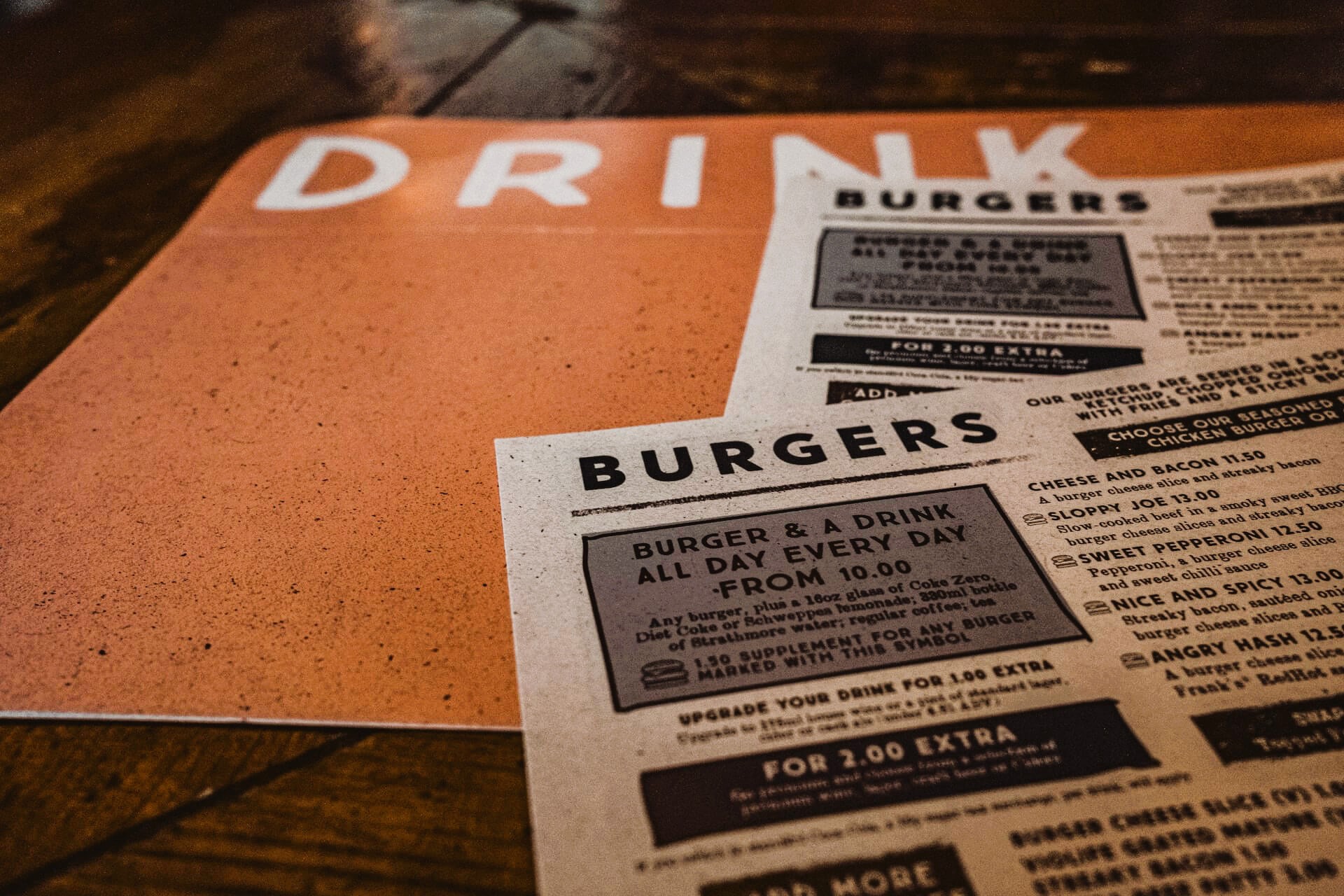
Before we dive into Restaurant Canada’s menu trend information, this is not a review of the top menu item orders in Canada. For a deep dive into that topic in particular, please read our article “F&B in Canada: Top Menu Items.”

Instead, in this article we’re reviewing broader menu categories and interest in them among Canadian consumers. For your own copy of the 2022 Foodservice Facts report, click here.

Word of Warning

Now, it’s important to bear in mind that the data below is a snapshot. It’s important, informative data but it shouldn’t influence your menu completely.

In other words, when considering revising your menu in any way, make sure you’re staying true to your brand and the community you serve. If your data differs from Restaurants Canada and Technomic data, that’s okay.

Not only are there always outliers, not all data applies to every concept. So, don’t take drastic action on your menus based solely on the data below.

For this particular topic, Restaurants Canada asked three age groups about their interest in eight menu categories.

The groups are: 18 to 34, 35 to 54, and 55-plus. The industry advocacy group then reviewed the numbers for those who indicated they’re “very interested” or “somewhat interested” for each category or item.

Who Wants What?

The menu category generating the most interest from Canadian consumers, according to Restaurants Canada data, is food sourced from local farmers. Overall, 93 percent of survey respondents very or somewhat interested. Those in the 55-plus age group are the most interested.

More than 80 percent are interested in comfort foods, or creative riffs on comfort foods. Age groups 18 to 34 and 35 to 54 have the most interest. Precisely 80 percent are interested in trying globally inspired foods and flavors, led by the 18 to 34 age group.

Foods that promote health and wellness come next, with 79 percent of Canadian consumers showing interest. The 55-plus age group is particularly interested. However, dishes that utilize ingredients that boost one’s immune system are only popular among 53 percent of survey respondents. Interestingly, it’s the 18 to 34 age group with the most interest in this category.

In what’s possibly a contrast from American consumers, the final three categories have no more than 41 percent of survey respondents’ interest. Forty-one percent have interest in meatless and vegetarian items. Next, just 38 percent show interest in alcohol-free cocktails. Finally, just 33 percent are interested in plant-based burgers and sausages.

For each of those categories, the greatest interest comes from the 18 to 34 age group, and the 55-plus group shows the least amount of interest.

Recommended Reading

We’ve been reviewing the 2022 Foodservice Facts report from Restaurants Canada in depth for several weeks. To learn more about this important report, please read the following:

Image: Samuel Regan-Asante on Unsplash

by David Klemt David Klemt No Comments

F&B in Canada: Top Menu Items

F&B in Canada: Top Menu Items

by David Klemt

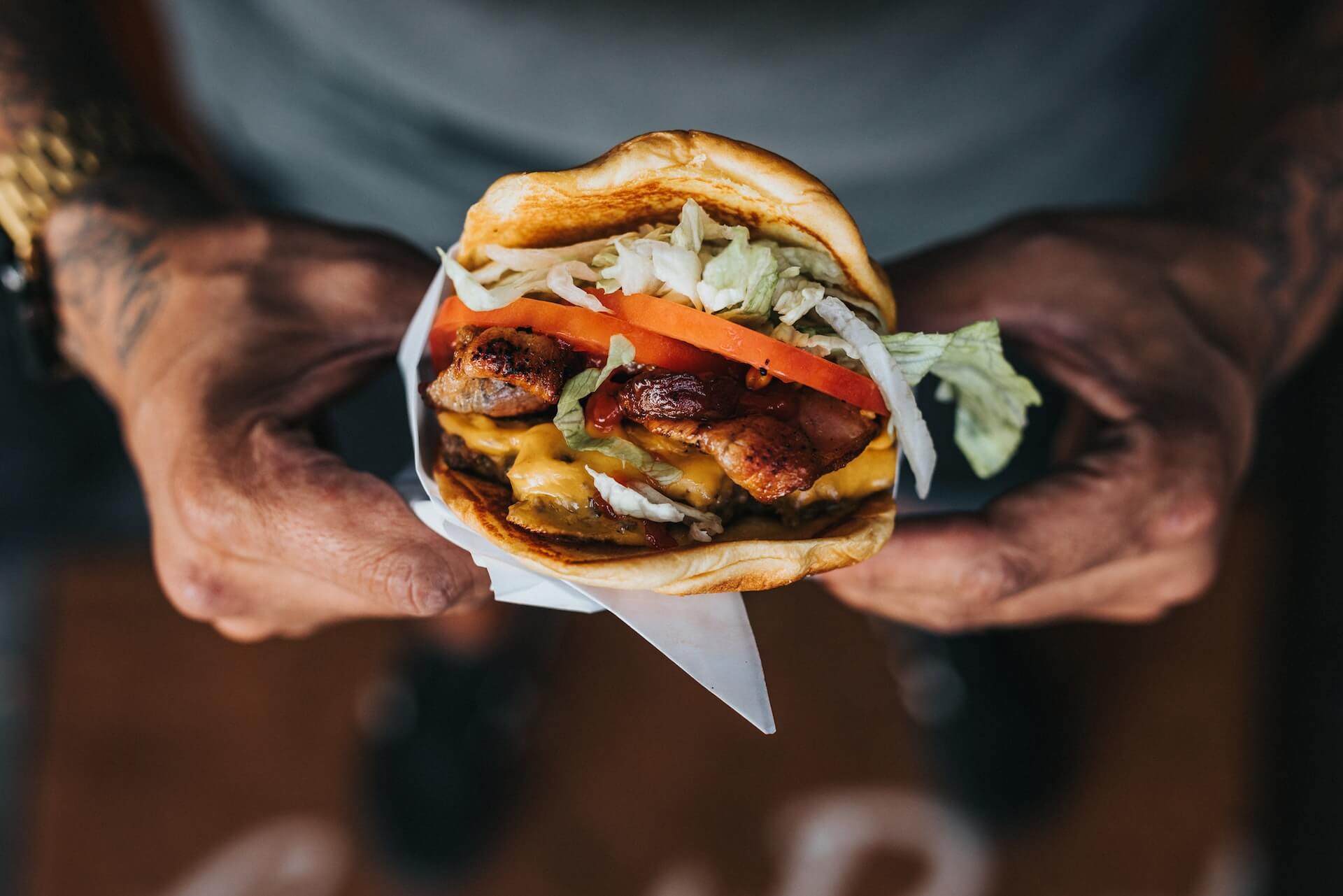
Closeup of hands holding burger

Those wondering what food and beverage menu items are performing best among consumers throughout Canada need wonder no more.

And why is that? Well, Restaurants Canada has the answers, revealing the top ten food and top ten beverage items.

Further, the organization compares each item’s performance. In this instance, Restaurants Canada analyses the percentage of orders that contained each food or beverage item from January to April 2022 in comparison to 2019.

These insights (and many more) are available in Restaurants Canada’s 2022 Foodservice Facts report. In fact, you can find our reviews of several of the restaurant advocacy group’s report topics via the links below:

For your own copy of this year’s Foodservice Facts report, click here.

Top 10 Canadian Drink Menu Trends

As you’ll see below, coffee is outperforming nearly every other beverage category. Specifically, Hot coffee is at the top, while Iced or frozen coffee is ranked third.

Unsurprisingly, Carbonated soft drinks / Pop / Soda split the two coffee categories. According to Restaurants Canada, the Carbonated soft drink category can credit its performance in large part to QSRs.

  1. Milk: 1.8% (2019) to 1.8% (2022)
  2. Iced tea: 2.9% (2019) to 1.6% (2022)
  3. Milkshakes / Smoothies: 2.1% (2019) to 2.0% (2022)
  4. Fruit juice: 3.8% (2019) to 3.0% (2022)
  5. Hot tea: 5.5% (2019) to 4.5% (2022)
  6. Alcohol beverages: 5.1% (2019) to 5.7% (2022)
  7. Water: 6.6% (2019) to 5.0% (2022)
  8. Iced or frozen coffee: 5.3% (2019) to 7.5% (2022)
  9. Carbonated soft drinks / Pop / Soda: 19.7% (2019) to 20.2% (2022)
  10. Hot coffee: 40.9% (2019) to 41.9% (2022)

Compellingly, Alcohol beverage performance in restaurants fluctuated by age group between 2021 and 2022. Alcohol order shares in restaurants, per Restaurants Canada:

  • Legal drinking Age (LDA) to 34: 46% (2021) to 43% (2022)
  • 35 to 49: 17% (2021) to 21% (2022)
  • 50-plus: 37% (2021) to 36% (2022)

Alcohol order shares in bars, according to Restaurants Canada:

  • LDA to 34: 35% (2021) to 35% (2022)
  • 35 to 49: 17% (2021) to 19% (2022)
  • 50-plus: 49% (2021) to 47% (2022)

Overall, the 35 to 49 age group appears to be consuming less alcohol in bars and restaurants in comparison to the LDA to 34 and 50-plus cohorts.

Top 10 Canadian Food Menu Trends

As Restaurants Canada notes, the Sandwich / Sub category has grown in 2022. Interestingly, the category just below it in growth, Chicken, is partially responsible for boosting Sandwich / Sub performance.

As far as entrees or “main attractions,” the Burger category remains at the top, beating out Breakfast, Sandwich / Sub, Chicken, and Pizza menu items.

  1. Cake / Squares / Muffins: 3.7% (2019) to 3.3% (2022)
  2. Salad: 4.3% (2019) to 3.8% (2022)
  3. Donuts / Beignets: 3.0% (2019) to 3.8% (2022)
  4. Breads: 4.3% (2019) to 3.4% (2022)
  5. Pizza / Panzerotti / Calzone: 4.1% (2019) to 4.3% (2022)
  6. Chicken: 7.6% (2019) to 8.5% (2022)
  7. Sandwich / Sub: 8.0% (2019) to 8.5% (2022)
  8. Breakfast: 10.8% (2019) to 11.4% (2022)
  9. Burger: 9.0% (2019) to 10.9% (2022)
  10. French fries / Potato / Sweet potato / Onion rings: 15.0% (2019) to 16.1% (2022)

Image: Nathan Dumlao on Unsplash

by David Klemt David Klemt No Comments

The Numbers on Food Delivery in Canada

The Numbers on Food Delivery in Canada

by David Klemt

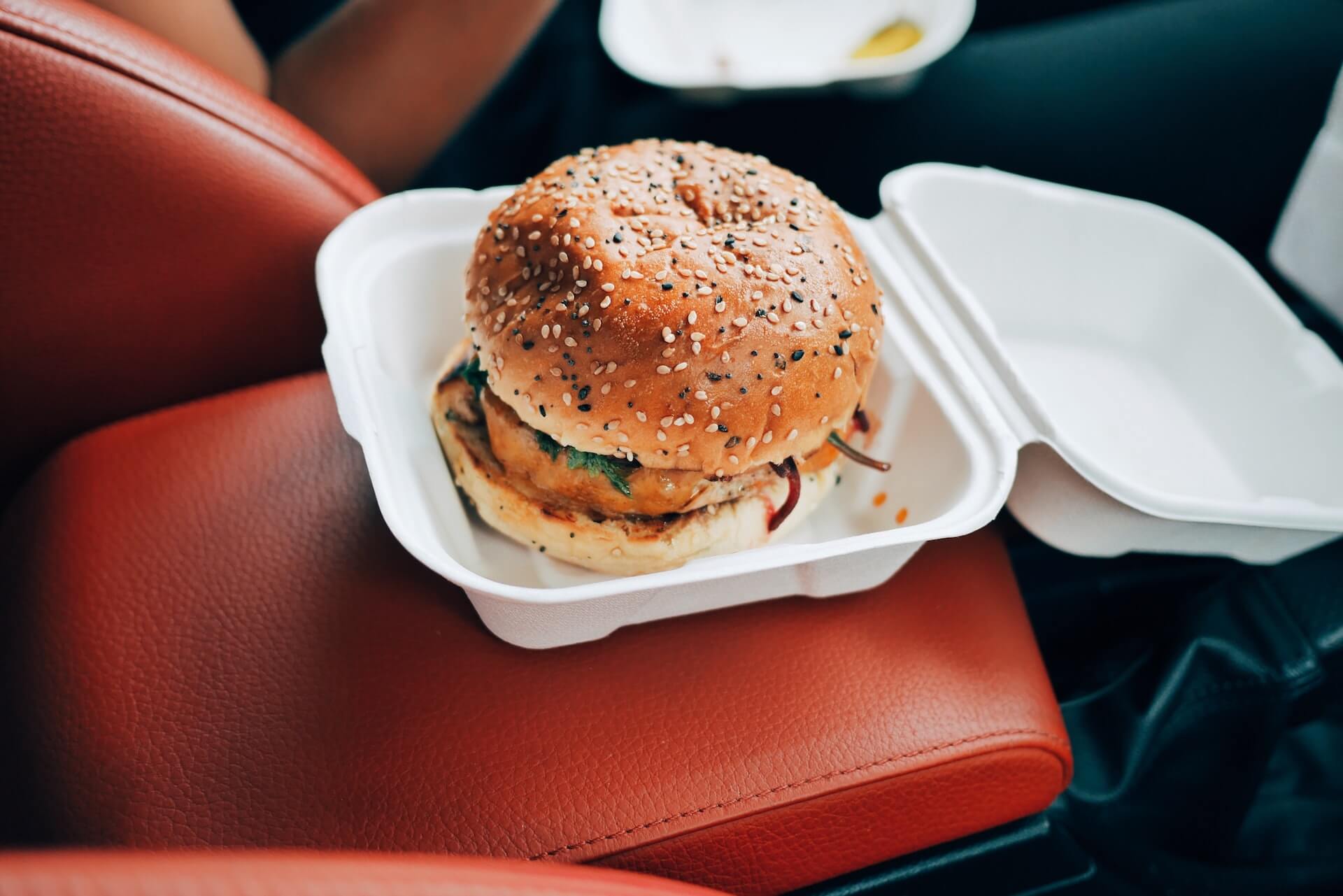
Burger in container inside car

For most restaurants, delivery is now a crucial service element rather than a “nice-to-have” option a small percentage of guests expect.

This is true whether your restaurant is in the US or Canada. But who’s placing orders? How are they ordering? And will they continue to order for the foreseeable future?

Well, Restaurants Canada has answers to all those questions and more. So, we let’s take a look at what their 2022 Foodservice Facts report says about delivery.

To download your own copy of this informative report, click here.

Who’s Placing Orders?

In their 2022 Foodservice Facts report, Restaurants Canada looks at three age groups:

  • 18 to 34
  • 35 to 54
  • 55-plus

Perhaps unsurprisingly, the 18- to 34-year-old cohort leads the charge when it comes to ordering delivery. It’s also not surprising that 35 to 54 comes in second, and 55 and older is third.

However, the first two groups are closer than some may assume. Eighty-three percent of the the 18 to 34 cohort placed orders at quick-service or full-service restaurants between December 2021 and May 2022.

That number does drop for the same time period among the 35 to 54 group, but not by a significant amount. Of that cohort, 77 percent ordered delivery. Just over half of the 55-plus group placed delivery orders: 52 percent.

Now, those numbers are down a bit from 2021, which makes sense. Things were much more restrictive in 2021 and people were just getting back to a sense of normalcy at the start of this year.

In 2021, the delivery order percentages were:

  • 18 to 34: 89 percent
  • 35 to 54: 81 percent
  • 55-plus: 67 percent

Looking at these numbers, it appears the 55-plus cohort is more comfortable dining out in person. Conversely, the 18 to 34 age group is clearly comfortable making delivery a part of their everyday lives.

How do People Want to Order?

Believe it or not, your website still matters. I’ve been saying this for years but the pervasiveness of delivery and takeout ordering is really driving this point home.

The fact is, a notable percentage of your guests want to support your restaurant and staff directly. Over the past couple of years, consumers have become well aware that third-party delivery services are incredibly costly for operators.

Consumers are also aware of third-party delivery debacles, such as the abysmal Grubhub “Free Lunch” mess from May of this year.

So, direct delivery is something that operators need to at least consider. Implementation is often less difficult than most business owners believe. And many platforms, SevenRooms, for example, make implementing direct delivery simple and affordable.

Interestingly, Restaurants Canada data supports the need for direct delivery. Back in May, the industry advocacy organization asked survey respondents how they prefer to place delivery orders from restaurants.

Preferences for QSR customers:

  • No preference: 10 percent
  • Over the phone: 19 percent
  • Third party: 35 percent
  • Restaurant website or app: 36 percent

Full-service customer preferences:

  • No preference: 8 percent
  • Over the phone: 28 percent
  • Third party: 29 percent
  • Restaurant website or app: 35 percent

Honestly, I find it surprising anyone calls a QSR to place an order. However, I suppose that makes sense for an office or catering.

At any rate, make sure your website is up-to-date, you offer direct or “last-mile” delivery, and make it easy to navigate your menu and the ordering process.

Is Ordering Here to Stay?

Now, we all know why restaurant delivery has been supercharged the past two years. However, consumer trend data show that delivery was on the rise before the Covid-19 pandemic.

But now that people are eager to return to normal and the industry is on its way to returning to pre-pandemic levels, is delivery really here to stay?

According to another question asked of survey respondents by Restaurants Canada, more than half of QSR and full-service restaurant customers plan to stick with delivery.

For their 2022 Foodservice Facts report, Restaurants Canada asked back in May how often consumers planned to place delivery orders in the next six months.

Order frequency for QSR customers:

  • Never placed a delivery order and don’t plan to now: 29 percent
  • Order less often: 20 percent
  • Will order with the same frequency: 45 percent
  • Will order more often: 7 percent

Frequency of orders for full-service customers:

  • Never placed a delivery order: 24 percent
  • Order less often: 23 percent
  • Will order with the same frequency: 44 percent
  • Will order more often: 9 percent

Here to Stay?

Of course, there are multiple factors feeding the numbers above. Some people simply don’t like ordering and waiting for delivery. For these consumers, the practice doesn’t just seem convenient.

There’s also the consumer demand to return to in-person dining, socializing with family and friends. And, of course, meeting new people while dining out.

We must also consider inflation and rising costs. Often, restaurant spending is among the first to be reduced when consumers need to be more frugal. Rising menu costs are sure to curtail some delivery spending.

That said, it’s clear delivery is here to stay and must be considered a crucial element for most restaurant operations. QSR and full-service operators need to bear in mind is placing orders; how often they’re placing orders; and get them in the habit of placing orders directly.

Image: Oliur on Unsplash

by David Klemt David Klemt No Comments

Operators & Guests Respond to Rising Costs

Operators & Guests Respond to Rising Costs

by David Klemt

Canadian dollar bills

Everything is more expensive these days and both operators and consumers have their own ideas for addressing rising costs.

To gather and share insight into people’s mindsets, Restaurants Canada conducted and commissioned two surveys.

For one, the industry research and advocacy organization surveyed operators. The focus was on how much operators anticipated increasing their prices.

On the other side, Restaurants Canada commissioned Angus Reid for a survey focusing on consumers. This survey revealed potential traffic slowdowns and perceived value for money.

For your own copy of Restaurant Canada’s 2022 Foodservice Facts report, click here.

QSR vs. FSR: Consumers

As an operator, converting first-time visitors into repeat guests is paramount. Equally as important: increasing visit frequency per guest.

Of course, an immediate byproduct of rising costs is consumers pulling back and reevaluating their spending. Oftentimes, dining out is one of the first costs consumers slash in order to save money.

Therefore, operators always face the risk of reduced traffic and even losing some guests permanently when they raise prices. However, this is often a necessary risk to take to combat rising costs.

So, how dire is the situation among Canadian consumers currently? Or at least, how did they feel in Q2 of this year? Angus Reid conducted a survey of consumers to find out, and the results can be found within the 2022 Foodservice Facts report.

First, let’s look at visit frequency for QSRs and FSRs. Before we begin, 12 percent of survey respondents answer that they “don’t know for sure” if rising prices will affect their visit frequency for either QSRs or FSRs. Not helpful.

For QSRs, 19 percent of respondents say an increase in prices won’t impact their visit frequency. Thirty-six percent anticipate visiting “a little less often,” while 32 percent will visit much frequently.

As for FSRs, 16 percent of survey respondents won’t change their visit frequency. However, 37 percent anticipate visiting FSRs much less often. Nearly as many, 36 percent, will visit a bit less frequently.

Interestingly, however, is perceived value. More FSR guests believe they receive excellent or good value for their money than they do from QSRs. More QSR guests believe they receive fair, poor, or very poor value for their money.

Overall, though, 90 percent of Canadian consumers feel positive toward the value they receive from QSRs and FSRs.

QSR vs. FSR: Operators

Clearly, it’s good news that the vast majority of Canadians believe they receive good value for their money when dining out.

Nobody enjoys paying more but it appears that both QSRs and FSRs in Canada can increase their prices. At least, they can do so for now while consumers are mostly understanding about inflation.

Restaurants Canada asked QSR and FSR operators a simple but revealing question for their 2022 Foodservice Facts report. The question? How much higher do operators expect to increase their prices by the end of Q4 of this year in comparison to last year?

The majority of operators in both categories anticipate they’ll increase menu prices by more than seven percent. Twenty-seven percent of QSR operators have that expectation. That number rises to 35 percent for FSR operators.

Twenty-two percent of QSR operators anticipate raising prices five to seven percent before the end of 2022. In comparison, 32 percent of FSR operators expect to raise prices in the same range.

At the moment, Canadian consumers appear to be willing to endure these increases. However, it’s likely they expect prices to drop back to “normal” (pre-pandemic prices) or close to it sometime in 2023. That is, unless Canada slides into recession.

Image: PiggyBank on Unsplash

by David Klemt David Klemt No Comments

Restaurants in Canada: Daypart Performance

Restaurants in Canada: Daypart Performance

by David Klemt

White clock on red background

For both in-person dining and off-premise consumption, more Canadian consumers are ordering from restaurants across all dayparts.

As Restaurants Canada points out in their latest report, traffic and sales remain lower than pre-pandemic levels. However, there are reasons to be positive.

For one example, Restaurants Canada predicts 2022 sales to return to pre-pandemic levels by the end of the year. The foodservice research and advocacy organization’s 2022 Foodservice Facts report provides another positive outlook.

Just looking at Q1 of this year versus Q3, all dayparts are seeing increases in traffic.

To read more about the report and grab your own copy, follow this link.

Numbers Tell the Tale

Per Restaurants Canada, the breakfast daypart slid significantly in 2020. During that time, it fell 20 percent that year.

For the first half of this year, however, Restaurants Canada reports that breakfast traffic is just four percent lower in comparison to 2019.

On a positive note, the breakfast daypart has risen steadily from March of this year to July, or Q1 versus Q3. In fact, all dayparts have grown.

According to Restaurants Canada, 43 percent of Canadians ordered breakfast from restaurants in March 2022. That number grew to 50 percent by July of this year.

In terms of snack purchases, 55 percent of Canadian consumers made purchases from restaurants. By July, that percentage rose to 62 percent.

Continuing along, 64 percent of Canadians placed lunch orders in March. Four months later, that number had increased to 73 percent.

Per the 2022 Foodservice Facts report, a significant percentage of Canadians are placing lunch and snack orders. In fact, Restaurants Canada says that Canadians are making purchases from restaurants during those dayparts two to three times per month.

Of course, there’s one more daypart we need to discuss…

Dinner is King

By the numbers, the dinner daypart is outperforming all others in Canada.

In March of 2022, 85 percent of Canadians had placed dinner orders at restaurants. That number rose to 87 percent in April but dipped to 86 percent in May.

However, dinner saw growth again in June and July, rising to 88 and then 89 percent, respectively.

As the numbers show, dinner orders are outpacing lunch orders 14 percent. Snacks are being outpaced by dinner by nearly 30 percent. Of all dayparts, breakfast is the weakest.

In fact, dinner outperforms breakfast by nearly 40 points. This makes sense when we consider the work-from-home effect.

More people working from home means, in theory, many less people commuting to work. Restaurants that once saw great breakfast daypart traffic are seeing a significant dropoff. Less people commuting means less people popping into a restaurant for breakfast.

It appears that instead, people are clocking in, working until break time, and then going to get a snack. And when lunch rolls around, why not place an order for lunch?

Naturally, after working all day, people are tired or eager to meet up with friends and family to socialize and decompress. So, dinner ruling the daypart roost makes complete sense.

In other words, operators looking to streamline should consider this Restaurants Canada data. The dayparts that require the most labor currently are lunch and dinner, so operators should plan accordingly if that’s viable for their business.

Image: CHUTTERSNAP on Unsplash

by David Klemt David Klemt No Comments

Canada’s Restaurant Labor by the Numbers

Canada’s Restaurant Labor by the Numbers

by David Klemt

Chef inside commercial kitchen

While there are positive signs for Canada’s foodservice industry, recruiting and retaining labor continues to be a challenge.

Unfortunately, this isn’t a challenge unique to Canada. Operators throughout North America and indeed across the globe are facing labor shortages.

Restaurants Canada addresses this topic in their 2022 Foodservice Facts report. The non-profit research and advocacy group predicts sales will reach pre-pandemic levels by Q4 of this year.

However, restaurants, bars, and nightclubs may have to achieve traffic and revenue growth despite a significant labor deficit.

Please click here to access the 2022 Foodservice Facts report yourself.

Labor Shortage by Category

In their latest report, Restaurants Canada crunches the numbers for three distinct venue categories. These are quick-serve restaurants, full-service restaurants, and bars and nightclubs.

The organization finds that QSRs and FSRs are facing the greatest shortages. In fact, in response to a survey from May of this year, at least half of QSRs and FSRs aren’t operating with fulls staffs.

For QSRs, 52 percent of respondents say they perceive restaurants and bars they’ve visited to be understaffed. A bit over a third (36 percent) think staffing is “about right.” Unhelpfully, 12 percent “don’t know” if restaurants and bars have enough staff.

So, let’s switch gears to FSRs. Precisely half of survey respondends say restaurants and bars don’t have enough staff. Just like their QSR counterparts, 36 percent say that staffing seems to be at the ideal level. Fourteen percent respond that they “don’t know,” which doesn’t tell us much.

Per Canadians who responded to Restaurants Canada’s survey, bars and nightclubs are fairing better…at first. Frustratingly, a staggering 37 percent of respondents “don’t know” if bars or nightclubs have appropriate levels of staffing. Thirty-two percent think they’re understaffed, 31 percent think staffing levels are “about right.”

Industry professionals are probably already putting two and two together here. As long as guests receive the level of service they expect, from greeting to speed of service, to closing out their check, they think things are fine. If they’re made to wait longer than they want, they’ll likely say a restaurant, bar or nightclub doesn’t have enough people on shift.

Labor Shortage by Role

Okay, so the May 2022 Restaurants Canada wasn’t entirely helpful. It still provides interesting insight. That is, we know how guests perceive staffing in at least most instances.

So, let’s get down to hard numbers: shortages in specific roles throughout the industry.

Here, Restaurants Canada provides compelling information, even if it’s not what we want to see. In comparison to 2019, every role is down by thousands of people. In some cases, tens of thousands.

Below you’ll find the deficits by role:

  • Foodservice supervisors: -3,100
  • Chefs: -10,900
  • Bartenders: -17,600
  • Maîtres d’hôtel and hosts/hostesses: -21,100
  • Restaurant and foodservice managers: -22,400
  • Food counter attendants, kitchen helpers, and related support occupations: -43,200
  • Cooks: -44,400
  • F&B servers: -89,500
  • Other: -18,800

Add that up and that’s a shortage of 271,000 people throughout Canada’s foodservice industry. For further context, the industry boasted 1,265,700 workers. In 2021, the industry was down to 994,700.

Unfortunately, from 2020 to 2021, just 4,100 jobs were recovered, according to Restaurants Canada. This situation clearly shows that operators need to change their approach to staffing.

Now, more than ever, operators must focus on effective recruitment, onboarding, and retention. For tips on making improvements, click here. To learn how to implement employee surveys to boost retention and avoid costly turnover, click here.

Image: Brian Tromp on Unsplash

by David Klemt David Klemt No Comments

Restaurants Canada Reveals Pandemic Impact

Two Years On, Restaurants Canada Reveals Pandemic Impact

by David Klemt

Canon accounting calculator

Restaurants Canada looks at the impact of the pandemic on the foodservice industry in their latest Foodservice Facts report.

Canada’s foodservice industry research and advocacy non-profit sees a return to pre-pandemic operations. However, the path forward toward pre-pandemic traffic and sales levels won’t be without its challenges.

“While nominal sales are expected to return to pre-pandemic levels before the end of the year, traffic still remains below what it was before,” says Restaurants Canada president and CEO Christian Buhagiar.

To access your own copy of 2022 Foodservice Facts, click here.

Industry Still Struggling

As an owner, operator, or foodservice professional, you probably have the answer to a specific question in mind.

When will we be “back to normal?” And, of course, the natural followup to that question. Will the industry surpass 2019 traffic and sales?

Restaurants and bars throughout Canada have survived six waves of Covid-19 over the course of two-plus years. There have been an inordinate amount of lockdowns that inarguably forced the permanent closure of far too many businesses.

As Restaurants Canada states (and the rest of us know all too well), there’s no telling if another Covid-19 variant will rear its ugly head. It’s conceivable (but with any luck unlikely) that Canada could face future lockdowns.

At the moment, according to Restaurants Canada, foodservice sales are currently 11 percent below 2019 levels. And yes, that’s after adjustment for inflation. Speaking of which, one reason traffic and sales remain below those of 2019 is consumer confidence. Many Canadians are concerned about a possible recession.

In addition, operators in Canada continue to face a labor shortage.

News Not All Bad

Now, anyone who read the previous section would be justified in lacking confidence in the industry. However, there is good news.

First, let’s compare Q1 of 2022 to Q2. Per Restaurants Canada, just 15 percent of restaurants were able to seat guests with zero restrictions. By April, though, approximately 90 percent of restaurants in Canada could serve in-person guests restriction-free.

Second, Q2 had more positivity in store for operators. According to Restaurants Canada, the FSR segment endured an 18-month decline in traffic when Covid-19 took hold. When restrictions were lifted, the floodgates of consumer demand burst. By Q2, traffic was a mere one percent lower in comparison to 2019.

Going a bit granular, QSR performance also improved in Q2. Per Restaurants Canada, QSR traffic lagged eight percent behind pre-pandemic levels. However, that number improved to just two percent under pre-pandemic levels by Q2.

Compellingly, Q2 still wasn’t done with foodservice industry positivity. While QSRs outpaced FSRs three-fold in terms of traffic, their numbers combined bring the industry back to 2019 Q2 levels.

Restaurant Canada’s positive outlook predicts that the industry will return to pre-pandemic levels by Q4.

Image: StellrWeb on Unsplash

by David Klemt David Klemt No Comments

2022 50 Best Bars: North America

2022 50 Best Bars: North America

by David Klemt

Door with number 50 address

Probably a speakeasy.

The World’s 50 Best Bars ranking for North America is official and the bars are, of course, extraordinary.

Unsurprisingly, much of the list consists of “household” names in our industry. Now, where some people may see a list of the “cool kids,” I see something different.

In a word, consistency. Sure, the more cynical among us roll their eyes at rankings and awards.

However, I see approaches to operations, service, menu and design innovation, and guest experiences to learn from and emulate.

Would I like to see bars in markets outside of the usual suspects on these lists? Absolutely. As so-called secondary and tertiary markets develop their scenes that may start to happen more often.

So, congratulations to this year’s 50 Best Bars in North America! Cheers!

Canada

This year, the second-largest country in the world claims eight of North America’s 50 best bars. One bar is in the top ten.

As Ontario’s capital and Canada’s most-populous city, it should come as no surprise that Toronto takes four spots. Bar Mordecai is number 47, Bar Raval is 41, number 38 is Mother, and Civil Liberties is tenth.

It’s a bit surprising to see just one bar from Vancouver—number 25, The Keefer Bar—but Montréal has two venues on the list. The Cloakroom Bar is number 45 and 29 is El Pequeño Bar.

Bar Kismet, in Halifax, Nova Scotia, is sitting in the 49th spot on the 2022 North American list.

America

Impressively, the US boasts 30 of North America’s 50 Best Bars, six of which are in the top ten. Intriguingly, ten of the bars on this list were ranked on the World’s 50 Best Bars last year.

As one would assume, New York City dominates the 2022 rankings. Eleven bars are on the list, with the number one spot going to Attaboy. Congratulations to Michael McIlroy and Sam Ross, their teams, and their partners. Katana Kitten is number four, and Dante earns the eighth spot on the list.

Moving to the south, two bars on the list are in Miami: Broken Shaker (32) and Sweet Liberty (14). Heading northwest, Kumiko in Chicago is in the top ten at number five.

On the other side of the country, Los Angeles claims three spots, one in the top ten. Genever holds number 50, Death & Co. is 34, and Thunderbolt is ninth. The Bay Area has two bars on the list. ABV in San Francisco is number 39 and Oakland’s Friends and Family is in the 33 spot.

Somewhat surprisingly, Las Vegas and New Orleans each have just one bar in the rankings. One of my personal favorites, Herbs & Rye, is number 28 on the list. Jewel of the South in NOLA is in the top half of the list, holding number 24.

In San Juan, Puerto Rico, the beloved La Factoría is twelfth on the list.

Mexico

Achieving 11 spots—three in the top ten—Mexico is crushing it this year. Remarkably but not surprisingly, the three bars in the top ten are all in Mexico City.

Baltra Bar earns number nine, and Handshake Speakeasy and Licorería Limantour are second and third, respectively. Overall, Mexico City boasts six bars on this list.

Two spots are in Oaxaca: Selva, which is number 22, and Sabina Sabe, number twenty.

Arca, number 37, is in Tulum. Number 21, El Gallo Altanero, is in Guadalajara. And Zapote Bar in Playa del Carmen almost breaks the top 10, coming in eleventh.

Cuba

The legendary El Floridita grabs Cuba’s only entry on the 2022 list.

Impressively, El Floridita can trace its opening to the early 1800s. Originally, the space was La Piña de Plata. About a century later, a bartender, Constantino “Constante” Ribalaigua Vert, became the owner and changed the name.

Oh, and he just so happens to be the inventor of the frozen Daiquiri. Along with its impressive history, El Floridita also has an awesome statue with its own seat at the bar. Ernest Hemingway is immortalized in bronze.

50 Best Bars: North America

Below, the full list in ascending order.

  1. Genever (Los Angeles, CA)
  2. Bar Kismet (Halifax, Nova Scotia)
  3. Teardrop Lounge (Portland, OR)
  4. Bar Mordecai (Toronto, Ontario)
  5. Julep (Houston, TX)
  6. Cloakroom Bar (Montréal, Québec)
  7. Bitter & Twisted (Phoenix, AZ)
  8. Clover Club in (New York, NY)
  9. Bar Leather Apron (Honolulu, HI)
  10. Bar Raval (Toronto, Ontario)
  11. El Floridita (Havana)
  12. ABV (San Francisco, CA)
  13. Mother (Toronto, Ontario)
  14. Arca (Tulum, Quintana Roo)
  15. Death & Co (Denver, CO)
  16. Mace (New York, NY)
  17. Death & Co (Los Angeles, CA)
  18. Friends and Family (Oakland, CA)
  19. Broken Shaker (Miami, FL)
  20. The Dead Rabbit (New York, NY)
  21. Employees Only (New York, NY)
  22. El Pequeño Bar (Montréal, Québec)
  23. Herbs & Rye (Las Vegas, NV)
  24. Overstory (New York, NY)
  25. Dear Irving (New York, NY)
  26. The Keefer Bar (Vancouver, British Columbia)
  27. Jewel of the South (New Orleans, LA)
  28. Amor y Amargo (New York, NY)
  29. Selva (Oaxaca de Juárez, Oaxaca)
  30. El Gallo Altanero (Guadalajara, Jalisco)
  31. Sabina Sabe (Oaxaca de Juárez, Oaxaca)
  32. Raised by Wolves (San Diego, CA)
  33. Service Bar (Washington, DC)
  34. Double Chicken Please (New York, NY)
  35. Hanky Panky (Ciudad de México)
  36. Café de Nadie (Ciudad de México)
  37. Sweet Liberty (Miami, FL)
  38. Kaito del Valle (Ciudad de México)
  39. La Factoría (San Juan)
  40. Zapote Bar (Playa del Carmen, Quintana Roo)
  41. Civil Liberties (Toronto, Ontario)
  42. Thunderbolt (Los Angeles, CA)
  43. Dante (New York, NY)
  44. Baltra Bar (Ciudad de México)
  45. Café La Trova (Miami, FL)
  46. Kumiko (Chicago, IL)
  47. Katana Kitten (New York, NY)
  48. Licorería Limantour (Ciudad de México)
  49. Handshake Speakeasy (Ciudad de México)
  50. Attaboy (New York, NY)

Image: Hello I’m Nik on Unsplash

by David Klemt David Klemt No Comments

National Cocktails: Canada & America

National Cocktails: Canada & America

by David Klemt

Sazerac cocktail and mixing glass on bar

We’re taking a look at two cocktails that can trace their roots to America and Canada for this year’s National Cocktail Day.

Further, KRG Hospitality has a headquarters in each country. So, we’ll be focusing on the cocktails for which Canada and America are known.

Celebrate National Cocktail Day, March 24, with the recipes below. Cheers!

Canada’s Official Cocktail

Let’s kick things off with Canada. There’s no cocktail with as close an association to the Great White North as the Caesar.

In fact, it’s Canada’s national cocktail. So ubiquitous, it’s woven into the fabric of Canadian pop culture.

Consider this Letterkenny exchange as exhibit A:

Darryl: “I’d have a Bloody Caesar.”

Wayne: “Do you wanna know what? I’d have a Caesar, too.”

Squirrely Dan: “I could have a Caesar if you guys are havin’ Caesars.”

Darryl: “Hard to see a Caesar and not want a Caesar.”

Wayne: “That’s actually how they market Caesars.”

According to cocktail lore, the city of Calgary and province of Alberta get to call themselves the home of the Caesar.

Disputed Origins

As the story goes, Walter Chell invented the cocktail in 1969. Chell was a restaurant manager at the Calgary Inn, now a Westin property.

Oh, wait. There’s also Walter Winchell and the Smirnoff Smiler cocktail. Tracing mentions back to 1953, this drink is made with vodka, tomato juice, clam juice, and Worcestershire sauce.

Hang on… In 1959, Charles Addams—y’know, the creator of the Addams Family—said he created the Gravel Gertie in Manhattan, New York. This cocktail calls for vodka to be mixed with tomato juice, clam juice, and Tabasco sauce.

Well, Chell was onto something when he combined every ingredient in the Smiler and Gertie. To me, this an original that stands far above any perceived predecessors.

Chell also crafted the recipe using a “rule of four”:

  • one shot of vodka;
  • two dashes of hot sauce;
  • three dashes of salt and pepper; and
  • four dashes of Worcestershire sauce

Prepare a glass with a celery salt or salt and pepper rim. Add ice, then add the above ingredients. Top with Caesar mix (Clamato juice, these days), and garnish with a celery stock and lime.

America’s Unofficial Cocktail

Now, onward to America. So, we don’t have an official national cocktail here. Clearly, our neighbors to the north know how to have more fun.

We have a native spirit—bourbon—but that’s where it ends.

However, we do have New Orleans. And in New Orleans we have the birthplace of American hospitality.

We have something else in New Orleans. In 2008, the Louisiana state senate passed a bill that named an official cocktail for the city.

That cocktail? The Sazerac.

Two Bases, One Drink

Cocktail historians will tell you that there are essentially two recipes for the Sazerac. They’ll also tell you that the origins of this cocktail are under dispute.

Are you beginning to see a pattern with cocktail history? It’s never clear, is it?

First, let’s address the original, assuming it’s America’s first (or at least oldest known) cocktail. From the 1850s to 1870s, it was made with Cognac. And not just any Cognac, Sazerac de Forge et Fils.

Depending on who you ask, either bar owner Aaron Bird or Antoine Amedie Peychaud invented the Sazerac. The cocktail recipe includes two dashes of Peychaud’s Bitters, so it’s easy to understand why some credit Peychaud with creating this drink.

Then, there’s the version that took off in the 1870s. Again, depending on the source, either American tastes changed or a phylloxera outbreak affected Cognac production. Perhaps both are true, converging to alter the Sazerac recipe.

Either way, rye whiskey replaced absinthe, and Herbsaint replaced the absinthe. Some bartenders also substitute bourbon for the rye.

The Recipe

It’s not difficult to make a Sazerac, just like it isn’t difficult to find one in New Orleans.

You’ll need two Old Fashioned (aka rocks) glasses, or one Old Fashioned and a mixing glass.

Rinse a chilled glass with absinthe or Herbsaint, and add ice. In the mixing glass or second glass, add ice, two ounces of Cognac, rye whiskey or bourbon, a half-ounce of simply syrup, and three dashes of Peychaud’s Bitters. Stir until well chilled.

Before straining, discard the ice and any excess absinthe or Hersaint from the prepared glass. Now, strain into prepared glass, express a lemon peel, and use that peel as garnish.

Alternatively, you can split the base and do Cognac and rye or bourbon, paying homage to each version of the Sazerac.

Image: Johann Trasch on Unsplash

by David Klemt David Klemt No Comments

Restrictions: What’s Different in Alberta?

Restrictions: What’s Different in Alberta?

by David Klemt

Peace Bridge red double-helix pedestrian bridge in Calgary, Alberta, Canada

According to Alberta medical officers, it’s time to begin the transition away from Covid-19 mandates and restrictions.

Taking a transition approach means that some restrictions will remain in place for at least the next several days.

However, operators have reason to be cautiously optimistic regarding the lifting of “nearly all” current restrictions.

What’s Different Now?

Alberta’s chief medical officer of health, Dr. Deena Hinshaw, says Alberta is now in a transition period. The province is attempting to adjust from a pandemic response to an endemic response to Covid-19.

In other words, Alberta authorities are seeking a return to pre-pandemic normalcy. Of course, lifting mandates and adjusting to “normal” life will take time, cautions Dr. Hinshaw.

Premier Jason Kenney says that “now is the time to begin learning to live with Covid.”

Clearly, the biggest change came in the repealing of Alberta’s vaccine passport program. Also known as REP, the Restrictions Exemption Program is no longer in use.

However, a number of restrictions will remain in place until at least March 1.

Restaurant, bar, pub, nightclub, and cafe operators are subject to the following:

  • Capacity limit of 500 for venues with fire occupancy of 500 to 999.
  • Capacity limit of 50 percent for businesses with fire occupancy of 1,000 or more.
  • Liquor service must end at 11:00 PM.
  • In-person service must end at 12:30 PM.
  • Mingling between tables is prohibited.
  • Maximum party capacity per table is ten people.
  • Unfortunately, dancing, darts, billiards, and other “interactive activities” are prohibited.

In better news, both indoor and outdoor dining are permitted. Also, venues with fire occupancy under 500 are no longer subject to capacity limits.

What Else is Changing?

Currently, Alberta is in Step 1 of the province’s plan to ease Covid-19 mandates, restrictions, and measures.

Should all go well—hospitalizations trending downward—the province will enter Step 2:

  • Indoor mask requirement lifted.
  • Indoor and outdoor social gathering restrictions lifted.
  • All large venues and entertainment venues will have capacity restrictions lifted.

Of course, Step 3 will represent the greatest move toward a return to normal life in Alberta. However, there is no date set against entering Step 3.

Should the targets that will trigger the final step in the three-step plan be hit, mandatory isolation will transition from a requirement to a recommendation. In addition, Covid-19-specific continuing care measures will be removed.

Given the possibility of major restrictions lifting in just under a week, operators, their team members, and the guests they serve have reason to be optimistic.

Image: Denisse Leon on Unsplash

by David Klemt David Klemt No Comments

Restrictions: What’s Different in BC?

Restrictions: What’s Different in British Columbia?

by David Klemt

Granville Street in Vancouver, British Columbia, Canada, at night

While face mask and proof-of-vaccine requirements remain in place throughout British Columbia, some Covid-19 restrictions are no more.

“By following the science and looking out for each other, we are now in a position to carefully ease many COVID-19 restrictions,” said BC premier John Horgan last week.

Per reports, the second-dose vaccine rate of eligible residents in BC is over 90 percent. That, along with a dip in hospitalizations, are likely contributing to this easing of restrictions.

Premier Horgan denies that the “Freedom Convoy” protests influenced BC’s decisions.

What’s Different Now?

The most relevant news pertaining to hospitality operators impacts capacity and guest behavior.

Restaurant, bar, lounge, and nightclub operators have reason to feel a sense of relief. This is due to several favorable changes to Covid-19 restrictions.

First, capacity restrictions for the venues above have been lifted. This return to 100-percent capacity is likely the most welcome change for BC operators.

Second, table limits. In short, those are also no more. No longer are parties limited to six guests or less.

The third restriction (at least the order I’m addressing them) is the return of mingling. That’s right—guests can socialize amongst other tables once again.

Fourth, there’s no longer a Covid-19-specific limit dictating liquor service hours.

Fifth, down goes the plexiglass. Operators can remove their plexi barriers. However, given the past two years of restriction whiplash, it could be smart to store and not toss our or destroy them.

Finally, and this is perhaps the greatest return to a semblance of normalcy, dancing is back. For nearly two years, the province of BC has been the town in Footloose. But as of now, guests are free to dance once again.

It’s important to note that workers will follow their employers’ Covid-19 safety plans.

What Else is Changing?

Unfortunately, what’s in the pipeline for further easing of restrictions is unknown.

Currently, masks are required in a restaurant, bar, lounge, or nightclub when a guest isn’t in their seat. Also, guests must still present the BC Vaccine Card for scanning to gain entry. Two doses of an approved vaccine are required.

BC’s Provincial Health Officer, Dr. Bonnie Henry, will “revisit” current restrictions on March 15. Dr. Henry will do so again in mid-April.

So, while there is cause for some optimism that life could return to normal in BC by April or May, we simply do not know for sure. Indeed, should another Covid-19 variant lead to a rise in infections and hospitalizations, now-lifted restrictions could conceivably return.

However, while Dr. Henry believes as we do that “hope is not a strategy,” there is room for optimism. With capacity, mingling, and dancing restrictions lifted, operators can once again offer guests a sense of normal life.

Image: Jerry Coli from Pixabay

by David Klemt David Klemt No Comments

Restrictions: What’s Different in Ontario?

Restrictions: What’s Different in Ontario?

by David Klemt

Toronto, Ontario, Canada skyline viewed from harbor at dusk

Changes involving Covid-19 restrictions have come to the province of Ontario, Canada, the location of the global KRG Hospitality headquarters.

Las Vegas is home to KRG’s American headquarters. The state of Nevada eliminated its indoor mask mandate nearly three weeks ago.

Ontario’s restriction-easing plans should be welcome news for current and future operators throughout the province.

Per Ontario premiers, these changes are due to a reduction in Covid-19 hospitalizations. Reportedly, further pandemic-related changes are due today, with more coming down March 14.

What’s Different Now?

Most notably, indoor capacity restrictions for restaurants and bars are no longer in place. However, this is somewhat nuanced at the moment.

Per the current reading of Ontario’s public health measures, only venues that require proof of vaccination may return to 100-percent indoor capacity.

As the order reads, the following businesses are subject to “no capacity limits [indoors]…where proof of vaccination is required:

  • restaurants, bars and other food or drink establishments without dance facilities;
  • casinos, bingo halls and other gaming establishments;
  • cinemas; and
  • indoor areas of other settings that choose to “opt-in” to proof of vaccination requirements.

Operators of stadiums, arenas, and concert venues may now operate at 50-percent capacity

Nightclubs and other establishments that serve food and/or drink and have “dance facilities” and also require proof of vaccination are restricted to an indoor capacity of 25 percent.

Again, these changes are reportedly temporary. The province’s premiers and several outlets report that Covid-19 restrictions will be lifted further in March.

What Else is Changing?

Clearly, the biggest planned change involves proof of vaccination.

The province of Ontario appears to be embracing optimism. Additionally, one can argue that premiers are choosing to reward Ontarians for helping drive down hospitalization rates.

Should the plan be followed, should hospitalizations not increase, proof-of-vaccination requirements will be lifted March 1. In fact, Ontario’s mandatory vaccine passport system will also be lifted on March 1 if everything goes to plan.

Additionally, indoor capacity limits will return to 100 percent “in all indoor public settings.”

However, on March 1, face coverings and the “active/passive” screening of guests will remain in place. Also, operators can choose to require proof of vaccination voluntarily.

Reporting on what to expect by March 14 is murky. Analyzing Ontario premier Doug Ford’s words regarding these developments may offer a clue.

“We will need to keep masking in place for just a little bit longer,” said Ford. Perhaps Ontario can expect mask requirements to be lifted by or on March 14.

Of course, a certain level of skepticism regarding Ontario’s restriction-lifting plan is justified. Optimism is healthy but it’s not a business strategy.

That said, allowing for cautious optimism, the province’s plans is still welcome news. If Ontarians remain patient and vigilant, life and operations may return to normal in just three to four weeks.

Image: Alex on Unsplash

by David Klemt David Klemt No Comments

Current Restrictions: Canada

Current Restaurant Restrictions: Canada

by David Klemt

Four disposable medical face masks in a pile

KRG Hospitality’s headquarters is in Toronto but we operate in three major Canadian markets: Alberta, British Columbia, and Ontario.

I was visiting the Toronto office, traveling from Las Vegas, when new restrictions were announced due to Omicron.

By the time I landed, I knew each province in which we operate would be at least discussing possible restrictions.

Alberta

The following restrictions apply to restaurants, bars, nightclubs, cafes, and pubs participating in the Restrictions Exemption Program (REP):

  • No more than ten people may be sat at one table.
  • Alcohol service must terminate by 11:00 PM.
  • These businesses must close by 12:30 AM.
  • Billiards, dancing, darts, and other “interactive” activities are prohibited.

As a refresher, the REP program requires operators to require patrons age 12 and above to:

  • provide proof of vaccination, negative results from a test taken within 72 hours of service, or medical exemption; and
  • comply with mandatory masking.

Alternatively, operators can comply with all restrictions as outlined in Alberta’s public health orders.

However, businesses not participating in REP face the restrictions below:

  • Indoor dining is prohibited.
  • Outdoor dining is permitted. No more than six people may sit at the same table.
  • Groups are restricted to one household or two close contacts (for those living alone).
  • Alcohol service must terminate by 10:oo PM. Consumption must conclude by 11:00 PM.

British Columbia

At the time of publication, restaurants, cafes, and pubs can still offer both indoor and outdoor dining.

However, there are restrictions in British Columbia:

  1. No more than six people may be sat at one table.
  2. When not seated, guests must wear face masks.
  3. Guests may not move to between tables, visit other tables, or dance.
  4. Indoor gatherings are limited to 10 people (down from 25).
  5. Outdoor gatherings are limited to 25 people (down from 100).
  6. Operators must maintain physical distancing or barriers between tables.
  7. Alcohol can be served during normal service hours.

Unfortunately, bars, nightclubs, and lounges aren’t facing restrictions, they’ve been forced to close.

These restrictions and closures will remain in place until January 18, 2022. Exceptions include bullet points 2 and 3, which are expected to remain until January 31, 2022.

Ontario

As of December 19, 2021, restrictions that impact restaurants, bars, strip clubs, and other food or beverage venues went into effect:

  • Capacity reduced to 50 percent.
  • No more than 10 people may sit at one table.
  • Guests must remain seated. Only performers or workers may dance.
  • Venues must close for indoor and outdoor dining and drinking by 11:00 PM. However, businesses may offer delivery and takeout past that time.
  • On-premise alcohol sales are prohibited after 10:00 PM. Consumption of alcohol on-premises is restricted after 11:00 PM.

It’s crucial that operators and leadership teams remain up to date on their province’s (and city’s) restrictions. At the start, 2022 will be challenging but opportunities for recovery will present themselves

Image: Markus Winkler on Unsplash

by David Klemt David Klemt No Comments

Canadian On-premise Sales Stabilizing

Canadian On-premise Sales Stabilizing

by David Klemt

Canadian flag in downtown Toronto, Ontario, Canada

A report from Restaurants Canada and Nielsen CGA shows that on-premise sales are steadying and, in some provinces, growing.

In fact, with the exception of Alberta being slightly down, Canada’s nationwide sales velocity looks promising in comparison to 2019.

Overall, Canada’s on-premise velocity is on the rise. Let’s take a look at how the three main provinces KRG Hospitality services are performing.

Alberta

To say that Alberta is down is a tad misleading. The province’s performance is nearly on par with 2019.

In comparison to 2019, Alberta is just -1 percent below in velocity levels.

Now, in comparison to 2020, the province is +46 percent. However, 2019 is a far more accurate gauge of performance.

While being down one percent is on the surface negative, growth in Calgary and Edmonton is highly encouraging.

In the week to August 21, Calgary’s velocity rose +4 percent, while Edmonton grew +10 percent. Those two cities are responsible for overall growth in velocity in Alberta of +4 percent.

Should the upward trend continue, Alberta will match and surpass 2019 quickly.

British Columbia

Of the three key provinces in which KRG Hospitality operates, BC is the second-best performing in comparison to 2019. Against 2020, BC is the third top performer.

Per Restaurants Canada and CGA, BC velocity is up +12 percent in comparison with 2019’s sales. The province is up +33 percent when compared to 2020.

In Vancouver, velocity is flat rather than experiencing negative growth. Any negative trends, according to the Restaurants Canada and CGA report, is coming from Victoria. That city is down -6 percent.

Ontario

Of our key Canadian markets, Ontario is performing the best overall.

Compare velocity to 2020 and the province is up +48 percent. In comparison to 2019, Ontario’s velocity is up +13 percent.

One can attribute current growth to Toronto. The Ontario city’s performance in the week to August 21 is +4 percent.

Canada

According to the report, sales velocity in Canada is up +2 percent overall.

Compare the country’s overall performance against 2020 and 2019, and Canada is trending upward. The nation’s on-premise velocity is up +41 percent in comparison to 2020 and +11 percent against 2019.

Clearly, the expectation is for the country’s on-premise performance to experience further growth as consumers return to in-person dining and restrictions loosen.

However, it’s important for operators to not simply return to pre-pandemic operations. Consumer behaviors have changed and many pandemic-driven habits—delivery, for example—are now permanent.

Further, now’s the time for those considering proceeding with plans to open restaurants, bars and hotels to move forward. In fact, Travis Tober, the guest from our milestone 50th episode of Bar Hacks, believes there’s no better time than now to open a hospitality venue.

Image: Lewis Parsons on Unsplash

by David Klemt David Klemt No Comments

2021 Technomic Outlook: Canada

2021 Technomic Outlook: Canada

by David Klemt

Technomic has been providing the foodservice industry with valuable insights on a global level for five decades.

The research and consulting firm has been one of my go-to information sources for at least ten years.

A few weeks ago, I reviewed Canadian food delivery trends from multiple sources. This week, I’m taking a look at Technomic’s foodservice predictions for Canada.

Unprecedented and Unpredictable

First things first: predictions are best guesses. Technomic’s approach is scientific and data-driven but it’s important to approach any prediction with caution.

As the firm itself points out in their 2021 foodservice report, the global pandemic has thrown the industry into unprecedented territory.

It seems the only predictable element related to Covid-19 is that restaurants, bars and other hospitality businesses will bear the brunt of closures and restrictions.

That said, I trust Technomic to lead the industry through unpredictable, unprecedented moments in time.

5 Key Trends

Technomic has made five predictions for foodservice in Canada.

  1. 2021 will represent the start of financial recovery for foodservice. Technomic predicts moderate sales growth this year, below levels of 2019. However, limited-service restaurants are expected to perform better than their counterparts and return to 2019 revenue levels. Not surprisingly, Technomic expects full-service restaurants to be the most challenged.
  2. Operators will make their stances on social issues known. Multiple sources say today’s consumers want transparency from the brands they support. They want to know what company’s believe about climate change, food insecurity, social inequalities, diversity and hiring practices, fair pay for employees, and other issues. Technomic expects more operators to “double down” on transparency.
  3. On-premise operations will invest in off-premise business models. Again, multiple sources have reported that significant percentages of consumers are uncertain or uncomfortable about returning to restaurants and bars for in-person dining and drinking. Technomic expects operators to invest in smaller dining rooms so they can offer more limited-contact and contactless options to guests: walk-up ordering windows, multiple drive-thru lanes, designated curbside pickup locations, and in-store pickup and grab-and-go stations. The firm also expects more operators to embrace first-party/direct delivery, along with technologies like mobile ordering and geofencing.
  4. Comfort, quirkiness and indulgence. Technomic expects comfort foods to continue to perform well and encourages operators to get creative—even quirky—with this category. They caution that health will still be a focus of many guests and suggest that some operators will “disguise better-for-you meals as indulgent.”
  5. Our home and native land. Hyperlocality will play a crucial role in driving traffic given the travel restrictions imposed throughout Canada. Operators will likely forge relationships with local farms to attract local visitors to their venues. Technomic expects to see grassroots movements promoting support for small regional chains and local independent operations to gain traction.

Bring it all Together

Chasing trends can be a fool’s errand. Not every prediction made by Technomic will work for every restaurant or bar in Canada.

Just like Technomic collects and analyzes industry data, operators must review their guest, sales and operations data to make informed decisions. This is another reason it’s crucial to own the guest journey in its entirety.

Click here to view Technomic’s “2021 Canadian Trends Outlook” webinar.

Image: Hermes Rivera on Unsplash

by David Klemt David Klemt No Comments

Current Restaurant and Bar Restrictions: Toronto, Calgary, Vancouver

Current Restaurant and Bar Restrictions: Toronto, Calgary, Vancouver

by David Klemt

For more than a decade, KRG Hospitality has turned hospitality industry visions into reality throughout Canada.

Currently, we operate in Toronto, Calgary and Vancouver and the surrounding areas.

We’ve reviewed and gathered the current Covid-19-based restrictions in Ontario, Alberta and British Columbia to help current operators and those considering taking the next steps in their journey toward opening their own businesses.

To book a 15-minute introductory call to discuss your project and how we can help you realize your vision, click here.

Toronto

On January 25, the province of Ontario officially extended the current state of emergency (which includes a stay-at-home order) by 14 days by Premier Doug Ford. Had Premier Ford not extended the emergency order, it would’ve expired Tuesday of this week. Unless extended again, it will expire February 11.

What this means for restaurants, bars and other types of F&B establishments is that indoor and outdoor dining are banned currently. Delivery, takeout and drive-through service are permitted.

Individuals face $750 fines (up to a maximum of $100,000) and corporations could be hit with $1,000 fines (up to a maximum of $500,000 for a director or officer) for a violation of emergency orders.

When the state of emergency expires or is otherwise rescinded, Ontario is expected to revert to the regulations found within the Reopening Ontario Act (currently suspended). Should Ontario find itself immediately colour-coded Grey, the current restrictions on restaurants and bars will remain identical: only delivery, takeout and drive-through service will be allowed.

Among other restrictions, a Red control level means restaurants are restricted to indoor dining capacity of ten people, outdoor dining is permitted, customers must be seated and two metres apart from one another, liquor may only be sold within a 9:00 AM to 9:00 PM window, face coverings must be worn except when eating or drinking, and nightclubs may only operate as a restaurant or bar.

Orange level restrictions include a 50-person capacity limit, a maximum of four people per table, customers must be screened before entry, liquor may only be sold between the hours of 9:00 AM and 9:00 PM, establishments must close by 10:00 PM, and gentlemen’s clubs must remain closed.

The Yellow control level is marked by the following restrictions: no more than six people may be seated at the same table, liquor may only be sold between 9:00 AM and 11:00 PM, establishments must close by midnight, music levels may not exceed that of a “normal conversation,” and all seated patrons must provide contact information.

Green control doesn’t mean everything is back to pre-pandemic “normalcy.” Tables must still be at least two metres apart, customers must be seated, face coverings must be worn except when eating or drinking, no buffet-style service is permitted, nightclubs may only operate as restaurants or bars, and contact information for at least one person per party must be collected. Restricted dancing, singing, performing and karaoke (no private rooms) are permitted.

Calgary

On December 13, 2020, indoor and outdoor dining was banned throughout Alberta. Current Covid-19-related public health measures and restrictions have been extended until further notice. The province’s restrictions affect restaurants, bars, cafes, pubs, and lounges (and other businesses, of course).

Only delivery, takeout and curbside pickup are permitted in Alberta. However, this is expected to change on February 8, 2021.

Hotels, motels and lodges are open but may not offer access to gyms, pools or spas. Indoor dining is banned but room service permitted. Casinos must remain closed.

Movie theatres, bowling alleys, pool halls and other entertainment businesses may not open for business.

If Alberta returns to the previous relaunch strategy, the province will be subject to a three-stage reopening. However, the document hasn’t been updated since June 2020.

Update: Alberta allowed restaurants and bars to reopen for in-person services yesterday, February 8. Indoor alcohol service must end by 10:00 PM, and indoor dining service must cease by 11:00 PM. Contact information from one person of the dining party must be collected, there’s a limit of six people maximum per table and each individual must be from the same household. Alternatively, the maximum per table for an individual living alone is there two close contacts. Tables must be spaced two metres apart and no entertainment is permitted.

Vancouver

British Columbia is far less restrictive than Ontario and Alberta, at least at the moment. The restrictions in place currently affect restaurants, bars, cafes, cafeterias, coffee shops, lounges, and tasting rooms. Nightclubs, however, must remain closed.

Requirements

  • Unless a physical barrier is in place, customers not in the same party must be at least two metres away from one another.
  • No more than six people may be seated at the same table or booth, even if they’re members of the same party.
  • If seated at a counter, customers must be two metres apart unless they’re in the same party or physical barriers are in place.
  • No more than six customers of the same party may be seated at a counter less than two metres from one another.
  • Businesses that offer self-serve food or non-alcohol drink stations must: ensure alcohol-based hand sanitizer or handwashing facilities are “within easy reach”; signage reminding customers to wash or sanitize their hands before touching anything on the stations and to maintain two metres from other customers must be present; utensils and high-touch surfaces at the stations must be cleaned and sanitized “frequently.”
  • Dance floors must be closed, and karaoke, singing, jam sessions, open mic sessions, and dancing are prohibited.
  • Background music or sounds may not be amplified or exceed the volume of a “normal” conversation.

Further details can be found here.

Last updated: February 9, 2021. Please note that Covid-19 guidance, restrictions and protocols are subject to swift change. One should monitor the country, provinces and cities for the latest updates.

Image: James Wheeler from Pexels

by David Klemt David Klemt No Comments

Significant, Permanent Restaurant Closures Expected to Rock Canada Unless Situation Improves

Significant, Permanent Restaurant Closures Expected to Rock Canada Unless Situation Improves

by David Klemt

Industry surveys continue to reveal how dire the situation is for operators.

On December 8, Restaurants Canada, a non-profit that represents and advocates for the Great White North’s restaurant industry, shared the results of a survey they had conducted between November 26 and December 4. A total of 511 surveys representing 3,000 restaurants were completed.

According to Restaurants Canada, the nation’s foodservice industry consists of 97,500 establishments ranging from QSRs to bars and full-service venues.

More than eight out of ten survey respondents answered that they are either barely staying afloat or are operating at a loss. Drilling deeper, significantly more restaurants are operating at a loss—65 percent of survey respondents fall into this category. Just 19 percent of restaurants represented by survey respondents are able to break even.

That’s 2,400 restaurants of 3,000 struggling to survive, and 78,000 restaurants out of 97,500, assuming the survey sample size accurately represents the overall industry in Canada.

To understand the long-term effects of government-mandated restrictions and shutdowns, one has only to digest another startling statistic: Restaurants operating in the red aren’t expecting to return to profitability for a minimum of 12 months.

Under optimal conditions, the average Canadian restaurant operates on razor-thin margins. Per Restaurants Canada, restaurants keep just five percent of every $10 in sales on average, or 50 cents. The industry is Canada’s fourth-largest employer (it’s number five in the United States, for comparison), accounting for 1.2 million jobs, 58 percent of which are held by women. Over thirty percent of owners, operators and staff belong to a visible minority, further illustrating how important restaurants are to diversity and the economy; half of all restaurants in Canada are operated by immigrants. Just like in the America, restaurants are the first employer for most Canadians.

The industry is crucial to Canada, but this vital resource is under serious threat. One of those threats comes from lawmakers whose restrictions are making it much more difficult for operators to wring any profits out already miniscule margins. Much like the situation afflicting the industry in the United States, the situation is going to get worse in short order without government relief.

Restrictions are simply nails in coffins unless they’re accompanied by relief.

“Our members are seeking a new year’s resolution from government, not only to support their survival but our industry’s vital role building back a stronger, more resilient Canada,” said  Todd Barclay, president and CEO of Restaurants Canada. “Restaurants Canada is calling for a national working group to pave the way for the foodservice sector’s revival, building on the commitment in the federal government’s 2020 Fall Economic Statement to provide targeted, sector-specific support to restaurants and other hardest hit businesses.”

That national working group, according to Restaurants Canada, should focus on providing businesses being affected by government-mandated restrictions with “sufficient, efficient and effective aid”; developing campaigns that make it clear to Canadians that restaurants are capable of safely and reliably providing safe meals; promoting delivery and takeout as a viable way for the public to support restaurants; connecting with operators to understand the industry’s needs and pain points to ensure they’re in as strong a position as possible when entering the post-pandemic economy.

The next six months are crucial to the survival of Canadian restaurants. If things don’t improve, should the government not address the industry’s situation and provide relief, 48 percent of single-unit operators surveyed by Restaurants Canada indicated they expect to close within six months. That number jumps to 56 percent for multi-unit operators, who expect to close at least one of their locations (also within six months).

Restaurants Canada is asking for anyone who supports the formation of a dedicated national working group to contact their Member of Parliament via this link.

Photo by Marcus Urbenz on Unsplash

Top