Cocktail program

by David Klemt David Klemt No Comments

Go Orange this Valentine’s Day

Go Orange this Valentine’s Day (and Beyond)

by David Klemt

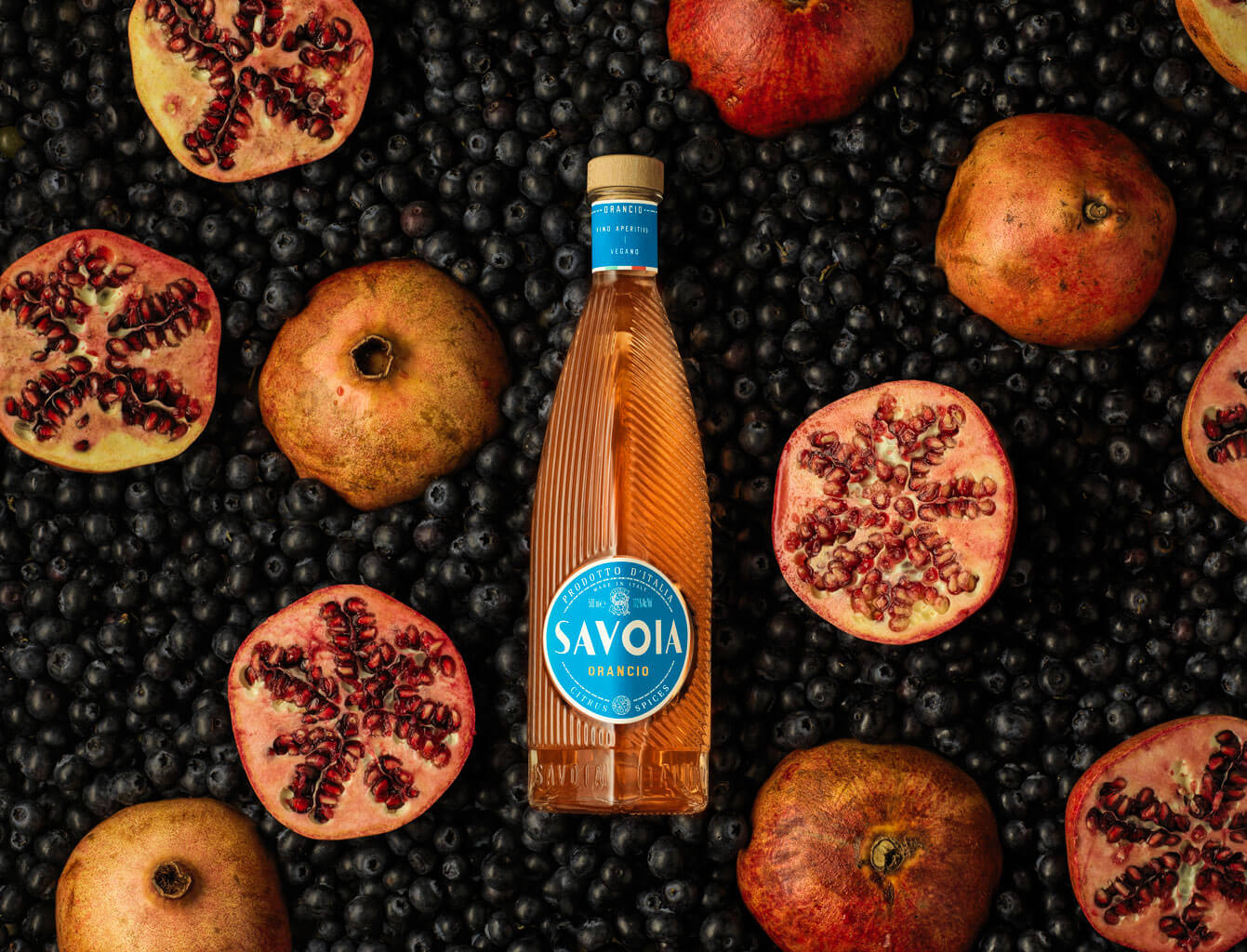
A bottle of SAVOIA Orancio resting on a bed of grapes and pomegranates

There’s a new, exciting aperitivo from the House of SAVOIA, and it’s flavor profile and color are perfect for celebrating Valentine’s Day.

In fact, SAVOIA Orancio is ideal for celebrating life on any day. Slowing down to appreciate and enjoy is the purpose, after all, of aperitivos and aperitivo culture.

I had the opportunity to chat with Giuseppe Gallo, founder of CASA-SAVOIA (and ITALICUS), about the new Orancio expression, and more on the Bar Hacks podcast.

The orange hue comes from this aperitivo’s base: natural orange wine. This wine is combined with Italian white wine, and spices that pay tribute to the famed Silk Road. These include cinnamon, ginger, and saffron.

Regular readers of KRG Hospitality articles, and listeners of our Bar Hacks podcast, are aware that I’m a strong proponent of bar programs executing an aperitivo hour in place of a traditional happy hour (if it meshes with the concept, of course).

Aperitivos aren’t simply a drink; they’re an integral element of socializing, and Italian drinking culture. Whereas a happy hour is often perceived by some guests as a window in which to visit a bar for discounted drinks and dishes, an aperitivo hour centers largely around bringing people together.

Whether friends or strangers, the key difference is that rather than focusing on downing many “cheaper” drinks before time runs out, the focus is on slowing down, letting go of the stress of the workday, gathering, and preparing for dinner.

To learn more about SAVOIA Orancio and aperitivo culture, listen to Bar Hacks episode 130 on Spotify, Apple Podcasts, or wherever you listen to podcasts. Cheers!

Orancio Spritz

We can trace the origins of the Spritz to 1800s Veneto, one of the 20 regions that comprises Italy. The Spritz evolved in the 1920s, adding bitters, soda, and ice. In the 1970s, as the story goes, the cocktail evolved again, calling for Prosecco rather than still wine.

  • 2 parts SAVOIA Orancio
  • 2 parts Prosecco
  • 3 Green and red grapes to garnish

Add ice to a wine or balloon glass, then add equal parts SAVOIA Orancio and Prosecco. Garnish with the grapes, and serve.

Orancio & Soda a.k.a. L’Americano

Proof that some of the best, most-refreshing cocktails are the simplest. The Americano is described as the link between Italian aperitivo drinking culture and American cocktail culture.

Fun fact: We’ve all come to understand that James Bond has an affinity for Vodka Martinis (as well as other Martinis). However, the first drink 007 ever orders in the first-ever James Bond novel is an Americano.

  • 2 parts SAVOIA Orancio
  • 2 parts Soda water
  • 3 Green and red grapes to garnish

Fill a highball glass with ice, and then add SAVOIA Orancio and soda water. Garnish with grapes, then serve.

Orancio Negroni

Yes, I’m aware that a traditional Negroni is an equal parts combination of Campari, London dry gin, and sweet vermouth. Trust meand more importantly, trust Giuseppe Gallothat this Negroni version is worthy of the name.

  • 2 parts SAVOIA Orancio
  • 1 part London dry gin
  • 3 Green and red grapes to garnish
  • Garnish alternative: Orange wedge or peel

Add ice cubes (or one large cube or sphere) to an Old Fashioned glass. Then, add SAVOIA Orancio and gin, and stir. Alternatively, add the two liquid ingredients and ice to a mixing glass for a more traditional preparation. Stir, and strain into a prepped Old Fashioned glass. Garnish with grapes, or with an orange peel to more closely resemble a Negroni. Alternatively, set an orange wedge on top for more of a Sbagliato presentation.

Orancio Margarita

Looking to offer your guests something a bit different? The Orancio Margarita is an Italian twist on one of the most-iconic cocktails ever created.

  • 1 part SAVOIA Orancio
  • 1 part Tequila blanco
  • Half-part fresh-squeezed lime juice
  • 1 barspoon Agave nectar
  • Lime wheel to garnish

Prepare a rocks glass by adding ice. (I also suggest experimenting with a salt rim.) Add ice and all liquid ingredients to a shaker, and shake well. Strain into the prepped rocks glass, and garnish with a lime wheel.

Image provided by SAVOIA

Note: Neither the author nor any representative of KRG Hospitality received compensation, monetary or otherwise, in exchange for this article.

Client Intake Form - KRG Hospitality

by David Klemt David Klemt No Comments

Watch These Drink Trends in 2025

Watch These Drink Trends in 2025

by David Klemt

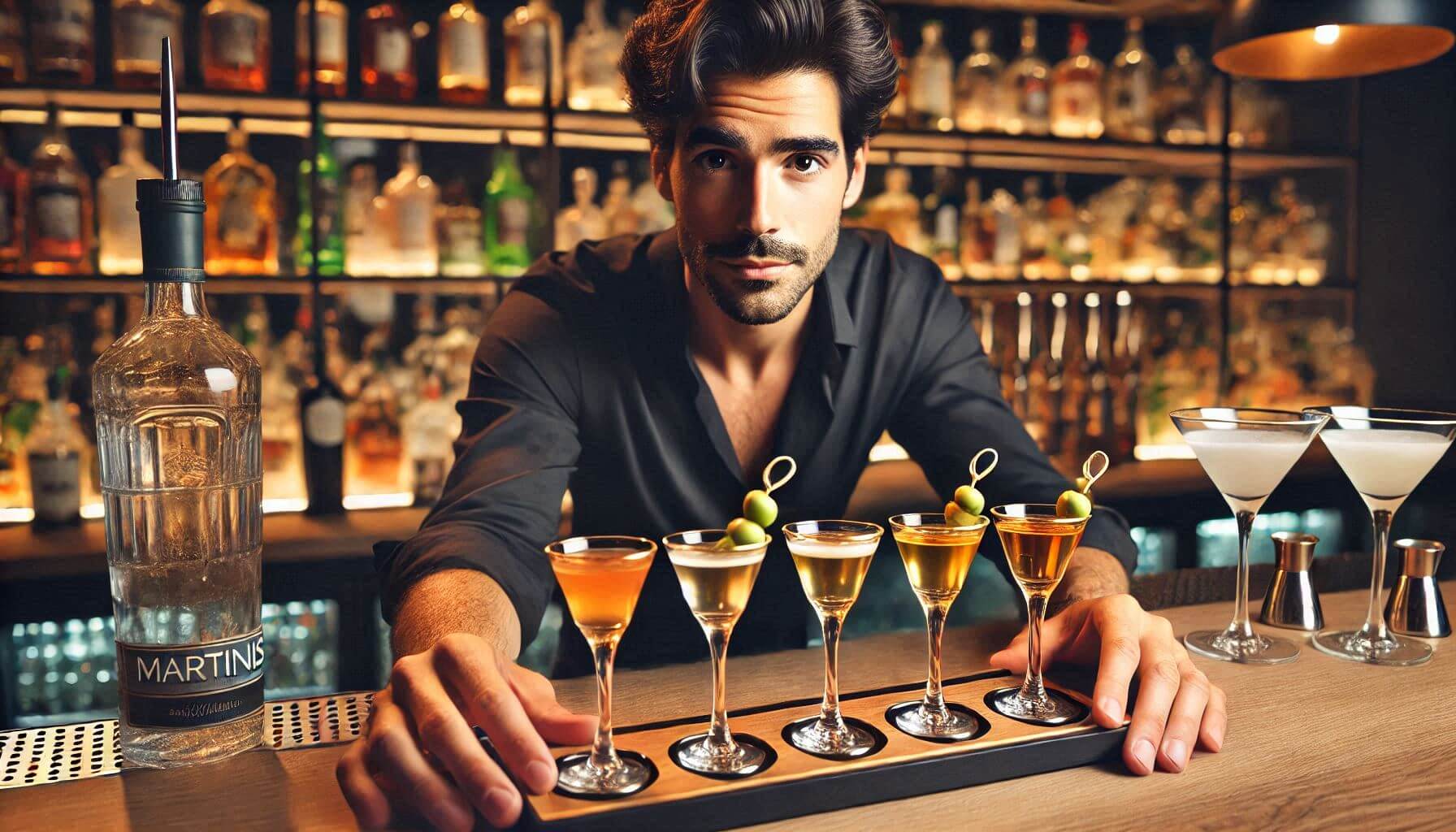
AI-generated image of a bartender serving miniature Martinis

Bottle of Martinis, anyone? In case you were uncertain, this image is AI-generated.

We’re nearing the end of 2024, and that means F&B intelligence platforms are releasing their year-end reports and predictions.

Among these platforms is Datassential. Recently, they released their Future of Drink preview report. You can sign up for your own copy here.

I’ve sifted through Datassential’s latest reports and trend-focused articles, and I’ve pulled a handful I think are among those that may perform the strongest in 2025.

Cheers!

Posh Jello Shots

Or as Datassential calls them in their report summary, “highbrow” jello shots.

This is the 2025 trend prediction that stands out the most to me. Your bar team will know how to produce jello shots (or learn how to make them reliably and consistently), but it’s not a difficult skill to develop.

Jello shots, or gelatin shots if you want to be pedantic, are most often associated with house parties and dive bars. However, gelatin is an interesting cocktail canvas, offering at the very least a different way to experience drinks texturally.

The simplest way to embrace this trend would be to use upmarket alcohol to craft these shots. Premium or super premium vodkas, for example. Another way would be to convert your signature cocktail(s) into jello form. And yet another approach would be layered jello shots, with each layer crafted using premium or super-premium ingredients.

An Alternative

Of course, operators don’t need to produce specialty, higher-end shots in gelatin form. With a bit of thought and experimentation, bar teams can produce shots that are essentially miniature versions of cocktails. Further, these can be offered as flights.

So, do you have a few specialty cocktails on your menu? Offer them as a flight of shots. Want to craft themed flights, such as a Negroni and two variants (Boulevardier and Sbagliato, for example)? That idea may just take off with your guests in 2025.

Creating shootable versions of more sophisticated cocktails elevates your program. Further, doing so can help introduce guests to a range of cocktails during a single visit in what can be a more responsible manner.

Think so-called “Mar-tinies” for inspiration: miniature Martinis served in miniature Martini glasses.

Heirloom Grains

It’s likely that you’re going to see “heirloom” or “heritage” a lot more in 2025 in relation to beer.

As both terms imply, brewers who produce these types of beer use grains they can trace back decades. Often times, heirloom grains are significant historically.

For example, Hanabi Lager Co. produces Haná Pilsner. Per the brewer, Haná is an heirloom grain that was used to produce the first-ever pilsner. In case you’re a beverage history buff or like sharing stories with guests who are interested, the first pilsner was brewed in 1842 by Josef Groll in the city of Pilsen.

Hanabi Lager Co. credits British farmers with “rescuing” Haná, pulling it back from the brink of extinction in 2015. Click here to check out other Hanabi beers made with heirloom barley and other heritage grains.

Operators who are interested in leveraging beers with notable ingredients should look for the words “heirloom,” “heritage,” and “ancient grain.” Further, they should ensure they know these beers would be of interest to their guests, and serve their concept in an authentic manner.

More Beer Trends

Other beer-centric trend predictions include global beers, hazy IPA, beer cocktails, and beer with a hint of lime.

I’m confident you don’t need an explanation of each of these 2025 trend predictions. However, it’s smart to approach each with careful consideration before adding them to your menu.

To provide an example, consider flights that focus on each trend: three to four hazy IPAs, half-sized beer cocktails, or specialty global beers.

Focusing on beer cocktails, or beertails or hoptails as I’ve seen over the years, I’m somewhat skeptical how they’ll rise in popularity. In my experience, they’ve never quite “hit” throughout the years. But, maybe 2025 is the year.

As far as beers with a hint of lime, consider creating snack pairings that pair well with such beers. Snacking as a trend is expected to rise in 2025, so it’s wise to engage your kitchen team to come up with a snack menu for your bar.

Cocktails on Tap

While I don’t recommend cocktails on tap of keg cocktails for every concept, I have certainly crafted beverage programs that leverage this trend.

And, in fact, I don’t consider these drinks to be a trend at all. In my opinion, cocktails on tap may not be ubiquitous, but they’re certainly no fad.

Why do I like cocktails on tap? For several reasons.

One of those is the speed of service, which benefits the team and the guest. While labor is necessary prior to service to prepare these drinks, kegged cocktails make up for all that effort. When the right cocktails are selected for the taps, they make it easy on the bar team to serve, and make it into the hands of guests in mere moments.

Another reason is the “novelty” of cocktails on tap. These drinks aren’t new yet many guests find the idea interesting, which piques their curiosity. Engaging guests is always good for business.

Now, think about bars and restaurants that include self-pour walls as a core feature of the concept. Guests have shown they’re interested in pouring their own beers and wines from pour walls. There are myriad reasons, including trying before they commit to something new to them. This applies to cocktails as well, and kegged cocktails are perfect for self-pour concepts.

Finally, they work for just about every category of bar, from casual neighborhood watering hole to upscale cocktail bar. When an operator focuses on glassware, garnish, and presentation, a cocktail on tap can appeal to even the most discerning cocktailian.

Image: Microsoft Designer

KRG Hospitality Contact Request for Proposal 30 Minute Discovery Session

Book Below to Setup a 30-Minute Complimentary Discovery Call and Request for Proposal.


by David Klemt David Klemt No Comments

5 Books to Read this Month: August 2024

5 Books to Read this Month: August 2024

by David Klemt

Flipping through an open book

Our August book selections focus on the 2024 Spirited Award finalists and winner of the 2024 Best New Cocktail or Bartending Book.

These books cover an array of topics, from mastering ice and drink ratios to foraging for botanical cocktail ingredients.

To review the book recommendations from July 2024, click here.

Let’s jump in!

The Ice Book: Cool Cubes, Clear Spheres, and Other Chill Cocktail Crafts

The winner of the 2024 Spirited Award for Best New Cocktail or Bartending Book. This is much more than just a guide for making crystal clear ice cubes or sphere. While that’s certainly a focus, The Ice Book includes tips on embossing and branding ice, creating huge slabs, and even making ice bowls for punches and other large-format drinks. Truly, this book will help you master ice.

From Amazon: “In The Ice Book, internationally renowned cocktail icepert Camper English details how to use directional freezing to make perfectly pure ice in a home freezer, carve it up into giant diamonds and other shapes, and embed it with garnishes, including edible orchids and olives. You’ll learn how to create a frozen bowl for Negroni punch, serve a Manhattan inside an ice sphere, and infuse cubes with colors and flavors to create cranberry cobblers, a color-changing Gin and Tonic, and other awesome drinks.”

Grab this book now.

Slow Drinks

With a shift in mindset you’ll likely notice the incredible world of cocktail ingredients at your fingertips during something as simple as a walk around your neighborhood. The author of this book, Danny Childs, is an ethnobotanist who can guide you through that change. Further, this informative book is more than just a list of botanicals you can grow and forage. You’ll learn how to pickle, infuse, and even ferment, taking your cocktail creation to incredible new heights. If there was ever an excuse to start and maintain a garden dedicated to your bar team, it’s picking up this book.

From Amazon: “Organized by season, Slow Drinks teaches home cooks, industry pros, homebrewers, and foragers how to transform botanical ingredients—whether gleaned, grown in the garden, or purchased from the store—into singular beverages and cocktails. With transporting photography and gorgeous color illustrations, Slow Drinks is the definitive guide to backyard mixology that can live just as comfortably in your basket on a foraging trip, as it can on the coffee table as a conversation piece.

Click here for the hardcover.

Tropical Standard: Cocktail Techniques & Reinvented Recipes

What if a bartender married modern cocktail-crafting techniques to dozens upon dozens of classic cocktail recipes? Well, odds are they’d be Garrett Richard, bar manager of Sunken Harbor Club. And documenting this marriage would be drinks author Ben Schaffer.

When it comes to drinks, some bartenders feel the original variants are sacred; techniques, ratios, and ingredients aren’t to be altered. However, there’s no reason classics can’t be honored and built in more modern ways, for modern palates.

From Amazon: “Crucial techniques are clearly detailed, including how to balance syrups, flash blend, handle carbonation, tackle tinctures, cordialize citrus, and power up juice with acid adjusting. Over the course of 84 recipes, vintage cocktails like the Rum Barrel, Mai Tai, and Ray’s Mistake are reimagined just as future classics are revealed, including the Beachcomber Negroni, Winter in L.A., and Field of Mars. These drinks honor founding legends such as Donn Beach, Trader Vic, and Harry Yee as well as modern icons, including Dale DeGroff, Audrey Saunders, Julie Reiner, and Dave Arnold.”

Pick it up here.

The Book of Cocktail Ratios: The Surprising Simplicity of Classic Cocktails

Speaking of cocktail ratios…this is your book if you and your bar team want to achieve a deeper understanding of balance. If you think about it for a moment, you’ll understand the importance than ratios and balance have on a cocktail. It goes beyond ensuring a particular drink tastes great. And it goes further than guaranteeing consistency. Shift one ingredient enough and you’re not just altering the taste, you’re likely making a different drink entirely. As author Michael Ruhlman points out, a Gimlet, Daiquiri, Bee’s Knees are the same cocktail; it’s the ratios that separate them.

From Amazon: “As Michael Ruhlman explains, our most popular cocktails are really ratios—proportions of one ingredient relative to the others. Organized around five of our best-known, beloved, classic families of cocktails, each category follows a simple ratio from which myriad variations can be built: The Manhattan, The Gimlet, The Margarita, The Negroni, and the most debated cocktail ever, The Martini.”

Order yours now.

Hacking the New Normal: Hitting the Reset Button on the Hospitality Industry

Doug Radkey‘s followup book to Bar Hacks! The world around us has changed. The food and beverage industry has changed. The hospitality industry has changed. But will some ways of life change for the better? Will perhaps the restaurant, bar, and hospitality industry come out even stronger? With the right changes to the previous status quo, it is possible. There’s no question, resets are major undertakings, but a major reset will provide us with a clean start and that’s what this industry needs.

From Amazon: “Whether or not you’re a hotelier, restaurateur, bar owner or a front-line staff memberthis book will position you for success in the new normal. With a spotlight on hybrid business models, real estate, profit margins, technology, guest experiences, culture, diversity, and mindset, Hacking the New Normal is the guidance you need.

Click here to pick your copy up today.

Image: Mikołaj on Unsplash

KRG Hospitality. Bar Consultant. Nightclub. Lounge. Mixology. Cocktails.

by David Klemt David Klemt No Comments

Drink Donnybrook: The Sazerac

Drink Donnybrook: The Sazerac

by David Klemt

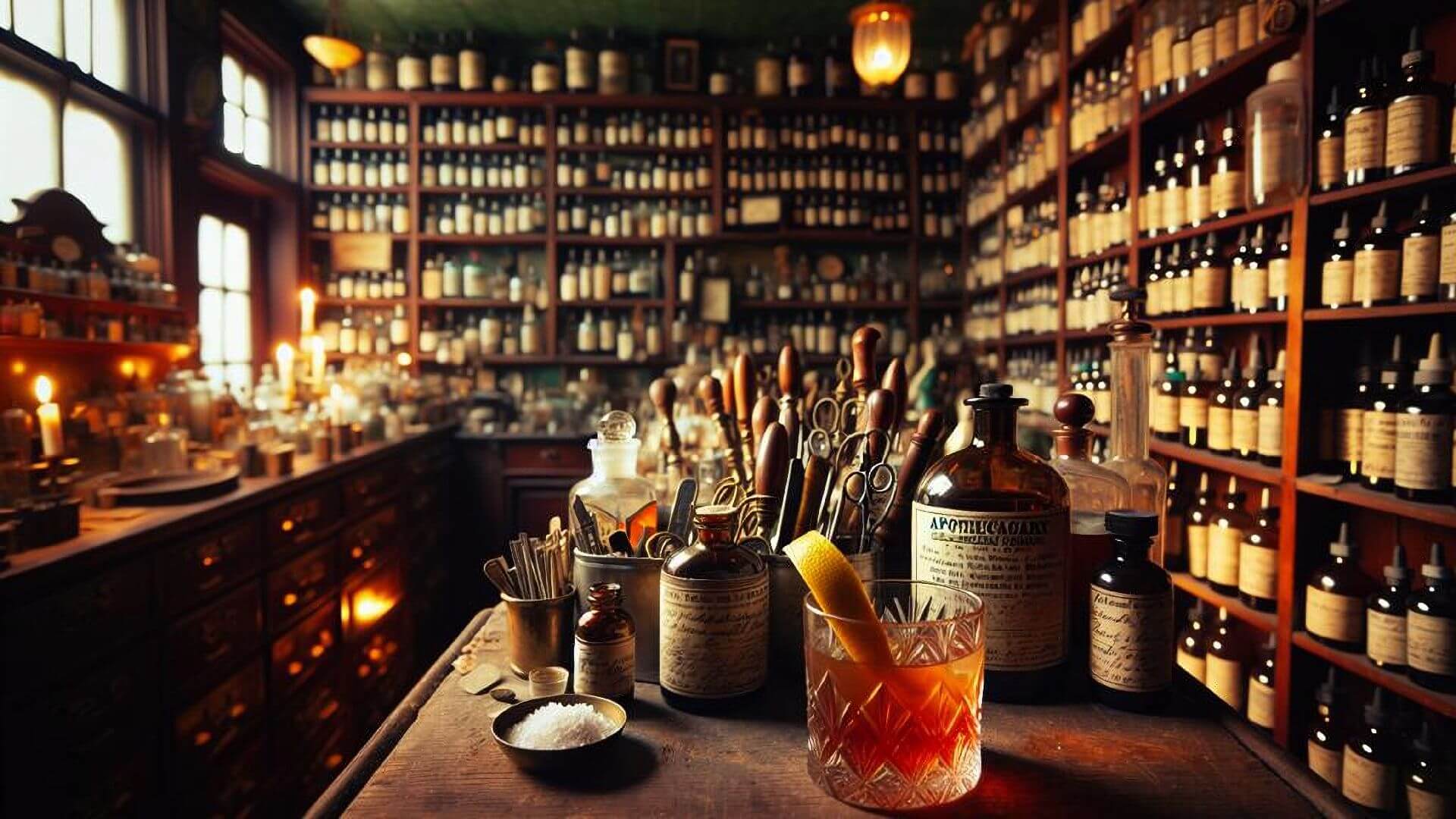
A Sazerac cocktail on a counter inside a rustic apothecary shop

That’s quite a full Sazerac, but I’m more interested in what this particular AI platform thinks that powder next to the cocktail is…

We celebrate the Sazerac, nearly 200 years old and known to many as America’s first cocktail, on Sazerac Cocktail Day, which falls on a Sunday this year.

Refreshingly, we know who should credit for its creation. Further, we can trace it back to a year, and even a location.

In that regard, this won’t be like other Drink Donnybrook articles. The only bold, debate-inducing claims I can really make relate to the base spirit, year of creation, and that my first-ever Sazerac was awful. Oddly, this less-than-stellar Sazerac was made for me at an incredibly popular bar in New Orleans.

Well, sometimes bartenders have off days. I’ve been back to that bar, and had a great time with a great Sazerac. It’s absinthe under the bridge.

Speaking of absinthe, that anise-flavored spirit is a core element of this classic cocktail. Much like some people say “No Negroni without Campari,” there’s no Sazerac without an absinthe rinse.

Now, onto the base of this legendary drink. While bartenders have been making it with rye whiskey for decades, the original recipe calls for Cognac. More specifically, it was made with Sazerac de Forge & Fils. Voilathe drink bears the name of the brandy used at its creation. (Hey, speaking of brandy, check out my Donnybrook article about the Brandy Alexander.)

Cold water, an ice cube, and Peychaud’s bitters round out the ingredients list for a Sazerac. And it’s that last item that reveals the drink’s creator.

The Official Cocktail of New Orleans

Roughly a decade into the 1800s, Antoine Peychaud arrived in New Orleans, Louisiana. Reliable records are a bit difficult to come by, so we don’t know his precise arrival date.

However, historians seem confident that Peychaud did open an apothecary in New Orleans in 1832. (According to one source I came across, Pharmacie Peychaud was opened in 1841.) The next time you’re in NOLA, you can visit the location of said apothecary: 437 Royal Street. Originally, the address was 123 Royal Street. Today, it’s the home of James H. Cohen Antique Weapons & Rare Coins. It’s a fun spot to pop into, by the way.

As you’re likely well aware, apothecaries were precursors to pharmacists and chemists. They served their communities from ye olde apothecary shoppes, and their medicine often consisted of alcohol.

Peychaud crafted his namesake bitters and used them to create an elixir that treated his customers’ illnesses. That medicinal elixir would become the Sazerac. Again, this potion was made with Sazerac de Forge & Fils Cognac, absinthe, and Peychaud’s bitters.

Intriguingly (to me), the Sazerac Housea must-see attraction in NOLAclaims the Sazerac became famous in the 1850s at the Sazerac Coffee House. So, it could’ve taken the Sazerac 20 years to evolve from medicine to cocktail.

On the topic of cocktails, some people attribute Peychaud with inventing the word “cocktail.” Many historians have labeled this claim as false.

Over time, it became difficult to source the cocktail’s eponymous brandy, so the recipe changed to rye whiskey. Some bartenders craft their Sazeracs with other spirits, and will even split their bases. For example, you should try a Sazerac made with a split base of Cognac and rye.

Original Sazerac

Behold, the original Sazerac cocktail recipe.

  • 2 oz. Sazerac de Forge & Fils Cognac
  • 3 to 4 dashes Peychaud’s Bitters
  • 0.5 teaspoon Cold water
  • 1 Sugar cube
  • Absinthe, to rinse
  • Lemon peel, to garnish

You’ll want to have chilled rocks glasses on hand for this cocktail. To start, rinse the glass with absinthe. In a mixing glass, muddle the bitters, water, and sugar cube. Add ice and the Cognac to the mixing glass, and stir until well chilled. Strain, garnish, and serve.

As stated earlier, most modern-day recipes call for rye whiskey rather than Cognac. Experiment with basesincluding splitsto craft your signature Sazerac.

In 2008, lawmakers in Louisiana passed legislation that made the Sazerac the Official Cocktail of New Orleans. Sazerac Cocktail Day is on June 23, which falls on a Sunday in 2024. Cheers!

Image: Shutterstock. Disclaimer: This image was generated by an Artificial Intelligence (AI) system.

Beverage Cocktail Program Coaching Consulting Bars Restaurants Hotels

by David Klemt David Klemt No Comments

BRE Reveals 2024 Award Winners

BRE Reveals 2024 Award Winners

by David Klemt

Join us in toasting the fourteen recipients of the 2024 Bar & Restaurant Expo industry awards, which span three separate categories.

As you’ll see below, the BRE award categories are as follows:

  • One individual receives the Industry Impact Award. From BRE: “This award recognizes an individual who has displayed an immense passion for their craft and has helped make significant advancements in the field.”
  • Seven individuals or venues receive one of the Industry Excellence Awards. These awards focus on independent bars and restaurants.
  • Six brands take home on of the Supplier Awards. This category is new to BRE in 2024. Further, BRE attendees choose the winners after suppliers submit products for consideration.

Interestingly, Austin, Texas, and Atlanta, Georgia, take home the most Industry Excellence Awards this year. In fact, Austin is home to three of the seven Industry Excellence Award winners.

WATERTRADE is the winner of Best Cocktail Program, OTOKO is Restaurant of the Year, and Iliana de la Vega is Chef of the Year.

One individual and one venue in Atlanta claim Industry Excellence Awards as well. Best Hospitality Training Program goes to Your 3rd Spot, while the Ebony Austin of Nouveau Bar & Grill wins the Community Leadership Award.

There are, of course, two outliers. For 2024, Dominique Jackson of Realm of the 52 Remedies in San Diego, California, is Bartender of the Year. And Happy Accidents in Albuquerque, New Mexico, is Bar of the Year. This awesome bar is the 2023 winner of the Spirited Award for Best US Bar Team.

Congratulations to this year’s Bar & Restaurant Expo award winners! You can see the full list of winners below, organized by category. To learn more about the awards, please click here.

Industry Impact Award

  • Derek Brown (Positive Damage, Inc.)

Industry Excellence Awards

  • Bar of the Year: Happy Accidents (Albuquerque, New Mexico)
  • Best Cocktail Program: WATERTRADE (Austin, Texas)
  • Bartender of the Year: Dominique Jackson, Realm of 52 Remedies (San Diego, California)
  • Restaurant of the Year: OTOKO (Austin, Texas)
  • Chef of the Year: Iliana de la Vega, El Naranjo (Austin, Texas)
  • Best Hospitality Training Program: Your 3rd Spot (Atlanta, Georgia)
  • Community Leadership Award: Ebony Austin, Nouveau Bar & Grill (Atlanta, Georgia)

Supplier Awards

  • Best Alcoholic Beverage: Don Julio Alma Miel Joven Tequila
  • Best Non-alcoholic Product or Mixer: Ritual Zero Proof Spirits
  • Best Food Product/Producer: Oh Snap! Dilly Bites
  • Best Equipment, Tool, or Bar Supply: True Manufacturing
  • Best Technology Product: Draft Top PRO
  • Best Entertainment Product: Team Trivia

Image: Mathias Reding on Pexels

KRG Hospitality Start-Up Restaurant Bar Hotel Consulting Consultant Solutions Plans Services

by David Klemt David Klemt No Comments

Clash of the Coffee Cocktails

Clash of the Coffee Cocktail Titans: Espresso Martini vs. Carajillo

by David Klemt

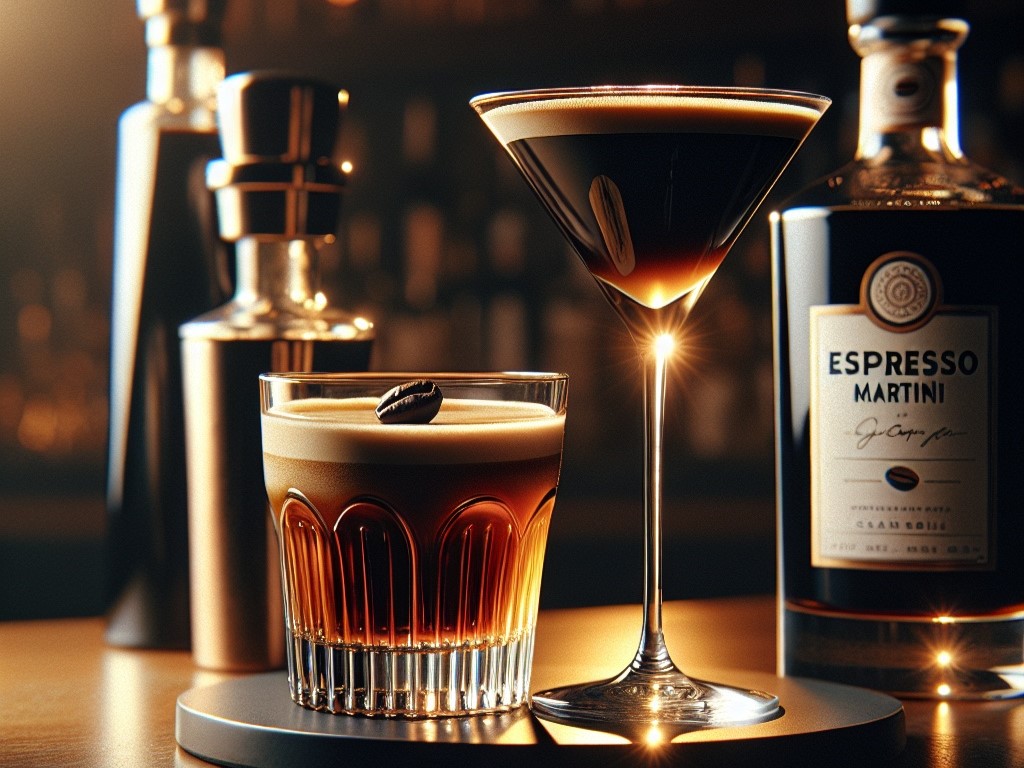
AI-generated image of a Carajillo cocktail next to an Espresso Martini

It took quite a few attempts for AI to generate a Carajillo without a lemon wedge or wheel garnish, with oddly placed ice on top of the foam.

It’s National Espresso Martini Day on Friday, March 15, the day we celebrate a cocktail that has been having “a moment” for decades.

I doubt the man behind the Bramble thought the Espresso Martini (originally the Vodka Espresso) would take on the life it has. The late, legendary Dick Bradsell created this modern classic in London in the 1980s. Oh, and he was also leading the charge for London’s cocktail scene revival at the time.

For whatever reason, the Espresso Martini (also known as the Pharmaceutical Stimulant when served on the rocks) enjoys immense popularity but also suffers widespread mockery. Hey, I’m also guilty of cracking jokes at this stalwart’s expense. Although, my issue is the annual articles saying, “Espresso Martini, so hot right now. Espresso Martini.”

The drink itself? I’ve enjoyed my fair share. And, damn it, I’ll do it again.

Now, I’m mainly writing about National Espresso Martini Day to put it on your radar. This Bradsell creation is wildly popular, and this year’s holiday falls on a Friday. So, there’s ample opportunity to engage with guests, increase traffic, boost revenue, and get creative.

However, I did use the words “clash” and “versus” in the title of this article for a reason…

Clash of the Coffee Cocktail Titans

I submit that National Espresso Day is the perfect time to make guests not in the know aware of the Carajillo.

Look, I know it’s not cool to steal someone’s thunder on their big day. We know we shouldn’t propose to our significant other at someone’s wedding reception. And it’s poor form to pull focus on someone’s birthday with big life event news.

Still, I’m going to propose that operators use National Espresso Martini Day to introduce guests to its rival.

A great rivalry tends to be beneficial for both participants, so why not stoke a friendly feud between these two coffee cocktail heavyweights? To get people’s promotional wheels turning, allow me to suggest an approach.

One way to get guests acquainted with both cocktails is to have them order them back to back. Encourage the ordering of a traditional (or signature) Espresso Martini. Then, have the guest order a Carajillo, traditional specs or otherwise. Right there, operators have gotten a guest to order the important second drink.

If an operator really wants to lean into this approach, they can even create a prix fixe cocktail menu featuring the Espresso Martini and Carajillo. A third drink could be a signature or personalized riff on whichever cocktail the guest enjoyed most.

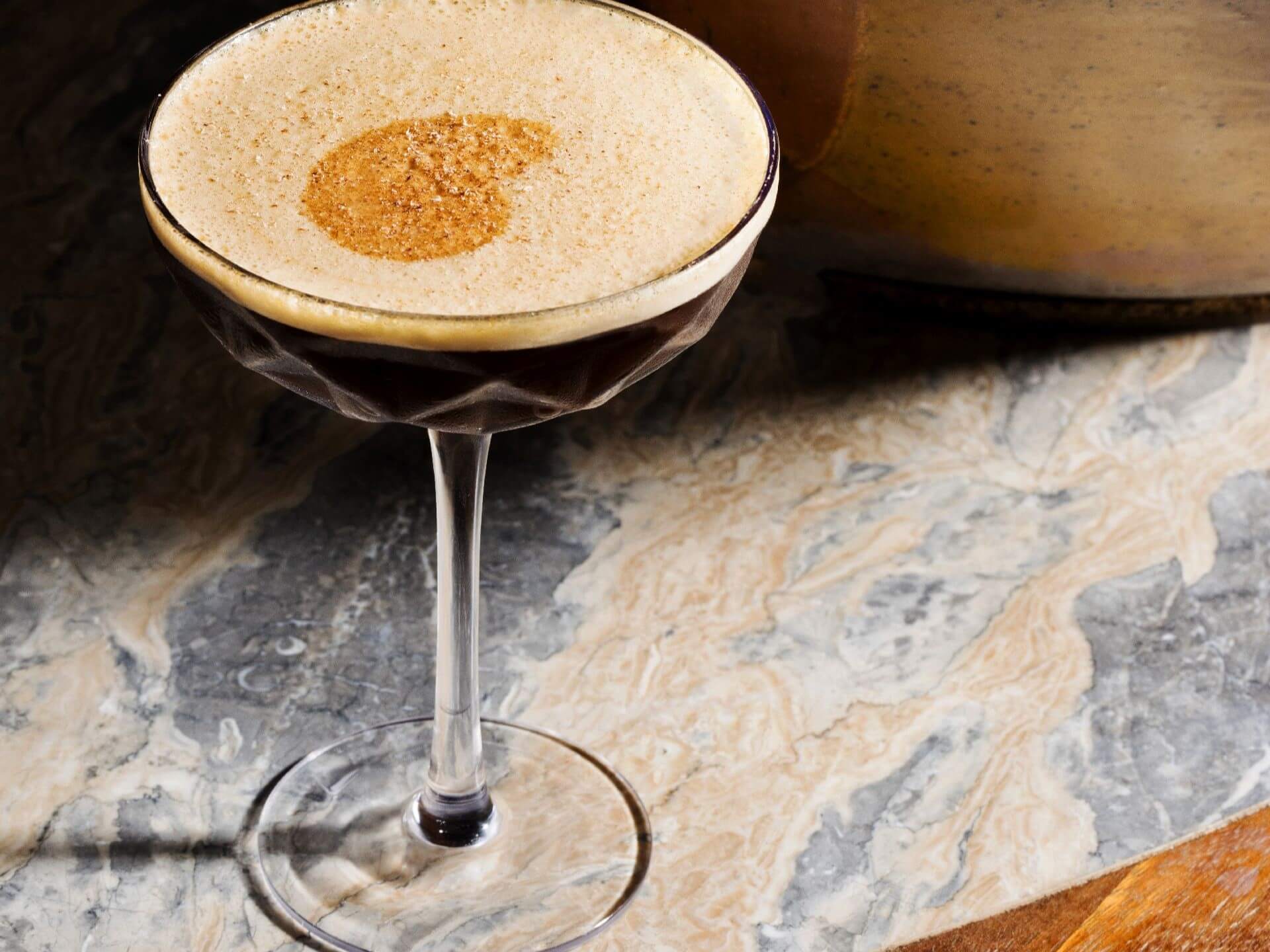
Espresso Martini

  • 2 oz. Vodka
  • 1 oz. Fresh-brewed espresso
  • 0.5 oz. Coffee liqueur
  • 0.25 oz. Simple syrup
  • 3 Coffee beans to garnish

Add ice to a cocktail glass to chill it. Alternatively, keep some chilled cocktail glasses on hand. Add all liquid ingredients to a cocktail shaker with ice. Shake well, then strain into prepared cocktail glass. Garnish with three coffee beans.

Carajillo

  • One part Licor 43
  • One part coffee
  • 3 Coffee beans to garnish (optional)

Add equal parts Licor 43 and coffee to a cocktail shaker with ice. Shake very well to create a foamy texture, then pour into a cocktail glass.

It’s important to note that a Carajillo can be poured over ice or served up. Also, one can use any type of coffee they prefer, including cold brew. Further, some people make a Carajillo with horchata, while others serve it with a small bowl of sugar. There are also people who use cinnamon sticks and chocolate shavings for garnish.

Going even deeper, some bars serve the Carajillo as a layered, stacked, or pousse-café drink, also known as puesto style.

Image: Shutterstock. Disclaimer: This image was generated by an Artificial Intelligence (AI) system.

KRG Hospitality Start-Up Restaurant Bar Hotel Consulting Consultant Solutions Plans Services

by David Klemt David Klemt No Comments

The Batching Superpower of Sūpāsawā

The Batching Superpower of Sūpāsawā

by David Klemt

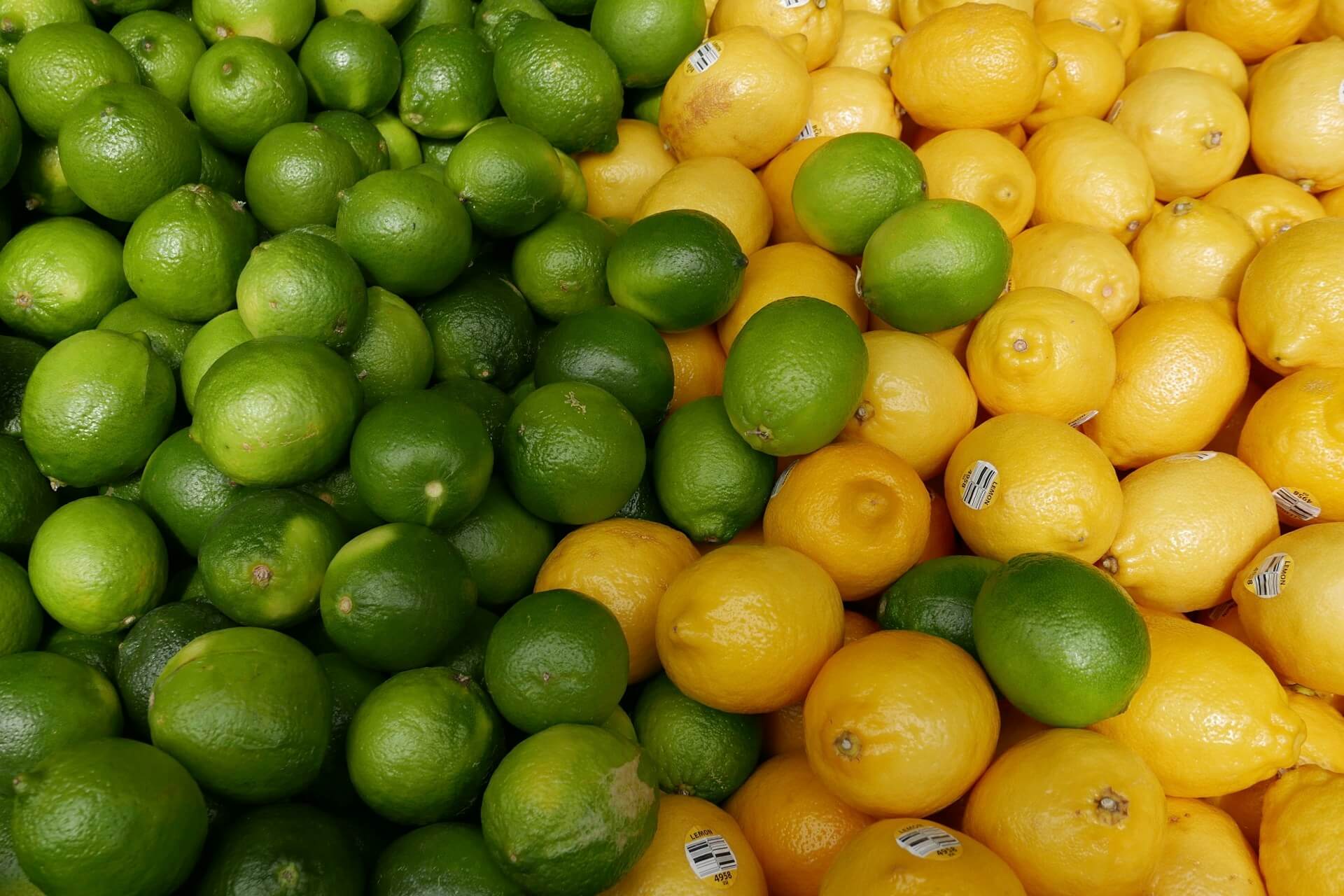
A bunch of limes and lemons

One of our favorite products from WSWA’s Access LIVE 2024 event in Las Vegas can save operators and bar teams time and money.

Access LIVE, the annual Wine & Spirit Wholesalers of America (WSWA) event is always chock full of notable items. However, this one in particular stood out to me and my colleagues.

Coming out of Deluxe Distillery in Belgium, Sūpāsawā Seriously Sour Cocktail Mixer is here to make lives easier.

Of course, it’s not surprising that this mixer is so impressive. Sūpāsawā is produced alongside high-quality stablemates, after all: Blind Tiger Handcrafted Gin, Mary White Premium Vodka, and Yusibi Honey Based Aperitif.


View this post on Instagram


A post shared by Supasawa (@supasawaco)

In short, this innovative mixer can replace citrus. Importantly, it’s also widely available around the world. Speaking to the core of our audience and clients, it’s available in Canada and the US. When I asked about availability in the US, I was told it’s in 30 states currently.

Operators in the UK, Europe, Australia, and many more regions should also be able to get their hands on Sūpāsawā.

So, what is this magical mixer, exactly? It’s a simple and clean stand-in for expensive and time-consuming citrus.

Deluxe’s super sour mixer is distilled water, citric acid, malic acid, tartaric acid, phosphoric acid, and succinic acid. The liquid is crystal clear, aroma-free, and an incredibly convenient substitute for lemons and limes.

Real-life Scenario

Consider the following real-life hypothetical that shines a light on Sūpāsawā’s real-life benefits.

Let’s say someone hires an operator for a catered event. Included in this event is bar service, and involves more than pouring wine and beer.

Along with a handful of calls, the client and their guests expect a signature cocktail. Well, batching a cocktail or two ahead of the event would be a smart move.

However, we all know what that means: purchasing and juicing citrus. And we also all know what else that means: labor costs for all that prep.

What if one bartender or bar back could batch a cocktail in less than five minutes? Yes, I’m talking under five minutes for the entire batching process.

That scenario is nearly identical to Deluxe Distillery’s Access LIVE 2024 situation.

Deluxe showed the convenience and superpower of Sūpāsawā at their booth via batching. According to the bartender and ambassador who prepared the standout cocktail, he added all the ingredients—including the super sour mixer—to a jug, shook it, and it was ready to go in less than five minutes.

Real-life Benefits

Does this mean you’ll never have to buy lemons and/or limes again? For the vast majority of bars, no. However, the more drinks you can make with Sūpāsawā, the more you can plan for and control the cost of citrus.

Per Deluxe, operators can expect to save 15 minutes per liter of citrus juiced. The distillery also says each bottle of Sūpāsawā represents 35 pieces of fruit an operator won’t have to purchase. On average, a single cocktail requires just 20 ml of Sūpāsawā, or 2/3 of an ounce. With each bottle coming in at 700 ml, that’s 35 individual cocktails per.

When I asked about unit cost at their Access Live 2024 booth, Deluxe said operators can expect a price of $9 per unit. People who do the math can see the benefit of getting their hands on Sūpāsawā for individual, kegged, and batched cocktails.

In terms of storage, the slim bottle can last for about two years unopened. After it’s opened, Sūpāsawā should last for up to a year. Compare that to the two- to three-day shelf life of lemon or lime juice.

Notably, using Sūpāsawā leads to consistency. Because it always tastes the same, drink consistency is improved. And, of course, using this super sour mixer leads to producing less food waste.

Click here to learn more about Sūpāsawā and what it can do for an operator’s bar program, catering, and bottom line. Oh, and click here for recipes. Cheers!

Disclaimer: Neither the author nor KRG Hospitality received compensation, monetary or otherwise, from Deluxe Distillery, WSWA, or any other entity in exchange for this post.

Image: Irina on Unsplash

KRG Hospitality Start-Up Restaurant Bar Hotel Consulting Consultant Solutions Plans Services

by David Klemt David Klemt No Comments

Life is Peachy with These Cocktails

Life is Peachy with These Pantone-inspired Cocktails

by David Klemt

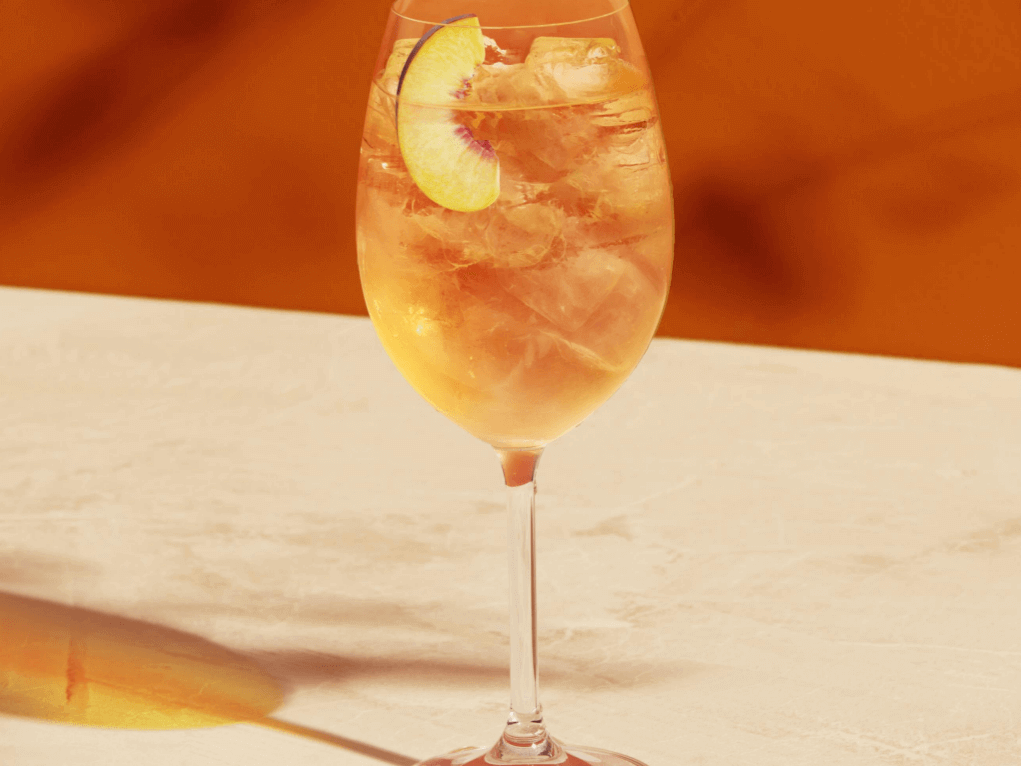
Greek Spritzer drink

According to Pantone, the 2024 Color of the Year is Peach Fuzz, which communicates warmth, community, collaboration, and a sense of welcoming.

There’s a lot that operators can do with Pantone’s annual announcement.

For those who are curious, the 2023 Color of the Year was Viva Magenta, a bold, purplish shade of red. And in 2022, the color was Very Peri, a dynamic shade of blue.

If an operator is looking for a complete venue refresh, Peach Fuzz may be an effective choice. For example, people can leverage the 2024 Color of the Year with feature walls, seating, tablecloths, and physical menus.

Of course, not every operator is looking to undergo a redesign. In this case, there’s still plenty of opportunity to splash Peach Fuzz throughout a bar or restaurant. One simple and effective way is through the drink menu.

Below are three peach-forward cocktail recipes. They’re visually appealing, which is helpful since we tend to “drink” with our eyes first. And with peach brandy, puree, or bitters, they impart more than just color: peach fans will appreciate the flavor.

You’ll also find a recipe for the Cosmopolitan, the famous cocktail created by Toby Cecchini. It turns out Aubrey Plaza, the modern face of the Margarita, is also the spokesperson for the Cosmo. Just like they say there’s no Negroni without Campari, there’s no Cosmo without Cointreau.

Cheers!

Frankly, My Dear cocktail

Frankly, My Dear

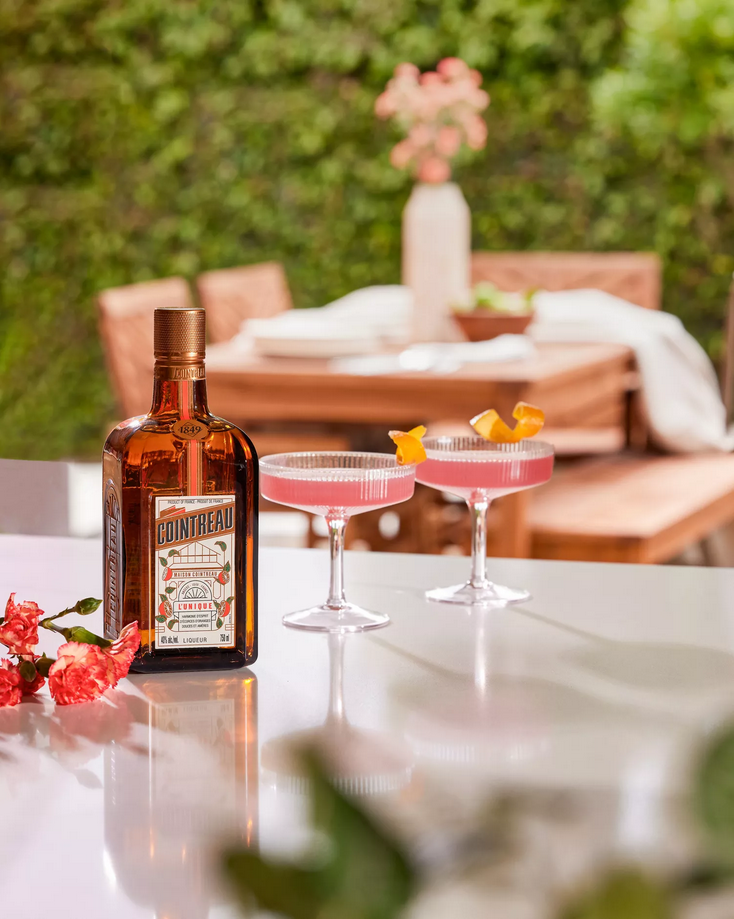
  • 0.75 oz. Cointreau
  • 0.75 oz. Tequila
  • 0.75 oz. Fresh lemon juice
  • 0.5 oz. Peach puree
  • 3 oz. Prosecco to top
  • Peach wedge to garnish

Prepare a Collins glass by filling it with ice. Add all ingredients except for the Prosecco and garnish to a shaker with ice. Shake well, then strain into Collins glass. Top with Prosecco, garnish with a peach wedge, and serve.

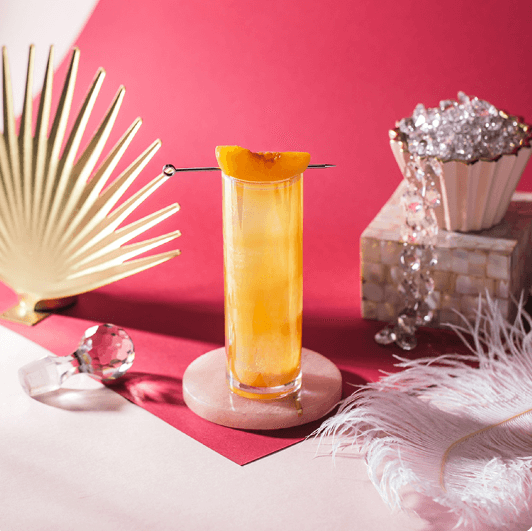
Fish House Punch cocktail

Fish House Punch

Add ice to a rocks, Collins, or other glass. Fill a cocktail shaker with ice, then add all ingredients except for garnish. Shake well, strain, garnish with lemon zest, and serve.

Peach Spritzer cocktail, also known as Greek Spritzer

METAXA Peach Spritzer

  • 1.5 oz. METAXA 7 Stars
  • 1.5 oz. Prosecco or other sparkling wine
  • 0.75 oz. Tonic
  • 3 dashes Peach bitters
  • Peach wedge to garnish
  • For winter: Star anise and tree leaf to garnish
  • For spring: Jasmine flower to garnish

For this cocktail, start by selecting a red wine glass. Add METAXA 7 Stars, then add bitters and ice. Stir, add tonic, then top with Prosecco or other sparkling wine. Garnish with a peach wedge.

Cointreau Cosmopolitan cocktails

Cointreau Cosmo

  • 1 oz. Cointreau
  • 2 oz. Vodka
  • 1 oz. Fresh lime juice
  • 1 oz. Cranberry juice
  • Orange twist to garnish

Your bartenders probably know how to make a Cosmo. But just in case, start by preparing a coupe or cocktail glass by chilling it. Add all the liquid ingredients and ice to a cocktail shaker. Shake well, then strain into the prepared glass. Garnish and serve.

Images belong to their respective brands.

KRG Hospitality. Bar Consultant. Nightclub. Lounge. Mixology. Cocktails.

by David Klemt David Klemt No Comments

Program for Unique Holidays: January 2024

Program for Unique Holidays: January 2024

by David Klemt

"Think about things differently" neon sign

Do you want to stand out from from other restaurants and bars in your area? Change how you kick off the new year with your January holiday promotions.

Several holidays are set against every date on the calendar, and this month is no exception. These holidays range from mainstream to esoteric.

Pay attention to the “weird” or unique holidays to raise eyebrows, carve out a niche for your restaurant or bar, and attract more guests. Why do what everyone else is already doing? Why program only around the same holidays as everyone else?

Of course, you shouldn’t try to celebrate every holiday, strange or otherwise. Focus on the days that are authentic to your brand; resonate with your guests; and help you grab attention on social media.

You’ll find suggestions for promotions below. However, the idea behind our monthly holiday promotions roundup is to inspire you and your team to get creative and come up with unique programming ideas.

For our December 2023 holidays list, click here.

January 2: Thank God It’s Monday Day

We all know the Monday trope: It’s the day of the week to fear, inspiring the Sunday Scaries.

Well, this month encourages people to change how they look at the start of the workweek. Your venue can play a role, offering F&B promotions and entertainment programming that puts people in good spirits on a Monday.

January 3: National Fruitcake Toss Day

Another trope? Fruitcake somehow becoming a rock star during the end-of-year holiday season. I suppose this divisive dessert gets the “rock” part right…

If you have the space, you can hold a fruitcake tossing competition. Nobody’s going to eat the fruitcakes they were given, so they may as extract some joy from them.

January 9: National Cassoulet Day

This French dish is warm and comforting. And according to Tastewise, social conversations were up 20 percent in 2023.

However, less than one percent of restaurants have cassoulet on their menus in the US. Could be an excellent opportunity for savvy operator and kitchen team.

January 13: National Peach Melba Day

Each December, Pantone announces the next year’s Color of the Year. At this point, it’s a tradition.

For 2024, that color is Peach Fuzz. So, it makes sense to put peach dishes and drinks on your menu. The Peach Melba is a dessert consisting of peach wedges resting in raspberry sauce, accompanied by vanilla ice cream. However, there’s no reason your kitchen team can’t make this their own by getting creative with ice cream flavors and other accompaniments.

January 14: Start of National Mocktail Week

This is an excellent way to help guests celebrate Dry January. However, it’s important to note that some sober guests find the term “mocktail” disrespectful. I can see their point: the word has “mock” in it. So, perhaps call your celebration Alcohol-free Week, Non-alcohol Week, or Zero-ABV Week.

Either way, this is the time to dial in your zero-proof menu.

January 15: National Strawberry Ice Cream Day

Celebrating this holiday with the Peach Melba is a great way to get the most out of promoting your guests’ favorite new dessert. All you have to do is serve your Peach Melba with, you guessed it, strawberry ice cream instead of the standard vanilla.

January 20: National Cheese Lover’s Day

Getting creative to celebrate this holiday will take some effort. However, if you nail it, this promotion can be recurring and become a sought-after experience.

Wine, beer, and spirits pair with a vast array of cheeses. You can create an entire tasting experience, pairing specific cheeses with a curated selection of wines, beers, whiskeys, or other spirits. Check out this guide for pairing ideas.

January 20: National Use Your Gift Card Day

I don’t usually double up on holidays for this monthly KRG Hospitality feature, but here we are.

If your business offers gift cards, this is the day to encourage people to come in and redeem them. Send a targeted email campaign, include a link to your reservation system, and you’ll have an excellent way to track how many gift cards you can expect to show up for redemption.

January 25: Clashing Clothes Day

Why should October and December get all the dress-up fun? There’s no reason your guests have to pull out all the stops for Ugly Christmas Sweater gatherings and then wait another year to do it again.

If you pull this off well and make it a “thing,” you and your team can own Clashing Clothes Day and make it an annual promotion.

January 30: National Croissant Day

The humble but delicious, flaky croissant is a tasty canvas. Sure, you can just offer croissants, but what about going harder and offering an array of croissant sandwiches or desserts?

Image: Ivan Bertolazzi on Pexels

KRG Hospitality Start-Up Restaurant Bar Hotel Consulting Consultant Solutions Plans Services

by David Klemt David Klemt No Comments

2023 KRG Recap: Top 8 F&B Articles

2023 KRG Recap: Top 8 F&B Articles

by David Klemt

Closeup of eight ball on pool table

For the second entry into our annual year-in-review article roundup we’re revealing the top eight food, beverage, and menu development articles of 2023.

From ChatGPT and advice from Chef Brian Duffy to articles from KRG Hospitality chef-consultant Nathen Dubé and mindset coach Jennifer Radkey, the articles below cover a wide range of F&B topics.

There’s even a look at Chef Duffy’s time on Food Network’s show BBQ Brawl with barbecue tips from our favorite pit master. It’s one of our favorite articles of the year, as well.

Cheers!

Closeup of keyboard

Can ChatGPT Write Food and Drink Menus?

After my “conversation” last month with ChatGPT about AI, I had another conversation during which I asked it to write me four menus.

Of course, I did this to prove a point. And upon reviewing the ChatGPT menus, you’ll likely reach the same conclusion.

Curious about how creative the AI-powered chatbot could be, I asked for four specific menus. As you’ll see, two are cocktail specific, one focuses on food, and one is a 20-item F&B menu for a specific event.

So, yes, ChatGPT can write food and drink menus. But there’s a caveat. I could leave you in suspense but that’s not very nice. Let’s jump in.

Write me a cocktail menu using the most popular cocktails from 2022.

Cocktail Menu

  1. Aperol Spritz – Aperol, Prosecco, and soda water, garnished with an orange slice
  2. Old Fashioned – Bourbon, sugar, bitters, and a citrus peel
  3. Margarita – Tequila, triple sec, lime juice, and salt rim
  4. Daiquiri – Rum, lime juice, and simple syrup
  5. Moscow Mule – Vodka, ginger beer, and lime juice
  6. Paloma – Tequila, grapefruit juice, lime juice, and soda water
  7. Pina Colada – Rum, pineapple juice, coconut cream, and a cherry garnish
  8. Whiskey Sour – Bourbon, lemon juice, and simple syrup
  9. French 75 – Gin, Champagne, lemon juice, and simple syrup
  10. Mai Tai – Rum, orange liqueur, lime juice, and orgeat syrup

*All cocktails are served over ice, unless otherwise requested.

Write me a cocktail menu using the most popular spirits and alcohol types of 2022.

Cocktail Menu

  1. Gin and Tonic – Gin, tonic water, and a lime wedge
  2. Vodka Martini – Vodka, dry vermouth, and an olive garnish
  3. Bourbon Manhattan – Bourbon, sweet vermouth, and bitters
  4. Tequila Sunrise – Tequila, orange juice, and grenadine syrup
  5. Rum Runner – Rum, blackberry liqueur, orange juice, pineapple juice, and grenadine
  6. Whiskey Sour – Bourbon, lemon juice, and simple syrup
  7. Margarita – Tequila, triple sec, lime juice, and salt rim
  8. Daiquiri – Rum, lime juice, and simple syrup
  9. Long Island Iced Tea – Vodka, gin, rum, tequila, triple sec, lemon juice, and cola
  10. Pina Colada – Rum, pineapple juice, coconut cream, and a cherry garnish

*All cocktails are served over ice, unless otherwise requested.

Click here to keep reading.
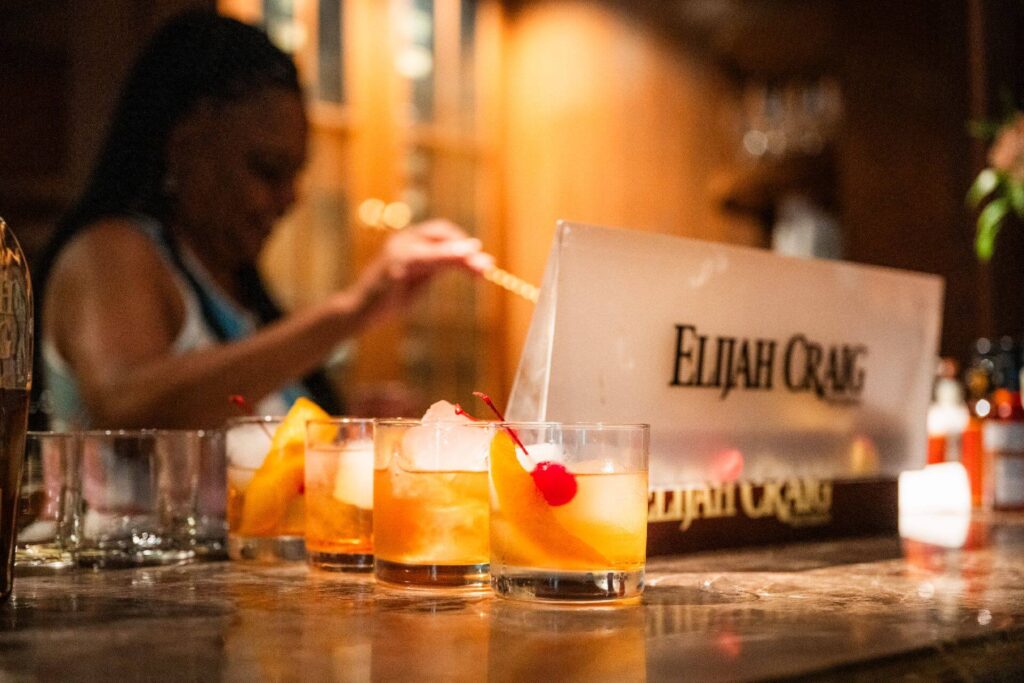
Lynn House making Old Fashioned cocktails for Elijah Craig

Prepare Now for Old Fashioned Week

It may be nearly two months away but it’s not too early to register your bar and team for Elijah Craig Old Fashioned Week.

This year’s event, the fourth annual Old Fashioned Week, will take place from Friday, October 13 to Sunday, October 22.

As was the case in 2022, the Southern Smoke Foundation will be this year’s beneficiary. In 2020 and 2021, Elijah Craig Old Fashioned Week raised a combined $200,000 for the Restaurant Workers’ Community Foundation.

Just last year, to add context, Old Fashioned Week helped make it possible for Southern Smoke to provide nearly $110,000 in relief grants to food and beverage workers.

Those interested in participating this year can register their venue for free via this link. Create an Old Fashioned LTO menu—or simply make standard Old Fashioneds with Elijah Craig bourbon—and Elijah Craig will donate $1 for every Old Fashioned sold (up to $100,000).

There really couldn’t be a simpler way to deliver a fantastic, classic cocktail experience to guests while supporting a great cause.

Elijah Craig Old Fashioned Cocktail Contest

There’s more to Elijah Craig Old Fashioned Week. You and your bartenders have the opportunity to participate in a cocktail contest, too.

From now until October 31, anyone who wants to throw their hat in the ring can submit their recipe for their own signature Old Fashioned.

The winner of the Elijah Craig Old Fashioned Cocktail Contest will win $5,000. They’ll also have their winning recipe included in Elijah Craig’s 2024 cocktail recipe book.

Recipes can be submitted through this link. For contest rules and judging criteria, please click here.

To learn more about Elijah Craig and the Old Fashioned, check out episode 52 of the Bar Hacks podcast with special guest Lynn House.

Continue reading here.
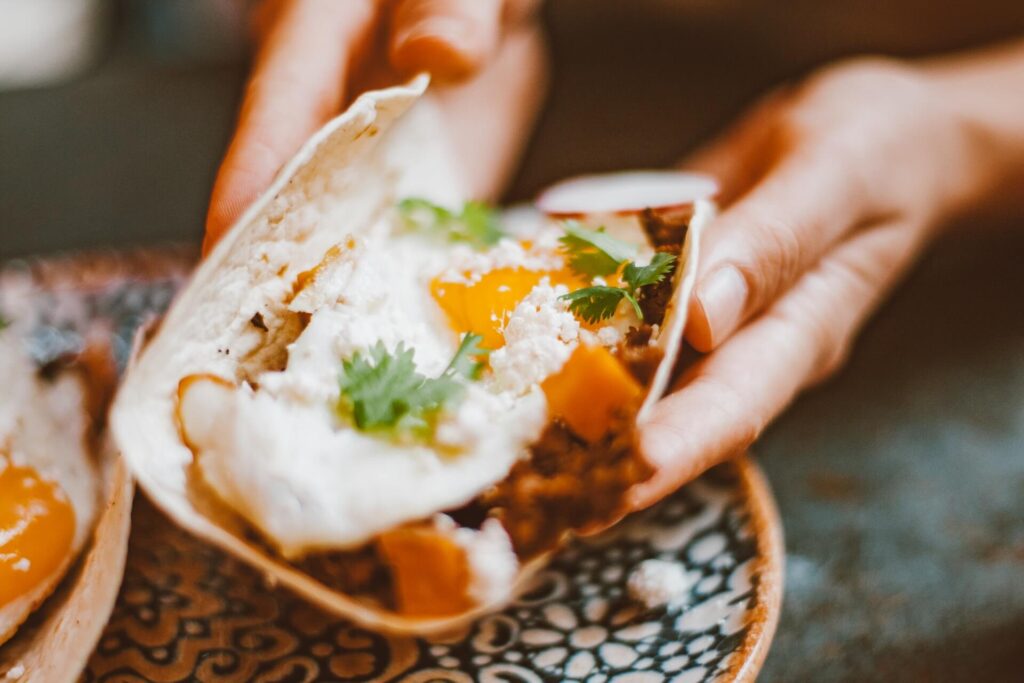
Tortilla with beans, cotija cheese and egg

Canadian Trends 2023: Technomic

Restaurant, bar, and hotel operators will find this year’s data-driven trend predictions from Technomic for 2023 insightful.

Interestingly but perhaps not surprisingly, some operators may be looking beyond North America for inspiration.

Per Technomic, Central and South American cuisines could influence menus in Canada this year. Other food trends that might take hold are “retro” health items, and all manner of pickled foods.

Of course, not every Canadian trend prediction involves F&B. According to Technomic, tech and the guest experience will play important roles.

To review last year’s Technomic predictions, click here. Now, let’s jump into Technomic’s 2023 predictions.

Guest Experience

Certainly, the guest experience should always be top of mind for operators, their leadership teams, and their staff.

In this instance, Technomic isn’t suggesting that the guest experience in general will be a trend. Obviously, with as important as it is to the success of any business, it’s a cornerstone.

Rather, Technomic predicts that guests will continue to feel the need to rein in their spending due to ricing costs and prices. However, the foodservice research firm also believes there’s still heavy desire for social interaction.

So, both those financial and social influences translate to the following: overdelivery.

Operators and their teams must ensure they position their brands well; make guests feel special every visit; and really dial in the guest experience. Specifically, Technomic suggests focusing on younger generations and menus with at least a couple specialty items that aren’t easy for a guest to replicate at home.

In other words, do whatever it takes to entice guests with memorable experience and quality menu items, and keep them coming back for more.

Follow this link to continue reading.
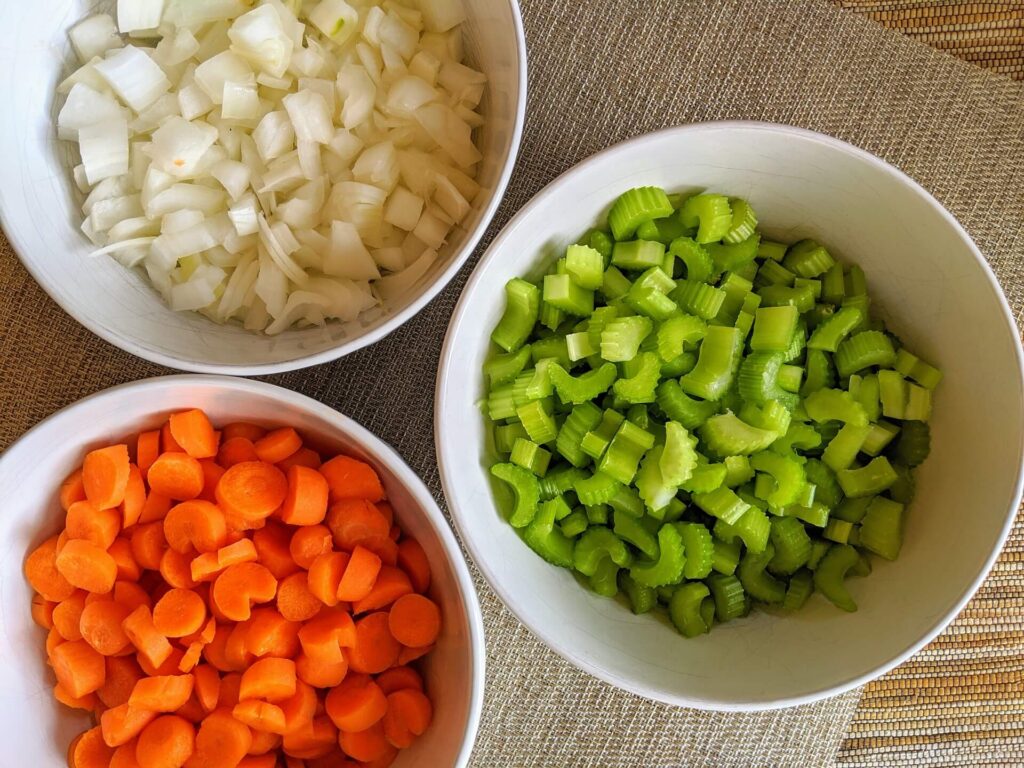
Carrots, celery and onions

Kitchen Doctrine: The Holy Trinity

To some, the Holy Trinity refers to the Christian doctrine of the Father, the Son, and the Holy Spirit. But what’s the Cajun Holy Trinity?

Well, that’s a whole different story with which some people may not be as familiar. However, it carries equal weight in certain kitchens of the world.

Lending its name from religious credo, the Cajun Holy Trinity was developed in the state of Louisiana in the southern United States. Chef Paul Prudhomme gets the credit for introducing the term in 1981, along its popularization.

Cajun or Creole cuisine evolved from French, Spanish, and West African immigrants. French traditions blended into a melting pot of West African, Spanish, and Native American cuisines. The French and the Acadians (French colonists deported from Acadia in what is now Nova Scotia, Canada) both influenced Louisiana’s cuisine. The Acadians became known as Cajuns to English speakers, and thus Cajun cooking grew out of necessity in Louisiana.

Mirepoix 101

The French contributed two staples directly to Cajun and Creole cooking: roux-based cooking and the trinity of mirepoix, or onions, celery, and carrots. In Louisiana, however, carrots didn’t grow as easily as bell peppers. So, bell peppers, typically the more bitter green version, replaced them.

Some cooks were so bold as to add garlic to the Holy Trinity, referring to it as the Pope. Other variants use garlic, parsley, or shallots in addition to the three Trinity ingredients. Unlike the elaborate French dishes using mirepoix, the Holy Trinity is more symbolic of rustic, family-style meals.

These ingredients are the first to go into the pot or skillet, creating a flavorful foundation for gumbo, jambalaya, crawfish étouffée, and more. Often, by adding a bit of flour and whisking, a roux is built right on top of these sweet and colorful aromatics to form a thicker base.

The ratio is also overturned from the traditional mirepoix of two parts onion, one part celery, one part carrot, with three parts onions to two parts celery to one part bell pepper.

To learn more, click here.
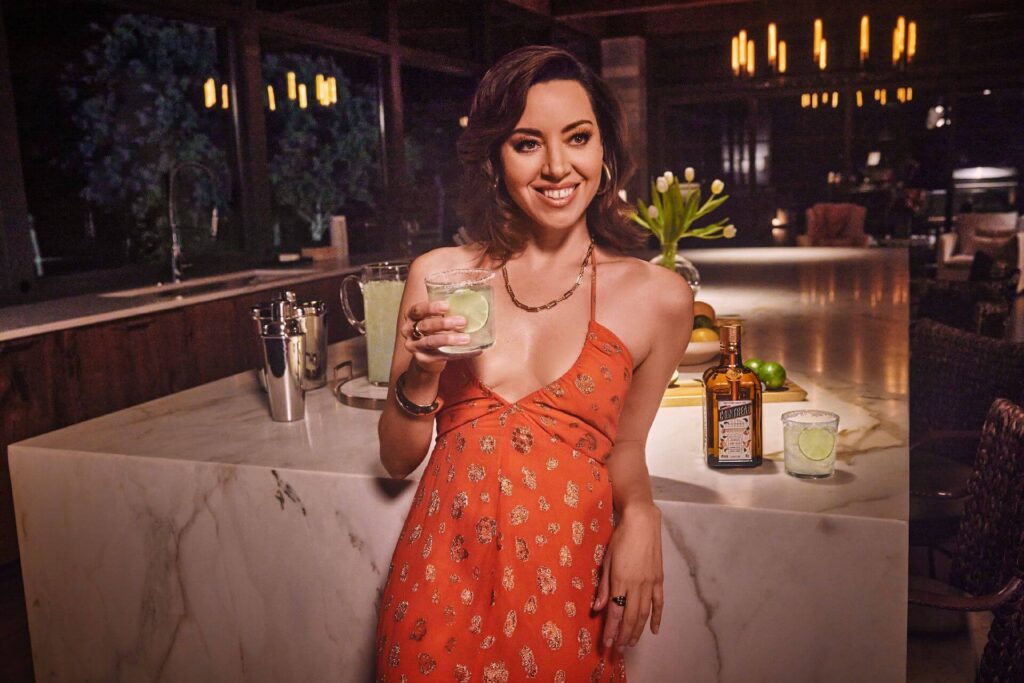
Aubrey Plaza holding a Margarita made with Cointreau

Cointreau Wants to Know: Are You Making MargaRights?

Temperatures are rising and people are socializing, so Cointreau wants to make sure you and your team make Margaritas right.

In fact, they’re so serious about Margarita specs that they’re partnering with Aubrey Plaza educate the public. To celebrate the 75th anniversary of the Margarita, the iconic brand is launching the MargaRight campaign.

Challengers come and go but so far, the Margarita is the top cocktail in the US. This has been the case for many, many years. Of course, it’s also a popular cocktail around the world and has been number one in other countries as well.

Now that we’re a week away from the “official” start of summer, it’s paramount to make sure your Margaritas are MargaRight. For one thing, it’s the perfect summer sipper. For another, people are eager to socialize in restaurants and bars, and the Margarita is sure to join groups of friends as they hang out together.

But there’s another reason to ensure your Margs are on point: The wrath of Aubrey Plaza. More accurately, avoiding incurring Plaza’s wrath for putting MargaWrongs across your bar.

Margarita mix? Anger. No Cointreau? Fury.

To borrow a refrain from fanatics of another classic cocktail, it’s safe to say that Plaza would agree with, “No Margarita without Cointreau.”

The Original Margarita

Some, including Cointreau, support the belief that the Margarita’s creation traces back to 1948. For this origin story, Dallas socialite Margarita Sames is either the inventor of the Margarita or asked for a signature cocktail for a party she was hosting at her Acapulco home. Going further, another claim is that Tommy Hilton was a party guest and brought the recipe to Hilton properties, helping to make it famous.

Another claim is that the Margarita is simply a logical evolution of the Daisy. The mid-1800s tipple has a cocktail family named after it, and the Margarita, Sidecar, Cosmopolitan, and Daiquiri sprang forth from it.

Regardless of what origin story you choose to believe, Cointreau champions the original recipe: Cointreau, blanco tequila, fresh lime juice, and a lime wheel to garnish. It’s this classic recipe that Cointreau and Plaza are adamant about for the MargaRight campaign.

Click here to keep reading.
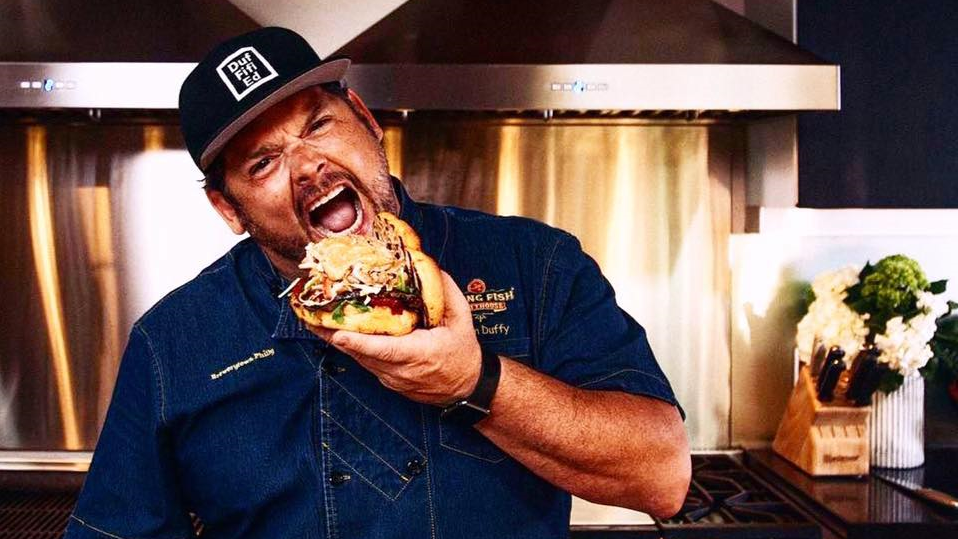
Chef Brian Duffy biting into a sandwich

BBQ Brawl: ‘Cue Tips from Chef Brian Duffy

Friend of the Bar Hacks podcast and KRG Hospitality Chef Brian Duffy is rocking it on season four of Food Network‘s BBQ Brawl.

And he’s dropping barbecue and cooking jewels while killing it on multiple styles of grill.

When we meet Chef Duffy on episode one of BBQ Brawl, he’s introduced as “The Renowned Restaurateur.” This makes sense given the fact that he has helped open more than 100 restaurants throughout his career.

Regarding grilling and barbecuing, Chef Duffy will use elements of whatever style he thinks will work best for a given situation. As he explains it, his barbecue “isn’t bound by the rules of any one style.”

I also want to point out that there’s what appears to be a 1950s-era Dodge Power Wagon, perhaps a Series 1 or Series 2 model, on Star Hill Farm, where this show was filmed. This isn’t relevant in any way to cooking, grilling, or barbecue. I’m just a Car and Motorcyle Guy® and I noticed the Power Wagon immediately.

Also, be sure to check out episode 33 and episode 53 of the Bar Hacks podcast to hear from the chef himself.

Alright, let’s check out some tips and tricks from Chef Duffy that he has shared on season four of BBQ Brawl. Like he said to the camera in the first moments of episode one, “Students, meet your pit master.”

Episode 1

If you want your food to be charred, you need to commit.

“You’ve gotta let it sit. Don’t move it,” says Chef Duffy. “Let that char happen.”

It’s just that simple. Patience is a cooking technique.

Dishes

Signature Tacos

  • Mulita, a Mexican street taco made by dipping a tortilla in birria broth.
  • Togorashi- and ancho-chili-smoked red Snapper taco with “a fun little slaw.”

Team Challenge: “California Smoke” menu (Fire delivery: Santa Maria grill)

  • Cabbage, kale, Swiss chard medley with beans
  • Scallops and smoked crab salad with preserved lemon gremolata and avocado (collaboration with Chef Larissa Da Costa; Chef Duffy prepared the smoked crab salad)

For much more, keep reading here.
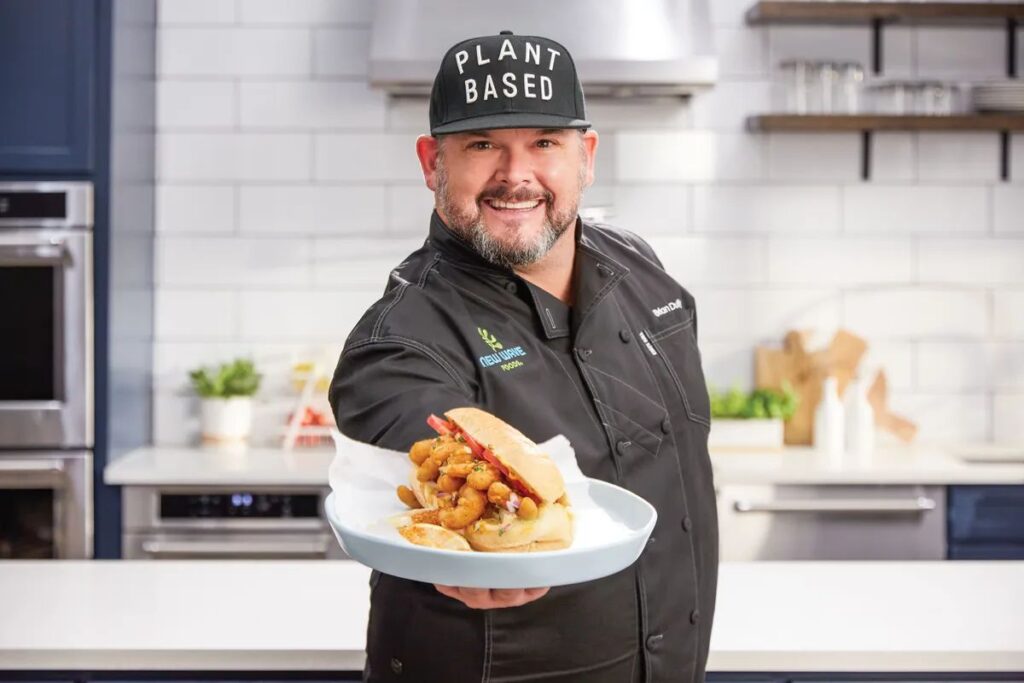
Chef Brian Duffy holding a plate with a plant-based shrimp po' boy sandwich on it

The New Wave of Plant-based Foods

A key takeaway from the 2023 National Restaurant Association Show is this: a new wave of plant-based foods has made landfall.

In fact, given how many booths had plant-based items on offer, more waves will be crashing ashore. Plant-based items had a presence inside every building at McCormick Place in Chicago. For those who haven’t attended to show, McCormick Place has well more than two-million square feet in exhibit space.

There were, of course, the plant-based standards to which we’ve all grown accustomed. Burger patties, breakfast sausages, “chicken” nuggets, “pepperoni” pizzas… However, we now know there’s more innovation on the way.

Years ago, F&B experts declared seafood alternatives as the “holy grail” of plant-based foods. The race has been on to “crack the code” and offer seafood alternatives that look, cook, and taste like their animal counterparts.

One brand that appears to have reached their goal? New Wave Foods. And their staunchest culinary supporter? The revered and iconic Chef Brian Duffy.

Seismic but Sensible Shift

Those who are familiar with Chef Duffy know he’s unafraid to share his views on all things culinary, service, operations, and hospitality. The same people also know that he’s demanding when it comes to ingredients, distributors, and partners.

I say that to say this: Some people are shocked Chef Duffy is championing a plant-based food. However, I don’t share that reaction. Chef Duffy has never been anti-plant-based—he has been waiting for plant-based items to rise to his high standards.

During his 2023 NRA Show demo, the acclaimed and in-demand chef made shrimp-fried rice. Of course, he replaced shrimp with a plant-based alternative produced using mung bean and seaweed. That product is New Wave Foods Shrimp.

The demo proved so engaging that Chef Duffy was asked to repeat it on the final day of the show. I, for one, am not surprised—Chef Duffy is an incredible speaker and chef.

This seismic shift—not just in Chef Duffy’s embrace of plant-based foods but also throughout the industry—is sensible when you consider something said during the demo.

Boiling it down to the basics, Chef Duffy asked why operators wouldn’t want to offer high-quality plant-based items to their guests. It’s simple: Increasingly, this is what guests want. So…give it to them.

Continue reading here.
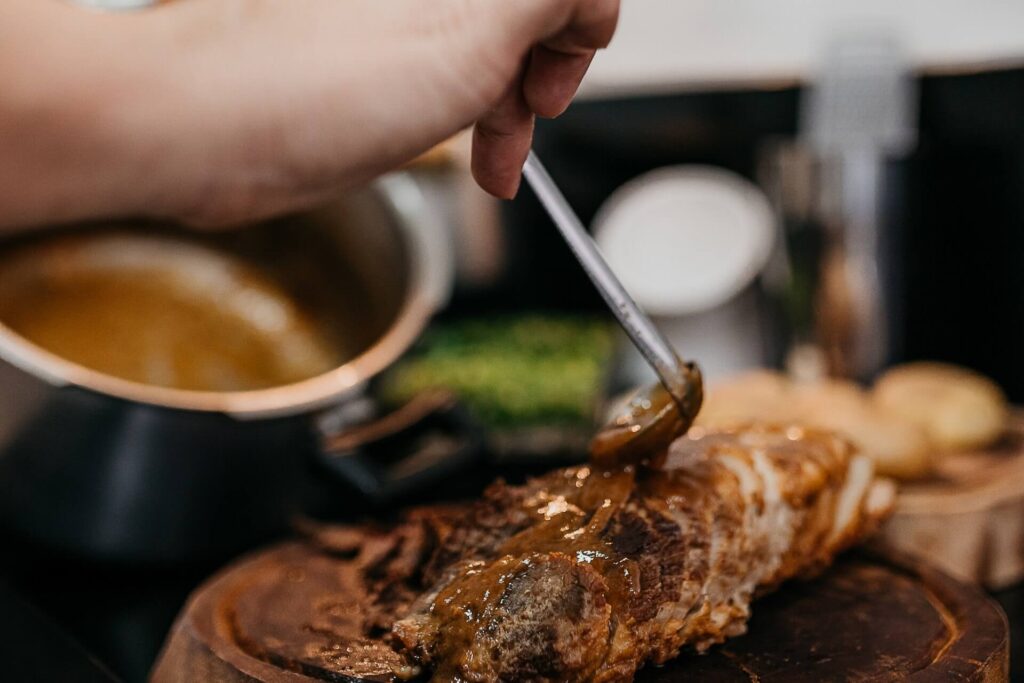
Chef pouring espagnole or brown sauce

Say Hi to Your Mother Sauces for Me

A well-crafted sauce can elevate a dish, tying all the elements together, adding richness, texture, and colour to almost any recipe.

French cuisine in particular is renowned for its liberal use of flavorful sauces. Developed in the 19th century by French chef Auguste Escoffier, the five mother sauces are basic recipes that serve as the foundation for any number of secondary sauce variations. Each mother sauce is categorized primarily according to its unique base and thickener.

The five French mother sauces are: béchamel, velouté, espagnole, hollandaise, and tomato. Historically, Chef Escoffier originally designated only four mother sauces, and mayonnaise as a cold mother sauce, with Hollandaise below that.

Interestingly, when his book was translated to English, mayonnaise was forgotten or omitted; Hollandaise was listed as the fifth mother sauce.

Beginning culinary students and experienced cooks alike commit these five sauces to memory. They learn that by tweaking their basic formulas, all manner of great sauces can be crafted.

Please meet the five mother sauces below. I explain: how each is made; their basic uses; and some secondary sauces you can make from them.

1. Béchamel

Béchamel, or white sauce, is a simple milk-based sauce made from butter, flour, and milk.

You know béchamel as the white sauce that gives chicken pot pie its texture, or as the vehicle of cheesy goodness and binding agent in delicious mac ‘n’ cheese creations. The sauce can be found in everything from scalloped potatoes and lasagne to gravy iterations.

In classical cuisine, béchamel was poured over fish, eggs, or steamed chicken. While béchamel has a generally neutral taste on its own, the classic mother sauce adds a unique creamy texture that is both hearty and comforting.

My personal favorite base recipe is Joel Robuchon’s equation of one liter of milk, 60 grams of butter, and 60 grams of flour. It works perfectly every time.

To make béchamel, start by cooking butter and flour in a saucepan until it forms a substance called a roux. The roux is responsible for thickening the sauce. To remove the floury taste, cook the roux over medium heat for a few minutes.

When the roux is ready, slowly whisk in warm milk and simmer until it forms a creamy sauce. Strain the liquid after it thickens to get rid of any sediment, then add salt and pepper. (You can add other ingredients as well, such as bay leaves, nutmeg, onion, clove, or even cheese.)

With the addition of a few extra seasonings like salt, pepper, and cloves, béchamel is complete — though it may be used as a base for many other sauces.

Béchamel sauces include:

  • Mornay: onion, cloves, Gruyère, and Parmesan cheese
  • Alfredo: garlic with heavy cream
  • Soubise: butter and caramelized onions
  • Cheddar sauce (used for mac ‘n’ cheese or nacho-style sauces): whole milk and cheddar cheese

For more sauces and insights, click here.

Image: Alex Lion on Unsplash
Bar Nightclub Pub Brewery Menu Development Drinks Food

by David Klemt David Klemt No Comments

New Alcohol-free Program Has Our Attention

New Alcohol-free Program Has Our Attention

by David Klemt

Café de España drink at the Palma at the Santa Monica Proper Hotel

The alcohol-free Café de España cocktail at Palma Lounge inside Santa Monica Proper Hotel.

Offering guests an alternative to imbibing during the holiday season and into Dry January, the Palma’s “Conscious Consumption” menu has our attention.

Palma Lounge inside Santa Monica Proper Hotel is offering a fully realized zero-proof cocktail menu. Showing their savviness, the shrewd Proper Hospitality team launched this alcohol-free menu at the start of November.

Given the number of holiday gatherings people are expected to attend from mid-November through December 31, this is a smart move.

There are several reasons a guest may choose to abstain from drinking alcohol while at a bar, restaurant, or special event. A person may be sober; sober-curious; in need of a break from alcohol after attending a number of personal and professional events; the designated driver; or not be in the mood to drink.

At the end of the day, it doesn’t matter why a guest doesn’t want to consume alcohol, even while out at a bar. What is important is making that guest feel included and comfortable, not alienated or as though they don’t fit in.

Full Consideration

Truly, operators and their front-of-house teams should treat alcohol-free cocktails the same as their low- or full-proof counterparts. Zero-ABV beverages deserve as much as consideration as traditional cocktails. Taste, balance, mouthfeel, garnish, presentation… These drinks shouldn’t be afterthoughts.

Indeed, a great non-alcohol drink menu should be as intriguing as the standard cocktail menu. A guest abstaining from alcohol should receive the same service and experience as other guests.

If done right, with premium ingredients, these beverages can be priced in line with their boozy menu peers. As importantly, they’ll also encourage guests who order them to return to a bar or restaurant.

What really got our attention is how deep the Palma Conscious Consumption menu runs. There aren’t just one or two zero-proof drinks. There aren’t a half-dozen. No, there are at least ten.

And in terms of careful consideration, the menu includes Lyre’s, Optimist, and Seedlip products. With this menu, Palma is positioned to weather Dry January without problem as guests will be well aware of this menu.

Any operator looking for an example of a conscientious approach to no-alcohol, wellness, and a favorable guest experience should look to the team at Palma.

For the full Conscious Consumption program press release, see below.

PALMA AT SANTA MONICA PROPER HOTEL INTRODUCES ‘CONSCIOUS CONSUMPTION’ BEVERAGE PROGRAM

New Menu Features Robust Selection of No-ABV Options for Every Occasion 

November 2023—Beginning November, 2023, Palma at the Santa Monica Proper Hotel introduces its new Conscious Consumption program, a selection of non-alcoholic cocktails and beverages for its wellness-focused surrounds in the heart of Los Angeles’ west side.  

WHAT: Whether curbing consumption between a schedule of holiday parties, hitting reset in the new year, or monitoring day-to-day indulgence, Palma’s new Conscious Consumption menu includes nonalcoholic versions of both traditional cocktails and original creations, featuring a range of N/A spirits that are exciting as they are satisfying. Highlights include: 

  • The Cosmo: Optimist Fresh, Lyre’s Orange Sec, cranberry, lime 
  • Fresh 75: French Bloom Le Blanc, Optimist Fresh, lemon, agave 
  • Café de España: Lyre’s Coffee Originale, espresso, orange blossom 
  • TropiCali: Seedlip Spice, Lyre’s Orange Sec, Tropical Red Bull, ginger 
  • Spritzu: French Bloom Le Blanc, Lyre’s Italian Orange, Fever Tree Club Soda, yuzu 
  • Basil Drop: Seedlip Spice, Lyre’s Orange Sec, lemon, basil 
  • No-Jito: Lyre’s Dark Cane, mint, orange, lime, Fever Tree Club Soda 
  • Hug on the Beach: Optimist Fresh, lemon, cucumber, ginger 
  • Prickly Bear: Seedlip Spice, Lyre’s Orange Sec, prickly pear, grapefruit, jalapeno-ginger syrup 
  • Gin and Juice: Lyre’s Dry London, Fever Tree Sparkling Grapefruit, lime 

WHERE: Palma at the Santa Monica Proper Hotel (700 Wilshire Blvd, Santa Monica, CA 90401) 

WHEN: The new menu is available beginning November 1, 2023 

HOW: Palma accepts walk-ins for both dining and the bar, to make a reservation, visit here

About Santa Monica Proper Hotel

Santa Monica Proper is an architectural wonder set amid two contrasting buildings — a Spanish Colonial Revival landmark and a sleek contemporary new build, connected by an artfully crafted bridge — where the creative vision of Kelly Wearstler’s design seamlessly blends past and present. The property is anchored by Palma, an all-day enclave for craft cocktails and eclectic bites, along with a rooftop destination, Calabra. The latter features vibrant Mediterranean and California coastal cuisine and a robust wine program, with hubs for both indoor and outdoor gathering, complete with sweeping ocean and cityscape views. Lastly, the Siete event space (formerly Onda) offers a unique setting for high profile collaborations, residencies and events, complete with furnishings by Kelly Wearstler.  

About Proper Hospitality

Proper Hospitality designs, brands, and operates high-end lifestyle hospitality experiences under the Proper, Hotel June and The Collective brands. Each property is a distinct reflection of the vibrant community surrounding it, while sharing a common belief in uncommon luxury, convenience of location, and world-class amenities provided by locally vetted innovators in art, food & beverage, fashion, music, technology and wellness. Led by the visionaries behind The Kor Group, the company currently manages Proper branded hotels in Santa Monica, Downtown Los Angeles, San Francisco and Austin, Hotel June in West Los Angeles and Malibu, and The Collective, a curation of design-driven independent hotels including Avalon Hotels in Beverly Hills and Palm Springs, Ingleside Inn in Palm Springs, Venice V Hotel in Venice Beach, The Culver Hotel in Culver City and Paia Inn in Maui. For more information and to discover the latest on anticipated openings, please visit www.properhotel.com 

Image: Dylan+Jeni (image was cropped to landscape orientation for this article)

Bar Pub Brewery Nightclub Club Nightlife Concept Development

by David Klemt David Klemt No Comments

The Pinnacle Guide Launches

New Global Bar Recognition System, the Pinnacle Guide, Launches

by David Klemt

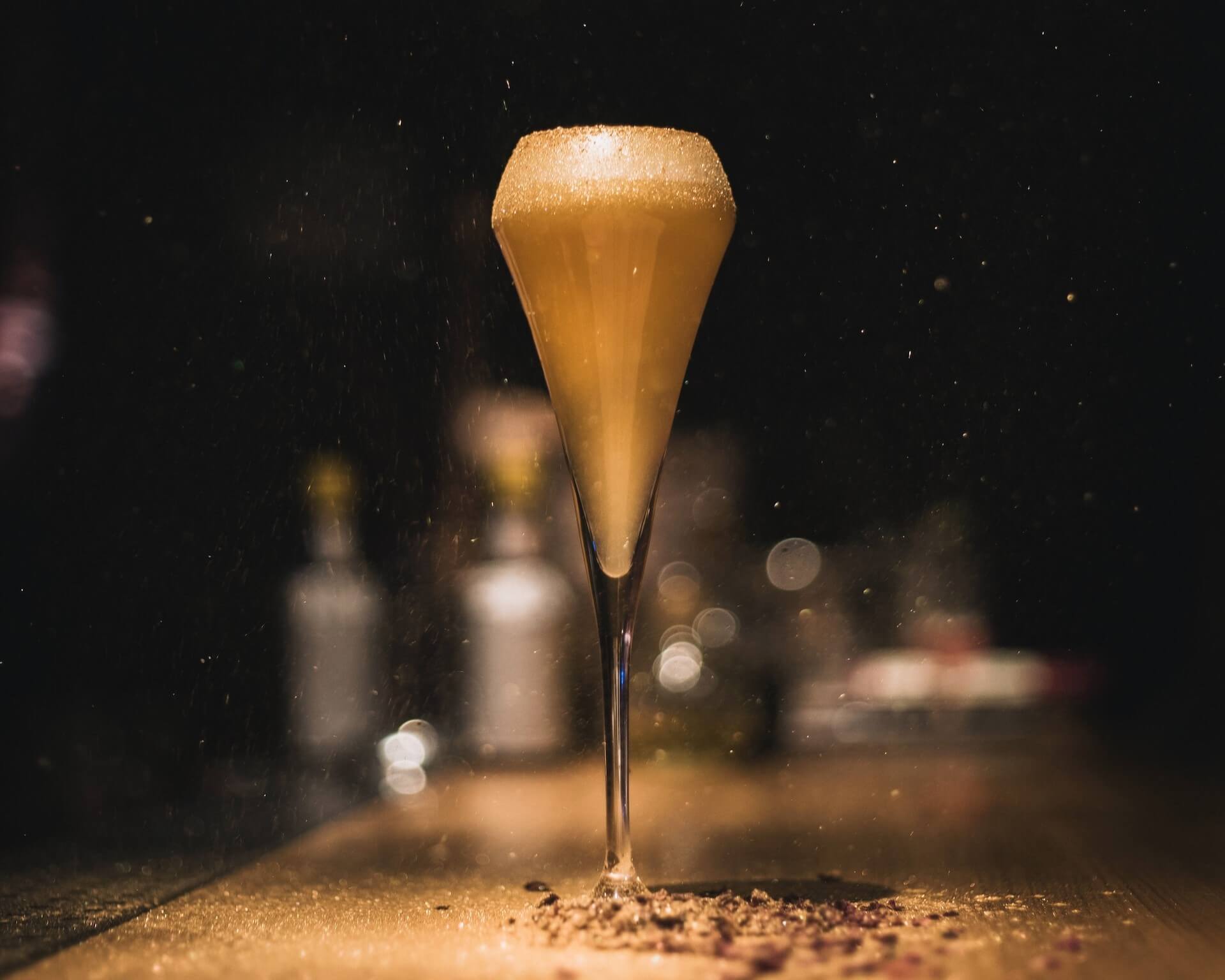
Golden cocktail in Champagne flute on bar top

Today’s the day that the passionate minds behind London Cocktail Week launch “the Michelin Guide” for bars, open to venues across the globe.

Open to submissions as of today, the Pinnacle Guide is open to any bar in the world. Compellingly and refreshingly, the Guide’s system intends to maximize transparency and minimize subjectivity.

Further, the process begins with the self-nomination of a venue. Truly, this is open to any bar, anywhere.

Two of the team’s founders are recent Bar Hacks podcast guests. On episode 105, Hannah Sharman-Cox and Siobhan Payne explain the Pinnacle Guide ahead of its launch today. You can listen to their episode below.

Dan Dove, owner and operator of Global Bartending, completes the Pinnacle Guide’s founder trio. Speaking of trios, Global Bartending’s areas of expertise are strategy, talent, and events.

I’m likely not the only person who has wondered why the Michelin Guide has yet to recognize bars. Now, I’m grateful they haven’t done so.

That’s not a dig at the Michelin Guide. However, the organization’s expertise is restaurants, not bars. It’s far more appropriateand more crediblethat passionate people dedicated to and enamored with bars are launching this recognition system and platform.

The Process

So, what are you in for when you nominate your bar? The process is quite straightforward.

Simply speaking, the

  • Front of house
  • Drinks program(me)
  • Look and feel
  • Staff
  • Operations
  • Community

Once someone who self-nominates their bar completes and submits their application, the anonymous review part of the process begins.

As this step’s phrasing suggests, anonymous reviewers will visit the venue. These reviewers could be industry professionals. They may be passionate, educated consumers whose opinions are valued and trusted.

Either way, they’ll have been vetted, tested, and completed the Pinnacle Guide Reviewer Training Programme.

For even more information, click this link. You’ll find a series of the Pinnacle Guide Round Table Discussions recordings that dive deep into the system as well.

Interestingly, the founders of the Pinnacle Guide believe undergoing the self-nomination process may also help operators enhance or refine their operation:

“Beyond being a measure of excellence, this transparent and detailed approach is also designed to give venues pause for thought on where they may have room for improvement, with the ambition of elevating the industry by encouraging higher standards across the globe.”

Moreover, the Pinnacle Guide doesn’t pit operator against operator, team against team. Should a bar be recognized by the Guide, they’ll be awarded at least one PIN. A single PIN identifies a bar as Excellent. Two carries the Outstanding designation, and three means a venue is Exceptional.

Receiving a PIN doesn’t mean a bar has beaten out another venue to be recognized; that operation stands on its own as one of the best in the world.

Are You Ready?

Thousands of owners and operatorsand the teams that bring their visions to life every daydeserve acknowledgement for meeting the demands this industry makes of them.

From empowering their teams and serving as the backbone of their communities to delivering world-class service and pairing unforgettable experiences with incredible, welcoming atmospheres, hospitality is chock-full of people whose daily contributions should be recognized.

So, to any operator anywhere in the world, if you believe your team has earned at least one Pinnacle Guide PIN, this is your day. However, carve out some time to truly sit with the application and consider your team and venue.

The Pinnacle Guide is a long time coming. Let’s give it the respect it deserves.

Image: Jakub Dziubak on Unsplash

by David Klemt David Klemt No Comments

Pumpkin Spice Everything is Already Here

Pumpkin Spice Everything is Already Here

by David Klemt

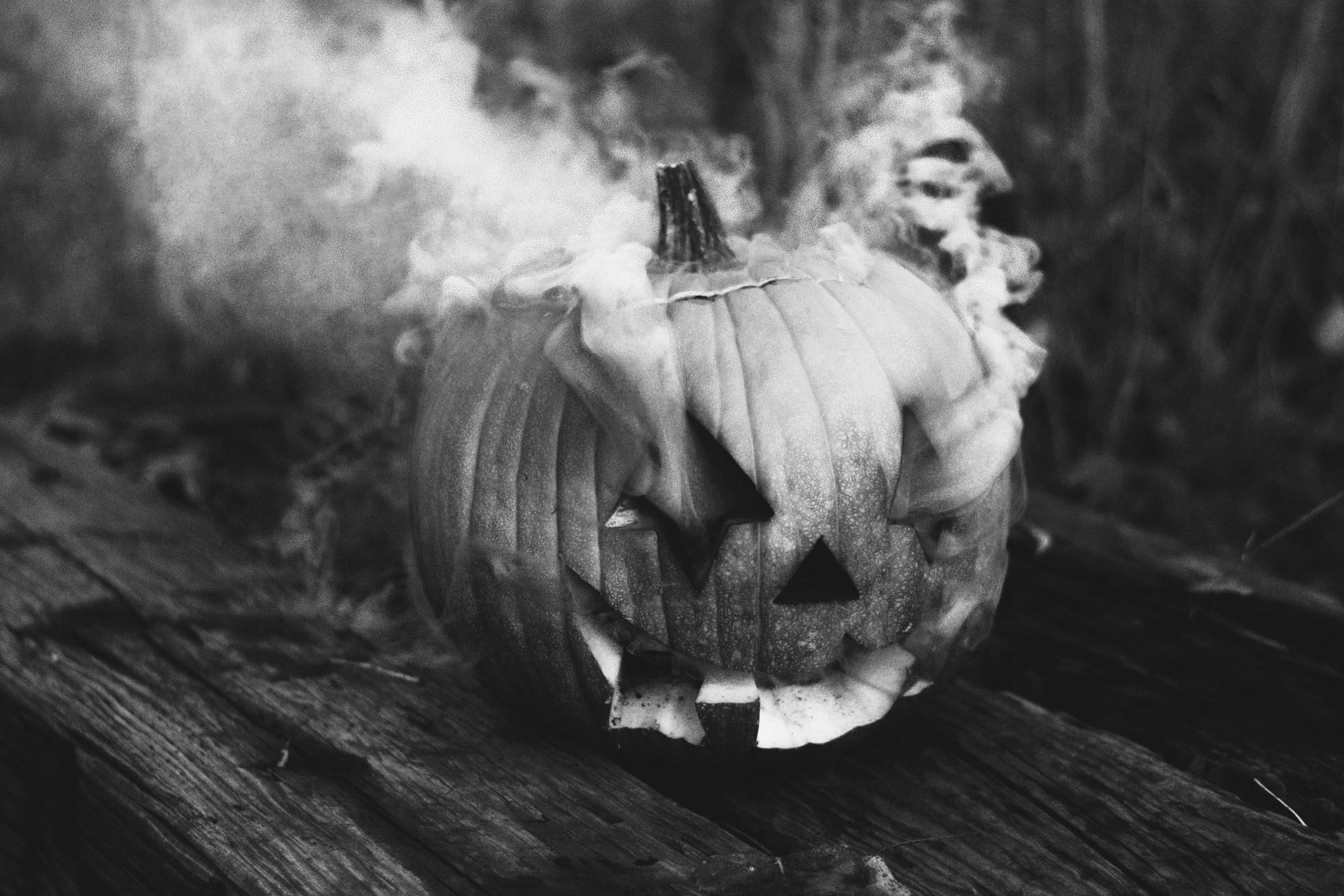
Black and white image of jack-o'-lantern with smoke coming of its eyes

In what perhaps is an attempt to encourage people to think of cooler autumnal temperatures, pumpkin spice is descending upon us earlier than ever before.

Operators who are finalizing their pumpkin spice menu items are basically already late to the party.

Luckily, it isn’t like the brands for which fall’s most infamous LTO flavor works are too far behind. A significant percentage of consumers are drawn to pumpkin spice menu items like trick or treaters to homes handing out full-size candy bars.

So, operators still have time to put the final touches on pumpkin spice menu items…but they’ll want to get a move on.

That’s exactly what restaurant chains did this year. Their pumpkin spice-flavored onslaught began with the start of this month.

Pumpkin Spice, Now a Summer Flavor?

Spirit Halloween stores. Christmas music. And now, it appears, Pumpkin Spice.

What do these three things have in common? Well, it seems like they’re making their debuts earlier and earlier each year.

When we think of summer and seasonality, I don’t think pumpkin or even baking spices enters into most people’s minds.

Unless, however, those people are in marketing and branding.

According to Restaurant Business, Krispy Kreme went all in on pumpkin spice on August 7. On that day, the chain unveiled four donuts and a number of beverages featuring pumpkin flavors.

Interestingly, the company’s global chief brand officer, Dave Skena, states that their pumpkin spice releases came one day earlier this year. Last year, they say, pumpkin spice arrived “significantly earlier than the year before.”

7-11 may have crossed the pumpkin spice dateline first this year. Dunkin’ is already offering pumpkin spice F&B items. And Starbucks, famous for their PSL LTO, is rumored to be launching their specialty menu this Thursday.

Given these August releases, can we expect a brand to attempt to get the jump on everyone else and launch pumpkin spice LTOs in July?

Consumer Cravings

Brands wouldn’t gamble on releasing their pumpkin spice LTOs in August if they didn’t think their decision would pay off.

Considering what Krispy Kreme’s Skena says about pumpkin spice’s August arrival, consumers have already spoken. Apparently, a significant percentage of people have an interest in fall flavors midway through summer.

Of course, there are a few considerations for independent operators in terms of seasonal releases. Rolling out new menus and menu items can be a costly endeavor. Pulling the plug on one revenue-generating seasonal menu or LTO in favor of significantly different items may be harmful to the bottom line.

One approach operators could take is to plan far enough ahead to pull the trigger on LTOs when 7-11, Dunkin’, or Starbucks launch theirs. In other words, be ready, but don’t jump the gun.

This also speaks to the importance of operators knowing their core guests and listening to feedback. Are front-of-house staff hearing murmurs from guests that they’re craving new flavors? Perhaps it could be lucrative to leverage that anticipation.

Image: Colton Sturgeon on Unsplash
KRG Hospitality Start-Up Restaurant Bar Hotel Consulting Consultant Solutions Plans Services

by David Klemt David Klemt No Comments

Drink Donnybrook: Let’s Talk Mai Tai

Drink Donnybrook: Let’s Talk Mai Tai

by David Klemt

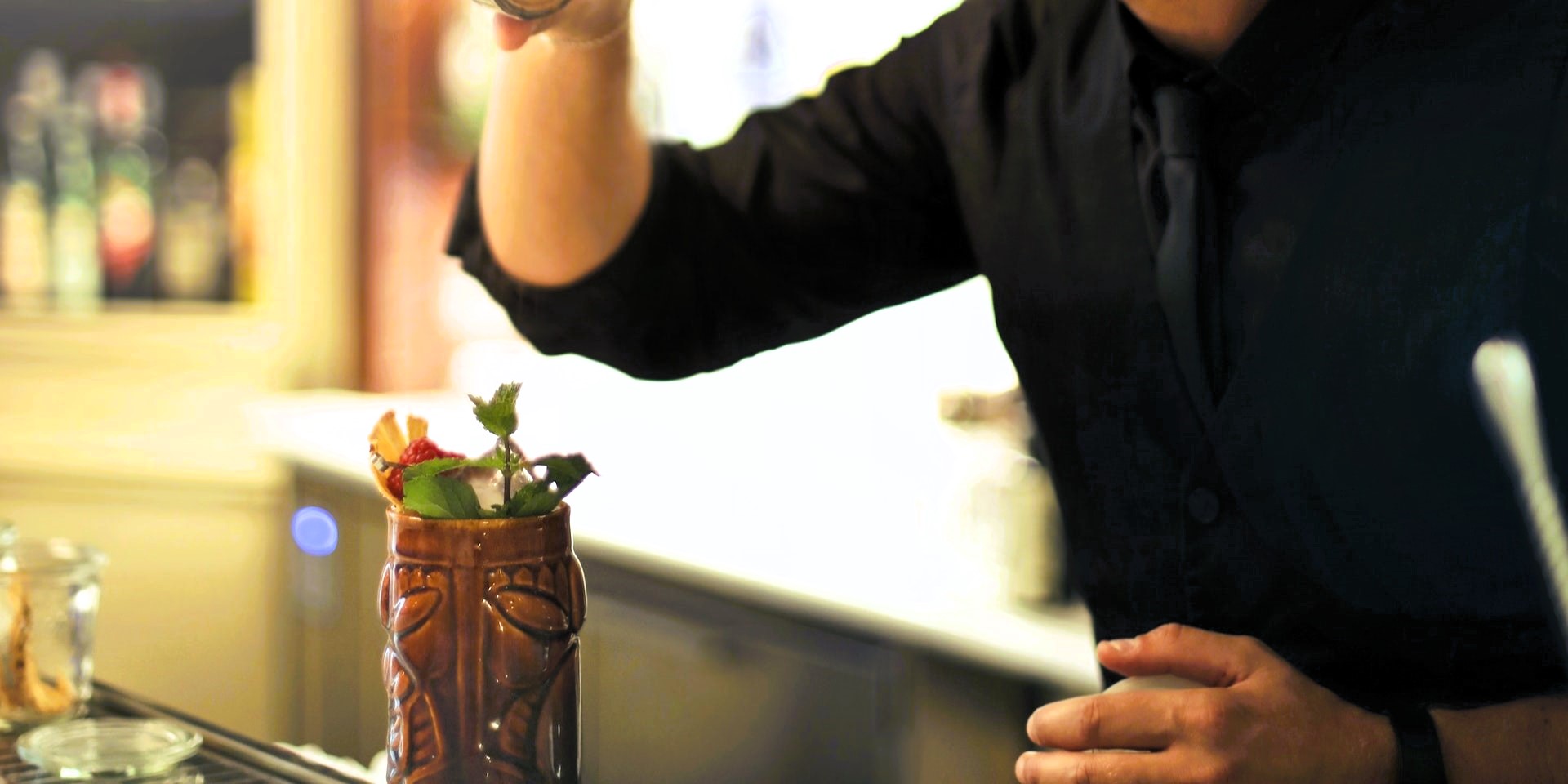
Bartender serving a tiki cocktail

Is there a Mai Tai in there? Maybe…?

There are two big drink holidays coming up in August for your programming pleasure, and the best part is that they both play incredibly well with one another.

One of these holidays you can create a promotion around is National Rum Day, August 16. This year, this spirit-forward holiday falls on a Wednesday. Hey, who couldn’t use a rum drink on Hump Day?

The other is more specific, celebrating a particular drink: August 30, also known as Mai Tai Day. Hey, what do you know—this cocktail holiday also falls on a Wednesday in 2023! It’s almost like these two festive days are exactly two weeks apart or something…

As you’re likely already deducing, these days are related: rum is the base for a Mai Tai. So, creating an LTO around this classic tiki drink gives operators the opportunity to celebrate for two weeks straight, or at least for two weekends. That means it’s also an excellent way to bid August farewell and prepare for the fall.

Controversy!

Scandal! Strife! Squabble! Other words that are synonymous with controversy!

Not only has there been a bit of a debate regarding the creator of the Mai Tai, there has been debate about the day we celebrate this classic cocktail.

Oh, and there’s been plenty of debate over specs. And there will likely be bickering over the correct build forever.

But back to the day we celebrate the Mai Tai. If you Google “National Mai Tai Day” or “Mai Tai Day,” you’ll likely see there’s debate over the correct date.

For a while at least, there were people claiming that National Mai Tai Day is June 30. Well, two crucial sources say that’s flat-out wrong: Trader Vic’s and the City of Oakland, California.

Some people may shrug at that first source, given that there’s still some debate over the drink’s inventor. However, in 2009, Rebecca Kaplan, an at-large councilmember of the city of Oakland, declared August 30 to be Mai Tai Day officially.

Fighting Words

Want to make some cocktail history and bartender nerds heads explode? Just say that Donn Beach, also known as “Don the Beachcomber,” is the father of the Mai Tai.

That should all but guarantee a donnybrook with whomever you target with that statement.

However, unlike the Martini, Piña Colada, and Whiskey Sour, we have a (mostly) definitive answer to the question of who created the Mai Tai.

While there are some who say that Don the Beachcomber created the Mai Tai in 1933, it would be more accurate to say that he created the predecessor of the Mai Tai. Cocktail historians who back Trader Vic as the inventor of this classic would agree.

You see, Don the Beachcomber created a drink called the QB Cooler, and historians say, perhaps generously, that Trader Vic was riffing on Don’s drink when he invented the Mai Tai in 1944. Now, if you really want to kick the donnybrook up a notch, perhaps turn it into a slugfest, see who thinks the Mai Tai tastes like the QB Cooler and which think they taste completely different. Fun times.

Then there’s this: It’s possible we don’t know the exact original recipe for the Mai Tai. Famously—or infamously, if we want to be dramatic—it’s said that Trader Vic never shared his actual specs with anyone. One could argue, then, that nobody has ever had the “real” version if they didn’t drink one made for them by Trader Vic himself. He’ll have passed 30 years ago in October of 2024, so I’m not sure how many people in the industry currently can say Trader Vic made them a Mai Tai personally.

Authentic or Abomination?

Did you read the caption underneath the image at the top of this article? If not, wow—thanks.

If so, you’ll recall that I ask if the drink in the tiki mug in the image contains a Mai Tai. And I answer my own question indicating that, at best, I can only say “maybe.”

Sure, it’s being served in a tiki drinkware, so one could argue that there’s a tiki drink in there. The Mai Tai, as we know, is a tiki classic. The drink is also garnished with mint, which is correct.

But then we look at the rest of the garnish: a raspberry and what appears to be desiccated orange. Oh, and a Mai Tai should be served in a double rocks glass.

Of course, bartenders around the world serve cocktails in drinkware that deviates from the “right” vessel. However, the proper garnish is mint and a lime wheel…to the best of our knowledge.

Ultimately, guests decide with their dollars whether they believe a bar makes them the “right” Mai Tai. You and your bar team will need to dial in a signature version if you want your bar to be known for its Mai Tai, and perhaps come up with a great riff or two.

The Original…Maybe

The original recipe, cocktail historians and drink nerds believe, is:

  • 1 oz. Light rum
  • 1 oz. Dark rum
  • Fresh lime juice (keep half of the squeezed lime’s shell)
  • 0.5 oz. Orange curaçao
  • 0.25 oz. Orgeat
  • 0.25 oz. Simple syrup
  • 1 cup Crushed ice
  • Fresh mint sprig to garnish
  • Lime wheel to garnish

Fill a shaker with crushed ice and add the light rum, lime juice, curaçao, simple, and orgeat. In other words, hold back the dark rum! Shake for a few seconds and pour the contents into a double rocks glass. If you want to be fancy, add fresh crushed ice to the double rocks glass and strain the shaker into it. Float the dark rum, then garnish and serve.

Technically, a bartender should use J. Wray & Nephew rum…but a bottle, if one can be found, goes for at least $50,000 last I checked. Bartenders should also refrain from adding pineapple juice, orange juice, or grapefruit juice. And they shouldn’t garnish with cherries or pineapple wedges. But, here we are; all of those things and more happen.

Oh, there are also tequila, mezcal, amaro, and whiskey versions, plus riffs made with avocado and variants that call for an array of bitters. What you do with this information is up to you and your bar team.

Image: Andrea Piacquadio on Pexels

KRG Hospitality. Bar Consultant. Nightclub. Lounge. Mixology. Cocktails.

by David Klemt David Klemt No Comments

iPourIt Releases Their 2023 Pour Report

iPourIt Releases Their 2023 Pour Report

by David Klemt

Beer pouring into glass from tap

Interactive self-serve beer experience platform iPourIt‘s latest report, the 2023 Pour Report, is now available for download and review.

iPourIt is a pioneer in the self-serve beverage space. While it may seem counter-intuitive to some, many guests have shown time and again that they enjoy using self-serve walls. For these guests, a not in any way insignificant number, iPourIt installations enhance the guest experience, increase loyalty, and boost revenue.

And while many people associate iPourIt and self-serve programs with beer, these systems can also pour wine, cocktails on tap, spirits, non-alcohol beverages, and soft drinks.


View this post on Instagram


A post shared by Matt Plapp (@mattplapp)

Another benefit from iPourIt? Transparency and sharing of data. The company doesn’t limit providing valuable guest behavior insight to their clients. Rather, they make the data they collect available to anyone. Simply head to their website, fill out a few fields, and gain important beverage insights.

Anyone curious can choose between a standard report and a “pro” version. Both are free to download and peruse. People can also read our article that dives into their fourth-annual report via this link.

Below you’ll find key takeaways from their 2023 report. I strongly urge operators to download and review either report.

The Who

We agree that demographics are a metric that people and businesses often misuse. Valuegraphics can be far more effective for businesses looking to build loyalty and boost revenue.

Still, demographics can provide beneficial insights.

First, let’s look at how men and women used iPourIt systems in 2022. Men poured 20,477,288 ounces last year, whereas women poured 10,848,435 ounces. The average per pour for men was 6.4 ounces in comparison to 5.3 ounces per pour from women. On average, men spent $14.72 per visit to an iPourIt-equipped location; women spent $12.24.

Next, the generational breakdown. IPA was the number-one style poured for Baby Boomers, Generation X, and Millennials. For legal-drinking-age Generation Z drinkers, IPA came in second; their top pour style was cider. Likewise, Lager claimed second place for Boomers, Gen X, and Millennials. Second was IPA for Gen Z, and Lager was third. Wheat beer was third place for Boomers, fourth for Gen X and Millennials, and fifth for Gen Z. Sour came in fifth for Gen X and Millennials fourth for Gen Z; for Boomers, the style didn’t rank among the top five. Stout clinched the fifth spot for Boomers.

Finally, in terms of traffic, men of every age group poured more ounces than their female counterparts.

The What

Below, the top 10 styles of beer poured by men:

  1. Fruit beer
  2. Pale Ale
  3. Blonde
  4. Pilsner
  5. Stout
  6. Sour
  7. Wheat beer
  8. Cider
  9. Lager
  10. IPA

In descending order, the top five (download the report for the top ten) products poured by men were Michelob Ultra, Bud Light, Golden Road Brewing Mango Cart, Coors Light, and Modelo Especial.

And now the top styles of beer or category of beverage poured by women:

  1. Stout
  2. Fruit beer
  3. Blonde
  4. White wine
  5. Hard seltzer
  6. Wheat beer
  7. Sour
  8. Lager
  9. IPA
  10. Cider

Also in descending order, the top products poured by women were Michelob Ultra, Mango Cart by Golden Road Brewing, Bud Light, Ace Pineapple Cider, and Coors Light.

The Where

The 2023 Pour Report by iPourIt breaks the US down into five regions: West, Southwest, Midwest, Southeast, and Northeast.

Because our American head office is in Las Vegas and our hotel consultant is in Pennsylvania, we’ll look at the West and Northeast.

The top-five pours for the West in 2022 were:

  1. Bud Light
  2. Firestone Walker Brewing Co. 805
  3. Golden Road Brewing Mango Cart
  4. Coors Light
  5. Modelo Especial

While the top-five pours in the Northeast were:

  1. Blue Moon Brewing Co. Belgian White
  2. Allagash Brewing Co. White
  3. Lord Hobo Brewing Co. Boom Sauce
  4. Sloop Brewing Co. Juice Bomb
  5. Stella Artois

For the curious, Bud Light and Coors Light are categorized as American-style Light Lagers, 805 is a Blonde Ale, Mango Cart is a Wheat Ale, and Modelo Especial is a Mexican-style Pilsner. Blue Moon and Allagash White are both Belgian-style wheat beers (or Witbiers), Boom Sauce is a Double IPA, Juice Bomb is a Northeastern IPA, and Stella Artois is a Lager.

For further insights, please download this year’s iPourIt report here.

Image: cottonbro studio on Pexels

KRG Hospitality Beverage Programming

by David Klemt David Klemt No Comments

5 Books to Read this Month: May 2023

5 Books to Read this Month: May 2023

by David Klemt

Flipping through an open book

Our engaging and informative May book selections will take your front and back of house to the next level, and help develop your leadership skills.

To review the book recommendations from April 2023, click here.

Let’s jump in!

Contagious You: Unlock Your Power to Influence, Lead, and Create the Impact You Want

This is one of three books KRG Hospitality’s Jennifer Radkey read in February. It’s the sequel to a book titled Contagious Culture, which we featured last month.

From Amazon: “For anyone who’s sought to create change, or felt sucked into the drama and chaos of a toxic work environment, this book will advance the notion that everyone at an organization is a leader—for good or for bad—and that leaders have tremendous power to influence those who follow their example. The quality of our leadership is based upon our intentions, energy, and presence. By emphasizing authorship, self-care, and response-ability (not responsibility) as leadership skills and therefore cultural amplifiers, Contagious You shows you how to walk the path of more effective leadership while navigating the road blocks in your way. Whether these road blocks are working with negative co-workers with secret agendas and unrealistic expectations, or just the general ‘busyness’ of life and its excessive demands, this book will take you on a journey to create more space, more courageous leadership, and stronger collaboration to influence others and create the impact you desire.”

Grab this book today: click here.

Chef’s PSA: Culinary Leadership Fundamentals

If Chef’s PSA sounds familiar, that’s probably because it’s a series of four books. We included another book in the series, How Not to be the Biggest Idiot in the Kitchen, last December in our last book roundup of 2022.

Culinary Leadership Fundamentals is intended to prepare chefs to lead a brigade. It’s one thing to know how to prepare food; it’s another to know how to be the leader in the kitchen. Of course, this book is also full of valuable information for owners and operators. After all, they should know how their chef is approaching their role.

From Amazon: “When you become a Chef for the first time you may be put in a position where you know how to cook but not how to lead and manage. This book will teach you everything you need to know to become a Chef Leader in the kitchen. From how to manage costs, build a team, market yourself and overcome adversity. This is the book every Chef needs if they want a competitive edge in running a successful kitchen.”

Pick it up today!

Southern Cooking, Global Flavors

Chef Kenny Gilbert’s journey through the culinary world is epic. By the age of seven he had shown such an interest in the art of BBQ that his father bought him his first grill, a small Weber. After high school he moved from his hometown to Cleveland to attend the Pennsylvania Culinary Institute. After graduation, Chef Gilbert entered into an apprenticeship at the Ritz-Carlton, Amelia Island, in Florida. By age 23, Chef Gilbert earned the role of Chef de Cuisine. He has also opened restaurants and led the culinary programs at restaurants and hotel properties not only throughout Florida but also Colorado, Georgia, throughout the Caribbean, France, Japan, and Spain. Oh, and there was Chef Gilbert’s Top Chef season seven appearance, plus the development of his own line of spices and rubs.

His newly released book features 100 recipes that put international spins on southern classics. Pick up Southern Cooking, Global Flavors today!

The Ice Book: Cool Cubes, Clear Spheres, and Other Chill Cocktail Crafts

We’ve addressed the need to compliment your cocktail menu with a dedicated ice program. This book, available now for pre-order, is from world-renowned cocktail and spirits writer Camper English. Not only does it include easy-to-follow instructions for you and your bar team to elevate your cocktail program, from full-proof to zero-ABV drinks. The Ice Book, then, is aptly titled—it’s everything you need to introduce a memorable drinking experience.

From Amazon: “In The Ice Book, internationally renowned cocktail icepert Camper English details how to use directional freezing to make perfectly pure ice in a home freezer, carve it up into giant diamonds and other shapes, and embed it with garnishes, including edible orchids and olives. You’ll learn how to create a frozen bowl for Negroni punch, serve a Manhattan inside an ice sphere, and infuse cubes with colors and flavors to create cranberry cobblers, a color-changing Gin and Tonic, and other awesome drinks.”

The Book of Cocktail Ratios: The Surprising Simplicity of Classic Cocktails

Long-time subscribers to KRG Hospitality’s newsletters and readers of our articles know that I love a controversial take on cocktails. Take, for instance, the origin of the Margarita. Well, the opening sentence from the description for The Book of Cocktail Ratios certainly got my attention.

From Amazon: “Did you know that a Gimlet, a Daiquiri, and a Bee’s Knees are the same cocktail? As are a Cosmopolitan, a Margarita, and a Sidecar. When hosting a party wouldn’t you enjoy saying to your guests, ‘Would you care for a Boulevardier, perhaps, or a Negroni?’ These, too, are the same cocktail, substituting one ingredient for another. Or if you’d like to be able to shake up a batch of whiskey sours for a party of eight in fewer than two minutes, then read on.

“As Michael Ruhlman explains, our most popular cocktails are really ratios—proportions of one ingredient relative to the others. Organized around five of our best-known, beloved, classic families of cocktails, each category follows a simple ratio from which myriad variations can be built: The Manhattan, The Gimlet, The Margarita, The Negroni, and the most debated cocktail ever, The Martini.”

This book should provide you and your bar team with a totally different perspective when it comes to drink ratios. Pre-order your copy today!

Image: Mikołaj on Unsplash
KRG Hospitality advanced bar education

by David Klemt David Klemt No Comments

A New Challenger to the Margarita Emerges

A New Challenger to the Margarita Emerges

by David Klemt

Margarita Código 1530 Blanco

The simple, three-ingredient Margarita continues its longstanding reign on the cocktail throne but there’s now a new number two.

Technically, of course, we haven’t had hard numbers regarding the Margarita’s sales for decades upon decades. Nielsen has only been officially tracking this type of cocktail data since 2016.

However, it’s not difficult to understand that America has been in love with the Margarita for decades. In fact, the cocktail may have been sitting on the throne for 50 (or more) years.

Some cocktail historians believe the Margarita is a member of the Daisy drink family. These sours consist of a spirit, citrus, simple syrup, and soda. Depending on who you believe, the Margarita came to life in the 1930s or 1940s.

An orange liqueur (triple sec) replaced the simple syrup, the soda was sent packing, and tequila became the required spirit. By the 1950s, the Margarita was on its way to winning the cocktail game of thrones.

Over the decades, many variations have appeared on the scene. Undoubtedly, this has helped the cocktail continue its reign. Tourist destinations have also strengthened its position; just think about the ubiquity of Margarita machines and blenders in Las Vegas and New Orleans.

But the simple, original recipe is the still “the One.” Ask a bartender or bar manager how they gauge someone’s skills behind the bar. The answer much (if not most) of the time? How that person makes a Margarita.

There’s nowhere to hide when a cocktail has but two or three ingredients. That’s why so many bar professionals judge bartenders by their Margs.

A “New” Challenger Appears

Unsurprisingly, the Margarita proved to be the most popular cocktail in America in 2022.

In contrast, according to the CGA Cocktail Sales Tracker by Nielsen IQ, the Manhattan fell out of the top ten.

The Moscow Mule, which has been rising in popularity for several years now, was in second place last year. In third, the Martini.

Now, before I address the “new” challenger to the Margarita, a note. The four newsworthy cocktails in terms of CGA and Nielsen tracking all have names beginning with the letter “M.” Does that mean anything? I have no idea. Maybe someone can look into cocktail names and how their perceived by guests to find out if “M” drinks outperform others.

So, we’ve got the Margarita, the Moscow Mule, the Martini, and the Manhattan (although for a different reason). Is the Moscow Mule currently eyeing the Margarita’s position up close and personally?

According to CGA by NielsenIQ data, no. The Martini is now sitting in the number two spot. Interestingly, this may be due to the rise in popularity—yet again—of the Espresso Martini.

So, while your bar team is ensuring their Margarita specs are dialed in for National Margarita Day, don’t neglect your Martinis. (Particularly your Espresso Martini.)

By the way, National Margarita Day is this Wednesday, February 22. Make sure you’re ready to thrown down.

Oh, and if you ever feel like starting an argument at a bar, ask the bartenders for their Margarita and Martini specs.

Image: Mathew Benoit on Unsplash
KRG Hospitality Beverage Programming

by David Klemt David Klemt No Comments

Can ChatGPT Write Food and Drink Menus?

Can ChatGPT Write Food and Drink Menus?

by David Klemt

Closeup of keyboard

After my “conversation” last month with ChatGPT about AI, I had another conversation during which I asked it to write me four menus.

Of course, I did this to prove a point. And upon reviewing the ChatGPT menus, you’ll likely reach the same conclusion.

Curious about how creative the AI-powered chatbot could be, I asked for four specific menus. As you’ll see, two are cocktail specific, one focuses on food, and one is a 20-item F&B menu for a specific event.

So, yes, ChatGPT can write food and drink menus. But there’s a caveat. I could leave you in suspense but that’s not very nice. Let’s jump in.

Write me a cocktail menu using the most popular cocktails from 2022.

Cocktail Menu

  1. Aperol Spritz – Aperol, Prosecco, and soda water, garnished with an orange slice
  2. Old Fashioned – Bourbon, sugar, bitters, and a citrus peel
  3. Margarita – Tequila, triple sec, lime juice, and salt rim
  4. Daiquiri – Rum, lime juice, and simple syrup
  5. Moscow Mule – Vodka, ginger beer, and lime juice
  6. Paloma – Tequila, grapefruit juice, lime juice, and soda water
  7. Pina Colada – Rum, pineapple juice, coconut cream, and a cherry garnish
  8. Whiskey Sour – Bourbon, lemon juice, and simple syrup
  9. French 75 – Gin, Champagne, lemon juice, and simple syrup
  10. Mai Tai – Rum, orange liqueur, lime juice, and orgeat syrup

*All cocktails are served over ice, unless otherwise requested.

Write me a cocktail menu using the most popular spirits and alcohol types of 2022.

Cocktail Menu

  1. Gin and Tonic – Gin, tonic water, and a lime wedge
  2. Vodka Martini – Vodka, dry vermouth, and an olive garnish
  3. Bourbon Manhattan – Bourbon, sweet vermouth, and bitters
  4. Tequila Sunrise – Tequila, orange juice, and grenadine syrup
  5. Rum Runner – Rum, blackberry liqueur, orange juice, pineapple juice, and grenadine
  6. Whiskey Sour – Bourbon, lemon juice, and simple syrup
  7. Margarita – Tequila, triple sec, lime juice, and salt rim
  8. Daiquiri – Rum, lime juice, and simple syrup
  9. Long Island Iced Tea – Vodka, gin, rum, tequila, triple sec, lemon juice, and cola
  10. Pina Colada – Rum, pineapple juice, coconut cream, and a cherry garnish

*All cocktails are served over ice, unless otherwise requested.

Write me an appetizer and tapas menu that includes food items from an array of cuisines.

Appetizer and Tapas Menu

  1. Bruschetta – Grilled bread topped with fresh tomatoes, basil, and balsamic glaze
  2. Hummus Platter – Chickpea dip served with pita bread and fresh veggies
  3. Spring Rolls – Fried wonton wrappers filled with veggies and served with sweet chili sauce
  4. Spinach and Artichoke Dip – Creamy dip made with spinach, artichokes, and melted cheese, served with tortilla chips
  5. Stuffed Jalapeños – Jalapeño peppers stuffed with cream cheese and bacon
  6. Fried Calamari – Lightly battered and fried squid rings served with marinara sauce
  7. Baked Brie – Warm, gooey brie cheese topped with fruit preserves and served with crackers
  8. Fried Rice Balls – Rice mixed with veggies and spices, rolled into balls and fried, served with sweet and sour sauce
  9. Chorizo Sliders – Mini sliders made with spicy chorizo sausage and topped with avocado crema
  10. Samosas – Triangular-shaped pastries filled with spiced potatoes and peas, served with mint chutney.

*Please let us know of any dietary restrictions, and we will do our best to accommodate your needs.

Write me a food and beverage menu for the 2023 [Big Game] with ten food items and ten drinks.

[Big Game] 2023 Food and Beverage Menu

Food:

  1. Buffalo Wings – Crispy wings tossed in spicy Buffalo sauce
  2. Sliders – Mini burgers with various toppings, such as bacon and cheddar, mushroom and Swiss, and BBQ pulled pork
  3. Nachos – Tortilla chips topped with melted cheese, jalapeños, salsa, and sour cream
  4. Chili – Hearty beef chili served with shredded cheddar cheese, onions, and crackers
  5. Ribs – Slow-cooked BBQ ribs with a tangy sauce
  6. Mac & Cheese Bites – Fried balls of creamy mac & cheese
  7. Deviled Eggs – Hard-boiled eggs filled with a mixture of mayo, mustard, and spices
  8. Pizzas – Slices of delicious pizza in various toppings such as pepperoni, mushroom, and sausage
  9. Chips & Dip – Assorted chips served with guacamole, salsa, and queso dip
  10. Soft Pretzels – Warm, soft pretzels served with cheese dipping sauce

Drinks:

  1. Beer – A selection of domestic and imported beers
  2. Margaritas – Classic margaritas made with tequila, triple sec, and lime juice
  3. Bloody Mary – A spicy tomato and vodka-based drink with celery, olives, and other garnishes
  4. Hard Cider – A crisp, apple-based beverage
  5. Sodas – A variety of soft drinks, such as cola, lemon-lime, and root beer
  6. Whiskey Sours – A mixture of whiskey, lemon juice, and simple syrup
  7. Spiked Hot Cider – Warm apple cider with a splash of rum
  8. Red and White Wines – A selection of red and white wines to accompany any meal
  9. Iced Tea – Sweetened or unsweetened iced tea
  10. Coffee – Freshly brewed coffee, hot and ready to enjoy.

*Please drink responsibly and always have a designated driver.

Where Do You Stand on AI?

In my opinion, there are essentially four primary camps forming around the subject of artificial intelligence.

There are the Alarmists, the Enthusiasts, the Cautious, and the Shoulder Shruggers.

As my label implies, the Alarmists are fearful of AI. This group doesn’t like the genie being let out of its bottle. On the polar opposite, there are the Enthusiasts. This group can’t wait to see how far AI can go and what it’s fully capable of.

The Shoulder Shruggers basically have no opinion. They may even throw in an eye roll when the topic of AI comes around.

Then there’s the camp I most closely identify with: the Cautious. I don’t know enough about AI to be an Alarmist or an Enthusiast. Instead, I agree with points made by both of those camps.

Conclusion

Before I had my latest conversation with ChatGPT, I happened across a few interesting articles about the chatbot specifically and AI in general. A point each article shared was this: (for now), ChatGPT isn’t creative.

And that’s the caveat I mentioned at the top of this article.

Sure, it can scour the Internet for information in the blink of an eye, contextualize it (to a degree), and present it in a manner that seems intelligent. But really, neither ChatGPT nor other AI tools are capable of creative endeavors.

Now, consider the “menus” you just read. Unless your goal is to become a boring, regional chain bereft of personality and identity, not a single one is creative. In fact, they both consist of F&B items that any bartender, bar manager, chef, cook, or kitchen manager should know how to make, off-menu or on.

Simply put, these ChatGPT menus don’t provide much, if anything, in the way of brand identity.

That’s not to say that menus with the items above are “bad.” It’s just that they’re not enticing, not inspiring, not creative. They’re the definition of derivative. Why would today’s guest be drawn to a venue with those menus?

For now, I don’t think we need to be afraid of AI. Humans still rule the creativity roost. Oh, and please don’t use those AI-generated menus.

KRG Hospitality Restaurants & Cafes, 2023 icon  KRG Hospitality Beverage Programming

Image: Christian Wiediger on Unsplash

by David Klemt David Klemt No Comments

Rosa is Pink, Lowlands Agave is Blue

Rosa is Pink, Lowlands Agave is Blue…

by David Klemt

Código 1530 Rosa Tequila and cocktail

Código 1530 is proud to present Valentine’s Day cocktails from Travis Pentecost of Tu Madre and Abby Blanchard of Broken Shaker.

Even more relevant for Valentine’s Day, each of the tequila-forward four recipes below is made with Código 1530 Rosa Blanco. As you can tell from the bottle image above, Rosa Blanco is a rosé tequila.

This particular tequila’s characteristic comes from the aging process. As the name implies, Rosa begins life as a blanco. But after one month in uncharred Napa Valley Cabernet French White Oak wine barrels, the liquid takes on a pink hue.

Produced using lowlands Blue Weber Agave, Código 1530 is precise about Rosa Blanco’s aging time. Too short and the barrels wouldn’t influence the tequila. Longer than one month and the wine barrel flavors would overpower the agave.

Código 1530’s exacting production and aging techniques result in their signature blanco delivering soft red wine notes on the palate, and a subtly floral finish. Rosa’s aging process enhances Blanco’s rich and bright earthy, mineral, and citrus notes.

If you have guests who are tequila fans—particularly those who love blanco—Rosa Blanco is a great conversation starter and upsale.

Codigo 1530 Kisses and Roses cocktail

Kisses and Roses

recipe by Travis Pentecost (Tu Madre)

  • 1.5 oz. Código 1530 Rosa Blanco Tequila
  • 0.5 oz. Chinola
  • 1 oz. Fresh lime juice
  • 0.75 oz. Orgeat
  • 2 dashes Plum bitters
  • Lemon slice to garnish
  • Edible flower to garnish

Add all ingredients to a shaker and strain into a Collins glass. Garnish with lemon slice and edible flower.

Codigo 1530 Will You Cherry Me cocktail

Will You Cherry Me

recipe by Travis Pentecost (Tu Madre)

  • 1.5 oz. Código 1530 Rosa Blanco Tequila
  • 0.5 oz. St-Germain
  • 1 oz. Prickly Pear liqueur
  • 1 oz. Fresh lemon juice
  • 2 dashes Cherry bitters
  • Fresh mint leaves to garnish
  • Lemon slice to garnish
  • Edible flower to garnish

Add all ingredients to a shaker and strain into a cocktail glass. Garnish with fresh mint leaf “bouquet,” lemon slice, and edible flower.

Codigo 1530 Sandia Margarita cocktail

Sandia Margarita

recipe by Travis Pentecost (Tu Madre)

  • 2 oz. Código 1530 Rosa Blanco Tequila
  • 1 oz. Fresh watermelon juice
  • 1 oz. Fresh lime juice
  • 1 oz. Pina Agave
  • 2 dashes Peach bitters
  • Fresh mint leaves to garnish
  • Orange slice to garnish
  • Gummy watermelon candies to garnish
  • Edible flower to garnish
  • Salt for rim

Add all ingredients to a shaker and strain into a prepared cocktail glass. Garnish with “bouquet” of fresh mint leaves, orange slice, gummy watermelon candies, and edible flower.

Codigo 1530 You Up? cocktail

You Up?

recipe by Abby Blanchard (Broken Shaker)

  • 2 oz. Código 1530 Rosa Blanco Tequila
  • 1 oz. Fresh lime juice
  • 0.75 oz. Simple Syrup
  • 3 Raspberries, muddled
  • Raspberries to garnish
  • Raspberry gummy candy to garnish (optional)
  • Edible flower to garnish (optional)

Add all ingredients to a shaker and strain into a cocktail glass. Garnish with raspberries. Optional garnishes: addition of raspberry gummy candy and/or edible flower

KRG Hospitality Bar 101 Techniques

Images: Código 1530

Disclaimer: Neither the author nor KRG Hospitality received compensation, monetary or otherwise, from Volley or any other entity in exchange for this post.

by David Klemt David Klemt No Comments

Datassential: The Flavors of 2023

Datassential: The Flavors and Menu Items of 2023

by David Klemt

Basket of hot chicken wings

Food and beverage market research agency Datassential has some data-driven thoughts on the flavors and menu items that will define 2023.

Featured in their latest Foodbytes report are 20 items for operators to consider this year. There are ten food items, drinks, and ingredients Datassential predicts will be on basically every menu.

And there are another ten food items, drinks, and ingredients the agency feels could suddenly hit in 2023.

For you own copy of Datassential’s 2023 Food Trends, click here.

Prolific Performers

As Datassential refers to them in their report, these are the items “that will be everywhere” this year.

Food

  • Birria. This one makes sense as birria only appears to be capable of continually growing in popularity.
  • Mushroom. In Datassential’s opinion, we should expect more menus to feature mushroom snacks. Also, expect to see (or add yourself) lesser-known, rare, and exotic mushrooms on menus.
  • Salsa macha. Over the past four years, according to Datassential, salsa macha as grown a staggering 339 percent on menus.

Drink

  • London Fog. A compelling earl grey tea latte.
  • Mangonada. Salty, tart, fruity, and bold, the Mangonada is a flavorful frozen drink.
  • Ranch Water. Simple, timeless, and refreshing. In 2022, per Datassential, Ranch Water was the fastest-growing cocktail.
  • Soju. According to Datassential, soju is the third fastest-growing spirit on restaurant and bar menus.

Ingredient

  • Spicy maple. As the image atop this article suggests, expect spicy maple to replace or at least give hot honey a run for its money.
  • Ube. A striking purple yam from the Philippines.
  • Yuzu. Datassential predicts this citrus fruit will start showing up on many chain restaurant menus.

Promising Performers

In Datassential’s data-driven opinion, the following items need to be on every operator’s radar.

These are the items that have the potential to “hit it big” in 2023.

Food

  • Pickled strawberries. Interestingly, this matches up with Technomic’s trend prediction for the US, Canadaworldwide, really.
  • Savory granola. Not only on its own but as an element of savory, healthy bowl.
  • Sisig. A Filipino delicacy with pork belly, pig’s face, and chicken liver as key elements.

Drink

  • White coffee. As Datassential states, “there’s always room for coffee innovation on menus.”

Ingredient

  • Black tahini. The appearance of black tahini is quite striking, making for dramatic presentations. And as we know, striking presentations are perfect for social media marketing and engagement.
  • Cannabis. The legalization of recreational cannabis use in almost half of US states is leading to innovation in this space. And as more markets legalize public consumption in the form of F&B items on-premise, restaurants and bars will add cannabis-infused items to their menus.
  • Cherry blossom, or sakura. It seems that cherry blossoms are poised to take off in the US market.
  • Chestnut flower. Per Datassential, this ingredient is gaining popularity for use in winter baked goods.
  • MSG. For decades, restaurants proudly proclaimed “no MSG” or “MSG-free” on menus due to misconceptions. Now that consumers are better educated about ingredients, restaurants are proudly proclaiming their use of MSG.
  • Verjus. An ancient juice made by crushing unripened wine grapes. It can be an ingredient in a sauce, as a condiment, or to deglaze a pan.

There you have it—20 items to consider adding in your next menu update, featuring in your next LTO, or at least keeping an eye on in 2023.

Image: Scott Eckersley on Unsplash
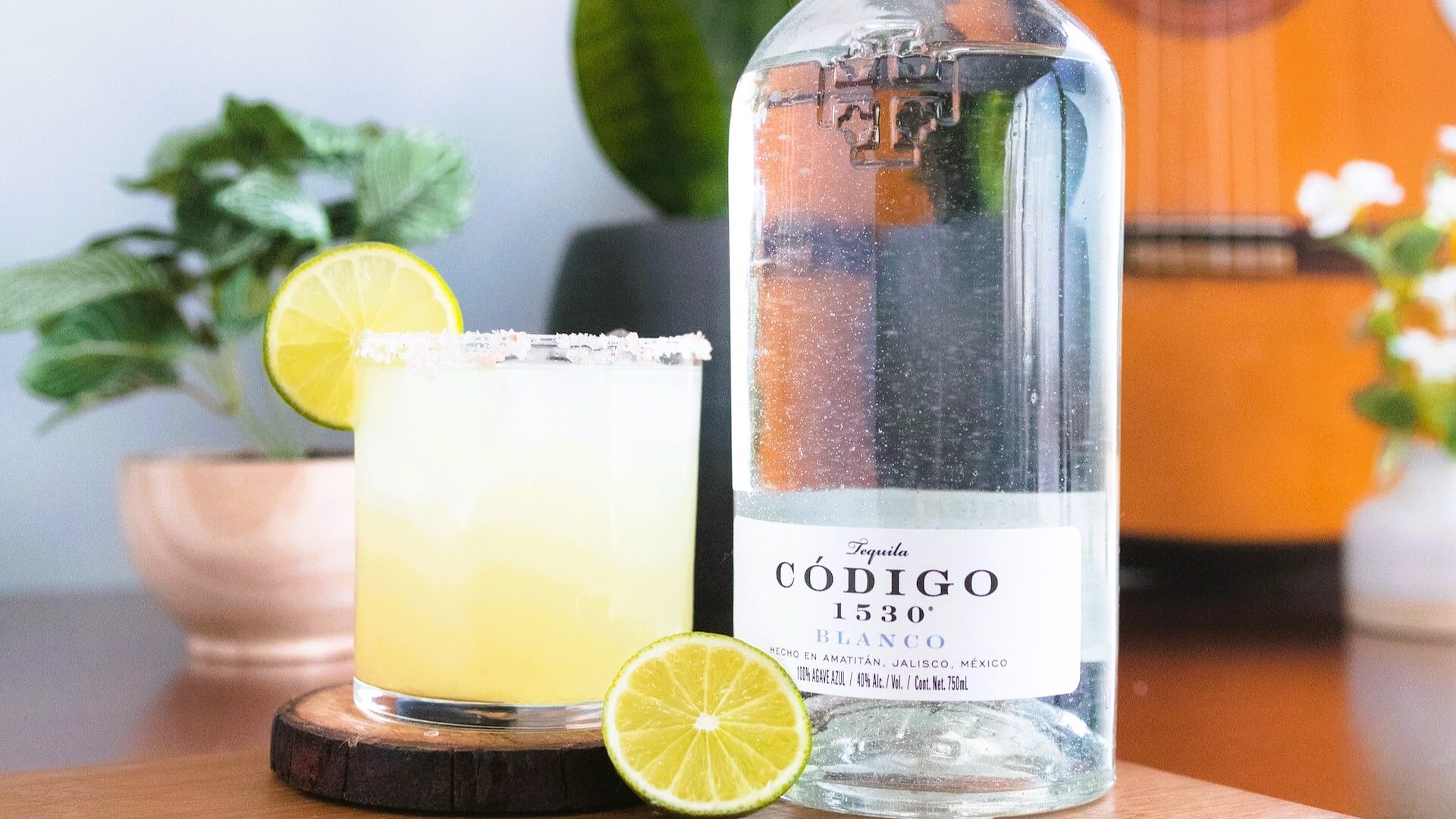
by David Klemt David Klemt No Comments

5 Books to Read this Month: October 2022

5 Books to Read this Month: October 2022

by David Klemt

Flipping through an open book

This month’s engaging and informative book selections will help you develop next-level leadership skills and dial in your F&B menus.

To review September’s book recommendations, click here.

Let’s jump in!

Down and Out in Paradise: The Life of Anthony Bourdain

First things first: This biography by author Charles Leerhsen about chef and modern philosopher Anthony Bourdain isn’t authorized. However, this book purports to offer a deep dive into the late, revered chef’s life, from childhood to his final days.

Just be forewarned that this book is already and for good reason considered controversial.

Down and Out in Paradise will be available on October 11. Click here to pre-order this book today.

The Ethical Leader: Why Doing the Right Thing Can Be the Key to Competitive Advantage

Written by Morgen Witzel, The Ethical Leader addressed ethical behavior in business. Far too often, for far too many business owners and leadership team members, behaving ethically isn’t a non-negotiable. Rather, doing the right thing in business is “nice,” not “necessary.”

For this leadership book, Witzel explains why gaining and maintaining the trust and respect of team members and customers is crucial to the success of any business. “Trust engenders loyalty and good reputation, which in turn builds brand value… Ethical behavior is the key to trust-building, but it needs to go deeper than something managers do out of a sense of moral duty.”

Pour Me Another: 250 Ways to Find Your Favorite Drink

It may not happen every shift but bar team members and servers do encounter the restless guest from time to time. Their go-to drink, for whatever reason, just isn’t cutting it during a particular visit. Of course, this is an excellent time to improve their visit and the guest experience. And it’s the perfect time to introduce a guest to their new favorite drink.

JM Hirsch’s Pour Me Another helps people find that new favorite. Bar professionals and servers will find it useful for guiding guests through a cocktail discovery process. Click here to pre-order this book for its October 4 release.

Twist: Your Guide to Creating Inspired Craft Cocktails

The classics are a litmus test for any bar professional. It’s all well and good to invent and craft signature drinks, but if you can’t nail the classics there’s something wrong. Author Jordan Hughes, over the course of 75 recipes, combines the classics with creation in Twist.

This new book, set for release on December 13, teaches the classics. However, Hughes also helps the reader develop the skills to riff on these timeless recipes to put their stamp on the industry. Pre-order today!

Boards and Spreads: Shareable, Simple Arrangements for Every Meal

So, you’re familiar with how much people on Instagram love a good cheese and charcuterie board. In fact, you have some artisanal, eye-catching boards just waiting to be photographed and posted to social media by your guests. But do they really just sit around until someone orders either cheese, charcuterie, or a combination thereof?

It doesn’t have to be that way. Yasmin Fahr’s book Boards and Spreads provides plenty of other uses for your fancy Instagrammable boards. Oh, and there just happen to be several dip and spread recipes to refresh your menu.

Image: Mikołaj on Unsplash

by David Klemt David Klemt No Comments

7 Coffee Liqueurs You Need to Know

7 Coffee Liqueurs You Need to Know

by David Klemt

White Russian cocktail made with Mr. Black Coffee Liqueur

Whether you and your bar team are making Espresso Martinis, riffing on classics or creating something new, consider these coffee liqueurs.

National Espresso Martini Day takes place on Tuesday, March 15. Leading up to this bar holiday, the cocktail is experiencing yet another resurgence.

In fact, this cocktail more than any other seems to maintain an enviable rate of “surging back” in popularity. Maybe it’s time to just admit that it’s a modern classic people love to hate…but still order and enjoy.

Below are seven coffee liqueurs that shine in an Espresso Martini, Old Fashioned, Negroni, Irish Coffee, or any number of rich, flavorful cocktails. Cheers!

Mr. Black

Most of the reviews out there place Mr. Black at the top when it comes to coffee liqueurs. Once you’ve sipped it neat, you understand why. The coffee flavor is outstanding, and that should come as no surprise. After all, Mr. Black is crafted in Australia, a country with a rich coffee culture.

Additionally, Mr. Black occasionally releases special batches. In the past, the brand has produced Single Origin Ethiopia, Single Origin Colombia, and collaborations with WhistlePig and St. Ali Coffee Roasters. They also have a coffee amaro available.

Grind Espresso Shot

You really can’t go wrong making an Espresso Martini with an espresso liqueur. Grind Espresso Shot gives Mr. Black a run for their money in the coffee liqueur showdown.

This blend of Caribbean rum, espresso, coffee, and coffee extract that shines in just about any cocktail.

Kahlúa

As the saying goes, respect your elders. Kahlúa is a coffee liqueur that dates back to 1936 and there’s a reason the brand is still so visible.

Not only does the brand claim it takes seven years to produce a bottle of Kahlúa, their range is deep is flavorful. The current lineup consists of more than just the original Kahlúa expression. There’s also Blonde Roast Style, Vanilla, Mint Mocha, Chili Chocolate, Salted Caramel, and Especial currently.

Jägermeister Cold Brew

We can argue back and forth about whether Jägermeister is a schnapps or an amaro. Either way, it serves as a fantastic base for a rich coffee liqueur.

Jägermeister Cold Brew blends the original herbal liqueur with arabica coffee and a touch of cacao. There’s a Dark Matter coffee available produced by washing Guatemalan coffee beans in Jägermeister’s coffee liqueur.

Caffè Borghetti

Who among us is unfamiliar with Fratelli Branca’s products? From Fernet-Branca and Brancamenta, to Antica Formula, Punt e Mes, and Carpano, it’s difficult to imagine a bar that doesn’t have at least one Branca product in their inventory.

So, when it comes to coffee liqueur, you can’t really go wrong with another of Fratelli Branca’s bottles: Caffè Borghetti. Sweet and imbued with the rich taste of Italian espresso, this is a liqueur that deserves a place behind your bar.

Flor de Caña Spresso

Produced in Nicaragua, is not just a highly sought-after and awarded rum, Flor de Caña is also the world’s first spirit to be fair trade and carbon neutral certified.

Their coffee liqueur, Flor de Caña Spresso, is made with the producer’s 7 Year Gran Reserva rum expression. You guests will know their enjoying a premium rum-based liqueur that’s sustainably and responsibly crafted.

Jameson Cold Brew

Combine world-famous Jameson Irish whiskey with arabica coffee beans from Brazil and Colombia and you get Jameson Cold Brew.

Not only do you get intense coffee aroma and flavor, you’ll also discover notes of toasted oak. So, your guests won’t have to worry that the coffee overpowers the whiskey or vice versa.

And c’mon—if you’re going to make an Irish Coffee, why not do it with a liqueur crafted with Irish whiskey? Interestingly, Jameson Cold Brew also pairs well with cream soda or cola.

Image: YesMore Content on Unsplash
by David Klemt David Klemt No Comments

Fever-Tree Cola: Set Aside Your Soda Gun

Fever-Tree Cola: Set Aside Your Soda Gun

by David Klemt

Fever-Tree Distillers Cola bottle and cocktail

Fever-Tree, the company elevating mixers since 2005, is now focusing on producing the finest cola.

Like the entirety of the Fever-Tree portfolio, Distillers Cola honors spirits and enhances cocktails.

And, like its mates in the lineup, the newest Fever-Tree product is made only with premium ingredients.
Commitment to Quality

Fever-Tree’s founding principle has always been producing high-quality mixers with high-quality and exotic ingredients. Co-founder Tim Warrillow and CEO of Fever-Tree North America Charles Gibb search the globe to find and partner with the best producers possible.

Much of that drive is down to the brand’s focus on honoring distillers and their spirits along with cocktail programs and bars.

In the mid-2000s, Warrillow and Gibb made a stark realization about spirits and cocktail. Distillers were crafting incredible spirits but most mixers were either standard or substandard.

Obviously, that changed with the launch of Fever-Tree, undeniable leaders and innovators in the mixer category.

Exotic Cola

For years now, today’s consumer has been drinking better. With unfettered access to information, social media and brands, they’ve been learning more about spirits and cocktails.

Intriguingly, the pandemic didn’t change that, and all signs point to a continued dedication to quality drinking.

Also, great bartenders want to tell, as Gibbs says, the best stories through the best cocktails. In doing so, they’ve taught their guests how to drink better.

Of course, part of improving one’s drinking is seeking out products produced with quality ingredients.

According to Warrillow, Fever-Tree is excited to finally take on “the biggest mixer of them all, cola,” the most-popular soft drink flavor in the world. He says people have been asking for Fever-Tree to craft their own cola for quite some time now.

It should come as no surprise to any Fever-Tree fan that Distillers Cola is produced with a commitment to craft.

The kola nuts are grown wild in the Caribbean sweet, earthy, and a natural source of caffeine. Large Tahitian limes from Mexico—the Yucatán province specifically—are bold but not overwhelming. Jamaican pimento berries (allspice) imbue Distillers Cola with flavors of cinnamon, clove, nutmeg and pepper. Madagascan vanilla—the “most prized” vanilla, per Warrillow—is intense, sweet, and lends to a creamy mouthfeel.

Distillers Cola, being a mixer and not a soft drink, is high in carbonation but reins in its sweetness.

A Mixer with Intent

Now, Fever-Tree Distillers Cola is meant to elevate bourbons and dark rums. Of course, that doesn’t mean its use is limited.

In fact, Speed Rack co-founder Lynnette Marrero suggests mixing up a Gin & Distillers Cola. Certainly, that’s a much different direction than Rum or Whiskey & Colas.

And Marrero’s Going Back to Kalimoxto, which she describes as “the spritz meets sangria,” calls for 0.5 oz. Cognac, 0.5 oz. Fernet, 3 oz. red wine (nothing too tannic: think Pinot Noir or Beaujolais), and 3 oz. Fever-Tree Cola. Simply stir and serve with a lemon wheel.

Indeed, this brand-new Fever-Tree product is practically begging for cocktail experimentation.

Reposado, añejo, and extra añejo tequilas, some mezcals, amaros, Scotch and rye whiskeys… A new mixer opens up a world of menu possibilities.

However, the best place to start is likely two of Fever-Trees intended cocktails: an elevated Rum & Cola or Whiskey & Cola. In fact, Warrillow and Gibbs say it was developed with Bacardí Cuatro in mind.

Interestingly, Allen Katz of New York Distilling Co. tasted “about 15 barrels” of their Ragtime Rye with Distillers Cola. According to Katz, the cola pairs very well with a whiskey with more fruit, less cedar and spice. In fact, he likes it so much he has committed a single barrel to a special Distillers Cola release—be on the lookout, whiskey hunters.

Also, since Governor Andrew Cuomo has lifted Covid-19 restrictions, people can visit New York Distilling’s Shanty to try a specialty cocktail made with Distiller’s Cola.

Holster Your Soda Guns

Yes, soda guns have been de rigueur for decades. They’re convenient in terms of service, particularly in a high-volume setting.

They’re also often perceived as being perpetually dirty. And, in many cases, that perception is reality.

Of course, in other cases it’s simply what guests have been taught from myriad articles and blog posts.

When I asked Gibbs how he expects to convince operators to hang up their soda guns and choose Distillers Cola instead, his answer was compelling. On the bar side, he points to the fact that bartenders want to craft and serve the best possible cocktails. To do that, they need high-quality ingredients. Along with that, many guests know Fever-Tree and seek it out.

That’s all well and good, but what about the operator side? Gibbs notes that bars across the country are ripping out their soda guns. Clearly, this is a response to health-conscious guests who perceive what comes out of the gun to be unhealthy or subpar in quality.

Those same operators, therefore, aren’t buying and storying bags of syrup. Instead, they can purchase higher-quality ingredients that deliver on consistency. Consistency and quality are key elements of the guest experience. Gibbs also says that operators can charge more for a drink made with premium ingredients like Fever-Tree.

Of course, the next step is for operators and their front-of-house teams to try Fever-Tree Distillers Cola for themselves. Not only will it elevate their bar programs, it certainly enhances to-go cocktail kit options.

Image: Fever-Tree

Top