Cuisine

by David Klemt David Klemt No Comments

The Rise of Experimental Gastronomy and its Impact on the Guest Experience

The culinary world has always been a playground for creativity and innovation, but a new wave of chefs has pushed the boundaries even further in recent years.

This movement, known as experimental gastronomy, is revolutionizing the way we think about food.

From molecular gastronomy to avant-garde cooking techniques, experimental gastronomy blends science and artistry to create unforgettable dining experiences.

This article will give you an understanding of the creativity and innovation that are the hallmarks of experiential gastronomy.

by Nathen Dubé

Experimental gastronomy method of food spherification.

Yes, that’s food. This is an example of spherification, a discipline within the experimental gastronomy movement.

The Essence of Experimental Gastronomy

At its core, experimental gastronomy is about challenging traditional culinary norms, and exploring new possibilities. Chefs in this field use cutting-edge techniques and unconventional ingredients to create dishes that surprise and delight the senses.

Employing unique techniques allows chefs and their teams to create experiences that go beyond taste alone. These include using liquid nitrogen to freeze herbs instantly, or employing spherification to turn liquids into spheres that burst in your mouth.

Innovative Techniques and Ingredients

One of the hallmarks of experimental gastronomy is the use of innovative techniques that transform familiar ingredients into something entirely new.

For instance, sous-vide cooking allows chefs to cook food at precise temperatures, resulting in perfect textures and flavors.

Another technique, fermentation, is used to develop complex flavors in unexpected ways. Ingredients like edible flowers, seaweed, and insects are also being explored for their unique flavors and nutritional benefits.

  • Sous-vide cooking: This method involves cooking food sealed in airtight bags in a water bath at controlled temperatures. It ensures even cooking, and enhances the food’s natural flavors and textures.
  • Fermentation: Used to develop complex flavors, this technique leverages the transformative power of microbes. Foods like kimchi, kombucha, and miso are products of fermentation.
  • Spherification: This technique, popularized by molecular gastronomy, turns liquids into small, caviar-like spheres, providing a burst of flavor.

The Role of Creativity and Science

Creativity and science are the driving forces behind experimental gastronomy. Chefs often collaborate with scientists and food technologists to develop new methods and ingredients.

This fusion of disciplines has led to groundbreaking discoveries, such as the creation of edible foams and gels. It also encourages chefs to think outside the box, combining flavors and textures in ways that defy convention.

Driving Factors Behind Experimental Gastronomy

Several factors are driving the rise of experimental gastronomy.

  • Unique dining experiences: In a competitive culinary landscape, restaurants strive to offer unique and memorable experiences that go beyond traditional dining.
  • Advancements in food technology: Modern tools and techniques enable chefs to experiment with new cooking methods and ingredients.
  • Sustainability and ethical dining: There is a growing interest in sustainable practices and ethical dining, prompting chefs to explore alternative ingredients and methods that minimize waste and environmental impact.

Food as Art

In the realm of experimental gastronomy, food is not merely sustenance but a form of art. Chefs act as artists, using their creativity to craft dishes that are visually stunning and emotionally evocative.

The presentation of food becomes a crucial element, with each plate designed meticulously to tell a story or evoke a specific emotion. This artistic approach transforms dining into a multi-sensory experience, engaging not just the taste buds but all the senses.

Case Studies of Innovative Dishes

Experimental gastronomy has produced some truly memorable dishes that challenge our perceptions of food.

Below, a handful examples of innovative dishes.

  • Forest Floor: This dish uses dehydrated mushrooms, edible soil, and moss to evoke the experience of walking through a forest.
  • Fermented Seaweed Salad: This dish showcases the complex umami flavors developed through fermentation, highlighting the potential of seaweed as a sustainable ingredient.
  • Edible Balloons: Made from flavored gelatin, these balloons are filled with helium, and can be eaten after inhalation, adding a playful element to the dining experience.

Insights into the Future of Culinary Experimentation

As experimental gastronomy continues to evolve, the future looks promising. With advancements in food technology and a growing interest in sustainable and ethical dining, chefs are exploring new ways to innovate.

The possibilities include:

  • Lab-grown meats: These are developed from animal cells in a lab, offering a sustainable alternative to traditional meat production.
  • Plant-based substitutes: Ingredients derived from plants that mimic the texture and flavor of meat, appealing to both vegetarians and meat-eaters.
  • Pop-up restaurants: Temporary dining establishments that offer unique and immersive culinary experiences, allowing chefs to experiment with new concepts without long-term commitments.

Moreover, the rise of immersive dining experiences, where the environment and presentation are as important as the food itself, suggests that the demand for experimental cuisine is only growing. Restaurants are increasingly using technology such as virtual reality and interactive elements to enhance the dining experience.

Experimental gastronomy represents the cutting edge of culinary innovation, pushing the boundaries of what is possible in the kitchen. Combining creativity, science, and a willingness to take risks helps chefs in this field redefine the dining experience.

As we look to the future, it’s clear that experimental gastronomy will continue to inspire and challenge us, offering new and exciting ways to experience food.

Image: Chef Rudakova on Unsplash

Related Reading

Work with Us

Click the image below to work with us on starting, stabilizing, or scaling your F&B concept.

Client Intake Form - KRG Hospitality

by David Klemt David Klemt No Comments

Cien Años Después: Michelin Hits Mexico

Cien Años Después: Michelin Guide Hits Mexico

by David Klemt

In news that may come as a shock to many, the Michelin Guide is covering Mexico for the first time in its 124-year history.

If, like me, you’re surprised, I think that’s justifiable. I raised an eyebrow when I learned that the Michelin Guide didn’t cover the US with an American edition until 2005.

Should you be curious about what cities were featured in that first American guide…it was only New York. From what I’ve gathered, 500 restaurants throughout the city’s boroughs received coverage. Of the 50 hotels included in that guide, all were in Manhattan.

And when it comes to Canada, Toronto and Vancouver guides didn’t exist until 2022. So, to learn that the Michelin Guide has just now arrived in Mexico was mind blowing.

However, the country is certainly attempting to make up for lost time (a total of 124 years of lost time). Coming out swinging for their first guide, more than 150 restaurants throughout Mexico earned recognition.

In 2024, 97 restaurants earned Michelin recommendations. A total of 42 Bib Gourmands were awarded. Six restaurants in Mexico earned Michelin Green Stars. Five restaurants received Michelin Special Awards, such as the Exceptional Cocktail Award, and the Mentor Chef Award.

Now, on to the “big” awards: Michelin Stars. Sixteen restaurants in Mexico now have one Michelin Star. Just two, both in Mexico City, earned two Michelin Stars: Quintonil, and Pujol.

Interestingly, both restaurants also earned placement on the World’s 50 Best Restaurants 2024 rankings. Pujol grabbed 33 on the list, while Quintonil is number seven.

Unfortunately, not a single restaurant in Mexico has been awarded three Mexican Stars. But, I think it’s only a matter of time.

But wait…

Finding out that the Michelin Guide hadn’t come to Mexico until 2024 piqued my interest. So, I did some digging and found myself sliding down a rabbit hole.

It may be difficult to believe at first glance, but the entirety of France was home to less than 3,000 cars in the year 1900. That’s not great if you happen to be in a few businesses: automobile manufacturing, tire manufacturing, and hospitality.

The demand for privately owned automobiles would need to increase if manufacturers were to succeed. This includes tire manufacturers. New vehicles coming off assembly lines would mean more tire sales. More drivingmore miles driven, specifically—would mean more tire repairs and replacements. And with more people driving across an entire country, tourism would increase. That, of course, is great for hotels, restaurants, cafes, pubs, and taverns.

So, to increase the demand for automobiles, and therefore tires and tourism (but mostly the tires), two brothers hatched a plan.

Édouard and André Michelin published the first Michelin Guide. Or, more accurately, the first Guide Michelin. Around 35,000 copies of the guide were distributed throughout France. 1900’s Guide Michelinwhich was free—contained maps; locations of hotels; locations of gas stations and repair shops; and instructions for repairing and replacing tires.

I haven’t read it, but I feel like the main instruction is, “Buy another Michelin tire. In fact, buy four more. No, five more—get yourself a spare. Or, hey, get eight so you have four spares, as long as they’re Michelin.”

…there’s more…

The iconic (or infamous) Star system was first introduced in 1926, with only one Star awarded. Five years later, the full Star system was developed (none, one, two, three). Yet another five years later, the meaning of each Star rating was revealed to the public.

As far as other countries not receiving Michelin Guide coverage, Italy first got a guide in 1956…and zero stars. Great Britain has received coverage off and on, but the Michelin Guide as we know itnarrowing its focus strictly to restaurants and hotelscame out in 1974. This edition also featured Ireland.

Okay, now it’s time for what’s truly astonishing: countries, cities, and city-states, apparently via their tourism boards, pay for Michelin Guide coverage.

I’ve heard “accusations” of corrupt lists, and payment in exchange for coverage of a certain city or country. However, I didn’t pay much heed to these claims.

But, apparently it’s confirmed that countries and cities do see the Michelin Guide as a worthwhile investment in their tourism industries.

While I’m not certain that I’d go so far as to label this exchange corruption, I do agree that it’s eyebrow-raising.

…and more.

For example, Atlanta, Georgia, became the seventh American city to receive a Michelin Guide. And according to an interview between travel news and research site Skift and Discover Atlanta CEO and President William Pate, the city invested $1 million in the Michelin Guide for three years of coverage.

Per Pate, restaurants featured in the Atlanta Michelin Guide saw growth of 30 percent. Further, restaurants not even featured saw a bump of about ten percent.

South Korea reportedly paid about $1 million in 2016 for a Michelin Guide, and it’s said that the government was unhappy with the coverage. I suppose that’s where some of the accusations of corruption or “scandal” could stem from. It’s reported that Thailand paid well over $4 million for Bangkok to receive five years of coverage, starting in 2017.

Turning our attention to Canada, the UAE, Malaysia, and Vietnam, sources claim they paid for coverage. However, in each case, the sum is described as “an undisclosed amount.”

A Smart Investment?

I can certainly understand why a country or city may choose to invest in Michelin Guide coverage. If it’s true that restaurants in Atlanta that weren’t even featured saw increased sales and traffic, that’s a commendable ROI.

According to several sources, restaurants that receive a recommendation or up to three Stars can see increases in business of anywhere from ten to 30 percent. In some cases, their business doubles. So, again, it may be wise for tourism boards to make these investments and put their restaurants scenes on the map. Or, in the case of known scenes, give them a significant boost.

I should note that, from what I’ve found, the Michelin Guide doesn’t hide their financial relationships. They appear to be open about payments (investments, contributions…choose your favorite term) received from government agencies or tourism boards.

At this time, I can’t state with any certainty if Mexico invested in the Michelin Guide to receive coverage. Therefore, I can’t say how much they invested to have their first guide published.

What I can say is that it’s about time that Mexico’s rich, vibrant, and sophisticated dining scene received this recognition.

Image: Raul Angel on Unsplash

KRG Hospitality. Restaurant Business Plan. Feasibility Study. Concept. Branding. Consultant. Start-Up.

by David Klemt David Klemt No Comments

Put Your Finger on the Culinary TrendPulse

Put Your Finger on the Culinary TrendPulse

by David Klemt

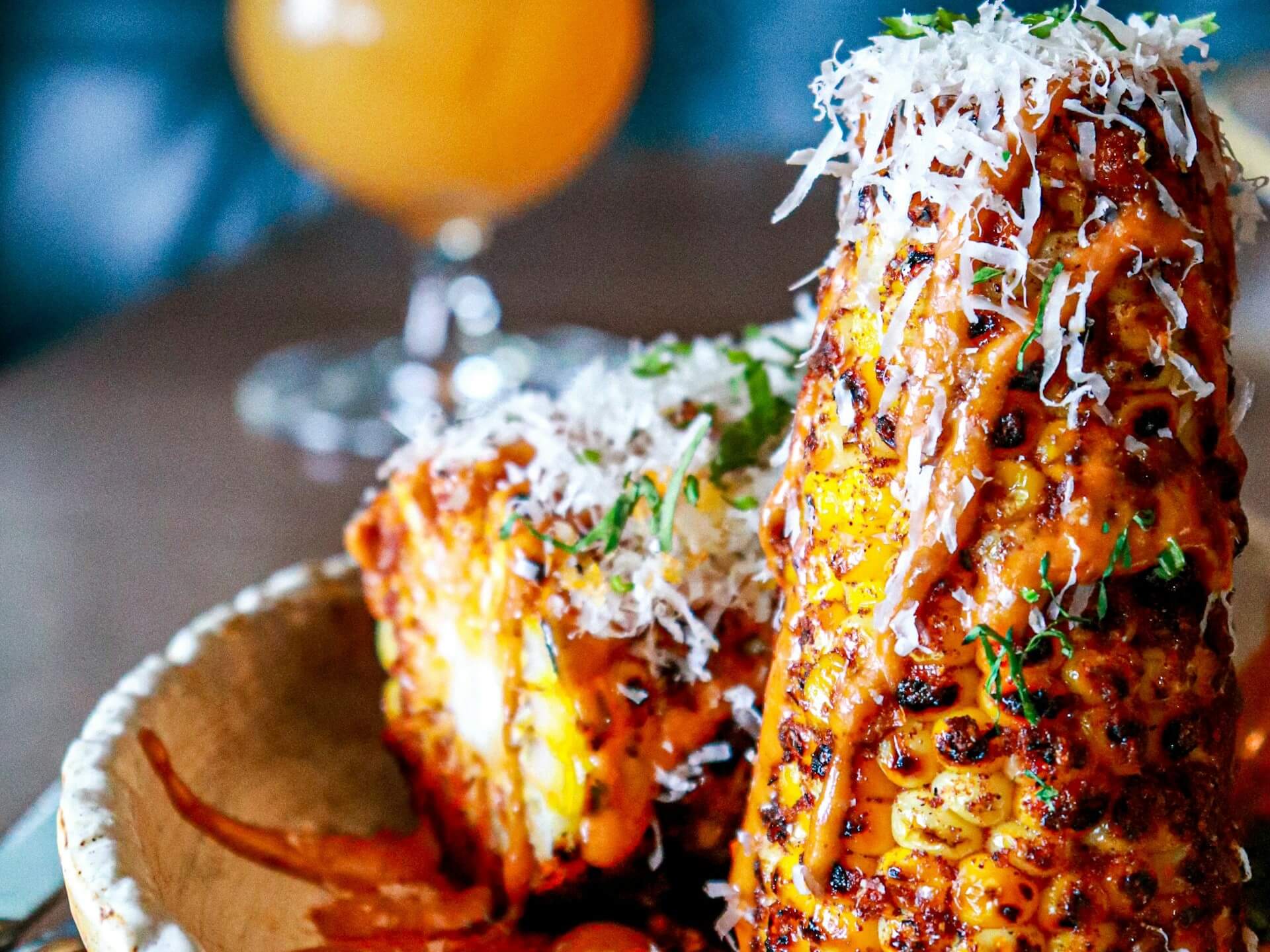
Elote or street corn-style dish on a table

An informative and engaging culinary trend report from Campbell’s Foodservice provides compelling insight that will help operators refresh their menus.

Recently, Campbell’s dropped their Culinary TrendPulse 2024 report. To download your own copy, click here.

Executive chef Gerald Drummond and senior chef Greg Boggs have identified four culinary trends for 2024. The chefs analyzed data provided by Campbell’s Foodservice and the company’s partners.

As has become commonplace, Campbell’s also took note of food and flavor social media mentions and conversations. This makes sense; if people are talking about it on social media, it’s probably growing in demand.

Now, I’m going to share each of the trends below. However, I’m going to laser in on one in particular. My reasoning is simple: It’s a compelling take on segment that has been experiencing growth, along with the accompanying growing pains.

To start, though, a brief look at three of the 2024 culinary trends identified by Chefs Drummond and Boggs.

TrendPulse 2024: Trends 1, 3 and 4

To put it bluntly, I think the first trend in this report is here to stay. It’s safe to say it has reached the proliferation stage.

So, when I see “global cuisine” in reports, I don’t really consider it a trend. What I want to see is specific cuisines, dishes or flavors identified as trending.

Fortunately, Chefs Drummond and Boggs have identified three global cuisines on the rise. Per the chefs and Campbell’s, Mexican, Asian, and North African cuisines are on an upward trend in the US.

In particular, operators should be aware of the following:

  • Asian cuisine: Korean, Souteast Asian, and Thai food are on the rise.
  • Mexican cuisine: birria, quesabirria, birriamen, chamoy, and street corn mentions have grown in menu mentions and social discussions.
  • North African cuisine is projected to grow by more than 12 percent on menus, year over year. Currently, operators should look at harissa, tagine, and peri-peri (a.k.a. piri-piri, or peli-peli).

Another trend from this report is “new nostalgia.” As the term suggests, consumers are showing interest in creative spins on well-known comfort foods.

Likely driven at least in part by global cuisines, heat is also on the rise. I mean that figuratively and literally.

Per a Tastewise data point cited in the Campbell’s report, sweet and spicy mentionsknown as “swicy”—have grown nearly 50 percent over the past year.

TrendPulse 2024: Trend 2

Alright, so here’s the trend that stands out to me.

According to Chefs Drummond and Boggs, consumers are still very much interested in plant-based cuisine. However, they want actual plants to be the stars.

Or, as Campbell’s puts it in their report, one of their top trends is “putting plants back in plant-based.” Interestingly, this trend fits with the first one in the Campbell’s report: global cuisine.

Per a Technomic report cited by Campbell’s, 41 percent of consumers eat a vegetarian or vegan dish at least once per week. However, it seems that these same consumers are showing a preference for actual plants.

Most plant-based meat alternatives are processed foods. In fact, some sources designate them “ultra-processed foods.” Today’s consumer is more educated on processed foods and seeks to avoid them.

So, operators should menu more dishes that feature plants. There’s a place for plant-based meat alternatives but their highly processed nature may be putting off a not-insignificant number of consumers.

In their report, Campbell’s suggests offering dishes featuring the following proteins: beans, legumes, and pulses.

Look, trend predictions are guesses. In this case, they’re data-driven and educated, but they’re still guesses. When considering menu changes, operators need to make choices that make sense for their business, guests, and market.

If you’re like me, you’ve noticed that all four of these trends pair well with one another. Operators should encourage their kitchen teams to get creative and craft new dishes that leverage two or more of the above trends.

Image: Aleisha Kalina on Unsplash

by David Klemt David Klemt No Comments

The Indispensable Egg: Simple but Powerful

The Indispensable Egg: Simple but Powerful

by Nathen Dubé

Eggs of various color in a carton

In the realm of gastronomy, eggs are indispensable, offering a unique blend of flavor and texture that is celebrated across various cuisines.

These staples of culinary tradition embody the essence of simplicity and versatility. Farm-fresh eggs, known for their rich, vibrant yolks and robust shells, elevate this simple ingredient to new heights.

This comprehensive exploration delves into the culinary excellence of farm-fresh eggs and their broader implications in the hospitality industry, from enhancing the quality of dishes to contributing to business success.

The Culinary Excellence of Farm-Fresh Eggs

The superiority of farm-fresh eggs in cooking is undeniable. Their vibrant yolks, a result of the diverse diet of free-range hens, enrich dishes with deeper flavors and a more appealing visual presentation.

In baking, these eggs contribute to finer, more consistent textures. And in sauces and dressings, their freshness is paramount, forming the foundation of many classic culinary creations.

Crafting Artisanal Dishes with Farm-Fresh Eggs

Embracing the artisanal approach, chefs use farm-fresh eggs to create dishes that showcase their natural elegance and flavor.

From perfectly poached eggs on a bed of fresh greens to innovative egg tarts, these eggs become the centerpiece of culinary craftsmanship, attracting patrons who appreciate the art of cooking.

Seasonal Menus and Farm-Fresh Eggs

Utilizing farm-fresh eggs allows chefs to design seasonal menus that reflect the changing offerings of local farms.

The subtle variations in flavor and color of the eggs throughout the year inspire creative, seasonal dishes, demonstrating a commitment to freshness and local sourcing.

Nutritional Superiority of Farm-Fresh Eggs

Beyond their culinary appeal, farm-fresh eggs offer enhanced nutritional benefits.

Rich in omega-3 fatty acids, vitamins, and minerals, they cater to health-conscious consumers, adding a valuable dimension to menus and marketing strategies in the hospitality sector.

The Business Benefits of Premium Ingredients

Incorporating farm-fresh eggs into a restaurant’s offerings is a strategic business decision. It signifies a commitment to quality and can differentiate an establishment in a competitive market.

This choice also allows for storytelling opportunities, sharing the origins of the ingredients and the relationships with local producers, building trust and a sense of community with patrons.

As Chef Brian Duffy says, operators can charge premium prices, but only if they’re being innovative. Purchasing and using fresh eggs from a local farmer is a step toward innovation and justifies charging a premium.

Ethical Considerations and Consumer Awareness

The ethical sourcing of farm-fresh eggs aligns with the growing consumer awareness and demand for transparency, and humane treatment in food production.

By choosing ethically sourced eggs, hospitality businesses can build a brand image that resonates with these values, fostering customer loyalty.

Implementing Change in the Hospitality Industry

Adopting farm-fresh eggs comes with its challenges, such as higher costs and variable supply. However, these can be mitigated through creative menu planning and pricing strategies.

Educating staff about the benefits and ethos behind using these eggs enhances the dining experience for customers.

Sustainability and the Future of Food

Choosing farm-fresh eggs is a step towards a more sustainable food system. Small-scale egg farming often employs environmentally friendly practices, contributing to a sustainable future.

This commitment to sustainability is increasingly important to consumers and can be a significant aspect of a restaurant’s brand identity.

Conclusion

Farm-fresh eggs represent more than just a culinary choice; they are a statement about quality, sustainability, and the future of food.

For chefs and restaurateurs, they offer a means to distinguish their offerings, tell a compelling story, and build a business that is both profitable and principled.

As the hospitality industry evolves, those who embrace the full potential of ingredients like farm-fresh eggs will find themselves leading a movement that values the entire journey from farm to table. This comprehensive exploration underscores the multifaceted role of farm-fresh eggs in both culinary excellence and the broader context of the hospitality industry.

Image: Kelly Neil on Unsplash

by David Klemt David Klemt No Comments

DoorDash Names 2023 Global F&B Trends

DoorDash Names 2023 Global F&B Trends

by David Klemt

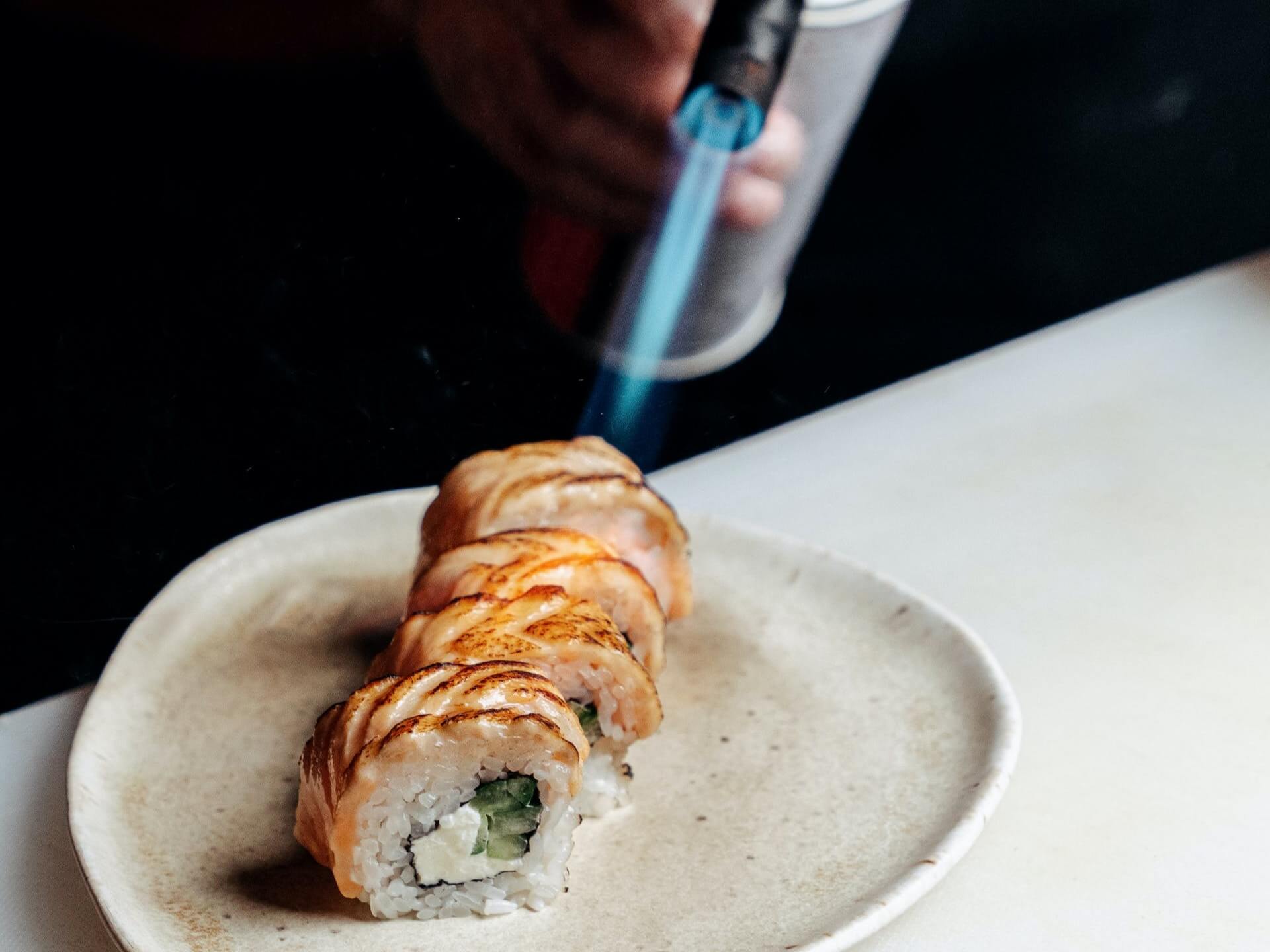
Chef torching salmon sushi

As we get close to winding down 2023 and welcoming 2024, DoorDash takes a shot at identifying the global F&B trends to watch.

This is an exciting and insightful time of year for our industry. In the last quarter, different sources start publishing their data-backed F&B predictions for the year ahead.

Take, for example, Technomic’s Global, Canadian, and American trend predictions for 2023. Oh, and don’t worry—we’ll be taking a look at their predictions for 2024 soon.

Today, however, we’re checking in on DoorDash. Admittedly, I’m not the biggest fan of third-party delivery. It’s no secret I favor direct delivery for operators.

There’s no denying, though, that third-party delivery companies have access to valuable data. From the top food and drink orders to the dayparts seeing the most delivery and pickup order growth, they can help operators see shifts in consumer behavior.

So, I’m happy to take a look at what food trends DoorDash thinks operators should watch moving forward.

Before we jump in, I’m happy that DoorDash includes this cautionary statement in their article: “Finally, always consider whether or not a trend actually fits in at your restaurant.”

At KRG Hospitality, we couldn’t agree more. Jumping on every trend, as tempting as that may be, is unwise and can do harm than good. So, while the lists below identify trends that are gaining traction currently, operators need to be discerning.

Food Trends

Let’s start with a trend multiple sources identified toward the end of 2022 that appears to still be on an upward trajectory: pickles.

Seriously, it seems that people can’t get enough pickles. Pickle pizza appears to the current darling when it comes to this food trend. Speaking of pizza, DoorDash sees square pizzas as a trend to watch.

Another trend that multiple sources have been keeping tabs on is chimichurri. According to DoorDash, this condiment is finding its way onto all manner of food item.

Other food trends that operators should be aware of are bowls (deconstruct a sandwich, burrito, etc., and you have a bowl); oyster mushrooms subbing in for meat; higher-end tinned fish; and gluten-free menu options.

To be honest, I don’t think that last one is just a trend. At this point, offering gluten-free options or entire menus is mainstream.

Now, there are two more food trends I want to address separately. One, smaller menus. This is a trend I believe most operators can and should get behind. Shrinking a menu can result in lower food and labor costs, and a happier team. Making a menu smaller can also make a restaurant more nimble and engaging as LTOs may have more impact.

And then there’s aburi sushi, which is presented after the top of the fish is torched. This gives sushi a smoky flavor and brings in a different texture element.

To be fair, I’ve expected this to take off for the past several years. Now, it appears it’s taking hold and moving from fad to trend.

TikTok Trends

Yes, we have to talk about TikTok. There’s no question that the platform is a trend-producing powerhouse.

Clearly, TikTok has an influence on food trends. If you want to know what your younger guests want to try, check TikTok. The same goes for your guests who are highly engaged with social media influencers.

Below, the trends DoorDash sees taking hold.

  • Chopped sandwiches. Do you have sandwiches on your menu? Can your guests watch as your team makes them? You may want to create a chopped version of your signature or best-selling sandwich.
  • Pasta salad summer. Apparently, this summer was the Summer of Pasta Salad. Specifically, pasta salads made with fresh ingredients, and made without ingredients like mayonnaise.
  • Cottage cheese. According to DoorDash, TikTokers are putting cottage cheese in scrambled eggs, adding it to pasta sauce, and using it to make cheese toasts. I’ve personally tried the TikTok trend of using cottage cheese to make nacho cheese sauce.

One word of caution: TikTok trends come and go in the blink of an eye. So, operators need to hop on trends that work with their restaurant or bar before they’re already out of favor. It’s a daunting task.

To review this DoorDash report in its entirety, including beverage and grocery trends, follow this link.

Image: Ivan Samkov on Pexels

Bar Nightclub Pub Brewery Menu Development Drinks Food

by David Klemt David Klemt No Comments

5 Books to Read this Month: November 2023

5 Books to Read this Month: November 2023

by David Klemt

Flipping through an open book

Our inspiring and informative November book selections will help you and your team transform your operations and F&B programming.

This month, we look at a new branding and marketing book. We also dive into agave spirits and cuisine from the Canadian Prairies.

There’s an eye-opening exploration into the topic of technology, culture, and the “alignment problem,” as well.

To review the book recommendations from October 2023, click here.

Let’s jump in!

The Restaurant Marketing Mindset: A Comprehensive Guide to Establishing Your Restaurant’s Brand, from Concept to Launch and Beyond

If you haven’t had the opportunity to hear Chip Klose speak, look into his books. His latest The Restaurant Marketing Mindset, came out in early October. As the title suggests, this book is for anyone who’s struggling with branding and marketing, or who simply wants a fresh perspective on this crucial element of operations.

From Amazon: “Restaurants boast some of the highest failure rates of any industry, yet even worse is the sheer number of concepts that struggle just to break even. In The Restaurant Marketing Mindset, Chip Klose introduces a series of mindset shifts and actionable frameworks to help owners and operators finally take control of their marketing.

With more than twenty years of operational experience—plus an MBA in food marketing—Klose has the authority, experience, and track record needed to speak confidently on the subject. Each lesson stacks one on top of the other, giving the reader a step-by-step plan to attract more diners, retain those diners, and spark word of mouth with the ones who matter most.

This book is for any chef, owner, or operator who’s ever felt overwhelmed when it comes to marketing their restaurant. Each chapter is filled with powerful insights to help you build a more profitable (and sustainable) business.”

Pick it up today!

Prairie: Seasonal, Farm-Fresh Recipes Celebrating the Canadian Prairies

This engaging cookbook features 1oo traditional and creative recipes highlighting Canadian Prairie cuisine. These seasonal, farm-to-table recipes are sure to impress your guests.

From Amazon: “No matter the season, the Prairies are all about preserving every ounce of food, so of course there’s also tons of helpful tips and tricks on reducing food waste. There’s even a Staples chapter with recipes for stocking your pantry to keep you cooking all year long. Both a love letter to Canada’s grandest provinces and an indispensable collection of recipes, Prairie is as inviting and bountiful as the region it celebrates.”

Agave Spirits: The Past, Present, and Future of Mezcals

The authors of this informative book visited eight Mexican states to learn all they could about mezcal. By extension, they learned not only about traditional production but also where this hugely popular spirits category is headed for the future.

From Amazon: “The result of the authors’ fieldwork and on-the-ground interviews with mezcaleros in eight Mexican states, Agave Spirits shows how traditional methods of mezcal production are inspiring a new generation of individuals, including women, both in and beyond the industry. And as they reach back into a rich, centuries-long history, Nabhan and Suro Pinera make clear that understanding the story behind a bottle of mezcal, more than any other drink, will not only reveal what lies ahead for the tradition―including its ability to adapt in the face of the climate crisis―but will also enrich the drinking experience for readers.”

The Alignment Problem: Machine Learning and Human Values

When we build automated systems, we’re placing a lot of trust in our expertise. And because humans are fallible, the systems we build are far from perfect.

From Amazon: “Today’s ‘machine-learning’ systems, trained by data, are so effective that we’ve invited them to see and hear for us—and to make decisions on our behalf. But alarm bells are ringing. Recent years have seen an eruption of concern as the field of machine learning advances. When the systems we attempt to teach will not, in the end, do what we want or what we expect, ethical and potentially existential risks emerge. Researchers call this the alignment problem.”

Hacking the New Normal: Hitting the Reset Button on the Hospitality Industry

The world around us has changed. The food and beverage industry has changed. The hospitality industry has changed. But will some ways of life change for the better? Will perhaps the restaurant, bar, and hospitality industry come out even stronger? With the right changes to the previous status quo, it is possible. There’s no question, resets are major undertakings, but a major reset will provide us with a clean start and that’s what this industry needs.

Pick up KRG Hospitality president Doug Radkey’s second book today! Click here.

Image: Mikołaj on Unsplash

KRG Hospitality. Business Coach. Restaurant Coach. Hotel Coach. Hospitality Coach. Mindset Coach.

by David Klemt David Klemt No Comments

2023 World’s 50 Best Restaurants Revealed

2023 World’s 50 Best Restaurants: 1 to 50

by David Klemt

Central in Lima, Peru, the winner of the 2023 World's 50 Best Restaurants

The team behind Central in Lima, Peru, the number one restaurant in the world.

We finally know which venues from around the globe claim one of the top 50 spots on the 2023 World’s Best Restaurants list.

As you’ll see below, a few countries and cities perform very well on this year’s list.

For example, five of this year’s restaurants are in Italy, one of which is in the top ten. However, restaurants throughout Spain grab six spots on this year’s list. Three of these are among the top ten restaurants.

France claims four spots. Three of those are in Paris, and one is in the top ten.

London takes three spots, as do Mexico City, and Tokyo. One restaurant in the top ten is in Mexico City.

America has just two restaurants on the 2023 World’s 50 Best Restaurants list. Both are in New York City, one is in the top ten. Bangkok, Bogotá, Dubai, and German also each have two restaurants on the list.

Peru, like France, also boasts four spots on the list. Each of these four are located in Lima, and two restaurants are among the top ten. Most importantly, one of those restaurants is the number-one restaurant in the world.

For our Canadian and Australian readers, I’m sorry to report that there are no restaurants on the list below that are in your respective countries.

The World’s 50 Best Restaurants 2023: 50 to 1

  1. The Chairman (Hong Kong)
  2. Rosetta (Mexico City, Mexico)
  3. La Grenouillère (La Madelaine-sous-Montreuil, France)
  4. Mayta (Lima, Perú)
  5. Orfali Bros Bistro (Dubai, United Arab Emirates)
  6. Nobelhart & Schmutzig (Berlin, Germany)
  7. Le Bernardin (New York City, New York, United States of America)
  8. Leo (Bogotá, Colombia)
  9. Piazza Duomo (Alba, Italy)
  10. Le Calandre (Rubano, Italy)
  11. Restaurant Tim Raue (Berlin, Germany)
  12. The Jane (Antwerp, Belgium)
  13. The Clove Club (London, England, United Kingdom)
  14. Sezánne (Tokyo, Japan)
  15. Plénitude (Paris, France)
  16. Ikoyi (London, England, United Kingdom)
  17. Uliassi (Senigallia, Ancona, Italy)
  18. El Chato (Bogotá, Colombia)
  19. Hiša Franko (Kobarid, Slovenia)
  20. Mugaritz (San Sebastian, Guipúzcoa, Spain)
  21. Frantzén(Stockholm, Sweden)
  22. Boragó (Santiago, Chile)
  23. Kjolle (Lima, Perú)
  24. Florilège (Tokyo, Japan)
  25. Schloss Schauenstein (Fürstenau, Switzerland)
  26. Belcanto (Lisbon, Portugal)
  27. Septime (Paris, France)
  28. Kol (London, England, United Kingdom)
  29. Elkano (Getaria, Gipuzkoa, Spain)
  30. Den (Tokyo, Japan)
  31. Quique Dacosta (Dénia, Alicante, Spain)
  32. Don Julio (Buenos Aires, Argentina)
  33. Steirereck (Vienna, Austria)
  34. Gaggan Anand (Bangkok, Thailand)
  35. Reale (Castel di Sangro, L’Aquila, Italy)
  36. Le Du (Bangkok, Thailand)
  37. Odette (Singapore)
  38. Pujol (Mexico City, Mexico)
  39. A Casa do Porco (São Paulo, Brazil)
  40. Trèsind Studio (Dubai, United Arab Emirates)
  41. Table by Bruno Verjus (Paris, France)
  42. Quintonil (Mexico City, Mexico)
  43. Atomix (New York City, New York, United States of America)
  44. Lido 84 (Gardone Riviera, Brescia, Italy)
  45. Maido (Lima, Perú)
  46. Alchemist (Copenhagen, Denmark)
  47. Asador Etxebarri (Axtondo, Bizkaia, Spain)
  48. Diverxo (Madrid, Spain)
  49. Disfrutar (Barcelona, Spain)
  50. Central (Lima, Perú)

Last Year’s List

Some of the restaurants above also earned spots on the 2022 World’s 50 Best Restaurants list.

For example, Ikoyi in London, England, was number 49 last year. The restaurant climbs to number 35 this year.

Bogotá’s Leo was number 48 in 2022 but rises to 43 in 2023.

Central fought to climb one place. Last year, Central was number two. Now, they’re the best restaurant in the world.

For the full list of the top 50 restaurants last year, please click here.

Cheers to this year’s top 50!

Image: The World’s 50 Best Restaurants

KRG Hospitality. Restaurant Business Plan. Feasibility Study. Concept. Branding. Consultant. Start-Up.

by David Klemt David Klemt No Comments

Fire and Ice: Bring Your Teams Together

Fire and Ice: Bring Your Teams Together

by Jared Boller

Ice on fire inside of a Martini glass

If you want to elevate your concept you need to ensure the front- and back-of-house teams are working with each other, not against one another.

There’s nothing wrong with a healthy rivalry and competition, of course. But the key word there is “healthy.” Both teams are crucial to your success, even if they seem like polar opposites.

Analogies are one of the singular greatest educational selling points when you have a group of people in front of you. Not only do they help you get your point across, they also help you to make a topic relatable to the listening novice.

In hospitality there are numerous ways to use analogies as teaching tools. When it comes to mixology or bartending, I like to use fire and ice to represent the kitchen and the bar.

I take this approach because the bar (ice) is the friendly counterpart to the fast and furious kitchen (fire). If you follow my train of thought, you’ll see why I preferthis approach: ultimately, we’re speaking about temperature and its importance in both spaces.

Consider the art of crafting cocktails. You and your bar team should understand dilution and melting rates the same way you know how important temperatures are to steaks. Nine times out of ten, individuals at the table have a personal preference regarding the temperature of their steak.

Guests don’t hesitate to relay this information to the server. Next, the chef and their brigade uses fire and cooking times to ensure each state is cooked properly. Not only that, the mastery of their craft leads to each steak coming out at the same time, cooked to each guest’s preference.

This process is the same for the bar. Stirred, shaken, egg-white cocktails… Bartenders must master their craft to ensure they understand the different types and uses of ice (or no ice) when building drinks. Moreover, they need to use that knowledge to ensure each drink for a table or group comes out at the same time, with the appropriate level of coldness.

In the end, when drinks hit the pass or server’s station, we want drink orders to be delivered as quickly as possible because they’re on the clock. The ice in the drinks start to melt. Hot food begins to get cold. We’re fighting time.

Understanding temperatures and times relates directly to the guest experience. We can tell how well-oiled and skillful front- and back-of-house teams are by watching drinks and dishes hit tables.

Fire

According to Anthropologist Richard Wrangham, who wrote the book Catching fire: How Cooking Made Us Human, people started cooking over open fire more than two million years ago.

Wrangham states that cooking was first seen as “simply chunking a raw hunk of something into flames and watching it sizzle.” Modern chefs may not agree with this style but we are able to see that early human “cooks” came to a few realizations regarding their use of fire. Their food was healthier, tastier, and they may have had more revitalized immune systems.

Obviously, the evolution of modern cooking techniques have advanced through tools, techniques, and vessels over the years. However, regardless of how much innovation we introduce to our kitchens, we’re still using fire and heat to cook our food.

Unless they’re expecting a salad, sushi, or another amazing raw or cold food, guests anticipate their food will be hot or warm upon arriving in front of them. Great chefs take control of their kitchens, techniques, and tools. Their masters of temperature. They have a nearly supernatural understanding of timing.

It’s always a site to behold when someone is masterful in the kitchen. A seemingly endless number of pots and pans raging on burners. Infinite elements of dishes flowing in and out of ovens. Chaos to the novice’s eyes but in reality, flawlessly composed dishes arriving at perfect temperatures.

Ice

We can trace the use of ice in drinks as far back as ancient Egypt. Icy drinks are also well documented by first-century Roman society; emperors, it’s claimed, enjoyed “chilled” cocktails via glacier runoff extracted from the mountains.

Emperors, according to some historians, would store giant blocks of ice in cool cellars, garnishing their tipples with shards of ice. This was both a decadent display of their elite status, and evidence that humans have long appreciated a cold, refreshing drink.

It wasn’t until early 1800s Boston that humankind really began to master ice. A young entrepreneur, Frederic “The Ice King” Tudor, pursued an idea with his brother and launched the ice or frozen water trade. Over the course of just a few decades, the New England-based trade was able to ship ice worldwide.

The Wenham Lake Ice Company, established in the 1840s, harvested giant blocks from the eponymous lake and stored them in a network of ice houses, accessed by a small railroad system. Once a luxury, ice was on its way to going mainstream. Everyone was coming to the realization that drinks tasted better with a bit of dilution and colder temperatures.

Eventually, ice production led to ice harvesting innovations. For example, Clinebell machines that use cold plates to 300-pound, crystal-clear blocks. Along with being clear, the ice blocks are super dense to reduce dilution rates significantly. From glaciers to “harvesting” ice from lakes to full-on factory production, our obsession with ice has led to technological innovation.

Interestingly, however, early 19th century methods of ice extraction are once again in vogue. A cadre of passionate bartenders who view ice as a premium ingredient in and of itself are hand carving ice cubes, spheres, and spears for perfectly curated Negronis or Old-fashioneds.

Takeaway

The bottom line is, temperature is important to anyone working in hospitality. Kitchen and bar teams need to work together to create the best possible products.

Some people think of food or drinks when asked to consider the best restaurants and bars in the world. However, those are products. What sets the best concepts apart is the teams they’ve each built and nurtured.

It’s the passion of each team member and their consideration of the fine details that makes a restaurant or bar notable. So, when we think about fire and ice, we can consider this idea the ultimate geekery in regard to our profession.

Take it from me: When the front of the house and back of the house collaborate, then they’re in sync with one another and nail the small details, they transform first-time guests to repeat brand evangelists.

They may not understand why their experience was so incredible but they’ll become outspoken ambassadors.

Image: Alexander Startsev on Unsplash

KRG Hospitality Mixology Training with Jared Boller

by David Klemt David Klemt No Comments

Kitchen Doctrine: The Culinary Holy Trinity Across Cuisines

To some, the Holy Trinity refers to the Christian doctrine of the Father, the Son, and the Holy Spirit. But what’s the Cajun Holy Trinity?

Well, that’s a whole different story with which some people may not be as familiar. However, it carries equal weight in certain kitchens of the world.

Lending its name from religious credo, the Cajun Holy Trinity was developed in the state of Louisiana in the southern United States. Chef Paul Prudhomme gets the credit for introducing the term in 1981, along its popularization.

Cajun or Creole cuisine evolved from French, Spanish, and West African immigrants. French traditions blended into a melting pot of West African, Spanish, and Native American cuisines. The French and the Acadians (French colonists deported from Acadia in what is now Nova Scotia, Canada) both influenced Louisiana’s cuisine. The Acadians became known as Cajuns to English speakers, and thus Cajun cooking grew out of necessity in Louisiana.

It’s incredible what three (and sometimes just one or two more) simple ingredients can do to create incredible dishes.

by Nathen Dubé
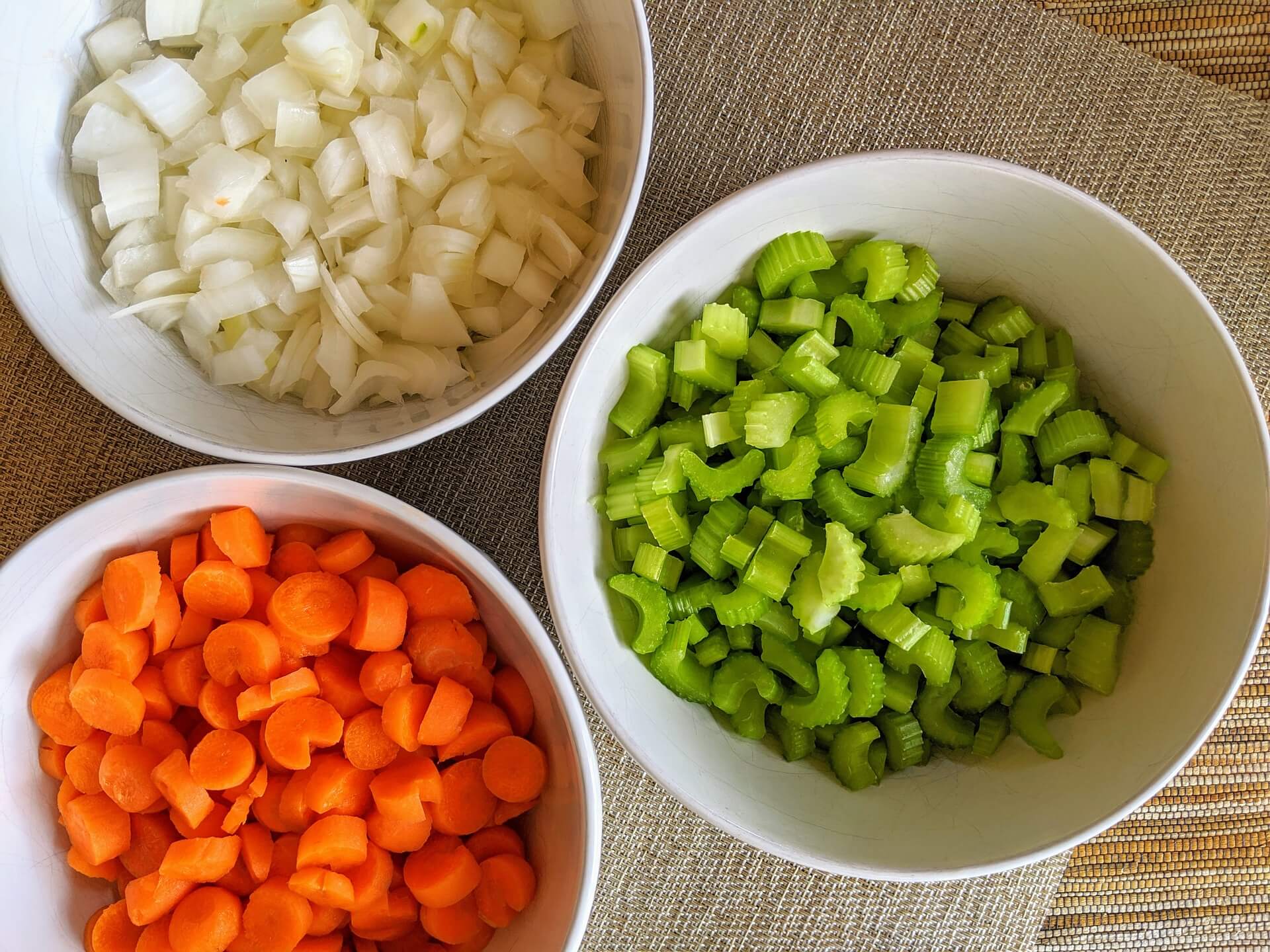
Carrots, celery and onions

Understanding the Culinary Holy Trinity

Mirepoix 101

The French contributed two staples directly to Cajun and Creole cooking: roux-based cooking and the trinity of mirepoix, or onions, celery, and carrots. In Louisiana, however, carrots didn’t grow as easily as bell peppers. So, bell peppers, typically the more bitter green version, replaced them.

Some cooks were so bold as to add garlic to the Holy Trinity, referring to it as the Pope. Other variants use garlic, parsley, or shallots in addition to the three Trinity ingredients. Unlike the elaborate French dishes using mirepoix, the Holy Trinity is more symbolic of rustic, family-style meals.

These ingredients are the first to go into the pot or skillet, creating a flavorful foundation for gumbo, jambalaya, crawfish étouffée, and more. Often, by adding a bit of flour and whisking, a roux is built right on top of these sweet and colorful aromatics to form a thicker base.

The ratio is also overturned from the traditional mirepoix of two parts onion, one part celery, one part carrot, with three parts onions to two parts celery to one part bell pepper.

Practical Application

So, now that we know what it is, how do we use it?

First, the ingredients are finely diced, then sauteed in oil, fat, or butter until translucent and tender. This stage of cooking draws the water from the vegetables, concentrating their natural flavors.

You can continue cooking the ingredients down until they’re caramelized, which is to say the sugars come out and brown them in the pan. They’ll become easy to break down with the back of a spoon. There’s a further concentration of flavors but we’re approaching the law of diminishing returns.

The shorter the cooking time of the end dish, the smaller size the pieces should be. For longer times, they can be cut into larger pieces. For obvious reasons, we want our ingredients to cook evenly, as well as withstand the timeframe of the cooking. You don’t want minced vegetables in a stock that’s going to simmer for 10 hours, the same way we don’t want giant chunks in a soup that’s done in 30 minutes. Texture of the end product are also important, not just flavor.

Here are examples of some recipes that include the Cajun Holy Trinity:

  • Chicken and Sausage Jambalaya
  • Cajun Gumbo with Andouille Sausage
  • Chicken and Okra Gumbo

Looking at other cuisines of the world, we’ll find some interesting variations. Interestingly, however, we’ll find similarities in the use of a category of vegetables and herbs called “aromatics.” In the Western world, these are vegetables like garlic, onions, carrots, celery, and herbs like bay leaves, thyme, parsley, and peppercorns.

In Asia you’ll find green onions, ginger, garlic, and warming spices like cinnamon and clove. These mixes are usually sautéed to slowly draw out flavors that can carry a dish. Sofrito and its Italian counterpart, soffritto, literally mean to stir-fry.

French Cuisine

The term mirepoix is encountered regularly in French culinary texts by the 19th century.

In 1814, Antoine Beauvillier wrote a recipe for Sauce à la Mirepoix in his book L’Art du Cuisinier. It’s a short recipe for a buttery, wine-laced stock garnished with an aromatic mixture of carrots, onions, and a bouquet garni. Marie-Antoine Carême created a similar recipe in 1816, calling it simply “Mire-poix.”

The origins are cloudy but what’s clear is the basic mirepoix ratio: two parts onions, one part celery, one part carrots by weight. These vegetables are often finely chopped and sautéed, but they can be used whole or roughly chopped in slowly simmered stocks or braises. A simple ratio for bones to mirepoix for a stock is 10:1.

When chopping, be particular about uniformity. This ensures even cooking when sweating or deeply browning them for a heartier flavor.

If cooking further, the addition of tomato purée creates a mixture called pinçage, which smells incredibly rich and transforms a braise into a near-religious experience. The addition of some chopped thyme and rosemary elevates further.

Another alternative is the mirepoix au gras (“with fat”): the addition of diced ham or pork belly.

Hands down, however, the most famous example of the power of French mirepoix is the humble chicken soup. It capitalizes on the aromatic qualities and depth of the caramelized vegetables. Similar combinations—both in and out of the French culinary repertoire—can include leeks, parsnips, garlic, tomatoes, shallots, mushrooms, bell peppers, chilies, and ginger.

White mirepoix (which substitutes leeks and parsnips for the onions and carrots) is used when you want a white color in the final dish. It might be a stretch to include the French duxelles (mushrooms and often onion or shallot and herbs, reduced to a paste), but leave no stone unturned, I say.

Mirepoix Recipes to Try

  • Roasted meats, like turkey
  • Chicken Noodle Soup
  • Braised Short Ribs
  • Vegetable soups

Italian Soffritto

Referred to as battuto before it’s cooked, soffritto is the combination of onions, celery, carrots, garlic, and parsley, although there are quite a few variations on this mixture. Soffritto can also include bell peppers, fennel, and finely diced cured meats like pancetta or prosciutto.

There’s no set ratio for the ingredients. This combination forms the foundation for soups like minestrone, the base for pasta sauces such as ragù, stews, and braises throughout Italian cuisine.

While both mirepoix and soffritto serve as building blocks of flavor, there are a few subtle differences.

Mirepoix is made by sweating onions, celery, and carrots. Soffritto uses minced rather than diced vegetables. And, indicative of Italy, the use of olive oil trumps butter in the cooking process.

Soffritto recipes to try

  • Ragú Bolognese
  • Italian Wedding Soup
  • Pasta e Fagioli (Pasta and Bean Soup)
  • Braised Sausage, and Kale with Rosemary

Spanish Sofrito

While saffron and seafood are the clear stars of the classic paella, it’s sofrito—the mixture of onion, garlic, bell peppers, and tomatoes (sometimes paprika) cooked in olive oil—that sets the stage. Although it may seem ludicrous, the removal of the sofrito and not the prime seafood on top would do more damage to the final dish.

This is where we begin to see the introduction of the New World. After the 16th century, Catalonia in particular “discovered” the tomato and began using it in everything. Bell peppers, onions, and garlic are the other ingredients that make up sofrito.

The medieval recipe book Libre de Sent Sovi shows that Catalan cuisine historically used native ingredients to make sofregit. Most Old World-style dishes call for onions, leeks, carrots, and salt pork, in place of the yet to be discovered tomato, so the sofritos of the 1300s can be interpreted loosely.

From the Mexican American border to the tip of Argentina, and all of the islands in between, Latin America has taken the Spanish sofrito and adapted it to its local offerings. Cuban sofrito tends to look the closest to Chef Prudhomme’s Holy Trinity, but with more garlic, while the Ecuadorian version includes freshly toasted cumin, tomatoes, onions, garlic, and sweet cubanelle peppers.

Sofrito recipes to try

  • Seafood Paella
  • Spanish Beef Stew with Pimentón and Piquillo Peppers
  • Spanish Chickpea and Spinach Stew
  • Nicaraguan Arroz con Pollo

Puerto Rican Sofrito

In Puerto Rico, many dishes start with recaíto, the perfumed flavor of culantro, ají dulce, onions, cubanelle peppers, and garlic. Often referred to as “blessed thistle,” the long, jagged-edged, leafy culantro has a similar taste to cilantro.

For this Caribbean island’s sofrito, known as recaíto, culantro leaves are minced and added to ajíes dulces, small but essential chilies in Puerto Rican cuisine. Add onions, cubanelles, garlic, and cilantro, and you have a mild, bright-green paste that adds a fresh, herbal punch to stews and rice dishes.

In the Caribbean, sofrito refers to a wide variety of mixtures; one common type includes lard colored with annatto seeds and mixed with ingredients like chiles, bell peppers, onion, cilantro, oregano, and ham. You can find variations on this sofrito throughout Central and South America.

Suppengrün

In case the umlaut didn’t give it away, the German answer to mirepoix—suppengrün—translates to “soup greens.” The Dutch equivalent is soepgroente.

Suppengrün typically consists of carrots, celery root, and leeks in no set ratio. Sometimes onions, parsnips, and potatoes are added. It may also contain parsley, thyme, celery leaves, rutabaga (a.k.a. swede), or parsley root.

The mix depends on regional traditions. Vegetables used are cold-climate roots and bulbs with long shelf lives. Suppengrün acts like herbs and imparts hearty, strong flavors to the soup or sauce, providing a foil for other strong-tasting ingredients such as dried peas and beans, or pot roast.

Large chunks of vegetables can be slow cooked to make rich soups and stocks, and are discarded when they have given up most of their flavor. Finely chopped suppengrün are browned in fat and create the base for a finished sauce. The vegetables may be cooked long enough to fall apart and become part of the sauce or pureed.

Suppengrün recipes to try

  • Beef Sauerbraten with Red Cabbage and Pretzel Dumplings

Włoszczyzna

From Poland, włoszczyzna is similar to its German counterpart but with red cabbage as the main ingredient.

Włoszczyzna is the Polish word for “soup vegetables” or greens. The literal translation is “Italian stuff,” stemming from Queen Bona Sforza d’Aragona—who was Italian—who married Polish King Sigismund I the Old in 1518. The queen no doubt brought her own cooks to the Polish court and introduced this concept to Polish cuisine.

A włoszczyzna may consist of carrots, parsnips or parsley root, celery root or celeriac, leeks, and savoy or white cabbage leaves. Sometimes, cooks also use celery leaves and flat-leaf parsley. Bay leaves and allspice grains are found in certain iterations.

The most typical packaged combination is celery root, parsley root, carrots, and leeks. Włoszczyzna is usually cut to uniform size and boiled as a flavor base for soups and stews.

Włoszczyzna recipes to try

  • Pork, Cabbage, and Potato
  • Barszcz (traditional Polish borscht)

Other Variations from Around the World

The Ukrainian or Russian smazhennya or zazharka consists of onion, carrot, and beets (and sometimes celery).

Refogado is the Portuguese base is made from onions, olive oil, minced garlic, and bay leaf. There’s a variation with tomato paste instead of fresh tomato influenced by the Eastern Mediterranean and Balkans regions.

Chinese/Cantonese cooking uses a base of scallions, ginger, and garlic. In Sichuan cooking you’ll often find a mixture of chili peppers, Sichuan peppercorns, and white pepper.

The amount of varied flavors and spices in Indian cuisine is incredibly vast and can differ from neighbor to neighbor. However, many of these dishes begin with basic mixture of garlic, ginger, and onion.

West African cuisine is another example of a huge amount of variety, but one common flavor base is the trio of tomatoes, onions, and spicy chiles.

The Haitian Epis has African origins with similarities to sofrito which is used in Hispanic cuisine. Parsley, scallions, garlic, citrus juice, and Scotch bonnet peppers are combined to create this base. Haitian Epis is used for finishing sauces, marinating meat and fish, and flavoring rice and bean dishes, as well as soups, and stews.

Hopefully you’re now inspired to try out a new combination or two, or even make up your own Holy Trinity. The possibilities are literally endless. But first, you owe it to yourself to learn a new Cajun recipe, starting with Chef Prudhomme’s Holy Trinity.

Image: Cindy from Pixabay

Related Reading

Work with Us

Click the image below to work with us on your restaurant concept.

Client Intake Form - KRG Hospitality

by krghospitality krghospitality No Comments

Say Hi to Your Mother Sauces for Me

Say Hi to Your Mother Sauces for Me

by Nathen Dubé

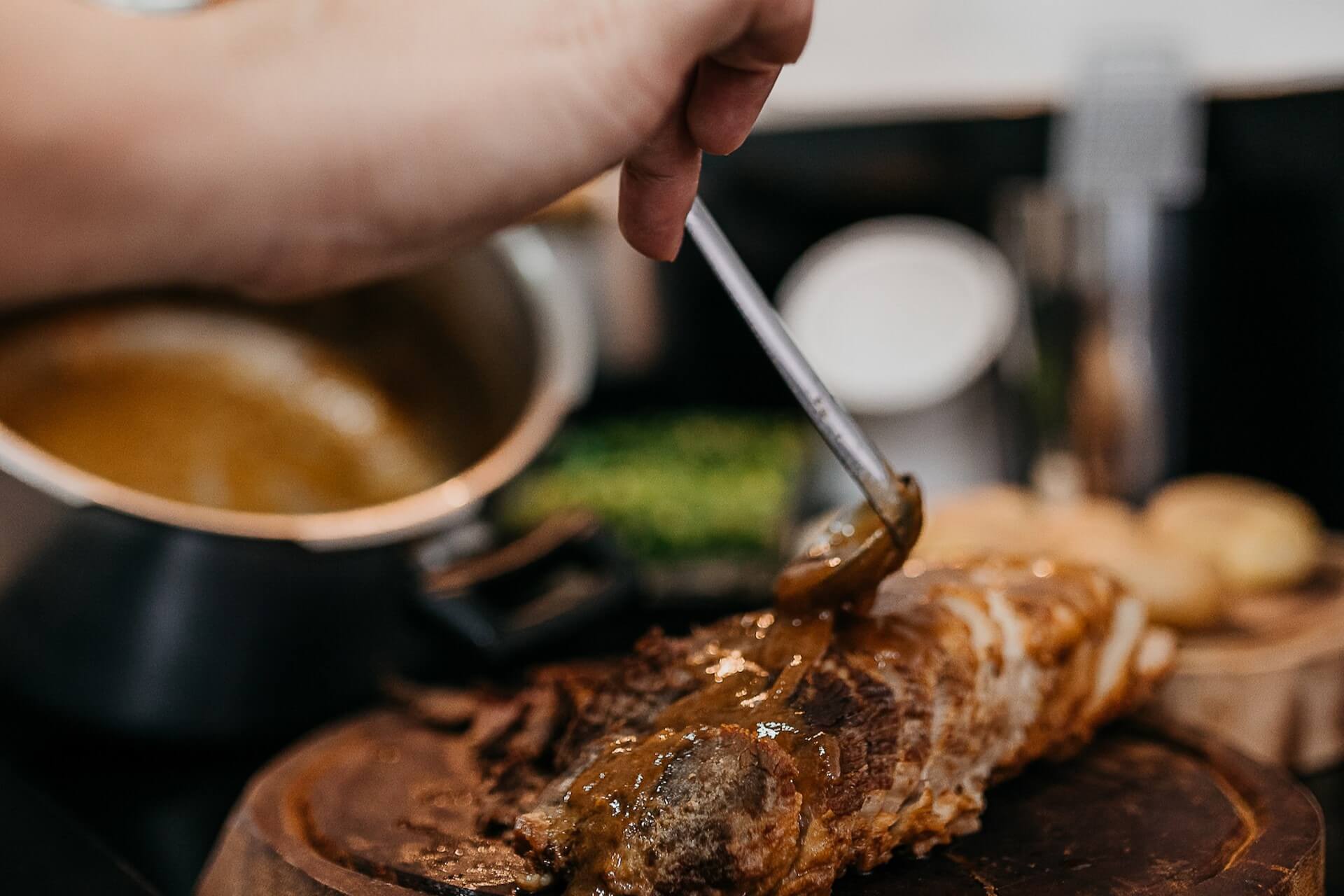
Chef pouring espagnole or brown sauce

A well-crafted sauce can elevate a dish, tying all the elements together, adding richness, texture, and colour to almost any recipe.

French cuisine in particular is renowned for its liberal use of flavorful sauces. Developed in the 19th century by French chef Auguste Escoffier, the five mother sauces are basic recipes that serve as the foundation for any number of secondary sauce variations. Each mother sauce is categorized primarily according to its unique base and thickener.

The five French mother sauces are: béchamel, velouté, espagnole, hollandaise, and tomato. Historically, Chef Escoffier originally designated only four mother sauces, and mayonnaise as a cold mother sauce, with Hollandaise below that.

Interestingly, when his book was translated to English, mayonnaise was forgotten or omitted; Hollandaise was listed as the fifth mother sauce.

Beginning culinary students and experienced cooks alike commit these five sauces to memory. They learn that by tweaking their basic formulas, all manner of great sauces can be crafted.

Please meet the five mother sauces below. I explain: how each is made; their basic uses; and some secondary sauces you can make from them.

1. Béchamel

Béchamel, or white sauce, is a simple milk-based sauce made from butter, flour, and milk.

You know béchamel as the white sauce that gives chicken pot pie its texture, or as the vehicle of cheesy goodness and binding agent in delicious mac ‘n’ cheese creations. The sauce can be found in everything from scalloped potatoes and lasagne to gravy iterations.

In classical cuisine, béchamel was poured over fish, eggs, or steamed chicken. While béchamel has a generally neutral taste on its own, the classic mother sauce adds a unique creamy texture that is both hearty and comforting.

My personal favorite base recipe is Joel Robuchon’s equation of one liter of milk, 60 grams of butter, and 60 grams of flour. It works perfectly every time.

To make béchamel, start by cooking butter and flour in a saucepan until it forms a substance called a roux. The roux is responsible for thickening the sauce. To remove the floury taste, cook the roux over medium heat for a few minutes.

When the roux is ready, slowly whisk in warm milk and simmer until it forms a creamy sauce. Strain the liquid after it thickens to get rid of any sediment, then add salt and pepper. (You can add other ingredients as well, such as bay leaves, nutmeg, onion, clove, or even cheese.)

With the addition of a few extra seasonings like salt, pepper, and cloves, béchamel is complete — though it may be used as a base for many other sauces.

Béchamel sauces include:

  • Mornay: onion, cloves, Gruyère, and Parmesan cheese
  • Alfredo: garlic with heavy cream
  • Soubise: butter and caramelized onions
  • Cheddar sauce (used for mac ‘n’ cheese or nacho-style sauces): whole milk and cheddar cheese

2. Velouté

Velouté means “velvet” in French, and that is the texture you get with this original sauce.

A velouté is a simple sauce made from butter, flour, and clear stock. Chicken, turkey, and fish stock are most commonly used, but these days, although it’s not traditional, you can also find vegetarian velouté using vegetable stock.

This mother sauce is similar to béchamel in that it’s a white sauce thickened with roux. However, it uses stock for the base in place of milk. As a reminder, stock is a savory, flavorful cooking liquid created by simmering bones, herbs, and aromatic vegetables for several hours. Chicken stock is most common, but you can also use other white stocks, such as those made from veal or fish.

To make velouté, start by making a white roux with butter and flour. Next, slowly stir in warm stock and let it simmer until a creamy, light sauce forms.

When finished, velouté has a delicate, light flavor and a smooth texture. The sauce is usually served over poached or steamed fish or chicken; the light flavors of the sauce compliment the light, delicate meat. By adding wine, lemon, or other flavorings such as herbs, cooks can adjust the flavour of this mother sauce.

Some popular sauces derived from velouté include:

  • Supreme: chicken velouté with heavy cream and mushrooms
  • Venetian: chicken or fish velouté with tarragon, shallots, and parsley
  • Hungarian: chicken or veal velouté with onion, paprika, and white wine

3. Espagnole

Espagnole, otherwise known as brown sauce, is a rich, dark sauce made from roux-thickened stock, puréed tomatoes, and mirepoix (carrots, onions, and celery that’s used as a base). Brown stock, which is made from beef or veal bones that have been roasted and simmered, gives espagnole a particularly rich, complex flavor.

This dark brown sauce—one of the original mother sauces—and its derivative sauces tend to be heavy and thick. They lend a signature richness to such dishes as bœuf bourguignon, lamb, duck, and veal.

Like velouté, espagnole uses roux and stock as the main ingredients. However, instead of white roux and stock, it calls for brown stock and brown roux. In this case, the flour paste (butter, flour) is cooked until the flour browns.

It’s important that cooks stir the roux while it browns so the paste does not stick and burn or scorch. You can imagine how this would ruin the finished product, of course. When the roux has finished cooking, browned mirepoix, pureed tomato, and beef or veal stock are added.

Espagnole is the base for:

  • Demi-glace: additional beef or veal stock, herbs, and spices that’s reduced to a thick, gravy-like consistency
  • Sauce Robert (or Robert Sauce): espagnole with lemon juice, dry mustard, white wine, and onions.
  • Mushroom sauce: mushrooms, shallots, sherry, and lemon juice
  • Burgundy sauce: espagnole with red wine and shallots

4. Sauce Tomate

Sauce tomate, also known as sauce tomat, or tomato sauce, bears slight resemblance to the Italian-style tomato sauce served with pasta.

Tomato sauce is arguably the most popular of the French mother sauces. It is often served on top of pastas (gnocchi, in particular) or polenta, or with grilled meats or vegetables.

Trigger warning for Italians: The original mother sauce tomate was thickened with a roux, but thankfully this is no longer the case.

The classical French tomato sauce can be (but usually is not) thickened with roux and seasoned with pork, herbs, and aromatic vegetables. However, most modern tomato sauces consist primarily of puréed tomatoes seasoned with herbs and reduced into a rich, flavorful sauce.

Marie-Antoine Carême classified sauce tomate as a mother sauce in the early 20th century. They are remarkably versatile and can be served with stewed or roasted meats, fish, vegetables, eggs, and of course, pasta dishes. You’ll even find it used as pizza sauce.

The best tomato sauces are made with fresh, vine-ripened tomatoes. If you can make big batches when they’re in peak season, you’ll be able to enjoy flavorful sauce year-round.

Probably the most well-known sauces, you can make the following with sauce tomate:

  • Marinara: tomato sauce with garlic, onions, and herbs)
  • Sauce Portugaise or Portuguese sauce: tomato sauce with garlic, onions, sugar, salt, parsley, and peeled tomatoes
  • Creole sauce: tomato sauce with white wine, garlic, onion, cayenne pepper, and red bell peppers

5. Hollandaise

Like sauce tomate, this sauce was a later addition to Carême’s list. Brunch-goers will recognize hollandaise from Eggs Benedict variations. People will also know it from topping steamed asparagus or smothering a steak or lobster tail.

Both the original recipe and its derivative sauces are commonly served over eggs, vegetables, fish, or chicken. It’s worth mentioning that hollandaise is derived from mayonnaise and hasn’t always been classified as a mother sauce.

Hollandaise stands out from the other French mother sauces because it relies on the emulsification—or mixing—of egg yolks and butter in place of roux. The tangy, creamy sauce is made from butter, raw egg yolks, lemon juice, and optional flavorings like cayenne pepper or white wine vinegar.

Rookies often struggle with Hollandaise, and jokes will be made that the ingredients can sense fear and intimidation. The tendency for butter and egg yolks to resist combining—much like water and oil—coupled with the gentle heat of a bain-maire (steam bath) can cause the sauce to split or a pile of scrambled eggs to appear.

The key to making a proper hollandaise is slightly warm egg yolks, room temperature butter, and steady, constant whisking. It’s essential to add the butter to the yolks slowly and incrementally so that the ingredients remain stable and don’t separate.

Hollandaise and its derivative sauces are often served over eggs, vegetables, or lighter meats like poultry and fish. Speaking of derivatives, even though hollandaise is delicious on its own:

  • Béarnaise (beef’s perfect match): hollandaise with white wine, tarragon, and peppercorn
  • Choron: hollandaise with tarragon and tomato
  • Sauce Maltaise: hollandaise with blood orange juice
  • Sauce Mousseline: hollandaise with whipped heavy cream

There you have it—the five mother sauces. Master these and an entire world of sauce and dip creation opens up to you.

Image: Vitor Monthay on Unsplash

KRG Hospitality Restaurants & Cafes, 2023 icon

by David Klemt David Klemt No Comments

Datassential: The Flavors of 2023

Datassential: The Flavors and Menu Items of 2023

by David Klemt

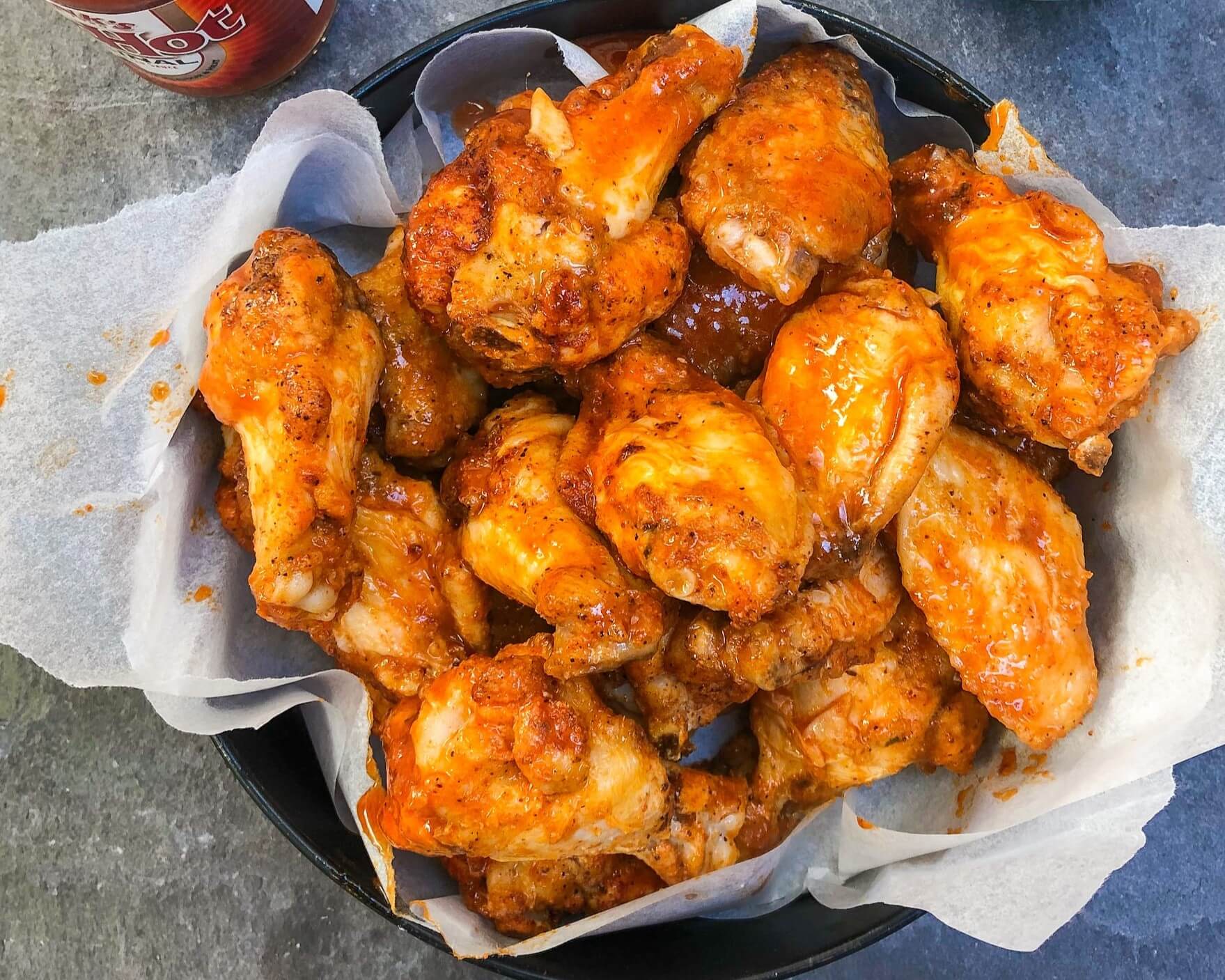
Basket of hot chicken wings

Food and beverage market research agency Datassential has some data-driven thoughts on the flavors and menu items that will define 2023.

Featured in their latest Foodbytes report are 20 items for operators to consider this year. There are ten food items, drinks, and ingredients Datassential predicts will be on basically every menu.

And there are another ten food items, drinks, and ingredients the agency feels could suddenly hit in 2023.

For you own copy of Datassential’s 2023 Food Trends, click here.

Prolific Performers

As Datassential refers to them in their report, these are the items “that will be everywhere” this year.

Food

  • Birria. This one makes sense as birria only appears to be capable of continually growing in popularity.
  • Mushroom. In Datassential’s opinion, we should expect more menus to feature mushroom snacks. Also, expect to see (or add yourself) lesser-known, rare, and exotic mushrooms on menus.
  • Salsa macha. Over the past four years, according to Datassential, salsa macha as grown a staggering 339 percent on menus.

Drink

  • London Fog. A compelling earl grey tea latte.
  • Mangonada. Salty, tart, fruity, and bold, the Mangonada is a flavorful frozen drink.
  • Ranch Water. Simple, timeless, and refreshing. In 2022, per Datassential, Ranch Water was the fastest-growing cocktail.
  • Soju. According to Datassential, soju is the third fastest-growing spirit on restaurant and bar menus.

Ingredient

  • Spicy maple. As the image atop this article suggests, expect spicy maple to replace or at least give hot honey a run for its money.
  • Ube. A striking purple yam from the Philippines.
  • Yuzu. Datassential predicts this citrus fruit will start showing up on many chain restaurant menus.

Promising Performers

In Datassential’s data-driven opinion, the following items need to be on every operator’s radar.

These are the items that have the potential to “hit it big” in 2023.

Food

  • Pickled strawberries. Interestingly, this matches up with Technomic’s trend prediction for the US, Canadaworldwide, really.
  • Savory granola. Not only on its own but as an element of savory, healthy bowl.
  • Sisig. A Filipino delicacy with pork belly, pig’s face, and chicken liver as key elements.

Drink

  • White coffee. As Datassential states, “there’s always room for coffee innovation on menus.”

Ingredient

  • Black tahini. The appearance of black tahini is quite striking, making for dramatic presentations. And as we know, striking presentations are perfect for social media marketing and engagement.
  • Cannabis. The legalization of recreational cannabis use in almost half of US states is leading to innovation in this space. And as more markets legalize public consumption in the form of F&B items on-premise, restaurants and bars will add cannabis-infused items to their menus.
  • Cherry blossom, or sakura. It seems that cherry blossoms are poised to take off in the US market.
  • Chestnut flower. Per Datassential, this ingredient is gaining popularity for use in winter baked goods.
  • MSG. For decades, restaurants proudly proclaimed “no MSG” or “MSG-free” on menus due to misconceptions. Now that consumers are better educated about ingredients, restaurants are proudly proclaiming their use of MSG.
  • Verjus. An ancient juice made by crushing unripened wine grapes. It can be an ingredient in a sauce, as a condiment, or to deglaze a pan.

There you have it—20 items to consider adding in your next menu update, featuring in your next LTO, or at least keeping an eye on in 2023.

Image: Scott Eckersley on Unsplash

by David Klemt David Klemt No Comments

Global Trends 2023: Technomic

Global Trends 2023: Technomic

by David Klemt

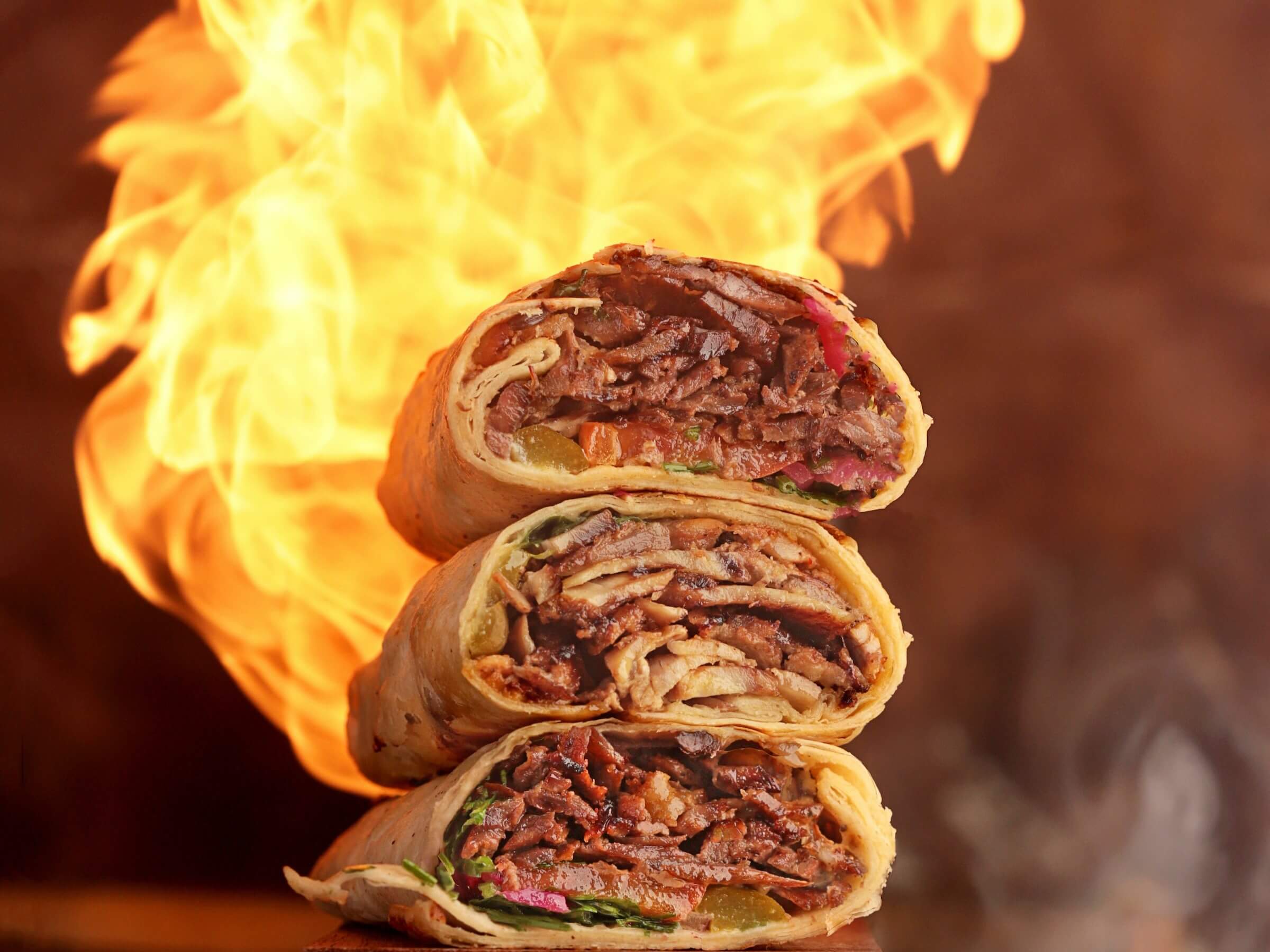
Shawarma stacked with fire in the background

Not content to focus solely on North America, foodservice research firm Technomic is predicting foodservice trends that will span the globe in 2023.

As the firm points out themselves, making predictions is a best-guess proposition. Many of Technomic’s 2022 predictions for Canada, the USA, and the globe have proven true. However, a handful of their trend predictions have yet to manifest.

Further, not all trends will work for all operators and their concepts. Chasing every passing fad or trend is great if you like to watch your costs spiral. Doing so is also an excellent way to confuse guests and stress staff.

So, when considering any trend, make sure it works with your concept, has some staying power, and will resonate with your guests. Speaking to that last point, this is one reason it’s crucial to collect guest data. Making important menu and guest-impacting operational decisions without data just doesn’t make sense.

When you’re done with this article, take a look at our examination of Technomic’s other predictions. The firm’s Canadian predictions are here. And you can read the American trends by clicking this link.

For your own copy of Technomic’s international trends report, click here.

Operations

For 2023, Technomic is making predictions that certainly appear plausible. A number of them pertain to operations.

Kicking things off, sustainability. Driven in part by the global impact of the pandemic, the health of our planet is top of mind for many people.

For example, Canada’s single-use plastics ban is now in effect. England plans to move forward with a similar ban by October of this year.

Alongside such bans, Technomic believes operators—small independents and global chains alike—will implement entire sustainability strategies. These will range “from packaging and restaurant operations to marketing and menu development.”

Does your concept have a dedicated pickup window? Perhaps a takeaway counter? Maybe even a drive-thru? If not, 2023 may be the year you make that change. Not only that, you’ll likely want to position them front and center.

Per Technomic, many consumers are done with delivery. From rising costs outweighing convenience to delivery failures, pickup may become more appealing. Pickup is still convenient, it’s less expensive, and the consumer is in control.

Additionally, many people are well aware of how costly third-party platforms are to operators. In fact, Technomic identifies these platforms and their fees as “the biggest industry villain” of 2023.

Menu

One of Technomic’s predictions is particularly enticing: Lebanese street foods. To clarify, the firm believes all manner of street foods from around the globe will perform well in 2023.

However, they feel Lebanon’s street foods will stand out from the rest. So, think shawarma, labneh, kibbe, and pickled vegetables. That last item, by the way, follows Technomic’s prediction that pickling and fermenting will be hot trends in the US and Canada.

Of course, there are other items that Technomic thinks will shine in 2023. If the firm is correct, there’s a new “holy trinity” to keep an eye on and consider for your menu: sushi, poke, and ceviche. According to Technomic, each performs very well when it comes to takeout.

Interestingly, the research firm suggests that this particular holy trinity will spawn new virtual brands. If Technomic’s predictions prove accurate, some of these brands will focus on fried chicken or plant-based versions.

Speaking to that last point, Technomic is predicting that plant-based will “evolve” in 2023. This evolution will focus on more traditional meat counterparts. Providing examples, Technomic suggests that avocado, modern takes on black bean patties, cauliflower, tofu, tempeh, and seitan will be this year’s plant-based rock stars.

Are this year’s 2023 Technomic predictions going to prove accurate? It’s far too early to tell. However, one thing I can say with confidence is this: their predictions are rooted deeply in data. When Technomic makes a “guess,” it’s always an informed one.

Click here to read Technomic’s report in its entirety.

Image: Slashio Photography on Unsplash

KRG Hospitality Restaurants & Cafes, 2023 icon

by David Klemt David Klemt No Comments

Canadian Trends 2023: Technomic

Canadian Trends 2023: Technomic

by David Klemt

Tortilla with beans, cotija cheese and egg

Restaurant, bar, and hotel operators will find this year’s data-driven trend predictions from Technomic for 2023 insightful.

Interestingly but perhaps not surprisingly, some operators may be looking beyond North America for inspiration.

Per Technomic, Central and South American cuisines could influence menus in Canada this year. Other food trends that might take hold are “retro” health items, and all manner of pickled foods.

Of course, not every Canadian trend prediction involves F&B. According to Technomic, tech and the guest experience will play important roles.

To review last year’s Technomic predictions, click here. Now, let’s jump into Technomic’s 2023 predictions.

Guest Experience

Certainly, the guest experience should always be top of mind for operators, their leadership teams, and their staff.

In this instance, Technomic isn’t suggesting that the guest experience in general will be a trend. Obviously, with as important as it is to the success of any business, it’s a cornerstone.

Rather, Technomic predicts that guests will continue to feel the need to rein in their spending due to ricing costs and prices. However, the foodservice research firm also believes there’s still heavy desire for social interaction.

So, both those financial and social influences translate to the following: overdelivery.

Operators and their teams must ensure they position their brands well; make guests feel special every visit; and really dial in the guest experience. Specifically, Technomic suggests focusing on younger generations and menus with at least a couple specialty items that aren’t easy for a guest to replicate at home.

In other words, do whatever it takes to entice guests with memorable experience and quality menu items, and keep them coming back for more.

Technology

Multiple industry sources believe that 2023 is the Year of Tech for the hospitality industry. In particular, some sources believe that POS systems will receive significant attention from operators looking to upgrade.

Compellingly, Technomic sees the situation a bit differently. In particular, they’re suggesting that QR code menus may find themselves on the sidelines. Traditional menu, according to Technomic, will make their comeback this year.

Also making a (possible) resurgence? Per Technomic, in-person ordering for carryout and in-person dining.

As far as tech innovations that Technomic expects to take off this year, they see the following as standouts:

  • loyalty programs;
  • enhanced/upgraded cooking equipment;
  • automated inventory software/platforms; and
  • digital menu boards for back of house.

Culinary

As hinted at above, Central and South American cuisines are expected to take off in Canada, per Technomic.

The research firm provides specific—and delicious—examples:

  • Honduras: Baleadas tacos
  • Dominican Republic: Wasakaka sauce
  • El Salvador: Curtido slaw or relish
  • Peru: Aji amarillo and rocoto peppers
  • Bolivia: Saltenas, similar to empanadas

Another culinary trend Technomic predicts will perform well in Canada? Pickled everything.

Okay, maybe not everything. However, Technomic expects “pickling, fermenting, dehydrating and freeze-drying” to “increasingly pop up on menus.” The firm expects that operators will offer a wide range of “unusually pickled items outside of the typical veggies, including proteins and seeds.”

So, if you’re an operator reading this, it may be time to motivate your back-of-house staff to get creative with their pickling ideas.

Finally, pandemic-driven, health-based trend foods like turmeric and ginger may start to fade in popularity. Instead, predicts Technomic, items with “classic” health descriptors such as “natural,” “real,” “free,” “reduced,” and “lower” will get attention from guests looking to eat and drink healthier.

For your own copy of this Technomic report in its entirety, click here.

Image: Roman Odintsov on Pexels

by David Klemt David Klemt No Comments

5 Books to Read this Month: November 2022

5 Books to Read this Month: November 2022

by David Klemt

Flipping through an open book

This month’s engaging and informative book selections will help you hone your culinary, cocktail, and leadership skills to dial in your menus and operations.

To review October’s book recommendations, click here.

Let’s jump in!

Shaya: An Odyssey of Food, My Journey Back to Israel: A Cookbook

The next time you visit New Orleans, plan to dine at least once at the James Beard Award-winning Shaya. I’ve had the opportunity to do so and the experience was stunning. Of course, you’ll also want to check out Domenica and Pizza Domenica while in NOLA. To give you an idea of what to expect, pick up the Shaya cookbook.

Chef Alon Shaya’s personal journey through cooking is truly unique, embracing Israeli, Italian, and American Southern cuisines. Shaya tells Chef-operator Shaya’s moving story and more than 100 incredible recipes. Pick it up at Amazon.

Turkey and the Wolf: Flavor Trippin’ in New Orleans

After moving to New Orleans and working in fine dining, Chef Mason Hereford opened his own restaurant and put his stamp on the scene: Turkey and the Wolf. Both the restaurant and this cookbook focus on creative and enticing takes on Southern cooking.

Fancy deviled-egg tostadas? Fried bologna sandwiches absolutely heaving with potato chips? How about purposely burnt tomato casserole? Well, you’ll find these recipes and 92 others in this book, along with photographs and illustrations. This is sure to get you salivating and get your creative wheels turning. Grab Turkey and the Wolf here on Amazon.

Last Call at Coogan’s: The Life and Death of a Neighborhood Bar

As those of us in the industry know, restaurants and bars are the cornerstones of the communities they serve. Last Call at Coogan’s is the true tale of a neighborhood bar that, unfortunately, closed its doors for good during the pandemic after more than 30 years in operation.

From Amazon: “This book touches on many serious issues facing the country today: race relations, policing, gentrification, and the COVID-19 pandemic. Along the way, readers will meet the bar’s owners and an array of its most colorful regulars.” Purchase here via Amazon.

Spiritual Coffee

Bar co-founder, bartender, brand ambassador, and author Martin Hudak’s informative and exciting cocktail book is available now for purchase. Hudak is one of the brilliant minds behind Sydney destinations Maybe Sammy and Sammy Junior. Also, he’s a brand ambassador for Mr. Black, the ridiculously tasty coffee liqueur.

Spiritual Coffee focuses on coffee cocktails, a passion of Hudak’s. However, you’ll get more than recipes when you purchase this entertaining book. In these pages you’ll also find a wealth of coffee history, knowledge, and stories. Buy here!

The Future Is Analog: How to Create a More Human World

This book, from award-winning author David Sax, asks poignant culture questions about our rush toward a digital world, an undertaking that was supercharged during the pandemic.

“Is our future inevitably digital? Can we reject the downsides of digital technology without rejecting change?” Sax asks. “Can we innovate not for the sake of productivity but for the good of our social and cultural lives? Can we build a future that serves us as humans, first and foremost?” Purchase here via Amazon.

Image: Mikołaj on Unsplash

by David Klemt David Klemt No Comments

5 Books to Read this Month: April 2022

5 Books to Read this Month: April 2022

by David Klemt

Flipping through an open book

This month’s engaging and informative book selections will help you develop next-level culinary, beverage and marketing skills throughout 2022.

To review February’s book recommendations, click here.

Let’s jump in!

My America: Recipes from a Young Black Chef

This book is scheduled to be released on May 17 of this year. I anticipate this cookbook by Chef Kwame Onwuachi, which includes 125 recipes, to come flying off the shelves. In addition to more than 100 recipes, Chef Onwuachi connects his personal journey to food, culture, and places. Pre-order My America now!

Paddy Drinks: The World of Modern Irish Whiskey Cocktails

Jack McGarry, Sean Muldoon, and Jillian Vose are back with their latest Dead Rabbit book. The trio’s latest release, Paddy Drinks, shares Irish whiskey drink recipes you’ll find on the actual Dead Rabbit menu. However, that’s just one portion of this informative book. Inside are whiskey flavor wheels, tasting notes, illustrations depicting whiskey production, and more. And if that’s not enough for you, David Wondrich provides the foreword.

Founder Brand: Turn Your Story Into Your Competitive Advantage

In Founder Brand, Dave Gerhardt explains why your brand’s story is one of the most valuable assets you own as an entrepreneur.

From the Amazon listing: “This is a tactical guidebook that first shows you how to tell your story, then how to put your story to use as a marketing strategy. You’ll learn how social media provides a bridge between you and your customers, the platforms that are appropriate for your business, and how to measure results to truly determine value.”

Finding Mezcal: A Journey into the Liquid Soul of Mexico

You don’t have to be a veteran bartender or spirits expert to know that mezcal continues to rise in popularity. Written by Ron Cooper, founder of artisanal mezcal brand Del Maguey, Finding Mezcal includes 40 cocktail recipes from bartenders and chefs; photographs; Cooper’s own artwork; and much more.

Bar Hacks: Developing The Fundamentals for an Epic Bar

Industry expert and KRG Hospitality president Doug Radkey wrote this informative and conversational book. This is the perfect read for aspiring or seasoned bar, pub, lounge, or even restaurant owners, operators, and managers looking for that competitive edge in operations. If you’re looking for both fundamental and in-depth planning methods, strategies, and industry focused insight to either start or grow a scalable, sustainable, memorable, profitable, and consistent venue in today’s cut-throat industry, Bar Hacks is written just for you

Image: Mikołaj on Unsplash

by David Klemt David Klemt No Comments

Plant-based Performance is Nuanced

Plant-based Performance is Nuanced

by David Klemt

LikeMeat plant-based burgers in skillet with onions

The World Resources Institute is making the case that the success of plant-based products on-premise will require menu changes.

In particular, changes need to be made menu item descriptions. Drilling down even further, the language we use in descriptions is crucial to performance.

Simply put, just offering recognizable plant-based brands and their products isn’t enough.

Speaking to Guests

When it comes to plant-based food items, there are multiple consumer segments to consider.

For example, there are those who are all-in on plant-based. Targeting this group is easy—promote the fact that you have the products they want.

There’s also the previous group’s counterpart: uninterested in these food items. It’s likely you’re simply never going to convince them to even try plant-based menu items.

Of course, there are the consumers in between. If succeeding with plant-based menu items will translate to more guests engaging with your business, increasing traffic and revenue, speaks to your brand in an authentic way, and matters to the community you serve, these are the guests you need to win over.

But as stated above, simply putting Impossible, Beyond, LikeMeat, or other brands on your menu likely isn’t enough. This is something some fast-casual brands are experiencing. Plant-based performance, as evidence and anecdotes appears to show, is nuanced.

Announcing plant-based alternatives seems to result in a quick rise in sales. However, that initial interest doesn’t appear to last long. And when sales slow an operator either finds themselves sitting on stock, lowering prices, or both.

Again, if succeeding with plant-based items is good for your brand, you’ll need to do some work.

Language Matters

The World Resources Institute (WRI) addressed this topic last week via video presentation. Titled “Messaging that Works: Engaging Diners in Climate Action,” the nearly hour-long video states that language matters for plant-based buy-in.

A study conducted by the WRI found that “nudging” guests with the right messaging boosted plant-based sales. The institute tested ten “framing themes” with ten associated themes.

Two types of messages “came out on top by a long way,” according to presentation host Edwina Hughes:

  • Small change, big impact
  • Joining a movement

Per the WRI’s study, those two themes resulted in around double the demand for plant-based items as other themes.

The first theme speaks to a person’s personal agency, or their actions and the impact they can have on their own lives.

Joining a movement relates to social norms. In particular, suggesting something is a movement tells someone that there are like-minded people already engaged with this concept, product, lifestyle, etc.

Putting this to Use

Menu descriptions, table talkers, POS messaging, and social media can all play a role. Again, this is only if this is important to your brand and guests. If plant-based menu items aren’t authentic to your business, the “Small change, big impact” messaging may not be of interest to you.

For operators who want to succeed with plant-based items, the WRI presentation suggests a “nudge.” In relation to the first theme from above, the process would be:

  • Personal empowerment statement: A person can have a positive impact on the environment.
  • Easily attainable action: Substitute one meat-based meal for a plant-based one.
  • Easily understood personal outcome: A positive result that can come from their purchase.

When it comes to the movement theme, operators can use the following nudge, provided by the WRI as an example during their presentation:

“Ninety percent of Americans [size and/or relevance of group] making the change to eat less meat [group’s behavior] choose plant-based dishes that have less impact [call to action].”

Plant-based menu items aren’t really a trend anymore, but they’re also not quite mainstream. If they’re going to perform stronger in the QSR and other segments, they’ll need better messaging.

Additional Takeaway

The lessons learned from WRI’s presentation aren’t limited to the performance of plant-based menu items. Nudges can work for all manner of products in all types of concepts.

When you look at your menu with a truly critical eye, ask yourself:

  • Does it have attention-grabbing descriptions?
  • Do the descriptions accurately describe the items?
  • Would you be swayed by your descriptions?
  • Are there any calls to action?

If you can’t answer yes to most or all of those, your menu would likely benefit from revisions.

Your menu isn’t just a catalogue of food, drinks, and prices. Rather, it’s a powerful sales and marketing tool. Take the time to leverage it accordingly.

Image: LikeMeat on Unsplash

by David Klemt David Klemt No Comments

Global Cuisine Performance

Global Cuisine Performance

by David Klemt

Cook making handmade pasta noodles

We don’t have a crystal ball to help us see which cuisines will be most popular. Obviously, the same holds true for knowing which are just now getting recognition.

However, we do have the next-best thing: data from Datassential.

Recently, the food and beverage analytics firm ranked dozens of global cuisines according to their current state of popularity among diners.

Then, they shared that information in October during their “Around the World in 80 Trends” webinar.

“Ubiquity”

When analyzing food and beverage trends, Datassential funnels them into four distinct designations: Inception, Adoption, Proliferation, and Ubiquity.

Arguably, once a trend reaches Proliferation and Ubiquity it becomes a mainstay. So, we can more than likely stop referring to it as a trend.

Now, the two most precarious stages for a trend are Inception and Adoption. Plenty of trends die on the Inception vine. Several won’t make it out of Adoption.

When you see Datassential’s list of global cuisines that fly under the Ubiquity banner, I doubt there will be much surprise:

  • Italian
  • Southern
  • Mexican
  • Creole/Cajun
  • Tex Mex
  • Chinese

So, any shocks to your system there? Most likely not.

“Proliferation”

Another to label this Datassential designation is “second most popular.” Each of these cuisines has a clear shot at reaching Ubiquity.

In fact, I find one of the global cuisines in this category surprising. It’s the first one in this list:

  • Japanese
  • Regional Italian
  • Regional Mexican
  • Greek
  • Mediterranean
  • Regional US
  • Southwestern
  • Cuban

As you’ll see, the lists grow longer steadily as we move down from Ubiquity.

“Adoption”

For me, it’ll be interesting to review follow-up data from Datassential regarding global cuisines.

As such, I’m eager to learn which cuisine from the list below reaches Proliferation in 2022:

  • Caribbean
  • Indian
  • French
  • Regional Chinese
  • Oaxacan
  • German
  • Middle Eastern
  • Korean
  • Ashkenazi
  • Hawaiian
  • Vietnamese
  • Venezuelan
  • Spanish
  • Sicilian
  • Jamaican
  • Israeli
  • Thai
  • British

To be honest, my first reaction to seeing French cuisine under the Adoption banner was surprise. Of course, I then thought back to how many French restaurants we have here in Las Vegas.

Sure, this little city in the desert is a foodie destination. However, French restaurants don’t dot the landscape like those that focus on other cuisines.

“Inception”

That brings us to the first stage of any trend: Inception.

Now, the first thing you’ll notice is that this category contains the most global cuisines. Whereas Adoption features 18, Proliferation lists eight, and a mere six have reached Ubiquity, Inception identifies two dozen.

They are as follows:

  • Brazilian
  • Mizrahi
  • Russian
  • Malaysian
  • Croatian
  • Moroccan
  • Lebanese
  • South African
  • Native American
  • Central American
  • Argentinian
  • Peruvian
  • Filipino
  • Appalachian
  • Sephardic
  • Ethiopian
  • Senegalese
  • Scandinavian
  • Sonoran
  • Nigerian
  • Iranian
  • Persian
  • Turkish
  • Polish

Again, there are some surprises here, at least for me. For example, I expected Ethiopian cuisine to have reached Adoption by now.

Takeaways

Of course, there are multiple ways to interpret this data.

First, you can embrace Ubiquity, leveraging their incredible popularity. However, standing out and building traffic will be challenging.

Second, you can feature Proliferation cuisine. Sure, these have yet to reach the Ubiquity stage. But they’re close to doing so, and you’ll also face stiff competition.

Third, focusing on cuisine from the Adoption designation involves taking a risk but mitigating it somewhat. These cuisines are developing a following and guest demand.

Finally, the riskiest move, depending on location: featuring Inception cuisines. But with risk comes reward. Identify a gap in a certain area—something we can do with our signature feasibility studies—and you may realize staggering success.

So, what do you think? Did you find any of Datassential’s designations surprising for certain cuisines? Let us know on our Instagram, Facebook, Twitter or LinkedIn pages!

Image: Jorge Zapata on Unsplash

by David Klemt David Klemt No Comments

Delivery and Takeout Food Trends for 2021: United States

Delivery and Takeout Food Trends for 2021: United States

by David Klemt

Yesterday we reviewed food delivery data and 2021 food trend predictions for Canada. Now it’s the United States’ turn.

Before we jump into the data and predictions, a word on succeeding with delivery in 2021 and beyond.

As I pointed out yesterday, when an operator signs up with a third-party delivery service, their guest data becomes the delivery company’s data.

That means that company and not the restaurant or bar owns the guest journey and guest engagement, and therefore owns the guest for all intents and purposes.

When a restaurant, bar or other F&B business enters into a contract with a third-party delivery company—unless otherwise explicitly stated—they give up control of targeted marketing efforts. In other words, third-party delivery platforms disrupt the guest journey.

Delivery became a way for many businesses to generate revenue during 2020, for obvious reasons. Operators who can afford to implement first-part and last-mile delivery should do so to maximize their revenue and control the guest journey and marketing.

To help operators own delivery, we’ve reviewed end-of-year reports from three delivery titans—UberEats, Grubhub and DoorDash—to share their 2020 findings. When it comes to the most ordered items, cuisines and categories, some third-party platforms are willing to share data.

According to UberEats, comfort foods were the most popular category:

  • Burgers and fries
  • Burritos
  • Pad Thai
  • Mac and cheese
  • California rolls
  • Chicken Tikka Masala
  • Miso soup
  • Mozzarella sticks

Per the platform, the following cuisines proved most popular:

  • American
  • Italian
  • Mexican
  • Chinese
  • Japanese
  • Thai
  • Indian
  • French
  • Caribbean
  • Greek

As UberEats stated in their report, it appears that customers found a way to travel after all—they just did it through food.

Pizza, bagels, wings, tacos, burgers and dumplings led the way for Grubhub in 2020. The most popular pizza order was Hawaiian (because some people are monsters and put pineapple on their pies), while the most popular burger was garlic mushroom. Grubhub revealed that their top French fry was the loaded curly fry, and the most popular plant-based item was the eggplant burger.

In descending order, the top F&B Grubhub orders overall from 2020 were:

  • Spicy chicken sandwich
  • Chicken burrito bowl
  • Chicken wings
  • Waffle fries
  • Cold brew coffee
  • Steak quesadilla
  • Iced latte
  • Fish and chips
  • Strawberry shake
  • Roast beef sandwich

Per Grubhub, the top breakfast item was the acai bowl, the top side dish was French fries, the number-one late-night order was strawberry cheesecake, and the most ordered dessert was apple pie.

Moving on to DoorDash, the platform identified their top ten 2020 items back in November:

  • Chicken fingers and French fries
  • Fried chicken sandwich
  • Mac and cheese
  • Chips and guacamole
  • Apple pie
  • Pad Thai
  • Chicken quesadilla
  • Iced coffee
  • California roll
  • Chicken Tikka Masala

The UberEats, Grubhub and DoorDash revelations align with data collected by the National Restaurant Association between November and December of 2020. Per the NRA, the following were the top items sold by full-service casual, family and fine-dining restaurants:

  • Burgers
  • Seafood
  • Pizza
  • Steak
  • Chicken (excluding chicken wings)
  • Breakfast items
  • Pasta
  • Mexican food
  • Sandwiches, subs and wraps
  • Chicken wings

According to the NRA, the items below were the most popular for limited-service restaurants (fast casual, quick-service, coffee and snack):

  • Sandwiches, subs and wraps
  • Pizza
  • Burgers
  • Chicken (excluding chicken wings)
  • Ice cream, cookies and cakes
  • Baked goods
  • Breakfast items
  • Mexican food
  • BBQ items
  • Seafood

For 2021, DoorDash predicted the following items to see a lift:

  • Sausage, egg and cheese on a biscuit
  • Create your own omelettes
  • Carrot cake
  • Cinnamon roll
  • Caramel latte
  • Chocolate brownies
  • Black coffee
  • Donuts
  • Blueberry muffin
  • Biscuits

DoorDash revealed that Mexican, Chinese and Tex-Mex were the top cuisines ordered via the platform. The company also predicted five cuisines would be popular in 2021:

  • Taiwanese
  • French
  • Filipino
  • Australian
  • Moroccan

When it comes to 2021, multiple sources have named vegetarian, vegan, plant-based, and health and wellness items as the foods to watch. Even this early into the year it’s not exactly a controversial statement to say that all of those categories are going to perform well in 2021.

According to DoorDash, nearly half of Americans (47 percent) plan to consume more plant-based items. Whether it’s truly healthier than its traditional counterparts, plant-based is perceived that way. In total, per DoorDash, 72 percent of Americans plan to make a concerted effort to eat healthier in 2021. This is likely due to an increased interest in boosting immune systems due to Covid-19.

Put another way, operators will likely struggle if they don’t add vegan, vegetarian, and plant-based foods to their streamlined menus, another trend expected to continue through 2021.

Predictions from the Specialty Food Association in particular caught our attention. For 2021, the association has predicted spices and herbs native to West Africa (Senegal, for example) will be in demand. Scandinavian and Cambodian flavors are also expected to perform well, as are Latin American and Southeast Asian items.

Due to interest in tahini sauce and black sesame, the SFA expects halva, which is a Middle Eastern confection, to get plenty of attention. The SFA and Datassential both named fermented honey as an item to watch in 2021.

Along with vegan and plant-based items, creative meal kits are expected to perform well. Restaurants and bars will continue to face restrictions and indoor dining bans over the course of at least the next few months. Creative meal kits will get the attention of customers who have grown tired of preparing the same meals over and over.

Whether an operator chooses to stick with their current menu or embrace one or more food trends, they should look into first-party or last-mile delivery. It’s imperative that operators own their guest journey and marketing efforts.

For more information about first-party and last-mile delivery, please listen to Bar Hacks episode 13 with “Rev” Ciancio, an advocate of keeping delivery and data in-house.

Image: Robert Anasch on Unsplash

by David Klemt David Klemt No Comments

The 2021 Food Trends to Know for Veganuary

The 2021 Food Trends to Know for Veganuary

by David Klemt

Strange or even inappropriate as it may seem, it’s time to review food trend data and predictions because we’re hurtling toward 2021.

January also plays host to two monthlong traditions that impact F&B operations: Dry January and Veganuary. For this post, we’re focusing on the latter.

Veganuary may not have claimed “tradition” status just yet, to be honest, but it appears to be well on its way. The movement began in the United Kingdom in 2014 as a social and eco-friendly campaign intended to make the transition to adopting a vegan diet as easy as possible.

The movement has been growing each year with 2018 through 2020 seeing the biggest increases in participation. In 2017, a reported 50,000 people had signed up for Veganuary. That number jumped to a reported 170,000 in 2018; 250,000 in 2019; and 400,000 in 2020. According to the Veganuary campaign, 2020’s participation represented more than one million animal lives and the CO2 equivalent of 450,000 flights.

“Research shows that health is a significant driver for so many people going vegan, especially American consumers. But the reasons to test this lifestyle and decrease consumption of animal-based products are countless, from improving health, to reducing animal suffering, and helping to preserve the planet,” said Veganuary CEO Simon Winch in 2018. “Research shows that not only are there more people curious about going vegan, but more people are sticking with the lifestyle after taking part in Veganuary, which is great news! We are thrilled with the enthusiasm and growing response from Americans taking the pledge and will continue to do our part in making it as easy as possible to try vegan, for as many people as possible.”

Participants sign up for free and are challenged to stick to a vegan diet for the entirety of January. While Covid-19 vaccines have been approved, they’re not widely available to the general public. Many markets are still restricted to outdoor dining, delivery and pickup. It’s important that operators stay current with food and consumer behavior trends to remain top of mind and continue generating revenue.

We reviewed multiple sources to find common vegan-friendly food trends for operators to leverage when programming their 2021 menus.

Plant-based (Datassential, Delish)

One big difference between plant-based and vegan is that the latter’s focus on moral and ethical reasons for choosing the diet. Regardless, plant-based is expected to grow in popularity and therefore demand across the globe.

Tofu (Food & Wine, Whole Foods Market)

The great thing about tofu, a sentence I never thought I’d type, is that the back of house can get as creative as they want with it. Tofu “scrambles” (no eggs, just peppers, onions and sweet potato cubes), fishless tacos (breaded and brined tofu), and spaghetti with tofu riffs elevate this ingredient.

Mushrooms (Food & Wine, Whole Foods Market)

Portobello mushrooms, for example, are more than capable of starring in an array of dishes, replacing animal proteins rather easily. There’s also the fact that mushrooms are being used to make to-go packaging, giving eco-minded guests another reason to support a particular restaurant.

Chickpeas (Whole Foods Market, Martha Stewart.com)

“You can chickpea anything,” says Whole Foods Market. In fact, they claim it’s the cauliflower, taking several forms, like pasta and flour.

Hyper-local (Food & Wine, MarthaStewart.com, The New York Times)

The push for restaurants to source ingredients locally and highlight them on their menus isn’t expected to slow. These publications and more are recognizing supporting local as a “trend” (it’s more a movement at this point) that will get stronger in 2021.

Meal kits (Food & Wine, Delish, MarthaStewart.com, The New York Times)

These, as several publications have stated, are here to stay. Consumers got used to these when subscription services exploded in popularity. Some restaurants offered them pre-pandemic as a response to the meal-kit subscription craze, and they’ve become more prevalent since Covid-19 ripped apart the world. They’re a hit with consumers, so operators should consider vegan-friendly meal kits during Veganuary.

Home cooking classes (Datassential, Whole Foods Market, Delish)

Many of us probably feel like our entire lives are one big Zoom meeting at this point. Well, that’s not expected to change any time soon. A great way to connect with guests staying at home is to host cooking classes—with a focus on vegan cooking in January—and follow up with curated meal kits.

Datassential also identified baby carrots and ramen among their 2021 food trend predictions (and both are vegan-friendly), and carob, chicory root, “future” produce (specialty produce varities), and honeysuckle as flavor trends to follow next year.

Two trends that are not considered vegan? Avocados and fermented honey because the reliance on bees to produce and cultivate both are considered “exploitation” by vegans. Remember the moral and ethical difference between vegan and plant-based from above? There you go.

Image: Anh Nguyen on Unsplash

Top