Nightlife operations

by krghospitality krghospitality No Comments

What Actually Creates Gravity in Hospitality

Why some venues pull guests back again and again while others constantly chase attention.

In hospitality, there’s a difference between restaurants, bars, and hotels that attract attention and places that create pull.

Most operators know how to get attention. Fewer recognize what actually makes guests come back without being asked.

Attention is easy to manufacture:

  • A flashy opening
  • A viral cocktail
  • An influencer visit

All of that works. At least, it works for a moment. But attention fades; it always does.

Gravity, however, does not.

Gravity forms when a venue stops being a decision and starts becoming a default. When guests no longer evaluate where to go, but simply go where they already trust the experience will deliver. That’s pull.

That’s the difference most operators miss: traffic can be created but return behavior has to be earned.

Unfortunately, if you’ve spent any time in this industry, you’ve seen the opposite play out.

Operators chase visibility, and when that appears to pay off, they celebrate volume. Then, they invest in what’s loud, new, and easy to boast about in their marketing. Most operators, therefore, don’t struggle because they lack effort. The struggles come from optimizing for the wrong outcomes.

by David Klemt

AI-generated image of a gravity well featuring a dark sphere impacting a dark background grid deepy

Gravity isn’t what moves things once, it’s what shapes everything, continuously. (AI-generated image)

And yet, the venues that actually last—those that stay busy without chasing attention constantly—are usually doing something much less visible: they’re building something that holds.

You see it in every city. The bar that’s always busy, even on off nights. The restaurant guests recommend without being asked, and the café people walk past three competitors to reach.

These businesses don’t just generate traffic, they create pull.

Attention is Temporary. Gravity is Durable.

Many operators chase attention. On the surface, that makes sense: attention is visible.

They can point to an array of visible signals, like packed openings, social media engagement, PR coverage, a new platform that promises reach.

What they’re pointing to feels like momentum, like growth. But that’s on the surface, meaning it’s shallow. Those visible signals aren’t providing helpful insights.

Attention is fragile because it depends on constant input. The moment an operator stops pursuing attention, it disappears.

Gravity works differently: it compounds.

When gravity forms, guests don’t need to be reminded you exist. Your guests don’t need to be convinced to return. They’ve already made their decision (often subconsciously) because the experience fits well into their lives.

That’s why some venues can absorb pressure. Slower seasons, weaker marketing, even small operational missteps don’t break them immediately. They’ve built enough gravity (pull) to sustain demand.

The operators who are constantly chasing attention, meaning they’re dumping valuable and limited resources toward it, haven’t built real pull. Instead, they’re forced to replace every lost guest with a new one, rinse and repeat ad nauseam, because nothing is holding people in place.

While it may sound like a marketing problem, it isn’t; it’s a structural one.

The Forces Behind Gravity

If you step back and look at the venues that pull guests in consistently (attracting first-time guests and converting them into repeat guests), the pattern isn’t random.

When you look closer, the same patterns show up time and time again.

Clear Identity

Venues with gravity know exactly what they are. Not internally, but externally. Not even necessarily what the owner intended but what the guest can understand immediately.

Most positioning in this industry is vague:

  • “Elevated casual dining.”
  • “Chef-driven concept.”
  • “Upscale neighborhood bar.”

These phrases don’t actually help a guest decide anything. What drives the decision to visit once and return is a clear identity.

A guest should be able to describe your venue in a single sentence without thinking. If they can’t, your positioning isn’t working.

Clarity reduces friction, making the decision easy: “This place is for me,” or it isn’t.

When identity is unclear, guests hesitate, and hesitation is the enemy of return behavior.

Consistent Experience

Operators consistently underestimate consistency because it isn’t exciting. There’s nothing viral about repeatedly, daypart in and daypart out, delivering the same great experience.

And yet, that’s exactly what builds trust with guests.

Gravity collapses when the experience becomes unpredictable. Guests notice it when food quality shifts, service varies depending on who’s working, and atmosphere changes depending on the night, even if they don’t or can’t quite articulate it.

They don’t track inconsistency. It’s not like they’re creating spreadsheets and keeping tabs on the consistency of your operation. They just stop coming back as often, or at ever again.

Consistency isn’t about perfection, it’s about reliability. Guests need to know what they’re walking into, and trust that you and your team will meet the expectation you’ve set.

Behind every venue that “just works” for guests is structure: clear standards, defined systems, and teams that know what excellence looks like.

Gravity doesn’t survive without that structure because without consistency, there’s nothing to hold onto; it can’t form.

Memorable Moments

The strongest hospitality brands don’t just serve food or drinks, they create memory.

They become tied to moments like first dates, weekly rituals, and celebrations that matter. Once that connection forms, the relationship changes.

The venue is no longer just a place, it’s part of someone’s story.

That’s when gravity strengthens.

Guests don’t just return, they default to your spot. They stop searching for alternatives. They may check out new places, but you’re always in the conversation during the decision-making stage. You and your team become what society is too often missing these days: their Third Place.

They recommend the venue without being prompted, because it already exists in their mental shortlist of “places that work.”

Most operators assume this comes from marketing. In reality, it comes from memory being reinforced, visit after visit.

Gravity spreads socially long before operators realize it’s happening.

What Destroys Gravity

Most venues don’t lose gravity because something breaks. Gravity is lost when an operator’s focus drifts.

Their attention shifts to the wrong signals:

  • Revenue headlines instead of underlying stability.
  • Generational assumptions instead of actual guest behavior.
  • Shiny technology platforms instead of operational discipline.

None of these are inherently bad, of course. But they become dangerous when they pull attention away from the forces that actually create durable businesses.

Every distraction introduces variability, and variability weakens trust. Once trust weakens, gravity starts to break.

It happens quietly at first, and then all at once.

The Difference

Some venues constantly chase guests while others pull them in.

The difference isn’t luck, and it isn’t demographics. It certainly isn’t the latest trend.

What makes the difference is whether gravity exists or doesn’t.

A clear identity, disciplined consistency, and experiences that stay with people. That’s what creates pull.

Everything else is noise, and noise is expensive.

Related Reading

Work with Us

Click the image below to learn how easy it is to work with us to assess your business and help it build gravity.

Client Intake Form - KRG Hospitality

by David Klemt David Klemt No Comments

Emerging Brands are Compound Startups

Why the smartest one to 15-unit hospitality brands are not “small chains” yet. They are startups learning how to repeat themselves without breaking.

Growth in this industry has entered a new era. From recent conference discussions, what we are seeing and hearing is that bar, restaurant, and even boutique hotel operators still plan to open more locations despite cost pressure.

However, the conversation has shifted from raw expansion to sustainable growth, stronger unit economics, and operational readiness.

At the same time, industry data continues to show that closures remain part of the landscape, particularly for brands that grew faster than their model matured. Black Box Intelligence has warned that unit closures are likely to continue, even as some operators keep developing more locations.

That’s why this thought matters: emerging brands are just compound startups.

A second, fifth, or 15th location does not magically make a brand “corporate.” It simply means the founder is attempting to repeat a business model under more pressure, with more people, in more places.

by Doug Radkey

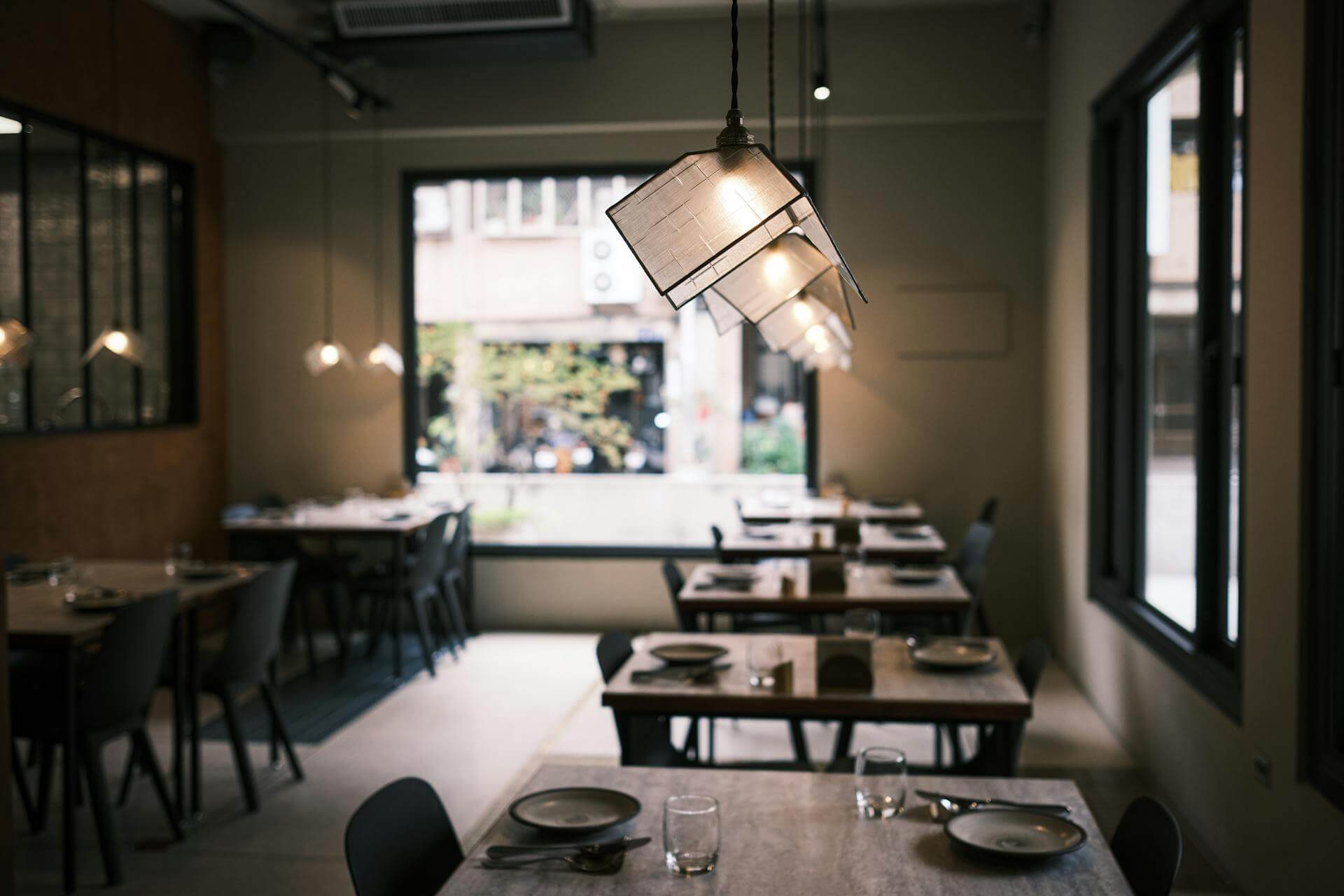
Interior of a light, relaxing restaurant with a focus on the modern, sophisticated light fixtures and open window to the sidewalk and street.

This article breaks down what “compound startup” means; why so many operators misunderstand scale; and what serious bar, restaurant, and boutique hotel entrepreneurs must build before growth becomes an asset instead of a liability.

The Growth Illusion: Why More Locations Can Hide a Weaker Business

In hospitality, growth is seductive:

  • A packed dining room turns into a second site conversation.
  • A strong summer in one market becomes an excuse to test another.
  • Friends, investors, landlords, and even guests start asking the same question: “When are you opening the next one?”

That question flatters the ego; it does not validate the model.

Too many operators assume that one good location means they have a scalable brand. What they often have is a founder-carried success story.

The owner still approves too many decisions. The best managers still rely on the founder’s instinct. The menu still works because one chef protects it. The guest experience still lands because the founder is in the room.

That is not scale. That is heroics, and heroics do not compound.

A Story Every Growing Operator Will Recognize

A founder opens a strong first location. Maybe it is a cocktail bar, maybe a neighborhood restaurant. Maybe it is a small lifestyle hotel with food and beverage anchors.

The first unit performs well enough. Reviews are good and revenue looks strong. Staff is stretched, but the energy feels high. There is momentum.

Then the founder opens a second location. Almost immediately, the cracks widen.

The first unit loses focus because the founder is no longer present every day. The second unit opens with a team that knows the standards in theory but not in rhythm.

From there, costs and inventory variance increase, culture starts to split, and guests notice inconsistency. Managers become messengers instead of coaches and leaders. The founder begins working more, not less.

This is the point where many operators say “Growth is hard.”

But here’s the thing: growth is not the issue. Unrepeatable success is the issue.

An emerging brand is still a startup because every new unit is a new test of the model. The only difference is that the cost of failure gets higher with each location.

Pillar One: Scaling is Not Expansion. Scaling is Repetition Without Degradation.

The first truth serious operators need to accept is this: opening more units is not scaling. Repeating a model without dilution is scaling.

That means the following must remain true from location one to location five:

  • The guest experience still feels intentional.
  • The unit-level economics still make sense.
  • The culture still transfers.
  • The systems still hold.
  • The brand identity still lands clearly.

If any of those degrade with each unit, you are not scaling; you are stretching.

This is where a lot of emerging brands get trapped. They call themselves a “chain” because they have multiple addresses. But operationally, they are still improvising. They have expanded their footprint without maturing their infrastructure.

A second location should not prove ambition, it should prove repeatability. That is a much higher bar to reach.

Pillar Two: Systems Compound. Effort Does Not.

Startups are fueled by intensity. That is normal. Founders often work harder, stay later, and solve more problems than anyone else in the building. In the early stage, effort covers a lot of weakness.

But effort has a limit. What has no limit? Systems.

The brands that become scalable stop asking “How do we keep up?” They start asking “What must be documented, standardized, and delegated so this works without us?”

That simple mindset shift changes everything.

Systems do not automatically make a brand bureaucratic or corporate. They ensure that knowledge leaves the founder’s head and enters the business in usable formats:

  • strategic playbooks
  • programmed SOPs
  • role clarity
  • service standards
  • training flows
  • decision rules
  • opening and closing disciplines
  • vendor and purchasing frameworks

This is where compounding begins.

Every time a system replaces memory, the business becomes more transferable. Every time a process becomes trainable, leadership gets lighter. Every time expectations become standardized, culture gets stronger.

The founder who still solves everything manually is not building an emerging business; they are scaling personal exhaustion.

Pillar Three: Every Unit Should Be a Feedback Loop, Not Just a Revenue Line.

This is where serious operators separate themselves from the hopeful.

A new location should do more than add top-line revenue. It should teach the brand something.

Every additional unit should refine the model:

  • program complexity
  • labor deployment
  • average revenue per guest behavior
  • service pacing
  • production flow
  • local marketing
  • daypart demand
  • guest retention patterns

That is how compound startups evolve into disciplined brands.

You are not just opening more bars, restaurants, or boutique hotels. You are gathering intelligence. Every unit is a live test of what is truly core to the concept and what was only working because of geography, novelty, or founder presence.

The smartest operators treat each location as a strategic lab. The struggling operators treat each location as proof they were already right.

One mindset compounds wisdom, the other compounds blind spots.

Pillar Four: Leadership Depth, Not Real Estate, is the True Growth Constraint.

Most people think growth is limited by capital, real estate, or timing. In hospitality, growth is usually limited by leadership depth.

You can always find another space. Just as you can always raise more money or can always negotiate another lease.

What is much harder is building a bench of people who can lead the brand at standard without the founder becoming the glue for every decision.

This is the hidden scaling trap.

A business can look ready on paper while being leadership-fragile in practice. Ask better questions:

  • Can your current GMs develop managers into future AGMs who can then become future GMs?
  • Can someone open a new unit without you holding every meeting?
  • Can your business and developed culture survive your physical absence?
  • Can the business solve problems without escalating them all upward?

If the answer is no, you do not have a scaling problem. What you have is a leadership development problem, and this is where many emerging brands stall.

Not because demand disappeared but because the founder never stopped being the sun in the solar system. Real scalable businesses are not built on charismatic founders. They are built on distributed leadership, reinforced systems, and cultural consistency.

Pillar Five: Unit Economics Turn Growth Into Wealth or Waste.

This is the point many operators avoid because it feels less fun than branding, design, or buzz.

But this is the pillar that determines whether an emerging brand becomes a wealth-building machine or an expensive ego project.

Revenue is loud, unit economics are quiet.

The industry is full of businesses that grow volume and revenue faster than profitability. That is why sustainable expansion has become such a focus. Operators planning new locations are doing so under heavier cost pressure, more scrutiny around labor and inventory, and growing emphasis on profitability discipline.

If your first location does not have healthy unit-level economics, your fifth location will not solve that; it will amplify it.

That means serious operators must know:

  • contribution margins.
  • prime cost discipline.
  • ADR + TGRM for hotels.
  • labor productivity (not just labor costs).
  • sales per square foot.
  • cash flow timing.
  • return on invested capital by unit.
  • payback timeline.
  • break-even thresholds under pressure and volatility.

This is where emerging brands become compound startups in the truest sense. They do not just add units, they improve the model so each new location has better odds, better data, and better operational intelligence than the one before it.

That is compounding; not ambition without infrastructure, and not “we’ll figure it out later.”

Compounding means the business gets smarter as it grows.

What This Means for Small Hospitality Brands Right Now

If you operate between one and 15 locations, this should reframe how you see yourself.

You are not “small” in some dismissive sense, and you are not “too early” to think like a chain.

But you are also not “there” just because you have multiple units. You are an emerging brand, which really means you are a compound startup.

That requires a different mindset:

Stop asking:

  • How fast can we grow?
  • Which market is next?
  • How do we get bigger?

Start asking:

  • What in this model is actually repeatable?
  • What still depends too much on founder energy?
  • What is documented versus assumed?
  • Where are margins strongest and weakest by unit?
  • What are we learning with each location?
  • Who can lead without us in the room?

Those questions build a legacy business. The others just build motion.

The Strategic Takeaway Serious Operators Should Save

The brands that win the next decade will not be the fastest to expand. They will be the most disciplined in how they repeat. That is the entire game.

A startup proves an idea. An emerging brand proves a system. A great hospitality company proves that the system can grow without sacrificing the soul of the brand.

So if you are sitting at one, three, or ten locations right now, remember this:

You are not done being a startup. You are simply in a more expensive chapter of it.

Treat each unit like a lesson. Treat systems like assets, leadership depth like oxygen, and unit economics like truth.

Emerging brands are not just growing businesses, they are startups that learned how to compound. And in hospitality, that is the difference between becoming a brand and becoming a cautionary tale.

Related Reading

Image: Teresa Jang via Pexels

Work with Us

To learn how we can help you assess your operation and stabilize and scale it, click the image below.

Client Intake Form - KRG Hospitality

by David Klemt David Klemt No Comments

Three Lies Hospitality Operators Need to Stop Telling Themselves

Revenue vanity, generational myths, and the expensive distractions hurting operators.

The hospitality industry spends an extraordinary amount of time talking about the wrong things.

Operators debate generational stereotypes. They brag about revenue numbers, and chase the newest technology platform.

Meanwhile, the operators who actually build durable businesses are focused on something far less exciting: structure, discipline, and profit.

Spend enough time walking trade show floors, reading hospitality headlines, or sitting through conference panels and the pattern becomes impossible to miss.

Hospitality doesn’t suffer from a lack of passion; it suffers from distraction.

And some of the loudest conversations in the industry right now are built on myths that waste operators’ time, money, and attention.

by David Klemt

A closeup image of a hand attached to the leads of a lie detector, with the small polygraph machine sitting on the bar top.

Illustration generated using AI

Here are three of the worst lies distracting operators.

Lie #1: Sales Equals Success

Revenue is hospitality’s favorite number. Or, phrased a bit differently, sales are hospitality’s favorite vanity metric.

Operators proudly announce they’ve done $3 million or $5 million in annual sales. Trade show rooms applaud when they hear big sales numbers. Social media celebrates. Award nominations start rolling in. Hospitality publications write features.

But revenue alone tells you almost nothing about whether the business is healthy.

A venue doing $3 million in sales and netting $100,000 isn’t a success story. It’s really a stressful job disguised as a business. A significant number of hospitality entrepreneurs end up giving themselves jobs instead of building businesses and empires.

Sales tells you how busy you were. Profit tells you whether your model actually works.

Too many operators chase volume (full dining rooms, long lines, packed weekends) because volume looks impressive. However, the reality is busy doesn’t equal profitable.

Busy rooms and long lines look impressive to some. But profitability, not popularity, is what determines whether a business survives.

The operators who survive long-term aren’t chasing top-line numbers, they’re protecting margins.

Lie #2: Generations Explain Everything

Another long-standing distraction is the industry’s obsession with explaining everything through generational stereotypes.

We’ve read and heard them all: Boomers are entitled, Millennials have killed restaurants, and Gen Z doesn’t drink.

Did you notice I skipped Gen X? That happens a lot when discussing generations.

These narratives make for easy articles and viral social media posts. However, they rarely reflect what operators actually see inside their venues.

Guests aren’t demographic caricatures, they’re people.

Yes, preferences evolve. But successful operators pay attention to how guests behave in their rooms, not how someone online claims an entire generation behaves.

When operators get distracted by generational mythology, they miss the fundamentals that have always mattered: hospitality, atmosphere, consistency, and value. They also miss another key factor when serving people: speaking to guests’ personal values.

Hospitality doesn’t need better stereotypes; nobody and no industry does. Hospitality needs better observation.

Lie #3: Critical Thinking is Optional

This is where the industry’s most expensive mistakes happen.

Operators will hesitate to invest $30,000 in strategic planning that could protect hundreds of thousands or millions of dollars in capital. But they’ll sign a $50,000 equipment order without blinking.

Operators will overspend on technology platforms they barely use. They’ll chase design trends that photograph well but do nothing for the business. They’ll throw open their doors and add complexity before they’ve built stability.

It happens constantly.

People under-invest in critical thinking and over-invest in shiny equipment, overpowered tech, and unnecessary design.

The irony is that thinking—strategic clarity, concept development, operational structure, financial discipline—is the part that determines whether a venue survives.

Equipment doesn’t fix a weak concept, technology doesn’t repair broken operations, and beautiful interiors don’t create profitability.

You know what does tick all those boxes? Systems and structure.

The Reality

Bars, restaurants, nightclubs, eatertainment, hotels, and every hospitality business in between rarely fail because operators lack passion.

They fail because operators chase signals that look impressive and buy into stereotypes disguised as actionable data points. Failure comes because they’re distracted by revenue headlines, generational myths, shiny equipment, trendy technology, and, possibly the most damaging of all, refusing to change because “we’ve always done it this way.”

If these distractions dominate so much operator thinking, what’s the answer to this key question: What really creates truly durable hospitality brands?

Signals that actually matter.

The operators who build durable businesses focus on something much less glamorous: building businesses with real pull.

They develop and build out clear concepts. They adhere to disciplined operations, and implement profitable systems.

Everything else is noise, and noise is expensive.

Related Reading

Work with Us

Learn how we can help you cut through the noise and receive strategic clarity on your hospitality project. Click the image below!

Client Intake Form - KRG Hospitality

by David Klemt David Klemt No Comments

Spectacle ROI vs Scene Retention: The Two Financial Logics of Nightlife

One of the biggest misunderstandings in modern nightlife is assuming the business runs on a single economic system. It doesn’t.

A sold-out Saturday doesn’t mean your model works, it just means your event worked.

What looks like one category from the outside is actually operating on two fundamentally different financial logics. Some venues run on Spectacle ROI, monetizing attention in spikes through high-impact nights. Others run on Scene Retention, monetizing repeat behavior through habit, identity, and belonging.

Both models can succeed. However, they require different strategies, risk tolerance, and expectations.

Nightlife hasn’t just split culturally, it has split economically.

by David Klemt

A DJ performing from an elevated both, with lights and fog going off over the crowd

Spectacle ROI: The Event Model

Spectacle-driven venues operate like live events.

Revenue is concentrated into big nights, big bookings, and big production. Talent becomes a headliner rather than background. Lighting, visuals, and room energy are core parts of the product. VIP sales function as a structured access economy.

The goal isn’t consistency, it’s impact.

Spectacle venues are built to answer one question: How big can this night be?

When this model hits, it hits hard; a single night can outperform several average weeks. The upside per activation is significant.

The trade-off is structural. Spectacle relies on novelty, meaning programming must refresh constantly, and attention fades faster than loyalty. Without momentum, gravity weakens quickly.

Scene Retention: The Habit Model

Scene-driven venues operate more like cultural infrastructure.

Revenue comes from repeat behavior, not single-night spikes. Guests return because the space feels familiar, aligned, and socially meaningful. Programming cadence matters more than headliner scale, and identity and community replace spectacle as the primary draw.

The question here isn’t how big the night can be, it’s how often the same guests return.

The Scene model builds more slowly than its Spectacle counterpart. This model rarely produces explosive revenue peaks. The retention that the Scene model generates compounds: loyalty stabilizes revenue, and acquisition pressure drops. The venue becomes part of a guest’s social routine, not just an occasional destination.

Scene doesn’t monetize moments, it monetizes habits.

The Revenue Split in Plain View

Spectacle operates on ROE, return-on-event; Scene operates on retention.

One monetizes attention in spikes; the other builds gravity that compounds over time.

That difference shows up everywhere operationally.

The Nightlife Revenue Split

Dimension Spectacle ROI Model Scene Retention Model
Core Goal Maximize revenue per night Maximize guest lifetime value
Economic Engine Event spikes Habit formation
Revenue Pattern Volatile, high peaks Stable, compounding
Guest Motivation Occasion, visibility Belonging, familiarity
Programming Strategy Big moments Consistent rhythm
Marketing Focus Reach, hype Relationship, trust
Risk Profile High Moderate to low
Talent Dependency High Moderate
Growth Style Fast, unstable Slow, durable
Gravity Source Novelty Habit

Neither model is “better” than the other. They’re built for different environments, capital structures, and operator skill sets.

Where Operators Get Into Trouble

Most struggling venues aren’t failing nightlife, they’re failing model and strategic clarity.

Examples show up everywhere:

  • Spectacle-scale buildout with mid-tier programming.

  • Big DJ nights layered onto a space that lacks identity.

  • Strong community concept buried under overhead designed for event economics.

These are structural mismatches.

You can’t run event economics on retention demand. You can’t expect habit behavior in a room designed for episodic spectacle. And you can’t out-market a model mismatch forever.

Diagnostic: Which Business Are You Actually Running?

Operators often think they’re running as one model while their numbers say they’re operating under another. The checklist below is a reality check.

Spectacle ROI Signals

  • ☐ Our biggest nights drive a disproportionate share of revenue

  • ☐ Talent bookings influence weekly performance heavily

  • ☐ Marketing cycles revolve around specific dates or headliners

  • ☐ Guest traffic varies dramatically week to week

  • ☐ VIP/Table sales are a primary profit engine

  • ☐ Production value is central to guest expectations

  • ☐ Without programming refresh, attendance drops fast

  • ☐ We rely heavily on new guest acquisition

  • ☐ Guests talk about specific nights more than our actual venue/brand

  • ☐ Our revenue model depends on scale and volume

If you’ve checked six or more boxes, you’re operating a Spectacle ROI model.

Scene Retention Signals

  • ☐ Regular guests attend multiple times per month

  • ☐ Staff recognize frequent guests

  • ☐ Programming cadence matters more than individual bookings

  • ☐ Week-to-week revenue is relatively stable

  • ☐ Word-of-mouth outperforms paid promotion

  • ☐ Guests describe our venue as their “spot”

  • ☐ Community identity matters (music, culture, subculture)

  • ☐ Nights feel familiar but still engaging

  • ☐ Loyalty drives traffic more than hype

  • ☐ The business could survive a week without headline talent

You’re operating a Scene Retention model if you’ve checked six or more boxes.

The Red Zone

If both sections score high, you may be trying to operate two incompatible economic systems in one space. That’s where identity confusion, overhead mismatches, programming inconsistency, and marketing inefficiency tend to show up.

This is a red flag, and your reality check, particularly if you feel like you’re working hard but not gaining traction. The issue likely isn’t effort, it’s alignment.

Where Gravity Lives

Spectacle captures attention, Scene builds gravity.

Gravity reduces acquisition pressure. It stabilizes revenue and increases guest lifetime value. Without it, venues remain stuck in perpetual re-acquisition mode, always chasing the next spike and new, first-time guests.

That doesn’t make Spectacle wrong or a “bad” model; it means Spectacle is a different business.

The Decision That Shapes Everything

Before programming calendars, deciding on talent budgets, or developing marketing plans, operators need to answer one question: Are we built to maximize nights or years?

The answer shapes staffing structure, pricing strategy, programming cadence, capital planning, and growth expectations.

Clarity here doesn’t limit a concept, it lays it a stable operating foundation on which a successful legacy brand can be built.

Nightlife hasn’t just fragmented socially; it has separated into two financial logics. Operators who understand which model they’re actually running and stop trying to be both are the leaders positioned to build nightlife brands with real staying power.

Related Reading

Image: Matty Adame via Unsplash

Work with Us

Click the image below to partner with KRG Hospitality on your nightlife project.

Client Intake Form - KRG Hospitality

by David Klemt David Klemt No Comments

When Nightlife Becomes an Industry: Spectacle Economics in the U.S.

The U.S. shows what happens when Spectacle Nightlife reaches full maturity: the category shifts from subculture to structured entertainment economy.

Over the past several years, nightlife hasn’t just gotten bigger in the U.S., it has become an industry all its own.

In cities like Las Vegas, a club night can carry the economics of a touring concert, the sales structure of luxury hospitality, and the marketing engine of a major event.

This isn’t nightlife as Scene, it’s nightlife as Spectacle infrastructure. DJ bookings become headline acts, VIP ecosystems become core revenue engines, and venues function less like local scenes and more like recurring live-event platforms.

Understanding this shift isn’t about monitoring trends, it’s recognizing how scale changes the economics, risks, and operating realities of going out.

by David Klemt

Female DJ on the decks, overlooking a nightclub crowd bathed in red light

There was a time when nightlife was primarily a cultural business with entertainment layered into operations and programming.

In the U.S., that equation has flipped.

Today, top-tier Spectacle Nightlife operates at the intersection of three systems:

  • Live-event economics: headliner-style bookings, one-night performance stakes

  • Luxury hospitality mechanics: tiered access, service levels, status signaling

  • Entertainment production logic: lighting, staging, sound, and visuals as core product

This reality goes beyond just running a “busy club.” These venues are now functioning as recurring event platforms.

The DJ is no longer in the background, they’re the headliner. Production is no longer atmosphere, it’s the expectation. VIP is no longer a side offering, it’s the revenue engine.

That is industrialization.

Las Vegas: The Fully Realized Spectacle Model

If you want to see the Spectacle model built out fully, you look to Las Vegas.

Vegas has proven something the rest of the industry now studies and tries to emulate at varying scales: nightlife can be engineered like a large-scale entertainment product when tourism volume, capital investment, and talent pipelines align.

Here, a single night can resemble a festival set compressed into a room (or pool deck, or rooftop, or…):

  • internationally known DJs

  • large-format LED installations

  • choreographed lighting and visual sequences

  • host-driven VIP ecosystems functioning like parallel sales forces

Guest segmentation isn’t incidental, it’s strategic. General admission, elevated GA, table service, VVIP… Each tier represents a different product, not just a different price.

Vegas didn’t simply grow its clubs, it has built a repeatable Spectacle machine.

Spectacle Beyond Vegas: Markets Scaling the Model Differently

While Las Vegas is the clearest example of industrialized Spectacle Nightlife, it isn’t alone.

Other U.S. cities have developed variations of the model. Some may operate at a slightly reduced scale but they’re still built around visibility, production, and high-value guest segmentation.

Miami: Spectacle as Lifestyle Infrastructure

In Miami, nightlife merges with tourism, luxury culture, and 24-hour energy.

Venues like E11EVEN Miami demonstrate how Spectacle logic travels outside Vegas: performance-driven environments, celebrity DJs, VIP ecosystems, and branding that positions the club as a destination in itself. The club even has its own lifestyle clothing brand, with its own dedicated website.

Miami’s version of Spectacle is less about mega-scale venues and more about allure, visibility, and proximity. That said, the economics still revolve around tiered access, production value, and guest perception of status.

Lesson: Spectacle doesn’t need Vegas volume if the city already functions as a global playground.

New York: Spectacle Under Density Pressure

New York City supports both Scene ecosystems and Spectacle venues, but its Spectacle model operates under different constraints: real estate costs, licensing limits, and neighborhood density.

Large-format nights still exist, but the economics require sharper programming, faster turnover of what’s “hot,” and stronger marketing engines. In NYC, Spectacle must fight harder for attention because the city’s overall entertainment field is so crowded.

Lesson: Spectacle in dense urban markets becomes a momentum business: constant refresh, constant visibility.

San Francisco: Spectacle Facing Structural Headwinds

San Francisco shows what happens when Spectacle-style nightlife meets demographic and economic pressure.

Large, generalized club formats have struggled as population patterns and social habits shift. The result isn’t the disappearance of nightlife, but a reduction in the viability of broad, mainstream Spectacle venues.

Markets like this expose a key truth: Spectacle requires the right ecosystem (population flow, tourism, and nightlife culture density) to remain sustainable.

Lesson: Without structural support, Spectacle struggles to maintain gravity.

What Scale Changes

When Spectacle scales to this level, the rules of nightlife shift.

1. Programming Becomes High Stakes

In smaller scenes, a soft lineup might dent a week. At industrial Spectacle scale, one weak booking can impact staffing efficiency, beverage forecasts, and margin performance in a single night.

Talent becomes a cost center that must perform like an asset.

2. Operating Costs Reshape Risk

Between talent fees, production crews, technical systems, security, and host teams, the cost structure resembles event production more than traditional bar operations.

Profitability depends on volume, pricing power, and consistent demand. This model rewards scale, and punishes inconsistency.

3. Marketing Becomes Infrastructure

Promotion is no longer a tactic, it’s a crucial system.

Hosts, promoters, influencer networks, partnerships, and digital campaigns function as a distributed sales and awareness engine. Without it, the machine stalls.

4. The Middle Gets Squeezed

At this scale, the market tends to split into true Spectacle venues, and everything else.

Mid-sized concepts that borrow the look without the engine and gravity often struggle to justify their position.

The Trade-Off of Spectacle at Scale

Industrial Spectacle Nightlife delivers destination pull, global brand visibility, massive revenue potential, and talent relationships that feed future programming.

However, this scale also compresses cultural cycles.

When production value rises everywhere, differentiation must move faster. Trend lifespans shorten, talent dependence deepens, and fatigue sets in more quickly if the experience feels interchangeable.

The more nightlife behaves like industry, the less room there is for cultural ecosystems that are slower to grow to define the mainstream.

The Counterweight: Scene Nightlife in the U.S.

Even in the U.S., Spectacle isn’t the whole story. If Spectacle represents nightlife as industry, Scene represents nightlife as cultural infrastructure.

Further, Scene nightlife isn’t limited to “small” or “secondary” markets, it’s simply the counterweight.

In places like Brooklyn, Chicago, and Detroit, Scene Nightlife operates on a different economic model. The model is defined by lower production arms races, deeper musical or cultural identity, and repeat behavior driven by belonging rather than visibility.

However, these spaces aren’t anti-Spectacle. Instead, they simply monetize a different currency: loyalty rather than volume.

This is the same structural split visible in Canada (and elsewhere), just with greater economic extremes on the Spectacle side in the U.S.

Chicago: Scene as Heritage and Habit

Chicago operates on deep musical lineage and neighborhood ecosystems. House music culture, live music venues, and genre-driven nights create repeat behavior grounded in identity, not production scale.

Chicago’s nightlife isn’t built around Spectacle-motivated spikes, it’s built around weekly rhythms that feel owned by the community.

This is where I first experienced nightlife, from the city’s biggest and most (in)famous nightclubs to goth and industrial bars, and everything in between. Chicago’s Scene Nightlife shaped a significant portion of who I am today.

Detroit: Culture Over Flash

Detroit remains one of the clearest examples of Scene logic. Techno heritage, intimate venues, and music-first environments make nightlife feel participatory rather than performative.

The value isn’t in flashy visual production. In Detroit, the value is in credibility.

Brooklyn: Scene at Urban Scale

Brooklyn demonstrates how Scene can operate at significant size without losing identity. Music-driven venues, warehouse-style events, and culturally specific nights build followings based on trust and consistency.

Brooklyn shows Scene doesn’t mean small. The reality is that Scene Nightlife in Brooklyn is anchored in culture first, scale second.

Portland: Micro-Scene Density

Portland thrives on personality-driven nightlife: themed venues, alternative events, and subculture-specific programming. These rooms rarely compete on spectacle; they compete on character.

This is nightlife designed for people who already know why they’re there, who want to be present, and who value experience over exposure.

Denver: Experience Reframed

Denver shows how Scene evolves with guest behavior. Social events, live music, and alternative nightlife formats emphasize connection, pacing, and community over traditional late-night spectacle.

Here, nightlife behaves less like a production and more like shared experience infrastructure.

What This Means for Operators

When considering starting a nightlife venue, the most important decision by operators isn’t design style, it’s business model identity.

The Spectacle Nightlife model operates on ROE: return on event. Scene Nightlife operates on retention. One monetizes attention in spikes, the other builds gravity that compounds over time.

Dimension Spectacle Nightlife Scene Nightlife
Economic Driver Event revenue spikes Repeat visit frequency
Financial Logic Return on event Retention/Lifetime value
Guest Motivation Visibility, energy, occasion Belonging, familiarity, identity
Programming Model Big nights, headline draws Consistent cadence, trusted rhythm
Risk Profile High volatility Lower volatility, slower growth
Marketing Focus Momentum and reach Community and trust
Gravity Source Hype cycles Habit formation

If You’re Playing Spectacle at Scale:

You are in several businesses at once: the event business, the talent business, and the luxury access business.

To ensure you succeed in Spectacle Nightlife, you need capital depth, programming pipelines, partnerships, and risk tolerance.

This is a high-reward, high-volatility model.

If You’re Not:

Attempting to replicate Spectacle aesthetics without Spectacle economics is incredibly dangerous.

Most markets can’t support industrial-scale nightlife infrastructure. Therefore, following the logic, many are better suited to Scene logic: identity, community, programming cadence, and repeat behavior.

Clarity on how to execute the Scene Nightlife model will help an operator create gravity (the invisible force that pulls the right guests back, again and again).

The Bigger Picture

The U.S. demonstrates what happens when Spectacle Nightlife reaches full economic maturity.

It’s impressive, there’s no doubt it. I’ve witnessed the evolution and industrialization of nightlife in Las Vegas firsthand for nearly two decades.

It’s engineered. Successful Spectacle Nightlife venues are systemized fully, with ruthless precision; nothing is left to chance.

Importantly, it’s also profitable. There are venues that boast nine-figure revenue generation annually.

However, it also makes the defining divide clearer than ever: nightlife today is built either for scale and visibility or depth and belonging.

Operators who understand which business they’re really in—and stop pretending they’re in both—are the industry leaders positioned for longevity as the economics of going out continue to evolve.

Related Reading

Image: Kemal Can via Pexels

Work with Us

Click the image below to partner with KRG Hospitality on your nightlife project.

Client Intake Form - KRG Hospitality

by David Klemt David Klemt No Comments

Canada’s Nightlife Split: Spectacle vs. Scene, and What it Means for Operators

Closures don’t kill nightlife, sameness does. Across Canada’s major cities, nightlife isn’t disappearing, it’s sorting itself.

What used to be a broad middle ground of bars and clubs for everyone is fragmenting into two distinct operating models.

A recent cultural critique described nightlife as splitting between highly visible, algorithm-feeding spectacle and darker, more immersive underground spaces built for experience over exposure. (Indeed, a number of nightclubs and nightlife venues have dance floor phone bans in place to protect at least one element of the guest experience, and keep people present.) It’s a sharp observation.

For operators, this isn’t about aesthetics or vibes. Nightlife operators need to understand how attention works now, how guests behave inside venues, and what really drives repeat behavior. What we’re seeing is a structural divide: Spectacle Nightlife vs. Scene Nightlife.

This split isn’t uniquely Canadian. It’s visible in major nightlife markets across the U.S. and globally. However, Canada’s cities offer a particularly clear view of how the two models compete and coexist.

Canada’s nightlife markets are a live case study on how these two models, Spectacle and Scene, compete, coexist, and succeed differently.

by David Klemt

DJs performing in tandem or back-to-back inside dark a nightclub.

The Structural Split: Spectacle vs Scene

Spectacle Nightlife

Spectacle nightlife is built for visibility.

These are high-energy, high-production environments designed to deliver moments, visually, socially, and culturally. They thrive on:

  • scale

  • lighting and production

  • social media momentum

  • “who’s hot tonight?” dynamics

Guests don’t just attend these venues and curated events. They perform in their own right, for friends, strangers, and, undeniably and increasingly, for the feed. The room is part dance floor, part stage.

From an operator standpoint, Spectacle Nightlife typically means:

  • higher buildout and operating costs

  • constant programming refresh to avoid fatigue

  • strong marketing engines

  • volatile relevance curves (big spikes, fast drop-offs)

When it works, it prints. When it fades, it fades fast.

Scene Nightlife

Scene nightlife is built for immersion.

These spaces are less about being seen and more about being there, and being present in the moment. The focus is on:

  • music or cultural identity

  • community and familiarity

  • programming depth over production scale

  • nights that feel specific rather than interchangeable

The goal isn’t to create a moment for a camera, it’s to create a night people remember. Importantly, they remember the night (or day; I haven’t forgotten about you, daylife operators and programmers) because they were present in it, not documenting it.

Operationally, Scene Nightlife tends to mean:

  • programming-driven differentiation

  • slower growth but deeper loyalty

  • lower hype volatility

  • stronger long-term cultural positioning

The energy isn’t just explosive, it’s sticky.

Why This Split is Happening: Sameness Fatigue

Guests aren’t just more price-sensitive, they’ve become experience-sensitive.

This has been true for several years now. A significant percentage of consumers make it clear they’re more interested in paying for experience than just buying things.

When nightlife starts to feel like the same playlist in the same room with the same crowd posting the same photos and videos, people pull back. They’re not rejecting nightlife entirely but they see no value in buying into interchangeable nights.

Spectacle formats that don’t evolve quickly enough collapse into noise. Scene formats, when done well, stand out because they feel specific to a sound, a community, a neighborhood, a subculture.

This is the backdrop against which Canada’s nightlife markets are operating.

How Canada’s Markets Reflect the Split

Vancouver: The Rise of the Intentional Night

Vancouver behaves increasingly like a Scene-leaning market.

Instead of broad, mainstream club ecosystems, the traction is in curated parties, themed nights, listening-bar energy, and ticketed or semi-ticketed events.

Discovery often happens through community networks, not just mass promotion. Nights with a clear identity (sonic, cultural, or thematic) outperform generic formats.

Operator lesson: Vancouver rewards clarity over scale. Being for someone beats trying to be for everyone.

Toronto: Big Enough for Both, Brutal to the Weak

Toronto can support Spectacle Nightlife. It has the population, tourism flow, and density to sustain high-visibility formats.

However, Toronto also punishes mediocrity, and it does so quickly.

At the same time, Toronto’s neighborhood ecosystems and niche venues show strong Scene dynamics. There are music-first rooms, culturally anchored spaces, and smaller venues with loyal followings.

Operator lesson: Toronto isn’t anti-spectacle, it’s anti-average. If you’re running Spectacle logic, it has to be sharp. On the other hand, if you’re Scene-driven, it has to be real.

Calgary: Social Infrastructure Over Spectacle

Calgary leans naturally toward Scene Nightlife.

The strength of its after-dark culture often lives in live music, approachable social bars, neighborhood movement, and nights built around connection, not performance.

This is nightlife as habit, not event. The room is a place to gather, not a place to stage a moment.

Operator lesson: Not every market wants a stage; some just want a room. Concepts that feel like community infrastructure rather than Spectacle venues hold traction.

Montreal: Culture as Competitive Advantage

Montreal’s nightlife behaves most like culture, not just entertainment.

Its advantage isn’t just venue count, it’s in neighborhood identity, programming depth, and scenes with history and credibility.

Even when venues scale, they often retain a Scene backbone: a sense that guests are stepping into a space that has context and character.

Operator lesson: You can’t manufacture Montreal-style nightlife with capital alone. Culture compounds, but only if it’s protected.

What This Means for Operators

The biggest mistake right now is trying to sit in the middle. Borrowing the look of Spectacle Nightlife without the engine or trying to co-opt the vibe of Scene Nightlife without the depth are failing “strategies.”

Positioning Question: Which model are you building?

This choice shapes a number of crucial operating elements, such as:

  • marketing strategy

  • staffing profile

  • programming cadence

  • revenue rhythm

  • risk tolerance

If You’re Spectacle-Leaning:

You need a strong visual and production identity, constant programming evolution, social momentum, and a content strategy.

Further, you’ll need to maintain operational precision under pressure.

If you choose to operate in the space of Spectacle Nightlife, you’re in the attention business; stagnation is your enemy.

If You’re Scene-Leaning:

You need consistent, credible programming. You’ll also need to build a team who understands culture, not just service.

Scene Nightlife operators must commit to community integration. Community in the sense of the immediate neighborhood, the town or city, and the subcultures targeted in the programming.

Crucially, if you’re a Scene Nightlife operator, you’ll need patience. Your brand will build more slowly but will also last longer.

You’re in the belonging business, and authenticity is your currency.

The New Competitive Advantage

Neither Spectacle nor Scene Nightlife concepts can rely on buildout alone for an advantage. Similarly, they can’t rely on table and bottle sales, nor will they succeed simply because of their talent bookings.

The new, clear competitive advantage in nightlife, regardless of how the concept leans, is clarity of experience design. Clarity is what creates gravity, the invisible force that pulls the right guests back, again and again.

Nightlife operators need to ask key questions about their experience design and programming:

  • What kind of night is this?

  • Who is this night for?

  • Why should a guest return after this night, not just once but habitually?

The markets that will thrive aren’t the ones with “more nightlife.” They’re the markets with clearer nightlife: concepts that understand whether they’re building spectacle or building scene, and align every decision accordingly.

It’s important to understand that nightlife hasn’t split because guests have stopped going out. The reality is that nightlife has split because because guest attention has changed.

Operators who understand this shift aren’t just surviving this era, they’re the leaders who will define what going out looks like next.

Related Reading

Image: Phat Doan via Pexels

Work with Us

Click the image below to work with KRG Hospitality on your nightlife concept. Cheers!

Client Intake Form - KRG Hospitality

by krghospitality krghospitality No Comments

The Power of an ImpactMAP™

The Power of an ImpactMAP™

by Doug Radkey

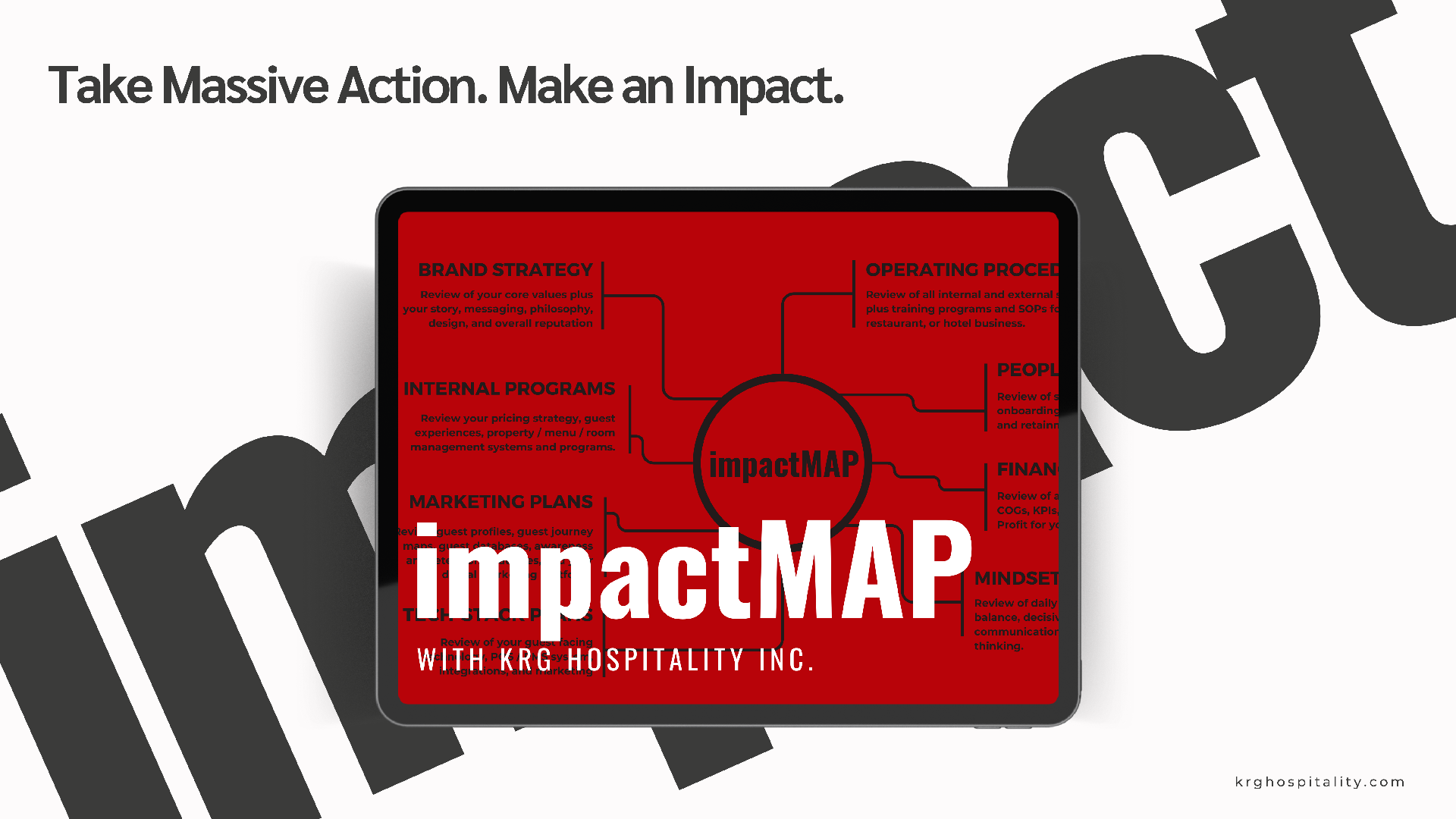
KRG Hospitality ImpactMAP, main image

Let’s be honest, the line between success and failure often hinges on the ability to act decisively and act with purpose.

In this article, we’re going to explore two areas of your hospitality business that are under your control: creating a plan, and taking action.

Understanding the Risk of Inaction

The concept surrounding the Risk of Inaction—arguably a new form of ROI—captures the potential losses businesses face when they fail to take strategic actions.

Inaction in the hospitality industry can manifest in various harmful ways. Inaction can also stem from multiple sources: fear of change, lack of resources, or simply underestimating the competition.

Regardless of the manifestation or cause, the consequences are usually the same: stagnation, decline, and, ultimately, a shuttered business.

Let’s put this into context by taking a look at a sample of both a restaurant and a hotel business.

Failure to Innovate

If a restaurant does not act to continuously re-engineer its menu, it risks diminishing profits, providing a low-level guest experience, and mismanaging inventory. Without regular strategic updates, the menu may fail to reflect current culinary trends and guest preferences, which can lead to a decrease in interest and satisfaction.

Additionally, sticking with a static menu can prevent the restaurant from optimizing ingredient use, productivity, and cost-efficiency.

At the end of the day, this lack of adaptation and innovation will result in diminishing sales and profitability, making it difficult for the restaurant to sustain its operations.

Failure to Update Systems

If a hotel on the other hand decides to not use a modern and fully integrated Property Management System (PMS), it risks operating inefficiently and falling behind in today’s technology-driven hospitality environment.

A non-existent, outdated, or fragmented PMS can lead to significant operational issues, such as slow check-in and check-out processes, errors in room availability and booking management, and ineffective communication between different departments. That’s just to name a few crucial issues.

This inefficiency can impact guest experiences negatively, leading to dissatisfaction and potentially harming the hotel’s reputation.

Furthermore, without a modern PMS, a hotel may struggle with data management, limiting its ability to effectively analyze performance metrics, forecast demand, and implement dynamic pricing strategies. These disadvantages will result in lost revenue and reduced competitiveness in a space where guest expectations and operational efficiency are increasingly driven by technological advancements.

In each example above, the risk of inaction leads to missed opportunities and underperformance.

The Power of an ImpactMAP™

To combat the risks associated with inaction, your hospitality business can benefit significantly from developing an ImpactMAP™.

This strategic tool can help you identify where you currently stand, define where you want to go, and outline the steps required to get there, thereby helping you create not only strategic clarity, but drive and accountability.

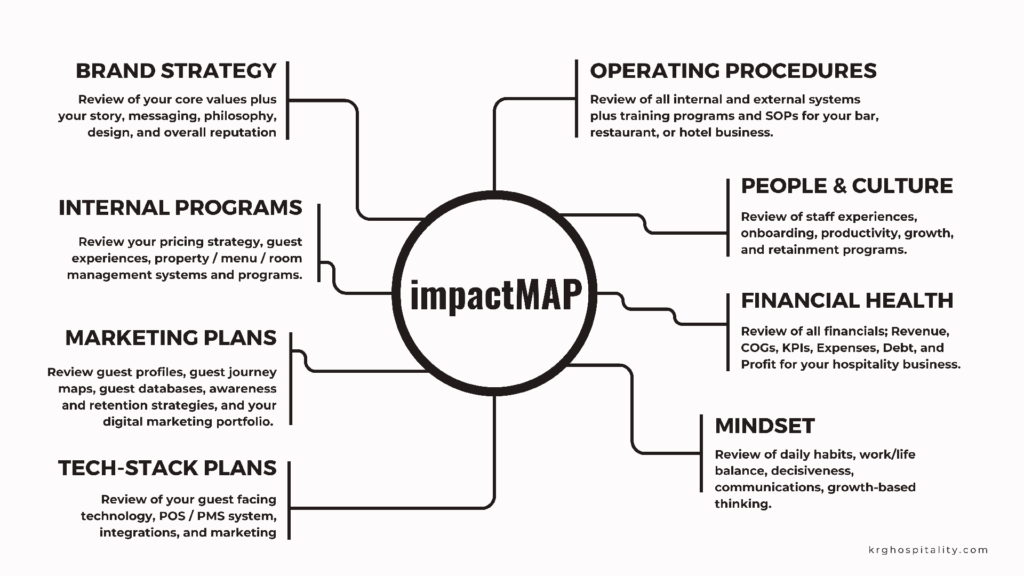
KRG Hospitality ImpactMAP, flowchart and map

The Assessment

To create an ImpactMAP™ and to take action immediately, you need to first assess your operations.

An assessment of your hospitality business is a comprehensive evaluation process aimed at analyzing various aspects of your business to identify strengths, weaknesses, and areas for improvement or opportunity. The goal is to gather actionable insights that can help optimize operations, enhance guest experiences, and massively improve your profitability.

The assessment should involve on-site observations, staff interviews, and a deep dive into the following eight categories, culminating in a detailed report that provides recommendations and a strategic plan for future growth and sustainability.

For each of the eight categories, consider a 3x matrix with three responses to the following questions:

  • Where are we now?
  • Where do we want to go?
  • What resources do we need?
  • What’s holding us back?

Then, create a SMART (Specific, Measurable, Achievable, Relevant, Timely) goal for each response in your “Where We Want to Go” list.

What are the eight assessment categories?

1. Brand Strategy

Assessment: Review your core values, story, messaging, philosophy, design, and reputation.

Opportunity: Enhance brand alignment across all touchpoints to ensure consistency while refining your brand messaging to better connect with targeted guest profiles.

2. Internal Programming

Assessment: Review your pricing strategy, guest experiences, property / menu / room management systems and programs.

Opportunity: Optimize your offerings based on guest preference data and a profitability analysis, along with potential upgrades to your amenities to enhance guest satisfaction and to compete with today’s market standards. In summary, implement efficiencies to improve guest experiences and operational workflow with a focus on your internal programming.

3. Marketing Plans

Assessment: Review guest profiles, guest journey maps, guest databases, awareness and retention strategies, and your digital marketing portfolio.

Opportunity: Integrate advanced digital marketing techniques to increase reach and engagement while developing targeted promotions and partnerships, and by leveraging data analytics to tailor marketing efforts more precisely to guest behaviors and trends.

4. Tech-Stack Plans

Assessment: Review guest facing technology, POS / PMS system, integrations, and marketing.

Opportunity: Identify current technology gaps and plan for a strategic integration of systems that enhance guest experiences while streamlining operations.

5. Standard Operating Procedures

Assessment: Review of all internal and external systems, plus training programs and SOPs.

Opportunity: Ensuring that all staff are clear on their roles and responsibilities, which enhances overall service quality through the development of standardized procedures that ensure consistency and efficiency across the business. Implement feedback systems to continually refine and improve SOPs based on real-time challenges and successes.

6. People and Culture

Assessment: Review of staff experiences, onboarding, productivity, growth, and retainment.

Opportunity: Strengthen employee engagement through improved communication and support systems. Foster a culture of innovation and openness in which employees feel valued and motivated. Develop leadership from within to enhance management effectiveness and succession planning.

7. Financial Health

Assessment: Review of all financials, including Revenue, COGs, KPIs, Expenses, Debt, and Profit.

Opportunity: Identify cost-saving opportunities without compromising service quality. Explore new revenue streams that align with your brand values and market opportunities. Implement more rigorous financial tracking and forecasting tools (such as technology) to better predict financial trends and react proactively.

8. Mindset

Assessment: Daily habits, work / life balance, decisiveness, communications, and growth-based thinking.

Opportunity: Develop a mindset of continuous improvement among all staff levels (starting with yourself) to foster an environment of excellence. Cultivate resilience by planning for crisis management and business continuity. Promote a guest-centric approach, aligning all business decisions with guest satisfaction and personal development outcomes.

Creating the ImpactMAP™

By following the above 3x strategy for each category, you will have created 24 SMART objectives that will be the foundation of your ImpactMAP™ to move your business forward over the next one to six to 12 months.

Importance of SMART Objectives

What does SMART mean and how does it work?

  • Specific, Clarity, and Focus: SMART objectives provide clear and concise goals that everyone in your business can understand and rally behind. This clarity helps to focus efforts and resources on what’s most important.
  • Measurability and Tracking: By setting measurable goals, your business can track progress and make data-driven decisions. This measurability allows for adjustments to be made in strategies or tactics to ensure the objectives are met.
  • Achievability: Goals that are achievable motivate staff. Setting impossible goals can lead to frustration and disengagement, whereas achievable objectives encourage team effort and commitment.
  • Relevance: Ensuring that each objective is relevant to the broader business goals ensures that every effort made contributes to the overall success of your brand.
  • Timeliness: Incorporating a timeframe provides urgency, a deadline, and accountability, which can help prioritize daily tasks and long-term plans.

However, you shouldn’t try to accomplish all 24 objectives at the same time. Once you’ve set your 24 impactful objectives, prioritizing them is crucial to stabilize your hospitality business and aim for scalable growth.

Best Practices for Prioritizing Objectives

  • Assess Business Needs: Start by conducting that thorough assessment of your business to identify key areas that need improvement.
  • Impact Analysis: Evaluate the potential impact of each objective. Prioritize objectives that offer the greatest benefits in terms of guest satisfaction, revenue growth, and operational efficiency.
  • Resource Availability: Consider the resources available, including budget, people, and technology. Prioritize objectives that align with current resources or where adjustments can be made to accommodate necessary changes.
  • Quick Wins: Identify objectives that can be achieved quickly and with minimal disruption to your ongoing operations. These quick wins can boost morale and provide visible improvements that justify further investments in other areas.
  • Strategic Importance: Some objectives, while not providing immediate benefits, are crucial for long-term success. Prioritize these based on their strategic importance to the business’s future.
  • Stakeholder Input: Engage with various stakeholders, including management, staff, and guests, to gain insights into which objectives they feel are most critical. This can help in aligning the goals with the needs and expectations of those most affected by the changes.
  • Balanced Scorecard: Use a balanced scorecard approach to ensure that objectives across different areas such as guest services, internal processes, financial performance, and learning and growth are all being addressed.
  • Iterative Review: Regularly review the priorities as situations and business dynamics evolve. What may be a priority today might change based on market conditions or internal business changes over the next three to six months.

Once you have your objectives prioritized, it’s time to assign or delegate them as needed and have those assignees (including yourself) take ownership of the objectives with their signature to add another level of accountability.

Implementing the ImpactMAP™

Before starting, ask yourself one final question: What will happen if we don’t take action?

Be detailed and mindful of what the short-term and long-term consequences might be if you don’t act.

Effective implementation of an ImpactMAP™ requires knowledge of these consequences, along with a commitment from all levels of your business. It starts with comprehensive training sessions followed by regular review meetings, which are both essential to assess progress, address challenges, and refine strategies as needed.

Take a SMART-ER approach, which is where you Evaluate and Re-adjust the SMART objectives halfway through the timeline you’ve set.

Conclusion

Risk of inaction is a silent threat that can undermine any business, particularly in this dynamic industry.

Adopting an ImpactMAP™ and making a commitment to take massive action allows you to manage your operations proactively, adapt to changing market conditions, and set a course for sustainable success.

This strategic approach not only mitigates risks but also empowers your hospitality business to thrive in a competitive landscape—but it starts with you and your mindset toward taking action.

Image: KRG Hospitality

KRG Hospitality. Restaurant Business Plan. Feasibility Study. Concept. Branding. Consultant. Start-Up.

by David Klemt David Klemt No Comments

5 Books to Read this Month: March 2024

5 Books to Read this Month: March 2024

by David Klemt

Flipping through an open book

Our inspiring and informative March book selections will help you improve operations, refresh F&B programming, and consider a design update.

This month, we look at books covering an array of topics: overcoming dysfunctions within teams; stepping outside of comfort zones; cocktail and Irish dish recipes; and repurposing existing buildings.

To review the book recommendations from February 2024, click here.

Let’s jump in!

The Five Dysfunctions of a Team: A Leadership Fable

In a departure from most business books, the author of The Five Dysfunctions of a Team presents useful lessons in the style of a fictional tale. This approach makes this bookwhich has more than 13,000 reviews on Amazona compelling read.

From Amazon: “Equal parts leadership fable and business handbook, this definitive source on teamwork by Patrick Lencioni reveals the five behavioral tendencies that go to the heart of why even the best teams struggle. He offers a powerful model and step-by-step guide for overcoming those dysfunctions and getting every one rowing in the same direction.”

Pick up your copy today.

The Complete Irish Pub Cookbook

I doubt you need a reminder but just in case, St. Patrick’s is just two weeks away. So, what better time to pick up this best-selling cookbook featuring Irish classic and modern fare? Flip through this book, check out some interesting recipes, and put your own spin on them so they fit with your concept.

From Amazon: “Pubs in Ireland are the cornerstone of their communities, relaxed places where locals and visitors can experience the best of traditional Irish hospitality. Many pubs have also become the place to go for a great meal, with a choice of both traditional and contemporary dishes. In recent years Irish cooking has been transformed, with skillful cooks making the most of wonderful fresh local produce to create delicious new dishes and giving a twist to many classics. This tasty cookbook includes the best of both worlds – with best-loved favorites s Irish Stew, Corned Beef and Split Pea and Ham Soup and newer recipes, like Scallop Chowder or Oatmeal and Raspberry Cream to set your taste buds tingling.”

Order The Complete Irish Pub Cookbook now!

Drink: Featuring Over 1,100 Cocktail, Wine, and Spirits Recipes

This is a seriously big book. After all, it really does contain more than 1,100 recipes. KRG Hospitality president Doug Radkey recently picked up this book and flipped through its many, many pages.

Along with well over a thousand recipes organized by spirit, Drink looks at bar tools, housemade ingredients, and ice. Further, it includes interviews with bartenders. If you’re looking for a recipe book that will inspire a drink menu refresh, this is the one you want.

Grab this tome today.

Cool is Everywhere: New and Adaptive Design Across America

Last month, we dove into the biophilic design methodology. This book, Cool is Everywhere, is a photo-driven look into the adaptive reuse design movement. Very briefly summarized, this is a design movement that focuses on repurposing existing architecture rather than knocking down buildings and putting up new construction. This approach tends to be eco-friendly, and as you’ll see from the photos in this book, it also creates cool buildings.

From Amazon: “Cool Is Everywhere highlights remarkable designs that have transformed ordinary buildings into works of art. From North Adams, Massachusetts, to Oakland, California, join Michel as he explores the skyscrapers and quaint neighborhoods that led him to believe that cool is, in fact, everywhere.”

Pick up this book now.

The Comfort Crisis: Embrace Discomfort To Reclaim Your Wild, Happy, Healthy Self

This book from author Michael Easter asks a fairly simple question: What if the modern world’s conveniences are making our lives more difficult? When we look deeper into our lives, we may find that our health is being impacted negatively by building and remaining in our comfort zones. Certainly, entrepreneurs can find that refusing to step outside of their comfort is hurting the business side of their lives.

From Amazon: “In many ways, we’re more comfortable than ever before. But could our sheltered, temperature-controlled, overfed, underchallenged lives actually be the leading cause of many our most urgent physical and mental health issues? In this gripping investigation, award-winning journalist Michael Easter seeks out off-the-grid visionaries, disruptive genius researchers, and mind-body conditioning trailblazers who are unlocking the life-enhancing secrets of a counterintuitive solution: discomfort.”

Order it today!

Image: Mikołaj on Unsplash

KRG Hospitality Start-Up Restaurant Bar Hotel Consulting Consultant Solutions Plans Services

by David Klemt David Klemt No Comments

Want Cinematic F&B Posts? Get Messy

Want Cinematic F&B Posts? Get Messy by David Klemt

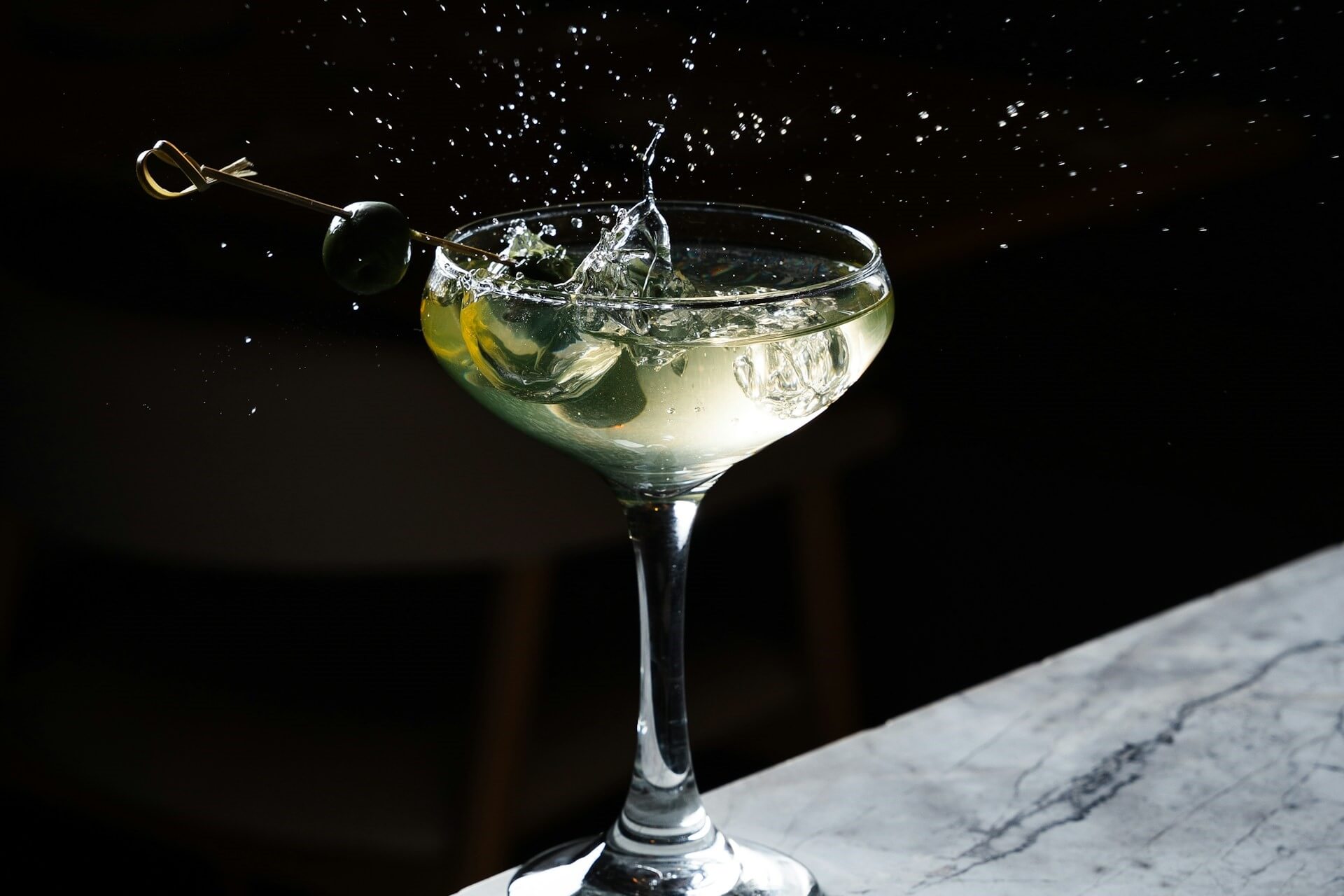
Cocktail splashing out of a cocktail coupe

Note: Photo not taken by Beautiful Booze or Little Lane Media.

Unsurprisingly, many people think that their social media and marketing photos and videos must be perfect. However, that’s not necessarily true.

The pressure to be “perfect” can lead people to stress out over posting F&B content to their social channels. Surely, composition must be flawless. If it’s not, why bother even posting?

After all, the century-plus-old phrase is “picture perfect,” not “picture imperfect.”

Well, you can stop fretting over every detail of your photos and vids. Two experts in social media marketing and content creation encourage you to be less than perfect.

During this year’s WSWA Access Live event in Las Vegas, Nevada, Natalie Migliarini and James Stevenson presented “Cinematic Cocktails: Mastering the Art of Visual Mixology.”

If you’re an avid consumer of social media content, you know Migliarini and Stevenson by the brands they’ve developed over a decade. Beautiful Booze, approaching 200,000 followers on Instagram, is run by Migliarini. Little Lane Media is a media agency operated by Stevenson.

Last week, I shared their tips for working with micro- (and nano-) influencers. Click here to learn why such collaborations can pay dividends for your business.

Today, I’m going to share a few of their tips for creating and posting your own engaging pics and vids.

Perfection is an Illusion

Throughout history, people have explained that perfection is an illusion. Worse, the self-imposed pursuit of perfection when during tasks can discourage a person from even trying.

So, don’t worry about being perfect. Instead, remove the pressure of perfection and just do your best. With that out of the way, Migliarini and Stevenson have a compelling argument against perfection.

In their experiencebear in mind that Beautiful Booze is a pioneer in the cocktail influencer spacethe general consumers of content are put off by content that appears too professional and heavily edited. Rather, people seem drawn to more casual content.

Let’s say you want to promote a new cocktail on your menu. So, you’re going to create a video of yourself or a bartender creating the drink.

If you make a mistake, it can be tempting to scrap the video of edit out the error. Well, you can relax.

According to Migliarini and Stevenson, being messy during some build steps can look better than a “flawless” video. In fact, the duo say a messy video can be “fantastic.” Why? Their reasoning is simple: the mistakes show that you’re not perfect.

You know who else isn’t perfect? The people watching your video. This makes you (or your bartender) more relatable. It also takes the pressure of them if they want to try to make the drink at home.

There’s also the fact that many people are cynical about content. Too professional equals “trying to sell me something.” They know even a casual video is trying to get them to visit your bar or restaurant, but it’s more acceptable.

So, liquid splashing out of the glass? Leave it. Did some booze spill from the jigger and miss the glass? Leave it in.

Tips and Tricks

Of course, you should still create content with some guidelines in place.

  • If you sell alcohol, you should probably keep cocktail, beer, wine, and spirits content to Instagram. TikTok may be a dominant video platform but you can’t be sure what ages are consuming your content. Best to err on the side of caution.
  • Migliarini and Stevenson have learned that people like transparent cocktail shakers when watching cocktail videos.
  • Get a tripod. It doesn’t have to be an expensive, professional one; a decent one from Amazon will do.
  • Any light is better than no light.
  • You can fill “dead space” in your photos with garnishes, coasters, etc.
  • Shoot in slow motion. If you want a truly cinematic post, this works wonders.
  • Aim to create 20-second videos.
  • Finally, and this one is very valuable, edit your video so your “hook” is up first. (Speaking of editing, try Final Cut Pro if editing via laptop or desktop, and InShot to edit on your phone.) You have to grab people’s attention, and Instagram counts the first three seconds as a view. Since it will be a loop, put your hook at the front and the build after that. This may seem odd to you at first but people watching won’t notice the “strange” cut.

Bonus tip: You don’t have to be perfect when performing a task for video. However, make sure your background is cleaned up (and consider blurring it). There are people who’ll pause and try to zoom to pick apart backgrounds; it happens.

With these tips in mind, it’s time to try your hand at some new video content.

Image: Isabella Kara on Unsplash

Bar Pub Brewery Nightclub Club Nightlife Brand Identity

by David Klemt David Klemt No Comments

Life is Peachy with These Cocktails

Life is Peachy with These Pantone-inspired Cocktails

by David Klemt

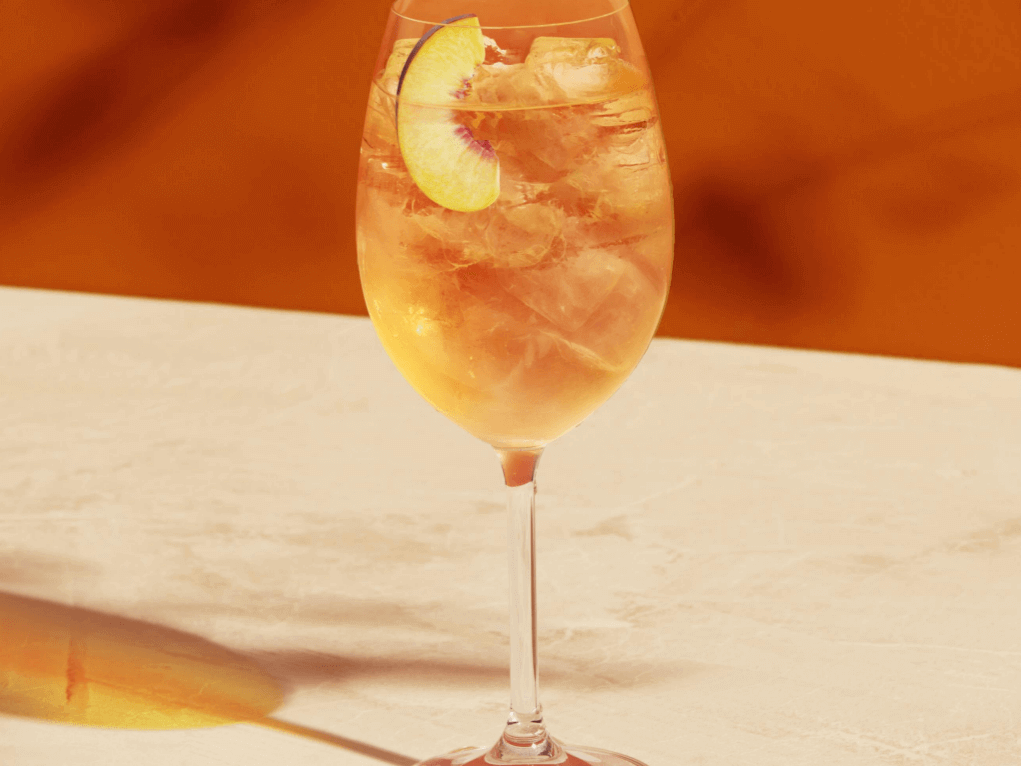
Greek Spritzer drink

According to Pantone, the 2024 Color of the Year is Peach Fuzz, which communicates warmth, community, collaboration, and a sense of welcoming.

There’s a lot that operators can do with Pantone’s annual announcement.

For those who are curious, the 2023 Color of the Year was Viva Magenta, a bold, purplish shade of red. And in 2022, the color was Very Peri, a dynamic shade of blue.

If an operator is looking for a complete venue refresh, Peach Fuzz may be an effective choice. For example, people can leverage the 2024 Color of the Year with feature walls, seating, tablecloths, and physical menus.

Of course, not every operator is looking to undergo a redesign. In this case, there’s still plenty of opportunity to splash Peach Fuzz throughout a bar or restaurant. One simple and effective way is through the drink menu.

Below are three peach-forward cocktail recipes. They’re visually appealing, which is helpful since we tend to “drink” with our eyes first. And with peach brandy, puree, or bitters, they impart more than just color: peach fans will appreciate the flavor.

You’ll also find a recipe for the Cosmopolitan, the famous cocktail created by Toby Cecchini. It turns out Aubrey Plaza, the modern face of the Margarita, is also the spokesperson for the Cosmo. Just like they say there’s no Negroni without Campari, there’s no Cosmo without Cointreau.

Cheers!

Frankly, My Dear cocktail

Frankly, My Dear

  • 0.75 oz. Cointreau
  • 0.75 oz. Tequila
  • 0.75 oz. Fresh lemon juice
  • 0.5 oz. Peach puree
  • 3 oz. Prosecco to top
  • Peach wedge to garnish

Prepare a Collins glass by filling it with ice. Add all ingredients except for the Prosecco and garnish to a shaker with ice. Shake well, then strain into Collins glass. Top with Prosecco, garnish with a peach wedge, and serve.

Fish House Punch cocktail

Fish House Punch

Add ice to a rocks, Collins, or other glass. Fill a cocktail shaker with ice, then add all ingredients except for garnish. Shake well, strain, garnish with lemon zest, and serve.

Peach Spritzer cocktail, also known as Greek Spritzer

METAXA Peach Spritzer

  • 1.5 oz. METAXA 7 Stars
  • 1.5 oz. Prosecco or other sparkling wine
  • 0.75 oz. Tonic
  • 3 dashes Peach bitters
  • Peach wedge to garnish
  • For winter: Star anise and tree leaf to garnish
  • For spring: Jasmine flower to garnish

For this cocktail, start by selecting a red wine glass. Add METAXA 7 Stars, then add bitters and ice. Stir, add tonic, then top with Prosecco or other sparkling wine. Garnish with a peach wedge.

Cointreau Cosmopolitan cocktails

Cointreau Cosmo

  • 1 oz. Cointreau
  • 2 oz. Vodka
  • 1 oz. Fresh lime juice
  • 1 oz. Cranberry juice
  • Orange twist to garnish

Your bartenders probably know how to make a Cosmo. But just in case, start by preparing a coupe or cocktail glass by chilling it. Add all the liquid ingredients and ice to a cocktail shaker. Shake well, then strain into the prepared glass. Garnish and serve.

Images belong to their respective brands.

KRG Hospitality. Bar Consultant. Nightclub. Lounge. Mixology. Cocktails.

by David Klemt David Klemt No Comments

5 Books to Read this Month: January 2024

5 Books to Read this Month: January 2024

by David Klemt

Flipping through an open book

Our inspiring and informative January book selections will help you and your team transform your operations and F&B programming.

This month, we look at books covering an array of topics: becoming a great boss; gaining perspective when analyzing your business; and more.

To review the book recommendations from December 2023, click here.

Let’s jump in!

Single AF Cocktails: Drinks for Bad B*tches

You may roll your eyes at the title of this cocktail book but there’s no denying it has your attention. In that way, it’s much like a well-curated, themed cocktail menu split into cleverly named sections. In fact, this book is separated into sections that match its overall theme. For example, Honeymoon Phase, Betrayal, Devastation, and Resilience. If you have reality show fans among your guests, they’ll likely know author Ariana Madix from Vanderpump Rules and Dancing with the Stars. So, they’ll probably dig these drinks.

From Amazon: “The newly solo Ariana serves up her own recipes and perspective in a unique exploration of the stages of a doomed relationship. In her own words, Ariana takes back the narrative of her very public breakup while inspiring others to find inner strength in their own troubles. Each drink tells part of the story from her point of view, from when she first met her ex, through the insidious affair and its painful aftermath, and to her present state, coming out the other side, stronger than before.”

Grab it today!

How to Be a Great Boss

Entrepreneurs, when working with a team, need to be leaders. That means being a great boss. However, that doesn’t mean being a tyrant. If you want to earn buy-in from your team, if you want to get the most out of each person, you need to get them excited and engaged.

From Amazon: “Studies have repeatedly shown that the majority of employees are disengaged at work. But it doesn’t have to be this way. Often, the difference between a group of indifferent employees and a fully engaged team comes down to one simple thing: —a great boss.

“In How to Be a Great Boss, Gino Wickman and René Boer present a straightforward, practical approach to help bosses at all levels of an organization get the most from their people. They share time-tested tools that have worked for more than 30,000 bosses in every industry. You can learn to be a great boss—and dramatically improve both your organization’s performance and your team’s excitement about their work.”

Pick up the hardcover today.

Same as Ever: A Guide to What Never Changes

As a business owner, it’s smart to see what’s changing. However, it’s also crucial to identify what’s not changing to gain perspective and understand the whole picture.

From Amazon: “With his usual elan, Morgan Housel presents a master class on optimizing risk, seizing opportunity, and living your best life. Through a sequence of engaging stories and pithy examples, he shows how we can use our newfound grasp of the unchanging to see around corners, not by squinting harder through the uncertain landscape of the future, but by looking backwards, being more broad-sighted, and focusing instead on what is permanently true.

“By doing so, we may better anticipate the big stuff, and achieve the greatest success, not merely financial comforts, but most importantly, a life well lived.”

Click here for the hardcover, or here for the paperback.

Bar Hacks: Developing The Fundamentals for an Epic Bar

This informative and conversational book written by KRG Hospitality president Doug Radkey is the perfect read for aspiring or seasoned bar, pub, lounge, or even restaurant owners, operators, and managers looking for that competitive edge in operations! If you’re looking for both fundamental and in-depth planning methods, strategies, and industry focused insight to either start or grow a scalable, sustainable, memorable, profitable, and consistent venue in today’s cut-throat industry, Bar Hacks is written just for you.

Pick up the paperback from Amazon today!

Hacking the New Normal: Hitting the Reset Button on the Hospitality Industry

Doug’s followup book to Bar Hacks! The world around us has changed. The food and beverage industry has changed. The hospitality industry has changed. But will some ways of life change for the better? Will perhaps the restaurant, bar, and hospitality industry come out even stronger? With the right changes to the previous status quo, it is possible. There’s no question, resets are major undertakings, but a major reset will provide us with a clean start and that’s what this industry needs.

Pick up KRG Hospitality president Doug Radkey’s second book today! Click here.

Image: Mikołaj on Unsplash

Business Plan for Boutique Hotel Motel Resort Property

by David Klemt David Klemt No Comments

Program for Unique Holidays: January 2024

Program for Unique Holidays: January 2024

by David Klemt

"Think about things differently" neon sign

Do you want to stand out from from other restaurants and bars in your area? Change how you kick off the new year with your January holiday promotions.

Several holidays are set against every date on the calendar, and this month is no exception. These holidays range from mainstream to esoteric.

Pay attention to the “weird” or unique holidays to raise eyebrows, carve out a niche for your restaurant or bar, and attract more guests. Why do what everyone else is already doing? Why program only around the same holidays as everyone else?

Of course, you shouldn’t try to celebrate every holiday, strange or otherwise. Focus on the days that are authentic to your brand; resonate with your guests; and help you grab attention on social media.

You’ll find suggestions for promotions below. However, the idea behind our monthly holiday promotions roundup is to inspire you and your team to get creative and come up with unique programming ideas.

For our December 2023 holidays list, click here.

January 2: Thank God It’s Monday Day

We all know the Monday trope: It’s the day of the week to fear, inspiring the Sunday Scaries.

Well, this month encourages people to change how they look at the start of the workweek. Your venue can play a role, offering F&B promotions and entertainment programming that puts people in good spirits on a Monday.

January 3: National Fruitcake Toss Day

Another trope? Fruitcake somehow becoming a rock star during the end-of-year holiday season. I suppose this divisive dessert gets the “rock” part right…

If you have the space, you can hold a fruitcake tossing competition. Nobody’s going to eat the fruitcakes they were given, so they may as extract some joy from them.

January 9: National Cassoulet Day

This French dish is warm and comforting. And according to Tastewise, social conversations were up 20 percent in 2023.

However, less than one percent of restaurants have cassoulet on their menus in the US. Could be an excellent opportunity for savvy operator and kitchen team.

January 13: National Peach Melba Day

Each December, Pantone announces the next year’s Color of the Year. At this point, it’s a tradition.

For 2024, that color is Peach Fuzz. So, it makes sense to put peach dishes and drinks on your menu. The Peach Melba is a dessert consisting of peach wedges resting in raspberry sauce, accompanied by vanilla ice cream. However, there’s no reason your kitchen team can’t make this their own by getting creative with ice cream flavors and other accompaniments.

January 14: Start of National Mocktail Week

This is an excellent way to help guests celebrate Dry January. However, it’s important to note that some sober guests find the term “mocktail” disrespectful. I can see their point: the word has “mock” in it. So, perhaps call your celebration Alcohol-free Week, Non-alcohol Week, or Zero-ABV Week.

Either way, this is the time to dial in your zero-proof menu.

January 15: National Strawberry Ice Cream Day

Celebrating this holiday with the Peach Melba is a great way to get the most out of promoting your guests’ favorite new dessert. All you have to do is serve your Peach Melba with, you guessed it, strawberry ice cream instead of the standard vanilla.

January 20: National Cheese Lover’s Day

Getting creative to celebrate this holiday will take some effort. However, if you nail it, this promotion can be recurring and become a sought-after experience.

Wine, beer, and spirits pair with a vast array of cheeses. You can create an entire tasting experience, pairing specific cheeses with a curated selection of wines, beers, whiskeys, or other spirits. Check out this guide for pairing ideas.

January 20: National Use Your Gift Card Day

I don’t usually double up on holidays for this monthly KRG Hospitality feature, but here we are.

If your business offers gift cards, this is the day to encourage people to come in and redeem them. Send a targeted email campaign, include a link to your reservation system, and you’ll have an excellent way to track how many gift cards you can expect to show up for redemption.

January 25: Clashing Clothes Day

Why should October and December get all the dress-up fun? There’s no reason your guests have to pull out all the stops for Ugly Christmas Sweater gatherings and then wait another year to do it again.

If you pull this off well and make it a “thing,” you and your team can own Clashing Clothes Day and make it an annual promotion.

January 30: National Croissant Day

The humble but delicious, flaky croissant is a tasty canvas. Sure, you can just offer croissants, but what about going harder and offering an array of croissant sandwiches or desserts?

Image: Ivan Bertolazzi on Pexels

KRG Hospitality Start-Up Restaurant Bar Hotel Consulting Consultant Solutions Plans Services

by David Klemt David Klemt No Comments

2023 KRG Recap: Top 10 Articles

2023 KRG Recap: Top 10 Articles

by David Klemt

The roman numeral for the number 10 on a clock

Here it is! The final roundup of 2023, a collection of the top ten articles spanning all categories, including news, operations, and F&B.

Unlike our previous three year-end roundups, some of these articles aren’t from 2023. As an example, one of our most-read articles is from 2022, and it’s about the happiest provinces in Canada.

We’re humbled and grateful that you continue to view us as a trustworthy source of hospitality industry analysis, advice, and news. We look forward to serving you further in 2024.

Cheers!

Three hands holding up three pineapples

Raise the Bar: The 3 Ps of Hospitality

Nightlife, bar, and cocktail experts Mia Mastroianni, Phil Wills, and Art Sutley want operators to focus on what they call “the Three Ps.”

The engaging trio shared their trio of Ps recently in Las Vegas at the 2023 Bar & Restaurant Expo.

So, what are the Three Ps of hospitality? People, Place, and Product. Operators who pull the threads tighter on each of these crucial elements will be well on their way to improving operations and the guest experience.

People

Remember all the way back to a week ago when I shared Mastroianni, Wills, and Sutley’s thoughts on service versus hospitality? Consider the first P a deeper dive into that topic.

Operators need to focus on two categories of people who help their businesses succeed: their teams and their guests.

Addressing the former, the trio feels that operators are centering a disproportionate amount of their attention on guests in comparison to staff.

“We’re not lacking for people who want to work in the business and are outperforming other industries, but we’re not focusing on staff like we focus on guests,” says Wills. “Treat everyone with respect, including through the hiring process. If you don’t engage your staff, you won’t retain them. You need to show them they can grow in your business.”

According to Sutley, 89 percent of operators say that labor costs present a “significant challenge.” It follows, then, that committing to treating staff with respect and nurturing their careers isn’t just the right thing to do, it’s smart business.

Look for people with passion, those you can motivate to go above and beyond so you’re not stuck with a team full of space-fillers who are just after a paycheck, suggests Mastroianni.

Of course, operators and their teams must also focus on providing exceptional service and experiences to guests.

“Treat ever guest like a pearl in an oyster,” advises Wills. “They’re the pearl, we’re the oyster. We need to ‘protect’ them.” Anything less, cautions Sutley, and guests won’t return.

For the rest of the Three Ps, click here.
Tortilla with beans, cotija cheese and egg

Canadian Trends 2023: Technomic

Restaurant, bar, and hotel operators will find this year’s data-driven trend predictions from Technomic for 2023 insightful.

Interestingly but perhaps not surprisingly, some operators may be looking beyond North America for inspiration.

Per Technomic, Central and South American cuisines could influence menus in Canada this year. Other food trends that might take hold are “retro” health items, and all manner of pickled foods.

Of course, not every Canadian trend prediction involves F&B. According to Technomic, tech and the guest experience will play important roles.

To review last year’s Technomic predictions, click here. Now, let’s jump into Technomic’s 2023 predictions.

Guest Experience

Certainly, the guest experience should always be top of mind for operators, their leadership teams, and their staff.

In this instance, Technomic isn’t suggesting that the guest experience in general will be a trend. Obviously, with as important as it is to the success of any business, it’s a cornerstone.

Rather, Technomic predicts that guests will continue to feel the need to rein in their spending due to ricing costs and prices. However, the foodservice research firm also believes there’s still heavy desire for social interaction.

So, both those financial and social influences translate to the following: overdelivery.

Operators and their teams must ensure they position their brands well; make guests feel special every visit; and really dial in the guest experience. Specifically, Technomic suggests focusing on younger generations and menus with at least a couple specialty items that aren’t easy for a guest to replicate at home.

In other words, do whatever it takes to entice guests with memorable experience and quality menu items, and keep them coming back for more.

Follow this link to continue reading.
Server carrying two plates with one hand

Just.Safe.Food. and More Alternatives to ServSafe

ServSafe, the National Restaurant Association‘s food safety training program, isn’t the only food handler training game in town.

Certainly, the program is the most well known in our industry. However, it’s fair to say that ServSafe is closer to infamous than just ubiquitous due to a New York Times article from January.

While it’s the most recognizable of the food safety programs, it’s not the only one. Although, ServSafe’s omnipresence likely gives many the impression that it’s ServSafe or nothing.

There are, however, alternatives to ServSafe. In fact, one challenger was announced a day after the explosive New York Times article that thrust ServSafe into a spotlight the NRA probably isn’t enjoying. (After all, one result of that article was a letter from six US senators demanding answers from the NRA about ServSafe by March 3.)

At any rate, the newest alternative to ServSafe comes from One Fair Wage. The program is Just.Safe.Food. and costs just $10. (As a reminder, ServSafe costs $15.)

For that $10, Just.Safe.Food. gives an individual three attempts to pass their exam and unlimited access to training materials. Additionally, One Fair Wage (OFW) says profits they raise from the program will go toward advocating for restaurant workers.

OFW, as many in the industry know, is owned and operated by restaurant workers. Two cornerstones of the organization’s mission are increasing the minimum wage, and ending the tip credit. OFW is also attempting to convince lawmakers to stop accepting donations from the NRA.

Basically, OFW and the NRA are—and it appears always have been—at odds with with one another.

To learn more, click here.
Newfoundland and Labrador during daytime

These are the Happiest Provinces in Canada

If you’re wondering which province in Canada is the happiest, Statistics Canada has the answer—and the happiest may surprise you.

Of course, those who live and work in the happiest province won’t find it shocking. After all, they’re largely happy to be there.

However, if you expect the happiest province to be the home of Toronto, Vancouver, Montreal or Canada… Well, you’re in for a surprise.

Earlier this week we took a look at the happiest cities and states in America. Congratulations Fremont, California, and Hawaii, respectively. To learn where 181 other cities and 49 states rank, please click here.

The Happiness Survey

Or more accurately, the “life satisfaction” survey. For this survey, that’s what Statistics Canada reveals: life satisfaction.

Interestingly, the survey is very simple. Apparently, Statistics Canada simply asked participants to rate the satisfaction of living in their province, zero through ten. For this survey, zero is least satisfied, ten is most.

Ages 15 through 75 (and older) were able to participate. The survey was also broken down to gauge the satisfaction of men and women.

Before we jump into the breakdown of province satisfaction or happiness, some good news. Reviewing the Statistics Canada data, most participants across all age groups are happy. In fact, age groups 65 to 74 and 75-plus appear to be happiest.

On the other side, ages 15 to 54 had the most people who rated their life satisfaction between zero and five. Even so, just over 20 percent of survey respondents rated their satisfaction a five or less.

So, on the whole, Canadians seem satisfied or happy with their lives, regardless of the province in which they live. Personally, I find that to be great news.

Click here to keep reading.
Glendalough Distillery Wild Gin Irish gin

8 Glendalough Distillery Cocktail Recipes

Offer your guests something different for your St. Patrick’s Day promotion with Glendalough Distillery cocktail recipes.

Without a doubt, you should have plenty of the expected Irish whiskeys on hand. However, Glendalough Distillery Double Barrel, Pot Still, Wild Gin, and Rose Gin are extraordinary Irish whiskeys and gins.

Each spirit the distillery crafts honors the art of Irish distillation, a craft that stretches back centuries. What’s more, each whiskey Glendalough crafts is single malt—there are no light-bodied blends in their lineup.

To learn more, check out episode 71 of the Bar Hacks podcast with Glendalough Distillery co-founder and national brand ambassador Donal O’Gallachoir.

Sláinte!
Glendalough Distillery Double Barrel Single Malt Irish Whiskey

The Lough Inn

This highball is made with Glendalough Double Barrel, a single-grain Irish whiskey aged in ex-bourbon barrels before being finished in Oloroso sherry casks.

  • 2 oz. Glendalough Double Barrel Single Grain Irish Whiskey
  • 1 oz. Spiced honey syrup (see note)
  • 1 oz. Fresh lemon juice
  • Soda to top
  • Lemon wheel or slice to garnish
  • Mint leaf to garnish
  • 1 cup Honey for spiced honey syrup
  • 0.5 cup Water for spiced honey syrup
  • 4 Cinnamon sticks for spiced honey syrup
  • 1 pod Star anise for spiced honey syrup

Add ice to a highball glass, then add first three ingredients. Top with soda water. Garnish with lemon wheel or slice and freshly torn mint leaf.

For spiced honey syrup: Add honey, water, cinnamon sticks, and star anise to pot. Bring to a boil, then stir. Strain into container.

For more Glendalough Distillery recipes, click here.
White Russian cocktail made with Mr. Black Coffee Liqueur

7 Coffee Liqueurs You Need to Know

Whether you and your bar team are making Espresso Martinis, riffing on classics or creating something new, consider these coffee liqueurs.

National Espresso Martini Day takes place on Tuesday, March 15. Leading up to this bar holiday, the cocktail is experiencing yet another resurgence.

In fact, this cocktail more than any other seems to maintain an enviable rate of “surging back” in popularity. Maybe it’s time to just admit that it’s a modern classic people love to hate…but still order and enjoy.

Below are seven coffee liqueurs that shine in an Espresso Martini, Old Fashioned, Negroni, Irish Coffee, or any number of rich, flavorful cocktails. Cheers!

Mr. Black

Most of the reviews out there place Mr. Black at the top when it comes to coffee liqueurs. Once you’ve sipped it neat, you understand why. The coffee flavor is outstanding, and that should come as no surprise. After all, Mr. Black is crafted in Australia, a country with a rich coffee culture.

Additionally, Mr. Black occasionally releases special batches. In the past, the brand has produced Single Origin Ethiopia, Single Origin Colombia, and collaborations with WhistlePig and St. Ali Coffee Roasters. They also have a coffee amaro available.

Grind Espresso Shot

You really can’t go wrong making an Espresso Martini with an espresso liqueur. Grind Espresso Shot gives Mr. Black a run for their money in the coffee liqueur showdown.

This blend of Caribbean rum, espresso, coffee, and coffee extract that shines in just about any cocktail.

Click here for more coffee liqueurs to consider adding to your inventory.
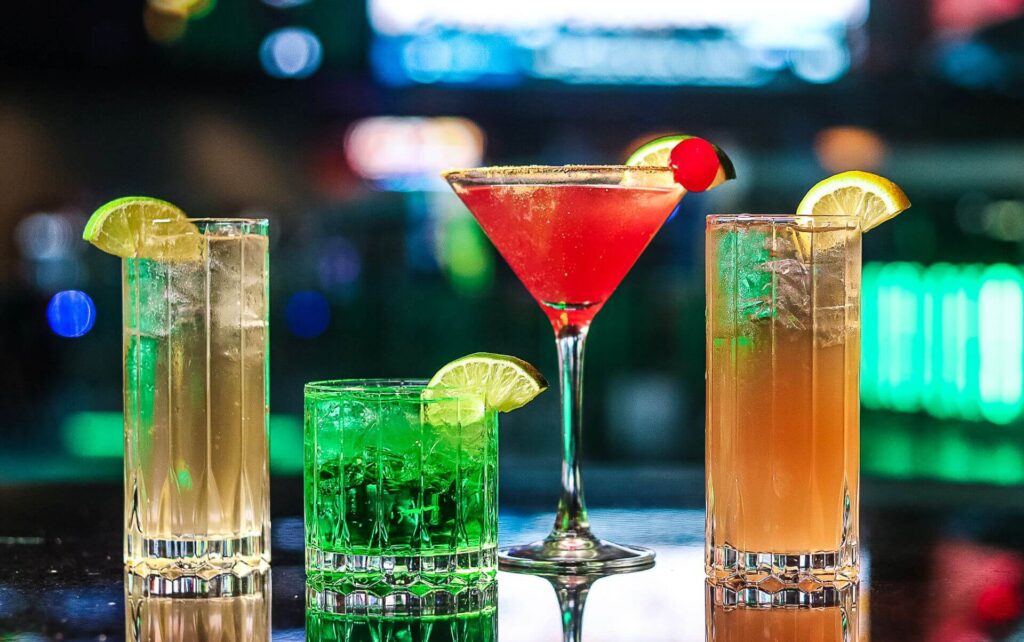
Group of Big Game cocktails at Ocean Casino Resort

Ocean Casino Resort Offers Big Game Cocktails

Ocean Casino Resort, Atlantic City’s award-winning oceanfront casino and resort, is ready for the Big Game with four cocktails that team with the theme.

Now, by “Big Game,” we all know what I’m talking about. We know the sport, we the know the league, and we know precisely which game is under discussion.

However, due to very “enthusiastic” attorneys, we also have to talk like we’re spies or actors in a mob movie. We wouldn’t want to tempt anyone to file a lawsuit now, would we?

And I’m going to encourage you to continue following this childish way of speaking about the Big Game. When you’re promoting your Sunday, February 12 event, don’t use any trademarked terms, logos, images, etc.

Alright, the Big Game legalese is out of the way. Let’s talk themed cocktails!

Big Game Cocktail Inspiration

Midway through last year, Ocean Casino Resort showed us all their marketing prowess. When news of the Choco Taco’s demise made headlines, Ocean created a cocktail homage: the Chocotini.

To ensure the LTO could be enjoyed by most guests, the cocktail was available at four venues on the property.

Now, Ocean Casino Resort is tackling the Big Game. (Note: I’m legally required to include sports puns when writing about any major game.)

Guests have four specialty LTO cocktails from which to choose. Two representing the team from Philadelphia, two for the team in Kansas City. Each drink is available at venues throughout the casino resort, including their Topgolf Swing Suite (largest in America), Nola’s Bar & Lounge, and the Gallery Bar Book & Games.

In news that should appeal to you and your bar team, these drinks are quick to make. That’s a relief when you plan to be slammed on a particular day.

Of course, you don’t have to attempt to replicate these cocktails. They serve as excellent inspiration to motivate you and your team to come up with your own liquid homages and LTOs.

In case you’re wondering what to charge, Ocean is charging $14 each for the Brotherly Love, Hurts So Good, and Big Red cocktails. The Arrowhead carries a price tag of $15.

Click here to continue reading.

Closeup of keyboard

Can ChatGPT Write Food and Drink Menus?

After my “conversation” last month with ChatGPT about AI, I had another conversation during which I asked it to write me four menus.

Of course, I did this to prove a point. And upon reviewing the ChatGPT menus, you’ll likely reach the same conclusion.

Curious about how creative the AI-powered chatbot could be, I asked for four specific menus. As you’ll see, two are cocktail specific, one focuses on food, and one is a 20-item F&B menu for a specific event.

So, yes, ChatGPT can write food and drink menus. But there’s a caveat. I could leave you in suspense but that’s not very nice. Let’s jump in.

Write me a cocktail menu using the most popular cocktails from 2022.

Cocktail Menu

  1. Aperol Spritz – Aperol, Prosecco, and soda water, garnished with an orange slice
  2. Old Fashioned – Bourbon, sugar, bitters, and a citrus peel
  3. Margarita – Tequila, triple sec, lime juice, and salt rim
  4. Daiquiri – Rum, lime juice, and simple syrup
  5. Moscow Mule – Vodka, ginger beer, and lime juice
  6. Paloma – Tequila, grapefruit juice, lime juice, and soda water
  7. Pina Colada – Rum, pineapple juice, coconut cream, and a cherry garnish
  8. Whiskey Sour – Bourbon, lemon juice, and simple syrup
  9. French 75 – Gin, Champagne, lemon juice, and simple syrup
  10. Mai Tai – Rum, orange liqueur, lime juice, and orgeat syrup

*All cocktails are served over ice, unless otherwise requested.

Write me a cocktail menu using the most popular spirits and alcohol types of 2022.

Cocktail Menu

  1. Gin and Tonic – Gin, tonic water, and a lime wedge
  2. Vodka Martini – Vodka, dry vermouth, and an olive garnish
  3. Bourbon Manhattan – Bourbon, sweet vermouth, and bitters
  4. Tequila Sunrise – Tequila, orange juice, and grenadine syrup
  5. Rum Runner – Rum, blackberry liqueur, orange juice, pineapple juice, and grenadine
  6. Whiskey Sour – Bourbon, lemon juice, and simple syrup
  7. Margarita – Tequila, triple sec, lime juice, and salt rim
  8. Daiquiri – Rum, lime juice, and simple syrup
  9. Long Island Iced Tea – Vodka, gin, rum, tequila, triple sec, lemon juice, and cola
  10. Pina Colada – Rum, pineapple juice, coconut cream, and a cherry garnish

*All cocktails are served over ice, unless otherwise requested.

Click here to keep reading.

Developing a Bar Concept w/ Sensory Experiences

Once your idea has been researched and the market, location, technical, business, and financial viability of the idea has passed a series of reviews throughout a feasibility study, a concept development plan can then be started.

Remember, outside of being scalable, you want to build a concept that is sustainable, profitable, memorable, and consistent.

Bar concepts over the years have gone from being tame (or lame) or overplayed, like tiki bars or sports bars, to concepts that push the boundaries of what a bar can be. One of the best ways to build a customer base is to go off the beaten path to create a bold and fresh new bar concept.

A concept plan will focus on ‘chapters’ and visual storyboards that include an overall:

  • Concept Summary (a one page summarization similar to that of an Executive Summary)
  • Statement Overview (Value, Vision, Mission, Culture)
  • Architectural Design (characteristics, features, costs)
  • Bar/Kitchen Production (your equipment specs)
  • Entertainment & Guest Experience Summary
  • Menu Design Attributes (food & beverage)

Owning a bar is a dream for most that must be met with the right research, planning, and mind-set.

One’s market will, and must, define the concept. To be successful, you must be open to building a venue the market both wants and needs.

Concept development is giving your ‘idea’, both soul and character. A bar’s concept is the lifeline of its brand and longevity in the market. It makes your venue stand apart from the competition, and it’s ultimately your bar’s unique selling proposition.

Have you ever walked into a bar and been confused about its identity? The interior doesn’t match the beverage offerings, the social media experience doesn’t reflect the actual experience, and even the music doesn’t seem to match the vibe of the bar.

This is what happens when there isn’t a clear and detailed concept development plan in place, and it is a sure fire way to be just average at best.

Continue reading here.

How to Address Temporary Restaurant and Bar Closures: 5 Social Media Examples

Repeated restaurant and bar closures have, tragically, become a hallmark of 2020.

Operators have had to learn how to communicate closures to potential indoor guests, as well as delivery and takeout guests.

For most operators, the possibility of closing their doors—temporarily or otherwise—has moved well past “if” territory. At this point, it’s not even a question of when a restaurant or bar will have to close, it’s a matter of when it will happen again.

There are a few reasons a F&B business will have to close due to the Covid-19 outbreak: official mandate, reduced indoor and outdoor dining capacities, and voluntary temporary closures.

Mandated closures are, on the surface, straightforward. Government officials decree that certain types of businesses must close their doors by a specific date and time, and owners are expected to comply.

Closures induced by capacity restrictions are less straightforward. It has become woefully apparent that most lawmakers don’t understand (or don’t care) that at a certain threshold, reducing indoor and outdoor dining capacities is as good as forcing a restaurant or bar to close; the value proposition of remaining open simply isn’t there.

A voluntary temporary closure can come about because of capacity limitations, but they can also be the result of other factors. A significant workforce reduction, lack of traffic, rising costs of goods, or an internal Covid infection.

The stark reality is that the likelihood today’s operators are going to have to craft social media posts and emails announcing temporary (and possibly extended) closures is anything but slim.

Click here to keep reading.

Image: Anne Nygård on Unsplash
KRG Hospitality Start-Up Restaurant Bar Hotel Consulting Consultant Solutions Plans Services

by David Klemt David Klemt No Comments

2023 KRG Recap: Top 8 Ops Articles

2023 KRG Recap: Top 8 Operations Articles

by David Klemt

Close-up shot of a white neon "8" sign

The third installment in our annual article roundup is a collection of our readers’ favorite operations and service articles of 2023.

Below, articles about a multitude of topics: food safety, pricing, menu programming, leadership, setting your non-negotiable standards, and much more.

If you’re looking to really dial in your operations and service for 2024, these articles are an excellent place to start for tips and inspiration.

Cheers!

Server carrying two plates with one hand

Just.Safe.Food. and More Alternatives to ServSafe

ServSafe, the National Restaurant Association‘s food safety training program, isn’t the only food handler training game in town.

Certainly, the program is the most well known in our industry. However, it’s fair to say that ServSafe is closer to infamous than just ubiquitous due to a New York Times article from January.

While it’s the most recognizable of the food safety programs, it’s not the only one. Although, ServSafe’s omnipresence likely gives many the impression that it’s ServSafe or nothing.

There are, however, alternatives to ServSafe. In fact, one challenger was announced a day after the explosive New York Times article that thrust ServSafe into a spotlight the NRA probably isn’t enjoying. (After all, one result of that article was a letter from six US senators demanding answers from the NRA about ServSafe by March 3.)

At any rate, the newest alternative to ServSafe comes from One Fair Wage. The program is Just.Safe.Food. and costs just $10. (As a reminder, ServSafe costs $15.)

For that $10, Just.Safe.Food. gives an individual three attempts to pass their exam and unlimited access to training materials. Additionally, One Fair Wage (OFW) says profits they raise from the program will go toward advocating for restaurant workers.

OFW, as many in the industry know, is owned and operated by restaurant workers. Two cornerstones of the organization’s mission are increasing the minimum wage, and ending the tip credit. OFW is also attempting to convince lawmakers to stop accepting donations from the NRA.

Basically, OFW and the NRA are—and it appears always have been—at odds with with one another.

To learn more, click here.

Three hands holding up three pineapples

Raise the Bar: The 3 Ps of Hospitality

Nightlife, bar, and cocktail experts Mia Mastroianni, Phil Wills, and Art Sutley want operators to focus on what they call “the Three Ps.”

The engaging trio shared their trio of Ps recently in Las Vegas at the 2023 Bar & Restaurant Expo.

So, what are the Three Ps of hospitality? People, Place, and Product. Operators who pull the threads tighter on each of these crucial elements will be well on their way to improving operations and the guest experience.

People

Remember all the way back to a week ago when I shared Mastroianni, Wills, and Sutley’s thoughts on service versus hospitality? Consider the first P a deeper dive into that topic.

Operators need to focus on two categories of people who help their businesses succeed: their teams and their guests.

Addressing the former, the trio feels that operators are centering a disproportionate amount of their attention on guests in comparison to staff.

“We’re not lacking for people who want to work in the business and are outperforming other industries, but we’re not focusing on staff like we focus on guests,” says Wills. “Treat everyone with respect, including through the hiring process. If you don’t engage your staff, you won’t retain them. You need to show them they can grow in your business.”

According to Sutley, 89 percent of operators say that labor costs present a “significant challenge.” It follows, then, that committing to treating staff with respect and nurturing their careers isn’t just the right thing to do, it’s smart business.

Look for people with passion, those you can motivate to go above and beyond so you’re not stuck with a team full of space-fillers who are just after a paycheck, suggests Mastroianni.

Of course, operators and their teams must also focus on providing exceptional service and experiences to guests.

“Treat ever guest like a pearl in an oyster,” advises Wills. “They’re the pearl, we’re the oyster. We need to ‘protect’ them.” Anything less, cautions Sutley, and guests won’t return.

For the rest of the Three Ps, click here.

"Be optimistic" sign on black door

5 Toxic Mindsets that Hinder the Success of Your Business

Your frame of mind matters, and if you want a team and business that’s thriving and growing, it’s time to examine your own mindset.

How you show up day to day in your business and in your life will either hinder or promote your success. Like the popular phrase goes, “It starts from the top.”

You can set the tone for the day with the energy you bring. As Anese Cavanaugh, author of the book Contagious You, states, “Whatever we put out there and whatever we take on affects our ability to influence, lead, and create the impact we want.”

A positive mindset is contagious: it can inspire, motivate, and make others feel good. A toxic mindset is equally as contagious: it can halt growth, increase unhappiness, and lower productivity.

Here’s a list of five toxic thoughts that lead to a negative mindset and can hinder success.

Blame Game

Always looking for someone else to lay the blame on when things go wrong is a surefire way to a toxic team environment. If you’re quick to blame others when things go wrong, perhaps it’s time to take a step back and examine why something went wrong in the first place.

Was there inadequate training provided? Are there no clear systems to follow? Do you have an environment that’s hostile to asking for help? Fault rarely lies in one person only; there are typically several factors in play.

A positive mindset will examine facts, look at all potential causes, and then come up with solutions. Blame never enters the picture.

Second Guessing

Not being confident in the choices you make hinders growth. Uncertainty in your decision making leads others to question or doubt your role as leader.

If you don’t have the utmost confidence in making decisions, and it’s your business, how can you expect your team to have confidence in you or the work that they do?

This doesn’t mean that you have to make snap decisions without thinking them over. Planning and deliberating over the right move to make is critical to success. But once the decision is made…it’s made. If it doesn’t work out you can then problem solve to get back on the right path.

Second guessing your decisions along the entire way is only going to slow you and your business down.

Click here to continue reading.

Several spray paint cans next to one another

Raise the Bar: Service vs. Hospitality

During the 2023 Bar & Restaurant Expo in Las Vegas, Mia Mastroianni, Art Sutley, and Phil Wills addressed what separates service from hospitality.

For the sake of those who are unfamiliar, a brief summary of each member of this informative panel. Art Sutley is a nightlife and hospitality expert recognized by Forbes, the Wall Street Journal, and Thrillist (among other publications).

Phil Wills and Mia Mastroianni should be recognizable to anyone who has watched Bar Rescue. Wills co-founded Spirits in Motion, a beverage consulting agency. He’s also a bartender’s bartender who’s passionate about hospitality. Mastroianni, equally as passionate about the art of hospitality, is a seriously talented bar professional and hospitality expert who doesn’t take herself too seriously.

It’s difficult to imagine a more qualified trio when it comes to discussing the differences between service and hospitality.

What is Service?

Before they all dove in, Sutley shared a simple but impactful take on the guest experience.

“It’s checking boxes,” said Sutley. “We want each guest to check every box, and a few extra.”

That description helps draw a line between service and hospitality. Per Sutley, Mastroianni, and Wills, service is a transaction and meeting expectations. Reinforcing this idea, Wills said, “Service is black and white; it’s simple.”

Operators and their leadership teams, after developing their steps of service, can literally or figuratively track the service transaction. Training staff—from onboarding to pre-shifts—on the steps of service and an operator’s non-negotiable standards ensures the guest experience transaction is delivered as expected.

Worryingly, Mastroianni expressed her concern that the quality of service appears to be dropping. If that’s true, however, that provides an opportunity.

Per Sutley, the industry is getting more difficult. There are more competitors out there, and guest expectations are becoming increasingly stringent. So, if Mastroianni is correct and more concepts are failing to deliver on the expected service transaction, operators who commit to building and training teams that deliver high-level service will stand out.

Keep reading here.

Two restaurant food menus

Real-world Menu Tips from Chef Brian Duffy

Call it an education session, call it a workshop, one of the best features of the Bar & Restaurant Expo is live menu feedback from Chef Brian Duffy.

This is certainly true of the 2023 Bar & Restaurant Expo. During this year’s BRE (formerly Nightclub & Bar Show, or NCB), Chef Duffy delivered well over two hours of real-world menu feedback.

To be sure, BRE educational programming is always beneficial. Attendees who take the time to plan their schedules to include education sessions will take invaluable tips back to their businesses.

However, watching in real time as Chef Duffy critiques real menus submitted by BRE attendees provides insight that will impact the guest experience and success of a restaurant or bar immediately.

When delivering his feedback, Chef Duffy is unacquainted with the menus. He’s also unfiltered. So, attendees of these sessions are provided a window to Chef Duffy’s professional opinions, on the fly, in real time.

Take, for example, this blunt statement: “If you serve tilapia in your restaurant, you suck.” Before anyone has a conniption, Chef Duffy is referring to unethically farm-raised tilapia that’s often exposed to waste.

Technical Difficulties

Due to unforeseen AV issues, Chef Duffy was unable to use the large screens in the room to review menus for 30 to 40 minutes.

Now, some speakers may be shaken when encountering such a technical difficulty. This isn’t the case for Chef Duffy. In fact, all in attendance from the start of his session were lucky enough to gain insights beyond menu design because of the AV issues.

First, we all gained some insight into Chef Duffy’s consulting process. When engaged for restaurant consultation, he watches an evening service. Next day, he’s in your kitchen at 10:00 AM. What he sees in your kitchen tells him what’s happening throughout your restaurant. By the way, if he encounters just two spelling errors on your menu, he’s done reviewing it—you need a fresh start.

Second, inventory. Chef Duffy assumes you keep eleven percent of your overall revenue on your shelves. So, if you’re generating $100,000 each month, your shelves hold $11,000 of product. When reviewing your financial situation, take a look at that number for your own restaurant or bar.

Third, executive chefs versus head chefs. Chef Duffy has been on the ground for more than 100 restaurant openings. He has interviewed countless chefs. Have you ever wondered about the difference between an executive chef and a head chef? Knowledge of the financial aspects of running a kitchen. Without it, someone’s not an executive chef—they’re a head chef. Executive chefs know (and in theory can be trusted with) finances; head chefs make sure the brigade comes to work on time.

Finally, a cost-reduction tip. When you speak with your food reps, ask about DWO items: “Discontinued When Out.” You may be able to get your hands on some great items for a fraction of the cost.

Follow this link for more tips from Chef Brian Duffy.

Person writing down notes

The Importance of Sticking to Your Standards

One crucial task for all restaurant, bar, nightclub, and hotel operators is to set the acceptable standards and commit to maintaining them.

Hospitality operations are subject to an interesting paradox. We’re all told to prepare for things to go sideways during any given shift. We’re also told that adhering to our standards of service will help us weather a storm of challenges. Oftentimes, however, the first thing to slip at the first sign of trouble is: our standards.

When a client signs on with KRG Hospitality, they are given the task of identifying their core values. There’s an exercise for this key development step; it’s part of our standards.

Your core values inform your standards (and so much more): leadership team standards; front- and back-of-house team member standards; and standards of service. Additionally, you should spell out these standards during the onboarding process, utilizing an employee manual—which new hires must sign and date—and practical training.

It’s absolutely crucial that you and your team commit to your standards fully. They’re inviolable, what both KRG president Doug Radkey and Chef Brian Duffy call your “non-negotiables” during speaking engagements and when working with clients.

Are people going to make mistakes, including you? Yes. On occasion, a standard is going to slip. The key is understanding that maintaining standards helps reduce these occasions; panicking and allowing them to slip just drops us deeper into quicksand.

Someone on the team is going to miss a service step. Something will occur during a shift that’s not up to standards. What’s important in those moments is the ability for the team to recognize the slip quickly and correct course immediately.

Setting Standards

There are different ways for operators to select their standards. The example I provide at the top of this article is one approach KRG implements.

Michael Tipps, co-founder of Invictus Hospitality and friend of KRG Hospitality, has an intriguing approach of his own. He shared this during the 2023 Bar & Restaurant Expo in Las Vegas.

“Standards separate operators and their teams,” says Tipps. While he doesn’t encourage operators to look at every other operator in their market as competition, he does advocate for differentiation.

Tipps shared a three-step approach to standards. (Step two, by the way, is the one I find intriguing.)

  1. Create your standards. Again, there are different approaches.
  2. Pick your committee. I’m going to explain this further.
  3. Set standards against the grandest vision of your venue.

So, what does it mean to “pick your committee”? Well, it means surrounding yourself with people you respect…real or imagined. As Tipps explained during BRE, he has people in his life that he considers his committee. The real-life members of this committee are a sounding board for any number of ideas, questions, challenges, and even mistakes.

And yes, his committee also includes “imaginary” members, such as Michael Jordan and Phil Jackson. These are people that he doesn’t know personally but are known to have incredibly high standards. They’re high achievers and, of course, many have biographies and we can know their standards. Tipps has “asked” these committee members, “How should I handle X?”

This creative approach isn’t for everyone but every operator should at least give it a shot. When we step that far out of our comfort zones the results can be incredible.

Gain more insights via this link.

Chess pieces on chess board in grayscale

Do You Empower Your Team to Make Decisions?

Empowerment is about so much more than trusting someone to follow clearly defined rules; you must learn to trust your team’s judgement.

Yes, even when things don’t go according to plan. If you’re only training your team on the “rules,” you’re doing a disservice to them and yourself. So, let’s have a little chat about empowerment. What does it mean to you? What are your expectations of your team when you tell them they are empowered?

Looking back throughout your own work history, have you ever had a job where your boss told you that you were empowered to make decisions, but you didn’t actually know what to do or how to make decisions? Did anyone ever explain “the how” of decision making to you?

Now, look at yourself as a leader. Have you ever had employees that you’ve told are empowered to make decisions, yet they get a manager every time someone needs something out of the ordinary? Are you explaining to your staff “the how” of decision making, along with your expectations?

It’s frustrating to feel like the house might fall down when you’re not in it. That’s no way to operate a business. We all want our staff to be able to make educated decisions when we’re not around. We shouldn’t have to hold their hands and be part of every single decision.

Still, there are times when, left to their own devices, a team member doesn’t make the decision you’d want them to make. This makes owners and leadership team members feel as though they must be at work every second.

So, how do you move away from micromanagement and learn to trust your team’s decision making?

Leverage Teachable Moments

You’ll never be able to give an example of every possible situation that may arise. Therefore, you’ll never be able to train your team on everything that they’ll encounter on any shift.

How do you tell someone how to handle situations when you’re not around? You don’t, and I don’t suggest you even try. Instead, you need to instill a sense of empowerment in your team.

However, “empowerment” is just a word if you’re not educating your team. You need to teach staff how to make good decisions. And how do you even start to do that? Cash in on all the teachable moments that happen throughout the day!

Once upon a time we were all new to this industry. I’m sure you have a few stories of some mistakes you’ve made along the way. I know I certainly do.

Think back to those situations. Did someone explain to you why you made a mistake? More importantly, did they then help you understand what to do next time? Or did they just get mad and make you feel like a failure?

I’ve had the privilege of working with some amazing people over the years. There are several people that really put effort into teaching me. The different things they taught me helped me to understand the ins and outs of decision making, even in situations I know very little about.

Keep reading here.

White "Reserved" sign in wooden block on table

Why You Need to Use Direct Bookings

A new report from guest retention platform SevenRooms shows that like delivery, guests prefer to support restaurants directly when it comes to reservations.

Similar to their awareness of third-party delivery platform fees, today’s guest appears to be aware that third-party marketplaces cost restaurants and bars too much.

Let’s consider the guest discovery journey. According to their 2023 Dining Discovery & Booking Report, SevenRooms says most guests discover new restaurants via word of mouth. In fact, 61 percent of people rely on family, friends, and co-workers to find new restaurants. A third of diners use Google (33 percent), and nearly as many use social media (29 percent).

So, what role do third-party marketplaces play in restaurant and bar discovery? Per SevenRooms, not even ten percent of people who discover new places to grab a bite or a drink use such platforms.

Their research shows that just nine percent of diners use OpenTable to find new restaurants. However, that’s three times the number of diners that Resy (three percent) is seeing use their platform for discovery.

Okay, so what does this mean to you, the operator? It means that you should be leveraging a direct-booking feature. Guests are telling us how they want to experience restaurants and bars. They’ve let us know they prefer direct delivery. Now, they’re letting us know they prefer direct booking.

In other words, give them what they want: user-friendly ways to support your business. Make it easy to find you on social. Ensure your website is functional and easy to navigate. And give delivery and booking buttons prime real estate on your website so guests can find them quickly.

I also recommend communicating that you offer direct bookings, and thanking those who use that functionality for supporting your business directly. This can, of course, be done via automated marketing emails.

Click here to continue reading.

Image: Maximalfocus on Unsplash
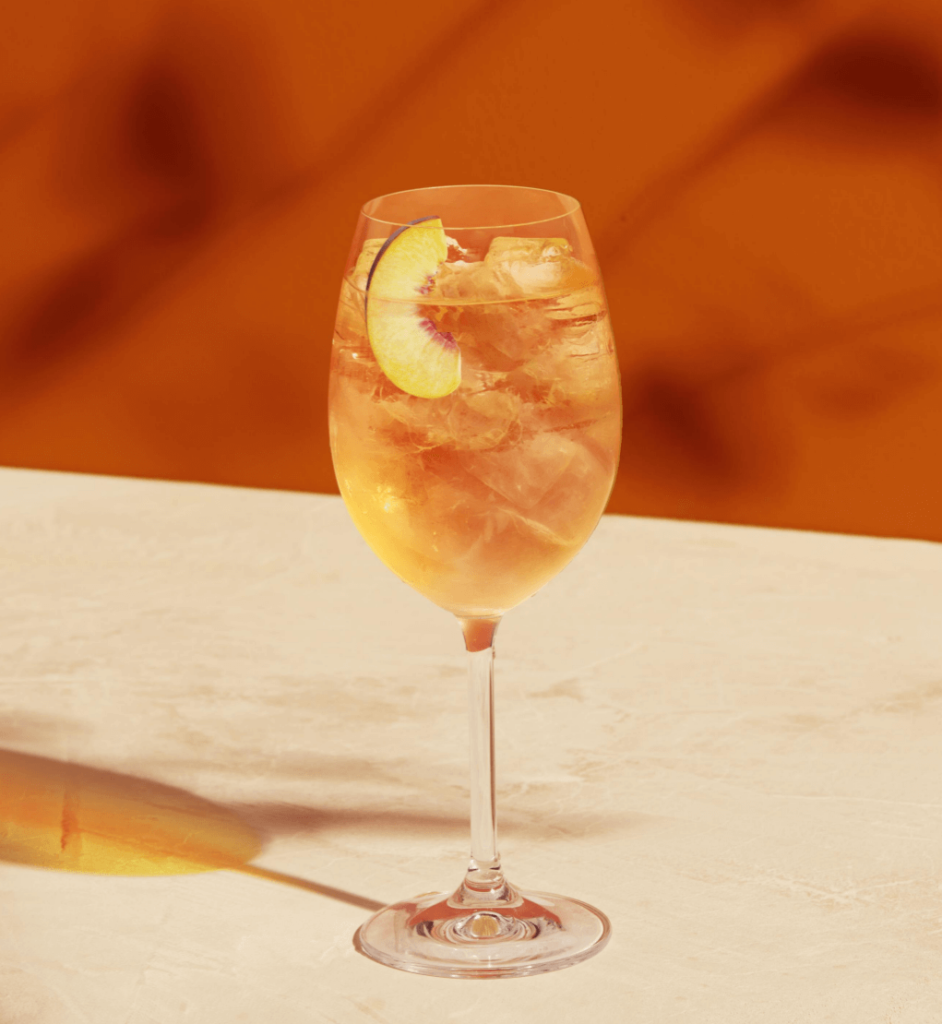
KRG Hospitality Start-Up Restaurant Bar Hotel Consulting Consultant Solutions Plans Services

by David Klemt David Klemt No Comments

2023 KRG Recap: Top 8 F&B Articles

2023 KRG Recap: Top 8 F&B Articles

by David Klemt

Closeup of eight ball on pool table

For the second entry into our annual year-in-review article roundup we’re revealing the top eight food, beverage, and menu development articles of 2023.

From ChatGPT and advice from Chef Brian Duffy to articles from KRG Hospitality chef-consultant Nathen Dubé and mindset coach Jennifer Radkey, the articles below cover a wide range of F&B topics.

There’s even a look at Chef Duffy’s time on Food Network’s show BBQ Brawl with barbecue tips from our favorite pit master. It’s one of our favorite articles of the year, as well.

Cheers!

Closeup of keyboard

Can ChatGPT Write Food and Drink Menus?

After my “conversation” last month with ChatGPT about AI, I had another conversation during which I asked it to write me four menus.

Of course, I did this to prove a point. And upon reviewing the ChatGPT menus, you’ll likely reach the same conclusion.

Curious about how creative the AI-powered chatbot could be, I asked for four specific menus. As you’ll see, two are cocktail specific, one focuses on food, and one is a 20-item F&B menu for a specific event.

So, yes, ChatGPT can write food and drink menus. But there’s a caveat. I could leave you in suspense but that’s not very nice. Let’s jump in.

Write me a cocktail menu using the most popular cocktails from 2022.

Cocktail Menu

  1. Aperol Spritz – Aperol, Prosecco, and soda water, garnished with an orange slice
  2. Old Fashioned – Bourbon, sugar, bitters, and a citrus peel
  3. Margarita – Tequila, triple sec, lime juice, and salt rim
  4. Daiquiri – Rum, lime juice, and simple syrup
  5. Moscow Mule – Vodka, ginger beer, and lime juice
  6. Paloma – Tequila, grapefruit juice, lime juice, and soda water
  7. Pina Colada – Rum, pineapple juice, coconut cream, and a cherry garnish
  8. Whiskey Sour – Bourbon, lemon juice, and simple syrup
  9. French 75 – Gin, Champagne, lemon juice, and simple syrup
  10. Mai Tai – Rum, orange liqueur, lime juice, and orgeat syrup

*All cocktails are served over ice, unless otherwise requested.

Write me a cocktail menu using the most popular spirits and alcohol types of 2022.

Cocktail Menu

  1. Gin and Tonic – Gin, tonic water, and a lime wedge
  2. Vodka Martini – Vodka, dry vermouth, and an olive garnish
  3. Bourbon Manhattan – Bourbon, sweet vermouth, and bitters
  4. Tequila Sunrise – Tequila, orange juice, and grenadine syrup
  5. Rum Runner – Rum, blackberry liqueur, orange juice, pineapple juice, and grenadine
  6. Whiskey Sour – Bourbon, lemon juice, and simple syrup
  7. Margarita – Tequila, triple sec, lime juice, and salt rim
  8. Daiquiri – Rum, lime juice, and simple syrup
  9. Long Island Iced Tea – Vodka, gin, rum, tequila, triple sec, lemon juice, and cola
  10. Pina Colada – Rum, pineapple juice, coconut cream, and a cherry garnish

*All cocktails are served over ice, unless otherwise requested.

Click here to keep reading.

Lynn House making Old Fashioned cocktails for Elijah Craig

Prepare Now for Old Fashioned Week

It may be nearly two months away but it’s not too early to register your bar and team for Elijah Craig Old Fashioned Week.

This year’s event, the fourth annual Old Fashioned Week, will take place from Friday, October 13 to Sunday, October 22.

As was the case in 2022, the Southern Smoke Foundation will be this year’s beneficiary. In 2020 and 2021, Elijah Craig Old Fashioned Week raised a combined $200,000 for the Restaurant Workers’ Community Foundation.

Just last year, to add context, Old Fashioned Week helped make it possible for Southern Smoke to provide nearly $110,000 in relief grants to food and beverage workers.

Those interested in participating this year can register their venue for free via this link. Create an Old Fashioned LTO menu—or simply make standard Old Fashioneds with Elijah Craig bourbon—and Elijah Craig will donate $1 for every Old Fashioned sold (up to $100,000).

There really couldn’t be a simpler way to deliver a fantastic, classic cocktail experience to guests while supporting a great cause.

Elijah Craig Old Fashioned Cocktail Contest

There’s more to Elijah Craig Old Fashioned Week. You and your bartenders have the opportunity to participate in a cocktail contest, too.

From now until October 31, anyone who wants to throw their hat in the ring can submit their recipe for their own signature Old Fashioned.

The winner of the Elijah Craig Old Fashioned Cocktail Contest will win $5,000. They’ll also have their winning recipe included in Elijah Craig’s 2024 cocktail recipe book.

Recipes can be submitted through this link. For contest rules and judging criteria, please click here.

To learn more about Elijah Craig and the Old Fashioned, check out episode 52 of the Bar Hacks podcast with special guest Lynn House.

Continue reading here.

Tortilla with beans, cotija cheese and egg

Canadian Trends 2023: Technomic

Restaurant, bar, and hotel operators will find this year’s data-driven trend predictions from Technomic for 2023 insightful.

Interestingly but perhaps not surprisingly, some operators may be looking beyond North America for inspiration.

Per Technomic, Central and South American cuisines could influence menus in Canada this year. Other food trends that might take hold are “retro” health items, and all manner of pickled foods.

Of course, not every Canadian trend prediction involves F&B. According to Technomic, tech and the guest experience will play important roles.

To review last year’s Technomic predictions, click here. Now, let’s jump into Technomic’s 2023 predictions.

Guest Experience

Certainly, the guest experience should always be top of mind for operators, their leadership teams, and their staff.

In this instance, Technomic isn’t suggesting that the guest experience in general will be a trend. Obviously, with as important as it is to the success of any business, it’s a cornerstone.

Rather, Technomic predicts that guests will continue to feel the need to rein in their spending due to ricing costs and prices. However, the foodservice research firm also believes there’s still heavy desire for social interaction.

So, both those financial and social influences translate to the following: overdelivery.

Operators and their teams must ensure they position their brands well; make guests feel special every visit; and really dial in the guest experience. Specifically, Technomic suggests focusing on younger generations and menus with at least a couple specialty items that aren’t easy for a guest to replicate at home.

In other words, do whatever it takes to entice guests with memorable experience and quality menu items, and keep them coming back for more.

Follow this link to continue reading.

Carrots, celery and onions

Kitchen Doctrine: The Holy Trinity

To some, the Holy Trinity refers to the Christian doctrine of the Father, the Son, and the Holy Spirit. But what’s the Cajun Holy Trinity?

Well, that’s a whole different story with which some people may not be as familiar. However, it carries equal weight in certain kitchens of the world.

Lending its name from religious credo, the Cajun Holy Trinity was developed in the state of Louisiana in the southern United States. Chef Paul Prudhomme gets the credit for introducing the term in 1981, along its popularization.

Cajun or Creole cuisine evolved from French, Spanish, and West African immigrants. French traditions blended into a melting pot of West African, Spanish, and Native American cuisines. The French and the Acadians (French colonists deported from Acadia in what is now Nova Scotia, Canada) both influenced Louisiana’s cuisine. The Acadians became known as Cajuns to English speakers, and thus Cajun cooking grew out of necessity in Louisiana.

Mirepoix 101

The French contributed two staples directly to Cajun and Creole cooking: roux-based cooking and the trinity of mirepoix, or onions, celery, and carrots. In Louisiana, however, carrots didn’t grow as easily as bell peppers. So, bell peppers, typically the more bitter green version, replaced them.

Some cooks were so bold as to add garlic to the Holy Trinity, referring to it as the Pope. Other variants use garlic, parsley, or shallots in addition to the three Trinity ingredients. Unlike the elaborate French dishes using mirepoix, the Holy Trinity is more symbolic of rustic, family-style meals.

These ingredients are the first to go into the pot or skillet, creating a flavorful foundation for gumbo, jambalaya, crawfish étouffée, and more. Often, by adding a bit of flour and whisking, a roux is built right on top of these sweet and colorful aromatics to form a thicker base.

The ratio is also overturned from the traditional mirepoix of two parts onion, one part celery, one part carrot, with three parts onions to two parts celery to one part bell pepper.

To learn more, click here.

Aubrey Plaza holding a Margarita made with Cointreau

Cointreau Wants to Know: Are You Making MargaRights?

Temperatures are rising and people are socializing, so Cointreau wants to make sure you and your team make Margaritas right.

In fact, they’re so serious about Margarita specs that they’re partnering with Aubrey Plaza educate the public. To celebrate the 75th anniversary of the Margarita, the iconic brand is launching the MargaRight campaign.

Challengers come and go but so far, the Margarita is the top cocktail in the US. This has been the case for many, many years. Of course, it’s also a popular cocktail around the world and has been number one in other countries as well.

Now that we’re a week away from the “official” start of summer, it’s paramount to make sure your Margaritas are MargaRight. For one thing, it’s the perfect summer sipper. For another, people are eager to socialize in restaurants and bars, and the Margarita is sure to join groups of friends as they hang out together.

But there’s another reason to ensure your Margs are on point: The wrath of Aubrey Plaza. More accurately, avoiding incurring Plaza’s wrath for putting MargaWrongs across your bar.

Margarita mix? Anger. No Cointreau? Fury.

To borrow a refrain from fanatics of another classic cocktail, it’s safe to say that Plaza would agree with, “No Margarita without Cointreau.”

The Original Margarita

Some, including Cointreau, support the belief that the Margarita’s creation traces back to 1948. For this origin story, Dallas socialite Margarita Sames is either the inventor of the Margarita or asked for a signature cocktail for a party she was hosting at her Acapulco home. Going further, another claim is that Tommy Hilton was a party guest and brought the recipe to Hilton properties, helping to make it famous.

Another claim is that the Margarita is simply a logical evolution of the Daisy. The mid-1800s tipple has a cocktail family named after it, and the Margarita, Sidecar, Cosmopolitan, and Daiquiri sprang forth from it.

Regardless of what origin story you choose to believe, Cointreau champions the original recipe: Cointreau, blanco tequila, fresh lime juice, and a lime wheel to garnish. It’s this classic recipe that Cointreau and Plaza are adamant about for the MargaRight campaign.

Click here to keep reading.

Chef Brian Duffy biting into a sandwich

BBQ Brawl: ‘Cue Tips from Chef Brian Duffy

Friend of the Bar Hacks podcast and KRG Hospitality Chef Brian Duffy is rocking it on season four of Food Network‘s BBQ Brawl.

And he’s dropping barbecue and cooking jewels while killing it on multiple styles of grill.

When we meet Chef Duffy on episode one of BBQ Brawl, he’s introduced as “The Renowned Restaurateur.” This makes sense given the fact that he has helped open more than 100 restaurants throughout his career.

Regarding grilling and barbecuing, Chef Duffy will use elements of whatever style he thinks will work best for a given situation. As he explains it, his barbecue “isn’t bound by the rules of any one style.”

I also want to point out that there’s what appears to be a 1950s-era Dodge Power Wagon, perhaps a Series 1 or Series 2 model, on Star Hill Farm, where this show was filmed. This isn’t relevant in any way to cooking, grilling, or barbecue. I’m just a Car and Motorcyle Guy® and I noticed the Power Wagon immediately.

Also, be sure to check out episode 33 and episode 53 of the Bar Hacks podcast to hear from the chef himself.

Alright, let’s check out some tips and tricks from Chef Duffy that he has shared on season four of BBQ Brawl. Like he said to the camera in the first moments of episode one, “Students, meet your pit master.”

Episode 1

If you want your food to be charred, you need to commit.

“You’ve gotta let it sit. Don’t move it,” says Chef Duffy. “Let that char happen.”

It’s just that simple. Patience is a cooking technique.

Dishes

Signature Tacos

  • Mulita, a Mexican street taco made by dipping a tortilla in birria broth.
  • Togorashi- and ancho-chili-smoked red Snapper taco with “a fun little slaw.”

Team Challenge: “California Smoke” menu (Fire delivery: Santa Maria grill)

  • Cabbage, kale, Swiss chard medley with beans
  • Scallops and smoked crab salad with preserved lemon gremolata and avocado (collaboration with Chef Larissa Da Costa; Chef Duffy prepared the smoked crab salad)

For much more, keep reading here.

Chef Brian Duffy holding a plate with a plant-based shrimp po' boy sandwich on it

The New Wave of Plant-based Foods

A key takeaway from the 2023 National Restaurant Association Show is this: a new wave of plant-based foods has made landfall.

In fact, given how many booths had plant-based items on offer, more waves will be crashing ashore. Plant-based items had a presence inside every building at McCormick Place in Chicago. For those who haven’t attended to show, McCormick Place has well more than two-million square feet in exhibit space.

There were, of course, the plant-based standards to which we’ve all grown accustomed. Burger patties, breakfast sausages, “chicken” nuggets, “pepperoni” pizzas… However, we now know there’s more innovation on the way.

Years ago, F&B experts declared seafood alternatives as the “holy grail” of plant-based foods. The race has been on to “crack the code” and offer seafood alternatives that look, cook, and taste like their animal counterparts.

One brand that appears to have reached their goal? New Wave Foods. And their staunchest culinary supporter? The revered and iconic Chef Brian Duffy.

Seismic but Sensible Shift

Those who are familiar with Chef Duffy know he’s unafraid to share his views on all things culinary, service, operations, and hospitality. The same people also know that he’s demanding when it comes to ingredients, distributors, and partners.

I say that to say this: Some people are shocked Chef Duffy is championing a plant-based food. However, I don’t share that reaction. Chef Duffy has never been anti-plant-based—he has been waiting for plant-based items to rise to his high standards.

During his 2023 NRA Show demo, the acclaimed and in-demand chef made shrimp-fried rice. Of course, he replaced shrimp with a plant-based alternative produced using mung bean and seaweed. That product is New Wave Foods Shrimp.

The demo proved so engaging that Chef Duffy was asked to repeat it on the final day of the show. I, for one, am not surprised—Chef Duffy is an incredible speaker and chef.

This seismic shift—not just in Chef Duffy’s embrace of plant-based foods but also throughout the industry—is sensible when you consider something said during the demo.

Boiling it down to the basics, Chef Duffy asked why operators wouldn’t want to offer high-quality plant-based items to their guests. It’s simple: Increasingly, this is what guests want. So…give it to them.

Continue reading here.

Chef pouring espagnole or brown sauce

Say Hi to Your Mother Sauces for Me

A well-crafted sauce can elevate a dish, tying all the elements together, adding richness, texture, and colour to almost any recipe.

French cuisine in particular is renowned for its liberal use of flavorful sauces. Developed in the 19th century by French chef Auguste Escoffier, the five mother sauces are basic recipes that serve as the foundation for any number of secondary sauce variations. Each mother sauce is categorized primarily according to its unique base and thickener.

The five French mother sauces are: béchamel, velouté, espagnole, hollandaise, and tomato. Historically, Chef Escoffier originally designated only four mother sauces, and mayonnaise as a cold mother sauce, with Hollandaise below that.

Interestingly, when his book was translated to English, mayonnaise was forgotten or omitted; Hollandaise was listed as the fifth mother sauce.

Beginning culinary students and experienced cooks alike commit these five sauces to memory. They learn that by tweaking their basic formulas, all manner of great sauces can be crafted.

Please meet the five mother sauces below. I explain: how each is made; their basic uses; and some secondary sauces you can make from them.

1. Béchamel

Béchamel, or white sauce, is a simple milk-based sauce made from butter, flour, and milk.

You know béchamel as the white sauce that gives chicken pot pie its texture, or as the vehicle of cheesy goodness and binding agent in delicious mac ‘n’ cheese creations. The sauce can be found in everything from scalloped potatoes and lasagne to gravy iterations.

In classical cuisine, béchamel was poured over fish, eggs, or steamed chicken. While béchamel has a generally neutral taste on its own, the classic mother sauce adds a unique creamy texture that is both hearty and comforting.

My personal favorite base recipe is Joel Robuchon’s equation of one liter of milk, 60 grams of butter, and 60 grams of flour. It works perfectly every time.

To make béchamel, start by cooking butter and flour in a saucepan until it forms a substance called a roux. The roux is responsible for thickening the sauce. To remove the floury taste, cook the roux over medium heat for a few minutes.

When the roux is ready, slowly whisk in warm milk and simmer until it forms a creamy sauce. Strain the liquid after it thickens to get rid of any sediment, then add salt and pepper. (You can add other ingredients as well, such as bay leaves, nutmeg, onion, clove, or even cheese.)

With the addition of a few extra seasonings like salt, pepper, and cloves, béchamel is complete — though it may be used as a base for many other sauces.

Béchamel sauces include:

  • Mornay: onion, cloves, Gruyère, and Parmesan cheese
  • Alfredo: garlic with heavy cream
  • Soubise: butter and caramelized onions
  • Cheddar sauce (used for mac ‘n’ cheese or nacho-style sauces): whole milk and cheddar cheese

For more sauces and insights, click here.

Image: Alex Lion on Unsplash
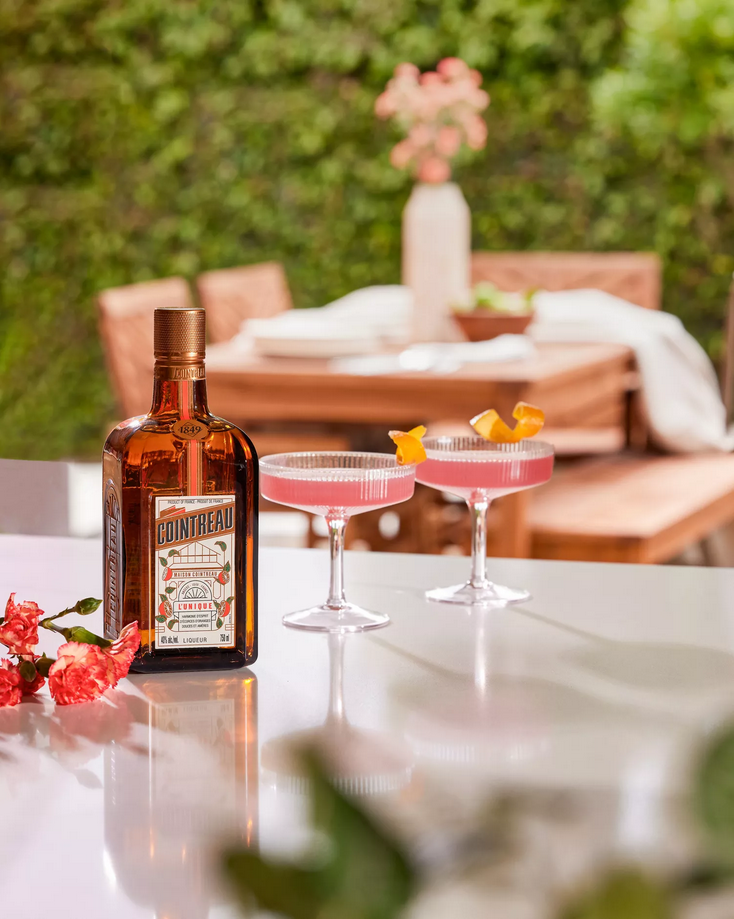
Bar Nightclub Pub Brewery Menu Development Drinks Food

by David Klemt David Klemt No Comments

2023 KRG Recap: Top Bar Hacks Episodes

2023 KRG Recap: Top Bar Hacks Episodes

by David Klemt

Gold number 10 on a teal or aqua background

For your listening pleasure and convenience we’ve rounded up the top ten Bar Hacks episodes of 2023, also known as season four of the podcast.

Every year we reflect on the caliber of the guests who take time out of their busy lives to come onto the podcast. And every year we’re grateful for the honor of helping to share their stories and insights.

Below are the top ten Bar Hacks episodes of 2023. We’re presenting them in numeric order—no playing favorites here! To make it easy to enjoy these conversations, we’ve embedded the Spotify version of each episode.

And if you’re curious, these ten only just edge out the rest of this year’s episodes. We thank our loyal listeners for giving all of our guests and episodes a listen.

Cheers!

Episode 89 with Doug Radkey

Doug Radkey, co-founder and president of KRG Hospitality, stops by the Bar Hacks podcast. Not only is Doug the co-founder and president of KRG, he’s also the author of the book Bar Hacks and its followup Hacking the New Normal, and the creator of the Bar Hacks podcast.

During his visit, Doug and David talk about their expectations for 2023, what KRG is working on in the new year so far, the importance of technology in hospitality, and dynamic pricing versus dynamic menus. Doug also shares his thoughts on what operators can work on starting today to position themselves for success in 2023 and beyond.

Episode 90 with Mark Sansom

Mark Sansom, content director for the World’s 50 Best Bars, drops by the Bar Hacks podcast to share some big news. After years of dialing in the process and waiting out the pandemic, the World’s 50 Best Hotels will be revealed at a ceremony in September 2023! If you haven’t watched or attended a World’s 50 Best Bars ceremony, they truly take great pains to ensure they’re the Oscars of bar awards. So, we expect the World’s 50 Best Hotel awards ceremony to blow us out of the water.

This list and its accompanying specialty awards completes the hospitality and travel puzzle. Restaurants and bars, after all, are inextricably intertwined with hotels and resorts. Mark shares the details of the World’s 50 Best Hotels Academy Chairs, voting panel, and voting process in this episode. As a bonus, you’ll also get to hear host David Klemt try and fail to say “inaugural awards” without any issue!

Episode 93 with Adrián Michalčík

In September 2022, Adrián Michalčík earned the title of Diageo World Class Global Bartender of the Year. Colloquially, this achievement is known as the Best Bartender in the World. That’s a bold and weighty mantle but as you’ll learn during this conversation, Adrián is humble and focused on his team and guests.

Adrián is the director of mixology at the award-winning Pier 42 inside the Amerikalinjen hotel in Oslo, Norway. The bar has been recognized by the World’s 50 Best and has won Best Bar of Norway twice. In addition to taking home the title of 2022 Diageo World Class Global Bartender of the Year, Adrián has won several bartending competitions throughout the years.

He popped by the Bar Hacks podcast to chat with host David Klemt about his bartender journey. Adrián has worked in several types of bars and each helped him develop the skills that allowed him to elevate his skills behind the bar. Mentors, his endless quest for knowledge, his passion for hosting others, and his focus on empathy have informed his approach to team building, delivering top-level hospitality, and tapping into his creativity to develop Pier 42’s cocktail menus.

Adrián shares the three pillars he believes great bars are built upon, what he looks for in bar team members, transforming people from guests to friends, the importance of storytelling, and much more.

Episode 95 with Bob Peters

We know it’s been a few weeks. Between client projects and trade shows we had to take a little break. But we’re back!

And to make our absence up to you, our loyal listeners, we’re bringing you a great chat with an awesome guest. Bob Peters returns to the Bar Hacks podcast for episode 95!

Bob has big news to share, and you can hear in his voice how excited he is to share it with everyone. He’s taking on the perfect role. In fact, he calls it his dream job during this episode. Cocktails and cuisine are about to get even better in North Carolina and South Carolina…

But it doesn’t stop there! Bob also shares his approach to bar training to make sure everyone is engaged; his assessment of the Charlotte dining and drinking scene; a simple step all restaurants and bars can take today to improve operations, team engagement, and the guest experience; a very cool project he’s taking on; and more.

Episode 97 with Dragos Axinte

Dragos Axinte, the founder of Novo Fogo Organic Cachaça, returns to the Bar Hacks podcast. Axinte and Novo Fogo have been very busy since, his first appearance on the pod.

On this episode, Axinte shares the details and stories behind three important Novo Fogo initiatives and partnerships: Tree-keeper, with Seattle Sounders goalkeeper Stefan Frei, the Un-endangered Forest, and the brand’s new Chief Alegrias Officers (ChAOs), Sophie Hawley-Weld and Tucker Halpern, also known as SOFI TUKKER.

The two also discuss Axinte’s approach to partnerships—a philosophy that will serve operators and entrepreneurs very well—as well as distillers “discovering” amburana wood finishing. And, of course, Axinte shares product news and insights. If you’re headed to Tales of the Cocktail this year, you’re in for some incredible news. This conversation spans several topics and Axinte always imparts wisdom when he speaks in approachable and helpful ways.

Episode 99 with Michele Mariotti

Bartender Michele Mariotti leads an illustrious career. He has worked behind the bars at some of the best hotels around the world, including the Savoy in London and Mandarin Oriental in Singapore.

As of 2020, Michele has held the title head of bars at the Gleneagles Hotel in Perthshire, Scotland. In this role, he heads the programs at 11 F&B venues on the property, overseeing dozens of bar professionals.

On this episode, Michele and Bar Hacks podcast host David Klemt talk about mentorship, interviewing potential bartenders, menu development, using a flavor map when assigning new cocktail builds to bar team members, finding inspiration, interesting hotel guests, bespoke glassware, investing in platforms and programs that boost staff retention, and more.

Episode 101 with Ryan Chetiyawardana a.k.a. Mr. Lyan

Ryan Chetiyawardana, also known as Mr. Lyan, is one of the bar world’s true visionaries. He opened his first bar, White Lyan, in 2013 and the venue immediately achieved its intended purpose. Beyond being an award-winning bar and one of London’s best places to grab a drink, White Lyan started a much-needed conversation about sustainability in the industry.

Dandelyan, Lyaness, Super Lyan, Cub, and Silver Lyan would follow shortly after, making an even bigger splash not only in London but also Amsterdam and Washington, DC. All Mr. Lyan venues, while showcasing incredible innovation, accomplish something just as important: each bar is a place people to want to spend their time and money, and where professionals want to work.

During this fantastic conversation, Ryan shares insights into the menu programming processes at each venue; discusses seasonality; provides a look into hiring and engaging each team; the reissue of his book and his foray into the RTD cocktail space; and much more. Cheers!

Episode 102 with Jordan Bushell

Thank you for being patient during our summer hiatus. We’re back with a great conversation with an awesome guest.

Global Hennessy brand ambassador Jordan Bushell returns to the Bar Hacks podcast. While Jordan may know people with more Cognac knowledge, we don’t know anyone who knows more about this spirit category. More importantly, he’s as generous with his time as he is knowledgeable about Cognac. If you have a question about the spirit of Hennessy you can reach out to him and he’ll answer you.

On this episode of Bar Hacks, Jordan talks about special Hennessy releases, initiatives, collaborations, and what sets the maison apart from others in the Cognac region of France. He also talks about how operators can introduce guests to Cognac and Hennessy, including paying attention how they price their menus. Cheers!

Episode 104 with Simone Caporale

Simone Caporale, an internationally renowned bartender and operator, swings by the Bar Hacks podcast to talk spirits, branding, the guest experience, and operations.

Noticing a gap in the industry and seeing a way to lend his expertise to help grow spirits brands, Simone and Luca Missagli founded Cocktail Concierge, a brand-building agency focusing on craft spirits brands. One of the most recent brands Cocktail Concierge has helped introduce to the world is Amaro Santoni.

Of course, Simone is also one of forces behind SIPS Drinkery House, number three on the World’s 50 Best Bars list, and the World’s Best Bar according to Tales of the Cocktail. Simone shares his thoughts on what he thinks makes SIPS so successful, why he views service as a privilege, three tips operators can implement today to plant the seeds for long-term success, and more!

Episode 107 with Anne Becerra

When it comes to curating a beer program, creating a complementary cocktail program, and delivering an incredible beer program, we can’t think of anyone better than Anne Becerra. And lucky for us, she stopped by the Bar Hacks podcast!

Anne is the first female Certified Cicerone in New York City and has been working in beer for more than a decade. More importantly, however, she’s as passionate as she is educated about beer. Anne’s also passionate about hospitality, which comes across in this conversation. Truly, she loves hospitality, the beverage world, and how the two pair to make people feel amazing.

On this episode Anne talks introducing guests to beer; serving beer aficionados, beer neophytes, and the beer wary; how to make guests feel comfortable in a beer-centric concept; what she’s excited about in the beer world; tips for operators who want to succeed with a beer-forward venue; and much, much more. Cheers!

Image: Miguel Á. Padriñán on Pexels

KRG Hospitality. Bar Consultant. Nightclub. Lounge. Mixology. Cocktails.

by David Klemt David Klemt No Comments

KRG Releases 2024 Start-Up Guide

KRG Hospitality Releases 2024 Restaurant Start-Up Cost Guide

by David Klemt

2024 KRG Hospitality Start-up Costs Guide

KRG HOSPITALITY RELEASES SIXTH ANNUAL RESTAURANT START-UP COST GUIDE

Toronto-based hospitality industry consulting firm with offices in key markets throughout Canada and the United States of America unveils their latest restaurant cost guide and interactive hospitality calculator.

December 21, 2024 (TORONTO)—Today, KRG Hospitality releases their 2024 Bar & Restaurant Start-up Costs Guide, which is free to download. The Toronto-based consulting firm specializes in startup restaurant and bar projects along with boutique hotels, experiential concepts, and entertainment venues. KRG Hospitality’s American headquarters is located in Las Vegas, Nevada.

For the past six years KRG has researched, reviewed, and published the annual start-up cost guide, one of the industry’s leading resources dedicated to restaurant project costing.

And each year this informative and transparent guide is used as a trusted budgeting tool by developers, lenders, contractors, consultants, and aspiring restaurateurs. The guide is founded upon KRG Hospitality’s proprietary database of previous project costs, which includes project data from restaurants, bars, and cafes developed over the past 24 months.

Further, this annual KRG Hospitality guide also includes the interactive KRG Hospitality Calculator, which is updated for 2024.

The costs to start a restaurant have been on a steady rise over the past six years. Major drivers are increases in inflation, interest, labor, construction, and equipment. Of course, there are also the unique materials required to deliver a scalable, sustainable, memorable, profitable, and consistent on-premise, off-premise, or hybrid-style concept.

Drawing upon this comprehensive guide, an industry-leading expert has analyzed the information and provided a succinct and user-friendly summary of the findings for each major start-up category. This isn’t simply a couple of pages identifying a few costs. Rather, the sixth annual guide is a deep dive that provides real insight into what to expect in 2024.

The guide is available now as a free download via this link.

About KRG Hospitality

KRG Hospitality is a storied and respected agency with proven success over the past decade, delivering exceptional and award-winning concepts throughout a variety of markets found within Canada, the United States, and abroad since 2009. Specializing in startups, KRG is known for originality and innovation, rejecting cookie-cutter approaches to client projects. The agency provides clients with a clear framework tailored to their specific projects, helping to realize their vision for a scalable, sustainable, profitable, memorable, and consistent business. Learn more at KRGHospitality.com. Connect with KRG Hospitality and the Bar Hacks podcast on social: KRG Twitter, Bar Hacks Twitter, KRG Media Twitter, KRG LinkedIn.

Disclaimer

While using this guide helps develop a rough preliminary financial and strategic milestone plan, it is strongly recommended that you seek professional expert advice to provide you with a more precise, project specific estimate as each concept and market will be slightly different. KRG Hospitality Inc. is not responsible for any project that is not currently under contract within the company.

Image: KRG Hospitality

KRG Hospitality Start-Up Restaurant Bar Hotel Consulting Consultant Solutions Plans Services

by David Klemt David Klemt No Comments

Transactional vs. Experiential Service

Is Your Business Transactional or Experiential?

by David Klemt

Gloved chef's hand pressing down on cheeseburger bun

When you consider your restaurant or bar honestly, is the service you and your team are providing to guests transactional or experiential?

It’s an important distinction, and it applies to every restaurant and bar category. Whether operating a QSR or FSR, today’s guests want more for more their money.

Further, they expect more just for choosing to leave their homes. A recent report from CWB Franchise Finance, in partnership with Circana and fsStrategy, indicates strongly that experiential concepts are on the path to weathering economic challenges and achieving long-term success.

Now, to be clear, of course all businesses are transactional. In that regard, restaurants and bars are clearly no different from other businesses.

Guests come in, they place orders, and they pay for the goods they receive. Transactional, right?

However, restaurants and bars are in a position to deliver memorable experiences.

Sure, for some people those memories are fleeting. There are those who are always seeking the next thing. But operators who become known for providing more than just menu items will remain on the radar of even the most fickle guest.

When a restaurant or bar delivers goods plus phenomenal services, when the guest experience involves more than just ordering and paying, it becomes experiential.

Think back to the times this year you’ve popped into a QSR or fast-casual restaurant. Can you remember much about the experience? If yes, fantastic—that operator understands the power of an experiential business model. Should the answer be no, that operator sees value only in being transactional.

Which are you happy to return to in the future?

Experience is King

I’m going to assume you’re much happier to return to an experiential concept than a strictly transactional one. And if that’s a correct assumption, you should apply that to your own restaurant or bar.

According to studies Circana has conducted over the past couple of years, Canadian consumers are reacting to economic uncertainty and financial instability as one would expect: cutting back on discretionary spending.

Generally speaking, that means reducing their spending at restaurants and bars. However, there’s a bit of good news tucked into those Circana studies.

Per Circana, half of Canadians plan to increase spending on something in particular: experiences. Further, 91 percent of Canadians say they’ve spent money at experiential restaurants recently.

“A restaurant visit isn’t necessarily just about nourishment, but instead is a platform for socializing, entertainment and exploration,” reads the joint CWB, Circana, and fsStrategy report.

Importantly, an operator need not go to extremes to deliver an experience. Something as simple as creating an LTO around craveable drinks can pay huge dividends. For proof of that, simply look at McDonald’s in the US and the hype that surrounded the berry-flavored Grimace Shake.

Operators throughout Canada and around the globe need to understand how impactful being experiential can be.

Takeaway

It’s true that operators are competing against one another. However, it goes deeper than that now.

Operators are also battling convenience and comfort. Between working from home, pandemic-induced isolation, and technology, people are used to staying in and ordering whatever they want.

So, not only are operators faced with the challenge of standing out from one another, they’re up against the phones in people’s pockets.

For many people, choosing to leave home to dine and drink in person is a big deal. To some, restaurants and bars are about celebrating special occasions or socializing. For others, the motivation is as simple as the need to finally get out of their home.

It’s imperative, therefore, for operators to be more than transactional. Being experiential, whether the experience is small but impactful or over the top and unforgettable, is the way forward.

Restaurants and bars that deliver a memorable experience are better positioned to remain top of mind for a guest’s future in-person visits, delivery and takeout orders, and large-party special events. Don’t think of being experiential just in terms of nailing each visit, think of elevating the guest experience to capture future business.

A focus on the experiential builds loyalty from existing guests, and it encourages those guests to become ambassadors of your brand. Ask what you can do with your menu, team, and space today to become more experiential than transactional.

Image: Thiago Miranda on Pexels

Bar Nightclub Pub Brewery Marketing Agency Team

by David Klemt David Klemt No Comments

Indies: Which Cities Lead the Way?

Independents: Which Cities Lead the Way?

by David Klemt

Aerial view of Chicago skyline and Lake Michigan coastline

The majority of the top ten indie restaurants on the Restaurant Business Top 100 Independents ranking are in two American cities.

Those two cities are Miami Beach, Florida, and Chicago, Illinois. While Miami Beach claims two spots among the top three, Chicago has the most restaurants in the top ten. However, the top three indies are all in Florida, with number two being the Boathouse in Orlando.

So, Florida and Illinois are home to nearly the entire top ten of Restaurant Business’ Top 100 Independents. That’s impressive.

What’s even more impressive is the combined annual sales figure of the top ten: $333.4 million. Now, let’s separate Miami Beach. The three indies in the Florida city generated nearly $114 million themselves. Chicago’s four indies among the top ten generated $118 million.

Taken together, the top 100 indies generated $1.95 billion.

All told, 14 of the top 100 indies as ranked by Restaurant Business are in Chicago. Five are in Miami Beach, and five are in Miami. Before I move on, no, Miami Beach and Miami aren’t the same city; they’re entirely separate municipalities. In total, 16 restaurants on this list are in Florida.

New York boasts 15 restaurants on the list. Four are in San Francisco, and just two are in Los Angeles. However, California claims 15 restaurants in total.

However, as you’ll see below, this Restaurant Business list consists of more than just the usual big cities.

Restaurant Business Top 100 Independents: The Top Ten

Below, the top ten independent restaurants, per Restaurant Business.

  1. Joe’s Stone Crab Restaurant (Miami Beach, Florida)
  2. The Boathouse (Orlando, Florida)
  3. Komodo Miami (Miami Beach, Florida)
  4. Maple & Ash Chicago (Chicago, Illinois)
  5. Mila (Miami Beach, Florida)
  6. Sierra Mar (Big Sur, California)
  7. Gibsons Bar & Steakhouse (Chicago, Illinois)
  8. Gibsons Italia (Chicago, Illinois)
  9. Alexxa’s (Las Vegas, Nevada)
  10. Alinea (Chicago, Illinois)

Alinea commands the highest average check among the top ten, at $650. The most reasonable is the Boathouse, averaging $45.

Interestinglyand perhaps logicallythese two restaurants find themselves in the inverse when it comes to annual meals served. The Boathouse serves the most: just over one million. And Alinea, among the top ten indies, serves the least: nearly 45,700.

Notably, when we move on to numbers 11 to 20, Las Vegas, Miami, and New York account for six restaurants.

However, it’s also notable that it’s not just the usual big cities with restaurants on this list. Smaller cities, such as Frankenmuth in Michigan, are home to some of America’s top-performing independent restaurants.

For some context, Frankenmuth has a population of less than 5,200 people. However, Michigan’s “Little Bavaria” draws three million tourists per year. So, it’s no surprise that Zehnder’s Restaurant generates more than $19 million in annual sales.

Restaurant Business Top 100 Independents: The Bottom Ten

Just for fun, let’s take a look at the bottom ten on the Restaurant Business list.

  1. Siena Tavern (Chicago, Illinois)
  2. Fleet Landing Restaurant & Bar (Charleston, South Carolina)
  3. Electric Lemon NY (New York, New York)
  4. Bar Siena (Chicago, Illinois)
  5. El Vez (Philadelphia, Pennsylvania)
  6. Mi Vida (Washington, DC)
  7. Scoma’s Restaurant (San Francisco, California)
  8. Mexican Sugar (Las Colinas, Texas)
  9. The Shed Barbecue & Blues Joint (Ocean Springs, Mississippi)
  10. Chef Adrianne’s Vineyard Restaurant and Bar (Miami, Florida)

Adding context, these ten restaurants have generated $114.6 million in annual sales. That’s roughly the same amount of annual sales as the three restaurants in Miami Beach in the top ten.

Each of the “bottom” ten has annual sales ranging from $11.2 million to $11.9 million.

Takeaway

We all know the following axiom: “Location, location, location.”

It’s tempting to assume this means a business must be in a major city. That’s a woeful oversimplification. Myriad considerations must be made when looking at a market, whether the population is in the hundreds or millions. Assuming a concept will drive traffic and generate millions of dollars solely because it’s in a major city is foolish.

Let’s take another look at Zehnder’s in Frankenmuth. The restaurant, number 47 on the list, generated $19.2 million in annual sales. Moreover, it’s in a town with a population under 5,200.

Number 46 generated $19.3 million and is in (on?) Waimea in Hawaii. Number 48 boasted annual sales of $19 million and is in a city with a population of almost 2.7 million: Chicago.

Clearly, tourism a key contributing factor to the success of Zehnder’s. Not population, not the demographics of the permanent residents, not big-city status.

So, what about check average? Alinea, number ten, has the highest at $650 and generated $28.3 million in sales. However, the Spot, number 85, has an average check of $18 and generated $12.3 million.

The success of any restaurant, bar, nightlife or eatertainment concept doesn’t come down to a single element. What sets a concept apart is a deep understanding of a specific market, the surrounding markets, “sister” sites and competitors, guest desires and expectations, and so much more.

How does an operator come to understand their operation and their market? A feasibility study to start. Then comes a thorough, coherent concept plan and a complete business plan, and an obsession with data.

Operators who put in the work to attain strategic clarity have the potential to earn their way onto the Top 100 Independents list.

Image: Cameron Casey on Pexels

Bar Pub Brewery Nightclub Club Nightlife Business Plan

by David Klemt David Klemt No Comments

Two New Review Platforms You Need to Know

Two New Review Platforms You Need to Know

by David Klemt

Person looking at restaurants on a map on their phone

Operators should be aware of two new review platforms that will help people discover their restaurant, bar, nightclub, or eatertainment venue.

At this point, we’re all aware of the mainstream review sites. Google, Yelp, OpenTable, Tripadvisor… Whether viewed as a helpful discovery tool or nuisance, each is a well-known player.

Well, there are new platforms on the scene. Importantly, each one is putting their own stamp on how people review venues and discover new experiences.

For example, I wrote about a new platform that rejects negative reviews a few weeks ago. It’s Good “believe[s] a restaurant rec from 1 trusted friend is more valuable than recs from 10,000 strangers.”

The founders, including Kevin Auerbach (former Apple), Meghan Raab (former Snap), director and photographer Mike Rosenthal, and songwriter and performer John Legend, have also eschewed the standard star rating.

So, that’s one modern-day take on the review platform. Now, two others.

Atmosfy

By now, most people are aware that video content outperforms static photography on social media. In other words, people engage more with video.

That’s not to say that static photography is obsolete. Rather, when it comes to discovery, video appears to be king at the moment.

Enter: Atmosfy.

This platform is all about video reviews. In fact, their website reads, “A video is worth a thousand pictures.” Restaurant, bar, nightlife, and eatertainment operators should see the value in users showing off their experiences via video.

In addition, users get access to a personal map. They can bookmark places they’ve been and want to go, and share their experiences so others can discover them.

And with $12 million in seed funding from Redpoint Ventures and other venture capital firms, operators can be certain this is no flash in the pan. In fact, Atmosfy supports in excess of one million businesses in over 10,000 cities in more than 150 countries.

Recs

First, the T-rex mascot of this platform is pretty cool.

Second, Recs takes a similar approach to It’s Good. However, the founders, Jesse Berns and Sean Conrad, have put their own spin on review platforms.

Like It’s Good, Recs sees far more value in recommendations from friends than strangers. Also, there’s no star rating system, nor will users find negative reviews.


View this post on Instagram


A post shared by Recs (@getrecs)

Another interesting detail: Users aren’t able to leave anonymous reviews. This is because Recs is built for recommendations among friends. Were a user to be anonymous, they wouldn’t be discoverable to friends, and therefore they’d be leaving recommendations to…nobody.

However, the most important element of Recs (arguably) is that users either recommend a place or they don’t.

So, in theory, if a business is blowing the guest experience, they won’t even be discoverable on Recs because nobody will be recommending it. At least to a specific core of users, that business won’t exist in their world on Recs.

As far as the Recs user experience, people save venues as “recommend” or “wanna go.” Users find their friends, share their lists, and discover new places to try by checking out their friends’ lists. A simple, straightforward way for people to eat, drink, and hang out together throughout a city.

Takeaway

Simply put, an operator needs to know how people are discovering their business. Operators need to meet guests where they are, which means online.

So, operators need to know about new platforms. When sending a post-visit surveyit doesn’t need to be lengthy—operators should ask how guests learned about their venue. This is one way to stay up to date on social media and review sites.

A comprehensive and effective marketing strategy includes review and discovery platforms. Certainly, operators ignore discovery tools at their peril.

Image: abillion on Unsplash
Bar Pub Brewery Nightclub Club Nightlife Brand Identity

Top