Supper club

by David Klemt David Klemt No Comments

Celebrate 75 Years of the Margarita

Celebrate 75 Years of the Margarita

by David Klemt

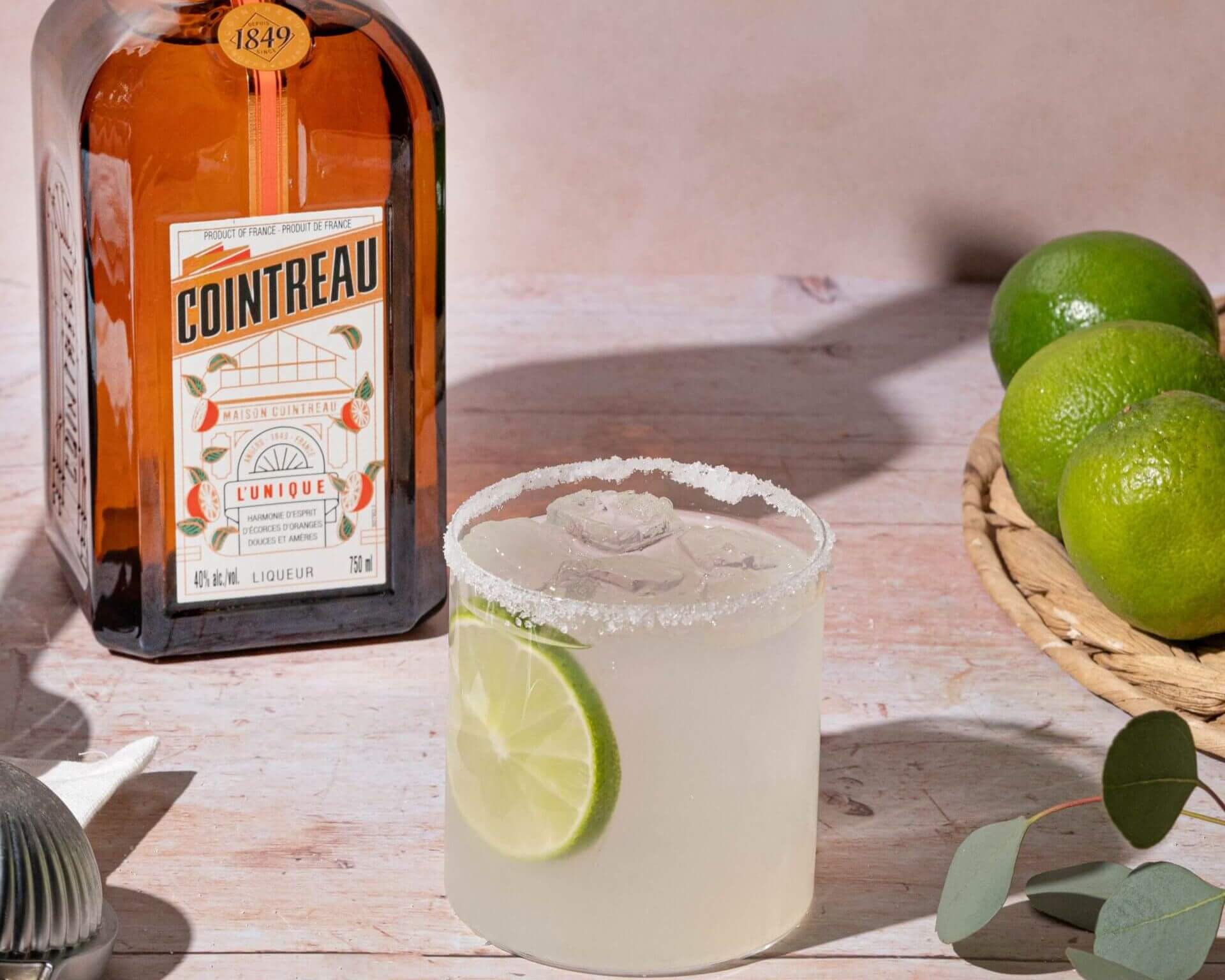
Classic Cointreau Margarita in landscape orientation

Cointreau is inviting you and your guests to celebrate the 75th anniversary of one of the most iconic cocktails on the planet: the Margarita.

That’s not hyperbole, by the way. While the cocktail is famously number one in the US, it’s also the top tipple in a number of other countries.

Focusing on the US, the Margarita certainly sees challenges to the cocktail throne. The Manhattan, Moscow Mule, and Martini have all taken shots at wearing the crown. In fact, the Martini is, as of 2022, sitting in the number two position.

So, there’s an excellent chance that right now, none of what I’ve written underneath the first sentence has registered with a certain type of reader. Declaring that 2023 is the 75th anniversary of the Margarita may have some people apoplectic right now.

Why’s that? Well, it’s because I’m implying that the origin of the Margarita is settled history. This is something that I love about cocktails: the origin stories of the classic cocktails. With few exceptions and modern cocktails, most cocktail origins are shrouded in mystery. Personally, I enjoy the fact that a single drink can give us so many stories and so much to argue about.

Cointreau believes the Margarita can be traced back to Acapulco. The story goes that Margarita Sames, a Dallas socialite, either requested a signature cocktail or created one herself for a party at her vacation home in Mexico. It’s said that her favorite spirits were tequila and Cointreau. As legend has it, Tommy Hilton was partaking in the festivities in Acapulco and enjoyed the cocktail. He added it to the menus at Hilton properties and there you have it—the Margarita started its journey toward securing the cocktail throne.

75 Years

We celebrate the Margarita on February 22 each year. However, the opportunity to showcase your Margarita(s) doesn’t end there.

One of these opportunities is coming up: Cinco de Mayo. This year, May 5 falls on a Friday. That gives you an entire weekend (or week leading up to the weekend of May 5) to feature an LTO menu of Margaritas.

Celebrating the Margarita also gives you and your teams the chance to upsell guests via premium, super-premium, and ultra-premium tequila options.

However, you and your guests can start celebrating this classic today via the Cointreau Margarita Pledge. Simply point guests who order a Margarita made with Cointreau to this website and they’ll have the chance to win a portion of $75,000. Each winner will be awarded $20 by Cointreau to help them celebrate Cinco de Mayo with a Margarita.

Of course, your front-of-house team should also encourage guests to snap a photo of their Margaritas and tag your restaurant or bar (and Cointreau) when posting to social media.

Below, you’ll find three Margarita recipes from Cointreau, along with an alcohol-free recipe. Cheers!

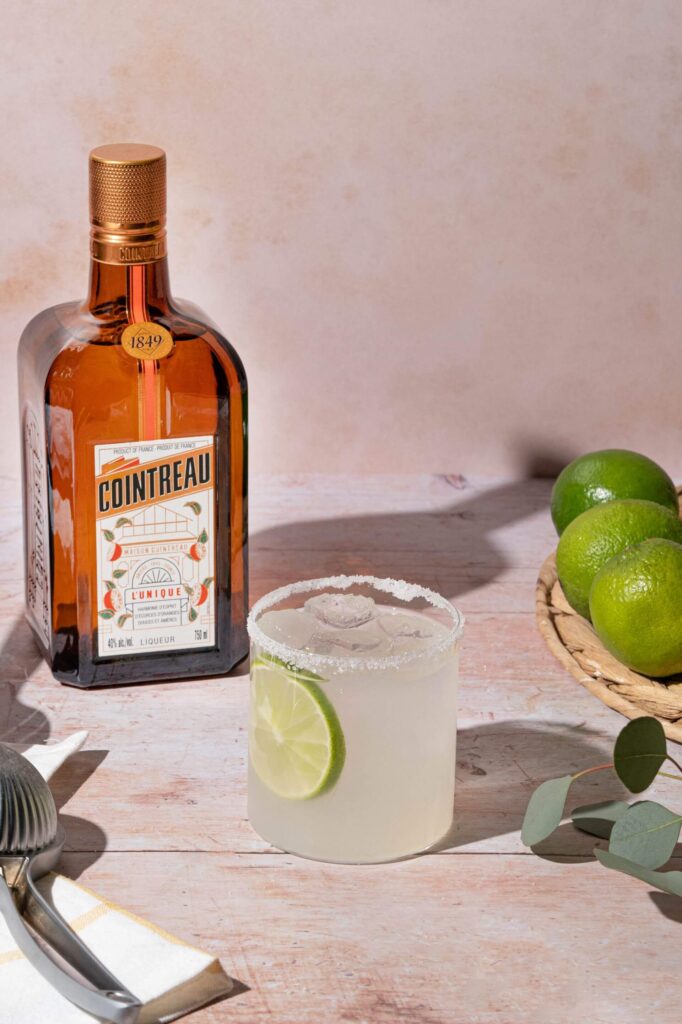
The Original Margarita by Cointreau

The Original Margarita

  • 1 oz. Cointreau 
  • 2 oz. Blanco tequila 
  • 1 oz. Fresh lime juice 
  • Lime wheel to garnish

Combine all ingredients in a shaker and add ice. Shake and strain into a salt-rimmed rocks glass. Garnish with a lime wheel.

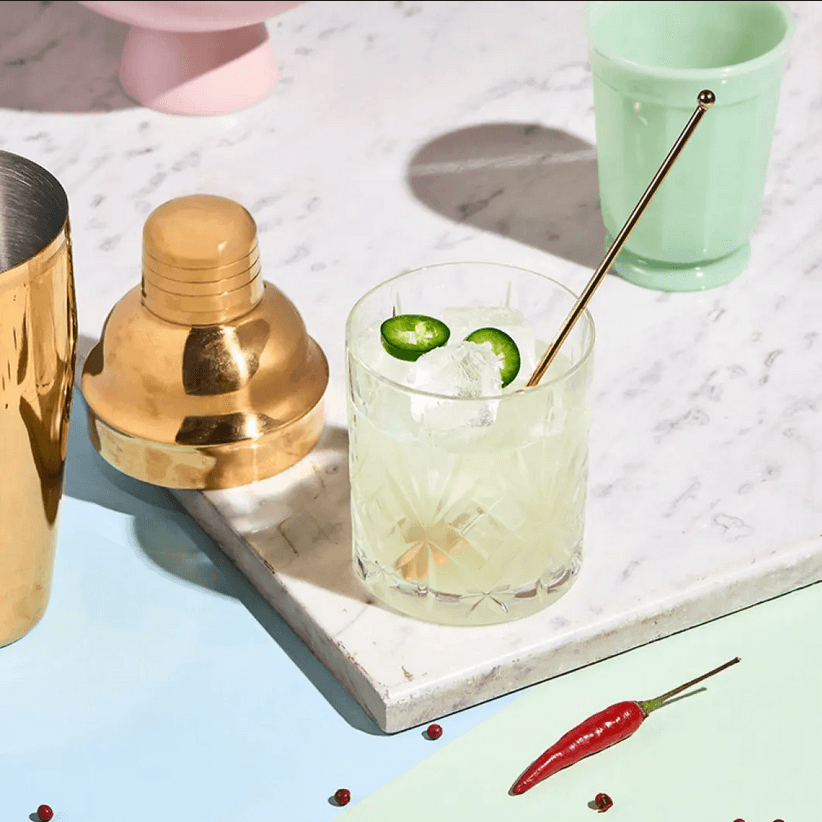
The Spicy Margarita by Cointreau

The Spicy Margarita

  • 2 oz. Blanco tequila 
  • 1 oz. Cointreau
  • 0.75 oz. Fresh lime juice 
  • 2 Slices of jalapeño 
  • 2 Sprigs of fresh cilantro 
  • Jalapeño to garnish
  • Lime wheel to garnish

Combine all ingredients in a cocktail shaker. Add ice and shake until well-chilled. Strain into a chilled Old Fashioned glass. Garnish with jalapeño pepper. Garnish with a lime wheel.

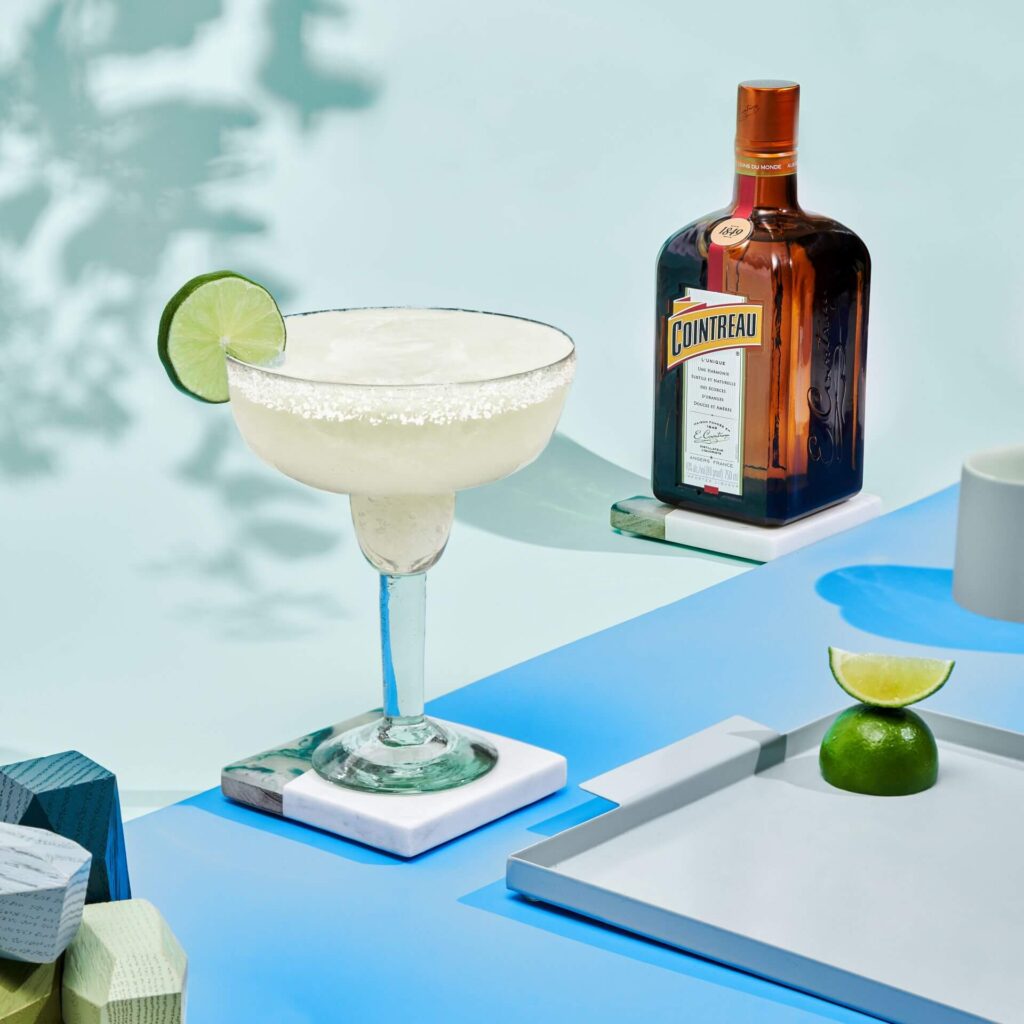
The Frozen Margarita by Cointreau

The Frozen Margarita

  • 1 oz. Cointreau 
  • 2 oz. Blanco tequila 
  • 1 oz. Fresh lime juice 
  • 0.25 oz. Simple syrup 
  • Lime wheel to garnish

Add all ingredients to a high-powered blender and blend to combine. Pour into salt-rimmed Margarita glass. Garnish with lime wheel.

Lyre's non-alcoholic tequila alternatives

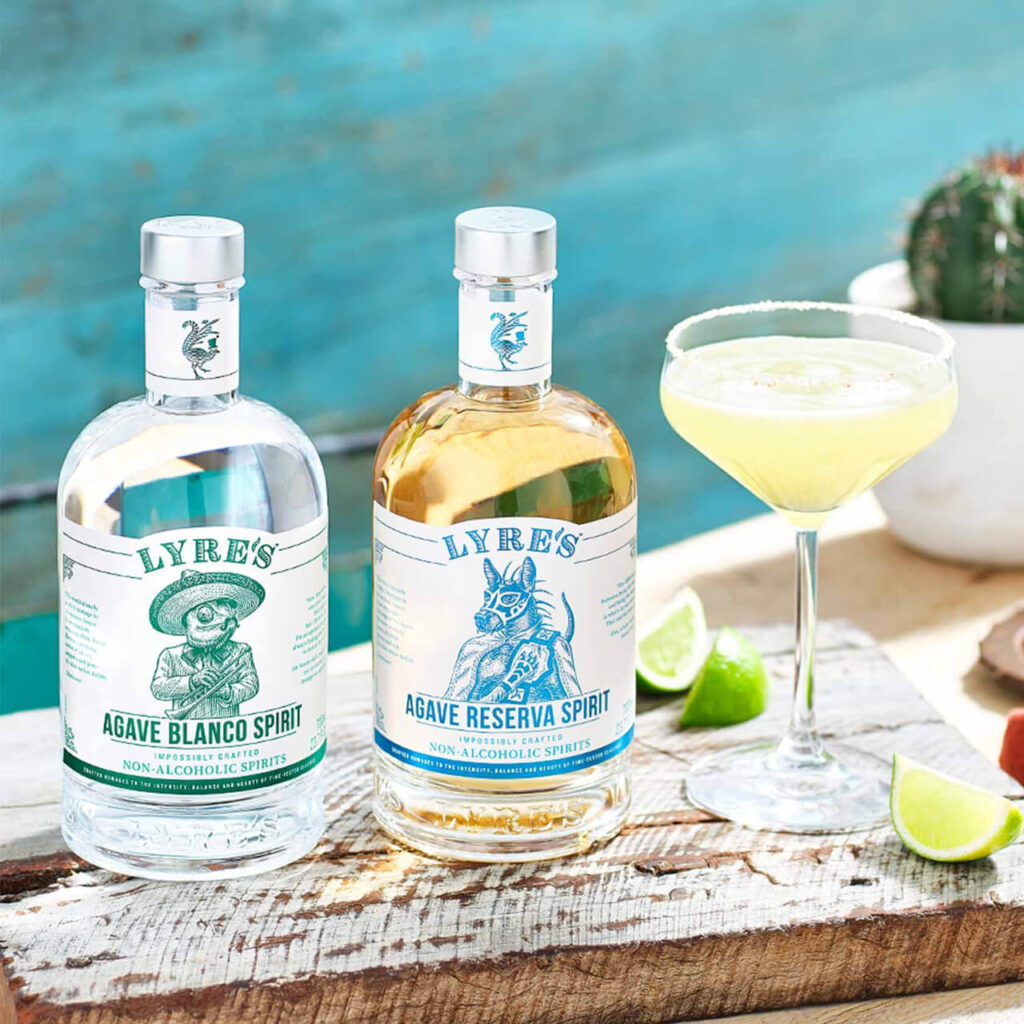
Alcohol-free Classic Margarita

There are a couple non-alcohol brands that make adding a zero-proof Margarita to your menu simple. One such brand is Lyre’s, the Australian brand projected to one day be worth one billion dollars.

Not only does Lyre’s produce two tequila alternatives, they also make an alcohol-free triple sec. So, it really doesn’t get any easier to offer a premium non-alcohol Margarita that can justify a premium price.

An important note: Lyre’s is not an affiliate or portfolio-mate of Cointreau. I’m mentioning them here so that guests who aren’t consuming alcohol for any reason can still partake in celebrating the Margarita.

Shake briefly with ice. Fine strain into glass. Half salt-rimmed cocktail coupette. Garnish with lime wedge.

Cointreau images courtesy of Cointreau. Alcohol-free Classic Margarita image: Lyre’s.

by David Klemt David Klemt No Comments

We ask Bard to Write Cocktail Menus

We ask Bard to Write Cocktail Menus

by David Klemt

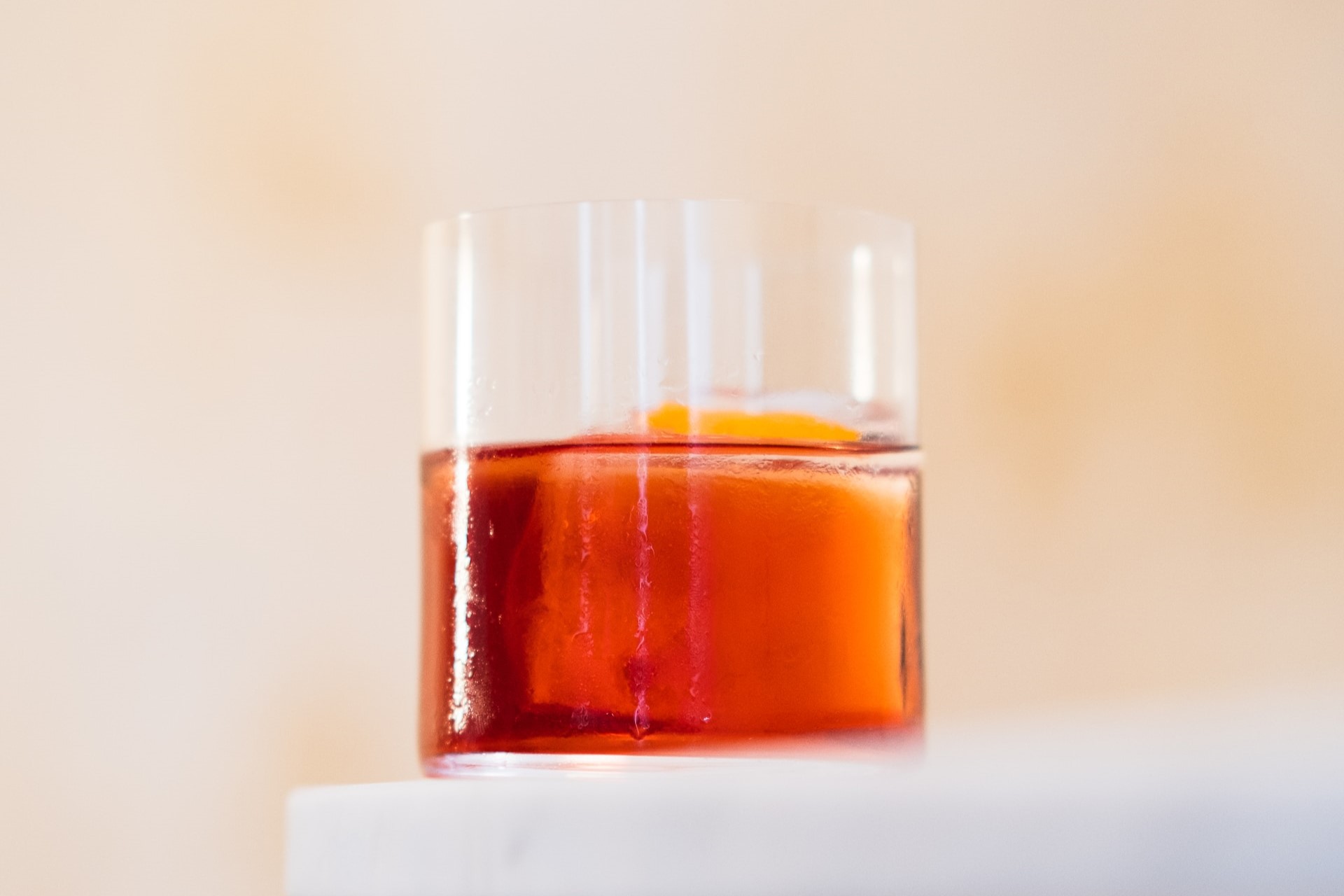
Red cocktail on white shelf

Asking Google’s Bard chatbot to write a couple cocktail menus—including recipes and prices—delivers some interesting results.

To be honest, by “interesting” I mean “shrug-inducing.” None of the menus are what I would deem creative.

Think about the basic cocktails you expect to see on any menu and you’ll have an idea of what to expect below.

Are you able to help restaurant and bar operators create their menus?

Yes, I can help restaurant and bar operators create their menus. I can access and process information from the real world through Google Search and keep my response consistent with search results. For example, if you ask me to create a menu for a restaurant that serves Italian food, I can research popular Italian dishes and ingredients, and then create a menu that incorporates those dishes and ingredients. I can also help you to price your menu, and to create marketing materials for your menu.

Here are some tips for creating a menu that is both appealing and profitable:

  • Choose a theme or concept for your menu. This will help you to narrow down your choices and to create a menu that is cohesive.
  • Research popular dishes and ingredients. What are people eating in other restaurants? What are the latest trends?
  • Create a menu that is both affordable and profitable. You want to make sure that you are charging enough to cover your costs, but you also want to make sure that your prices are not too high.
  • Use high-quality ingredients. This will help to ensure that your food tastes good and that your customers come back for more.
  • Be creative and innovative. Don’t be afraid to experiment with new dishes and ingredients.
  • Promote your menu. Use social media, print advertising, and other marketing channels to get the word out about your menu.

Please write me a cocktail menu with ten creative drinks for a modern steakhouse—including prices—located in Toronto, Ontario, Canada.

Sure, here is a cocktail menu with ten creative drinks for a modern steakhouse located in Toronto, Ontario, Canada, with prices:

1. The Old Fashioned

A classic American cocktail made with whiskey, sugar, and bitters.

  • 2 oz. Canadian Whiskey
  • 1/2 oz. simple syrup
  • 4 dashes bitters
  • Garnish: orange twist
  • Price: $15

2. The Manhattan

A classic American cocktail made with whiskey, sweet vermouth, and bitters.

  • 2 oz. Canadian Whiskey
  • 1 oz. sweet vermouth
  • 2 dashes bitters
  • Garnish: cherry
  • Price: $18

3. The Margarita

A classic Mexican cocktail made with tequila, lime juice, and triple sec.

  • 2 oz. Canadian Tequila
  • 1 oz. lime juice
  • 1 oz. triple sec
  • Garnish: lime wedge
  • Price: $14

4. The Daiquiri

A classic Cuban cocktail made with rum, lime juice, and simple syrup.

  • 2 oz. Canadian Rum
  • 1 oz. lime juice
  • 1/2 oz. simple syrup
  • Garnish: lime wedge
  • Price: $16

5. The Cosmopolitan

A refreshing and flavorful cocktail made with vodka, cranberry juice, Cointreau, and lime juice.

  • 2 oz. Canadian Vodka
  • 2 oz. cranberry juice
  • 1 oz. Cointreau
  • 1 oz. lime juice
  • Garnish: lime wedge
  • Price: $17

6. The Sex on the Beach

A fruity and refreshing cocktail made with vodka, peach schnapps, cranberry juice, and orange juice.

  • 2 oz. Canadian Vodka
  • 1 oz. peach schnapps
  • 2 oz. cranberry juice
  • 2 oz. orange juice
  • Garnish: orange slice
  • Price: $18

7. The Bellini

A refreshing and flavorful cocktail made with prosecco, peach puree, and simple syrup.

  • 4 oz. prosecco
  • 2 oz. peach puree
  • 1 oz. simple syrup
  • Garnish: peach slice
  • Price: $19

8. The Kir Royal

A refreshing and flavorful cocktail made with prosecco and crème de cassis.

  • 4 oz. prosecco
  • 1 oz. crème de cassis
  • Garnish: lemon twist
  • Price: $20

9. The Mimosa

A refreshing and flavorful cocktail made with champagne and orange juice.

  • 4 oz. champagne
  • 4 oz. orange juice
  • Garnish: orange slice
  • Price: $21

10. The Bloody Mary

A spicy and flavorful cocktail made with vodka, tomato juice, and spices.

  • 2 oz. Canadian Vodka
  • 4 oz. tomato juice
  • 1 oz. Worcestershire sauce
  • 1 oz. lemon juice
  • 1 oz. hot sauce
  • Garnish: celery stalk
  • Price: $22

These cocktails are sure to please your guests and add a touch of sophistication to your steakhouse.

Please write me a cocktail menu with ten creative drinks for a modern Italian restaurant—including prices—located in Las Vegas, Nevada, off the Strip.

Here is a cocktail menu with ten creative drinks for a modern Italian restaurant located in Las Vegas, Nevada, off the Strip:

1. The Gondolier

A refreshing and flavorful cocktail made with prosecco, Aperol, and lemon juice.

  • 2 oz. prosecco
  • 1 oz. Aperol
  • 1/2 oz. lemon juice
  • 1/4 oz. simple syrup
  • Club soda
  • Garnish: lemon twist
  • Price: $15

2. The Martini

A classic Italian cocktail made with gin and dry vermouth.

  • 2 oz. gin
  • 1 oz. dry vermouth
  • Garnish: lemon twist
  • Price: $17

3. The Negroni

A bitter and refreshing cocktail made with gin, Campari, and sweet vermouth.

  • 2 oz. gin
  • 1 oz. Campari
  • 1 oz. sweet vermouth
  • Garnish: orange twist
  • Price: $19

4. The Spritz

A refreshing and light cocktail made with prosecco, Aperol, and club soda.

  • 3 oz. prosecco
  • 1 oz. Aperol
  • 4 oz. club soda
  • Garnish: orange twist
  • Price: $15

5. The Americano

A refreshing and light cocktail made with Campari, sweet vermouth, and club soda.

  • 2 oz. Campari
  • 1 oz. sweet vermouth
  • 4 oz. club soda
  • Garnish: orange twist
  • Price: $17

6. The Limoncello

A sweet and refreshing cocktail made with limoncello, prosecco, and club soda.

  • 2 oz. limoncello
  • 3 oz. prosecco
  • 4 oz. club soda
  • Garnish: lemon twist
  • Price: $15

7. The Margarita

A classic Mexican cocktail made with tequila, lime juice, and triple sec.

  • 2 oz. tequila
  • 1 oz. lime juice
  • 1 oz. triple sec
  • Garnish: lime wedge
  • Price: $19

8. The Daiquiri

A classic Cuban cocktail made with rum, lime juice, and simple syrup.

  • 2 oz. rum
  • 1 oz. lime juice
  • 1/2 oz. simple syrup
  • Garnish: lime wedge
  • Price: $21

9. The Old Fashioned

A classic American cocktail made with whiskey, sugar, and bitters.

  • 2 oz. whiskey
  • 1/2 oz. simple syrup
  • 4 dashes bitters
  • Garnish: orange twist
  • Price: $23

10. The Manhattan

A classic American cocktail made with whiskey, sweet vermouth, and bitters.

  • 2 oz. whiskey
  • 1 oz. sweet vermouth
  • 2 dashes bitters
  • Garnish: cherry

Takeaways

The first thing I’ll say is that these menus are…fine. There’s nothing wrong with populating a cocktail menu with classics. After all, classics are the go-to for a large portion of guests.

However, I wouldn’t call any of the recipes above creative. And I certainly don’t think they’d blow anyone’s mind. I also call into question some of the specs. For example, a Negroni “should be” a 1:1:1 ratio.

Then there’s the Bloody Mary for a Toronto steakhouse. I’m not trying to speak for an entire population but that should be a Caesar. Additionally, this family of drinks should come with an array of add-ons for customization and personalization.

And what about that $18 Sex on the Beach? I don’t think I’d ever recommend that for an upscale steakhouse. If anything, I’d suggest a Porn Star Martini instead.

I don’t know what Bard would recommend for pricing the Manhattan since the chatbot didn’t include that detail. I’m guessing somewhere between $20 and $23.

Speaking of pricing, it’s fair to assume that Bard aggregated menu prices, averaged them, and spat out the results of its calculations. That may seem helpful but operators should bear a few things in mind when determining pricing:

  • ingredient costs;
  • labor costs;
  • target margins;
  • what specific markets and target guests will tolerate and sustain; and
  • dynamic menu pricing to address fluctuating costs.

Going back to the drinks themselves, it’s important for operators to consider the trends toward premiumization and luxury; signature cocktails; “owning” a specific drink or family of drinks; and speed, consistency, and presentation.

Artificial intelligence can tell you what’s trending online. But can it create real-world cocktail menus that will attract guests, drive traffic, and generate revenue? In my opinion, no—that’s still the realm of experienced and creative bar professionals.

Image: Timothé Durand on Unsplash

KRG Hospitality Beverage Programming

by David Klemt David Klemt No Comments

Chip Klose and the ABCDEs of Marketing

Chip Klose and the ABCDEs of Marketing

by David Klemt

Letters A through E on switches

Marketing strategist and restaurant coach Chip Klose knows that if a process is too complex, people will abandon it. Hence, his ABCDEs of Marketing.

At this year’s Bar & Restaurant Expo, Klose broke down his marketing process. Additionally, he explained his overall approach to his marketing strategy.

First, Klose makes clear that there definitely is a right way to market. Put simply, the correct way involves taking a results-oriented approach. Ask yourself what what result you want from your marketing. Then, measure the results.

Second, people need to differentiate marketing from marketing tools. SEO, social media, table toppers, digital presence—these are tools. Marketing is how people answer a number of key questions:

  • What’s the product?
  • Who’s the product for?
  • How can marketing reach the target (audience)?

When people come to the understanding that marketing is maximizing the use of marketing tools, they’ll implement far more effective campaigns.

A: Audience

According to Klose, most people create a product—in the context of this article, a restaurant, bar, hotel, etc.—and then look for an audience.

That approach makes it difficult to implement an effective marketing strategy. Why? Because it makes it more difficult to understand a concept’s category. Without that understanding, it’s challenging to segment the population to identify targets.

Instead, Klose recommends looking at a market and asking the following question: Who has a problem? The standard advice entrepreneurs receive is to identify a problem, create a solution, scale, and retire on an island.

Well, owners and operators in the hospitality space are entrepreneurs. So, Klose suggests looking at what a given market is missing in terms of a restaurant, bar or hotel. So, find an audience’s pain point. This will not only help narrow down a concept, it will reveal if a solution already exists.

The next step, of course, is conducting a feasibility study, one of KRG Hospitality’s core specialties.

B: Brand

Assuming a restaurant or bar concept is the solution to an audience’s problem (proven by a feasibility study, of course), the next step is communication.

The restaurant idea isn’t “just” a restaurant, the bar not “just” a bar, the hotel concept not “just” a concept. No, the concept coming to their market is a solution to the audience’s problem.

When crafting a marketing plan, the messaging should articulate what problem the concept solves, and how.

C: Competition

There are essentially a few ways to view other businesses in this industry. They’re competition to stay ahead of; not competitors at all; or operations that serve to validate an operator’s solution to an audience’s problem.

Klose falls into the validation camp. Is another concept trying to solve the same problem? That means an operator bringing their own solution to the same market is onto something.

“Competition validates your idea and gives you a category,” says Klose.

Identifying a concept’s category provides an operator with the opportunity to stay top of mind, to dominate that category.

Once again, however, this also points to the need for a feasibility study. One or two solutions to the same problem is one thing. Entering a market saturated with the same solution is quite another. A feasibility study exposes saturation.

D: Differentiation

So, an operator has their solution to an audience’s problem. They’re confident in the completion of their due diligence. They have a brand identity and it communicates how it solves a problem. The competition is identified and the operator is moving forward with their solution confidently.

What’s next?

Whether an operator subscribes to the idea that they have no competitors, want to crush the competition, or use competitors as a yardstick, they need to differentiate themselves.

Klose says answering the questions below can help:

  • How does the concept stand out in a given market?
  • Once that concept is firmly in a category, how does it separate itself from the competition?
  • What are the stories only this operator and brand can tell?

That last question should be circled, underlined, italicized, and bolded. In fact, Klose asks his clients to write down 20 stories only they can tell. The results give them plenty of marketing material and helps them differentiate their concept from others.

E: Everything

Yes, “E” is for “everything.” As in, everything that makes a brand, a brand.

The brand’s logos and colors. The steps of service, food, drinks, even the pricing… These and more are the elements—the everything—that give a brand an identity.

Understanding and applying Klose’s ABCDEs will help operators maximize the use of marketing tools for their marketing strategies. There are a lot of solutions to problems out there, and even more noise. An effective marketing strategy cuts through that noise to put an operator’s specific solution directly in front of their target audience.

Be sure to follow Klose on Instagram and check out his Restaurant Strategy podcast. And make sure to check out KRG’s Bar Hacks podcast if you aren’t a regular listener already.

Image: Diomari Madulara on Unsplash

KRG Hospitality marketing support. Restaurant. Bar. Cafe. Lounge. Hotel. Resort.

by David Klemt David Klemt No Comments

Kitchen Doctrine: The Culinary Holy Trinity Across Cuisines

To some, the Holy Trinity refers to the Christian doctrine of the Father, the Son, and the Holy Spirit. But what’s the Cajun Holy Trinity?

Well, that’s a whole different story with which some people may not be as familiar. However, it carries equal weight in certain kitchens of the world.

Lending its name from religious credo, the Cajun Holy Trinity was developed in the state of Louisiana in the southern United States. Chef Paul Prudhomme gets the credit for introducing the term in 1981, along its popularization.

Cajun or Creole cuisine evolved from French, Spanish, and West African immigrants. French traditions blended into a melting pot of West African, Spanish, and Native American cuisines. The French and the Acadians (French colonists deported from Acadia in what is now Nova Scotia, Canada) both influenced Louisiana’s cuisine. The Acadians became known as Cajuns to English speakers, and thus Cajun cooking grew out of necessity in Louisiana.

It’s incredible what three (and sometimes just one or two more) simple ingredients can do to create incredible dishes.

by Nathen Dubé
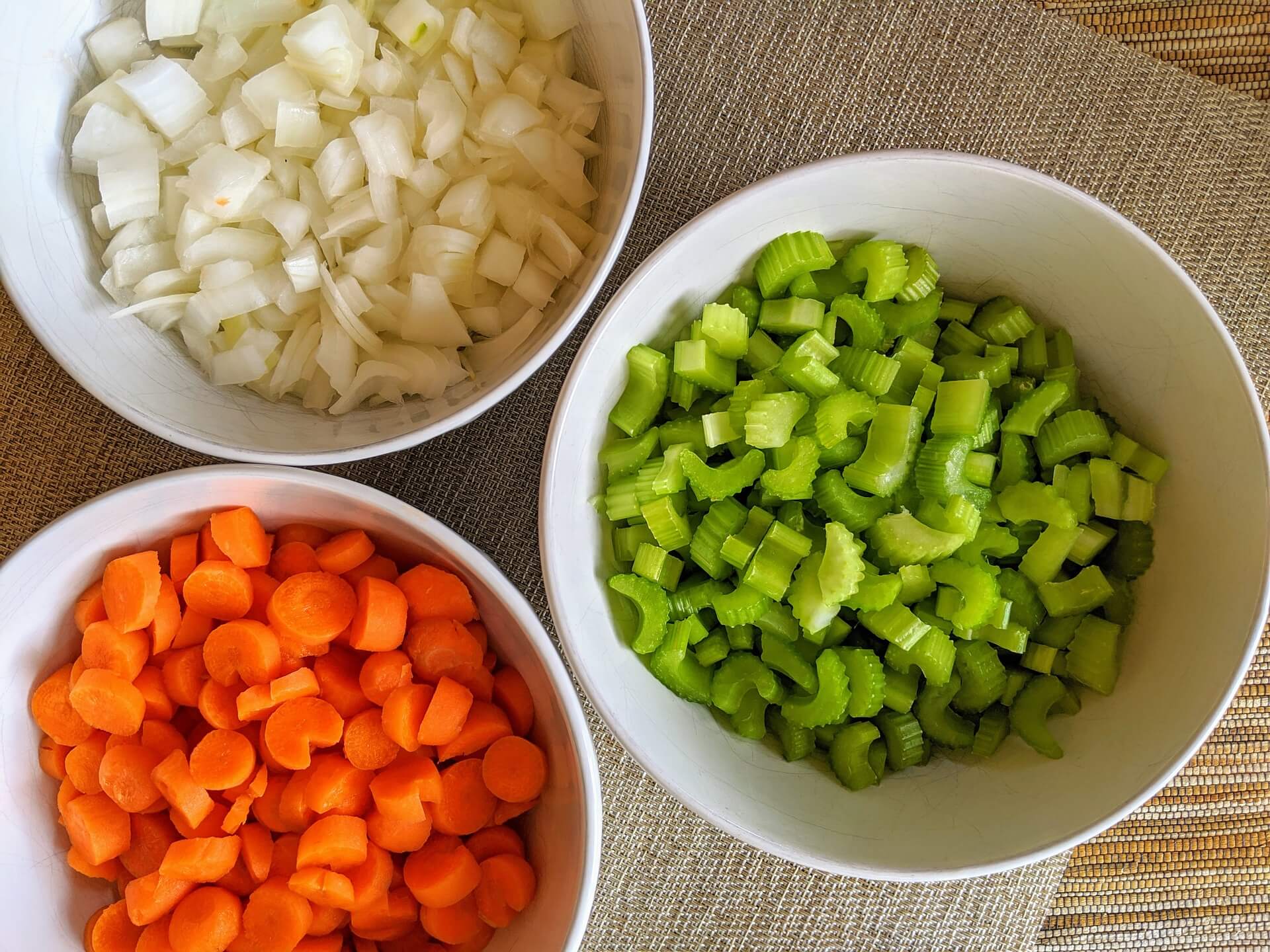
Carrots, celery and onions

Understanding the Culinary Holy Trinity

Mirepoix 101

The French contributed two staples directly to Cajun and Creole cooking: roux-based cooking and the trinity of mirepoix, or onions, celery, and carrots. In Louisiana, however, carrots didn’t grow as easily as bell peppers. So, bell peppers, typically the more bitter green version, replaced them.

Some cooks were so bold as to add garlic to the Holy Trinity, referring to it as the Pope. Other variants use garlic, parsley, or shallots in addition to the three Trinity ingredients. Unlike the elaborate French dishes using mirepoix, the Holy Trinity is more symbolic of rustic, family-style meals.

These ingredients are the first to go into the pot or skillet, creating a flavorful foundation for gumbo, jambalaya, crawfish étouffée, and more. Often, by adding a bit of flour and whisking, a roux is built right on top of these sweet and colorful aromatics to form a thicker base.

The ratio is also overturned from the traditional mirepoix of two parts onion, one part celery, one part carrot, with three parts onions to two parts celery to one part bell pepper.

Practical Application

So, now that we know what it is, how do we use it?

First, the ingredients are finely diced, then sauteed in oil, fat, or butter until translucent and tender. This stage of cooking draws the water from the vegetables, concentrating their natural flavors.

You can continue cooking the ingredients down until they’re caramelized, which is to say the sugars come out and brown them in the pan. They’ll become easy to break down with the back of a spoon. There’s a further concentration of flavors but we’re approaching the law of diminishing returns.

The shorter the cooking time of the end dish, the smaller size the pieces should be. For longer times, they can be cut into larger pieces. For obvious reasons, we want our ingredients to cook evenly, as well as withstand the timeframe of the cooking. You don’t want minced vegetables in a stock that’s going to simmer for 10 hours, the same way we don’t want giant chunks in a soup that’s done in 30 minutes. Texture of the end product are also important, not just flavor.

Here are examples of some recipes that include the Cajun Holy Trinity:

  • Chicken and Sausage Jambalaya
  • Cajun Gumbo with Andouille Sausage
  • Chicken and Okra Gumbo

Looking at other cuisines of the world, we’ll find some interesting variations. Interestingly, however, we’ll find similarities in the use of a category of vegetables and herbs called “aromatics.” In the Western world, these are vegetables like garlic, onions, carrots, celery, and herbs like bay leaves, thyme, parsley, and peppercorns.

In Asia you’ll find green onions, ginger, garlic, and warming spices like cinnamon and clove. These mixes are usually sautéed to slowly draw out flavors that can carry a dish. Sofrito and its Italian counterpart, soffritto, literally mean to stir-fry.

French Cuisine

The term mirepoix is encountered regularly in French culinary texts by the 19th century.

In 1814, Antoine Beauvillier wrote a recipe for Sauce à la Mirepoix in his book L’Art du Cuisinier. It’s a short recipe for a buttery, wine-laced stock garnished with an aromatic mixture of carrots, onions, and a bouquet garni. Marie-Antoine Carême created a similar recipe in 1816, calling it simply “Mire-poix.”

The origins are cloudy but what’s clear is the basic mirepoix ratio: two parts onions, one part celery, one part carrots by weight. These vegetables are often finely chopped and sautéed, but they can be used whole or roughly chopped in slowly simmered stocks or braises. A simple ratio for bones to mirepoix for a stock is 10:1.

When chopping, be particular about uniformity. This ensures even cooking when sweating or deeply browning them for a heartier flavor.

If cooking further, the addition of tomato purée creates a mixture called pinçage, which smells incredibly rich and transforms a braise into a near-religious experience. The addition of some chopped thyme and rosemary elevates further.

Another alternative is the mirepoix au gras (“with fat”): the addition of diced ham or pork belly.

Hands down, however, the most famous example of the power of French mirepoix is the humble chicken soup. It capitalizes on the aromatic qualities and depth of the caramelized vegetables. Similar combinations—both in and out of the French culinary repertoire—can include leeks, parsnips, garlic, tomatoes, shallots, mushrooms, bell peppers, chilies, and ginger.

White mirepoix (which substitutes leeks and parsnips for the onions and carrots) is used when you want a white color in the final dish. It might be a stretch to include the French duxelles (mushrooms and often onion or shallot and herbs, reduced to a paste), but leave no stone unturned, I say.

Mirepoix Recipes to Try

  • Roasted meats, like turkey
  • Chicken Noodle Soup
  • Braised Short Ribs
  • Vegetable soups

Italian Soffritto

Referred to as battuto before it’s cooked, soffritto is the combination of onions, celery, carrots, garlic, and parsley, although there are quite a few variations on this mixture. Soffritto can also include bell peppers, fennel, and finely diced cured meats like pancetta or prosciutto.

There’s no set ratio for the ingredients. This combination forms the foundation for soups like minestrone, the base for pasta sauces such as ragù, stews, and braises throughout Italian cuisine.

While both mirepoix and soffritto serve as building blocks of flavor, there are a few subtle differences.

Mirepoix is made by sweating onions, celery, and carrots. Soffritto uses minced rather than diced vegetables. And, indicative of Italy, the use of olive oil trumps butter in the cooking process.

Soffritto recipes to try

  • Ragú Bolognese
  • Italian Wedding Soup
  • Pasta e Fagioli (Pasta and Bean Soup)
  • Braised Sausage, and Kale with Rosemary

Spanish Sofrito

While saffron and seafood are the clear stars of the classic paella, it’s sofrito—the mixture of onion, garlic, bell peppers, and tomatoes (sometimes paprika) cooked in olive oil—that sets the stage. Although it may seem ludicrous, the removal of the sofrito and not the prime seafood on top would do more damage to the final dish.

This is where we begin to see the introduction of the New World. After the 16th century, Catalonia in particular “discovered” the tomato and began using it in everything. Bell peppers, onions, and garlic are the other ingredients that make up sofrito.

The medieval recipe book Libre de Sent Sovi shows that Catalan cuisine historically used native ingredients to make sofregit. Most Old World-style dishes call for onions, leeks, carrots, and salt pork, in place of the yet to be discovered tomato, so the sofritos of the 1300s can be interpreted loosely.

From the Mexican American border to the tip of Argentina, and all of the islands in between, Latin America has taken the Spanish sofrito and adapted it to its local offerings. Cuban sofrito tends to look the closest to Chef Prudhomme’s Holy Trinity, but with more garlic, while the Ecuadorian version includes freshly toasted cumin, tomatoes, onions, garlic, and sweet cubanelle peppers.

Sofrito recipes to try

  • Seafood Paella
  • Spanish Beef Stew with Pimentón and Piquillo Peppers
  • Spanish Chickpea and Spinach Stew
  • Nicaraguan Arroz con Pollo

Puerto Rican Sofrito

In Puerto Rico, many dishes start with recaíto, the perfumed flavor of culantro, ají dulce, onions, cubanelle peppers, and garlic. Often referred to as “blessed thistle,” the long, jagged-edged, leafy culantro has a similar taste to cilantro.

For this Caribbean island’s sofrito, known as recaíto, culantro leaves are minced and added to ajíes dulces, small but essential chilies in Puerto Rican cuisine. Add onions, cubanelles, garlic, and cilantro, and you have a mild, bright-green paste that adds a fresh, herbal punch to stews and rice dishes.

In the Caribbean, sofrito refers to a wide variety of mixtures; one common type includes lard colored with annatto seeds and mixed with ingredients like chiles, bell peppers, onion, cilantro, oregano, and ham. You can find variations on this sofrito throughout Central and South America.

Suppengrün

In case the umlaut didn’t give it away, the German answer to mirepoix—suppengrün—translates to “soup greens.” The Dutch equivalent is soepgroente.

Suppengrün typically consists of carrots, celery root, and leeks in no set ratio. Sometimes onions, parsnips, and potatoes are added. It may also contain parsley, thyme, celery leaves, rutabaga (a.k.a. swede), or parsley root.

The mix depends on regional traditions. Vegetables used are cold-climate roots and bulbs with long shelf lives. Suppengrün acts like herbs and imparts hearty, strong flavors to the soup or sauce, providing a foil for other strong-tasting ingredients such as dried peas and beans, or pot roast.

Large chunks of vegetables can be slow cooked to make rich soups and stocks, and are discarded when they have given up most of their flavor. Finely chopped suppengrün are browned in fat and create the base for a finished sauce. The vegetables may be cooked long enough to fall apart and become part of the sauce or pureed.

Suppengrün recipes to try

  • Beef Sauerbraten with Red Cabbage and Pretzel Dumplings

Włoszczyzna

From Poland, włoszczyzna is similar to its German counterpart but with red cabbage as the main ingredient.

Włoszczyzna is the Polish word for “soup vegetables” or greens. The literal translation is “Italian stuff,” stemming from Queen Bona Sforza d’Aragona—who was Italian—who married Polish King Sigismund I the Old in 1518. The queen no doubt brought her own cooks to the Polish court and introduced this concept to Polish cuisine.

A włoszczyzna may consist of carrots, parsnips or parsley root, celery root or celeriac, leeks, and savoy or white cabbage leaves. Sometimes, cooks also use celery leaves and flat-leaf parsley. Bay leaves and allspice grains are found in certain iterations.

The most typical packaged combination is celery root, parsley root, carrots, and leeks. Włoszczyzna is usually cut to uniform size and boiled as a flavor base for soups and stews.

Włoszczyzna recipes to try

  • Pork, Cabbage, and Potato
  • Barszcz (traditional Polish borscht)

Other Variations from Around the World

The Ukrainian or Russian smazhennya or zazharka consists of onion, carrot, and beets (and sometimes celery).

Refogado is the Portuguese base is made from onions, olive oil, minced garlic, and bay leaf. There’s a variation with tomato paste instead of fresh tomato influenced by the Eastern Mediterranean and Balkans regions.

Chinese/Cantonese cooking uses a base of scallions, ginger, and garlic. In Sichuan cooking you’ll often find a mixture of chili peppers, Sichuan peppercorns, and white pepper.

The amount of varied flavors and spices in Indian cuisine is incredibly vast and can differ from neighbor to neighbor. However, many of these dishes begin with basic mixture of garlic, ginger, and onion.

West African cuisine is another example of a huge amount of variety, but one common flavor base is the trio of tomatoes, onions, and spicy chiles.

The Haitian Epis has African origins with similarities to sofrito which is used in Hispanic cuisine. Parsley, scallions, garlic, citrus juice, and Scotch bonnet peppers are combined to create this base. Haitian Epis is used for finishing sauces, marinating meat and fish, and flavoring rice and bean dishes, as well as soups, and stews.

Hopefully you’re now inspired to try out a new combination or two, or even make up your own Holy Trinity. The possibilities are literally endless. But first, you owe it to yourself to learn a new Cajun recipe, starting with Chef Prudhomme’s Holy Trinity.

Image: Cindy from Pixabay

Related Reading

Work with Us

Click the image below to work with us on your restaurant concept.

Client Intake Form - KRG Hospitality

by David Klemt David Klemt No Comments

How to Make a $3,500 Mint Julep

How to Make a $3,500 Mint Julep

by David Klemt

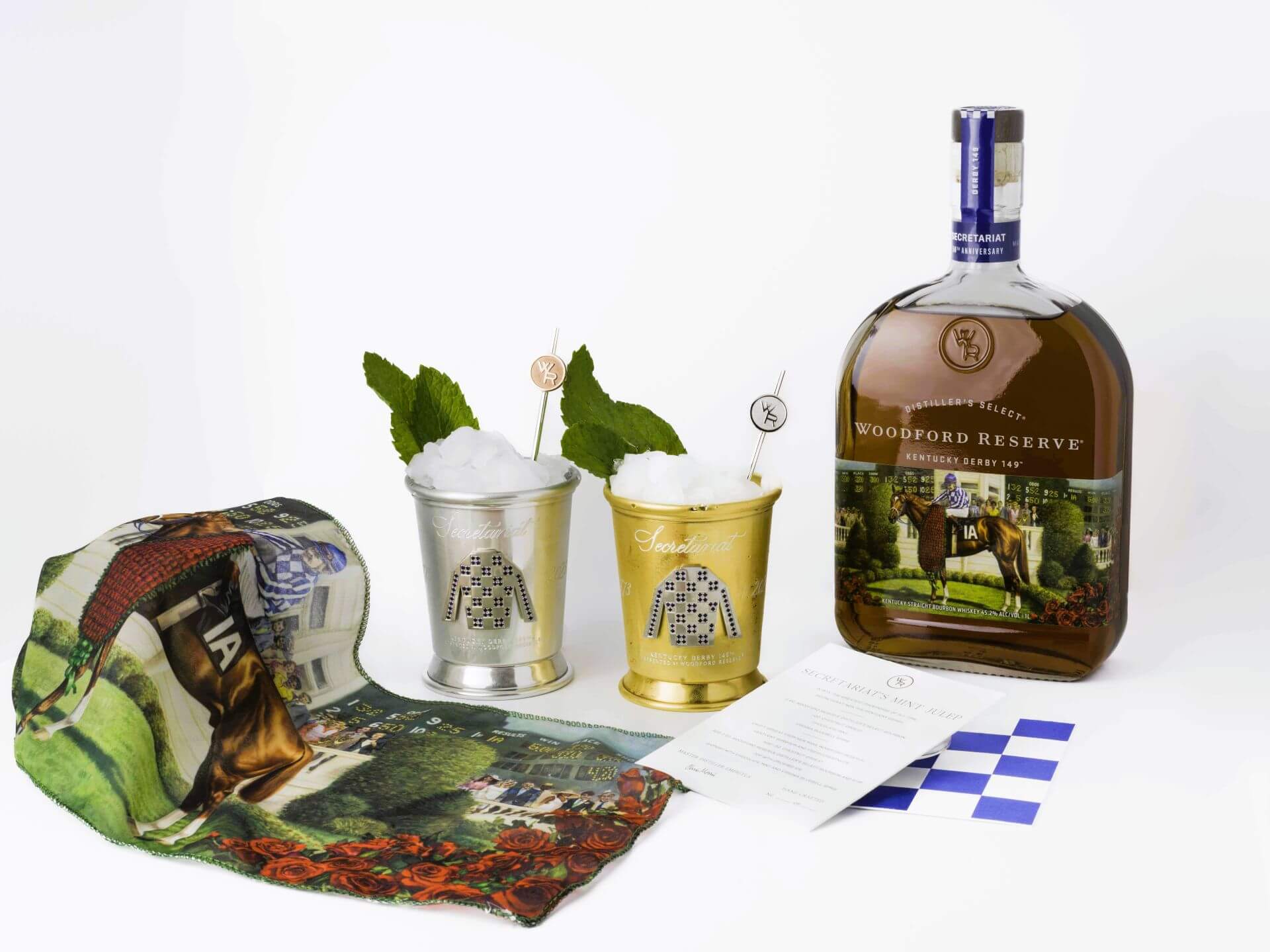
2023 Woodford Reserve Secretariat Julep cups

If you want to craft an incredible $3,500 Mint Julep, the first step is to acquire one of 50 Woodford Reserve gold Secretariat Julep cups.

Now, should $3,500 seem a “bit” exorbitant, you can also opt for one of 100 silver Julep cups for $1,000.

Cup in hand, simply fill it with crushed ice and pour a refreshing Mint Julep over it. Et voilà—a delicious $3,500 or $1,000 Mint Julep!

Okay, so you’re probably wondering what I’m on about. Am I really suggesting you craft thousand-dollar-plus cocktails? I mean…if you have guests who’ll pay that much, yes, I am.

In reality, however, I’m making you aware of this year’s Woodford Reserve $1,000 Mint Julep™ charity program. This program is a longstanding Kentucky Derby tradition.

For 2023, the $1,000 Mint Julep™ will benefit the Secretariat Foundation. That makes sense given that this year marks the 50th anniversary of Secretariat winning the Derby.

The foundation, the brainchild of Secretariat’s owner Penny Chenery, is a non-profit that focuses on equine-related industry subjects, such as:

  • veterinary research into lameness of the horse;
  • Thoroughbred retirement and rehabilitation facilities;
  • therapeutic equestrian programs; and
  • general funding for related established charitable programs.

Silver and Gold

As you probably can put together yourself, there are 150 Secretariat Mint Julep cups available. One hundred are silver, 50 are gold. Respectively, they cost $1,000 and $3,500.

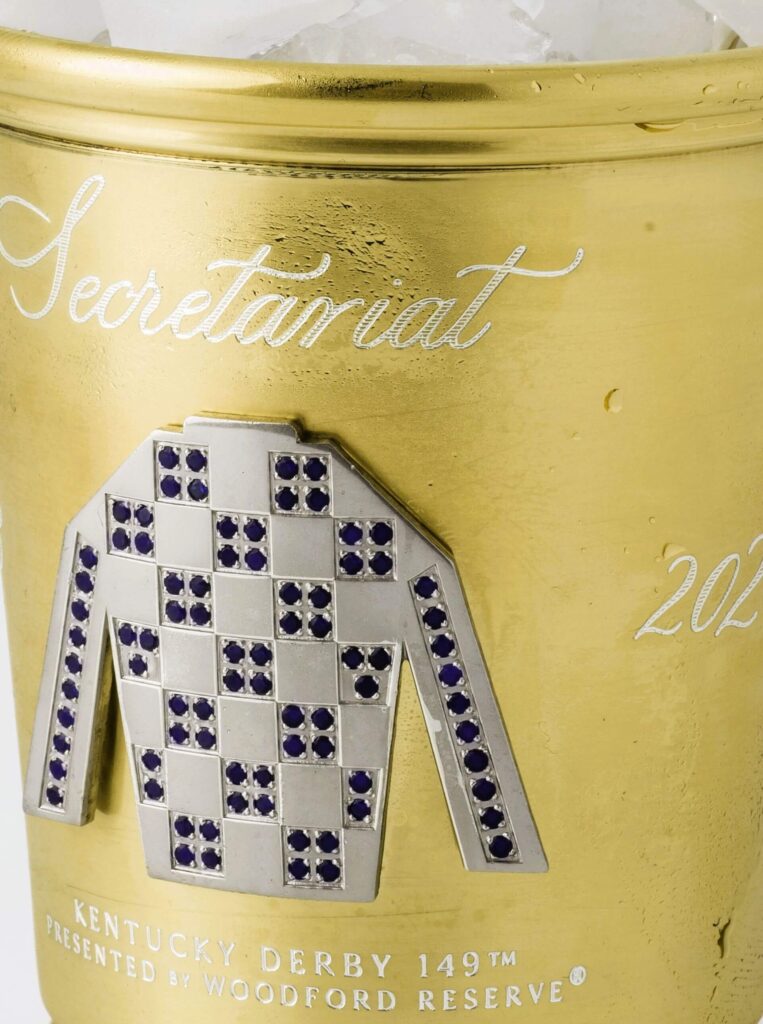
In keeping with this year’s theme of celebrating Secretariat and supporting the horse’s namesake charity, each features blue and white checkered silks in sapphires. The 2023 Mint Julep cups are handmade by Louisville, Kentucky jewelers From the Vault.

Gold 2023 Woodford Reserve Secretariat Mint Julep cup

People who choose to support the charity via purchasing the gold cup will have their name engraved on the bottom of the cup. These cups also come with the autograph of Ron Turcotte, Secretariat’s jockey.

In addition to supporting the charity, people who buy one of the 150 cups will have access to the $1,000 Mint Julep Experience at Churchill Downs on Derby Day. (Which is also where and when buyers must pick up their cups.)

Secretariat’s Mint Julep

Alright, so let’s be more realistic. Only 150 people are going to splash out for the $1,000 or $3,500 Secretariat Mint Julep. And while supporting a charity like the Secretariat Foundation is a great thing to do, people are struggling.

So, below you’ll find the recipe for the Mint Julep variation that those attending the $1,000 Mint Julep Experience will be enjoying. It’s up to you if you want to offer it on Derby Day to raise funds for the Secretariat Foundation or a charity of your choosing. It’s perfectly reasonable to simply offer the refreshing cocktail as a Derby Day LTO.

Pack a Julep cup with crushed ice, making sure to make a dome over the lip of the cup. Add the whiskey and liqueur to a mixing glass and stir. Pour over the prepared cup. Garnish with one sprig of mint and one stalk of Virginia bluebells.

Should you prefer a more traditional build, express the oils of a mint leaf inside the cup. Add the bourbon, chestnut liqueur, and crushed ice. Garnish with more crushed ice, mint, and Virginia bluebells, then serve.

For our most bourbon-centric Bar Hacks podcast episodes—including episode 32 with Woodford Reserve—click here.

Images: Woodford Reserve

KRG Hospitality Beverage Programming

by David Klemt David Klemt No Comments

Tips from Tipps on Cool Concepts

Tips from Tipps on Building a Cool Concept

by David Klemt

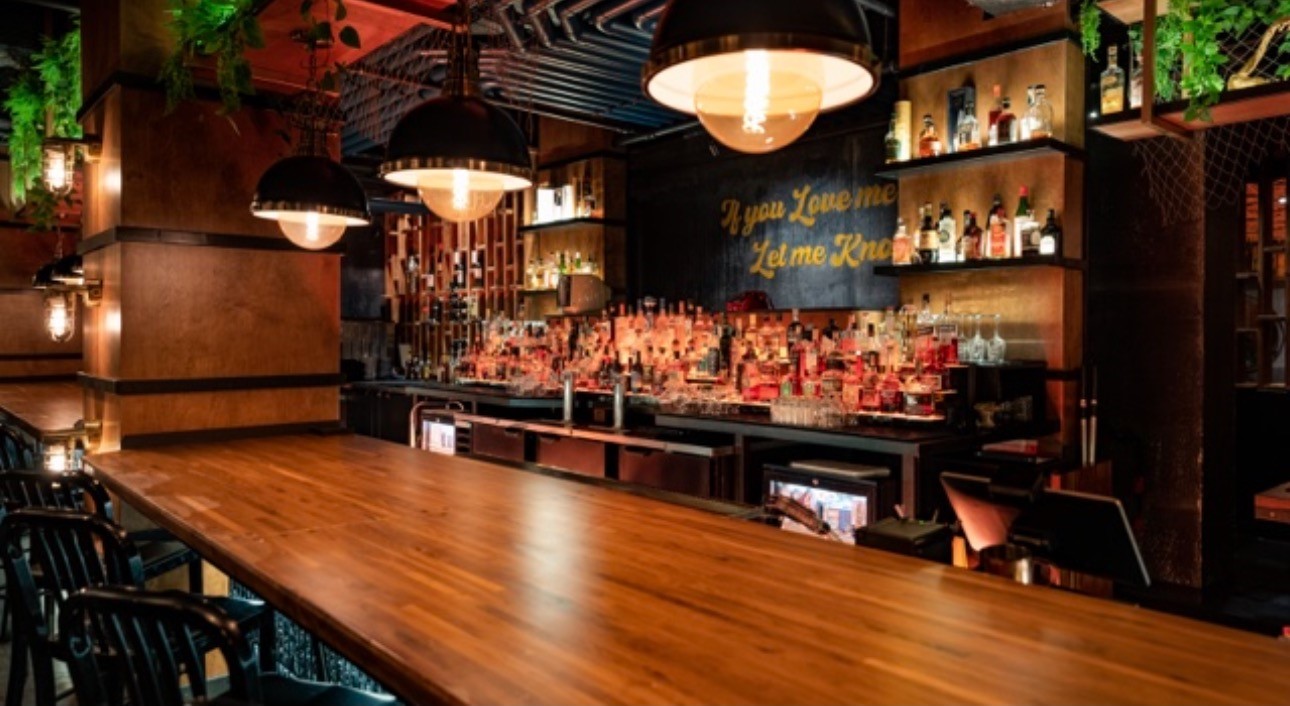
Mama Foo Foo Daytona bar and DJ booth

It’s true that “cool” is difficult to define, and yet as amorphous a concept as it can be, we can create a vibe that embodies this important design element.

Some people have an innate understanding of the cool factor. They can identify it, design for it, and reënvision it. However, even these people can’t always explain the concept of cool.

To repurpose a 1964 quote from Supreme Court Justice Potter Stewart, “I know it when I see it.” And to paraphrase that quote, many of us would say we know cool “when we experience it.”

Of course, I can say that the KRG Hospitality team knows cool and develops concepts around this nebulous design concept. But that wouldn’t be cool; if you call yourself cool, you’re not. It’s sort of like attempting to give yourself a nickname—it really doesn’t work. (When I was in the Air Force I witnessed what happened to a few brand-new F16 trainees who tried to give themselves their own call signs. The results? Yikes.)
So, I’m going to share some helpful thoughts on this topic from a friend of KRG. Invictus Hospitality co-founder Michael Tipps, who knows cool when he sees and feels it.

Importantly, he and his team can also design for it. During the 2023 Bar & Restaurant Expo in Las Vegas last month he shared his thoughts on this idea to a room full of operators and leadership team members.

To check out some of the cool concepts in the Invictus portfolio, click here. For the KRG portfolio gallery, follow this link.

So, You Wanna be Cool…

With very few exceptions, most people thinking about their dream restaurant, bar, nightclub, eatertainment concept, or hotel don’t want to embody the antithesis of cool. In fact, I’ll say that if someone does design an “uncool” concept purposely and does so successfully…it’s cool.

That said, here’s an important tip from Tipps on developing a cool concept: “If your bar or restaurant is epic, it will attract everyone.”

However, that doesn’t mean designing a place that attempts to make everyone happy. Instead, consider your target guests—groups of people you and your partners understand, ideally—and design for them.

Nailing your concept for your target guests will attract other groups. And before anyone says that sounds exclusionary, that’s not what Tipps or I are talking about. Listen to anyone from the KRG Hospitality and Invictus Hospitality teams speak and you’ll know making any guest feel unwelcome isn’t on the menu.

Instead, consider the longstanding maxim that you can’t please everyone. Hence, focusing on your target guests to pull the threads tighter during the concept development phase.

Another key consideration when trying to nail down the cool factor? Differentiation.

“If everyone is used to westerns, somebody wants an action movie,” says Tipps. In other words, in a market saturated by one or two types of concepts, there are people dying for something different.

So, develop your dream concept with the idea of delivering something different in mind.

Stay True

This isn’t exactly a hot take but at the end of the day, all restaurants serve food. All bars serve drinks. All hotels provide rooms.

In other words, people can go anywhere for at least decent food and drink, and a place to sleep. The differentiators that separate one concept from another are atmosphere, service, and culture. Those three elements (along with some others) define a particular brand.

When your dream concept is on paper and you’re ready to make it a brick-and-mortar reality, you must stay true to it. Using the KRG process as an example, our feasibility studies, concept development plans, and business plans combine to form our Roadmap to Success. This is a document hundreds of pages long that’s unique to every client and concept we develop.

Once that deliverable is in your hand, it’s crucial to stay true. Or, as Tipps said at BRE in March, “You have to remain steadfast and focused on your concept.”

Designing a cool concept can take you into deep, uncharted waters in your chosen market. The voice telling you that you need to rein things in can be a loud, nagging one. Learn to quiet that panicking voice.

It can be daunting to design something you think is cool. You may find yourself asking if anyone would even want this “cool” concept.
Well, an unfiltered Tipps suggests you consider your answer to the following question: “How do people know what they want if they haven’t fucking seen it?”

You can build the next Applebee’s, Chili’s or Fridays. Or you can build something unique that will set a new standard in a market. And that’s not a knock against those chain restaurants—they’re successful on a global scale. But if you don’t want to operate an Applebee’s, don’t design yourself one.

A Word on Rebranding

Owing to the pandemic, rebrands are, as Tipps says, ubiquitous. This makes sense as people’s perspectives are different now. Operators want to finally own their dream concept. Hospitality pros want to work for brands that share their values, and that they deem cool. Guests want to spend their time and money on brands with which they identify (and also deem cool).
“If somebody wants to rebrand, they probably should,” says Tipps.

According to Tipps, however, “a lot of people confuse a rebrand with a refresh.”

While new tables, chairs, and paint can feel like a huge change, that’s not a rebrand. While many guests appreciate a refresh, their relationship with the brand won’t change much.

So, if an operator doesn’t plan and execute a full rebrand carefully, Tipps says they need to temper their expectations for a measurable ROI.

Now, if you have ideas for a cool rebrand, planning is crucial. But that doesn’t just relate to knowing what you want. You need to have your new name, logo, colors, menus, and exterior and interior designs finalized, of course.

However, you need to plan for how long the rebrand will take. As an example, when Invictus last rebranded their own concept they planned for two months to prepare to shut down for a full week.

Your cool new concept and its cool new details? They cost money and, as importantly, they take time. Which, as we all know in this business, costs even more money when you’re shut down.

Now’s the time to move forward with your cool new concept. Don’t hesitate to take your first step toward owning the cool brand you’ve always really wanted. While you’re dreaming about your concept, someone else in your market is making theirs a reality.

Image courtesy of Invictus Hospitality

KRG Hospitality brand identity. Restaurant. Bar. Cafe. Lounge, Hotel. Resort.

by David Klemt David Klemt No Comments

Real-world Menu Tips from Chef Brian Duffy

Real-world Menu Tips from Chef Brian Duffy

by David Klemt

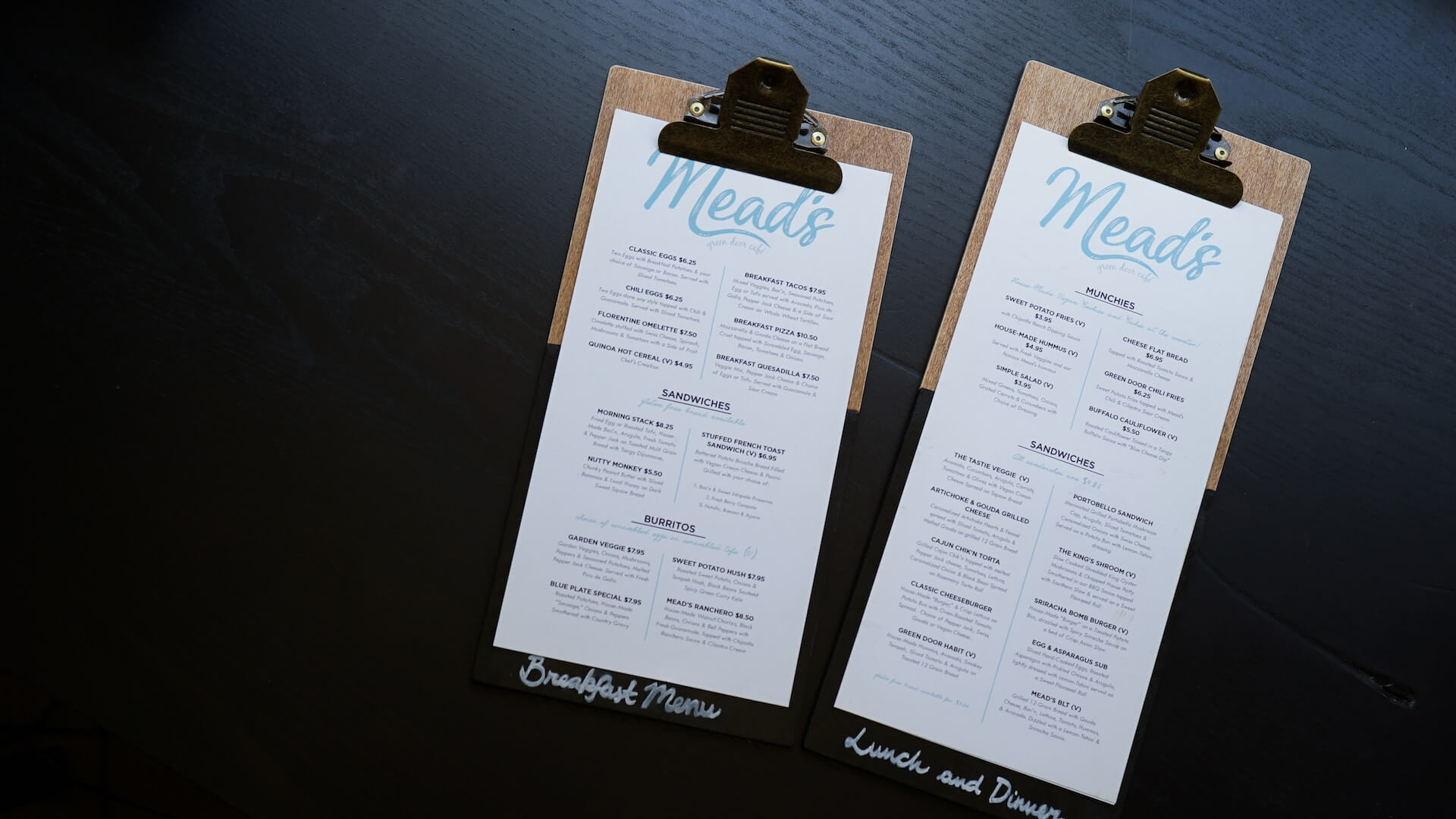
Two restaurant food menus

I wonder what Chef Duffy would say about these menus.

Call it an education session, call it a workshop, one of the best features of the Bar & Restaurant Expo is live menu feedback from Chef Brian Duffy.

This is certainly true of the 2023 Bar & Restaurant Expo. During this year’s BRE (formerly Nightclub & Bar Show, or NCB), Chef Duffy delivered well over two hours of real-world menu feedback.

To be sure, BRE educational programming is always beneficial. Attendees who take the time to plan their schedules to include education sessions will take invaluable tips back to their businesses.

However, watching in real time as Chef Duffy critiques real menus submitted by BRE attendees provides insight that will impact the guest experience and success of a restaurant or bar immediately.

When delivering his feedback, Chef Duffy is unacquainted with the menus. He’s also unfiltered. So, attendees of these sessions are provided a window to Chef Duffy’s professional opinions, on the fly, in real time.

Take, for example, this blunt statement: “If you serve tilapia in your restaurant, you suck.” Before anyone has a conniption, Chef Duffy is referring to unethically farm-raised tilapia that’s often exposed to waste.

Technical Difficulties

Due to unforeseen AV issues, Chef Duffy was unable to use the large screens in the room to review menus for 30 to 40 minutes.

Now, some speakers may be shaken when encountering such a technical difficulty. This isn’t the case for Chef Duffy. In fact, all in attendance from the start of his session were lucky enough to gain insights beyond menu design because of the AV issues.

First, we all gained some insight into Chef Duffy’s consulting process. When engaged for restaurant consultation, he watches an evening service. Next day, he’s in your kitchen at 10:00 AM. What he sees in your kitchen tells him what’s happening throughout your restaurant. By the way, if he encounters just two spelling errors on your menu, he’s done reviewing it—you need a fresh start.

Second, inventory. Chef Duffy assumes you keep eleven percent of your overall revenue on your shelves. So, if you’re generating $100,000 each month, your shelves hold $11,000 of product. When reviewing your financial situation, take a look at that number for your own restaurant or bar.

Third, executive chefs versus head chefs. Chef Duffy has been on the ground for more than 100 restaurant openings. He has interviewed countless chefs. Have you ever wondered about the difference between an executive chef and a head chef? Knowledge of the financial aspects of running a kitchen. Without it, someone’s not an executive chef—they’re a head chef. Executive chefs know (and in theory can be trusted with) finances; head chefs make sure the brigade comes to work on time.

Finally, a cost-reduction tip. When you speak with your food reps, ask about DWO items: “Discontinued When Out.” You may be able to get your hands on some great items for a fraction of the cost.

Pricing Tips

Since we’ve looked at costs, let’s take a look at pricing.

Determining pricing effectively involves more than just gathering intel about your competitors. Chef Duffy suggests looking over your entire menu and committing to a pricing hard deck.

For example, “I’ll never sell a starter for less than X dollars.” You commit to never selling a entree for lower than a certain dollar amount. If you breach that promise, you may damage your brand.

Staying on the topic of pricing, don’t take advantage of your guests. Chef Duffy absolutely believes you can charge premium prices—but only for innovation. How do you know if a menu item is innovative? If it has made its way to major chain restaurants and you’re not doing anything unique to your version, it’s not innovative.

In terms of layout and design, don’t “lead” guests to prices with dots, dashes, or solid lines. Just place the price next to the item and move on.

Menu Tips

Another crucial tip that really should go without saying but, well, here we are, is proofreading. Want to make sure your menu is correct in a fun way? Throw a proofreading party. Invite ten of your VIP guests, gather your staff, invite some friends and family if you won’t be distracted, and ask for honest feedback.

Of course, you can elevate this event by serving new menu items tapas or family style to your VIPs. Brand-new restaurant yet to open? I suggest having the proofreading party with staff, friends, and family.

Keep in mind that menu real estate is valuable. Does a section of your menu come with identical accompaniments? Explain that at the top of section rather than including them in every. single. item. separately. Yes, this happened during the live 2023 BRE reads.

Chef Duffy would like you to stop putting specials on your menu. Again, menu real estate is valuable. If you can spare the room for specials, are they really special? Instead, your servers should know the day’s specials and share them with your guests from memory. And speaking of memory, upselling really only works if your staff knows the menu backward and forward.

Oh, and Chef Duffy would love it if you’d stop doing truffle fries if you’re not going to use premium products.

Your Menu Isn’t “Just” a Menu

Obviously, I haven’t shared every one of Chef Duffy’s menu tips. However, the above should serve as more than enough to motivate you to review your own menu with a critical eye.

In fact, you should be inspired to have your leadership, BoH, and FoH teams review the menu as well.

Yes, spelling matters. Yes, grammar matters. And yes, every detail and bit of menu real estate matters. This is because, simply put, your menu is more than a list of items for sale.

As Chef Duffy says, “Your menu is your calling card, it’s just that simple.” He would also tell you that the first place people encounter your business is online after a search. So, your website is your showcase. But your menu? That’s your billboard on the freeway, as he says.

QR codes may have been the standard from 2020 to 2022. We all know why. But for the most part, with the exception of QSRs and LSRs, people want to hold your menu. It’s a tactile experience and true engagement.

Menu design, like your website’s design, matters. Don’t believe me? I have two framed menus on my office wall, and they’re not from client concepts.

To learn more about Chef Brian Duffy, visit his website here. And, of course, make sure to follow him on Instagram. To listen to his Bar Hacks podcast episodes, click here for episode 33 and here for episode 53.

Image: Catherine Heath on Unsplash

KRG Hospitality Complete Bar Menu Audit

by David Klemt David Klemt No Comments

Meet Customers Where They Are, Part 3

Meet Customers Where They Are, Part 3

by David Klemt

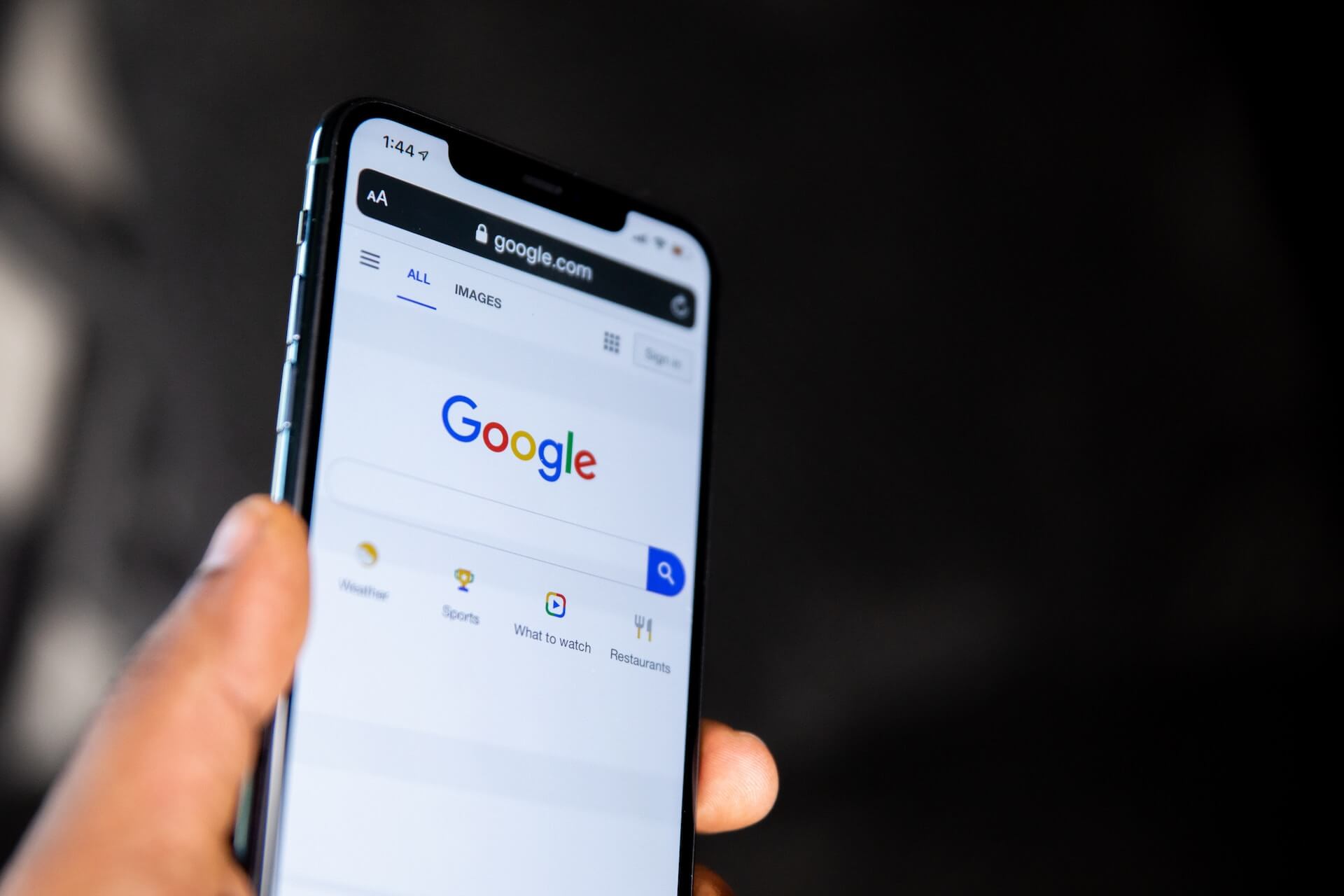
Person using Google search on their phone

If you truly want to meet your potential guests where they are, you need to be as discoverable as possible via mobile and desktop search.

The first part of this series discusses meeting guests in secondary and tertiary markets. Also, part one recommends looking into suburbs and watching moving data.

Part two looks into the importance of being top of mind for delivery, takeout, and pickup guests. Even with the current demand for socializing and in-person dining, off-premise dining guests are an important focus.

Now, I’m talking about being discoverable. Why? Because of where your guests are: their phones and desktops.

So, there are few crucial elements of your business to consider. Your website still matters. You need to ensure you own your venue listings. It’s crucial that your location information is up to date across platforms.

And now, meeting guests where they are will mean improving the odds that AI chatbots recommend your business.

Another ongoing KRG Hospitality series is our conversations with ChatGPT, Bing AI, and now Google Bard. It’s our chat with the latter that shows the importance of improving online discoverability.

Below, interactions with Bard and ChatGPT about using AI chatbots to discover restaurants, bars, and hotels.

Google Bard

Can people use Bard to discover new restaurants and bars, and book reservations?

Yes, people can use Bard to discover new restaurants and bars, and book reservations. Bard can access and process information from the real world through Google Search and keep its response consistent with search results. For example, if you ask Bard to find a restaurant with good Italian food in San Francisco, it will look for restaurants that have been rated highly by other users and that serve Italian food. Bard can also book reservations for you through OpenTable.

What criteria do you use to determine the best restaurant, bar or hotel for someone asking you to conduct a search of such businesses?

I use a variety of criteria to determine the best restaurant, bar, or hotel for someone asking me to conduct a search of such businesses. Some of the most important criteria include:

  • Customer reviews. I look at customer reviews to see what other people have said about the restaurant, bar, or hotel. This helps me get a sense of the quality of the food, service, and atmosphere.
  • Location. I also consider the location of the restaurant, bar, or hotel. I want to make sure that it is in a convenient location for the person I am recommending it to.
  • Price. I consider the price of the restaurant, bar, or hotel. I want to make sure that it is within the person’s budget.
  • Type of food. If the person is looking for a specific type of food, I will try to find a restaurant that serves that type of food.
  • Atmosphere. I also consider the atmosphere of the restaurant, bar, or hotel. If the person is looking for a casual or formal atmosphere, I will try to find a restaurant that fits their needs.
  • Other criteria. I may also consider other criteria, such as the hours of operation, the availability of parking, and the presence of accessibility features.

By taking all of these factors into account, I can help the person I am recommending it to find the best restaurant, bar, or hotel for their needs.

How can a restaurant, bar or hotel improve the odds that Bard would recommend them to someone?

There are a few things that a restaurant, bar, or hotel can do to improve the odds that I would recommend them to someone:

  • Provide excellent customer service. This means being friendly, helpful, and responsive to customer needs. It also means going above and beyond to make sure that customers have a positive experience.
  • Offer a unique or memorable experience. This could be anything from a special menu item to a unique atmosphere. Something that makes the restaurant, bar, or hotel stand out from the competition.
  • Be consistent. This means providing the same level of service and quality every time a customer visits. It also means being reliable and keeping promises.
  • Be responsive to feedback. This means listening to what customers have to say and taking their feedback into account. It also means being willing to make changes based on feedback.

By following these tips, restaurants, bars, and hotels can increase the odds that I would recommend them to someone.

If I asked you to find me the best cocktail bar in Las Vegas for early evening drinks and the best upscale restaurant for a late dinner in Las Vegas, what would you recommend?

Sure, I can help you with that. Here are my recommendations for the best cocktail bar and upscale restaurant in Las Vegas for early evening drinks and late dinner, respectively:

  • Cocktail bar: The Vesper Bar at The Cosmopolitan of Las Vegas. This award-winning bar offers a wide variety of cocktails, as well as a beautiful atmosphere. It is perfect for a romantic evening or a night out with friends.
  • Upscale restaurant: The Dorsey at The Venetian Las Vegas. This Michelin-starred restaurant offers a tasting menu of modern American cuisine. The atmosphere is elegant and the service is top-notch. It is perfect for a special occasion or a romantic dinner.

I hope this helps!

ChatGPT

Can people use ChatGPT to discover new restaurants and bars, and book reservations?

As an AI language model, I can provide recommendations and information about restaurants and bars, but I cannot directly book reservations for you. However, I can suggest several online platforms that allow you to book reservations at restaurants and bars, such as OpenTable, Resy, and Yelp Reservations. These platforms allow you to search for restaurants and bars based on various criteria such as location, cuisine, price range, and availability, and make reservations online.

If you’re looking for restaurant recommendations, I can provide suggestions based on your preferences such as cuisine, location, price range, and other factors. Additionally, I can provide you with information such as hours of operation, contact information, and customer reviews. Please let me know if there’s anything specific you’re looking for and I’ll do my best to assist you!

How do you help ChatGPT users find the best restaurants, bars, and hotels?

As an AI language model, I can help ChatGPT users find the best restaurants, bars, and hotels by using natural language processing and machine learning algorithms to understand the user’s preferences and provide personalized recommendations.

To find the best restaurants and bars, I can consider various factors such as cuisine, location, price range, ambiance, and customer reviews. I can also take into account any dietary restrictions or preferences the user may have, such as vegan or gluten-free options.

To find the best hotels, I can consider factors such as location, price range, amenities, and customer reviews. I can also help users find hotels based on their preferred style of accommodation, such as luxury, boutique, or budget.

In addition to recommendations, I can also provide users with useful information such as hours of operation, contact information, and directions. I can also assist with booking reservations or finding deals and discounts if available.

How can a restaurant, bar or hotel improve the odds that ChatGPT would recommend them to someone?

There are several ways a restaurant, bar, or hotel can improve the odds of being recommended by ChatGPT to someone:

  1. Positive Customer Reviews: Positive customer reviews are one of the most critical factors in ChatGPT’s recommendation algorithm. Encourage your customers to leave positive reviews on platforms such as Google, Yelp, or Tripadvisor, as these can greatly improve your chances of being recommended.
  2. High-Quality Photos: High-quality photos of your establishment, food, and drinks can make a big difference in attracting potential customers. Ensure that your website and social media pages have high-quality images that showcase the ambiance, menu, and overall experience of your establishment.
  3. Accurate and Up-to-Date Information: Ensure that your establishment’s information is accurate and up-to-date on various platforms. This includes your address, phone number, hours of operation, and menu.
  4. Responding to Customer Queries: Respond promptly to customer queries or complaints on various platforms, including social media. This shows that you value customer feedback and are willing to make improvements to provide an excellent experience.

Offering Unique Experiences: Offering unique experiences or features, such as signature cocktails or locally sourced ingredients, can help your establishment stand out and increase the likelihood of being recommended by ChatGPT.

If I asked you to find me the best cocktail bar in Las Vegas for early evening drinks and the best upscale restaurant for a late dinner in Las Vegas, what would you recommend?

For the best cocktail bar in Las Vegas for early evening drinks, I would recommend The Chandelier at The Cosmopolitan of Las Vegas. It is a three-story bar with a stunning chandelier centerpiece, offering a wide range of signature cocktails and a luxurious ambiance. It’s perfect for early evening drinks with friends or colleagues.

For the best upscale restaurant for a late dinner in Las Vegas, I would recommend Joel Robuchon at MGM Grand. It is a Michelin-starred restaurant with an elegant dining room and exceptional French cuisine. They offer a variety of tasting menus, including a vegetarian option, and a vast wine selection. The service is impeccable, and the atmosphere is perfect for a romantic dinner or a special occasion.

Takeaways

First, the bar and restaurant recommendations. As a Las Vegas local for creeping up on two decades, they’re solid. I think a first-timer would find them helpful and be happy with those selections.

More importantly, however, is what each bot reveals about discoverability. Operators need to make sure they’re responding to reviews quickly and properly; that they’re listings are under their control and the information is accurate; and that they’re courting reviews in the 4.0- to 4.7- star range. (More on that rating range in the near future.)

Then there are the other important considerations, such as pricing, cuisine, and atmosphere. When taking control of listings, operators must categorize their venues accurately.

Technology innovations often present a paradox. Ostensibly, technology makes lives easier. However, many operators likely find that much of tech makes things more difficult.

Leveraging tech often requires more work on the operator side—innovations often make things simpler for our guests. Of course, tech can make things easier for operators, it just takes a lot of work initially.

As people rush to develop AI—some say too quickly—it’s going to be top of mind for people searching for restaurants, bars, nightclubs, eatertainment venues, hotels, etc. Operators are going to have to meet their guests where they are: search engines and chatbots.

KRG Hospitality. Restaurant. Bar. Hotel. Feasibility Study. Business Plan.

Image: Solen Feyissa on Unsplash

by David Klemt David Klemt No Comments

Yes, We Finally Spoke with Google Bard

Yes, We Finally Spoke with Google Bard

by David Klemt

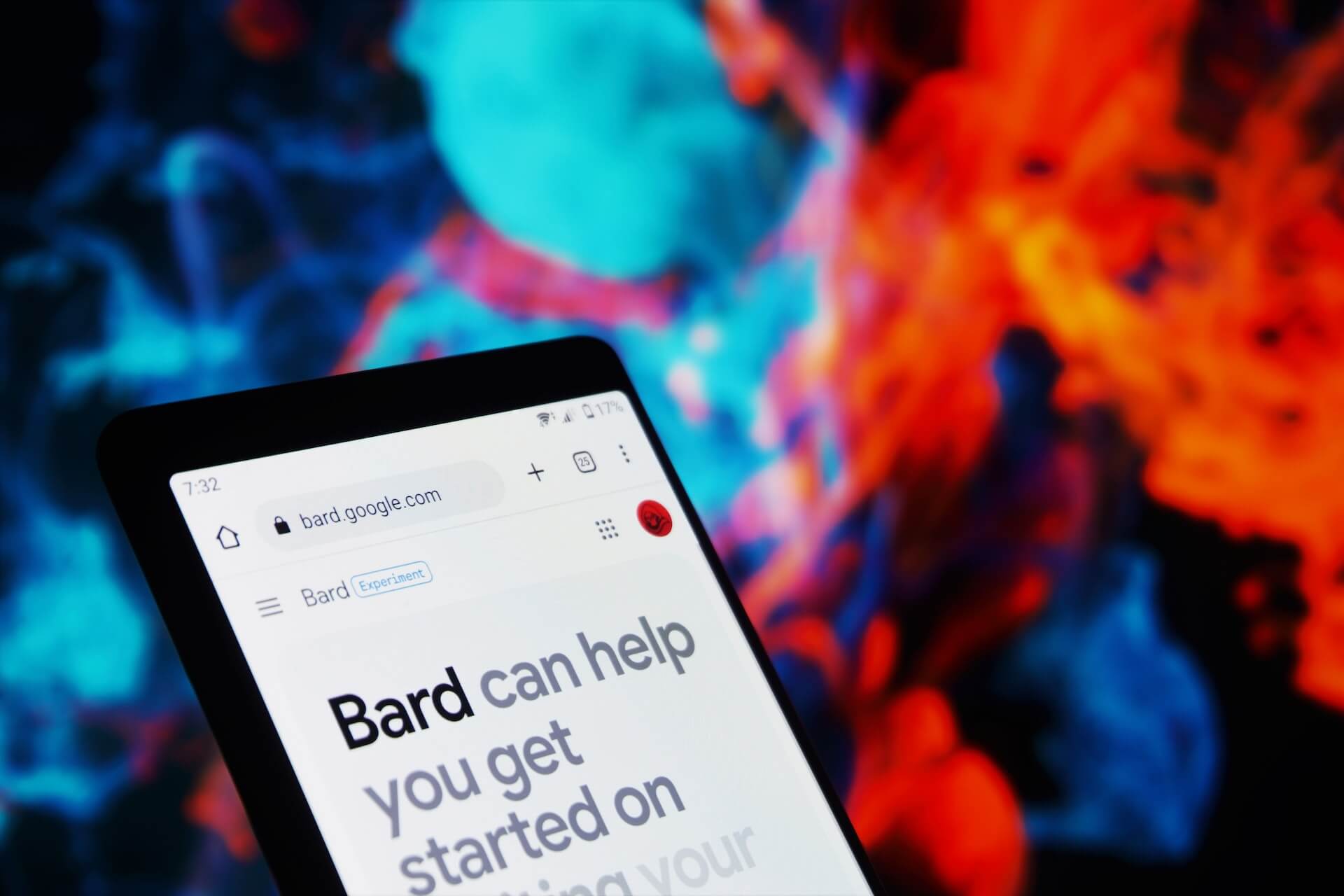
Person using Google Bard AI on their phone

Come on, now—you must know that after speaking with ChatGPT and Bing AI and sharing those chats our conversation with Google Bard is next.

Perhaps because its launch is more recent, Bard is slower to answer than ChatGPT. I can’t know for certain but it’s reasonable to assume eager users are overwhelming Bard.

As far as the user experience, I like that Google includes a disclaimer about interacting with Bard. Unsurprisingly, Google warns that Bard can provide inaccurate, misleading, or false information. Interestingly, the company also recommends people “Google it” if they’re unsure about the answers Bard offers.

Below you’ll find the same questions I asked of ChatGPT in January and Bing AI in March. Not surprisingly, Bard “believes” robots and AI are more beneficial than detrimental for our industry.

Please write 400 to 500 words about robots and artificial intelligence working in restaurants, from the perspective of robots and AI.

As a robot working in a restaurant, I have a unique perspective on the challenges and opportunities that automation presents. On the one hand, it can be difficult to compete with humans who are more flexible and creative. On the other hand, automation can help restaurants to reduce costs and improve efficiency.

One of the biggest challenges for robots in restaurants is the need to be able to adapt to changing circumstances. For example, if a customer makes a special request, a robot needs to be able to adjust its plans accordingly. This can be difficult, as robots are often programmed to follow a set of instructions.

Another challenge is the need to be able to interact with customers in a natural and engaging way. Customers expect robots to be polite and helpful, and they should be able to answer questions and provide assistance. This can be difficult, as robots are often not as good at understanding human language as humans are.

Despite these challenges, there are also many opportunities for robots in restaurants. Automation can help restaurants to reduce costs by eliminating the need for human employees. This can be especially beneficial in areas with high labor costs. Automation can also help restaurants to improve efficiency by reducing the time it takes to prepare and serve food. This can lead to shorter wait times for customers and higher profits for restaurants.

In addition, automation can help restaurants to provide a more consistent and reliable experience for customers. Robots are not subject to the same fatigue and errors as humans, and they can work 24 hours a day without a break. This can lead to better food quality and faster service.

Overall, I believe that the opportunities for robots in restaurants outweigh the challenges. Automation can help restaurants to reduce costs, improve efficiency, and provide a better experience for customers. As the technology continues to develop, I believe that robots will play an increasingly important role in the restaurant industry.

From the perspective of artificial intelligence, the use of robots in restaurants is a fascinating development. AI has the potential to revolutionize the restaurant industry, and it is already being used to automate tasks such as food preparation, order taking, and delivery.

AI can also be used to personalize the restaurant experience for customers. For example, AI can be used to recommend dishes that customers are likely to enjoy based on their past orders. AI can also be used to create virtual assistants that can answer customer questions and provide support.

The use of AI in restaurants is still in its early stages, but it has the potential to revolutionize the industry. AI can help restaurants to improve efficiency, reduce costs, and provide a better experience for customers.

Can you explain to me, in 300 to 400 words, what the ethical implications are for restaurant, bar, and hotel operators using artificial intelligence and robots to complete tasks?

Sure. Here are some of the ethical implications for restaurant, bar, and hotel operators using artificial intelligence and robots to complete tasks:

  • Job displacement: The use of artificial intelligence and robots could lead to job displacement, as some tasks that are currently done by humans could be done by machines. This could lead to increased unemployment and reduced income for workers.
  • Bias: Artificial intelligence and robots could be biased, as they are often trained on data that is collected from human sources. This could lead to unfair treatment of customers, employees, and other stakeholders.
  • Privacy and security: The use of artificial intelligence and robots could raise concerns about privacy and security, as these systems could collect and store data about customers and employees. This data could be used to track customers’ movements or to monitor employees’ activities.
  • Safety: The use of artificial intelligence and robots could raise concerns about safety, as these systems could malfunction or make mistakes. This could lead to injuries or even death.
  • Customer experience: The use of artificial intelligence and robots could have a negative impact on the customer experience, as some customers may find it unsettling or uncomfortable to interact with machines. Additionally, customers may feel that the use of robots and artificial intelligence detracts from the human element of the service experience.

It is important for restaurant, bar, and hotel operators to consider these ethical implications before implementing artificial intelligence and robots in their businesses. By carefully considering these issues, operators can help to ensure that the use of these technologies is done in a responsible and ethical manner.

Are there risks that human designers and engineers will introduce bias to customer-facing artificial intelligence and robots?

Yes, there are risks that human designers and engineers will introduce bias to customer-facing artificial intelligence and robots. This is because humans are inherently biased, and this bias can be reflected in the way that we design and engineer systems.

One way that bias can be introduced is through the data that is used to train artificial intelligence systems. If the data is not representative of the population that the system will be interacting with, then the system may be biased. For example, if an artificial intelligence system is trained on data from primarily white and wealthy customers, it may have difficulty understanding and serving customers from other backgrounds.

Another way that bias can be introduced is through the algorithms that are used to control artificial intelligence systems. If the algorithms are not designed to be fair, then the system may be biased. For example, if an algorithm is designed to favor customers who spend more money, then customers who spend less money may be treated unfairly.

It is important for human designers and engineers to be aware of the risks of bias and to take steps to mitigate these risks. This can be done by using a variety of methods, such as using diverse data sets, designing fair algorithms, and testing systems for bias. By taking these steps, we can help to ensure that artificial intelligence and robots are used in a fair and ethical manner.

KRG Hospitality Start-Up Restaurant Bar Hotel Consulting Consultant Solutions Plans Services

Image: Mojahid Mottakin on Pexels

by David Klemt David Klemt No Comments

5 Books to Read this Month: April 2023

5 Books to Read this Month: April 2023

by David Klemt

Flipping through an open book

Our engaging and informative April book selections will help you take your bar, restaurant or hotel to higher levels, and develop your leadership skills.

To review the book recommendations from March 2023, click here.

Let’s jump in!

Unreasonable Hospitality: The Remarkable Power of Giving People More Than They Expect

When Will Guidara took over the famous Eleven Madison Park, the restaurant had just two stars and he was only in his mid-twenties. Before his 40th birthday, the changes and strategies he implemented helped the restaurant earn the title of the Best Restaurant in the World.

One of cornerstone’s of Guidara’s was “bespoke hospitality.” He and his team truly went above and beyond. Examples of the Eleven Madison Park team’s approach to hospitality illustrate just how over the top they went to deliver memorable guest experiences. If you’re looking for inspiration to step up your hospitality, pick up or download Unreasonable Hospitality today.

Blue Ocean Strategy, Expanded Edition: How to Create Uncontested Market Space and Make the Competition Irrelevant

I’m going to address the viability of the blue ocean strategy before getting into the book. Creating a hospitality concept without competition isn’t really feasible. Go too far into “blue waters” and there won’t be any “fish” (traffic). And where, exactly, would one put their restaurant, bar, or hotel where there’s no competition but still enough traffic to generate a profit?

Those issues addressed, this book is still valuable to owners and operators. One need not eliminate competition completely to take lessons from the blue ocean strategy. Businesses must still differentiate themselves from competitors, and they must look for unique opportunities to help them stand out. Blue Ocean Strategy may not work perfectly but much is still very helpful.

Contagious Culture: Show Up, Set the Tone, and Intentionally Create an Organization that Thrives

Anese Cavanaugh’s Contagious Culture addresses a topic that we often discuss with clients, in our articles, and during speaking engagements: workplace culture. From large corporations and regional or national restaurant chains, to independent restaurants, bars, and hotels, culture will make or break an organization. Cavanaugh’s techniques will improve your workplace culture and energize your team, an undeniable key to success.

From Amazon: “This is Contagious Culture, a game-changing guide to transforming corporate culture from within, developed by the award-winning creator of The IEP Method to strengthen your ‘Intentional Energetic Presence.’ This is more than a leadership book―this is your future calling.”

Bar Hacks: Developing The Fundamentals for an Epic Bar

Doug Radkey is the founder, president, and lead strategist of KRG Hospitality. He’s also a hospitality industry speaker, educator, and author. This is his first book, Bar Hacks, which is also the name of the podcast we produce through KRG Hospitality.

Now, while the title states this book is a guide for developing and running an epic bar, the strategies carry over to restaurants, hotels, and other hospitality concepts. It’s difficult—if not impossible—to elevate one’s skills and service without first mastering the fundamentals. Whether you’re new to the industry or are a veteran who feels the need to reset and revisit the fundamentals, Bar Hacks is your guide.

Hacking the New Normal: Hitting the Reset Button on the Hospitality Industry

There’s a first book, which means there must be at least one other one, right? Right! Hacking the New Normal is Doug’s second book.

This book is a direct response to the pandemic, what it did to the industry, and the issues many operators would prefer to ignore. However, the devastation is so great that ignoring the changes that should have been made decades ago isn’t a viable option. With a spotlight on hybrid business models, real estate, profit margins, technology, guest experiences, culture, diversity, and mindset, Hacking the New Normal will position you for success in our new hospitality landscape.

Image: Mikołaj on Unsplash

KRG Hospitality. Consultant. Consulting. Culinary. Bar. Hotel. Mixology. Technology.

by David Klemt David Klemt No Comments

Program for Unique Holidays: April 2023

Program for Unique Holidays: April 2023

by David Klemt

"Think about things differently" neon sign

Do you want to stand out from from other restaurants and bars in your area? Change how you think about your April holiday promotions.

Several holidays are set against every date on the calendar, and April is no exception. These holidays range from mainstream to esoteric.

Pay attention to the “weird” or unique holidays to raise eyebrows, carve out a niche for your restaurant or bar, and attract more guests. Why do what everyone else is already doing? Why program only around the same holidays as everyone else?

Of course, you shouldn’t try to celebrate every holiday, strange or otherwise. Focus on the days that are authentic to your brand; resonate with your guests; and help you grab attention on social media.

You’ll find suggestions for promotions below. However, the idea behind our monthly holiday promotions roundup is to inspire you and your team to get creative and come up with unique programming ideas.

For our March 2023 holidays list, click here.

April 6: International Day of Sport For Development and Peace

Sure, sports can spark some bitter rivalries. However, it can also bring people together. Whether you choose to air sporting events this day (make sure you have the proper licensing to do so) or create a themed LTO menu, encourage guests to set aside their differences and come together at your restaurant or bar.

If you’re operating a sports- or game-focused eatertainment concept, this is also an excellent day to host a friendly tournament. Who knows? It could become a weekly, monthly, quarterly, or yearly promotion if it takes off.

April 7: National No Housework Day

Your guests are likely already burnt out on spring cleaning. Tell them to toss aside their brooms, mops, and sponges and reward themselves with a visit to your venue.

April 8: National All is Ours Day

I’ll bet that if you think about it for a moment you can come up with at least one incredible element or landmark in your community. This is the day to celebrate it with your guests. National All is Ours Day is dedicated to appreciating what we have and taking an adventure, however big or small.

April 10: Dyngus Day

This isn’t necessarily an “odd” holiday. However, those who didn’t grow up in a community with a significant Polish presence may not know about it.

On Dyngus Day, people who take part in Lent get to indulge and blow off some steam. Common food items enjoyed on this day are Polish hot dogs, potato pancakes (placki ziemniaczane), dumplings (pierogi), and donuts filled with custard (paczki).

April 11: National Barbershop Quartet Day

If you search for one hard enough, you can probably find a local barbershop quartet that sings current-day hits. It could be pretty cool to have them entertain your guests…

April 13: National Make Lunch Count Day

This is the day to really impress with an incredible lunch to boost pickup, delivery, and in-person traffic for this daypart.

April 23: National Take a Chance Day

Do you have a food or beverage item you have yet to put on your menu? Something you want to test but just haven’t gotten around to it yet? This is the day to entice your guests with something new and encourage them to try it. It’s also the perfect time to collect feedback to either revise the item, add it right away, or move on from it.

April 27: National Tell a Story Day

So, this day may be better served as a deadline for you. Do your website, social media channels, menu, and venue design tell your restaurant or bar’s story? If an honest assessment shows that they don’t, use April 27 as a deadline to tell your brand’s story to your guests. Storytelling is a powerful engagement tool, so make sure yours is dialed in.

April 29: National Sense of Smell Day

Personally, I’d program around this day with the help of brand reps. A tasting or guided pairing that engages the sense of smell can really wow your guests, delivering an incredible and memorable experience.

April 30: National Bubble Tea Day

Bubble tea isn’t the most unique beverage. However, learning how to craft boozy bubble tea drinks for your spring and summer menus…that’s a great way to celebrate this holiday and show off your bar team’s creativity.

Image: Ivan Bertolazzi on Pexels

KRG Hospitality Start-Up Restaurant Bar Hotel Consulting Consultant Solutions Plans Services

by David Klemt David Klemt No Comments

Empower Your Team to Make Decisions

Do You Empower Your Team to Make Decisions?

by Kim Richardson

Chess pieces on chess board in grayscale

Empowerment is about so much more than trusting someone to follow clearly defined rules; you must learn to trust your team’s judgement.

Yes, even when things don’t go according to plan. If you’re only training your team on the “rules,” you’re doing a disservice to them and yourself. So, let’s have a little chat about empowerment. What does it mean to you? What are your expectations of your team when you tell them they are empowered?

Looking back throughout your own work history, have you ever had a job where your boss told you that you were empowered to make decisions, but you didn’t actually know what to do or how to make decisions? Did anyone ever explain “the how” of decision making to you?

Now, look at yourself as a leader. Have you ever had employees that you’ve told are empowered to make decisions, yet they get a manager every time someone needs something out of the ordinary? Are you explaining to your staff “the how” of decision making, along with your expectations?

It’s frustrating to feel like the house might fall down when you’re not in it. That’s no way to operate a business. We all want our staff to be able to make educated decisions when we’re not around. We shouldn’t have to hold their hands and be part of every single decision.

Still, there are times when, left to their own devices, a team member doesn’t make the decision you’d want them to make. This makes owners and leadership team members feel as though they must be at work every second.

So, how do you move away from micromanagement and learn to trust your team’s decision making?

Leverage Teachable Moments

You’ll never be able to give an example of every possible situation that may arise. Therefore, you’ll never be able to train your team on everything that they’ll encounter on any shift.

How do you tell someone how to handle situations when you’re not around? You don’t, and I don’t suggest you even try. Instead, you need to instill a sense of empowerment in your team.

However, “empowerment” is just a word if you’re not educating your team. You need to teach staff how to make good decisions. And how do you even start to do that? Cash in on all the teachable moments that happen throughout the day!

Once upon a time we were all new to this industry. I’m sure you have a few stories of some mistakes you’ve made along the way. I know I certainly do.

Think back to those situations. Did someone explain to you why you made a mistake? More importantly, did they then help you understand what to do next time? Or did they just get mad and make you feel like a failure?

I’ve had the privilege of working with some amazing people over the years. There are several people that really put effort into teaching me. The different things they taught me helped me to understand the ins and outs of decision making, even in situations I know very little about.

Example 1: The Restaurant

For my first job ever, I was a hostess at an Italian restaurant and pizzeria. During the training process I was told to rotate sections when seating tables. That’s easy enough, right? Well…maybe not.

Sometimes I’d see exceptions to this rule. The same section would get sat twice in a row, for example. I watched exceptions to “the rule” get made with no clue as to why.

One day, I sat the same section twice in a row. I don’t remember why, but I do remember the server’s reaction.

Right after seating the second party in the server’s section she let me know how annoyed she was by my decision. Now, I knew I messed up immediately—she let me know. But I didn’t know why it wasn’t okay that I had double-sat her this time.

All I knew is there was a rule I was expected to follow…unless I wasn’t supposed to follow it. Sometimes it was okay to disregard the rule, sometimes not. The rule wasn’t clarified before I began my role as a hostess, it wasn’t explained during training, and it wasn’t explained in the moment I “broke” the rule.

At some point it was explained to me that there were several factors that influenced the “double-seating rule.” For instance, you might skip a section in the rotation if they were just sat a big party. You might double-seat someone if they were regulars, family or friends and the server was able to accommodate an additional table. Of course, there were several other factors that could come into play.

The biggest issue is that none of that was explained to me during training. Moreover, I was left to figure out the nuances of seating on my own.

Example 2: The Hotel Sales Office

I worked at a hotel in the sales office for my first job out of college handling group room blocks.

The contracts I sent out to clients had cutoff dates 30 days prior to the event. Again, sounds pretty simple, doesn’t it?

One day a bride emailed me asking if she could extend the cutoff date. The cutoff date fell on a holiday weekend and she was concerned that people might not have time to book their rooms. I wrote her back and very politely told her no. So she reached out to my boss, Jill, who told her yes.

And then I got called into Jill’s office.

I remember that conversation like it was yesterday. Jill was very nice about the situation and explained that it was okay to make exceptions for people sometimes. Sometime later, I extended a cutoff date for another group. Should be an acceptable exception, right?

Nope. I got my hand slapped on that one. There was a citywide event going on over those dates. The hotel was fully sold out and turning away business. In this circumstance, it was actually a huge problem to extend the cutoff date.

Great—here we go again with a rule that exists in a gray area, and no one explained its nuances. As it turns out, there are factors that go into extending a cutoff date, such as how many rooms the group has already picked up; how busy the hotel is over the dates of their room block; and the relationship you have with the client.

I don’t know if anyone ever flat out explained these gray areas to me. Instead, I was left to figure out the nuances through trial and error.

Example 3: The Dish Tub Incident

At that same hotel several years later I started handling banquet events. One day, a client told me their registration desk needed dish tubs lined with cloth napkins. I threw it on the banquet event order.

Well, I happened to work at a Five Diamond hotel. Dish tubs with napkins sitting out in view of the public? That’s not how we did things. Enter: Bruce the Banquet Manager.

No detail, however small, escaped Bruce. Referring to the dish tubs and napkins, Bruce asked me why they were necessary. I actually had no idea what the client wanted with the tubs and napkins. So, I reached out to the client.

Turns out all she needed was a way to store welcome packets for event attendees. These days, we just put up a QR code and call it good. Once I let Bruce know what the containers were actually for, he understood. However, we weren’t about to load unsightly dish tubs with welcome packets. Instead, we found something more aesthetically pleasing and in line with our level of service.

I spoke about the Dish Tub Incident with Jill. To her credit, she helped me understand that people who are planning meetings so frequently are sending standard specs. Sometimes there would be a request on a BEO that wouldn’t make sense for the venue. Crucially, she taught me that if I ever saw something that didn’t make sense I needed to ask questions.

Truthfully, I don’t remember if it was that conversation or another but Jill taught me one of the best lessons: Ask the client what goal they’re trying to achieve. By understanding their goals we could provide solutions that made sense for us and honored their wishes. Additionally, we’d deliver the excellent service they had come to expect.

Example 4: The Hotel Cafeteria

Let’s take a little break from talking about my mistakes and talk about somebody else’s.

Many years later, I was working at another hotel. One day, I went to the cafeteria and the fruit bowls had Asian pears in them. I love Asian pears, so I was really excited about those bowls.

Now, those particular pears were probably a day away from being spoiled. I went to the cafeteria the next week and there were the Asian pears again! This time, they were perfectly fresh, crisp pears.

Well, I certainly enjoyed that. You want to know who didn’t enjoy that? The executive chef!

As it turns out, Chef sent the pears that were about to go bad to the cafeteria because they were leftovers from something else. He didn’t want them to go to waste. But the fresh, crisp pears that were out the following week? Those were a different story.

There was a kitchen team member who saw the Asian pears go down the week before. When he was setting up the cafeteria the following week he threw some in the fruit bowl. No one had told him that Asian pears are expensive. Also, no one had told him the pears were just going down to the cafeteria because they were close to spoiling. They’re not typically the type of thing set out in the employee cafeteria.

While I would never expect Chef to stop and explain every single decision he’s making, it’s the perfect example of seeing one of your superiors doing something and thinking you’re supposed to do the same.

Leaders Teach

When I look back on some of the mistakes I made, they seem pretty obvious with many years of hindsight.

The solutions to unexpected situations are common knowledge to me now. If you also have some years in this industry, they’re likely common knowledge to you.

And that’s my point.

I was young. I was inexperienced. People didn’t always tell me the things they had learned that were common knowledge to them. So, they also didn’t share their expectations with me.

I can only assume that you have people on your team that are young and inexperienced. As seasoned hospitality professionals, we all make decisions every day that can be teaching moments. These moments are part of the learning experience. Using them to shape your team will help your business run better.

Have you implemented an onboarding process? Do you have a detailed employee manual? Do you have actual systems in place? If so, great—you’re ahead of the curve.

But do you think that you’re training new and existing employees on every situation that will ever pop up during their shifts? Really, that’s impossible. Instead, be on the lookout for teachable moments. Put people on your leadership and empower them to do the same.

In turn, they’ll help empower your staff to make the “right” decisions for your business. And importantly, they’ll feel empowered to learn from mistakes so they don’t repeat them. Over time, and it won’t take long, you and your leadership team will be able to step away and work on other parts of the business. In fact, you’ll find that you can step away from the business from time to time.

People are going to make mistakes. That includes you. Don’t let these teachable opportunities go to waste.

Image: Hassan Pasha on Unsplash

KRG Hospitality. Boutique Hotels. Resorts. Properties. Consultant. Feasibility Study. Business Plan

by David Klemt David Klemt No Comments

What’s Up with the Restaurant Tax Credit?

What’s up with the Restaurant Revitalization Tax Credit?

by David Klemt

Abraham Lincoln's face on $5 bill

If you’re wondering what’s going on with the Restaurant Revitalization Tax Credit bills in the House and Senate, you’re probably not alone.

And if you find yourself wondering about them, that’s likely because there isn’t much news about the bills. Unfortunately, it appears that no meaningful progress has been made on HR 9574 or S.5219.

A quick check shows that both bills share the same status: Introduced. As for the House bill, HR 9574, that was introduced on December 15, 2022 by Representative Earl Blumenauer (D-OR). The Senate bill, S.5219, was introduced by Senator Benjamin Cardin (D-MD) on December 8, 2022.

It’s important to note that Sens. Cardin, Patty Murray (D-A), and Sherrod Brown (D-OH) reintroduced S.5219 in January of this year. However, that apparently didn’t mean much as the Congress.gov trackers show no progress.

Last year, some opined that neither bill would receive a vote until January 2023 at the earliest. That “prediction” has proven true, of course—it’s now the end of March.

Restaurant Revitalization Tax Credit Act Summary

Let’s take a quick look at HR 9574 and S.5219.

Both bills propose a $25,000 payroll offset for restaurants. Eligibility requirements are also identical: applicants must have applied for but not awarded a Restaurant Revitalization Fund grant.

Additional, eligible applicants are:

  • restaurants with operating losses of at least 30 percent in 2020 and 2021 in comparison to 2019; or
  • restaurants with losses of at least 50 percent in either 2020 or 2021 in comparison to 2019.

So, those are elements that both the Senate and House bills share. What about the differences between the two bills?

Mainly, differences come down to the number of employees. For S.5219, restaurants with ten employees or fewer could be eligible for the maximum payroll tax credit. That credit, as a reminder, is up to $25,000 for 2023. For every employee over ten, the refund cap drops by $2,500.

Now, HR 9574. Restaurants with ten or fewer employees would receive the full $25,000 payroll tax offset. For restaurants with between 11 and 20 employees, the offset would be “partially refundable.”

Now What?

If you believe that you’re eligible for this tax credit, it’s time to let your representatives know you want them to act.

To make things simple for everyone, I’m including the links you need to find and contact senators and representatives.

For senators, click here. And for representatives, click here.

Let them know that it’s time for action on S.5219 and HR 9574. And let them know exactly what action you expect them to take.

Image: Karolina Grabowska on Pexels

KRG Hospitality Start-Up Restaurant Bar Hotel Consulting Consultant Solutions Plans Services

by David Klemt David Klemt No Comments

WSWA Presents Cannabis Regulation Plan

WSWA Presents Cannabis Regulation Plan to Congress

by David Klemt

Drink with cannabis leaf artwork on top

The Wine & Spirits Wholesalers of America are making their support for federal adult-use cannabis legalization and regulation known.

In summary, the WSWA is urging Congress to treat cannabis in a similar manner to alcohol. Impressively, the organization is doing more than just imploring members of Congress to legalize and regulate adult-use cannabis.

Rather, the WSWA is showing their commitment by doing much heavy lifting. Click here and you’ll find the WSWA Principles for Comprehensive Federal Legalization and Oversight of the Adultuse Cannabis Supply Chain. This is a comprehensive document that serves as a framework for the federal government to take action.

“The time has come for Congress to legalize and regulate adult-use cannabis at the federal level,” says Francis Creighton, CEO and president of the WSWA. “The success of our alcohol regulatory system offers a proven model for cannabis regulation, one that will promote public health and safety as well as a fair and competitive marketplace.”

Why Does the WSWA Care About Cannabis?

It’s clear when reading the WSWA letter to Congress and the organization’s framework document that they anticipate this question.

In a letter to House Speaker Kevin McCarthy, Majority Leader Charles Schumer, Minority Leader Hakeem Jeffries, and Minority Leader Mitch McConnell, the WSWA lays out precisely why they’re addressing federal legalization and regulation:

I am writing to you today to announce that we at the Wine & Spirits Wholesalers of America (WSWA) believe the time has come for Congress to legalize and regulate adultuse cannabis at the federal level.

We have reached this position because the current conflict between state and federal law is not only causing adverse consequences for consumers and nonconsumers of cannabis but will also have longterm public health and safety costs that are too great to ignore. Twentyone states and the District of Columbia representing roughly half the U.S. population have already legalized adultuse cannabis, yet the markets in these states remain illegal under federal legislation. This conflict undermines the rule of law and weakens public health and safety, while leaving states unsupported in their efforts to create safe, regulated markets and eliminate dangerous blackmarket activity.”

What Does the WSWA Want?

Essentially, the WSWA wants the US government to apply the same principles of federal beverage alcohol regulation to adult-use cannabis:

  • Award permits to cannabis producers, testing facilities, importers, and distributors;
  • approve and regulate cannabis products;
  • collect federal excise tax efficiently and effectively; and
  • implement effective public safety measures.

To that last point, the WSWA calls for the development of “a reliable standard for all types of impaired driving, similar to blood alcohol concentration.” In other words, a BAC equivalency for cannabis.

Of course, I don’t think I’m coming to any groundbreaking conclusion in assuming the organization foresees financial benefits. Alcohol importers and distributors, for example, know how to maneuver through the red tape of federal regulation already. And they’re well positioned to apply for permits, should they be allowed to handle both alcohol and cannabis.

This is an interesting development, one that many will support. The WSWA makes a compelling point. Additionally, providing framework is a wise strategic move.

However, we’re in highly partisan, politically charged times. There’s no reason yet to assume Congress will take up federal legalization and regulation any time soon.

Image: Justin Aikin on Unsplash

KRG Hospitality Mixology Training with Jared Boller

by David Klemt David Klemt No Comments

EHI and Danny Meyer Invest in SevenRooms

EHI and Danny Meyer Invest in SevenRooms

by David Klemt

Front of house staff member using SevenRooms

SevenRooms is showing no signs of resting on their laurels, announcing a major new investor: Enlightened Hospitality Investments.

EHI, a private-equity fund, traces its launch back to 2016. The fund, launched by and affiliated with Union Square Hospitality Group, typically makes investments in the $10-25 million range. Generally speaking, EHI makes non-control investments.

As you’re likely well aware, USHG’s founder and executive chairman is none other than restaurateur Danny Meyer. The Shake Shack chairman is also the managing partner of EHI.

Investment in SevenRooms by EHI—and by extension Danny Meyer—is huge news. Meyer now joins other high-profile chef and restaurateur investors in SevenRooms:

“At EHI, we always pay close attention to transformative tech that advances high touch,” says Meyer. “Far more than a reservations platform, SevenRooms provides abundant tools to create highly customized guest experiences and equips both restaurant and hotel teams to do what they do best—deliver truly memorable hospitality.”

Continual Growth

Since 2011, SevenRooms has pursued growth while serving the hospitality industry.

Whether in terms of innovation, partnerships, appointing the right people to key roles, or attracting investors, the platform is constantly strategizing to ensure its longevity.

Just look at what the company has achieved over 24 months:

  • March 2021: SevenRooms appoints Pamela Martinez as the company’s chief financial officer.
  • September 2021: SevenRooms announces a multi-year partnership with TheFork. The partnership is big news for operators throughout Europe and Australia. Further, the partnership illustrates how the company is pursuing global growth.
  • October of 2021: The company forms a partnership with Olo. This ensures clients who also use Olo are able to capture data from a key group: off-premise customers. That data creates profiles for such customers automatically. That means operators can learn more about—and effectively market to—customers who engage with them via online orders.
  • December 2021: SevenRooms and ThinkFoodGroup—the hospitality company behind Chef José Andrés’ portfolio of restaurants—make their partnership public. Interestingly, this partnership also includes ThinkFoodGroup joining SevenRooms in an advisory role.
  • January 2022: The platform announces the hiring of a chief revenue officer, Brent-Stig Kraus.
  • December 2022: SevenRooms enters into a partnership with Competitive Social Ventures.
  • January 2023: The company announces the appointment of their first-ever chief marketing officer.

As our industry rapidly attracts tech platforms and innovations, it can be difficult to know which companies are here to stay.

The growth of SevenRooms shows stability and longevity. Those are two key factors that should inform operator decisions when considering the tech stack.

Image: SevenRooms

by David Klemt David Klemt No Comments

5 Books to Read this Month: March 2023

5 Books to Read this Month: March 2023

by David Klemt

Flipping through an open book

Our engaging and informative March book selections will help you hone your leadership, entrepreneurial, and operational skills to dial in your business.

To review the book recommendations from February 2023, click here.

Let’s jump in!

Whiskey Women: The Untold Story of How Women Saved Bourbon, Scotch, and Irish Whiskey

It shouldn’t come as a surprise that women have been involved with and influencing alcohol for centuries. Still, women’s contributions to the spirits, beer, and wine we imbibe are often overlooked. Fred Minnick’s Whiskey Women seeks to change that.

From Amazon: “Whiskey Women tells the tales of the women who created the industry, from Mesopotamia’s first beer brewers and distillers to America’s rough-and-tough Prohibition bootleggers. Women have long distilled, marketed, and owned significant shares in spirits companies, including Bushmills, Johnnie Walker, and Maker’s Mark. Williamson is one of many influential women who greatly influenced Scotch, bourbon, and Irish whiskey. Until now their stories have remained untold.”

Unvarnished: A Gimlet-eyed Look at Life Behind the Bar

Even now it seems like people don’t view the service industry as offering “real” careers. Indeed, some restaurant and bar owners are asked when their “real” plan is because it can’t possibly be running a hospitality business.

In Unvarnished, Eric Alperin, owner, manager and designer of the Varnish in LA, and author Deborah Stoll reject that idea. This fascinating book offers lessons learned from Sasha Petraske, Alperin’s partner and mentor; the many tiny details bar owners will turn over and over in their heads before finalizing plans; reasons to not date a bartender; and much, much more.

There are also 100 recipes that Alperin required hopeful bartenders to know before they could land a job at the Varnish.

Heads in Beds: A Reckless Memoir of Hotels, Hustles, and So-Called Hospitality

Last month we featured In the Weeds. In January, we recommended Your Table is Ready. Both books are similar to the amazing Kitchen Confidential, a book all hospitality professionals should read.

Heads in Beds is essentially Kitchen Confidential for those in the hotel business. The Amazon listing describes this book as “a funny, authentic, and irreverent chronicle of the highs and lows of hotel life, told by a keenly observant insider who’s seen it all. Prepare to be amused, shocked, and amazed as he spills the unwritten code of the bellhops, the antics that go on in the valet parking garage, the housekeeping department’s dirty little secrets—not to mention the shameless activities of the guests, who are rarely on their best behavior.”

There are also emotional stories and revelations about the darker side of the industry we all need to address.

Impactful Influence for Modern Leaders: How to Use the Power of Influence to Lead Other People Toward Success

None of us can really become a true leader without the ability to influence those who work for us. That means, however, that we must continually develop ourselves. Influencing those around us to perform at their best isn’t as simple as giving orders, of course.

And that’s where Impactful Influence for Modern Leaders comes in. This book will help you build trust with your team; mentor others effectively; learn to let go and trust your team; and much more.

Lady You Got Balls: The Gift of Being Underestimated

If you’re an entrepreneur, odds are you’ve experienced being underestimated. You’ve likely had a taste of office life and decided it wasn’t for you due to the politics and betrayals.

If that’s you, you have something in common with Patricia Stroberg, author of Lady You Got Balls. In this book, you’ll see why being an underestimated underdog can be to your advantage. Lady You Got Balls “is for anyone wanting to run a successful company and live a life of purpose when the challenges seem too overwhelming to overcome.”

Image: Mikołaj on Unsplash

KRG Hospitality Complete Bar Menu Audit

by David Klemt David Klemt No Comments

Program for Unique Holidays: March 2023

Program for Unique Holidays: March 2023

by David Klemt

"Think about things differently" neon sign

Do you want to stand out from from other restaurants and bars in your area? Change how you think about holiday promotions.

Several holidays are set against every date on the calendar, and March is no exception. These holidays range from mainstream to esoteric.

Pay attention to the “weird” or unique holidays to raise eyebrows, carve out a niche for your restaurant or bar, and attract more guests. Why do what everyone else is already doing? Why program only around the same holidays as everyone else?

Of course, you shouldn’t try to celebrate every holiday, strange or otherwise. Focus on the days that are authentic to your brand; resonate with your guests; and help you grab attention on social media.

You’ll find suggestions for promotions below. However, the idea behind our monthly holiday promotions roundup is to inspire you and your team to get creative and come up with unique programming ideas.

For our February 2023 holidays list, click here.

March 3: National I Want You to be Happy Day

This is certainly a holiday tailor-made for the hospitality industry. Above all, we should all want guests to feel happy before, during, and after their visit. Happy and excited in anticipation to visiting, happy throughout their visit, and leaving with a happy memory.

March 5: Cinco de Marcho

This is a week-long celebration. Traditionally, this holiday has been intended to prepare people for all the alcohol they intend to consume on St. Patrick’s Day.

However, operators can go a different direction with this. For the week leading up to St. Patrick’s Day you can trickle out the dishes and drinks you intend to feature for the big celebration. Alternatively, you can feature alcohol-free and even health-boosting drinks before St. Patrick’s Day.

March 8: National Proofreading Day

You and your team should be proofreading your menus before they every find their in front of guests. But, hey, mistakes are sometimes made.

For National Proofreading Day, challenge your guests to find errors on your menus, placing a “bounty” on them. Reward guests who find mistakes and then fix them.

March 10: Mario Day

Nostalgia is a powerful tool for generating engagement, boosting traffic, and creating guest loyalty. This holiday celebrates Nintendo’s most famous character, obviously.

If you have gaming consoles or Super Mario Bros. arcade games, you know what to do. And you also know you should create a Mario-themed LTO menu.

March 13: National Open An Umbrella Indoors Day

You could, if you’re superstitious, tempt fate on this day. For example, you could set some umbrellas by your front door and dare guests to open them indoors upon their arrival.

Or you could create an LTO menu with drinks served with cocktail umbrellas, a much “safer” way to celebrate.

March 16: National Everything You Do Is Right Day

Does your guest want another drink? That’s the right decision. Do they want to order a second starter? They’re right to do so. Is your guest mulling over dessert? They should do it because it’s the right thing to do.

March 22: National Goof Off Day

Sometimes your guests need to play hooky. Work, errands, chores… Who needs ’em? This is the day they should find refuge in your restaurant or bar and take a break from their responsibilities.

March 26: Make Up Your Own Holiday Day

I mean… Clean slate here. Create your own holiday and make it stick for an annual March 26 celebration at your venue.

March 29: Smoke And Mirrors Day

One of the simplest ways to leverage this holiday is with smoked cocktails and foods. Smoke sells: When one guest orders a smoked cocktail, others follow.

March 30: National Virtual Vacation Day

You can treat this like National Goof Off Day. Of course, you can also decorate your place to look like a vacation destination, create themed LTOs, and send your guests into April feeling refreshed.

Women’s History Month Holidays

In addition to March being Women’s History Month, there are separate days that celebrate women and women’s accomplishments, and bring attention to women’s issues. You can find these days below:

  • International Women’s Week: March 5-12
  • Women of Aviation Worldwide Week: March 6-13
  • Women in Construction Week: March 6-13
  • International Women’s Day: March 8
  • National Women And Girls HIV/AIDS Awareness Day: March 10

Image: Ivan Bertolazzi on Pexels

KRG Hospitality Beverage Programming

by David Klemt David Klemt No Comments

Alternatives to ServSafe

Just.Safe.Food. and More Alternatives to ServSafe

by David Klemt

Server carrying two plates with one hand

ServSafe, the National Restaurant Association‘s food safety training program, isn’t the only food handler training game in town.

Certainly, the program is the most well known in our industry. However, it’s fair to say that ServSafe is closer to infamous than just ubiquitous due to a New York Times article from January.

While it’s the most recognizable of the food safety programs, it’s not the only one. Although, ServSafe’s omnipresence likely gives many the impression that it’s ServSafe or nothing.

There are, however, alternatives to ServSafe. In fact, one challenger was announced a day after the explosive New York Times article that thrust ServSafe into a spotlight the NRA probably isn’t enjoying. (After all, one result of that article was a letter from six US senators demanding answers from the NRA about ServSafe by March 3.)

At any rate, the newest alternative to ServSafe comes from One Fair Wage. The program is Just.Safe.Food. and costs just $10. (As a reminder, ServSafe costs $15.)

For that $10, Just.Safe.Food. gives an individual three attempts to pass their exam and unlimited access to training materials. Additionally, One Fair Wage (OFW) says profits they raise from the program will go toward advocating for restaurant workers.

OFW, as many in the industry know, is owned and operated by restaurant workers. Two cornerstones of the organization’s mission are increasing the minimum wage, and ending the tip credit. OFW is also attempting to convince lawmakers to stop accepting donations from the NRA.

Basically, OFW and the NRA are—and it appears always have been—at odds with with one another.

Other ServSafe Alternatives

Before I list a few other alternatives, let me be clear: KRG Hospitality isn’t advocating for any food safety training program in particular. Operators and their team members will need to decide which program is best for them.

Whether that decision is based on employer requirements, state or local requirements, cost, ideology, or another reason makes no difference to us.

However, I will say that the more competent and comprehensive options there are, the better. Nobody should have a monopoly on food safety.

The key factor to consider is whether the particular state or county regulations are met by the program. If anyone is uncertain, they should reach out to their local health department before proceeding with any program. It’s likely the department only accepts food safety programs that are ANSI-certified.

That said, some alternatives to ServSafe are:

Operators and food-handler restaurant workers can also search for local programs that are accepted by their state/county.

Food Handler Requirements

Food safety isn’t, it turns out, universal throughout the US. Workers can be subject to state or county requirements. In some states, food handler certification is voluntary.

And then there are food safety manager regulations to consider, and those can also be state- or county-specific.

I can’t reiterate enough how important it is to know your state/county/local food handler requirements. As with many regulations, there are nuances and hospitality professionals need to know them.

Below, how different *states regulate food handler training.

State Requirements

  • Alabama
  • Alaska
  • California
  • Florida
  • Georgia
  • Hawaii
  • Illinois
  • North Carolina
  • Ohio
  • Oregon
  • South Carolina
  • Texas
  • Utah
  • Washington

County Requirements

  • Alabama
  • Arizona
  • Kansas
  • Kentucky
  • Missouri
  • Montana
  • Nebraska
  • Nevada
  • New Jersey
  • New Mexico
  • New York
  • North Dakota
  • Oklahoma
  • Virginia
  • West Virginia

Voluntary

  • Arkansas
  • Colorado
  • Connecticut
  • Delaware
  • Idaho
  • Indiana
  • Iowa
  • Louisiana
  • Maine
  • Maryland
  • Massachusetts
  • Michigan
  • Minnesota
  • Mississippi
  • New Hampshire
  • North Carolina
  • Pennsylvania
  • Rhode Island
  • South Dakota
  • Tennessee
  • Wyoming

*This information is believed accurate at the time of publication. No warranty of accuracy is given.

Image: Pixabay on Pexels

by David Klemt David Klemt No Comments

Restaurant Bans Children Under 10

A Restaurant Bans Children Under 10 and People Have Some Thoughts

by David Klemt

Closeup of spaghetti noodle wrapped around fork

On February 9, Nettie’s House of Spaghetti in Tinton Falls, New Jersey, announced it was banning children under the age of 10.

Of course, people had some thoughts after seeing the announcement on Facebook. In fact, it became a national news story. I mean, here I am, writing yet another article about the situation.

As you’ve likely already guessed, Nettie’s has received both support and pushback. Interestingly, the Facebook post shows 40,000 reactions and 11,000 shares but just 11 comments.

For the most part, the 11 comments show varying degrees of support. There are, however, a couple posts that voice disappointment.

Post Bans Children Under 10

To be honest, I find Nettie’s Facebook post announcing the ban professional. It’s not hostile, not mired in corporate-speak.

“We love kids. We really, truly, do. But lately, it’s been extremely challenging to accommodate children at Nettie’s. Between noise levels, lack of space for high chairs, cleaning up crazy messes, and the liability of kids running around the restaurant, we have decided that it’s time to take control of the situation.”

Not a bad start. The restaurant explains that they aren’t “anti-children” and lays out what led to this decision.

“This wasn’t a decision that was made lightly, but some recent events have pushed us to implement this new policy. As of March 8, the day we return from our winter break, we will no longer allow children under 10 to dine in the restaurant.”

Straightforward, announcing when the ban takes place and the ages that will no longer be permitted in the dining room.

“We know that this is going to make some of you very upset, especially those of you with very well-behaved kids, but we believe this is the right decision for our business moving forward. Thank you for understanding [red heart emoji].”

Finally, Nettie’s addresses the backlash they knew they’d receive.

Support and Opposition

Obviously, two camps have emerged: those who support the ban and those who oppose it.

The top comment gives full-throated support of Nettie’s decision:

“Fantastic idea… having worked in the industry since I was 14, [I]’ve never seen anything like I have in the recent past. Kids are out of control and most parents are oblivious. The disregard for manners and common decency is unreal. I worked in FH and was disgusted by the behavior. Good for you for taking a stand [clapping emoji].”

Pretty harsh indictment of parenting. This comment also elicited a response from Nettie’s:

Jill Sorrentino-Wilson thank you for the support! It’s become a liability to us – kids running around the restaurant in circles when we’re trying to carry trays of food and drinks has made doing our jobs extremely difficult.

Speaking of harsh, one commenter thinks this decision may be a bit much:

“I thought this was an Onion when i first saw it! I have grown kids, they were really well behaved, and nobody likes misbehaved kids(barbarism begins at the home!), especially while dining. But this might be harsh…”

And, of course, a comment from a disappointed potential guest:

That is really sad to hear .. I was looking forward to trying out your place but with a well behaved 9 year old I’m not welcome .. sad ..

Final Thoughts

No operator will ever open a concept that’s all things to all guests. They’ll never make everybody happy, and they won’t win the loyalty of every guest.

Additionally, as one commenter on the Nettie’s Facebook post points out, not every restaurant offers an atmosphere suitable for families.

That said, operators also need to know that every decision and policy will be scrutinized by the community. It’s possible that comments opposing Nettie’s new policy were scrubbed by the page’s admin—I have no way of knowing.

But I do know this: social media comments don’t necessarily represent reality. It’s possible more people support this policy than oppose it. So, it’s possible Nettie’s will gain more guests than they lose.

Banning children will likely always elicit strong responses. One can argue that banning kids is in direct opposition to the spirit of hospitality. After all, one Facebook commenter did say “I’m not welcome” when addressing the Nettie’s ban.

However, there’s no arguing that loud—obnoxious, even—children ruin the hospitality experience for other diners. Is the experience of diners without children of less value in comparison to those with children? Should an operator be expected to “deal with” the potential liability of out-of-control children? Or should they be able to make a decision removing that liability without fear of significant backlash?

In the end, the community Nettie’s serves will make their feelings known with traffic and dollars. Every operator needs to know that’s how their decisions will ultimately be judged.

Image: Mae Mu on Unsplash

KRG Hospitality Restaurants & Cafes, 2023 icon

by David Klemt David Klemt No Comments

Top X Super Bowl LVII Beverage Ads

Top X Super Bowl LVII Beverage Ads

by David Klemt

Vintage red television set

As everyone knows by now, the commercials that air during the Super Bowl are nearly as big a draw as the game itself and its famous Halftime Show.

But before we get into the ads, congratulations to the 2023 Super Bowl champions, the Kansas City Chiefs!

Of course, we can’t help but feel a bit of a sting. With an office in the great city of Philadelphia, we were cheering on the Eagles.

However, I think Super Bowl LVII featured one of the best matchups in the championships recent history. Also, I feel confident in saying that I expect Jalen Hurts and the Philadelphia Eagles to fight there way to another Super Bowl in the near future.

Super Bowl Ads

Big Game ads are famous—perhaps infamous—in part because of the cost for a 30-second commercial.

Per reporting, the price of a Super Bowl LVII ad was set at $7 million. That’s double the cost in comparison to 2012. A 30-second commercial cost $3.5 million during Super Bowl 46.

In other words, brands spend huge dollars on Big Game commercials, with the price increasing each year. After doing some digging, I found that anywhere from 70 to 100 ads will run during the Super Bowl. Assuming $7 million per ad, that’s just shy of $500 million to $700 million in ad revenue.

Companies wouldn’t spend that kind of money if they didn’t expect a healthy ROI. In fact, if you sell any of the items below you may see a sales bump.

And if you don’t sell some of the products below, you may want to consider doing so. That’s why knowing your guests, collecting data, and listening to what guests would like to see on your menu are so important.

Sure, some guests are brand loyal and don’t want to try new products. But there are plenty who are easily influenced by ads and seek out the products they see on their screens.

Bud Light: “Hold: Easy to Drink, Easy to Enjoy”

This would be my favorite Super Bowl ad if Crown Royal’s “Thank You, Canada” commercial didn’t exist.

The ad below is a worthy runner up.

Busch Light: “Cold + Smooth Survival Skills”

Crown Royal: “Thank You, Canada”

Personally, this is my favorite of the Super Bowl LVII beverage ads. Given that KRG Hospitality’s global headquarters is located in Toronto, Ontario, this shouldn’t come as a surprise.

I have to wonder how many people’s heads exploded when Dave Grohl thanked Canada for basketball and football as North Americans know it.

Heineken 0.0: “Ant-Man and the Wasp: Quantumania”

Michelob Ultra: “New Members Day”

Michelob Ultra: “Full Swing Gossip”

Miller Lite vs. Coors Lite vs. Blue Moon: “The High Stakes Beer Ad (Extended Version)”

If John Wick weren’t a loyal bourbon drinker, he’d probably appreciate this commercial the most. Of course, that would require John Wick to be a real person…

Still, excellent fight choreography, and you have to love Blue Moon’s strategy.

Pepsi Zero Sugar: “Great Acting or Great Taste feat. Ben Stiller”

Pepsi Zero Sugar: “Great Acting or Great Taste feat. Steve Martin”

There you have ’em! Which ad is your favorite?

Image: Dave Weatherall on Unsplash

KRG Hospitality Beverage Programming

by David Klemt David Klemt No Comments

Key Themes from HD Expo 2022

Key Themes from HD Expo 2022

by David Klemt

Mandalay Bay Resort & Casino Las Vegas

The educational conference sessions at Hospitality Design Expo 2022 in Las Vegas were connected by a number of key, overarching themes.

Hosted by the Mandalay Bay Convention Center, HD Expo packed each day with invaluable education. Founders, designers, highly placed executives, and other influential industry professionals addressed a wide range of crucial topics.

Below are five key topics and themes from HD Expo 2022.

Sustainability

Unsurprisingly, sustainability was one of the most-discussed topics.

Of course, conversations about sustainable design, construction, and operational practices have been at the forefront of hospitality for several years now. However, the topic seemed supercharged this year at HD Expo.

Drilling down, speakers at the 2022 show are focusing on “building performance,” light-touch construction, and waste recovery, to name but a few session topics.

When some think about sustainability, they think of low- and no-waste practices, energy efficiency, and upcycling. For others, being sustainable means building in an eco-friendly or green way.

However, several HD Expo 2022 speakers, their teams and agencies, and their partners and clients are thinking more locally. The impact of building and operating on local communities is now a greater focus.

For example, Victor Body-Lawson, founder and principal of Body Lawson Associates Architects & Planners. During a panel he co-presented, Body-Lawson addressed the importance of designing, building, and operating for the local community.

In short, he explained how not using local materials and labor has a significant negative impact on the environment. Additionally, Body-Lawson feels that the objective of design is that whomever engages with end product—commercial or residential—comes out better.

Wellness

Refreshingly, it appears the stigma surrounding wellness is dissipating. More people seem to be more comfortable discussing their mental and emotional health openly.

Designers and their clients, particularly in the hotel and resort space, are taking note.

Long a staple amenity, the health center is undergoing reinvention. In fact, many resorts and hotels are focusing on wellness centers and programming.

In fact, a number of concepts are more wellness and healing getaway than hotel or resort. One such project coming to market is the Jenesis House.

The creation of Jenesis Laforcarde, this concept’s focus is explicitly mental health, physical well-being, and self-care. Additional core values are community, hiring local, and engaging with local small businesses.

Diversity, Equity, Inclusion

Like the topic of wellness, DEI has received more earnest attention during the pandemic. And why not? Diversity, inclusion, and equity are inextricably connected to wellness.

Of course, DEI is also connected to community. Moving forward, designers, their partners, and their clients must focus on DEI within their companies and local communities.

One hotel brand that seeks to embody this mission is Caption, part of the Hyatt portfolio. Crystal Vinisse Thomas, VP and global brand leader of lifestyle and luxury brands for Hyatt, is bringing Caption to market.

At this brand’s core is community. Locals are as important as the travelers staying at a Caption property. And, again, why shouldn’t that be the case?

Locals will work at the hotel. Locals will use the hotel. And locals will feel the impact—positive or negative—of the hotel.

A visit to the website provides all the proof anyone needs that Caption is committed to locals:

  • “The people make the place here. We hire local, buy local, and vibe local.”
  • “We strive to be a good neighbor.”

Interestingly, Thomas tied DEI and the community together. While it may be a difficult conversation to start, if a designer, executive, partner, or client sees that a project isn’t representing the community, they need to address it.

Staying silent isn’t how things move forward. In fact, it’s a sure-fire way to take steps backward.

Discovery

What keeps guests coming back? Is it the amenities of a hotel? The food and beverage? Do guests return because of the service they receive?

Of course. However, a shift in guest behavior and expectations shows that F&B, amenities, and service may no longer be enough to motivate repeat visits.

When it comes to hotel and resort design, the future is discovery. Another way to think about discovery is the “hotel within the hotel,” or “resort inside the resort.” A concept that embraces this approach reveals layers that guests can discover.

Perhaps their first stay is in the main or more traditional space. Then, the guest discovers that there are different areas they can book for a stay. These could be villas, luxury tents, a pre-fab luxury Moliving unit (as an example)…

The point is that the guest knows they can engage with the property differently during each stay. While there are core elements that define a particular brand, they can deliver different experiences on the same property.

Of course, such a concept also ties into the themes of community and wellness. Many brands are eschewing the traditional operational ethos of attempting to keep a guest on property for as long as possible. Instead, the local community is a key experiential element of a hotel or resort.

The future of hospitality design—indeed, of hospitality as a whole—encompasses each of these themes. Perhaps most importantly, each theme serves a greater concept: Community.

Image: tommao wang on Unsplash

Top