Bar operations

by David Klemt David Klemt No Comments

Asia’s 50 Best Bars 2023 Revealed: 51-100

Asia’s 50 Best Bars 2023 Revealed: 51 to 100

by David Klemt

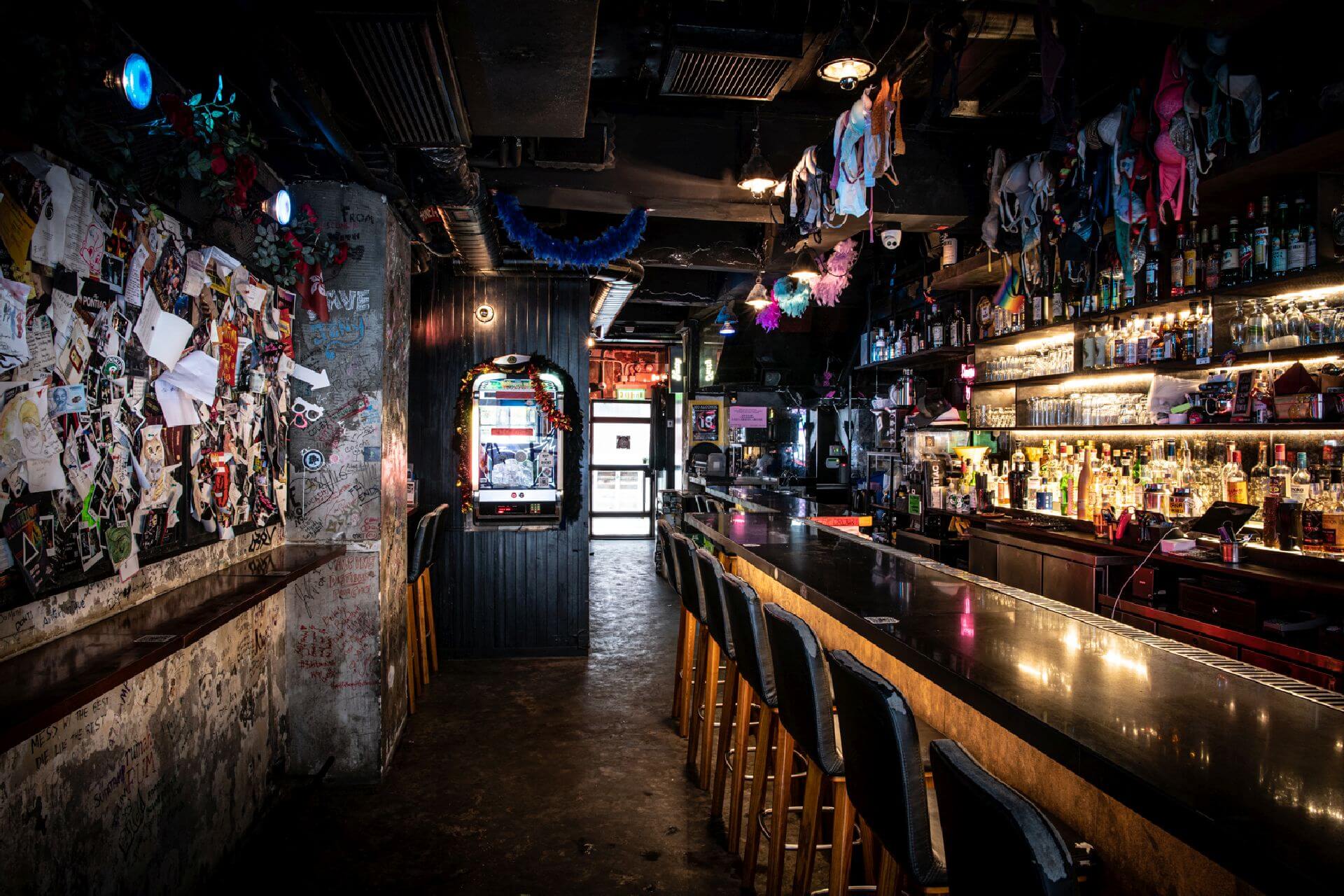
The Pontiac bar in Hong Kong

The Pontiac bar in Hong Kong, an inclusive, welcoming venue with an all-woman team.

One week from the ceremony revealing bars one through 50 of Asia’s 50 Best Bars, the World’s 50 Best Bars announces venues 51 to 100.

Sponsored by Perrier, the World’s 50 Best Bars will announce the top 50 bars in Asia on Tuesday, July 18. This year’s ceremony will take place in Hong Kong at 20:25 local time.

However, we now know which bars have earned placement on the back half of this year’s list. As Mark Sansom, director of content for the World’s 50 Best points out on episode 82 of Bar Hacks, an expansion for their lists is necessary. There are simply too many outstanding operators and teams to not honor an additional 50 venues.

To that end, the list below represents the third edition of Asia’s 50 Best Bars, 51 to 100. In my opinion, and I think the World’s 50 Best and bar professionals across the world agree, this list is every bit as prestigious as one through 50. Let’s not downplay the fact that these are 50 of the best bars in all of Asia. It’s no small feat to earn a spot on this list.

If you’re interested in finding more amazing venues throughout Asia (and around the world), click here to learn about the World’s 50 Best Discovery tool.

By the Numbers

As you’ll see below, Singapore dominates this year’s 51 to 100 list with eight bars. I expect Singapore pick up even more spots next week.

Japan boasts seven bars on the list, with Osaka, Okinawa, and Kumamoto making debuts. Hong Kong, Taiwan, and India each have claim five slots. Bangkok and Kuala Lumpur are also well represented with four bars each.

Vietnam and China each have three bars among this year’s 51 to 100. Two bars in Seoul, South Korea, earned placement as well.

However, it’s Kathmandu, Nepal, with two bars that stands out the most to me. Numbers 100 and 70 belong to Kathmandu, and are both new to the list.

To review the list on the World’s 50 Best website, please click here.

Asia’s 50 Best Bars: 100 to 51

  1. Barc (Kathmandu, Nepal)
  2. Loft (Bangkok, Thailand)
  3. Honky Tonks Tavern (Hong Kong)
  4. Tell Camellia (Hong Kong)
  5. Enigma (Ho Chi Minh City, Vietnam)
  6. Origin Grill & Bar (Singapore)
  7. PCO (New Delhi, India)
  8. Bar Mood (Taipei, Taiwan)
  9. Bar Trench (Tokyo, Japan)
  10. Aha Saloon (Taipei, Taiwan)
  11. Union Trading Company (Shanghai, China)
  12. The Wise King (Hong Kong)
  13. The Sailing Bar (Nara, Japan)
  14. The Odd Couple (Shanghai, China)
  15. Mizunara: The Library (Hong Kong)
  16. The Haflington (Hanoi, Vietnam)
  17. Yakoboku (Kumamoto, Japan)
  18. D.Bespoke (Singapore)
  19. Bar Rocking Chair (Kyoto, Japan)
  20. El Lequio (Okinawa, Japan)
  21. Offtrack (Singapore)
  22. #FindTheLockerRoom (Bangkok, Thailand)
  23. Three X Co (Kuala Lumpur, Malaysia)
  24. Wishbone Bar (Semarang, Indonesia)
  25. The Back Room (Manila, Philippines)
  26. No Sleep Club (Singapore)
  27. Nighthawk (Singapore)
  28. Pine & Co (Seoul, South Korea)
  29. Moonrock (Tainan, Taiwan)
  30. Epic (Shanghai, China)
  31. Bitters & Co. (Kathmandu, Nepal)
  32. Asia Today (Bangkok, Thailand)
  33. Coley (Kuala Lumpur, Malaysia)
  34. Hideaway (Goa, India)
  35. Reka (Kuala Lumpur, Malaysia)
  36. The Elephant Room (Singapore)
  37. Tippling Club (Singapore)
  38. Craftroom (Osaka, Japan)
  39. Last Word (Singapore)
  40. Hoots’ (New Delhi, India)
  41. Opium (Bangkok, Thailand)
  42. Home (New Delhi, India)
  43. Americano (Mumbai, India)
  44. Gold Bar (Tokyo, Japan)
  45. Junglebird (Kuala Lumpur, Malaysia)
  46. Room by Le Kief (Taipei, Taiwan)
  47. The Pontiac (Hong Kong)
  48. To Infinity and Beyond (Taipei, Taiwan)
  49. Charles H (Seoul, South Korea)

Be sure to log into the live stream to watch the one through 50 announcement live.

Congratulations to each of the operators and bar teams above! Cheers!

Image courtesy of the World’s 50 Best Bars

KRG Hospitality. Bar Consultant. Nightclub. Lounge. Mixology. Cocktails.

by David Klemt David Klemt No Comments

5 Books to Read this Month: July 2023

5 Books to Read this Month: July 2023

by David Klemt

Flipping through an open book

Our inspiring and informative June book selections will take your front and back of house to the next level, and help develop your leadership skills.

To review the book recommendations from June 2023, click here.

Let’s jump in!

Sugar Shack Au Pied de Cochon (Cabane à Sucre Au Pied de Cochon)

This is the English-language edition of the 2012 World Gourmand Book of the Year. You can pick it up at Amazon via this link, but it will cost you over $150 to do so. So, here’s the link to the book from the Au Pied de Cochon online store.

Those who have read this book describe it as one part recipe book, one part art piece. It’s difficult to categorize this book at all, really. It’s a journal, a recipe book, a culinary masterpiece, and a collection of scientific knowledge. In less than 400 pages, Martin Picard chronicles a year in the life of his restaurant, and shares 100 recipes and 2000 photographs, along a depth of culinary information, the value of which can’t be overstated. Pick it up today or find it at a library if you can.

Catching Fire: How Cooking Made Us Human

If you look at your role in foodservice as more than just a paycheck, you already view cooking as important. It has real value and inspires you, stoking your passion for this business. But what if the importance of cooking is beyond just “important”? What if it’s directly responsible for human evolution? This book by anthropologist and primatologist Richard Wrangham puts forth and defends this evolutionary theory.

From Amazon: “In a groundbreaking theory of our origins, Wrangham shows that the shift from raw to cooked foods was the key factor in human evolution. When our ancestors adapted to using fire, humanity began. Once our hominid ancestors began cooking their food, the human digestive tract shrank and the brain grew. Time once spent chewing tough raw food could be used instead to hunt and to tend camp. Cooking became the basis for pair bonding and marriage, created the household, and even led to a sexual division of labor.

“Tracing the contemporary implications of our ancestors diets, Catching Fire sheds new light on how we came to be the social, intelligent, and sexual species we are today. A pathbreaking new theory of human evolution, Catching Fire will provoke controversy and fascinate anyone interested in our ancient origins – or in our modern eating habits.”

The Subtle Art of Not Giving a F*ck: A Counterintuitive Approach to Living a Good Life

If you prefer your self-improvement and leadership books coated in gobs of sugar and wrapped in sheets of positivity, prepare for a shock. Author Mark Manson isn’t a sunshine, daisies, unicorns, and lemons-to-lemonade type of person. Instead, Manson thinks people need to toughen up and learn how to simply deal with being handed lemons. However, this isn’t a nonstop punch to the gut or blast to the chops. Rather, Manson wants people to change their mindset and focus on what should matter.

From Amazon: “Manson makes the argument, backed by both academic research and well-timed poop jokes, that improving our lives hinges not on our ability to turn lemons into lemonade but on learning to stomach lemons better. Human beings are flawed and limited – “not everybody can be extraordinary; there are winners and losers in society, and some of it is not fair or your fault”. Manson advises us to get to know our limitations and accept them. Once we embrace our fears, faults, and uncertainties, once we stop running and avoiding and start confronting painful truths, we can begin to find the courage, perseverance, honesty, responsibility, curiosity, and forgiveness we seek.

“There are only so many things we can give a f*ck about, so we need to figure out which ones really matter, Manson makes clear. While money is nice, caring about what you do with your life is better, because true wealth is about experience. A much-needed grab-you-by-the-shoulders-and-look-you-in-the-eye moment of real talk, filled with entertaining stories and profane, ruthless humor, The Subtle Art of Not Giving a F*ck is a refreshing slap for a generation to help them lead contented, grounded lives.”

Pick this book up here!

Samsung Rising: The Inside Story of the South Korean Giant That Set Out to Beat Apple and Conquer Tech

During a recent team meeting, KRG Hospitality executive chef and culinary expert Nathen Dubé recommended this book. And while it’s the story of a massive corporation, it doesn’t read like a collection of boring essays. Rather, Samsung Rising is the true story of a family-run business that has grown from 40 employees to more than 300,000. After taking big risks and committing to building a technology empire, Samsung has nearly doubled in size in comparison to rivals Apple and Google. However, the road to creating a dynasty has been anything but smooth.

From Amazon: “Forty years ago, Samsung was a rickety Korean agricultural conglomerate that produced sugar, paper, and fertilizer, located in a backward country with a third-world economy. With the rise of the PC revolution, though, Chairman Lee Byung-chul began a bold experiment: to make Samsung a major supplier of computer chips. The multimillion- dollar plan was incredibly risky. But Lee, wowed by a young Steve Jobs, who sat down with the chairman to offer his advice, became obsessed with creating a tech empire. And in Samsung Rising, we follow Samsung behind the scenes as the company fights its way to the top of tech. It is one of Apple’s chief suppliers of technology critical to the iPhone, and its own Galaxy phone outsells the iPhone.”

Grab Samsung Rising today.

Salt & Straw Ice Cream Cookbook

Recently, we had the opportunity to attend a pre-opening event for the first Las Vegas location of Salt & Straw. Those who have visited a Salt & Straw ice cream shop know how creative the brand is when it comes to flavors. We also found their team’s service to be impeccable.

The Salt & Straw Ice Cream Cookbook, as you may imagine, shares the brand’s recipes. Impressively, these all spring from a “base” recipe that takes just five minutes to make. This recipe book should help to inspire your own desserts.

From Amazon: “Based out of Portland, Oregon, Salt & Straw is the brainchild of two cousins, Tyler and Kim Malek, who had a vision but no recipes. They turned to their friends for advice—chefs, chocolatiers, brewers, and food experts of all kinds—and what came out is a super-simple base that takes five minutes to make, and an ice cream company that sees new flavors and inspiration everywhere they look.

“Using that base recipe, you can make dozens of Salt & Straw’s most beloved, unique (and a little controversial) flavors, including Sea Salt with Caramel Ribbons, Roasted Strawberry and Toasted White Chocolate, and Buttered Mashed Potatoes and Gravy.

“But more importantly, this book reveals what they’ve learned, how to tap your own creativity, and how to invent flavors of your own, based on whatever you see around you. Because ice cream isn’t just a thing you eat, it’s a way to live.”

Image: Mikołaj on Unsplash

KRG Hospitality. Business Coach. Restaurant Coach. Hotel Coach. Hospitality Coach. Mindset Coach.

by David Klemt David Klemt No Comments

Program for Unique Holidays: July 2023

Program for Unique Holidays: July 2023

by David Klemt

"Think about things differently" neon sign

Do you want to stand out from from other restaurants and bars in your area? Change how you think about your July holiday promotions.

Several holidays are set against every date on the calendar, and this month is no exception. These holidays range from mainstream to esoteric.

Pay attention to the “weird” or unique holidays to raise eyebrows, carve out a niche for your restaurant or bar, and attract more guests. Why do what everyone else is already doing? Why program only around the same holidays as everyone else?

Of course, you shouldn’t try to celebrate every holiday, strange or otherwise. Focus on the days that are authentic to your brand; resonate with your guests; and help you grab attention on social media.

You’ll find suggestions for promotions below. However, the idea behind our monthly holiday promotions roundup is to inspire you and your team to get creative and come up with unique programming ideas.

For our June 2023 holidays list, click here.

July 5: Workaholics Day

Great bars and restaurants offer escapes from the drudgery and negativity of the rest of the world. On this day, encourage those who can step away from work to actually do so.

Barring getting workaholics to play hooky, come up with an LTO menu that’ll inspire them to at least pop by to unwind after a hard day’s work.

July 6: World Kissing Day

There are quite a few cocktails with “kiss” in the title, and these are the drinks you should use to program for this holiday.

The Kiss cocktail, for example, is a gin cocktail with Dubonnet, sweet vermouth, and Luxardo maraschino liqueur. The Widow’s Kiss consists of apple brandy, Yellow Chartreuse, Bénédictine, and Angostura bitters. In other words, it’s not difficult to celebrate this holiday through your drink menu.

July 7: Dive Bar Day

It’s difficult to beat a dive or neighborhood bar when you’re looking for a great time with friends. If you’re a dive or neighborhood bar operator, this is your day.

July 11: National Cheer Up the Lonely Day

Look, the past few years have isolated far too many of us. People are lonely, and this isolation isn’t doing anyone’s mental health any favors.

Bars and restaurants are cornerstones of their communities, so this is an excellent day to encourage people to come in, grab a bite and a drink, and try to make some new friends.

July 13: National French Fry Day

When a French fry is done right, when it’s hot with a crunchy exterior and creamy interior, it’s a perfect food. If you think your team makes amazing French fries, brag about it on social and prove it to your guests.

Better yet, this is a great day to show off your French fry skills with signature loaded versions.

July 14: National Nude Day

Unless you’re running an incredibly niche concept with excellent community and guest support, please don’t celebrate National Nude Day with nudity.

Instead, draw guests in through an enticing LTO menu. You can, for example, highlight your bar team’s prowess for creating the Naked & Famous cocktail, a mezcal cocktail made with Aperol and Yellow Chartreuse. Of course, there’s also the Porn Star Martini, along with other cocktails with names that imply nudity.

July 20: National Moon Day

It may seem like this holiday is related to the previous one, but please behave. You and your guests can celebrate Earth’s sole natural satellite via cocktails.

Not only are there drinks like the Moon cocktail (made with gin and sherry), you can also offer blue, purple, and black cocktails served with large ice cubes.

July 25: Culinarians Day

Are you proud of your kitchen team? Proud of the culinarians that are working hard to make your restaurant a success? This is the day to highlight the mastery of their craft and your signature menu items.

Alternatively, if you can afford to do so, you can also go dark on this day to give your culinary team a break.

July 28: National Get Gnarly Day

If you have some “out there” menu items, this is the day to highlight them. Do you have a food challenge? Promote it! Have some “interesting” bottles in your inventory? Promote them!

Image: Ivan Bertolazzi on Pexels

KRG Hospitality menu development. Restaurant. Bar. Cafe. Lounge. Hotel. Resort. Food. Drinks.

by David Klemt David Klemt No Comments

Kitchen Parlance, Part One

Kitchen Parlance, Part One

by Nathen Dubé
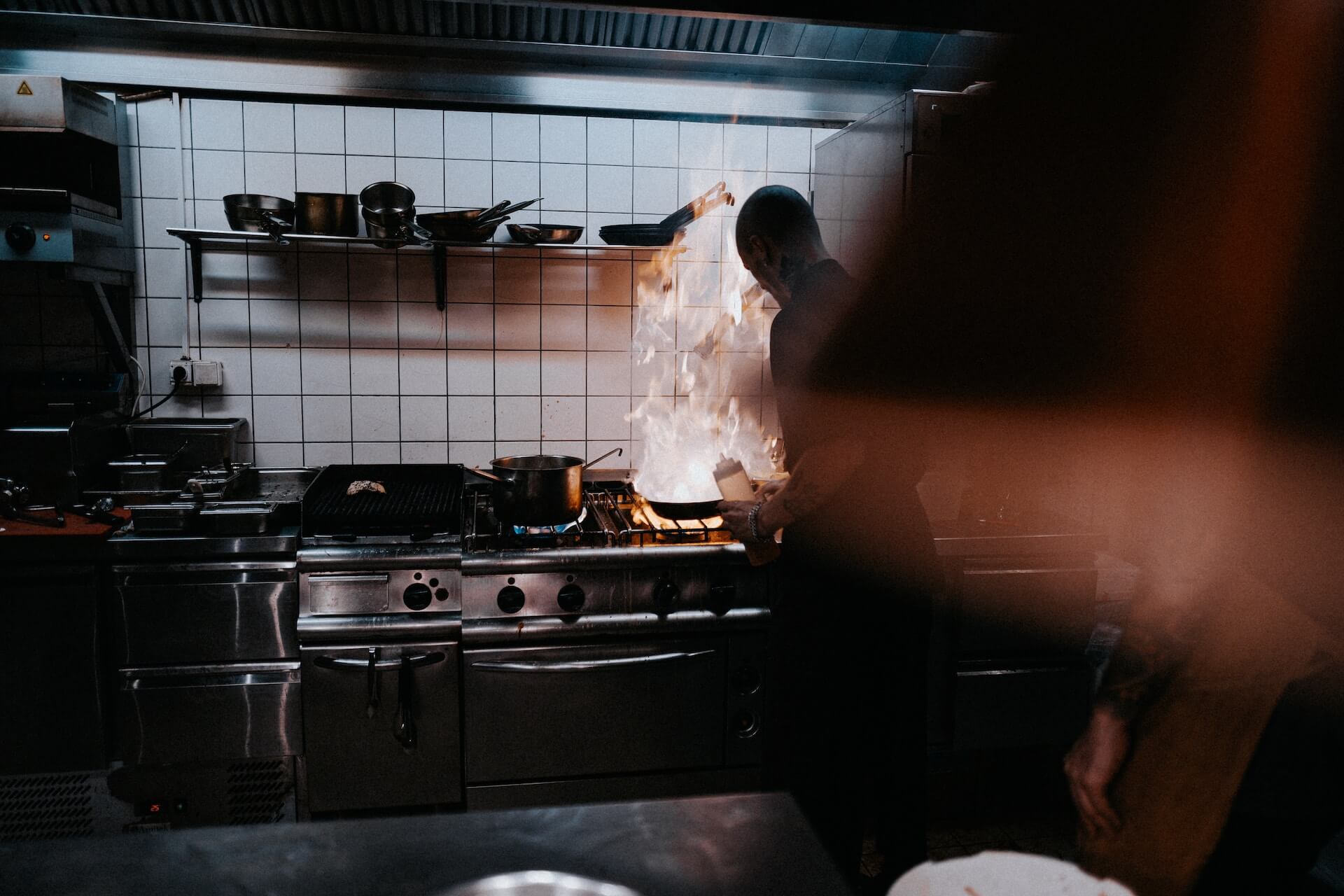
Chef handling flaming pan in commercial kitchen

Entering a professional kitchen might seem like a whole different realm with its own governing rules, and certainly its very own language.

“Clopen?” “All day?” “Behind?” “Covers?” “Deuce,” “dying on the pass”… If these terms sound foreign and made up to you, you’re not alone!

A busy kitchen can be a hot, intense, and stressful environment. Having a full-on conversation takes up valuable time when minutes and even seconds are the difference between a perfectly cooked plate of food and trash.

When actions need to be conveyed quickly and efficiently between two parties or a full team in a loud and fast-paced environment, slang develops out of necessity. Kitchens are no different, with their use of a creative and interesting lexicon.

New owners and operators opening their own concept may find many words and phrases they hear from the kitchen and servers strange at first. This is particularly true of owners and operators who may have little to no back-of-house or serving experience.

To lend a hand to hopeful operators or those opening their doors for the first time, let’s take a look at some of the more popular kitchen terms.

Operational & Equipment Terms

First, let’s take a look at the structural element of a restaurant and how they’re referred to.

Floor

The dining room (or whatever is deemed as guest seating in your establishment) is referred to as “the floor.” When someone asks, “who is on the floor tonight?”, they’re referring to the staff—usually servers—working the floor. Managers will walk the floor to check on guests and aid in service.

Note: The bar area, although it may have counter seating and its own tables, is referred to separately from the floor.

Low Boy

An under-counter refrigerator is called a “low boy” for its below-the-waist positioning, requiring cooks to bend down low to gather ingredients. This can include freezers as well. There are a variety of door configurations, including swinging, and drawer-style. Some even have salad tops where ingredients are kept in the top, under a lid.

Walk-In

A (very) large fridge or freezer, often constructed on site. It has a big swinging door that can be opened from both sides for safety reasons. The majority of raw ingredients—plus some prep and leftovers—are stored here. If you’re wondering where the word comes from, the clue is in the name: it’s so large, you can walk into it.

The walk-in is also notorious for being where restaurant staff go to scream some stress away, as the excellent insulation creates a nice sound barrier from guests.

Mise

The word “mise,” pronounced “meez,” is a slang term for “mise en place.” Mise en place is the French term for “having everything in its place” prior to service. Cooks use “mise” to refer to their own specific set of prepared ingredients, whether in terms of having it ready or not, or even worse, missing.

On the Line

The line, and the term “on the line,” refers to the area in the kitchen where the cooking equipment is located. Of course, this where chefs do most of the cooking during service. A typical line includes a walkway where the cooks work, and a flat table space—usually at the “window” or “pass” (see below)—where they plate, on the opposite side. Not surprisingly, that opposite side is referred to as the “plating area.”

If a concept requires it, there are separate “hot” lines where the hot cooking is done, and “cold” lines, where dishes that don’t require cooking are prepared. Deep fryers, ovens, and ranges are located in the former, and salad stations are located in the latter area. In classic French terms, the garde manger cook usually prepares most dishes on a cold line.

Pass / Window

The pass or window is the area opposite the cooking line where completed orders are placed for server pick-up. Think of passing dishes from the kitchen and you’ll understand this term immediately. Sometimes it will be referred to as a “window” in restaurants that have actual windows into the kitchen line from which food is passed to servers. The pass area is typically where the heat lamps are located, meant to keep dishes warm during a busy service.

The Rail / Board

The term “rail” or “board” refers to a strip of metal mounted to the food window that holds the food tickets (orders) from the kitchen printer in place. This keeps the flow organized and is normally overseen by the chef or line supervisor.

“Calling the board” means the person in charge reads out tickets as they come in, and directs cooking traffic to the other line cooks. Doing so helps to avoid disagreements and chaos in the kitchen. This position is reserved for the highest-ranking or most-talented cook, as it requires excellent cooking and communication skills. “Clear the board or rail” means completing all orders that have come in for the time being.

Chit / Ticket

When a server enters an order into the POS system, a chit or ticket, or even “dupe” (meaning “duplicate,” from the fact that some systems use three-color paper that prints a kitchen copy, a server copy, and an expo, bar, cold line, or pasty section copy), is printed to the kitchen. That ticket is then read aloud to the cooks before being placed in queue on the rail or board. When the food on the order is complete, the copy is marked in some fashion (stamp, marker, pen) and placed under the plate in the window. The server then picks up the food and the chit is “stabbed” on to a spike.

Don’t let spiked tickets fall out of the rail or all hell can break loose and derail a service!

Two-Top / Three-Top

Dining room tables are referred to as “tops” and are identified by how many guests they can accommodate (seats). A table with two chairs is a “two-top” or “deuce.” Tables with four or six chairs are “four-tops” and “six-tops,” respectively.

Covers

Each person who enters the restaurant is a cover: they “cover” one seat. The more covers, the busier a service will be, and vice versa. These numbers are used to project future numbers, staffing requirements, and inventory required. Covers are also a point of pride for kitchen staff. The more covers, the busier the service, and if you can navigate it with few mistakes, the adrenaline rush can directly convince yourself of your own talents.

Dead Plate

A dead plate is a dish of food that’s no longer worthy of the dining room. Sitting in the window too long, incorrect preparation, or even worse, being sent back by a guest results in a dead plate. Untouched dead plates are usually given to dish washing staff or porters; those sent back by guests are tossed in the bin.

Section

A section is how the floor is divided amongst serving staff. Typically, the more talented or senior staff get a bigger section. Designating sections, with all their tables in one close area, helps servers move efficiently during busy periods and keep close tabs on guests. Managers and floor captains will oversee a few or all sections and offer help to the individual servers during busy times or for large parties.

Server Alley

The front-of-house equivalent of the kitchen hot line. This is where everything servers need to do their jobs is located. Extra napkins, spare side plates, cutlery rolls, and cleaning supplies for clearing tables can all be found here. There are usually a few POS terminals here for entering orders.

Team & Guest Terms

These next few slang words are used to talk about certain people.

Expo

“Expo” is the shortened term for “expediter,” or the position of organizing, plating, and (in some cases) garnishing food at the pass. The main responsibility is to makes sure each dish is correct before the food runner or server brings it to the table. This role can be the liaison between front of house and back of house, allowing both teams to do their jobs without having to stop and coordinate.

Busser

Part of the porter team, the busser is the person who clears dishes from a table when guests leave, and drops them in the dish-washing area. The term refers to the bus bin or large plastic tub into which the bussers put all the dishes, flatware, glasses, and debris. They might also be tasked with wiping down tables and resetting them for new guests. Sometimes, the busser will pull double duty and also wash the dishes they bring back to the kitchen.

Trail / Stage

Note: In the foodservice world, “stage” is pronounced “staahj.”

A trail is essentially a training shift during which new team member will “trail” behind a cook or server. This provides the new hire the ability to learn, get comfortable with SOPs, and mitigates any potential mistakes. However, not all establishments have the staffing to offer this scenario and will train a new hire during live action.

A stage is a longer-term trail for a designated period of time. This can be a couple of weeks, a month or two, or an entire season at destination-style dining places, like Michelin-starred restaurants and hotels. The expectation is that this is a learning experience for the cook, who is exposed to new ingredients, recipes, and techniques. An agreed upon time frame is set and the cook trades labor for education.

A Personal Note on Stage

The short-term stage commitment includes the understanding that the restaurant won’t reward you monetarily. We all know the costs of training staff. Imagine investing all that effort and having that person leave after just a month or two.

Now, I despise the term “free labor” for the kitchen or benefiting restaurant. There’s a new argument that has been surfacing over the last few years that stages should be paid internships. I have two problems with this thought process.

One, these are often highly touted restaurants that operate at an elite level, and they’re extremely busy. Having a new body takes up valuable focus and resources from somebody in that kitchen. They are willing to work with you and share all their knowledge and experience.

Often times, there isn’t a chance in hell in getting a job there, and this can be the only way to get a chance at learning from these masters of the craft. Having gained valuable career experience from stages myself, they can be a great alternative if you can’t gain employment with the venues.

Two, those who raise these arguments have no experience in doing them; think they have learned nothing from the stages they may have done; had a bad experience overall; or really have no other alternatives to the points I just mentioned.

Hot tip: If you don’t like working for free, don’t! If you the value in stage, go for it!

Campers

This is a term for people who linger at their table well after they’ve finished and paid. While all guests are welcome to make themselves at home, the problem with campers is that they can take up valuable real estate during busy periods. This is the reason for table time caps at operations that run on the reservation system. They also prevent servers from “turning” tables to serve more guests and increase their tips.

Action Terms

These are some random terms that indicate actions and requests.

Fire

The process of finishing a dish. When an order is printed out, it may have courses such as appetizer, main, and dessert. All courses might be started and cooked to 80 percent completion and then held. The main wouldn’t be fired until after the appetizer. When the person in charge of the line says, “Fire table six mains,” that means finish cooking, plate the dishes, and send them to the pass.

All Day

A very quick way for a cook to request a tally of all the dishes ordered from their section. The line lead will provide totals of each dish, instead of reading out each table’s order. For example, a cook will ask for an all-day on fryers, and the lead will call back, “Six large fry, three medium fry, two poutine, and one chicken nugget.” The cook can quickly add up what they have cooking or need to prepare to fire.

Behind

As you can imagine, in a busy, happening kitchen, there are people racing in all directions in tight spaces. One quick way to avoid collisions around hot equipment and sharp objects is to yell “behind” when passing someone or a station of people. It gives them time to either move out of the way or stay in place to avoid catastrophe.

Other variations include “hot” to indicate hot pots or pans, or the potential of getting burnt. “Sharp” means a knife, and “corner” means coming around the corner. “Behind hot” and “hot, corner” are combinations which mean exactly what you think they mean.

Flash

To reheat a dish, or an item on a plate that sat under the heat lamp too long, or if a guest has requested something cooked further. Usually under a salamander, a convection oven, or a deep fryer for fried food. I’m sure for some establishments (I started out in places where this was the norm), “flashing” means “cooking” an item to well done via microwave.

Heard / Heard That

The acknowledgement that an order has been read by the person running the pass or the line and understood by all in the kitchen. Also works for a direct order to an individual.

In the Weeds

When one station is receiving the majority of the orders at any given time, or the dining room has filled up all at once and all the orders are coming in together, this can create a downward spiral between starting to cook and plating or finishing existing dishes. This is known as being “in the weeds.” The only way to survive is to put your head down and cook your way out. I’ve experienced surviving the weeds and having it ruin an entire service. It all depends on the resilience and talent of the cooks, servers, and leaders involved.

On the Fly

The request for something that is needed quickly. Perhaps the item was missed, dropped, or incorrect, and the rest of the dishes are at the table. Whatever is needed “on the fly” takes precedence over everything else or, worst-case scenario, gets shoehorned into orders coming up.

Stretch It

Kitchen lingo for getting as many portions out of something nearing its end as possible. For example, a saucepan only has enough for four steaks but five are needed. The sauce has completed cooking and the plates are waiting. So, the kitchen needs to “stretch it” and make it work or be down five plates of food.

Waxing a Table

This means giving a table special treatment. This person or these people could be VIPs, return guests, the owner’s family and friends, or an influential food writer. Whoever the are, they’ve been identified and are given a little extra attention by staff.

86

When a menu item has completely run out, the kitchen manager will say the item has been “86ed.” It’s important for the kitchen staff to communicate this to servers as soon as possible so that no more orders are placed for the item.

Family Meal

The pre-service meal enjoyed by all staff on premises. Usually made by the staff from leftovers as a way to showcase creativity and skill.

Comp

Referring to items removed from the bill for an error or because the guest didn’t like it. A comp also comes from waxing a table, of course. It’s important to track comped items for accounting purposes. Comps can be a great way to make guests happy in a pinch. However, owners, operators, executive chefs, and lead bartenders need to be aware of how often comps are being handed out; they can be indicative of quality-control problems or employee theft.

Clopen

This is a portmanteau of “close” and “open.” The dreaded weekend brunch shift comes to mind. Working a busy late Friday or Saturday service and having to come back in the following morning to sling eggs to hungover patrons is a difficult and thankless task. In short, a team member who works back-to-back closing and opening shifts is working a clopen.

FIFO

This stands for “first in, first out,” and references inventory organization, crucial for perishable items. The new items go behind the older ones so that the items that were there first get used first, ensuring freshness and quality. I once had a chef who decided that “FIFO” stood for “fit in, or f*ck off.”

These are just some of the slang terms in the culinary lexicon used to convey quick understanding when under fire. You might also hear differences in dialect between cultures and regions. I’ve worked in both Toronto and Montréal, and there are similarities and differences between terms used in Ontario and Québec, French and English, and English and South American Spanish.

So, next time you’re out dining and you hear one of these words or phrases, you might be able to figure out what’s going on behind the scenes. Tip well, be polite, and try something new!

Image: lasse bergqvist on Unsplash
KRG Hospitality menu development. Restaurant. Bar. Cafe. Lounge. Hotel. Resort. Food. Drinks.

by David Klemt David Klemt No Comments

Tales Reveals Top 4 Awards Finalists

Tales Reveals Top 4 2023 Spirited Awards Finalists

by David Klemt

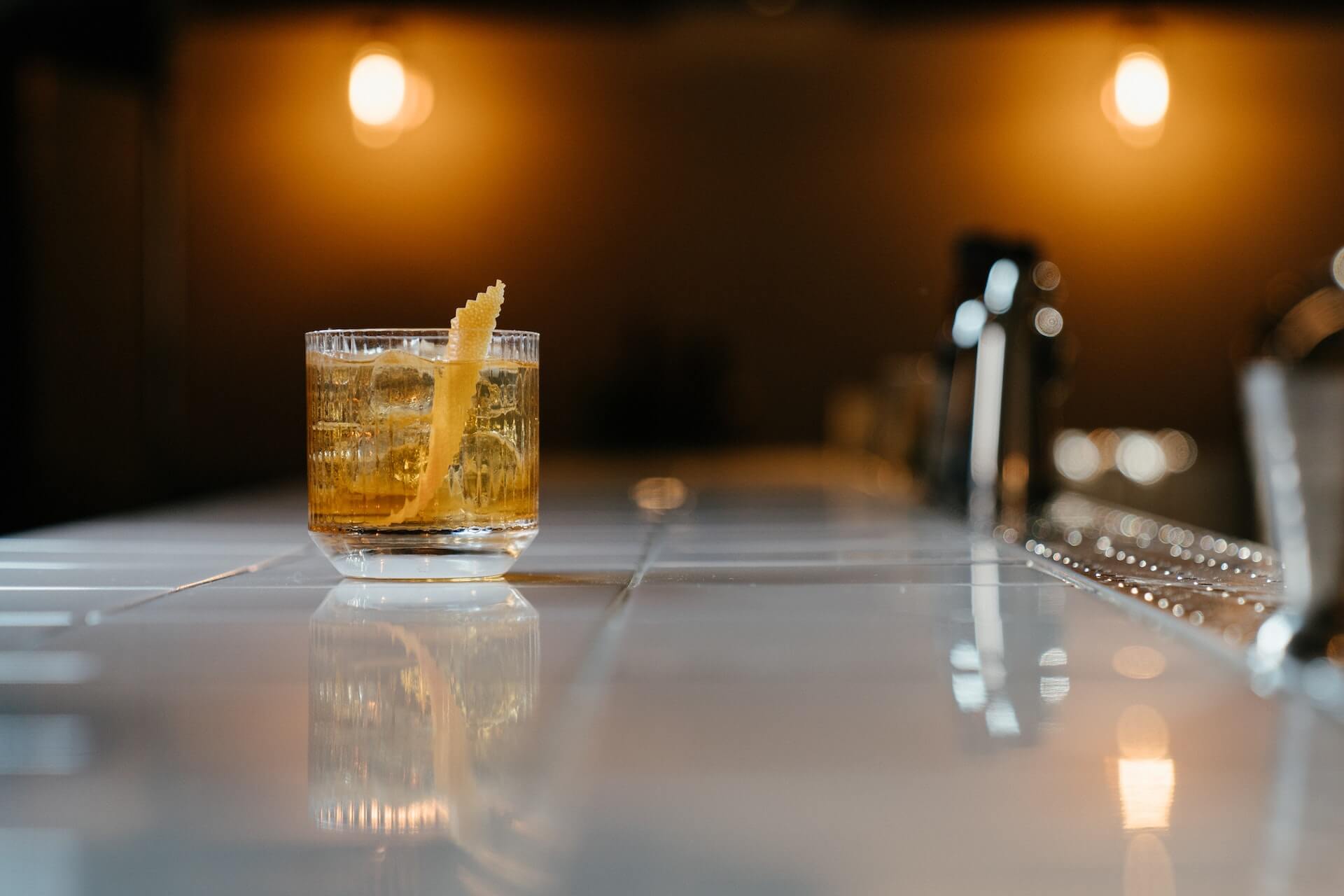
Cocktail with orange peel garnish resting on glossy white bar top

We’re one month away from the 17th annual Spirited Awards ceremony and the top four nominees in each category have been revealed.

Over the course of the past few months, the Tales of the Cocktail Foundation have been hard at work to narrow the field. They first announced this year’s honorees. Not long ago, they announced the top ten nominees.

Now, we know the top four nominees in the running for each of the Spirited Awards. You can check them out below, with each award organized into one of four main categories: US, International, Global, and Writing & Media.

Congrats to the finalists! We’ll know the winners in just a month.

Cheers!

US Categories

US Bartender of the Year presented by Pernod Ricard USA

  • Caer Maiko Ferguson, DrinkWell / Daijoubu (Austin, Texas)
  • Kapri Robinson, Allegory at the Eaton Hotel (Washington, DC)
  • Masahiro Urushido, Katana Kitten (New York, New York)
  • Christine Wiseman, Marygold’s Brasserie / Broken Shaker (Miami, Florida)

Best US Bar Mentor presented BarSmarts

  • Anu Apte
  • Colin Asare-Appiah
  • Nectaly Mendoza
  • Chris Patino

Best US Brand Ambassador presented Libbey

  • Kiowa Bryan (Spiribam)
  • Chris Cabrera (Bacardi USA)
  • Cameron George (Ardbeg Single Malts)
  • Vance Henderson (Hendrick’s Gin)

Best US Bar Team presented by William Grant & Sons

  • Happy Accidents (Albuquerque, New Mexico)
  • Nickel City (Austin, Texas)
  • Pacific Cocktail Haven (San Francisco, California)
  • Yacht Club (Denver, Colorado)

Best US Cocktail Bar presented by Absolut Vodka

  • Century Grand (Phoenix, Arizona)
  • Double Chicken Please (New York, New York)
  • Overstory (New York, New York)
  • Service Bar (Washington, DC)

Best US Hotel Bar presented by Grey Goose

  • Allegory at the Eaton Hotel (Washington, DC)
  • Dear Irving on Hudson at the Aliz Hotel (New York, New York)
  • Hey Love at The Jupiter (Portland, Oregon)
  • Little Rituals at the Residence Inn/Courtyard by Marriott (Phoenix, Arizona)

Best US Restaurant Bar presented by Amaro Montenegro and Select Aperitivo

  • Café La Trova (Miami, Florida)
  • Cleaver Butchered Meats & Seafood (Las Vegas, Nevada)
  • Kumiko (Chicago, Illinois)
  • Palomar (Portland, Oregon)

Best New US Cocktail Bar presented by Diageo Bar Academy

  • Chez Zou (New York, New York)
  • Martiny’s (New York, New York)
  • Milady’s (New York, New York)
  • Pacific Standard at the KEX Portland (Portland, Oregon)

International Categories

International Bartender of the Year presented by The Busker

  • Gina Barbachano, Hanky Panky (Mexico City, Mexico)
  • Giorgio Bargiani, Connaught Bar (London, England, United Kingdom)
  • Daniel Schofield, SCHOFIELD’S BAR (Manchester, England, United Kingdom)
  • Luke Whearty, BYRDI (Melbourne, Victoria, Australia)

Best International Bar Mentor presented by Tales of the Cocktail Foundation

  • Simone Caporale
  • Danil Nevsky
  • Agostino Perrone
  • Christina Veira

Best International Brand Ambassador presented by Tales of the Cocktail Foundation

  • Caitlin Hill (Rémy Cointreau)
  • Daniyel Jones (House of Angostura)
  • Dave Mitton (Lot 40 / J.P. Wiser’s)
  • Nicola Riske (The Macallan)

Best International Bar Team presented by Angostura Caribbean Rum

  • ALQUÍMICO (Cartagena, Colombia)
  • Atwater Cocktail Club (Montréal, Québec, Canada)
  • Jigger & Pony at the Amara Hotel (Singapore)
  • Paradiso (Barcelona, Spain)

Best International Cocktail Bar presented by Patr​​ón Tequila

  • 🔶🟥🔵 (London, UK)
  • ALQUÍMICO (Cartagena, Colombia)
  • Atwater Cocktail Club (Montréal, Québec, Canada)
  • SIPS (Barcelona, Spain)

Best International Hotel Bar presented by Perrier

  • ARGO at the Four Seasons (Hong Kong)
  • BKK Social Club at Four Seasons Bangkok (Bangkok, Thailand)
  • Botanist at the Fairmont Pacific Rim Hotel (Vancouver, British Columbia, Canada)
  • Jigger & Pony at the Amara Hotel (Singapore)

Best International Restaurant Bar presented by Tales of the Cocktail Foundation

  • Analogue Initiative (Singapore)
  • ARCA Restaurant & Bar (Tulum, Quintana Roo, Mexico)
  • Bar Kismet (Halifax, Nova Scotia, Canada)
  • Danico (Paris, France)

Best New International Cocktail Bar presented by Diageo Bar Academy

  • Last Word (Singapore)
  • Line Athens (Athens, Greece)
  • Mahaniyom Cocktail Bar (Bangkok, Thailand)
  • Night Hawk (Singapore)

Global Categories

Best New Spirit or Cocktail Ingredient presented by Lyre’s Non-Alcoholic

  • Martini & Rossi Floreale Non Alcoholic Aperitivo
  • PATRÓN El Alto Tequila
  • Saint Benevolence Aged Rum Clairin
  • The Fords Gin Co. Sloe Gin

World’s Best Cocktail Menu presented by Diageo Bar Academy

  • ALQUÍMICO (Cartagena, Colombia)
  • Double Chicken Please (New York, New York)
  • Handshake Speakeasy (Mexico City, Mexico)
  • Panda & Sons (Edinburgh, Scotland)

World’s Best Spirits Selection presented by Tales of the Cocktail Foundation

  • Baba Au Rum (Athens, Greece)
  • In Situ Mezcalería (Oaxaca, Mexico)
  • Raised by Wolves (San Diego, California)
  • Swift Soho (London, England, United Kingdom)

Writing & Media Categories

Best Cocktail & Spirits Publication presented by Tales of the Cocktail Foundation

  • CLASS Magazine
  • Difford’s Guide
  • Punch
  • The Cocktail Lovers Magazine

Best Broadcast, Podcast, or Online Video Series presented by Tales of the Cocktail Foundation

  • Black and Brown Podcast
  • Radio Imbibe
  • Shōshin Art Club
  • The Speakeasy Podcast

Best Cocktail & Spirits Writing presented by Tales of the Cocktail Foundation

  • “The Drinks Industry Has an Ageism Problem” by Betsy Andrews, for SevenFifty Daily
  • “The Great Mezcal Heist” by Emma Janzen, for Eater
  • “The Secrets to the Best Dry Martini You’ll Ever Have” by David Wondrich, for The Daily Beast
  • “This Is What Decolonizing a Spirit Looks Like” by Adaorah Oduah, for Punch

Best New Cocktail or Bartending Book presented by Tales of the Cocktail Foundation

  • Mindful Mixology: A Comprehensive Guide to No- and Low-Alcohol Cocktails with 60 Recipes by Derek Brown
  • Modern Classic Cocktails by Robert Simonson
  • The Bartender’s Manifesto by Toby Maloney with Emma Janzen
  • The New York Times Essential Book of Cocktails – Elevated and Expanded, edited by Steven Reddicliffe

Best New Book on Drinks Culture, History, or Spirits presented by Tales of the Cocktail Foundation

  • A SENSE OF PLACE: A Journey Around Scotland’s Whisky by Dave Broom
  • Doctors and Distillers: The Remarkable Medicinal History of Beer, Wine, Spirits, and Cocktails by Camper English
  • Modern Caribbean Rum: A Contemporary Reference to the Region’s Essential Spirit by Matt Pietrek and Carrie Smith
  • Unreasonable Hospitality by Will Guidara

Image: cottonbro studio on Pexels

KRG Hospitality. Bar Consultant. Nightclub. Lounge. Mixology. Cocktails.

by David Klemt David Klemt No Comments

2023 World’s 50 Best Restaurants Revealed

2023 World’s 50 Best Restaurants: 1 to 50

by David Klemt

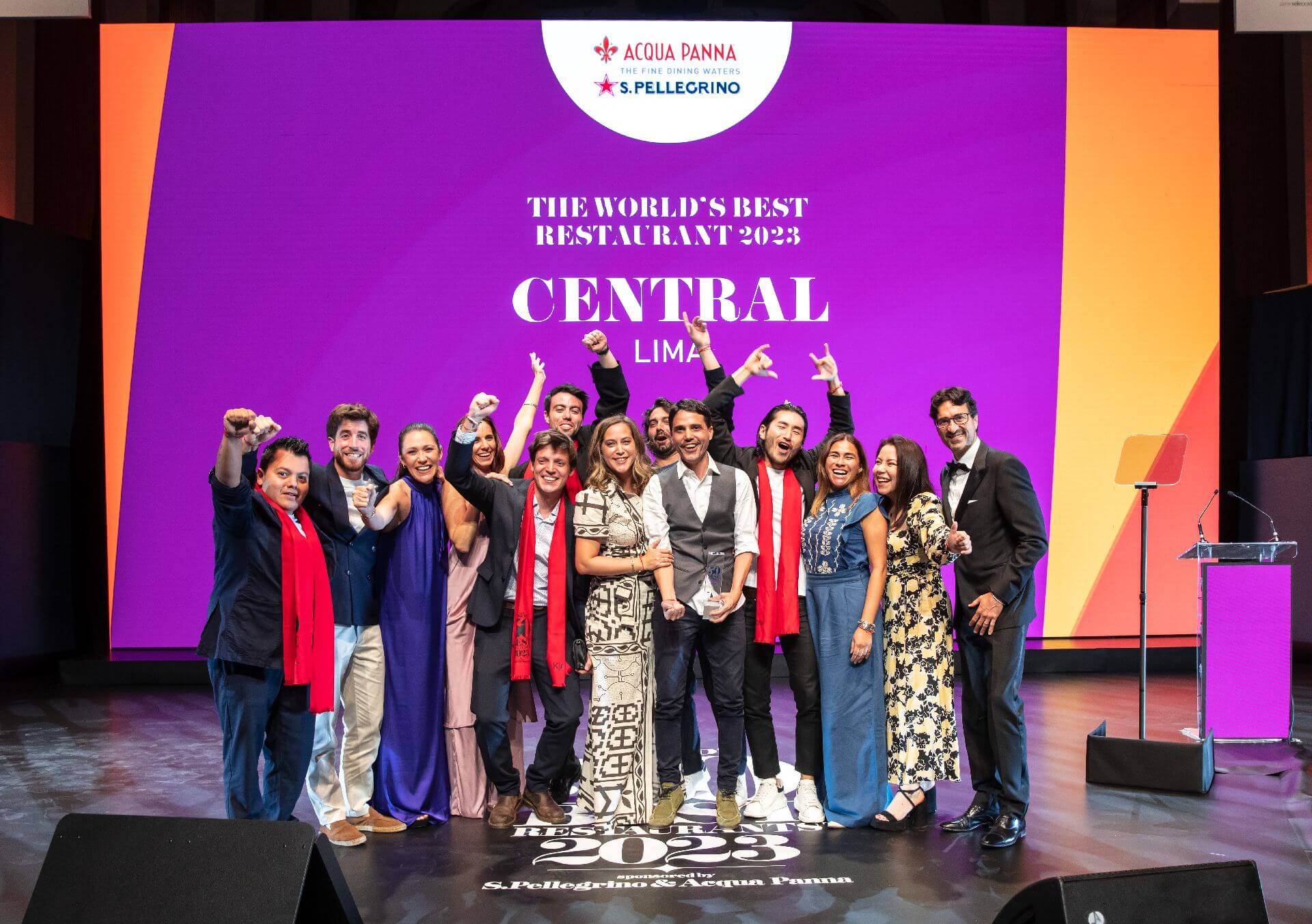
Central in Lima, Peru, the winner of the 2023 World's 50 Best Restaurants

The team behind Central in Lima, Peru, the number one restaurant in the world.

We finally know which venues from around the globe claim one of the top 50 spots on the 2023 World’s Best Restaurants list.

As you’ll see below, a few countries and cities perform very well on this year’s list.

For example, five of this year’s restaurants are in Italy, one of which is in the top ten. However, restaurants throughout Spain grab six spots on this year’s list. Three of these are among the top ten restaurants.

France claims four spots. Three of those are in Paris, and one is in the top ten.

London takes three spots, as do Mexico City, and Tokyo. One restaurant in the top ten is in Mexico City.

America has just two restaurants on the 2023 World’s 50 Best Restaurants list. Both are in New York City, one is in the top ten. Bangkok, Bogotá, Dubai, and German also each have two restaurants on the list.

Peru, like France, also boasts four spots on the list. Each of these four are located in Lima, and two restaurants are among the top ten. Most importantly, one of those restaurants is the number-one restaurant in the world.

For our Canadian and Australian readers, I’m sorry to report that there are no restaurants on the list below that are in your respective countries.

The World’s 50 Best Restaurants 2023: 50 to 1

  1. The Chairman (Hong Kong)
  2. Rosetta (Mexico City, Mexico)
  3. La Grenouillère (La Madelaine-sous-Montreuil, France)
  4. Mayta (Lima, Perú)
  5. Orfali Bros Bistro (Dubai, United Arab Emirates)
  6. Nobelhart & Schmutzig (Berlin, Germany)
  7. Le Bernardin (New York City, New York, United States of America)
  8. Leo (Bogotá, Colombia)
  9. Piazza Duomo (Alba, Italy)
  10. Le Calandre (Rubano, Italy)
  11. Restaurant Tim Raue (Berlin, Germany)
  12. The Jane (Antwerp, Belgium)
  13. The Clove Club (London, England, United Kingdom)
  14. Sezánne (Tokyo, Japan)
  15. Plénitude (Paris, France)
  16. Ikoyi (London, England, United Kingdom)
  17. Uliassi (Senigallia, Ancona, Italy)
  18. El Chato (Bogotá, Colombia)
  19. Hiša Franko (Kobarid, Slovenia)
  20. Mugaritz (San Sebastian, Guipúzcoa, Spain)
  21. Frantzén(Stockholm, Sweden)
  22. Boragó (Santiago, Chile)
  23. Kjolle (Lima, Perú)
  24. Florilège (Tokyo, Japan)
  25. Schloss Schauenstein (Fürstenau, Switzerland)
  26. Belcanto (Lisbon, Portugal)
  27. Septime (Paris, France)
  28. Kol (London, England, United Kingdom)
  29. Elkano (Getaria, Gipuzkoa, Spain)
  30. Den (Tokyo, Japan)
  31. Quique Dacosta (Dénia, Alicante, Spain)
  32. Don Julio (Buenos Aires, Argentina)
  33. Steirereck (Vienna, Austria)
  34. Gaggan Anand (Bangkok, Thailand)
  35. Reale (Castel di Sangro, L’Aquila, Italy)
  36. Le Du (Bangkok, Thailand)
  37. Odette (Singapore)
  38. Pujol (Mexico City, Mexico)
  39. A Casa do Porco (São Paulo, Brazil)
  40. Trèsind Studio (Dubai, United Arab Emirates)
  41. Table by Bruno Verjus (Paris, France)
  42. Quintonil (Mexico City, Mexico)
  43. Atomix (New York City, New York, United States of America)
  44. Lido 84 (Gardone Riviera, Brescia, Italy)
  45. Maido (Lima, Perú)
  46. Alchemist (Copenhagen, Denmark)
  47. Asador Etxebarri (Axtondo, Bizkaia, Spain)
  48. Diverxo (Madrid, Spain)
  49. Disfrutar (Barcelona, Spain)
  50. Central (Lima, Perú)

Last Year’s List

Some of the restaurants above also earned spots on the 2022 World’s 50 Best Restaurants list.

For example, Ikoyi in London, England, was number 49 last year. The restaurant climbs to number 35 this year.

Bogotá’s Leo was number 48 in 2022 but rises to 43 in 2023.

Central fought to climb one place. Last year, Central was number two. Now, they’re the best restaurant in the world.

For the full list of the top 50 restaurants last year, please click here.

Cheers to this year’s top 50!

Image: The World’s 50 Best Restaurants

KRG Hospitality. Restaurant Business Plan. Feasibility Study. Concept. Branding. Consultant. Start-Up.

by David Klemt David Klemt No Comments

Fire and Ice: Bring Your Teams Together

Fire and Ice: Bring Your Teams Together

by Jared Boller

Ice on fire inside of a Martini glass

If you want to elevate your concept you need to ensure the front- and back-of-house teams are working with each other, not against one another.

There’s nothing wrong with a healthy rivalry and competition, of course. But the key word there is “healthy.” Both teams are crucial to your success, even if they seem like polar opposites.

Analogies are one of the singular greatest educational selling points when you have a group of people in front of you. Not only do they help you get your point across, they also help you to make a topic relatable to the listening novice.

In hospitality there are numerous ways to use analogies as teaching tools. When it comes to mixology or bartending, I like to use fire and ice to represent the kitchen and the bar.

I take this approach because the bar (ice) is the friendly counterpart to the fast and furious kitchen (fire). If you follow my train of thought, you’ll see why I preferthis approach: ultimately, we’re speaking about temperature and its importance in both spaces.

Consider the art of crafting cocktails. You and your bar team should understand dilution and melting rates the same way you know how important temperatures are to steaks. Nine times out of ten, individuals at the table have a personal preference regarding the temperature of their steak.

Guests don’t hesitate to relay this information to the server. Next, the chef and their brigade uses fire and cooking times to ensure each state is cooked properly. Not only that, the mastery of their craft leads to each steak coming out at the same time, cooked to each guest’s preference.

This process is the same for the bar. Stirred, shaken, egg-white cocktails… Bartenders must master their craft to ensure they understand the different types and uses of ice (or no ice) when building drinks. Moreover, they need to use that knowledge to ensure each drink for a table or group comes out at the same time, with the appropriate level of coldness.

In the end, when drinks hit the pass or server’s station, we want drink orders to be delivered as quickly as possible because they’re on the clock. The ice in the drinks start to melt. Hot food begins to get cold. We’re fighting time.

Understanding temperatures and times relates directly to the guest experience. We can tell how well-oiled and skillful front- and back-of-house teams are by watching drinks and dishes hit tables.

Fire

According to Anthropologist Richard Wrangham, who wrote the book Catching fire: How Cooking Made Us Human, people started cooking over open fire more than two million years ago.

Wrangham states that cooking was first seen as “simply chunking a raw hunk of something into flames and watching it sizzle.” Modern chefs may not agree with this style but we are able to see that early human “cooks” came to a few realizations regarding their use of fire. Their food was healthier, tastier, and they may have had more revitalized immune systems.

Obviously, the evolution of modern cooking techniques have advanced through tools, techniques, and vessels over the years. However, regardless of how much innovation we introduce to our kitchens, we’re still using fire and heat to cook our food.

Unless they’re expecting a salad, sushi, or another amazing raw or cold food, guests anticipate their food will be hot or warm upon arriving in front of them. Great chefs take control of their kitchens, techniques, and tools. Their masters of temperature. They have a nearly supernatural understanding of timing.

It’s always a site to behold when someone is masterful in the kitchen. A seemingly endless number of pots and pans raging on burners. Infinite elements of dishes flowing in and out of ovens. Chaos to the novice’s eyes but in reality, flawlessly composed dishes arriving at perfect temperatures.

Ice

We can trace the use of ice in drinks as far back as ancient Egypt. Icy drinks are also well documented by first-century Roman society; emperors, it’s claimed, enjoyed “chilled” cocktails via glacier runoff extracted from the mountains.

Emperors, according to some historians, would store giant blocks of ice in cool cellars, garnishing their tipples with shards of ice. This was both a decadent display of their elite status, and evidence that humans have long appreciated a cold, refreshing drink.

It wasn’t until early 1800s Boston that humankind really began to master ice. A young entrepreneur, Frederic “The Ice King” Tudor, pursued an idea with his brother and launched the ice or frozen water trade. Over the course of just a few decades, the New England-based trade was able to ship ice worldwide.

The Wenham Lake Ice Company, established in the 1840s, harvested giant blocks from the eponymous lake and stored them in a network of ice houses, accessed by a small railroad system. Once a luxury, ice was on its way to going mainstream. Everyone was coming to the realization that drinks tasted better with a bit of dilution and colder temperatures.

Eventually, ice production led to ice harvesting innovations. For example, Clinebell machines that use cold plates to 300-pound, crystal-clear blocks. Along with being clear, the ice blocks are super dense to reduce dilution rates significantly. From glaciers to “harvesting” ice from lakes to full-on factory production, our obsession with ice has led to technological innovation.

Interestingly, however, early 19th century methods of ice extraction are once again in vogue. A cadre of passionate bartenders who view ice as a premium ingredient in and of itself are hand carving ice cubes, spheres, and spears for perfectly curated Negronis or Old-fashioneds.

Takeaway

The bottom line is, temperature is important to anyone working in hospitality. Kitchen and bar teams need to work together to create the best possible products.

Some people think of food or drinks when asked to consider the best restaurants and bars in the world. However, those are products. What sets the best concepts apart is the teams they’ve each built and nurtured.

It’s the passion of each team member and their consideration of the fine details that makes a restaurant or bar notable. So, when we think about fire and ice, we can consider this idea the ultimate geekery in regard to our profession.

Take it from me: When the front of the house and back of the house collaborate, then they’re in sync with one another and nail the small details, they transform first-time guests to repeat brand evangelists.

They may not understand why their experience was so incredible but they’ll become outspoken ambassadors.

Image: Alexander Startsev on Unsplash
KRG Hospitality Mixology Training with Jared Boller

by David Klemt David Klemt No Comments

Credit Card Competition Act, Take Three

Credit Card Competition Act, Take Three

by David Klemt

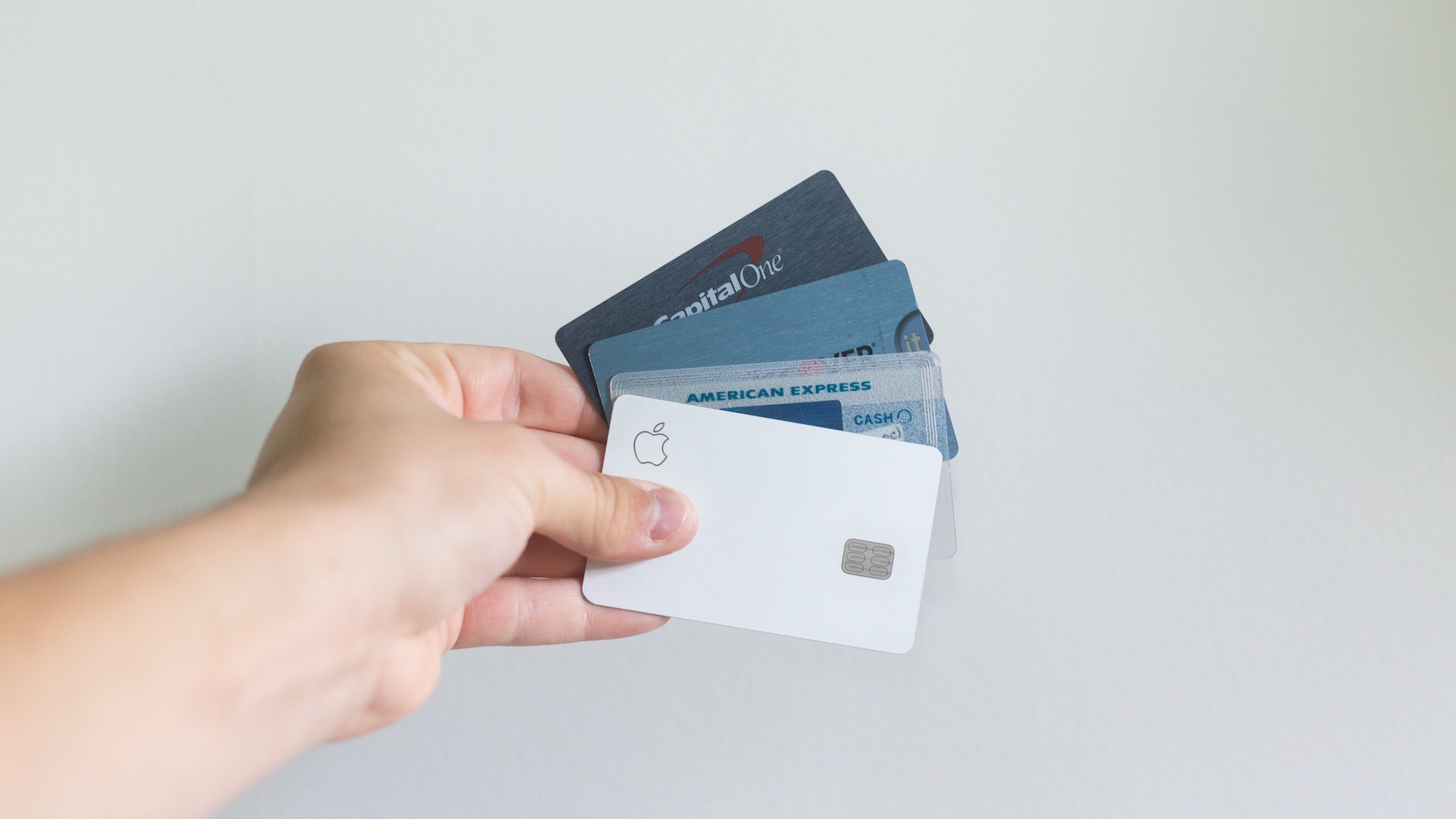
Hand holding several credit cards

Here we go again: Bipartisan lawmakers in the House and Senate are taking another shot at the Credit Card Competition Act.

After the incredibly underwhelming progress of the Credit Card Competition Act of 2022, lawmakers are making another move. Now, a bipartisan effort is coalescing around the Credit Card Competition Act of…2023.

The “new” bill was introduced on June 7. On the Senate side, Senators Dick Durbin (D-IL) and Roger Marshall (R-KS) are trying to push the bill forward. In the House, Representatives Lance Gooden (R-TX) and Zoe Lofgren (D-CA) are driving the effort.

Roughly eight months ago it was revealed that 1,802 merchants drafted, signed, and sent a letter to the House and Senate. To summarize quickly, the merchants were pushing for the bill to become law. Another supporter of the CCCA? The National Restaurant Association, claiming that the bill could save merchants $11 billion a year in fees.

Of course, a lot is going on since the introduction of the CCCA of 2022. For one, it’s being widely reported that House Republicans are “revolting,” blocking bills and effectively paralyzing the chamber. There’s also the matter of the second indictment of a former president.

However, reporters who know far more than I about the inner workings of Congress seem optimistic. While there’s drama in the lower chamber, there are articles circulating that seem to think the CCCA of 2023 has enough bipartisan support to pass.

What’s the CCCA Again?

The Credit Card Competition Act of 2023 addresses what the bipartisan lawmakers pushing the bill forward refer to as “the Visa-Mastercard duopoly.”

As I and other journalists have reported previously, Visa and MasterCard in the crosshairs of this bill because of their control over credit card markets. The Merchants Payments Coalition (MPC) said last year that Visa and MasterCard control about 576 million credit cards. That equates to nearly 90 percent of credit and debit cards.

Looking at just the US a couple of years back, people lit up their credit and debit cards for $3.49 trillion in transactions in 2021. In the US, in 2021, the $3.49 trillion in transactions meant Visa and MasterCard collected $77.48 billion in swipe fees.

To combat what some lawmakers are calling a duopoly, the CCCA of 2023:

  • requires credit cards issued by banks with more than $100 billion in assets to be routed through at least two unaffiliated networks;
  • requires that the above banks create competition and allow smaller companies to compete in credit-card processing by offering a non-dominant network choice, also known as “dual routing”;
  • and block networks that are “owned, operated, or sponsored by a foreign state entity” to strengthen national security.

A press release with a link to a one-pager can be found on Rep. Lofgren’s website here.

If you support the CCCA, you can let your lawmakers know by clicking this link.

Image: Avery Evans on Unsplash
KRG Hospitality Start-Up Restaurant Bar Hotel Consulting Consultant Solutions Plans Services

by David Klemt David Klemt No Comments

Why You Need to Use Direct Bookings

Why You Need to Use Direct Bookings

by David Klemt

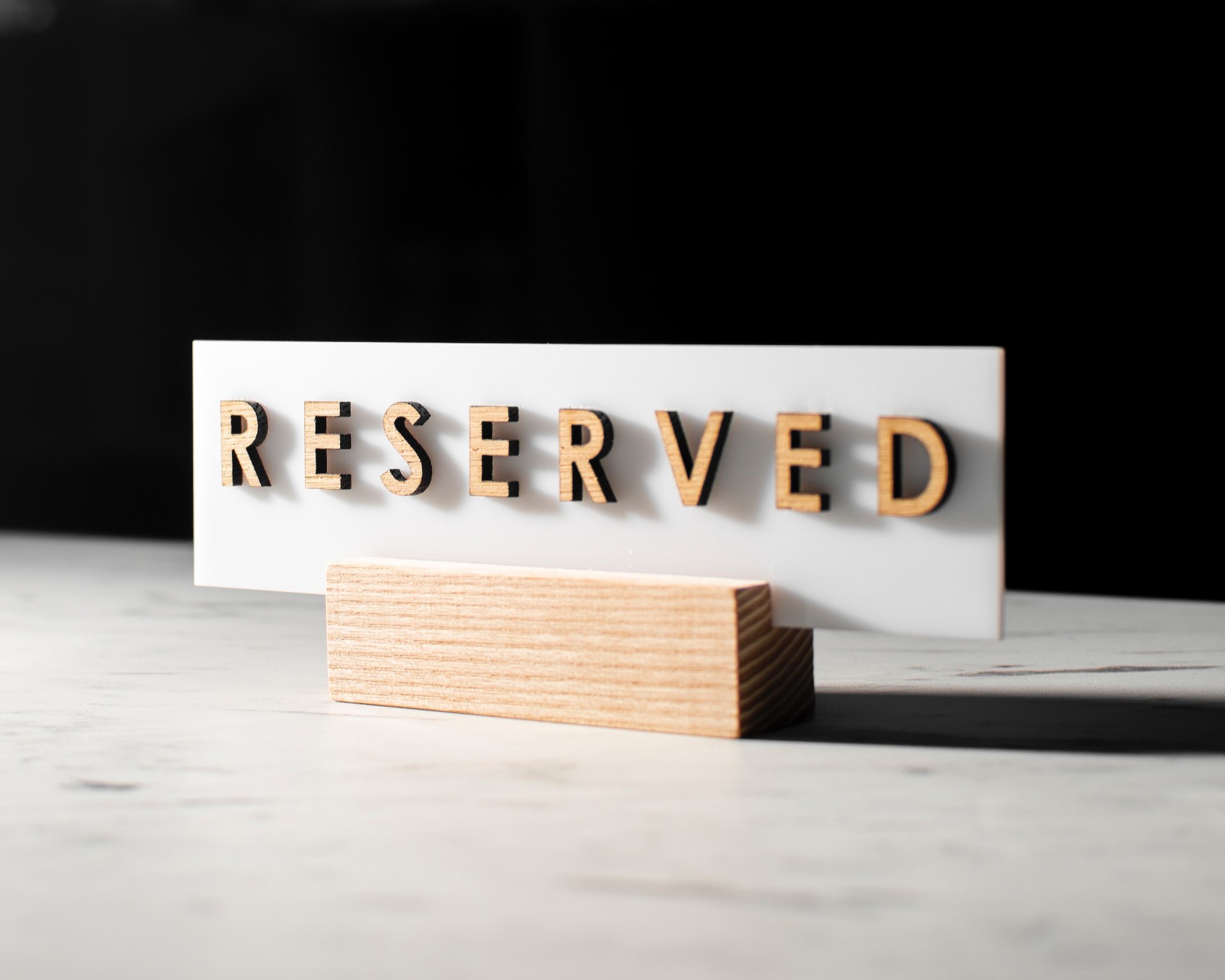
White "Reserved" sign in wooden block on table

A new report from guest retention platform SevenRooms shows that like delivery, guests prefer to support restaurants directly when it comes to reservations.

Similar to their awareness of third-party delivery platform fees, today’s guest appears to be aware that third-party marketplaces cost restaurants and bars too much.

Let’s consider the guest discovery journey. According to their 2023 Dining Discovery & Booking Report, SevenRooms says most guests discover new restaurants via word of mouth. In fact, 61 percent of people rely on family, friends, and co-workers to find new restaurants. A third of diners use Google (33 percent), and nearly as many use social media (29 percent).

So, what role do third-party marketplaces play in restaurant and bar discovery? Per SevenRooms, not even ten percent of people who discover new places to grab a bite or a drink use such platforms.

Their research shows that just nine percent of diners use OpenTable to find new restaurants. However, that’s three times the number of diners that Resy (three percent) is seeing use their platform for discovery.

Okay, so what does this mean to you, the operator? It means that you should be leveraging a direct-booking feature. Guests are telling us how they want to experience restaurants and bars. They’ve let us know they prefer direct delivery. Now, they’re letting us know they prefer direct booking.

In other words, give them what they want: user-friendly ways to support your business. Make it easy to find you on social. Ensure your website is functional and easy to navigate. And give delivery and booking buttons prime real estate on your website so guests can find them quickly.

I also recommend communicating that you offer direct bookings, and thanking those who use that functionality for supporting your business directly. This can, of course, be done via automated marketing emails.

For more information—including how many diners call restaurants directly to make reservations—please read the SevenRooms press release below. You can also download their latest report here.

SEVENROOMS CONSUMER DATA UNVEILS HOW GUESTS ARE DISCOVERING AND BOOKING RESTAURANTS

Leading guest experience and retention platform highlights consumer expectations for discovering new restaurants and making reservations

NEW YORK (June 7, 2023) – SevenRooms, a guest experience and retention platform for the hospitality industry, released its latest consumer report, “2023 Dining Discovery & Booking Report,” highlighting how guests discover new restaurants and book reservations. One thing is clear – diners are utilizing many channels for discovery – from word of mouth to a variety of online channels. Nearly two-thirds (61%) of diners hear about or discover new restaurants from friends, family and co-workers, followed by 33% using Google, 29% searching social media for restaurant profiles and 22% discovering through social media influencers or trusted sources. Only a small percentage use third-party platforms such as OpenTable (9%) and Resy (3%) to discover new restaurants.

“Coming out of the pandemic, operators are navigating an entirely new landscape which includes how diners are discovering and booking reservations,” said Joel Montaniel, CEO & Co-Founder of SevenRooms. “In this new world three things are clear: being everywhere diners are online is table stakes, diners prefer to book directly as opposed to using a third-party app, and while third-party apps are still important, Google is quickly becoming one of the preferred destinations for diners when they don’t go direct to the restaurant.”

Defining today’s restaurant guest

In the United States, today’s guests expect more than just a meal, and creating opportunities to build loyalty will set restaurants apart. Each experience can turn a one-time diner into a loyal guest – but it must include personalized touches from start to finish. It is critical for operators to own their data to create a relationship with each guest based on preferences, past visits and upcoming special occasions noted when booking direct. By building this relationship, operators are able to be more proactive with their guests, personalize dining experiences and use the data they collect to curate experiences that will ultimately drive more revenue.

The beauty of a direct booking platform is the ability to capture that data; for example, asking the guest when they are booking if they are celebrating anything special, or noting dietary preferences. Guests are also willing to make that extra step to make sure they have an excellent experience – nearly half (45%) of diners will call the restaurant directly to book a reservation, and 35% will book through the restaurant’s website. Twenty-nine percent of diners also say that they receive better experiences at the restaurant when they book direct, and more than 1 in 4 (27%) feel restaurants prioritize their reservation when doing so. 

Similar to how today’s diners are catching on to the experiential benefits of booking direct, they are also realizing that third-party platforms are not actually in the best interest of the restaurant. Sixty-one percent believe that making reservations directly with the restaurant, rather than with a third-party reservation platform, is better for the restaurant. Additionally:

  • 29% of respondents want to do all they can to directly support restaurants
  • 17% of respondents noted that third-party reservation platforms charge too much in fees to the restaurant, and guests would rather not have the restaurant incur that cost

“As the expectation for incredible experiences grows, third-party reservation platforms are losing market share as diners prefer to book directly with restaurants to ensure they get the best experience,” said Montaniel. “SevenRooms has always been dedicated and focused on empowering operators to deliver the most personalized guest experiences. Our omnichannel approach, enabling restaurants to meet guests wherever they are, whether through global discovery and booking channels or a restaurant’s own website, helps operators serve diners in this new world while helping them operate more sustainable and profitable businesses.

To learn more about SevenRooms, please visit www.sevenrooms.com.

About SevenRooms

SevenRooms is a guest experience and retention platform that helps hospitality operators create exceptional experiences that drive revenue and repeat business. Trusted by thousands of hospitality operators around the world, SevenRooms powers tens of millions of guest experiences each month across both on- and off-premises. From neighborhood restaurants and bars to international, multi-concept hospitality groups, SevenRooms is transforming the industry by empowering operators to take back control of their businesses to build direct guest relationships, deliver exceptional experiences and drive more visits and orders, more often. The full suite of products includes reservation, waitlist and table management, online ordering, mobile order & pay, review aggregation, email marketing and marketing automation. Founded in 2011 and venture-backed by Amazon, Comcast Ventures, PSG and Highgate Ventures, SevenRooms has dining, hotel F&B, nightlife and entertainment clients globally, including: MGM Resorts International, Mandarin Oriental Hotel Group, The Cosmopolitan of Las Vegas, Wynn Resorts, Jumeirah Group, Hard Rock Hotels & Resorts, Wolfgang Puck, Michael Mina, Bloomin’ Brands, Giordano’s, Australian Venue Company, Altamarea Group, AELTC, The Wolseley Hospitality Group, Dishoom, Live Nation and Topgolf.  www.sevenrooms.com

Image: Алексей Вечерин on Pexels

KRG Hospitality. Restaurant Business Plan. Feasibility Study. Concept. Branding. Consultant. Start-Up.

by David Klemt David Klemt No Comments

Own Your Team’s Excellence

Own Your Team’s Excellence

by David Klemt


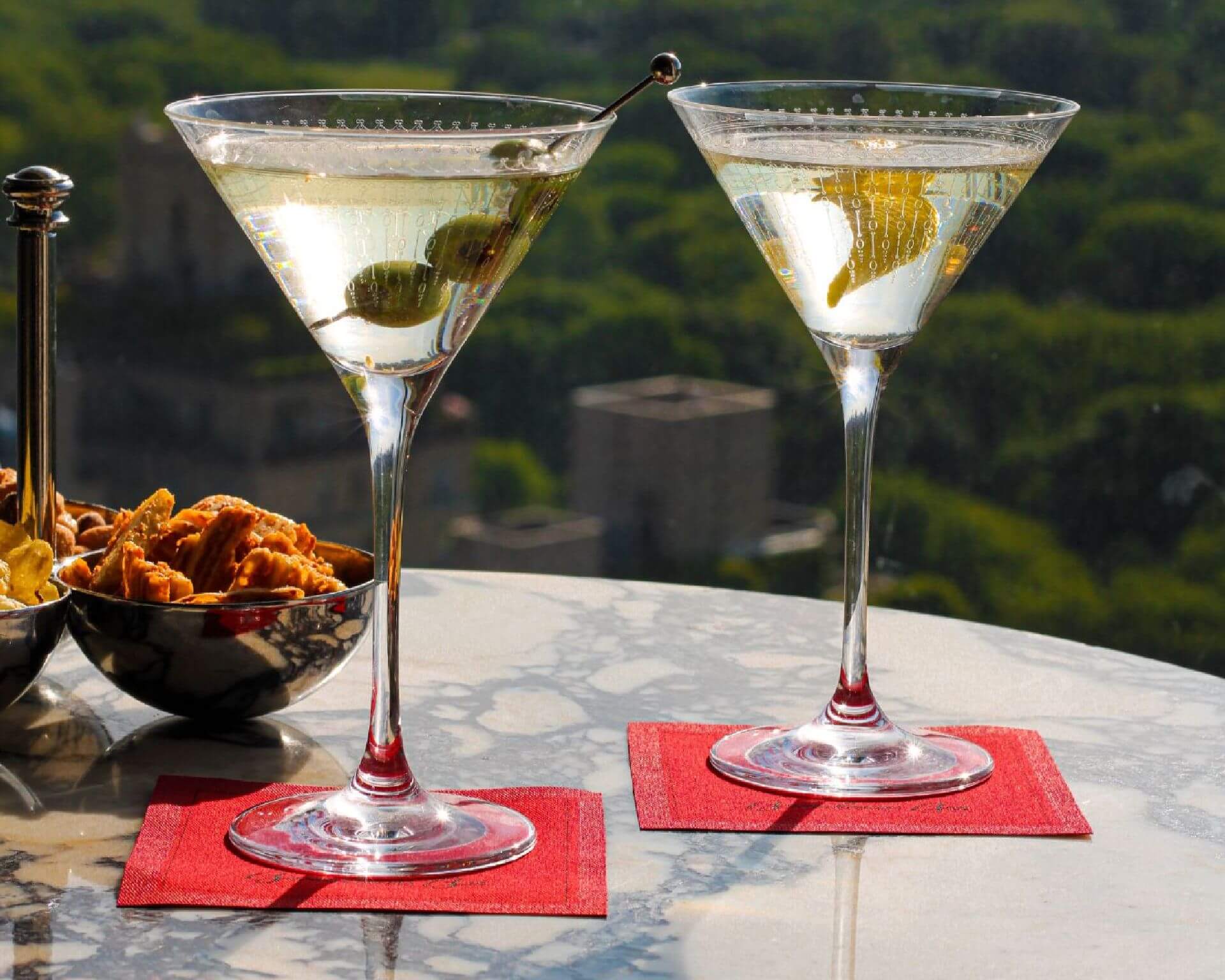
Martinis at Bemelmans Bar inside the Carlyle hotel in New York City

If you and your team are producing an incredible food or drink item, don’t just be proud—make it your signature and own it.

As Chef Brian Duffy says during his demos and speaking engagements, people can eat and drink anywhere. Further, with just a handful of major food suppliers operating throughout North America, operators are using much of the same ingredients.

With that in mind, then, it’s crucial that operators and their teams innovate. Doing so ensures that hospitality professionals are staying current on consumer demands and trends; constantly seeking be educated and share information; and making sure their business stands out from others.

A commitment to standing out can also motivate a team to elevate their techniques. In turn, they can truly “own” an item. Creating something incredible—and replicating it order after order consistently—can become a brand and team’s calling card.

Does your kitchen team turn out a fantastic signature burger? Has your business become known as the place for chicken wings because of your kitchen team?

Has your bar team perfected the Margarita? Are they so good at crafting Frozen Irish Coffees that your bar is on Glendalough Distillery‘s radar?

When you identify what your team is producing at an extraordinary level, you need to make certain you loudly own it.

A Real-world Example

For a high-level example of what I’m talking about, we can look at the Carlyle in New York City.

This landmark Rosewood Hotel is known for delivering peerless service. However, a venue inside this sophisticated resort is known for a specific item.

Bemelmans Bar, an escape from the hectic streets of New York, is known for the Martinis the bar team produces. (They’re also known for their red jackets, but those aren’t for sale.)

It may be a bold statement considering the level of bars and cocktails in the city, but Bemelmans Bar (and therefore the Carlyle) owns the Martini in NYC. In fact, the bar serves a staggering 1,000 Martinis a night. More often than not, the Martinis that cross the bar or leave the service well are dirty or extra dirty. This has been the case since at least 2021.

So famous are the Bemelmans’ Martinis that the Carlyle sells an at-home kit, yours for just $395. It’s their latest promotion, though, that makes it evident Bemelmans and the Carlyle are taking ownership of the Martini.

Guests of the Carlyle can now book their Martini Retreat, a two-day experience that centers around their signature cocktail. If, perhaps, you think that $400 is a bit steep for their Martini Box, prepare for true sticker shock. The Martini Retreat experience starts at $4,895 for two guests.

However, the package is rather impressive and encapsulates the Carlyle’s ownership of the Martini. The Carlyle Martini Retreat includes:

  • a two-night stay in a Madison Room or Premier Suite;
  • a Bemelmans Bar Martini Box;
  • enrollment in the Bemelmans Master Martini Class (valued at $495), a 45-minute experience during which guests learn how the bar team crafts multiple variations of vodka and gin Martinis, and their new Madeline’s Vesper cocktail;
  • a two-course Martini lunch at Dowling’s at The Carlyle; and
  • a curated list of where to go to try other great Martinis throughout NYC, put together by Dimitrios Michalopoulos, bar manager at Bemelmans.

Takeaway

So, am I suggesting that operators create an experience that costs thousands of dollars? Well…I mean, if your concept can succeed with such a promotion, absolutely. If doing so would resonate with enough guests to make it feasible and become a steady (and impressive) revenue stream, go for it.

However, what I’m really attempting to drive home here is the power of becoming known for even a single signature item. And, hey—your item, in your market, may be the Martini.

Owning an item means screaming from the rooftops and hills that it’s yours. That your team’s version is the one to have; the one people in the know have to have. Taking ownership of your team’s excellence translates to becoming a destination for it, to driving repeat visits once people have experienced it.

Of course, with that ownership comes the responsibility to elevate all other elements of your business. Every other item on the menu must be produced and served at the highest level. This ensures the entire guest experience wows the guests, and the signature item is essentially a driver and the cherry on top.

It’s time to review what your team produces so well that your brand owns it. Should this introspection yield no results, it’s then time to see what other operators are known for and discover what item or items you and your team can improve upon. What’s something that works with your brand that you feel confident you and your team can own?

There’s power, money, and long-term success in something on your menu. It’s time to uncover it and take ownership.

Image: The Carlyle

KRG Hospitality. Boutique Hotels. Resorts. Properties. Consultant. Feasibility Study. Business Plan

by David Klemt David Klemt No Comments

Time to Revisit Your Hours of Operation?

Time to Revisit Your Hours of Operation?

by David Klemt

Collection of antique clocks

Many operators, in response to the past few years, find themselves slashing dayparts—even entire days—from their hours of operation.

Obviously, this makes sense. Reducing the hours a restaurant or bar is open can control and reduce many costs.

However, the industry is now seeing an increase in demand from restaurants and bars. Today’s consumer craves a return to normalcy. While delivery, carryout and pickup are here to stay, people want to return to in-person dining.

Generally speaking, people like to socialize (at least with their friends). And, of course, restaurants and bars are spaces that fill the human desire to get social.

At KRG Hospitality we certainly understand how reducing hours and days of operation can be effective. In fact, depending on experience level, concept, and market, we sometimes recommend that clients limit their hours and days when first starting out.

However, as guest demand for in-person dining and drinking increases, it may be time to revisit this operational strategy.

Increase Visit Time, Increase Check Average

There’s a battle that takes place in restaurants and bars during each daypart. Operators are engaging an opponent they can’t defeat: time. The best one can hope for is to keep up with or otherwise mitigate the damage done every time the second hand on a clock ticks.

Therefore, most operators fall into two camps: Turn and Burn, and Keep ’em Spending. Hospitality and foodservice professionals are (or should be) familiar with both strategies.

Turn and Burn is about getting butts in seats, getting orders out, and getting those butts out of those seats as quickly as possible to get new butts back into them.

Keep ’em Spending focuses on increasing check sizes through keeping guests in the venue. The thought is that the longer a guest or party is on site, the more money they’ll spend.

Rich Shank, vice president of Research & Insights at Technomic, addresses the latter strategy in a recent Restaurant Business article.

“What is interesting about that is that our dining party often impacts the time we spend in a unit and the amount of money we spend while dining in,” writes Shank. “Even dining in at limited-service restaurants is heavily correlated with how much time we spend inside the restaurant—making time and money a perfect pairing in most restaurants.”

It’s not Just About Hours

In Shank’s Restaurant Business article, the Technomic VP points out that families with children tend to spend the most at restaurants. This has long been the case, and it’s logical. After all, families with children are purchasing more F&B items per visit, and they tend to spend more time per each visit as well.

However, it’s not just about the hours and days of operation, as Shank also says. It’s important that a given concept be attractive to occasion-driven guests. In other words, people gather in pairs and groups for life events.

These events can be as simple yet important as date night, to huge gatherings such as large family reunions or corporate gatherings. So, when operators are reviewing their hours of operation and the days and dayparts they’re open for business, the guest experience and their life events are important elements to consider.

“If you take the time and money relationship seriously, then the idea of throttling down on our dine-in strategies to preserve on costs or to narrow our focus to off-premises occasions only is causing us to miss the occasions that drive check-average,” writes Shank.

It’s also crucial to have a close relationship with data. Operators need to be obsessive with location and guest data. Unless they know their market, location, and guests incredibly well, operators are just guessing before making important operational changes. Guest feedback can be an effective method of knowing if it’s time to increase hours and add days of operation.

Only the operator can know if it’s time to, well, increase time. Yes, costs will go up if a venue is open longer. However, revenue can also soar. Maybe it’s time to finally be available for in-person dining for longer.

Image: Lucian Alexe on Unsplash
KRG Hospitality. Restaurant Business Plan. Feasibility Study. Concept. Branding. Consultant. Start-Up.

by David Klemt David Klemt No Comments

The Art of the Preparation

The Art of the Preparation

by David Klemt

Overhead view of chef slicing and chopping ingredients

Chef Brian Duffy‘s take on preparation and its overall impact on the guest experience extends to every aspect of operations.

In one sentence during his 2023 National Restaurant Association Show in Chicago cooking demo, Chef Duffy sums up the power of the proper mindset.

“The art of the preparation creates the experience,” says Chef Duffy.

Now, he was preparing plant-based shrimp from New Wave Foods at the time. After preparing a pan, the revered chef was readying a pound of FABI Award-winning New Wave Shrimp for Duffified Shrimp Fried Rice.


View this post on Instagram


A post shared by Chef Brian Duffy (@chefbriduff)

When making this dish, Chef Duffy chops roughly half the New Wave Shrimp in half. He does so to enhance the dish’s texture, and therefore the guest experience. Additionally, Chef Duffy likes to toast basmati rice before adding it to the pan with the shrimp and vegetables.

Again, Chef Duffy shared his view on the guest experience when cutting animal-alternative shrimp (the product is made with sustainable seaweed and mung bean).

Preparation

Okay, so what does slicing or chopping shrimp have to do with the guest experience? It’s the attention to what others may consider a tiny detail. In fact, some may deem important details “optional.”

Whether front-of-house, back-of-house, or back office, everyone’s mindset matters. How one views their role and how they approach their responsibilities impacts every element of a restaurant, bar, nightclub, or hotel’s success.

Choosing to halve half the shrimp because it will deliver a better experience speaks volumes. It’s a commitment to perfect the “small” details so every guest walks away wanting to return.

If an operator wants to know if they have a chef or an executive chef, this is one way to tell. Is the chef teaching their brigade? Guiding them? Implementing policies around preparation? Or are they just punching the clock, making sure the rest of the team shows up, and sending out food that’s “good enough”?

Operators can apply versions of those questions to every role in the house, including their own. Is their pride in preparing every element of service and operation? Or is the team just muddling through each shift?

There are no Small Details

Interestingly, most guests likely won’t ever be aware of every detail operators and their teams get right. However, they will feel every choice each team member makes. They may not know precisely what goes right, but they take home with them that their visit was exceptional.

Pulling the threads tighter separates operators and their brands from one another. Guests can get a bite and a drink anywhere. They reward outstanding service and experiences with their time and money.

It’s a simple equation to understand: Operators want to create an army of loyal guests, guests expect exceptional experiences. The operators who deliver on guest expectations are rewarded with loyalty.

Chef Duffy isn’t “just” slicing shrimp. He’s not “just” toasting rice. Chef’s not “just” making “the world’s most perfect dippy egg.” In reality, he’s ensuring every decision he, his teams, and his clients make enhance the guest experience exponentially.

There are no small details. There are no small decisions. The art of the preparation, as Chef Duffy says, creates the experience. Indeed, preparation also separates the mediocre from the exceptional.

Image: Jonathan Borba on Unsplash
KRG Hospitality Mindset Coaching

by David Klemt David Klemt No Comments

Raise the Bar: The 3 Ps of Hospitality

Raise the Bar: The 3 Ps of Hospitality

by David Klemt

Three hands holding up three pineapples

No, one isn’t “pineapples.”

Nightlife, bar, and cocktail experts Mia Mastroianni, Phil Wills, and Art Sutley want operators to focus on what they call “the Three Ps.”

The engaging trio shared their trio of Ps recently in Las Vegas at the 2023 Bar & Restaurant Expo.

So, what are the Three Ps of hospitality? People, Place, and Product. Operators who pull the threads tighter on each of these crucial elements will be well on their way to improving operations and the guest experience.

People

Remember all the way back to a week ago when I shared Mastroianni, Wills, and Sutley’s thoughts on service versus hospitality? Consider the first P a deeper dive into that topic.

Operators need to focus on two categories of people who help their businesses succeed: their teams and their guests.

Addressing the former, the trio feels that operators are centering a disproportionate amount of their attention on guests in comparison to staff.

“We’re not lacking for people who want to work in the business and are outperforming other industries, but we’re not focusing on staff like we focus on guests,” says Wills. “Treat everyone with respect, including through the hiring process. If you don’t engage your staff, you won’t retain them. You need to show them they can grow in your business.”

According to Sutley, 89 percent of operators say that labor costs present a “significant challenge.” It follows, then, that committing to treating staff with respect and nurturing their careers isn’t just the right thing to do, it’s smart business.

Look for people with passion, those you can motivate to go above and beyond so you’re not stuck with a team full of space-fillers who are just after a paycheck, suggests Mastroianni.

Of course, operators and their teams must also focus on providing exceptional service and experiences to guests.

“Treat ever guest like a pearl in an oyster,” advises Wills. “They’re the pearl, we’re the oyster. We need to ‘protect’ them.” Anything less, cautions Sutley, and guests won’t return.

Place

Interestingly, the trio touched on design, aesthetic, and vibe. However, that isn’t the crux of the second P.

Rather, Place is really goes back to the guest experience. The design, aesthetic, and vibe need to meet guest expectations.

“Make sure your space is what it’s supposed to be,” says Wills.

For example, if a concept presents itself as a high-end cocktail bar, the four walls need to deliver on that expectation. With the exception of a handful of high-level examples, an upscale bar won’t survive if they deliver a dive bar—not neighborhood bar, dive bar—vibe and service. (For the record, I love a dive bar. But I don’t expect to encounter TV trope-style dive bar service if I walk through the doors of a high-end cocktail bar.)

One way operators can ensure their space is what it should be is standardization. Once a concept goes from idea to brick and mortar, when the owner’s vision is realized, the team needs to deliver a matching experience. Steps of service, systems, procedures…standardization is the name of the service game.

“Standardize your opening, shift, and closing procedures and systems to maintain your place,” says Mastroianni.

Every team member—front of house, back of house, leadership—needs to know and buy into an operator’s standards.

Product

Standardization breeds consistency. And consistency is a key element of the third P, Product.

Per Sutley, 76 percent of operators have noticed that guests are opting for more premium drinks. That’s great news, but it’s not the whole story.

It’s great that guests are opting for more expensive drink options. After all, that can certainly help the bottom line.

“However,” cautions Mastroianni, “they won’t come back without consistency in production.”

To drive this point home, consider this story from Mastroianni. A bartender made her a drink, and it was pretty good. She ordered another one from the same bartender and watched him make it differently the second time around. Not only was this second version different, it was better. While one could view this story through a positive lens—the drink was even better the next time!—that’s not the correct takeaway.

If the bartender was committed to building cocktails consistently, the second version of that cocktail would’ve been the first one served to Mastroianni. It would be the best version, and it would always be that impressive version.

When we’re fighting the possibility that up to 70 percent of first-time guests never return, the importance of product consistency can’t be overstated.

“Really focus on the small details to affect big change and get guests through the doors and keep coming back,” says Wills.

Image: Aleksandar Pasaric on Pexels

KRG Hospitality Start-Up Restaurant Bar Hotel Consulting Consultant Solutions Plans Services

by David Klemt David Klemt No Comments

Your Discovery Strategy Needs to Change

Your Discovery Strategy Needs to Change

by David Klemt

Black and white photo of person using laptop

A report by guest retention, reservation, and waitlist platform SevenRooms reveals that restaurant discovery is changing.

Per SevenRooms, many operators have looked toward third-party marketplaces to help people discover their restaurants, bars, or hotels. For context, online marketplaces include OpenTable, Resy, and GrubHub.

However, SevenRooms research is indicating a significant slowdown in this method of discovery. Per the platform, just a quarter of consumers still use marketplaces to find restaurants and bars.

So, how are people discovering the places where they want to spend their time and money on food and drinks? And how can you ensure your marketing and discovery strategy evolves alongside today’s consumer behavior? You’ll find out below.

For your own copy of Restaurant Discovery Has Changed: Adapt or Risk Becoming Obsolete by SevenRooms, click here.

Where are Your Guests?

It should come as no surprise that today’s consumer favors social media, influencers, Google, and even artificial intelligence for discovery.

Younger consumers in particular are more likely to discover a new restaurant, bar or hotel via social media.

Per SevenRooms, Gen Z:

  • is twice as likely as other generations to find a new restaurant via Instagram;
  • five times as likely to discover new restaurants on TikTok; and
  • is likely to visit a new restaurant due to an influencer recommending it.

In fact, 39 percent of consumers designated Gen Z have gone to a restaurant because an influencer has gone there.

When conducting this type of research, SevenRooms often works with YouGov. They did so again for their restaurant discovery report, commissioning YouGov to poll 1,185 consumers. Participants indicated they use the following methods or platforms to discover new places to dine and drink:

  • Google (27%)
  • Restaurant’s website (25%)
  • Referral (friends or family) (18%)
  • Facebook (12%)
  • Yelp (11%)
  • OpenTable (9%)
  • Instagram (8%)
  • TikTok (5%)
  • TripAdvisor (4%)
  • Resy (1%)

Three things jump out here: Organic search is crucial, websites still matter, and delivering top-notch service is paramount for word-of-mouth marketing.

Leverage Multiple Channels

If the data is accurate, operators who are relying exclusively or heavily on third-party marketplaces for discovery will be left behind. Instead, operators should seek to implement a multi- or omni-channel strategy.

What does omni-channel mean? In very simple terms, it’s not putting all of one’s eggs in one basket. Check out this article where I dive into omni-channel marketing and tactics for more information.

For their report, SevenRooms breaks omni-channel marketing and discovery thusly:

  • Owned reservation, waitlist, and ordering channels
  • Search and social engagment channels
  • Paid channels

It’s clear what SevenRooms is suggesting here: operators must adapt and meet guests where they are. Guests are relying on Google, a restaurant’s website, and social media for discovery.

The example that the platform gives in their report goes like this:

  • A consumer uses Google and finds a restaurant’s listing.
  • Next, they see a Facebook ad for that restaurant.
  • Finally, they decide to go to the restaurant’s website to learn more.

To that, I’ll add that some guests, those who prefer to order delivery, now seek an ordering widget. It’s wise, therefore, for operators to at least look into how they can implement direct delivery.

The Omni-channel Path

SevenRooms recommends a five-prong omni-channel strategy. Broken down into large chunks, the platform suggests:

  • Google integration;
  • social media engagement;
  • leveraging third-party marketplaces (with caveats);
  • owning direct channels; and
  • direct booking.

Again, this SevenRooms report can be downloaded here. However, I’ll share some details of this SevenRooms approach to discovery below.

Google Integration

SevenRooms isn’t the only one to say this: operators need to own and optimize their Google listing. In fact, they need to own all their listings, which I’ve said for years.

Owning listings boosts discoverability in several ways: SEO optimization, leveraging “near me” search functions, and ensuring guests are receiving accurate information before visiting.

Going further, operators who have marketing budgets can leverage Google ads. According to SevenRooms, Google search ads are also beneficial for becoming discoverable via third-party marketplaces.

Social Media

We’re fast approaching the day when at least half of consumers try a new restaurant or bar because they discovered it on social media. Right now, we’re at 45 percent of consumers finding new restaurants via these channels.

SevenRooms recommends having a presence on at least these channels: TikTok, Facebook, and Instagram. What’s more, they suggest using a direct reservation page and linking it to a “Reserve Now” button on a venue’s social profiles.

If an operator has the budget, they can pay for influencers to visit and talk about their restaurant, bar or hotel. However, this type of marketing can be very expensive.

Third-party Marketplace

This “prong” in SevenRooms’ recommended omni-channel strategy isn’t for every operator. As stated above, it’s use is nuanced.

Who should use marketplaces? New venues or venues that find themselves struggling to drive traffic.

Who shouldn’t use marketplaces? Venues seeing consistently strong traffic, and those that perform well via organic search because they’ve done the work to establish their brand.

Direct Channels

To explain this element, I’ll share the following “journey map” from the SevenRooms report:

Own and optimize the Google My Business listing > Ensure the website is user-friendly > Make sure there’s a reservation widget > Send a confirmation email when a guest has booked a reservation > Send a reminder SMS message > Nail the guest experience during their visit > Send a thank you email after the visit > Follow up with a personalized (keyword here) offer to encourage a repeat visit.

Remember, per Ovation CEO Zack Oates, 70 percent of first-time guests don’t come back. It’s more important than ever to invest in earning repeat visits.

Direct Booking

It’s arguable that this step is part of the overall discovery strategy, that it’s a four-prong plan, not five.

However, this step involves implementing its own strategy so that guests become aware of it. Put another way, some guests need to be taught that a restaurant or bar offers direct reservation booking.

For example, SevenRooms suggests printing menu inserts that let guests know they can book directly with the restaurant. Follow-up emails should also include a direct reservation link. Additionally, loyalty programs should encourage guests to book reservations directly.

Finally, here’s an excellent tip regarding direct booking: Operators can turn off listings or at least reduce reservation inventory on third-party marketplaces. This should be done during the busiest days and dayparts.

Operators need to make sure they keep up with shifting consumer behavior. The implementation of a modern discovery strategy is a crucial step toward long-term success.

Image: Sergey Zolkin on Unsplash

KRG Hospitality marketing support. Restaurant. Bar. Cafe. Lounge. Hotel. Resort.

by David Klemt David Klemt No Comments

Use this Powerful Communication Style

The Powerful Communication Style You Should Be Using

by Jennifer Radkey

Graffiti that reads, "It doesn't have to be so complicated"

There’s a powerful method of communication operators can learn to use that promotes workplace collaboration and solves problems.

How to communicate with team members is a topic that comes up regularly in my coaching sessions with restaurant, bar, and hotel owners. Most of the concerns center around how to speak to employees when they are not following company policy; their level of service is not meeting company standards; or the quality of their work has decreased.

These are legitimate concerns when you are attempting to not only run a successful business but foster a positive work culture in your establishment.

After coaching my clients through understanding what their current style of communication looks like and how it is or is not working for them, I introduce them to a style of communication that I feel leads to the most effective overall results: the use of declarative language.

The declarative language approach was first introduced to me through a positive parenting online conference I attended. Author Linda Murphy wrote the Declarative Language Handbook, which teaches parents, caregivers, educators, and others how to communicate with children (particularly those with social learning challenges) to feel competent, connected, and understood.

As I dove into learning about this style of communication, I realized just how powerful it would be in the workplace. It is a method that can promote respect, collaboration, and empowerment. It can also, in turn, remove judgment, assumptions, hostility, and blame.

What is Declarative Language?

To answer this question, I’ll need to take you back for a quick grammar lesson.

Sentences can be categorized under four main types: declarative, interrogative, imperative, and exclamatory.

Declarative sentences are statements. These can be a statement of a fact, an observation, or a feeling. For example: “It is raining out.” “I’m going to open a new bar next month.” “Pineapple should never be on pizza.”

Interrogative sentences ask a question: “Why are you late for your shift?” “How can I make a million dollars this quarter?” “Who ever thought it was a good idea to put pineapple on pizza?”

Imperative sentences give a command. “Go clean those tables.” “Follow me.” “Pick off the pineapple from that pizza.”

Exclamatory sentences show something that we would shout or emphasize with an exclamation mark: “I made a million dollars this quarter!” “Yikes!” “Pineapple on pizza is the best ever!”

Powerful Communication

So, now that you’ve had a grammar refresher, let’s take a look at how declarative language can be a powerful method for communicating, and why the other styles may not be creating the results you want to see.

As an owner or manager, you may often find yourself falling into the use of interrogative and imperative statements. The problem with this is that both styles can stir up negative emotions in the person on the receiving end.

Interrogative statements (questions) tend to incite the fight, flight, or freeze mode. People feel put on the spot and may become defensive or anxious.

Imperative statements (commands) tend to be authoritarian in nature and have the potential to create fear and/or resentment. Employees are looking for team leaders who they can respect and turn to for guidance, not someone who is constantly telling them what to do.

Declarative language, when used to state observations, can be a way to open up discussions without defensiveness or fear. It also leaves room for facts instead of assumptions. The declarative language approach that I suggest my clients use looks something like this:

  • Make an observation statement.
  • Be silent.
  • Actively listen.
  • Collaborate.
  • Actively listen.
  • Proactively decide on solutions.
  • Gratitude/Positivity.

The easiest way to demonstrate this practice is through an example or two. First, we’ll look at an example with “Sam.”

Example #1

Sam just showed up for his shift at the quick-service restaurant he works at out of uniform. His manager notices and approaches him. The declarative language approach would look something like the example below.

Manager: Hey Sam, I notice that you aren’t wearing your uniform. (Declarative observation that quietly gives time for Sam to respond.)

Sam: Yeah, sorry, I spilled coffee all down the front of my shirt on the way here and didn’t have time to go home to change.

Manager: Okay, I understand, life happens. Any ideas on how we can resolve this? (Puts power to solve the problem in Sam’s hands.)

Sam: Do you have an extra shirt I can borrow for today’s shift?

Manager: Yeah, I actually do. Great plan. Let me go grab it for you and you can use the staff washroom to get changed.

Sam: Thanks.

Manager: No problem. Have a great shift! See you out there.

As you can see from this exchange, the manager did not make any assumptions as to why Sam wasn’t in uniform. Instead, they demonstrated empathy and respect. By asking if Sam had any ideas for resolving the issue, the manager provided room for collaboration as a team. Further, this approach empowered Sam to take responsibility and come up with the solution.

Example #2

Now, let’s look at “Lisa.”

Lisa is typically very punctual for her shift working concierge at a hotel. However, the past two weeks she has been regularly showing up 10 to 15 minutes late. Below, how the owner of the hotel would use the declarative language approach to discuss this issue with Lisa.

Owner: Hi Lisa, I’ve noticed that you have been starting your shift 10 to 15 mins late the past couple of weeks. You aren’t typically late for work. I’m curious about what’s changed. (Declarative observation; the owner then waits quietly for Lisa to respond.)

Lisa: I’m so sorry, I had to switch my child’s daycare and it’s on the other side of town. I’m struggling making it here on time with traffic.

Owner: That sounds stressful. What do you think we can do to work with this change to ensure that you can still arrive on time for your shifts?

Lisa: Would it be possible to switch my shift to a later time?

Owner: Let me look into that option for you. You are an asset to our team and I’m sure we will find a solution to this. I’ll get back to you later with some options, and you can let me know what would work best.

Lisa: Thank you so much for understanding.

In this exchange, the owner does not make assumptions as to why Lisa has been late. Rather, they show genuine curiosity as to what’s going on. Again, the owner empathizes with Lisa’s situation and then places power back into Lisa’s hands to think of a solution. The conversation ends on a positive note with gained clarity, respect, and appreciation.

Lead by Example

If you are looking to build a team of empowered individuals who can solve problems and collaborate, you need to lead by example. The use of declarative language can help you accomplish exactly that.

However, it is crucial to note that if you decide to try this method of communication, your intention needs to be positive. Declarative statements will not be as successful if your tone is sarcastic or accusing. Your approach must be casual, caring, respectful, and matter of fact.

Additionally, not every conversation will go smoothly using this method. You may receive “I don’t know” or “I’m not sure” as an answer. But for the most part, this method of communication allows for respectful discussion that acknowledges facts, promotes responsibility for one’s own actions, and decreases assumptions.

If you would like more information on how to use the declarative language approach, or would like to set up a coaching session to be coached on how to use this communication style with your team, please reach out to me!

Cheers to professional and personal well-being!

Image: Jon Tyson on Unsplash
KRG Hospitality Mindset Coaching, 2023 Icon

by David Klemt David Klemt No Comments

SevenRooms and Marriott Partnership

SevenRooms and Marriott Reveal Global Partnership

by David Klemt

Restaurant staff member using SevenRooms on a tablet

Fresh from launching the innovative Pre-Shift pre-service tool, SevenRooms today announces the platform’s latest partnership.

The announcement, which you can read in its entirety below, shows the confidence that some of the most recognizable hospitality brands in the world have in SevenRooms capabilities.

Specifically, the platform is now a preferred restaurant technology provider throughout Marriott International‘s portfolio. In fact, Marriott is leveraging the SevenRooms suite of tech solutions at several of their brands in more than a dozen countries. This translates to over 8,500 properties using the platform’s powerful booking, relationship management, and marketing tools.

Among the brands utilizing SevenRooms tools are The Ritz-Carlton, JW Marriott, EDITION Hotels, The Luxury Collection, and W Hotels.

The latest news to come from SevenRooms again underscores the platform’s commitment to growth and longevity. After more than a decade in operation and service to hospitality operators, it’s safe to say the company has reached ubiquity.

You may not operate a hotel or operate within a hotel. You may not oversee a multi-unit or multi-concept business. This news should be no less important to you.

When developing your tech stack (a service KRG Hospitality provides) it’s important to choose platforms that are here to stay. Otherwise, your investments of time and money go up in smoke. Likewise, the disruption to operations and service as you seek a new platform are harmful to you, your team, and guests.

So, it can be wise to not just dig into the platforms you’re considering, it can be smart to see what companies trust them as partners.

SevenRooms is a platform that we’re comfortable recommending to many of our clients. And no, we’re not paid or otherwise compensated to do so.

To learn more about SevenRooms partnering with Marriott International, see below.

SEVENROOMS SELECTED AS A MARRIOTT INTERNATIONAL PREFERRED RESTAURANT TECHNOLOGY PROVIDER

The global technology platform will power personalized guest experiences to increase revenue while providing deeper guest insights for the global hospitality company 

NEW YORK (May 18, 2023) – SevenRooms, a guest experience and retention platform for the hospitality industry, today announced its agreement with Marriott International to become a preferred restaurant technology provider. SevenRooms is currently live across 25 countries at Marriott brands including W Hotels, The Ritz-Carlton, St. Regis, Sheraton, JW Marriott, Le Méridien, Westin, Marriott Hotels, Renaissance Hotels, EDITION Hotels, The Luxury Collection and Gaylord Hotels. This will unlock additional opportunities at the more than 8,500 Marriott International properties worldwide.

SevenRooms is a data-driven guest experience and retention platform focused 100% on building operator-focused tools. The platform offers solutions to global brands that not only increase revenue generation, but help them build long-term relationships with guests. 

For restaurants, bars, and other F&B outlets in Marriott-branded hotels, the SevenRooms platform offers a suite of tools to help drive incremental revenue, increase operational efficiencies, and offer exceptional guest experiences. Through SevenRooms’ Customer Relationship Management (CRM) and Marketing Automation capabilities, Marriott’s hotels are not only able to cultivate meaningful, direct relationships with guests, but access a 360-degree view into the guest journey to foster deeper guest loyalty.

“We’re thrilled to collaborate with Marriott International as a preferred restaurant technology provider, helping them deliver more personalized experiences for their guests around the world,” said Joel Montaniel, CEO & Co-Founder of SevenRooms. “Today, consumers expect more out of their F&B experiences whether they’re staying local or traveling abroad. They want to engage with hotels, restaurants and bars on their own terms, and are increasingly discovering and booking where to eat and drink across an array of channels. With SevenRooms, operators have access to tools that help them reach these guests while driving operational efficiencies by connecting F&B into their overall hotel strategy to generate revenue and increase profitability. Our suite of products not only helps operators of Marriott-branded hotels provide guests with exceptional experiences that enhance positive sentiment and drive increased loyalty, but enables them to do so at scale, automatically. We look forward to working with Marriott as we enable them with technology to build longer-lasting, more profitable relationships with their guests.”

Marriott International properties can now incorporate much of SevenRooms’ suite of tools and solutions, including Customer Relationship Management (CRM), on-premise table management, waitlist management, marketing automation, email marketing, order management and review aggregation. 

“Marriott’s hospitality roots began in restaurants, and we want to provide exceptional, unforgettable restaurant experiences for our guests,” said Matthew Von Ertfelda, Senior Vice President, Food & Beverage at Marriott International. “With SevenRooms, we’re not only able to provide guests with the experiences they crave, but we can leverage a robust suite of tools to help turn one-time guests into lifelong guests.”

To learn more about SevenRooms, please visit www.sevenrooms.com.

About SevenRooms

SevenRooms is a guest experience and retention platform that helps hospitality operators create exceptional experiences that drive revenue and repeat business. Trusted by thousands of hospitality operators around the world, SevenRooms powers tens of millions of guest experiences each month across both on- and off-premises. From neighborhood restaurants and bars to international, multi-concept hospitality groups, SevenRooms is transforming the industry by empowering operators to take back control of their businesses to build direct guest relationships, deliver exceptional experiences and drive more visits and orders, more often. The full suite of products includes reservation, waitlist and table management, online ordering, mobile order & pay, review aggregation, email marketing and marketing automation. Founded in 2011 and venture-backed by Amazon, Comcast Ventures, PSG and Highgate Ventures, SevenRooms has dining, hotel F&B, nightlife and entertainment clients globally, including: Marriott International, MGM Resorts International, Mandarin Oriental Hotel Group, The Cosmopolitan of Las Vegas, Wynn Resorts, Jumeirah Group, Hard Rock Hotels & Resorts, Wolfgang Puck, Michael Mina, Bloomin’ Brands, Giordano’s, Australian Venue Company, Altamarea Group, AELTC, The Wolseley Hospitality Group, Dishoom, Live Nation and Topgolf.  www.sevenrooms.com 

Image: SevenRooms

KRG Hospitality tech stack consulting. Tech. Technology. CRM. POS. Restaurant. Bar. Cafe. Lounge. Hotel. Resort.

by David Klemt David Klemt No Comments

Leverage These 3 Sports for Growth

Leverage These 3 Sports for Growth

by David Klemt

Daniel Ricciardo in McLaren F1 race car

Sports receive more than three million mentions daily on social media and in online communities, and three sports are driving conversations.

Media-monitoring and SaaS platform Meltwater‘s recent report shows growth in media mentions and community engagement. The report, “2023 Industry Snapshot: Sports,” also identifies three sports that are growing globally.

Most restaurant and bar concepts, at least throughout North America, can benefit from sports. They have televisions, at least decent audio, and the proper licenses to air sports and other programs.

At the risk of oversimplifying, that means that any bar or restaurant can be a sports bar. Before anyone begins furiously hammering out an email to send me, I’m not saying any bar or restaurant can automatically become a great sports bar because they have TVs. I’m simply saying that operators who want to leverage sports and specific sporting events are at a good starting point to do so.

With that caveat out of the way, let’s check out what Meltwater has uncovered regarding sports.

Sports Conversations

According to Meltwater, sports is a hot topic every day of the year. On average, there are 3.16 millions mentions of sports each day.

And that’s just on a “normal” day. Last year, that number jumped to well over 12 million mentions during the FIFA World Cup.

Meltwater identifies 2022 as a particularly strong year in terms of growth for sports conversations. That boost is expected to carry into 2023, providing savvy operators with opportunities to leverage sports.

Per Meltwater, sports social media handles, hashtags, and keywords have grown by more than 20 percent. That’s significant growth.

Now, let’s look at the sports driving much of that growth.

Football

When I say “football” in this context, I mean the sport some people call “soccer.” So, not American football, which Dave Grohl and Crown Royal pointed out is a Canadian invention during Super Bowl LVII.

For the past few decades (at least), much has been made of Americans maligning football (soccer). Well, all the tropes of that mockery may be wearing very thin.

Last year, mentions of football keywords were up 56 percent—in the US. The second-place country was Nigeria with an increase of 33 percent.

Globally, the sport’s online conversations went up by 32 percent. The day of the FIFA World Cup final? That number exploded to 630 percent. Could be smart for operators to begin planning their World Cup promotions soon.

Baseball

There are some interesting stats surrounding baseball and online conversations.

Last year, conversations of this sport grew by just three percent. And for a country that claims the sport as their national pastime, American baseball convos saw a notable dropoff: a decrease of 11 percent.

However, baseball grew by nine percent in Canada in 2022. Japan saw an increase of 36 percent, and Venezuela was up 22 percent.

Unsurprisingly, the sport’s two largest organizations dominate baseball conversations.

Leading the charge, Major League Baseball mentions grew by 16 percent in 2022 globally, and by 54 percent in Japan. Right on MLB’s heels, Nippon Professional Baseball 23 percent globally and 28 percent in the US.

For those who are curious, three teams stood out in the baseball conversation: the Los Angeles Dodgers (+59 percent), New York Yankees (+55 percent), and NY Mets (+46 percent). However, LA Angels pitcher Shohei Ohtani saw truly incredible growth with an increase of 74 percent.

An important takeaway: Baseball fans in America appear quite interested in watching (or listening to) NPB. That gives operators another organization—and all their scheduled games—to leverage.

Formula 1

Ah, my favorite sport. I’m happy (for the most part) to see this motorsport growing around the world. In fact, Formula 1 keyword mentions grew 13 percent globally, and #F1 was among the hashtags used most in 2022.

On July 3, 2022, Ferrari driver Carlos Sainz, Jr. (driver #55) won the British Grand Prix at Silverstone. Red Bull’s Sergio Perez (#11) took second and Mercedes’ Lewis Hamilton (#44) took third. And on this day the F1 conversation skyrocketed, growing by 338 percent.

The country leading the way for F1-related keyword mentions in 2022 was Japan, growing by a staggering 91 percent.

Much of the increase in interest in F1 can be traced back to Netflix and its Drive to Survive docu-series (some call it a reality-TV drama).

Looking at American interest in the sport, it helps that there are now three races on the calendar that take place in the US: the Miami Grand Prix, the US Grand Prix at Circuit of the Americas in Austin, TX, and the Las Vegas Grand Prix. That’s three opportunities (Miami has already happened) for American operators to take advantage of this sport’s growing popularity.

Last year, former Aston Martin driver Sebastian Vettel (#5), Red Bull driver Max Verstappen (current champion and #1), and Ferrari driver Charles Leclerc (#16) saw the most growth in terms of individual drivers.

I can only hope that my other favorite motorsport, MotoGP, starts to become more popular throughout North America.

Takeaways

Some operators may find that sports don’t work for their concept, such as a high-end cocktail bar or fine-dining restaurant. Those are two venue types that tend to eschew televisions as they don’t work with their vibe and aesthetic.

That said, each operator must choose how to best implement sports and related promotions. This includes understanding which sports, teams, and players their guests like. Then, of course, it’s also a matter of gauging interest.

With that determined, operators must also decide how to make sports work with their concept. Some things to consider are themed F&B menus, sports-related LTOs, FoH uniforms, and how far to go with promotions. That latter consideration will depend on how rabid a fan base each operator is targeting. A truly dedicated fan base encourages some bars to “officially” support a certain team.

Another important consideration? Will leveraging a particular sport or team alienate other guests due to rivalries or a lack of interest or comfort? Sometimes the cost of implementing promotions includes pushing away a percentage of guests on particular days.

Because I live in Las Vegas, I have an array of venues available to me around the clock. It’s conceivable that I could find a home bar or restaurant to watch F1 and MotoGP. Personally, the capability of comfortably watching my two favorite sports would boost my loyalty and visits. However, there may not be a large pool of people like me in this market. Would a bartender want to turn on an F1 race just for me?

There’s a lot to consider when choosing how to best leverage sports. The upsides include converting customers to loyal, repeat guests; a realistic idea of what to consider in terms of labor and inventory for specific days, weeks, months, and seasons; and boosts in traffic, revenue, and online engagement (which in turn can translate to more traffic and revenue).

Image: Photo by PRAT clement via Pexels

KRG Hospitality Sports & Entertainment, 2023 icon

by David Klemt David Klemt No Comments

Raise the Bar: Service vs. Hospitality

Raise the Bar: Service vs. Hospitality

by David Klemt

Several spray paint cans next to one another

During the 2023 Bar & Restaurant Expo in Las Vegas, Mia Mastroianni, Art Sutley, and Phil Wills addressed what separates service from hospitality.

For the sake of those who are unfamiliar, a brief summary of each member of this informative panel. Art Sutley is a nightlife and hospitality expert recognized by Forbes, the Wall Street Journal, and Thrillist (among other publications).

Phil Wills and Mia Mastroianni should be recognizable to anyone who has watched Bar Rescue. Wills co-founded Spirits in Motion, a beverage consulting agency. He’s also a bartender’s bartender who’s passionate about hospitality. Mastroianni, equally as passionate about the art of hospitality, is a seriously talented bar professional and hospitality expert who doesn’t take herself too seriously.

It’s difficult to imagine a more qualified trio when it comes to discussing the differences between service and hospitality.

What is Service?

Before they all dove in, Sutley shared a simple but impactful take on the guest experience.

“It’s checking boxes,” said Sutley. “We want each guest to check every box, and a few extra.”

That description helps draw a line between service and hospitality. Per Sutley, Mastroianni, and Wills, service is a transaction and meeting expectations. Reinforcing this idea, Wills said, “Service is black and white; it’s simple.”

Operators and their leadership teams, after developing their steps of service, can literally or figuratively track the service transaction. Training staff—from onboarding to pre-shifts—on the steps of service and an operator’s non-negotiable standards ensures the guest experience transaction is delivered as expected.

Worryingly, Mastroianni expressed her concern that the quality of service appears to be dropping. If that’s true, however, that provides an opportunity.

Per Sutley, the industry is getting more difficult. There are more competitors out there, and guest expectations are becoming increasingly stringent. So, if Mastroianni is correct and more concepts are failing to deliver on the expected service transaction, operators who commit to building and training teams that deliver high-level service will stand out.

What is Hospitality?

If service is black and white, guess what hospitality is?

“Hospitality is color,” said Wills. “And we go above and beyond to relate to guests.”

Going further, Wills said that how an operator and their team chooses to “paint the picture” defines the level of hospitality they deliver.

For Mastroianni, if service is transactional, hospitality is emotional. Hospitality is how a restaurant, bar, nightclub or hotel team makes a guest feel. Drilling deeper, hospitality is how we in this industry connect with guests on a deeper level than simply transactional service.

To throw in my two cents, I like to think that even brand-new operators understand the transactional part of hospitality. It’s the people part, the guest experience element, that catches many operators and their teams out. Service without hospitality is mediocrity in motion.

Regardless of where one stands on the topic of service vs. hospitality, it’s crucial that operators become acutely aware of the experiencing they’re giving their guests. What do they see when they look at the picture they and their team paint each shift?

Image: Emiliano Vittoriosi on Unsplash
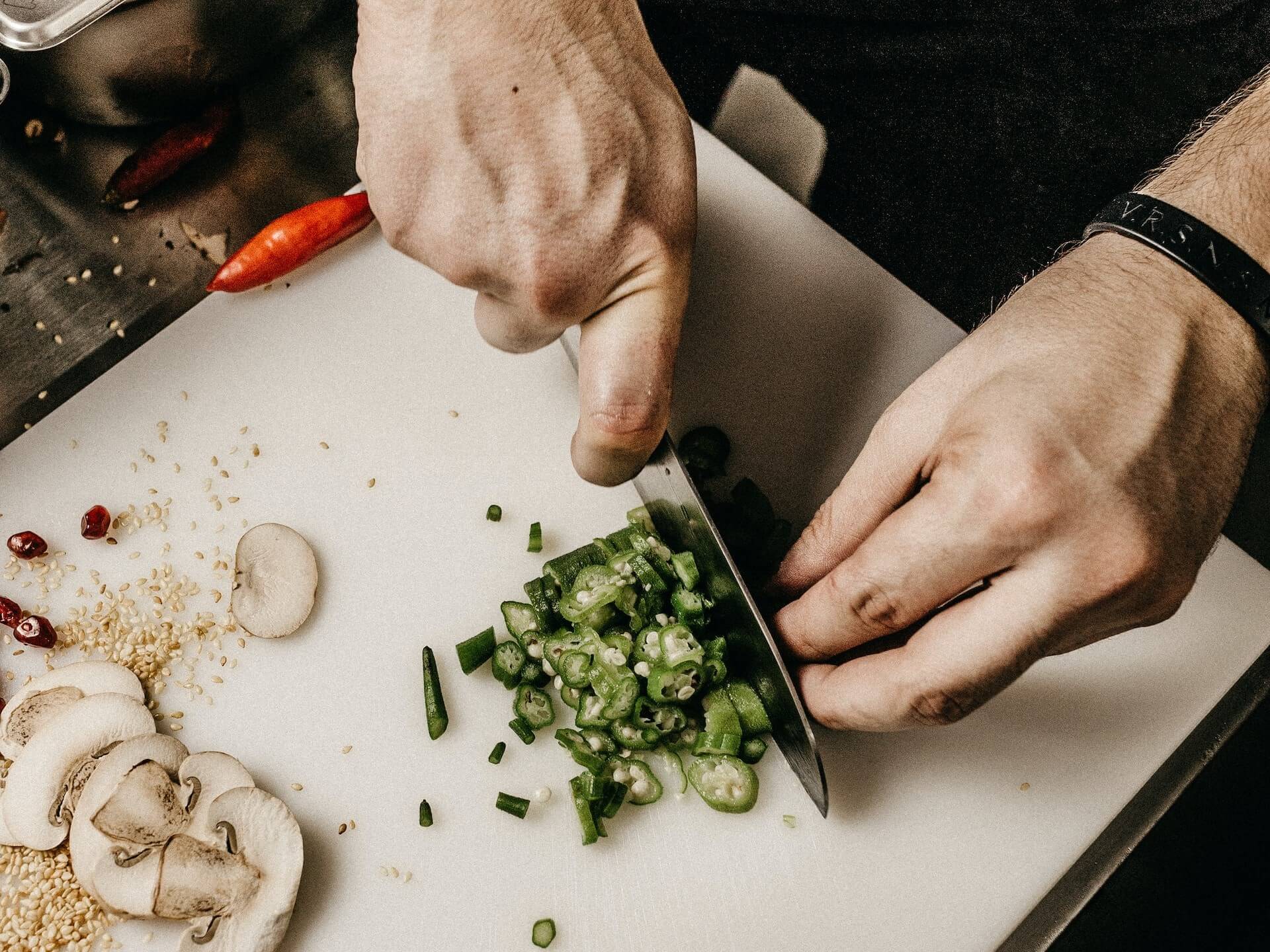
KRG Hospitality Success Session, 2023 icon

by David Klemt David Klemt No Comments

Ocean’s Summertime Celebrations

Ocean Casino Resort Summertime Celebrations

by David Klemt

Exterior of Ocean Casino Resort at sunset

Ocean Casino Resort is celebrating an impressive milestone all summer long through creative local business partnerships.

This summer, the resort will reach its fifth anniversary. The festivities will begin May 26, a month before Ocean’s “birthday.”

However, rather than focus solely on the resort and casino, Ocean is choosing to celebrate the community it serves as well. These fifth birthday activations and initiatives are an excellent lesson for operators across all hospitality business categories.

I’m sure operators—all hospitality professionals, really—will agree that restaurants and bars are integral elements of any community’s bedrock. Increasingly, the same can be said of hotels. In fact, large hotel groups are investing in the development of smaller imprints that are tasked with the mission of serving locals and local businesses.

When a restaurant, bar, hotel, or nightclub reaches annual milestones, it’s largely due to community support. Sure, businesses in destination cities benefit greatly from tourist visits. However, for most markets, longevity is anything but assured without local backing and buy-in.

It’s clear that the importance of local support isn’t lost on Ocean. This summer’s celebrations include several local partnerships and community initiatives to pay that support back.

Local Partnerships

Last year, the Ocean leveraged the demise of the Choco Taco. So far in 2023, Ocean has supported Philly and KC during the Big Game, and gotten creative with cocktails that raised funds for the Girl Scout Troops of Southern and Central New Jersey.

Local partnerships are key to Ocean’s five-year celebration:

  • The Seed: Created Seeds of the Ocean for Ocean’s five-year anniversary.
  • Tennessee Avenue Beer Hall: Seeds of the Ocean lager will also be available at this local beer hall.
  • Rhythm & Spirits: Joining forces with Little Water Distillery to feature their gin in the Oceans 5 cocktail.
  • Little Water Distillery: Their Rusted Revolver Indigenous Gin is the star of the Oceans 5 cocktail, mentioned above. The distillery has also created the Chocolate Cake Martini, featuring Bar 32 chocolate shavings.
  • Hank Sauce: For those who prefer their celebrations spicy, Ocean and Hank Sauce have collaborated on Across the Boards. This hot sauce will accompany food items at restaurants inside Ocean.
  • Tony Boloney’s: They’ve created the High 5 pizza to celebrate Ocean’s birthday. This is another collaboration within a collaboration, as it features Seed of the Ocean lager and Across the Boards hot sauce.
  • Bar 32: What celebration is complete without something sweet? Bar 32 (a bean-to-bar chocolatier) and Ocean will be offering three commemorative chocolate bars: the Berry Pretzel Bar, Party Pretzel Bar, and Salty Peanut Butter Bar.
  • Mudgirl Studios: Ocean has commissioned several handmade, one-of-one pieces from this non-profit that will be featured not just in common areas on the property but also in some of the guest rooms.
  • Atlantic City Arts Foundation: To help celebrate its fifth birthday, Ocean has collaborated with the ACAF for a three-panel mural that will have a home at Tennessee Avenue Beer Hall.

Creative & Compelling

What I find most notable about these local partnerships is how several of them intertwine.

Not only did Ocean commission an exclusive beer, a local restaurant chain is using it for a pizza. That same restaurant chain is also using a hot sauce Ocean had created to celebrate their milestone. There are other collaborations that bring Rhythm & Spirits, Little Water Distillery, and Bar 32 together.

However, Ocean is doing more than just supporting a select group of local businesses. Mudgirl Studios employs and empowers at-risk, homeless and formerly incarcerated women. The ACAF, as one would imagine, inspires and empowers people to pursue the arts. Both support and strengthen communities throughout Atlantic City, and Ocean is giving back by supporting them.

In addition to all of that, the celebrations kick off on Memorial Day Weekend with a $300,000 sweepstakes. All in, there will be more than $5 million in promotions and giveaways in play over the course of this summer. From June 24 to July 4, Ocean is putting up one million dollars for a second sweepstakes.

Then there are Tesla giveaways, birthday fireworks, the Birthday Bar Pop-up Experience at 1927 Lounge inside Ocean Resort Casino, and Ocean’s sponsorship of the Atlantic City Beer and Music Festival.

Nola's Bar & Lounge inside Ocean Casino Resort

Look for Ocean’s birthday drinks at property bars like Nola’s Bar & Lounge

Again, it would be easy for Ocean to have simply planned a celebratory weekend, week, or month, focusing solely on themselves. Instead, they’re involving several small businesses and community organizations.

Takeaways

Do I expect restaurant and bar operators to somehow offer $5 million in giveaways to celebrate a milestone? Or even $300,000? Perhaps a Tesla?

No, of course not.

However, I do think operators should really put thought into celebrating their annual milestones. Surviving the first 12 months is a huge achievement. Making it through the first 18 months and hitting the two-year anniversary is just as challenging.

So, operators should take four to six months to plan their celebrations. Additionally, they should view these events as a way to thank the community for supporting them. And, of course, that includes being grateful for beneficial business relationships.

When considering marking these achievements, it’s wise to include local businesses. Craft brewers and distillers, local farmers and vintners, non-profit organizations… All the better if the selected partners can collaborate with one another to make the celebration and partnerships that much more impactful.

Operators should take a page out of Ocean’s celebration handbook and look for creative, thoughtful collaborations. Doing so lifts up others and pays local support forward, in turn making the entire community stronger.

It’s perfectly acceptable for an operator to be proud and celebrate milestones. But it’s even better for operators to celebrate those who help them thrive.

Images courtesy of Ocean Casino Resort

KRG Hospitality. Boutique Hotels. Resorts. Properties. Consultant. Feasibility Study. Business Plan

by David Klemt David Klemt No Comments

Be a Student of the Game

Be a Student of the Game

by David Klemt

Street art portrait of Rich Uncle Pennybags

The key to success as a restaurant, bar, nightclub or hotel operator is a change in mindset and a commitment to being a student of the game.

That game, of course, is hospitality. To succeed, one must truly love this industry and their own business. Love digging into the minutiae and learning about every element of operations; love their team members and guests; love mentoring and finding mentors; love embodying the spirit of hospitality;  and love their own brand.

This is the exact message Michael Tipps drove home during the first Invictus Hospitality-led education session of the 2023 Bar & Restaurant Expo.

“The doing and the how is important, not the what,” says Tipps. “Be a student of the game.”

But what does Tipps mean when he says that?

The Successful Student Mindset

Before we begin, a note about reporting on other consultants and agencies. At KRG Hospitality we don’t pretend to know it all. When a peer says something and has an approach to this industry we find insightful, we want to share it. Keeping it to ourselves because they’re a “competitor” doesn’t help anyone or our industry.

We consider Invictus cofounders Michael Tipps and Homan Taghdiri friends and colleagues. Their values and mission align with ours.

So, when Tipps says successful operators are students of the game, we agree. Our team is passionate about learning so we can better serve our clients. I’m comfortable saying the Invictus team embraces a similar approach.

In addition to a hunger for knowledge, there’s another key element of this successful student mindset: positivity. For Tipps, that means two things:

  • “Know what works first. Notice what doesn’t work second.”
  • “Other venues aren’t your competition.”

Intention

I won’t speak for Invictus and their approach to understanding a client’s vision. We have our approach and tools, they have theirs.

One of the exercises that we find works to help us see how a client envisions their concept is to learn about what they like. What restaurants, bars, nightclubs or hotels do they admire? Are their operators they aspire to emulate? What venues in their target market do they think are doing a great job?

Another part of the process is to visit similar concepts. These visits reveal a lot, including what a client knows about the business.

Look, we’ve all been there. As consultants, operators, leadership team members, front- or back-of-house members… We know when something doesn’t work when we visit any restaurant, bar or hotel.

However, a simple change to the lens through which we view an operation can make a big difference. First, we should notice what’s working. Going further, Tipps suggests trying to understand what an operator was trying to accomplish with their concept: “What was the intention?”

To Tipps, people who can walk into a restaurant or bar and identify what’s working before focusing on mistakes shows they actually know the business. A true student of the game recognizes any concept’s positives and intention.

“It doesn’t take skill to know what sucked about a bar or restaurant,” says Tipps. “It takes skill to point out and understand what works.”

Dentist’s Office, Anyone?

There’s another point Tipps makes about the game and what drives people to jump into this incredibly challenging business.

Consider what owning a cool restaurant, bar or nightclub looks like from the outside. People get into this business, posits Tipps, because they’ve been to a bar or restaurant and think it would be fun to own it. They think being the owner of a hot restaurant is sexy. Likewise, being the owner of a cool bar or club.

It certainly can be cool, fun, and sexy to own a restaurant or bar. But think about visiting a business and finding it so cool that you decide to open one yourself.

“We’ve also all been to the dentist but we don’t open a dentist office,” says Tipps.

In other words, there are operators lured to this business because it looks fun and cool from the outside. And it is, but it’s also very hard work. Truly, only students of the game will find a measure of success.

Without a love for hospitality, for what can be accomplished and experienced in this industry, it’s just a difficult job.

The Real Competition

Ask different consultants about whether they view similar businesses as competitors and peers and you’ll get a variety of answers.

Some feel that concepts in the same category in the same market are in direct competition. Others will say that one operator isn’t competing with another, they’re potential peers who can elevate one another. Still others say there’s nuance; there’s competition for traffic, engagement, and dollars, but competitors are also peers who can elevate entire markets.

To Tipps, and I assume Taghdiri and the rest of the Invictus team, operators are competing against the clock.

“Time is your adversary, not the venue next door,” says Tipps. That means operators are up against ticket times. They’re subject to their dishwasher’s timing. Payroll, paying invoices on time, dealing with how long food can last to plan for days of the week and individual dayparts…

Each of those items and more impact a concept’s every element of operation. And unlike another operator, there’s no stopping this adversary. The most an operator can do is implement strategies to keep up with this opponent because there’s no way to beat it.

Again, the only way to succeed in that contest is to be a student of the game. An operator (and their leadership team) needs to not only know every tiny detail about their business, they must be passionate about gaining that knowledge. They need to love learning and applying the information they glean to overcome obstacles and keep up in their battle with time.

“Be as fascinated with your business as a five year old is with an ant farm,” says Tipps. “Look at the ant farm with wonder.”

Image: Julian Hochgesang on Unsplash

KRG Hospitality Start-Up Restaurant Bar Hotel Consulting Consultant Solutions Plans Services

by David Klemt David Klemt No Comments

Ovation Reveals 5 Secrets for Growth

Ovation Reveals 5 Secrets for Growth

by David Klemt

Sign that reads "We hear you."

Restaurant guest feedback platform Ovation CEO Zack Oates reveals five secrets to what he calls the “digital table touch.”

The company touts itself as the number-one guest feedback platform. Ease of use is one reason the Ovation is viewed so favorably. Guests receive a two-question survey via SMS. Operators receive honest feedback they can use to improve guest retention and loyalty.

Those curious in learning more about the platform can check out several case studies on the Ovation website. Odds are, one of these studies matches closely with an operator’s own business.

For the purposes of this article, I’m going to focus on Oates’ 2023 Bar & Restaurant Expo education session. Getting even more granular, I’m going to drill down to Oates’ digital table touch approach to guest feedback and retention.

If Oates’ startling claim about first-time guests is true, guest retention is even more difficult than many operators would think. According to Oates, 70 percent of first-time guests don’t return to a restaurant. That number is, simply put, too damn high. Fifty percent is too high.

Feedback Reality

Let’s be honest about in-person feedback. While there are some honest guests out there, for some reason people tend to leave without being honest during their visits. In the moment, most of us will say “great” or “very good” when asked by a server or manager about our restaurant experience.

This is a compelling phenomenon. Per Oates, 15 percent of dine-in orders have issues. And yet most guests won’t say about an issue during their visit. That rate doubles to 30 percent for delivery orders, by the way.

Being totally transparent, Oates says he behaves the same in restaurants. He’s the CEO of a restaurant feedback platform and he’ll still say everything is fine during a visit even when it isn’t. So, while physical table touches are important, they’re likely not giving an operator an accurate picture of what’s going on in their dining room.

In fact, Oates says rather bluntly that “table touches are out of touch.” Further, they’re not scalable, off-premises, honest, or capable of fixing root issues, in his opinion.

Likewise, long-form surveys. According to Oates, long feedback surveys have an abysmal take rate: 0.01 percent. At that point, the rate may as well be zero. Online reviews, as may operators likely know, don’t really represent most guests.

The best solution to secure honest, actionable feedback appears to be Ovation’s SMS-based process.

Secret #1: Make Measurement Frictionless

Hot take: The easier a thing is to do, the more people will participate.

So, operators who want collect valuable guest feedback need to make it simple. If a guest orders delivery, operators should stuff carryout bags and top boxes with a call to action. For in-person dining, they should add a feedback CTA to table toppers. QR codes can make the process very easy. CTAs need to be visible and simple to complete.

The winning formula seems to be a two-question survey and collecting guest data. So, operators should consider enrolling guests who participate and leave feedback in a $100 gift card draw (or something similar).

Secret #2: Drive 5-star Reviews

Oates says that operators should push guests to rate their experiences on review sites. Doing so not only results in collecting valuable feedback, it can boost reviews and increase a restaurant’s visibility. The more discoverable a restaurant is, the more traffic it can potentially see.

Also, a note on actual five-star reviews: that’s not the best score. People tend to distrust perfect scores and one-star reviews. Per Oates, the best score is 4.7 stars, and operators should aim for at least a 4.0.

Secret #3: Respond to Feedback

This means good and bad feedback, and in a timely manner. Per Oates, one bad review reaches 30 potential guests. So, it’s best to address the situation as quickly as possible—if an operator can do so without losing their cool.

To ensure that emotions don’t prevail over rational responses, follow the Three Cs of Bad Review Recovery:

  1. Collected.
  2. Compassionate.
  3. Call to action.

Remember, people want to feel important. When they leave a bad review the underlying feeling driving the review is likely a sense that they’ve been disrespected. Operators attempting to recover from a bad review need to make the reviewer feel acknowledged and important.

Secret #4: Discover and Act on Trends

A business term that has been making the rounds for years now is “kaizen.” This is the concept of everyone in an organization working toward making incremental improvements to the business.

Savvy operators will set aside their egos, find trends within the feedback they receive, and work to improve on any shortcomings.

Secret #5: Text Guests to Bring Them Back

As I’ve said before, if you really want to meet guests where they are, reach them on the phones in their pockets. However, Oates has more advice than simply, “Text them surveys.”

To boost participation, tempt guests with an offer. Oates says to make the offer a good one. So, operators should consider the following:

  • Come up with an offer and put it first.
  • Make it a good offer: “The first X amount of people to complete this survey will receive 15 percent off their next visit.”
  • Track participation via a link.

While operators can leverage each of the above secrets on their own, Ovation’s digital table touch process is seamless and easy to implement. Either way, collecting honest guest feedback and acting on it is one of the most effective methods for improving guest retention.

Image: Jon Tyson on Unsplash

KRG Hospitality tech stack consulting. Tech. Technology. CRM. POS. Restaurant. Bar. Cafe. Lounge. Hotel. Resort.

by David Klemt David Klemt No Comments

The 50 Best Bars in North America

The 50 Best Bars in North America in 2023

by David Klemt

Double Chicken Please cocktail bar interior

Double Chicken Please in New York City is number one on this year’s list.

The buildup toward this year’s World’s 50 Best Bars is growing with the recent announcement of North America’s 50 Best Bars.

Mexico City, the 2023 North America’s 50 Best Bars host city, is home to several of this year’s rankings. A true cocktail destination loaded with extraordinary bars, Mexico City boasts eight entries. Overall, 14 of the 50 bars on the 2023 list are in Mexico.

Of course, New York City also claims an impressive number of bars earning spots on the list. In fact, NYC boasts 12 of the 50 best bars in North America. More than half of the bars—28—are in the US.

Not that anyone asked, two of the bars on the 2023 list are in the city where I was born, Chicago: Kumiko and Milk Room. And I’m going to give a special nod to Herbs & Rye, number 27 and located in my hometown of Las Vegas (and the US headquarters of KRG Hospitality).

Herbs & Rye cocktail bar and restaurant in Las Vegas, Nevada

Of the 50 best bars in North America, Canada is home to seven. Four of these are in Toronto (where KRG Hospitality’s global headquarters are located), two are in Montreal, and one is in Vancouver.

Just one bar in the Caribbean makes the 2023 North America’s 50 Best Bars list. But what a bar: La Factoría is number 24.

Below you’ll find this year’s rankings; destination awards; and individual awards. Speaking of, congratulations to Julio Cabrera and Christine Wiseman! You’ll see why as you scroll. To review last year’s list, please click here.

Congratulations to all the bars and their bar teams representing the best of North America in 2023!

2023 North America’s 50 Best Bars Destination Award Winners

The Best Bar in Northeast USA, sponsored by Perrier

Double Chicken Please (No. 1; New York City, New York)

The Best Bar in South USA, sponsored by Torres Brandy

Jewel of the South (No. 5; New Orleans, Louisiana)

The Best Bar in the Midwest USA, sponsored by Rémy Martin

Kumiko (No. 8; Chicago, Illinois)

The Best Bar in the West USA, sponsored by Naked Malt

Thunderbolt (No. 10; Los Angeles, California)

The Best Bar in the Caribbean, sponsored by Scrappy’s Bitters

La Factoría (No. 24; San Juan, Puerto Rico)

The Best Bar in Canada, sponsored by Tia Maria

Civil Liberties (No. 12; Toronto, Ontario, Canada)

The Best Bar in Mexico, sponsored by Bareksten

Handshake Speakeasy (No. 2; Mexico City, Mexico)

2023 North America’s 50 Best Bars

  1. Milady’s (New York City, New York)
  2. Youngblood (San Diego, California)
  3. Platform 18 (Phoenix, Arizona)
  4. Brujas (Mexico City, Mexico)
  5. Clover Club (New York City, New York)
  6. Allegory (Washington, DC)
  7. The Dead Rabbit (New York City, New York)
  8. Bar Mordecai (Toronto, Ontario, Canada)
  9. Yacht Club (Denver, Colorado)
  10. Bar Leather Apron (Honolulu, Hawaii)
  11. Aruba Day Drink (Tijuana, Baja California, Mexico)
  12. Maison Premiere (New York City, New York)
  13. Milk Room (Chicago, Illinois)
  14. Mother (Toronto, Ontario, Canada)
  15. Cure (New Orleans, Louisiana)
  16. Cloakroom (Montreal, Québec, Canada)
  17. Sweet Liberty (Miami, Florida)
  18. Service Bar (Washington, DC)
  19. Atwater Cocktail Club (Montreal, Québec, Canada)
  20. Selva (Oaxaca de Juárez, Oaxaca, Mexico)
  21. Death & Co. (Los Angeles, California)
  22. Martiny’s (New York City, New York)
  23. Pacific Cocktail Haven (San Francisco, California)
  24. Herbs & Rye (Las Vegas, Nevada)
  25. Kaito del Valle (Mexico City, Mexico)
  26. Café de Nadie (Mexico City, Mexico)
  27. La Factoría (San Juan, Puerto Rico)
  28. Arca (Tulum, Quintana Roo, Mexico)
  29. Sabina Sabe (Oaxaca de Juárez, Oaxaca, Mexico)
  30. El Gallo Altanero (Guadalajara, Jalisco, Mexico)
  31. Hanky Panky (Mexico City, Mexico)
  32. Botanist Bar (Vancouver, British Columbia, Canada)
  33. Mace (New York City, New York)
  34. Rayo (Mexico City, Mexico)
  35. Baltra Bar (Mexico City, Mexico)
  36. Bar Pompette (Toronto, Ontario, Canada)
  37. Employees Only (New York City, New York)
  38. Attaboy (New York City, New York)
  39. Civil Liberties (Toronto, Ontario, Canada)
  40. Zapote Bar (Playa del Carmen, Quintana Roo, Mexico)
  41. Thunderbolt (Los Angeles, California)
  42. Café La Trova (Miami, Florida)
  43. Kumiko (Chicago, Illinois)
  44. Overstory (New York City, New York)
  45. Dante (New York City, New York)
  46. Jewel of the South (New Orleans, Louisiana)
  47. Licorería Limantour (Mexico City, Mexico)
  48. Katana Kitten (New York City, New York)
  49. Handshake Speakeasy (Mexico City, Mexico)
  50. Double Chicken Please (New York City, New York)

2023 North America’s 50 Best Bars Individual Awards

Roku Industry Icon Award 2023

Julio Cabrera (No. 9; Café La Trova; Miami, Florida)

Altos Bartender’s Bartender Award 2023

Christine Wiseman (Bar Lab Hospitality)

Michter’s Art of Hospitality Award 2023

Botanist Bar (No. 19; Vancouver, British Columbia, Canada)

Siete Misterios Best Cocktail Menu Award 2023

Allegory (No. 45; Washington, DC)

Disarronno Highest New Entry Award 2023

Bar Pompette (No. 15; Toronto, Ontario, Canada)

Nikka Highest Climber Award 2023

Overstory (No. 7; New York City, New York)

Campari One to Watch Award 2023

Manhatta (New York City, New York)

London Essence Best New Opening Award 2023

Rayo (No. 17; Mexico City, Mexico)

Ketel One Sustainable Bar Award 2023

Yacht Club (No. 42; Denver, Colorado)

Double Chicken Please image: Emmanuel Rosario / Hanna Lee Communications. Herbs & Rye image courtesy of Hanna Lee Communications.

KRG Hospitality. Bar Consultant. Nightclub. Lounge. Mixology. Cocktails.

by David Klemt David Klemt No Comments

3 Ways to Build Revenue on Mother’s Day

3 Ways Restaurants Can Build Revenue This Mother’s Day

by Austen Asadorian

Tattoo-style rose with "Mom" ribbon

With Mother’s Day quickly approaching, there’s no doubt that operators across the country are preparing for the celebratory—yet extremely busy—day.

During their preparations, it’s important that operators find and incorporate new tools and innovative marketing tactics. Doing so will not only fill seats, it will ensure they capitalize on a key opportunity to drive incredible revenue.

Below are three simple but powerful ways operators can generate revenue and loyalty on—and beyond—this Mother’s Day.

Encourage Reservations & Offer Upgrades

An easy way to make this busy day seamless for guests—and, ultimately, staff—is to encourage and allow guests to make a reservation before they arrive. Reservations give operators insight into who will be dining with them, help optimize seatings and covers, and provide a idea of how much to order to eliminate food waste if a special menu is being offered.

Using a reservation system also provides operators with the opportunity to offer diners upgrades during the booking process, even including prepayment should they want to go that route. This not only allows operators to earn additional revenue before a guest even visits, but also a convenient way to offer guests peace of mind knowing they’ve handled that “something special” for Mom way before the big day.

These upgrades don’t have to be anything crazy or extreme (although that’s always an option). In fact, according to the National Restaurant Association, consumers want special touches and discounts over everything else. So, an upgrade can be something as simple as a beautiful flower arrangement waiting on the table to a special off-menu dessert brought out at the end of the meal.

Use Email & Social Media to Your Advantage

Properly promoting Mother’s Day offerings to guests is extremely important because if no one knows about it, who will come?

Operators should utilize tools like email marketing to send personalized communications to their guest database promoting the venue’s Mother’s Day reservation availability or special offerings. Better yet, these tools can be used to offer loyal guests reservations before they open to the general public, further creating a special experience for those faithful diners.

In the same vein, operators should harness the power of social media, too. Operators can target paid marketing efforts on social channels like Facebook and Instagram to drive even more awareness and revenue for their restaurant by creating an event, including the details of the activities, specials, or Mother’s Day promotions, and exporting the names of top guests and email data.

Surprise Them with a Second Visit

While Mother’s Day is the focus right now, it doesn’t stop there for operators. To drive the revenue they need, it’s important to turn these celebratory diners into repeat guests.

To do so, operators should consider offering Mother’s Day diners complimentary gift cards or discounts (even via email post-visit) to bring them back. This could be for an upcoming graduation, Father’s Day (so Dad can also get the love), or even for a future birthday.

This “surprise and delight” factor is one of the easiest strategies to capitalize on holiday traffic and get diners to return to a restaurant once again as a loyal guests.

Here’s to You, Mom

Moms should be celebrated every day, but especially on Mother’s Day, and it’s important to make sure they have the best experience when dining out.

By incorporating simple tactics like offering reservations and custom upgrades or even a special surprise at the end of the meal, operators not only succeed in making the day memorable, but create a guest who will return over and over again.

About Austen Asadorian

Austen Asadorian is the Vice President of Sales at SevenRooms, where he is tasked with supporting SevenRooms’ global expansion efforts and accelerating the company’s goal of being the best-in-class solution for hospitality operators globally. Prior to joining SevenRooms, Austen was Peloton’s Director of Sales, leading the company’s go-to-market strategy for retail growth and expansion. He started his career at Hillstone Restaurant Group where he cut his teeth learning how to run efficient and profitable restaurants at scale. Austen was ultimately promoted into an executive role where he oversaw the company’s Manager in Training Program and Back of House Operations. Austen graduated from the Culinary Institute of America (CIA).

Image: grumpymonstergroup via Vecteezy.com

KRG Hospitality marketing plan. Restaurant. Bar. Cafe. Lounge. Hotel. Resort.

by David Klemt David Klemt No Comments

Consultant Versus Coach

Consultant vs. Coach: Similarities and Differences

by Jennifer Radkey

Double arrow, street ends sign

At some point in your journey as a business owner it’s inevitable that you’ll come up against a challenge that you struggle to overcome on your own; you may need to reach out for advice or guidance.

There are countless reasons why you may seek an expert’s help. Perhaps you’ve come up against a roadblock trying to reach a goal. Maybe you’re unexpectedly forced into a major transition. You may decide you’re ready to take your business to the next level but are unsure how to proceed.

The situation you find yourself in could be as big as the opening of a new restaurant or bar, or as vague as a general sense of something not being “right.”

Whatever the reason may be, you’ve exhausted your own pool of resources and are ready to seek outside help. So, who do you turn to?

Most likely you’ll be looking to hire either a consultant or a coach. Of course, this begs the question: Which do you choose?

I’m both the vice president of KRG Hospitality and a certified life coach. My husband Doug Radkey is the president of KRG Hospitality and our agency’s lead consultant. “Do I need a consultant or coach” is a question people ask of us quite often.

The answer is simple once you understand the similarities and differences between the two.

Similarities

Coaches and consultants are both third parties who provide an outsider’s clarity while maintaining an unbiased point of view.

They’re both knowledgeable and have their own unique approaches and expertise. Coaches and consultants come with the intention of helping you achieve your goals. While the majority of coaching and consulting is done one-on-one, team consulting and coaching are also options.

The differences between coaching and consulting can be found in the approaches used to help you achieve your goals.

Differences

The easiest way to learn the differences between a coach and a consultant is to take a closer look at how each one approaches how they help you. It’s an understanding of these differences that provide the clarity needed for you to choose the best solution.

Consultants

Consultants are industry-specific experts. When presented with a challenge you want to overcome or a goal you want to achieve, a consultant finds the solution using their knowledge and experience. They also diagnose any problems that are evident in your business and then make recommendations to correct them.

A consultant is someone you can turn to for technical and professional advice.

Once the consultant has determined the root of the problem or determined the best path forward to achieve your goal, the answers will be provided to you. And along with the answers come the steps necessary to solve the problem or reach the goal. You’ll be given a clear, detailed plan.

Consultants listen carefully to what’s going on. They ask specific questions, watch how your team interacts with your guests, and study your steps of service. Additionally, consultants analyze data and conduct research, and then communicate their findings clearly with you. Again, consultants give you the tools you need to execute a plan—including processes and proven methods—to achieve success.

If you’re in need of specific industry advice and expertise, a consultant is who you need to hire.

Coaches

Coaches are experts in placing the power in your hands to discover your own solutions and answers. You hire a coach to discover yourself, inspire confidence, explore possibilities, and find your own clarity. Entrepreneurs turn to coaches to help them transform into great leaders.

Through sincere and thoughtful inquiry, coaches will pull answers out of you that you didn’t know that you already had. They’ll also help you become aware of self-imposed limitations so you can overcome them. Rather than just giving you a plan, coaches help you develop your own strategies for uncovering your truth, and then help you understand how to move forward.

Coaches are sounding boards for discussing both personal and professional issues, providing a safe, judgment-free place for you to be heard. They’re interested in long-term results and the overall well-being of their client.

If you’re looking for overall growth and a better understanding of how you can reach your own goals and potential, a coach is who you need to hire.

Hiring a consultant or a coach is a positive step towards achieving both short-term and long-term goals. Knowing the difference between the two now empowers you to choose the best person to help you where you want to go.

Cheers to personal and professional growth!

Image: Robert Linder on Unsplash

KRG Hospitality Mindset Coaching, 2023 Icon

Top