Brewery

by David Klemt David Klemt No Comments

Congress Fails Us Once More

Congress Fails Us Once More

by David Klemt

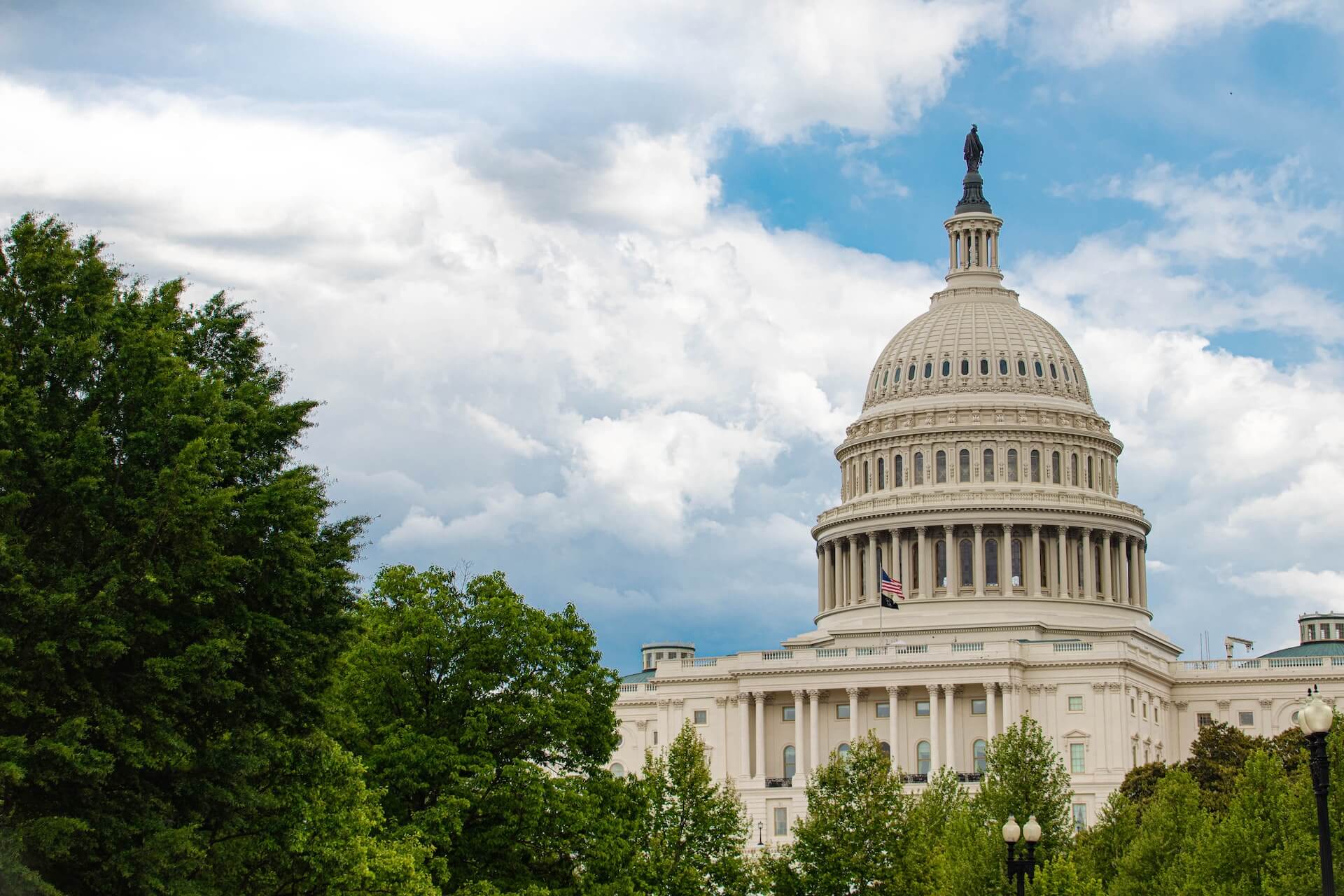
United States Capitol Building through trees

A “compromise” and “far from perfect,” the Inflation Reduction Act of 2022 is yet another bill that could include the RRF but fails to do so.

Not content to deliver just the gut punches our industry has already endured, Congress is leaving us out. Again.

A bill that targets inflation in the US should, logically, include replenishment of the Restaurant Revitalization Fund. However, RRF replenishing isn’t among Inflation Reduction Act compromises.

By the way, that isn’t my assessment. It’s President Joe Biden’s summary of the bill’s passage in the Senate: “This bill is far from perfect. It’s a compromise.”

To clarify, this compromise is a $430 billion spending bill that doesn’t include $40 billion to replenish the RRF. That’s interesting, considering Democrats claim the bill will not only generate enough revenue to pay for itself, they say it will generate another $300 billion throughout the next decade.

Restaurants in the US are projected to generate nearly $900 billion in sales this year. Apparently, however, that’s not enough for our politicians and lawmakers to consider us important to the economy.

Instead, those who enjoy near-inscrutable power and are in the position to stop another bout of restaurant and bar closures have chosen not to help. Our industry, which employs millions upon millions of hard-working Americans is once again on the outside looking in.

The Road to Nowhere

In a word, the road to RRF replenishment is exhausting. One Instagram user commented as such on the Independent Restaurant Coalition‘s post about us being left out of a massive spending bill yet again.

Three months ago, the US Senate killed RRF replenishment when they voted against even debating the Small Business COVID Relief Act of 2022.

Midway through June I reported that Sean Kennedy, executive vice president of public affairs for the National Restaurant Association, posited that the RRF could be replenished via a reconciliation bill.

Addressing the possibility, Kennedy made clear it was a longshot. He was correct.

Indeed, the Inflation Reduction Act was passed by the US Senate via reconciliation bill. A simple majority consisting of all 50 Democrat senators and Vice President Kamala Harris sends the bill to the House.

Compellingly, the nonpartisan Congressional Budget Office’s analysis of the Inflation Reduction Act indicates the bill’s name is a misnomer. According to the CBO, the bill will either have zero or nearly-zero impact on inflation this year or in 2023. A group of 230 economists warn the bill may increase inflation.

The bill is expected to pass the House in its current form and be signed by President Biden by the end of this week.

Response from the IRC

Immediately after news broke that the Inflation Reduction Act of 2022 passed the Senate but failed to include RRF replenishment, the IRC’s Erika Palomar responded.

The executive director of the IRC said:

“For nearly three years, independently owned restaurants and bars have weathered multiple COVID-19 surges, government-mandated closures, consumer hesitancy, rising prices and ongoing restrictions, while fighting to keep their doors open and staff employed. Restaurants and bars are the heartbeat of every community, and we are incredibly disappointed to not be included in the reconciliation vote this weekend. 177,300 small businesses have been patiently waiting for relief and their needs are being ignored, again.

“Thousands of restaurants and bars are at risk of closing permanently as a result of continued Congressional inaction on the replenishment of the Restaurant Revitalization Fund (RRF). The failure of Congress and the White House to act swiftly is impacting neighborhoods in every state across the country. Congress has failed these businesses, but the Independent Restaurant Coalition is not giving up the fight in any way possible to support independent restaurants.”

Further Disappointment

Over the past 15 months (longer if we really look back), our politicians and lawmakers have been consistent about one thing. They have continually failed to recognize restaurants and bars for what they are: cornerstones of their communities.

Of course, they’ll happily use our businesses for political theater and their fundraisers. But giving us more than lipservice? Not on the agenda.

Image: Paula Nardini on Pexels

by David Klemt David Klemt No Comments

Datassential Identifies Top Design Trends

Datassential Identifies Top Design Trends

by David Klemt

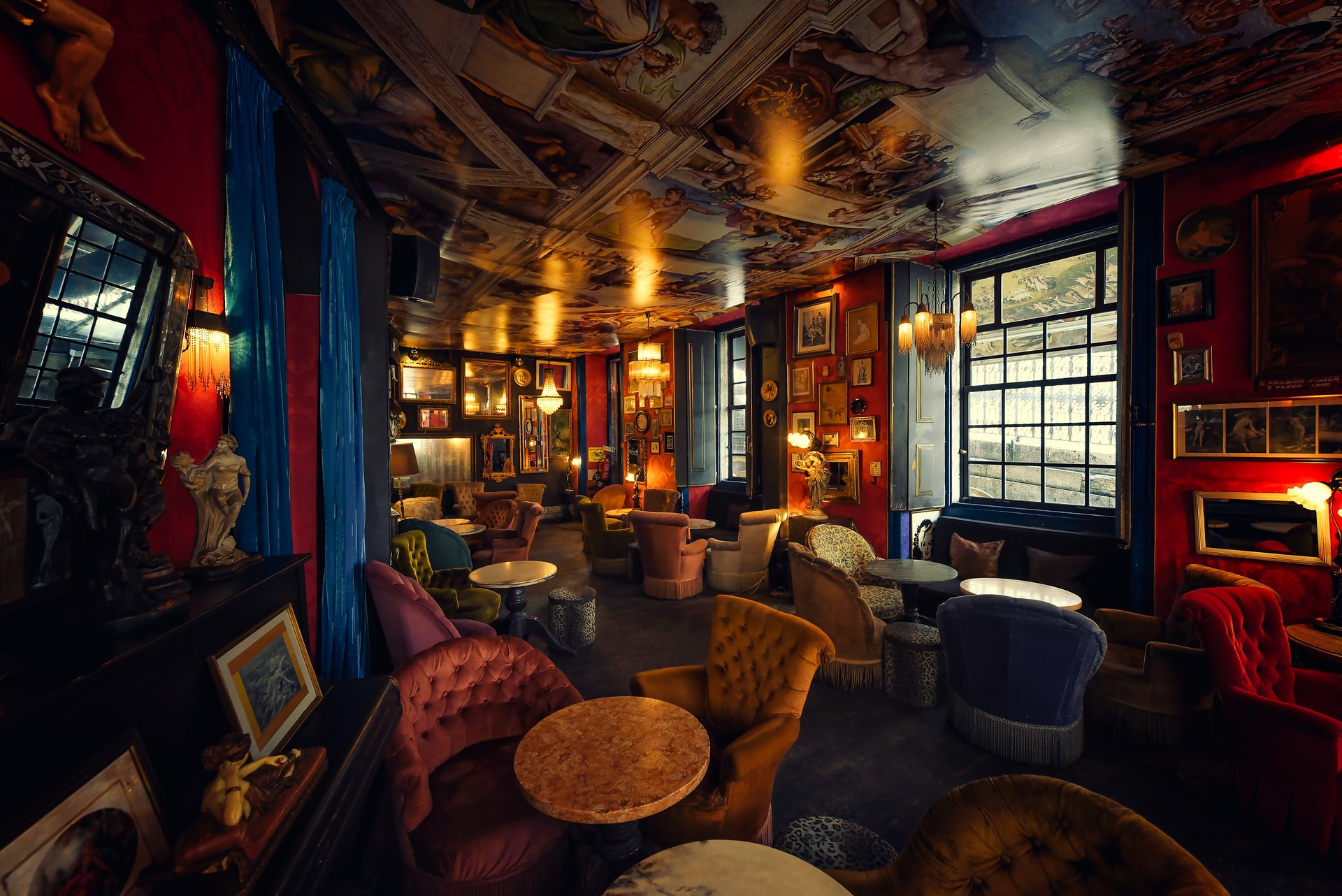
Maximalist interior bar or restaurant design

For their latest FoodBytes research topic, Datassential tackles some of the top restaurant design trends.

Click here to download Datassential’s “Foodbytes: Restaurant Design Trends” report. If you haven’t already, you’ll need to sign up for FoodBytes reports.

As the title states, this Datassential resource addresses the state of restaurant design. Now, we recommend reading the report for yourself but below you’ll find the points that really stand out to us.

If you’re among the 22 percent of operators that Datassential says are either considering a dining room redesign or have completed one, this report is particularly relevant to you.

Back-0f-house Design

Unsurprisingly, most people envision the interior dining area when considering restaurant design. However, as Lauren Charbonneau of Reitano Design Group says in Datassential’s latest FoodBytes, “Restaurants are living spaces that need to be agile.”

That means considering the entire space, not just the front of house. There’s also this stat from Datassential: 64 percent of operators think shrinking their footprint would be detrimental. If that’s the case, making the BoH smaller rather than the front may be the way forward.

So, let’s take a look at what Charbonneau identifies as BoH design trends to consider.

Clearly, it’s crucial operators consider their back-of-house teams. Providing a better workplace experience and improving efficiency can be done through design. Per Charbonneau, operators can use clever design and equipment choices to reduce steps, movement, labor, footprint, and costs.

Additionally, sustainability is not only crucial to responsible operation, being sustainable can reduce costs. Selecting Energy Star, Water Sense, and multi-functional equipment can make tasks easier for BoH teams, make a business more sustainable, and, again, drive down costs.

Maximalist Design

Finally, it seems, the minimalist design trend is losing its stranglehold on restaurant design. Of course, if that approach and design language works for a particular concept, it works.

However, maximalism is growing in popularity. For this type of design, think lots of color and bold patterns. Then, think about using multiple patterns and textures, including on the floors.

So, wallpaper, artwork, plush seating, loud tiles… Per Datassential, maximalism appeals to younger guests. In part, this is because these spaces can offer so many Instagrammable moments.

Monochrome Design

Okay, before we begin, “monochrome” doesn’t only mean a black-and-white palette. While that can work very well depending on the concept, monochrome also means using different tones of a single color.

Of course, there are multiple ways to approach this design trend. For example, if one does want to select a black-and-white scheme, Matte Black Coffee in Los Angeles is compelling.

Not only is the design monochrome, guests feel as though they’re inside a two-dimensional image. Per Datassential, this type of design is growing in popularity across the US specifically.

In terms of colorful monochrome, a great example is NYC’s Pietro Nolita. Not only have they chosen pink for their palette, it’s a core element of their branding: Pink AF.

Yet another way to approach this trend is for operators to use varying tones of particular colors to delineate different spaces. So, the dining room may be tones of pink while the bar is green and a private dining room is blue.

Nostalgic Design

As we’re all well aware, the pandemic derailed people’s plans. In particular, people hit the pause or cancel button on travel and vacations. Now, people appear to restarting their travel plans and getting back out there.

However, we’re also dealing with inflation. So, many people are holding off on spending money on travel. This is where restaurant design comes into play.

According to Datassential, “nostalgic escape” is a trend to watch moving forward. While very specific, this trend combines a dive into the past and capturing vacation vibes.

Per their FoodBytes report, Datassential identifies the following elements as key to this design approach:

  • Soft shades of colors. In particular, pink.
  • Tropical designs.
  • Fifties, Eighties, and Nineties design elements.

One concept that leverages this trend and did so before the pandemic is the Hampton Social. Currently, there are eight locations and two more are on the way.

Of course, it’s imperative that operators commit only to design language that’s authentic to their concepts. Pursuing a trend simply to pursue it is a clear path to disaster. That said, these design trends have massive appeal and can work for many operators and their brands.

Image: Davide Castaldo on Unsplash

by David Klemt David Klemt No Comments

8 Books to Read this Month: TOTC Edition

8 Books to Read this Month: Tales of the Cocktail Edition

by David Klemt

Flipping through an open book

This month’s engaging and informative book selections consist of the eight finalists from two of the 2022 Spirited Awards writing categories.

For your convenience, the award winner kicks off each category below. To review July’s book recommendations, click here.

Let’s jump in!

Best New Cocktail or Bartending Book

WINNER: The Japanese Art of the Cocktail

This is the first cocktail book written by Masahiro Urushido, the award-winning bartender from NYC’s Katana Kitten. After just one year with Urushido at the helm, Katana Kitten took home a 2019 Spirited Award. The Japanese Art of the Cocktail features 80 recipes and serves as a deep dive into a unique approach to cocktails and technique.

Death & Co: Welcome Home

The third book from Alex Day, Nick Fauchald, and David Kaplan, the team behind Death & Co., features more than 400 recipes. Now, while this book targets home bartenders, it’s also beneficial to bar professionals as it delves into the Death & Co. cocktail development program. Is that worth a $35 investment? Absolutely. Pick up  Death & Co. Welcome Home today.

The Cocktail Seminars

As the story goes, author Brian D. Hoefling taught his fellow Yale students about cocktails and build techniques during his senior year. The Cocktail Seminars is a collection of five of Hoefling’s education seminars and spans 30 cocktail recipes. Along with technique, readers will learn about the history of cocktails, which they and their bar teams can leverage to engage with guests.

The Way of the Cocktail: Japanese Traditions, Techniques, and Recipes

The Way of the Cocktail comes from Julia Momosé, one of the minds behind Chicago cocktail destination Kumiko. From classics to new riffs, the recipes in this book are based on 24 micro-seasons.

Best New Book on Drinks Culture, History, or Spirits

WINNER: The Oxford Companion to Spirits and Cocktails

David Wondrich and Noah Rothbaum team up for likely the deepest dive into the role alcohol plays in human history. The Oxford Companion to Spirits and Cocktails is everything you ever wanted to know about fermentation, distillation, aging, cocktails, cocktail bars, and more. In addition to global techniques and processes, readers will be treated to illustrations, a guide to making drinks, and even a timeline of distillation and spirits.

Bourbon: The Story of Kentucky Whiskey

Clay Risen is considered an authority on spirits. In particular, he’s lauded as an expert on whiskey. Bourbon lovers will appreciate the Bourbon: The Story of Kentucky Whiskey box set for what it is: a definitive history of America’s native spirit. Along with profiles of Kentucky distillers, Risen has included interviews and photographs to tell the story of bourbon.

Drunk: How We Sipped, Danced, and Stumbled Our Way to Civilization

Edward Slingerland takes a look at not just the history of imbibing but what has motivated humans to catch a buzz with alcohol. Drunk goes far beyond anecdotes, myth and lore and uses science to address why alcohol is so important to so many people. More case study than well-spun yarn, Drunk is as entertaining as it is investigative.

Girly Drinks: A World History of Women and Alcohol

Written by Mallory O’Meara, Girly Drinks takes a hard look at the gendering of bars, brewing, distillation, and drinking culture. O’Meara also delves into the history and cultural importance of women bartenders like Ada Coleman, creator of the Hanky Panky.

“Filling a crucial gap in culinary history, O’Meara dismantles the long-standing patriarchal traditions at the heart of these very drinking cultures, in the hope that readers everywhere can look to each celebrated woman in this book—and proudly have what she’s having.”

Image: Mikołaj on Unsplash

by David Klemt David Klemt No Comments

Stand Out with Weird Holidays: August 2022

Stand Out with Weird Holidays: August 2022

by David Klemt

Stay Weird neon sign with purple background

Want to stand out from from other restaurants and bars in your area? Then commit to keeping it weird.

Several “holidays” are set against every date on the calendar, and August is no exception. These holidays range from mainstream to “weird.”

Pay attention to the latter to raise eyebrows, carve out a niche for your restaurant or bar, and attract more guests. Why do what everyone else is already doing?

Of course, you shouldn’t try to celebrate every holiday, weird or otherwise. And this month’s list in no way includes every odd holiday.

Focus on the days that are authentic to your brand; resonate with your guests; and help you grab attention on social media.

For July’s list, click here.

August 5: National Work Like A Dog Day

It probably sounds like this day is all about being as productive as possible at work. However, National Work Like a Dog Day is a celebration of service animals (mainly dogs). So, this is the day to invite your guests with service animals to grab a bite and drink and make new friends—four-legged and otherwise—at your bar or restaurant.

August 8: National Happiness Happens Day

This is a day that focuses on finding happiness wherever we can. And as we know, there’s plenty of happiness to be found in local restaurants and bars. National Happiness Happens Day is a blank canvas on which to create a fun, engaging promotion.

August 8: National Dollar Day

For the history nerds out there—and I say that with reverence, not ridicule—the first US dollar was minted in 1794. Leveraging this holiday is as simple as offering a food or drink item for $1. Of course, that’s if such a discount is legal where you’re operating. And I recommend requiring the purchase of a full-price item to receive the discount.

August 11: National Rasberry Bombe Day

If you’re not familiar with the raspberry bombe, you’re probably not alone. This tasty treat isn’t a commonly known dessert item. A raspberry bombe is a pastry that consists of heavy cream, sugar, candied fruit (raspberries, in this case), and nuts placed in a spherical design. The bombe is then frozen before being served. Bonus points for adding rum before freezing.

August 12: National Vinyl Record Day

There are a couple ways to celebrate this holiday. One, you can require your house DJ or hired gun to spin actual records. Two, you can team up with your local vinyl store to create a mutually beneficial promotion. Get a little creative and celebrate that warmest of sonic mediums, the vinyl record.

August 15: Discovery Day

This day likely isn’t very weird to Canadians. In particular, it’s well-known among those familiar with the Yukon. But for the rest of us, this is a celebration of the discovery of gold in this famed area. Celebrate with gold-flaked F&B items, caramel-drizzled desserts and cocktails, and whatever else you can think of where gold makes sense.

August 20: World Honey Bee Day

Where would we be without the honey bee? Not in a good place at all, that’s where. Perfect your Bee’s Knees and other cocktails that feature honey. And, of course, feature honey in some creative places on your food menu as well.

August 27: National Just Because Day

Obviously, this is another awesome blank-slate cocktail. You can essentially create any promotion you want to celebrate this day. Why? Because whatever you choose to do, it’s just because.

August 29: According to Hoyle Day

Here’s an odd one for you. On According to Hoyle Day, you live life according to one of the 300 (!) games for which Edmond Hoyle wrote the rules. This day certainly requires getting creative but card games and cocktails do go hand in hand.

August 31: National Eat Outside Day

Hey, guess how this day is celebrated…

Image: Dan Parlante on Unsplash

by David Klemt David Klemt No Comments

Tales Reveals 2022 Spirited Awards Winners

Tales of the Cocktail Reveals 2022 Spirited Awards Winners

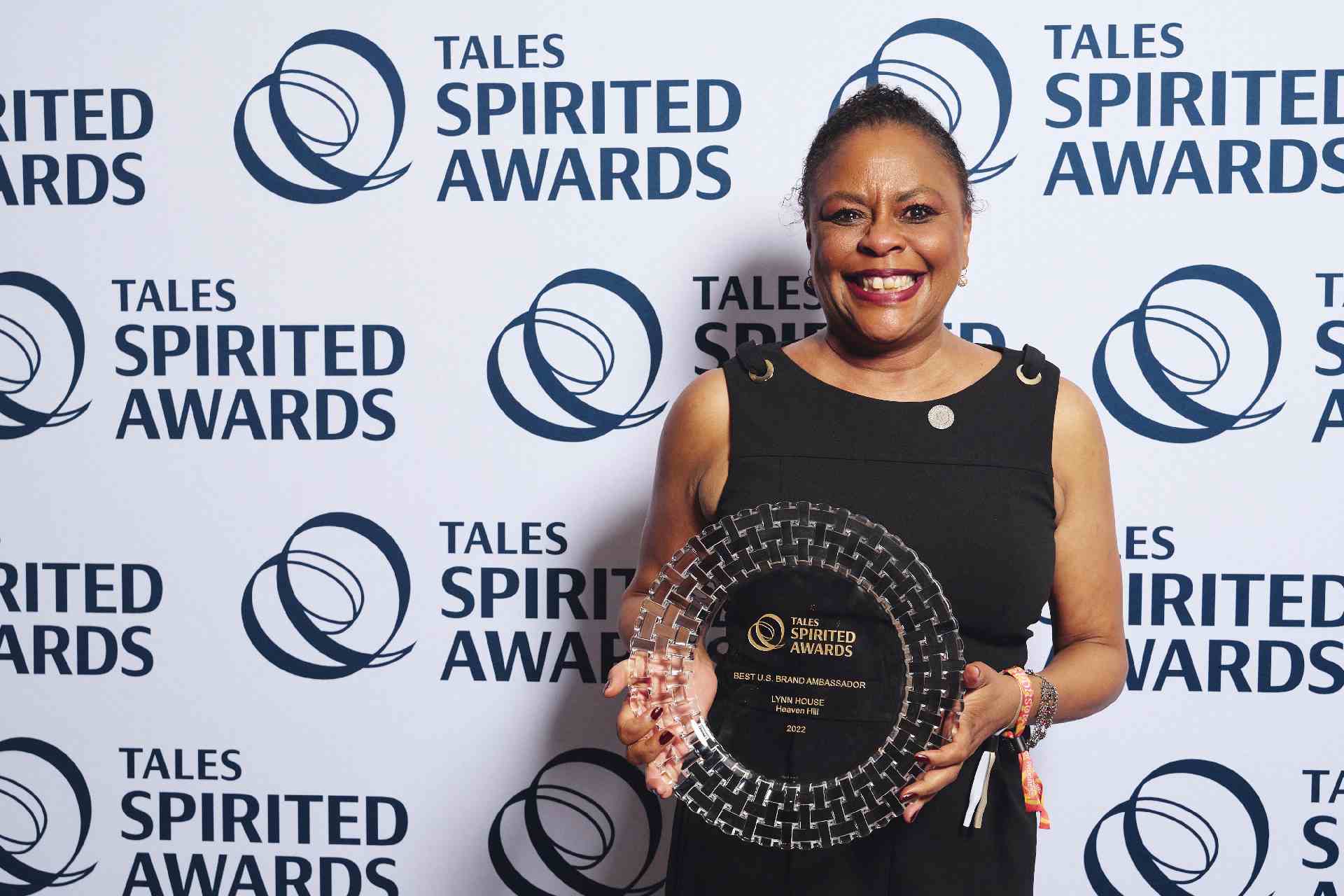
2022 Spirited Award winner Lynn House

2022 Spirited Award winner Lynn House

Congratulations to the 2022 Spirited Awards winners, revealed last week during the 20th anniversary of Tales of the Cocktail.

First opening their doors in 2018, NYC’s Katana Kitten took home two awards. The dream team trio of Masahiro Urushido, Greg Boehm, and James Tune won Best US Cocktail Bar and best US Bar team.

Another American venue that won two Spirited Awards is Jewel of the South in New Orleans. Opened in 2019, Jewel of the South was crowned Best US Restaurant Bar. Additionally, the US Bartender of the Year is Chris Hannah, co-owner of the NOLA dining and drinking destination.

We also want to extend a special congratulations to Bar Hacks guest Lynn House. To learn more about House, this year’s Best US Brand Ambassador, check out episode 52 of Bar Hacks.

Internationally, two bars also took home multiple awards. 🔶🟥🔵 A Bar with Shapes for a Name and Lyaness at Sea Containers London, both in London, won two Spirited Awards. The former is this year’s Best New International Cocktail Bar. Plus, it’s the home of Remy Savage, the 2022 International Bartender of the Year.

Lyaness at Sea Containers London clinched Best International Hotel Bar andWorld’s Best Bar. So, London, New Orleans, and New York showed out at the 2022 Spirited Awards.

To view the finalists in each category, please click here.

US Award Categories

U.S. Bartender of the Year presented by Del Maguey: Chris Hannah (Jewel of the South, New Orleans, LA)

Best U.S. Bar Mentor presented by BarSmarts: Sean Kenyon

Best U.S. Brand Ambassador presented by Libbey: Lynn House (Heaven Hill)

Best U.S. Bar Team presented by William Grant & Sons: Katana Kitten (New York, NY)

Best U.S. Cocktail Bar presented by Absolut Vodka: Katana Kitten (New York, NY)

Best U.S. Hotel Bar presented by Grey Goose: Silver Lyan at the Riggs (Washington, DC)

Best U.S. Restaurant Bar presented by Maison Ferrand: Jewel of the South (New Orleans, LA)

Best New U.S. Cocktail Bar presented by Aviation Gin: Happy Accidents (Albuquerque, NM)

International Award Categories

International Bartender of the Year presented by Patrón Tequila: Remy Savage (🔶🟥🔵 A Bar with Shapes for a Name, London, UK)

Best International Bar Mentor presented by Lyre’s Non-Alcoholic: Lauren Mote

Best International Brand Ambassador presented by Lyre’s Non-Alcoholic: Martin Hudak (Mr. Black Spirits)

Best International Bar Team presented by House of Angostura: MAYBE SAMMY (Sydney, Australia)

Best International Cocktail Bar presented by Tequila Fortaleza: Tayēr + Elementary (London, UK)

Best International Hotel Bar presented by Perrier: Lyaness at Sea Containers London (London, UK)

Best International Restaurant Bar presented by Amaro Montenegro and Select Aperitivo: Sexy Fish (London, UK)

Best New International Cocktail Bar presented by Stranger & Sons: 🔶🟥🔵 A Bar with Shapes for a Name (London, UK)

Global Award Categories

Best New Spirit or Cocktail Ingredient presented by Tales of the Cocktail Foundation: Lyre’s Non-Alcoholic Italian Orange

World’s Best Cocktail Menu presented by Diageo Bar Academy: Little Red Door (Paris, France)

World’s Best Spirits Selection presented by Beam Suntory: Jack Rose Dining Saloon (Washington, DC)

Pioneer Award Presented by The Blend: Amanda Gunderson (CEO and co-founder, Another Round Another Rally)

Timeless International Award presented by Jägermeister: Harry’s New York Bar (Paris, France)

Timeless U.S. Award presented by Johnnie Walker: Bemelmans Bar at The Carlyle, A Rosewood Hotel (New York, NY)

Helen David Lifetime Achievement Award presented by William Grant & Sons: Julie Reiner (Co-founder Clover Club, Leyenda, Social Hour Cocktails, Mixtress Consulting)

World’s Best Bar presented by Tales of the Cocktail Foundation: Lyaness at Sea Containers London (London, UK)

Writing and Media Award Categories

Best Cocktail & Spirits Publication presented by Diageo Bar Academy: VinePair

Best Broadcast, Podcast, or Online Video Series presented by Diageo Bar Academy: The Cocktail Lovers

Best Cocktail & Spirits Writing presented by Diageo Bar Academy: “Get Real: The bar world looks beyond feel-good measures on sustainability and climate change” by Max Falkowitz for Imbibe Magazine

Best New Cocktail or Bartending Book presented by Lyre’s Non-Alcoholic: The Japanese Art of the Cocktail by Masahiro Urushido and Michael Anstendig

Best New Book on Drinks Culture, History, or Spirits presented by Diageo Bar Academy: The Oxford Companion to Spirits & Cocktails edited by David Wondrich with Noah Rothbaum

Image: Cory Fontenot

by David Klemt David Klemt No Comments

How One Resort Fills the Choco Taco Void

How One Resort is Filling the Choco Taco Void

by David Klemt

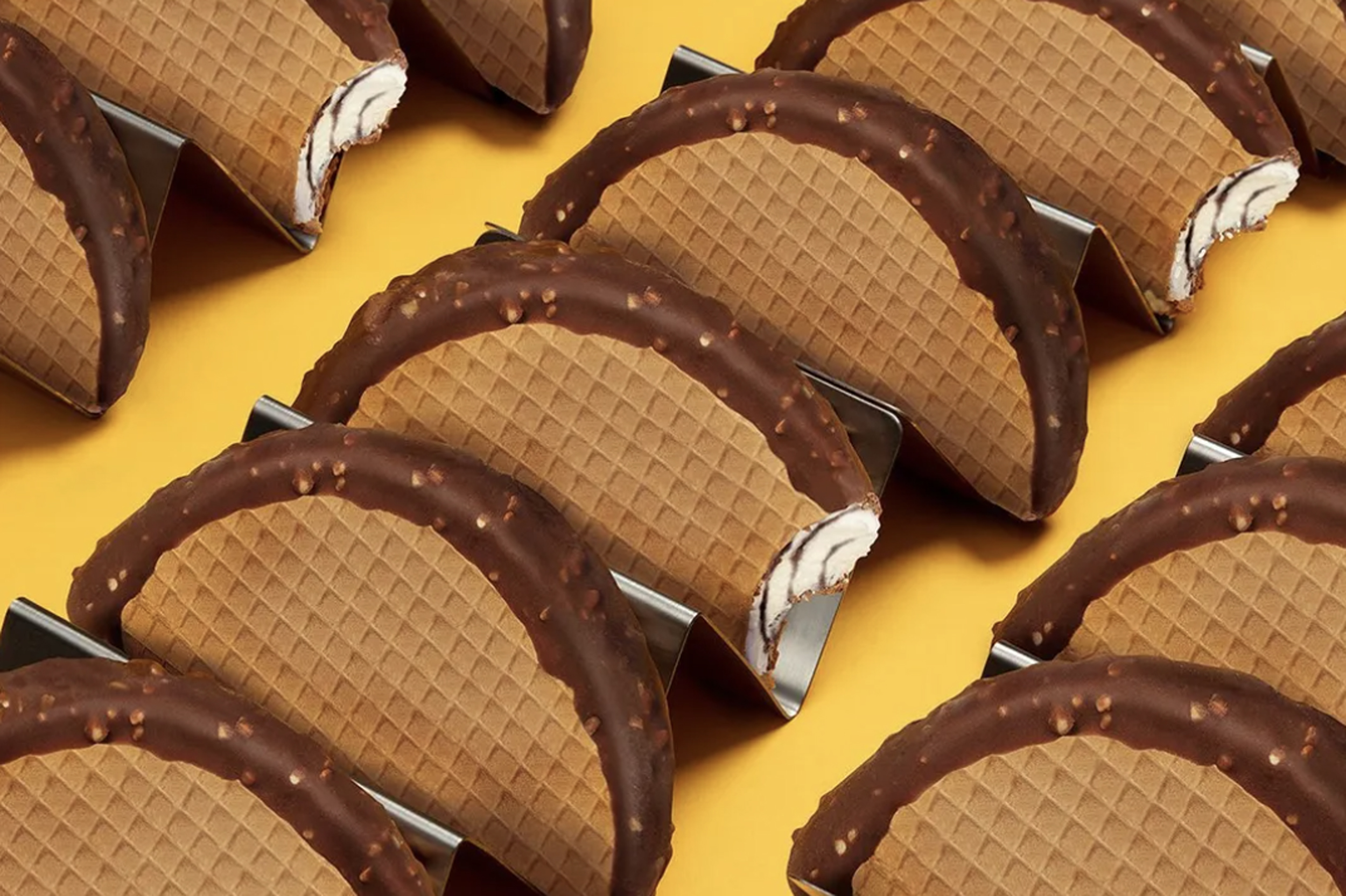
Klondike Original Choco Taco

We hate to be the bearers of bad news but after 40 years Klondike is officially retiring the Choco Taco, now a casualty in the supply chain battle.

According to the Klondike website, the decision to discontinue the Choco Taco comes down to demand. After four decades, the Choco Taco is falling to the wayside so that Klondike can focus on the rest of their legendary portfolio.

Unfortunately, sometimes intense consumer demand can lead to hard choices. Per Klondike, a spike in demand for their product lineup means narrowing their focus. So, we must all bid a fond but bitter farewell to the Choco Taco.

Now, lest we raise an eyebrow and cast a cynical eye toward this news, Klondike provides an assurance this isn’t a PR stunt. Cruise on over to their Instagram account and you’ll see a post denying any stunt Choco Taco retirement. Observe:


View this post on Instagram


A post shared by Klondike (@klondikebar)

It’s a bummer and a fake or quasi-discontinuation would be welcome. However, this appears to really be happening.

Filling the Void

Now, the great news is that restaurant and bar owners can recreate the flavors of the Choco Taco. Below, you’ll find a recipe from a casino resort offering their guests a taste of their favorite ice cream treat.

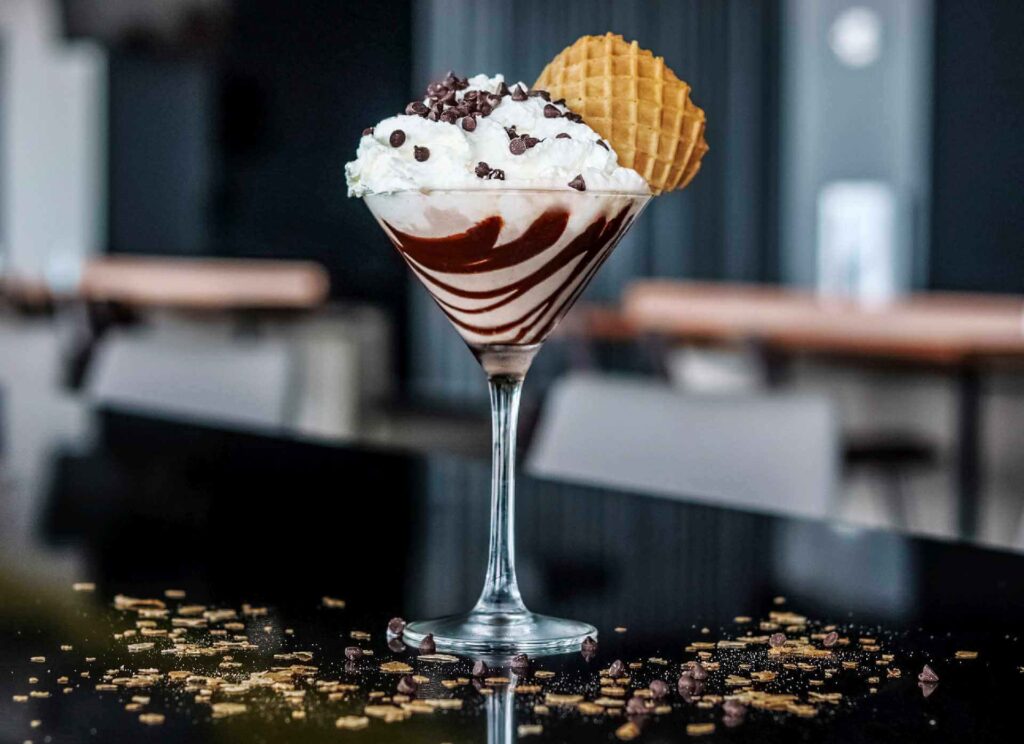
Calling Atlantic City home, Oceans Casino Resort and their F&B team are the masterminds behind the Chocotini. This $11 cocktail is available at Oceans now through the end of August.

Wisely, Oceans is making the Chocotini available to guests via four locations on property. Guests can order one at the Lobby Bar, restaurants Distrito and Makai, and the property’s Topgolf Swing Suite. Notably, Ocean Casino Resort boasts the largest Topgolf Swing Suite in America.


View this post on Instagram


A post shared by Ocean Casino Resort (@theoceanac)

In fact, Oceans recently completed a $15 million property improvement—and has committed to investing a further $85 million into the resort. With amenities like HQBeachclub, this casino resort rivals Las Vegas night- and daylife. Sets by Tiësto, DJ Snake, and Steve Aoki near the Atlantic City Boardwalk? Yes, please, and hand me a Chocotini.

Of course, you and your bar team can also create a creamy, chocolatey Martini to provide guests with a Choco Taco-like treat. I recommend also testing out a non-alcohol version for a tasty and booze-free sip.

Chocotini

Oceans Casino Resort Chocotini

Recipe and image courtesy of Ocean Casino Resort

First, prepare a Martini glass by striping the interior with chocolate syrup. If preferred, place in refrigerator to chill glass and harden syrup striping. Add vodka, liqueurs, and cream to a shaker with ice. Next, shake until well chilled and strain into prepared Martini glass. Top with whipped cream, and garnish with chocolate chips and waffle cone piece.

Image: Klondike

by David Klemt David Klemt No Comments

US Cities with Greatest Outflow and Inflow

US Cities with Greatest Outflow and Inflow

by David Klemt

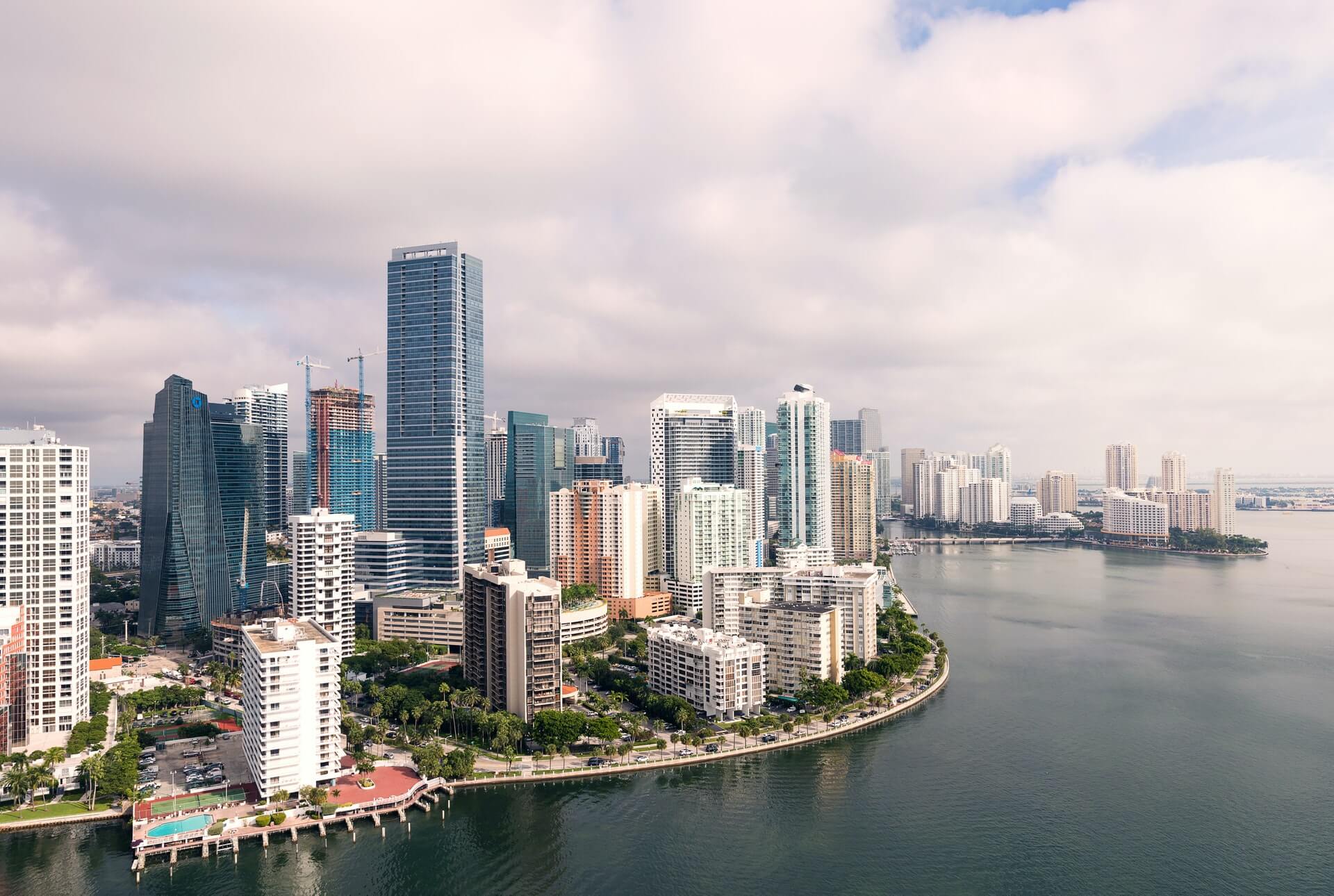
Brickell in Miami, Florida

Seattle-based real estate brokerage Redfin reveals the US cities seeing the greatest numbers of people leaving and moving in.

Obviously, real estate brokers need to know where people are selling and where they’re buying. Going deeper, they also need to know if populations are growing, remaining the same, or dwindling.

However, there’s another group of people who need this information: restaurant, bar, and hotel owners, operators, and workers.

Regardless of experience, owners and operators know site selection is one of the most important decisions they’ll make. Seriously, is there anyone who hasn’t heard the maxim, “Location, location, location” at this point?

Let’s say a new operator is considering where they should locate their business. When looking at major cities, it’s important to understand out- and inflow trends. The same holds true for operators seeking to expand. Clearly, it’s beneficial to know what cities are growing. Equally as important to consider: Is it best to open a location in the heart of the city or the surrounding suburbs?

Of course, there are considerations when looking at outflow and inflow data. For example, operators in cities seeing an influx need to strategize to leverage the area’s growth. How will they appeal to new residents? What can they do to convert them to regulars? Looking at operations, do they need to fill roles and are these new residents looking for work?

Now, when people are leaving cities in significant numbers it affects business. So, if there’s a noticeable downturn, it could be a good idea for operators to contact landlords. And for new operators, an exodus can be a bargaining chip to use during lease negotiations.

Outflow

According to Redfin, these are the top ten cities experiencing outflow.

  1. Minneapolis, Minnesota
  2. Chicago, Illinois
  3. Denver, Colorado
  4. Detroit, Michigan
  5. Boston, Massachusetts
  6. Seattle, Washington
  7. Washington, DC
  8. New York, New York
  9. Los Angeles, California
  10. San Francisco, California

Of particular note, Redfin reports that the average cost of a house in San Francisco is now over $1.5 million. No wonder so many people are leaving. Selling a home in that market can give sellers an influx of cash that will go much further elsewhere.

Inflow

Conversely, these are the ten American cities seeing the greatest inflow.

  1. Dallas, Texas
  2. San Antonio, Texas
  3. North Port, Florida
  4. San Diego, California
  5. Cape Coral, Florida
  6. Las Vegas, Nevada
  7. Sacramento, California
  8. Phoenix, Arizona
  9. Tampa, Florida
  10. Miami, Florida

Now, looking at this list, Florida is crushing it in terms of homebuyer growth. So, new and veteran operators should look into the Sunshine State for their first location or expansion.

Of course, the rest of this list is also certainly worthy of consideration, per Redfin’s data analysis. However, the brokerage notes that net inflow for Dallas, Las Vegas, Phoenix, and Sacramento is slowing in comparison to 2021.

Interestingly, to me, half of the outflow list is on Time Out’s 2022 top cities list: Boston, Chicago, Los Angeles, New York, and San Francisco. On the other hand, Miami is also on the Time Out List.

This is to say that data can be interpreted a multitude of ways, so always proceed with caution. The best way to select locations is with focused feasibility studies that drill down to particular ZIP codes and neighborhoods.

Image: Ryan Parker on Unsplash

by David Klemt David Klemt No Comments

Blasphemy! National Scotch Day Cocktails

Blasphemy! National Scotch Day Cocktails

by David Klemt

Craft cocktail in upscale bar

Psst! Don’t tell the purists but this article encourages the adulteration of Scotch by combining it with other ingredients to make *gasp!* cocktails.

Now, I jest…mostly. To be fair, I don’t often encounter purists who scoff or outright lost their minds if someone doesn’t enjoy their favorite spirit neat. However, it does happen every now and again. Seriously, it shouldn’t really matter how someone decides to order and enjoy their drinks. Want to order Johnnie Walker Blue Label with soda? Go for it.

So, below you’ll find cocktails rather than bottles for National Scotch Day. Sure, you can contact your reps, incur costs, and bring in some boast-worthy bottles. However, you can also spotlight what you already have on hand with revenue-generating Scotch cocktails.

No, you won’t find Scoch & Soda or the Rusty Nail among the recipes below. I would hope you and your bar team already have those down since they’re essentially two-ingredient drinks.

Also, I’ll award bonus points to anyone who locks eyes with a Scotch snob as they gulp down a Glenmorangie Signet Penicillin. Sure, that’s petty of me; it’s also fun. What are the bonus points good for? Hey, why are you asking so many questions?

A quick note: If you’d rather go with food on this holiday, check out our Scotch and cheese pairing article.

Penicillin

So, I’m going to start with my personal favorite Scotch cocktail. If you’re a KRG Hospitality regular, you already know this is one of my favorite drinks in general.

This is a modern-day classic—the Penicillin dates all the way back to the early 2000s. Operator, bartender, and cocktail creator calls for two types of Scotch to make this delectable drink.

  • 2 oz. Blended Scotch
  • 0.75 oz. Lemon juice, freshly squeezed
  • 0.75 oz. Honey-ginger syrup (1 cup honey, 1 cup water, 1 6-inch bit of peeled and thin-sliced ginger)
  • 0.25 oz. Peaty Islay Scotch to float
  • Candied ginger to garnish

Prepare a rocks glass with ice. Add first three ingredients to a shaker with ice, and shake until well chilled. Strain into the rocks glass and float Islay Scotch on top. Then, garnish and present.

For the syrup: Combine syrup ingredients in a saucepan and bring to boil. Reduce, simmer for five minutes, and set aside overnight in refrigerator. The next day, strain through cheesecloth.

Rob Roy

If you want to be flippant about it, the Rob Roy is a Scotch Manhattan. Of course, it’s easy to make that argument as cocktail historians believe the Rob Roy is an homage. At any rate, both are true classics, dating back to the late 1800s.

One of the fun elements of the Rob Roy is creating a signature version. Obviously, the Scotch and vermouth selection will impact the flavors of this drink. So, come up with a combination all your own to make this one of your bar’s specialties.

  • 2 oz. Scotch
  • 0.75 oz. Vermouth (equal parts sweet and dry vermouths to make a Perfect Rob Roy)
  • 0.75 oz. Angostura Bitters
  • Brandied cherries to garnish

You’ll want to ensure you have chilled cocktail or Nick & Nora glasses on hand before starting this build. Combine the first three ingredients in a mixing glass with ice. Stir unti well chilled and strain into chilled glass. Spear cherries, garnish, and serve.

Bobby Burns

Interestingly, some believe this cocktail is a riff on the Rob Roy. So, why not have Rob and Bobby on your National Scotch Day drink menu?

Now, the drinks are similar, but the flavor profiles are vastly different. After all, the ratio of Scotch to vermouth is 1:1, and the recipe uses Bénédictine rather than bitters.

  • 1 oz. Blended Scotch (supposedly, this should be at least 12 years old)
  • 1 oz. Sweet vermouth
  • 0.5 oz. Bénédictine
  • Lemon peel to garnish

Of course, this is where the argument that the Bobby Burns is a version of the Rob Roy gets stronger. See the build instructions for the Rob Roy above? Do the same, but garnish with a lemon peel.

Blood & Sand

Oddly enough, we don’t know the creator of this drink. We do know it appears in Harry Craddock’s The Savoy Cocktail Book, published in 1930. However, we don’t know for certain that he’s the inventor.

At any rate, we do know this 1:1:1:1 cocktail is delicious and a hit with whiskey fans.

  • 0.75 oz. Scotch
  • 0.75 oz. Cherry Heering
  • 0.75 oz. Orange juice, freshly squeezed
  • 0.75 oz. Sweet vermouth
  • Orange peel to garnish

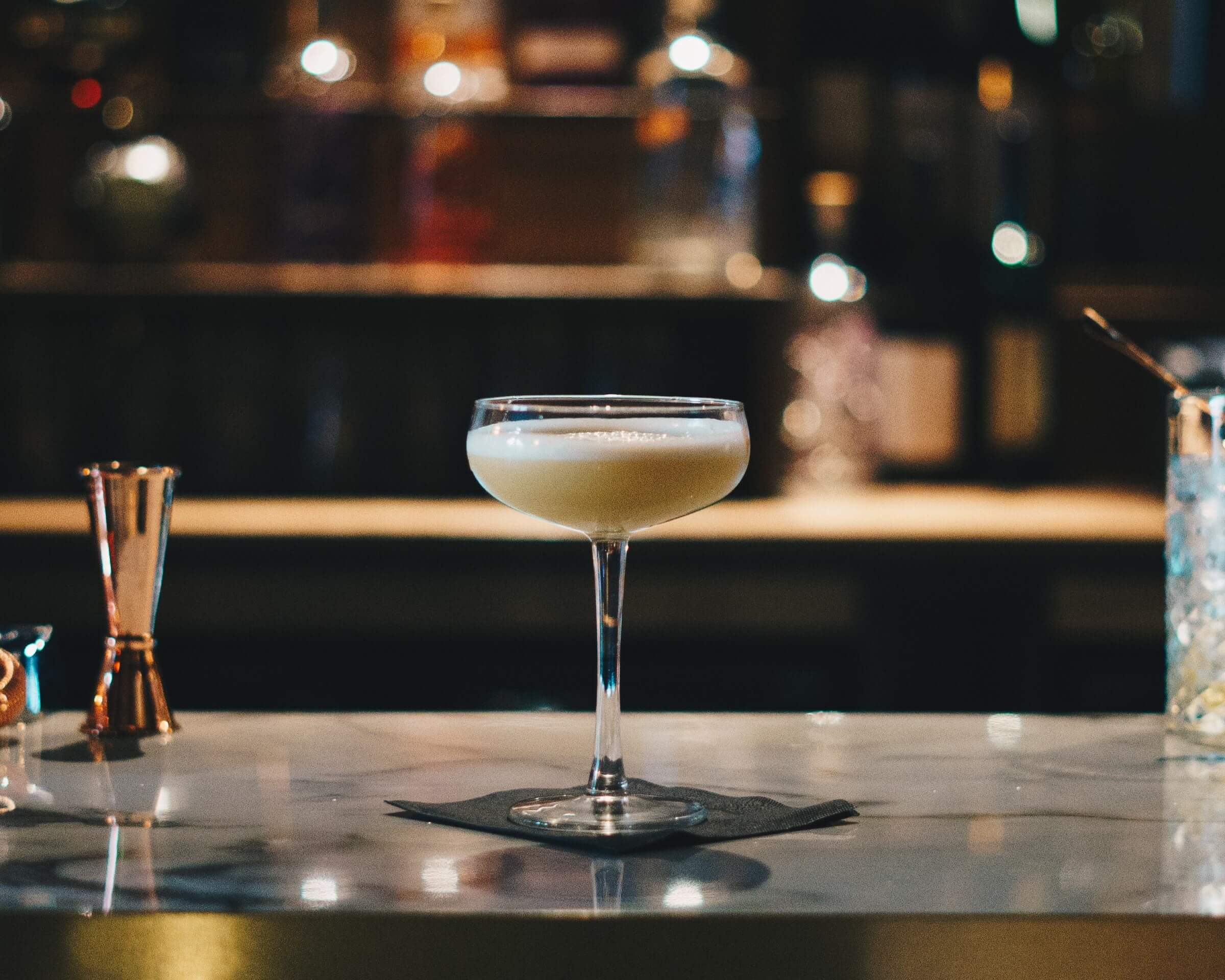
Again, make sure you have chilled glassware to build this cocktail. In this case, coupes and cocktails. Combine all ingredients but the garnish in a cocktail shaker with ice and shake well. Next, strain into the glass, then garnish and present.

Rusty Compass

So, this build is a bit different from the others in that it calls for a particular Scotch and two specific liqueurs. Also, this one is bold as the Scotch you’ll use is rather powerful.

Obviously, this is a bit like a Rusty Nail, so you shouldn’t have any trouble with the recipe.

  • 2 oz. Compass Box The Peat Monster
  • 01.75 oz. Drambuie (for making Rusty Nails, too)
  • 0.5 oz. Cherry Heering (which you have on hand for making Blood & Sands)
  • Orange twist to garnish

As you’re probably already guessing, you combine all the ingredients but the garnish in a shaker with ice for this build. Shake it, strain it, and garnish it. Oh, and you’ll want to present this in a coupe.

Image: Ambitious Creative Co. – Rick Barrett on Unsplash

by David Klemt David Klemt No Comments

Cheese Pairings: Wine, Beer, Spirits

Cheese Pairings: Wine, Beer, Spirits

by David Klemt

Wine glasses and cheese board

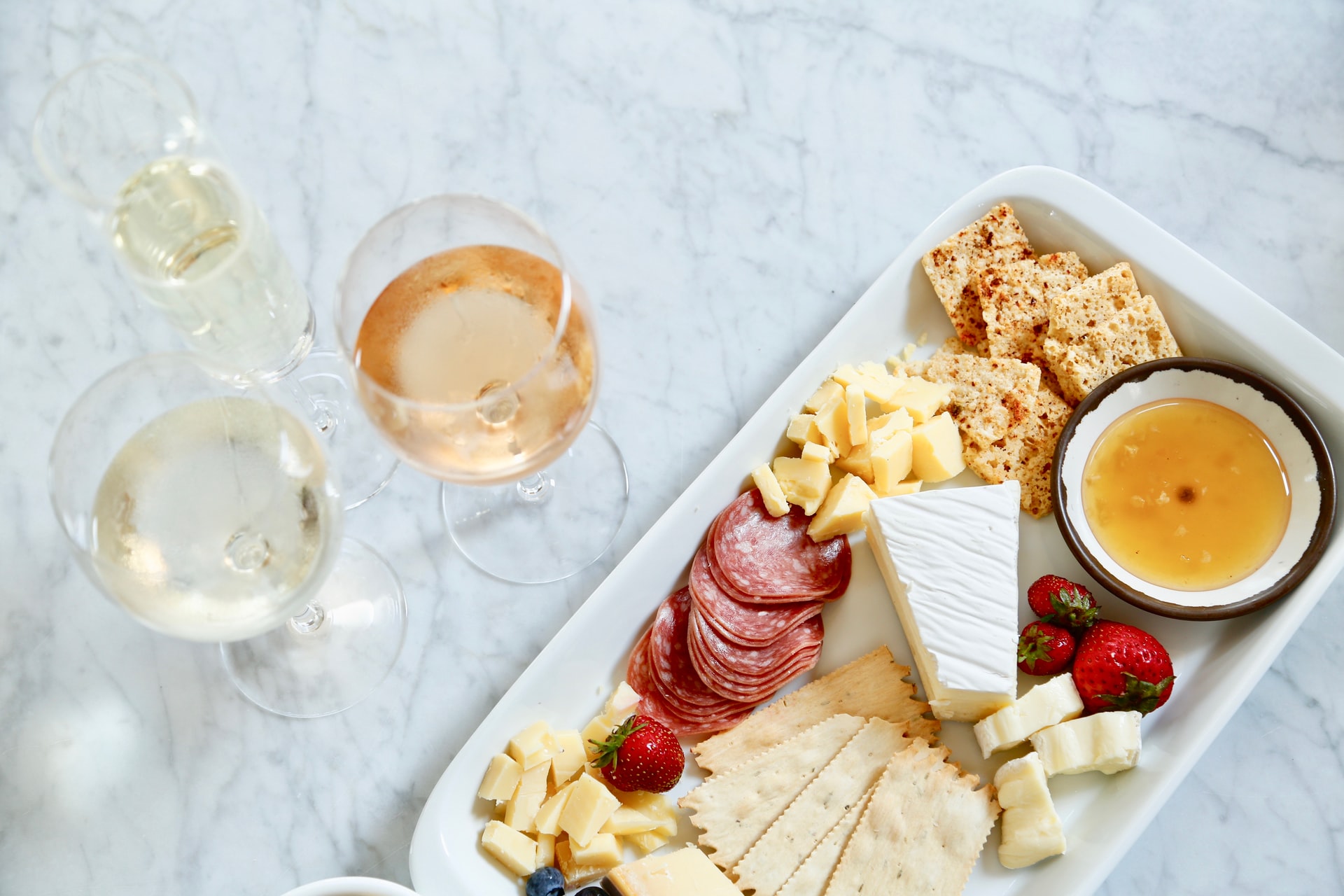
National Wine and Cheese Day is Monday, July 25, so let’s take a look at pairings that will get mouths watering.

According to historians, people have been pairing wine with cheese for several centuries. And per scientists, this legendary pairing makes a lot of sense.

Cheese is, obviously, fatty. Further, fat is oily. Then we have alcohol, which is astringement. When we eat cheese or other fatty/oily foods, they coat the mouth. As we also know, alcohol tends to dry out our mouths.

So, the theory as to why pairing cheese with wine works comes down to balance. Of course, there’s a term for this balance you likely know: mouthfeel.

However, science has an additional theory about wine and cheese. For this theory, we look at the “flavor spectrum.” Flavors that are far apart from one another are often pleasant to us.

As an example, not many of us would appreciate a slice of cheddar cheese on top of a cheddar cheese-flavored cracker dipped in cheddar cheese sauce. That would be monotonous and boring.

Wine Pairings

  • Chardonnay and Camembert
  • Riesling and Raclette
  • Gewürztraminer and Edam
  • Pinot Grigio/Gris and Parmigiano Reggiano
  • Chenin Blanc and Chèvre
  • Sauvignon Blanc and Gouda
  • Champagne and Brie
  • Prosecco and Asiago
  • Rosé and Havarti or Fontina
  • Pinot Noir and Gruyère
  • Merlot and Camembert or Gorgonzola
  • Shiraz (Australian-style varietal) and sharp Cheddar or smoked Gouda
  • Syrah (French-style varietal) and Pecorino or Roquefort
  • Malbec and Manchego
  • Sangiovese and Fontina or Parmigiano Reggiano

Beer Pairings

Perhaps your guests would prefer to celebrate National Wine and Cheese Day with a substitution. Like, for instance, swapping out wine for beer.

Well, it turns out cheese goes great with many styles of beer.

  • American Pale Ale and American Cheddar
  • Amber Ale and Gouda or Brie
  • Witbier and goat cheese
  • Hefeweisen and Feta
  • American Lager and Mozzarella
  • American Pilsner and Chèvre
  • IPA and Parmigiano Reggiano or Blue Cheese
  • Brown Ale and Gouda
  • Porter and Muenster or Gruyère
  • Stout and Blue Cheese

Spirits Pairings

Hey, beer isn’t the only beverage that we can swap with wine. Interestingly, several categories of spirit pair well with cheese.

As with wine and beer, it’s crucial to try pairings with specific spirits before offering them to guests.

  • Vodka and Cheddar or Blue Cheese
  • Gin: London Dry and Pecorino; Genever and Triple Cream Brie; Plymouth and Époisses de Bourgogne
  • Brandy and Butterkäse
  • Rum and Fontina
  • Mezcal and aged Cheddar or Pecorino
  • Tequila: Blanco and Brie or Feta; Reposado and Manchego; Añejo and Parmigiano Reggiano
  • Bourbon and Parmigiano Reggiano
  • Rye and Gouda
  • Irish whiskey and Brie or Camembert
  • Scotch: Light-bodied and Comté; Full-bodied and Stilton. For a deeper dive into pairing Scotch with cheese, click here.

Image: Allison Kettlety on Unsplash

by David Klemt David Klemt No Comments

Rabbit Hole Resources: Bourbon 101

Rabbit Hole Resources: Bourbon 101

by David Klemt


Bunny painting or graffiti

Those who want to learn about bourbon can access free resources from a credible and knowledgeable source: Rabbit Hole Distillery.

When it comes to learning about a particular spirit, those producing them tend to know the most. So, seeking education straight from the source is a smart move.

Now, hospitality professionals have a reliable, informative resource to add to their toolbox. Learn About Bourbon is Rabbit Hole’s ever-growing bourbon resource.

Bourbon Basics

If your restaurant or bar has bourbon on the menu, you’re likely at least familiar with the basics:

  • To carry the “bourbon” designation, one must produce the liquid in America.
  • The mashbill must consist of at least 51 percent corn.
  • It’s not permissible to use any additive except water.

Similarly, you are likely aware of some bourbon myths:

  • Only distilleries in the state of Kentucky can produce bourbon.
  • The name “bourbon” comes from Bourbon County.
  • The whiskey must be at least two years old to be bourbon.

As you can see from the first bullet point at the start of this segment, bourbon can come from any state in America. As far as the second myth, the origin of the name “bourbon” is a bit murky.

Interestingly, the third myth is somewhat true. To include “straight bourbon” on the label, the bourbon must be a minimum of two years old. Otherwise, once new-make whiskey comes into contact with the oak barrel in which it’s going age, it’s bourbon.

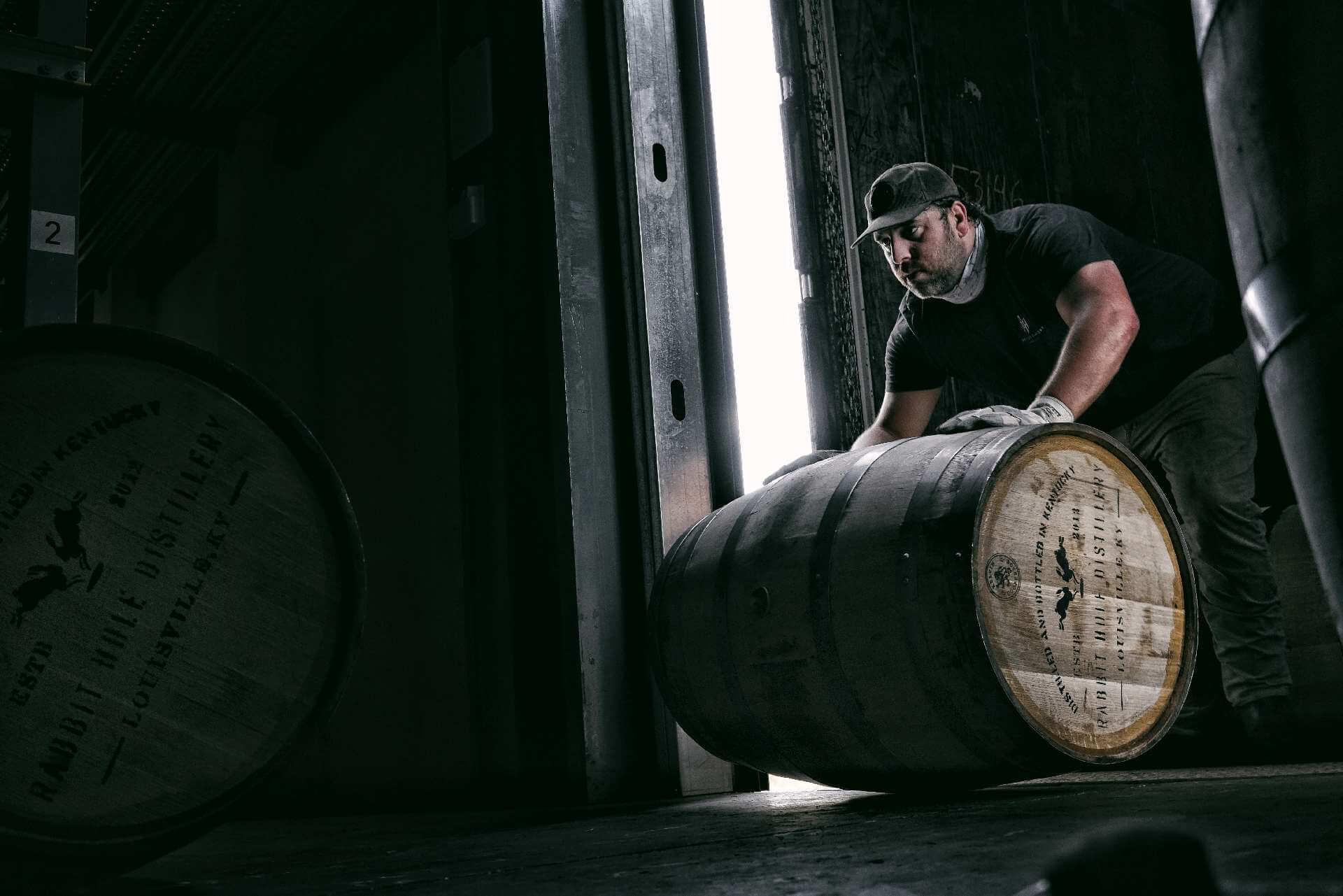
Rabbit Hole bourbon barrel rolling into rickhouse

Learn About Bourbon

Rabbit Hole goes far beyond simple definitions on their Learn About Bourbon page.

Instead, the distillery dives deep into every element of bourbon production. As important, this page receives regular updates. In other words, much like bourbon itself, this resource gets better with age.

To give you an idea of how in-depth Rabbit Hole gets, let’s look at the Bourbon Barrel Char / Charring section. It’s essentially an article in and of itself at nearly 400 words. Additionally, there’s a link within this section that leads to an even deeper dive into toasting and charring barrels.

Elsewhere on the Learn About Bourbon page you can learn about esters. In fact, there’s a list of over a dozen esters for you to—yep, I’m gonna make the pun—go down the rabbit hole.

Rabbit Hole Blog

Now, it turns out that the distillery isn’t content with offering one bourbon education resource. There’s also the Rabbit Hole Blog.

Looking for bourbon cocktail recipes? Check out the brand’s blog. Currently, the top recipe posts feature the Golden Ponzu and Strawberry Bourbon Lemonade.

Curious about cooking with bourbon? How about a recipe for nasi goreng with a Rabbit Hole bourbon ginger sauce? As a bonus, this recipe should perform well with guests looking for plant-forward dishes with small amounts of animal protein.

Of course, there are also Bourbon 101 articles. For example, this link will take you to an article about wheated bourbons.

If you want to boost your bourbon knowledge and update your food and cocktail menus, check out Rabbit Hole’s blog and Learn About Bourbon page today.

Image: Vincent Pelletier

by David Klemt David Klemt No Comments

2022 World’s 50 Best Restaurants: 1-50

2022 World’s 50 Best Restaurants: 1-50

by David Klemt

Gourmet dish on white background

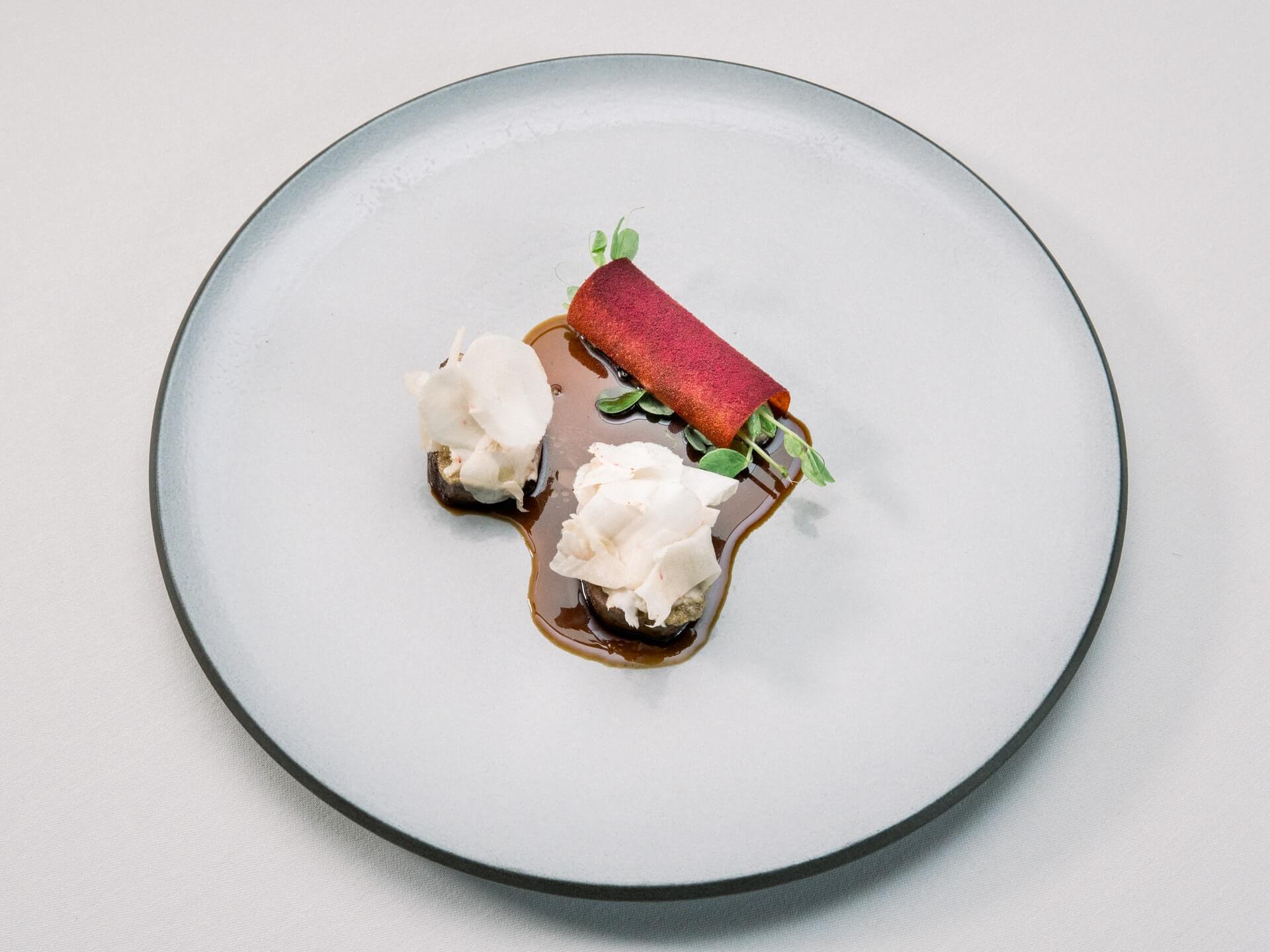
Finally, the World’s 50 Best announces the World’s 50 Best Restaurants, an impressive list of the finest places to dine across the globe.

Of course, this highly anticipated news comes on the heels of the World’s 50 Best Restaurants, 51 to 100. Last night, host Stanley Tucci and special guest co-hosts announced the winners in London.

Perhaps not too surprisingly, only three American restaurants are among this year’s top fifty. Of those three, one is in Healdsburg, California, which is the wine-producing region of Sonoma County. The other two American restaurants are in New York City, which isn’t exactly a surprise. And of those two restaurants, one, number 33 on this year’s list, is the winner of the Gin Mre Art of Hospitality Award.

Unfortunately, there are no Canadian restaurants on the World’s 50 Best Restaurants 2022 list. That applies to the back half of the list, numbers 51 to 100, as well.

Interestingly, the restaurant taking home the title of World’s Best Restaurant 2022 took the number two spot in 2021. Another hint: This year’s number one, by clinching the top slot, is also the Best Restaurant in Europe 2022.

So, do you think you know what restaurant is the best in the world? Scroll down to see if you’re right.

The World’s 50 Best Restaurants 2022: 50 to 1

  1. Single Thread (Healdsburg, California, USA)
  2. Ikoyi (London, England)
  3. Leo (Bogotá, Colombia)
  4. Oteque (Rio de Janeiro, Brazil)
  5. Belcanto (Lisbon, Portugal)
  6. Narisawa (Tokyo, Japan)
  7. Le Bernardin (New York, New York, USA)
  8. Boragó (Santiago, Chile)
  9. Quique Dacosta (Dénia, Spain)
  10. La Cime (Osaka, Japan)
  11. Schloss Schauenstein (Fürstenau, Switzerland)
  12. Sorn (Bangkok, Thailand)
  13. Jordnær (Copenhagen, Denmark)
  14. Fyn (Cape Town, South Africa)
  15. Odette (Singapore)
  16. The Clove Club (London, England)
  17. Hiša Franko (Kobarid, Slovenia)
  18. Atomix (New York, New York, USA)(Gin Mare Art of Hospitality Award 2022)
  19. Mayta (Lima, Peru)
  20. Arpège (Paris, France)
  21. Florilège (Tokyo, Japan)
  22. St. Hubertus (San Cassiano, Italy)
  23. Le Clarence (Paris, France)
  24. Hof Van Cleve (Kruishoutem, Belgium)
  25. Restaurant Tim Raue (Berlin, Germany)
  26. Frantzén (Stockholm, Sweden)
  27. The Chairman (Hong Kong)
  28. The Jane (Antwerp, Belgium)
  29. Septime (Paris, France)
  30. Mugaritz (San Sebastian, Spain)
  31. Den (Tokyo, Japan)
  32. Piazza Duomo (Alba, Italy)
  33. The Alchemist (Copenhagen, Denmark)
  34. Nobelhart & Schmutzig (Berlin, Germany)(Villa Massa Highest Climber Award 2022)
  35. Elkano (Getaria, Spain)
  36. Reale (Castel di Sangro, Italy)
  37. Don Julio (Buenos Aires, Argentina)
  38. Steirereck (Vienna, Austria)
  39. Uliassi (Senigallia, Italy)(Highest New Entry Award 2022)
  40. Maido (Lima, Peru)
  41. Le Calandre (Rubano, Italy)
  42. Quintonil (Ciudad de México, México)(Estrella Damm Chef’s Choice Award: Chef Jorge Vallejo)
  43. Lido 84 (Gardone Riviera, Italy)
  44.  A Casa do Porco (São Paulo, Brazil)
  45. Asador Etxebarri (Atxondo, Spain)
  46. Pujol (Ciudad de México, México)
  47. Diverxo (Madrid, Spain)
  48. Disfrutar (Barcelona, Spain)
  49. Central (Lima, Peru)
  50. Geranium (Copenhagen, Denmark)

Image: Delightin Dee on Unsplash

by David Klemt David Klemt No Comments

How Two Boston Hotels Modernized America

How Two Boston Hotels Modernized America

by David Klemt

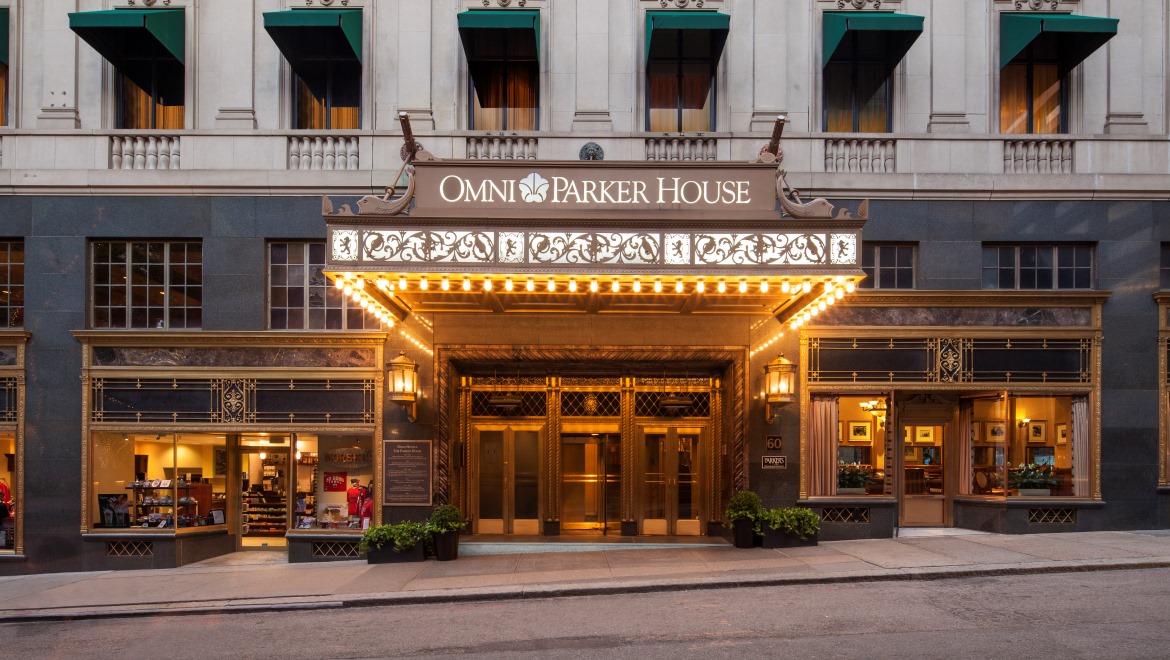
Omni Parker House hotel

To understand how far we’re moving forward with hotel design and hospitality we can look at two historic and influential Boston hotels.

In part, this dive into hotel history finds its inspiration from a Time Out list. Recently, the publication revealed their 2022 list of the world’s top cities.

According to Time Out, Boston, the location of two historically significant hotels, is 29th in the world. It’s also one of just six American cities to make the list. For some context, number 28 is Lisbon, Portugal, and number 30 is Mexico City.

Now, it’s impressive for a city to be the home of one influential hotel. That Boston is home to two is extraordinary.

Both hotels trace their openings to 1800s America. One is, to many, the first modern hotel in the US. The other is America’s longest continually operating hotel.

Tremont House

Now, neither of the hotels I’m writing about are the first hotel in America. That honor goes to the City Hotel in New York City.

However, the Tremont House in Boston, which traces its opening to October 16, 1829, delivered many other firsts. Sure, it’s not the first building designed and built to be used as a hotel. But look at the other firsts this historic hotel brings to the table:

  • Tremont House is the first hotel in America with a reception area.
  • Also, this is the first hotel in the US to employ bellboys.
  • Another impressive first for Americans and American hotels? Locking hotel rooms.
  • And behind the locking door of that hotel room, free soap.
  • Arguably the most important American hotel first ties into the free soap. The Tremont House is the first hotel in America with indoor plumbing.

Sadly, the Tremont House’s history ends just 66 years after first opening its doors. In 1895, the historic hotel was demolished. If you want to visit the site, head to 73 Tremont Street and check out the office building occupying the space.

Omni Parker House

So, the Omni Parker House obviously isn’t the first hotel in the US. And it doesn’t boast the first reception area, locking hotel rooms, or indoor plumbing in an American hotel.

However, this hotel brings with it other firsts. On top of that, the Omni Parker House is still operating today. Seriously—you can book a stay right now.

Another awesome detail of the Omni Parker House? Well, it’s literally across the street from the Tremont House’s former site. So, you can book a stay or pop by for a bite or drink, then walk across the street to stand where America’s first modern hotel once stood.

Also of note, the Omni Parker House opening date. This landmark hotel opened for business on October 8, 1855. So, the same month as the Tremont House, which was across the street, 26 years later. These historic hotels, then, were competing against one another in Boston for 40 years.

Upon opening, the Omni Parker House became the first hotel to separate room rates and fees for meals. Showing how much hotels in Europe influenced American hotel operators as they became more modern, this separation of fees was known as “the European Plan.” Prior to this development, guests paid an all-inclusive rate and had to eat when the hotel made meals available. The Omni Parker House gave more control over if and when guests ordered their meals.

In terms of firsts for Boston, the Omni Parker House has quite an impressive list:

  • The first hotel to offer cold and hot running water.
  • This is the first Boston hotel to feature an elevator for guests.
  • Oh, and this is where the Boston Cream Pie was created.
  • And let’s not overlook the Omni Parker House is also the home of the Parker House Roll.

Enduring Legacies

Clearly, the Tremont House’s influence on modern hotel design and amenities is undeniable. Once an afterthought, the lobby is now a prominent space in hotels. To show how far we’re taking the lobby, consider the Hyatt Regency in San Francisco (Time Out 25).

Incredibly, this space measures 42,000 square feet and stands 17 stories tall. Today, modern hotels are crucial design elements.

Indoor plumbing? Hot and cold water and toilets in rooms? We certainly take these design features for granted now.

Today, you can find hotel rooms that feature jetted tubs, steam showers, heated floors, multi-head showers, saunas, and views. And that’s to say nothing of the free soap, now often provided in partnership with the finest skincare companies.

Additionally, consider how we enter our hotel rooms now. One hotel in America had to be the first to feature locking hotel room doors. Now, we can access rooms through apps on our phones. There are also hotels that feature biometric technology. Not only can a guest access their room with this tech, they can complete check-in with biometrics.

When it comes to culinary influence, the Omni Parker House ushered in a new era. The power to order from a menu on your own schedule? It’s almost unbelievable that guests didn’t have that type of control until the mid-1800s.

Per historians, Harvey D. Parker was incredibly particular about his hotel’s culinary program. On average, chefs were paid $418 per year back then ($14,236 today). Parker paid a French chef $5,000 per year ($170,293 today).

We have to look backward to appreciate how far we’ve come. And we must tap into that appreciation to move forward.

Image: Omni Hotels & Resorts

by David Klemt David Klemt No Comments

Is Your Business in a Top Time Out City?

Is Your Business in a Top Time Out City?

by David Klemt

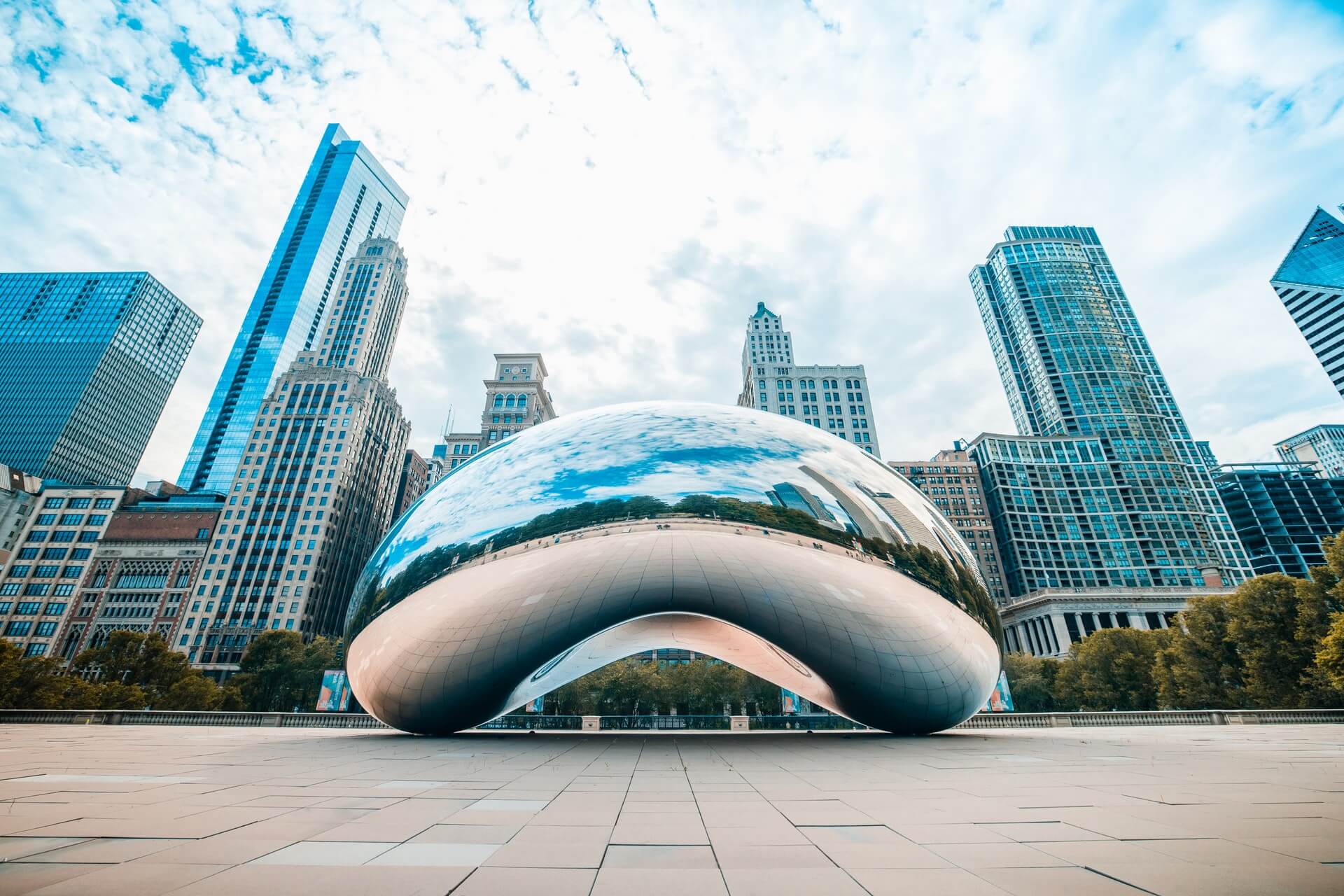
The Bean aka Cloud Gate in Chicago

Hot off the presses, Time Out is now revealing the results of their Time Out Index 2022, an annual list identifying the world’s top cities.

The global publication, founded in the late 1960s, surveyed 20,000 “city dwellers.” Time Out focuses on cities’ restaurant, bar, nightlife, entertainment, and art scenes.

For 2020 and 2021, Time Out put emphasis on the pandemic and how cities maintained resiliency and kept communities together. In 2022, priority is given to flourishing nightlife, dining, and drinking, along with culture.

Additionally, Time Out gives weight to a city’s sustainability, safety, walkability, and affordability. To learn more about how Time Out analyzes data, click here.

Compelling Rankings

Below, you’ll find Time Out’s ranking of the best 53 cities in the world for 2022. I’ve broken the list into sections: 53 to 11, and ten to number one.

Interestingly, the 20,000 survey respondents note the dining, drinking, and nightlife of the top five cities. In fact, the nightlife scene of number three is “the world’s best.”

And city number two? Survey takers think it’s the most fun—”funnest,” according to Time Out—in the world.

Now, I know our audience is largely American and Canadian, so I’ll get to how both rank. Six cities—the usual suspects, basically—in the US are on the list. Only one American city is in the top ten, and it’s likely not the one you think. As for Canada, one city claims the 27 spot, another is number nine.

You’ll find the Canadian and American cities in bold below. Champing at the bit to see the results? Scroll down!

Time Out Cities 53 to 11

  1. Doha, Qatar
  2. Hong Kong
  3. Bangkok, Thailand
  4. Istanbul, Turkey
  5. Johannesburg, South Africa
  6. Rio de Janeiro, Brazil
  7. Auckland, New Zealand
  8. Sydney, Australia
  9. Abu Dhabi, United Arab Emirates
  10. Singapore
  11. Accra, Ghana
  12. Los Angeles, California, USA
  13. Rome, Italy
  14. Dubai, United Arab Emirates
  15. Barcelona, Spain
  16. Miami, Florida, USA
  17. São Paulo, Brazil
  18. Dublin, Ireland
  19. Athens, Greece
  20. Manila, Philippines
  21. Kuala Lumpur, Malaysia
  22. Paris, France
  23. Tel Aviv, Israel
  24. Mexico City, Mexico
  25. Boston, Massachusetts, USA
  26. Lisbon, Portugal
  27. Toronto, Ontario, Canada
  28. Delhi, India
  29. San Francisco, California, USA
  30. Tokyo, Japan
  31. Stockholm, Sweden
  32. Birmingham, England
  33. Buenos Aires, Argentina
  34. New York, New York, USA
  35. Lyon, France
  36. Porto, Portugal
  37. London, England
  38. Taipei, Taiwan
  39. Melbourne, Victoria, Australia
  40. Mumbai, India
  41. Manchester, England
  42. Madrid, Spain
  43. Cape Town, South Africa

The Top Ten Time Out Cities

  1. Copenhagen, Denmark
  2. Montréal, Québec, Canada
  3. Berlin, Germany
  4. Marrakech, Morocco
  5. Prague, Czech Republic
  6. Amsterdam, Netherlands
  7. Glasgow, Scotland
  8. Medellín, Colombia
  9. Chicago, Illinois, USA
  10. Edinburgh, Scotland

Congratulations to the top 53 cities in the world! We expect big things from their dining, drinking, and nightlife moving forward.

Image: Christopher Alvarenga on Unsplash

by David Klemt David Klemt No Comments

Brutal: These Drinks are Heavy

Brutal: These Drinks are Heavy

by David Klemt

Marshall amplifier closeup

Several legendary and iconic heavy metal bands are stepping into the arena of the drinks industry, from beer to whiskey, and more.

You won’t find a celebrity rosé wine or mezcal on this list. Instead, you’ll find bourbon and rye blends, unique processes, full beer lineups, and small-batch releases.

Most importantly, these are products that deserve a place on your menus. These aren’t spirits and beers that rely on band names and their global recognition. Each of these can stand on their own.

In fact, one whiskey from Slipknot and an Iowa distillery won an award from Fred Minnick in 2019.

Metallica

You may familiar with Blackened, a rye and bourbon blend that finishes in brandy casks. This limited-edition, super-premium whiskey is also subjected to the proprietary Black Noise process.

In short, each batch of Blackened is enhanced by the frequencies of curated Metallica playlists. This whiskey is a true collaboration. Legendary Master Distiller Dave Pickerell partnered with Metallica and Meyer Sound for the recipe and process.

However, Master Distiller and Blender Rob Dietrich has crafted a rye expression. Rye the Lightning is, as you can likely tell from the name, a rye whiskey. This expression also undergoes a very specific Black Noise process.

To craft Rye the Lightning, the live recording of Ride the Lightning in its entirety from Metallica’s Orion Music + More set is played to enhance the liquid. Taking things a step further, Rye the Lightning is finished in Madeira and rum casks.

Not content with just two expressions, there are also the Master of Whiskey Series and limited edition whiskeys available.

Iron Maiden

Iconic English heavy metal band Iron Maiden has steered heavily into the beer business. You won’t find a limited-release Lager here and a Pilsner there. No, Iron Maiden has a full lineup of beers in several styles.

Trooper, named for their song “The Trooper,” is the name under which the band crafts their beers in partnership with brewers like Bodebrown and Robinsons. You’ll find many beer styles under the Trooper label: Strong Bitter, English Extra Special, Porter, Golden, IPA, and more.


View this post on Instagram


A post shared by Trooper (@ironmaidenbeer)

Of course, there are limited editions. And why shouldn’t there be? Iron Maiden and there brewer partners want to have rock out, like they did with the Number of the Beast, a Bitter.

Motörhead

Since there’s a bourbon and a beer carrying the Motörhead name, you can create a Boilermaker honoring the heavy band. And as you may imagine, one-half of the Boilermaker is named after the song “Ace of Spades.”

In this case, Ace of Spades is a bourbon crafted in Fargo, North Dakota, by Proof Artisan Distillers. This distillery produced North Dakota’s first-ever bourbon, Crooked Furrow. Ace of Spades is a full-bodied, 90-proof high-rye bourbon with warm, sweet notes and a cinnamon finish.

For the beer, Motörhead tapped Madison, Wisconsin, brewers Ale Asylum. Röad Crew is a crisp, hoppy American Pale Ale with citrus notes.

Cannibal Corpse

This whiskey, Golden Blood, is actually the inspiration for this article and product roundup. Golden Blood by Cannibal Corpse, one of the heaviest bands on this list, is crafted in collaboration with Three Floyds Distilling.

Since opening their doors in 2017, Three Floyds has been known for doing things differently. In fact, the distillery itself says their approach is “not normal.” So, this collaboration with Cannibal Corpse makes a lot of sense.

According to Three Floyds, the band itself selected the liquid. A single barrel straight malt whiskey, Golden Blood was aged four years in new, charred oak. And the label is sure to draw attention on your back bar.

GWAR

As the story goes, GWAR is not of this planet. Rather, GWAR is an intergalactic rock band that arrived on Earth via comet.

Well, when you have an origin mythology that incredible, you can’t phone in products tied to your name. I promise that you’ve never encountered a whiskey-crafting process like the one that produces Catoctin Creek Ragnarök Rye:

“The mad scientists at Catoctin Creek conducted experiments on aging the blood of GWAR in barrels made from the different types of wood scorched by the comet’s blast. They used the rarest of grains and watered their mash bill with the melted Antarctic ice to create a 92 strength rye whisky, pot stilled and then aged in charred new white oak. Members of GWAR then hurled the whiskey barrels into the orbit of the moon, causing contraction to take place as the barrels spun under the influence of the deathly coldness of space and the life-giving heat of the sun.”

Well, that’s different.

Slipknot

Cedar Creek Distillery in Iowa crafts two whiskey expressions for Slipknot. The first expression is Slipknot No.9, a four-year-old blend of straight bourbon and straight rye whiskeys.

Then there’s Slipknot No. 9 Reserve. For this special release, award-winning Cedar Creek bottles the same bourbon and rye blend at 99 proof. Fred Minnick named Slipknot No. 9 Reserve the Best Celebrity Whiskey in 2019. That’s no small feat.


View this post on Instagram


A post shared by Slipknot Whiskey (@slipknotwhiskey)

An equally daunting feat? Getting your hands on Slipknot co-founder and percussionist Clown’s Iowa Shine. If you can find it, this bottle is Clown’s very own moonshine.

Honorable Mentions

The Deftones have partnered with Belching Beaver to craft an IPA called Deftones Phantom Bride. This IPA, a collaboration between head brewer Thomas Peters and the Deftones’ Chino Moreno, is made using Amarillo, Citra, Simcoe and Mosaic hops.

And then there’s Bay Shore, New York’s Great South Bay Brewery. The brewery has honored Pantera with a limited edition beer called Vulgar Display of Lager. Obviously, this is intended to honor the 30th anniversary of the thrash metal band’s brutal 1992 Vulgar Display of Power album.

Image: Alexander Kampmann from Pixabay

by David Klemt David Klemt No Comments

What’s Up with Meat, Poultry and Seafood?

What’s Up with Meat, Poultry and Seafood?

by David Klemt

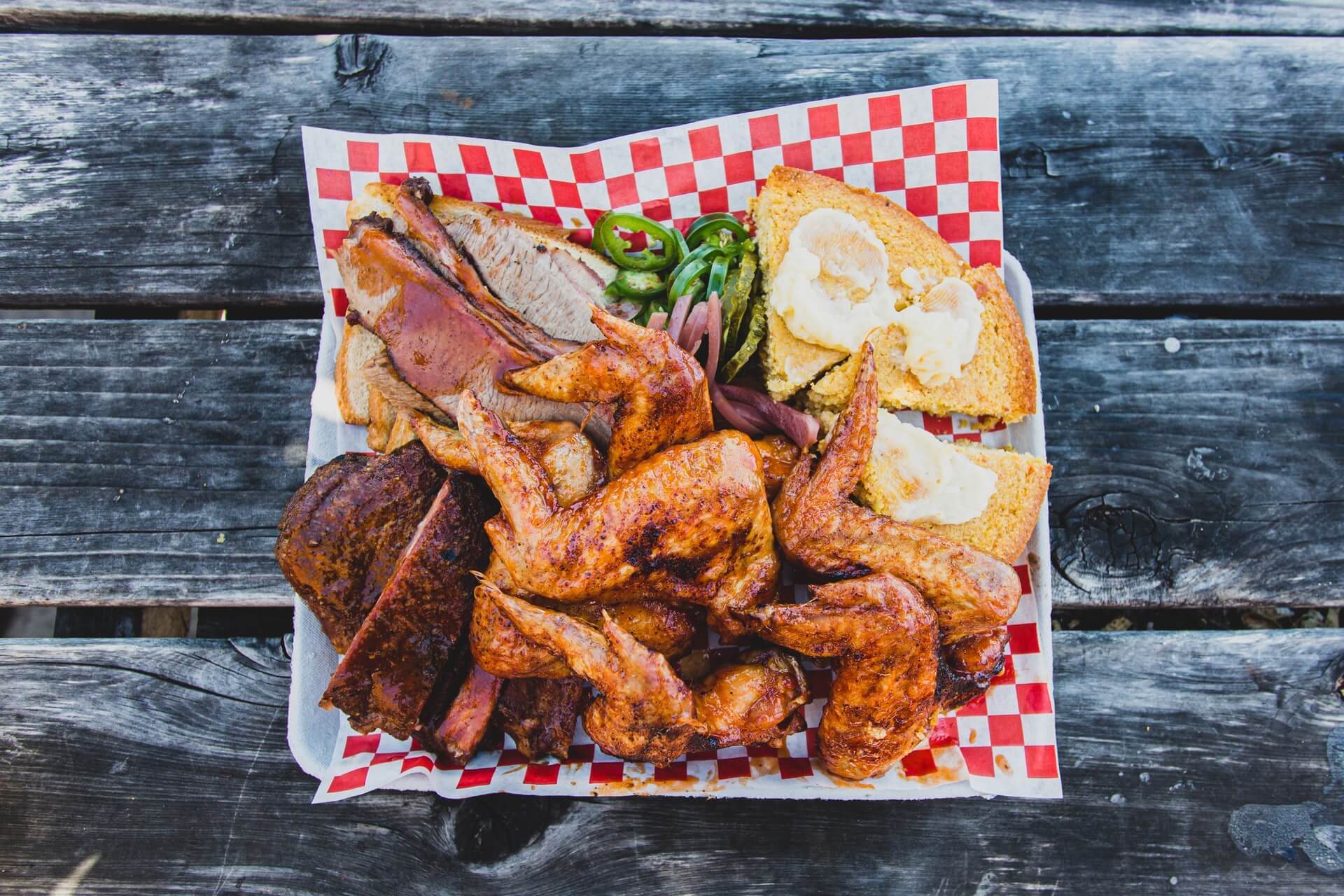
Barbecue food plate on wooden table

We know how plant proteins are performing with consumers but what do we know about how meat, poultry, and seafood are doing?

Well, because of a recent report from Datassential, we know many consumers are “meat-limiters.” And research from the World Resources Institute shows that plant-based performance is nuanced.

Interestingly, the performance of animal proteins on-premise appears to be following a beverage trend: Moderation. According to Datassential, more consumers are reducing their consumption of meat and poultry than increasing it in comparison with 2021.

So, meat-limiters may be indicative of the future of meat consumption.

Consumer Shifts

As the name implies, meat-limiters are limiting or otherwise reducing their consumption of animal proteins. Importantly, it doesn’t appear that a significant percentage of consumers are eliminating animal proteins from their diets.

Rather, many people are simply increasing the amount of plant-based items they’re eating. However, that increase is more aspirational than real in some cases.

Per Datassential’s survey of 1,500 consumers in the US, just over 70 percent of people are meat eaters. In contrast, nearly 25 percent are “flexitarian.” Just two percent are vegan or pescatarian, and only three percent are vegetarian.

So, the vast majority of Americans are still consuming meat, poultry, and seafood. We just now have reason to believe that more consumers may be leaning toward a flexitarian diet.

A bit over a quarter of consumers consume meat every day. Still, many people aspire to eat more vegetables, fruits, and whole grains, per Datassential.

However, there are more pescatarians, vegans, and vegetarians among Gen Z than the overall population. According to Datassential, this could indicate a shift away from animal proteins in the future.

Meat Performance is Nuanced

Just like plant-based performance, meat performance is nuanced. There are many factors at play.

Shifts in what consumers value are driving changes to the performance of proteins. Health, sustainability, the climate, taste, and affordability have an effect on all proteins, animal and plant.

Undeniably, inflation and shaken consumer confidence are impacting protein performance. Everything, it seems, is more expensive at the moment. Generally speaking, animal proteins are pricier than plant-based items.

It makes sense, then, that some consumers are reducing their intake of animal proteins and filling that void with fruits, veggies, and legumes.

Of particular note are shifts in daily and weekly consumption of animal proteins in 2022. Meat consumption once or more per week—beef, lamb, pork, veal—is up three percent. However, there’s a ten-percent increase in consumers eating poultry once or more per week.

Interestingly, daily poultry consumption is down seven percent in comparison with 2021. Likewise, daily consumption of seafood is also down seven percent, and fewer people are consuming it less than once per week.

Plant-based is Down

Despite what some would think, meat-limiters don’t appear to be driving up plant proteins significantly.

In fact, according to Datassential, the daily consumption of plant-based proteins is down. Per the research firm, seitan, tempeh, and tofu are the experiencing the greatest drop in daily consumption.

The fact is that across generations, more consumers eat animal proteins on a daily basis than their plant-based counterparts. Gen Z, per Datassential, consumes more animal proteins on a daily basis than other generations.

So, how does it make sense that people are reducing their meat intake but plant-based isn’t seeing a sizable jump in consumption?

In part, the answer is the growing popularity of plant-forward dishes. These are items, like bowls, that offer a small amount of meat, poultry, seafood or dairy. The majority of these menu items consists of plants but are not free of animal proteins completely.

The path forward may indeed be a plant-forward menu. Of course, this is heavily reliant on a specific concept or brand. Still, it’s likely many restaurants can do well offering mixed dishes, those heavier on plant proteins than animal proteins.

Image: Peter Pham on Unsplash

Note: This article is based on information from Datassential’s “2022 Plant-Forward Opportunity” report. To access a number of free reports, sign up with Datassential today.

by David Klemt David Klemt No Comments

Hotels, Guest Data and Guest Expectations

Hotels, Guest Data and Guest Expectations: A Chat with SevenRooms

Fountains outside Bellagio Las Vegas

We sit down with Austen Asadorian, vice president of sales at SevenRooms, to chat about pent-up demand for travel.

People are eager to get back out there and hotels, of course, play a crucial role in their travel plans. However, we’re not engaging with the same guests we were pre-pandemic.

No, today’s guest demands more from the hotels and resorts they select. And a key to delivering on guest demands is collecting guest data.

But while operators know they’re supposed to be collecting guest data, there’s some uncertainty about what to actually do with it. Enter: SevenRooms.

More accurately, meet Austen Asadorian of SevenRooms. Not only can he address meeting guest demands through tech, he can address how to use guest data responsibly and effectively.

Hi Austen, thank you for taking the time to speak with us. Can you tell us a little about yourself and your role at SevenRooms?

Thanks, David! My name is Austen Asadorian and I’m the Vice President of Sales at SevenRooms. I first started my career in hospitality early in high school, getting a job at a local restaurant in New Jersey, learning everything from protein fabrication to catering and dealing with daily customers, even managing events. I continued working in hospitality through college, while going to the Culinary Institute of America for a degree in hospitality management, and ultimately, landed at Hillstone Restaurant Group where I ran back of house operations as well as the company’s Manager Training Program. Before joining SevenRooms, I worked as Peloton’s Director of Sales, leading their go-to-market strategy for retail growth and expansion from 2014-2017.

Today, I support SevenRooms’ global expansion efforts to accelerate our goal of being the best-in-class solution for hospitality operators around the world. Having previous experience in the hospitality industry, I joined SevenRooms because I was hyper aware of the pain points in the industry surrounding technology and the need for better guest management after having lived it day-to-day for several years. More importantly, I believe in SevenRooms’ vision and have a true passion for helping hospitality businesses, big and small, drive revenue, and create loyal guests for life.

Let’s talk hotels. What does the hotel industry look like two years after (or into) the Coronavirus pandemic?

When the pandemic struck, travel came to a complete halt and hotel occupancy in the US fell from 70% in March 2019 to less than 25% in March 2020—rooms were empty. Now, as the world is back to what we can consider a new “normal,” we’re seeing an extreme surge in travel and hotels are busier than ever.

However, what guests expect from hotels experience-wise has changed and they demand more. They’re making up for lost time and they want to make it count. Coming out of the pandemic, hotel operators are taking a harder look at their entire tech stack. It’s no longer optional to have a tech stack that is fully integrated from top to bottom across their operations—it’s a must-have—and technology providers are adapting to meet those needs. Additionally, operators have put a strong emphasis on the importance of ownership over their guest data. Both trends have positioned SevenRooms incredibly well within the hotel sector, as this has been our business philosophy from day one.

How can hotel operators and managers live up to these high expectations?

The simple answer is by taking advantage of technology solutions into their everyday practices and processes. These tech solutions can be anything from a QR code for mobile order and pay, allowing guests to order food and drink from anywhere on the property without ever needing a server to approach them, to an integrated customer relationship management (CRM) platform that speaks to and pulls data from their F&B CRM, easily sharing that information across teams at the hotel. For example, passing information along to a guest services team to ensure that in-room amenities don’t include nuts if a guest has a peanut allergy.

Operators and managers should also make sure they’re utilizing loyalty programs. According to a recent SevenRooms survey of American consumers, 44% say that loyalty programs play a part in their hotel choice and there are certain incentives that will bring them back.

For example, some want loyalty points to enjoy on property restaurants and bars, whereas others want a personal greeting when they check in, or a complimentary glass of champagne waiting for them when they get to their room.

Technology and loyalty programs both play into an exceptional experience and it’s important for operators to use both to create the total package.

You mentioned collecting guest data. Can you tell us a little bit more about why that is so important?

When we talk about data and hotels, we’re talking about using it to power a one-of-a-kind unique experience. We don’t mean taking or selling personal information, and that’s an important distinction.

The data we’re collecting for operators centers around a guest’s profile—who they are and what they like. This can be anything from their dietary preferences to their favorite table in the hotel restaurant’s dining room, to what dessert they order most often when they visit.

By having this data, operators can build a direct relationship with these guests and, in turn, build an incredible experience that keeps them coming back. For example, if a guest stays at a specific hotel on their vacation and takes full advantage of the pool cabanas, the data collected on those visits can then be used to retarget them with a special marketing promotion or offer to visit their local hotel property for a staycation, complete with a discount on a cabana day rental.

Creating these unique, personalized experiences not only increases revenue for operators, but also drives loyalty, as a loyal guest is more important than a one-time guest.

About Austen

Austen Asadorian is the Vice President of Sales at SevenRooms, where he is tasked with supporting SevenRooms’ global expansion efforts and accelerating the company’s goal of being the best-in-class solution for hospitality operators globally. Prior to joining SevenRooms, Austen was Peloton’s Director of Sales, leading the company’s go-to-market strategy for retail growth and expansion. He started his career at Hillstone Restaurant Group where he cut his teeth learning how to run efficient and profitable restaurants at scale. Austen was ultimately promoted into an executive role where he oversaw the company’s Manager in Training Program and Back of House Operations. Austen graduated from the Culinary Institute of America (CIA).

Image: Antonio Janeski

by David Klemt David Klemt No Comments

Meat-limiters Driving Change

Meat-limiters Driving Change

by David Klemt

Plant-based food bowl

You’re likely familiar with dietary terms like vegetarian, vegan, pescatarian, and even flexitarian, but what about meat-limiter?

As the name implies, a meat-limiter is a person actively choosing to reduce their meat intake. It’s also an umbrella term that includes vegan, vegetarian, pescatarian, or flexitarian diets.

Earlier this year, Datassential took a look at plant-based opportunities. Over the course of a week, 1,500 Americans ages 18 to 88 were surveyed online.

Datassential conducted their research with three partners:

  • The Culinary Institute of America
  • Food for Climate League
  • Menus of Change University Research Collaborative

The results are revealed within Datassential’s “2022 Plant-Forward Opportunity” report. To access a number of free reports, sign up with Datassential today.

Meat-limiter Guests

Just over a quarter of Americans—29 percent—are meat-limiters in some way. That number climbs to 36 percent for Gen Z, per this Datassential survey.

Of four major diets (vegetarian, vegan, pescatarian, flexitarian), vegetarian and vegan are the least common. The overall US population consists overwhelmingly of meat eaters (71 percent). Nearly a quarter, 22 percent, are flexitarian.

For Gen Z, those same numbers are 65 percent and 19 percent, respectively. Interestingly, Gen Z has more vegetarians and vegans than other generations.

But then there’s this: When it comes to the daily consumption of animal proteins, Gen Z is at the top. It’s Millennials who consume the most plant-based proteins on a daily basis.

Animal proteins are still at the top across generations. However, people are consciously reducing their meat intake and seeking plant-based alternatives.

What’s Driving Meat-limiters?

In comparison to 2021, Datassential hit on a compelling finding. A mere six percent of the US population was actively reducing meat intake last year.

That number has skyrocketed in 2022. This year, per Datassential, 21 percent of consumers can be considered meat-limiters.

Given the pandemic, it makes sense to assume this dietary change is due to personal health. However, climate change is a major driver.

Overall, 55 percent of consumers feel climate change is important. That number climbs to 71 percent for meat-limiters, 69 percent of students.

Half of consumers also feel that plant-based foods, in general, are better for the planet. Nearly half (47 percent) feel these foods are also more sustainable. Again, the number increases for meat-limiters and students (and Millennials, as well).

Interestingly, two-thirds of consumers feel traditional plant-based food items are healthier than new plant-based meat alternatives. However, a little over 60 percent of consumers find both plant-based food categories healthy.

Takeaway

Before proceeding, it’s important to recognize that a survey of just 1,500 people comes with a margin of error.

Still, the results are compelling and provide insight into today’s consumer. Among the top insights:

  • Consumers are trying more plant-based menu items.
  • Climate change and sustainability are driving consumer decisions.
  • More consumers are concerned with their health.

Per Datassential, one way to appeal to a wide range of guests is offering “mixed dishes.” These are menu items that combine animal and plant proteins. Another way forward is menuing plant-forward dishes that include a small amount of meat, poultry, fish, or dairy.

If we accept that only a tiny fraction of the US population is vegetarian or vegan, targeting flexitarians and daily meat eaters in this way makes sense.

Image: Yoav Aziz on Unsplash

by David Klemt David Klemt No Comments

Datassential IDs LTO Keys

Datassential Identifies Limited-time-offer Keys

by David Klemt

Double cheeseburger on sesame bun

Food and beverage market research firm Datassential turns their attention to limited-time offers in one of their latest reports.

Part of the FoodBytes series of resources, “A Look at Limited-time Offers” is a free Datassential trend report. If you have yet to do so, sign up for Datassential FoodBytes reports.

There are several ways for savvy operators to drive traffic. Loyalty programs and subscriptions are two popular modern-day solutions.

However, the LTO is tried, true, and can boost traffic, engagement, loyalty, sales, and revenue.

Of course, there are different ways to execute LTOs. There’s the recurring, anticipation-driving item: McDonald’s McRib. Then there’s the seasonal offering: Starbucks Peppermint Mocha. And the return of a popular item eliminated years prior: Taco Bell Mexican Pizza and Wendy’s Spicy Chicken Nuggets.

Some LTOs have been going strong for years, others are leveraging a sense of nostalgia. In fact, some appear to be a direct response to Internet chatter.

Which LTO?

Per Datassential, 63 percent of LTOs most recently purchased by consumers were impulse decisions. And when the firm dives into LTOs in general, they find that one product stands above the others.

The top-performing LTO food item in terms of order frequency is the burger.

Now, does that mean you have to menu an LTO burger to succeed with this type of promotion? Of course not.

A successful LTO is one that’s authentic to your brand. And, clearly, it needs to be one that interests your guests. If you’ve been reading KRG Hospitality articles for a while, you know what I’m going to say next.

But for those who are new around here, I’m going to tell you to review your consumer data. What items are performing best? What flavors are resonating with your guests?

Now, look at the industry. What flavors and items are trending? How can you leverage them—in an authentic way—into an LTO?

If a burger may not work, will a different type of sandwich do the job? How about nuggets, breakfast items, a dessert, or a beverage?

Know your brand, know your guest, know what’s bringing the heat.

How Long?

Once you know what you’re offering, the next question should be obvious. How long are you going to make it available?

Every concept is different. What works for one may not work for another. However, analyzing what others do in terms of LTO duration and frequency can help inform you.

And as it turns out, Datassential’s latest FoodBytes report addresses “LTO cadence.”

The majority of operators—43 percent—run an LTO once every one to three months. Considering the popularity of seasonal LTOs, this frequency makes sense.

Interestingly, a quarter of operators offer an LTO more than once per month. Just about as many execute one every three to six months.

Far, far less common is running an LTO once every six to 12 months. In fact, this is the approach of just seven percent of operators. A mere two percent of operators run an LTO less than once every 12 months.

Again, there’s no “right” answer here. Some operations can succeed with multiple LTOs each month, some find success rarely offering one at all.

Takeaway

Operators know their brands best. They should know their guests equally as well, or at least strive to do so. As such, an operator should have an idea of what to offer in terms of LTO food or beverage items.

And, of course, operators should data-obsessive. That’s the only real way to have an idea of what LTOs will work, how often they should run, and how frequently one should be available.

But there’s more to know. Datassential also reveals challenges that deserve serious consideration before executing any LTO:

  • Do you have time to train staff on the new item?
  • Is your staff strong when it comes to upselling?
  • Will your guests complain when the new product is no longer available?
  • Do you have to source one or more ingredients for this item?
  • Is/Are the ingredient(s) necessary readily available?

The LTO is a proven marketing and promotion tool when done well. Challenging, yes, but worth the effort.

Image: amirali mirhashemian on Unsplash

by David Klemt David Klemt No Comments

5 Books to Read this Month: July 2022

5 Books to Read this Month: July 2022

by David Klemt

Flipping through an open book

This month’s engaging and informative book selections will help you develop next-level beverage techniques and drink menus throughout 2022.

To review June’s book recommendations, click here.

Let’s jump in!

The Bartender’s Manifesto

Spirits, cocktail and industry author Emma Janzen partners with Toby Maloney and the bar team at the Violet Hour. Since 2007, the Violet Hour has not only been serving incredible cocktails in Chicago, the bar has also been leading the way in cocktail training.

So, who better to learn from to nail the fundamentals, tap into your creativity, and understand every element of crafting cocktails? Pick up The Bartender’s Manifesto today. As of publication of this article, Amazon is offering $2.70 off the hardcover.

Black Mixcellence: A Comprehensive Guide to Black Mixology

Marketing strategist and award-winning author Tamika Hall collaborates with one of my favorite industry people, Colin Asare-Appiah, to bring us this awesome book.

Black Mixcellence delves into the impact of Black entrepreneurs, educators, and mixologists on the hospitality, spirits, and cocktail spaces. Along with the incredible stories, there are 70 cocktail recipes included in Black Mixcellence. Place your pre-order today!

Smoked Cocktails: From Mixology To Smoking Techniques

You and your bar team may have noticed that smoking cocktails is once again “on trend.” To be fair, I don’t think this cocktail build and presentation technique ever became unpopular.

In Smoked Cocktails you’ll learn not only how smoke plays with and enhances other flavors and aromas, author Benji O’Day also covers cocktail history, bartending techniques, and much more. Grab the paperback from Amazon today.

Cocktail Chemistry

Leveraging nostalgia and pop culture can be a lucrative way of boosting traffic, generating revenue, and increasing social media engagement. Written and curated by Nick Fisher, Cocktail Chemistry features cocktail recipes from iconic and beloved movies and television shows.

In addition, this informative cocktail book includes how-tos spanning a range of important bar techniques, from making clear ice to creating your own infusions. Pick up this hardcover now.

The Concise Guide to Wine and Blind Tasting: Volume 1

Do you have a robust wine program? Are you interested in demystifying wine and enhancing your front-of-house team’s knowledge of wine? Do you just not want your bar team or servers to answer guests’ wine questions with a frustrating “I don’t know”?

This guide, according to The Times Literary Supplement, delivers a “comprehensive education in wine.” Included in The Concise Guide to Wine and Blind Tasting: Volume 1 are the philosophy and history of wine, the distinctive characteristics of several wine regions, the science and art behind blind wine tasting, and more.

Image: Mikołaj on Unsplash

by David Klemt David Klemt No Comments

Stand Out with Weird Holidays: July 2022

Stand Out with Weird Holidays: July 2022

by David Klemt

Stay Weird neon sign with purple background

Want to stand out from from other restaurants and bars in your area? Then commit to keeping it weird.

Several “holidays” are set against every date on the calendar, and July is no exception. These holidays range from mainstream to “weird.”

Pay attention to the latter to raise eyebrows, carve out a niche for your restaurant or bar, and attract more guests. Why do what everyone else is already doing?

Of course, you shouldn’t try to celebrate every holiday, weird or otherwise. And this month’s list in no way includes every odd holiday.

Focus on the days that are authentic to your brand; resonate with your guests; and help you grab attention on social media.

For June’s list, click here.

July 5: Workaholics Day

We may be in the midst of the Great Resignation but people are still working too hard. They’re too busy and experiencing too much stress.

So, this Workaholics Day, encourage your overworked, workaholic guests to unwind with your and your staff. They need to sign out, unplug, and escape.

July 7: National Dive Bar Day

Ah, the dive bar. Whether you consider this hospitality institution a dive, neighborhood bar, or local watering hole, it’s worthy of celebration.

If you’re a dive or neighborhood bar owner, this is your day to pull out all the stops. You run a cornerstone of your community—time to party with the neighborhood!

July 8: Video Games Day

Okay, video games in and of themselves aren’t weird. Well, the weird games are weird but you know what I mean.

Have TVs and consoles? Arcade games? Put them front and center with your marketing. Come up with a tournament and get your guests playing. And, of course, a limited-time, themed cocktail menu also works.

July 12: National Simplicity Day

We all know what KISS (not the band) stands for: Keep It Simple, Stupid. Quick note: I’m not calling you stupid.

Simple, of course, tends to be quicker, and people appreciate fast service when they’re thirsty. This is definitely the day to perfect highballs and two- or three-ingredient cocktails.

July 13: Embrace Your Geekness Day

Look, we’re all geeks about something. A geek doesn’t have to conjure stereotypical images of so-called nerds. Certainly, the term shouldn’t mean someone’s an outcast.

A geek is passionate and that should be admired. You should know what your guests are into and how to engage with them about their passions.

July 17: World Emoji Day

Hey, want to create a creative LTO that will be fun for guests to decipher? Come up with ways to name and, if you really want to get into it, describe your F&B with emoji.

July 20: National Moon Day

You and your team can celebrate this day a couple of ways. Of course, the obvious way is to craft a moon, space-, sci-fi, and/or astronaut-themed LTO.

Or, for a more outside-the-box promotion, you can always look up moon-based conspiracy theories and make that your theme.

July 23: National Hot Dog Day

It’s obvious that hot dogs aren’t inherently weird. However, you can encourage your kitchen team to put their heads together and come up with truly “weird” or unusual (but enticing) LTO hot dogs.

July 29: National Get Gnarly Day

Eager to engage your bar team? Looking to push them to come up with some unique cocktails and beer-and-shot combos? This is the holiday to get them to get gnarly and creative.

July 31: National Mutt Day

If your bar or restaurant is dog friendly, this holiday is your time to shine! Encourage your guests to bring their adorable mutts. Bonus points for offering an LTO menu featuring dog-safe F&B.

Image: Dan Parlante on Unsplash

by David Klemt David Klemt No Comments

This Year’s Big Trend: Moderation

This Year’s Big Trend: Moderation

by David Klemt

Two drinks in mason jars

Beverage-top media platform Ripples is reporting 2022’s big drink trend, focusing heavily on Gen Z imbibing habits.

The unique company produces devices that make it possible to print images atop drinks. With beverages of all types as their focus, the company is a great position to study drink trends.

Interestingly, Ripples focuses primarily on Gen Z drinking habits. However, the company’s data identifies an intriguing trend that transcends a single generation.

Let’s jump in.

Zero-proof Beverage Growth

At KRG Hospitality, we appreciate numbers; we’re a data-driven agency. Well, amongst all the stats Ripples latest findings reveal, two are massive.

First, in comparison to 2019, zero-alcohol products are up 166 percent. Second, the non-alcohol category is growing four times faster than its low-ABV counterpart.

Another impressive number? Non-alcohol spirits have grown by over 113 percent since 2020.

Per Ripples, Gen Z is driving the growth in the no-alcohol space. According to the beverage-tech company, this is likely due to social media presence.

I’m sure you read articles at least from time to time about Gen Z social media habits. Those written by their older counterparts make it seem like Gen Z doesn’t understand the risks of recording their every action.

Well, it’s highly likely that much of Gen Z would rather not have their drunken shenanigans on display on every social platform.

Values Drive Purchase Decisions

Beyond risk aversion, Ripples identifies values as key to Gen Z purchase and consumption decisions.

Generally speaking, members of Gen Z value transparency and authenticity. Brands that share those values are more likely to succeed with Gen Z.

And, again, speaking broadly, smaller, independent brands are often perceived as more transparent, authentic, and responsible. Large, mainstream brands are often seen as anything but green and responsible, never mind transparent or authentic.

Ripples posits that small indies aren’t encountering daunting barriers to entry. So, small-batch, craft non-alcohol brands are apt to find Gen Z support.

Craft sodas, RTDs offering health benefits, and zero-proof cocktails in cans or bottles are flooding the market. And they’re finding success. In fact, according to Ripples, RTD sales are up 400 percent on Drizly since 2019.

The Big Trend

If you’re a listener of our Bar Hacks podcast you’ve likely heard our episodes with David Allison. If you haven’t heard them, they’re episode 46 and episode 67.

As the founder of the Valuegraphics Project, Allison isn’t a fan of focusing on demographic stereotypes. Instead, he recommends a focus on values in conjunction with demographic and psychographic data.

In part, the Valuegraphics Project approach encourages business owners and operators to identify and target their customers’ values. This is, according to Allison, far more powerful than focusing on age and sex. As important is the fact that demographics tend to divide us, and stereotypes are dangerous.

So, he and the Valuegraphics Project team probably wouldn’t like all the focus on a single generation in this article and Ripples’ findings. Well, there’s some good news and it pertains to what’s likely this year’s biggest drinking trend.

Across all generations, one drinking trend is common: Moderation. An interest in no- and low-alcohol beverages is shared among all generations.

In fact, according to Ripples, 78 percent of consumers purchasing zero-proof drinks aren’t doing so exclusively. These consumers are still buying they’re favorite full-alcohol beverages.

Takeaway

Leveraging the moderation trend is fairly simple. The growth of all zero-proof categories means operators can succeed with alcohol-free spirits, beer, and wine.

RTD cocktails—full-, low- and zero-proof—are selling very well and work in restaurants and bars.

In short, ensure you have low-ABV and zero-alcohol versions of your full-ABV drinks on your menu. Include these in a dedicated non-alcohol section.

Operators don’t need to be afraid of guests drinking more moderately. The stereotype that guests who choose zero- or low-proof drinks are bad for the bottom line simply isn’t true.

Image: Chris Curry on Unsplash

by David Klemt David Klemt No Comments

What Politicians Get Wrong about Us

What Politicians Get Wrong about Our Industry

by David Klemt

Restaurant and bar with exterior windows open

It still stings that the 43 senators chose to vote against replenishing the Restaurant Revitalization Fund.

The fact that four senators didn’t vote at all on S.4008 is nearly as insulting and painful.

Now, while all the “nay” votes came from Republican senators, I’m not here to bash one party in particular. Four Republicans voted “yea,” as did two Independents.

Unfortunately, given how hostile Democrats and Republicans in Congress seem to be, it’s difficult to be objective. Right now, it appears that the RRF was left to die a slow death because many—not all, of course—Republicans in power don’t want their Democrat peers to “win” at anything.

To be used as political pawns and be left out in the cold… It’s a bitter pill to swallow.

Cornerstones

Too many politicians, it seems, view restaurants and bars as they would other types of businesses. Perhaps the perceived success of national and global brands paint the picture that independent venues and small chains don’t need any help.

More disappointingly, maybe politicians, from local lawmakers to state representatives, take our business’ role for granted.

Look at the history of restaurants and bars, of hospitality. Think about the rich history of hospitality in America alone, let alone globally.

Yes, independent restaurants and bars are small businesses. But like so many small businesses in so many towns across the country, they’re so much more.

Restaurants and bars are pillars, cornerstones of the communities they serve. These are businesses that welcome people in, treat them like family. They’re there for them as they move through their lives.

People who were seemingly at odds with another routinely found common ground over a bite and a sip. More often than not, that’s still the case.

Operators and their teams give back to their communities through food drives, quietly feeding those in need, and finding other ways to give back.

And they look out for their communities.

Lifesavers

Last week, the team at a cafe in the Bronx called the Chipper Truck helped rescue a woman from an alleged hostage situation.

Permitted by her assailant to place a food order via Grubub, the victim thought quickly and sent a life-saving note with her order:

“Please call the police… don’t make it obvious.”

A staff member read the note in the “additional instructions” section of the order and called one of the owners. Nobody at the Chipper Truck knew if the situation was real but they chose to err on the side of caution.

When the alleged assailant—who was arrested and charged with a list of serious offenses—opened the door for the Grubhub order, he was met with police officers.

A Facebook post from the cafe addressing the situation read, in part, “I’ve often heard of this happening but never thought it would happen to us. Thankfully we were open and able to help her.”

It’s terrifying that this happens enough that the cafe owners hear about it “often.” But it’s telling of the role restaurants and bars play in their communities that they’ve saved multiple lives.

This is to say nothing of the restaurants and bars that have put coded safety systems in place to help patrons who find themselves in danger.

No Such Thing as “Just” a Restaurant or Bar

There isn’t a restaurant or bar out there that’s “only” a restaurant or “only” a bar.

Every one is a source for food, for socializing, for an escape from the stresses of life. Restaurants and bars are committed to service and sacrifice.

They’re pillars of their communities, the cornerstones that play important roles in our everyday lives and the special moments as well.

Perhaps our politicians, local and otherwise, need to a reminder. Restaurants and bars play crucial roles in the lives of the people politicians are supposed to represent.

Too many politicians claim to support small businesses while their actions and votes prove otherwise. Talk, as we all know, is cheap.

Restaurants are not “just” restaurants. Bars are not “just” bars. We deserve better.

Image: Scott Webb on Unsplash

by David Klemt David Klemt No Comments

WCK Shares Chefs for Ukraine Update

World Central Kitchen Shares Chef for Ukraine Update

by David Klemt

Ukraine flag blowing in wind

World Central Kitchen has been on the ground helping refugees since Russia first invaded the sovereign nation of Ukraine.

I mean that quite literally. In their video update, it was revealed that a WCK team arrived in Poland within hours of the invasion.

Maggie Leahy, director of donor relations at WCK, spoke with WCK CEO Nate Mook to share the details of the 501(c)3 nonprofit organization’s #ChefsForUkraine campaign.

Mook shared that the WCK activated a fast-response team which is informally referred to as the Tip of the Spear. When the team arrived at the Poland-Ukraine border, they had gotten there so quickly that they weren’t certain what they’d find.

Assessment and Coordination

In fact, WCK wasn’t certain if their humanitarian efforts would even be needed. However, as we all know now, they certainly were in demand. The United Nations, as it turns out, wasn’t even on the ground yet.

Shockingly, Mook shared that WCK hadn’t encountered a crisis at the level of Ukraine’s invasion for many, many years.

For the past 12 years, WCK has responded to crises all over the world. From natural disasters like massive floods and earthquakes to, unfortunately, shootings and warzones, the humanitarian organization has provided nourishing meals for those displaced and in need.

So, assessing the situation in Ukraine quickly was of the utmost importance. Some refugees crossing the 24-hour pedestrian border at which the first WCK team had arrived hadn’t eaten a meal in two days.

Responding as fast and efficiently as possible, the organization connected with catering companies and local restaurants in Poland to feed those fleeing Ukraine.

However, that was simply a quick fix.

Systems in Place

Mook shared the following anecdote to explain WCK’s commitment to fast responses in its humanitarian efforts.

Chef José Andrés, who co-founded World Central Kitchen his wife Patricia, says that they’re the world’s largest non-governmental organization, or NGO. Going further, Chef Andrés says this is because they have chefs and restaurants around the world WCK can activate to respond to crises…even if those chefs and restaurants don’t know it now.

Getting the refugees crossing into Poland fed quickly was just one step to providing assistance. What WCK really specializes in is coordination and setting up systems, per Mook.

Speed is just one element of WCK’s humanitarian efforts. Reliability, consistency, accountability, and efficiency are the other keys.

Without systems in place, WCK simply wouldn’t be able to do what they do, which is provide nourishment, stability, and a sense of dignity to those in crisis.

Millions of Meals

Soon after arriving and setting up in Poland, WCK teams arrived in Czechoslovakia, Hungary, Moldova, and Romania.

When refugees started heading west, WCK teams set up in Germany and Spain. And while it wasn’t clear initially if teams would be needed in Ukraine directly, WCK has indeed set up inside the war-torn country.

There are WCK teams serving and supporting people in communities hosting refugees, liberated Ukraine cities, and even cities under fire.

Currently, WCK’s mission is providing hundreds of thousands of fresh meals to those in need. The organization is also providing tens of thousands of meal kits.

WCK has provided a staggering amount of meals. As of June 22, the day Leahy and Mook provided the #ChefsForUkraine update, they’ve served more than 54 million meals in response to Ukraine’s invasion.

It’s results like that incredible amount of meals that inspire our continued support of WCK through our KRG Cares program. We encourage you to support WCK as well.

Image: Daria Volkova on Unsplash

by David Klemt David Klemt No Comments

Summer 2022 is the Summer of Mezcal

Summer 2022 is the Summer of Mezcal

by David Klemt

Código 1530 Mezcal bottle

Move over tequila, rum and gin, because this year the drink of the summer is something different.

Summer 2022 is the Summer of Mezcal.

Traditionally, sure, we’re led to believe that lighter spirits (white rum, gin) are best for the hotter months. Of course, dark rum is another route people often take during the summer.

However, mezcal is on fire at the moment. In fact, it has been for the past few years now. So, why not feature it on your summer drink menu?

Mezcal adds depth and complexity to classic cocktails, engaging guests by offering new flavors. And, of course, mezcal is also a fantastic starting point for modern drinks.

Below you’ll find six summer mezcal recipes from Collin De Laval, company mixologist for Código 1530. He turned his attention to Código 1530 Mezcal Artesanal for the Summer of Mezcal.

To learn more about Código 1530 and De Laval, check out Bar Hacks episode 57. Cheers!

Código 1530 La Palomita

La Palomita

  • 1.5 oz Código 1530 Mezcal Artesanal
  • 0.75 oz Lime juice (fresh, of course)
  • 0.25 oz Aperol
  • 4 oz Yuzu-lime soda
  • 0.25 oz Simple syrup
  • Lime wheel or wedge to garnish

Prepare a cocktail glass with fresh ice. In a shaker, combine Código 1530 Mezcal, lime, Aperol and simple syrup. Shake well, pour into cocktail glass, top with yuzu-lime soda, and garnish with lime wheel or wedge.

Código 1530 Tropicana

Tropicana

Combine all ingredients in a shaker and prepare a cocktail glass with fresh ice. Shake vigorously, pour, and garnish with a pineapple wedge.

Código 1530 Mezcal Margarita

Mezcal Margarita

Prepare a cocktail or Margarita glass with fresh ice, then combine all ingredients in a shaker (also with ice). Shake, pour, and garnish with a lime.

Código 1530 Mezcal Ranch Water

Mezcal Ranch Water

Combine Código 1530 Mezcal, lime juice, and agave nectar in a cocktail or highball glass with ice, top with soda water, and stir.

Código 1530 Mango Mezcal Paloma

Mango Mezcal Paloma

In a shaker with ice, combine Código 1530 Mezcal and all three juices. Shake vigorously, strain into a highball glass with fresh ice, top with soda water, and garnish with grapefruit peel.

Código 1530 Mezcal Espresso Martini

Mezcal Espresso Martini

If you own, operate or are on the leadership team at a bar—or if you’re a bartender or server—you know the Espresso Martini has once again found itself having a moment. So, while you’re building out your summer mezcal menu, don’t forget this trendy drink.

Add all the liquid ingredients to a shaker with ice. Shake vigorously until well chilled. Pour into a Martini glass (consider preparing by chilling if you don’t already) and garnish with coffee beans.

Images courtesy of Código 1530

Top