Training

by David Klemt David Klemt No Comments

Building a Cohesive Culinary Team

The connections we build within our teams, with our purveyors, and, ultimately, with our guests, shape every aspect of the dining experience.

In the culinary world, teamwork is not just a concept; it’s the foundation of success. Over my 25 years in the hospitality industry, I’ve seen firsthand how crucial these relationships are.

Join me as I delve into the crucial role of teamwork in the kitchen, and how it influences every aspect of the culinary journey.

by Nathen Dubé
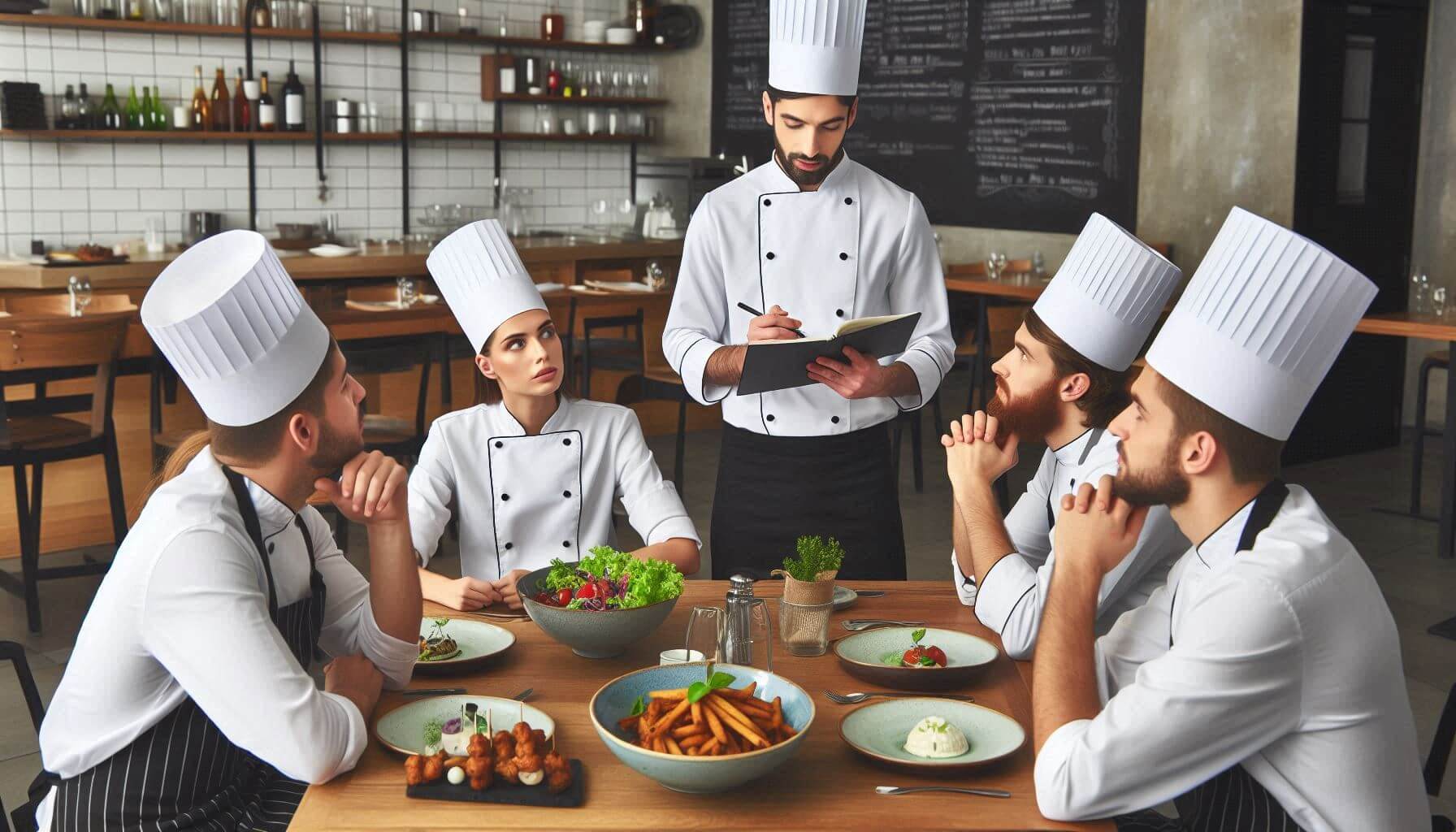
A chef holding a meeting with the kitchen team inside a restaurant

Microsoft Designer seems to think all chefs have beards.

The Importance of Teamwork in the Kitchen

A cohesive team is essential in a kitchen. When everyone works together seamlessly, efficiency improves, and food quality reaches new heights.

The synergy within the team impacts the dining experience directly, creating a sense of unity that customers can sense in every bite.

A busy kitchen’s energy can be chaotic, but a strong team turns that chaos into a symphony of coordinated efforts. When each member understands their role and executes it well, the result is a smooth, efficient operation that consistently delivers high-quality dishes to diners.

Take, for example, the dynamics of a typical dinner rush. The kitchen is busy with activity, with chefs, line cooks, and servers all working together to meet the demands of a packed dining room. Each movement is choreographed to ensure that dishes are prepared to perfection, and delivered quickly.

This level of efficiency is only possible when there is a deep sense of teamwork and mutual understanding among all members of the kitchen brigade.

Strategies for Fostering Collaboration

Effective Communication

Communication is the backbone of a well-functioning kitchen. Clear and open channels of communication ensure that everyone is on the same page, preventing misunderstandings and mistakes. Regular briefings and feedback sessions create a transparent environment where issues can be addressed proactively.

However, effective communication goes beyond daily briefings. It involves creating a culture where team members feel comfortable voicing their concerns and suggestions. This openness fosters a collaborative atmosphere in which everyone contributes to the kitchen’s success.

For instance, a simple pre-service briefing can highlight the evening’s menu, identify potential challenges, and assign specific tasks, ensuring that everyone knows what to expect. Such briefings not only prevent problems but also allow for real-time feedback, enabling continuous improvement.

Additionally, adopting digital communication tools like kitchen display systems can further streamline operations by providing instant updates on orders and modifications, reducing the risk of errors and enhancing overall efficiency.

Role Clarity and Responsibilities

In a busy kitchen, knowing exactly what’s expected of you is crucial. Role clarity reduces confusion and fosters accountability, ensuring that everyone can focus on their specific tasks without overlap or conflict.

Each role must be defined clearly to maintain order during peak times. When each team member understands their responsibilities this streamlines operations, and minimizes the potential for errors.

Clear roles also enhance individual accountability, as everyone knows what their responsibilities.

Consider the different stations in a kitchen: the sauté chef, the pastry chef, the garde manger, and so on. Each role is distinct, with specific duties and responsibilities. When everyone understands their role and how it fits into the larger picture, the kitchen runs like a well-oiled machine.

This clarity is particularly important during high-pressure situations, where any ambiguity can lead to mistakes and delays.

Team Building Activities

Team-building activities tailored for kitchen staff can enhance camaraderie and teamwork significantly. These activities foster a sense of unity and create bonds that translate into better collaboration during service.

Simple activities like group cooking challenges or team outings can break the routine, and build stronger relationships. When team members understand and trust each other, they work together more effectively, creating a more harmonious and efficient kitchen environment.

One effective team-building exercise involves rotating roles for a day. This allows team members to experience different aspects of the kitchen operation, fostering empathy and understanding. Another idea is organizing off-site events, such as cooking competitions or farm visits, which can strengthen the team’s bond outside the hectic environment of the kitchen.

Additionally, hosting regular team-building workshops focused on communication skills, conflict resolution, and stress management can equip team members with the tools they need to work together more effectively under pressure.

Continuous Learning and Development

Ongoing training and skill development are vital for maintaining a culture of learning and innovation in the kitchen. Encouraging continuous learning not only enhances individual skills but also strengthens the team as a whole.

Workshops, training sessions, and even informal knowledge-sharing sessions can keep the team updated on the latest culinary techniques and trends. This culture of continuous development ensures that the team remains adaptable and innovative, ready to tackle new challenges and improve their craft.

For example, inviting guest chefs to conduct classes or arranging for team members to attend culinary festivals and exhibitions can provide valuable exposure to new ideas and techniques. These experiences not only enhance the team’s skills but also inspire creativity and innovation in the kitchen.

Consider fostering a culture of mentorship, in which experienced chefs take on the role of guiding and nurturing newer team members. Doing so can create a supportive learning environment that benefits everyone involved.

Creating a Positive Work Environment

A respectful and supportive work culture is essential for a productive kitchen. Recognizing and celebrating team achievements boosts morale and motivates everyone to perform at their best.

Creating a positive work environment involves acknowledging the efforts of each team member and celebrating successes, no matter how small. This recognition fosters a sense of pride and belonging, leading to increased job satisfaction and better performance.

One way to create a positive work environment is to establish a system for regular performance reviews and feedback. This not only helps identify areas for improvement but also provides an opportunity to recognize and reward outstanding performance.

Additionally, implementing initiatives such as employee wellness programs, flexible scheduling, and opportunities for professional development can contribute to a more supportive and fulfilling work environment.

When team members feel valued and supported, they are more likely to be engaged and motivated, leading to better overall performance.

Leadership and Its Role in Team Dynamics

Leadership plays a pivotal role in shaping team dynamics and morale. Effective kitchen leaders lead by example, show empathy, and make decisive choices that inspire confidence and respect among team members.

Good leadership is about more than just managing tasks; it’s about inspiring and guiding the team. Effective leaders create an environment where teamwork thrives, and everyone feels valued and motivated to contribute their best.

One crucial aspect of effective leadership is the ability to communicate a clear vision and set achievable goals. By providing direction and clarity, leaders can help the team stay focused and aligned with the overall objectives of the kitchen.

It’s important to foster a culture of transparency and openness. Team members should feel comfortable sharing their ideas and concerns. This will enhance trust and collaboration within the team.

Leaders who actively listen to their team members and involve them in decision-making processes create a sense of ownership and accountability that drives performance.

Finally, leading by example—demonstrating a strong work ethic, maintaining a positive attitude, and showing respect for all team members—can set the tone for the entire kitchen. When team members see their leaders embodying the values and behaviors they aspire to, they are more likely to follow suit.

Conclusion

In the culinary world, teamwork is the secret ingredient to success. From the relationships we build with food purveyors to the final dish we present to guests, every aspect of the dining experience is enhanced by a connected team.

Implementing strategies such as effective communication, role clarity, team-building activities, continuous learning, and positive leadership is essential for fostering collaboration and achieving culinary excellence.

I encourage you to implement these strategies in your kitchens and share your experiences. Together, we can create culinary masterpieces that leave a lasting impression on our guests.

Building and leading culinary teams has been a rewarding journey, filled with challenges and triumphs. The power of teamwork has not only shaped my career but also the experiences of countless diners.

As we continue to evolve in the culinary world, let’s remember that our strength lies in our connections, and through them, we can achieve extraordinary culinary excellence. The journey of building a cohesive kitchen team is ongoing, but the rewards are well worth the effort.

Let’s strive to create kitchens where teamwork, respect, and passion for food come together to create unforgettable dining experiences.

Image: Microsoft Designer

Related Reading

Work with Us

Click the image below to work with us on your restaurant concept.

Client Intake Form - KRG Hospitality

by David Klemt David Klemt No Comments

Welcome: Start the Experience Right

Welcome: How to Begin the Guest Experience Like a Pro

by David Klemt

Restaurant host or manager holding menus and leading guests to their table

When you think about the guest experience you and your team deliver, how much consideration do you give the welcome?

I don’t mean just the greeting your front-of-house team gives guests. That’s an important part of the equation, but it’s only one element.

Rather, I’m talking about developing SOPs for welcoming guests into your venue. As importantly, I’m also suggesting that you develop specific onboarding and training for anyone who will greet guests and lead them to their seats.

Luckily, one of the best front-of-house trainers in hospitality spoke at the 2024 Flyover Conference in Cincinnati about this topic. Bethany Lucas, director of operations for Maverick Theory, shared her best tips for startingand endingthe guest experience in a memorable way.

The tips Lucas shared during her Flyover session “Untapped Potential: How to Transform Your Front of House” will indeed transform your business and guest experience.

Now, a word of warning before I begin. Once you read these tips, you’ll likely find yourself analyzing your next few restaurant visits. Ever since sitting in on Lucas’ session, I’ve been unable to avoid paying more attention to how my restaurant visits have begun.

This has included sharing what I’ve noticed with the people in my group. Some of these friends will also pay more attention to the greeting they receive when walking into a restaurant now.

If you’re an operator or front-of-house leader, you’ll probably benefit from checking out restaurants in your area for their welcome procedures.

Invest in Your Door

Operators need to invest in their doors, because “it really is the brain of your restaurant,” says Lucas.

Therefore, it’s crucial that owners and operators understand what’s going on at their doors. Assuming your front-of-house team knows how to greet guests rather than training them on a procedure is a mistake.

Most operators know that hiring the right leaders, kitchen team, servers, and bartenders is imperative to the success of their business. However, the same attention must be paid to finding the right hosts and hostesses.

As Lucas says, “There is no ‘just a hostess.'” Bluntly put, the person running the door is the gatekeeper of the business. They’ll interact with just about every single guest since they serve as the first touchpoint.

So, Lucas encourages operators to ask a number of questions before initiating the hiring process:

  • Are the ideal candidates formal and proper, or friendly and casual? (Or something else entirely.)
  • Will the ideal hosts and hostesses need to be thick-skinned?
  • When considering the appearance of the host team, what does that look like to you? Lucas seeks out people who are polished and professional when building her teams.

These questions should inspire even more considerations, helping an operator identify who they want to run their door.

Welcome

During her presentation, Lucas provided an example of a less-than-ideal welcome. I think we’ve all experienced what she described.

How often have each of us walked into a restaurant, been greeted, and then led to a table by someone who just takes off? The host or hostess grabs menus, starts walking away toward a table, doesn’t speak to you, and doesn’t even look over their shoulder to see if you’re still following them closely.

I know it’s happened to me more times than I can count. Although, I’m happy to report that this hasn’t happened to me since attending Flyover. Maybe what Lucas put out into the world has had a greater impact than she expected.

A polished and professional host or hostess, per Lucas, will not take off when leading guests to their seats. Additionally, they won’t be silent, failing to engage with the guest verbally. Further, a polished, professional host or hostess doesn’t drop menus on a table and rush back to the door.

In fact, Lucas requires each member of her host teams to ask at least one question of guests being led to their seats. This can be as simple, she explained at Flyover, as the host or hostess turning and asking “How are you today?”

It’s important to note that this attention to the door team isn’t reserved for upscale or fine-dining venues. The beginning and end of a guest’s visit are too important to fail to plan them properly. Regardless of concept and category of venue, guests must feel welcome and valued.

Farewell

According to Lucas, the farewell can absolutely impact how a guest perceives their visit, and the brand overall. While the server or bartender who served the guest should thank them at the end of their visit, so should the person who first welcomed them.

A simple “thank you for visiting us” can go a long way and serve as a cherry on top of the entire experience.

However, there’s another tip Lucas shared that has really stuck with me. A truly a savvy host team will add a question after they thank a guest for their visit: “Can I make a reservation for you for your next visit?”

Doing so requires the ability to read a guest and their satisfaction with their visit. However, if executed well this is a brilliant way to increase your guest retention rate and convert a first-time guest into a repeat guest, and eventually a regular.

If you’ve read this far, I encourage you to consider your welcome SOPs and door team today. You and leadership team should observe the door and note how guests are being welcomed.

If the procedure doesn’t impress you, it’s not impressing your guests. And if it isn’t impressing your guests, ask yourself why they’d return.

Your door isn’t “just a door,” and your hosts aren’t “just hosts.” Remember that, and plan accordingly.

Image: Shutterstock. Disclaimer: This image was generated by an Artificial Intelligence (AI) system.

KRG Hospitality Start-Up Restaurant Bar Hotel Consulting Consultant Solutions Plans Services

by David Klemt David Klemt No Comments

Welcome Back to the Culinary Arena

Welcome Back to the Culinary Arena: A Comprehensive Guide for 2024

by Nathen Dubé

"2024" dessert concept

The start of a new year is an exciting time in the restaurant world, offering a unique opportunity to reassess and rejuvenate your foodservice business.

From utilizing downtime effectively to setting strategic priorities, this guide is designed to help you navigate the year ahead with confidence and creativity.

Whether you’re a seasoned chef or a budding restaurateur, these insights will equip you with the tools to make 2024 a year of remarkable culinary experiences and business growth.

Part 1: Strategic Use of Downtime

Menu Innovation and Optimization

The start of the year is ideal for re-evaluating your menu.

Begin by analyzing customer feedback and sales data from the previous year. Identify which dishes were most popular and which underperformed. Consider removing items that aren’t selling well and focus on the dishes that your customers love.

This is also an excellent time to experiment with new flavors and culinary trends. For instance, with the growing demand for plant-based options, think about introducing a few vegan or vegetarian dishes.

Keep an eye on food trends. Are there new ingredients or cooking techniques that you can incorporate into your menu? This not only keeps your offerings fresh and exciting but also shows your commitment to culinary innovation.

Remember, a well-crafted menu is a balance between popular staples and innovative dishes. It should reflect your restaurant’s identity while also appealing to your target customer base.

Consider a seasonal menu that takes advantage of fresh, local produce, which can provide inspiration for new dishes and help reduce costs.

Staff Training and Empowerment

The quieter months are a perfect opportunity for staff training and development.

Conduct a skills audit to identify areas where your team could improve or learn new competencies. This could range from culinary skills, like mastering a new cooking technique, to soft skills, such as guest service or conflict resolution.

Training doesn’t have to be formal or expensive. You can leverage online courses, in-house mentoring, or even cross-training within your team.

For instance, front-of-house staff could benefit from basic kitchen training to better understand the dishes they are serving, while kitchen staff could learn about customer service to appreciate the end-to-end dining experience.

Team building is another key aspect. Organize activities that foster communication and collaboration. This could be something as simple as a team meal or a group outing.

A cohesive team that communicates well will provide better service, leading to happier guests and a more pleasant working environment.

Finally, empower your staff by involving them in decision-making processes. This could be in menu development, process improvements, or even marketing ideas.

When staff feel valued and part of the business, they are more likely to be motivated and committed.

Facility Revitalization

Use this quieter period to assess and upgrade your facilities.

Start with a thorough cleaning and maintenance check. This includes checking kitchen equipment, dining area furniture, and the overall infrastructure of your establishment.

Evaluate your kitchen equipment and consider if anything needs to be repaired or replaced. Upgrading to more efficient equipment can improve productivity and reduce long-term costs. For instance, investing in energy-efficient appliances not only cuts down on utility bills but is also better for the environment.

Look at your dining area from a customer’s perspective. Is the seating comfortable? Is the lighting appropriate? Small changes in décor can significantly enhance the dining experience. Consider refreshing the paint, adding new artwork, or even rearranging the layout to improve flow and ambiance.

Also, think about your back-of-house operations. Is your storage area organized? Can you improve the workflow in the kitchen? An efficient back-of-house leads to smoother service and a better customer experience.

Part 2: Setting Priorities for the Year

Elevating Customer Experience

The guest experience is paramount in the food service industry. This year, make it a priority to enhance every aspect of your guest’s journey.

From the moment they walk in, to the service they receive, to the food they enjoy, each element should contribute to a memorable experience.

Focus on training your staff to provide exceptional service. This includes being knowledgeable about the menu, attentive to guest needs, and quick to resolve any issues.

Personalized service can make a big difference. Remembering regulars’ preferences or celebrating special occasions with them can turn a one-time visit into repeat patronage.

Ambiance plays a crucial role in the dining experience. The right music, lighting, and décor can create an inviting atmosphere that complements your culinary offerings. If your budget allows, consider investing in upgrades that enhance the ambiance, such as new lighting fixtures or comfortable seating.

Implementing a feedback system is also important. Encourage customers to share their experiences, whether through comment cards, online reviews, or direct conversations. This feedback is invaluable for continuous improvement and can help you address any issues promptly.

Sustainability as a Cornerstone

Sustainability is becoming increasingly important to consumers, and incorporating sustainable practices into your business can have a significant impact. Start by assessing your current practices and identifying areas for improvement.

One key area is waste reduction. Conduct a waste audit to understand where most of your waste is coming from and develop strategies to reduce it. This could involve better inventory management to prevent overordering and spoilage, composting food waste, or finding creative ways to use leftovers.

Local sourcing is another aspect of sustainability. Building relationships with local suppliers not only supports the local economy but also reduces your carbon footprint. Local ingredients are often fresher and can inspire seasonal menus.

Also, consider the sustainability of your operations. This could involve using eco-friendly packaging, reducing energy consumption, or even installing water-saving devices.

Communicating your sustainability efforts to your customers can also enhance your brand’s image and attract environmentally conscious patrons.

Innovative and Integrated Marketing Strategies

In today’s digital age, effective marketing is crucial for any business.

Utilize social media platforms to engage with your audience. Share behind-the-scenes glimpses of your kitchen, showcase your signature dishes, and highlight your team. This not only promotes your offerings but also builds a connection with your guests.

Email marketing is another powerful tool. Regular newsletters can keep your guests informed about new menu items, special events, or promotions. Personalized emails on birthdays or anniversaries can make your guests feel special and encourage repeat visits.

Don’t overlook the power of community involvement. Participate in local events, collaborate with other businesses, or sponsor local sports teams. This can increase your visibility in the community and build goodwill.

Financial Health and Diversification

Keeping a close eye on your financials is crucial.

Regularly review your costs and revenues and look for ways to optimize them. This might involve renegotiating supplier contracts, adjusting menu prices, or reducing unnecessary expenses.

Consider diversifying your revenue streams. This could include offering catering services, hosting private events, or selling branded merchandise.

These additional streams can provide a buffer during slower periods and increase your overall profitability.

Conclusion

As we look forward to 2024, let’s embrace the opportunities and challenges that come our way.

By using downtime strategically, setting clear priorities, and striving for excellence continuously, we can ensure that this year is not just successful but also fulfilling.

Remember, in the dynamic world of foodservice, adaptation and innovation are key. Let’s make this year a celebration of our culinary passion, business acumen, and commitment to our guests.

Here’s to a year of delicious discoveries and unparalleled success in the culinary world!

Image: 愚木混株 cdd20 on Unsplash

KRG Hospitality operational assessments

by David Klemt David Klemt No Comments

Hospitality Mindset: Restaurant Edition

Hospitality Mindset: Restaurant Edition

by Jennifer Radkey

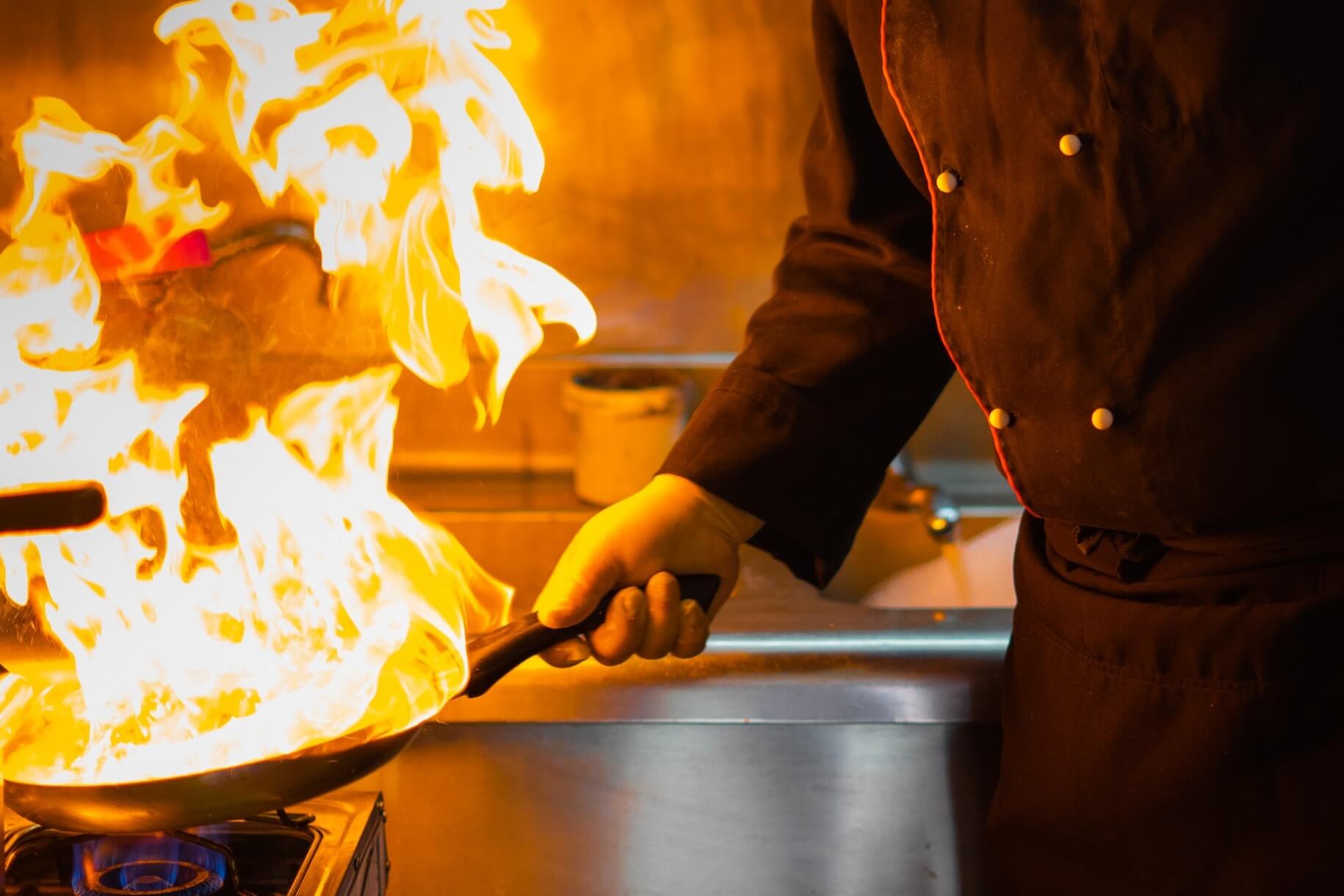
Chef in commercial kitchen handling a pan on fire

Have you ever wondered why you just can’t seem to get ahead regardless of what you do, or why you appear to be developing a negative team culture?

Maybe you wake up with a sense of dread or anxiety about what lies ahead of you each day, or maybe no matter how hard you try and how much money you pour into your restaurant it never seems to be enough to get you where you want to be.

The cause of these problems may stem from your—and your team’s—mindset.

But what is mindset exactly?

Simply stated, mindset is an individual’s usual attitude or mental state. It reflects someone’s way of thinking and motivates their actions. So, why is it important to be aware of your mindset?

Well, if your mindset dictates how you show up in your life each and every day, then it will influence all parts of your life. Your thoughts about yourself, others, your business, your opportunities, and your challenges are all influenced by your mindset.

Your mindset can either hinder or promote your overall well-being and success in life.

The good news about mindset is that you can change it – if you want to. It can also be contagious—in a positive way.

These facts led me to question if the different sectors of the hospitality industry face unique mindset challenges and what can be done to overcome them.

To find answers and gain further insight I decided to turn to our team at KRG Hospitality for their thoughts. In turn, I’ve written a series of hospitality mindset articles, including one for bar operators and one for hotel operators.

In this article I’ll explore the restaurant industry, with thoughts from chef consultant Nathen Dubé.

Let’s dive in!

The Restaurant Industry

The restaurant industry is massive, employing 12.5 million in the US and 1.2 million in Canada.

Ranging from quick service to fine dining and offering every type of cuisine imaginable, the industry is a staple in any community. And while many enjoy being guests at these establishments, the same can’t always be said for working in them.

The restaurant industry faces constant challenges, ranging from mental health issues to labor shortages and rising costs.

So, what makes a restaurant succeed despite these challenges? While there are many ingredients involved in running a successful restaurant, arguably one of the most important is a strong operator.

Successful Operators

Operating a successful restaurant takes a certain mindset. You need to be organized, open-minded to growth strategies, resilient, and responsive to the needs of your team.

Interested in what makes a restaurant operator stand out, I asked Nathen what contributes to operator success:

“The key strength for a restaurant owner, first and foremost, is resiliency. You need to stay even keeled during the good and bad times. Things will fluctuate between busy and slow. You will experience great staff, not-so-great staff, shortages, bad reviews, good reviews, equipment breaking, orders delivered late, plumbing issues, electrical issues… The list goes on and on.

“But at the end of the day, when you say you’re open at noon or 5:00 PM or whichever, you better be ready on time, every time. That can give the strongest characters stress and anxiety over the long term. I think being resilient and able to do what is in your control and let go of the rest will help an owner maintain one’s sanity.

“The second strength needed is empathy. Without empathy for your staff, your customers, the many other people in the food and alcohol chain, the risk of becoming a tyrant no one wants to work for or associate with is real, and I’ve seen it happen. Your staff are people too, who have doctor’s appointments, family gatherings, and trouble at home. Some may suffer from addiction and mental illness, and some live in borderline poverty, which is a truly sad reality for many hospitality workers.

“The third characteristic is good business sense. As much as restaurants and bars are about hospitality, engaging customers, and providing great service, if you can’t run a business properly, that is all for naught. Money management, accounting, marketing, the whole lot is important to your success and longevity.”

Operator Challenges

Operators need a positive, strategic, growth mindset to be successful in the restaurant industry. Maintaining this kind of mindset takes self-awareness and consistent cultivating. There will be challenges every day that will test you and if you aren’t checking in with your thought patterns, it can be easy to fall into a negative mindset.

When asked what specific challenges hotel operators face that may affect their mindset, Nathen shared some insights.

Financial Risk

Opening and operating a restaurant comes with inherent financial risks. Sometimes it may feel as if more money is going out than coming in.

“When dealing with perishable food items in a time-sensitive environment, there will be plenty of challenges,” says Nathen. “Some are temporary, some are constant, and some are one-offs, but they all need careful attention. There is obvious financial risk and stress that comes with that. Labor costs, food, and alcohol are the main culprits of financial strain for the back of house. The kitchen setup costs (equipment, construction, etc.) are also in this category. Money can be a great source of stress for anyone, and more so for those who are risk averse.”

The Human Element: Guests

As a restaurant operator you rely on guests. Your efforts are almost always focused on how you can get more guests through the door and how you can get them to return.

Besides the stress of keeping them happy, sharing, and returning, guests can create another level of stress.

“Dealing with customer feedback can affect well-being,” Nathen says. “Not everyone who comes into your establishment will love everything. There will be complaints, there will be disagreements, poor online reviews, and there will be outright rude guests. This causes stress to staff, as well as the owner’s state of mind. Keeping staff motivated, calm, and on the same page when dealing with these guests and reviews is a lot of emotional work. It takes a strong-willed individual to let it roll off their back while still learning from it.”

The Human Element: Staff

Without your team there would be no restaurant. Your team is key to your success and can also be a cause of stress to your overall well-being.

“Issues can and will arise in dealing with the human element of labor,” explains Nathen. “Concern and care for staff is a full-time job in itself, and that’s in a best-case scenario. In a worst-case scenario you can experience shortages, theft, drama, and the like that will need to be dealt with or it can drag down a good establishment and create an exodus of good staff. Not to create a bleak picture, but management can take a toll.”

Employee Challenges

Your team experiences their own unique set of challenges that can affect their well-being and mindset as well. Being aware of these challenges is important if you are hoping to create a culture of respect, collaboration, and trust.

When asked what specific challenges restaurant staff face, Nathen had some insights:

“It’s well documented that working in a professional kitchen is difficult work when things go perfectly well. Long hours standing, hot kitchens, short time constraints, and difficult customers can be draining on a person. Mix in stress, poor health habits, and skipped meals, you get the perfect recipe for very hard work. Managing stress and employee wellness within the kitchen team is important to an overall successful business. Not paying attention or implementing ways to help will lead to a difficulty hiring and retaining staff.”

A Living Wage and Safe Environment

The restaurant industry has faced criticism for low pay, unsafe working environments, and an unsupportive culture.

While this is not the case in all establishments, it occurs enough in the industry to make potential employees wary.

“Pay in the industry is notoriously low for entry level positions,” Nathen says. “There is typically limited room to grow on the pay grade, and a lack of insurance, health, and dental care can compound the issues.

“Workplace standards including safety and culture are another common pain point for restaurants. Dirty, unsafe conditions create a dangerous work environment. It will also make it difficult to pass health inspections. Allowing a toxic culture to develop creates an environment that no good staff wants to work at. All of these issues can drain the pride from a good, well run, happy environment that employees want to stay and thrive at.”

Harmful Beliefs in the Restaurant Industry

Your belief system directly impacts your mindset. If you have negative beliefs regarding your team, your guests, or your community, it’s time to sit down and recognize where those beliefs are coming from and how to change them.

The restaurant industry has a few specific common, harmful beliefs that are prevalent in many establishments. Being aware and knowing how to acknowledge and combat these beliefs is crucial to creating a more positive work environment.

Stigma

When I asked Nathen what one of the most prevalent harmful beliefs operators have about their team, he discussed the stigma restaurant employees often face:

“Unfortunately, there is still a stigma around restaurant staff being uneducated, working in this industry only because they can’t do anything else in society. Often, they are seen as doing this job until something better comes along. Why should they invest in their staff’s well-being if they will vanish in a moment’s notice?

“The next stigma is that all workers are just lazy drunks, addicts, and thieves out for a paycheque to drink away at the bar. While there is a prevalent issue of substance abuse in the industry, it can be a tough challenge to address, and unfair if everyone is painted with the same brush.”

Selfish/Uncaring

Operators are not the only people in the industry who harbor negative or false beliefs.

Staff can do so as well. One primary negative belief is that management and/or ownership doesn’t care about them.

“In terms of ownership, kitchen staff can feel ripped off, or that they are doing all the work while the owner gets rich,” explains Nathen. “Staff will make accusations behind closed doors that they do all the work while the owner does nothing.”

To overcome negative beliefs, says Nathen, “[a]n engaged owner can eliminate the walls between staff, customers, community, and themselves. Talking to those in your business circle and including everyone squashes resentment, misunderstandings, and most complaints will be solved immediately, eliminating potentially bad situations.”

Toxic Culture

The last thing that any hospitality business needs is a toxic culture. A toxic workplace culture encourages and breeds negative mindsets on all levels.

I asked Nathen what creates toxic culture in a restaurant and he shared his thoughts and experiences:

“It starts with ownership. Defining a clear set of core values and standards in the workplace—and adhering to them from the hiring process all the way to daily operations—will dictate the type of people you hire and attract. Toxic environments can be created by just one employee. My experience with toxic kitchens was based on there being no consequences; there wasn’t even a lack of standards enforcement because there were no standards to begin with.

“Things like bullying, harassment, poor attitudes, low morale, lack of leadership, and poor working conditions—whether physical, emotional or both—are the typical causes of toxic culture. To blame is also the negative actions of others, and equally the lack of action from management. Bad eggs are left to rot and quickly poison the whole omelet, so to speak.

“Define a concept clearly, every step of the way, and then find the people to fit that vision. But also deal with problem employees immediately; there is nothing worse than losing good employees to bad ones.”

Moving Forward

Understanding the challenges that operators and staff are currently facing, and acknowledging the importance of growth mindset and the need for change, I asked Nathen what positive changes have been occurring in the industry as a whole?

“Restaurant work environments have improved over the last few decades but still have a long way to go. When I started in the mid ‘90s, belittling, yelling, and screaming—general abusive treatment of anyone and everyone—was commonplace. There was no compassion for the environment that staff worked in. The culture, the workload, pay… Literally everything was just ‘take it or leave it.’ ‘If you don’t like it, leave,’ was repeated everywhere to any staff who raised concerns.

“Over time, a stand has been made in response to a mass exodus, tales of burnout, and at the worst end of the spectrum, severe addiction, and even suicide. It was time to look from within at where the actual problems were, and what could be changed. The veil of toughness finally came down, and an honest conversation has led to slow changes.

“One of the more prevalent changes is an overall less-abusive environment. No longer is it tolerated to show anything less than human decency to staff and guests. Genuine care for staff well-being is starting to be seen almost everywhere. It’s leading to a new excitement among hospitality professionals and can hopefully attract new individuals to the field.”

Room for Improvement

Although awareness of the well-being of those working in this industry is increasing, there are still changes that need to happen.

Nathen believes that improvement lies in focusing on balance and respect:

“There is no way around the fact that cooking and serving is hard, long work, regardless of concept. This is unfortunately the entry point for all those who claim to want to change the industry or make it better. In my opinion, this is the wrong approach. Enhancing the whole experience of the employee, leadership team, and guest will make everyone happier and, hopefully, healthier.

“Balancing the workload for everyone, finding creative ways to increase pay, and offering benefits leads to a strong sense of job safety. Rotating schedules, for example: four nine-hour days; or two on, three off; or something away from the traditional 10-, 12-, or 14-hour days and five- to six-day work weeks, reduces burnout, gives employees a chance at a social and family life, and still allows everyone to earn enough income to live. Throw in benefits and some sort of bonus pay, and you will have a brand everyone wants to work for.

“Another big contributor to improving the industry—and we have made big strides already—is the respect for people and creating an environment or culture void of bullying, harassment, intimidation, and general mistreatment of the people who make this the best industry to work in.”

Final Thoughts

In a highly competitive industry facing consistent challenges and harmful beliefs, it will come down to developing and maintaining the right mindset to truly succeed both professionally and personally. It starts from the top with a positive, resilient, growth mindset.

I’ll leave you with a few last words of wisdom from Nathen:

“Hopefully, there is a sense of urgency in the fight to change the industry for the better. It’s important to recognize and praise positive contributions and not just positive people because everyone needs encouragement. It’s equally important to handle negative contributions quickly and correctly.

“A positive attitude can go a long way toward creating a strong team player who can make the best of stressful times and have a coachable attitude. A positive person can help change the culture of a workplace and pick up other teammates who may need a boost. They share their optimism and passion for the job and can make management’s life easier.

“A negative person will contribute to a toxic environment. Resentment begins to build on both sides as a negative person sees things not being done their way, contributes less to the success of the kitchen, and spreads their toxic beliefs to other employees who may start to feel similarly.

“I recently heard a saying, and I don’t recall by who so I can’t quote it, but it goes, ‘It’s important to get the right people on the bus, but it’s just as important to get them in the right seats.’”

Cheers to personal and professional well-being!

Image: Helmy Zairy on Pexels

KRG Hospitality. Restaurant Business Plan. Feasibility Study. Concept. Branding. Consultant. Start-Up.

by David Klemt David Klemt No Comments

Raise the Bar: The 3 Ps of Hospitality

Raise the Bar: The 3 Ps of Hospitality

by David Klemt

Three hands holding up three pineapples

No, one isn’t “pineapples.”

Nightlife, bar, and cocktail experts Mia Mastroianni, Phil Wills, and Art Sutley want operators to focus on what they call “the Three Ps.”

The engaging trio shared their trio of Ps recently in Las Vegas at the 2023 Bar & Restaurant Expo.

So, what are the Three Ps of hospitality? People, Place, and Product. Operators who pull the threads tighter on each of these crucial elements will be well on their way to improving operations and the guest experience.

People

Remember all the way back to a week ago when I shared Mastroianni, Wills, and Sutley’s thoughts on service versus hospitality? Consider the first P a deeper dive into that topic.

Operators need to focus on two categories of people who help their businesses succeed: their teams and their guests.

Addressing the former, the trio feels that operators are centering a disproportionate amount of their attention on guests in comparison to staff.

“We’re not lacking for people who want to work in the business and are outperforming other industries, but we’re not focusing on staff like we focus on guests,” says Wills. “Treat everyone with respect, including through the hiring process. If you don’t engage your staff, you won’t retain them. You need to show them they can grow in your business.”

According to Sutley, 89 percent of operators say that labor costs present a “significant challenge.” It follows, then, that committing to treating staff with respect and nurturing their careers isn’t just the right thing to do, it’s smart business.

Look for people with passion, those you can motivate to go above and beyond so you’re not stuck with a team full of space-fillers who are just after a paycheck, suggests Mastroianni.

Of course, operators and their teams must also focus on providing exceptional service and experiences to guests.

“Treat ever guest like a pearl in an oyster,” advises Wills. “They’re the pearl, we’re the oyster. We need to ‘protect’ them.” Anything less, cautions Sutley, and guests won’t return.

Place

Interestingly, the trio touched on design, aesthetic, and vibe. However, that isn’t the crux of the second P.

Rather, Place is really goes back to the guest experience. The design, aesthetic, and vibe need to meet guest expectations.

“Make sure your space is what it’s supposed to be,” says Wills.

For example, if a concept presents itself as a high-end cocktail bar, the four walls need to deliver on that expectation. With the exception of a handful of high-level examples, an upscale bar won’t survive if they deliver a dive bar—not neighborhood bar, dive bar—vibe and service. (For the record, I love a dive bar. But I don’t expect to encounter TV trope-style dive bar service if I walk through the doors of a high-end cocktail bar.)

One way operators can ensure their space is what it should be is standardization. Once a concept goes from idea to brick and mortar, when the owner’s vision is realized, the team needs to deliver a matching experience. Steps of service, systems, procedures…standardization is the name of the service game.

“Standardize your opening, shift, and closing procedures and systems to maintain your place,” says Mastroianni.

Every team member—front of house, back of house, leadership—needs to know and buy into an operator’s standards.

Product

Standardization breeds consistency. And consistency is a key element of the third P, Product.

Per Sutley, 76 percent of operators have noticed that guests are opting for more premium drinks. That’s great news, but it’s not the whole story.

It’s great that guests are opting for more expensive drink options. After all, that can certainly help the bottom line.

“However,” cautions Mastroianni, “they won’t come back without consistency in production.”

To drive this point home, consider this story from Mastroianni. A bartender made her a drink, and it was pretty good. She ordered another one from the same bartender and watched him make it differently the second time around. Not only was this second version different, it was better. While one could view this story through a positive lens—the drink was even better the next time!—that’s not the correct takeaway.

If the bartender was committed to building cocktails consistently, the second version of that cocktail would’ve been the first one served to Mastroianni. It would be the best version, and it would always be that impressive version.

When we’re fighting the possibility that up to 70 percent of first-time guests never return, the importance of product consistency can’t be overstated.

“Really focus on the small details to affect big change and get guests through the doors and keep coming back,” says Wills.

Image: Aleksandar Pasaric on Pexels

KRG Hospitality Start-Up Restaurant Bar Hotel Consulting Consultant Solutions Plans Services

by David Klemt David Klemt No Comments

Empower Your Team to Make Decisions

Do You Empower Your Team to Make Decisions?

by Kim Richardson

Chess pieces on chess board in grayscale

Empowerment is about so much more than trusting someone to follow clearly defined rules; you must learn to trust your team’s judgement.

Yes, even when things don’t go according to plan. If you’re only training your team on the “rules,” you’re doing a disservice to them and yourself. So, let’s have a little chat about empowerment. What does it mean to you? What are your expectations of your team when you tell them they are empowered?

Looking back throughout your own work history, have you ever had a job where your boss told you that you were empowered to make decisions, but you didn’t actually know what to do or how to make decisions? Did anyone ever explain “the how” of decision making to you?

Now, look at yourself as a leader. Have you ever had employees that you’ve told are empowered to make decisions, yet they get a manager every time someone needs something out of the ordinary? Are you explaining to your staff “the how” of decision making, along with your expectations?

It’s frustrating to feel like the house might fall down when you’re not in it. That’s no way to operate a business. We all want our staff to be able to make educated decisions when we’re not around. We shouldn’t have to hold their hands and be part of every single decision.

Still, there are times when, left to their own devices, a team member doesn’t make the decision you’d want them to make. This makes owners and leadership team members feel as though they must be at work every second.

So, how do you move away from micromanagement and learn to trust your team’s decision making?

Leverage Teachable Moments

You’ll never be able to give an example of every possible situation that may arise. Therefore, you’ll never be able to train your team on everything that they’ll encounter on any shift.

How do you tell someone how to handle situations when you’re not around? You don’t, and I don’t suggest you even try. Instead, you need to instill a sense of empowerment in your team.

However, “empowerment” is just a word if you’re not educating your team. You need to teach staff how to make good decisions. And how do you even start to do that? Cash in on all the teachable moments that happen throughout the day!

Once upon a time we were all new to this industry. I’m sure you have a few stories of some mistakes you’ve made along the way. I know I certainly do.

Think back to those situations. Did someone explain to you why you made a mistake? More importantly, did they then help you understand what to do next time? Or did they just get mad and make you feel like a failure?

I’ve had the privilege of working with some amazing people over the years. There are several people that really put effort into teaching me. The different things they taught me helped me to understand the ins and outs of decision making, even in situations I know very little about.

Example 1: The Restaurant

For my first job ever, I was a hostess at an Italian restaurant and pizzeria. During the training process I was told to rotate sections when seating tables. That’s easy enough, right? Well…maybe not.

Sometimes I’d see exceptions to this rule. The same section would get sat twice in a row, for example. I watched exceptions to “the rule” get made with no clue as to why.

One day, I sat the same section twice in a row. I don’t remember why, but I do remember the server’s reaction.

Right after seating the second party in the server’s section she let me know how annoyed she was by my decision. Now, I knew I messed up immediately—she let me know. But I didn’t know why it wasn’t okay that I had double-sat her this time.

All I knew is there was a rule I was expected to follow…unless I wasn’t supposed to follow it. Sometimes it was okay to disregard the rule, sometimes not. The rule wasn’t clarified before I began my role as a hostess, it wasn’t explained during training, and it wasn’t explained in the moment I “broke” the rule.

At some point it was explained to me that there were several factors that influenced the “double-seating rule.” For instance, you might skip a section in the rotation if they were just sat a big party. You might double-seat someone if they were regulars, family or friends and the server was able to accommodate an additional table. Of course, there were several other factors that could come into play.

The biggest issue is that none of that was explained to me during training. Moreover, I was left to figure out the nuances of seating on my own.

Example 2: The Hotel Sales Office

I worked at a hotel in the sales office for my first job out of college handling group room blocks.

The contracts I sent out to clients had cutoff dates 30 days prior to the event. Again, sounds pretty simple, doesn’t it?

One day a bride emailed me asking if she could extend the cutoff date. The cutoff date fell on a holiday weekend and she was concerned that people might not have time to book their rooms. I wrote her back and very politely told her no. So she reached out to my boss, Jill, who told her yes.

And then I got called into Jill’s office.

I remember that conversation like it was yesterday. Jill was very nice about the situation and explained that it was okay to make exceptions for people sometimes. Sometime later, I extended a cutoff date for another group. Should be an acceptable exception, right?

Nope. I got my hand slapped on that one. There was a citywide event going on over those dates. The hotel was fully sold out and turning away business. In this circumstance, it was actually a huge problem to extend the cutoff date.

Great—here we go again with a rule that exists in a gray area, and no one explained its nuances. As it turns out, there are factors that go into extending a cutoff date, such as how many rooms the group has already picked up; how busy the hotel is over the dates of their room block; and the relationship you have with the client.

I don’t know if anyone ever flat out explained these gray areas to me. Instead, I was left to figure out the nuances through trial and error.

Example 3: The Dish Tub Incident

At that same hotel several years later I started handling banquet events. One day, a client told me their registration desk needed dish tubs lined with cloth napkins. I threw it on the banquet event order.

Well, I happened to work at a Five Diamond hotel. Dish tubs with napkins sitting out in view of the public? That’s not how we did things. Enter: Bruce the Banquet Manager.

No detail, however small, escaped Bruce. Referring to the dish tubs and napkins, Bruce asked me why they were necessary. I actually had no idea what the client wanted with the tubs and napkins. So, I reached out to the client.

Turns out all she needed was a way to store welcome packets for event attendees. These days, we just put up a QR code and call it good. Once I let Bruce know what the containers were actually for, he understood. However, we weren’t about to load unsightly dish tubs with welcome packets. Instead, we found something more aesthetically pleasing and in line with our level of service.

I spoke about the Dish Tub Incident with Jill. To her credit, she helped me understand that people who are planning meetings so frequently are sending standard specs. Sometimes there would be a request on a BEO that wouldn’t make sense for the venue. Crucially, she taught me that if I ever saw something that didn’t make sense I needed to ask questions.

Truthfully, I don’t remember if it was that conversation or another but Jill taught me one of the best lessons: Ask the client what goal they’re trying to achieve. By understanding their goals we could provide solutions that made sense for us and honored their wishes. Additionally, we’d deliver the excellent service they had come to expect.

Example 4: The Hotel Cafeteria

Let’s take a little break from talking about my mistakes and talk about somebody else’s.

Many years later, I was working at another hotel. One day, I went to the cafeteria and the fruit bowls had Asian pears in them. I love Asian pears, so I was really excited about those bowls.

Now, those particular pears were probably a day away from being spoiled. I went to the cafeteria the next week and there were the Asian pears again! This time, they were perfectly fresh, crisp pears.

Well, I certainly enjoyed that. You want to know who didn’t enjoy that? The executive chef!

As it turns out, Chef sent the pears that were about to go bad to the cafeteria because they were leftovers from something else. He didn’t want them to go to waste. But the fresh, crisp pears that were out the following week? Those were a different story.

There was a kitchen team member who saw the Asian pears go down the week before. When he was setting up the cafeteria the following week he threw some in the fruit bowl. No one had told him that Asian pears are expensive. Also, no one had told him the pears were just going down to the cafeteria because they were close to spoiling. They’re not typically the type of thing set out in the employee cafeteria.

While I would never expect Chef to stop and explain every single decision he’s making, it’s the perfect example of seeing one of your superiors doing something and thinking you’re supposed to do the same.

Leaders Teach

When I look back on some of the mistakes I made, they seem pretty obvious with many years of hindsight.

The solutions to unexpected situations are common knowledge to me now. If you also have some years in this industry, they’re likely common knowledge to you.

And that’s my point.

I was young. I was inexperienced. People didn’t always tell me the things they had learned that were common knowledge to them. So, they also didn’t share their expectations with me.

I can only assume that you have people on your team that are young and inexperienced. As seasoned hospitality professionals, we all make decisions every day that can be teaching moments. These moments are part of the learning experience. Using them to shape your team will help your business run better.

Have you implemented an onboarding process? Do you have a detailed employee manual? Do you have actual systems in place? If so, great—you’re ahead of the curve.

But do you think that you’re training new and existing employees on every situation that will ever pop up during their shifts? Really, that’s impossible. Instead, be on the lookout for teachable moments. Put people on your leadership and empower them to do the same.

In turn, they’ll help empower your staff to make the “right” decisions for your business. And importantly, they’ll feel empowered to learn from mistakes so they don’t repeat them. Over time, and it won’t take long, you and your leadership team will be able to step away and work on other parts of the business. In fact, you’ll find that you can step away from the business from time to time.

People are going to make mistakes. That includes you. Don’t let these teachable opportunities go to waste.

Image: Hassan Pasha on Unsplash

KRG Hospitality. Boutique Hotels. Resorts. Properties. Consultant. Feasibility Study. Business Plan

by David Klemt David Klemt No Comments

Addressing Employee Theft

Addressing Employee Theft

by David Klemt

Security camera stencil graffiti design

Recent posts about employee theft in the hospitality industry throughout Canada and the US have the KRG Hospitality team talking.

Indeed, the statistics are startling. For instance, there’s the claim that a staggering 75 percent of employees admit to stealing from their employers “at least once.”

A few years back, the Retail Council of Canada reported that while “customers” stole $175 on average, employees stole $2,500 before being caught.

Then there’s the incredible economic impact. Multiple sources claim employee theft in the US costs businesses $50 billion annually. In Canada, theft costs businesses more than $1 billion per year. Both numbers are shocking.

Looking at US restaurants specifically, the number ranges from $3 billion to $6 billion in losses due to employee theft. According to Business.com, employee theft affects four percent of a restaurant’s sales and accounts for 75 percent of shortages in inventory.

At this point, you’re probably Googling security cameras. But hold on for a moment.

Disclaimer

Before proceeding, know this: I’m going to make a few points that will seem like victim blaming. In part, this perception will be the result of my addressing recruiting, hiring, onboarding, training, the leadership team, and workplace culture.

Let me be clear: I’m not excusing employee theft. I don’t think there’s any justification for it.

Despite what a (hopefully) small number of loud voices claim on various social media platforms and forums, I don’t think it’s acceptable to steal from a corporation or business owner. No, theft isn’t a justifiable response to feeling slighted by ownership or leadership. And no, it’s not “okay” because a company generates “so much” revenue, has insurance, and can “write it off.”

With that out of the way, let’s proceed.

People are Going to Steal

Here’s one immutable fact: You’re going to hire someone who’s going to steal from your business.

Is your business up and running and serving guests? You employ someone right now who has either stolen from you already or is going to steal.

So, you can run your business under a cloud of suspicion and distrust. Or, you can improve your odds of reducing theft and ferreting out thieves before they do too much damage.

Again, you can install security cameras and place them above each POS terminal and every cash drawer. You can ensure you have clear, cutting-edge CCTV coverage of the entire bar and dining areas. Walk-ins and storage areas can have clear, high-resolution camera coverage.

Honestly, you should have that type of coverage. That type of security can improve employee and guest safety, and your insurance carrier will likely be happy about it.

But you don’t need to impose an atmosphere of suspicion, fear, and intimidation along with the cameras. If you were an employee, would you want to work somewhere that makes it clear you’re always under suspicion? Would you want to work alongside a leadership team whose default setting is that all employees are thieves unworthy of trust?

Workplace Culture

You’re never going to have a theft-free business, period. That’s another reason to not “lead” with fear, anger, and suspicion.

Truly, all that style of leadership will do is drive good, honest employees out. So, the approach should be attracting honest workers. You build a strong, trustworthy team through respect and empowerment.

Yes, there will be employees who take advantage of that respect. They were going to behave that way and steal or otherwise disrespect you, your business, and the team regardless.

Putting in the work to reflect on your leadership style and that of your leadership team pays dividends. It aids in recruitment and fosters an atmosphere of respect and honesty.

Become known for a healthy, positive workplace and you’ll attract the best workers. Nurture that culture and the team will police itself; they won’t tolerate anyone harming the business.

Am I suggesting you view your business through rose-colored lenses? Absolutely not. Install security cameras. Maintain the right insurance coverage. Conduct regular inventory checks. Review comps and voids for irregularities. Limit access to cash. Outline what constitutes theft—including time theft—and make consequences clear.

And here’s a crucial item: Prove you respect and care about your workers. Not say it, prove it.

You don’t need to know their life stories and everything going on in their lives. But you can let it be known that if they’re struggling with something, you and your leadership team are there to listen and help how they’re able.

Nothing you do will eradicate employee theft completely. You can, however, reduce it and learn to quickly stamp it out. And you can do that while maintaining a happy, healthy workplace.

Image: Tobias Tullius on Unsplash

KRG Hospitality. Business Coach. Restaurant Coach. Hotel Coach. Hospitality Coach. Mindset Coach.

by David Klemt David Klemt No Comments

Spring Clean Your Business!

7 Ways to Give Your Business a Spring Cleaning!

by Kim Richardson & David Klemt

White mops against red and white wall

In case you’re so busy you didn’t catch it, we’re officially—finally—in spring, and that means it’s time to spring clean your business.

Below you’ll find a spring cleaning slideshow with helpful advice from KRG Hospitality consultant Kim Richardson.

Each slide contains her best advice for reviewing, refreshing, and improving your business. For your convenience, Kim organizes her spring cleaning advice in just seven slides.

It’s time to look at your business through fresh, energized eyes! Your team, guests, and bottom line will thank you.

[metaslider id=78443]

Note: Unable to view the slides above? Each slide is transcribed below.

1 Re-plant Your Core Values

  • Review your core values with your team.
  • Post them where everyone can see them daily.
  • Foster core values through consistent training.
  • What kind of experiences are you offering your team?
  • Hire a coach to help you discover your core values.

2 Tidy up Your Guest Journey Map

  • Walk through your business from the guest perspective.
  • Review your website for content, ease of use, current info.
  • Review your technology and potential pain-points.
  • Touch up items that may have become run down: paint, signage, furniture, equipment, etc.
  • Review your flow of service and communication.

3 Spruce up Your SOP & Training Programs

  • Evaluate how well current SOPs are being followed.
  • Evaluate how well you continuously train your team.
  • Make updates as needed and add any new procedures.
  • Ensure SOPs are easily accessible by your team.
  • Discuss your standards during pre-shift meetings.

4 Deep Clean Your Financial Books

  • Review your budgets and projections for the year ahead.
  • Review and organize the financials tracking processes; receipts, invoices, files, etc. and digitize what you can.
  • Consider updating your financial tracking technology or bringing in a third party to assist.

5 Dust off Your Business Plan

  • Evaluate the progress of your business plan.
  • Acknowledge what you have accomplished.
  • Are you on track to achieve your goals this year?
  • Do all of your goals still make sense?
  • Make any necessary updates and create a game plan to stay on track; review every 30 days.

6 Freshen up Your Marketing Plan

  • Budget time and money to dedicate towards marketing for the next 90 days.
  • Create strategic campaigns that will create awareness, build a database, and retain your targeted customers.
  • Consider working with a third party or having someone dedicated to this role internally.

7 Declutter Your Mind

  • Perform a calendar audit.
  • Review goals and formulate action plans.
  • Practice mindfulness through journaling or meditation.
  • Consider hiring a mindset coach to help you organize your life and your business.

Image: PAN XIAOZHEN on Unsplash / Slideshow Images: Kim Richardson / KRG Hospitality

KRG Hospitality. Business Coach. Restaurant Coach. Hotel Coach. Hospitality Coach. Mindset Coach.

by krghospitality krghospitality No Comments

KRG Hospitality now Serving Midwest Region

KRG Hospitality adds Midwest Region

Marina City Towers in Chicago, Illinois

KRG HOSPITALITY NOW SERVING MIDWEST REGION

Toronto-based hospitality industry consulting firm with offices throughout Canada and the USA now serving the Midwest through Chicago office.

CHICAGO, IL (March 17, 2023)—Today, KRG Hospitality announces the addition of the Midwest region of the US to their North American service area. The team will operate out of an office in Chicago, Illinois. However, the agency will serve Midwest markets outside of Chicago as well.

KRG is excited to announce their presence in the region and their ability to serve clients effectively. The agency will offer the full suite of their proven hospitality solutions, including: hourly consulting and coaching; complete feasibility studies, fully customized concept plans; in-depth, focused business plans; project support and management; food and/or drink menu development and consulting; and personalized F&B education.

“I was born in Chicago and first entered the hospitality industry in the Northwest Suburbs. I got my first taste of nightlife in Chicago’s incredible bar and nightclub scene,” says David Klemt, partner and director of business development of KRG Hospitality. “Those experiences shaped my entire hospitality career trajectory. It will be an honor to serve the great people of the Midwest and bring their hospitality visions to life.”

“2023 is turning into quite the growth year for KRG, with the addition of team members Kim Richardson and Jared Boller, and now an exciting new market,” says Doug Radkey, KRG Hospitality founder, president, and project manager. “We see great opportunity in the Midwest, not only in Chicago, but many of the surrounding regions. The food, beverage, and hotel scene is incredibly strong, and we’re open to the challenge of not only helping launch new hospitality brands but helping transform existing brands scale and be successful in the new era ahead.”

KRG is ready to work with clients of all experience levels in the Midwest. The consulting agency’s suite of solutions serve new operators looking to open their first concept and veterans seeking a rebrand or expansion. From independent pizzerias and QSRs to multi-unit regional chains and boutique hotels, and everything in between, the KRG team is eager to take client visions and transform them into brick-and-mortar realities.

To schedule an introductory call to learn how the KRG Hospitality team serves clients, please follow this link.

About KRG Hospitality

KRG Hospitality is a storied and respected agency with proven success over the past decade, delivering exceptional and award-winning concepts throughout a variety of markets found within Canada, the United States, and abroad since 2009. Specializing in startups, KRG is known for originality and innovation, rejecting cookie-cutter approaches to client projects. The agency provides clients with a clear framework tailored to their specific projects, helping to realize their vision for a scalable, sustainable, profitable, memorable, and consistent business. Learn more at KRGHospitality.com. Connect with KRG Hospitality and the Bar Hacks podcast on social: KRG Twitter, Bar Hacks Twitter, KRG Media Twitter, KRG LinkedIn.

Image: Tobias Brunner from Pixabay

KRG Hospitality Start-Up Restaurant Bar Hotel Consulting Consultant Solutions Plans Services

by David Klemt David Klemt No Comments

Alternatives to ServSafe

Just.Safe.Food. and More Alternatives to ServSafe

by David Klemt

Server carrying two plates with one hand

ServSafe, the National Restaurant Association‘s food safety training program, isn’t the only food handler training game in town.

Certainly, the program is the most well known in our industry. However, it’s fair to say that ServSafe is closer to infamous than just ubiquitous due to a New York Times article from January.

While it’s the most recognizable of the food safety programs, it’s not the only one. Although, ServSafe’s omnipresence likely gives many the impression that it’s ServSafe or nothing.

There are, however, alternatives to ServSafe. In fact, one challenger was announced a day after the explosive New York Times article that thrust ServSafe into a spotlight the NRA probably isn’t enjoying. (After all, one result of that article was a letter from six US senators demanding answers from the NRA about ServSafe by March 3.)

At any rate, the newest alternative to ServSafe comes from One Fair Wage. The program is Just.Safe.Food. and costs just $10. (As a reminder, ServSafe costs $15.)

For that $10, Just.Safe.Food. gives an individual three attempts to pass their exam and unlimited access to training materials. Additionally, One Fair Wage (OFW) says profits they raise from the program will go toward advocating for restaurant workers.

OFW, as many in the industry know, is owned and operated by restaurant workers. Two cornerstones of the organization’s mission are increasing the minimum wage, and ending the tip credit. OFW is also attempting to convince lawmakers to stop accepting donations from the NRA.

Basically, OFW and the NRA are—and it appears always have been—at odds with with one another.

Other ServSafe Alternatives

Before I list a few other alternatives, let me be clear: KRG Hospitality isn’t advocating for any food safety training program in particular. Operators and their team members will need to decide which program is best for them.

Whether that decision is based on employer requirements, state or local requirements, cost, ideology, or another reason makes no difference to us.

However, I will say that the more competent and comprehensive options there are, the better. Nobody should have a monopoly on food safety.

The key factor to consider is whether the particular state or county regulations are met by the program. If anyone is uncertain, they should reach out to their local health department before proceeding with any program. It’s likely the department only accepts food safety programs that are ANSI-certified.

That said, some alternatives to ServSafe are:

Operators and food-handler restaurant workers can also search for local programs that are accepted by their state/county.

Food Handler Requirements

Food safety isn’t, it turns out, universal throughout the US. Workers can be subject to state or county requirements. In some states, food handler certification is voluntary.

And then there are food safety manager regulations to consider, and those can also be state- or county-specific.

I can’t reiterate enough how important it is to know your state/county/local food handler requirements. As with many regulations, there are nuances and hospitality professionals need to know them.

Below, how different *states regulate food handler training.

State Requirements

  • Alabama
  • Alaska
  • California
  • Florida
  • Georgia
  • Hawaii
  • Illinois
  • North Carolina
  • Ohio
  • Oregon
  • South Carolina
  • Texas
  • Utah
  • Washington

County Requirements

  • Alabama
  • Arizona
  • Kansas
  • Kentucky
  • Missouri
  • Montana
  • Nebraska
  • Nevada
  • New Jersey
  • New Mexico
  • New York
  • North Dakota
  • Oklahoma
  • Virginia
  • West Virginia

Voluntary

  • Arkansas
  • Colorado
  • Connecticut
  • Delaware
  • Idaho
  • Indiana
  • Iowa
  • Louisiana
  • Maine
  • Maryland
  • Massachusetts
  • Michigan
  • Minnesota
  • Mississippi
  • New Hampshire
  • North Carolina
  • Pennsylvania
  • Rhode Island
  • South Dakota
  • Tennessee
  • Wyoming

*This information is believed accurate at the time of publication. No warranty of accuracy is given.

Image: Pixabay on Pexels

by David Klemt David Klemt No Comments

Group of Senators Questions ServSafe

A Group of Senators has Questions About ServSafe

by David Klemt

Gloved hand pressing down on cheeseburger

You probably shouldn’t serve a cheeseburger directly onto a table.

The National Restaurant Association and the ServSafe program are now in the crosshairs of a group of Democratic senators.

I doubt any organization or individual wants to learn that lawmakers have questions for them. For those who may not know, ServSafe isn’t just in a partnership with the National Restaurant Association—the NRA owns the program.

That’s part of why six senators, led by Sen. Elizabeth Warren (D-MA), have sent a letter to the NRA. To describe the tone of this letter in one word, I think “aggressive” is accurate.

The Opening Paragraphs of the Letter

The letter, addressed to NRA president and CEO Michelle Korsmo, can be found here on Sen. Warren’s official website.

However, I’ve included the letter in its entirety below, without the citations of the original:

We are writing in response to a recent New York Times investigation which revealed that the National Restaurant Association (“Restaurant Association” or “Association”) is using millions of dollars in fees paid by food service workers for food safety training courses to instead, “largely unbeknown to [the workers]” – help “fund a nationwide lobbying campaign” against minimum wage increases that would raise these workers’ pay. The Times report revealed that the Restaurant Association, through its ownership of ubiquitous food safety certifier ServSafe, is charging food service employees for employer- or state-mandated courses and then funneling that money into its federal and state lobbying apparatus to fight against basic worker protections like paid sick leave and a livable minimum wage.

According to the report, payments from workers to the National Restaurant Association “provid[ed] about $25 million in revenue to the restaurant industry’s lobbying arm since 2010.” The Association’s use of workers’ food safety course payments – which are mandatory in some states and required by employers in others – is particularly outrageous because workers who take the course are not adequately informed of how their payments are used, and because the National Restaurant Association has, for decades, led the fight against increases in federal, state, and local minimum wages and improved health benefits.

As you can see, Sen. Warren wastes no time making the group’s displeasure known.

The NRA “Owes Workers” an Explanation

If you haven’t read the New York Times article about ServSafe published in January of this year, click here.

The exposé is eyeopening, to say the least. Sen. Warren and her Democrat colleagues appear to be infuriated by what the New York Times revealed about their ServSafe investigation.

You owe workers an answer as to why you are secretly using their funds to lobby against their interests. We are writing to seek clarity into the Association’s rationale for forcing workers to shoulder the cost of the ServSafe courses and for using the funds it collects to fight against pro- worker policies in Congress and state legislatures across the country. ServSafe, owned and administered by the National Restaurant Association, is a food and beverage safety training and certificate program that has become a staple of the food service industry. Upon entering the food service industry, many workers must pay a roughly $15 fee to take a ServSafe course and pass a final exam to receive their certification. To maintain their certification as recognized by the Association, non-managerial employees generally must retake the course every three years, though some states and employers may require more frequent recertification. The National Restaurant Association acquired ServSafe in 2007, and then “helped lobby states to mandate the kind of training they already provided — producing a flood of paying customers.” As a result, at least four large states (Texas, Florida, California, and Illinois) require most food service employees to participate in—and pay for—“food handler” certification, as do many employers in other states.10 While there are alternatives to ServSafe, it remains the “dominant force in the market,” with one competitor noting that ServSafe may have as much as 70 percent of the market share.

What most workers do not appear to know is that the fees they pay for their ServSafe courses are used to fund a sprawling anti-worker lobbying campaign aimed at defeating measures that would improve their own economic security and well-being. ServSafe “doubles as a fund-raising arm of the National Restaurant Association — the largest lobbying group for the food-service industry.” According to tax filings reviewed by the Times, the fees ServSafe collects—ostensibly for the purpose of educating workers about proper food safety practices—have instead provid[ed] about $25 million in revenue to the restaurant industry’s lobbying arm since 2010.” And as these fees “flowed in from the National Restaurant Association’s training programs, its overall spending on politics and lobbying more than doubled from 2007 to 2021, tax filings show.” The Association “donated to Democrats, Republicans and conservative-leaning think tanks, and sent hundreds of thousands of dollars to state restaurant associations to beef up their lobbying.

I’m curious, of course, about which politicians have received donations from the NRA. This letter is signed by Sens. Warren, Patty Murray, Jeffrey Merkley, Bernie Sanders, Edward Markey, and Peter Welch.

Have any of these senators accepted donations from the Association?

A “Secretive Fee-to-fundraising Scheme”

In this section of the letter, the group of Democrats drop some startling numbers. Additionally, the senators also attacks the Association’s ethics and tactics.

The National Restaurant Association has a lengthy track record of lobbying against federal, state, and local policy proposals to improve the lives of food service and other workers. From 2007 to 2022, the Association spent nearly $46 million on federal legislative lobbying alone. These funds, collected from food service workers across the country, were used to raise the Association’s profile as a “major force in limiting employer-provided health care benefits” and to fight against minimum wage increases. Most recently, the Association successfully fought against the Raise the Wage Act, which would increase the federal minimum wage to $15 per hour over five years and eliminate the subminimum wage of $2.13 per hour for tipped workers; and the Protecting the Right to Organize (PRO) Act, landmark pro-worker legislation that would shore up workers’ right to organize, form a union, and bargain collectively. The Association has also fought aggressively against state- and local-level minimum wage increase.

The National Restaurant Association’s secretive fee-to-fundraising scheme is particularly troublesome given the low pay and poor conditions faced by many of the workers from whom the Association is extracting the money to fund its lobbying machine. In 2018, more than 10 years into this scheme, roughly 40 percent of food service workers qualified as “low-income.” And tipped workers, who make up 98 percent of restaurant workers, are more likely to experience poverty due in part to the stagnant subminimum wage. Furthermore, people of color are disproportionately overrepresented in the food service industry: a March 2022 data brief from the National Restaurant Association itself noted that nearly half of restaurant and food service workers are people of color, compared to 38 percent in the broader labor force. Women make up more than half of the food service workforce, while immigrants make up nearly a quarter. Requiring these workers to fund advocacy for policies that keep their wages down and leave many of them in poverty is unconscionable.

The Questions

Below you’ll find the questions these senators have for the NRA concerning ServSafe.

The group of senators claims the NRA has weaponized ServSafe, referring to their actions as “underhanded and unscrupulous.”

They want answers to their questions by March 3 of this year.

  1. What is the cost to the National Restaurant Association, per program participant, of running the ServSafe program? What is the source of these funds to run the program?

  2. How much, in total annual revenue, did ServSafe take in in each of the last five calendar years?

  3. What s the ultimate disposition of the funds collected by the National Restaurant Association as fees for ServSafe courses? Specifically, how much was spent, in each of the last five calendar years, on:a. Lobbying at the federal level;b. Lobbying at the state level; andc. State and federal campaign contributions to candidates.

  4. Does the National Restaurant Association or ServSafe notify employees of how their ServSafe fees will be used?a. If so, when and how is that notification provided?b. Please provide copies of all documentation provided to ServSafe participants indicating how their fees will be used.

  5. Some food service workers have alleged that the ServSafe courses are a “rudimentary and cursory overview of basic hygiene and cleanliness that would be learned in the first few minutes of any actual employment,”26 raising questions about why the National Restaurant Association charges workers for the course at all. Please provide a copy of all instructional materials and examinations used as part of the ServSafe Food Handler course.

  6. In what states has the National Restaurant Association lobbied to make ServSafe certification mandatory for food service workers? In which states has the Association been successful in passing such a requirement? In which states has the Association lobbied to require ServSafe but been unsuccessful in passing such a requirement?a. How much has the Association spent in each calendar year starting in 2007 on lobbying at the state level to make ServSafe certification mandatory for food service workers?”

I think it’s fair to say that just about everyone in the industry is eager for the NRA’s answers. And also whether the ServSafe program will remain the standard moving forward.

Image: Manu Ros on Unsplash

KRG Hospitality 15-minute intro call, 2023 icon

by David Klemt David Klemt No Comments

Leadership Facepalm, Part Three

Leadership Facepalm, Part Three

by David Klemt

Frustrated man sitting on couch

We almost got to next year without another viral leadership facepalm moment but then an Olive Garden manager sent a memo.

In case you’re unaware of the now-infamous Olive Garden memo, here’s a recap:

  • Zero tolerance for calling off.
  • Sick team members must come in and prove they’re ill.
  • If someone’s dog dies, they must bring the dead animal in to prove its death.
  • Family emergencies are not private and must come with an explanation.

The manager who authored the memo also takes time to boast about their perfect attendance record.

For the curious, the first entry in our leadership facepalms is here. Part two is here.

The Letter

Below you’ll find the letter, addressed to “ALL Team Members.” To read it in its entirety, click here.

“Our call offs are occurring at a staggering rate. From now on, if you call off, you might as well go out and look for another job. We are no longer tolerating ANY excuse for calling off. If you’re sick, you need to come prove it to us. If your dog died, you need to bring him in and prove it to us.”

I highly doubt that’s Olive Garden or Darden policy.

“If its a ‘family emergency’ and you can’t say, too bad. Go work somewhere else. If you only want morning shifts, too bad go work at a bank. If anyone from here on out calls out more than ONCE in the next 30 days you will not have a job.”

It doesn’t get any better when the manager brings up their own track record:

“Do you know in my 11.5 years at Darden how many days I called off? Zero. I came in sick. I got in a wreck literally on my to work one time, airbags went off and my car was totaled, but you know what, I made it to work, ON TIME! There are no more excuses.”

Interestingly, the manager implies they’re speaking for all the leaders:

“Us, collectively as a management team have had enough.”

A Breaking Point

First, I’m not pretending a staggering amount of operators, leadership teams, and team members aren’t at their breaking points. The labor shortage and staffing struggles are a real crisis in our industry (and others, of course).

Second, I’m not suggesting that operators and their teams aren’t justified in their frustration and anger.

If we’re to accept just this year’s reporting alone, it appears many people are comfortable being rude to service workers. It’s a disturbing trend, and it’s motivating people to leave public-facing roles. As they’re leaving, many are swearing off the hospitality industry entirely.

Third, I think the memo above highlights our need to address mental health in this industry. Sure, it’s easy to write this manager off as a jerk and terrible leader. But what if we look at this through the lens of stress?

The memo could easily be the manifestation of a breaking point. It’s also possible the entire management team was behind this email.

Damage Done

Let’s look at this situation solely as an example of poor judgment and leadership. Imagine the damage it could do to any restaurant or bar, chain or independent.

What do you think a memo like this does to the ability to recruit? To retain? How does such an email do anything but exacerbate labor problems?

Darden, Olive Garden’s parent, went into crisis management mode when this memo went viral. It appeared on Reddit, was picked up by news outlets and other websites, and exploded.

Ultimately, Darden terminated the manager to whom the memo is attributed: “We strive to provide a caring and respectful work environment for our team members. This message is not aligned with our company’s values. We can confirm we have parted ways with this manager.”

The Olive Garden location in Kansas where this situation took place may recover. They’re a large chain, people tend to have short memories for news, and regulars will likely stay loyal.

But what if this occurred at an independent restaurant? The damage could be irreparable.

Work Culture

Now, it should be obvious that from a simply operational standpoint, this situation highlights an unhealthy work environment and culture. That should go without saying.

So, instead I want to say something else.

Operators need to check in with their team members. Leaders, front of house, back of house—everyone. Stress levels are reaching breaking points and every one of your team members needs to know they matter, they’re safe, and they’re supported.

Check in. Survey your team. Be empathetic. And if you’re an operator, you need a support system of your own.

Being a leader doesn’t mean being infallible. It’s not poor leadership or weakness to admit you need help.

Image: Nik Shuliahin 💛💙 on Unsplash

by David Klemt David Klemt No Comments

These are the Happiest Provinces in Canada

These are the Happiest Provinces in Canada

by David Klemt

Newfoundland and Labrador during daytime

If you’re wondering which province in Canada is the happiest, Statistics Canada has the answer—and the happiest may surprise you.

Of course, those who live and work in the happiest province won’t find it shocking. After all, they’re largely happy to be there.

However, if you expect the happiest province to be the home of Toronto, Vancouver, Montreal or Canada… Well, you’re in for a surprise.

Earlier this week we took a look at the happiest cities and states in America. Congratulations Fremont, California, and Hawaii, respectively. To learn where 181 other cities and 49 states rank, please click here.

The Happiness Survey

Or more accurately, the “life satisfaction” survey. For this survey, that’s what Statistics Canada reveals: life satisfaction.

Interestingly, the survey is very simple. Apparently, Statistics Canada simply asked participants to rate the satisfaction of living in their province, zero through ten. For this survey, zero is least satisfied, ten is most.

Ages 15 through 75 (and older) were able to participate. The survey was also broken down to gauge the satisfaction of men and women.

Before we jump into the breakdown of province satisfaction or happiness, some good news. Reviewing the Statistics Canada data, most participants across all age groups are happy. In fact, age groups 65 to 74 and 75-plus appear to be happiest.

On the other side, ages 15 to 54 had the most people who rated their life satisfaction between zero and five. Even so, just over 20 percent of survey respondents rated their satisfaction a five or less.

So, on the whole, Canadians seem satisfied or happy with their lives, regardless of the province in which they live. Personally, I find that to be great news.

The Happiest Province

Okay, let’s dive into the reason you’re here: to learn which province is the happiest.

  1. Newfoundland and Labrador
  2. Prince Edward Island
  3. Quebec
  4. New Brunswick
  5. Manitoba
  6. Alberta
  7. Saskatchewa
  8. Nova Scotia
  9. Ontario
  10. British Columbia

The above rankings are determined by the percentage of survey respondents who rated their life satisfaction eight, nine or ten. So, if you’re in Newfoundland and Labrador, Prince Edward Island or Quebec, wow—you’re apparently one incredibly happy person.

Conversely, below you’ll find the rankings as determined by the largest percentage of respondents who rated their satisfaction a five or lower. As you’ll find, the list below isn’t simply the inverse of the one above.

  1. Ontario
  2. British Columbia
  3. New Brunswick
  4. Alberta
  5. Nova Scotia
  6. Prince Edward Island
  7. Manitoba
  8. Saskatchewa
  9. Quebec
  10. Newfoundland and Labrador

As far as Canada overall, the results of this particular survey are positive. Just 19.4 percent of survey respondents rated their satisfaction or happiness zero through five. And only 28.9 percent provided a rating of six or seven.

More than half of Canadians, 51.7 percent, rate their lives an eight, nine or ten. That’s some great and welcome news.

Image: Erik Mclean on Unsplash

by David Klemt David Klemt No Comments

Learn to Homebrew Day Returns on Nov. 5

Learn to Homebrew Day Returns on November 5

by David Klemt

Snifter of beer on driftwood at beach

On Saturday, November 5, the American Homebrewers Association and brewing and fermenting fans will celebrate the 24th annual Learn to Homebrew Day.

If you’re not familiar with this holiday, it’s not difficult to understand or participate. As the name implies, Learn to Homebrew Day is about learning how to brew beer at home. More accurately, it’s about learning the science and process of brewing beer yourself.

Participation is simple: All participants follow the same recipe, which the American Homebrewers Association (AHA) provides. This year, the recipe will (perhaps “should” is more apt, depending on your ability to follow instructions) produce one gallon of Hoppy Amber Ale.

According to Northwest Beer Guide, this ale sends Amber into the IPA space and is a great brew for experts and neophytes alike.

Learn to Brew

Established in 1999, Learn to Homebrew Day isn’t difficult in terms of taking part. In fact, pledging to participate also gets you $5 off an annual AHA membership.

One perk that caught my eye is access to a database of myriad homebrew recipes, including ciders and meads.

For this year’s holiday, the AHA provides the recipe. Additionally, the association provides several resources to help homebrewers, inluding:

  • tutorials, such as “All-Grain (Batch Sparge) Homebrewing” and “All-Grain (Brew in a Bag) Homebrewing.”
  • lists of must-have and nice-to-have brewing equipment;
  • a search engine to help participants find necessary equipment in their area; and
  • a link to the Facebook page for Grainfather, a manufacturer of top-quality, technologically enhanced smart homebrew equipment.

Speaking of social media, make sure to follow the AHA on Instagram ahead of November 5.

Interestingly, while the AHA has “American” in its name, there are international participants. According to the AHA website:

  • there are, as of October 23, 147 people pledging to participate;
  • the 147 participants are from nine countries;
  • participants span 36 states and territories;
  • and participants have pledge to brew 925 gallons.

Why Participate

So, let’s say you’ve never brewed your own beer at home. “Why,” you may be asking yourself, “should I take part in Learn to Homebrew Day this year?”

One good reason is that if you’re reading this, you likely play a role in the food and beverage. Beer, of course, is a huge part of the F&B world. And there’s no arguing that craft beer and microbrews are very important to many restaurants and bars.

Gaining the ability to understand and speak intelligently about the products you sell is of great benefit to all F&B and hospitality professionals. Today’s guest knows much more than they ever have before. Many want to engage the front-of-house team members who serve them about what they’re consuming.

If you’re an operator or leader of the membership team—particularly of a venue with a serious focus on beer—encourage your teams to take part. There’s no downside to gaining knowledge of and experience with the products they serve to guests.

Another great reason to participate? It’s going to be fun. That may seem like a shallow or flippant reason. But think about this: How many stories of craft brewers, craft breweries, brewpubs, and taprooms start with trying out homebrewing?

Learn to Homebrew Day may just spark your next great idea. That idea may be kicking off your microbrewery or brewpub ownership adventure.

If you love (or even just like) beer, follow this link to learn more about Learn to Homebrew Day. Happy brewing!

Image: by George Cox on Unsplash

by David Klemt David Klemt No Comments

Viral Post Highlights Real Leadership

What a Viral Reddit Post Reveals About Leadership in Hospitality

by David Klemt

Reddit app icon on smartphone

A text exchange between a restaurant manager and delivery driver posted to Reddit went viral last month.

Refreshingly, it didn’t make the rounds on news sites for the wrong reasons. Rather, the text conversation is a succinct example of emotional intelligence, empathy, and leadership.

Those interested in reading the text exchange in its entirety can follow this link. However, I’ll sum it up here.

Posted to the subreddit Kitchen Confidential, the conversation begins with the manager checking in on the driver, asking, “You doing OK?”

The driver says they’re “doing better but” is still dealing with a lot. After the manager asks if they should cover their shift that night, the driver reveals they may need to quit the job.

Instead of blowing up at the driver, trying to talk them out of their decision, or cutting the exchange short, they say, “It’s alright [sic].”

Going further, the manager says, “You’re [sic] happiness is more important.” They add that the business hopes the driver will return to the job when they’re ready.

Shall I Cover You Tonight?

Now, I tend to believe that most members of restaurant, bar, and hotel leadership teams are empathetic. I also lean toward believing that most are competent problem solvers.

However, we’ve all come across people who don’t belong in a leadership role. In some cases, a person’s lack of leadership qualifications doesn’t manifest until they’ve been in the role for some time.

My business partner Doug Radkey and I have had conversations about leaders who don’t seem to lead. At best, they’re examples of what not to do. At worst, they’re chasing away a business owner’s staff and guests.

Most recently, these conversations have centered around managers insisting that staff solve scheduling problems themselves.

Before I proceed, I acknowledge fully that we’re facing an unprecedented labor shortage. That’s no excuse for poor leadership.

What, exactly, is the leadership team doing that they can’t manage the schedule? Further, with today’s modern scheduling platforms, why is filling available roles difficult for leaders? Several scheduling apps make it a painless, automated process.

The manager in this Reddit text exchange doesn’t demand the driver find someone to cover their shift. Instead, they behave like a manager and handle it themselves.

Don’t Ever Discount Yourself

If you’re active on LinkedIn and have a sizeable hospitality-centric network, you’ve likely seen posts about how the industry needs to be more people-focused. Not in terms of guests—that’s obvious.

Rather, the consensus is that we’re not going to solve the labor problem if we don’t treat staff as well as we treat guests. Some of these posts may be a bit saccharine, but they’re not incorrect.

Let’s review the texts from this manager:

  • “You doing OK?”
  • Your “happiness is more important.”
  • “We love having you here.”
  • “You’re an awesome person.”
  • “Don’t ever discount yourself.”

When’s the last time you and other members of the leadership team asked a staff member if they’re okay? And if you’ve asked recently, did you get an honest answer? Did you want an honest answer?

A restaurant or bar team that doesn’t trust leadership isn’t going to bother providing an honest answer to that question—they feel like the leaders don’t care about them.

Looking at the rest of the texts above, do you and your leaders take the time to recognize and thank staff? Even the shyest team member wants recognition for a job well done.

Those in leadership roles need to develop their skills constantly. Contrary to some in those positions, leaders aren’t there simply to lord their authority over others and dish out punishments.

So, before your next team meeting, gather the leaders. Find out if every member of the team is checking on staff, valuing their health and wellness, and tackling the mundane tasks that are inherent to their roles.

The maxim is true: People don’t quit jobs, they quit people. If your leadership team isn’t leading with empathy, you can expect your labor issues to compound. No amount of excuses will turn that around.

This article by KRG Hospitality director of business development David Klemt was first published by Bar Business and can be read in its entirety by following this link.

Image: Brett Jordan on Unsplash

by David Klemt David Klemt No Comments

2022 Cocktail Apprentice Program Class

TOTC Announces 2022 Cocktail Apprentice Program Class

by David Klemt


Tales of the Cocktail Red Coat apprentices

The Tales of the Cocktail Foundation has announced the 32 members of this year’s Cocktail Apprentice Program, also known as CAP.

For 2022, the CAP apprentices come from seven countries, Washington, D.C., fourteen American states, and Puerto Rico. First launched in 2008, CAP has played host to over 400 apprentices.

These bar professionals are thrown into the organized chaos that is Tales of the Cocktail each year. Well, to be fair, the event likely only feels like chaos to Tales attendees. This gathering of hospitality pros is a precision machine behind the scenes.

Of course, CAP apprentices and veterans are one of the keys to Tales’ success. These bar pros work together to prepare cocktails for for Tales seminars. They also make the many tastings possible. CAP Red and Grey Coats also batch the Dame Hall of Fame and Spirited Awards drinks.

As you’ll see while reviewing the lists below, CAP Red Coats work at some of the world’s premier bars, restaurants, hotels, distilleries, portfolios and brands, and hospitality groups. Moreover, they gain an incredible amount of experience and mentorship from industry veteran Grey, Black, and White Coats.

Valuable Experience

This is, of course, great news for attendees. Many will recognize the names and venues below. And, hey, these apprentices keep the good times flowing at Tales.

But there’s another reason this news is important.

Operators should encourage their bar team stars to apply to be TOTC CAP apprentices each year. The program is open to bartenders, barbacks, and bar managers.

Considering who they’ll meet, work with, and learn from, operators can think of CAP as an investment in their bar team.

In addition to returning to work with a wealth of knowledge and new industry contacts, they’ll be eligible to apply for the Cocktail Apprentice Scholarship Program. Since 2022 CAP Red Coats can apply when applications open next year, it’s reasonable to assume that 2023 Red Coats will be eligible to apply in 2024 for the TOTCF Cocktail Apprentice Scholarship Program.

So, operators who are serious about furthering their bar team’s careers and helping to mentor them should help them apply for the 2023 Cocktail Apprentice Program.

2022 Red Coats

Below are this year’s 32 CAP Red Coat apprentices. You’ll also find their place of work.

  • Patience AdjeiTwist Night Club and Level Up Lounge (Accra, Ghana, West Africa)
  • Gerald AkinsHamlet and Ghost (Saratoga Springs, NY)
  • Israel Baròn, Casa Prunes (Mexico City, Mexico)
  • Tammy Bouma, Bluebird Cocktail Room (Baltimore, MD)
  • Dylan BrentwoodBar Kismet (Halifax, Nova Scotia, Canada)
  • Napier Bulanan, Viridian (Oakland, CA)
  • Yosue Cordero BadilloFairmont El San Juan Hotel (Carolina, Puerto Rico)
  • Chelsea DeMarkThompson Hotel Savannah (Savannah, GA)
  • Milton DeyaMelinda’s Alley (Phoenix, AZ)
  • Linda DouglasCurly Bartender (Los Angeles, CA)
  • Kai DuartePacifico on the Beach and Down The Hatch (Wailuku, HI)
  • Cody DunavanBreakthru Beverage Virginia (Richmond, VA)
  • Glenn EldridgeROKA (Dubai, United Arab Emirates)
  • Tim FrandsenJane Jane (Washington, D.C.)
  • John FryRumba / Inside Passage (Seattle, WA)
  • Delena Humble-FischerGolden Pineapple Craft Lounge (Tempe, AZ)
  • Princess JohnsonAllegory (Washington, D.C.)
  • Maria KimSouthside Parlor (Seoul, South Korea)
  • Sungjoo KooMidnight Rambler (Dallas, TX)
  • Rylen KomeijiHere Kitty Kitty / Zouk Group (Las Vegas, NV)
  • Lars LunstrumThe Black Cypress (Pullman, WA)
  • Jacob MentelPolite Provisions (San Diego, CA)
  • Brian “Vito” MoralesSaso Bistro (Pasadena, CA)
  • Julian Bella RobinsPursuing MS in Hospitality Management at FIU (Tel Aviv, Israel)
  • Jomar SantosThe Peacock Lounge Savannah (Savannah, GA)
  • Jeremiah SimmonsSeven Three Distillery (New Orleans, LA)
  • Colin SimpsonThe Aviary (Chicago, IL)
  • Taylor SweeneyBar Shiru (Oakland, CA)
  • Vivi SzalavariUptown Cafe (Bloomington, IN)
  • Irlanda VargasBacal (Mexico City, Mexico)
  • Noor WafaiThe Eddy & Durk’s Bar-B-Q (Providence, RI)
  • Tim WeigelVegas Vickie’s (Las Vegas, NV)

2022 Grey Coats

Identifiable by their grey chef coats, Grey Coats are CAP leaders.

  • Hagay I. AbramovitzImperial Craft Cocktail Bar (Tel Aviv, Israel)
  • Justine BockGin & Juice (Bristol, UK)
  • Patrick BragaHappy Accidents (Albuquerque, NM)
  • Fifi BruceBarrel Brothers (Berlin, Germany)
  • Richie DelahoydeLyre’s Non Alcoholic Spirits (Dublin, Ireland) 
  • Amy DunkiBarr Hill and Caledonia Spirits (Los Angeles, CA)
  • Arianna Hone, High West Saloon, Post Office Place (Park City, UT)
  • Renson Malesi, House of Sage Cocktails (Nairobi, Kenya) 
  • Nicholas McCaslin, The Ritz-Carlton Nomad (New York City, NY)
  • Allie Phifer, Cayo Coco Rum Bar and Restaurante (Birmingham, AL)
  • Jessi Pollak, Spoon and Stable (Minneapolis, MN)
  • Eric Scott, Thyme X Table (Bay Village, OH) 
  • Britt Simons, The Eddy (Providence, RI)
  • Joey Smith, Chez Zou (New York City, NY)
  • Sarah Syman, The Dandy Crown (Chicago, IL)
  • Nigal Vann, The Berkshire Room (Chicago, IL)

2022 Black Coats

CAP assistant managers can be identified by their black chef coats.

  • Cam BrownSelf-employed (Vancouver, British Columbia, Canada)
  • Kaleena Goldsworthy-WarnockThe Bitter Bottle and Proof Bar and Incubator (Chattanooga, TN)
  • Alex LermanPearl Street Hospitality (Denver, CO)
  • Samm McCullochRed Wall Distillery (Sedona, AZ)

2022 White Coats

The industry veterans are CAP managers and wear white chef coats.
  • Alexis Belton-TinocoJohnnie Walker/Proof Media Mix (Chicago, IL)
  • Cris DehlaviDiageo Hospitality Partnership (Columbus, OH)
  • John DeragonResy (Brooklyn, NY)
  • Trevor KalliesFreehouse Collective (Vancouver, British Columbia, Canada)
  • Juyoung KangZouk Group at Resorts World Las Vegas (Las Vegas, NV)

Whenever you come across a Red, Grey, Black or White Coat at Tales, be sure to thank them for all their work. Well, if they don’t have their hands incredibly full. In that case, please get out of their way—they’ve got our drinks!

Image: M.S. Meeuwesen on Unsplash

by David Klemt David Klemt No Comments

Chain Restaurants: Present & Future

Chain Restaurants: Present & Future

Woman dining with friends in restaurant

Technomic presented the state of chain restaurants, now and next, during Restaurant Leadership Conference 2022 in Scottsdale, Arizona.

Obviously, the entire hospitality industry is facing significant struggles. Rising costs, supply chain chaos, labor shortages and challenges, inflation… The past two-years-plus haven’t been easy.

However, there’s reason for operators and their leadership teams and staff to be optimistic. Additionally, independent and small-chain operators can learn from Technomic’s findings.

Challenges & Threats

Well, let’s take our medicine first, starting with the supply chain. In short, it’s bedlam.

Joe Pawlak (standing in for David Henkes) and Richard Shank of Technomic said as much during RLC 2022. Per their data, 35 percent of operators dropped at least one manufacturer between 2020 and 2021.

Whether because of rising costs, an inability to consistently deliver product, or other factors, operators had to adapt. Clearly, there’s a nasty trickle-down effect when an operator drops a supplier.

And then there’s inflation. Interestingly, Shank calls what we’re seeing currently as “existential inflation.” Relating to consumers, this means their confidence is shaken in terms of spending.

Of course, this type of consumer perception manifests in several ways. For example, some guests cut down on visits. Others will cut down on ordering, skipping appetizers and desserts. Perhaps they have one less beer, glass of wine, or cocktail.

Also, some guests “trade down.” Meaning, there are consumers who opt for casual restaurants rather than fine dining. Or, they’ll move from fast-casual to QSR.

Looking at the numbers, however, nearly 40 percent respondents to a Technomic survey say they’re visiting restaurants less. This makes sense, as 81 percent are concerned about how inflation will impact them personally.

On the operator side of inflation comes pricing. During Pawlak and Shank’s presentation, they used QSR dinner pricing as a real-world example.

According to Technomic, the tipping point for guest perception of good value is just $7. At only $10, consumers feel things are getting expensive.

As Pawlak and Shank pointed out, this is a problem. After all, the average price for dinner at a QSR is $10.08. That number may already be higher today.

Opportunities

Medicine taken, we can move to the good news.

First, Technomic predicts a strong Q3 this year. Additionally, they don’t expect double-digit year-over-year inflation.

In terms of labor, Technomic doesn’t expect costs to go down. However, they do anticipate that they’ll level off rather than rise.

Then there are the numbers. For the top 500 chains in the US in particular, 2021 was a “banner year,” according to Pawlak. On an aggregate basis, sales for the top 500 (McDonald’s is number one, for those wondering) are up 17.9 percent.

Also, every category of restaurant is performing better. The top 500 chains, for instance, are up 18 percent year-over-year. Midscale restaurants are up 38.5 percent. Casual is up 30.2 percent while fast is up 22.2 percent, QSRs are up 13.2 percent. As far as the biggest bump, fine dining is up 56.9 percent.

Looking at 2019 for obvious reasons, the industry was down 49.1 percent in sales in April 2020. However, the industry was down just about a single percentage point in February of this year compared to the same time in 2019.

So, how do we keep sales trending upward when facing inflation and other threats? Pawlak, Shank, and Technomic have some advice.

Operators, for instance, can implement the “balanced barbell” pricing strategy. In this model, high-value items drive business alongside premium offerings. In other words, don’t discount the entire menu just to entice guests to keep visiting.

Once guests get a taste for falling prices, they’ll consider the lower prices the standard. After that, any increase can be perceived as “too expensive.” Of course, discounting the whole menu also impacts guest perception of the brand negatively.

In addition, Technomic suggests offering higher net profit discount bundles, and implementing off-premise, large-party strategies.

Should Technomic’s predictions prove true, the industry may see an even stronger Q4 and start to 2023.

Image: Alex Haney on Unsplash

by David Klemt David Klemt No Comments

This Simple Test Reveals Process Problems

This Simple Test Reveals Process Problems

by David Klemt

Server helping guest in restaurant

There’s an easy way to identify whether there are changes that need to be made to processes and practices that only requires observation and time.

Luckily, it doesn’t take much time, either. In less than a week, an operator can determine if there are issues relating to onboarding new hires.

This simple test was shared during the 2022 Restaurant Leadership Conference in Scottsdale.

Interviews are Just the Start

It should go without saying but here we go: The hiring process doesn’t end with the interview.

An operator or their leadership team found an amazing job candidate? Awesome! That’s no small feat these days.

However, that’s just the first step in hiring and building a rock star restaurant, bar or hotel team.

Step two is onboarding, step three is training, and step four is advancement.

For KRG Hospitality, onboarding goes far beyond filling out federal and state paperwork. There’s more to it than setting up direct deposit and getting a new hire on the schedule.

Rather, operators need to implement a fully developed onboarding process. The key word there is “process.”

True onboarding includes the review of an employee handbook and an introduction to the business. During this process new hires should become familiar with the brand’s history, vision, culture, mission, and core values.

By the end of this process, a new team member should understand what’s expected of them, both in their individual role and behaviorally. Additionally, they should be introduced to the entire team.

In reality, the onboarding process is the development of a professional relationship.

The Test

Technically, the actual test for operators is for them to have in-depth hiring, onboarding and training processes in place.

So, operators should take a moment to review whether they have those processes.

However, the test I’m talking about here relates to onboarding directly. It’s simple and it was shared during RLC 2022 by Jim Thompson, COO of Chicken Salad Chick.

The only requirement is a few days’ time and an observant operator and/or leadership team.

Let’s say a candidate nails the interview. In particular, their personality is perfect for the available role. As the the hospitality industry maxim goes, hire for personality, train for skills.

The new hire works their first shift but their personality doesn’t shine through. However, that could be first-day jitters. Unfortunately, that personality the leadership team hired for is nowhere to be seen during their next few shifts.

According to Thompson, if a new hire’s personality doesn’t shine through within four shifts, there’s likely a process and practices issue. The lack of personality is an indicator that the new team member doesn’t feel confident in their role.

The onboarding process—either too shallow or nonexistent—is a likely culprit. Operators can use this test, a simple four-shift observation of a new hire, to determine if there’s a problem.

Once identified, the operator and their leaders can put their heads together, review the issue, and implement effective, positive change.

Image: Caroline Attwood on Unsplash

by David Klemt David Klemt No Comments

Prepare for the New Rules of Hospitality

Prepare for the New Rules of Hospitality

by David Klemt

People toasting with a variety of cocktails

Guests are returning to bars, restaurants, and hotels, so you need to prepare now for the new rules of hospitality.

If you’re wondering what those rules are, wonder no more. We have a number of articles addressing them, some of which are here, here, and here.

Phil Wills, owner and partner of the Spirits in Motion and Bar Rescue alum, also has some thoughts. In fact, Wills shared his approach to what he identifies as the new rules of hospitality last week.


View this post on Instagram


A post shared by Phil Wills (@phil_i_am11)

During Bar & Restaurant Expo 2022, Wills presented “The New Rules of Hospitality: What a Post-pandemic Consumer Wants.”

Below, you’ll find what Wills has to say about hospitality in 2022 and beyond in three categories.

Hospitality

Wills kicked off his session with a simple question: How do you define “hospitality”? And yes, he put attendees on the spot, asking them for their answers.

It’s always at least a bit amusing that even the most outgoing operator gets shy in a conference setting. I’ve never seen so many people suddenly need to check their phones, shoes, or the ceiling tiles as when they’re asked to participate in a class or education session.

For Wills, the definition is “making a guest feel welcome, as though they’re in your home.”

Obviously, the answer is different for everyone. As Wills says, the key is considering how you and your brand define hospitality. If that seems easier said than done, Wills has some tips, presented in the context of a guest visit.

First, guests take in the sights, sounds, and smells of your space. They also consume your menu items, and converse with your staff, their party, and other guests.

Look at your business through the eyes of your guests. Now, this can be a difficult exercise, particularly if you spend a lot of time in your restaurant, bar or hotel.

So, ask team members to do the same and provide feedback. We take for granted what our spaces, food, and drinks look like.

To improve the guest experience, pay attention to ticket times and F&B consistency. This will reduce recovery incidents and phrases.

Finally, Wills recommends engaging with guests (if that’s what they want). However, he also suggests facilitating connections between guests.

Interestingly, Wills also says, “Regulars are old money. You want to get that new money.” Then, you want to convert that new money into old money. Rinse, repeat.

Training

As relates to training, Wills categorizes new hires in two ways: toll takers and moneymakers.

Toll takers take a toll on your business. They cost you money, and if they don’t receive the proper training they can chase guests away.

So, you’ll need to spend time and money to convert toll takers into moneymakers.

Speaking strictly in a technical sense, training needs to provide team members with the knowledge and tools to become moneymakers. To accomplish this, Wills has three keys to making training stick:

  1. Don’t make training too easy. If training is easy, team members won’t retain what they’re taught. Challenge your staff.
  2. Vary your training. There are a number of training methods at your disposal. Use multiple methods to engage your staff. Wills suggests combining shift work, book work, and tests, at a minimum.
  3. Turn training into a competition. At this point, we’re gamifying just about anything. So, Wills recommends the platform 1Huddle to gamify your training.

Labor

Simply put, Wills says we need to find new ways to make this industry exciting to new hires.

According to the National Restaurant Association, we’re still seeing significant job losses in hospitality, foodservice, and lodging and accommodation.

In fact, we’re down 14 percent when it comes to full-service restaurant jobs. For bars and taverns, the number is 25 percent.

For Wills, offering incentives, mental health breaks, and even cash bonuses for staying in role for a number of months can draw the attention of new workers.

However, he also has another interesting idea: making people smile. On average, according to Will’s research, people smile 20 times each day. He wants to find ways to make people smile 20 times during a single visit to a restaurant or bar.

Now, Wills admits he’s still working on how to accomplish this lofty goal. I believe a key component is creating a working environment that inspires team members to smile 20 times per shift.

Image: Kelly Sikkema on Unsplash

by David Klemt David Klemt No Comments

Creating a Strengths Profile

Creating a Strengths Profile

by Jennifer Radkey

Unsolved Rubik's Cube against black background

When looking to improve the performance of your hospitality business it is natural to seek out weaknesses and attempt to “fix” them.

What if you were to take an entirely different approach?

Instead of focusing on weaknesses to improve upon, we should seek to identify and build upon our strengths.

Why Strengths?

Using our strengths is like writing with a dominant hand. It comes naturally and easily.

Strengths can be cultivated and used to assist in overcoming challenges and in improving upon weaknesses. If we were to focus only on improving our weaknesses it would be tiring, and the probability of giving up could increase.

However, if we focus on building upon our strengths, it would be motivating and energizing, therefore making us stronger and then more likely to overcome our weaknesses.

Lost and Found

Do you ever visit a restaurant, bar, or hotel and get no clear sense of their identity?

Maybe their menu is confusing, their social media presence is either nonexistent or only shares their daily specials, there is no consistency in service. They just seem…lost.

Now seriously take a minute and walk through your establishment with fresh eyes as if it were your first time there. Is your brand’s identity clear or lost? As we get wrapped up in the day-to-day operations and stressors, becoming lost can easily happen.

Identifying your brand’s strength profile can help you find your distinct identity again. Even if you aren’t lost there is always room to strengthen your brand.

The Background

In the field of positive psychology, psychologists Chris Peterson and Marty Seligman headed a project to seek out what characteristics describe humans at their very best.

After scouring literature, media, music, etc., spanning countries and history, they compiled a list of 24 character strengths that appear to be valued over time and culture.

This list was referred to as the Values in Action Classification of Character Strengths and Virtues (VIA). The VIA is meant to classify individual strengths but can also be applied to organizations and businesses.

The 24 Character Strengths

The list of strengths is as follows:

  • Creativity
  • Curiosity
  • Open-mindedness
  • Love of Learning
  • Perspective and Wisdom
  • Bravery
  • Persistence
  • Integrity
  • Vitality
  • Capacity to Love and be Loved
  • Kindness
  • Social Intelligence
  • Citizenship
  • Fairness
  • Leadership
  • Forgiveness
  • Humility/Modesty
  • Self-Regulation
  • Appreciation of Beauty and Excellence
  • Gratitude
  • Hope/Optimism
  • Humour
  • Spirituality

If you want to dive deeper into the VIA character strengths or would like to take the free survey yourself to find out what your top character strengths are, please visit www.authentichappiness.org through Penn State University and take the VIA Survey.

Creating a Strengths Profile for Your Hospitality Business

Now that you have the list of 24 character strengths, think about the top three strengths that you believe capture your brand at its very best. Think both about your venue’s operations and its messaging when deciding upon the top three.

Then ask your team to do the same. Hold a team meeting in which everyone shares which three character strengths they chose and why.

I recently did this with our team here at KRG Hospitality and found the process enlightening. It was fascinating to see which character strengths were repeated, providing clarity into our brand’s strengths profile.

Establishing Your Top Three

As you review everyone’s answers as to the character strengths they feel best capture your brand at its very best, take note of strengths that repeat themselves.

For us at KRG Hospitality, creativity, perspective and wisdom, and love of learning were the most common replies. We then had our strengths profile.

Discuss what you feel the strengths profile for your brand is with your team and solidify a top three.

What Next?

Once you have a strengths profile built, it’s time to dissect it.

How are you already using these strengths in both your day-to-day operations and in how you are representing yourself to the outside world? How can you use them in new and unique ways?

For example: If one of your strengths is creativity, are you using it to your advantage in many aspects of your business? Maybe your menu is super creative, but your social media posts are dull. Maybe your interior design is creative and fresh, but your training lacks creativity.

Is one of your top strengths kindness? What are you doing to emphasize that strength and is your community aware and benefiting from it?

Think about your strengths in new and exciting ways to energize your team and build an overall stronger business.

Shout it Out!

Take pride in your brand’s strengths. Make it known to your team, potential new hires, guests and potential guests what your strengths are by living them and growing them each and every day.

The stronger your team and your brand is, the more confidence you will have. With strong confidence you can approach weaknesses and obstacles with a healthy mindset and higher chance of success.

Take the time to really know your brand and understand how you are representing yourself and you won’t be disappointed. Cheers to personal and professional well-being!

Image: Pixabay on Pexels

by David Klemt David Klemt No Comments

Resources for Keeping Guests Safe

Resources for Keeping Guests and Staff Safe

by David Klemt

Everyone is Welcome sign painted on wall

One of the non-negotiable responsibilities of operators and their team members is ensuring the safety of every guest they serve.

Respecting others, instilling trust in guests and the community, and awareness are core tenets of hospitality.

Further, those three tenets are also crucial for the safety of guests, team members, and the community.

We in the hospitality industry like to think we deliver selfless service, putting guest needs above our own. The phrase “all are welcome” is supposedly a hospitality mantra.

But if operators aren’t providing the tools and empowerment staff need to ensure every guest is safe, is everyone really welcome?

Safety as a Core Value

Look, I know it can be uncomfortable to address the uglier elements of this industry. However, we can’t effect change to severely reduce the impact or outright eliminate those elements if we don’t face them.

On today’s Bar Hacks podcast, episode 54 with Ivy Mix and Lynnette Marrero, our guests address keeping women safe in bars and restaurants. That goes for guests and staff.

When we’re honest with ourselves, we know that our industry, operating at its best, is welcoming, accepting, supportive of the communities they serve, and a pillar of society. But we also know we have widespread issues concerning the harassment, violence, and inequality affecting women and other minorities.

Two things can be true at the same time. However, we can work toward wiping out that second truth.

During today’s podcast, Ivy Mix shares two key resources for building safer hospitality venues and work environments: Safe Bars and Green Dot.

Safe Bars

This organization seeks to improve the safety and culture of any venue that serves alcohol. Restaurant, bar, nightclub, brewery, hotel… If alcohol is a major component of service, Safe Bars wants to help.

Through three Safe Bars programs, operators can make their businesses safer:

  • Active Bystander Skills. Teachers operators, leadership team, and staff how to recognize unwanted sexual aggression and opting for the best intervention solution. (Learn more here.)
  • Self-defense and Empowerment. Strategies an owner, operator, member of the leadership team, or a staff member can implement should they be the one targeted for aggression or other unwanted attention. (Click here to learn more.)
  • De-escalation for Hospitality Professionals. The tactics necessary to keep one’s self and others safe should they encounter an aggressive, angry or threatening guest. (More information here.)

Unfortunately, most hospitality professionals have at least one story involving unwanted aggressive or threatening behavior from a guest. Programs like those on offer by Safe Bars can help bystanders intervene to protect others and themselves.

Green Dot

I’ve written about Green Dot Bystander Intervention education before.

Specifically, I shared Green Dot’s Five Ds of Bystander Intervention:

  • Distract
  • Delegate
  • Document
  • Delay
  • Direct

Programs like those from Green Dot and Safe Bars can help operators and leadership assess their bystander intervention capabilities.

The time is now to have an open and frank discussion to assess each team member’s comfort level regarding intervention. That can provide a baseline and guide operators towards which programs they should pursue. From there, operators and leadership can create policies and procedures for intervening, and keep guests and staff safe.

Addressing safety rather than hoping nothing will happen and these issues will somehow solve themselves pays immense dividends. Here are just a few examples:

  • Greater staff confidence.
  • A better relationship with the community, along with increased traffic.
  • A reduction in staff turnover.

Service is about more than food, beverage, and entertainment—it’s also about safety.

Image: Katie Moum on Unsplash

by krghospitality krghospitality No Comments

Hiring and Training Staff for Consistency

Hiring and Training Staff for Consistency

by Nathen Dube

Happy and well-trained In N Out kitchen staff

Every restaurant needs to hire staff. This is probably the second most important pre-opening task after deciding on a concept.

Hiring can be an arduous process and hiring the wrong person is often detrimental to success. It costs time, money, and effort to replace and repair the damages.

Putting a fully developed onboarding plan in place—compelling job ads, effective interview and selection processes, in-depth training manuals, and training schedules—can help streamline hiring and retention, and make new hires feel welcome and confident in their roles.

Hiring and Onboarding

Creating a strategy to onboard all staff, adjusting for differing positions (cooks, servers, managers, etc.), will help to identify potential employees that fit your needs skill- and attitude-wise.

A strategic plan will streamline the entire process, start to finish. Think of it as your recruiting and hiring “recipe.”

Answering phone calls, scribbling notes, writing emails, losing phone numbers… Operating without a plan can be very frustrating and time consuming for everyone. After all, running your restaurant is far more important than being your own HR department.

The problem is that many organizations see training as an expense and not as an investment. Untrained employees will, inevitably, lack the motivation and knowledge to use company resources properly.

A lack of training in the hospitality industry leads to:

  • costly waste;
  • employees who feel unappreciated in their job;
  • employees with a general sense that their job doesn’t matter; and
  • unsatisfactory guest interactions that impact guest retention negatively.

At this point, employees either leave or get fired for poor performance.

While it may seem simple just to replace one worker with another, consider this: Hiring someone can cost up to 30 percent of the job’s salary. For an employee that makes $40,000 a year, that could equal around $12,000 to hire someone new.

However, training an existing employee correctly might only cost a few hundred dollars, reducing invested time. Even if replacing one employee doesn’t sound that bad, consider that for every three employees who need to be replaced, that will equal an entire salary with no real gains.

Clearly Define Roles and Responsibilities

From the outset, outlining job roles and daily responsibilities properly is extremely important to ensure that all staff are on the same page.

Building and maintaining a well-oiled machine takes time and planning. However, identifying and distributing responsibilities as equitably as possible will help things flow smoothly.

Differing service times can lead to staff friction when tasks are not being completed effectively for the next shift. The lack of a clear plan regarding responsibilities such as prep, stocking fridges, putting away orders, cleaning, and maintenance will inevitably cause confusion.

Yes, writing out a daily walkthrough and task list from shift start shift end time for each role in your organization will take some time and effort. No, it isn’t the most fun job you’ll do.

But doing so will make onboarding and training a seamless and less time-consuming transition overall.

How to Train New Restaurant Employees

When you’ve completed the interviews, made your hire, and are now bringing in your new staff, where do you start? Who is responsible for training? (Yes, this should be delegated in your plan!) What station do they start on and what is the timeline for moving them along?

Having a plan for onboarding that is mapped out in an employee manual will help to clearly explain your company’s policies and expectations; training modules; and all other helpful information to a new hire.

Expecting a line cook, who may even be green themselves, to convey this to a new employee is like playing the telephone game in grade one: it doesn’t work and is irresponsible.

Setting up detailed, specific workstation plans is the first step. The second step is to plan training shifts and specify who is going to be training new hires.

Batch training can make this process easier. Have your head chef or front-of-house manager spend time to train all the new hires, not just the one or two who happen to be working that day. Be sure to include other positions like sous chefs and floor staff.

This last step, along with a solid training manual, helps eliminate starting the whole process over again every time a position turns over. It also completely mitigates the disaster of staff members being trained differently. Consistency will be solid across the board.

Different Strategies for Part-time Staff

A great part-time employee program can elevate your full-time staff.

With the peaks and valleys of busy restaurant periods fluctuating around lunch and dinner, for example, full-time staff can be overworked and then swiftly underutilized. Part-time employees on the other hand, when scheduled correctly don’t experience the swing in workload.

Although part-time staff offer flexibility in scheduling, it can be difficult to find time to train them. However, part-time workers should not be excluded from training just because their hours are limited.

Organizing training specifically for your part-time employees is crucial to the success of your team. Scheduling a part-timer to come in on a busy Saturday lunch shift and flounder around strains and stresses out the rest of the staff. That’s the last thing you want or need.

Part-time staff benefit from shorter periods of training engagement than your full-time staff. You do want to include them in your large training sessions but will certainly have some who can’t make it.

Since their schedules are limited, you can train part-time staff via 15-minute lessons during pre-shift meetings. These talks can cover can anything from kitchen hygiene reminders, menu walkthroughs, customer service, and proper table setting.

Using your best staff for on-the-job training can also be beneficial to your part-timers. Shadowing during shifts provides a visual, real-world representation of everything written out in your employee manual. Following in the footsteps of someone in the role a part-timer has been hired for is an excellent way for them to understand their responsibilities and tasks in real-time.

Not only is it an opportunity to understand how the whole team functions, it’s a chance to meet colleagues and bond with the team.

Streamline Your Menu

As mentioned in a previous post, the streamlining of your menu benefits everyone from the top down.

Trying to train a new employee on how to cook (or serve) every single item on a large menu can be daunting. Keeping your menu narrow and focused will make an employee’s transition into their new position.

This is where your employee manual will come into play again. Recipes and pictures, along with training and tastings, will give new staff the confidence to cook and serve the dishes skillfully. Shadow shifts will complete the picture for them with hands-on training.

Conversely, having a large menu creates unnecessary confusion and takes a longer time for staff to feel comfortable.

Everything on your menu needs to be something that your kitchen and serving staff can handle efficiently without putting undue burden on your staff. Choose recipes that include ingredients that you know fit within your budget and concentrate on making them the best they can be. Good food is more about taste than presentation.

Seasonal menu changes should be addressed via staff meetings, updated recipe cards, tastings, and even testing for all staff. Consider using these events to train and onboard your new staff to start them on the right foot and avoid them having to play catch-up.

Don’t Discount Human Communication

Everyone wants to implement the latest technology to save money, resources, labour costs, and to deliver superior product.

One thing that needs to be remembered when training staff is this: even with all these new processes, human interaction is still necessary for a functioning business.

That is, human skill is still required to cook and plate delicious, Instagram-worthy food, and to deliver that food to the guests at the table. For the time being, human interaction is what creates memorable dining experiences and keeps guests coming back!

The opposite end of that spectrum happens when technology fails or crashes. Troubleshooting and problem-solving skills are required by your staff every day.

Train staff how to utilize your technology stack but also understand the “old-fashioned” ways.

Effective Troubleshooting Ability: Importance of Teamwork, Repetition, Consistency

 A solid training strategy produces a staff that values teamwork, a team with effective troubleshooting skills, and consistent results.

When you identify the roles you are looking and the responsibilities that come along with them, plus delegate and train properly, you are essentially giving your staff the ability to individually and collectively trouble shoot any issues that arise.

These problems can relate to customer service, broken equipment, inventory problems, and other issues that might come up when you or your leadership team aren’t there to fix things.

Everything talked about here is the foundation you should be building on to create an environment that thrives on teamwork. From the minute you onboard new staff they are comfortable in what is being asked of them and are given plenty of opportunity to work alongside colleagues.

Excellent teamwork leads to consistency and repetition of food, drinks, and service regardless of who is working the front or back of house. There is nothing more disappointing than returning to a restaurant only to have a substandard experience.

Implementing these programs even before opening day will help to keep you and, more importantly, your staff happy, thriving, and creating an amazing experience for your guests time and again!

Image: nick jenkins on Unsplash

by David Klemt David Klemt No Comments

Remote Restaurant Workers are Here

Remote Restaurant Workers are Here

by David Klemt

Remote, work-from-home setup

When people think of working from home, rarely do they picture restaurant professionals working remotely.

Normally, people associate working from home with desk and cubicle jobs across an array of industries.

A newer technology company is trying to change that perception.

New Restaurant Tech

Bite Ninja seeks to match restaurants with remote workers to online ordering and drive-thru operations more efficient.

Let’s say your business has a drive-thru window. Obviously, someone has to work that window, meaning there are labor costs that accompany it.

As operators know, it’s difficult to recruit, hire and train right now. Some states point to the $300 federal boost to unemployment as a main culprit for the labor shortage restaurants are facing currently, announcing exits to the program.

According to Bite Ninja, remote workers are a feasible solution to labor and cost challenges (at least for some operations).

The tech company trains “Virtual Cashiers” and provides on-demand access to these remote workers.

Benefits

Per Bite Ninja, the company provides operators with several benefits. First and foremost, it would seem, is an answer to staffing challenges.

Obviously, if utilizing virtual cashiers costs less than recruiting, hiring, training and employing their counterpart, that’s a benefit. Another benefit? More staff is available to engage with and serve dining room and patio guests.

On the subject of no-call no-shows, the platform claims that simply doesn’t happen with their remote workers.

While not a solution for every operation, Bite Ninja also claims upsell averages of between $40 and $60 per shift. More importantly, the company says order accuracy through their virtual cashiers is nearly 100 percent. According to Bite Ninja, the average upsell per shift pays for a venue’s hired ninja. If that’s the case and virtual cashiers pay for themselves while making an operator more money, perhaps employees can see a pay bump.

Additionally, the company tracks some key metrics for their clients, including customer volume, order accuracy, and upsells.

KRG Hospitality Takeaway

We appreciate restaurant and bar tech that helps operators lower costs, increase profits, solve problems, improve the guest experience, and increase guest visit frequency.

However, we’re not fans of tech that eliminates a position from the industry and takes someone out of the workforce.

Bite Ninja isn’t a labor solution for every hospitality operation. For those who see the value in remote restaurant workers, at least the company isn’t building robots that eliminate one or more human jobs outright.

Image: Jonathan Kemper on Unsplash

by David Klemt David Klemt No Comments

Is Gen Z the Workforce Solution?

Is Gen Z the Workforce Solution?

by David Klemt

Momofuku Las Vegas interior

Is Gen Z the solution to the industry’s workforce problem?

That’s one big question posed during the 2021 Restaurants Canada Show.

A panel consisting of Philip Mondor, president and CEO of Tourism HR Canada; Adam Morrison, president and CEO of Ontario Tourism Education Corporation; Jody Palubiski, CEO of the Charcoal Group; and Lori Wilson, manager of people and change at BDO Consulting have answers.

The Problem

Canada’s hospitality industry is facing a labour shortage. In fact, that has been the case since before the pandemic.

According to several sources, the hospitality industry is Canada’s fourth-largest private-sector employer. And yet, there’s a labour crisis.

This is partially due to Baby Boomers retiring. As they leave the workforce, there’s a disparity in the number of people in Canada working or seeking work.

According to a January 2020 report from The Globe and Mail, there were at least 60,000 empty positions in foodservice before Covid-19 lockdowns.

Mondor concurs with that article’s sentiment. He expects “a very large shortfall” over the next year that could force the industry into a four-year recovery.

The Solution?

Neither Wilson, Mondor, Morrison or Palubiski see Gen Z as the solution to Canada’s labour shortage problem.

Now, that isn’t to suggest that operators and managers should dismiss Gen Z. Rather, Mondor suggests including this generation as they enter the workforce without viewing them as the only solution.

“Relying on youth alone is not going to meet the demand,” says Mondor.

Instead, Mondor posits that new Canadians—immigrants—will play a significant role in the hospitality industry moving forward. In fact, Mondor expects immigrants to make up 50 percent of Canada’s workforce.

Recruitment and Training

Palubiski says that what separates Gen Z from other generations is how connected and informed they are. Screen time provides Gen Zers plenty of information about social, regional and global issues.

To recruit Gen Z, Palubiski suggests brands and businesses be transparent about their stances on issues such as sustainability and the climate.

However, that approach to recruiting isn’t just effective when it comes to Gen Z—employees and guests alike want to know where a brand stands.

Morrison says that it’s important to be cognizant of the employment market. Knowing what people are being paid, even if an operator can’t match or beat that rate, is helpful. It’s also part of an effective strategy, says Morrison, to understand the ambitions of candidates to see if available roles will match their motivations.

Retention

Once an operator has built a team, the next step—training—is key to staff retention. And not just training for the specifics of one particular role in a restaurant or bar.

Rather, the panel agrees that this industry does a poor job of documenting transferrable skills. For example, operators can help develop employees’ leadership and conflict resolution skills (among many others) that they can take into other careers. Operators must explain that benefit to employees and help nurture it.

Additionally, the panel suggests looking at training and retention in the following ways to adapt and make businesses in this industry stronger:

  • Invest in people, don’t just hire them. That means training and developing their skills and careers.
  • View hiring and training as investments, not costs.
  • Everyone makes mistakes. True leaders admit their mistakes, fix them, and move forward.
  • Ask this question: Do your employees feel a greater affinity for this industry and your business after they’ve started working with you?

In parting, operators and managers should consider this: Palubiski had to furlough 950 employees due to the pandemic. A staggering 95 percent returned when they were called back. That is effective hiring, training, development and retention to emulate.

Image: Jason Leung on Unsplash

Top