Teamwork

by David Klemt David Klemt No Comments

Program for Unique Holidays: August 2023

Program for Unique Holidays: August 2023

by David Klemt

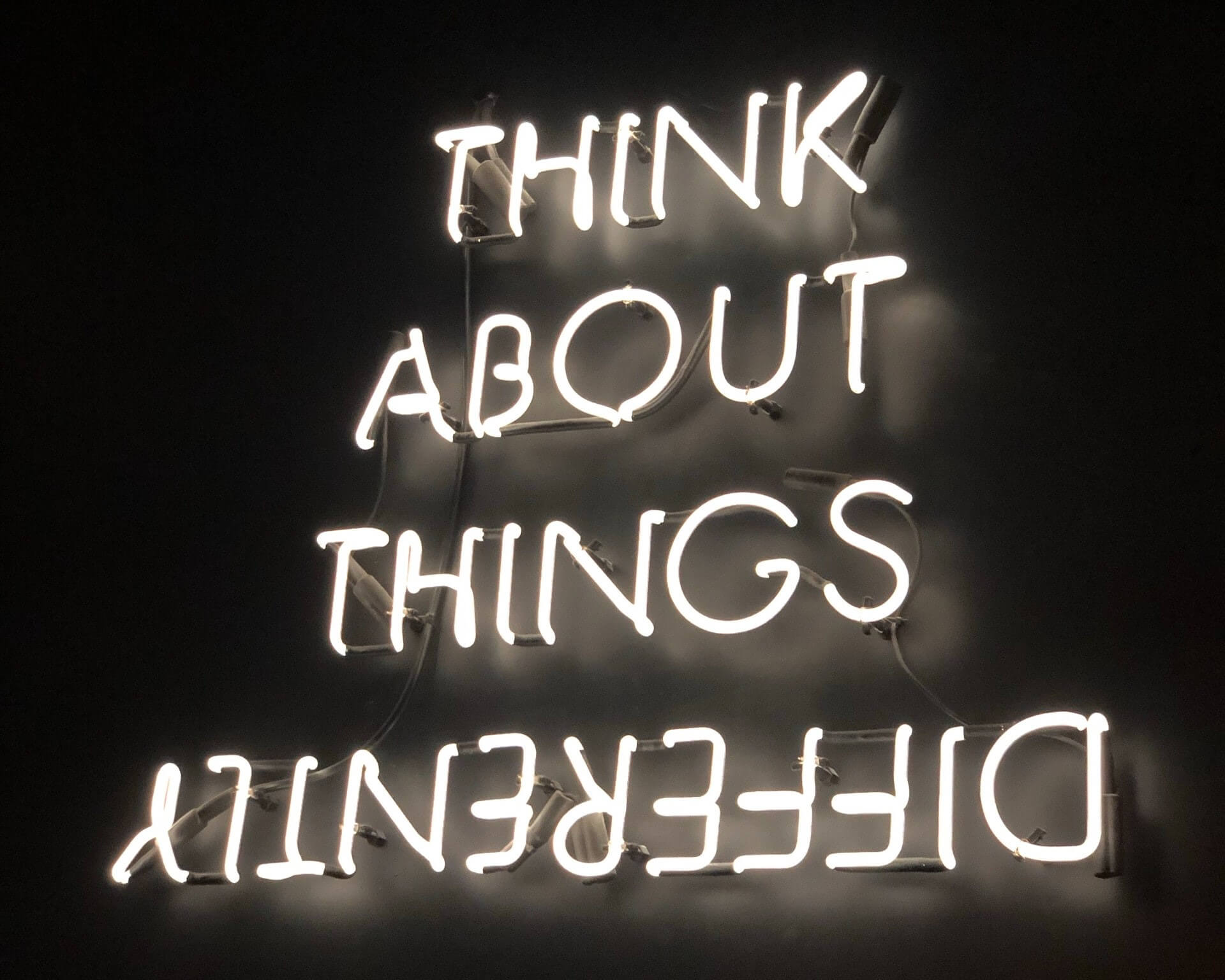
"Think about things differently" neon sign

Do you want to stand out from from other restaurants and bars in your area? Change how you think about your August holiday promotions.

Several holidays are set against every date on the calendar, and this month is no exception. These holidays range from mainstream to esoteric.

Pay attention to the “weird” or unique holidays to raise eyebrows, carve out a niche for your restaurant or bar, and attract more guests. Why do what everyone else is already doing? Why program only around the same holidays as everyone else?

Of course, you shouldn’t try to celebrate every holiday, strange or otherwise. Focus on the days that are authentic to your brand; resonate with your guests; and help you grab attention on social media.

You’ll find suggestions for promotions below. However, the idea behind our monthly holiday promotions roundup is to inspire you and your team to get creative and come up with unique programming ideas.

For our July 2023 holidays list, click here.

August 4: International Beer Day

In and of itself, International Beer Day isn’t a unique or obscure holiday. However, with the vast array of brewers, beer styles, and beers on offer around the world, it can be a day to highlight unique and obscure beers.

This is one of the best holidays for you to make your guests aware of your more exclusive or lesser-known beer selections.

August 5: National Jamaican Patty Day

If your kitchen has the capability to make delicious pastries, this is a fantastic holiday. A Jamaican patty consists of layered, flaky crust wrapped around jerk chicken, beef, pork, or vegetables mixed with spices. These are delicious, great with a refreshing drink, and perfect for sharing. Oh, and you and your kitchen can decide how hot or mild to make the spices. Just make sure the flavors are authentic and that you honor the culture.

August 7: British Columbia Day, Heritage Day, Natal Day, New Brunswick Day, Ontario Civic Holiday, Saskatchewan Day, and Terry Fox Day

In order, these are holidays celebrated in the provinces of British Columbia, Alberta, Nova Scotia, New Brunswick, Ontario, Saskatchewan, and Manitoba. Depending on the province, this is either a  guaranteed three-day holiday or a Monday that businesses can choose to give their employees off. That means for the most part, there’s plenty of opportunity to leverage a long weekend in seven provinces throughout Canada, perfect for highlighting food and drink promotions.

This also means that operators across America can feature F&B specials that celebrate their neighbors to the north. Get creative!

August 11: Play in the Sand Day

Should you be a beach- or lakefront property or otherwise located on sand, this is your time to shine. Set up games like cornhole, giant Jenga, and giant Connect Four, create an LTO menu that encourages groups to come socialize at your bar or restaurant, and celebrate in the sand.

August 16: National Rum Day

Again, this isn’t an unknown holiday. However, you can ensure you stand out on National Rum Day by getting your hands on unique bottles, such as funky rum styles and high-age-stagement expressions.

August 17: National Nonprofit Day

Do you, your guests, and your team support any nonprofits? If so, this is an excellent way to bring people together and raise some money for worthy causes. Further, National Nonprofit Day provides you with an opportunity to show your community that you care and give back.

August 22: National Bao Day

Much like National Jamaican Patty Day, National Bao Day gives you and your kitchen the opportunity to create fun foods that will excite and delight your guests. Just ensure your kitchen staff is up to the task of creating these delicious, steamed buns.

August 27: National Just Because Day

Have an idea for a promotion that doesn’t quite fit with anything on the calendar? This is the perfect day to let it rip!

August 29: National Lemon Juice Day

Lemon juice is a key ingredient for an incredible number of cocktails. So, shine a light on all the heavy lifting this citrus does in drinks! One way to accomplish this is by creating an LTO of your guests’ favorite drinks that feature lemon juice.

August 31: Eat Outside Day

Have outside seating? Have the capability of bringing food trucks into your parking lot or just outside your business? I think you know where I’m going with this, and what to do.

Image: Ivan Bertolazzi on Pexels

KRG Hospitality Start-Up Restaurant Bar Hotel Consulting Consultant Solutions Plans Services

by David Klemt David Klemt No Comments

Cheers to the Spirited Awards Winners!

Cheers to the 2023 Spirited Awards Winners!

by David Klemt

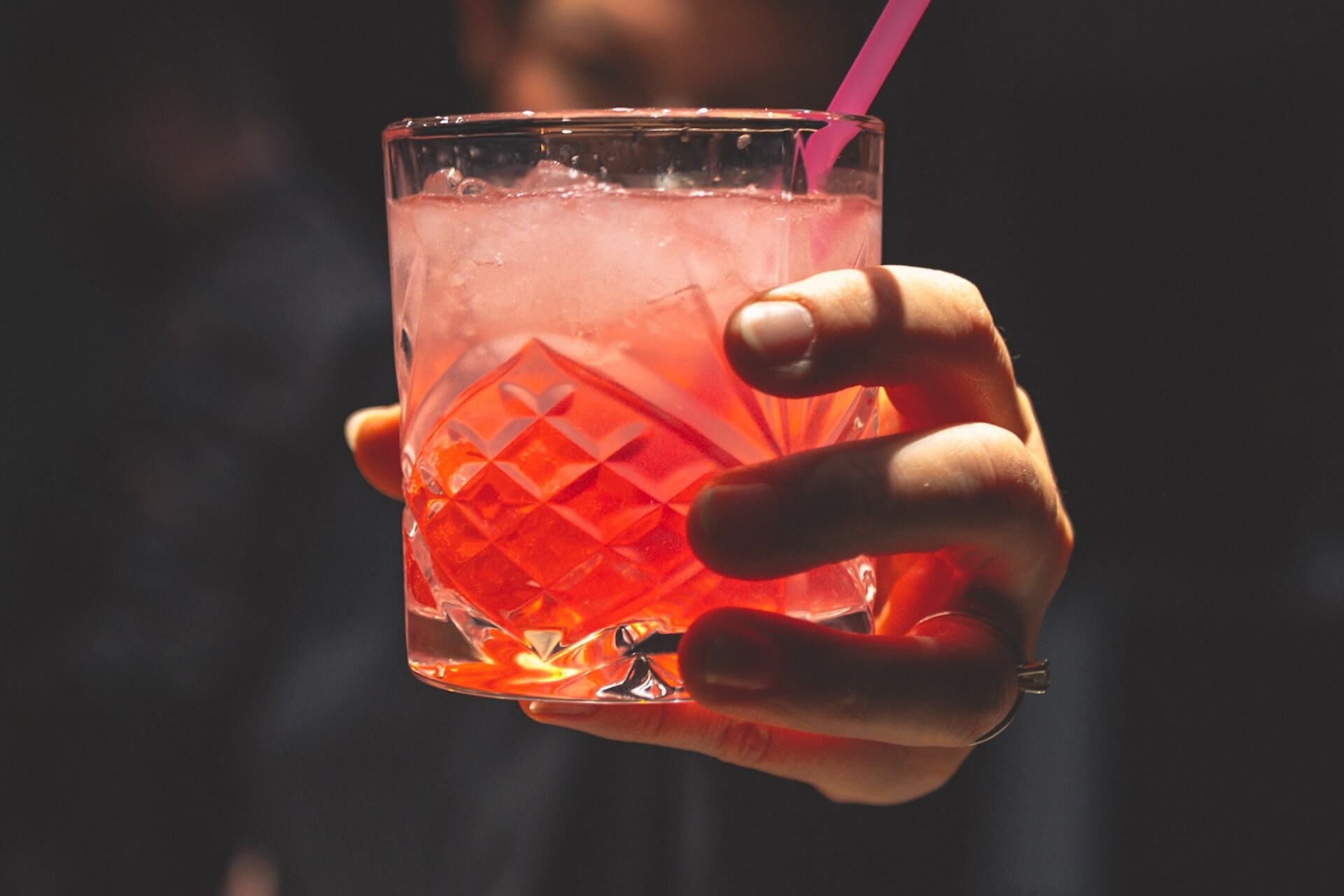
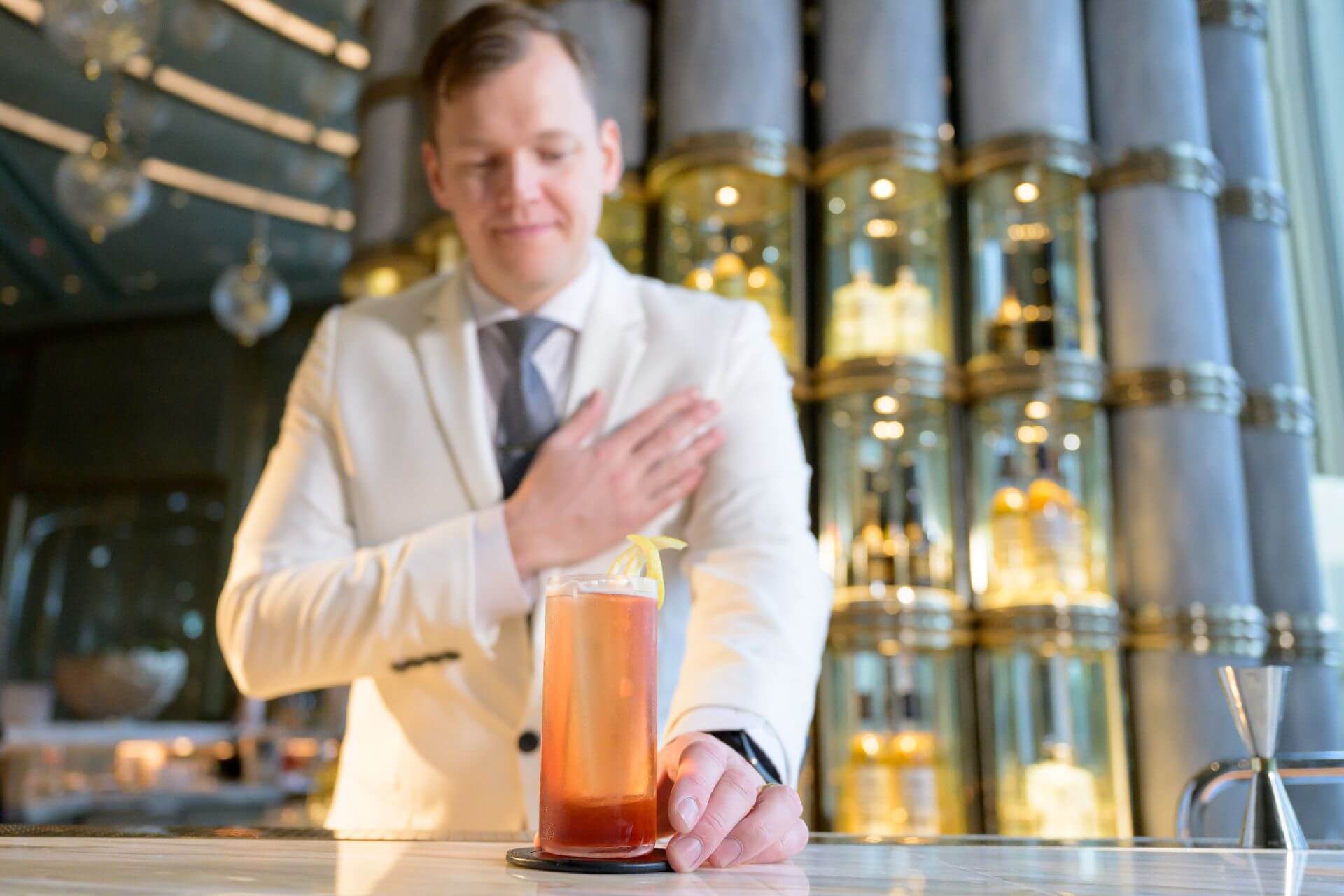
Bartender presenting cocktail

A toast to the nominees and winners!

Cheers to each of the winning bars, teams, and individuals taking home awards from the 17th annual Spirited Awards at Tales of the Cocktail 2023 in New Orleans!

Spirits educator, advocate, and bartender’s bartender Tiffanie Barriere earned the well-deserved Tales Visionary Award. Master Distiller Desmond Payne, MBE, took home the Helen David Lifetime Achievement Award.

Compellingly, a number of so-called secondary and tertiary markets are taking awards back to their home cities. These include Albuquerque, Phoenix, and Portland. Nothing against primary markets like New York City and Los Angeles, but it’s wonderful to see other cities grab the spotlight and shine, make their marks, and let everyone know, “We’ve arrived—don’t sleep on us!”

Unfortunately, Canada didn’t take home any international awards from Tales this year, nor did Las Vegas. Next year, hopefully.

Barcelona, however, can boast that it’s the home of the Spirited Award winner for the World’s Best Bar.

As far as our little experiment with artificial intelligence attempting to predict Spirited Awards winners, the chatbot we selected didn’t do very well. That said, it did accurately guess six out of the 24 awards we presented to the bot for a 25-percent success rate: Best US Brand Ambassador; International Bartender of the Year; Best International Bar Mentor; Best International Restaurant Bar; Best Broadcast, Podcast, or Online Video Series; and Best Cocktail & Spirits Writing.

Raise a glass and toast this year’s Spirited Awards winners. Cheers!

US Categories

US Bartender of the Year presented by Pernod Ricard USA

Christine Wiseman, Marygold’s Brasserie / Broken Shaker (Miami, Florida)

Best US Bar Mentor presented BarSmarts

Chris Patino

Best US Brand Ambassador presented Libbey

Vance Henderson (Hendrick’s Gin)*

Best US Bar Team presented by William Grant & Sons

Happy Accidents (Albuquerque, New Mexico)

Best US Cocktail Bar presented by Absolut Vodka

Century Grand (Phoenix, Arizona)

Best US Hotel Bar presented by Grey Goose

Hey Love at The Jupiter (Portland, Oregon)

Best US Restaurant Bar presented by Amaro Montenegro and Select Aperitivo

Café La Trova (Miami, Florida)

Best New US Cocktail Bar presented by Diageo Bar Academy

Martiny’s (New York, New York)

Timeless US Award

Tiki-Ti (Los Angeles, California)

International Categories

International Bartender of the Year presented by The Busker

Giorgio Bargiani, Connaught Bar (London, England, United Kingdom)*

Best International Bar Mentor presented by Tales of the Cocktail Foundation

Agostino Perrone*

Best International Brand Ambassador presented by Tales of the Cocktail Foundation

Nicola Riske (The Macallan)

Best International Bar Team presented by Angostura Caribbean Rum

ALQUÍMICO (Cartagena, Colombia)

Best International Cocktail Bar presented by Patr​​ón Tequila

SIPS (Barcelona, Spain)

Best International Hotel Bar presented by Perrier

Jigger & Pony at the Amara Hotel (Singapore)

Best International Restaurant Bar presented by Tales of the Cocktail Foundation

Analogue Initiative (Singapore)*

Best New International Cocktail Bar presented by Diageo Bar Academy

Line Athens (Athens, Greece)

Timeless International Award

Long Bar at the Raffles Hotel (Singapore)

Global Categories

Tales Visionary Award

Tiffanie Barriere

Helen David Lifetime Achievement Award

Desmond Payne, MBE

World’s Best Bar

SIPS (Barcelona, Spain)

Best New Spirit or Cocktail Ingredient presented by Lyre’s Non-Alcoholic

Martini & Rossi Floreale Non Alcoholic Aperitivo

World’s Best Cocktail Menu presented by Diageo Bar Academy

Double Chicken Please (New York, New York)

World’s Best Spirits Selection presented by Tales of the Cocktail Foundation

Raised by Wolves (San Diego, California)

Writing & Media Categories

Best Cocktail & Spirits Publication presented by Tales of the Cocktail Foundation

Punch

Best Broadcast, Podcast, or Online Video Series presented by Tales of the Cocktail Foundation

The Speakeasy Podcast*

Best Cocktail & Spirits Writing presented by Tales of the Cocktail Foundation

The Great Mezcal Heist” by Emma Janzen, for Eater*

Best New Cocktail or Bartending Book presented by Tales of the Cocktail Foundation

The Bartender’s Manifesto by Toby Maloney with Emma Janzen

Best New Book on Drinks Culture, History, or Spirits presented by Tales of the Cocktail Foundation

Modern Caribbean Rum: A Contemporary Reference to the Region’s Essential Spirit by Matt Pietrek and Carrie Smith

Congratulations to each of the venues, teams, and individual winners! Cheers!

Bar Hacks Guests

The following Spirited Awards presenters, winners, and TOTC team have appeared on the Bar Hacks podcast. Give these episodes a listen to learn more about these amazing people!

Vance Henderson (episode 20)

Episode 48, Episode 65, and the Hurricane Ida Emergency Episode with Eileen Wayner

Lynn House (episode 52)

Kellie Thorn and Lola Thomas (episode 72)

Roberta Mariani (episode 84)

* Denotes an accurate prediction by DeepAI‘s AI Chat chatbot.

Image: Christian Fridell on Pexels

KRG Hospitality. Bar Consultant. Nightclub. Lounge. Mixology. Cocktails.

by David Klemt David Klemt No Comments

The 50 Best Bars in Asia in 2023

The 50 Best Bars in Asia in 2023

by David Klemt

Bartender presenting cocktail in upscale setting

2023 Asia’s 50 Best Bars Bartenders’ Feast.

Join us in congratulating each of the bars and their teams earning placements on the 2023 Asia’s 50 Best Bars list by the World’s 50 Best Bars.

As is often the case, Hong Kong and Singapore claim an exceptional number of bars. I fully expect to see a handful of the bars on the list below on the World’s 50 Best Bars list this year.

Speaking of which, that ceremony, the 15th edition of the list, will take place on October 17 in Singapore. Again, I expect the host city to claim multiple spots.

Cheers to Asia’s 50 Best Bars for 2023!

To review the 2023 Asia’s 50 Best Bars, 51 to 100 list, please click here.

By the Numbers

While Singapore doesn’t claim the number one spot this year, the island country does boast 11 entrants. Further, three of Singapore’s bars hold spots in the top ten.

Hong Kong is home to eight bars on this year’s Asia’s 50 Best Bars list. Like Singapore, three bars in Hong Kong are among the top ten.

There are seven bars in Japan (five in Tokyo), one earning a top-ten slot. Six of the bars on the 2023 list are in Seoul, South Korea.

Thailand and India both have four bars on the list. The former boasts two bars in the top ten.

There are three bars in Taiwan among the fifty.

Malaysia and Indonesia each have two bars among Asia’s 50 Best Bars in 2023. Both of Malaysia’s bars in Kuala Lumpur, and both of Indonesia’s are in Jakarta.

Mainland China, the Philippines, and Sri Lanka each have a bar on this year’s list.

100 Incredible Bars

When we take the back half of this list into account, Singapore continues its domination, with 19 bars earning placement.

Hong Kong boosts its number of bars to 13, and Japan adds seven bars to bump its total to an even dozen. Seoul, South Korea, claims eight bars total.

Thailand, counting both lists, has eight amazing bars, as does Taiwan. In total, there are nine bars in India. Six bars in Kuala Lumpur, Malaysia, and there are a total of four bars in China.

The Philippines have one bar on the one to 50 list, and one on the 51 to 100 list, for a total of two bars among Asia’s 100 best.

The Best Bar In:

Hong Kong: Coa

India: Sidecar

Japan: Bar Benfiddich

Korea: Zest

Mainland China: Hope & Sesame

Malaysia: Bar Trigona

Philippines: The Curator

Singapore: Jigger & Pony

Sri Lanka: Smoke & Bitters

Taiwan: Indulge Experimental Bistro

Thailand: BKK Social Club

See the list below for the Best Bar in Asia.

Asia’s 50 Best Bars: 50 to 1

  1. Penrose (Kuala Lumpur, Malaysia)*
  2. The Bellwood (Tokyo, Japan)*
  3. The Living Room (Mumbai, India)*
  4. The Old Man (Hong Kong)**
  5. Soko (Seoul, South Korea)*
  6. High Five (Tokyo, Japan)**
  7. Bee’s Knees (Kyoto, Japan)
  8. The Public House (Taipei, Taiwan)*
  9. Native (Singapore)**
  10. Vender (Taichung, Taiwan)*
  11. Smoke & Bitters (Hiriketiya, Sri Lanka)(The Best Bar in Sri Lanka)
  12. Hope & Sesame (Guangzhou, China)(The Best Bar in Mainland China)
  13. Copitas (Bengaluru, India)
  14. Southside Parlor (Seoul, South Korea)*
  15. Bar Trigona (Kuala Lumpur, Malaysia)(The Best Bar in Malaysia)
  16. The Bombay Canteen (Mumbai, India)*
  17. The Curator (Manila, Philippines)(The Best Bar in the Philippines)**
  18. Mostly Harmless (Hong Kong)*
  19. Stay Gold Flamingo (Singapore)*
  20. Quinary (Hong Kong)
  21. Employees Only (Singapore)**
  22. Pantja (Jakarta, Indonesia)*
  23. Alice (Seoul, South Korea)
  24. Atlas (Singapore)
  25. Penicillin (Hong Kong)
  26. Le Chamber (Seoul, South Korea)
  27. 28 HongKong Street (Singapore)
  28. Lamp Bar (Nara, Japan)
  29. Mahaniyom Cocktail Bar (Bangkok, Thailand)(London Essence Best New Opening)*
  30. Manhattan (Singapore)
  31. Virtù (Tokyo, Japan)(Disaronno Highest New Entry)
  32. The Cocktail Club (Jakarta, Indonesia)(Siete Misterios Best Cocktail Menu, the Best Bar in Indonesia)
  33. Sidecar (New Delhi, India)(The Best Bar in India)
  34. The Aubrey (Hong Kong)
  35. Republic (Singapore)
  36. Analogue Initiative (Singapore)(Ketel One Sustainable Bar)
  37. The SG Club (Tokyo, Japan)
  38. Cham Bar (Seoul, South Korea)
  39. Vesper (Bangkok, Thailand)
  40. Indulge Experimental Bistro (Taipei, Taiwan)(The Best Bar in Taiwan)
  41. Sago House (Singapore)(Michter’s Art of Hospitality)
  42. Darkside (Hong Kong)
  43. Argo (Hong Kong)
  44. Nutmeg & Clove (Singapore)
  45. Tropic City (Bangkok, Thailand)
  46. Zest (Seoul, South Korea)(Nikka Highest Climber, the Best Bar in Korea)
  47. Bar Benfiddich (Tokyo, Japan)(The Best Bar in Japan)
  48. BKK Social Club (Bangkok, Thailand)(The Best Bar in Thailand)
  49. Jigger & Pony (Singapore)(Rémy Martin Legend of the List, the Best Bar in Singapore)
  50. Coa (Hong Kong)(The Best Bar in Asia, the Best Bar in Hong Kong)

Congratulations to each of the operators and bar teams above! Cheers!

* Denotes new entry, ** denotes re-entry.

Image: The World’s 50 Best Bars

KRG Hospitality. Bar Consultant. Nightclub. Lounge. Mixology. Cocktails.

by David Klemt David Klemt No Comments

Hospitality Mindset: Hotel Edition

Hospitality Mindset: Hotel Edition

by Jennifer Radkey

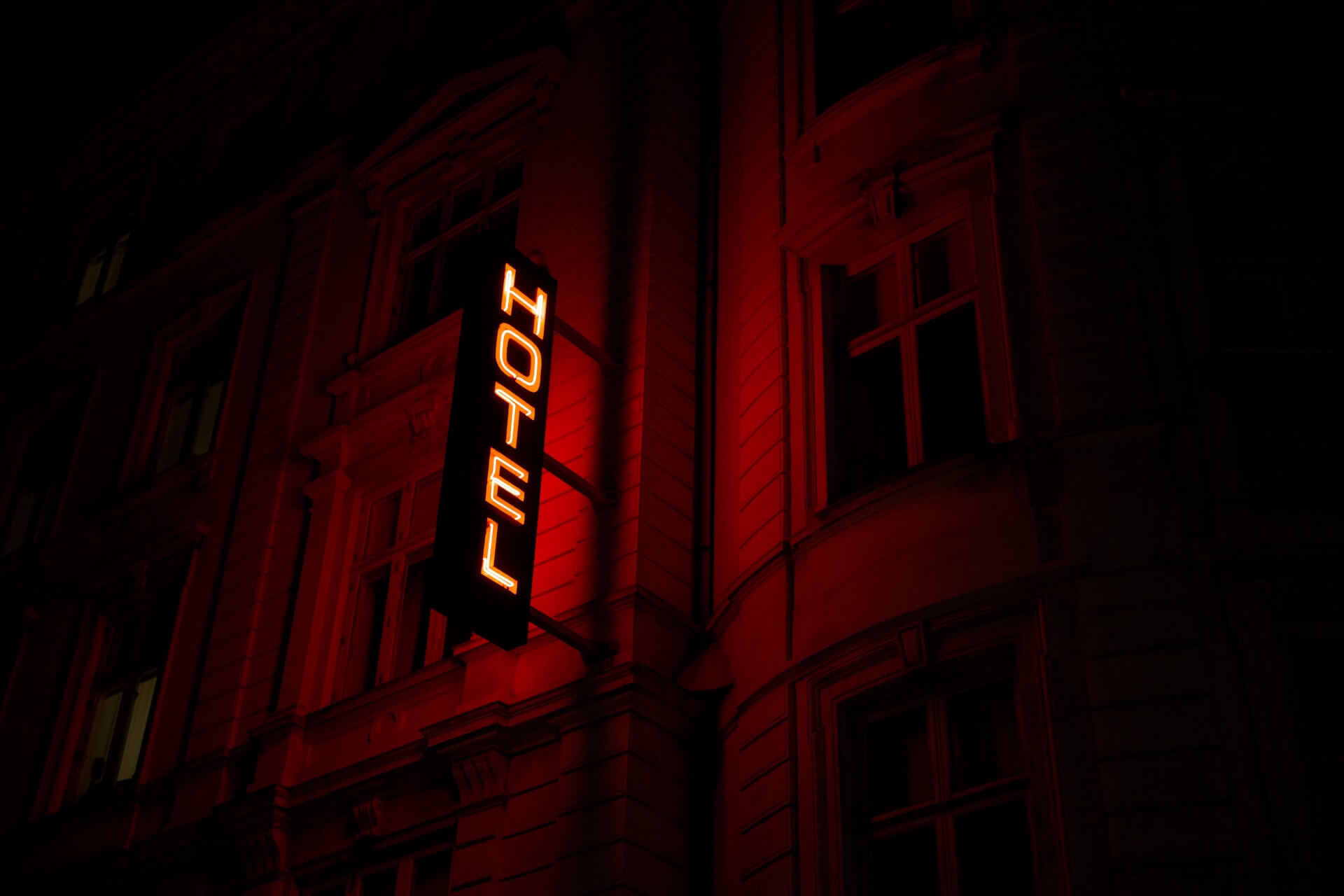
Red neon "hotel" sign in Copenhagen

Mindset can dictate one’s level of happiness but what some people don’t realize is that it also impacts their business and everyone in it.

Moods like happiness or hostility. Growth or fixed worldviews. Positivity versus negativity. For operators and leadership team members, mindset doesn’t exist in a vacuum. Rather, one’s attitude affects and influences staff, guests, and others.

So what is mindset exactly?

Simply stated, mindset is an individual’s usual attitude or mental state. It reflects someone’s way of thinking and motivates their actions. So, why is it important to be aware of your mindset?

Well, if your mindset dictates how you show up in your life each and every day, it will influence all parts of your life.

Your thoughts about yourself, others, your business, your opportunities and your challenges… All influenced by your mindset. Your mindset can either hinder or promote your overall well-being and success in life.

The interesting thing about mindset is that it has the ability to changeif you want. It can also be influenced by your environment and those around you. These facts led me to question if the different sectors of the hospitality industry face unique mindset challenges.

To find answers and gain further insight I decided to turn to our team at KRG Hospitality for their thoughts. In turn, I’ve written a series of hospitality mindset articles. To read the first entry in this series, the Bar Edition, please click here.

In this article I’ll explore the hotel industry, with thoughts from hospitality consultant Kim Richardson. Follow the series as I explore mindset in restaurants, hotels, bars, and start-up operations.

Let’s dive in!

The Hotel Industry

The hotel industry is vast and can be segmented into different sectors. These sectors include: lodging and accommodation, food and beverage, travel and tourism, entertainment and recreation, and timeshare and meetings.

Not only is the industry vast in its sectors, there are an array of categories. There are motels, inns and resorts, and independent, boutique and global brands. Budget, midscale, and luxury properties, and everything in between.

Different types of hotels will vary slightly in their management styles and success challenges, but most will share common mindset themes.

Successful Operators

Operating a successful hotel takes a certain mindset. You need to be organized, open-minded to growth strategies, mindful of your sectors and how they interact with each other, and responsive to the needs of your teams.

Curious about what makes one hotel stand above another, I asked Kim what contributes to a successful operator. She responded with the perspective of a general manager of a large hotel, and then from the perspective of an owner of a small boutique hotel.

“One thing that really sets the hotel world aside from the rest of the hospitality industry is the multiple facets of the different departments,” says Kim. “You’re essentially running several businesses inside of one business. All of these different departments’ successes and failures impact the other departments. I think it’s important for operators and general managers to truly have a pulse on what’s going on throughout the building and, more importantly, when a department has a success or failure, how the other departments contributed to that.”

When it comes to smaller boutique hotels or inns, Kim believes that “the ability to wear many hats and jump in as needed” is a crucial success skill for owners as they often work with a much smaller team and may need to be more hands on. Hand in hand with the ability to multi-task and wear many hats is having excellent time management skills.

Whether you are the GM of a large hotel or an owner of a small boutique hotel, it is essential to constantly “have a pulse on the business coming in the door.”

Operator Challenges

Operators need a positive, strategic, growth mindset to be successful in the hotel industry. This is a mindset that needs to be consistently cultivated, as there are challenges that will affect your daily thoughts, beliefs, and attitudes.

When asked what specific challenges hotel operators face that may affect their mindset, Kim shared her thoughts, again from the perspectives of a large hotel GM and that of a smaller boutique hotel owner.

Accountability

Being responsible for and held accountable to all levels of positions in your establishment can be exhausting, stressful, and frustrating.

“A general manager of a hotel has a lot of people to answer to. They have people above them in corporate making demands of them on a daily basis (budgets, goals, etc.). They have staff that they employ and need to keep happy. They have guests they need to keep happy,” Kim says. “With this many responsibilities, time management alone can be stressful. Finding a happy medium is close to impossible. Not every decision you make is going to please all three parties. This position can suffer from burnout just as much as the rest of their team.”

Overwhelm

Operators of boutique hotels and inns fall into danger of taking on too much themselves while feeling the success of their venue lies entirely on their shoulders.

Burnout, fear, and exhaustion are all possibilities in this situation.

“In a small boutique hotel, the owner and operator wears many hats,” says Kim. “They are often having to jump in and run many departments. If you’re short staffed in one area, you’re going to have to jump in. This can create a situation where you’re spending so much time working in the business that you struggle to work on growing the business. The overall stress of the success of the business is much more when you own your own hotel. Competing against big hotels with larger marketing budgets and known names can be a challenge.” 

Employee Challenges

Your team also experiences their own unique set of challenges that can affect their well-being and mindset.

Being aware of these challenges is important if you hope to create a culture of respect, collaboration, and trust.

When asked what specific challenges hotel staff face, Kim had some insights.

On Demand

It’s no secret that the hotels operate in a 24-hour industry. No matter what time of day or night, a hotel never truly “sleeps.” This on-demand atmosphere can be stressful for your team.

“Since the building is open 24 hours, guests tend to think you are also available 24 hours,” Kim says. “There is always the possibility that you could get a call at any time when you’re not working. Not only does the guest perceive you as always available, some managers expect the same from you, too.”

Broken Telephone

Working in a 24-hour environment means that you may not always be working with the same people every shift. In establishments with several departments, you may never have direct interaction with a lot of your team.

This can all lead toward miscommunication, frustration, and blame.

“Communication can fall short,” explains Kim. “There can be people who work in other departments that you are never in the building with at the same time. There are typically many procedures in place to communicate between departments, but things still get missed.”

Harmful Beliefs in the Hotel Industry

How you feel about the people you work with and/or work for can have major impacts on your overall mindset.

If your daily thoughts regarding your team are negative, it suddenly becomes very challenging to create a successful hotel. Why would they be excited to come to work and proud of your hotel if their efforts are only ever met with negativity?

The hotel industry has a few specific, common harmful beliefs that are prevalent in many establishments. Being aware and knowing how to acknowledge and combat these beliefs is crucial to creating a more positive work environment.

Assumptions

When I asked Kim what one of the most prevalent harmful beliefs operators harbor about their teams, she discussed the assumptions that are often made.

“I think proprietors sometimes think that what they’re asking is easy and doable,” posits Kim. “When a business is not doing well they tend to look at the quality of their staff versus quality of the processes.”

Assumptions without clarity or reason can be extremely harmful to your workplace culture. Not only are operators holding assumptions about their team, but their team holds assumptions about leadership.

Staff often feel that operators and members of the leadership team are out of touch with the reality of their market, and that they place unrealistic expectations on them. There are assumptions made that leadership does not want them to succeed personally.

“Revenue goals are increased just because they want more money but haven’t put thought into whether or not it’s attainable to make the money,” says Kim. “Operators don’t want to see people get bonuses, so in turn they raise goals. Doing well one year will only hurt you in the next year because all goals will be raised. Staff feel overworked and underpaid, leading them to believe that ownership is cheap and always giving a two-person job to one person.”

Toxic Culture

The last thing that any hospitality business needs is a toxic culture. A toxic workplace culture encourages and breeds negative mindsets on all levels.

How can you be successful if your team dreads coming in for their daily shift?

I asked Kim what can create toxic culture in a hotel, and she shared her thoughts and experiences.

“One of the biggest challenges that I always felt in hotels is the divide amongst departments. It’s very similar to the front-of-house, back-of-house animosity that often exists in restaurants,” shares Kim. “One department always feels that another department was not mindful of how their decisions impact their department. What I came to realize is sometimes that’s true and sometimes it’s not.  There’s always going to be that person who decided to make the decision that was best for their day or made them look good in accomplishing their own job.”

“However, I don’t think that is the intention of most people,” continues Kim. “With so many different types of roles in a hotel, you will never understand all of the inner workings of another department. Each department has to make the decision that best accomplishes their goal for the guest and their department. When the communication breaks down between departments and there is no understanding of how they impact each other, animosity is created.”

Moving Forward

Understanding the challenges that operators and staff are currently facing and acknowledging the importance of a growth mindset and the need for change, what positive changes have been occurring in the industry as a whole?

“Some hotels have increased wages. Some have been more open to hybrid positions of remote and on-property work since the pandemic,” Kim says. “However, there are some that are now trying to do away with those. Also, there are only a few departments in the hotel that can benefit from this as many of them need to be on property to do their jobs.”

“Overall, I haven’t seen a ton of change. There are still so many people struggling with work-life balance in the hospitality industry,” Kim continues. “I just talked to a friend the other day who has told me for years that she’s a lifer in hotels and she’s never going anywhere. She is the last person I thought I’d hear this from, but she’s feeling burnout and is not sure how much longer she can last. This is someone who is excellent at their job. Really understands the business, is a hard worker, team player, willing to go the extra mile. How many people do we find like that, that we are throwing away by putting unachievable standards on?”

Room for Improvement

Although some operators are becoming more aware of the well-being of those working in this industry, there are still many changes that need to happen. Kim believes that there are three simple changes that need to happen.

“We need to stop losing people that want to be lifers over things like burnout and lack of work-life balance. Genuine gratitude and respect from superiors goes a long way. Better communication and accountability are a must,” says Kim.

Final Thoughts

Hotels are a complex entity with many moving parts. It takes a strategic and positive mindset to ensure success and a happy work environment.

The reality is that there will always be challenges that will affect your thoughts and behaviors. You will have bad days but that is all they are: bad days.

It is the leader who can recognize these setbacks as temporary and use them to fuel their mindset towards making positive change who will come out on top.

I’ll leave you with a few last words of wisdom from KRG Hospitality hotel and restaurant consultant Kim Richardson.

“When guests come to stay at a hotel, it is their home for the duration they are there. They are there much longer than grabbing a cup of coffee or a night out to dinner. They can feel the demeanor of the staff,” says Kim. “Positive work environments exude happiness for the guests. When the employees are unhappy, the guests leave unhappy. Mindset can be contagious, and while the internal feelings trickle down to the guests, it starts way before that. If a positive energy is being given off from the leaders in the building, it can have a great impact on the staff, which then impacts the guests.

Cheers to personal and professional well-being!

Image: Marten Bjork on Unsplash

KRG Hospitality Mindset Coaching, 2023 Icon

by David Klemt David Klemt No Comments

Asia’s 50 Best Bars 2023 Revealed: 51-100

Asia’s 50 Best Bars 2023 Revealed: 51 to 100

by David Klemt

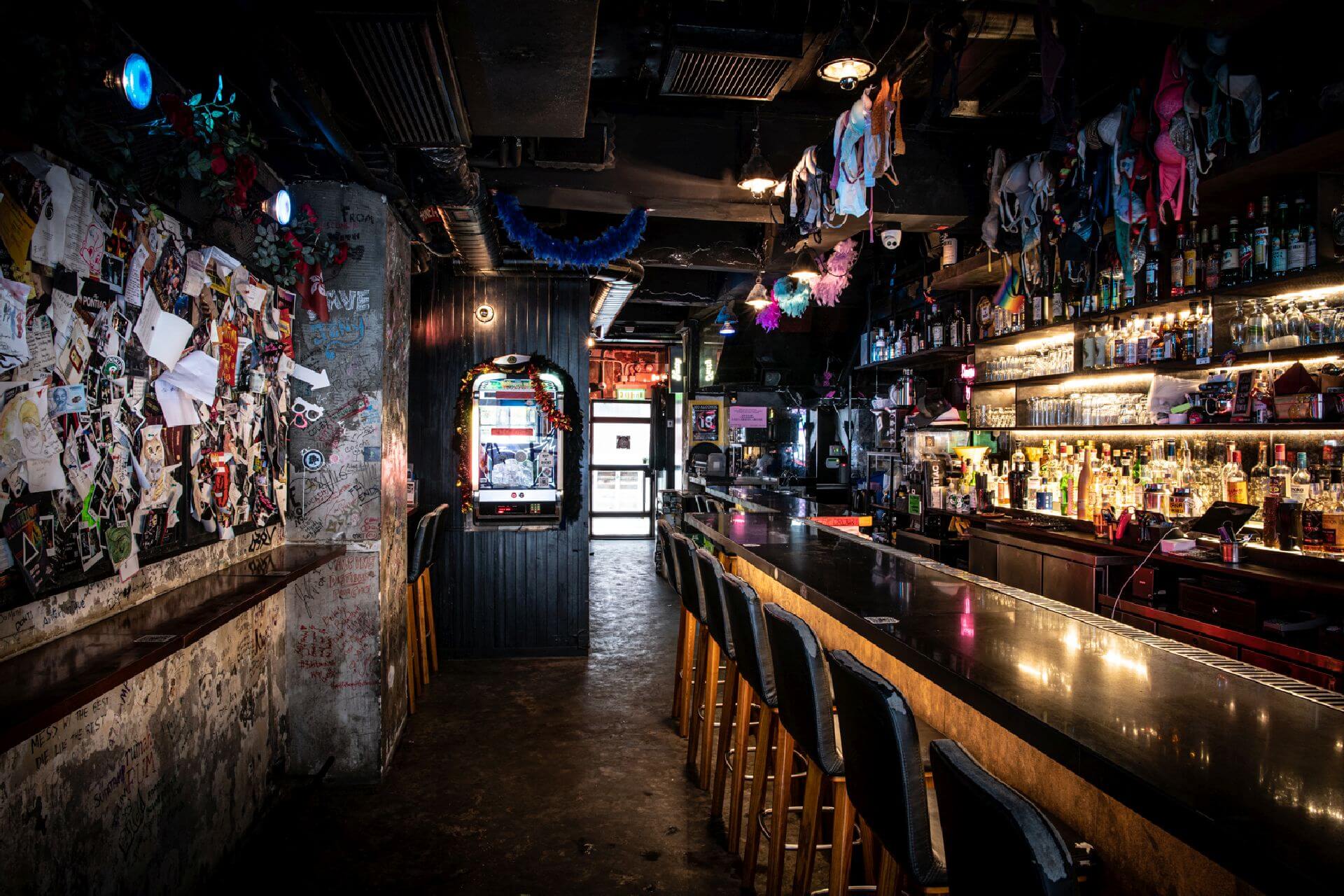
The Pontiac bar in Hong Kong

The Pontiac bar in Hong Kong, an inclusive, welcoming venue with an all-woman team.

One week from the ceremony revealing bars one through 50 of Asia’s 50 Best Bars, the World’s 50 Best Bars announces venues 51 to 100.

Sponsored by Perrier, the World’s 50 Best Bars will announce the top 50 bars in Asia on Tuesday, July 18. This year’s ceremony will take place in Hong Kong at 20:25 local time.

However, we now know which bars have earned placement on the back half of this year’s list. As Mark Sansom, director of content for the World’s 50 Best points out on episode 82 of Bar Hacks, an expansion for their lists is necessary. There are simply too many outstanding operators and teams to not honor an additional 50 venues.

To that end, the list below represents the third edition of Asia’s 50 Best Bars, 51 to 100. In my opinion, and I think the World’s 50 Best and bar professionals across the world agree, this list is every bit as prestigious as one through 50. Let’s not downplay the fact that these are 50 of the best bars in all of Asia. It’s no small feat to earn a spot on this list.

If you’re interested in finding more amazing venues throughout Asia (and around the world), click here to learn about the World’s 50 Best Discovery tool.

By the Numbers

As you’ll see below, Singapore dominates this year’s 51 to 100 list with eight bars. I expect Singapore pick up even more spots next week.

Japan boasts seven bars on the list, with Osaka, Okinawa, and Kumamoto making debuts. Hong Kong, Taiwan, and India each have claim five slots. Bangkok and Kuala Lumpur are also well represented with four bars each.

Vietnam and China each have three bars among this year’s 51 to 100. Two bars in Seoul, South Korea, earned placement as well.

However, it’s Kathmandu, Nepal, with two bars that stands out the most to me. Numbers 100 and 70 belong to Kathmandu, and are both new to the list.

To review the list on the World’s 50 Best website, please click here.

Asia’s 50 Best Bars: 100 to 51

  1. Barc (Kathmandu, Nepal)
  2. Loft (Bangkok, Thailand)
  3. Honky Tonks Tavern (Hong Kong)
  4. Tell Camellia (Hong Kong)
  5. Enigma (Ho Chi Minh City, Vietnam)
  6. Origin Grill & Bar (Singapore)
  7. PCO (New Delhi, India)
  8. Bar Mood (Taipei, Taiwan)
  9. Bar Trench (Tokyo, Japan)
  10. Aha Saloon (Taipei, Taiwan)
  11. Union Trading Company (Shanghai, China)
  12. The Wise King (Hong Kong)
  13. The Sailing Bar (Nara, Japan)
  14. The Odd Couple (Shanghai, China)
  15. Mizunara: The Library (Hong Kong)
  16. The Haflington (Hanoi, Vietnam)
  17. Yakoboku (Kumamoto, Japan)
  18. D.Bespoke (Singapore)
  19. Bar Rocking Chair (Kyoto, Japan)
  20. El Lequio (Okinawa, Japan)
  21. Offtrack (Singapore)
  22. #FindTheLockerRoom (Bangkok, Thailand)
  23. Three X Co (Kuala Lumpur, Malaysia)
  24. Wishbone Bar (Semarang, Indonesia)
  25. The Back Room (Manila, Philippines)
  26. No Sleep Club (Singapore)
  27. Nighthawk (Singapore)
  28. Pine & Co (Seoul, South Korea)
  29. Moonrock (Tainan, Taiwan)
  30. Epic (Shanghai, China)
  31. Bitters & Co. (Kathmandu, Nepal)
  32. Asia Today (Bangkok, Thailand)
  33. Coley (Kuala Lumpur, Malaysia)
  34. Hideaway (Goa, India)
  35. Reka (Kuala Lumpur, Malaysia)
  36. The Elephant Room (Singapore)
  37. Tippling Club (Singapore)
  38. Craftroom (Osaka, Japan)
  39. Last Word (Singapore)
  40. Hoots’ (New Delhi, India)
  41. Opium (Bangkok, Thailand)
  42. Home (New Delhi, India)
  43. Americano (Mumbai, India)
  44. Gold Bar (Tokyo, Japan)
  45. Junglebird (Kuala Lumpur, Malaysia)
  46. Room by Le Kief (Taipei, Taiwan)
  47. The Pontiac (Hong Kong)
  48. To Infinity and Beyond (Taipei, Taiwan)
  49. Charles H (Seoul, South Korea)

Be sure to log into the live stream to watch the one through 50 announcement live.

Congratulations to each of the operators and bar teams above! Cheers!

Image courtesy of the World’s 50 Best Bars

KRG Hospitality. Bar Consultant. Nightclub. Lounge. Mixology. Cocktails.

by David Klemt David Klemt No Comments

Tech this Out: Rise of the Cobots

Tech this Out: Rise of the Cobots

by David Klemt

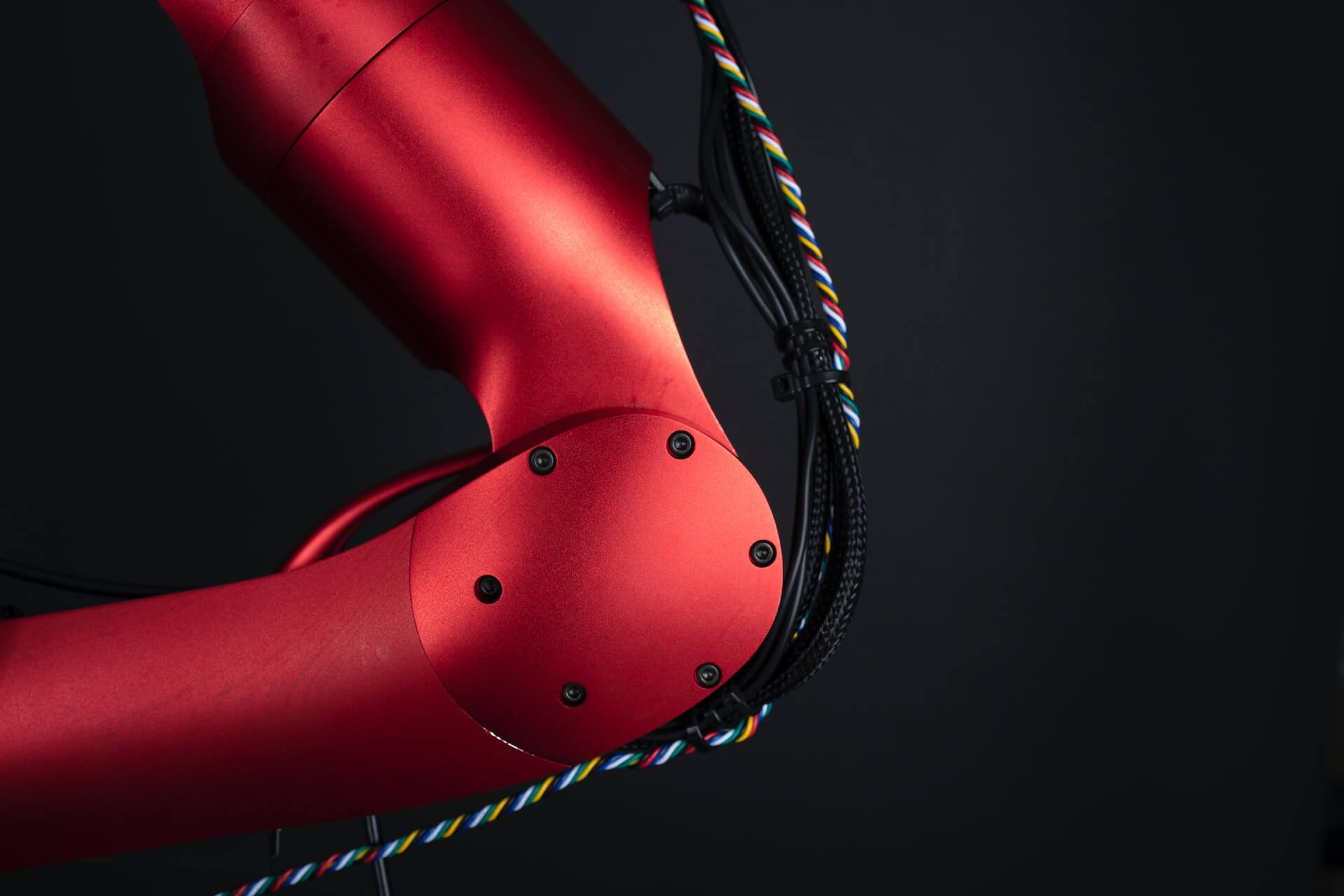
Red arm of a humanoid robot

As technological innovations continue to flood the hospitality industry, restaurant and hotel robots appear to be on the rise.

Or, perhaps more accurately, robotics companies appear to be targeting hospitality more.

There were, for example, far more robots on the National Restaurant Association Show floor this year. Beverage-making robots, server bots, room service delivery robots, lobby “host” and information bots, automated robot arms… There were robots in each hall.

Interestingly, however, a different word is beginning to take hold: “cobot.”

While the concept isn’t newcobots have been working in other industriesthe word is likely new to hospitality professionals.

Simply put, “cobot” is a portmanteau of “collaborative robot.” These are, therefore, robots that work alongside and with humans. In other words, the term implies that these robots aren’t here to replace people.

Rather, we’re to believe that cobots are just here to take over hazardous and tedious tasks.

Dropping fries? Let the cobot do it. Flipping patties? Why should a human do that when we have cobots? Food is up? Send out the serverbot. Table needs turning? The cobot can drop the dishes, flatware, and glassware to the dishwasher station.

It’s difficult for me to not be skeptical. “Cobot” may aim to imply collaboration, but how long until most of the back of house is automated? How long until members of the kitchen team go from “freed up” to replaced fully?

On the flip side, however, I do see the appeal. Some tasks are tedious. There are hazardous tasks. Labor costs are too high. It is difficult to find and retain talent.

Cobots and other forms of automation offer viable solutions.

Cobots, Roll Out!

So, are these pie-in-the-sky vanity prototypes getting media attention? Or are there really cobots available?

If you have the money and the inclination, these robots aren’t vaporware. There are robots designed to take on several restaurant and hotel tasks that can work at your venue today.

Of course, you have to keep your back-of-house and front-of-house footprint and layout in mind. Perhaps more importantly, you also need to understand how your guests feel about technology, automation, and robots.

I don’t mean making assumptions, either. No, not every Millennial or member of Gen Z is tech-hungry. In fact, some are tech-averse and don’t want robots making or delivering their food. It’s not, as some would say, a vibe.

This is to say, the decision to bring cobots into your business isn’t just about cost. This robots will affect your bottom line in various ways, affect your team, and affect the guest experience. In turn, that means they affect your brand.

Of course, cobots and automation do work with some concepts and brands. If automation and tech-savviness are part of the brand, cobots should work.

However, it’s wise to proceed cautiously and intentionally.

Guidance, Information and Entertainment

SoftBank Robotics manufactures Pepper, a robot my friends and I have interacted with in Las Vegas.

Formerly the Mandarin Oriental Las Vegas, we’ve played around with Pepper at the Waldorf Astoria over the years. Pepper has offered to help us check in, provide information about the hotel, told us jokes, and played music and danced with us. (It’s possible we’ve danced with Pepper after visiting the hotel’s Moët & Chandon vending machine.)

Another interactive robot is Guiderbot G2, also known as Peanut, by Keenon Robotics. I’ve interacted with Peanut at the 2023 NRA Show in Chicago and this year’s Hospitality Show in Las Vegas. Peanut is, for lack of a better word, cute and people seem to want to engage with it.

As one may guess from the formal name of Guiderbot, Peanut is tasked with a mission similar to Pepper’s.

Delivery and Bussing

I also “met” Keenon’s Butlerbot W3, Peanut’s room service delivering peer. Interestingly, the four doors can be configured to best deliver to a guest or guests.

Then there are the Dinerbots, a series of Keenon robots that can “work” at restaurants and drop orders off at tables.

Spend any amount of time on most hospitality trade show floors and you’ll encounter front-of-house delivery cobots. And, of course, these robots can be used to clear tables and pop by the dishwashing station.

Production

Most operators, when thinking about automation, are likely familiar with Flippy, Flippy 2, and Flippy Lite.

From Miso Robotics, this family of robots features robot arms that tend to fryers. That a Flippy can handle just about any fried food and fit in most kitchens without much modification (if any) makes these cobots attractive.

From what I’m seeing, robotic arms are the cobots du jour. Along with Flippy there are the Intelligent French Fry Robotic Solution from Atosa; FryBot from Lab2Fab; and the Wingman from Nala Robotics. And that’s just a few of the cobot arms out there.

Of similar design are a variety of automated beverage-producing robots. At the moment, these tend to be robotic arms contained within a trailer or kiosk that are capable of quickly serving personalized coffees. One impressive example is Robojo by Zink.

There are also automated make lines, such as the Robochef SmartLine and TechMagic P-Robo.

We don’t know how long it will be until robots are commonplace in restaurants. For now, they seem to be at home mostly in a select few chain restaurants, niche operations in destination markets, and hotels.

However, as we all know, as tech goes from early adoption to ubiquity, cost becomes less of a barrier of entry. My concerns, for now, are the risks to people’s jobs and the impact on the guest experience.

Image: Mathew Schwartz on Unsplash

KRG Hospitality tech stack consulting. Tech. Technology. CRM. POS. Restaurant. Bar. Cafe. Lounge. Hotel. Resort.

by David Klemt David Klemt No Comments

Hospitality Mindset: Bar Edition

Hospitality Mindset: Bar Edition

by Jennifer Radkey

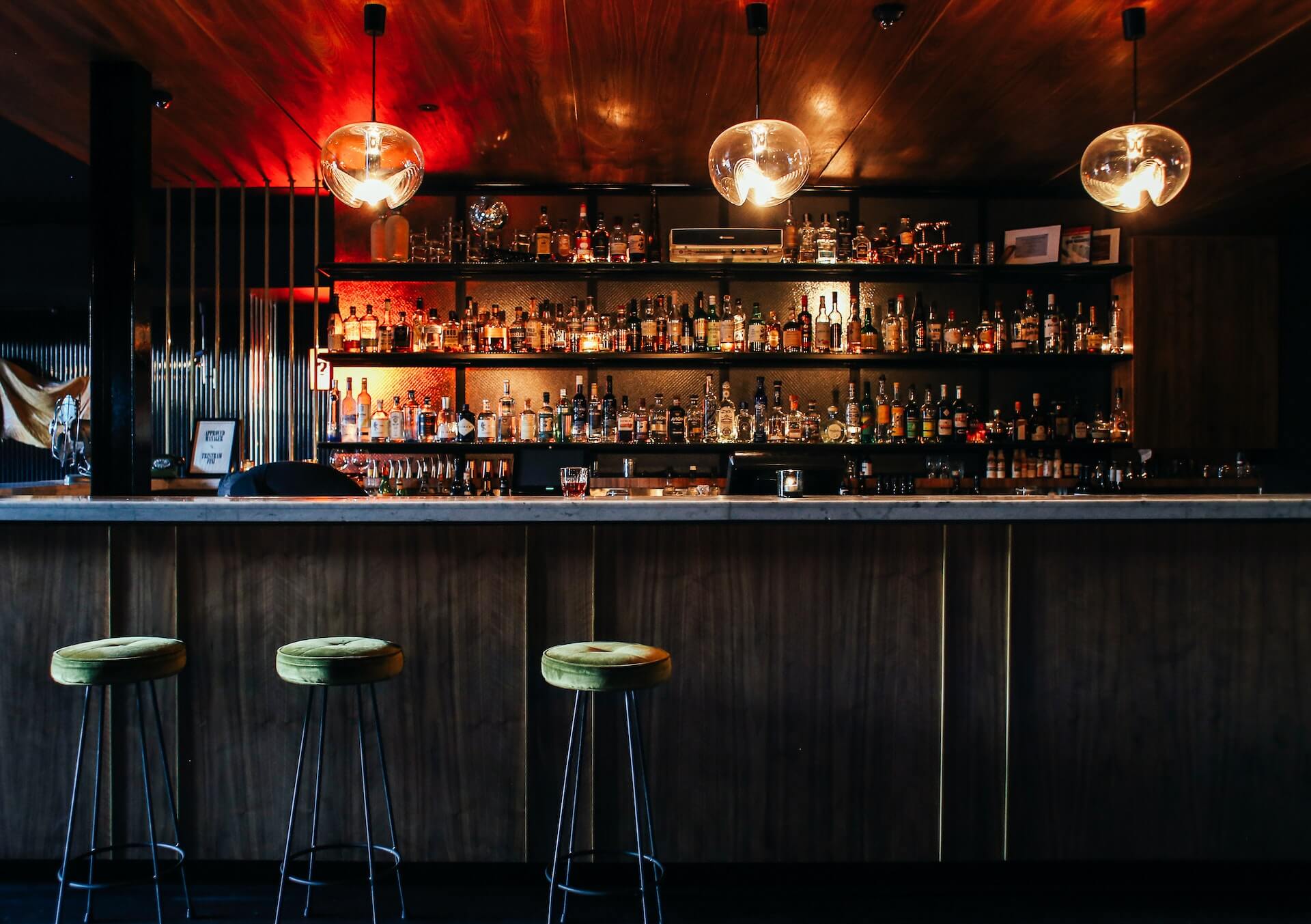
Stylish bar and bar stools

Messages about the importance of mindset flood our social media feeds but what exactly does the word mean, and why is it so important?

You’re told you need to have a growth mindset to be successful. You must have a positive mindset for a happy and fulfilling life. Both are true statements, but what do they mean?

Simply stated, mindset is an individual’s usual attitude or mental state. It reflects someone’s way of thinking and motivates their actions. So, why is it important to be aware of your mindset?

Well, if your mindset is your usual attitude or how you show up in your life each and every day, it will influence all parts of your life. Your thoughts about yourself, others, your business, your opportunities, and your challenges are all influenced by your mindset. Your mindset can either hinder or promote your overall well-being and success in life.

The interesting thing about mindset is that it can change—if you want it to. Your mindset can also be influenced by your environment and those around you. These facts led me to question if the different sectors of the hospitality industry face unique mindset challenges.

To find answers and gain further insight, I decided to turn to our team at KRG Hospitality for their thoughts. In turn, I’ve begun a series of hospitality mindset articles.

In this first article I’ll explore the bar industry, with thoughts from master mixologist Jared Boller. Follow the series as I explore mindset in restaurants, hotels, and start-up operations.

Let’s dive in!

The Bar Industry

In the US, the bar and nightclub market is valued at an estimated $36 billion for 2023. The industry as a whole employs close to 600,000 people.

With businesses built off drinking culture, what unique challenges do operators and those working inside these establishments face?

Successful Operators

Operating a successful bar takes a certain mindset. You need to be flexible, open-minded to growth strategies, mindful of your market and competition, and compassionate to the needs of your team.

Interested in what makes a bar operator stand above their competition, I asked Jared what makes a bar operator successful.

“First and foremost, I think that every bar owner needs to understand their product and how they are going to differentiate themselves from the competition. Ultimately, it is up to the owner to realize what their goal is in owning a bar. It requires digging deep into themselves to ask what they want out of their business.

“Are you looking for a way to make extra cash? Are you looking to provide a local hangout for you and your friends? Do you want to win awards and have a buzzworthy place everyone wants to visit? This is a tough business that requires a lot of time and energy, and thick skin.

“Be organized, clean, a good leader, efficient, and provide a home that your employees want to come to. Try to know all aspects of the business: financials, technology, culinary, bar, service, management, etc.”

Operator Challenges

Operators need a resilient, positive, growth mindset to be successful. It’s the only path forward to running a bar they are both proud to work in and enjoy working at every day.

This is a mindset that will need tending to as there are challenges that will affect your daily thoughts, beliefs, and attitudes.

When asked what specific challenges bar operators face that may affect their mindset, Jared shared his thoughts.

Labor Shortage

Dealing with labor shortages as an operator can create feelings of frustration, stress, and resentment.

“It’s getting increasingly difficult to gain a competitive edge because of numerous factors, one of the biggest being labor shortage. It’s not a labor shortage where there’s not enough jobs, it’s an unwillingness to work and/or want to work in the hospitality industry because, quite frankly, ‘It’s tough.’

“I think that with inflation happening in the world, as well as the majority of establishments working off the Tips Blueprint, it doesn’t allow people to know what they’re making day in and day out. People are turning to different jobs or jobs outside of hospitality because they don’t want to be on their feet everyday working long hours and not knowing their future.”

Competition

If a bar operator isn’t careful they can very easily become lost in the game of comparison.

Yes, it is important to know what your competition is up to, but if the constant comparison leads to negative feelings about you, your team, and your establishment without any action for improvement, this is a surefire way to hurt your mindset and chances of success.

If you truly want to be competitive without getting lost in the comparison game, focus on your team.

“The time of pumping out commercial food and drink is gone, and legitimate professionals who are educated and professionally trained are few and far between. Additionally, there’s even a creative youth movement with ambition, but they have not been classically trained in their respective outlets.

“It’s difficult to be competitive without education, training, and bringing together a group that can keep an establishment afloat with similar perspectives. It takes an army to be competitive with everyone speaking the same language, understanding the establishment inside and out, and able to execute night in and night out with the same integrity.”

Social Media/Online Reviews

As a bar operator, you rely on your reputation within your community for the success of your business. This also holds true for your online community.

How you react and your thoughts about online reviews can affect your mindset. A negative online review can very easily incite feelings of anger, disappointment, and blame.

“We live in a world driven by star ratings, thumbs up, and everyday critics writing novels about how there was ‘too much ice in my drink,'” says Jared. “If you read too many negative comments, that could affect one’s mental health and hurt confidence.”

Coming up with a strategy for dealing with negative social media posts/reviews is critical for keeping a clear perspective and maintaining a positive mindset.

Employee Challenges

Your team experiences their own unique set of challenges that can effect their well-being and mindset as well.

Being aware of these challenges is important if you are hoping to create a culture of respect, collaboration, and trust.

When asked what specific challenges bar staff face, Jared had some insights.

Long Hours/Physicality

Bars are often open late into the night, with bartenders in particular being front and center at all times. This can lead to both physical and mental exhaustion if appropriate breaks aren’t provided.

“The physicality alone will eventually take a toll on the employee who is shaking drinks for eight to ten hours a day, working doubles, having minimal break times, and standing on their feet for the same amount of hours. On top of that, you are constantly on stage and typically in a vantage point of someone either sitting across from you at the bar or observing from a table. You are constantly having to engage, take care of, and put on a happy face even if you might be dealing with something in your personal life. Not being able to take a step away or breathe can make you feel claustrophobic or trapped at times.”

Job Security/Growth

If you are working in an unsupportive environment that does not feel safe and makes you feel as though your future with the business is unsure, it can create feelings of discomfort, resentment, anger, worry, and even fear.

Bar employees need to feel respected, heard, and valued.

“Every employee—pending they do the job well—should feel safe in their workspace. I also believe that employees should be able to grow in their workspace if they have the desire to learn and/or be promoted in the future.

“I think that if an employee does the work, and has mastered the role, they should be considered for advancement. Employees in this industry need to identify what speaks to their personal interests and try to master that. I personally wanted to master the craft of bartending so that’s the path I took. Employees should never be scared if they’re interested in growing with the brand.”

Harmful Beliefs in the Bar Industry

How you feel about the people you work with and/or work for can have major impacts on your overall mindset.

If your daily thoughts regarding your team are negative, it suddenly becomes very challenging to create a successful bar with a team who shows up wanting to do their best each and every day.

The bar industry has a few specific common harmful beliefs that are prevalent in many establishments. Being aware of these and knowing what to do with these beliefs to change them is critical to creating a more positive work environment.

Paranoia

When I asked Jared what one of the most prevalent harmful beliefs operators have about their team, he discussed the belief that everyone is taking advantage of you. Many owners believe that everyone is stealing from them.

“In all of my years working in bars and restaurants there was always this sense that employees would be taking money from them or pouring ‘free products’ off to their friends/family. Truth be told, it happens, but I think that employees wouldn’t do that if they were offered a simple ‘comp tab.’

“I’m not saying that offering a free drink here and there to a friend is right, but I think for an owner to say, ‘Buy your friends a drink every now and then to show you appreciate them coming here,’ is a nice gesture.

“I’ve worked in places where owners are transparent, honest, and trustworthy with their employees, and the employees are happy so they don’t go behind the owner’s back. I think ownership needs to be realistic and give back to their employees and visitors every now and then, because that will boost morale.”

Feeling Unappreciated

When it came to harmful beliefs that staff have about ownership, Jared shared that employees feel that ownership does not care about them. While in some cases these beliefs may unfortunately be valid, in many cases owners may just be legitimately unaware that there are issues or concerns that need to be addressed.

“A lot of hospitality employees don’t feel appreciated by their bosses. Employees often feel like they can’t have a voice. Sometimes owners are so tied up in everything else to maintain the business and they won’t recognize you unless you speak up and engage in conversation over frustrations. Staff members need to not overstep their boundaries, but if there is something that could potentially move the business forward, express your concern.

“I’ve always had a good relationship with owners because I try to throw out ideas they don’t see, and come up with a potential solution to an issue. Owners don’t know everything and a lot of time are caught up in the day-to-day business. You were hired there for a reason: because they trust you to do a good job.”

Moving Forward

Understanding the importance of cultivating and maintaining positive, growth mindsets will allow you to move forward with your team towards shared goals and dreams.

Nobody wants to hate where they work, and with commitment to tackling challenges and harmful beliefs, this won’t be likely to happen.

So, what positive changes have been incurring in the industry as a whole?

“Simple things. Team-building events, like a picnic, an annual dinner to celebrate the staff, a field trip to a farm, quick getaways, etc. When the ownership/management team gives back to their team they end up enjoying coming to their second home everyday.

“Ensuring there are appropriate breaks during the long days, and potentially offering a ‘family meal’ to boost energy and give them food they might not be able to afford at home. Promoting ‘in-house’ competitions, such as the person who has the best wine sales at the end of the week gets a free bottle of wine. Leveraging different companies—spirits, wine, food purveyors—to do in-house demos and educationals. Allowing the staff to be hands on and learn something that will provide value to their personal growth.

“With less and less people choosing to take the hospitality path, it creates a lack of talent or people willing to roll up their sleeves and do the work. That’s why it’s important that the venue gives back every once and awhile.”

Room for Improvement

Although we’re starting to see more awareness of the well-being of those working in this industry, there are still many changes that need to happen.

“There needs to be sustainable and livable wages established universally amongst staff. With a world of inflation and prices on everything sky-rocketing, people are not going to be able to work in this industry and survive.

“There needs to be more meetings amongst staff to ensure that everyone has a voice and that everyone is on the same page when it comes to their jobs. There are a lot of mental health issues to this day because the hospitality industry is a crazy, tangled-up web when there is no guidance and good leadership. Our industry still has substance abuse issues, with people self-medicating with drugs and alcohol to help numb their pain, in addition to consuming too much caffeine to stay afloat.

“There needs to be more support and coaching programs available to new operators—similar to what we offer through KRG—to ensure they understand what they are signing up for. Education, leadership, guidance, inspiration, and providing a great work/life balance need to be a primary focus. Out with the 70-hour work week—back to a sustainable work timetable.”

Final Thoughts

Winning mindsets create winning concepts and winning teams. Having a positive mindset doesn’t mean that you don’t experience challenges or that you don’t experience any negative feelings. We are all human; of course we are going to have negative thoughts now and again.

It’s what you choose to do with those thoughts. If you allow them to become your predominant attitude, that will determine your overall mindset. The bar industry may have it’s challenges but it is also a place of excitement, entertainment, and creativity, a hub for social interaction with a never-ending hum of humanity.

I’ll leave you with a few last words of wisdom from KRG’s master mixologist Jared Boller.

“Understand that every day is going to be different than the previous, and you have to constantly adapt to what’s being thrown at you. If you’re not adaptable and can’t bend to spontaneous requests you might find yourself going into a dark space. Know that everyone is different, with unique upbringings and alternative perspectives on life. You are not always right, nor are they.

“Establish your rules in this bar environment. Educate yourself so you know more than everyone else in the room about your business and your craft, and open your mind to learning new things. Don’t be a know-it-all because that’s just downright annoying.

“And, finally, my rules that I live by behind a bar: ‘If someone wants to speak religion, decline. If someone wants to get your beliefs on politics, decline. And when a woman asks you their age, don’t answer, or politely decline.’ Everything else is an open conversation.”

Cheers to personal and professional well-being!

Image: Rachel Claire on Pexels

KRG Hospitality Mindset Coaching

by David Klemt David Klemt No Comments

Kitchen Parlance, Part One

Kitchen Parlance, Part One

by Nathen Dubé
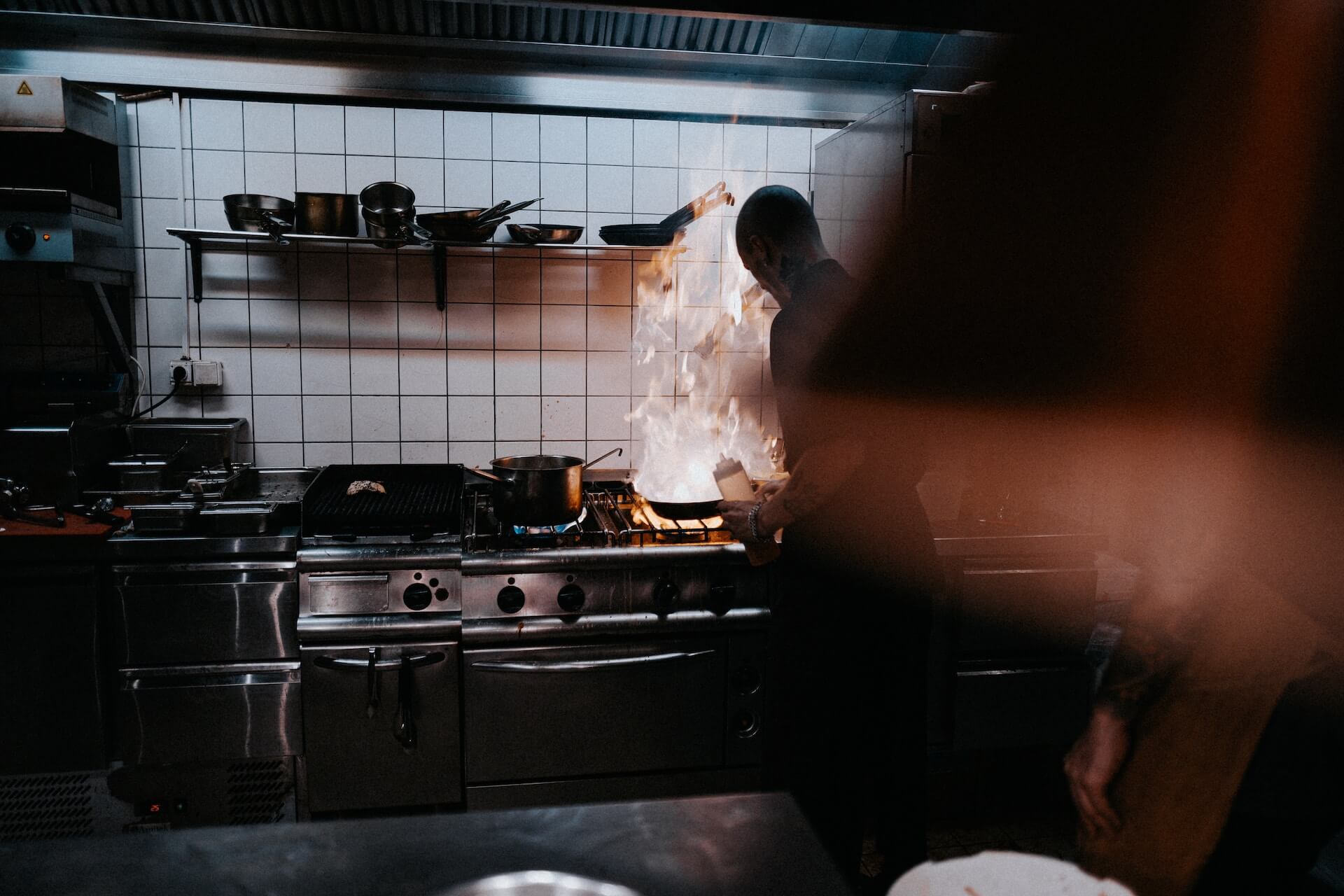
Chef handling flaming pan in commercial kitchen

Entering a professional kitchen might seem like a whole different realm with its own governing rules, and certainly its very own language.

“Clopen?” “All day?” “Behind?” “Covers?” “Deuce,” “dying on the pass”… If these terms sound foreign and made up to you, you’re not alone!

A busy kitchen can be a hot, intense, and stressful environment. Having a full-on conversation takes up valuable time when minutes and even seconds are the difference between a perfectly cooked plate of food and trash.

When actions need to be conveyed quickly and efficiently between two parties or a full team in a loud and fast-paced environment, slang develops out of necessity. Kitchens are no different, with their use of a creative and interesting lexicon.

New owners and operators opening their own concept may find many words and phrases they hear from the kitchen and servers strange at first. This is particularly true of owners and operators who may have little to no back-of-house or serving experience.

To lend a hand to hopeful operators or those opening their doors for the first time, let’s take a look at some of the more popular kitchen terms.

Operational & Equipment Terms

First, let’s take a look at the structural element of a restaurant and how they’re referred to.

Floor

The dining room (or whatever is deemed as guest seating in your establishment) is referred to as “the floor.” When someone asks, “who is on the floor tonight?”, they’re referring to the staff—usually servers—working the floor. Managers will walk the floor to check on guests and aid in service.

Note: The bar area, although it may have counter seating and its own tables, is referred to separately from the floor.

Low Boy

An under-counter refrigerator is called a “low boy” for its below-the-waist positioning, requiring cooks to bend down low to gather ingredients. This can include freezers as well. There are a variety of door configurations, including swinging, and drawer-style. Some even have salad tops where ingredients are kept in the top, under a lid.

Walk-In

A (very) large fridge or freezer, often constructed on site. It has a big swinging door that can be opened from both sides for safety reasons. The majority of raw ingredients—plus some prep and leftovers—are stored here. If you’re wondering where the word comes from, the clue is in the name: it’s so large, you can walk into it.

The walk-in is also notorious for being where restaurant staff go to scream some stress away, as the excellent insulation creates a nice sound barrier from guests.

Mise

The word “mise,” pronounced “meez,” is a slang term for “mise en place.” Mise en place is the French term for “having everything in its place” prior to service. Cooks use “mise” to refer to their own specific set of prepared ingredients, whether in terms of having it ready or not, or even worse, missing.

On the Line

The line, and the term “on the line,” refers to the area in the kitchen where the cooking equipment is located. Of course, this where chefs do most of the cooking during service. A typical line includes a walkway where the cooks work, and a flat table space—usually at the “window” or “pass” (see below)—where they plate, on the opposite side. Not surprisingly, that opposite side is referred to as the “plating area.”

If a concept requires it, there are separate “hot” lines where the hot cooking is done, and “cold” lines, where dishes that don’t require cooking are prepared. Deep fryers, ovens, and ranges are located in the former, and salad stations are located in the latter area. In classic French terms, the garde manger cook usually prepares most dishes on a cold line.

Pass / Window

The pass or window is the area opposite the cooking line where completed orders are placed for server pick-up. Think of passing dishes from the kitchen and you’ll understand this term immediately. Sometimes it will be referred to as a “window” in restaurants that have actual windows into the kitchen line from which food is passed to servers. The pass area is typically where the heat lamps are located, meant to keep dishes warm during a busy service.

The Rail / Board

The term “rail” or “board” refers to a strip of metal mounted to the food window that holds the food tickets (orders) from the kitchen printer in place. This keeps the flow organized and is normally overseen by the chef or line supervisor.

“Calling the board” means the person in charge reads out tickets as they come in, and directs cooking traffic to the other line cooks. Doing so helps to avoid disagreements and chaos in the kitchen. This position is reserved for the highest-ranking or most-talented cook, as it requires excellent cooking and communication skills. “Clear the board or rail” means completing all orders that have come in for the time being.

Chit / Ticket

When a server enters an order into the POS system, a chit or ticket, or even “dupe” (meaning “duplicate,” from the fact that some systems use three-color paper that prints a kitchen copy, a server copy, and an expo, bar, cold line, or pasty section copy), is printed to the kitchen. That ticket is then read aloud to the cooks before being placed in queue on the rail or board. When the food on the order is complete, the copy is marked in some fashion (stamp, marker, pen) and placed under the plate in the window. The server then picks up the food and the chit is “stabbed” on to a spike.

Don’t let spiked tickets fall out of the rail or all hell can break loose and derail a service!

Two-Top / Three-Top

Dining room tables are referred to as “tops” and are identified by how many guests they can accommodate (seats). A table with two chairs is a “two-top” or “deuce.” Tables with four or six chairs are “four-tops” and “six-tops,” respectively.

Covers

Each person who enters the restaurant is a cover: they “cover” one seat. The more covers, the busier a service will be, and vice versa. These numbers are used to project future numbers, staffing requirements, and inventory required. Covers are also a point of pride for kitchen staff. The more covers, the busier the service, and if you can navigate it with few mistakes, the adrenaline rush can directly convince yourself of your own talents.

Dead Plate

A dead plate is a dish of food that’s no longer worthy of the dining room. Sitting in the window too long, incorrect preparation, or even worse, being sent back by a guest results in a dead plate. Untouched dead plates are usually given to dish washing staff or porters; those sent back by guests are tossed in the bin.

Section

A section is how the floor is divided amongst serving staff. Typically, the more talented or senior staff get a bigger section. Designating sections, with all their tables in one close area, helps servers move efficiently during busy periods and keep close tabs on guests. Managers and floor captains will oversee a few or all sections and offer help to the individual servers during busy times or for large parties.

Server Alley

The front-of-house equivalent of the kitchen hot line. This is where everything servers need to do their jobs is located. Extra napkins, spare side plates, cutlery rolls, and cleaning supplies for clearing tables can all be found here. There are usually a few POS terminals here for entering orders.

Team & Guest Terms

These next few slang words are used to talk about certain people.

Expo

“Expo” is the shortened term for “expediter,” or the position of organizing, plating, and (in some cases) garnishing food at the pass. The main responsibility is to makes sure each dish is correct before the food runner or server brings it to the table. This role can be the liaison between front of house and back of house, allowing both teams to do their jobs without having to stop and coordinate.

Busser

Part of the porter team, the busser is the person who clears dishes from a table when guests leave, and drops them in the dish-washing area. The term refers to the bus bin or large plastic tub into which the bussers put all the dishes, flatware, glasses, and debris. They might also be tasked with wiping down tables and resetting them for new guests. Sometimes, the busser will pull double duty and also wash the dishes they bring back to the kitchen.

Trail / Stage

Note: In the foodservice world, “stage” is pronounced “staahj.”

A trail is essentially a training shift during which new team member will “trail” behind a cook or server. This provides the new hire the ability to learn, get comfortable with SOPs, and mitigates any potential mistakes. However, not all establishments have the staffing to offer this scenario and will train a new hire during live action.

A stage is a longer-term trail for a designated period of time. This can be a couple of weeks, a month or two, or an entire season at destination-style dining places, like Michelin-starred restaurants and hotels. The expectation is that this is a learning experience for the cook, who is exposed to new ingredients, recipes, and techniques. An agreed upon time frame is set and the cook trades labor for education.

A Personal Note on Stage

The short-term stage commitment includes the understanding that the restaurant won’t reward you monetarily. We all know the costs of training staff. Imagine investing all that effort and having that person leave after just a month or two.

Now, I despise the term “free labor” for the kitchen or benefiting restaurant. There’s a new argument that has been surfacing over the last few years that stages should be paid internships. I have two problems with this thought process.

One, these are often highly touted restaurants that operate at an elite level, and they’re extremely busy. Having a new body takes up valuable focus and resources from somebody in that kitchen. They are willing to work with you and share all their knowledge and experience.

Often times, there isn’t a chance in hell in getting a job there, and this can be the only way to get a chance at learning from these masters of the craft. Having gained valuable career experience from stages myself, they can be a great alternative if you can’t gain employment with the venues.

Two, those who raise these arguments have no experience in doing them; think they have learned nothing from the stages they may have done; had a bad experience overall; or really have no other alternatives to the points I just mentioned.

Hot tip: If you don’t like working for free, don’t! If you the value in stage, go for it!

Campers

This is a term for people who linger at their table well after they’ve finished and paid. While all guests are welcome to make themselves at home, the problem with campers is that they can take up valuable real estate during busy periods. This is the reason for table time caps at operations that run on the reservation system. They also prevent servers from “turning” tables to serve more guests and increase their tips.

Action Terms

These are some random terms that indicate actions and requests.

Fire

The process of finishing a dish. When an order is printed out, it may have courses such as appetizer, main, and dessert. All courses might be started and cooked to 80 percent completion and then held. The main wouldn’t be fired until after the appetizer. When the person in charge of the line says, “Fire table six mains,” that means finish cooking, plate the dishes, and send them to the pass.

All Day

A very quick way for a cook to request a tally of all the dishes ordered from their section. The line lead will provide totals of each dish, instead of reading out each table’s order. For example, a cook will ask for an all-day on fryers, and the lead will call back, “Six large fry, three medium fry, two poutine, and one chicken nugget.” The cook can quickly add up what they have cooking or need to prepare to fire.

Behind

As you can imagine, in a busy, happening kitchen, there are people racing in all directions in tight spaces. One quick way to avoid collisions around hot equipment and sharp objects is to yell “behind” when passing someone or a station of people. It gives them time to either move out of the way or stay in place to avoid catastrophe.

Other variations include “hot” to indicate hot pots or pans, or the potential of getting burnt. “Sharp” means a knife, and “corner” means coming around the corner. “Behind hot” and “hot, corner” are combinations which mean exactly what you think they mean.

Flash

To reheat a dish, or an item on a plate that sat under the heat lamp too long, or if a guest has requested something cooked further. Usually under a salamander, a convection oven, or a deep fryer for fried food. I’m sure for some establishments (I started out in places where this was the norm), “flashing” means “cooking” an item to well done via microwave.

Heard / Heard That

The acknowledgement that an order has been read by the person running the pass or the line and understood by all in the kitchen. Also works for a direct order to an individual.

In the Weeds

When one station is receiving the majority of the orders at any given time, or the dining room has filled up all at once and all the orders are coming in together, this can create a downward spiral between starting to cook and plating or finishing existing dishes. This is known as being “in the weeds.” The only way to survive is to put your head down and cook your way out. I’ve experienced surviving the weeds and having it ruin an entire service. It all depends on the resilience and talent of the cooks, servers, and leaders involved.

On the Fly

The request for something that is needed quickly. Perhaps the item was missed, dropped, or incorrect, and the rest of the dishes are at the table. Whatever is needed “on the fly” takes precedence over everything else or, worst-case scenario, gets shoehorned into orders coming up.

Stretch It

Kitchen lingo for getting as many portions out of something nearing its end as possible. For example, a saucepan only has enough for four steaks but five are needed. The sauce has completed cooking and the plates are waiting. So, the kitchen needs to “stretch it” and make it work or be down five plates of food.

Waxing a Table

This means giving a table special treatment. This person or these people could be VIPs, return guests, the owner’s family and friends, or an influential food writer. Whoever the are, they’ve been identified and are given a little extra attention by staff.

86

When a menu item has completely run out, the kitchen manager will say the item has been “86ed.” It’s important for the kitchen staff to communicate this to servers as soon as possible so that no more orders are placed for the item.

Family Meal

The pre-service meal enjoyed by all staff on premises. Usually made by the staff from leftovers as a way to showcase creativity and skill.

Comp

Referring to items removed from the bill for an error or because the guest didn’t like it. A comp also comes from waxing a table, of course. It’s important to track comped items for accounting purposes. Comps can be a great way to make guests happy in a pinch. However, owners, operators, executive chefs, and lead bartenders need to be aware of how often comps are being handed out; they can be indicative of quality-control problems or employee theft.

Clopen

This is a portmanteau of “close” and “open.” The dreaded weekend brunch shift comes to mind. Working a busy late Friday or Saturday service and having to come back in the following morning to sling eggs to hungover patrons is a difficult and thankless task. In short, a team member who works back-to-back closing and opening shifts is working a clopen.

FIFO

This stands for “first in, first out,” and references inventory organization, crucial for perishable items. The new items go behind the older ones so that the items that were there first get used first, ensuring freshness and quality. I once had a chef who decided that “FIFO” stood for “fit in, or f*ck off.”

These are just some of the slang terms in the culinary lexicon used to convey quick understanding when under fire. You might also hear differences in dialect between cultures and regions. I’ve worked in both Toronto and Montréal, and there are similarities and differences between terms used in Ontario and Québec, French and English, and English and South American Spanish.

So, next time you’re out dining and you hear one of these words or phrases, you might be able to figure out what’s going on behind the scenes. Tip well, be polite, and try something new!

Image: lasse bergqvist on Unsplash
KRG Hospitality menu development. Restaurant. Bar. Cafe. Lounge. Hotel. Resort. Food. Drinks.

by David Klemt David Klemt No Comments

AI Guesses 2023 Spirited Award Winners

AI Guesses 2023 Spirited Award Winners

by David Klemt

The Matrix-style green, vertical characters on computer screen

Ahead of the 17th annual Spirited Awards ceremony I asked a chatbot called Chat AI to guess the winner in each award category.

Before we get into the chatbot’s guesses, this is solely for entertainment. I’m not a programmer or engineer. I don’t pretend to know how to work with and get the most out of artificial intelligence. I thought this would be a bit of good fun.

In fact, I asked a very simple question, followed by the awards and nominees of each main category: “Can you guess the winner of each category below?”

That’s it—very simple. But, hey, if any of the guesses turn out to be accurate, that’s pretty cool. It will mean that Canada, New York, San Francisco, and Singapore are going to do well this year.

Another note: I couldn’t use ChatGPT, Bing AI, or Google Bard for this little project. It took some doing to find a chatbot that would tackle making award predictions.

Ultimately, it was AI Chat from DeepAI that made the guesses. It did so quickly and without hesitation.

Now, I can’t say that I know what criteria DeepAI AI Chat used to make its guesses. I have no idea if it crawled reviews and articles in a split second. Nor can I say that Chat AI did anything but apply random selection generation (that sounded techy, didn’t it?).

Again, this is really just for fun, so I’m not overly bothered by AI Chat’s methodology. The platform is not, to the best of my knowledge, affiliated in any way with Tales of the Cocktail or their judges. In fact, I didn’t even mention Tales of the Cocktail Foundation or the Spirited Awards when “conversing” with Chat AI.

US Categories

US Bartender of the Year presented by Pernod Ricard USA

Masahiro Urushido, Katana Kitten (New York, New York)

Best US Bar Mentor presented BarSmarts

Nectaly Mendoza

Best US Brand Ambassador presented Libbey

Vance Henderson (Hendrick’s Gin)

Best US Bar Team presented by William Grant & Sons

Pacific Cocktail Haven (San Francisco, California)

Best US Cocktail Bar presented by Absolut Vodka

Service Bar (Washington, DC)

Best US Hotel Bar presented by Grey Goose

Dear Irving on Hudson at the Aliz Hotel (New York, New York)

Best US Restaurant Bar presented by Amaro Montenegro and Select Aperitivo

Kumiko (Chicago, IL)

Best New US Cocktail Bar presented by Diageo Bar Academy

Pacific Standard at the KEX Portland (Portland, Oregon)

International Categories

International Bartender of the Year presented by The Busker

Giorgio Bargiani, Connaught Bar (London, England, United Kingdom)

Best International Bar Mentor presented by Tales of the Cocktail Foundation

Agostino Perrone

Best International Brand Ambassador presented by Tales of the Cocktail Foundation

Daniyel Jones (House of Angostura)

Best International Bar Team presented by Angostura Caribbean Rum

Paradiso (Barcelona, Spain)

Best International Cocktail Bar presented by Patr​​ón Tequila

Atwater Cocktail Club (Montréal, Québec, Canada)

Best International Hotel Bar presented by Perrier

Botanist at the Fairmont Pacific Rim Hotel (Vancouver, British Columbia, Canada)

Best International Restaurant Bar presented by Tales of the Cocktail Foundation

Analogue Initiative (Singapore)

Best New International Cocktail Bar presented by Diageo Bar Academy

Night Hawk (Singapore)

Global Categories

Best New Spirit or Cocktail Ingredient presented by Lyre’s Non-Alcoholic

PATRÓN El Alto Tequila

World’s Best Cocktail Menu presented by Diageo Bar Academy

Panda & Sons (Edinburgh, Scotland)

World’s Best Spirits Selection presented by Tales of the Cocktail Foundation

Baba Au Rum (Athens, Greece)

Writing & Media Categories

Best Cocktail & Spirits Publication presented by Tales of the Cocktail Foundation

Difford’s Guide

Best Broadcast, Podcast, or Online Video Series presented by Tales of the Cocktail Foundation

The Speakeasy Podcast

Best Cocktail & Spirits Writing presented by Tales of the Cocktail Foundation

“The Great Mezcal Heist” by Emma Janzen, for Eater

Best New Cocktail or Bartending Book presented by Tales of the Cocktail Foundation

Modern Classic Cocktails by Robert Simonson

Best New Book on Drinks Culture, History, or Spirits presented by Tales of the Cocktail Foundation

A SENSE OF PLACE: A Journey Around Scotland’s Whisky by Dave Broom

Image: Markus Spiske on Unsplash
KRG Hospitality tech stack consulting. Tech. Technology. CRM. POS. Restaurant. Bar. Cafe. Lounge. Hotel. Resort.

by David Klemt David Klemt No Comments

Tales Reveals Top 4 Awards Finalists

Tales Reveals Top 4 2023 Spirited Awards Finalists

by David Klemt

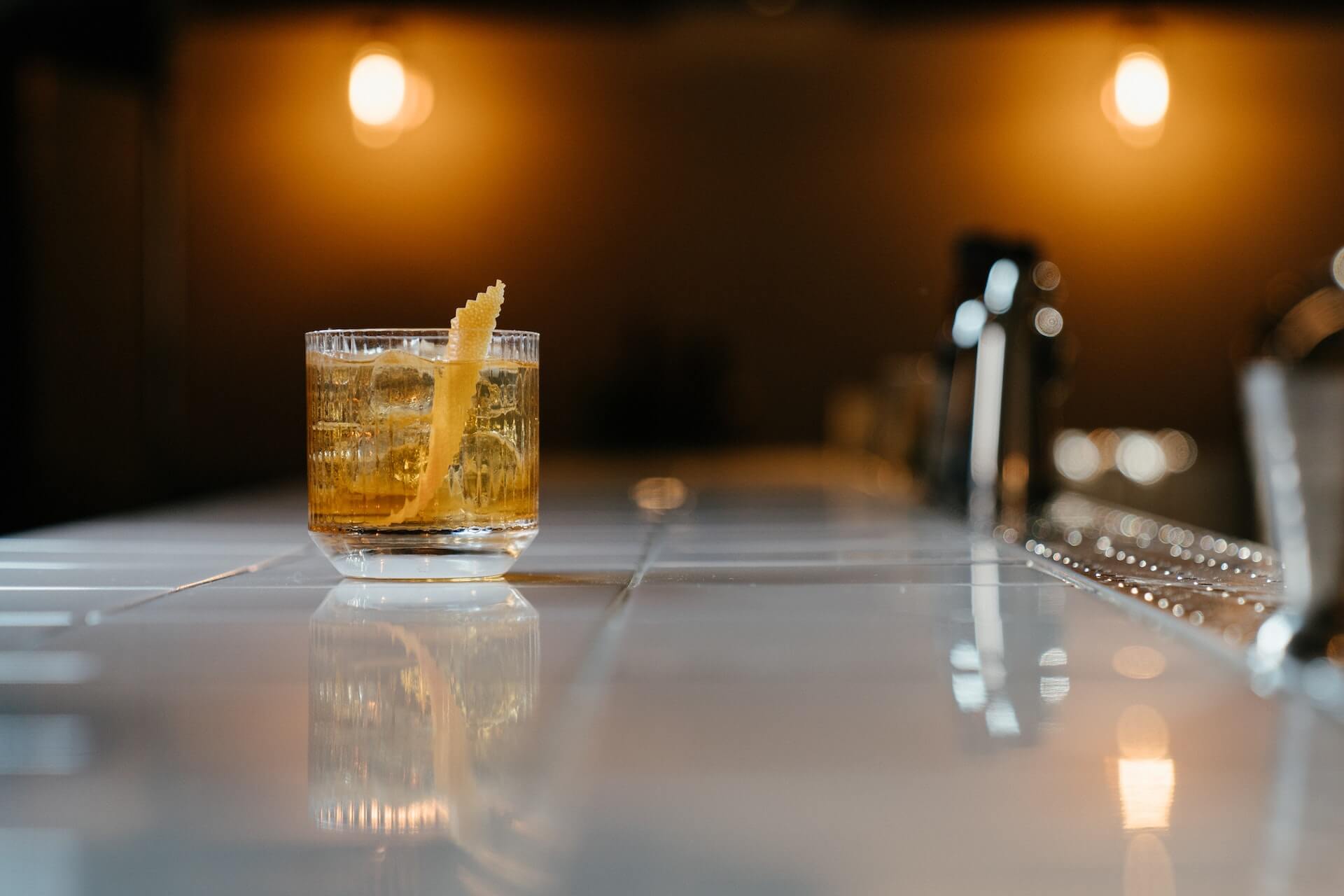
Cocktail with orange peel garnish resting on glossy white bar top

We’re one month away from the 17th annual Spirited Awards ceremony and the top four nominees in each category have been revealed.

Over the course of the past few months, the Tales of the Cocktail Foundation have been hard at work to narrow the field. They first announced this year’s honorees. Not long ago, they announced the top ten nominees.

Now, we know the top four nominees in the running for each of the Spirited Awards. You can check them out below, with each award organized into one of four main categories: US, International, Global, and Writing & Media.

Congrats to the finalists! We’ll know the winners in just a month.

Cheers!

US Categories

US Bartender of the Year presented by Pernod Ricard USA

  • Caer Maiko Ferguson, DrinkWell / Daijoubu (Austin, Texas)
  • Kapri Robinson, Allegory at the Eaton Hotel (Washington, DC)
  • Masahiro Urushido, Katana Kitten (New York, New York)
  • Christine Wiseman, Marygold’s Brasserie / Broken Shaker (Miami, Florida)

Best US Bar Mentor presented BarSmarts

  • Anu Apte
  • Colin Asare-Appiah
  • Nectaly Mendoza
  • Chris Patino

Best US Brand Ambassador presented Libbey

  • Kiowa Bryan (Spiribam)
  • Chris Cabrera (Bacardi USA)
  • Cameron George (Ardbeg Single Malts)
  • Vance Henderson (Hendrick’s Gin)

Best US Bar Team presented by William Grant & Sons

  • Happy Accidents (Albuquerque, New Mexico)
  • Nickel City (Austin, Texas)
  • Pacific Cocktail Haven (San Francisco, California)
  • Yacht Club (Denver, Colorado)

Best US Cocktail Bar presented by Absolut Vodka

  • Century Grand (Phoenix, Arizona)
  • Double Chicken Please (New York, New York)
  • Overstory (New York, New York)
  • Service Bar (Washington, DC)

Best US Hotel Bar presented by Grey Goose

  • Allegory at the Eaton Hotel (Washington, DC)
  • Dear Irving on Hudson at the Aliz Hotel (New York, New York)
  • Hey Love at The Jupiter (Portland, Oregon)
  • Little Rituals at the Residence Inn/Courtyard by Marriott (Phoenix, Arizona)

Best US Restaurant Bar presented by Amaro Montenegro and Select Aperitivo

  • Café La Trova (Miami, Florida)
  • Cleaver Butchered Meats & Seafood (Las Vegas, Nevada)
  • Kumiko (Chicago, Illinois)
  • Palomar (Portland, Oregon)

Best New US Cocktail Bar presented by Diageo Bar Academy

  • Chez Zou (New York, New York)
  • Martiny’s (New York, New York)
  • Milady’s (New York, New York)
  • Pacific Standard at the KEX Portland (Portland, Oregon)

International Categories

International Bartender of the Year presented by The Busker

  • Gina Barbachano, Hanky Panky (Mexico City, Mexico)
  • Giorgio Bargiani, Connaught Bar (London, England, United Kingdom)
  • Daniel Schofield, SCHOFIELD’S BAR (Manchester, England, United Kingdom)
  • Luke Whearty, BYRDI (Melbourne, Victoria, Australia)

Best International Bar Mentor presented by Tales of the Cocktail Foundation

  • Simone Caporale
  • Danil Nevsky
  • Agostino Perrone
  • Christina Veira

Best International Brand Ambassador presented by Tales of the Cocktail Foundation

  • Caitlin Hill (Rémy Cointreau)
  • Daniyel Jones (House of Angostura)
  • Dave Mitton (Lot 40 / J.P. Wiser’s)
  • Nicola Riske (The Macallan)

Best International Bar Team presented by Angostura Caribbean Rum

  • ALQUÍMICO (Cartagena, Colombia)
  • Atwater Cocktail Club (Montréal, Québec, Canada)
  • Jigger & Pony at the Amara Hotel (Singapore)
  • Paradiso (Barcelona, Spain)

Best International Cocktail Bar presented by Patr​​ón Tequila

  • 🔶🟥🔵 (London, UK)
  • ALQUÍMICO (Cartagena, Colombia)
  • Atwater Cocktail Club (Montréal, Québec, Canada)
  • SIPS (Barcelona, Spain)

Best International Hotel Bar presented by Perrier

  • ARGO at the Four Seasons (Hong Kong)
  • BKK Social Club at Four Seasons Bangkok (Bangkok, Thailand)
  • Botanist at the Fairmont Pacific Rim Hotel (Vancouver, British Columbia, Canada)
  • Jigger & Pony at the Amara Hotel (Singapore)

Best International Restaurant Bar presented by Tales of the Cocktail Foundation

  • Analogue Initiative (Singapore)
  • ARCA Restaurant & Bar (Tulum, Quintana Roo, Mexico)
  • Bar Kismet (Halifax, Nova Scotia, Canada)
  • Danico (Paris, France)

Best New International Cocktail Bar presented by Diageo Bar Academy

  • Last Word (Singapore)
  • Line Athens (Athens, Greece)
  • Mahaniyom Cocktail Bar (Bangkok, Thailand)
  • Night Hawk (Singapore)

Global Categories

Best New Spirit or Cocktail Ingredient presented by Lyre’s Non-Alcoholic

  • Martini & Rossi Floreale Non Alcoholic Aperitivo
  • PATRÓN El Alto Tequila
  • Saint Benevolence Aged Rum Clairin
  • The Fords Gin Co. Sloe Gin

World’s Best Cocktail Menu presented by Diageo Bar Academy

  • ALQUÍMICO (Cartagena, Colombia)
  • Double Chicken Please (New York, New York)
  • Handshake Speakeasy (Mexico City, Mexico)
  • Panda & Sons (Edinburgh, Scotland)

World’s Best Spirits Selection presented by Tales of the Cocktail Foundation

  • Baba Au Rum (Athens, Greece)
  • In Situ Mezcalería (Oaxaca, Mexico)
  • Raised by Wolves (San Diego, California)
  • Swift Soho (London, England, United Kingdom)

Writing & Media Categories

Best Cocktail & Spirits Publication presented by Tales of the Cocktail Foundation

  • CLASS Magazine
  • Difford’s Guide
  • Punch
  • The Cocktail Lovers Magazine

Best Broadcast, Podcast, or Online Video Series presented by Tales of the Cocktail Foundation

  • Black and Brown Podcast
  • Radio Imbibe
  • Shōshin Art Club
  • The Speakeasy Podcast

Best Cocktail & Spirits Writing presented by Tales of the Cocktail Foundation

  • “The Drinks Industry Has an Ageism Problem” by Betsy Andrews, for SevenFifty Daily
  • “The Great Mezcal Heist” by Emma Janzen, for Eater
  • “The Secrets to the Best Dry Martini You’ll Ever Have” by David Wondrich, for The Daily Beast
  • “This Is What Decolonizing a Spirit Looks Like” by Adaorah Oduah, for Punch

Best New Cocktail or Bartending Book presented by Tales of the Cocktail Foundation

  • Mindful Mixology: A Comprehensive Guide to No- and Low-Alcohol Cocktails with 60 Recipes by Derek Brown
  • Modern Classic Cocktails by Robert Simonson
  • The Bartender’s Manifesto by Toby Maloney with Emma Janzen
  • The New York Times Essential Book of Cocktails – Elevated and Expanded, edited by Steven Reddicliffe

Best New Book on Drinks Culture, History, or Spirits presented by Tales of the Cocktail Foundation

  • A SENSE OF PLACE: A Journey Around Scotland’s Whisky by Dave Broom
  • Doctors and Distillers: The Remarkable Medicinal History of Beer, Wine, Spirits, and Cocktails by Camper English
  • Modern Caribbean Rum: A Contemporary Reference to the Region’s Essential Spirit by Matt Pietrek and Carrie Smith
  • Unreasonable Hospitality by Will Guidara

Image: cottonbro studio on Pexels

KRG Hospitality. Bar Consultant. Nightclub. Lounge. Mixology. Cocktails.

by David Klemt David Klemt No Comments

Fire and Ice: Bring Your Teams Together

Fire and Ice: Bring Your Teams Together

by Jared Boller

Ice on fire inside of a Martini glass

If you want to elevate your concept you need to ensure the front- and back-of-house teams are working with each other, not against one another.

There’s nothing wrong with a healthy rivalry and competition, of course. But the key word there is “healthy.” Both teams are crucial to your success, even if they seem like polar opposites.

Analogies are one of the singular greatest educational selling points when you have a group of people in front of you. Not only do they help you get your point across, they also help you to make a topic relatable to the listening novice.

In hospitality there are numerous ways to use analogies as teaching tools. When it comes to mixology or bartending, I like to use fire and ice to represent the kitchen and the bar.

I take this approach because the bar (ice) is the friendly counterpart to the fast and furious kitchen (fire). If you follow my train of thought, you’ll see why I preferthis approach: ultimately, we’re speaking about temperature and its importance in both spaces.

Consider the art of crafting cocktails. You and your bar team should understand dilution and melting rates the same way you know how important temperatures are to steaks. Nine times out of ten, individuals at the table have a personal preference regarding the temperature of their steak.

Guests don’t hesitate to relay this information to the server. Next, the chef and their brigade uses fire and cooking times to ensure each state is cooked properly. Not only that, the mastery of their craft leads to each steak coming out at the same time, cooked to each guest’s preference.

This process is the same for the bar. Stirred, shaken, egg-white cocktails… Bartenders must master their craft to ensure they understand the different types and uses of ice (or no ice) when building drinks. Moreover, they need to use that knowledge to ensure each drink for a table or group comes out at the same time, with the appropriate level of coldness.

In the end, when drinks hit the pass or server’s station, we want drink orders to be delivered as quickly as possible because they’re on the clock. The ice in the drinks start to melt. Hot food begins to get cold. We’re fighting time.

Understanding temperatures and times relates directly to the guest experience. We can tell how well-oiled and skillful front- and back-of-house teams are by watching drinks and dishes hit tables.

Fire

According to Anthropologist Richard Wrangham, who wrote the book Catching fire: How Cooking Made Us Human, people started cooking over open fire more than two million years ago.

Wrangham states that cooking was first seen as “simply chunking a raw hunk of something into flames and watching it sizzle.” Modern chefs may not agree with this style but we are able to see that early human “cooks” came to a few realizations regarding their use of fire. Their food was healthier, tastier, and they may have had more revitalized immune systems.

Obviously, the evolution of modern cooking techniques have advanced through tools, techniques, and vessels over the years. However, regardless of how much innovation we introduce to our kitchens, we’re still using fire and heat to cook our food.

Unless they’re expecting a salad, sushi, or another amazing raw or cold food, guests anticipate their food will be hot or warm upon arriving in front of them. Great chefs take control of their kitchens, techniques, and tools. Their masters of temperature. They have a nearly supernatural understanding of timing.

It’s always a site to behold when someone is masterful in the kitchen. A seemingly endless number of pots and pans raging on burners. Infinite elements of dishes flowing in and out of ovens. Chaos to the novice’s eyes but in reality, flawlessly composed dishes arriving at perfect temperatures.

Ice

We can trace the use of ice in drinks as far back as ancient Egypt. Icy drinks are also well documented by first-century Roman society; emperors, it’s claimed, enjoyed “chilled” cocktails via glacier runoff extracted from the mountains.

Emperors, according to some historians, would store giant blocks of ice in cool cellars, garnishing their tipples with shards of ice. This was both a decadent display of their elite status, and evidence that humans have long appreciated a cold, refreshing drink.

It wasn’t until early 1800s Boston that humankind really began to master ice. A young entrepreneur, Frederic “The Ice King” Tudor, pursued an idea with his brother and launched the ice or frozen water trade. Over the course of just a few decades, the New England-based trade was able to ship ice worldwide.

The Wenham Lake Ice Company, established in the 1840s, harvested giant blocks from the eponymous lake and stored them in a network of ice houses, accessed by a small railroad system. Once a luxury, ice was on its way to going mainstream. Everyone was coming to the realization that drinks tasted better with a bit of dilution and colder temperatures.

Eventually, ice production led to ice harvesting innovations. For example, Clinebell machines that use cold plates to 300-pound, crystal-clear blocks. Along with being clear, the ice blocks are super dense to reduce dilution rates significantly. From glaciers to “harvesting” ice from lakes to full-on factory production, our obsession with ice has led to technological innovation.

Interestingly, however, early 19th century methods of ice extraction are once again in vogue. A cadre of passionate bartenders who view ice as a premium ingredient in and of itself are hand carving ice cubes, spheres, and spears for perfectly curated Negronis or Old-fashioneds.

Takeaway

The bottom line is, temperature is important to anyone working in hospitality. Kitchen and bar teams need to work together to create the best possible products.

Some people think of food or drinks when asked to consider the best restaurants and bars in the world. However, those are products. What sets the best concepts apart is the teams they’ve each built and nurtured.

It’s the passion of each team member and their consideration of the fine details that makes a restaurant or bar notable. So, when we think about fire and ice, we can consider this idea the ultimate geekery in regard to our profession.

Take it from me: When the front of the house and back of the house collaborate, then they’re in sync with one another and nail the small details, they transform first-time guests to repeat brand evangelists.

They may not understand why their experience was so incredible but they’ll become outspoken ambassadors.

Image: Alexander Startsev on Unsplash
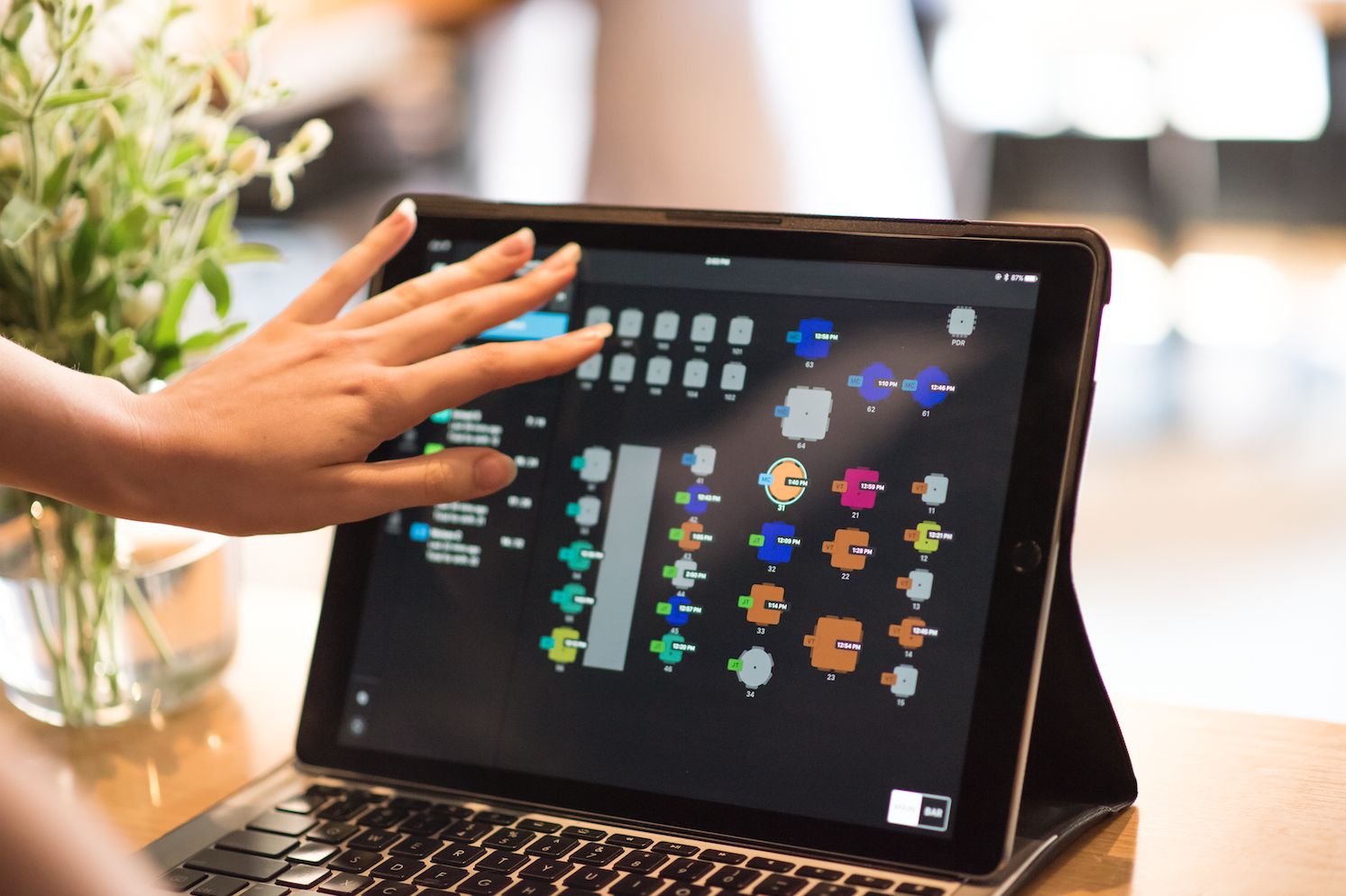
KRG Hospitality Mixology Training with Jared Boller

by David Klemt David Klemt No Comments

Own Your Team’s Excellence

Own Your Team’s Excellence

by David Klemt


Martinis at Bemelmans Bar inside the Carlyle hotel in New York City

If you and your team are producing an incredible food or drink item, don’t just be proud—make it your signature and own it.

As Chef Brian Duffy says during his demos and speaking engagements, people can eat and drink anywhere. Further, with just a handful of major food suppliers operating throughout North America, operators are using much of the same ingredients.

With that in mind, then, it’s crucial that operators and their teams innovate. Doing so ensures that hospitality professionals are staying current on consumer demands and trends; constantly seeking be educated and share information; and making sure their business stands out from others.

A commitment to standing out can also motivate a team to elevate their techniques. In turn, they can truly “own” an item. Creating something incredible—and replicating it order after order consistently—can become a brand and team’s calling card.

Does your kitchen team turn out a fantastic signature burger? Has your business become known as the place for chicken wings because of your kitchen team?

Has your bar team perfected the Margarita? Are they so good at crafting Frozen Irish Coffees that your bar is on Glendalough Distillery‘s radar?

When you identify what your team is producing at an extraordinary level, you need to make certain you loudly own it.

A Real-world Example

For a high-level example of what I’m talking about, we can look at the Carlyle in New York City.

This landmark Rosewood Hotel is known for delivering peerless service. However, a venue inside this sophisticated resort is known for a specific item.

Bemelmans Bar, an escape from the hectic streets of New York, is known for the Martinis the bar team produces. (They’re also known for their red jackets, but those aren’t for sale.)

It may be a bold statement considering the level of bars and cocktails in the city, but Bemelmans Bar (and therefore the Carlyle) owns the Martini in NYC. In fact, the bar serves a staggering 1,000 Martinis a night. More often than not, the Martinis that cross the bar or leave the service well are dirty or extra dirty. This has been the case since at least 2021.

So famous are the Bemelmans’ Martinis that the Carlyle sells an at-home kit, yours for just $395. It’s their latest promotion, though, that makes it evident Bemelmans and the Carlyle are taking ownership of the Martini.

Guests of the Carlyle can now book their Martini Retreat, a two-day experience that centers around their signature cocktail. If, perhaps, you think that $400 is a bit steep for their Martini Box, prepare for true sticker shock. The Martini Retreat experience starts at $4,895 for two guests.

However, the package is rather impressive and encapsulates the Carlyle’s ownership of the Martini. The Carlyle Martini Retreat includes:

  • a two-night stay in a Madison Room or Premier Suite;
  • a Bemelmans Bar Martini Box;
  • enrollment in the Bemelmans Master Martini Class (valued at $495), a 45-minute experience during which guests learn how the bar team crafts multiple variations of vodka and gin Martinis, and their new Madeline’s Vesper cocktail;
  • a two-course Martini lunch at Dowling’s at The Carlyle; and
  • a curated list of where to go to try other great Martinis throughout NYC, put together by Dimitrios Michalopoulos, bar manager at Bemelmans.

Takeaway

So, am I suggesting that operators create an experience that costs thousands of dollars? Well…I mean, if your concept can succeed with such a promotion, absolutely. If doing so would resonate with enough guests to make it feasible and become a steady (and impressive) revenue stream, go for it.

However, what I’m really attempting to drive home here is the power of becoming known for even a single signature item. And, hey—your item, in your market, may be the Martini.

Owning an item means screaming from the rooftops and hills that it’s yours. That your team’s version is the one to have; the one people in the know have to have. Taking ownership of your team’s excellence translates to becoming a destination for it, to driving repeat visits once people have experienced it.

Of course, with that ownership comes the responsibility to elevate all other elements of your business. Every other item on the menu must be produced and served at the highest level. This ensures the entire guest experience wows the guests, and the signature item is essentially a driver and the cherry on top.

It’s time to review what your team produces so well that your brand owns it. Should this introspection yield no results, it’s then time to see what other operators are known for and discover what item or items you and your team can improve upon. What’s something that works with your brand that you feel confident you and your team can own?

There’s power, money, and long-term success in something on your menu. It’s time to uncover it and take ownership.

Image: The Carlyle

KRG Hospitality. Boutique Hotels. Resorts. Properties. Consultant. Feasibility Study. Business Plan

by David Klemt David Klemt No Comments

Top 10 2023 Spirited Awards Nominees

Tales Unveils Top 10 2023 Spirited Awards Nominees

by David Klemt

Neon sign in red that reads "Cocktails"

The wait to discover the top nominees in each category of this year’s Tales of the Cocktail Spirited Awards is finally over.

The Tales of the Cocktail Foundation revealed every 2023 Spirited Awards honoree roughly two months ago. That the TOTCF managed to whittle the list down that quickly is impressive.

New York City, of course, is well represented in terms of top ten Spirited Awards nominees. Likewise, Austin, Miami, Nashville, New Orleans, Phoenix, and Washington, DC.

Atwater Cocktail Club in Montréal and Botanist at the Fairmont Pacific Rim Hotel are representing Canada. Dubai, London, Mexico City, and Sydney have strong showings as well.

The anticipation for this year’s winners continues to grow. Congratulations to this year’s top ten nominees!

US Categories

US Bartender of the Year presented by Pernod Ricard USA

  • Chris Elford, Navy Strength / Here Today Brewery & Kitchen (Seattle, WA)
  • Abigail Gullo, loa at the International House hotel (New Orleans, LA)
  • Caer Maiko Ferguson, DrinkWell / Daijoubu (Austin, TX)
  • Shauna O’Neil, Sweet Liberty (Miami, FL)
  • Jessi Pollak, Spoon and Stable (Minneapolis, MN)
  • Kapri Robinson, Allegory at the Eaton Hotel (Washington, DC)
  • Christian Suzuki-Orellana, Wildhawk (San Francisco, CA)
  • Masahiro Urushido, Katana Kitten (New York, NY)
  • Takuma Watanabe, Martiny’s (New York, NY)
  • Christine Wiseman, Marygold’s Brasserie / Broken Shaker (Miami, FL)

Best US Bar Mentor* presented BarSmarts

  • Bridget Albert
  • Anu Apte
  • Colin Asare-Appiah
  • Jason Asher
  • Julio Cabrera
  • Alex Day
  • Touré Folkes
  • Kate Gerwin
  • Anne Louise Marquis
  • Nectaly Mendoza
  • Jeffrey Morgenthaler
  • Chris Patino
*denotes 12 nominees due to a tie

Best US Brand Ambassador presented Libbey

  • Kiowa Bryan (Spiribam)
  • Chris Cabrera (Bacardí USA)
  • Tad Carducci (Gruppo Montenegro)
  • Cameron George (Ardbeg Single Malts)
  • A-K Hada (Bacardí Rum)
  • Vance Henderson (Hendrick’s Gin)
  • Benny Hurwitz (Wild Turkey)
  • Anna Mains (Monkey Shoulder)
  • Jenna Murray (The Glenlivet)
  • Mary Palac (Campari Mexican Spirits)

Best US Bar Team presented by William Grant & Sons

  • Allegory at the Eaton Hotel (Washington, DC)
  • Attaboy Nashville (Nashville, TN)
  • Century Grand (Phoenix, AZ)
  • Happy Accidents (Albuquerque, NM)
  • Nickel City (Austin, TX)
  • Overstory (New York, NY)
  • Pacific Cocktail Haven (San Francisco, CA)
  • Service Bar (Washington, DC)
  • The Roosevelt Room (Austin, TX)
  • Yacht Club (Denver, CO)

Best US Cocktail Bar presented by Absolut Vodka

  • Bar Goto (New York, NY)
  • Bitter & Twisted (Phoenix, AZ)
  • Century Grand (Phoenix, AZ)
  • Double Chicken Please (New York, NY)
  • Manolito (New Orleans, LA)
  • Nickel City (Austin, TX)
  • Overstory (New York, NY)
  • Service Bar (Washington, DC)
  • Thunderbolt (Los Angeles, CA)
  • Yacht Club (Denver, CO)

Best US Hotel Bar presented by Grey Goose

  • Allegory at the Eaton Hotel (Washington, DC)
  • Bar Marilou at the Maison de la Luz (New Orleans, LA)
  • Champagne Bar at The Surf Club Miami (Miami, FL)
  • Dear Irving on Hudson at the Aliz Hotel (New York, NY)
  • Hey Love at The Jupiter (Portland, OR)
  • Libertine Social at the Mandalay Bay (Las Vegas, NV)
  • Little Rituals at the Residence Inn / Courtyard by Marriott (Phoenix, AZ)
  • Midnight Rambler at The Joule (Dallas, TX)
  • Raines Law Room at the William (New York, NY)
  • White Limozeen at The Graduate (Nashville, TN)

Best US Restaurant Bar presented by Amaro Montenegro and Select Aperitivo

  • Arnaud’s French 75 Bar (New Orleans, LA)
  • Bicyclette Bistro (Los Angeles, CA)
  • Bresca (Washington, DC)
  • Café La Trova (Miami, FL)
  • Cleaver – Butchered Meats, Seafood & Classic Cocktails (Las Vegas, NV)
  • Crown Shy (New York, NY)
  • Jaguar Sun (Miami, FL)
  • Kumiko (Chicago, IL)
  • Manhatta (New York, NY)
  • Palomar (Portland, OR)

Best New US Cocktail Bar presented by Diageo Bar Academy

  • Amazonia (Washington, DC)
  • Chez Zou (New York, NY)
  • Khla (Phoenix, AZ)
  • Martiny’s (New York, NY)
  • Marygold’s Brasserie at the Arlo Wynwood (Miami, FL)
  • Milady’s (New York, NY)
  • Pacific Standard at the KEX Portland (Portland, OR)
  • Refuge (Houston, TX)
  • The Butterscotch Den (Sacramento, CA)
  • UnderTow (Gilbert, AZ)

International Categories

International Bartender of the Year presented by The Busker

  • Gina Barbachano, Hanky Panky (Mexico City, Mexico)
  • Giorgio Bargiani, The Connaught Bar (London, UK)
  • Aaron Diaz, Carnaval (Lima, Peru)
  • Kate Boushel, Atwater Cocktail Club / Milky Way Cocktail Bar (Montréal, Québec, Canada)
  • Giacomo Giannotti, Paradiso (Barcelona, Spain)
  • Martin Hudak, Maybe Sammy (Sydney, Australia)
  • Uno Jang, Jigger & Pony at the Amara Hotel (Singapore)
  • Alessandro Palazzi, DUKES at Dukes Hotel (London, UK)
  • Daniel Schofield, SCHOFIELD’S BAR (Manchester, UK)
  • Luke Whearty, BYRDI (Melbourne, Australia)

Best International Bar Mentor* presented by Tales of the Cocktail Foundation

  • Lorenzo Antinori
  • Simone Caporale
  • Evelyn Chick
  • Shingo Gokan
  • Trevor Kallies
  • Jose Luis Leon
  • Dre Masso
  • Iain McPherson
  • Danil Nevsky
  • Agostino Perrone
  • Christina Veira
*denotes 11 nominees due to a tie

Best International Brand Ambassador* presented by Tales of the Cocktail Foundation

  • Jenna Ba (Diageo)
  • Jordan Bushell (Hennessy Cognac)
  • Dickie Cullimore (Bacardí Rum)
  • Caitlin Hill (Rémy Cointreau)
  • Daniyel Jones (House of Angostura®)
  • Ally Martin (Hendrick’s Gin)
  • Dave Mitton (Lot 40 / J.P. Wiser’s)
  • Léa Messier (Dandurand Spirits)
  • Tim Philips-Johansson (Johnnie Walker)
  • Nicola Riske (The Macallan)
  • Claudia Cabrera Rodriguez (Fernet Branca)
  • Charmaine Thio (Hendrick’s Gin)
*denotes 12 nominees due to a tie

Best International Bar Team presented by Angostura Caribbean Rum

  • ALQUÍMICO (Cartagena, Colombia)
  • Atwater Cocktail Club (Montréal, Québec, Canada)
  • COA (Hong Kong, China)
  • Handshake Speakeasy (Mexico City, Mexico)
  • Hanky Panky (Mexico City, Mexico)
  • Jigger & Pony at the Amara Hotel (Singapore)
  • La Factoría (San Juan, Puerto Rico)
  • Paradiso (Barcelona, Spain)
  • Tayēr + Elementary (London, UK)
  • The Clumsies (Athens, Greece)

Best International Cocktail Bar presented by Patr​​ón Tequila

  • 🔶🟥🔵 (London, UK)
  • ALQUÍMICO (Cartagena, Colombia)
  • Atwater Cocktail Club (Montréal, Québec, Canada)
  • BYRDI (Melbourne, Australia)
  • COA (Hong Kong, China)
  • MAYBE SAMMY (Sydney, Australia)
  • Panda & Sons (Edinburgh, Scotland)
  • Paradiso (Barcelona, Spain)
  • Satan’s Whiskers (London, UK)
  • SIPS (Barcelona, Spain)

Best International Hotel Bar presented by Perrier

  • ARGO at the Four Seasons (Hong Kong, China)
  • BKK Social Club at Four Seasons Bangkok (Bangkok, Thailand)
  • Botanist at the Fairmont Pacific Rim Hotel (Vancouver, British Columbia, Canada)
  • Bulgari Bar at the The Bvlgari Resort (Dubai, UAE)
  • Charles H. at the Four Seasons Hotel (Seoul, South Korea)
  • Dean & Nancy on 22 at the A by Adina hotel (Sydney, Australia)
  • Fifty Mils at the Four Seasons Hotel (Mexico City, Mexico)
  • Jigger & Pony at the Amara Hotel (Singapore)
  • Side Hustle at The NoMad Hotel London (London, UK)
  • The Donovan Bar at the Brown’s Hotel (London, UK)

Best International Restaurant Bar presented by Tales of the Cocktail Foundation

  • Analogue Initiative (Singapore)
  • ARCA Restaurant & Bar (Tulum, Mexico)
  • Bar Kismet (Halifax, Nova Scotia, Canada)
  • COCHINCHINA (Buenos Aires, Argentina)
  • Continental Deli Bar Bistro (Sydney, Australia)
  • COYA Dubai (Dubai, UAE)
  • Danico (Paris, France)
  • Le Mary Celeste (Paris, France)
  • No Sleep Club (Singapore)
  • Zuma Dubai (Dubai, UAE)

Best New International Cocktail Bar presented by Diageo Bar Academy

  • Bar Planet (Sydney, Australia)
  • Caretaker’s Cottage (Melbourne, Australia)
  • CATA Agave Bar (Tamarindo, Costa Rica)
  • Ergo Cocktail Bar & Restaurant (Dubai, UAE)
  • Gucci Giardino 25 (Florence, Italy)
  • Last Word (Singapore)
  • Line Athens (Athens, Greece)
  • Mahaniyom Cocktail Bar (Bangkok, Thailand)
  • Night Hawk (Singapore)
  • Seed Library at One Hundred Shoreditch hotel (London, UK)

Global Categories

Best New Spirit or Cocktail Ingredient presented by Lyre’s Non-Alcoholic

  • Contraluz Cristalino Mezcal
  • Drumshanbo Gunpowder Irish Gin California Orange Citrus
  • Hendrick’s Neptunia
  • Martini & Rossi Floreale Non Alcoholic Aperitivo
  • Martini & Rossi Vibrante Non Alcoholic Aperitivo
  • Mijenta Añejo Gran Reserva
  • Nocheluna Sotol
  • PATRÓN El Alto Tequila
  • Saint Benevolence Aged Rum Clairin
  • The Fords Gin Co. Sloe Gin

World’s Best Cocktail Menu presented by Diageo Bar Academy

  • Allegory at the Eaton Hotel (Washington, DC)
  • ALQUÍMICO (Cartagena, Colombia)
  • Bitter and Twisted (Phoenix, AZ)
  • Botanist at the Fairmont Pacific Rim Hotel (Vancouver, British Columbia, Canada)
  • Double Chicken Please (New York, NY)
  • Handshake Speakeasy (Mexico City, Mexico)
  • Jigger & Pony at the Amara Hotel (Singapore)
  • Licorería Limantour (Mexico City, Mexico)
  • Panda & Sons (Edinburgh, Scotland)
  • Paradiso (Barcelona, Spain)

World’s Best Spirits Selection presented by Tales of the Cocktail Foundation

  • Baba Au Rum (Athens, Greece)
  • Barro Negro (Athens, Greece)
  • In Situ Mezcalería (Oaxaca, Mexico)
  • KOL Mezcaleria (London, UK)
  • Origin Bar at the Shangri-La Hotel (Singapore)
  • Raised by Wolves (San Diego, CA)
  • Salón de Agave at Casa Prunes (Mexico City, Mexico)
  • Sexy Fish London (London, UK)
  • Swift Soho (London, UK)
  • The Office (Chicago, IL)

Writing and Media Categories

Best Cocktail & Spirits Publication presented by Tales of the Cocktail Foundation

  • Boothby
  • CLASS Magazine
  • Difford’s Guide
  • Drinks International
  • Guest Check by SPILL
  • Liquor.com
  • Punch
  • The Cocktail Lovers Magazine
  • The Mix With Robert Simonson
  • The Spirits Business

Best Broadcast, Podcast, or Online Video Series presented by Tales of the Cocktail Foundation

  • Agave Road Trip
  • Black and Brown Podcast
  • Freepour
  • Japan Distilled Podcast
  • Perspectives by Campari Academy
  • Radio Imbibe
  • Shōshin Art Club
  • The Modern Bar Cart Podcast
  • The Sipping Point
  • The Speakeasy Podcast

Best Cocktail & Spirits Writing presented by Tales of the Cocktail Foundation

  • “A Rum Deal” by Dave Broom for Club Oenologique
  • “How Americans ruined tequila — and the true believers saving it” by Lilah Raptopoulos, for Financial Times
  • “How the Four Seasons Became an Incubator for Asia’s Best Bars” by Jake Emen, for VinePair
  • “The Drinks Industry Has an Ageism Problem” by Betsy Andrews, for SevenFifty Daily
  • “The Good, the Bad & the Artificial: How Big Data & Tech Are Infiltrating the Alcohol Industry” by Jake Emen, for VinePair
  • “The Great Mezcal Heist” by Emma Janzen, for Eater
  • “The Secrets to the Best Dry Martini You’ll Ever Have” by David Wondrich, for The Daily Beast
  • “This Is What Decolonizing a Spirit Looks Like” by Adaorah Oduah, for Punch
  • “Untold Story” by Yolanda Evans, for Imbibe
  • “What is a Bar Without a Backbar?” by Danny Chau, for Punch

Best New Cocktail or Bartending Book presented by Tales of the Cocktail Foundation

  • A Bartender’s Guide to the World by Lauren Mote & James O. Fraioli
  • Black Mixcellence: A Comprehensive Guide to Black Mixology by Tamika Hall with Colin Asare-Appiah
  • Drink Lightly by Natasha David
  • Mindful Mixology: A Comprehensive Guide to No- and Low-Alcohol Cocktails with 60 Recipes by Derek Brown
  • Modern Classic Cocktails by Robert Simonson
  • Mueble Bar by François Monti
  • The Bartender’s Manifesto by Toby Maloney with Emma Janzen
  • THE COCKTAIL CABINET: The Art, Science and Pleasure of Mixing the Perfect Drink by Zoe Burgess
  • The Cocktail Edit: Everything You Need to Know About How to Make All the Drinks that Matter by Alice Lascelles
  • The New York Times Essential Book of Cocktails – Elevated and Expanded, edited by Steven Reddicliffe

Best New Book on Drinks Culture, History, or Spirits presented by Tales of the Cocktail Foundation

  • A SENSE OF PLACE: A Journey Around Scotland’s Whisky by Dave Broom
  • Brand Mysticism: Cultivate Creativity & Intoxicate Your Audience by Aaron Goldfarb and Steven Grasse
  • Dicktales (or Thankyou and Sluggings) by Dick Bradsell
  • Doctors and Distillers: The Remarkable Medicinal History of Beer, Wine, Spirits, and Cocktails by Camper English
  • Drink Like a Local New York: A Field Guide to New York’s Best Bars by Amanda Schuster
  • Exploring the World of Japanese Craft Sake by Nancy Matsumoto and Michael Tremblay
  • Gurú. Manual (multisensorial) de Coctelería by Diego Cabrera
  • Modern Caribbean Rum: A Contemporary Reference to the Region’s Essential Spirit by Matt Pietrek and Carrie Smith
  • The Art of Whisky by Ernie Button
  • Unreasonable Hospitality by Will Guidara

Image: Luciann Photography on Pexels

by David Klemt David Klemt No Comments

5 Books to Read this Month: June 2023

5 Books to Read this Month: June 2023

by David Klemt

Flipping through an open book

Our engaging and informative June book selections will take your front and back of house to the next level, and help develop your leadership skills.

To review the book recommendations from May 2023, click here.

Let’s jump in!

Start with Why: How Great Leaders Inspire Everyone to Take Action

This book written by Simon Sinek is considered one of the best books ever written about leadership. “Start with Why” isn’t just a clever title, it’s an important beginning point for all entrepreneurs and leaders.

Further, this book introduces the reader to what Sinek calls the Golden Circle. True leaders don’t micromanage. They don’t just delegate. Effective leaders inspire their teams, providing more motivation than, “Do what I say.” Grab this best seller today: click here.

The Sioux Chef’s Indigenous Kitchen

We saw this book while we were walking the floor in Chicago at the 2023 National Restaurant Association Show. I snapped a photo, looked up the book, and not only has it been named the Best Cookbook of 2017 by several publications, it’s also the 2018 James Beard Award winner for Best American Cookbook.

From Amazon: “Here is real food—our indigenous American fruits and vegetables, the wild and foraged ingredients, game and fish. Locally sourced, seasonal, “clean” ingredients and nose-to-tail cooking are nothing new to Sean Sherman, the Oglala Lakota chef and founder of The Sioux Chef. In his breakout book, The Sioux Chef’s Indigenous Kitchen, Sherman shares his approach to creating boldly seasoned foods that are vibrant, healthful, at once elegant and easy.”

The Maison Premiere Almanac

If you’ve been the Maison Premiere in Brooklyn, you know it’s a unique experience. That’s saying a lot given the level of the bars, restaurants, and hotels in that iconic borough. One of the standout features is an “absinthe drip” that was inspired by the legendary New Orleans saloon Old Absinthe House.

From Amazon: “As captivating as the bar itself, The Maison Premiere Almanac is both a visual delight—drawing on photography, illustration, and graphic design—and a detailed guide to the rarefied subjects that make Maison Premiere unique, including deep explorations into the art of the cocktail and cutting-edge bartending techniques and equipment.

“There are also primers on absinthe (a Maison specialty) and recipes for highly refined cocktails, including martinis, toddys, punches, and mint juleps. Tutorials on oysters include how to confidently select and prepare them at home and how to eat them with style. And while packed with curious information and useful knowledge on cocktails and bartending for both enthusiastic beginner bartenders and seasoned cocktail lovers, the Almanac is also a visually arresting objet d’art that will make a perfect addition to any bookshelf.” For all of this and 90 recipes, click here.

Tropical Standard: Cocktail Techniques & Reinvented Recipes

This book is the result of a collaboration between bartender Garret Richard and writer Ben Schaffer. As every great bartender knows, producing great drinks comes down to technique and understanding ratios.

From Amazon: “Crucial techniques are clearly detailed, including how to balance syrups, flash blend, handle carbonation, tackle tinctures, cordialize citrus, and power up juice with acid adjusting. Over the course of 84 recipes, vintage cocktails like the Rum Barrel, Mai Tai, and Ray’s Mistake are reimagined just as future classics are revealed, including the Beachcomber Negroni, Winter in L.A., and Field of Mars. These drinks honor founding legends such as Donn Beach, Trader Vic, and Harry Yee as well as modern icons, including Dale DeGroff, Audrey Saunders, Julie Reiner, and Dave Arnold.”

Grab this book today!

The Seasonal Cocktail

All the data support the statement that today’s guests are choosing to drink better. Better spirits, better ingredients, better drinks.

The Seasonal Cocktail is the perfect cocktail book for addressing this change in consumer behavior. Author Jason Hedges is the mastermind behind several of the world’s best cocktail programs, such as L’Ecole and Gotham. F. Paul Pacult has been called “the J.D. Power of liquor,” which is an incredible endorsement.

Together, these two beverage powerhouses share what it takes to build sophisticated yet simple seasonal drinks. Timely, given that we’re now hitting the summer months. Click here to grab this book now.

Image: Mikołaj on Unsplash
KRG Hospitality business plan. Restaurant. Bar. Cafe. Lounge. Hotel. Resort.

by David Klemt David Klemt No Comments

The Art of the Preparation

The Art of the Preparation

by David Klemt

Overhead view of chef slicing and chopping ingredients

Chef Brian Duffy‘s take on preparation and its overall impact on the guest experience extends to every aspect of operations.

In one sentence during his 2023 National Restaurant Association Show in Chicago cooking demo, Chef Duffy sums up the power of the proper mindset.

“The art of the preparation creates the experience,” says Chef Duffy.

Now, he was preparing plant-based shrimp from New Wave Foods at the time. After preparing a pan, the revered chef was readying a pound of FABI Award-winning New Wave Shrimp for Duffified Shrimp Fried Rice.


View this post on Instagram


A post shared by Chef Brian Duffy (@chefbriduff)

When making this dish, Chef Duffy chops roughly half the New Wave Shrimp in half. He does so to enhance the dish’s texture, and therefore the guest experience. Additionally, Chef Duffy likes to toast basmati rice before adding it to the pan with the shrimp and vegetables.

Again, Chef Duffy shared his view on the guest experience when cutting animal-alternative shrimp (the product is made with sustainable seaweed and mung bean).

Preparation

Okay, so what does slicing or chopping shrimp have to do with the guest experience? It’s the attention to what others may consider a tiny detail. In fact, some may deem important details “optional.”

Whether front-of-house, back-of-house, or back office, everyone’s mindset matters. How one views their role and how they approach their responsibilities impacts every element of a restaurant, bar, nightclub, or hotel’s success.

Choosing to halve half the shrimp because it will deliver a better experience speaks volumes. It’s a commitment to perfect the “small” details so every guest walks away wanting to return.

If an operator wants to know if they have a chef or an executive chef, this is one way to tell. Is the chef teaching their brigade? Guiding them? Implementing policies around preparation? Or are they just punching the clock, making sure the rest of the team shows up, and sending out food that’s “good enough”?

Operators can apply versions of those questions to every role in the house, including their own. Is their pride in preparing every element of service and operation? Or is the team just muddling through each shift?

There are no Small Details

Interestingly, most guests likely won’t ever be aware of every detail operators and their teams get right. However, they will feel every choice each team member makes. They may not know precisely what goes right, but they take home with them that their visit was exceptional.

Pulling the threads tighter separates operators and their brands from one another. Guests can get a bite and a drink anywhere. They reward outstanding service and experiences with their time and money.

It’s a simple equation to understand: Operators want to create an army of loyal guests, guests expect exceptional experiences. The operators who deliver on guest expectations are rewarded with loyalty.

Chef Duffy isn’t “just” slicing shrimp. He’s not “just” toasting rice. Chef’s not “just” making “the world’s most perfect dippy egg.” In reality, he’s ensuring every decision he, his teams, and his clients make enhance the guest experience exponentially.

There are no small details. There are no small decisions. The art of the preparation, as Chef Duffy says, creates the experience. Indeed, preparation also separates the mediocre from the exceptional.

Image: Jonathan Borba on Unsplash
KRG Hospitality Mindset Coaching

by David Klemt David Klemt No Comments

Raise the Bar: The 3 Ps of Hospitality

Raise the Bar: The 3 Ps of Hospitality

by David Klemt

Three hands holding up three pineapples

No, one isn’t “pineapples.”

Nightlife, bar, and cocktail experts Mia Mastroianni, Phil Wills, and Art Sutley want operators to focus on what they call “the Three Ps.”

The engaging trio shared their trio of Ps recently in Las Vegas at the 2023 Bar & Restaurant Expo.

So, what are the Three Ps of hospitality? People, Place, and Product. Operators who pull the threads tighter on each of these crucial elements will be well on their way to improving operations and the guest experience.

People

Remember all the way back to a week ago when I shared Mastroianni, Wills, and Sutley’s thoughts on service versus hospitality? Consider the first P a deeper dive into that topic.

Operators need to focus on two categories of people who help their businesses succeed: their teams and their guests.

Addressing the former, the trio feels that operators are centering a disproportionate amount of their attention on guests in comparison to staff.

“We’re not lacking for people who want to work in the business and are outperforming other industries, but we’re not focusing on staff like we focus on guests,” says Wills. “Treat everyone with respect, including through the hiring process. If you don’t engage your staff, you won’t retain them. You need to show them they can grow in your business.”

According to Sutley, 89 percent of operators say that labor costs present a “significant challenge.” It follows, then, that committing to treating staff with respect and nurturing their careers isn’t just the right thing to do, it’s smart business.

Look for people with passion, those you can motivate to go above and beyond so you’re not stuck with a team full of space-fillers who are just after a paycheck, suggests Mastroianni.

Of course, operators and their teams must also focus on providing exceptional service and experiences to guests.

“Treat ever guest like a pearl in an oyster,” advises Wills. “They’re the pearl, we’re the oyster. We need to ‘protect’ them.” Anything less, cautions Sutley, and guests won’t return.

Place

Interestingly, the trio touched on design, aesthetic, and vibe. However, that isn’t the crux of the second P.

Rather, Place is really goes back to the guest experience. The design, aesthetic, and vibe need to meet guest expectations.

“Make sure your space is what it’s supposed to be,” says Wills.

For example, if a concept presents itself as a high-end cocktail bar, the four walls need to deliver on that expectation. With the exception of a handful of high-level examples, an upscale bar won’t survive if they deliver a dive bar—not neighborhood bar, dive bar—vibe and service. (For the record, I love a dive bar. But I don’t expect to encounter TV trope-style dive bar service if I walk through the doors of a high-end cocktail bar.)

One way operators can ensure their space is what it should be is standardization. Once a concept goes from idea to brick and mortar, when the owner’s vision is realized, the team needs to deliver a matching experience. Steps of service, systems, procedures…standardization is the name of the service game.

“Standardize your opening, shift, and closing procedures and systems to maintain your place,” says Mastroianni.

Every team member—front of house, back of house, leadership—needs to know and buy into an operator’s standards.

Product

Standardization breeds consistency. And consistency is a key element of the third P, Product.

Per Sutley, 76 percent of operators have noticed that guests are opting for more premium drinks. That’s great news, but it’s not the whole story.

It’s great that guests are opting for more expensive drink options. After all, that can certainly help the bottom line.

“However,” cautions Mastroianni, “they won’t come back without consistency in production.”

To drive this point home, consider this story from Mastroianni. A bartender made her a drink, and it was pretty good. She ordered another one from the same bartender and watched him make it differently the second time around. Not only was this second version different, it was better. While one could view this story through a positive lens—the drink was even better the next time!—that’s not the correct takeaway.

If the bartender was committed to building cocktails consistently, the second version of that cocktail would’ve been the first one served to Mastroianni. It would be the best version, and it would always be that impressive version.

When we’re fighting the possibility that up to 70 percent of first-time guests never return, the importance of product consistency can’t be overstated.

“Really focus on the small details to affect big change and get guests through the doors and keep coming back,” says Wills.

Image: Aleksandar Pasaric on Pexels

KRG Hospitality Start-Up Restaurant Bar Hotel Consulting Consultant Solutions Plans Services

by David Klemt David Klemt No Comments

Use this Powerful Communication Style

The Powerful Communication Style You Should Be Using

by Jennifer Radkey

Graffiti that reads, "It doesn't have to be so complicated"

There’s a powerful method of communication operators can learn to use that promotes workplace collaboration and solves problems.

How to communicate with team members is a topic that comes up regularly in my coaching sessions with restaurant, bar, and hotel owners. Most of the concerns center around how to speak to employees when they are not following company policy; their level of service is not meeting company standards; or the quality of their work has decreased.

These are legitimate concerns when you are attempting to not only run a successful business but foster a positive work culture in your establishment.

After coaching my clients through understanding what their current style of communication looks like and how it is or is not working for them, I introduce them to a style of communication that I feel leads to the most effective overall results: the use of declarative language.

The declarative language approach was first introduced to me through a positive parenting online conference I attended. Author Linda Murphy wrote the Declarative Language Handbook, which teaches parents, caregivers, educators, and others how to communicate with children (particularly those with social learning challenges) to feel competent, connected, and understood.

As I dove into learning about this style of communication, I realized just how powerful it would be in the workplace. It is a method that can promote respect, collaboration, and empowerment. It can also, in turn, remove judgment, assumptions, hostility, and blame.

What is Declarative Language?

To answer this question, I’ll need to take you back for a quick grammar lesson.

Sentences can be categorized under four main types: declarative, interrogative, imperative, and exclamatory.

Declarative sentences are statements. These can be a statement of a fact, an observation, or a feeling. For example: “It is raining out.” “I’m going to open a new bar next month.” “Pineapple should never be on pizza.”

Interrogative sentences ask a question: “Why are you late for your shift?” “How can I make a million dollars this quarter?” “Who ever thought it was a good idea to put pineapple on pizza?”

Imperative sentences give a command. “Go clean those tables.” “Follow me.” “Pick off the pineapple from that pizza.”

Exclamatory sentences show something that we would shout or emphasize with an exclamation mark: “I made a million dollars this quarter!” “Yikes!” “Pineapple on pizza is the best ever!”

Powerful Communication

So, now that you’ve had a grammar refresher, let’s take a look at how declarative language can be a powerful method for communicating, and why the other styles may not be creating the results you want to see.

As an owner or manager, you may often find yourself falling into the use of interrogative and imperative statements. The problem with this is that both styles can stir up negative emotions in the person on the receiving end.

Interrogative statements (questions) tend to incite the fight, flight, or freeze mode. People feel put on the spot and may become defensive or anxious.

Imperative statements (commands) tend to be authoritarian in nature and have the potential to create fear and/or resentment. Employees are looking for team leaders who they can respect and turn to for guidance, not someone who is constantly telling them what to do.

Declarative language, when used to state observations, can be a way to open up discussions without defensiveness or fear. It also leaves room for facts instead of assumptions. The declarative language approach that I suggest my clients use looks something like this:

  • Make an observation statement.
  • Be silent.
  • Actively listen.
  • Collaborate.
  • Actively listen.
  • Proactively decide on solutions.
  • Gratitude/Positivity.

The easiest way to demonstrate this practice is through an example or two. First, we’ll look at an example with “Sam.”

Example #1

Sam just showed up for his shift at the quick-service restaurant he works at out of uniform. His manager notices and approaches him. The declarative language approach would look something like the example below.

Manager: Hey Sam, I notice that you aren’t wearing your uniform. (Declarative observation that quietly gives time for Sam to respond.)

Sam: Yeah, sorry, I spilled coffee all down the front of my shirt on the way here and didn’t have time to go home to change.

Manager: Okay, I understand, life happens. Any ideas on how we can resolve this? (Puts power to solve the problem in Sam’s hands.)

Sam: Do you have an extra shirt I can borrow for today’s shift?

Manager: Yeah, I actually do. Great plan. Let me go grab it for you and you can use the staff washroom to get changed.

Sam: Thanks.

Manager: No problem. Have a great shift! See you out there.

As you can see from this exchange, the manager did not make any assumptions as to why Sam wasn’t in uniform. Instead, they demonstrated empathy and respect. By asking if Sam had any ideas for resolving the issue, the manager provided room for collaboration as a team. Further, this approach empowered Sam to take responsibility and come up with the solution.

Example #2

Now, let’s look at “Lisa.”

Lisa is typically very punctual for her shift working concierge at a hotel. However, the past two weeks she has been regularly showing up 10 to 15 minutes late. Below, how the owner of the hotel would use the declarative language approach to discuss this issue with Lisa.

Owner: Hi Lisa, I’ve noticed that you have been starting your shift 10 to 15 mins late the past couple of weeks. You aren’t typically late for work. I’m curious about what’s changed. (Declarative observation; the owner then waits quietly for Lisa to respond.)

Lisa: I’m so sorry, I had to switch my child’s daycare and it’s on the other side of town. I’m struggling making it here on time with traffic.

Owner: That sounds stressful. What do you think we can do to work with this change to ensure that you can still arrive on time for your shifts?

Lisa: Would it be possible to switch my shift to a later time?

Owner: Let me look into that option for you. You are an asset to our team and I’m sure we will find a solution to this. I’ll get back to you later with some options, and you can let me know what would work best.

Lisa: Thank you so much for understanding.

In this exchange, the owner does not make assumptions as to why Lisa has been late. Rather, they show genuine curiosity as to what’s going on. Again, the owner empathizes with Lisa’s situation and then places power back into Lisa’s hands to think of a solution. The conversation ends on a positive note with gained clarity, respect, and appreciation.

Lead by Example

If you are looking to build a team of empowered individuals who can solve problems and collaborate, you need to lead by example. The use of declarative language can help you accomplish exactly that.

However, it is crucial to note that if you decide to try this method of communication, your intention needs to be positive. Declarative statements will not be as successful if your tone is sarcastic or accusing. Your approach must be casual, caring, respectful, and matter of fact.

Additionally, not every conversation will go smoothly using this method. You may receive “I don’t know” or “I’m not sure” as an answer. But for the most part, this method of communication allows for respectful discussion that acknowledges facts, promotes responsibility for one’s own actions, and decreases assumptions.

If you would like more information on how to use the declarative language approach, or would like to set up a coaching session to be coached on how to use this communication style with your team, please reach out to me!

Cheers to professional and personal well-being!

Image: Jon Tyson on Unsplash

KRG Hospitality Mindset Coaching, 2023 Icon

by David Klemt David Klemt No Comments

SevenRooms and Marriott Partnership

SevenRooms and Marriott Reveal Global Partnership

by David Klemt

Restaurant staff member using SevenRooms on a tablet

Fresh from launching the innovative Pre-Shift pre-service tool, SevenRooms today announces the platform’s latest partnership.

The announcement, which you can read in its entirety below, shows the confidence that some of the most recognizable hospitality brands in the world have in SevenRooms capabilities.

Specifically, the platform is now a preferred restaurant technology provider throughout Marriott International‘s portfolio. In fact, Marriott is leveraging the SevenRooms suite of tech solutions at several of their brands in more than a dozen countries. This translates to over 8,500 properties using the platform’s powerful booking, relationship management, and marketing tools.

Among the brands utilizing SevenRooms tools are The Ritz-Carlton, JW Marriott, EDITION Hotels, The Luxury Collection, and W Hotels.

The latest news to come from SevenRooms again underscores the platform’s commitment to growth and longevity. After more than a decade in operation and service to hospitality operators, it’s safe to say the company has reached ubiquity.

You may not operate a hotel or operate within a hotel. You may not oversee a multi-unit or multi-concept business. This news should be no less important to you.

When developing your tech stack (a service KRG Hospitality provides) it’s important to choose platforms that are here to stay. Otherwise, your investments of time and money go up in smoke. Likewise, the disruption to operations and service as you seek a new platform are harmful to you, your team, and guests.

So, it can be wise to not just dig into the platforms you’re considering, it can be smart to see what companies trust them as partners.

SevenRooms is a platform that we’re comfortable recommending to many of our clients. And no, we’re not paid or otherwise compensated to do so.

To learn more about SevenRooms partnering with Marriott International, see below.

SEVENROOMS SELECTED AS A MARRIOTT INTERNATIONAL PREFERRED RESTAURANT TECHNOLOGY PROVIDER

The global technology platform will power personalized guest experiences to increase revenue while providing deeper guest insights for the global hospitality company 

NEW YORK (May 18, 2023) – SevenRooms, a guest experience and retention platform for the hospitality industry, today announced its agreement with Marriott International to become a preferred restaurant technology provider. SevenRooms is currently live across 25 countries at Marriott brands including W Hotels, The Ritz-Carlton, St. Regis, Sheraton, JW Marriott, Le Méridien, Westin, Marriott Hotels, Renaissance Hotels, EDITION Hotels, The Luxury Collection and Gaylord Hotels. This will unlock additional opportunities at the more than 8,500 Marriott International properties worldwide.

SevenRooms is a data-driven guest experience and retention platform focused 100% on building operator-focused tools. The platform offers solutions to global brands that not only increase revenue generation, but help them build long-term relationships with guests. 

For restaurants, bars, and other F&B outlets in Marriott-branded hotels, the SevenRooms platform offers a suite of tools to help drive incremental revenue, increase operational efficiencies, and offer exceptional guest experiences. Through SevenRooms’ Customer Relationship Management (CRM) and Marketing Automation capabilities, Marriott’s hotels are not only able to cultivate meaningful, direct relationships with guests, but access a 360-degree view into the guest journey to foster deeper guest loyalty.

“We’re thrilled to collaborate with Marriott International as a preferred restaurant technology provider, helping them deliver more personalized experiences for their guests around the world,” said Joel Montaniel, CEO & Co-Founder of SevenRooms. “Today, consumers expect more out of their F&B experiences whether they’re staying local or traveling abroad. They want to engage with hotels, restaurants and bars on their own terms, and are increasingly discovering and booking where to eat and drink across an array of channels. With SevenRooms, operators have access to tools that help them reach these guests while driving operational efficiencies by connecting F&B into their overall hotel strategy to generate revenue and increase profitability. Our suite of products not only helps operators of Marriott-branded hotels provide guests with exceptional experiences that enhance positive sentiment and drive increased loyalty, but enables them to do so at scale, automatically. We look forward to working with Marriott as we enable them with technology to build longer-lasting, more profitable relationships with their guests.”

Marriott International properties can now incorporate much of SevenRooms’ suite of tools and solutions, including Customer Relationship Management (CRM), on-premise table management, waitlist management, marketing automation, email marketing, order management and review aggregation. 

“Marriott’s hospitality roots began in restaurants, and we want to provide exceptional, unforgettable restaurant experiences for our guests,” said Matthew Von Ertfelda, Senior Vice President, Food & Beverage at Marriott International. “With SevenRooms, we’re not only able to provide guests with the experiences they crave, but we can leverage a robust suite of tools to help turn one-time guests into lifelong guests.”

To learn more about SevenRooms, please visit www.sevenrooms.com.

About SevenRooms

SevenRooms is a guest experience and retention platform that helps hospitality operators create exceptional experiences that drive revenue and repeat business. Trusted by thousands of hospitality operators around the world, SevenRooms powers tens of millions of guest experiences each month across both on- and off-premises. From neighborhood restaurants and bars to international, multi-concept hospitality groups, SevenRooms is transforming the industry by empowering operators to take back control of their businesses to build direct guest relationships, deliver exceptional experiences and drive more visits and orders, more often. The full suite of products includes reservation, waitlist and table management, online ordering, mobile order & pay, review aggregation, email marketing and marketing automation. Founded in 2011 and venture-backed by Amazon, Comcast Ventures, PSG and Highgate Ventures, SevenRooms has dining, hotel F&B, nightlife and entertainment clients globally, including: Marriott International, MGM Resorts International, Mandarin Oriental Hotel Group, The Cosmopolitan of Las Vegas, Wynn Resorts, Jumeirah Group, Hard Rock Hotels & Resorts, Wolfgang Puck, Michael Mina, Bloomin’ Brands, Giordano’s, Australian Venue Company, Altamarea Group, AELTC, The Wolseley Hospitality Group, Dishoom, Live Nation and Topgolf.  www.sevenrooms.com 

Image: SevenRooms

KRG Hospitality tech stack consulting. Tech. Technology. CRM. POS. Restaurant. Bar. Cafe. Lounge. Hotel. Resort.

by David Klemt David Klemt No Comments

Raise the Bar: Service vs. Hospitality

Raise the Bar: Service vs. Hospitality

by David Klemt

Several spray paint cans next to one another

During the 2023 Bar & Restaurant Expo in Las Vegas, Mia Mastroianni, Art Sutley, and Phil Wills addressed what separates service from hospitality.

For the sake of those who are unfamiliar, a brief summary of each member of this informative panel. Art Sutley is a nightlife and hospitality expert recognized by Forbes, the Wall Street Journal, and Thrillist (among other publications).

Phil Wills and Mia Mastroianni should be recognizable to anyone who has watched Bar Rescue. Wills co-founded Spirits in Motion, a beverage consulting agency. He’s also a bartender’s bartender who’s passionate about hospitality. Mastroianni, equally as passionate about the art of hospitality, is a seriously talented bar professional and hospitality expert who doesn’t take herself too seriously.

It’s difficult to imagine a more qualified trio when it comes to discussing the differences between service and hospitality.

What is Service?

Before they all dove in, Sutley shared a simple but impactful take on the guest experience.

“It’s checking boxes,” said Sutley. “We want each guest to check every box, and a few extra.”

That description helps draw a line between service and hospitality. Per Sutley, Mastroianni, and Wills, service is a transaction and meeting expectations. Reinforcing this idea, Wills said, “Service is black and white; it’s simple.”

Operators and their leadership teams, after developing their steps of service, can literally or figuratively track the service transaction. Training staff—from onboarding to pre-shifts—on the steps of service and an operator’s non-negotiable standards ensures the guest experience transaction is delivered as expected.

Worryingly, Mastroianni expressed her concern that the quality of service appears to be dropping. If that’s true, however, that provides an opportunity.

Per Sutley, the industry is getting more difficult. There are more competitors out there, and guest expectations are becoming increasingly stringent. So, if Mastroianni is correct and more concepts are failing to deliver on the expected service transaction, operators who commit to building and training teams that deliver high-level service will stand out.

What is Hospitality?

If service is black and white, guess what hospitality is?

“Hospitality is color,” said Wills. “And we go above and beyond to relate to guests.”

Going further, Wills said that how an operator and their team chooses to “paint the picture” defines the level of hospitality they deliver.

For Mastroianni, if service is transactional, hospitality is emotional. Hospitality is how a restaurant, bar, nightclub or hotel team makes a guest feel. Drilling deeper, hospitality is how we in this industry connect with guests on a deeper level than simply transactional service.

To throw in my two cents, I like to think that even brand-new operators understand the transactional part of hospitality. It’s the people part, the guest experience element, that catches many operators and their teams out. Service without hospitality is mediocrity in motion.

Regardless of where one stands on the topic of service vs. hospitality, it’s crucial that operators become acutely aware of the experiencing they’re giving their guests. What do they see when they look at the picture they and their team paint each shift?

Image: Emiliano Vittoriosi on Unsplash
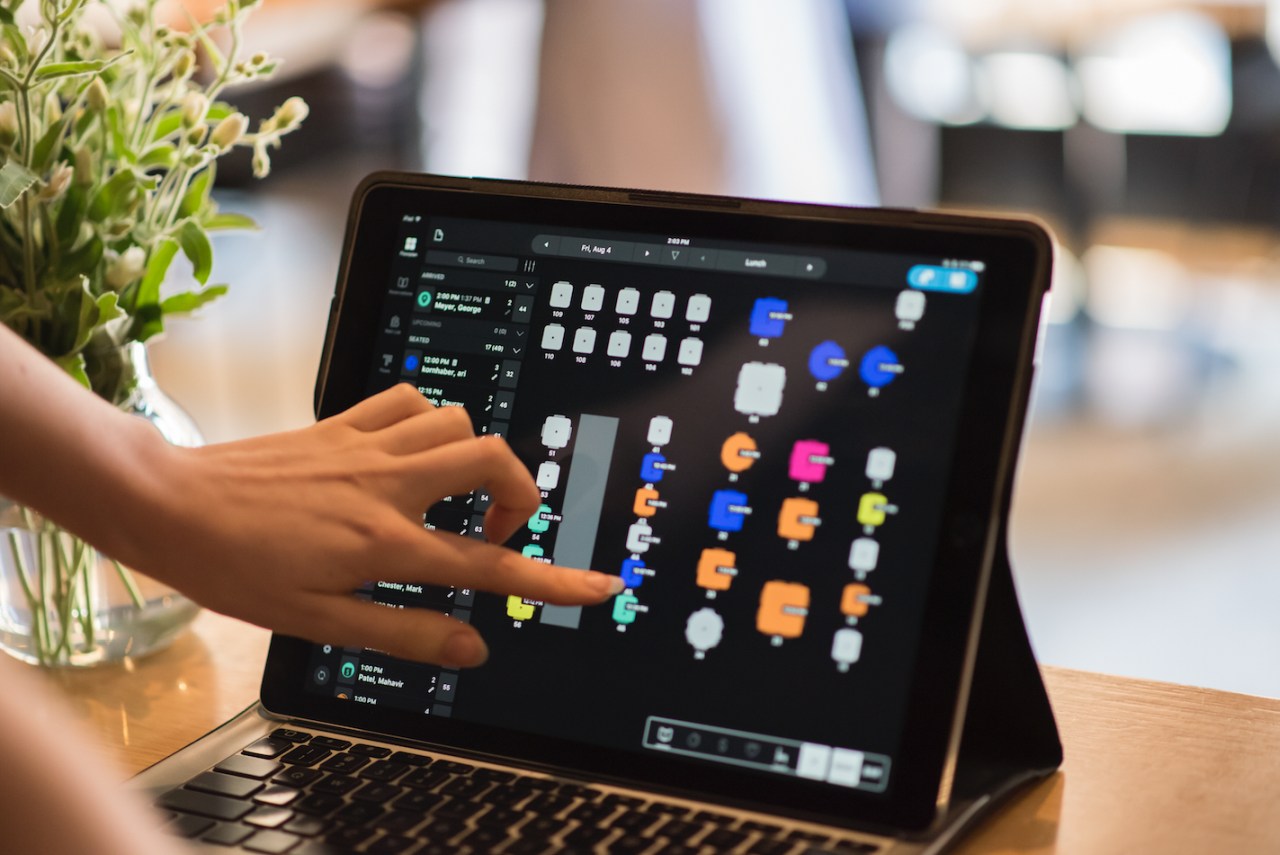
KRG Hospitality Success Session, 2023 icon

by David Klemt David Klemt No Comments

Consultant Versus Coach

Consultant vs. Coach: Similarities and Differences

by Jennifer Radkey

Double arrow, street ends sign

At some point in your journey as a business owner it’s inevitable that you’ll come up against a challenge that you struggle to overcome on your own; you may need to reach out for advice or guidance.

There are countless reasons why you may seek an expert’s help. Perhaps you’ve come up against a roadblock trying to reach a goal. Maybe you’re unexpectedly forced into a major transition. You may decide you’re ready to take your business to the next level but are unsure how to proceed.

The situation you find yourself in could be as big as the opening of a new restaurant or bar, or as vague as a general sense of something not being “right.”

Whatever the reason may be, you’ve exhausted your own pool of resources and are ready to seek outside help. So, who do you turn to?

Most likely you’ll be looking to hire either a consultant or a coach. Of course, this begs the question: Which do you choose?

I’m both the vice president of KRG Hospitality and a certified life coach. My husband Doug Radkey is the president of KRG Hospitality and our agency’s lead consultant. “Do I need a consultant or coach” is a question people ask of us quite often.

The answer is simple once you understand the similarities and differences between the two.

Similarities

Coaches and consultants are both third parties who provide an outsider’s clarity while maintaining an unbiased point of view.

They’re both knowledgeable and have their own unique approaches and expertise. Coaches and consultants come with the intention of helping you achieve your goals. While the majority of coaching and consulting is done one-on-one, team consulting and coaching are also options.

The differences between coaching and consulting can be found in the approaches used to help you achieve your goals.

Differences

The easiest way to learn the differences between a coach and a consultant is to take a closer look at how each one approaches how they help you. It’s an understanding of these differences that provide the clarity needed for you to choose the best solution.

Consultants

Consultants are industry-specific experts. When presented with a challenge you want to overcome or a goal you want to achieve, a consultant finds the solution using their knowledge and experience. They also diagnose any problems that are evident in your business and then make recommendations to correct them.

A consultant is someone you can turn to for technical and professional advice.

Once the consultant has determined the root of the problem or determined the best path forward to achieve your goal, the answers will be provided to you. And along with the answers come the steps necessary to solve the problem or reach the goal. You’ll be given a clear, detailed plan.

Consultants listen carefully to what’s going on. They ask specific questions, watch how your team interacts with your guests, and study your steps of service. Additionally, consultants analyze data and conduct research, and then communicate their findings clearly with you. Again, consultants give you the tools you need to execute a plan—including processes and proven methods—to achieve success.

If you’re in need of specific industry advice and expertise, a consultant is who you need to hire.

Coaches

Coaches are experts in placing the power in your hands to discover your own solutions and answers. You hire a coach to discover yourself, inspire confidence, explore possibilities, and find your own clarity. Entrepreneurs turn to coaches to help them transform into great leaders.

Through sincere and thoughtful inquiry, coaches will pull answers out of you that you didn’t know that you already had. They’ll also help you become aware of self-imposed limitations so you can overcome them. Rather than just giving you a plan, coaches help you develop your own strategies for uncovering your truth, and then help you understand how to move forward.

Coaches are sounding boards for discussing both personal and professional issues, providing a safe, judgment-free place for you to be heard. They’re interested in long-term results and the overall well-being of their client.

If you’re looking for overall growth and a better understanding of how you can reach your own goals and potential, a coach is who you need to hire.

Hiring a consultant or a coach is a positive step towards achieving both short-term and long-term goals. Knowing the difference between the two now empowers you to choose the best person to help you where you want to go.

Cheers to personal and professional growth!

Image: Robert Linder on Unsplash

KRG Hospitality Mindset Coaching, 2023 Icon

by David Klemt David Klemt No Comments

SevenRooms Introduces New Tool: Pre-Shift

SevenRooms Introduces New Tool: Pre-Shift

Front of house staff member using SevenRooms

A new tool from SevenRooms will help operators and their teams make the most of pre-shift meetings to deliver exceptional service.

Aptly named, Pre-Shift provides a real-time, data-driven picture of a given shift’s reservations. Operators and their leadership team members will no longer need to hit the office, navigate to the day’s reservations, and print out guest data—assuming they have such valuable information.

Further, this new feature is accessible via the venue’s devices (tablets, phones, etc.). Pre-Shift, then, offers a real-time view of reservations and robust guest data. Well ahead of arrivals, staff will know a guest’s seating preference, relationship with the venue, reviews they’ve left, allergies, and much more.

Intriguingly, Spago has been testing Pre-Shift ahead of SevenRooms’ announcement and launch. Per Steve Scott Springer, the GM of Spago of Beverly Hills, this new tool is a game-changer for restaurants.

Less than two months ago, SevenRooms launched Email Marketing. It’s likely we can expect more new features to roll out throughout 2023.

To learn more, please review the Pre-Shift press release below.

SEVENROOMS’ PRE-SHIFT FEATURE EMPOWERS TEAMS TO STREAMLINE PRE-SERVICE OPERATIONS

New data-driven tool serves as a one-stop-shop for restaurant teams to enhance the guest experience and build guest loyalty

NEW YORK (May 3, 2023) – SevenRooms, a global guest experience and retention platform for the hospitality industry, today announced a new product feature, Pre-Shift, which provides operators with key shift details they can leverage to inform and lead pre-service meetings. Pre-Shift is built to power and simplify pre-service meetings for restaurant operators and their staff around the world.

The new feature provides operators a real-time, unified view of everything they need ahead of each shift and saves employees’ time with an out-of-the-box informational report. Instead of paper print-outs and laborious briefing forms, Pre-Shift allows teams to harness rich customer data with up-to-the-minute information on every guest joining during that shift.

With ongoing labor shortages, Pre-Shift is a crucial tool in helping operators save time on administrative tasks like pulling guest and reservation data to optimize a team’s pre-shift meeting ahead of service with all stakeholders. This allows operators and staff to instead focus on delivering exceptional, personalized experiences the moment that guest walks through the door. Operators have the ability to embrace new consumer expectations to provide an incredible guest journey from start to finish.

By incorporating this tool, staff can utilize SevenRooms’ rich guest data and Auto-Tags to educate themselves on incoming guests. The tool highlights valuable insights such as allergy information, dining preferences, previous experiences with the restaurant, and positive/negative reviews. It also provides a quick snapshot of that day’s notes on menu specials, private events or special requests, making it easy for staff to reference back to quickly throughout the course of service. Whether it’s the maître d, host, server or back of house employees, Pre-Shift enables all staff with the information they need to deliver exceptional service, build guest loyalty, and keep up with diner expectations as they continue to evolve.

Pre-Shift helps restaurants deliver personalized hospitality at scale with invisible technology. Guest and reservation data can be accessed on the fly without double clicks or additional navigation via iPhone and iPads for the utmost convenience. No other reservation management product on the market today offers such a robust overview with automated guest data incorporated into its dashboard, saving operators time as they set up for service.

“The magic of SevenRooms is in the way that we’re able to serve up relevant guest information to restaurants at key points of service. Our new Pre-shift view takes that magic one step further by strategically aggregating the most important guest insights before service even begins,” said Allison Page, Co-Founder & Chief Product Officer at SevenRooms. “We seamlessly take the data available for a shift and serve up key insights that the front of house should be aware of heading into service – for instance, guests with a high propensity to spend, guests who have previously left negative reviews, guests with allergies and more. Pre-Shift provides operators a real-time, unified view that takes pre-service preparation to a whole new level, ultimately providing guests with exceptional, frictionless experiences.”

“Pre-Shift is a great addition to Spago’s pre-service meeting,” said Steve Scott Springer, General Manager at Spago Beverly Hills. “When we began using the group-by server feature, it really was an ‘a-ha’ moment. This is exactly the way every restaurant wants to prep their employees ahead of a shift. We put the entire view up on a screen so our team can see and follow along. This is so much easier than what we used to do – it’s a no-brainer.”

For more information about SevenRooms and its services, please visit www.sevenrooms.com.

About SevenRooms

SevenRooms is a guest experience and retention platform that helps hospitality operators create exceptional experiences that drive revenue and repeat business. Trusted by thousands of hospitality operators around the world, SevenRooms powers tens of millions of guest experiences each month across both on- and off-premises. From neighborhood restaurants and bars to international, multi-concept hospitality groups, SevenRooms is transforming the industry by empowering operators to take back control of their businesses to build direct guest relationships, deliver exceptional experiences and drive more visits and orders, more often. The full suite of products includes reservation, waitlist and table management, online ordering, mobile order & pay, review aggregation, email marketing and marketing automation. Founded in 2011 and venture-backed by Amazon, Comcast Ventures, PSG and Highgate Ventures, SevenRooms has dining, hotel F&B, nightlife and entertainment clients globally, including: MGM Resorts International, Mandarin Oriental Hotel Group, The Cosmopolitan of Las Vegas, Wynn Resorts, Jumeirah Group, Wolfgang Puck, Michael Mina, Bloomin’ Brands, Giordano’s, LDV Hospitality, Zuma, Australian Venue Company, Altamarea Group, AELTC, The Wolseley Hospitality Group, Dishoom, Live Nation and Topgolf.  www.sevenrooms.com

Image: SevenRooms

by David Klemt David Klemt No Comments

5 Books to Read this Month: May 2023

5 Books to Read this Month: May 2023

by David Klemt

Flipping through an open book

Our engaging and informative May book selections will take your front and back of house to the next level, and help develop your leadership skills.

To review the book recommendations from April 2023, click here.

Let’s jump in!

Contagious You: Unlock Your Power to Influence, Lead, and Create the Impact You Want

This is one of three books KRG Hospitality’s Jennifer Radkey read in February. It’s the sequel to a book titled Contagious Culture, which we featured last month.

From Amazon: “For anyone who’s sought to create change, or felt sucked into the drama and chaos of a toxic work environment, this book will advance the notion that everyone at an organization is a leader—for good or for bad—and that leaders have tremendous power to influence those who follow their example. The quality of our leadership is based upon our intentions, energy, and presence. By emphasizing authorship, self-care, and response-ability (not responsibility) as leadership skills and therefore cultural amplifiers, Contagious You shows you how to walk the path of more effective leadership while navigating the road blocks in your way. Whether these road blocks are working with negative co-workers with secret agendas and unrealistic expectations, or just the general ‘busyness’ of life and its excessive demands, this book will take you on a journey to create more space, more courageous leadership, and stronger collaboration to influence others and create the impact you desire.”

Grab this book today: click here.

Chef’s PSA: Culinary Leadership Fundamentals

If Chef’s PSA sounds familiar, that’s probably because it’s a series of four books. We included another book in the series, How Not to be the Biggest Idiot in the Kitchen, last December in our last book roundup of 2022.

Culinary Leadership Fundamentals is intended to prepare chefs to lead a brigade. It’s one thing to know how to prepare food; it’s another to know how to be the leader in the kitchen. Of course, this book is also full of valuable information for owners and operators. After all, they should know how their chef is approaching their role.

From Amazon: “When you become a Chef for the first time you may be put in a position where you know how to cook but not how to lead and manage. This book will teach you everything you need to know to become a Chef Leader in the kitchen. From how to manage costs, build a team, market yourself and overcome adversity. This is the book every Chef needs if they want a competitive edge in running a successful kitchen.”

Pick it up today!

Southern Cooking, Global Flavors

Chef Kenny Gilbert’s journey through the culinary world is epic. By the age of seven he had shown such an interest in the art of BBQ that his father bought him his first grill, a small Weber. After high school he moved from his hometown to Cleveland to attend the Pennsylvania Culinary Institute. After graduation, Chef Gilbert entered into an apprenticeship at the Ritz-Carlton, Amelia Island, in Florida. By age 23, Chef Gilbert earned the role of Chef de Cuisine. He has also opened restaurants and led the culinary programs at restaurants and hotel properties not only throughout Florida but also Colorado, Georgia, throughout the Caribbean, France, Japan, and Spain. Oh, and there was Chef Gilbert’s Top Chef season seven appearance, plus the development of his own line of spices and rubs.

His newly released book features 100 recipes that put international spins on southern classics. Pick up Southern Cooking, Global Flavors today!

The Ice Book: Cool Cubes, Clear Spheres, and Other Chill Cocktail Crafts

We’ve addressed the need to compliment your cocktail menu with a dedicated ice program. This book, available now for pre-order, is from world-renowned cocktail and spirits writer Camper English. Not only does it include easy-to-follow instructions for you and your bar team to elevate your cocktail program, from full-proof to zero-ABV drinks. The Ice Book, then, is aptly titled—it’s everything you need to introduce a memorable drinking experience.

From Amazon: “In The Ice Book, internationally renowned cocktail icepert Camper English details how to use directional freezing to make perfectly pure ice in a home freezer, carve it up into giant diamonds and other shapes, and embed it with garnishes, including edible orchids and olives. You’ll learn how to create a frozen bowl for Negroni punch, serve a Manhattan inside an ice sphere, and infuse cubes with colors and flavors to create cranberry cobblers, a color-changing Gin and Tonic, and other awesome drinks.”

The Book of Cocktail Ratios: The Surprising Simplicity of Classic Cocktails

Long-time subscribers to KRG Hospitality’s newsletters and readers of our articles know that I love a controversial take on cocktails. Take, for instance, the origin of the Margarita. Well, the opening sentence from the description for The Book of Cocktail Ratios certainly got my attention.

From Amazon: “Did you know that a Gimlet, a Daiquiri, and a Bee’s Knees are the same cocktail? As are a Cosmopolitan, a Margarita, and a Sidecar. When hosting a party wouldn’t you enjoy saying to your guests, ‘Would you care for a Boulevardier, perhaps, or a Negroni?’ These, too, are the same cocktail, substituting one ingredient for another. Or if you’d like to be able to shake up a batch of whiskey sours for a party of eight in fewer than two minutes, then read on.

“As Michael Ruhlman explains, our most popular cocktails are really ratios—proportions of one ingredient relative to the others. Organized around five of our best-known, beloved, classic families of cocktails, each category follows a simple ratio from which myriad variations can be built: The Manhattan, The Gimlet, The Margarita, The Negroni, and the most debated cocktail ever, The Martini.”

This book should provide you and your bar team with a totally different perspective when it comes to drink ratios. Pre-order your copy today!

Image: Mikołaj on Unsplash

KRG Hospitality advanced bar education

by David Klemt David Klemt No Comments

Sticking to Your Standards

The Importance of Sticking to Your Standards

by David Klemt

Person writing down notes

One crucial task for all restaurant, bar, nightclub, and hotel operators is to set the acceptable standards and commit to maintaining them.

Hospitality operations are subject to an interesting paradox. We’re all told to prepare for things to go sideways during any given shift. We’re also told that adhering to our standards of service will help us weather a storm of challenges. Oftentimes, however, the first thing to slip at the first sign of trouble is: our standards.

When a client signs on with KRG Hospitality, they are given the task of identifying their core values. There’s an exercise for this key development step; it’s part of our standards.

Your core values inform your standards (and so much more): leadership team standards; front- and back-of-house team member standards; and standards of service. Additionally, you should spell out these standards during the onboarding process, utilizing an employee manual—which new hires must sign and date—and practical training.

It’s absolutely crucial that you and your team commit to your standards fully. They’re inviolable, what both KRG president Doug Radkey and Chef Brian Duffy call your “non-negotiables” during speaking engagements and when working with clients.

Are people going to make mistakes, including you? Yes. On occasion, a standard is going to slip. The key is understanding that maintaining standards helps reduce these occasions; panicking and allowing them to slip just drops us deeper into quicksand.

Someone on the team is going to miss a service step. Something will occur during a shift that’s not up to standards. What’s important in those moments is the ability for the team to recognize the slip quickly and correct course immediately.

Setting Standards

There are different ways for operators to select their standards. The example I provide at the top of this article is one approach KRG implements.

Michael Tipps, co-founder of Invictus Hospitality and friend of KRG Hospitality, has an intriguing approach of his own. He shared this during the 2023 Bar & Restaurant Expo in Las Vegas.

“Standards separate operators and their teams,” says Tipps. While he doesn’t encourage operators to look at every other operator in their market as competition, he does advocate for differentiation.

Tipps shared a three-step approach to standards. (Step two, by the way, is the one I find intriguing.)

  1. Create your standards. Again, there are different approaches.
  2. Pick your committee. I’m going to explain this further.
  3. Set standards against the grandest vision of your venue.

So, what does it mean to “pick your committee”? Well, it means surrounding yourself with people you respect…real or imagined. As Tipps explained during BRE, he has people in his life that he considers his committee. The real-life members of this committee are a sounding board for any number of ideas, questions, challenges, and even mistakes.

And yes, his committee also includes “imaginary” members, such as Michael Jordan and Phil Jackson. These are people that he doesn’t know personally but are known to have incredibly high standards. They’re high achievers and, of course, many have biographies and we can know their standards. Tipps has “asked” these committee members, “How should I handle X?”

This creative approach isn’t for everyone but every operator should at least give it a shot. When we step that far out of our comfort zones the results can be incredible.

The Cheat Code

On the specific topic of service standards, Tipps has a cheat code for operators: hotels. “The hotel mindset is a hospitality cheat code,” says Tipps.

How so? It’s quite enlightening.

Think about your restaurant. Now, think about it as the first-floor cornerstone of an upscale hotel. Imagine that there are 250 incredible boutique hotel rooms above your restaurant. These rooms command rates of several hundred dollars per night. Now think about how you would treat each guest in these expensive rooms if they ask for a straw.

“Make the effort to care like nobody else can,” says Tipps.

Always bear in mind that hospitality is how you make people feel. Your mission should be for each and every guest to feel relevant.

Generally speaking, most people don’t want to be alone. They’re not just coming to your restaurant because they’re hungry, to your bar because they’re thirsty. In reality, as Tipps would tell you, they’re coming to be around other people. They’re using your F&B as a reason to be around other people and feel relevant.

Your mission is to ensure people feel relevant when they spend time at your venue with your team. The package you send to accomplish this mission is your standards of service.

“Self-inflicted mediocrity is the result of laziness and lack of accountability,” Tipps says.

Hold everyone accountable for enforcing your standards—including yourself—and you’ll level up in every facet.

Image: Owen Michael Grech on Unsplash

KRG Hospitality Start-Up Restaurant Bar Hotel Consulting Consultant Solutions Plans Services

by krghospitality krghospitality No Comments

Loneliness and the Entrepreneur

5 Steps Entrepreneurs can take to Combat Loneliness

by Jennifer Radkey

Empty road leading off to the horizon

Author John Donne may have penned the quote, “No man is an island,” in the 17th century but, like many truths of human nature, it’s still relevant today.

We’re all attached to each other in some way; our humanity is intertwined. It’s when we lose sight of this that we may start to feel lonely. We may also feel as though we’re in isolation from the world around us.

Entrepreneurs often walk a lonely road. The success of your business relies on the effort you put into it daily. With a drive to succeed and a passion for what you are doing, it can often be hard to separate life as an entrepreneur from anything else.

There can be a level of pride in the entrepreneur’s journey that makes it challenging to acknowledge that there’s genuine struggle. When society paints a rosy picture of the life of the entrepreneur—setting your own schedule, doing what you love, earning your own riches, etc.—it can feel as if you aren’t doing something “right” when you’re running a successful business yet feel stress, loneliness, and gloom.

Being an entrepreneur has its perks and many would tell you they can’t imagine doing anything other than running their own business. However, this doesn’t mean that the path is easy or without its risks of social isolation, anxiety, burnout, and depression.

It’s time that we acknowledge all aspects of being an entrepreneur—the good, the bad, and the ugly—to peel back the façade of perfection. We need to allow space for honesty, connection, and self-care.

Below are five steps entrepreneurs can take to combat loneliness as an entrepreneur.

1. Find like-minded individuals who can relate.

Often, entrepreneurs may feel as if no one else understands them, no matter how well-meaning or supportive friends and family may be.

Connect with people who you can be honest with and who will listen with little judgement. This can be through a social group that connects entrepreneurs not for the purpose of business growth and networking, but to build friendships and share stories.

If a group like this does not exist, consider starting one yourself.

2. Practice mindfulness with your external relationships.

 Share with loved ones when you’re feeling particularly disconnected or stressed. They may not understand life as an entrepreneur, but they have your best interest at heart and can help you find balance between your work life and personal life.

Finding time to spend with the people who care for you as a whole person is important. Doing so can remind you to acknowledge and respect all the different sides of who you are, not just the entrepreneur side.

3. Learn how to be in a healthy relationship with yourself.

Acknowledge when you need social time. Recognize when you’re not getting enough sleep. Take time to enjoy hobbies or participate in physical activity. Take time to appreciate your accomplishments and feel proud of what you achieve.

Try journaling or participating in the things you loved doing before you became an entrepreneur to create connections and feel less alone.

4. Share the burden.

As an entrepreneur you often quietly place a tremendous amount of responsibility onto your shoulders. This can lead to feeling entirely on your own—even if you have a team surrounding you.

Learn to place trust in your team and to release some of those responsibilities to others. If you are a solopreneur, perhaps look to other professionals to whom you can outsource some of your tasks ( virtual assistant, social marketer, etc.).

5. Seek professional help if needed.

If you feel alone in the process and don’t have anyone you feel you can speak to, consider seeking a professional to help.

Consider hiring a professional life coach If you’re looking to create stronger social connections; need help with work/life balance or stress management; or wish to manage external relationships better.

If you suspect a mental illness, such as an anxiety disorder or depression, reach out to a registered therapist. There’s no shame in asking for help if it means living a well-rounded life that’s successful not only professionally but personally.

Entrepreneurs are masters of paving the way for their visions to come to life. However, the road they pave doesn’t need to be a lonely one. Applying the same drive to your personal well-being as to the success of your business will only have positive outcomes!

Cheers to your personal and professional growth!

Image: Gustavo Zambelli on Unsplash

Top