Food

by David Klemt David Klemt No Comments

Program for Unique Holidays: July 2023

Program for Unique Holidays: July 2023

by David Klemt

"Think about things differently" neon sign

Do you want to stand out from from other restaurants and bars in your area? Change how you think about your July holiday promotions.

Several holidays are set against every date on the calendar, and this month is no exception. These holidays range from mainstream to esoteric.

Pay attention to the “weird” or unique holidays to raise eyebrows, carve out a niche for your restaurant or bar, and attract more guests. Why do what everyone else is already doing? Why program only around the same holidays as everyone else?

Of course, you shouldn’t try to celebrate every holiday, strange or otherwise. Focus on the days that are authentic to your brand; resonate with your guests; and help you grab attention on social media.

You’ll find suggestions for promotions below. However, the idea behind our monthly holiday promotions roundup is to inspire you and your team to get creative and come up with unique programming ideas.

For our June 2023 holidays list, click here.

July 5: Workaholics Day

Great bars and restaurants offer escapes from the drudgery and negativity of the rest of the world. On this day, encourage those who can step away from work to actually do so.

Barring getting workaholics to play hooky, come up with an LTO menu that’ll inspire them to at least pop by to unwind after a hard day’s work.

July 6: World Kissing Day

There are quite a few cocktails with “kiss” in the title, and these are the drinks you should use to program for this holiday.

The Kiss cocktail, for example, is a gin cocktail with Dubonnet, sweet vermouth, and Luxardo maraschino liqueur. The Widow’s Kiss consists of apple brandy, Yellow Chartreuse, Bénédictine, and Angostura bitters. In other words, it’s not difficult to celebrate this holiday through your drink menu.

July 7: Dive Bar Day

It’s difficult to beat a dive or neighborhood bar when you’re looking for a great time with friends. If you’re a dive or neighborhood bar operator, this is your day.

July 11: National Cheer Up the Lonely Day

Look, the past few years have isolated far too many of us. People are lonely, and this isolation isn’t doing anyone’s mental health any favors.

Bars and restaurants are cornerstones of their communities, so this is an excellent day to encourage people to come in, grab a bite and a drink, and try to make some new friends.

July 13: National French Fry Day

When a French fry is done right, when it’s hot with a crunchy exterior and creamy interior, it’s a perfect food. If you think your team makes amazing French fries, brag about it on social and prove it to your guests.

Better yet, this is a great day to show off your French fry skills with signature loaded versions.

July 14: National Nude Day

Unless you’re running an incredibly niche concept with excellent community and guest support, please don’t celebrate National Nude Day with nudity.

Instead, draw guests in through an enticing LTO menu. You can, for example, highlight your bar team’s prowess for creating the Naked & Famous cocktail, a mezcal cocktail made with Aperol and Yellow Chartreuse. Of course, there’s also the Porn Star Martini, along with other cocktails with names that imply nudity.

July 20: National Moon Day

It may seem like this holiday is related to the previous one, but please behave. You and your guests can celebrate Earth’s sole natural satellite via cocktails.

Not only are there drinks like the Moon cocktail (made with gin and sherry), you can also offer blue, purple, and black cocktails served with large ice cubes.

July 25: Culinarians Day

Are you proud of your kitchen team? Proud of the culinarians that are working hard to make your restaurant a success? This is the day to highlight the mastery of their craft and your signature menu items.

Alternatively, if you can afford to do so, you can also go dark on this day to give your culinary team a break.

July 28: National Get Gnarly Day

If you have some “out there” menu items, this is the day to highlight them. Do you have a food challenge? Promote it! Have some “interesting” bottles in your inventory? Promote them!

Image: Ivan Bertolazzi on Pexels

KRG Hospitality menu development. Restaurant. Bar. Cafe. Lounge. Hotel. Resort. Food. Drinks.

by David Klemt David Klemt No Comments

Fire and Ice: Bring Your Teams Together

Fire and Ice: Bring Your Teams Together

by Jared Boller

Ice on fire inside of a Martini glass

If you want to elevate your concept you need to ensure the front- and back-of-house teams are working with each other, not against one another.

There’s nothing wrong with a healthy rivalry and competition, of course. But the key word there is “healthy.” Both teams are crucial to your success, even if they seem like polar opposites.

Analogies are one of the singular greatest educational selling points when you have a group of people in front of you. Not only do they help you get your point across, they also help you to make a topic relatable to the listening novice.

In hospitality there are numerous ways to use analogies as teaching tools. When it comes to mixology or bartending, I like to use fire and ice to represent the kitchen and the bar.

I take this approach because the bar (ice) is the friendly counterpart to the fast and furious kitchen (fire). If you follow my train of thought, you’ll see why I preferthis approach: ultimately, we’re speaking about temperature and its importance in both spaces.

Consider the art of crafting cocktails. You and your bar team should understand dilution and melting rates the same way you know how important temperatures are to steaks. Nine times out of ten, individuals at the table have a personal preference regarding the temperature of their steak.

Guests don’t hesitate to relay this information to the server. Next, the chef and their brigade uses fire and cooking times to ensure each state is cooked properly. Not only that, the mastery of their craft leads to each steak coming out at the same time, cooked to each guest’s preference.

This process is the same for the bar. Stirred, shaken, egg-white cocktails… Bartenders must master their craft to ensure they understand the different types and uses of ice (or no ice) when building drinks. Moreover, they need to use that knowledge to ensure each drink for a table or group comes out at the same time, with the appropriate level of coldness.

In the end, when drinks hit the pass or server’s station, we want drink orders to be delivered as quickly as possible because they’re on the clock. The ice in the drinks start to melt. Hot food begins to get cold. We’re fighting time.

Understanding temperatures and times relates directly to the guest experience. We can tell how well-oiled and skillful front- and back-of-house teams are by watching drinks and dishes hit tables.

Fire

According to Anthropologist Richard Wrangham, who wrote the book Catching fire: How Cooking Made Us Human, people started cooking over open fire more than two million years ago.

Wrangham states that cooking was first seen as “simply chunking a raw hunk of something into flames and watching it sizzle.” Modern chefs may not agree with this style but we are able to see that early human “cooks” came to a few realizations regarding their use of fire. Their food was healthier, tastier, and they may have had more revitalized immune systems.

Obviously, the evolution of modern cooking techniques have advanced through tools, techniques, and vessels over the years. However, regardless of how much innovation we introduce to our kitchens, we’re still using fire and heat to cook our food.

Unless they’re expecting a salad, sushi, or another amazing raw or cold food, guests anticipate their food will be hot or warm upon arriving in front of them. Great chefs take control of their kitchens, techniques, and tools. Their masters of temperature. They have a nearly supernatural understanding of timing.

It’s always a site to behold when someone is masterful in the kitchen. A seemingly endless number of pots and pans raging on burners. Infinite elements of dishes flowing in and out of ovens. Chaos to the novice’s eyes but in reality, flawlessly composed dishes arriving at perfect temperatures.

Ice

We can trace the use of ice in drinks as far back as ancient Egypt. Icy drinks are also well documented by first-century Roman society; emperors, it’s claimed, enjoyed “chilled” cocktails via glacier runoff extracted from the mountains.

Emperors, according to some historians, would store giant blocks of ice in cool cellars, garnishing their tipples with shards of ice. This was both a decadent display of their elite status, and evidence that humans have long appreciated a cold, refreshing drink.

It wasn’t until early 1800s Boston that humankind really began to master ice. A young entrepreneur, Frederic “The Ice King” Tudor, pursued an idea with his brother and launched the ice or frozen water trade. Over the course of just a few decades, the New England-based trade was able to ship ice worldwide.

The Wenham Lake Ice Company, established in the 1840s, harvested giant blocks from the eponymous lake and stored them in a network of ice houses, accessed by a small railroad system. Once a luxury, ice was on its way to going mainstream. Everyone was coming to the realization that drinks tasted better with a bit of dilution and colder temperatures.

Eventually, ice production led to ice harvesting innovations. For example, Clinebell machines that use cold plates to 300-pound, crystal-clear blocks. Along with being clear, the ice blocks are super dense to reduce dilution rates significantly. From glaciers to “harvesting” ice from lakes to full-on factory production, our obsession with ice has led to technological innovation.

Interestingly, however, early 19th century methods of ice extraction are once again in vogue. A cadre of passionate bartenders who view ice as a premium ingredient in and of itself are hand carving ice cubes, spheres, and spears for perfectly curated Negronis or Old-fashioneds.

Takeaway

The bottom line is, temperature is important to anyone working in hospitality. Kitchen and bar teams need to work together to create the best possible products.

Some people think of food or drinks when asked to consider the best restaurants and bars in the world. However, those are products. What sets the best concepts apart is the teams they’ve each built and nurtured.

It’s the passion of each team member and their consideration of the fine details that makes a restaurant or bar notable. So, when we think about fire and ice, we can consider this idea the ultimate geekery in regard to our profession.

Take it from me: When the front of the house and back of the house collaborate, then they’re in sync with one another and nail the small details, they transform first-time guests to repeat brand evangelists.

They may not understand why their experience was so incredible but they’ll become outspoken ambassadors.

Image: Alexander Startsev on Unsplash

KRG Hospitality Mixology Training with Jared Boller

by David Klemt David Klemt No Comments

Own Your Team’s Excellence

Own Your Team’s Excellence

by David Klemt


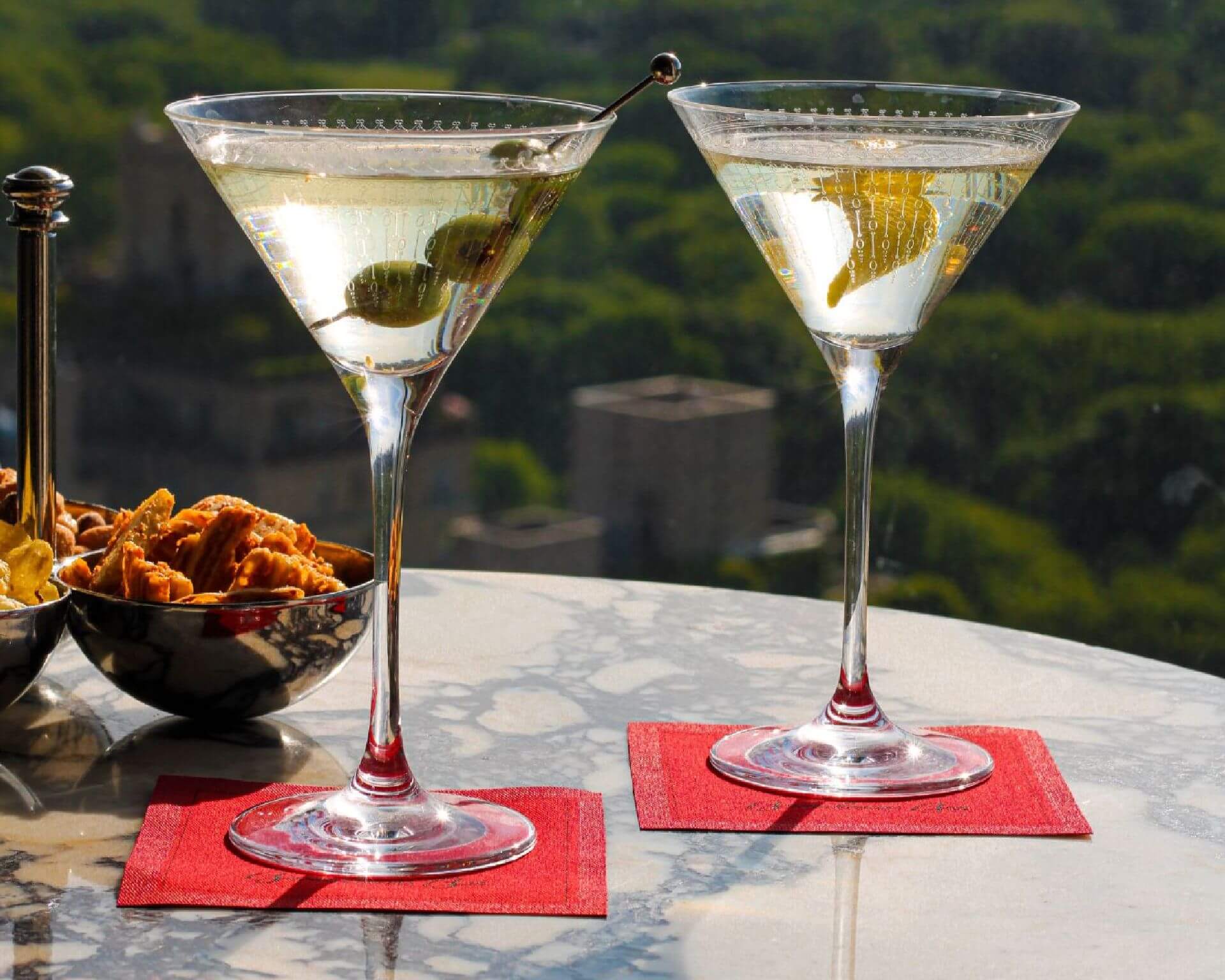
Martinis at Bemelmans Bar inside the Carlyle hotel in New York City

If you and your team are producing an incredible food or drink item, don’t just be proud—make it your signature and own it.

As Chef Brian Duffy says during his demos and speaking engagements, people can eat and drink anywhere. Further, with just a handful of major food suppliers operating throughout North America, operators are using much of the same ingredients.

With that in mind, then, it’s crucial that operators and their teams innovate. Doing so ensures that hospitality professionals are staying current on consumer demands and trends; constantly seeking be educated and share information; and making sure their business stands out from others.

A commitment to standing out can also motivate a team to elevate their techniques. In turn, they can truly “own” an item. Creating something incredible—and replicating it order after order consistently—can become a brand and team’s calling card.

Does your kitchen team turn out a fantastic signature burger? Has your business become known as the place for chicken wings because of your kitchen team?

Has your bar team perfected the Margarita? Are they so good at crafting Frozen Irish Coffees that your bar is on Glendalough Distillery‘s radar?

When you identify what your team is producing at an extraordinary level, you need to make certain you loudly own it.

A Real-world Example

For a high-level example of what I’m talking about, we can look at the Carlyle in New York City.

This landmark Rosewood Hotel is known for delivering peerless service. However, a venue inside this sophisticated resort is known for a specific item.

Bemelmans Bar, an escape from the hectic streets of New York, is known for the Martinis the bar team produces. (They’re also known for their red jackets, but those aren’t for sale.)

It may be a bold statement considering the level of bars and cocktails in the city, but Bemelmans Bar (and therefore the Carlyle) owns the Martini in NYC. In fact, the bar serves a staggering 1,000 Martinis a night. More often than not, the Martinis that cross the bar or leave the service well are dirty or extra dirty. This has been the case since at least 2021.

So famous are the Bemelmans’ Martinis that the Carlyle sells an at-home kit, yours for just $395. It’s their latest promotion, though, that makes it evident Bemelmans and the Carlyle are taking ownership of the Martini.

Guests of the Carlyle can now book their Martini Retreat, a two-day experience that centers around their signature cocktail. If, perhaps, you think that $400 is a bit steep for their Martini Box, prepare for true sticker shock. The Martini Retreat experience starts at $4,895 for two guests.

However, the package is rather impressive and encapsulates the Carlyle’s ownership of the Martini. The Carlyle Martini Retreat includes:

  • a two-night stay in a Madison Room or Premier Suite;
  • a Bemelmans Bar Martini Box;
  • enrollment in the Bemelmans Master Martini Class (valued at $495), a 45-minute experience during which guests learn how the bar team crafts multiple variations of vodka and gin Martinis, and their new Madeline’s Vesper cocktail;
  • a two-course Martini lunch at Dowling’s at The Carlyle; and
  • a curated list of where to go to try other great Martinis throughout NYC, put together by Dimitrios Michalopoulos, bar manager at Bemelmans.

Takeaway

So, am I suggesting that operators create an experience that costs thousands of dollars? Well…I mean, if your concept can succeed with such a promotion, absolutely. If doing so would resonate with enough guests to make it feasible and become a steady (and impressive) revenue stream, go for it.

However, what I’m really attempting to drive home here is the power of becoming known for even a single signature item. And, hey—your item, in your market, may be the Martini.

Owning an item means screaming from the rooftops and hills that it’s yours. That your team’s version is the one to have; the one people in the know have to have. Taking ownership of your team’s excellence translates to becoming a destination for it, to driving repeat visits once people have experienced it.

Of course, with that ownership comes the responsibility to elevate all other elements of your business. Every other item on the menu must be produced and served at the highest level. This ensures the entire guest experience wows the guests, and the signature item is essentially a driver and the cherry on top.

It’s time to review what your team produces so well that your brand owns it. Should this introspection yield no results, it’s then time to see what other operators are known for and discover what item or items you and your team can improve upon. What’s something that works with your brand that you feel confident you and your team can own?

There’s power, money, and long-term success in something on your menu. It’s time to uncover it and take ownership.

Image: The Carlyle

KRG Hospitality. Boutique Hotels. Resorts. Properties. Consultant. Feasibility Study. Business Plan

by David Klemt David Klemt No Comments

Program for Unique Holidays: June 2023

Program for Unique Holidays: June 2023

by David Klemt

"Think about things differently" neon sign

Do you want to stand out from from other restaurants and bars in your area? Change how you think about your June holiday promotions.

Several holidays are set against every date on the calendar, and this month is no exception. These holidays range from mainstream to esoteric.

Pay attention to the “weird” or unique holidays to raise eyebrows, carve out a niche for your restaurant or bar, and attract more guests. Why do what everyone else is already doing? Why program only around the same holidays as everyone else?

Of course, you shouldn’t try to celebrate every holiday, strange or otherwise. Focus on the days that are authentic to your brand; resonate with your guests; and help you grab attention on social media.

You’ll find suggestions for promotions below. However, the idea behind our monthly holiday promotions roundup is to inspire you and your team to get creative and come up with unique programming ideas.

For our May 2023 holidays list, click here.

June 3: National Repeat Day

This holiday is the perfect time to encourage guests to buy the ever-important second drink. Likewise, it’s the right day for encouraging people to order a dish or two to take home.

June 8: World Oceans Day

Leaders around the world are committed to the 30×30 initiative: protecting 30 percent of our oceans, waterways, and land by 2030. World Oceans Day is about focusing on this initiative, which people can do, in part, by filling out this short survey.

You and your guests can also support the oceans and conservation efforts by supporting brands like Gray Whale Gin. This award-winning gin is produced with sustainable, ethically, and locally-procured ingredients. Additionally, Gray Whale supports Oceana and 1% for the Planet by donating a portion of their proceeds.

June 10: National Black Cow Day

For those who may not know, a Black Cow is a float. It’s incredibly simple to make: drop a scoop of vanilla ice cream into a mug, add root beer.

Of course, you can also get creative with the Black Cow. One way is to make an adult version, perhaps with a vodka like Vodkow, or a cream liqueur like Vodkow Cream. Another option is to feature craft root beer and local vanilla ice cream.

June 13: National Kitchen Klutzes of America Day

Look, some people just aren’t great cooks. Some aren’t good in the kitchen. In fact, some aren’t even mediocre when it comes to cooking—they’re complete disasters.

Luckily, you probably have a kitchen inside your venue. So, give the not-so-great cooks in your area a reprieve from cooking with excellent lunch and dinner LTOs.

June 14: National Bourbon Day

Hey, do you have bourbon? At the risk of being too assumptive, I bet you do. Guess what you should do on this holiday.

June 16: National Take Back the Lunch Break Day

What a perfect day to motivate people to have lunch in your venue. It’s also a great day to motivate people to order delivery, carryout or pickup from you.

June 21: National Daylight Appreciation Day

This holiday does exactly what it says on the tin, as they say: it celebrates daylight. Venues that take advantage of sunlight—great windows, garage-style roll-up doors, amazing patios—should do what they can to entice guests to visit in the morning and afternoon. So, small-bite and lunch LTOs and promotions; sessionable beer, wine, and cocktails; and healthy, refreshing zero-proof beverages are the order of the day.

June 26: National Coconut Day

Summer and coconut go hand in hand. An LTO menu that shines a light on summery drinks and bites is the perfect way to celebrate the coconut.

Feel free to rile up guests by asking them a “simple” question: Is a coconut a fruit, a nut, a seed, or a drupe?

June 27: National Onion Day

Onion rings. Onion dip. Bacon-onion bites. Onion pinwheels… And those are just appetizers. The humble onion is, as we all know, a powerhouse in the kitchen. For some, onions are also cocktail garnishes.

I think you know what to do on National Onion Day.

June 28: Tau Day

For the most part, we’re taught in school that Pi—a circle’s circumference divided by its diameter—is rounded to 3.14. Pi Day is March 14 each year and the holiday (and mathematical constant) tends to get the meme treatment.

Well, some believe Pi is incorrect. Instead, these people use the constant Tau, which is a circle’s circumference divided by its radius. Tau, with a value of 6.28, is celebrated on June 28. One of the simplest ways to celebrate this holiday is to enjoy twice the amount of pie as one would normally. So, a smart promotion that celebrates Tau Day could be one that encourages couples to come in to enjoy two slices of pie for dessert.

Image: Ivan Bertolazzi on Pexels

KRG Hospitality marketing plan. Restaurant. Bar. Cafe. Lounge. Hotel. Resort.

by David Klemt David Klemt No Comments

The New Wave of Plant-based Foods

The New Wave of Plant-based Foods

by David Klemt


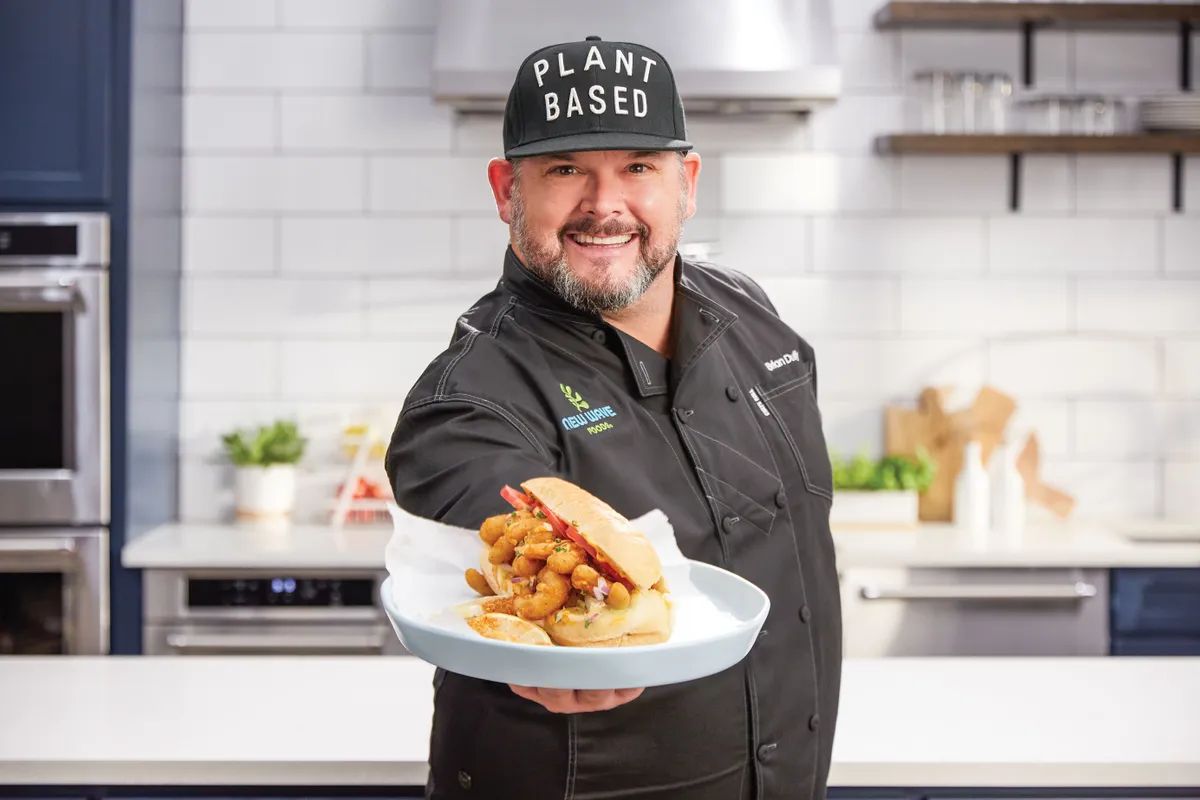
Chef Brian Duffy holding a plate with a plant-based shrimp po' boy sandwich on it

A key takeaway from the 2023 National Restaurant Association Show is this: a new wave of plant-based foods has made landfall.

In fact, given how many booths had plant-based items on offer, more waves will be crashing ashore. Plant-based items had a presence inside every building at McCormick Place in Chicago. For those who haven’t attended to show, McCormick Place has well more than two-million square feet in exhibit space.

There were, of course, the plant-based standards to which we’ve all grown accustomed. Burger patties, breakfast sausages, “chicken” nuggets, “pepperoni” pizzas… However, we now know there’s more innovation on the way.

Years ago, F&B experts declared seafood alternatives as the “holy grail” of plant-based foods. The race has been on to “crack the code” and offer seafood alternatives that look, cook, and taste like their animal counterparts.

One brand that appears to have reached their goal? New Wave Foods. And their staunchest culinary supporter? The revered and iconic Chef Brian Duffy.

Seismic but Sensible Shift

Those who are familiar with Chef Duffy know he’s unafraid to share his views on all things culinary, service, operations, and hospitality. The same people also know that he’s demanding when it comes to ingredients, distributors, and partners.

I say that to say this: Some people are shocked Chef Duffy is championing a plant-based food. However, I don’t share that reaction. Chef Duffy has never been anti-plant-based—he has been waiting for plant-based items to rise to his high standards.

During his 2023 NRA Show demo, the acclaimed and in-demand chef made shrimp-fried rice. Of course, he replaced shrimp with a plant-based alternative produced using mung bean and seaweed. That product is New Wave Foods Shrimp.

The demo proved so engaging that Chef Duffy was asked to repeat it on the final day of the show. I, for one, am not surprised—Chef Duffy is an incredible speaker and chef.

This seismic shift—not just in Chef Duffy’s embrace of plant-based foods but also throughout the industry—is sensible when you consider something said during the demo.

Boiling it down to the basics, Chef Duffy asked why operators wouldn’t want to offer high-quality plant-based items to their guests. It’s simple: Increasingly, this is what guests want. So…give it to them.

Succeeding with Plant-based

According to a 2020 Datassential report, nearly two-thirds of operators have shrimp on their menus. Further, two-thirds of operators have at least expressed an interest in offering more plant-based alternatives.

And why wouldn’t they want to do so? It’s simple business: fulfill consumer demands and desires. If people want something and it’s feasible for a business owner to offer it, that’s good business.

However, it goes beyond just business for Chef Duffy. Taking things further, he believes that culinary professionals and operators have a responsibility to their guests.

There’s a responsibility to learn about what’s new and educate kitchen staff. A responsibility to help guests eat healthier. And absolutely a responsibility to innovate. As Chef Duffy said during his 2023 Bar & Restaurant Expo live menu read, operators can only justify charging premium prices if they’re truly innovating in the kitchen.

Diving deeper, meeting guest demands for plant-based foods fulfills a financial responsibility. If an operator has partners or investors, they need to meet their expectations. Equally as important, failing to innovate or keep up with guest demands puts the business at risk, therefore risking the livelihoods and career progression of staff.

Brands like New Wave Foods are sourcing their ingredients ethically and sustainably. Another brand, Meati, is using mushroom root sustainably. Additionally, New Wave Foods Shrimp is cholesterol-free, is free from shellfish allergens, and is kosher. Meati, a complete protein, is also cholesterol-free and is also free from nine major allergens

I also came across a whole-cut steak alternative called Chunk that tasted like beef. Interestingly, there was also a plant-based egg alternative that allows for the social-media-famous yolk poke, YoEgg.

Own the Operator Responsibility

An operator doesn’t have to be vegetarian or vegan to appreciate the plant-based movement. They don’t even have to be interested in a plant-based diet.

All an operator needs to understand this shift in consumer behavior—between 60 and 70 percent of US households are having at least one plant-based meal per week—is their responsibility to their guests and teams.

If offering plant-based options is viable for an operator (in most cases, it is), it’s good business to do so. Stubbornly refusing to offer guests what they want flies in the face of hospitality and service.

Offering plant-based options doesn’t suddenly make a concept a vegetarian or vegan brand. Chef Duffy puts one or two of his famous “dippy” eggs on his plant-based shrimp fried rice. He also cooks the dish with butter. It’s decidedly not a vegan dish.

To that point, Chef Duffy doesn’t dedicate menu sections to vegetarian or vegan diets. As he explains, doing so is a self-imposed limitation, and likely a mistake.

Targeting vegans means attempting to succeed with a very small (for now) pool of consumers. Attempting to appeal to vegetarians means targeting a larger base but still, it’s limiting.

Instead, operators can simply make it known a plant-based alternative is available for a given dish. Simple, to the point, and appeals to the greatest number of guests.

Succeeding with plant-based foods has never been easier. By the time the next plant-based wave surges, it will be even easier. Operators have very few excuses remaining for refusing to participate in the movement.

Image: New Wave Foods

New Cafe Restaurant Concept Strategy Layout Prototype Drawings Food Beverage Equipment

by David Klemt David Klemt No Comments

The Art of the Preparation

The Art of the Preparation

by David Klemt

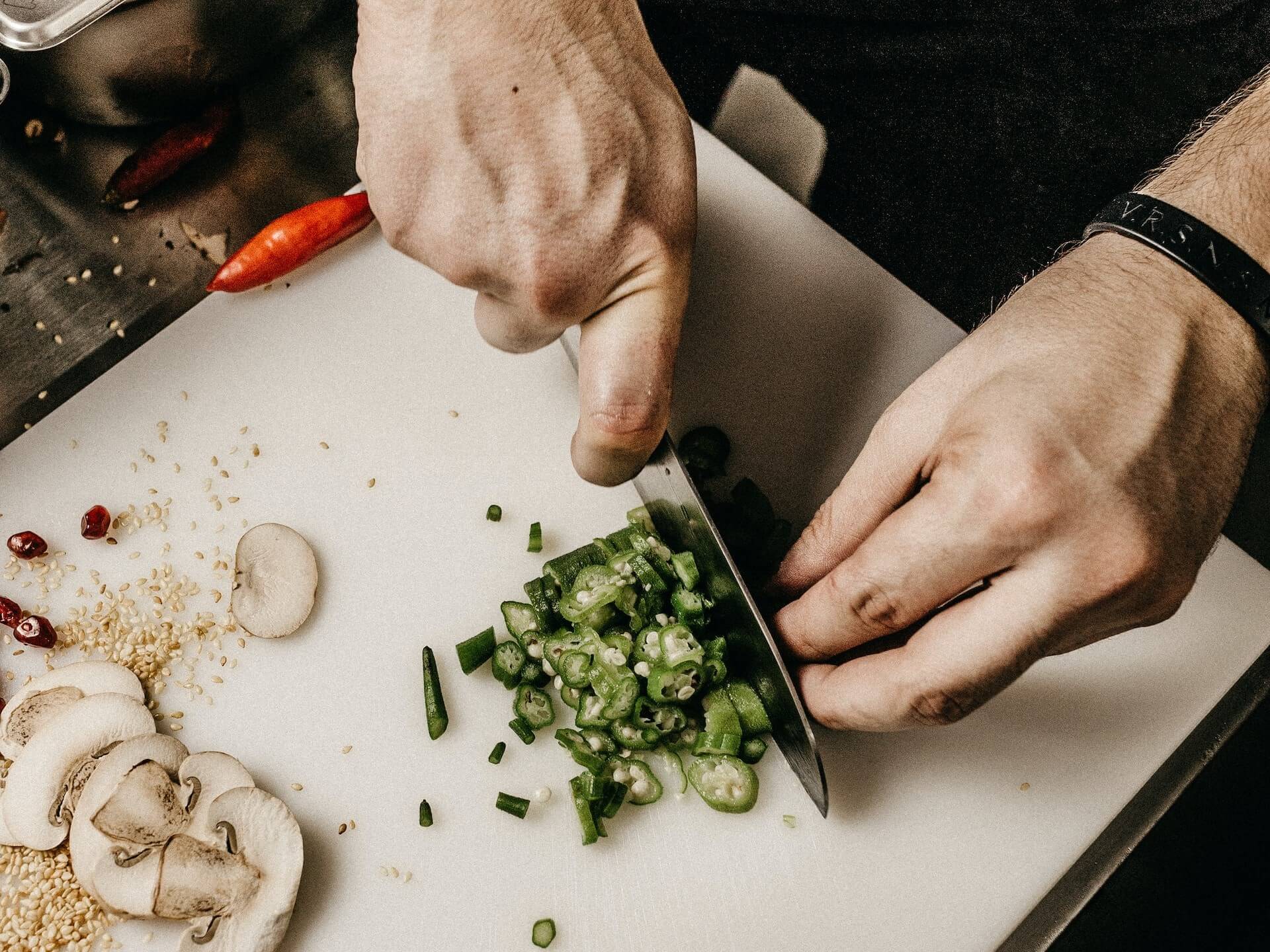
Overhead view of chef slicing and chopping ingredients

Chef Brian Duffy‘s take on preparation and its overall impact on the guest experience extends to every aspect of operations.

In one sentence during his 2023 National Restaurant Association Show in Chicago cooking demo, Chef Duffy sums up the power of the proper mindset.

“The art of the preparation creates the experience,” says Chef Duffy.

Now, he was preparing plant-based shrimp from New Wave Foods at the time. After preparing a pan, the revered chef was readying a pound of FABI Award-winning New Wave Shrimp for Duffified Shrimp Fried Rice.


View this post on Instagram


A post shared by Chef Brian Duffy (@chefbriduff)

When making this dish, Chef Duffy chops roughly half the New Wave Shrimp in half. He does so to enhance the dish’s texture, and therefore the guest experience. Additionally, Chef Duffy likes to toast basmati rice before adding it to the pan with the shrimp and vegetables.

Again, Chef Duffy shared his view on the guest experience when cutting animal-alternative shrimp (the product is made with sustainable seaweed and mung bean).

Preparation

Okay, so what does slicing or chopping shrimp have to do with the guest experience? It’s the attention to what others may consider a tiny detail. In fact, some may deem important details “optional.”

Whether front-of-house, back-of-house, or back office, everyone’s mindset matters. How one views their role and how they approach their responsibilities impacts every element of a restaurant, bar, nightclub, or hotel’s success.

Choosing to halve half the shrimp because it will deliver a better experience speaks volumes. It’s a commitment to perfect the “small” details so every guest walks away wanting to return.

If an operator wants to know if they have a chef or an executive chef, this is one way to tell. Is the chef teaching their brigade? Guiding them? Implementing policies around preparation? Or are they just punching the clock, making sure the rest of the team shows up, and sending out food that’s “good enough”?

Operators can apply versions of those questions to every role in the house, including their own. Is their pride in preparing every element of service and operation? Or is the team just muddling through each shift?

There are no Small Details

Interestingly, most guests likely won’t ever be aware of every detail operators and their teams get right. However, they will feel every choice each team member makes. They may not know precisely what goes right, but they take home with them that their visit was exceptional.

Pulling the threads tighter separates operators and their brands from one another. Guests can get a bite and a drink anywhere. They reward outstanding service and experiences with their time and money.

It’s a simple equation to understand: Operators want to create an army of loyal guests, guests expect exceptional experiences. The operators who deliver on guest expectations are rewarded with loyalty.

Chef Duffy isn’t “just” slicing shrimp. He’s not “just” toasting rice. Chef’s not “just” making “the world’s most perfect dippy egg.” In reality, he’s ensuring every decision he, his teams, and his clients make enhance the guest experience exponentially.

There are no small details. There are no small decisions. The art of the preparation, as Chef Duffy says, creates the experience. Indeed, preparation also separates the mediocre from the exceptional.

Image: Jonathan Borba on Unsplash

KRG Hospitality Mindset Coaching

by David Klemt David Klemt No Comments

Raise the Bar: The 3 Ps of Hospitality

Raise the Bar: The 3 Ps of Hospitality

by David Klemt

Three hands holding up three pineapples

No, one isn’t “pineapples.”

Nightlife, bar, and cocktail experts Mia Mastroianni, Phil Wills, and Art Sutley want operators to focus on what they call “the Three Ps.”

The engaging trio shared their trio of Ps recently in Las Vegas at the 2023 Bar & Restaurant Expo.

So, what are the Three Ps of hospitality? People, Place, and Product. Operators who pull the threads tighter on each of these crucial elements will be well on their way to improving operations and the guest experience.

People

Remember all the way back to a week ago when I shared Mastroianni, Wills, and Sutley’s thoughts on service versus hospitality? Consider the first P a deeper dive into that topic.

Operators need to focus on two categories of people who help their businesses succeed: their teams and their guests.

Addressing the former, the trio feels that operators are centering a disproportionate amount of their attention on guests in comparison to staff.

“We’re not lacking for people who want to work in the business and are outperforming other industries, but we’re not focusing on staff like we focus on guests,” says Wills. “Treat everyone with respect, including through the hiring process. If you don’t engage your staff, you won’t retain them. You need to show them they can grow in your business.”

According to Sutley, 89 percent of operators say that labor costs present a “significant challenge.” It follows, then, that committing to treating staff with respect and nurturing their careers isn’t just the right thing to do, it’s smart business.

Look for people with passion, those you can motivate to go above and beyond so you’re not stuck with a team full of space-fillers who are just after a paycheck, suggests Mastroianni.

Of course, operators and their teams must also focus on providing exceptional service and experiences to guests.

“Treat ever guest like a pearl in an oyster,” advises Wills. “They’re the pearl, we’re the oyster. We need to ‘protect’ them.” Anything less, cautions Sutley, and guests won’t return.

Place

Interestingly, the trio touched on design, aesthetic, and vibe. However, that isn’t the crux of the second P.

Rather, Place is really goes back to the guest experience. The design, aesthetic, and vibe need to meet guest expectations.

“Make sure your space is what it’s supposed to be,” says Wills.

For example, if a concept presents itself as a high-end cocktail bar, the four walls need to deliver on that expectation. With the exception of a handful of high-level examples, an upscale bar won’t survive if they deliver a dive bar—not neighborhood bar, dive bar—vibe and service. (For the record, I love a dive bar. But I don’t expect to encounter TV trope-style dive bar service if I walk through the doors of a high-end cocktail bar.)

One way operators can ensure their space is what it should be is standardization. Once a concept goes from idea to brick and mortar, when the owner’s vision is realized, the team needs to deliver a matching experience. Steps of service, systems, procedures…standardization is the name of the service game.

“Standardize your opening, shift, and closing procedures and systems to maintain your place,” says Mastroianni.

Every team member—front of house, back of house, leadership—needs to know and buy into an operator’s standards.

Product

Standardization breeds consistency. And consistency is a key element of the third P, Product.

Per Sutley, 76 percent of operators have noticed that guests are opting for more premium drinks. That’s great news, but it’s not the whole story.

It’s great that guests are opting for more expensive drink options. After all, that can certainly help the bottom line.

“However,” cautions Mastroianni, “they won’t come back without consistency in production.”

To drive this point home, consider this story from Mastroianni. A bartender made her a drink, and it was pretty good. She ordered another one from the same bartender and watched him make it differently the second time around. Not only was this second version different, it was better. While one could view this story through a positive lens—the drink was even better the next time!—that’s not the correct takeaway.

If the bartender was committed to building cocktails consistently, the second version of that cocktail would’ve been the first one served to Mastroianni. It would be the best version, and it would always be that impressive version.

When we’re fighting the possibility that up to 70 percent of first-time guests never return, the importance of product consistency can’t be overstated.

“Really focus on the small details to affect big change and get guests through the doors and keep coming back,” says Wills.

Image: Aleksandar Pasaric on Pexels

KRG Hospitality Start-Up Restaurant Bar Hotel Consulting Consultant Solutions Plans Services

by David Klemt David Klemt No Comments

Ocean’s Summertime Celebrations

Ocean Casino Resort Summertime Celebrations

by David Klemt

Exterior of Ocean Casino Resort at sunset

Ocean Casino Resort is celebrating an impressive milestone all summer long through creative local business partnerships.

This summer, the resort will reach its fifth anniversary. The festivities will begin May 26, a month before Ocean’s “birthday.”

However, rather than focus solely on the resort and casino, Ocean is choosing to celebrate the community it serves as well. These fifth birthday activations and initiatives are an excellent lesson for operators across all hospitality business categories.

I’m sure operators—all hospitality professionals, really—will agree that restaurants and bars are integral elements of any community’s bedrock. Increasingly, the same can be said of hotels. In fact, large hotel groups are investing in the development of smaller imprints that are tasked with the mission of serving locals and local businesses.

When a restaurant, bar, hotel, or nightclub reaches annual milestones, it’s largely due to community support. Sure, businesses in destination cities benefit greatly from tourist visits. However, for most markets, longevity is anything but assured without local backing and buy-in.

It’s clear that the importance of local support isn’t lost on Ocean. This summer’s celebrations include several local partnerships and community initiatives to pay that support back.

Local Partnerships

Last year, the Ocean leveraged the demise of the Choco Taco. So far in 2023, Ocean has supported Philly and KC during the Big Game, and gotten creative with cocktails that raised funds for the Girl Scout Troops of Southern and Central New Jersey.

Local partnerships are key to Ocean’s five-year celebration:

  • The Seed: Created Seeds of the Ocean for Ocean’s five-year anniversary.
  • Tennessee Avenue Beer Hall: Seeds of the Ocean lager will also be available at this local beer hall.
  • Rhythm & Spirits: Joining forces with Little Water Distillery to feature their gin in the Oceans 5 cocktail.
  • Little Water Distillery: Their Rusted Revolver Indigenous Gin is the star of the Oceans 5 cocktail, mentioned above. The distillery has also created the Chocolate Cake Martini, featuring Bar 32 chocolate shavings.
  • Hank Sauce: For those who prefer their celebrations spicy, Ocean and Hank Sauce have collaborated on Across the Boards. This hot sauce will accompany food items at restaurants inside Ocean.
  • Tony Boloney’s: They’ve created the High 5 pizza to celebrate Ocean’s birthday. This is another collaboration within a collaboration, as it features Seed of the Ocean lager and Across the Boards hot sauce.
  • Bar 32: What celebration is complete without something sweet? Bar 32 (a bean-to-bar chocolatier) and Ocean will be offering three commemorative chocolate bars: the Berry Pretzel Bar, Party Pretzel Bar, and Salty Peanut Butter Bar.
  • Mudgirl Studios: Ocean has commissioned several handmade, one-of-one pieces from this non-profit that will be featured not just in common areas on the property but also in some of the guest rooms.
  • Atlantic City Arts Foundation: To help celebrate its fifth birthday, Ocean has collaborated with the ACAF for a three-panel mural that will have a home at Tennessee Avenue Beer Hall.

Creative & Compelling

What I find most notable about these local partnerships is how several of them intertwine.

Not only did Ocean commission an exclusive beer, a local restaurant chain is using it for a pizza. That same restaurant chain is also using a hot sauce Ocean had created to celebrate their milestone. There are other collaborations that bring Rhythm & Spirits, Little Water Distillery, and Bar 32 together.

However, Ocean is doing more than just supporting a select group of local businesses. Mudgirl Studios employs and empowers at-risk, homeless and formerly incarcerated women. The ACAF, as one would imagine, inspires and empowers people to pursue the arts. Both support and strengthen communities throughout Atlantic City, and Ocean is giving back by supporting them.

In addition to all of that, the celebrations kick off on Memorial Day Weekend with a $300,000 sweepstakes. All in, there will be more than $5 million in promotions and giveaways in play over the course of this summer. From June 24 to July 4, Ocean is putting up one million dollars for a second sweepstakes.

Then there are Tesla giveaways, birthday fireworks, the Birthday Bar Pop-up Experience at 1927 Lounge inside Ocean Resort Casino, and Ocean’s sponsorship of the Atlantic City Beer and Music Festival.

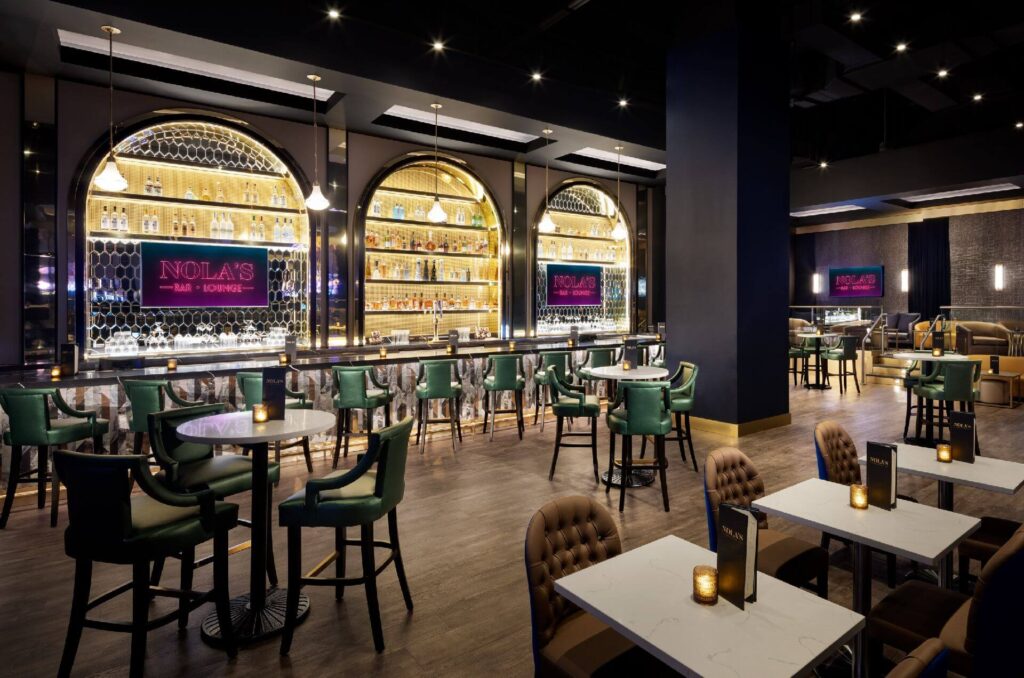
Nola's Bar & Lounge inside Ocean Casino Resort

Look for Ocean’s birthday drinks at property bars like Nola’s Bar & Lounge

Again, it would be easy for Ocean to have simply planned a celebratory weekend, week, or month, focusing solely on themselves. Instead, they’re involving several small businesses and community organizations.

Takeaways

Do I expect restaurant and bar operators to somehow offer $5 million in giveaways to celebrate a milestone? Or even $300,000? Perhaps a Tesla?

No, of course not.

However, I do think operators should really put thought into celebrating their annual milestones. Surviving the first 12 months is a huge achievement. Making it through the first 18 months and hitting the two-year anniversary is just as challenging.

So, operators should take four to six months to plan their celebrations. Additionally, they should view these events as a way to thank the community for supporting them. And, of course, that includes being grateful for beneficial business relationships.

When considering marking these achievements, it’s wise to include local businesses. Craft brewers and distillers, local farmers and vintners, non-profit organizations… All the better if the selected partners can collaborate with one another to make the celebration and partnerships that much more impactful.

Operators should take a page out of Ocean’s celebration handbook and look for creative, thoughtful collaborations. Doing so lifts up others and pays local support forward, in turn making the entire community stronger.

It’s perfectly acceptable for an operator to be proud and celebrate milestones. But it’s even better for operators to celebrate those who help them thrive.

Images courtesy of Ocean Casino Resort

KRG Hospitality. Boutique Hotels. Resorts. Properties. Consultant. Feasibility Study. Business Plan

by David Klemt David Klemt No Comments

5 Books to Read this Month: May 2023

5 Books to Read this Month: May 2023

by David Klemt

Flipping through an open book

Our engaging and informative May book selections will take your front and back of house to the next level, and help develop your leadership skills.

To review the book recommendations from April 2023, click here.

Let’s jump in!

Contagious You: Unlock Your Power to Influence, Lead, and Create the Impact You Want

This is one of three books KRG Hospitality’s Jennifer Radkey read in February. It’s the sequel to a book titled Contagious Culture, which we featured last month.

From Amazon: “For anyone who’s sought to create change, or felt sucked into the drama and chaos of a toxic work environment, this book will advance the notion that everyone at an organization is a leader—for good or for bad—and that leaders have tremendous power to influence those who follow their example. The quality of our leadership is based upon our intentions, energy, and presence. By emphasizing authorship, self-care, and response-ability (not responsibility) as leadership skills and therefore cultural amplifiers, Contagious You shows you how to walk the path of more effective leadership while navigating the road blocks in your way. Whether these road blocks are working with negative co-workers with secret agendas and unrealistic expectations, or just the general ‘busyness’ of life and its excessive demands, this book will take you on a journey to create more space, more courageous leadership, and stronger collaboration to influence others and create the impact you desire.”

Grab this book today: click here.

Chef’s PSA: Culinary Leadership Fundamentals

If Chef’s PSA sounds familiar, that’s probably because it’s a series of four books. We included another book in the series, How Not to be the Biggest Idiot in the Kitchen, last December in our last book roundup of 2022.

Culinary Leadership Fundamentals is intended to prepare chefs to lead a brigade. It’s one thing to know how to prepare food; it’s another to know how to be the leader in the kitchen. Of course, this book is also full of valuable information for owners and operators. After all, they should know how their chef is approaching their role.

From Amazon: “When you become a Chef for the first time you may be put in a position where you know how to cook but not how to lead and manage. This book will teach you everything you need to know to become a Chef Leader in the kitchen. From how to manage costs, build a team, market yourself and overcome adversity. This is the book every Chef needs if they want a competitive edge in running a successful kitchen.”

Pick it up today!

Southern Cooking, Global Flavors

Chef Kenny Gilbert’s journey through the culinary world is epic. By the age of seven he had shown such an interest in the art of BBQ that his father bought him his first grill, a small Weber. After high school he moved from his hometown to Cleveland to attend the Pennsylvania Culinary Institute. After graduation, Chef Gilbert entered into an apprenticeship at the Ritz-Carlton, Amelia Island, in Florida. By age 23, Chef Gilbert earned the role of Chef de Cuisine. He has also opened restaurants and led the culinary programs at restaurants and hotel properties not only throughout Florida but also Colorado, Georgia, throughout the Caribbean, France, Japan, and Spain. Oh, and there was Chef Gilbert’s Top Chef season seven appearance, plus the development of his own line of spices and rubs.

His newly released book features 100 recipes that put international spins on southern classics. Pick up Southern Cooking, Global Flavors today!

The Ice Book: Cool Cubes, Clear Spheres, and Other Chill Cocktail Crafts

We’ve addressed the need to compliment your cocktail menu with a dedicated ice program. This book, available now for pre-order, is from world-renowned cocktail and spirits writer Camper English. Not only does it include easy-to-follow instructions for you and your bar team to elevate your cocktail program, from full-proof to zero-ABV drinks. The Ice Book, then, is aptly titled—it’s everything you need to introduce a memorable drinking experience.

From Amazon: “In The Ice Book, internationally renowned cocktail icepert Camper English details how to use directional freezing to make perfectly pure ice in a home freezer, carve it up into giant diamonds and other shapes, and embed it with garnishes, including edible orchids and olives. You’ll learn how to create a frozen bowl for Negroni punch, serve a Manhattan inside an ice sphere, and infuse cubes with colors and flavors to create cranberry cobblers, a color-changing Gin and Tonic, and other awesome drinks.”

The Book of Cocktail Ratios: The Surprising Simplicity of Classic Cocktails

Long-time subscribers to KRG Hospitality’s newsletters and readers of our articles know that I love a controversial take on cocktails. Take, for instance, the origin of the Margarita. Well, the opening sentence from the description for The Book of Cocktail Ratios certainly got my attention.

From Amazon: “Did you know that a Gimlet, a Daiquiri, and a Bee’s Knees are the same cocktail? As are a Cosmopolitan, a Margarita, and a Sidecar. When hosting a party wouldn’t you enjoy saying to your guests, ‘Would you care for a Boulevardier, perhaps, or a Negroni?’ These, too, are the same cocktail, substituting one ingredient for another. Or if you’d like to be able to shake up a batch of whiskey sours for a party of eight in fewer than two minutes, then read on.

“As Michael Ruhlman explains, our most popular cocktails are really ratios—proportions of one ingredient relative to the others. Organized around five of our best-known, beloved, classic families of cocktails, each category follows a simple ratio from which myriad variations can be built: The Manhattan, The Gimlet, The Margarita, The Negroni, and the most debated cocktail ever, The Martini.”

This book should provide you and your bar team with a totally different perspective when it comes to drink ratios. Pre-order your copy today!

Image: Mikołaj on Unsplash

KRG Hospitality advanced bar education

by David Klemt David Klemt No Comments

Kitchen Doctrine: The Culinary Holy Trinity Across Cuisines

To some, the Holy Trinity refers to the Christian doctrine of the Father, the Son, and the Holy Spirit. But what’s the Cajun Holy Trinity?

Well, that’s a whole different story with which some people may not be as familiar. However, it carries equal weight in certain kitchens of the world.

Lending its name from religious credo, the Cajun Holy Trinity was developed in the state of Louisiana in the southern United States. Chef Paul Prudhomme gets the credit for introducing the term in 1981, along its popularization.

Cajun or Creole cuisine evolved from French, Spanish, and West African immigrants. French traditions blended into a melting pot of West African, Spanish, and Native American cuisines. The French and the Acadians (French colonists deported from Acadia in what is now Nova Scotia, Canada) both influenced Louisiana’s cuisine. The Acadians became known as Cajuns to English speakers, and thus Cajun cooking grew out of necessity in Louisiana.

It’s incredible what three (and sometimes just one or two more) simple ingredients can do to create incredible dishes.

by Nathen Dubé
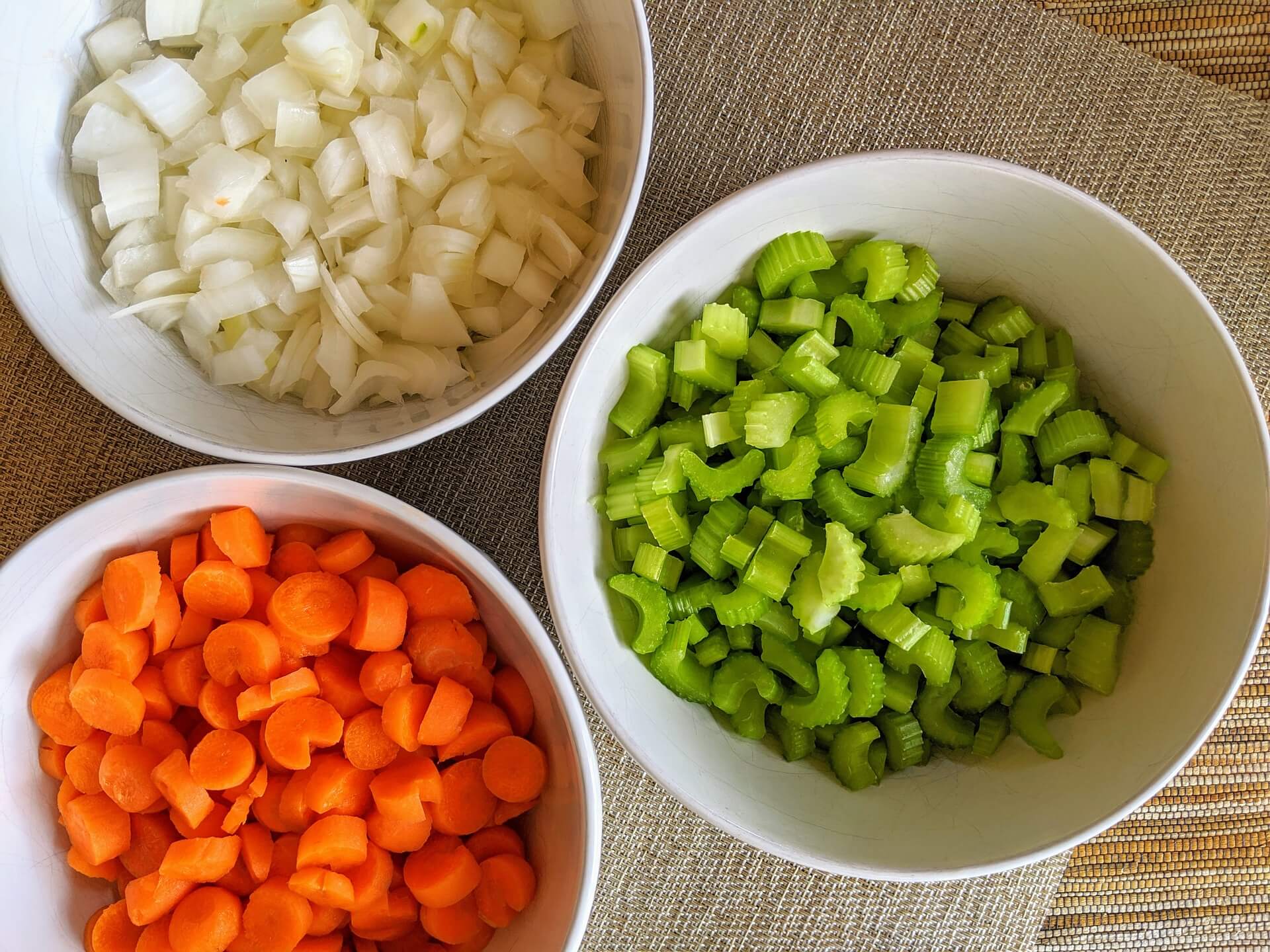
Carrots, celery and onions

Understanding the Culinary Holy Trinity

Mirepoix 101

The French contributed two staples directly to Cajun and Creole cooking: roux-based cooking and the trinity of mirepoix, or onions, celery, and carrots. In Louisiana, however, carrots didn’t grow as easily as bell peppers. So, bell peppers, typically the more bitter green version, replaced them.

Some cooks were so bold as to add garlic to the Holy Trinity, referring to it as the Pope. Other variants use garlic, parsley, or shallots in addition to the three Trinity ingredients. Unlike the elaborate French dishes using mirepoix, the Holy Trinity is more symbolic of rustic, family-style meals.

These ingredients are the first to go into the pot or skillet, creating a flavorful foundation for gumbo, jambalaya, crawfish étouffée, and more. Often, by adding a bit of flour and whisking, a roux is built right on top of these sweet and colorful aromatics to form a thicker base.

The ratio is also overturned from the traditional mirepoix of two parts onion, one part celery, one part carrot, with three parts onions to two parts celery to one part bell pepper.

Practical Application

So, now that we know what it is, how do we use it?

First, the ingredients are finely diced, then sauteed in oil, fat, or butter until translucent and tender. This stage of cooking draws the water from the vegetables, concentrating their natural flavors.

You can continue cooking the ingredients down until they’re caramelized, which is to say the sugars come out and brown them in the pan. They’ll become easy to break down with the back of a spoon. There’s a further concentration of flavors but we’re approaching the law of diminishing returns.

The shorter the cooking time of the end dish, the smaller size the pieces should be. For longer times, they can be cut into larger pieces. For obvious reasons, we want our ingredients to cook evenly, as well as withstand the timeframe of the cooking. You don’t want minced vegetables in a stock that’s going to simmer for 10 hours, the same way we don’t want giant chunks in a soup that’s done in 30 minutes. Texture of the end product are also important, not just flavor.

Here are examples of some recipes that include the Cajun Holy Trinity:

  • Chicken and Sausage Jambalaya
  • Cajun Gumbo with Andouille Sausage
  • Chicken and Okra Gumbo

Looking at other cuisines of the world, we’ll find some interesting variations. Interestingly, however, we’ll find similarities in the use of a category of vegetables and herbs called “aromatics.” In the Western world, these are vegetables like garlic, onions, carrots, celery, and herbs like bay leaves, thyme, parsley, and peppercorns.

In Asia you’ll find green onions, ginger, garlic, and warming spices like cinnamon and clove. These mixes are usually sautéed to slowly draw out flavors that can carry a dish. Sofrito and its Italian counterpart, soffritto, literally mean to stir-fry.

French Cuisine

The term mirepoix is encountered regularly in French culinary texts by the 19th century.

In 1814, Antoine Beauvillier wrote a recipe for Sauce à la Mirepoix in his book L’Art du Cuisinier. It’s a short recipe for a buttery, wine-laced stock garnished with an aromatic mixture of carrots, onions, and a bouquet garni. Marie-Antoine Carême created a similar recipe in 1816, calling it simply “Mire-poix.”

The origins are cloudy but what’s clear is the basic mirepoix ratio: two parts onions, one part celery, one part carrots by weight. These vegetables are often finely chopped and sautéed, but they can be used whole or roughly chopped in slowly simmered stocks or braises. A simple ratio for bones to mirepoix for a stock is 10:1.

When chopping, be particular about uniformity. This ensures even cooking when sweating or deeply browning them for a heartier flavor.

If cooking further, the addition of tomato purée creates a mixture called pinçage, which smells incredibly rich and transforms a braise into a near-religious experience. The addition of some chopped thyme and rosemary elevates further.

Another alternative is the mirepoix au gras (“with fat”): the addition of diced ham or pork belly.

Hands down, however, the most famous example of the power of French mirepoix is the humble chicken soup. It capitalizes on the aromatic qualities and depth of the caramelized vegetables. Similar combinations—both in and out of the French culinary repertoire—can include leeks, parsnips, garlic, tomatoes, shallots, mushrooms, bell peppers, chilies, and ginger.

White mirepoix (which substitutes leeks and parsnips for the onions and carrots) is used when you want a white color in the final dish. It might be a stretch to include the French duxelles (mushrooms and often onion or shallot and herbs, reduced to a paste), but leave no stone unturned, I say.

Mirepoix Recipes to Try

  • Roasted meats, like turkey
  • Chicken Noodle Soup
  • Braised Short Ribs
  • Vegetable soups

Italian Soffritto

Referred to as battuto before it’s cooked, soffritto is the combination of onions, celery, carrots, garlic, and parsley, although there are quite a few variations on this mixture. Soffritto can also include bell peppers, fennel, and finely diced cured meats like pancetta or prosciutto.

There’s no set ratio for the ingredients. This combination forms the foundation for soups like minestrone, the base for pasta sauces such as ragù, stews, and braises throughout Italian cuisine.

While both mirepoix and soffritto serve as building blocks of flavor, there are a few subtle differences.

Mirepoix is made by sweating onions, celery, and carrots. Soffritto uses minced rather than diced vegetables. And, indicative of Italy, the use of olive oil trumps butter in the cooking process.

Soffritto recipes to try

  • Ragú Bolognese
  • Italian Wedding Soup
  • Pasta e Fagioli (Pasta and Bean Soup)
  • Braised Sausage, and Kale with Rosemary

Spanish Sofrito

While saffron and seafood are the clear stars of the classic paella, it’s sofrito—the mixture of onion, garlic, bell peppers, and tomatoes (sometimes paprika) cooked in olive oil—that sets the stage. Although it may seem ludicrous, the removal of the sofrito and not the prime seafood on top would do more damage to the final dish.

This is where we begin to see the introduction of the New World. After the 16th century, Catalonia in particular “discovered” the tomato and began using it in everything. Bell peppers, onions, and garlic are the other ingredients that make up sofrito.

The medieval recipe book Libre de Sent Sovi shows that Catalan cuisine historically used native ingredients to make sofregit. Most Old World-style dishes call for onions, leeks, carrots, and salt pork, in place of the yet to be discovered tomato, so the sofritos of the 1300s can be interpreted loosely.

From the Mexican American border to the tip of Argentina, and all of the islands in between, Latin America has taken the Spanish sofrito and adapted it to its local offerings. Cuban sofrito tends to look the closest to Chef Prudhomme’s Holy Trinity, but with more garlic, while the Ecuadorian version includes freshly toasted cumin, tomatoes, onions, garlic, and sweet cubanelle peppers.

Sofrito recipes to try

  • Seafood Paella
  • Spanish Beef Stew with Pimentón and Piquillo Peppers
  • Spanish Chickpea and Spinach Stew
  • Nicaraguan Arroz con Pollo

Puerto Rican Sofrito

In Puerto Rico, many dishes start with recaíto, the perfumed flavor of culantro, ají dulce, onions, cubanelle peppers, and garlic. Often referred to as “blessed thistle,” the long, jagged-edged, leafy culantro has a similar taste to cilantro.

For this Caribbean island’s sofrito, known as recaíto, culantro leaves are minced and added to ajíes dulces, small but essential chilies in Puerto Rican cuisine. Add onions, cubanelles, garlic, and cilantro, and you have a mild, bright-green paste that adds a fresh, herbal punch to stews and rice dishes.

In the Caribbean, sofrito refers to a wide variety of mixtures; one common type includes lard colored with annatto seeds and mixed with ingredients like chiles, bell peppers, onion, cilantro, oregano, and ham. You can find variations on this sofrito throughout Central and South America.

Suppengrün

In case the umlaut didn’t give it away, the German answer to mirepoix—suppengrün—translates to “soup greens.” The Dutch equivalent is soepgroente.

Suppengrün typically consists of carrots, celery root, and leeks in no set ratio. Sometimes onions, parsnips, and potatoes are added. It may also contain parsley, thyme, celery leaves, rutabaga (a.k.a. swede), or parsley root.

The mix depends on regional traditions. Vegetables used are cold-climate roots and bulbs with long shelf lives. Suppengrün acts like herbs and imparts hearty, strong flavors to the soup or sauce, providing a foil for other strong-tasting ingredients such as dried peas and beans, or pot roast.

Large chunks of vegetables can be slow cooked to make rich soups and stocks, and are discarded when they have given up most of their flavor. Finely chopped suppengrün are browned in fat and create the base for a finished sauce. The vegetables may be cooked long enough to fall apart and become part of the sauce or pureed.

Suppengrün recipes to try

  • Beef Sauerbraten with Red Cabbage and Pretzel Dumplings

Włoszczyzna

From Poland, włoszczyzna is similar to its German counterpart but with red cabbage as the main ingredient.

Włoszczyzna is the Polish word for “soup vegetables” or greens. The literal translation is “Italian stuff,” stemming from Queen Bona Sforza d’Aragona—who was Italian—who married Polish King Sigismund I the Old in 1518. The queen no doubt brought her own cooks to the Polish court and introduced this concept to Polish cuisine.

A włoszczyzna may consist of carrots, parsnips or parsley root, celery root or celeriac, leeks, and savoy or white cabbage leaves. Sometimes, cooks also use celery leaves and flat-leaf parsley. Bay leaves and allspice grains are found in certain iterations.

The most typical packaged combination is celery root, parsley root, carrots, and leeks. Włoszczyzna is usually cut to uniform size and boiled as a flavor base for soups and stews.

Włoszczyzna recipes to try

  • Pork, Cabbage, and Potato
  • Barszcz (traditional Polish borscht)

Other Variations from Around the World

The Ukrainian or Russian smazhennya or zazharka consists of onion, carrot, and beets (and sometimes celery).

Refogado is the Portuguese base is made from onions, olive oil, minced garlic, and bay leaf. There’s a variation with tomato paste instead of fresh tomato influenced by the Eastern Mediterranean and Balkans regions.

Chinese/Cantonese cooking uses a base of scallions, ginger, and garlic. In Sichuan cooking you’ll often find a mixture of chili peppers, Sichuan peppercorns, and white pepper.

The amount of varied flavors and spices in Indian cuisine is incredibly vast and can differ from neighbor to neighbor. However, many of these dishes begin with basic mixture of garlic, ginger, and onion.

West African cuisine is another example of a huge amount of variety, but one common flavor base is the trio of tomatoes, onions, and spicy chiles.

The Haitian Epis has African origins with similarities to sofrito which is used in Hispanic cuisine. Parsley, scallions, garlic, citrus juice, and Scotch bonnet peppers are combined to create this base. Haitian Epis is used for finishing sauces, marinating meat and fish, and flavoring rice and bean dishes, as well as soups, and stews.

Hopefully you’re now inspired to try out a new combination or two, or even make up your own Holy Trinity. The possibilities are literally endless. But first, you owe it to yourself to learn a new Cajun recipe, starting with Chef Prudhomme’s Holy Trinity.

Image: Cindy from Pixabay

Related Reading

Work with Us

Click the image below to work with us on your restaurant concept.

Client Intake Form - KRG Hospitality

by David Klemt David Klemt No Comments

Slice Releases 2023 “Slice of the Union”

Indie Pizzeria App Slice Releases 2023 Report

by David Klemt

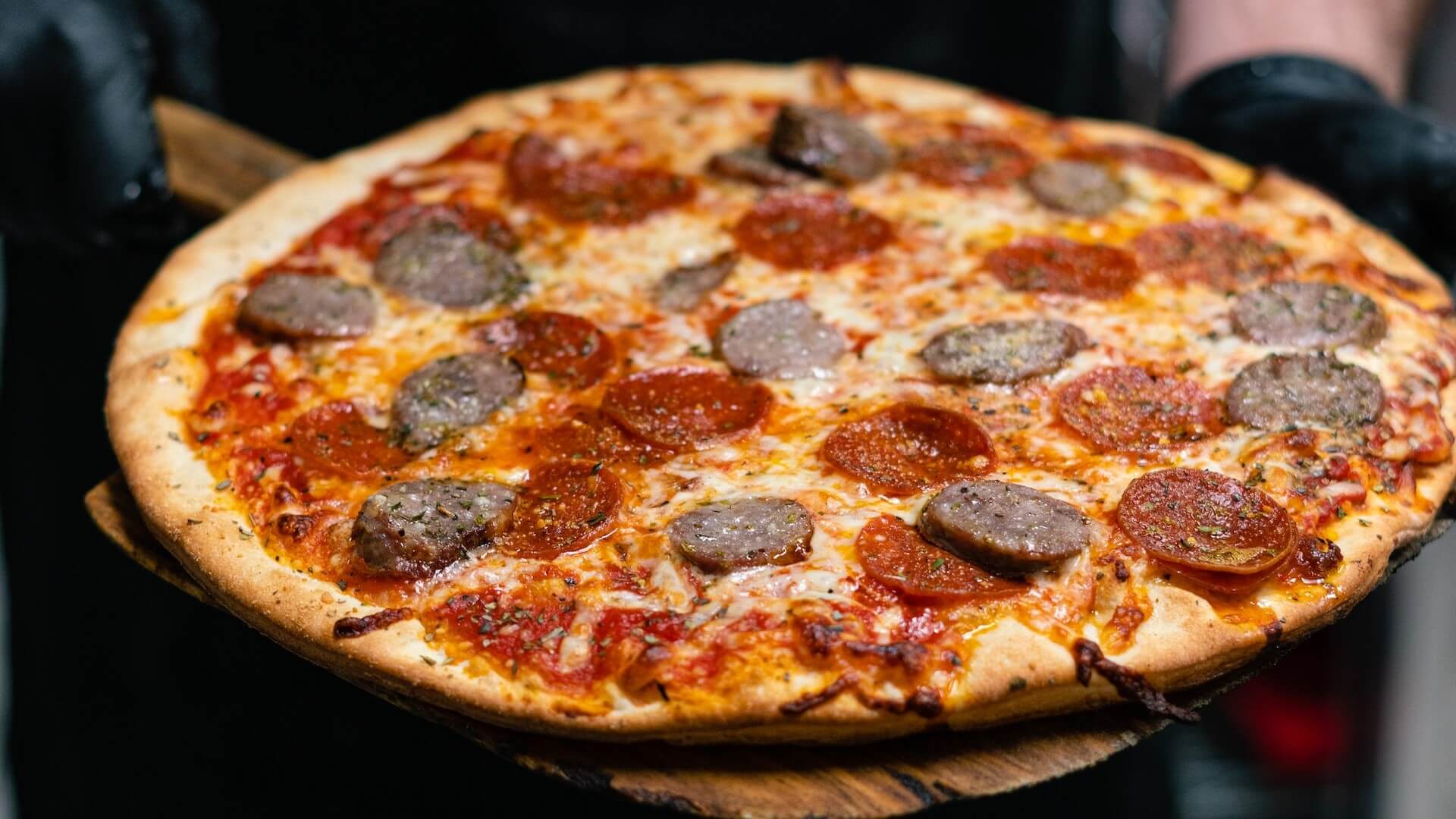
Wood-fired pizza on paddle

The annual Slice of the Union report from independent pizzeria ordering app Slice offers excellent insight into the indie pizza space.

Per the company’s website, Slice serves all 50 states and works with 19,000 pizzerias. For context, that’s a network of pizzerias more than double in size in comparison to Domino’s.

In my opinion, then, the company is well-positioned to deliver data regarding the indie pizzeria space.

Additionally, Slice says they save independent operators money. To date, Slice claims partners have saved more than $265 million in fees that would have gone to third-party delivery services.

In part, that’s due to a 2021 innovation by the company. At the International Pizza Expo in Las Vegas in August of 2021, Slice unveiled fixed-price, tiered packages for partners.


View this post on Instagram


A post shared by Slice (@slice)

Essentially, Slice intends to help local, indie pizzerias boost their reach, discoverability, and revenue. The company’s mission is “empowering independent pizzerias.” In part, Slice accomplishes their mission to “Keep Local Thriving” by offering indie pizzeria operators access to technology and services that rival the big pizza chains.

Below you’ll find some of the insights from the 2023 Slice of the Union that most stand out to me. To review the report in its entirety yourself, please click here. Not only is it an informative read, it’s actually fun.

Ordering Occasion

Kicking things off, ordering occasions. As all operators should know, many guests seek out particular cuisine, drinks, or venues dependent upon their dining or drinking occasion.

In the 2023 Slice of the Union, Slice takes a look at a couple occasions that motivate people to order pizza: sports and awards shows.

Now, it’s no surprise that people order pizza to enjoy while watching sports. So, since that’s common knowledge, Slice goes deeper and identifies the top sports leagues:

  1. Football
  2. Basketball
  3. Baseball
  4. Hockey

No mention of my two favorites, F1 and MotoGP, but at least hockey makes the cut. (My Vegas side says, “Go Knights!” but my born-in-Chicago side says, “Go ‘Hawks!”)
When we look at awards shows, the top spot may be somewhat of a surprise:

  1. People’s Choice Awards

  2. Tony Awards
  3. Emmy Awards
  4. Golden Globes
  5. The Oscars

Interestingly, the Grammys only manage an honorable mention. And there’s something poetic about pizza being the “people’s choice” for the People’s Choice.

Another bit of compelling data. Slice says that most people buckle and give up on their New Year’s resolution to keep away from pizza on January 13.

What’s in a Name?

There are certainly some creative pizzeria names out there.

However, Slice identifies not just some of the most common names but how many pizzerias use them:

  1. Joe: 206 pizzerias
  2. Sal: 206 pizzerias
  3. Tony: 114 pizzerias
  4. Johnny: 56 pizzerias
  5. Ray: 43 pizzerias
  6. Nino: 21 pizzerias

Flavors on the Rise

Wondering what the top topping is? What Slice sees as the pizza trends to watch?

Well, Slice has the answers to those questions (and more) in their annual report.

Pepperoni, as Slice says, “is a classic.” So, it wouldn’t provide much insight to just say, “Hey, pepperoni is popular.” Operators who offer pepperoni—and why wouldn’t they?—are already aware of its ubiquity.

Instead, Slice identifies the topping that’s showing the most growth. Per Slice, mushrooms has shown up on 8.9 percent more pizzas. Also, ranch dressing showed up on 9.7 percent more pizza orders in 2022.

Now, which trends may gain more significant footholds in the pizza space this year? Slice identifies two in their report:

  • Roman-style pizza
  • Pickle pizza

A Roman-style pizza is thin crust and pushes the toppings out all the way to the edges. A pickle pizza features—shocker—pickles heavily. According to Slice, this style of pizza normally includes a garlic sauce and mozzarella cheese.

Again, you’ll want to check this report out for yourself as there’s much more useful information. Click here to read it now.

Image: Dylan Sauerwein on Unsplash

KRG Hospitality Restaurants & Cafes, 2023 icon

by David Klemt David Klemt No Comments

Reduce Discounts, Increase Profits

Reduce Discounts, Increase Profits

by David Klemt

Scientific calculator on top of cash

There’s reason to be optimistic about generating revenue this year but operators must also be savvy if they want to boost their bottom lines.

Put another way, the growth some industry organizations and experts are predicting isn’t just going to occur. We’re optimistic about 2023 as well, but it’s going to take hard work and shrewdness.

As we know now, the National Restaurant Association is forecasting massive sales this year. In fact, the NRA projects the foodservice industry will generate $997 billion in sales. That’s nearly a trillion dollars just from the foodservice space.

Clearly, that’s a big number. It’s also $60 billion more in sales than the industry generated in 2022. That’s impressive in and of itself, surpassing the 2022 sales forecast by almost $40 billion.

Okay, so those are a lot of big numbers. Should foodservice outperform the forecast again, the industry will pass the trillion-dollar mark. And I know every owner and operator, be they independent, chain or franchisee, wants a healthy share.

However, impressive as those numbers are, they’re just that: numbers. Operators will still have to do the work to increase traffic; convert first-timers to repeat guests; and increase revenue. Fail in those tasks and there’s no reason to expect profits to rise.

It’s math, after all, not magic.

One way operators can increase revenue and profits is to offer fewer discounts. Really, this isn’t an incredible concept: If more guests pay full price, operators see more profits.

Real-world Example

Costs are up nearly across the board, and it can be tempting to offer discounts in an attempt to increase traffic. However, one group has shown over the past couple of years that discounts don’t need to be an operator’s go-to traffic- and sales-boosting tactic.

Carrols Restaurant Group is a Burger King franchisee. According to Restaurant Business, the group operates more than 1,000 Burger King restaurants. So, they operate approximately one out of every seven Burger Kings in the US.

Last quarter, Carrols managed to generate more than $14 million in free-flow cash. That’s higher performance than the group has seen in the past couple of years.

A significant factor for Carrols and Burger King is backing off of discounting. Again, this isn’t groundbreaking but it’s still noteworthy. A brand that once was reliant on discounting is now backing off that model and seeing dividends.

Of course, guest perception, the guest experience, and marketing play a role. Guests must still feel they’re getting value for the dollars they spend. They must also feel that their experience, from QSR to full-service, shows that they’re valued by the restaurant. And the marketing messaging must truly speak to a brand’s guest base and bring them through the doors to spend their money.

Premiumization over Discounts

The bottom line for an operator’s bottom line is this: If prices are continually discounted, that lower price is now the actual price. At least, a discounted price is now the normal price in the eyes of guests.

In other words, an operator who discounts all the time is training their guests to only visit and buy items when prices are lower than usual.

The superior option? Offering premium LTOs that speak to a brand’s base and tempt them to spend more. LTOs don’t need to come with discounted prices. In fact, they should be treated as premium promotions and command premium prices.

Create seasonal LTOs (in one concept’s case, inventing a fifth season), as an example, to generate buzz and increase traffic. Offer premium items at premium—but fair—prices to leverage the traffic, increase sales, and boost profits.

Another strategy that’s more effective than discounts? Building a brand with which guests resonate. Guests who relate to a brand tend to visit more often and support it with their dollars.

It’s tempting to discount. Don’t give in to temptation.

Image: Karolina Grabowska on Pexels

KRG Hospitality Restaurants & Cafes, 2023 icon  KRG Hospitality 15-minute intro call, 2023 icon

by krghospitality krghospitality No Comments

Say Hi to Your Mother Sauces for Me

Say Hi to Your Mother Sauces for Me

by Nathen Dubé

Chef pouring espagnole or brown sauce

A well-crafted sauce can elevate a dish, tying all the elements together, adding richness, texture, and colour to almost any recipe.

French cuisine in particular is renowned for its liberal use of flavorful sauces. Developed in the 19th century by French chef Auguste Escoffier, the five mother sauces are basic recipes that serve as the foundation for any number of secondary sauce variations. Each mother sauce is categorized primarily according to its unique base and thickener.

The five French mother sauces are: béchamel, velouté, espagnole, hollandaise, and tomato. Historically, Chef Escoffier originally designated only four mother sauces, and mayonnaise as a cold mother sauce, with Hollandaise below that.

Interestingly, when his book was translated to English, mayonnaise was forgotten or omitted; Hollandaise was listed as the fifth mother sauce.

Beginning culinary students and experienced cooks alike commit these five sauces to memory. They learn that by tweaking their basic formulas, all manner of great sauces can be crafted.

Please meet the five mother sauces below. I explain: how each is made; their basic uses; and some secondary sauces you can make from them.

1. Béchamel

Béchamel, or white sauce, is a simple milk-based sauce made from butter, flour, and milk.

You know béchamel as the white sauce that gives chicken pot pie its texture, or as the vehicle of cheesy goodness and binding agent in delicious mac ‘n’ cheese creations. The sauce can be found in everything from scalloped potatoes and lasagne to gravy iterations.

In classical cuisine, béchamel was poured over fish, eggs, or steamed chicken. While béchamel has a generally neutral taste on its own, the classic mother sauce adds a unique creamy texture that is both hearty and comforting.

My personal favorite base recipe is Joel Robuchon’s equation of one liter of milk, 60 grams of butter, and 60 grams of flour. It works perfectly every time.

To make béchamel, start by cooking butter and flour in a saucepan until it forms a substance called a roux. The roux is responsible for thickening the sauce. To remove the floury taste, cook the roux over medium heat for a few minutes.

When the roux is ready, slowly whisk in warm milk and simmer until it forms a creamy sauce. Strain the liquid after it thickens to get rid of any sediment, then add salt and pepper. (You can add other ingredients as well, such as bay leaves, nutmeg, onion, clove, or even cheese.)

With the addition of a few extra seasonings like salt, pepper, and cloves, béchamel is complete — though it may be used as a base for many other sauces.

Béchamel sauces include:

  • Mornay: onion, cloves, Gruyère, and Parmesan cheese
  • Alfredo: garlic with heavy cream
  • Soubise: butter and caramelized onions
  • Cheddar sauce (used for mac ‘n’ cheese or nacho-style sauces): whole milk and cheddar cheese

2. Velouté

Velouté means “velvet” in French, and that is the texture you get with this original sauce.

A velouté is a simple sauce made from butter, flour, and clear stock. Chicken, turkey, and fish stock are most commonly used, but these days, although it’s not traditional, you can also find vegetarian velouté using vegetable stock.

This mother sauce is similar to béchamel in that it’s a white sauce thickened with roux. However, it uses stock for the base in place of milk. As a reminder, stock is a savory, flavorful cooking liquid created by simmering bones, herbs, and aromatic vegetables for several hours. Chicken stock is most common, but you can also use other white stocks, such as those made from veal or fish.

To make velouté, start by making a white roux with butter and flour. Next, slowly stir in warm stock and let it simmer until a creamy, light sauce forms.

When finished, velouté has a delicate, light flavor and a smooth texture. The sauce is usually served over poached or steamed fish or chicken; the light flavors of the sauce compliment the light, delicate meat. By adding wine, lemon, or other flavorings such as herbs, cooks can adjust the flavour of this mother sauce.

Some popular sauces derived from velouté include:

  • Supreme: chicken velouté with heavy cream and mushrooms
  • Venetian: chicken or fish velouté with tarragon, shallots, and parsley
  • Hungarian: chicken or veal velouté with onion, paprika, and white wine

3. Espagnole

Espagnole, otherwise known as brown sauce, is a rich, dark sauce made from roux-thickened stock, puréed tomatoes, and mirepoix (carrots, onions, and celery that’s used as a base). Brown stock, which is made from beef or veal bones that have been roasted and simmered, gives espagnole a particularly rich, complex flavor.

This dark brown sauce—one of the original mother sauces—and its derivative sauces tend to be heavy and thick. They lend a signature richness to such dishes as bœuf bourguignon, lamb, duck, and veal.

Like velouté, espagnole uses roux and stock as the main ingredients. However, instead of white roux and stock, it calls for brown stock and brown roux. In this case, the flour paste (butter, flour) is cooked until the flour browns.

It’s important that cooks stir the roux while it browns so the paste does not stick and burn or scorch. You can imagine how this would ruin the finished product, of course. When the roux has finished cooking, browned mirepoix, pureed tomato, and beef or veal stock are added.

Espagnole is the base for:

  • Demi-glace: additional beef or veal stock, herbs, and spices that’s reduced to a thick, gravy-like consistency
  • Sauce Robert (or Robert Sauce): espagnole with lemon juice, dry mustard, white wine, and onions.
  • Mushroom sauce: mushrooms, shallots, sherry, and lemon juice
  • Burgundy sauce: espagnole with red wine and shallots

4. Sauce Tomate

Sauce tomate, also known as sauce tomat, or tomato sauce, bears slight resemblance to the Italian-style tomato sauce served with pasta.

Tomato sauce is arguably the most popular of the French mother sauces. It is often served on top of pastas (gnocchi, in particular) or polenta, or with grilled meats or vegetables.

Trigger warning for Italians: The original mother sauce tomate was thickened with a roux, but thankfully this is no longer the case.

The classical French tomato sauce can be (but usually is not) thickened with roux and seasoned with pork, herbs, and aromatic vegetables. However, most modern tomato sauces consist primarily of puréed tomatoes seasoned with herbs and reduced into a rich, flavorful sauce.

Marie-Antoine Carême classified sauce tomate as a mother sauce in the early 20th century. They are remarkably versatile and can be served with stewed or roasted meats, fish, vegetables, eggs, and of course, pasta dishes. You’ll even find it used as pizza sauce.

The best tomato sauces are made with fresh, vine-ripened tomatoes. If you can make big batches when they’re in peak season, you’ll be able to enjoy flavorful sauce year-round.

Probably the most well-known sauces, you can make the following with sauce tomate:

  • Marinara: tomato sauce with garlic, onions, and herbs)
  • Sauce Portugaise or Portuguese sauce: tomato sauce with garlic, onions, sugar, salt, parsley, and peeled tomatoes
  • Creole sauce: tomato sauce with white wine, garlic, onion, cayenne pepper, and red bell peppers

5. Hollandaise

Like sauce tomate, this sauce was a later addition to Carême’s list. Brunch-goers will recognize hollandaise from Eggs Benedict variations. People will also know it from topping steamed asparagus or smothering a steak or lobster tail.

Both the original recipe and its derivative sauces are commonly served over eggs, vegetables, fish, or chicken. It’s worth mentioning that hollandaise is derived from mayonnaise and hasn’t always been classified as a mother sauce.

Hollandaise stands out from the other French mother sauces because it relies on the emulsification—or mixing—of egg yolks and butter in place of roux. The tangy, creamy sauce is made from butter, raw egg yolks, lemon juice, and optional flavorings like cayenne pepper or white wine vinegar.

Rookies often struggle with Hollandaise, and jokes will be made that the ingredients can sense fear and intimidation. The tendency for butter and egg yolks to resist combining—much like water and oil—coupled with the gentle heat of a bain-maire (steam bath) can cause the sauce to split or a pile of scrambled eggs to appear.

The key to making a proper hollandaise is slightly warm egg yolks, room temperature butter, and steady, constant whisking. It’s essential to add the butter to the yolks slowly and incrementally so that the ingredients remain stable and don’t separate.

Hollandaise and its derivative sauces are often served over eggs, vegetables, or lighter meats like poultry and fish. Speaking of derivatives, even though hollandaise is delicious on its own:

  • Béarnaise (beef’s perfect match): hollandaise with white wine, tarragon, and peppercorn
  • Choron: hollandaise with tarragon and tomato
  • Sauce Maltaise: hollandaise with blood orange juice
  • Sauce Mousseline: hollandaise with whipped heavy cream

There you have it—the five mother sauces. Master these and an entire world of sauce and dip creation opens up to you.

Image: Vitor Monthay on Unsplash

KRG Hospitality Restaurants & Cafes, 2023 icon

by David Klemt David Klemt No Comments

Alternatives to ServSafe

Just.Safe.Food. and More Alternatives to ServSafe

by David Klemt

Server carrying two plates with one hand

ServSafe, the National Restaurant Association‘s food safety training program, isn’t the only food handler training game in town.

Certainly, the program is the most well known in our industry. However, it’s fair to say that ServSafe is closer to infamous than just ubiquitous due to a New York Times article from January.

While it’s the most recognizable of the food safety programs, it’s not the only one. Although, ServSafe’s omnipresence likely gives many the impression that it’s ServSafe or nothing.

There are, however, alternatives to ServSafe. In fact, one challenger was announced a day after the explosive New York Times article that thrust ServSafe into a spotlight the NRA probably isn’t enjoying. (After all, one result of that article was a letter from six US senators demanding answers from the NRA about ServSafe by March 3.)

At any rate, the newest alternative to ServSafe comes from One Fair Wage. The program is Just.Safe.Food. and costs just $10. (As a reminder, ServSafe costs $15.)

For that $10, Just.Safe.Food. gives an individual three attempts to pass their exam and unlimited access to training materials. Additionally, One Fair Wage (OFW) says profits they raise from the program will go toward advocating for restaurant workers.

OFW, as many in the industry know, is owned and operated by restaurant workers. Two cornerstones of the organization’s mission are increasing the minimum wage, and ending the tip credit. OFW is also attempting to convince lawmakers to stop accepting donations from the NRA.

Basically, OFW and the NRA are—and it appears always have been—at odds with with one another.

Other ServSafe Alternatives

Before I list a few other alternatives, let me be clear: KRG Hospitality isn’t advocating for any food safety training program in particular. Operators and their team members will need to decide which program is best for them.

Whether that decision is based on employer requirements, state or local requirements, cost, ideology, or another reason makes no difference to us.

However, I will say that the more competent and comprehensive options there are, the better. Nobody should have a monopoly on food safety.

The key factor to consider is whether the particular state or county regulations are met by the program. If anyone is uncertain, they should reach out to their local health department before proceeding with any program. It’s likely the department only accepts food safety programs that are ANSI-certified.

That said, some alternatives to ServSafe are:

Operators and food-handler restaurant workers can also search for local programs that are accepted by their state/county.

Food Handler Requirements

Food safety isn’t, it turns out, universal throughout the US. Workers can be subject to state or county requirements. In some states, food handler certification is voluntary.

And then there are food safety manager regulations to consider, and those can also be state- or county-specific.

I can’t reiterate enough how important it is to know your state/county/local food handler requirements. As with many regulations, there are nuances and hospitality professionals need to know them.

Below, how different *states regulate food handler training.

State Requirements

  • Alabama
  • Alaska
  • California
  • Florida
  • Georgia
  • Hawaii
  • Illinois
  • North Carolina
  • Ohio
  • Oregon
  • South Carolina
  • Texas
  • Utah
  • Washington

County Requirements

  • Alabama
  • Arizona
  • Kansas
  • Kentucky
  • Missouri
  • Montana
  • Nebraska
  • Nevada
  • New Jersey
  • New Mexico
  • New York
  • North Dakota
  • Oklahoma
  • Virginia
  • West Virginia

Voluntary

  • Arkansas
  • Colorado
  • Connecticut
  • Delaware
  • Idaho
  • Indiana
  • Iowa
  • Louisiana
  • Maine
  • Maryland
  • Massachusetts
  • Michigan
  • Minnesota
  • Mississippi
  • New Hampshire
  • North Carolina
  • Pennsylvania
  • Rhode Island
  • South Dakota
  • Tennessee
  • Wyoming

*This information is believed accurate at the time of publication. No warranty of accuracy is given.

Image: Pixabay on Pexels

by David Klemt David Klemt No Comments

Do Super Bowl Ads Work on Consumers?

Do Super Bowl Ads Work on Consumers?

by David Klemt

Pepsi Zero Sugar bottle

One of the biggest Super Bowl ad winners is Pepsi Zero Sugar.

Brands spent hundreds of millions of dollars to advertise during Super Bowl LVII, but do their ads actually translate to demand for their products?

A week ago we shared our ten favorite beverage-focused Big Game ads. Along with those ads we shared some numbers.

One of those numbers was $7 million, the cost of a 30-second Super Bowl ad on Fox. Other numbers? $500 million and $700 million, the range of revenue it’s estimated that Fox generated this year from Super Bowl ads.

At this point, these ads and the Halftime Show have essentially become their own entities. Some people watch the Big Game for the ads, some for the show halfway through. It stands to reason that brands are well aware of this development. So, they try to create the most impactful ad possible in the hopes of generating consumer demand.

In other words, these brands aren’t spending all this money just so they’re commercial can be deemed cool. Sure, brands want that buzz. But they also want an ROI on the millions they spend.

The big question is, then, are they seeing a return? Well, it just so happens that behavioral insight platform Veylinx has a data-driven answer to that question.

In short, the answer is yes. Of course, it’s a nuanced yes. For example, it appears Gen Z doesn’t care much about Super Bowl ads, as you’ll see below. Also, non-advertisers in the same categories as Super Bowl advertisers appear to see a benefit from the ads.

You’ll learn more from the Veylinx press release below. It’s an interesting read with valuable data for restaurant, bar, and hotel operators.

NEW YORK, Feb. 22, 2023 — A new study from behavioral research company Veylinx determined whether or not Super Bowl commercials boost consumer demand for the products advertised. The results show that 2023 Super Bowl advertising fueled a 6.4% increase in demand among viewers.

The overall increase in consumer demand was driven by women, who accounted for a 21% increase in demand growth. The commercials had minimal impact on men, yielding just 1% demand growth for the brands tested. Gen Z viewers were largely unimpressed by the Super Bowl ads, with demand among 18 to 25 year olds actually shrinking by 1%.

2023 Veylinx impact of Super Bowl ads on consumers chart

“It’s not really a surprise to see that Super Bowl ads improve sales, but the short term bump alone may not be enough to justify the $7 million price tag,” said Veylinx founder and CEO Anouar El Haji. 

Using Veylinx’s proprietary methodology—which measures actual demand rather than intent—the study tested purchase behavior during the week before the Super Bowl and again the week after. The research focused on measuring the change in consumer demand for eight brands with Super Bowl ads: Michelob Ultra, Heineken 0.0%, Hellmann’s Mayo, Downy Unstopables, Crown Royal Whisky, Frito-Lay PopCorners, Pringles and Pepsi Zero Sugar. 

Super Bowl Advertising Winners Overall

Michelob Ultra – 19% increase in demand

Pepsi Zero Sugar – 18% increase in demand

Frito-Lay PopCorners – 12% increase in demand

Heineken 0.0% – 11% increase in demand

Super Bowl Advertising Winners Among Women

Pepsi Zero Sugar – 45% increase in demand

Michelob Ultra – 40% increase in demand

Heineken 0.0% – 40% increase in demand

Crown Royal Whisky – 26% increase in demand

Veylinx, top performing brands during 2023 Super Bowl

Halo Effect for Non-Advertisers

The biggest winners were arguably brands in the same product categories as Super Bowl advertisers. Non-advertisers in those categories appeared to benefit nearly as much as the advertisers: demand grew by 4.2% percent for the study’s control group of non-advertising competitors. Corona Extra, Kraft Mayo and Lay’s STAX were the greatest beneficiaries in a control group that also included Budweiser Zero, Arm & Hammer Clean Scentsations, Canadian Club Whisky, Popchips, and Coke Zero Sugar. Notably, every non-advertiser saw at least a slight increase in post-Super Bowl demand.

“The goal of our study was to look specifically at how consumer demand is affected by running a commercial during the Super Bowl,” El Haji said. “It’s possible that the non-advertisers deployed other marketing efforts to offset or take advantage of the Super Bowl advertising—or they simply benefited from increased exposure for their categories.” 

Additional Findings

Study participants also answered a series of follow-up questions about their preferences, perceptions and how they watched the Super Bowl. More than three-quarters watched at home through various platforms, the most popular being the live cable/satellite broadcast (38%), followed by YouTube TV (15%) and Hulu (10%). When asked why they watched, it’s no surprise that participants were all about the game (64%)—but the commercials were the next most popular reason for watching (39%), followed by halftime (35%), the social aspect (26%) and fear of missing out (13%). 

About the Research

Veylinx studied the behavior of 1,610 U.S. consumers pre- and post- Super Bowl LVII. Unlike typical surveys where consumers are simply asked about their purchase intent, Veylinx measures whether consumers will pay for a product through a real bidding process. Consumers reveal their true willingness to pay by placing sealed bids on products and then answering follow-up questions.

For more information about the study and the Veylinx methodology, visit info.veylinx.com/super-bowl

About Veylinx

Veylinx is the most realistic behavioral insights platform for confidently answering critical business questions during all stages of product innovation. To reliably predict demand, Veylinx captures insights through a Nobel Prize-winning approach in which consumers have real skin in the game. This is a major advance from traditional market research practices that rely on what consumers say they would hypothetically buy. Veylinx’s unique research methodology is trusted by the world’s largest and most innovative consumer goods companies.

Main article image: PepsiCo / Article body images: Veylinx

KRG Hospitality Bars & Lounges, 2023 icon

by David Klemt David Klemt No Comments

Can ChatGPT Write Food and Drink Menus?

Can ChatGPT Write Food and Drink Menus?

by David Klemt

Closeup of keyboard

After my “conversation” last month with ChatGPT about AI, I had another conversation during which I asked it to write me four menus.

Of course, I did this to prove a point. And upon reviewing the ChatGPT menus, you’ll likely reach the same conclusion.

Curious about how creative the AI-powered chatbot could be, I asked for four specific menus. As you’ll see, two are cocktail specific, one focuses on food, and one is a 20-item F&B menu for a specific event.

So, yes, ChatGPT can write food and drink menus. But there’s a caveat. I could leave you in suspense but that’s not very nice. Let’s jump in.

Write me a cocktail menu using the most popular cocktails from 2022.

Cocktail Menu

  1. Aperol Spritz – Aperol, Prosecco, and soda water, garnished with an orange slice
  2. Old Fashioned – Bourbon, sugar, bitters, and a citrus peel
  3. Margarita – Tequila, triple sec, lime juice, and salt rim
  4. Daiquiri – Rum, lime juice, and simple syrup
  5. Moscow Mule – Vodka, ginger beer, and lime juice
  6. Paloma – Tequila, grapefruit juice, lime juice, and soda water
  7. Pina Colada – Rum, pineapple juice, coconut cream, and a cherry garnish
  8. Whiskey Sour – Bourbon, lemon juice, and simple syrup
  9. French 75 – Gin, Champagne, lemon juice, and simple syrup
  10. Mai Tai – Rum, orange liqueur, lime juice, and orgeat syrup

*All cocktails are served over ice, unless otherwise requested.

Write me a cocktail menu using the most popular spirits and alcohol types of 2022.

Cocktail Menu

  1. Gin and Tonic – Gin, tonic water, and a lime wedge
  2. Vodka Martini – Vodka, dry vermouth, and an olive garnish
  3. Bourbon Manhattan – Bourbon, sweet vermouth, and bitters
  4. Tequila Sunrise – Tequila, orange juice, and grenadine syrup
  5. Rum Runner – Rum, blackberry liqueur, orange juice, pineapple juice, and grenadine
  6. Whiskey Sour – Bourbon, lemon juice, and simple syrup
  7. Margarita – Tequila, triple sec, lime juice, and salt rim
  8. Daiquiri – Rum, lime juice, and simple syrup
  9. Long Island Iced Tea – Vodka, gin, rum, tequila, triple sec, lemon juice, and cola
  10. Pina Colada – Rum, pineapple juice, coconut cream, and a cherry garnish

*All cocktails are served over ice, unless otherwise requested.

Write me an appetizer and tapas menu that includes food items from an array of cuisines.

Appetizer and Tapas Menu

  1. Bruschetta – Grilled bread topped with fresh tomatoes, basil, and balsamic glaze
  2. Hummus Platter – Chickpea dip served with pita bread and fresh veggies
  3. Spring Rolls – Fried wonton wrappers filled with veggies and served with sweet chili sauce
  4. Spinach and Artichoke Dip – Creamy dip made with spinach, artichokes, and melted cheese, served with tortilla chips
  5. Stuffed Jalapeños – Jalapeño peppers stuffed with cream cheese and bacon
  6. Fried Calamari – Lightly battered and fried squid rings served with marinara sauce
  7. Baked Brie – Warm, gooey brie cheese topped with fruit preserves and served with crackers
  8. Fried Rice Balls – Rice mixed with veggies and spices, rolled into balls and fried, served with sweet and sour sauce
  9. Chorizo Sliders – Mini sliders made with spicy chorizo sausage and topped with avocado crema
  10. Samosas – Triangular-shaped pastries filled with spiced potatoes and peas, served with mint chutney.

*Please let us know of any dietary restrictions, and we will do our best to accommodate your needs.

Write me a food and beverage menu for the 2023 [Big Game] with ten food items and ten drinks.

[Big Game] 2023 Food and Beverage Menu

Food:

  1. Buffalo Wings – Crispy wings tossed in spicy Buffalo sauce
  2. Sliders – Mini burgers with various toppings, such as bacon and cheddar, mushroom and Swiss, and BBQ pulled pork
  3. Nachos – Tortilla chips topped with melted cheese, jalapeños, salsa, and sour cream
  4. Chili – Hearty beef chili served with shredded cheddar cheese, onions, and crackers
  5. Ribs – Slow-cooked BBQ ribs with a tangy sauce
  6. Mac & Cheese Bites – Fried balls of creamy mac & cheese
  7. Deviled Eggs – Hard-boiled eggs filled with a mixture of mayo, mustard, and spices
  8. Pizzas – Slices of delicious pizza in various toppings such as pepperoni, mushroom, and sausage
  9. Chips & Dip – Assorted chips served with guacamole, salsa, and queso dip
  10. Soft Pretzels – Warm, soft pretzels served with cheese dipping sauce

Drinks:

  1. Beer – A selection of domestic and imported beers
  2. Margaritas – Classic margaritas made with tequila, triple sec, and lime juice
  3. Bloody Mary – A spicy tomato and vodka-based drink with celery, olives, and other garnishes
  4. Hard Cider – A crisp, apple-based beverage
  5. Sodas – A variety of soft drinks, such as cola, lemon-lime, and root beer
  6. Whiskey Sours – A mixture of whiskey, lemon juice, and simple syrup
  7. Spiked Hot Cider – Warm apple cider with a splash of rum
  8. Red and White Wines – A selection of red and white wines to accompany any meal
  9. Iced Tea – Sweetened or unsweetened iced tea
  10. Coffee – Freshly brewed coffee, hot and ready to enjoy.

*Please drink responsibly and always have a designated driver.

Where Do You Stand on AI?

In my opinion, there are essentially four primary camps forming around the subject of artificial intelligence.

There are the Alarmists, the Enthusiasts, the Cautious, and the Shoulder Shruggers.

As my label implies, the Alarmists are fearful of AI. This group doesn’t like the genie being let out of its bottle. On the polar opposite, there are the Enthusiasts. This group can’t wait to see how far AI can go and what it’s fully capable of.

The Shoulder Shruggers basically have no opinion. They may even throw in an eye roll when the topic of AI comes around.

Then there’s the camp I most closely identify with: the Cautious. I don’t know enough about AI to be an Alarmist or an Enthusiast. Instead, I agree with points made by both of those camps.

Conclusion

Before I had my latest conversation with ChatGPT, I happened across a few interesting articles about the chatbot specifically and AI in general. A point each article shared was this: (for now), ChatGPT isn’t creative.

And that’s the caveat I mentioned at the top of this article.

Sure, it can scour the Internet for information in the blink of an eye, contextualize it (to a degree), and present it in a manner that seems intelligent. But really, neither ChatGPT nor other AI tools are capable of creative endeavors.

Now, consider the “menus” you just read. Unless your goal is to become a boring, regional chain bereft of personality and identity, not a single one is creative. In fact, they both consist of F&B items that any bartender, bar manager, chef, cook, or kitchen manager should know how to make, off-menu or on.

Simply put, these ChatGPT menus don’t provide much, if anything, in the way of brand identity.

That’s not to say that menus with the items above are “bad.” It’s just that they’re not enticing, not inspiring, not creative. They’re the definition of derivative. Why would today’s guest be drawn to a venue with those menus?

For now, I don’t think we need to be afraid of AI. Humans still rule the creativity roost. Oh, and please don’t use those AI-generated menus.

KRG Hospitality Restaurants & Cafes, 2023 icon  KRG Hospitality Beverage Programming

Image: Christian Wiediger on Unsplash

by David Klemt David Klemt No Comments

5 Books to Read this Month: February 2023

5 Books to Read this Month: February 2023

by David Klemt

Flipping through an open book

This month’s engaging and informative book selections will help you hone your culinary, beverage, and operational skills to dial in your business.

To review the book recommendations from January 2023, click here.

Let’s jump in!

Cheers!: Cocktails & Toasts to Celebrate Every Day of the Year

As long-time KRG Hospitality readers know, we enjoy helping operators and their teams program around unique holidays. This book takes a similar approach to restaurant and bar promotions.

Philip Greene’s Cheers! suggests a specific drink and toast for each day on the calendar. There are, of course, the mainstream holidays each month. But like us, Greene also focuses on lesser-known holidays. With consumer behavior shifting toward occasion-based drinking, this book can certainly come in handy.

In the Weeds: Around the World and Behind the Scenes with Anthony Bourdain

Last year, In the Weeds was nominated for the 2022 BookTube Prize in Nonfiction. It’s understandable why this book was given such a nod: it takes the reader behind the scenes with Chef Anthony Bourdain.

“From the outside, the job looked like an all-expenses-paid adventure to places like Borneo, Vietnam, Iran, the Democratic Republic of Congo, and Libya. What happened off-camera was far more interesting than what made it to air. The more things went wrong, the better it was for the show. Fortunately, everything fell apart constantly.” Grab this book now on Amazon.

Meehan’s Bartender Manual

There are certain books that people in this industry simply need to read. Meehan’s Bartender Manual—written by bartender, educator and author Jim Meehan—is one such tome.

This award-winning book is a must-read for all bar professionals, whether you own a bar, work behind a bar, or are a server. Not only will you find 100 recipes in Meehan’s Bartender Manual, you’ll learn about bartender techniques, service, hospitality, and bar design. Pick it up today!

Setting the Table: The Transforming Power of Hospitality in Business

Much like Meehan’s Bartender Manual is a must-read for bar owners and bar teams, Setting the Table is required reading for restaurant owners and teams.

Restaurateur and chef Danny Meyer shares the lessons he has learned that helped him survive and thrive in a challenging industry. Certainly, our industry is changing. But there are still lessons to be learned when we look into our recent past.

Dare to Lead: Brave Work. Tough Conversations. Whole Hearts.

To say Brené Brown is an expert in leadership is an understatement. The professor, researcher, educator, and author has been teaching about leadership for years.

Brown’s 2018 book Dare to Lead focuses, in part, on two crucial keys of true leadership. One is taking personal responsibility. The second is how to recognize potential in others. Without these two elements, becoming an effective leader is essentially impossible. Pick up Dare to Lead on Amazon today.

KRG Hospitality Bars & Lounges, 2023 icon

Image: Mikołaj on Unsplash

by David Klemt David Klemt No Comments

Program for Unique Holidays: February 2023

Program for Unique Holidays: February 2023

by David Klemt

"Think about things differently" neon sign

Do you want to stand out from from other restaurants and bars in your area? Change how you think about holiday promotions.

Several holidays are set against every date on the calendar, and February is no exception. These holidays range from mainstream to esoteric.

Pay attention to the “weird” or unique holidays to raise eyebrows, carve out a niche for your restaurant or bar, and attract more guests. Why do what everyone else is already doing? Why program only around the same holidays as everyone else?

Of course, you shouldn’t try to celebrate every holiday, strange or otherwise. Focus on the days that are authentic to your brand; resonate with your guests; and help you grab attention on social media.

You’ll find suggestions for promotions below. However, the idea behind our monthly holiday promotions roundup is to inspire you and your team to get creative and come up with unique programming ideas.

For our January 2023 holidays list, click here.

February 6: Pride In Foodservice Week

I’m not gonna lie: This is the first I’ve heard of this week-long celebration of foodservice. That’s fairly embarrassing given that this holiday dates back to 1991.

As you’re probably assuming, Pride in Foodservice Week celebrates foodservice professionals. So, highlight your team on social media (with their approval, of course); do something special to show your team you appreciate them; and find a way to celebrate the foodservice pros that visit your restaurant, bar, or hotel this week.

February 7: National Fettuccine Alfredo Day

Is this holiday unusual? No. Is Fettuccine Alfredo in any way bizarre? Of course not.

But you can certainly tap your kitchen team to do something unexpected with this classic dish. Stuff bao buns or dumplings with Fettuccine Alfredo. Create deep-fried Fettuccine Alfredo bites. Find a way to serve it on a stick. Just get creative and own this food holiday.

February 8: Kite Flying Day

Now, I’m not expecting you to somehow create a promotion around actually flying kites. Although, if you have the space and resources, go for it.

Instead, consider focusing on a particular cocktail, like the Plastic Kite or Paper Plane. Is a paper plane a kite? It can be if it’s designed as one, so the cocktail should be fair game on this holiday.

February 10: National Umbrella Day

North America has been slammed by freezing weather and brutal storms. Your guests can probably use an escape from the cold temperatures.

One excellent way for them to transport themselves elsewhere (at least in their minds) is tropical drinks. And tropical drinks tend to be served with the iconic cocktail umbrella. You know what to do: Perfect your tiki or nautical cocktail recipes, create an LTO menu, and draw in your guests.

February 15: National Flag of Canada Day

There’s nothing weird about the Canadian Flag. In fact, it’s one of the most iconic and instantly recognizable flags on the planet.

So, this is your day to celebrate Canadian spirits, beer, and food whether you operate in Canada or anywhere else. Tap your reps, get your hands on Canadian spirits and beer, focus on a few Canadian delicacies, and put together a mouth-watering LTO F&B menu.

February 18: National Crab Stuffed Flounder Day

To be clear, I’m including this holiday because it’s so specific. Obviously, this calls for an LTO or special based on one dish. I’ll give you one guess which dish it is.

February 20: Hoodie Hoo Day

If you’re somewhere it won’t bother too many people, I want you to do me a favor. I want you to yell, “Hoodie hoo!” Did you do it? Did it put a smile on your face?

It’s basically impossible to yell those two little words and not be happy afterward. Well, that’s the whole point of this holiday: happiness. We could all use a dose of happy these days, and this holiday can certainly provide it.

February 25: World Sword Swallowers Day

There are a couple ways to celebrate World Sword Swallowers Day. But for the love of your bottom line, don’t let any of your guests attempt to swallow any swords, cocktail or otherwise!

Instead, dig into the recipe books and find some classics just look right with garnishes skewered by cocktail swords. Or, serve up the Swinging Sword cocktail by Buchanan’s:

  • 1.5 oz. Buchanan’s 18-Year-Old Special Reserve Blended Scotch
  • 0.75 oz. Fresh squeezed orange juice
  • 0.5 oz. Fresh squeezed lemon juice
  • 0.5 oz. Grenadine
  • Fresh mint sprig for garnish

Add ice and all liquid ingredients to a shaker. Shake well, strain into a coupe, garnish, and serve.

February 27: Telecommuter Appreciation Week

This is another week-long holiday I didn’t know existed. And again, it’s not new—this holiday was first celebrated in 1993.

However, I think it’s more relevant than ever. Rather than encouraging people to work from home on this holiday, celebrate your WFH guests. If your WiFi can handle it, encourage your guests to work from your restaurant, bar, or hotel. And make sure to create LTO food and drink menus to incentivize to do so.

KRG Hospitality Project Add-ons, 2023 icon

Image: Ivan Bertolazzi on Pexels

by David Klemt David Klemt No Comments

4 Takeaways from Resy’s State of Dining

4 Takeaways from Resy’s State of Dining Report

by David Klemt

Guests enjoying an array of dishes at a restaurant

The State of Dining and What’s To Come in 2023 from Resy is an informative report that highlights several key developments to watch this year.

In fact, Resy’s report shines a light on ten trends and predictions for operators to consider. However, I’m going to address the four that stand out the most (to me).

For those who may be unfamiliar with Resy, the company is an online reservation platform. While Resy mostly serves major American cities, it does have a presence in Toronto, Canada, and London, UK.

Most importantly, the platform has a unique view of the industry. Resy looks at the industry through the lens of reservations, meaning they collect data concerning consumer behavior in real time.

So, let’s start with some compelling revelations based on reservation data. To view this report in its entirety, visit Resy via this link.

1. 5:00 PM

According to Resy, one reservation time is standing out from the rest. In comparison to 2019 and 2021, 5:00 PM reservations grew by two percent in 2022.

Now, two percent may seem like insignificant growth. However, given Resy’s reach and the platform’s number of active users, the opposite is true.

A two percent increase equates to hundreds of thousands of reservations.

Now, think about your restaurant or bar and consider your reservation distribution. Do you know which hour sees the most reservations? Not an assumption—do you have the data and therefore know the time?

If not, that’s information you need. Not only is this important for scheduling and controlling costs, it’s the benchmark you need to know if you have any chance of tracking change.

2. The Return of In-person Dining

This is one prediction that multiple industry (and even non-industry) publications are making for 2023. It’s the same for hospitality industry platforms: Companies see 2023 as the year restaurants and bars really come roaring back.

But when Resy makes this prediction, they’re using their reservation data to back it up.

First, last summer represents the single busiest season in the platform’s nine-year history. Second, a specific event, a dinner with chef-operator Massimo Bottura, sold out via Resy in a minute.

Third, October 2022. Why is this month worth pointing out in particular? By October, more Resy users had visited restaurants in 2022 than they had during the entirety of 2021.

Clearly, Resy expects this trend to continue and strengthen in 2023. Given their access to reservation data, this seems like a well-informed prediction.

3. Miami

In December of last year we checked out the best states in America for starting a business. Pennsylvania stood out to us for obvious reasons: our Northeastern office is in Philadelphia, with Kim Richardson at the helm.

Overall, Pennsylvania holds the number four spot on the Forbes list. For comparison, Florida slots in at number 45.

However, Miami appears to be an outlier for restaurant and bar entrepreneurs when it comes to Florida.

Per Resy, the restaurant footprint in Miami grew fourfold from 2017 to 2022. Moreover, Resy is seeing continuous growth in Miami. Going even further, this growth is coming from local and outside operators.

In fact, Resy describes South Florida as “white hot for high-profile sequels.” An operator has a top-tier concept? They’re likely to expand into Miami.

4. TikTok

Last week I addressed Datassential weighing in on photos versus videos. According to the F&B research firm, video is now dominating social media engagement.

And also last week, I explained the importance of discovery functionality. Operators who are considering adding a platform to their tech stack should consider whether it will help people discover their restaurant, bar, or hotel.

Resy is a platform that doesn’t just offer discoverability, it’s a core feature. So, when they say that TikTok appears to be a powerful discovery tool for restaurants and bars, that’s likely true.

Now, a poll Resy cites in their report reveals that traditional word of mouth is the top method of discovery. However, the same poll cites that TikTok is the top discovery platform for 43 percent of Gen Zers. Or, in other words, video, or digital word of mouth.

Should operators jump on TikTok? That’s something only individuals can determine is good for their business.

But if they’re courting Gen Z, well…they may need to add TikTok to their social media toolbox.

KRG Hospitality Success Session, 2023 icon

Image: Meredith Jenks for Resy

by David Klemt David Klemt No Comments

Datassential: The Flavors of 2023

Datassential: The Flavors and Menu Items of 2023

by David Klemt

Basket of hot chicken wings

Food and beverage market research agency Datassential has some data-driven thoughts on the flavors and menu items that will define 2023.

Featured in their latest Foodbytes report are 20 items for operators to consider this year. There are ten food items, drinks, and ingredients Datassential predicts will be on basically every menu.

And there are another ten food items, drinks, and ingredients the agency feels could suddenly hit in 2023.

For you own copy of Datassential’s 2023 Food Trends, click here.

Prolific Performers

As Datassential refers to them in their report, these are the items “that will be everywhere” this year.

Food

  • Birria. This one makes sense as birria only appears to be capable of continually growing in popularity.
  • Mushroom. In Datassential’s opinion, we should expect more menus to feature mushroom snacks. Also, expect to see (or add yourself) lesser-known, rare, and exotic mushrooms on menus.
  • Salsa macha. Over the past four years, according to Datassential, salsa macha as grown a staggering 339 percent on menus.

Drink

  • London Fog. A compelling earl grey tea latte.
  • Mangonada. Salty, tart, fruity, and bold, the Mangonada is a flavorful frozen drink.
  • Ranch Water. Simple, timeless, and refreshing. In 2022, per Datassential, Ranch Water was the fastest-growing cocktail.
  • Soju. According to Datassential, soju is the third fastest-growing spirit on restaurant and bar menus.

Ingredient

  • Spicy maple. As the image atop this article suggests, expect spicy maple to replace or at least give hot honey a run for its money.
  • Ube. A striking purple yam from the Philippines.
  • Yuzu. Datassential predicts this citrus fruit will start showing up on many chain restaurant menus.

Promising Performers

In Datassential’s data-driven opinion, the following items need to be on every operator’s radar.

These are the items that have the potential to “hit it big” in 2023.

Food

  • Pickled strawberries. Interestingly, this matches up with Technomic’s trend prediction for the US, Canadaworldwide, really.
  • Savory granola. Not only on its own but as an element of savory, healthy bowl.
  • Sisig. A Filipino delicacy with pork belly, pig’s face, and chicken liver as key elements.

Drink

  • White coffee. As Datassential states, “there’s always room for coffee innovation on menus.”

Ingredient

  • Black tahini. The appearance of black tahini is quite striking, making for dramatic presentations. And as we know, striking presentations are perfect for social media marketing and engagement.
  • Cannabis. The legalization of recreational cannabis use in almost half of US states is leading to innovation in this space. And as more markets legalize public consumption in the form of F&B items on-premise, restaurants and bars will add cannabis-infused items to their menus.
  • Cherry blossom, or sakura. It seems that cherry blossoms are poised to take off in the US market.
  • Chestnut flower. Per Datassential, this ingredient is gaining popularity for use in winter baked goods.
  • MSG. For decades, restaurants proudly proclaimed “no MSG” or “MSG-free” on menus due to misconceptions. Now that consumers are better educated about ingredients, restaurants are proudly proclaiming their use of MSG.
  • Verjus. An ancient juice made by crushing unripened wine grapes. It can be an ingredient in a sauce, as a condiment, or to deglaze a pan.

There you have it—20 items to consider adding in your next menu update, featuring in your next LTO, or at least keeping an eye on in 2023.

Image: Scott Eckersley on Unsplash

by David Klemt David Klemt No Comments

This Year’s Big Trend: Personalization

This Year’s Big Trend: Personalization

by David Klemt

Foam art cap on top of coffee

Ripples, the beverage-top media brand, is predicting that 2023 will be the Year of Personalization with a focus on in-person interactions.

Last year, the bev-top brand behind the Ripple Maker II Pro, named moderation as one of the top trends. When we look at the ubiquity of low-ABV drinks, we see that Ripples was right. And when we consider the proliferation of non-alcohol brands, Ripples appears downright prescient.

In other words, Ripples continues to be proven right about moderation.

Three revelatory datapoints and one generation are partly responsible for the brand’s accurate 2022 prediction. First, in comparison to 2019, zero-alcohol products were up 166 percent. Second, the non-alcohol category grew four times faster than its low-ABV counterpart. Third, non-alcohol spirits have grown by over 113 percent since 2020.

The generation Ripples believes is responsible for non-alc’s growth? Gen Z. In part, this is due to social media and the generation’s aversion, speaking generally, to being embarrassed by drunken behavior in front of the world.

So, proven right about last year’s prediction, it’s wise to take Ripples’ 2023 prediction seriously.

Year of Personalization

As Ripples explains, personalization has long been the strength of digital platforms. Be it an online retail platform or music streaming service, personalization is king.

And it’s easy to see why. Using online shopping as an example, think of the typical customer journey.

A shopper signs up, they click around or search for specific items, and they make their purchases. Soon, the platform is emailing the user about sales. Then, emailing the user items they think they’ll like, based on the individual’s data.

The more the user shops, the more targeted the platform’s suggestions and interactions become. Before the user knows it, they’re signing up for a loyalty program, earning rewards, and giving the platform more of their money.

Well, personalization is no longer only shining in the digital space. Now, businesses are engaging with their customers in the “phygital” space. That is, the physical space as well as the digital one.

As Ripples states, “Nothing beats real human interaction for building connection and loyalty between brands and consumers.” One way to leverage this new relationship between consumers and brands? Experiential activations.

Ripples knows a thing or two about this type of engagement. The bev-top media company partnered with Guinness Korea for a campaign involving 100 bars. Consumers scanned a QR code, selected a design via the Ripples app, and the design was printed atop a pint of Guinness.

You Need Data

Personalization is a long-standing element of the hospitality industry. It’s one of our keys to success: we cater to guest preferences.

However, we can’t do that effectively without collecting guest data. And interestingly, Ripples’ prediction falls in line quite neatly with another 2023 prediction.

As you may be aware, 2023 is also likely to be the Year of the POS System. That is, a tech stack “revolution” is expected to take place this year. One crucial element of a powerful, worthwhile POS system is customer relationship management, or CRM.

Of course, if a POS doesn’t offer a CRM module, the best systems make it easy to integrate with the best CRM platforms.

Either way, CRM is the key to personalization in the digital, physical, and phygital spaces. It’s difficult to effectively personalize the guest experience pre-, during, and post-visit without guest data.

Regardless of whether Ripples’ prediction is accurate—and it’s likely they are—savvy operators need to make sure they’re responsibly collecting and utilizing guest data. If this is the Year of Personalization and the Year of the POS System, the reality is that 2023 is really the Year of CRM.

Image: Hannah Wei on Unsplash

KRG Hospitality Planning Phase, 2023 icon

by David Klemt David Klemt No Comments

Global Trends 2023: Technomic

Global Trends 2023: Technomic

by David Klemt

Shawarma stacked with fire in the background

Not content to focus solely on North America, foodservice research firm Technomic is predicting foodservice trends that will span the globe in 2023.

As the firm points out themselves, making predictions is a best-guess proposition. Many of Technomic’s 2022 predictions for Canada, the USA, and the globe have proven true. However, a handful of their trend predictions have yet to manifest.

Further, not all trends will work for all operators and their concepts. Chasing every passing fad or trend is great if you like to watch your costs spiral. Doing so is also an excellent way to confuse guests and stress staff.

So, when considering any trend, make sure it works with your concept, has some staying power, and will resonate with your guests. Speaking to that last point, this is one reason it’s crucial to collect guest data. Making important menu and guest-impacting operational decisions without data just doesn’t make sense.

When you’re done with this article, take a look at our examination of Technomic’s other predictions. The firm’s Canadian predictions are here. And you can read the American trends by clicking this link.

For your own copy of Technomic’s international trends report, click here.

Operations

For 2023, Technomic is making predictions that certainly appear plausible. A number of them pertain to operations.

Kicking things off, sustainability. Driven in part by the global impact of the pandemic, the health of our planet is top of mind for many people.

For example, Canada’s single-use plastics ban is now in effect. England plans to move forward with a similar ban by October of this year.

Alongside such bans, Technomic believes operators—small independents and global chains alike—will implement entire sustainability strategies. These will range “from packaging and restaurant operations to marketing and menu development.”

Does your concept have a dedicated pickup window? Perhaps a takeaway counter? Maybe even a drive-thru? If not, 2023 may be the year you make that change. Not only that, you’ll likely want to position them front and center.

Per Technomic, many consumers are done with delivery. From rising costs outweighing convenience to delivery failures, pickup may become more appealing. Pickup is still convenient, it’s less expensive, and the consumer is in control.

Additionally, many people are well aware of how costly third-party platforms are to operators. In fact, Technomic identifies these platforms and their fees as “the biggest industry villain” of 2023.

Menu

One of Technomic’s predictions is particularly enticing: Lebanese street foods. To clarify, the firm believes all manner of street foods from around the globe will perform well in 2023.

However, they feel Lebanon’s street foods will stand out from the rest. So, think shawarma, labneh, kibbe, and pickled vegetables. That last item, by the way, follows Technomic’s prediction that pickling and fermenting will be hot trends in the US and Canada.

Of course, there are other items that Technomic thinks will shine in 2023. If the firm is correct, there’s a new “holy trinity” to keep an eye on and consider for your menu: sushi, poke, and ceviche. According to Technomic, each performs very well when it comes to takeout.

Interestingly, the research firm suggests that this particular holy trinity will spawn new virtual brands. If Technomic’s predictions prove accurate, some of these brands will focus on fried chicken or plant-based versions.

Speaking to that last point, Technomic is predicting that plant-based will “evolve” in 2023. This evolution will focus on more traditional meat counterparts. Providing examples, Technomic suggests that avocado, modern takes on black bean patties, cauliflower, tofu, tempeh, and seitan will be this year’s plant-based rock stars.

Are this year’s 2023 Technomic predictions going to prove accurate? It’s far too early to tell. However, one thing I can say with confidence is this: their predictions are rooted deeply in data. When Technomic makes a “guess,” it’s always an informed one.

Click here to read Technomic’s report in its entirety.

Image: Slashio Photography on Unsplash

KRG Hospitality Restaurants & Cafes, 2023 icon

by David Klemt David Klemt No Comments

American Trends 2023: Technomic

American Trends 2023: Technomic

by David Klemt

Pink pineapple against pink background

Foodservice research firm Technomic has some interesting predictions for the hospitality industry in the United States of America this year.

On the topic of operations, Technomic foresees more negotiating power among workers. Additionally, the firm looks at both the economy and pent-up guest demand.

When it comes to food, the US and Canada have a trend prediction in common. And as the image atop this article signifies, a particular color may be a hit on menus in 2023.

Before we jump in, Technomic’s 2023 Canadian trend predictions are here. Last year’s Technomic predictions for America are here. Curious readers can review the firm’s 2023 predictions in their entirety here.

Okay, let’s go!

Think Pink

I want to address this prediction first. According to Technomic, pink is going to be the F&B color of 2023.

As they explain, the color is fun, nostalgic, and photogenic. Yes, operators must still consider the Instagram-worthiness of their menu items. That may change one day, but it’s not today.

Per Technomic, pink also signals that a food or drink may have antioxidants.

Some of the items the research firm names specifically: pink pineapple, pink salt, pink celery, cara cara oranges, and schisandra berries.

Pickle It

This is the culinary trend that, per Technomic, Canada and America will share in 2023.

Along with fermenting, pickling gives the kitchen and bar teams a unique experimentation method to explore. So, encourage these teams to get creative and add pickling and fermentation to your next menu update.

Of course, that’s not the only reason to consider putting pickling front and center. For many, these preparations indicate a healthy F&B choice. Think kombucha, as an example.

As we know, healthy choices continue to be top of mind for many guests.

One more note: Technomic suggests being transparent and identifying the pickling and fermenting processes your team leverages to produce each menu item.

Economics

For those looking for a bit of optimism in these trying times, Technomic may have what you’re looking for. This year’s report, What We Foresee for 2023, says the following about the possibility of a recession:

“There is reason for optimism in the coming year, however, as any recession is expected to be relatively mild.”

Yes, that’s just one source’s opinion. However, Technomic is known for their voraciousness when it comes to data. So, if this firm is optimistic it could be a solid sign that things are looking up in 2023.

“Pent-up consumer demand” and variations thereof have been making the rounds since 2o21. However, it’s still a relevant phrase.

As it pertains to 2023, Technomic believes on-premise dining may “bounce back” this year. In fact, the firm suggests that people want to socialize and dine in person now more than ever.

Also, delivery and pickup times appear to be growing. So, plenty of people will see in-person dining as the more appealing option in 2023.

Operations

In part due to legislation addressing minimum wage and workplace conditions, employees may have the upper hand this year.

Add the fact that many people seeking work know many operators are dealing with a labor shortage and their negotiating position looks even stronger.

So, we could finally be in for a significant change when it comes to how the industry looks at compensation. More and more workers—and the guests they serve—are taking issue with tipping. Instead, many people outside and inside of the industry want to see operators pay staff a competitive, living wage.

Of course, there are also the hospitality professionals who prefer tips to minimum wage. In 2023, the industry could experience the start of a sea change. Time will tell.

For more predictions and this Technomic report in its entirety, please click here.

Image: Alex Gruber on Unsplash

by David Klemt David Klemt No Comments

Canadian Trends 2023: Technomic

Canadian Trends 2023: Technomic

by David Klemt

Tortilla with beans, cotija cheese and egg

Restaurant, bar, and hotel operators will find this year’s data-driven trend predictions from Technomic for 2023 insightful.

Interestingly but perhaps not surprisingly, some operators may be looking beyond North America for inspiration.

Per Technomic, Central and South American cuisines could influence menus in Canada this year. Other food trends that might take hold are “retro” health items, and all manner of pickled foods.

Of course, not every Canadian trend prediction involves F&B. According to Technomic, tech and the guest experience will play important roles.

To review last year’s Technomic predictions, click here. Now, let’s jump into Technomic’s 2023 predictions.

Guest Experience

Certainly, the guest experience should always be top of mind for operators, their leadership teams, and their staff.

In this instance, Technomic isn’t suggesting that the guest experience in general will be a trend. Obviously, with as important as it is to the success of any business, it’s a cornerstone.

Rather, Technomic predicts that guests will continue to feel the need to rein in their spending due to ricing costs and prices. However, the foodservice research firm also believes there’s still heavy desire for social interaction.

So, both those financial and social influences translate to the following: overdelivery.

Operators and their teams must ensure they position their brands well; make guests feel special every visit; and really dial in the guest experience. Specifically, Technomic suggests focusing on younger generations and menus with at least a couple specialty items that aren’t easy for a guest to replicate at home.

In other words, do whatever it takes to entice guests with memorable experience and quality menu items, and keep them coming back for more.

Technology

Multiple industry sources believe that 2023 is the Year of Tech for the hospitality industry. In particular, some sources believe that POS systems will receive significant attention from operators looking to upgrade.

Compellingly, Technomic sees the situation a bit differently. In particular, they’re suggesting that QR code menus may find themselves on the sidelines. Traditional menu, according to Technomic, will make their comeback this year.

Also making a (possible) resurgence? Per Technomic, in-person ordering for carryout and in-person dining.

As far as tech innovations that Technomic expects to take off this year, they see the following as standouts:

  • loyalty programs;
  • enhanced/upgraded cooking equipment;
  • automated inventory software/platforms; and
  • digital menu boards for back of house.

Culinary

As hinted at above, Central and South American cuisines are expected to take off in Canada, per Technomic.

The research firm provides specific—and delicious—examples:

  • Honduras: Baleadas tacos
  • Dominican Republic: Wasakaka sauce
  • El Salvador: Curtido slaw or relish
  • Peru: Aji amarillo and rocoto peppers
  • Bolivia: Saltenas, similar to empanadas

Another culinary trend Technomic predicts will perform well in Canada? Pickled everything.

Okay, maybe not everything. However, Technomic expects “pickling, fermenting, dehydrating and freeze-drying” to “increasingly pop up on menus.” The firm expects that operators will offer a wide range of “unusually pickled items outside of the typical veggies, including proteins and seeds.”

So, if you’re an operator reading this, it may be time to motivate your back-of-house staff to get creative with their pickling ideas.

Finally, pandemic-driven, health-based trend foods like turmeric and ginger may start to fade in popularity. Instead, predicts Technomic, items with “classic” health descriptors such as “natural,” “real,” “free,” “reduced,” and “lower” will get attention from guests looking to eat and drink healthier.

For your own copy of this Technomic report in its entirety, click here.

Image: Roman Odintsov on Pexels

Top