Foodservice

by David Klemt David Klemt No Comments

Container Kitchens: The New Footprint

Container Kitchens: The New Footprint

by David Klemt

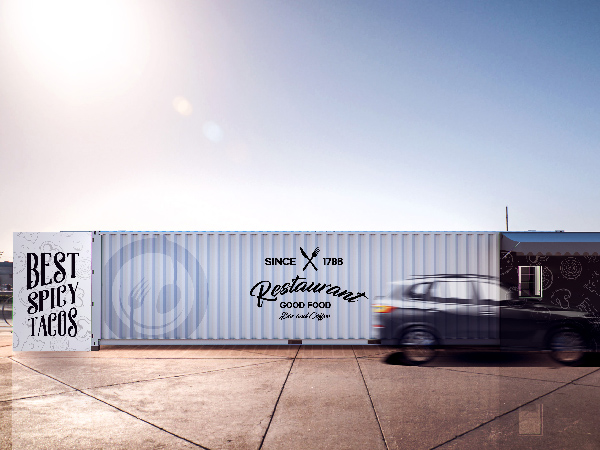
Make My Ghost Kitchen container exterior

Would it be a surprise to anyone after the past twelve months that shipping containers may be the new commercial kitchens?

According to two 2021 Restaurants Canada Show panelists, custom containers are the future.

A partnership between a builder and designer is providing restaurateurs with an intriguing solution.

Meet the Problem Solvers

Jonathan Auger is the president of Juiceworks Exhibits. The company operates out of Mississauga, Ontario, Canada.

Juiceworks designs, engineers, and fabricates memorable exhibits and installations. Click here to view projects for clients such as Genesis, Infiniti and Volvo.

Nicholas Goddard is the founder of Portage Design Group, located in Toronto.

Portage specializes in interior design and offers a full suite of services, including research, sophisticated design, and construction management. The company’s restaurant design work can be seen here.

Together with a small but skilled team, Auger and Goddard have formed Make My Ghost Kitchen.

Custom Container Flexibility

In some cases, a smaller restaurant footprint is attractive to operators. This is due in part to guest behavior we’ve seen since 2020. That is, guests haven’t been able to or felt comfortable with dining indoors at restaurants.

Then, of course, there’s the cost factor. A smaller footprint, generally speaking, equals lower initial investment and rent. An operator with a new concept can use a container before investing in a brick-and-mortar location.

Other benefits relate to market testing; expansion; virtual and ghost kitchen operations; and delivery and pickup.

Operators looking to expand or add retail, along with QSRs, are showing interest in Make My Ghost Kitchen’s containers. One explanation for the interest is simple: containers are highly mobile.

An operator sends their kitted out container to a potential market. They open up shop and test the viability of their concept. If the reaction is less than desirable, they move the container to another market.

For example, one client set up a container complete with a delivery window. In just six hours they sold 3,600 burgers.

Custom Container Costs

Make My Ghost Kitchen’s custom containers come with the necessary equipment. They also feature a delivery window and fabricated with a small pickup vestibule.

Obviously, prices go up with the quality of equipment. Other customizations, it stands to reason, can also push container costs up.

On average, however, Auger says an eight-foot by 20-foot container can be had for as low as $20 per square foot. Prices can climb north of $50 to $75 per square foot, however.

Whether functioning as a ghost kitchen or marketing showpiece, operators can choose from ventilation solutions. The containers can vent to interior (which heats them up quickly) or exterior. Another cost to consider is water. If a municipality doesn’t grant access to their water it will need to be trucked in.

Finally, a custom-kitted kitchen can be an asset. If an operator decides it’s time to move on, they have the potential to sell their container.

Image: Make My Ghost Kitchen

by krghospitality krghospitality No Comments

NRN Shares Inclusion Insights Report

NRN Shares Inclusion Insights Report

by David Klemt

Light bulb idea concept on wood background

Featuring insights from their 2021 Power List, an inclusion report from American trade publication Nation’s Restaurant News is now available.

Overall, NRN’s 2021 Power List consists of C-suite and executive heavy hitters from some of the most influential restaurant groups.

For example, Domino’s, Yum Brands, &pizza, and Momofuku Restaurant Group, are on this year’s list.

To compile their 2021 Power List: Leadership & Inclusion Insights report, NRN asked their power players to identify a team member who embody inclusivity.

Lessons Learned from 2020

NRN’s report is broken down into five sections; this is the first.

Reading through the insights in this section, you’ll find that agility and adaptability are crucial to navigating crises. That will come as no surprise to many.

However, what really strikes me are the words of Donnie Upshaw, SVP for people at Wingstop. Upshaw cites the importance of culture and core values:

“Our core values, known as ‘The Wingstop Way’—service-minded, authentic, entrepreneurial and fun—have been and will continue to be our guiding light through all seasons of our business.”

Those core values, along with Wingstop culture and a focus on retaining top talent, are keys to their successful navigating of the pandemic.

Accomplishments During a Pandemic

The pandemic has torn apart the hospitality industry and continues to do so. In America, we’re just now seeing specific relief targeting foodservice businesses.

Given the situation, just surviving the pandemic is an accomplishment.

Still, chain and independent operators are forging paths forward and inspiring others inside and outside of the industry.

Erika Palomar, COO of the Independent Restaurant Coalition, says the group “faced the darkest hours, together.”

Palomar continues: “They held fast to their commitment to change the most lives possible. This group has the remarkable ability to look beyond their door and inspire others to take action and make bold changes that will serve this industry and our society for the better.”

Importance of Leadership & Impact

The job of owners, operators, managers, and mentors is to lead. Doing so is one of the most effective tools for growing a business and retaining talent.

Adversity, of course, is one of the—if not the—greatest challenges to leadership.

Beth Scott, president of Fleming’s, says building trust is the first step in realizing the core of what it means to be a leader: inspiring and influencing, not commanding.

Jason Crain, CRO of Slutty Vegan, says, “Leading is dynamic and solution oriented.” Crain points to knowing when to implement different forms of leadership as a crucial element.

Further Insights

NRN’s report has two more categories, “Fostering Diversity & Inclusion” and “The Future of Foodservice.” There are insights from several more power players who drive the missions of inclusivity, diversity and equity.

We encourage you to follow this link and review the report for invaluable motivation and inspiration for your own business.

Image: Free-Photos from Pixabay

by krghospitality krghospitality No Comments

Kitchen Showdown: Virtual vs. Ghost

Kitchen Showdown: Virtual vs. Ghost

by David Klemt

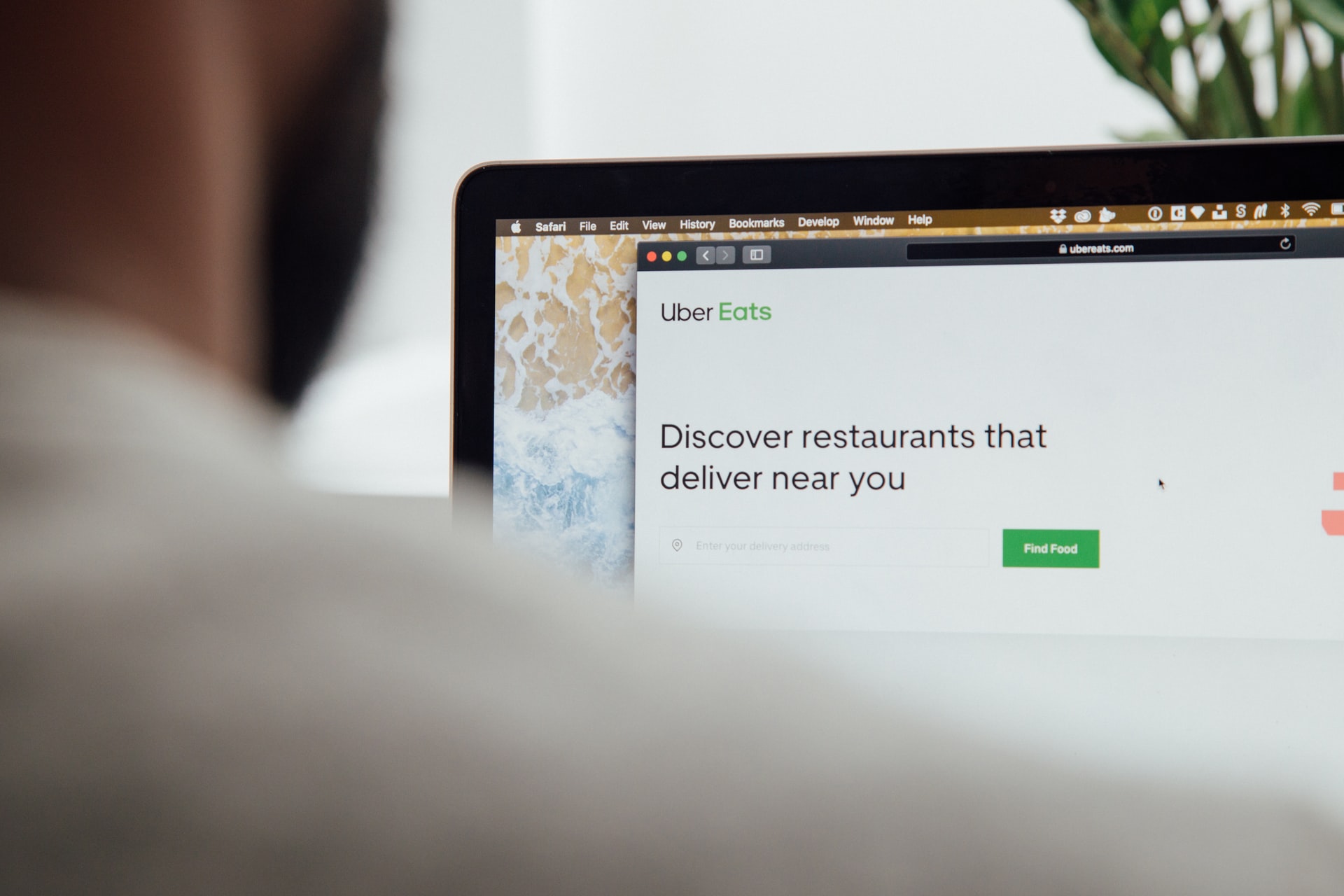
Person ordering Uber Eats

The lines between virtual and ghost kitchens are growing increasingly blurry as they rise in popularity.

The terms aren’t interchangeable—they’re separate concepts.

Let’s snap the two into focus so operators can decide for themselves which, if either, is for them.

Virtual Kitchen

A virtual kitchen or virtual restaurant supports a brick-and-mortar concept. This includes food trucks.

Standard process is as follows:

  • A concept in a certain category seeks to expand their menu options without diluting or otherwise damaging their brand.
  • They create new menu items and sometimes a new brand.
  • Their existing kitchen or kitchens create these new items, which are online- and delivery-only.

A virtual kitchen has a brick-and-mortar location in a technical sense, but the brand’s existence is essentially digital as far as consumers know.

Ghost Kitchen

These facilities are delivery-only and commonly produce virtual brands’ items, which is a possible source of the confusion surrounding ghost and virtual kitchens. A truly virtual brand is only available online, either via its own ordering site or a delivery app—it has no brick-and-mortar location of its own.

We’ve known since the Chicken Wars first started that chicken sells, apparently in all forms. Several virtual brands, largely focused on wings and sandwiches, are succeeding with the help of ghost kitchens.

However, ghost kitchens also rent themselves out to or otherwise enter into contracts with third-party concepts with brick-and-mortar locations of their own to produce their delivery menu items.

The explosive rise of delivery is driving investment in ghost kitchens (former Uber executive Travis Kalanick’s CloudKitchens is an excellent example). It’s also the reason that so many industry experts and speculators declare ghosts “the future of restaurants.”

Not the Same

This quick rundown should clarify the differences between virtual kitchens and ghosts. Their missions may be similar but their operations are not.

Image: Charles Deluvio on Unsplash

by David Klemt David Klemt No Comments

Is Gen Z the Workforce Solution?

Is Gen Z the Workforce Solution?

by David Klemt

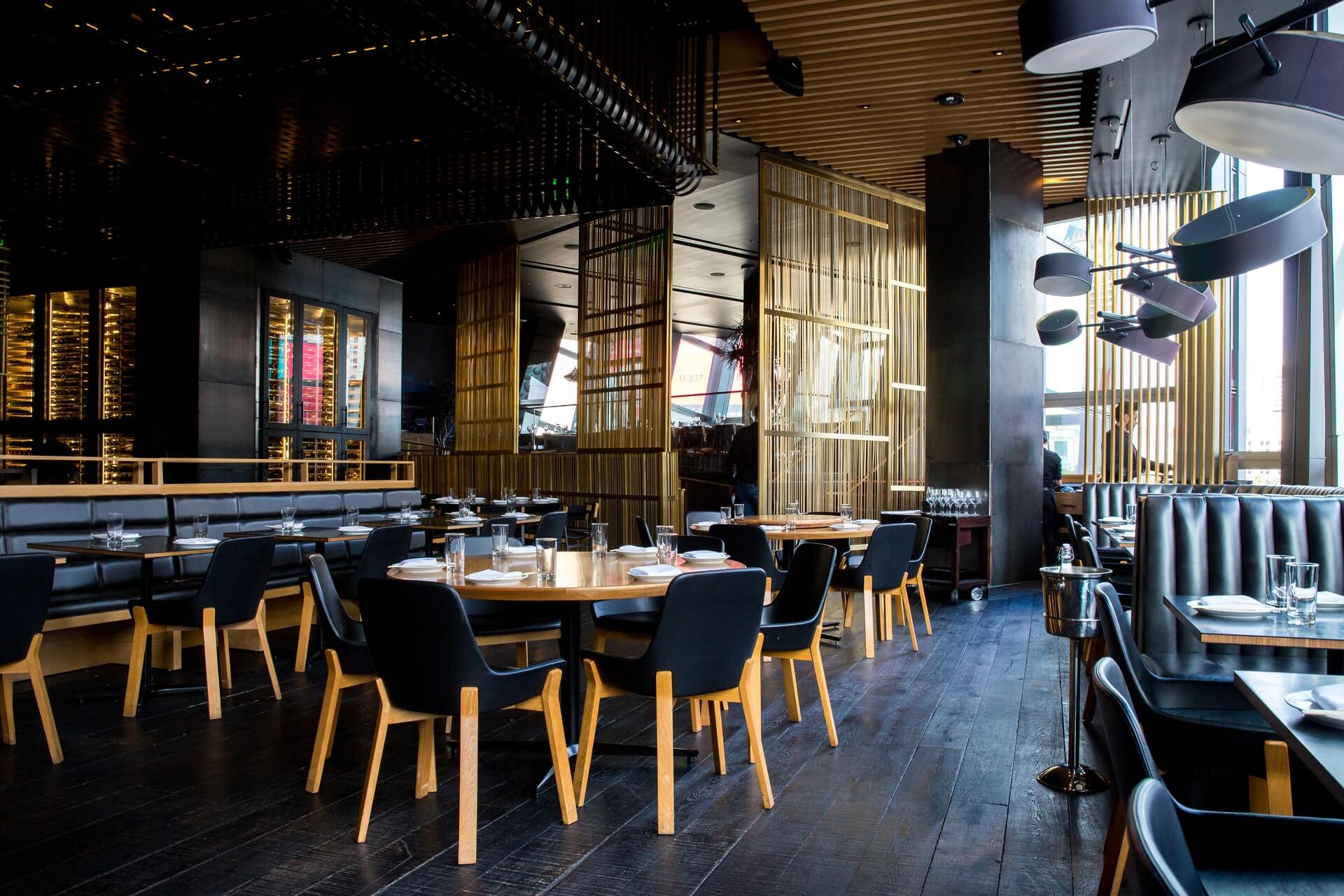
Momofuku Las Vegas interior

Is Gen Z the solution to the industry’s workforce problem?

That’s one big question posed during the 2021 Restaurants Canada Show.

A panel consisting of Philip Mondor, president and CEO of Tourism HR Canada; Adam Morrison, president and CEO of Ontario Tourism Education Corporation; Jody Palubiski, CEO of the Charcoal Group; and Lori Wilson, manager of people and change at BDO Consulting have answers.

The Problem

Canada’s hospitality industry is facing a labour shortage. In fact, that has been the case since before the pandemic.

According to several sources, the hospitality industry is Canada’s fourth-largest private-sector employer. And yet, there’s a labour crisis.

This is partially due to Baby Boomers retiring. As they leave the workforce, there’s a disparity in the number of people in Canada working or seeking work.

According to a January 2020 report from The Globe and Mail, there were at least 60,000 empty positions in foodservice before Covid-19 lockdowns.

Mondor concurs with that article’s sentiment. He expects “a very large shortfall” over the next year that could force the industry into a four-year recovery.

The Solution?

Neither Wilson, Mondor, Morrison or Palubiski see Gen Z as the solution to Canada’s labour shortage problem.

Now, that isn’t to suggest that operators and managers should dismiss Gen Z. Rather, Mondor suggests including this generation as they enter the workforce without viewing them as the only solution.

“Relying on youth alone is not going to meet the demand,” says Mondor.

Instead, Mondor posits that new Canadians—immigrants—will play a significant role in the hospitality industry moving forward. In fact, Mondor expects immigrants to make up 50 percent of Canada’s workforce.

Recruitment and Training

Palubiski says that what separates Gen Z from other generations is how connected and informed they are. Screen time provides Gen Zers plenty of information about social, regional and global issues.

To recruit Gen Z, Palubiski suggests brands and businesses be transparent about their stances on issues such as sustainability and the climate.

However, that approach to recruiting isn’t just effective when it comes to Gen Z—employees and guests alike want to know where a brand stands.

Morrison says that it’s important to be cognizant of the employment market. Knowing what people are being paid, even if an operator can’t match or beat that rate, is helpful. It’s also part of an effective strategy, says Morrison, to understand the ambitions of candidates to see if available roles will match their motivations.

Retention

Once an operator has built a team, the next step—training—is key to staff retention. And not just training for the specifics of one particular role in a restaurant or bar.

Rather, the panel agrees that this industry does a poor job of documenting transferrable skills. For example, operators can help develop employees’ leadership and conflict resolution skills (among many others) that they can take into other careers. Operators must explain that benefit to employees and help nurture it.

Additionally, the panel suggests looking at training and retention in the following ways to adapt and make businesses in this industry stronger:

  • Invest in people, don’t just hire them. That means training and developing their skills and careers.
  • View hiring and training as investments, not costs.
  • Everyone makes mistakes. True leaders admit their mistakes, fix them, and move forward.
  • Ask this question: Do your employees feel a greater affinity for this industry and your business after they’ve started working with you?

In parting, operators and managers should consider this: Palubiski had to furlough 950 employees due to the pandemic. A staggering 95 percent returned when they were called back. That is effective hiring, training, development and retention to emulate.

Image: Jason Leung on Unsplash

by David Klemt David Klemt No Comments

Rediscovering Your Guests in 2021

Rediscovering Your Guests in 2021

by David Klemt

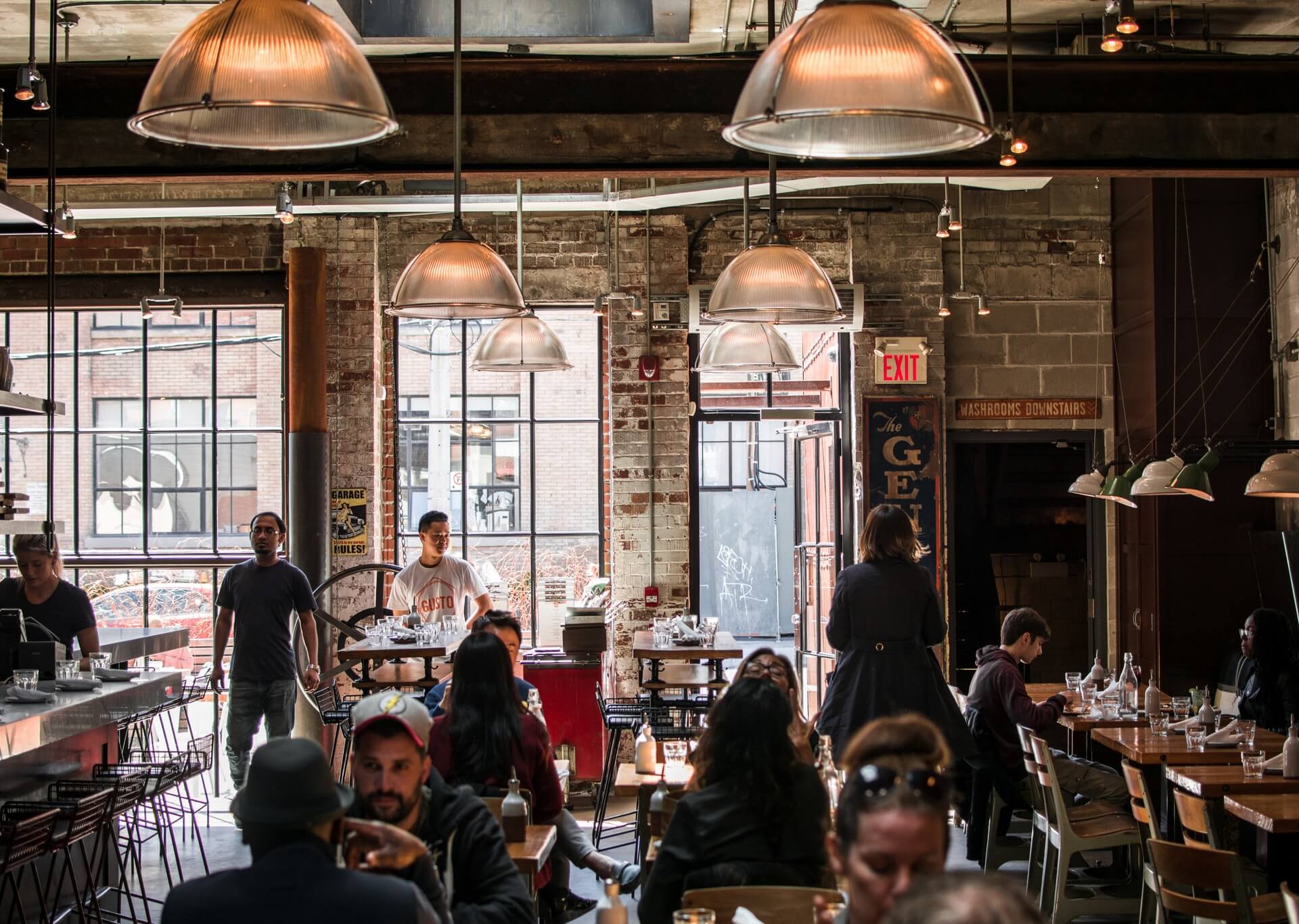
Guests in a restaurant and bar

Labatt Breweries of Canada wants operators to get to know their guests all over again in 2021.

Luckily, this isn’t a massive undertaking. However, it requires commitment and an understanding of altered consumer behavior.

During the 2021 Restaurants Canada Show, Labatt presented “Rediscover Your Guest: The 2021 Consumer.”

Christina Veira, bar and beverage curator for the RC Show, hosted the digital session. Labatt panelists included Michelle Tham, head of education and certified Cicerone, and Megan Harris, director of insights and strategy. Casey Ferrell, vice president of US and Canada Monitors for Kantar Consulting rounded out the panel.

Who’s Your 2021 Guest?

The good news is that Canadians are still consuming beverage alcohol. The less-good news is that they’ve gotten used to drinking mainly at home.

In fact, per Megan Harris, 95 percent of beverage alcohol occasions now happen at home. Harris also says there’s excitement about a return to in-person restaurant and bar service. However, several pandemic-driven behaviors will persist, including:

  • Takeout
  • Delivery
  • Daytime drinking
  • Working from home

Guests are set to unleash a torrent of pent-up demand when they can safely return to restaurants and bars. They want to indulge themselves, have fun and new experiences, but also feel safe.

Generally speaking, younger guests are more tolerant of risk. Conversely, guests over 50 years old are more cautious.

Vaccine Influence

Per Ferrell, there are four distinct vaccine groups in Canada and the United States:

  • People have gotten a Covid-19 vaccine.
  • People who can’t wait to get a Covid-19 vaccine.
  • People who are unsure about Covid-19 vaccines.
  • People who refuse to get a Covid-19 vaccine.

Ferrell says to remove the final group on that list. Doing so shows that about two-thirds of Canadians (and Americans) are in the process of getting the vaccine. Therefore, operators need consider how to address vaccination safety along with vaccination requirements for guests and employees. For Ferrell, the best lever to pull is the one that addresses Covid-19 and vaccine risks.

Additionally, just because the calendar ticked over to 2021 doesn’t mean everything is different. Accordingly, Ferrell feels that Q1 is the “More of 2021” stage of this year. He expects people to open up their bubbles during possibly Q2 or Q3, the “Less Covid-19” stage. Parties that include multiple households will return in force in Q4.

How to Meet 2021 Guest Expectations

First, we must be cautious when people return to restaurants, bars and other venues en masse. That initial boost in traffic driven by pent-up demand will ebb quicker than one would expect.

To get people through the doors, operators will need to focus on:

  1. health and safety;
  2. staff expectations and training;
  3. social interactions and the joy deficit; and
  4. guest experience and journey.

Harris sums up the first point succinctly: Anything that can be touchless, should be touchless. Operators should expect contactless features to remain moving forward. The expectation for hygiene will also remain. Guests will want to see employees cleaning and sanitizing, for instance.

Speaking of employees, operators must address the role they’ll plan in crowd management. Unfortunately, management and employees will have to be ready to enforce health and safety protocols strongly.

As Ferrell notes, long-term lockdown means large swaths of the population need to re-learn how to interact with others. One way to drive guests through restaurant or bar doors is promoting the role they play in socializing. Hospitality businesses facilitate social interaction—it’s one of the industry’s greatest strengths. Equally, restaurants and bars fill people’s joy deficits.

Operators, says Harris, need to consider:

  • every way they can offer an experience guests can’t have at home;
  • how they can capitalize on the daytime drinking experience;
  • how to extend the guest experience—pre-visit and post-visit;
  • how to attract older guests to their venues;
  • leveraging patio spaces; and
  • focusing on messaging that promotes escapism and excitement.

Another interesting consideration concerns table distances. Every operator needs to weigh square feet per guest and distancing tables. Social distance will likely remain important to guests for at least a little while post-pandemic.

Bonus

Ferrell answered a question I asked about Las Vegas specifically. Dayclubs, which largely focus on elevating pool parties, are an integral part of Vegas hospitality.

So, how can they signal their commitment to health and safety as relates to infections?

Ferrell’s answer is that evidence appears to indicate that pools are Covid-19 infection spreaders. Therefore, dayclub operators should focus more on the crowd control aspect of health and safety. Additionally, messaging should focus on indulgence.

After all, says Ferrell, not much is more indulgent than saying, “I’m going to take the day for myself and go to a daylife venue.”

Image: Nick Hillier on Unsplash

by David Klemt David Klemt No Comments

SevenRooms Reveals Third Party Impact

SevenRooms Reveals Third Party Delivery Impact

by David Klemt

Person using Uber Eats on their iPhone

New findings from SevenRooms, the powerful reservation and guest relationship platform, show the impact third-party delivery has on restaurants.

In partnership with YouGov, a respected internet-based market research and data analytics firm, SevenRooms finds that direct delivery saves operators thousands of dollars per month.

The overall finding of the “Data & Dollars: Revealing the Impact of Third-Party Marketplaces” report is startling. Operators are relying on a technology that in reality is harming them and their bottom line.

Cost of Convenience

Foodservice operators and workers, along with being hospitable in their mission to serve others, are adaptable.

The industry proves this time and time again. This is particularly true of the past 12 months.

Nimble operators pivot quickly, so it makes sense that so many restaurants, bars and other foodservice businesses embrace delivery, takeout and curbside pickup. Doing so is a direct and seemingly logical response to a major shift in consumer behavior to lockdowns, restrictions, and health concerns.

Most operators are well aware that state third-party delivery platforms take a 30-percent commission on average. However, the cost goes beyond devastatingly high fees: operators also lose control of the guest journey.

Real-world Example

SevenRooms illustrates the negative financial impact third-party delivery platforms with three examples: a high-end Italian restaurant in New York; a high-end steakhouse in Los Angeles; and a high-volume casual restaurant in California.

Let’s take a look at the last example.

Over a six-month period, the restaurant fulfills 19,000 combined orders. Delivery makes up 75 percent of these orders, takeout/pickup account for 25 percent. The average order is $33, and over the six-month period the total order volume is $617,500. Had the restaurant implemented direct delivery rather than third-party, they would have saved about $154,000.

Break those savings down and the restaurant would save approximately $25,600 per month that could go to:

  • PPE: 853 boxes of face masks or 196 boxes of gloves.
  • Takeout: 101,000 food containers.
  • Guest experience: 522 tanks of propane to keep guests warm on patios.

Using an average rent amount of $6,000-15,000 per month in Los Angeles, that’s also two to four months’ rent.

Guests Support Direct Delivery

The impact of third-party delivery on restaurants isn’t lost on consumers. Many view ordering food as more than just convenient, they see it as a way to support their favorite businesses.

Luckily, consumers are supportive of ordering delivery, takeout and pickup directly from restaurants.

Per SevenRooms:

  • Firstly, 37 percent of Americans are eager to do anything they can to help restaurants.
  • Nearly half, 48 percent, think it’s more economical to order directly from a restaurant.
  • 28 percent who say they prefer ordering directly to third-party delivery feel that way after seeing their favorite restaurants suffer.
  • 23 percent are informed and think third-party delivery platforms charge restaurants too much in fees.
  • 16 percent feel that the harm done to restaurants by third-party delivery outweighs any benefits.

Leverage Direct Delivery Support

SevenRooms identifies several ways in their report that operators can succeed in getting consumers to order directly.

One way is the platforms’ own Direct Delivery solution. We speak to SevenRooms CEO Joel Montaniel about this solution on our Bar Hacks podcast.

Then, of course, there are an array of incentives consumers are willing to accept in exchange for direct delivery and ordering:

  • 41 percent of Americans would order directly over ordering via third-party if a restaurant has its own app with features such as tracking and communication.
  • 37 percent consider a complimentary item such as an appetizer, drink or dessert in addition to their order an appealing incentive.
  • 32 percent like the idea of a personalized promotion applied to a future order or in-person visit.
  • 28 percent indicate interest in a personalized promotion for their meal such as a discount code or comp item.
  • 17 percent are fans of restaurants using ordering history to customize their menu and experience.

Read the entire report here. To learn more about SevenRooms, please click here. Connect with SevenRooms on Twitter, Facebook, LinkedIn and Instagram.

Image: cottonbro from Pexels

by David Klemt David Klemt No Comments

Ontario F&B Workers Petition for Phase 2

Ontario F&B Workers Petition for Phase 2

by David Klemt

Covid-19 vaccine ampoules

A petition on Change.org seeks to include F&B workers in Phase 2 of the Covid-19 vaccine rollout in Ontario, Canada.

The petition, which can be found here, is directed toward Ontario, Canada, Premier Doug Ford.

Currently, Ontario is in the midst of Phase 1 of Covid-19 vaccination.

Phase 1

Per the official Ontario Government website, Phase 1 aims to vaccinate around 1.8 million people.

The phase breakdown is as follows:

  • One: High-risk populations (December through March)
  • Two: Mass deliveries of vaccinations (April through July)
  • Three: Steady state (July onward)

Those eligible for Phase 1 inoculations are:

  • Health care workers
  • Adults in First Nations, Métis and Inuit populations
  • Adult chronic home care recipients
  • Congregate living for seniors
  • Adults over 80 years old

According to the Covid-19 Tracker Canada website, 1,116,496 vaccine doses have been administered throughout Ontario. In total, slightly more than six percent of the Canadian population has received at least one dose.

Phase 2

The second phase seeks to vaccinate approximately nine million people.

Eligible people are:

  • at-risk populations;
  • individuals with high-risk chronic conditions, and their caregivers;
  • high-risk congregate settings (such as shelters, community living, etc.);
  • adults aged 60 to 79, in 5-year increments; and
  • essential frontline workers who cannot work from home.

The requirement in bold should get the attention of all restaurant, bar and foodservice workers. Ontario identifies several “essential frontline workers” eligible for Phase 2. Among them are elementary and secondary school staff, police, firefighters, special constables, and social counselors.

However, high- and low-risk retail workers are on the list while restaurant and foodservice workers are not.

The Petition

Cassie MacKell is the person behind the petition to “Include Restaurant & Food Service Workers on Ontario’s Phase 2 Vaccination List.”

MacKell’s opening statement says, “I write this letter as a cry for help from the entire Food & Beverage industry of Ontario in regard to Ontario’s phase vaccine distribution plan.”

The petition’s creator goes on to say:

“As one of the hardest hit industries from Covid-19 why am I not seeing restaurants workers on this list? From the outset of the Covid-19 pandemic restaurants across Ontario have been heavily regulated and shut down by Premier Ford. Even after adhering to stringent restrictions and safety guidelines set forth by our government the framework continues to keep us closed, or only allows for limited seating capacity making it impossible for many businesses to survive.”

In closing, MacKell lays bare the situation for Ontario (and indeed all of Canada) foodservice professionals. Workers in this industry are exposed to people not wearing masks while they eat or drink; are unable to remain six feet from guests; and certainly can’t work from home.

Put bluntly, all those who work in foodservice are high-risk frontline professionals. If you agree and live in Ontario, Canada, please sign this petition.

Image: Alena Shekhovtcova from Pexels

by krghospitality krghospitality No Comments

House Passes $1.9B Covid Relief Bill, RRF

House Passes $1.9B Covid Relief Bill, RRF

by David Klemt

US Capitol Building Dome

The Senate version of the American Rescue Plan Act of 2021 is through the House, awaiting the signature of President Joe Biden.

Once the bill is signed by the president, it will be the law of the land.

That means our industry is finally receiving at least a portion of the relief it so desperately needs. After nearly a year of campaigning and fighting, the Restaurant Revitalization Fund (RRF) is a reality.

Restaurant Revitalization Fund

Managed by the Small Business Administration properly, the RRF is a critical lifeline for small- and mid-sized operators.

The SBA will prioritize women- and veteran-owned and operated businesses for the first 21 days. Economically and socially disadvantaged businesses will also receive priority.

Maximum grant amounts are $5 million per individual restaurant or $10 million per restaurant group.

Eligible Expenses

Importantly, eligible expenses fall between February 15, 2020 through December 31, 2021.

Eligible expenses include but are not limited to:

  • payroll and benefits;
  • mortgage (no prepayment);
  • rent (no prepayment);
  • utilities, maintenance;
  • supplies (including PPE and cleaning materials);
  • food;
  • operational expenses;
  • covered supplier costs (as defined by the SBA under the PPP program); and
  • sick leave.

American Rescue Plan Provisions

Of course, the RRF is just a small portion of the American Rescue Plan. The bill includes many provisions for national Covid-19 testing and vaccine distribution.

States and local governments receive $20 billion to assist low-income households with rent, utility bills, and back rent. There’s an increase to benefits of 15 percent through September for those on food stamps.

Also, the Emergency Injury Disaster Loan (EIDL) program receives $15 billion, which will help small business owners.

The $300-per-week federal boost to unemployment benefits remains the same rather than climbing to $400 per week.

Crucially, the bill waives the first $10,200 of unemployment benefits from 2020. That amount rises to $20,400 for married couples. To receive the waiver, a household must have an adjusted gross income of $150,000. That AGI is the same for individual and combined households.

Individuals with an AGI of up to $75,000 will receive stimulus payments of $1,400. That amount phases out completely at $80,000 for individuals, $160,000 for couples.

What’s Next

The SBA is responsible creating and implementing the RRF application process.

For now, it’s wise for operators to calculate their grant amounts:

  • Open prior to 2019: 2019 revenue minus 2020 revenue minus PPP loans.
  • 2019 opening: Average of 2019 monthly revenues times 12 minus 2020 revenues.
  • 2020 opening: Eligible to receive funding equal to eligible expenses incurred.

Since the SBA is the agency overseeing the $28.5 billion RRF, it’s a good idea to monitor their site for pertinent dates, details and requirements.

Image: Joshua Sukoff on Unsplash

by David Klemt David Klemt No Comments

Restaurant Revitalization Fund Passes

Restaurant Revitalization Fund Passes

by David Klemt

United States Capitol Building

Congress has once again voted to pass targeted relief for restaurants and bars.

The American Rescue Plan Act of 2021, which includes the Restaurant Revitalization Fund Passes, made it through Congress by a vote of 219 to 212.

All Republicans and two Democrats voted against the $1.9 billion bill, which now goes to the Senate.

Now What?

After a year of being mostly left to fend for ourselves—save for the flawed Paycheck Protection Program—operators may finally receive some relief.

The $300-per-week federal boost to unemployment, which the American Rescue Plan Act increases to $400 per week, expires on March 14. There’s some pressure on the Senate to pass the bill so it can be signed into law before or by that date.

However, we’ve been down this road before: Congress has voted in favor of a bill that contains relief for restaurants, bars and other foodservice and drinking establishments, the Senate goes a different direction, and the Congressional victory turns to ashes in our hands rather than becoming law.

Democrats control the House. A Democrat sits at the Resolute Desk. And while the 50-50 Senate is “controlled” by Democrats since Vice President Kamala Harris can break tie votes, the party can’t afford any defections if they hope to pass the American Rescue Plan.

Once again, targeted relief isn’t a certainty.

What’s in the Plan?

In short, not the RESTAURANTS Act. The American Rescue Plan provides a fraction of the $120 billion for which the industry has been campaigning for a year now.

Instead, a $25 billion grant program called the Restaurant Revitalization Fund (RRF) has been carved out for restaurants, bars and other eligible providers of food and drink.

There’s another $15 billion allocated for targeted Economic Injury Disaster Loan (EIDL) advance payments, and $1.25 billion for shuttered venue operators.

Just $7.25 billion would be pumped into the PPP and the application deadline wouldn’t be extended beyond March 31. This is likely because the PPP has disbursed over $662 billion in just under a year, and there’s still roughly $140 billion available.

In addition, the current bill includes $1,400 direct stimulus payments for individuals earning up to $75,000 or $2,800 for married couples earning up to $150,000. Payments would phase out completely for individuals earning $100,000 or married couples earning $200,000.

What’s the Restaurant Revitalization Fund?

The RRF carves out $25 billion for restaurants, bars, saloons, inns, taverns, lounges, tasting rooms, brewpubs, taprooms, food trucks, food carts, food stands, caterers, and eligible providers of food and/or drink.

Grants, should the bill pass the Senate and be signed into law, will be equal to pandemic-related revenue loss as calculated by subtracting 2020 revenue from 2019 revenue. Eligible entities could receive of up to $10 million, or a physical location could receive a maximum grant of $5 million.

RRF grants are required to be used for:

  • payroll costs;
  • principal and interest payments on a mortgage, excluding prepayments on the principal;
  • rent payments, excluding prepayments;
  • utilities;
  • supplies, including personal protective equipment (PPE) and cleaning materials;
  • F&B expenses within the eligible entity’s scope of “normal business practice” before the covered period: February 15, 2020, through December 31, 2021 (or another date as determined by the Small Business Administration);
  • maintenance expenses, including construction accommodating outdoor seating and walls, floods, deck surfaces, furniture, fixtures, and equipment;
  • covered supplier costs;
  • operational expenses;
  • paid sick leave; and
  • any other expenses the SBA determines to be essential to maintaining the eligible entity.

The SBA would be responsible for awarding $20 billion of the $25 billion fund in “an equitable manner to eligible entities of different sizes based on annual gross receipts.” The remaining $5 billion would be set aside, per the bill in its current form, for eligible applicants with 2019 gross receipts of $500,000 or less.

Click here to find your senators and urge them to pass the Restaurant Revitalization Fund.

Image: Jens Junge from Pixabay 

by krghospitality krghospitality No Comments

I Tried the Mask Made for & by Hospitality

I Tried the Mask Made for & by Hospitality

by David Klemt


DCBL X-1 Mask, made by hospitality professionals for the hospitality industry

Wearing a mask is part of everyday life, particularly for hospitality industry professionals.

DCBL Masks was designed by hospitality professionals for the hospitality industry, born out of their reverence for the workers putting themselves at risk so the communities they serve can retain a semblance of their normal lives.

Their first mask, the X-1, is intended to provide solutions to the problems presented by other face coverings.

Thoughtful Design

One problem with the standard masks and face coverings we’ve grown accustomed to is their tendency to muffle voices. One of the driving design elements behind the DCBL X-1 is the projection of the wearer’s voice.

The X-1 is a three-piece mask and its second layer is what sets it apart from others. The middle layer is sound-enhancing, sculpted foam that allows the wearer’s voice to carry. No more going hoarse from yelling, no more (or less, at least) repeating oneself, no more guests leaning in or stepping closer to hear what’s being said (hopefully).

That second layer is also intended to improve breathability. The inside layer’s design provides an air pocket for similar breathing functionality. It’s also made of natural bamboo so it’s soft, moisture-wicking and cooling, and it receives an antimicrobial treatment.

The X-1’s outer layer is polyester and resists dust and moisture while also protecting against UV rays. There are two flexible “suspension” systems, one for the nose and one to seal the bottom of the mask. Straps are Spandex, ear loops are adjustable, and there’s a clasp system so the wearer can choose how to secure the mask to their head.

Designed by Industry Pros

DCBL is the brainchild of industry veterans Michael Tipps and Homan Taghdiri. Tipps and Taghdiri are the co-founders of both DCBL Masks and Invictus Hospitality, a consulting agency headquartered in Los Angeles.

Tipps boasts over two decades’ experience in hospitality. He got his start in South Florida and has worked every front-of-house position. His journey through hospitality helped him gain perspective regarding the challenges inherent to the industry, and he eventually co-founded Invictus.

Taghdiri worked in hospitaity for 13 years before becoming a licensed attorney in California. He has worked every position in the industry. While he no longer studies law, when he did, he specialized in real estate, business and the hospitality industry.

DCBL’s Mission

There are three main goals DCBL seeks to achieve: Protection, projection, and connection. I’ve explained how they achieve the first two goals.

If the first goal isn’t realized, goals two and three don’t matter. If DCBL whiffs on the second goal, the third is unachievable. The X-1 seeks to make conversation easier when wearing masks so people can feel more connected. Being separated by masks, distance, barriers, and staying at home is detrimental to us all. The DCBL X-1 addresses that issue.

As the DCBL website says, “Staying safe and making a living shouldn’t be as challenging as it has been.” I feel the brand accomplishes their deceptively simple goals.

Impressions

First things first, I didn’t receive my X-1 in exchange for this post or any monetary compensation. I was genuinely curious about the mask and placed an order for two.

My masks arrived in a black bubble mailer, making them seem a little cooler from the start. They were each sealed in their own packet with an insert that explained the three layers, different methods for securing the X-1, machine washing instructions, and more.

DCBL X-1 mask packaging

In my experience, the mask felt soft and comfortable before even putting it on. The X-1 feels like a well-constructed, high-quality mask.

DCBL X-1 Mask

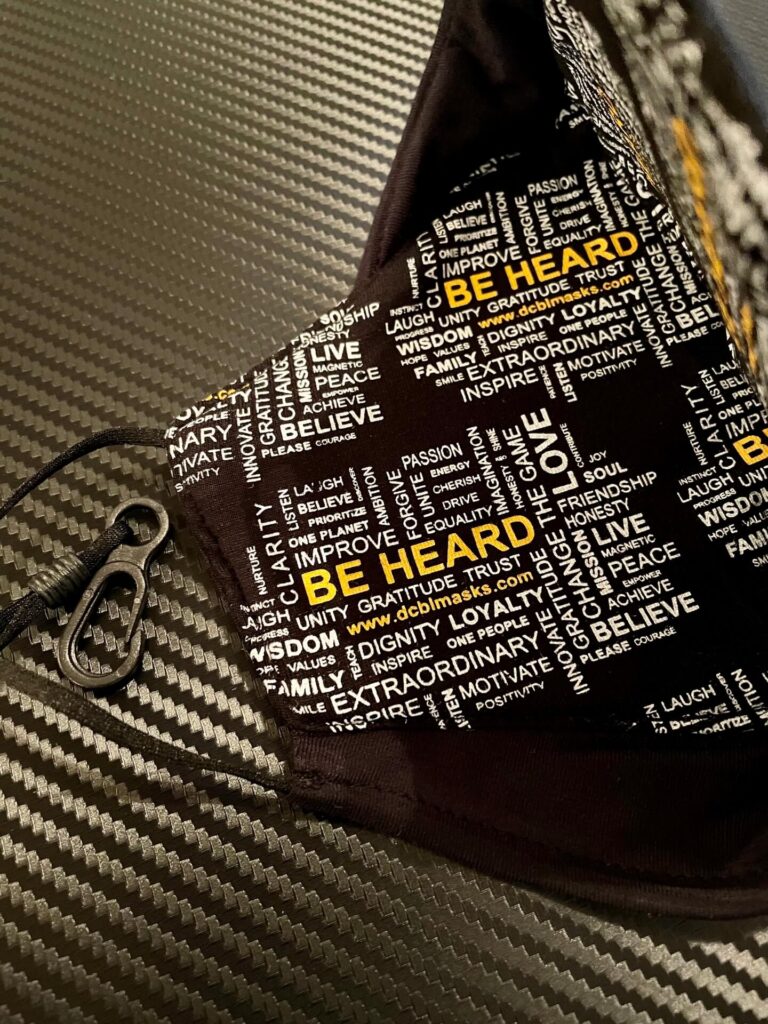
I have to say, I dig the interior layer. Not only is it soft and comfortable, the design detail is a nice departure from the white, black or pale blue to which we’ve all become accustomed:

Inside layer of DCBL X-1 face mask

It’s comfortable on my face and it allows me to speak comfortably, clearly and loudly no extra effort. I wore mine around my place and while writing this article. The ear loops are comfortable for me but the X-1 can be worn easily with an ear loop extension or toward the top of the head with the clasp system.

My glasses did fog slightly at first, but that became a non-issue after I adjusted the nose bridge suspension area.

Other people’s mileage may very, of course, but I feel that the mask delivers on DCBL’s mission statement: Be Heard.

To learn more and order the X-1, click here. connect with DCBL on Instagram and Facebook. Contact hello@dcblmasks.com for wholesale orders.

Disclaimer: The DCBL X-1 is not a medical-grade mask and is not intended as a replacement for medical-grade equipment or other recommended measures to stop the community spread of any viruses.

Images taken by author.

by David Klemt David Klemt No Comments

This Generation is Most Likely to Dine In

This Generation is Most Likely to Dine In

by David Klemt

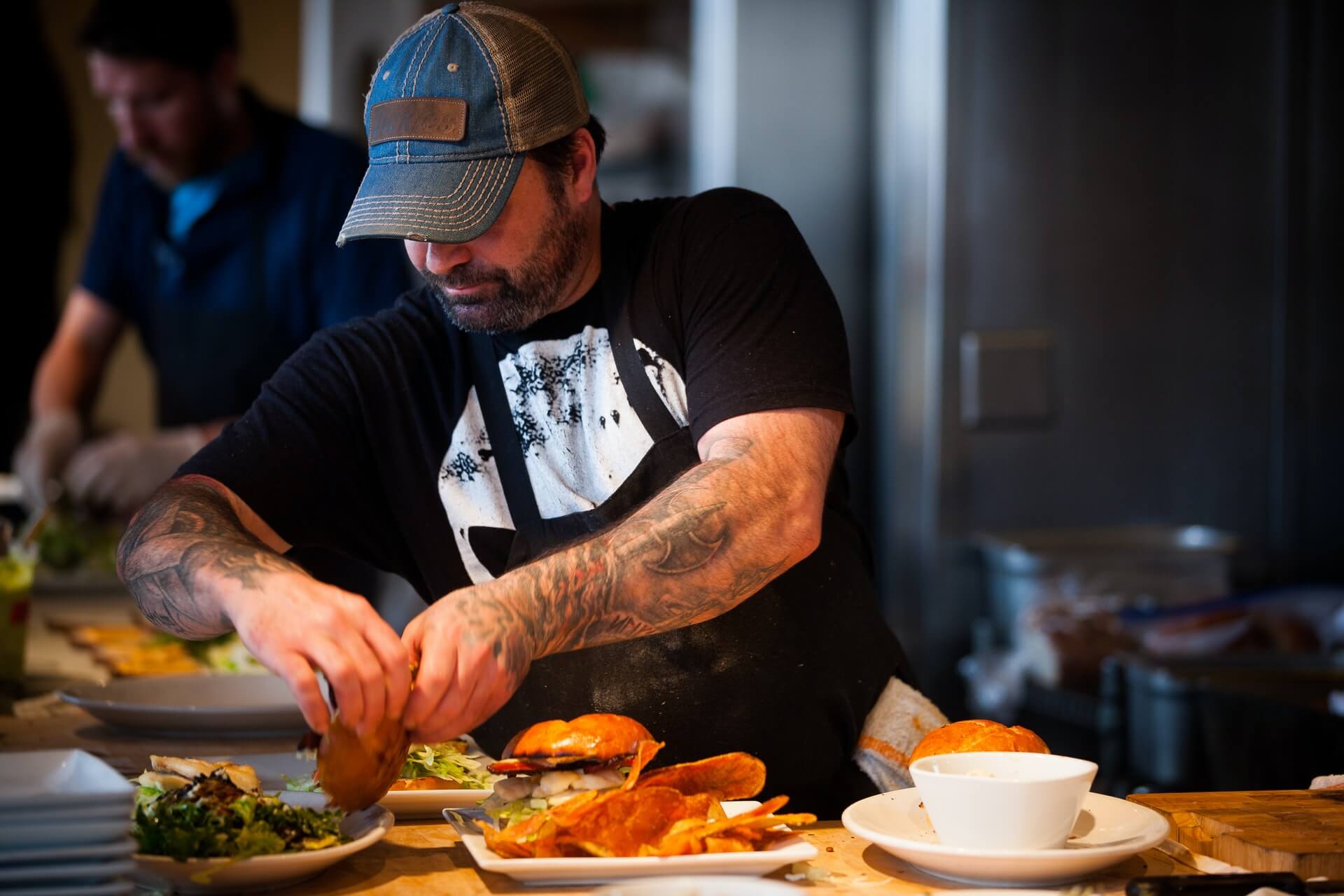
Chef preparing burgers inside restaurant

The National Restaurant Association’s 2021 State of the Restaurant Industry report revealed the generation most likely to dine in-person at a restaurant.

That is, of course, if such restaurant service—from quick-service to fine dining—is permitted where they’re located.

So, do you have a guess? Because we have the answer.

Most Likely to Dine In

Per an NRA survey, Gen Z is most eager to return to in-person restaurant dining.

However, it’s more of a simple majority that’s after a restaurant experience beyond delivery, takeout and curbside pickup than an overwhelming one.

Just 53 percent of adult members of Gen Z surveyed by the NRA are willing to dine inside restaurants over the course of the next few months.

Overall, 67 percent of Gen Z, Millennial, Gen X and Baby Boomer adults would like to engage with restaurants like they did before the pandemic. That’s not a huge stretch, of course; we all want to return to normal and put Covid-19 behind us.

Still, the survey results make it clear there’s demand for in-person dining. The convenience of interacting with and ordering from restaurants is here to stay. However, that convenience hasn’t replaced the desire to dine (and socialize) out.

So, Who’s Most Likely to Order In?

You’d be forgiven for assuming the answer to this question is also Gen Z. After all, just about every development regarding technology and how people engage with the world has been laid at their feet.

When Gen Z isn’t being accused of “killing” a tradition, sense of normalcy or an entire industry, the finger is pointed at Millennials.

Well, it turns out the usual finger-pointing suspects are the consumers most likely to order from restaurants.

According to the NRA’s report, 81 percent of Boomers and 80 percent of Gen X will continue to order from restaurants, at least for the next few months.

Put it All Together

At least for the next several months, the industry’s recovery will hinge on the full-strength return of in-person service and the convenience of delivery and takeout.

In other words, some consumers are champing at the bit to once again make restaurant visits a regular part of their lives while others plan to proceed with caution. Successful restaurant operations will maintain a mixture of traditional and digitally-driven services.

Nearly 90 percent of adults surveyed by the NRA say they enjoy going out to restaurants and that doing so with family and friends is a better way to spend leisure time than cooking at home.

“Restaurants are the cornerstone of our communities, and our research shows a clear consumer desire to enjoy restaurants on-premises more than they have been able to during the pandemic. We’ve also found that even as the vaccine becomes more available and more social occasions return to restaurants, consumers will continue to desire expanded off-premises options going forward. Both will continue to be key for industry growth,” said Hudson Riehle, senior vice president, Research and Knowledge Group, NRA, in a press release announcing the Association’s 2021 State of the Restaurant Industry. “With more than half of adults saying that restaurants are an essential part of their lifestyle, we are confident that, with time, the industry is positioned for successful recovery.”

The NRA predicts foodservice sales to reach $731 billion in 2021, an 11 percent increase over 2020. Unfortunately, that estimate is about 15 percent lower than sales generated in 2019.

Still, that’s a reason to be optimistic. Consumers are pent-up and eager to make restaurants a significant part of their lives once again.

Nobody is more eager, evidently, than Gen Z.

Image: Jesson Mata on Unsplash

by krghospitality krghospitality No Comments

On the Menu for 2021: The RESTAURANTS Act

On the Menu for 2021: The RESTAURANTS Act

by David Klemt

Much like restaurants themselves, the RESTAURANTS Act has faced multiple starts and stops.

The bill received huge bipartisan support in 2020, landing dozens upon dozens of co-sponsors.

However, that widespread support didn’t materialize into any actual progress—the bill was never signed into law. That must change now.

A Long Road

It’s February 2021. The House and Senate must work together to provide the targeted relief of the Real Economic Support That Acknowledges Unique Restaurant Assistance Needed to Survive (RESTAURANTS) Act.

The RESTAURANTS Act was first introduced to the House of Representatives on June 15, 2020. The bill was eventually included in the revised Heroes Act, which was passed by the House on October 1, 2020 on a vote of 214 to 207.

Unfortunately, that bill was “dead on arrival” and didn’t receive a vote on the Senate floor. A $900 billion stimulus package was negotiated in December of 2020 but the RESTAURANTS Act wasn’t included in it.

It has been more than long enough—it’s beyond time for action.

Where are We Now?

Throughout all of this, from inception to current status, the Independent Restaurant Coalition (IRC) has never faltered in their campaign to ensure this industry receives the targeted relief it so desperately needs.

It’s wise given how the number of times we’ve been let down by our elected officials to be guarded and cautiously optimistic about the RESTAURANTS Act finally being signed into law this month.

On February 5, Senators Roger Wicker (R-MS) and Kyrsten Sinema (D-AZ), and Representatives Earl Blumenauer (D-OR) and Brian Fitzpatrick (R-PA) formally (re)introduced the RESTAURANTS Act to the 117th Congress.

What’s in the Bill?

In its current form, the RESTAURANTS Act:

  • establishes a $120 billion relief fund for foodservice and drinking establishments;
  • makes groups that operate up to 20 units eligible for relief from that fund;
  • provides operators access to grants of up to $10 million for eligible expenses; and
  • makes the grants retroactive to February 15, 2020 and ends them eight months after the legislation is signed into law.

New provisions in the February 2021 RESTAURANTS Act include:

  • updates to the award calculation based on annual loss from calendar year 2020 instead of quarterly;
  • grant eligibility for new restaurants that opened after January 1, 2020;
  • paid sick leave as an eligible expense for employees, with a bonus amount to cover the cost of voluntarily providing ten days of sick leave to employees;
  • providing the Department of the Treasury the discretion to help reduce waste, fraud, and abuse;
  • imposing reporting obligations on the Department of the Treasury to share who gets loans and demographic information about recipients; and
  • ensuring that restaurants can use both the Employee Retention Tax Credit and the RESTAURANTS Act grant program, provided they are not used for the same expenses.

What’s Next?

We must all act to give the RESTAURANTS Act the best chance of becoming law. We have been patient for long enough.

We must let our representatives know we expect them to pledge their support for this bill formally.

The IRC provides several methods for ensuring our representatives understand they need to co-sponsor and pass the RESTAURANTS Act:

  1. Email your representatives and ask them for their co-sponsorship.
  2. Call your representatives directly and tell them why restaurants and bars need the RESTAURANTS Act to be voted on, passed, and signed into law. This is the number to dial: (202) 224-3121. The IRC has provided talking points here.
  3. Share the graphic below on your social channels and encourage your followers to also contact their representatives and ask them to co-sponsor the RESTAURANTS Act. Use the following caption when posting: It’s official: the RESTAURANTS Act of 2021 is on the menu in both chambers of Congress. Call your representatives today and tell them that independent restaurants, bars, and workers can’t wait any longer for direct relief: 202-224-3121 #SaveRestaurants

All of that will take less than 20 minutes. That’s not a lot of time to help finally get this industry the support and relief it needs.

The RESTAURANTS Act is needed to prevent more permanent restaurant and bar closures, and to revitalize the industry. The road to recovery is a long one and getting this bill signed into law is a major step forward.

Please email and call your representatives. Please share the post and caption above on your social media. Please help save the restaurants, bars, and millions of people they employ.

Image:

by David Klemt David Klemt No Comments

2021 Technomic Outlook: United States

2021 Technomic Outlook: United States

by David Klemt

Technomic has been providing the foodservice industry with valuable insights on a global level for 50 years.

The research and consulting firm has been one of my go-to information sources for at least a decade.

A few weeks ago, I reviewed American food delivery trends from multiple sources. This week, I’m taking a look at Technomic’s foodservice predictions for the US.

Unprecedented and Unpredictable

Before we proceed, keep this in mind: predictions are best guesses. Technomic’s approach is scientific and data-driven but it’s important to approach any prediction with caution.

As the firm itself points out in their 2021 foodservice report, the global pandemic has plunged the industry deep into unprecedented territory.

It seems the only thing predictable about Covid-19 in relation to restaurants, bars and other hospitality businesses is that this industry will continue to bear the brunt of closures and restrictions.

That said, I trust Technomic to lead the industry through unprecedented and unpredictable moments in time.

7 Key Trends

Technomic has made seven predictions for foodservice in the US.

  1. Streamlined menus. Technomic expects the trend toward reducing SKUs to continue. However, that may lead to innovative and healthy items replaced removed items. Leafy greens, environmentally-friendly, and health-conscience items such as immune boosters are expected to be menued.
  2. Tech is the future. This prediction can be summed up quickly: If it’s a tech-based, can improve operations and help a brand differentiate itself from others, the industry is going to implement it.
  3. Top three cuisines. Chinese, Italian and Mexican food and drink are expected by Technomic to perform the best in 2021, particularly if operators move beyond the classics and incorporate lesser-known ingredients. However, Technomic expects more interest in West African and Caribbean cuisine.
  4. Social justice. Operators will have to be transparent about their stances on social justice issues and make meaningful statements—hashtags won’t cut it with younger consumers.
  5. Umami will reign supreme. Technomic uses the phrase “new-mami” to describe “intense, mouthwatering fare.” Think fruit vinegars beyond apple, candy cap mushrooms, seafood meatballs, and so much more.
  6. Communal concepts must adapt. Food halls, eatertainment concepts, and venues with communal seating will have to reimagine their spaces and how guests use them during an era characterized by social distancing, constant sanitizing, and off-premise business models. Traditional guest experiences may return but there’s no telling when that will happen.
  7. Revenue recovery. Technomic expects the industry to start recovering in 2021. However, sales levels are unlikely to reach those of 2019.

Bring it all Together

Chasing trends can be a fool’s errand. Not every prediction made by Technomic will work for every restaurant or bar in Canada.

Just like Technomic collects and analyzes industry data, operators must review their guest, sales and operations data to make informed decisions. This is another reason it’s crucial to own the guest journey in its entirety.

Click here to view Technomic’s “2021 U.S. Trend Outlook” webinar.

Image: Justin Cron on Unsplash

by David Klemt David Klemt No Comments

2021 Technomic Outlook: Canada

2021 Technomic Outlook: Canada

by David Klemt

Technomic has been providing the foodservice industry with valuable insights on a global level for five decades.

The research and consulting firm has been one of my go-to information sources for at least ten years.

A few weeks ago, I reviewed Canadian food delivery trends from multiple sources. This week, I’m taking a look at Technomic’s foodservice predictions for Canada.

Unprecedented and Unpredictable

First things first: predictions are best guesses. Technomic’s approach is scientific and data-driven but it’s important to approach any prediction with caution.

As the firm itself points out in their 2021 foodservice report, the global pandemic has thrown the industry into unprecedented territory.

It seems the only predictable element related to Covid-19 is that restaurants, bars and other hospitality businesses will bear the brunt of closures and restrictions.

That said, I trust Technomic to lead the industry through unpredictable, unprecedented moments in time.

5 Key Trends

Technomic has made five predictions for foodservice in Canada.

  1. 2021 will represent the start of financial recovery for foodservice. Technomic predicts moderate sales growth this year, below levels of 2019. However, limited-service restaurants are expected to perform better than their counterparts and return to 2019 revenue levels. Not surprisingly, Technomic expects full-service restaurants to be the most challenged.
  2. Operators will make their stances on social issues known. Multiple sources say today’s consumers want transparency from the brands they support. They want to know what company’s believe about climate change, food insecurity, social inequalities, diversity and hiring practices, fair pay for employees, and other issues. Technomic expects more operators to “double down” on transparency.
  3. On-premise operations will invest in off-premise business models. Again, multiple sources have reported that significant percentages of consumers are uncertain or uncomfortable about returning to restaurants and bars for in-person dining and drinking. Technomic expects operators to invest in smaller dining rooms so they can offer more limited-contact and contactless options to guests: walk-up ordering windows, multiple drive-thru lanes, designated curbside pickup locations, and in-store pickup and grab-and-go stations. The firm also expects more operators to embrace first-party/direct delivery, along with technologies like mobile ordering and geofencing.
  4. Comfort, quirkiness and indulgence. Technomic expects comfort foods to continue to perform well and encourages operators to get creative—even quirky—with this category. They caution that health will still be a focus of many guests and suggest that some operators will “disguise better-for-you meals as indulgent.”
  5. Our home and native land. Hyperlocality will play a crucial role in driving traffic given the travel restrictions imposed throughout Canada. Operators will likely forge relationships with local farms to attract local visitors to their venues. Technomic expects to see grassroots movements promoting support for small regional chains and local independent operations to gain traction.

Bring it all Together

Chasing trends can be a fool’s errand. Not every prediction made by Technomic will work for every restaurant or bar in Canada.

Just like Technomic collects and analyzes industry data, operators must review their guest, sales and operations data to make informed decisions. This is another reason it’s crucial to own the guest journey in its entirety.

Click here to view Technomic’s “2021 Canadian Trends Outlook” webinar.

Image: Hermes Rivera on Unsplash

by David Klemt David Klemt No Comments

Foodservice Workers Recommended for Phase 1c of Covid-19 Vaccines

Foodservice Workers Recommended for Phase 1c of Covid-19 Vaccines

by David Klemt

The Centers for Disease Control and Prevention (CDC) has recommended that foodservice workers be included in phase 1c of the Covid-19 vaccine plan.

On Sunday, the Advisory Committee on Immunization Practices met to vote on phases 1b and 1c.

The committee identified those next in line for the two Covid-19 vaccines authorized for use in the United States from Pfizer/BioNTech and Moderna as “frontline essential workers” and people aged 75 years and older (phase 1b), and “other essential workers” (phase 1c).

Phase 1a consists of 24 million healthcare workers, residents of long-term care facilities (LTCF), and staff members who work at such facilities.

An estimated 49 million people are included in phase 1b. Roughly 30 million people in this group are categorized as frontline essential workers. Those in education (teachers, daycare workers, support staff), First Responders, United States Postal Service workers, corrections officers, grocery store workers, food and agriculture workers, those in manufacturing, and people who work in public transit will be inoculated in phase 1b.

People aged 16 to 64 who have high-risk medical conditions, those aged 65 to 74, and the other essential workers have been voted into phase 1c. Foodservice workers are among the roughly 57 million included in this phase, along with the media; construction workers; those who work in shelter and housing; transportation and logistics workers; those in finance, IT, communications, and the legal sector; people who work in the water and water waste industries; public safety workers; and the energy sector.

A lone dissent among the 13-1 vote came from Dr. Henry Bernstein. The doctor felt that, based on the available science, people aged 65 to 74 should have been included in phase 1b.

It’s important to note that states can go against the CDC’s “Phased Allocation of Covid-19 Vaccines” recommendations. For example, Governor Ron DeSantis has stated that the vaccines, which are not yet available to the general public, will go to people aged 70 and up in Florida in phase 1b. In Texas, those aged 65 years and older and people with certain chronic illnesses are said to be the state’s phase 1b priorities.

Other states may follow suit and deviate from the CDC’s phased allocations.

Image: Gustavo Fring from Pexels

by David Klemt David Klemt No Comments

“More help is on the way.” But not for restaurants and bars.

“More help is on the way.” But not for restaurants and bars.

by David Klemt

Speaking about the economic relief package, Senate Majority Leader Mitch McConnell (R-KY) struck what can be generously described as tainted altruism.

“More help is on the way,” said McConnell on the Senate floor on Sunday. He also took the time to attempt to absolve Republican leadership of any blame for the glacier-paced movement forward on relief, laying the fault at Democrats’ feet.

To be blunt, both parties have failed the American people and small businesses in terms of providing federal assistance during the pandemic.

After months of inaction on relief—with the exception of a Congressional vote in September that failed to pass in the Senate—and weeks of discussions and partisan sniping, negotiators finally managed to zero in on a bill with a strong likelihood of becoming law.

Yet sifting through remarks made by some politicians regarding pandemic relief over the course of the past several months, variants of the word “prompt” were bandied about.

If the package passes—which is expected to happen later today—members of Congress and Senate will no doubt perform self-congratulatory victory laps for finally doing their jobs after months of failing to do much of anything in the way of relief. Meanwhile, millions of Americans will continue to face life-altering challenges, reaching out for lifelines that are simply not there.

Included in the package are a number of details identified as “key” to both political parties:

  • The ability for businesses that had received Paycheck Protection Program loans which had been forgiven to deduct the costs said loans covered on their federal tax returns.
  • Speaking of the PPP, it will be reopened with over $284 billion intended for small businesses.
  • $12 billion in available PPP funds for minority-owned and “very small” businesses.
  • $15 billion made available in PPP funds specifically for independent movie theaters, live music venues, and cultural institutions like museums.
  • $600 stimulus checks for qualifying adults (and each child in a household) who earned $75,000 or less in 2019. The amount would be reduced for people who earned more. Those who made $99,000 or more last year are not expected to receive a stimulus check.
  • A $300 boost to unemployment benefits for 11 months, with a possible implementation date of December 27.
  • Gig and contract workers enrolled in the PUA or PEUC programs can expect the same $300 boost to their benefits for 11 to 13 weeks.
  • The deadline to spend billions of dollars made available to cities and states via the CARES Act is expected to be extended from the end of this year to be an entire year.
  • $25 billion in emergency assistance for renters.
  • A moratorium on evictions expected to be extended through the end of January.

What’s not in the package expected to be rushed through Congress? Hundreds of billions of dollars in state and local aid Democrats wanted, liability shields for corporations Republicans wanted, the $120 billion RESTAURANTS Act, or the $240 billion Restaurant and Foodservice Industry Recovery Fund.

Despite McConnell’s declaration that federal assistance is on the way, the economic relief plan leaves an industry that employs millions of American workers and contributes hundreds of billions of dollars to the nation’s GDP (four percent before the pandemic) to fend for itself.

Guy Fieri, in all seriousness, has done more for more unemployed restaurant workers than the government, raising more than $21 million in relief funds in under two months.

The hospitality jobs lost due to Covid-19 aren’t expected to return. With more than 110,000 restaurants closed—and counting—the economic impact will be felt nationwide and, in all probability, have global ramifications.

The PPP turned out to be an absolute farce: billions of dollars went to businesses that are anything but small by definition. There’s little reason to believe the process will improve much (if at all) this time around.

And while restaurants and bars have been crucial to nurturing community, connections and culture since inception, they’re clearly not considered culturally relevant institutions by politicians.

With Congress facing an uphill battle in terms of drafting the language for the relief bill and then voting on it, expecting our elected officials to propose, negotiate, draft and vote on a bill for the hospitality industry seems foolish. That means the earliest the industry can expect help—which seems exceedingly unlikely to ever materialize—is in late February of 2021.

Apparently restaurants, bars, and the foodservice professionals they employ aren’t key to politicians on any side of the aisle. Well, not until they need venues to host their campaign fundraisers, that is.

Image: Andrew Seaman on Unsplash

by David Klemt David Klemt No Comments

One Fair Wage Survey Results: Foodservice Professionals on Front Lines of Infection Risk and Hostility

One Fair Wage Survey Results: Foodservice Professionals on Front Lines of Infection Risk and Hostility

by David Klemt

Over a three-week period, One Fair Wage (OFW) surveyed 1,675 foodservice workers in five states and Washington, D.C.

The survey was initially sent to more than 61,000 applicants to the One Fair Wage Emergency Fund in Illinois, Massachusetts, New Jersey, New York, Pennsylvania and D.C. By November 9, 2,621 respondents had completed the OFW survey online. A total of 1,575 indicated they were currently employed and an additional 100 surveys were completed by phone.

One of the key takeaways of the survey is at once disturbing and unacceptable but not, infuriatingly, shocking. Not only did significant percentages of respondents report lax Covid-19 protocol training and enforcement along with increasingly hostile guests, close to half revealed “a dramatic increase in sexual harassment” since the pandemic struck.

Increased Sexual Harassment

Forty-one percent of survey respondents noted a marked shift in the frequency that guests are subjecting foodservice workers to unwanted sexualized comments. A quarter said they had personally experienced or witnessed “a significant” change in this manifestation of sexual harassment.

An analysis by OFW of the comments shared by respondents reveals the impact that this increase in sexual harassment has on the recipients. The comments have a negative effect on workers’ sense of safety in the workplace, financial security, physical health, and emotional and psychological health.

Of the 25 percent of the female respondents who had personally experienced or witnessed sexual harassment, 43 percent reported that comments were directly tied to social distancing and wearing masks, two pillars of Covid-19 health and safety protocols.

Identified by OFW as a “mild example” of the unwanted comments being made, “Take your mask off I want to see what’s underneath,” provides insight into the overall “theme” of the harassment being made. Many guests engaging in harassment appear to be sexualizing covered noses and mouths. Indeed, other comments support this analysis:

  • “Come on, sweetie. Lemme see that pretty face under there. Take it off for me, will you? Just a quick flash.”
  • “Please take the mask off, I want to see your lips.”
  • “Take off your mask so I know how much to tip you.”

When foodservice pros rebuff these unwanted advances, the responses tend toward hostility and smaller—or no—tips. In short order, these types of aggressors have found a way to weaponize the guest-server power dynamic and seemingly fetishize required Covid-19 protocols.

Increased Hostility

Whereas close to half of OFW survey respondents reported increased sexual harassment, more than three-quarters reported increased hostility from guests.

A staggering 78 percent of respondents said they had experienced or witnessed increased hostility as a response to following and enforcing Covid-19 protocols. Almost 60 percent said these incidents were occurring on a weekly basis.

Again, the power dynamic comes into play. Nearly 60 percent of respondents reported hesitation in enforcing Covid-19 protocols for fear doing so would affect their tips negatively. That concern is rooted in reality: 65 percent of respondents said they were tipped less on a weekly basis after enforcing health and safety protocols.

More than 80 percent said tips have decreased since the pandemic took hold, with 65 percent reporting that decrease to be 50 percent or more.

Impact of Subminimum Wage

One Fair Wage, as their name suggests and their mission clearly states, advocates and campaigns for all employers in America to pay full minimum wage. The organization also calls for tipped workers to receive full minimum wage plus their tips.

Per OFW, service workers—including people who work in salons and airports—are twice as likely to require food stamps to get by when compared to the rest of the workforce in the United States. Foodservice workers, however, are subjected to more sexual harassment than those workers in any other industry. The U.S. Equal Employment Opportunity Commission (EEOC), a federal agency, has identified the restaurant industry as the sector with the most sexual harassment charges filed by women.

This isn’t a digression. The OFW’s mission for a full minimum plus tips for tipped workers would have a direct impact on community health and safety. Infectious disease experts have warned that Covid-19 will not be the last pandemic with which we’ll have to contend. According to a report released by the CDC in September, the risk of contracting Covid-19 doubles for adults after dining inside a restaurant.

Were all service workers working for a full, living minimum wage, they’d likely be less concerned with incurring a guest’s wrath in the form of a reduced tip or no tip at all. The OFW survey findings that foodservice pros are being harassed to remove their masks or not socially distance—risking the health and safety of themselves and guests, then of family and friends, and therefore the community—and that 58 percent are reluctant to enforce Covid-19 protocols out of concern for their tips illustrates, in part, how subminimum wage for tipped workers can impact the health and safety of communities overall.

The pandemic has made foodservice workers and others who work with the public, by default, Covid-19 protocol enforcers. Clearly, significant swaths of the public feel zero compunction when it comes to responding with hostility, threats, harassment, and refusal to comply.

It’s also clear that guests who react with hostility and intimidation when employees are enforcing officially mandated health and safety requirements lest their employer face fines, the suspension of their business and/or liquor license, or any other form of punishment that puts their employment at risk won’t hesitate to wield the guest-server power dynamic as a weapon. That weapon can ultimately endanger an entire community.

The Good News

A mere ten percent of survey respondents reported their employers instruct employees to follow all Covid-19 health and safety protocols on a consistent basis, and just 31 percent of respondents said their employer follows all such protocols.

Those are startling numbers since ten percent of respondents said they had contracted Covid-19, 88 percent said they knew someone had contracted the infection, 44 percent reported that at least one coworker had contracted Covid-19, and a depressing 42 percent of those who reported knowing someone who had contracted the illness had died from it.

However, there were some positive pieces of data shared by survey respondents:

  • 92 percent reported their employers require all workers to wear masks.
  • 86 percent reported their employers require all workers to wash hands frequently.
  • 86 percent reported their employers require tables and chairs be wiped down and sanitized between uses.
  • 78 percent reported their employers provide employees with personal protective equipment (PPE).
  • 75 percent reported that a supervisor has told them they will have their back if they tell a guest or coworker to put on their mask whenever they’re within six feet of them.

In a perfect world, those percentages would all be one hundred. This isn’t a perfect world and there’s obviously major room for improvement. Management must step up in this time of crisis and uncertainty and embrace true leadership:

  • Respect the fact that employees are putting themselves at risk every shift. Put people first.
  • Avoid putting the bottom line ahead of health and safety.
  • Create and enforce a zero-tolerance sexual harassment policy—for employees and guests. Support employees when they report sexual harassment.
  • Communicate clearly and consistently. Transparency and targeted training must be priorities.
  • Display integrity when making decisions and enforcing rules.

Foodservice and hospitality industry professionals are on the front lines, sacrificing their own health and safety—and that of the people inside their bubble—to keep the industry afloat. Ownership and management need to protect them.

Read the entire OFW report here.

Image: engin akyurt on Unsplash

Top