Full service restaurant

by David Klemt David Klemt No Comments

Wallethub Ranks the Best Foodie Cities in the US

Comparing 182 cities across more than two dozen “food-friendliness” indicators, Wallethub has revealed their rankings for America’s best foodie cities in 2023.

Why 182 cities? Wallethub started with 150 of America’s most-populous cities. Then, they added “at least two” of the most-populous cities in each state.

Regarding the ranking itself, Wallethub compared the cities against two key measures: affordability, and diversity, accessibility, and quality. Those two measures consist of 28 key indicators, including:

  • cost of groceries;
  • restaurant meal cost;
  • sales tax;
  • food tax;
  • restaurants per capita;
  • ratio of full-service to fast-food restaurants; and
  • restaurant diversity.

Using a 100-point grading system, affordability was worth up to 30 points. Simple math shows diversity, accessibility, and quality indicators were worth up to 70 points.

Further, Wallethub valued indicators anywhere from half-weight (international grocery stores per capita) to triple weight (restaurants per capita).

Now, it’s important to contextualize Wallethub’s use of the word “foodie city” here. For their ranking, the company is identifying “the best and cheapest” cities for consumers for whom eating is an experience, hobby, and/or lifestyle.

“These wallet-friendly cities cater to diners who prefer to cook at home, explore the local flavors or both,” reads their post, which can be reviewed in its entirety here.

by David Klemt

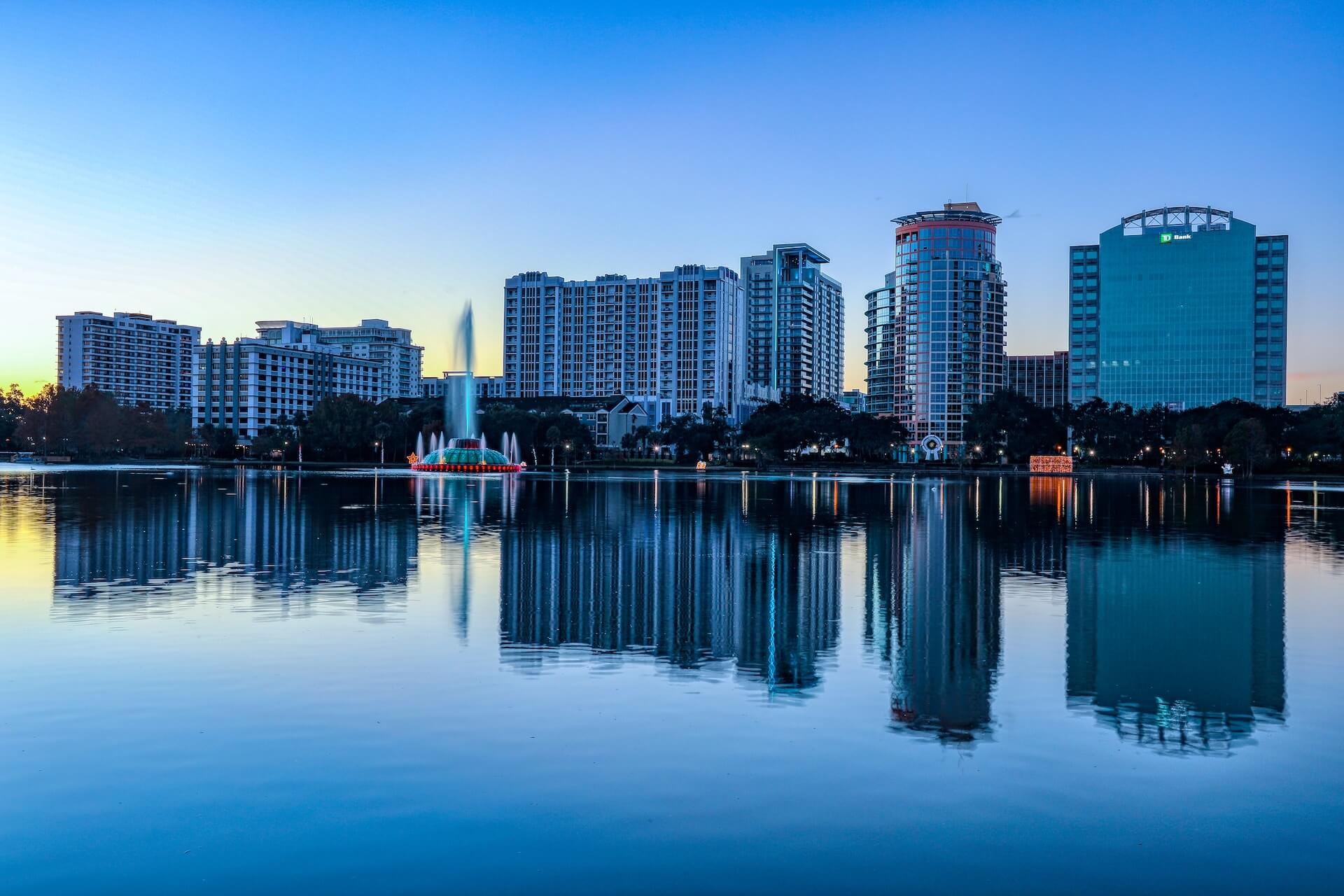
Eola Lake Park in Orlando, Florida

The Top 25

So, per Wallethub, the cities below are the top 25 among the 182 “best foodie cities in America in 2023.”

  1. Orlando, Florida
  2. Portland, Orgeon
  3. Sacramento, California
  4. Miami, Florida
  5. San Francisco, California
  6. Tampa, Florida
  7. San Diego, California
  8. Las Vegas, Nevada
  9. Austin, Texas
  10. Seattle, Washington
  11. Denver, Colorado
  12. Atlanta, Georgia
  13. Los Angeles, California
  14. Chicago, Illinois
  15. Richmond, Virginia
  16. Pittsburgh, Pennsylvania
  17. Washington, DC
  18. St. Louis, Missouri
  19. Houston, Texas
  20. New York, New York
  21. Oakland, California
  22. Phoenix, Arizona
  23. Santa Ana, California
  24. Grand Rapids, Michigan
  25. Cincinnati, Ohio

Interestingly, you’ll find the “usual” foodie scene suspects on this list. However, a mere handful of those cities are ranked in the top ten: Miami, San Francisco, and Las Vegas.

Chicago (14), Los Angeles (13), and New York (20) don’t make the three or five. In fact, they’re out of the top ten entirely here.

If affordability is a major factor here, it raises an eyebrow that Miami is among the top five foodie cities. After all, sources show the cost of living in the city is 20 percent higher than the national average. The cost of living in San Francisco is nearly 80 percent higher.

At any rate, Orlando, per Wallethub’s methodology, is the number-one foodie city in America.

Compelling Comparisons

With the top 25 foodie cities out of the way, let’s check out a few other interesting comparisons.

Cost of Groceries

Lowest-cost cities, in descending order:

  1. Brownsville, Texas
  2. Corpus Christi, Texas
  3. Laredo, Texas
  4. Fayetteville, North Carolina
  5. Austin, Texas

The cities with the highest cost of groceries are Honolulu and Pearl City in Hawaii.

Restaurants per Capita

The cities with the most restaurants per capita, again in descending order:

  1. Miami, Florida
  2. Orlando, Florida
  3. Las Vegas, Nevada
  4. San Francisco, California
  5. Los Angeles, California

It’s important to note each of the cities on this list is, per Wallethub, tied for first place.

The city with the fewest restaurants per capita is Pearl City, Hawaii.

Ratio, FSR to Fast Food Restaurants

On this list, the five cities with the highest ratio of full-service restaurants to their fast-food counterparts (yes, in descending order):

  1. Cape Coral, Florida
  2. Santa Rosa, California
  3. Portland, Maine
  4. Burlington and South Burlington, Vermont

That leaves the city with the lowest ration, which is Jackson, Mississippi.

The Bottom Ten

Now that we know which cities Wallethub identifies the best foodie cities in the US, let’s take a look at the bottom of their list.

  1. Augusta, Georgia
  2. Fontana, California
  3. Jackson, Mississippi
  4. Moreno Valley, California
  5. Mobile, Alabama
  6. Montgomery, Alabama
  7. West Valley City, Utah
  8. Nampa, Idaho
  9. Shreveport, Louisiana
  10. Pearl City, Hawaii

Personally, I find the data regarding restaurants per capita and the FSR to fast-food ratio the most useful.

To review this report in its entirety, including Wallethub’s methodology, please click here.

Image: Mick Haupt on Unsplash

Related Reading

Work with Us

Click the image below to work with us on starting, stabilizing, or scaling your hospitality concept.

Client Intake Form - KRG Hospitality

by David Klemt David Klemt No Comments

Ontario Updates Employment Standards Act

Ontario Updates Employment Standards Act

by David Klemt

Daytime photo of the Toronto, Ontario, Canada, skyline

Yesterday, Ontario, Canada’s government tabled updates to the province’s Employment Standards Act meant largely to protect restaurant and hospitality workers.

These explicit protections are known as Bill 79, Working for Workers Four Act, 2023.

Interestingly and timely, the updates seem to be, at least in part, a direct response to technological developments.

For example, Bill 79 addresses digital payment apps and artificial intelligence. I’ll expand on that below.

These updates certainly appear to have been drawn up to protect restaurant workers specifically, and hospitality professionals overall.

An End to Unpaid Trial Shifts

One of the most significant updates addresses hours and pay.

It likely shouldn’t have to be said but, according to Ontario law, an employee must be paid for all the hours they work. This includes trial shifts.

Specifically, the new legislation expressly prohibits unpaid trial shifts.

Pooling Tips

Employers in Ontario are well within their rights to share in pooled tips. That is, if the employer is performing the same tasks as staff.

However, there’s now an update to this practice within the Employment Standards Act.

If any employer intends to share in a tip pool, they must make this clear and inform staff.

Speaking of Tips…

For the most part, digital payment platforms bring with them transaction fees. This includes fees for restaurant workers to get their tips.

“We’re seeing apps that are taking a cut every time…a worker accesses their tips, and that’s not acceptable,” says Piccini.

So, moving forward, employees who are paid tips via direct deposit will have more control. The updates to the Employment Standards Act now state that employees paid this way can choose where their tips will be deposited.

Deducting Wages

Per multiple studies, one in 20 diners has dined and dashed. Apparently, it has been common practice for some employers to deduct wages in response.

Personally, I think it’s ridiculous for any employers to pass a business loss on to their workers. That’s neither good leadership, ethical, or a healthy work culture. I’m not saying I’m surprised it happens; I’m disgusted that it still happens.

Now, the practice of penalizing employees monetarily for guests dining and dashing is prohibited specifically. Will that stop it from happening? Probably not, although perhaps it will happen much less moving forward.

This also includes language that makes it illegal to deduct pay from employees due to customer “gassing and dashing.” For anyone wondering, gas theft affected Ontario businesses to the tune of $3 million CAD in 2022.

Artificial Intelligence

Some employers, as many job hunters are aware, use artificial intelligence during the hiring process.

Now, these employers will have to disclose their use of AI in job listings. In theory, this update addresses privacy and data collection concerns.

Further, job listings will now have to include salary ranges. Also, employers are now prohibited from requiring work Canadian work experience in their job listings or on their application forms.

To review Bill 79 in its entirety, click here.

Image: mkdrone_ on Unsplash

Bar Nightclub Pub Brewery Operations Standard Operating Procedures SOP

by David Klemt David Klemt No Comments

Restaurant Fees Facing FTC Scrutiny

Restaurant Fees Facing FTC Scrutiny

by David Klemt

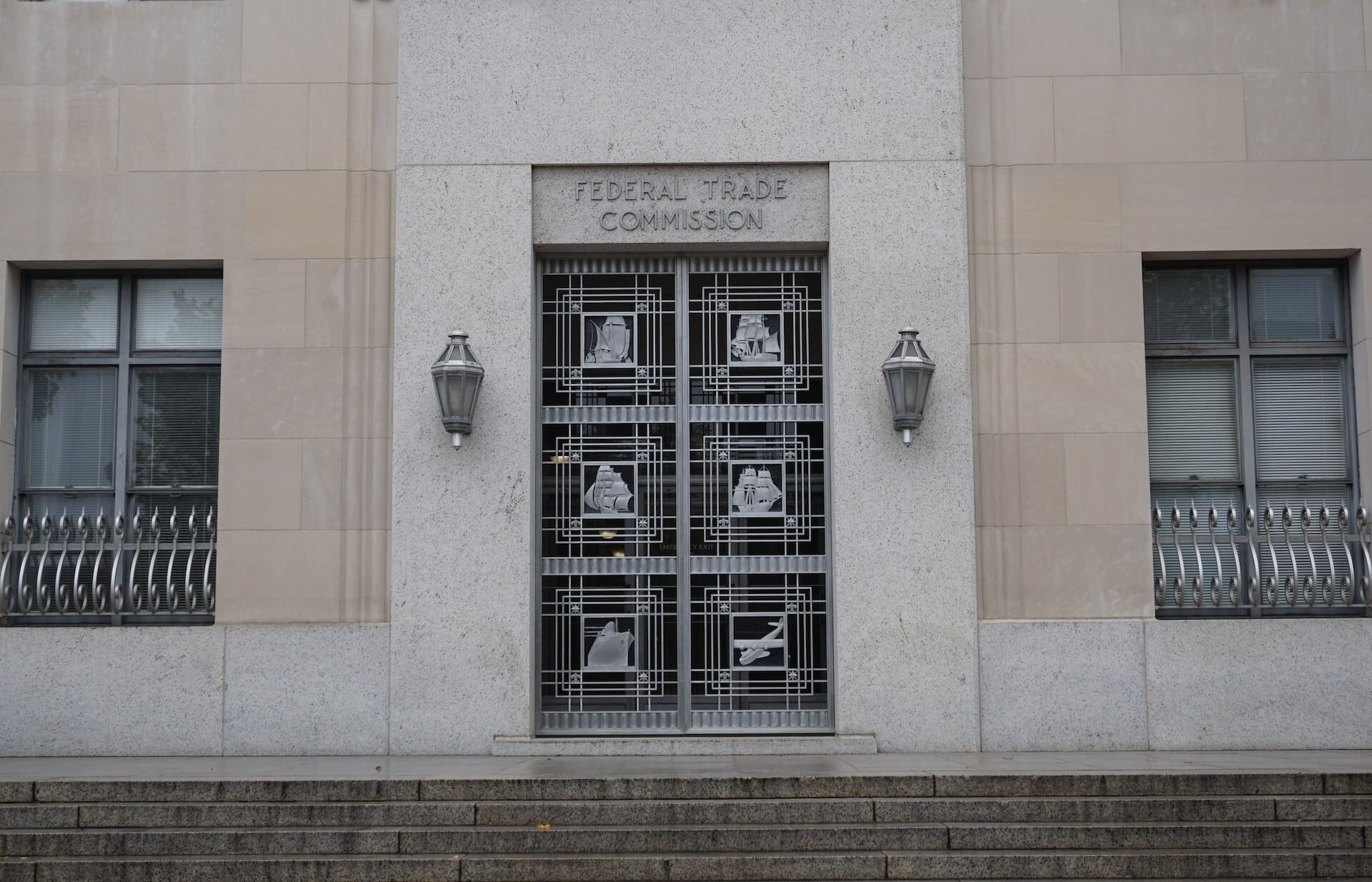
The Federal Trade Commission Building in Washington, DC

The focus on rising costs and hidden or “junk” fees over the past few years is bringing the Federal Trade Commission’s attention to the restaurant space.

Really, it was only a matter of time. Consumers are quite clearly fed up with being hit with unexpected fees. Whether purchasing concert tickets or popping into a QSR for a quick bite, they’re over the perceived nickel and diming.

That’s to say nothing of the other businesses that consumers feel are going too far with fees.

However, much of the public conversation about junk fees revolves around restaurants, and in some instances bars, as well. A common refrain on social media and online communities is, to paraphrase, “Just tell tell us what it costs on the menu!”

Of course, there are consumers who don’t want businesses to raise their prices at all. There’s no reasoning with these people, and they see all increases and fees—even those that aren’t hidden or bogus—as ripoffs.

But there are those who understand the challenges operators are facing. Understandably, these people just want transparency. And they want to have a clear idea of what it will cost to dine and drink somewhere before they plan their visit or are handed their check.

These consumers now have allies in state and federal governments.

FTC Focuses In

Some people may be surprised to learn that the FTC’s focus on junk fees isn’t entirely new. In fact, the agency has been digging into this topic for nearly a year.

Last November, the FTC asked for the public for their opinions on deceptive and unfair practices. Specifically, practices that relate to junk fees. Per the FTC, American consumers are paying tens of billions of dollars in junk fees annually.

According to the agency, they received 12,000 comments.

Now, with the support of the White House, one would assume, the FTC is asking for public input again. This time, the agency is seeking comments about a rule their proposing to address junk fees.

Last week, both the White House and FTC proposed rules that will make it mandatory for businesses to disclose all fees up front. Additionally, the White House wants to curtail “excessive” bank fees for basic services.

Put simply, the FTC’s proposal will ban hidden fees, require transparency regarding all fees, and allow the agency to impose penalties.

And now, after zeroing in on airlines, landlords, utilities, entertainment, and banking, the FTC is looking at hospitality.

Restaurants Under Scrutiny

As they did in November of last year, the FTC is once again asking for the public to comment on fees. This time, however, restaurants have been included by the agency.

To be sure, this focus isn’t exactly new. Washington, DC, for example has addressed junk fees in the restaurant space. As with other jurisdictions that have tackled this topic, restaurants must be conspicuous and make guests aware of all fees before their checks arrive. Additionally, operators must be clear about their intended use for fees.

In Washington, DC, a violation of these rules can lead to a $5,000 fine for a first-time offense. That penalty can rise to $10,000 for additional violations.

California has also passed Senate Bill 478, signed into law by Governor Gavin Newsom. This law, which also targets hidden fees, takes effect on July 1, 2024.

Most likely, the FTC is seeking comment to make adjustments to their proposed junk fee rule in order to include restaurants. From what I’ve seen, restaurant delivery fees in particular are drawing the ire of consumers and attention of state and federal agencies.

“All too often, Americans are plagued with unexpected and unnecessary fees they can’t escape. These junk fees now cost Americans tens of billions of dollars per year—money that corporations are extracting from working families just because they can,” says Lina M. Khan, FTC Chair.

Consumers will have 60 days to submit their comments to the FTC.

Takeaway

Proactive operators who haven’t already done so should make their in-person dining and delivery fees obvious.

Best practices for fee transparency include highlighting them on menus; announcing them via table tents or talkers; including fees on websites; and including a notice or disclaimer on reservation pages.

However, operators should avoid viewing being transparent about fees through a lens of compliance. Rather, being clear and upfront with guests is just good business. In fact, it’s in keeping with the spirit of hospitality and service.

If the final experience a guest has with a restaurant is being unpleasantly surprised by their check due to junk fees, how should be expected to respond? Their perception of the venue or brand will plummet, and they won’t return. How long can a restaurant sustain that guest reaction before the damage is irreparable and an operator has to close their doors?

Operators are being asked to thread a needle every day. Costs are rising and there are only so many solutions available to most operators that can keep their doors open, keep guests and staff happy, and pull the business toward long-term success.

To be clear, fees are generally fine—if consumers feel they know what to expect ahead of their visit. Nobody wants to be surprised, and that shouldn’t be difficult to understand.

So, operators need to be transparent about fees. They need to consider dynamic pricing for menus. That requires an absolute understanding of costs, guest tolerances for pricing, and the market.

The payoff, however, is happier guests who are far more likely to return for in-person dining and to place delivery or takeout orders. Savvy operators will put the work in now to get ahead of the junk fee fallout.

Image: Ian Hutchinson on Unsplash

KRG Hospitality Start-Up Restaurant Bar Hotel Consulting Consultant Solutions Plans Services

by David Klemt David Klemt No Comments

5 Books to Read this Month: April 2023

5 Books to Read this Month: April 2023

by David Klemt

Flipping through an open book

Our engaging and informative April book selections will help you take your bar, restaurant or hotel to higher levels, and develop your leadership skills.

To review the book recommendations from March 2023, click here.

Let’s jump in!

Unreasonable Hospitality: The Remarkable Power of Giving People More Than They Expect

When Will Guidara took over the famous Eleven Madison Park, the restaurant had just two stars and he was only in his mid-twenties. Before his 40th birthday, the changes and strategies he implemented helped the restaurant earn the title of the Best Restaurant in the World.

One of cornerstone’s of Guidara’s was “bespoke hospitality.” He and his team truly went above and beyond. Examples of the Eleven Madison Park team’s approach to hospitality illustrate just how over the top they went to deliver memorable guest experiences. If you’re looking for inspiration to step up your hospitality, pick up or download Unreasonable Hospitality today.

Blue Ocean Strategy, Expanded Edition: How to Create Uncontested Market Space and Make the Competition Irrelevant

I’m going to address the viability of the blue ocean strategy before getting into the book. Creating a hospitality concept without competition isn’t really feasible. Go too far into “blue waters” and there won’t be any “fish” (traffic). And where, exactly, would one put their restaurant, bar, or hotel where there’s no competition but still enough traffic to generate a profit?

Those issues addressed, this book is still valuable to owners and operators. One need not eliminate competition completely to take lessons from the blue ocean strategy. Businesses must still differentiate themselves from competitors, and they must look for unique opportunities to help them stand out. Blue Ocean Strategy may not work perfectly but much is still very helpful.

Contagious Culture: Show Up, Set the Tone, and Intentionally Create an Organization that Thrives

Anese Cavanaugh’s Contagious Culture addresses a topic that we often discuss with clients, in our articles, and during speaking engagements: workplace culture. From large corporations and regional or national restaurant chains, to independent restaurants, bars, and hotels, culture will make or break an organization. Cavanaugh’s techniques will improve your workplace culture and energize your team, an undeniable key to success.

From Amazon: “This is Contagious Culture, a game-changing guide to transforming corporate culture from within, developed by the award-winning creator of The IEP Method to strengthen your ‘Intentional Energetic Presence.’ This is more than a leadership book―this is your future calling.”

Bar Hacks: Developing The Fundamentals for an Epic Bar

Doug Radkey is the founder, president, and lead strategist of KRG Hospitality. He’s also a hospitality industry speaker, educator, and author. This is his first book, Bar Hacks, which is also the name of the podcast we produce through KRG Hospitality.

Now, while the title states this book is a guide for developing and running an epic bar, the strategies carry over to restaurants, hotels, and other hospitality concepts. It’s difficult—if not impossible—to elevate one’s skills and service without first mastering the fundamentals. Whether you’re new to the industry or are a veteran who feels the need to reset and revisit the fundamentals, Bar Hacks is your guide.

Hacking the New Normal: Hitting the Reset Button on the Hospitality Industry

There’s a first book, which means there must be at least one other one, right? Right! Hacking the New Normal is Doug’s second book.

This book is a direct response to the pandemic, what it did to the industry, and the issues many operators would prefer to ignore. However, the devastation is so great that ignoring the changes that should have been made decades ago isn’t a viable option. With a spotlight on hybrid business models, real estate, profit margins, technology, guest experiences, culture, diversity, and mindset, Hacking the New Normal will position you for success in our new hospitality landscape.

Image: Mikołaj on Unsplash

KRG Hospitality. Consultant. Consulting. Culinary. Bar. Hotel. Mixology. Technology.

by krghospitality krghospitality No Comments

KRG Hospitality now Serving Midwest Region

KRG Hospitality adds Midwest Region

Marina City Towers in Chicago, Illinois

KRG HOSPITALITY NOW SERVING MIDWEST REGION

Toronto-based hospitality industry consulting firm with offices throughout Canada and the USA now serving the Midwest through Chicago office.

CHICAGO, IL (March 17, 2023)—Today, KRG Hospitality announces the addition of the Midwest region of the US to their North American service area. The team will operate out of an office in Chicago, Illinois. However, the agency will serve Midwest markets outside of Chicago as well.

KRG is excited to announce their presence in the region and their ability to serve clients effectively. The agency will offer the full suite of their proven hospitality solutions, including: hourly consulting and coaching; complete feasibility studies, fully customized concept plans; in-depth, focused business plans; project support and management; food and/or drink menu development and consulting; and personalized F&B education.

“I was born in Chicago and first entered the hospitality industry in the Northwest Suburbs. I got my first taste of nightlife in Chicago’s incredible bar and nightclub scene,” says David Klemt, partner and director of business development of KRG Hospitality. “Those experiences shaped my entire hospitality career trajectory. It will be an honor to serve the great people of the Midwest and bring their hospitality visions to life.”

“2023 is turning into quite the growth year for KRG, with the addition of team members Kim Richardson and Jared Boller, and now an exciting new market,” says Doug Radkey, KRG Hospitality founder, president, and project manager. “We see great opportunity in the Midwest, not only in Chicago, but many of the surrounding regions. The food, beverage, and hotel scene is incredibly strong, and we’re open to the challenge of not only helping launch new hospitality brands but helping transform existing brands scale and be successful in the new era ahead.”

KRG is ready to work with clients of all experience levels in the Midwest. The consulting agency’s suite of solutions serve new operators looking to open their first concept and veterans seeking a rebrand or expansion. From independent pizzerias and QSRs to multi-unit regional chains and boutique hotels, and everything in between, the KRG team is eager to take client visions and transform them into brick-and-mortar realities.

To schedule an introductory call to learn how the KRG Hospitality team serves clients, please follow this link.

About KRG Hospitality

KRG Hospitality is a storied and respected agency with proven success over the past decade, delivering exceptional and award-winning concepts throughout a variety of markets found within Canada, the United States, and abroad since 2009. Specializing in startups, KRG is known for originality and innovation, rejecting cookie-cutter approaches to client projects. The agency provides clients with a clear framework tailored to their specific projects, helping to realize their vision for a scalable, sustainable, profitable, memorable, and consistent business. Learn more at KRGHospitality.com. Connect with KRG Hospitality and the Bar Hacks podcast on social: KRG Twitter, Bar Hacks Twitter, KRG Media Twitter, KRG LinkedIn.

Image: Tobias Brunner from Pixabay

KRG Hospitality Start-Up Restaurant Bar Hotel Consulting Consultant Solutions Plans Services

by David Klemt David Klemt No Comments

Canada’s Single-use Plastics Ban

How Canada’s Single-use Plastics Ban Affects Operators

by David Klemt

Single-use plastic straws and utensils

With a few exceptions, Canada’s ban on the manufacture, importation, and sale of single-use plastics is now officially in effect.

However, that doesn’t mean restaurant and bar operators need to worry about current inventories just yet. While the Single-use Plastics Prohibition Regulations are in effect, operators have a year to deplete their stocks.

SUPPR is a crucial element of Canada’s overall plan to combat pollution and reach a goal of zero plastic waste by 2030. The single-use plastics ban was announced in June of this year.

“We promised Canadians we would deliver a ban on single-use plastics. Today, that’s exactly what we’ve done,” said Minister of Environment and Climate Change Steven Guilbeault the day SUPPR was announced. “By the end of the year, you won’t be able to manufacture or import these harmful plastics. After that, businesses will begin offering the sustainable solutions Canadians want, whether that’s paper straws or reusable bags. With these new regulations, we’re taking a historic step forward in reducing plastic pollution, and keeping our communities and the places we love clean.

Now, six months later, it’s the law of the land.

What’s Banned?

Essentially, Canadian operators must evaluate everything they use for delivery and takeout or pickup. If any items are single-use plastic, they must be gone by December 2023.

Per SUPPR, the manufacture, importation, and sale of the following is prohibited:

  • Checkout bags designed to carry purchased goods from a business and typically given to a customer at the retail point of sale.
  • Cutlery includes:
    • knives
    • forks
    • spoons
    • sporks
    • chopsticks
  • Foodservice ware designed for serving or transporting food or beverage that is ready to be consumed, and that:
    • contains
      • expanded polystyrene foam
      • extruded polystyrene foam
      • polyvinyl chloride
      • carbon black
      • an oxo-degradable plastic
    • are limited to the following items
      • clamshell containers
      • lidded containers
      • boxes
      • cups
      • plates
      • bowls
  • Ring carriers are flexible and designed to surround beverage containers in order to carry them together.
  • Stir sticks designed to stir or mix beverages, or to prevent a beverage from spilling from the lid of its container.
  • Straws include:
    • straight drinking straws, and
    • flexible straws, which have a corrugated section that allows the straw to bend, packaged with beverage containers (juice boxes and pouches)

For accuracy, the above comes from the Government of Canada website directly, unedited.

What does this mean for Operators?

Again, operators in Canada don’t need to toss their current stock of the above items.

However, Restaurants Canada does recommend that operators contact suppliers and customers if they import, export, or sell prohibited items currently.

The single most important thing for operators to do now is research single-use plastic alternatives. Items need testing as changes will affect F&B items and the guest experience.

Of course, it’s possible an operator’s current supplier already offers alternatives to single-use plastics. That could prove convenient but costs, supply chain reliability, and impact on menu items need careful consideration.

Sustainability and responsible practices are no longer just conversation topics within the industry. As of this week, in Canada, they’re the only way forward.

Image: Volodymyr Hryshchenko on Unsplash

by David Klemt David Klemt No Comments

Is Restaurant Revitalization Back?

Restaurant Revitalization Back on the Table?

by David Klemt

US Capitol Building and cloudy sky

After watching the Restaurant Revitalization Fund die a slow, painful death earlier this year, three senators are trying to help the industry again.

Three Democratic senators seem to think that the RRF battle isn’t over. Senators Ben Cardin (D-MD), Sherrod Brown (D-OH), and Patty Murray (D-WA) are trying once again to help RRF applicants. As a refresher, Sen. Cardin is among the original RRF legislation authors.

Last Thursday, the senators introduced the Restaurant Revitalization Tax Credit Act. Now, before we get into the details, it appears this bill is a stop-gap of sorts. A statement from Sen. Murray suggests as much.

Per a statement from Sen. Muray, the “Restaurant Revitalization Fund left too many behind. I believe we need to replenish the Fund and will keep pressing to do so. Until that happens, bills like the Restaurant Revitalization Tax Credit Act will help keep restaurants afloat.”

It’s safe to say a significant number of operators prefer replenishment of the RRF to a tax credit. However, this could represent a step in the right direction.

The Restaurant Revitalization Tax Credit Act

For those with an interest in dissecting the bill, the text in its entirety is here.

In summary, here’s what Sens. Cardin, Brown, and Murray want to see become law: a payroll offset of $25,000. Of course, it’s not that simple—there are requirements and nuances.

First, the only eligible restaurants are RRF applicants who didn’t receive a grant. Second, the restaurant must prove:

  • operating losses of at least 30 percent in 2020 and 2021 in comparison to 2019; or
  • losses of at least 50 percent in either 2020 or 2021 in comparison to 2019.

Additionally, applicants must have been operating at least as far back as March 14, 2020. There’s also a payroll tax requirement: the applicant restaurant must have paid the taxes in at least two quarters in 2021. But wait—it doesn’t end there.

Restaurants with ten or fewer employees could offset a maximum of $25,000 in payroll taxes for the entirety of 2023. However, for every employee over ten, the refund cap drops by $2,500.

So, this bill appears to target very small operations for assistance. Assistance, we can only hope, that’s meant to help until the Senate and House replenish the RRF.

After all, Sen. Murray did say this bill—”bills like,” to be precise—is meant to “help keep restaurants afloat.”

It’s difficult to view this effort through anything but a skeptical lens given what happened earlier this year. And hope, as the saying goes, isn’t a strategy. But I suppose this bill represents a glimmer of hope that the estimated 175,000-plus RRF applicants who never received a grant may still get the help they deserve.

Image: J. Amill Santiago on Unsplash

by David Klemt David Klemt No Comments

The NRA’s 2023 Culinary Trend Forecast

The National Restaurant Association’s 2023 Culinary Trend Forecast

by David Klemt

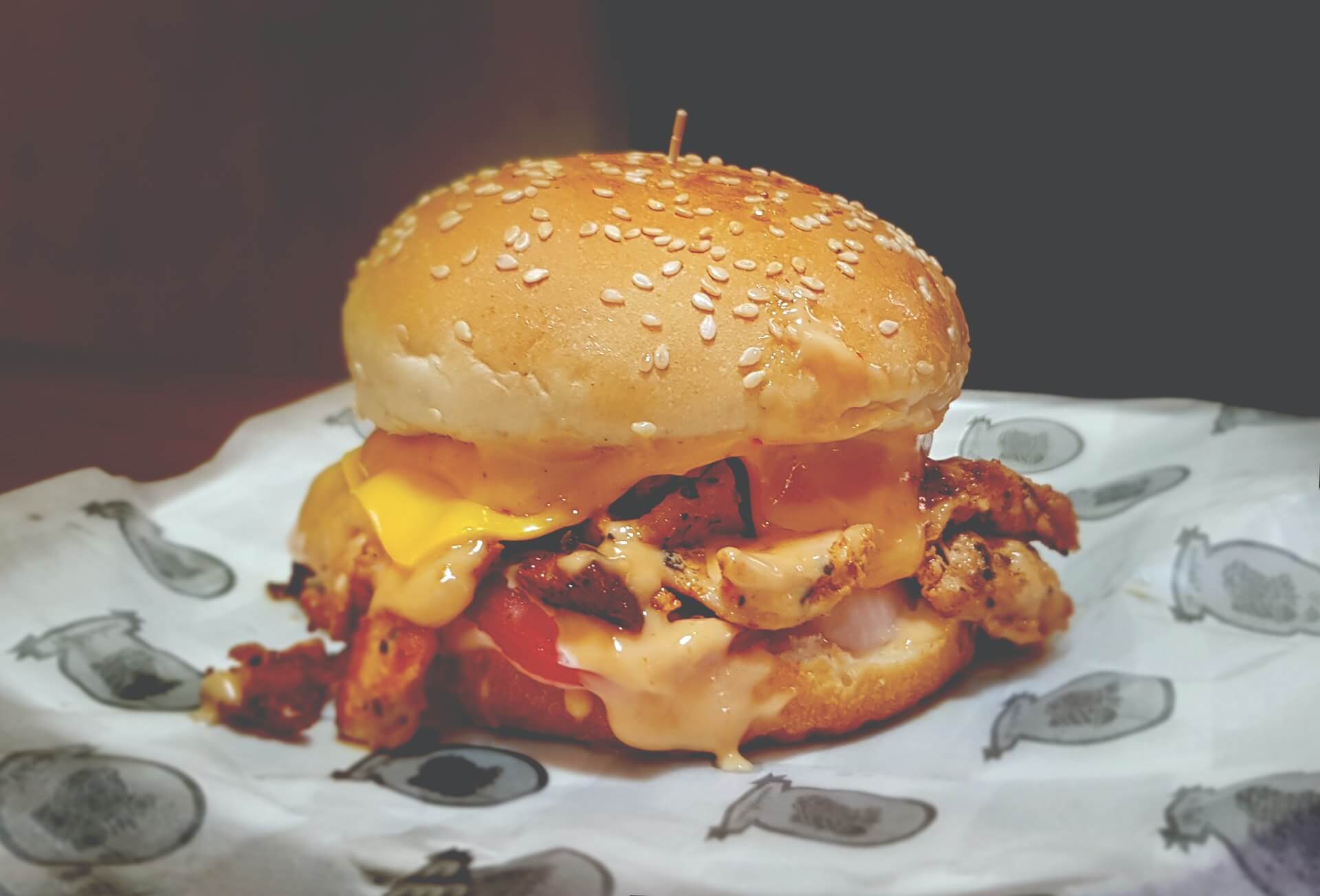
Cheesy chicken sandwich on paper wrapper

Ahead of the beginning of a new year, the National Restaurant Association unveils their culinary trend predictions for 2023.

The report is the result of a collaboration between the NRA, Technomic, and the American Culinary Federation (ACF).

For those unfamiliar, Technomic is at the forefront of foodservice trend tracking, industry research, and analysis. Likewise, the ACF is a premier industry organization. Tracing its founding to 1929, the ACF promotes “the professional image of American chefs worldwide through education of culinarians at all levels.”

To predict what will be “hot” next year, the NRA, Technomic, and ACF sent the 17th annual What’s Hot survey to thought leaders and chefs. In direct partnership with the Technomic Menu Research & Insights Division, the NRA predicted the top menu trends from 110 items spanning 11 categories.

Now, this isn’t a full dive into the report in its entirety. Rather, we strongly encourage our readers to download a copy of What’s Hot 2023 Culinary Forecast for themselves and their teams.

What readers will find below are the top 10 trends for 2023. Additionally, we’ll share the top three macro trends for next year, as forecast by the NRA and their partners.

More than Food

Somewhat surprisingly, the NRA’s top-ten list of culinary trends isn’t just a list of food items. Instead, this forecast paints a picture of where restaurants are heading in 2023.

While there are some specific cuisine predictions, the NRA’s top culinary predictions show us, in part, how consumers want to experience the restaurants they visit.

  1. Southeast Asian cuisines (examples: Vietnamese, Singaporean)
  2. Zero waste/Sustainability/Upcycled foods
  3. Globally inspired salads
  4. Sriracha variations
  5. Menu streamlining
  6. Flatbread sandwiches/Healthier wraps
  7. Comfort fare
  8. Charcuterie boards
  9. Fried chicken sandwiches and Chicken sandwiches “3.0” (example: fusion of flavors)
  10. Experiences/Local culture and community

As we can see, operators and consumers expect tighter, more concept-specific menus. Also, comfort foods; shareable (and “Instagrammable”) items like charcuterie boards; and items that show local and global influences may be hot in 2023.

One can consider, then, streamlining their menu to include their top sellers along with local and/or global flavors authentic to their brand.

Below, readers will see that three of the trends above make up the NRA’s top-three 2023 macro trends:

  1. Menu streamlining
  2. Comfort fare
  3. Experiences/Local culture and community

Operator and Consumer Behavioral Shifts

Looking at the macro trends, it’s reasonable to believe the past few years will influence 2023 heavily.

Operators are dealing with inflation, higher costs for everything, labor shortages. Further, according to Datassential, more than a third of American operators are experiencing low traffic and sales levels.

We can expect these issues to follow us into 2023, at least for Q1 and Q2. Therefore, the NRA’s macro trends forecast makes sense. Streamlining menus often leads to streamlining the back and front of house. In turn, doing so can lower costs and boost staff retention.

On the consumer side, it appears comfort foods, chicken sandwiches, and experiences are driving visits and online orders. These are, as we all know, behavioral shifts we can trace back to the start of the pandemic.

We always suggest proceeding with caution, logic, and data when considering embracing trends. Missing out on trends can be just as costly as latching onto a trend too late.

That said, the macro trends certainly seem reasonable. Only time will tell, but the NRA’s 2023 forecast certainly contains several items operators and their teams should give serious consideration.

Image: Arabi Ishaque on Unsplash

by David Klemt David Klemt No Comments

Merchants Support Credit Card Act

100s of Merchants Support Credit Card Competition Act

by David Klemt

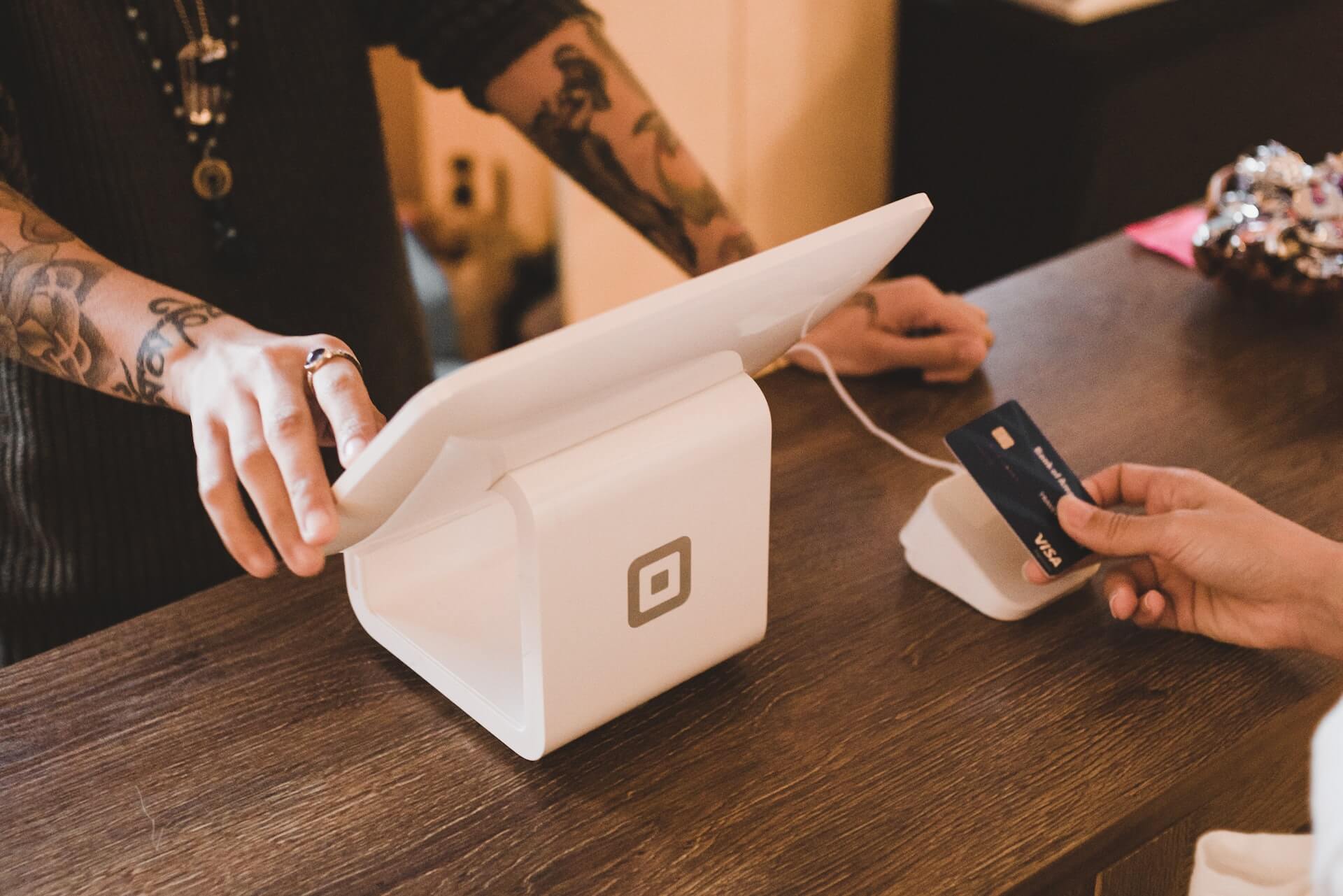
Customer paying via Square terminal

Perhaps at least somewhat unsurprisingly, support for the Credit Card Competition Act is growing rapidly among merchants.

In fact, 1,802 merchants are making their position on the bill clear. Those hundreds of merchants drafted, signed, and sent a letter to the House and Senate.

The crux of that letter? To tell our lawmakers to support and pass the Credit Card Competition Act.

To view the letter, sent by the Merchants Payments Coalition (MPC), please click here. For the bill and its status, follow this link.

The Credit Card Competition Act: A Quick Summary

According to the MPC, credit and debit card transactions just in the US reached $3.49 trillion in 2021. Along with those transactions came $77.48 billion in merchant fees—just for Visa and MasterCard.

Why call those out those two processors in particular? Well, it’s because they’re behind about 576 million credit cards. Oh, and they also control 87 percent of the processing market.

In the span of just one decade, Visa and MasterCard swipe fees have risen 137 percent. So, it’s not surprising that merchants are supportive of the Credit Card Competition Act.

There are, indeed, restaurant and hospitality groups attached to the MPC’s letter to Congress. Taking a quick glance, Denny’s franchisees, Dutchman Hospitality Group, and Mandalay Hospitality Group are among the signees.

Obviously, this makes sense—swipe fees are among the highest costs operators face every day.

Where’s this Bill Currently?

It shouldn’t be too shocking to find that this has yet to make much progress. The bill’s sponsors, Sens. Richard Durbin (D-IL) and Richard Marshall (R-KS), introduced it in the senate at the end of July.

Three months later, October 28, an attempt was made to include the bill in the National Defense Authorization Act (NDAA). For those who are unfamiliar, the NDAA is known as a “must-pass” bill. After all, it specifies the US Department of Defense’s (DoD) budget and expenditures each year.

Along with a reported 900 other “riders,” Sens. Durbin and Marshall tried to get their bill passed within the NDAA. Unfortunately for the senators and supporters of the bill, the NDAA vote was pushed until the middle of November…which we’re now past.

Of course, the US did just undergo a mid-term election cycle. So, I suppose it’s reasonable to be a bit more patient with the Senate and the progress of this bill.

Those who work in or support our industry can make their opinion of this bill known. Just follow this link to the National Restaurant Association Credit Card Competition Act portal.

Image: Clay Banks on Unsplash

by David Klemt David Klemt No Comments

These are the Happiest Provinces in Canada

These are the Happiest Provinces in Canada

by David Klemt

Newfoundland and Labrador during daytime

If you’re wondering which province in Canada is the happiest, Statistics Canada has the answer—and the happiest may surprise you.

Of course, those who live and work in the happiest province won’t find it shocking. After all, they’re largely happy to be there.

However, if you expect the happiest province to be the home of Toronto, Vancouver, Montreal or Canada… Well, you’re in for a surprise.

Earlier this week we took a look at the happiest cities and states in America. Congratulations Fremont, California, and Hawaii, respectively. To learn where 181 other cities and 49 states rank, please click here.

The Happiness Survey

Or more accurately, the “life satisfaction” survey. For this survey, that’s what Statistics Canada reveals: life satisfaction.

Interestingly, the survey is very simple. Apparently, Statistics Canada simply asked participants to rate the satisfaction of living in their province, zero through ten. For this survey, zero is least satisfied, ten is most.

Ages 15 through 75 (and older) were able to participate. The survey was also broken down to gauge the satisfaction of men and women.

Before we jump into the breakdown of province satisfaction or happiness, some good news. Reviewing the Statistics Canada data, most participants across all age groups are happy. In fact, age groups 65 to 74 and 75-plus appear to be happiest.

On the other side, ages 15 to 54 had the most people who rated their life satisfaction between zero and five. Even so, just over 20 percent of survey respondents rated their satisfaction a five or less.

So, on the whole, Canadians seem satisfied or happy with their lives, regardless of the province in which they live. Personally, I find that to be great news.

The Happiest Province

Okay, let’s dive into the reason you’re here: to learn which province is the happiest.

  1. Newfoundland and Labrador
  2. Prince Edward Island
  3. Quebec
  4. New Brunswick
  5. Manitoba
  6. Alberta
  7. Saskatchewa
  8. Nova Scotia
  9. Ontario
  10. British Columbia

The above rankings are determined by the percentage of survey respondents who rated their life satisfaction eight, nine or ten. So, if you’re in Newfoundland and Labrador, Prince Edward Island or Quebec, wow—you’re apparently one incredibly happy person.

Conversely, below you’ll find the rankings as determined by the largest percentage of respondents who rated their satisfaction a five or lower. As you’ll find, the list below isn’t simply the inverse of the one above.

  1. Ontario
  2. British Columbia
  3. New Brunswick
  4. Alberta
  5. Nova Scotia
  6. Prince Edward Island
  7. Manitoba
  8. Saskatchewa
  9. Quebec
  10. Newfoundland and Labrador

As far as Canada overall, the results of this particular survey are positive. Just 19.4 percent of survey respondents rated their satisfaction or happiness zero through five. And only 28.9 percent provided a rating of six or seven.

More than half of Canadians, 51.7 percent, rate their lives an eight, nine or ten. That’s some great and welcome news.

Image: Erik Mclean on Unsplash

by krghospitality krghospitality No Comments

2023: Year of the POS Systems?

2023: Year of the POS Systems?

by David Klemt

SpotOn POS system on laptop

Image from SpotOn press release

According to SpotOn, the industry could be in for a tech revolution next year as independent operators pursue more powerful POS solutions.

The results of a survey conducted by the cloud-based POS platform are rather revealing. In an effort to better understand where the industry is heading, SpotOn surveyed 300 independent and small-chain restaurant operators.

Both full-service and limited-service (LSR) concept operators participated in this SpotOn survey. Intended to identify the challenges operators face currently, the results reveal much more.

Below, the picture these survey results paint for the industry.

Legacy vs. Innovation

This isn’t the first time I’ve stated the following: Our industry hasn’t been the fastest to implement new technology.

However, we did appear to turn that around in 2021. Now, heading into 2023, our industry may be pursuing cutting-edge tech solutions even more fervently. Today’s guest expects more tech, and your team likely wants access to more modern tech that makes their jobs easier.

Per SpotOn’s survey, 81 percent of independent operators still use so-called “legacy” POS systems. These are “traditional” systems from companies that have been around for quite some time.

It’s not difficult to understand why the vast majority of independent operators continue using legacy systems:

  • Investing in a new platform requires expenditures of money and time.
  • Introducing a new POS platform requires staff training.
  • Staff need to grow adept at using the new system.
  • It can be daunting to research the available platforms and implementing change.

So, independent and small-chain operators have a choice to make: Stick with the familiar or invest in the future. Change can not only be intimidating, it can be expensive.

However, it seems that most operators are ready to throw comfort to the wayside and embrace innovation.

State-of-the-art Benefits

Should the SpotOn survey prove to be accurate snapshot of the industry, 75 percent of operators will implement new tech next year. According to SpotOn, this is largely in response to growing labor challenges, such as scheduling and retention.

The restaurant, bar, nightclub, and food truck platform found that operators are spending as much as 20 hours per week on administrative tasks. State-of-the-art POS systems can slash those hours by:

  • streamlining operations;
  • making scheduling simpler;
  • calculating tips and payout for payroll; and
  • managing overtime, an increasingly common task.

More modern POS platforms can automate labor management tasks, saving operators time, money, and frustration. Automation and streamlining give operators something invaluable: time.

In particular, innovative and helpful tech solutions provide an operator with time to focus on growing their business. When weighing whether to keep a familiar but less feature-rich POS system or invest in a modern platform that seamlessly integrates many solutions, ask yourself a couple important questions:

  • What’s my time worth?
  • What am I focusing on every day?
  • Am I growing my business or stagnating?
  • Is my current POS system helping or hindering my team?
  • Does my POS system streamline and automate any tasks?

Image: SpotOn

by David Klemt David Klemt No Comments

Tipping is on the Ballot in Washington, DC

Tipping is on the Ballot in Washington, DC

by David Klemt

Folded dollar bills

Out of concern that people who work for tips aren’t making minimum wage in Washington, DC, Initiative 82 is on the ballot.

This is interesting for several reasons. One of which is the fact this isn’t the first time this issue has been voted on in DC.

Back in 2018, Initiative 77 was presented to Washington, DC, voters. The initiative took the $3.33 per hour minimum wage for tipped workers up to $15 per hour, the full minimum wage.

In June 2018, the measure was approved by voters. However, the Washington, DC, Council held a vote and repealed Initiative 77 after if had been passed.

Phil Mendelson (D-Chairman) of the Washington, DC, Council, introduced the bill that ultimately repealed Initiative 77 in October 2018.

“The Council amends laws all the time. And if a law is a bad law it should be amended or repealed,” said Mendelson at the time. “It doesn’t matter if the law was adopted by Congress, the voters, or ourselves.”

Further, Mendelson claimed that tipped workers themselves—bartenders, servers, valets, manicurists, and more—didn’t hold a favorable view of the passing of the initiative.

“77 may be well-intentioned, but the very people the Initiative is intended to help are overwhelmingly opposed. If we want to help workers – protect them from harassment and exploitation – there are better ways than Initiative 77,” Mendelson said.

One council member, Mary Cheh (D-Ward 3), opposed repealing Initiative 77 and addressed claims that it was harmful to tipped workers.

“Although I take these claims seriously, in my view they are speculative and not borne out by the experience of the other jurisdictions that have one wage,” said Cheh.

Support

Whenever increasing tipped worker wages to full minimum wage comes up, we tend to encounter the same arguments for and against.

Currently, the tipped hourly wage in DC is $5.35 per hour. In comparison, full minimum wage in DC is $16.10 per hour.

Now, as the law reads, if a tipped worker’s wages don’t equate to full minimum wage, their employer is expected to bridge the gap.

The key argument for the passing of Initiative 82 is simple: tipped workers should make at least minimum wage. These workers deserve the stability of knowing how much they’ll make each shift and earning a living wage (consistently, hopefully).

Those who support Initiative 82 also say that since the measure doesn’t outlaw tipping, tipped workers would earn more than minimum wage.

Opposition

Opponents, however, argue that the initiative will harm tipped workers. Some say that operators will cut shifts and increase prices in response to Initiative 82 passing. This will, of course, lead to servers, bartenders, and other tipped workers making much less than they did in the past.

Traffic may also decrease because it’s assumed that operators will increase costs significantly.

There’s also the argument that’s often (if not always) made when this topic comes up: Tipped workers themselves don’t support these initiatives.

“I have not met a single server who wants this,” Washington, DC, bar owner David Perruzza told the Washington Blade. Perruzza added, “The people who support this don’t know anything about the service industry.”

A Few Questions…

I’ve made no secret of my cynicism when it comes to politicians and their relationships with our industry.

My main argument was made for me: the Restaurant Revitalization Fund saga. We watched for months as Congress failed to replenish the RRF, leaving more than 177,000 operators and their staffs to fend for themselves. This, after months of dangling replenishment in front of all of us. Ultimately, they abandoned us.

Tellingly, Senator Rand Paul (R-KY) referred to RRF replenishment as a “bailout.” And apparently he doesn’t think much of the challenges operators have faced since the start of the pandemic, asking, “Where’s the emergency?” The closures of tens of thousands of restaurants and bars, often the cornerstones of communities across the country, doesn’t rank as an emergency, apparently.

So, Initiative 77, Initiative 82, and similar measures beg a few questions:

  • Do politicians actually ask their tipped-wage constituents their thoughts on this topic before introducing these ballot measures?
  • When these initiatives are being considered, do people just ask a few operator friends their opinions?
  • Do local, state, and federal politicians really have a grasp of our industry?

One thing is certain: Industry eyes across the country are on Initiative 82. If it passes, we can likely expect similar measures to be introduced in cities and states. Should it fail, it may be a while before another jurisdiction sees this type of initiative again.

Image: Annie Spratt on Unsplash

by David Klemt David Klemt No Comments

F&B in Canada: Top Menu Items

F&B in Canada: Top Menu Items

by David Klemt

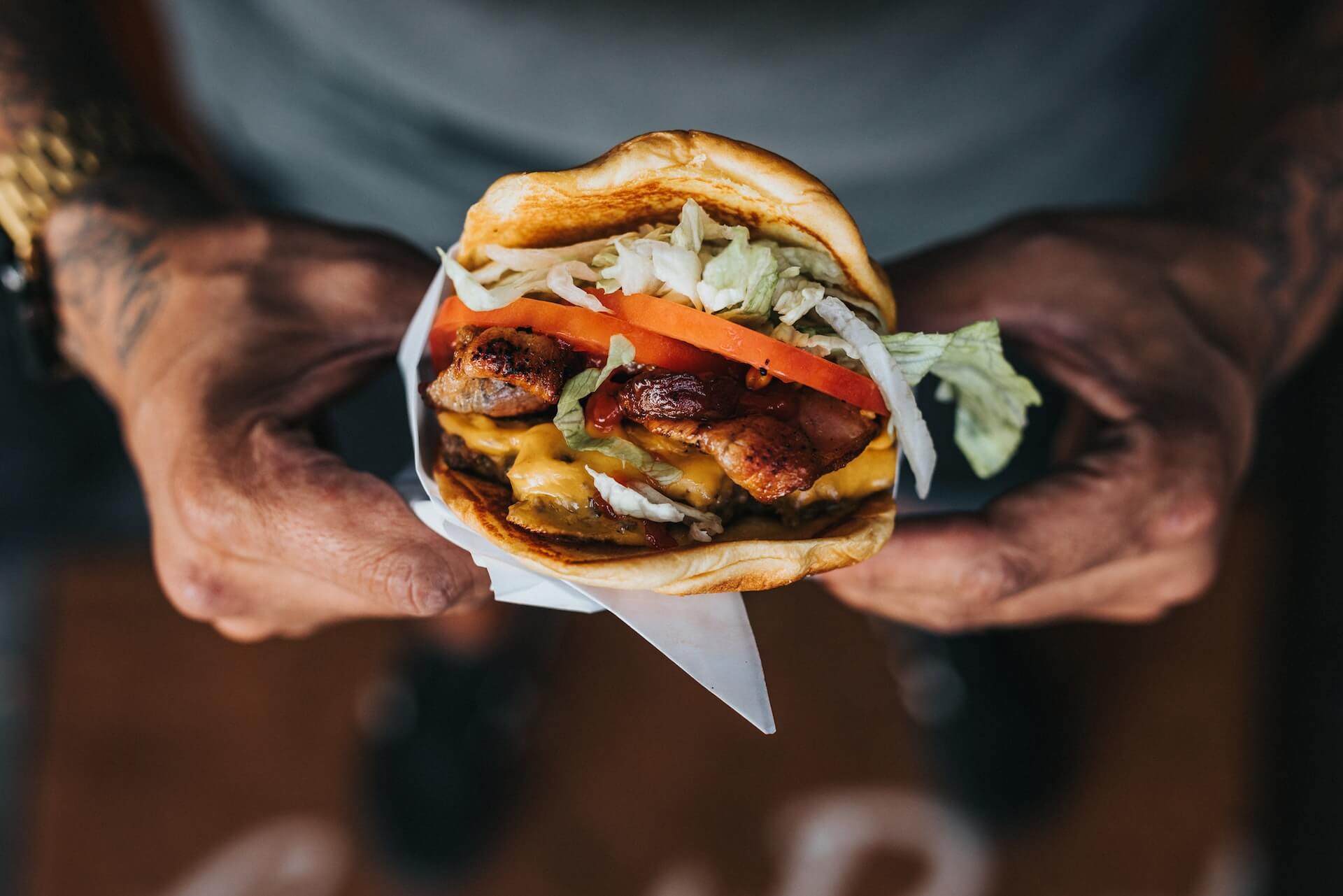
Closeup of hands holding burger

Those wondering what food and beverage menu items are performing best among consumers throughout Canada need wonder no more.

And why is that? Well, Restaurants Canada has the answers, revealing the top ten food and top ten beverage items.

Further, the organization compares each item’s performance. In this instance, Restaurants Canada analyses the percentage of orders that contained each food or beverage item from January to April 2022 in comparison to 2019.

These insights (and many more) are available in Restaurants Canada’s 2022 Foodservice Facts report. In fact, you can find our reviews of several of the restaurant advocacy group’s report topics via the links below:

For your own copy of this year’s Foodservice Facts report, click here.

Top 10 Canadian Drink Menu Trends

As you’ll see below, coffee is outperforming nearly every other beverage category. Specifically, Hot coffee is at the top, while Iced or frozen coffee is ranked third.

Unsurprisingly, Carbonated soft drinks / Pop / Soda split the two coffee categories. According to Restaurants Canada, the Carbonated soft drink category can credit its performance in large part to QSRs.

  1. Milk: 1.8% (2019) to 1.8% (2022)
  2. Iced tea: 2.9% (2019) to 1.6% (2022)
  3. Milkshakes / Smoothies: 2.1% (2019) to 2.0% (2022)
  4. Fruit juice: 3.8% (2019) to 3.0% (2022)
  5. Hot tea: 5.5% (2019) to 4.5% (2022)
  6. Alcohol beverages: 5.1% (2019) to 5.7% (2022)
  7. Water: 6.6% (2019) to 5.0% (2022)
  8. Iced or frozen coffee: 5.3% (2019) to 7.5% (2022)
  9. Carbonated soft drinks / Pop / Soda: 19.7% (2019) to 20.2% (2022)
  10. Hot coffee: 40.9% (2019) to 41.9% (2022)

Compellingly, Alcohol beverage performance in restaurants fluctuated by age group between 2021 and 2022. Alcohol order shares in restaurants, per Restaurants Canada:

  • Legal drinking Age (LDA) to 34: 46% (2021) to 43% (2022)
  • 35 to 49: 17% (2021) to 21% (2022)
  • 50-plus: 37% (2021) to 36% (2022)

Alcohol order shares in bars, according to Restaurants Canada:

  • LDA to 34: 35% (2021) to 35% (2022)
  • 35 to 49: 17% (2021) to 19% (2022)
  • 50-plus: 49% (2021) to 47% (2022)

Overall, the 35 to 49 age group appears to be consuming less alcohol in bars and restaurants in comparison to the LDA to 34 and 50-plus cohorts.

Top 10 Canadian Food Menu Trends

As Restaurants Canada notes, the Sandwich / Sub category has grown in 2022. Interestingly, the category just below it in growth, Chicken, is partially responsible for boosting Sandwich / Sub performance.

As far as entrees or “main attractions,” the Burger category remains at the top, beating out Breakfast, Sandwich / Sub, Chicken, and Pizza menu items.

  1. Cake / Squares / Muffins: 3.7% (2019) to 3.3% (2022)
  2. Salad: 4.3% (2019) to 3.8% (2022)
  3. Donuts / Beignets: 3.0% (2019) to 3.8% (2022)
  4. Breads: 4.3% (2019) to 3.4% (2022)
  5. Pizza / Panzerotti / Calzone: 4.1% (2019) to 4.3% (2022)
  6. Chicken: 7.6% (2019) to 8.5% (2022)
  7. Sandwich / Sub: 8.0% (2019) to 8.5% (2022)
  8. Breakfast: 10.8% (2019) to 11.4% (2022)
  9. Burger: 9.0% (2019) to 10.9% (2022)
  10. French fries / Potato / Sweet potato / Onion rings: 15.0% (2019) to 16.1% (2022)

Image: Nathan Dumlao on Unsplash

by David Klemt David Klemt No Comments

Bon Appétit Reveals Best New Restaurants

Bon Appétit Reveals the Best New Restaurants in 2022

by David Klemt

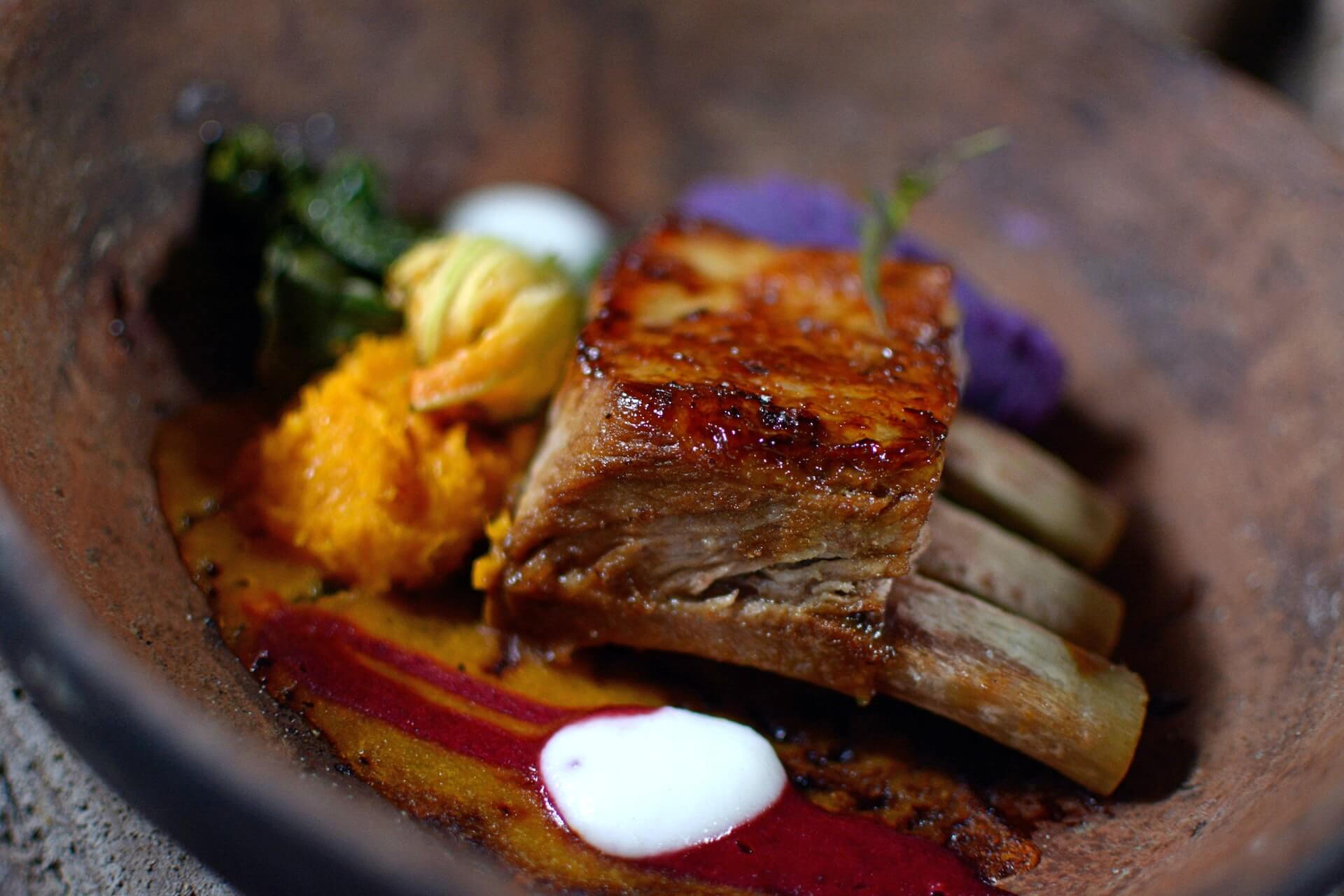
Fine dining Ecuadorian dish

Condé Nast’s American food and restaurant publication Bon Appétit identifies the 50 restaurants they deem the very best in 2022.

The intriguing list highlights the consumer desire to try a wide range of global cuisines. Indeed, were one to eat their through Bon Appétit‘s 2022 list, they’d enjoy both traditional and modern:

  • African (notably, Nigerian)
  • Cantonese
  • Caribbean
  • Eastern European (Hungarian, in particular)
  • Filipino
  • French
  • Indian (including Goan and Kashmiri)
  • Italian
  • Japanese
  • Jewish
  • Korean
  • Laotian
  • Mexican
  • Palestinian
  • Portuguese
  • Vietnamese

Of course, one will also find American cuisine. Of note, Texas barbecue, elements of Memphis barbecue, Low Country, Cajun cooking, and Midwest comfort food. There are also restaurants offering creative takes on traditional steakhouse fare. One restaurant’s focus, The Nicolett in Lubbock, Texas, is High Plains cuisine. (For those wondering, Bon Appétit describes this as “West Texas terroir.”)

This is a compelling list, showing that consumers crave a balance between comfort food and stepping outside of their comfort zones to discover cuisines that are new to them. I encourage everyone to look into these restaurants for inspiration and motivation.

Regional Performance

For simplicity, Bon Appétit arranges their list by dividing the US into four large regions: Midwest, Northeast & Mid-Atlantic, South, and West.

Interestingly, the South claims the most restaurants on this list of the 50 best, earning 17 spots. Northeast & Mid-Atlantic restaurants grab 15 spots, the West takes 12, and the Midwest claims just six.

When it comes to the South, Texas performs the best in terms of number of restaurants on the list. There are two in Austin, and one each in Fort Worth, Garland, Houston, Lubbock, and San Antonio.

However, Florida, Georgia and Louisiana also do well for the South, earning three spots each in the following cities:

  • Miami (2) and North Miami (1)
  • Atlanta (2) and Savannah (1)
  • New Orleans (3)

Unsurprisingly, New York leads the way for the Northeast & Mid-Atlantic region. Drilling down, Brooklyn boasts four of Bon Appétit‘s 50 Best New Restaurants 2022; New York City is the home of three; and one is in Hudson.

Pennsylvania, however, claims three spots, all in Philadelphia.

Equally as foreseeable, California boasts the most restaurants among this list of fifty. Predictably, most are in Los Angeles, which claims three in total. Oakland, San Diego, and San Francisco round out California’s spots with one each. Coming in second in terms of Western states with multiple restaurants on the list is Oregon, with two in Portland.

Unfortunately, the Midwest simply doesn’t perform nearly as well on this year’s list as its counterparts. In fact, it has just half the number of restaurants as the third-place region with six. Cincinnati, Ohio, takes a third of those spots. Surprisingly, Chicago is home to just one restaurant on this list.

The 50 Best New Restaurants

Below you’ll find Bon Appétit‘s list in alphabetical order.

  • Agi’s Counter (Brooklyn, NY)
  • Baba’s Pantry (Kansas City, MO)
  • Bacanora (Phoenix, AZ)
  • Bata (Tucson, AZ)
  • Birdie’s (Austin, TX)
  • Bocadillo Market (Chicago, IL)
  • Bonnie’s (Brooklyn, NY)
  • Cafe Mochiko (Cincinnati, OH)
  • Cafe Mutton (Hudson, NY)
  • Canje (Austin, TX)
  • Common Thread (Savannah, GA)
  • Daru (Washington, DC)
  • Daytrip (Oakland, CA)
  • Dear Annie (Cambridge, MA)
  • Dept. of Culture (Brooklyn, NY)
  • El Rincon del Maiz (Garland, TX)
  • Gage & Tollner (Brooklyn, NY)
  • Good Good Culture Club (San Francisco, CA)
  • Her Place (Philadelphia, PA)
  • Irwin’s (Philadelphia, PA)
  • Juniper Cafe (Atlanta, GA)
  • Kingfisher (San Diego, CA)
  • Korshak Bagels (Philadelphia, PA)
  • La Diabla Pozole y Mezcal (Denver, CO)
  • La Onda (Forth Worth, TX)
  • Lasita (Los Angeles, CA)
  • Lengua Madre (New Orleans, LA)
  • Los Félix (Miami, FL)
  • Lucian Books and Wine (Atlanta, GA)
  • Ma Der Lao Kitchen (Oklahoma City, OK)
  • March (Houston, TX)
  • Mid-City Restaurant (Cincinnati, OH)
  • Mister Mao (New Orleans, LA)
  • Morchella (Portland, OR)
  • The Nicolett (Lubbock, TX)
  • One White Street (New York, NY)
  • Paradis Books & Bread (North Miami, FL)
  • Phởcific Standard Time (Seattle, WA)
  • Quarter Sheets (Los Angeles, CA)
  • Reese Bros Barbecue (San Antonio, TX)
  • Regards (Portland, ME)
  • República (Portland, OR)
  • Seafood Sally’s (New Orleans, LA)
  • Semma (New York, NY)
  • Sozai (Clawson, MI)
  • Sunny’s Steakhouse (Miami, FL)
  • Supperland (Charlotte, NC)
  • Uncle Lou, New York, NY)
  • Yangban Society (Los Angeles, CA)
  • Z&Z Manoushe Bakery (Rockville, MD)

Image: Kiyoshi on Unsplash

by David Klemt David Klemt No Comments

The Numbers on Food Delivery in Canada

The Numbers on Food Delivery in Canada

by David Klemt

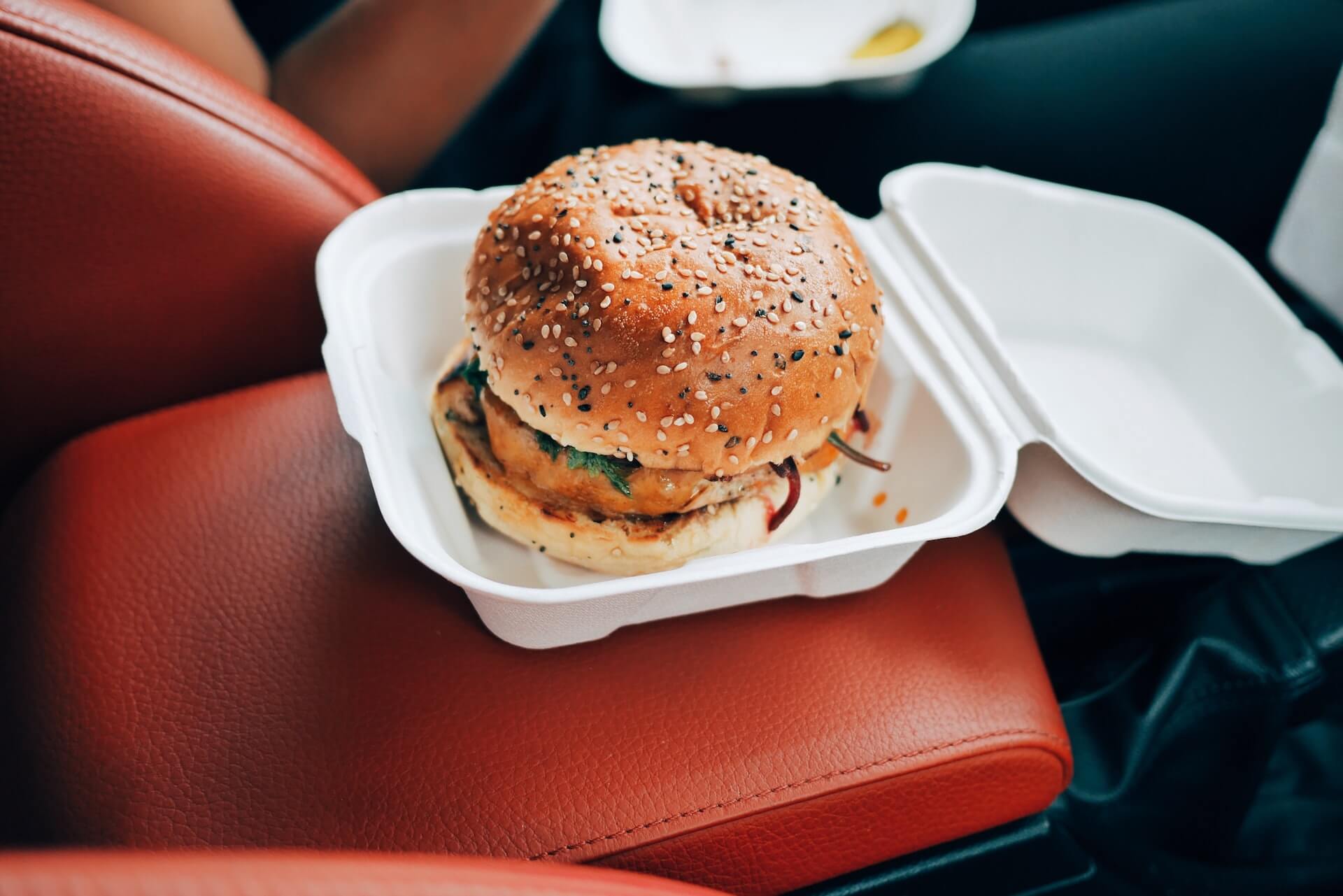
Burger in container inside car

For most restaurants, delivery is now a crucial service element rather than a “nice-to-have” option a small percentage of guests expect.

This is true whether your restaurant is in the US or Canada. But who’s placing orders? How are they ordering? And will they continue to order for the foreseeable future?

Well, Restaurants Canada has answers to all those questions and more. So, we let’s take a look at what their 2022 Foodservice Facts report says about delivery.

To download your own copy of this informative report, click here.

Who’s Placing Orders?

In their 2022 Foodservice Facts report, Restaurants Canada looks at three age groups:

  • 18 to 34
  • 35 to 54
  • 55-plus

Perhaps unsurprisingly, the 18- to 34-year-old cohort leads the charge when it comes to ordering delivery. It’s also not surprising that 35 to 54 comes in second, and 55 and older is third.

However, the first two groups are closer than some may assume. Eighty-three percent of the the 18 to 34 cohort placed orders at quick-service or full-service restaurants between December 2021 and May 2022.

That number does drop for the same time period among the 35 to 54 group, but not by a significant amount. Of that cohort, 77 percent ordered delivery. Just over half of the 55-plus group placed delivery orders: 52 percent.

Now, those numbers are down a bit from 2021, which makes sense. Things were much more restrictive in 2021 and people were just getting back to a sense of normalcy at the start of this year.

In 2021, the delivery order percentages were:

  • 18 to 34: 89 percent
  • 35 to 54: 81 percent
  • 55-plus: 67 percent

Looking at these numbers, it appears the 55-plus cohort is more comfortable dining out in person. Conversely, the 18 to 34 age group is clearly comfortable making delivery a part of their everyday lives.

How do People Want to Order?

Believe it or not, your website still matters. I’ve been saying this for years but the pervasiveness of delivery and takeout ordering is really driving this point home.

The fact is, a notable percentage of your guests want to support your restaurant and staff directly. Over the past couple of years, consumers have become well aware that third-party delivery services are incredibly costly for operators.

Consumers are also aware of third-party delivery debacles, such as the abysmal Grubhub “Free Lunch” mess from May of this year.

So, direct delivery is something that operators need to at least consider. Implementation is often less difficult than most business owners believe. And many platforms, SevenRooms, for example, make implementing direct delivery simple and affordable.

Interestingly, Restaurants Canada data supports the need for direct delivery. Back in May, the industry advocacy organization asked survey respondents how they prefer to place delivery orders from restaurants.

Preferences for QSR customers:

  • No preference: 10 percent
  • Over the phone: 19 percent
  • Third party: 35 percent
  • Restaurant website or app: 36 percent

Full-service customer preferences:

  • No preference: 8 percent
  • Over the phone: 28 percent
  • Third party: 29 percent
  • Restaurant website or app: 35 percent

Honestly, I find it surprising anyone calls a QSR to place an order. However, I suppose that makes sense for an office or catering.

At any rate, make sure your website is up-to-date, you offer direct or “last-mile” delivery, and make it easy to navigate your menu and the ordering process.

Is Ordering Here to Stay?

Now, we all know why restaurant delivery has been supercharged the past two years. However, consumer trend data show that delivery was on the rise before the Covid-19 pandemic.

But now that people are eager to return to normal and the industry is on its way to returning to pre-pandemic levels, is delivery really here to stay?

According to another question asked of survey respondents by Restaurants Canada, more than half of QSR and full-service restaurant customers plan to stick with delivery.

For their 2022 Foodservice Facts report, Restaurants Canada asked back in May how often consumers planned to place delivery orders in the next six months.

Order frequency for QSR customers:

  • Never placed a delivery order and don’t plan to now: 29 percent
  • Order less often: 20 percent
  • Will order with the same frequency: 45 percent
  • Will order more often: 7 percent

Frequency of orders for full-service customers:

  • Never placed a delivery order: 24 percent
  • Order less often: 23 percent
  • Will order with the same frequency: 44 percent
  • Will order more often: 9 percent

Here to Stay?

Of course, there are multiple factors feeding the numbers above. Some people simply don’t like ordering and waiting for delivery. For these consumers, the practice doesn’t just seem convenient.

There’s also the consumer demand to return to in-person dining, socializing with family and friends. And, of course, meeting new people while dining out.

We must also consider inflation and rising costs. Often, restaurant spending is among the first to be reduced when consumers need to be more frugal. Rising menu costs are sure to curtail some delivery spending.

That said, it’s clear delivery is here to stay and must be considered a crucial element for most restaurant operations. QSR and full-service operators need to bear in mind is placing orders; how often they’re placing orders; and get them in the habit of placing orders directly.

Image: Oliur on Unsplash

by David Klemt David Klemt No Comments

8 Glendalough Cocktail Recipes for St. Patrick’s Day and Beyond

Offer your guests something different for your St. Patrick’s Day promotion with Glendalough Distillery cocktail recipes.

Without a doubt, you should have plenty of the expected Irish whiskeys on hand. However, Glendalough Distillery Double Barrel, Pot Still, Wild Gin, and Rose Gin are extraordinary Irish whiskeys and gins.

Each spirit the distillery crafts honors the art of Irish distillation, a craft that stretches back centuries. What’s more, each whiskey Glendalough crafts is single malt—there are no light-bodied blends in their lineup.

To learn more, check out episode 71 of the Bar Hacks podcast with Glendalough Distillery co-founder and national brand ambassador Donal O’Gallachoir.

by David Klemt

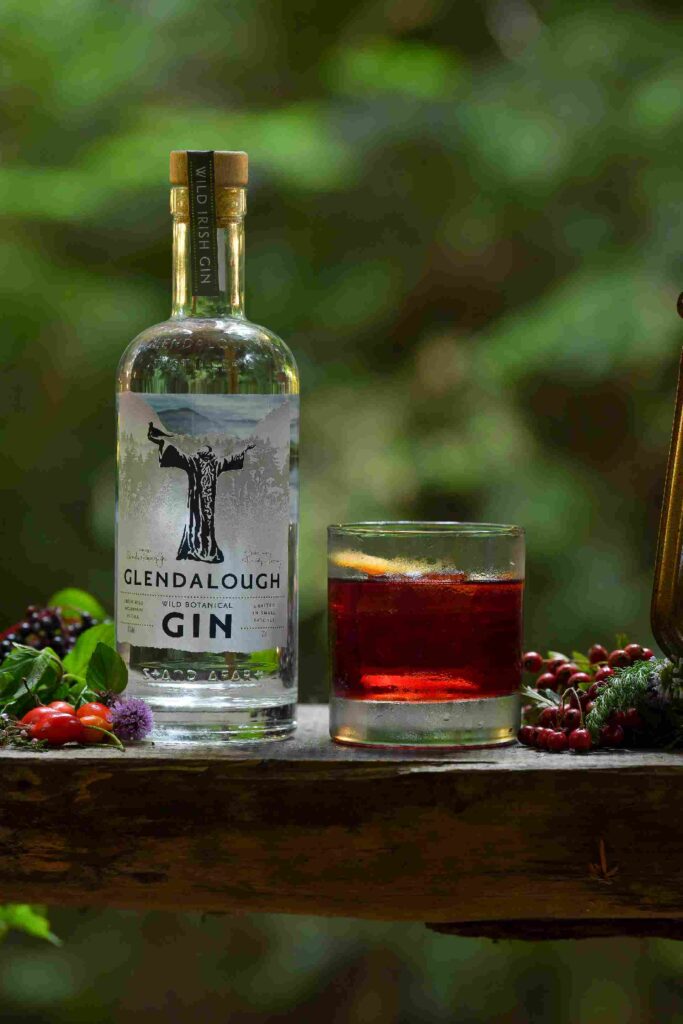
Glendalough Distillery Wild Gin Irish gin

8 Amazing Irish Whiskey and Gin Cocktails

Below, eight refreshing and sophisticated drink recipes made with Glendalough whiskeys and gins. Sláinte!

Glendalough Distillery Double Barrel Single Malt Irish Whiskey

The Lough Inn

This highball is made with Glendalough Double Barrel, a single-grain Irish whiskey aged in ex-bourbon barrels before being finished in Oloroso sherry casks.

  • 2 oz. Glendalough Double Barrel Single Grain Irish Whiskey
  • 1 oz. Spiced honey syrup (see note)
  • 1 oz. Fresh lemon juice
  • Soda to top
  • Lemon wheel or slice to garnish
  • Mint leaf to garnish
  • 1 cup Honey for spiced honey syrup
  • 0.5 cup Water for spiced honey syrup
  • 4 Cinnamon sticks for spiced honey syrup
  • 1 pod Star anise for spiced honey syrup

Add ice to a highball glass, then add first three ingredients. Top with soda water. Garnish with lemon wheel or slice and freshly torn mint leaf.

For spiced honey syrup: Add honey, water, cinnamon sticks, and star anise to pot. Bring to a boil, then stir. Strain into container.

Glendalough Distillery Pot Still single malt Irish whiskey

Pot Still Highball

Deceptively simple to build, this cocktail highlights the terroir of the land surrounding Glendalough Distillery.

  • 1.5 oz. Glendalough Pot Still
  • Soda to top
  • Grapefruit peel to garnish
  • Mint leaf to garnish (freshly torn and slapped, of course)

Prepare a highball glass with an ice shard, spear or cylinder. Pour in Glendalough Pot Still whiskey, then top with soda. Glendalough Distillery recommends a 1:2 ratio, Pot Still to soda. Garnish with mint leaf.

Glendalough Distillery Wild Gin Negroni cocktail

Glendalough Negroni

The foraged botanicals in Glendalough Wild Gin add even more complexity and depth to the classic Negroni. In fact, the flavors work so well this recipe maintains the Negroni’s crucial 1:1:1 ratio.

Prepare an Old Fashioned with ice. Add first three ingredients to glass in the above order. Add more ice if necessary. Stir, express orange peel, and place as garnish.

Glendalough Distillery Wild Gin Irish gin

Glendalough Wicklow 75

Bubbles make everything better and everyone happier.

Add all ingredients to shaker. Add ice and shake until well chilled. Strain into Champagne flute, top with Prosecco, and garnish with lemon twist.

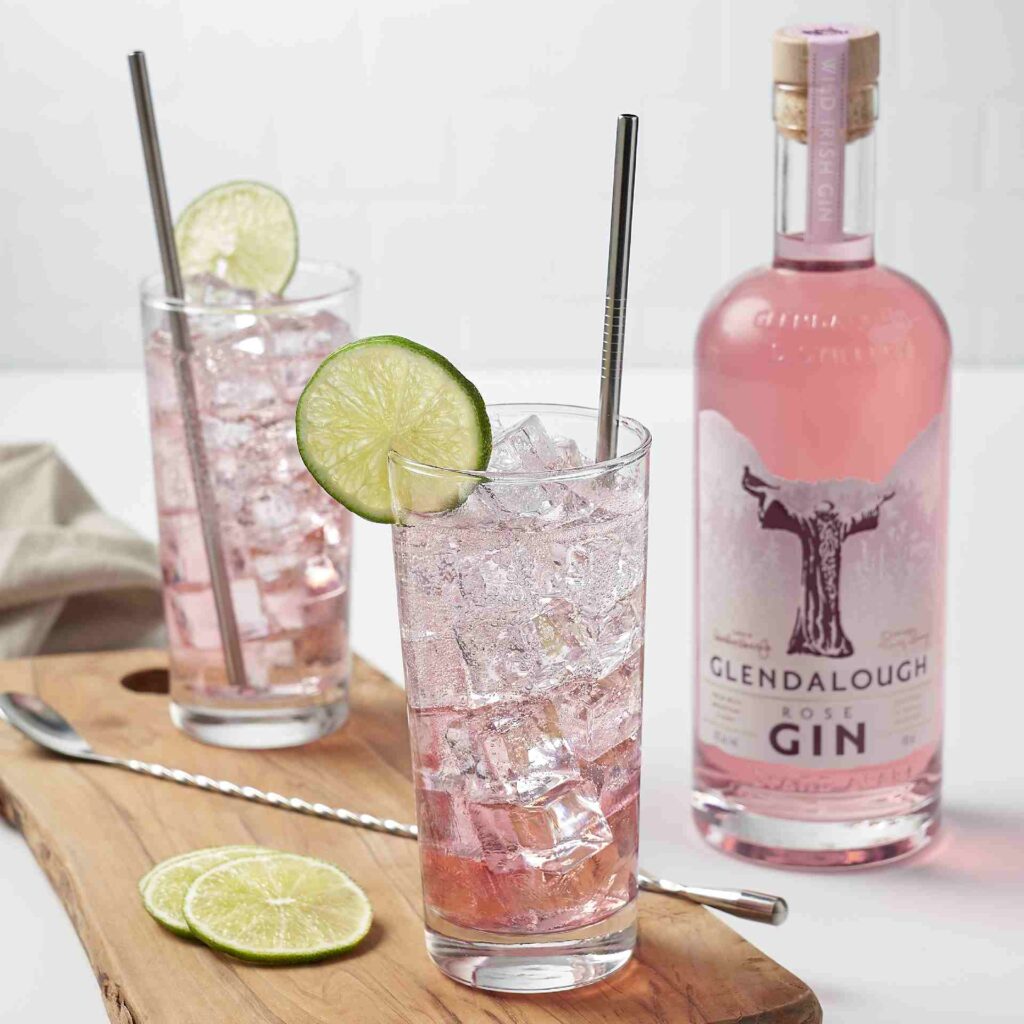
Glendalough Distillery Rose Gin Irish gin and cocktails

Glendalough Rose G&T

This simple classic receives a huge visual and aromatic boost from Glendalough Rose Gin.

  • 2 oz. Glendalough Rose Gin
  • Tonic to top (the higher the quality, the better)
  • Lime slice
  • Mint leaves

Add ice to glass, then add Rose Gin. Top with tonic, and garnish with lime slice and mint leaves.

Glendalough Distillery Rose Gin Fizz

Glendalough Rose Gin Fizz

One way to elevate the highball is to use a striking pink-hued Irish gin.

  • 1.5 oz. Glendalough Rose Gin
  • 0.5 oz. Elderflower liqueur
  • Raspberry & Lime sparkling water to top
  • Lime wheel to garnish

Add ice (spear, shard or cylinder for impact), Rose Gin, and liqueur to highball glass. Stir, then add sparkling water to top. Garnish with lime wheel.


View this post on Instagram


A post shared by Glendalough US (@glendaloughus)

Glendalough Rose Collins

Boost the classic Collins with Glendalough’s striking rose-petal gin.

  • 1.5 oz. of Glendalough Rose Gin
  • 1 oz. of Lemon juice (freshly squeezed)
  • 0.5 oz. of Sugar syrup (1:1 ratio, hot water to sugar)
  • Soda to top
  • Lemon peel to garnish
  • Cherry to garnish

Combine first three ingredients in a shaker with a cup of ice. Place an ice shard, spear or cylinder to a highball glass. Shake until well chilled, then strain into glass. Top with soda, and garnish with lemon peel and cherry.

Glendalough Distillery Rose Gin Hibiscus Rose

Glendalough Hibiscus Rose

Refreshing and flavorful, the hibiscus tea syrup plays incredibly well with Glendalough Rose Gin.

  • 1.5 oz. Glendalough Rose Gin
  • 0.5 oz. Hibiscus tea syrup (see note)
  • 0.5 oz. Lemon juice (fresh squeezed)
  • Prosecco to top
  • Dehydrated lemon wheel to garnish
  • Rose petals to garnish
  • 33 oz. Water for hibiscus tea syrup
  • 16 oz. Sugar for hibiscus tea syrup

Add first three ingredients and ice to a shaker. Shake until well chilled and double strain into a coupe.  Top with Prosecco, and garnish with dehydrated lemon wheel and rose petals.

For the hibiscus tea syrup: Steep seven hibiscus tea bags in 33 ounces of water for 15 minutes. Add 16 ounces of sugar.

Images & Recipes: Glendalough Distillery

Related Reading

Work with Us

Click the image below to partner with us on your project.

Client Intake Form - KRG Hospitality

Top